
There is so much that we can learn from animals.
In the animal kingdom, Winter is for rest, aka hibernation, sleeping through the colder months, conserving energy until Spring arises, when flowers bloom and food becomes more plentiful.
While humans can’t physically hibernate, we can utilize the cooler weather for “Wintering”.
A time to consciously slow down, rest and reflect, allowing us to recharge both mentally and physically, rejuvenating ourselves for the warmer months.
While it might be challenging to ‘NOT DO EVERYTHING ’, the benefit of more sleep, hearty foods and cosy nights is definitely worth giving it a try!
So, I challenge you to give it a try (I for one will find this very challenging hehe) and see how much different and possibly better you feel by the end of winter.
Here’s to firepits, blankets and a warm cuppa!
Art Director/Editor
Tanzie Carpenter tanzie@onthecoastpublications.com.au
Production Luke Carpenter luke@onthecoastpublications.com.au
Happy “Wintering” Coasties 4 Parenting after separation: what does ‘best interests of the child’ really mean? 7 Celebrating food, creativity and live music this June long weekend 8 The hidden load of parenting: why families are exhausted and how to find relief 9 Man style: investing in neutral 10 Your money playbook for the year ahead 12 Middle school: nurturing primary foundations while opening doors to high school opportunities
Editor Karen Pentland editor@onthecoastpublications.com.au
Publisher
Tanzie Carpenter / 0414 611 851
Luke Carpenter / 0405 449 339
trading as On the Coast Publications ABN 52 212 212 482 PO Box 3251, Bateau Bay NSW 2261
For advertising enquiries advertising@onthecoastpublications.com.au
For article contribution enquiries tanzie@onthecoastpublications.com.au
Front cover image
Photo Credit Aaron Leslie x Central Coast Council Imagery freepik.com
Contributors
Sheree Orbell, Mia Eddy, Lorren Wright, Sam Woods, Jordi Woods, Simon Tarrant, Blake Gray, Alex Wilson, Ann–Maree Oliveri, Dorian Mode and Lydia Thorpe. onthecoastpublications.com.au

new era of wellness on the Central Coast
and suc ceeding in a changing market
“I saw it on TikTok”: the new era of mental health diagnosis
The imp ortance of a good fitting bra
Rainy day rescues: Central Coast

what does ‘best interests of the child’ really mean?
BY SHEREE ORBELL, SOLICITOR DIRECTOR AND MIA EDDY, PARALEGAL AT ORBELL FAMILY LAWYERS

Separation can be one of life’s most difficult transitions, especially when children are involved. Alongside the emotional impact of the relationship ending, parents are suddenly faced with practical questions about how their children’s lives will work moving forward. Where will the children live? How will school activities be managed? How will parents stay involved in day–to–day life?
At the centre of every decision is one guiding principle under Australian family law: the best interests of the child.
Mia Eddy, Solicitor and Sheree Orbell, Director at Orbell Family Lawyers, explain how this principle helps guide parents when making arrangements for their children after separation.
When parents separate, the focus shifts to creating arrangements that support their children’s wellbeing, stability and development.
For many families on the Central Coast, this involves working through practical questions such as:
Where the children will live?
How time will be shared
between parents?
School and extracurricular activities.
Healthcare decisions.
How parents will communicate about the children.
How costs such as school fees or medical expenses will be shared?
These conversations can be challenging, particularly when emotions are still raw. However, keeping the focus on what children need, rather than what feels ‘fair’ for the adults, can help guide the process.
Reaching agreements together
Where possible, parents are encouraged to work together to reach their own parenting arrangements.
These agreements can take different
forms. Some families create informal arrangements, while others document their agreement in a Parenting Plan or formalise it through Consent Orders.
Arrangements reached cooperatively often work best in the long term. Parents are more likely to follow agreements they helped develop, and the process itself can reduce conflict and uncertainty for children.
Importantly, the law focuses on the needs of the child, not the rights of the parents
Of course, not every situation allows for an amicable agreement. When parents cannot reach an arrangement, or it is not safe to do so, legal advice can help clarify options and ensure the child’s needs remain the priority.
Under Australian family law, the child’s best interests are the most important consideration when parenting arrangements are being made.
Importantly, the law focuses on the
needs of the child, not the rights of the parents.
This means decisions should not be based on what is most convenient or what seems fair between the parents, but rather on what will best support the child’s emotional, physical and psychological wellbeing.
Key factors considered
Every child and every family is different, so there is no single arrangement that works for everyone. However, several important factors are considered when assessing what arrangements are best for a child.
These include:
Safety first
The child’s safety is always the highest priority. Any concerns about family violence, abuse or neglect must be carefully considered to ensure the child and their carers are protected.
Emotional and developmental needs
Parenting arrangements should support the child’s emotional stability, development and sense of security.
The ability of each parent to meet the child’s needs
This includes practical caregiving, emotional support, and the ability to provide stability.
Meaningful relationships
Children generally benefit from having a meaningful relationship with both parents and other important people in their lives, provided it is safe and healthy for them.
The child’s individual circumstances
Each child’s personality, routine, schooling and support network are unique and arrangements should reflect these realities.
Listening to Children
In some situations, children’s views may also be considered. This does not mean children decide where they live or make the final decisions. However, if a child is mature enough to express their thoughts and feelings, their voice can be taken into account. The weight given to a child’s views depends on their age, maturity and understanding.
Supporting children through change Children can adapt well to separation when parents focus on stability, communication and cooperation.
Simple steps can make a significant difference, such as:
Maintaining consistent routines.
Keeping communication respectful between parents.
Avoiding conflict in front of children.
Supporting the child’s relationship with both parents, where appropriate.
Reassuring children that the separation is not their fault.
While separation changes the family structure, children can still thrive when parents work together to prioritise their wellbeing.
Every family is different
There is no “one size fits all” solution when it comes to parenting
arrangements. What works for one family may not work for another. The most important goal is to create a structure that supports the child’s long–term wellbeing, security and happiness.
When parents can put their child’s needs first and approach decisions thoughtfully, it helps children adjust to their new family life with confidence.
At Orbell Family Lawyers, we understand how complex parenting arrangements can feel after separation, especially when young children are involved.
As a specialist family law firm based on the Central Coast, our team regularly works with local families to help create practical parenting arrangements that support children and provide clarity for parents.
Mention this article when you call to receive a complimentary 15–minute discovery call with one of our family law solicitors. (02) 4314 6080

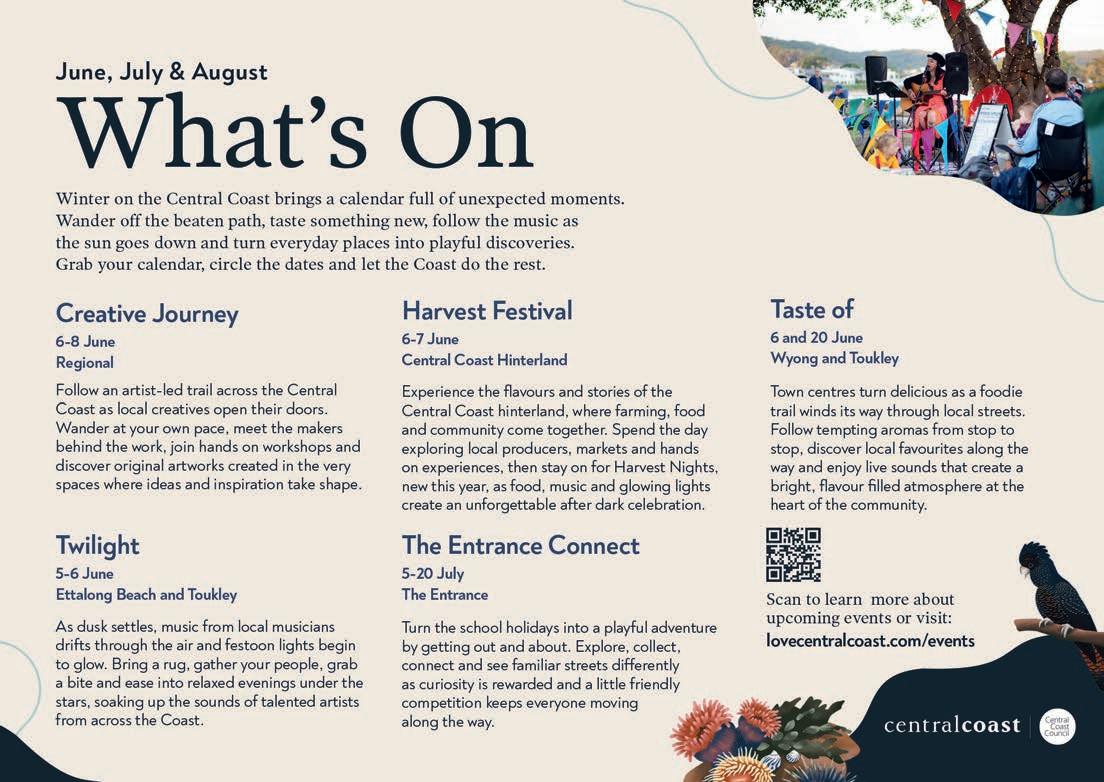


The June Long Weekend on the Central Coast is shaping up to be a celebration of the region at its best, starting in the hinterland with the return of Harvest Festival. Spanning valleys, villages and farming communities, Harvest Festival invites visitors to slow down and experience the people and places behind the region’s produce. Open farm gates, hands on activities, local food and live music create a welcoming atmosphere that encourages exploration, connection and curiosity.
This much loved festival has become a cornerstone of the Central Coast calendar, drawing people into orchards, paddocks and community halls to meet growers, makers and producers where they live and work. New this year is Harvest Nights, extending the festival into the evening with shared meals, live music and after dark experiences. As the sun sets, farms and community spaces take on a different energy, offering a chance to gather under the stars and enjoy the hinterland in a more relaxed, social setting. Harvest Nights adds a fresh layer to the festival while staying true to its roots in local agriculture, storytelling and rural hospitality.
Alongside the hinterland celebrations, the Creative Journey art trail returns after the strong success of its first year, now expanded across more communities and creative spaces. Over the June Long Weekend, more than sixty artists, makers and creatives will open their studios and workspaces to the public, offering a rare opportunity to step inside the places where ideas are developed and artworks come to life. Visitors are encouraged to follow the trail at their own pace, moving between studios, pop up spaces and artist homes.
Creative Journey is as much about
conversation as it is about art. Visitors can meet the artists, watch works in progress, ask questions, book workshops and purchase original pieces directly from the source. The growth of the trail reflects the depth of creative talent across the Central Coast and a growing appetite for meaningful, behind the scenes cultural experiences that go beyond the gallery wall.
Rounding out the long weekend is the final weekend of Twilight, a new live music series bringing emerging and established local artists to foreshore locations in Toukley and Ettalong Beach. Taking place at dusk on the Friday and Saturday evening, Twilight offers an easy going way to wind down the day, with free live music, glowing festoon lights and relaxed coastal settings. It is designed to fit naturally into the long weekend rhythm, whether as a starting point for an evening out or a chance to gather with friends as the light fades.
Together, these three programs create a long weekend built around discovery and connection. From farmland to
studios, countryside to coastline, and daytime exploration to evening atmosphere, the experience invites visitors to move through the region in
Over the June Long Weekend, more than 60 artists, makers and creatives will open their studios and workspaces to the public, offering a rare opportunity to step inside the places where ideas are developed and artworks come to life
different ways and at their own pace. Whether you choose a full itinerary or a more spontaneous wander, the June Long Weekend offers plenty of opportunities to connect with the people, stories and places that make the Central Coast unique.
BY LORREN WRIGHT, CLINICAL PSYCHOLOGIST AT INSIGHTFUL MINDS PSYCHOLOGY
Some mornings feel like I’ve run a marathon before I even get to work – and somehow, my clients end up feeling like the calmest part of the day. Last week featured epic battles over breakfast, a forgotten assignment, two frantic school drop–offs, and a full blown coffee crisis – no milk, of course – all before 8am. If you’re nodding along, you’re not alone: parenting can feel overwhelming. Not occasionally, but regularly.
Parenting today often happens in a very different context than it did for previous generations. Families used to be surrounded by grandparents, neighbours and community networks that shared the load. Today, many parents raise children with far less day–to–day support. Work demands are higher, financial pressures are real, and blended families and hybrid work arrangements add extra layers of coordination.
When the pressure builds, it’s easy to move from one task to the next without noticing how much we’re carrying. Over time, this constant load can leave both parents and children depleted.
Children learn to manage emotions through relationships. When overwhelmed, they rely on adults to guide and support them. This process, called co–regulation, helps
children gradually develop emotional independence. But when parents are stressed, staying calm and connected with a child’s big feelings becomes harder. Moments we most want to respond gently to, often arrive when we feel least resourced.
Some children may appear to cope well at school but become emotional or overwhelmed at home. For neurodivergent children, managing attention, social expectations, and sensory demands can be exhausting. By the time they arrive home, their capacity to hold everything together may have simply run out.
Understanding a child’s developmental profile can make a real difference. Conditions such as ADHD or autism affect how children manage attention, emotions, and transitions. With the right supports at home and school, everyday routines become more manageable.
For other families, learning practical strategies for emotional regulation helps. When parents develop tools to support both their own and their child’s regulation, moments that once escalated quickly can become opportunities for connection.
Parenting also stirs unexpected feelings in adults. A child’s behaviour can touch on our own stress,

exhaustion, or past experiences in ways we didn’t anticipate. Reflecting on these feelings matter, because our wellbeing directly influences how we show up for our children.
Recognising that support exists is an important step. Just as we consult teachers or doctors, there are professionals who specialise in family wellbeing and child development. Speaking with a GP or a psychologist can help parents explore resources and options.
Equally important is reconnecting with informal networks. Talking openly with other parents, leaning on friends or relatives, and remembering that most families face similar challenges can reduce the sense of isolation we often carry.
Parenting will always involve chaos, strong emotions, and imperfect days. But when families feel supported, understood, and connected, those challenges become far more manageable.
None of us were meant to do this alone.
Lorren Wright is a Clinical Psychologist with 20 years’ experience, supporting children, young people, and adults through meaningful therapy and neuro–affirming developmental assessments. A parent herself, she helps families and individuals make sense of life’s challenges and build practical strategies that stick.
With so many fashion choices and trends constantly emerging Neutral tailoring is steadily becoming the timeless foundation in the modern man’s wardrobe.
Edging out the long held dominance of Black, Navy, and Grey, neutral tones are now taking centre stage as the defining palette in suit styling. Think tones of Cream, Beige, Ecru, Taupe, Stone, Ivory and soft, muted earth–inspired hues for a new found freshness.
Investing in a neutral suit provides a versatile, all year round wardrobe essential. The real style move isn’t simply owning one but knowing how to wear it in ways that maximise it’s simplicity and elegance.
STYLING YOUR NEUTRAL SUIT
Wear with a vest and high shine shoe for a formal event
Team with an open neck shirt and tan shoes and belt for smart, relaxed dress codes
Style your blazer back with jeans, a tee and sneakers for those times when some stylish, casual structure is required
Play with textures and give your neutral suit pieces some styling interest. Try wearing a knitted polo, suede boots and a plaited belt for an elevated relaxed vibe.
Try tone on tone dressing by mixing various shades of neutral into your overall look. For those requiring a little more depth or contrast mix rich shades of Chocolate Brown and if earth hues aren’t your energy colours, cool your style down with crisp White or add some drama with a classic Black shirt and accessories.
Adapt your neutral suit to the seasons. For warmer months add a linen shirt and loafer and for cooler days layer with denim, knitwear and a chunky boot.
Neutrals at night are not only elegant they demand attention in a sea of darker suiting. Transition your neutral suit into an after dark style with a silk button up shirt, a sleek belt and polished footwear. Don’t underestimate the style power of additional accessories either like; a subtle watch, cuff links and a pocket hank.




Ultimately, neutral suiting delivers a timeless foundation that blends versatility with refinement allowing every individual to dress in ways that feel fresh, intentional and uniquely personal.
*STYLIST SHARE: One of our favourite men’s brands we love to style is Cambridge Clothing and their neutral suit featured is proof that when it comes to suiting rethinking classic black or navy can be a refreshing and very stylish choice.


Understanding styling and fashion is one thing. Having a super natural flair for making everyday people look incredible is another. Once you’ve met Sam and Jordi Woods, it’s hard not to catch their infectious passion for dressing to match your own lifestyle, personality and charisma. Through their consultancy ‘Vibrant Concepts’, Sam and Jordi have transformed the lives of thousands. Let Sam and Jordi show you how to look and feel fabulous everyday – learn the art of illusion dressing, colour matching, styling, translating fashion trends and savvy
that are truly personal and really work! To contact
BY SIMON TARRANT, PRIVATE CLIENT ADVISER AT MORGANS FINANCIAL LIMITED
There’s something about a new financial year that makes you want to get your house in order. Maybe it’s the clean slate. Maybe it’s the pile of receipts on the kitchen bench reminding you that last year got away from you. Whatever the trigger, July is the perfect month to stop, take a breath, and get intentional about where your money is going.
The truth is, most people don’t have a money problem. They have a clarity problem. Income comes in, bills go out, and whatever is left gets absorbed into the everyday. Sound familiar? You’re not alone. But the difference between those who build wealth over time and those who tread water often comes down to one thing…a plan.
It starts with understanding what you earn, what you spend, and what’s left. Not roughly. Actually. Sit down, open the banking app, and look at the last three months. You might be surprised where the money is going. Subscriptions you forgot about, dining out more than you realised, or insurance policies you haven’t reviewed in years.
This isn’t about cutting out your morning coffee. It’s about awareness. Once you know the numbers, you can make deliberate choices about where your money works hardest.
The most effective savers don’t rely on willpower. They automate. Set up a regular transfer into a separate account the day after payday, even if it’s modest. Treat it like a bill that has to be paid. Over twelve months, even small amounts compound into something meaningful.
For business owners, this discipline matters even more. Separating personal and business finances, setting aside money for tax obligations, and paying yourself consistently are foundations that too many people skip. A new financial year is the ideal time to reset those habits.
Superannuation is easy to ignore when retirement feels like a lifetime away, but it remains one of the most powerful wealth–building tools available to everyday Australians. Check your balance, review your investment option, and make sure
The truth is, most people don’t have a money problem. They have a clarity problem. Income comes in, bills go out, and whatever is left gets absorbed into the everyday
you’re not paying for duplicate insurance policies across old funds you forgot to consolidate.
If you’re self–employed, make sure you’re contributing regularly. Nobody else is doing it for you, and the tax benefits of personal deductible contributions can be significant. A small contribution each quarter is far easier to manage than scrambling to find a lump sum in June.

Insurance isn’t exciting, but it matters. If your income stopped tomorrow, how long could your household keep going? Income protection, life cover, and trauma insurance exist to protect your family when things go sideways. Review your policies annually to make sure they still reflect your life, your mortgage, your dependants and your lifestyle.
For business owners, key person insurance and business expense cover are equally important. If you’re the engine of your business, what happens when the engine stops?
There’s no shortage of financial content online, but generic advice only goes so far. A good adviser will look at your full picture including your income, your debts, your goals, your family situation and help you build a strategy that actually fits. The start of the financial year is the best time to have

that conversation, because you’ve got twelve months of runway ahead of you.
You don’t need to overhaul everything overnight. Pick one or two areas to focus on this quarter and build from there. The families and business
owners who do well financially aren’t the ones who make perfect decisions. They’re the ones who make consistent ones.
new financial year. A fresh start. The only question is what you do with it.
about creating
(AR:
strategies
Disclaimer: While every care has been taken, Morgans Financial Limited makes no representations as to the
or completeness of
The information is of a general nature only and has been prepared without consideration of your individual objectives, financial situation or
Before making any decisions, you should consider the appropriateness for your personal investment objectives, financial situation or individual needs. We recommend you see a financial adviser, registered tax agent or legal adviser before making any decisions based on this information.

Nurturing primary foundations while opening doors to high school opportunities

For families considering the next stage of their child’s schooling, one question often sits quietly in the background: Will my child be known, supported and challenged as they grow? This question has shaped the heart of our Middle School model at St Philip’s Christian College.
Unlike traditional models of schooling that treat the middle years as a simple transition between primary and high school, our approach recognises this period (Years 5 to 8) as a unique and formative stage of development. Early adolescence brings rapid change: identity formation, shifting friendships, growing independence and a deepening curiosity about the world. These years deserve an environment intentionally designed for them.
UNDERSTANDING THE MIDDLE
From around age ten, children begin navigating new emotional, social and cognitive territory. Our Middle School model honours this by allowing students to remain children for longer, protecting space for imagination, play, friendship and gradual independence in a world that often pushes them to grow up too quickly.
Unlike primary schools, our Middle School model offers a structure that blends stability with increasing challenge. Each student is supported
by a dedicated pastoral care teacher who provides consistency throughout the school day. This teacher also leads core subjects such as English, HSIE and Wellbeing, allowing them to know each student deeply, academically, socially and personally. Families value having a single, trusted adult who genuinely understands their child and walks alongside them through both growth and challenge.
At the same time, students are introduced to specialist teachers from Year 5 onwards in subjects such as Science, PDHPE, TAS and CAPA. These lessons take place in purpose–built spaces and give students hands–on, engaging experiences that gently prepare them for senior school. Year 5 students often describe this as feeling “a little bit like high school already”, but with the support and nurture appropriate for their age.
Each year group is shaped by a guiding theme that supports identity development: Year 5 Excite, Year 6 Ignite, Year 7 Inspire and Year 8 Empower. These themes are woven
into the lived experience of students, helping them grow in confidence, character and independence.
Early adolescence brings rapid change: identity formation, shifting friendships, growing independence and a deepening curiosity about the world. These years deserve an environment intentionally designed for them
Connection also happens beyond the classroom. Structured lunch clubs, chess, dance, crochet, Minecraft, band, choir, homework support and more, give students opportunities to explore interests, build friendships and enjoy meaningful recreation in a supported environment.
As a Christian learning community, we believe every child is uniquely created by God with purpose and potential. Our faith in Jesus shapes the way we teach, care and guide. His example of compassion, humility and love informs our daily practice and our commitment to nurturing the whole child (academically, socially, emotionally and spiritually). At St Philip’s Christian College we seek to reflect His character in the way we support, encourage and walk alongside students as they grow.
LOOKING AHEAD: YEAR 5 AS THE NEW ENTRY POINT
Our College continues to grow, and demand for Middle School places are increasing. While Year 7 has traditionally been the major intake year, families are now choosing to
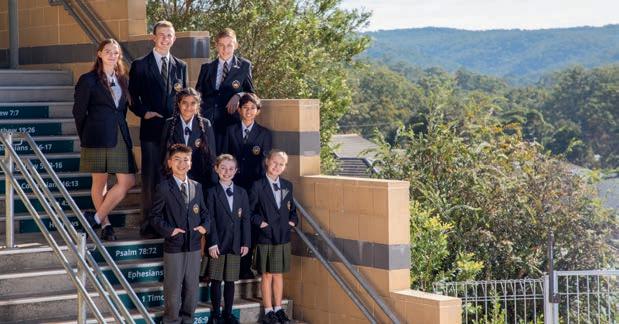
begin their journey in Year 5 to take full advantage of the benefits of our Middle School model. We encourage families to enquire early.
We invite families to enquire now for Year 5, 2027, and discover a Middle School environment designed to help every child thrive.
Unlike primary schools, our Middle School model offers a structure that blends stability with increasing challenge


A fresh approach to health, recovery and wellbeing has arrived on the Central Coast, with Coastal Rehab Hub unveiling a newly redesigned website, streamlined booking system and additional wellness rehab services, making it easier than ever for locals to access evidence–based care in one place.
Founded by Kate Perkins, Coastal Rehab Hub has quickly established itself as a destination for those seeking a more integrated, whole–body approach to wellness. Operating alongside the well–established Cancer Rehabilitation and Lymphatic Solutions, the space blends clinical expertise with innovative therapies designed to
support injury/sport/surgical recovery, overall wellbeing and long–term immune function.
The newly launched website reflects this philosophy, offering a seamless user experience where clients can book appointments, purchase treatment packages and view class schedules with ease. Designed for busy lifestyles, it creates a more connected and accessible pathway to care.
Coastal Rehab Hub was created in response to a growing need for services that bridge the gap between rehabilitation and modern wellness.
Today, the clinic supports a diverse community, from athletes and active individuals to professionals, parents,
So many people are living in a constant state of stress, poor sleep and nervous system overload, and often don’t realise how much that can affect their recovery, energy and overall wellbeing
tradies and those recovering from injury, surgery or ongoing physical strain. The focus is simple: helping people move better, feel better, and function at their best through evidence–based care.

Services at the hub include red light therapy via the Prism Light Pod, MLS laser therapy, compression therapy, remedial and lymphatic massage, and tailored rehabilitation programs, alongside a range of advanced, technology–led recovery treatments.
A standout addition to the clinic’s offering is Neuro–Acoustic Sound Therapy, an emerging, non–invasive treatment designed to support the nervous system an area increasingly recognised as central to overall health and wellbeing.
Grounded in neuroscience and acoustic medicine, the therapy uses carefully calibrated sound frequencies and therapeutic vibration to influence brainwave activity and encourage the body into a more relaxed, regulated state.
It’s particularly suited to those experiencing stress, anxiety, sleep disturbances, chronic pain, or ongoing fatigue, offering a gentle, drug–free option for people navigating the pressures of modern life.
“So many people are living in a constant state of stress, poor sleep and nervous system overload, and often don’t realise how much that can affect their recovery, energy and overall wellbeing,” says Kate. “Neuro–Acoustic Sound Therapy gives us another way to support the body gently and
intentionally, helping clients slow down, regulate and create the conditions where healing can happen.”
At the heart of Coastal Rehab Hub is Kate Perkins’ vision to create a space where wellness feels accessible, supportive and sustainable – not just a quick fix, but an ongoing investment in how we live.
By combining evidence–based therapies with a personalised, holistic approach, the clinic has become a place where clients feel empowered to take an active role in their health.
“Coastal Rehab Hub is about making wellness and recovery feel accessible,” Kate says. “We wanted to create a space where people can explore modern therapies, feel confident in the care they’re receiving, and easily access the services that help them feel their best.”
With its refreshed digital presence and expanding range of innovative services, Coastal Rehab Hub represents a new chapter in how Central Coast locals can approach their health.
By bringing together technology, movement,
recovery and nervous system support under one roof, the clinic is redefining what modern wellness can look like –practical, evidence–based and designed for real life.
It’s particularly suited to those experiencing stress, anxiety, sleep disturbances, chronic pain, or ongoing fatigue, offering a gentle, drug–free option for people navigating the pressures of modern life
To explore services or book an appointment, visit: www.coastalrehabhub.com.au


BY BLAKE GRAY, PRINCIPAL AT APEX ESTATE AGENTS
Generally auction clearance rates across the state are trending down. There are fewer buyers attending weekend Open Homes. Rising interest rates are tightening borrowing capacity. Other economic factors are having a cooling effect on the market. Clearly the market is adjusting.
The good news for the Central Coast is that it remains a key growth region, and this adjustment was anticipated and by no means should it be a major cause for concern if you’re thinking of selling. In this article I shall address the five most pressing questions coming from potential property sellers on the Central Coast as we enter this new market.


Yes. Premium prices are absolutely still possible, however, this requires a shift in perspective and a stronger focus on process and service on the part of Agents. In an adjusting market of peaks and valleys it becomes even more crucial to establish a pricing strategy with your selling Agent. As a seller you must shift your approach to ‘the most effective way to achieve my expectations is to appeal to the wider market, by showing that my property most surely and confidently represents the pinnacle of where price and value meet’. Remember, you’re in a working relationship with the market, not competing against it, this shift should inform subsequent actions with respect to your campaign. When price and value meet more buyers will respond to your property, thus the likelihood of speedier deals and greater prices increases.
Yes. It only takes one buyer to move your property from ‘For Sale’ to ‘Sold’. A consequence of an adjusting market is that it filters out the less motivated buyers and reveals the serious ones. If a buyer invests their time in viewing property in this market – especially via a Private Viewing – then rest assured they intend to buy.
Your first Open Home viewing is vitally important because it is a direct reflection of the market’s first impressions of your property’s campaign. If the enquiry volume over the first 5–7 days of your campaign is poor and the first Open Home yields no attendees then this an indication that your property is not reflecting value in the eyes of the market and/or lacks the ‘wow’ factor. If this is the case then your

first port of call with your Agent should be to review message and pricing, along with all marketing materials. Getting these right can significantly improve enquiry volume and buyer turnout.
DO I STILL NEED TO SPEND GOOD MONEY ON PROPERTY MARKETING IF THERE’S FEWER BUYERS ABOUT?
It’s less about how much you invest in marketing and more so about where you invest. Property videos and social media marketing are invaluable here. The power of social media marketing in this instance is its apparent ubiquity. Engagement begets engagement – in essence the online audience proliferates, thus the reach of your marketing
investment is seemingly limitless. Placing your property on the market ‘For Sale’ without utilising video or social media is comparable to producing a great film and screening it in a randomly selected, near empty cinema.
WHY IS REPRESENTATION EVEN MORE CONSEQUENTIAL NOW?
In hot markets, property sells. Agents list properties ‘For Sale’ and buyers purchase them. In adjusting markets, service sells. This is why your representation matters even more now. The Agent who can provide superior, consistent, elite, 24/7 service and facilitate an overwhelmingly positive, personable experience for buyers
Blake Gray | Principal
APEX Estate Agents – Blue Bay 0448 822 123 | bg@apexestateagents.com | apexestateagents.com bg_mylifeinrealestate @unlockedwithblake
APEX Estate Agents are a team of avant–garde real estate specialists, marketing experts, and consummate professionals absolutely obsessed with challenging the status quo. We exist to be the ultimate custodians for our clients, thus improving their quality of life through property – that’s our raison d’être.
A consequence of an adjusting market is that it filters out the less motivated buyers and reveals the serious ones
will simply sell more property. If the Agent you’re in dialogue with doesn’t possess the highest level of business acumen and leave you feeling exalted and assured after every interaction, then how are they going to make your potential buyers feel?
It is still possible to achieve a premium price in an adjusting market. This largely relies upon three things. The first, is to remember that you’re in a working relationship with the market, not competing against it. The second, properties that represent the best value often achieve the most favourable result for the seller. The third, is that strong representation is paramount.

“I saw it on TikTok”:
BY ALEX WILSON, ACCREDITED MENTAL HEALTH SOCIAL WORKER
You’re relaxing over dinner after a busy day of work and school responsibilities, and your teen pipes up with, ‘I think I have ADHD’. Or perhaps, “I saw a video about autism and it sounded exactly like me”. Or even perhaps, “I think I have trauma”.
As a parent, your initial reaction may be scepticism, frustration, or even offence… ‘What do you mean you have trauma – you have a great life!!!’
Teens today have unprecedented access to information about mental health conditions and diagnostic language. However, we know this information is not always accurate or credible. What we are seeing are teens with more language around mental health than even before… but not extra skills in deciphering what to do with this knowledge and language.
The positives of online mental health awareness
Increased dialogue of mental health and public awareness campaigns have no doubt helped reduce stigma, and increased help–seeking for mental illness.
For many people, online resources are the first place they look for information and guidance, which hopefully leads them to seeking professional help when warranted.
Online mental health information can provide:
Language to help people describe their experiences.
Validation that what they are experiencing is real and has significance.
Understanding from others and reassurance that others have similar experiences.
Access to support and resources.
A teenager who has struggled for years may feel enormous relief when they finally understand why school, emotions or relationships have felt harder than expected.
The catch: confirmation bias Online content has a broad range of credibility levels, and social media platforms in particular reward emotional compelling content with likes, shares and engagement.
Short video–content can over–simplify complex mental health conditions, and algorithms will feed similar content once someone engages
Increased dialogue of mental health and public awareness campaigns have no doubt helped reduce stigma, and increased help–seeking for mental illness
with a content theme.
This is where ‘self–diagnosis culture’ originates.
Mental health conditions are complex and difficult for even experts to confirm for a range of reasons:
Many symptoms overlap across conditions.
Normal human distress, taken out of context, can be mistaken for pathological concerns.
Social media content rarely touches on ‘differential diagnosis’ (eg. What else could this be?) – which is a key

part of diagnosis for trained mental health professionals.
There are some diagnoses that are over–represented in social media trends, and are showing higher rates of self–diagnosis as a result:
ADHD.
Autism (ASD).
Trauma conditions.
Dissociation.
Personality disorders.
These conditions share some key features in common:
They have vague symptoms.
Rely on subjective reporting.
Lack any clear biomedical markers (eg. Blood tests) to confirm or exclude.
Can be highly context–related.
The Risk of ‘Identity Engulfment’ Sometimes a diagnosis becomes helpful. However, sometimes it can become someone’s entire identity.
There are four main categories of identity and diagnosis:
Engulfment: this is when the medical diagnosis engulfs the persons sense of identity. They see themselves as highly fused with their disorder, eg. ‘I am my disorder’.
Rejection: when the person entirely rejects the idea they have the
Facilitating regular conversations with your teen can help them navigate the confusing world of self–diagnosis and online information
disorder, and refuses to acknowledge it or it’s impact.
Acceptance: when the person sees their disorder as a part of their experience, but it is not fused with their identity. They also have a sense of who they are aside from their disorder.
Growth: when a person feels their diagnosis has benefited them in personal growth and they are a better version of themselves for having been given the diagnosis.
Young people are still forming their identity, so this is especially relevant for teens. Engulfment with a disorder may stop them seeing themselves as capable, resilient or hopeful for growth.
How parents can help
There are key approaches parents can employ to best support teens navigating online mental health
content and self–diagnosis:
Stay curious: try not to be dismissive, but ask lots of questions to understand what your teen is experiencing and struggling with.
Avoid arguing about labels: listen for the emotional experience rather than focusing in diagnosis. Ask questions such as, ‘What about that video feels relatable?’ or ‘What feels the hardest for you to manage at the moment?’
Validate: listen to understand your teens experience and validate what that may be like for them. Communicate understanding of how this is difficult for them.
Seek professional assessment: offer to help with arranging further discussion, support or assessment with a suitably qualified professional, and help your teen arrange this if desired.
Facilitating regular conversations with your teen can help them navigate the confusing world of self–diagnosis and online information. Bringing an open, curious and compassionate attitude to these conversations ensures young people can be guided to the appropriate support channels and start accessing credible resources to improve their symptoms.

BY ANN–MAREE OLIVIERI, OWNER OF SHELL BRA FITTING STUDIO
A well–fitting bra is one of the most important yet overlooked items in a woman’s wardrobe. While many people focus on style, colour, or brand, the true value of a bra lies in how it fits and supports the body. Wearing the correct bra size can improve comfort, posture, confidence, and even overall wellbeing throughout the day.
Research and industry estimates suggest that a large percentage of women are wearing the wrong bra size. This often happens because bodies naturally change over time due to pregnancy, breastfeeding, weight fluctuations, ageing, hormonal changes, or lifestyle factors. A bra that once fit perfectly may no longer provide the support or comfort needed months or years later.
One of the clearest signs of an ill–fitting bra is discomfort. Shoulder straps that dig into the skin, bands that ride up the back, cups that gape or overflow, and underwires that press painfully into breast tissue are all indicators that the fit is incorrect. Many women simply tolerate these issues, assuming discomfort is normal, when in reality a properly fitted bra should feel supportive without being restrictive.
Support is particularly important for women with larger bust sizes. Breasts are supported primarily by skin and connective tissue rather than muscle. Without proper support, strain may be placed on the neck, shoulders, and back, leading to discomfort and tension over time. A supportive bra helps distribute breast weight more evenly across the torso, reducing unnecessary pressure on the upper body.
Posture can also be influenced by bra fit. When support is inadequate,

people may unconsciously hunch forward or adjust their posture to compensate for discomfort or heaviness in the chest area. A correctly fitted bra can encourage better alignment and make everyday movement feel easier and more balanced.
Physical activity is another area where proper support matters. During exercise, breasts move in multiple directions, and insufficient support can cause pain and discomfort. A well–fitted sports bra is designed to minimise movement, helping women feel more comfortable and confident during activities such as walking, running, gym workouts, or team sports. Proper support during exercise can also encourage greater participation in physical activity by reducing discomfort and distraction.
Beyond physical comfort, a good bra fit can have a significant impact on confidence and self–image. Clothing often sits better on the body when supported correctly, creating a smoother silhouette and improving the overall fit of garments. Many women report feeling more comfortable and self–assured after finding bras that properly suit their shape and size.
Bra fit can also be especially important during major life stages. Pregnancy and breastfeeding can
One of the clearest signs of an ill–fitting bra is discomfort. Shoulder straps that dig into the skin, bands that ride up the back, cups that gape or overflow, and underwires that press painfully into breast tissue are all indicators that the fit is incorrect
dramatically alter breast size and sensitivity, making comfort and flexibility essential. Similarly, women recovering from surgery, including mastectomy procedures, may require specialised support to accommodate physical and emotional changes. In these situations, thoughtful bra selection can contribute positively to comfort, confidence, and recovery.
Another important consideration is breast health awareness. Although bras do not prevent or cause breast disease, wearing a properly fitting bra can help women become more familiar with the natural shape and feel of their breasts. Regular self–awareness may make it
easier to notice any unusual changes and seek medical advice when necessary.
The lifespan of a bra also affects how well it performs. Over time, elastic stretches, fabrics soften, and support diminishes. Rotating bras regularly and replacing them when they lose their structure helps maintain comfort and effectiveness. Washing bras carefully according to garment instructions can also extend their life and preserve support.
Importantly, bra sizing is not universal across brands or styles. A person may wear different sizes depending on the cut, fabric, or design of the bra. Cup size alone does not determine breast size, as cup volume changes relative to band size. This is why trying on different styles and paying attention to overall fit is often more useful than focusing solely on the size label.
Comfort should always be the priority. A bra should feel secure around the band, sit flat against the chest where appropriate, and provide support without causing pain or restriction. Breasts should sit comfortably within the cups, and straps
Posture can also be influenced by bra fit. When support is inadequate, people may unconsciously hunch forward or adjust their posture to compensate for discomfort or heaviness in the chest area
should assist support rather than carry the majority of the weight.
Ultimately, a good fitting bra is about far more than appearance. It supports physical comfort, encourages confidence, and helps women move through daily life with greater ease. Whether at work, exercising, caring for children, or simply relaxing at home, the right fit can make a noticeable difference to overall wellbeing.
As awareness around bra fitting continues to grow, more women are recognising that support and comfort are not luxuries but essentials. Investing time in finding the right fit is an important step toward everyday comfort and self–care.

WORDS BY WORDS DORIAN MODE PHOTOGRAPHY LYDIA THORPE
Rain on the Central Coast tends to settle in like an uninvited relative–loud, lingering, and not easily moved on. Luckily, there’s enough under–roof diversion here to keep spirits up and small people occupied.
1. REPTILES, RAIN AND MILD JEOPARDY
Australian Reptile Park
If the weather’s doing its worst, lean into it. Crocodiles, snakes and spiders carry on regardless, while children press their noses to the glass and parents quietly reassess life choices.
2. BOUNCE FIRST, NAP LATER
Flip Out Gosford
A warehouse of controlled chaos. Kids ricochet, climb and launch themselves skyward while you enjoy the comforting thought of an early night.
3. SMALL AQUARIUM, BIG CURIOSITY CENTRAL COAST
Marine Discovery Centre
A hands–on, slightly old–school gem. Touch pools, fish feeding and just enough education to justify the outing without anyone using the word “curriculum”.
4. CULTURE (WITHOUT THE EYE–ROLL)
Gosford Regional Gallery
Punish the kids with art. Light–filled, calm and manageable. When the rain softens, the Japanese garden outside is worth a gentle wander. And they often have hands on craft for the kids.
5. CHOCOLATE FIXES EVERYTHING
Wyong Milk Factory
Chocolate, cheese and the quiet restoration of family harmony. Enough said.

6. ICE, ICE MAYBE
Erina Ice Arena
Cold, slippery and wildly entertaining. Within minutes, everyone is laughing, falling over, or both.
7. LASER–FUELLED DIPLOMACY BREAKDOWN
Laser Tag Central Coast
A darkened arena where siblings become tactical enemies. Surprisingly strategic, mildly exhausting, deeply competitive.
8. BOWLING, BUT WITH SNACKS
Bateau Bay Tenpin Bowl
Old–school charm, flashing lights and just enough nostalgia to make you feel like you’ve done this before – because you probably have. Leave the shoes.
9. THE LEAGUES CLUB LIFELINE
Central Coast Leagues Club


– it just moves indoors, dries off, and carries on… preferably with something warm in hand and the children safely contained.
Surprisingly fun for kids. Bowling, arcade games and enough indoor space to ride out a full afternoon of rain without anyone checking the weather radar every five minutes.
10. THE CINEMA GAMBIT
Local cinemas across the Coast
A dark room, a big screen, and two hours where no one asks for anything because they’re already holding it.
In short, when the skies open, the Central Coast doesn’t shut down