A practical approach to reducing conflict after separation
YOURS FREE [#143] AUG/SEPT 26
THE Trampoline TEST: why so many mums leak (and what actually helps)
As we head into the second half of the year, I’m starting to feel a real shift in the air.
My eldest daughter has begun working on her end–of–year dance concert routines (and she is so pumped!), Father’s Day is just around the corner, and there are only a few weeks left of winter.
There’s something about this time of year that brings a renewed sense of life as everyone emerges from their shell. Maybe it’s the anticipation of Spring, or having the start of daylight saving in sight – whatever it is, it brings a sudden urge to get out and about, tackle new projects, and reconnect. And I’m so here for it!
While I’m in no rush to start planning Christmas – I’m not even ready to think about Halloween yet – I am definitely ready to shake off my hibernation skin and get moving!
trading as On the Coast Publications ABN 52 212 212 482 PO Box 3251, Bateau Bay NSW 2261
For advertising enquiries advertising@onthecoastpublications.com.au
For article contribution enquiries tanzie@onthecoastpublications.com.au Imagery freepik.com
Contributors
Elizabeth Aquilina, Dorian Mode, Lydia Thorpe, Blake Gray, Leigh Wallace, Sam Woods, Jordi Woods, Alex Wilson, Sam Savva and Carin Clegg, onthecoastpublications.com.au
4 Parenting Coordination: A practical approach to reducing conflict after separation
6 The Trampoline Test: why so many mums leak (and what actually helps)
8 Winter by the Bay: why a family beach holiday is better out of season. The South Coast’s best–kept winter escape
10 Energy: A real turn–on
12 Constipation – it’s more than a bowel problem
14 When one partner wants sex more than the other – Mismatched desire is common, human, and often more solvable than couples think.
17 Dressing to express your personality & style
18 How to raise emotionally resilient kids: beyond “toughen up”
Healthy eyes, happy kids: looking after your child’s vision
We can eat a rainbow
PARENTING COORDINATION: A practical approach to reducing conflict after separation
BY ELIZABETH AQUILINA, SOLICITOR AT ORBELL FAMILY LAWYERS
For many separated parents, reaching an agreement about the ongoing care of their children can feel like the end of a difficult chapter. For some families, however, it is only the beginning, as they start to put these new arrangements into place.
While Parenting Orders and Parenting Plans provide an important framework for co–parenting, they cannot anticipate every disagreement that may arise as children grow–up and circumstances change. Everyday decisions about extracurricular activities, holidays, communication, healthcare and routines can quickly become a source of conflict and threaten co–parenting relationships.
In recent years, Parenting Coordination has emerged as a child–focused process designed to help parents manage the ongoing challenges of co–parenting in a future–focused and practical way.
What is Parenting Coordination?
Parenting Coordination is a structured dispute resolution process designed for separated or divorced parents who experience ongoing conflict and need assistance implementing their parenting arrangements.
The person who facilitates Parenting Coordination is called a Parenting Coordinator. They are a trained professional with expertise in family dynamics, conflict resolution and child development. In Australia, most Parenting Coordinators are either qualified Family Lawyers, psychologists, social workers, or counsellors.
Unlike a mediator, whose role is to facilitate negotiations between parties, a Parenting Coordinator works with parents over an extended period of time. Their role is to assist parents to implement existing parenting arrangements, improve communication, educate parents about children’s developmental needs, and help resolve disputes before they escalate.
There are two ways a Parenting Coordination can be used:
Following the making of Final Parenting Orders or a Parenting Plan. Using a Parenting Coordinator in this context will assist the parties to implement the final parenting arrangement and any issues that arise when lawyers are no longer involved.
During Family Law litigation. When parents are involved in a dispute that is before the Court, parents can utilise a Parenting Coordinator to help them work through interim parenting arrangements prior to the making of Final Orders. The Court can also use it as a tool by ordering parents attend to assist minimize every day conflict.
In both contexts the focus is not on revisiting Parenting Orders or determining who is “right” or “wrong.” Instead, the emphasis remains firmly on the best interests of the children and helping parents minimise conflict.
Why is Parenting Coordination becoming more popular?
There is a growing interest in Parenting Coordination as it has become widely accepted that children’s ongoing exposure to parental conflict causes harm. Children who are regularly caught in the middle of disputes may experience anxiety, behavioural difficulties, emotional distress and challenges maintaining healthy relationships with both parents.
Parenting Coordination seeks to reduce this exposure by providing parents with a structured process for resolving disagreements before they become entrenched. Rather than re–engaging lawyers and returning to court whenever disagreements
arise, Parenting Coordination offers an opportunity for parents to resolve issues collaboratively while focusing on the best interests of their children.
What happens during Parenting Coordination?
While each matter is unique, the process often begins with an assessment of the family’s circumstances and existing parenting arrangements. The Parenting Coordinator then works with the parents over a period of time, helping them address issues as they arise.
Sessions may focus on:
interpreting Parenting Orders or Parenting Plans;
improving communication between parents;
resolving disputes about schedules and transitions;
discussing children’s developmental needs;
addressing practical parenting concerns; and
encouraging collaborative decision–making.
Rather than waiting until conflict escalates, parents have ongoing access to the Parenting Coordinator who understands their family dynamics and can assist in finding practical solutions.
It is important to know that Parenting Coordination only assist parents with current Parenting Orders or a Parenting Plan. If a parent wants to make change or alter time arrangements this would fall outside the scope of Parenting Coordination and the parent would need to speak to their lawyer and obtain legal advice.
What are the benefits of Parenting Coordination?
Keeping children at the centre
When conflict becomes entrenched parents can unintentionally become lost in the conflict. A Parenting Coordinator helps redirect conversations away from parental grievances and back towards practical solutions that support children’s wellbeing.
Reducing conflict
Parenting Coordination helps parents learn more effective ways of communicating and resolving disagreements. Over time, many parents develop greater confidence in managing issues independently, reducing both the frequency and intensity of disputes.
Avoiding repeated re–engagement of lawyers
Many post–separation disputes involve implementation issues rather than significant legal questions. Parenting
coordination provides an avenue for resolving these day–to–day disagreements without the need for repeated intervention by lawyers.
Faster decision–making
Decisions about school excursions, medical appointments, sporting
commitments or holiday arrangements often require prompt responses. Parenting coordination offers a quick and responsive process.
Improving communication
Parenting Coordinators assist parents to establish healthier communication patterns, set appropriate boundaries and develop practical problem–solving skills. Even modest improvements in communication can significantly reduce stress for both parents and children.
A child–focused future
Family law is special area of law where lawyers are always trying to develop ways to assist families to reduce conflict and support them following separation. Parenting Coordination is a tool that can be utilised by parents to reduce conflict and support children following separation.
THE TRAMPOLINE TEST: why so many mums leak (and what actually helps)
BY DR FARAG, COASTAL WOMEN’S HEALTH
You know the move. Someone cracks a joke, or the kids keep begging you to hop on the trampoline, and before you say yes, there’s a fraction of the second calculation happening in your mind: cross your legs first, or just don’t risk it. If you’ve been through this mental situation before, you already know what this article is about – and it is far more common than you probably realise.
According to Continence Health Australia, almost four in ten women face some level of incontinence, with women twice as likely as men to be affected. And notably, 7 in 10 of those affected are under the age of 65. Despite how common it is, it’s one of those hidden health issues women just
quietly live with and never talk about, sometimes for their whole lives.
IT’S COMMON. THAT DOESN’T MEAN YOU HAVE TO LIVE WITH IT
Somewhere along the line, we were told that leaking a little after having kids is just part of the deal, like stretch marks
or losing sleep. We’re taught to file it away as ‘the cost of motherhood.’ But incontinence and prolapse aren’t things you just have to live with forever. Pregnancy and childbirth put real strain on the pelvic floor, and for a lot of women that strain doesn’t fully go back to normal on its own.
But the good news is, in most cases, it can be significantly improved with the right support.
Prolapse may feel like heaviness, a dragging sensation, or a feeling of “something coming down,” especially by the end of the day or after standing for a while. It sounds alarming, but it’s important to know: mild prolapse is very common, often manageable, and not something to panic about, you just need to mention it to someone who can help.
WHY SO MANY WOMEN STAY QUIET
Part of the reason this issue remains hidden is that it rarely comes up outside a doctor’s office. Even then, many women wait years to discuss it, thinking it’s just their new normal, or too embarrassing to bring up,
You know the move. Someone cracks a joke, or the kids keep begging you to hop on the trampoline, and before you say yes, there’s a fraction of the second calculation happening in your mind: cross your legs first, or just don’t risk it
or something only ‘older’ women experience. In reality, I see it across all ages: new mothers, women years past their last baby, and everyone in between.
The six–week postnatal check is a good time to bring it up, but it’s not the only opportunity. If years have gone by and you’ve adjusted by avoiding trampolines, skipping the runs you once enjoyed, or planning outings around bathroom access, that’s still worth discussing whenever you feel ready to talk about it.
WHAT ACTUALLY HELPS
For many women, pelvic floor physiotherapy makes a real difference, and it’s often the first and simplest step. Beyond that, solutions can range from easy lifestyle changes to specific medical or surgical options, depending on what’s happening and how much it’s affecting your life. You don’t need
We’re taught to file it away as ‘the cost of motherhood.’ But incontinence and prolapse aren’t things you just have to live with forever
to reach a certain level of severity first, because simply feeling like ‘this is annoying and I’d like it to improve’ is a good reason to seek help.
If any of this sounds familiar, and statistically, it probably does, consider this your invitation to speak up, to your doctor if no one else. Coastal Women’s Health is here to have this conversation.
Dr. Raouf Farag M.B.B.CH, AMCC, FRANZCOG
Coastal Women’s Health
Consultant Obstetrician & Gynaecologist
| IVF Australia – Infertility Specialist
To learn more or book an appointment with Dr. Raouf Farag at Coastal Women’s Health, call (02) 4324 1992 or visit coastalwomenshealth.com.au
Winter by the Bay:
WHY A FAMILY BEACH HOLIDAY IS BETTER OUT OF SEASON
The South Coast’s best–kept winter escape
WORDS DORIAN MODE
PHOTOGRAPHY LYDIA THORPE
Who says beach holidays are only for summer? In fact, I’d argue they’re better in winter.
Each year we pack the car, throw the dog in the back and make the four–hour drive south from the Central Coast to a holiday house at Hyams Beach in Jervis Bay. While everyone else seems to be heading for the snow, we’re chasing crisp mornings, empty beaches and the simple pleasure of walking barefoot on some of the whitest sand in the world.
If you’ve never been, Hyams Beach is famous for its dazzling white sand. Whether or not it officially holds the world record is beside the point. Underfoot it feels like walking on talcum powder. The water is impossibly clear, the bay is sheltered from the swell, and the surrounding national parks muffle the outside world. Instead of traffic noise, you hear lorikeets squabbling in the gums, the distant crash of waves and the occasional splash of a dolphin offshore.
Winter transforms the place. The crowds disappear and you can wander the beach for half an hour without passing another soul.
Summer, however, is another story entirely. The village becomes one of the South Coast’s hottest destinations, and on busy weekends locals often close the access road once
the tiny township reaches capacity. It’s beautiful, but you’ll spend more time looking for a parking space than looking at the ocean.
Hyams Beach itself is delightfully understated. There’s a charming little café serving good coffee and light meals, but that’s about it. For restaurants, pubs and a bit more atmosphere, it’s a ten–minute drive to nearby Huskisson.
Before visiting, it’s worth browsing the Shoalhaven Food Network website. It highlights everything from long lunches and farmers’ markets to food trails, live music and seasonal festivals. It’s a terrific resource and one of the more imaginative regional food organisations you’ll find anywhere in Australia.
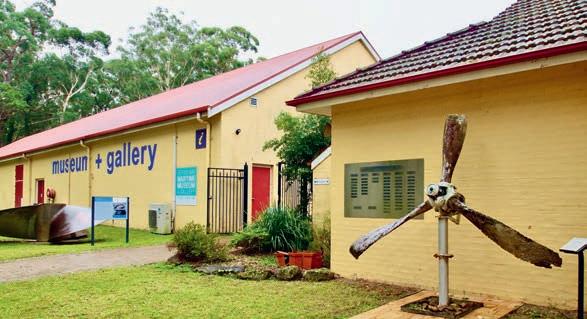
One attraction that deserves far more attention is the Jervis Bay Maritime Museum. Just a short stroll from Huskisson’s main street, it’s one of the region’s genuine hidden gems. The museum tells the story of Jervis Bay from its First Nations history through European settlement and its rich maritime heritage. The centrepiece is the beautifully restored Lady Denman, a full–sized Sydney Harbour ferry built locally, alongside historic vessels, navigational instruments, Indigenous artefacts and rotating exhibitions that reward repeat visits.
Lunch naturally calls for the Huskisson Hotel. Few pubs enjoy
Winter transforms the place. The crowds disappear and you can wander the beach for half an hour without passing another soul
a better position. Its sprawling beer garden looks directly across the sparkling waters of Jervis Bay, making it an ideal place to linger over a drink while dolphins occasionally cruise past. We ordered lunch, but while the view was five stars, the meals didn’t quite live up to the setting.
Next time we’ll make sure we arrive early enough to secure a table at 5 Little Pigs. The café came highly recommended by the Shoalhaven Food Network, but by the time we wandered over it was absolutely chockers, a sure sign the locals know something.
Husky Bay
Huskisson Pictures
The following day we headed into Booderee National Park to visit the haunting ruins of Cape St George Lighthouse. Built in 1860, the lighthouse had a surprisingly short working life before engineering problems and poor positioning led to its replacement less than 30 years later. The tower was eventually demolished in the early twentieth century after it became a navigational hazard during daylight hours. Today, the weathered stone ruins stand dramatically above the cliffs, looking out across one of Australia’s most spectacular coastlines.
Because the lighthouse sits within the national park, dogs aren’t permitted. Rather than risk a hefty fine, our faithful travelling companion stayed tucked safely under a blanket in the car while we explored the ruins. (Before the emails arrive – yes, it was a cool winter’s day, the windows were left open and he was perfectly comfortable.)
Entry to the park is straightforward. Purchase your pass online before arriving and simply show it to the ranger at the gate. One practical tip: don’t leave valuables visible inside your vehicle. Unfortunately, opportunistic thefts have occurred in the area, so it’s worth taking a few sensible precautions.
Back at Hyams Beach, some of our favourite moments require no planning at all. At the end of our street, walking tracks disappear into the bush where towering eucalyptus meet the sea. We spend hours wandering through the forest, spotting crimson rosellas, listening to the bellbirds and emerging onto secluded beaches where the only
footprints are our own.
That’s the real magic of a winter beach holiday. It’s not about ticking off attractions or racing between tourist hotspots. It’s about slowing down. Reading a book on the deck. Watching the changing light across the bay. Taking long walks with nowhere in particular to be.
Sometimes the best beach holiday isn’t the one with perfect swimming weather. It’s the one where you finally have the beach almost entirely to yourself.
AT A GLANCE
Getting there: Approximately 4 hours (340 km) by car from the Central Coast via the M1, M7 and Princes Highway.
Best time to visit: Autumn and winter for peaceful beaches, bushwalking and whale watching (May to November). Summer is ideal for swimming but expect heavy crowds.
Don’t miss:
Hyams Beach’s dazzling white sand
Jervis Bay Maritime Museum
Cape St George Lighthouse
Bushwalks through Booderee National Park
Eat:
5 Little Pigs
Huskisson Hotel
Check out Shoalhaven Food Network
Good to know: Book accommodation well ahead if travelling during school holidays. National park entry fees apply in Booderee National Park, and pets are not permitted inside the park.
handy websites and links
shoalhavenfoodnetwork.com.au
hyamsbeachseasidecottages.com.au
booderee.gov.au
jervisbaymaritimemuseum.asn.au
5littlepigs.com.au
Lady Denham Jervis Bay Maritime Museum
Hyams Beach
ENERGY: A real turn–on
BY BLAKE GRAY, PRINCIPAL, AT APEX ESTATE AGENTS
In the recent June/July issue we briefly discussed how to adapt and succeed in a changing market, such as in the adjustment we’re currently experiencing. We addressed five of the most common questions as coming from property sellers. The key takeaway from the article was that premium prices are still possible. It’s the shift in mindset and approach that produces the winning result.
There will be those of you who wish to sell in August, have plans to sell as Spring sets in around September, or perhaps your property is already listed ‘For Sale’, however, it’s not going as planned. This article is intended for you. Think of this as your pre–game huddle, just before stepping onto the real estate field. In this piece I’d like to imbue you with a sense of verve and bearing with regard to your campaign (whether it be forthcoming or already underway). After all, an adjusting market does have its challenges, but it certainly also has its rewards. And so, this article is specifically about encouraging you to think differently about energy and how to elevate it.
Here’s how to be a real turn–on in the market between now and Spring.
People talk about energy in varying contexts all the time, but almost never is it clearly defined or explained in such a way that is actionable, sustainable or very much useful. Generally energy is just a synonym for enthusiasm, positive thinking, or improving morale. This is typically an accurate interpretation when it’s invoked by sales professionals and I’ve noticed it’s being mentioned quite a bit in the space recently. While I agree that morale is unquestionably an important ingredient in success, the fallacy here is that simply thinking positively and ‘keeping the energy high’ has some sort of lasting, tangible effect. I would submit that it does not, in fact, improve output, nor alter outcomes for the better in any measurable way because there’s no framework behind it. It’s analogous to holding a pre–game
huddle to increase motivation for a match in which no gameplay and no strategy has been set with which to direct this motivation, thus it quickly evaporates. We must attempt to view energy in a new way.
From
the perspective of the campaign, energy is the total level of responsiveness, engagement and interest received from the marketplace. From the perspective of the marketplace, energy is the total level of clarity and appeal created by the campaign
I think clarity is important. So through this new lens I shall do my best to define what we mean by energy, suggest how to quantify it, and most importantly detail how it’s perceived and exchanged in property sales, all in a manner that actually translates into calculable actions that produce results.
In the context of selling real estate we can talk about energy in the following conceptual way.
Any property transaction comprises two separate hemispheres. In one hemisphere is the campaign (the seller; the agent(s); the marketing and pricing) and in the other is the marketplace (the buyers; the viewing audience; consumers of real estate content). There is always friction between these two halves. The more friction, the lower the potential offers and the less likely a sale is to take place. In the most basic sense we can define energy as it relates to each hemisphere. From the perspective of the campaign, energy is the total level of responsiveness, engagement and interest received from the marketplace. From the perspective of the marketplace, energy is the total level of clarity and appeal created by the campaign. The greater these two, the less friction between them.
Therefore, in this conceptualisation a high–energy campaign is one that pro–actively anticipates what the marketplace will find attractive. It then follows that a campaign that finds
renewed energy is one that reflexively and effectively responds to the energy it receives from the marketplace – in a fashion that amplifies the resolution of its attractiveness. In other words, a high–energy campaign should start with strong conviction, then listen to the marketplace and evolve (upscaling its qualities and minimising its liabilities as it does so).
Now a quick word on morale. Your sales agent acts as the conduit for the transferring of this energy between the two hemispheres. A skilled representative actively filters this energy for the most valuable information and in turn provides practical, evidence–based direction
for moving forward. This in itself will build reassurance and morale inside your campaign as a matter of course, as it provides the basis for the missing framework we spoke of earlier.
Conceptualise energy in this new way and you’re sure to become an appealing player on the real estate field.
For more information on some supplementary techniques for designing an attractive campaign and being a real turn–on in the market, please refer to previous issues of both On the Coast Families and On the Coast Over 55 magazines.
Blake Gray | Principal APEX Estate Agents – Blue Bay 0448 822 123 | bg@apexestateagents.com | apexestateagents.com bg_mylifeinrealestate @unlockedwithblake
APEX Estate Agents are a team of avant–garde real estate specialists, marketing experts, and consummate professionals absolutely obsessed with challenging the status quo. We exist to be the ultimate custodians for our clients, thus improving their quality of life through property – that’s our raison d’être.
– it’s more than a bowel problem
BY TARA MCKENZIE, PHYSIOTHERAPIST & AMEE RUST, OCCUPATIONAL THERAPIST
Most parents know when their child is constipated. What they don’t always realise is how much constipation can affect everything else.
Constipation can contribute to tummy pain, faecal soiling, daytime wetting, bedwetting, urinary urgency, anxiety, emotional outbursts and behavioural changes. These may seem like separate problems, but they’re often different signs of the same overloaded system.
The colon absorbs water from waste before it leaves the body. When stool remains there too long, it becomes larger, harder and more painful to pass. To avoid the discomfort, many children begin holding on. Over time, the rectum stretches and becomes less
sensitive, making it harder for the brain to recognise the normal urge to empty. The bowel gradually learns to hold rather than empty.
As the rectum fills, it also shares space with the bladder. This can reduce the bladder’s capacity and interfere with normal emptying, contributing to urinary urgency, daytime wetting and bedwetting.
The bowel doesn’t work in isolation. It is constantly communicating with the brain through its own nervous system, including pathways such as the vagus nerve. Persistent constipation doesn’t just affect the bowel—it changes the messages travelling between the bowel and the brain. Over time, this can keep the body’s stress response switched on, leaving a child more anxious, irritable and emotionally reactive.
Breathing is part of this conversation too. Every breath influences the movement of the diaphragm, abdominal wall and pelvic floor while also supporting healthy vagal regulation. Regular movement, healthy breathing and age–appropriate core strength support bowel motility, comfortable bowel emptying and a calmer nervous system.
Long–term constipation can also change interoception – the way the brain interprets signals from inside the body. As communication between the bowel and brain becomes less clear, children may stop recognising the early urge to open their bowels, miss the sensation of a filling bladder, or struggle to understand why they suddenly feel uncomfortable, worried or emotionally overwhelmed.
This is why constipation is rarely
Constipation can contribute to tummy pain, faecal soiling, daytime wetting, bedwetting, urinary urgency, anxiety, emotional outbursts and behavioural changes
just a bowel problem. It’s a whole–body problem. Recovery is about helping the bowel, bladder, brain and body work together again.
Treatment may include improving fluid and fibre intake, establishing toileting routines, restoring healthy movement and breathing, and helping children reconnect with their body’s signals.
Because constipation affects more than the bowel, assessment by a physiotherapist and occupational therapist can identify the body systems contributing to the problem. Many children improve with this approach alone. When needed, we work closely with our paediatric osteopath and movement coach, and collaborate with other health professionals to ensure
each child receives the right care at the right time.
When we stop asking, “How do we get the poo out?” and start asking, “Why has this child’s body stopped communicating so well?”, we begin treating the whole child – not just the constipation.
Tara McKenzie is a physiotherapist with a special interest in paediatric continence, movement rehabilitation and pelvic health. Amee Rust is an occupational therapist with a special interest in child development, constipation, lymphatic health and interoception. Together, they work within a multidisciplinary team to help children and families understand how the bowel, bladder, brain and body work together, so treatment addresses the cause – not just the symptoms.
WHEN ONE PARTNER WANTS SEX MORE THAN THE OTHER
Mismatched desire is common, human, and often more solvable than couples think.
BY LEIGH WALLACE, COUPLES THERAPIST AT HEART
& MIND COLLECTIVE
Almost every couple will, at some point, find themselves out of sync sexually. One person reaches for closeness while the other is exhausted, distracted, touched–out, stressed, or simply not in the same headspace. It can feel personal very quickly: Am I still attractive? Are we okay? Is something wrong with me? But mismatched desire is one of the most common concerns brought into couple therapy, and it is rarely about one simple cause.
A helpful first step is to take the pressure off and get curious. Desire lives in the body as much as the mind, so a thorough check–up with a GP can be useful. Blood pressure, blood sugar, cholesterol, thyroid function, kidney health, hormone changes, pregnancy and post–partum shifts, perimenopause, menopause, and age–related hormonal changes can all play a role. So can medication and substances, including some antidepressants, blood–pressure medication, opioids, steroids, antipsychotics, chemotherapy, cannabis, and alcohol. Even exercise can affect desire when there is too little of it, or when the body is pushed too hard for too long.
IT’S NOT JUST ABOUT SEX
Psychological wellbeing has a powerful effect on libido. Depression, anxiety, grief, trauma, low self–esteem, burnout, chronic stress, and neurodivergence can all change how available someone feels for intimacy. Grief, in particular, is broader than bereavement: leaving a job, moving house, becoming a parent, watching a child leave home, or caring for family members can all quietly
reshape a person’s inner world. When the nervous system is overloaded, desire is often one of the first things to go offline.
THE RELATIONSHIP CLIMATE MATTERS
Desire also needs emotional safety. Fear, coercive control, domestic violence, betrayal, resentment, and emotional abandonment can all make intimacy feel unsafe, even when a couple still loves each other. Everyday fairness matters too. Research has found that when women in relationships with men, carry
a greater share of household labour, their desire for their partner may drop, especially when the arrangement feels unfair or the partner starts to feel like another dependent. Put simply: it is hard to feel turned on by someone you feel you have to parent.
WHAT’S ACTUALLY ON THE MENU?
Then there is the question couples sometimes avoid: is the sex on offer genuinely appealing to both people? Desire is a little like appetite. Some people like to eat often; others are satisfied with less. Some crave novelty;
Put simply: it is hard to feel turned on by someone you feel you have to parent
others love a familiar favourite. Some nights call for a long, candlelit dinner; other nights, a quick snack is all anyone has energy for. If the sexual “menu” has narrowed to the same routine every time, it is not surprising when enthusiasm fades. Expanding intimacy beyond one script, one pace, or one definition of sex can bring playfulness and pleasure back into the room.
TWO MYTHS THAT CREATE UNNECESSARY PRESSURE
Many couples mistake normal desire patterns for a problem. One common myth is that desire should always appear spontaneously, like a lightning bolt. For some people it does. For many others,
desire is responsive: it emerges after warmth, touch, flirtation, relaxation, safety, and connection are already underway. That means a partner may not think about sex first and then seek it out; they may become interested once the right emotional and physical conditions are present. Neither style is better. They are simply different.
Another myth is that satisfying sex should centre on penetration alone. Many women do not climax through vaginal penetration without clitoral stimulation, and many people of all genders need more than a familiar routine to feel fully engaged. When sex repeatedly leaves one partner feeling unseen, rushed, pressured, bored, or unfinished, lower desire may be a reasonable response rather than a mysterious malfunction.
Talking about sex can feel awkward, especially when there has already been hurt or distance. But the goal is not
to decide who is “right” or who is “the problem.” The goal is to understand what desire is trying to tell you. Sometimes it points to health. Sometimes to stress. Sometimes to resentment, unfairness, grief, or a need for more tenderness and creativity. With honest conversation, practical care, and, when needed, support from a couple therapist or sex therapist, mismatched desire can become less of a battleground and more of an invitation: to know each other better, care for each other more fully, and build a sex life that feels good for both of you.
For many others, desire is responsive: it emerges after warmth, touch, flirtation, relaxation, safety, and connection are already underway
Leigh Wallace has a Master of Counselling degree and works as a couple therapist at the Heart and Mind Collective in North Gosford. She uses Emotionally Focused Therapy for Couples as her primary modality. Her practice is trauma–informed, person–centered, and neurodivergence–affirming. She has completed further study in sexual issues that occur commonly in relationships. The Heart and Mind Collective – 6/31 Dwyer Street, North Gosford | 02 4327 9435 | www.theheartandmindcollective.com.au
DRESSING TO EXPRESS YOUR
personality & style
BY SAM & JORDI WOODS
The real joy in style isn’t about becoming someone else – it’s about uncovering what already feels right for you, and learning how to express that in a way that feels natural, confident, and completely your own. When you start to understand your personal style, getting dressed stops feeling like a decision and starts feeling like self–expression. It becomes less about rules and more about alignment – what feels good, what feels like “you,” and what helps you show up in the world with ease.
There will always be moments where dress codes or expectations apply. Certain settings call for a level of consideration. But even then, style doesn’t disappear. It adapts. There is still space within structure to express personality, taste, and individuality without losing yourself in the process. Interestingly, style awareness starts far earlier than most people realise. Even as young as three years old, humans begin showing preference – choosing colours, textures, or items they feel drawn to. While they may not yet understand context or appropriateness, they are already beginning to recognise what they like and don’t like. That early instinct is the foundation of personal style, and it continues evolving throughout life.
Wherever you are on your journey, exploring your style is less about defining an identity and more about learning your visual language. Your “style words” become a helpful way to translate how you feel into how you present yourself, giving direction without restricting creativity.
SO WHERE DO YOU BEGIN?
Here are 6 simple ways to start your style discovery process:
Pay attention to colour. Notice what consistently draws you in – whether that’s soft neutrals, earthy tones, bold brights, monochrome looks, or a blend of everything. Gather inspiration and create a visual reference of the colours you naturally gravitate towards.
Explore different style categories. Look into aesthetics like minimal, classic, edgy, quirky, elegant, bold, or playful. Don’t rush this stage – simply observe what feels exciting, comfortable, or inspiring. Over time, patterns will emerge, often forming 3–5 core “style words.”
Begin experimenting with pieces that reflect those words. For example, a minimal direction might lean into clean silhouettes and simple tailoring, while a quirky direction might include unexpected shapes, textures, or colour combinations that feel expressive and fun.
Focus on your own response rather than outside influence. Trends and opinions will always exist, but your style becomes stronger when it reflects what you genuinely like—not what you feel you should wear.
Work with what you already have. Try creating outfits from your wardrobe that reflect your chosen style words, and take photos to build a visual diary. This helps you see patterns and refine your direction over time.
Allow it to evolve. Style is not something you complete—it’s something you continue to explore. As you grow and change, your style will naturally shift with you, and that evolution is part of what keeps it feeling current and authentic.
Enjoy the process of discovering your style language and letting it unfold naturally. And if you ever need guidance, we are here to support you with our safe, welcoming and professional online or face to face services. Vibrantly yours, Sam & Jordi xx
Understanding styling and fashion is one thing. Having a super natural flair for making everyday people look incredible is another. Once you’ve met Sam and Jordi Woods, it’s hard not to catch their infectious passion for dressing to match your own lifestyle, personality and charisma. Through their consultancy ‘Vibrant Concepts’, Sam and Jordi have transformed the lives of thousands. Let Sam and Jordi show you how to look and feel fabulous everyday – learn the art of illusion dressing, colour matching, styling, translating fashion trends and savvy shopping with their unique VC Signature Styling Systems and services that are truly personal and really work! To contact Vibrant Concepts phone
How to raise emotionally resilient kids: beyond “toughen up”
BY ALEX WILSON, ACCREDITED MENTAL HEALTH SOCIAL WORKER AND DIRECTOR AT MINDFUL RECOVERY SERVICES
As parents, we all want the same thing. We want our children to be happy, confident and resilient. We want them to cope when friendships become tricky, bounce back after disappointment and believe they can handle whatever life throws their way.
But in trying to help, it’s easy to fall into one of two traps. The first is the old–fashioned approach of encouraging children to “toughen up,” “stop crying,” or “get over it.” While these comments are often well–intentioned, they can
leave children feeling like big emotions are something to hide rather than understand.
The second is wanting to protect our children from every difficult feeling. We smooth the path, solve problems for them and do everything we can to stop them feeling disappointed, anxious or frustrated.
The truth is, neither approach builds emotional resilience. Resilience isn’t about pretending emotions don’t exist, nor is it about removing every challenge from a child’s life. It’s about helping children learn that difficult emotions are part of being human, and that they have the skills to move through them.
HERE ARE SOME TIPS TO TEACHING THESE SKILLS:
Start by validating emotions. Validation doesn’t mean agreeing with every behaviour or lowering expectations. It simply means letting your child know their feelings make sense. Instead of saying, “It’s not a big deal,” instead try, “I can see why you’re disappointed,” or “That sounds really frustrating.” Children calm down more quickly when they feel understood. Once emotions settle, they’re much more able to think, problem solve and learn.
Resist the urge to rescue too quickly. When children struggle, our instinct is often to jump in and fix things. Sometimes that’s needed – but often
Resilience isn’t about pretending emotions don’t exist, nor is it about removing every challenge from a child’s life. It’s about helping children learn that difficult emotions are part of being human, and that they have the skills to move through them
they need coaching more than rescuing. Ask yourself
“Can my child do this with a little support?” Rather than solving the problem, help them think through possible solutions. This builds confidence and teaches them they can cope with challenges themselves.
Praise courage, not just success. Instead of focusing only on outcomes, notice the effort it took.
“I know you were nervous about speaking in class, but you gave it a go.” “You kept trying even though it was hard.” Children develop resilience by learning that bravery
isn’t the absence of fear – it’s taking the next step despite feeling uncomfortable.
Let them experience manageable disappointment. Not making the team, losing a game or having a disagreement with a friend can feel heartbreaking in the moment. While it’s difficult to watch, these experiences are often where resilience grows. Rather than trying to remove every obstacle, stay alongside your child as they work through it. They learn, “This was hard – but I got through it.”
Model resilience yourself. Children learn more from watching us than they do from listening to us. When something doesn’t go to plan, let them hear you say, “That was disappointing, but I’ll work out what to do next.” Seeing adults experience emotions calmly and recover from setbacks teaches children that resilience is something we practise throughout life.
Perhaps the most important thing to remember is that resilience isn’t built in one big conversation. It’s built in hundreds of small moments – after a difficult school day, following an argument with a sibling, before a sporting competition or when plans don’t work out.
These everyday moments become opportunities to teach children that emotions aren’t dangerous, setbacks aren’t permanent, and they are more capable than they realise.
Resilience isn’t about raising children who never struggle. It’s about raising children who know that when life gets hard – as it inevitably will –they have the skills, confidence and support to keep moving forward.
Alex Wilson is an Accredited Mental Health Social Worker and Director of Mindful Recovery Services on the Central Coast. She specialises in Dialectical Behaviour Therapy (DBT), emotional regulation, trauma and ADHD, helping adolescents, adults and families build the skills to manage life’s challenges with confidence.
Healthy eyes, happy kids:
lo oking after your child’s vision
BY SAM SAVVA, PRACTICE MANAGER AND FRAME STYLIST AT ADRENALINE OPTOMETRY
As parents, we do everything we can to keep our children healthy. We make sure they eat well, wear sunscreen, buckle up in the car and stay active. But one area that’s often overlooked is eye health.
Good vision plays a vital role in a child’s development. From learning to read and write, to playing sport, building confidence at school and exploring the world around them, healthy eyes help children get the most out of every stage of life.
The challenge is that children don’t always realise when something isn’t quite right with their vision. If they’ve always seen the world a certain way, they often assume that’s how everyone sees it. Because of this, vision problems can sometimes go unnoticed.
Some children may squint, rub their eyes frequently, sit very close to the television, struggle with reading, complain of headaches or avoid activities that require good vision. Others may show no obvious signs at all, making regular eye examinations an important part of their overall healthcare.
It’s also important to remember that clear eyesight isn’t the only measure of healthy vision. The way the eyes work together, focus and track can all influence a child’s comfort, learning and everyday activities. Early detection of vision problems can make a significant difference and may help prevent issues from affecting a child’s confidence or development.
Outdoor play is another simple way to support healthy eyes. Encouraging
children to spend time outside, away from screens, has become increasingly important. Whether they’re riding bikes, kicking a football, exploring local parks, building sandcastles at the beach or simply playing in the backyard, time outdoors offers benefits for both their physical wellbeing and their developing eyes.
While they’re outside, don’t forget sun protection for their eyes. Australia has some of the highest UV levels in the world, and children’s eyes are more vulnerable because they are still developing. Just as we wouldn’t send our children outside without sunscreen or a hat on a sunny day, quality sunglasses should also be part of their everyday routine.
With so many fantastic children’s and youth sunglasses available today –from brands like Nike, Oakley, Ray–Ban and many others – parents are spoiled for choice. The brand itself is less important than the level of protection it provides. My advice is always the same: choose sunglasses that offer UV400 protection (100% UVA and UVB protection) and polarised lenses. UV400 helps shield developing eyes from harmful ultraviolet rays, while polarised lenses reduce glare from water, roads, sand and other reflective surfaces, making outdoor activities more comfortable.
One children’s brand I often
recommend to parents is Leosun. Designed specifically for babies, toddlers and children, Leosun sunglasses combine 100% UVA and UVB protection with polarised lenses to reduce glare, while their lightweight, flexible frames are built to handle active little adventurers. They come in a fantastic range of fun colours and styles that children actually enjoy wearing, and with sizes available from as young as 2 months through to around 13 years, it’s easy to find a comfortable fit as your child grows. They’re ideal for everything from beach days and family holidays to weekend sport, bike rides, playground adventures and simply walking to school.
Outdoor play is another simple way to support healthy eyes. Encouraging children to spend time outside, away from screens, has become increasingly important
The good news is that looking after your child’s eyes doesn’t have to be complicated. A few simple habits can make a big difference:
Australia has some of the highest UV levels in the world, and children’s eyes are more vulnerable because they are still developing. Just as we wouldn’t send our children outside without sunscreen or a hat on a sunny day, quality sunglasses should also be part of their everyday routine
Encourage regular outdoor play.
Limit unnecessary recreational screen time and remember regular breaks during longer periods of close work.
Make hats and quality sunglasses part of every outdoor adventure.
Ensure prescription glasses are worn if recommended.
Schedule regular eye examinations to monitor healthy visual development.
If you’d like to learn more about your child’s eye health or have any concerns about their vision, book an appointment with Dr Baz at Adrenaline Optometry. Dr Baz is passionate about helping children achieve their best possible vision and providing families with personalised advice on eye health, visual development and the right eyewear for every stage of childhood. A comprehensive eye examination can provide valuable peace of mind and help ensure your child’s eyes are ready for all of life’s adventures.
Adrenaline Optometry
1/15 Church Street, Terrigal 02 4339 0900 or visit adrenalineoptometry.com.au
Sam Savva, is the Director of Operations at Adrenaline Optometry. As a passionate advocate for children’s eye health, Sam enjoys helping parents and grandparents understand the simple steps they can take to protect young eyes. Through community education, Sam hopes to encourage families to make eye care part of everyday life, so children can see clearly, play confidently and enjoy every adventure life has to offer.
WE CAN EAT A R A I N B O W
BY CARIN CLEGG, DIETITIAN AND FITNESS PROFESSIONAL AT BRIGHT DIETS
When it comes to diversity, vegetables are the most diverse food group of them all. But at least 80% of Aussies fall short of the 5 serves or 2 and a half cups our bodies need to eat each and every day to stay in tip top health. There are a myriad of reasons for this.
LEARNING TO EAT VEGETABLES AS A CHILD IS NOT EASY.
• There are over 50 different types of vegetables out there. They come in lots of different varieties with varying colours and shapes and sizes. The texture and taste changes depending on the season, when it was picked and how ripe it is. For example, a pumpkin sitting in the fridge can taste more or less sweet by the end of the week. Many kids learning to eat vegetables can easily pick up on these variations and this impacts their expectation, willingness to try again and enjoyment.
• It can take over 14 exposures to learn to like a new food when it is presented in exactly the same way. If prepared in different ways i.e. cooked, raw, cut up or grated, they are a totally different eating experience with a different taste and texture. You could compare eating vegetables to listening to a song. You may not like it at first but when you hear the pattern of lyrics and the tune repeat, it becomes familiar. The more times you listen to a song, often, the more you like it. The same goes with vegetables.
• Vegetables are physically difficult to eat. The tough fibres need good jaw strength to grind them down during the eating process. From the age of 3 years old we develop this good jaw strength to help us eat vegetables better. That means for kids there is a huge effort with little reward.
VEGETABLES ARE OFTEN THOUGHT OF AS A DINNER TIME FOOD.
At the end of a hard day of play or school having the concentration, let alone energy to eat something a bit unfamiliar can be difficult.
VEGETABLES ARE DISPLACED BY DISCRETIONARY FOODS
For the past century, our society has
been exposed to a much higher amount of discretionary food advertising, over $400 million per year, far greater than any other fresh wholesome food group. Their advertising is so clever that it has built an emotional connection with us and their foods and ingrained them into our cultures and traditions. Consequently, they are consumed in excess, being 30% of our energy intake. This also means they often replace vegetables in our diet and, often in the case of children, displaces an appetite for vegetables.
VALUING YOUR VEGETABLES
All the colours of the different vegetables give us different health benefits with the wide range of vitamins, minerals, antioxidants, fibres and phytochemicals. Eating your 5 serves daily helps to keep your immune system and gut working optimally. They reduce the ageing process, inflammation, reduces risk of cancer, cardiovascular disease, diabetes and a range of other health conditions.
THE POT OF GOLD AT THE END OF YOUR VEGETABLE RAINBOW
• Eating a healthy diet with adequate vegetables is cheaper when looking at the bank account. But healthy eating involves skills of organisation, meal planning, shopping and cooking skills and these skills take time to learn.
• Eating healthy including adequate vegetables is cheaper long term when taking into account the impact of low vegetable intake on sick days and the development of chronic diseases like heart disease, diabetes and liver disease.
• Vegetable are affordable when you buy them in season and buy from farmer delivery box companies: Box Divy, Good and Fugly, Farmer’s Pick.
• Even cheaper, grow your own. Get
inspired from your local community garden, Permaculture Central Coast, and even the Edible Garden Trail.
It can take over 14 exposures to learn to like a new food when it is presented in exactly the same way
BUILD
A LOVING RELATIONSHIP WITH VEGETABLES:
• Growing your own vegetables helps build the food story and relationship, it sparks a curious interest to learn about a child’s world, without the pressure to eat it.
• Buy vegetables without packaging so everyone can build that direct tactile relationship with vegetables when unpacking the shopping or helping with meal prep. This helps to learn what it will smell and taste like before being served. We also learn how to care for vegetables and avoid food wastage. Do they need to be in the fruit bowl, dark storage cupboard or in the fridge?
• Cook together as a family, allocating time to include vegetables with most meals and snacks can offer more opportunities to bump up the veggie intake.
• Get musical and listen to songs about vegetables to counteracts all that advertising of non–nutritious foods. Have you heard of the Formidable Vegetables, The Vegetable Plot, or the Teeny, Tiny Steevies? Give them a listen and I bet your whole family will be singing and dancing and loving their veggies too!
Carin Clegg is a Paediatric Dietitian and Fitness Professional at Bright Diets with an interest in sustainability. Carin wants everyone to be clever about their eating to feel happy, healthy and vibrant! Reach out at 0413 774 411, www.brightdiets.com.au or on the socials.