EXECUTIVE EDITOR OF INTERNATIONAL & CO-HEAD OF FILM Andreas Wiseman
SENIOR MANAGING EDITOR Denise Petski
MANAGING EDITOR Erik Pedersen
DEPUTY MANAGING EDITOR Tom Tapp
PHOTO EDITOR/ARTS & CULTURE EDITOR Robert Lang
EDITOR-AT-LARGE Peter Bart
SENIOR VICE PRESIDENT, CONTENT, INTERNATIONAL Stewart Clarke
INTERNATIONAL FEATURES EDITOR Diana Lodderhose
BUSINESS EDITOR Dade Hayes
CO-BUSINESS EDITOR Jill Goldsmith
POLITICAL EDITOR Ted Johnson
FILM EDITOR Justin Kroll
NEW YORK & BROADWAY EDITOR Greg Evans
ASSOCIATE EDITOR, TELEVISION Rosy Cordero
SENIOR TV & LABOR REPORTER Katie Campione
SENIOR FILM REPORTER Matt Grobar
INTERNATIONAL INVESTIGATIONS EDITOR Jake Kanter
SENIOR INTERNATIONAL FILM CORRESPONDENT Melanie Goodfellow
INTERNATIONAL TELEVISION CO-EDITOR Max Goldbart
INTERNATIONAL TELEVISION CO-EDITOR Jesse Whittock
INTERNATIONAL REPORTER Zac Ntim
CONTRIBUTING EDITOR, ASIA Liz Shackleton
ASIA REPORTER Sara Merican
ASSOCIATE EDITOR Glenn Garner
SEO STAFF WRITER Dessi Gomez
STAFF WRITER Armando Tinoco
WEEKEND EDITOR Natalie Oganesyan
BUSINESS LEADERSHIP
Carra Fenton SENIOR VICE PRESIDENT, ENTERTAINMENT SALES
Céline Rotterman SVP, GLOBAL BUSINESS DEVELOPMENT & STRATEGIC PARTNERSHIPS
Brianna Corrado PRESIDENT, ENTERTAINMENT SALES
Melinda Carson VICE PRESIDENT, SALES & EVENTS
Nadia Romdhani SALES DIRECTOR, INTERNATIONAL
Luke Licata MANAGER, SALES PLANNING
Alan Peterson ACCOUNT MANAGER
Caitlyn Halfon SALES PLANNER
ART
Fah Sakharet DESIGN DIRECTOR
Paige Petersen DESIGNER
Terrence Ellsworth DESIGN PRODUCTION COORDINATOR
EVENTS AND MARKETING
Laureen O’Brien DIRECTOR, BRAND MARKETING
Renee Amponin SENIOR ASSOCIATE, SALES & MARKETING
Ally Goldberg EVENTS MANAGER
Maddy Situmeang SENIOR EVENTS ASSOCIATE
Grace Gamper EVENTS ASSOCIATE
PHOTOGRAPHY AND VIDEO
Michael Buckner CHIEF PHOTOGRAPHER
Benjamin Bloom VIDEO DIRECTOR
Jade Collins VIDEO PRODUCER/EDITOR
Francis Ray Rettinger VIDEO PRODUCER/EDITOR
Stevie Szerlip VIDEO PRODUCER/EDITOR
SOCIAL MEDIA
Scott Shilstone DIRECTOR, SOCIAL MEDIA
Natalie Sitek SOCIAL MEDIA MANAGER
Nada Aboul Kheir SOCIAL MEDIA COORDINATOR
PRODUCTION
Natalie Longman PRODUCTION DIRECTOR
Michael Petre DISTRIBUTION DIRECTOR
Andrea Wynnyk PRODUCTION MANAGER
CALL SHEET
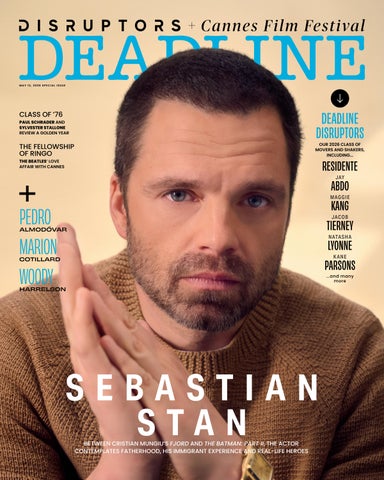
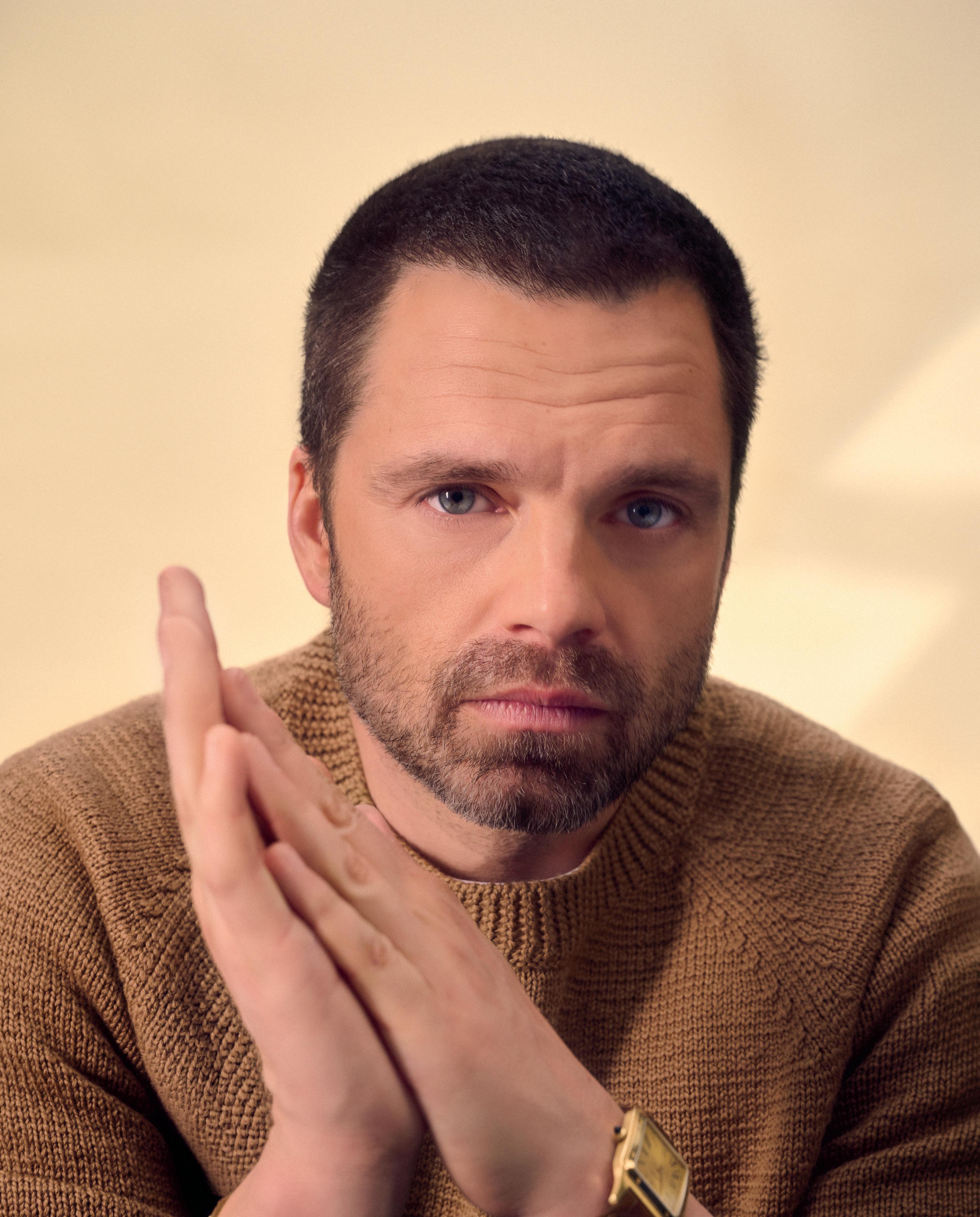
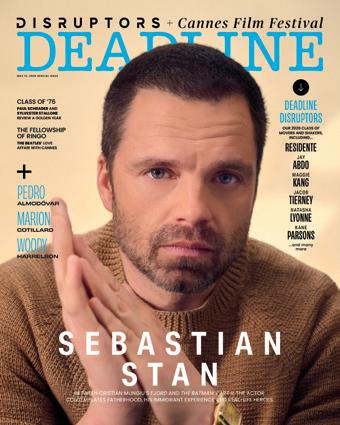
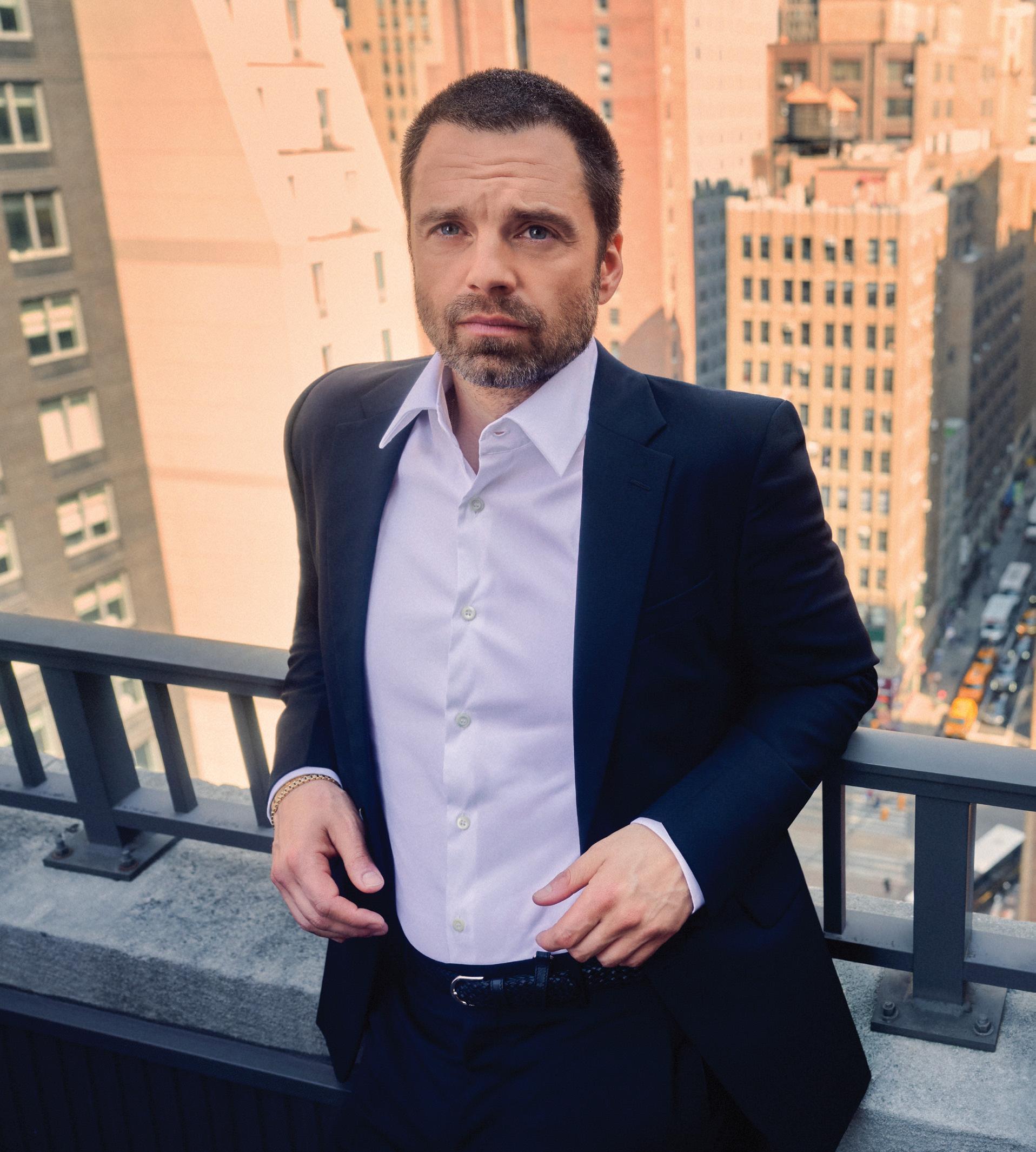
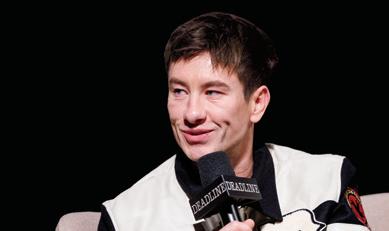
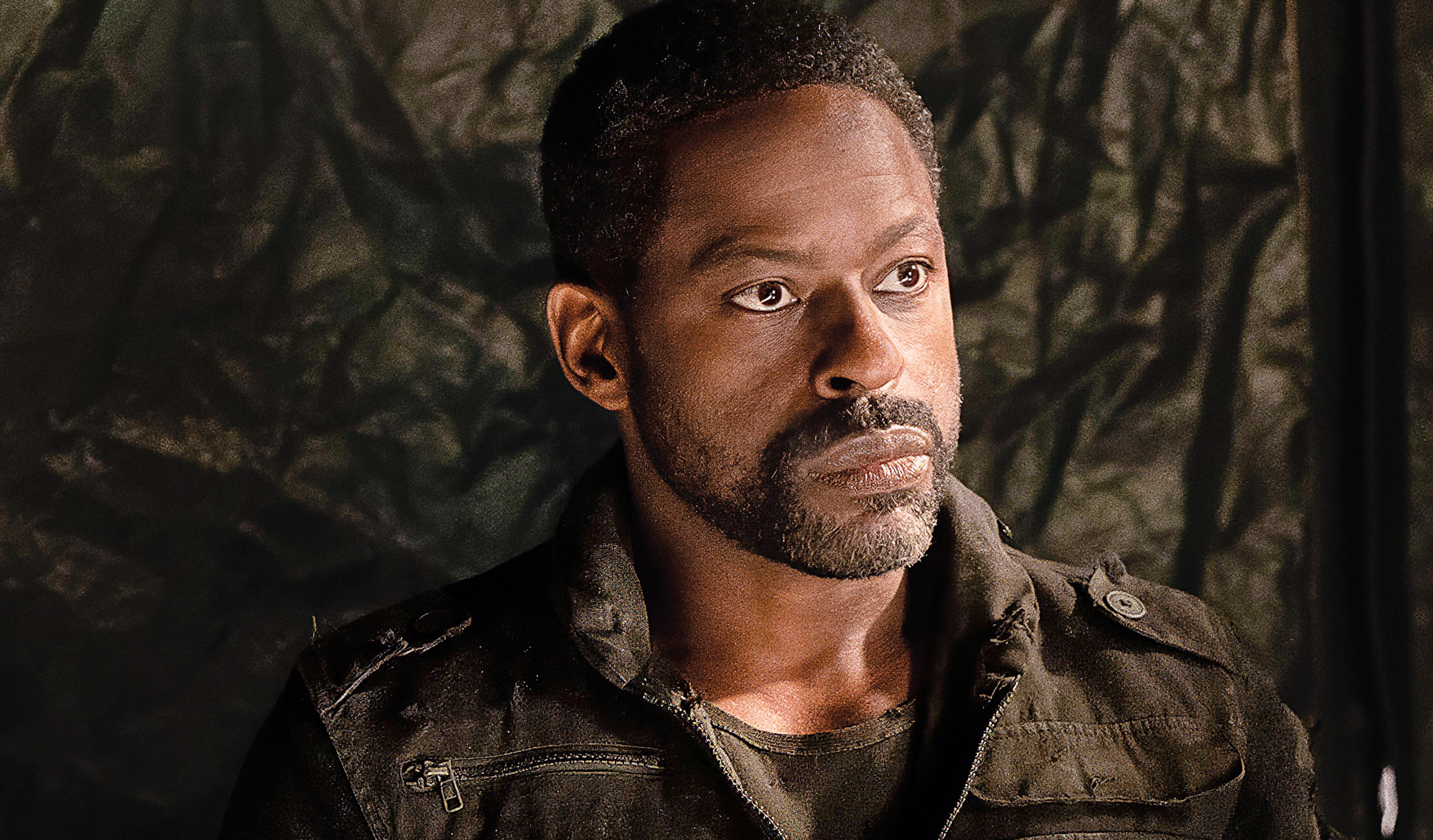
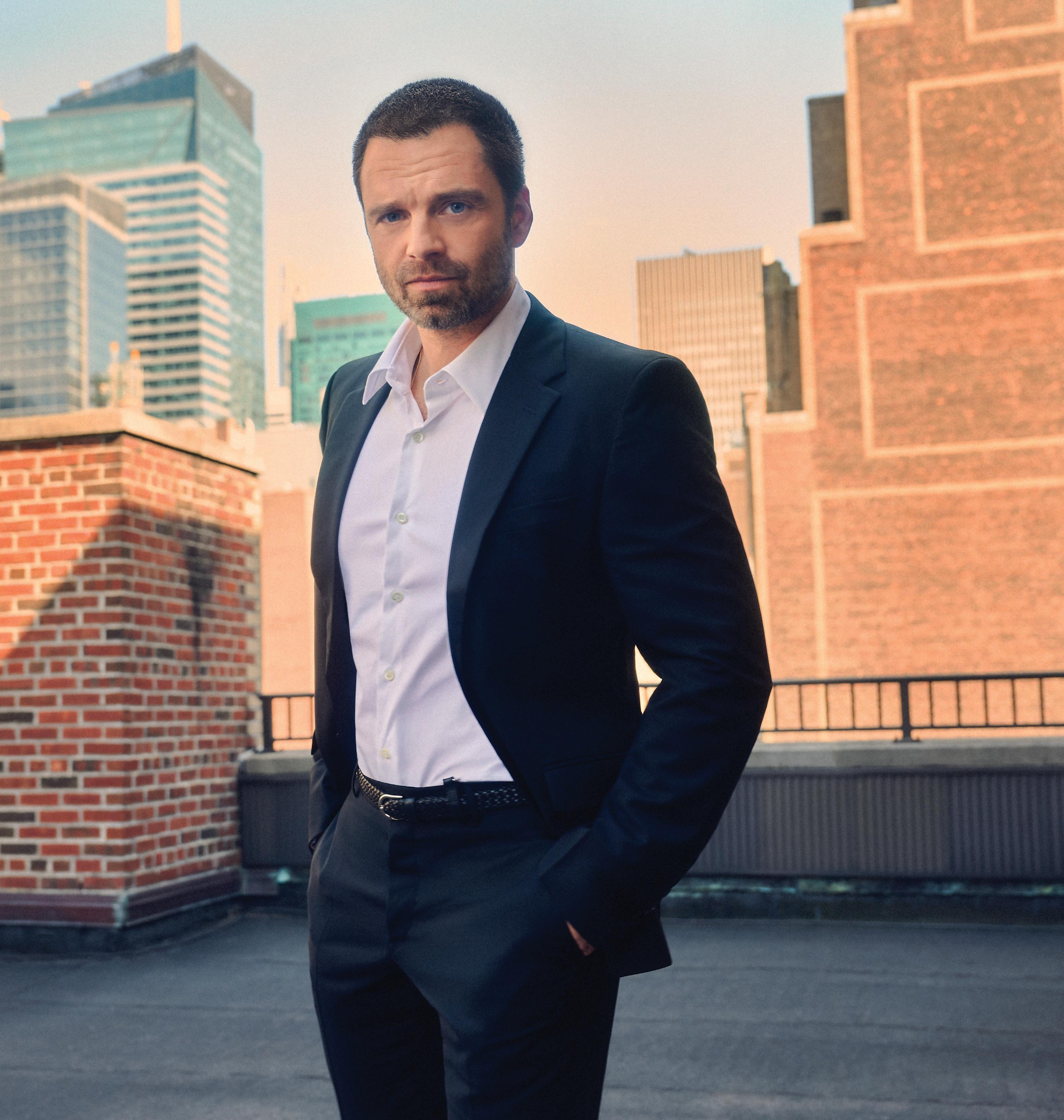
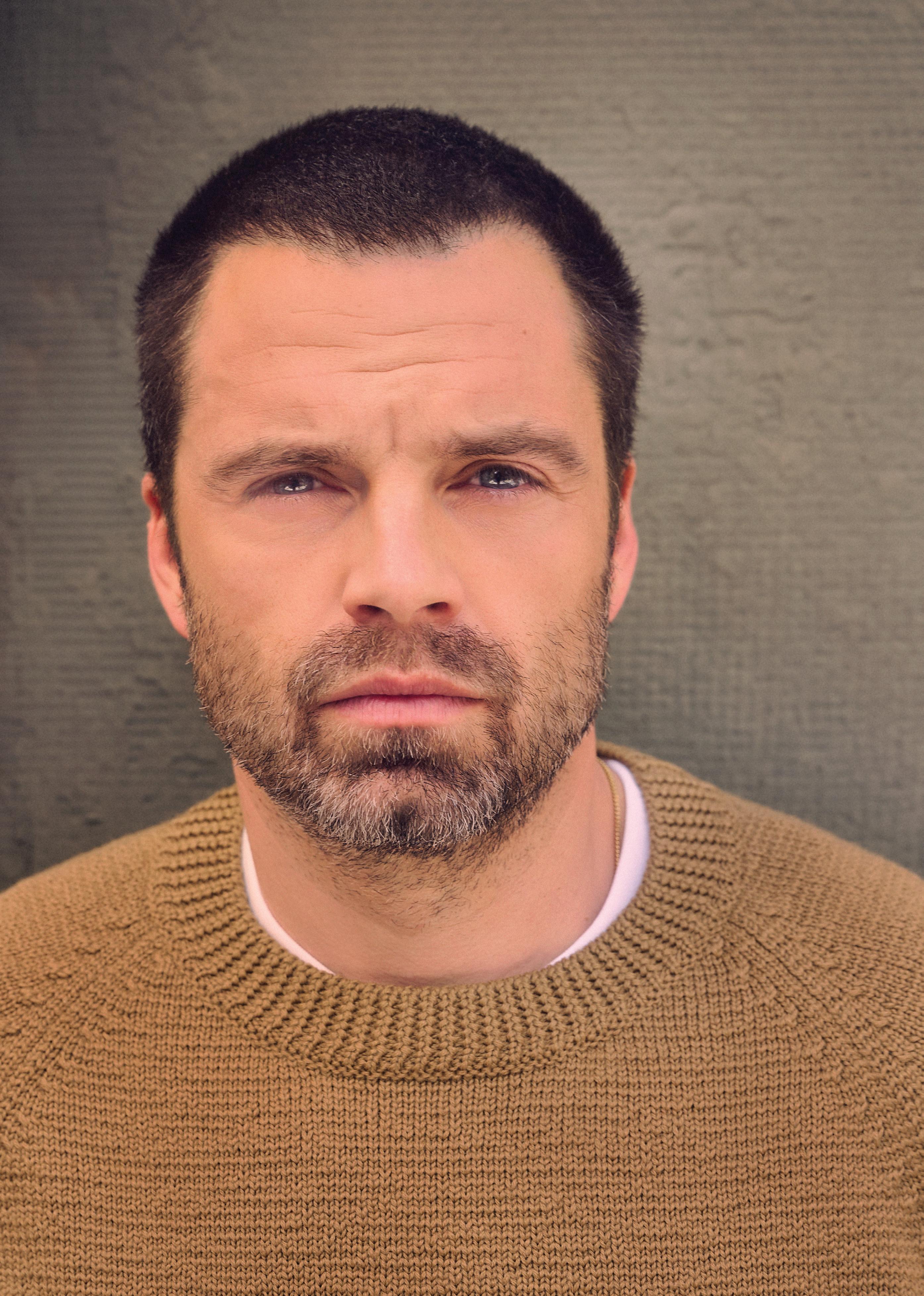
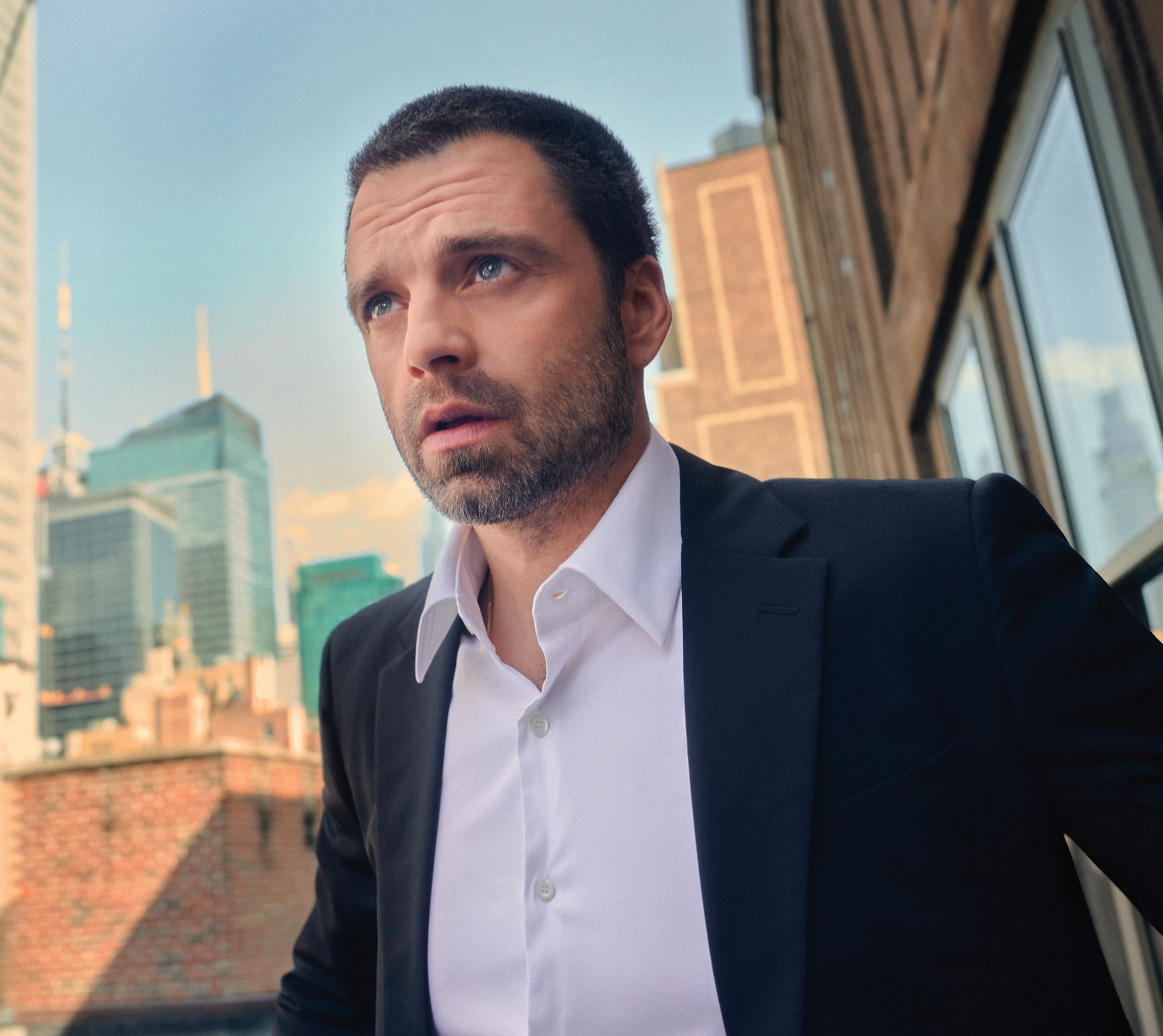
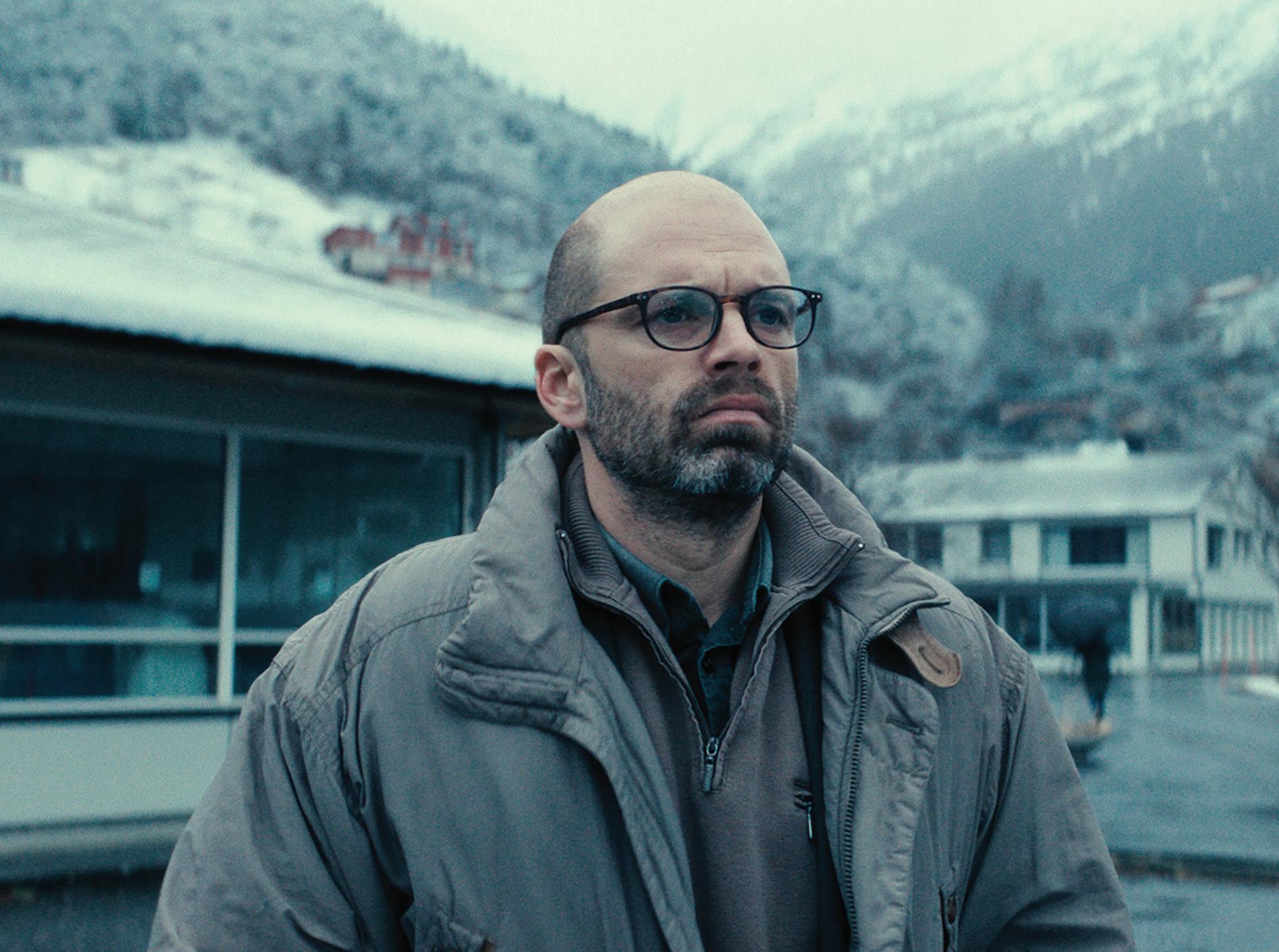
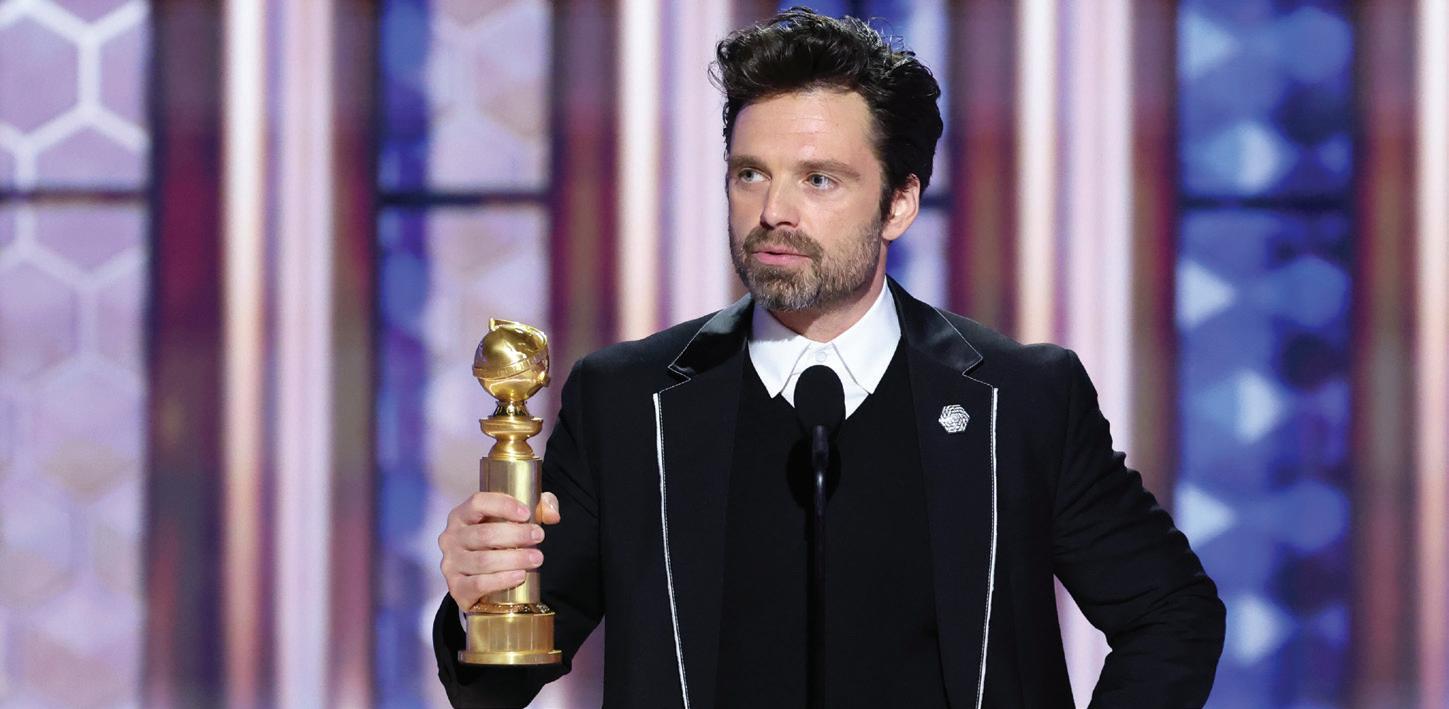
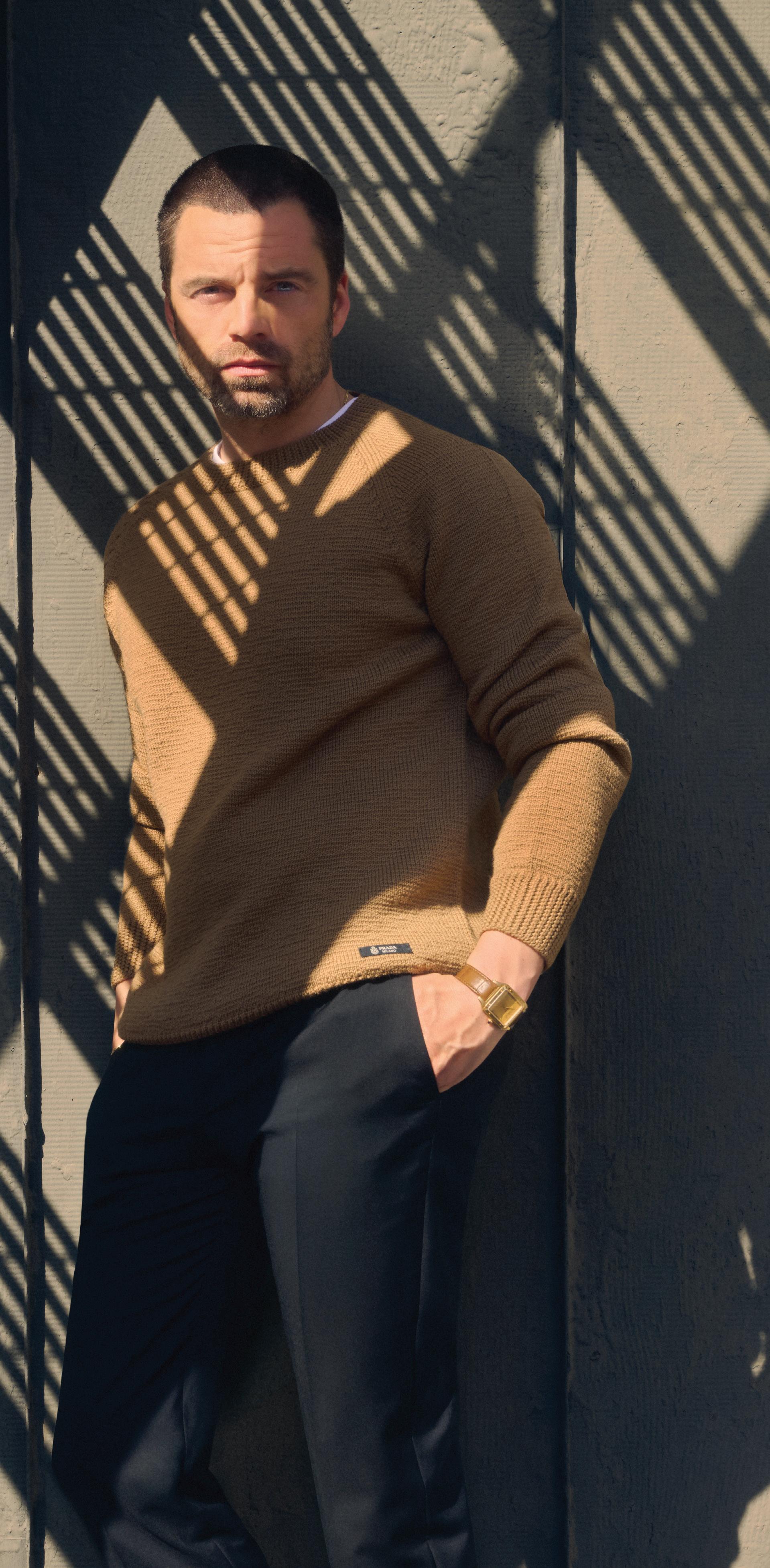
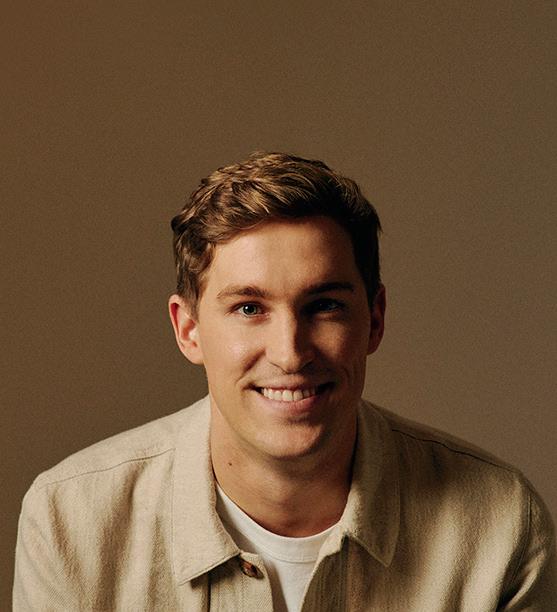
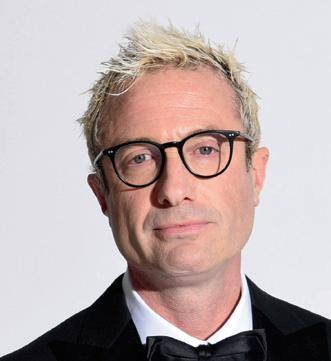
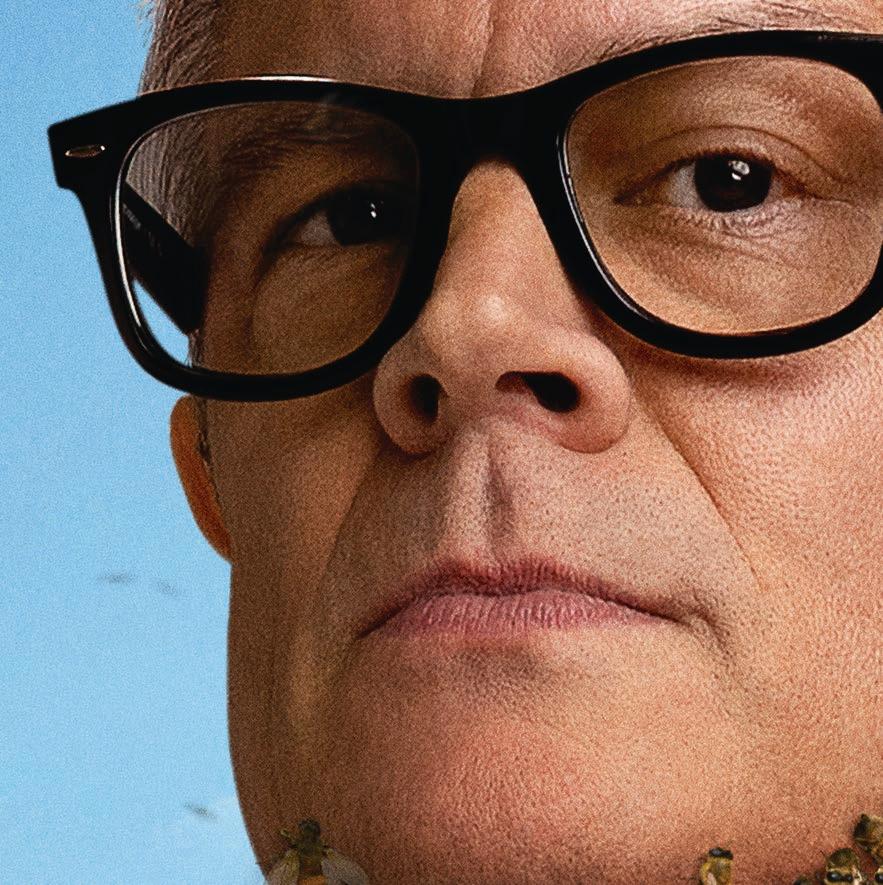
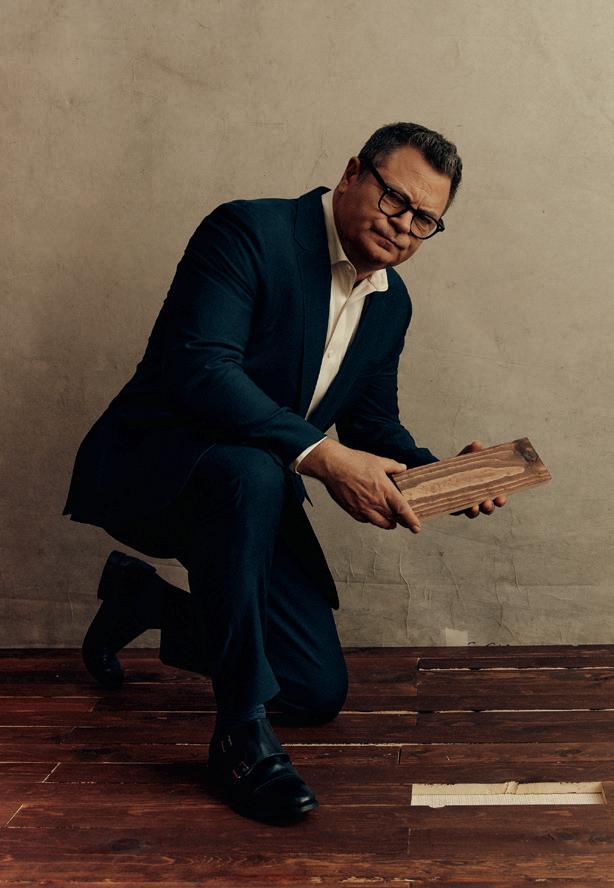
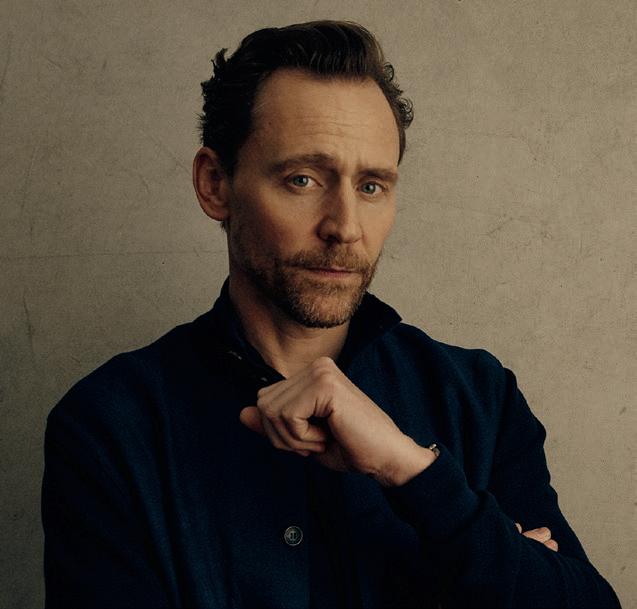
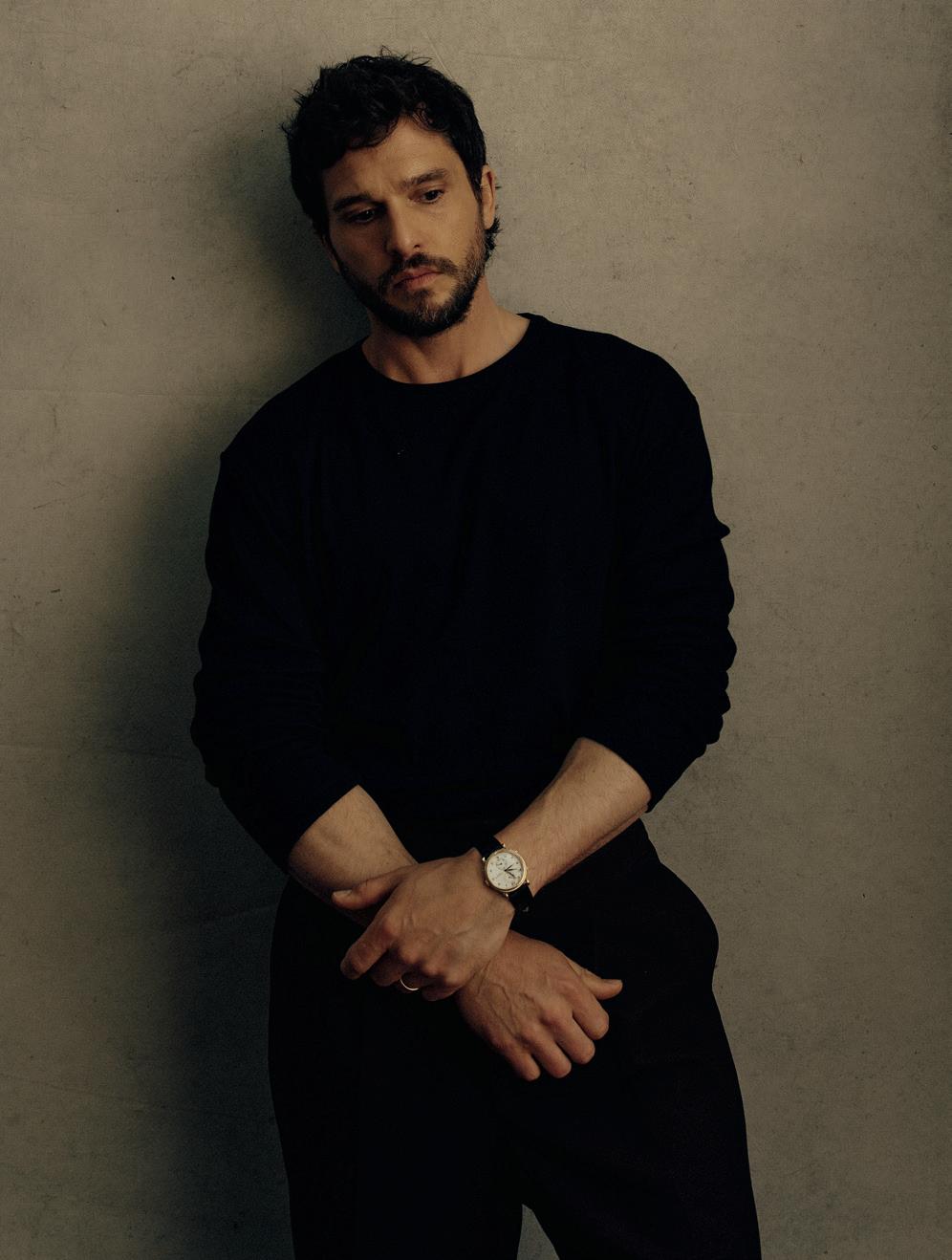
ON THE COVER Sebastian Stan photographed exclusively for Deadline by Andrew Zaeh.
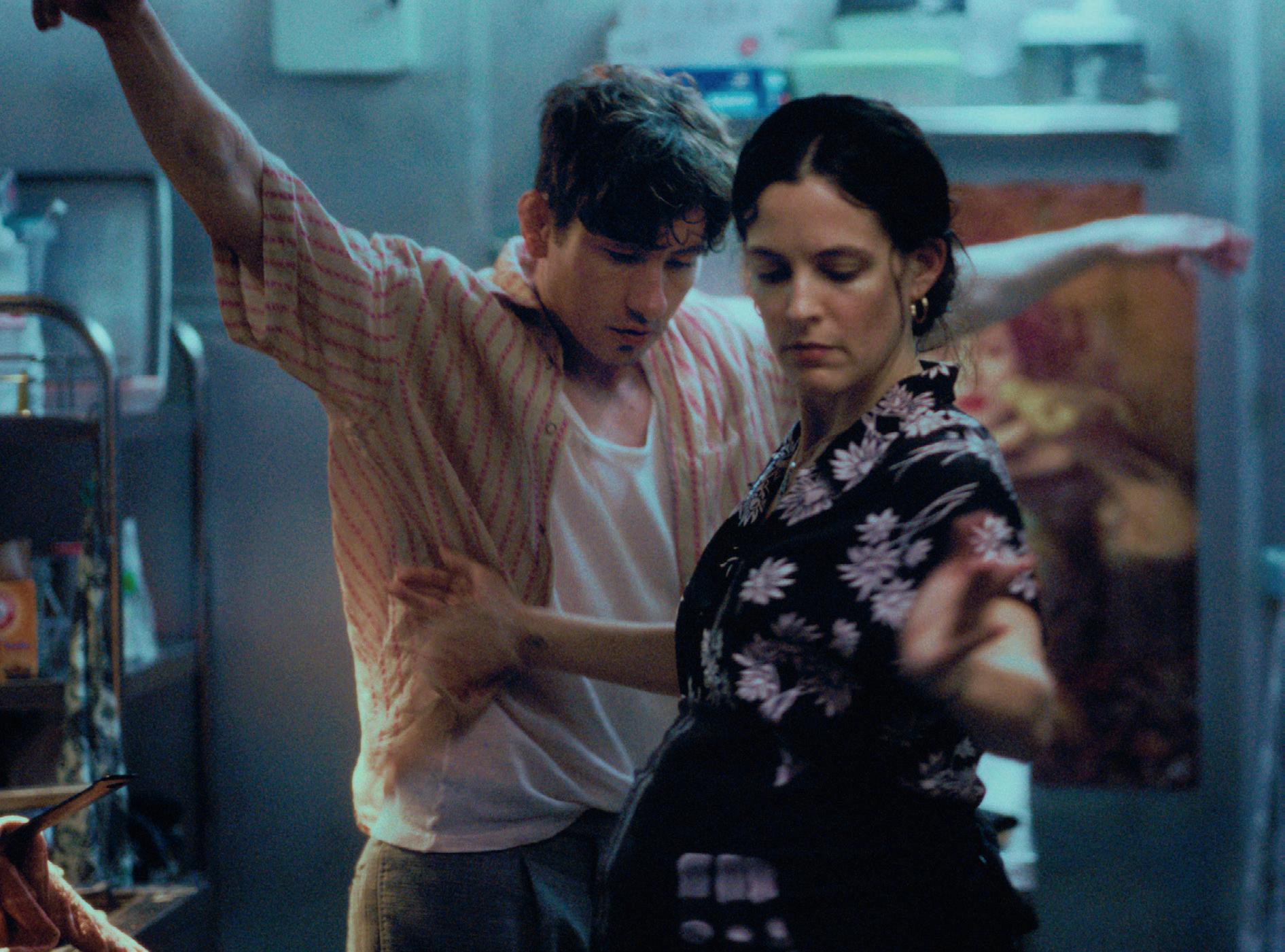
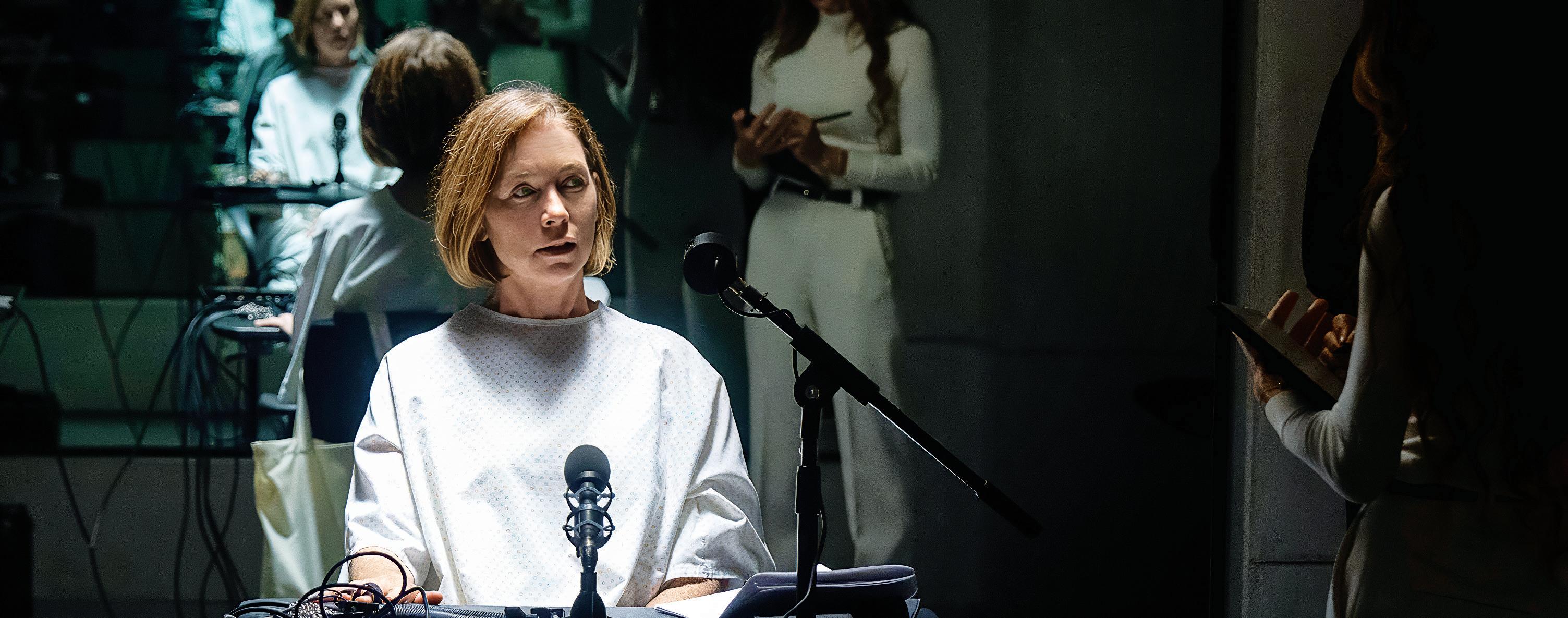
Steven Soderbergh’s new John Lennon doc is premiering in Cannes. But it won't be the first time a Beatle was celebrated on the Croisette…
By Damon Wise
Shot on location at Go Studios, New York.
Cannes Film Festival 2026
Premiere
8 ONES TO WATCH
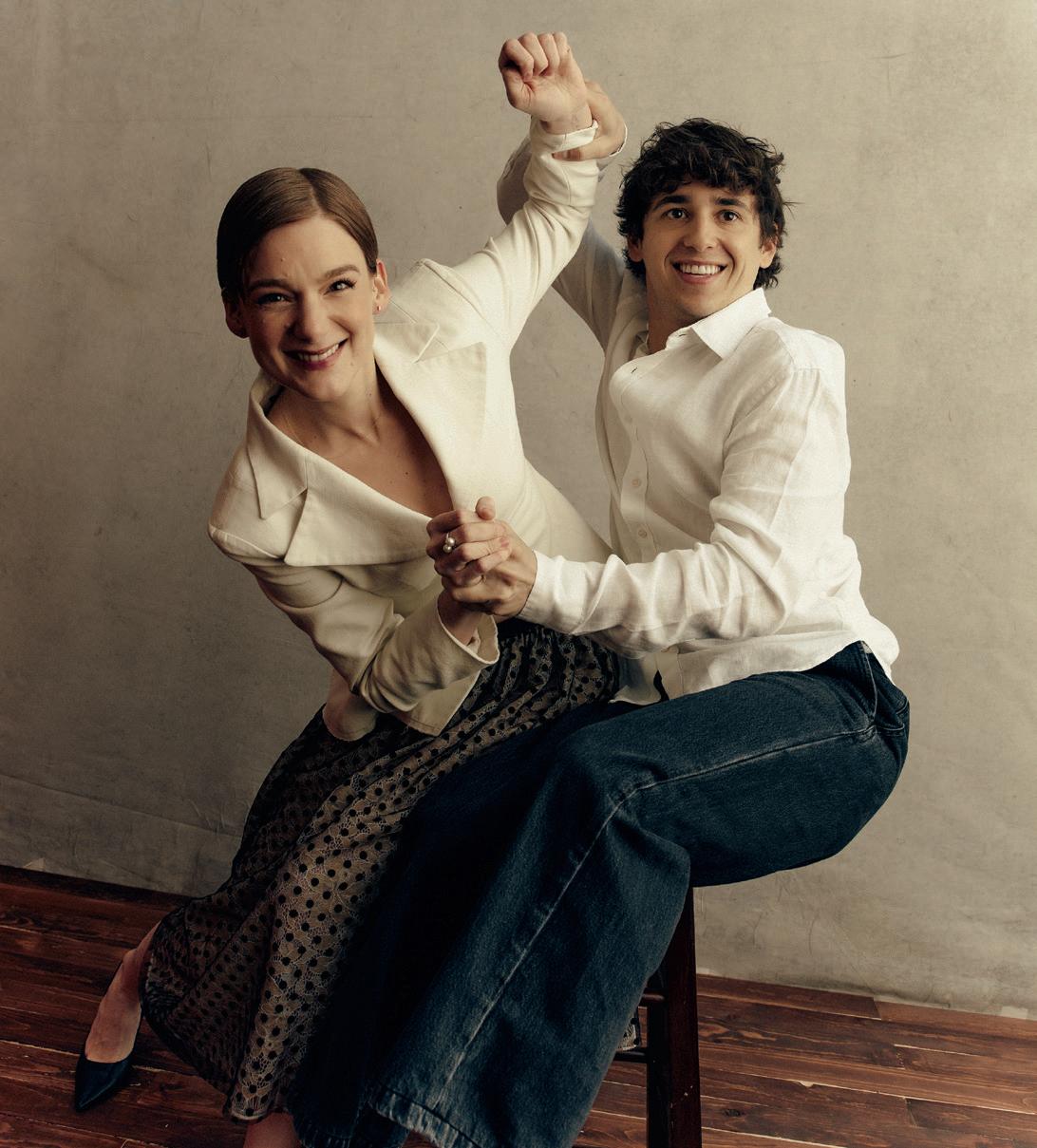
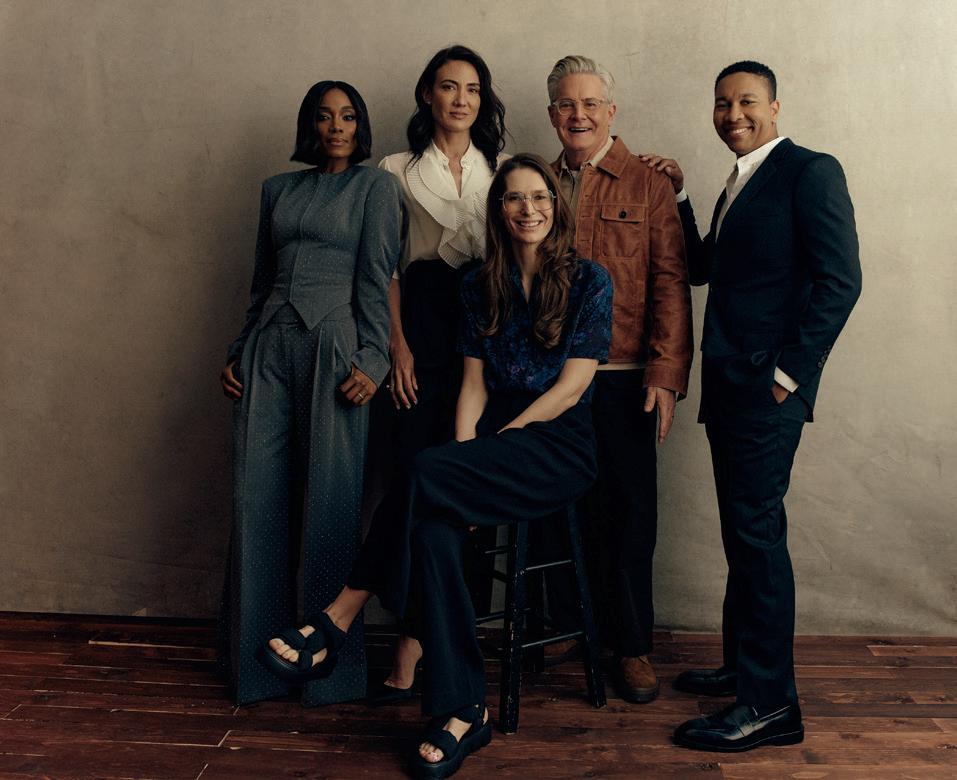
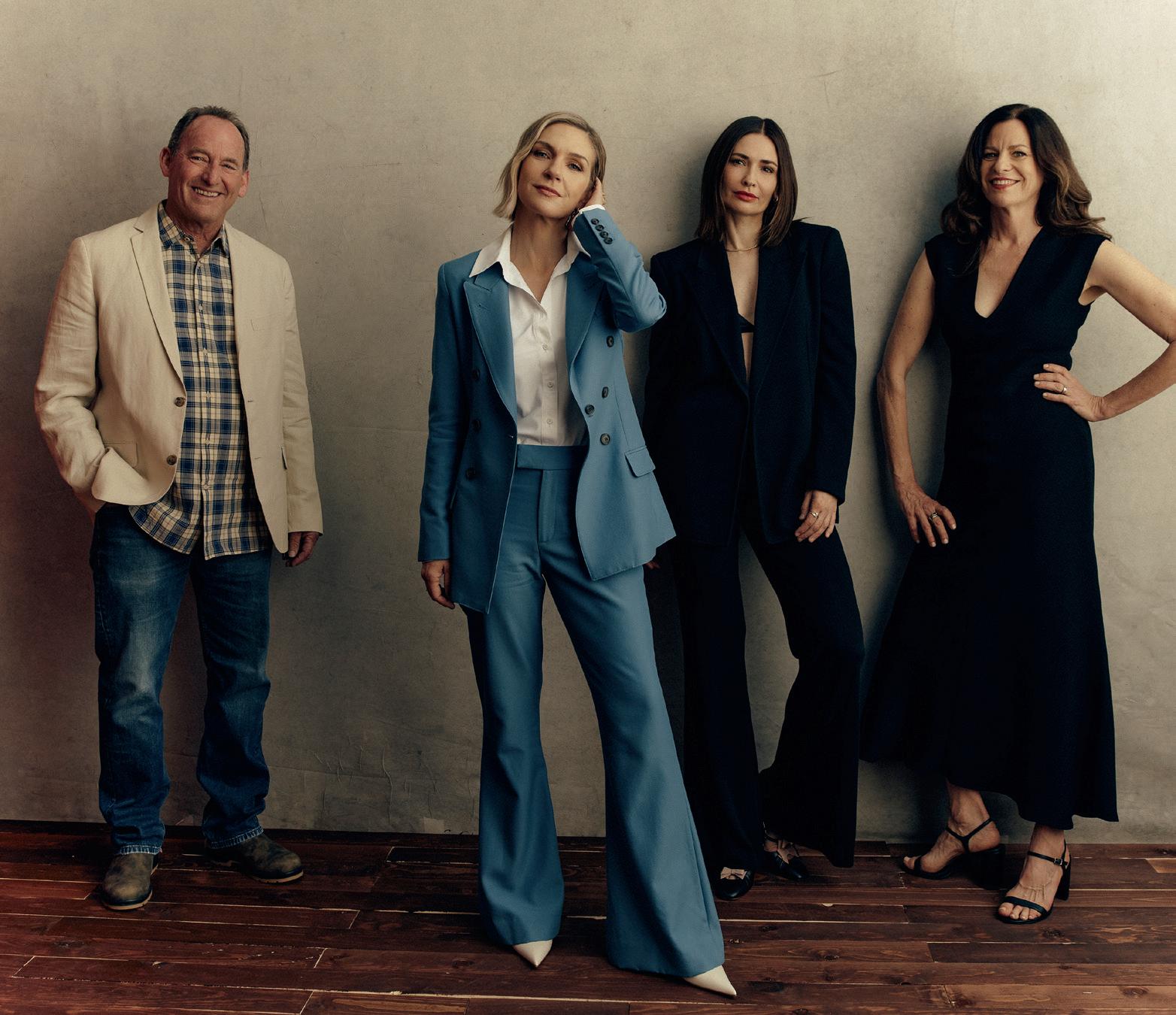
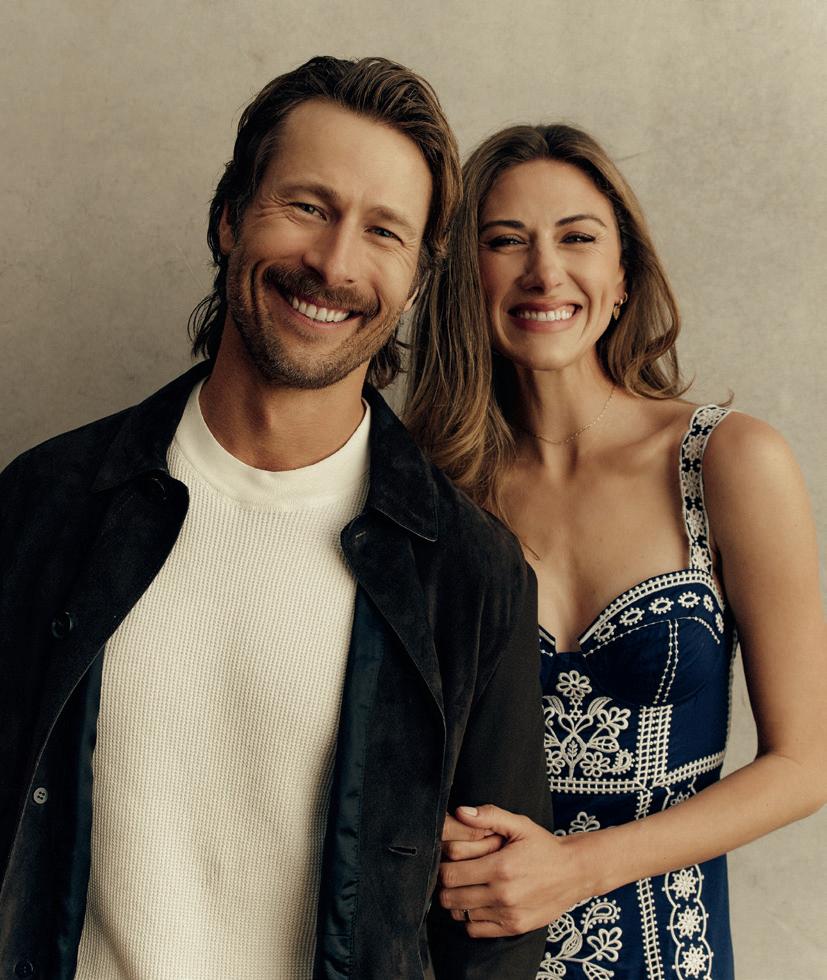
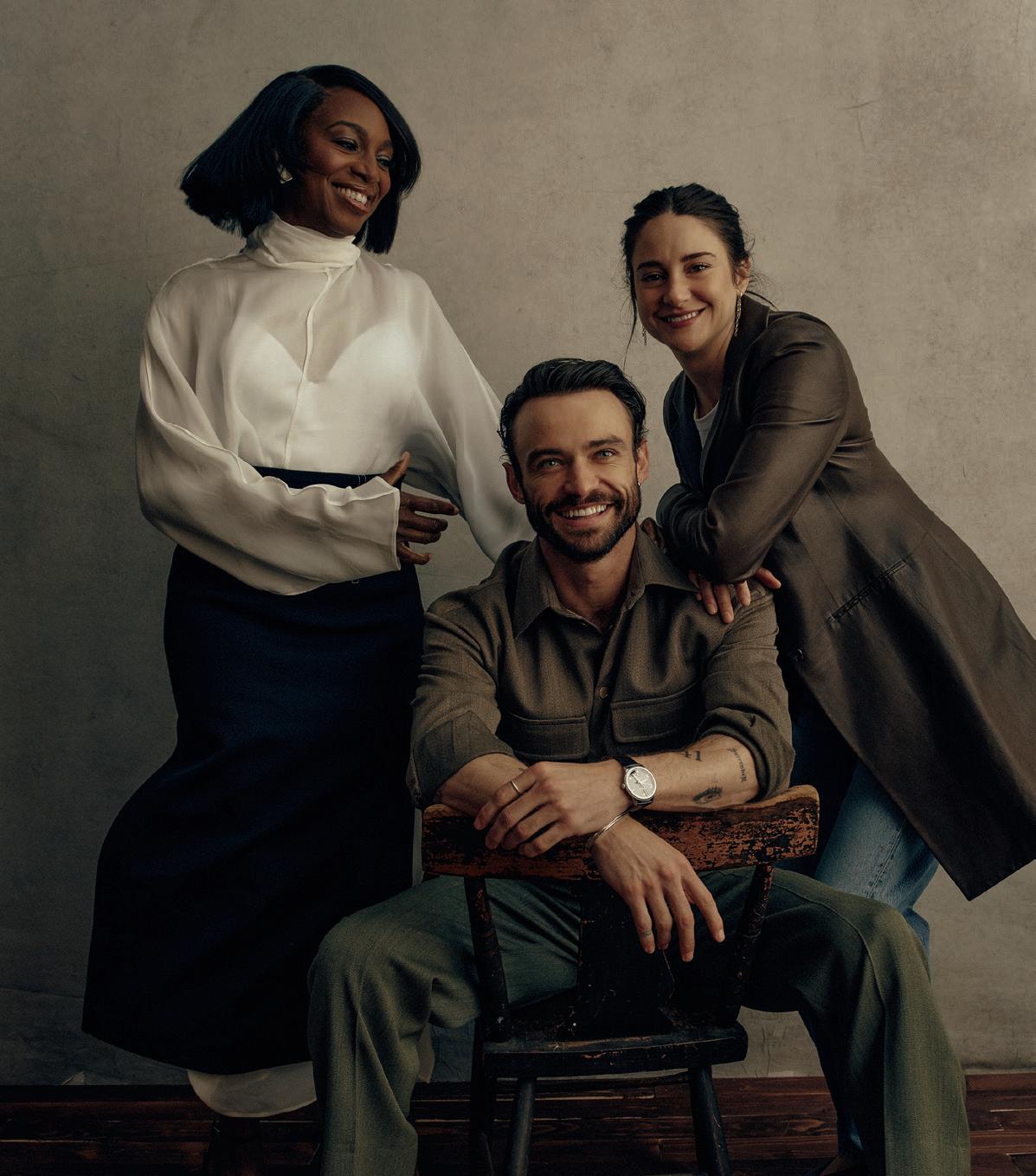
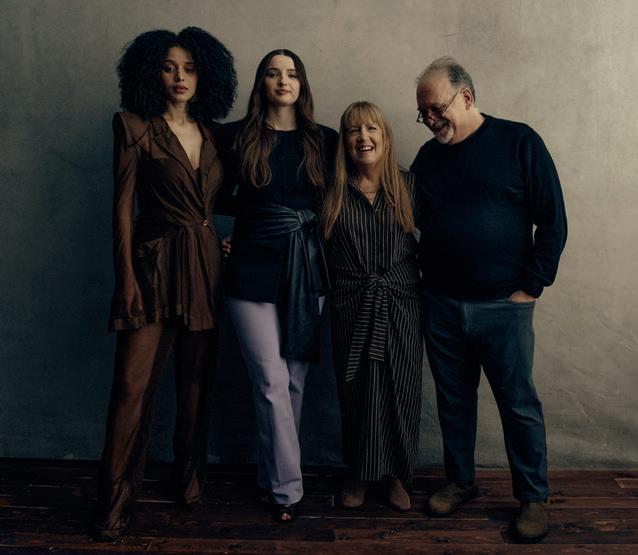
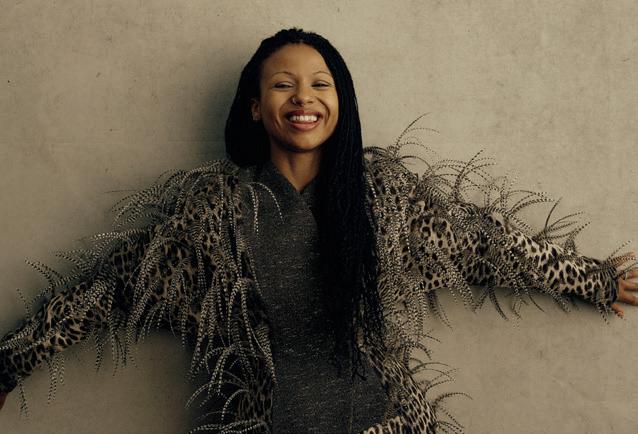
Featuring Jane Schoenbrun, Lola Petticrew, Rimu Kuwaki, Milo Machado-Graner and Gheed.
14 TOKYO DRIFT
Why Japan—this year’s Country of Honor in the Cannes Marché—is changing direction.
18 BIGGER THAN GODARD
The untold story of how John, Paul, George and Ringo—AKA
The Fab Four—came to Cannes.
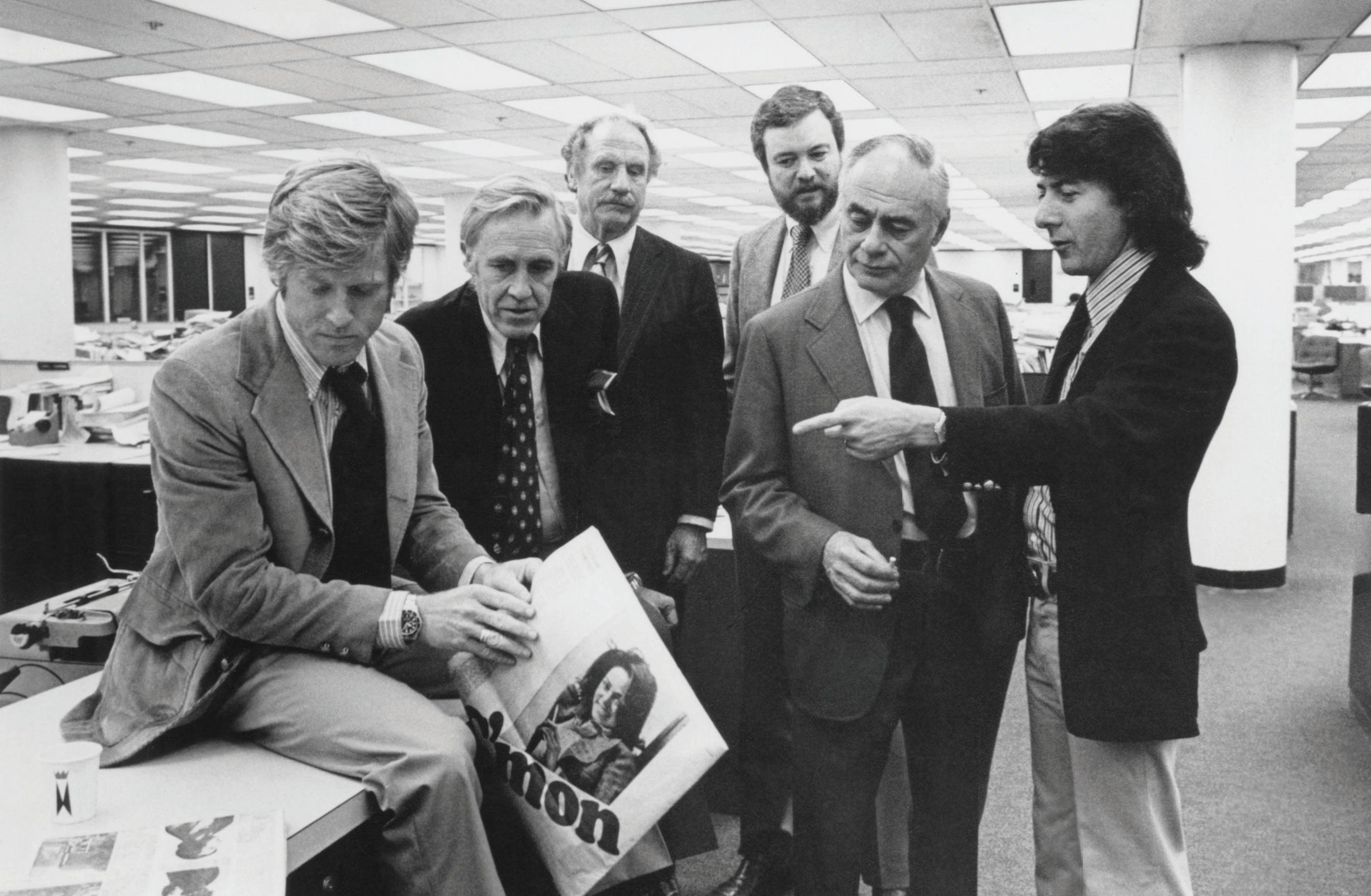
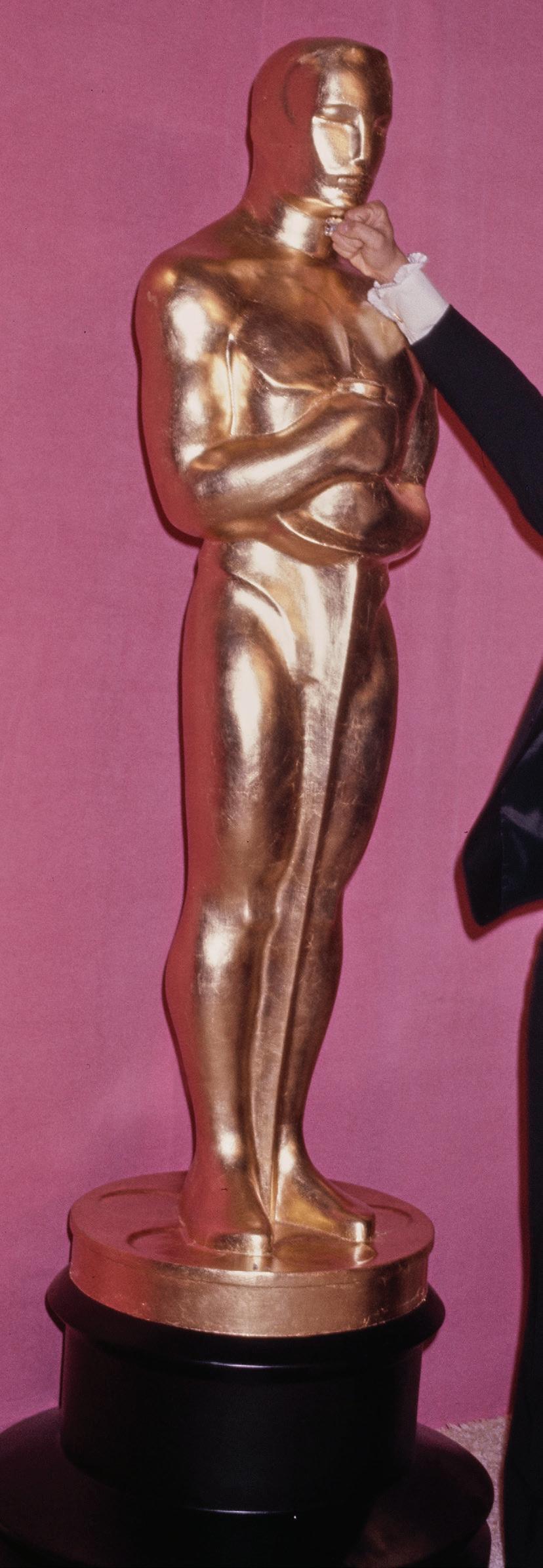
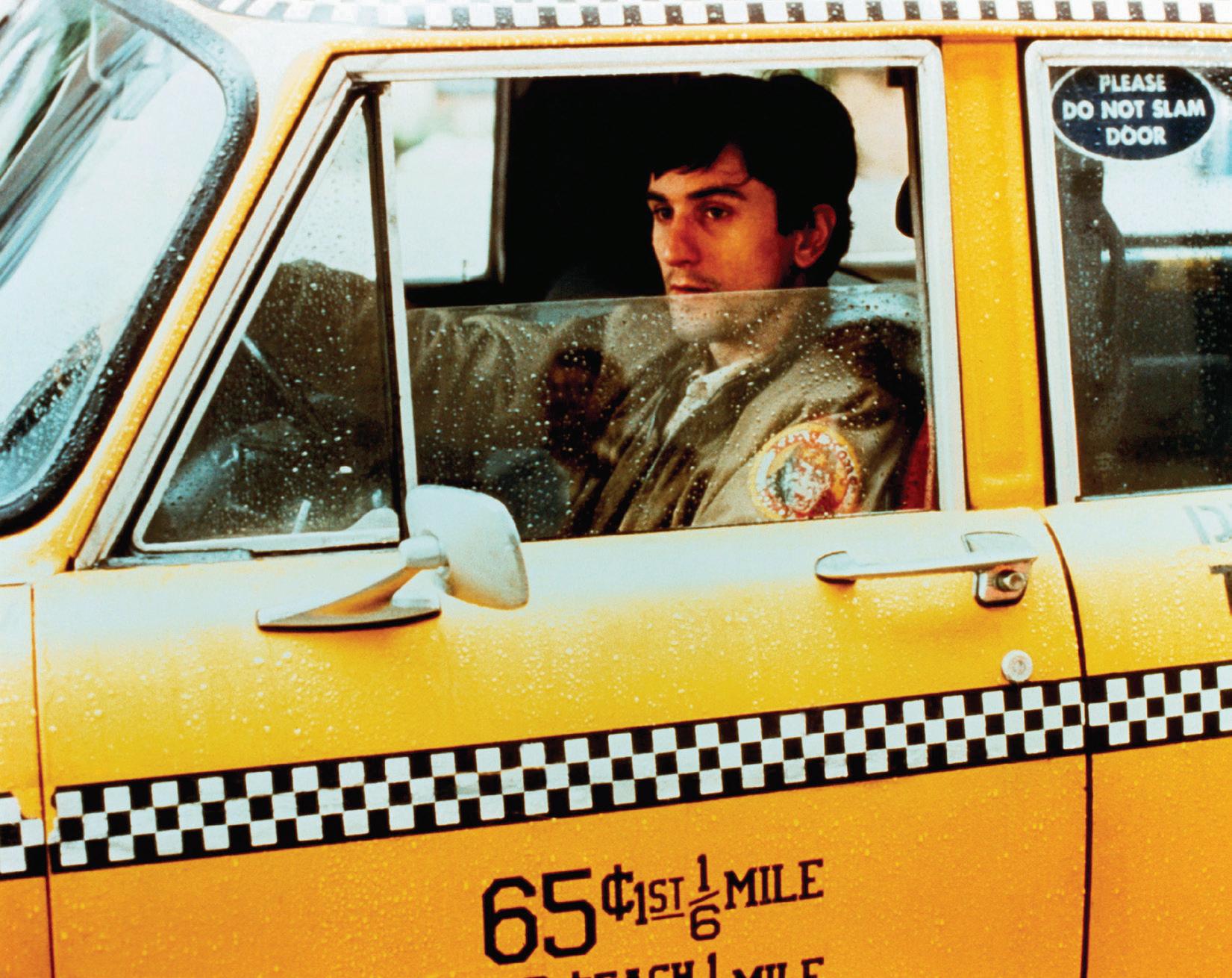
114 THIS IS 50!
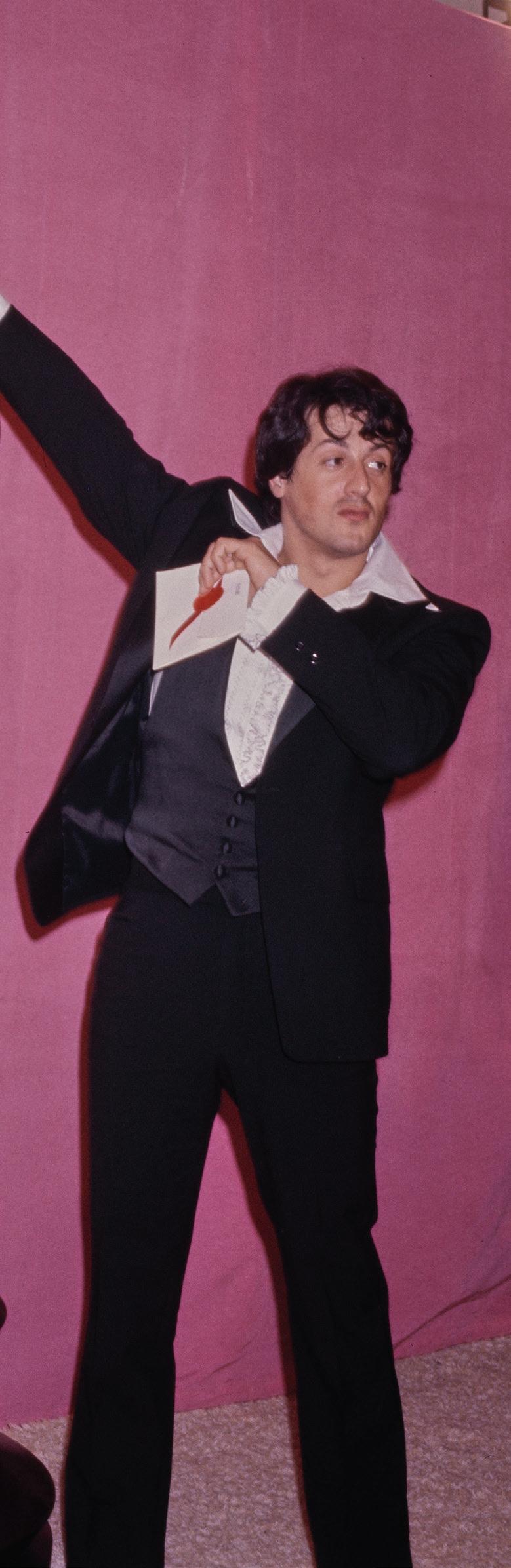
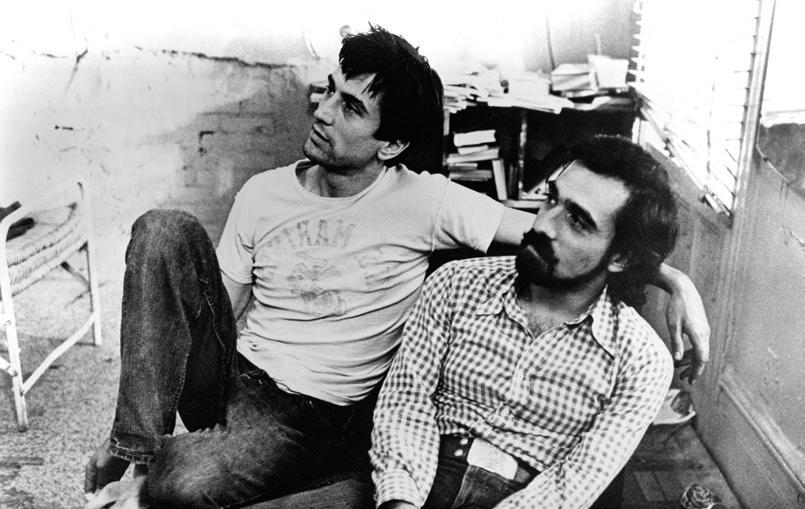
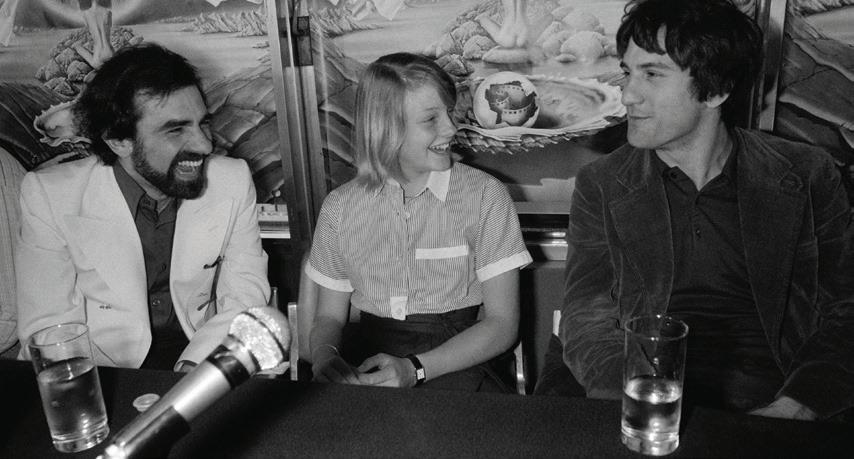
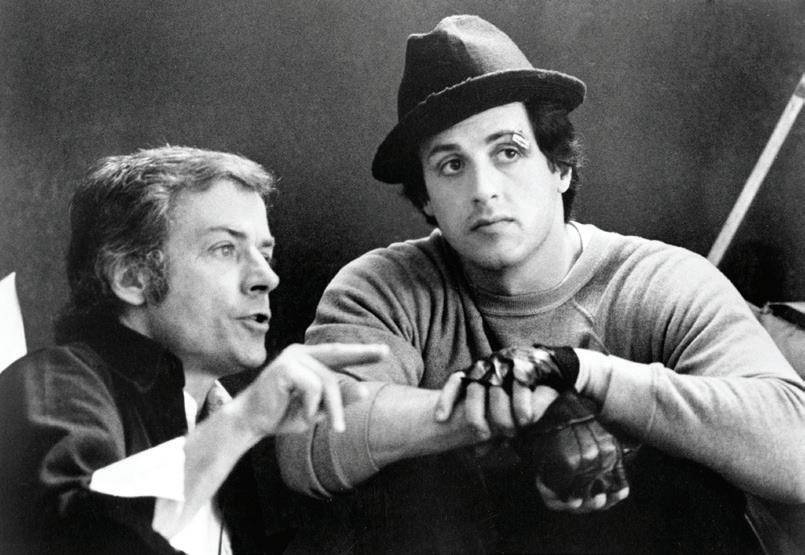
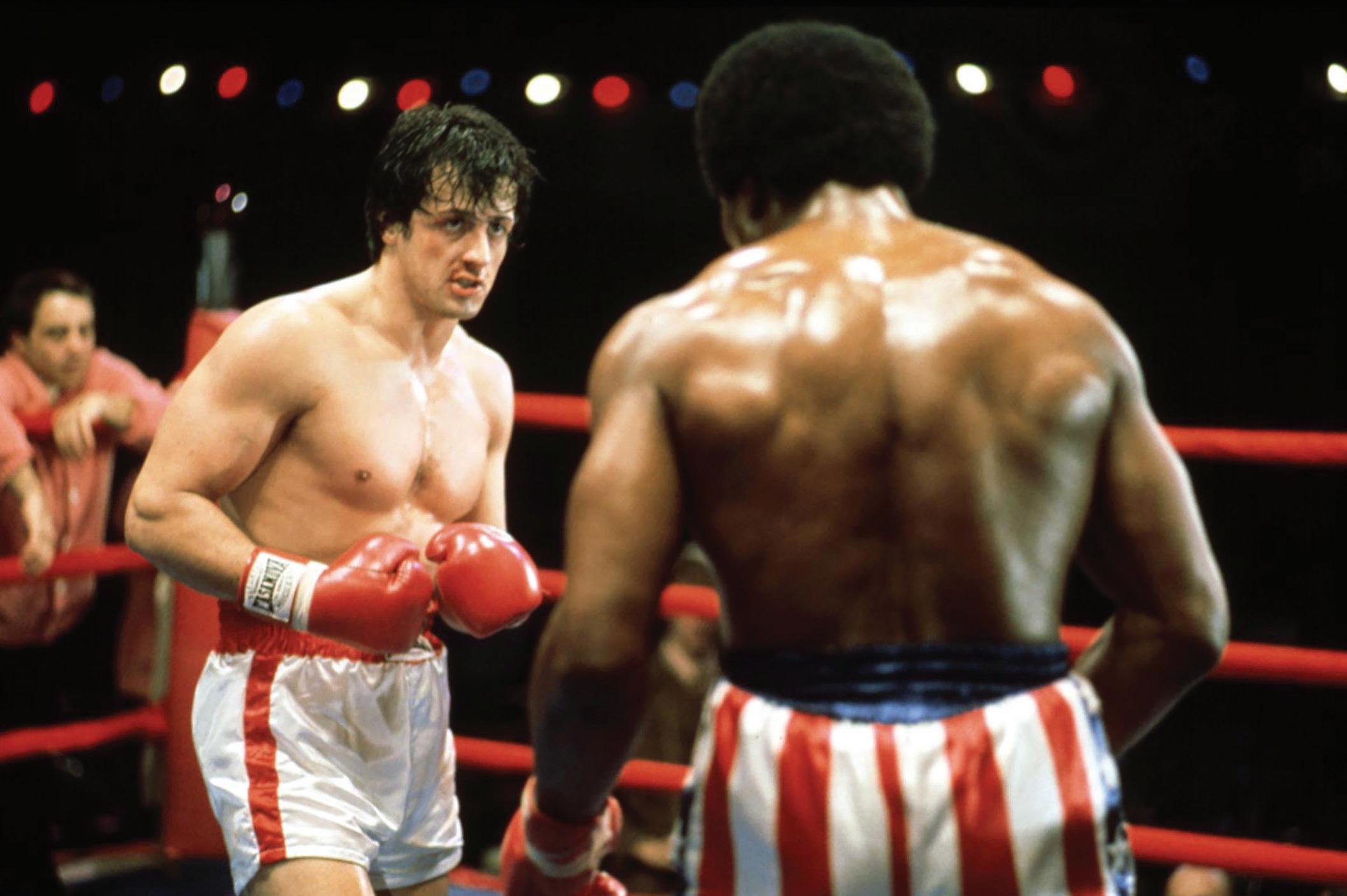
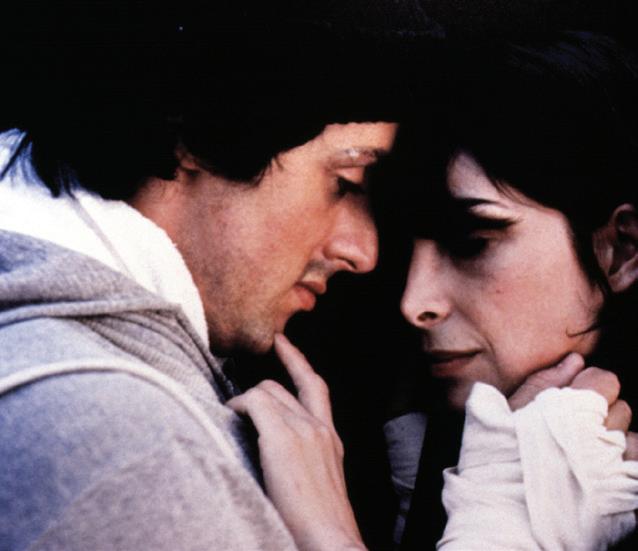
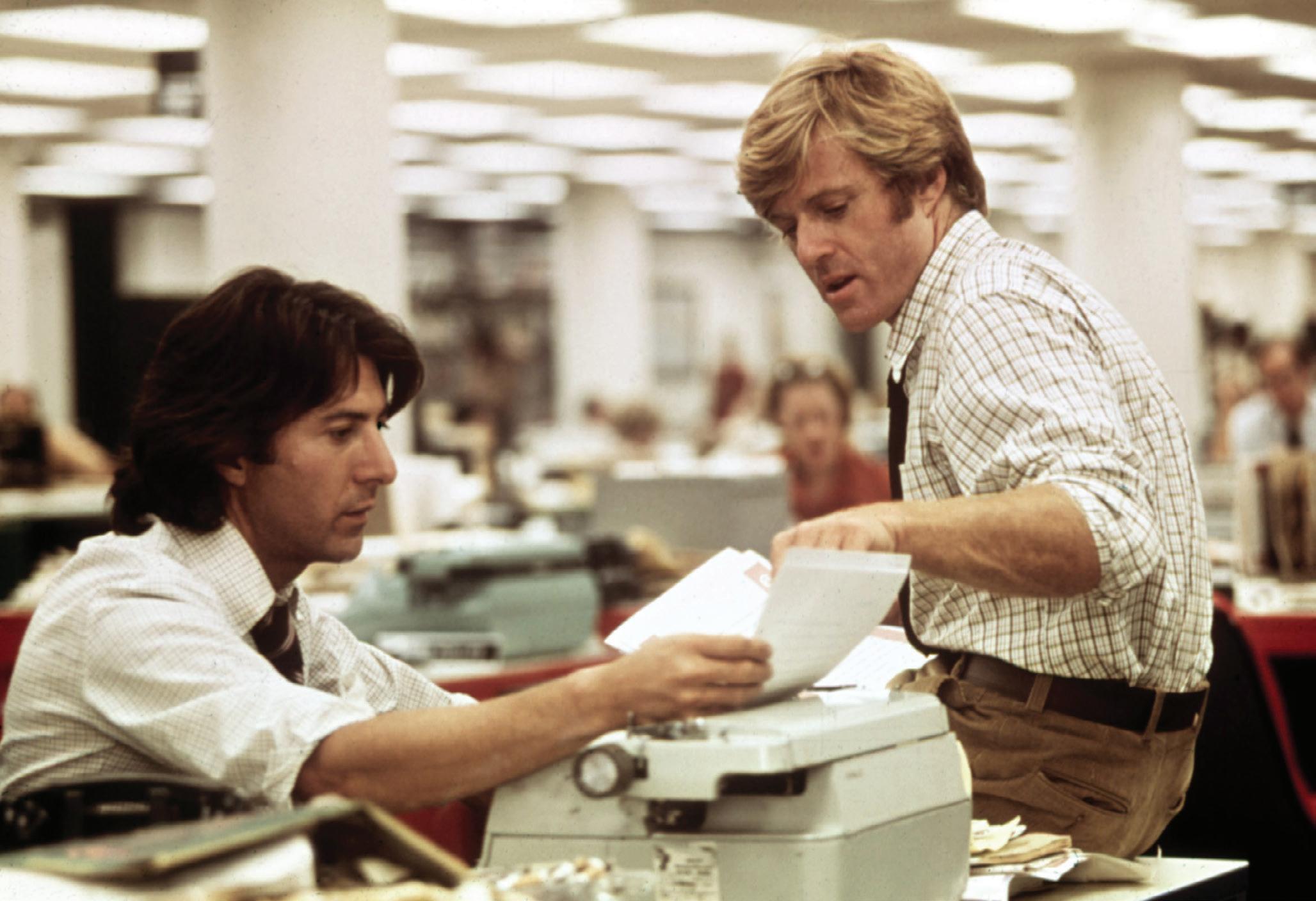
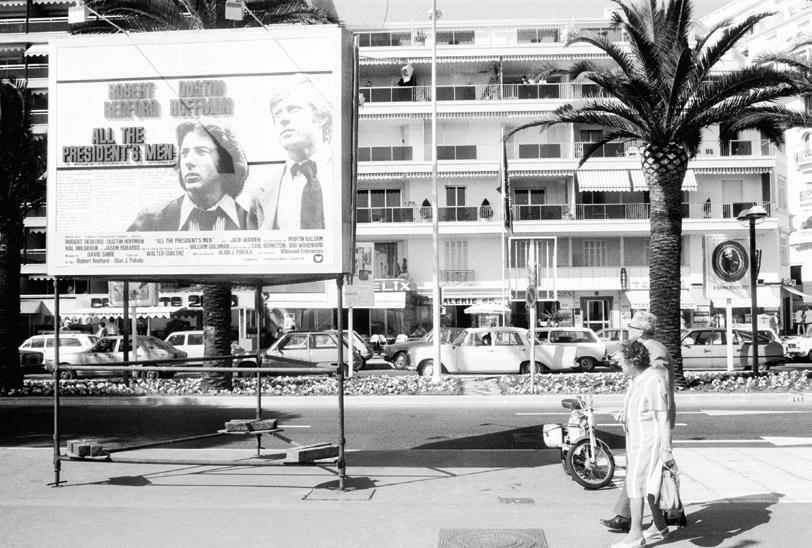
How Taxi Driver, Rocky, Network and the rest of the class of 1976 changed cinema forever.
Dialogue
Snapshot
120 DEADLINE CONTENDERS
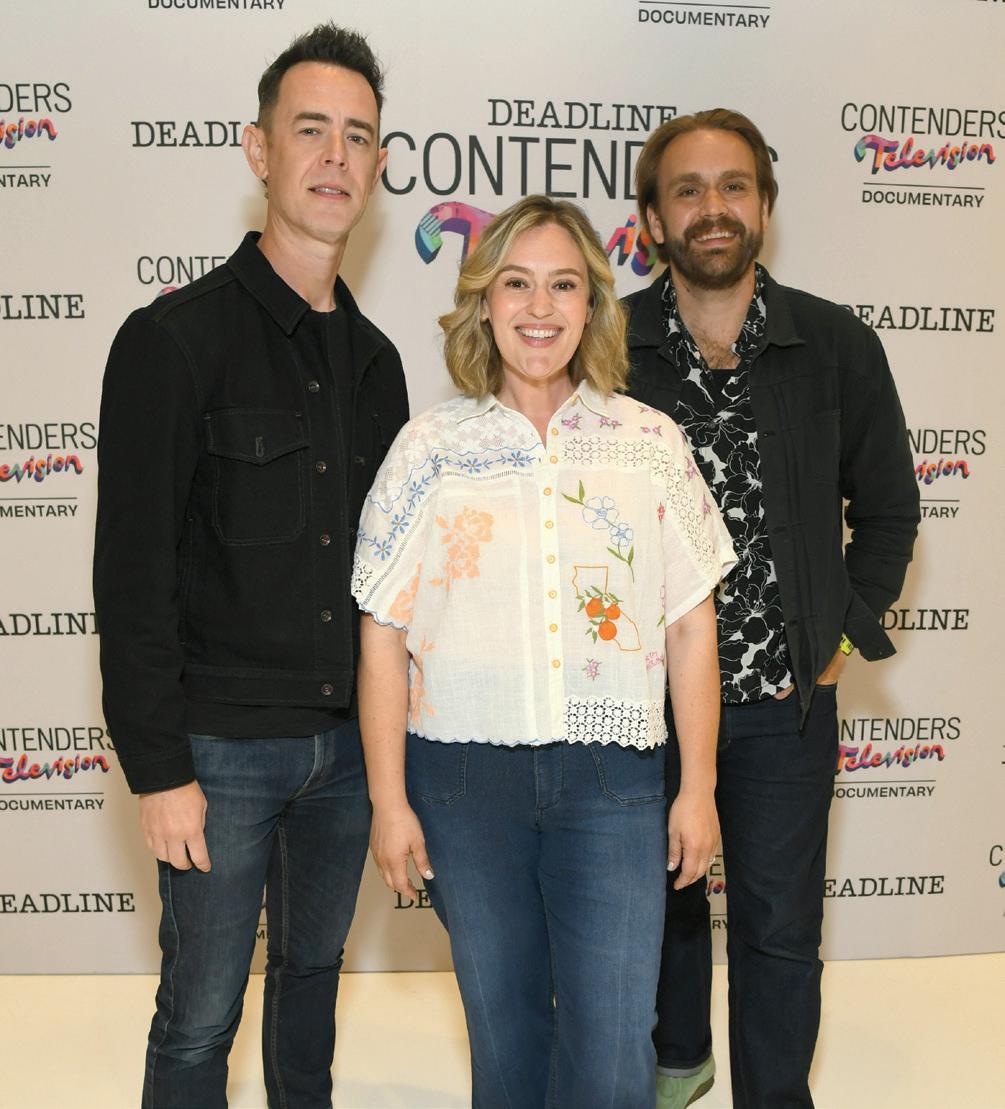
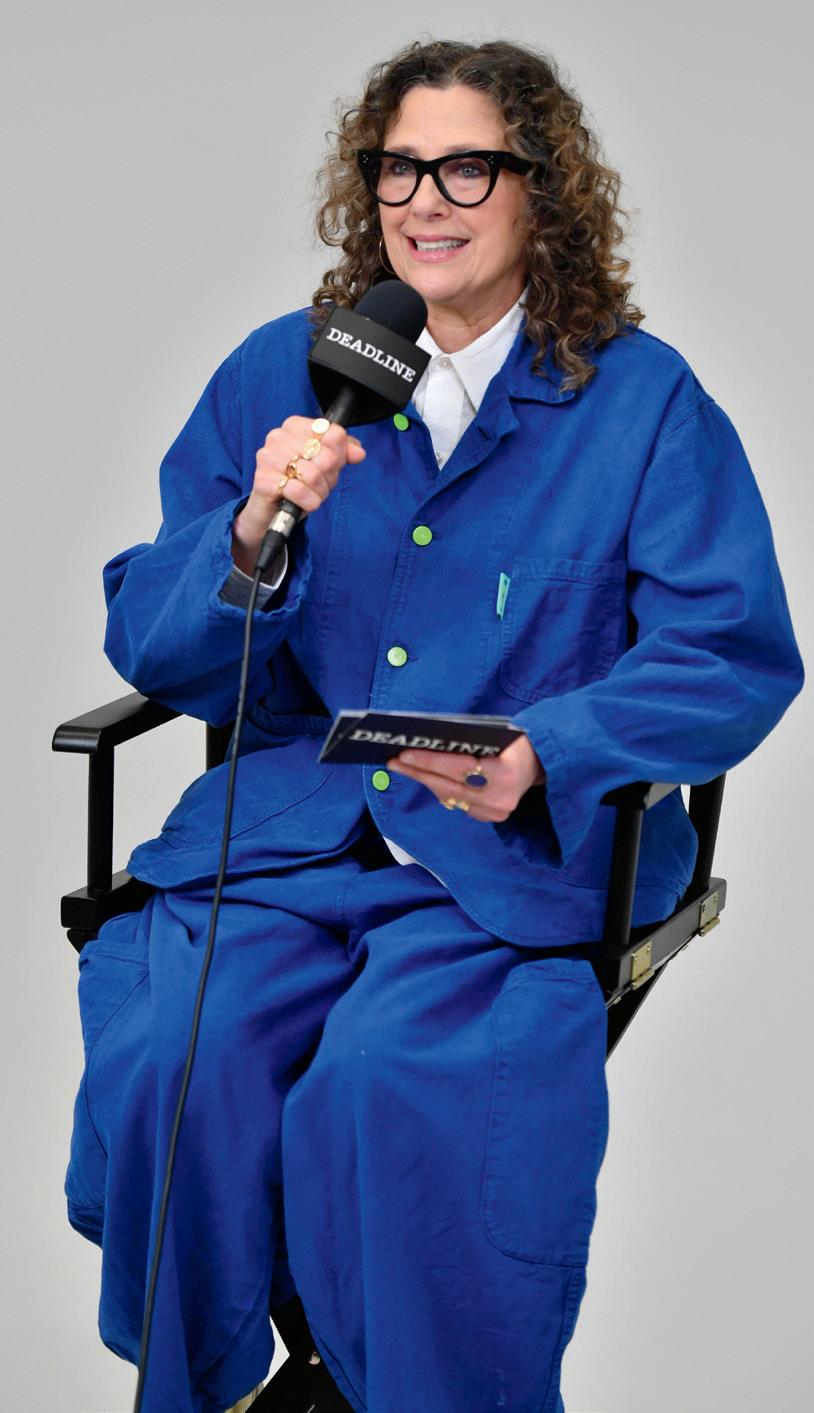
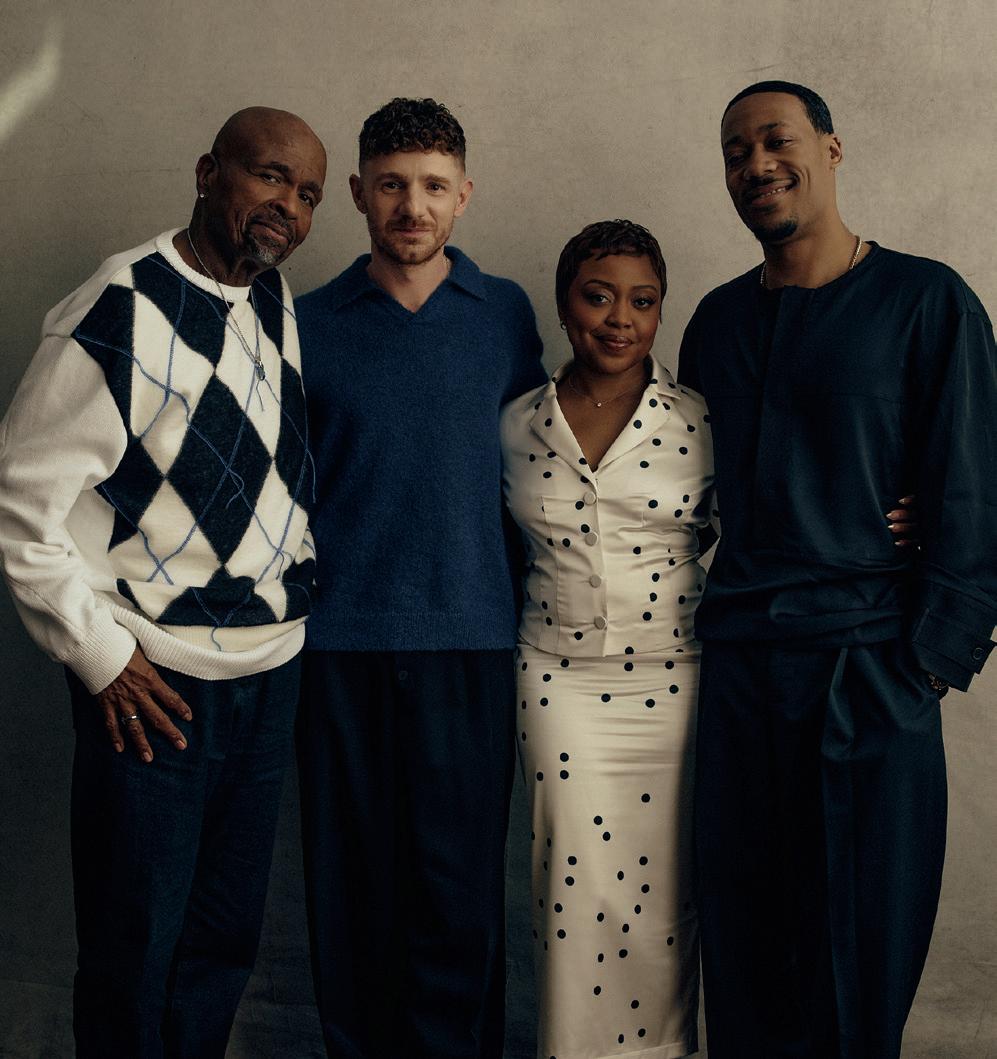
The stars shine at Deadline's Contenders Television events.
By Antonia Blyth
By Damon Wise
By Glenn Garner
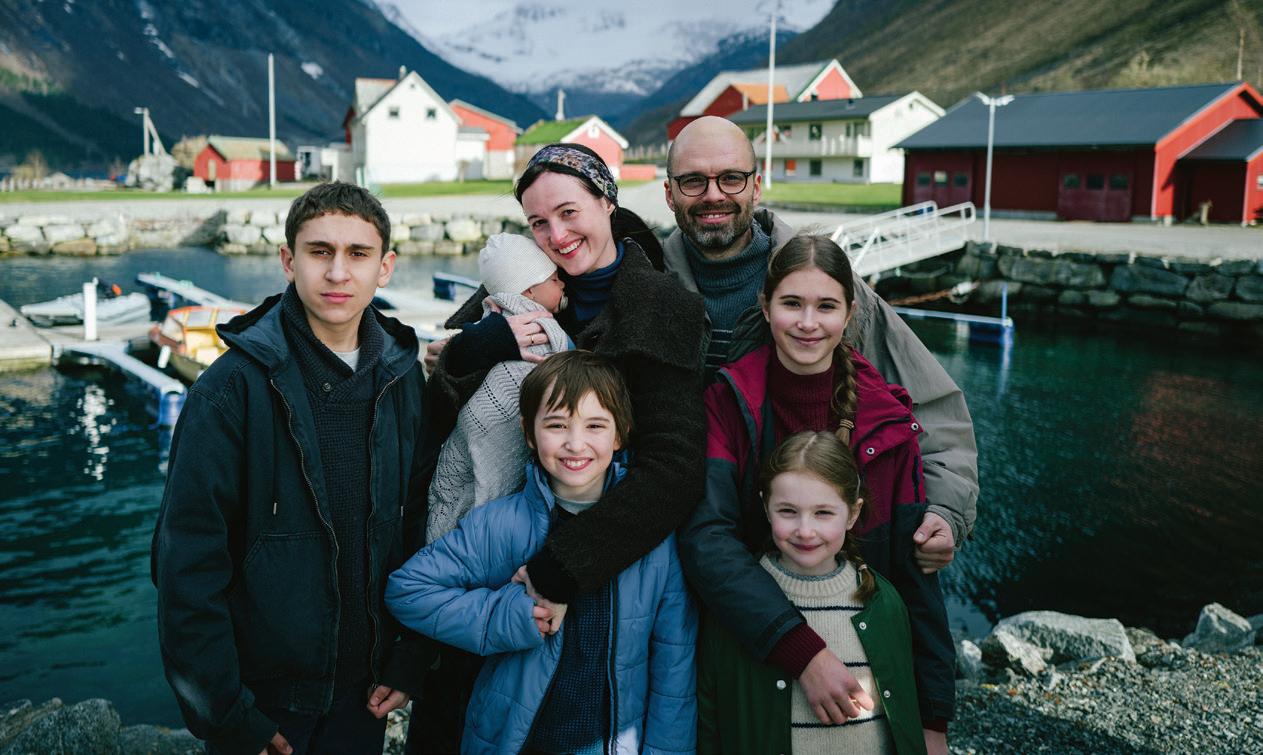
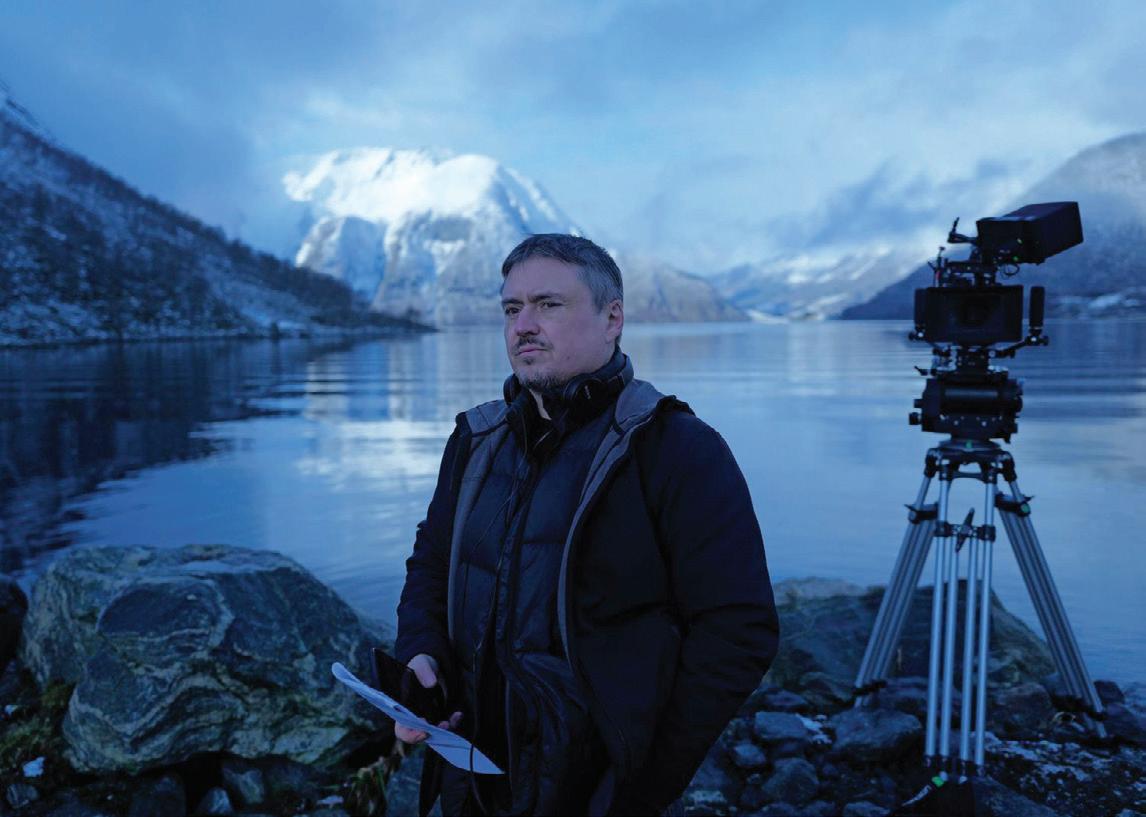
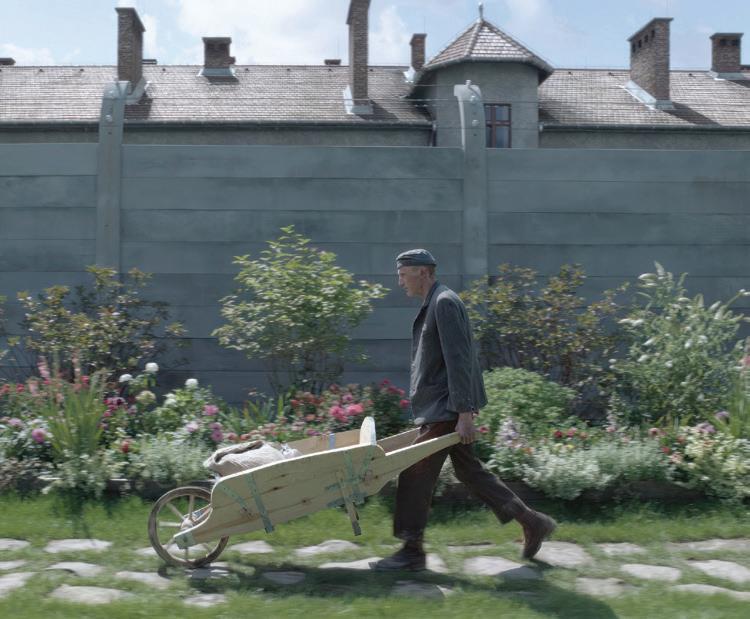
Cristian Mungiu’s Fjord
PREMIERE
Deadline Anoints The Five Names Destined to Rock This Year’s Croisette
Deadline’s annual group of Ones to Watch in Cannes is made up of actors and filmmakers who are all bringing something fresh to the festival. The distinction isn’t always reserved for brand new faces; rather, we’ve selected people who are branching out, or who find themselves in waters where they are liable to make waves. Cannes can be a place of reinvention, after all.
Petticrew
Gheed
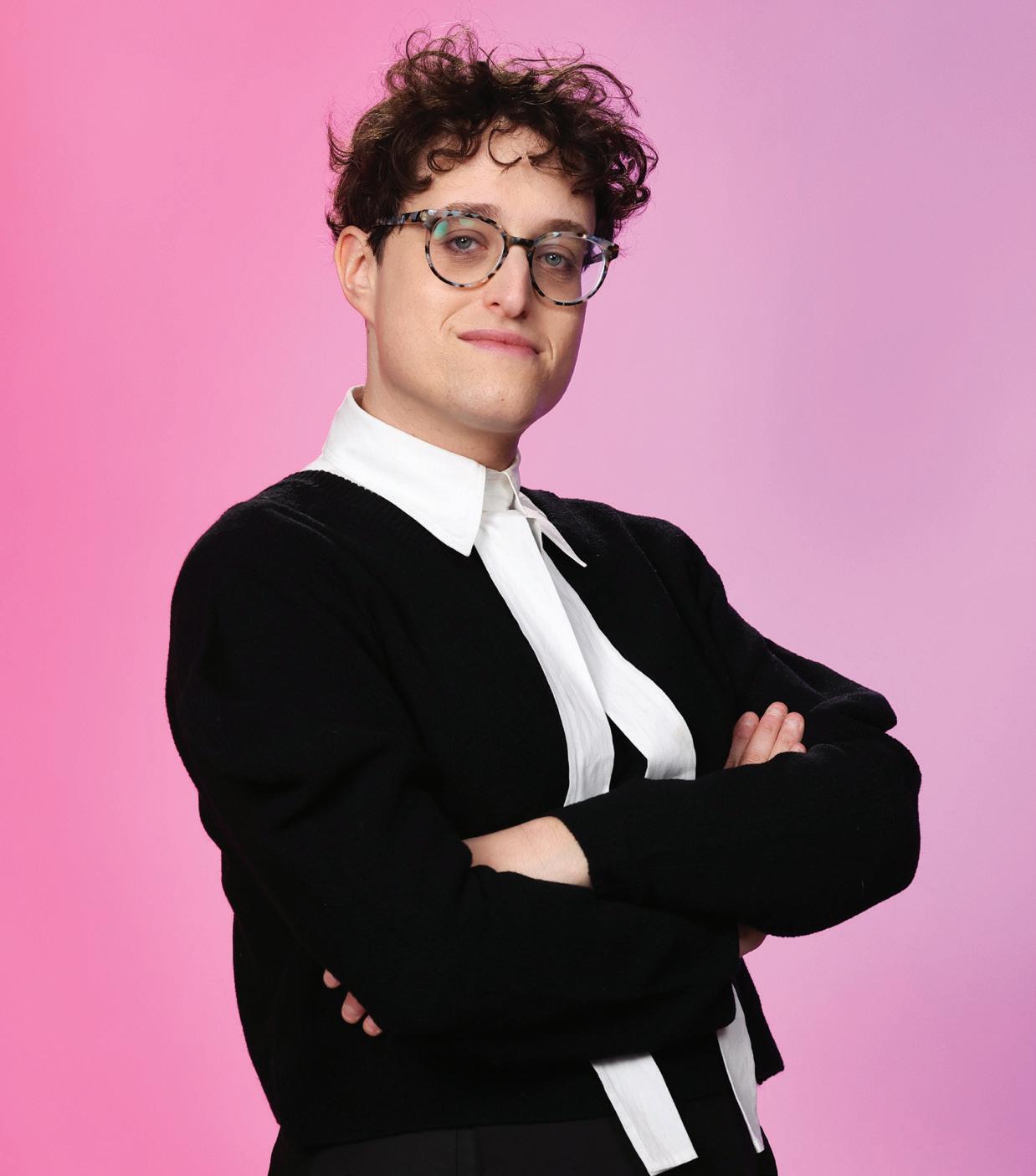
Jane Schoenbrun
Rimu Kuwaki
Milo MachadoGraner
Jane Schoenbrun
Cannes Film Festival 2026
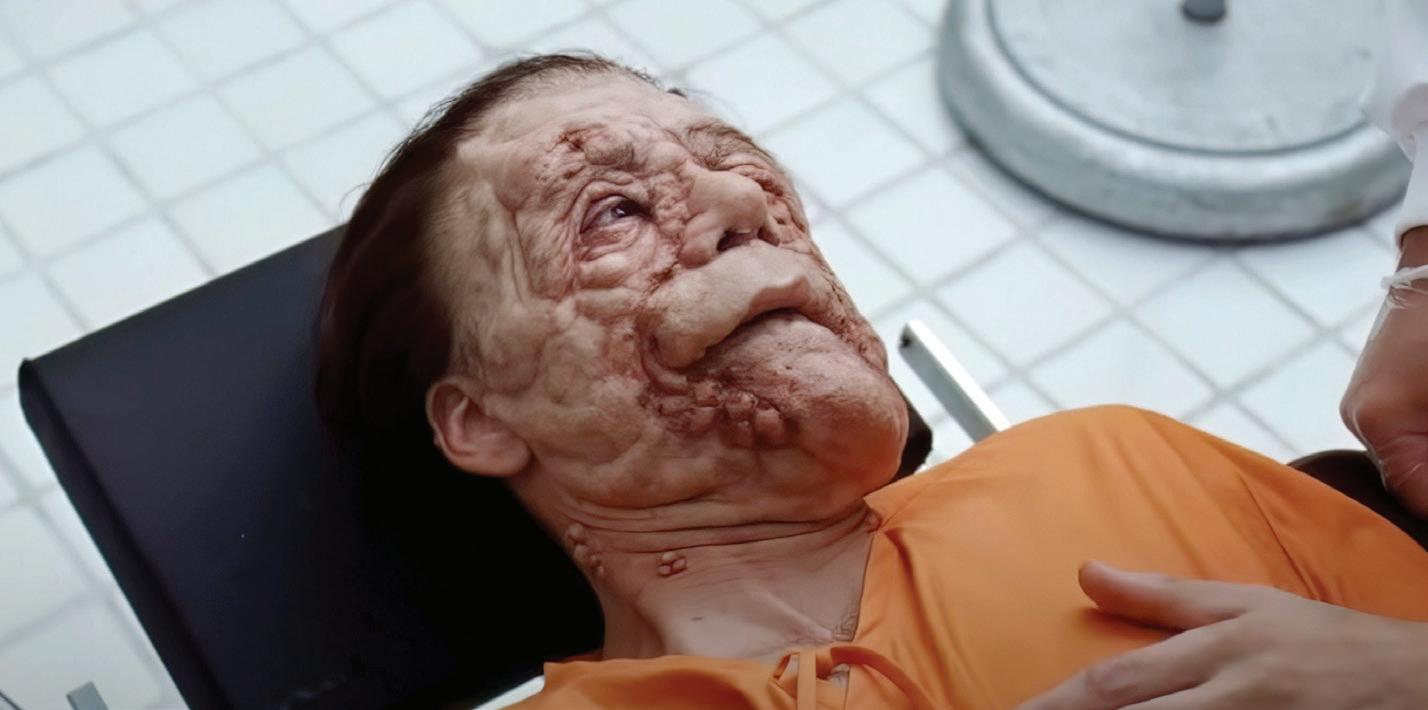
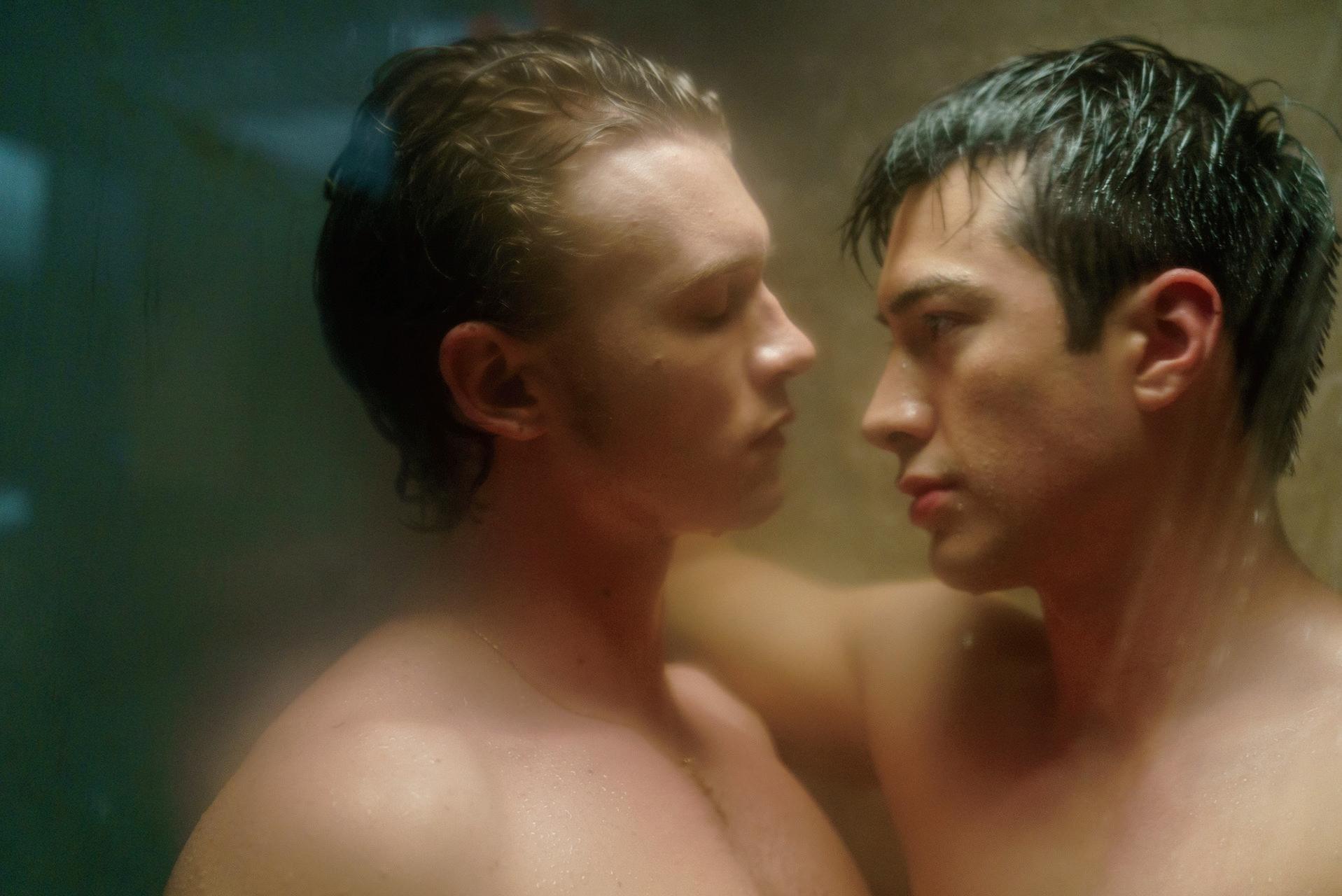
The cult auteur breaks cover with the provocative meta-slasher Teenage Sex and Death at Camp Miasma
Jane Schoenbrun made a splash at Sundance in 2021 with We’re All Going to the World’s Fair, a creepy low-budget horror about a young girl drawn into a nihilistic and potentially deadly online game of dares. Next came I Saw the TV Glow, the trippy, neon-hued story of two young people who bond over the cancellation of their favorite TV show. Add two legit stars, a bit more money, and now you get Schoenbrun’s latest, a love letter to VHS shockers, starring The X-Files ’ Gillian Anderson and Hacks ’ Hannah Einbinder, that draws on David Lynch’s experiments in mood, the fleshy gore of David Cronenberg’s body horror, and the ever-problematic trashy delights of ’70s/’80s slasher flicks. For a time, Schoenbrun’s new film plays things relatively straight, eschewing the bright colors and black-light fluorescence of the non-binary director’s first two films. “On this one,” Schoenbrun says, “I felt that the thing that I really needed to do was something that was in a more classical and playful, kind of almost like a ‘golden era of cinema’ style. I remember feeling that it was very important to do that after I Saw the TV Glow, which had been this wail of a movie, a cry into the void. It had been this very earnest expression of pain and it had borrowed this
very sensitive arthouse comingof-age vernacular to express itself. Its gentleness was, to me, one of its graces and one of its defining qualities. But with this film, I remember being like, ‘It is very important in the very first scene of the movie that there’d be a huge fucking geyser of blood.’”
The film stars Einbinder as a gay filmmaker tasked with resurrecting a “zombie IP” franchise about a masked killer that slaughters teenagers at summer camp. She has contacted the film’s original star (Gillian Anderson), who lives as a recluse in the disused location of the original film, and what starts as a simple request for a cameo becomes something much more dangerous and surreal as the two women become closer.
Though not everyone will jump on board, aficionados of the panoply of Nightmare on Halloween the 13th knock-offs—and the diminishing returns that followed—will know the references and get the affectionate, tonguein-cheek humor. “It’s so fun to make a comedy,” says Schoenbrun. “The first two movies came from such a specific time in my life that, while I think they’re funny, the vibe at screenings tends to be like… You hear some sniffles, and you get a sense of people feeling emotionally exhausted. The relationship with the audi-
ence is so deeply important to me. My movies are a strange mix of commercial entertainment and more dense, academic, philosophical musing. But with this, I want people to feel like we’re hanging out. We’re sharing a joint on the porch and eating candy and talking about real things—which isn’t like an academic lecture, it’s like a conversation with a friend. And that’s really how I hope the movie feels.”
Nevertheless, the film does express some very complex ideas about the perverse pleasures of slasher movies and the titillating way they show the killer’s point of view but still yet expect audiences to identify with the victims (a paradox the director compares to “having your cake and eating it”). “At least so far in my movies, it’s really felt so much more interesting for the horror to be more internal,” says Schoenbrun. “And therein lies, I think, the thing that’s so alluring. It’s what I hope—as a trans and queer filmmaker—to be doing, which isn’t like, ‘Look at my identity. Aren’t trans people human beings too?’
My whole career I’ve been trying
to push back against an idea of shallow representation or art that can simplify human experience into an identitarian package. To me, queerness is all about looking inwards and being as truthful as possible about not just what’s inside me, but what’s inside the society that surrounds me.”
Opening the Un Certain Regard strand at this year’s Cannes Film Festival, then, is a big step up from Sundance, and Schoenbrun is well aware of that. “For years before I started making my own films,” they say, “I worked in indie film and saw so many filmmakers who had really distinctive voices get their voices watered down by a commercial industry that I think is very scared of individual authorship. It’s why I made my first film for, like, $50 instead of trying to raise a bunch of money. It was very important to me from the beginning to not water down or compromise the individuality of what felt true to me as an artist. And the fact that I’ve been able to build to bigger and bigger levels of cultural platform without compromising is no small feat.” —DAMON WISE
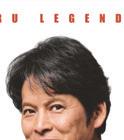
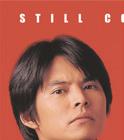
Rimu Kuwaki
The Japanese newcomer makes his debut as a savvy robot child surrogate
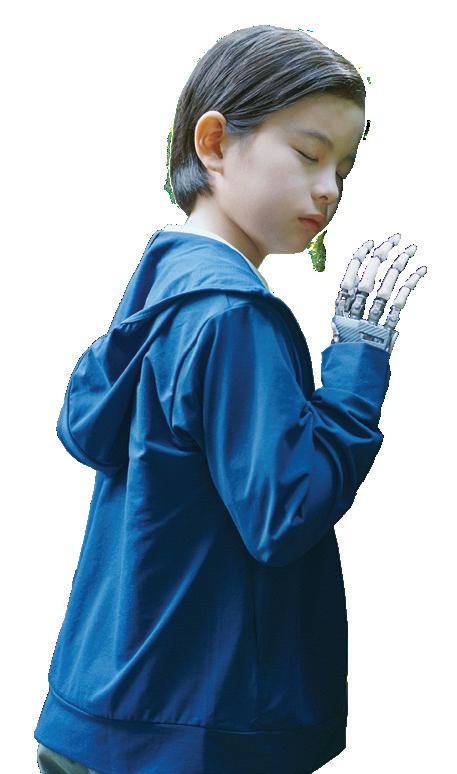
Japanese auteur Hirokazu Koreeda is a regular at the Cannes Film Festival, largely returning to present films that deal with issues of life, death and parenting, both good and bad. This year his Competition entry Sheep in the Box, offers a sci-fi twist on those familiar themes, marking the acting debut of Rimu Kuwaki, who will turn 10 years old during the festival. Haruka Ayase and Daigo Yamamoto play his parents. And Kuwaki? “I play a humanoid who looks exactly like their child, who died in an accident,” he explains, “and continues living in their place.” Kuwaki was chosen from
more than 200 contenders, despite having next to no acting experience. “I’ve never really had any acting lessons—almost none, to be honest—but I have appeared in one drama series. The lines were basically just me being myself, so I’m not sure if you could really call it acting.” Nevertheless, Kuwaki took to the challenge, and praises Koreeda for helping him ease into the role. “Director Koreeda Hirokazu is very kind,” he says. “He would encourage me by saying, ‘Let’s do our best,’ so any feelings of fear or embarrassment just disappear. Every time after shooting a take, he would
also say to me, ‘That was really great,’ which made me so happy and motivated me to do my best again the next day. The atmosphere on set was fun and relaxed.”
Not every take was perfect, however. “Sometimes I got a bit too excited and started running around,” he recalls, “and I was told, ‘Robots aren’t supposed to sweat.’
And when I had a little bit food around my mouth, the crew said, ‘Robots don’t eat sweets, right?’ So I realized I had to be more careful.” Kuwaki also learned a lot from his screen parents. “They’re kind, beautiful, and cool—I love them very much,” he says. Did he hang out with them to prepare for the role? “Yes, I did. We spent time together having meals, looking at photos of me as a baby, and even giving each other shoulder massages! It was a really fun time. As for what I learned, I was really moved by their facial expressions and movements during the acting, and it made my heart ache at times. It made me realize how amazing acting can be.”
Any plans to act again? “I like both watching movies and acting in them, and I hope to continue acting in the future. I’ve already told my family about my decision, and I’m going to do my best to appear in three more films.” And in the meantime, what else keeps him busy? “I like baseball, soccer, video games, golf, dancing and fishing. I’m currently practicing golf and dancing so I can get better at them.”
—DAMON WISE
Gheed
The Iraqi actress who wants to be on first-name terms with world stardom
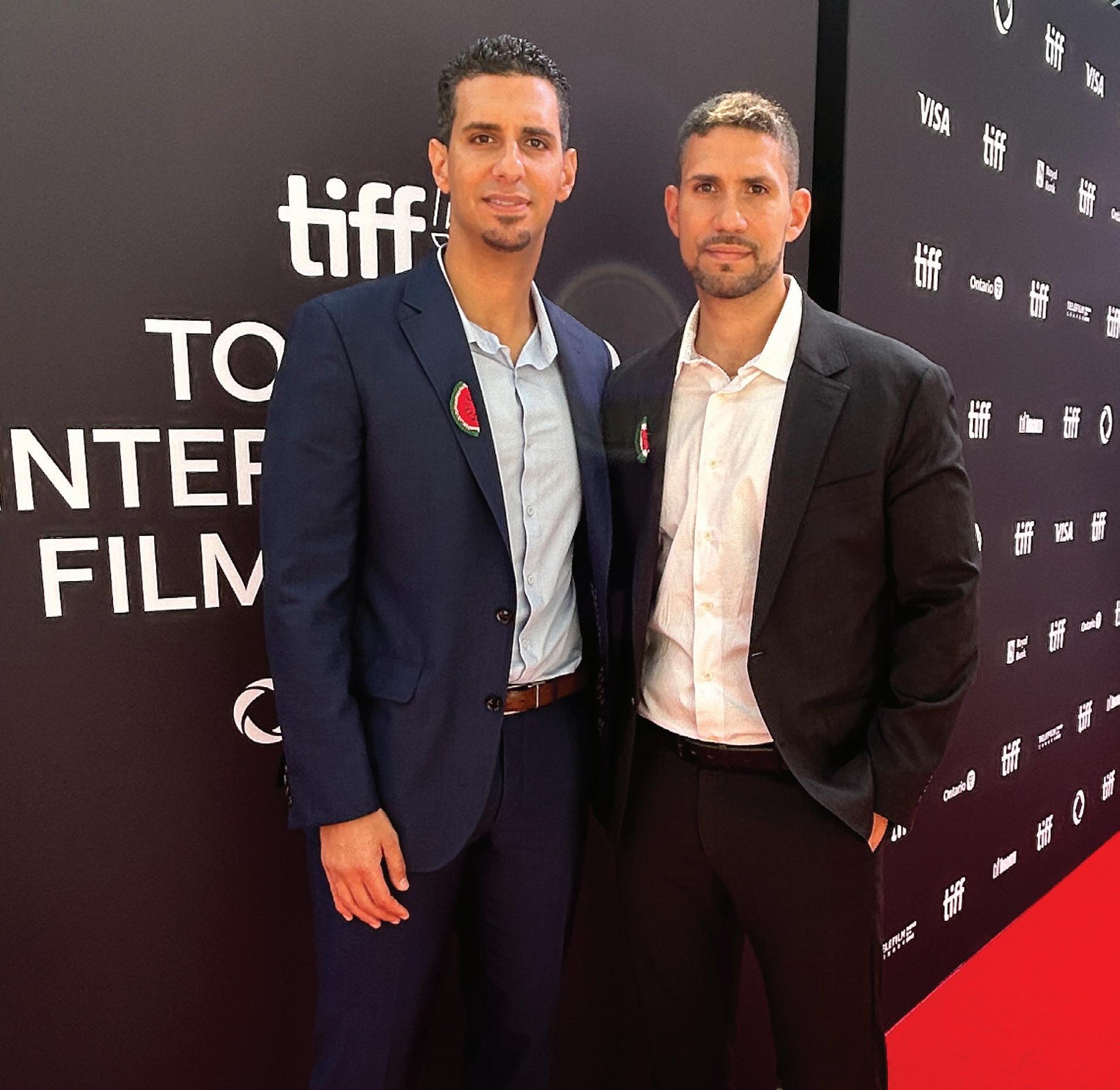
Gheed—an exuberant, intelligent and very funny actress so clearly destined for international fame—has, like all the greats, jettisoned her surname. Audiences at Director’s Fortnight will get a taste of the Gheed experience when she arrives with her feature-film debut, Atonement. The first film from American director Reed Van Dyk, and based on a true story, it features Gheed as Nora, an Iraqi girl who loses her father and two brothers during a friendly-fire incident in Baghdad. Playing opposite her is Boyd Holbrook, who stars as Lou, a U.S. Marine who is later wracked with guilt and decides to reach out.
It came about by sheer good fortune, Gheed says, after a chance meeting with an Iraqi director at a film festival in Jordan. “Out of nowhere, he called me up,” she recalls. “He said, ‘There’s an American director that wants to do a film about Iraq and he’s looking for an Iraqi actress.’ I got in touch, and from then onward, I stayed in contact with Reed. I fell in love with the story. For about two years we were building workshops, doing rehearsals, and working on the character—and I even got to know the real family when we finished shooting. So that was also super-exciting for me.”
The first part of the film takes place in 2003, when a U.S.-led coalition invaded Iraq, ostensibly to depose the tyrannical regime of dictator Saddam Hussein.
“Honestly, I had an incredible journey within,” says Gheed. “This period of time is blocked from my memory, so I couldn’t really play the cards that I know as an actress to get to the feelings that I should reach. And I had to dig very deep in my soul to be able to open those doors again. So, it was also kind of therapeutic for me to remember, to be present in that moment as a grownup and relive it again. And it touched me deeply, because it’s a story of a million human beings, at least, because [in Iraq] we have been going through wars ever since we can remember.”
Though she broke through in an Iraqi telenovela called Heera, where she had a recurring role as a law student, Gheed will go wherever the work takes her.
“Honestly, I see myself as a citizen of the world at this moment,” she says.
“I don’t have roots. I’m flying around between Iraq, Egypt, the Netherlands where my mom lives, Turkey as well. So, I’m flying around. I don’t really have a base and I’m trying to get a taste of everything from different cultures to be able to be more myself, because in this social media era, it’s easy to become a copy of a copy of a copy, just like Fight Club says. I think I’m just trying to be myself as much as possible, create something of my own. And I’m proud of where it’s taking me, so I’m putting my trust in the fates.”
—DAMON WISE
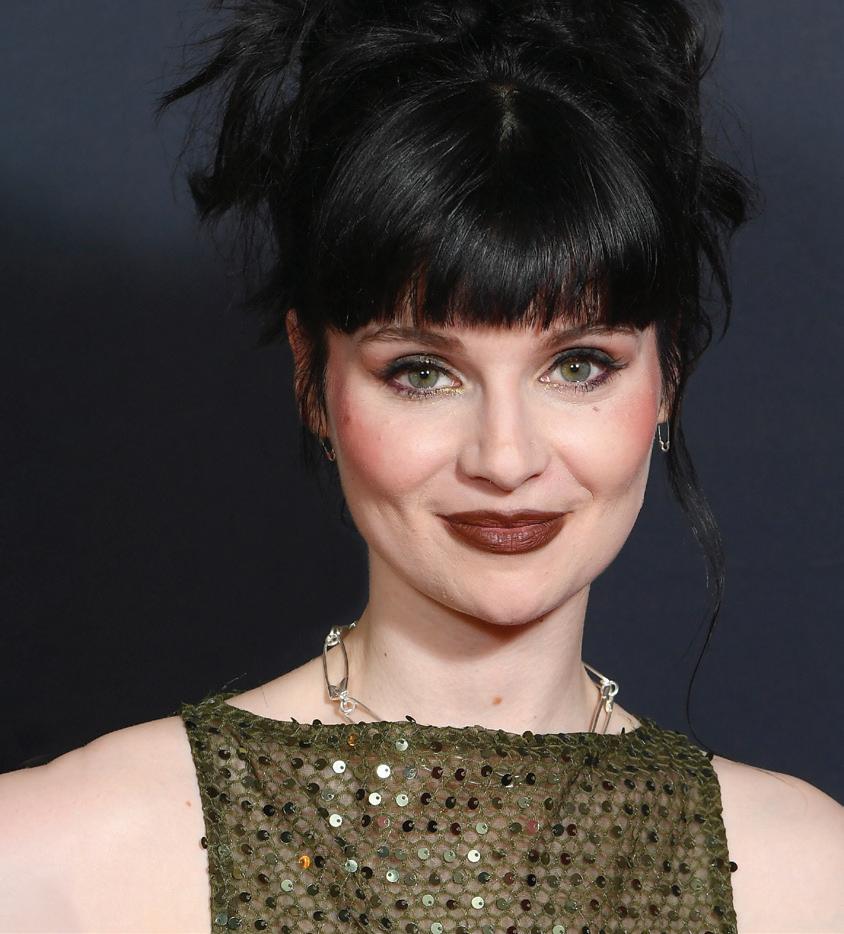
Lola Petticrew
The Belfast-born actor and her friends are growing up in public
Cannes newbie Lola Petticrew will get their moment in the sun when British filmmaker Clio Barnard’s powerfully resonant I See Buildings Fall Like Lightning has its premiere at the 58th Directors’ Fortnight. Adapted by Enda Walsh from Keiran Goddard’s stunning 2024 novel about social and class inequality, the film charts the lives of five 30-year-old childhood friends. “They’re trying to cope with adulthood and the pressures of the world,” says Petticrew, “and
deal with the cards that they’ve been dealt in being where they’re from—and how the roads they’ve taken have created a bit of conflict between them.”
As with Goddard’s tome, Barnard’s film is set in Birmingham, in the British Midlands. Petticrew, playing Shiv, joined cast mates Anthony Boyle, Joe Cole, Daryl McCormack and Jay Lycurgo on location in the region, where, they said, “people of that community are in the film. A lot of them are doing stuff like
playing builders and the people that work in the bars, so we got to build a rapport with them. They really welcomed this weird little film crew that landed smack-bang in the middle of their town.”
Petticrew and Boyle play the parents of two young girls. Shiv looks after their kids while also caring for her bedridden mother, while Boyle’s character, Patrick, rides his bike delivering fast food. They didn’t require a chemistry test because, in real-life, the pair have known each other since they were both 11. “It’s
so crazy, because Anto and me are from the same area of West Belfast. While it’s not in Birmingham, or even England, we’re from areas that aren’t too dissimilar.”
Petticrew and Boyle previously played siblings in the BBC drama Come Home, then they portrayed Irish Republican paramilitary operatives Dolours Price and Brendan Hughes in the sublime FX drama Say Nothing. “And now we’re parents,” laughs the actor.
Despite the seriousness of the themes addressed in Barnard’s film, the cast had some laughs when the day’s filming was done. “Oh, there was major craic that we had,” they say, using an Irish term for having some fun. “You couldn’t be around those boys and around those people and not have major craic. They are honestly four of the funniest people I’ve ever met. So, there were a lot of laughs.” —BAZ BAMIGBOYE
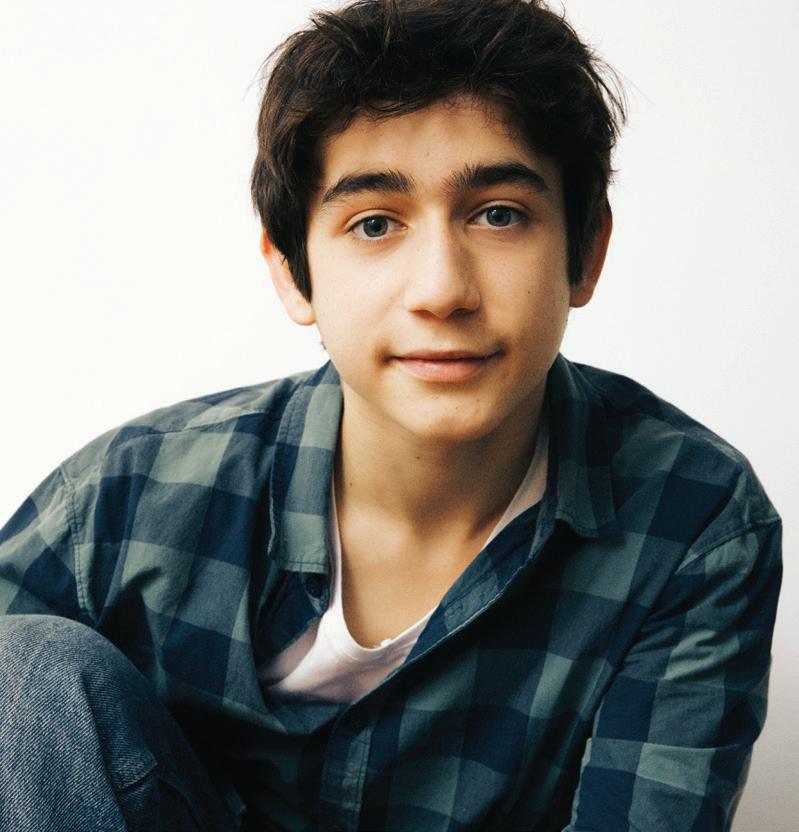
Milo MachadoGraner
The rising French actor bounces back from Anatomy of a Fall
At the age of 17, Milo Machado-Graner is already familiar to audiences in Cannes. First, he appeared as the sight-impaired son in Justine Triet’s 2023 arthouse smash Anatomy of a Fall, then he came back the following year with Filmlovers!, Arnaud Desplechin’s poetic ode to cinema. This year, you’ll find him closing Critics’ Week with Goodbye Cruel World, a beautiful, bittersweet fairytale that plays like Moonrise Kingdom, if it were made by Nouvelle Vague legend François Truffaut as part of his Antoine Doinel series.
Machado-Graner—who looks more than a little like Truffaut’s 400 Blows star Jean-Pierre Léaud—plays Otto, a teenage loner who is at the end of his tether after being bullied by his classmates and writes a letter telling the whole school that he is going to kill himself as a result. But his suicide attempt is thwarted, and despite his embarrassed determination to stay missing, Otto is discovered by Léna (Jane Beever), who hides him away in a disused room at her mother’s guest house, where they plan to elope. The part was originally ear-marked for Macha-
do-Graner’s brother Solan, who is also an actor. “He did some auditions, but they said he was too young, and so they went a bit older. I met Felix at a casting and we did some scenes, especially the scenes at the beginning, before the suicide attempt. There was a real difference between the beginning and the end of the audition, and I think Felix saw that we could work well together. He called me a day or two after that, saying, ‘OK, we want you on a callback.’ And when we did the callback, he said, ‘OK, you’re in. Welcome!’” Why did he want to do it? “I think it’s because it’s really different. I like the idea, as an actor, of playing very different characters. My big one was Anatomy of a Fall, where I played a blind child, really introverted. But this role took me to a different place, a place I didn’t know, and it was a love story, something I’d never played before.”
Cannes is particularly special to the actor because his first time there took him all the way to the Oscars, where Triet’s film had five nominations and won Best Screenplay. “We did the campaign and it was really intense,” he says. “I think we felt relieved, but also because, I mean, it was a powerful moment because the French selection committee didn’t decide to send us for best foreign picture, so we were taking our revenge maybe. And so, we partied like we never partied before. The Vanity Fair party was really memorable— grabbing a burger next to Steven Spielberg. It was like we were saying, ‘OK, we didn’t do all these interviews, all that campaigning for nothing!’” —DAMON WISE
Japan is out in force in Cannes this year across the Official Selection and parallel sections as well as the Marché du Film, where it is the country of honor, with its high-profile presence continuing a long and illustrious relationship with the festival.
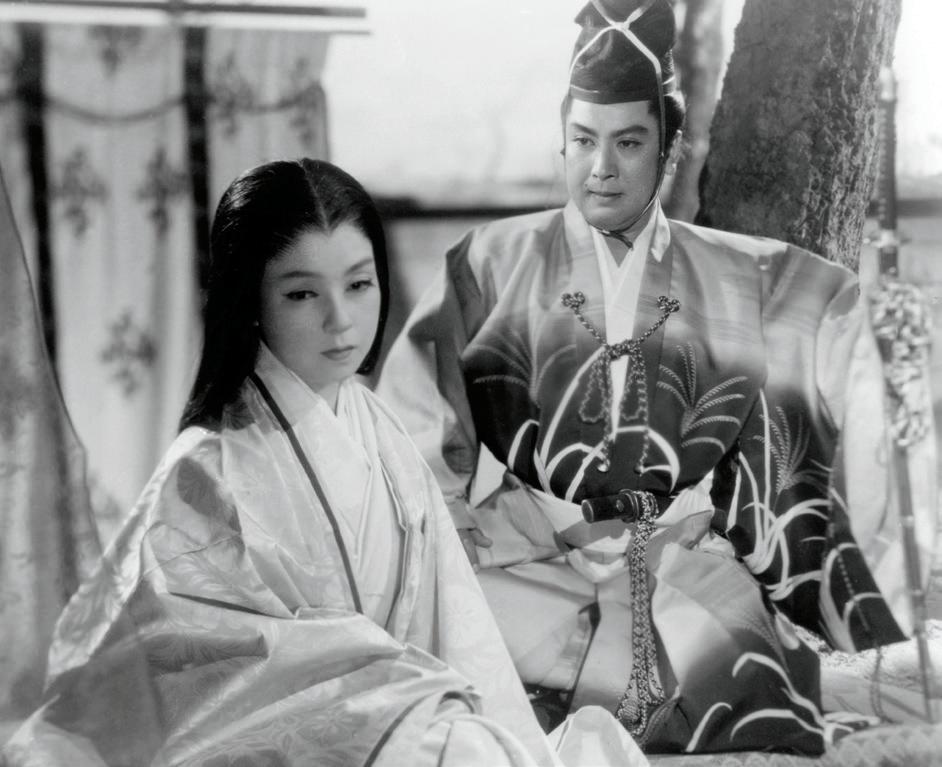
Kōzaburō Yoshimura’s The Tale Of Genji, Kiyoshi Saeki’s Man in the Storm and Noboru Nakamura’s Nami marked Japan’s entry into the main Competition in 1952, while the country clinched its first Cannes top prize—Grand Prix, which was replaced by the Palme d’Or in 1995—in 1954 with Teinosuke Kinugasa’s Gate of Hell.
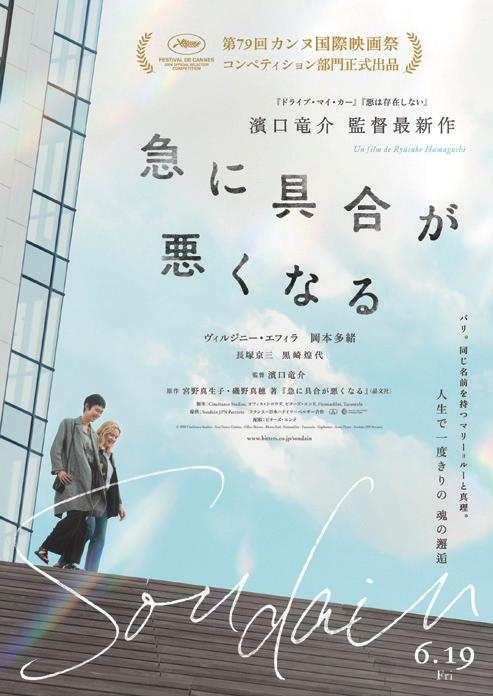
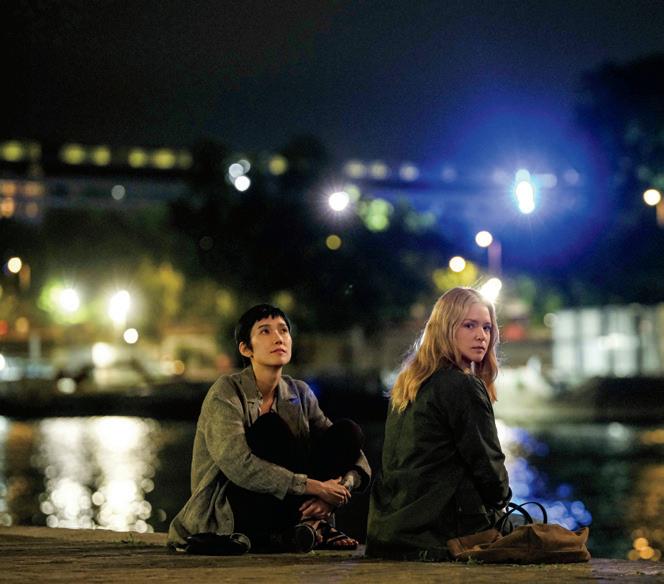
Close to 75 years after its Cannes debut, Japan is celebrating another Competition hat trick with Ryûsuke Hamaguchi’s Paris-set drama All of a Sudden; Hirokazu Koreeda’s sci-fi Sheep in the Box and Fukada Koji’s intimate drama Nagi Notes in the running for the Palme d’Or.
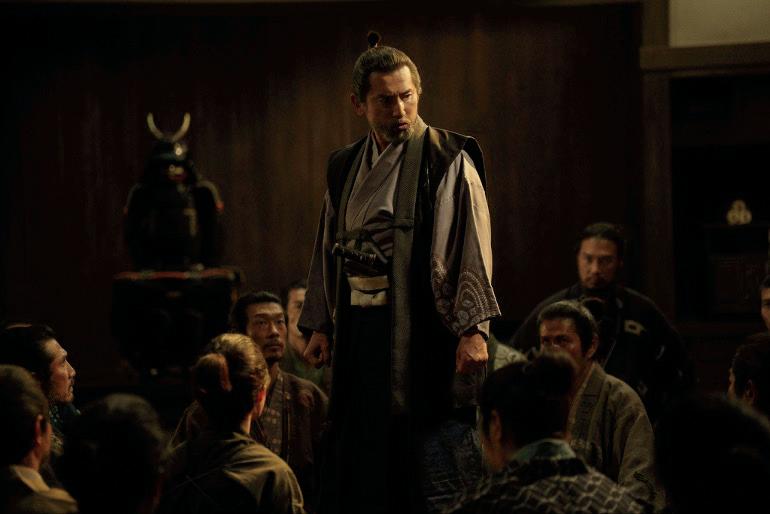
Elsewhere in Official Selection, Yukiko Sode’s literary adaptation All the Lovers in the Night plays in Un Certain Regard and Kiyoshi Kurosawa’s historical drama The Samurai and the Prisoner will be unveiled in the Cannes Premiere section.
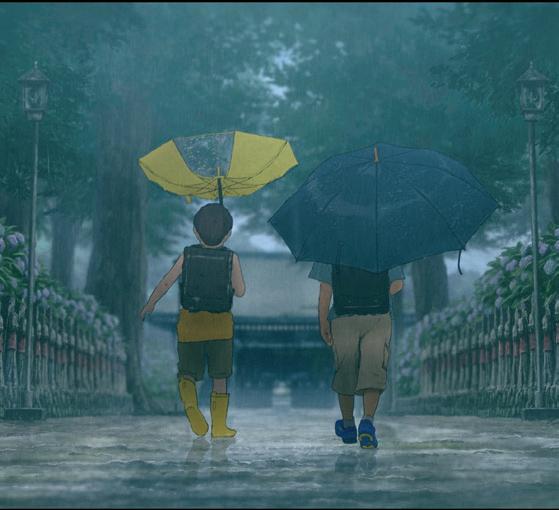
Over at Directors’ Fortnight, Japanese indie animation will be in the spotlight with Kohei Kadowaki’s feature We Are Aliens and Yano Honami’s medium-length work Eri
Cannes Film Festival 2026
Japan Broadens Its Horizons
From Palme d’Or hopefuls to IP champions, the Land of the Rising Sun is set for a high-profile Cannes.
BY MELANIE GOODFELLOW AND ZAC NTIM
The Country of Honor focus, which is decided at least two years in advance, falls at a buzzy time for the Japanese film business.
The local box office hit a record high in 2025 of $1.8 billion, driven by the success of animated fantasy film Demon Slayer: Kimetsu no Yaiba Infinity Castle
The $20 million budget animation, inspired by Koyoharu Gotouge’s best-selling manga, grossed more than $250 million at home to become Japan’s highest grossing film ever. It delivered close to another $500 million in international ticket sales for a total gross to date of $741 million.
Aniplex, the subsidiary of Sony Music Entertainment Japan which oversees the Demon Slayer rights for Gotouge and publishing company Shueisha, will be in Cannes with a slate of upcoming animations including Witch on the Holy Night, the latest production from Demon Slayer production
studio Ufotable. The Marché du Film will also showcase a raft of manga works ripe for adaptation in a three-day event dedicated to Japanese IP.
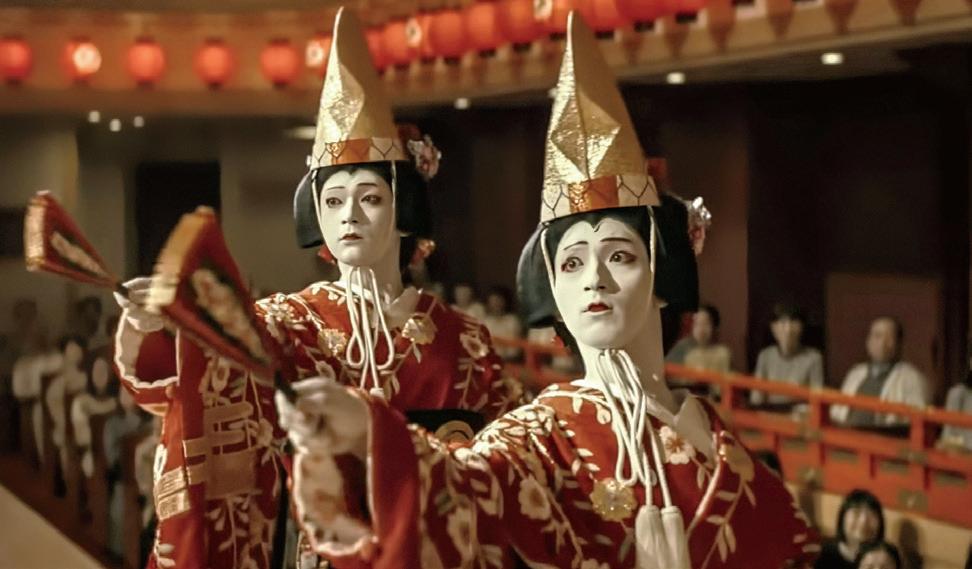
In another record-breaking box office performance, Kabuki drama Kokuho—which debuted in Directors’ Fortnight last year and went on to represent Japan at the 98th Academy Awards after making the short list—delivered a $127 million gross, the best theatrical performance for a local live action film ever.
In spite of the strength of the domestic box office, the Country of Honor focus, backed by Japan’s Ministry of Economy Trade and Industry (METI) and Japan External Trade Organization (JETRO), chimes in with an increasingly international outlook across the Japanese film industry.
Veteran producer and Cannes regular Yumiko Takebe, president of Tokyo-based Kino Films,
suggests this is a necessity due to the country’s demographics, which are characterized by falling birth rates and high life expectancy.
“Japan has no choice but to seek overseas markets in all fields, as we are in a super aged society,” says the producer, whose past credits include Naomi Kawase’s 2017 Palme d’Or contender Radiance and True Mothers.
Takebe points to the role of streaming in bringing about deep structural change to the local film and TV sectors as well as breaking down national barriers around content.
“Fifteen years ago, when Kino Films was established, there were 3,500 video rental stores. This has decreased by 60% and the sales of DVD/Blu-Rays are less than 10% of their peak, with those sales shifting to video on demand,”
she says.
Jason Gray, one half of Tokyobased company Loaded Films
with wife and co-founder Eiko Mizuno Gray, cautions that behind the 2025 bumper box office lies a harsher reality for most independently-produced films.
“If you exclude those two titles from the annual box office it was a standard year in terms of admissions and split between local films and imports. 2024’s Last Mile and last year’s Exit 8, recently released in the U.S. by Neon, are increasingly rare cases of smaller titles backed by majors that became mega-hits,” he says.
“True independents share precious little of the box office pie, even those with notable festival premieres. The international festival circuit, Japan-focused events like Nippon Connection [in Germany], and streaming platforms such as Sakka might be the highest visibility option and warmest welcome for true Japanese indies.”
Loaded Films’ last production
was the 2025 Palme d’Or contender Renoir, the second film of Chie Hayakawa after debut feature breakout Plan 75, which took inspiration from questions around Japan’s super-aging population. Renoir played across 180 screens in a mix of arthouse and multiplex venues.
“It performed quite well considering it didn’t have the conceptual hook of Plan 75 and garnered critical praise, including the coveted Oshima Prize, and international sales have been solid,” says Gray.
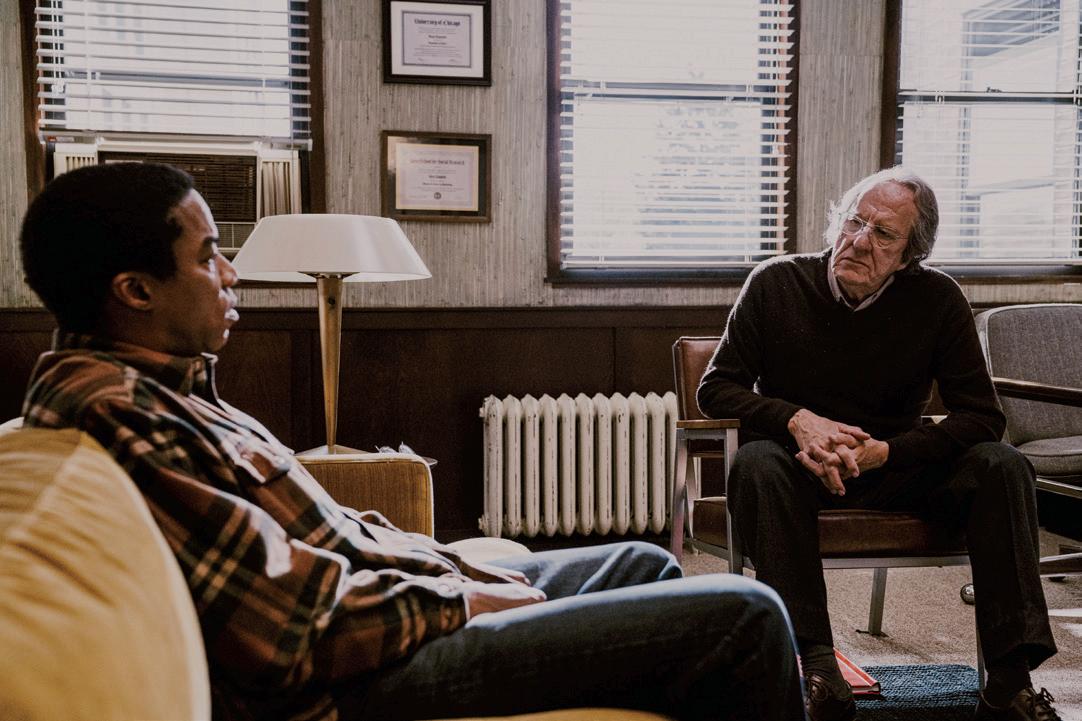
Against this backdrop, indie players are increasingly looking outside of Japan. Kino Films is currently finishing post-production on cult Japanese director Shin’ya Tsukamoto’s Englishlanguage debut Mr. Nelson, Did You Kill People? starring Rodney Hicks and Oscar-winning actor Geoffrey Rush.
Hicks stars as real-life, late
African American Vietnam War veteran Allen Nelson, who wound up on the streets after returning from the conflict with severe PTSD, but went on to become an anti-war campaigner of renown in Japan. The cross-border production, shot on location in the U.S., Thailand, Vietnam and Japan.
Kino Films President Takebe says the English-language and international shoot were tied to the real-life story, but acknowledges commercial considerations were also at play.
“Shin’ya Tsukamoto has enjoyed success at various international film festivals with his Japanese language war dramas Fire on the Plain and Shadow of Fire,” she says. “We wanted to achieve a theatrical release in Englishlanguage territories including North America, which has been difficult until now, so we took up the challenge of making a wholly English-language film.”
Toronto native Gray, who arrived in Tokyo in 1998, says Loaded Films was one of the first Japanese companies to do co-productions but that other players are now embracing the model.
“When we started doing international co-productions a mere 10 years ago, they were not even a topic of discussion within the industry, but now even major studios are considering coproductions as an option,” Gray says.
His company was at the Hong Kong-Asia Film Financing Forum in March looking for partners for Life Is Yours by Emma Kawawada. Revolving around an elderly woman seeking revenge on a foreign company which expropriated her land to build a luxury ski resort, Gray says the project offers international casting and co-producer angles, but that the configuration will depend on Kawawada’s artistic vision.
Running concurrent to the
The Samurai and the Prisoner
Demon Slayer: Kimetsu
organic internationalization of local producers, is the Japanese government’s drive to grow the country as an international shooting destination, which it kickstarted with the introduction of incentives in 2023.
More than 20 productions have since tapped into the cash rebate offering up to 50% of costs incurred during production, led by Tokyo Vice and also including The Smashing Machine, Monarch, Rental Family and Marty Supreme
A revamp of the scheme, announced in December, offering more flexibility on the timeline for applying and reporting eligible expenses, has been welcomed. There are concerns around minimum thresholds for direct spend in Japan of either $3.2 million, or $1.1 million for projects with distribution in 10 or more territories.
“Revised rules around the subsidy have provided improvements, with it becoming a two-year program,” says Georgina Pope, head of production at Tokyo-based Toho Tombo Pictures, who worked on the shoots of The Smashing Machine and Marty Supreme
She is still mulling the impact of the new thresholds suggesting they may weigh on the diversity of projects touching down in the country.
“Even a few days of shooting in Japan gives immense value to the authenticity of a project but may not necessarily meet the new spend threshold,” she says. “A constant flow of diverse projects in size, scale and origin create a solid and growing workforce, giving crew a wide variety of experience and exposure to international filmmakers.”
But overall, Pope is upbeat: “Japan feels really exciting and vital at the moment. The domestic, animation and international sectors are all doing well. Studios are busy, cinemas are full… it really is an exciting time to be in Tokyo.”
At the same time as becoming more outward looking, Japan’s film business has also been
“Japan feels really exciting and vital at the moment. The domestic, animation and international sectors are all doing well.”
GEORGINA POPE
looking inward and seeking to clean up its act in terms of working conditions.
“When I entered the film industry in the late 1980s, conditions on Japanese film sets were far from healthy,” says Shozo Ichiyama, programming director of the Tokyo International Film Festival and producer, whose credits include Takeshi Kitano’s Violent Cop and Eric Khoo’s Spirit World, starring Catherine Deneuve opposite Masaaki Sakai.
“Studios and investors were trying to make movies on the lowest possible budgets, and the resulting strain was reflected in the grueling working conditions faced by crew members on set.”
He credits government-led efforts in neighboring South Korea and Taiwan for encouraging more sustainable approaches in the local industry, adding that local filmmakers have also played a role in improving standards.
“The fact that influential directors such as Hirokazu Koreeda, Nobuhiro Suwa and Koji Fukada, who are aware of these developments, have spoken out,” he says, has helped “working conditions in the Japanese film industry move in the right direction.”
One producer who has taken the challenge of bringing more equitable practices to the film industry to heart is long-time Koreeda collaborator and former Toei producer Muneyuki Kii who launched K2 Pictures in 2023.
“I founded the company based on my conviction that, compared to other countries, the Japanese
industry remains highly ‘feudal’ in structure,” he says. “I believed that unless the industry becomes more democratized, it would struggle to sustain a healthy cycle or evolve into a new ecosystem.”
Alongside K2 Pictures, Kii launched the K2P Film Fund, to fund animated and live-action productions with a model that would fairly reward investors, creators and crew members.
“We have successfully completed fundraising and believe we’re progressing in line with the direction we initially set out to achieve,” says Kii.
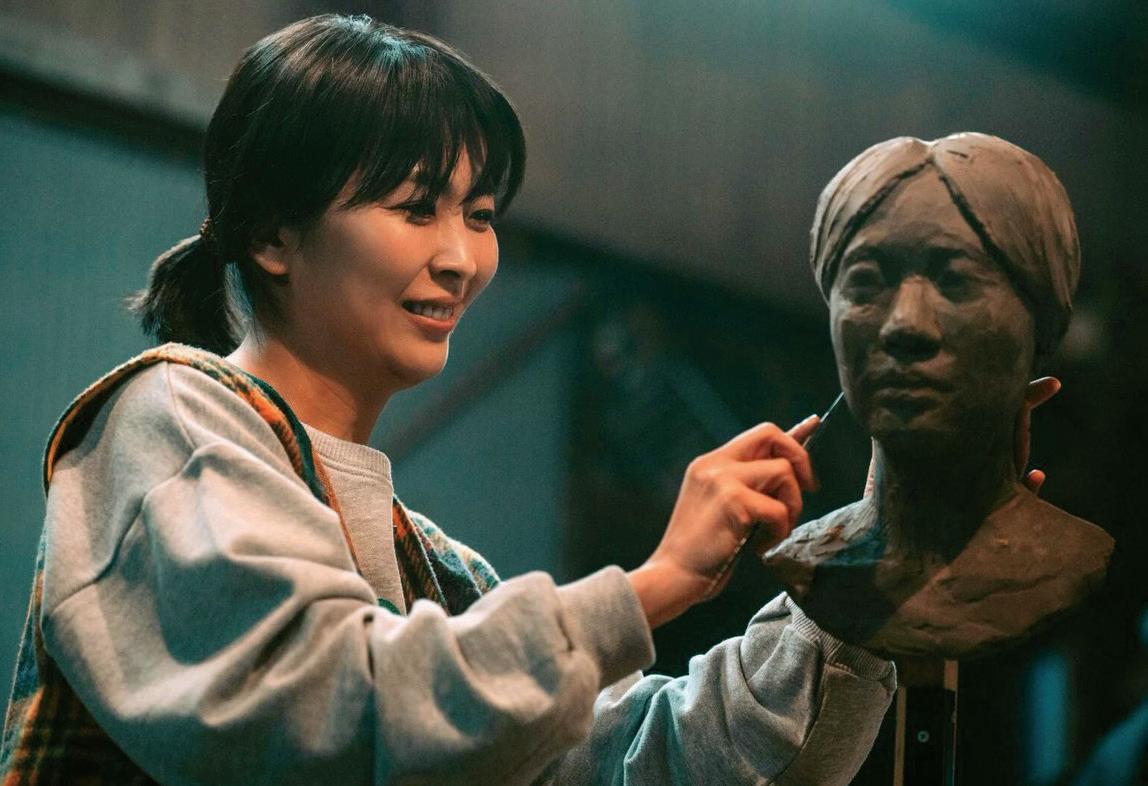
K2 Pictures is in Cannes launching sales on polyamorous drama Between Two Lovers, the debut feature of former Koreeda assistant Nanako Hirose, as well as Trophy by Son Myong A, another Koreeda protégé; Miwa Nishikawa’s Children Untold and Border by director Kazuyuki Izutsu (Pacchigi!).
He, too, notes the increasingly international approach across the Japanese film industry but suggests its long-term strength is based on its determination to make films whatever the prevailing winds of the day.
“The value of Japanese cinema lies in its commitment to consistently producing films regardless of whether business conditions are favorable or not,” he says, reflecting the commitment first witnessed by Cannes in the 1950s, when directors Yoshimura, Nakamura and Kinugasa arrived in competition with their films, all shot against the odds in post-war Japan. ★ PREMIERE Japan: Country of Honor
1 We Are Aliens 2 Between Two Lovers
Cannes Film Festival 2026
Day Trippers
John, Paul, George and Ringo all had a groovy time at the Cannes film festival, but the Fab Four mostly went one at a time—and never as The Beatles
BY DAMON WISE
Most rock bands have visited the Cannes Film Festival at some point in their career. The Rolling Stones went twice, first with Gimme Shelter in 1971 and then with Stones in Exile in 2010. The Who closed the festival in 1975 with their rock opera Tommy; Pink Floyd took The Wall in 1982, and U2 played a short set on the steps of the Palais to promote 2007’s U2 3D. The Beatles were no exception; all four walked the Croisette at various points in their careers. Strangely, however, though they were quick to seize on the power of cinema, the Fab Four were never all there at the same time.
The band’s first and best film, A Hard Day’s Night, was released in the summer of 1964, less
than two years after their debut single, “Love Me Do”, launched the phenomenon known as Beatlemania that swept the world at the tail end of 1963. By that time, movies had become a key part of the marketing process, a trail blazed by Elvis Presley. For a time, it seemed that The Beatles might go down a similar path, entertaining an offer brought to them by manager Brian Epstein to play a pop group in a sexploitation film called The Yellow Teddy Bears (1963).
“We said to Brian, ‘Yeah, OK, great!’,” Paul McCartney recalled. “Then he came back to us after talking to the producers and told us they wanted to write the songs themselves.” Naturally, they passed.
In the summer of ’63 the band signed a
three-picture deal with United Artists, which gave The Beatles a list of potential directors. The band immediately agreed on Richard Lester. Lester had recently directed the musical comedy It’s Trad, Dad! but McCartney and John Lennon remembered him from an 11-minute short they’d seen, called The Running Jumping & Standing Still Film (1959). The film that evolved was both a light comedy and a surprisingly perceptive study of the mechanics—and pressures—of pop culture, with a plot that covered 36 hours in the lives of the band as they prepare to perform for a TV variety show. With a budget of just £180,000, filming began in March of 1964 and lasted less than two months. That left three weeks and four days to
2
3
edit the film, dub it, and get a final print ready for its London premiere on July 6th. Against all expectations, the film was a massive hit, and Lester was tasked with coming up with a sequel. This he duly did—less than a year later— with Help!, a farcical romp in which drummer Ringo Starr is sent a ring by a fan, unaware that it is a religious item that must be worn by sacrificial victims of a pagan cult.
The Beatles only made three more films, largely to satisfy contractual obligations. Magical Mystery Tour (1967), ostensibly directed by the band themselves, was basically a whimsical 52-minute TV special that attempted (and mostly failed) to capture the offbeat vaudevillian comedy of A Hard Day’s Night. Yellow Submarine (1968), meanwhile, though a fantastic piece of psychedelic art in its right, had so little input from The Beatles that they didn’t even do their own voices. Their swansong was Let It Be (1970), a morose documentary that would have been the last word on the band had Peter Jackson not returned to the master tapes for his 2021 mini-series Get Back
JOHN
One of the founding Beatles returns to Cannes this year in Steven Soderbergh’s documentary John Lennon: The Last Interview, which uses a radio interview Lennon gave on 8th December 1980, the day he was shot and killed. Coincidentally, Lennon was the first to go to Cannes, spending four days there in May 1965, with Richard Lester, who was competing with his film The Knack… and How to Get It Help! was in the can, awaiting a late summer release, and Lennon gave a brief, nonsensical interview to The Merv Griffin Show, which he mostly used to plug his upcoming book A Spaniard in the Works, on sale for “ten shillings and sixpence”. It was more of a social visit; Lennon took his then-wife Cynthia, and the pair hung out with Michael Caine, there to promote The Ipcress File.
Caine and Lennon attended a party thrown by the British Consul, where, astonishingly, none of the older Brits knew who they were.
“He introduced himself as Joe Lemon and I used my real name, Maurice Micklewhite,” Caine wrote in his autobiography, What’s It All About?. “As each group approached us we would introduce ourselves, and when they asked us what we did for a living, John would point at me and say, ‘I’m his assistant,’ and I in turn would point at John and say, ‘I’m in charge of him.’”
The same evening, they got drunk together at a party in a grand mansion overlooking the sea. Both went looking for a bathroom, but only Caine found one, in the hostess’s bedroom. John, meanwhile, relieved himself through the open window, splashing the drapes as he did so.
“John finally finished,” wrote Caine, “and as we left the bedroom I said to him, ‘You’ve ruined her bloody curtains.’ ‘They’re rich,’ he replied. ‘Fuck ’em.’”
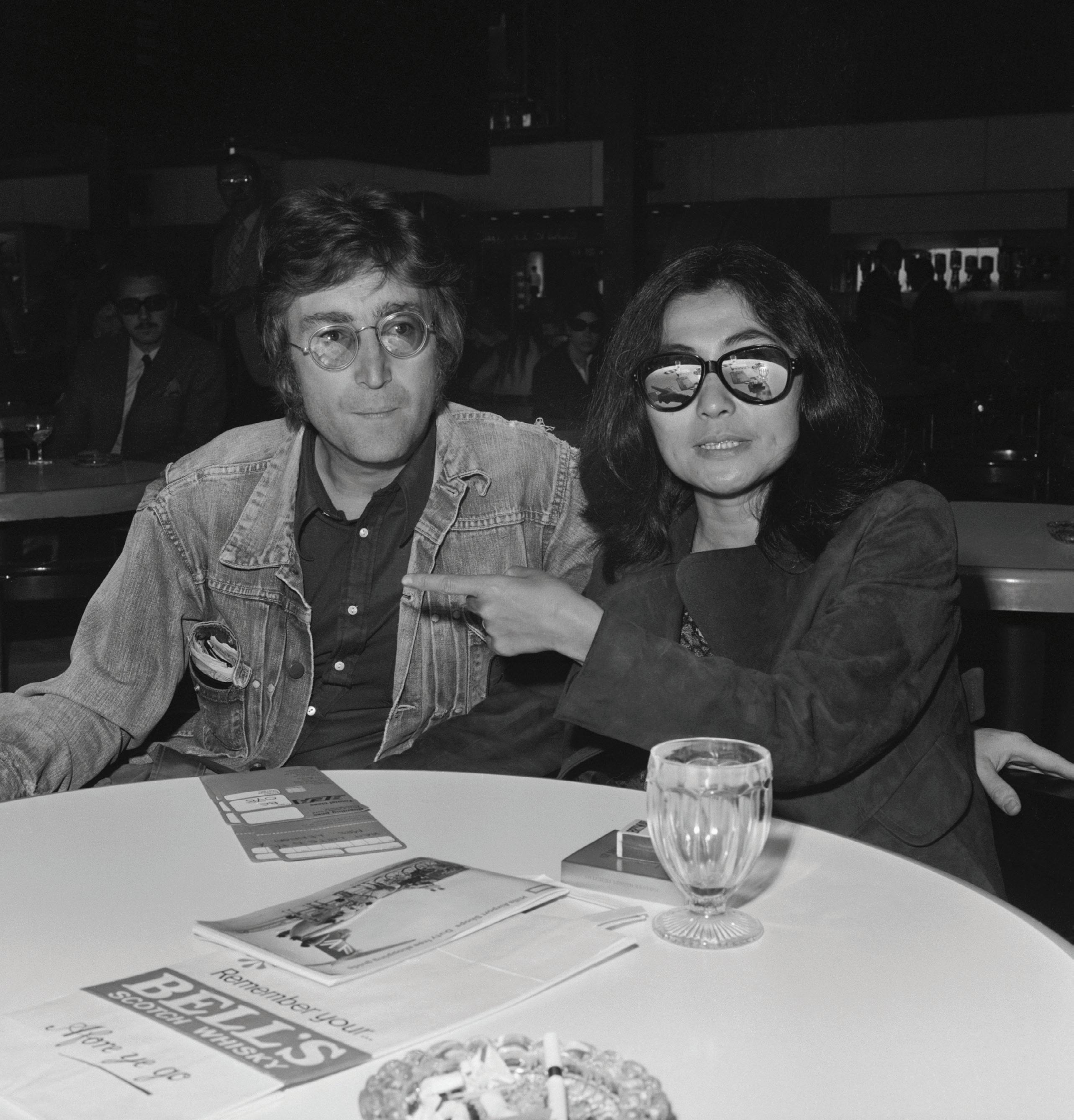
It was a very different Lennon that returned to the festival in 1971. In 1965 he’d worn black tie; this time he wore double denim for the premiere in Directors’ Fortnight of a short film, Apotheosis, he’d conceived and co-directed with his new wife, performance artist Yoko Ono. Shot in the snow-covered town of Lavenham in Suffolk, it appeared to show the couple getting into an unseen hot air balloon and rise up into the clouds, disappearing into the cloud cover for 18 minutes before bursting through the other side. It appeared on a double bill with Ono’s Fly, a 25-minute piece starring actress Virginia Lust, about “a fly going from the toe to head of a lying naked body, crawling very slowly.”
The trip was arguably Lennon’s most visible
public appearance since the disbanding of The Beatles, and there were no signs that he was looking back. In photographs taken at the festival, he can be seen brandishing a copy of his most recent album, John Lennon/Plastic Ono Band, as well as Yoko Ono’s book, Grapefruit Subtitled A book of Instructions and Drawings and first published in 1964, it was a collection of epigrams that, variously, invited the reader to walk all over the city with an empty baby carriage, eat a tuna fish sandwich, and shoot a bullet through 100 panes of glass.
PAUL
Despite being arguably the most artistic of the band—famously well-read, with a passion for painting inspired by Willem De Kooning—Paul McCartney has never really embraced cinema. Aside from a cameo as ‘Banquet Guest’ in the low-budget 1987 British comedy Eat the Rich, McCartney has mostly only ever played, or appeared as, himself. His first appearance at Cannes was with his wife Linda, who’d produced an animated short in 1980 for her reggae song “Seaside Woman”—released under the pseudonymous name Suzy and the Red Stripes—directed by Argentina’s Oscar Grillo. The film won the short film Palme d’Or, which may have emboldened Mr. McCartney to come up with his own and—so far only—foray into feature films in 1982. Titled Give My Regards to Broad Street (1982), it was billed as “a day in the life of a famous rock star”, with McCartney, as himself, facing financial ruin when the master tapes of a recording session go missing. Roger Ebert, who half-heartedly praised the music, gave it one star, then twisted the knife. “It
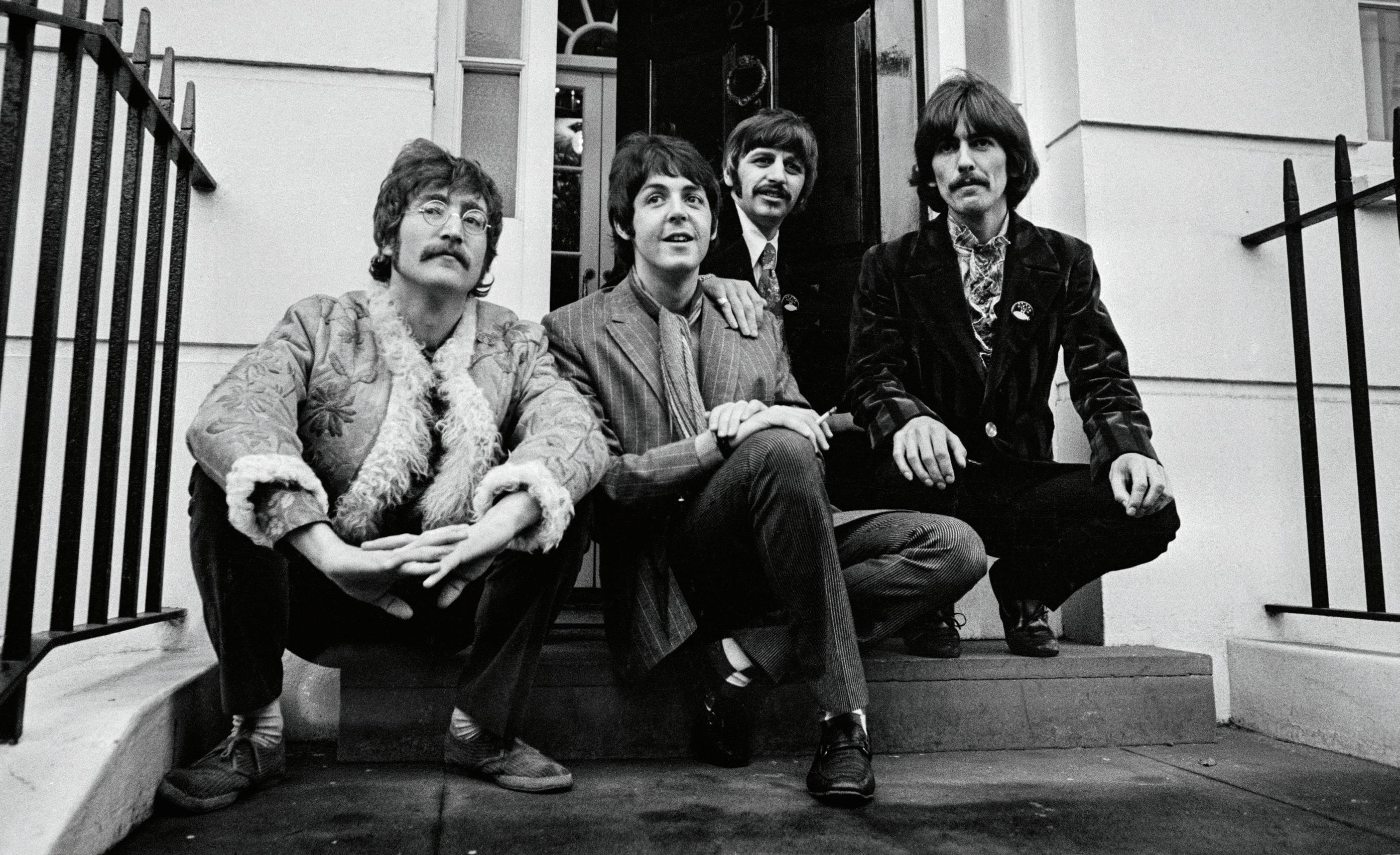
1 John Lennon, Paul McCartney, Ringo Starr and George Harrison.
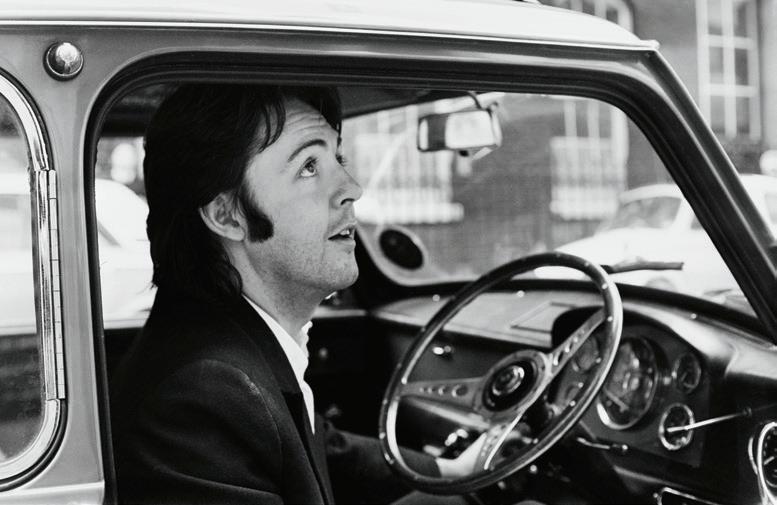
McCartney in his Mini.
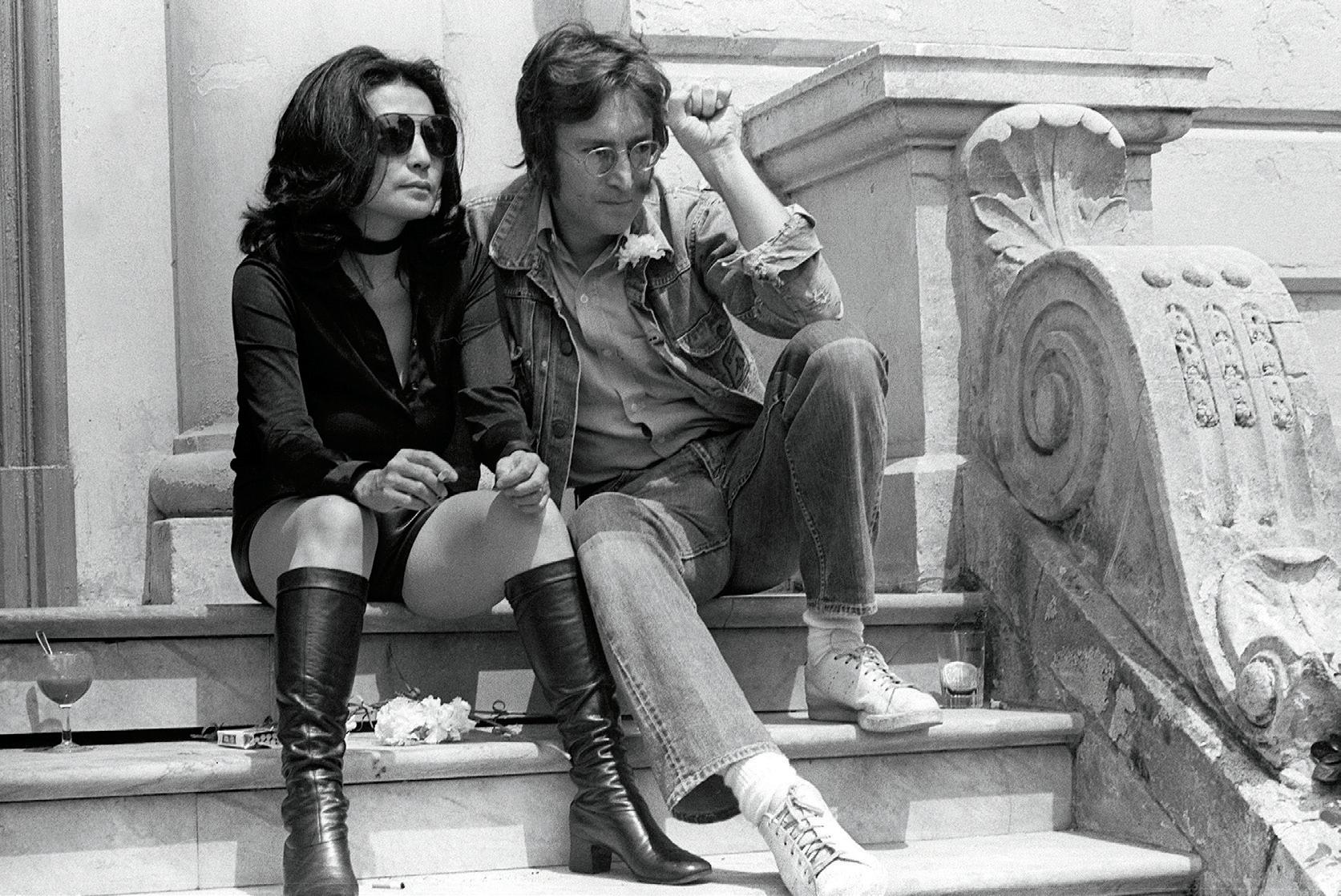
Lennon and Yoko Ono in Cannes.
seems to be a throwback to pre-Beatles days,” wrote the critic, “back when pop musical films were simpleminded and shallow, back before A Hard Day’s Night and Help! seemed to create a new tradition of fresh irreverence.”
Paul took it on the chin, while admitting that the bad reviews stung. “Nobody likes to have their wrists slapped,” he said later. “You don’t like it at school when you get exam results, and you haven’t done as well as you thought you had. And it’s the same [here]… It also happened with Magical Mystery Tour. Now, there’s a lot of people who like it. Whereas what happened was it actually came out on Boxing Day. It should have been, ‘Hello viewers, are we having a happy Christmas? Have you had your Christmas pud?’ It was in that slot, and it was just not what the majority of those 20 million viewers expected. So, it got slammed from that angle. But you won’t find any other footage of John Lennon singing ‘I Am the Walrus’.”
McCartney returned to Cannes in 2001— three years after Linda’s death—to promote a Wings concert film called Wingspan. In a wide-ranging press conference, McCartney pontificated on the cause of foot and mouth disease, admitted to liking Coldplay, and claimed to have written a song inspired by one he heard The Rolling Stones play in a dream. He also emphatically denied that there would ever be a Beatles reunion. “Short answer, no,” he said. “I’ll tell you why, too, and why you won’t see Wings onstage either. I figured it out the other day. There’s three Beatles left, and it would be a real problem to be on stage and look over where John used to be and he wouldn’t be there. I don’t think we could do that. The same
“I loved the movies as a kid. I’d be into whatever was showing; if it was a pirate movie, I would be a pirate. It was a great fantasy land for me, the movies—and suddenly, we were in one.”
RINGO STARR
answer for Wings; no matter what lineup we had, I’d look over, and Linda wouldn’t be there. So, I think it’s definite that you won’t see any reunions of either of those groups.” Six months later, George Harrison passed away, aged 58.
GEORGE
McCartney was the first Beatle to dabble in movie soundtracks, working with producer George Martin on an orchestral score for the 1966 comedy-drama The Family Way, but George Harrison was the first to release a standalone solo release, which comprised songs he’d written for a film called Wonderwall (1968). A curio even at the height of the Swinging ’60s, Wonderwall is best described as a psychedelic midlife crisis movie, in which a repressed scientist discovers hallucinatory portals that allow him to spy on the woman next door (Jane Birkin) and her Austin Powers-like photographer boyfriend.
Harrison’s fascination with the spiritual East was in full swing, and when Wonderwall director Joe Massot gave him carte blanche, the musician jetted over to EMI’s recording
studios in Bombay. Wrote biographer Philip Norman, “His score brought together the classical Indian, on lesser-known instruments like the shehnai and the sarod, and Western idioms like country and ragtime, performed by guest musicians including Ringo and Eric Clapton. A few years later, such fusions would be dubbed World Music.”
The film premiered in Cannes, outside the official selection, just a few days after Lennon and McCartney had used their appearance on The Johnny Carson Show to distance themselves from their former guru, the Maharishi Mahesh Yogi. “We found out that we made a mistake there,” said Lennon. “We got all carried away,” added Paul. “We thought he was magic, floating around and flying.” Perhaps because of that, and the fact that the 1968 festival was cancelled the same day it screened, Wonderwall, in all its paisley-patterned, mystic splendor, was a flop. Massot would later make a comeback, co-directing the Led Zeppelin concert film The Song Remains the Same (1976), and, by a strange twist of fate, Harrison would also return to film—as a producer.
In 1978, the Monty Python team were getting ready to shoot their religious satire Life of Brian, and after a smattering of bad publicity regarding the subject matter, its distributor, EMI, pulled out mere days before shooting was due to start. Python member Eric Idle approached Harrison and was amazed when the musician not only put up the cash but—together with manager Denis O’Brien— mortgaged his home to form HandMade Films and do so. “It was a bit risky, I guess,” Harrison said later, “totally stepping out of line for me, but as a big fan of Monty Python my main motive was to see the film get made.”
HandMade’s output tended towards the comedic, and thus, with the exception of 1986 gangster drama Mona Lisa, wasn’t exactly
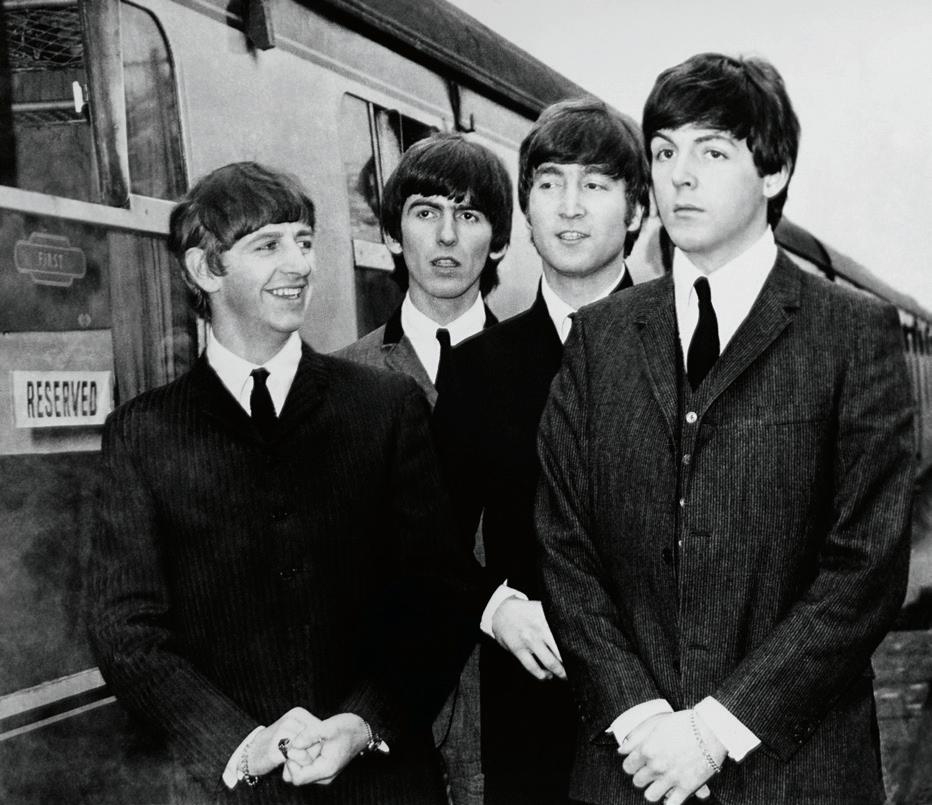
1 Starr, Harrison, Lennon and McCartney in A Hard Day's Night.
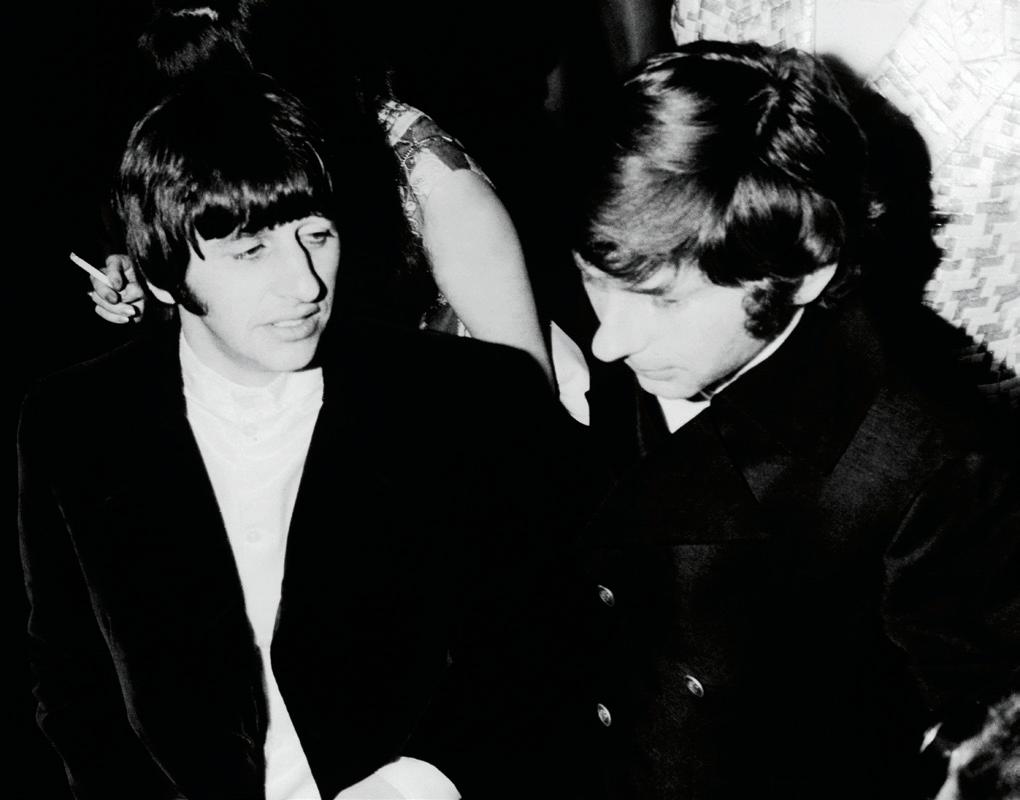
2 Starr with Roman Polanski in Cannes.
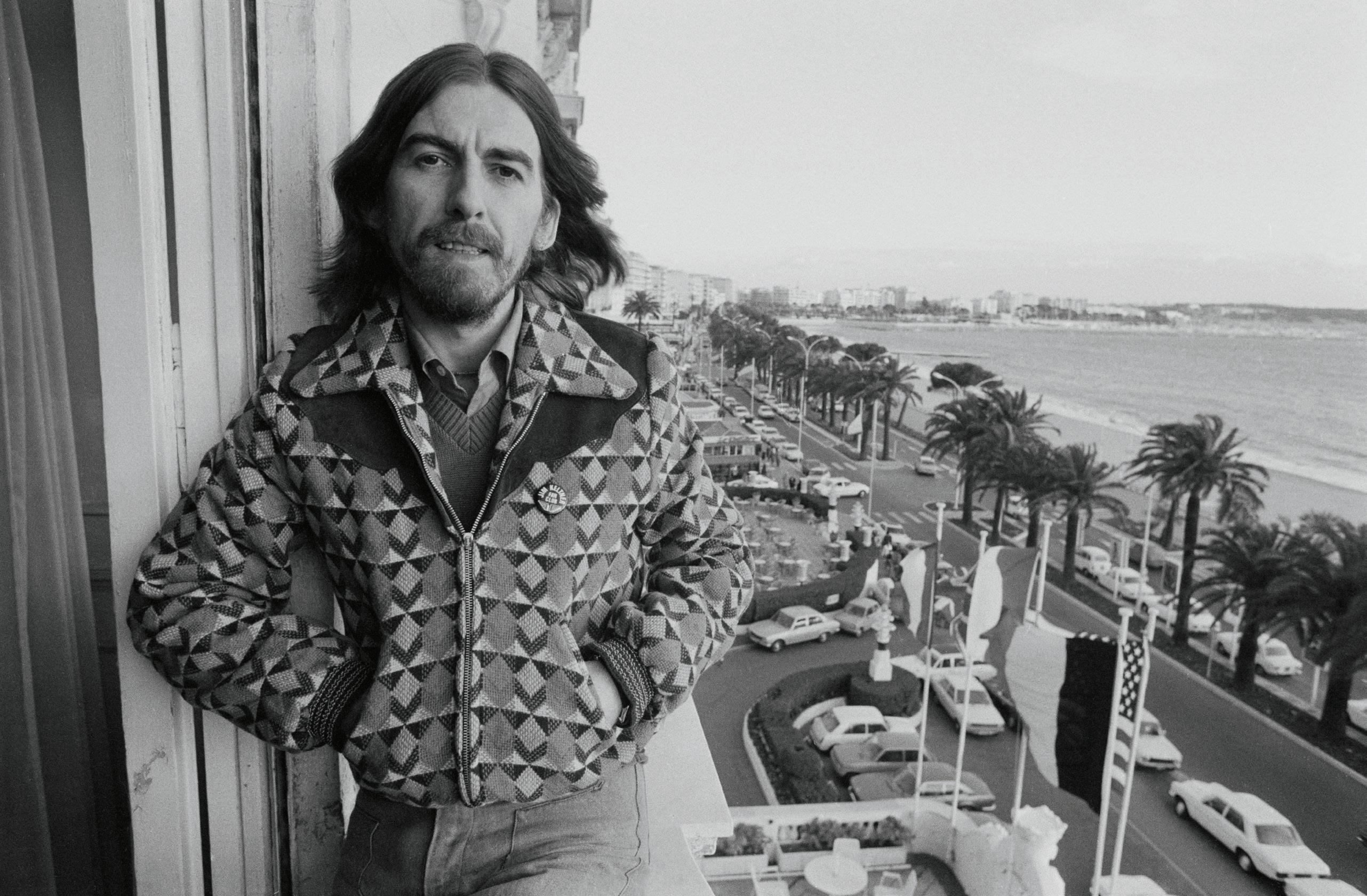
3 Harrison at the Carlton Hotel, overlooking the Croisette.
Cannes fare. But Harrison enjoyed the challenge “When I was acting,” he said, “there was always the feeling that the artists were the clever ones who do everything—and then there were these horrible people who put the money up and don’t know anything. Everyone subscribed to that old Hollywood myth that executive producers hate everything and chop everything up after you’ve done it. So, it is sort of funny being a simple musician who’s now a producer or—inverted commas—‘The Money’. I can see it from both sides. It’s nice to let people have as much artistic freedom as possible, but I’m the one who has to pay back the bank.”
RINGO
Ironically, of the four Beatles, it was initially assumed that Lennon would break into the seventh art, taking the joint lead in Richard Lester’s 1967 satirical anti-war movie How I Won the War. Instead, it was Starr that got the acting bug, and he was smitten even before the cameras rolled on A Hard Day’s Night. “I loved the movies as a kid,” he recalled. “I have great memories from Saturday morning picture shows. I’d be into whatever was showing; if it was a pirate movie, I would be a pirate, and if it
was a Western, I would be a cowboy; or I’d come out as D’Artagnan and fence all the way home. It was a great fantasy land for me, the movies— and suddenly we were in one.”
Starr’s acting career got off to a slow start, with two adaptations of books by American writer Terry Southern that polarized reviewers. Candy, a raunchy update of Voltaire’s classic novel Candide was described by critic Pauline Kael as “a shambles of a sex spoof”, but fortunately for Starr there were plenty more famous faces—including Marlon Brando, Richard Burton and Sugar Ray Robinson—in the firing line. A similar fate befell The Magic Christian, in which Starr plays an orphan adopted by the imperious Guy Grand (Peter Sellers), an eccentric millionaire who uses his wealth to prank people into debasing themselves for money. This time round, Starr’s mortified co-stars included Yul Brynner, who made an uncredited appearance as a transvestite cabaret singer.
Starr’s movie career must be one of the strangest ever, teaming with Harry Nilsson in 1974 for “the world’s first rock-and-roll Dracula movie Son of Dracula, in which he played the wizard Merlin. In 1975 he played the Pope in
Ken Russell’s musical biopic Lisztomania, in 1978 he joined Tony Curtis in Mae West’s lastever film Sextette (“A total, unbearable bomb,” said Rex Reed), and in 1981 he finally took the lead as a prehistoric man in Caveman, only to be upstaged by an animatronic dinosaur. In amongst these roles, it’s easy to overlook the thoughtful performance he gave in That’ll Be the Day, playing a quiffed greaser in a ’50s-set drama with a period jukebox soundtrack. But Starr did get to have his moment in Cannes. After visiting the festival with George for the Wonderwall premiere, the drummer returned in 1982 with his own project, a ten-minute short called The Cooler, comprising three songs from his 1981 album. Directed by Lol Creme and Kevin Godley, the film stars Starr as a new inmate in a weirdly futuristic Western prison, where the guards are played by statuesque women (including Starr’s wife Barbara Bach) in stylized ’80s military clothing who stymie his attempts to escape. It didn’t win any prizes, but it’s unlikely that Starr would have had any illusions about that. “First and foremost, I am a drummer,” he once said. “After that, I’m other things. But I didn’t start playing drums to make money.” ★
Dialogue
Pedro Almodóvar
BY ANTONIA BLYTH
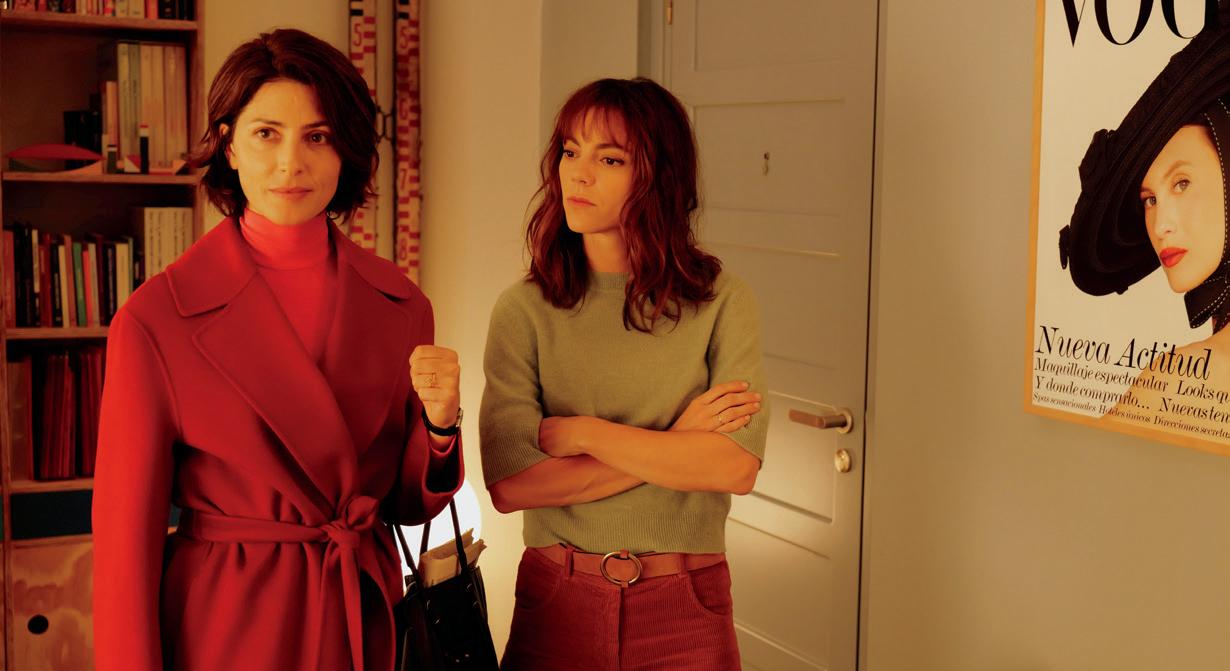
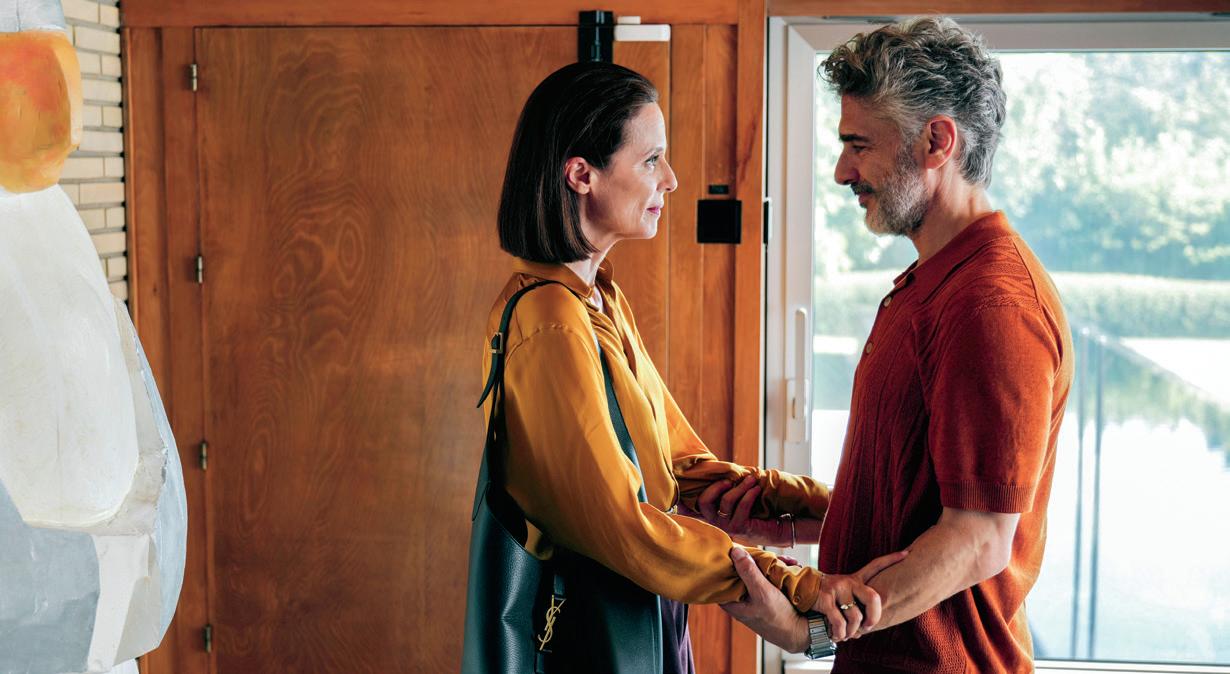
Pedro Almodóvar is known for mining his own personal experience, but Bitter Christmas explores this on a whole new level. His viewpoint is reflected here in two interwoven protagonists— director Raul (Leonardo Sbaraglia), and Elsa (Bárbara Lennie), the cult filmmaker at the center of Raul’s screenplay. As Raul grapples with telling the story of Elsa’s life—she is wracked by panic attacks and migraines—he’s confronted by the murkiness of borrowing from real people for the purposes of fiction. Meanwhile, Elsa’s boyfriend Beau (Patrick Criado), a fireman who moonlights as a stripper, brings classic Almodóvar-esque humor, while Raul’s assistant Monica (Aitana Sánchez-Gijón) serves as the voice of reason.
How long have you been thinking about this film? It feels like the culmination of so much personal experience. It’s been about four years that I’ve been working on the script intermittently while I was also working on some other projects. So it’s been brewing for about four years, which is not one of the longest periods of time for me to write a script.
A hallmark of your films is the complexity and twists and turns of your plotting. How much do you plan in advance before you begin writing?
It sounds a little bit paranormal, but I really do feel like something else takes a hold of me during the writing process, and there comes a point at which it’s the story that’s dictating what’s happening. I was surprised by the ending myself when I got to the end of the story. This is actually the adaptation of a short story that I wrote many, many years ago, that told the story of Elsa with her boyfriend, the firefighter/stripper, and her friend Patricia (Victoria Luengo), and the trip that they take to Lanzarote. It was a complete surprise to me that Monica, the character that appears in the last half-hour of the film, is the one who’s challenging the author. She
was not part of the story previously. She came to me.
Speaking of that character, I wonder if that, for you, is the internal antagonist who asks those questions of yourself? You’re right. Monica’s character is a reflection of the ways in which I may question myself. I’m always very aware and wary of not wanting to become complacent, and I particularly didn’t want to become complacent vis-à-vis the figure of the director, which is a reflection of myself in the film. And as Monica is challenging him, yes, she’s challenging me as a director. And I found the experience of displaying that both liberating and amusing because it did become a process of criticizing myself. Sometimes a writer doesn’t think of the way precisely that they’re going to hurt the people around them, because at the end of the day, they don’t think about the hurt, they think about the idea, and that becomes a dangerous thing. And so at a certain level, my screenwriter is kind of also the villain in the film.
One of the things that I was the most interested in that really became quite organic in this film—perhaps in a way that hadn’t been in some of my other films, although it is a topic that I have
covered in other films—is the relationship between reality and fiction. I’m endlessly fascinated by that relationship, as I am fascinated by the origin of creativity. It is very mysterious to me where creativity comes from. And so that really becomes the principle theme in this film.
I have touched upon this in films like Bad Education or Broken Embraces, but I do feel like I have done this so definitively in this particular film that I may never again come back to that topic.
Have you ever had a situation—as Raul does with Monica—where someone has confronted you about your work in such a personal way?
No, fortunately not. Because, as I said, the writer is someone who can be dangerous for loved ones, because you are always inspired, more or less, by someone that is
close to you. I mean, I write with absolute freedom. So when I’m writing, I don’t think about other people, or I only think about the story itself and do exactly what the story demands me to do.
But after that, there is a debate about what are the limits of autofiction because there are no legal limits, but it’s an ethical issue. I’ve always made it a point to not hurt the people who are being reflected in my films. For that reason, I haven’t had anybody be upset at me, so I’ve never had a confrontation like the confrontation that you see in this film. And in fact, if I was ever grabbed by a story about someone who then asked me not to have their likeness be represented in the film, I might just not do the film at all.
There’s a great scene with Beau set to the music of Grace Jones. Can you tell me about building
Cannes Film Festival 2026
that scene and about casting Patrick Criado?
I was very lucky with the actor. He’s very young, and I was amazed that he could be so versatile. And the key of that sequence is not only that he’s very hot, but also the response of the girls—the reactions that he’s getting from the women and the chemistry between them—is key to that scene. I had a lot of fun directing that scene. That scene is also very important to establish that Elsa is there not for erotic purposes, she’s there because she wants to cast him. And so she’s interested in his physical appearance in so far as his ass and his crotch, but not necessarily for erotic reasons.
I laughed out loud in the scene where Elsa explains what it means to be a cult director. That feels so real. Is that a
“One of the things that I was the most interested in this film is the relationship between reality and fiction. I’m endlessly fascinated by that, as I am fascinated by the origin of creativity. It is very mysterious to me where creativity comes from.”
conversation you’ve had in your own life?
No, no, no. I just invented it. But it’s curious because it’s one of the favorite sequences of many people. I think there is a lot of fun explaining what a cult movie means. I mean, a cult movie means more things than that. And you have the doctor in the scene, as played by Carmen Machi, a very well-known actress, and she really lends that comedic aspect to that particular scene. The audience in Spain really laughs a lot during that sequence.
I loved seeing Lanzarote in this film. I’ve been there and it’s unlike anywhere else in the world. It’s like going to the moon.
Yes, it’s a landscape that doesn’t seem real. It’s also almost like a mental landscape. And given Lanzarote’s volcanic, dark characteristics, it’s also the perfect place for someone to either go hide themselves or mourn, as is the case of Elsa as well. And so these particular characteristics make the island almost a character in itself.
Do you feel you’ll ever return to English-language films?
First of all, with The Room Next Door, it really taught me that yes, I could direct in English. I could direct the actresses, they could understand what I was saying, I could understand what they were saying to me. And so, I knew that I could overcome that challenge. I realized that I can shoot a movie in English, but of course, not just any movie. The Room Next Door is ultimately an extension of
many of my films. It’s a film about two women of a particular age, in a particular situation. And I was blessed with having these two marvelous actresses who carried the film on their shoulders—Tilda Swinton and Julianne Moore. I did that because I discovered the novel of Sigrid Nunez called What Are You Going Through. I felt like I was [working] in my own themes. So that’s why I said that I could do that movie, because I felt it was close to my interests. I’m not talking about the American culture, I don’t know it enough. I’m just talking about these two
female characters. If it’s a comedy, you can invent something, but I don’t know so much the language and the country. So, it depends, but I’m reading [English-language material] because I would like to keep on working with those actors. With Ethan Hawke I made a short film called Strange Way of Life I would like to work again with Tilda and Julianne. And I really am looking to find something that I could manage and that could make an adaptation. So, perhaps in the future there will be another movie in English. ★
Top, from left: Bárbara Lennie and Victoria Luengo; bottom, Aitana Sánchez-Guón and Sbaraglia.
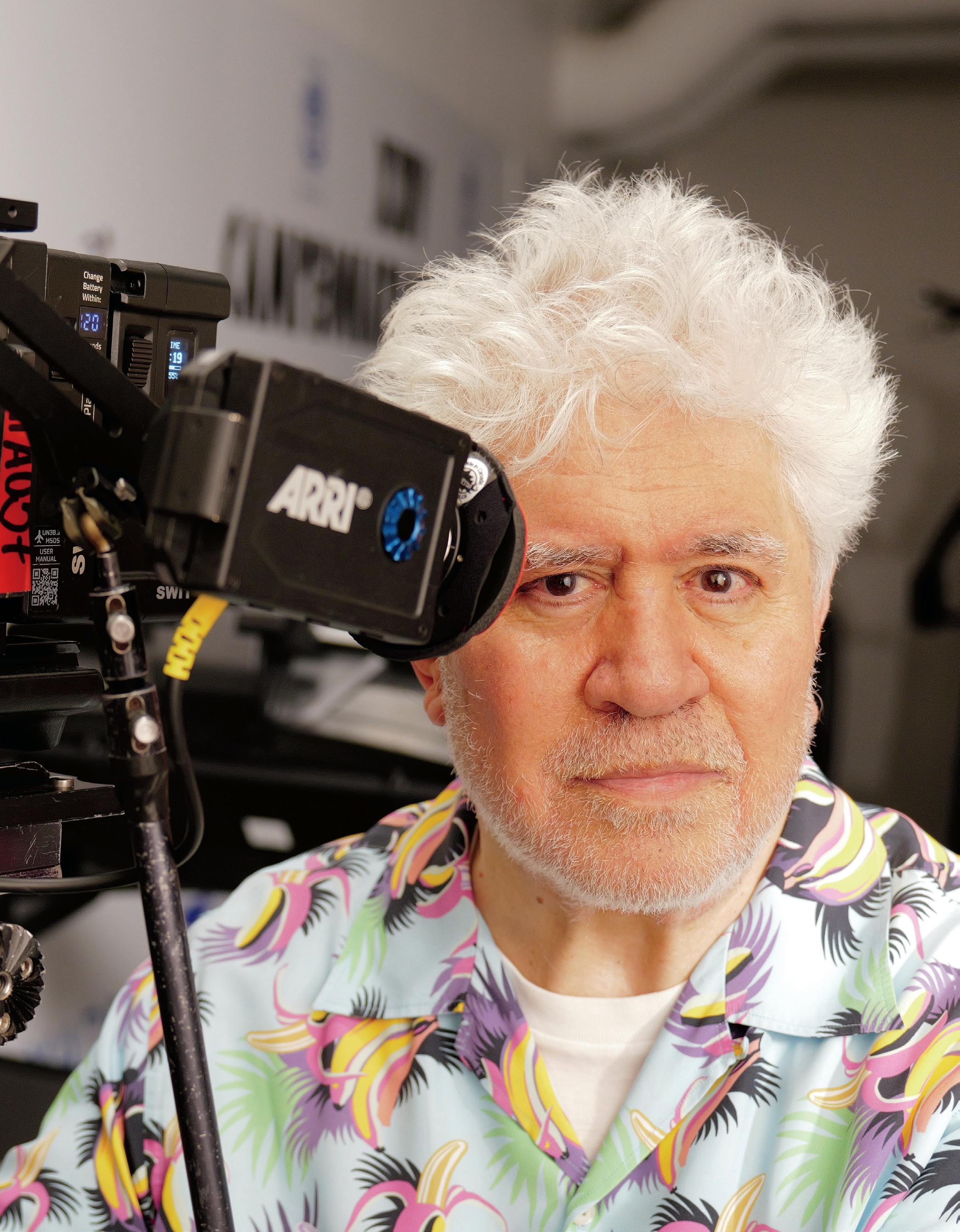
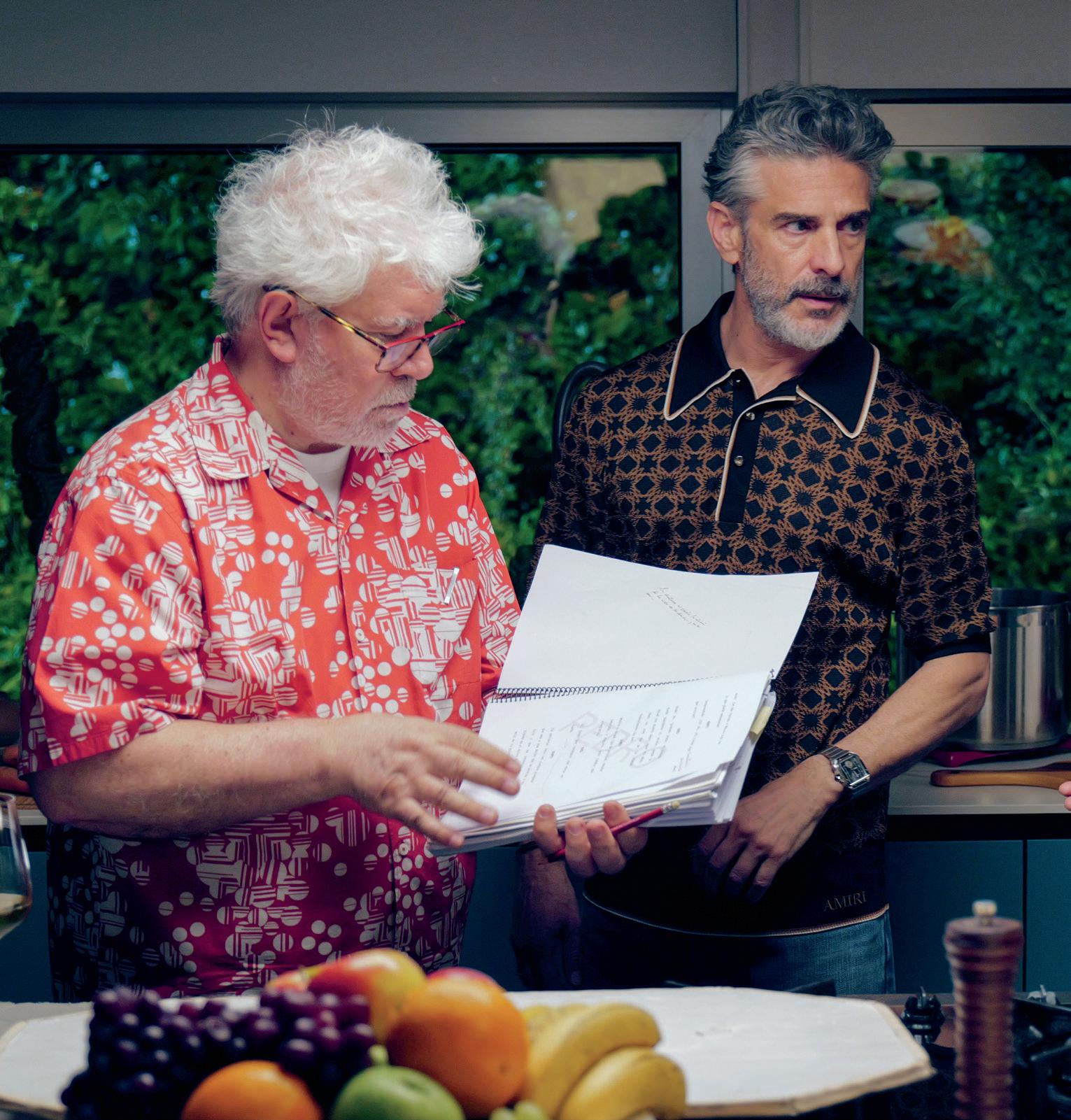
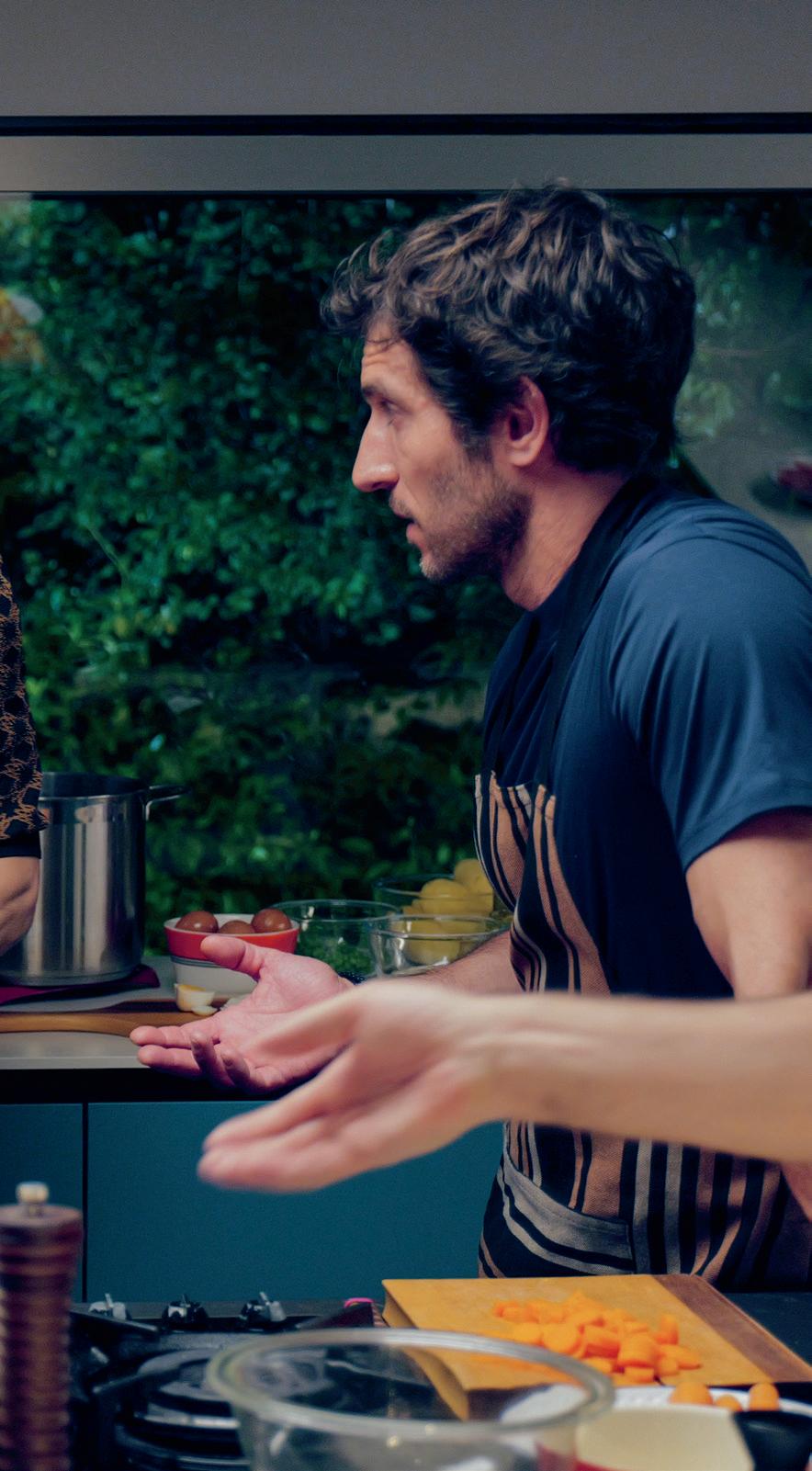
From left: Director Pedro Almodóvar on the Bitter Christmas set with Leonardo Sbaraglia and Quim Gutiérrez
Marion Cotillard
The festival fave is back on familiar ground, doing double duty with Karma and Roma Elastica
BY MELANIE GOODFELLOW
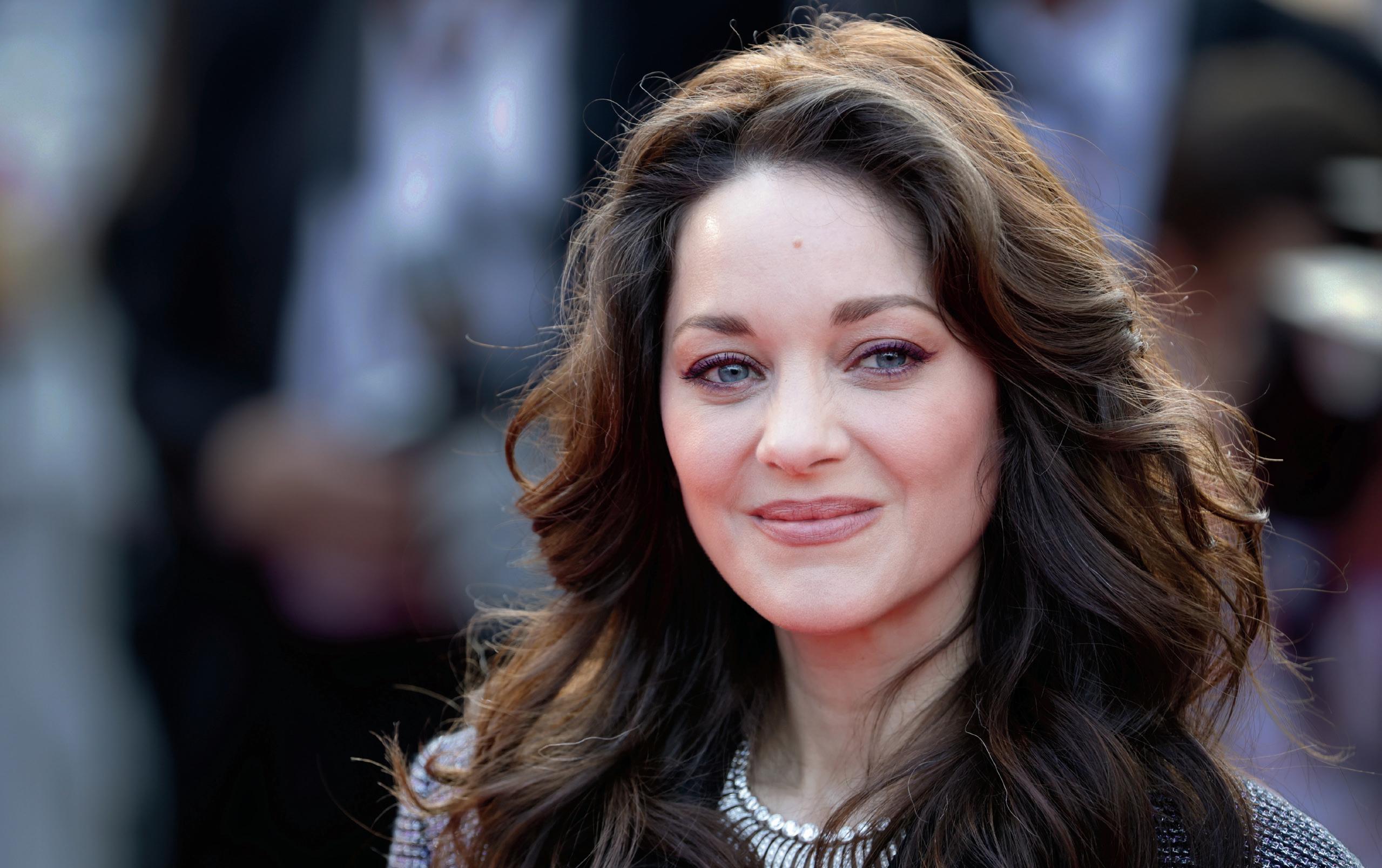
Oscar-winning Cannes habitué Marion Cotillard returns to the festival with Guillaume Canet’s Karma and Bertrand Mandico’s Roma Elastica. These titles bring her Official Selection tally to 16 films since 2011, eight of them in Competition, including Jacques Audiard’s Rust and Bone, Jean-Pierre and Luc Dardenne’s Two Days, One Night and Leos Carax’s Annette. Karma revolves around a woman with a troubled past whose new life is upended by a child’s disappearance, while Roma Elastica follows an actress caught up in a crazy film shoot in Rome in the 1980s. Cotillard says both roles appealed to a desire for challenges during a period of transition in her life.
You’ve been coming to the Cannes Film Festival nearly every year since the late 1990s, making your first appearance in the Official Selection in 2011. What does the festival mean to you? When I was a kid, it was kind of a dream to see what was happening during the festival. The first time I came, I was so excited to be part of this very magical place
Do you ever get to watch films when you're at the festival?
No… I used to a long time ago when I didn’t have movies in the festival… I remember seeing Moulin Rouge. One of my biggest shocks at the festival was Matthias & Maxime [2019], Xavier Dolan’s movie. I’m a big fan. To this day, it’s one of my favorite movies about love of all time. That was a very special screening for me.
Can you tell us a bit about your role in psychological thriller Karma?
Guillaume wrote the movie for me. I had a few years raising my kids and not finding anything strong enough for me to go away from them. He said, ‘I really want to write a movie for you with a very, very strong character, with something different from what you did before.’ He came up with this character whose past comes back and turns her life into something that is totally different from what she’s been living for years. He wrote a very, very strong and twisted script for me. She’s a woman who slowly reveals herself, who thinks she’s weak but discovers she’s not.
This is your sixth film with Canet after Little White Lies, Blood Ties, Rock’n Roll, Little White
Lies 2 and Asterix & Obelix: The Middle Kingdom. Do you think you will work together again? He is one of my favorite directors. He’s explored many genres, but always with a very intimate touch. He writes movies that, even if it’s not his life, are always connected to his life. He’s one of the best directors for actors I ever worked with, and I trust him with my life. He’s passionate and precise. Watching him on set is something that I will never be tired of. So, yeah, I really hope we will continue working together.
The tale of an actress who heads to Rome in the 1980s for a film shoot, Bertrand Mandico’s Roma Elastica is in a very different vein. How did you get involved? It’s a very artistic movie. When I received the script, it was a very special script with images, and a mood board. At first, I was like, ‘Ooh, what’s this?’ I didn’t know anything about Mandico. I had never watched his movies. I read the script without knowing who he was and what his work was. At first, I was thinking, ‘I don’t know if this is the kind of movie for me.’ But it was silly of me to think that way. It was just all those pictures of the ’70s and the psychedelia. I loved the character right away, the way it was written, the dialogue, everything. The next thing I
“I had this period where I wanted to stay with my kids, and I had the luck to be able to do that. Now, they're bigger and I want do more movies.”
did was watch his movies. I loved them, and then we met. He’s such a special human being, a very, very strong and interesting artist.
You’re joined in the cast by Noémie Merlant and an eclectic group of Italian actors including iconic stars such as Isabella Ferrari, Ornella Muti and Franco Nero. How was that?
They all have, like, crazy, beautiful and very peculiar characters. Isabella Ferrari, I fell in love with her. She’s so amazing in the movie, as is Ornella Muti. She’s such an icon. They fit into Mandico’s universe perfectly. I already knew Noémie Merlant. We did Lee [2023] together with Kate Winslet. The relationship between our characters is beautiful and intense. I was so happy to be able to have this connection with her. She’s more than good, she’s insanely good, and really creates a very special character, who is moving and funny at the same time. It’s the kind of movie that you will maybe do once in your life.
Your character has echoes of Anita Ekberg in Federico Fellini’s La Dolce Vita…
The film is very much an homage to Italian cinema and the freedom of creativity and craziness that Italian movies once had.
How was it shooting at Cinecittà. Had you shot there before? There’s this very special feeling about filming there because of all the masterpieces that shot there in the past, and this world of cinema that you can still feel.
dreamt of it. When it happened, it touched my heart. All those names on that Boulevard, people I admire so much, people that inspired me and are still inspiring me, it’s a very special thing.
Where do you see your career going in the coming years. Do you think you’ll stay in France, or spend more time in the U.S., or move between the two?
I had this period where I wanted to stay with my kids, and I had the luck to be able to do that. Now they’re bigger and I want to do more movies. I have some amazing projects coming my way.
Can you talk about any of them?
Cannes Film Festival 2026
I have Nicole Garcia’s Milo, which is shot already, and Job with Yuval Adler, which will shoot at the beginning of next year.
Outside of your movie work, you recently appeared in the fourth season of The Morning Show alongside Reese Witherspoon and Jennifer Aniston, as high-powered TV exec Celine Dumont, who becomes messily entangled with Billy Crudup’s Cory Ellison. Will Celine be back for a fifth season?
You know that I can’t answer that question!
Ok, let’s put it another way. Would you like Celine to return? I really enjoyed playing her. Again, this is how I choose my roles. I want a new adventure. I want something I never did before. How I choose to be part of a project, is when I feel that; that I never explored that side of humanity before.
It was announced last July that you have been selected for a star on the Hollywood Walk of Fame as part of the Class of 2026. Have you had the ceremony yet? Not yet. We’re figuring out the right time, but it will happen. I really didn’t expect this, never even
You’ve also produced in the past, taking credits on the animation Charlotte and activism documentary Bigger Than Us. Do you want to produce more, or even branch into directing? It’s very different being a producer and an actor, but there’s this similarity in that, with both, I bring the dream of a creator to life. I have a bunch of different projects, but I can’t talk about them right now.
Before you hit the red carpet, you’re also renowned for your Cannes outfits. Festival fashion pundits still cite the silver gown you wore for the Annette premiere. Is this a nerve-wracking part of attending the festival or is it second nature for you now?
I don’t know if it’s second nature, but I have the privilege to work with amazing artists. It’s going to be my first time with the new creative director of Chanel, Matthieu Blazy. So no, I’m not nervous. I really trust the people who work for Chanel and I'm looking forward to experiencing this new era. ★
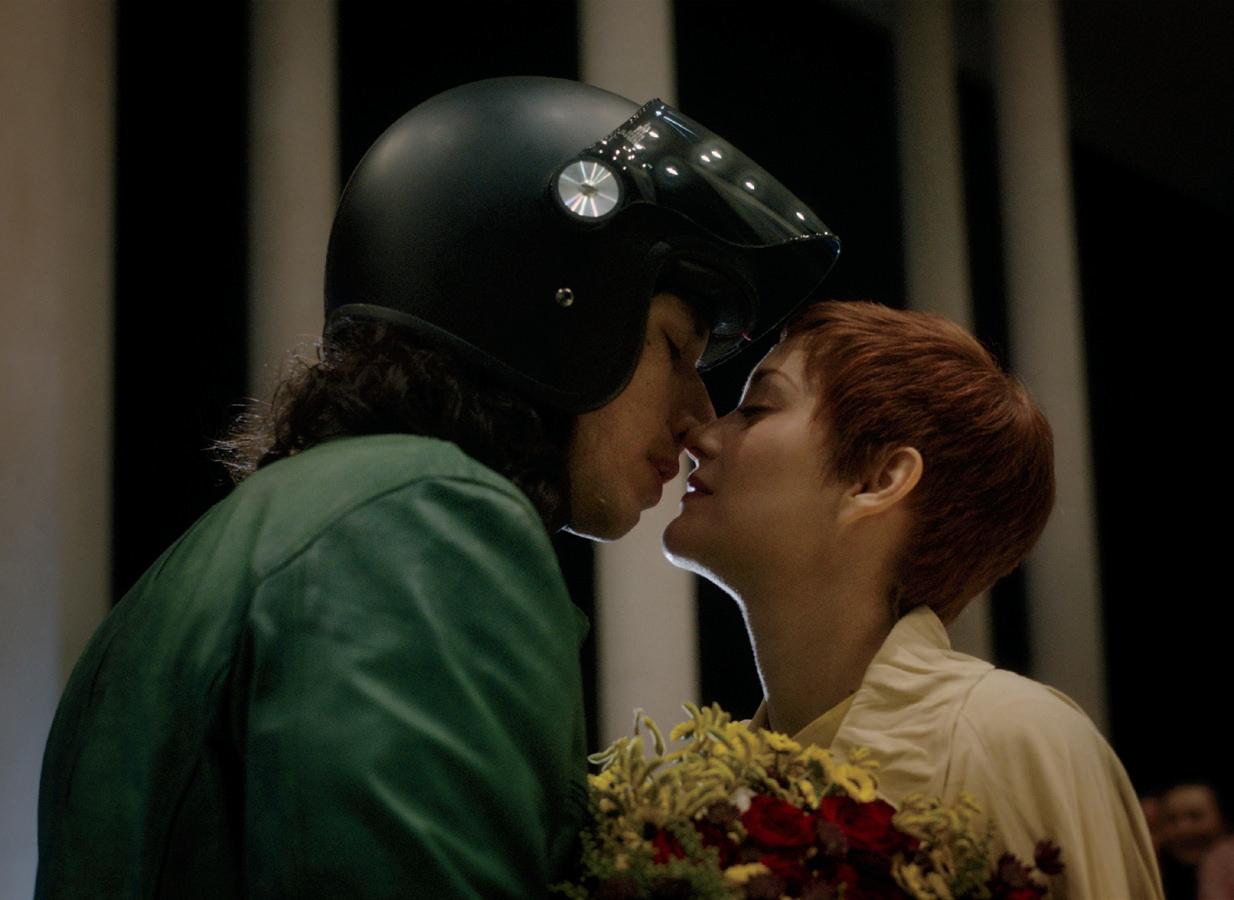
Adam Driver and Marion Cotillard in Annette
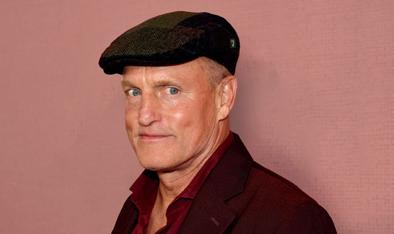
Woody Harrelson
After going full European arthouse with Cannes hit Triangle of Sadness, the Texan returns with French comedy Full Phil
BY DAMON WISE
Not many American actors make the transition from TV to movies, but even fewer cross over from Hollywood to Europe. Four years ago, while still a bankable name in commercial studio franchises, Woody Harrelson swanned effortlessly into international arthouse, playing the Marxist captain of a doomed cruise liner in Swedish auteur Ruben Östlund’s second Palme d’Or winner Triangle of Sadness. This year Harrelson returns to Cannes in Full Phil, the latest by Quentin Dupieux, France’s wizard of odd, acting with Kristen Stewart in a film the director describes as “Emily in Paris in hell”. It was a risk, Harrelson admits. “But I’m still willing to roll the dice.”
How did you get involved with Quentin Dupieux?
There’s a lady who works with me, Ilya [Bronchtein]. She was my assistant, and then she became a producer. Within two weeks of starting producing, she was telling me, “You have to watch this guy’s movies.” I finally watched his [2023] film Yannick and I was like, “Oh my god, this guy is amazing.” Then I watched The Second Act [2024] and I’m like, “Holy shit.” Because you never know. The first one, well, maybe that’s just luck. But not when you see another one that’s also brilliant. I was super interested. And she says, “Why don’t I arrange a meeting?”
Well, I wasn’t planning on going to Paris, but we arranged a meeting with Quentin and Hugo [Sélignac], his producer, and it was great. I said, “What are you doing next?” and Quentin says, “Oh, I’m doing this movie, Full Phil I’m trying to get Jim Carrey, but he hasn’t read it, and I can’t get him to read it.” I’m like, “I know Jim! I’ll get Jim to ...” And then I feel a kick under the table and it’s Ilya. [Laughs.] She’d already read the script, and it was in her mind that she wanted me to be able to do it. Luckily, after that meeting, he was like, “Well, I think Woody might be good for this too.” And that’s how it all went down.
How long did it all take?
Oh, from that meeting to the end of shooting? I think all took place within two months. Maybe two and a half. I mean, it was amazing. He’s like no one else. He writes it, he directs it, he shoots it, he edits it. So, if you have a question, you got every department right there. It was amazing, because he shoots so fast. The first day, I think we did maybe nine pages, just me and Kristen in a hotel room, and then we came back the next day and did another eight or nine pages. You’ve got to be on your game with him, because he’s ready to go.
What can you reveal about the plot of the film?
Well, I can tell you that it’s a father and daughter who are in a very often combative situation. They decide to take a trip to Paris to try to get the relationship on a better footing, and things don’t go to plan, necessarily. I don’t think I should say too much.
Did you know Kristen before?
Oh, yeah. I met Kristen when she first started out and there was this project that I did, which we wanted her to do and she agreed to do it, but then she ended up dropping out of it. But I’d heard about her from Sean Penn, who was saying, “This girl’s really got it.” And of course, that’s proven true. She was fantastic in this [Full Phil]. I haven’t seen it yet, but I hear it’s very good, so I’m excited to see it.
What kind of performance is it from you?
Well, it’s kind of theatrical, in the sense that Quentin doesn’t do a lot of different sets, so it’s very much like doing a play. It’s the two of us going back and forth. And even when we do go to another place, we go to a restaurant, you know what I mean? But it’s got his signature sense of humor, and also his intensity. It’s pretty cool.
People thought you’d be coming to Cannes with Ruben Östlund’s new film, The Entertainment System Is Down. Did that reunion happen in the end? Because you said you were going to be in that film—whether he wanted you to be in it or not.
Oh, I was determined to be in it. [Laughs.] But no, it didn’t work out, because the part I wanted to play, he ended up cutting that part out. I mean, he’s got so many people in that film, because it’s about an airplane full of people. So, yeah, I get it. It wasn’t important to the story, but it would’ve been a fun part.
Does Östlund have a similar personality to Dupieux?
They’re much different people. I look at Quentin as more like a Fellini. I don’t know why, but that’s how I imagine Fellini would be. He’s a big personality. Ruben is also super fun, an interesting guy, but they don’t seem similar to me. They seem very different.
Why did you want to do Triangle of Sadness?
I saw The Square and Force Majeure, and I was like, “Oh, man.” But what was funny was that my agent, Jeremy [Plager], was the one that wanted me to watch them. I think I watched The Square
first. And you know how Ruben has such a unique vision, and how he’ll frame a scene, and the camera will stay on it for too long? And so, I watched the first 10 minutes and I turned it off. I’m like, “Jeremy, are you out of your mind?” And he says, “Watch the rest of the film.” So, I watched the rest of it and then I saw what he saw: “Oh my god, this guy is a real unique talent. He’s brilliant.”
Full Phil is in the Official Selection at Cannes. How many times have you been there?
I don’t know. Half a dozen, maybe? But the greatest experience was, for sure, with Triangle of Sadness I mean, it was incredible. The reaction of the audience to that film, I couldn’t believe it. I thought it would be good, but I didn’t know it would be like that. At the time I was doing a hundred days of no drinking. I remember going afterward to the party on the beach, and I met literally the greatest sommelier in Europe. This guy! He could guess the region, the year and all that, with just his sense of smell. It was a big night already, and he says, “I’ve got a special bottle for you.” I was like, “Oh, I’m on my 98th day of no drinking.” [Laughs.] Oh, my fucking god! I realized later,
“I'm really interested in doing European films. The Europeans make great movies.”
that was so stupid—I should have taken a mulligan. But I wouldn’t do it. I didn’t drink that night.
Are you planning a renaissance in European cinema?
I’m really interested in doing European films, particularly French. I’ve got to meet a few great French directors. You’re not necessarily going to get paid [big money], in Europe, but you’ve got to overlook that. The Europeans make great movies. They do. They make great movies here in America, but, per capita, I’d say they’ve made more great movies over there.
You don’t seem to play bad guys very often. Is there a reason for that? You’re very good at them, by the way.
No, I like playing the bad guy. Yeah, I have no problem with that. I just take these things as they come. I remember I did this movie called Out of the Furnace [2013] with Christian Bale and Casey Affleck, and that movie is the first time that I can ever remember doing a part—a bad-guy part—where I was like, “I’m not even going to try to get a laugh, or have any kind of redeemable thing about me—I just want to be true to what a terrible guy this is.” You know what I mean? Not try to make myself likable. Because even in the really good bad guy parts, there’s often a likability to the character. Maybe that makes the guy even more insidious, I don’t know. So, I think the next time I do try playing a bad guy, I don’t want to feel like I have to be somewhat likable. ★
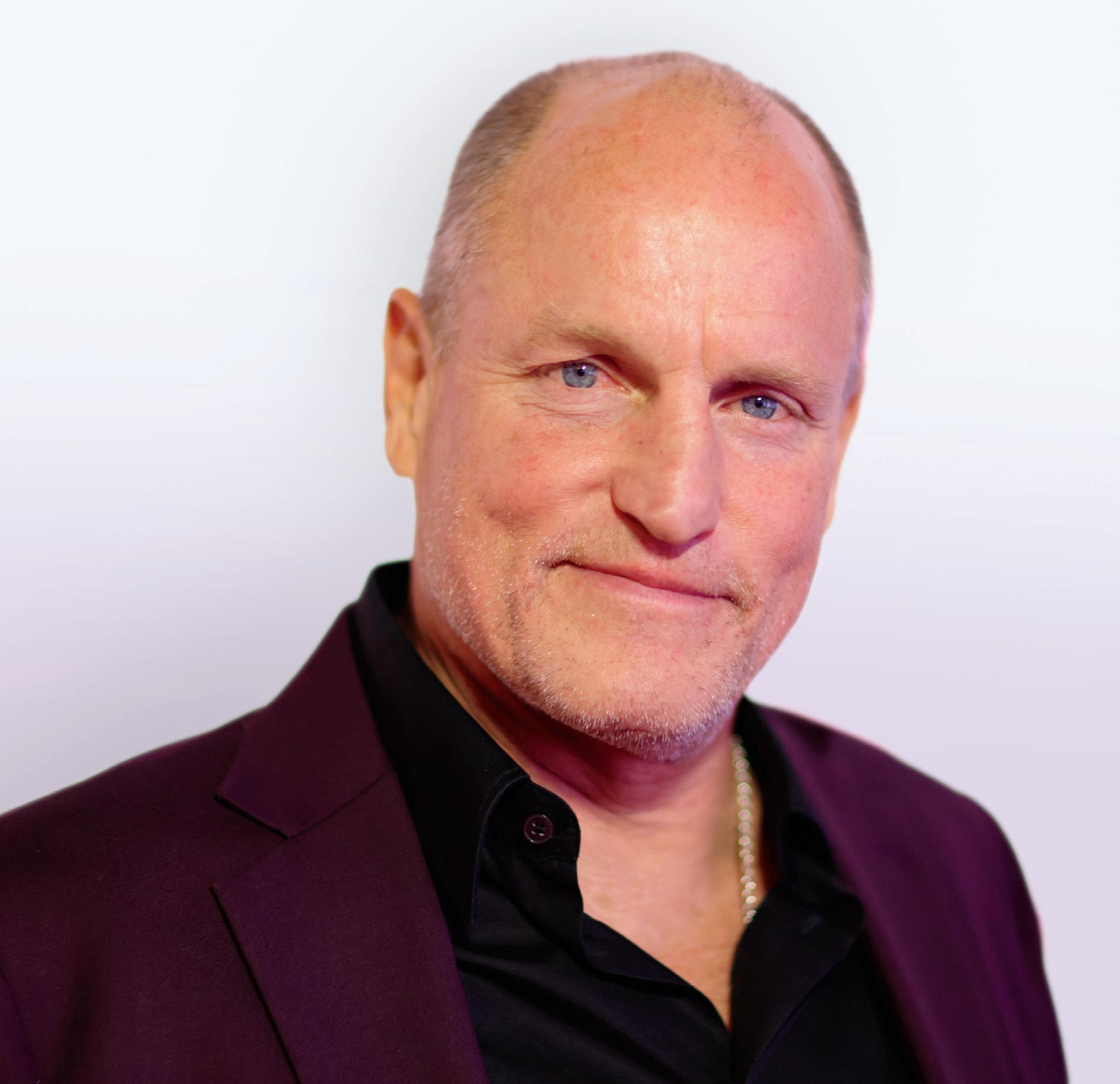
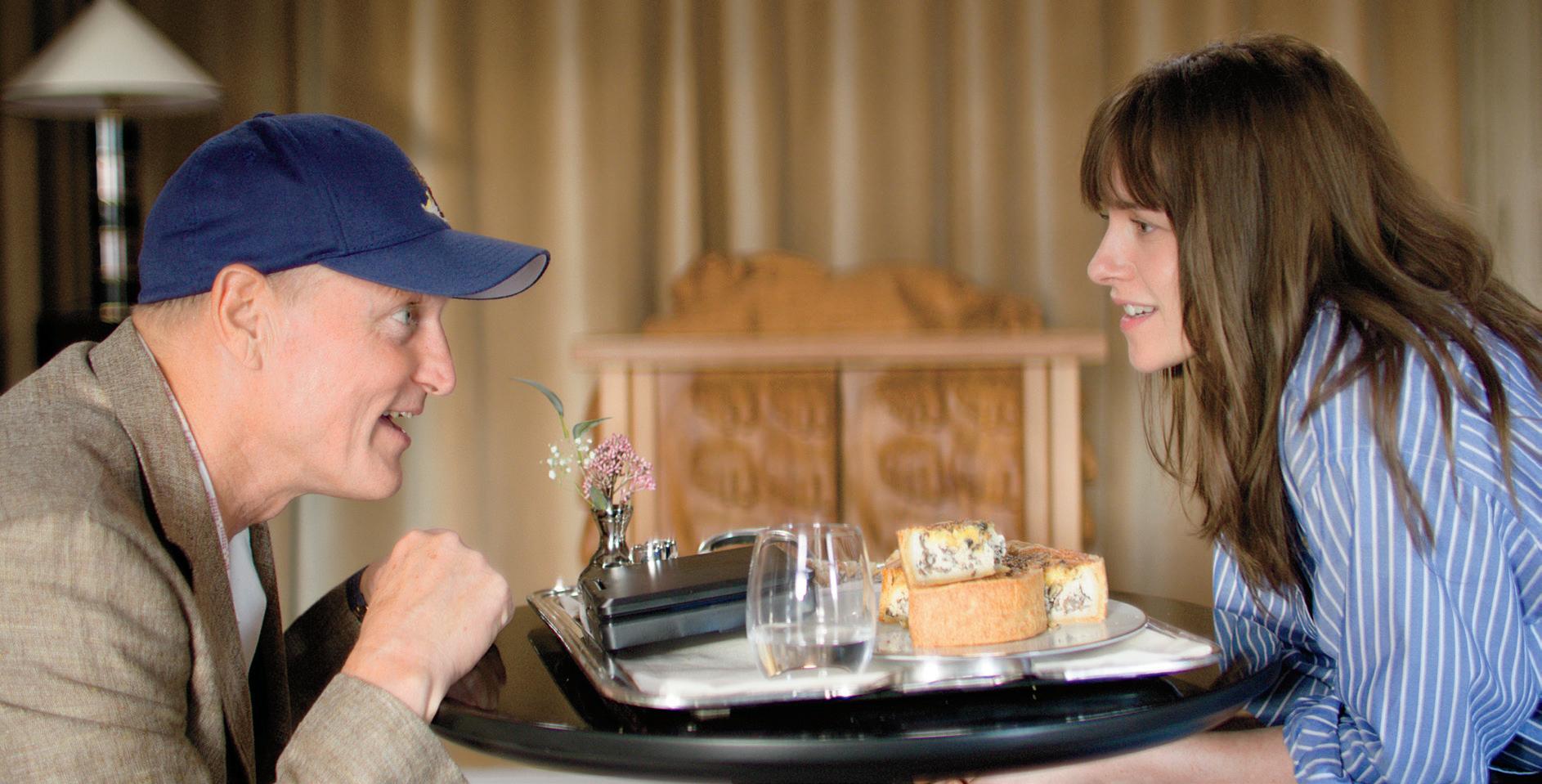
Woody Harrelson and Kristen Stewart in Full Phil.
Cannes Film Festival 2026
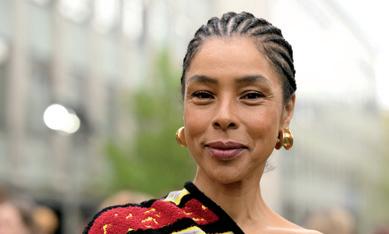
Sophie Okonedo
How the very British novel Mrs. Dalloway made its way to the French Riviera via the bustle of Lagos, Nigeria
BY BAZ BAMIGBOYE
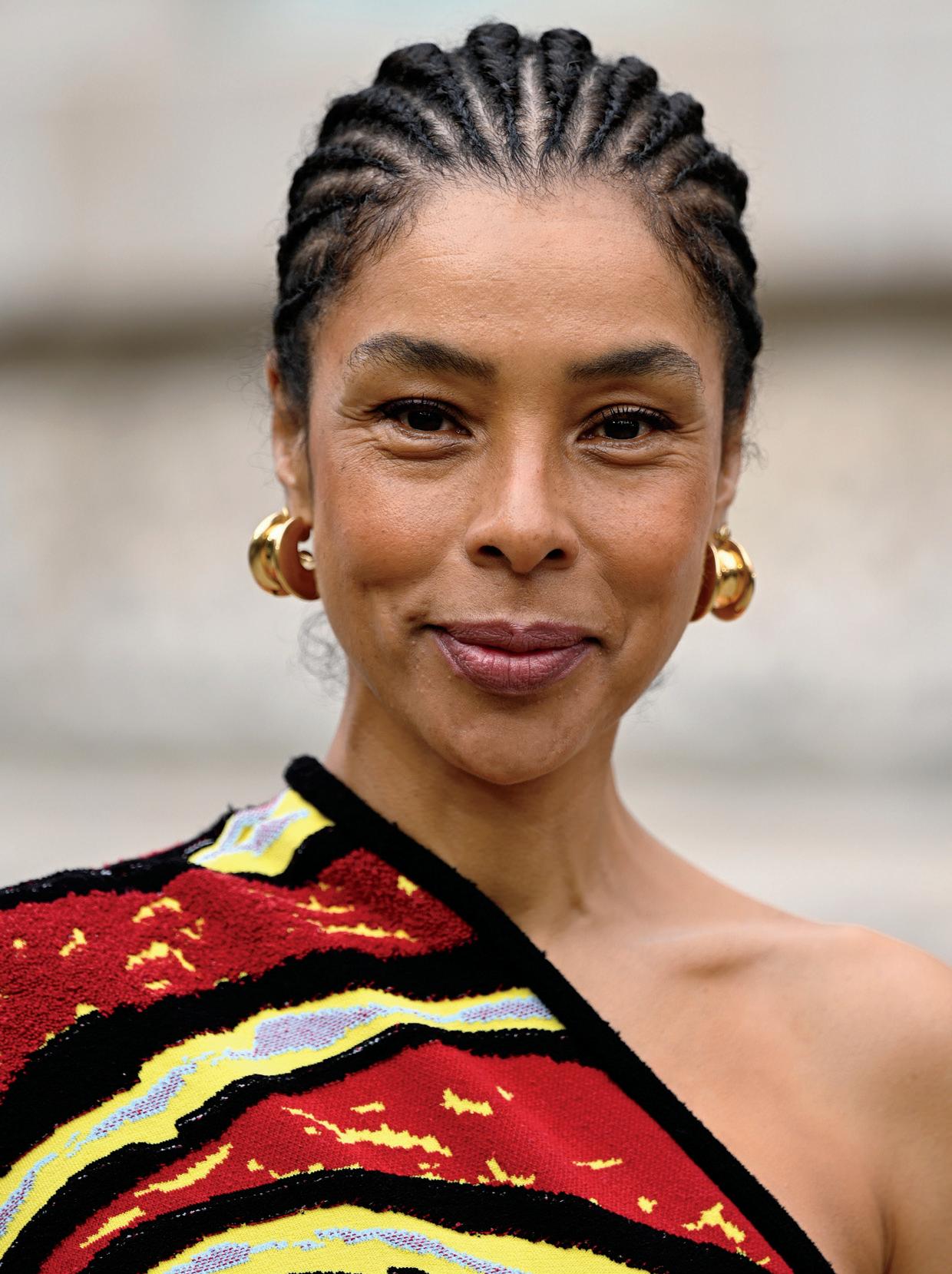
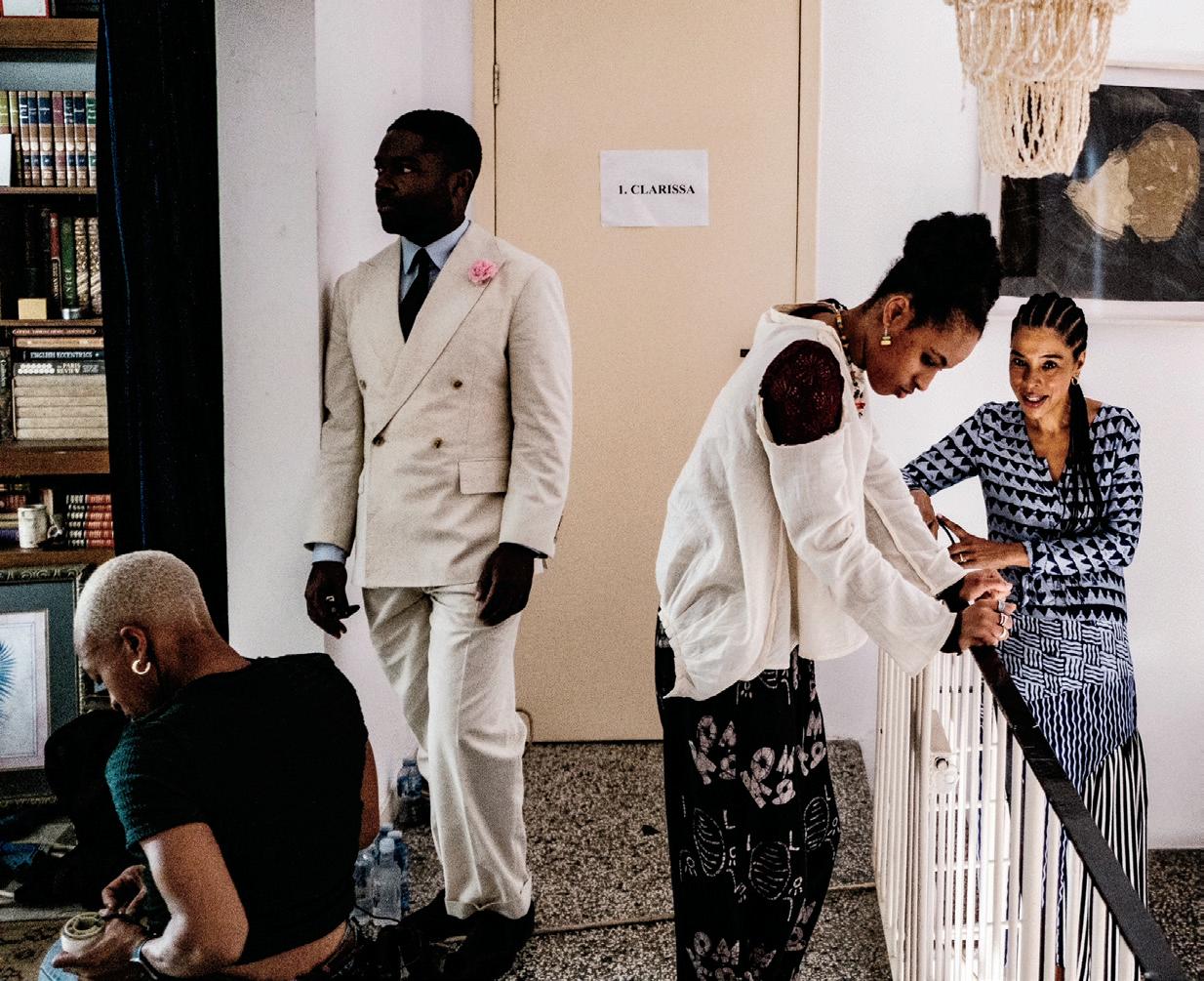
Oscar nominated for Hotel Rwanda, Sophie Okonedo comes to Directors’ Fortnight with Clarissa, an adaptation of Virginia Woolf’s 1925 novel Mrs. Dalloway directed by Nigerian siblings Arie and Chuko Esiri. Okonedo stars as the title character—Clarissa is the heroine’s Christian name—and the story follows a day in the life of this society woman as she plans a dinner party. The kicker here is that the Esiri brothers have shifted Woolf’s very British period tale to Lagos, with key sections in a contemporary setting. Here, Okonedo reveals how she broke down in tears when she heard that the film had been accepted.
You’re headed to Cannes! I feel like I just finished making it, and, yeah, so that’s bonkers. Me and Chuko and Arie, we were just like… (She draws a breath.) I was in tears. I’ve never been to Cannes.
You’ve never been?
I’ve never, ever been—and to be going with this film! I said, “If nothing else happens, this is more than we could ever wanted to happen to this film.” It was so hard to get off the ground. And tricky to get a film made in Nigeria. Obviously, they’ve got the huge Nollywood industry. But it’s a different type of film to that, and to get a film made on 35mm, and shot with nearly all Nigerian crew, is just extraordinary. There were so many instances of, ‘It nearly didn’t happen,’ right up until the wire, really.
How long did it take to put the film together?
My first conversation with Arie and Chuko was around the time of the [pandemic] lockdown. They'd got in touch with my agent in America and they'd sent a link to their first film, Eyimofe (This Is My Desire) [2020]. I watched that and said to myself: “Oh, that’s great. I’m going to definitely meet.”
So they came up with a few ideas they told me about, and then they mentioned doing a re-imagining of Mrs. Dalloway, that they were going to do in Lagos. And I was like, “I’m in.”
It’s an exciting time for filmmakers of Nigerian heritage to be headed to Cannes, after My Father’s Shadow was there. I love that film. I met Akinola [Davis]. I thought he was amazing as well. I met him for lunch and he was such an interesting guy.
Are the Esiris young guys as well? They’re around the same generation as Akinola. Not young young.
What was the process like?
Each step of the way, when they came through with the script, I thought, well, this is amazing. Just to get this far, this is great. And then when we completed it, I thought, I feel like I’ve massively achieved something already. And then to get [into Cannes]… It’s so meaningful for us. I was thinking that it’d be a long haul.
Cannes Film Festival 2026
I mean, we still had to get all the fine stuff together for Cannes. They watched quite a rough version, but they wanted it. And it has happened really fast. I was only back there doing a few extra scenes just recently… Little bits and pieces, because we were so limited on time and trying to film on film—it’s not like digital, where you can just jump around all the time. You have to really set things up, because you can’t afford on such a low budget to waste film.
What made them so bold as to shoot it on film?
I didn’t hear from them for about a year and a half, and then they sent a script through. I just thought, ‘This is fantastic’. I said, “Yes, I’ll definitely do it.” There was no money. After that, I just sort of kept in touch. Then Theresa Park (Bones and All, Roar) came on as a producer, and they just went off and raised the money.
I was in touch with Chuko. He came down to visit me in Sussex, and then he came to the theater to see me perform in Medea [at Soho Place theater in early 2023]. They’re in London quite a lot.
[Laughs.] They are bold. They’re very bold. They’re not like me. I’m full of working-class insecurities, and they’re not really like that. They believe in themselves, and they are very singular with their kind of vision.
What did the novel Mrs. Dalloway mean to you when you first read it?
I didn’t get it at all, the book. I read it when I was young. I had no idea what the hell it was going on about. Then I read it at my age now and it knocked my socks off.
Because you’ve been living your life, haven’t you?
Virginia Woolf… The writing in that book is so incredible. I mean, just the way she writes about stepping off the pavement and onto the road. Half a lifetime she describes in that moment—her feelings and thoughts, her hopes and fears. And I’m at the age where I’m looking back on my life and, obviously, looking forward, looking back. Was that the right way? Was that the right thing? And that’s what so much of the book is.
[In the book] Mrs. Dalloway does a walk through London, it all takes place over 24 hours. I followed the walk described in the book, two days before I went to Lagos, I thought, I’ll just do the London walk of Mrs. Dalloway, thinking that the wonder I have about London, I could infuse that when I got to Lagos. But it wasn’t hard, because in Lagos there was just too much to watch.
There’s certainly a heck of a lot going on in Lagos. It is a really chaotic place. I thought, how are we ever going to make a film here? But there’s a kind of exuberance and an energy there. I went to do a bit of research before filming because I hadn’t been there for over 20 years. I
“There's a part of me that's totally British, but there’s also a part that's so Nigerian. I didn't understand that part until I went back.”
stayed with Chuko and Arie and their mum. In fact, I stayed with their mum the whole time of filming because she’s a wonderful woman, and I just wanted to absorb. I wasn’t brought up in Nigeria. I don’t know my Nigerian family. I didn’t grow up with them. I didn’t grow up in that life.
Does your Mrs. Dalloway have a Nigerian accent?
Oh, no. This is the thing. So, sometimes things in the script are set now in Lagos, and we’re also looking back 20 or 25 years ago. And also the part of Lagos where Chuko and Arie live, and where parts of the bit that my story is set, is in a place called Victoria Island, which is very nice.
I was reading the script thinking, is this Lagos—all these very Western restaurants? I just didn’t recognize it. But they pointed out that this is how the younger generation are now.
When I got there, I said, “Well, shall I do some work [on my accent]. How do you want me to
sound?” They said, “Oh no, just sound like a posh version of you.”
And then they said, “Well, look, how do we sound?” They went to public schools in England, and so they just sound like public school boys, basically. One of the actors said, “Well, is a Western audience going to understand that there’s people like this in Lagos?” And Chuko and Arie went, “We don’t care. This is what we’re doing.”
Precisely!
I just love them for that. They introduced me to one of their godmothers, who they said was very like Clarissa, and she was incredibly grand. So I actually had to sort of beef it up a little bit. I was a bit posher than normal. But then, obviously, there are other characters in Mrs. Dalloway There's the soldier, Septimus [Warren Smith, a young shellshocked infantryman featured in a parallel story], and, of course, they speak in a local dialect.
This would be the Nigerian actor Fortune Nwafor?
He is wonderful, this young lad, I mean, he’s something else. They had lots of Nigerian actors in it. David Oyelowo who plays Peter, the love of Clarissa’s life. [Ted Lasso star Toheeb Jimoh, also Nigerian, is the younger Peter].
I'm fascinated by your remark about how Lagos society women are quite grand. My own Nigerian aunts, when I was growing up, were incredibly grand, and I used to hide from them.
Frightening! Oh, the attitude, I’ve already missed it. I did love it there, even in the chaos and the frustrations of trying to just get from A to B because of the traffic. There are a lot of problems, which I’m not clever enough to go
into, so I can only grab what I can, which is the energy. And also the loudness of people, I’ve always kind of restrained myself here. But when I'm there, if I find something funny, I can just throw my head back, roll on the floor, kick my legs in the air and have a good old laugh—and nobody looks.
Obviously, there’s a part of me that’s totally British, but there’s also a part of me that’s so Nigerian, and because I haven’t spent time there, I didn’t understand that part until I went back. And this project has been so meaningful to me on a personal level that anything that happens with it afterwards is just extra.
The whole idea that this very traditonally British, classic piece of literature has now been transposed to a former British Commonwealth country—it's as if some aspects of culture are attempting to shake off the British straitjacket. You know, it really does feel like that. And also, when I was there… You just get such a kind of European or American-centric view [in the West], but when I was there you realize, fuck, there’s this whole other world where stuff is happening all the time.
And also there’s this whole other audience.
There is another gaze. Of course, there aren't loads and loads of cinemas there, but people are watching things… maybe not in the way you want them to watch things, but people are still watching stuff.
I came away thinking, maybe I just should go and do the Nollywood format and try and create something like that but using the stories that I want to tell. It’d be really great if I could just meet those millions of people and tell the kind of stories that I’m drawn to, a very sort of inclusive format. I just thought, I’ve been so concentrated on ‘the Western gaze’ and perhaps that’s no longer where it’s at. ★
Sophie Okonedo, far right, on the set of Clarissa
“
HHHH
. ”
INDEPENDENT
“THE CAST IS A STUDY IN EXCELLENCE ACROSS THE BOARD. CHASE INFINITI AND LUCY HALLIDAY ARE FANTASTIC.”
THEWRAP
Barry Keoghan
The Irish actor finds his latest spirit creatures in Butterfly Jam and Sam Mendes’ Beatles movies
BY BAZ BAMIGBOYE
Barry Keoghan returns to Cannes with Riley Keough in Kantemir Balagov’s Butterfly Jam, a family drama set in and around an East Coast Circassian community. Balagov won Best Director in Un Certain Regard for Beanpole in 2019. His first film in English, Butterfly Jam marks the first feature involvement for Keoghan’s Wolfcub Productions and will be the opening night film in Directors’ Fortnight. The actor spoke to us during a day off from portraying drummer Ringo Starr in Sam Mendes’ four-part Beatles film blockbuster. However, he declined to confirm whether or not he’ll return as the Joker in The Batman: Part II
What can you tell us about Butterfly Jam?
It’s about a Circassian family. Their dad is a chef and his son is a wrestler, and it’s set in this tight community of Circassian people. It’s focused quite a lot on the relationship between the father and the son.
And are you the father? Yeah. I play the father. [Laughs.] I’m stepping into those kinds of roles now. Crazy. Now I’m the dad.
So, give me more of a sense of what the movie is about… It’s a hard one. Not a hard one to describe it, but we’re giving the plot away. It’s Kantemir Balagov, and… you’ve seen Beanpole, I hope? I know you have. Incredible movie. And he’s someone that I’ve wanted to work with for ages. I remember seeing Beanpole and reaching out to him. Also, I always look at, If I’m doing a commercial movie and then I’m doing an indie, I want to go in between, step into independent movies and step into commercial movies with brilliant directors. And so I’m trying to find
that balance. And Kantemir’s movie came at the right time. It’s a proper sort of European movie set in New Jersey.
And it’s gorgeous. Jomo Fray (Nickel Boys) shot it. Jomo’s a brilliant cinematographer. And again, it’s a family-driven movie based in the kitchen, a lot of cooking, even though I don’t cook…
I’ve been reading in the New York Times that you’re not up to much in the kitchen.
[Laughs.] Yeah, so that was a lot of acting. But it’s a movie where I get to learn about culture. We had a dialect coach there in Circassian. Kantemir surrounds himself with incredible people, people like Riley Keough who’s absolutely brilliant in everything she does. It was a breath of fresh air to work with her. And same with our young lad, Talha Akdogan, who plays my son, Pyteh. He’s absolutely brilliant. It was his first movie.
So who does Riley play?
Riley plays my sister. She has a kind of raw energy that you don’t know where she’s going,
and it’s unpredictable. And it’s really astonishing to watch and act alongside.
There’s a production image of you and Riley dancing. What’s going on there?
We’re dancing in the kitchen, to a Circassian song. Again, we were learning about the culture and learning to dance… It was actually incredible. And it was my first movie that I got to have my production company Wolfcub Productions on it.
Congratulations!
I have this animal theme going, spiritually for me, with The Killing
of a Sacred Deer and Bird and now Butterfly Jam and now Wolfcub. So there’s an animal theme with Cannes and me.
It was a good moment for our company to step in and build our slate. We’ve got a few projects in the works that I can’t talk about just yet, but we’ve got something going with Netflix, a TV series. And we’ve got another two projects in the works as well. It was a really nice moment to celebrate as well that our first movie gets Directors’ Fortnight opening night.
I want to quickly scoot back to dancing because I was reading up on the Circassians and they
do this dagger courtship dance. Did any of the choreographers show you anything like that? No, it was more like Kantemir and people on set [taught us]. Again, it’s organic. It’s supposed to be done so that not every single move is in the right step. It’s loose. It’s a culture thing. It’s like Irish dancing as well. And when our Irish dancing is performed, it’s quite spectacular to look at. But people are also doing it in pubs as well, and everyone’s up having to sing. So it was me and Riley having a moment as brother and sister, and the song comes on and it’s beautiful.
And we know you’re a good mover from Saltburn? [Laughs.] Oh yeah, we know that, though clothes stay on in this one, Baz. They’re covered with tea towels and kitchen clothes. But, anyways.
There are Circassian enclaves in New Jersey. Did you film there? Well, there’s a big Circassian community in Jersey, but we filmed a lot of it in France.
How so?
Why Not Productions [the production company behind the film] is a French company. And we just filmed a lot there and then filmed the exteriors in New Jersey.
Where were you in France? Dunkirk, actually, and Lille. So I was jogging on the Dunkirk Beach, bringing back memories…
…Of filming Christopher Nolan’s Dunkirk?
Yeah. And it reminds you of the therapeutic sort of healing side of making movies. It reminds you that you’re part of a community and a circle of people that I’ve always just wanted to create. Every movie does that for me, but when it’s an independent one you just feel it a little bit more, you feel the hunger on set and almost just going back to that really true form of filmmaking.
“I play the father in Butterfly Jam. I’m stepping into those kinds of roles now. Crazy. Now I’m the dad.”
I think you crave that raw sense of making movies with people you love and admire. Without trying, it creates a safeness for you to be vulnerable. And I always feel when you allow your vulnerabilities to come in, that’s where you get really strong performances. It’s always there on independent movies. And it is on commercial movies as well. But unfortunately, with bigger movies, there’s more equipment, there are more sets and more people. And for me, I’m quite shy and I get quite intimidated by that. Even when people aren’t meaning to do it, it’s just the nature of how big a movie can be. But I’ve been very blessed in the sense that any big commercial movie I’m on, they always seem to really step in and help me make it so
comfortable for me to do it. And I’ve never done stage or anything else. I can’t really perform in front of many, many people... Hence
The Beatles [The Beatles - A Four-Film Cinematic Event], I’m on that now.
How’s that going?
I can’t say much about it, even though I did bring it up. It’s going incredible. Again, and it’s such a big family out there, and it’s such a big movie, but it has that indie soul to it, where I’m feeling super safe to reach and bring forward the most vulnerable truths and the most... Just really dig deep with the performance as Ringo [Starr].
This is four distinct films directed by Sam Mendes about each of the Beatles, right?
Yeah, and Sam is such a legend and family now, and everyone’s family out there. Greig Fraser [cinematographer on Dune: Part One & Two], is absolutely brilliant as well. It’s such a tight, lovely group, and I’m learning lots by watching Sam and by watching Greig on the camera and getting back into my photography as well. And I’ve got the best DOP in the world beside me to learn from.
Prompted by this turn in the conversation, when do you think you will get round to directing your first feature?
I’m not sure yet. I did a short film [in 2020] called Animal, and I chose a young lad from a boxing club to lead the movie, and I picked a lot of non-actors, and I shot it in black and white 16mm. It was for Gucci and Dazed. There’s a lot of Kubrick influences in there, and a lot of frames that I learned from Yorgos [Lanthimos]. But, yeah, I’d love to direct a feature. ★
Barry Keoghan and Riley
Keough dancing in the kitchen in Butterfly Jam
“THRILLING. THE CAST IS IN TOP FORM. JULIANNE NICHOLSON IS EXCELLENT.”
SCREENRANT
“STERLING K. BROWN AND SHAILENE WOODLEY GIVE SHOW-STOPPING PERFORMANCES.” THEWRAP
Adèle Exarchopoulos
Why love is still Blue for the star who plays a actress under the influence in Another Day
BY BAZ BAMIGBOYE
Adèle Exarchopoulos caused a sensation at the 2013 Cannes Film Festival, when she and Léa Seydoux shared the Palme d’Or with director Abdellatif Kechiche for their performances in Blue Is the Warmest Color. Now she’s back in Competition, starring in Jeanne Herry’s Another Day. This time she plays Garance, a highly-gifted actress struggling to hang onto some kind of equilibrium in both her career and private life, while seeking comfort from her friend Pauline (Sara Giraudeau).
Exarchopoulos says that she’s grateful to play a woman going on an “individual, realistic journey—it’s the kind of cinema I particularly love.”
What can you say about Another Day, and what was it like working with director Jeanne Herry? Another Day follows the journey of a young woman who dreams of becoming a theater and film actress, juggling odd jobs, and discovering herself as the years go by—it’s a story of identity, love and addiction. Jeanne is a true scholar when she tackles a subject; before coming to see me, she had studied addiction in countless forms—through physical therapies, support groups,
academic studies, and more—and the inspiration for this film came from a podcast featuring a young woman discussing her struggle with addiction.
I immediately accepted because I loved the script’s precision and humanity, and because her films have something mundanely powerful about them; she films the ordinary with profound humanity, and I love that. I’d already had a
wonderful cinematic experience with her last film [2023’s All Your Faces], so I was thrilled to work with her again on a fundamentally different project.
What kinds of conversations did you have with Jeanne?
We talked a lot about addiction, about the extreme highs and lows that withdrawal can plunge you into. Jeanne introduced me
to a support group at the Villejuif hospital made up entirely of women—some in remission, some in the midst of withdrawal, some having a relapse—who come to share about their daily lives, their shared pain and their personal journeys. They were all addicted to something—it could be medication, it could be alcohol. It was a deeply-enriching experience. I feel that in every addiction there
is immense loneliness, a profound lack of love… It’s hard work for them to love themselves, it’s hard work for everyone, but maybe the most palpable feeling in the room is the lack of love of your family or with yourself. It was really precious to me to be around those women.
How recognizable is the character of Garance to you? She falls into alcohol addiction, which in her case is a slow and insidious disease. I think I’m like her in her curiosity, her relationship with her family, and her thirst for discovery.
Which actresses did you watch to help prepare for this film?
I rewatched all of Gena Rowlands’ performances—because she has this wild intensity and she never looks at herself or cares how she looks—and Raymond Depardon’s documentaries
Films like Opening Night and A Woman Under the Influence? Yes, that was the kind of movie Jeanne asked me to watch. Opening Night at the beginning, because it’s the story of an actress. You have many dreams and expectations, but you are dependent of peoples’ desire… There are so many great actresses, but so many great actresses don’t play or act. And that’s the difficulty for Garance, even if she’s still making different level jobs, like voice work. And also Gena Rowlands inspires me for those moments of intensity because during all of [my
Cannes Film Festival 2026
“I feel that in every addiction there is immense loneliness, a profound lack of love.”
character’s] addiction, which continues over eight or nine years, she starts with drinking maybe one or two glasses, and at the end it’s becoming maybe 10 or 12 glasses… I think Gena has this kind of intensity, this kind of originality and freedom of testing a lot of stuff.
Did you happen upon George Cukor’s 1954 version of A Star Is Born with Judy Garland and James Mason playing her alcoholic husband, a once-famous movie star?
Oh no, I haven’t seen it. But I have seen the one with Lady Gaga and Bradley Cooper.
I bring it up because it explores the intense pressures of the entertainment industry. Yes, of course; I think it reflects the fact that she’s losing herself, and it’s her age, also. When you are, like, 28, you are full of dreams, you see stuff for yourself and then you grow up and you make this kind of weird stuff where you’re like, ‘OK, where am I? Am I who I want to be, where I want it to be, and with whom I want to be?’ I think there are a lot of factors that make her fall, but the pressure
and frustration of the industry, of course, is playing a part.
And do you think that the industry itself is partly responsible for those pressures that an actor might feel?
Yeah, I think they created this kind of system and didn’t really care about whether it can affect people or not. And maybe it’s going to be cheesy what I’m going to say, but sometimes just a little more kindness is needed, just picking up the phone and talking to someone. You see, a small gesture like that can change this business. I think it’s hard for everyone; some things are changing, but at the end of the day, it’s always the privileged person on one side and the less privileged person on the other side. We see it with the women’s movement, but I think there is, again, a lot of work to do. I have something funny to tell you. After I made Blue Is the Warmest Color, I got an American agent that everyone wanted. And so I was happy, but I was really young. My English was really bad, and she told me, “Oh, you have to come to LA and meet all the producers.” And in France, it doesn’t
work that way. In France, you don’t have meetings with people if there is no project.
You see what I mean? Of course, you can always call a director that you like if you just want to have a coffee with them, or tell him or her how much you love their work, but we don’t go into a producer’s place just to sell ourselves. And she told me, “Yeah, you must come to, like, Warner Bros. and Universal. I want to introduce you to some people.”
And because I didn’t know the American system, I was like, “Oh, cool. People want to meet me, blah, blah, blah.” So I went to LA with no agenda, work-wise, just people to meet. The first one—I think it was Universal—I went and I met someone there, and they were like, “Oh, we love your work! We love Blue Is the Warmest Color! We can’t wait to work with you!” And when I came out of the meeting, I called my dad in France and I was like, “Oh, Daddy! I’m at Universal, and they want to work with me!”
And then I went to the second meeting, and it was maybe Warner Bros. It was a big company, and it was exactly the same meeting: “Oh, we love your work, blah, blah, blah…” I called my dad back and I was like, “Daddy, no one is going to work with me, it’s just what they do here. There’s no point!” [Laughs.] In France, we don’t do that. For me, it was kind of the end of a fantasy.
What are your memories of being in Cannes for the very first time— back in 2013—with Blue Is the Warmest Color?
Cannes with Blue Is the Warmest Color changed my path. My journey was a dazzling transition from shadow to light, especially when you’re 18. I experienced it with immense joy because my best friends were with me, and because Léa and I share a unique bond. And seeing the power of love—what this love story sparked—made me realize the power of cinema. ★
From left: Exarchopoulos and Léa Seydoux in Blue is the Warmest Color
Nicolas Winding Refn
After a close shave with death, the Danish director is back with Her Private Hell
BY ANTHONY D’ALESSANDRO
Nicolas Winding Refn returns to Cannes with Her Private Hell, his first film in 10 years, his last being the Elle Fanning starrer Neon Demon. In the fashionista aspect of it all, you could say Her Private Hell is its spiritual cousin. The film begins at a swanky hotel in a futuristic LA-like city where a group of model-esque women played by Sophie Thatcher, Kristine Froseth and Havana Rose Liu congregate. They’re about to make a Barbarella-like sci-fi movie. But a killer by the name of Leather Man lurks. In typical NWR style, Her Private Hell is a psychedelic journey into the darkness of night, with camp and guffaws.
Hearing Pino Donaggio’s score, Her Private Hell transports one back to the thrillers of the 1960s. Tell us about the inspirations. Well, in my situation, I can’t point to a specific inspiration because it’s many things, but I think I can narrow it down to an experience. Three years ago, I died, and I was dead for 20 minutes. When you’re told that you’re maybe going to die within two weeks, a lot of things go through your mind: You’re afraid, angry, frustrated, sad, you lash out. But then,
I realized that I’d been given a gift, that if I could come back, I was going to be given a second chance. Most people don’t get that. And I was going to be young enough to live for at least another 25 years. When I did come back alive, thank god, I was like, I had to start all over again with everything, but this time, I had 30 years of knowledge. You completely have to start over again with everything; moving your legs, arms, stuff like that. And I saw that I wanted to make movies again, the same way I’d wanted to make movies when I was young, but I also had a very specific mantra, which was: I will make things that come to me instinctively. So, the film became many things for me. You can say there’s everything from horror, to sci-fi, to melodrama, to musical, to camp, to kitsch, to action, to color, and yet, you can’t put your finger on it. That’s a wonderful experience.
Were you dying from a heart-related issue?
I had a leaking heart, which means the blood was running backwards, so it was very poetic, in a sense, and it was kind of a mechanical failure inside of me that god had implemented. It came at a time when I had come to the end of the road of my own kind of first act.
If you can come back, you can change, you can reevaluate, you can do many things in life that maybe you weren’t prepared to do. You understand time in a different way. At the end of the day, how much time do we have left? How much time will you give me?
Cannes Film Festival 2026
Her Private Hell evolves constantly. Eliza Kazan advised you when it came to the craft “to do it your way”, but were you ever taught a three-act structure early on, and simply rebelled from the start?
Well, I never got to class. I dropped out of film school. I never was able to start. And I’ve never catered to that form of concept. I understand logistics, but I don’t find it interesting. There’s something interesting though in social media that scrolling provides, because it’s a matter of controlling your opportunity to just experience instant gratification. When the algorithm begins to learn your sensibilities, it creates a kind of narrative that even though it doesn’t make sense, it makes sense to you as you’re scrolling, because it begins to understand your dopamine.
And even though there’s not an overall three-act structure in the movie, you’re constantly designed to be entertained and want to see more until you suddenly have to stop yourself, like cocaine, and say, enough, or else I’m going to die. So, the idea that one thing can become many things is what I find more interesting.
Talk about casting. It’s like you’ve assembled a fashion runway with myriad looks that altogether are a symphony. What
do you look for in your thespians? Do they need to be able to improv or be flexible if you decide to rip up a shot list?
It’s all of the above. When it comes to collaborators, actors are the most important because they’re extensions of you. Nicole [Daniels] and Courtney [Bright], who did the casting, spent a year looking for actors. We didn’t find the right people until the very end. Sophie Thatcher was a very late meeting, after seven or eight months, and then, once she was cast to play Elle, and obviously, you know, Elle Fanning is an important person in my life, so, there is a reason why her name is Elle.
Sophie has that thing when the camera turns on, she becomes the center of everything. She looks like a classic movie star from the 1930s and ‘40s when there was a spunkiness to the female-driven characters. At the same time, there’s a gentleness and punk attitude.
“There’s something interesting in social media that scrolling provides, because it’s a matter of controlling your opportunity to just experience instant gratification.”
Once Sophie was cast as the lead, it was then building around her. Charles Melton came about because my youngest daughter, Lizzielou, showed me Riverdale, which I love by the way. I saw him in one of the latter seasons, which was set in the ‘50s with his leather jacket and hair, and I was like, that’s the G.I.
Kristine Froseth’s character was tricky, as we were walking the fine line of seriousness and camp, and you have to be a very good actor to really navigate that. We were like, “It’s her, and if she doesn’t want it, we’re in trouble.”
Havana Rose Liu, who plays Elle’s stepmom, was quite bold in really going there, and when she came on, the whole theme between daughter and stepmom became very dominating.
You met Pope Leo XIV. How did that come about?
The revolutionary people who run Rome’s 24-hour cinema,
Cinema Piccolo, organized it. I’d been selected and was very honored. I didn’t know what to expect, because I’m not Catholic. Also, I had never been to the Vatican. I had two agendas on my list: I wanted to get a selfie with the Pope, and I wanted to get a message from the Pope to my youngest daughter. The selfie was tricky because the minute I saw people take out cameras, security was all over them. So, I was like, how the hell do I do it? I was sitting next to Monica Bellucci, and I figured out if I could take a selfie with her at the right moment, I could include the Pope in the image. So, mission one accomplished, which was a great trio. When I actually got to meet him, I told him I wanted him to give a message to my daughter. He looked at me, and he said, “Tell her I said hello,” and I was like, “Oh, my god!” And I was leaving the Vatican, calling her, saying, “I have a message from the Pope.”
Are we going to have to wait 10 years for your next movie? No, we’re not. I want to make another movie very soon.
Do you have an idea what the next one will be?
I actually know what I want to do for the next four years. ★
From left: Nicholas Winding Refn on the set of The Neon Demon with Elle Fanning; poster art for Refn's Cannes film Her Private Hell
Her Private Hell
By ANTONIA BLYTH
By ANDREW ZAEH
In Cristian Mungiu’s Fjord, SEBASTIAN STAN returns to his Romanian roots, with a story that forces us to examine our prejudices, our assumptions, and the treatment of immigrants. Starring opposite Renate Reinsve, Stan once again plunges into a risky, thorny role with a look that belies his MCU star status. As he prepares for both fatherhood and playing a supervillain in The Batman: Part II, he’s focused on being one of the good guys.
Photographed
Sebastian Stan photographed at Go Studios in New York City.
SEBASTIAN STAN HAS BEEN THINKING ABOUT MEN. HE’S BEEN READING A LOT ON THE SUBJECT; STUDYING IT, IF
A ROLE OF SORTS, BUT NOT AN ACTING ONE. SOON, HE AND HIS PARTNER, ACTOR ANNABELLE WALLIS WILL WELCOME THEIR FIRST CHILD.
“I want to be a good dad,” he says simply.
We’re discussing his latest film Fjord, which will premiere in Competition at Cannes. Stan plays a man forced to contemplate his own value as a father and as a man—an experience that must now seem serendipitous, given the timing of his personal life.
Written and directed by Cristian Mungiu, whose 2007 film 4 Months, 3 Weeks and 2 Days won the Palme d’Or, Fjord stars Stan and Renate Reinsve as Mihai and Lisbet Gheorghiu—immigrant parents of five children who move from Romania to Lisbet’s small Norwegian hometown.
Inspired by the real-life story of Marius and Ruth Bodnariu, the deeply-religious family have ways of raising their children that bump up hard against local government policy, landing Mihai and Lisbet in court.
This is Stan’s first role in his native Romanian; he grew up under Nicolae Ceaușescu’s communist rule until his mother brought him to Vienna, Austria when he was 8 years old. Then, when Stan was 12, he moved to New York with his mother and American stepfather.
In Fjord, once again, as with The Apprentice and A Different Man, Stan conceals his movie star looks. This time he not only wears wonky fake teeth, but he shaved his head—and not a hot buzzcut, we’re talking shiny bald pate above a ring of fuzz. The wardrobe is lumpy and practical. The look is giving middle-aged uncool dad.
Mungiu decided that Stan was “too good-looking, somehow. Sebastian was very generous and he followed my idea about how he should be looking for Fjord. As the film proves, he doesn’t need to be handsome to keep you glued to the screen. I can’t thank him enough for this, and I believe I should thank his girlfriend as well.”
For the teeth, Stan went to special make up effects designer Jason Collins, with whom he’d worked on his Tommy Lee look for the television series Pam & Tommy (for which Stan was Emmy-nominated). “I showed him some pictures of my old teeth before I got Invisalign, and then he remade those,” says Stan.
The great head shave was “an experiment. I was all about it once we nailed it. She kept cutting it and cutting it and I was like, ‘Let’s keep going.’”
Right now, the hair has grown out into a crew cut, but how did he feel living day-to-day with the transformation on set?
“I didn’t think twice about it,” he says. “I think it’s all about serving the story and these people, however they are. And at that point, you’ve got to just put yourself in the backseat.”
But surely, for some men, Stan’s new ‘do’ is the stuff of nightmares, which brings us back to men in general—not just fatherhood, but the male loneliness and misogyny epidemic, and in particular, emerging toxic ideas on what it means to be a ‘real man’. I mention his Golden Globes acceptance speech last year for A Different Man, in which he spoke of his stepfather “who took on a single mom and a grownup kid,” and thanked him “for being a real man.” I tell him that, to me, being a good man means integrity, consistency and quiet strength, among other things.
“I think the question of masculinity is really under a magnifying glass at the moment,” he says. “There are way smarter people than me that have been talking about this. Jonathan
Renate Reinsve and Sebastian Stan with their on-screen children in Fjord
“WORKING WITH SEBASTIAN AGAIN WAS A JOY. HE’S AN INCREDIBLY GENEROUS ACTOR AND HUMAN BEING— DEEPLY COMMITTED TO HIS WORK, ENDLESSLY CURIOUS, AND BRAVE IN HIS CHOICES.” RENATE REINSVE
Haidt, for instance, who wrote that great book The Anxious Generation, has been talking not just about boys, but little girls also, and the lack of influences outside of the phone and the technology and what that’s doing. There’s also this other great book, I think it’s called Of Boys and Men [by Richard V. Reeves]. And you really see how young men right now are suffering from a lack of true male role models. We’re having a lot of examples at the moment of very narcissistic, very aggressive, very entitled examples of being a man. I don’t have to get into the despicable animals like Andrew Tate or this recent documentary on Netflix called [Louis Theroux:] Inside the Manosphere. It’s incredibly upsetting. It’s painful to see.”
He also mentions the book Notes on Being a Man by Scott Galloway. “I’m feeling the responsibility of being a good father,” he says. “And not to mention a good man. I’m 43 and I feel, in a lot of ways, I’m just starting to learn now. It’s just crazy to me. So, I love when I see I’m discovering different people’s point of view. I try to read as much as I can, no matter what the point of view is, just to understand it.”
So, what does being a man feel like to him now?
He pauses. “It’s funny, in the last couple years, I’ve started to identify sometimes being a man with just holding a plank for a very long, long time.”
I laugh. Does he mean the physical exercise?
“Yes. Because I think it is about tolerance. And I think that’s something that we’re not teaching young men. We’re not teaching them how to tolerate discomfort, how to understand their own emotions, their own anger, their own frustrations. Nobody’s educating them on how to embrace depression, or being sad, feeling things, being weak, crying. I reconnected with my own [biological] father much later in life, but I was able to draw this inspiration of, ‘It’s OK for you to feel whatever you’re feeling.’”
As a young man, Stan’s father risked his life to help dissidents escape Ceaușescu’s regime, smuggling them out on cargo ships, before being forced to flee the country himself. Father and son largely lost touch, but were reunited when Stan was 18. Then, in 2021, his father died.
When he thinks of the stepfather he called “a real man” in that Globes speech, he says the example he set for Stan was “This quiet integrity that you spoke about, this quiet strength, this way of providing, this way of being there. Listening and
understanding and protection as well. You’ve got to provide and protect. That’s kind of what I thought about in terms of what it means to be a man. And sometimes that means putting your own ego aside and looking at how you can support your family, or your loved ones, and be an example.”
He’s back to thinking about the welfare of children and young people. “Let me just state it for the record, how much I celebrated that verdict against the social media companies,” he says, referring to the recent landmark case in California against Meta and Google, citing them for negligent design and their effect on young people’s mental health. “Actually, finally holding them accountable for years and years, and stacks upon stacks of data [showing] that they have known of the neurological and emotional and mental impact that they’re having on these young people. That’s one of the reasons why you’ve got boys right now who are being totally subdued and seduced by these phones, and to some extent, I think brainwashed.”
S tan had wanted to work with Mungiu for years. “Growing up, I knew very well that he was an incredible filmmaker,” he says. They first met at a Lincoln Center screening of Mungiu’s 2016 film
Graduation and then, Stan says, began figuring out how to work together. “We came close on his last film [R.M.N.], but it just wasn’t really a good fit.”
Mungiu zeroed in on Stan after seeing his performance in I, Tonya as Jeff Gillooly, the deeply unlikable ex-husband to Margot Robbie’s Tonya Harding. “I programmed that film in this American Independent Film Festival that I founded in Bucharest. Sebastian came over and then we had the time to talk more about acting, cinema, life, his films. What is maybe funny
“WE’RE HAVING A LOT OF EXAMPLES AT THE MOMENT OF VERY NARCISSISTIC, VERY AGGRESSIVE, VERY ENTITLED EXAMPLES OF BEING A MAN. I DON’T HAVE TO GET INTO THE DESPICABLE ANIMALS LIKE ANDREW TATE OR THIS RECENT DOCUMENTARY ON NETFLIX CALLED [LOUIS THEROUX:] INSIDE THE MANOSPHERE. IT’S INCREDIBLY UPSETTING. IT’S PAINFUL TO SEE.” SEBASTIAN STAN
Director Cristian Mungiu on the Fjord set.
is that the last performance that I’d watched by Sebastian was him in Captain America. When my younger son learned that I might work together with Sebastian, he insisted that I should see that film as well. I took his advice.”
Like Mungiu’s son, many know Stan for his Marvel Cinematic Universe trajectory, starring as Bucky Barnes, AKA The Winter Soldier, in several films, the most recent being Thunderbolts*. It’s fair to say that Stan could easily have rested on his superhero movie laurels and polished an action hero career. Instead, he
faced the wrath of President Trump by playing him in The Apprentice—a role that many advised Stan not to touch, but which earned him a Best Actor Oscar nomination. That same year he played Edward, a facially disfigured struggling actor, in A Different Man and won at the Golden Globes, where, in addition to thanking his mother and stepfather, he called for more inclusive stories.
Being paired with Reinsve in Fjord was a no-brainer for Stan—he’d already worked closely with her on A Different Man. “It was an easy
decision,” he says. “Renate is such a gifted actor and she’s so generous, not only as a person, but as an artist, and in terms of how she works, it’s very collaborative and she gives everything to every moment. Obviously, we’d had A Different Man and that was great. This was going to be a very different relationship and a different way of working from that. But I’m such a fan of hers, obviously from [her film] The Worst Person in the World. I remember Cristian asking me what I thought about working with her, and I just said, ‘You’ve got to hurry up and get her. It’s
going to be great.’ So that also just felt very natural the way everything was coming together.”
Reinsve says of being reunited with Stan, “Working with Sebastian again was a joy. He’s an incredibly generous actor and human being—deeply committed to his work, endlessly curious, and brave in his choices. This project was very different from our previous collaboration, and the dynamic between us required a reset. But we also had a shared foundation of trust, which allowed us to move quickly and take risks together, grounded in friendship and mutual respect.”
As Reinsve says, Stan is indeed brave in his choices. As with The Apprentice, his Fjord character is far from a safe or easy option. Mihai may have integrity and solidity, he may love his family and believe he is doing the best for them, but many will find some of his values deeply problematic. And that, surely is the point: What do we do when we don’t agree with people’s principles? Where is the line for intervention or control? In the film, the actions of the government against Mihai and Lisbet are extreme and partly in response to their religious beliefs.
Mungiu’s journalistic roots initially led him to the real-life Bodnariu case behind the story, but Fjord is a fictional amalgam of various people’s experiences. Says the director, “I talked to as many people as possible involved in such cases, not only in Norway, but also in the other Nordic countries. Not just with the families but all the parts: judges, lawyers, child protection, press, social activists. At the end I came up with a story that is fictional and doesn’t follow just one real story but a kind of pattern.”
Stan read everything he could for background, learning about the Barnevernet, Norway’s child welfare service. “I found that there were actually quite a few other cases that were ambiguous in terms of the practices surrounding those cases, and some cases where they were really impactful in a positive way. And in other cases where they had come under question—are they helping truly protect children or are they tearing families apart?”
For Stan there’s a stark correlation between the themes in the film and the treatment of
immigrants in the U.S. “I’m certainly hoping that people will be able to look at this movie and make the clear parallel to what’s happening in the U.S., when families are being torn apart by institutions that are government-funded with taxpaying dollars. Because, in my point of view, it’s really no different. This is just one experience in this particular case, where you really see a very different way of being and living, whether it’s in Norway or Romania, and the clashing of that difference.”
Says Mungiu, “Today, our societies have become polarized in the extreme, inciting a kind of radicalization that splits people into opposite rival groups that disregard, despise and often detest one another. We are certain that we are right while the others are always manipulated, radicalized, simple-minded, brainwashed. We have very few to no doubts. And this is what leads to this wave of extremisms of all sorts… It would be a great flaw for me if Fjord just confirms to you the ideas that you already had before watching it.”
Reinsve agrees with this view of a broader
problem. “This story could take place anywhere,” she says. “We are living in a time of increasing polarization across the world, and it often leads only to conflict. What would it look like for progressive and traditional perspectives to coexist without fear or judgment? How do we remain flexible in our beliefs without losing our values? And how do we stay open to the possibility that we might be wrong—without letting that idea destabilize us completely?”
In the film, when Mihai is questioned by authorities about his parenting, he is willing to admit he was wrong, and Stan muses on this. “Flexibility is the key word,” he says. “It’s unfortunate because what we’re seeing right now is this example of this real rigidness and this loud barking by these political figures that are just... The bark is so loud. It reminds me of somebody, when they drive their car, they’re blasting the
Top, from left: Stan as the Winter Soldier; as Donald Trump with Maria Bakalova as Ivana Trump in The Apprentice; in A Different Man; accepting a Golden Globe for A Different Man. Below: As Mihai Gheorghiu in Cristian Mungiu's Cannes Competition film Fjord
motor down the street and you go, ‘Sorry, but how small is your penis? You’re saying that you have to alert the entire street?’ Whereas, if you ask me, it’s the guy in the corner that seems quiet and seems unbothered that I look to save the day, not the loud guy advertising every emotional upheaval and self-absorbed victimhood that he’s projecting on us. I don’t have to name any names anymore. I mean, if it isn’t obvious enough, for god’s sake.”
Fjord was an opportunity for Stan to rediscover his Romanian roots. Ordinarily, he speaks Romanian to his mother, and “every chance I can get. We just went to this Romanian restaurant in Queens called Romanian Garden for Easter on Sunday. It was really funny, I was switching back and forth between English and Romanian.”
His Fjord character like Stan himself, is also an immigrant—did Stan feel a personal duty to both tell an immigrant story here and to portray Trump in The Apprentice?
“There’s always this fine line as an actor of, what is my responsibility and is there a duty to
uphold this mirror to the world as we see it? And I do believe there is. We’re not on the front lines like many others. We’re not in the hospitals, and we’re not like the journalists that are out there with the incoming fire. All we can do is through storytelling, do our part to represent in any way we can, as truthfully as we can, the complexities that we are all dealing with.”
His own experience arriving in New York, speaking no English, was clearly no picnic.
“It was very similar to the Gheorghius in the movie,” he says. “They find themselves out of place and it’s awkward. I think there’s a real self-consciousness, in a way, that can be very debilitating. When you’re an adult, it’s different. You’re more formed and you can own things, but as a kid, you really, really don’t want to be different. You want to fit in.
“On the one hand, I think it really helped me, because that fear and that self-consciousness of being different propelled me to really obsessively learn English quickly, and I did, and I managed to adapt. But on the other hand, it generated years of shame and embarrassment, and this part of myself that I didn’t quite really know would be helpful to my life.”
But when Stan got a bit older, he realized that differences and complexities can be a superpower. “It wasn’t until I was 17 or something where I could start to go, ‘Oh, wait, actually
this is good. This is important. This is probably going to help me.’ It’s like you’re living in a house and never opening the door to the basement or to a room upstairs. You just never know what you have there if you don’t go. At least, that was my experience as a kid.”
With Fjord, he says, “Obviously I understood what it felt like to go into a different country with different customs, different values, belief systems, and not know necessarily how my own way of life, or what I have learned growing up would translate to a different culture. There’s obviously a lot of judgment towards immigrants from that point of view, because it’s like, ‘Well, you’re coming here. You should either be like us or go back home.’ All of that is being explored in the movie, but I had a way into it and understanding it.”
When he arrived on the set in Norway, Stan found himself embraced by the Romanian crew. “It was very touching. I’d left when I left, and it’s not necessarily like I had a choice, it was the choice that my mom had made—I benefited from it and there’s nothing there to cry about—I just mean there was never a reunion that I experienced. And this film very much felt like that, when these crew members came around me and said, ‘Hey, you’re one of us. We’re so happy you’re doing this movie. It means the world to us.
Thank you for acknowledging the country you’re
“THERE’S OBVIOUSLY A LOT OF JUDGMENT TOWARDS IMMIGRANTS FROM THAT POINT OF VIEW, BECAUSE IT’S LIKE, ‘WELL, YOU’RE COMING HERE. YOU SHOULD EITHER BE LIKE US OR GO BACK HOME.’ ALL OF THAT IS BEING EXPLORED IN THE MOVIE, BUT I HAD A WAY INTO IT AND UNDERSTANDING IT.” SEBASTIAN STAN
from.’ It only motivated me to want to do more justice to this family and these characters.”
Reinsve remembers a lovely atmosphere amid stunning scenery. “We lived and filmed surrounded by mountains. The beauty and the drama of hearing stones fall or roads being blocked because of stone avalanches and having to get to set on a small boat together early in the morning… We were people from many different countries building this together in an incredible environment, and there was a lot of dancing, barbecues, karaoke under the Northern Lights. I love Romanian culture.”
Mungiu recalls Stan being a little worried that his Romanian language wasn’t perfect anymore.
“But his acting in Romanian was impeccable, consistent, believable, precise, nuanced,” the director says. “So, Hollywood, take care, the Romanian industry might steal him from you.”
Mungiu likes to shoot oner-style, with no coverage, and the trickiest scene, rather unsurprisingly, involved both children and animals. “Sebastian had to play with the three children but also with a flock of sheep. You’ve seen R.M.N.—even the scenes with animals are in just one shot for us, even if they require choreography. There’s no improvisation, everybody needs to do and say things precisely right and still make it look as if it’s spontaneous and fresh. It was challenging to get it, but when you’re watching the film, please note the way the sheep looks at Sebastian at the end of the chosen take. He couldn’t possibly get a more honest compliment.”
Stan hasn’t seen Fjord yet, because Mungiu has asked that he and Reinsve wait until they can have the full big-screen experience at the Cannes premiere.
“I have to trust him there,” says Stan. “Last time I was there with The Apprentice, Cate Blanchett was two rows ahead of me, and it was so bizarre and overwhelming to have her stand up and be clapping and looking at you. And so, it’s a very special moment.”
I remind him of the time two years ago when I ran into him at The Apprentice premiere afterparty in Cannes. No one else had arrived yet, and it was just Stan, standing alone in a beach restaurant. He wasn’t even looking at his phone, he was just standing there, looking shellshocked.
“I was in a dream” he explains now. He likens his experience of climbing the red-carpeted steps of Cannes’ Grand Théâtre Lumière to the scene in Titanic when Kate Winslet’s character dreams she’s back on the ship’s staircase, surrounded by a cheering crowd. “It’s so wild, and you go, ‘It can’t be. It just can’t be that these people are all here for this.’”
So, will he take his mother with him to Cannes, to celebrate the first time he’s playing a Romanian role?
Unexpectedly, he laughs. “Listen, let me tell you something, OK? My mom came to the Oscars, and it was amazing. I kept asking her,
‘What are you going to wear?’ And finally, she decided on this feather dress. And then I spent the entire night picking feathers off of Jeremy Strong or Monica Barbaro, who was sitting next to me, and her father. These feathers were everywhere. I was counting them all day long. And every time she stood up and sat back down, more feathers were flying. I was like, ‘No more feathers.’ So, I’m like, ‘What are you going to wear, mom?’ But of course, I’ll always include her in everything.”
Soon, he’ll begin work on The Batman: Part II in the role of supervillain Harvey Dent, AKA Two-Face. The film will shoot in London, the city where Stan trod the boards in 2003, with a year’s study at Shakespeare’s Globe Theater.
“Mark Rylance was the artistic director,” he remembers. “And my teacher was Mike Alfreds.”
As a Brit myself, and knowing his partner Wallis is too, I ask if he’s ready to enjoy more British humor, especially the television “Oh my god!” he says. “What is the show that my girlfriend I watch all the time where you’re watching other people watch TV? Gogglebox! It’s hilarious. And it has a very weird, pleasing, soothing quality to it.”
He’s also been loving the new U.K. version of Saturday Night Live, but the British clincher for him is a surprising choice: Hugh Grant in Nine Months. “I’m telling you, that movie is so underrated and is so funny. I met him when we
“OBVIOUSLY
THERE’S A REASON WHY BATMAN’S BEEN REOCCURRING FOR SO MANY YEARS, AND WHY SO MANY KIDS LOVE SPIDER-MAN. WHEN YOU’RE THINKING OF, HONESTLY, JUST ANYTHING POSITIVE FOR YOUNG MEN. IF YOU’RE A TEENAGER AND YOU’RE GROWING UP AND YOU’RE WATCHING THAT, IT’S ABOUT A KID BEING ODD AND FIGURING HIS WAY INTO THINGS. AND IT WORKS IN VERY SUBTLE WAYS.” SEBASTIAN STAN
were on The Graham Norton Show. It was like a life achievement to get on that show, because I’d watched it so many times and I was so excited. The whole time I couldn’t convince him that I really loved Nine Months. He kept thinking I was pulling his leg.”
The Batman: Part II, will be, he says, “a challenge, like everything else. I feel like it’s a really ambitious movie and I think if we do it all right—and obviously I’m so excited about Matt Reeves [directing] because he’s been one of my favorites for a long, long time—I really think it’s going to blow people away. It’s going to surprise a lot of people, I think, too.”
A few years ago, Stan commented in an interview that the real world has more in common with superhero movies than we realize. Having made several MCU films and now with DC Comics’ Batman coming up, how does he feel about the relevance of these films now?
“Obviously there’s a reason why Batman’s been reoccurring for so many years, and why so many kids love Spider-Man,” he says. “When you’re thinking of, honestly, just anything positive for young men. If you’re a teenager and you’re growing up and you’re watching that, it’s about a kid being odd and figuring his way into things. And it works in very subtle ways.”
Has he thought about writing and directing? What about telling the story of a real-life hero: his father, who saved all those people in Romania?
“I think about it all the time,” he says. “Over the years, I’ve gotten into writing a lot. And some of it is just for my own sanity—some of it maybe will see the light of day in some capacity or not. There are so many great talented directors and people out there that it’s like, why go on the trip if you can get someone better to do it? But in terms of my dad, of course, when he was alive, I did say to him at one point, ‘I think we just need to sit for a while, then I’m going to just ask you some questions and record it so I can understand truly what you’ve gone through.’
“I think what fascinates me, again, to parlay it back to this idea of manhood, and it’s so complicated, is that he was in his 20s when he was helping people escape the country, and he was, in his own way, still providing for me and my mom, which was not in a conventional way, but he was in his 20s. And I just think about that, because there was a degree of awareness and a degree of a drive, and a belief that I feel had nothing to do with approval. It had nothing to do with, ‘I’m going to do this so that I get more attention online, or, I’m going to fight for this cause or whatever so that someone will give me a pat on the back.’
It was totally selfless in that regard.”
At this, he is quiet for a minute. Maybe he’s worrying again about getting parenthood right, or just thinking about all the things our conversation has circled: integrity, protection, flexibility, and now selflessness.
He’ll be a great dad. ★
DEADLINE’S 2026 SELECTION OF DISRUPTORS SUGGESTS THE FUTURE WILL BE DECIDED BY EXCITING NEW AND ESTABLISHED TALENT. THE PEOPLE, COMPANIES AND MOVEMENTS REFLECTED IN THIS YEAR’S LINEUP COME FROM ACROSS THE INDUSTRY AND ACROSS THE GLOBE.
The Dreamers
WITH THEIR HOMELAND UNDER THREAT, FOUR DIRECTORS REFLECT ON THE PAST, PRESENT AND FUTURE OF IRANIAN CINEMA
THE PAST
Fateme Ahmadi
“There is a misconception about Iranian cinema because of the distorted image of Iran in the media,” says Fateme Ahmadi, an Iranian director based in London. “People think we ride camels. They think we all live in villages. But Iran is one of the very few countries in the world where there is no illiteracy. The rate of illiteracy is near zero; 67% of students in higher education are women. In Iran, women vote, women drive, women are highly educated. And then 25% of filmmakers in Iran are women. In America, it’s 4%. Women filmmakers are really celebrated and cherished in Iran.”
From Shiraz in South Iran, Ahmadi is a case in point, having studied filmmaking at the Tehran University of Art as well as doing a BA in Persian literature, and an MA in linguistics. Now putting the finishing touches to her debut feature Daughter of Eden, starring Hiam Abbass, Ahmadi would be the first to admit that the Islamic Republic of Iran may be many things—repressive and reactionary, to put it mildly—but, as the Trump administration continues to find out, it is anything but stupid. On the contrary, Iran is a nation of cineastes.
THE PRESENT
Sara Khaki and Mohammadreza Eyni
“Cinema is the only way for people to talk about the people of Iran,” says director, producer, and cinematographer Mohammadreza Eyni. “The ordinary people of Iran,” he stresses. “And this is the strength of Iranian cinema. It’s not just about the stories or the poetry of the films, it’s also an act of resistance in advocating for a culture, a very rich culture.” A case in point is Cutting Through Rocks, the film Eyni co-directed with Sara Khaki that premiered at Sundance last year and went all the way to the Oscars.
The director says she grew up with VHS copies of filmfarsi, the cheap, heavily Westernized cinema that was ended overnight during the revolution of 1979. “There was also a lot of arthouse cinema, because Islamic Republic didn’t find it a threat,” she says. “You don’t need to censor Tarkovsky or Bergman much. Soviet cinema was also a source of inspiration to all of us when I was growing up. I watched Mirror by Tarkovsky when I was 12. I didn’t understand anything!” She laughs. “Like Krzysztof Kieślowski, the Polish filmmaker, he is still the god of cinema to most Iranians that I know.”
The proximity of India meant that early Bollywood (“before it became too big”) was an influence on Iranian cinema back in the day. But an arguably bigger influence was the cinematic revolution that was happening in post-war Paris. “Because most of the students who went to Europe to get educated would go to France, the New Wave of French cinema really influenced Iranian filmmakers in the ’50s and in the ’60s. Around the same time that you had French New Wave, you had Iranian New Wave—directors like Ebrahim Golestan, Fereydoun Jeyrani, Bahrām Beyzai, Nasser Taghvai… there are around 10 people who are the pioneers of Iranian New Wave.”
This created a schism; like any ‘free’ country, Iran has always had an import/export system; though it is known for its heavy hand with dissidents, there has always been a commercial ‘official’ cinema. “I would say it’s still the same pretty much,” Ahmadi says. “We have films that are made through official channels, and we have films that are made quietly without any permission and under tough conditions. And then we have films that are made out of Iran in exile or diaspora. They might not necessarily be in Persian, but you can see the influence of Iranian cinema in them.”
“I was born and raised in Iran,” says Khaki, “but I left at a young age.” Eyni, however, stayed. “I studied cinema at the Tehran University of Fine Arts, where Asghar Farhadi also studied,” he says. “I never wanted to leave. I wanted to be in Iran and work on films there, especially films about my own community.”
Eyni, then was the first person Khaki called when she encountered the story of Sara Shahverdi, a rural midwife who became the first woman to be elected to council in her village.
From top: Fateme Ahmadi; her 2018 short film Bitter Sea.
Left: Mohammadreza Eyni and Sara Khaki; right: Cutting Through Rocks.
THE FUTURE
Pegah Ahangarani
Cineastes with sharp eyes may remember her as one of more than 100 actresses filmed in Abbas Kiarostami’s experimental 2008 film Shirin, but Pegah Ahangarani has long since moved behind the camera. Making her first visit to Cannes this year, she will be debuting her latest feature doc Rehearsals for a Revolution, a highly personal journey through Iranian
history leading up to her decision to leave the country in 2009.
“I hated acting,” says Ahangarani, now living in London. “Even when I was an actress, I didn’t like it. As a teenager, I found it was fun, especially because boys would recognize me on the streets and come over to me. Otherwise, I never liked acting. And I think that’s really the great result of
Says Khaki, “When I was growing up in Tehran I witnessed so many incredible women like Sara who were going about their lives but paving the way for the next generation of women and girls in their communities. And then when I left Iran, my heart was still there. I’m very much an Iranian, even though I’ve been away for over 20 years. I really had a deep desire to go back to my home country, and then I came across this tenacious individual, a midwife who had delivered 400 kids. I was intrigued, so I got a hold of her, and when she said she was thinking about running for a council seat, that’s when I dropped everything.”
“We had no idea that this would be an eightyear journey with a lot of ups and downs,”
immigration for me, because as long as you stay home, you’re always tempted to earn a living with what you’re already known for. But when I came to London, I decided that I would stick to it and become a filmmaker. That’s why immigration is such a sweet process for me.”
Rehearsals for a Revolution is made up of six chapters from Ahangarani’s life, ranging from her memories of her filmmaker parents, and the tragic death of her uncle Rashid, to the birth of her daughter. The title, she says, is “brand new”, and she’s still getting used to it. “What convinced me, I think, is that the word ‘rehearsal’ often refers to art and cinema, which reflects the fact that I myself come from an acting career. But it also refers to the voice of Rashid, in the third chapter, when he says that Iran is a country of failed revolutions. This is something that might sound sad and a bit desperate, but at the same time, it’s true. There’s been quite a lot of failed revolutions, but there is also hope. Rehearsal means there’s still time for one final revolution.”
Is she worried about the future of her homeland, given Donald Trump’s threat to wipe out the whole of Iranian civilization?
Khaki adds. Which is putting it mildly; there were more bumps to follow even after the cameras stopped filming. Says Khaki, “We really tried our best to bring Sara to as many festivals as possible. But of course, because of the travel ban [in America], and because of other problems with the embassies, she was not able to acquire a visa.” Then, when the Oscars came round, America went to war with Iran.
“Sara was, at least in the documentary category, the only individual who was not invited,” says Khaki, “even though everybody within the Academy’s documentary branch would’ve loved to have her there.”
“That’s a hard question,” she muses. “What I can say is that whatever happens in Iran, I hope that it keeps empowering the people. Because Iranian people need to be their own masters. They need to decide for themselves, because they never give up.
“That’s my personal, existential experience in Iran—Iranian people never give up. You cannot silence them, you cannot guilt them, you cannot deceive them. They always get up and fight.”
Does this explain the fact that Iranian culture is so heavily drawn to cinema? “I really wonder why that is,” she says. “I think it’s probably because Iranians are dreamers. They’re daydreamers. They really need to cling to imagination and fantasies to survive, and that’s the way we’ve always been. Sometimes when I’m with my bunch of friends here in London, we sit together in a small room and we’re just dreaming. All of us, we’re dreaming all the time.
“And it’s not only us or our generation because of what we went through. If I look at my grandmother, my father, my mother, we’re all the same. I think we all need to live in a fictional dreamlike reality, and cinema is the best way we found to give body to it.”
It made for a strange night. “People were talking about Iranian drones coming to attack,” recalls Eyni, “and there was an article saying that the presence of two Iranian filmmakers only made it ‘more sensitive’. One day we need to make a film about this experience and all of our emotions. We really envied the other nominees, they were there with very important stories, of course, but they didn’t have, I think, the [same stress we had]. Yes, we were there bringing a film from our country, but our country didn’t have the internet, and everyone was under a lot of pressure. Everything was exaggerated for us that day.”
From left: Pegah Ahangarani; Rehearsals for a Revolution.
By
Joseph Gordon-Levitt
HOW THE ACTOR BECAME A LEADING VOICE IN AI ACCOUNTABILITY
From depicting a dream thief in Inception, to assassinating time-traveling targets in Looper, Joseph Gordon-Levitt is no stranger to science fiction. In his latest guise, however, the actor is not contending with fantastical thoughts about the future. Instead, he has become one of Hollywood’s most consistent and articulate campaigners on artificial intelligence.
If you scroll through Gordon-Levitt’s social media feeds, you’re far more likely to find him posting about AI than his latest movie project. In recent years, he has spoken on the subject at U.N.-convened conferences, written op-eds in The New York Times, and given evidence to Utah lawmakers. Different platforms, but Gordon-Levitt is usually preaching the same message: Big tech should not be allowed to
unscrupulously profit from a whole history of human creative endeavor.
The Dark Knight Rises star traces his fascination with technology back to the vivid memory of his software engineer father bringing a personal computer into his childhood home. The embers of his interest were stoked by HitRecord, the online community created with his late brother Daniel, which went on to raise $6.4 million. Gordon-Levitt says he tuned into early conversations about the power and potential of AI in the 2010s, when academics and engineers started expressing “grave concerns” about what was coming.
“I’m not concerned about the technology itself. The technology is really exciting for a lot of reasons. It’s the business practices that I think could lead us down some dark paths,” he
says. “If anybody can have a good idea or work stolen and monetized without compensation, what kind of world are we going to live in? We’re going to live in a world where all of the capital and power concentrates into the hands of five or six companies. That’s not a free society. That’s totalitarianism.”
Though an actor, he tends to talk about the inequities of AI as a societal problem, but he does believe that the entertainment industry is a “canary in the coalmine.” It’s why he co-founded the Creators Coalition on AI, which wants to be the industry’s voice at the table, calling for fair compensation, job protections, and deepfake guardrails. The coalition’s signatories are a who’s who of Hollywood, with supporters including Natalie Portman, Kristen Stewart, Ben Affleck and Octavia Spencer.
But who is sitting at the other side of the table? Not necessarily the tech companies, says Gordon-Levitt. He believes it is futile to be “chasing around business leaders” who have fiduciary duties to their shareholders, not to safeguarding the creative industries. Instead, he advocates for influencing legislation and litigation. “The principles of intellectual property law still apply, but they need to be updated for this new technology,” he adds.
Gordon-Levitt has spoken in support of the stalled AI Accountability and Personal Data Protection Act and admits that changing the law in America will be an “uphill battle”. He takes solace in the fact that regulating big tech remains a bipartisan issue. “The American people very broadly agree that we don’t trust these tech companies. We don’t like the influence that they’re having on our lives, and we think it would be good for them to follow more laws. It’s the fight of our generation.”
In the meantime, Gordon-Levitt says studios should be forging partnerships with AI companies that protect IP and creators. Though declining to comment on Disney’s $1 billion deal with OpenAI, and its subsequent ceaseand-desist letter to Google, he says the moves were “directionally correct” because they signaled the Mouse House’s AI values.
Joseph Gordon-Levitt at a Washington, D.C. conference on AI.
“I’M NOT CONCERNED ABOUT THE TECHNOLOGY ITSELF. THE TECHNOLOGY IS REALLY EXCITING FOR A LOT OF REASONS. IT’S THE BUSINESS PRACTICES THAT I THINK COULD LEAD US DOWN SOME DARK PATHS.”
JOSEPH GORDON-LEVITT
“I would love to see more cooperative, solutions-oriented conversations. Those are much harder to have than conversations that point out problems,” he adds.
Gordon-Levitt is also channeling his interest into a Netflix feature about AI, which will star Rachel McAdams and shoot later this year. He conceived the movie nearly a decade ago but waited for AI to percolate into the collective consciousness before pursuing a greenlight. Gordon-Levitt is attached to direct, with Kieran Fitzgerald (Snowden) co-writing. They share a “story by” credit with Poker Face star Natasha Lyonne, who has her own horse in the AI race through her Asteria production company. He is tight-lipped on the plot, saying simply that it’s a “thriller”.
It’s probably safe to say that the story is unlikely to be a love letter to the tech titans currently building their AI empires. But for Gordon-Levitt, it’s also another creative way to amplify his voice in the urgent drive to establish AI accountability in Hollywood. ★
WONDER STUDIOS
It’s an auspicious day when I catch up with the Wonder Studios boys: Xavier Collins and Justin Hackney have literally just moved the company into new offices inside a converted neo-Gothic church in East London. Though the church is home, it is not a place of worship in the traditional sense, but Wonder does believe in the higher power of artificial intelligence.
Collins and Hackney founded Wonder a year ago with a mission to become the A24 of AI production. Since then, the company has raised $15 million, collaborated with Lewis Capaldi (and another, as-yet unnamed music superstar), run an AI filmmaking scheme mentored by Danny Boyle, developed production workflow technology, and produced recreation scenes for The Real Wolf of Wall Street, an upcoming documentary about Jordan Belfort. And that’s just the stuff they have permission to share. “It’s exceeded expectations,” Collins says.
Collins came up through the tech world, via spells at firms including Deliveroo. Hackney has mixed filmmaking with new tech during a career that included a spell at ElevenLabs, the AI audio company. They met when Collins collaborated with ElevenLabs to recreate the voice of Alain Dorval, the French actor who dubbed for Sylvester Stallone. Over rosé in Cannes, they decided to launch Wonder.
If Collins is the funding whisperer, landing investors like Atomico and ElevenLabs’ Mati Staniszewski, Hackney is at the creative coalface with AI models.
Raising cash is never straightforward, but Collins says it has been like “playing on easy mode” when Wonder showcases its work, as with Capaldi’s “Something in the Heavens” music video.
The haunting song is complemented by AI visuals of water enveloping those seeking out loved ones in the afterlife. Produced using Google tools, the video has amassed 1.6 million views and 26,000 likes, meaning it dodged the opprobrium some AI endeavors face on YouTube. Hackney says 15 artists worked on the video, but “not a single shot” could have been filmed traditionally within the video’s budget. What does he make of AI skepticism? “It’s about showing the creative unlocks,” Hackney says, adding that “if you’re not getting friction online, maybe you’re not doing something right.”
Collins chimes in: “There’s always going to be reticence from certain people, but we’ve leaned in where we felt the pull.” He adds that the demand for AI content is only going to grow. “We’re all in this small boat trying to cross the Atlantic Ocean. There’s a trillion-dollar industry on the other side.”
The ambition is to make an AI feature film, perhaps even with Boyle, who mentored the Black Mirror-style YouTube anthology series Beyond the Loop (Season 2 is coming in 2026).
But Collins prefers to speak in grander terms about Wonder’s vision.
“We could be one of the defining entertainment companies of the future,” he evangelizes. Welcome to the church of Wonder. - JAKE KANTER
Wonder boys: Justin Hackney and Xavier Collins.
ELEVEN LABS
THE MATTHEW MCCONAUGHEY-BACKED AI VOICE OUTFIT BRINGING GORDON RAMSEY TO YOUR KITCHEN
Not many people can claim to have founded an $11 billion company because they were frustrated by badly-dubbed movies, but Mati Staniszewski belongs to this exclusive club.
Growing up in Poland with co-founder Piotr Dąbkowski, the pair were often aghast at local language voiceovers, not least the monotonous sound of one voice playing multiple roles, regardless of gender.
In 2021, Staniszewski and Dąbkowski turned to artificial intelligence to find a fix. They established ElevenLabs, which, in the short space of five years, has become a dominant force in AI audio, raising $500 million
in February. ElevenLabs’ model is essentially a text-to-speech generator, which has proved more subtle and sophisticated than equivalents like Apple’s Siri.
A good chunk of ElevenLabs’ $330 million revenue comes from corporate giants deploying its technology to field customer service calls. YouTubers are also important advocates, with creators using ElevenLabs to translate their videos into different languages. ElevenLabs is now gaining in influence in the more traditional entertainment realms.
“There is clearly a lot of interest in what this technology can unlock,” Staniszewski says of his conversations with studios. “But to be able to unlock it, you need
Mati Staniszewski
to figure out how to bring the talent on board. And that’s exactly what we are doing.”
Michael Caine has licensed his distinctive Cockney voice to ElevenLabs, and Liza Minnelli is making music with the company. ElevenLabs resurrected the great James Earl Jones to play Darth Vader in Fortnite, while Gordon Ramsay will now bark instructions at you in your kitchen, thanks to a partnership with MasterClass.
Elsewhere, Matthew McConaughey was announced as an ElevenLabs investor last year. McConaughey is using ElevenLabs to translate his Lyrics of Livin’ newsletter into Spanish, and the Interstellar actor lauds the tech’s “extraordinary storytelling
SPIRIDELLIS BROS. STUDIOS
Evan and Gregg Spiridellis are no strangers to the intersection of technology and entertainment. In 1999, back in the dial-up Internet days, the brothers founded JibJab, which quickly went viral for its flash animations and political satire videos such as the John Kerry vs. George W. Bush parody This Land! The pair later expanded into the children’s educational sector with StoryBots, which became an 11-time Emmy-winning franchise that originated on YouTube and was later acquired by Netflix.
So, it’s perhaps no surprise that now the L.A.-based duo is leaning into the AI space with their new banner Spiridellis Bros. Studios, an AI-powered animation studio backed by investors including Polaris Founders Capital, Caruso Ventures, Google’s AI Futures Fund, Ashton Kutcher, Guy Oseary and more.
“These AI tools are the most exciting things that we’ve seen in 26 years,” Gregg Spiridellis says. “But we don’t just think of ourselves as an AI studio. We are really thinking about the stories and the IP—that’s the main focus for us. We see ourselves as storytellers who can actually create at a level that can now compete with the biggest studios for a tenth of the budget.”
The first IP out of the gate is Space Unicorn, the company’s debut animated feature which is being shopped to buyers at the Cannes market. The film sees Gregg and Evan direct from a script written with Kubo and the Two Strings writer Marc Haimes.
“It’s about this deeply optimistic, lovable unicorn who winds up on a journey to a planet that has been, in essence, taken over by tech,” says Evan Spiridellis. “It’s a story we wanted to
capabilities”. Staniszewski admits it was a “surreal moment” when he first joined a call with McConaughey and teases “additional projects” that will emerge from their partnership.
There is a brutal reality, however, that comes with ElevenLabs' startling rise: The voiceover artists who helped inspire the company are now at risk of losing their livelihoods. And while ElevenLabs is considered to be doing things responsibly, the firm last year settled a lawsuit from two actors, Karissa Vacker and Mark Boyett, who accused it of misappropriation.
What’s Staniszewski’s message for those who are nervous about ElevenLabs’ growth? “With any technological shift, it will change how we all do our work,” he replies. “The main thing I would advise is trying out the technology, seeing what it can do, how it can be part of their own process, how we can open up storytelling for them.”
- JAKE KANTER
HOW PUTTING THEIR HOPES IN A SPACE UNICORN HAS THE BROTHER DUO HEADING TO MARKET IN CANNES
By Diana Lodderhose
tell. We’re techno optimists but we also have teenage kids, and we’ve seen how isolating tech can be. The story is really, at its core, technology and isolation versus community and authentic joy.”
Space Unicorn is inspired by Parry Gripp’s viral song of the same name and was born through an exclusive partnership the company signed with the Emmy-winning musician, which gives Spiridellis Bros. Studios global rights to develop characters and worlds from Gripp’s full catalog.
“We’ve done more than 70 music videos together with Parry,” says Gregg Spiridellis. “With this film we see a unique business opportunity to launch the franchise with an independently-produced, animated, commercial feature film. We will use AI as a tool, but we really think about it from the IP perspective first. We never could have produced a movie like this before these tools existed.”
What’s exciting, says Evan Spiridellis, is that Gripp’s catalog has no pre-existing visuals, with YouTube videos of his songs populated with fan art. “We’re designing this from the ground up and ultimately our plan is to make this and continue to engage the audience that is already there and build on it.”
He continues: “It’s not just Space Unicorn. Parry’s catalog has hundreds of characters so, in our writing, we wanted to see how all of these characters interconnected.”
From left, Gregg and Evan Spiridellis.
At present, the burgeoning company is slowing building infrastructure, with a set of technologists already aboard. While the duo has built tech businesses before, this time, they say, the aim is have “technology serve the artist”.
Natasha Lyonne
THE ASTERIA AI STUDIO CO-FOUNDER DIVES DEEP INTO THE UNCANNY VALLEY WITH HER UPCOMING FILM
Although a relatively new concept for many in Hollywood, artificial intelligence has been on Natasha Lyonne’s mind for years, quite possibly since she was a kid studying the Talmud at a Jewish private school in New York City.
“I feel that I understand how it formed my brain as a tween,” she says. She sees a parallel with the way religious texts are interpreted and re-interpreted and passed down: “It’s almost like one line of code as interpreted by a million different rabbis, who have theories on everything and bring the history of their entire universes, including their personal experiences, to the table, for their interpretation of a single phrase or word.”
The five-time Emmy nominee has expanded upon that metaphorical framework over the years with her own experiences, referring to an “algorithmic Tower of Babylon” that serves as her own personal creative filing system—one she says she used with her Netflix creation Russian Doll and with the upcoming film Bambo, which Lyonne will write and direct. Bambo follows a 1980s Brooklyn boxing promoter and his daughter. Lyonne is also producing through her Animal Pictures banner with Max Ferguson and Craig Mazin, Jason Weinberg and Sarah Sarando.
But the big AI project on Lyonne’s horizon is Uncanny Valley, the film she will direct from a script she co-wrote with actor-creator Brit Marling, (The OA, A Murder at the End of the World, Sound of My Voice) and scientist-author-artist Jaron Lanier. The film centers on a teenage girl who loses her bearings when a popular augmented reality game takes over her world. The title also holds a double meaning— the term is used to describe the disturbing experience of seeing AI-generated humanoid figures that don’t look quite right.
“I’ve been on this journey for quite some time, so I think I’m just a little bit more attuned,” Lyonne says of her attitude to science and AI. “I’ve read quite a lot, dropped out of Tisch for film and philosophy at 16 to become an autodidact over at the Film Forum, read and learn everything I could get my hands on.” Referring to her past experience of being in recovery for addiction issues, she says, “When I was at my lowest point, they told me to find anything, a doorknob or an
ocean, and call that my power greater than me. It’s actually when I fell for science.”
While many in Hollywood and across the world are adamantly opposed to AI and the threat it poses to our environment and workforce, Lyonne has been hard at work developing a new ethical AI model through Asteria Film, the AI studio she co-founded. Adding tech entrepreneur to her resume, the actress, writer and director is among a cohort of women in Hollywood who are embracing AI, a group that has recently grown to include Sandra Bullock and Reese Witherspoon.
Speaking in April at the CNBC Changemakers Summit, Bullock said of AI, “It’s here. We have to observe it. We have to understand it. We have to lean into it. We have to use it in a really constructive and creative way, make it our friend. We have to be incredibly cautious and aware of it because there are people who will use it for evil and not good. I do feel that there’s a place for it.”
Meanwhile, Witherspoon recently posted on her Instagram: “I’ve decided it’s TIME. The AI revolution has begun, and I need to learn as much as I possibly can about AI and share it with all of you. Also, FYI: the jobs women hold are three times more likely to be automated by AI, yet women are using AI at a rate 25% lower
the material that was written and directed and created by us, with Amy Poehler and Leslye Headland [for Russian Doll]—this is all research we really did and had to do.”
“Everybody brings their own baggage to the table of what they think, a sort of ‘me versus the man,’” explains Lyonne of the public reaction to AI. “Everybody has a different experience of what that means to them.”
Working in part with AI research startup Moonvalley, Asteria has championed its database, Marey, as a clean and ethical AI model, which Lyonne explains is trained only on licensed data “in order to black-box my IP
“IF WE AS A COMMUNITY DO THIS CORRECTLY, WE’RE GOING TO GET TO KEEP OUR MOVIES. AND IF WE DO IT WRONG, WELL, BEST OF LUCK .”
of AI. And although she agrees that most forms of AI need humans to manage them, unfortunately “I don’t think it’s going to stop anyone from trying to cut jobs as much as possible.”
Last March, she was among more than 400 Hollywood professionals, including Lilly Wachowski, Alfonso Cuarón and Cate Blanchett, to sign an open letter urging the Trump administration to strengthen copyright laws, prompting the release of its National Policy Framework for Artificial Intelligence a year later, which directed Congress to provide protections from widespread copyright misuse. SAG-AFTRA has since endorsed the legislative initiative, emphasizing that members deserve protection against nonconsensual AI replications.
However, the Trump-backed Stargate Project—an initiative intended to build infrastructure for next-generation AI—was already paving the way for a funding infusion into massive Texas data centers for AI companies like Sam Altman’s OpenAI, Larry Ellison’s Oracle and Masayoshi Son’s Softbank, which Lyonne now feels overshadowed the intended efforts of the open letter.
than men on average. We don’t want to be left behind. So… do you want to learn with me?”
However, Lyonne notes a harsh imbalance around the way men and women in AI are covered by the media, noting several journalists and outlets have decided to “pick on” both her and Marling, “but never on James Cameron or [Darren] Aronofsky.” Aronofsky founded an AI-focused studio, Primordial Soup, and made an AI-generated animated series, On This Day... 1776, using Google DeepMind for the visuals (the actors were human). And last year, Cameron joined Stability AI’s board of directors.
“It was really fun being attacked like that for getting involved early,” she says. “It was a little weird because, frankly, we’d been in so many meetings by that point with so many high-level think tanks around AI, because we were already sort of sci-fi futurists based on
and be able to have output,” as opposed to the “human centipede” of other AI models that are trained on publicly available data that’s often unlicensed and unreliable.
“I think that what people started to realize over time is that they weren’t going to be able to keep it entirely clean, so they started going entirely dirty,” asserts Lyonne. “But for many of us, we were already able to read the tea leaves of the history of the cycles of showbiz. It was quite clear that things were changing. In other words, we were caught up to speed on a lot of these things, and the way it’s manifested in our business. From a broader lens, I think it's worth noting that if we as a community do this correctly, we’re going to get to keep our movies. And if we do it wrong, well, best of luck.”
While Lyonne is embracing her own ethical AI plans, she encourages others to “keep fighting back” against the unchecked, “dirty” models
“We were literally, in hindsight, sort of the tinsel and the marketing department of this bigger project that was going on,” says Lyonne. “Which was really about consolidating power and healthcare and a million other things that were happening, none of which really had to do with filmmaking and copyright law.”
Right now, Lyonne says she sees the term ‘AI’ being used as “a catch-all” for anything that someone can’t understand in tech. And that lack of understanding can often be linked back to the fear and confusion around the difference between AI as we know it right now and AGI (Artificial General Intelligence)—the theoretical, potential future of AI, in which it surpasses our human intelligence and ability to reason and adapt. But she’s continually working to educate herself and understand how to use AI in an ethical manner. “I always just call and check in with my pals who are real coders,” she says. “I think there is a lot of work yet to be done.” ★
NATASHA LYONNE
Russian Doll
By
Residente
THE LATIN MUSIC ICON MASTERS A NEW SKILLSET FOR HIS STAR-HEAVY FILM DEBUT
Puerto Rico’s native son, René Pérez Joglar, better known as Residente to his legions of fans, has dominated the music industry for decades—and now he’s looking to disrupt Hollywood.
Residente, a four-time Grammy and 29-time Latin Grammy Award winner, is gearing up to make his feature-film directorial debut with Porto Rico, an epic Caribbean Western and historical drama led by Benito “Bad Bunny” Martínez Ocasio in his first role as a leading man. Rounding out the principal cast are Hollywood heavyweights Viggo Mortensen, Edward Norton, and Javier Bardem. The project also heralds Residente’s debut as a screenwriter, sharing the credit with Oscarwinning screenwriter and fellow Boricua, Alexander Dinelaris (Birdman).
Tackling a major project like this would cause anyone to second-guess themselves, but not Residente. He’s had mentors and friends, both new and old, who helped him along the way, like Alejandro G. Iñárritu, who serves as executive producer of Porto Rico. It was through Iñárritu that Residente met Dinelaris, and a scriptwriting collaboration was born.
“Toward the end of the pandemic, Alex and I got together. I had assumed he would be writing on his own, but he would call me to sit with him while he worked. Perhaps it was a way for him to hold himself accountable and force himself to write;
or perhaps it was to ask me technical questions, historical details, and so forth. In the end, I wound up writing the entire film right alongside him,” Residente recalls.
“I was able to apply the storytelling techniques I used in my music, but now within the context of cinema—a different medium requiring a different structure. And from there, the screenplay emerged. Alex taught me a tremendous amount. He is a brilliant writer, but he is also a brilliant mentor—he really knows how to teach you the craft. He has a gift.”
Earlier in the pandemic, he received a visit from his friend Benito—Bad Bunny to most everyone else in the world, and a fellow disruptor who recently ignited online discourse with his Super Bowl performance, also a tribute to their native Puerto Rico. During his stay, his buddy became interested in the script Residente was writing. He let it be known early on that he’d like to be involved in the project.
“Benito was part of it right from the moment I started writing the story. He used to come visit me at my house during the pandemic—in fact, he stayed over several times—and he’d see me working on the story. He’d see the books I was reading and say, ‘Oh, is that what you’re working on?’ I told him all about it, and he always said to me, ‘Hey, if you’ll let me, I’d love to be in it, even if it’s just a small role.” It was a sweet gesture, and it did start out that way, with a
small supporting role for him. But eventually, it evolved into something much bigger.
The reason Residente didn’t have Bad Bunny in mind for the lead role, was because he had hoped to discover an unknown Puerto Rican actor to have as the film’s centerpiece, whom he would surround “with a cast of strong, seasoned performers.” But the more he thought about things the more his thinking “started to shift”.
“I said, ‘At a certain point, your name just popped into my head, and I couldn’t get it out,’” Residente recalls of his conversation with Bad Bunny following the Puerto Rico visit. “It wasn’t that I didn't see Benito as an actor; initially, I just envisioned him in a different role. But then I started seeing him as the lead more and more. I said to him, ‘Brother, my gut is telling me something here. Why shouldn’t I share the opportunity with someone I’ve known for years, someone who represents Puerto Rico?’ It just makes total sense for him to be this character. It feels perfect.”
So, Residente reached out to Bad Bunny, and sent him the script in the hopes of confirming that his gut feeling was on the right track.
“I wanted to see what kind of energy he would bring to me after reading the script, how he’d respond,” Residente remembers.
“And his response was even better than I could
Bad Bunny at the Super Bowl show with the flag of Puerto Rico.
have imagined. He absolutely loved the script. He cried reading it; he felt it so deeply. So, I said to him, ‘Alright, brother, we’re in. We’re going to jump off this bridge together—we’re making a blood pact. We are taking this risk together.’” Fortunately, his friend agreed to his terms. Residente understands that people will have certain expectations for the film. But he feels that this is an important project, one that is worth taking a risk for.
While the movie will probably be one of the most important works of Residente’s career, he is fully cognizant of the possibility that this might be a one-time opportunity. So, he is taking it all in with his eyes wide open. His goal is to tell a story about his island, one of his only non-negotiables going into the project.
“For me, that was the most important thing, making a film about Puerto Rico. I knew it would have been much easier to make a movie in English and to direct something that would be much easier to sell. But I wanted to face the challenge of making the movie I want to make—one that is 85% in Spanish—and still manage to sell it. How can I pull that off? So, I assembled an incredible team and a tremendous cast who will help me ensure that the message gets out there. I don’t have a vested interest in the financial outcome, I just want to make the movie, regardless of whether it makes or loses money. But the investors do, and the studio certainly does.”
He adds, “I believe it is a film that will resonate with many things happening around the world, specifically regarding identity: that theme of identity that affects us Latin Americans living abroad so deeply.”
The film is a full-circle moment for the younger version of René, who struggled with undiagnosed ADHD (Attention Deficit Hyperactive Disorder) growing up. Through all his accomplishments, he is no longer defined by his neurodivergence. In fact, today he is able to look back at his younger self—the musician who was playing drums, alto-sax and guitar with proficiency at age 7, who dreamed of
“EVER SINCE I WAS LITTLE, I HAD TO ENDURE THE BITTER STRUGGLE OF NOT BEING UNDERSTOOD; PEOPLE DIDN'T UNDERSTAND WHAT THEY WERE DEALING WITH. LITTLE BY LITTLE, THOUGH, THEY STARTED TO GET IT.”
RESIDENTE
being a baseball star, who watched his mother perform her heart out as a theater actress and singer, who worked with his father and stepfather, and later with his brother and sister, on Calle 13, their hit Urban Latino group—and see that life’s challenges are very often a gift.
“ADHD gave me a kind of power, almost like a superpower, that I learned how to harness,” he reflects. “Now, I do a ton of things all at once, and people ask me, ‘But how do you manage to do it all?’ You see, ever since I was little, I had to endure the bitter struggle of not being understood; people didn’t understand what they were dealing with. Little by little, though, they started to get it—my mom, especially—and I started to understand myself, too.
“That process continued right up to this very day,” he adds. “In fact, I feel like I only just finished truly understanding myself.” ★
René Pérez Joglar, AKA Residente.
Alejandro Gonzáles Iñárrito and Alexander Dinelaris.
By
YouTube
THE CREATORS BECOMING THE NEW TV STARS AND DOING IT OUTSIDE OF THE OLD-SCHOOL SYSTEM
Kareem Rahma was frustrated.
Riding high on the success of Subway Takes, a show that has seen the likes of Cate Blanchett, Lil Nas X and Ramy Youssef give hot takes on a train, he was supposed to be taking a victory lap after he scored a major television deal for his other show, Keep the Meter Running
But CNN had kept that show—in which Rahma asks New York cab drivers to take him to their favorite places—in development for three years, with no sign of making it to their final destination.
“I did the whole rigmarole with television, and it was a disaster,” Rahma says. “I don’t want to wait anymore. I walked away from the deal and decided to do it independently on YouTube.”
And that’s exactly what he’s done: Rahma is launching a longform version of Keep the Meter Running at YouTube’s upcoming Brandcast Upfront.
The series will feature nine episodes shot around New York City and one internationally. He says that he has more flexibility
than he would have had on CNN, which required each episode to be 45 minutes.
“Some episodes are 45 minutes, and some episodes are 12 minutes—we’re not really concerned with having an exact runtime. It’s more about the story and what is the best we can do for the audience. I was literally fishing with a Korean man in the forest yesterday,” he adds.
Rahma is one of a number of digital natives making a name for themselves on YouTube alongside the likes of Hot Ones’ Sean Evans, Feeding Starving Celebrities’
Quenlin Blackwell, Royal Court’s Brittany Broski and Chicken Shop Date’s Amelia Dimoldenberg.
Many of these creators are producing shows that share their DNA with traditional television.
Julian Shapiro-Barnum had dreams of being part of the traditional entertainment industry when he was studying theater acting at Boston University. But when the pandemic began, he funneled his creative energy into posting videos of himself interviewing children on YouTube.
That video led to Recess Therapy, which has received millions of views featuring the likes of Ben Affleck and Rihanna. After a couple of years, Shapiro-Barnum met with broadcasters and streamers about adapting the show.
“It didn’t go anywhere, but it wasn’t devastating,” he says. “It felt like the industry wasn’t ready.”
Shapiro-Barnum subsequently teamed up with Benj Pasek and Justin Paul, the EGOT-winning team behind the songs from The Greatest Showman, to create another YouTube show, Celebrity Substitute. That show is about to enter its third season and has
received over 500 million views.
“I feel like YouTube has gotten to this amazing place where we are just making the TV ourselves,” he says. “We’re not waiting on anybody to open any door for us or unlock any budget, we’re going to brands with an idea, getting it funded ourselves and are in production within less than a year of coming up with it.”
In June, Shapiro-Barnum will launch his most ambitious YouTube project to date: Outside Tonight. The show, which launches in June, will see Shapiro-Barnum conduct interviews in public parks and on street corners and will feature games, live music and comedy. It is essentially the first late-night variety show designed specifically
for YouTube.
Shapiro-Barnum calls it a “democratized” version of late-night. “I don’t think this show could work on another platform. If you want to watch SNL or [Jimmy] Fallon, you go to YouTube. People are already reappropriating their content to be on YouTube, that’s where the eyeballs are. We’re cutting out that middleman. We’re making it for the platform that it’ll end up on and being purposeful like that creates better work.”
Brittany Broski has interviewed the likes of Harry Styles and Charli XCX on her Royal Court show, which she describes as a cross between Game of Thrones and Hot Ones. “We’re in a new, exciting era of talk shows right
Kareem Rahma
Julian Shapiro-Barnum
now. We’re watching the demise of Hollywood and the influx of new Hollywood,” she says.
Old Hollywood is also trying to become new Hollywood. Mark Wahlberg recently launched the 4AM Club Challenge on YouTube, late-night hosts such as Trevor Noah and Ziwe are premiering new titles on the platform, and Phil Rosenthal is moving his Somebody Feed Phil series there from Netflix.
Traditional producers are also looking to find a way to make YouTube-specific content. The Challenge producer Bunim/ Murray recently launched The Confessional on the Google-owned platform.
The series, which is based on the confessional box that it used
in the very first season of The Real World in 1992, sees people share their secrets outside of events such as Coachella as well as on university campuses.
“We were brainstorming concepts that could just really live in the YouTube space that were original and that really felt like an extension of our brand,”
President and CEO Julie Pizzi says. “Our goal in this is to continue to introduce new viewers to unscripted formats.”
As the established entertainment industry figures move into the new world, many of the most successful digital creators have also entered the traditional universe.
The likes of kids presenter Ms. Rachel, former NASA engineer Mark Rober and Alan’s Universe
FRENCH CREATOR SEB LA FRITE TAKES ON
CANNES
YOUTUBERS HAVE CLEARLY DISRUPTED THE TELEVISION BUSINESS. THE FEATURE FILM WORLD IS NEXT …
Seb La Frite is one of France’s most popular creators with nearly 6 million subscribers. Known for his music-based videos, La Frite is about to launch his new feature documentary, Trente, during the Cannes Film Festival and has teamed up with Sentimental Value firm Mk2 Films, which will distribute the project in theaters.
The travel documentary is set in French Polynesia. He says that when he turned 30, he found an old video of himself as a teenager speaking to his future self.
“It’s both a travel documentary and something much more internal. I went to French Polynesia with the first camera I ever bought, when I was 15, using my first YouTube earnings, and I decided to create my first real video diary,” he says.
“The idea wasn’t just to capture a place, but to explore memory, identity, and projection. By mixing personal archives with present-day introspection, the film gradually becomes a reflection on what it means to move forward, and how sometimes you need to reconnect with something essential to do that.”
He says that premiering the film in Cannes is “an honor”.
“It’s a festival I’ve been aware of for a long time, something I looked at from a distance when I was younger without really imagining I’d be part of it one day,” he says. “It also feels like a form of recognition for a generation of creators coming from digital platforms and exploring longer, more cinematic formats.”
La Frite says creators making feature films isn’t the “new norm”, although there is clearly a shift happening with the success of films such as Iron Lung, directed by YouTuber Mark “Markiplier” Fischbach.
YouTube is also going to be the home of the Academy Awards from 2029.
“The lines between digital creators and traditional cinema are becoming less rigid,” La Frite says. “Cinema remains a unique collective experience, but I think it can exist alongside new forms of storytelling. As long as the intention is strong and the story resonates, the format matters less. For me, it’s not about replacing one system with another, it’s about expanding what’s possible.” – PETER WHITE
Brittany Broski
Seb La Frite
creator Alan Chikin Chow have all started working with Netflix after breaking through on YouTube.
Jimmy Donaldson—the world’s most successful creator—who goes by the name MrBeast, is also behind the biggest unscripted series on Amazon: Beast Games
Donaldson says that making Beast Games made him think differently about his own YouTube content.
“I would almost say sometimes to a bad degree,” he says. “After the first season of Beast Games, we might have made our YouTube content a little too overproduced, where it felt inauthentic, which we’re curving back and fixing. It definitely had a big impact; how do you put on arguably the largest unscripted show in history and not take away learnings over to the
other content you make?”
Donaldson has a sign in his North Carolina studio that reads, “Rule #1: YouTube First.”
YouTube CEO Neal Mohan says that for these creators, the platform is “home base”.
“MrBeast can do a deal for a TV show, but he knows his brand, his business, and his community are built on YouTube,” notes Mohan.
Mohan says this is the reason that talent from traditional media is moving to the platform.
“They want to be entrepreneurs, own their work, and have a direct relationship with an audience. We give them that freedom,” he explains.
Netflix, in particular, has been vocal about the rivalry, with Co-CEO Ted Sarandos calling
YouTube a “little bit of a farm league” that is useful for creators to “cut their teeth on”.
But YouTube has continued to grow, taking a 12.5% share of TV and streaming in January 2026, per Nielsen’s The Gauge report, up from 10.8% in the same period in 2025, while Netflix only grew from 8.6 to 8.8%.
Yet the company does have its own issues to handle. Rivals say its content is low-quality, and it is aware that it needs to ensure
KANE PARSONS
HOW A24’S YOUNGEST-EVER DIRECTOR WENT FROM YOUTUBE TO A FEATURE DEBUT
By Glenn Garner
Born in 2005, the year YouTube launched, Backrooms director Kane Parsons has had the platform at his disposal for his entire life. “I’ve always taken that for granted,” he says. “YouTube, really more than just being a cultural reference for me, has been how I know how to do any of the stuff I do.” And now, at just 20 years old, he’s enjoying a “weird dream come true”—making his feature debut as A24’s youngest-ever director.
Parsons (aka Kane Pixels) was 16 in 2022 when he created his web series, The Backrooms: Found Footage. The series was inspired by a 2019 creepypasta photo on 4chan of what appears to be never ending vacant office space. With many creative
takes on the unsettling imagery popping up around the internet, Parsons’ horror series was a well-produced found footage adaptation that centered on the fictional Async Research Institute’s work studying the Backrooms (aka The Complex) as missing persons cases continue to escalate.
A24 soon came calling, and last summer, Parsons shot a feature adaptation, Backrooms, starring Oscar nominees Chiwetel Ejiofor and Renate Reinsve.
As part of a new cohort of directors that came up on YouTube before making their feature debuts, Parsons says he hasn’t personally noticed any stigma around that trajectory. “I'm only really here for the work that I do, and I am
its platform isn’t overrun by AI slop. It also faces questions around moderation, particularly involving misinformation, and it recently lost a court case where a jury found that its features were addictive and caused a user mental health distress, a move that could open the door to more lawsuits.
Mohan, however, is confident that its creators, not the studios, networks or tech companies—will be the ones who “redefine entertainment for the next generation.”
“That’s the beauty of YouTube," he says. “My job isn’t to predict what content will be front and center in three years. It’s to make sure that when the next creator has a brilliant idea, they have the tools to share it with the world.” ★
kind of oblivious to some of what goes outside of that, by choice. I'm just doing, in my mind, the same thing I've been doing on YouTube, but somehow this snowballed in such a way that I have been given the ability to be a part of, and work with such a large group of people on what is essentially just a very long video.”
Currently in the editing bay as he puts the final touches on the film, Parsons and his VFX team are using Blender, the same free CGI tool he used on his web series, and that he learned on “a fairly crummy laptop” in middle school, with the help of YouTube tutorials and other software obtained “through means that I won't say out loud.” He says of his self-taught process, “It's feasible, and even on a pretty shitty machine, you can still get the ball rolling.”
Scaling his vision for a big-screen feature over the past four years has been a surprisingly smooth process. “It’s a very bizarre dream that it's also been as seamless as it has been,” Parsons says. He also gives kudos to behemoth indie banner A24 for its lack of interference: “There have really not been many barriers to creative control.”
Parsons comes across as calm and collected, particularly for a young man with the world (or at least a major indie title) on his shoulders. Right now, he says he’s feeling “very satisfied” with the horror film, which is set to premier in theaters on May 29.
As for encouraging others with his lightning-fast journey from YouTuber to directing an A24 film with a starry cast, Parsons says, “If there's anything to be taken from this, I think the brain is the main thing you need to find a way to create. I would just encourage optimism around that.”
Quenlin Blackwell
Deadline Awards Coverage: Access unmatched exclusive interviews, the latest reviews, and deep dives into the storytellers and artisans shaping the awards season. Stay up-to-date with the industry’s biggest stories and the creators driving the conversation—only at Deadline.com
By
Heated Rivalry
HOW RACHEL REID AND JACOB TIERNEY BROKE THE ICE WITH A TELEVISION MEGA-HIT
Heated Rivalry didn’t just break through—it rewrote the industry playbook.
In the five months since its Season 1 finale, the once “unconventional” adaptation has emerged as a breakout success, reshaping expectations around genre, LGBTQ+ storytelling and representation. Based on Rachel Reid’s bestselling novel, the queer hockey drama follows the steamy, contentious relationship between rival star players Shane Hollander (Hudson Williams) and Ilya Rozanov (Connor Storrie). The series has since earned GLAAD Media Awards, a Peabody Award win, and 18 Canadian Screen Awards nominations, signaling both its critical acclaim and cultural impact.
For show creator Jacob Tierney, the reception continues to be as unfathomable as it has been meaningful. “This show has taken all of us by surprise. The impact that it’s had on people was not something one can anticipate,” he says. “It’s been genuinely moving and incredibly meaningful that this has touched people the way that it has, and I will be grateful for the rest of my life.”
Now marked by success, it’s hard to imagine that Heated Rivalry almost didn’t exist because of its audacious concept. While pitching with producing partner Brendan Brady, they observed a pattern: initial curiosity, followed by hesitation. “[Executives] were like, ‘Tell me
more about that,’” Tierney says, “and when we did, they said, ‘I don’t think we can do that.’” The issue wasn’t interest but precedent. “No one else was pitching a hot and heavy gay hockey soap opera or romance. We weren’t competing with other ideas,” he explains. U.S. and Canadian buyers hesitated, but Tierney embraced specificity instead of adapting it to TV conventions. “This show, on paper, was not doing what TV is supposed to do, but I knew this was how it had to go. And I was right,” he says. Tierney’s tenacity landed Heated Rivalry on Bell Media’s Canadian streaming platform, Crave, which then led to HBO buying the series for international distribution.
That instinct also mirrors Reid’s approach when she first set out to write the Game Changers series in the late 2010s, each book focusing on the personal and public relationships of different male hockey players.
“I was bothered by many things about hockey culture,” Reid says. “As a fan, I wanted to address some of them.” One of them is the fact
that the NHL remains one of the only professional sports with no openly gay players active or retired in its history.
With Reid aiming to disrupt expectations in publishing, Tierney extended that disruption to the screen. Heated Rivalry, while still contending with the strict heteronormative and masculine nature attributed to hockey culture, builds a romance between Shane and Ilya that is neither sidelined nor simplified. It balances the emotional intimacy with the stakes of a sports drama and expands queer storytelling, allowing its central relationship to exist as a fully-realized love story rather than a series of stereotypical traumas. Allowing queer joy to thrive in the face of hardship was a focus that resonated with audiences long underserved by mainstream television, which had only offered a small handful of tragic queer love stories.
“My books are about the effects of toxic masculinity on men,” says Reid, whose characters must learn to wade through societal expectations to express their hearts’ desires.
“I WAS BOTHERED BY MANY THINGS ABOUT HOCKEY CULTURE AS A FAN, AND I WANTED TO ADDRESS SOME OF THEM.” RACHEL REID
HOT AND HEAVY IN THE BOARDROOM
On screen, that depth is anchored by Williams and Storrie, actors plucked from restaurant-server obscurity. Their chemistry and casting were nothing short of kismet. Tierney explains they saw loads of actors, some of whom, after hearing descriptions that called for “fairly explicit nudity” and “intimate content” no longer wanted to read for the part. However, when the pair did their chemistry read on Zoom, that’s when Tierney and co. knew they finally had something special. “Boy, when [their chemistry] is there, you can feel it,” he says. “I was acutely aware that this doesn’t just happen. It was shockingly good what they had going on.”
Recalling the first day of filming, which included Episode 1’s Las Vegas sex scene and Episode 6’s heart-wrenching gay identity confession from Shane to Ilya, Tierney says that after seeing the pair excel in the emotional wringer, his own “nerves were out the window, I knew I could throw anything at those guys.”
With Season 2 in development, Tierney and co-writer Michael Goldbach are focused on expanding the story and pushing Williams and Storrie even further. Expected to premiere in April 2027, Season 2 will draw from The Long Game, the sixth installment that serves as a direct sequel to Shane and Ilya’s relationship. The book explores codependency, mental health and the realities of sustaining love under pressure. “You’ve got your happy ending… you get to be in a relationship,” says Tierney, explaining where the couple’s relationship stands at present. “You think that’s when it gets easy? It’s not.”
Reid’s Unrivaled—the seventh book in the series and the third about Shane and Ilya—also arrives in 2027. And she has two untapped standalone novels. “I’ve been spoiled by how good an adaptation can be,” says Reid. “I’ll be particular about who adapts those, but I would love for it to happen.” For TV, discussions continue to expand the Game Changers universe. Tierney adds, “There’s clearly an appetite for more. We’re happy to be the sous chefs of a bunch of shows that people could love.”
It’s clear that whatever the creatives behind Heated Rivalry have in store, it’s more than just a breakout. It’s a growing franchise built on risks that paid off. And if Reid and Tierney have proven anything, it’s that stories once considered too unconventional aren’t outside the mainstream. They’ve been waiting for their time to come off ice and into the spotlight. ★
HEATED RIVALRY’S JOURNEY FROM PITCH TO CULTURAL PHENOMENON
By Jesse Whittock
The story of how Heated Rivalry became a global hit, cultural phenomenon and 24/7 meme-making machine isn’t purely a creative one. For TV’s buzziest show to emerge, it also took bold boardroom decision-making and gritty, financial grunt work.
When Jacob Tierney first approached development execs at Canadian streamer Crave with the idea for the series, it’s fair to say it wasn’t the usual pitch that demands a greenlight. However, Justin Stockman, VP of content development and programming, and his team at Crave parent Bell Media saw something and encouraged Tierney to secure rights to Rachel Reid’s books. “A gay romance targeting women, taking place in hockey. It gets your attention,” says Stockman. Excitement grew as the first scripts came in, but Crave was at a crossroads. Potential co-developers, mainly in the U.S., were not biting—possibly because of the greenlight aversion that often accompanies industry consolidation. “We weren’t finding takers, but the feedback was so positive that we became obsessed with the concept even though no one was writing the checks—we didn’t take it as a rejection, but a symptom of the times,” says Stockman. “It was so strong that we just decided to do it and hit ‘go’.”
Running in parallel to Crave’s greenlight was Bell Media’s acquisition of U.K.based distributor Sphere Abacus in March 2025. Bell already owned a chunk of Sphere Media, which in turn owned a majority in Sphere Abacus, and with Bell the new owner, fate had now conspired around Heated Rivalry. “It
was one of the first things we did together,” recalls Stockman. “They got it plopped in their laps.”
Jonathan Ford, founder and managing director of Sphere Abacus, picks up the story. “We were very fortunate for this title,” he says. “I have to give huge respect to Justin and his team for seeing an opportunity at an early stage that others around the world didn’t.”
Ford immediately went to work. Sphere Abacus had become one of Europe’s top independent sellers following its 2020 launch, and the team began shopping Heated Rivalry as a pre-buy at MIPCOM Cannes last year in October. The market buzz was immediate. Production was well underway in Canada as talks with the likes of HBO progressed. Even so, Ford admits he was blindsided by the noise emerging around the show, as fans petitioned channels to buy it. “We all slightly misunderstood how strong and fervent that fanbase was,” he adds.
up parts of Europe and Asia as well) in what Ford calls “one of the fastest deals I’ve ever known,” with Movistar Plus+ in Spain and Sky in New Zealand also buying rights. The series was becoming a financial success even before its launch.
For Bell, Heated Rivalry was becoming a “daily growing snowball” as the pop culture momentum took off and HBO cranked its marketing machine up to eleven.
“The social media buzz was getting out of control weeks before the launch,” recalls Stockman. The interest had spread well beyond the BookTok world and when the show finally debuted, Instagram feeds were
saturated with overnight stars Connor Storrie and Hudson Williams.
“We’d broken through,” says Stockman. “We were in The Onion The Onion! And then The Daily Show, then The Tonight Show and then we had Anderson Cooper talking about it on New Year’s Eve.”
Crave clocked on and decided to ditch an initial plan to launch the show around the Winter Olympics in February this year, moving it up to the weeks before the 2025 holiday season—Crave’s busiest time of the year for streaming numbers. “Everything is a gamble in this industry, but because of the feedback and we trust our own taste, it felt it could be really big,” says Stockman. The move became a masterstroke.
In November, Sphere Abacus tied up big-money acquisition deals with HBO in the U.S. and Australia (which would later snap
Ford, whose company secured more pre-buyers for Season 2, notes how the phrase ‘re-heating’—watching Heated Rivalry multiple times, has become “endemic” as the series buried itself deep in the global zeitgeist. Storrie presenting Saturday Night Live and the stars’ carrying of the Olympic torch only sent the series further into the stratosphere.
“It’s an exciting place to be,” he says. “Heated Rivalry has elevated our place in the market and every buyer and producer references it. We’ve all been fortunate, but fortune comes for the brave.”
From top: Rachel Reid; Jacob Tierney.
From left: Connor Storrie and Hudson Williams in Heated Rivalry
By
Maggie Kang
WHY SHE HAD TO STAY TRUE TO HER KOREAN HERITAGE TO MAKE KPOP DEMON HUNTERS
If original IP is the golden ticket in the film industry, Maggie Kang has found it and taken it to unprecedented levels with the breakout success of her animated feature KPop Demon Hunters. Based on an original idea from Kang about a Korean girl band battling underworld invaders, it has not only become Netflix’s most watched film ever since its June 2025 release—it’s at 540 million views and counting—it also made history at the Oscars this year when Kang won the award for Best Animated Feature, making her the first woman of Korean decent to ever win in the category, and “Golden” became the first K-pop song to win in the Best Original Song category.
Kang is a director at Sony Pictures Animation, which developed and produced the project for Netflix, and the film’s stunning viewing figures prompted the streamer to release a sing-along version of the film in cinemas for a weekend in August, which earned Netflix its first No. 1 win at the box office with a $19 million tally. The streamer re-released the film on Halloween weekend, where it took $6 million, and since then the film has earned a Grammy win for “Golden”, struck a toy deal with Hasbro and Mattel, and currently has a sequel in the works, thus solidifying an unparallelled phenomenon for what was an entirely unknown IP a year ago.
“I could never have expected this kind of reaction,” says Kang, who co-directed the film with Chris
Appelhans. “But I was confident that if I were to make a movie that I felt was great, then it would be received very well. When we finished making it, I loved it, because I hadn’t seen anything like this before and I’m so proud because I really pushed myself to my limits.”
KPop Demon Hunters follows Rumi, Mira and Zoey, A.K.A. kickass superstar girl band HUNTR/X, who protect the world from dark forces. The story was ultimately born out of Kang’s desire to see something different.
“I felt there were things that I hadn’t seen yet, not just for representation and Korean culture, but also the type of female characters
that I hadn’t seen in animation or movies in general,” she says. “I felt like I hadn’t seen female characters portrayed in the most real way for me, especially in the superhero category.”
Kang says she wanted to see women who were “beautiful, badass and strong” but also “really funny and even stupid”.
“I don’t think stupid is a negative word. I think stupid is great, because it takes a lot of courage and confidence to be that way and to show that part of yourself. I wanted to see female relationships that really embraced that, and the intimacy that comes from that and the vulnerabilities that come
with it. I just wanted to see the full spectrum of the female character.”
Born in Seoul, Kang grew up in Toronto, and she says she got into animation because of her love of stories. “As a child, I wasn’t someone who had a sketchbook and drew in it as a hobby,” she says. “I only ever really did drawings if there was a story or a character that really needed drawings.”
Teachers would often tell her parents that she was really gifted in storytelling, drawing and art, which ultimately led her to the prestigious Sheridan College in Ontario, where she studied classical animation.
After graduating she applied for a trainee role in the story department of DreamWorks. Two weeks later she was accepted and found herself on a plane to LA, where she has been ever since.
Kang says she’s spent the last two decades “learning the ropes” and admits that she didn’t even know what a story artist did when she first arrived in LA. “I just knew that it was a job that required me to draw and tell stories and that was what I wanted to do. I knew that I eventually wanted to direct something of my own and that was where I wanted to eventually end up, but I didn’t
studios what kind of movie I wanted because there were not a lot of comps that I could provide for them, because this tone didn’t really exist, even in live action.”
Kang’s trajectory at Sony saw her grow from supervisor to director and then, in 2018, Sony put her pitch about a K-pop girl group set to save the world from a group of mythological demons into development. The original concept, she says, was “dark, adult and very violent.”
Then about six months into development, Sony Pictures Animation President Kristine Belson said she thought the idea
needed to go to China to make it, so he actually moved out there and worked there for two years with a full Chinese crew. So, I had immense respect for him because he knew the value of that.”
Culture specificity was incredibly important to Kang as she crafted this story. She admits that she didn’t have to do much research when it came to “the big ideas” and the demons and locations. She grew with a deep knowledge of Korean mythology and notes that her main research points were to make sure that the story was “authentic to what is culturally specific.”
throughout the story. “But there were no emperors in Korea, they were all kings, so we had to change the language,” says Kang. “It was small details like that that we had to do for authenticity.”
KPop Demon Hunters did hit a specific cultural sweet spot, with audiences engaging more than ever with Korean pop culture, but it’s Kang’s authenticity that has propelled the idea to cult status.
“This movie is just so purely me, and I think Chris would say the same thing. Even though he’s one of the directors that made this, he was very supportive in making this movie my vision.”
want to force it. I just wanted to be prepared for the job rather than just get there.”
While at DreamWorks, Kang worked across projects such as the Puss In Boots franchise and The Croods: A New Age, as well as Rise of the Guardians, Kung-Fu Panda 3, Trolls, Shrek Forever After, Madagascar: Escape 2 Africa and Over the Hedge. She also contributed as a story artist to Illumination Entertainment’s Minions: The Rise of Gru and Warner Animation Group’s The LEGO Ninjago Movie, where she was head of story.
“I’m glad I took my time, because when I stepped into the role I was really confident in my skills and I was able to show the
was “bigger” and felt like it had “franchise potential” and suggested Kang make it into more of a four-quadrant film.
They began to look for a co-director to help Kang shape the idea. Initially, they hoped to find another Korean filmmaker, but after a year of searching, Kang finally found her partner in Appelhans, the filmmaker behind the U.S.-Chinese animated feature Wish Dragon for Sony. “He’s married to a Korean woman and so, culturally, even though he’s not Korean, I knew that he was very familiar with the culture,” says Kang. “What I really respected about Chris is that when he made Wish Dragon, which is culturally a Chinese movie, he knew he
“We wanted every little detail to be historically and culturally correct,” she says. “One of the biggest things is that I wanted to show Korea the way that I know it and the way it is. I didn’t want to make things up or have this be a fantasized version of Asian culture. I think it’s dangerous when we become OK with [reductive] Asian representation—I want more than that. I want specific Asian culture and specific Asian representation. I wanted every part of this movie to be Korean.”
They brought on Korean linguistics professor Mijeong Mimi Kim from Washington University to be a course-corrector for their story. For example, the first draft of the script featured emperors
Kang is currently working on the sequel, which she is adamant about keeping “fresh, surprising and original,” and she and Appelhans are across all of the creative for the IP.
“We want full control of that, because this is now a franchise and the creative is so important and everything that comes out of this franchise has to be high quality. The K-pop fans are very strict and they will notice.”
She continues: “What I would recommend to anybody in the creative field is to just lean into your own individuality. It doesn’t matter what gender you are. That’s all you can do—bring yourself to the table.” ★
KPop Demon Hunters
By Ted Johnson
Caught In The Crossfire
THE KENNEDY CENTER IS THE LATEST VICTIM OF D.C.’S MANY CULTURE WARS
On the night of July 4th, as the 250th anniversary of the founding of the United States is commemorated, there will be a modest gathering at the Kennedy Center, its rooftop terrace offering sweeping views of the fireworks on the National Mall.
While Donald Trump’s intent is for this event to be celebratory, it’s also to mark the center’s pending closure, three days later. Ever since he took over the arts institution, just weeks into his second term, Trump has cast himself as its savior, and its closure as a necessary step to renovate and revive the facility.
Many others, including past board members, members of Congress and veterans of the institution, see it as something else: An excuse that masks 18 months of chaos under the Trump team’s leadership, leading to an audience and artist exodus, and now, with the closure, a very uncertain future.
At stake is not just the ability of the Kennedy Center to ramp up with a slate of programming post-renovations, but to retain or rebuild a donor and audience base that is already going elsewhere. And there is a question of what happens to the event that gives the center an annual nationwide audience, the Kennedy Center Honors, and how it will continue in the interim and on what platform, given that its rights deal with CBS expired.
The future of the center is at the heart of a lawsuit brought by one of its ex officio board members, Rep. Joyce Beatty (D-OH), who is seeking a court order to halt the planned closure and reverse one of the most notorious actions of the Trump-controlled board: Adding his name to what was established as a memorial to John F. Kennedy, a year after his assassination.
“Congress never authorized this vanity project, which is a sacred memorial to a fallen president,” Beatty said recently.
What few argue is that the center does need repair. On the banks of the Potomac, it has been particularly vulnerable to water damage.
It is also old. The modernist, Edward Durell Stone-designed complex opened in 1971, with Leonard Bernstein premiering his new work, Mass. The center became the home of the Washington National Opera and the National Symphony Orchestra, in addition to hosting ballet, touring Broadway shows, experimental theater and comedy, among other fare.
To hear Trump talk about it, after years of neglect, the center was on the verge of collapsing, not just financially, but physically, until he saved it.
While the center undoubtedly had a long list of deferred maintenance, the prevailing thought among center veterans had been that it could be done in phases and while the complex remained open. As disruptive as that would be, it would at least retain the continuity of audience and donor support.
The Trump management has “taken a ‘shoot first, ask later’ approach to a national institution that deserves, as it is statutorily entitled to, particular care,” a group of former Kennedy Center board members and presidential arts appointees said in a court filing in Beatty’s case. They accused the center of a “failure to plan” that “leaves hostages to fortune”.
In his first weeks in office, Trump fired Biden’s appointees, ensuring that the board was dominated by his supporters and voted him in as chairman, something no other president had done. As the most powerful man in the world grappled with geopolitical crises and domestic economic turbulence, he would also have a hand in programming a lineup of fare like Les Misérables and determining the right shade of white for the center’s columns.
Trump’s takeover meant the ousting of David Rubenstein, a billionaire benefactor who has showered money not just on the center but dozens of D.C. monuments and historic sites, as well as the immediate exit of President Deborah Rutter, who had already announced plans to step down later in the year.
In her place was Richard Grenell, who had served as Trump’s ambassador to Germany and acting director of national intelligence. He’s also a partisan firebrand, combative toward the media and steadfastly loyal to Trump. Grenell defended the takeover, and touted the fundraising over the past year, claiming in a PBS
Les Misérables at the Kennedy Center.
interview that it was $130 million in 10 months. He also sought for each performance to be “revenue neutral”, a feat that arts veterans say doesn’t account for the realities of performance funding.
“We cannot have unpopular programming that doesn’t pay the bills,” Grenell told PBS.
As polarizing as Grenell was, some veterans say that his criticisms reflected fears of structural deficits and financial hurdles that are not altogether uncommon for performing arts organizations. Pre-Trump takeover, the center had already been going through cost-cutting, while the economics of the opera and the symphony have for years been a challenge.
What the new Trump team didn’t seem to account for though was the backlash. In the months after the Trump takeover, Hamilton canceled a planned run, along with other artists and shows, while the coming months would see ticket sales decline.
As famous as the center is, its audience base is concentrated in Washington D.C., Maryland and northern Virginia, which make up some of the most anti-Trump areas of the country. 90% of district voters cast their ballot for Kamala Harris in 2024.
Soon reports spread that large swaths of seats were going unfilled, tickets were being given away to volunteers, and season ticket holders were not renewing. The center’s DOJ attorneys didn’t dispute a fact laid out in Beatty’s lawsuit: Nearly half the tickets were going unsold, the
“CONGRESS NEVER AUTHORIZED THIS VANITY PROJECT, WHICH IS A SACRED MEMORIAL TO A FALLEN PRESIDENT.”
CONGRESSWOMAN
JOYCE BEATTY
worst since 2018, except during the Covid year of 2020.
That ticket figure was before the board voted in December to put Trump’s name on the institution, a move that was treated as a mere joke just weeks earlier. The rationale was the board’s view that the president had saved the center, albeit the renovations are being financed by a $257 million fund passed by Congress as part of the One Big Beautiful Bill Act.
The day after the meeting, the letters on the building’s facade were changed to “The Donald J. Trump And The John F. Kennedy Memorial Center For The Performing Arts.” Instead of symbolizing cross-party cooperation, adding Trump’s name only made it more polarizing. It led to another round of artist cancellations. That included Philip Glass, who scuttled the premiere of a new symphony, Lincoln, that was to premiere in June. Another artist, the jazz musician Chuck Redd, was threatened with a lawsuit by Grenell after he backed out of a Christmas Eve concert, something that hardly helped artist relations.
Roma Daravi, spokesperson for the center, blamed “leftist activists” for pushing artists to cancel, but sources say that behind the scenes, there was a scarcity of marquee programming for the new season approaching.
“There were no shows,” as one center official at the time put it. The turning point, the source said, was the name change. “Symbolically, that was the threshold.”
In response, the center said that “productions and companies were booked for after the closure date,” and their legal team is working on “amicable agreements” and to “reschedule when possible”.
In the meantime, Trump was fixated on the plans for renovation. He would receive weekly updates from Matthew Floca, who had been vice president of operations and, after Grenell’s
Workers change the name on the Kennedy Center facade.
departure in March, was picked to lead the institution as executive director. According to court documents, Floca recommended that the center close for two years.
“Unlike a commercial theater, the center’s mandate is to provide a premier national stage; providing a ‘compromised’ experience amidst dust, structure-borne noise, and erratic climate control is inconsistent with my executive duty and would injure the institution’s global reputation,” Floca said in a court document.
The list of renovations is extensive: Some $47 million will be spent on infrastructure, including waterproofing, garage and structural repairs; another $67 million will be to update public spaces, including the front-of-house area, restrooms and a relocation of the box office; and $48.5 million will go to updating the performance venues. Another $78.2 million is slated for safety and building systems.
Taken by surprise by the closure, the National Symphony Orchestra has been scrambling for alternate venues around D.C. The Washington National Opera, at the center since its inception, had already announced plans to leave even
LEVEL FORWARD
IT'S FULL STEAM AHEAD FOR THE PUBLIC BENEFIT CORPORATION
By Jill Goldsmith
With the entertainment industry in flux and talk everywhere about new models, Level Forward has been plugging away at one as a public benefit corporation—a for-profit company legally required to balance a focus on earnings with positive societal or environmental impact. It’s worked with more than 100 organizations over the years to build an ecosystem of partners, funders and community members, says CEO Adrienne Becker, to drive projects from The Queen's Gambit musical to a new feature with Waititi Productions and Janelle Monáe's Wondaland.
The NYC-based company recently announced The Vagina Monologues for next year in partnership with Roundabout Theater, V (formerly Eve Ensler) and director Noma Dumezweni. It’s a general partner with
before the closure was announced. It has been performing at the nearby Lisner Auditorium and other venues, including one in Baltimore.
Also looking for a new venue will be the Kennedy Center Honors. The event will be renamed the Trump Kennedy Center Honors and will continue during the closure in an alternate location, Grenell said in an interview in February. It’s unclear where the television rights, estimated at around $8 million per year under the CBS agreement, will land. Before he departed the center, Grenell had said that there was interest from multiple outlets.
One of the final events will be the Mark Twain
Barbara Broccoli, Angelica Zollo, Patrick Milling-Smith and Brian Carmody on Girl, Interrupted, coming to New York’s Public Theater in May.
Lady, filmmaker Olive Nwosu’s feature debut about a female taxi driver in Lagos, splashed down at Sundance with the World Cinema Dramatic Special Jury Award for Acting Ensemble. Becker co-founded Level Forward in 2018 with progressive documentary filmmaker Abigail Disney, great-niece of Walt, and ambitious goals—i.e. “screen and stage creative choices leading to productions that portray what the world could be, while earning accolades and better than industry average financial recoupment; regenerative economic models; community partners who are also owners [Level Forward compensates
Prize, on June 28th—this year honoring Bill Maher. The event typically draws a heavy list of A-list comics and entertainers but it’s unclear whether it will get that type of lineup this time.
For now, with Trump’s name attached, the center has become a symbol of his turbulent presidency, and what happens next will likely be part of his legacy.
In March, Jane Fonda and other celebrities protested on a street outside the center. Among them was Joan Baez, a past honoree.
“I considered turning in my Kennedy Center Honor,” Baez said to the crowd, “but that would be admitting defeat.” ★
key partners with stock options]; and work that positively impacts people.”
The company doesn’t disclose financials but, after finding its footing, has grown revenue consistently over the past five years and narrowed losses. It’s been eyeing bigger budget films in the $5-$15 million range (up from $2-$4 million).
Becker, who has worked at CAA, DailyCandy, Nielsen and Barry Diller’s InterActive Corp., met Disney in an investor group exploring a bid for Weinstein Company assets in 2018. They didn’t pursue it but started Level Forward instead. Disney is on the board but not involved day to day. “She is completely committed,” but does not subsidize the company, says Becker.
A staff of seven includes head of impact Carmelyn P. Malalis, former NYC commissioner on human rights, and playwright Andrea Ambam as director of programming.
Past projects include films The
Assistant, Björk: Cornucopia, Mountains and The Year Between, and plays and musicals Good Night, and Good Luck, Suffs, Jagged Little Pill and How To Dance in Ohio.
The company recently shot a pilot for a food travel series Soul Table with former CNN anchor Brooke Baldwin, activist LaTosha Brown and Michelin chef Dominique Crenn (Chef’s Table). It launched a short film series, Mother Justice, after success with Oscar-nominated short Red, White and Blue about a single mother forced to cross state lines for an abortion.
Pressure on social justice, environmental and DEI initiatives has been deeply hard on Level Forward partners. “People lose their jobs. Organizations shut down… I'm shocked that we were able to do everything that we did last year because there's been so much retrenchment,” Becker says. But, she believes, “There’s something about this movement—this idea that commercial entertainment should be sustainable and accountable— that's taking hold.”
The Kennedy Center Honors show during President Obama's term.
By
Strange Bedfellows
THE BATTLE TO BUOY U.S. FILM AND TV PRODUCTION LURES DISPARATE ALLIES
Three years on from the dual writers and actors strikes, and everything is not as film and television workers might have hoped.
After years of adopting phrases like ‘survive til ’25’ to establish a light at the end of the tunnel, the Hollywood labor unions are out of pithy offerings. The Writers Guild of America recently secured a speedy contract with the major studios to avert a health plan funding crisis, agreeing to tack on an additional year. SAG-AFTRA and the DGA are also expected to prioritize healthcare this go-around as the global production contraction has severely impacted employment levels.
President Donald Trump turned his sights on Hollywood early in his second term, appointing Jon Voight, Sylvester Stallone
and Mel Gibson as his so-called “special ambassadors to Hollywood” before inauguration day. Deadline understands that Voight presented a plan to revive domestic film production later in the year, but aside from brief mentions of a possible foreign film tariff on social media, the president has seemingly turned his attention elsewhere.
The issue might seem like a slam dunk for Republicans and Democrats alike, given it has largely been framed as a necessity to protect American jobs.
So why is it taking so long to get over the finish line?
Behind the scenes, key stakeholders across government, labor, and the major studios have been working to find a path for the federal government to address the decline in domestic production.
Sen. Adam Schiff and Rep. Laura Friedman are at the forefront of building bipartisan support on Capitol Hill for a federal film tax incentive that stacks on top of the benefits offered by each state. While the bill has not been formally introduced, they both leaned into the message of protecting American workers by pushing back on the sale of Warner Bros. Discovery.
Deadline also understands that advisers from the White House economic and domestic policy councils have also participated in talks regarding potential federal interventions with stakeholders, including other lawmakers as well as labor leaders and studios.
MPA chief Charlie Rivkin con-
firmed as much at CinemaCon in April, saying, “We’re at the center of it all—together with studios, unions, guilds, producers, President Trump’s Hollywood Ambassadors, and more— engaging the White House and Republicans and Democrats in Congress on what would be a true game-changer: A federal film tax incentive.”
“We are fighting daily to reach that goal. And we will keep fighting to make America a more competitive place to make movies,” he added.
Interestingly, while this situation seems as though it should be an easy one to gain bipartisan support, it’s still a tricky one to sell to voters. Outside of districts that depend on film production, lawmakers may be inclined to stay away from the issue until after the
From left: Rebecca Rhine, Sen. Adam Schiff, President Trump, Rep. Laura Friedman and Charles Rivkin.
OUTSTANDING COMEDY SERIES
“SEASON 2 IS ANOTHER HILARIOUS, ENTERTAINING INSTALLMENT.”
COLLIDER
November mid-term elections. If the tax incentive does come this legislative session, it’s likely to be during a lame duck session.
California got a taste of the fight that might emerge over the funding of a federal film tax incentive last year when Gov. Gavin Newsom led state lawmakers to transform the Film & TV Tax Credit Program. State lawmakers heard hours of testimony from California production workers who were struggling amid the steep decline in local demand and still pored over the details, worried that the bill might be perceived as a bailout for the Hollywood elite. Despite some tough exclusions, the bill that got over the finish line was a significant improvement from its predecessor, more than doubling the available cash for eligible projects to $750 million annually.
The early effects of Program 4.0 were delayed until earlier this year thanks to built-in grace periods for approved productions to commence. Well over 100 productions have received the Program 4.0 credit as of January, including Michael Mann’s Heat 2 and Season 2 of Apple TV’s The Studio
While the cash infusion was great, the revamped program also widened the pool of applicants by expanding eligibility. Not only is it still quite a competitive program, many major studio execs agree that the coverage is not
enough to meaningfully migrate back to the state.
“We love shooting here. We want to shoot here as much as possible, but we do have a financial model that we have to hit,” George Cheeks, chair of TV Media at Skydance-owned Paramount, told reporters at a recent media presentation. “So we have to continue to press for a federal tax credit as well, and to press for even greater improvements on the California credit.”
In terms of improvements, Cheeks added that making above-the-line costs eligible for reimbursement would be the place to start, calling it a “key component” of bringing robust production back to the area. There are efforts to address gaps in post-production and commercials coverage as well.
“Although the 2025 bill was crucial, we never thought that was the destination. We always knew that there was more work to be done,” Entertainment Union Coalition president and Directors Guild of America Western executive director Rebecca Rhine acknowledged in a recent interview.
The EUC, composed of several Hollywood-adjacent labor organizations including the three major above-the-line guilds, recently detailed its conversations with many of California’s gubernatorial candidates in an effort to establish early ties with Newsom’s eventual successor.
Says Rhine: “The person that is elected will absolutely hear from us again, because our anticipation is that we will partner with the next governor to take the next step.”
That partnership will not only, hopefully, lead to additional improvements to the California program but also guide the national conversation on the health of the industry.
“I think that it just makes sense for working people to have a direct conversation with elected leaders, and it doesn’t happen enough,” Rhine says.
It remains to be seen whether the incentives alone can reverse (or even slow) the momentum of a decade of production flight. It’s worth noting that all territories are vying for pieces of a much smaller pie as high-budget television production levels in particular continue to plummet globally.
For a state like Georgia, which has an uncapped program and where production is already rebounding, a boost from the federal government could be enough to compete with international territories’ lucrative incentives. Texas, where leaders have been on a more specific mission to attract projects set in the state from surrounding competitors like New Mexico, may also benefit. California, on the other hand, where the decline in film and TV production over the last three years has cost the state an
estimated 51,000 jobs, may need more than just additional cash flow to staunch the bleeding.
Overall shoot days across Los Angeles were down 16.1% in 2025, according to FilmLA. “When I sat down with [local leaders] a year ago, this community, not the industry, the community, was code blue on the table. We’re now in the ICU on life support,” says Cale Thomas, a makeup artist who is co-chair of the LA political and legislative subcommittee for IATSE Local 706.
One doesn’t have to look far to see what he’s referring to, given the recent debacle over Baywatch Production ran into permitting and regulatory issues with filming on Venice Beach that, had it not been a priority project that local leaders had courted extensively, would’ve taken too long to solve— and time is money.
Producers looking to Baywatch as an example may very well decide that, despite potential incentives, on-location production in Los Angeles is simply not going to be worth the hassle.
Thomas is involved with the Stay in LA movement, which has helped orchestrate some momentum at the city level for reform. The LA City Council recently rolled back some of the red tape around local production, but Thomas says there are many unnecessary roadblocks still in place that hinder mid-tier projects from thriving in the market that was once chock full of them. ★
Shooting in downtown Los Angeles.
“MASTERFULLY WOVEN.”
VARIETY
Gavin Newsom
THE CALIFORNIA GOVERNOR WAVES THE FLAG FOR ENTERTAINMENT AND A POSSIBLE PRESIDENTIAL BID
Throughout his decades in politics, Gavin Newsom has been called everything under the California sun by friends and foes alike, but there is one moniker the two-term Golden State governor embraces—thanks to Donald Trump: disruptor.
“I don’t spend a lot of time on labels, I spend time on results,” a definitive Newsom declares.
“But if by ‘disruptor’ you mean challenging a status quo that’s not meeting the moment, then yeah, I’m happy to lean into that.”
“I’m from San Francisco, and an entrepreneur from the earliest
But in that respect, I am hopeful we can return to a less hostile, less disruptive form of government and politics that encourages engagement, but not aggression.”
Whether or not politics or America will ever return to a less hostile, less disruptive state, it is certain the already perpetually ambitious Newsom made the jump to hyperspace with the return of the ex-Apprentice host to the White House last year. The awkward détente of Trump’s first term (that also saw Newsom’s ex-wife Kimberly Guilfoyle dating Donald Trump Jr.) has devolved amidst POTUS’ cruel immigration roundups and overall authoritarianism, to school yard name-calling (“Newscum”) from Trump and realpolitik trench warfare by any other name. The upside in Sacramento is that by taking off the white gloves, Newsom, by far the most vigorous Trump critic among elected Democrats, has claimed a sweet spot as both the unofficial leader of the opposition and successor material.
The Governor insists he’s just trying to meet the moment, in the media and otherwise.
measures like those in the U.K., Australia and Canada. “It would be a gamechanger.”
Nearly six years into his governorship, Newsom in late 2024 proposed more than doubling the state’s small and big screen incentives in an effort to-stem the tsunami of production and projects leaving the home of Hollywood. Framed as a jobs strategy, the 2025 increase from $330 million annually to $750 million, with other inducements, has already seen a vast increase in applications to a program that had been oversubscribed for a year. Plus, talk of further post-production plans before the legislature this year and a Made in America tax credit have offered new hope and put a brighter shine on Newsom’s legacy before he leaves office in 2027.
days of my career—disruption has always been the norm for me,” the probable 2028 presidential contender adds.
Of course, Newsom being Newsom, or at least the post-2024 Newsom, the governor can’t resist pulling up a tried, true and welltrolled comparison with President Trump and his tactics.
“On the political side of it—look at who our president is,” the Governor says of his constant adversary. “He has made disruption the norm, so the only way to break through and counterbalance is through disruption as well.
“I haven’t changed, the stakes have,” Newsom says. “We’re in a different era where Trump and MAGA have been very effective at flooding the zone, dominating narratives, and not being shy about drawing stark contrasts,” the governor says. “For too long, Democrats were playing defense, overly cautious, worried about offending rather than persuading. And that’s not the world we’re living in anymore.”
Despite some of Trump’s worst hits, California’s almost always camera-ready leading man isn’t seemingly apprehensive about flipping the script, to where he and past Emmy-nominee Trump appear to have a common goal and can work together to support the entertainment business.
“I’ve asked President Trump to institute a national program that is 10 times the size of California’s $750 million program,” says Newsom of the growing bipartisan initiative to rebuild film and TV production in the U.S., with
“A national film and TV tax incentive would support more filming in the United States generally, and I’m confident that California would benefit heavily from that increase,” Newsom says. “If you’ll forgive my pride—there is no comparison for California, especially not in the film industry. But more than that, we are a state that stands by our values; we believe in protecting people and defending rights. People want to work in a state that cares about them, and California is not short on care… or talent.”
Newsom is a sharp operative and the notion of a national program can’t help but once again put him in the national conversation. Though with just over six months left on his present job, the governor isn’t quite willing to say the quiet thing out loud… yet. With regard to the question of his anticipated presidential run, he remains somewhat evasive.
Emphasizing the success of his Proposition 50 redistricting amendment last November, and “taking back the House” in this year’s midterms, Newsom plays the family card when it comes to an anticipated Oval Office bid in two years. “It’s a decision I will only make with my four extraordinary kids and rockstar wife,” he says. “We'll see what fate decides.” Indeed, we will. ★
California Governor Gavin Newsom.
By
All About Ellison
PARAMOUNT CEO DAVID ELLISON HAS INSPIRED INDUSTRY-WIDE PANIC WITH HIS WARNER BROS. PLANS. BUT DO WE NEED TO BE AFRAID?
When it comes to Paramount Pictures’ pending takeover of Warner Bros., the shouts from those with pitchforks—including exhibitors, filmmakers and lawmakers—are loud: The monopoly of it all, the zany promise of some 30 movies annually, the anxiety that the new merger becomes Disney-Fox, the mass elimination of jobs and so on.
Many forget that the debt-ridden Warner Bros. Discovery was in need of a hero to fly in and save the day, much like Tom Cruise’s Maverick character from the Paramount Skydance all-time top-grossing $1.5 billion movie Top Gun: Maverick. WBD was bound to be bought. Enter David Ellison.
In February he snatched Paramount from the jaws of Netflix with a $31 per share all-cash bid, amid the streamer’s questionable promises for theatrical. Given Ellison’s financial weight from his father, Larry Ellison, and Middle East funds, it could be said that Warners was always his to lose.
Many will argue that the Ellisons’ union of Paramount-Warner Bros. is another nail in the coffin of a shrinking motion picture industry. But there’s a reasonable case to be made that the Ellisons are here to evolve the combo as a fierce competitor against giants Netflix, Amazon and Apple. And Paramount-Warners will be a mighty competitor, touching every aspect of entertainment, news, tech and social media, with extended brands such as CNN, CBS and TikTok (Oracle has a 15% stake in an American arm venture). With an expected market cap of $170 billion, ParamountWarners will easily rival Disney. The marriage of Paramount+ and HBO Max will also yield a subscriber count of 172 million, enough to push its way against the holy trinity of Netflix (325 million), Amazon’s Prime Video (200 million) and Disney+ (195 million).
For those concerned about theatrical, this new consolidated studio has a vested interest in putting films into theaters. As a rival studio business affairs executive puts it, “They’ll have $79 billion in debt, and the only way they’ll be able to get out of that is not by putting movies simply on Paramount+, but by releasing them theatrically.”
Sure enough, last month, Ellison made a surprise appearance at CinemaCon to announce his commitment to a 45-day theatrical window, starting immediately, and 90 days to SVOD. He explained he wanted to look exhibitors “directly
in the eye” and promise at least 30 films a year, if and when the deal closes. “You can count on our complete commitment,” he said. “And we’ll show you we mean it.”
Ellison loyalists say, if Netflix can pull off 50 feature productions a year, why can’t the new Paramount? However, some maintain that this takeover situation is a sign of a bigger issue.
Also speaking at CinemaCon, The Odyssey producer Emma Thomas said that the merger was “disruption for disruption’s sake,” saying that “there’s so many things wrong with the corporate world at the moment, in terms of the decisions that are being made that benefit a small number of people and nobody else.”
But it’s worth pointing out that Ellison isn’t like the other antiquated cable TV or telecom conquistadors in the biz. He’s a boots-onthe-ground producer, known for propelling Top Gun: Maverick—from his early pitches to late filmmaker Tony Scott, producer Jerry Bruckheimer and Cruise, to rescuing the movie with extended reshoots involving Cruise and Jennifer Connelly’s characters.
Reportedly, Paramount brass initially told Ellison that Top Gun 2 would be lost on the under-35 set and was a ridiculous, pricey gamble. Ellison reportedly retorted that he would finance the entire tentpole.
When the 2013 Brad Pitt zombie movie World
War Z was in trouble, it was Ellison who was key in financially saving the film, with the pic’s budget booming from $125 million to a near $270 million. Josh Greenstein, now Paramount Pictures co-chair, then marketing boss, cut a teaser that enabled Ellison to see what the Marc Forster-directed movie could be. The pic ultimately grossed $540 million worldwide.
“From day one, David was fully committed to making the best movie possible,” says Greenstein, “I can’t tell you how many people I’ve worked with in this town who shy away from that kind of self-imposed pressure. David immediately saw the vision, embraced it and was responsible for pushing the film forward.”
“He is abundantly fair. From the moment I met him, he hasn’t just said it—he has proven through his actions that the best idea always wins,” says Paramount Pictures co-chair, Dana Goldberg, who has known Ellison for 16 years. “He doesn’t care if it’s his idea, our idea, the director’s idea or the third AD’s idea. At the end of the day, what David cares about the most is the movie, and whatever serves it best wins.”
Says director Shawn Levy who made the 2022 Netflix movie The Adam Project with Ellison: “In an entertainment industry where the culture is so often calculated and quite cynical, David is a fan first. The dude loves movies.” ★
“AT THE END OF THE DAY, WHAT DAVID CARES ABOUT ABOUT THE MOST IS THE MOVIE.”
DANA GOLDBERG
By
Of Mice and Men
JOSH D’AMARO FACES A STEEP LEARNING CURVE AS BOB IGER’S DISNEY SUCCESSOR
When Josh D’Amaro was chosen as Bob Iger’s successor as CEO of the Walt Disney Co., he seemed to be straight out of central casting. The 55-year-old was not merely a popular and outgoing executive, equally comfortable at the head of a conference room or mingling with theme-park visitors. But with his salt-and-pepper hair and personable style, he bore a certain similarity to Iger. The two even favored similar outfits, wearing thin-knit sweaters over button-down shirts, as the New York Times noted in an article declaring D’Amaro the best hope to help Disney “break the succession curse”.
While “curse” seemed a fairly harsh word for it, the succession process had been agonizing, with many false starts stretching back more than a decade. Iger flipflopped about stepping down multiple times before finally passing the baton in 2020 to the ill-fated Bob Chapek after minimal vetting. Iger returned in 2022, but on a shorter leash, in sync with the board of directors about trying to finally go out on the right note. In that context, the rhymes between Iger and D’Amaro didn’t smack of conservatism but came as a relief. Wall Street, employees and the business public greeted the choice favorably, despite the many
challenges facing Disney’s new leader and all legacy media companies. Years of angst over the changing of the guard at the media giant, Dow Jones component and larger-than-life American capitalist symbol melted away.
In a joint interview on ABC News (the only sit-down D’Amaro has done thus far), the incoming and outgoing chief executives complemented each other, and not only in their matching dark suits and tieless dress shirts. “I’m sitting next to Bob Iger, one of the best CEOs of all time. It’s a bit intimidating,” D’Amaro said. Iger demurred, “We know each other well.” D’Amaro continued, “We
know each other well, but … Bob’s a big risk-taker. I’m a big risk taker, and that’s been true my whole life with how I’ve approached growing as an individual, to how I’ve approached the business world.”
Risk can have a downside, however, as became clear during D’Amaro’s first week on the job. First, OpenAI decided to shut down its Sora video generator and abandon a plan to have Sora-made videos using Disney characters stream on Disney+. An agreement for Disney to get an equity position in the massive start-up in exchange for licensing select characters also was jettisoned. Another jolt came
FOR YOUR EMMY CONSIDERATION IN ALL CATEGORIES INCLUDING OUTSTANDING COMEDY
SERIES
“A
THE GUARDIAN
TRIUMPH OF STORYTELLING AND A MASTERCLASS IN ACTING.”
LEAD ACTOR - YAHYA ABDUL-MATEEN II • SUPPORTING ACTOR - BEN KINGSLEY
when Epic Games, the video game company in which Disney (at D’Amaro’s recommendation) invested $1.5 billion, announced it was laying off 20% of its workforce. The company blamed declining engagement in Fortnite, its signature title. In its haste to forge alliances in the tech world, could it be that Disney had bet on the wrong horses?
Weeks later, after ABC was forced to sideline its Bachelor reality franchise, a move that cost it tens of millions of dollars, word surfaced of corporate layoffs.
D’Amaro would preside over plans to lay off up to 1,000 employees, mostly in the company’s marketing departments across film, TV and streaming.
As D’Amaro begins speaking more, conducting earnings calls with Wall Street analysts, attending the company’s upfront presentation to advertisers and shepherding major film releases, there is sure to be more promising news. The film studio has been revitalized, and this summer plans to release the first Avengers movie since 2019’s record-setting Endgame, along with Pixar’s hotly anticipated Toy Story 5
As a nearly 28-year veteran of the company, D’Amaro has a deep understanding of Walt Disney’s legacy on the parks side but will need to level up in Hollywood. Along with his elevation to CEO, the company appeared to acknowledge that he has never directly overseen film, TV and streaming by promoting Dana Walden to the newly-created post of president and chief creative officer.
As she showed in the protracted tangle over Jimmy Kimmel’s late-night show, Walden is capable in a Hollywood crisis, even one the company may have contributed to inflaming. She will undoubtedly have opinions about whether, for example, the new Avengers sequel should stay on its release date opposite Warner Bros.’ new Dune movie. With video games now in her purview, Walden will make the call about the Epic Games partnership or other strategic decisions.
The future of ESPN is another looming question. Now positioned as its own corporate division, the sports outlet has long been held close despite frequent speculation about its cost profile and shrinking subscriber base. Having already sold 10% of it to the NFL, some Disney-watchers are convinced the company might be ready to distance itself even further, especially if streamlining enables it to refocus on the entertainment-to-experiences flywheel.
Wall Street’s patience is not infinite, and Disney stock has been stagnating. Since Iger returned in November 2022 and chief financial officer Hugh Johnston arrived about a year later, Disney shares have underperformed the S&P by 60% and 38%, respectively. Investors are unlikely to see the share price keep languishing and be content with the status quo.
Speaking for many, Guggenheim analyst Michael Morris described D’Amaro as “charismatic” and “dynamic” in a recent research note, but he urged the new chief to take substantive action. He called on D’Amaro to deliver “a more regular cadence of excellence”
“BOB’S A BIG RISKTAKER. I'M A BIG RISK-TAKER, AND THAT'S BEEN TRUE MY WHOLE LIFE.”
JOSH D'AMARO
and not just look to make “splashy announcements” like the Epic Games and OpenAI deals.
Rich Greenfield of LightShed Partners offered a similar take, urging D’Amaro to split the company’s linear TV assets from its entertainment and streaming operations. That is a move executed by Warner Bros. Discovery, which drove big increases in valuation as the company pursued a sale, ultimately sealing a $111 billion deal with Paramount that is set to close later this year.
Greenfield also believes Disney “has become far too comfortable as a ‘brand manager’ of its core franchises, many of which feel tired. Fresh IP and new franchises are more important for Disney than for any other company in the media space, as they drive not just its studio profitability, but the larger flywheel of streaming, theme parks, and consumer products.”
Addressing shareholders at the company’s annual meeting in March, D’Amaro showed few cards. He said the company is “poised to accelerate into our next era of innovation and growth. And this next chapter will be driven by staying focused
on world-class creativity, enhanced by technology, bringing unforgettable stories to audiences wherever they are.” During the unscripted question-and-answer part of the meeting, D’Amaro handled a range of topics with relative ease, but he fell into a pattern with the way he capped off each answer.
Marcus Buckingham, a researcher who has spent time with D’Amaro for his work on how high performers affect their organizations, says the new Disney chief has more than just mojo working. He recalled a recent visit to Disneyland, where he was planning to walk around the park with D’Amaro and ask him to drill down on his management style.
“We couldn’t get more than 10 yards. He was getting mobbed” by employees, who felt he was “the real deal”, Buckingham said in an Instagram video. He later elaborated on what he said Disney insiders had labeled “the Josh Effect”, noting his selection as CEO points to a change from “authoritarian” and “chest-thumping” leaders to more emotionally intelligent ones. “I’ve walked through Disneyland with so many Disney leaders over so many years and that’s never happened.” ★
From left: Disney chief creative officer Dana Walden; Avengers: Endgame; Toy Story 4
From left: Josh D'Amaro and Bob Iger.
Ron Howard Turns The Tables On An Icon Of Portraiture
THE LATEST BIO-DOC FROM IMAGINE DOCUMENTARIES ADVANCES THE COMPANY’S LEADING ROLE IN THE NON-FICTION SPACE
Avedon. The syllables roll fluidly, as elegant as the man. Photographer Richard Avedon possessed movie-star good looks, but he would spend his career not posing for the camera but working behind it, capturing the beauty and often the subtle vulnerability of some of the most glamorous and celebrated people on the planet.
Marilyn Monroe, Sophia Lauren, Audrey Hepburn, Twiggy, Truman Capote, Cyd Charisse, a young Brigitte Bardot, Andy Warhol and his Factory crowd. They and others of equal renown became his subjects, making him, surely, a perfect match for Cannes, a festival synonymous with chic. Twenty-two years after his passing, Avedon’s gift will grace the Croisette through a documentary about him directed by Ron Howard.
“Avedon is a figure who will really resonate with audiences there in an exciting way,” Howard predicts. “And I’m very, very proud of the film.”
Avedon is the latest nonfiction project from Imagine Documentaries, the unit of Imagine Entertainment headed by Sara Bernstein. Since its founding in 2018, Imagine Documentaries has established itself as perhaps the single most successful production company in the nonfiction space. Its films and series have explored broad subject matter, often training an eye on icons of popular culture.
“We like to think about people who are inspiring to audiences and what is that unique lens, for lack of a better way of describing it, that we can really present them and then how can we do it as authentically as possible?” Bernstein explains. “So, Avedon, and certainly what Ron was able to do with Avedon’s story, I think fits into what we look for here beautifully.”
“We’re interested in individuals who move the needle in often surprising ways,” Howard adds. “And we’re also interested in environments, cultures, whether it’s of our moment or looking back a little bit. And I think Brian [Grazer,
From top: Richard Avedon with Lauren Hutton; Avedon with his camera.
Imagine co-founder] and I really share that in common, whether it’s scripted or whether it’s a documentary, is, what’s the world, what do the characters have to say to us? What do they have to offer? And can we transport audiences through the medium? Whether that’s scripted, comedy, drama, fantasy, movies based on real events or now on the documentary side.”
Howard-directed nonfiction projects for Imagine Documentaries include Jim Henson: Idea Man, winner of five Primetime Emmys; Pavarotti, about the ground-breaking, world-famous Italian tenor; We Feed People, a documentary about chef and humanitarian José Andrés, and Rebuilding Paradise, documenting the recovery from the wildfire that devastated the California community in the Sierra Nevada foothills. Howard’s 2016 documentary The Beatles: Eight Days a Week—The Touring Years was released shortly before the official forming of Imagine Documentaries, won two Primetime Emmy Awards. Imagine Documentaries also collaborates with other major filmmakers, like Lawrence Kasdan, who directed Marty, Life Is Short, a film about actor Martin Short that just premiered on Netflix. Laurent Bouzereau directed the Imagine Documentaries feature Music by John Williams, winner of a Primetime Emmy and the Grammy Award for Best Music Film. Amy Poehler made her nonfiction directorial debut with Lucy and Desi, an Imagine Documentaries production about Lucille Ball and Desi Arnaz that won a pair of Primetime Emmys. Imagine Documentaries have premiered on all the major distribution platforms—Netflix, Apple TV, Prime Video, Disney+, National Geographic, Hulu and more.
“It’s been interesting over the past few years,” Bernstein observes, “just the level of output of the number of documentaries and the subjects that we’ve been able to tackle, with what is actually happening within our ecosystem and documentaries, or what the streamers are exhibiting, and how Imagine Documentaries has continued to figure out the best way to present these films… I certainly am always thinking what’s next.”
Among upcoming projects for Imagine Documentaries are the “definitive documentary” on Whoopi Goldberg, to be directed by Oscar nominee Geeta Gandbhir (The Perfect Neighbor), and Amelia, a film on aviation pioneer Amelia Earhart directed by Oscar nominees Betsy West and Julie Cohen (RBG, Julia). Joachim Rønning (Tron: Ares) is making a film called Keys of Life for Imagine that centers on the 100-year-old piano that served as the instrument for some astonishing recordings, from the Beatles’ “Hey, Jude” to Carly Simon’s “You’re So Vain” and David Bowie’s “Life on Mars”. Ron Howard
In the investigative realm, Imagine Documentaries is behind Rory Kennedy’s follow up to her film Downfall: The Case Against Boeing about the aerospace company’s troubled production of the 737 MAX aircraft.
The Whoopi Goldberg, Martin Short and Avedon films are ones “Imagine has started financing,” Bernstein says. “That’s been sort of an interesting shift for us. We still have projects that are commissioned with Netflix and Hulu and Apple, Amazon—our usual partners are streamers—but then also taking more risks on documentaries that we can sort of control when we bring them out to the market, so to speak.”
Many Imagine Documentaries involve careful rights negotiations, as with Howard’s Jim Henson film.
“We’ve done so many movies, Brian [Grazer] and I, based on real events, and rights issues can factor into those productions as well, but it’s far more up close and personal when you’re making a documentary,” Howard says. “But I think that our history as a company and the resumes of the individuals, Sara and Justin [Wilkes, president of Imagine Entertainment] and company engaged in the projects does give people confidence and a feeling that if they’re going to take the leap, we’re a good home.
“There’s always going to be a risk. They’re not going to agree with all the choices that we make, and we can’t give over those kinds of controls, but we can always be open to conversations and give them that confidence that we’re here to tell the stories with integrity and reach audiences with them.”
The Avedon estate is overseen by the Richard Avedon Foundation, which stewards the legacy of the artist whose work spanned more than half a century.
“He was a director. That’s one of the things I learned in making the documentary is he’s not taking snapshots, he’s creating scenes,” Howard says. “I thought of him as a great fashion photographer, Marilyn Monroe and Twiggy and the later television commercials with Brooke Shields. And he remained that his whole life. That’s kind of how he made his bones and that’s how he sustained his career and he did it with great creativity and commitment. But almost from a decade or so into his career, he began being a risk-taker and using his talent and his platform, his status, to take on really challenging subjects.”
For instance, between 1979 and 1984, Avedon worked on his book In the American West, photographing “miners, herdsmen, showmen, salesmen and transient people, amongst others with rich histories,” as the Fondation Henri Cartier-Bresson notes, “alone or in small groups, before his camera, against a white background that enhanced their features,
Top: Imagine Documentaries president Sara Bernstein. Bottom, from left: Avedon with his works; filming a cowboy as part of his six-year project that produced In the American West.
postures and expressions… a milestone in the history of photographic portraits.”
Howard observes, “[Avedon] maintained this balance between maximizing what his art could mean creatively and commercially in the world and the kind of mirror that he could hold up to society with his work that was more political study, kind of social science.”
That same balance of art, commerciality and intensive exploration of cultural meaning also applies to Imagine Documentaries.
“Part of the Imagine DNA, it starts with the curiosity of subjects. And I think for us, it’s really about how can we eventize these subjects or these personalities and how can we find a commercial audience for them,” Bernstein says. “At the end of the day, it’s really about what is the narrative we want to tell… What I think we really try to do, frankly, with the documentaries is entertain people… They’re going to be exposed to a person or a subject they haven’t maybe thought about before, but I think we really want them to feel like they had a riveting viewing experience throughout that process.”
“With characters, whether it’s a scripted fiction or nonfiction or doc, engagement is spurred by connection and surprise and revelation,” adds Howard. “And so, when you say, ‘What is the story? Will it be commercial?’ I think for us, we’ve just always looked at, can you fascinate people with this story? Is there something surprising that’s really worth sharing here? And then yeah, we’re a group of experienced, passionate storytellers who want to shape these stories in as engaging and enthralling a way as we possibly can, that leads to commerciality. So, it’s not necessarily about a tone that we understand and it’s not some kind of a cookie cutter. It’s more about digging out what’s really intriguing, what’s emotional, what can connect with an audience in ways that might surprise them.” ★
EWA PUSZCZYŃSKA
THE POLISH PRODUCER ON “FINDING COMMON GROUND” WITH PARTNERS
By Diana Lodderhose
Oscar-winning Polish producer Ewa Puszczyńska has long been one of the country’s most recognized film producers, and has steadily built a reputation for supporting some of the most ambitious cinema to come out of Europe across the last decade. She’s worked with directors such as Paweł Pawlikowski, Jonathan Glazer, Jesse Eisenberg and Agnieszka Smoczyńska, to name a few, but it’s her partnership with Pawlikowski that first propelled her career internationally.
She first worked with the Polish filmmaker on his 2013 BAFTA and Oscar-winning film Ida and has since produced his triple Oscar-nominated film Cold War. The pair are back in Cannes this year with Pawlikowski’s latest feature Fatherland, which is premiering In Competition at the festival. Puszczyńska admits she and Pawlikowski now have a shorthand—and key to their relationship has been “finding a common ground.”
“You have to be on the same level with the artistic work you are doing, because you are going on this artistic journey together,” she says.
Puszczyńska spent nearly two decades working at Poland’s Opus Film, where she cut her teeth working with the late David Lynch on 2006’s Inland Empire. In 2015, she set up her own shingle, Extreme Emotions, and since then has built a reputation for supporting a variety of international directors who explore complex human stories, often rooted in history and identity, such as Glazer’s Oscar-winner The Zone of
Interest and Jesse Eisenberg’s A Real Pain, both of which shot in Poland. She’s also just come off the back of producing Polish HBO Original series Women’s Hell, directed by Anna Maliszewska.
“I’m very lucky to work with great directors and watch their talents and the way they work,” she says. “But our focus is always to be honest with ourselves, honest with the film and really deliver the best we can and the best coming out from our talents.”
She continues: “But I’m very careful and picky about the projects I choose, because when I choose them, I really give my time and heart to work with them. I can’t just treat it like another film. I give it my all, and this really is the only way to go.”
From top: Ewa Puszczyńska; Pawel Pawlikowski's Fatherland; The Zone of Interest.
Watermelon Pictures
BROTHERS HAMZA AND BADIE ALI ARE ON A MISSION TO BACK UNDERREPRESENTED STORIES FROM PALESTINE AND BEYOND
From Hollywood’s earliest era up to today, brothers have produced an outsized impact on the movie industry: Jack Warner and his siblings, Joel and Ethan Coen, the Duffer brothers, Russo brothers, Farrelly brothers, Duplass brothers, and the Ways (Chapman and Maclain), among others.
Hamza and Badie Ali are emerging as the newest brother
tandem to make their mark on the business, founding Watermelon Pictures in 2024. Already, they have an Oscar nomination to their name, for The Voice of Hind Rajab, directed by Kaouther Ben Hania. The recent Best International Feature nominee, based on the true story of a young Palestinian girl killed in Gaza by the Israel Defense Forces, fits precisely within Watermelon Pictures’ bold mission statement: “To shift culture on a large scale by bringing Palestinian cinema, and other untold stories, to broad audiences.”
As Palestinian Americans, the brothers grew up seeing people of similar backgrounds depicted by Hollywood in the most negative terms. But coming from a family steeped in the film production and distribution business—their father Malik Ali and uncle Waleed Ali founded MPI Media Group in Chicago in 1976—they were in a unique position to help counteract those damaging media stereotypes.
“Us being Muslim, Arab, we knew there’s a lack of content representing [our community],” Badie observes. “We were looking to create a label that focuses on that sort of content. And we were very early on in talks [before 2023]. Fast-forward to October 7th and what’s been happening since then, the genocide, we started reaching out to different filmmakers and there have been projects coming to us specifically related to the conflict. And we quickly realized that there was no outlet taking any of these films.”
Along with The Voice of Hind Rajab, the brothers have supported All That’s Left of You, the Oscar-shortlisted 2025 drama set in the occupied West Bank; From Ground Zero, “a collection of revealing stories from 22 Palestinian filmmakers living through war,” which became Palestine’s official selection for the 2025 Academy Awards, and American Doctor, which premiered at Sundance in January, director Poh Si Teng’s documentary about three American
Top, from left: Badie and Hamza Ali; left: from The Voice of Hind Rajab
physicians who have volunteered to treat children terribly injured in Israel’s assault on Gaza.
The company logo features seeds of the watermelon, an image rich in symbolism. “The name Watermelon Pictures as a label in itself, it has a lot of meaning and resonance underneath it,” Badie says. “To some people, it’s just a fruit, very disarming… So, if you’re not part of the [Palestinian liberation] movement or understand what it is, it’s still acceptable. And it’s kind of what we’re trying to do, is to appeal to a greater audience. But people who are involved in the movement know that it’s a form of resistance.”
Watermelon Pictures is expanding its focus well beyond films about Palestine. In 2025, it released Sudan, Remember Us, a documentary about young people who use poetry to confront war crimes in their country, and it acquired U.S. distribution rights to the lyrical animated film The Glassworker, directed by Pakistani filmmaker Usman Riaz.
“We want to broaden our scope,
and we are broadening our scope. We want to be inclusive of all other causes and also just provide humanizing entertainment across the board,” Hamza explains. “So, we picked up The Six Billion Dollar Man, Eugene Jarecki’s documentary about Julian Assange. We have some Black Lives Matter films and we’re also releasing genre films. We have a film called Mārama, which premiered at TIFF. It’s an indigenous horror film… We’re passionate about all underrepresented, marginalized communities.”
Watermelon Pictures is a presence in Cannes and at the Venice Film Festival, where The Voice of
MS. RACHEL
THE CONTENT CREATOR IS BRINGING A NEW EDGE TO KIDS PROGRAMMING
By Katie Campione
After spending much of the last two years condemning Israel’s military actions in Gaza, kids’ content creator Rachel Griffin-Accurso, known colloquially as Ms. Rachel, turned her activism to a new cause this year: Advocating for the closure of the controversial ICE detention facility in Dilley, Texas. Accurso became aware of the immigration processing center, which has been broadly condemned for alleged inhumane conditions, the way many other Americans did, when a photograph of 5-year-old Liam Conjeo Ramos being detained in Minneapolis while wearing a blue bunny hat and a SpiderMan backpack spread across social media like wildfire in January.
Since then, Accurso has documented online as she’s educated herself about the facility and called for the release of its detainees, particularly the children. In one recent video
Hind Rajab premiered last year to a record-breaking 23-minute standing ovation.
“We want to be very active at the festivals, whether it be premiering our own productions or as an active buyer,” Hamza says. “Definitely, we see the festivals as very crucial to uncovering some of these gems and also as a way to launch your film, set it on the right trajectory, make sure that it’s on a path where it’ll be received in the industry.”
Watermelon Pictures deliberately takes on projects that may be shunned by major streamers for their political content.
“One important point that we
on her social media, Accurso comforts a 9-year-old detainee who tells her he’s desperate to go home so he can participate in his school spelling bee.
“This is cruelty,” she wrote in the caption of her post, adding in a later interview that the experience “broke” her.
The move might seem a curious one for a digital creator whose primary audience is toddlers (and their parents, of course). But, at a time when many public figures, particularly in the kids and family genres, are backing away from thorny topics, Ms. Rachel is leaning in. She stood tall in the face of scrutiny over her comments and, rather than make her radioactive to the media giants clamoring for more kids programming, her outspokenness has only elevated her profile, which in turn has made her even more valuable in this growing attention economy.
Boasting a whopping 19.5 million subscribers on YouTube, Accurso was among the first online kids' creators to ink a deal with a major streaming service. Her popular web series— where she sports her signature overalls and bright pink headband while teaching kids
pride ourselves upon, is really just being fearless,” Hamza says. “When we started this, we genuinely were worried, what is this going to do to our business? But also, it’s personal for us. And so we said, ‘You know what? We have nothing to lose—even though we do—but it’s a duty.’ Coming from that point to where we are now, really all of that fear that we may have had has been shed and we’re definitely at this point, ‘bring it on.’”
Says Hamza’s older brother Badie, “We want to be courageous as a disruptor. I think what we’re realizing is there’s a lot of people who share those sentiments. It’s just that no one’s had the courage to go out and make a space for this content because some of the gatekeepers think it doesn’t benefit them. We really, to be honest, feel like we are a better representation of what people want. And the fact that we’re the only ones doing it, it benefits us.”★
to count, read and identify their colors, and more—began rolling out on Netflix early last year and quickly demonstrated her reach. Ms. Rachel racked up more than 120 million views on Netflix in 2025, according to the streamer’s biannual What We Watched reports. The first season was the ninth most-watched show on the streamer in the second half of the year. Season 3 of the hit kids program is set to debut on Netflix this summer.
Rachel GriffinAccurso
A scene from the film Ground Zero.
By
Holywater
THE STUDIO-BACKED VERTICAL MICRODRAMA TEAM SET ON DISRUPTING STREAMERS
When Bogdan Nesvit and Anatolii Kasianov, the founders of Ukrainian microdrama behemoth Holywater Tech, visited the offices of Brent Montgomery’s Wheelhouse, they were immediately struck by a poster hanging on the wall.
Montgomery’s office was bedecked with Walt Disney’s famous 1957 flow chart, which set out in epic detail how the Mouse House would leverage its IP across TV, movies, merchandise, comics and parks.
“I realized that this is essentially what we were already doing,” Nesvit says. “And this thing was genius at that time. Now, it can be refurbished for the 21st century in terms of how people consume content, how content can be distributed, and how data can be used to discover new ideas.”
Montgomery’s Wheelhouse, which used to be co-run by Jimmy Kimmel, invested in Holywater as part of a $22 million capital injection—described by Holywater as the biggest microdrama industry funding outside of China.
For Nesvit and Kasianov, this funding round and a landmark pact with Fox Entertainment, which is bringing vertical video to Hollywood, along with the first-ever set of SAG-AFTRA microdrama terms, put to bed arguments made by naysayers about the vertical video industry. Many view microdrama as cheap, schlocky imitations, which weaken the content industry.
“People used to say YouTube was just a platform for cat videos, or Netflix would never
succeed,” Nesvit says. “Even microdrama two years ago was dismissed as a fad, and now big Hollywood studios want to join. So, naysayers should look back in the past because that will tell you a lot about the future.”
He cites microdrama hits that show the genre has moved beyond schlock. These include queer love story Chained by Her Love, which came from an interactive story game and tells of when a job interview at a fashion house turns sinister, and Young Elite, which emerged after a shout out for local Ukrainian writers to submit books to the Holywater platform. It follows a poor orphan at an elite school in an antagonistic relationship. Both examples hark back to the Disney flow chart as they involve IP being leveraged in interesting ways.
Schlock or no schlock, Kasianov feels that microdrama is always evolving and is now competing with social media giants for the eyeballs of those who want to watch platforms like Netflix, while simultaneously watching something else on their phones—the “dual screeners”—mainly those under the age of 30.
Nesvit and Kasianov, who bristle with young,
start-up energy, launched Holywater in 2020 as a Ukrainian book supply firm helping amateur writers publish their work. What they really wanted to forge was an IP incubator by which creators could pitch in work that would become tomorrow’s hit content.
Microdramas came from this incubatory vision and with offerings including microdrama app My Drama, e-book platform My Passion and interactive streaming operator My Muse, the company took off. It is the biggest in vertical video outside of Asia in an industry predicted to generate annual revenue of between $20 billion to $30b billion by 2030.
Things haven’t always been smooth sailing. Kasianov says the company’s biggest challenge has been the Ukraine War, which is not only devastating personally but also led to a “profitability crisis” in 2022 that saw 35 staffers laid off and all R&D shut down.
After this, the ship was slowly righted, and then exponentially so, culminating in the $22 million funding round (Horizon Capital committed $16 million as lead investor) and a Fox deal, which is seeing the production of at least 200 films along with pacts with huge creatives like Dhar Mann.
Nesvit says the Fox deal has “exceeded my expectation in terms of speed.” Projects have already emerged, including Secret Society: Till Blood Do Us Part, which follows a scholarship student from foster care who is kidnapped and forced into a secret society that controls her school with dangerous rituals.
“The assumption here was that by combining our strength in data and distribution with Fox’s resources, talent and IP we can produce something even better,” he says.
Nesvit believes Holywater can evolve microdrama from a “dual screener” to a true Netflix competitor, producing a similar volume with something like one-hundredth of the staff base.
Unsurprisingly, the team believe AI holds the key to this future. Nesvit believes that soon “there will be a universal basic income, and people will have a lot of spare time.”
“These people will be able to produce movies that right now cost $1 million to make, using AI-assisted tools for so much cheaper,” he adds.
“We want to build our company to give the creators those tools. The barriers that exist right now, they will be raised by technology, and everyone will be able to be a creator.” ★
“MICRODRAMA WAS DISMISSED AS A FAD, AND NOW BIG HOLLYWOOD STUDIOS WANT TO JOIN.”
BOGDAN NESVIT
Bogdan Nesvit (left) and Anatolii Kasianov.
By
Jay Abdo
THE QUEEN OF THE DESER T ACTOR LEADS THE CHARGE TO REVIVE SYRIA’S FILM BUSINESS
Jay Abdo has a mission. “I want to show the world who Syrians really are; why they sometimes had to leave, and why they’re coming back,” says the Syrian American actor Jay Abdo in a Zoom call from Damascus in late March.
Fifteen minutes in, the screen freezes. Abdo comes back on five minutes later explaining that the internet had gone down due to a power cut. The faltering connection is a daily reality for Abdo, who returned to Syria from LA in the summer of 2025, following the fall of the Bashar al-Assad regime in December 2024.
The actor was among an estimated five to six million Syrians who fled the country during its 13-year civil war, sparked by the government crackdown on pro-democracy demonstrations in 2011. He found himself persona non grata after criticizing the violence of al-Assad’s security forces against civilians in an interview with the Los Angeles Times.
More than half a million people died in the conflict. Syria had a population of around 21 million in 2011; 50% of that population was displaced, and a third of all homes were destroyed. According to government figures in April, 80% of the population is now living below the poverty line.
Abdo has returned at the behest of the government to lead efforts to rebuild the film industry as the head of the country’s General Organization for Cinema (G.O.C). He is among just a handful of exiled Syrian film professionals to come back.
“It’s not easy, says Abdo,” who regularly reaches out to Syrian filmmakers all over the world as part of his new role. “Many have built lives elsewhere.”
He also cites the economic situation as well as instability in the country and wider region, which has seen sectarian skirmishes on the Syrian Lebanese border, Israeli airstrikes on Damascus in July 2025, and now the Iran War, as big deterrents.
Abdo had spent the previous 14 years in exile, rebuilding his life in the U.S. against the odds. A well-known actor in Syria’s once flourishing soap opera scene, he arrived in the U.S. penniless after his assets were frozen back home, and initially made ends meet with odd jobs that included a stint doing deliveries for Domino’s Pizza.
An LA producer with Syrian roots secured Abdo an introduction to German director Werner Herzog, who cast him in the 2015 Gertrude Bell biopic Queen of the Desert, starring Nicole Kidman, with Abdo playing the intrepid explorer’s faithful guide Fattuh.
From there, he secured a role in Tom Tykwer’s 2016 comedy-drama A Hologram for the King, starring Tom Hanks as a stressed U.S. salesman desperate to seal a make-orbreak deal with the King of Saudi Arabia. Further credits included the award-winning shorts Bon Voyage and Facing Mecca and The Stranger’s Case. Along the way, he also became a U.S. citizen.
“I wasn’t planning to come back, but the
Minister of Culture asked me,” Abdo recounts. “They said, ‘We need your American mind, your expertise. You’ve been in the United States, you’ve filmed in Europe, in Canada, you’ve been to the Oscars. We need your morals and your ethics, because this entity is deeply corrupt.”
Abdo says he and his wife—artist, public policy expert and “right-hand woman” Fadia Afashe—found a crumbling organization lacking in the most basic IT support.
“I’m having to fire people for the first time in my life—people who came in because they were friends of this or that—and seeking to replace them with people who have the right skills,” he says.
Abdo admits his mission is an uphill battle, with promised public funds that are yet to materialize, which has put ambitions to make five shorts, two fiction features and one documentary on hold.
He has embarked instead on three short and medium-length non-fiction works, backed by the Ministry of Social Affairs, tackling the phenomenon of child beggars, life with disability, and the stories of women during the conflict.
Other initiatives include a screening season in April of films banned under the al-Assad regime, kicking off with Rana Kazkaz and Anas Khalaf’s 2020 thriller The Translator. Plus, he reveals, the country is also considering the launch of an international film festival.
Abdo remains determined to make films in Syria, whether that’s under the auspices of the state film body or a potential private foundation tapping into his network of contacts in LA and the wider Middle East. Either way, he has big plans to make films that touch on the country’s rich history and culture.
However, he will not be making films tackling the Syrian conflict head-on just yet.
“I don’t think Syrians want them,” he says. “They don’t want to watch what they lived through for 14 years.” ★
Nicole Kidman and Abdo, center, in Queen of the Desert
By
Sphere Studios
REPACKAGING IP FOR THE WORLD’S HIGHEST-RESOLUTION, 360-DEGREE SENSORY SCREEN EXPERIENCE—AND MUCH MORE
Carolyn Blackwood, the former longtime Warner Bros. executive who now heads Sphere Studios, lived through the boom-and-bust DVD era. Sphere’s approach to cinema, by comparison, has more staying power and potential, she says, because it involves much more than repackaging familiar images on shiny new discs.
“It’s not like we were remastering it for the Criterion Collection,” she says of last year’s release of a re-conceived, tech-fueled version of The Wizard of Oz. “Our goal and purpose is creating these unforgettable experiences. They're intended to be their own thing.”
Especially after Sphere Entertainment revealed this year that the film has sold 2.2 million tickets and brought in $290 million in revenue at Sphere Las Vegas, owners of IP have taken note. Jennifer Koester, the company’s president and COO, says there have been “a lot of conversations” with studios, rights holders and filmmakers in recent months. No future projects have been confirmed beyond From the Edge The extreme sports documentary, co-directed by Free Solo Oscar winners Chai Vasarhelyi and Jimmy Chin, is slated to premiere by the end of this year. Still, Koester says in a joint interview with Blackwood that Sphere has “only really scratched the surface in terms of how we can transport audiences and remove the traditional barriers that exist between content and audience.”
Visitors to Sphere watching the new take on Oz quickly understand that it’s something completely new. For starters, its running time is just 77 minutes—a full 25 minutes shorter than the 1939 original, with cuts blessed by Warner Bros. The venue, near the Venetian and just off the Strip, has the world’s highest-resolution indoor screen, a 160,000-squarefoot display plane wrapping up, over, and behind the audience. Its picture is more than 120 times sharper than that of a high-definition television.
Plenty else inside is foreign to conventional megaplexes or living rooms. Haptic technology (the stuff that vibrates a phone) makes the 5,000 seats at film screenings (less than one-third of concert capacity) rumble and pulse in sync with screen action. A custom sound system brings the same clarity and range it does to shows by the likes of The Eagles, Phish and the Backstreet Boys. Jets of flame or foam apples falling from the ceiling track pronouncements by the Great Oz and an orchard food fight. Actual flying monkeys float high overhead. And
a tornado sequence sees wind machines, man-made debris, the scent of dirt and second-unit storm-chaser footage put crowds in the eye of the twister.
Along with a potent and unmissable set of artificial intelligence interventions overseen by Google, all of these extras help explain the steep ticket prices, which start around $100 and go far higher. But they also reflect a marketplace where moviegoers are willing to pay more for alternative experiences.
Among the premium players, Imax continues to show its clout as a box office driver thanks to endorsements from A-listers like Christopher Nolan, Greta Gerwig, Tom Cruise and Ryan Coogler. Cosm, a new “shared reality” venue operator whose massive, curved screens are now in Los Angeles (next to SoFi Stadium), Atlanta, Dallas and soon Detroit, has shown site-specific versions of films like The Matrix and
Harry Potter and the Sorcerer’s Stone. Former Miramax exec Joel Roodman is shepherding a new interactive storytelling initiative from Modern Uprising Studios. (Think “spatial computing”, as in the Apple Vision Pro, only on a vast scale.) Roodman says the startup will create “a new cinematic language and format.”
Another scaled-down Sphere location is due to open outside of Washington, D.C. by 2030, with a full-sized one targeting that year to debut in Abu Dhabi. Blackwood also notes that the company has built custom camera equipment capable of shooting bespoke footage for Sphere locations.
“There are a lot of different ways we do things and tools we use,” she says. Many cinephiles and film purists carped loudly on social media last summer about AI adding new Munchkins or characters never seen before. And some critics labeled the film an “atrocity” (Slate) and a “sacrilegious headache” (IndieWire). Sphere productions are, Blackwood says, “a brand-new medium, which is not the same thing as shooting a traditional film, even with an Imax camera.”
Indeed, filmmakers she’s not able to name yet are currently talking with the company because they are “incredibly curious about pushing boundaries.” ★
From left: Carolyn Blackwood; The Wizard of Oz cast at the Sphere premiere.
The Spirit of ’76
HALF A CENTURY HAS PASSED, BUT 1976 REMAINS A BANNER YEAR FOR MOVIES
There was a lot going on in 1976. Underdog Jimmy Carter beat Gerald Ford for the presidency, China’s Chairman Mao Zedong died after 27 years in charge, and Australia passed the Aboriginal Land Rights Act, the first legislation in Australia that enabled First Nations people to claim land rights. While a heatwave swept Europe, pop culture caught fire; Abba put out “Dancing Queen”, The Eagles released their Hotel California album, and, in the year’s last month, The Sex Pistols cursed live on British TV. But cinema was something else. People still talk in hushed tones about the Oscars that followed, where, for once, five stone-cold American classics made Best Picture: Taxi Driver, Rocky, All the President’s Men, Network and Bound for Glory. It was a glorious year for upsets and firsts; Martin Scorsese was snubbed, neither Dustin Hoffmann nor Robert Redford were even nominated for Best Actor and lost to the recently deceased Peter Finch. With “Evergreen”, from The Way We Were, Barbra Streisand became the first woman to win an Academy Award for composing, and Italy’s Foreign-Language entry Seven Beauties made Lina Wertmüller the first woman nominated for Best Director.
Cannes, meanwhile, was just as eventful. Scorsese had gone home to New York and was in bed when he heard that Taxi Driver had won the Palme d’Or, despite the furious objections of jury president Tennessee Williams. Bernardo Bertolucci unveiled Robert De Niro’s other film in the official selection—his five-hour historical epic 1900—and the master, Alfred Hitchcock, closed the festival with what would turn out to be his last film, Family Plot. Over the next five pages, we look back at an incredible year for movies…
2
it. It was one of those scripts that banged around town where everybody said someone else should make it, but not us.”
Then Julia Phillips wrote David Begelman a letter. Phillips, who produced the film with her husband Michael, dared the executive to get behind it as the studio’s art film, with an admonition: “Julia made the argument that everyone involved was young, and they were all going to have careers, and if you make this film, they will all will owe you a favor. And she was right. She and Michael produced Close Encounters of the Third Kind, and they moved it from Universal to Columbia, all because David said yes to Taxi Driver.”
Schrader figured All the President’s Men would own Oscar night, though he saw Network and Paddy Chayefsky as the last gasp of an era of filmmaking that was ending, with Taxi Driver symbolic of a new era and energy.
TAXI DRIVER
The writer’s side
By Mike Fleming Jr.
The first of two collaborations between Martin Scorsese, Robert De Niro and screenwriter Paul Schrader, Taxi Driver is widely considered a groundbreaking ’70s film, just as the second effort by the trio, Raging Bull, is symbolic of the best cinema of the ’80s.
Still, Schrader was not surprised that Taxi Driver was ignored on Oscar night, or even that neither he nor Scorsese were nominated. And he was not surprised that it came out on the losing end for Best Picture, Best Actor for De Niro, Best Supporting Actress for Jodie Foster, and Best Original Score, which Bernard Herrmann recorded shortly before his death.
This despite rapturous reviews from influential critics like Roger Ebert and Pauline Kael, and its having won the Palme d’Or at Cannes. Schrader didn’t attend the Oscars—he was directing another film.
“I wasn’t a bit thrown that Taxi Driver did not win,” Schrader says now. “If you look at that category of Original Screenplay, it probably was the most original screenplay of that year, but it was just too controversial. Columbia Pictures, in fact, was caught off guard when it started doing it as well as it did. They had written it off as an outlier and that’s why they didn’t market test it or put marketing behind
“[The Oscars] is a beauty contest,” Schrader says. “I remember saying this years ago to Marty, when he didn’t get an Oscar. I said, ‘Marty, if your priority is to get an Oscar, you need some fucking new priorities. Because the depths you have to sink to, to prioritize that award, it’s not worth it.’ Honestly, to me the only way you could have gone wrong was to give the Oscar to Rocky.”
Schrader said the Rocky Balboa saga lost him when they gave the character pet turtles. Balboa was an enforcer for loan sharks and unlike Taxi Driver’s edgy vigilante Bickle, Rocky was a terrible leg breaker, never hurting anyone outside the ring.
“When I saw Sly with that goldfish bowl and the turtles, I hit the roof in the theater,” Schrader said. “It just undermined the whole movie for me, and it felt like a cheap ploy to make Rocky more likeable, humane and identifiable because he had those fucking turtles. It felt calculated to win the audience and raise the test marketing scores. The level of manipulation just seeped through your body as you watched. Taxi Driver did not go through that card system because we knew how the cards would come back. Why deal with that?”
All the President’s Men was calculated in a different way—one that Schrader admired.
“It was a kind of perfect synchronicity between what art can do and what political action can do,” he says. “I don’t even know whether you could get away with that today, in the Trumpian era, make a film that popular and that critical and have everybody treat it as mass entertainment rather than
1 All the President's Men, from left: Robert Redford, Jason Robards, Jack Warden, Alan J. Pakula, Martin Balsam and Dustin Hoffman. 2 Robert De Niro in Taxi Driver 3 Sylvester Stallone at the Oscars.
De Niro and director Martin Scorsese on set.
something divisive. All the President’s Men was not divisive.”
He also admired Hal Ashby’s Woody Guthrie tale Bound for Glory, the least-remembered film in the Best Picture category that year.
“[DP] Haskell Wexler’s work was remarkable, and they broke in the Steadicam with that film. Between that and Rocky, which also used it, filmmaking changed when you could just follow people around with the camera.”
Schrader is content with the memory of his own work that year, which was informed by his own difficult journey and borrowed inspiration from films like The Searchers, Vertigo and Obsession. Also key were the diaries of Arthur Bremer, whose 1972 assassination attempt left Alabama governor and presidential candidate George Wallace paralyzed from the waist down. While Wallace was a polarizing segregationist, Bremer’s motivation was to get famous, having previously stalked President Richard Nixon. Also on Schrader’s mind was Sara Jane Moore, whose attempt at shooting President Gerald Ford put her on the cover of Time magazine and Newsweek.
“I remember seeing those covers and thinking, ‘All you have to do is take a shot at the president to become famous,’” Schrader says. “‘God, that’s how easy it is to become a celebrity and a star? The temptation must be enormous.’ That was part of the germ of the idea of how it moved from a story
“COLUMBIA WAS CAUGHT OFF GUARD WHEN TAXI DRIVER STARTED DOING WELL. THEY HAD WRITTEN IT OFF AND DIDN'T MARKET TEST IT OR PUT MARKETING BEHIND IT.”
PAUL SCHRADER
of loneliness, of self-absorption, to something larger.”
Bickle’s evolution— from Vietnam vet to a cab driver who worked nights when a crumbling Manhattan was at its worst—was inspired by Schrader’s own personal plummet, which started in LA when he clashed with AFI founder George Stevens and got drummed out. In short order, Schrader’s first marriage ended, as did a film reviewer job at the LA Free Press after he panned Easy Rider. He found himself a twentysomething drifter on the streets of New York, often sleeping through all-night shows in porn theaters, and being hospitalized with a bleeding ulcer. Yellow taxis were everywhere, and Schrader saw them as coffins, with drivers who traversed the sewer that was ’70s NYC, being around people, but feeling as alone as Schrader himself felt. He turned it all into a script that impressed Brian DePalma enough to give it to Scorsese, who sparked to the ferocity of Schrader’s writing and made Taxi Driver his follow-up to Mean Streets, shooting it in the sweltering summer Gotham heat. Schrader recalls that "there wasn’t a lot of communication” between De Niro, Scorsese and himself. “I mean, all three of us, we knew this character,” he recalls, “and so it wasn’t like us sitting down in a room and saying, ‘Who is this guy?’ Bob knew who he was, I knew who he was, Marty knew who he was, and we all had our views on him.”
The biggest challenge: the studio pushed them to make Iris’s pimp white. “They said we would have a riot in the theater if he appeared to be a racist who only kills Black people,” Schrader said. “That was fine with Marty, who wanted to give Harvey Keitel the lead, until everybody realized Bob was much better for it. He had a role to give Harvey, but then Keitel wanted a prototype and Schrader was sent on a search through Manhattan and Harlem to find a white pimp. He says, “I was told there was one over on 103rd St. and 4th Avenue, and was told another operated from 122nd Street. Well, there never was a white pimp, and Keitel had to make it up himself."
That search for the Great White Pimp led Schrader to a pimp bar where he met a teenage heroin addict and sex worker named Garth Avery. “She was Iris,” he recalls. “Everything Jodie did in that movie, that girl did over breakfast in a diner where we met.” Avery informed Foster’s performance so much that Scorsese put her in the film—she is Iris’s companion as Bickle observes and befriends her.
As for the rough road that led to a classic film, Schrader says, “I think that is where originality comes from in movies. It comes from experience.”
ROCKY
Sly Stallone looks back
By Mike Fleming Jr.
As Sylvester Stallone looks back on the Oscar night that changed his life 50 years ago, he counts it as a career pinnacle rivaled only by being recognized in the Kennedy Center Honors last year. For the screenwriter and star of the Best Picturewinning Rocky, that Oscar night was just as surreal and unlikely as his hungry journey from playing the muscle in The Lords of Flatbush to global superstar.
First off, he was surprised by the number of diminutive people looking to take a punch at him, the way Apollo Creed did his alter-ego Rocky Balboa—starting with Paddy Chayefsky, the playwright and Network screenwriter who was up against Stallone for Best Screenplay. Network and All the President’s Men were the favorites, and Chayefsky wasn’t above talking some trash to the wide-eyed newcomer Stallone.
“He’s a tiny guy, very brazen, and he comes up to me and says, ‘You’re new in this town,’” Stallone recalls. “‘First of all, your screenplay is never going to win.’ I go, ‘Why do you say that?’ He says, ‘Because I’m the president of The Writers Guild, and mine is going to win.’”
That wound up happening, and after spending so much time studying boxing for his breakout turn, Stallone couldn’t help but wonder if the fix was in.
Then Chayefsky landed a second blow. “He goes, ‘You’re not winning Best Picture either, because Network is going to
Director John G. Avildsen and Stallone.
Scorsese, Jodie Foster and De Niro in Cannes in 1976.
win Best Picture.’ I thought, ‘Holy crap!’ I’d never been hit with such blunt force, and then he walked away. He got Best Screenplay, but we got the big one.”
Others were kinder, including some of the actors he’d grown up loving. Kirk Douglas was effusive in his praise, but this was long before he and Stallone would clash on First Blood (Douglas dropped out of the role of Colonel Sam Trautman after Stallone balked at allowing his Rambo character to be killed by him). Network star William Holden was also encouraging, Stallone recalls. It was a lot to take in.
“Me being me, it was all quite profound, and after we won, I thought, ‘The good news is, I’ve peaked—and the bad news is, I’ve peaked.’ I’d just turned 30 years old and was like, ‘How are you going to top this?’ But here we are, 50 years later, and we’re still talking about it.
“I'm really starting to embrace just how fucking lucky I’ve been, now that I’m getting closer to the end of the line. I had written about 22 screenplays before Rocky, so I had been practicing, but I never concentrated on the kind of messaging or politics those other films had. I just channeled what I was living through, what I was thinking and the way I philosophized life. I just put it in the body of a boxer because the body of an actor is not necessarily interesting. It was not narcissistic or cynical, and that’s
what people responded to. It was apolitical and humanizing.
“There was this total shift in filmmaking for a while where we started going for the different types of stories, more escapism and less message. It was 1976, the country’s birthday. People were getting tired of dark, nihilistic films. They were looking for something life-affirming, and I just happened to catch that wave. But writers by nature are inward people, existing in their
the numerous times he could have taken a much-needed payday in exchange for letting go of the Rocky Balboa role. He turned down the telepic deal at ABC his Lords of Flatbush co-star Henry Winkler used his Happy Days clout to get for him. There’s also this story: The studio execs that finally gave the movie the go-ahead with Stallone starring had mistakenly thought he was Perry King, the handsome lead actor from The Lords of Flatbush.
in Philadelphia because that’s where the story took place,” Stallone says. “Garrett Brown, the inventor of the Steadicam, happened to live there, and he was doing things with the cam, and I don’t think people knew what was going on. They were just being taken on this journey visually, and they couldn’t figure out why. And Bill Conti’s music elevated the film as much as any camera work or acting. They wanted to use rock music like Jimi Hendrix’s ‘Purple Haze’, and I begged them to do something unexpected: ‘Why don’t we have romantic classicism?’ They said the movie was ‘streety’ and that was the sound, but I said, ‘I understand, but the story is generational. So, let’s not just use something from one generation. Let's use something that will cross all those generations.’” Maybe all that seat-of-thepants success made him a target for the elite in a shifting Hollywood. At the Oscars that night, Stallone found himself being pummeled by Mr. Blackwell, who was more famous for his Worst Dressed List than his own fashion designs. Blackwell was outraged that Stallone was fashioning himself into a style rebel by breaking tradition and showing up collar open, with no bow tie. But the truth was a little more prosaic.
“IT WAS 1976, THE COUNTRY’S BIRTHDAY. PEOPLE WERE GETTING TIRED OF DARK, NIHILISTIC FILMS. THEY WERE LOOKING FOR SOMETHING LIFE-AFFIRMING.” SYLVESTER STALLONE ON ROCKY
own heads, and that night… I try to be a more outward person now, and maybe my biggest regret was I was unable to just be in the moment, to really relish all the incredible sights and sounds.”
That would have been asking a lot of a young man with a script about an underdog boxer who suddenly rises up to the world heavyweight championship. It was as unlikely as the underdog path Stallone traveled to get his Rocky script turned into a movie with himself in the titular role. He still shudders when he thinks of
But back to Oscar night. Rocky got 10 nominations. Although it was up against some of the most revered movies that year, the film KO’d them all at the box office. Rocky was 1976’s top-grossing film with $225 million in worldwide ticket tales. It was one of the very first films shot with a Steadicam— an innovation that lent a visceral reality to the boxing scenes and had audiences following the rounds of the fight as though it was a sporting event.
“Rocky was done in 24 days, and we just happened to be
“As I’m in the backseat, driving up to the front door, my tie breaks,” Stallone says. “I’m so naive at this point, because a year earlier I was destitute. I didn’t own a tie. This was a rented tux, like a prom tux, a real beauty with the ruffled shirt. The driver sees my tie break and says, ‘Hey, you want to borrow my bowtie?’ I go, ‘Nah, it’s OK. No one will really notice.’
“I opened the shirt up like Tony Manero in Saturday Night Fever and put the collar on the outside of my tux. And from that moment on, I get out of the car
Stallone with Carl Weathers as Apollo Creed in Rocky.
and it became a very, very bizarre night. I’m sitting in the theater and watching Burgess Meredith lose. I thought he was a shoo-in for his role as Mickey [in Rocky]. Bill Conti—who wrote this unbelievably iconic music in one day and recorded it in less than one other day for under $25,000—he loses. And then Talia Shire didn’t win. I figured it was because all these other films are very intellectual and political with a vast message. Mine really had no message other than personal fulfillment, standing up and challenging your fears. And of course, the final piece was the love and support of a woman, which was something Rocky never had and why winning the fight didn’t mean as much as making her proud.”
Since it didn’t win Best Actor, Screenplay, or six of the other categories it was nominated in, he figured Rocky would end the night as a bridesmaid. But when Avildsen won Best Director, his mood changed. When Jack
Nicholson got up to announce Best Picture, the producers of all the other nominated films looked supremely confident. And then Nicholson opened the envelope…
“When we won, I was so stunned, I just went, ‘Oh my god,’ Stallone says. “If I wasn’t holding onto the chair, I probably would’ve just done a back flip.”
He took the stage between producers Irwin Winkler and Robert Chartoff, and they gave Stallone the last word.
“I got up there and then realized, with my Tony Manero look the world might be thinking, if this Guido is taking home the trophy, I don’t know what to think of the future. What a wonderful night it was.”
ALL THE PRESIDENT’S MEN
The making of a modern classic
By Andreas Wiseman
We saw this movie as something that had a different level to it. It was monumental,” says All the President’s Men’s associate producer Michael Britton. “Most movies are movies—they’re entertainment—but this felt important.”
Fifty years on, All the President’s Men remains monumental: a testament to essential filmmaking, a cautionary tale about the corruption of power, and an example of filmmakers at the top of their game channeling the excavation of political scandal into an intelligent and satisfying thriller. The film is often cited as the gold standard of movies about journalism.
Alan J. Pakula’s 1976 drama starred Robert Redford and Dustin Hoffman as the intrepid Washington Post journalists Bob Woodward and Carl Bernstein who helped expose the Watergate scandal that led to the downfall of President Richard Nixon. The film meticulously recreated their steps in linking the Watergate break-in and Republican ‘dirty tricks’ campaign to the highest echelons of power in America. Based on Woodward and Bernstein’s book of the same name, the William Goldman-scripted film would go on to score eight Oscar nominations, winning four, and taking a hefty $70 million at the box office off an estimated $5-8 million budget.
For many, the film's snapshot of the scandal would go on to encapsulate the entire affair, which in reality lasted years.
Ann Hornaday, The Washington Post’s longtime film critic who is now writing a book on the movie, has called it a metonym for Watergate “that from the moment it opened seemed to fuse seamlessly with private memory and collective myth.”
Jake Tapper, CNN’s lead Washington anchor, says: “I was raised in a political household, where the dirty politicians of my Philly youth were often discussed, and the Watergate hearings were watched live on the family black-and-white TV in the living room. All the President’s Men distilled this dynamic to one that was easy to understand.”
Making All the President’s Men accessible was in large part down to Redford, the driving force behind the project.
Says Hornaday, “Bob is the ultimate disruptor, and he was a disruptor almost from the very beginning of his career. The minute he started to achieve any kind of success or celebrity he leveraged it to do independent work and his own independent productions, which often were critiques of American society. Anybody who knew him, or interviewed him, knew the same thing, which is that he was always going against the grain. He never accepted things as they were and was always looking for what was under the surface.”
Britton, an employee at Redford’s production company Wildwood Enterprises and one of the last surviving crew members who worked
Stallone with Talia Shire.
on the film from start to finish, remembers a sense of jeopardy.
“There was always the element that there are folks out there who do not necessarily want this story continued. Even up until the time we did the film’s premiere. We took the big, heavy cans to the Kennedy Center, but I actually had a backup copy that I kept in my room at the Watergate just in case somebody sabotaged it.”
Redford had first become inspired to tell the story after talking to Washington journalists during the promotion of 1972 movie
The Candidate The actor splashed out on the rights to Woodward and Bernstein’s book—getting there before co-star Hoffman— recognizing the potential in a film about journalists methodically pursuing a dangerous but vital truth. Paramount turned the project down, but Warner Bros. stepped up.
“I never worked on a picture that so much thought went into,” Redford said at the time. “A lot of it was preventive thought, not so much ‘do this’ as ‘don't do that’—don’t make it a movie about Nixon or Watergate. Don’t take a partisan position. Don’t set out to celebrate the press. Don’t be too impressed with the history involved. Don’t be careless with facts. Don’t fall in love with The Washington Post. Do make a movie about the press, about two reporters who did a difficult job of reporting and did it well.”
The journalists’ process was at the heart of Redford’s vision. Leading CNN anchor Dana Bash, who later worked with Bernstein, says of the duo: “They have distinctive styles and approaches to their work, yet are sympatico in what matters—the relentless pursuit of the truth. That is true for any investigative journalist, but they obviously broke the mold.”
Also, Redford saw a dramatic opportunity in their differences, noting, “When I read an article about them, I realized one was a Jew and one was a WASP, one guy was a Republican, the other was a radical; one guy was a very good writer, the other wasn’t so good… They didn’t like each other, but they had to work together.”
Redford and Hoffman learned each other’s lines to create synergy and spontaneity, but their differences could lead to an element of friction, says Britton. “It was tense at times, because Bob liked to go in fresh with the scene. Dustin wanted to try every different way to do a scene. So, they had very different styles. As a producer, [Redford] also had to be attuned to the amount of time things were taking.”
In the mid ’70s, Redford was perhaps at the peak of his powers as a leading man, and
his stardust was evident, says Alan Shayne, the film’s casting director and former WB TV President, who is now 100 years old.
“When Redford was on the set it was like there was a spotlight on him all the time; not a real one but an imagined one. He was just a big star. Light kind of followed him everywhere he went.” Hoffman, he recalls, was “brilliant” and “a genius” but could be difficult in how exacting he was.
Ultimately, it was Jason Robards, who portrayed the paper’s revered editor Ben Bradlee, who took home the film’s sole acting Oscar. According to film lore, dozens of A-list actors— from Burt Lancaster to Robert Mitchum—were considered for the part. Shayne, who had worked with Robarts before, has a different recollection. “Everybody in Hollywood makes lists. I never made a list. I met Bradlee and thought, ‘My god, it’s Jason.’ They had the same kind of voice, same kind of look. It was amazing. I remember going back to Hollywood and everyone on the picture was very excited. They said, ‘Who’s going to play Bradlee?’ I said, ‘Jason Robards’. My friend John Calley [the legendary longtime WB executive], who was head of production at the time, said, ‘We don’t want Robards, he’s washed up’. I said ‘John, that’s who it is.’ Later on, Bob [Redford] claimed he was responsible for casting Jason due to their friendship. Who knows.”
The film’s authenticity is often lauded as a major part of its success. “Pakula and Redford were constantly calling Woodward and Bernstein during the production,” says Hornaday. “They were taking scenes wholesale from the book, they looked at Bob and Carl’s notes, they interviewed them for hours.”
And Shayne saw it first-hand, saying, “With the help of the brilliant George Jenkins [who won the Oscar for Production Design], Alan recreated the whole newsroom of the Post. The wastepaper baskets were filled with real scraps of newspaper. He even wanted the extras to be real actors, which wasn’t an easy thing to pull off. There was the constant feeling of a live newsroom. Jason [Robards] would work from the newsroom office even when the cameras weren’t rolling.”
“THE FILM IS A REMINDER THAT THE ANSWERS DON'T ALWAYS COME QUICKLY, AND PUSHING FOR TRUTH IN THE FACE OF RESISTANCE FROM POWERFUL PEOPLE IS SCARY.”
DANA BASH
Suddenly, it wasn’t a documentary anymore in my mind. That was one of the most contained and crucial notes I got from a director.”
The resonance of All the President’s Men remains as strong as ever now, even if many Deadline spoke to view Donald Trump’s presidency as being corrupt on an entirely different level to Nixon’s.
“I’ve interviewed a fair number of Watergate figures for my book, many of them Republicans,” says Hornaday. “They’re gobsmacked at what’s happening today in America.” The ‘dirty tricks’ of Republican leaders at that time have “metastasized into something profoundly anti-democratic and dangerous,” she says.
The film’s subtle yet propulsive score was the work of Oscar-winning composer David Shire, who two years earlier had composed the score for Francis Ford Coppola’s The Conversation Shire recalls: “I went to see the movie in post-production, and then I almost talked myself out of doing it, because I said to Alan, ‘You know, it’s a fabulous movie, but it has such a documentary feel. Music may even hurt it.’” Shire initially struggled and Pakula rejected multiple themes. “After a time, Pakula explained to me, ‘The movie isn’t a documentary—it’s a story about two men whose hearts are beating faster and faster as they go toward their quest.’ That turned the light on for me; when I thought about a heart beating faster and faster, that pulse came to me, and the theme grew from there.
Actor Mark Ruffalo recently wrote about the film through the lens of Paramount’s impending deal for Warner Bros: “As we watch Hollywood barrel towards a Paramount— Warner Bros. merger, All the President’s Men should remind us of what may be lost. This movie would not have been made in a Paramount-Warner Bros.-CNN -Trump era.”
Bash notes: “The film is a reminder that the answers don’t always come quickly, and pushing for truth in the face of resistance from powerful people is scary. Having an organization that has your back is everything.”
For Tapper, “All the President’s Men is about a moment in time, because—as we’ve seen— Presidents engaged in deception or corruption in the modern era have a Praetorian guard in partisan and ideological ‘news’ media, to say nothing of influential social media trolls. That said, the film’s message of the need for journalists, and their editors and publishers, to stand firm with those with facts on their side, even if they stand alone, is just as resonant today.” ★
An All the President's Men billboard on the Croisette in Cannes during the 1976 film festival.
1. John Ridley, State of the Emmys
2. Octavia Spencer and Matt Robbins, Lost Women of Alaska
3. Cassidy Hartmann, Lilith Fair: Building A Mystery
4. Harshal Dave, You See L.A.
5. Jeff Luini, Cori Close and Kelsey Trainor, You See L.A.
6. Colin Hanks, Jennifer Candy-Sullivan and Chris Candy, John Candy: I Like Me