PROFIT PICTURE
FEBRUARY 2026


Maternal Magic
ONE STRAW AT A TIME

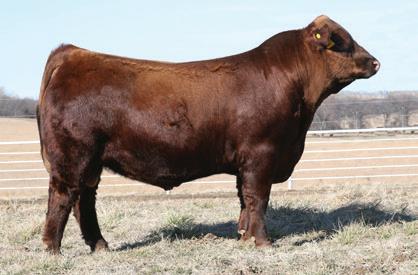
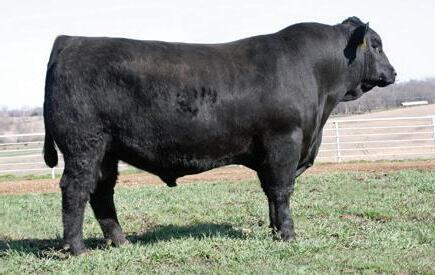
• Largest supplier of Gelbvieh & Balancer genetics (100+ AI sires).
• Unlimited supply of top Angus and Red Angus AI sires for your Balancer needs.
• FREE shipping and handling on orders of 60 or more units
• Unparalleled customer service.
• Commercial Producers: Majority of our sires are available to you at substantially discounted commercial prices.
• Complete listing of Cattlemen’s Connection AI sires, their stats, DNA, pedigree and EPDs is available online: www.cattlemensconnection.com
• All Cattlemen’s Connection AI Sires are tested FREE for all known Genetic Defects.
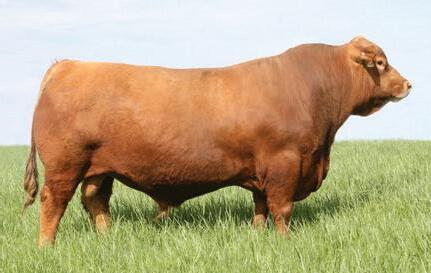
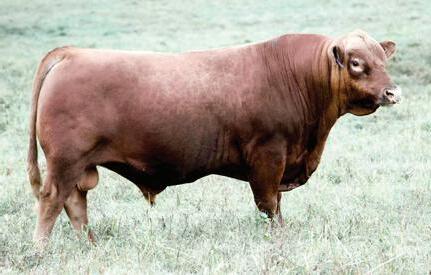
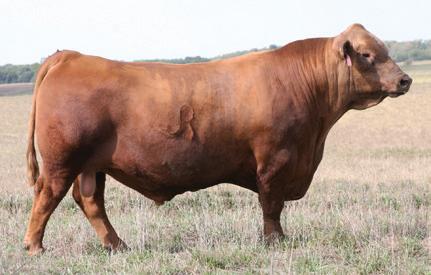
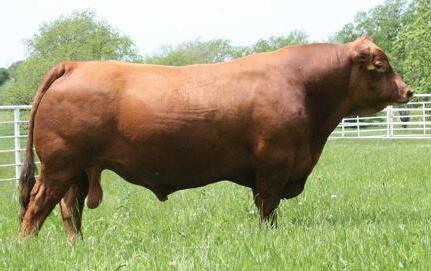
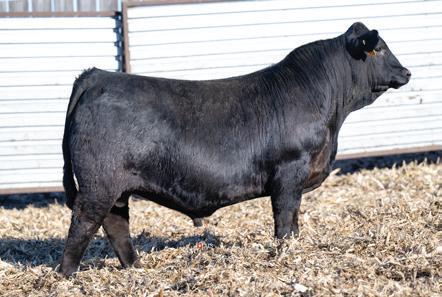
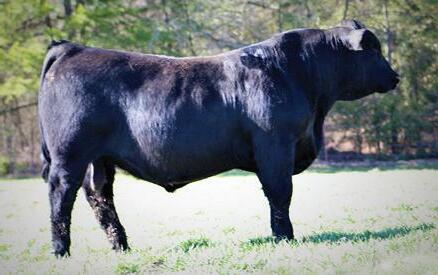

Luck of the Irish
Sustainabull
Rock N Roll
Reel Ez
Rawhide
Bandito
by Annalee Starr
by Kirsten Heselmeyer
by Wess Anglin
by Bob Weaber, Ph.D.
by Kirsten Heselmeyer
by Megan Underwood, M.S.
by Annalee Starr
by Kirsten Heselmeyer
by Megan Underwood, M.S.
by Megan Underwood, M.S.


FOR GELBVIEH
From the Corner Office by Harold Bertz, AGA Executive Director
GELBVIEH MAKES CALVING SEASON EASY A MARKET TO SMILE ABOUT
Junior Connection by Braxton Murray, AGJA Director View from the Board by Dan Warner, AGA President
REQUEST YOUR FREE SUBSCRIPTION
Sign up to receive your free subscription to The Profit Picture by subscribing online or completing this form and mailing to American Gelbvieh Association, Attn: Profit Picture, 1001 S. 70th St., Suite 215, Lincoln, NE 68510. Comments and feedback welcome to info@gelbvieh.org or 303-465-2333.
NAME:
ADDRESS:
CITY, STATE, ZIP: Subscribe online at www.gelbvieh.org/news/publications/profit-picture/



ASSOCIATION STAFF
HAROLD BERTZ EXECUTIVE DIRECTOR haro@gelbvieh.org
TOM STRAHM
COMMERCIAL MARKETING DIRECTOR tom@gelbvieh.org
WESS ANGLIN
COMMERCIAL MARKETING SPECIALIST wess@gelbvieh.org
MEGAN UNDERWOOD, M.S. COMMUNICATIONS COORDINATOR meganu@gelbvieh.org
MALERIE MARKLEY GELBVIEH MEDIA PRODUCTIONS COORDINATOR malerie@gelbvieh.org


MARTHA MOENNING MEMBER & YOUTH ACTIVITIES COORDINATOR martha@gelbvieh.org
SARAH MUMM PERFORMANCE PROGRAMS COORDINATOR sarah@gelbvieh.org
WAYDE PICKINPAUGH DNA SERVICES COORDINATOR wayde@gelbvieh.org
MARGO MCKENDREE OFFICE OPERATIONS COORDINATOR margo@gelbvieh.org
SHIANNA OCKEN REGISTRY COORDINATOR shianna@gelbvieh.org
CAMILLE HENNERBERG REGISTRY/DNA SERVICES SPECIALIST camille@gelbvieh.org
DAN WARNER, PRESIDENT BEAVER CITY, NEB.• 308.962.6511 dan@warnerbeef.com
STUART JARVIS, VICE PRESIDENT PHILLIPSBURG, KAN. • 785.543.8120 bararrow@ruraltel.net
GREGG HARTMAN, TREASURER PUEBLO, COLO. • 719.821.4762 grhartman@hotmail.com
BRENT OVERMILLER,
SMITH CENTER, KAN. • 785.282.0485 brento4532@hotmail.com
DIRECTORS
GREG “BUBBA” ANDERSON MARION, N.C. • 828.442.6869 grega1983@live.com
DAVID LARSON CLEARBROOK, MINN. • 218.766.3323 david.larson.lrl@gmail.com
ZACK BUTLER MILTON, TENN. • 615.308.8628 butlercreek1952@aol.com
DALTON BENNETT
RED HOUSE, VA. • 434.664.7946 dalton@knollcrestfarm.com
JOHN SHEARER CANTON, KAN. • 620.654.6507 circle_s@hometelco.net
TROY FORBES
DE SMET, S.D. • 605.530.4764 forbes_gelbvieh@hotmail.com
A GREAT TIME FOR GELBVIEH
FROM THE CORNER OFFICE BY HAROLD BERTZ
Most spring Gelbvieh and Balancer® bull sales occur between January and April, which finds this issue of The Profit Picture in the middle of this fast-paced season. Catalogs, flyers, along with radio and print ads, expound the value of each program’s unique selection and genetics. It is an exciting time to add new genetics to our herds and enjoy the fellowship and hospitality of seedstock producers.
The past twelve months have been monumental for the beef industry. Record prices for all classes of cattle, the smallest cow herd in decades, government rhetoric causing large swings in price, and limited signs of heifer retention on the horizon made 2025, a wild ride. As producers, we have weathered all of this and continued to create better eating experiences for consumers than ever before. Beef demand continues to rise despite all the noise, and this is in no small part due to the efforts in improvement by you, the American rancher. The American Gelbvieh Association (AGA) and its members have also been busy during the past twelve months.
In a recent Journal of Animal Science article titled “Breed-specific heterosis for growth and carcass traits in 18 U.S. cattle breeds,” research proved that when mated to any breed or combination of breeds, Gelbvieh-sired females produce 22.7 more pounds of calf at weaning than any other British or Continental beef breed. In today’s market, that equates to over $100 per head on 550 pound steers! This coming from
unbiased, peer reviewed and published research.
If your ranch has been using Gelbvieh genetics for years, this research will come as no surprise. If you are considering adding Gelbvieh genetics to your herd, the time is now! The maternal attributes of Gelbvieh and Balancer® females is well documented at the academic and rancher level. The females resulting from the bulls purchased this year contribute to your ranch’s profitability for many years, more so if they give you more weaning weight, breed back quicker and stay in your herd longer; a Gelbvieh specialty.
The AGA introduced three new indexes this fall to assist in commercial producer’s selection of genetics. The Maternal Profit Index (MPI), Feeder Profit Index™ (FPI™) and Total Profit Index (TPI) position commercial producers to be able to make better decisions with current and regularly updated information. I encourage you to consider these outstanding resources in your bull selection criteria this year. Several educational resources with an in-depth look at each index can be found under the learn tab on Gelbvieh.org.
The Maternal Profit Index (MPI) was designed with the production scenario in mind where replacement heifers are retained while surplus calves are marketed at weaning. This index combines all maternal traits and develops an economic prediction of dollar differences when two bull’s MPI indexes are compared.
The Feeder Profit Index (FPI) is a completely terminal index with a scenario that every calf is marketed as finished beef carcasses priced on a value-based grid. This index is built around growth and carcass traits and should not be considered if replacements are retained.
The Total Profit Index (TPI) balances both maternal and terminal traits with the scenario that replacement females are retained with a carcass endpoint for marketed surplus heifers and all steers. This index utilizes the most traits and is unique to other indexes in that it gives ranchers a broad picture of profitability potential from a range of traits we all rely on.
Though the market and political landscape have provided opportunities and challenges this year, the AGA strives to be a solid resource for our members and the ranchers that utilize Gelbvieh and Balancer genetics in their herds. I wish you the best as you take advantage of the tools available to purchase the best genetics to move your operation forward this year and beyond.
The AGA staff is ready to assist you before, during and after your purchase of genetics. AGA commercial marketing staff members, Tom Strahm and Wess Anglin, travel the country assisting ranchers that utilize Gelbvieh and Balancer genetics. Please let them know if they can help you with questions you might have. I look forward to seeing you down the road.
A MARKET TO SMILE ABOUT
The market this past year has poised the dilemma of female retention versus cattle marketing. In 2025, the replacement heifer groups have been eliminated by the ability to capitalize on a high market. From a ranch economic standpoint, there has never been a better opportunity to increase ranch revenue. The cull cow price has eliminated the “one more year” pasture of cows on every farm and ranch. This has led to a smaller and more productive cow herd in the country. If we follow that through, except for drought areas, there will be a desire for high quality maternal genetics.
Today, we have the tools to rebuild the cow herd differently than ever before. We know that there are animals that have a genetic advantage in traits that we only speculated about in the last
expansion. Because of urban sprawl and producer age, we believe that the national cow herd will never reach the previous high of cow numbers. Do we really need that many cows in the future? What we need is a higher producing female that offers us more with each calf than her dam or granddam ever did. The increase in carcass weight has significantly reduced the need for more inventory. In the coming years, the default postion will be the feedyard and not the ranch. Only the highest quality females with the most cultivated genotypes will be allowed into the breeding pastures.
Balancer® and Gelbvieh genetics are positioned to be the base of a future cow herd. We can lead the industry in building the ideal beef cow. We offer a more efficient sized cow that offers less impact on the environment. Gelbvieh-
influenced females lead the industry in pounds weaned per cow exposed, and our advantages in foot quality, udder quality, and disposition lead to a lower cull rate. Our continental roots lean us to an advantage in carcass weight and red meat yield. We have an easy-to-use product with a simple crossbreeding strategy and a great deal of breed complementarity, American Gelbvieh Association (AGA) members, I urge you to collect the data and genotypes so that we can continue to prove our worth, but in the meantime, scream this message from every mountain top.
For the producers that are using these cattle, congratulations you are on the right track. Cattlemen, if you have not experienced the advantages of Gelbvieh and Balancer cattle, I urge you to build your next cow herd around these cattle.
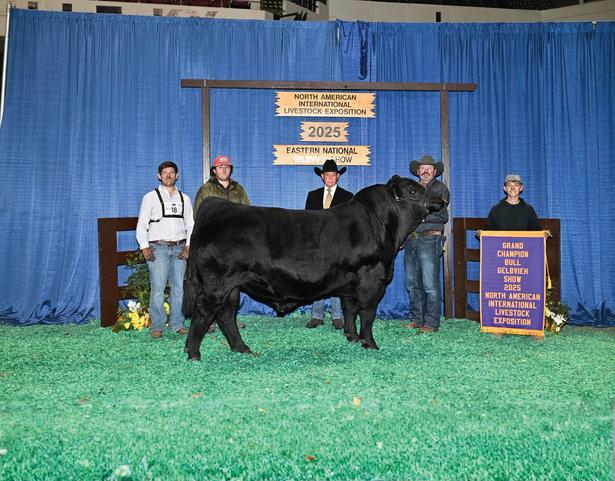
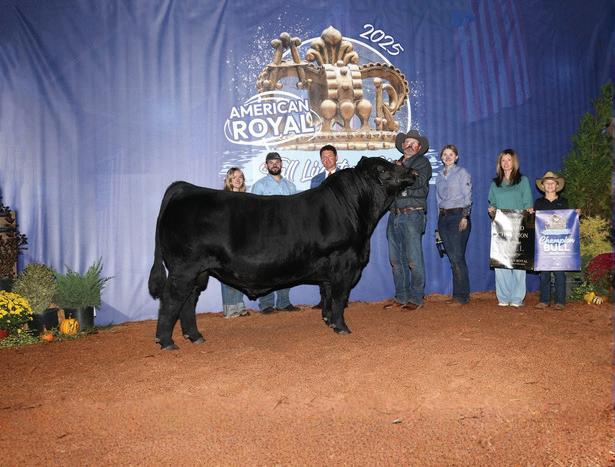
Editor’s Note: The following North American International Livestock Exposition results were printed with the wrong picture in the January issue of Gelbvieh World. Congratulations to these champions.
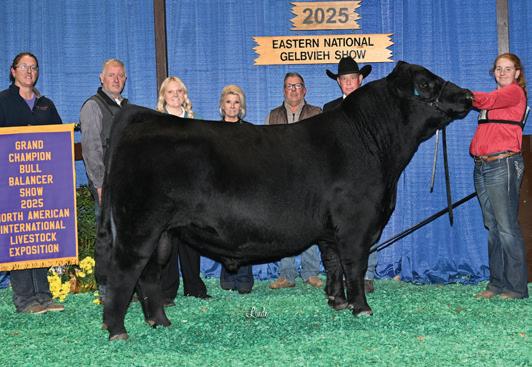
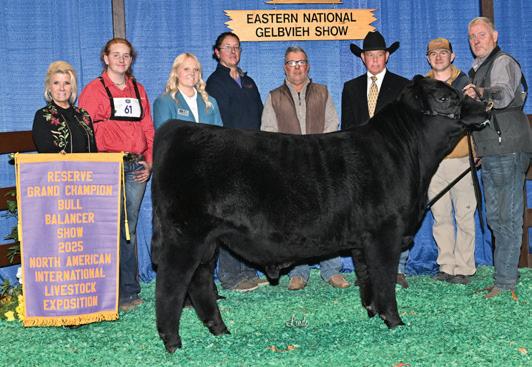
Brown, Dwight, Kan. Sire: CBRO Big Shot 2390L
VIEW FROM THE BOARD BY DAN WARNER

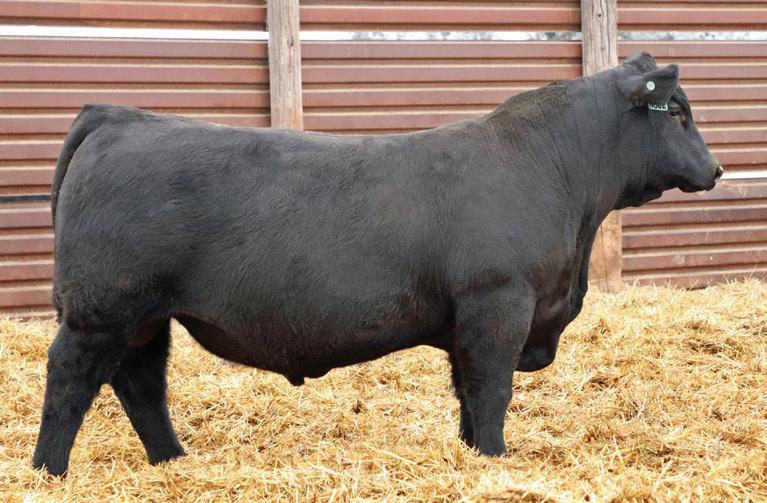

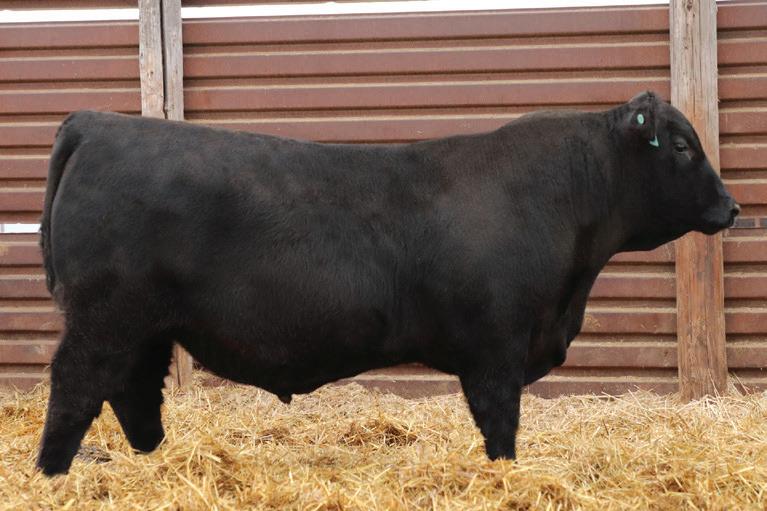
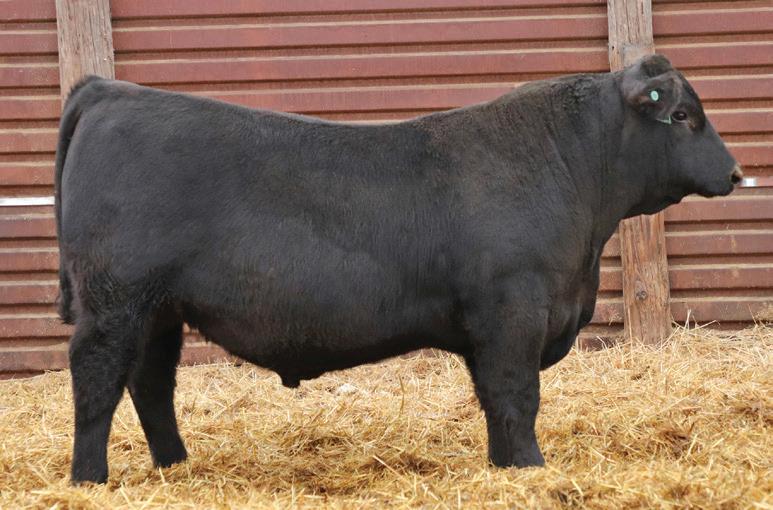





FAST FACTS
WHO WE ARE
The American Gelbvieh Association (AGA) is dedicated to recording and promoting Gelbvieh, Balancer® and Gelbvieh-influenced cattle, while providing members and their customers programs and services to advance the breed. The AGA consists of approximately 1,100 members with a registry database that contains over one million animals including approximately 40,000 currently active Gelbvieh, Balancer® and Gelbvieh-influenced cows.
THE STRENGTHS OF GELBVIEH
The Gelbvieh breed is well known throughout the industry for their maternal strengths and superior growth. With attributes such as more pounds of calf weaned, added fertility, greater cow herd longevity and heavier carcass weights, just to name a few, Gelbvieh and Balancer offer genetics that work for the commercial cattle business.
With the high costs associated with the development or purchase of replacement females, sustained production in a herd is essential. Gelbvieh females are proven to stay in the herd longer.
U.S. Meat Animal Research Center data shows Gelbvieh females have the most moderate mature cow size of the seven major beef breeds. This reduced mature cow size allows for puberty to be reached at an earlier age, which leads to calving earlier in the season and producing a heavier calf at a younger age.
Gelbvieh and Balancer cattle excel in traits such as growth, stayability and productivity. Using Gelbvieh and Balancer genetics in a crossbreeding program can help increase profitability of an operation. See additional pounds and added profit through more efficiency and greater longevity of cows as well as heavier, faster gaining feeder cattle.

WHAT IS A BALANCER ® ?
Balancer cattle are registered hybrid seedstock that have documented pedigrees and expected progeny differences. The AGA was the first beef cattle breed to recognize and include a hybrid animal as registered stock.
Balancer animals are 25% to 75% Gelbvieh with a balance of Angus or Red Angus. The Balancer cattle combine the Gelbvieh growth, muscle, leanness, fertility, longevity and low yield grading ability with the carcass qualities of Angus.
Balancer cattle offer a simple and powerful way to maintain hybrid vigor and a profitable blend of British and Continental genetics without a complicated crossbreeding system. These cattle fit well into all aspects of the beef industry, including commercial cow/calf operations and on the rail.
HOW DO GELBVIEH AND BALANCER ® CROSSBRED FEMALES PERFORM BETTER?
It’s all in the heterosis, or hybrid vigor, described as the increase in performance of the crossbred animal compared to the average of the straight-bred parents. Heterosis impacts traits with low heritability, e.g., reproduction. Producers with crossbred cows can see a higher percentage of their cowherd breed back on the first cycle due to maternal heterosis.
INDIVIDUAL HETEROSIS
Individual heterosis is the improvement in performance by the individual crossbred animal above the average of its parents. Increased calf livability, weaning weight, yearling weight and carcass traits are an example of individual heterosis in crossbred calves.



MATERNAL HETEROSIS
Maternal heterosis leads to the combined improvement in traits from the dam that cause increases in the performance of her and her progeny. Examples of maternal heterosis in a beef cow include younger age at puberty, increased calving rate, increased survival of her calf to weaning, longevity and pounds of calf produced in her lifetime.
LOOKING TO BUY BULLS THIS SPRING?
If you’re a producer looking to purchase new genetics for your herd this fall, use gelbvieh.org/events as your go-to resource for Gelbvieh and Balancer sale information. Also, don’t forget to check out gelbvieh. org/exchange/sale-catalogs, to view upcoming sale catalogs.
VISIT THE EXCHANGE
Looking for Gelbvieh-influenced replacement females, bulls or feeder cattle? The AGA’s free Exchange lists Gelbvieh and Balancer-influenced cattle for sale and helps to match potential buyers with sellers. Visit gelbvieh.org/agcat/females to view available Gelbvieh females across the country. If you can’t find a listing for your search, create a free wanted listing at gelbvieh.org/ exchange-form.
FOCUS ON PROGRAMS FOR COMMERCIAL PRODUCERS
FEEDER FINDER
Feeder Finder is a free email service offered by AGA to promote and assist in marketing load lots of Gelbvieh and Balancer-influenced feeder cattle. Producers who have cattle to sell are encouraged the fill out the online form or contact AGA staff to submit information about their cattle.

MALERIE MARKLEY
Gelbvieh Media Productions Coordinator malerie@gelbvieh.org

WAYDE PICKINPAUGH, M.S. DNA Services Coordinator wayde@gelbvieh.org
BALANCER® EDGE
Balancer® Edge is a source and age verification program for feeder cattle sired by Gelbvieh and Balancer bulls. Offered by the AGA in partnership with IMI Global, this program gives producers the opportunity to participate in a breed-identified feeder calf marketing program with the option to customize. Balancer® Edge customers can choose additional value-added programs, which open the doors to additional markets and the opportunity to generate even more value for their feeder calves.
CARCASS DATA COLLECTION PROJECT
The Carcass Data Collection Project is designed for AGA members and customers. This project is a breed improvement directive, providing vital genetic information to recharge the carcass database and enhance the predictability of current selection tools. AGA will pay genotyping costs of participating calves: genomic analysis will be completed by Neogen® GeneSeek. Recognizing the increased expectations of commercial cattlemen, the AGA is dedicated to delivering the industry with genetics that are smart, reliable and profitable, from the ranch to the rail. To learn more, visit gelbvieh.org/genetic-technology/ carcass-data-collection-project.
COMMERCIAL MARKETING STAFF
The AGA has outstanding marketing staff that understands both the beef business and the Gelbvieh breed. They are available to help commercial cattlemen find Gelbvieh or Balancer genetics to fit your programs or assist in marketing Gelbvieh-influenced breeding animals for feeder cattle. To learn more about our commercial marketing services, contact Tom Strahm, AGA commercial marketing director, at tom@gelbvieh.org, or Wess Anglin, AGA commercial marketing specialist, at wess@gelbvieh.org.

SARAH MUMM Performance Programs Coordinator sarah@gelbvieh.org

CAMILLE HENNERBERG Registry/DNA Services Specialist camille@gelbvieh.org
FAST FACTS


MARGO MCKENDREE Office Operations Coordinator margo@gelbvieh.org
GELBVIEH MAKES CALVING SEASON EASY
JUNIOR
CONNECTION
BY BRAXTON MURRAY, AGJA DIRECTOR
Calving season is the ultimate proving ground for any beef operation. It tests genetics, management, and the cow herd’s ability to work for the producer rather than against them. When sleep is short, weather is unpredictable, and every live calf matters, Gelbvieh and Balancer® cattle consistently rise above the rest. Their reputation for calving ease, maternal strength, and early vigor makes them a superior choice when it matters most.
One of the most stressful aspects of calving season is dystocia. Difficult births increase labor demands, veterinary costs, and long-term setbacks for both cow and calf. Gelbvieh cattle have long been recognized for their exceptional calving ease, particularly when compared to many traditional continental breeds.
Gelbvieh genetics offer a rare combination: moderate birth weights paired with strong growth performance. This balance allows producers to reduce calving difficulty without sacrificing post-weaning gains. Balancer cattle— Gelbvieh crossed with Angus or Red Angus—enhance this advantage even further by adding proven Angus calving ease and maternal reliability. The result is a cow herd that calves unassisted more often, allowing producers to focus on management instead of emergency.
A live calf is only the first step; a strong calf is the real goal. Gelbvieh and Balancer calves are known for exceptional vigor at birth. They get up quickly, nurse aggressively, and establish immunity early—critical traits during cold, wet, or windy calving seasons.
This early vigor directly translates into higher survival rates and healthier calves. Fewer weak calves mean fewer hours spent tubing, warming, or treating newborns. For producers calving in harsh environments or on pasture, this vigor can be the difference between a profitable season and a costly one.
A cow’s job doesn’t end at birth—and neither does calving season stress. Gelbvieh females are widely respected for their strong maternal instincts. They mother their calves attentively, maintain tight udders with ample milk supply, and protect their offspring without being overly aggressive toward handlers.
Balancer females carry this strength forward while benefiting from Angusinfluence, often resulting in excellent udder quality, longevity, and fertility. These maternal traits reduce labor demands and increase calf performance, especially during the critical first few weeks of life.
A successful calving season starts months earlier with conception. Gelbvieh cattle are among the most fertile breeds in the beef industry, consistently exhibiting high conception rates and strong reproductive longevity. Fertile cows calve earlier in the season, producing heavier, more uniform calves at weaning.
Balancer cattle enhance this advantage through heterosis. Crossbreeding Gelbvieh with Angus improves reproductive efficiency, cow longevity, and overall herd resilience. Earlier calving cows mean fewer late-night checks, tighter calving windows, and a more manageable workload.
Calving season is expensive—labor, time, feed, and stress all add up. Gelbvieh and Balancer cattle are efficient cows that maintain body condition, breed back reliably, and raise heavy calves without excessive inputs.
Their moderate frame size and feed efficiency allow them to thrive in a wide range of environments, from high-input operations to forage-based systems. This adaptability reduces the need for costly supplementation during late gestation and early lactation, easing pressure on both the producer and the bottom line.
While some breeds excel on paper, Gelbvieh and Balancer cattle prove themselves where it counts: in the pasture, at calving time, and in challenging conditions.
For producers who value sleep, simplicity, and sustainability, Gelbvieh and Balancer cattle offer a clear advantage. Fewer pulls, stronger calves, better mothers, and more efficient cows make calving season smoother and more predictable.
Calving season reveals the true strengths and weaknesses of a cow herd. Gelbvieh and Balancer cattle consistently demonstrate why they are a superior choice—combining calving ease, vigor, maternal excellence, and fertility into a dependable, hardworking package. When every calf counts and every hour matters, these genetics deliver peace of mind and measurable results.
In an industry where efficiency and reliability drive success, Gelbvieh and Balancer cattle aren’t just good during calving season—they’re exceptional.

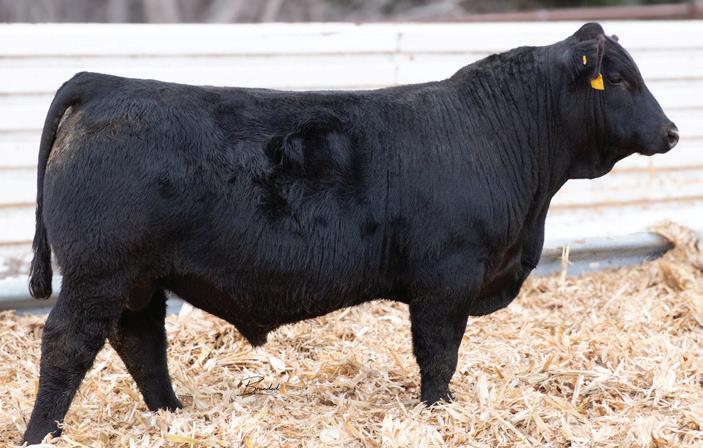
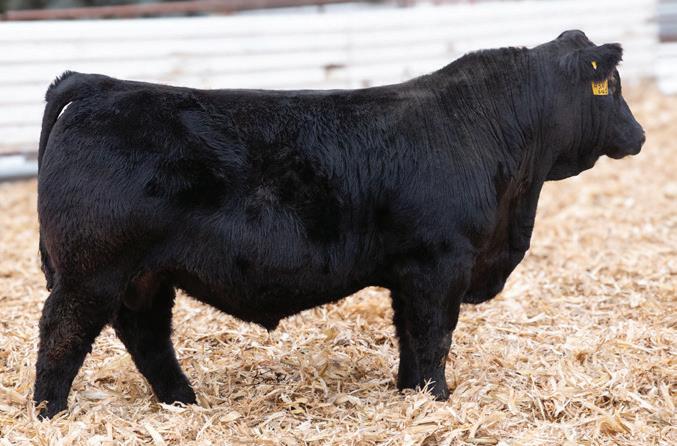
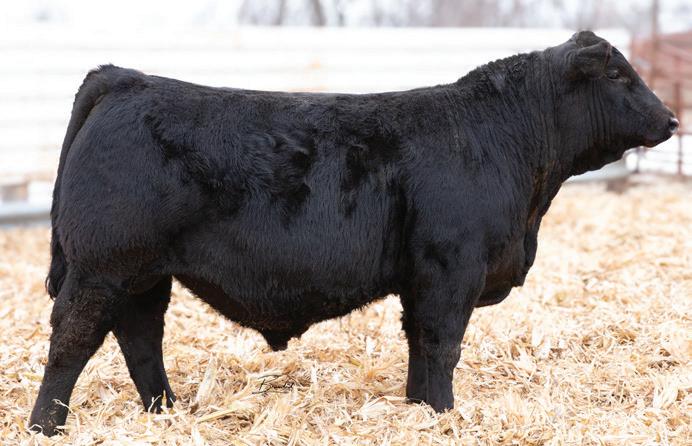
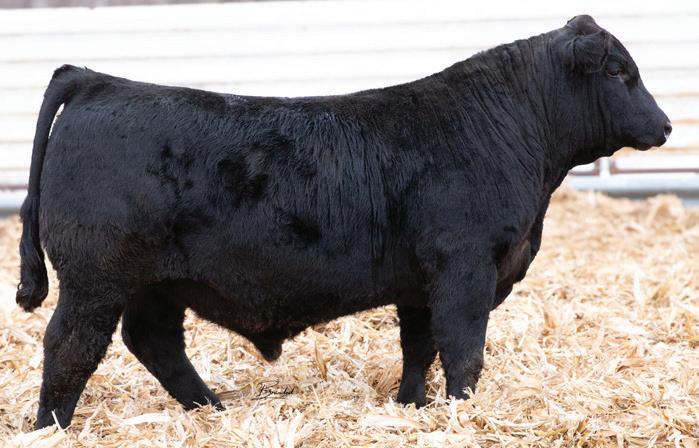
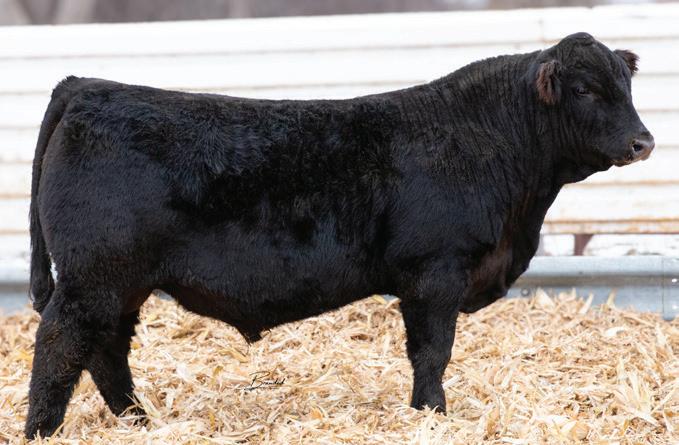
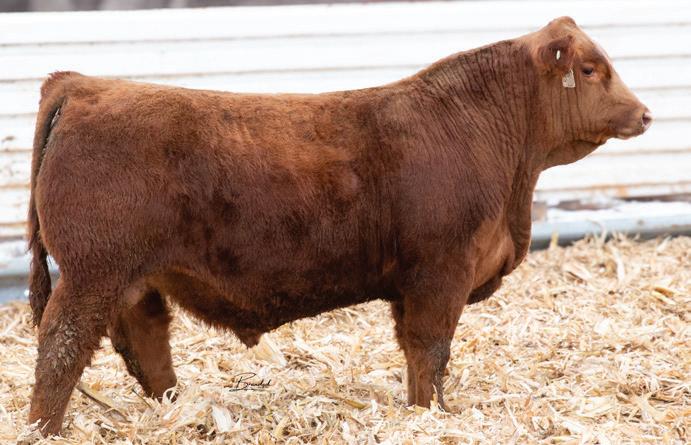
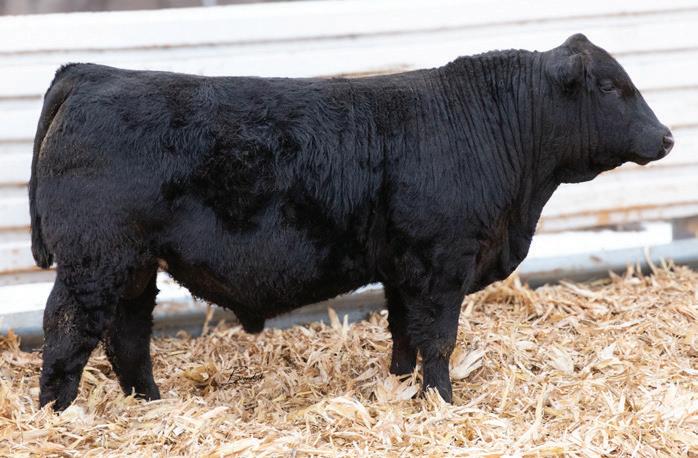
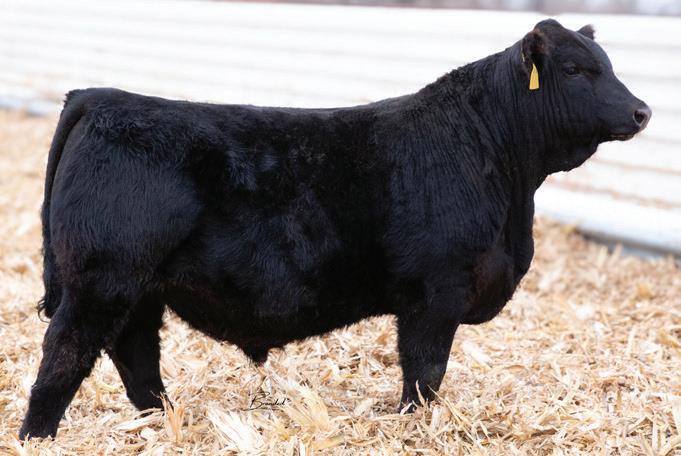
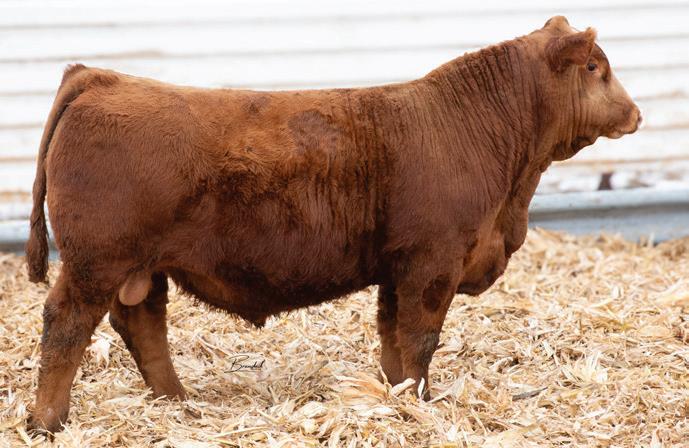

North Missouri Bull Sale North Missouri Bull Sale
February 28, 2026
Kingsville Livestock, Kingsville, MO
Selling 125 BLACK Balancer & Gelbvieh Bulls! All 18 months old!
Arkansas Bull Sale Arkansas Bull Sale
March 7, 2026
Hope Livestock, Hope, AR
Selling 75 Angus, Brangus, Balancer & Gelbvieh Bulls! Red & Black! 2 yr olds & 18 months!
Red Reward Bull & Female Sale
March 14, 2026
Wheeler Livestock, Osceola, MO
Selling 75 RED Balancer & Gelbvieh Bulls & RED females! Registered & Commercial!
South Missouri Bull & Female Sale
March 28, 2026
Joplin Regional Stockyards, Carthage, MO
Selling 125 BLACK Balancer & Gelbvieh Bulls! 18 months & yearlings! Also BLACK females! Registered & Commercial!
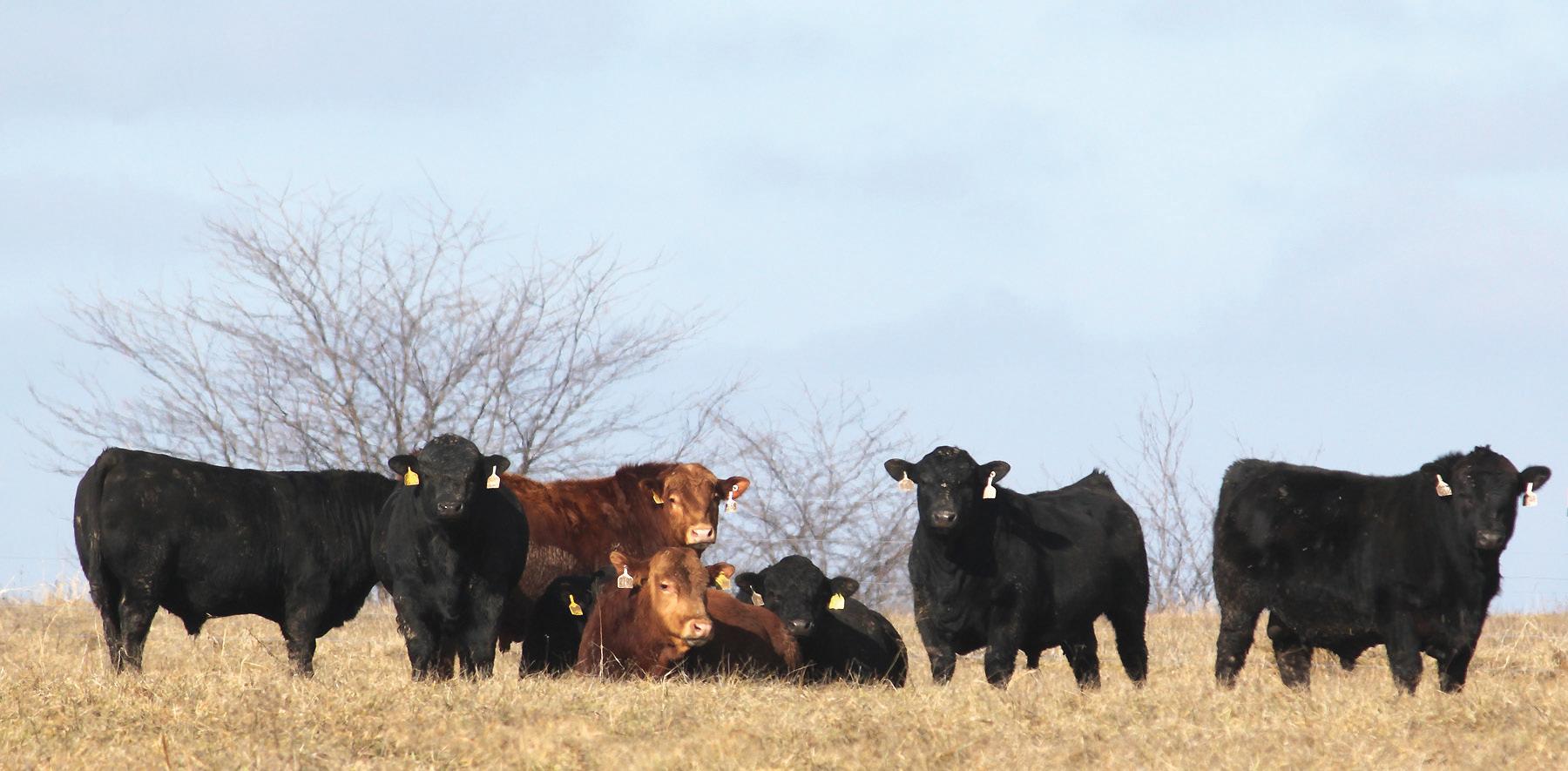
• Guaranteed Sight-Unseen Purchases!
• Free Trucking on every bull! No fine print!
• The best disposition & soundness sort!
• Extensive Data & Genomic EPDs!
• All Bulls Are Semen & Trich Tested!
• Videos of sale bulls the week before the sale! www. dvauction.com or www.seedstockplus.com
AGA EPDS & INDEXES
MATERNAL TRAITS
Calving ease direct (CED): Percent of unassisted births of a bull’s calves when he is used on heifers. A higher number is favorable, meaning better calving ease. This EPD can be vital to a rancher looking to decrease the amount of calves pulled in his herd.
Milk (Milk): The genetic ability of a sire’s daughters to produce milk expressed in pounds of weaning weight.
Calving ease maternal (CEM): Represented as percent of unassisted births in a sire’s first-calving daughters. A higher number represents more favorable calving ease. This EPD is important to a rancher’s bottom line because it predicts which animals produce daughters with a genetic predisposition to calve unassisted as heifers.
Heifer pregnancy (HP): Predicts the probability that a bull’s daughters will become pregnant as first-calf heifers in a regular breeding season, expressed as a percent. A higher value of this EPD is favorable, meaning that a higher percentage of a sire’s daughters get pregnant as first calf heifers compared to other sires in his contemporary group.
30-month pregnancy (Pg30): Predicts the probability that a bull’s daughters will become pregnant and calve at three years of age, given that they calved as first-calf heifers. This EPD is expressed as a percent, again, with a higher number being more favorable meaning a higher percentage of a sire’s daughters will calve at three years of age, given they calved as first-calf heifers.
Stayability (STAY): Predicts the genetic difference, in terms of percent probability, that a bull’s daughters will stay productive within a herd to at least six years of age. The stayability EPD is one of the best measures currently available to compare a bull’s ability to produce females with reproductive longevity.
Docility (DOC): Is reported as a percentage, with higher numbers indicating a higher percent of offspring receiving a disposition score of 1 (docile).
Scrotal circumference (SC): Predicts the difference, in centimeters, of scrotal circumference of an animal’s male offspring as a yearling compared to the SC of other animals’ male offspring.
GROWTH TRAITS
Birth weight (BW): Predicts the difference, in pounds, for birth weight of the calf.
Weaning weight (WW): Predicts the difference, in pounds, for weaning weight (adjusted to age of dam and a standard 205 days of age). This is an indicator of growth from birth to weaning.
Yearling weight (YW): Predicts the expected difference, in pounds, for yearling weight (adjusted to a standard 365 days of age). This is an indicator of growth from birth to yearling.
Mature Weight: (MWT)Body weight of cows adjusted to six years of age at body condition score 5. MWT is
reported in pounds and is computed from a genetic model that leverages information from weaning weight, post-weaning gain, and mature weights of cows. Reported weights are adjusted for both age at observation and for body condition. Body weights of cows 2 to 12 years of age are utilized in the evaluation so producers can report data at any age for the evaluation. Preferably, cows should be evaluated at or shortly following weaning, as that’s a convenient time for many producers to process cows. Weight collected at other times in the production cycle are acceptable. Producers should measure full contemporary groups on the same day as the observation date, which helps form the contemporary group.
CARCASS TRAITS
Yield grade (YG): Differences in yield grade score, which is a predictor of percent retail product. Smaller values suggest that progeny will have a better lean to fat ratio.
Carcass weight (CW): Differences in pounds of hot carcass weight, adjusted to an industry standard age endpoint.
Ribeye area (CREA): Differences in ribeye area in inches between the 12th and 13th rib. Greater ribeye areas are preferable.
Marbling (MARB): Predicts the differences in the degree of marbling within the ribeye as expressed in marbling score units. Greater marbling numbers are preferable and are an indicator of higher carcass quality grades.
Fat (CFAT): Differences for fat thickness, in inches, for a carcass over the 12th rib, smaller numbers of fat thickness are preferable as excess fat can be detrimental to yield grade.
EFFICIENCY TRAITS
Dry matter intake (DMI): The genetic difference in pounds of expected average daily dry matter intake of progeny.
Cow Energy Requirement-Yearly (CERY): Mature body weight, lactation potential and birth weight are primary predictors of energy requirements. Mature Weight, Milk and Birth Weight EPDs are utilized to inform prediction equations from beef cow nutrition research to estimate differences in energy requirement over a production year. The CERY EPD is reported in pounds of Total Digestable Nutrients (TDN) required for an age 6 cow.
INDEXES
Indexes are tools that allow producers to select for several EPDs at once, making selections more efficient than selecting on one trait at a time. Indexes weigh traits based on their importance to a producer’s bottom line by using a trait’s economic and genetic value. Indexes are a good way to put selection emphasis on traits that are economically relevant.
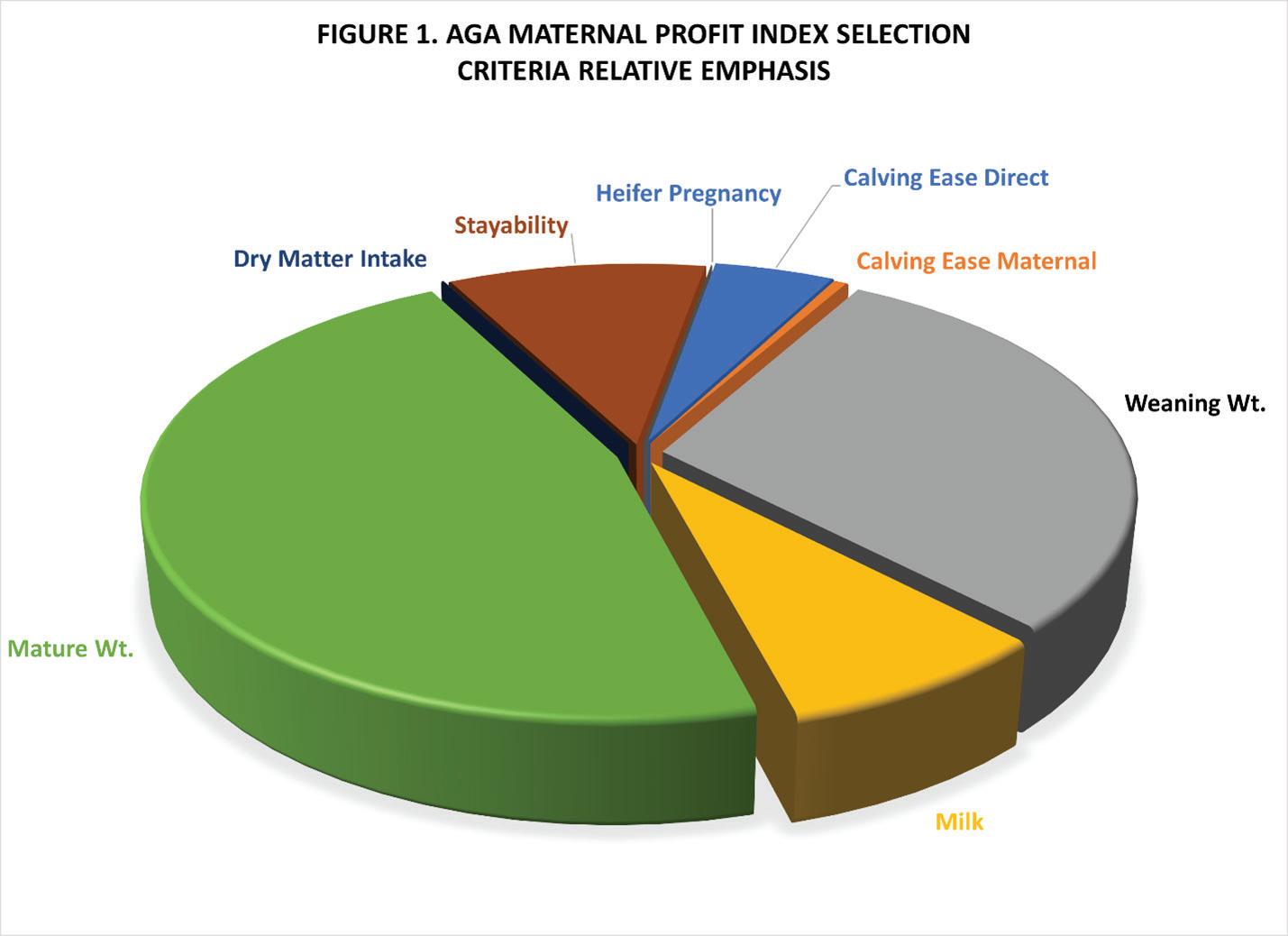
Maternal Profit Index (MPI): In this production scenario, Gelbvieh bulls are mated to Angus-based cows with surplus calves marketed at weaning, with replacement heifers retained from the calf crop. EPDs weighted in this index are Calving Ease Direct (CED) and Maternal (CEM), Weaning Weight (WW), Milk (Milk), Mature Weight (MWT), Dry Matter Intake (DMI), Stayability (STAY), and Heifer Pregnancy (HP). Mature weight is the primary driver and represents the significant cost of maintenance energy requirement in the cow-calf sector. Weaning Weight and Milk (expressed
in pounds of calf weaning weight) represent the principal revenue stream. Stayability helps account for differences in replacement costs in the system and the effect of heifer retention on revenue streams. This index should be used by commercial cattlemen whose production scenario includes the traditional marketing of calves at weaning and replacement retention from the herd.
Feeder Profit Index™ (FPI™):
Envisioned as a completely terminal index, FPI assumes all calves are marketed as finished beef carcasses priced on a value-based grid. Thus, it shouldn’t be used in production scenarios where replacements are kept from these matings. The new FPI formulation more precisely weights Economically Relevant Traits (ERTs) available for selection, including the key carcass traits of Carcass Weight (CW), Ribeye Area (REA), and Dry Matter Intake (DMI) that were not included in the original formulation.
The new FPI also weights Fat Thickness (CFAT), postweaning Average Daily Gain (ADG), and Calving Ease Direct (CED). Carcass value determined by carcass weight, quality, and yield grade influencing traits accounts for approximately 75% of the index as principal revenue drivers. Dry Matter Intake (DMI) captures differences in
expected costs to the terminal carcass endpoint.
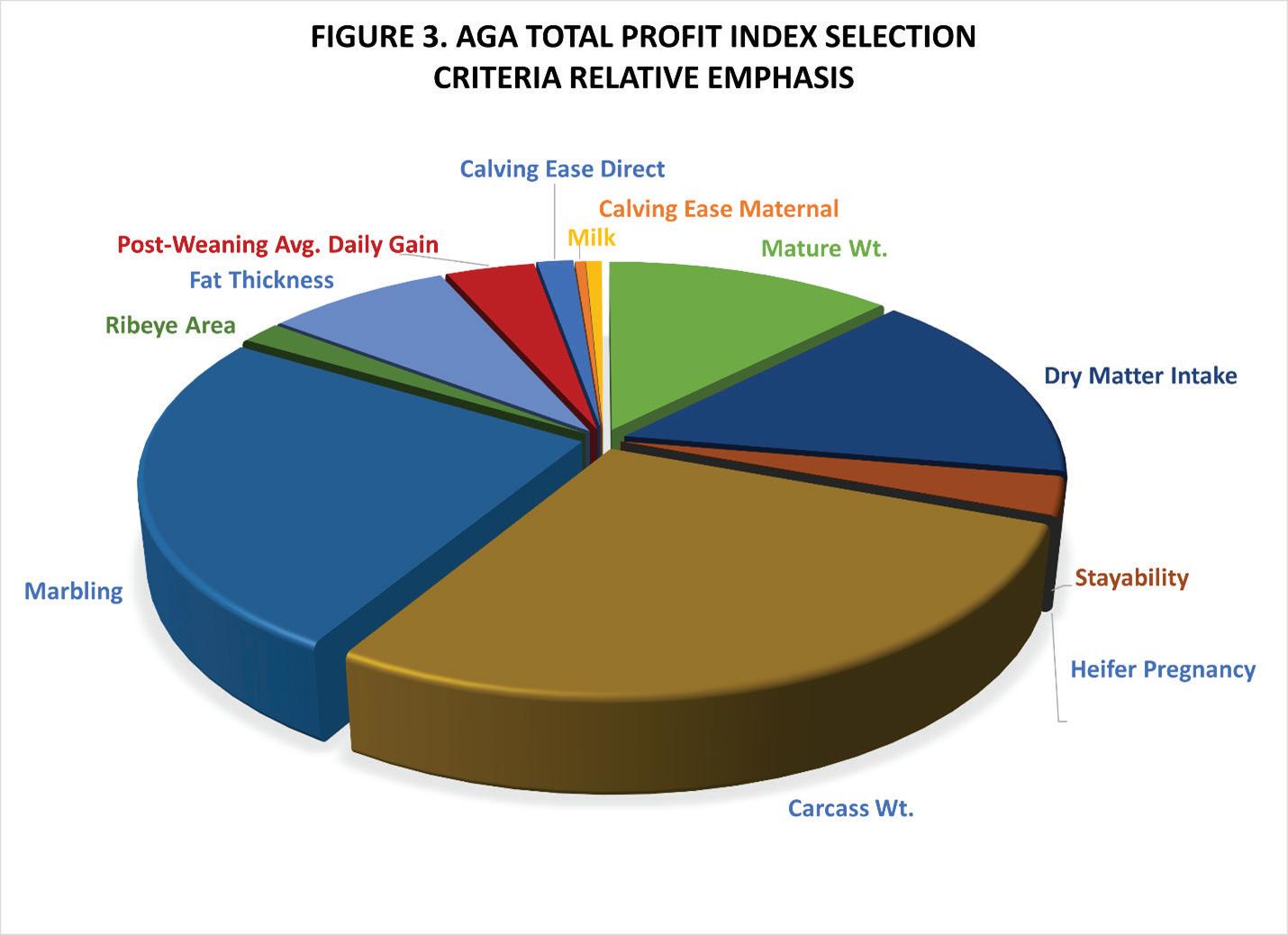
Total Profit Index (TPI): Combining replacement female retention from the herd with carcass endpoint for marketed surplus heifers and all steers, TPI balances both maternal and terminal selection criteria. Because of the challenges faced by commercial cattlemen by the antagonisms in selection for this production scenario, TPI includes the largest and most diverse set of EPDs in the model, including carcass traits as the primary revenue drivers with cow Mature Weight (MWT), Stayability (STAY) and Dry Matter Intake (DMI) as cost drivers.
$GAIN: Reports the difference in expected marginal value of gain less the cost of feed to achieve that gain. Reported in dollars of marginal profit with more positive values representing increased efficiency and profit.

ARKANSAS & IOWA BREEDERS

Cattle Company
David & Rita Martin 256 Boyce Road Judsonia, AR 72081 C: 501.278.7614
www.martincattleco.com
Private Treaty Sales Available Year Round
COLORADO BREEDERS
Heather Scott (775) 790-3456
Brandon Scott (970) 589-5483
Parachute, CO 81635
STATE ROUNDUP
BLACK & POLLED PRIVATE TREATY SALES
Breed-leading Performance from Quality Genetics
Kevin Gunderson: Al Schulz: 402-510-8103 402-676-5292 Neola, Iowa

Jim Roelle 38330 CR 49 Peetz, CO 80747 (C): 970-520-1224
jr.plateau@hotmail.com www.plateaugelbvieh.com
Featuring Black, Polled Gelbvieh & Balancer® genetics with balanced trait selection. Next Bull Sale February 26, 2026. Livestock Exchange, LLC., Brush, CO.
MINNESOTA & MONTANA BREEDERS

“Gelbvieh since 1973”
Kathleen Rankin Jim Bjorkman 1285 Nine Mile Rd. 406-937-4815 Oilmont, MT 59466 krankin@northerntel.net 406-460-0535 www.kickinghorseranch.com
KathlEEn ranKin 406-937-4815 1285 ninE MilE rd. • oilMont, Mt 59466 krankin@northerntel.net www.kickinghorseranch.com Performance cattle for the real world.
NEBRASKA & SOUTH DAKOTA BREEDERS

Cole Epley
402-621-0359
Marlin Meyer 402-879-4976 1039 rd 4000 nElson nE 68961 epleycattle@gmail.com www.gelbviehbulls.com
Rippe Gelbvieh
Duane & Brenda, Dustin & Karla Rippe 6775 ROAD D • HUBBELL, NE 68375 (H) 402-324-4176
Duane (C): 402-200-0096
Dustin (C): 316-323-4874
dustin.rippe@yahoo.com www.rippegelbvieh.com
“To produce superior Gelbvieh and Balancer® seedstock based on economically important traits, which provide more profitability for our customers, and ensure the consumer a very satisfactory eating experience.”
Annual Bull and Female Sale March 20, 2026 with the Southwest Iowa Gelbvieh Group



Represent your state in the State Roundup section of the September and February Profit Pictures, and the July Herd Reference Edition of Gelbvieh World.
To purchase an ad space, contact Malerie Markley at malerie@gelbvieh.org or 303-465-2333.
SETTING UP FOR SUCCESS: A PRODUCER’S GUIDE TO CALVING SEASON
PREPARATION AND MANAGEMENT
by ANNALEE STARR
For cow/calf producers, calving season marks the payoff of last year’s breeding decisions and herd management. Calving season is a stressful time of the year with the long hours, weather and preparation. Dr. Becky Funk, DVM, Animal Health Teaching and Extension Specialist at the University of Nebraska-Lincoln, knows how critical planning is to success.
“A lot of what sets a smooth calving season apart from a difficult one comes down to preparation ahead of time,” Funk said. “This is because we get in a hurry, we’re stressed, we’re tired.” Her point is clear: Proper preparation prevents injury and chaos.
From facilities to calving kits to managing calf vigor, Funk provided a producer roadmap for setting up for success before the first calf hits the ground. Here is what she recommends producers focus on the most.
CALVING PREP AND FACILITIES
Before the first calf hits the ground, solid facilities and good planning keep both cattle and ranchers safe.
“One of the must-haves is a way to safely restrain the cow,” Funk explains. “That doesn’t mean anything fancy. I’ve worked in setups that were just a solid head catch with a swing gate.”
A BASIC CALVING FACILITY
CHECKLIST INCLUDES:
• Safe restraint setup (head catch, swing gate).
• Adequate lighting, especially for night checks.
• Maternity pens that allow privacy, but easy access.
• Weather protection, even if minimal.
INSIDE YOUR CALVING KIT:
• OB sleeves, chains/straps, hooks
• OB lube (“Buy a gallon,” Funk advised)
• Disinfectant (chlorhexidine or iodine-based)
• Syringes and needles
• Halter
• Vet-recommended pharmaceuticals Funk emphasized a key conversation on pharmaceuticals inside your calving kit: “This is going to differ for every producer,” she said. “Talk to your veterinarian about which pharmaceuticals make sense for your operation.”
Also high on Funk’s list? Prioritizing personal safety. “Every year, we see producers get hurt calving cows. We’re tired, we’re stressed and in a hurry. Having everything set up ahead of time is what prevents those injuries.”
EARLY-LIFE CALF VIGOR: WHAT TO WATCH FOR
Once a calf is on the ground, it’s a race against time. The first indicators of health show up quickly.
“That big head shake and snort, trying to get up right away — those are key signs of a healthy calf,” Funk explained. “If that calf isn’t up and trying to nurse in the first 30 minutes, that’s a red flag.”
PRODUCERS CAN USE A QUICK ASSESSMENT CHECKLIST:
• Time to stand: Within 15-30 minutes
• Time to nurse: Within 30 minutes
• Temperature: Above 100 degrees Fahrenheit (practical: fingers in mouth to check)
• Posture: Able to stay sternal
• Suckle reflex: Strong when fingers are inserted
“Stick your fingers in their mouth,” Funk said. “You can assess temperature, hydration and suckle reflex in just a few seconds.”
Moderately stressed calves may have a weak suckle reflex but can hold sternal posture. In that case, tube feeding colostrum is recommended. Severely stressed calves can’t maintain body temperature or stay upright and may require more intensive intervention.
Funk recommends adjusting check intervals based on herd composition and weather. Cold stress can derail calving plans. “The longer a calf lies there wet, the more likely we are going to fight hypothermia,” Funk said. She recommends shortening check intervals when temperatures drop outside.
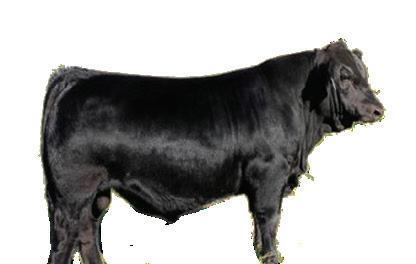


“First-calf heifers should be checked every 30 minutes or so, especially in cold weather,” she said. “A mature cow herd might only need to be checked three to four times a day.”
Producers can use the mouth test as a quick field check. “If the mouth is cold or dry, we’ve got a problem,” Funk said. “Warm, moist, and sucking is what we want.”
COMMON EARLY-LIFE COMPLICATIONS
Dystocia tops the list. Even mild pulls can result in calf stress, which shows up as acidosis, weak suckling, or cold calves.
“It’s like they ran a marathon,” Funk said. “Those muscles are sore, and we get lactic acid buildup. In severe cases, we might need to correct with electrolytes or anti-inflammatories.”
OTHER EARLY COMPLICATIONS INCLUDE:
• Pneumonia: Often a stress response due to retained fluids, not necessarily infectious. “Their lungs aren’t functioning fully because of stress at birth.”
• Scours (commonly one week to one month): “It is often tied back to the calving area and pathogen load from older calves.” Management of calving space is critical. If scours occur, Funk recommends getting a second set of eyes from your vet on what management changes to make next.
COLOSTRUM MANAGEMENT AND PASSIVE TRANSFER
Of course, the best source of colostrum is from the mother. If this transfer does not occur, the next option is colostrum replacement. Nothing replaces colostrum for calves as they are born
without antibodies, making them highly vulnerable to disease. Passive transfer is the vital transfer of immunoglobulins into the calf’s system. Failure of passive transfer has shown negative effects on weaning weight and average daily gain (ADG).
“Calves need to nurse within four hours,” Funk emphasized. “12 hours is borderline, but not ideal. After 24 hours, the gut is essentially closed, and there is no colostrum absorption.”
Funk also warns producers to avoid giving supplements before colostrum. “If the calf doesn’t see colostrum first, it affects how the gut functions. Anything else may encourage failure of passive transfer.”
COLOSTRUM TIPS:
• Priority: Calf must nurse within 4 hours
• Risk groups: First-calf heifers and old cows (lower quality and quantity)
• Colostrum Replacers vs. Supplements:
• Replacers: 150-160g IgG, $90120/dose
• Supplements: 50-60 IgG, $30$50/dose
“Easiest way to remember quality? You get what you pay for,” Funk said.
BODY CONDITION TARGETS AND NUTRITION OF THE COW
• Mature cows: 5.0-5.5 at calving, avoid dropping below 5
• First-calf heifers: 6.0 at calving, buffer for condition loss
One key mistake Funk often sees? Undernutrition in the second trimester. “Once you fall behind there, it’s hard to catch up by calving.”
Funk explains that when cows don’t “re-breed,” it is often due to nutritional
mistakes in the second trimester of gestation. Nutrition before and after calving sets the tone for calf vigor and rebreeding success.
The second trimester is the final window to improve body condition before nutrient demands ramp up. “Late gestation is when the cow builds colostrum and supports rapid fetal growth,” Funk said. “Both of those require a lot of energy.” After calving, the cow enters peak lactation, which typically occurs around 60 days postcalving. At that point, her nutritional demand is at its highest and she may already be in a negative energy balance.
First-calf heifers are often bred to calve ahead of the cow herd. There is a reason: “It gives them more time to recover,” Funk said. “They need around 100-120 days to prepare for rebreeding.”
First-calf heifers are not at their mature body weight and size yet, so the energy demand is much higher. They are lactating to support that calf, recovering, preparing to cycle again, and still growing their own body, making this phase really challenging. Funk added, “If she enters lactation under-conditioned, it’s going to be a real challenge to get her bred back on time.”
BEST PRACTICES FROM TOP PRODUCERS
Funk sees the same habits among producers who consistently thrive during calving:
• Attention to detail.
• Planning ahead: Don’t wait until the first pull to check your chute.
• Body condition scoring at weaning to manage nutrition early. Funk recommends checking body condition scores on your cows at weaning because “That’s the time when we have the best ability to impact their body condition score.”





























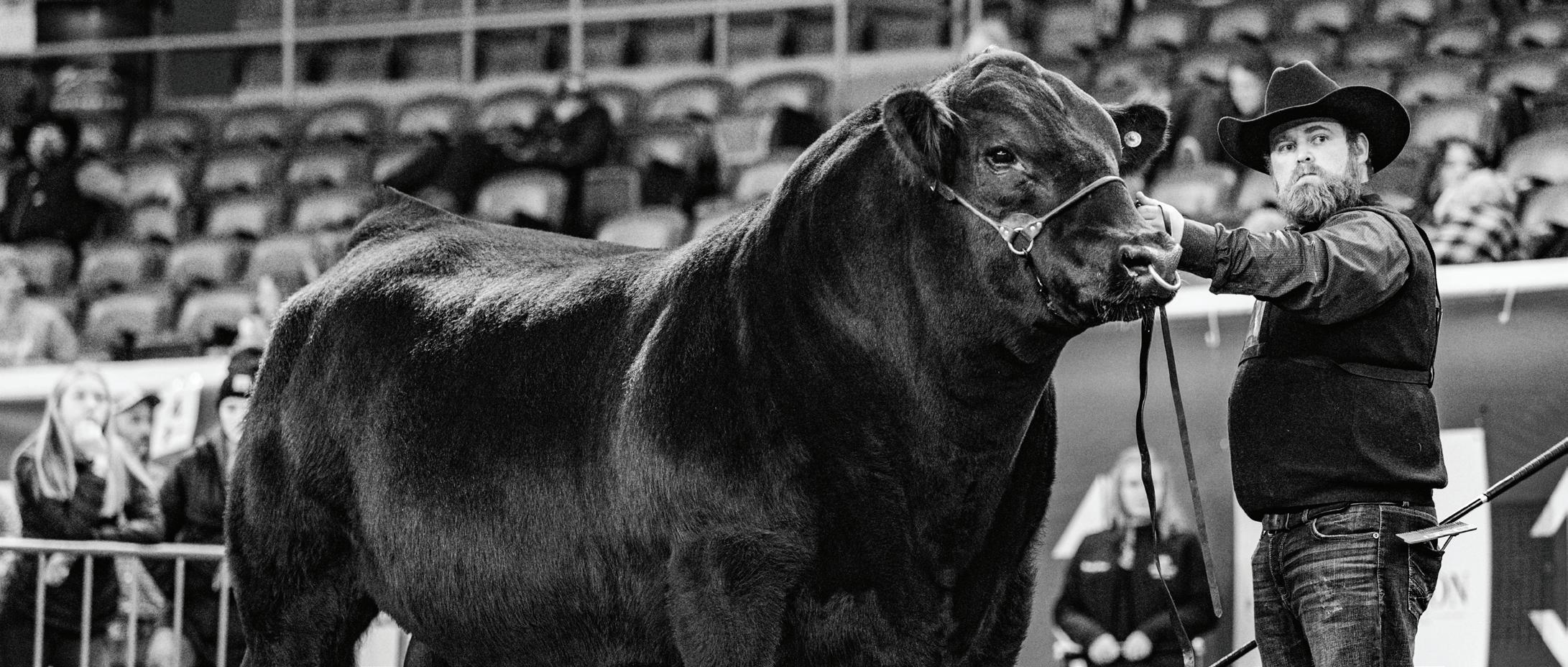



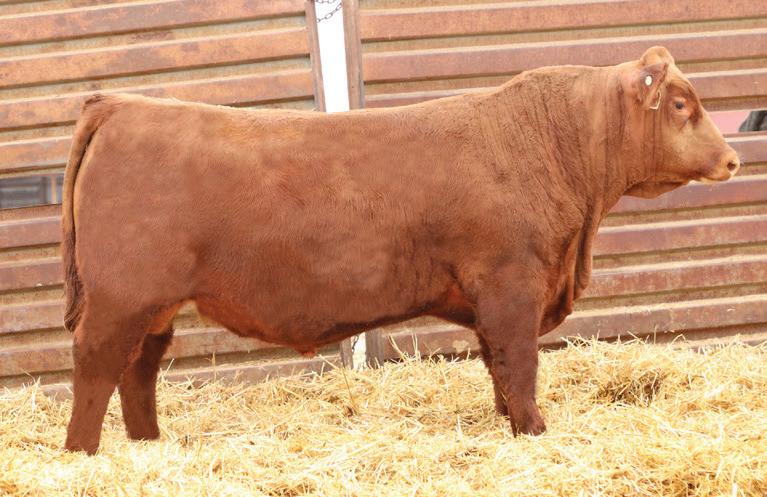
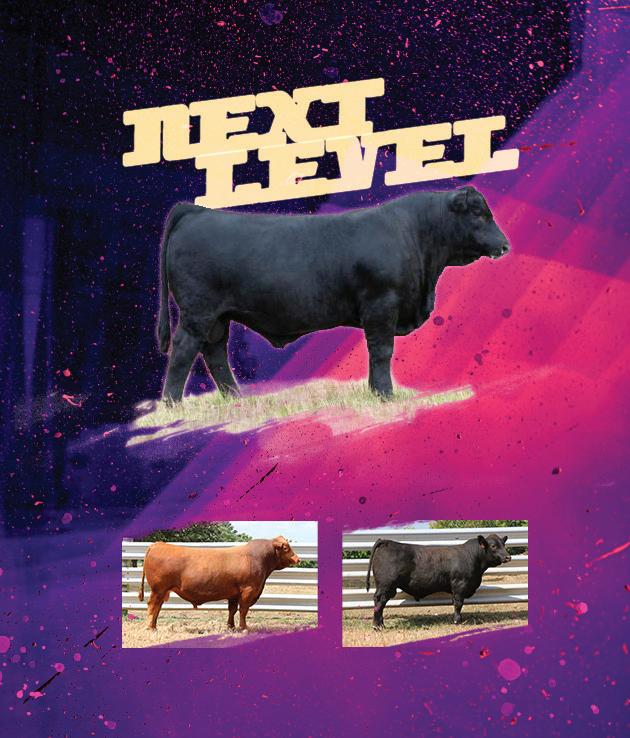
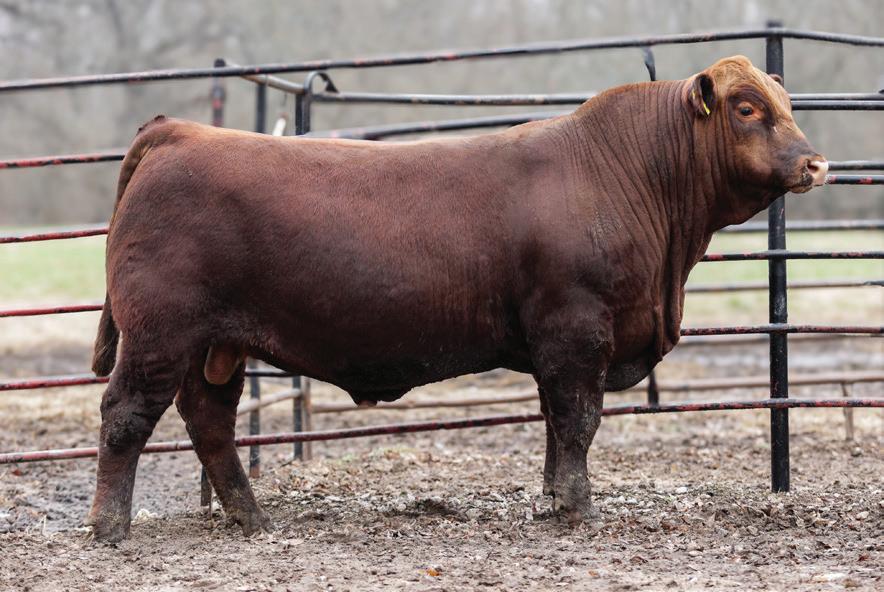
Next Level was the high selling yearling bull at the 2024 Boys from the South sale. This homo black, homo polled bull is heavy muscled, bold ribbed and super sound footed. He combines calving ease with performance and power. When it comes to cow families, he has 2 of Green Hills Gelbvieh’s best donors behind him - Lexie 2U1 and Contessa 310T. We feel this guy could be the next widely used Balancer bull. Semen available from Bull Barn Genetics or Cattlemen’s Connection.















OVER THE FENCE KENT NELSON WITH
by KIRSTEN HESELMEYER, AGA COMMUNICATIONS INTERN
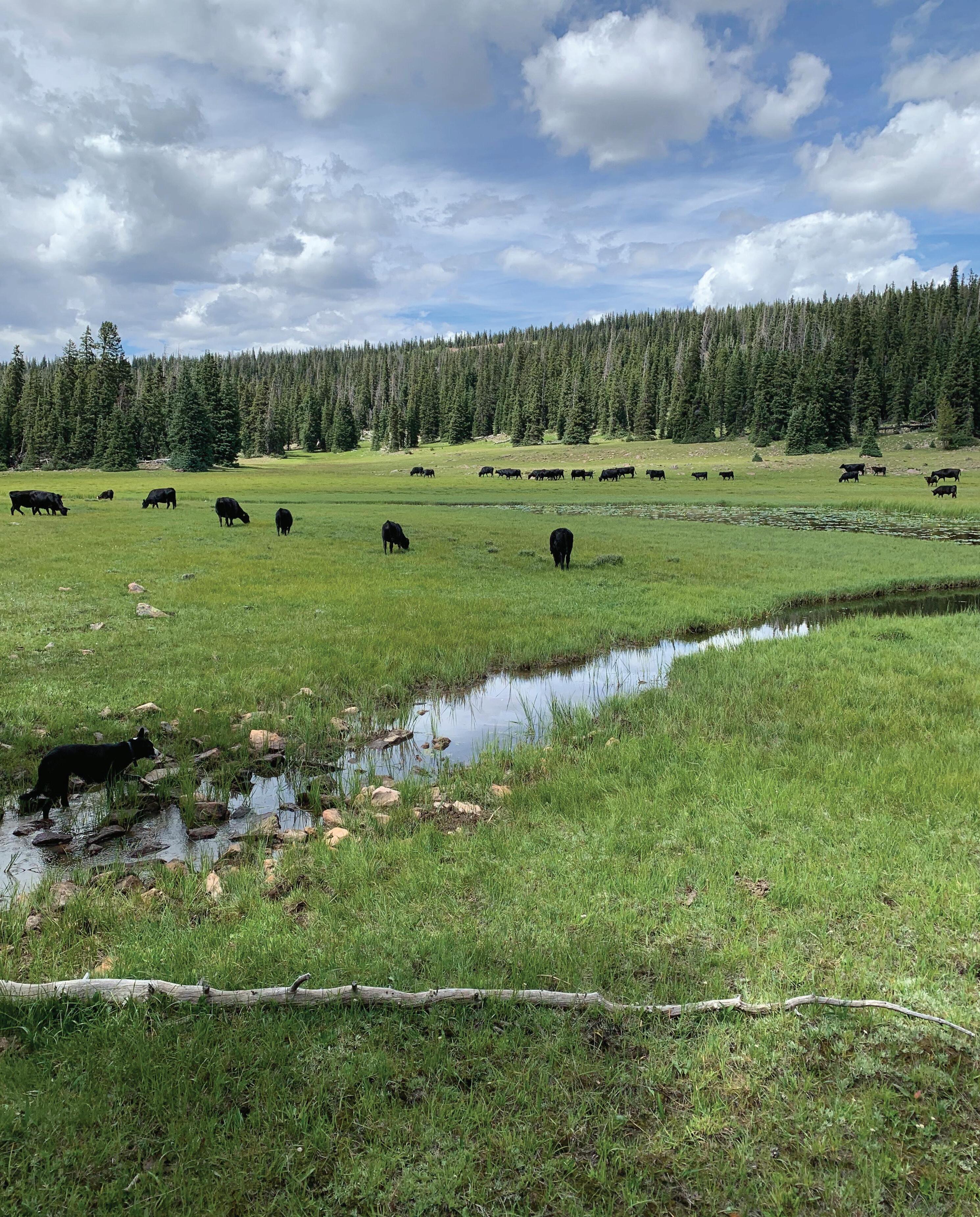
Kent Nelson and his family run about 500 head of Gelbvieh and Gelbvieh-influenced cattle at Nelson Farms in Roosevelt, Utah. They entered the beef business after selling their dairy cows and purchasing a beef herd, and they have ran beef cattle ever since. In addition to the cow herd, the family operates a small feedlot where they background cattle and feed their own culls out to slaughter.
Q: WHAT INITIALLY DREW YOU TO GELBVIEH AND BALANCER® GENETICS, AND WHAT HAS KEPT YOU COMMITTED TO THEM OVER TIME?
What drew me to Gelbvieh was that, back in 2017, we started running cows on federal lands under a USDA Forest
Service grazing permit, with elevations up to about 11,000 feet. That first year, we had a 9% death loss in our calves. We started looking for answers and began buying PAP-tested bulls, but then I saw an ad in the Utah Cattleman magazine that asked, ‘Will your cows survive up to 11,000 feet? Ours were raised there.’ The ad was for bulls. I called right away, and it was Jeff Loveless, who had Gelbvieh and Balancer bulls. We started using PAP-tested bulls, so I don’t know if it’s all Gelbvieh, but the Gelbvieh breed has played a big role in reducing that death loss. This year, for example, we had maybe a 1% death loss on the mountain when it comes to high-altitude disease.
Q:
WHAT TRAITS OF GELBVIEH GENETICS BEST FIT THE UNIQUE NEEDS OF YOUR OPERATION, PARTICULARLY RAISING CATTLE AT ELEVATION IN UTAH?
I think the Gelbvieh breed lends itself well to elevation. They have healthy hearts. We’re just getting into using the BCHF score that Neogen offers, and we’re starting to apply that with our replacement heifers. We’re really looking at it as an additional tool, along with PAP, to help overcome high-altitude disease. Most of Jeff’s bulls have done really well, and it’s generally not an issue. Given the history he has with his herd, they just seem to have healthier hearts.
Q: WHEN SELECTING HERD SIRES, WHAT TRAITS OR CRITERIA ARE NONNEGOTIABLE FOR YOU?
We retain ownership, so we own the cattle until they go to slaughter. We really put an emphasis on carcass quality, marbling and it’s just a given with the Gelbvieh breed that the muscle part of it’s going to be there. Marbling is one that we really pay attention to in order to keep the carcass quality where we want it.
Q: HAVE YOUR SELECTION PRIORITIES CHANGED OVER TIME AS YOUR OPERATION HAS EVOLVED?
Well, they definitely changed. I think when I first took over the operation, I put a lot of emphasis on growth and calving ease. It was important back then when we were just selling our cattle prior to slaughter. You know, we always usually background them, so we would usually sell them between 700-800 pounds. So those are the things that I focused on at first, and then we decided we wanted to keep them to slaughter and that’s when we started paying more attention to carcass traits. Feed efficiency is another one that we’re just starting to kind of look at. I think that was another plus with the Gelbviehinfluence.
Q: HOW DO YOU BALANCE PERFORMANCE DATA AND REAL-WORLD FUNCTIONALITY WHEN MAKING GENETIC DECISIONS?
Until recently, we would take our chances. I probably focused a little too much on the numbers in the EPDs, but lately we’ve started pulling tissue samples and getting genetic feedback on our heifers. Now we’re using actual data to help make those decisions. It’s interesting, and we’ll see if the trend continues since we don’t have a huge sample size yet. Fertility and longevity are two traits we’ve really emphasized, in addition to carcass traits, heart health, and the other things that are important to us when selecting females. Last year, we bred 45 heifers and had a 100% pregnancy rate. Those heifers then went to the mountain with their first calf, and I think only two didn’t come back pregnant, which is something we’ve never seen before. This year, we kept about 75 replacement heifers and only had one open. We’ll see how they do through their first season, which has traditionally been when we lose the most heifers while they’re grazing with their first calf. That result was really impressive. We do some AI, but many of these heifers are out of bulls we purchased from Jeff. We send in tissue samples on all those bulls, so we know which sires produced which heifers. Gelbvieh breeders have really influenced that process, and I think we’re moving in a positive direction overall.
Q: WHAT SUCCESS HAVE YOU SEEN WITH GELBVIEHINFLUENCED CATTLE IN THE FEEDLOT
AND SELLING ON THE GRID?
When they’re going to slaughter, we’re sold on a grid, so we get just generic data back. We don’t get individual data back. I mean, we’re pretty consistently 90% USDA Choice or better on the carcass quality. I think every time when we’ve gotten the closeouts back on those cattle, the steers have gained
at least four pounds a day. I was a little bit concerned when we started because we were heavily Angus-influenced to try to get the carcass quality before we started running on the high altitude range. I was concerned that we were going to lose carcass quality when we started using the Gelbvieh breed, and we really haven’t. There hasn’t been a drop off there, and it has stayed pretty consistent as far as how they’ve graded and performed in the feedlot.
Q: LOOKING AHEAD, WHAT ARE YOUR LONGTERM GOALS FOR YOUR OPERATION, AND HOW DO GENETICS PLAY A ROLE IN REACHING THOSE GOALS?
As we move forward, I’d like to know, in addition to all these other traits that we talked about, feed efficiency is one that we’re hoping to make improvements on and just continue to increase carcass quality. I mean the premiums, they do pay. I would say that we’re probably at least five cents over the market in premiums on average, and so that’s our goal– to maintain that and improve feed efficiency and then on the cattle side of it just increased fertility. One thing to mention is, when we first started running those high altitude ranges, our breed back was probably around 89% which was a huge drop off from when we were running in the pastures. We want to try to improve that. I’d like to get us back into the mid 90% range on our fertility so we’re not having so much turnover in our cattle. Increase fertility, increase feed efficiency, and then continue to maintain and even make small improvements in the carcass quality.
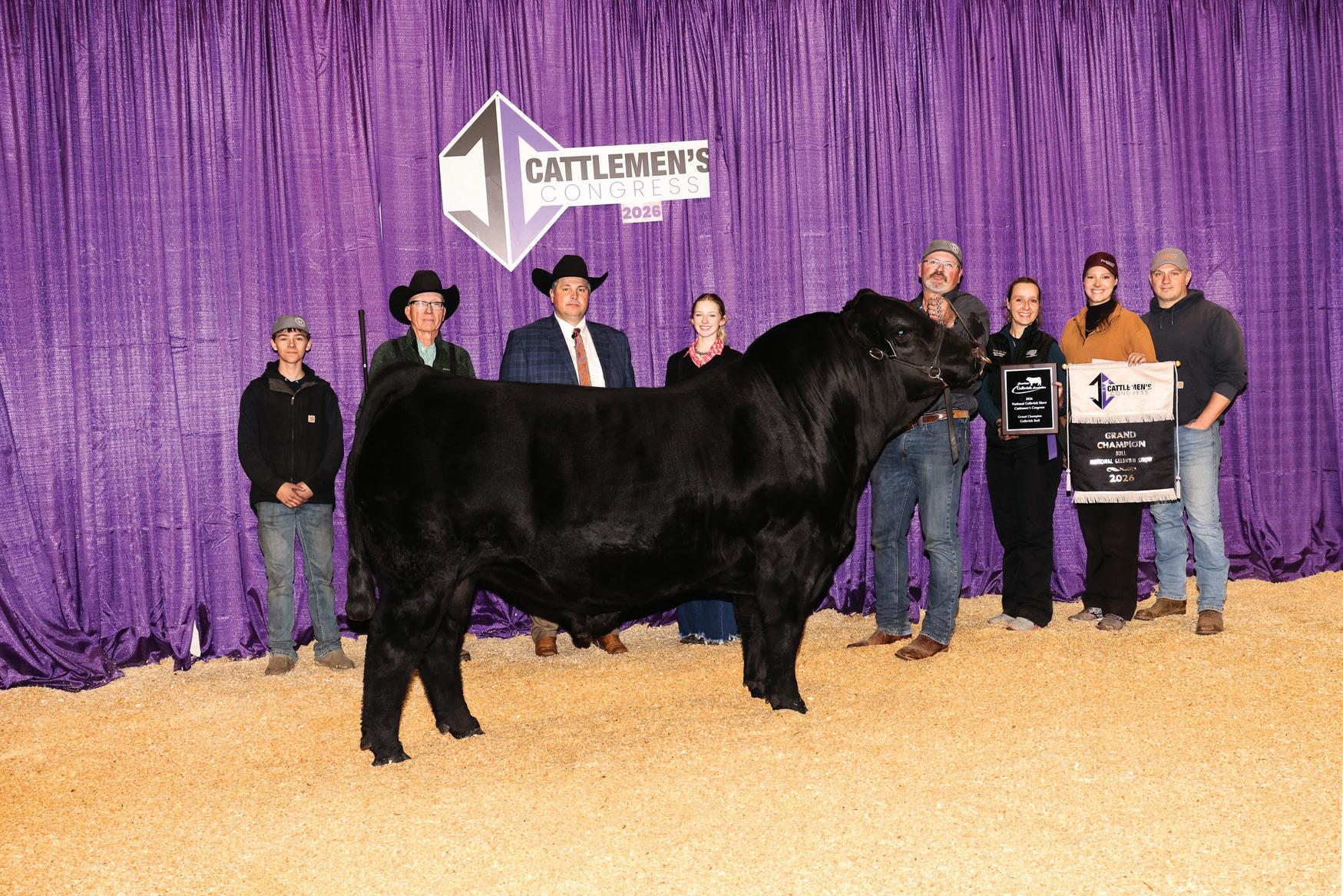









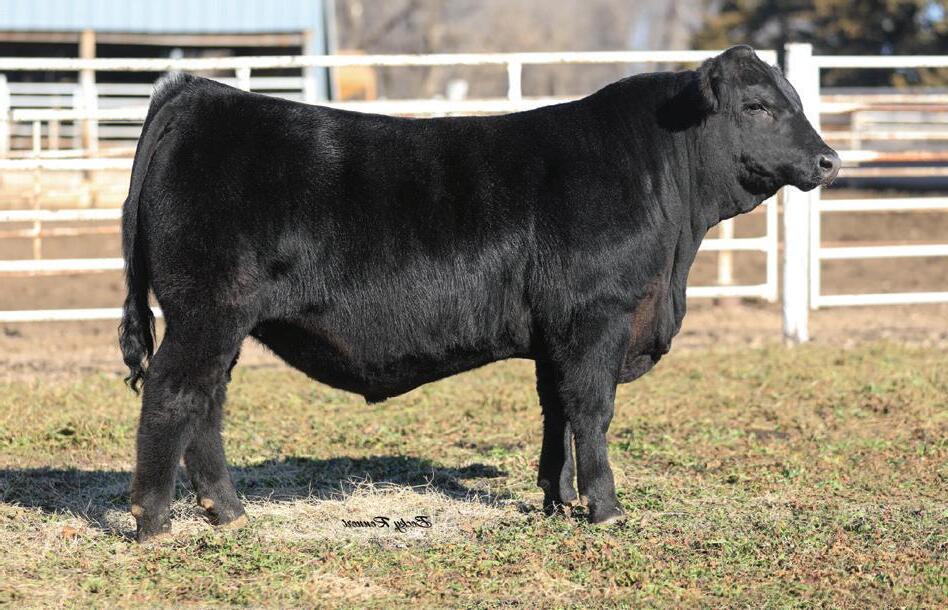
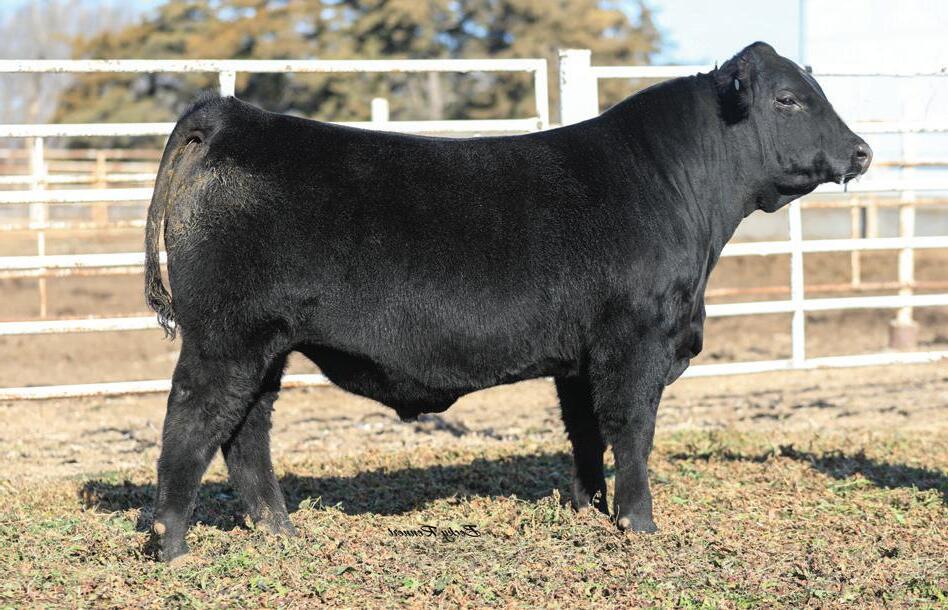
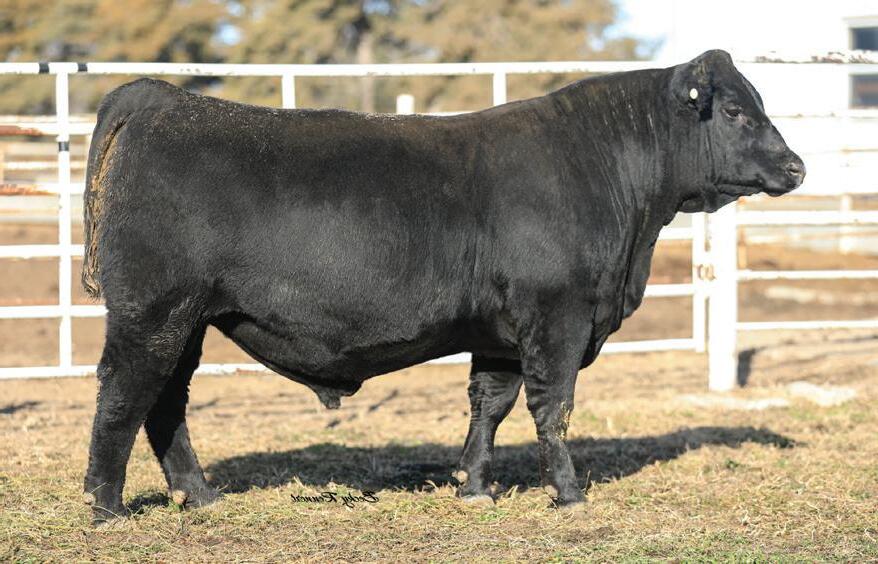
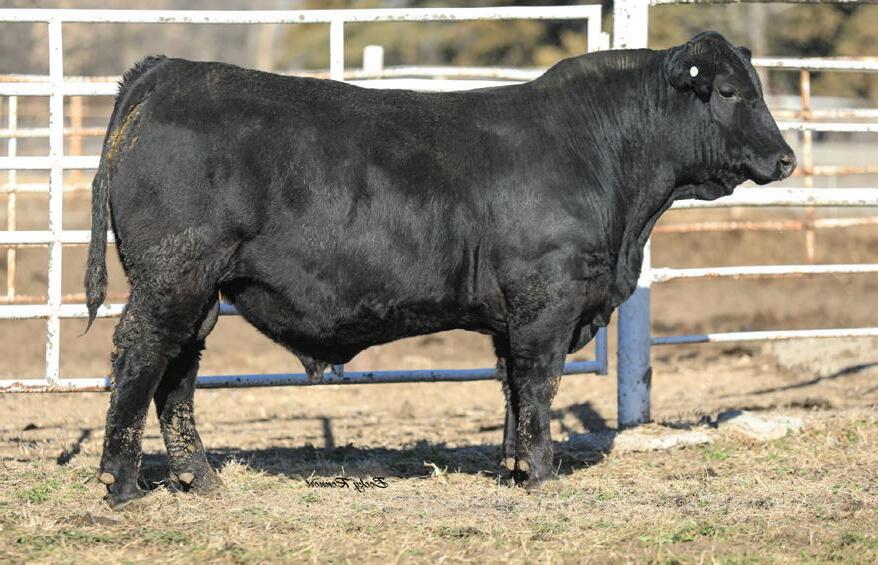
Throughout his campaign he’s hung banners & sold straws with his look up f ront , the depth he carries back into his rear rib and flank , his over whelming amount of power, & a set of running gear that’s built to last Out of the JNCC Rikki For tune 09X donor, who has been in production for 16 years and counting, & a son of Grund’s great Grand Plan 744 G - Perspective is in the unique position of being a Homo Polled, purebred powerhouse in the top 25% CED, top 25% WW, top 20% YW, & more. Bred by Nowack Cattle Company with possession & 50% interest purchased by ProHar t Seedstock in the National Sale, this bull was bred to perform, proved himself in the ring, & is ready to generate great ones.




Cowman’s Kind
BULL & FEMALE SALE
• All bulls and females have genomically enhanced EPD’s and are sire verified and tested for Homo Black and Homo Polled
• 100% of the bulls selling are Homo Polled and 75% are Homo Black
• 92% of the bulls selling are by breed leading AI Sires
• All bulls have complete ultrasound data and performance information in large and meaningful contemporary groups
• Videos of the entire offering available online after February 1
• First Breeding Season and injury guarantee
• Selling every sound 6 year old female plus select fall and spring 2 year olds. Most of the females have a calf at side by sale day
• Visit our informative website postrockcattle.com




SALE PRICE ANALYSIS 2025 FALL
by WESS ANGLIN
In the December issue of Gelbvieh World, I reported that early fall sales were poised for another recordsetting season, and I am pleased to confirm that this prediction came true. While the total sales figures in the fall did not match those of the spring, the exceptional quality of the livestock was evident, resulting in outstanding sales. Overall, we sold 408 bulls with an impressive average price of $7,490 and 229 females averaging $6,920. These figures represent increases of $893 for bulls and $2,708 for females compared to the spring of 2025.
In the spring of 2025, purebred Gelbvieh bulls achieved a significant milestone by averaging higher than Balancer® bulls for the first time since we began tracking sale results in 2019. The demand for purebred Gelbvieh bulls remained strong heading into the fall, with an average price of $7,676 across 72
head, surpassing the Balancer bulls by $136, which averaged $7,540 across 278 head. Notably, 58 percentage bulls sold averaged $7,019. The overall quality of the bulls was exceptional, contributing to their impressive sales performance.
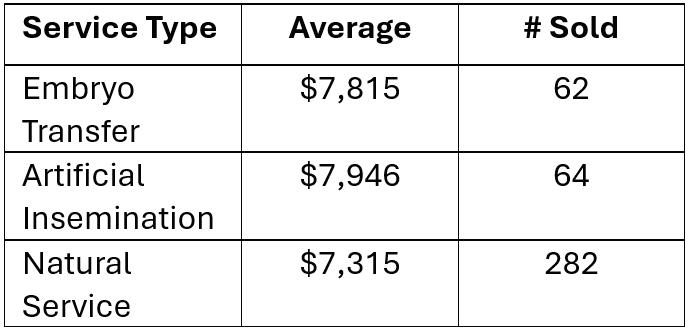
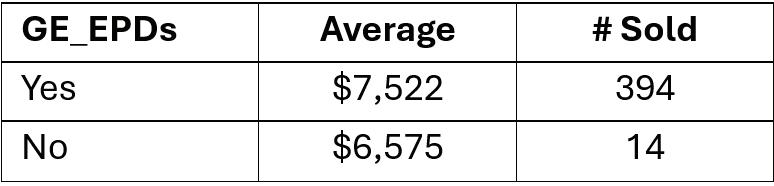
Below, you’ll find charts comparing several key factors: Red versus Black hide, Horn/Polled status, service type, and the presence of genomicallyenhanced EPDs (GE-EPDs). During my travels in late summer and early fall, I was truly impressed by the quality of the red bulls I encountered. Buyers shared my enthusiasm, with the red bulls averaging $7,623—$158 more than the black bulls, which averaged $7,465 as a whole, but if you dive deeper into the data, we see that black homozygous dominant bulls outperformed their counterparts, achieving an average price of $7,895.

In the spring, I conducted a comparison between bulls ranked in the top 35% of the breed and those ranked from 40% to over 95% across various EPDs and indexes. This analysis was revisited with some additions to the dataset, focusing on Calving Ease Direct (CED), Birth Weight (BW), Weaning Weight (WW), Yearling Weight (YW), Marbling (MARB), Maternal Profit Index (MPI), Feeder Profit Index™ (FPI™), and Total Profit Index (TPI).
The most significant metrics were weaning weight, yearling weight, FPI, and TPI. Notably, bulls in the top 35% for weaning weight averaged $1,256 more than their peers in the 40% to over 95% range. The difference in yearling weight was even more pronounced, with top 35% bulls averaging $1,432 higher than the remaining group. Moreover, bulls ranked in the top 35% for FPI commanded a premium of $1,368, while

those in the top 35% for TPI achieved a $1,053 premium.
Let’s shift our focus to the increasingly sought-after female cattle. As we moved from the spring of 2025 into the fall, demand for these females surged significantly, resulting in an impressive average price increase of over $2,000 in the fall. This upward trend highlights the market’s growing appreciation for quality females.
When we break down the data by breed type, we see intriguing variations in average sale prices. The 153 Balancer females commanded an average price of $7,089, reflecting their desirable traits and performance potential. Similarly, the 67 purebred Gelbvieh females sold for an average of $6,769, showcasing the strength of this breed in meeting market demand. Additionally, the nine percentage females averaged $5,206.
The fall sale season proved to be exceptionally successful, marked by a notable surge in demand for Gelbvieh and Balancer genetics. Reflecting on this season, I am reminded of a saying from Zack Butler, AGA board director, during 55th Annual American Gelbvieh Association (AGA) National Convention: “Good cattle will sell.”

This resonates as we analyze the data; while it’s important to consider all factors, the truth remains that quality cattle are what truly drive sales. This commitment to excellence positions the Gelbvieh and Balancer breeds at the forefront of the industry. Collectively, our herd exemplifies highquality, functional cattle that can significantly advance the industry forward.
Please don’t hesitate to reach out if you have any questions regarding this data or if you’d like to request all the tables from our data comparisons, as I didn’t include all of them in this article. You can contact me via email at wess@gelbvieh.org or by phone or text at 662-292-4582. I look forward to hearing from you!



MAKING A PROFITABLE NEW YEAR’ $ RE $ OLUTION
by BOB WEABER, PH.D.
As the new year approaches, many people set traditional resolutions such as eating healthier, exercising more, saving money, or becoming more organized. However, only about 6-9% maintain these resolutions for the entire year, with most abandoning them by mid-January or February.
Instead of a resolution that may fade quickly, consider one with lasting impact: Commit to using one of the American Gelbvieh Association’s (AGA) new selection indexes when choosing your next Gelbvieh or Balancer® sire. This change can significantly improve your ranch’s profitability through better genetics and position you for early success.
WHAT IS A SELECTION INDEX AND WHY USE IT?
A selection index is a powerful tool that combines multiple Expected Progeny Differences (EPDs; numerical values predicting a sire’s genetic merit for specific traits) into a single dollar value, representing the expected profit difference from a sire’s progeny in a specific production and marketing scenario. It assigns economic weights (relative importance) to traits that drive revenue and costs, while taking into account genetic correlations (the tendency for traits to be inherited together) between traits. This simplifies multi-trait selection, making it easier to rank bulls without having to juggle more than a dozen EPDs individually.
The AGA’s three new indexes—Maternal Profit Index (MPI), Feeder Profit Index™ (FPI™), and Total Profit Index (TPI)— were launched in 2025 and developed using iGENDEC, an advanced webbased platform for creating customized economic selection indexes. iGENDEC incorporates real-world parameters such as calf sale points, phenotypic averages, costs, revenues, breed compositions, and heterosis effects. It uses a beef production simulation model to derive economic weights, ensuring the indexes maximize profit by balancing correlated trait responses.
These indexes are intuitive and directly tied to your bottom line, expressed in dollars per conceived calf. Designed for Gelbvieh bulls mated to Angusbased cows, they focus on economically relevant traits (ERTs).
CHOOSING THE RIGHT INDEX FOR YOUR OPERATION
To use indexes effectively, select the one that best matches your production system. The AGA’s new indexes provide consistent, reliable, and profitfocused selection criteria. Commercial producers should choose the index most closely aligned with their production model. The three new indexes are described below:
• Maternal Profit Index (MPI): Ideal for cow-calf operations that retain replacement heifers and
market surplus calves at weaning. Key EPDs include Calving Ease Direct (CED) and Maternal (CEM), Weaning Weight (WW), Milk, Mature Weight (MW), Dry Matter Intake (DMI), Stayability (STAY), and Heifer Pregnancy (HP). Mature weight receives heavy emphasis due to its impact on cow maintenance costs, while weaning weight and milk drive revenue. Stayability accounts for longevity and replacement rates. Figure 1 illustrates the relative emphasis placed on each trait within the index.
• Feeder Profit Index™ (FPI™): This is a terminal index intended for operations in which all progeny are fed and marketed on a gridbased carcass system, with no replacements retained. Updated in 2025, the index now incorporates critical carcass traits such as Carcass Weight (CW), Ribeye Area (REA), and DMI, which had been previously omitted, along with Fat Thickness (FAT), post-weaning Average Daily Gain (ADG), and Calving Ease Direct (CED). Approximately 75% of the economic emphasis within the index is placed on carcass value factors, including weight, quality, and yield grades, while DMI reflects feed efficiency costs. Producers retaining heifers should avoid this index. The specific distribution of trait emphasis and their relative economic weights are








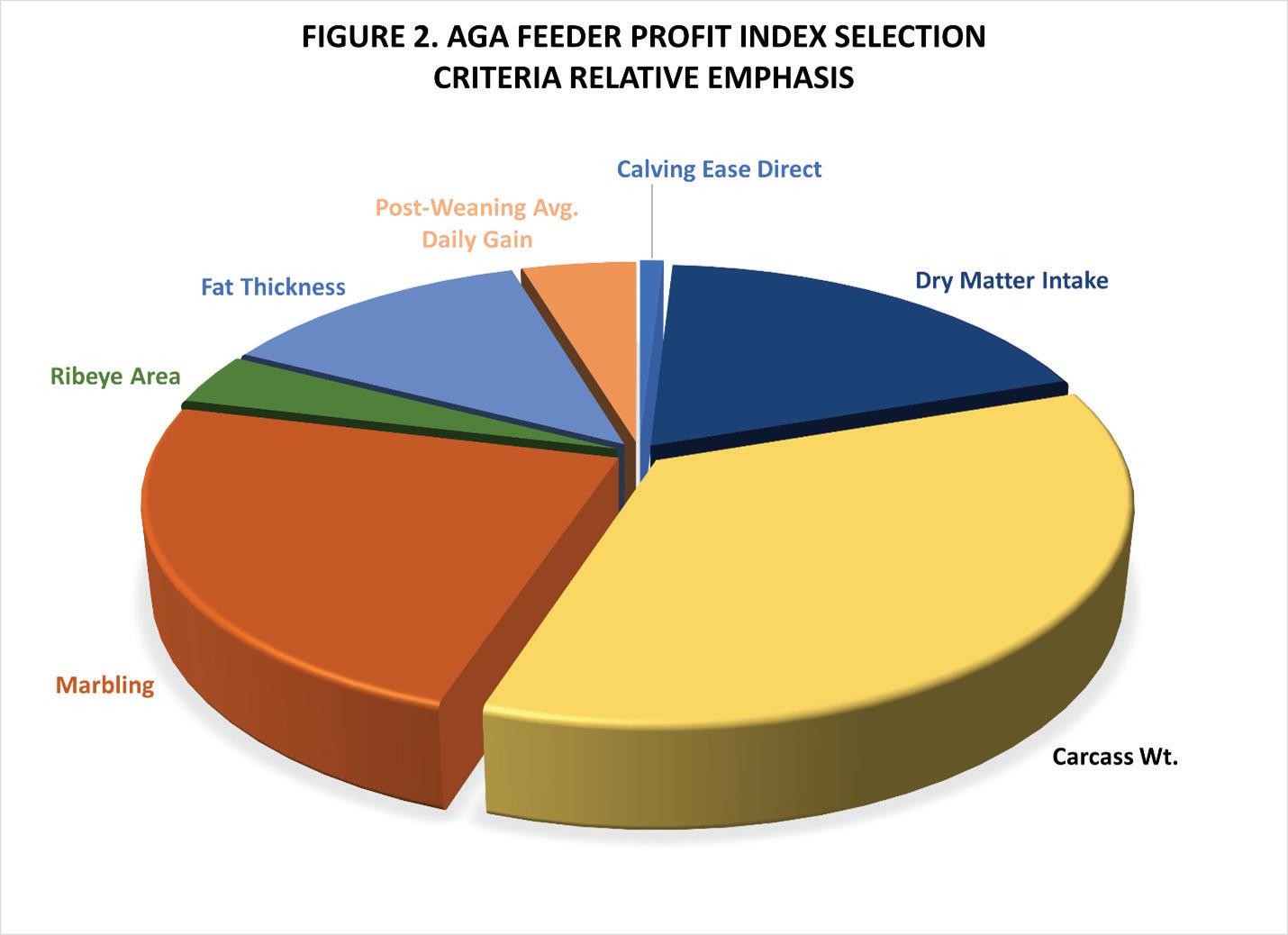
visually outlined in Figure 2, which provides a detailed breakdown to aid in interpreting and applying the index within production decisions.
• Total Profit Index (TPI): Balances maternal and terminal traits for systems retaining replacements while marketing surplus heifers and steers on carcass grids. It utilizes the broadest set of EPDs to navigate trait antagonisms, with carcass traits as primary revenue drivers and milk yield, stay, and dry matter intake as key cost controls. (See Figure 3 for trait emphases.)
Each index has been rigorously reviewed to reflect common commercial scenarios, helping you align genetics with key profit drivers.
HOW TO USE THE INDEXES IN SIRE SELECTION
Implementation is straightforward: Compare bulls using the index that fits your system. Higher index values indicate greater expected progeny profit.
For example:
* Expected dollar value difference per conceived calf.
Here, Sire A is projected to add $60 more per calf in a maternal system, $40 in a terminal system, and $80 in
a balanced system compared to Sire B. Like EPDs, the indexes describe relative differences between sires. In this framework, the differences summarize profit index differences resulting from the underlying genetics relevant to the selected endpoint.
The new AGA indexes enable commercial producers to make datadriven sire selections that directly enhance profitability. By translating complex genetic information into accessible dollar values, these indexes offer an efficient and impactful strategy for advancing herd genetics. As a 2026 resolution, adopting one of these indexes is a practical and sustainable commitment that supports immediate decisions and long-term operational success. Integrating these tools into your selection process will drive ongoing genetic improvement and increased profitability, making this a valuable resolution with lasting benefits for your ranch.




































“Share
HERD SIRE SELECTION: WHAT’S UNIVERSAL AND WHAT VARIES BY REGION
Extension professionals from across the United States weigh in on which traits always matter in herd sire selection and which ones depend on geography.
by KIRSTEN HESELMEYER, AGA COMMUNICATIONS INTERN
There is no such thing as a one size fits all herd sire. A bull that is a perfect fit for a seedstock producer in the Midwest would most likely struggle to get cows bred in the expansive and arid pastures of New Mexico. Still, some traits matter regardless of region. Insights for this article were gathered from five extension professionals across different geographic regions including the West, Southwest, Central, Midwest, and Southeast regions of the United States.
Almost every extension professional agreed on two key ideas. First, it is important to select bulls that suit both the environmental demands and production goals of an operation. Second, traits like structural soundness, growth, calving ease, and fertility always matter, though they may be prioritized differently depending on location.
Many also shared observations about national trends they are seeing or expect to see soon. For example, Aaron Berger, a Beef Extension Educator in western Nebraska, noted that nationally producers increasingly want their cattle to be in good condition without being over conditioned. Additionally, while most professionals cited different priorities, Berger, who spoke on the Midwest, and Dr. Darrh Bullock, a Beef Cattle Extension Specialist at the University of Kentucky, both agreed that producers are starting to decrease frame size.
Dr. Mark Johnson, a professor and extension specialist for livestock evaluation at Oklahoma State University, explained, “The unique thing about the beef industry is that we operate in so many different environments… But in all those cases, a cow is the best means
to harvest that forage and turn it into beef, and so those cows, in order to fit their production environment and raise a calf each year, are going to vary in mature size and the amount of milk that they give. They’ve got to be an environmental fit in order to accomplish that conversion of forage into beef.” Across regions, each expert pointed to unique environmental challenges that shape bull selection priorities.
Shelby Rosasco is the Assistant Professor and Extension Beef Specialist in the Department of Animal Science at the University of Wyoming, and she is also involved with the bull test at the university. When asked how producers adapt selection criteria to raise cattle in Wyoming, she said, “Probably one of the differences that I see in this region is we have a lot of producers who are raising and managing cattle at higher

Phenotypically Enhanced Genomic EPDs
• Genomic testing, combined with authentic physical data for birth, performance, ultrasound, PAP, and feet/leg scoring.
Strategic Mating
• Planned matings for every individual female, with the goal of producing industry relevant, marketable cattle.
Unbiased Contemporary Groups
• Complete and comprehensive data reporting, without any manipulation of contemporary groups or omission of offspring.
Bill 719 680-0462 • Nancy 719 680-0451
Sydney 719 680-7910 • email- bnwbulls@gmail.com AGA Member since 1986 • Commercially Focused
elevations or altitudes, and we see them be very focused on the PAP score.” Since many cattle are raised at elevations of 5,000 feet or higher, pulmonary arterial pressure is a top level concern for many producers. She also said it is important for bulls to have durable structure to thrive in a more demanding environment, and that producers are often conscious of mature cow size EPDs to help their progeny perform optimally.
Dr. Ryan Rhoades is the Beef Extension Specialist at Colorado State University, and his experience at the King Ranch Institute, along with work with producers across the Southwest, has given him expertise in operations in South Texas, New Mexico, and Arizona. He discussed how the arid, expansive pastures of the Southwest demand an incredibly hardy animal. Producers there rely on hybrid vigor, which Rhoades said is, “Really an easy way through bull selection to improve performance, longevity, and maternal traits in that environment.” It is also clear that a sound, durable structure and moderate frame score are nonnegotiable. This is an environment where traits like weaning weight and terminal characteristics remain important, but they are often secondary to structure and moderation, which are critical for long-term survival and productivity.
For the Midwest region of the United States, Aaron Berger, a Beef Extension Educator in western Nebraska who focuses on cow/calf economics and ranch business management, shared his experience with bull selection. In the Midwest, significantly more forage is available, especially further west in states like Iowa and Illinois. This allows producers to put greater selection pressure on quality carcass traits, such as marbling. However, Berger noted that producers in this region may need to
moderate herd frame size, which could require selecting bulls below the breed average for growth. He said, “I do think I’m starting to see some folks express caution about what they’re seeing on females they retain in terms of mature cow size, milk production, and fertility, from my perspective, has become
“THE UNIQUE THING ABOUT THE BEEF INDUSTRY IS THAT WE OPERATE IN SO MANY DIFFERENT ENVIRONMENTS… BUT IN ALL THOSE CASES, A COW IS THE BEST MEANS TO HARVEST THAT FORAGE AND TURN IT INTO BEEF, AND SO THOSE COWS, IN ORDER TO FIT THEIR
PRODUCTION ENVIRONMENT AND RAISE A CALF EACH YEAR, ARE GOING TO VARY IN MATURE SIZE AND THE AMOUNT OF MILK THAT THEY GIVE. THEY’VE GOT TO BE AN ENVIRONMENTAL FIT IN ORDER TO ACCOMPLISH THAT CONVERSION OF FORAGE INTO BEEF.”
- Dr. Mark Johnson
increasingly a significant issue.” When females, specifically, get too big and put an excessively high percentage of their energy into milk production, it has a detrimental effect on fertility.
Dr. Mark Johnson, a Professor and Extension Specialist for Livestock Evaluation at Oklahoma State University, spoke about the diversity in the Central United States. He emphasized that, in this region, it is especially important for producers to select bulls that align with their production goals. He stated that selection criteria should be based on when calves are sold and their intended purpose and whether producers plan to retain replacements, use a terminal mating and sell all calves at weaning or as yearlings, or retain ownership
through finishing. This is generally true in all parts of the United States, but Oklahoma’s ideal environment allows producers to successfully orient their operations to different goals.
For the Southeastern United States, specifically the fescue belt, insight came from Dr. Darrh Bullock, a Beef Cattle Extension Specialist at the University of Kentucky. He discussed the unique challenges producers face when raising cattle at constant risk of fescue toxicosis. Fescue is the primary forage grass in Kentucky and surrounding states, and most fescue pastures are infected with an endophyte that produces a toxin that negatively affects cattle. Bullock explained that this, “Basically causes extreme heat in the cattle. They basically run a fever…and therefore it cuts down on performance, particularly in the summer months.” To combat these challenges, EPDs such as hair shedding have become increasingly important, as they allow producers to select cattle that are better able to stay cool. He also noted that operations in the Southeast tend to be smaller, making docility a higher priority. Additionally, Bullock echoed Aaron Berger’s perspective on mature cow size, emphasizing that it is time for producers to place greater emphasis on moderating their cow herds. He did note that Gelbvieh cattle in particular have impressively low mature cow sizes for the growth they are able to accomplish in the feedyard.
After hearing from experts across the nation, it is clear that the most successful herd sires aren’t defined by trends or geography alone. They are selected intentionally and matched to the environment and production goals of each operation. Traits like structure, growth, and frame size will always matter in herd sire selection, but how those traits are prioritized must vary based on an operation’s goals.
Genetic Power
All Bulls Selling
DNA tested with Genomic Enhanced EPDs
Sell with first breeding season guarantee Sired by AI sires or result of ET matings
Breed Leading Carcass Genetics, Calving Ease, Performance, Maternal and FPI
Saturday, February 14, 2026 1:00 pm (cst) Springfield Livestock Marketing Center Springfield, Missouri
55 Gelbvieh and Balancer Lots Sell
55 Gelbvieh and Balancer Bulls
50 - 16-18 Month Old Bulls - 5 Spring Yearling Bulls 96% Homozygous Black and Homozygous Polled



Judd Ranch 48th Gelbvieh, Balancer®
at the ranch, Pomona, Kansas • Saturday, March
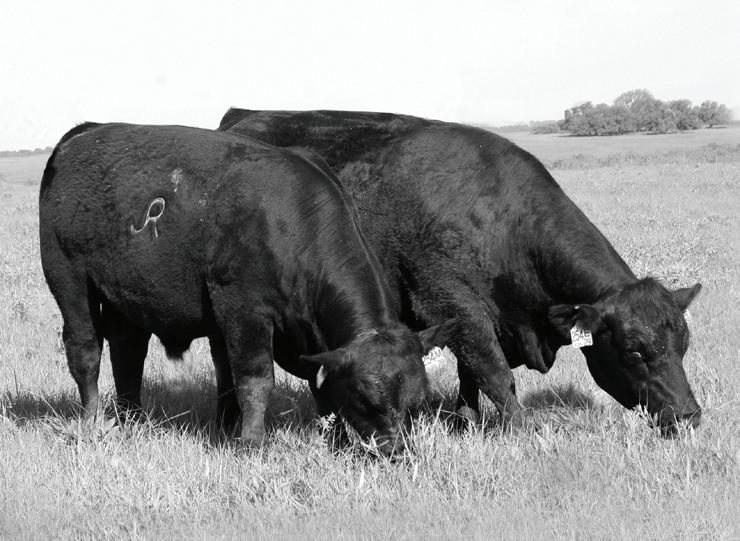
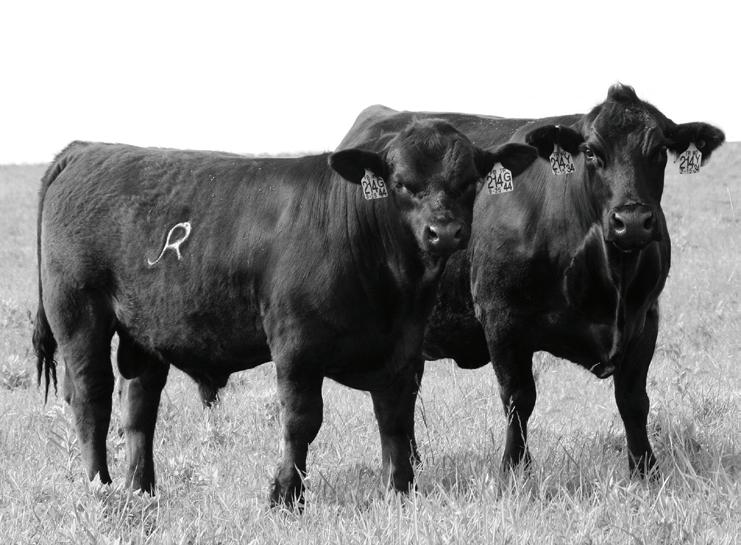
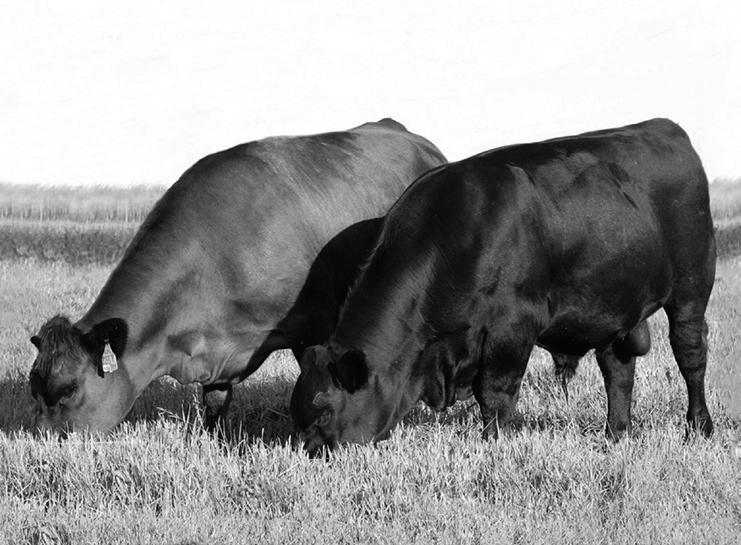
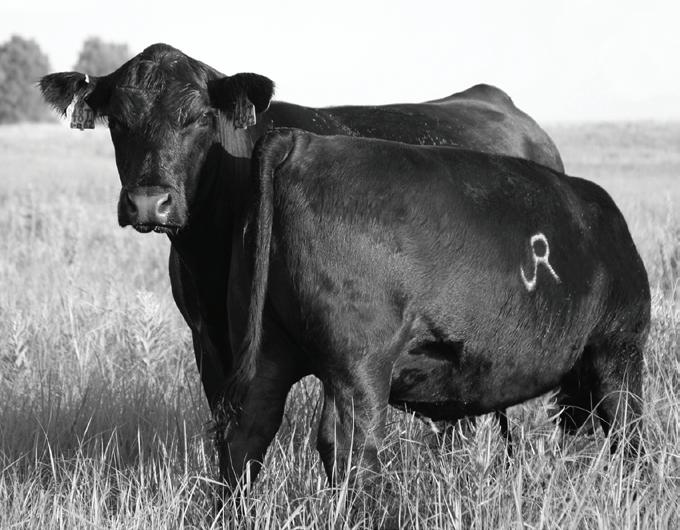
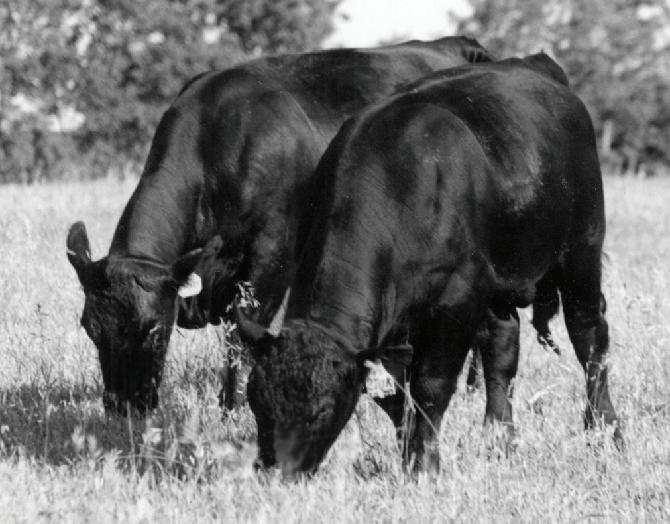
Judd Ranch has been honored as the #1 Dam of Merit Cowherd in the Gelbvieh Breed for 21 of the past 28 years, 1998–2025!
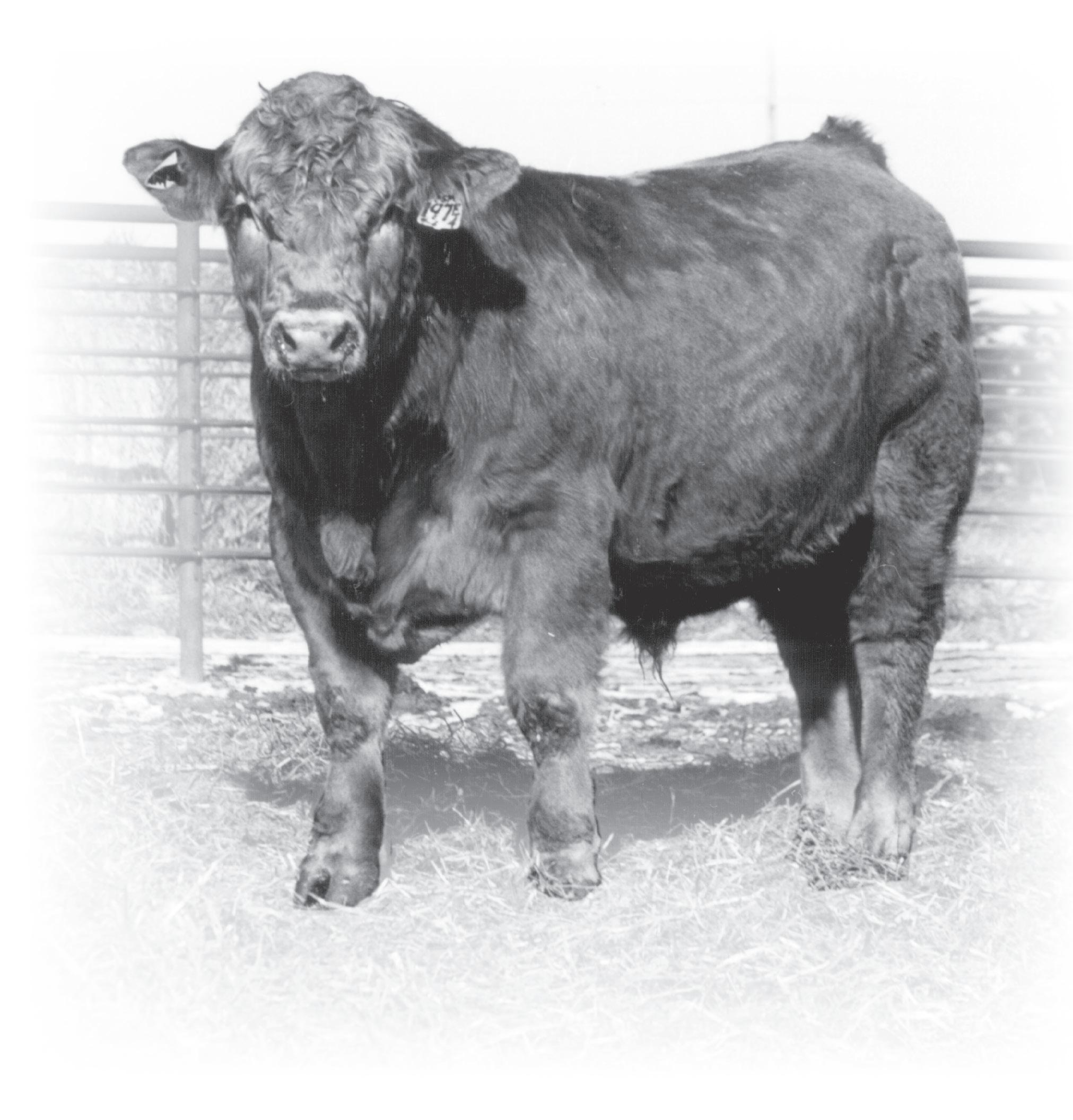
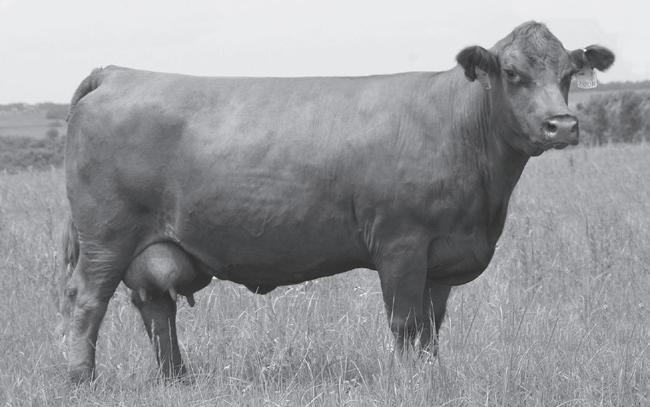
100% of the Gelbvieh & Balancer sale bulls feature Judd Ranch honored Dam of Merit Genetics. Maternal Cow Power behind every sale bull.
Average Daily Gain of fall yearling bulls: 4.70 lbs/day! 248 black polled bulls sell. 323 homozygous polled bulls sell
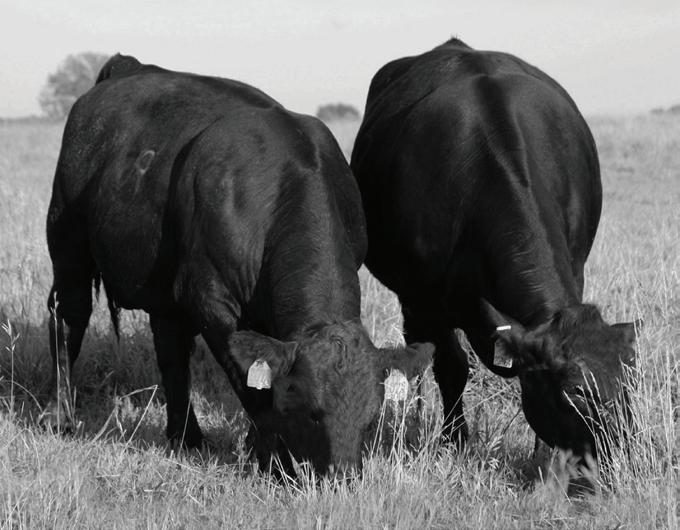
82 lb. average birth weight: 895 lb. actual weaning weight average on the sale bulls.
105 Gelbvieh, 222 Balancer® & 6 purebred Red Angus bulls sell.
35 of the 40 top selling bulls in the 2025 sale sold to commercial producers. Catalog online!
Trucking has traditionally been very affordable as Judd Ranch bulls annually sell into 20 plus states.

Don’t miss Judd Ranch on The American Rancher!
Judd Ranch will be featured on The American Rancher Monday, February 9 at 8:00 PM central time. The episode will also air again at midnight February 9 and Sunday, February 15 at 11:00 AM on RFD-TV (Dish 231 & DirecTV 345)
Set your DVR’s! You won’t want to miss the Judd Ranch premier on RFD-TV the week of February 9!
& Red Angus Bull Sale
99%
Trucking
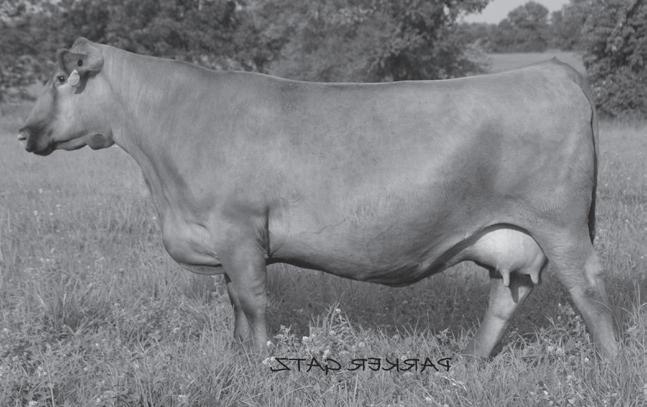
Judd Ranch Gelbvieh Maternal Strength
Judd Ranch Red Angus Maternal Strength
REDUCING RISKS WITH GENOMICS
Genomic tests are an essential tool in improving animal selection.
The Cattlemen’s Profit Roundup session at the 55th Annual American Gelbvieh Association (AGA) National Convention in Nashville, Tennessee, kicked off with Dr. Troy Rowan, University of Tennessee Institute of Agriculture assistant professor and extension specialist, and his presentation titled, “Genomics for Seedstock and Commercial Herds.” His presentation focused on the value of genomic tests in improving animal selection in both seedstock and commercial herds.
The three main uses of genomics tests are parentage verification, genetic defect testing and enhancing genetic predications. Parentage verification allows for accurate pedigrees which in turn improves genetic predication. Genetic defect testing helps to make mating decisions to avoid breeding defect carriers to ultimately remove the genetic defect from the population. Additionally, genomic testing enhances genetic predictions by identifying animals earlier in their lives that can advance the breeds in the short and long terms and is a risk mitigation tool for commercial customers.
“The bull purchase is one of the riskiest decisions that a commercial cattle operation makes as it is the most important and most difficult,” said Rowan. “Genomic testing bulls is a risk mitigation tool for your commercial
by MEGAN UNDERWOOD, M.S.
customers as using EPDs and genomics as tools to reduce risk associated with using unproven bulls and genomics allow us to identify elite genetics earlier and accelerate genetic gain.”
It is important to manage the expectations of genomics. Genomics help estimate genetic merit, increase EPD accuracy in unproven animals, and accelerate population genetic gain. However, genomics do not predict phenotypes for individual animals, account for non-additive/non-heritable components of traits nor absolve us from continued phenotype collection.
It is important for producers to dissect phenotypes for more accurate selection. Phenotypes, genotypes (EPDs) and an animal’s environment (contemporary group) are all crucial components in animal variation. Once the environmental component is removed, producers can start to figure out which genetics an animal inherited from its parents.
Mendelian sampling can be referred to as the “dumb luck” of genetic improvement and accounts for over 50% of genetic variation in complex traits. If all animals were exactly the average of their parents, genetic progress would be impossible but, mendelian sampling is the random chance of genetic variation that drives and complicates genetic progress. An animal’s genetic potential
is the combination of the sire and dam’s potential combined with “dumb luck”. If a calf outperforms parental expectation, it is likely the calf got a favorable “random sample” of its parent’s genes.
On young potential sires with no progeny records, EPD accuracy is relatively low and can experience substantial changes. The more progeny reported to a sire increases EPD accuracy and producer confidence. However, this can only be achieved by proven AI sires with a large amount of progeny. The problem: commercial herds don’t buy proven genetics and seedstock herds can’t wait for bulls to become proven. The solution: genomic tests increase EPD reliability in unproven animals and reduces risks when purchasing unproven sires.


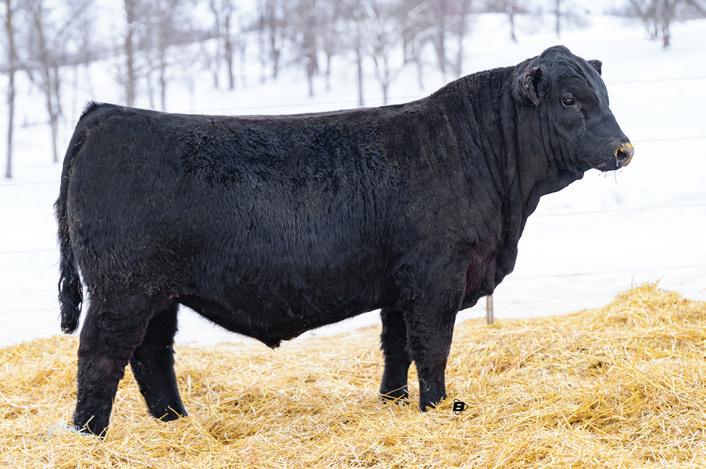
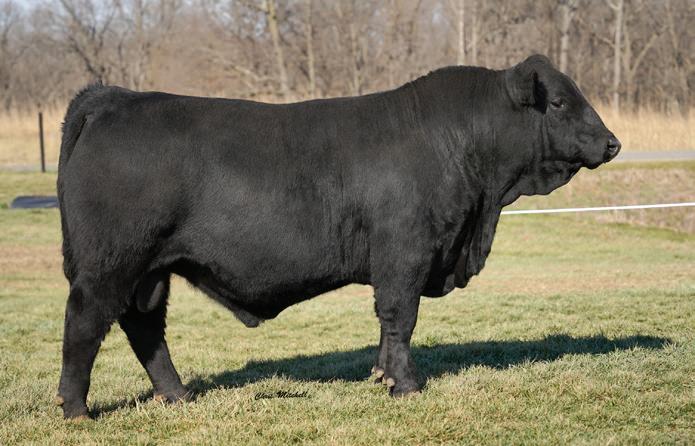
LRSF New Balance N134 ET
Homo Black Homo Polled 92% PB Gelbvieh Bull
Sire: LRSF Dynamic J164 J
Dam: DDGR Arianna 77B
Calving ease with top 20% growth, top 10% Marbling and highly maternal. Maternal sister was our $30,000 top selling female in 2025 going to Coles Bend Cattle Company.
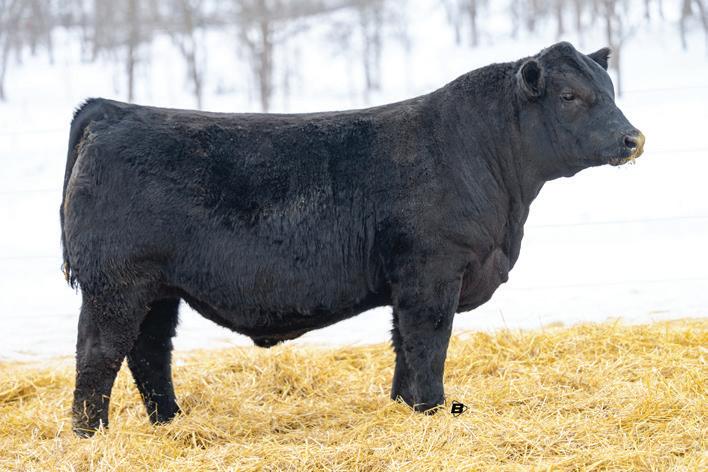
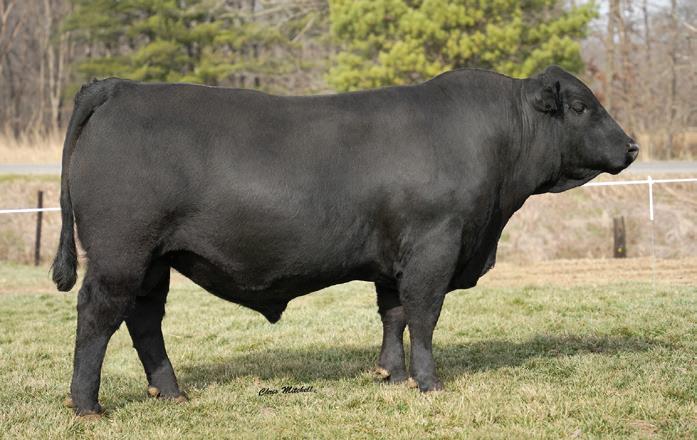
LRSF Polaris N4
Homo Black, Homo Polled 38% Balancer Bull
Sire: BEAR MTN North Star
Dam: LRSF Rhonda L204
Top 10% CED, top 15% growth, top 10% STAY and top 1% CW. Extreme index strength with all three in the top 3% of the breed.

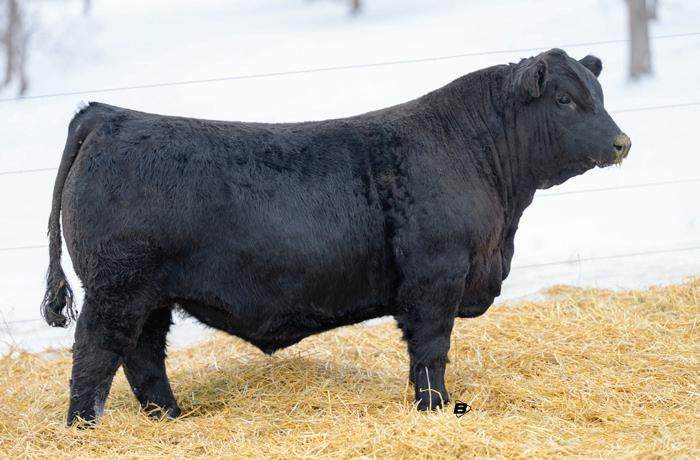
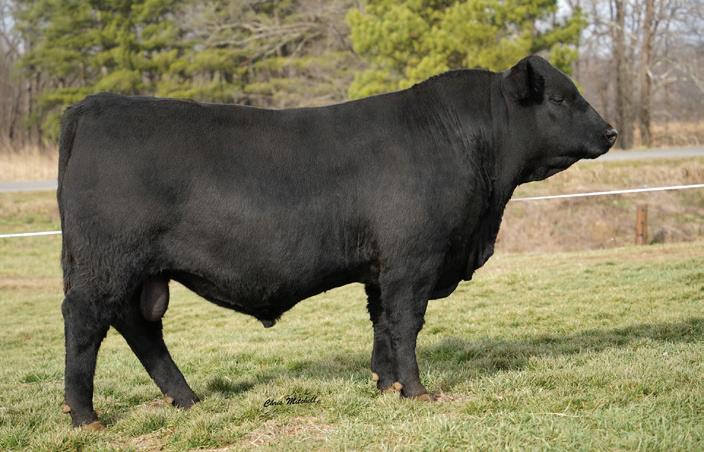
LRSF Clearwater N79
Homo Black, Homo Polled 73% Balancer Bull
Sire: LRSF Voyageur K182
Dam: LRSF Rylee G158
Top 30% CED, top 25% Growth and extremely balanced carcass traits. Maternal brother to herdsires selling to Ertel Cattle Co and Ledgerwood Gelbvieh.
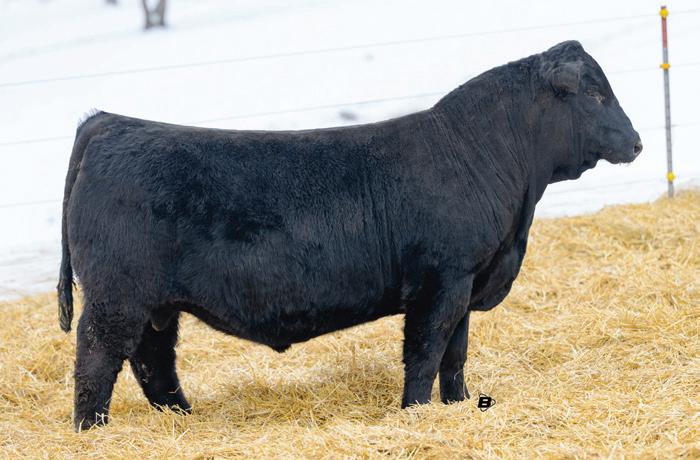
LRSF Roosevelt N9
Homo Black, Homo Polled 62% Balancer Bull
Sire: TAU Big Stick 3L
Dam: LRSF Snazzy L223
Top 15% growth and maternal with a 115 weaning ratio from a first calf cow. Top 1% carcass weight, top 15% REA and top 10% FPI.

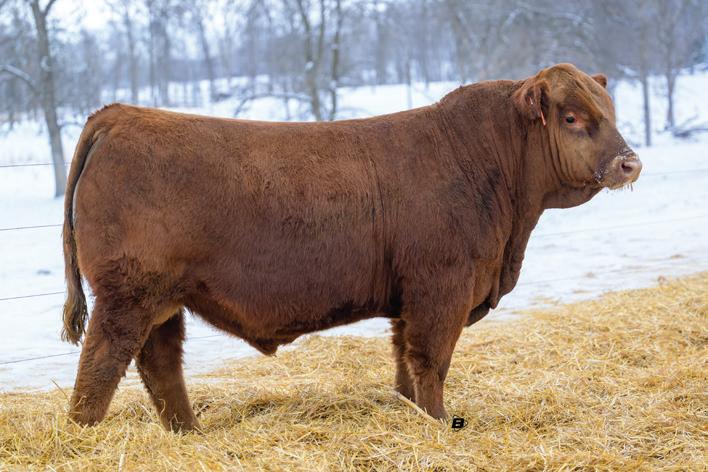
LRSF Get Some M297
Homo Polled 88% Purebred Yearling Bull
Sire: LRSF Chevelle J112
Dam: LRSF Nellie F310
Tremendous maternal pedigree. Dam has a 109 WW ratio and granddam is a Dam of Distinction. Undoubtedly one of the most attractive red power bulls in the breed this year.
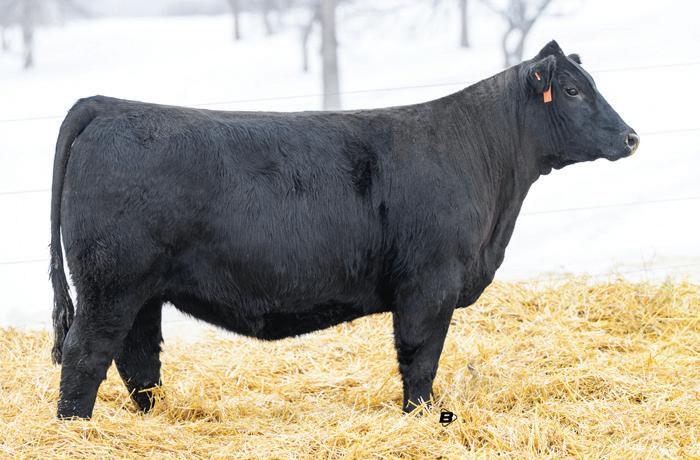
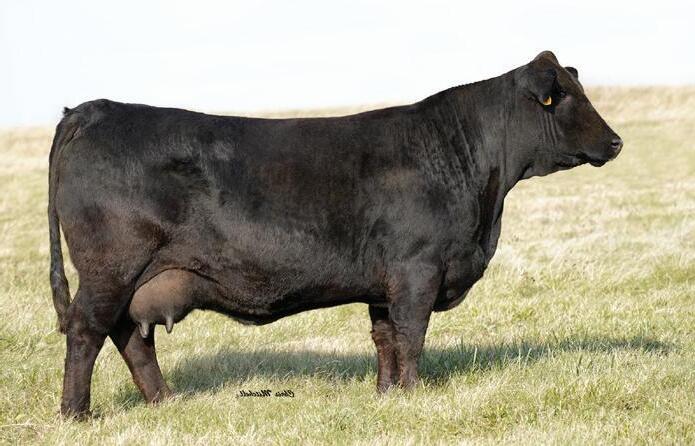
LRSF Jo-Leen M305 ET
Homo Black, Homo Polled 84.4% Purebred Bred Heifer
Sire: JKGF All American J109
Dam:LRSF Jo-Leen D92 ET
Maternal sister to LRSF Dynamic J164, the breed leader in Marbling. Top 25% CED, top 30% growth, top 15% CW and top 1% MARB.

“Regardless of whether a GE-EPD (genomically enhanced EPD) improves or gets worse, it is always better than an un-enhanced EPD,” explained Rowan. “The increase in accuracy gets us closer to the true genetic merit of an animal.”
The traditional heifer selection strategy is to buy good bulls, use some common sense and hope for the best. The phenotypic heifer selection strategy
is based on age, pelvic scores, dam performance, heifer performance, “she’s got the look,” and pregnancy confirmation. However, commercial producers can now use commercial genomic tests to aid in their heifer selection strategies.
mating decisions, optimize sire selection decisions and even add value to their feeder calves.
“THE BULL PURCHASE IS ONE OF THE RISKIEST DECISIONS THAT A COMMERCIAL CATTLE OPERATION MAKES AS IT IS THE MOST IMPORTANT AND MOST DIFFICULT.”
- Dr. Troy Rowan
Commercial genomic tests establish the link between DNA and performance creating a prediction equation which allows a producer to make selections based on MBVs (Molecular Breeding Values). It is crucial that producers test more heifers than they plan to keep because only testing the heifers they know they are keeping is just expensive and unnecessary confirmation. It is important for producers to test their heifers in time to use the information in the selection process. Commercial genomic tests allow producers to understand the potential for heterosis in their replacement heifers, make
Genomic testing or sire verifying feeder cattle increases calf prices as many cattle buyers will pay for more information. Calves with a proven high marbling potential can enroll in premium programs, average daily gain (ADG) estimates and current weight gives the buyer a more precise end date, and creates the opportunity for novel trait predictions regarding health and efficiency.
Rowan concluded his presentation with three main takeaways — genomics are an essential tool for bull selection, commercial producers now have affordable and useful genomic products, and commercial producers can take advantage of genomics for heifer selection and feeder calf marketing.
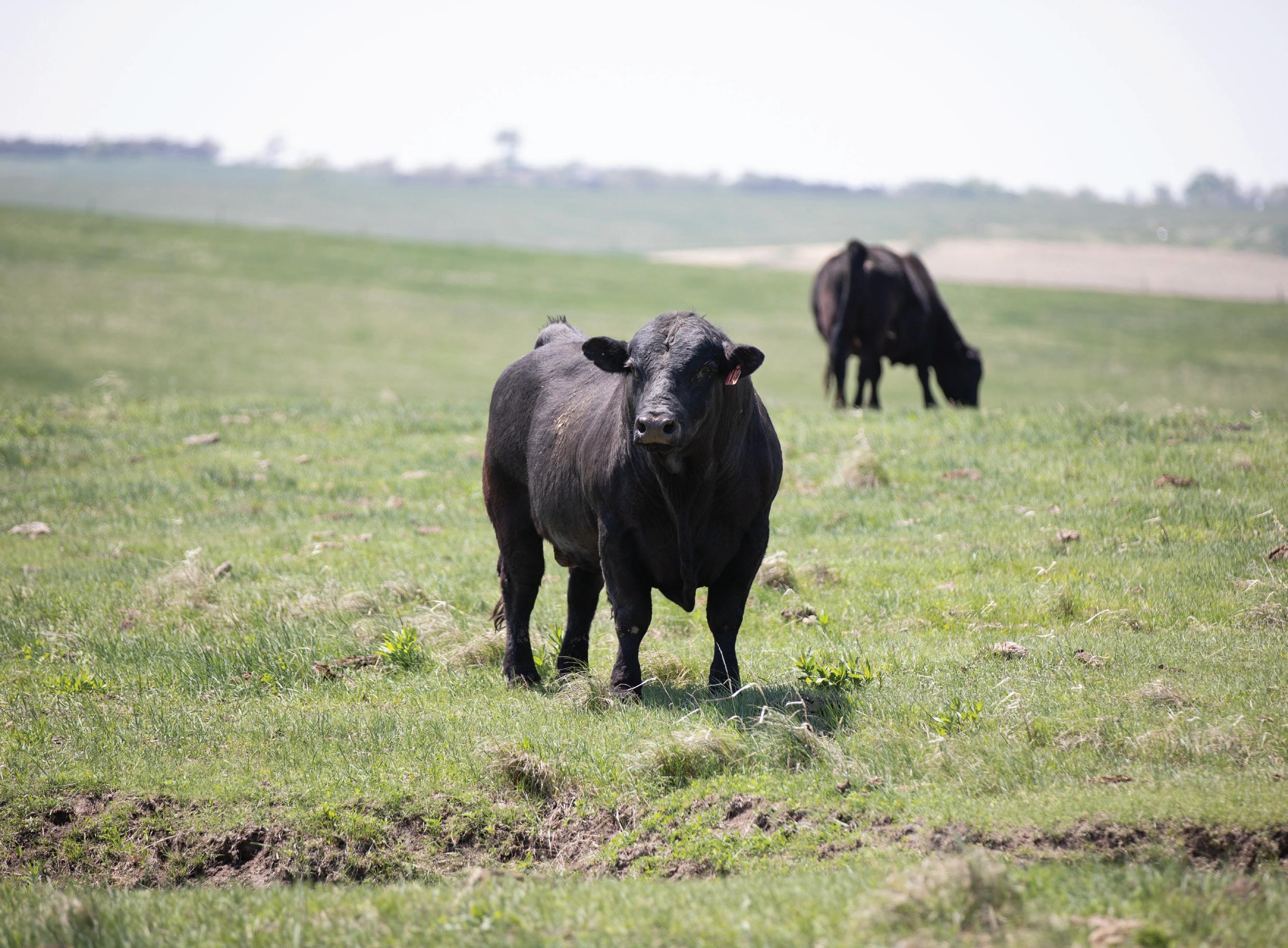
CRANVIEW GELBVIEH & ANGUS
STELLPFLUG HOFFMAN RISE ABOVE
SATURDAY | MARCH 28, 2026
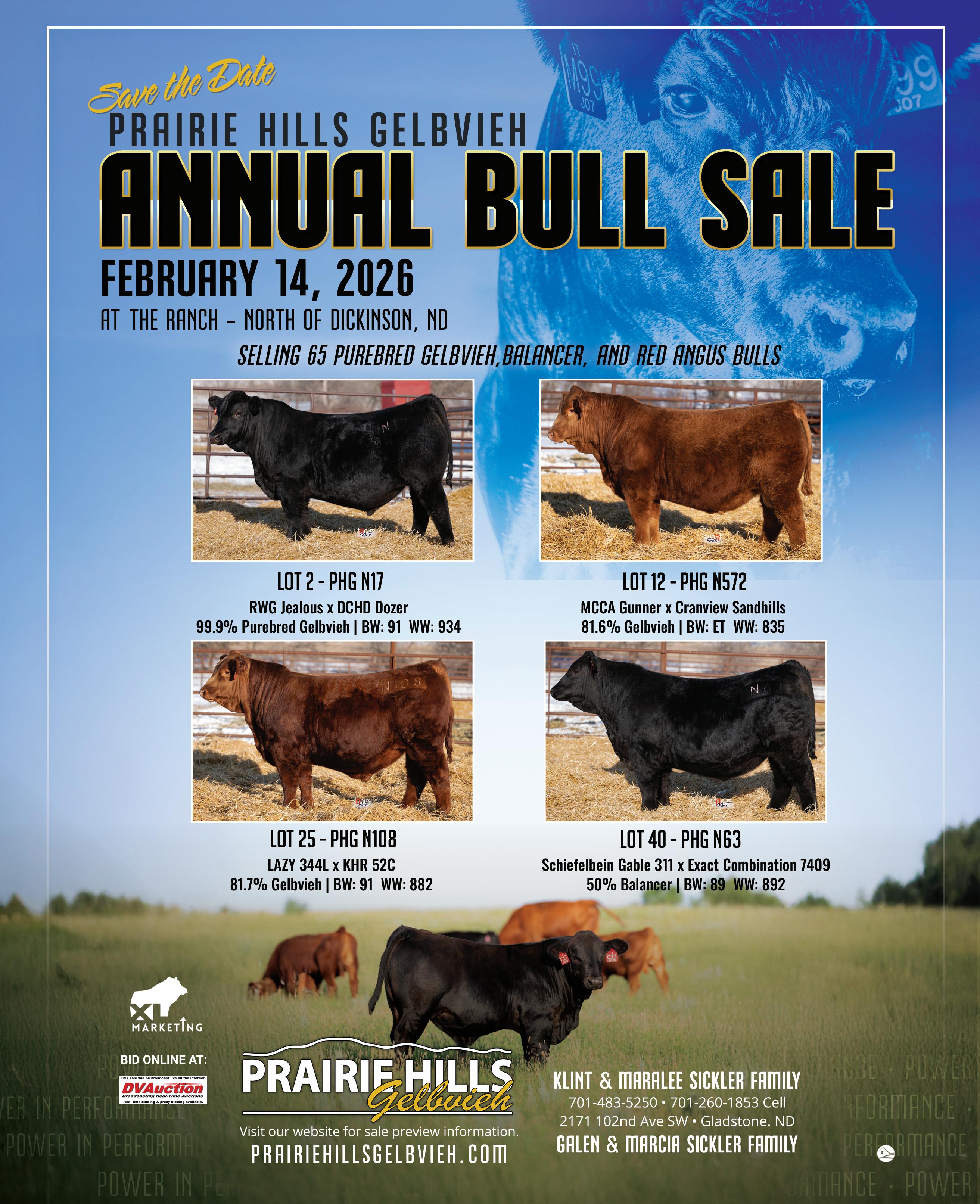
22nd Annual Genetic Progress Sale
Rugby
Livestock Auction | Rugby, ND Sale Begins at 1 p.m. | Complimentary Lunch Prior to Sale
We look forward to seeing you in Rugby for our 22nd Annual Bull and Female sale! Approximately 55 bulls and 35 females will sell, featuring genetics from:
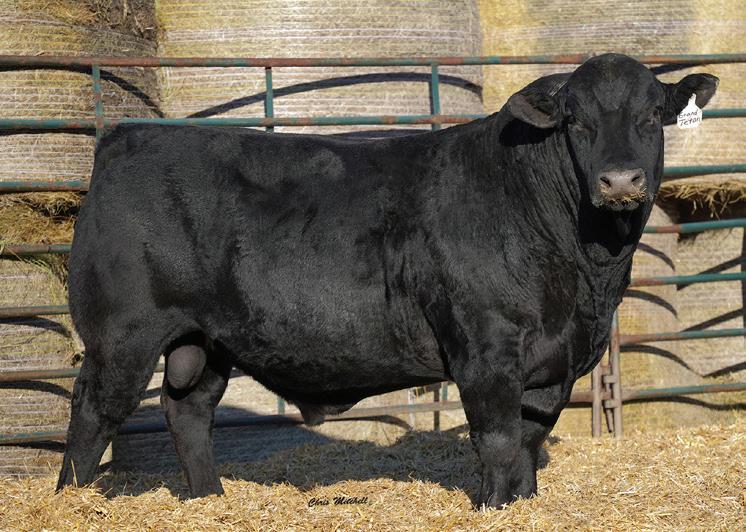
• LRSF Grand Teton K50 - Selling several powerful sons and daughters of this $25,000 Lost River Livestock 2022 sale bull.
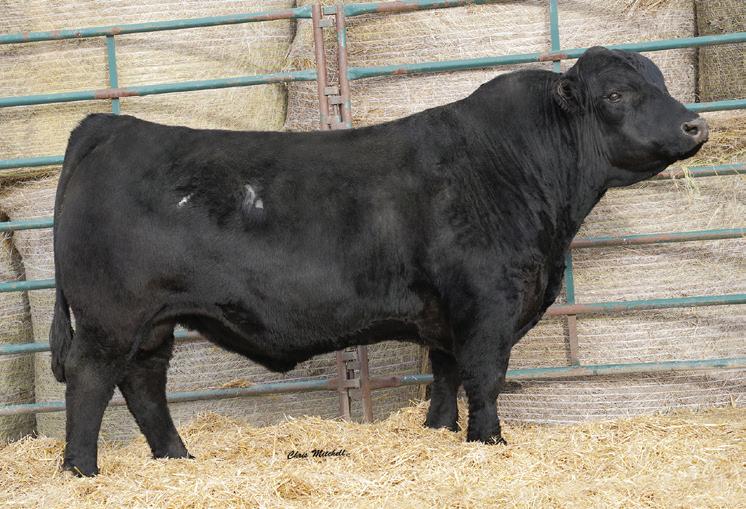
• DCSF Post Rock Double Wide 103J1 - This is the final calf crop by this outstanding sire. His influence will impact our program for years!
• CRAN Gunner L80 ET - Offering a select line-up of bulls from this young sire that stems from the heart of our breeding program.
• CRAN N70 Teton - A top Grand Teton son and great purebred herdsire option.
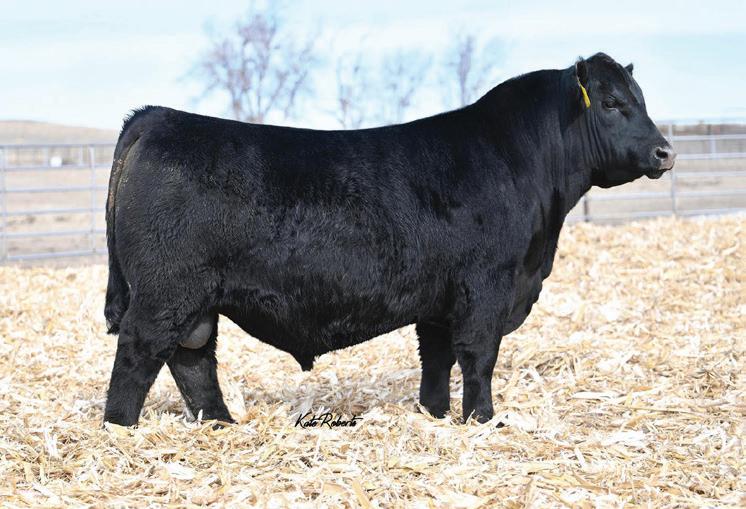
• Stellpflug Hoffman Rise Above - His sons and daughters combine attractive phenotypes with an extra shot of growth and performance.
• Boyd Justification - Sires desirable maternal and carcass characteristics.
• Schiefelbein Top Gun 522 - Offering a set of powerfully-designed sons by this sire who combines looks with a great EPD profile.
• E&B Plus One - Time-tested Angus sire that produces the cattleman’s kind. These calves are born easy, stout and are a pleasure to look at.
• Tehama Patriarch - A proven maternal sire with power, performance and daughters that work for the cowman.
The entire offering is polled, with many lots being homozygous polled, and every animal will be DNA tested for sire verification. Please call us to request a sale catalog or visit our website to view the online sale catalog closer to sale day.
CAN’T BE WITH US ON MARCH 28?
Real time bidding is available through DV Auction. Visit DVAuction.com for details.




BOYD JUSTIFICATION
DCSF POST ROCK DOUBLE WIDE 103J1
LRSF GRAND TETON K50
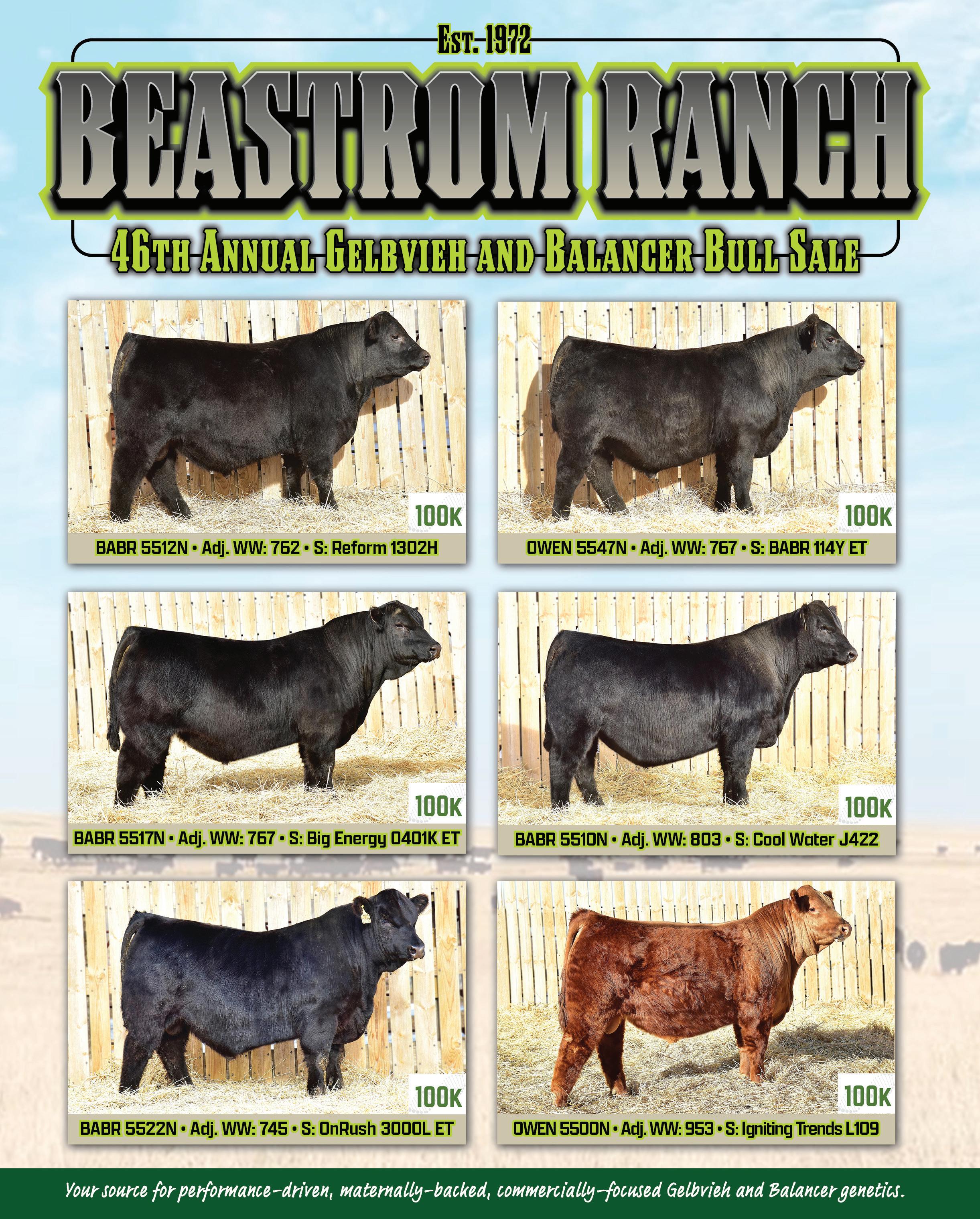
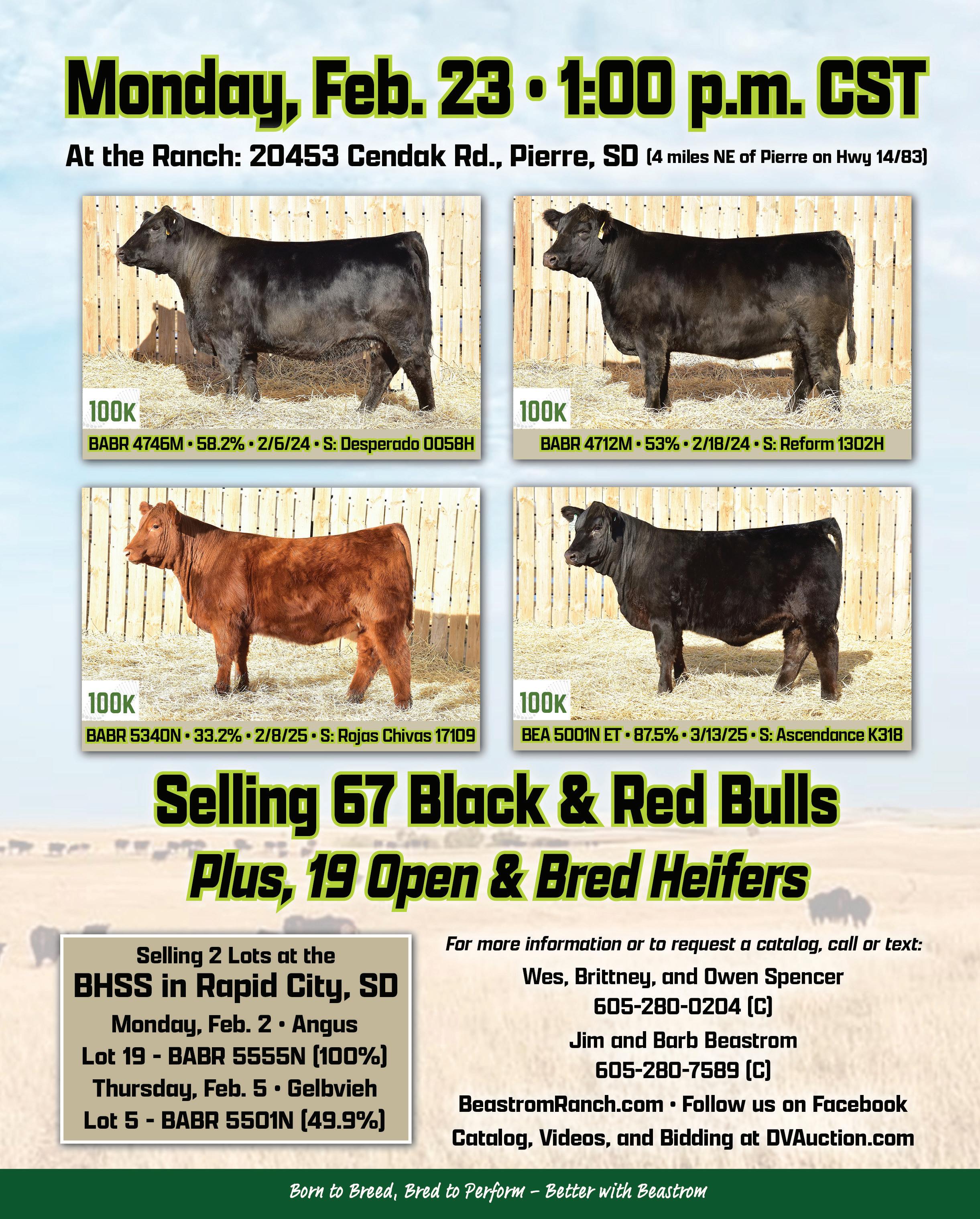
WINTER STRESS & THE COST OF GETTING IT WRONG
by ANNALEE STARR
Winter does not arrive all at once on a ranch.
It shows up in frozen gates that take an extra pull to open, cattle standing a little tighter against the wind and in feed pickups that become more deliberate. By the time the first true cold snap hits, most producers already know which cows are going into winter with some margin and which ones are not.
Winter stress rarely announces itself when it begins. Instead, it builds through exposure, declining forage quality and intake that does not quite keep up. The consequences often appear much later.
Dr. Karla Wilke, beef systems specialist and professor at the University of Nebraska-Lincoln, says producers frequently connect open cows or delayed breed back to the wrong point in the production year.
“People sometimes don’t understand that when they’re preg-checked in the fall, what caused that open cow actually started in the winter,” Wilke said. “It was a snowball effect.”
Cold stress, at its core, is a resource issue. When cows are forced to devote more nutrients to maintaining body temperature, fewer resources remain available for body condition, immune response and future reproductive performance. How a cow comes through winter often determines how the rest of her production year unfolds.
WINTER PULLS FROM RESERVES
As temperatures drop, maintenance requirements increase. Cows must consume more energy simply to maintain themselves, and when intake does not meet demand, cows pull from body reserves to make up the difference.
“When cows are stressed, that raises cortisol levels, and that makes it harder for them to mount an immune response,” Wilke said. “Is it harder for her to stay healthy? Sure.”
That stress does not always result in immediate visual change. Cows may appear to be holding their own early in winter, when forage is still available. As winter progresses and forage quality declines, those margins disappear quickly.
Wilke emphasized that cold stress itself is not always the direct problem.
“It’s not so much the cold itself,” she said. “It’s if the cold is forcing her to focus on maintaining herself and keeping herself warm.”
Once body reserves are depleted, recovery becomes more difficult and more expensive. Cows that lose condition early often struggle to regain it before calving and breeding, increasing the risk of delayed rebreeding or open females.
For registered herds, that loss carries additional weight. Replacement females that enter spring behind rarely reach the level of productivity their genetics suggest.
WIND AND MOISTURE DRIVE LOSSES
Temperature alone does not determine cold stress. Wind and moisture accelerate heat loss and drive nutrient demand higher.
“Wind breaks do a tremendous amount for cows,” Wilke said. “You either feed more, or you put up a windbreak, but you have to do something to help those cows.”
Wind strips heat from the hair coat, while moisture reduces insulation. Even moderate temperatures can become stressful when cows are exposed to sustained wind or wet conditions.
Wilke points to a visual indicator many producers recognize.
“If you see cows with snow on their coat, those cows are in good shape,” she said. “If they were losing body heat, that snow would be melting.”
Natural terrain, tree rows, or temporary wind protection reduce exposure and lower maintenance requirements. In many cases, limiting wind exposure reduces feed demand more effectively than increasing supplementation alone.


Bulls and Heifers for sale Private Treaty Semen available on Elite Herdsires


WHAT PRODUCERS SHOULD WATCH FOR
• Cows bunching tightly even in moderate wind.
• Increased time at the feed bunk without condition improvement.
• Young cows falling behind mature cows on the same ration.
• Difficulty maintaining body condition despite consistent intake.
FEEDING BEFORE THE STORM
Feed intake is the cow’s primary defense against cold stress, and timing matters as much as ration formulation.
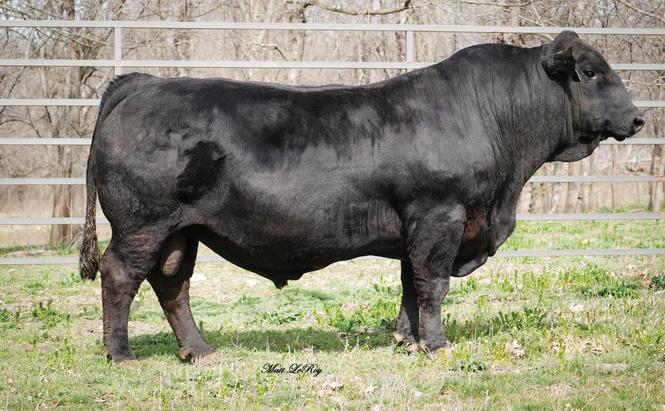
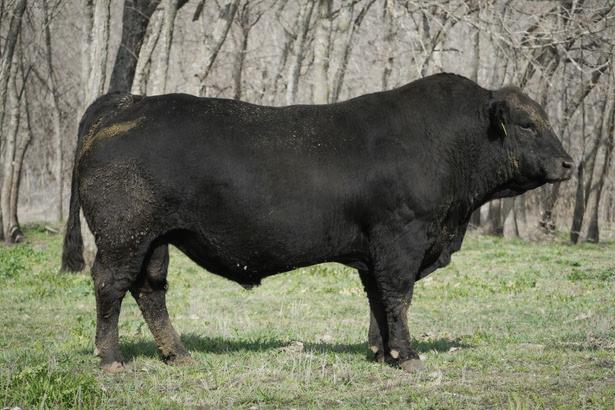
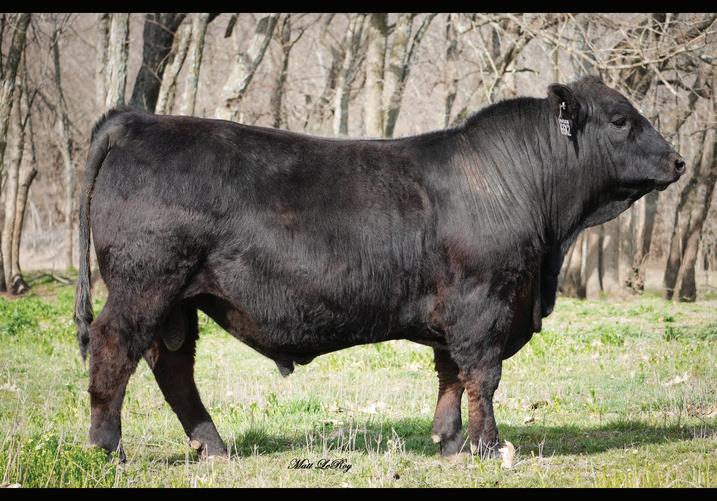
“We want to increase feed before the storm happens,” Wilke said. “The heat of fermentation in the rumen is actually a source of heat for the cow.”
Feeding ahead of weather events allows cows to generate internal heat and maintain intake during periods when access may be limited. Waiting until after a storm often leaves producers with fewer options.
“If you get in the middle of a storm, you might not be able to get to those cows,” Wilke said. “At least you know they were fed really well beforehand.”
Post-storm decisions depend heavily on conditions. Snow depth, ice, and wind determine whether cows can access forage or water.
“It depends on how the storm plays out,” she said. “If feed is buried or iced over, they may not be able to get to it.”
WAYS PRODUCERS COMMONLY MANAGE WINTER FEEDING:
• Increasing intake by 10-20% ahead of severe cold.
• Maintaining higher levels during extended exposure.
• Adjusting back gradually once access improves.
YOUNG COWS CARRY GREAT RISK
Not all cows experience winter stress equally. Young cows face additional
challenges due to their continued growth and smaller rumen capacity.
“The young cow still has a growth requirement that the mature cow doesn’t have,” Wilke said. “She either has to eat more nutrient-dense feeds or eat more to meet those needs.”
On low-quality forage such as cornstalks or winter range, younger females are often at a disadvantage. Their smaller rumen limits the rate of passage, making it difficult to consume enough lowquality feed to meet nutrient demands. Wilke recommends accounting for those limitations through additional supplementation, including a protein cake or more nutrient-dense feed sources.
When young cows fall behind in winter, the costs rarely stay contained to one season. Reduced rebreeding rates, delayed conception and increased culling pressure all raise replacement costs. Sorting young cows or supplementing them separately during the winter often costs less than replacing females that fail to stay in the herd.
BODY CONDITION SCORE
Wilke encouraged producers to evaluate conditions multiple times throughout the year. “You should be looking at the body condition four or five times a year,” she said.
Wilke recommends that cows enter winter in moderate condition. “What we want those cows to go into winter as is a five or six,” she said. Cows that enter winter thin have little margin when conditions worsen. “That cow may be okay early, but if you get into a really bad winter, she’s already behind,” Wilke said.
Body weight alone is not a reliable indicator of winter performance. Body condition score provides a clearer picture of what the cow herself is contributing.
“A cow could be gaining weight on a scale but losing weight herself,” Wilke said. “She could be taking her body reserves and putting them into that baby.”
Body condition score remains one of the most effective tools producers have for identifying risk early, when adjustments are still manageable.
FINANCIAL IMPACT OF WINDBREAKS
Wind protection reduces energy loss and lowers feed requirements, often at a lower cost than additional feed alone.
“Windbreaks don’t have to be expensive,” Wilke said. “They can be tree strips, tin, or stacked bales. It doesn’t have to be fancy.”
Providing shelter allows cows to conserve energy rather than pulling from body reserves.
“You either feed more, or you put up a windbreak,” Wilke said. “Either way, you’re paying for it.”
The difference lies in how efficiently those dollars are spent.
PLANNING PREVENTS MOST PROBLEMS
Winter management decisions rarely provide immediate feedback. The consequences often surface much later.
“Nobody wants to be in a situation where it’s a week before you can get out there to see if they have feed and water,” Wilke said.
Advanced planning includes securing emergency forage, contracting supplements early and selecting winter pastures with access in mind. This allows producers to respond proactively rather than reactively.
Winter will always test the cow herd. How prepared cows are when winter arrives often determines how well they perform long after it ends.
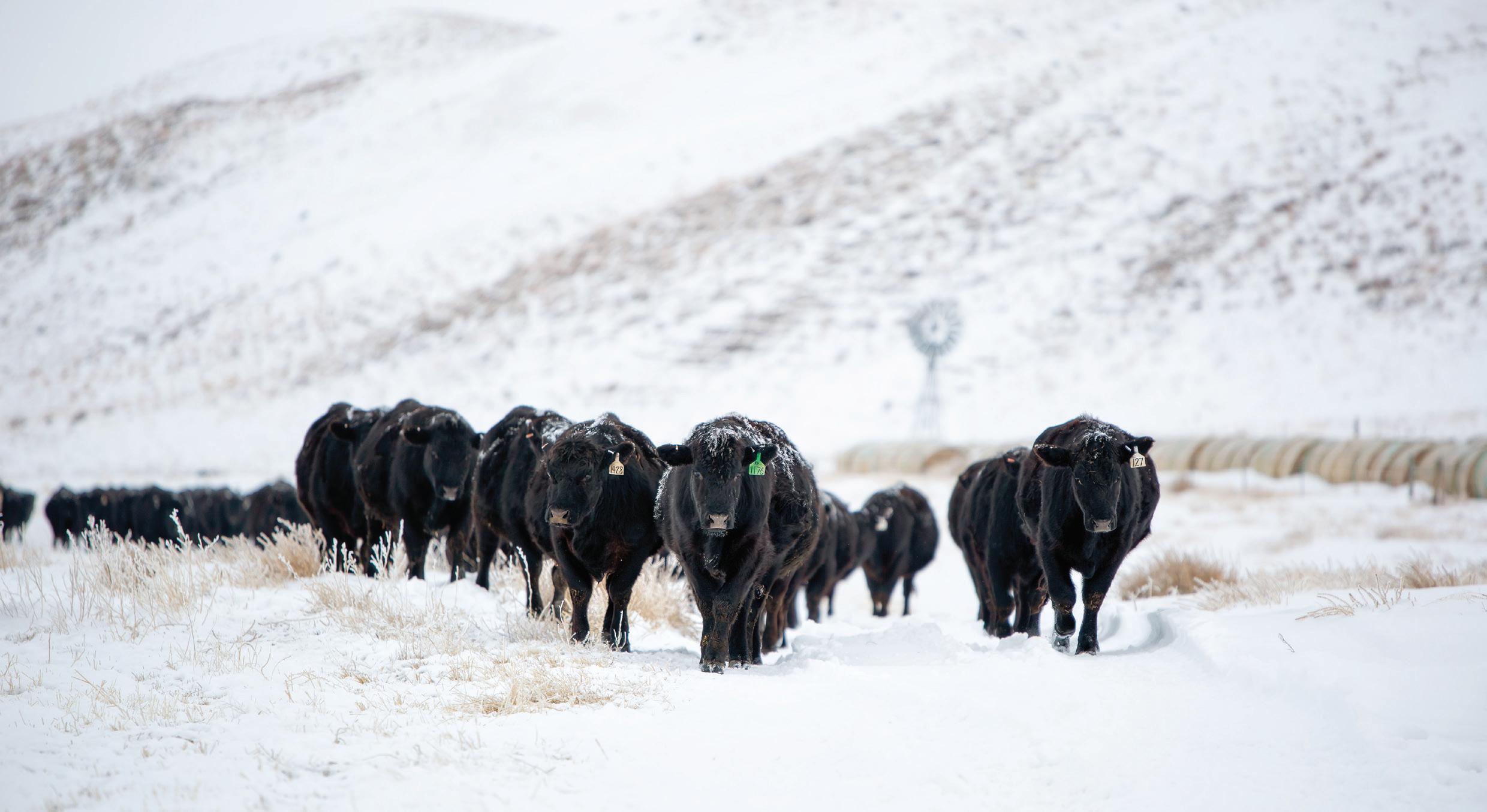
Heterosis with:
• Gelbvieh, Balancer,
Bulls That Add:
• Maternal Strength & Calving Ease
• Growth & Carcass Traits
• Fertility & Longevity
Customer Services:
• 500 Mile Free Delivery
• $100 Take Home Credit
• Disposition Guarantee
• Soundness Guarantee
• Volume Discounts
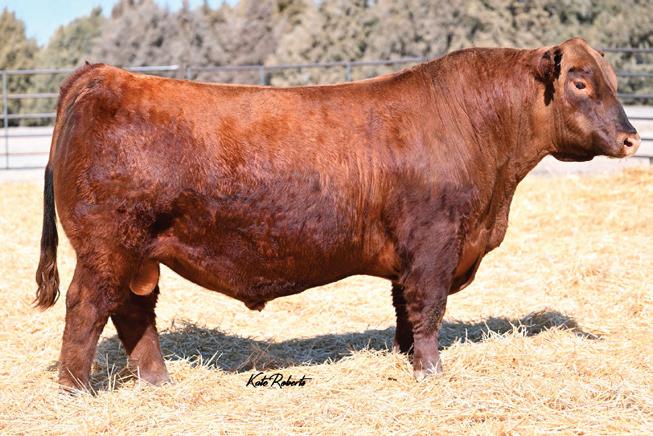
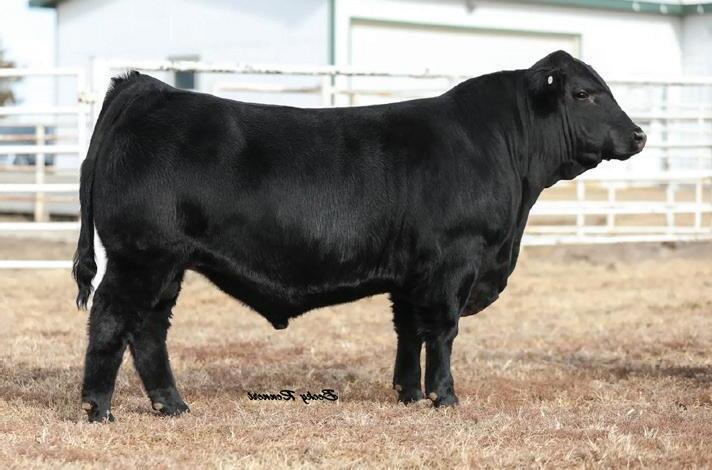




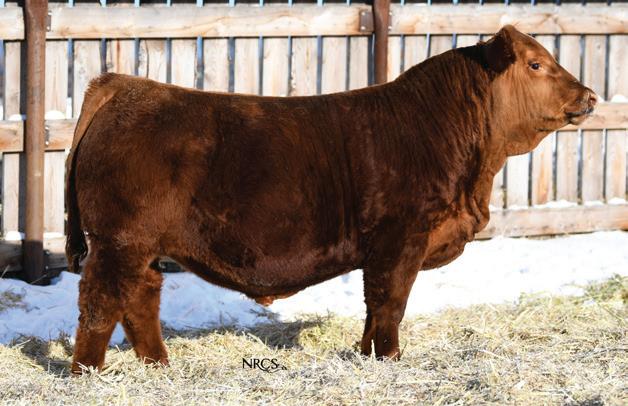
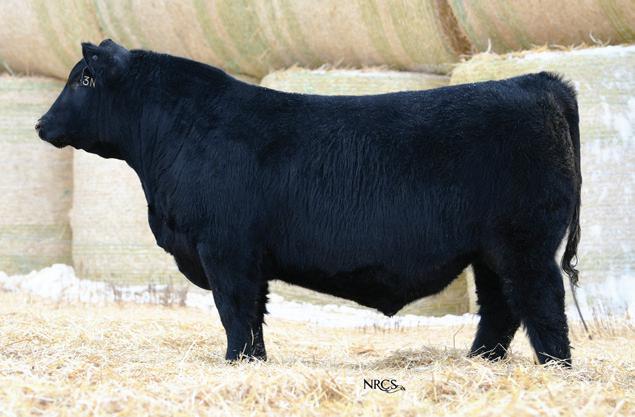
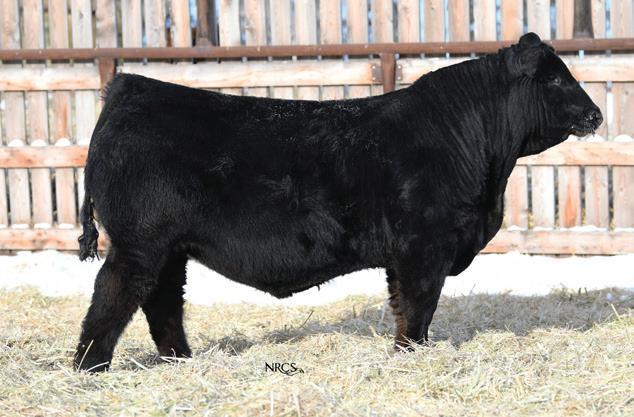
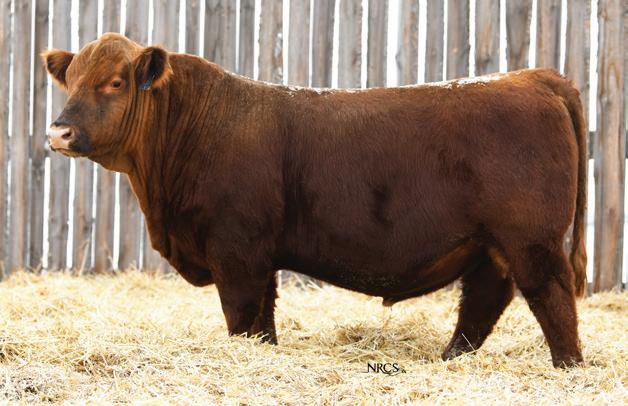
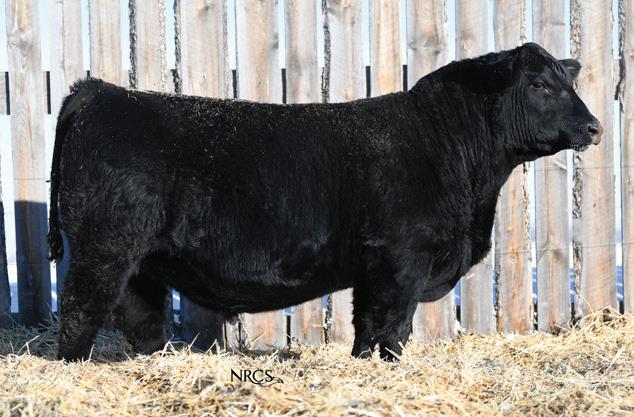
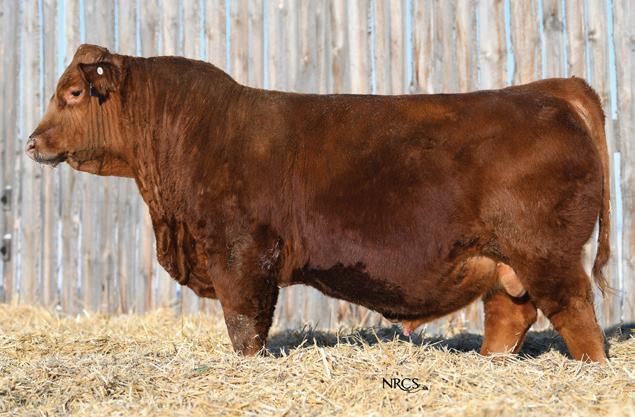
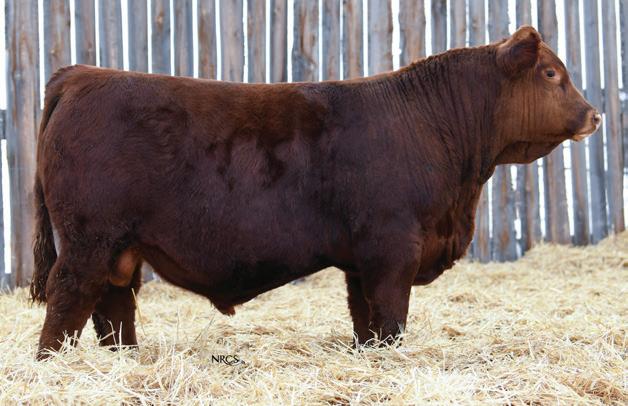
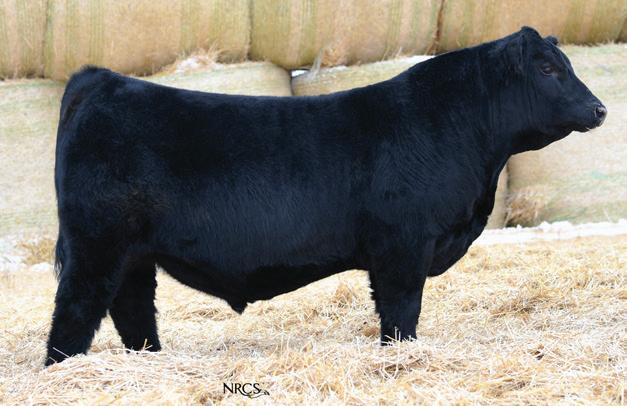
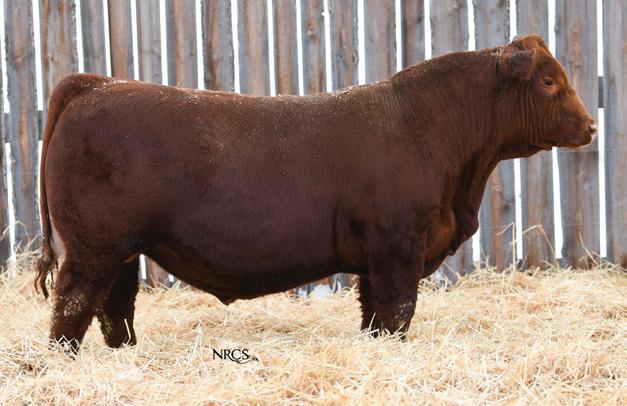
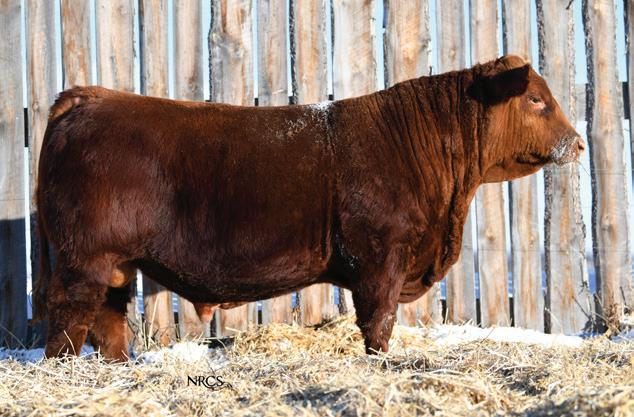
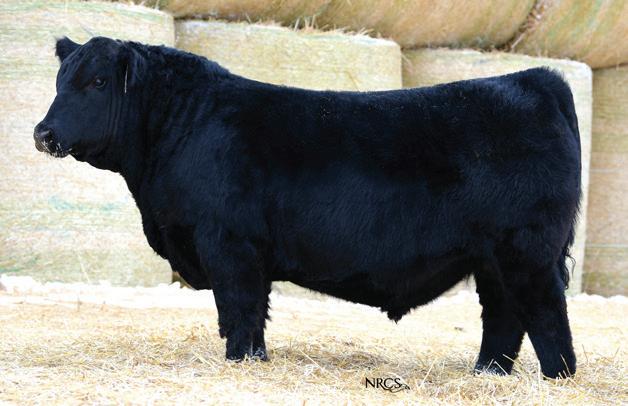
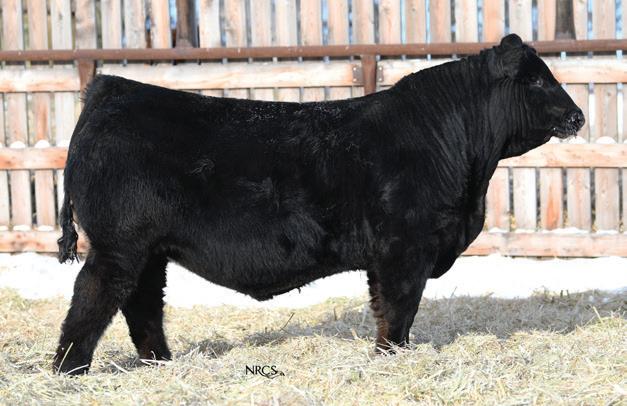


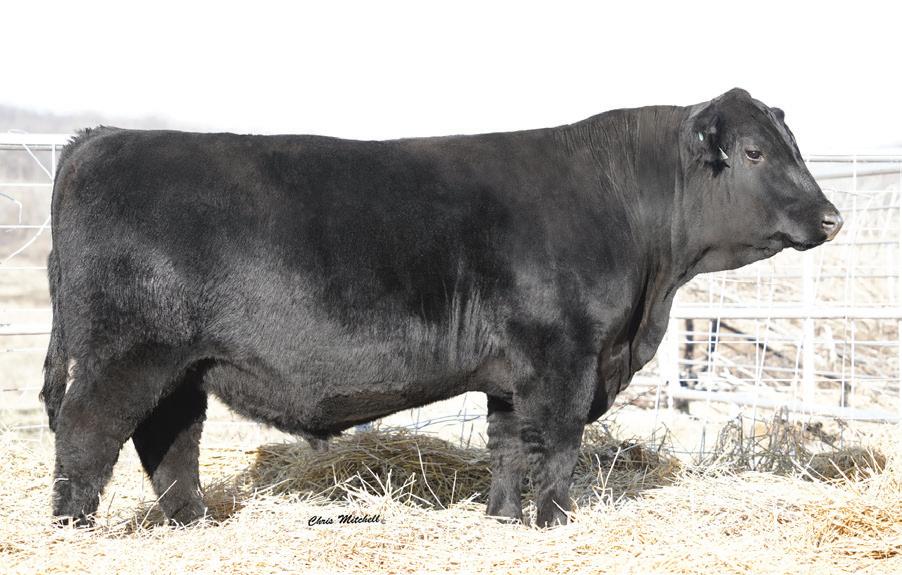
ERTL 4103M Mr Exponential Storm 914
Homo Black Homo Polled 42%% Balancer Bull
Sire: ERTL Mr Exponential Storm Dam: ERTL Miss Cool Butkus 914G
Heifer Bull that ranks in top 20% CED, BW, performance and carcass. Top 2% FPI.
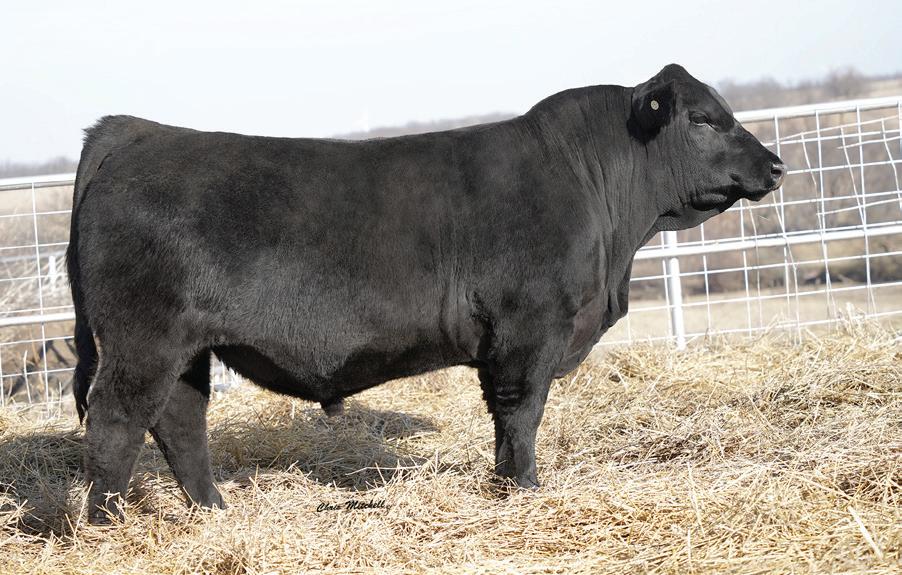
ERTL 4111M Mr Prime Assertive Cool
Homo Black Homo Polled 41% Balancer Bull
Sire: Rumfelt’s Prime Time H96G
Dam: ERTL1514J ET Assertive Cool Girl
Heifer bull with top 15% performance and top 25% marbling.
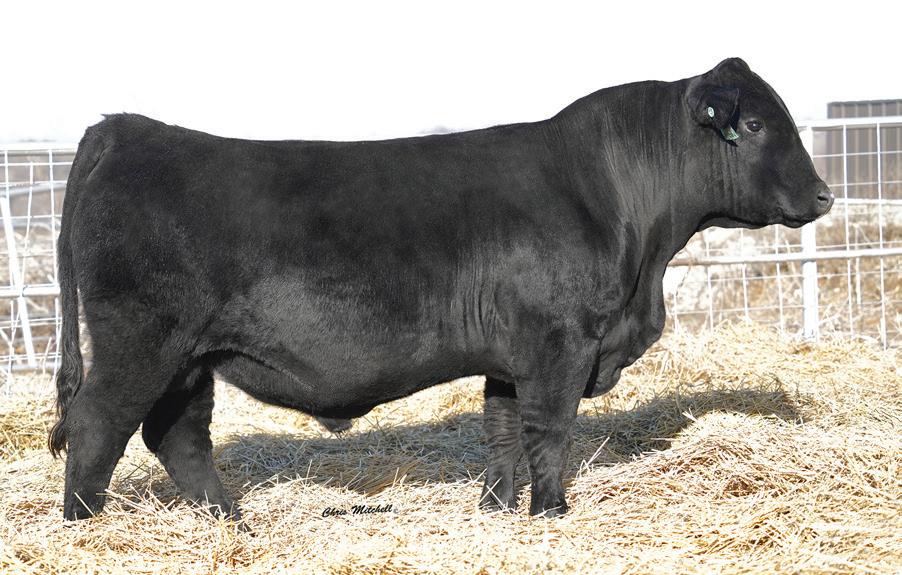
ERTL 4102M Mr America’s Sam
Homo Black 75% Balancer Bull
Sire: JKGF All American J109 Dam: DLW 467B Miss Sam ET
Heifer Bull that ranks in top 10% for marbling and 20% FPI. 15 of 18 EPD traits in the top 50%.
Saturday, March 21, 2026, 5:30 (CT)
Kirksville Livestock Market
Kirksville, Missouri
Lots Sell
27 Gelbvieh, Balancer & Angus Females Fall Bred Heifers and Spring Open Heifers Sell

Heifer bull in the top 5% CED, 10% BW, 4% marbling and 15% FPI. Scan here for more information
Sire: JKGF All American J109 Dam: ERTL 266K Miss Absolute 078 Top 5% WW and YW, top 10% marbling, FPI and MPI. 53 Gelbvieh, Balancer and Angus Bulls Fall and Spring Bulls Sell
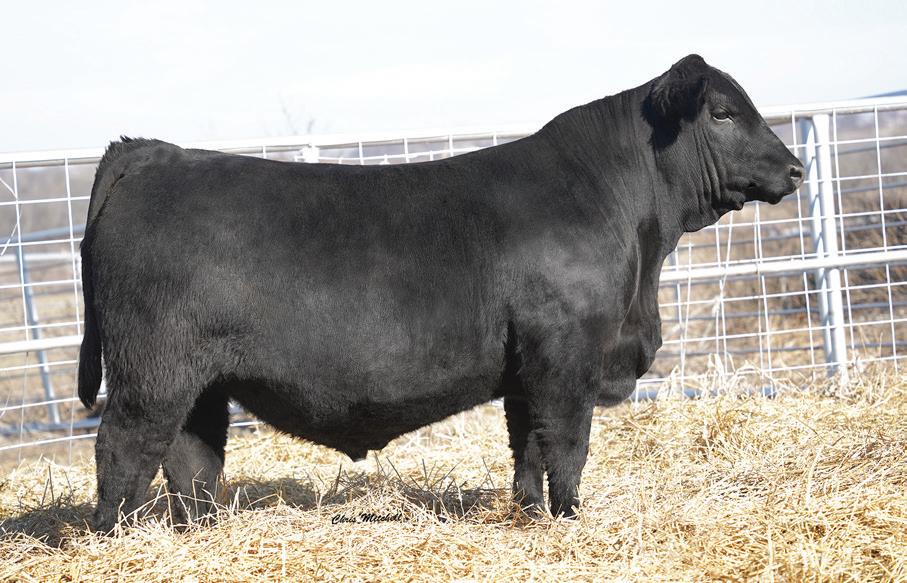
ERTL 562N Mr American 266
Homo Black Homo Polled 56% Balancer Bull
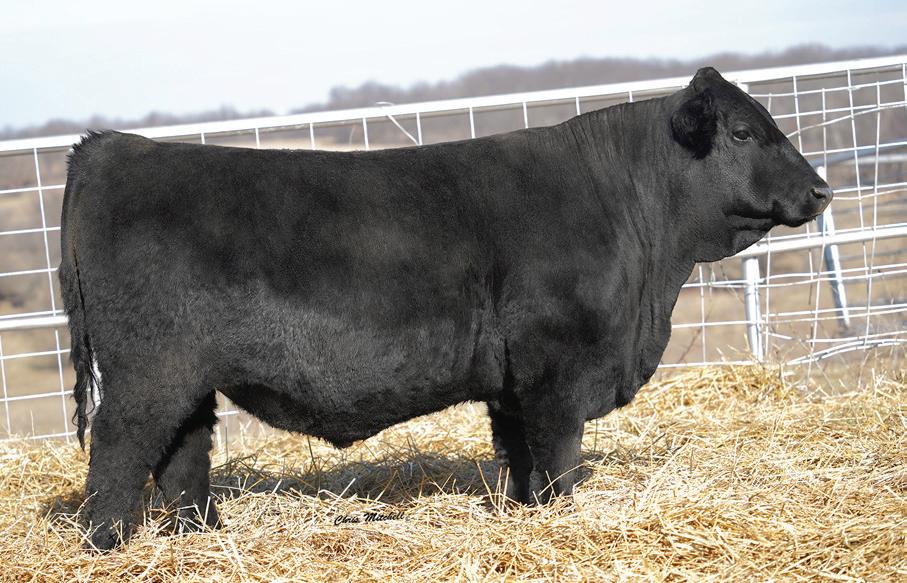
ERTL 528N Mr Royalty 1963
Homo Black Homo Polled 49% Balancer Bull
Sire: DBRG Mr Royalty 3199L Dam: ERTL 1963J Miss CW Nevada





WE WOULD LIKE TO THANK GALEN AND BRADY GEIDEL OF GEIDEL CATTLE COMPANY IN GREENFIELD, IOWA FOR PURCHASING OUR HERD OF REGISTERED BRED FEMALESPUREBRED GELBVIEHS, GELBVIEH BALANCERS, AND ET RECIPIENTS! THEY PURCHASED A HERD OF TOP FEMALES WITH 33 YEARS OF BREEDING BEHIND THEM – PROGENY FROM THESE FEMALES TO SELL IN THEIR 2027 PRODUCTION SALE.
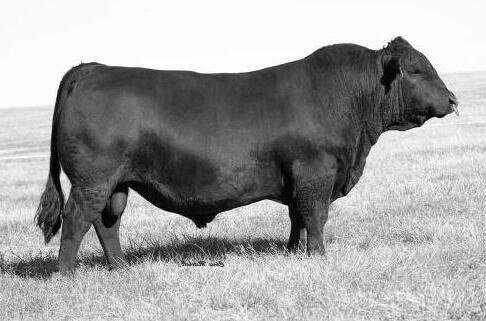
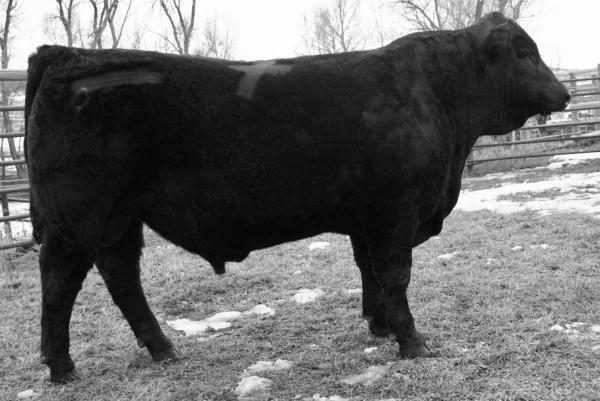

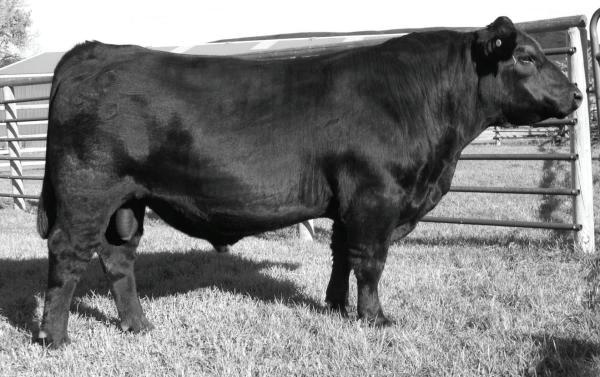
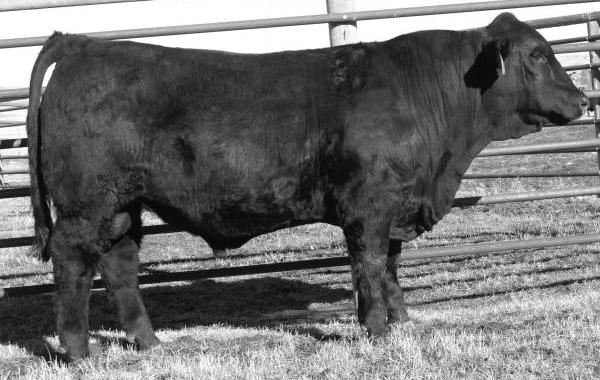

WHAT’S HAPPENING IN WASHINGTON
AND WHY IT MATTERS TO CATTLE PRODUCERS
Sigrid Johannes, Senior Director of Government Affairs at NCBA, breaks down key developments in Washington D.C., and how new federal policies will affect cattle producers in the United States.
by KIRSTEN HESELMEYER, AGA COMMUNICATIONS INTERN
In a recent Stockmanship and Stewardship webinar, the National Cattlemen’s Beef Association’s (NCBA) Sigrid Johannes, senior director of government affairs, discussed several policy issues currently unfolding in Washington, including the federal government shutdown, President Donald Trump’s comments regarding Argentina, concerns surrounding the New World Screwworm, and other developments with potential implications for the beef industry.
She began by acknowledging the end of the recent government shutdown, which was the longest shutdown in U.S. history. For most parties involved, the resolution amounted to a temporary fix. The shutdown ended when Congress passed a temporary funding bill, funding most of the federal government through the end of January at the same level as the previous fiscal year. However, the United States Department of Agriculture (USDA) and the Food and Drug Administration (FDA) were fully funded under the package, which is a significant win for agriculture. As a result, even if another shutdown occurs in January, the agricultural community would be far less affected.
In addition to keeping USDA and FDA operational, the funding package restored support for the Farm Service Agency (FSA) to a level it has not seen in several years, along with increased funding for agricultural research.
Johannes also noted that the farm bill was once again extended. While she acknowledged that the shutdown process was long and messy, NCBA leaders feel confident moving forward, emphasizing that having USDA fully funded provides much-needed stability for producers.
Johannes also discussed the Beef Revitalization program that was recently launched by the US Secretary of Agriculture, Brooke Rollins. The initiative represents a major win for the beef industry and includes several priorities that NCBA has advocated for. She highlighted three key components of the program that NCBA is particularly excited about: stronger enforcement of Product of the USA labeling, new regulations addressing vacant allotments, and a shift in how beef is represented within federal nutrition guidelines.
Unfortunately, the rollout of the program was overshadowed by President Donald Trump’s comments about importing beef from Argentina. Johannes made it clear that NCBA does not support an increase in imported beef. She explained that, according to NCBA analysis, even a significant increase in imports would lower beef prices by less than six cents per pound, which is a minimal benefit for consumers that the NCBA argues does not outweigh the potential risks to the U.S. cattle industry. Importing beef from
South America, where some countries remain at risk for a foot-and-mouth disease outbreak, is a concern NCBA considers unacceptable. Ultimately, Johannes emphasized that NCBA is unwilling to support any policy that could harm American beef producers. She did offer reassurance, noting that these processes often move slowly. She added that the conversation has actually brought NCBA into closer communication with the White House, giving the organization confidence that it can help redirect these efforts and ensure U.S. beef producers are protected.
Next, Johannes discussed how what the Trump administration has referred to as the “Big Beautiful Bill” could benefit cattle producers. She described the legislation as a broader policy package that includes several provisions the beef industry has been working toward for years. Among the major wins for producers, she highlighted expanded estate tax relief, disaster assistance provisions that account for losses to unborn livestock when herd mortality exceeds normal levels, and measures designed to help producers recover costs associated with federally protected species.
She also discussed the state of the New World Screwworm outbreak in Mexico and how that is affecting the US. First, she noted that most states, especially in the northern United States, can breathe
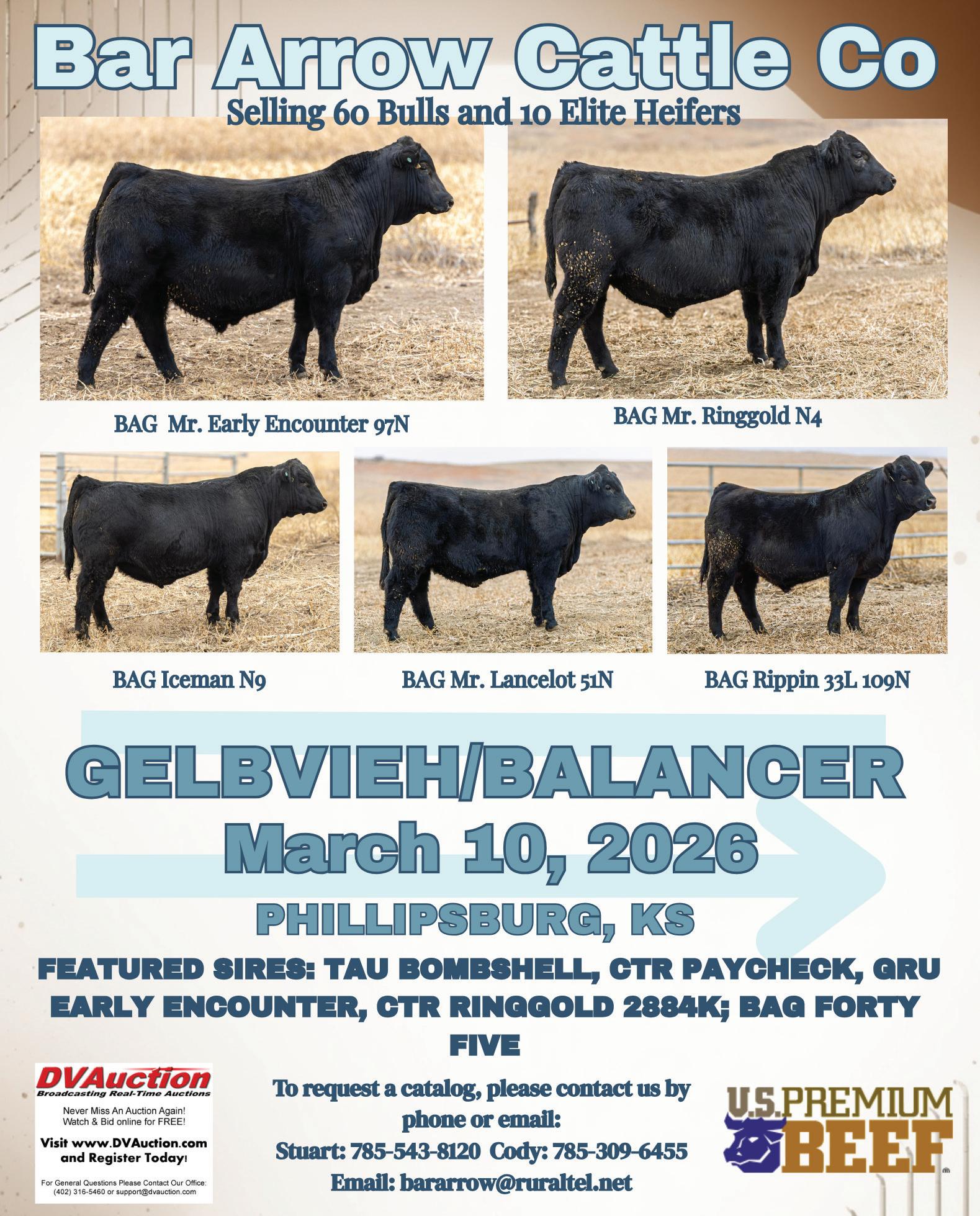
a sigh of relief, as frost and colder temperatures help protect those areas from infestation. While concerns remain in the southern United States, treatment and prevention efforts are steadily advancing, and there is currently little risk of an outbreak among cattle legally moving within the country. Ongoing worries focus on cattle being illegally moved from Central American countries into northern Mexico, but with the construction of sterile fly production facilities and efforts to expand approved labels for treatments, including certain pesticides used to combat screwworm, NCBA is optimistic that the industry will be well prepared to respond by the time risks rise again next summer.
Johannes noted that every state veterinarian in the continental United States is working to develop plans to prevent a screwworm outbreak. NCBA is collaborating with these officials to ensure the plans impose the fewest possible movement restrictions and paperwork requirements, taking into account the shortage of veterinarians while helping protect producers’ bottom lines. The construction of a sterile facility has also begun in Moore, Texas, which will help limit the amount of flies reproducing.
Finally, Johannes discussed the 2025–2030 Dietary Guidelines, which are expected to be published soon. She noted that NCBA advocated tirelessly to ensure that beef was fairly and accurately represented, and the organization is incredibly pleased with how this set of guidelines has come together. In past editions, beef has often been cast in a negative light, with some recommendations suggesting it be replaced by lentils or beans. The new guidelines, however, not only include positive language about animal protein but also specifically position beef at the center of the plate, highlighting it as a high quality, superior protein choice.
Overall, Johannes expressed a positive outlook on the direction of federal policies as they relate to the beef industry. While challenges such as imports and the screwworm outbreak remain, the tireless work of organizations like NCBA have helped put beef in a stronger position than it has been in years. Research funding has increased, new tax provisions and relief measures favor producers, and the upcoming dietary guidelines recognize beef as a high-quality, central protein choice.

REGISTERED GELBVIEH &
source for P.A.P. tested, calving ease and low birth weight EPD bulls! Selling February 27, 2026 in the

FANCY BLACK REPLACEMENT FEMALES AVAILABLE
At Bow K Ranch we emphasize moderate-size, quality udders, calving ease, and are focusing on optimal tenderness and marbling.




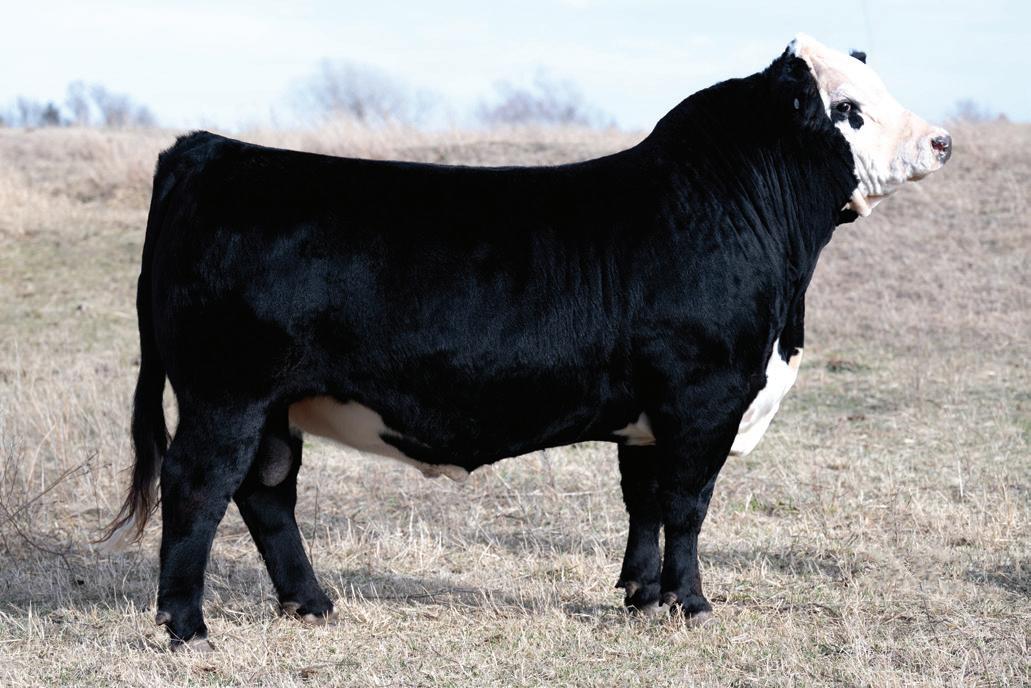
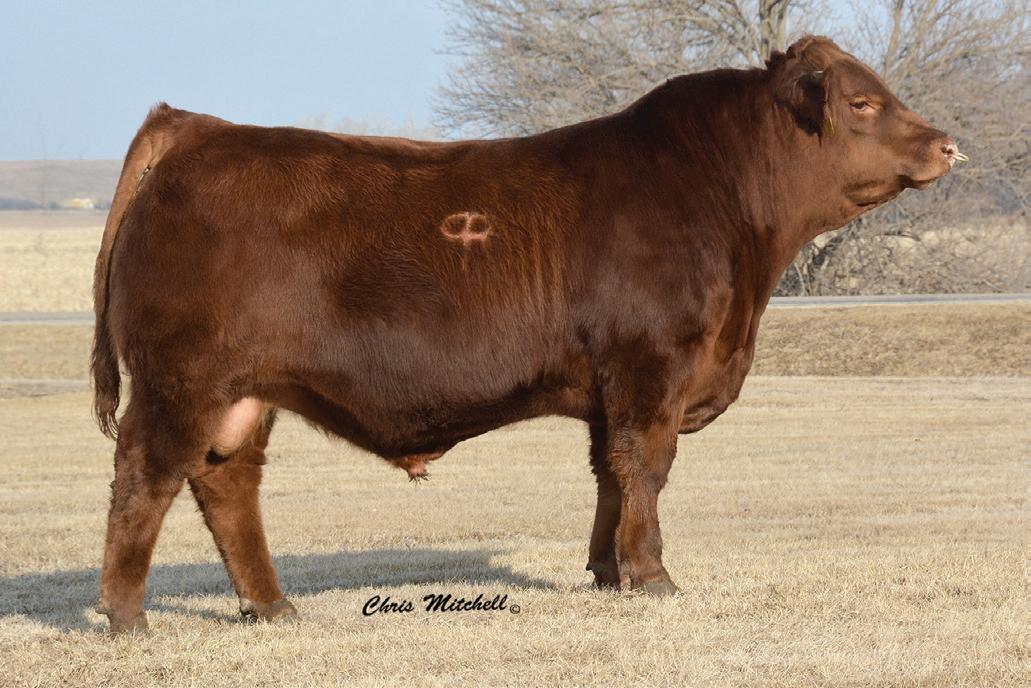




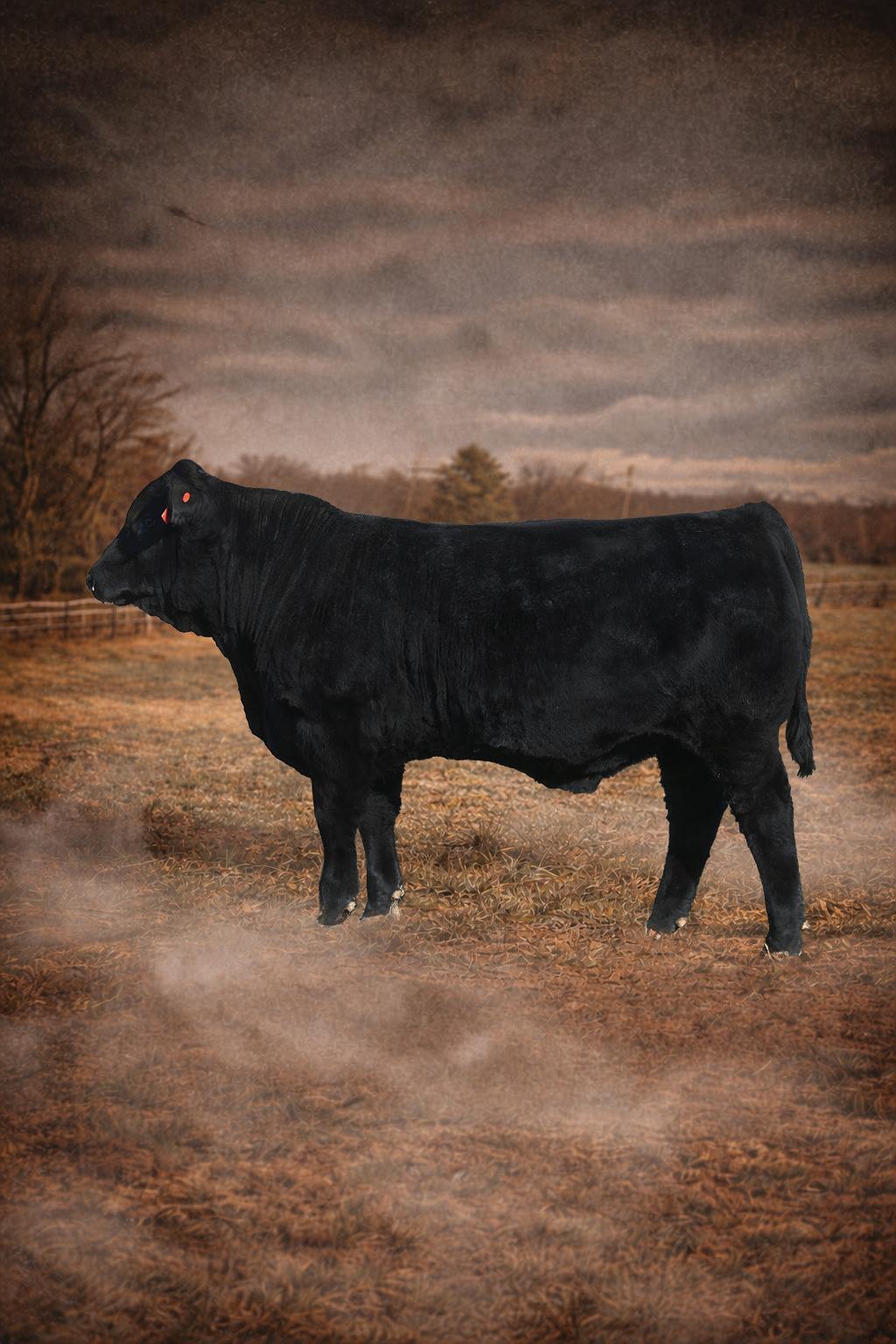
INCREASING COW HERD PROFITABILITY
Use reproductive management practices to increase calf value and decrease costs.
Cattlemen’s Profit Roundup attendees heard from Dr. Jordan Thomas, professor in the College of Agriculture, Food and Natural Resources at the University of Missouri. Thomas gave his presentation titled, “Calf Prices Are Up…What About Profits?” focused on maximizing value of the producer’s cow herd.
Thomas began his presentation with the Missouri Beef Cow-Calf Planning Budget discussing the breakeven calf price per hundredweight. Fall calves have a breakeven price of $284.94 whereas spring calves have a breakeven price of $299.77. The producer’s most expensive operating cost is feed, and the second most expensive cost is cow replacement.
Thomas discussed that much of the limitations in cattle production is from mindsets we need to overcome. He presented the Endowment Effect Experiment, in which individuals tend to overvalue what they already own. Beef producers can do this by keeping cows that don’t breed back relatively quick each year since they already own
by MEGAN UNDERWOOD, M.S.
her and increasing rates of fall out in years to come.
“It takes five calves out of a heifer before she pays for herself. Is that true? At three years, she is worth more than she costs as a bred heifer and you have the value of her calf. The reason producers take such a big hit, is they have to pay for all the cows that don’t breed back,” explained Thomas. “We tend to market cows at their lowest possible value. If we sold more cows as bred cows we would be preserving a lot of value. We create a lot of value and never truly capture all of it”
Thomas stressed the importance of earlier conception in heifers leading to more profitability. According to research from the United States Meat Animal Research Center (USMARC), heifers that calved in the first 21 days of their first calving season weaned a heavier calf in each of their first six calving season. The age of the calf largely affects the weaning weight of the calf, as older calves at weaning tend to weigh more than the younger calves.

Heifer calves that are born earlier in the calving season do better as replacements. Data shows that 70% of heifers born in the first 21 days of their calving season will cycle before of the beginning of their first breeding season with 81% of those heifers calving in the first 21 days of the calving season. Producers can use reproductive management for a front-loaded calving distribution that increases the total value of calves weaned across the farm or ranch and decreases the costs associated with cow depreciation.
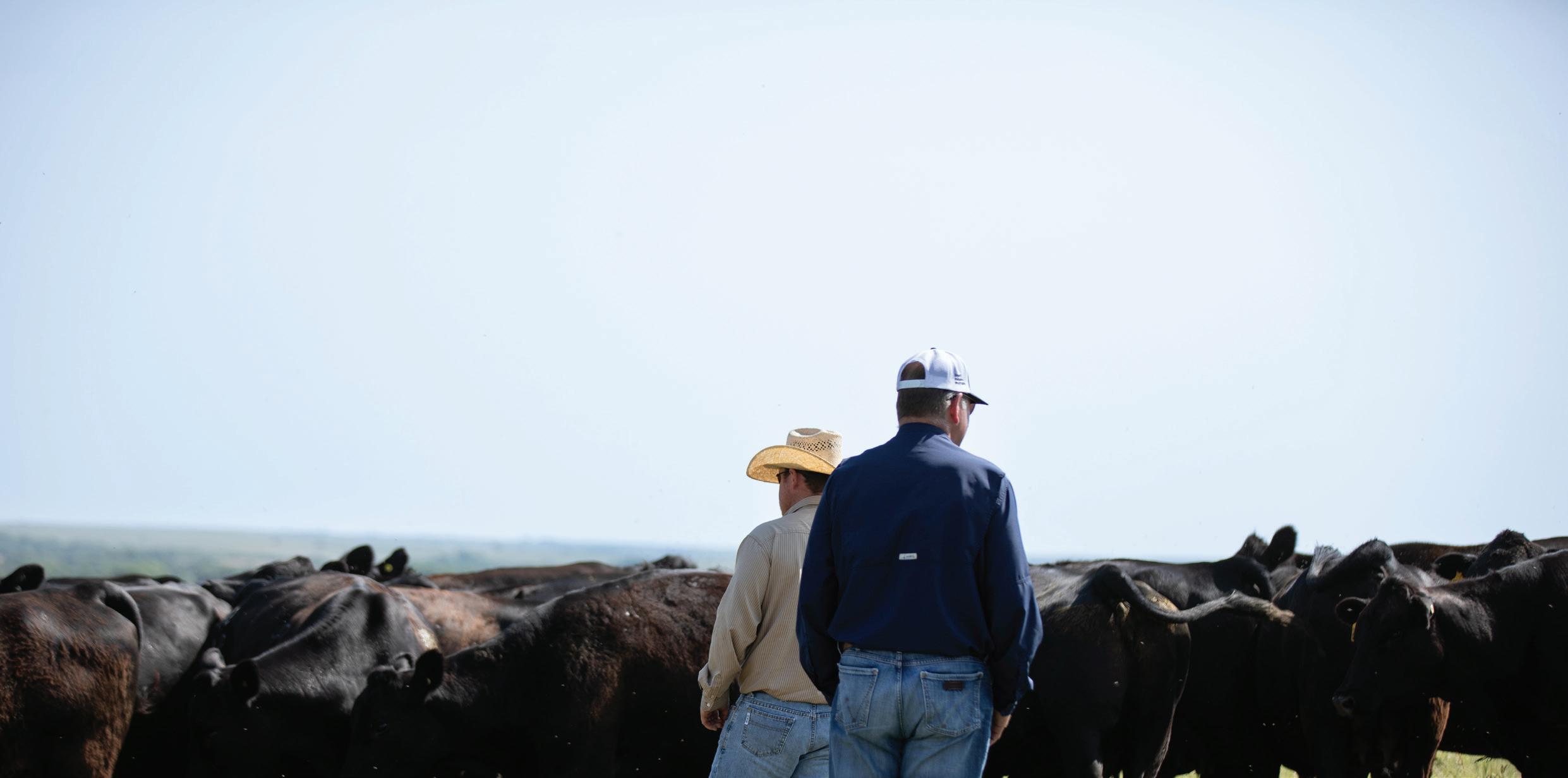
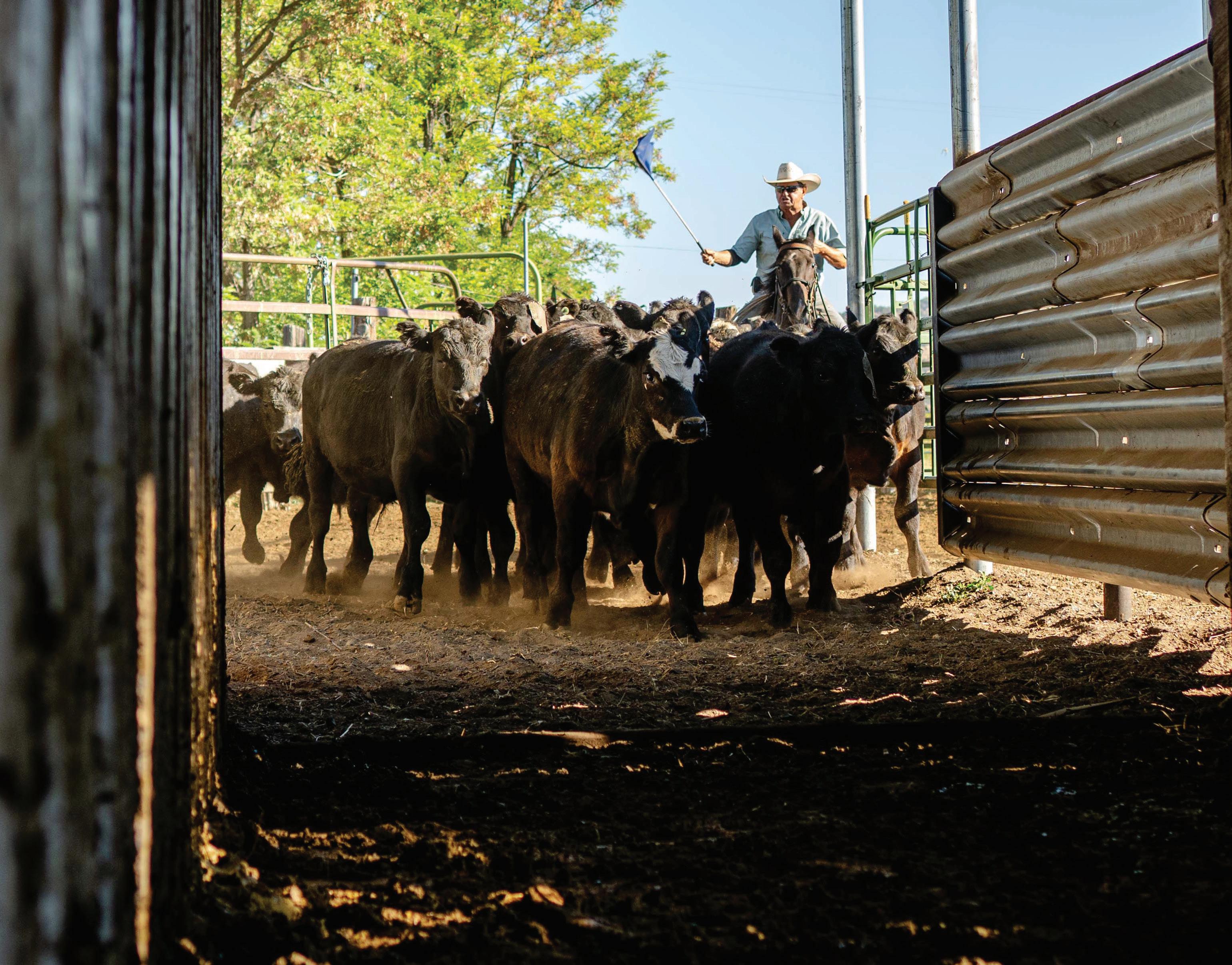
KCF BENNET
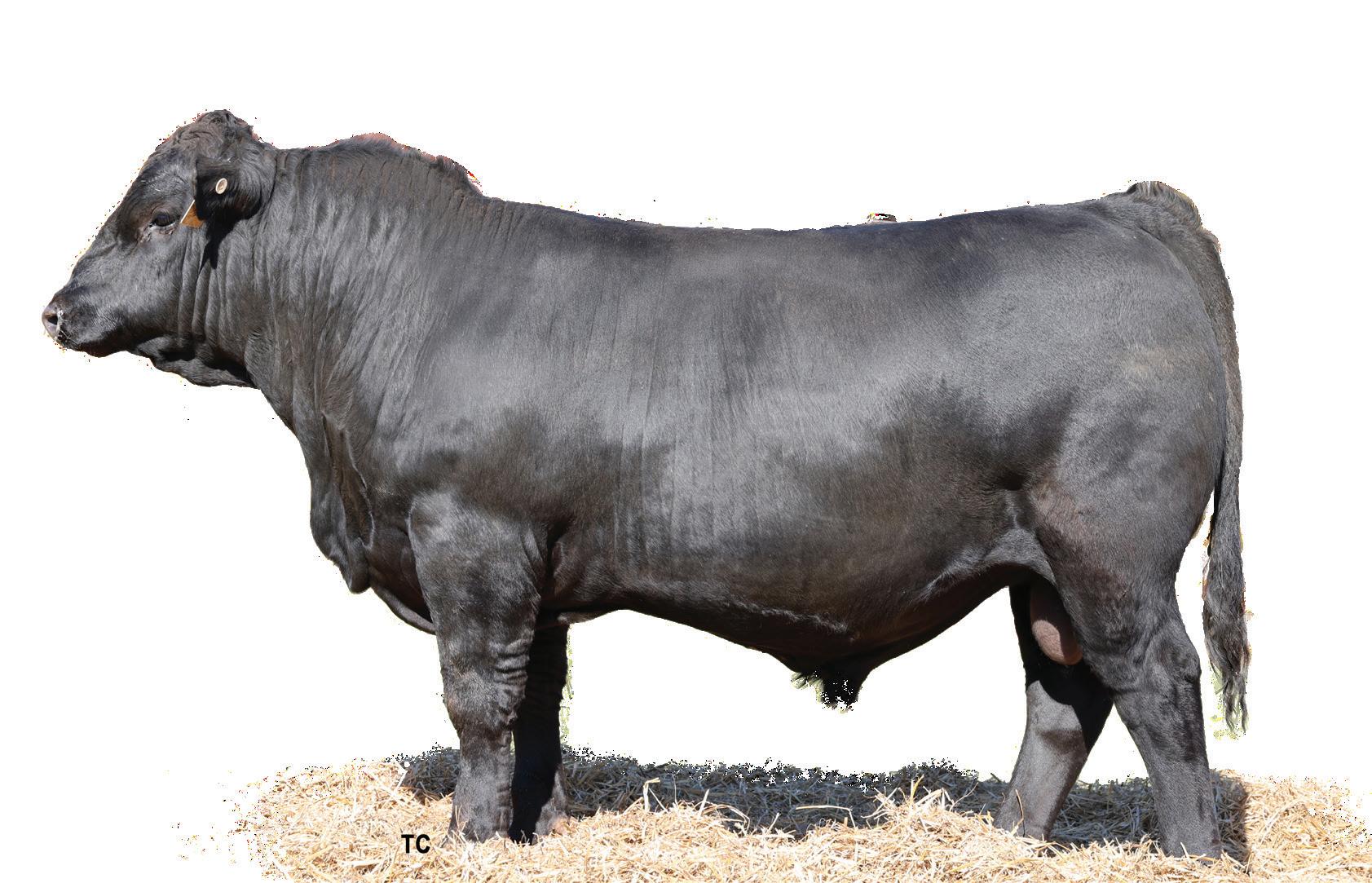
KCF Bennet Tredegar M456 was the second highest selling overall and high selling Gelbvieh/Balancer bull in the Knoll Crest Farms Total Performance Bull Sale. I want to thank everyone at Knoll Crest Farms and the Bennett family, especially Dalton, for their help and hospitality. Thank you to everyone who I called prior to and after the purchase of KCF Bennett Tredegar M456. Lastly, thank you to Post Rock Cattle Company for their purchase of half possession in The Congressional National Gelbvieh and Balancer Sale.
This exciting young herd sire is homozygous black, homozygous polled purebred Gelbvieh bull gained lots of interest and traction leading up to the sale on December 5, 2025, has the potential to be a game changer and have the generational impact for the breed with his outstanding carcass traits that are too intriguing to ignore. KCF Bennett Tredegar M456 is truly unique and his EPD profile is hard to match. He ranks in the top 1% for heifer pregnancy,
marbling, FPI and TPI while ranking in the top 2% for ribeye area, top 5% for carcass weight, the top 15% for yield grade and 10 other EPDS in the top 50% or higher. He is a free moving, soft made bull with added capacity and muscle.
TERMS AND CONDITIONS OF KCF BENNETT TREDEGAR M456 SEMEN PACKAGES:
One package of KCF Bennett Tredegar M456 semen: $2000 for 10 units of semen.
Additional packages of KCF Bennet Tredegar M456 semen are available to breeders wanting to buy more than 10 units: $500 for an additional package of 10 units. Buyers may purchase as many packages of semen as they would like. Semen packages can be purchased
until February 10th, 2026. Afterward, no more semen will be offered for the life of the bull except to the syndicate package purchasers. Starting March 15th, 2027, syndicate members can purchase semen on KCF Bennet Tredegar M456 for $30 per unit from Wolf Gelbvieh. One AGA member per syndicate package and only syndicate members can register calves out of KCF Bennett Tredegar M456 unless a female is sold bred to him. Syndicate members are not permitted to sell or trade their syndicate membership or semen to anyone. KCF Bennett Tredegar M456 semen is frozen and ready for shipment with shipping to take place after March 15th, 2026. All collection and freezing cost are paid by the sellers and semen shipping cost to buyer is paid by the buyer. Contact Wolf Gelbvieh to purchase semen packages.B




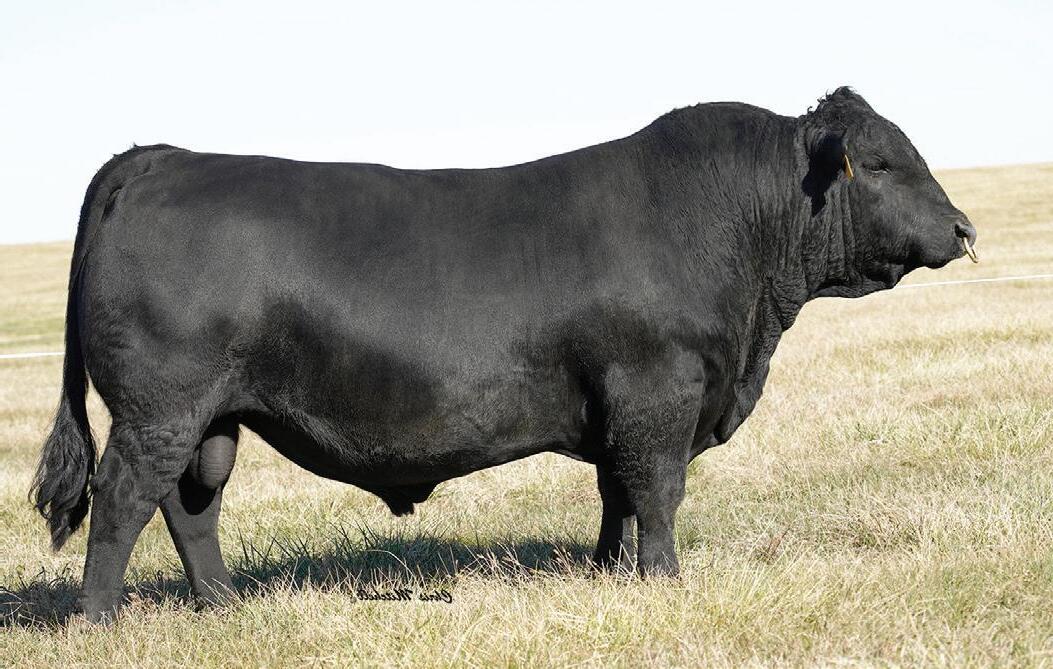


JKGF All American J109
Sire: DLW TPG Frontrunner 2510F
Dam: JKGF F109 ET (Carolina Leverage 3214A )
Purchased as high selling bull Genetic Power 2023. Produced sale topping progeny throughout the breed in 2025 with his first calves. For semen contact your local Select Sires Rep.
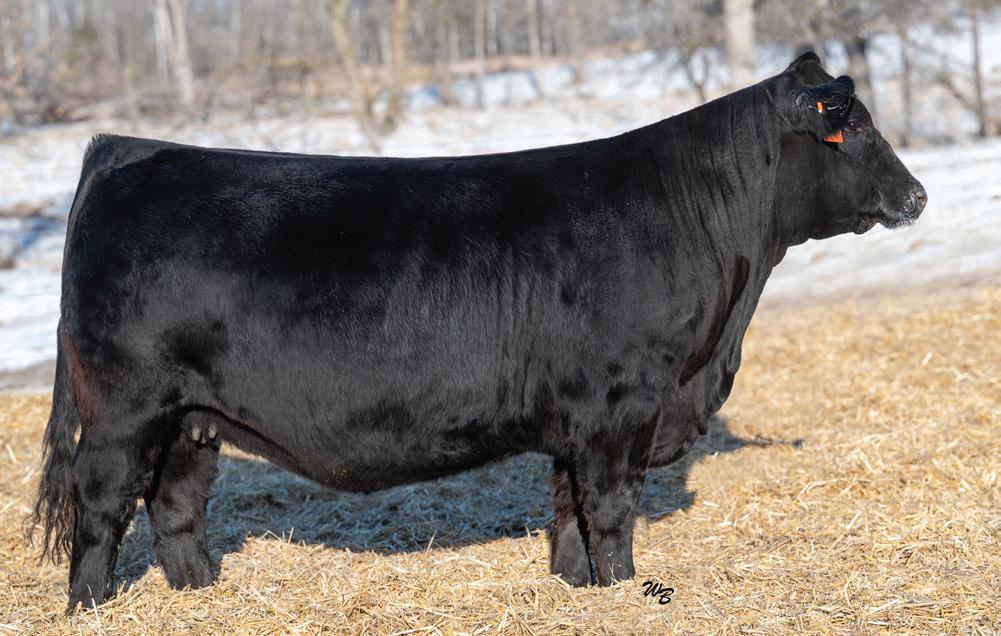
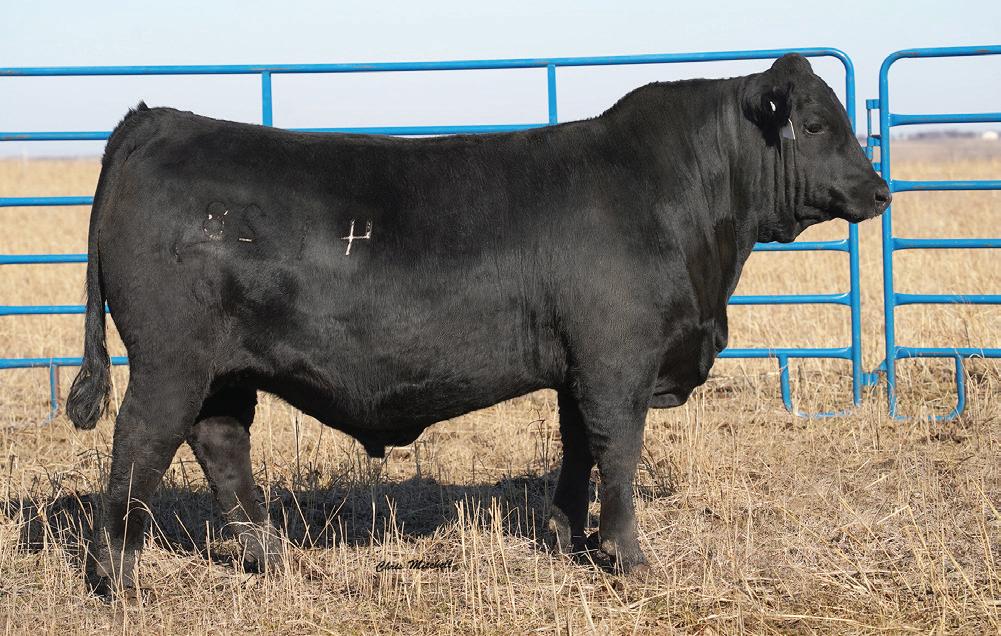
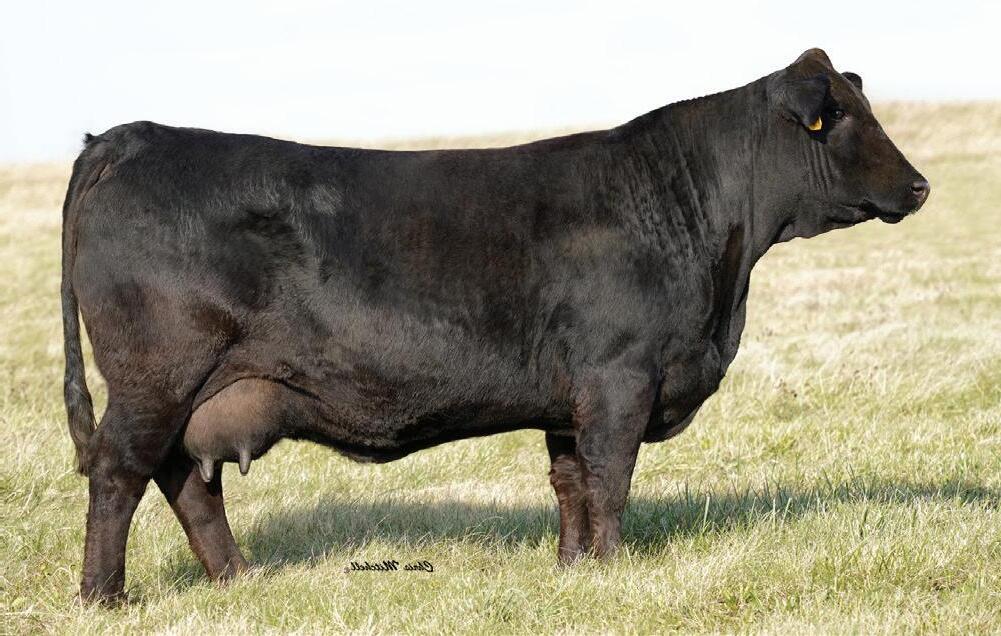
JKGF F824
Sire: JKGF Chief Justice C205
Dam: JKGF Mandy Z24 (DCSF Post Rock Granite 200P2) High selling lot in the 2025 National Gelbvieh and Balancer Sale. Elite donor with progeny coming spring of 2026.

LRSF Arianna L178
Sire: JOB Danell Pay Pal 12H Dam: LRSF Arianna 77B
new addition donor in 2025, purchased as the high selling female in the 2025 Larson’s Lost River Livestock Sale. Progeny coming in 2026.

Queens of the Herd
Gelbvieh continues to wear the crown of maternal excellence.
by MEGAN UNDERWOOD, M.S.
Spring bull sale season has arrived and sale catalogs continue to fill the mailbox daily. As you flip through each new catalog that arrives in your mailbox, you will see everyone’s favorite sayings in their footnotes, “She’s the front pasture kind” or “She’s destined for the donor pen.” While these sayings ring true, shouldn’t beef producers raise every female with the goal to make it to the front pasture or donor pen?
While not every female can make it to the donor pen, every replacement female can make it to the pasture whether it’s the front pasture or the back pasture, every female needs to be producing to her maximum ability. The Gelbvieh female does just that. Whatever pasture she calls home, in any environment or zip code, she continues to excel in maternal ability, and the data continues to prove it.
The United States Meat Animal Research Center (USMARC) located in Clay Center, Nebraska, is the home of the historic Germplasm Evaluation Project that has contributed data to the beef industry for more than 50 years. This project is designed to compare genetic change across beef breeds and their crosses, which allows producers to make the best genetic selection decisions in crossbreeding systems. The research goals are to identify complimentary breed utilization for traits that impact producer efficiency and cater to
consumer preference, sustainability, and marketability.
USMARC Progress Report No. 22 data shows Gelbvieh females have the smallest mature cow size of the four major continental breeds. The Gelbvieh breed was the only breed in the study to reduce mature cow size – at an average of 1,382 pounds Gelbvieh-sired females had the lowest five-year-old cow weight. This reduced mature cow-size allows for puberty to be reached at an earlier age, which leads to calving earlier in the season and producing a heavier calf at a younger age.
Gelbvieh females are the smallest mature cows however, their decreased size does not negatively influence their maternal influence, it continues to improve their efficiency and makes them the picture of sustainability. Growth in your calf crop begins with the Gelbvieh female and the latest USMARC research proves this fact even more.
USMARC just released new research regarding breed-specific heterosis for growth and carcass traits in 18 United States cattle breeds, and Gelbviehsired females were the only Bos taurus females with a maternal weaning weight advantage. The data revealed that Gelbvieh-influenced females had a maternal weaning weight advantage of 22.7 pounds. This increase in weaning weight is thought to be the result of maternal milking ability in Gelbvieh
females as Gelbvieh is in the top two breeds for average maternal milk.
In today’s market, the increased 22.7 pounds of weaning weight has a significant impact on the beef producer’s bottom line. At a market price of $4.50 per pound on five-weight steers with a 22.7 pound weaning weight advantage, the Gelbvieh influence would equate to an additional $102.15 revenue per head. On a group of 100 steers, Gelbviehinfluenced females would generate $10,215 in additional calf crop revenue. Gelbvieh-influenced cowherds generate more pay weight which is more profit for the producer. Gelbvieh genetics grow more than just weaning weights, they grow your profitability.
The USMARC research projects continue to prove that Gelbvieh females are the queens of the herd and wear the crown of maternal excellence with honor. Gelbvieh females have the genetic capability to be the next donor dam and front pasture cow, but they really deserve to be the foundation females of the entire United States cowherd as Gelbvieh is the maternal breed of choice.
Bull Barn Genetics
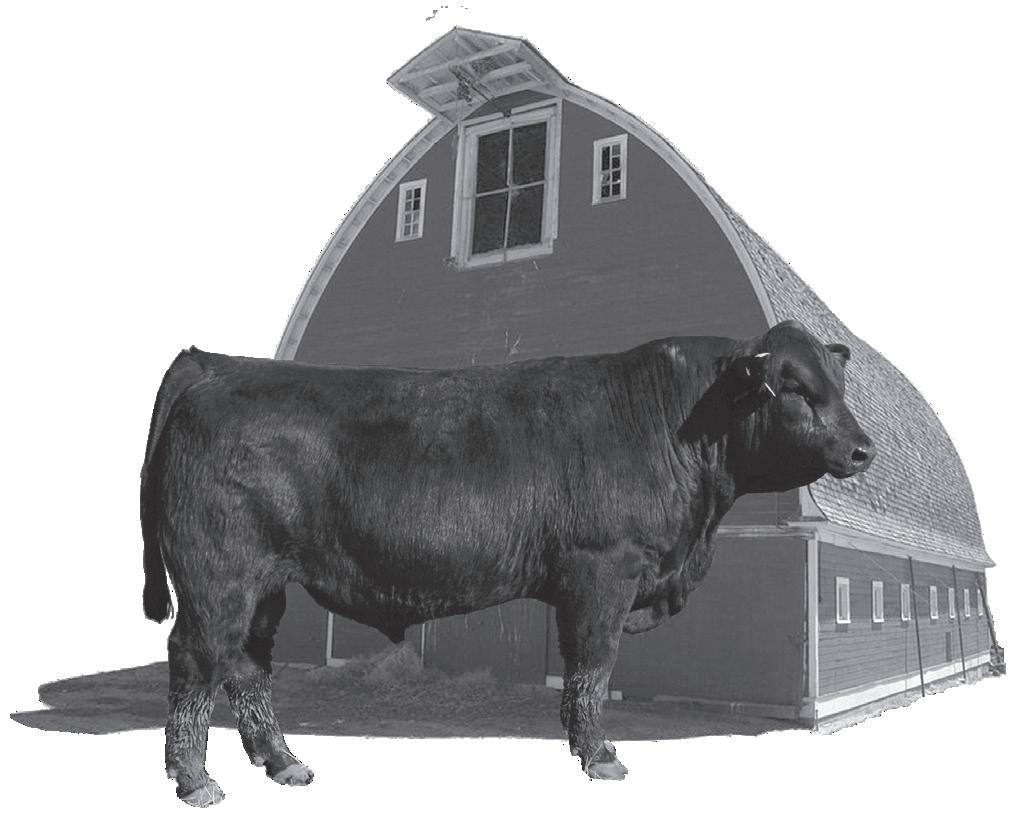


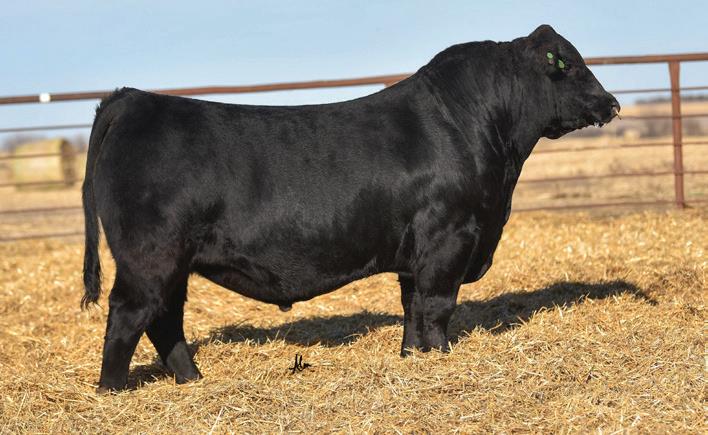

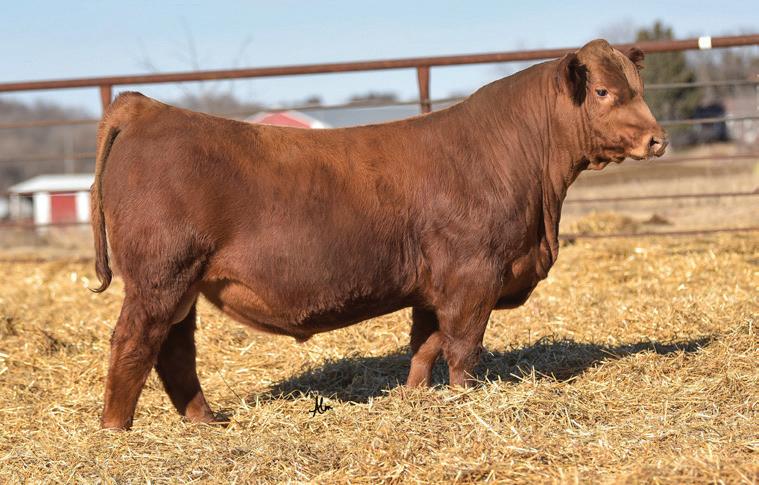
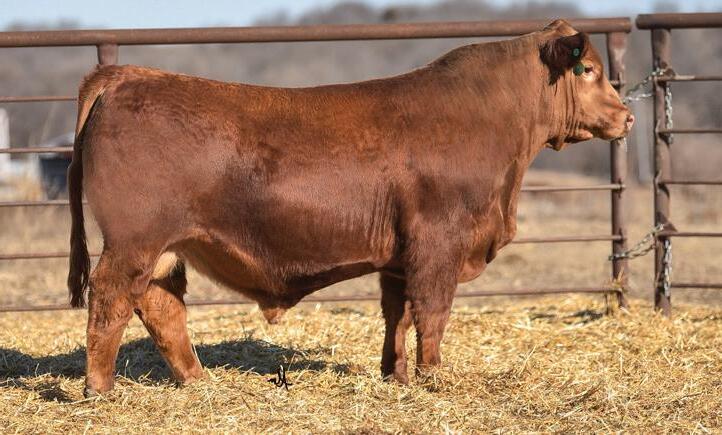



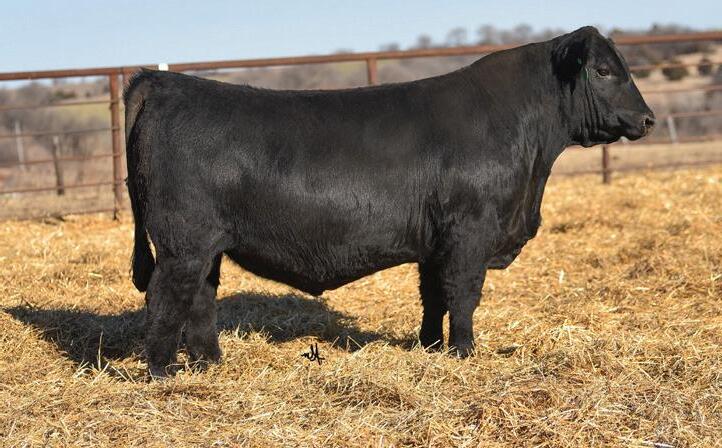
“Information is the oil of the 21st century, and analytics is the combustion engine.”
- Peter Sondergaard
RIPPE GELBVIEH

Using data to increase your profits ]
“What gets measured, gets managed.”
- Peter Drucker
Go where the DATA is:
For Females:
• Track Udder Scores
• Measure Cow Size
• Measure Cow Efficiency through percentage body weight weaned
For Carcass:
• Feed out our Steers every year and receive individual carcass data
• Ultrasound Bulls
• Ultrasound Females
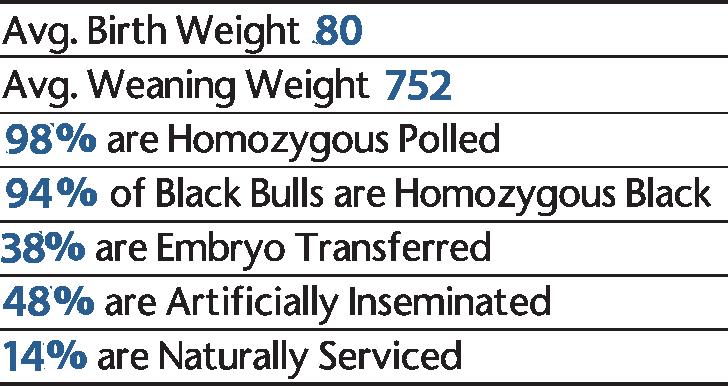
DAMS OF DOMINANCE
Rippe Gelbvieh ranked #1
Gelbvieh Breeder for Dams of Merit in Nebraska
Dam of Merit is a AGA designation for cows that meet selection criteria including early puberty and conception, regular calving intervals, and above average weaning weights on at least three calves. Only 6.2% of the dams in the breed qualify. Join Us!

For Bulls:
• Disposition Scores
• Homozygous Polled and Black tested
• Higher Accuracy EPDs through genomic EPD testing

Feeder Profit Index & $B is an economic selection index designed to aid producers in selecting sires whose progeny will perform in the Feedlot and are sold on a grade and yield. This is an index where it ranks sires whose progeny should do the best in the feedlot.
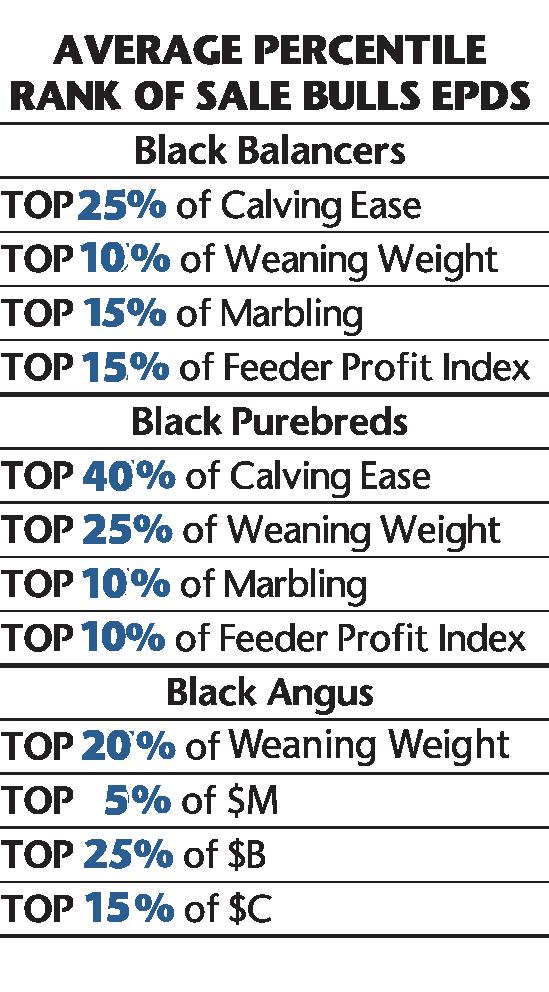
Guest Speaker, Troy Applehans
March 13, 2026 • 7:00 pm • Fairbury Livestock Salebarn
Troy is the CattleFax market analyst responsible for feeder cattle and cow/calf regions of the Southern Plains region as well as Southeastern states of the U.S.

Saturday, March 14, 2026 at 1:00
Fairbury, NE • Fairbury Livestock CO.
Auctioneer: Joe Goggins, Billings, MT
Complimentary Lunch at 12:00
114 Bulls, 75 Black Balancers, 15 Black Purebreds, 24 Black Angus
Here is what we stand for:
• Customer service after the bull is sold
• Balanced EPD profile
• The Essentials: Sound, Big Bodied, Big Nuts, and Muscular
• Reliable and honest data
• Proper Bull development
• Crossbreeding
• Get the benefit of heterosis and hybrid vigor here!
Video of the bulls, data, and catalog will be posted at rippegelbvieh.com and rippeangus.com
Hubbell, Nebraska
Dustin: 316-323-4874
402-200-0555
Duane: 402-200-0096 (Cell) www.rippegelbvieh.com
[ Using data to increase your profits ]
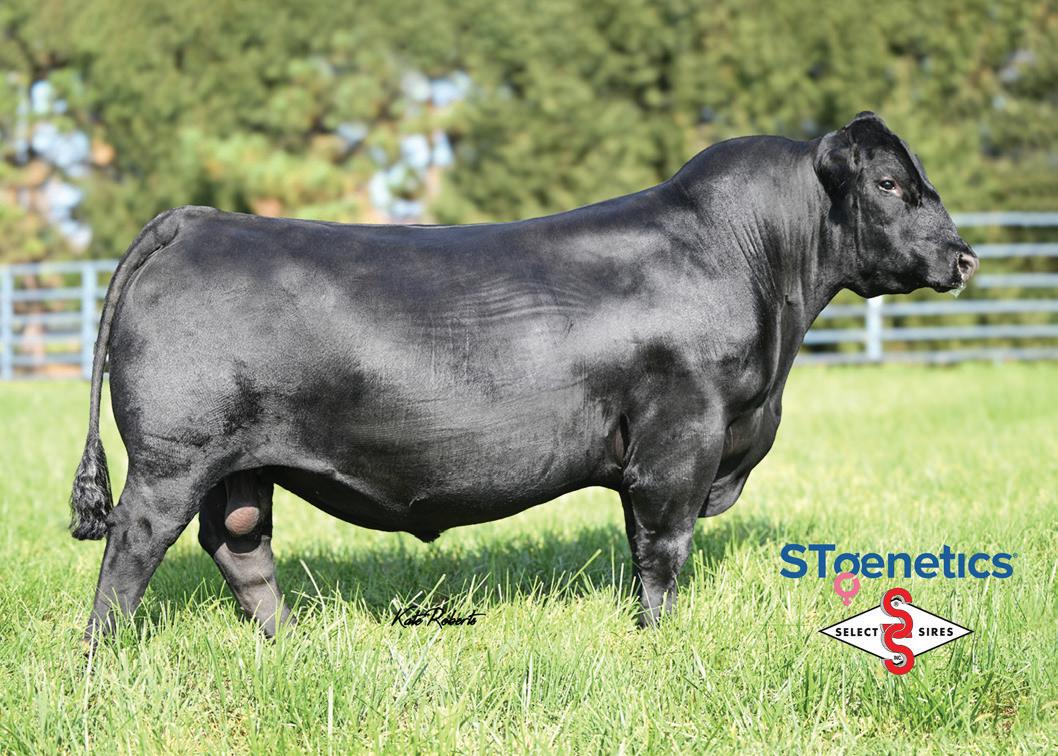

Raising Bulls for Commercial Cattlemen that fit today and tomorrow.
BOYD BEDROCK
EVENTS OF INTEREST
FEBRUARY 2026
FEB. 5 Black Hills Stock Show Gelbvieh & Balancer Show/Sale, Rapid City, S.D.
FEB. 13 Lemke Cattle Annual Bull & Female Sale, Lawrence, Neb.
FEB. 13-15 Geidel Cattle Company Annual Bull Sale, Online at DVAuction.com
FEB. 14 17th Annual Genetic Power Sale, Springfield, Mo.
FEB. 14 Prairie Hills Gelbvieh Annual Bull Sale, Gladstone, N.D.
FEB. 14 Smith Farms Bull & Female Sale, Purvis, Miss.
FEB. 17 48th Annual Cedar Top Ranch Maternal Empire Bull Sale, Burwell, Neb.
FEB. 17 2026 Draft Picks Bull Sale, Innisfail, AB
FEB. 19 Gustin’s Diamond D Gelbvieh Annual Production Sale, Medina, N.D.
FEB. 21 Locust Hill Cattle Co. Sale, Pelham, N.C.
FEB. 21 Overmiller Gelbiveh & Red Angus Production Sale, Smith Center, Kan.
FEB. 23 Beastrom Ranch Annual Gelbvieh & Balancer Sale, Pierre, S.D.
FEB. 25 Grund Beef Genetics Annual Bull Sale, Sharon Springs, Kan.
FEB. 26 Plateau Gelbvieh Bull Sale, Brush, Colo.
FEB. 27 35th Annual Pot of Gold Bull Sale, Montrose, Colo.
FEB. 28 Seedstock Plus North Missouri Bull Sale, Kingsville, Mo.
FEB. 28 Post Rock Cattle Company Cowman’s Kind Bull & Female Sale, Barnard, Kan.
FEB. 28 Larson’s Lost River Livestock 16th Annual Production Sale, Clearbrook, Minn.
FEB. 28 Black Gold Genetics 20th Annual “Share the Gold” Bull Sale, Pritchett, Colo.
MARCH 2026
MARCH 1 Epley Cattle Annual Bull Sale, Nelson, Neb.
MARCH 2 Hojer Ranch 34th Annual Gelbvieh & Balancer Production Sale, Lake Preston, S.D.
MARCH 3 Swanson Cattle Company Annual Production Sale, Oxford, Neb.
MARCH 4 Warner Beef Genetics Genetic Investment Bull Sale, Arapahoe, Neb.
MARCH 6 Davidson Gelbvieh & Lonesome Dove Ranch 37th Annual Bull Sale, Pontiex, SK
MARCH 7 Thorstenson’s Lazy TV Ranch Annual Production Sale, Selby, S.D.
MARCH 7 Judd Ranch 48th Gelbvieh Balancer and Red Angus Bull Sale, Pomona, Kan.
MARCH 7 Seedstock Plus Arkansas Bull Sale, Hope, Ark.
MARCH 7 Flying H Genetics Herd Bulls Sale, Arapahoe, Neb.
MARCH 7 Davidson Gelbvieh & Lonesome Dove Ranch Bull Sale, Pontiex, SK
MARCH 7 Sheridan Ranch 31st Annual Bull Sale, Burley, Idaho
MARCH 10 Bar Arrow Cattle Company 36th Annual Production Sale, Phillipsburg, Kan.
MARCH 11 Twin View Livestock Bull Sale, Parkbeg, SK
MARCH 12 Raile Cattle Co. Annual Production Sale, St. Francis, Kan.
MARCH 14 Hilltop Farms Annual Gelbvieh/Balancer Bull & Female Sale, Carthage, Mo.
MARCH 14 Bluegrass Gelbvieh Alliance Production Sale, Fredonia, Ky.
MARCH 14 Midwest Beef Cattle Consultants 23rdAnnual Spring Bull and Female Sale, Carthage, Ind.
MARCH 14 Seedstock Plus Red Reward Bull & Female Sale, Osceola, Mo.
MARCH 14 Rippe Gelbvieh & Rippe Angus Bull Sale, Fairbury, Neb.
MARCH 19-21
Danell Diamond Six Ranch 31st Annual Bull Sale, Online at Billpelton.com
MARCH 20 Southwest Iowa Bull and Female Sale, Creston, Iowa
MARCH 21 Ertel Cattle Company Annual Production Sale, Kirksville, Mo.
MARCH 21 Lone Oak Cattle 14th Annual Production Sale, Mechanicsville, Iowa
MARCH 28 Kicking Horse Ranch Annual Production Sale, Oilmont, Mont.
MARCH 28 Cranview Gelbvieh Genetic Progress Sale, Rugby, N.D.
MARCH 28 Wilkinson Gelbvieh Annual Bull Sale, Model, Colo.
MARCH 28 Seedstock Plus South Missouri Bull & Female Sale, Carthage, Mo.
APRIL 2026
APRIL 4 Circle S Ranch “Going to Grass” Production Sale, Canton, Kan.
APRIL 11 Knoll Crest Farm Spring Bull & Female Sale, Concord, Va.
OCTOBER 2026
OCT. 23 T Bar S Focused on the Future Bull Sale, Billings, Mo.
NOVEMBER 2026
NOV. 13 Coles Bend Cattle 1st Annual Production Sale, Smith’s Grove, Ky.
Visit the online version of Upcoming Events at Gelbvieh.org for additional dates of upcoming sales and more information on each event.
Editor’s Note:
If you have a sale or event information for this listing, please email the information to meganu@ gelbvieh.org. This includes tours, expos, field days and other Gelbvieh events.
EVENTS OF INTEREST
BREEDERS CORNER

ARKANSAS ARIZONA

15702 Hodges Rd., Omaha, Ark. 72662 Hodgesranch@live.com

David & Rita Martin 256 Boyce Road Judsonia, Ar 72081 C: 501.278.7614 www.martincattleco.com

COLORADO
Dave & Dawn Bowman 55784 Holly Rd. • Olathe, CO 81425 (970) 323-6833 • www.bowkranch.com






ILLINOIS
& Karen Wilson 335 Gelbvieh


hornsandthorns@netins.net (319) 480-1564
712-303-1947 tripleh1@unitedwb.coop


Mulroy 785-640-6401 Mayetta, KS tim@blackgoldinc.biz



POST ROCK CATTLE COMPANY
3041 E. Hwy. 284, Barnard, KS 67418
Bill Clark: 785.792.6244
Leland Clark: 785.392.0888 Office: 785.792.6244
Leland Clark: 785.792.6208 Fax: 785.792.6250
Kyle Cavalli: 785-531-1947
Email: prcc@twinvalley.net


Purebred A.I. Seedstock Bulls and Heifers Available. Al & Mary Knapp Cell: (913) 219-6613 18291 158th Street H: (913) 724-4105
Basehor, Kan. 66007 www.triplekgelbvieh.com e-mail: knappa@swbell.net




MISSOURI








BREEDERS CORNER
NEBRASKA

GELBVIEH BALANCER ANGUS V V Private Treaty Bull & Heifer Sales • Orchard, Neb. Val Livingston • www.88ranch.com • 402-655-2288 Deane A. Novak Dorchester, NE Cell # 402.641.6900 website: www.triplengelbvieh.com





Scott Wolf Travis Wolf 308.529.3733 Gothenburg, Neb. • wolfgelbvieh@gmail.com













FLYING H GENETICS
Herd Bull & Female Sales in March & November
Kyle Helms 308-962-6940 Bryan Helms 307-840-0920 Follow us on Facebook & at www.flyinghgenetics.com
Kyle & Lori Kuker Shubert, NE Gelbvieh Bulls Black Balancer Females Red

402-883-7246 402-883-2366 402-245-7512 sqblkfarms.com Facebook.com/sqblkfarms sqblkfarms@gmail.com

NEVADA

Dick & Jean Williams P.O. Box 156 Orovada, NV 89425
775•272•3442
“Pounds Make Profit in Your Pocket” Bulls & Heifers Private Treaty

NORTH CAROLINA

YANCEYVILLE, NC



TODD HODGES (336) 601-8684 GREG “BUBBA” ANDERSON (828) 442-6869
Gelbvieh, Angus & Balancer Cattle DUANE & WENDY STRIDER, OWNERS (336) 964-6277 ccrosscattle@yahoo.com • ccrosscattle.com

(cell) email: gustindd@wildblue.net www.gustinsdiamondd.com

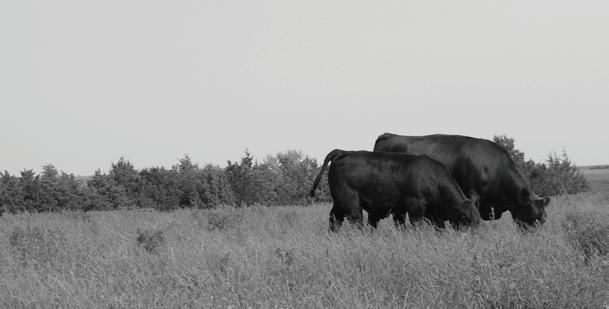

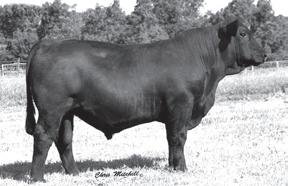
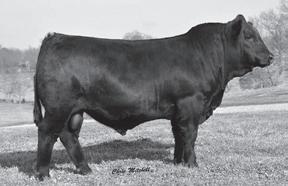
23685 Sartoria Road - Amherst, NE 68812 308-233-4704 or 308-293-0692
Mike, Justin, & Tanner Taubenheim www.taubenheimgelbvieh.com Production Sale First Monday in February
or 303-465-2333.

OKLAHOMA VIRGINIA








BREEDERS CORNER SERVICE



Wesley Brown 1369 Deer Creek Rd • Fort Laramie, WY 82212 307-351-6453 • ninebar9@hotmail.com Purebred Bulls, Heifers & Select Embryos Performance BRED in, Not FED in!








Contact Malerie for advertising opportunities in The Profit Picture and Gelbvieh World publications.
MALERIE MARKLEY GELBVIEH MEDIA PRODUCTIONS COORDINATOR
malerie@gelbvieh.org | 303-465-2333
3 G Ranch 72
Bar Arrow Cattle Company ....... 59, 72
Bar JR Gelbvieh ................................. 73
Bar JR Gelbvieh ............................ 17, 72
Beastrom Ranch ............................... 48
Black Gold Genetics ......................... 37
Bluegrass Gelbvieh Alliance ........... 33
Boehler Gelbvieh ............................... 74
Bow K Ranch ............................... 60, 72
Bull Barn Genetics ......................69, 76
Bull Creek Gelbvieh .......................... 75
C.H. Morris & Sons, LLC. ................... 75
Canadian Gelbvieh Association ...... 76
Cattlemen’s Connection..................... 1
Cave Creek Cattle............................. 75
C-Cross Cattle Company .................. 74
Cedar Top Ranch BC
Chimney Butte Ranch 74
Circle S Ranch 61, 73
CJ&L Livestock 75
CK Cattle Co. 74
Clinch Mountain Gelbvieh 75
Coles Bend Cattle 67
Cranview Gelbvieh 47, 74
Dan McCarty, Auctioneer 76
Danell Diamond Six Ranch 57, 73
Davidson Gelbvieh & Lonesome Dove Ranch .................................................. 15
Diamond L Farms ............................. 75
Doak Lambert, Auctioneer ............. 76
Dobson Ranch .................................... 16
Draft Picks Bull Sale ......................... 54
Epley Cattle ....................................... 39
Ertel Cattle ........................................ 55
Flying H Genetics ........................ 53. 74
Gale Rippey Farms ........................... 75
Genetic Power .................................. 40
Grand Valley Gelbvieh/Balancer ..... 17
Green Hills Gelbvieh .......................... 74
GS Ridge Top Ranch .......................... 17
Gustin’s Diamond D Gelbvieh ..... 11, 74
High Bar Cattle Company ................ 23
Hilltop Farms ................................ 21, 73
Hodges Ranch ................................... 72
Hojer Ranch ............................ 17, 19, 75
Ivers Cattle Company ...................... 73
J & K Gelbvieh Farm, Inc. ................. 72
Judd Ranch 42
Kicking Horse Ranch 17, 35, 73
Koehn Cattle Co. 75
Larson’s Lost River Livestock 45, 73
Lazy TV Ranch 7, 75
Ledgerwood Gelbvieh 76
Lemke Cattle 13
Little Windy Hill Farms 75
LiveAg 65
Locust Hill Cattle Co. 56, 74
Lone Oak Cattle .......................... 56, 72
Martens Gelbvieh ........................ 17, 72
Martin Cattle Company .............. 17, 72
McIntosh Brothers .......................... 62
Mitchell Marketing Services ........... 76
MLM Gelbvieh ..................................... 17
Mulroy Farms .................................... 72
Nine Bar Nine Gelbvieh .................... 76
Nowack Cattle Company .......... 26, 73
Overmiller Gelbvieh .......................... 69
Plateau Gelbvieh ......................... 69, 72
Plateau Gelbvieh ................................ 17
Post Rock Cattle Company ....... 28, 73
Pot of Gold Sale ........................... 17, 22
Prairie Breeze Ranch ..................51, 73
Prairie Hills Gelbvieh .................... 5, 75
ProHart Seedstock ........................... 72
Raile Cattle Co ................................... 35
Red Ridge Gelbvieh .......................... 73
Rippe Gelbvieh ............................. 17, 70
Rogers Valley Farm Gelbvieh .......... 73
Rumfelt Gelbvieh 73
S.J. Cattle Co 75
Sawtooth Gelbvieh Cattle & Hay 74
Gelbvieh 17
Bar S Cattle Co. ........................ 73, 80
ADVERTISING INDEX
Gelbvieh Farm ......................... 75
Gelbvieh ..................... 39, 72
Cattle ......................................... 73 Wolf Gelbvieh .............................. 66, 74


































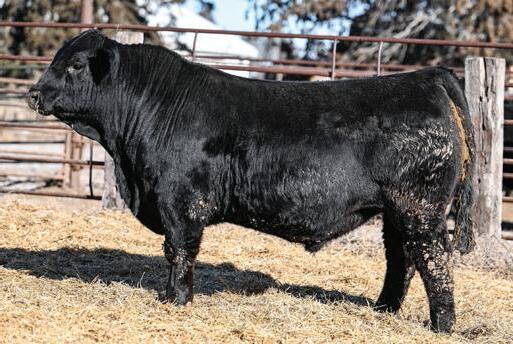













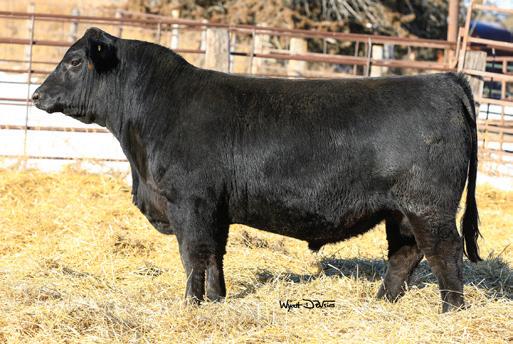




























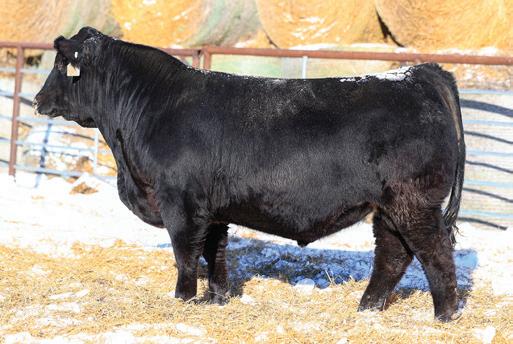



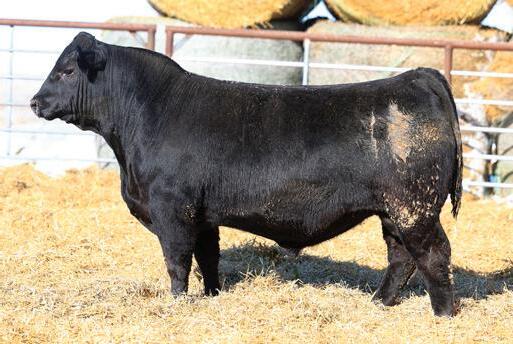


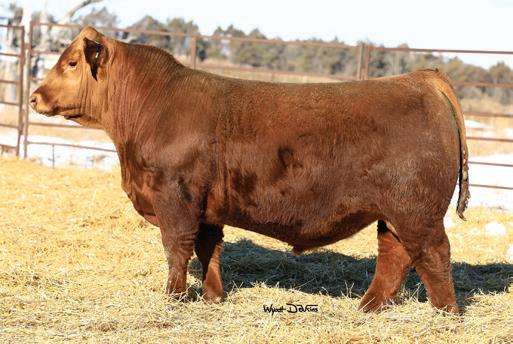




































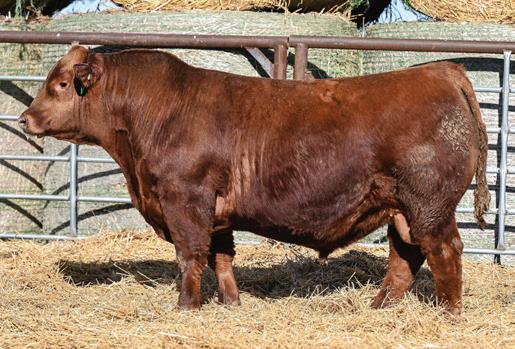














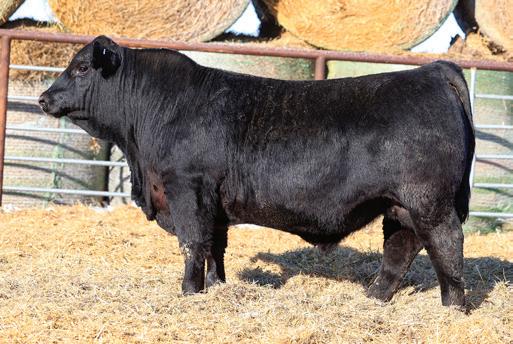








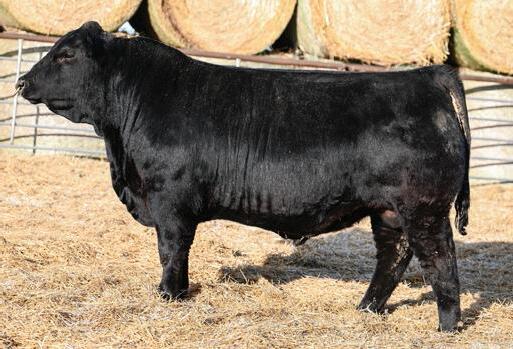































150 HEAD SELL
150 RANGE-DEVELOPED 2 -YEAR-OLD BULLS
BULLS ARE INDIVIDUALLY FEED EFFICIENCY TESTED, GRASS GAIN TESTED AND GENOMICALLY TESTED
TUESDAY, FEB.17, 2026
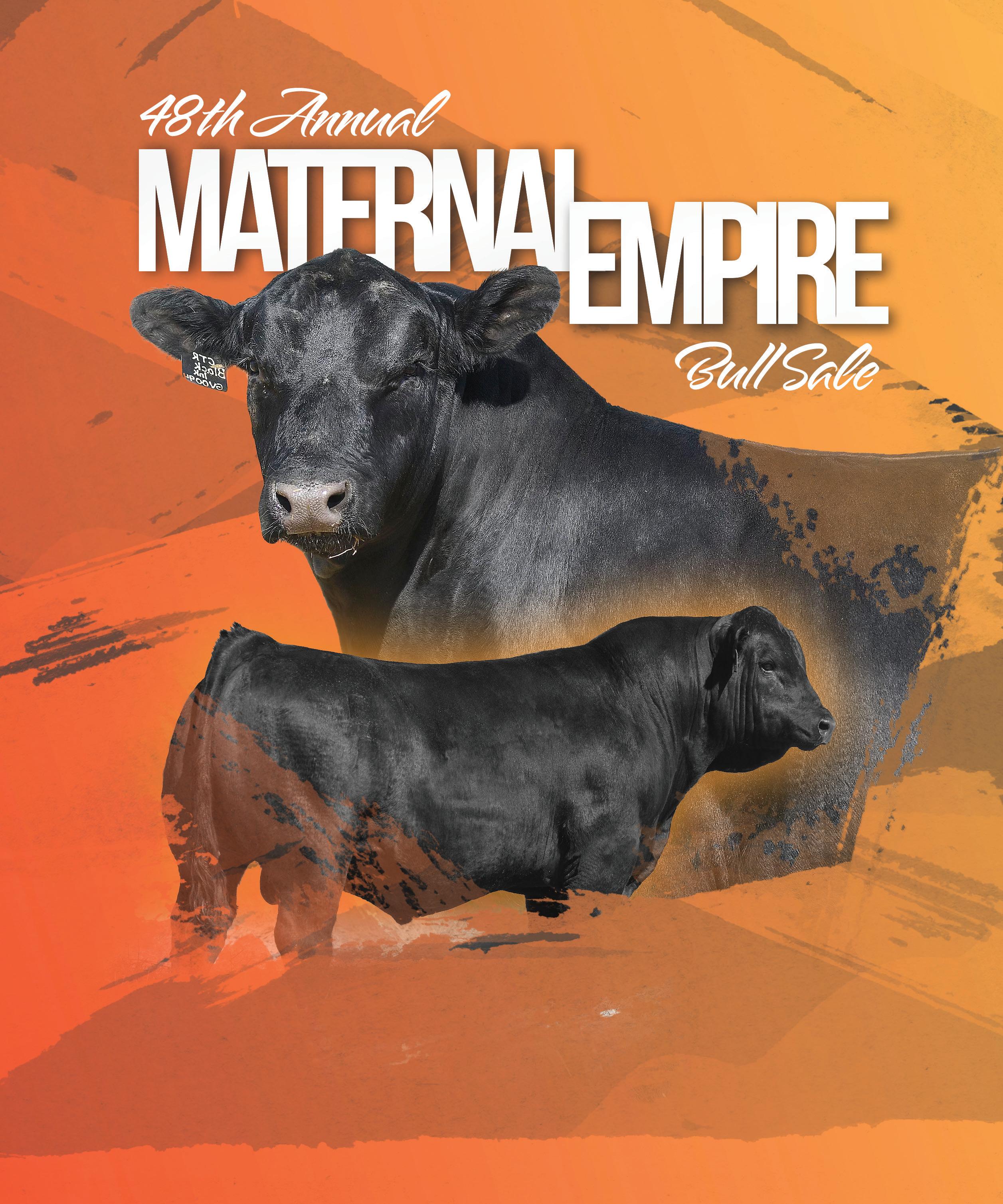
TUESDAY, FEBRUARY 17 12:30 PM | BURWELL, NE
BALANCER & ANGUS
FEATURING: 50 ET BULLS
308-530-3900 (Scott) • 308-530-2720 (Austin)
cedartopranch@yahoo.com • Facebook: Cedar Top Ranch