GELBVIEH
Maternal Magic

ONE STRAW AT A TIME
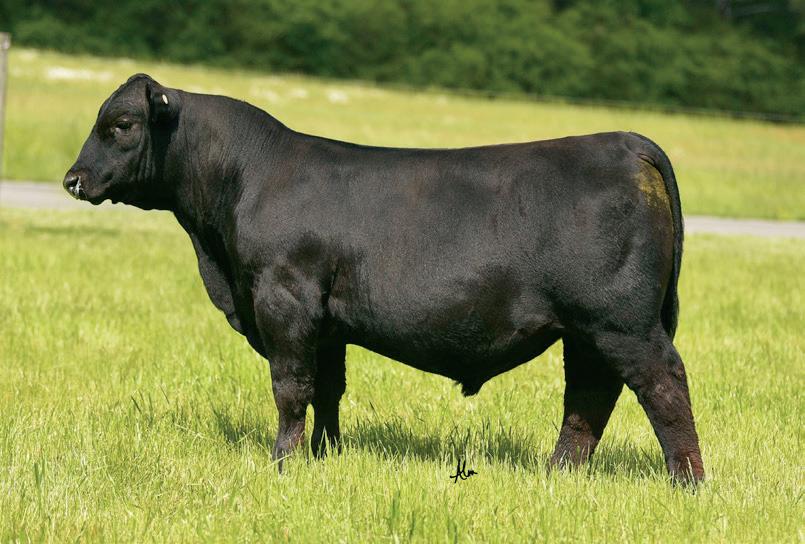
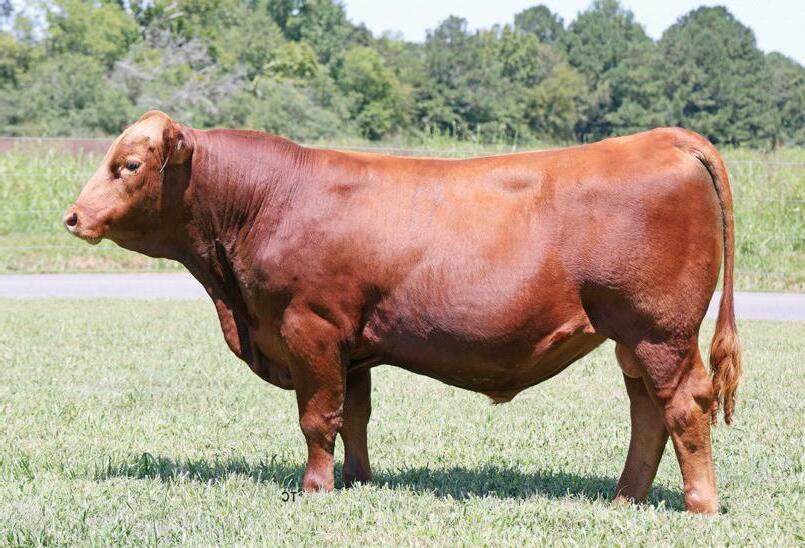
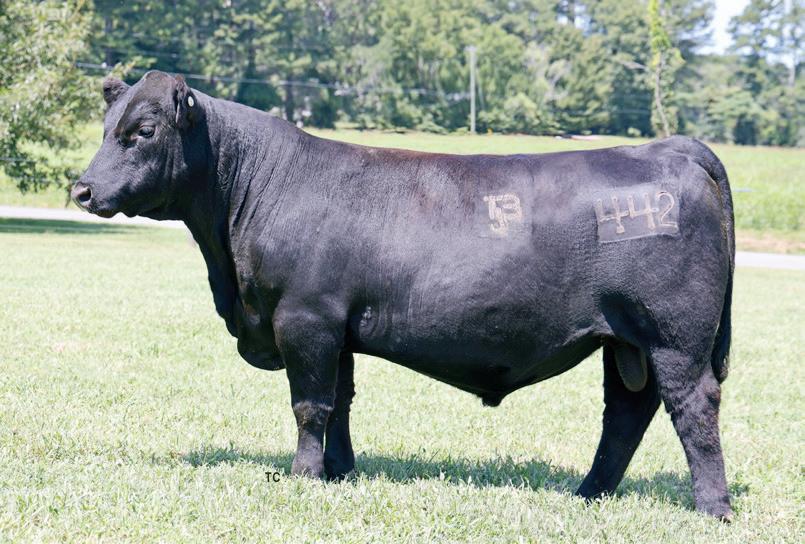
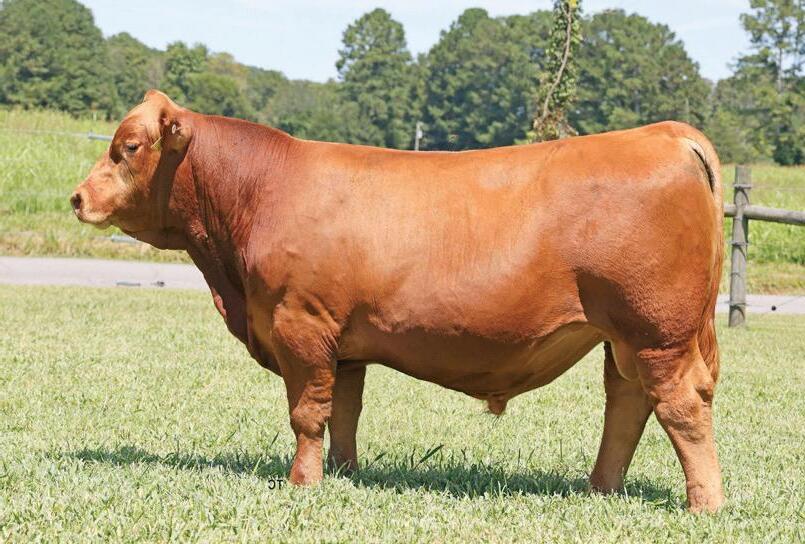
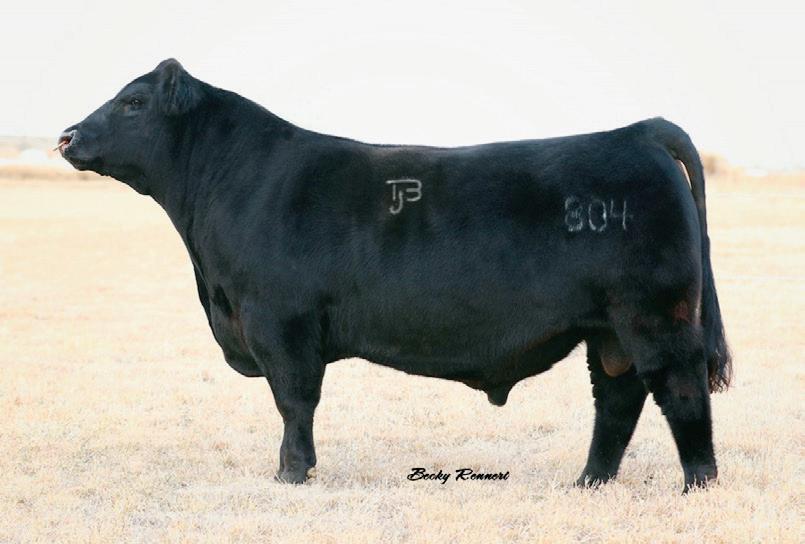
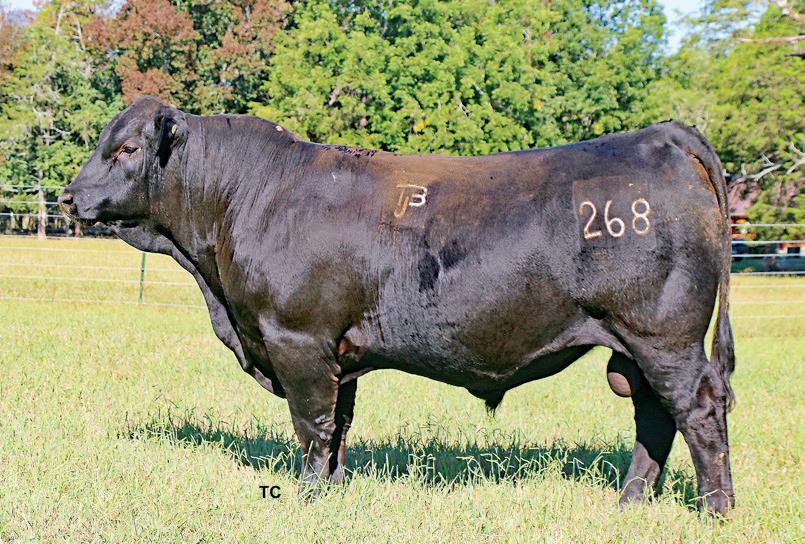


















Sixty-Six Relentless Sons Averaged $12,958 in Judd Ranch’s 48th Bull Sale
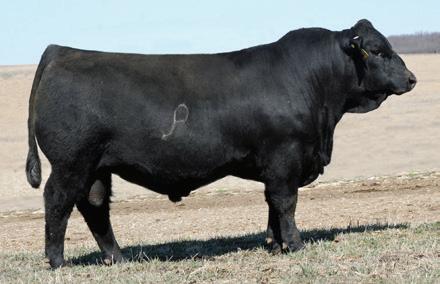
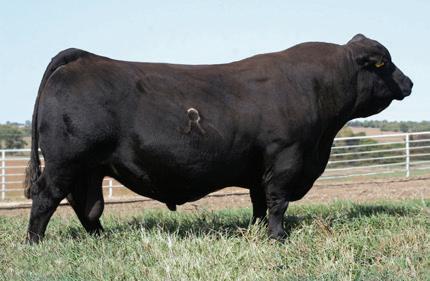
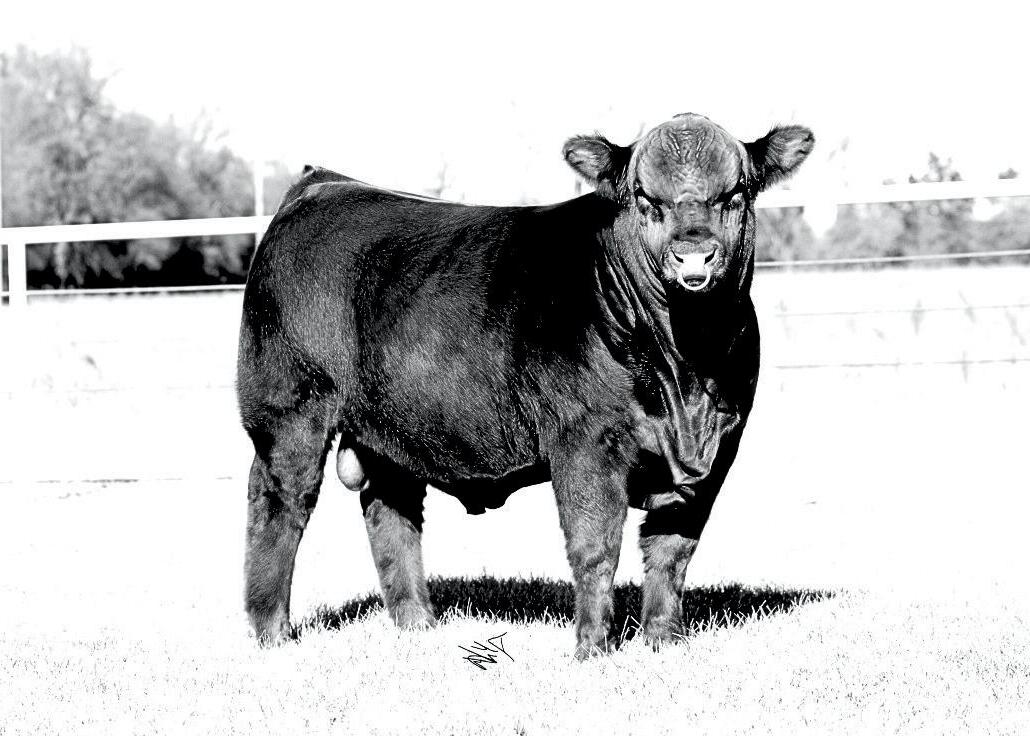
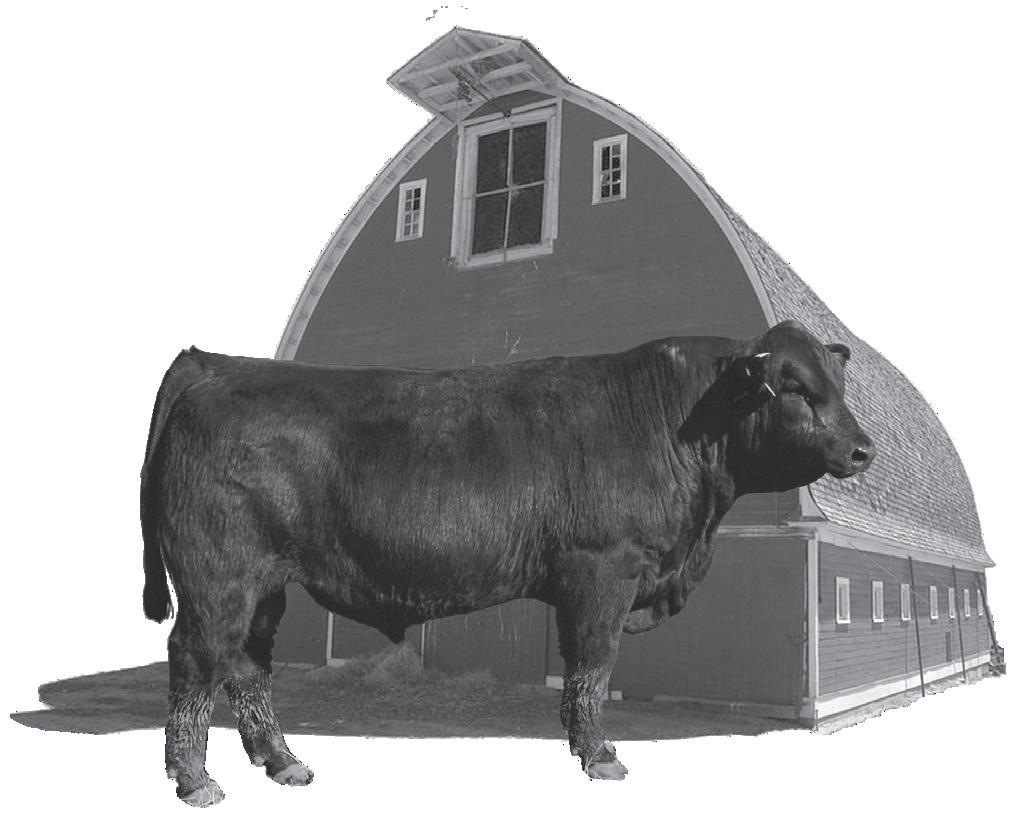
JRI Real Deal 282M360
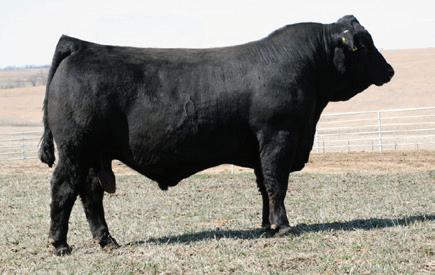
Homo. Black, Homo. Polled (68.8%) Balancer
BW: 74 lbs. 205 Day Weight: 787 lbs. Actual WW: 930 lbs.
365 Day Weight: 1,298 lbs. Yearling Scrotal: 40 cm.
Top 1% WW & YW EPD Strength Relentless Son (Semen Sales are Closed on Relentless)
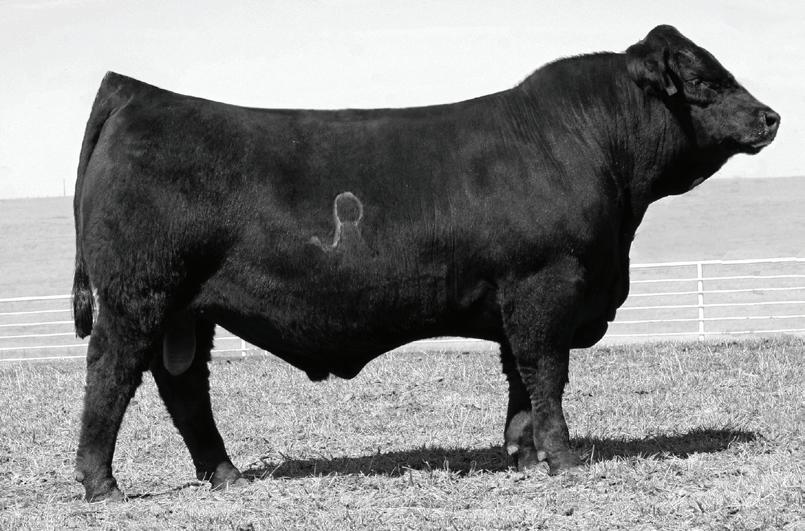
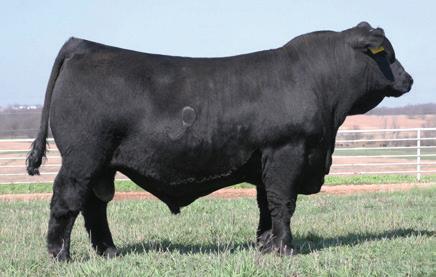
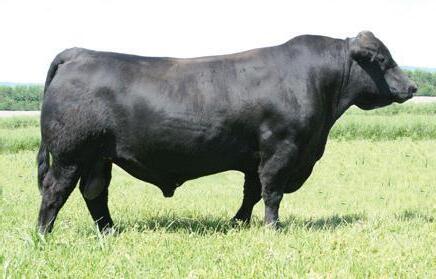
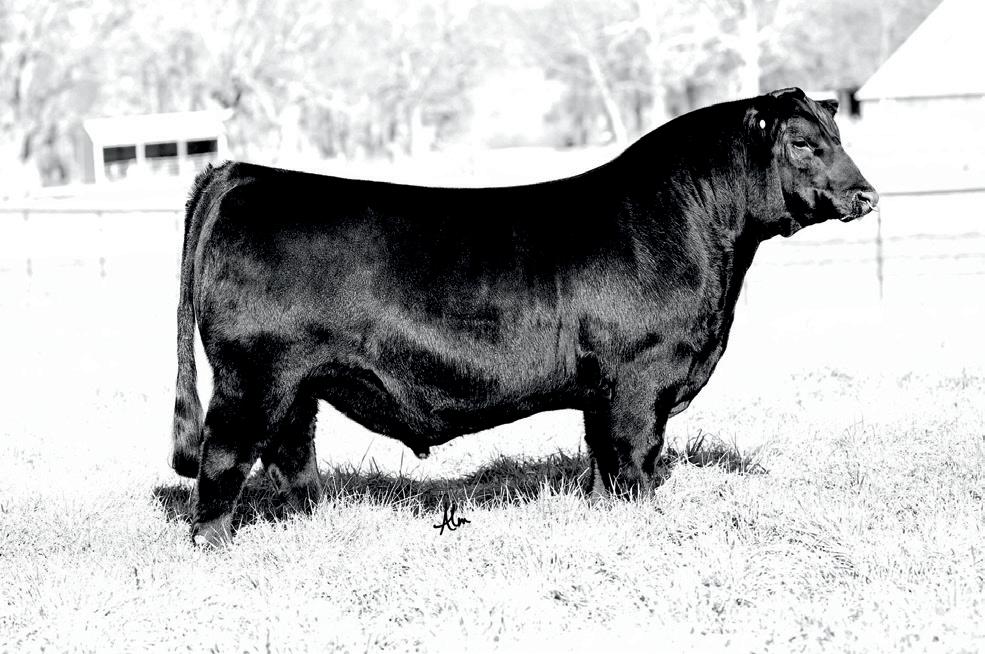
JRI Reel Ez 35L32
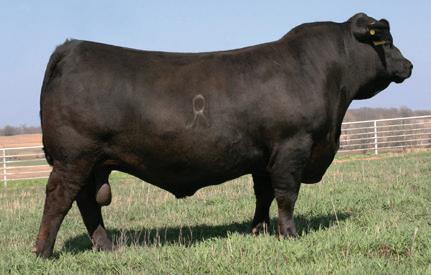
Homo. Black Homo. Polled (75%) Balancer BW: 68 lbs. 205 Day Weight: 806 lbs. Actual WW: 1,015 lbs. 365 Day Weight: 1,243 lbs. Yearling Scrotal: 40.6 cm.
Top 15% CE, Top 10% WW, Top 15% YW EPD Strength
Calving Ease/Beef Machine Relentless Son
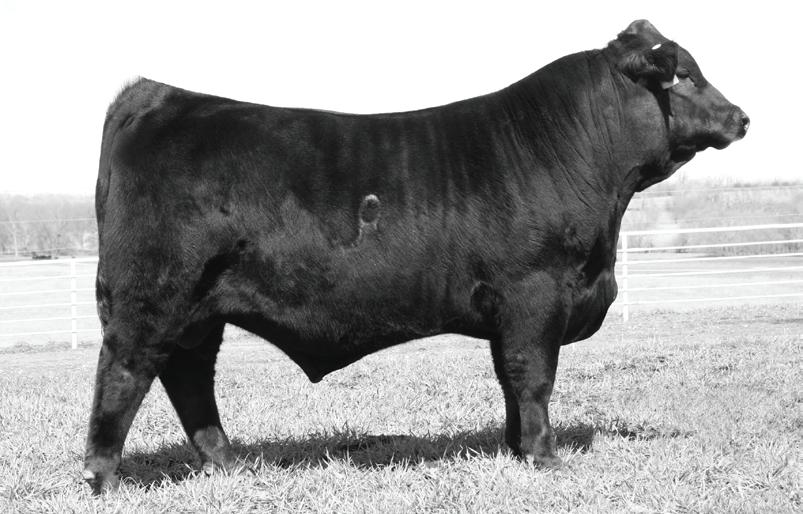
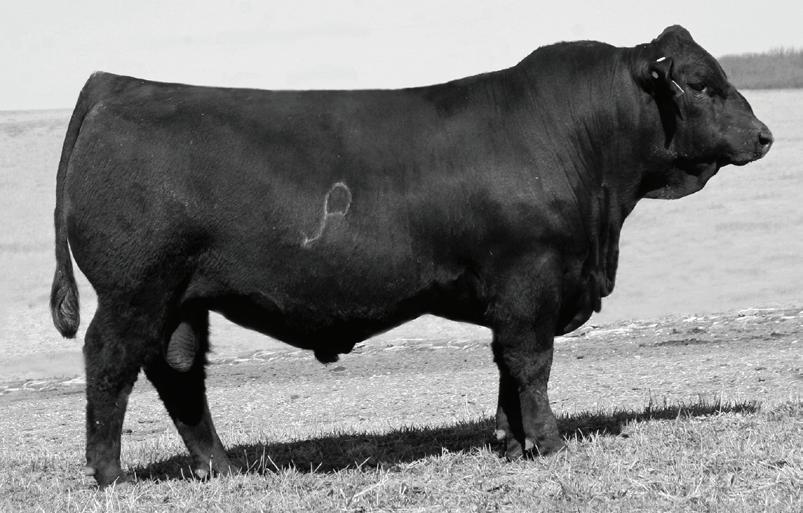
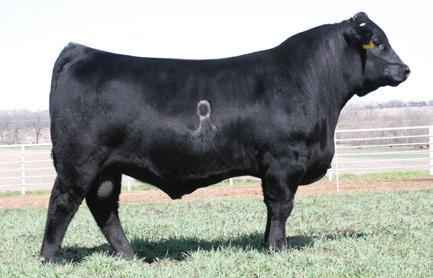
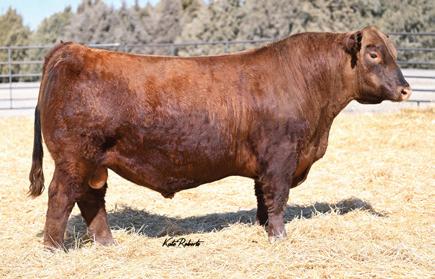
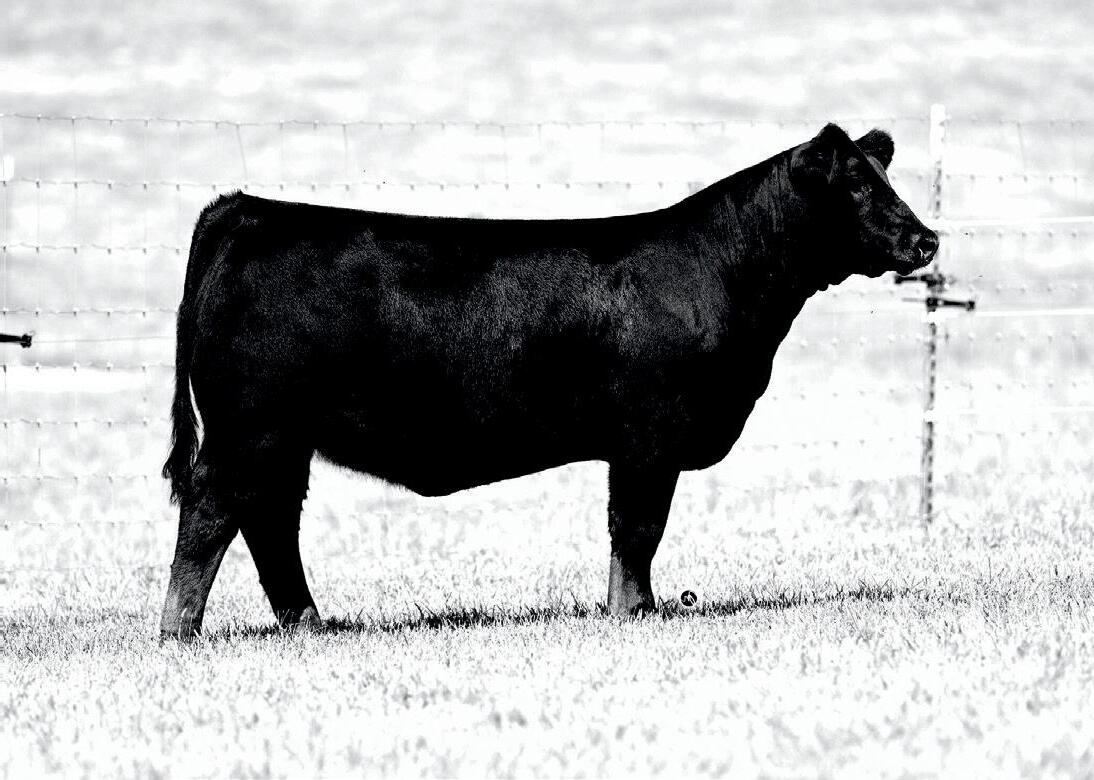
JRI Priority Male 253L489 ET
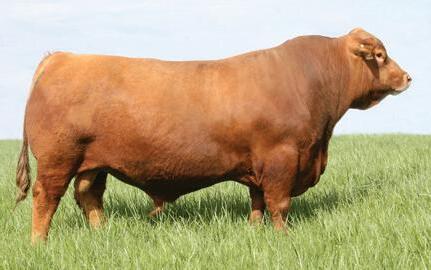
Black, Homozygous Polled Purebred BW: 85 lbs. 205 Day Weight: 823 lbs. Actual WW: 1,010 lbs. 365 Day Weight: 1,284 lbs. Yearling Scrotal: 40.6 cm.
Calving Ease/Meat Machine General Patton Son (Semen Sales are Closed on General Patton)

JUDD RANCH INC.
Dave & Cindy Judd Nick, Ginger Judd & Family Brent & Ashley Judd & Family 423 Hwy K-68 Pomona, KS 66076 Ph: 785/566-8371 or 785/241-0676 www.juddranch.com
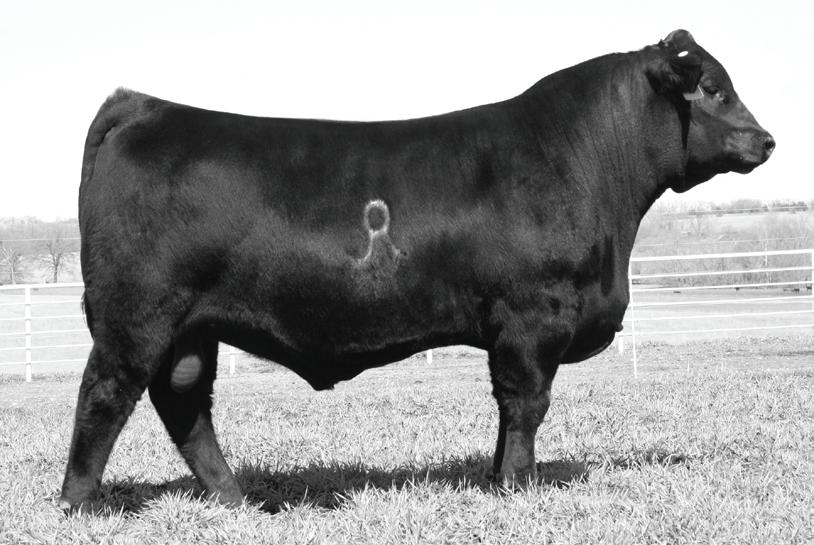
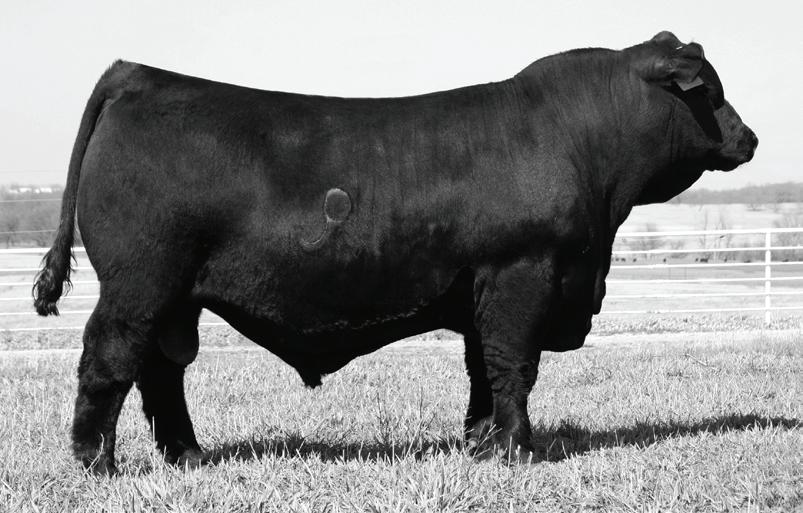
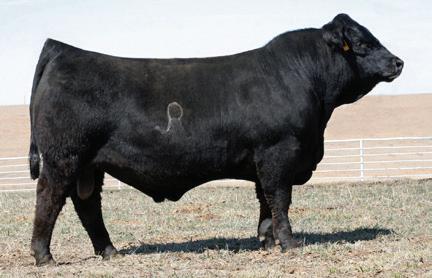
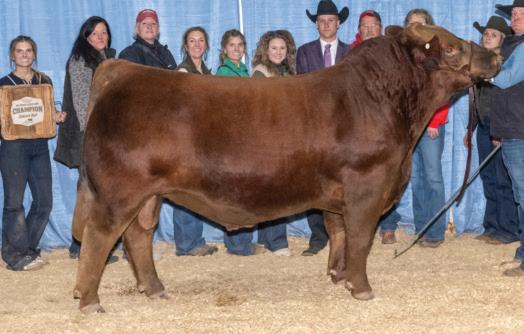
JRI Sire Power Today through Cattlemen’s Connection 1-800-743-0026 JRI Rendezvous 254N325
Homo. Black, Homo. Polled (68.8%) Balancer
81 lbs. 205 Day Weight: 744 lbs. Actual WW: 1,020 lbs.
Day Weight: 1,441 lbs. Yearling Scrotal: 42.1 cm.
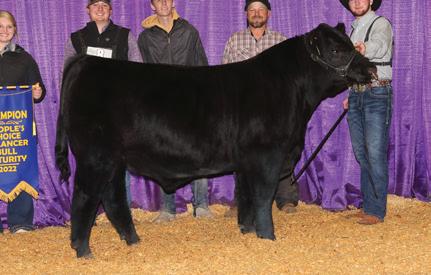
Top 20% CE, Top 10% WW, Top 10% YW EPD Strength National Champion Pen Bull Relentless Son
JRI Rawhide 253L384
Black, Homozygous Polled (62.5%) Balancer
1,420 lbs. Yearling Scrotal: 39.6 cm. Calving Ease/Phenomenal Growth Spread Relentless Son Phenomenal Dam of Merit Cow Family
Junior Connection by Isabel Lowe 04. 14. 16. 20. 22. 10. 06. 12. AFTER THE SALE OVER THE FENCE WITH HENRY DARDEN BEEF IS BACK ON TOP 2026 CATTLE INDUSTRY OUTLOOK SUSTAINABILITY STARTS SMALL DEMAND FOR GELBVIEH GROWS
From the Corner Office by Harold Bertz by Kirsten Heselemeyer by Megan Underwood, M.S. by Megan Underwood, M.S. by Kirsten Heselmeyer
NATURAL BREEDING AGREEMENTS THE GOOD LIFE JUNIOR CLASSIC: SHAPING THE FUTURE OF GELBVIEH AND BALANCER ®
View from the Board by Dan Warner Registry Tips N’ Tricks by Shianna Ocken
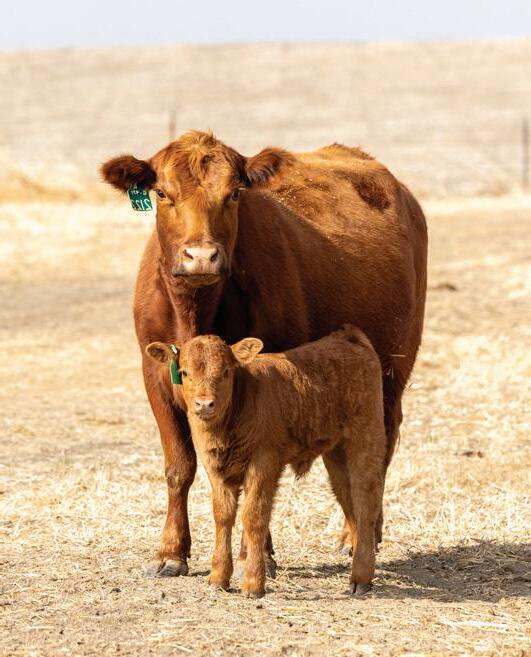
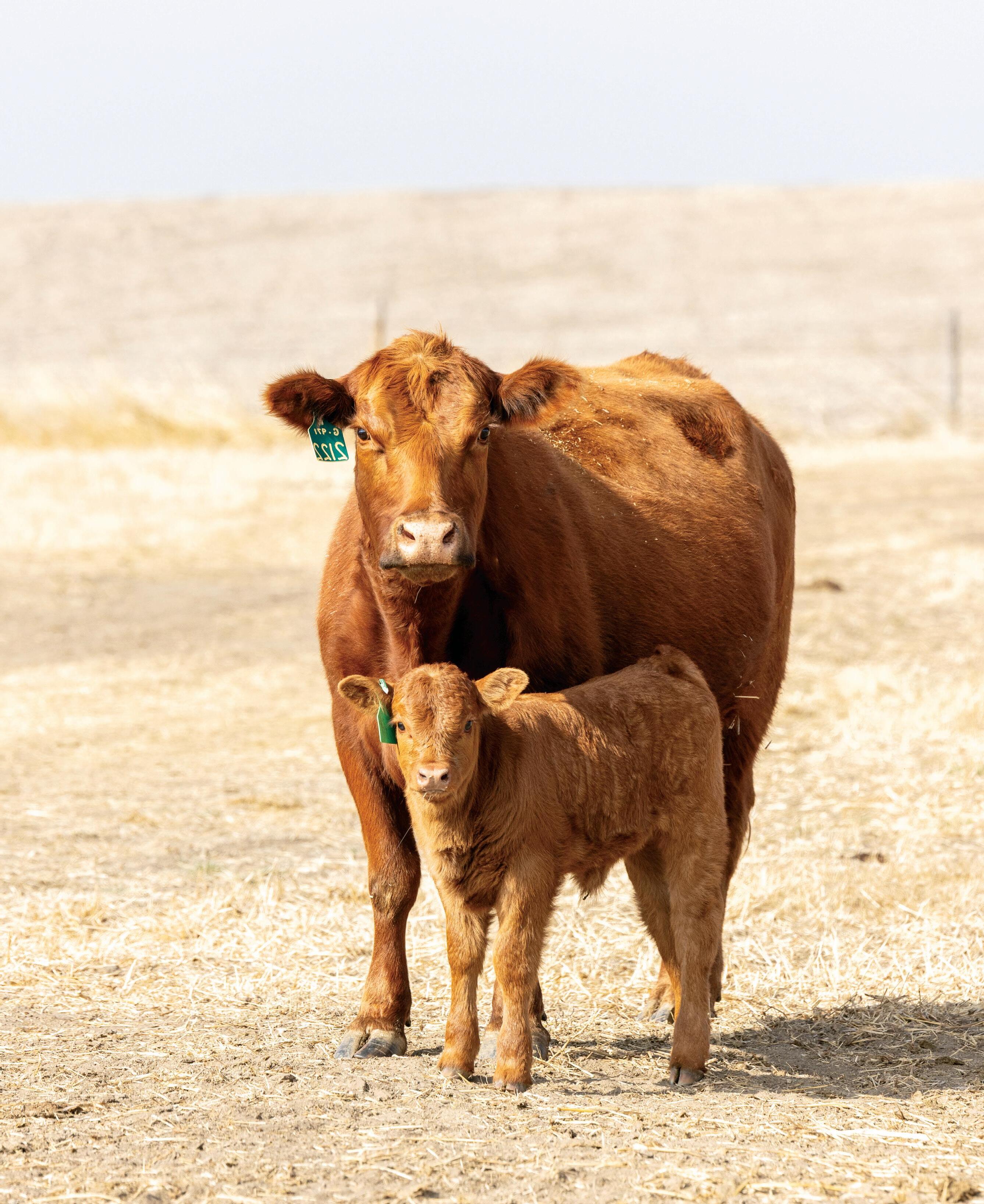
COVER PHOTO BY GENTRY WARNER EDITOR MEGAN UNDERWOOD, M.S.




HAROLD BERTZ EXECUTIVE DIRECTOR haroldb@gelbvieh.org
TOM STRAHM COMMERCIAL MARKETING DIRECTOR tom@gelbvieh.org
WESS ANGLIN COMMERCIAL MARKETING SPECIALIST wess@gelbvieh.org
MALERIE MARKLEY GELBVIEH MEDIA PRODUCTIONS COORDINATOR malerie@gelbvieh.org
MARTHA MOENNING MEMBER & YOUTH ACTIVITIES COORDINATOR martha@gelbvieh.org
MEGAN UNDERWOOD, M.S. COMMUNICATIONS COORDINATOR meganu@gelbvieh.org


@americangelbvieh
EXECUTIVE COMMITTEE ASSOCIATION STAFF
DAN WARNER, PRESIDENT BEAVER CITY, NEB. • 308.962.6511 dan@warnerbeef.com
STUART JARVIS, VICE PRESIDENT PHILLIPSBURG, KAN. • 785.543.8120 bararrow@ruraltel.net
SARAH MUMM PERFORMANCE PROGRAMS COORDINATOR sarah@gelbvieh.org
WAYDE PICKINPAUGH, M.S. DNA SERVICES COORDINATOR wayde@gelbvieh.org
MARGO MCKENDREE OFFICE MANAGER margo@gelbvieh.org
SHIANNA OCKEN REGISTRY COORDINATOR shianna@gelbvieh.org
CAMILLE HENNERBERG REGISTRY/DNA SERVICES SPECIALIST camille@gelbvieh.org
GREGG HARTMAN, TREASURER
PUEBLO, COLO. • 719.821.4762 grhartman@hotmail.com
BRENT OVERMILLER, SECRETARY
SMITH CENTER, KAN. • 785.282.0485 brento4532@hotmail.com
DIRECTORS
GREG “BUBBA” ANDERSON MARION, N.C. • 828.442.6869 grega1983@live.com
DAVID LARSON CLEARBROOK, MINN. • 218.766.3323 david.larson.lrl@gmail.com
ZACK BUTLER MILTON, TENN. • 615.308.8628 butlercreek1952@aol.com
DALTON BENNETT RED HOUSE, VA. • 434.664.7946 dalton@knollcrestfarm.com
JOHN SHEARER CANTON, KAN. • 620.654.6507 circle_s@hometelco.net
TROY FORBES DE SMET, S.D. • 605.530.4764 forbes_gelbvieh@hotmail.com
GARY CARLISLE REDMOND, UTAH. • 435.979.0020 garyc@carlislex.com
JUSTIN TAUBENHEIM AMHERST, NEB. • 308.293.0692 j_tauby5@hotmail.com
JOSH PHILLIPS
816.914.6053 jphillips@aol.com
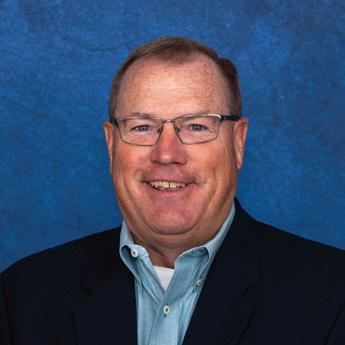
AFROM THE CORNER OFFICE AFTER THE SALE
by Harold Bertz, Executive Director
pril finds us winding down bull sales for Spring 2026, and what a spring it has been! At the sales I personally attended, the quality of Gelbvieh and Balancer® bulls was amazing, and the competitive prices offered by commercial producers nationally indicate that the quality was widespread throughout the Gelbvieh and Balancer breed. It has been a great year for all segments of the industry, including the seedstock producer. However, the prices have been a long time coming, and it is great to realize profits that are well deserved.
While I was at the sales, it was rewarding to visit with cattlemen and women who believed in their seedstock provider’s program, its people, and cattle, with most being longtime repeat customers. This speaks highly of the ability of Gelbvieh breeders to provide not only top-flight genetics but the customer service necessary to meet their bull buyer’s needs. This relationship is extremely important to the success of your program and the breed. The American Gelbvieh Association (AGA) is committed to assisting you in strengthening your customer service with staff and programs available.
Transferring purchases to your buyers is the first step in building a strong relationship and provides them with much more than a registration paper. This transfer allows them access to all the programs and services provided at the AGA and a year’s subscription to Gelbvieh World and The Profit Picture. Keeping
customers connected to breed and industry advancements through Gelbvieh media only strengthens the genetic provider and customer relationship.
AGA recently began offering the Igenity Beef DNA test designed for commercial cow-calf producers. This test provides 17 maternal, performance, and carcass traits along with parentage verification. Additional tests can be added for breed composition and Bovine Congestive Heart Failure (BCHF). These tests offer Gelbvieh breeders a unique opportunity to interact with their customers and assist them in creating better matings, improving genetics, and adding value to a customer’s calf crop.
For more information about the Igenity Beef product, ordering, and results interpretation, contact Sarah Mumm, AGA performance programs coordinator, at sarah@gelbvieh.org.
At marketing time, the Feeder Finder is a free email service offered by AGA to promote and assist in marketing Gelbvieh and Balancer-influenced feeder cattle. Producers can fill out the online form or contact a marketing team member to submit information about their cattle. An email blast is sent to feedyards and potential buyers to alert them when and where these cattle will be available for sale. This is a great free tool to promote cattle selling at private treaty, auction barns, or video auction, and a tremendous service AGA members can offer their customers.
Balancer® Edge is a tagging program designed for Gelbvieh and Balancersired feeder calves. This source and age verification program gives producers the opportunity to identify their feeder cattle’s genetics and is the base for other valueadded programs. Built in partnership with IMI Global, these additional programs build on a herd’s health and management protocols and can qualify calves for premium markets and generate more value. Producers participating in Balancer® Edge can also qualify for Verified Natural, NHTC, CARE, and Beef Passport through IMI Global.
For more information about AGA marketing programs, contact Tom Strahm, AGA commercial marketing director, at tom@gelbvieh.org, or Wess Anglin, AGA commercial marketing specialist, at wess@gelbvieh.org. The marketing team is committed to assisting your customers in creating extra value for Gelbvieh and Balancer-sired cattle.
The longtime bull buyers I visited with counted their seedstock provider as their main resource for information, herd improvement advice, and marketing assistance. Staying in touch with customers creates a relationship that extends well beyond the cattle business. I encourage AGA members to take advantage of the programs offered to strengthen these relationships and continue to create lasting friendships and business partnerships. I look forward to seeing you down the road.F

• Largest supplier of Gelbvieh & Balancer genetics (100+ AI sires).
• Unlimited supply of top Angus and Red Angus AI sires for your Balancer needs.
• FREE shipping and handling on orders of 60 or more units
• Unparalleled customer service.
• Commercial Producers: Majority of our sires are available to you at substantially discounted commercial prices.
• Complete listing of Cattlemen’s Connection AI sires, their stats, DNA, pedigree and EPDs is available online: www.cattlemensconnection.com
• All Cattlemen’s Connection AI Sires are tested FREE for all known Genetic Defects.
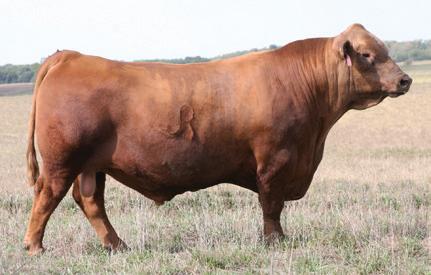
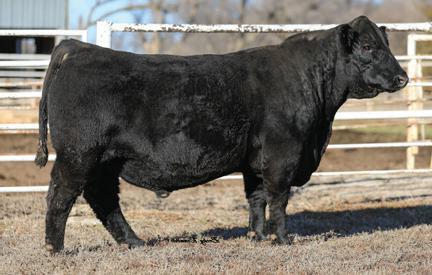
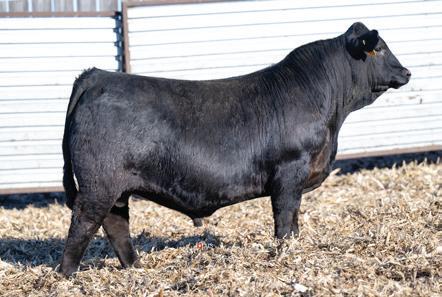
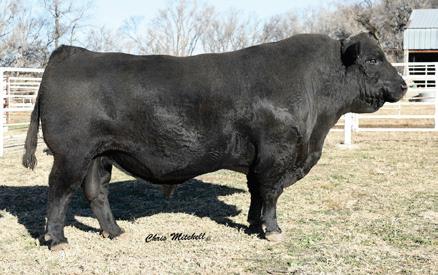
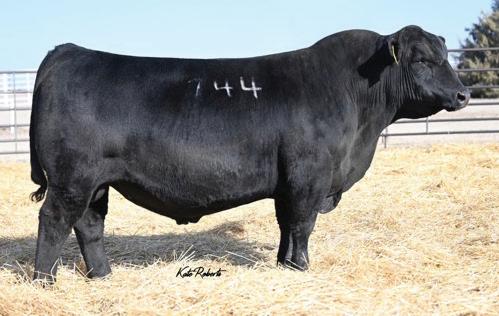
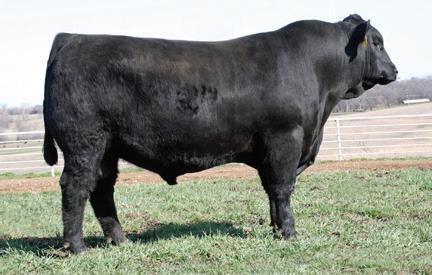
Patton Sons (Semen Sales are Closed on General Patton)

Luck of the Irish
Go TIme
Bandito
TVIEW FROM THE BOARD DEMAND FOR GELBVIEH GROWS
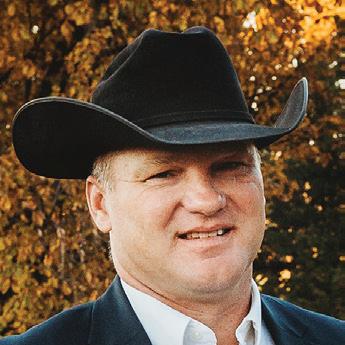
by Dan Warner, AGA President
he spring bull sale season has been one for the record books as prices across the country have reached new highs. It is no secret the demand for Gelbvieh genetics continues to grow. At the beginning of March, the average sale price for Gelbvieh and Balancer® bulls was estimated to be $9,500. This is an increase of $2,903 per head compared to the Spring 2025 average bull price of $6,597.
American Gelbvieh Association (AGA) members need to celebrate in this success and continue to spread the message of the value Gelbvieh influence can provide in the beef industry. Gelbvieh females have every desired quality to be the foundation females of the United States cow herd. Gelbvieh-influenced females not only
who believe in the success of Gelbvieh and Balancer genetics in both the feedlot and on the rail.
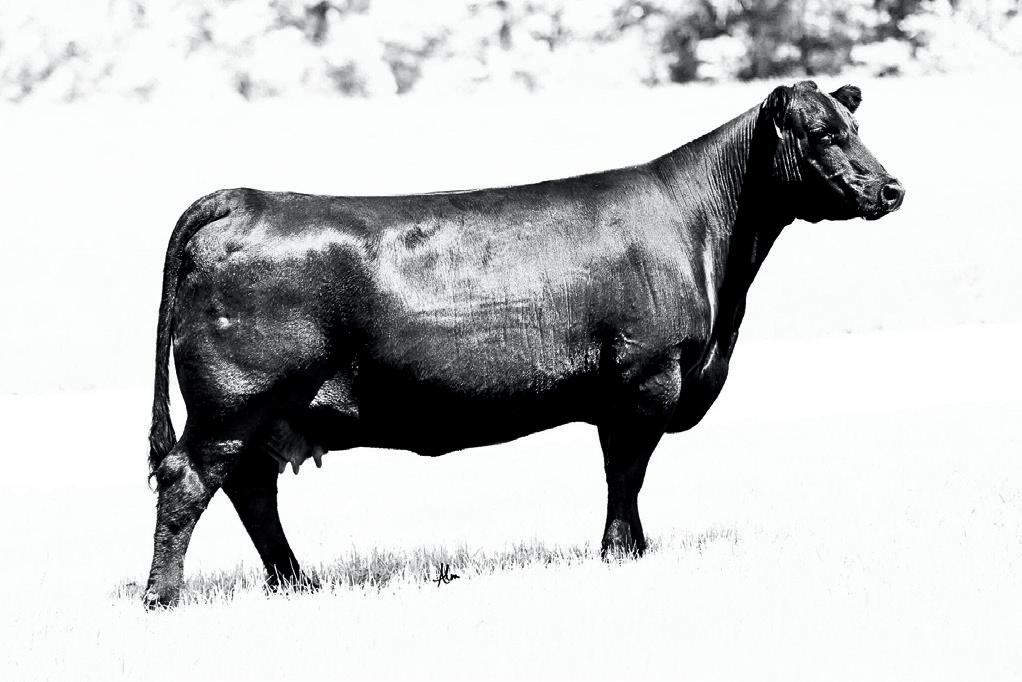
GELBVIEH FEMALES HAVE EVERY DESIRED QUALITY TO BE THE FOUNDATION FEMALES OF THE UNITED STATES COW HERD. GELBVIEH-INFLUENCED FEMALES NOT ONLY EXCEL IN MORE POUNDS PER CALF WEANED, FOOT AND UDDER QUALITY, DISPOSITION, AND INCREASED RED MEAT YIELD, THEY DO ALL OF THIS IN ONE OF THE SMALLEST MATURE COW SIZE PACKAGES, ALSO MAKING HER THE PICTURE OF SUSTAINABILITY.




Cowman’s Kind
BULL & FEMALE SALE

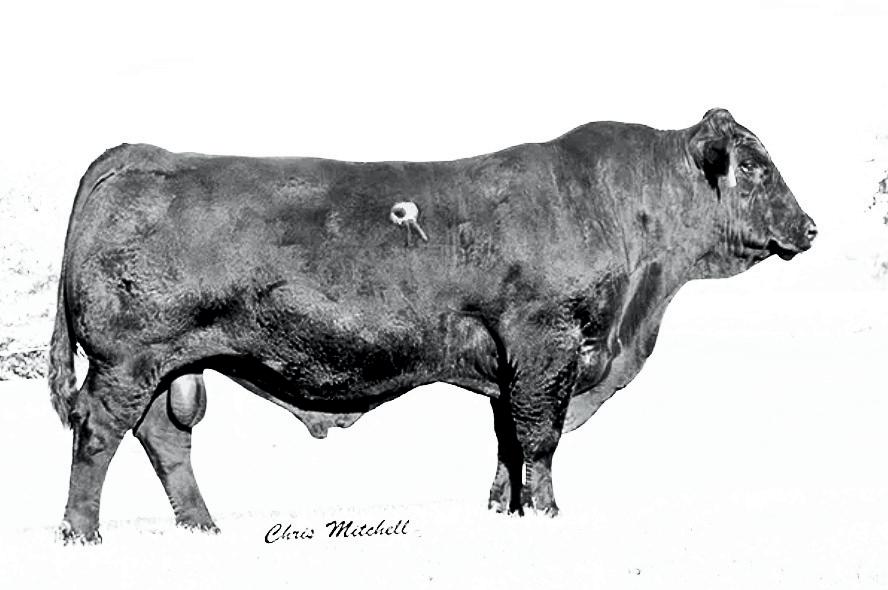
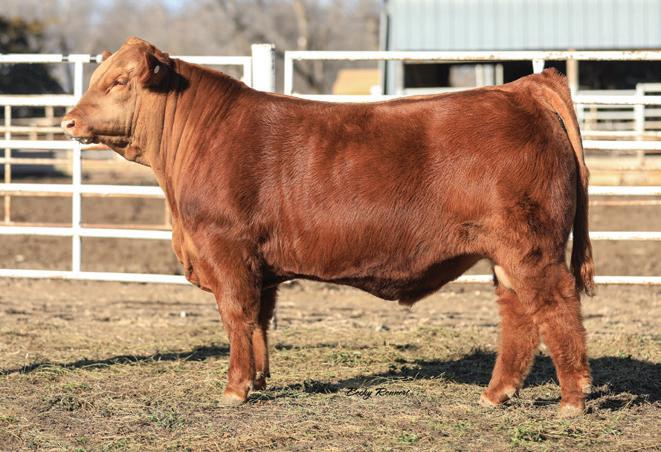
A sincere and special thank you to the huge crowd of nearly 300 people, which included 34 new buyers, 172 registered bidders at the ranch and an additional 33 online buyers, for making the sale so awesome with incredible buyer interest and support. Volume bull buyers with 6 bulls each were long time customers, Bob Mathewson and Suelter Cattle. The total volume customer with 8 head was Brad Winters, an early successful Gelbvieh breeder who is reestablishing his herd in Kansas.

INFORMATION EXCHANGE
COMPLETE YOUR HERD ASSESSMENTS TODAY
Completing annual herd assessments is an important part of being an American Gelbvieh Association (AGA) member. Although the deadline for annual herd assessments has passed, assessments still need to be completed for the herd to be in good standing with the association. All females 13 months of age and older should either be assessed or disposed of as part of the total herd reporting process. One assessment is tied to one registration credit to register the female’s progeny. The credit also allows members to transfer the animal(s) as well as report performance information.
If you have not already completed your 2026 herd assessments, you are encouraged to do so via the AGA Online Registry Service. Please contact the AGA office at 202-465-2333 or email registry@gelbvieh.org, if you need any assistance in completing this process.
NOMINATIONS ARE OPEN FOR THE 2026 AMERICAN GELBVIEH JUNIOR ASSOCIATION JUNIOR BREEDER OF THE YEAR
The 2025-2026 American Gelbvieh Junior Association (AGJA) board of directors is excited to open the nomination process for the AGJA Junior Breeder of the Year award. The award and nomination process is focused on the opportunity to recognize a junior member who goes above and beyond the call of duty regarding the Gelbvieh breed, their family’s operation, educating others about the breed, as well as exemplifying good character and leadership skills among their peers. Looking to the future, the AGJA hopes to continue providing an atmosphere of inclusion, leadership, professional development, and opportunity to all youth. For more information on the nomination process, eligibility and more, visit Gelbvieh.org/ juniors/agja-events/junior-classic. Nominations close May 1, 2026.
TRANSFERRING ANIMALS
When transferring animals to their new owner, it is important that the animal(s) are transferred to the appropriate account on the AGA Online Registry Service. If you are unsure whether a buyer has an AGA number, simply click the blank box next to the buyer field. This will pull up a separate window to enter the buyer’s zip code and then click “Find Profiles”.
Review the list of members and non-members and once the correct account is found, check the box to the left of the member number. If the buyer does not already have a profile
within the registry “Click to create new profile” at the very bottom of the page. For assistance transferring animals, please contact the AGA office at 303-465-2333 or email registry@gelbvieh.org.
NEW AGA MEMBERS
Maple Acres Ranch, Denver, Colo.
Murphy Creek Farms, Ball Ground, Ga.
T&J Williams, Tatum, Texas
NEW AGJA MEMBERS
Temple Daniels, Queen City, Mo.
Riley Jo Givens, Almena, Kan.
D’Leah Laber, Hillsboro, Ohio
Aubrey Landrum, Huntington, Ind.
Kaden Scholl, Colorado City, Texas
Cash Stewart, Holdrege, Neb.
James Stewart, Holdrege, Neb.
Bull Barn Genetics
Eldon & Kathy Starr 210 Starr Dr • Stapleton, NE 69163
bullbarn@bullbarn.com • 800-535-6173 www.bullbarn.com










ATHE GOOD LIFE JUNIOR CLASSIC: SHAPING THE FUTURE OF GELBVIEH AND BALANCER®
by Isabel Lowe, AGJA Secretary
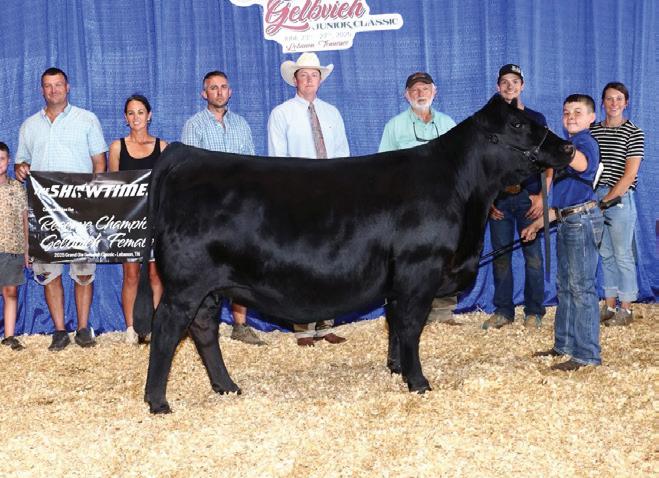
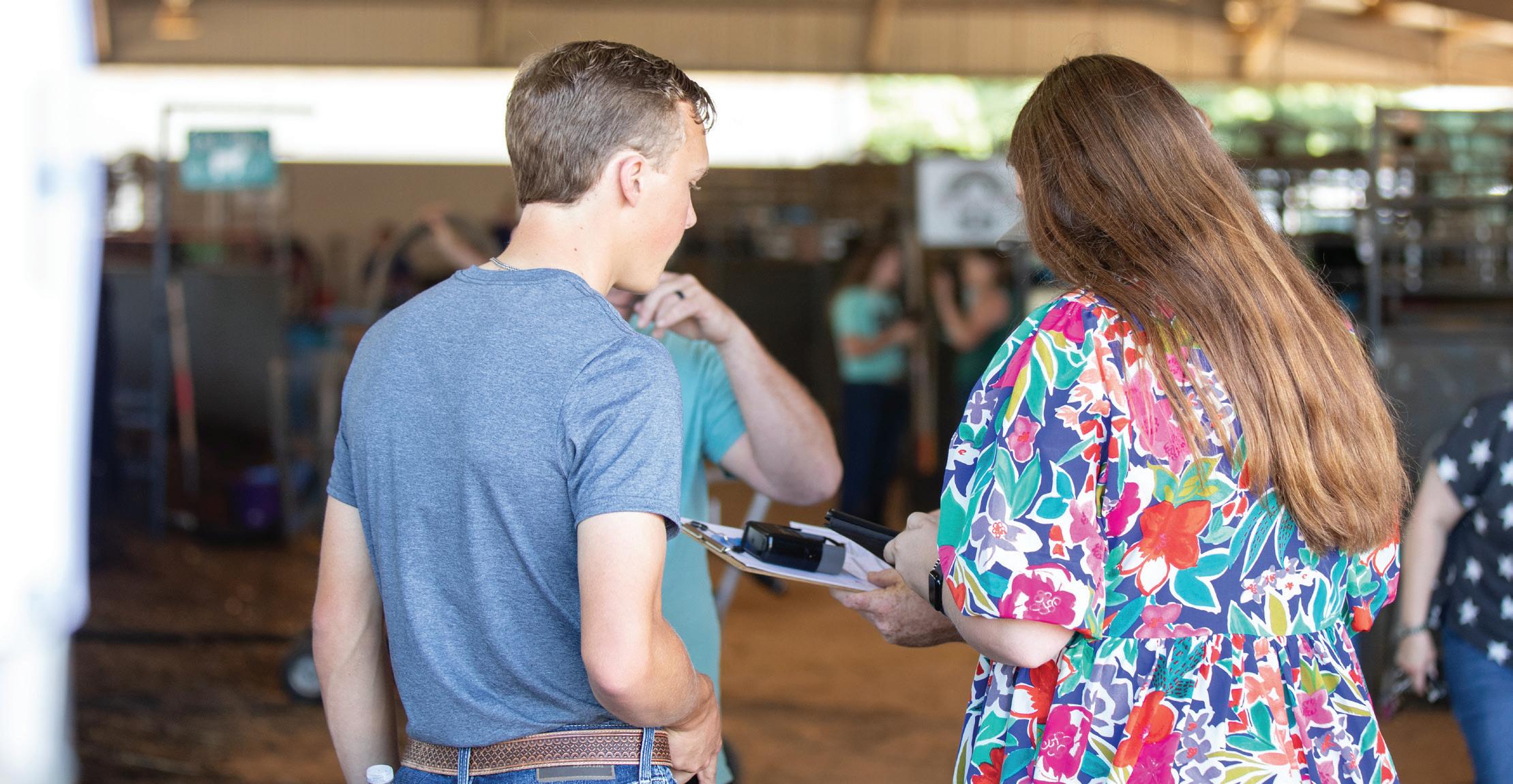
s we are gearing up into the summer season, there is a lot of excitement for the upcoming American Gelbvieh Junior Association (AGJA) The Good Life Junior Classic. For many junior members across the country the event is more than just a show. It is an opportunity for leadership development, lifelong friendships, competition, and memories that will last a lifetime. We are thrilled to head to Grand Island, Nebraska, for an amazing AGJA Junior Classic held June 21-26, 2026.
This year brings even more excitement than normal for the AGJA board of directors, with the new addition of separate bred and owned shows for Gelbvieh and Balancer females. Previously held within the owned shows, these divisions will now have their own designated show times. We are eager to provide even more opportunities for
our juniors to showcase their hard work, breeding programs, and dedication. This addition does not only create more trips into the showring, it reflects the strides our members are making in their programs and as a breed. Our juniors have proven that they are not just exhibitors but also, breeders, marketers, and leaders in the beef industry. It was only fitting that we further recognize our junior members’ efforts in producing their own high-quality females with this new addition. This step forward highlights the growth of our association and the bright future ahead for the AGJA Junior Classic.
Not only is Junior Nationals an amazing opportunity for our juniors to showcase their hard work with their livestock, but also their skills in leadership contests, public speaking, judging, skill-a-thon, sales talk, and more. These experiences
are shaping our juniors for a future in the beef industry, leadership positions, and more. Getting to see new members step out of their comfort zones in these events and seasoned members step us as mentors is one of the things that makes this event so impactful.
As summer approaches, we strongly encourage juniors to start their prep now. Deadlines will approach quickly, especially with the contest, ownership, and cattle entry deadlines being moved up to May 15, 2026. We are beyond thrilled to get the Gelbvieh family together in the barns again for the AGJA The Good Life Junior Classic. As a junior board member, I am incredibly proud of the progress our juniors continue to make, and I look forward to seeing each of you in Grand Island as we shape the future of the Gelbvieh and Balancer breeds together.F


Applications Due May 1 Travel Scholarship

The American Gelbvieh Junior Association Board of Directors is offering travel scholarships designed to help AGJA members grow, explore, and lead. The board is awarding three $500 travel scholarships to AGJA members who want to attend industry events, leadership conferences, educational programs, or AGJA activities.

QUESTIONS? CONTACT
MARTHA@GELBVIEH.ORG
MARTHA MOENNING
MEMBER & YOUTH ACTIVITIES COORDINATOR

WREGISTRY TIPS N’ TRICKS
NATURAL BREEDING AGREEMENTS
by Shianna Ocken
hether you run five cows or five hundred cows, we can appreciate and value the relationships built within this breed. Back in the day, acts of kindness and appreciation were often demonstrated in simple ways, like borrowing a cup of sugar from your neighbor. But what happens when your neighbor asks for more than just a cup of sugar — say, a bull, for example? By using the Natural Breeding Agreement option in the American Gelbvieh Association (AGA) Online Registry Service, active AGA members can register offspring from sires that meet the requirements of a natural service herd sire – even if they don’t own the animal themselves.
TO ACCESS BULL AGREEMENTS:
1. Log into the AGA Online Registry Service.
2. From the left-hand work menu select, “Herd Mgmt”.
3. From that dropdown provided, select “Breeding”.
4. Choose the option “Bull Agreements” from the list.
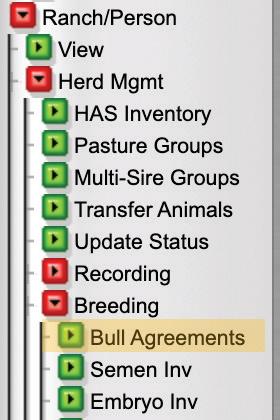
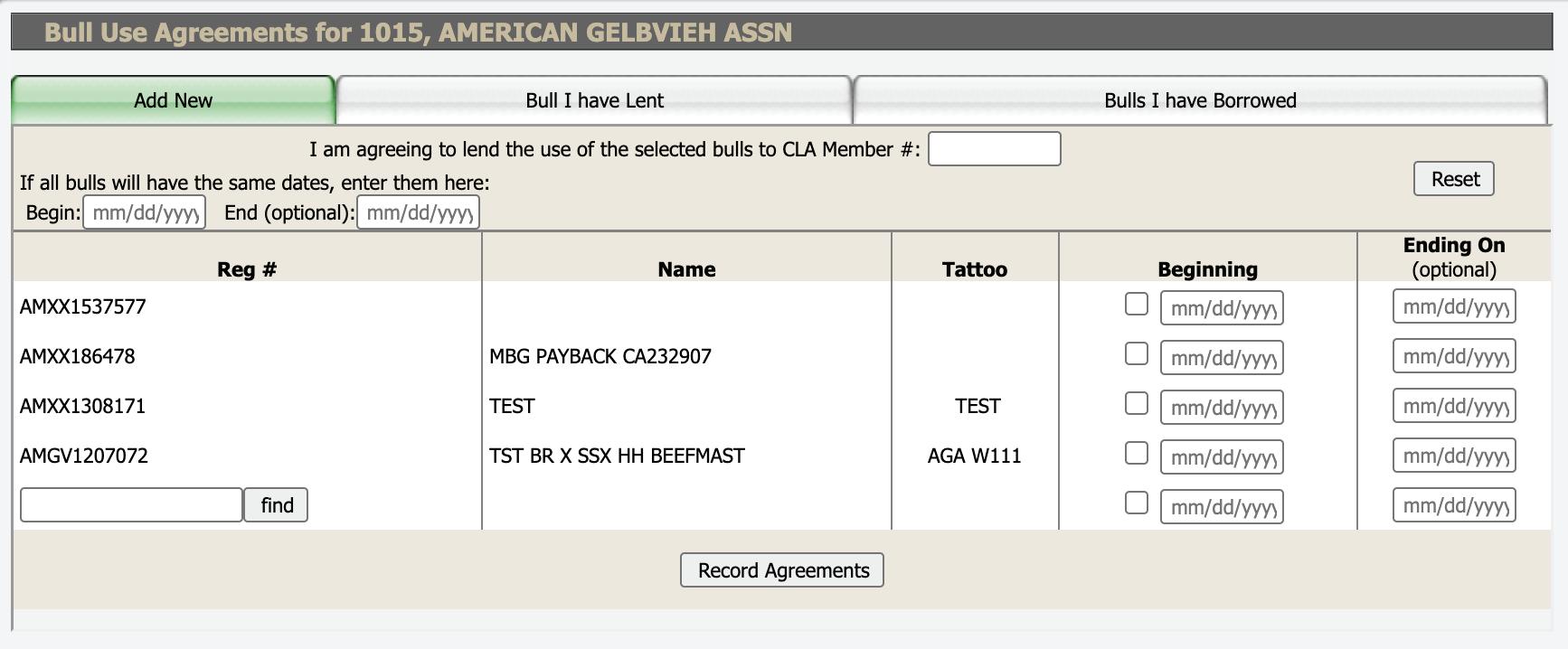
Once the new screen comes up, you will notice three tabs located at the top, “Add New”, “Bulls I have Lent”, and “Bulls I have Borrowed”. The convenience of these tabs are self-explanatory but they help not only the AGA, but you, to keep track of the agreements that you have placed on your bulls that have been lent, as well as the bulls you have borrowed from other members.
ADDING A BULL AGREEMENT
To add a new bull agreement, select the “Add New” and type in the member’s AGA number in the box next to the agreement statement at the top of the screen, just below the tabs. If you’ve lent more than one bull during the same time period, you can enter the date range the bull(s) were lent at the top. Be sure to enter the date as MM/DD/YYYY for the start and end dates both. If multiple bulls were lent to the same member but during different periods of time, you will need to enter those specific dates beside the appropriate bull. For your convenience, this can all be done at the same time.
Once you’ve entered the member’s number at the top and entered the beginning date of exposure (end date is optional), be sure to select the box to the left of the beginning date. If all the above instructions have been completed, simply
select the “Record Agreements” button at the bottom of the screen. Once you see a little green checkmark beside the data entered, the agreement has been placed.
To ensure your agreement has been properly added to the bull’s records simply click on the “Bulls I have Lent” tab and locate the newly added agreement there. If it does not appear, try refreshing your page and looking under the same tab again. If the agreement still does not appear, please contact the AGA office.
It’s important to remember that Natural Breeding Agreements (NBAs) can only be put on by the owner of the sire. Additionally, calves can only be registered if they were conceived from the sire lent to a non-owner during the specific exposure period listed. If a bull is borrowed by the same individual/ranch in multiple years you will want to be sure to enter an agreement for each time period, their females were exposed to your sire.
For more information or clarification on submitting a natural breeding agreement, please contact the AGA office at 303-4652333 or email registry@gelbvieh.org.F






OVER THE FENCE with Henry Darden
BY KIRSTEN HESELMEYER, AGA COMMUNICATIONS INTERN
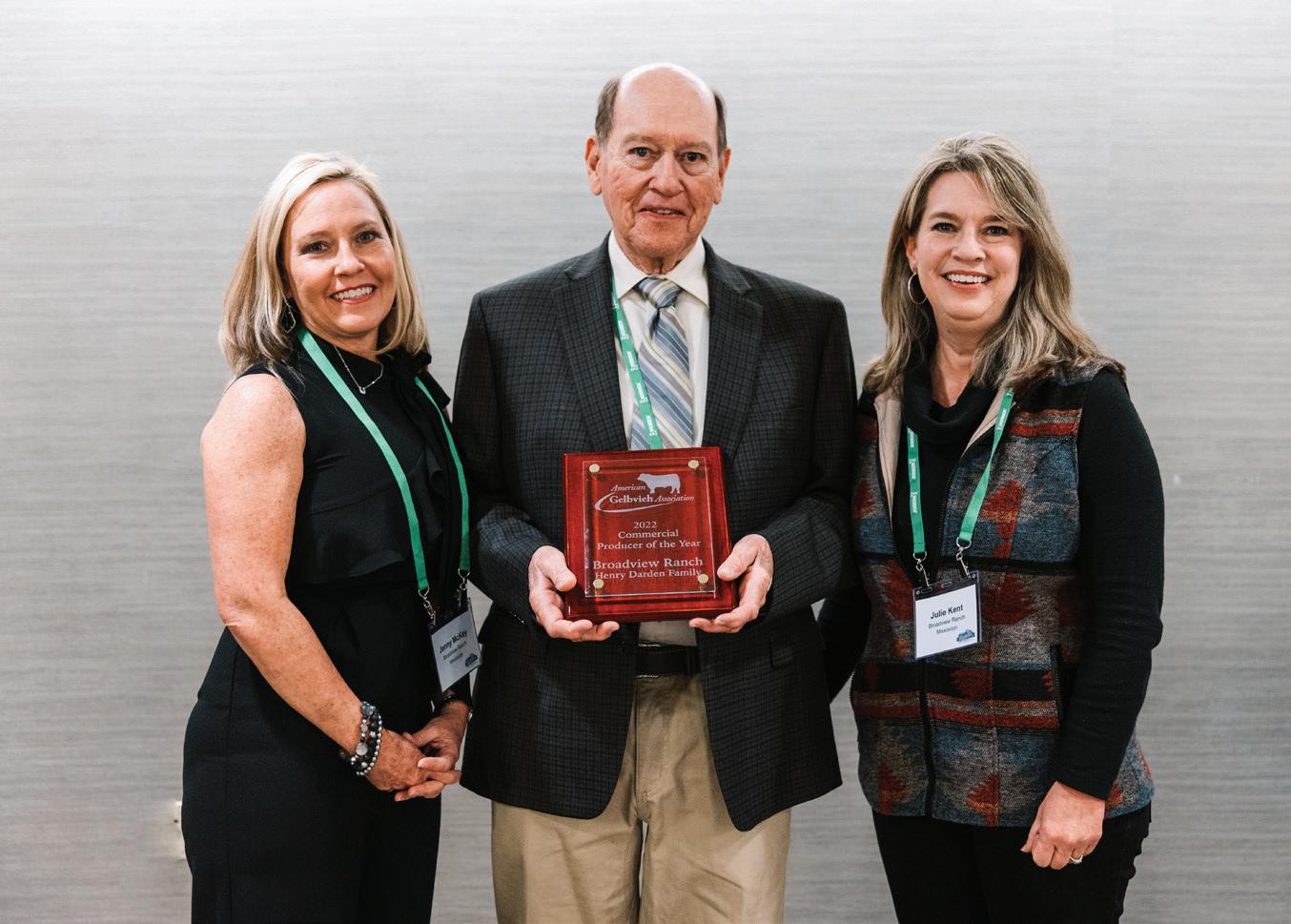
H2022 Commercial Producer of the year, Henry Darden, accepts his award at the 2022 American Gelbvieh Association National Convention in Louisville, Ky.
enry Darden is the operator of Broadview Ranch, a commercial cow-calf ranch in Centreville, Mississippi. His family is the third generation on the ranch and has been in the cattle business since his father started in 1942. Today, the ranch is home to a herd of 300 brood cows and utilizes a simplified crossbreeding system focusing on Balancer® genetics. Darden has a passion for reading and studying new trends to improve operation management as the industry continues to progress. He retains ownership of his calves through a feedlot in Iowa and is consistently in search of new opportunities to increase his profits in the commercial industry.
WHAT INITIALLY DREW YOU TO GELBVIEH AND BALANCER GENETICS, AND WHAT HAS KEPT YOU COMMITTED TO THEM OVER TIME?
I asked a professor at Mississippi State University, Mike Boyd, what he recommended on a crossbreeding program, and he recommended Gelbvieh. I listened to what he said, and I thought that was a good idea. So, I started using Gelbviehs from central South Dakota years ago. It’s worked well. Calves do well. I feed my own calves in a feedlot in Iowa, and it’s worked. They’re good calves. The cattle breed back well, have a good temperament, and it is convenient to get some good bulls from Missouri.
The area around South Dakota State University was where many Gelbvieh got an early start, so I started there. My wife and I were members of the composite cattle breeds association led
by Dr. Dave Daley of California State University Chico. We learned from many excellent educators during our annual meetings across lots of states, Canada and Australia.
WHAT TRAITS OF GELBVIEH GENETICS BEST FIT THE UNIQUE NEEDS OF YOUR OPERATION, PARTICULARLY RAISING CATTLE IN THE HUMID, DAMP
SOUTHEAST ENVIRONMENT?
On our ranch, we like the 50/50 Angus Gelbvieh crossed cows and bulls, then save the best heifers for replacements. I like solid black. We used a 65-day same breeding time every year. Heifers calve 30 days before mature cows start September 20. All calves are born before Christmas and yes, we have some freezing cold rain and bad weather usually after Christmas. We have to be as simple as possible and have cows in two groups of about 150 head each. Beginning about mid-December we start rotating cows two to three hours a day on an expensive planted rye grass. This is for six or seven days a week until March 15. We have junior catch pens that the cows and bulls go through twice daily. If needed, we can catch either of these for any reason necessary. During the 65-day breeding season we put out one bull to 50 cows for 14 days only then take the bulls out and put 3 per 150 cows for the next 14 days. Almost no bulls are hurt from fighting with this deal. Conception rates are the same for us as six bulls with 150 cows for 65 days. We wean at the first of August. Then we preg check or cull cows, save replacements, precondition for 45 days, and ship to the feed lot. We start calving heifers in mid-September, and cows start in mid-October.
This is the best system I have come up with after 60 years in our environment. It isn’t perfect by any means because there are always new and better ideas. I try to improve facilities and cattle each year.
WHEN SELECTING HERD SIRES, WHAT TRAITS OR CRITERIA ARE NONNEGOTIABLE FOR YOU?
Well, first of all, I want a Balancer, as close to 50/50 Gelbvieh and Angus as I can get. I want, first of all, calving ease, light birth weight, carcass quality all the way through. I use EPDs very strongly. In fact, that’s what I do use to pick bulls and carcass quality, frame score, scrotum size, all the way across the EPD board is what I look at and pick out the better genetics.
HAVE YOUR SELECTION PRIORITIES CHANGED OVER TIME AS YOUR OPERATION HAS EVOLVED?
No, but as EPDs have evolved, I use them more all the time.
WHAT SUCCESS HAVE YOU SEEN WITH GELBVIEH-INFLUENCED CATTLE IN THE FEEDLOT AND SELLING ON THE GRID?
They work very, very well. I’ve asked the buyers if there’s anything that I need to change, and they say don’t change anything on the carcass or selling, on the grid. So, I would say, we’ve been successful, and I don’t know of any cross that I would rather have.
LOOKING
AHEAD, WHAT ARE YOUR LONG-TERM GOALS FOR YOUR OPERATION, AND HOW DO GENETICS PLAY A ROLE IN REACHING THOSE GOALS?
Long term goals would be to stay in the business and then use genetics more all the time to improve as I get more information and to be sustainable so I can pass the ranch on to a family member in the future.F
BEEF IS BACK ON TOP
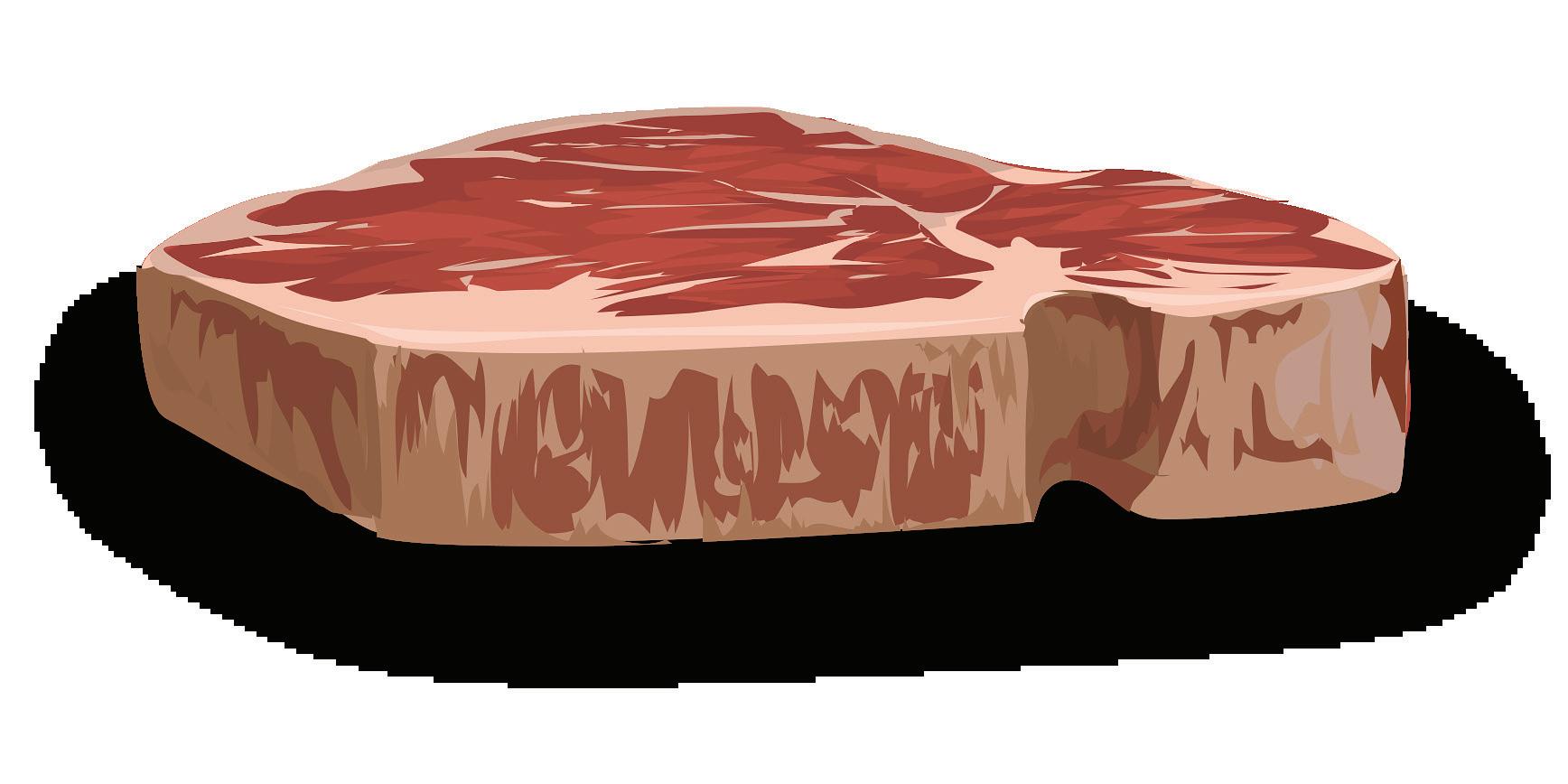
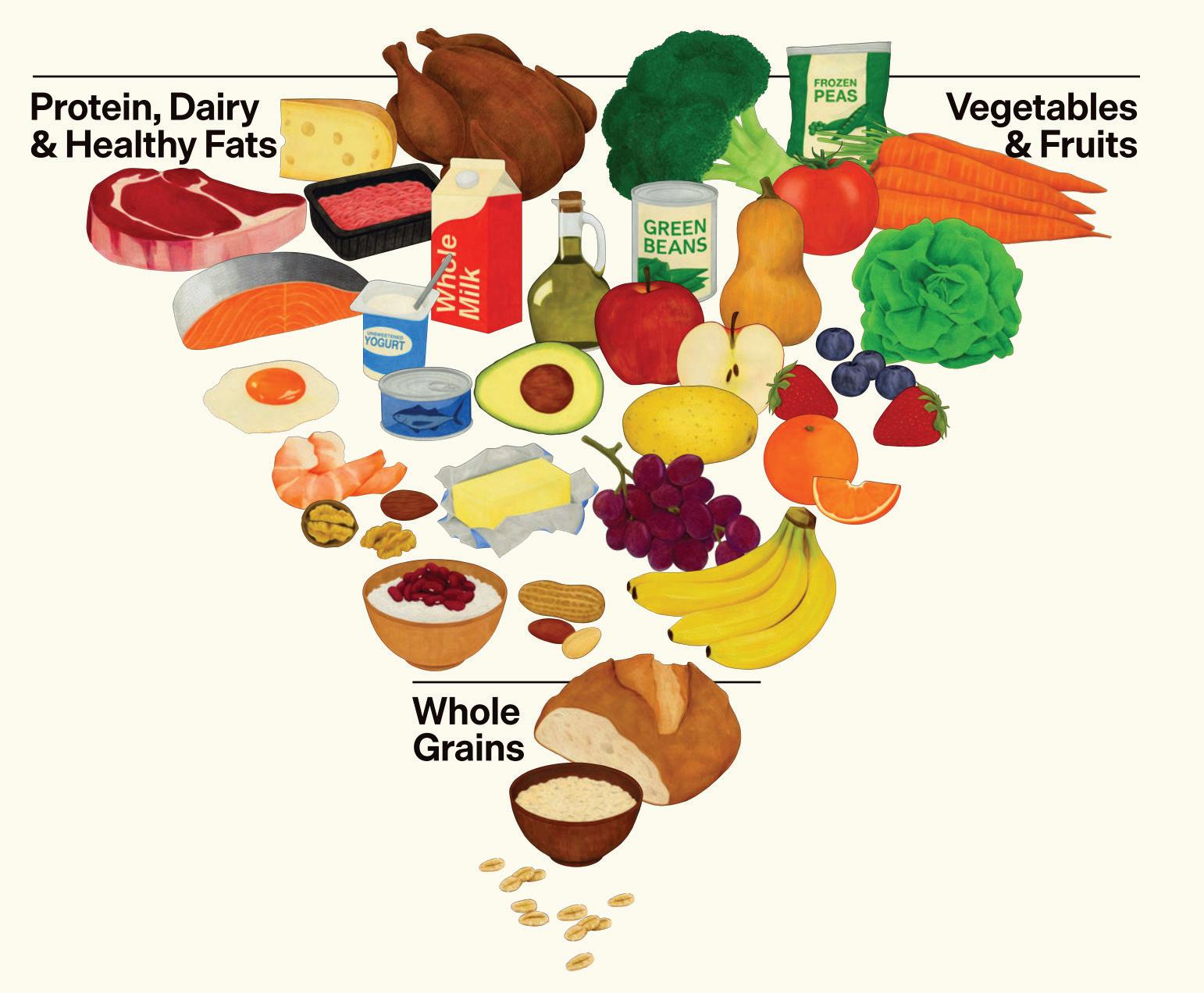
The newly released dietary guidelines place beef at the top of the food pyramid.
The United States of America is the only first world country to have a chronic obesity epidemic accompanied with malnutrition caused solely by nutrient-depleted foods. With 40 cents of every tax dollar going towards health care and nearly 90% of health care spending going towards treating chronic disease linked to diet and lifestyle, the U.S. is the unhealthiest nation in the world. Nearly 38% of kids and teens are at risk of diabetes with 1 out of 3 being diagnosed with prediabetes. This contributes to spending more than a trillion dollars a year on diabetes, and 4.3 trillion dollars each year treating chronic diseases.
This national health emergency facing the U.S. prompted U.S. Department of Health and Human Services Secretary Robert F. Kennedy, Jr. and U.S. Department of Agriculture Secretary Brooke Rollins to release the Dietary Guidelines for Americans, 2025-2030. The new dietary guidelines encourage Americans to prioritize protein foods at every meal through the following recommendations:
BY MEGAN UNDERWOOD, M.S.
• Prioritize high-quality, nutrientdense protein foods as part of a healthy dietary pattern.
• Consume a variety of protein foods from animal sources, including eggs, poultry, seafood, and red meat, as well as a variety of plant-sourced protein foods, including beans, peas, lentils, legumes, nuts, seeds, and soy.
• Swap deep-fried cooking methods with baked, broiled, roasted, stirfried, or grilled cooking methods.
• Consume meat with no or limited added sugars, refined carbohydrates or starches, or chemical additives. If preferred flavor with salt, spices, and herbs.
• Protein serving goals: 1.2-1.6 grams of protein per kilogram of body weight per day, adjusting as needed based on your individual caloric requirements.
U.S. Department of Health and Human Services Secretary Robert F. Kennedy, Jr., joined beef producers at the National Cattlemen’s Beef Association Cattle Industry Convention and Trade Show on
February 5, 2026, in Nashville, Tennessee, to discuss the positive impact the new dietary guidelines will have on the beef industry.
“We now have a food pyramid that has been flipped upside down because it made more sense. That puts protein at the top of the food pyramid,” explained Kennedy. “We put an end to the 50year war against saturated fats, which had been waged through lies, dogma and bad science, telling people to steer away from protein. Protein is absolutely critical. It provides vitamin B, all of these micronutrients, like iron, zinc, all these things where Americans are chronically deficient.”
The micronutrients provided to Americans through beef consumption lower insulin sensitivities, stabilize blood sugar and can cure many chronic diseases. For too long, refined carbohydrates and ultraprocessed foods replaced these essential micronutrients found in beef. Previous dietary guidelines deprived two generations of American kids of whole milk and beef and instead they became addicted to ultra-processed
Gelbvieh ON ICE
Live Online Auction - Gelbvieh and Balancer Genetics
Saturday, April 11, 2026 - 6:00 p.m. (CT)

Gelbvieh and Balancer Genetics Sale
Selling Frozen Embryos, Flush Opportunities, Pick of Flush Opportunities and Semen Packages

All genetics selling are donated by Gelbvieh and Balancer breeders with all proceeds going to the American Gelbvieh Junior Association to assist with funding the 2026 AGJA Junior Classic, June 21-26, 2026 in Grand Island, NE.


foods and highly refined carbohydrates that inhibited their development.
“We’re spending a trillion dollars a year treating diabetes, and most diabetes can be cured. In other words, you lose a diagnosis by shifting to a highprotein diet. This is the answer. Food is medicine,” said Kennedy. “Our basic recommendation is to eat real food. Eat fruit, eat vegetables, eat protein – fish, chicken and beef – eat high fiber grains. That’s what’s going to make America healthy again, and that’s how we’re going to end the chronic diseases epidemic.”
Kennedy emphasized that the most important part of the new dietary guidelines is getting more protein into your body. Thus, having a significant, positive impact on the future of the beef industry.
“Right now, the message that I would give to beef producers is actually to increase the size of the herd. We want to eat a lot of beef, and we want to raise it here in America. We don’t want to be importing [beef] from other countries,” Kennedy said. “Nobody at the administration wants to be importing beef. President
Trump promised the American people to drive down the price of groceries. We are doing everything we can to encourage people to increase the size of the herds in this country.”
Kennedy left the audience with two simple requests: eat more real food and raise more cows.F
Long-Time AGJA Supporter & Donor of the 2026 Raffle Heifer
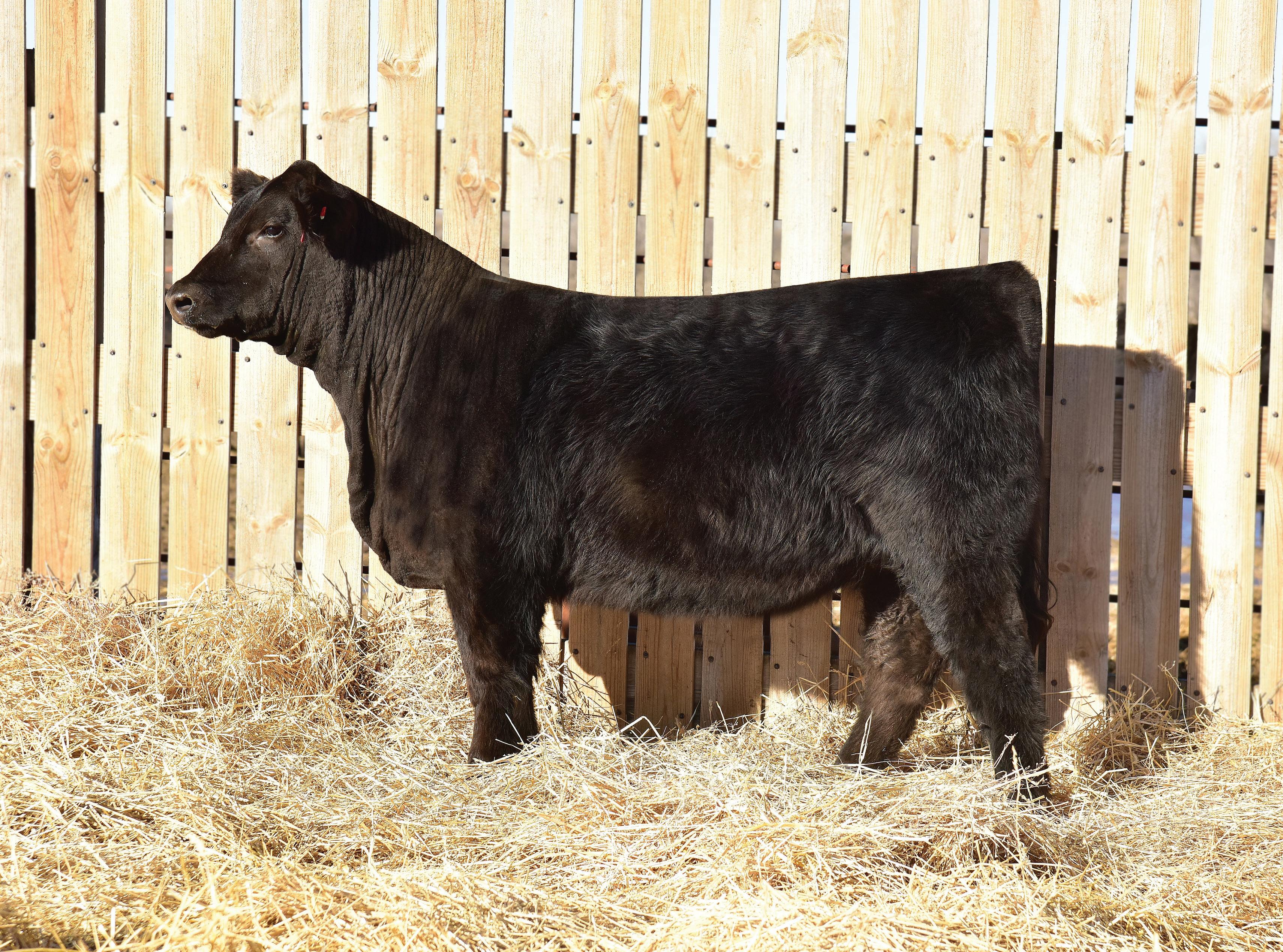


T he American Gelbvieh Junior Association proudly recognizes Beastrom Ranch for their donation of the 2026 AGJA Raff le Heifer. Beastr om’s gener osity allowed the AGJA to raise mor e than $33,000 in funds f or junior pr og rams.
T heir continued suppor t of the AGJA plays an impor tant role in providing oppor tunities for junior members while helping strengthen youth prog rams within the Gelbvieh breed. We are g ra teful for par tners like Beastrom Ranch who invest in the development of young people and the future of the Gelbvieh industr y.
2026 CATTLE INDU$TRY OUTLOOK
Strong predictions for cow-calf profitability as the beef industry enters a new phase of the cattle cycle.
All signs point to a turn in the current cattle cycle. The CattleFax Outlook Seminar is an attendee favorite at the National Cattlemen’s Beef Association Cattle Industry Convention and Trade Show. During this session, the CattleFax team presented positive outlooks on the cattle industry for 2026.
“The United States cattle and beef industry enters 2026 with strong but volatile market conditions, as historically tight cattle supplies, record-setting beef demand, and elevated policy and weather uncertainty continue to support prices, even as markets appear to near cyclical highs. Tight inventories and exceptional demand remain the dominant forces shaping the market; however, producer demographics, high input costs, and policy uncertainty point to a slow and measured expansion phase,” said Mike Murphy, CattleFax chief operating officer.
The U.S. cow herd is trending towards expansion through modest increases in heifer retention and historically low cow slaughter. Herd expansion in 2026 will allow gradual growth in fed cattle supplies in early 2027. However, this expansion is expected to remain slow due to producer demographics, high input costs, and ongoing uncertainty.
LA NIÑA FADES
The extended range weather outlook predicts that La Niña will soon end, with El Niño potentially arriving later in 2026. Throughout the spring and early summer, the U.S. has a 60% probability of ENSO-Neutral conditions. ENSONeutral conditions historically improve conditions for forage growth as they allow moisture to spread out. However, average to below-average precipitation is still
BY MEGAN UNDERWOOD, M.S.
expected west of I-35 due to the residual La Niña impacts.
Summer predictions depend on how quickly the potential El Niño should develop. The current probability is below 40%. However, if El Niño develops rapidly drought can spread throughout corn regions with heavy precipitation in the West. Slow El Niño growth through the summer would spread out moisture and limit weather extremes.
El Niño becomes increasingly likely by fall with the current probability exceeding 60% which is relatively strong odds so early in the year. It is important to note that it takes the atmosphere four to eight weeks to respond to ocean changes, thus if El Niño develops early in the ocean, precipitation benefits will more than likely not arrive until late summer or fall. The speed of the transition from La Niña to El Niño is critical.
MODERATE INFLATION, RECORD YIELDS
Discussion surrounding the U.S. economy noted that inflation continued to moderate in 2025, ending the year at 2.7% CPI growth and spending most of the year below three percent, the lowest since 2020-2021. With inflation relatively low, the U.S. Federal Reserve lowered interest rates in 2025, finishing the year with the Prime Loan Rate just below seven percent, which is still relatively high relative to the three percent level seen for much of 2009-2021. Continued growth in the U.S. GDP to finish 2025, along with low unemployment and inflation signals a strong economic environment for the U.S. to start 2026.
“After several years of navigating economic turbulence, the U.S. is finally entering 2026 with a macro-economic
foundation that feels steady and more predictable,” said Troy Bockelmann, CattleFax director of protein and grain analysis. “Moderating inflation, improving monetary policy, and strong consumer spending are reinforcing the sense of stability across the industries we serve.”
The USDA Annual Crop Production Report estimated 2025 corn planted acres at 98.8 million with 92.3% of acres harvested. Corn yield was up about four percent at a new record high 186.5 bushels per acre, placing production 12.5% larger at 17 billion bushels. Exports are expected to increase in 2026 as relatively inexpensive corn values and available supply should attract more intentional interest for U.S. corn. Current corn stocks-to-use at 13.6% should keep the corn market between $4 to $5 per bushel. The corn supply should remain available in the new crop year with larger beginning stocks, though low prices may cause corn to lose some planted acreage to soybeans.
Hay production in 2025 increased slightly from 2024, near 123 million tons with acres and yield a bit larger. U.S. all hay prices averaged near $150 per ton in 2025 and are expected to remain rangebound with supply available and adequate production projected in 2026.
BEEF DEMAND GROWS
The U.S. beef cowherd is expected to begin 2026 around 180,000 head higher, marking 2025 as the current cattle cycle low. The calf crop was down 429,000 head in 2025 and predictions forecast a 200,000 head larger calf crop in 2026. However, feeder cattle supplies outside of feedyards are predicted to be down 200,000 head in 2026, marking a record low. Fed slaughter
is forecast to decline 600,000 head in 2026 with the bulk of the decline in the first half of 2026.
Retail beef demand was record strong in 2025 with prices continuing to push higher while beef consumption was near steady. Higher retail prices will allow higher beef cutout and cattle price levels to be sustained. Consumer dietary trends that prioritize protein intake, nutrition density, and eating quality – along with reduced concern over fat content –continue to provide underlying support for beef demand.
“With 84% of fed cattle grading Choice or higher and 12% grading Prime, the industry is well positioned to sustain premium pricing,” noted Kevin Good, CattleFax vice president of market analysis. “Beef demand continues to be anchored by exceptional quality and strong consumer confidence in beef as a premium protein. Even as markets adjust and trade flows shift, the fundamentals supporting long-term beef demand remain solid.”
Beef exports are forecast to decline five percent in 2026, down by a total of 2.55
billion pounds. The main drivers are smaller domestic production through the turn of the cattle cycle and prices remaining near record high territory. U.S. beef imports are projected to sustain their increases in 2026 as tariff relief for countries like Brazil and strong consumer demand make the U.S. a desirable market.
PRICES STAY HIGH IN 2026
CattleFax forecasts the average 2026 fed steer price at $224/cwt., steady from 2025. 800-pound steer prices are expected to average $335/cwt., up $19 from 2025. 550-pound steer prices are up $42 from 2025, and an expected average price of $440/cwt.
Cow-calf producers are expected to retain the most market leverage. While calf prices carry the most risk as the cycle turns, second-half prices should remain historically strong even if they move below 2025 levels. Profitability for the cow-calf sector should continue for several more years.
Bred cows are predicted to average $4,000 per head, up $272 from 2025. As
the cattle cycle is believed to have turned, females are predicted to see flatter prices through 2026. High calf prices will continue to be supportive to female prices alongside profitability in the cowcalf sector. As most of the volume will come in the fall, if calf prices are softer, it will limit upside for females in the second half of 2026.
“As we look ahead, several factors will shape the trajectory of the beef industry. The potential threat of New World Screwworm and the status of Mexican feeder cattle imports is something we’re watching closely,” Murphy said. “At the same time, shifts in packing capacity are rebalancing market leverage. Finally, the dairy industry will continue to be a growth industry supplying more cattle to the beef industry, following strong financial performance in 2025.”
The long-term outlook of the beef industry remains positive. Strong domestic beef demand, continuous improvement in beef quality, and sufficient packing capacity supports profitability for the cow-calf sector as the beef industry moves into the next phase of the current cattle cycle.F
SUSTAINABILITY STARTS SMALL
BY KIRSTEN HESELMEYER, AGA COMMUNICATIONS INTERN
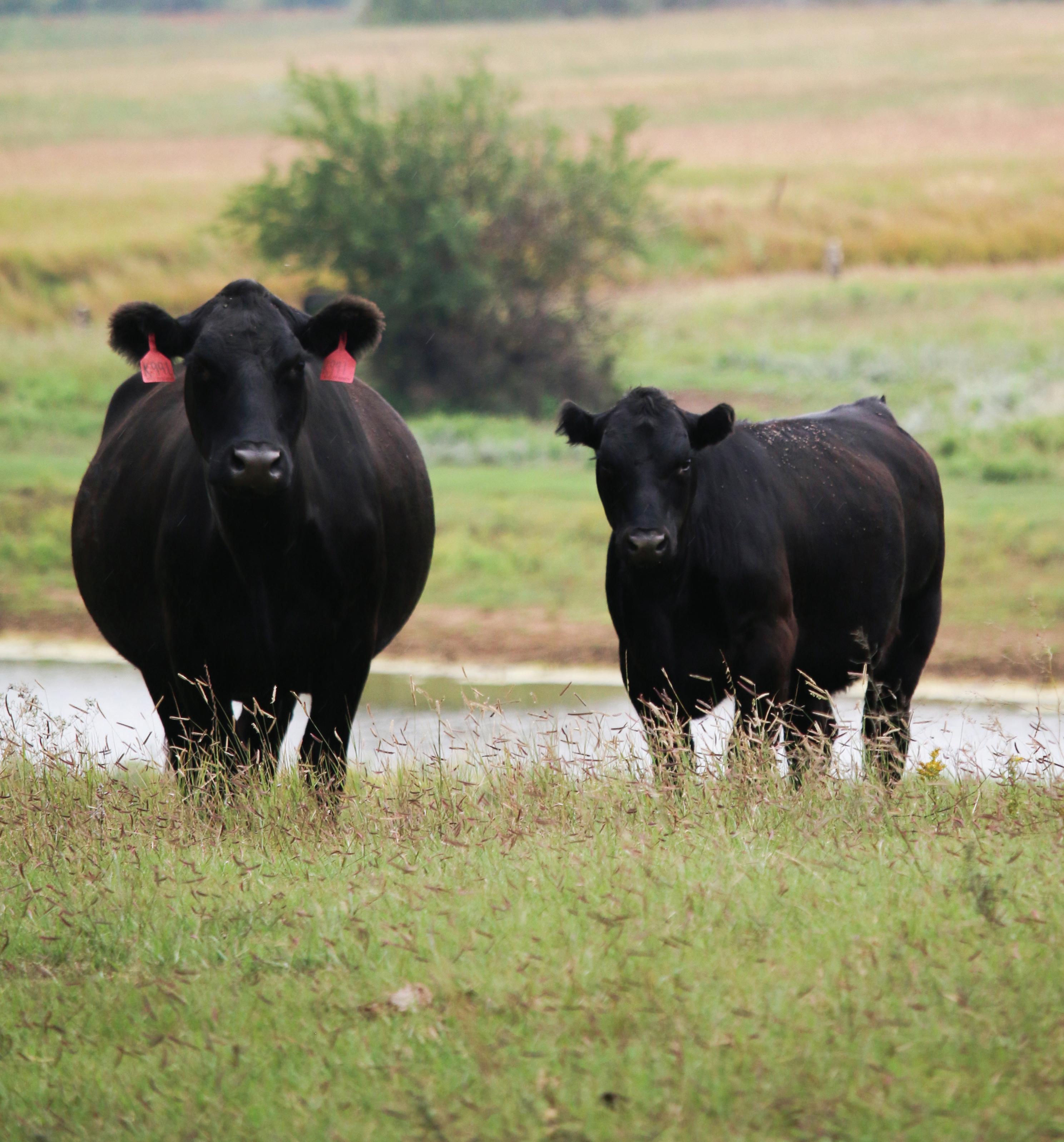
The simplest definition of the word sustainability is “the quality of being able to continue over a period of time” or “the ability to be maintained at a certain rate or level.”
However, in the agricultural industry as a whole, particularly in the beef sector, there has been ongoing conversation about what sustainability truly means. AgNext, a research collaborative at Colorado State University dedicated to advancing the science of sustainable animal agriculture, has identified a broad overview of sustainability as “the balancing of the environment, economy and society.”
The American Gelbvieh Association (AGA) has focused its conversations about sustainability around efficiency. It has set out to position Gelbvieh and
Balancer® as the industry standard for beef production efficiency by achieving optimum productivity and decreasing input costs. The AGA believes that, for beef producers, sustainability starts at the herd level with the cow. With efficient use of resources, the Gelbvieh cow is the picture of sustainability in today’s modern beef industry.
While this reflects the AGA’s definition of sustainability at the breed level, it is also important for individual producers to have these conversations within their own operations. According to Dr. Kim Stackhouse-Lawson, Director of AgNext, each producer must take the time to determine their own definition of sustainability. She said, “The best part about sustainability is that it does not have one definition.” Rather than trying
to follow a uniform set of guidelines, producers need to have honest and intentional conversations about planning for the future, developing economic strategies, and deciding how an operation may be passed to the next generation.
The size and scale of an operation play a key role in shaping those conversations. More than half of active AGA members reported owning 50 or fewer cows during the 2024–2025 production year. This comes as no surprise, considering nearly 80% of cattle operations in the United States manage fewer than 50 head. Yet, conversations about sustainability in the beef industry often center on largescale operations that feed or manage thousands.
Dr. Stackhouse-Lawson pointed out several reasons that smaller operations are rarely the focus of the sustainability conversation. Mainly, there is less pressure on cow-calf producers. She explained, “Because the cow-calf producer is so far down the supply chain, they avoid much of the pressures that other beef producers are facing.” Cattle feeders, for example, may receive questions from food companies that are being pressured to lower their carbon footprint. Even though a significant percentage of methane emissions originate in the cow-calf sector, there is little direct value to gain and limited pressure for smaller producers to reduce their emissions.
Much of the attention and most of the headlines focus on large cattle feeding operations, but that does not mean sustainability is any less important for smaller producers. Remembering that to be sustainable means “the quality of being able to continue over a period of time,” producers of all sizes should be motivated to strengthen the longevity of their operations.
Using the three-pillar approach developed by AgNext, producers can identify meaningful ways to improve sustainability within their own operations. AgNext defines its three pillars as a broad framework for sustainability: the balance of environment, economy and society. Dr. Stackhouse-Lawson mentioned several goals within these categories that would benefit small producers. Some goals may seem obvious, such as securing a transition plan for the next generation or ensuring an operation remains profitable for the foreseeable future. However, it is equally important to make social considerations and foster connections within a local community or among fellow beef producers.
Dr. Stackhouse-Lawson emphasized that one of the most challenging and rewarding aspects of sustainability is its flexibility. “The best part about sustainability is that it does not have a definition. That is also the hardest part,” she said. “It’s both the good and the bad
of the discipline.” She explained that the real intent of sustainability is for each individual operation to define it for themselves. “Whether that’s you as an individual, a multibillion-dollar company, or a smaller-scale beef producer, I would encourage them to really define what it means for that operation to be sustainable,” she said.
That definition, she stressed, must extend across all three pillars. “Profitability does not equal sustainability. It is a part of sustainability, but it is not the only thing that we worry about,” she explained. Environmental, social, and economic impacts must all be considered together. “It’s never a one-word answer,” she added.
Rather than searching for a universal metric, she encouraged producers to develop meaningful measurements within each pillar that reflect their own goals. Social metrics might include establishing a transition plan and committing to regular family meetings. Environmental goals could involve implementing a grazing management plan or developing a drought strategy. Economic benchmarks might mean investing in genetics that improve efficiency or carcass merit or exploring ways to retain ownership further along the supply chain.
“I think that really customizing sustainability to your operation is what’s the most meaningful,” she said. “At that level, everybody’s going to have different measures and metrics.”
Dr. Stackhouse-Lawson also discussed the misconceptions she often hears when discussing sustainability with both consumers and producers. She describes sitting next to the average consumer on an airplane and how they may consider beef and sustainability in the same sentence to be an oxymoron. On the other hand, many of the producers she speaks to will say they have been sustainable for generations and would rather be left alone.
She described politely challenging both mindsets. To the consumer, Dr. Stackhouse-Lawson challenges their
beliefs by highlighting the microenvironments producers manage and the care they invest in their land and cattle. She said, “Producers know their little piece of land better than anybody else, and they take really good care of their cattle. They are always trying to be better, and I think sustainability provides us an opportunity to demonstrate that in a really meaningful way.”
When addressing the producer, she said, “From a beef producer’s perspective, they have been improving beef production for centuries, and they are going to keep improving. So, I always try to encourage them to share how forward-looking they are.” She argues that, when looking at the literature, it is clear that beef production has made tremendous gains in efficiency and correlating how that has improved sustainability is an inspiring way to view the whole system.
Sustainability is inevitably going to remain part of the conversation in the beef industry for the foreseeable future. However, despite the general focus on large producers and environmental impacts, sustainability across all three pillars — economic, social, and environmental — is equally relevant to small producers. Dr. Stackhouse-Lawson provided an important reminder that the sustainability metrics relevant to an association, research institution, or large cattle feeder might mean very little to an individual beef producer.
Instead, producers must focus on defining sustainability for their own operations and working intentionally toward it. By committing to the economic, social, and environmental factors that shape an operation’s future, producers can strengthen its longevity for the next generation. Simple steps, such as developing a transition plan or investing in the local community, can have a meaningful impact. As Dr. StackhouseLawson pointed out, “When we start compiling all these little things, they can do a lot of really good things for beef as a whole.”F
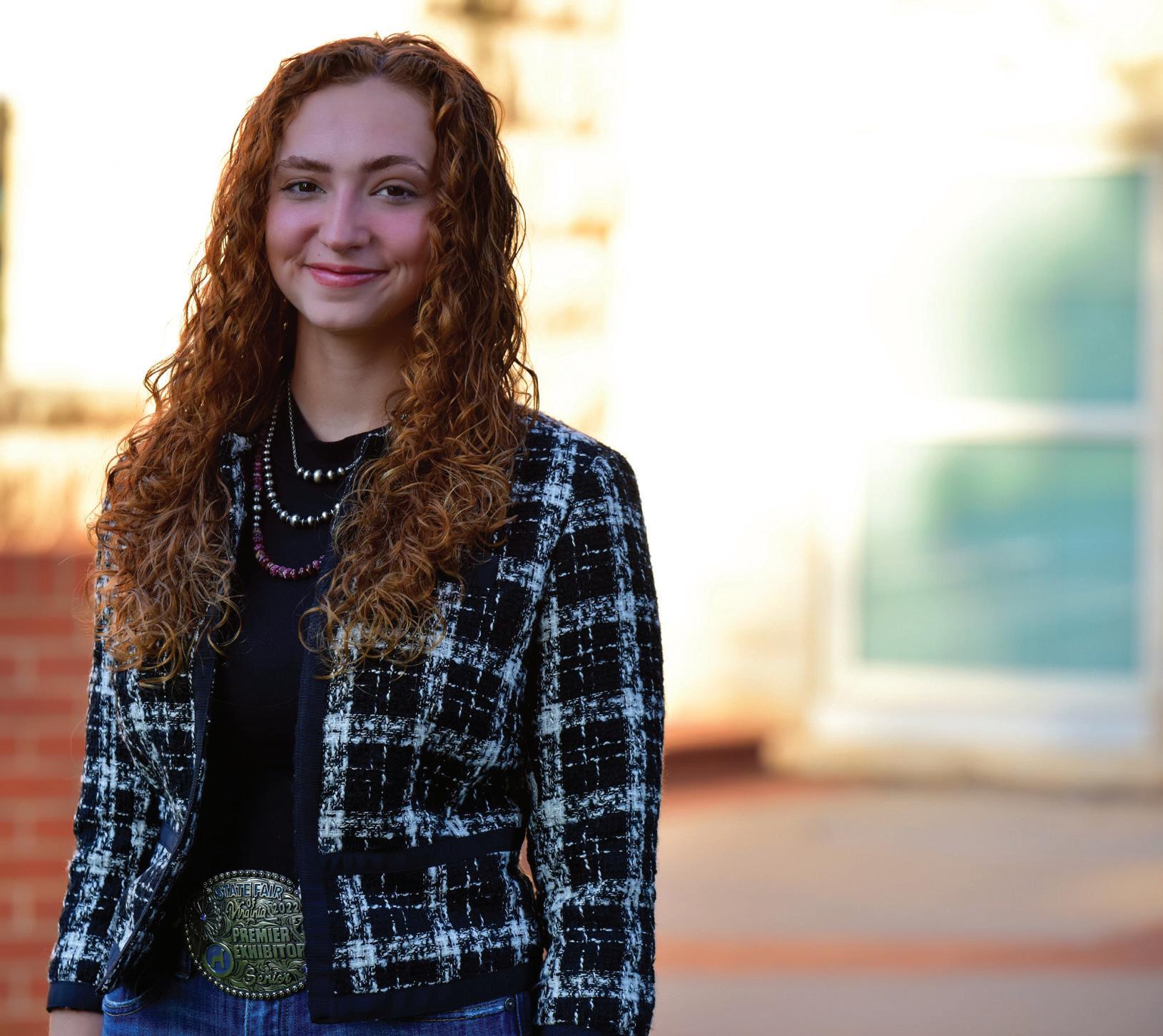
SAVILLE ANNOUNCED AS THE AMERICAN GELBVIEH ASSOCIATION SUMMER INTERN
The American Gelbvieh Association (AGA) is excited to announce the hiring of Sidnie Saville, Blacksburg, Viriginia, as the AGA summer intern. In her internship, Saville will assist in all aspects of AGA operations including member programs and services support, member education and American Gelbvieh Junior Association (AGJA) Junior Classic activities.
“The AGA is elated that Sidnie will be joining our team this summer! Sidnie will play a key role in the organization and execution of the 2026 AGJA The Good Life Junior Classic. With extensive experience, an impressive work ethic, and genuine interest in youth development
and the livestock industry, we are excited to see her contributions to the AGA and AGJA,” said Martha Moenning, AGA member and youth activities coordinator.
Saville was raised in the livestock industry and showed sheep and cattle throughout her 4-H career. She attended Northern Oklahoma College where she was a member of the livestock judging team. She is a current senior at Iowa State University and will graduate with her bachelor’s in agricultural communications in May.
Saville is very passionate about the livestock industry and helping foster the next generation. She has had the opportunity to work with youth
programming and livestock show management on local, state and national levels.
“I’m honored to join the AGA as a summer intern and contribute to an organization that plays such an important role in advancing the beef industry. I’m excited to learn from the AGA team, support youth, and share the mission of the AGA with producers across the country,” said Saville.
Saville will begin her internship on May 20 and can be reached at intern@gelbvieh.org or at the AGA office at 303-465-2333.F

Thank You!
Long-Time AGJA Supporter & Donor of the 2025 All-Around Heifer
BOEHLER TY
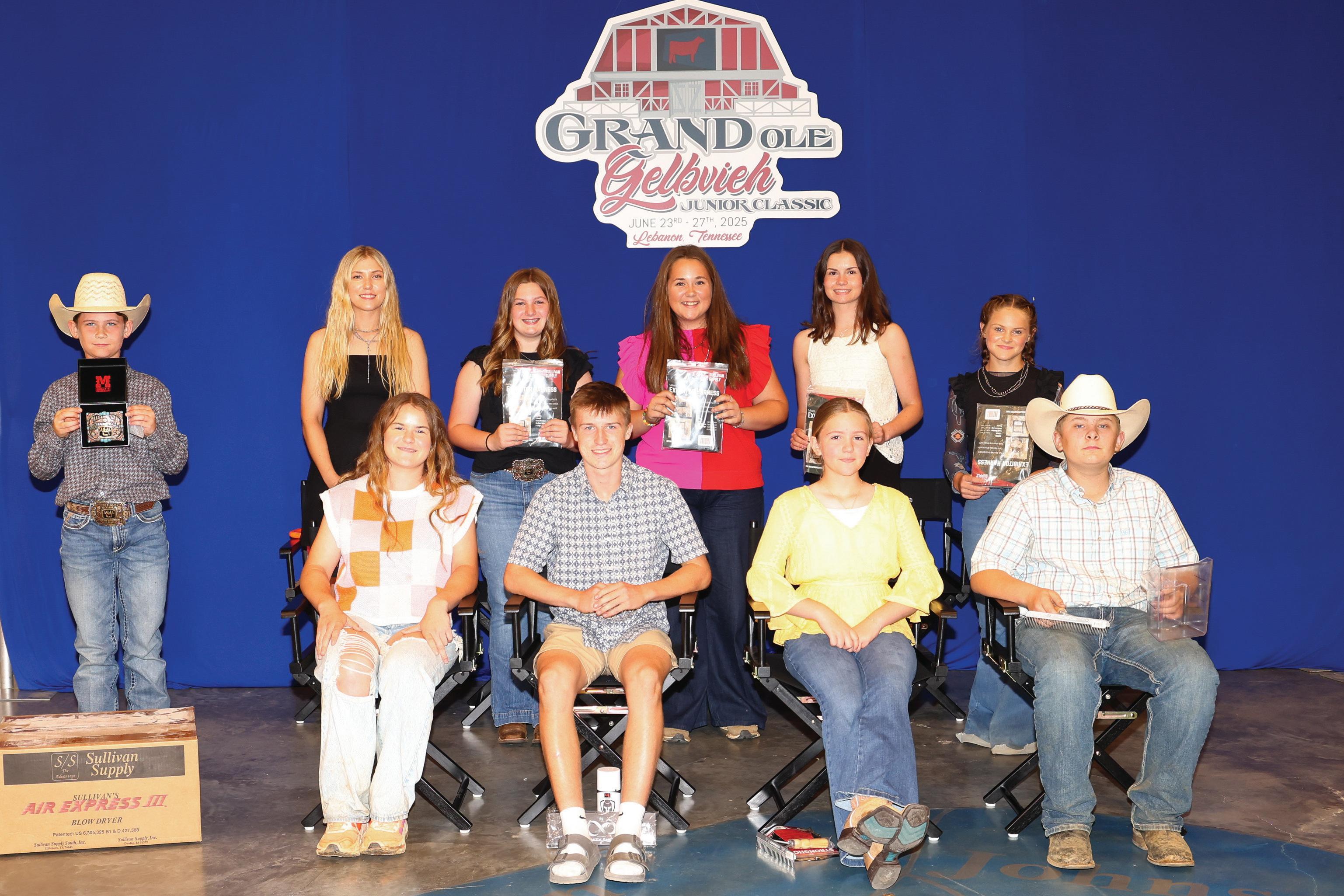
T he American Gelbvieh Junior Association is proud to recognize XXB and the Boehler family for their g enerous donation of the 2025 AGJA All-Around Heifer. T his special award honors the outstanding AllAround Exhibitor at the AGJA Junior Classic. T hanks to the suppor t of XXB and the Boehler family, the AGJA is able to celebrate and reward the hard work and commitment of a junior member. T heir g enerosity ref lects a meaningful investment in the future of the Gelbvieh breed and the next g eneration of leaders within our industr y
Long-Time AGJA Supporter & Donor of the 2026 All-Around Heifer












hornsandthorns@netins.net (319)

Mulroy 785-640-6401 Mayetta, KS tim@blackgoldinc.biz


“Where workin’ cattle and eye appeal come full circle”
John & Carla Shearer


Annual Production Sale 1st Saturday in April 2815 Navajo Rd. • Canton, Kan. 67428 circle_s@hometelco.net
620.654.6507 (John Cell) • 620.654.6731 (Johnny Cell)
POST ROCK CATTLE COMPANY
3041 E. Hwy. 284, Barnard, KS 67418
Bill Clark: 785.792.6244

Leland Clark: 785.392.0888 Office: 785.792.6244
Leland Clark: 785.792.6208
Fax: 785.792.6250
Kyle Cavalli: 785-531-1947
Email: prcc@twinvalley.net


Al & Mary Knapp Cell: (913) 219-6613 18291 158th Street H: (913) 724-4105 www.triplekgelbvieh.com e-mail: knappa@swbell.net








BREEDERS CORNER



“Gelbvieh since 1973”
Kathleen Rankin Jim Bjorkman 1285 Nine Mile Rd. 406-937-4815 Oilmont, MT 59466 krankin@northerntel.net 406-460-0535 www.kickinghorseranch.com
NEBRASKA

Private Treaty Bull & Heifer Sales • Orchard, Neb. Val Livingston • www.88ranch.com • 402-655-2288




























OKLAHOMA



VIRGINIA













EVENTS OF INTEREST
APRIL 2026
APRIL 4 Circle S Ranch “Going to Grass” Production Sale, Canton, Kan.
APRIL 11 Knoll Crest Farm Spring Bull & Female Sale, Concord, Va.
MAY 2026
MAY 2 Butler Creek Farm Fall Born Female, Embryo & Semen Sale, Milton, Tenn.
JUNE 2026
JUNE 21-26
AGJA The Good LIfe Junior Classic
OCTOBER 2026
OCT. 23 T Bar S Focused on the Future Bull Sale, Billings, Mo.
NOVEMBER 2026
NOV. 13 Coles Bend Cattle 1st Annual Production Sale, Smith’s Grove, Ky.
Visit the online version of Upcoming Events at Gelbvieh.org for additional dates of upcoming sales and more information on each event.
Editor’s Note:
If you have a sale or event information for this listing, please email the information to meganu@gelbvieh.org. This includes tours, expos, field days and other Gelbvieh events.
ADVERTISING INDEX



















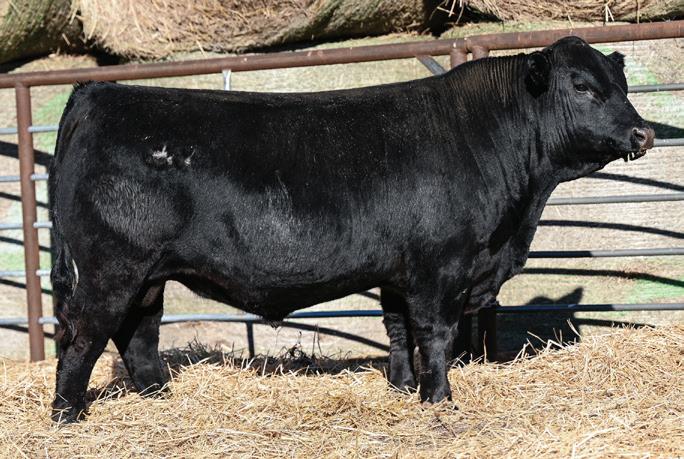









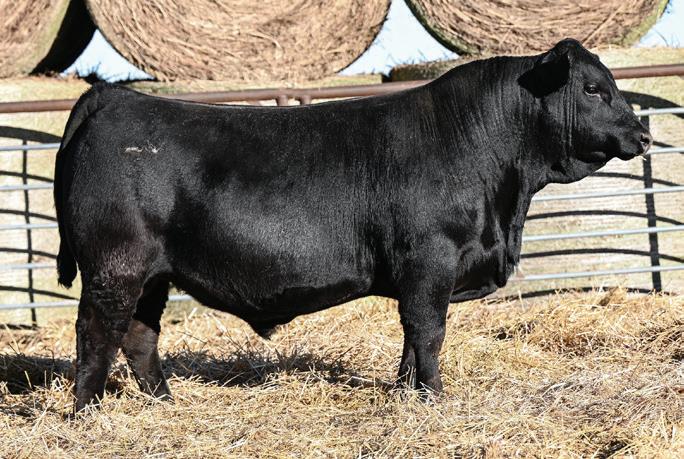
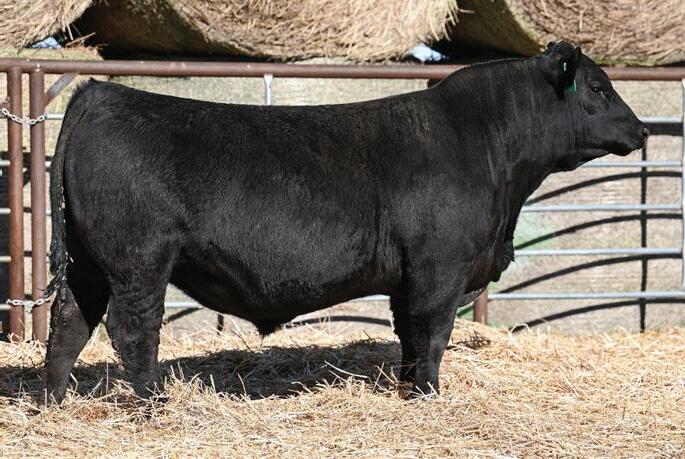

























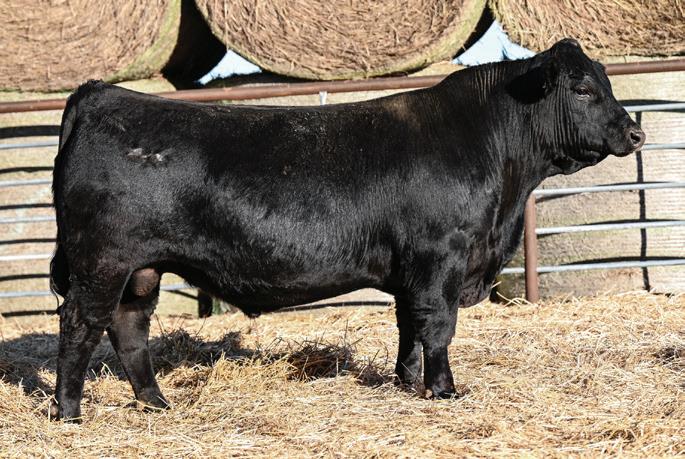




















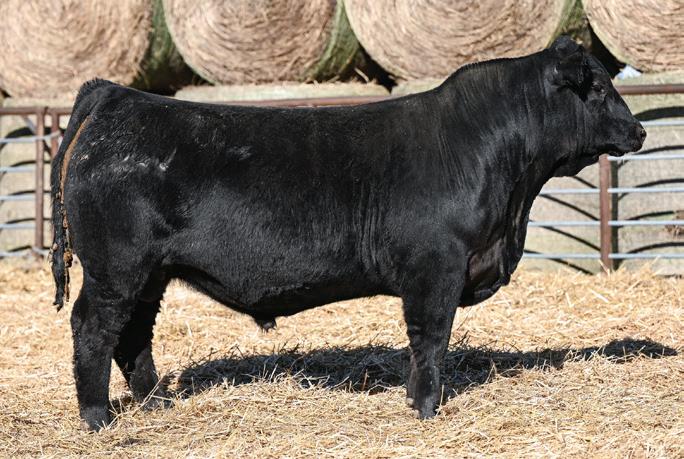
























































































LOT 33 - 1544N $19,000 BAR Dynamic son Thank you to Wilkenson Gelbvieh, CO.
LOT 30 - 1129M $21,000 Growth Fund son Thank you to Thunderstruck Gelbvieh, SD.
LOT 41 - 1539M $16,000 Je erson son Thank you to commercial buyer, NE.
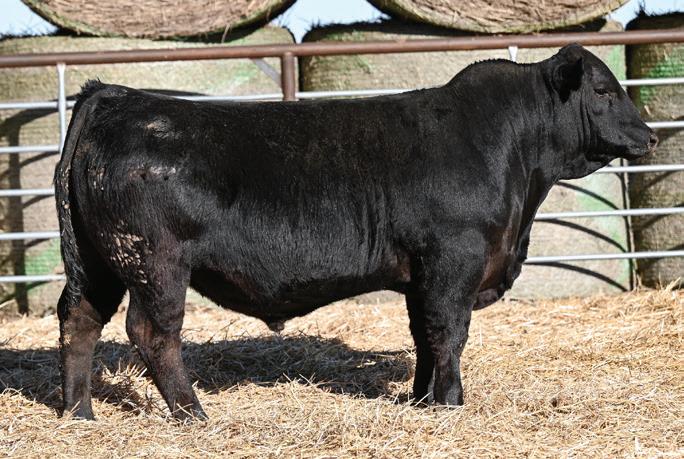
LOT 81 - 8209N $19,000 Victorio son Thank you to Cedar Top Ranch, NE.
LOT 35 - 399N $16,000 BAR Dynamic son Thank you to commercial buyer, TX.
LOT 42 - 9502M $19,000 Je erson son Thank you to YJ Mountain Ranch, UT.
308-530-3900 (Scott) • 308-530-2720 (Austin) cedartopranch@yahoo.com • Facebook: Cedar Top Ranch
Eldon & Kathy Starr 210 Starr Dr • Stapleton, NE 69163 bullbarn@bullbarn.com • 800-535-6173 www.bullbarn.com