he end of the school year is approaching, summer will be here before you know it. With exams and decisions ahead, it’s no surprise if things are starting to feel a bit overwhelming. But you've got this, and we’re here to help.
In this issue, you’ll find ways to prepare for your exams and nail your UCAS personal statement. We also look at your options after school, from apprenticeships to gap years.
There’s an exclusive look at what it’s like working on the hit TV show The Traitors. Plus, we’re giving you tips on the best ways to de-stress and tackle isolation. All of this and loads more inside.
responsibility for claims made by advertisers within the publication. Every e ort has been made to ensure that information is accurate; while dates and prices are correct at time of going to print, DC Publishing Ltd takes no responsibility for omissions and errors.
STUDY
9 UNDER PRESSURE
Ways to manage exam stress and look after yourself.
10 SIMPLE TIPS TO FEEL EXAM READY
Prepare for your exams with these effective tips.
15 UCAS
Everything you need to know about the changes to the UCAS personal statement.
LIFE
4 AN APP A DAY…
The right app can make all the difference to your student life.
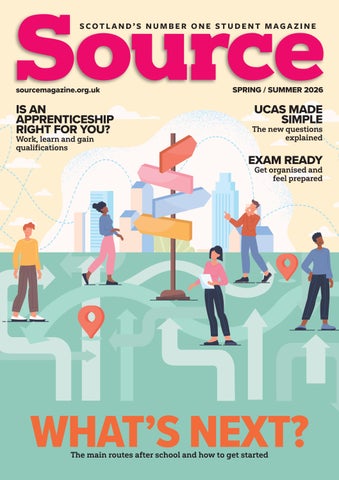
6 WHAT’S NEXT?
When school ends, there’s no single right path to pick.
20 ADVENTURE AWAITS
Maya and Ben tell us why they swapped lecture halls for ski slopes.
27 LEVELLING THE PLAYING FIELD
A fair classroom recognises differences instead of ignoring them.
WORK
12 IS AN APPRENTICESHIP RIGHT FOR YOU?
Angus Henderson tells us how his apprenticeship changed everything.
22 MORE THAN JUST A SUMMER JOB
Here’s how your summer job could influence your future.
HEALTH
24 COPING WITH LONELINESS
How you can tackle feelings of isolation.
MONEY
17 FUNDING STUDENT LIFE
Take control of your finances, and budget like a pro.
INTERVIEW
29 BEHIND THE SCENES
Insha Aslam shares what it was like to work on the production set of The Traitors.
30 THE TARTAN TREK
We talk to Craig Ferguson during his 3,200-mile walk across America, raising funds for SAMH.
AN A A DAY…
School life can be busy, stressful and expensive at times, but the right apps can help. From study and organisation to wellbeing and budgeting, here are the ones worth downloading
MENTAL WELLBEING
HEADSPACE
Best for: Early mornings, study breaks or winding down before bed Headspace offers short guided sessions designed to help you manage stress, improve focus and build healthier routines. With exercises that fit easily into busy school days, it’s a simple way to pause, reset and create a sense of calm during particularly demanding periods.
WYSA
STUDY AND ORGANISATION
NOTION
Best for: Managing study notes, deadlines and to-do lists Keeping notes, tasks and study plans isn’t always easy. Notion gives you one place to keep everything together, from class-notes and revision plans to to-do lists and project work. You can organise subjects in a way that suits you, helping you keep track of your workload and what needs done.
FINANCE AND BUDGETING
SNOOP
Best for: Understanding everyday spending Snoop helps users understand where their money goes by tracking spending and highlighting habits. For students managing allowances or part-time earnings, it turns day-to-day spending into clear, practical insights that make money management feel more manageable.
SCHOOLTRACK
GOODBUDGET
Best for: Keeping track of how you’re feeling day-to-day Wysa provides a private space to check in with your thoughts and emotions. Using guided conversations, mood tracking and reflective exercises, this app helps you understand patterns in how you’re feeling and encourages healthier coping habits, especially during stressful school weeks.
Best for: Keeping on top of deadlines Forgetting a deadline or misplacing homework can add to existing stress. Schooltrack keeps timetables, tasks and reminders in one place, helping you stay organised day to day. With everything laid out clearly, it reduces last-minute stress and makes it easier to stay on top of school work.
Best for: Planning money on a limited budget
Goodbudget makes sticking to categorised budgets simpler. This app uses a digital envelope system to plan spending across different categories. By setting limits and tracking costs, it helps students build healthier budgeting habits without overcomplicating things. An easy way to track spending.
WHAT’S NEXT?
When school ends, life doesn’t always point you in one direction — there are lots of ways to learn, work and figure things out. Whether you’ve already got a plan or just know what you enjoy, this guide takes you through the main routes open to you
COLLEGE: PRACTICAL LEARNING
Best for: students who like practical learning and clear structure. College is a strong option if you want recognised qualifications. Courses cover everything from healthcare and digital design to sport, engineering, trades and applied sciences, and many include workshops or real-world projects. It can be a good stepping stone — some students progress into work, while others move on to university. Useful starting points: My World of Work (myworldofwork.co.uk), Planit (planitplus.net)
UNIVERSITY: STudying for A DEGREE
Best for: students who want to study a full degree. University gives you time to specialise and really get to grips with a subject. Expect a mix of lectures, tutorials, labs or studio sessions depending on what you choose to study. Some courses also offer the chance to study abroad. Open days and online chats with current students can help you understand the workload, teaching style and what day-to-day life really feels like.
Useful starting points: UCAS Hub (ucas.com), Discover Uni (discoveruni.gov.uk)
You’re not choosing a forever path — you’re choosing a starting point
through Scotland’s Young Person’s Guarantee, which aims to ensure every 16–24-year-old can access work, training or education. You can find out more through My World of Work or by speaking to a local council employability team. Many employers offer structured roles for school leavers, with training built in. Useful starting points: My World of Work (myworldofwork.co.uk), local council employability teams.
A YEAR OUT: TIME TO THINK, WORK, VOLUNTEER OR EXPLORE
Best for: anyone who isn’t quite sure what’s next.
A year out isn’t a delay — it’s time to figure things out properly. You might work locally to save money, volunteer, travel, or try something completely new. Many young people say stepping back for a few months helped them make clearer choices later on. Useful starting points: Project Trust (projecttrust.org.uk), Volunteer Scotland (volunteerscotland.net), Year Out Gap (yearoutgap.org)
YOU’RE ALLOWED TO CHANGE YOUR MIND
APPRENTICESHIPS: EARNING WHILE YOU LEARN
Best for: young people who like practical learning but want a qualification at the same time.
Apprenticeships combine paid work with study, letting you learn from experienced colleagues while earning a wage. You’ll find opportunities across almost every sector — from digital and creative industries to early years, construction, engineering and science. Useful starting points: Apprenticeships.Scot (apprenticeships.scot), NHS Careers (nhscareers.nhs.uk)
WORK: BUILDING YOUR EXPERIENCE FROM DAY ONE
Best for: young people who want to earn, gain experience and get stuck in. Many of the jobs, training and support available to young people are supported
Your first step doesn’t decide everything. Plenty of people change direction, switch courses or move into different careers later on. Choose something that feels right for now and helps you grow — you can always adjust as you learn more about yourself.
TALK IT THROUGH
If you’re unsure, speaking to a careers adviser can make a real difference. My World of Work offers free guidance by phone on 0800 917 8000 or through local Skills Development Scotland centres, where advisers can help you explore options, understand entry requirements and work out what feels right for you.
FEELING OVERWHELMED
It’s normal to feel pressure at this stage, especially when people around you seem certain about their plans. But you don’t need to have everything mapped out. You just need to pick a direction that feels manageable and gives you something to build on.
You’re not choosing a forever path — you’re choosing a starting point.
HOW TO START MAKING A PLAN
A lot of people worry that everyone else knows exactly what they’re doing. They don’t. Most people are figuring it out as they go, and planning becomes much easier when you break it down into small steps rather than one big life decision.
Think about what you actually enjoy
This isn’t just about subjects at school. Do you like solving problems? Helping people? Being outdoors? Creating things? Working with numbers? If you’re not sure, look at times when you felt really engaged or proud of something — they’re usually good clues.
Notice what you don’t enjoy
Knowing what drains you is just as useful. Maybe you hate sitting still all day, or you find big groups stressful, or you don’t enjoy working alone. These things matter when choosing a path.
Get a feel for it
You don’t need a huge commitment to learn about an area. Taster days, short courses, volunteering for a weekend or shadowing someone for an afternoon can all help you understand whether something is for you.
Talk to people doing the job
Most careers look very different from the outside. Hearing from people actually working in a field gives you a more honest picture: the good bits, the tough bits, and what the work is like on an average day.
W UNDER PRESSURE
hen exams are coming up, it can feel like everything starts to revolve around revision. Whether you’re sitting Nat 4s, Nat 5s, Highers or Advanced Highers, the pressure to stay focused and do well can quickly become overwhelming. Feeling stressed doesn’t mean you’re doing anything wrong — it’s a normal response to a busy, demanding time. What matters is knowing when to step back and give yourself a breather.
STEP AWAY FROM THE BOOKS
Taking regular breaks can really help you concentrate better when you go back to studying. Even ten minutes away from your notes can make a difference. Going for a short walk, stretching, listening to music or sitting somewhere quiet can help your mind slow down. Some students find it helps to read or watch something they actually enjoy for a bit. It’s a reminder that not everything has to be about exams.
USING YOUR PHONE WITHOUT OVERLOADING YOUR MIND
Your phone doesn’t have to be a problem — it depends how you’re using it. Scrolling can sometimes make it harder to switch off, especially if you start comparing yourself to others or feel more pressured. Apps like Headspace or Calm provide short breathing exercises that can help when anxiety spikes. The Forest app can help with focused study time by helping you stay off your phone for set periods, while Spotify playlists can create a calmer atmosphere while revising. The key is noticing when scrolling stops being relaxing and starts adding to stress, and choosing tools that support you instead.
MOVE YOUR BODY, CHANGE YOUR MOOD
Movement can be one of the quickest ways to release tension. This doesn’t have to mean intense exercise or organised sport. Walking, swimming,
Exams
can make everything feel louder and more intense. If revision stress is starting to build, these simple ideas can help you pause, reset and look a er yourself
stretching, dancing in your room or kicking a ball about with friends all count. Apps like Strava can help you discover local routes, track walks or runs, or simply motivate you to get outside. Even a small amount of movement can help clear your head and give you a break from revision worries.
CHECKING IN WITH YOURSELF
Everyone handles exam pressure differently, so it’s important to pay attention to how you’re feeling. If things start to feel too much, talking to a friend, teacher or someone at home can really help. Exams matter, but they don’t define you — and getting a bit of support if needed can make a real difference.
FIND OUT MORE
Visit young.scot for advice on exams and looking after your mental health. Text SHOUT to 85258 for free, confidential support if you just need to talk.
Simple Tips to feel exam ready
Feeling overwhelmed by revision? You’re not alone — and it doesn’t mean you’re doing it wrong. With a few simple strategies, you can organise your workload and tackle revision step by step. These tips can help you feel calmer, more prepared and in control
Slice and dice your sUBJECTS
Breaking down each subject into smaller, manageable topics can make even the heaviest workload feel doable. Rather than thinking about a whole subject at once, divide it into clear sections and focus on one topic at a time. This helps your brain organise information and gives a clear sense of progress, perfect for staying motivated.
Checklist your way to success
Nothing beats the satisfaction of ticking boxes. Making a checklist of everything you need to revise can turn revision into a clear plan. Seeing tasks written down and completed builds confidence and makes the workload feel more manageable.
Test yourself
Reading notes can feel productive, but it doesn’t always help information stick. Try testing yourself instead — put questions and answers on flashcards for each topic, ask someone to quiz you, or quiz yourself before checking your notes. Flashcards are easy to revisit and handy for quick revision on the go.
Your secret weapon
Past papers are a great way to understand how exams are set out.
They help you spot common question types, understand command words, and test yourself under timed conditions. The more familiar the format feels, the more confident you’ll be on exam day.
Small daily wins
Instead of cramming everything at once focus on a steady revision plan. Short, focused sessions help improve concentration and memory. Even 20–30 minutes per topic consistently can add up to thorough preparation by exam time.
Recharge to revise
Breaks aren’t a luxury — they are essential. Schedule short pauses between revision sessions to recharge, relax your mind, and avoid burnout. A refreshed brain absorbs more, retains better, and keeps stress levels manageable. Think of breaks as part of your strategy, not downtime.
Teach it to learn it
Explaining a topic out loud, either to yourself or someone else, is a simple but powerful technique. If you can explain it clearly in your own words, you’ve understood it well. This method reinforces memory, reveals gaps in knowledge, and makes revision interactive rather than passive.
Walk it off
A short walk can do wonders for your concentration. Stepping away from revision for 10–15 minutes can clear your head, boost energy levels and help you return feeling refreshed and ready to focus again.
FIND OUT MORE
For more tips and revision help, visit BBC Bitesize (bbc.co.uk/bitesize) for exam-friendly revision notes, videos and quizzes.
YOUR SKILLS IN SERVICE YOUR LIFE IN BALANCE
JOIN THE ROYAL NAVY RESERVES
Ready to make a difference in your spare time? As a Reservist, you’ll gain new skills, travel the world, and support real operations – all while balancing your career, studies or family life. Be part of something extraordinary, without a full-time commitment.
WHY ROYAL NAVY RESERVES?
X Play a key role in supporting the Royal Navy’s operations
X Make friendships for life
X Learn new skills
X Gain leadership opportunities
X Pay and pension benefits
X Travel all around the world
Is an Apprenticeship Right for You?
Not sure what comes next after school? Apprenticeships offer a practical way to build skills, gain recognised qualifications and get real workplace experience
Angus Henderson
Figuring out what to do after school can feel like a lot. When everyone around you is talking about university, it can seem like that’s the only path. But it’s not.
Apprenticeships offer something different. Instead of full-time study, you learn while working. You gain qualifications, build practical skills and start to understand what working life is actually like.
APPRENTICESHIPS EXPLAINED
There are three main types of apprenticeships in Scotland.
Foundation Apprenticeships are taken in S5 and S6, over one to two years. You split your time between school, college and work-based learning, gaining a qualification alongside your National 5s or Highers without leaving school early. These aren’t paid jobs, but they give you experience in a real industry.
Modern Apprenticeships usually begin after school and typically last one to four years. You’re employed, earning a wage while learning mainly on the job with structured training and assessments.
Graduate Apprenticeships combine employment with a university degree over three to four years. You’ll work while studying towards a degree, and apply your learning directly in the workplace, with teaching delivered flexibly so you can balance work and study.
Skills Development Scotland supports all apprenticeship programmes in Scotland, and
A
Graduate Apprenticeship gives you the opportunity to put your technical knowledge into action
vacancies are advertised on platforms such as apprenticeships.scot, My World of Work and employer websites.
APPLYING
Applying for an apprenticeship is basically applying for a job, so it helps to take it seriously.
You should start with your CV. Don’t worry, you don’t need loads of experience to write one; most employers understand you’re still at the start of your career. Focus your CV on what you have done, school subjects, projects, part-time work, volunteering and achievements. Show what skills you’ve built, and explain why you’re interested in that industry.
If you get an interview, preparation makes a big difference. Research the company. Think about why you want the role. Practise answering questions out loud. You’re not expected to know everything, but being honest, motivated and willing to learn goes a long way.
Foundation Apprenticeships are usually arranged through your school with support from teachers or careers advisers. Modern and Graduate Apprenticeships are applied for directly, just like jobs.
WHY THIS ROUTE WORKS
Apprenticeships suit people who prefer learning by doing. They provide structure without the pressure of full-time study and give you the chance to try a particular career or industry while gaining experience. If sitting in lectures all week doesn’t sound like your thing, this could be a better fit.
The best part? You can earn while you learn, build workplace skills, gain industry knowledge, and make valuable contacts. By the end, you’ll
have recognised qualifications and real workplace experience that employers value.
LEARNING BY DOING
For Angus Henderson, a Graduate Apprenticeship wasn’t a backup plan. It was exactly what he wanted.
He wanted a path combining academic learning with real industry experience. The IT: Software Development Graduate Apprenticeship at the University of Strathclyde gave him that balance. It also allowed him to study while working for the global company JPMorgan Chase.
Within four months, Angus built a tool that reduced software build times across teams. What started as curiosity about how systems worked became a solution used across hundreds of projects.
“I was looking at how long it takes to get a piece of software into production and how long it takes to identify that something is broken,” explains Angus. “I wanted to speed up the process without compromising on the controls that are in place.”
Working for a global organisation straight after school might sound intimidating, but Angus says it helped build his confidence.
“A Graduate Apprenticeship gives you the opportunity to put your technical knowledge into action and make a real difference,” he continues. “You can take ownership of a problem and work with people in the business to solve it. Seeing the impact at the end is really rewarding.”
His work even led him to present his solution to senior leaders at an international engineering conference in India. It was an experience he once would have found intimidating: “Doing a Graduate Apprenticeship definitely boosted my confidence and improved my communication skills. Now I can walk into a room of executives, explain a problem and how to solve it.”
Angus gained experience, confidence and a clearer sense of direction by learning on the job. He now recommends apprenticeships to all students who want a more practical way to begin their career.
FIND OUT MORE
Visit skillsdevelopmentscotland.co.uk or apprenticeships.scot, or speak to a teacher or careers adviser.
UCAS MAKEOVER THE
From 2026 entry, the traditional UCAS personal statement is being replaced. But what does that mean for you?
If you’ve grown up hearing horror stories about the UCAS personal statement, you’re not alone. We’ve all heard about the late nights, the endless drafts, and the feeling of staring at a blank page wondering how on earth you’re supposed to sum yourself up in 4,000 characters. Well, not to worry –thankfully for you, the nightmare has come to an end.
For students applying for 2026 entry, the traditional personal statement format is being replaced. The reason behind this change is simple: many students found the open-ended essay format difficult to approach, and UCAS wanted to make the process clearer and fairer for everyone.
Now, instead of guessing what universities want, you are given a framework. The questions will guide you, and your job is to answer them honestly, clearly and thoughtfully. What matters now is showing who you are and why you are ready for the next step.
You still get the same 4,000 characters overall, but now that space is divided more clearly into three questions. Each question requires a minimum response, so you cannot just focus on one section and ignore the rest.
But what are the questions?
QUESTION ONE
First, you’ll be asked why you want to study your chosen course or subject. This is your chance to show genuine interest. What sparked it? Was it a book, a project, or a class discussion that stayed with you? Admissions teams are not looking for dramatic life stories, but they do want to see real curiosity and motivation.
QUESTION TWO
Second, you’ll explain how your qualifications and studies have prepared you for the course. This is where you link your subjects and skills directly to what you want to study next. If you are applying for engineering, for example, talk about the maths and physics skills you have built. If it is English, reflect on analysis, writing and critical thinking. Keep it focused and relevant.
QUESTION THREE
The third question asks what else you have done outside of formal education that has helped prepare
Instead of guessing what universities want, you are given a framework
you for university. This could include work experience, volunteering, parttime jobs, caring responsibilities, clubs or independent projects. It’s not about listing everything you have ever done, but about showing what you learned and how it shaped you.
While the format is different, the aim remains the same. It’s your chance to show universities why you want to study the subject and highlight to admissions teams what makes you a strong candidate.
Visit ucas.com for more help and advice, or speak to a pastoral support officer at your school who can guide you through the process.
IDEAS | PEOPLE | TRUST
STUDENT LIFEFUNDING
Heading to college or university? Get clear on your funding and take control of your finances
Starting college or university usually means more independence – and more responsibility for your own money.
Sorting out your finances might not be the most exciting part of getting ready, but it makes a big difference once classes begin. Knowing what funding you get, setting up the right bank account and keeping a simple budget helps you stay in control and avoid lastminute stress about rent or bills. There’s support available to help with the cost of studying – you just need to know what to apply for.
STUDENT ACCOUNTS
Opening a current account that suits you is a good first step. Student accounts are tailored for people in full-time education and usually include an interest-free overdraft and an app that shows exactly where your money goes. Banks push student deals at the start of the academic year. Take your time and read the terms before you sign up. An overdraft can help if you run short at the end of the month, but it’s still borrowed money, and you will have to pay it back.
Some student accounts offer useful extras. Santander includes an interest-free overdraft and a free 16–25 Railcard, which cuts the cost of train travel all year. NatWest also offers an interestfree overdraft that increases as you move through your course and often includes a small cash bonus. Compare a few options and choose the one that fits how you actually spend, not the biggest offer. Sites like Money Saving Expert (moneysavingexpert.co.uk) will have a breakdown of current deals. If this is your first account, the process is straightforward and you can usually apply online.
BUDGETING
Once your funding is sorted, work out how far it needs to stretch. When you’re living on a student
income, small costs add up quickly.
Start with what you have coming in each month, including your SAAS loan or bursary and any other income. Then list what you have to pay for: rent, bills, food, travel and your phone. Add everyday spending like going out and subscriptions. Seeing it all in one place makes it easier to stay on track and spot where you can cut back if you need to.
Student Information Scotland (studentinformation.gov.scot) has a free online budget and funding calculator where you input your household income, details of your course, what you get paid if you have a job and any bills you have. This then creates a budget and signposts you to any additional funding you might be entitled to.
SAAS
In Scotland, we’re lucky enough to have our tuition fees paid for by the Student Awards Agency Scotland (SAAS), the agency also provides a bursary and student loans. To be eligible for SAAS you must be studying on an HNC, HND, undergraduate or postgraduate course.
You have to apply for funding from SAAS via their website (saas. gov.uk). It’s important to apply for this as soon as you know what course you want to do. You shouldn’t wait for your exam results to come through, as this could delay your funding reaching you and your chosen provider on time.
from nothing if your household income is above £34,000 to £2,000 if your household income is under £20,999. Student loans work on the same criteria,with most students receiving up to £9,400 a year, or up to £8,400 for higher-income households.
BURSARIES
If you’re studying a particular course, you could be entitled to additional funding in the form of a bursary. You don’t have to pay this once you’ve finished your degree. Nursing, midwifery and paramedic students can receive additional funding while on their course, this is to cover the cost of things like travel and food while you’re on placement.
EXTRA SUPPORT
There’s support available to help with the cost of studying –you just need to know what to apply for
Extra help is available if you need it. There are bursaries for care-experienced and independent students, and Disabled Students’ Allowance helps cover the cost of equipment or study support. Your college or university funding team can talk you through what’s available.
The Scottish Government (gov. scot) website also sets out the different schemes clearly.
Once you’ve done this, your fees are automatically paid to your institution when you accept a place on your course, so you don’t have to worry about paying your university or college directly.
The amount you receive from SAAS for your bursary and student loan depends on your background, circumstances and household income. SAAS bursaries range
Not sure what support you qualify for? Your school’s careers adviser or student support team can help you to understand the options. Getting organised now means fewer surprises later and more time to focus on settling in and enjoying your course.
Want to work in Digital, Data or Technology?
Registers of Scotland is hiring
Join an award-winning public sector organisation recognised for its technology and innovation.
•Inclusive and supportive workplace
•Flexibility
•Great benefits and competitive salary
•Work with purpose
•Professional development
•Innovative work culture
Put your career on the map at ros.gov.uk/about/careers
Adventure Awaits
Meet Maja and Ben, two students who swapped lectures for ski slopes, sushi, and adventure. ey share how a gap year taught them more about themselves than any classroom could
Thinking about a gap year? It might sound like just a break from education, but it’s much more than that. A gap year is a chance to discover what really excites you, push yourself out of your comfort zone, and maybe even figure out what you want to do next.
For Maja, it all started with a semester abroad and a friend who convinced her to try a ski season in New Zealand. “I’d already skied before, so I thought, why not?” laughs Maja. That one decision ended up changing everything.
Skiing wasn’t just a fun hobby for Maja, it became a job. She started teaching lessons, from complete beginners to racers. “It’s fast-paced because you leave one group and then jump straight into the next,” she explains. “But that’s part of the fun. Every day is different and you’re constantly learning how to think on your feet.”
NEW EXPERIENCES
A big part of the appeal of a gap year is meeting new people: “Once I got into a routine, it was easier to build meaningful friendships,” smiles Maja. “Eventually, some of my friends came over from Scotland to do a ski season too. That was so much fun.”
Maja adds that living and working abroad teaches you independence, resilience, and confidence. You also learn how to navigate new situations, manage your money, and live amongst people from different backgrounds and cultures.
A gap year can also help you figure out what kind of work you enjoy. Maja discovered that she’d like to combine travelling and working: “I realised I could work somewhere, and do something I genuinely enjoy.”
Of course, it’s not all fun and
I’ve learnt more during my gap year than I ever did in a classroom
games. Skiing and snowboarding come with their risks, and Maja had an unfortunate accident. “I couldn’t ski for a month and that was tough because the mountain is basically your whole life there,” admits Maja. But even when she couldn’t ski, she says there was always something to do.
DISCOVER THE WORLD
Ben’s gap year was a bit different. He spent time in New Zealand and Japan and loved every minute. “Japan was probably the best four or five months I’ve ever had,” he says. “The culture, the food, the snow. Everything was so different. I didn’t know the language at first, but that made it even more exciting.”
Like Maja, Ben agrees that the people you meet are what make a gap year unforgettable: “The best part was definitely the relationships I built. We cooked together, went on trips, and celebrated the little things. It was brilliant.”
But managing money and life on
your own is a whole new challenge. Ben learnt that the hard way: “I ran out of money in Japan because I wasn’t careful. Everything seemed cheap at first and I didn’t think about how much I was spending. After that, I learnt to budget properly.”
It’s exactly why a gap year can be so useful. It teaches you valuable lessons in independence, responsibility, and problem-solving.
In fact, the biggest thing Ben learnt was that he didn’t want an office job after all: “I studied computer science because I enjoyed computing. But over the last two and a half years, I’ve spent a lot of time outside and I’ve learnt that I don’t want to spend my life in front of a computer screen.”
“So, now I’m taking the time to figure out what will actually fulfil me. The way I view things and the type of things I enjoy has definitely changed now.”
MORE THAN A YEAR OUT
In the end, both Maja and Ben found that a gap year is about way
more than travel or work. It’s about discovering yourself, making friends for life, and learning how to navigate the world on your own. “I’ve learnt more during my gap year than I ever did in a classroom,” laughs Maja, and Ben nods his head in agreement. “It really makes you a better, more confident person.”
Whether you choose to teach skiing, work abroad, volunteer, or explore new cultures, a gap year gives you the freedom to try things you might never do otherwise. It’s a chance to make mistakes, learn from them, and grow in ways that textbooks can’t teach. The memories, friendships, and skills you gain stay with you long after the year ends.
If you’re thinking about taking a gap year, don’t overthink it. Jump in, embrace the unexpected, and let the experience shape you. Visit planmygapyear.com for more ideas on where your year could take you.
More Than Just a
Summer Job
When people talk about summer jobs, it’s usually about earning extra cash for holidays, new clothes, or the occasional overpriced iced coffee. What doesn’t get talked about enough is how those jobs can influence your future
We spoke to Jess, now studying Accounting and Finance, whose part-time jobs ended up shaping her future plans.
Jess got her first weekend job at 15 at a local dog boarding kennel, where she spent her time walking energetic Labradors, cleaning kennels, and attempting to manage dogs that were far stronger than they looked. She absolutely loved it. Being surrounded by animals every weekend felt like a dream, and it didn’t take long before she started imagining herself as a future vet.
“I genuinely thought I’d figured my whole life out,” says Jess. “I loved being around the dogs, so becoming a vet just felt like the obvious next step.”
TAKE ONE
At 16, she arranged work experience at a veterinary clinic, expecting more of the same joy she felt at the kennels. Instead, she got a very different experience. The clinical environment, the procedures, and especially the smells were overwhelming. The first time she saw blood during a procedure, she felt faint and had to step outside for air.
“I realised pretty quickly that loving animals wasn’t the same as loving veterinary medicine,” she admitted. “The smells were honestly the worst part. I just couldn’t get used to them.”
TAKE TWO
Rather than abandoning the idea immediately, she decided to test whether it was just small animals that
bothered her. She started volunteering at a local farm on weekends, hoping that working with larger animals in an outdoor setting would suit her better. While she enjoyed being outside, she quickly discovered that farms come with their own challenges, including very early mornings and even stronger smells.
TAKE THREE
After ruling out veterinary work, Jess shifted her focus to medicine, partly inspired by watching Grey’s Anatomy. She volunteered at a care home to get a feel for healthcare, and although she found it rewarding to help residents and hear their stories, she also realised how emotionally demanding the work could be. So, she started exploring aesthetic medicine and even tried work experience in dentistry, hoping one of those paths would click.
FINAL TAKE
In the end, none of them did, and she eventually chose to study Accounting and Finance at university. This decision might seem unrelated to her earlier ideas but actually, it came from years of testing, learning, and reflecting.
“The most important thing I learned was to try things,” she laughs. “If I’d gone straight into vet school without any experience, I would’ve realised I hated it way too late.”
That’s why summer jobs matter. They give you space to experiment, discover what you enjoy — and what you don’t — and build skills along the way.
FIND OUT MORE
Not sure about your future? Visit myworldofwork.com to speak to a careers adviser.
COPING WITH loneliness
Many
young people experience loneliness at some point. Knowing the signs and where to find support can make a big di erence
We all experience moments when we feel isolated or disconnected from those around us, and learning how to deal with these feelings is an important part of growing up. You’re not alone – recognising the signs of loneliness, finding ways to cope and knowing where to look for support can make a difference.
RECOGNISING THE SIGNS
Loneliness can sneak up on us, affecting our mental and emotional wellbeing. Recognising the signs early can be crucial in addressing and managing these feelings. You might notice a lack of interest in activities you used to enjoy, feeling distant from your friends, changes in sleep patterns, or even physical symptoms like headaches and stomach aches. Feeling disconnected from your peers or family is a common symptom of loneliness.
REACHING OUT AND SPEAKING UP
Remember, you’re never alone in feeling like this, even if it seems like it at the time: there are people who genuinely care and want to help. If you’re feeling lonely, reaching out to someone you trust can be the first step towards feeling better. Talk to a family member, friend, teacher, or school counsellor. They can provide valuable support, guidance and help you come up with a coping mechanism or solution to how you are feeling. Your school is also a place filled with resources to help you connect with others, so don’t hesitate to share your feelings.
CONNECTING AT SCHOOL
Being at school offers a diverse range of opportunities to connect with others and combat loneliness. Joining clubs or sports teams can be an excellent way to meet new people who share your passions, or to find new things to do with your existing friends. Whether it’s a dance club, a chess society, or a drama group, these activities can help you find like-minded friends and provide a sense of belonging. Plus, they offer a chance to develop new skills and boost your self-confidence.
CONNECTING OUTSIDE OF SCHOOL
While school provides a bustling social environment, building connections outside of school is just as important. Consider volunteering for community projects, attending local events, or participating in workshops that interest you in your area. These activities not only help you meet new people but can also provide a sense of purpose and accomplishment. Remember, loneliness doesn’t discriminate between school hours and personal time, so finding ways to connect beyond the classroom can be really beneficial.
EXPLORING NEW HOBBIES
Engaging in activities outside of school could also mean joining a new club or starting a new hobby. Whether it’s painting, playing a musical instrument, hiking, cooking, or even coding, exploring hobbies can lead you to like-
minded individuals, or you could try something yourself: even if you feel isolated just now, filling your time with something new can help.
SEEKING SUPPORT
There are various organisations dedicated to helping young people to cope with loneliness and improve their mental wellbeing. Young Scot (young.scot) offers information, advice and stories from young people about dealing with loneliness and improving wellbeing. Young Minds (youngminds.org. uk) is an incredible resource for understanding and managing your mental health. You can find advice on dealing with loneliness along
Reaching out to someone you trust can be the first step towards feeling better
with stories of young people who have overcome similar feelings on their website. The Mental Health Foundation (mentalhealth.org.uk) also sheds light on how loneliness affects mental health and offers guidance on improving your wellbeing.
The Scottish Government has recognised the significance of addressing loneliness and social isolation, especially for young people, and is working to strengthen communities and improve social connections across the country.
The NHS Every Mind Matters site (nhs.uk/every-mind-matters) is another valuable resource offering tips and advice on managing loneliness. The campaign
emphasises the importance of staying connected, seeking help, and maintaining your mental health.
If you ever feel you need to talk to someone urgently, organisations such as Childline (0800 1111) and Samaritans (116 123) are available to listen and provide support.
As you navigate the twists and turns of high school life, remember that loneliness is a feeling that many people experience at some point, but with the right support and strategies, you can conquer these feelings and build meaningful connections that enrich your life. Reach out, engage in activities you love, explore new horizons, and tap into the wealth of resources available to you.
TOP TIPS
Try speaking to your friends about feeling lonely, they might provide reassurance or be feeling a similar way.
Think about whether something is contributing to these feelings, like stress around higher education applications or an upcoming test, and how you could tackle this.
If you need help explaining how you feel to a friend, parent or teacher, use the resources in this feature to help.
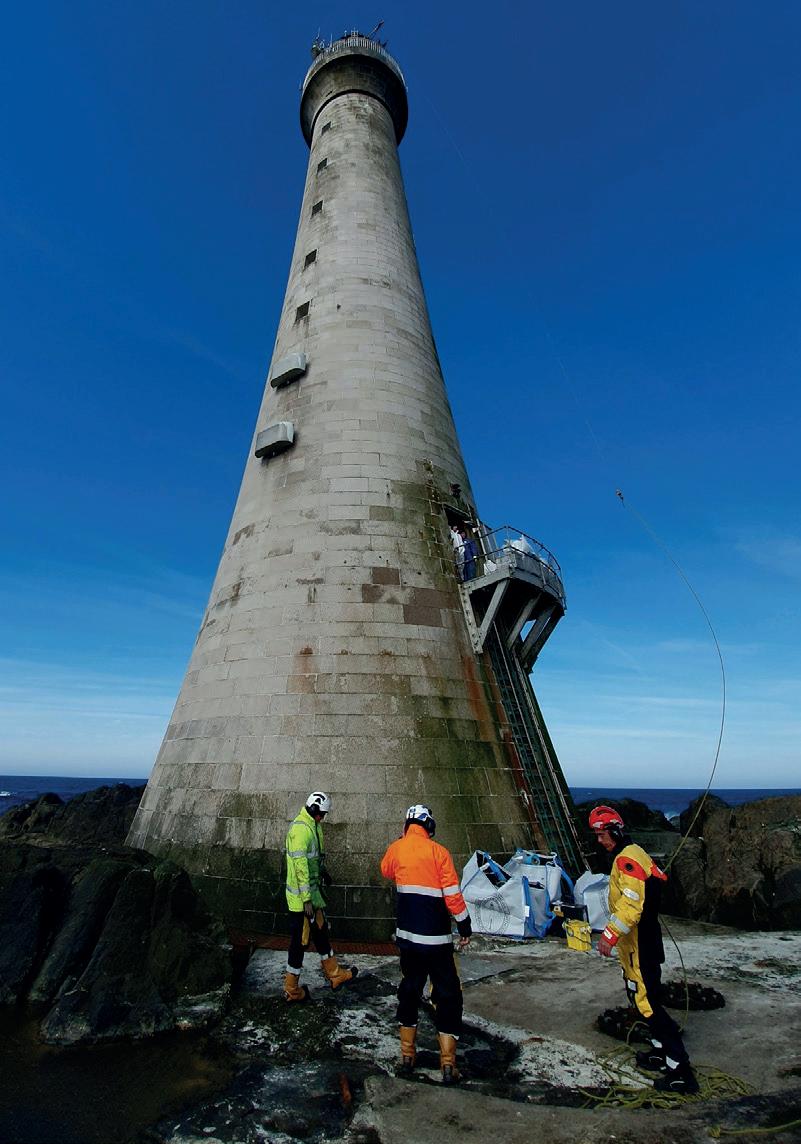
Nature related jobs are growing fast in Scotland.
From expanding our woodlands and restoring our peatlands, to marine conservation and renewable energy, there’s no better time to get involved with Scotland’s journey to become nature positive by 2030.
You could be a part of it…
Scotland Conservation O cer (Marine Conservation Society)
On a mission to bring about positive change for Scotland’s marine environment by sharing how important our seas are, fighting for initiatives like banning single use plastics and highlighting the issues of marine pollution.
Rainforest and Peatland
Project O cer (Forestry and Land Scotland) Ecologist (Self-Employed)
Working in the great outdoors and on the front lines, battling invasive species like the notorious rhododendron in Scotland’s rainforests and working to protect peatlands, which store lots of carbon from the atmosphere.
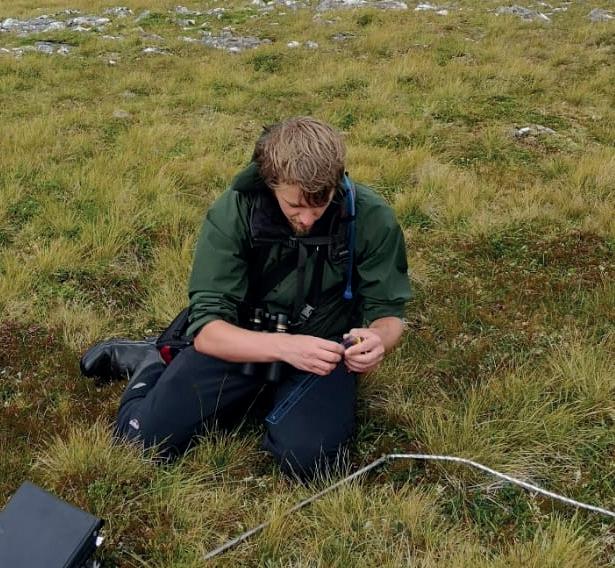
Be a guardian of nature by unleashing your expertise to explore and understand plants, wildlife and habitats in the stunning landscapes of the Highlands and Islands of Scotland. It’s like being a superhero for nature!
Eszter Domina
Eszter Domina
Eszter Domina
Catherine Gemmell
Eszter Domina
Gus Routledge
LE VELLING THE PL AYING FIELD
If we are going to talk about equality seriously, we need to understand what it means, how it affects us, and what we can actually do about it.
FAIRNESS
Equality is not about treating everyone identically — it’s about fairness. Some students need more time to process information, others balance school with jobs or responsibilities at home, and some feel naturally confident speaking up, while others need encouragement. A fair classroom recognises those differences instead of ignoring them. If we only ever hear from the loudest voices, that is not equality — it’s an imbalance. Learning to notice that imbalance is the first step.
REPRESENTATION
The authors you study, the case studies you learn in lessons, and even the examples teachers choose can send a message about who “belongs” in certain subjects. If you never see people
like yourself reflected in a field, it can quietly affect how far you imagine yourself going.
The same goes for expectations. If certain groups of students are pushed harder or given more opportunities, others may start to limit themselves. Understanding this can help you question assumptions, including the ones you might hold about yourself. That’s why teachers need to use a diverse range of examples and voices in their lessons.
SHARED RESPONSIBILITY
Equality is not only the teacher’s responsibility. As a student, you help shape the classroom culture every single day. Who do you choose to work with? Do you make space for quieter classmates to contribute? Do you laugh at stereotypes or challenge them?
Including someone in group work, listening properly when they speak, or speaking up when you hear an unfair comment can make a bigger difference than you might think.
Equality in the classroom is not just a school slogan. It is something you experience every day, often in ways you don’t always notice
THINK TWICE
So what is the takeaway?
Pay attention. Notice who speaks and who does not. Think about whether it is right to stay silent or to support someone else. Think about whether you dismiss your own potential because of background, gender, race, or subject stereotypes. If you do, consider how you’ll change that.
Equality in the classroom is not abstract. It can affect confidence, grades, mental health, and the choices students make about their future.
Schools across Scotland work hard to create inclusive classrooms where everyone feels supported, but equality also depends on how students treat each other every day.
FIND OUT MORE
Education Scotland is committed to eliminating discrimination and promoting equality and diversity. Visit education.gov.scot for more information.
Insha Aslam is a freelance host runner and production assistant from Glasgow. She speaks to Source about working behind the scenes on the US version of e Traitors, filmed in Scotland, and what it’s really like to get started in TV production
How did the opportunity to work on The Traitors come about?
THE Q behind scenes
A: It actually started with networking. I got an email from Studio Lambert, the company behind The Traitors, asking if I wanted to chat – they’re always looking to recruit Scottish talent. We had a Zoom call, and then I got invited to a BBC networking event.
Nothing happened immediately, but it put me on their radar. Later, they emailed asking if I wanted to apply to work on The Traitors (US). I’d done some host runner work before on a pilot called Cryptic, so I had a bit of experience and I knew it would be amazing to work with Alan Cumming.
Q: What does a host runner actually do?
A: It’s like being a super assistant. You do a bit of everything. For me, that included driving Alan, making sure he had everything he needed, managing schedules, coordinating with producers, and even looking after his dog, Lala. Some mornings I’d walk the dog while Alan went to the gym.
On set, you’re making sure everyone is ready, dealing with hair and makeup, packing bags for the missions, and even filming small clips for Alan’s socials. You never stop moving, but it’s so much fun.
Q: What was it like working on your first big production?
A: The Traitors was huge. There were over 500 crew members, including hotel
staff, catering and security. Being away from home for a month was a new experience, but everyone was so helpful and friendly.
I also learned how an unscripted show runs like a well-oiled machine, and how flexible it is compared to scripted shows. You never know what’s going to happen, so you have to be ready for anything.
Q: What do you love about being a freelance runner?
A: The freedom. I can travel, work side jobs, take holidays, and even see friends. And of course, every project is different. One month I was on Dragons’ Den, then I went straight onto The Traitors, and later I did a BBC science show. You meet so many interesting people.
Q: What advice would you give someone wanting to break into TV?
A: Be proactive. Network, go to events, email people, talk to others, and don’t be afraid to ask questions on set. Keep your CV updated and try to learn everything you can from every role. Start as a runner and soak up as much experience as possible. Your enthusiasm and curiosity will be noticed.
Q: What’s next for you?
A: I want to stay in unscripted TV, move into researcher or assistant producer roles, and continue learning. Every job shapes your skills and opens doors. I feel like I’m just getting started and I can’t wait to see where it takes me next.
THE TARTAN TREK
Meet Craig Ferguson, the man walking over 3,200 miles across the United States to raise money for Sco ish Action for Mental Health
Aiming to raise £1 million for SAMH, Craig started the trek in Los Angeles and plans to reach Boston in time for Scotland’s opening World Cup match, raising awareness of mental health along the way.
Q: You’re walking over 3,200 miles. Do you think you’ll reach Boston in time for Scotland’s opening World Cup match?
A: You can’t start something like this thinking there’s no way you’ll finish. I keep picturing that final moment of coming into Boston and completing it. There may be things that go wrong along the way, but I truly believe I have the capability, and with the support behind me it feels like something that can be done.
Q: Why are you doing this challenge?
A: You don’t need to have been in a terrible place yourself to support mental health. I’ve been fortunate in that way, and that’s exactly why I want to help raise awareness and support others.
Q: What did your previous trek from Glasgow to Munich teach you?
A: The biggest lesson was realising the impact something like this can have on other people. When you’re walking 30 miles a day you can lose sight of it. Afterwards, people came up to me in Germany and said they were going through a tough time and that watching the daily updates gave them something to look forward to. That meant everything to me. Beyond donations, it’s the things you can’t measure: the awareness and the individual people who feel helped.
Q: You’re doing the trek in a kilt. Why was that important to you?
A: The kilt is a symbol of Scotland, but it’s also become a symbol of these challenges. I want to carry Scotland’s reputation across America and show people what Scots are made of.
Q: Walking a marathon every day must be gruelling. What keeps you going?
A: It’s not just for me. I’m doing it for everyone who has supported the challenge and for the people who say they’re inspired by it. When you know people are following your journey and believing in you, you can’t let them down.
Q: What conversations do you hope to spark along the route?
A: Mental health is something everyone can relate to. People have their own stories or know someone who has struggled. I want people to feel they’re not alone and to open up conversations about it.
Q: Why combine football and mental health advocacy?
A: The World Cup brings huge
I want people to feel they’re not alone and to open up conversations
attention. My idea is to use that spotlight to highlight mental health. Football is full of passion and community. If that energy can help people talk more openly about mental health, that’s powerful.
Q: What would success look like when you reach Boston?
A: Of course, finishing the walk would be incredible. But the real success would be knowing people felt inspired, that conversations about mental health continued and that the challenge made even a small difference.
Follow Craig on Instagram @craigferguson_1
toOrkney and Shetland
Your holiday in the beautiful Northern Isles begins as you set sail with NorthLink Ferries.
The comfortable and reliable service offers sailings from Aberdeen to Lerwick, Shetland, with regular calls into Orkney’s capital of Kirkwall.
Alternatively travel from Caithness to Orkney’s port of Stromness. This 90 minute journey on MV Hamnavoe is the only sailing to Orkney which passes the iconic sea stack, the Old Man of Hoy.
Students in full time education are entitled to a 10% discount on passenger and vehicle fares. Shetland
Skara Brae, Orkney – A settlement of houses which were occupied 5,000 years ago.
St Ninian’s Isle, Shetland – A lovely island joined to the Shetland mainland by a thin strip of sand.