D'Casa International Digital Magazine 48

Page 1


Edición 48

Febrero-Marzo

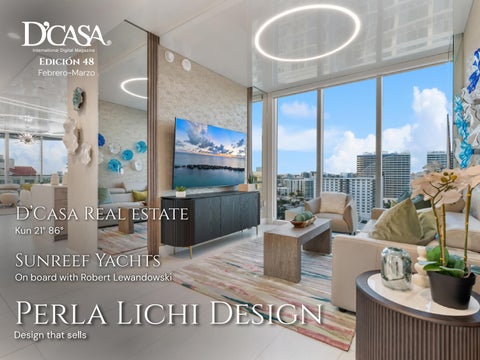
D’Casa Real estate

Kun 21° 86°

Sunreef Yachts

On board with Robert Lewandowski

that sells

Perla Lichi Design Design

Leonora Stieglitz Arte y Arquitectura adlibitumarte@gmail.com

Silvana Bianchessi Stieglitz

Cuentas Especiales/Corresponsal China mkdcasamagazine@gmail.com

Perla Lichi Diseñadora perla@perlalichi.com www.perlalichi.com

Antonio Díaz Fotógrafo antoniodiaz@sybcom.com antoniodiaz.mx

parte del éxito - Be

Irma Guerra Oceanóloga/Corresponsal Baja California Eldetalledeirma@gmail.com

Giancarlo Frigerio Gastronomía gifritic3@gmail.com

Verónica Guerra Directora, dcasav@gmail.com

Alberto Friscione Buzo profesional albertofrisione@hotmail.com

www.solobuceo.com

Be part of the succes

Guerra de Alberti Directora, Editora dcasav@gmail.com

Friscione profesional albertofrisione@hotmail.com www.solobuceo.com

Arq. Isabel Rosas Martin del Campo Arquitecto

IR ISABEL ROSAS ARQUITECTAS

Isabel.Rosas.arquitectas.consultoras@outlook.com

Eduardo Balcazar

Gerente Arte y Diseño disenodcasamagazine@gmail.com

Ivana Giove

Relaciones Públicas/Corresponsal Canadá/Content Creator ivanagg1593@gmail.com

Romina Bianchessi Stieglitz

Control de calidad/Corresponsal CDMX rominabs1313@outlook.com

Lizbeth Montes de Oca Moda sagrariolizbeth@hotmail.com

Isabela Bianchessi Stieglitz

Relaciones Públicas bianchessiisabella@gmail.com

Dirección General / Editor

Verónica Guerra de Alberti

Arte y Formación

Eduardo Enrique Balcazar Molina

Comercialización

Felens y Asociados

Relaciones Públicas

Ivana Giove

Editor de Fotografía

Felens Internacional

Fotografos

Antonio Diaz

Felens Internacional

Cuentas Especiales

Silvana Bianchessi Stieglitz

En portada

Perla Lichi Design

Perla Lichi

Corrector de Estilo

Isabel Dueñas

Traductor

James Carter

Despacho Contable y Administrativo

Consultoria Empresarial

Despacho Legal

Aldave y Cuellar Stafen S.C. Abogados

Información y Ventas

Corporativo Felens y Asociados

998 293 5064

998 252 4731

dcasav@gmail.com

www.dcasamagazine.com

24 AÑOS DE D’CASA

Una celebración del estilo que trasciende el tiempo

Vivir con estilo es un arte. Celebrarlo, una tradición. Esta edición especial rinde homenaje al tiempo, a la visión y a la pasión que dieron origen a D’CASA International Magazine hace 24 años. A lo largo de más de dos décadas, cada página ha sido testigo de tendencias, talentos y momentos inolvidables. Este aniversario es, ante todo, un agradecimiento profundo: a nuestros fieles lectores, a nuestros colaboradores, a las marcas que nos han acompañado, y al equipo creativo que da vida a cada edición.

Gracias por formar parte de este viaje.

¡Feliz 24 aniversario. D’CASA!

24 YEARS OF D’CASA

A Celebration of Style that Transcends Time

Living with style is an art. Celebrating it is a tradition. This special edition pays tribute to the time, vision, and passion that gave birth to D’CASA International Magazine 24 years ago. Over more than two decades, each page has captured trends, talents, and unforgettable moments. This anniversary is, above all, a heartfelt thank you: to our loyal readers, our contributors, the brands that have joined us, and the creative team that brings every edition to life.

Thank you for being part of this journey.

Happy 24th Anniversary, D’CASA!

Perla Lichi Design

Diseño que Vende

Cómo los Interiores Excepcionales Aumentan el Valor Inmobiliario

En el competitivo mercado inmobiliario actual, el lujo ya no se define solo por los metros cuadrados. El verdadero valor se crea mediante un diseño interior meticuloso e intencional que transforma una propiedad en una experiencia. Un diseño bien ejecutado hace mucho más que embellecer una casa: eleva la percepción, mejora el estilo de vida y, en última instancia, impulsa un mayor valor de mercado. Los compradores son visuales, emocionales y aspiracionales, y el diseño es el lenguaje que habla directamente a esos instintos.

Una casa bien diseñada cuenta una historia desde el momento en que uno entra por la puerta. Los muebles empotrados arquitectónicos, la carpintería a medida y las mejoras de capital indican inmediatamente calidad y permanencia. No son mejoras estéticas; son inversiones que se convierten en parte de la arquitectura misma. Estanterías empotradas, paredes decorativas, armarios a medida y gabinetes integrados crean una sensación de artesanía y exclusividad que los interiores producidos en masa simplemente no pueden replicar. Los compradores reconocen esta diferencia al instante y la valoran.

La iluminación es otro componente fundamental que distingue las propiedades comunes de las excepcionales. El diseño estratégico de la iluminación, combinado con iluminación ambiental, de trabajo y de acento, crea el ambiente y realza los detalles arquitectónicos. Una iluminación adecuada resalta las texturas, las obras de arte, los tratamientos del techo y las líneas de visión, a la vez que crea calidez y profundidad. Un espacio bien iluminado se siente acogedor, lujoso y memorable. Una iluminación deficiente, en cambio, opaca incluso los acabados más caros y disminuye el valor percibido de una vivienda.

El diseño del techo a menudo se pasa por alto, pero desempeña un papel fundamental para realzar los interiores. Los techos artesonados, los techos artesonados, los detalles arquitectónicos y la iluminación integrada transforman el espacio superior en un elemento de diseño en lugar de una idea de último momento. Cuando los techos están diseñados con esmero, las habitaciones se sienten más altas, majestuosas y refinadas. Esta atención al detalle comunica sutilmente lujo e intención, factores clave en la toma de decisiones del comprador.

Abrir el espacio y mejorar la circulación es otro elemento esencial del diseño orientado al valor. La planificación estratégica del espacio elimina las barreras visuales, mejora la circulación y crea una sensación de amplitud que se alinea con la vida de lujo moderna. Cuando los espacios se conectan a la perfección, las casas se sienten más grandes, luminosas y funcionales. Esto es especialmente impactante en propiedades con vistas impresionantes: frente al mar, horizontes urbanos, jardines o monumentos arquitectónicos. Un diseñador experto enmarca y refleja estas vistas, permitiendo que el entorno exterior forme parte de la experiencia interior.

El ambiente, la atmósfera y la vibra son lo que convierte una propiedad en un destino. Las paletas de colores, las texturas, los materiales y los acabados deben ser equilibrados y coherentes. Cuando todo está correctamente integrado, la casa se siente armoniosa, no como una puesta en escena. Los compradores pueden no identificar conscientemente por qué un espacio se siente “bien”, pero emocionalmente responden a él. Esta conexión emocional es lo que impulsa el deseo, y el deseo impulsa el precio.

El diseño de lujo se basa en la consistencia. Cada rincón de una casa debe sentirse intencional, cuidado y sofisticado.

Desde la entrada hasta el baño, desde la cocina hasta la suite principal, el lujo debe experimentarse, no sugerirse. Cuando los compradores visitan una casa que ofrece una experiencia de diseño completa e inmersiva, la desean aún más y están dispuestos a pagar más.

En definitiva, un buen diseño de interiores es una herramienta estratégica en el sector inmobiliario. Mejora la habitabilidad, diferencia una propiedad de la competencia y la posiciona en la cima del mercado. Un diseñador de interiores experto sabe cómo equilibrar la estética con la arquitectura, la emoción con la funcionalidad y la belleza con el valor. Cuando el diseño se realiza correctamente, no solo vende bienes raíces, sino que define el lujo, eleva el mercado y establece un nuevo estándar de lo que una propiedad realmente merece.

www.perlalichi.com

Perla Lichi Design

Design

Design That Sells

How Exceptional Interiors Elevate Real Estate Value

In today’s competitive real estate market, luxury is no longer defined by square footage alone. True value is created through thoughtful, intentional interior design that transforms a property into an experience. Well-executed design does far more than make a home look beautiful—it elevates perception, enhances lifestyle, and ultimately drives higher market value. Buyers are visual, emotional, and aspirational, and design is the language that speaks directly to those instincts. A properly designed home tells a story the moment one walks through the door. Architectural built-ins, custom millwork, and capital improvements immediately signal quality and permanence. These are not cosmetic upgrades; they are investments that become part of the architecture itself. Built-in shelving, feature walls, custom closets, and integrated cabinetry create a sense of craftsmanship and exclusivity that mass-produced interiors simply cannot replicate. Buyers recognize this difference instantly—and they value it.

Lighting is another critical component that separates ordinary properties from exceptional ones. Strategic lighting design—layered with ambient, task, and accent lighting—sets the mood and enhances architectural details. Proper lighting highlights textures, artwork, ceiling treatments, and sightlines while creating warmth and depth. A beautifully lit space feels inviting, luxurious, and memorable. Poor lighting, by contrast, flattens even the most expensive finishes and diminishes the perceived value of a home.

Ceiling design is often overlooked, yet it plays a powerful role in elevating interiors. Coffered ceilings, tray ceilings, architectural details, and integrated lighting transform overhead space into a design feature rather than an afterthought. When ceilings are thoughtfully designed, rooms feel taller, grander, and more refined. This attention to detail subtly communicates luxury and intention—key factors in buyer decision-making.

Opening up space and improving flow is another essential element of value-driven design. Strategic space planning removes visual barriers, improves circulation, and creates a sense of openness that aligns with modern luxury living. When spaces connect seamlessly, homes feel larger, brighter, and more functional. This is especially impactful in properties with strong views—oceanfronts, city skylines, gardens, or architectural landmarks. A skilled designer frames and reflects these views, allowing the environment outside to become part of the interior experience.

Ambience, mood, and vibe are what turn a property into a destination. Color palettes, textures, materials, and finishes must be balanced and cohesive. When everything is properly tied together, the home feels harmonious rather than staged. Buyers may not consciously identify why a space feels “right,” but emotionally, they respond to it. This emotional connection is what drives desire—and desire drives price. Luxury design is about consistency. Every corner of a home must feel intentional, curated, and elevated. From the entryway to the powder room, from the kitchen to the pri-

mary suite, luxury should be experienced, not suggested. When buyers walk through a home that delivers a complete, immersive design experience, they want it more—and they are willing to pay more.

Ultimately, great interior design is a strategic tool in real estate. It enhances livability, differentiates a property from the competition, and positions it at the top of the market.

A skilled interior designer understands how to balance aesthetics with architecture, emotion with functionality, and beauty with value. When design is done properly, it doesn’t just sell real estate—it defines luxury, elevates the market, and sets a new standard for what a property truly deserves.

www.perlalichi.com

KUN

21° 86°

KUN 21°86°: Un nuevo ecosistema urbano

en Cancún

KUN 21°86° es un complejo de usos mixtos que integra locales comerciales, oficinas corporativas, consultorios médicos y sky residences, redefiniendo la forma de vivir, trabajar e invertir en Cancún.

Ubicado a minutos de la Zona Hotelera, el proyecto destaca por su conectividad estratégica y su diseño funcional, alineado con el crecimiento urbano y económico de la ciudad. Su concepto ha generado un ecosistema atractivo impulsado por el auge del turismo médico, atrayendo a médicos locales, nacionales e internacionales que han decidido invertir y establecer su práctica dentro del desarrollo.

Las sky residences ofrecen acabados de lujo y amenidades como gimnasio, sport bar y un rooftop en piso 20 con sky view, desde donde se disfrutan vistas al mar y a los atardeceres de Cancún.

KUN 21°86° representa una nueva visión de ciudad: inversión inteligente, comunidad profesional y estilo de vida elevado.

www.kun2186.com

KUN 21° 86°

KUN 21°86°: A new urban ecosystem in Cancún

KUN 21°86° is a mixed-use complex combining retail spaces, corporate offices, medical suites, and sky residences, redefining how people live, work, and invest in Cancún.

Located minutes from the Hotel Zone, the project stands out for its strategic connectivity and functional design. Its concept has fostered a thriving ecosystem driven by the growth of medical tourism, attracting local, national, and international physicians who have chosen to invest and establish their practices within the development.

The sky residences feature premium finishes and amenities including a gym, sports bar, and a 20th-floor rooftop with sky views, offering panoramic views of the sea and Cancún sunsets.

KUN 21°86° reflects a modern vision of urban living and longterm value.

www.kun2186.com

El arte de amar

Objetos que transforman el amor en

expresión visual

El amor ha sido, desde siempre, una de las mayores fuentes de inspiración para el arte. No solo se siente: también se observa, se toca y se habita. En el diseño contemporáneo, ciertos objetos trascienden su función decorativa para convertirse en símbolos emocionales, piezas que narran historias de unión, intimidad y permanencia.

Hoy, el arte dentro del hogar se transforma en un lenguaje silencioso que comunica afectos. Cada obra elegida con intención refleja vínculos, recuerdos y emociones profundas, convirtiendo los espacios en escenarios cargados de significado.

Los corazones reinterpretados por artistas contemporáneos abandonan el cliché para mostrarse como formas orgánicas y abstractas que representan tanto la vulnerabilidad como la fuerza del amor. Esculturas en mármol, cerámica o cristal resignifican este símbolo universal con una mirada sofisticada y atemporal.

Las manos entrelazadas, presentes desde la antigüedad, simbolizan la promesa, el compromiso y la conexión humana. En esculturas y piezas artísticas, este gesto cotidiano se convierte en una poderosa expresión de acompañamiento y presencia constante.

El nudo infinito, inspirado en tradiciones celtas y orientales, representa la eternidad y la continuidad del amor. Reinterpretado en objetos decorativos, arte mural y piezas de metal o madera, evoca relaciones que trascienden el tiempo.

Las figuras humanas abstractas, abrazadas o fusionadas en una sola forma, celebran la complicidad y la intimidad más allá de la identidad individual. Este tipo de arte transmite la idea de dos energías que conviven en armonía.

Las flores, eternas portadoras de mensajes emocionales, simbolizan distintas expresiones del amor: pasión, delicadeza y deseo. Representadas en pintura, cerámica o fotografía artística, su belleza se vuelve permanente.

Finalmente, la luz se presenta como una metáfora del amor mismo. Lámparas escultóricas y obras lumínicas aportan calidez, esperanza y equilibrio, recordándonos que el amor, como la luz, transforma el espacio que habita.

Porque amar también es elegir qué nos rodea, qué historias contamos y cómo decidimos habitar nuestros espacios.

The art of loving

Objects That Transform Love into Visual Expression

Love has always been one of art’s greatest sources of inspiration. It is not only felt — it is seen, touched, and lived. In contemporary design, certain objects transcend their decorative function to become emotional symbols, pieces that tell stories of connection, intimacy, and permanence.

Today, art within the home becomes a silent language that communicates emotion. Each carefully chosen piece reflects bonds, memories, and deep feelings, transforming spaces into environments filled with meaning.

Reimagined hearts move beyond cliché to appear as organic, abstract forms that represent both vulnerability and emotional strength. Sculptures in marble, ceramic, or glass reinterpret this universal symbol with a sophisticated and timeless perspective.

Intertwined hands, present since ancient times, symbolize promise, commitment, and human connection. In sculptural and artistic pieces, this everyday gesture becomes a powerful expression of presence and shared paths.

The infinite knot, inspired by Celtic and Eastern traditions, represents eternity and continuity in love. Reinterpreted in decorative objects, wall art, and pieces made of metal or wood, it evokes relationships that transcend time.

Abstract human figures, embraced or merged into a single form, celebrate intimacy and complicity beyond individual identity. This type of art conveys the idea of two energies coexisting in harmony.

Flowers, eternal carriers of emotional messages, symbolize different expressions of love — passion, delicacy, and desire. Represented in painting, ceramics, or artistic photography, their beauty becomes everlasting.

Finally, light emerges as a metaphor for love itself. Sculptural lamps and luminous artworks bring warmth, hope, and balance, reminding us that love, like light, transforms the space it inhabits.

Because loving is also about choosing what surrounds us, the stories we tell, and how we decide to inhabit our spaces.

Arquitectura Pritzker

Pritzker

Sensiblemente Digna

Por qué se gana el premio Pritzker de Arquitectura? ¿Cuánto arquitecto desearía obtenerlo? ¿Qué se premia? La calidad arquitectónica; la innovación; el impacto cultural, social y ambiental; la relación con el contexto o la responsabilidad ética. Es seguro que, en cada premio, estas directrices son medulares; no son un punto de partida, más allá de ello, es una esencia natural proyectada. Puesto que la distinción de cada obra arquitectónica trasciende su naturaleza y sentido, por lo que el concepto arquitectónico es elevable a inmanencia. Me abocaré a los cuatro últimos arquitectos. Cada uno ha dejado una huella y una traza en la arquitectura contemporánea que no son percibidas por algunos. Porque para ello se requiere cierta sensibilidad y agudeza. Estoy refiriéndome a —Liu Jiakun (China/2025); Riken Yamamoto (Japón/2024); David Chipperfield (Reino Unido/2023); Diébédo Francis Kéré (Burkina Faso/Alemania/2022) — todos han modelado una arquitectura cuya búsqueda no está en la “forma nueva”; ellos trascienden esa visión para recobrar el sentido y la naturaleza de ella siendo portadores de “propuestas operativas”. Para tomar distancia de la función y de la estética, y de tal suerte, acercarse a una arquitectura de lo cotidiano; de lo comunitario; de la conversación con el ecosistema como aliado y la que da permanencia cultural.

Esta confluencia conceptual-filosófica-humanista es un indicador sensible del silencio de una humanidad que ha aprendido a gritar la moda del mercado. Y, sin embargo, la realidad emerge cuando Kéré y Yamamoto no claman comunidad, ellos la logran. Mientras que Liu pone su criterio en lo cotidiano y la memoria del que habita, Chipperfield manifiesta la responsabilidad cívica y cultural. Estas categorías elevan el proyecto arquitectónico de signo a establecer la función como institución.

Frente a la crisis global: social, urbana y ambiental, el aporte de cada arquitecto deja un impacto civilizatorio que prepondera en la manera en que se gestiona la vida cotidiana y azarosa. Las proyecciones creativas de los cuatro premiados Liu Jiakun, Riken Yamamoto, David Chipperfield y Diébédo

Francis Kéré reparan la ciudad, la transforman en comunidad —para alejarnos de esa arquitectura pretensiosa que busca lo icónico como fin—; un medio para la trascendencia humana erigida por la realidad, justo allí, está su fuerza.

La Arquitectura Pritzker evalúa condiciones específicas (sociales, culturales, ambientales); produce escenarios distintos. Es creadora de conciencia comunitaria con espacios a voluntad de la gente que habita (no la que paga). Hay una consigna por diluir límites entre lo privado y lo público; a través de provocar la interacción humana que termina siendo experiencias comunes y afines. La arquitectura de los cuatro Pritzker del 2023 al 2026 es el umbral de la “infraestructura social”.

Cada arquitecto sensiblemente fecunda lugares con contención formal para perfilar una arquitectura de presencia cívica sobria y transformadora al mismo tiempo. Esta travesía simbólica de austeridad, no obstante, está llena de significados éticos al servicio de una ciudad que ambiciona continuidad urbana, cultural y permanencia voluntaria. Y por supuesto, en ello, el pacto social y el cambio climático son una concesión con el planeta a manera de corresponsabilidad por todas las posibilidades que nos ofrece para nuestra subsistencia. La demostración de la economía de medios hace posible la dignidad espacial y la humana.

Prtizker Architecture

Architecture

SENSIBLY WORTHY

Why is the Pritzker Architecture Prize awarded? How many architects aspire to receive it? What is being rewarded? Architectural quality; innovation; cultural, social, and environmental impact; the relationship with the context; or ethical responsibility. Certainly, in every award, these guidelines are fundamental; they are not merely a starting point, but rather a projected, inherent essence. Since the distinction of each architectural work transcends its nature and meaning, the architectural concept can be elevated to a state of immanence.

I will focus on the four most recent architects. Each has left a mark and a trace on contemporary architecture that goes unnoticed by some. Because this requires a certain sensitivity and acuity. I am referring to Liu Jiakun (China/2025); Riken Yamamoto (Japan/2024); David Chipperfield (United Kingdom/2023); Diébédo Francis Kéré (Burkina Faso/Germany/2022) — all have shaped an architecture whose quest is not for “new form”; they transcend that vision to recover its meaning and nature by offering “operational proposals.” They distance themselves from function and aesthetics, and thus approach an architecture of the everyday; of community; of dialogue with the ecosystem as an ally, and of cultural permanence.

This conceptual-philosophical-humanist confluence is a poignant indicator of the silence of a humanity that has learned to shout the market’s trends. And yet, reality emerges when Kéré and Yamamoto don’t just call for community, they create it. While Liu focuses on the everyday and the memory of those who inhabit it, Chipperfield manifests civic and cultural responsibility. These categories elevate the architectural project from a sign to one that establishes function as an institution.

Faced with the global crisis—social, urban, and environmental—each architect’s contribution leaves a civilizational impact that predominates in how we manage our daily, often unpredictable, lives. The creative projects of the four Pritzker Prize winners—Liu Jiakun, Riken Yamamoto, David Chipperfield, and Diébédo Francis Kéré—repair the city, transforming it into a community—moving us away from that pretentious architecture that seeks the iconic as an end in itself—a means for human transcendence born from reality; therein lies its strength.

Pritzker Architecture evaluates specific conditions (social, cultural, and environmental) to produce distinct scenarios. It fosters community awareness with spaces designed by the people who inhabit them (not those who pay for them).

There is a commitment to blurring the lines between private and public by provoking human interaction that ultimately leads to shared and common experiences. The architecture of the four Pritzker Prize winners from 2023 to 2026 marks the threshold of “social infrastructure.”

Each architect sensitively cultivates spaces with formal restraint to create an architecture of civic presence that is both understated and transformative. This symbolic journey of austerity, however, is imbued with ethical meanings in service to a city that aspires to urban and cultural continuity, as well as voluntary permanence. And of course, within this framework, the social contract and climate change represent a concession to the planet, a shared responsibility for all the possibilities it offers for our survival. Demonstrating economy of means makes spatial and human dignity possible.

Alojamiento y Librería SongMoon

Un Retiro de Vida Lenta

entre Pinos y Nubes

La Librería en la Cima de la Colina: Un Susurro con la Naturaleza

Inicialmente, el propietario, Qi Qi, solo pretendía construir una casa de familia al pie de la montaña. Pero cuando Yi Ping pisó por primera vez la meseta de la cima, supo que el sitio requería una construcción que pudiera dialogar con el cielo y la tierra.

La casa de madera emerge de la ladera, con su tejado suavemente inclinado hacia el lago, con aleros bajos como si escuchara los ecos del valle. Construida con piedra en la base y madera en la parte superior, es pesada y arraigada por debajo, pero ligera y amplia por encima. El doble alero media entre el interior y el exterior: el alero inferior se inclina como un escudo, mientras que el superior se eleva para enmarcar un triforio horizontal, dejando pasar la luz del sol y las aves libremente, dotando al edificio de una atmósfera de vida.

En el interior, amplios ventanales se abren completamente al lago y a las montañas; En el patio, un pino está plantado bajo el cielo, como una aguja que une el tiempo y la naturaleza. La gravedad de la piedra y la calidez de la madera se adaptan al cambio de estaciones, anclando el edificio en la tierra y dejándolo flotar como una nube pasajera.

Construcción Local: Un Diálogo con la Montaña

El primer desafío de la construcción fue una carretera de montaña deteriorada, inactiva durante años. Durante tres meses, el padre de Qi Qi dirigió a los trabajadores para tallar y nivelar el sendero de siete kilómetros antes de que llegaran las lluvias. Cuando los monzones cortaban la carretera en barrancos, los trabajadores acampaban en la cima, viviendo como residencias temporales en la montaña.

La piedra provenía directamente de la montaña, reutilizada a partir de escombros de obras viales, preservando la textura del terreno. La madera se recuperó de antiguos edificios almacenados por el padre del propietario, irradiando una suave pátina. Los techos y las puertas se recubrieron con gruesa corteza de ciprés, colocada a mano para mayor resistencia, convirtiendo la lluvia en un suave murmullo en lugar de un golpe fuerte.

Aquí, la localidad no es una estrategia de diseño, sino una filosofía de supervivencia. Construir no es la imposición de ideas, sino un desarrollo sereno en armonía con la montaña, abrazando el viento, soportando la lluvia, soportando el peso de la piedra y el recuerdo de la madera, hasta que la casa se integra a la montaña misma.

Al pie de la montaña, la casa de familia de tres plantas se inspira en las tradiciones culturales Mosuo. Una base de piedra cimenta la estructura, mientras que los muros en tonos tierra se funden con la pendiente. Yi Ping reinterpretó su relación con la naturaleza, creando “espacios grises” semiabiertos —bajo aleros, a lo largo de pasillos, terrazas y umbrales—, difuminando los límites entre el interior y el exterior, asegurando que la arquitectura pertenezca a la montaña en lugar de sobresalir de ella.

Sanación Natural: Un Santuario para el Alma

Los interiores de SongMoon son tranquilos y sobrios. Muros de piedra tosca, suelos de ladrillo oscuro, muebles de madera maciza y textiles de lino crean una auténtica sensación táctil. El edificio extiende la apacible presencia de la montaña, invitando tanto a las personas como a la naturaleza a cruzar su umbral.

La luz se filtra a través de las celosías, proyectando sombras cambiantes que marcan el paso del tiempo. Las habitaciones se abren completamente a la montaña, donde las vistas se filtran al interior. En las terrazas, dos sillas y una mesa de té forman un tranquilo escenario para dialogar con el paisaje.

Bajo los techos inclinados, las estructuras de madera se extienden rítmicamente; una chimenea de hierro y un generoso acristalamiento fusionan robustez y ternura.

Los materiales y los colores dialogan: las líneas de madera enmarcan las paredes con ligereza, aportando claridad y ritmo. Sin embargo, la mayor generosidad se reserva para el paisaje: sentado junto a la ventana, uno ya se siente abrazado por la montaña y el lago.

Conclusión

SongMoon Homestay and Bookhouse no es un acto de conquista sobre la naturaleza, sino una respuesta humilde.

Sigue los contornos de la montaña, transmite memoria y abraza el paisaje. Aquí, la arquitectura ya no es una barrera, sino un medio para la comunión entre los seres humanos y el mundo que los rodea.

Mientras el viento agita los pinos y la luz del sol se filtra por los amplios ventanales, la piedra, la madera y el lago se funden en una perfecta armonía. SongMoon se yergue como la presencia más apacible de la montaña, ofreciendo a los viajeros un hogar temporal donde pueden encontrar el poder sanador de la naturaleza y la quietud del alma.

SongMoon Homestay and Bookhouse

A Slow Living Retreat

Amid Pines and Clouds

The Hilltop Bookhouse: A Whisper with Nature

Initially, the owner, Qi Qi, intended only to build a homestay at the foot of the mountain. But when Yi Ping first stood on the mountaintop plateau, he knew the site called for a building that could converse with the heavens and earth.

The wooden house emerges from the slope, its roof gently inclined toward the lake, with eaves lowered as if listening to the valley’s echoes. Built with stone at the base and timber above, it is heavy and rooted below, yet light and expansive above. The double eaves mediate inside and out: the lower eaves droop like a shield, while the upper rise to frame a horizontal clerestory, letting sunlight and birds pass freely, giving the building a sense of breath.

Inside, expansive glazing opens fully to the lake and mountains; in the courtyard, a pine tree is planted beneath the sky, like a needle stitching together time and nature. Stone’s gravity and wood’s warmth meet the changing seasons, anchoring the building in the earth while letting it hover like a passing cloud.

Local Construction: A Dialogue with the Mountain

The first challenge of construction was a broken mountain road, dormant for years. For three months, Qi Qi’s father led workers to carve and level the seven-kilometer path before the rains arrived. When monsoons cut the road into ravines, workers camped at the summit, living as temporary mountain residences.

Stone came directly from the mountain, repurposed from roadwork debris, preserving the land’s texture. Timber was reclaimed from old buildings stored by the owner’s father, radiating a gentle patina. Roofs and doors were layered with thick cypress bark, hand-laid for resilience, turning rainfall into a softened murmur rather than a harsh strike.

Here, locality is not a design strategy but a philosophy of survival. Building is not the imposition of ideas but a quiet unfolding in harmony with the mountain—embracing wind, enduring rain, carrying the weight of stone, and the memory of wood—until the house becomes part of the mountain itself.

At the mountain’s foot, the three-story homestay draws from Mosuo cultural traditions. A stone base grounds the structure, while earth-toned walls merge with the slope. Yi Ping reinterpreted its relationship with nature, creating semi-open “gray spaces”—beneath eaves, along corridors, terraces, and thresholds—blurring boundaries between inside and out, ensuring the architecture belongs to the mountain rather than standing against it.

Natural Healing: A Sanctuary for the Soul

SongMoon’s interiors are calm and understated. Rough stone walls, dark brick floors, solid wood furniture, and linen textiles create an authentic tactility. The building extends the mountain’s gentle presence, inviting both people and nature to cross its threshold.

Light filters through lattices, casting shifting shadows that mark the passage of time. Bedrooms open fully to the mountain, where views seep indoors. On the verandas, two chairs and a tea table form a quiet stage for dialogue with the landscape. Beneath pitched roofs, timber frames stretch rhythmically; an iron fireplace and generous glazing merge ruggedness with tenderness.

Materials and colors converse: timber lines frame walls with lightness, lending clarity and rhythm. Yet the greatest generosity is reserved for the landscape—sitting by the window, one is already embraced by mountain and lake.

Conclusion

SongMoon Homestay and Bookhouse is not an act of conquest over nature, but a humble response. It follows the mountain’s contours, carries memory, and embraces the scenery. Here, architecture is no longer a barrier, but a medium for communion between humans and the world around them.

As the wind stirs the pines and sunlight glides across the long windows, stone, wood, and lake blend seamlessly. SongMoon stands as the mountain’s gentlest presence, offering travelers a temporary home where they may encounter the healing power of nature and the stillness of the soul.

A bordo de Sunreef Yachts

Sunreef Yachts

ROBERT LEWANDOWSKI A BORDO

DE SUNREEF YACHTS

El ícono del fútbol internacional Robert Lewandowski se ha unido oficialmente a la familia de embajadores de Sunreef. Reconocido como uno de los mejores delanteros de todos los tiempos, recientemente encargó un catamarán Sunreef Power NEXT de 80 pulgadas, un yate que encarna la elegancia y la innovación. Actualmente delantero del FC Barcelona, Robert Lewandowski cuenta con una extraordinaria carrera, repleta de los mejores trofeos de clubes del mundo, múltiples reconocimientos como mejor jugador del año y liderando a su selección nacional como capitán. Lo más sorprendente es que hizo historia con cinco goles en tan solo nueve minutos, el más rápido de la historia, y la racha de tres goles más rápida en la máxima categoría. Sunreef es la opción perfecta para mí. Llevo tiempo siguiendo la marca y creo que realmente destaca. Se centran en el estilo y la creatividad, pero también son dinámicos y tienen una sinergia increíble con el mundo del deporte. Uno de mis planes a largo plazo es empezar a disfrutar más tiempo en el agua. Investigué y ahora puedo decir que he encontrado el yate perfecto para hacer realidad este sueño.

El 80 Sunreef Power NEXT de Robert Lewandowski ofrecerá una combinación inigualable de espacio, estilo e innovación. Su embarcación de 80 pies, totalmente personalizada, contará con un garaje para motos acuáticas, un Ocean Lounge: un amplio club de playa con paseo, perfecto para practicar deportes acuáticos y tomar el sol, y amplios espacios al aire libre para relajarse, incluyendo un generoso flybridge equipado para comer y relajarse.

Nos honra dar la bienvenida a Robert Lewandowski a bordo como nuestro embajador. Su espíritu, carisma y pasión por la excelencia se alinean a la perfección con nuestro compromiso con la perfección y la innovación. Francis Lapp – Fundador y Presidente de Sunreef Yachts

Pionero en el diseño y fabricación de multicascos de lujo, tanto a vela como a motor, y superyates multicasco, Sunreef Yachts es una marca pionera con una experiencia única en la construcción de catamaranes a medida.

Sunreef se ha asociado con embajadores de la marca como Fernando Alonso y Rafael Nadal. Actualmente, en colaboración con Robert Lewandowski, Sunreef Yachts continúa consolidando su posición como líder en la industria de los yates de lujo, atrayendo a figuras influyentes que comparten el compromiso con la calidad y la creatividad. Para obtener más información sobre el 80 Sunreef Power NEXT, contacte con el equipo de Sunreef Yachts.

www.sunreef-yachts.com

On Board with Sunreef Yachts

Sunreef Yachts

ROBERT LEWANDOWSKI ON BOARD WITH SUNREEF YACHTS

International football icon Robert Lewandowski has officially joined the Sunreef family of ambassadors. Widely recognized as one of the greatest strikers of all time, he recently placed an order for an  80 Sunreef Power NEXT catamaran, a yacht that embodies elegance and innovation.

Currently playing as FC Barcelona’s striker, Robert Lewandowski has an extraordinary career packed with the world’s top club trophies, multiple global player of the year honors, and leading his national team as captain. Most stunningly, he etched history with five goals in just nine minutes, the fastest ever, and the quickest three-goal burst in top league play.

“Sunreef is a perfect match for me. I have been following the brand for some time, and I feel they truly stand out. They have a strong focus on style and creativity, but they are also dynamic and have an amazing synergy with the world of sports. One of my long-term plans is to start enjoying more time on the water. I did my research, and now I can say I’ve found the perfect yacht to make this dream come true.”

Robert Lewandowski

Robert Lewandowski’s 80 Sunreef Power NEXT will provide an unparallelled mix of space, style and innovation. His fully-customized 80-footer will boast a jet ski garage, an Ocean Lounge: a large walkaround beach club perfect for watersports and sunbathing, and ample alfresco lounging spaces, including a generous flybridge equipped for dining and relaxation.

“We are honored to welcome Robert Lewandowski on board as our ambassador. His spirit, charisma and passion for excellence aligns perfectly with our commitment to perfection and innovation.”

Francis Lapp – Sunreef Yachts Founder and President

A pioneering designer and manufacturer of luxury sailing and power multihulls and multihull superyachts, Sunreef Yachts is a trendsetting brand with unique expertise in custom catamaran builds.

Sunreef has partnered with brand ambassadors such as Fernando Alonso and Rafael Nadal. Currently teaming up with Robert Lewandowski, Sunreef Yachts continues to solidify their position as a leader in the luxury yachting industry, attracting influential figures who share a commitment to quality and creativity. For more information about the 80 Sunreef Power NEXT, reach out to the Sunreef Yachts team.

www.sunreef-yachts.com

Deportes que enamoran

Lifestyle & Pasión en el sello D´CASA

En el universo del lifestyle contemporáneo, el deporte ha dejado de ser únicamente una actividad física para convertirse en una expresión de identidad, bienestar y sofisticación. En D´CASA celebramos aquellas disciplinas que enamoran no solo por su dinamismo, sino por el estilo de vida que representan, donde el movimiento se transforma en una forma de arte y conexión emocional.

El golf simboliza elegancia, estrategia y exclusividad. Practicado en entornos naturales cuidadosamente diseñados, es un deporte que invita a la pausa, a la reflexión y al encuentro social. Cada recorrido se vive como una experiencia sensorial que combina precisión, paisajes y una cultura que trasciende generaciones.

El tenis, por su parte, refleja energía, disciplina y carácter. Su ritmo intenso y su estética impecable lo han convertido en un ícono del lifestyle activo. Más allá de la competencia, el tenis es sinónimo de constancia, estilo y una actitud decidida frente a la vida.

En contacto directo con la naturaleza, la vela y el surf representan libertad y sofisticación relajada. Navegar impulsado por el viento o deslizarse sobre las olas es una experiencia que conecta con lo esencial, donde el respeto por el entorno y la adrenalina conviven en perfecta armonía.

El patinaje, ya sea sobre hielo o en superficies urbanas, enamora por su elegancia y expresión artística. Es un deporte que fusiona técnica, equilibrio y creatividad, convirtiendo cada movimiento en una coreografía llena de estilo. El patinaje simboliza fluidez, disciplina y libertad, valores que definen a quienes encuentran belleza en cada giro y cada desliz.

Disciplinas como el yoga y el pilates completan esta visión lifestyle, promoviendo el bienestar integral, la conexión interior y el equilibrio entre cuerpo y mente. Son prácticas que reflejan una nueva forma de lujo: el tiempo dedicado al cuidado personal.

Los deportes que enamoran construyen experiencias, proyectan personalidad y definen una manera de vivir. En D´CASA, celebramos esta pasión por el movimiento como un reflejo del buen gusto, la armonía y el amor por un estilo de vida pleno.

Sports that make you fall in

Verónica Guerra de Alberti

in love

Lifestyle & Passion with D´CASA Editorial Signature

In the world of contemporary lifestyle, sport has evolved beyond physical activity to become an expression of identity, well-being, and sophistication. At D´CASA, we celebrate those disciplines that captivate not only through movement, but through the lifestyle they represent—where motion becomes a form of art and emotional connection.

Golf symbolizes elegance, strategy, and exclusivity. Practiced in carefully designed natural settings, it is a sport that invites reflection, social connection, and appreciation of the moment. Each round becomes a sensory experience, blending precision, landscape, and a culture that transcends generations.

Tennis, on the other hand, embodies energy, discipline, and character. Its fast pace and refined aesthetics have made it an icon of the active lifestyle. Beyond competition, tennis represents consistency, style, and a determined approach to life.

In direct contact with nature, sailing and surfing reflect freedom and effortless sophistication. Gliding with the wind or riding the waves offers a powerful connection to the elements, where respect for the environment and adrenaline coexist in perfect harmony.

Skating, whether on ice or in urban spaces, captivates through elegance and artistic expression. It is a discipline that blends technique, balance, and creativity, transforming each movement into a graceful choreography. Skating symbolizes fluidity, discipline, and freedom—values embraced by those who find beauty in every turn and glide.

Practices such as yoga and pilates complete this lifestyle vision, promoting holistic well-being, inner connection, and balance between body and mind. They reflect a new definition of luxury: time devoted to personal care.

Sports that inspire love create experiences, project personality, and define a way of living. At D´CASA, we celebrate this passion for movement as a reflection of refined taste, harmony, and a love for a full and elevated lifestyle.

Steak Tartar

Un manjar en crudo

Existen dos corrientes de pensamiento sobre el origen del steak tartar. La historia más colorida habla de los tártaros, nómadas turcos que se unieron a los ejércitos del líder mongol Gengis Kan a principios del siglo XIII (según la Britannica). Se dice que los jinetes mongoles colocaban filetes de carne de caballo bajo sus sillas de montar y, tras una larga jornada de batalla, consumían la carne cruda y macerada (de acuerdo con Parson’s Nose).

Steakhouse Maravilla propone una teoría más plausible. El platillo habría evolucionado a partir de la tradición franco-polinesia de consumir carne cruda, combinada con la reinterpretación que hizo Georges Auguste Escoffier de la clásica salsa tártara francesa como acompañamiento, dando origen a la versión conocida hoy como steak tartar.

A lo largo de los siglos, el platillo pasó del jerky tártaro a convertirse en una exquisitez francesa. Comer crudo se asociaba con frescura, vitalidad y salud. El caballo siguió utilizándose durante un tiempo (las boucheries chevalines aún existen en Francia), aunque la mayor durabilidad y disponibilidad de la carne de res la convirtió en la favorita. La receta de Escoffier incluía los mejores chalotes bretones, sal marina provenzal y mostaza de Dijon. Solo los mejores restaurantes parisinos, entre ellos Le Grand Véfour, podían ofrecer preparaciones tan refinadas.

El platillo obtuvo reconocimiento como una auténtica delicadeza dentro de la cocina francesa, donde tradicionalmente se prepara con carne cruda finamente picada y sazonada con diversas hierbas, especias y condimentos. Su encanto reside en la frescura y simplicidad de sus ingredientes, atrayendo a los amantes de la gastronomía que buscan una experiencia de sabor audaz y distintiva.

Hoy en día también es común encontrar en los menús tartar de salmón, atún o incluso versiones vegetarianas, como un homenaje a la técnica de cortar finamente los ingredientes con un cuchillo bien afilado. Y aunque el consumo de carne cruda puede generar opiniones divididas, su popularidad en la escena culinaria global es prueba de la aceptación y admiración que el steak tartar despierta entre los expertos.

Para finalizar, compartimos una lista de algunas steakhouses y restaurantes de alta cocina donde el steak tartar es protagonista, tanto en México como en otras partes del mundo:

Ciudad de México:

Archiebald (Polanco), Eloise Chic Cuisine, Prime Steak Club,

Casa Prime Masaryk, Trattoria del Becco (Polanco).

Cancún:

Rolandi’s, L’Escargot, Puerto Madero.

Clásicos del tartar en Francia (París):

Chez Julien, Bistro Paul Bert, Les Philosophes, Le Comptoir de la Gastronomie.

Italia (Milán):

Nerino Dieci, Bice, Al Prato.

Estados Unidos:

La Bise (Washington), Le Pichet (Seattle), Balthazar (Nueva York).   Inglés

Steak Tartare

STEAK TARTARE

There are two schools of thought regarding the origin of steak tartare. The most colorful story traces it back to the Tartars, Turkic nomads who joined the armies of the Mongol leader Genghis Khan at the beginning of the 13th century (according to Britannica). It is said that Mongol horsemen placed slices of horse meat beneath their saddles and, after a long day of battle, consumed the tenderized raw meat (as noted by Parson’s Nose). Steakhouse Maravilla suggests a more plausible theory. The dish evolved from the Franco-Polynesian tradition of consuming raw meat, combined with Georges Auguste Escoffier’s reinterpretation of the classic French tartar sauce as a condiment, giving rise to the version now known as steak tartare. Over the centuries, the dish evolved from Tartar jerky into a French delicacy. Eating raw meat was associated with freshness, vitality, and health. Horse meat was still commonly used (the boucheries chevalines continue to exist in France), although the greater longevity and availability of beef eventually made it the pre-

ferred choice. Escoffier’s recipe featured the finest Breton shallots, Provençal sea salt, and Dijon mustard. Only the most prestigious Parisian restaurants, including Le Grand Véfour, were able to offer such refined preparations.

The dish gained recognition as a true delicacy in French cuisine, where it is traditionally prepared with finely chopped raw meat seasoned with herbs, spices, and condiments. Its appeal lies in the freshness and simplicity of its ingredients, attracting gastronomes in search of a bold and distinctive flavor experience.

Today, it is also common to find salmon, tuna, or even vegetable tartares on menus, paying homage to the technique of finely chopping ingredients with a sharp knife. And while eating raw meat may divide opinions, its continued popularity on the global culinary scene proves the widespread acceptance and admiration that steak tartare enjoys among connoisseurs.

To conclude, here is a selection of high-end steakhouses and fine dining restaurants where steak tartare stands out, in Mexico and around the world: Mexico City:

Archiebald (Polanco), Eloise Chic Cuisine, Prime Steak Club, Casa Prime Masaryk, Trattoria del Becco (Polanco).

Cancún:

Rolandi’s, L’Escargot, Puerto Madero.

Classic Tartare Spots in France (Paris):

Chez Julien, Bistro Paul Bert, Les Philosophes, Le Comptoir de la Gastronomie.

Italy (Milan):

Nerino Dieci, Bice, Al Prato.

United States:

La Bise (Washington), Le Pichet (Seattle), Balthazar (New York).

Sierra de San Pedro mártir

Un santuario natural

entre el cielo y la tierra

Ensenada es célebre por sus contrastes y microclimas; un territorio que cambia de piel a cada kilómetro recorrido. Basta con desplazarse unos cuantos kilómetros para descubrir escenarios inesperados que sorprenden incluso al viajero más experimentado. Hoy, el recorrido nos lleva al sur de Ensenada, hacia uno de los tesoros naturales más imponentes del norte de México: la Sierra de San Pedro Mártir. A tan solo dos horas por carretera federal y tras desviarse por un camino secundario que serpentea durante 30 a 45 minutos, el paisaje se transforma por completo. El aire se vuelve más puro, la temperatura desciende y el entorno se abre paso con una majestuosidad silenciosa. Pinos, coníferas, encinos gigantes y alamillos amarillos enmarcan este ecosistema único, hogar de una extraordinaria diversidad de flora y fauna silvestre. Aquí conviven especies como el halcón de cola roja, pumas, linces, coyotes y zorros, así como habitantes emblemáticos y protegidos como el águila real y el borrego cimarrón, símbolos vivos de la fortaleza de esta sierra. Cada estación ofrece una experiencia distinta: en primavera, los senderos se tiñen de flores amarillas y moradas; en invierno, la nieve cubre el bosque y el paisaje se vuelve casi onírico, transportando al visitante a otra latitud, a otra dimensión. Al ascender hasta los 2,600 metros sobre el nivel del mar, se revela una impresionante cordillera que puede admirarse desde diversos miradores naturales. En días despejados, la vista es simplemente espectacular: desde lo más alto es posible distinguir tanto el Océano Pacífico como el Mar de Cortés, un privilegio reservado para pocos lugares en el mundo. Desde aquí también se observa el Picacho del Diablo, la cumbre más alta de la península de Baja California, con más de 3,000 metros de altura, destino predilecto para los amantes del senderismo extremo y el rappel.

La Sierra de San Pedro Mártir no solo deslumbra por su belleza natural. A nivel científico, alberga el Observatorio Astronómico Nacional de la UNAM, el más importante de México. Inaugurado en 1979 y ubicado a 2,800 metros de altitud, cuenta con algunos de los telescopios más grandes del país. Gracias a su cielo limpio y libre de contaminación lumínica, desde aquí se han realizado investigaciones que exploran desde exoplanetas hasta explosiones estelares lejanas. En noches despejadas, la Vía Láctea se despliega en todo su esplendor, envolviendo al visitante en una experiencia profundamente conmovedora. Aunque se trata de un centro de investigación científica, el observatorio permite visitas guiadas bajo cita previa y con estrictos protocolos, recordándonos la importancia de preservar este santuario natural y científico. Por todo esto y más, la Sierra de San Pedro Mártir es una invitación abierta a reconectar con la naturaleza, a contemplar el universo y a descubrir uno de los secretos mejor guardados de Baja California. Un lugar que no solo se visita: se siente, se respira y se queda para siempre en la memoria.

Sierra de San Pedro mártir

Por

A Natural Sanctuary

Between Sky and Earth

Ensenada is renowned for its contrasts and microclimates—a land that changes character with every kilometer traveled. Just a short drive is enough to uncover unexpected landscapes that surprise even the most seasoned traveler. Today, our journey takes us south of Ensenada, to one of northern Mexico’s most awe-inspiring natural treasures: the Sierra de San Pedro Mártir. Located just two hours away via federal highway, followed by a scenic secondary road that winds for approximately 30 to 45 minutes, the landscape transforms dramatically. The air becomes purer, temperatures drop, and nature reveals itself in majestic silence. Pines, conifers, towering oak trees, and yellow aspens frame this unique ecosystem, home to an extraordinary diversity of flora and wildlife. Here, species such as the red-tailed hawk, pumas, lynxes, coyotes, and foxes coexist alongside protected and emblematic animals like the golden eagle and the bighorn sheep— living symbols of the strength and resilience of this mountain range. Each season offers a distinct experience: in spring, trails are painted with yellow and purple blossoms; in winter, snow blankets the forest, transforming the scenery into a dreamlike landscape that feels worlds away. As you ascend to 2,600 meters above sea level, an impressive mountain range unfolds before you, visible from various natural viewpoints. On clear days, the view is nothing short of spectacular: from the highest points, both the Pacific Ocean and the Sea of Cortez can be seen—a rare privilege found in only a few places on Earth. From here, one can also admire Picacho del Diablo, the highest peak on the Baja California Peninsula, rising over 3,000 meters and attracting adventurous hikers and rappel enthusiasts. Beyond its natural beauty, the Sierra de San Pedro Mártir holds profound scientific significance.

It is home to Mexico’s most important astronomical facility, the National Astronomical Observatory of UNAM. Officially inaugurated in 1979 and located at 2,800 meters above sea level, it houses some of the country’s largest telescopes. Thanks to its exceptionally clear, light-pollution-free skies, research conducted here spans from the study of exoplanets to distant stellar explosions. On cloudless nights, the Milky Way stretches across the sky, fully enveloping visitors in a deeply moving cosmic experience. Although the observatory functions primarily as a scientific research center, guided visits are permitted by appointment and under strict protocols, reminding us of the importance of preserving this natural and scientific sanctuary. For all these reasons and more, the Sierra de San Pedro Mártir is an open invitation to reconnect with nature, contemplate the universe, and discover one of Baja California’s best-kept secrets—a place not merely visited, but felt, breathed in, and forever etched in memory.

Chamán Restaurante

Premiado por nuestro gusto y

hospitalidad

¿Te sumas a la experiencia?

Somos los felices ganadores del premio Travelers’ Choice Award 2023 de Tripadvisor y ¡mereces probarlo!

Descubre y disfruta creando recuerdos en un entorno perfecto.

¡Hazlo único con nosotros!

Sayulita lo tiene todo, ¡pero te extrañamos!

Descubre los secretos que este rincón del paraíso tiene para ti, con costumbres únicas en cada rincón. ¿Listo para una experiencia que te hará decir “¡Guau!”?

¡Nuestro menú es el festín que su paladar estaba esperando! Descubre sabores únicos que te transportarán a un carnaval de delicias. ¡Y no te pierdas nuestras bebidas que son un viaje directo al paraíso en cada sorbo!

Experimenta la emoción de la música en vivo como nunca antes en Chaman Creative Kitchen. El buen rollo y los ritmos contagiosos te están esperando. ¡La fiesta empieza con los acordes de los beats!

Ven con tus seres queridos y déjate llevar por la diversión.

¡Nos vemos en la pista de baile!

En nuestros espacios cada cumpleaños y evento se convierte en una experiencia extraordinaria. La alegría, la diversión y las sonrisas nunca faltarán. ¡Elige la magia de celebrar en Chaman Creative Kitchen y crea recuerdos que durarán para siempre!

¡Reserva tu fecha y déjanos sorprenderte!

Chamán Restaurant

Awarded for our taste and hospitality

Will you join the experience?

We are the happy winners of Tripadvisor’s Travelers’ Choice Award 2023, and you deserve to try it!

Discover and enjoy creating memories in a perfect environment. Make it unique with us!

Sayulita has it all, but we’re missing you!

Discover the secrets that this corner of paradise has for you, with unique customs in every corner. Ready for an experience that makes you say “Wow!”?

Our menu is the feast your taste buds have been waiting for! Discover unique flavors that will transport you to a carnival of delights. And don’t miss our drinks that are a direct trip to paradise in every sip!

Experience the thrill of live music like never before at Chaman Creative Kitchen The good vibes and infectious beats are waiting for you. The party starts with the chords of the beats!

Come with your loved ones and get carried away with the fun - see you on the dance floor!

In our spaces, every birthday and event becomes an extraordinary experience. Joy, fun and smiles will never be missing. Choose the magic of celebrating at Chaman Creative Kitchen and create memories that will last forever!

Book your date and let us surprise you!

Sólo Buceo

Cara a cara con los gigantes del Caribe

Ala cuenta de uno, dos y tres, caímos al agua. A esas horas de la mañana el mar estaba claro y con muy poca corriente. Desde el primer instante en que sumergí el rostro, distinguí en el fondo la silueta inconfundible de los tiburones: imponentes, silenciosos, esperando como depredadores perfectamente entrenados. La comunidad de buzos de Playa del Carmen los atrae de manera controlada para observarlos de cerca y, al mismo tiempo, estudiar su comportamiento.

Comenzamos el descenso hasta los 24 metros que nos separaban del fondo arenoso. Allí nos sujetamos a una gruesa cuerda que nos mantenía en posición. Minutos después descendió Jorge, “El Chino” Loria, protegido con una malla de acero y portando una cubeta con trozos de pescado de la que escurría sangre. A su lado bajó su hijo Marco, como buzo de seguridad, y el fotógrafo Ramón Magaña.

En cuanto la cubeta se abrió, comenzó el espectáculo. Los tiburones toro cambiaron su actitud: se movían con rapidez y nerviosismo, atentos a cada gesto. El Chino, con una serenidad admirable, les ofrecía pequeños trozos de comida directamente a esas enormes bocas llenas de dientes afilados y perfectamente alineados.

Observaba con asombro el control y la sangre fría necesarios para estar frente a uno de los depredadores más perfectos del reino submarino. El tiburón toro, famoso por su reputación de come-hombres, es una de las especies a las que se atribuye el mayor número de mordidas a humanos. Su perfección es tal que puede nadar tanto en agua salada como en agua dulce.

Con el paso de los minutos, más tiburones se sumaban a la escena, pasando muy, pero muy cerca de nosotros, sin prestarnos atención, como si formáramos parte del paisaje.

Fue, sin duda, una inmersión cargada de adrenalina, una experiencia profundamente impactante y altamente recomendable para quienes buscan aventuras auténticas. Lo extraordinario es que esta vivencia, que solo se ofrece en contados lugares del mundo, la tenemos aquí mismo, en el corazón de nuestro Caribe mexicano.

Sólo Buceo Alberto Friscione

Face to Face with the Giants of the Caribbean

At the count of one, two, three, we plunged into the water. At that early hour of the morning, the sea was clear and calm, with very little current. From the moment I submerged my face, I could already make out the unmistakable silhouettes of the sharks on the seabed—imposing and silent, like perfectly trained predators waiting patiently. The diving community of Playa del Carmen attracts them in a controlled manner to observe them up close and, at the same time, to study their behavior.

We began our descent to the 24 meters that separated us from the sandy bottom. There, we held on to a thick rope that kept us in position. Minutes later, Jorge “El Chino” Loria descended, protected by a steel mesh suit and carrying a bucket filled with pieces of fish, from which blood slowly dripped. Alongside him came his son Marco, acting as a safety diver, and photographer Ramón Magaña.

The moment the bucket was opened, the spectacle began. The bull sharks instantly changed their behavior, moving quickly and nervously, attentive to every gesture. With admirable calm, El Chino ordered them small pieces of food, placing them directly into those massive mouths lined with sharp, perfectly shaped teeth.

I watched in awe, impressed by the level of control and composure required to stand face to face with one of the most perfect predators in the underwater kingdom. The bull shark, infamous for its man-eater reputation, is one of the species most often associated with attacks on humans. Its adaptability is so remarkable that it can swim in both saltwater and freshwater.

As the minutes passed, more sharks joined the scene, gliding very, very close to us, completely indiferent to our presence, as if we were simply part of the seascape.

Without a doubt, it was a dive filled with adrenaline—an intense and unforgettable experience, highly recommended for those seeking authentic adventure. What makes it truly extraordinary is that this experience, available in only a few places around the world, can be found right here, in the heart of the Mexican Caribbean.

Codices Mayas Moda con causa

Por Verónica Guerra de Alberti

Los mayas y la memoria sagrada

de los códices

Sabiduría ancesral que trasciende el tiempo

La civilización maya es una de las culturas más fascinantes y enigmáticas de Mesoamérica. Su legado no solo se manifiesta en imponentes ciudades de piedra y precisos conocimientos astronómicos, sino también en un tesoro frágil y extraordinario: los códices mayas, manuscritos que resguardan la memoria sagrada de un pueblo profundamente conectado con el cosmos, la naturaleza y el tiempo.

Elaborados en papel amate y recubiertos con estuco, los códices mayas fueron creados por escribas especializados que dominaban una compleja escritura jeroglífica. En ellos se registraban rituales, ciclos agrícolas, observaciones astronómicas y calendarios que guiaban la vida espiritual y cotidiana de la civilización maya. Cada símbolo era una expresión de conocimiento, precisión y profunda espiritualidad.

De los numerosos códices que existieron, solo unos pocos han sobrevivido al paso del tiempo y a la destrucción ocurrida durante la época colonial. Entre ellos destacan el Códice de Dresde, el Códice de Madrid y el Códice de París, considerados hoy joyas del patrimonio universal. Estos documentos revelan el extraordinario entendimiento maya del movimiento de los astros, los eclipses y el tiempo cíclico, conceptos que aún hoy sorprenden a la ciencia moderna.

Más allá de su valor histórico, los códices mayas representan una filosofía de vida basada en el equilibrio y la armonía con el entorno. Para los mayas, el tiempo no era lineal, sino un ciclo sagrado que se renovaba constantemente, una visión que invita a reflexionar sobre nuestra relación con la naturaleza y el ritmo de la vida contemporánea.

En la actualidad, el legado de los códices mayas inspira a artistas, diseñadores como Verónica Guerra creadora de la marca CODICES MAYAS Y muchos diferentes  pensadores que encuentran en sus símbolos una fuente inagotable de creatividad y significado. Integrarlos al lifestyle moderno es una forma de rendir homenaje a una cultura que entendía el conocimiento como un acto sagrado y el arte como un lenguaje universal.

En Codices mayas , celebramos la herencia maya como un recordatorio de que el verdadero lujo reside en la sabiduría que perdura, en la memoria que se honra y en la conexión profunda con nuestras raíces.

Codices Mayas Fashion with cause

The Maya and the Sacred Memory of the Codices

Ancestral Wisdom That Transcends Time

The Maya civilization is one of the most fascinating and enigmatic cultures of Mesoamerica. Its legacy is expressed not only through imposing stone cities and precise astronomical knowledge, but also through a fragile and extraordinary treasure: the Maya codices—manuscripts that safeguard the sacred memory of a people deeply connected to the cosmos, nature, and time.

Created on amate paper and coated with stucco, the Maya codices were produced by specialized scribes who mastered a complex hieroglyphic writing system. These manuscripts recorded rituals, agricultural cycles, astronomical observations, and calendars that guided the spiritual and daily life of the Maya civilization. Each symbol represented an expression of knowledge, precision, and profound spirituality.

Of the many codices that once existed, only a few have survived the passage of time and the destruction that occurred during the colonial period. Among them are the Dresden Codex, the Madrid Codex, and the Paris Codex, now considered treasures of universal heritage. These documents reveal the extraordinary Maya understanding of the movement of celestial bodies, eclipses, and cyclical time— concepts that continue to astonish modern science.

Beyond their historical value, the Maya codices represent a philosophy of life rooted in balance and harmony with the environment. For the Maya, time was not linear, but a sacred cycle constantly renewing itself—a vision that invites reflection on our relationship with nature and the rhythm of contemporary life.

Today, the legacy of the Maya codices inspires artists, designers such as Verónica Guerra, creator of the brand Codices Mayas, and many other thinkers who find in these symbols an inexhaustible source of creativity and meaning. Integrating them into modern lifestyle is a way of honoring a culture that understood knowledge as a sacred act and art as a universal language.

At Codices Mayas, we celebrate the Maya heritage as a reminder that true luxury lies in enduring wisdom, in honored memory, and in a deep connection to our roots.

D’casa International Digital Magazine

Se enorgullece de ofrecer, con todos sus colaboradores, los más altos estándares a sus patrocinadores y lectores.

Prides itself on offering, with all its controbutors, the higest standards to its patrons and readers

Gracias por crecer estos 20 años con nosotros y ser parte del éxito.

Thank you for growing these 20 years with us and being part of the succes.

• PREMIO EMPRESA MEXICANA DEL AÑO

XIV edición especial del México Quality Summit

• GALARDON INTERNACIONAL SOL DE ORO por mercadotecnia interamericana en la ciudad

• GALARDON INTERNACIONAL ORO Y PLATA por la Asociación de mercadotecnia Interamericana

• ESTRELLA DE ORO AL MÉRITO EMPRESARIAL en Kranspolsky Ámsterdam Holanda, otorgado

• MEDALLA DE ORO A LA CALIDAD Y SERVCIO en Santiago de Chile premio World Wide Marketing

• GALARDON MUNDIAL A LA CALIDAD SIGLO en Buenos aires Argentina otorgado por World

2021 y 2022

Summit 2021

ORO A LA EXCELENCIA

ciudad de México D.F. 2003

PLATA A LA CALIDAD 2003

Interamericana en la ciudad de México 2004

EMPRESARIAL

otorgado por World Wide Marketing Organization

SERVCIO

Marketing Organization 2005

SIGLO XXI

World Wide Marketing Organization

• ESTRELLA DE ORO AL MÉRITO EMPRESARIAL

en Puerto Vallaerta Jalisco, otorgado por World Wide Marketing Organization

• GRAN PREMIO AMÉRICA A LA CALIDAD Y SERVICIO

en la ciudad de México, otorgado por INAME (Instituto Nacional de mercadotecnia)

• GALARDON DE ORO A LA CALIDAD E INNOVACIÓN

2008 feria ABIMAD del mueble Sao Paulo Brasil

• GALARDON A EXCELENCIA EMPRESARIAL

Otorgado por The Bizz Awards 2020-2021 en tres locaciones, Quatar, Kazakhstan, Toronto

• MEDALLA DE HONRA CRUZ DE MALTA

Otrogado por LAQUI (Latin American Quality Awards 2020) en Lima, Perú

Turn static files into dynamic content formats.

Create a flipbook