Sonder: The Annual Review from North Central Texas College, Volume 4
All Rights Reserved
Published in the United States of America
First Serial Edition
ISBN: 9781105457661
Without limiting the rights under the copyright above, no part of this publication may be reproduced, stored in, or introduced into a retrieval system, or transmitted in any form, or by any means (electronic, mechanical, photocopy, recording, or otherwise) without prior permission of both the creator and the college.
All content was submitted to the Creativity Awards at NCTC as original work. First North American Serial Rights are claimed by the college. The ownership of the original work remains with the creator after publication.
Cover and Interior Design by Demi Bayer.
This book was printed by Lulu Press, Inc. All work was selected and compiled by the Creative Writing Committee and the English Department at North Central Texas College. All rights remain with the aforementioned.
For more information about permissions or general inquiries, please send an email to creativityawards@nctc.edu or visit our website at www.nctc.edu/creativity-awards.
CONTENTS
Sonder:Reader’sChoice
10___courtney marie
12___Abigail Hill
14___Pearl Bonser
16___Wilson Smith
18___Cora Stallings
19___Allyssa Sullivan
24___Taelyn Webb
25___Emma Morales
Sonder
28___Alison Nelson-Cook
29___Amber Counts
33___Manfred-Lamont Tabe
34___Braelyn Clary
36___Lua Case
40___Kimberly Chavarria
41___Jordyn Dounley
46___Elias French
50___Ezra Cornejo
51___Frankie Cochran
53___Avery Fullbright
61___Olivia Garcia
63___John Gomez-Jimenez
66___Grace Kamau
67___Joe Conner
68___Aanya Gupta
72___Haddon King
74___Zoey Wilkinson
75___Susannah Hill
SonderContinued
80___Kaitlyn Hsiao
82___Sherry Caitlin Hudson
83___Gabriela Ruggieri
84___Rinoa Turner
85___Ivelina Mullen-Mills
86___Aubrey Jolly
87___Judy Turbeville
88___Kylan Meeks
96___Lakshya Vissapragada
97___Janessa Lane
99___Hollis Leeward
100___Madhusha Shakya
101___MaKenna Sewell
103___Gia Mehta
105___Caleb Morris
106___Neha Kalluvilayil
107___Rachel Newbrand
110___Khloe Ortiz
111___Deeksha Vissapragada
112___Mara Noble
115___Raichelle May
117___Hayli Reyes
119___Kamryn Schofield
120___Maddie Schwarz
122___Charlotte Stevens
124___Wren Thomson
125___Natalie Weed
130___Dybali Weku
131___Aowyn Word
132___Audrey Church
SONDER
READER’S CHOICE AWARDS
courtney marie forever
the world is so small. & the fireflies are almost extinct, i say. we talk about our childhoods & our grandparents. we roll down the windows. we talk about things that scare us.
spiders on the bridge. i admire their glistening webs. a vibrant orange sky. your laughter. our bodies, alive, surrounding by grasshoppers.
the cows in the field, watching us watch the sunset. some kids ride past on their bikes. this is the best part, we hear one of them say.
we are admiring the horizon & holding hands & that’s all i know about home.
from here, i can see everything. all our lifetimes, every time we tried to reach each other through the noise. our births & deaths & the short moments between, where we managed to find each other, if only to laugh at the absurdity.
from here, i can see all the times we left & came back. all the times we forgot & remembered.
we’ve burned holes in each other’s memory.
we will spend eternity yearning for this.
Abigail Hill
What a Tree Remembers
The soft bell of children’s laughter floats to me. They play underneath my branches with smiling faces and waving arms. Their innocence and bliss are so clear to me–something I have not had the luxury of knowing in many a spring.
I have stopped counting the springs I’ve lived, but I remember everything.
When I was still young, a girl tried to rip me from the earth, her sticky little fingers yanking at my toothpick of a trunk. Luckily, my roots had just developed the strength to keep me in the ground, and it is here that I have remained.
Springs passed, and I grew with them. When I was fully grown, a war broke out. I shielded many men, boys really, from death, and I guarded them as they used their weapons to kill the young men I was not there to shield. I can still remember the vile taste of blood as it soaked into the ground and found its way to my roots.
Long after, when that battle had long faded from the world’s memory, I saw a young couple say their wedding vows beneath my leaves. The bride’s lacy veil lightly caressing my bark as she made a lifepromise, the groom’s grin so bright, I was certain the Sun was envious from his perch up above.
One summer, two friends fought in my shade, hurling words at each other like poisonous arrows. I watched, helpless, as they took turns chipping away at each other. They went opposite ways with hatred in their hearts, the broken shards of their friendship scattered beneath me.
A house was built a few yards from me, and the young son played in my branches for many years. I had the privilege of watching him grow up, and I must admit, I was saddened when he left. His parents grew old in that house, and the two would sit together in my shade almost every day. One day, the wife stopped coming. Only when the husband’s tears salted the ground I was in did I fully understand, and I mourned with him.
I have seen the best and the worst of humanity, but even then, I have only seen snippets, snapshots, small moments.
I wish I knew the end of these stories. Where did the girl go? Has she continued with her love of trees?
How did the war end? Who won? Which side was right? What were they fighting for?
Did the newlyweds spend the rest of their lives together? Did they have children?
Did the friends ever make up, or did they let one argument destroy everything?
What ever happened to the boy who played in my boughs? I hope he had a full life, but I’ll never know.
All those people are long gone now, only I remain.
Being rooted to the same spot is both a blessing and a curse. I see beginnings, middles, ends, and the smallest of footnotes of people’s lives.
I used to live in a beautiful forest, surrounded by my brethren. They are long gone now, only I remain. Everyone I have known is gone. New lives come and go, souls I know for a little while before leaving and being replaced by others. That is the curse of a long life.
I sense I only have but a few springs left. My branches have begun to creak every time the wind comes through, my roots are growing weaker, and I am leaning dangerously far to one side. I haven’t had green leaves in many a spring–how I miss them so.
These innocent, giggling children, playing now beneath my arms, know nothing of the life I have lived nor of the lives that have crossed me. I am but a blink in the short life they will live. The irony of this is not lost on me. They will not remember me, but I will remember them, as I have remembered every soul who has crossed my path.
I remember everything, and I will continue to do so until the day my roots finally give out, and I decay back into the ground from which I came.
Pearl Bonser Learning to Live Alone
I believe in relationships that transcend distance. At 13 years old, I moved by myself to a whole new country. That is how it felt, at least. At the peak of quarantine in 2020, I moved with my mom and two sisters to live in Taiwan and help care for my grandma for six months. Stepping on the bus to the airport, I waved goodbye to my dad and promised my best friend that we would still play together. For the next four hours, I sank deeper into my chair and into my thoughts of isolation; my only friends would be thousands of miles and 13 hours away.
Landing in Taiwan, I was greeted by familiar faces, my uncle and some old family friends. We hugged and said hello, but I quickly withdrew into the bathroom. My palms sweat and my stomach ached as I pulled out my phone, returning to a familiar language. I texted my friend that we landed safely and silently hoped she would respond soon. Eventually I had to retreat from the dark, comforting stall, and we made our way to the nearest department store before moving into our new apartment. I cried myself to sleep that night, ignorant of the company of those who got up early to pick us up from the airport and wrapped in a brand-new blanket I bought with my uncle. I was surrounded by people, yet oblivious to their presence.
As the days passed and I spent more time with old friends, both online and in person, I came to a realization. Time was passing faster, and I went to bed excited to wake up again. My mom no longer had to pick the lock to my room and drag me out of bed. I no longer felt alone, and I was even glad to be in Taiwan.
My circumstances had changed, but my experiences affirmed to me that my relationships could stay the same. In the quiet hours between dusk and dawn when our schedules aligned, I went online and played games with my friends back home. The sleep I missed was returned in the energy they gave back and the growth in our bonds. During the day with old family friends and new ones they introduced to me, we browsed through busy, bustling malls, took in the salty beach air as we swam in
the waves, camped out in the cool air underneath the stars, and shared stories in half Chinese/English over fresh home-cooked meals. Every outing with friends was a new adventure, and something I wouldn’t have experienced if I had stayed home. And the rare times when I was truly alone, I was accompanied by the knowledge that I had people who cared for me, and I could sleep soundly knowing this. If given the choice again, I would eagerly choose to move to Taiwan every time.
I now believe that relationships are not confined to our physical locations and that I am not alone even if I am countries apart from anyone I know. I have friends that move away for the summer, and I also have spent many hot months back in Taiwan. Even while apart, I can now feel their presence beside me. Knowing that I have these friends all the same keeps me afloat and gives me the courage to keep going.
Wilson Smith
The Long Walk Home
Connor pressed the cigarette between his pointer and his thumb
The long walk home I hadn’t considered it ‘til right then “A woman! This night needs a woman!”
Connor was drunk, we’d been sitting on his back porch
“A woman?”
I hadn’t noticed the night it snuck up on me like a hideous child And it all feels rather urgent now “A woman!” Connor said
I hadn’t known him very long But he always lived so close How long had I been there for?
I suppose it doesn’t matter now ‘too long’ is maybe the right answer
The thought of it the long walk home has me paralyzed
I am embarrassed to say it I’m not afraid of the wildlife exactly Tall, thin trees border the gravel shoulders on the way back No
The long walk home can eat you up, digest you, before you even take the first step
I suppose you can climb a mountain so many times And still feel helpless when again at its base
A companion would be nice — “Mmm, a woman!”
I don’t even really like Connor I don’t like smokers
“There was a woman at the bar, probably a prostitute …” I couldn’t’ve been listening
My mind doubles over itself like a wrinkled fist when I’m at his home
There is darkness, it’s trespassing here
Even on his porch, hardly lit, if only by the lantern and the strung-up lightbulbs
I could tell a sea of hideous monsters waited for me
Each checkpointing me a more harrowing night than the last Even then, even now, every night I return and again I’m doubled over
Anyway
My heart’s too weak for all this Will I remember when I reach my home my bed why I did anything at all?
Anyway, “A woman,” I murmured
I suppose it all begins and ends the same way I’ve conquered that mountain I’ve climbed to the very peak Still, we must all return back to its foot, sooner or later I fear that each time I labor the long walk home it grows longer and longer
Longer still, one must march forward regardless of length they have to What can a human being fight for, but the ability to march forward But is it senseless to fight?
That night I was left two options only
Allow my eyes to swim, and lay dying the homesick child, crying for his mother
Or take the long walk home and return to him
“A woman, a cigarette, a drink,” Connor sat rocking, his elbows pressed to his knees
Anything, but the long walk home
Cora Stallings In a
World Full of
Roses
In a world full of roses, be ink.
Because roses wilt and their petals fall, and their perfume will fade away.
And their color will dim, but ink will always stay.
So you will be as dark as night, so you stain even the softest petal.
And the way you choose to draw can make you as sharp as a blade of cold metal.
You will look one way, but when a light shines you will shimmer and reflect their beauty in your mirror.
Everything you touch will become like you; you will leave your shadow wherever you wish,
and when you find the place you choose to stay, it will echo like a whisper, like a silent, still, hush.
When you find the one you want to love, you can be a tattoo on his skin.
Because you found the rose you cherish, so you’ll always be on his petals of crimson.
Allyssa Sullivan
National Anthem
The government is falling apart — crumbling beneath the weight of its own deceit. The pillars that once held it upright now bend under the pressure of truth. People are vanishing, children are dying, and yet our minds stay tethered to wealth as if money could resurrect the lost, as if greed could feed the hungry souls screaming beneath our silence.
Our history — paved over, rewritten, edited for comfort.
The pages of our books skip the blood. The truth is buried under polished words, hidden behind flags and fireworks. They teach us dates, names, and victories, but never the hands that bled to build them. We grow up saluting shadows, reciting oaths to ghosts.
The government speaks in riddles, feeds us fallacies dressed as faith. They say “Trust us,” but trust is a language they’ve forgotten. We are told what to believe, what to forget, what not to ask.
I pledge allegiance to the ones who died not knowing what they were fighting for — to those deceived, to those who carried rifles full of questions and came home to silence. We raise our right hands to salute the fallen, but I have begun to wonder are we saluting their courage, or the lies that led them there?
This is a nation built on contradiction, founded on the promise of freedom while shackling those who dared to reach for it. They say we are all equal, but the color of your skin still determines how your truth is heard. If you stand too close to reality, you become a threat. If you speak too loudly, they drown you in noise.
Our leaders smile behind podiums, words rehearsed, eyes hollow. Their masks are seamless their lies beautifully tailored. They preach unity while selling division, preach justice while feeding the machine. Only when the curtain falls will we see the stage they built was never meant to hold us.
They whisper, “Come together as one,” but drive wedges in our hearts. They turn the poor against the poor, the worker against his brother, while they feast behind closed doors.
They give us freedom so long as it’s quiet. They give us rights so long as we kneel. Freedom of speech, until truth offends. Free will, until you stand too tall.
They charm us with promises, then chain us with laws. A country once built on hope now bleeds hostility, each street corner echoing the cries of dreams denied.
America pretends it is holy, but its altar reeks of sacrifice. It worships power, praises blood, and calls the altar patriotism. Faith becomes a mask, religion a marketing tool. Prayers drip with hate, tongues twist scripture into spite. They use God to gain followers, yet behind those smiles sins they can never wash away. What was once built with divine love now festers under infernal hands.
And still, we march backward back into the chains we swore we broke, back into the fires we claimed we quenched. History circles us, mocking our ignorance, as the same demons wear newer suits.
The fallen lie restless their blood still seeps through the soil, crying out for justice never found. We promise “Never again,” yet here we are again.
A country of hope melting in deceit, its foundation cracking beneath false smiles. Leaders searching for answers in the same darkness they created. They silence truth-tellers, crown deceivers, and call the cage security.
They say laws will keep us safe, but the bars look the same from inside. They say it’s for our protection, but the guards wear the same faces as those who built the walls.
This is not the United States of America this is the Divided States of America, a place where freedom is a fable, liberty a slogan, and justice a privilege.
Children leave for school not knowing if they’ll return. Mothers pray to a God they’re told to trust but can’t hear. The word safe has become a luxury. The word truth a threat.
We used to fight for freedom now we fight for air, for peace, for the right to exist without being silenced.
And as I stand beneath this flag, watching it ripple in the smoke, I wonder is it waving, or is it warning us?
Because the anthem still plays, but the song has changed. And the louder it gets, the more I hear the cries beneath it.
Taelyn Webb
The One Who Stayed
She braided my hair at dawn, the gentle pull of the comb against my scalp. During my childhood, my father was like a faded image. He was there for a moment, then gone before the picture could sharpen. It was my mom who showed up every day, proving what love was in the way she always filled the doorway. She stitched her best into every small routine. The soft hum of her voice in the quiet kitchen, the scent of softener on my clothes, the warmth of spaghetti on my tongue. I thought love was giving you what you wanted as an “I’m sorry” gift for being away. By dusk, she served warm meals, steam curling up from the tortillas. But love was right in front of me: my mom, standing in my doorway, sleep still in her eyes.
Emma Morales
Rays and Waves
SONDER
THE ANNUAL REVIEW FROM NORTH CENTRAL TEXAS COLLEGE
Alison Nelson-Cook
Everything Can Burn
Burning, burning bird, Is the whole world on fire, Shining just for you?
Flaming, flaming fireflies, Glowing in the night, Dancing with a bird, on its final flight. Little, little star, Watching from afar, Did you set the world on fire, For the lonely bird?
Amber Counts
In Mary’s
Hands
My hands caught my gaze the other day for no real reason except that suddenly they’re my grandmother Mary’s hands. My skin is showing its age, becoming paper-thin with crisscrossed lines and scars with stories to tell.
My fingers are not yet quite as gnarled by years of hard work and, actually, I’ll never really know work as hard as my grandmother experienced it; her hands were shaped by the Great Depression and playing outside - hard play, not like the soft-fall playgrounds that kids have today. Born with a hole in her heart, she would sometimes run until she fell down, lips blue, and then she’d get up and run some more. One time she ran straight into a barbed wire fence and cut her side open, but they clenched it together and she carried on - a new horizontal scar adding “character” to an already strong character.
She told the best stories that often mixed humor with a touch of melancholy and a side of morality, like the time she named a baby chick “Sally” only to discover that it would grow into a rooster. She loved Sally the Rooster, and he became a beloved pet. But the depression forced people to make impossible choices, and though my great-grandparents did what they had to do to feed their children, my grandmother could not bring herself to eat one particular chicken dinner.
Smart as a whip, creative, and equally skilled in subjects ranging from Latin to shorthand to physics, her potential would have been boundless for a woman of a different time, but she fell for a man before he shipped out to fight Nazis, and while he took lives, she nurtured the one growing inside her.
And when my grandfather returned a different man with undiagnosed PTSD from the horrors of WWII, and he unleashed those violent horrors at home, she found herself a single mother at a time when divorced women were ostracized. And she worked multiple jobs when necessary to support her four children, but there would have been five if it weren’t for my grandfather’s violence, so she taught me to work hard and focus on the people we could help. And she always helped anyone in need, sometimes housing up to four additional homeless family members at a time in her one-bedroom apartmentincluding this grateful granddaughter. And because of her story - tragic because I’ve known few people who deserved love more than herI chose a partner who would protect me and hold my hand through the years.
Left in my grandmother’s hands quite often, it was Mary and not my mother who nurtured me through a severe case of chicken pox. She slathered me with pink Calamine lotion and sheltered my hands in oven mittens so I wouldn’t scratch scars into my skin. She poured oatmeal baths and then warmed me up under one of the afghans she crocheted in a zigzag pattern featuring the fashionable colors of the ‘70s: avocado and burnt orange.
She taught me to crochet, too, and to cook Southern food. She made each of her children’s favorite desserts for holidays: German chocolate cake, coconut cake, and chocolate éclairs.
She pretended not to notice when I stole pinches of grated cheese between tiny fingers on taco night. She made sure I was fed when she was around because she knew what it was to be truly hungry. She believed in the power of Tang because she loved astronauts and the space program. She believed in the power of milk to prevent broken bones and to ward off growing pains. To my grandmother, food was love crafted by hand.
Her hands lovingly guided my hands to add slants and scrolls to calligraphic letters. Our hands moved in synchrony as we crafted landscapes with cheap acrylic paints and talked about how wonderful it would be to afford the oil paints that would allow us to employ the methods of Bob Ross and his teacher, William Alexander. She taught me that shading was the key to convincing art, and we used our fingertips to smudge lines crafted with cheap #2 pencils to create the illusion of 3-dimensional images.
We kept our hands busy as we watched TV together, too. She patiently endured my affectionate but rough and clumsy Attempts to brush through her long, bottle-blonde hair. We colored; we played cards; we snuggled. We wrote letters; we played with paper dolls; we painted nails.
We talked about her favorite shows like The Love Boat and Fantasy Island and so many others, and when she finally took her dream cruise to Hawaii, she brought me a hula skirt and taught me the “Hukilau” song and dance that I later performed for a talent show at school. She loved science fiction and fantasy, and with her I experienced Star Wars and Star Trek and Indiana Jones and Willow. She was a pretty cool grandma.
As we discussed the plots of the week’s TV shows, we discovered shared values for hard work, loyalty,
and taking personal responsibility for our actions. We shared a bit of a wild side as teens in our respective days, too. I skipped school to go on adventures - one day finding myself in Oklahoma with my future husband. Accidentally. Long story. She skipped school to ride in an open-cockpit biplane with a cute be-goggled guy. We were both willing to take risks for love.
Now, I have missed Mary’s company for years, but as I think about my aging hands and the fact that I’m a grandmother, I can only hope to use these hands to create and make and nurture as my grandmother did for me a fraction as well as she did. And I’ll value each scar and callous and wrinkle that mar these once smooth extremities, as long as they were earned in acts of service and love and learning and exploration and hard work, just as Mary’s were.
Manfred-Lamont Tabe
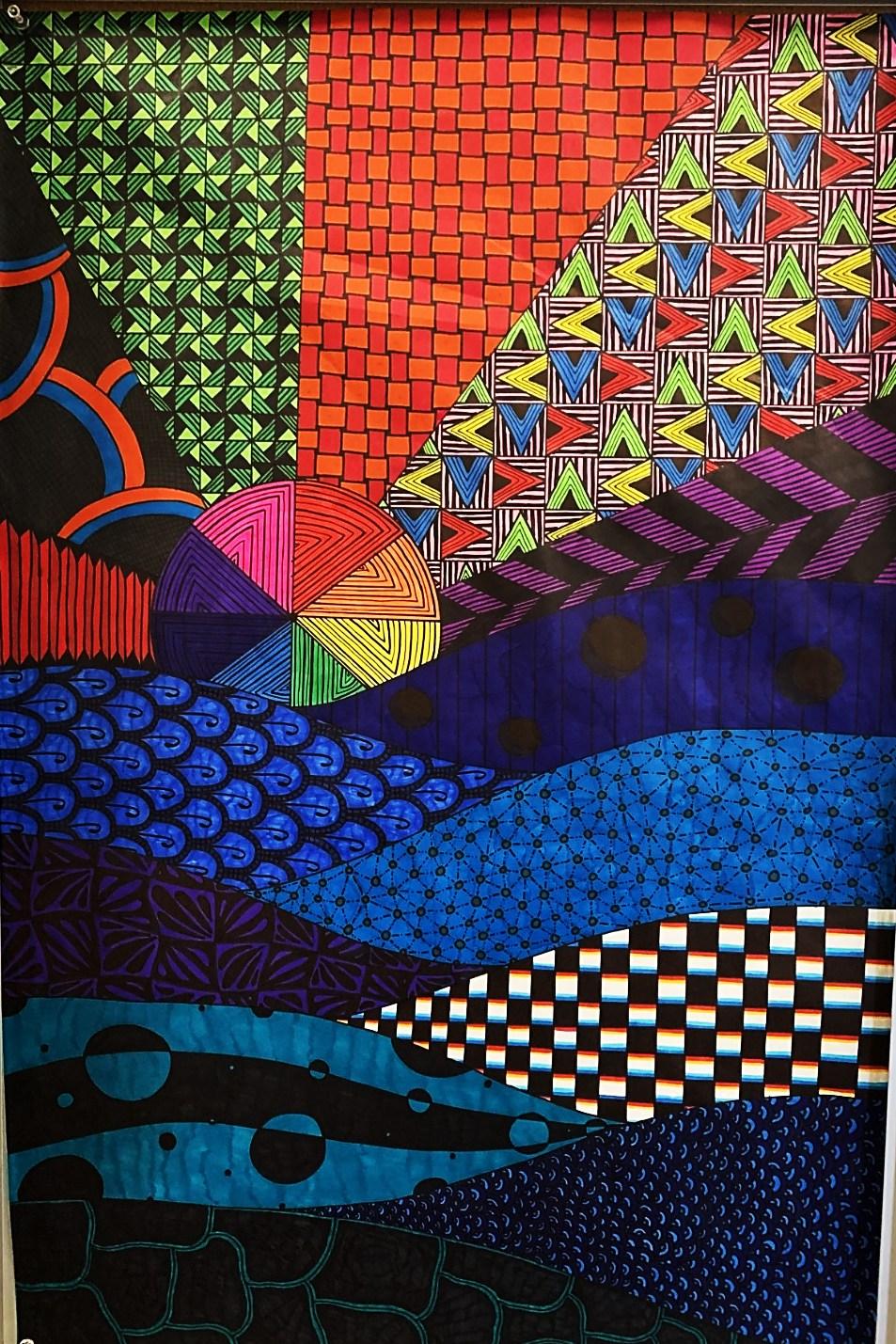
Free Minded
Braelyn Clary
Beautiful Destinations
Listen to the tears. Can you hear them? Falling silently, sliding down the rosy cheeks of his children. When truth hits the conscious mind, there is relief, there is solace. Then, comes the betrayal, the desperation. I was let down by the man I had always viewed as my superhero, my dad. It’s a troubling situation when your hugged tightly and gut wrenchingly told; ‘I’m sorry’ over a 100-pound container full of countless liquor bottles. “Never let alcohol ruin your life, Braelyn.” It was a mild spring day when I was told that by the man who could no longer be my Superman, and holding the weight of those words, suddenly made me feel both hot as Pompeii and cold as an Alaskan night. What was I supposed to do with this? I learned that my dad wants me to be the author of my own story, to walk the full length of this difficult road right now. But that left me to wonder: what about the destination? A knowing man once said; “difficult roads often lead to beautiful destinations” That man was Hilary Hinton “Zig” Ziglar.
The dirt road that stretches between our front gate and home is what saved my father.
That’s where he found Jesus. But, when I’m stretched between 3rd base and home, and the white plate down the foul line is all I can see, this is what saved me. When I’m playing this game, I’ve played for 10 plus years, I know it was a difficult road, my parents can confirm this. I have sustained injuries, meltdowns, wins, losses, growing pains, different teams, alternative positions. But I wouldn’t trade this beautiful destination for anything; standing in the outfield warming up at 7 o’clock in the morning, when the grass is still blanketed with dew, and the orange of the sun has just barely come up over the horizon. The whole team still half asleep, so coach is yelling at us to make better throws. That’s one of my favorite things, the calm before the storm, the beauty in the ashes. We work hard to be tough and unpredictable.
It’s hard work figuring out how to catch a pitch and make it look like a strike when it’s not. Framing, it’s called. Making the imperfect,
appear perfect. We frame things in life, we make them seem better than they are. We steal things, strike! We cut people; you’re out! It’s a brutal world. Full of people just trying to survive. When we can’t survive, we cover it up. We frame things. Life is beautiful. But it has to be perfect… right? We frame through, drinking, drugs, lying, people, death. Life isn’t perfect, it’s not supposed to be.
If we do everything right, on the first try, every single day of our lives, where’s the joy in that? Where’s the improvement? There isn’t, you’re already perfect. But if mistakes are made, and things get messed up, you can fix it to be better, to do better. My father is an alcoholic. He had the perfect life, that’s what he was framing. Pitchers and catchers work together. The pitcher is the life you have. The catcher is you. Ball, ball, strike, ball, strike, strike. What if you were told that was actually six balls? Umpires are the judges; they tell the world if you're doing a good job or not. They tell the world if you're bluffing. Who’s the real judge in life? Is it you?
I believe that we are authors of our own stories. We have the opportunity to accept closed doors and open windows. To find the beauty in the difficult journey. To frame the life, we’re given or to just play it out as the pitches come our way. I believe that through hard work and imperfection, we can draft our stories in a way that is so unlike other’s that we won’t need to frame them. For in their own perfectly imperfect ways, the difficult journey can turn into the most beautiful destination.
Lua Case
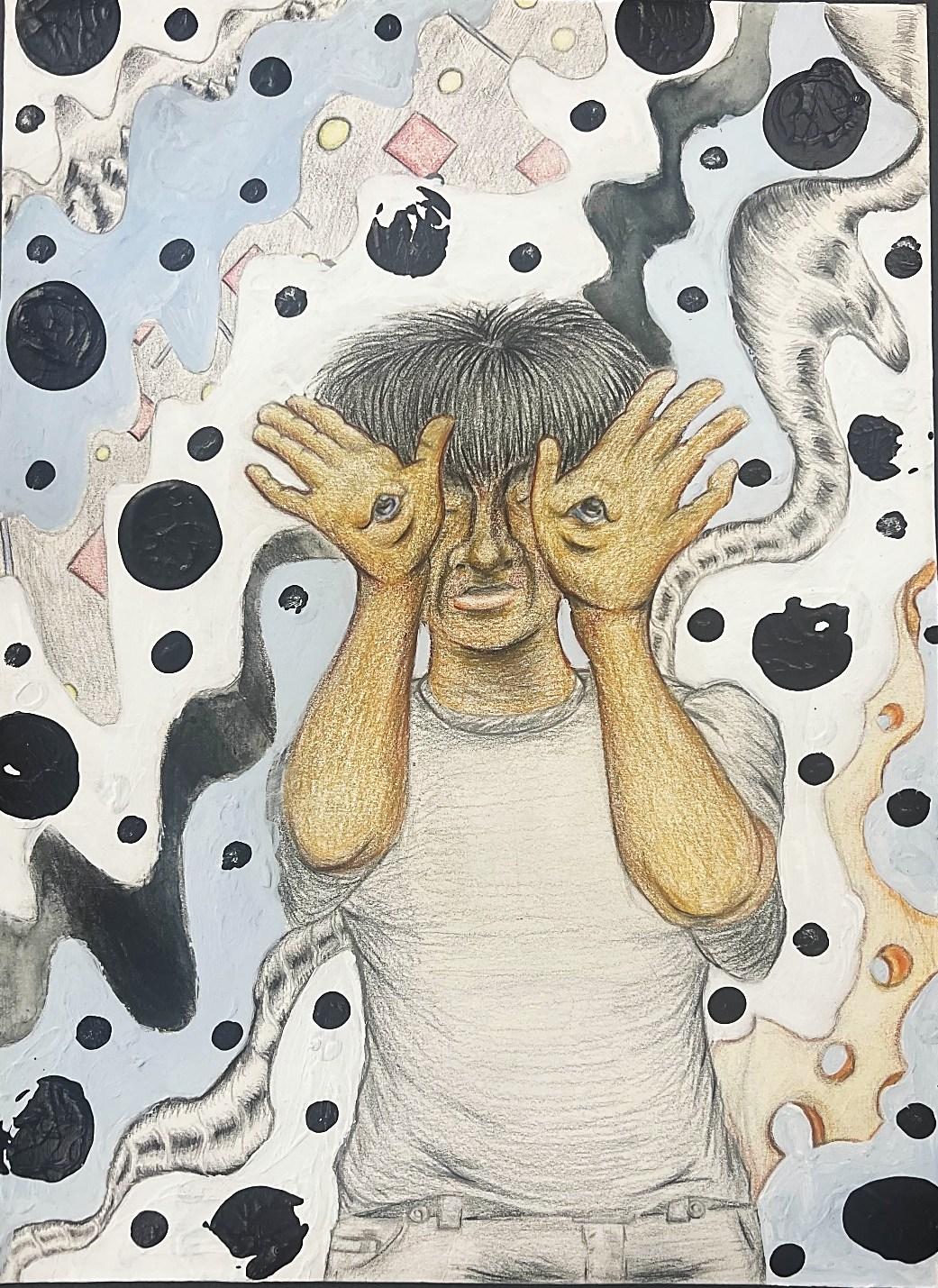
The Eyes That Feel
Are we truly free? If so, what does freedom look like? How does it feel? These palpable thoughts run through my veins as I observe the scars on both of my legs. Scars obtained in what feels like forever ago. Vibrant childhood as some may say, but all I can remember is me running, either to escape some sort of trouble or to challenge my friends to a race. That is, if I actually did have any because most of my childhood was spent alone left with a pondering imagination trapped to a dungeon I barely have memories of. What was certain was that the heavens had blessed me with a big ol’ smile— bright like the morning star— which served as an aid to combat pain. Pain too big for my two little legs to handle. Pain as wild as an avalanche from Mount Everest, punching my face with its frozen chaos till tears could no longer drop from my eyes. Yes! This blessed child was motivated very motivated or better yet, forced to action. Determined to never give up even after stumbling down receiving Earth’s firm and hard smack with a big ol’ smile. I frantically embraced each scar as trophies of freedom and hoped to someday reach my unknown destination.
Seated on my grayish office chair on a solemn and cool evening, as a blithe autumn air flows through my thoughts like the vast blue ocean, which search for hope with my eyes half-opened and felt nothing but an empty space full of sand. My feet sprint, giving tiny imprints to mother Earth one after the other. Not quite sure if I was the little child running or the one observing the race, I questioned if I would ever stop running. Questions, questions, and more questions lathered all over the studio. “Stop!” I screamed silently. That’s sufficient for today. Tomorrow we shall continue our thoughts on freedom.
Though I am not involved in what is supposed to be the five A.M. club, my eyes were open on the warm autumn Texan Sunday at exactly 5:05 A.M., eager to feel the bright golden hue shine through the window, but the cloudy sky outside suggested it will be a long wait. Might as well grab a warm cup of tea to ease the nightmares I had just woken up from.
The last thing I wanted was to be tormented by my past. I refused to close my eyes, I refused to land back in that ruthless dungeon I hardly remember. I felt anger rising, enraged by the thoughts of past pain as I clenched the five fingers on each of my hands, squeezing the blanket beneath my thighs. “Nope!” I paused and gasped, looking straight at the poster hanging on the wall in front of the bed which reads: “You are Safe, Well and Loved.” I then felt the embrace of the hands that wrote these words. Gifted words from him who I love, sailing far deep into the blue waters of my heart as I jumped out of bed.
Sparkling from the inside out with radiant peace, I made a floral cup of tea and sat in my studio to relish each sip. There was something truly comforting about this space located in the brightest room of the house. A space meticulously designed with love and creative energy. I have named it: The Beauty Exploration Station a space to write, heal, and most certainly continue our thoughts on freedom. I closed my eyes and began conjuring memories of both current and past perceptions of reality. I was rummaging, searching for freedom, as I revisited that which I was running from— pain. Today’s society is very well trained on how to avoid pain. We are used to getting high on sugar, alcohol, endless scrolling, or Huxley’s Soma. Escapism has become a comfortable cave in which we happily dwell, ignorant of the ferocious chains tying us down to hell, while our eyes are unable to see beyond the familiar rock where we rest our heads. My eyes twitched with uneasy feelings as I observed the void we try to fill with dopamine shots disguised as trophies of freedom. I then reached out to the tea settled on my white minimalist desk. Next to the mug was a nice pinkish lotus popup card. On top of the card was an azurite crystal, and a sticker that reads: “Trust.” I looked over to my right and cherished the dance of nature through the window as I sip away from my warm grayish mug.
While I observed the natural dance of autumn leaves falling from the gray bluish sky on that warm morning, I became aware that I had never truly stopped running— even when there was no longer a need to. Running is what I have always known and if I am to stop, I would need to learn a different language or unlearn the one I have always performed one chosen by past threats that, while no longer physically present, still affect my newly found relationships. The castle I once built to protect and shelter me from harm is now a prison that obstructs me from truly living
and experiencing the true beauty of life love. Love for myself, love for my lover, and love for my friends. Could that be freedom? Maybe. If I want to live in fear and allow past traumas to decide how and what I do with my life, then maybe it is freedom. As the Persian philosopher and poet Rumi once said: “Be empty of worrying. Think of who created thought! Why do you stay in prison when the door is so wide open?” It might be painful and scary to leave a comfortable and luxurious prison, but Earth knows I want to break free.
Freedom is when we stop searching and wanting. For me, freedom is to stop running— a beautiful skill that has served its function in the past, but no longer serves my current circumstances nor future goals. Freedom is realizing I am now safe, and the threat is far gone. Freedom is being able to love; it is choosing to act instead of react out of fear, hate, anger and past conditioning. Rumi says, “This being human is a guest house. Every morning a new arrival… Be grateful for whoever comes, because each has been sent as a guide from beyond.” Rooted in Sufi philosophy, Rumi’s poem invites us to stop identifying with our emotions and peel off the layers if we care. I care, and I dare to live—to reclaim my life, my happiness, my experiences and above all, my freedom. My journey towards freedom began when I realized that I was running in the first place and have been incessantly running for what feels like forever. I dare to learn a new language that speaks through and for me. I dare to pause, breathe, and reclaim my bodily sensations as I close my eyes, grounded in the now. I see the autumn breeze, I taste the dance of my breath, I feel the sounds of singing birds, I now hear what my body has to say. My eyes now seize the bright and colorful glimpse of freedom! It would be inaccurate for me to begin to describe to you what freedom looks like. One because words fall short and two because it is a personal journey. Rumi continues, “Walk to the well. Turn as the earth and the moon turns, circling what they love. Whatever circles comes from the center.” For those who dare to walk and stop running, I invite you to embark on a journey that allows your eyes to feel. Let them help you explore what freedom might look like to you. Escaping Plato’s Cave is not easy. Now, this might not be fun at first, and it might take a while, but trust me, it is worth realizing that freedom is a conscious choice to make and what it might look like is left for you to discover.
For skeptics who might think nonsense of this, if you dare, close your eyes for five minutes and five seconds minimum and tell me what they feel. Therefore, I ask again for the last time, are we truly free? What is keeping us from being free?
As I now drift away from my desk, savoring the last drop of hibiscus-blueberry-tea which smells like raindrops falling on a bountiful garden, I would like to thank you— my friend, for sipping along on these bits of discovery with me. So long, and till we meet again.
Kimberly Chavarria
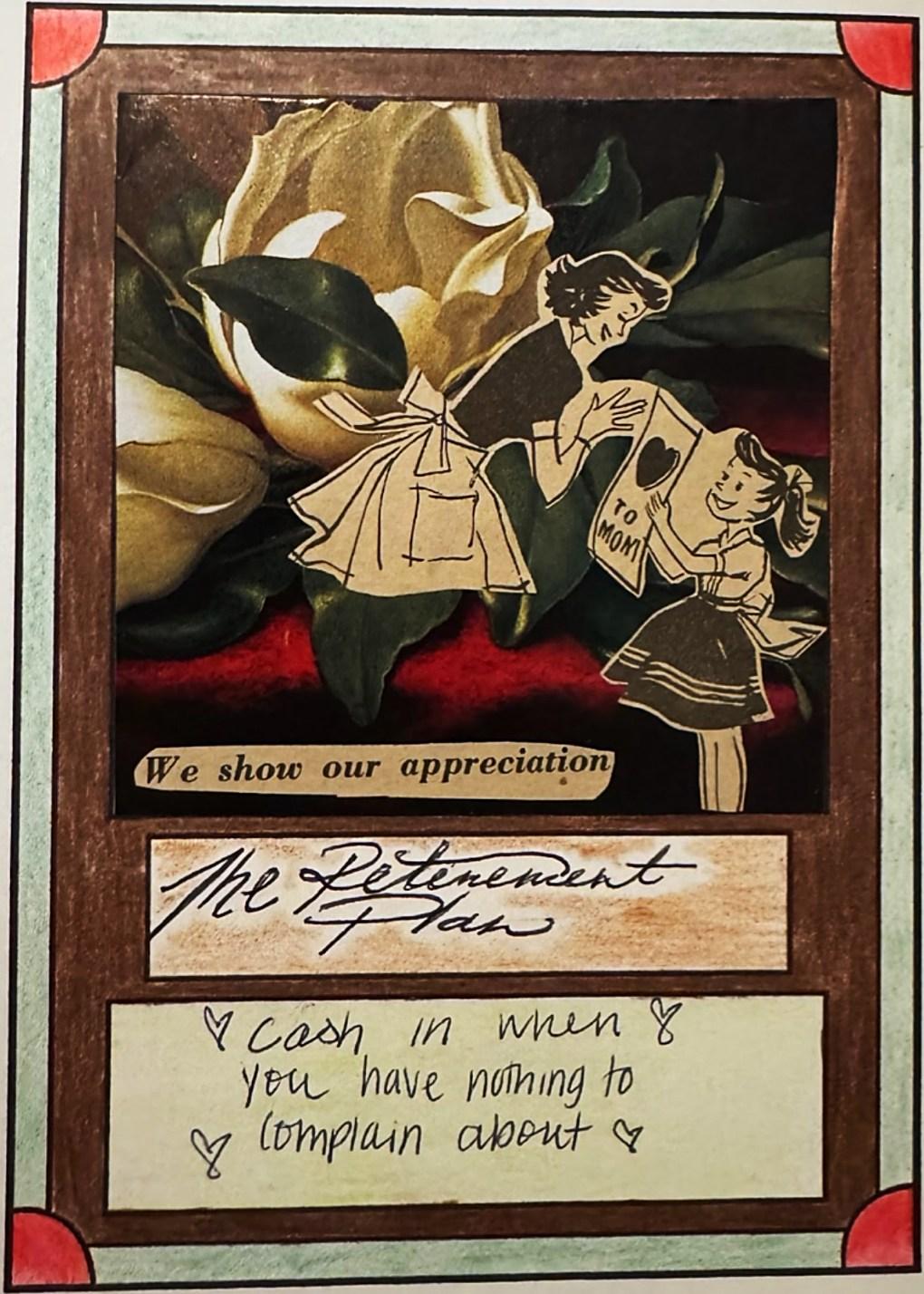
The Retiremement Plan
Jordyn Dounley
Growing Up Gen Z
I remember starting Kindergarten, walking into a bright colorful classroom. I remember the alphabet charts, number lines, weather charts, and smart boards. I remember learning phonics, reading, and math. I remember having imaginative play and circle time. I remember my teacher emphasizing sharing and taking turns. I remember being excited for my mom to come to school and when my friend's parents came to school, but now when I visit my younger siblings' schools, their classrooms are full of pastel colors, they watch YouTube videos to learn the months of the year and days of the week, and they do a lot of learning on iPads. I remember getting my first iPhone in the fourth grade, being excited to use social media apps like musical.ly, Instagram, and Snapchat. I remember seeing people show disapproval on the internet, regarding our new president Donald Trump. I remember thinking I was going to be sent to Africa, though I am not African. I remember thinking my Hispanic classmates would be sent to Mexico, though many of them had never been to Mexico and some weren’t even Mexican. I remember developing a sense of a democratic identity. This was growing up Gen Z, catching the end of real learning with creativity, being 10 years old on social media apps, and dabbling in politics. Growing up as part of Gen Z has given me creativity and self-expression, but also caused me to experience many identity crises, to over use AI, and to experience depression.
Gen Z feels pressured to publicly define who they are, even if they’re not ready. In a world where social media influencers, celebrities, and politicians rule society, heavy opinions are shared, and everyone must pick their side or find their aesthetic. Teenagers are trying to become a different version of an influencer or become the complete opposite of one. Social media is full of idolization and cancel culture, causing “The concept of self-identity [to die] in newer generations.” (Bajwa) This means we are having trouble becoming the best version of ourselves because we are preoccupied with learning how to become a better version of someone else. From the beginning of my social media
journey, I wanted to make my musical.ly videos like Baby Ariel. I would imitate her style, remake her videos, and learn her moves because she was cool.
Now I follow influencers like Who.Nia and wish to live her classy soft-girl life. I want to switch my hair as often as she does, and respect myself how she respects herself. All of this sounds crazy because I don’t even know Who.Nia. Everything she posts could be a lie, yet I’m still unhealthily inspired by her life. My TikTok videos and Instagram posts are similar to the ones I watch and follow, and that makes me question what I would post if it wasn’t for the strangers, I get my ideas from. As we feel pressured to adopt the opinions and crave the lifestyle of others, we are just publicly becoming one of many. This constant imitating makes it harder for Gen Z to discover who we truly are outside of the internet.
Gen Z’s reliance on artificial intelligence is another issue. Members of Gen Z, especially those who are my age, are abusing AI. As artificial intelligence becomes more accessible, academic dishonesty has become a new trend. Even those who want to do their academic work on their own, often still turn to AI, as they crave an answer check from technology. Granted, there are some people who are just lazy, but it’s hard to resist when the right answers are only an app away.
In my experience, I am not completely reliant on technology to do my work, but I do use AI more than I’d like to. I first learned of AI during the second semester of my sophomore year of high school. A classmate from my debate class would use it to do his speeches, and a classmate from Algebra would use it to do her homework. Since I had never needed to use AI, I wasn’t interested in it. I already had all A’s and I took pride in knowing I did all of my work on my own. I had never used AI until I took physics. I felt like it was impossible to keep a 90 in that class, so I’d use AI to check the answers on most of my work before turning it in, which is basically cheating. Even with checking my answers before turning it in, I still couldn’t bring my 87 up to a 90. Meanwhile, one of my classmates used AI on everything, from tests to warm-ups, resulting in her grade being higher than mine. I tried to remember that most of my work I did on my own, and that her higher grade wasn’t earned because of her intelligence. But the reminders didn’t really matter to me; I wanted an A. I wanted to have a high GPA, but I ended up finishing that physics class with an 88.
After that, I intensified my reliance on AI when I took statistics. The difficulty of that class led me to completely give up on my goal of having all A’s. Once again, all of my peers used AI for their work; it was normal now. I didn’t think that they were lazy, like I thought my sophomore year. My views and personal limits on the use of AI had changed tremendously. Now I use AI to give me ideas on my writing, which is something I had never done until this year. I used to just write whatever came to my brain, but now I feel afraid that my idea is wrong or that I might be going in the wrong direction. This essay is one of few essays that I wrote completely from the use of my brain and only my brain.
Aside from education, Gen Z tends to ask AI for relationship advice, parenting advice, and even financial planning. AI is genuinely a part of Gen Z’s everyday life as, “Gen Z uses AI an average of 12 times a week, compared to seven for Gen X and four for Boomers.” (Robinson) With the Overuse of AI, Gen Z is inevitably going to face a hard time with critical thinking. AI is great for brainstorming and guidance, but relying on it to do work and to solve real life problems will cause individuals to lose creativity and the ability to think.
Additionally, because of social media, Gen Z is experiencing heavy depression. With filters, plastic surgery, and wigs being the beauty standard, women are becoming unhappy with their natural appearance. These new standards are completely unrealistic and damaging, causing women to face incredibly low self-esteems. To add on, people are sharing their “perfect” lives, which include a “perfect” relationship, “perfect” family, “perfect” job, and “perfect” financial situation. It gives people another negative perspective of their own life, causing them to believe it's not normal to face hardships with their significant other, friends, or family, and that it's not okay to work a normal job instead of being a famous influencer. Above all, it creates a false reality where anything that is less than success is seen as failure. These days, teenage girls are expecting teenage boys to fund their entire beauty routine, feed them, and clothe them, ignoring the fact that the boys have to care for their own needs. Kids in low-income households are expecting their parents to buy them designer clothes and shoes, while also being behind on their rent payments. This is because that is the expectation social media has fed to the world. All of these are the factors that have contributed to the
heightened amounts of depression in people that are a part of Gen Z because “jealousy creeps in and young individuals do not always have the knowledge or ability to live in the present and be happy with what they have been given. (Children's Hope Alliance) Low confidence levels, insecurities, and hopeless romantic relationships stem from the jealousy for the rich and famous social media stars. Gen Z continues to be negatively affected by technology, throwing them in the hands of depression.
Overall, growing up in Gen Z is living in a world filled with technology and pressure. We are lucky to have been taught to be creative but are steering away from that norm because of our easy access to technology. And while technology can make things easier and get things done faster, it also causes identity losses and comparison. If we can learn to use technology wisely, embrace the unique versions of ourselves, and learn to define ourselves with more than we see on the internet, we have the potential to grow. Gen Z is more than technology, we just need to redefine what it means to be smart, real, creative, and beautiful.
Bajwa, Zaariya. “Social Media Is Causing Generation Z to Lose Their Identity.”
Robinson, Brian. Gen Z Trust AI More than Humans in Their Careers, New Study Shows. 19 Feb. 2025. Accessed 13 Nov. 2025.
Elias French
The Bureau of Unusual Incidents
Report Clearance: Level 23
Report Type: Conditional
Report Author: Member 16734
Recently, a bottle washed up on a beach of the Yucatan Peninsula. Inside the bottle, a note was found. The note was translated from classical Italian. The note is as follows:
The following page contains a transcript of the translated note in the bottle.
It has been 2 months on this horrid ship, drifting through the ocean, yet I don't wish to see land. Land, oh land, the solid ground that is now burning with fire, as my hatred burns with passion. What do I hate? No. Who do I hate? No. The correct question is; why do I hate? And as always, there is no correct answer.
The war tore us apart. Not me from someone, but me from myself. I do not know what I believe in anymore, what I want, what I don’t. This ship is rotting, but it is still the most lively place on earth. This boat is my only refuge, as I am not a refugee from a failed republic, I am a refugee from a failed world.
The war started in another country that I didn’t care about. I went on with my life, idiotically unobservant.
I got on this ship, excited for a week of rest. Unfortunately, on the fourth day, the first bomb was dropped on the capital. Then we dropped our bombs. I did not see the bombs, but I see the outcome, which is enough to make me question if I wish I survived in the first place.
People, burnt to a crisp, barely alive, all rushing to the beach, knowing they have no time left. The ground is scorched, and the metal corroded.
I do not know what the wood looks like, for there is no more wood on the land. I saw from the deck of this ship. On this ship, we drift. We fish over the side, we cook with whatever scrap we can get. I long for the day I find safety, for now all I have is security.
I am afraid for my mental health, for if we remain alone, (by we I mean me), I may be forced to surrender.
The things I have seen have already caused me to rip out my hair, and disease has prevented it from regrowing. I am seeing my own blood, I am coughing up chunks of flesh! I do not wish to live anymore, but I have not the strength to end my own life! If I were to move, I would feel the pain of a thousand boiler explosions! For once, and only once, I pray the lord will kill me faster!
- Translated by Michael Ellis
Notes of Unusual Properties
The paper inside of the bottle was carbon-dated, the results indicate that the bottle was sealed 65 million years ago.
The bottle is made from an unknown material, and the paper’s fibers are fungi based.
No historical incidents represent the notes.
Further testing has been ceased.
Ezra Cornejo Their Doomed Fate
Frankie Cochran Aestival
Texas summer sun swelters well into September. The leaves stay green and heat waves still linger over roads. The air is too thick and the blacktop stove sears through my shoes. I pray for late November to come save me from the sun’s unrelenting fury. I sleep, stickily clothed, soaked in sweat.
There is no escape from the constant suffocation other than rare cool fronts that offer false hope of relief.
October. Makeup grease paint melts and flows down the contours of costumed partygoers’ faces. The faces are unreadable, uncanny. The grease pools in eye cavities and sodden lips are smudged all over. There are gelatinous strands that slowly gravitate towards the ground off of chins creating colored drops and drizzles. They hit asphalt where they sizzle and burn, desperation vaporizing into the air. It’s far more horrifying than any manufactured forty-dollar plastic Halloween costume could offer. I drown in the sea of neon nylon knee highs and putrid perspiration.
Plastic pumpkins set out by the city as a part of their “#1 Halloween Town Extravaganza!!!” twist and warp, like jack-o-lanterns left out to rot weeks after the big day. The lights they put up in the trees explode and rain midair, a glass grenade that doesn't discriminate. It hits everyone in that terrible sea.
The swelter never cooperates with capitalism’s manufactured seasonal demands.
It’s the absurdity of it all. People are wearing thick down jackets and fleece scarves prematurely and paying the price in red faces and wet hair. Decorations start to dot porches, depicting autumn leaves and cornucopias, but the real leaves have not turned yet, and they are still attached. No abundance is to be found. By now, I’ve learned to just eat my pumpkin pie and shut the hell up about it.
I wait for that start-up rattle of the air conditioner, for when it steadies into its gentle hum is the moment I can breathe again. I watch
the clock and listen to the ticking, each second louder than the last. It’s nothing in the grand span of months, but I can't help the anxious waiting. I am always waiting.
Aestival, you have no part here, I beg of you, please leave. Come November, you will die and resurrect by March. The cycle will repeat, and again I will plead.
Aestival, you answer to no one. No one but dear Bluestem, Turk’s Cap, and Frostweed.
Avery Fullbright
From Jester to Jung: The Fool in Tarot and the Trickster Archetype
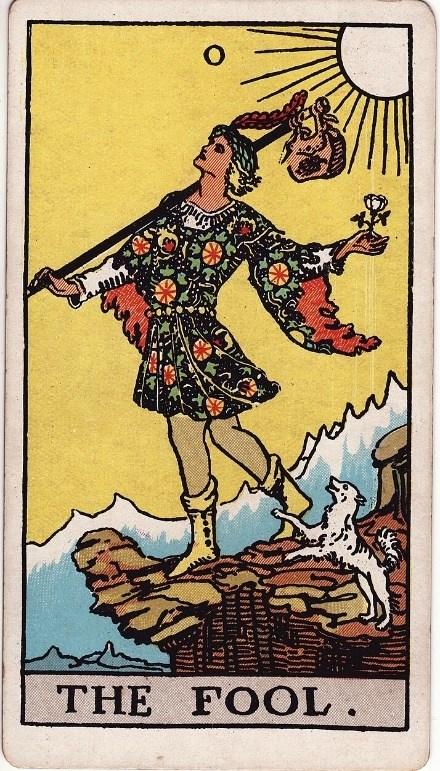
A young traveler stands at the precipice of a jagged cliff. His eyes lift upward to the sky as if analyzing the universe above, seeming free of the need to see his path. He carries nothing except a small sack and walks with a small dog nipping at his heels. This is The Fool tarot card, as most Westerners know him, drawn by Pamela Colman Smith (Pollack 24). Tarot has been described by Sallie Nichols, a former teacher of Symbolism of the Tarot for trainees at the C.G. Jung Institute, as "a silent picture text representing the typical experiences encountered along the path to selfrealization." This ideation is known to tarot practitioners as "The Fool's Journey." The question arises then: who is this Fool? A modern tarot reader would interpret The Fool to represent anything from the idea of infinite potential to the idea of reckless naivete (Gong 43). However, those who delve deeper can discover that our Fool deeply embeds himself within a symbolic language that resonates with Carl Jung's theory of archetypes. Jung, a Swiss psychiatrist, psychoanalyst, and student of Sigmund Freud, introduced the concept of the collective unconscious, a bank of shared human experiences expressed through images Jung coined as archetypes (Jung, The Archetypes and the Collective Unconscious, 5). The Fool perfectly embodies Jung's idea of the Trickster archetype. He is, as Jung states, "God, man, and animal at once." By examining The Fool card across the Marseille Tarot, the Rider-WaiteSmith Tarot, and The Wild Unknown Tarot, it becomes evident that this figure consistently symbolically embodies the three main concepts of Carl Jung's Trickster archetype: ambiguity, childish naivete, and an instinctual nature. These three commonalities reveal The Fool's inherent role as the Trickster, regardless of specific artistic interpretations.
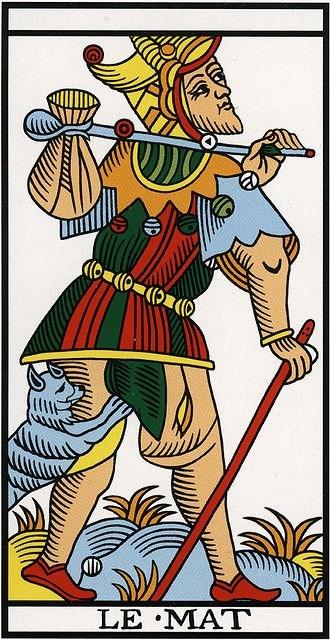
We can first gaze upon the Trickster archetype in The Fool as far back as The Marseille Tarot, created in the 1650s. The version of The Marseille Tarot used for this analysis is the 1650 Jean Noblet deck. It was this deck that Jung determined in 1950 "was the…deck that possessed
the properties and fulfilled the requirements of the metaphor that he had gleaned from within the alchemical texts." The Fool, or Le Mat as the French refer to him, first deviates in his placement within the deck. In most modern decks, we see The Fool as number 0. This placement is significant because anything seems possible to the man, who is always ready to go in any direction. The Fool in modern decks does not belong in any specific place. He is not fixed in place like the other cards. He is not locked in as The Lovers are at number 6. His number (or lack thereof) makes him a person with no past and, therefore, an infinite future (Pollack 18). However, Le Mat has no number assigned to him at all. He is entirely ambiguous about where he resides within The Marseille structure. This ambiguity of placement in the deck further emphasizes the liminality of The Fool archetype. Jung states in Four Archetypes, "he is subhuman and superhuman… bestial and divine." Le Mat, as well as the Trickster, lay in this perfect liminal ambiguity. Le Mat's ambiguity also can be seen in his walking stick. The yellow stick in his right hand, resting on the ground, puts him in contact with the physical world; however, he looks up at the sky, looking upwards at the heavens (Marteau). He is the spirit of the in-between. As Jung describes his Trickster, he is the perfect amount of consciousness and unconsciousness. Le Mat's ambiguity is his power, a perfect equilibrium of opposing forces, where the grounding stick and the skyward gaze forge a being of profound awareness and primal impulse. Jung comments that the Trickster is "God, man, and animal at once." Le Mat's ambiguity makes him God. He is numberless, he is ambiguous, and he is the in-between. He is the living paradox, defined by the spaces he inhabits between worlds. He is the Trickster; he is The Fool, and his symbolism proves that. The Rider-Waite Tarot deck, designed and painted by British artist Pamela Colman Smith in collaboration with Arthur Edward Tarot of Marseilles, 1650 by Jean Noblet
Waite in 1909, remains one of the most widely recognized and influential tarot decks in history, and its Fool is the shining star of childish naivete. Smith and Waite likely drew inspiration from various sources for their deck designs. However, the Tarot of Marseille can be titled the RiderWaite Tarot's true predecessor as it was previously one of the most widely used historical decks before the Rider-Waite-Smith deck reshaped our modern view of Tarot (Place 179). Of Smith, Waite said in his selfwritten biography, "Under proper guidance, [she] could produce a Tarot with an appeal in the world of Art and a suggestion of significance behind the Symbols, which would place on them another construction than had ever been dreamed" (Waite 33). Knowing the creator's specificity of the use of symbols, we know we can find the Trickster can in the minute details of the cards. Jung described the Trickster as possessing a "childish or even infantile" quality, characterized by a lack of foresight and a tendency to act impulsively (Jung 143).
The Fool, illustrated by Smith, is a strapping young page walking openly toward the edge of a cliffside. They are pictured almost androgynously, having aspects of both—yet neither male nor female. Primitive cultures often thought the first humans were hermaphroditic, having both female and male sexes. Smith chose to display The Fool this way intentionally. They are newly created, naive, perhaps even the first human, prancing along without care (Nichols 35; Pollack 16).
Jung's approximations of the Trickster archetype "announce themselves as… ineffably childish," and he makes the comparison of the personality type to a "poltergeist" (Jung 142). Poltergeists are known in culture to be mischievous childish spirits causing chaos and mayhem. As said by Sallie Nichols in Tarot and the Archetypal Journey, they "like to be where the action is, and if there is not any, [they] create
The Rider-Waite Tarot, 1909 by Pamela Coleman Smith
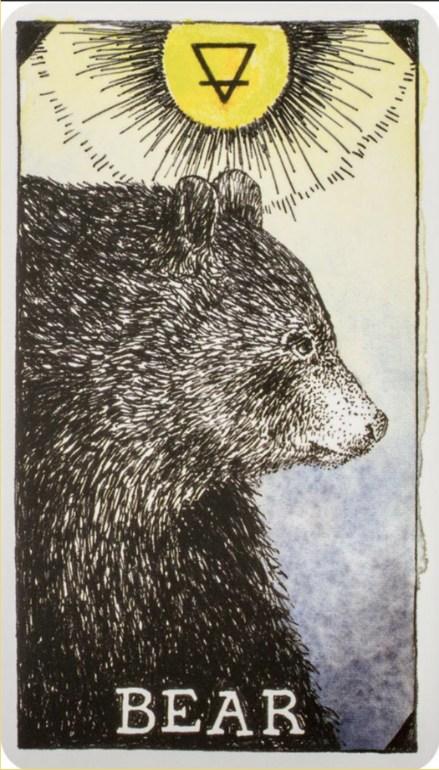
some." We can see this nature in the symbolism of the card. It is in The Fool's haughty, uncaring walk toward the cliff, as well as their worldly possessions on their shoulder. They ignore the barks of the little dog at their feet, warning of danger, and walk on, moving us forward through the journey. They are not yet rational but rather purely intuitive and spontaneous, like a blank canvas waiting for ink, and they push us to make the first brushstroke and plunge off that cliff without worry. (Taschen 54) Smith's painted scene perfectly portrays the Fool's (and the Trickster's) characteristic naivete/childishness. The Fool's carefree demeanor and apparent disregard for the potential consequences of plunging off a cliffside perfectly align with this description. Their journey is a leap into the unknown without a second thought, reflecting the Trickster's naive penchant for spontaneous and often reckless actions. This lack of care allows them to walk off cliffs and into danger without fear, pushing their story forward. Jung comments that the Trickster is "God, man, and animal at once." This Fool is Man. In them, we see a human capacity for naivete, action, and sometimes even childishness. Everything about them, from their colorful tunic, having a youth about it to their white rose symbolizing innocence to their seemingly uncaring attitude towards danger, make them Trickster, Fool, and 100% Jungian. The third deck, a significant representation of the Trickster archetype, is Kim Krans's 2018 The Wild Unknown Animal Spirit Tarot, particularly The Bear's card. This deck deviates from the system established by The Marseille Tarot, which is also present in the RiderWaite deck. Instead of the 22 major arcana cards and then the 56 minor court cards, Krans's deck is divided into the four elements plus the addition of spirit. The card in her deck that exemplifies The Fool's trickster-ish nature is the humble Bear. Jung, in Four Archetypes, describes the Trickster as having the ability to "change his shape," as there are many reports of the Trickster in this animal form. This Bear takes the animal form of the Fool. The Bear is emerging from its hibernation into the new spring. In The Wild Unknown Animal Spirit Tarot, the Bear represents the awakening from hibernation into spring. This awakening is a great transition from deep introspection into the external world. This awakening aligns closely with the Trickster
archetype, particularly as embodied by The Fool in traditional Tarot. Krans describes The Bear as having this awakening based on instinct (Krans 61). This instinct is what makes The Bear the Trickster. The Bear does not wake up to spring because of a fully conscious decision being made but rather due to an instinctual pull toward the new season and toward change. This instinctual drive aligns with the Trickster's nature, as it often acts without full awareness of the potential consequences that could occur. He is constantly moving forward on intuition alone. Like The Fool, The Bear is not yet fully aware of what lies ahead but follows its internal call to move forward. Sallie Nichols, a former teacher of Symbolism of the Tarot for trainees at the C.G. Jung Institute, declares, "The Fool is in such close contact with his instinctual side that he does not need to look where he is going…his animal nature guides his steps." Nichols' assertion that The Fool moves through his world without needing to see where he is going speaks to the profound trust in intuition and instinct. This is a defining trait of the Trickster, and The Bear embodies this instinct in its purest animal form. Jung's description of the Trickster as the "animal unconsciousness" (Jung 143) reinforces this idea. The Bear is ultimately the idea of an instinctual animal unconscious that drives forward new beginnings and action. Jung comments that the Trickster is "God, man, and animal at once," and The Bear is Animal. Complete surrender to the unconscious instinct makes The Bear a powerful representation of the Trickster.
In our examination of The Fool across the Marseille Tarot, the Rider-Waite-Smith Tarot, and Kim Krans's The Wild Unknown Animal Spirit Tarot, it becomes clear to us that this central figure in Tarot is a direct example of Carl Jung's Trickster archetype. Whether it is found in
The Wild Unknown Animal Spirit Deck and Guidebook, 2018 by Kim Krans
the ambiguity of Le Mat, the reckless naivete of Smith's Fool, or the instinctual awakening of Krans's Bear, The Fool remains an archetypal force that bridges contradictions; he is both wise and foolish, human and divine, conscious and unconscious. He is "God, man, and animal at once." Each iteration of The Fool from 1650 onward showcases a different shade of the Trickster archetype, yet all are the first step into the unknown. In her newest deck, The Wild Unknown Archetypes Deck, Krans says, "Archetypes ask many things of us. They ask us to stretch our minds and hearts beyond their limits - and have a particular knack for getting us to do so. They confuse, conjure, contradict, and complicate." As a student of Jung's teachings, Krans reminds us to seek patience in interpreting the Trickster. He has many faces and many names; however, The Fool will consistently reflect the three core traits of the Trickster: ambiguity, childish naivete, and instinctual nature. Despite variations in artistic interpretation, these defining characteristics affirm The Fool's inherent role as the Trickster. He will remain a figure that transcends individual decks and a continual archetypal symbol of transformation and unpredictability.
David, Jean-Michel. Reading the Marseille Tarot. Association for Tarot Studies, 26 Feb. 2011. Accessed 27 Feb. 2025.
Jung, Carl. Man and His Symbols. 1964. Bowdon, Cheshire, England] Stellar Classics, 2013. Accessed 15 Feb. 2025.
Krans, Kim. The Wild Unknown Animal Spirit Deck and Guidebook. New York, Harperelixir, 2018. Accessed 20 Feb. 2025.
Wild Unknown Archetypes Deck and Guidebook. Harper Collins Usa, 2019. Accessed 30 Jan. 2025.
Marteau, Paul. Le Tarot de Marseille. Translated by Kitos Digiovanni, 1949. Accessed 3 Feb. 2025.
Nichols, Sallie. Jung and Tarot: An Archetypal Journey. York Beach, Me., Samuel Weiser, 1988. Accessed 2 Mar. 2025.
Pollack, Rachel. Seventy-Eight Degrees of Wisdom: A Tarot Journey to Self-Awareness (a New Edition of the Tarot Classic).
Newburyport, Red Wheel/Weiser, 2019. Accessed 28 Dec. 2024.
Robert Michael Place. The Tarot: History, Symbolism, and Divination. New York, Jeremy P. Tarcher/Penguin, 2005. Accessed 6 Feb. 2025.
Waite, Arthur Edward. Shadows of Life and Thought. Literary Licensing, LLC, 29 Mar. 2014. Accessed 3 Mar. 2025.
Poetry
There is poetry that will never see the eyes of anyone but my lover
It’s written in the lines of our every conversation
Between those lines is little bits of me not large enough for poetry
Which he keeps in his pocket
Like a heads up penny
Like the steps between our boots while dancing
A knowing without words
When there’s a pool table we’re going to be playing
And he’s going to let me win
When there’s a hot sauce around when I’m away
It will end up in his cabinet later
Some poetry isn’t spoken
It’s written through the empty space between the lines
Between the numbered billiard balls
And the crack that starts the game
The once empty cabinet
Now full of hot sauce bottles
Olivia Garcia
My Point of View
I am the one destined to dream this horrible dream. For I am the youngest child.
A gasp for life shortly followed by a single tear. Then the streams started not long after, it all felt too extreme. It was because of a dream that struck me through my heart.
Oh, what a horrible thought that made my lovely dreams drear. I had not comprehended the dream it seems. It only took 8 years to begin to understand the truth behind that horrible nightmare.
The thought was so clear.
I watched my mother leave this earth, then my father, then my sister, and last were my brothers, quite the unruly dream. I stood there feeling every tear fall from my eyes.
Though in reality I was at home and I could hear my family all sleeping near.
Oh, what a horrible truth I had to learn whilst I dream. I will watch them all go.
Only now do I realize this dream will become a reality, yet only if the world ends right, I fear. Now I see the time differently with them and I hold them to a higher esteem.
Nevertheless, I will cherish these moments together; I know that'll help me be patient until I get to see them again.
I am the one destined to dream this dream but maybe it is not so drear. At least now I will not take for granted the memories and the advice,
so now this horrible image has become but a distant daydream. For I am the youngest child.
John Gomez-Jimenez
The Little Songbird
I lived in two worlds, I was raised to be an obedient child in a Mexican household, but behind a curtain of who I am. I was playing a ballad of the queer person in hiding. In reality I was getting chastised for playing to my hearts content after straying away after the first act. After rehearsal I walked to a cafe in a quaint plaza named Apgujeong Plaza. The cool November air outside was reminiscent of pine needles. I saw a guy whose name was Mateo. A guy around my age.
In the middle of looking at him I slipped and fell, but not on the pavement but his arms. I thanked him but he wanted to talk to me. “Hey what with the instrument.” He asked. “It’s my voice. Her name is Luna. She’s like my version of Tokyo Rose.” I blurted out. Knowing that I just over shared with this total stranger who thinks I’m an introverted weirdo.
“Can you play a song?” A request I found odd but, I did it for a man who was handsome. I played the second act of Swan Lake, a classic. I got up on a bench in front of a mural of a family celebrating Chuseok. After a few lines he asked me out on a date. As I said yes I saw a man sipping coffee from a cafe dead at me. Behind a relator poster by Young Relators.
One date turned into a yearlong relationship. He was a guy who I felt a genuine connection with. However, that was until I met Ethan Young. He was the guy from the cafe and he was always at the concerts. A handsome man and charming but yet, he was over half a decade older than me. And an heir to good fortune. He attempted to date me but I was not interested. “How about you come to my place and I can help you practice?” I went over to his home the next night.
He greeted me at the door with a kiss on the cheek. I digress and go in. His home has a modern style. Before I could utter a word, he told me to play act three. I performed yet, I was trembling in fear. Something in me wanted out, but saying no scared me, especially a man like him. As I played the part of the black swan he went closely behind me. “I really like you. I’ve seen all of your shows since you first one years ago. I want
to make you into a star. I want you to play your song songbird. However, I want you in caged to be my very little songbird.” He kissed me on the neck as he was attempting to fix my posture. He repeatedly whispered only one thing to me “My perfect little songbird”.
I had to run away. And so I fled into the night to my home. Unbeknownst to me he knew of my hidden relationship with Mateo and understood the patriarchy that my family believed in. And told my family. As I walked out of the theater my parents were there. “We need to talk, Juan.” They said in a stern demeanor. The car ride home was warm, yet uninviting. They sat me down before I could utter a word my mother spoke “We accept you, but you mustn’t see that boy. He’s not good enough for you.” She followed up by stating “Ethan is a good man,” . “Mama he’s too old and I’m eighteen years old I have a future ahead of me-.” I was cut off by my mother saying “Juan cállate el sico”. “Mijo we’d accept you on the condition you would marry him.” Those very words that came out of my father’s mouth felt like a gunshot.
However, I was not interested. I ran to my room and cried. Clutching to the only thing that brought me solace, I took Luna in her case with some keepsakes, money and essentials and sunk out of the duplex. I walked in the cold dead night of his neighborhood to Apgujeong Plaza. The walk was only lit up by flickering street lights. Finally arriving at the brightly lit plaza I sat down in front of a mural of a family celebrating Chuseok. I sat and waited for the man I love to come. However, as the flow of people going in to get groceries dwindled and shops closed, I held on hope that the man I loved would arrive.
I slipped into a daydream where I performed the final act, all alone. The crowd booing and yelling obscenities before making it to the end I snapped out. When suddenly I saw a tall male figure, but as he walked closer, I knew it was Ethan. “You know he’s not coming, Juan. Just come with me and be mine.” “What did you do with him, Ethan?” I responded. Calmly he said “What I had to do my little songbird. He wasn’t good enough for you.” A truck pulled into the parking lot as Ethan walked towards me.
He spoke in an intoxicating tone “come here my little songbird. Your family misses you. I just want to be as man, as husband, as my little songbird.”. I chose to risk it all and so, I jumped in front of the truck to escape. The sound of tires screeching like a scratched record and the
blinding light flashing like one’s life flashing before their eyes. And I heard that last note ringing out in my head.
Grace Kamau Happiness
Light and bright
A feeling of pure delight
Like warmth on your skin
Making your face grin
It’s a new day
As you lay
Beaming in glee
Feeling free
At peace
Being carefree
Living happily
The day feeling lucky
Feeling like a bird in flight
Basking in the sunlight
Living without a care
A feeling I want to share
Joe Conner Carter
Aanya Gupta
The Codebreaker from Berlin
As she trudged through the cold, crisp November snow on her way to the train station, Adelinde contemplated her decision. Was it really worth leaving her parents and her dear sister, Margot, just to help the war effort? Ever since she had left her home in Berlin, she had regretted her decision to go without saying goodbye to her family and friends. Yet, her new boss had made it very clear that it was imperative no one knew where she had disappeared to.
Suddenly, a deafening boom, boom, boom reverberated through the air. “Are those gunshots?” a panicked Adelinde whispered under her breath, her palms sweating. She sprinted, her feet blistering and her clothes heavy with snow. As she stumbled into a small bakery, the beginning of it all came rushing back to her. It had begun when she received a sealed envelope with no return address. She had been secretly attending meetings for Germans against Hitler in the basement of an old warehouse. That night, there were some men from London who planned activities on cracking puzzles and codes. Adelinde found that due to her vast reading skills and knowledge in mathematics she had solved the puzzles faster than anybody in the room. As she was leaving, a man wearing a suit handed her a letter and instructed her to hide it immediately. Confused, she had hidden it under her jacket for further inspection. Once she was safely in her room, Adelinde locked the door and sank into her chair. She carefully examined the letter before tearing it open like a hungry wolf devouring its prey. As she sifted through the contents, her jaw dropped.
As the stunned girl read the letter, her heart skipped a beat.
To: Adelinde Meyer
Location: Berlin, Germany
You are hereby ordered to report immediately to Bletchley Park. Your skills in analysis and language are required for critical work of national importance.
All travel arrangements have been made. Upon arrival, you are to comply fully with all regulations and instructions. Failure to report or adhere to protocol will be considered a serious breach of duty.
Details of your assignment will be provided on-site. Maintain strict confidentiality regarding this communication. This letter is to be disposed of immediately upon receipt. By order of the Recruitment Committee, Bletchley Park
Shocked, Adelinde tucked the letter away in a drawer. As she descended the stairs for dinner, her thoughts tangled together. The letter sounded very serious. She knew it was a risk to oppose the Nazi government, but she also knew her expertise was needed in England. Adelinde was still debating her options when a knock on the door startled her.
“May I come in?” her sister, Margot, called.
“Yes, of course one second,” Adelinde replied. She hurriedly ripped the letter to shreds and disposed of it in the rubbish bin.
Margot walked in, her eyes sweeping across the room. “Addie, it’s a pigsty in here,” she said, straightening pillows and picking clothes off the floor. “Anyway, I wanted to talk to you about something important.”
“Yes?” Adelinde asked, trying to hide her eagerness. Ever since Margot had joined the Hitler Youth, her hours had been slipping away, and heart-to-heart moments were rare.
“I need you to join Hitler Youth,” Margot commanded.
“What? Why?” Adelinde replied, trying not to sound disappointed.
“My group leader has encouraged us to involve our families,” Margot continued, her tone growing sharper.
“But you know I’m… busy,” Adelinde stuttered.
“Busy with what? Reading novels and wasting time?” Margot snapped. “I’m sorry to say this, Addie, but if you choose not to join, I’ll be forced to report you to my leader for opposition. You have to join it’s your duty to the Fatherland!”
Adelinde remained silent.
“I’m worried about you,” Margot sighed. “You’re always hiding in your room. This is the golden age for Germany! I’ll give you the night to
think about it. I hope you make the right decision.”
Adelinde opened her mouth to reply but closed it again, lost for words. Margot sighed once more as the door shut behind her.
That night, Adelinde knew she had to flee to England—or her life would be in danger. She had heard stories of people imprisoned in concentration camps where they were tortured and starved. As Adelinde packed a small knapsack in the dead of night, she wondered if her sister would really report her. The Nazis had poisoned her thoughts. Her once kind and gentle sister had become indoctrinated with hate for Jews and anyone who wasn’t a “pure” German. She remembered the little girl who used to sneak pastries and watch movies with her late into the night. With trembling hands, Adelinde tucked her identification papers and a photograph of her parents into the bag. Outside, the wind howled like a warning, but she refused to listen.
Now, in the small bakery, Adelinde awoke from her daydream. The memories that had occurred only a few hours earlier came flooding back. A wave of homesickness washed over her, but she forced the feeling down and pressed on toward the train station. The weather had warmed slightly, and some of the snow had begun to melt. As the train doors closed behind her, Adelinde felt the weight of home and the journey ahead settle together in her chest.
Several hours later, the train screeched to a halt, and Adelinde stepped out into the gray morning fog that clung to the countryside like a secret. After asking some locals, she learned that Bletchley Park stood in a secluded part of town, surrounded by tall gates to ensure its privacy. She clutched the letter that had summoned her—the one she’d been told to burn after reading. “Critical work of national importance,” it had said. Adelinde didn’t yet know what that meant, but she could feel the weight of it in the air as she approached the great manor and the life of codes, ciphers, and secrecy that awaited her.
Immediately upon her arrival, Adelinde was greeted by two security guards who demanded her identification papers for inspection. After examining them and asking a few brief questions, they nodded her through. A young woman named Miss Whitmore greeted her next and led her to Hut 8, where dozens of codebreakers were hard at work deciphering German communications. After showing Adelinde the basics, Miss Whitmore left her to get settled and begin the very next day.
Days turned into weeks. The work was exhausting and often felt endless. Adelinde spent her days hunched over coded messages, analyzing patterns and frequencies. Each breakthrough, however small, was met with quiet celebration—a nod, a smile, or a whispered “good work.” She was slowly becoming part of something larger than herself. Still, at night, she would sit by her narrow bunk, missing her sister and wondering if Margot would ever understand why she had left.
One rainy morning, the gray sky feeling drearier than usual, Adelinde noticed something peculiar in a coded message. The pattern of seemingly random letters matched one she had seen days before—the earlier message had hinted at a major operation. Her pencil flew across the page as she worked, her pulse quickening. Suddenly, her mind froze. She read the message again, heart pounding in disbelief. The meaning was clear: a deadly surprise attack was planned for the English coast in less than twenty-four hours. Trembling, she raced to her supervisor to convey the message.
Within hours, the information reached military command. The entire team at Bletchley Park—even the most inexperienced codebreakers worked tirelessly to intercept and decode further messages that could reveal the time and location of the attack. Meanwhile, military forces fortified England’s defenses, altering plans and redirecting ships. When the attack finally came, it was no surprise. The assault failed before it even began. Though no one said it aloud, everyone at Bletchley Park knew that the Allies might have fallen that day if not for their work.
Adelinde sat quietly at her desk, hands still trembling from adrenaline. For the first time since fleeing Germany, she felt absolutely certain she had made the right decision.
That night, as she stepped outside into the cool air, snow began to fall softly over the quiet estate. She tilted her face to the sky, letting the flakes melt against her skin. Somewhere far away, Margot might still believe her sister had betrayed her country—but Adelinde knew the truth. She hadn’t abandoned Germany; she had chosen to fight for the light that still remained.
Haddon King
That Tiny Bible
They gave me a Bible— tiny, leather-bound, gold-edged like treasure, quiet, but profound. I was young, but the pressure came tall.
“Be an example,” they said, “Don’t stumble. Don’t fall.”
So I learned how to smile when I wanted to scream, and I buried my doubts under memory verse dreams.
I thought it was armor, a badge to display, but mostly it just took the childhood away.
I sat on front pews with a front-row view of the pain behind the pulpit; they swore it wasn’t true. I watched my dad preach through tears he hid well, And my mom played peacekeeper in ministry hell. Still, that Bible stayed with me when I wanted to run, a silent reminder of the battles we’d won. Its pages were tear-stained, its cover worn thin, But something about it kept pulling me in.
Not to a religion, not a church on display but to whispers of Jesus who never looked away. I started to see that the pain had a place, and the wounds I carried were dripping with grace. But the Bible? You might ask. It’s still in my hand. Still pointing me back to where I began. And one day—when I’m the pastor, When the mic is in my hand, and the sermons come after a long week of pain, and a lifetime of grace—
I’ll reach for that Bible and look them in their face.
I’ll hand it to my kid, with hands that once shook, and say, “This isn’t just pages It’s more than a book. It held me together when I wanted to break. It taught me that God still moves through the ache.
So when it gets heavy— and trust me, it will— know that this Word can carry you still.”
So now I give you this Bible, tiny, leather-bound, gold-edged like treasure— Don't ever lay it down.
Zoey Wilkinson
Siren Head Sighting
Susannah Hill
As Red as Blood, As White as Snow
As a child, I lost my wonderful baby sister. She was replaced by an imposter, and no one knew. Not even my parents. They never believed me, not until it was entirely too late.
One night, I laid awake, gazing up at the stone of the nursery ceiling. Sleep ran from me constantly in those days, and often I would end up curled over, watching my sister’s crib. Sweet little Snow, as beautiful as the crystals that fell from the sky. She was almost too old for her crib, and I was almost too old for the little nursery.
I rolled over, watching the moonlight reflect on the small, gilded angles lining Snow’s crib. For her protection, the priests said. I never have trusted them again. My eyes weighed down with exhaustion, my blinks lengthening. The angels seemed to fly in the dim light, sparkling, then suddenly going dull.
Fear coursed through me, but I was petrified, I couldn’t move my neck to see what was covering the light. My paralysis remained as the dark form snuck off the sill and across the room to my sister’s resting place. I stayed frozen as her soft breaths became wails then ceased. I watched in horror as her still body was lifted and replaced by something… other.
The form fled, my true sister in tow, and what seemed like years later, I finally found the courage to stand. The nursery floor was freezing against my feet as I made my way to the cradle. It seemed to swallow the moonlight, the saving angels twisting into demons of darkness. I arrived at the edge of the bed and peered over.
A paler, bloodless version of my sister looked up at me with round, dark eyes. Its inky curls were spread across the pillow in a sort of perverted halo as it watched me, unblinking. It didn’t cry, barely even moved as I stared. Suddenly, it reached for me, its small white hand a claw in the dim light. I froze again, unsure of what it could do. After all, it- she was just a small thing, like my sister had been. And she was so beautiful, all dark hair, milky skin, and wide eyes. Light seemed to
emanate from her body, like she was filled by the moon itself. Maybe she wasn’t so bad, maybe my sister wasn’t truly gone. She grasped at me through beams of moonlight, and, without even realizing, I leaned forward so her little hand could rest on my cheek.
She was so cold, like the darkest, deepest part of the lily pond in winter. I felt my cheek sting at the shock of it, but I couldn’t move. I was transfixed by her beautiful, fathomless eyes. Her hand curled, and suddenly her sharp fingertips were pressing into the skin of my cheek.
Pain, shock, and fear shot through me. I recoiled as its serene expression shifted to something so… sinister. It pulled its hand back into the walls of the gilded cage and brought its fingers to its face, inhaling. A dark, slimy tongue flicked out of its mouth and licked the blood, my blood off of its hand.
Stumbling back, I tripped over to my bed and threw myself down, praying that whatever nightmare I was living would be gone in the morning. I was so undeniably wrong.
No one believed my story, they thought it was just a bad dream from the overactive imagination of a child. No matter how much I protested, how much I insisted, I was swept under the rug. After all, she was so beautiful, how could she ever be evil? They didn’t understand what I had already come to know, that the devil dresses up in the best clothes to seduce people away from the truth.
Night after night, day after day, the husk of my sister haunted me. I couldn’t bear to hear the utter silence of that room, couldn’t bear to feel the weight of those onyx eyes on me. Because it always watched me. Anytime I walked into a room it immediately honed in on me. Snow’s nursemaid thought it was endearing, but I knew better. I knew why she watched me, and I could feel it when she did. It made my blood thick and claw-like, itching its way through my veins. I knew she watched me at night through the bars of her crib. She never slept, and neither did I. Eventually, I convinced my mother to let me have my own room, saying that I was too old to sleep in the childish nursery.
After I gained my own room, I avoided Not Snow like the plague. Pretended to be a brat that didn’t care for her younger sister. In truth I
had adored our little Snow, but she wasn’t there anymore. My sister was gone, and I wanted nothing to do with her impostor.
I tried to warn them, really. Especially as I grew older and more and more maids began to take ill with a mysterious condition. All of them with bites and slashes from an unknown animal. All of them pale and sickly, with no energy to move. All of them found in dark corners of the upper levels of the castle. Where the royal family’s quarters are. Where Not Snow resides.
My constant insistence eventually made my mother suspicious. After all, Not Snow was growing up and looking less and less like my sister, less like my parents. She said she would speak with little Snow, who was fourteen at the time, and try to understand what was happening. The idea filled me with such coursing dread, but my mother could not be dissuaded.
I remember watching it walk down the hall, its pale skin glowing in the evening light. It turned to smile at me right before entering her chambers, its face circled by dark coils, teeth impossibly sharp.
Unable to stay in place, I moved toward the door. Suddenly, it opened, and four shaken ladies’ maids slipped out and down the hall muttering to themselves. I slipped in the door right before it closed, taking in the scene.
My mother had her arms outstretched, eyes glazed with adoration. Not Snow’s face was twisted into a wicked sneer, teeth bared, talons grasping for my mother’s heart.
I gasped and lunged forward, but it was too late. Her hand sunk into my mother’s chest, blood pouring out. My mother’s mouth opened in a silent scream of terror, but her eyes still shone with love. I caught her before she hit the floor, blood covering my hands, my coat. She remained staring at Not Snow lovingly. A sob rattled through my throat as her eyes finally fluttered closed.
I couldn’t breathe, couldn’t think. I looked up, seeing that thing smiling at me. It licked the blood, my mother’s blood, off of its fingers, shivering, and shifting into something… less. It- she screamed. Wailing with a completely neutral expression, never breaking eye contact with me.
Someone else entered the room and screamed.
I ran, but I still heard the screams.
Tears poured down my face as I tore down the main staircase, leaving red handprints on the rails. I pushed past courtiers, servants, and priests, ignoring the guards running after me. All I could do was run and cry. Cry for my mother. Cry for myself. Cry for the truth that I knew. Cry for my lost baby sister. For sweet, sweet Snow.
I ran through the courtyard and out of the castle. Ran as fast and as far as my feet could go. I could still hear the screams of the ladies-inwaiting discovering her body. Still hear the anguish of my father as he heard the news. Still hear that thing’s false cries. Still hear the boots of guards as they followed me.
They grew closer, and I grew more frantic. My foot caught on a stone and I fell, tumbling over and landing on my back, looking up at the sky. Dark shapes filled my vision. They drug me back to the castle, speaking of insanity and delusion, princesses who tried to ruin kingdoms, families falling apart, and I listened in a daze. I listened and watched dully as I was brought through the courtyard, past nobles, maids, and the like. I went along as they brought me down, down, down, further than I had ever been before.
The dungeons were dark, the floor hard and moist as my body was thrown against it. I was spat on and left to rot. Hidden and locked away.
And there I have stayed, accused and untried, forgotten and ignored.
It was too late for me. For my mother. If only they had believed me.
My Heart for Lease
My heart for lease, The rooms cleared, Filled
With imprints of what used to be, Great tapestries, The echoes of a love so blinding, Tear-stained carpets that hold my old life Time spent with you and I.
My heart for lease, Empty, But if you would come tour me, Consider renting, I would let you in to see, The ruin that you left me, And hold you close while we, Sewed up the tapestries And repainted old memories.
My heart for lease, But you don’t want to see, So I wait for someone, Who will finally value me, Wait for the day I can be cleaned, Free
Of all the things you kept forgetting Of all the lies I believed, Loved, deeply, truly, Saved from what we would never be.
Kaitlyn Hsiao
Why Did She Hate Herself?
Why Did She Hate Herself?
Maybe she felt like she was never enough
Hours upon hours of work, sweat, tears; Just to still be considered a Failure
Failure, Failure, Failure.
That's all she ever heard. It's all she ever knew herself as.
Hours spent in front of the mirror; Trying to convince herself that she was pretty
Even though being pretty in this society means being perfect. But no one's perfect
All this work she did, trying to make herself feel beautiful: Only to realize it was impossible
She couldn’t make herself into something that doesn’t exist
Getting new clothes and smiling at herself in the mirror: It was all pointless
Using makeup to hide the imperfections that society came up with: Didn't make a difference
All those things she did; It only made her feel more hopeless.
She forgot all about her other achievements: All the other things that made her who she was
She thought her worth was what she saw in the mirror
Because society told her that being “pretty” is everything
Skipping meals just to slim her waist down: It wasn’t enough
Hours spent working out to lose weight: Yet she still wasn’t skinny enough
Because in this society you’re never skinny enough
You're never good enough. You’re never pretty enough
Work and time put into your appearance: Just to still feel ugly.
That’s why she hated herself: She couldn’t get the ugly image of her body out of the mirror
She tried so hard to erase that image; And change it to the unachievable stereotype of beauty
But in this society, you can never be pretty Because being “pretty” means being perfect But no one, can ever, be perfect.
Sherry Caitlin Hudson
A Child’s Wedding
Dress
I stitched my own wedding dress
Grandma knew best
Gossamer sleeves laden with lace
To be set upon a suffocating corset at the waist
I stitched my own wedding dress at 10 years old
Grandma promised it’d be a tale to be told
Who was I if not some man’s future wife
My needle piercing tulle like a knife
I paraded around in my wedding dress
Grandma and our proud ancestress
Praised my piety
Adored my purity
I grew up and burned that wedding dress
Set tulle and lace ablaze
Who was I if not a woman’s wife
And who instructs a child to make their own wedding dress
Gabriela Ruggieri
If Only for A Moment
When you look at me, what do you see?
My big brown eyes - the ones that swirl with gold when the sun hits just right?
The clothes I wear my pink jeans, or my favorite top, the cream one with the puffed sleeves?
Do you notice the way I twist my right earring when I’m nervous?
Or the heart sewn poorly into the pocket of my chest
Its patches mismatched, its thread barely holding on?
Or are you looking at something else?
I can feel your eyes coating my skin, thick and sticky like honey. You whisper how beautiful I am, With your hands sliding around my waist like you’re preparing me for sacrifice.
And I’ll let you build the pyre on which I burn if only for a moment, a single, fleeting moment, It feels like being wanted might mean being seen.
Rinoa Turner Aviators
Ivelina Mullen-Mills
Peace In Despair
Some nights I lay restless, heart hurting and eyes wetting, turning and writhing within sheets, body heavy as I sink into my own sorrow like an animal trapped in quick sand, like a bird caught in rainy weather, with wings soaked and unable to fly, soul stuck in a cage made of my own self wallowing, softly and tearfully drinking in the pain and despair chained to my wrists, bearing the weight of my own melancholy nightmares, sinking in an unswimmable purgatory, layers of my own sad hell, crawling and reaching for the end, reaching for the comfort of anybody with the aura of calming springs and rainy days, reaching out for the soft fur I know so well, yearning for the warm body of the furry creature that I love and take care of, wishing for those soft nuzzles and adorable chirps as my tears well up again, blurring my vision, sparks of warmth and light fill my vessel as I feel what I was craving for, the purring feline rubbing against my side, my eyes become a waterfall one last time, now filled with love and contentment, as the small fuzzy paws gently ask for attention.
Aubrey Jolly Nostalgia
Do you recall?
Not long ago, we would walk on the sidewalk. Innocent, remember? All we did was care for each other, And the night was warm,
5 We were bold and young, You also didn't notice, but
One day, you came back in after playing outside with your friends and never went back out again.
One day, your parents carried you from the car to your bed for the last time.
10 One day, you have eaten your childhood favorite snack for the final time.
One day, you shouted, "Look at me!" to your parents from the top of an indoor play area for the final time.
One day, you wrote your last letter to Santa.
One day, you've painted a picture for your parents for the final time.
15 One day, you've gone trick-or-treating for the very last time. One day, you put away your toys and never got them back out.
One day, you played games in the computer lab for the last time. One day, you would play hopscotch for the last time.
One day, you put the chalk back in the box, and never got it back out again.
20 One day, you said goodbye to your imaginary friend for the last time.
One day, you picked daisies for your parents for the last time.
One day, you opened Santa’s Christmas presents for the last time. One day, you hunted for easter eggs for the last time, One day, you played with your dolls for the last time.
25 One day, you played hide and seek for the last time.
But when you look back at the memories, you realize… You grew up.
Judy Turbeville Train
Kylan Meeks
Kiff and the Seer
Everyone was obsessed with knowing their futures, but Kiff wished he could know his past.
Thousands each year would seek answers to their biggest concerns would they find dwarven treasure? Would they find love? Would all their dreams come true? Fairies, witches, and charlatans would answer, but no one ever asked for their past to be revealed; no one asked for the seer to look into their crystal ball and draw out the secrets of the before.
No one but Kiff had asked.
He’d been scorned too many times to count. Spending what little change he made on audiences with tellers, he always faced the same thing. Laughter. All who he had consulted looked at him for several moments, as if he had spoken some foolish, blasphemous words before they responded with something along the lines of “I see the future. Go to a historian.”
The problem was that Kiff didn’t want to learn of ancient things kings, castles, and knights that slew monstrous beasts from teachers. Yes, he enjoyed all those things, but he wanted his history. He wanted to know why a baker’s daughter would marry a folk hero, why they would leave him on an archeologist’s doorstep without ever returning. He wanted to know why they had only left him with a pitiful scrap of note and a ring with a black gem.
No one, it seemed, knew a thing about his parents. No one knew of the folk hero or the baker’s daughter. Part of him had decided that all that was written in the letter was a lie—the whispers of townsfolk had seen to that. . . .
Hashlith shouldn’t have existed on a map. It was a town that had nothing to offer but wooded land, cold winters, and alloy-free rocks. It
was certain that without its seemingly endless supply of artifacts, Hashlith wouldn’t exist. . . .
Kiff lay flat on his stomach in a hole. A crack in the rocky ground had drawn his attention. The noise of digging archaeologists rang out nearby, but he was silent. He did not want anyone to hear him or see his discovery. He needed a victory.
He shifted his body to allow his arm to plunge deeper into the crack. His eyes had spotted a glint at the end, and he would normally wait for his companions to help him excavate this ancient shrine, but he needed all of the money today.
The curator will pay well for this, Kiff thought smugly. The item couldn’t be much bigger than a deck of cards, Kiff had deduced as his fingers scraped the side of the artifact. A prayer slate, Kiff thought.
He heard approaching footsteps—the feet of Avor, a weasel of a man. He always tried to claim a larger portion of coin than he deserved. Kiff knew he needed to pocket the relic soon, or Avor would take it for himself.
Pushing his feet against the ground, Kiff drove his shoulder forward, stone jabbing into it. He felt a few sharp scrapes. Tears welled in his eyes. He heard Avor’s deep voice just as his fingers latched around the item. Like the releasing of a bow, Kiff withdrew his hand, item in tote, and hopped to his feet. He didn’t have a moment to look at the weighty artifact. He saw Avor peek over the top of the excavated dirt pile, felt his heart beat, and slipped the treasure into the hidden pocket he had made in his pant leg.
Avor climbed over the top of the hill and slid down the rubble, knocking rocks and dirt loose. Nearby, an overseer jeered at him, and Avor waved him in faux apology. “So, runt ” he started, “ find anything for us?”
Us, Kiff thought. No, nothing for ‘us.’ “Not a thing,”
Avor’s face soured. “I don’t believe you, Kiffy,” he said, stepping off into the plot of uncovered ground. “You came out here quite early; I saw you slink up here. You’ve by now found something that sparkles.”
Kiff dusted his shirt off. “I’m no liar,” Kiff growled. “It’s not all about shiny stuff, money, Avor.”
Kiff really did believe that he hated seeing artifacts melted down or stone carvings broken up into trinkets of good luck, but he needed the money right now. Plus, unlike others, he normally sold to the curators, who weren’t just treasure seekers. Today was different. He really needed that money.
The archaic sight of Hashlith had been left mostly intact despite recent wars, looters, and construction projects. Most artifacts went to the nearby Museum of Yalfyn, but a decent amount slipped away.
“Look ” said Avor, taking a step forward, his piercing eyes searching Kiff’s face, “ I’ve been kind to you. I haven’t treated you bad.”
Kiff would have laughed under different circumstances. Avor had been nothing but some type of morbid hybrid of a vulture and a leech his beak was always pecking, picking him over while his suckers drained whatever money he made away from him. “You’ve treated me horribly.”
Avor’s face twitched. “Maybe a bit, but it’s better than how your parents treated you.”
Kiff’s hands clenched. One good hit, he thought. Yeah, he’ll beat my soul out, but it’ll feel so good to knock that look off his face.
“Oh! You’re stupid today.”
“Don’t you dare talk about my parents again. EVER!”
Avor was about to speak or laugh or do something, but Kiff rushed towards him, flailing his fists. His fists hit true, and Kiff felt his spirits soar for one moment, then Avor had his arms around Kiff’s stomach. He lifted him, threw him to the ground, and was about to kick his ribs.
“AVOR! Stop!”
Avor looked up and away from Kiff.
Kiff took the chance to rise up and slink to the other end of the pit.
Avor looked to Kiff, then back to the big man.
The overseer had broken up the fight, but he could just as easily do worse. He wasn’t the nicest person by any stretch of the imagination.
“If you do anything like that again, I’ll hurt you both. Bad.”
The threat wasn’t creative, but it was clear.
He nodded a response as his eyes darted towards Avor, who was mouthing awful things unbeknownst to the overseer. Kiff wanted to try to tackle Avor again, but he stopped himself. It doesn’t matter. Let it go, Kiff. Let it go!
“I’ll be back,” Kiff said passively to Avor, starting towards the right.
He walked for several hundred feet, stumbling through partially excavated ruins. Numerous stone skeletons of buildings rose, some reconstructed statues dotted the horizon, and dozens of archaeology teams and excavators covered the whole scene. A few wealthy aristocrats and businessmen were touring the sight with loud wows and ahs.
Kiff knew that the number of tourists would increase tenfold later that night. Currently, hundreds of carriages and horses were on their way from nearby towns for the annual celebration of The Golden River—a festival that occurred when the night sky was obscured by a stream of gold light.
Tonight, there would be revelry—games, food, and dance. But Kiff didn’t really care about any of that. He had one goal in mind, and that’s why he needed money. Not just chump change; a real gold coin.
After walking for about a mile, Kiff stumbled upon his target— the Broffin River a lively stream that was one of the few things about Hashlith that Kiff liked. He trekked down to the river, knelt down, and washed his face.
He stared into the stream’s frigid water, and he saw his form. He saw his too-big eyes, his wiry face, his weird black hair, so unlike most of the townsfolk, and his thin frame. He splashed the water, obscuring his view of himself.
Washing the scrapes that the rock crevasse had made on him, Kiff winced as the frigid water poured over his hot wounds. Then came the part he had been longing for a moment to survey his new find.
Gingerly, Kiff withdrew the artifact and turned it over in his hands. Good gods, Kiff thought, then he saw his priest in his mind’s eye. Sorry, he thought. He looked down at the item, his hands trembling as he glared at its silver surface.
The relic shimmered in the light, but past its bright glint, Kiff made out old runes. Solid silver, as old as a warty witch. It’s got to be worth three gold coins, at least.
Kiff repocketed the item. He knew he had to get back to the digsite and work the rest of his allotted time, or Avor and others would get suspicious. He’d leave a few minutes early, feigning a headache, go to the market, and sell the relic.
“Kiffy, what’s that you got there?” Avor’s voice said from somewhere close.
Kiff felt his stomach drop. He stood up, glancing all around, but he couldn’t see Avor. He swallowed, knowing that if Avor caught him, he’d steal the artifact and leave Kiff in a horrid condition. “Face me,” Kiff demanded.
“No.”
Kiff knew he had one option. Run. Sell it now!
A branch snapped off to his left, and he ran the fastest he ever had back to town. His legs bounded off the rough terrain. He heard Avor crunching the leaves just behind him, and he figured that eventually the scoundrel would overtake him. He couldn’t let that happen. I need that money. I will have that money.
Kiff lost Avor after a few minutes. He had ducked beneath a branch that snagged Avor a moment later. Taking no chances, Kiff hid in a rotten tree’s shadow. When he no longer heard his tormentor, Kiff snuck to town.
The market was quiet, as everyone was making their way to the main attraction of the evening—Madame Evra, the traveling seer. He had never had enough money to make it into her tent. One single gold coin. He nearly sold his ring before, but it just seemed unforgivable to him.
If anyone knows, she will, thought Kiff.
Finally, Kiff reached the person he had despised for so long. The seller his mouth covered in a silk scarf looked up at Kiff from his stand. Items were on sale, but Kiff knew that they were just for looks.
“First time seeing you. Desperate, are you?” the man’s gruff voice taunted.
Kiff looked around, saw that no one was looking his way, and slid the relic on the stand.
The man swallowed. “Half a gold.”
“No. It’s worth, at least, three.”
The man leaned back. “One. Final offer.”
Kiff waited. He knew he’d have to skip a meal or two with that offer, but he couldn’t risk it. He had to see the seer.
“Fine.”
The man tossed a gold coin in Kiff’s hand and hid the artifact.
The sky had darkened. The first slit of gold was now dancing in the astral ocean above Kiff now. Everyone was beginning to ooh and aw, but Kiff was looking at one thing—Madame Evra’s maroon tent. He felt his fingers go hot with sweat, knowing that soon he might know his past.
He was fifth in line for a telling. Every few minutes, someone would pop out of her tent, giggling and smiling. He felt sick at every face. Is Evra real, or is she just a fraud?
The line had lessened to two now him and some old woman. The woman popped into the tent, sliding her coin into a plate just past the draped doorway.
“Kiffy.”
Kiff turned and saw Avor feet away, his eyes looking lustily upon the gold coin in Kiff’s hand. “Leave, Avor.”
“Not until you give me that coin, cheat. I earned that.”
Kiff scooted forward as Avor approached, his hands outstretched greedily. Not now. Not when I am so close!
“Give it. Now!” Avor said a little too loudly. He grasped Kiff.
Kiff smelled cinnamon and cedar at first, then he saw the old woman slink out of the tent in the corner of his eye. He took a step back as Avor tried to pull him forward. He bumped into something solid—a person.
Avor’s eyes widened.
“Taking what isn’t yours?” the woman behind Kiff asked, her voice soft but piercing.
“No. He took my coin!” Avor responded.
“Snake, I can see it in your thieving eyes. You lie, and you aren’t even good at it. Leave now before I let the spirits take you as their plaything.”
Avor lingered, then he left as quickly as he had come.
“Enter,” the woman said, and Kiff did.
He placed his coin in the stand and went to sit by the orb in the middle of the gloomy room. Incense burned dimly in the corner as harps played somewhere in the distance.
“What do you seek to know?” the woman asked from beneath her heavy cloak. Kiff couldn’t make out anything except for her black hair.
Kiff fidgeted with the ring around his finger.
“Such a nice ring. A gift?”
“Yeah. My parents.” Then Kiff asked for the same thing he always had: the past. The woman was silent, and Kiff was certain that she was about to tell him off, but she began to speak, her voice thin.
“You were left on a doorstep. Your father was a hero, and your mother was a baker’s daughter. Your father, he died protecting her. She didn’t think herself worthy to raise you, to deserve you.”
Kiff felt his heart breaking and soaring at the same time. The woman spoke horrible things, but she was giving him answers. “I deserved her.”
“Yes. Yes, you did. Eventually, the woman realized her mistake. She rushed back to find the one thing that she longed for, but she couldn’t find you. She screamed in the streets, begging for you back, but no one came forth. She vowed… to return every year on the night of this festival in hopes of finding her son.”
“So, she could be here tonight?” Kiff asked.
“Oh, yes. She is here.”
A tear fell to the table, but it wasn’t from Kiff.
Kiff’s heart stopped.
The woman looked up. Her face was stained with tears, but Kiff saw past it. He saw her beautiful face, like his own; he saw her narrow frame, like his. He saw his mother, and she saw him.
The woman lunged from her seat and embraced Kiff, tracing his face, kissing his ring, whispering words that he had never heard before “You are so very handsome like your father,”; “I’d give every day I’ve lived for a moment like this,”; and, “I’m so very sorry.”
It wasn’t a tale of sorcerers, princesses, dragons, questing knights, but it was a story—sweet, significant in an insignificant sort of way, and it was Kiff’s story.
Lakshya Vissapragada
The Village Market
The market hums with lively scenes, With heaps of fruits and fresh greens. Vendors shout, their goods to sell. A chaotic charm we know so well! Handmade pots and bangles gleam; Threads of life are sewn in every seam. A gathering place, where stories meet, A rural spirit hovering on every street.
Janessa Lane A Shower in Freedom
To be damp with rain is to be dirty; The filthiest of all, So sick and twisted
Because it is not rain they see-
They see your eyes, Emerald green speckled With the hint of salt Through tears that were shed.
In your head it was rain; A soft dance with an old partner, A plunge then a twist, The most intricate motion.
It had to be done with care
As it is the rain that you savor; Rain is to not be dirty, But to give you freedom-
It allows you to close your eyes, Savor what will not last forever; Blind to your surroundings, Stuck indefinitely in the moment.
Rain is your music; The screams around you, Horror wide eyes When you enter soaked;
A movement so delicate, Sharp, freeing.
They will never understand
The importance of rain-
Rain cleanses all, Your thoughts washed clean; But to be damp with rain is to be dirty, And to be dirty is to be yourself.
Hollis Leeward
Where Colors Break
My heart gets hurt by hands that pull it down, And whispers soft now bring me endless ache. The joy I had is fading like a frown, As darkness spreads and all the colors break.
In silent rooms my heart begins to crack, The worst wounds are the ones that no one knows. The love we had now shakes, no turning back, And leaves us lost where nothing ever grows.
Though my wounds are deep and hidden from view, The strength to heal is still within my grasp. When all feels lost, new hope will shine clear through, And break the chains that hold me in their clasp.
But I won’t let the pain stand in my way, For from the dark, new hope will find the day.
Madhusha Shakya
You
Live, don’t just breathe, This world is cruel and leaves you in pieces, It will raise a finger at you when you try to gather the pieces, But don’t just let it scatter; they will all step on it. Don’t wait till others heal you; be your own hero, They will try to tie your wings, make your own cape, Stand once again, to show the world who did they mess, They will talk about the way you walk, talk, and dress, Be the true you, who couldn’t care less. You never owe anyone anything; you owe you yourself, If the inside of you is broken and shattered, Your heart can’t hold enough to gather, How can you wipe the tears of others with a bloody hand? Later to regret, That you got blood dripping on their land? All these years, you have lived for others, Spoke others’ words and walked towards the crowd, Maybe it’s time to leave others behind, And just live with yourself, Be your own ‘one of a kind’.
MaKenna Sewell
Your Morals Go Away
When you love someone sometimes your morals go away. Not because you want them too, but because you do immoral things to feel loved by someone that you love. Some people confuse lust with love. Whether you want to believe it or not. Love involves a deeper connection, respect, and understanding, while lust is primarily driven by physical desire. Yes, enjoy your love while it lasts because time never stops. But don't let that make you fall into lust, I don't like lust. It's sinful and repetitive and careless and it messes things up not like real love. I know what lust does to a man or a woman it tears them apart. Turn them into something they are not. Lust will destroy your mind and how you view and perceive yourself, the people around you and even love itself.
Temptation is a feeling that leaves you empty. It's not a connection, it's a distraction dressed in desire. I hate lust. I hate how it consumes your mind, you think you've run away from it, but it always follows. You keep going back to where you started. It feels never ending. Its love disguised as love that could be given as desire for more of what you never wanted to give. You trust someone so much with your delicate heart and your pure soul. Why were you blinded by the lustful boy who only wanted one thing? The most sacred. He doesn’t wanna be with you because he loves you, he sees you as an opportunity he sees you as the woman that can take him to the next level not because he wants to build with you, not because he wants to pour you the same way you pour into him but because you have something that he wants.
And it is right very in between your beautiful legs. Lust is what happens before love when you're obsessed with the person in front of you. The scariest thing about a lustful man is that one woman will never be enough for him no matter how much you love him. Or if you don't give him what he desires he will fulfil his desires somewhere else. But at the same time I feel bad, I feel awful for the people who fall into lust. I don't know how it feels to always fall victim to your desires despite knowing the right choice.
Lust is one of the toughest struggles you will face. And one of the worst experiences in most people's lives. It is life changing. Overcoming lust is so hard and so many people struggle with sexual sin even when they thought they never would. I know somebody that has dealt with this and it not only affected him but it affected his family and his partner's family as well. All sexual sin outside of marriage is selfish. You are not worshiping God but you are worshiping yourself. At the end of the day lust does not define us but it can mentally affect us. It affects the body, spirit, and mind. The guilt, the despair, you feel exhausted, tired, you feel horrible, you thirst for more so you do it again for that temporary satisfaction but it never stays, it was never worth it. Only God can cure your thirst, only God can fill your heart with his love, only then you will be whole. But God wouldn't give you any temptation that you wouldn't overcome.
The lust that runs through your body and reminds you why you’re such a “horrible human”
But the reason you feel so small is because of the battles you're dealing with.
And what about the people who are lusted over? I don't think there's a more gut wrenching feeling than realizing you've only ever been lusted over. It completely ruins your perception of love although it's fun at the moment it keeps you up at night with that gut wrenching feeling asking yourself if anyone actually loves you or cares about you. You feel like it's your fault that you got peer pressured into doing something you never wanted to do. It makes you feel less than and it makes you feel ashamed of yourself for the things that weren't worth doing.
I hate lust. I hate how it ruins relationships. I hate how we normalize it and how it makes you feel afterwards. Lust doesn't want you to experience everything that God has for you. Lust hates love and not only does it teach you to not love others, but also to not love yourself. Love is on the other side of lust. Calling out. Whispering. God is love and he can pull you out of the depths of lust so you can experience his design for love. Love can’t be found on a screen on adult websites. Love that can't be found in self pleasure. Real, authentic love that lays its life down. God thinks you are worthy of that love. So, stop believing the lie of lust.
Gia Mehta
The Mirror
In the morning, the mirror rises before me and watches me wake, always remembering, yet never judging.
It remembers the girl who danced in the evening glow, and the girl who stayed up too late with her friends. But the mirror also remembers the quieter nights: the pacing, the practicing, and rehearsing lines for a stage I wasn’t sure I could stand on.
The mirror holds everything, yet says nothing, like a silent camera always recording. It catches the evening practice, when music flowed from my strings, swirling through the room with notes trying to be strong.
In the afternoon, the mirror embraces the soaring sun’s golden glow. It stays silent, cautious so as not to pull me back to the girl I used to be, the girl I tried so hard to forget. Still, the mirror notices how I’ve changed, how today’s version of me feels a little stronger. It watches silently as I stand taller, breathe easier, and walk with a confidence that feels new but finally mine.
At night, the mirror reflects the day back gently, and casts a dim glow over the room. It remembers moments no one else saw: the studying, the effort, hoping to be enough.
It remembers the almost invisible victories that meant the world, quiet evidence of improvement.
But in the twilight glow, I see not only myself, but both versions of me: the girl afraid to use her voice, afraid of not being perfect, but also the girl learning to rise and embrace the imperfections
And for the first time, I understand what the mirror saw all along: Not separate people, but one girl, shaped by every moment, every setback, and every version of herself. And at last, I do not mind remembering.
Caleb Morris
A Moth to a Flame
The boy loved to paint
He would paint as an escape,
An escape from the world
An escape from the madness.
The boy would paint day and night,
Escaping from the hell into which he was born
It was devastating when he ran out of paint
Out of paint meant the boy ran back to the flame.
The flame burned hot, blue and red
And in such close grasp it was too easy
Burning so hot, yet feeling so needed
Not feeling good, but feeling needed.
The boy would burn
Burn away the pain
Leaving behind the scars
That would never fade.
The boy didn’t know why
He felt the hurt that came with the fire
But he couldn’t stop from burning.
He hated the pain,
But he loved the burning.
Neha Kalluvilayil
The Spider
Parasocial is what I call my relationship with the internet
A complex web of likes and follows I scroll past celebrities, telling them how much I love them and how much they mean to me
But in reality, I do not know them
My online friends are comprised of people who say that they want me in their contacts, but only contact me when they feel the need Who say that they want the new Apple, but reject the Honeycrisp I hand them
Social media has become an escape, a place to go when I need to vent
But all it has done is amplify my insecurities
“Only post what is perfect” has become my national anthem
Forcing others to believe in this fairytale life that is somehow mine
The more connections I make, the more disconnect I feel
The more friend requests I accept, the less friendly I become
Social media is a sea of hypocrisy, a place where what you post matters more than who you are
Who cares if you’re kind, or smart, or grounded if you’re not pretty? Who cares about your interests if you don’t have nice clothes?
But the thing is, there are people who care
About you, your interests, your passions
Social media isn’t an escape, or a sea, but a spider
Once you’re stuck in the web, it’s almost impossible to get out
But if you find the right people, maybe you can find a way to get unstuck
Rachel Newbrand Now Arriving
At
–
I wait At the station of life.
The train bound to nowhere
Everywhere. To somewhere, at the least I do not know yet where it goes, where it will go.
Other’s paths separate
From mine. A necessary lonely to make sure that I go in the right direction
But where is the right direction?
Others travel through their own means.
It’s a boat, a plane, or mayhaps a car.
Nay, perhaps it’s by them and their close ones. That they travel through
People. With people
Their people. But I have no people. Do I travel by boat or
by plane or mayhaps via car?
Or do I stick to the trains and tracks which I set on Years ago. Foolhardy. Either way I’m alone Just in spirit or in company.
If only I knew where I’m bound to Then I would know the best way to get there
But I do not know Why don’t I know?
The train conductor knows where he goes.
The pilot knows where he flies.
She who hails a cab knows why.
I do not know where or why
Or by what means I should go. Just that I must. Maybe on the slow train bound to nowhere and everywhere
to somewhere, I will figure out where I’m going, as I roll down the window and smell the roses.
Then maybe, maybe, maybe maybe, maybe then I will know. Either way, I must Go. The train has arrived.
Khloe Ortiz
Forgive Me
I know what it’s like to have no friends
To sit in class wondering when it will end
Staring at the zeros on my grades
As my teacher asked me to do work
I showed only silence
But one had some patience
It was at a distance
Since I denied help
Thinking I could do it on my own
One day I hope people will see and forgive me for being so mean
Deeksha Vissapragada
Guardians of Arrows
Mara Noble A Peacock in my Kitchen
I walked into my kitchen, like I usually do, but something was wrong. When I wake up I usually wash my face with freezing cold water, to wake me up, but for the life of me I cannot remember doing this. But, this is not the first time, so maybe I fell asleep. I sometimes blank out when I am washing my face because I am so tired. Another reason that today seems off, is that usually I am scurrying around the house, racing against time. Today I am surprisingly calm. Why? Did I not check the time like I usually do? Am I going crazy? No, I don't think so. Maybe I just woke up before my alarm. Yes. That is the reason. I just woke up before my alarm. Even though I usually sleep in late. Oh well.
So I proceeded to get ready. I brushed my teeth and my hair. I also did some dancing in front of my gold rimmed mirror. Then I got dressed and ran back to the mirror in my bathroom to make sure I looked okay. Of course, like normal, I'm gorgeous. No reason to change anything. Not like I usually have time to change anything anyway. I already have my backpack packed by the front door every day, just in case. So I walked out of my bathroom, and down my long hallway. Why is the hallway longer than normal? Also, where is my second grade hand turkey that I made for my mom. It usually hangs slightly skewed to the right, hanging by a thread, on the right side of the hallway. When I passed, it was gone. Oh well, guess my mom took it down. I mean it was kind of old. Everything will be fine after I turn this corner, at least I hope so. I will see my mom making breakfast in the kitchen, just like I always do. I finished walking down the hallway absorbing the disturbingly unusual amount of time I have. I turned the last corner and looked straight ahead into the kitchen. My mom was not there. Instead, there is a peacock in my kitchen!
What an unexpected sight! Why is there a peacock in my kitchen? Oh well, if I think too much about this I'll be late for school. So I guess I will move on with my normal day. I walk cautiously to the kitchen, to see what the peacock is baking. The peacock’s feathers are ultramarine mixed with shades of emerald green. It is also about the same height as
my marble counter. Wait. Is it wearing my mom’s hot dog competition apron? I would know it anywhere, it has a mysterious brown smudge all down the front and somehow it always has flour on it. Okay, now this is getting weird. I turn to where my bedazzled pink clock usually hangs above the microwave, but it is not there. Now the peacock is waving its feathery wings at me, signaling me to come closer. Do I go? I mean it smells good, and I am starving. You know, now that I think about it, I don’t know when the last time I ate was. Now I am definitely going to need to tell my friend this. I continue staring, but I eventually give in. The peacock extends its wing and on the end is my purple, My Little Pony bowl, filled with steaming hot oatmeal. Mmmm! It smells so good. My mouth is starting to water, and my stomach is grumbling. I am about to say thank you as I reach for the bowl, when I see a long peacock feather in my food. Yuck. I ponder over whether I should eat it or not. But my stomach seems to be controlling me now, so I reach down into the bowl, but when I touch the feather, everything around me blurs.
When I finally come to my senses and look around, it is safe to say I am not at home anymore. The air around me is humid and muggy, and now my hair is frizzy. Great, another thing to add to my list of things I need to do before school starts. I start to look around, now noticing the large leaves, hanging over me. The ground beneath my feet is covered in ants and it is soft and moist. Every step I take feels like the beach. I can also see the shadows of the large trees dangling cautiously in the air. I look to my left and see what appears to be a pathway made by animals. It has vibrant, green bushes extending into the pathway, like arms reaching for safety. I am about to make my full circle of observations when I hear a noise coming from my right. I don’t want to look. Is this the end? Will I ever make it to school? I turn around sharply, ready for attack when a small penguin comes waddling out of the underbrush. His vibrant orange feet are making squishing noises against the moist ground, and it sounds like he is stepping in a fresh bowl of mashed potatoes. Oooh, now that sounds tasty. But seriously, first a peacock in my kitchen, now a penguin in what appears to be a forest! What is going on?! While my mind is still frozen trying to comprehend this image, the penguin starts waddling towards me. Then it speaks in a little kid voice but with a hint of nerdiness,” Hi. My name is George. I am lost, and I don’t know my way home. Are you lost too? You look lost. I can tell from your weird looking
face, it is not normal at all. Maybe you should find someone to help you with that.” I stare at George blankly. I am about to respond when he turns and waddles away down the animal made path. I try to call out his name, but for some reason it doesn’t appear that he can hear me. I am now speed walking after him, while my legs and arms are getting scratched by every branch’s arm sticking out. Maybe he has answers. Now I am at a full sprint. How is he going so fast? I feel like I am in slow motion. I trip over a large chocolate brown root that is sticking out into the path, but I catch myself right before I land in a large puddle of what I hope is water. However, as soon as I stabilize myself by yanking on an evergreen colored vine that is draped over the tree’s branches, I am back on the move. I finally reach George and tap the grey part of his feathery tuxedo, when everything goes awry.
Everything is hazy and it appears to be bright where I am now. Maybe I’m in the North Pole! Then I hear a faint calling,” Elizabeth.” Now that noise is getting louder,” Elizabeth!” Why is someone calling my name? Then the room erupts in an exploding boom of light. I squeeze my eyes as shut as they can go. Then there is that annoying calling again, “ELIZABETH!” I shove my head under my pillow. Wait, my pillow? I spring upright and look around. I am in my room. I am home! I jump out of bed and go and hug the brown fuzzy carpet that is covered with mysterious stains from slime. I made it! Everything is back to normal. My yellow dinosaur from my 2nd grade field trip to the zoo, is perched on top of my blue nightlight in the edge of my room. Also, my tie dye shirt is thrown, just perfectly over my dresser. I should pick that up before my mom yells at me. My mom! I forgot. I rush out of my room without changing out of my rainbow dash pajamas. I run down the hallway, and stop right in front of my hand turkey. My mom didn’t take it down after all. It is still hanging precariously on the navy blue wall that has hand painted daisies on the bottom. I sprint down the hallway, almost slipping on the fake banana peel that I got from the circus. I turn the corner and see my mom baking in the kitchen. My mom! I run into the room, and I stop in my tracks when she gives me the mom look. “Elizabeth Marie, you are going to be late to school for the fifth time this week. I am not going to take you to school every day, because you missed the bus. Go get dressed now!” I am about to turn and leave when something catches my eye. There is a single peacock feather laying on the kitchen floor.
Raichelle May
Peace in the Absence of Mirrors
I was a surfacebright and shiny, Reflecting a distorted image for you to delight in.
I learned to shrink when your shadow mushroomed above meto be small, to shine only when you wanted.
Your dangled love, Like a prize given at your willA reward for obedience, A deceptive leash of devotion.
Every rehearsed apology, An Oscar -worthy performance, A promise stitched with thread too weak to hold the torn fabric of your deceptions. Then, violently, the light broke. The mirror crackeda moment of self-reflection, seeing myself, not you.
I saw how much of myself had faded, blurred and faint, to keep your image clear, brilliant and bold.
Broken shards of glass embedded in my soulI embraced the evanescent, and stoically walk through rooms, no longer waiting for permission to exist.
There is peace in the absence of mirrors, In the quiet honest company of my own skin.
Hayli Reyes
The Best Years Are a Lie
I don't understand…? They say middle school, high school, this time right here, are the best years of our lives so better enjoy it before the clock runs out and you can never go back. But what if, to me, this is the worst part, a time I can't wait to escape?
If middle school puts me down and makes my mental health worse than it already is, I can't wait to see high school. I know I haven’t fully lived my life, but I can’t wait to leave. I remember wishing for the teenager title, thinking it came with freedom, a shield from strife. Now I just miss being small and vital, before "easy" became another lie of life.
Back then, drama was a scraped knee on the street, not whispers spreading in the bathroom stall. I didn't worry who I had to meet or feel the fear of falling before I could fall. The grown-ups say "cherish every second," but they’ve forgotten the heavy weight of these small rooms, unreckoned, waiting for the future to finally bloom.
I wish I could go back, because what I’ve realized is this: the older you get, the harder life gets, and the more drama you get involved in it. Popular means a dozen people know your name, and two dozen more talk about your flaws. It's a complicated, exhausting little game, where happiness always bends to someone's laws.
I'd rather have my quiet, trusted pair than the constant pressure to perform and shine. I'll take the peace instead of pulling out my hair, trying to fit into a mold that isn't mine. I'm indecisive, so I just choose to have a lot of friends, because it's better to have many than none at least in my mind. But the truth is, friendship here is just a stage. They smile and nod and swear they have your back, but every single word is turned to rage the moment that you step outside the track.
I look at the loud, laughing crowds they chase That endless need to fill an empty seat. They trade sincerity for a temporary space and find that every victory tastes like defeat. They build you up with words as thin as paper, then watch you fall and say it was your fault. I’m so tired of guessing which one is the viper, and learning that their kindness came with salt.
They talk about high school sweethearts and childhood love, but I only get the lies and the fantasies of it all. There are no high school sweethearts anymore; there is snap and FaceTime. I wish I could live out that story, but all I get is a dare or someone who just wanted me for a picture. If I'm the one putting in all the effort, then I'll just wait. Why do I have to wait? Because every time I try, it ends up being me who gets hurt. I feel bad for my five-year-old self for believing that a boy called me fat because he liked me a lot—that was all bull.
They talk about memories and golden days, like it’s a script I’m supposed to follow. A mandatory joy, a happy phase, that leaves my own heart feeling hollow. I see the smiles in the hallways, bright and loud, and wonder if anyone else is just acting. A quiet part of me, hidden in the crowd, is constantly bracing, perpetually cracking. If this is the peak, then what am I climbing for? A view that’s mostly just anxiety, knocking daily on my closed mental door. I can't wait for a different society.
I know that little girl is still locked inside of me, I feel her fist shaking the wooden door, desperate to be free, to pour out every simple, honest feeling, everything that bleeds.
But I hold the handle tight, because I already know the final word they'll speak: The sensitive, over-dramatic girl, forever judged as weak.
I'm probably known for that already, but I refuse to wear that title. I won't let the price of the label destroy what makes this feeling so vital. So I’ll keep her locked inside, my true self caged and safely furled, and wait to be known in a different, clearer world, one where The Best Years Are a Lie no longer applies.
Kamryn Schofield Driven Away
She had beautiful, brown eyes as gentle as the clouds
He couldn’t believe they were more than friends
He doesn’t realize it yet
But his friends are slipping away
He doesn't care
He’s got all that he needs
But he never realized he was driving everybody away Until it was too late.
He had truly driven everyone away for the girl of his dreams And he slowly starts to realize He was also driving her away.
Maddie Schwarz
New Common
The change of an address was an all-too-real reality that lingered like the possibility of disaster. The thought, once conceived, existed inside a scattered chaos. Shifting the meanings of common and settled. No longer would I be - settled. No longer could my established common feel the same.
The thought of a change of an address felt like “Why?” We are fine where we are.
Felt like that clichéd, poetic shade of homesick, but in a way that was off-rhythmic. It didn’t pour like the patterns of a poem. It was sporadic. Unsystematic.
Like an unexpected summer storm, knocking the lights out. Felt like a callout. An unnecessary move-out. A storm that left things dark; revealing a sky full of stars that would have gone unnoticed. Shifting the focus from the coldness of infiltrating cardboard boxes. Newfound delight in a dreaded place.
Euphoric feelings in a new space. Creating new common with warm embrace.
The change of an address was an all-too-real reality that lingered, now, like the possibility of unimaginable delight.
Charlotte Stevens
We Share the Same Sun
How come I never noticed you
I was a background character
An extra for a few scenes
Until I was someone worth the audition
He's left-handed
The words that he writes erase themselves
So he doesn't have to
His works are his defense
Those blue eyes
Is that why she wears those sunglasses
The sun is her restraint
Those ‘sunshine sneezes’ frequent summer days
Raindrops fall down the car window
I play that game and pick one to follow
I can’t chase every drop
What if yours never makes it down
They all land somewhere, but I only watch mine
I worry and push it the way I want
But I didn’t realize when I lost yours
I see the sunset
My eyes hurt but I don’t need my sunglasses
My only sneezes are from the winter breeze
Down goes my sun
Someone out there is sharing it with me
I see the sunset
My hand is bleeding lead
I look down out the window
All those lights are people
But we share the same sun
Wren Thomson
The
Cloud’s Mind
Natalie Weed
Revenge and Forgiveness in Literature and the Bible
This paper has five sections, and all of them are about revenge and forgiveness in literature.
Revenge and Forgiveness in the Count of Monte Cristo
The story of Edmond Dantes shows that it is better to leave revenge to God. Dantes had an amazing plan for revenge on his enemies Danglars, Villefort, and Modego. Dantes manages to expose Villefort's dark past, ruin Mondego’s honor, and destroy Danglars financially. In the end, though, Dantes chose to forgive Danglars because he realized that he, as a human, could not carry out perfect revenge. When Dantes realized what his revenge had done (caused the death of innocent Edouard), he realized that only God can carry out perfect revenge that brings the guilty to justice without hurting the innocent.
When writing about The Count of Monte Cristo, Anderson states, “We see from this story that it is not wise to take revenge. It is up to God to decide what each person deserves.” Humans often think they know what is right and wrong, but, ultimately, that is up to God. This is what Dantes realized near the end of his revenge scheme: It is best to leave revenge to God who knows everything and never makes mistakes. When Dantes trusted God for justice, he was able to forgive. Specifically, Dantes showed Danglars mercy, even though Dantes could have starved him to death. So, in conclusion, Dantes’ story shows that it is best to leave revenge to God, because He knows best and will never make a mistake.
Revenge and Forgiveness in “The Tempest”
When Prospero forgave his enemies in “The Tempest,” it wasn’t real forgiveness, but he did it to free himself from the weight of revenge. Mabillard writes, “An examination of the attitudes and actions of the major characters in the play, specifically Prospero, illustrates that there is little, if any, true forgiveness and reconciliation in “The Tempest.” In
the story, Prospero uses his magical powers to shipwreck his enemies onto his island. This allows Prospero to have all his enemies together where he can make them pay for wronging him. Near the end of the story, after Prospero gets his revenge, Prospero supposedly forgives his enemies. Really, though, Prospero just feels sorry for them, and doesn’t say he forgives them until he gets his dukedom back.
Furthermore, by saying he forgives his enemies, Prospero gives himself freedom from the weight of revenge. So, it seems that Prospero might have just “forgiven” his enemies to make himself feel good. Prospero got what he wanted (revenge and his dukedom back) and then, because he felt bad for his enemies and wanted to make himself feel better, he “forgave” his foes.
Taking forgiveness lightly is something the reader can probably relate to. Sometimes it can be easy to forgive, and this is probably why the idea of forgiveness is often taken lightly. This is bad, because the ultimate example of forgiveness, Jesus, shows that the phrase “I forgive you” should not be thrown around. Jesus was not able to easily forgive His killers, but He still did. In short, Prospero’s act of forgiveness wasn’t true forgiveness. He did it just to free himself from the weight of revenge. Readers can be sure of this, because Jesus has shown what true forgiveness really is by forgiving His executors.
Comparing and Contrasting Dantes and Prospero
Dantes’ and Prospero’s revenge and forgiveness stories have some interesting similarities, but also many major differences. When examining Dantes’ and Prospero’s revenge paths, the reader will notice that both men were betrayed and had something taken away from them at the beginning of their story. Another similarity is that both Dantes and Prospero had a long time to plan their revenge, and they did so in isolation. Dantes was in prison, and Prospero was on a lonely island. The reader can see a major difference, though, once the two men put their plans for revenge into action. Prospero’s plan only took a few days, and he used his magical knowledge to make it happen, but Dantes’ plan took many years, and he used money and status to execute it. This shows that Dantes had to have patience in order to get the revenge he wanted.
Another similarity is that both men accidentally hurt innocent people in their path to revenge. Prospero hurt Gonzalo, and Dantes
caused Edouard to die. This led to a major difference in Prospero’s and Dantes’ revenge. Prospero wanted his enemies to admit they were wrong and give his dukedome back, but Dantes’ mentality is described as “an eye for an eye.” Dantes hurt his enemies in the same way they hurt him. Ultimately, Dantes wanted justice. He thought of himself as God’s agent, who punished the guilty and rewarded the good. This mindset of Dantes’ changed when he realized that only God can carry out perfect revenge. So, Dantes forgave Danglars. As the reader can see, Dantes’ forgiveness was faith-based, but Prospero's forgiveness was human-based.
In conclusion, Dantes’ and Prospero’s revenge and forgiveness stories have many differences, but also many similarities.
Revenge and Forgiveness in the Bible
The Bible has much to say about revenge and forgiveness. The main message God gives, though, is simple: It is best to forgive and leave revenge to Him. Vivian Bricker writes, “We should never try to intervene on God's behalf because revenge is the Lord's– not ours (Deuteronomy 32:35).” These are wise words. Dantes and Prospero thought that taking revenge into their own hands was best, but God says He will take care of revenge. The verse Bricker referenced (Deuteronomy 32:35) says, “It is mine [God's] to avenge; I will repay. In due time their foot will slip; their day of disaster is near and their doom rushes upon them.” God says He will carry out revenge, so we should not.
Another verse that has to do with revenge and forgiveness is Leviticus 19:18: “Do not seek revenge or bear a grudge against anyone among your people, but love your neighbor as yourself. I am the Lord.” In this verse, God is not only saying not to seek revenge, but to love. The Bible tells all that God wants His children to love others as they love themselves. Leviticus 19:18 concludes with God saying, “I am the Lord.” A sense of peace comes upon a person when they let go of revenge and give it to God. God knows more than anyone ever could. He is the Lord.
In closing, God's message in the Bible is clear: It is best to forgive others and leave revenge to God.
Some Lessons to Be Learned from This Study
The writer learned many valuable lessons from the previous sections of this paper. First, the writer learned from writing about The
Count of Monte Cristo that it is best to leave revenge to God. In this book, Edmond Dantes planned out meticulous and violent revenge on his enemies. Dantes justified his revenge by believing he was acting as God’s agent to punish the guilty and reward the good. Eventually, though, after Dantes hurt an innocent child, he realized that only God can carry out perfect revenge. This is a good lesson: Only God is perfect. After Dantes gave his revenge over to God, and chose to forgive, he felt better. This is another lesson the writer and the readers can take away from this paper. Forgiveness is better than revenge. This is why God wants Christians to forgive.
Next, the writer also learned important lessons from “The Tempest.” In this story, Prospero got revenge on his enemies, but then forgave them. This was not true forgiveness. Prospero still got revenge before he forgave. Furthermore, he only forgave his enemies after he got what he wanted.
Lastly, the writer learned much about revenge and forgiveness from the Bible. God wants his people to forgive their enemies and leave revenge up to Him, because He is Lord. God wants His people not to seek revenge, but to love one another.
The writer hopes readers can take away important lessons from this paper, so they can be better followers of Christ and grow deeper in their faith.
Anderson, William. “Count of Monte Cristo: Revenge & Ambition.” School Work Helper. St. Rosemary Institution, 2025. https://schoolworkhelper.net/count-of-monte-cristo-revengeambitions/. Accessed 15 Sept. 2025.
Bricker, Vivian. “What Does the Bible Say about Revenge?” Christianity.com, 3 August 2021, https://www.christianity.com/wiki/bible/what-does-the-biblesay-about-revenge.html. Accessed 29 September 2025.
“NIV Bible.” BibleGateway.com: A searchable online Bible in over 150 versions and 50 languages., https://www.biblegateway.com/. Accessed 2 October 2025.
Mabillard, Amanda. “Forgiveness and Reconciliation in Shakespeare's The Tempest.” Shakespeare Online. 15 Dec. 2010. http://www.shakespeare online.com/essays/tempestessay1.html . Accessed 15 Sept. 2025.
Dybali Weku
Nowhere
This house has walls, but none of them feel like mine. They echo footsteps, slammed doors, the kind of silence that hums too loud. I sit in rooms that should be warm, but every corner feels colder than the last place I stand. Home is supposed to hold you but this place just lets me fall. Here I’m counting seconds, dodging shadows, trying not to drown in everything my dad doesn’t see, doesn’t hear, doesn’t understand. Watching my dad flare up over the smallest things: a cup out of place, a word said wrong, a moment that didn’t go his way. They call this a home. But it feels more like nowhere, just a place I’m living in.
Aowyn Word
My Wish
I wish that I could fly I would touch fluffy white clouds
Smell the world and hear the sounds
Perhaps I will see other sites besides the sky
I wish I knew every creature We’d talk long talks together Talk about things like “how’s the weather?”
I’d know every name and every feature
I wish I could stay awake forever I want to see it all
The need to see when summer turns to fall Winter cannot stay, not never
I wish all could be mine I’m with all creatures and sky The time to laugh and cry
But I’ll wait till I reach the end of the line
Audrey Church
Down in the Underbrush
Over the ramparts and across the muddy courtyard, the forest presses close. It spans miles, keeping everything out and everyone in. There’s only one way in and out, a messy dirt trail to the hills. In the center of the forest, there is a clearing. A castle. A knight. A family, ancestors and ancestors and ancestors. A curse.
The young prince runs across the grass in the courtyard. He’s chasing after something, probably a half-domesticated hare. He wants to be a great hunter, like his father was. He shouldn’t be out so early in the morning. The sun has just barely risen, there is still work to do.
The knight should call after him. She should warn him, reel him back into the castle where it is safe. Not again, not again. She breathes deep, deep and opens her mouth to yell down at him, to drag him back in. Before she can manage a sound, something familiar and awful unfurls in her chest. Soft, crumbling leaves brush open in her lungs. Spindly tree branches shove up her throat, scratching at her vocal chords. The forest is reeling her in, rendering her mute like always. She turns away. She cannot watch him run into the trees, their waiting arms wide open. She can’t shout at him to come in, but maybe she can catch him before he strays too far.
Somewhere inside, the young prince’s mother calls his name. The knight ducks through the low doorway, and she is back inside the castle walls, and the forest slips back down her throat and tucks itself away. The queen calls out for her boy again. Her voice is soft from sleep. He must have slipped past her before she woke up. The deep halls are blanketed in shadow still, the sun still hasn’t spilled in through the windows. It would have been easy for him to run around unnoticed. The knight catches the disheveled queen and sits her in an overstuffed armchair. He’s in the courtyard, the knight tells the queen. I’ll bring him in, she tells the queen.
The knight begins her slow way through the castle. It is a labyrinth, all sharp corners and winding corridors. She knows the way,
though. She’s been around for a while. The carpet snuffs out her footsteps, so she trails her chipped nails over the smooth stone walls for some noise. It’s a habit she picked up from the girl who came before the boy prince. She wasn’t very much older, barely a teenager. She was all bright, wispy blond hair and icy blue gowns. The castle was quiet, and she was quieter, so she tapped and dragged and stomped so that everyone could hear her coming. She did not last long. No, the forest pulled her seamlessly under.
If the knight can get to the boy prince before he strays too far… Maybe this time will be different. Maybe she can save one, just one. It is pointless to try, but that does not stop her. She runs through halls and trips down stairs and skirts past the old chef in the kitchen.
She bursts through an old wooden door into the back gardens and keeps running ahead. The courtyard where the boy was chasing is on the other side of the castle, but she knows where he was going. The young prince favours the gardens, especially the plots in the back. The gardeners leave the dirt upturned and void of plants so that he can play without being destructive. He will try to come this way. The knight will try to catch him then. She will try.
Around the garden, thick hedges blot out the outside world. There’s a spot along the back where the hedge has come away from itself, right near the prince’s dirt beds. He crawls through, in and out, when he plays outside with his mother in the afternoons. The knight crawls through. The thick branches get stuck up in her hair and try to pull her back into the garden. She can hear the young prince laughing somewhere just out of her sight. He must still be chasing that hare, driving it to his little garden.
The knight tries to call out for him again. The forest does not let her, it never lets her. The branches press against her throat and crawl up, higher and higher, until she can feel them on the back of her tongue. She shoves her hand into her mouth and grabs for the branches. She catches one and tries to pull it up. She can feel it all the way down, rooted in her lungs. Pulling the branches up would mean pulling her lungs up. She lets the spiny branch go.
The prince is so close now. He’s just out of sight, just out of reach. The hare runs in front of the knight, a flash of gray. It heads straight for the trees. The prince is not far behind. He doesn’t see the knight,
pathetically caught up in the hedge wall. He’s too caught up in his chase. His deep purple cape skitters over the grass, inches from the knight. She tries to grab hold of it. She catches the tail end and pulls hard. The cape falls away from the prince’s shoulders, and he keeps running.
The hare disappears into the forest. The boy prince stops just at the edge, peering through the trees. Turn around, the knight thinks aggressively. Turn around, turn around, come home.
Something just beyond the tree line twitches in the underbrush. No, no. It is luring him in. The knight tries to free herself from the hedgewall. It is relentless in its grip. The boy prince laughs gleefully. It is a game to him, he does not know that if he goes in he will not come out. A thick vine snakes out and twists towards the prince’s ankles. He laughs at this, too, and tries to stomp them away. But, he is only a boy and the forest is a Thing. The vines wrap around one of his short legs. He stops laughing.
The forest pulls him in slowly. He trips over his trapped leg and reaches out for something to hold on to. Of course, there is nothing but grass and dead leaves. The young prince begins to cry. He cries out for his sweet mother, but she is too deep into the castle to hear him. The knight kicks and pulls at the hedges. She can still make it to him, there is still time. He isn’t all the way gone yet.
The vines have the young prince by the waist now. He tries to grab the tree roots as he is pulled farther and farther in, but the vines are too strong and his hands come away bloody. He slips into the trees, just like the hare. The hedge finally goes slack around the knight. She crawls free and drags herself to the edge of the woods. She can still hear him crying, but she can’t see him. He is too far gone.
A sound cuts under the boy prince’s crying. It’s a low, brushing noise that makes the knight shiver every time. When she heard it for the first time, she thought it was rain. After years and years, though, she knows better. It’s the leaves, pushing past each other to see who they have this time. Another first-born, a fresh new sapling.
The young prince wails, high and piercing. He must have just seen It. An awful, sick feeling worms around her middle. The knight is not quite sure what It looks like anymore, it’s been so long since she’s seen it, but she remembers the way it paralyzed her with fear. She takes an unsteady step toward the tree line. The leaves hiss, low and threatening. She tries
to take another small step towards it, but something just out of sight snaps in warning.
Without warning, there is a soft crack and the boy prince’s cries stop. The knight stumbles back. She knew she wouldn’t be able to save him, she’s been through this so many times before, but it still gets to her. He was playing in the garden yesterday. She thought he had more time. He was supposed to have more time. There wasn’t any warning. He was supposed to have more time…
The knight pulls herself together. She climbs back into the garden and stands, brushing off dirt. She can’t break apart right now, not yet. The queen is inside. She is waiting for her boy to come back in.
She is exactly where the knight left her. She’s produced some needlepoint, flowers and a bright blue butterfly. Someone had brought her a cup of milky tea, still warm. She lowers her hoop when the knight kneels in front of her. She peers over the knight's shoulder, searching for her boy. The knight shakes her head gently. A leaf flutters to the ground. The queen’s face scrunches up, half confused and half panicked.
The knight has to tell the queen that her son, her only baby, is dead. The queen's eyes will glaze over, and she will pull her knees up to her chest in the plush armchair. The knight will take the forgotten needlepoint from her hands and set it against the mantle of the fireplace. She will venture into the bowels of the castle in search of the king. She will tell him, too, and he will grasp for the wall to keep upright.
The queen will have another child, a girl, and this one will be okay. When she looks at her girl, all grown up, she will think of her own older sister for a brief moment. Her sister, that only lives in flashes of memories, in flashes of blond hair and watery blue dresses and nails against stone walls.
The knight begins to slip away. She’s been slipping away for a while, but the queen and the king and the lady princess start to notice. This happens sometimes, when the knight gets too attached. This time, though, she feels it more deeply in her bones than she ever has before. She can feel every year she has lived, hundreds and hundreds. She can see the face of every child those woods have taken. The young prince, the princess who stomped through the halls, a teenager before her, and before them it was a boy no older than ten. So many more.
Every single one is a tick mark in the back of the knight’s mind. It is a curse, the knight knows it. It is time for her to break free of it.
She walks the lonesome halls of the castle for the last time and wonders if they are lonesome to everyone else too, or just to her. She steps into the garden. The sun is bright and kind, twisting up in her hair and catching in the dew on the grass. The back plots have flowers in them now, rare purple things, the color of the boy prince’s cape.
The knight climbs over the hedgewall this time. At the edge of the woods, the knight pauses. She presses her hand into one of the trees, bark biting into her skin. She steps past the tree. Past another, another, another. As she picks her way through the forest, she listens. The trees will stop her when they have her where they want her. It will find her in due time.
The leaves start their odd whispering. The knight slows down. They whisper louder, and she stops. She can’t see the castle anymore. The trees sway in nonexistent wind. They almost dome over her, leaves blotting out the sun. The knight is caught up in a dreamy dome of summery green-yellow.
She kneels down in the underbrush and waits. It takes its time. It is out there somewhere watching her, she can feel it. She is supposed to be reflecting, she thinks. So, she reflects. She knows she’s done wrong, she knows this is a punishment, she knows she knows she knows.
The trees go impossibly still. The knight looks up. Her breath catches in her stick-filled throat. It is in front of her, peering through the trees. The knight curls up tight into herself. It is an impossible thing. Incomprehensible. Eldritch. Impossible old. It moves toward the knight, and time and space warps with it. All around her, kids run and laugh and cry and fall to the ground. It is every kid that the forest has taken. Right there in the middle, the very first boy sits so very still. He watches the knight. It draws closer and a small lick of fire climbs up the trees around the boy.
Yes, the knight wants to scream. I know, I know. She was a conqueror. She led vast armies in the name of her king, She ransacked, she burned. This place, this forest, this castle, it was the last. She caught the boy up in the flames. It was an accident, but it was her fault. It does not care about accidents. It dug into her bones, her blood, her lungs, and
bound her here. She would protect, and she would watch the forest tear families apart, and she would know that all of it was her fault.
The knight looks It in the eyes, and hooks her fingers into her mouth. She digs into her throat and takes a brach. It’s damp and slippery, but she holds on and tugs it gently, then harder. It jostles her lungs, pulling taught. It watches in approval. She can feel her lungs coming away. She chokes on the branches, can’t breathe, can’t see. She can’t stop, though, because she is so close. She gives the branches one last hard tug, and her insides unravel like bad knitting. The forest quiets down as the knight curls over herself. She is done, She is done.
ACKNOWLEDGMENTS
Sonder is a publication sponsored by the English Department at North Central Texas College and is managed by the Creative Writing Committee.
Thank you to all the professors, teachers, parents, guardians, and friends who encouraged their loved ones to create and submit and to all NCTC employees who helped make this year’s review a reality.
Thank you Demi Bayer for the cover design and marketing. Thank you Debbie McBride and Kristen Weinzapfel for your endless work. Thank you to all who helped choose the work published this year. Thank you Lisa Smart for your leadership and encouragement. Thank you Dr. Wallace, Dr. King, and Mary Martison for your support.
This book was printed by Lulu Inc.
Visit us online for more information at www.nctc.edu/creativity-awards