OCTOBER 18, 2026
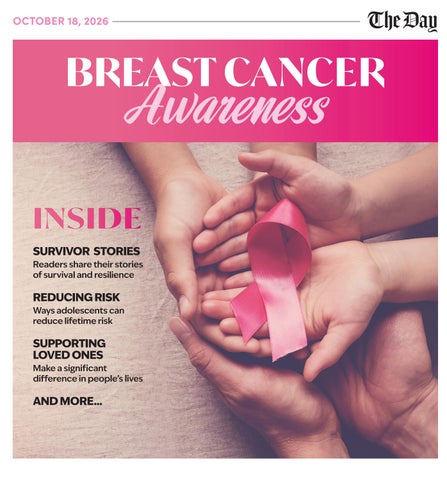
BREAST CANCER
Awareness
INSIDE SURVIVOR STORIES
Readers share their stories of survival and resilience
REDUCING RISK
Ways adolescents can reduce lifetime risk
SUPPORTING LOVED ONES
Make a significant difference in people’s lives
AND MORE...
2
BREAST CANCER awareness
OCTOBER 18, 2026
• CARE FOR THE DOG. If fatigue makes it challenging for the person battling cancer to take the dog on walks, you can step up and handle dog walking or trips to a dog park.
Can adolescents
• PROVIDE CAREGIVERS A BREAK. The primary caregiver will be working overtime to offer support, and you can give that person a much-needed break. Step in to go to doctors’ appointments or watch a young child so the caregiver gets a day or two off.
reduce lifetime
• TAKE ON CHAUFFEUR DUTY. Take on the task of driving the patient to and from checkups or scans. A friendly face can make a big difference in taming anxiety. • PAY BILLS. Household tasks may seem overwhelming, so you can help manage the finances by paying bills or sorting through mail. If medical paperwork has begun to stack up, you also can organize and sort items of importance.
breast cancer risk?
W
ith much of their lives ahead of them, young adults likely are not spending too much time thinking about their vulnerability to disease. However, adopting an “it can’t happen to me” mentality may cause individuals to engage in habits that can increase their risk for certain illnesses, including breast cancer. Breast cancer is the most common cancer in women, affecting around one in eight women, reports the American Cancer Society. The National Breast Cancer Foundation advises that only 5 to 10 percent of breast cancer cases are linked to inherited mutations in genes like BRCA1 and BRCA2. That means the majority of breast cancer cases are a byproduct of something other than genetics. Some may be the result of lifestyle choices. Dense breasts, high hormone exposure, and obesity are each risk factors for breast cancer. Adolescents may not be thinking about preventive health care, but that should not stop them from educating themselves about how they can lower their overall lifetime risk of developing breast cancer.
3
• EXERCISE REGULARLY. Routine exercise and aiming for at least two hours of recreational physical activity or sports each week can help lower stress and reduce future breast density. Moderate to vigorous movement each day is good for overall health. • EAT A BALANCED DIET. Susan G. Komen® advises that focusing on whole foods and a diet rich in vegetables, fruits, fiber, and whole grains is important. Also, one should reduce intake of inflammatory foods, such as sugary drinks, processed snack foods, and red meat. • AVOID ALCOHOL. Skipping alcoholic beverages during adolescence and into early adult years can protect developing breast tissue. The National Cancer Institute says some studies found that women who drank alcohol in their teen years may have an increased risk of breast cancer in adulthood. • SKIP CIGARETTES. Avoiding tobacco use or quitting early can help lower breast cancer risk. Smoking at a young age significantly increases long-term cancer risk, reports the Breast Cancer Research Foundation. While not every case of breast cancer can be avoided, adolescents can employ strategies to protect themselves against breast cancer.
How to support a loved one with breast cancer
S
omeone is diagnosed with breast cancer every day. The World Health Organization says breast cancer is the most commonly diagnosed cancer among women around the world, as well as a leading cause of cancer death. Unfortunately, roughly half of all breast cancers occur in women with no specific identifiable risk factors beyond age and sex, so there may be no warning signs that a cancer diagnosis is coming. Chances are a newly diagnosed breast cancer patient will need some measure of help and support but may not feel comfortable asking for assistance. Getting help also can be overwhelming for certain individuals. But supportive friends or loved ones can step up to the plate and offer support in various ways.
• PROVIDE MEALS. Take turns with other friends and family members to prepare and deliver meals. If you don’t cook, arrange to have takeout delivered. • GO GROCERY SHOPPING. Help stock the refrigerator with plenty of healthy and convenient foods. While the person battling cancer may experience various degrees of hunger, keeping food available helps other members of the household. • STRAIGHTEN UP. Take care of cleaning around the house. You may wash some loads of laundry, vacuum and iron clothes. If budget allows, you can hire a cleaning service to come in once or twice a month for a deep cleaning.
• MAKE HOME MORE COMFORTABLE. Transform any living spaces, whether they are home or temporary apartments or hotels, with creature comforts. This can include high thread count sheets, newly framed family photos, comfortable pillows and blankets, and more. • SIT AND LISTEN. Sometimes the greatest comfort can be sitting with and listening to the person who is fighting cancer. Don’t offer advice or recommendations unless prompted, but listen to any concerns and offer time and support. Support for friends and loved ones after a cancer diagnosis can come in many forms and make a significant difference in people’s lives.
4
BREAST CANCER awareness
OCTOBER 18, 2026
OCTOBER IS
Providing timely breast cancer treatment with the greatest of care. At Smilow Cancer Hospital, we know that time is of the essence when it comes to breast cancer treatment. That’s why we offer next-day appointments for anyone who’s been newly diagnosed with breast cancer. We also offer appointments with a multidisciplinary team of breast cancer experts. Together, they’ll craft a personalized treatment plan inspired by the latest in genetic testing, tumor profiling, and clinical trials through Yale Cancer Center, Connecticut’s only National Cancer Institute-designated Comprehensive Cancer Center. Because at every Smilow Cancer Hospital location, we’re committed to treating you with the greatest of care.
BREAST CANCER AWARENESS MONTH
Rose City Financial proudly supports Breast Cancer Awareness this and every month.
We stand togther, one community, one goal, one hope.
ROSECITYFINANCIAL.COM | 860-383-6044 Anca Bulgaru, MD Medical Oncology
Vera Hendrix, MD Surgical Oncology
James Laird, MD Radiation Oncology
Robert Legare, MD Medical Oncology
Ellie Proussaloglou, MD Surgical Oncology
Specialty Services: Clinical Trials; Breast Care; Genetic Testing; Medical, Surgical, and Radiation Oncology; Hematology; Advanced Diagnostic Imaging; Lung Cancer Screening; Oncology Pharmacy; Lab and Infusion Services; Survivorship Planning; Nutrition Counseling; Palliative Care; Patient and Family Support
CE
B LE
RATI
NG 43 Y
EA
RS
!
family owned female-led award-winning
For appointments and information: 203-200-2328 Smilow Cancer Hospital at Waterford 230 Waterford Parkway South Waterford, CT 06385 SmilowCancerHospital.org
FFM and 374 Kitchen + Cocktails of Cappy Hospitality are proud to donate a portion of sales from every Cappy Hour menu item sold in October to the Terri Brodeur Breast Cancer Foundation ffm cappy hour daily 3-5p | 374 cappy hour m-f 3-5p F L A N D E R S F I S H . C O M
·
3 7 4 K I T C H E N A N D C O C K T A I L S . C O M
5
6
BREAST CANCER awareness
OCTOBER 18, 2026
Breast Cancer
Liz is going to play it down, but she was truly a hero and has been the most amazing support and the best-est friend.” Receiving “snail mail was a biggie.” “My friends and family who took the time to mail me stuff to brighten my day got me through some heavy days. The mail always arrived exactly when needed.”
Survivor Stories
And through it all, her husband, Casey, was the “strongest person … love isn’t a big enough word for what we have. He has been here for me every single day.” Her colleagues at the Southeastern Connecticut Women’s Network have been “rock stars of support.”
Courtesy of the Terri Brodeur Breast Cancer Foundation
Debbie McGrath
I
n 2022, at age 46, Debbie McGrath began her cancer “journey.” Unfathomably, she was diagnosed with three cancers.
Suffering from a bad eye infection, which sent her to her primary care doctor, she was advised to have a colonoscopy — “I was getting to that age.” But with no family history of colon cancer, she declined and opted for a less invasive stool test. It showed the presence of hidden blood or other biomarkers associated with colorectal cancer. A cancerous tumor was discovered and needed to be removed “as soon as possible.”
PHOTO: Debbie and her brother, Larry.
“That was day one of my cancer journey.” She was diagnosed with Stage 3B colon cancer. Five days later, robotic surgery was performed. While she was recovering, a scheduled CT scan revealed she had lung cancer. “I wasn’t even out of the parking lot of Backus Hospital when the doctor called. I don’t remember the stage; all I cared about was ‘knowing’ it metastasized, and, in my heart, I knew I had to prepare. I knew I was going to die.” But it had not metastasized: “It was a completely different cancer.” The tumor was removed at Hartford Hospital because she needed “urgent” cardiac care on standby —
the tumor was “so close to my heart.” Moments before surgery, she was told she had a “fifty-fifty chance, and I was ok with it. My job was to get myself through this. My husband was absolutely terrified but continued to be my strongest, most encouraging supporter.” “The nurse was wearing a necklace that had a 444 on it. That’s an angel number, so I knew I was going to be okay.” And she was, for a time. Then, the breast cancer diagnosis came: “It was a trickster.” “I blew in sideways at the last available date to get my yearly mammogram in 2023. It’s required to keep our insurance. I always had clear mammograms, so I wasn’t worried.”
PHOTO: Debbie and her best friends, Elizabeth and DeeDee.
had 11 cancer-related surgeries. She had “aggressive” chemotherapy after the lung cancer surgery. “Honestly, I know it saved my life, but I am not sure I would survive chemo again.” She’s currently on hormone therapy, “which sucks,” and has three scans a month. “I hate IV’s. I’ve been jabbed so many times, I think my veins are like a spaghetti colander.” Before her lung cancer surgery, in September 2022, Debbie and her oldest and dearest friend, DeeDee, visited Hot Springs, Arkansas. “One of the days we were there, we threw axes for over an hour, and I let out a lot of anger, anguish, fear, and laughter.”
“I had breast cancer. It was my birthday weekend. I’d already had champagne. How could I have breast cancer? I was cancer-free! I was healthy as an ox.” Or so she thought. “I was, well, except for breast cancer.”
Early on in her journey, she decided to “set boundaries.” “One of the most crucial lessons was learning to set healthy boundaries, especially with family. It became clear that protecting my mental and emotional space was vital for my healing process,” she noted. During her many recoveries, she did not want visitors, even though “I loved these people!”
In March 2024, she underwent a double mastectomy. Her reconstruction surgery was four months later. Since August 2022, she’s
“I felt and looked terrible. But when I was ready to be seen or get out of the house, I called those I wanted to see, and that was my life.
After a follow-up mammogram a few weeks later, on Jan. 19, 2024, her doctor called.
Today, she is “doing really well.” “I eat way more vegetables and drink less. I have a protein drink every day, and drink enough water to swim away in. I walk every day, sometimes short walks, but I try to do at least four to five miles a day. I started taking a yoga class and I go every Tuesday. Music has also been very healing.” Debbie loves beach walks, reading, attending shows at the Garde Arts Center, spending Sundays with her husband, and chatting and taking drives with her brother, Larry. She has also learned the importance of compassion, faith and patience. “Life is precious. My Faith is strong.” She encourages others not to impose their beliefs or advice on someone else’s journey and not to make comments that can invalidate the pain someone is experiencing.
7
Her aunt Debbie, who faced breast cancer in 2009 and died eight months later, is another important part of her story. “My mom named me after her, and I couldn’t be more proud of that. Her journey reminds me of the fragility of life and the importance of cherishing every moment.” In her latest update, Debbie wrote: “At 46, I was diagnosed with three separate cancers and went through an incredibly difficult period of surgeries, chemotherapy, recovery and uncertainty. Today, at 50, I’m incredibly grateful to share that my recent scans, bloodwork and doctor’s visits show no evidence of recurrence.” She is now president of the Southeastern Connecticut Women’s Network and a trustee of the Garde Arts Center. She also published her photography book, “Other People’s Chairs,” and continues to support veterans, suicide prevention, the arts, women and girls, and local nonprofits throughout Southeastern Connecticut. “Cancer changed my perspective, but it didn’t stop my life. If anything, it made me more determined to use my time well, show up for people, create something meaningful and leave things a little better than I found them.” “The scans are clear. Life is moving forward. And I’m pretty busy living it.”
“To anyone currently battling cancer, I beg of you: don’t quit. Hold onto your hope, your Faith, and your connections with loved ones. Each day presents a new opportunity to strive for the best version of yourself, no matter the circumstances.” Debbie has been a Terri Brodeur Breast Cancer Foundation donor and volunteer. For the foundation’s 20th anniversary, she decided, “I am going to walk.” She created a donation page that had already raised more than $3,500 and joined the TBBCF Walk team Becky’s Besties. “I am honored to contribute towards making a difference. Research is the key to the cure.” PHOTO: Debbie and her husband, Casey.
8
BREAST CANCER awareness
OCTOBER 18, 2026
Breast Cancer Survivor Stories “Initially, I was scared out of my mind, who wouldn’t be when they hear the word cancer, especially at just 24? I knew this was going to be a very difficult uphill battle, but I knew I would be tough enough to get to the other side.” Hannah does not hold back when describing her treatment: “In one word: horrendous.” Six rounds of chemotherapy. Thirty-four radiation treatments. Fourteen immunotherapy sessions. And five major surgeries. “Chemotherapy was the toughest hill to climb.” The aftereffects were tough on her family to watch, too. She faced nausea and vomiting as well as mental struggles. Some days, she couldn’t get out of bed or didn’t have the energy to face the day.
PHOTO: Hannah enjoying life at one of her favorite places: Disney!
Hannah Slocum
I
n January 2022, just seven months after her mother was diagnosed with earlystage breast cancer, Hannah Slocum also faced a breast cancer diagnosis — an aggressive Stage 3 cancer. She was 24.
“My mind went to a very dark place, and when you already have zero energy, it’s really hard to find the motivation to keep going. But thankfully, with an amazing team of Hartford Healthcare Cancer Center doctors, support of family and friends, and my strong faith, I was able to make it out to the other side.” She loves spending time with family and friends, staying active, unwinding at the beach,
“I don’t even have enough words to describe how fortunate I am for the family I have and the support they showed continuously. They were my rock through this whole process.” Her mother made her laugh when she wanted to hide from the world. “No matter how hard the day was, she found a way to bring a smile to my face when I needed it most. Every time we walked into a doctor’s office or headed in for treatment, we would pause and say to each other, ‘Let’s get this done.’ It became our ritual — and that simple phrase gave me strength in more ways than she will ever know.” Her father provided an escape through sports and golf. “Those outings gave me fresh air, an escape from reality, and a few hours when I felt like my old self again.” Her sister, Sarah, planned little adventures, movie nights and arts-and-crafts projects. One day, Sarah surprised her with a Valentine’s Day balloon, reminding Hannah “how lucky I am to have a big sister who always looks out for me.”
“I do believe that cancer has changed my life for the better. It taught me to appreciate the small moments and showed me that if I can face cancer head-on, very little can intimidate me now. I learned patience — not just with the world, but with myself. I also learned that vulnerability is not a weakness. Expressing emotions isn’t just important — it’s healthy.” Her advice for those in treatment: “To anyone going through this, it’s OK not to be OK all the time. Let your guard down and lean on those around you.” “It feels surreal to say that I’m a survivor. Nothing prepares you for cancer, but it revealed a strength and courage I never knew I had. Life will always throw curveballs — it’s how we face them that shows who we truly are.” In October 2025, shortly before her last surgery, Hannah did the TBBCF Walk for a Cure with Team Cancer Crushers, completing the quarter marathon. “As a first-time participant of the Walk, I must say it was a privilege to be a part of such an incredible fundraiser and look forward to taking part in many years to come.”
In her latest update, Hannah wrote that “How are you doing?” is a loaded question for a cancer patient or survivor. “So how am I doing you may ask; I’m taking things day by day just like any other person who has been impacted by cancer.” “I’m currently in remission for four years and taking all the necessary medical precautions one must go through after a cancer diagnosis. Life after cancer is an adjustment that you can never fully get used to. You survived cancer, now what?” She works full time as an ultrasound technologist and enjoys golfing, sitting poolside and going to the beach. “I prefer to be outside as much as I can since at one time it was physically impossible for me to even step out the front door.” “I never take for granted the time I get to spend with my family and friends as well. As I had stated in the article, my family was,
“I also thank the many radiologists, nurses, technicians, and staff whose support helped me beat cancer.” PHOTO: Hannah with her family in New Hamphire.
and continues to be, my rock and biggest support group.” She feels honored to share her story and raise awareness about breast cancer research. “I not only walk for myself, but also my mom, my aunt, other family members and the many other individuals who continue to fight each and every day. My hope is that the foundation is able to raise even more money in the years to come in order to help find a cure for breast cancer.”
Many others helped, too, bringing homecooked meals, hosting family dinners, delivering sweet treats, holding craft nights and teaching her to knit. Hannah said she is “deeply grateful to the care team that guided me through my cancer journey.” Her oncologist, Dr. Amandeep Aujla, took lifesaving, aggressive measures; Dr. Kathleen Kurowski, her breast surgeon, provided calm, compassionate care; Dr. Alvaro Menendez supported her recovery through immunotherapy and a clinical trial; and Dr. Vinod Pathy and Megan Phillips helped restore both her body and her confidence.
“Given my young age, many turned a blind eye to thinking that my symptoms were cancer-related. After advocating for myself persistently, I finally had some scans done and was diagnosed with an aggressive form of Stage 3 breast cancer.” Hannah, a Quinnipiac University graduate, says her career as an ultrasound technologist may have been a lifesaver, as she pushed to ensure those scans were done. “I owe this career my life.”
taking pottery classes and knitting, including hats for patients at the cancer center.
9
Maina Foundation is a non-profit organization dedicated to providing critical funding for increasing breast cancer awareness and promoting early detection to women in need of financial assistance throughout the US & India. Through strategic collaborations and a grassroots approach, our foundation aims to empower women through health education and innovative medical care for breast cancer. PHOTO: Peter, Sandra, Sarah and Hannah at the Hartford Healthcare Black and Red Gala. Hannah was an honorary guest after taking part in a clinical trial.
mainafoundation.org 860-434-3985 info@mainafoundation.org 8 Peppermint Ridge, Old Lyme, CT 06371
SCAN TO DONATE
10
BREAST CANCER awareness
OCTOBER 18, 2026
Breast Cancer Survivor Stories
She lost her hair. “I had a long, thick curly head of hair, but by the beginning of May, huge chunks of it were falling out. We had a head-shaving party, so I wouldn’t watch it go. It is slowly growing back in now, though.”
her cancer diagnosis was confirmed, but her phone did not ring.
She continued to take medication for treatment side effects and began seeing a therapist who specializes in cancer patients.
A MyChart notification popped up.
PHOTO: A family photoshoot before Amber’s treatment began. Photo by Erika Bassett Photography
Amber Steady
A
mber Steady had no idea that while nursing her newborn, she had breast cancer. And when she did find out, the cancer diagnosis arrived not through a compassionate phone call, but through MyChart. She was 31. Amber got pregnant in 2022, had a baby boy in 2023 and breastfed him until January 2024. Prone to having cysts in her dense breasts, she had previously had benign cysts removed or monitored. When she stopped breastfeeding, she “began to notice the hard lump.” “I thought it could have been a clogged milk duct, but I had no other symptoms. I also couldn’t remember it being that large, as it had been so long, and my body had been through so much.” Her primary care doctor made an ultrasound referral. Four tumors and calcifications were found, followed by a mammogram and biopsies. Three days later,
“I found out via MyChart on March 22, 2024, at 7:30 a.m. I was overwhelmed, terrified, and angry. I spent all of that day off and on crying. I had lost my mom to cancer four years before, and lost a good amount of family due to cancer and other medical issues. Our family has been through the ringer enough as it is, but this on top of it all? I couldn’t stop crying. I kept seeing my son, who was eight months old at the time, and every time that I imagined how I wouldn’t be around for him growing up, tears erupted.”
Then came the silver lining. “Then, I found out the pathology from my double mastectomy showed that the cancer was completely gone, and did not go into the four lymph nodes they tested. So we are saying I am cancer free!” Amber praised her care team, including Dr. Anka Bulgaru, Dr. Moran, Dr. Christy Stannat and Dr. Vinod Pathy, but her support system carried her through.
“I realized that during this insane time of my life, I have more like a city than a village.” Her husband was her “rock.” He held her when she cried, picked up takeout and snacks, went to appointments, took notes and helped her remember questions. Her parents-in-law, Susie and Brian, babysat Teddy, cooked, arranged meal trains, helped with yard work, bought gifts, scheduled dinners and vacations, and went to doctor appointments. Her sister-in-law, Tracey, organized post-surgery help. Friends and family took turns being with her during chemotherapy. Others sent gift bags, hats, hoodies, snacks, notebooks, check-in texts and phone calls. Amber also found support through the Young Survivors Coalition and a therapist specializing in cancer patients. Her advice to family and friends: “My advice for anyone who wants to show their support to any person going through something like
Amber’s husband, Joe, raced home from his job at Waterford schools. Later that day, she was at Smilow Cancer Center in Waterford to meet her oncologist and make a plan. Her mother had died there in 2020 after battling vaginal cancer, making the visit especially difficult.
this is to actively show up. Say, ‘I want to help you by picking up your groceries,’ or ask, ‘What day would be best for me to visit and help with anything around your house?’ That takes a lot of pressure off the fighter/patient.” “A simple text, private message or phone call to just check in does absolute wonders for patients/fighters to feel supported. Those texts and calls of care and support mattered. A lot.” Amber sees herself as a fighter and survivor. “I wanted to live. I want to watch my son grow up and be around to help any other friends and family, and people in need.” For Amber, cancer was an “absolutely traumatic experience, even when you come out of it with amazing pathology.” “I fought that monster and survived.” Since April 2025, she has been getting back to what is “a sort of normal life.” “Obviously,
Amber was diagnosed with Stage 2 breast cancer in her left breast, HER2-positive and ER/PR-negative. “My family was very upset. They rallied around me, though, asking what they could do to help. And I relied very heavily on them. We cried, we laughed a bit because I make awful jokes when things are bad.” Amber would have a double mastectomy, but first came port placement and six rounds of chemotherapy. She received Phesgo injections every three weeks from April 2024 until March 2025 and Zoladex injections as well. On Sept. 16, 2024, she had a double mastectomy with reconstruction, followed by months of expanders. Radiation — 25 rounds targeted at the left breast — followed from December 2024 to January 2025.
PHOTO: Amber’s last day of chemotherapy in 2024. PHOTO: Amber’s warrior bracelet and tattoo in honor of her mother, who passed away from cancer.
11
the fear of recurrence happens with every checkup. Every little pain. Every blood draw and waiting for results is full of anxiety. But, luckily I’ve been disease free.” She had the expanders removed and replaced with implants in August 2025. She has been watching her son grow into a 3-year-old, hiked Jiminy Peak in Hancock, Massachusetts, returned to work now that her chemo fog is gone, played Dungeons & Dragons and worked on her fantasy book. “I said it before, but I’ll say it again, without my support system I wouldn’t have been able to focus on fighting the cancer and healing.” “If you know someone going through this awful fight, be their adventuring party. Bring them food, do their laundry, sit with them at appointments, message or call them, show them you love them and care. Don’t wait for them to ask you for help.”
12
BREAST CANCER awareness
OCTOBER 18, 2026
Breast Cancer Survivor Stories
“The hardest part of the trip was traveling down to Bryce Canyon. I was so focused on getting down to the bottom, that going back up took forever, but I felt like I conquered it. I wasn’t going to let my recovery get in the way.”
do I do?’ I knew no one who had breast cancer. I didn’t even know where to begin. So we asked her, ‘What would you do if this was you or your child?’” Patricia and Matt are career project managers, so they made a plan. By July 2, she had a lumpectomy. Working from home because of COVID, she kept the diagnosis from most colleagues and her daughter, who was away at summer camp.
They began an annual tradition on July 2, with a cookout and her dad getting a cake with raspberry filling to celebrate another year cancer-free. Patricia returned to work and shared her journey with colleagues. She received a General Counsel award in December 2022 for a project with three other colleagues. “It was very surreal to be in NYC with my colleagues for this award, knowing how far I had come.”
“It was the hardest thing I had ever done — telling her over FaceTime. I told her, ‘I got this and will have a full life ahead of me. You do your job, and I’ll do mine to conquer this.’” A DCIS test resulted in a score of 35, which “meant I needed to have chemotherapy.” Because both children were away at college, Patricia wanted to keep working and busy.
Some days, she still feels the effects of radiation and chemotherapy, but reminds herself, “That I beat it, and I am getting healthier every day.”
Her last round of chemotherapy was Oct. 17, 2021. Radiation followed, with 19 rounds beginning in early December. The family’s after-Thanksgiving trip to St. Lucia had already been planned. After speaking with her doctor, Patricia delayed radiation until after the trip. PHOTO: Patricia walking for her first year, with her husband, Matt.
Patricia Santacroce
I
n June 2021, still in the grips of the pandemic that had disordered our globe, Patricia Santacroce’s world was “turned upside down.” The breast cancer diagnosis was a “nightmare,” but one she eventually woke from as a survivor. The lifelong Southeastern Connecticut native and her husband, Matt, are parents to adult children Matthew and Jackie. A decades-long Pfizer employee, Patricia received a call to return for an ultrasound after a mammogram. “I remember getting a call to come back for an ultrasound and didn’t really pay attention to what the scheduler was saying, as I had been called back before.”
At the appointment, she realized something was different.
“We wanted to start the radiation after the trip. I wanted to go and have a break from it all.” “It was the break we all needed. The sunshine and warm water soothed the soul.”
“I got there for the ultrasound, and they said, ‘OK. We are looking on the right side.’ And I said, ‘Are you sure? I’ve always been called back for the left.’”
Family and friends surrounded her with support. “Everyone pitched in when I couldn’t manage to do it myself.” But treatment could still feel lonely.
A biopsy followed. She was diagnosed with ductal carcinoma in situ grade 3 mixed with invasive carcinoma Stage 1A. She was HER2-negative but estrogen and progesterone positive.
Patricia called her husband. “I remember thinking this can’t be happening. Then, ‘What
Radiation began when she returned to Connecticut and continued until the end of the first week of 2022. Some medication adjustments followed, but by August 2022 things were getting “a little better.” “Today, my outlook is very good.”
“At that point, I had a huge pit in my stomach. After the radiologist was done, a doctor came in, and I knew it wasn’t good news.”
“She gave me the news over the phone! My world was turned upside down at that point.”
PHOTO: The Santacroce Family: Jackie, Patricia, Matt and Matthew with their pups, Montana and Dakota.
“I felt like I lost myself during the treatment, especially when I had to shave my head. It wasn’t that I was vain, but that it was part of me that was no longer there.”
PHOTO: A group of family and friends supporting Patricia at TBBCF’s annual “Walk for a Cure.”
Patricia and Matt decided that once they’d survived breast cancer, they’d have “no regrets in our life going forward.” In May 2022, the family took an 11-day national parks trip, visiting seven parks.
Shortly after her diagnosis, Patricia learned about the TBBCF Walk for a Cure and formed a team, Mama’s Love, for the Oct. 2, 2021, walk. Five days after chemotherapy, she completed the 5K. In 2022, she walked 6.5 miles with her mother, husband, best friend and their families. In 2023, Mama’s Love had grown and they all walked. “It’s my mission to raise as much money as possible for the Foundation as it all goes to research.”
13
In her latest update, Patricia wrote: “I am 5 years cancer free! February will be the end of all my treatment and will stop taking the Exemestane. To say I am a little nervous about stopping it is an understatement but I’m excited to see if the side effects will go away.” “One thing I think people don’t talk about often enough is the long-term effects of chemo and radiation. Just because you’re cancer free doesn’t mean you are still living with day-to-day challenges that you don’t always want to talk about.” She has found some relief in reformer Pilates and tries to go about four times a week. Patricia and Matt also moved from Connecticut to Bluffton, South Carolina. Matt retired from Pfizer, and Patricia planned to leave at the end of October. “We bought our retirement dream home and plan to live every day to the fullest. I am looking forward to golfing, learning pottery and living for today instead of tomorrow!”
14
BREAST CANCER awareness
OCTOBER 18, 2026
Amy reminds herself that when she was in treatment and life was “not fun,” she “needed to find the joy and fun in the moments.”
Breast Cancer Survivor Stories
“You must live in the moments and truly appreciate what you have. Not to stress about the small stuff because that’s just it, it’s small stuff. Remembering what big issues are and trying to let go of meaningless things. Also, you never know what someone is going through.”
“I thought to myself is this also what happens or is there something wrong?” On Oct. 20, she had two biopsies on her right breast. The next four days were “filled with lots of anxiety.” She was in the middle of throwing a Halloween party for her son’s 10th birthday, which helped keep her distracted.
Her sons, Nolan, Dillon and Cam, were 10, 7 and 5 when she was diagnosed. They gave her “such happiness, laughter, strength and pure love” and were a “beautiful distraction from the reality of what is all-consuming in your life at the time.”
Amy was told she was ER-positive, PR-positive and, “Unfortunately, HER2-positive.”
PHOTO: Amy Blewitt.
Amy Blewitt
N
ot wanting Amy Blewitt to check testing results before they had a chance to speak with her first, the radiologist phoned her at work at Middlesex Health Cancer Center. It was Oct. 24, 2016, when she was told that both biopsies returned positive; one DCIS and one invasive. “I broke down in tears and was completely shaken up. I left work immediately to try to process what I had just heard. My husband also left work and met me at home that day. I needed him to call back the doctor to make sure I had the right information.” Amy was 40 and the married mother of three boys when she and her OB-GYN talked about when to begin having mammograms. Though she had a “low-risk family history of breast cancer,” she decided to have a mammogram soon after that appointment. “I’m so lucky that I did.” She was told that given her breast density, she should not be “shocked if they called me back for further testing.” During the follow-up ultrasound, the technician “left the room and returned with a radiologist.”
“Since my breast size was small, and I had two different areas of cancer, a mastectomy was recommended for my right breast. I chose to have both breasts removed even though my left breast was healthy. I look back and wonder if I made the right decision … and I know for me, it was the right decision.”
Her husband, Rob, a nurse, was her “Ice Man.” “He came to every chemo session and was changing out those caps like clockwork. He literally had to drive to Branford every Friday morning on the day of my chemo to pick up my dry ice for the day’s chemo session.”
She had surgery on Nov. 16, 2016, less than a month after her diagnosis. “A bilateral mastectomy was not the best surgery to have to go through. Yes, you can have reconstruction, but it’s still not you. It takes time to learn to love yourself.” Her treatment included Taxol chemotherapy for 12 weeks beginning after Christmas, followed by immunotherapy every three weeks. In early January 2017, she developed a fever on her son’s 6th birthday. After initially being sent home from the emergency department, she was called back when her blood cultures came back positive. “A bump in the road, for sure. I sent my husband (Rob) to Pizza Works to have the party go on as planned because how do you tell your son his party is canceled, and Mommy is going into the hospital? You don’t!” Her parents brought her to the hospital for a two-day stay. Chemo was put on hold, and she received IV antibiotics at home. Her chemo was completed in April 2017, and her last Herceptin immunotherapy was in January 2018. She’ll be on Tamoxifen until 2027
PHOTO: Amy with her husband Rob and children Cameron, Dillon and Nolan (left to right).
and managed our way through a very difficult time.” Her parents, sister, in-laws, friends, work family and community supported her, too. “I guess I found out how much I was loved at a time when I needed to know it.” In 2017, not long after the end of her initial treatment, Amy, her sister and four friends, Team Bust a Move, walked the full TBBCF marathon. “To cross that finish line after going through everything was emotional and so rewarding. It also gave me purpose. Lots of training, lots of laughter, and lots of connection. Most importantly, we raised a lot of money for an amazing organization that gives 100 percent of its funds to research.” She continued to participate, walking the full marathon in 2019, volunteering with her son Dillon during the 2022 opening ceremonies
“This October marks 10 years from my diagnosis. My three little boys are all now in high school and beyond, making me proud of who they are in the classroom, on the athletic fields, and of who they have become.” She continues to work as an oncology dietitian at Middlesex Health Cancer Center and in 2024 joined Smilow Cancer Hospital. “Next year I am looking forward to ‘graduating’ from my oncology appointments and stopping the Tamoxifen after 10 years!” She also celebrated her 50th birthday. “Every day is a blessing, and I hope that sharing my story can give others some hope and inspiration. Let’s continue to raise money for this amazing organization that truly holds a special place in my heart.”
BREAST CANCER
When diagnosed, Amy “really did not know many people who had breast cancer,” so she sought out women who had been through it. “Sometimes people I would talk to may not have even had the same type of cancer but could relate 100 percent.”
Awareness Month 2026
As an oncology dietitian, she also found a deeper connection with her patients. “I was always compassionate but going through what I went through has made me so much more empathetic towards my patients.” “I can relate to those feelings of the unknown, test anxiety, waiting for a plan to be in place, and being scared out of your mind. It’s very rewarding to be able to help my patients and make a difference in their care.”
and walking the full marathon with Team Puma in 2023 in support of a friend who had been diagnosed.
“I was, and am, so thankful for him. I couldn’t have navigated through what I was going through without him. We laughed, cried,
and follows up with her oncologist every six months and her plastic surgeon annually.
PHOTO: Amy with her team, “Team Bust a Move,” at one of TBBCF’s annual walks.
15
16
BREAST CANCER awareness
OCTOBER 18, 2026
Breast Cancer Survivor Stories Yolanda Lowe
G
rieving the sudden death of her husband, Yolanda Lowe was never far from her beloved dog Bella, who had survived the car accident that took his life. “I believe that God and my husband ensured that Bella survived to be my guardian angel. When she returned home, she never left my side.” Yolanda spent months grieving, with Bella always close. Then, one day in September, Bella accidentally landed on Yolanda’s right breast, causing severe pain and bruising. “She accidentally landed on my right breast, causing me severe pain that lasted for a few days and turned black and blue. I immediately contacted my doctor.” Bella had discovered the lump on Yolanda’s right breast. Immediate surgery was urged, but Yolanda asked if it could wait two days. “I was scheduled to walk in the marathon the next day. To my surprise, she agreed to schedule the surgery for Monday.” Yolanda has walked the Terri Brodeur Breast Cancer Foundation Annual Walk for a Cure since its inception in 2006. When she was diagnosed, she postponed her surgery so
she could walk. At the closing ceremony, she initially did not want to accept the flower given to breast cancer survivors, but her TBBCF friends encouraged her to step forward. Her “dear friend” Sandy Maniscalco handed her a flower, and everyone’s tears flowed. At that moment, Yolanda said she felt surrounded by “family” with so much love and support. The next day, she underwent a lumpectomy. It was then discovered she was “borderline stage 3.” Following surgery, she underwent daily radiation for 12 weeks and was on medication for a few years. “Last year, my oncologist dismissed me for good health and advised me to follow up with my doctor. I continue to go for mammograms every six months.” Yolanda said she was blessed with a wonderful marriage and her dog, Bella, who discovered her breast cancer.
New Haven Middlesex Association of Realtors and has served on civic and community boards and committees, including the Essex Housing Authority and Habitat for Humanity. She has also supported shoreline food pantries and participates in the TBBCF marathon every year. Twenty-one years after the first TBBCF Walk for a Cure, she is still walking. “I have been there every year since the beginning — first walking to support others, and then, unexpectedly, becoming a breast cancer survivor myself.” Her journey has been marked by “extraordinary love, heartbreaking loss, faith, friendship, and gratitude.” Through it all, Bella remained by her side for nearly a decade. Bella survived the 2015 automobile accident that took Yolanda’s husband, Bill. In the months that followed, when her grief felt overwhelming, Bella rarely left her side. Then, just weeks after Bill’s death, she accidentally jumped onto Yolanda’s chest, causing severe pain and bruising. That incident led her to her doctor — and ultimately to the discovery that she had breast cancer.
“This has taught me that we can plan our retirement and our future, but it’s all in God’s hands, and we have to pivot towards what God wants us to do. I must keep my faith and follow God’s plan for me.”
“I have always believed Bella survived that terrible accident for a reason.”
A celebrated and highly successful Realtor with William Pitt Sotheby’s Realty in Essex, Yolanda Tine Lowe is a past president of the
“Our morning sunrise walks became a treasured ritual, filled with companionship,
For almost 10 more years, Bella and Yolanda shared their lives, especially their treasured morning walks.
LEFT PHOTO: Yolanda Lowe. RIGHT PHOTO: Yolanda and her husband, Bill.
reflection, and the quiet understanding that develops after years of walking through life together.” In September 2025, Yolanda had to say goodbye to Bella. Just weeks later, she participated in the 20th annual TBBCF Walk for a Cure for the first time without Bella. As she prepares to walk for the 21st time, it will be her second walk without the little companion who had been beside her through nearly a decade of healing, morning sunrises and new beginnings. “The morning walks are different now. But I still walk.” “Bella may no longer be beside me to greet the sunrise, but the love, lessons, and extraordinary gift she left behind remain part of every step I take.” “Every year, I walk for the survivors, for those still fighting, for the people we have lost, and for the families and friends who walk beside them. I know what that support feels like because this TBBCF family surrounded me when I needed them most.” She still remembers the year she was diagnosed. Her surgery was scheduled, but she asked her doctor if it could wait until after the walk. At the closing ceremony, her friends encouraged her to accept the flower given to breast cancer survivors, and Sandy Maniscalco handed it to her. “There were tears. There was also something I desperately needed at that moment: the realization that I wasn’t walking alone.” “Life has asked me to say goodbye to both Bill and Bella, two of the great loves of my life. Yet it has also given me years I might not have had — and I consider each one a gift.” “I don’t know what God’s plan is for me. What I do know is that I’m still here, I’m still grateful, and I’m still going strong. So as long as I am able, I will keep walking.” “Bella may no longer be waiting for our next sunrise walk. But I will carry her with me. And in the 21st year, I will walk again.”
17
Mandy Crispim Mandy Crispim didn’t know much about breast cancer before her mother died on Oct. 1, 2010. “My brother had her diary. She knew. She wasn’t diagnosed, she just went with it. She just gave up and let cancer take over. She had known since 2005. Five years. She was a CNA for 25 years, and she saw what people went through. Maybe that was a trigger? She helped people, she took care of people for so many years. Maybe what she saw was part of that fear. She was only 58 when she died. I didn’t know my mom’s whole history. She was adopted. I didn’t know that side of the family or history. So, it was always, when is my time?” Twelve years later, Crispim would be diagnosed with breast cancer, and her learned watchfulness would help catch it. A Norwich native who has lived in Groton for many years, Crispim is the mother of one daughter, wife to Alexandre and grandmother of three. She has a long career in banking and is a Cash Management Officer at Chelsea Groton Bank. She is also a Zumba enthusiast and serves on the boards of St. Vincent de Paul and Madonna Place. In October 2022, Crispim noticed something wasn’t right during a self-exam. A doctor initially believed she had a benign cyst and ordered an ultrasound, but no biopsy. Crispim then saw a new doctor, who ordered a mammogram and biopsies. The tests revealed Stage 1 non-invasive ductal carcinoma in situ, or DCIS, in her right breast. Testing also found more than three spots on both sides, although those were benign. Genetic testing showed she was at risk for breast cancer.
“The shock of receiving that MyChart message … they say don’t Google but of course, I’m Googling away. But I knew before I spoke to the doctor that I had cancer. That was a shock, but in a weird way, because of my mom, I’d always wondered, when’s my time?” After further testing, Crispim told her doctor she wanted a double mastectomy rather than continue with additional biopsies. She underwent the procedure Nov. 30, 2022, about a month after her diagnosis. After a two-month recovery, she underwent five more surgeries over the next 16 months, with a sixth planned for March 2024. She did not need chemotherapy or radiation because the cancer was caught early. “After the double mastectomy, it turned out that I had breast cancer on both sides that wasn’t caught on the biopsy; it was caught on the pathology report. If I didn’t have the double mastectomy, I would have had to do this all over again. I couldn’t do that for me, for my family. It’s the best choice I made.” Throughout treatment and surgeries, Crispim relied heavily on her family, particularly her husband, whom she called her “rock.” Her daughter also encouraged her to be more open about her emotions and accept support. Although Crispim was initially quiet about her diagnosis at work, colleagues at Chelsea Groton Bank rallied around her. She said the bank, where she has worked for 17 years, supported her throughout her medical leaves. Crispim connected with Terri Brodeur Breast Cancer Foundation member Gabrielle Tudisca through Zumba and walked the foundation’s Breast Cancer Walk with her family in October 2023.
18
BREAST CANCER awareness
OCTOBER 18, 2026
Breast cancer
Breast Cancer Survivor Stories Mandy Crispim continued
S
ince 2024, Crispim has undergone 10 surgeries and continued to have regular tests and scans. Earlier this year, doctors discovered a growing mass in her large intestine, leading to surgery to remove part of the intestine. The mass was not cancerous. Because of the side effects and risks associated with tamoxifen, Crispim had her ovaries removed in July 2025, which immediately put her into surgical menopause. She has also undergone reconstructive surgery. Through the ECHO Cancer Foundation, Crispim learned about Healing Therapies Through Sharing and began attending its inperson group sessions. There, she met women who understood what she was experiencing and found that she was not alone. One woman she met was facing breast cancer again after more than 30 years. As the woman prepared for surgery, Crispim gave her a robe that had helped during her own recovery and a candle she had made featuring a pink breast cancer ribbon and the word “HOPE.”
TOP PHOTO: Mandy Crispim. MIDDLE PHOTO: Mandy with her daughter, Alexis. BOTTOM PHOTO: Mandy and her husband Alexandre and grandchildren Arya, Xylee and Alex (left to right).
The woman’s surgery went well, and the two have stayed in touch. Crispim has also returned to exercising regularly. Before her diagnosis, she attended Zumba classes five or six days a week. Treatment and medication made that difficult, but she now uses a stationary bike and free weights at home and hopes to return to Zumba as her schedule allows. She is also looking forward to participating in this year’s TBBCF Breast Cancer Walk alongside the Eastern Connecticut Association of Realtors, which is holding a fundraiser in October. As she looks ahead to her 48th birthday in November, Crispim remains grateful for her family, career and the support she has received. Cancer remains part of her life, but it has changed her perspective and deepened her appreciation for family, friendship and showing up for others. “Cancer has taught me not to take anything for granted and to truly live for today.”
All original stories were written by Ellyn Santiago for the TBBCF newsletter and can be found at tbbcf.org.
19
SCREENING
FAQ
P
reventive health care emphasizes healthy lifestyle choices like eating a nutritious, well-balanced diet and avoiding a sedentary lifestyle. Screening for various diseases, including cancer, is another important component of preventive health care that encourages individuals to be proactive in relation to their overall health. Women may hear about breast cancer screening as early as adolescence. Despite that, it’s not uncommon for women of all ages to have questions about breast cancer screening.
When should breast cancer screening begin? This is not a one-size-fits-all answer. The American Cancer Society advises women at average breast cancer risk to begin screening between the ages of 40 and 44. Women are considered at average risk if they have no personal history or strong family history of breast cancer. Women also are considered at average risk if they do not have gene mutations linked to breast cancer or a history of chest radiation therapy prior to age 30. While the ACS notes women at average risk have the option to begin screening prior to age 44, the organization advises women to schedule annual mammograms beginning at age 45 and to continue getting them through age 54. If screenings do not show anything by age 54, women can then choose to get a mammogram every other year beginning at age 55.
What if I am at elevated risk for breast cancer? Women who do not meet the criteria for average risk due to personal or family history will need to begin screening much earlier. The ACS recommends women at high risk for breast cancer get a breast MRI and a mammogram every year beginning at age 30. But the ACS also advises women to make this decision after careful discussion with their health care team. It’s also notable that the ACS indicates an MRI should
never be substituted for a mammogram, as it’s possible an MRI will miss cancers a mammogram will find.
What is a 3D mammogram? 3D mammography is a relatively new screening option that has piqued many women’s curiosity in recent years. Brown University Health reports that a 3D mammogram rotates in an arc and takes X-rays of the breast at different angles, ultimately producing a more detailed view of the breast for radiologists to examine. By contrast, a 2D mammogram takes single X-rays at two different angles. But the ACS notes many breast imaging centers do not have 3D mammography. If given the choice between a 2D mammogram or none at all, women should always get the 2D mammogram. If 3D imaging is available, then that might be the way to go, as Brown University Health notes 3D mammography tends to detect more cancers and produce fewer false positives.
Are mammograms foolproof? While mammograms are highly effective at detecting breast cancer, they are not perfect. The O’Neal Cancer Center notes that dense breast tissue can make breast cancer detection more difficult. Because no screening is perfect, it’s imperative that women adhere to screening guidelines even if results are consistently negative and they do not feel anything unusual during self-examinations. Screening for cancer is an integral component of preventive health care. Women are urged to make breast cancer screening part of their preventive health care routine.
We pride ourselves on making world class dental care convenient & affordable. Our experienced team of award winning dentist and board certified specialists are devoted to restoring and enhancing the natural beauty of your smile using a full spectrum of general, cosmetic, surgical and sedation dentistry resulting in beautiful, long lasting smiles! Our entire team is dedicated to providing you with the personalized, gentle care that you deserve.
Great Smiles Start Here!
Dr. Jason R. Campbell
Dr. Melissa J. Nogacek
Dr. Kenneth P. Nogacek
Dr. Ross D. Sanfilippo
VOTED BEST DENTAL PRACTICE OVER 6 YEARS IN A ROW BY THE DAY’S READERS! 177 Boston Post Road, Waterford, CT • 860-447-2235
www.waterforddentalhealth.com