SWT/KWS TSAVO MOBILE VETERINARY UNIT
DECEMBER 2025

December Report by Dr. Campaign Limo and Dr. Lawi Kimutai

The conservation area experienced significant precipitation at the beginning and the middle of the month. A few water pans are full and the vegetation in most areas is lush. Both grazers and browsers have enough food and are in good body condition.
Acknowledgement
TMVU would like to appreciate everyone that aided in reporting cases that required veterinary intervention. Special thanks to the Sheldrick wildlife trust for their unwavering support to the unit and KWS for technical support and advice to the unit.
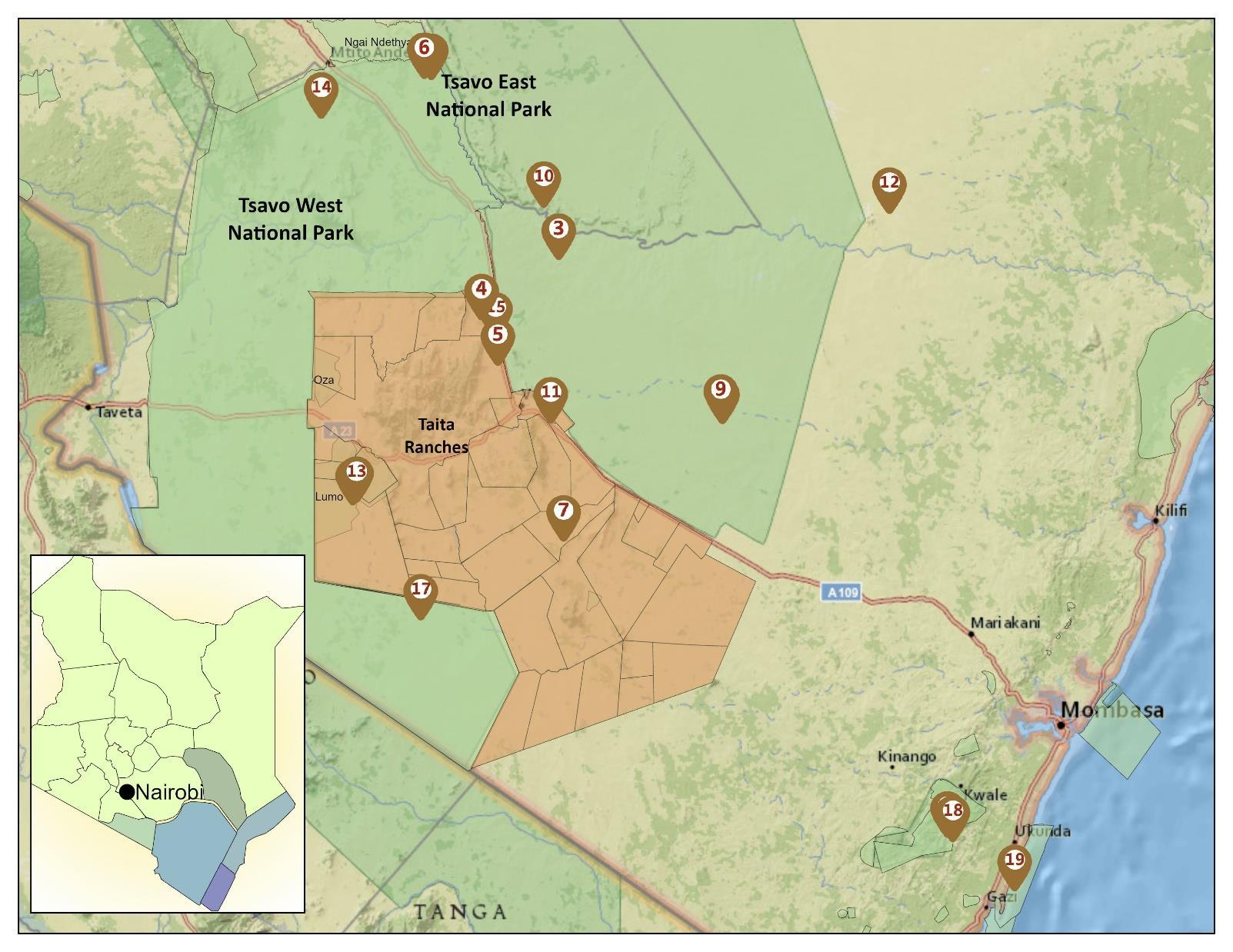
SWT/KWS Tsavo Mobile Vet Unit Treatment Locations
Case Details
Date
Species Area Found
Reason for Intervention Outcome
1-Dec-25 Lion Taita Ranches Natural Causes Several deep septic bite and fight wounds on the right forelimb Prognosis Poor
4-Dec-25 Elephant Kaluku Natural Causes Reported to have difficulties in swallowing feed and water Prognosis Poor
6-Dec-25 Lion Tsavo East NP Relocation
9-Dec-25 Zebra Tsavo East NP HWC
9-Dec-25 Zebra Tsavo East NP Rescue
This lioness entered the rhino sanctuary in posing a threat to the lone rhino Task Successful
This injured zebra entered a building near Taita Taveta University HWC Death
The zebra was extremely weak and was recumbent Taken to Orphanage
10-Dec-25 Elephant Kaluku Postmortem Previously reported to have difficulties swallowing food and water Died
10-Dec-25 Elephant Taita Ranches Postmortem
13-Dec-25 Elephant Tsavo East NP Natural Causes
The elephant died due to complications associated with colorectal impaction Died
The right tusk had entered through the right nostril and got stuck Successfully Treated
13-Dec-25 Antelope Tsavo East NP Natural Causes Examination revealed complete open fractures of both front limbs Died
13-Dec-25 Lion Tsavo East NP Natural Causes
15-Dec-25 Lion Tsavo East NP Collaring
This lion was spotted weak but with no visible physical injuries while walking Prognosis Poor
This lioness had an altercation with a buffalo damaging its GPS collar Successfully Treated
16-Dec-25 Giraffe Galana Ranch Snared It had a winch wire snare on his neck which had inflicted a cut wound Successfully Treated
17-Dec-25 Elephant Taita Ranches Spear Examination revealed several septic spear wounds on various parts of his body Poaching Death
18-Dec-25 Wild Dog Tsavo West NP Collared He was fitted with a GPS-Ventrix collar Task Successful
18-Dec-25 Zebra Tsavo East NP Natural Causes Examination revealed a complete fracture of the proximal 3rd metacarpal Died
23-Dec-25 Zebra Shimba Hills Snared
This snared zebra was dragging a snare with a piece of log attached Successfully Treated
24-Dec-25 Elephant Taita Ranches Arrow Examination revealed a septic arrow wound on her right elbow Successfully Treated
25-Dec-25 Zebra Shimba Hills Snared
27-Dec-25 Zebra Ukunda HWC
Examination revealed a thick cable snare tightly bound on the distal left forelimb Successfully Treated
3 zebras broke through the fence of the park and were found in the community Task Successful
.
Lion
Natural Causes
Salt Lick, Taita Ranches
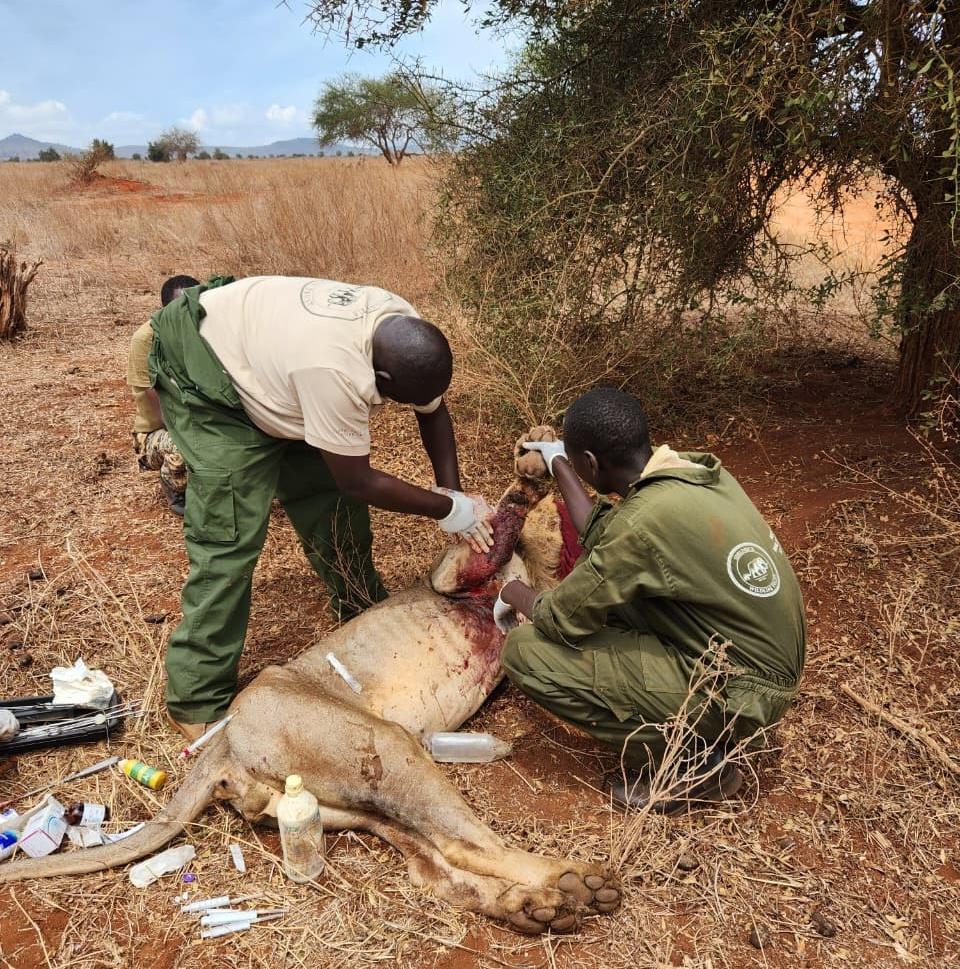
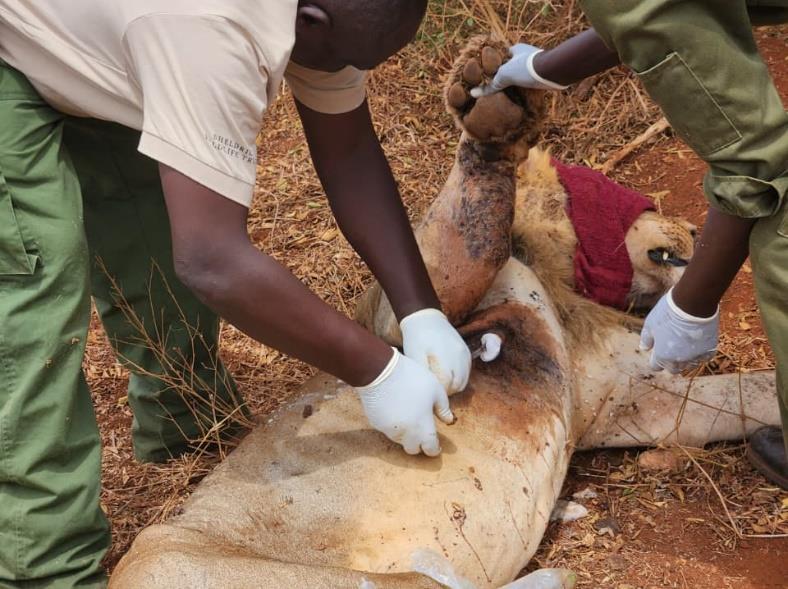
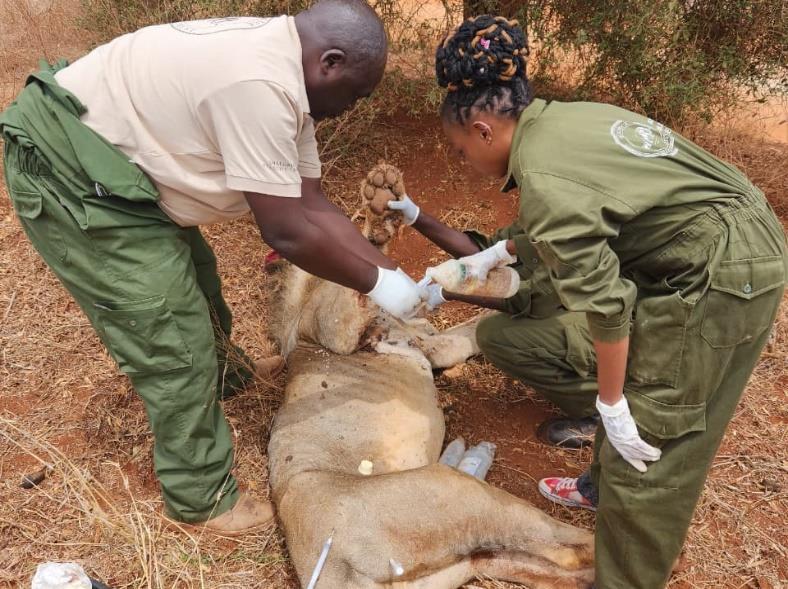
This lion was spotted by the Taita salt lick rangers wounded and lying down most of the time.
Immobilisation, examination and treatment
The lion was successfully immobilized using a combination of 4.8mg Medetomidine and 200mg Ketamine Darting was done from the vehicle, and it took 10 minutes for the lion to be fully anaesthetized.
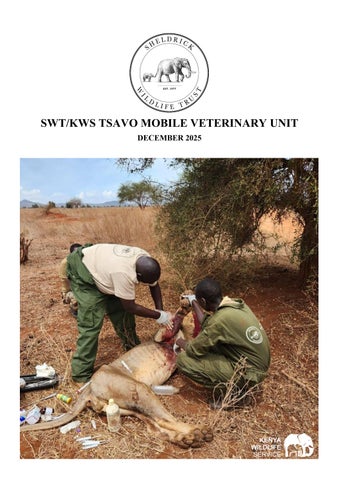
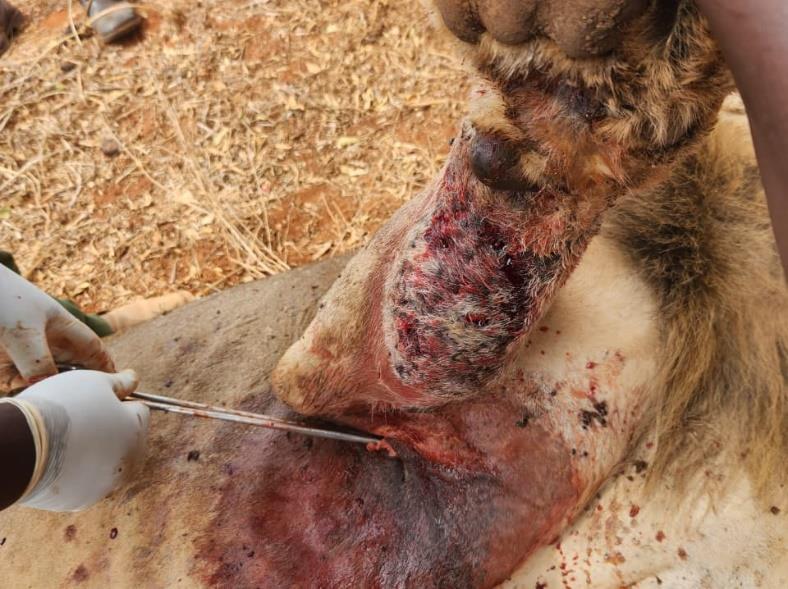
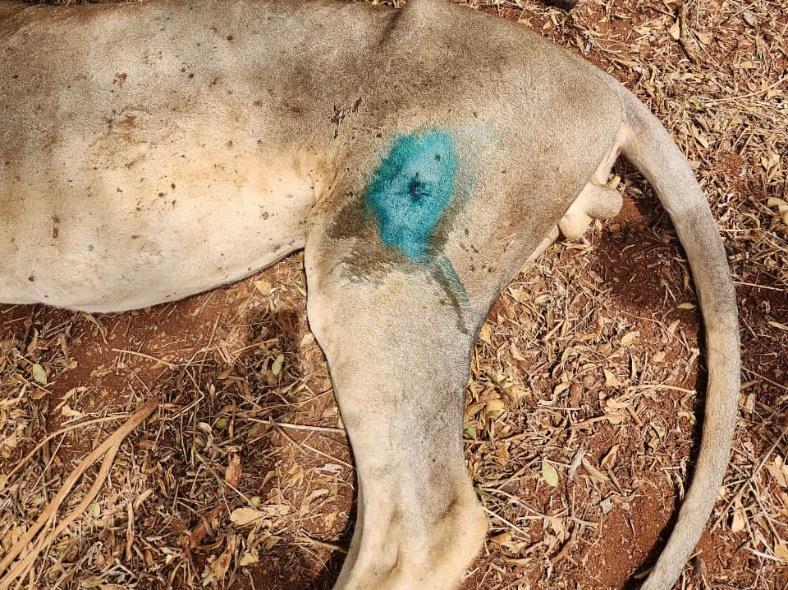
Examination revealed several deep septic bite and fight wounds on the medial radius and ulna area of the right forelimb, the right axillary area and lateral aspect of the left thigh. The lion was also dehydrated and weak. The wounds were thoroughly cleaned with water, Hydrogen peroxide then infused with Iodine and an antibiotic powder applied to the wounds. The wounds were then sprayed with a topical antibiotic.
Additionally, he was given Amoxicillin antibiotics and Meloxicam parenterally.
Prognosis
He was reversed from anaesthesia using 24mg Atipamezole given intramuscularly. He rose a few minutes later. Prognosis is guarded.
Elephant
Natural Causes
Kaluku Stockade
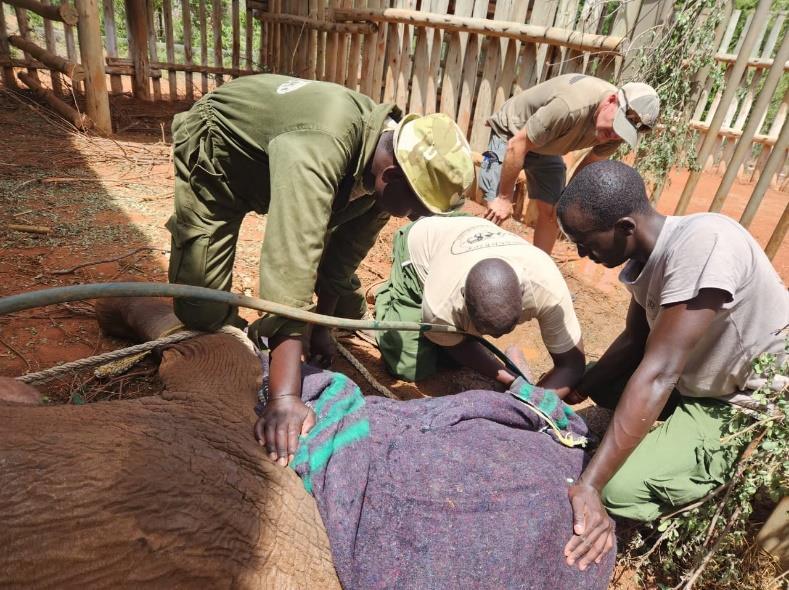
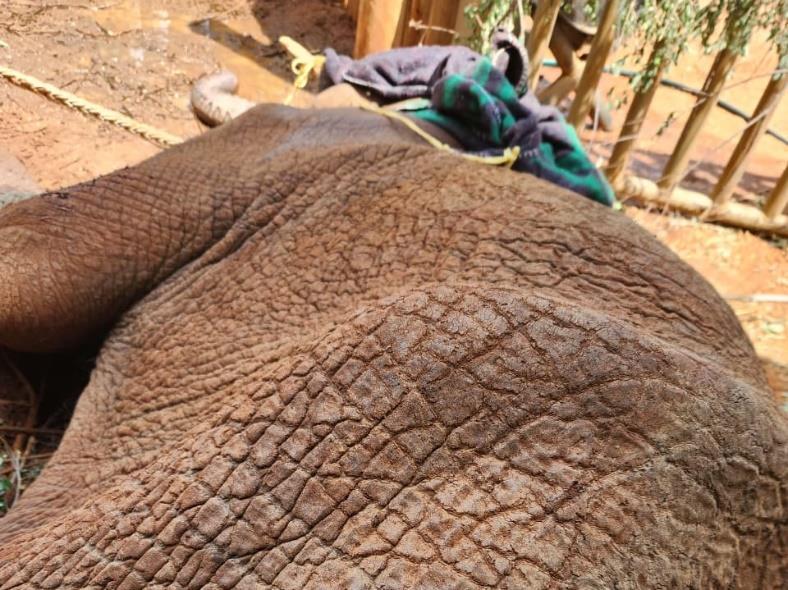
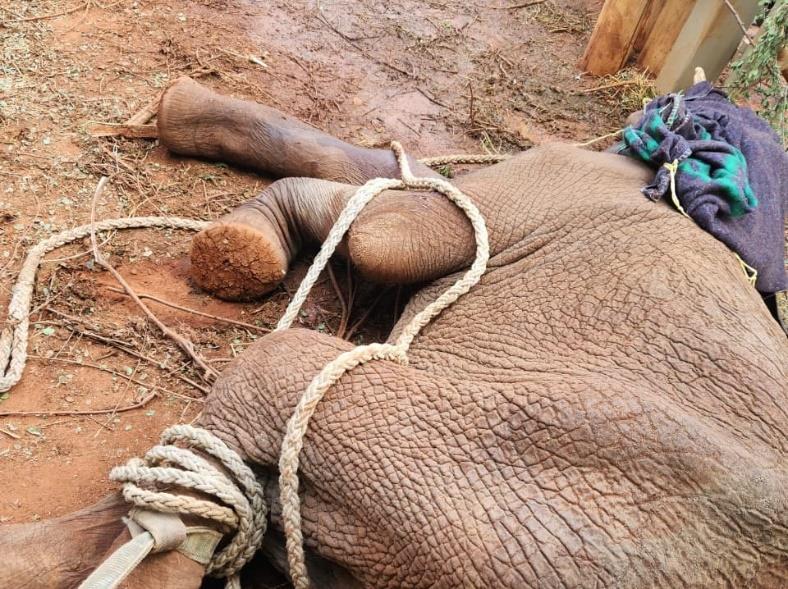
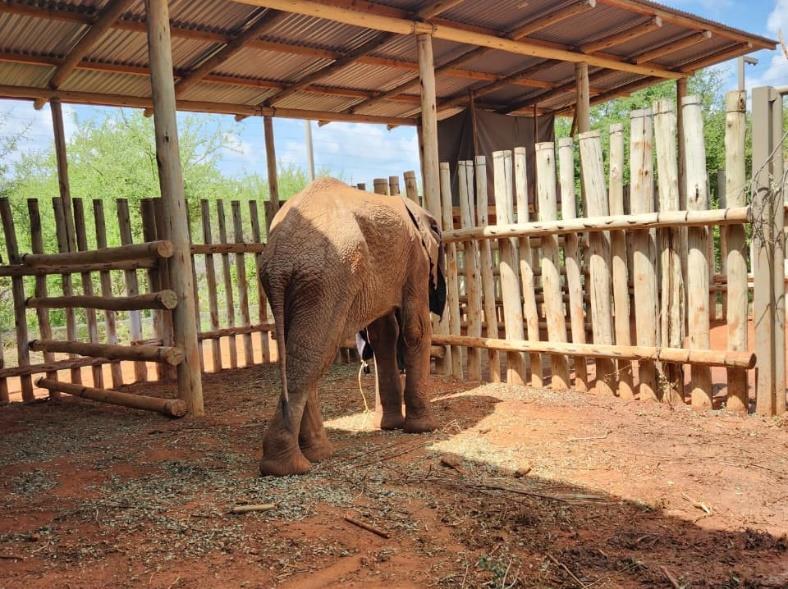
This elephant was rescued a week earlier from Tsavo West, Komboyo area and was reported by the Kaluku stockade keepers to have difficulties in swallowing feed and water. He takes ample quantities but spits them out after few minutes. The body condition was also deteriorating.
Immobilisation, examination and treatment
This calf was successfully tranquillized using 40mg Azaperone delivered remotely in a 3cc Dan inject dart and then manually restrained with ropes. Darting was done from foot.
Stomach intubation with a hose pipe lubricated with liquid paraffin was done and there was some resistance in passing the tube through to the stomach.
Prognosis
Prognosis is guarded.
He was then recommended for further monitoring.
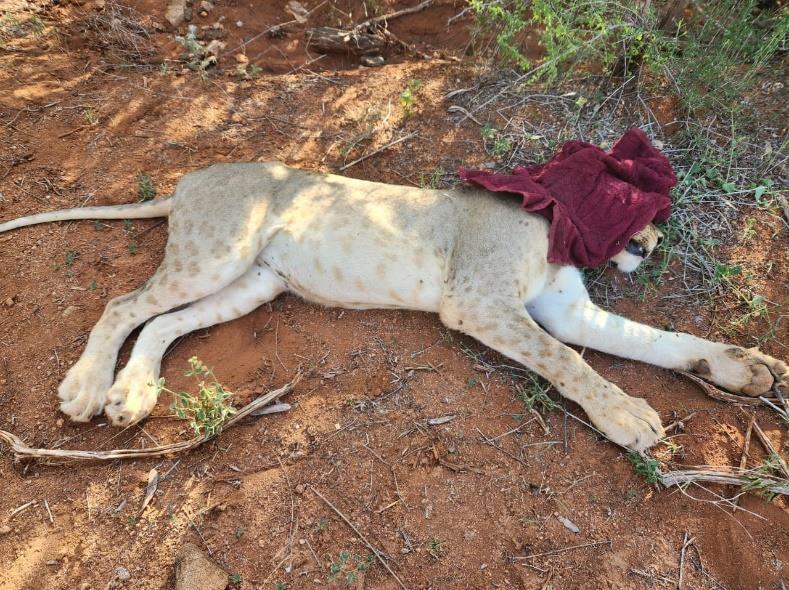
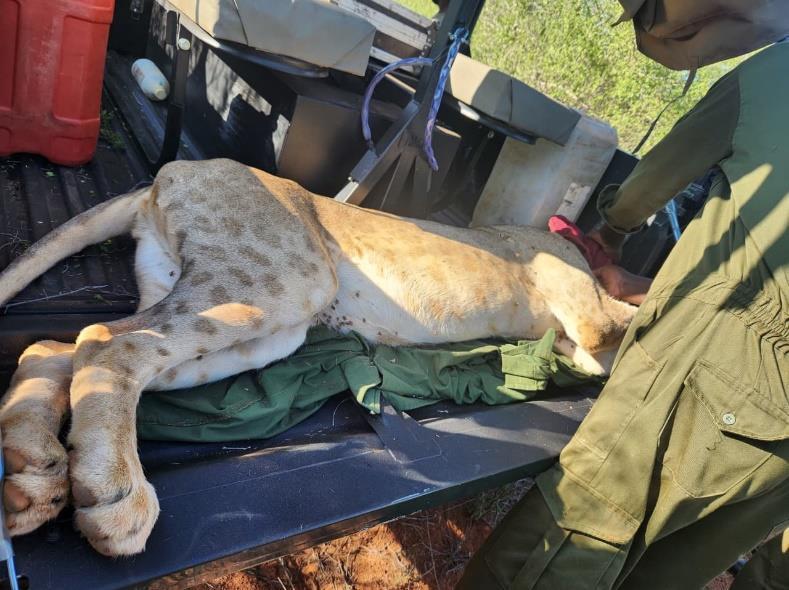
Lion Relocation Galdessa, Tsavo East NP
This lioness was reported to have entered the rhino sanctuary in Galdessa posing threat to the lone rhino at the sanctuary and was also risking starvation.
Immobilisation, examination and treatment
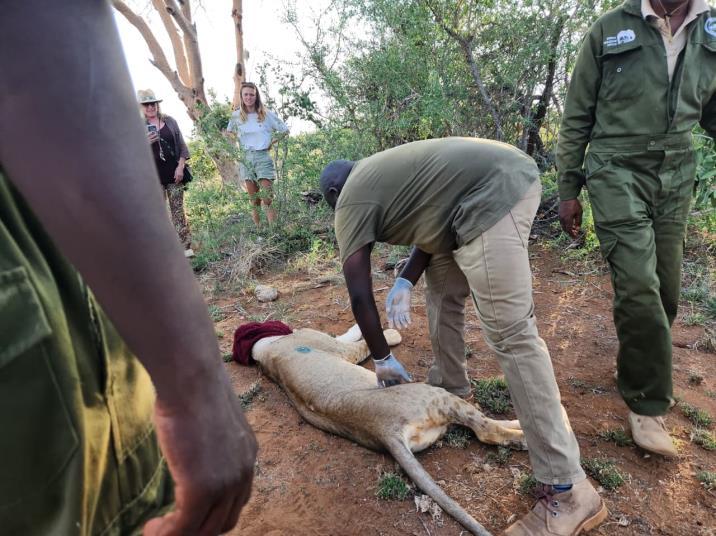
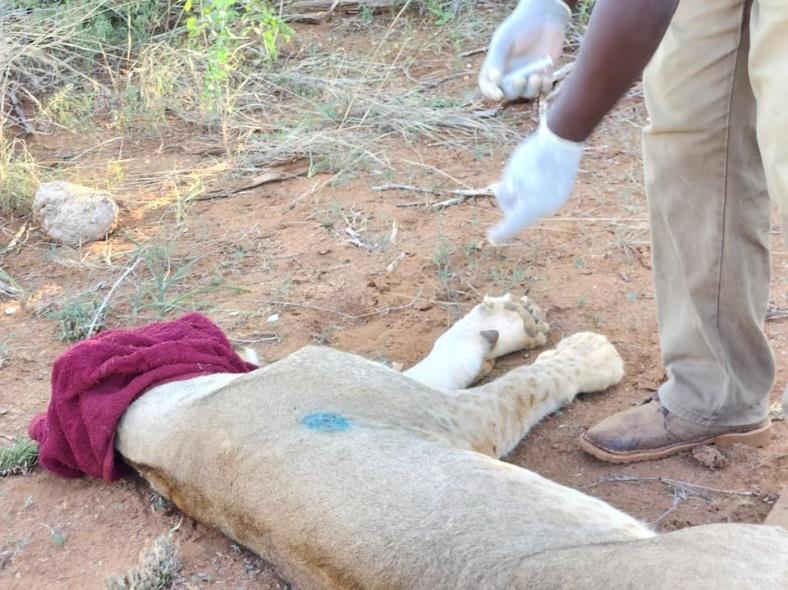
The lioness was successfully immobilized using a combination of 4.8mg medetomidine and 180 mg ketamine delivered remotely in a 3 cc Dan inject dart. Darting was done from the vehicle, and it took 10 minutes for full anaesthesia to be achieved.
The lioness was in good health. She was loaded on to a vehicle and relocated back to the park.
Prognosis
She was reversed from anesthesia using 24mg of Atipamezole given intramuscularly. She rose few minutes later.
Zebra
Human-Wildlife Conflict
Ndii, Taita Ranches
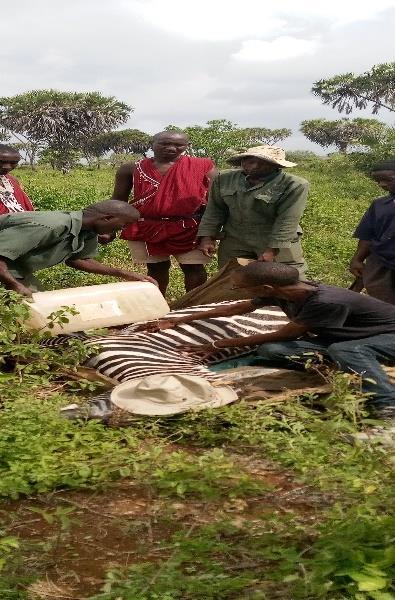
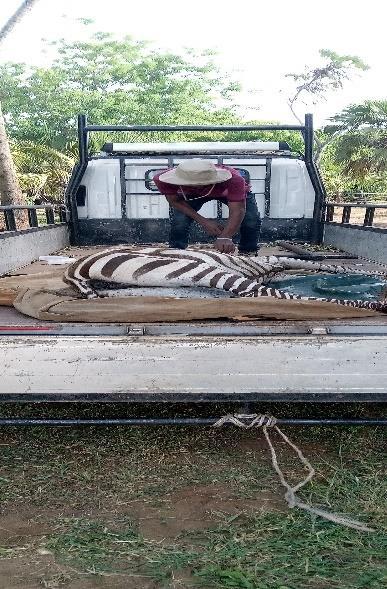
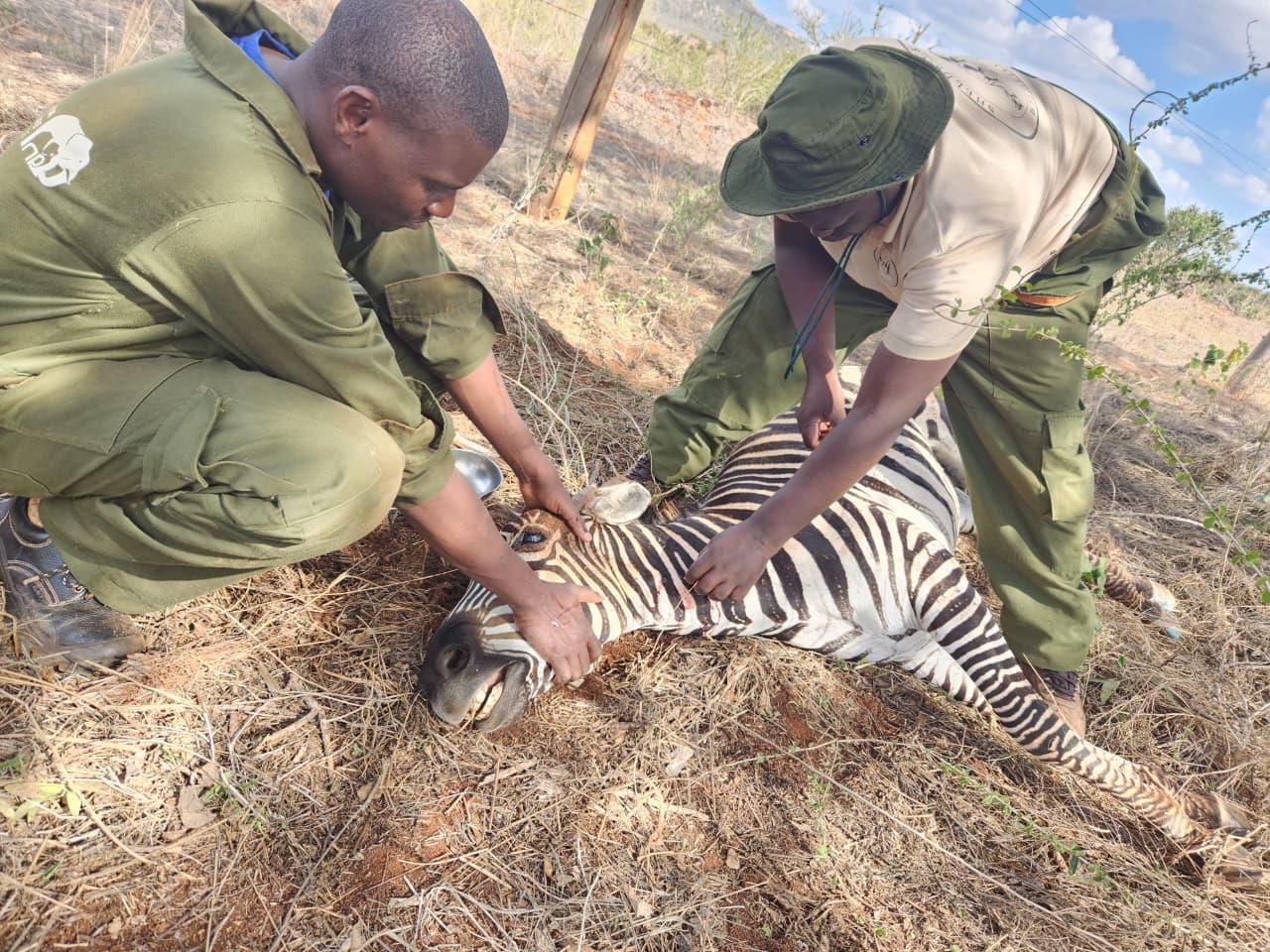
This injured zebra was reported by the community people to have entered a storey building near Taita Taveta University. The zebra was in perfect health at the time of entering but the following morning he was found recumbent on the first floor of the building. SWT rangers were contacted, went and brought him to Ndii SWT outpost where the TMVU team were notified and went to attend to the case.
Immobilisation, examination and treatment
Examination revealed a tear wound on the left femur just above the knee joint. The spine appeared to have been fractured, and the zebra completely paralysed.
Prognosis
Prognosis was grave. The zebra was euthanized on animal welfare grounds to alleviate him from further suffering.
Zebra Rescue Ndii, Tsavo East NP
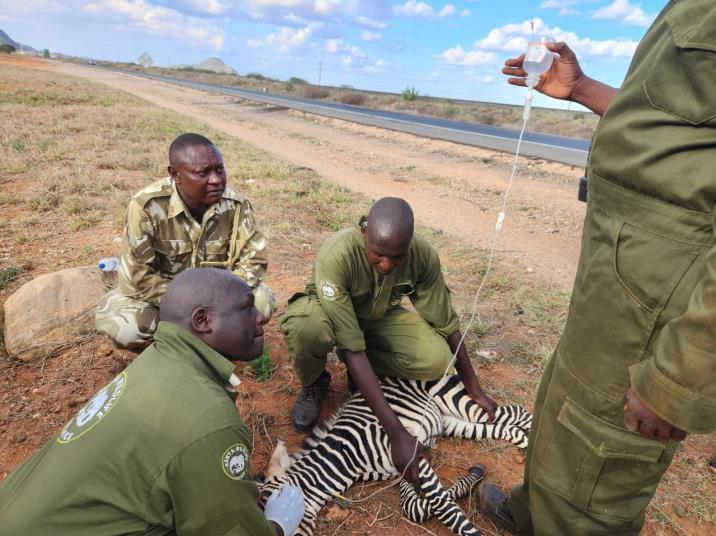
This zebra was spotted by KWS officials in Ndii along the Nairobi-Mombasa highway dehydrated and weak.
Immobilisation, examination and treatment
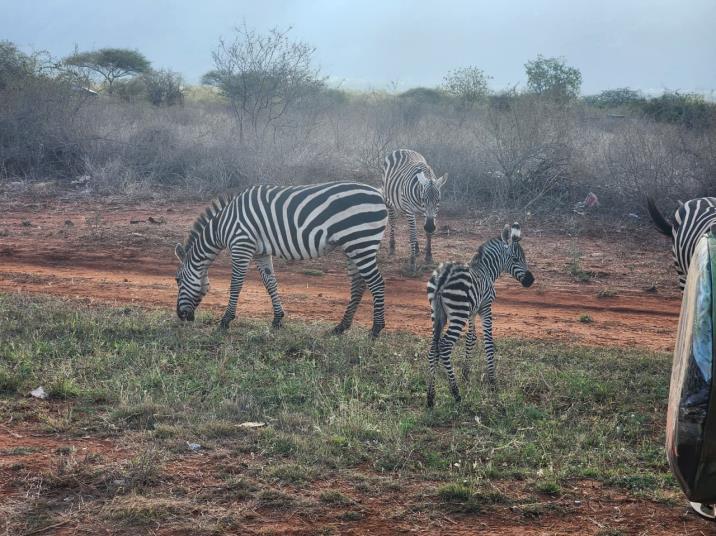
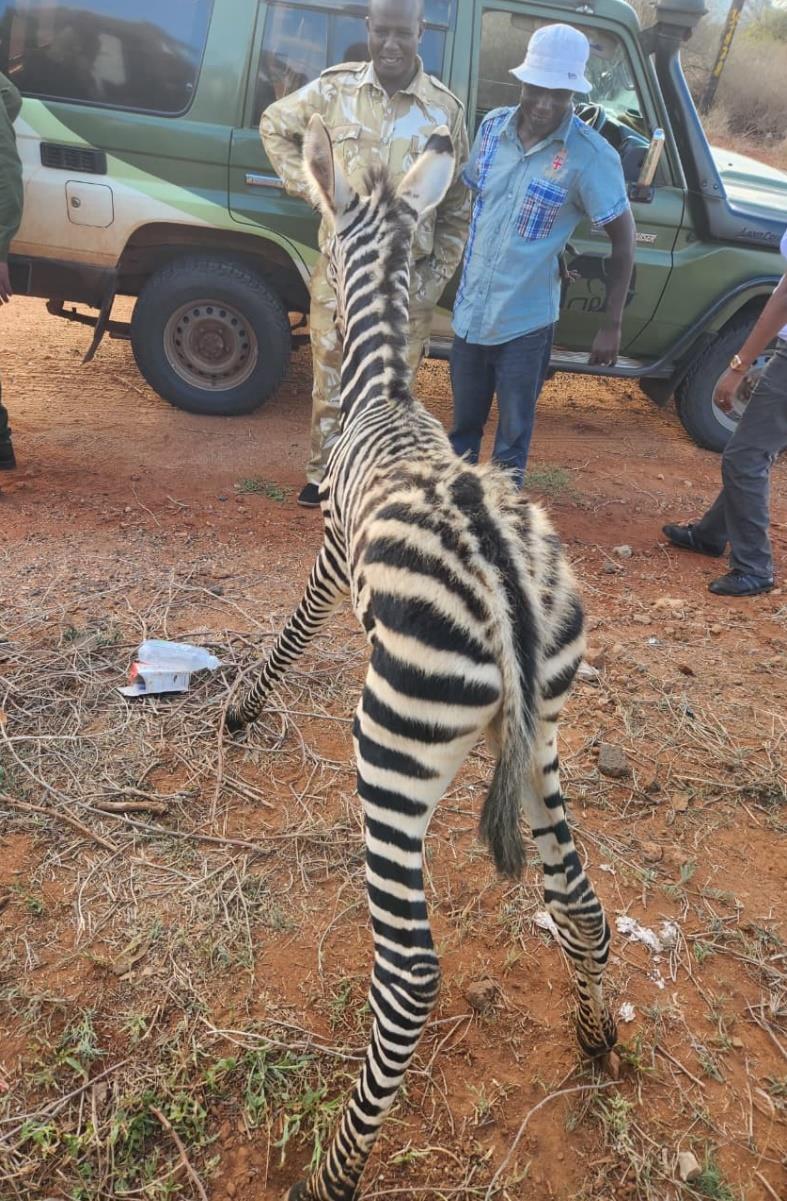
The zebra was extremely weak and was recumbent despite efforts to try to assist him to get up. He was immediately given rehydrating fluids and glucose intravenously to which he responded well. He was additionally given a metabolic stimulant parenterally. He rose up and reunited with 3 zebras who were nearby: one stallion and 2 females. One female was heavily pregnant and the other was non-lactating. None of the zebras appeared to be the mother.
Prognosis
This foal was rescued and taken to Voi Stockade for fostering. He later died the following morning
Case 6 – 10th December 2024
Elephant Postmortem
Kaluku, Tsavo
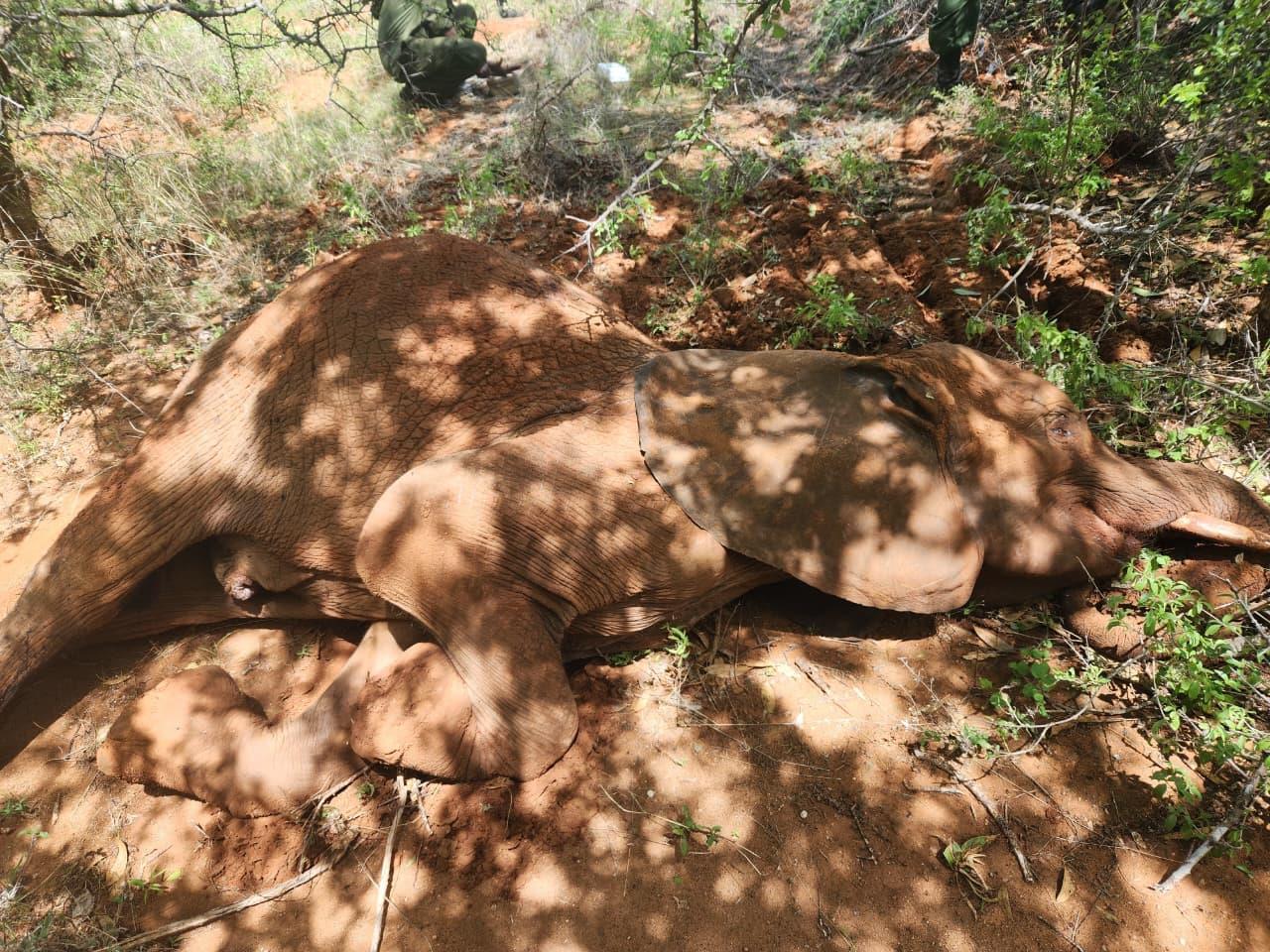
This elephant was previously reported to have difficulties in swallowing feed and water and was bloody diarrhea. He was found dead on the morning of 10th.
Postmortem examination
The carcass was fresh and there were no external wounds seen. The perineum and the hind limbs were soiled with dried bloody diarrhoea.
• The subcutis was pale and muscle cover was thin.
• There was slight hydro pericardium.
• The pyloric sphincter was hypertrophied and a lot of maggots had occupied that area.
• There was extensive ulceration on the mucosa of the small intestine, large intestine, caecum and a portion of the rectum.
• The liver was enlarged and with ascaris worms blocking the bile ducts.
• There was bloody ingesta in the rectum.
Cause of death
It was concluded that the elephant died from complications arising from gastrointestinal ulceration
Case
Elephant Postmortem
Sagala Ranch, Taita Ranches
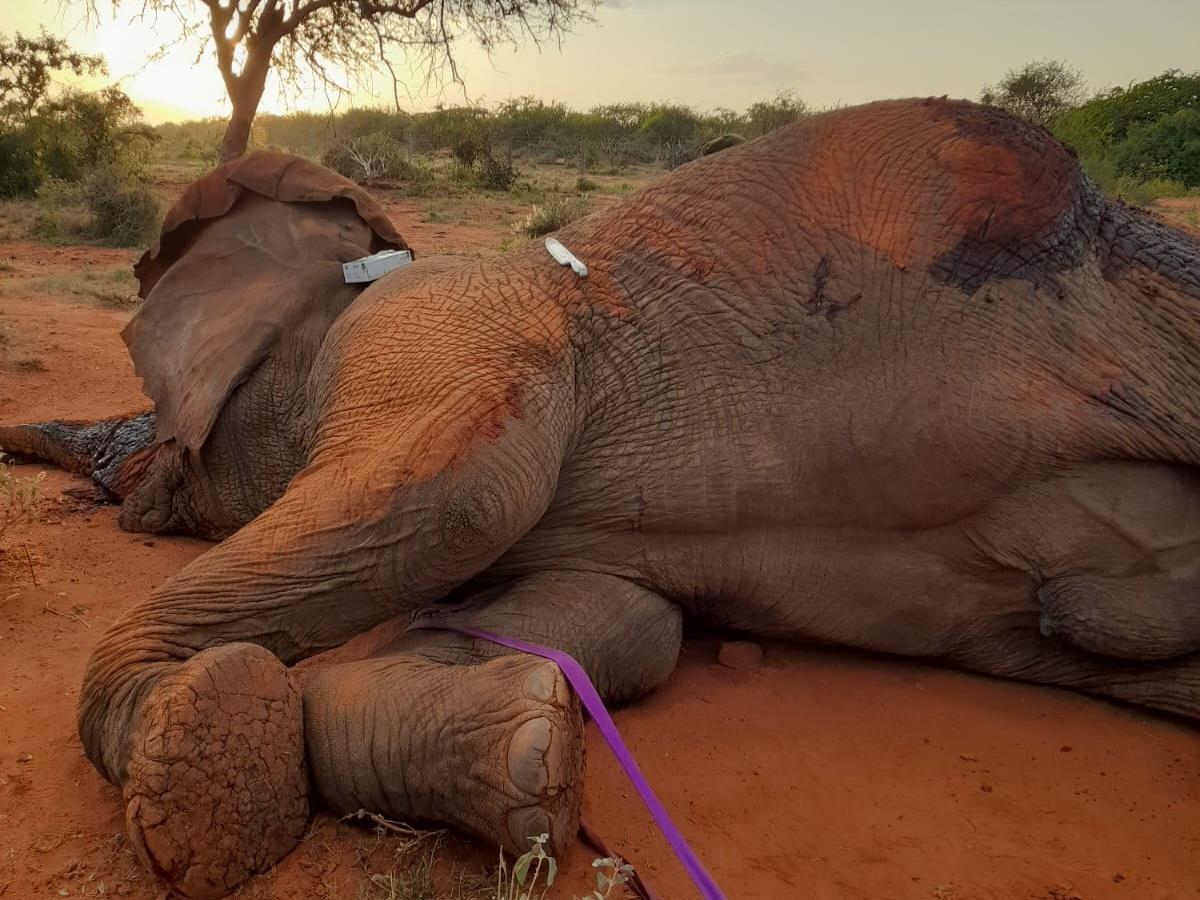
This elephant was found dead on the morning of 10th December in sagala ranch by the rangers in the area
Postmortem examination
The carcass was fairly fresh and on the left lateral recumbency. The abdomen was distended.
• The intestines were distended with gas
• The stomach was full of ingesta
• There was ingesta in the distal colon which did not go through to the rectum
• The rectum was only filled with mucus secretions
Cause of death
It was concluded that the elephant died due to complications associated with colorectal impaction.
Elephant
Natural Causes
Satao, Tsavo East NP
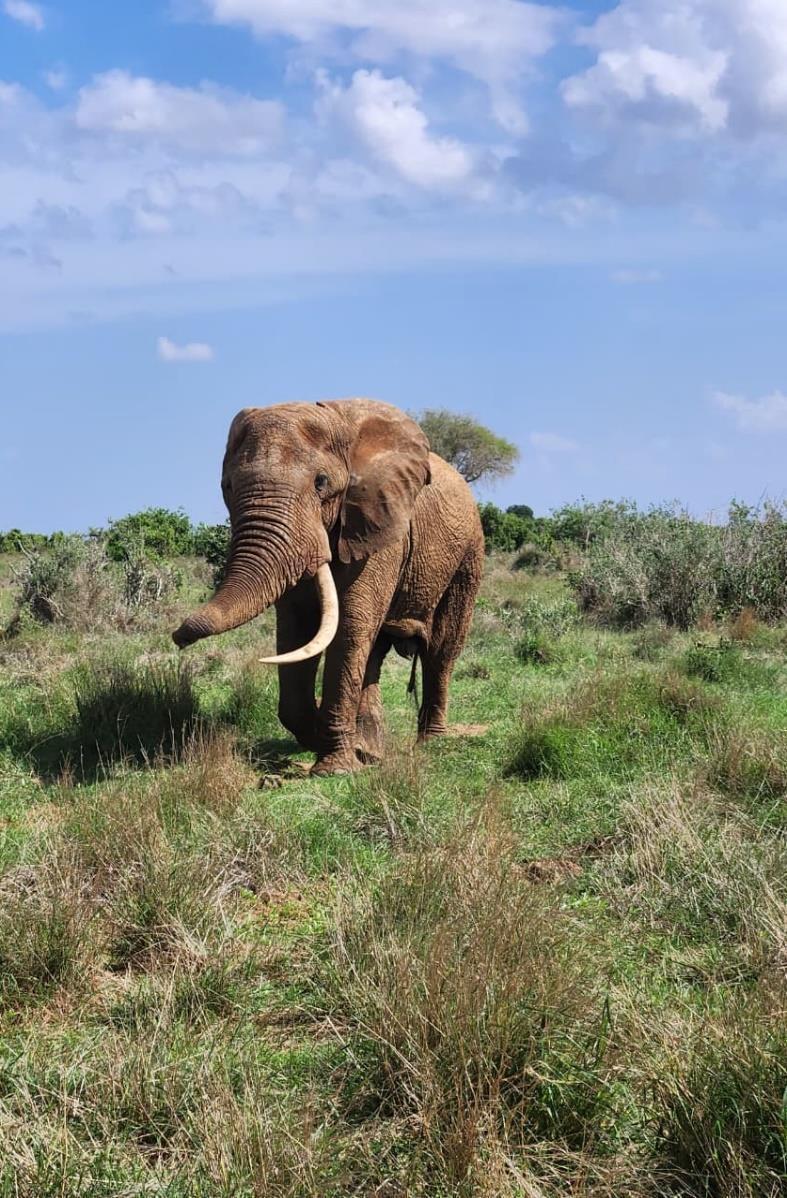
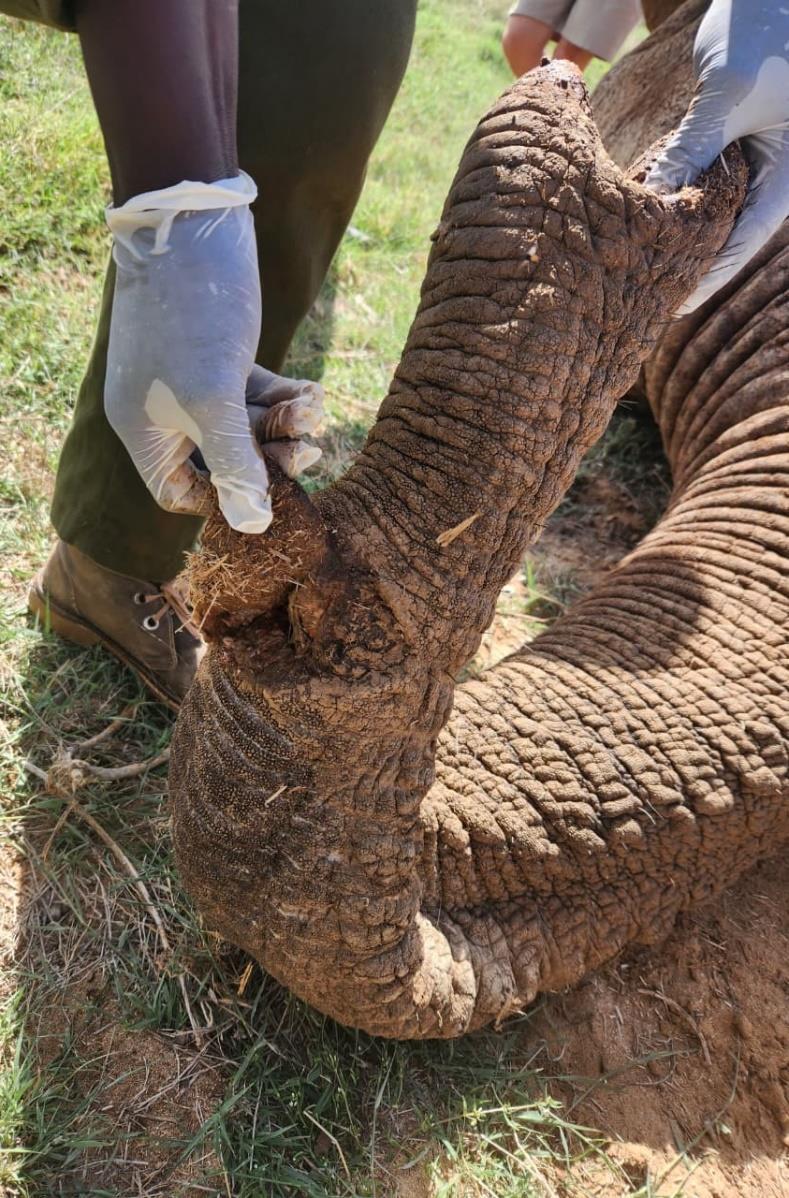
This injured bull was spotted by the Satao camp management at their water point with the trunk stuck to one of the tusks. He was having difficulties in drinking water.
Immobilisation, examination and treatment
The bull was successfully immobilized using 20mg Etorphine hydrochloride delivered in a 3cc Dan inject dart. Darting was done from the vehicle and it took 9 minutes or the drugs to achieve its full effects.
Examination revealed that the right tusk had entered through the right nostril and got stuck. The tusk had also penetrated a part of the trunk, and a septic wound was formed. The trunk was removed from the tusk immediately the elephant went down. The right nostril was necrotic. Both the nostril and the trunk wound were thoroughly cleaned and derided, this was followed by swabbing with Hydrogen peroxide, infusing with tincture of Iodine then sprayed by topical antibiotic spray.
The bull also received Amoxicillin antibiotics and dexamethasone parenterally.
Prognosis
The anaesthetic was reversed. He rose and slowly walked away 3 minutes later with a good prognosis
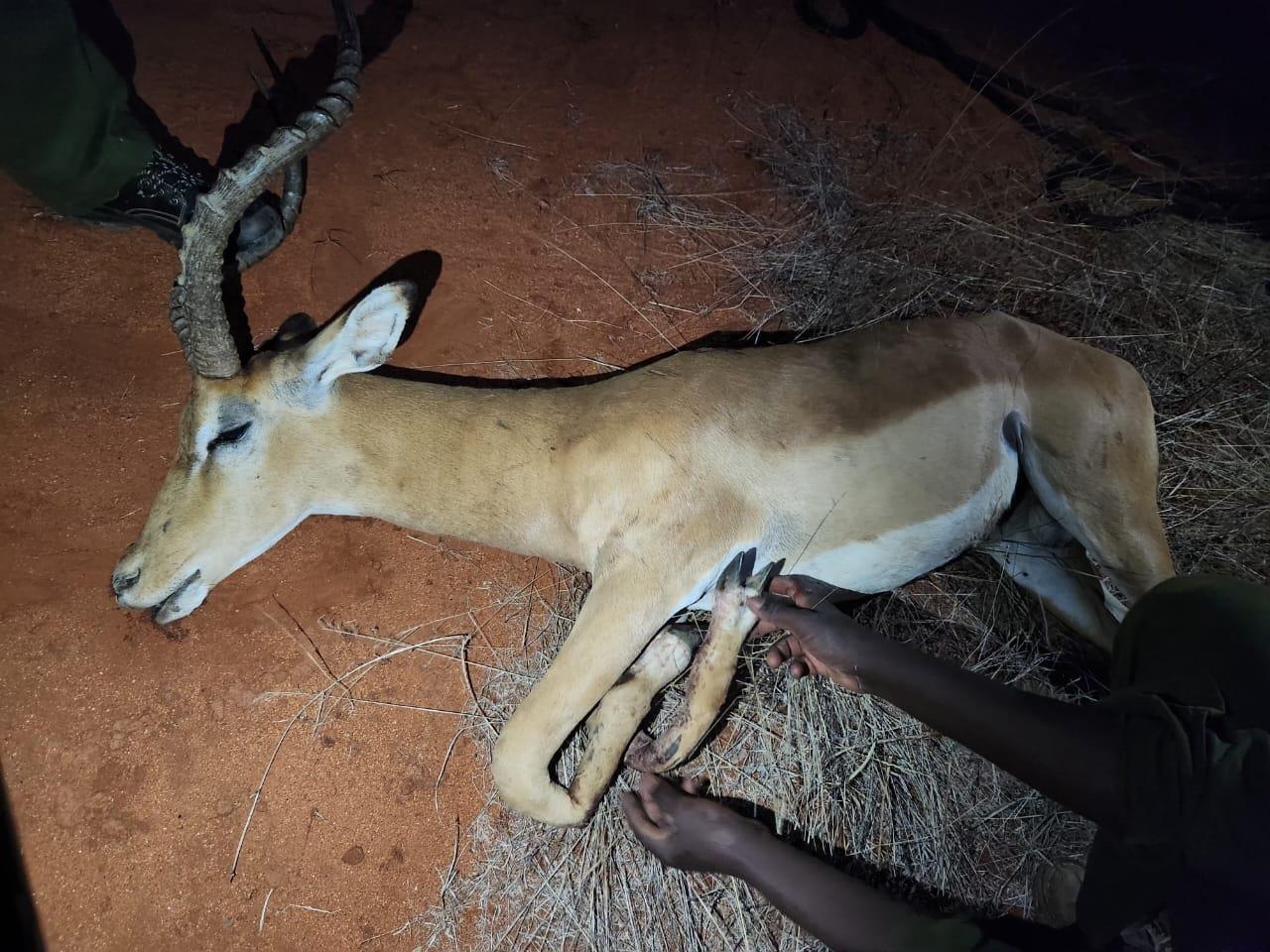
Impala Natural Causes Satao, Tsavo East National Park
This injured impala was spotted by the Satao camp management team with both forelimbs broken.
Postmortem examination
Examination revealed complete open fractures of the radius and ulna bones of both front limbs
Prognosis
Prognosis was grave.
The impala was euthanized on animal welfare grounds to alleviate him from further suffering.
Case 10 – 13th December 2024
Lion
Natural Causes Thabagunji,
Tsavo
East National Park
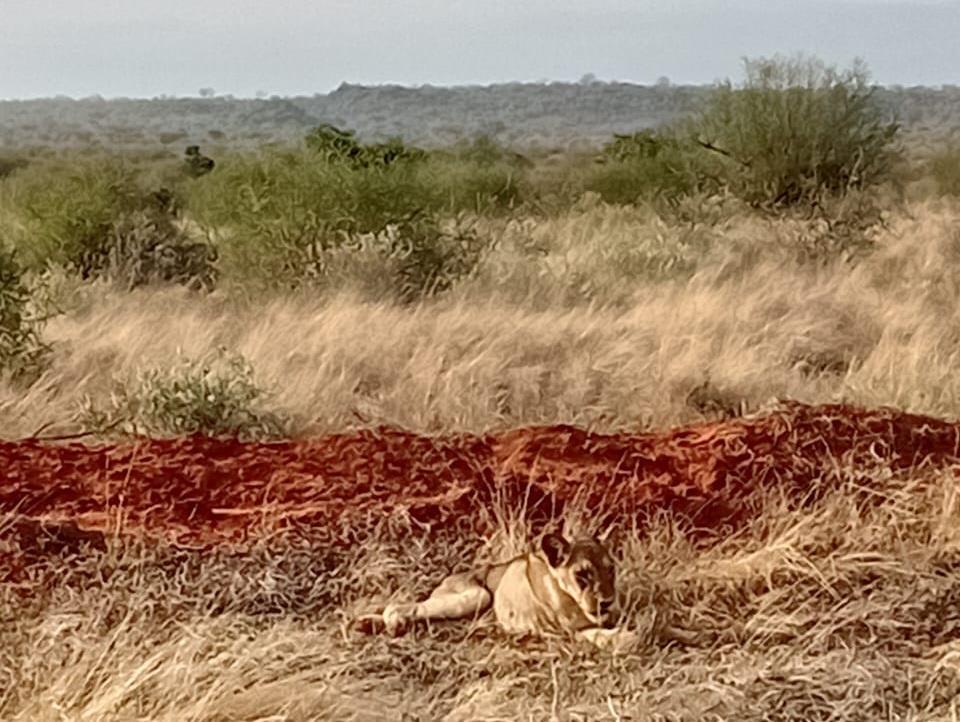
This lion was spotted by the SWT rangers weak but with no visible physical injuries while walking.
Examination
The lion was not immobilized because he could not withstand anaesthesia. He appeared to have not fed for some few days. At the time of arrival, he was on left lateral recumbency and conscious.
The team offered the lion some meat, but he didn’t respond to feed.
Prognosis
Prognosis is guarded.
The lion was recommended for further monitoring.
Case 11 – 15th December 2025
Lion
Collaring
This injured bull was spotted by the Satao camp management at their water point with the trunk stuck to one of the tusks. He was having difficulties in drinking water.
Immobilisation, examination and treatment
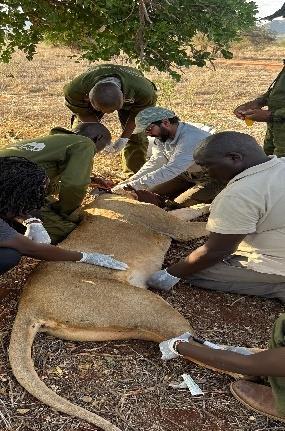
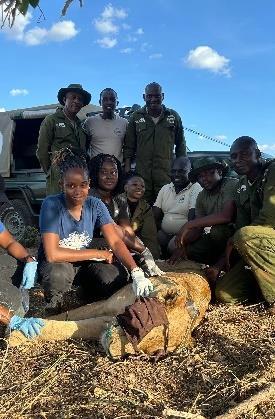
The lioness was successfully immobilized using a combination of 4.8 mg medetomidine and 180 mg ketamine delivered remotely in a 3 cc Dan inject dart. Darting was done from the vehicle, and it took 10 minutes for full anaesthesia to be achieved.
The GPS-SAT enabled collar was replaced by savannah tracking iridium satellite collar.
Prognosis
She was reversed from anesthesia using 14.4mg of Atipamezole given intramuscularly. She rose few minutes later and walked away. Prognosis is good.
Ngutuni, Tsavo East NP
Case
12 – 16th December 2025
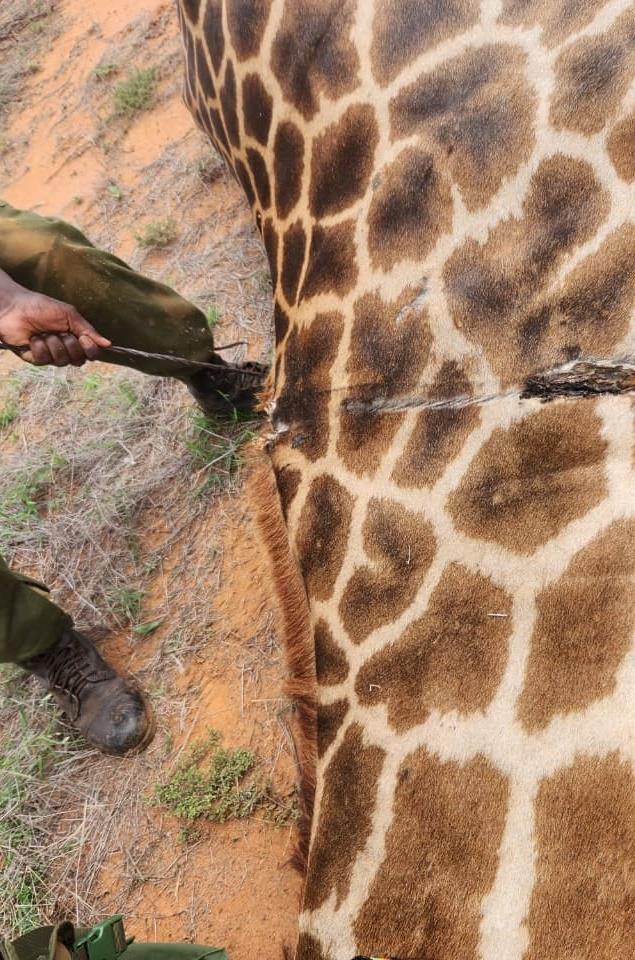
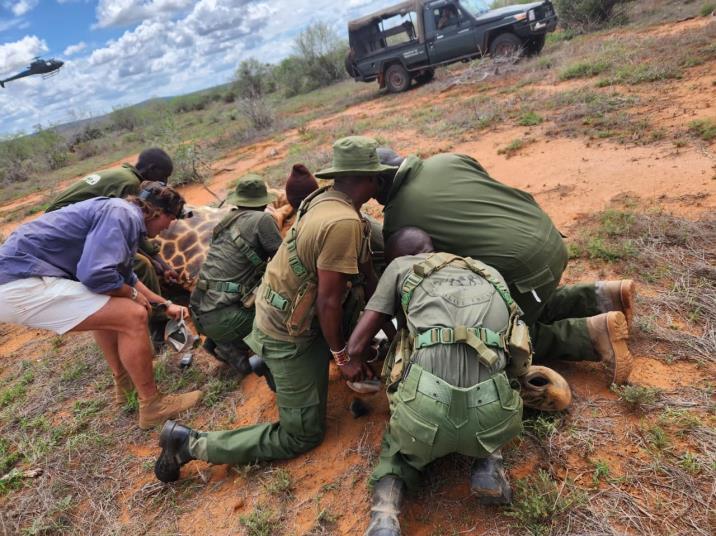
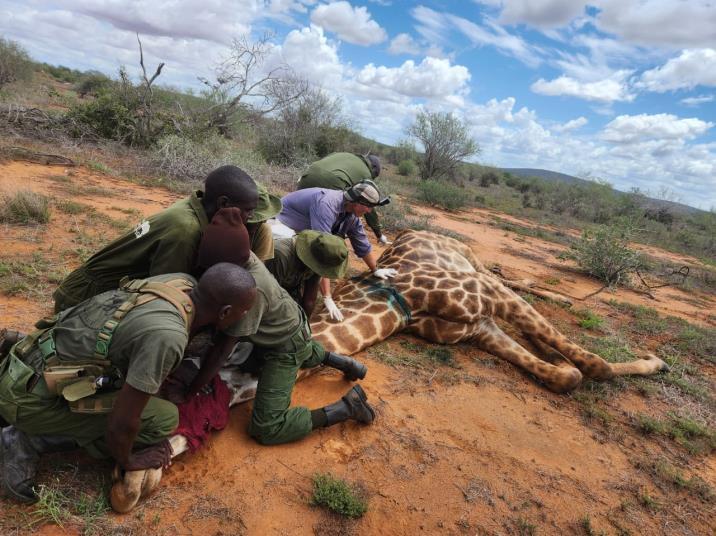
Giraffe Snared Galana, Tsavo East NP
This giraffe was spotted by SWT pilot at Galana area having a winch wire snare on his neck.
Immobilisation, examination and treatment
This giraffe was successfully immobilized using 14mg Etorphine hydrochloride and 40mg Azaperone delivered remotely in a 3cc Dan inject dart. Darting was done from the helicopter, and it took 8 minutes for the drug to achieve its full effects.
Examination revealed a winch wire snare on his neck which had inflicted a cut wound on the neck region. The snare was cut free using wire cutters and the wound was sprayed using a topical antibiotic.
He was additionally given Amoxicillin antibiotic parenterally.
Prognosis
This foal was rescued and taken to Voi Stockade for fostering. He later died the following morning.
Case 13 – 17th December 2025
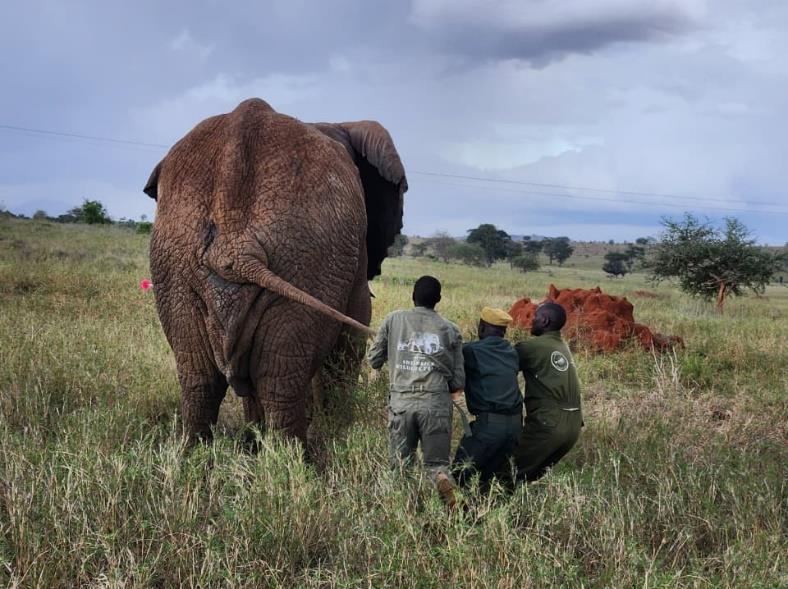
Elephant Spear
Salt Lick, Taita Ranches
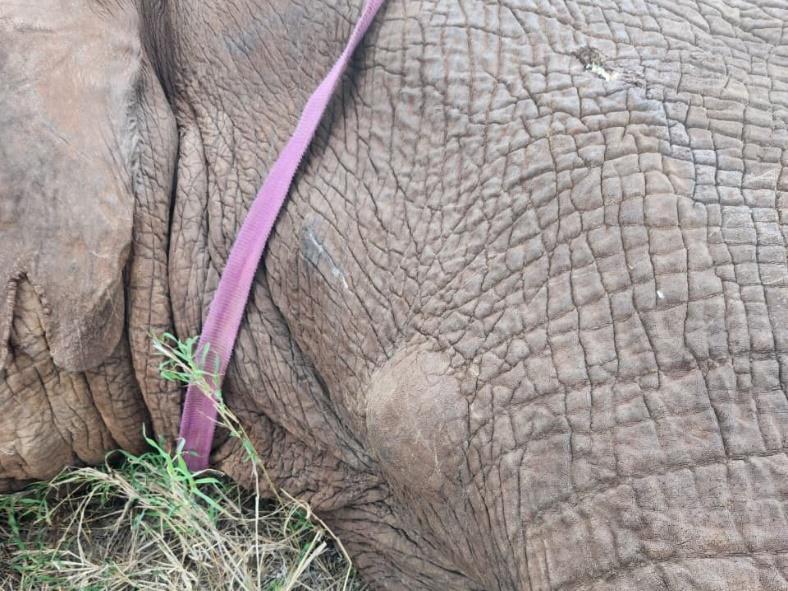
This elephant was reported by the Taita salt lick rangers to have been standing in the same location for approximately 2 days and was not feeding.
Immobilisation, examination and treatment
This bull was successfully immobilized using 19mg Etorphine hydrochloride delivered remotely in a 3cc Dan inject dart. Darting was done from the vehicle, and it took 10 minutes for the drug to achieve its full effects.
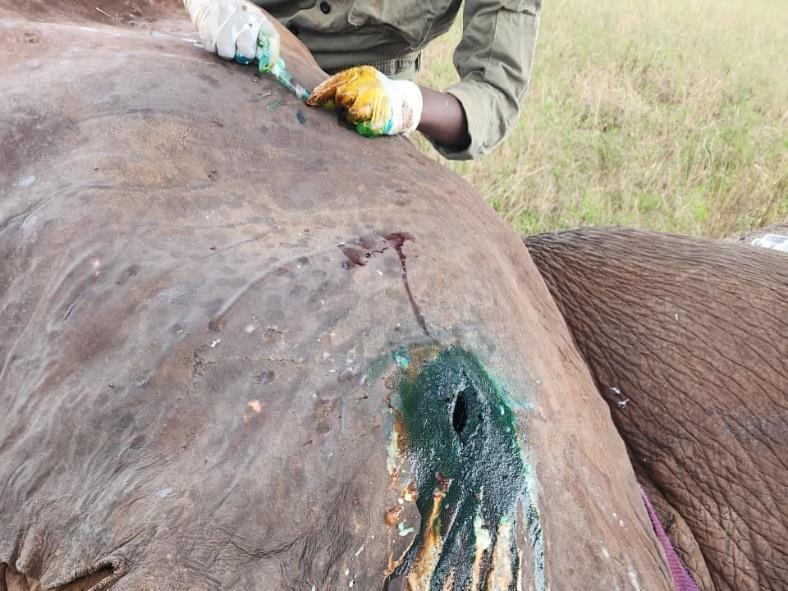
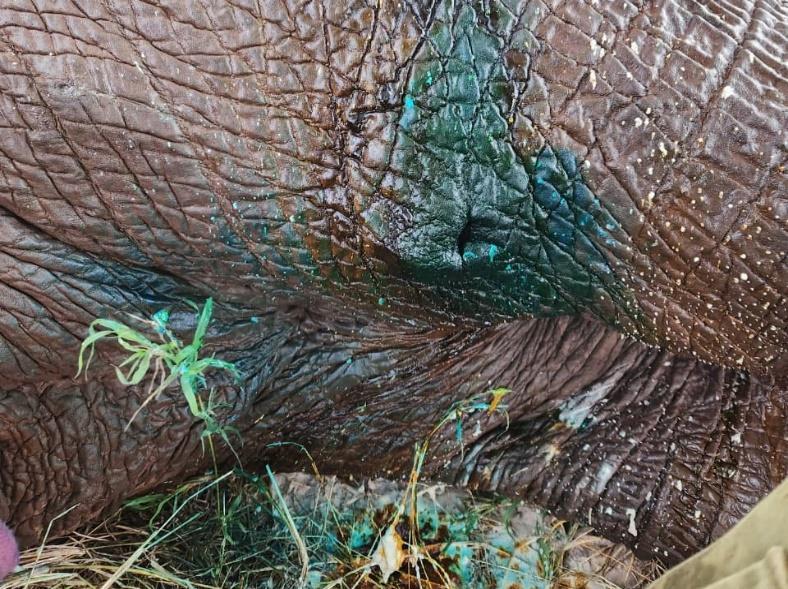
Examination revealed several septic spear wounds on various parts of his body. The wound on the left proximal humerus was deep and septic. Other wounds were on the left ear, left flank, left perineal, trunk, right cheek below the eye and the left rump. He was also exhibiting signs of shock and was weak. The wounds were thoroughly cleaned and debrided. This was followed by flushing with Hydrogen peroxide and rinsing the wounds thoroughly with water. The wounds were thereafter infused with tincture of Iodine, packed with antibiotic pessaries and topically sprayed using a topical antibiotic.
He received shots of Amoxicillin antibiotics and Flunixin anti-inflammatory parenterally.
Prognosis
He was reversed from anesthesia but he died shortly after as a result of septic shock.
Case
Wild dog
Collaring
Tsavo West National Park
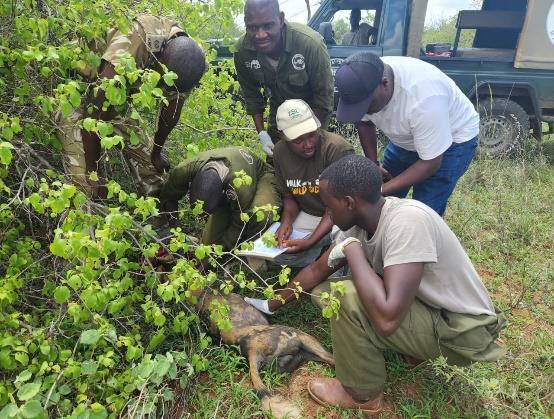
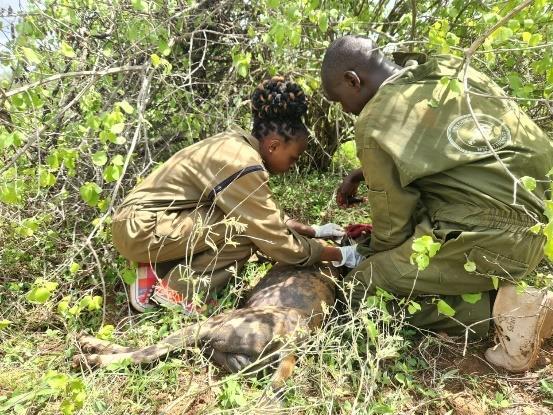
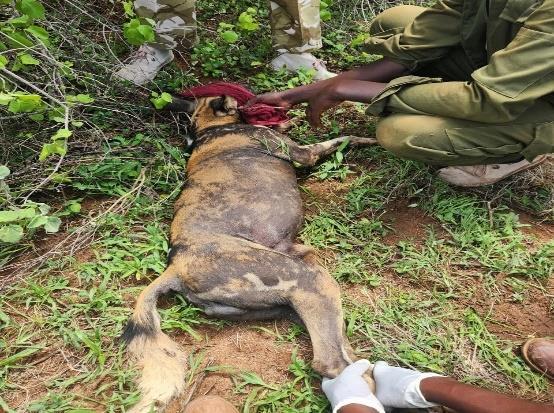
KWS in collaboration with ZSL undertook an activity to collar wild dogs in Tsavo West National Park ecosystem for monitoring in an effort to study pack interactions and landscape use by wild dogs.
Immobilisation and collaring
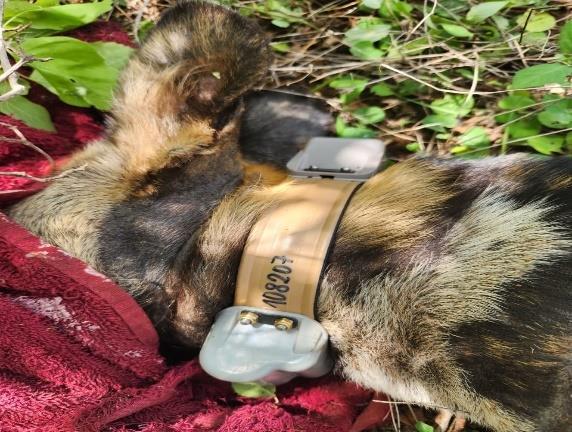
This wild dog was successfully immobilized using a combination of 0.8mg Medetomidine and 50mg Ketamine delivered in a 3cc Dan inject dart. Darting was done from the vehicle and 10 minutes later he was under anaesthesia.
He was fitted with a GPS-Ventrix collar.
Prognosis
He was reversed from anaesthesia using 4mg of Atipamezole given intramuscularly. He rose few minutes later and slowly walked away.
Case 15 – 18th December 2024
Zebra Natural Causes Manga, Tsavo East National Park
This foal was spotted by the SWT rangers in Manga area limping on his right hind limb.
Immobilisation, and examination
He was successfully immobilized using 2.5mg Etorphine hydrochloride and 40mg Azaperone delivered in a 1.5 cc dart. Darting was done from the vehicle and he was under anaesthesia 7 minutes later.
Examination revealed a complete fracture of the proximal 3rd metacarpal
Prognosis
Prognosis was grave.
He was euthanized on animal welfare grounds.
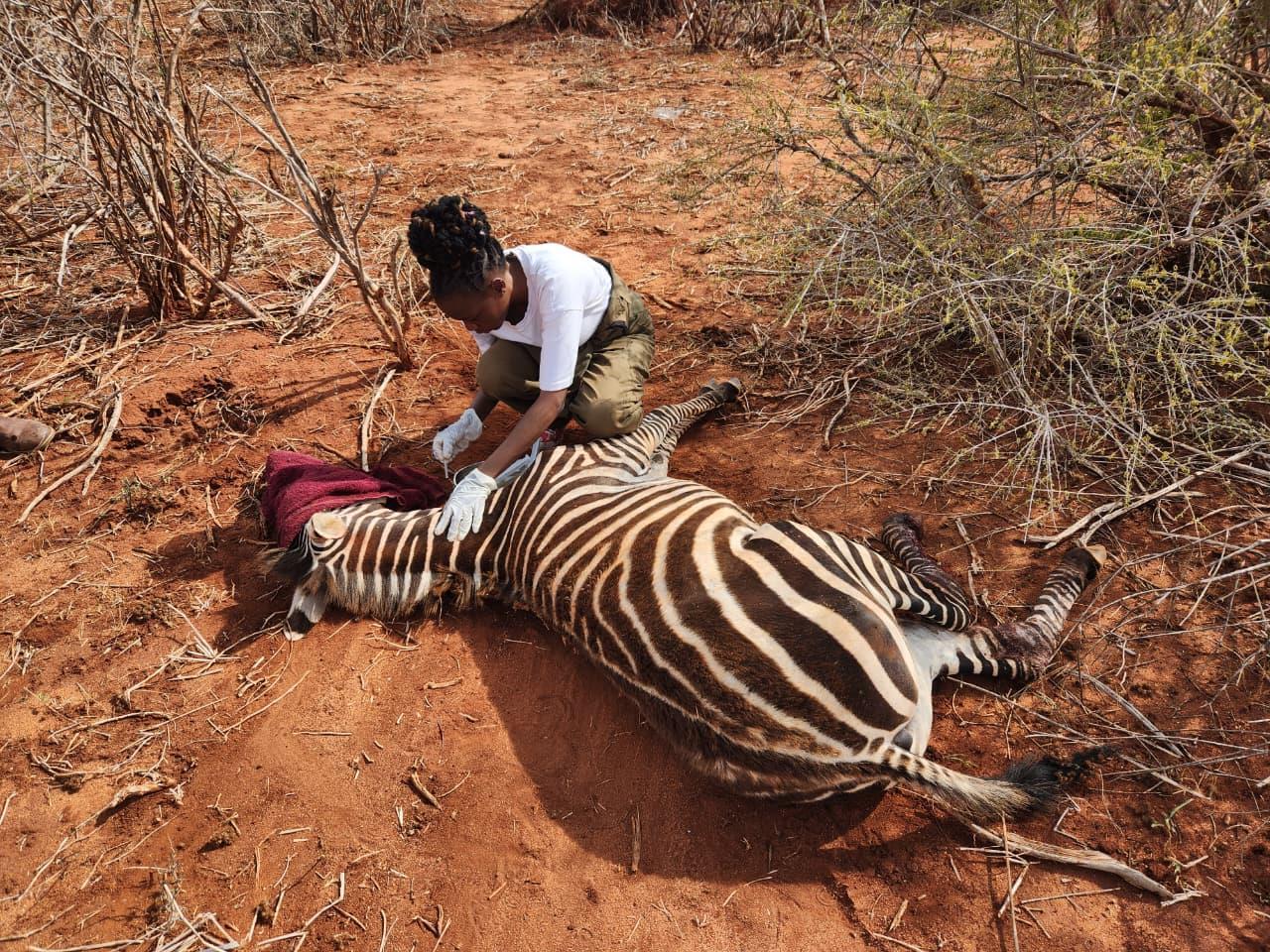
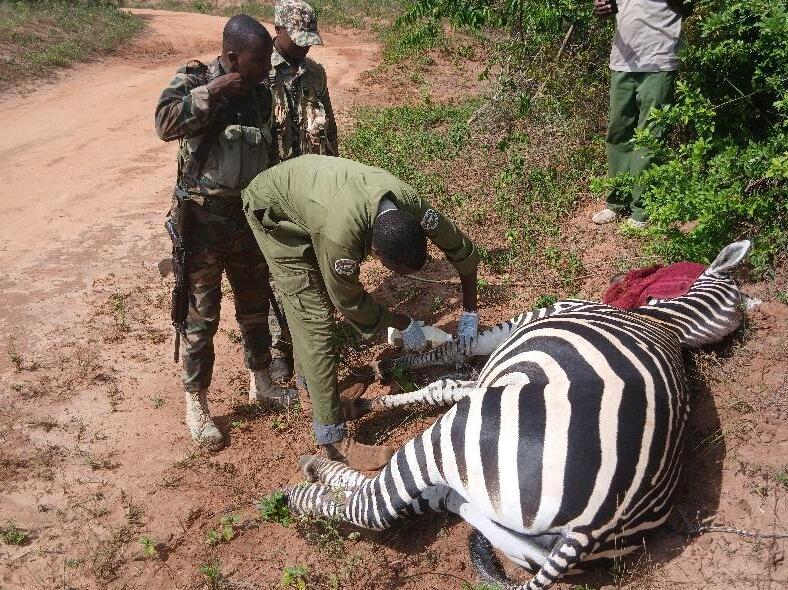
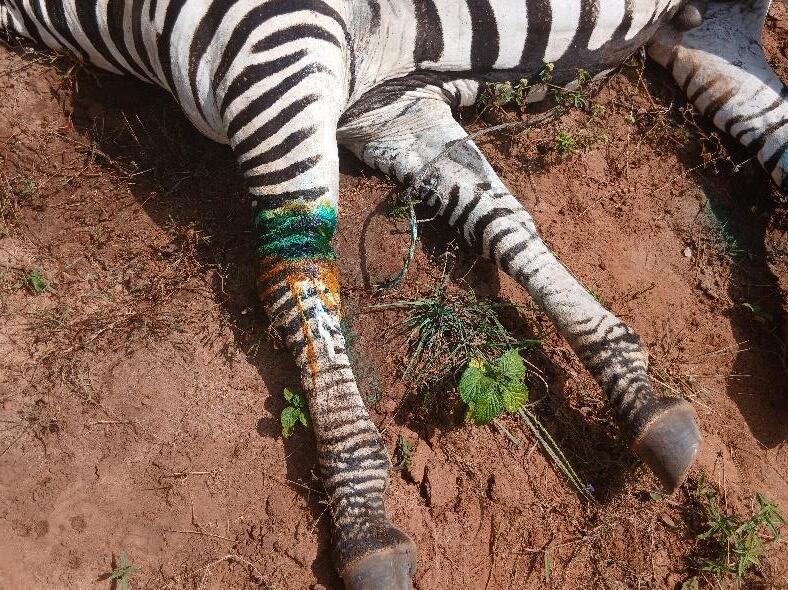
This snared zebra was spotted by the KWS Shimba hills team, he was dragging a snare with a piece of log.
Immobilisation, examination and treatment
The zebra was immobilized successfully using a combination of 6mg Etorphine and 50mg Azaperone delivered in a 3 cc Dan inject dart. Darting was done from the vehicle, and it took 5 minutes for full anaesthesia to be achieved.
Examination revealed a winch wire snare tightly bound around the left forelimb. Luckily the snare had not inflicted any serious injuries. The snare was cut using wire cutters and the bruises sprayed with topical antibiotic spray. He additionally was given Amoxicillin antibiotics parenterally.
Prognosis
He was reversed from anaesthesia and he rose and walked away 2 minutes later.later and slowly walked away. Prognosis is good.
Zebra Snared
Shimba Hills
Case
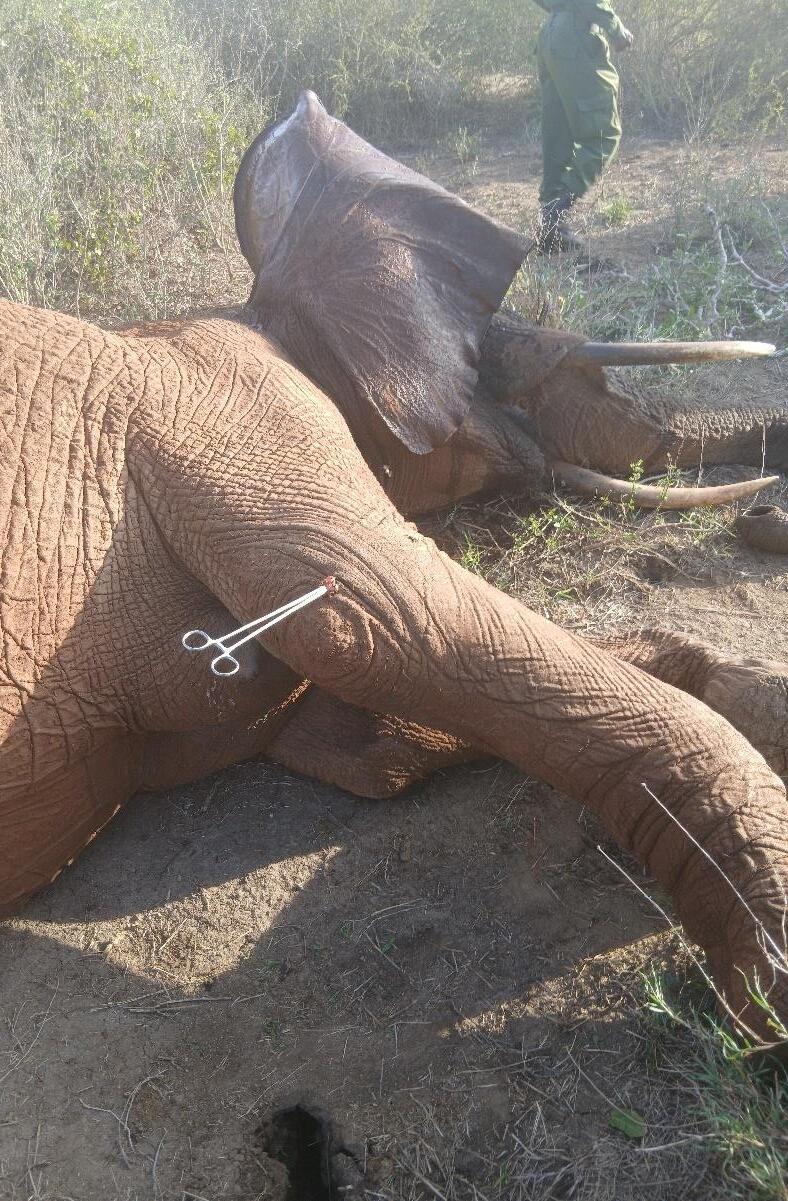
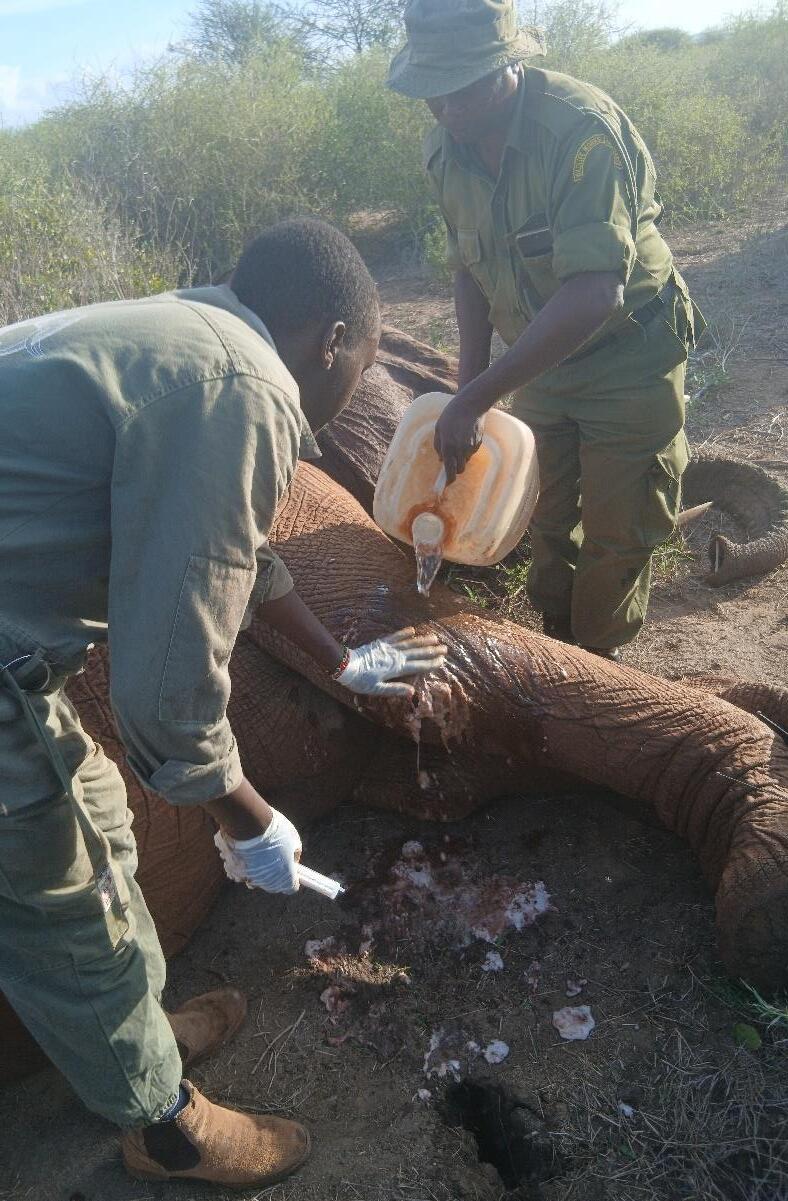
Elephant Arrow Mwanainchi ranch, Taita Ranches
This injured elephant was spotted limping by the KWS team during routine patrols in Mwanainchi ranch.
Immobilisation, examination and treatment
She was anesthetised using 12mg Etorphine hydrochloride delivered remotely in a 1.5 cc Dan inject dart. Darting was done from foot and it took 7 minutes for full anaesthesia to be achieved.
Examination revealed a septic arrow wound on her right elbow. The wound was thoroughly debrided, flushed with hydrogen peroxide, rinsed with clean water and infused with tincture of Iodine. Antibiotic pessaries were thereafter packed in the wound followed by topical antibiotic spray.
She additionally was given shots of Amoxicillin antibiotics and Flunixin anti-inflammatories parenterally.
Prognosis
She was revived from narcosis using 150mg Naltrexone hydrochloride given intravenously via a prominent ear vein. She rose and slowly walked away 3 minutes later. Prognosis is good.
Case
Zebra Snared
Shimba Hills
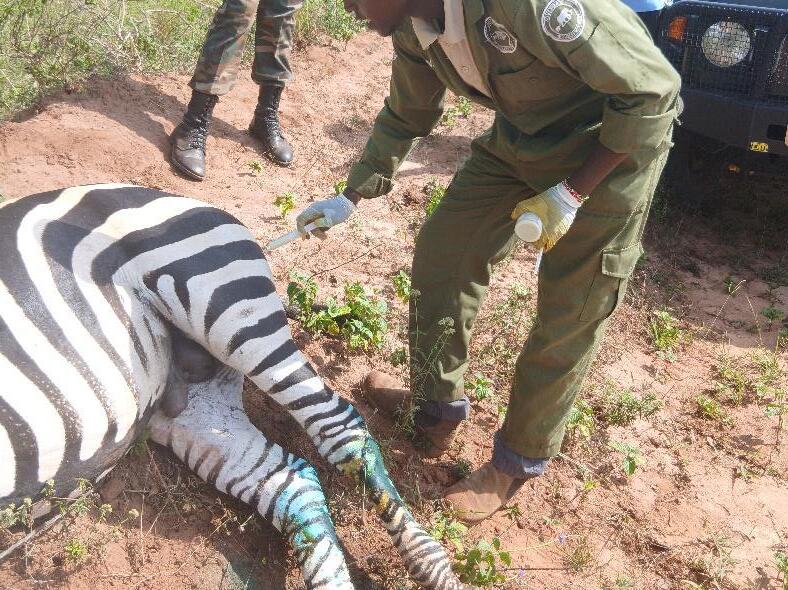
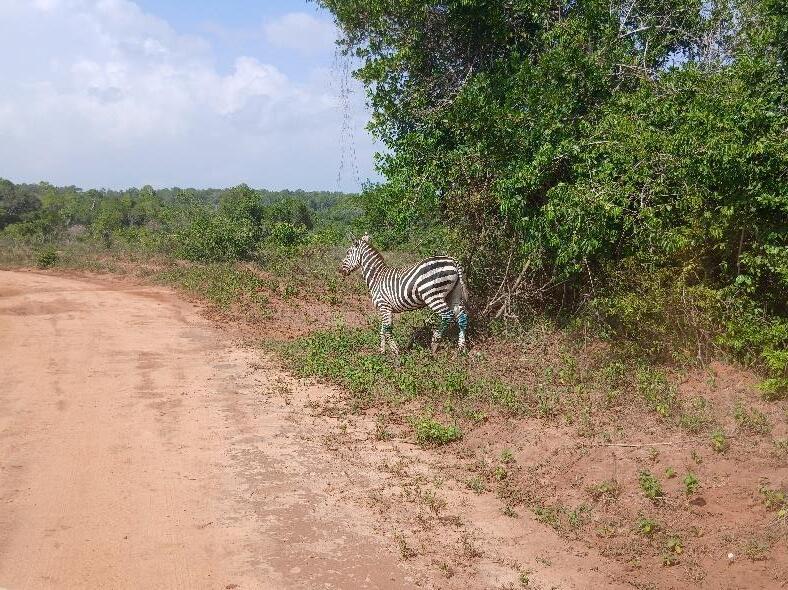
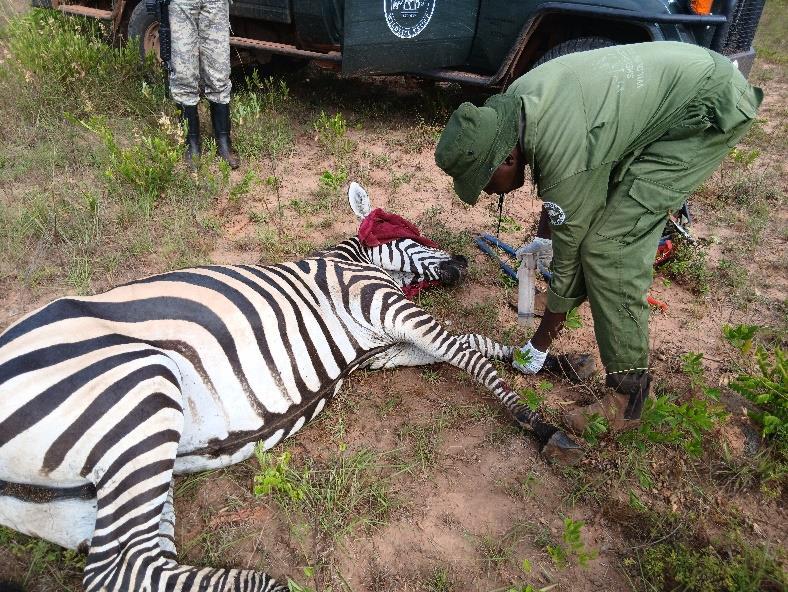
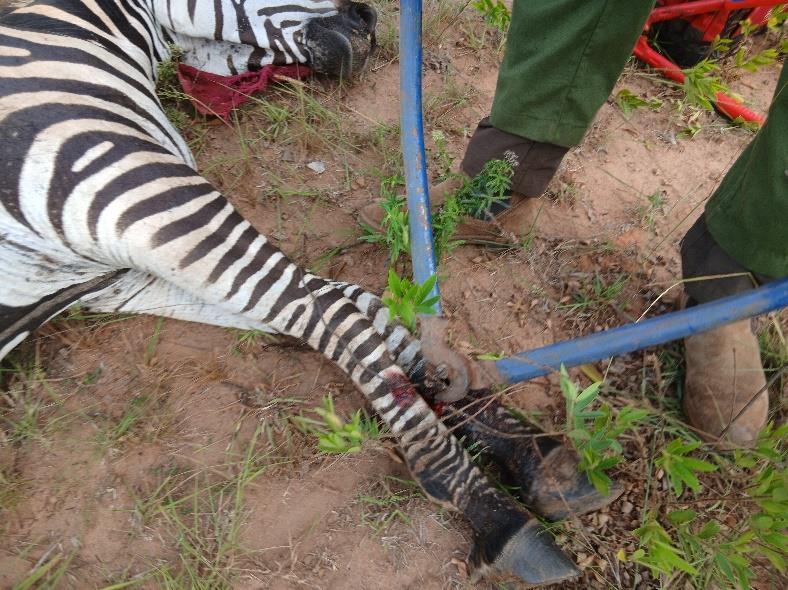
This snared zebra was spotted limping by the KWS teams in Shimba hills National Reserve.
Immobilisation, examination and treatment
This mare was successfully immobilized from a vehicle using a combination of 6mg Etorphine and 50mg Azaperone delivered in a 3cc Dan inject dart and it took 6 minutes for full anaesthesia to be achieved.
Examination revealed a thick cable snare tightly bound on the distal left forelimb; the snare had inflicted a wound to the area. The wire was cut using wire cutters and the septic wound debrided thoroughly. Hydrogen peroxide was used to flush the wound followed by an infusion of tincture of Iodine. Topical antibiotic spray was also applied in the wound.
She additionally received shots of Amoxicillin antibiotics parenterally.
Prognosis
He was reversed from anaesthesia and She rose and walked away 2 minutes later. Prognosis is good.
Case
Zebra Human – Wildlife Conflict
Bora Bora, Ukunda
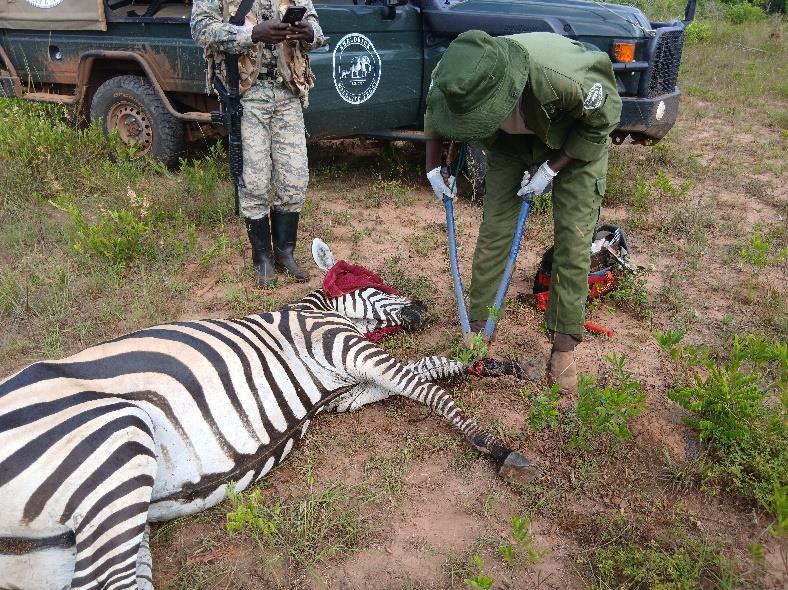
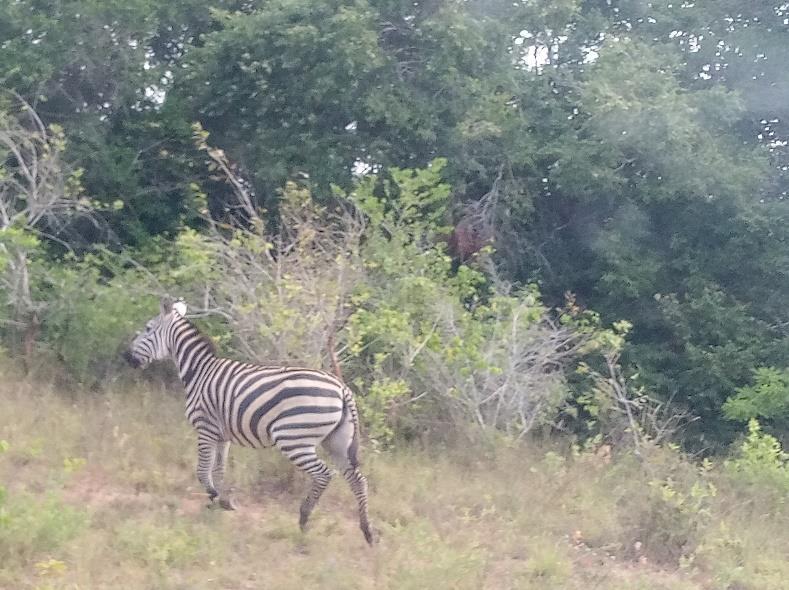
Three zebras were reported to have broken through the fence of the park. They were found out in the neighbouring community. After fence repairs the park management requested TMVU to help relocate the zebras back to the park.
Immobilisation and relocation
All 3 zebras were immobilized successfully using 6mg Etorphine and 50mg Azaperone delivered in a 3 cc Dan inject dart. Darting was done from foot, and full anaesthesia was achieved 7 minutes after darting.
The zebras were loaded on to the vehicle and relocated back to the park.
The zebras were reversed from anaesthesia using 70mg Naltrexone hydrochloride given intravenously via the jugular vein. They all rose approximately 3 minutes after reversal.