OCTOBER 2025 - JANUARY 2026

OCTOBER 2025 - JANUARY 2026

During October 2025 to January 2026 the SWT/KWS Sky Vet program was called to handle 19 wildlife cases involving 15 elephants, a lion, a zebra, a giraffe and a buffalo The cases involved chartered flights but primarily dispatched the SWT helicopters and fixed wing aircrafts to Tsavo, Chyulus, Amboseli, Lamu and Arabuko Sokoke Forest (North coast).
Out of the 19 cases, 9 were related to poaching involving 8 elephants and 1 giraffe, as well as 3 for human-wildlife conflict (HWC), 6 for natural causes and 1 elephant calf rescue. The human-wildlife cases involved the relocation of 2 elephant bulls that were at risk and also posed a risk to people due to close proximity to local communities. One zebra was also treated for machete injuries also attributed to HWC.
The poaching cases included 2 elephants and 1 giraffe with snare injuries 2 elephants with spear injuries, 2 with arrow injuries, 1 with a bullet wound injury and 1 with a spike to the foot injury. The two elephants with spear injuries had a guarded prognosis and the young elephant with a snare injury was relocated to the Kaluku nursery. The rest were all given a good prognosis for a full recovery.
The Sky Vet program has deployed KWS vets to the following locations during this reporting period
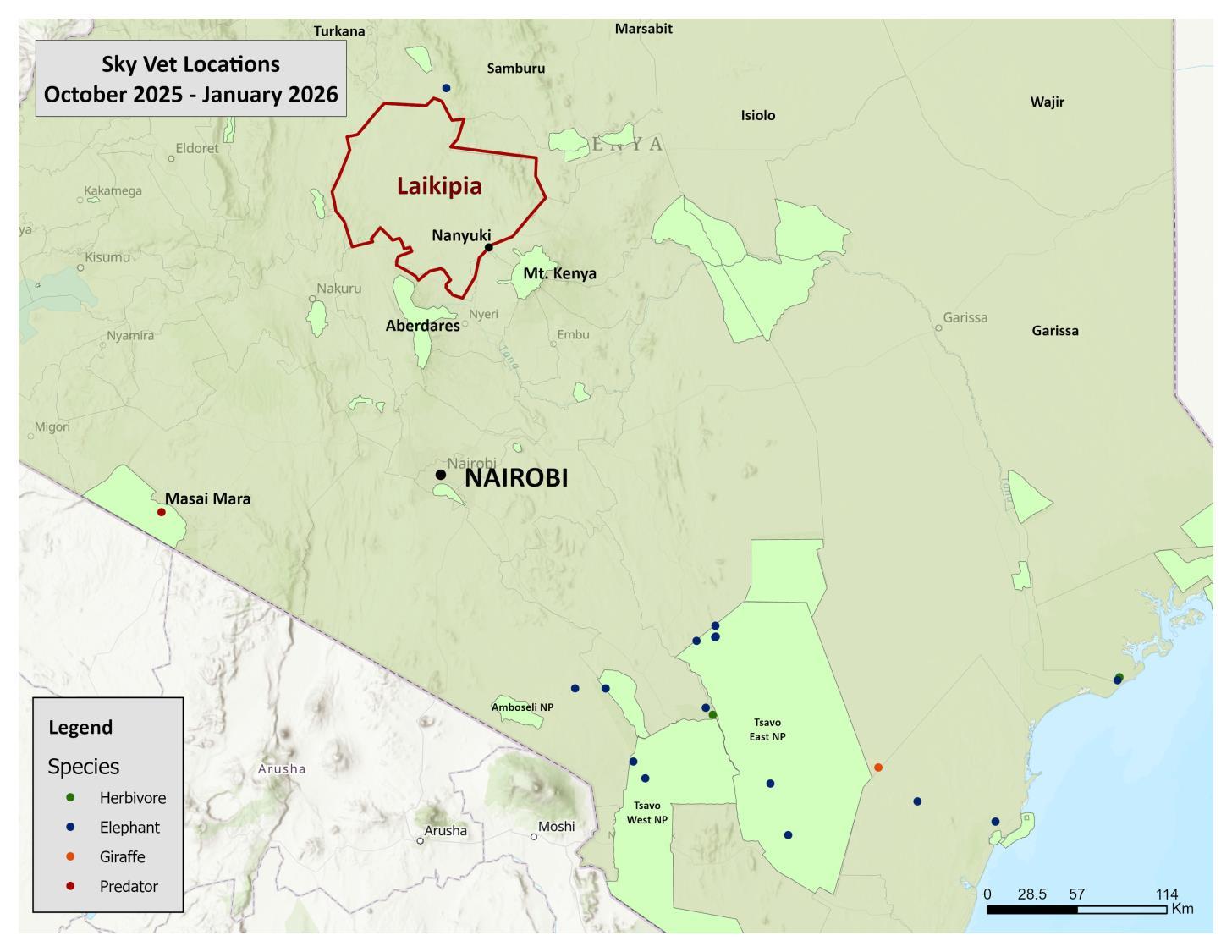
Cases Attended to by SWT/KWS Sky Vet Unit
October 2025 - January 2026
Outcomes of Cases Attended to by SWT/KWS Sky Vet Unit
October 2025 - January 2026
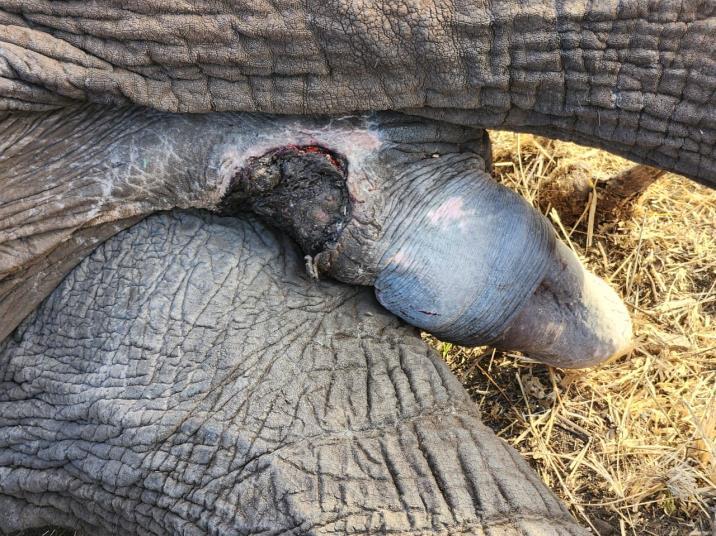
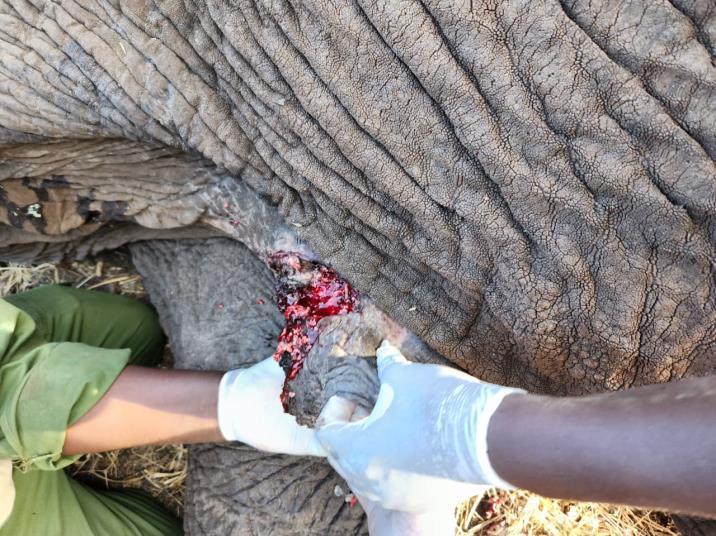
This elephant was spotted by the management of Oldonyo Wuas to have been wounded on the prepuce.
Immobilisation, examination and treatment
This bull was successfully immobilized using 20mg Etorphine hydrochloride delivered remotely in a 3cc Dan inject dart. Darting was done from a helicopter, and it took 10 minutes for the drug to achieve its full effects.
Examination revealed a benign tumour of the prepuce infested with maggots. The prepuce was cleaned, flushed with Hydrogen peroxide, infused with a tincture of Iodine, flushed with Ivermectin, packed with green clay and then sprayed with a topical antibiotic.
He was additionally given Amoxicillin antibiotics and Dexamethasone parenterally.
Prognosis
He was reversed from narcosis using 200mg of Naltrexone hydrochloride given intravenously via the ear vein. He rose few minutes later and walked away with a fair prognosis. .
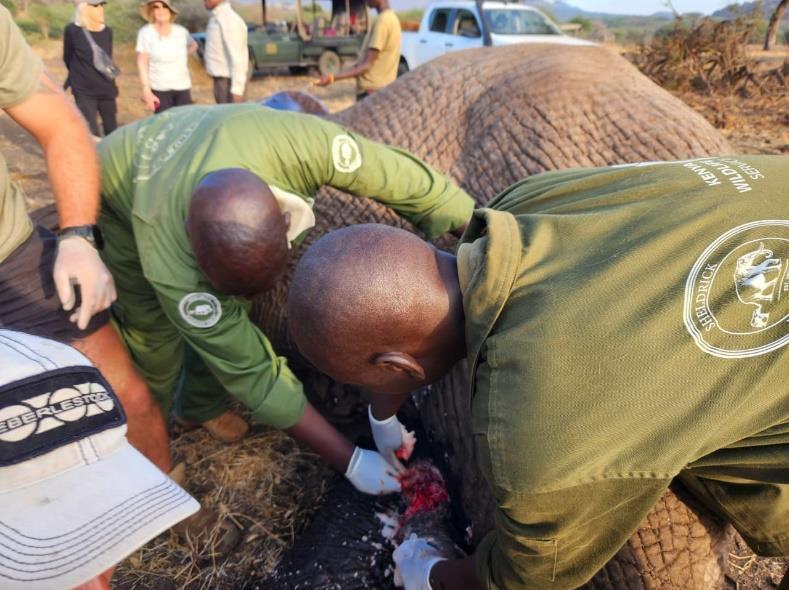
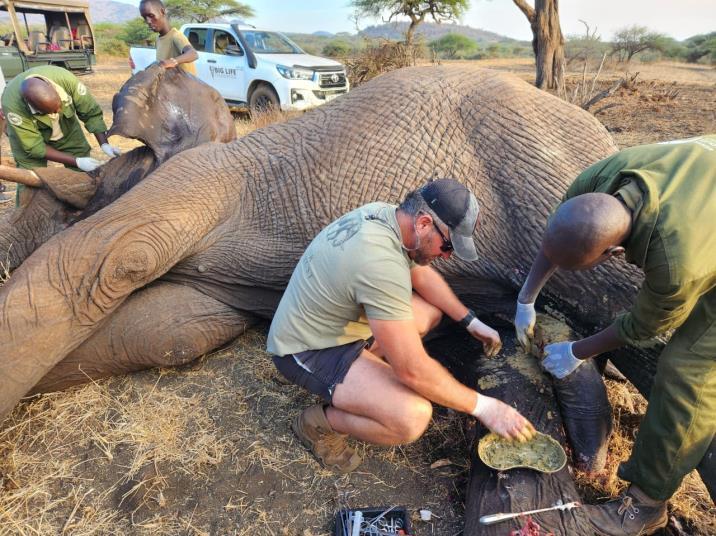
This elephant was spotted by the SWT pilot in Shakahola area with a wound on his left chest area.
Immobilisation, examination and treatment
This elephant was successfully immobilized using 20mg Etorphine hydrochloride delivered remotely in a 3cc Dan inject dart from the helicopter and it took 11 minutes for the elephant to be fully anaesthetized.
Examination revealed a shallow, high-speed projectile wound on the left chest area which appeared to have hit the ribs. The wound was thoroughly cleaned with water, flushed with Hydrogen peroxide, rinsed with water and infused with tincture of Iodine. The wound was thereafter topically sprayed using an antibiotic.
He also received shots of Amoxicillin antibiotics and Flunixin anti-inflammatory parenterally.
Prognosis
He was reversed from narcosis using 200mg of Naltrexone hydrochloride given intravenously via the ear vein. He rose few minutes later and walked away with a good prognosis. .
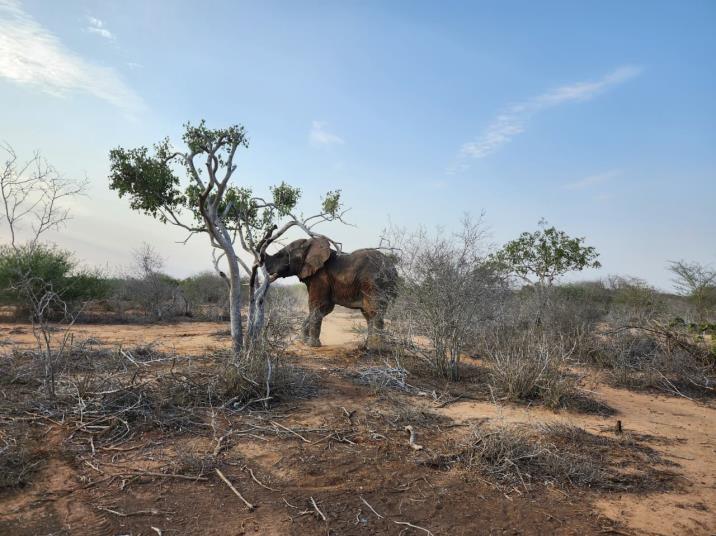
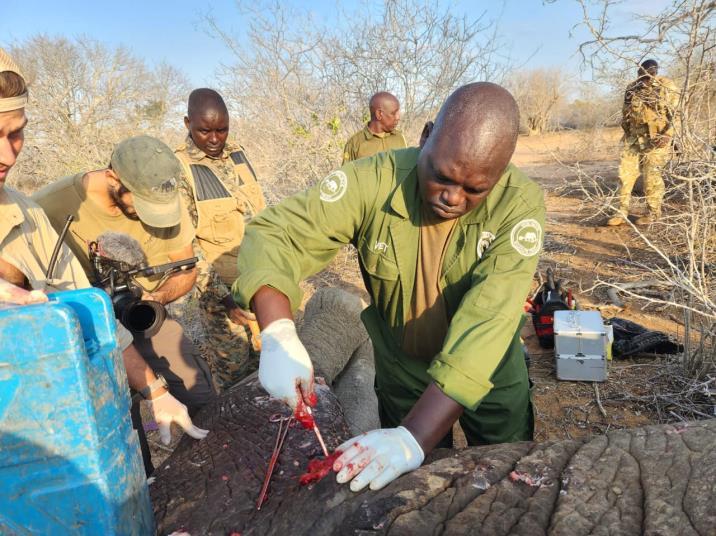
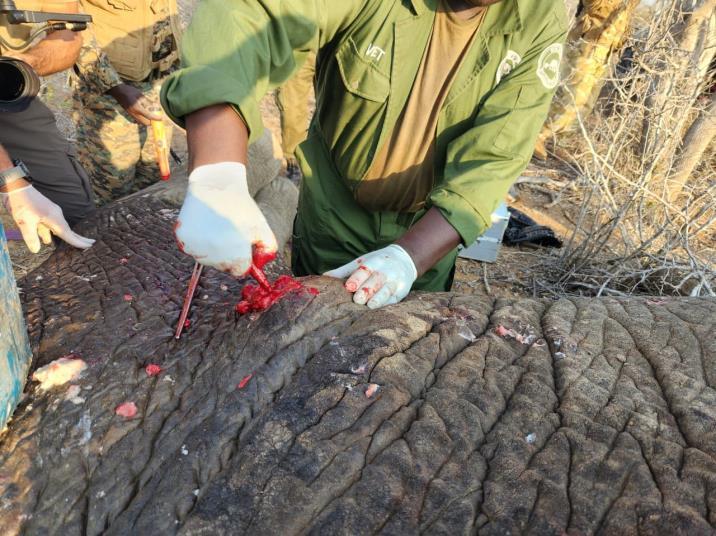
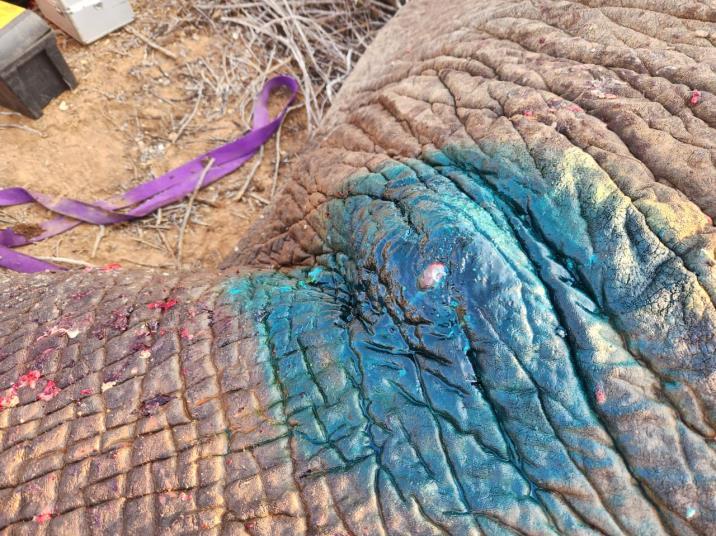
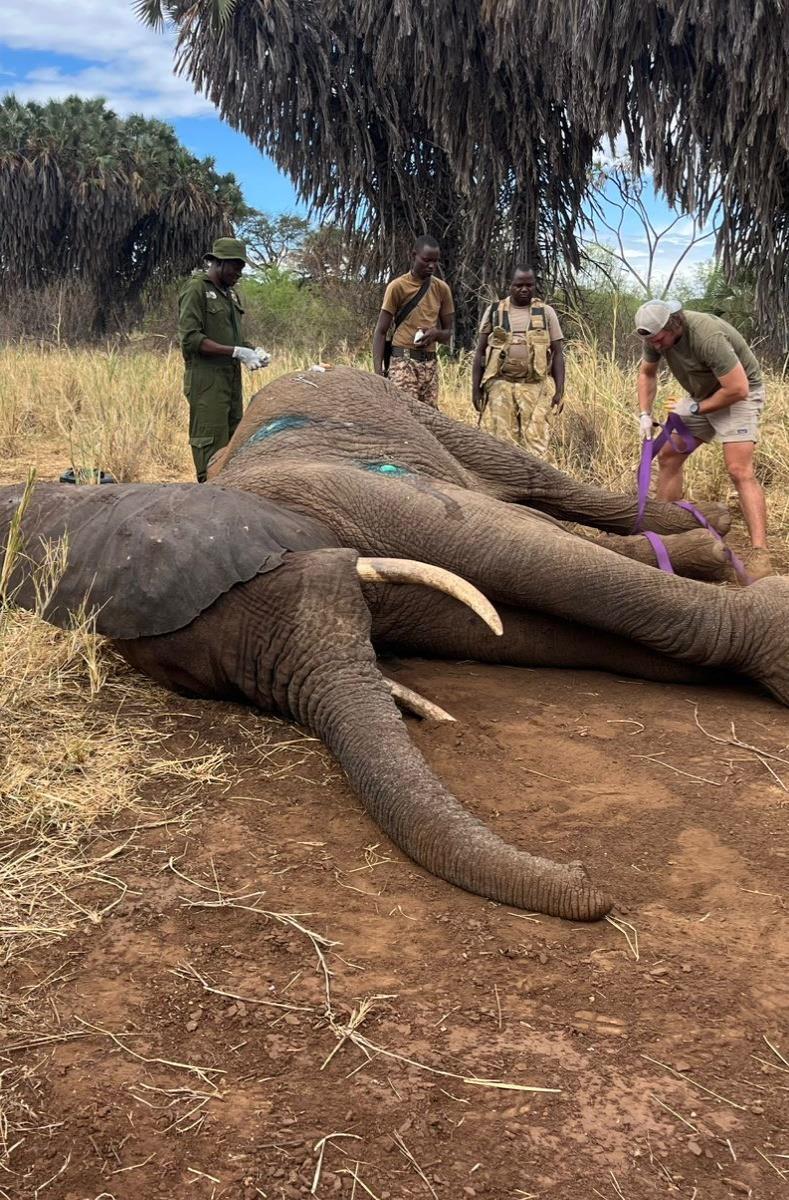
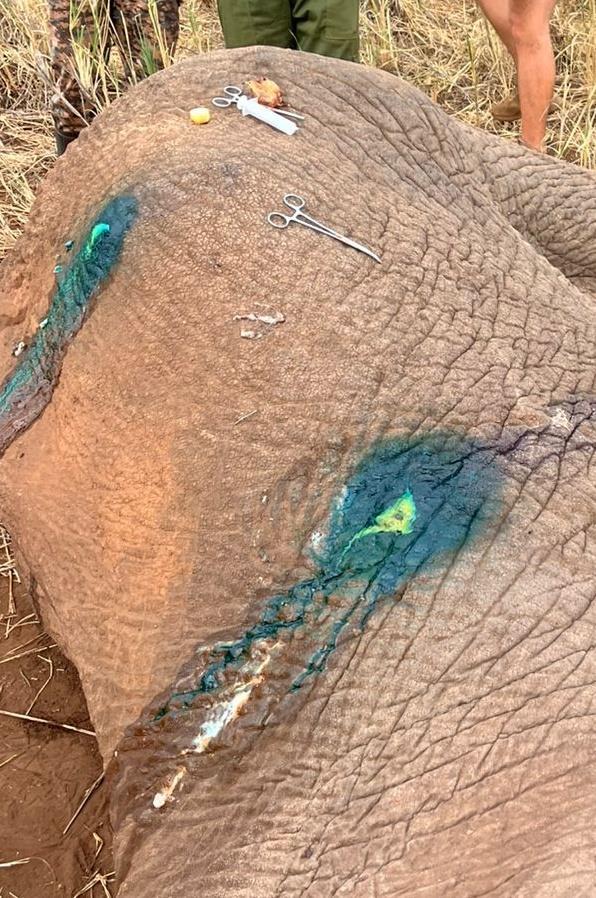
This injured elephant was spotted by SWT pilot in Severin area, Tsavo West National Park limping on his right forelimb and was wounded.
Immobilisation, examination and treatment
This bull was successfully immobilized using 17mg Etorphine hydrochloride delivered remotely in a 3cc Dan inject dart. Darting was done from a helicopter, and it took 10 minutes for the drug to achieve its full effects.
Examination revealed 9 deep septic spear wounds on various parts of his body. The right forelimb was inflamed and with a spear wound on his elbow joint. He was also in poor body condition. The wounds were thoroughly cleaned and debrided. This was followed by flushing with Hydrogen peroxide and rinsing the wounds thoroughly with water. The wounds were thereafter infused with tincture of Iodine, packed with antibiotic pessaries and topically sprayed using a topical antibiotic. He received shots of Amoxicillin antibiotics, a Metabolic stimulant and Flunixin anti-inflammatory parenterally.
Prognosis
Prognosis was guarded due to the extent of the injuries.
.
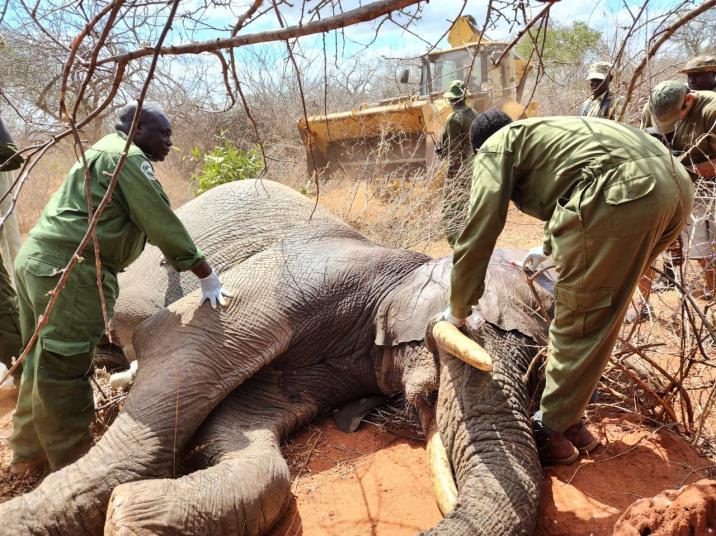
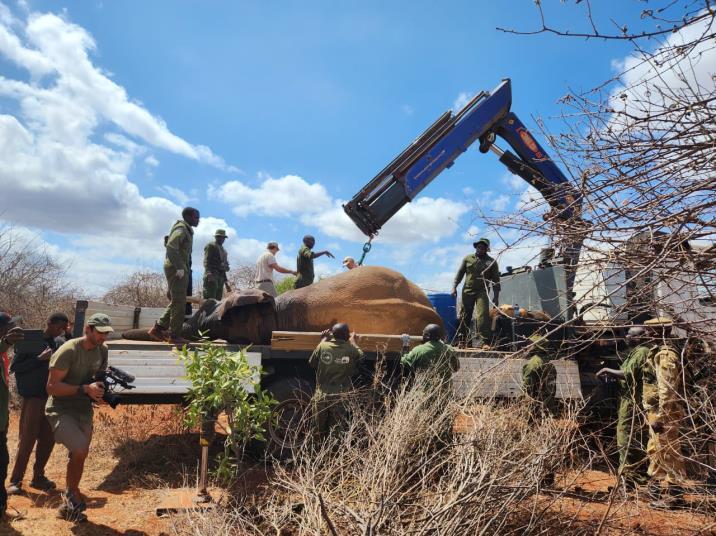
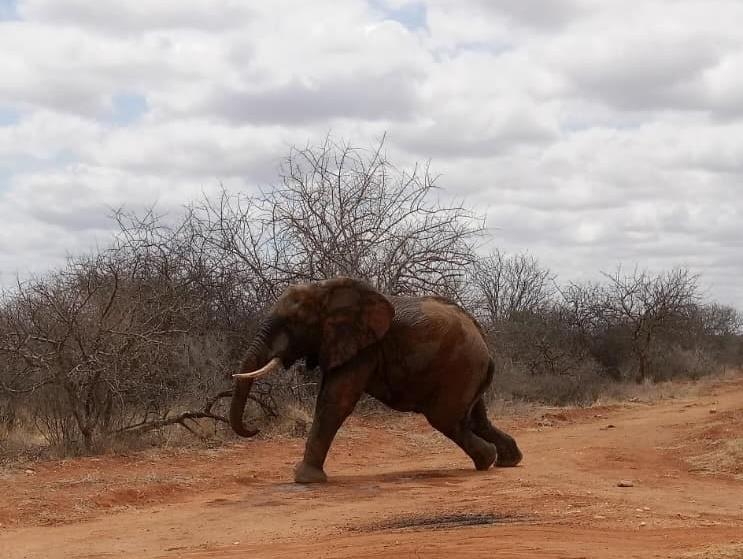
This elephant was spotted and reported by SWT/KWS rangers to have wandered into the community area in Kilalinda area near Kaluku.
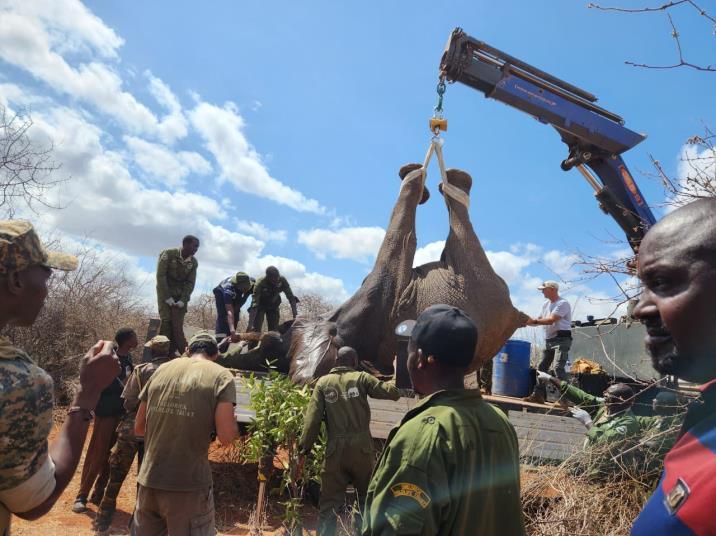
Immobilisation and relocation
This elephant was successfully immobilized from the helicopter using 20mg Etorphine hydrochloride delivered in a 3cc Dan inject dart and it took 10 minutes for the drug to achieve its full effect.
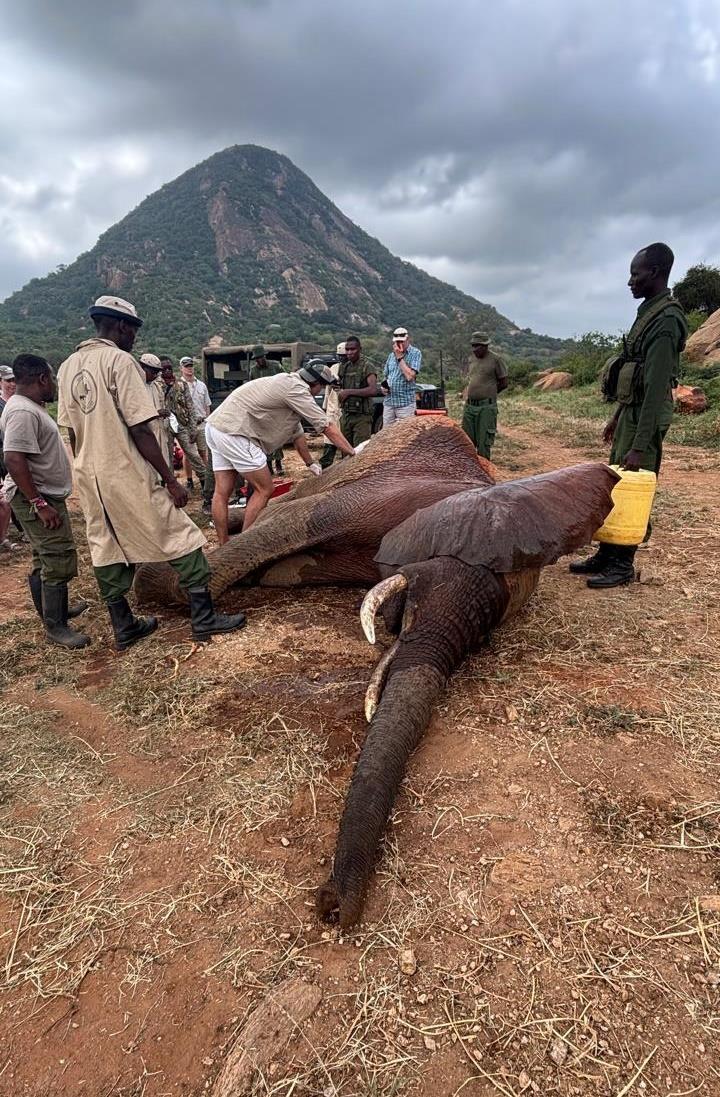
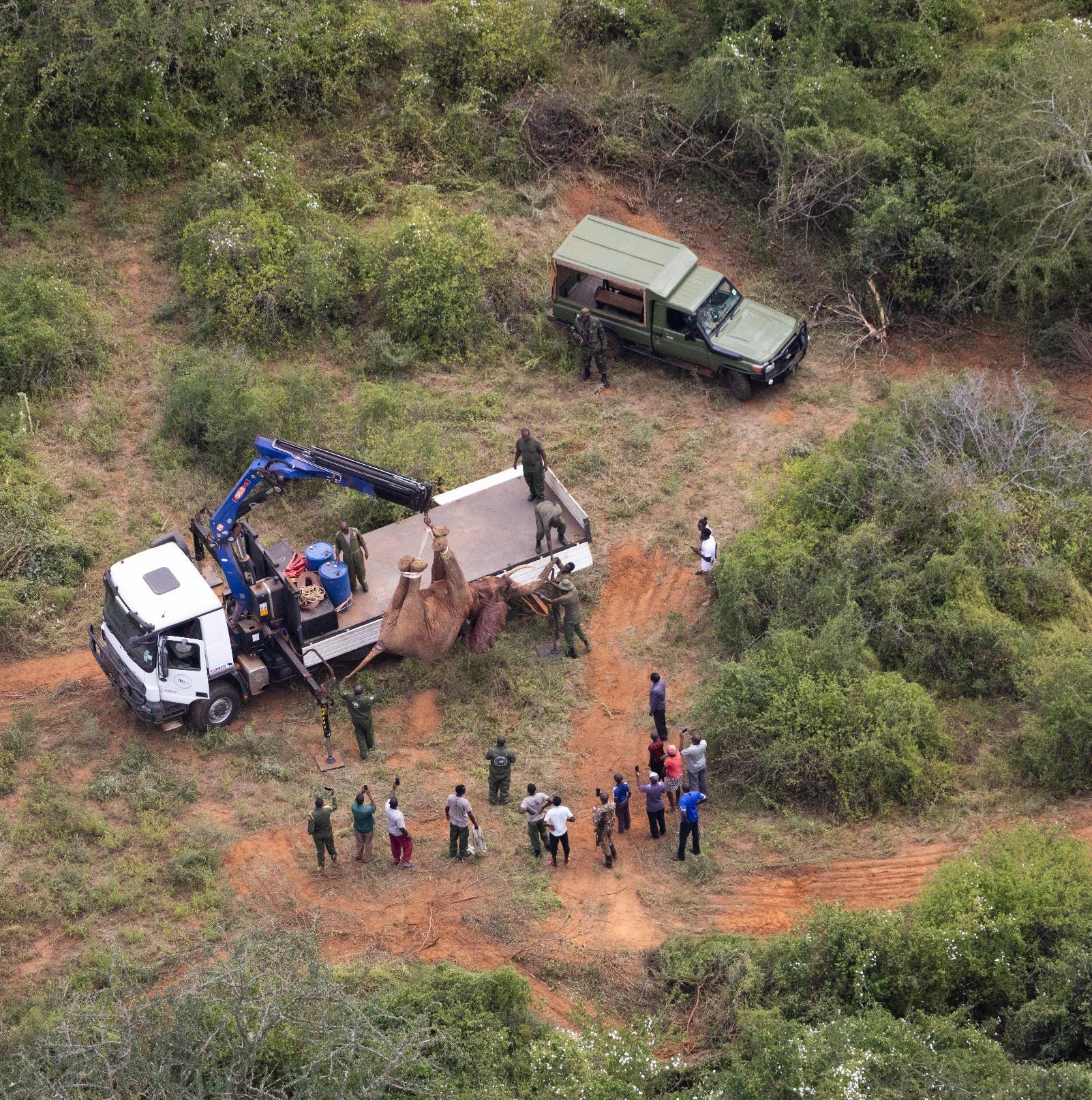
He received a shot of Dexamethasone intravenously and loaded on to the flatbed truck and relocated to Kaluku area.
Prognosis
He was revived from narcosis using 200 mg Naltrexone hydrochloride given intravenously via a prominent ear vein. He rose and slowly walked away 3 minutes later. Prognosis is good.
Elephant Snared
Arabuko Sokoke Forest
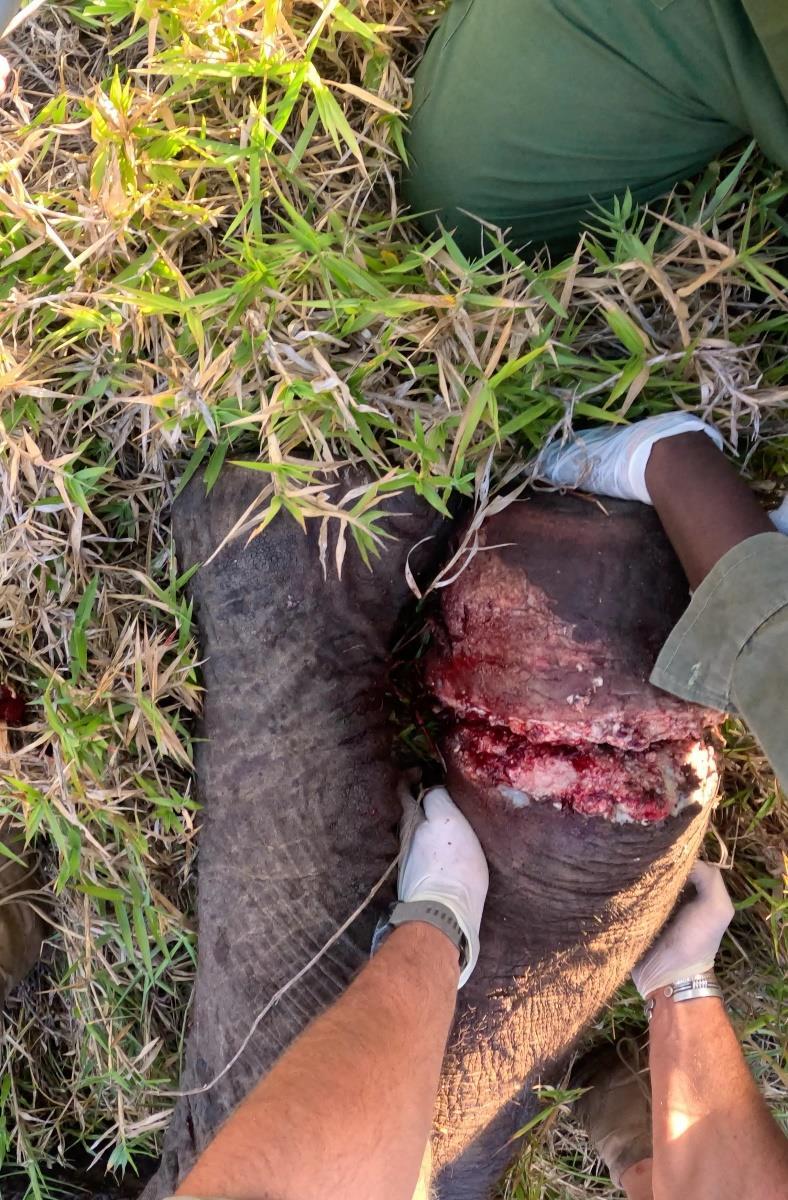
This elephant was spotted by KWS rangers in Arabuko Sokoke limping on her right forelimb.
Immobilisation, examination and treatment
She was successfully immobilized using 3.5mg Etorphine hydrochloride delivered remotely in a 1.5cc Dan inject dart. Darting was done from the vehicle, and it took 8 minutes for full anaesthesia to be achieved.
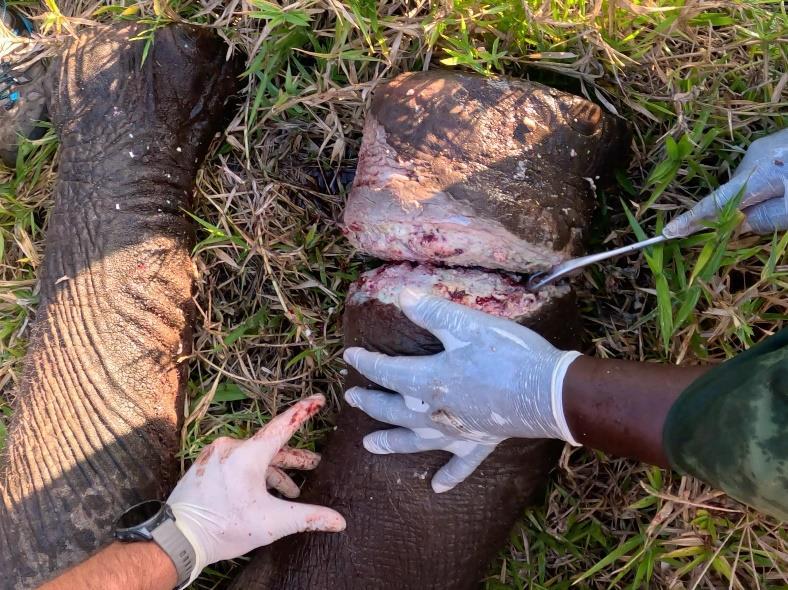
Examination revealed a cable wire snare on her right forelimb. The snare had inflicted a deep wound around the carpal area. The blood supply around the area was intact. The snare was cut with wire cutters, and the wound was thoroughly cleaned with water, followed by flushing with Hydrogen peroxide and infusing with tincture of Iodine. The wound was applied with green clay and then sprayed with a topical antibiotic. She also received shots of Amoxicillin antibiotics and flunixin anti-inflammatory parenterally.
Prognosis
She was reversed from narcosis using 35 mg of Naltrexone hydrochloride given intravenously via the ear vein. She rose a few minutes later and joined the rest of the herd. Prognosis is good.
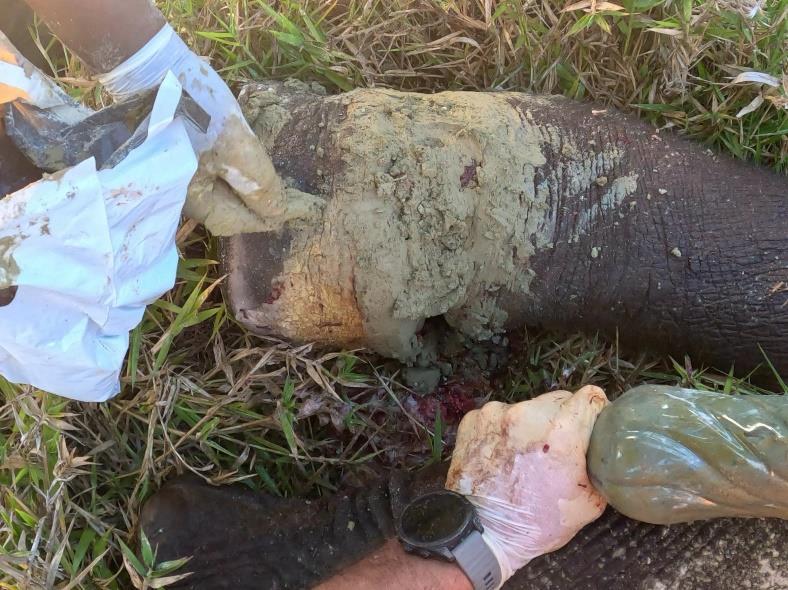
This elephant was reported by KWS rangers in Kamboyo outpost to be wondering into the neighbouring community areas, posing potential risks to the people and the crops.
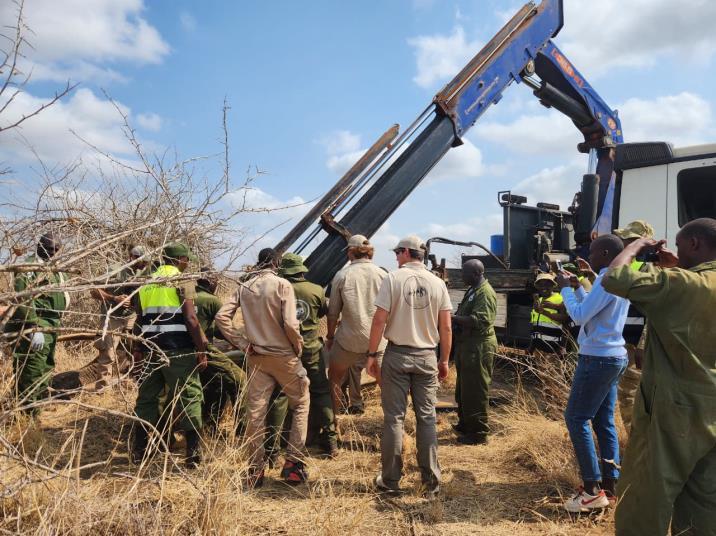
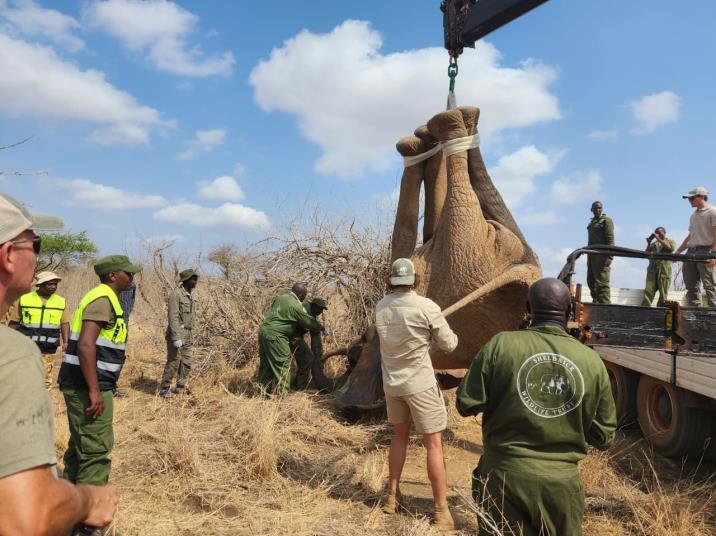
Immobilisation and relocation
This elephant was successfully immobilized using 20mg Etorphine hydrochloride delivered in a 3cc Dan inject dart. Darting was done from the helicopter, and it took 10 minutes for the drug to achieve its full effect.
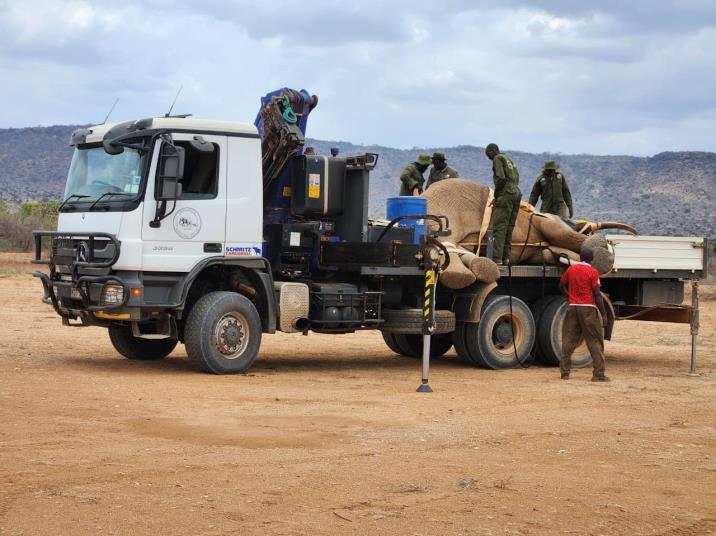
He received shots of Dexamethasone intravenously and intramuscularly then loaded on to the flatbed truck and relocated to Lugard area
Prognosis
He was revived from narcosis using 200mg Naltrexone hydrochloride given intravenously via a prominent ear vein. He rose and walked away few minutes later. Hopefully he will remain in the park and not pose any further danger to the local communities.
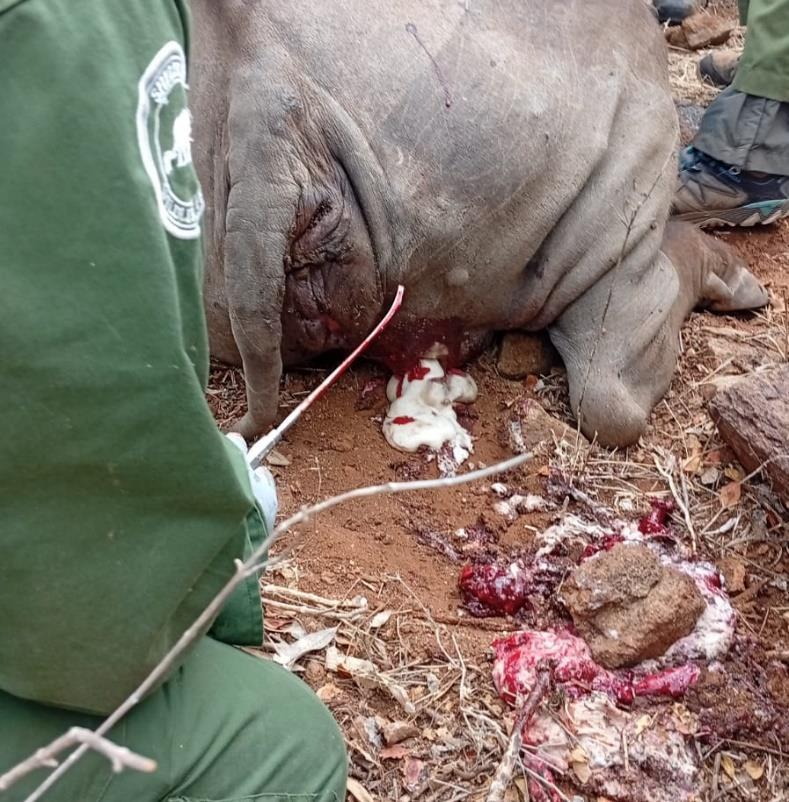
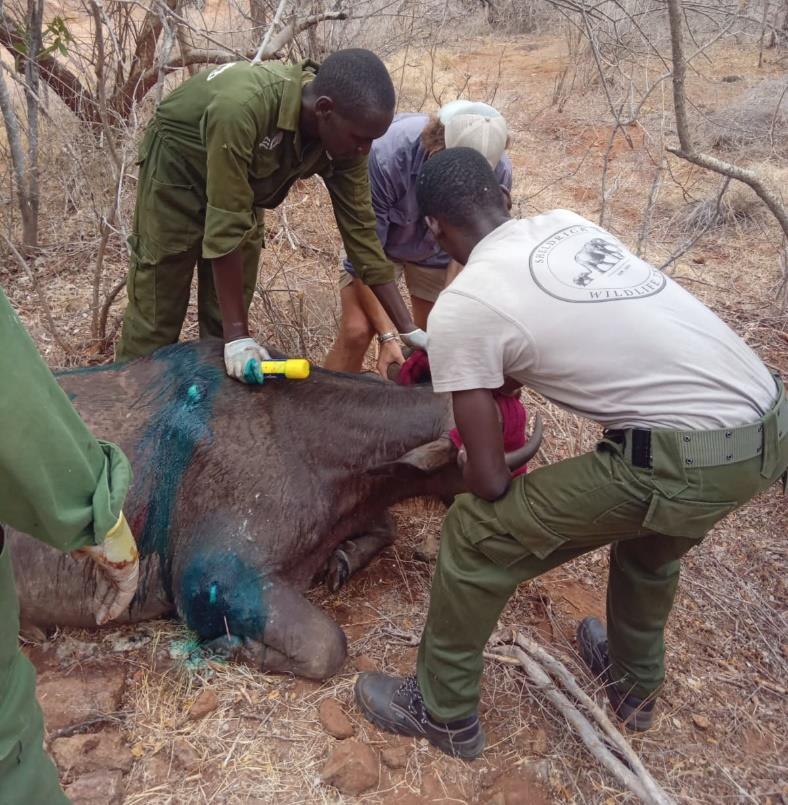
This buffalo was spotted by SWT pilot during the routine patrols wounded in Kaluku area.
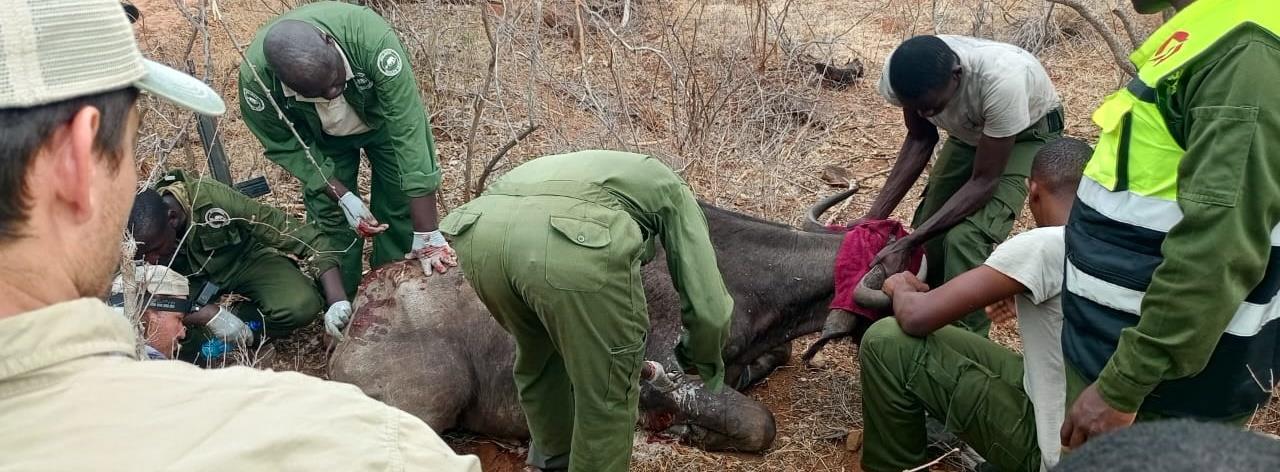
Immobilisation, examination and treatment
She was successfully immobilized using a combination of 7mg Etorphine hydrochloride and 50mg Azaperone. Darting was done from the helicopter, and it took 9 minutes for full anaesthesia to be achieved.
Examination revealed several septic predation wounds on her body. The wounds were suspected to have been inflicted by lions during a predation attempt. She also had a big abscess on her right thigh which was then lanced and drained of pus. The abscess pocket and the wounds were then washed, flushed with Hydrogen peroxide and tincture of Iodine then sprayed with a topical antibiotic.She additionally received shots of Amoxicillin antibiotics and Flunixin anti-inflammatory parenterally.
Prognosis
Prognosis is good.
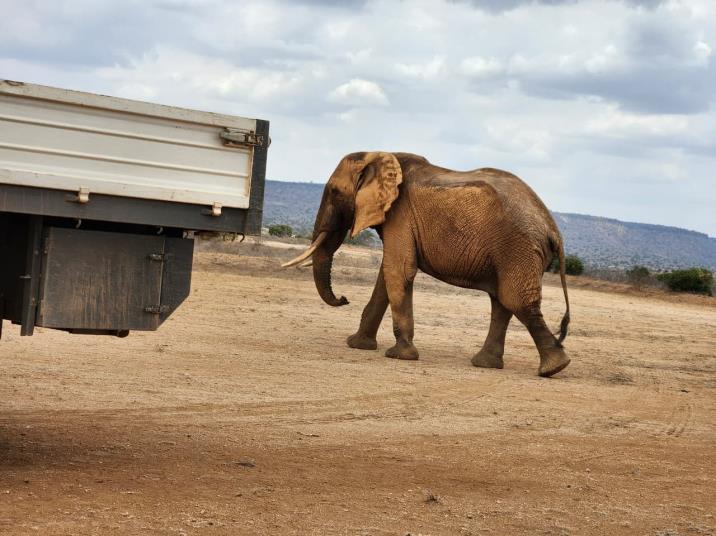
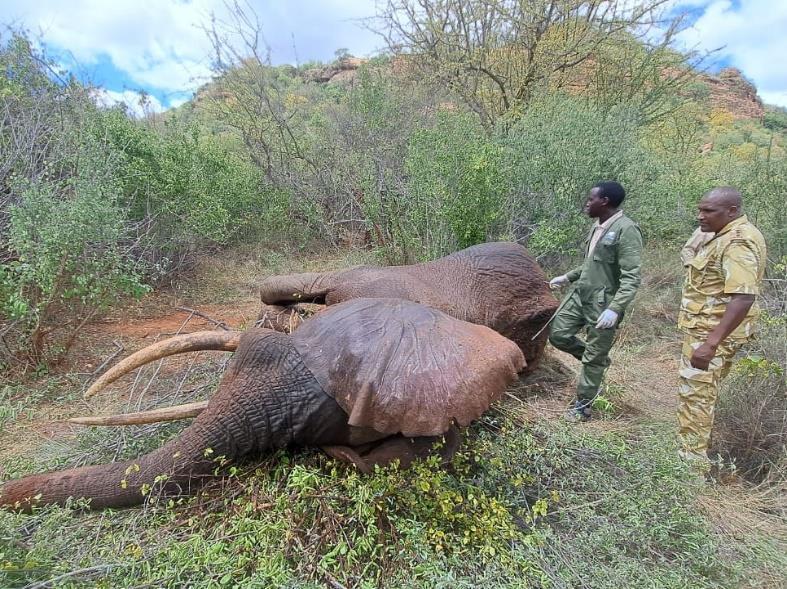
The elephant was reported to be having difficulty in movement, and with a swollen upper left forelimb. Due to long distance, the assistance of a helicopter was requested from Sheldrick Wildlife Trust (SWT).
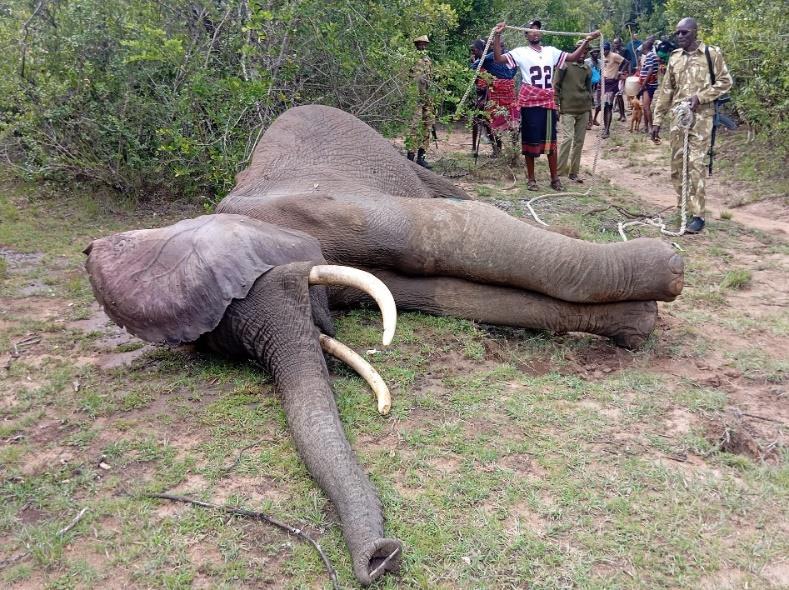
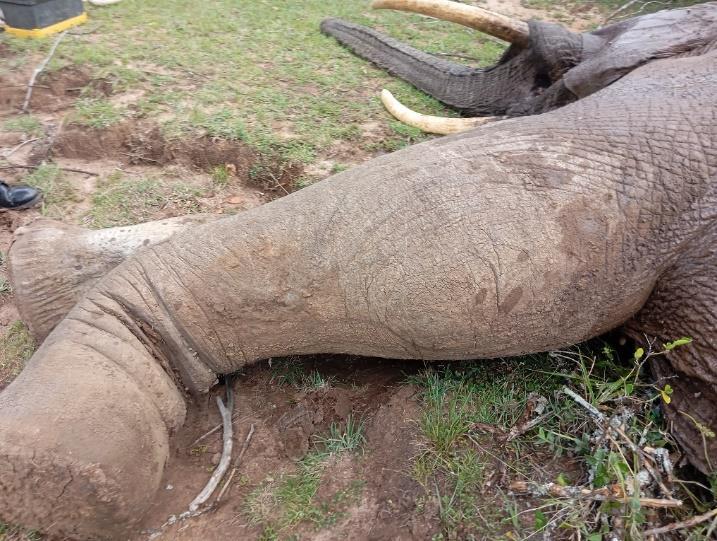
The bull was darted from a helicopter with a dart of 16mg Etorphine. An induction time of 6 minutes was recorded after darting. The bull went down on right lateral recumbency.
The bull was given a fair body condition score, 3 out of 5. He was observed with severe stepping lameness; the left forelimb was affected. The phalanges and the distal limb were flexed, the animal could not step on the limb. The elbow joint and the distal part of the humerus, of the left forelimb, were significantly swollen. A confirmatory diagnosis could not be determined. Tentative findings suggest either a dislocation of the elbow joint of the left forelimb or a fracture of the distal humerus of the same limb. A supportive treatment was indicated and administered to alleviate pain and prevent secondary infection, so 30,000mg Long-acting Amoxicillin, 4,000mg Flunixin meglumine, 100mg Dexamethasone, 750mg Clindamycin, 400mg Butaphosphan, and 200mg vitamin B12 were administered.
A supportive treatment offers temporary pain relief, but the condition bears a poor prognosis.
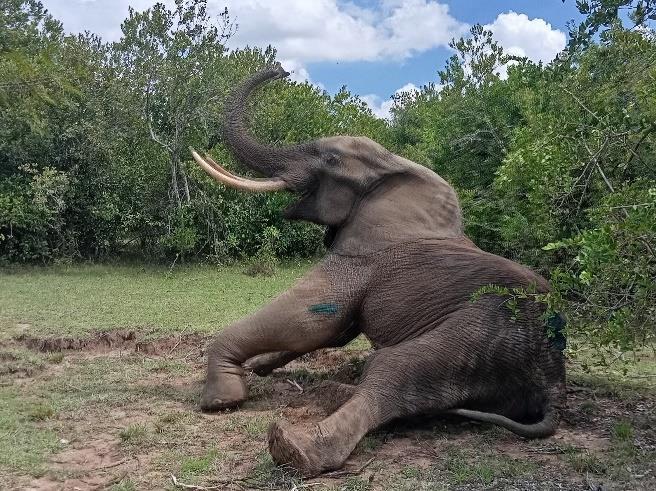
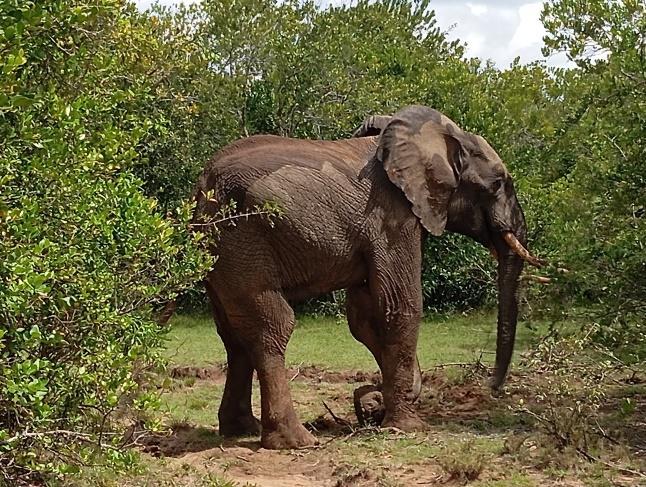
A wounded and orphaned elephant calf was found abandoned in Amboseli. The calf was captured and transported for maintenance at SWT stockade in Nairobi.
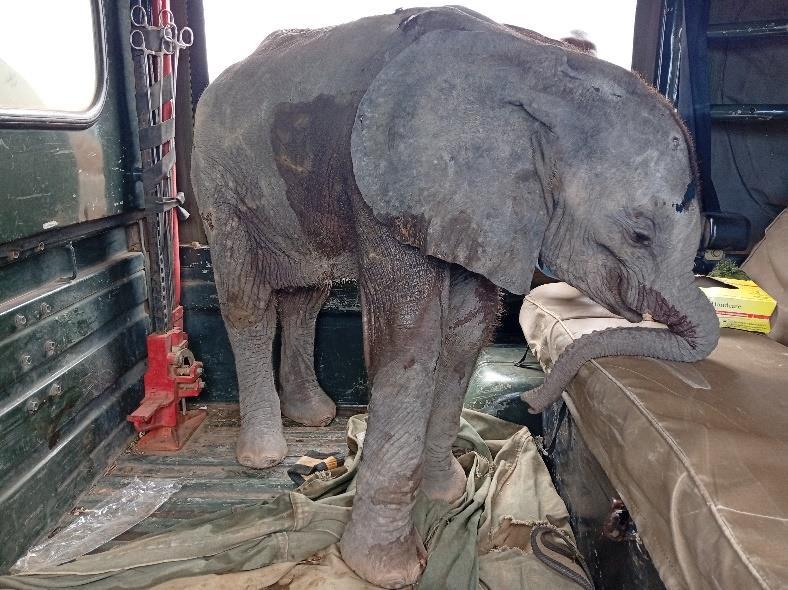
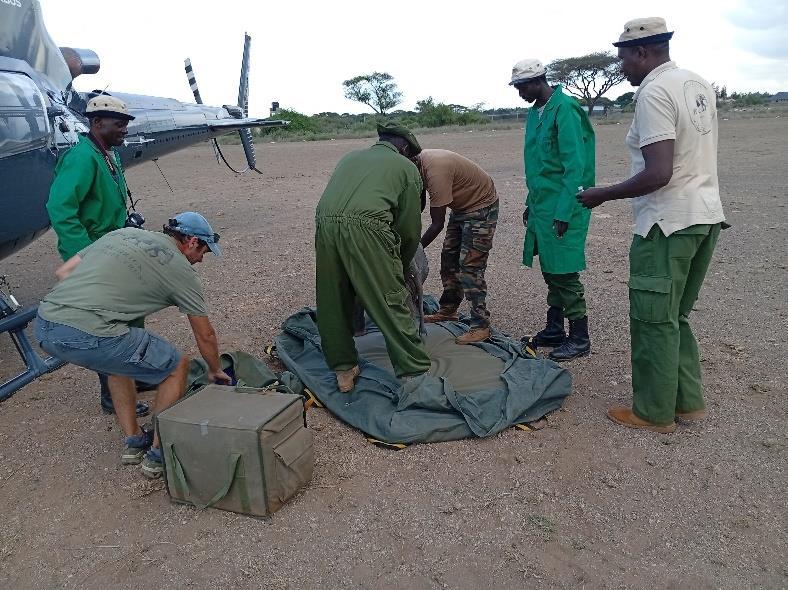
The calf was manually restrained by a team of 3 rangers and transported in a Land Cruiser to Kimana Sanctuary Airstrip for aircraft delivery to Nairobi.
The calf was maintained on intravenous fluids and warmth immediately after capture in Amboseli National Park. The calf had an extensive wound at the back. Topical antibiotic was applied on the wound to cover for local antibiotic.
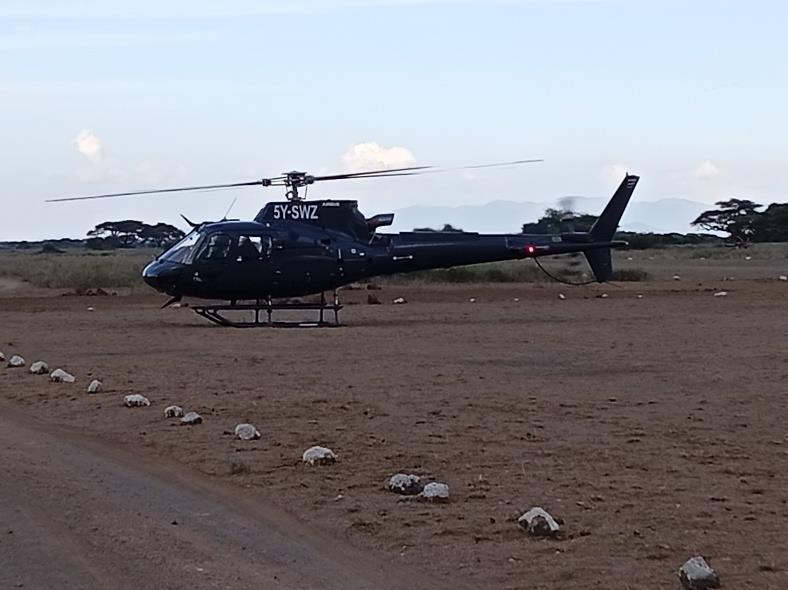
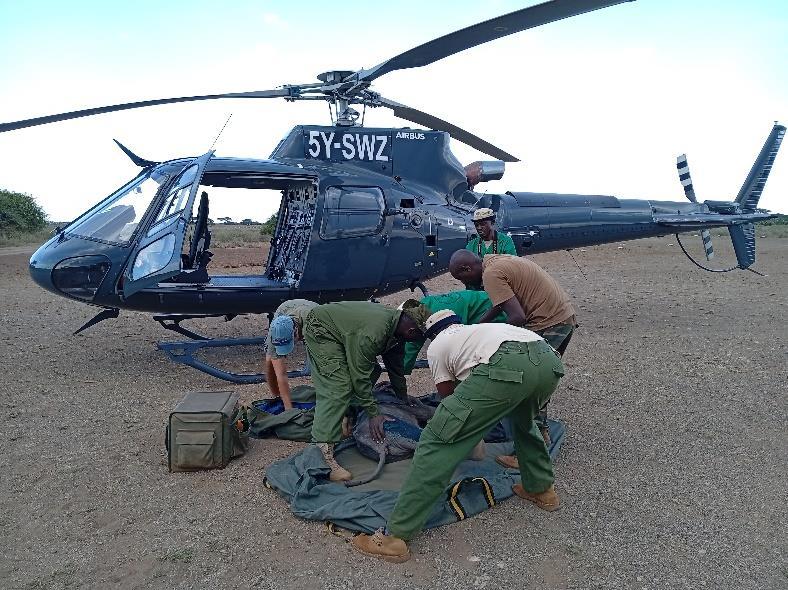
The calf was collected by the SWT helicopter and moved to SWT-Nairobi for further care
Giraffe Snared Galana, Tsavo East National Park
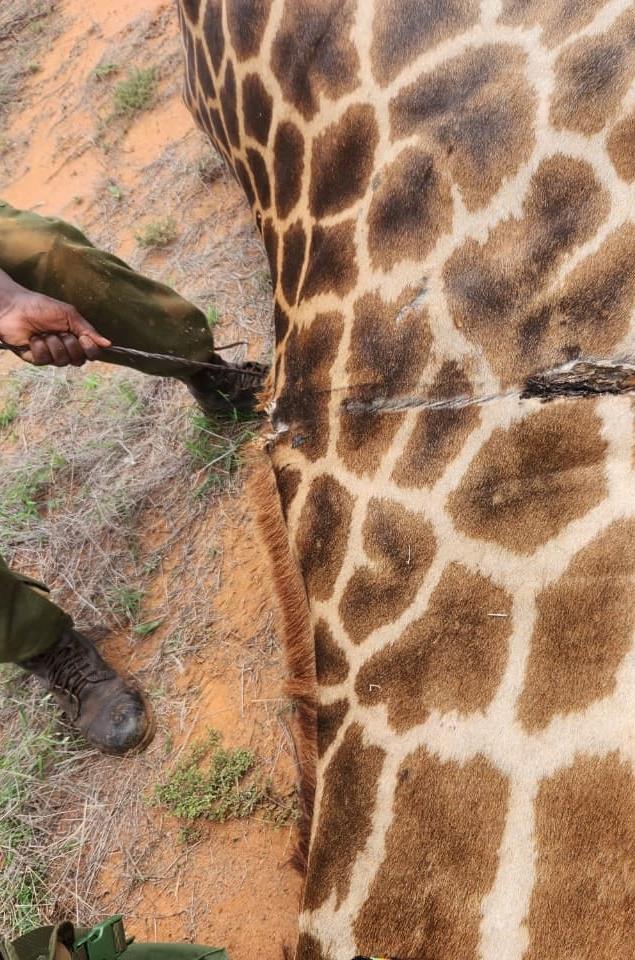
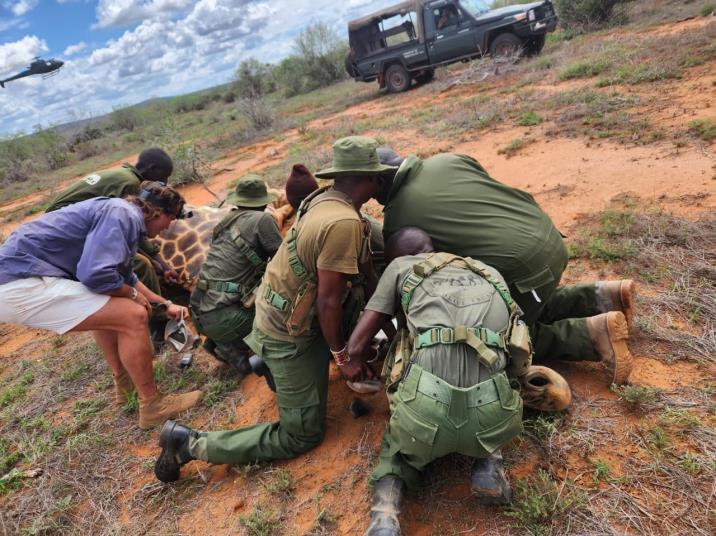
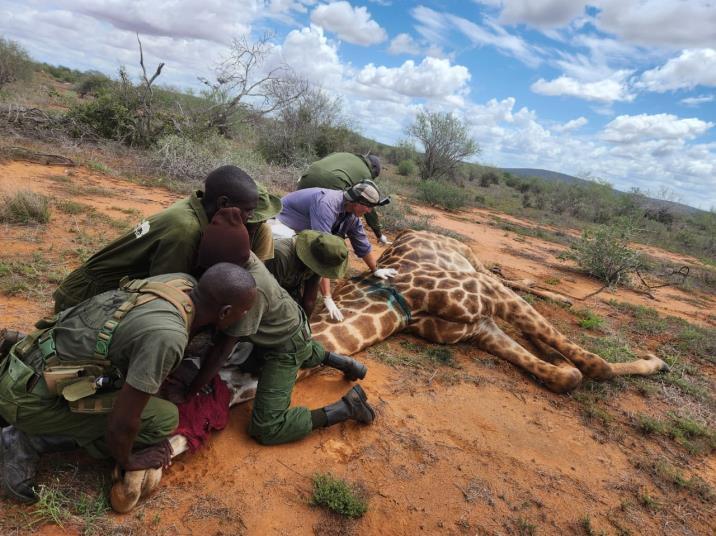
This giraffe was spotted by SWT pilot at Galana area having a winch wire snare on his neck.
Immobilisation, examination and treatment
This giraffe was successfully immobilized using 14mg Etorphine hydrochloride and 40mg Azaperone delivered remotely in a 3cc Dan inject dart. Darting was done from the helicopter, and it took 8 minutes for the drug to achieve its full effects.
Examination revealed a winch wire snare on his neck which had inflicted a cut wound on the neck region. The snare was cut free using wire cutters and the wound was sprayed using a topical antibiotic.
He was additionally given Amoxicillin antibiotic parenterally.
Prognosis
This foal was rescued and taken to Voi Stockade for fostering. He later died the following morning.
Elephant Snared Kipini Conservancy, Lamu
This snared calf was spotted by rangers in Kipini conservancy, she was alone, limping and had a snare on her left front leg.
Immobilisation, examination and treatment
This calf was successfully immobilized using 2.5mg Etorphine given intramuscularly after successful manual restraint. Full anaesthesia was achieved 5 minutes later.
Examination revealed a deep snare wound around the left carpal joint; the snare had cut through the flesh and was buried deep inside the wound. The nylon rope snare was immediately cut and carefully removed from the wound. A severed artery was ligated followed by thoroughly cleaning the wound. The wound was flushed with Hydrogen peroxide, rinsed with water and infused with tincture of Iodine. Green clay was packed on the wound followed by a topical antibiotic spray. She additionally was given amoxicillin antibiotics, metabolic stimulants and flunixin anti-inflammatories parenterally. The calf was rescued and taken to Kaluku stockades for rehabilitation and further treatment.
Prognosis
Prognosis is good.
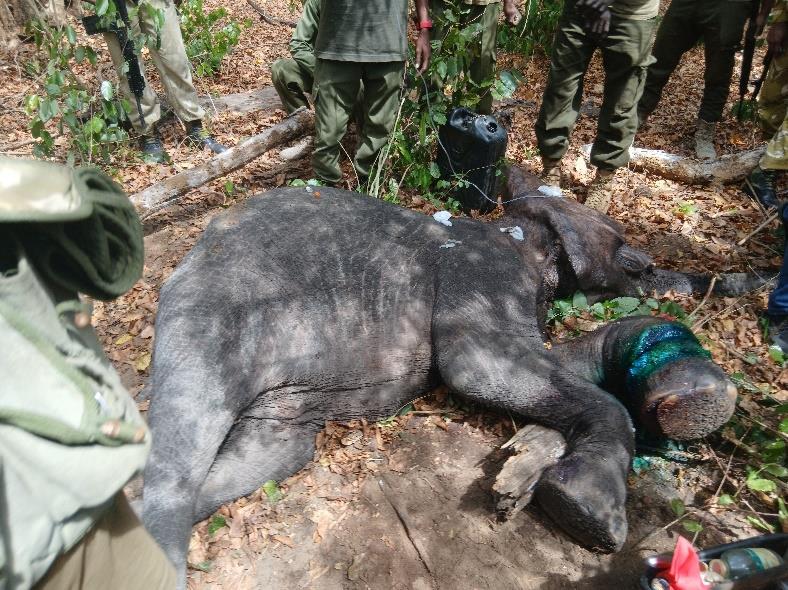
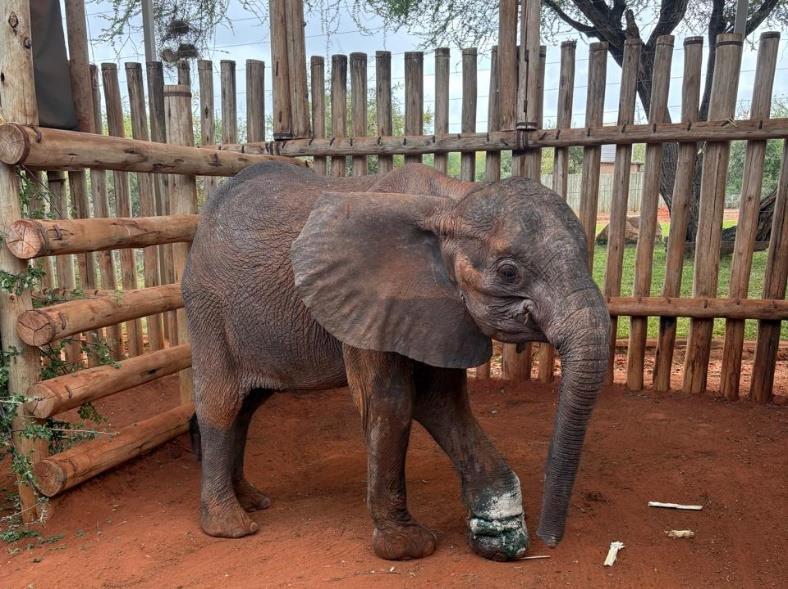
This injured elephant bull was spotted by the SWT pilot during routine patrols around Aruba.
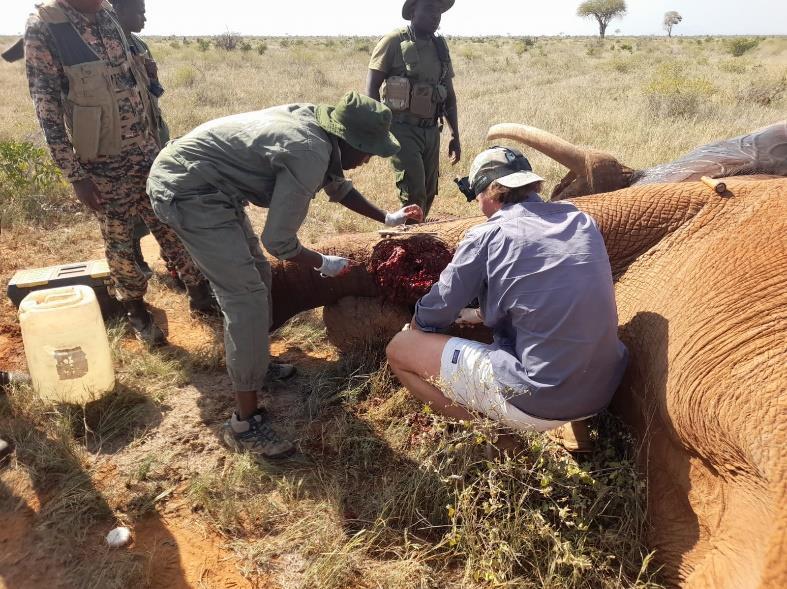
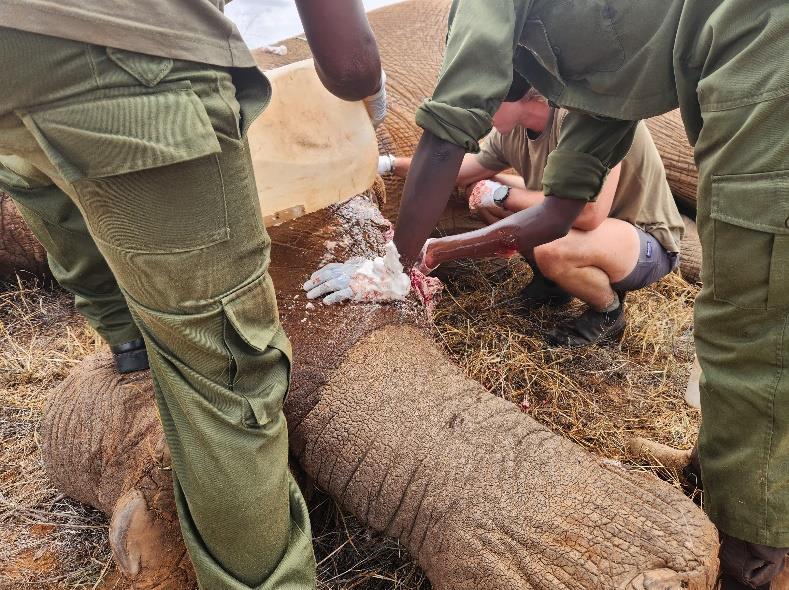
This bull was immobilized using 18mg Etorphine hydrochloride delivered remotely in a 3 cc Dan inject dart. Darting was done from the vehicle, and it took 10 minutes for full anaesthesia to be achieved.
Examination revealed multiple septic spear wounds (one on the left axillary area and a through spear wound below the left elbow). The wounds were thoroughly cleaned, debrided, flushed with Hydrogen peroxide, rinsed with clean water, infused with tincture of Iodine and the axillary wound packed with antibiotic pessaries and a topical antibiotic spray was applied on the wounds. He was additionally given Amoxicillin antibiotics and Flunixin anti-inflammatories parenterally.
A repeat treatment on this elephant was done on 22nd January. The wounds were cleaned thoroughly, and a second dose of antibiotics and anti-inflammatories was administered.
Prognosis is guarded.
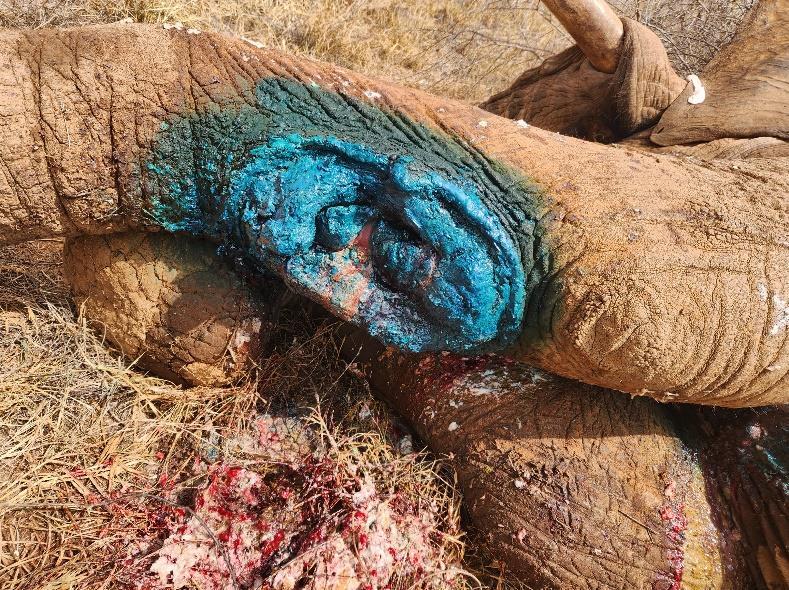
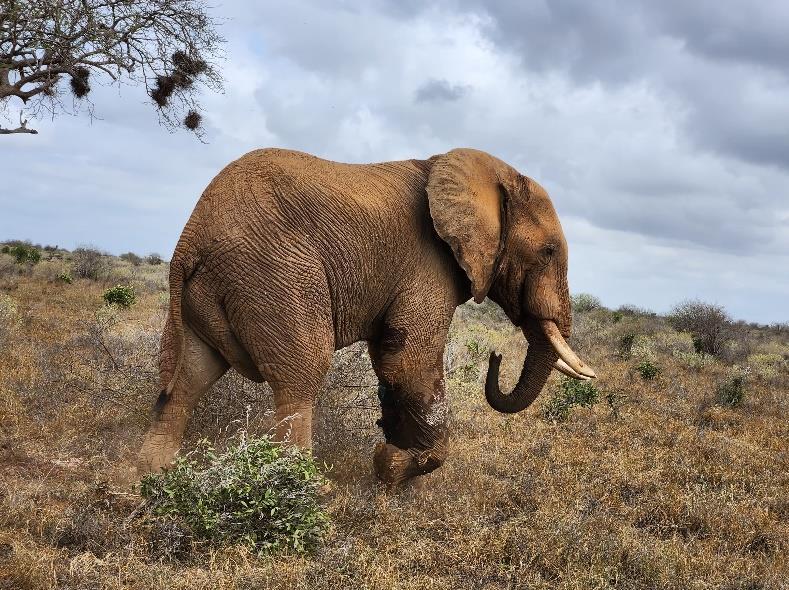
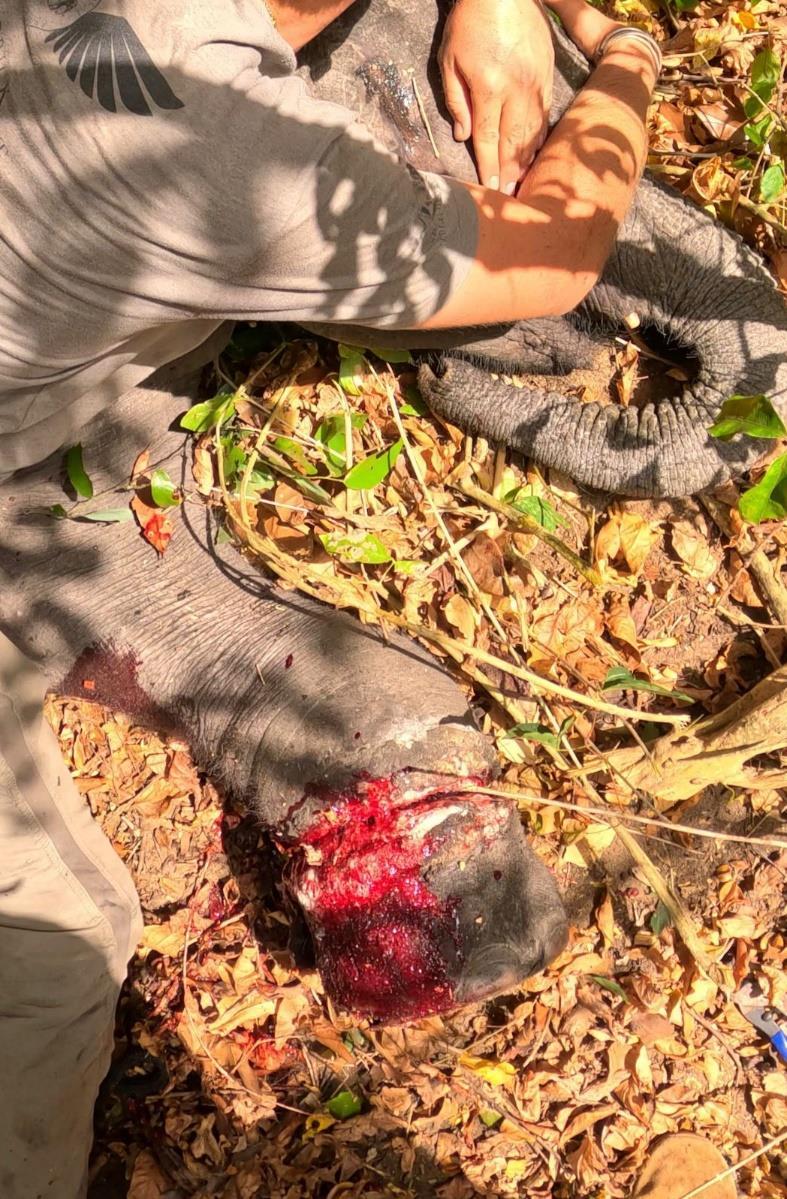
This injured elephant was spotted in Ithumba by the SWT pilot during routine patrols, he was limping on his right front leg.
Immobilisation, examination and treatment
This bull was immobilized using 16mg Etorphine hydrochloride delivered in a 3cc Dan inject dart. Darting was done from the helicopter, and it took 8 minutes for full anaesthesia to be achieved.
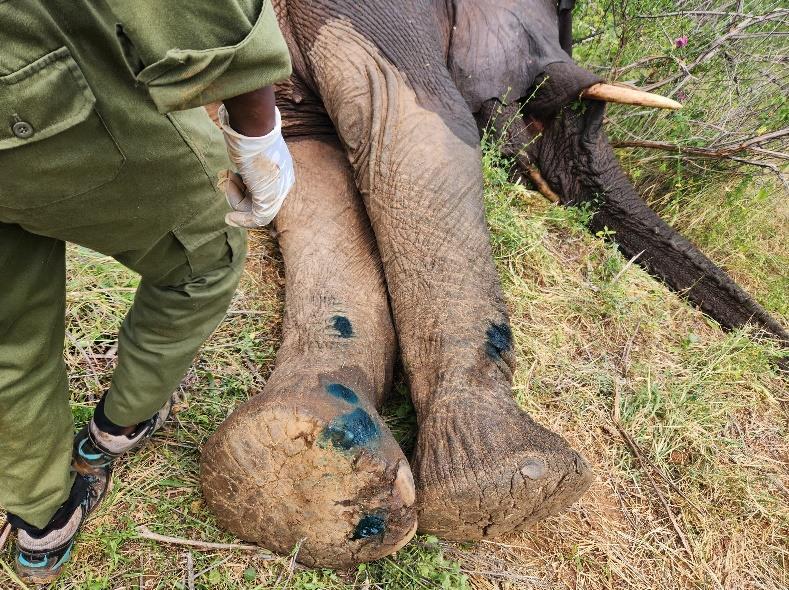
Examination revealed that the elephant’s foot pad had partially separated from the foot. This was suspected to be as a result of a spike wound which had since healed. Debris from the separation was removed followed by flushing the area with Hydrogen peroxide, rinsing with clean water, and infusing with Iodine. An antibiotic paste was applied to the separation followed by topical antibiotic spray. He additionally received parenteral antibiotics and anti-inflammatories.
Prognosis
He was revived from narcosis using 180 mg Naltrexone hydrochloride given intravenously via a prominent ear vein. He rose 3 minutes later and slowly walked. Prognosis is good. .
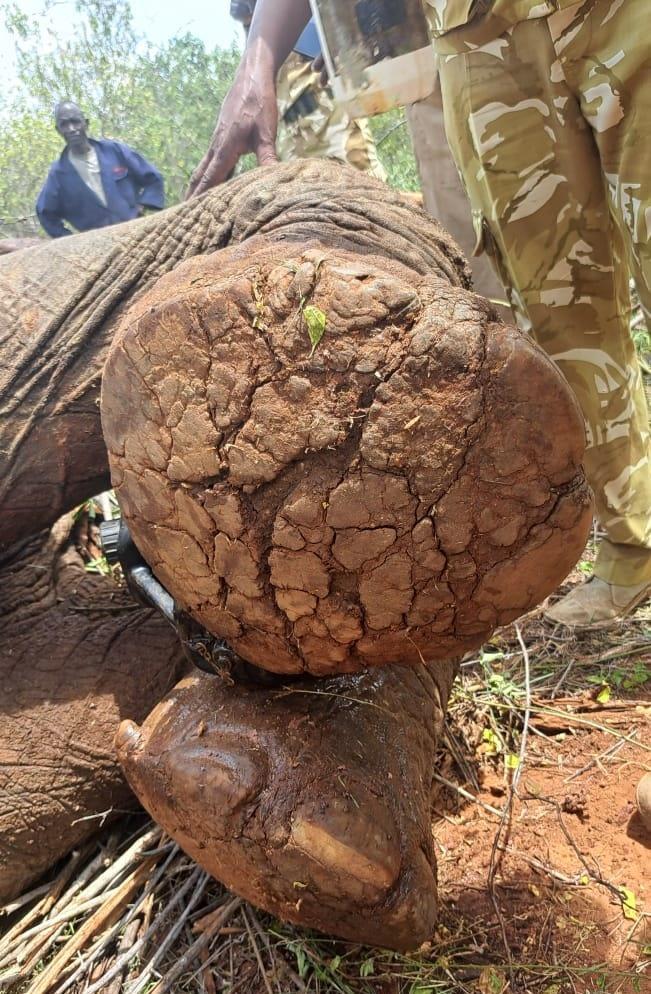
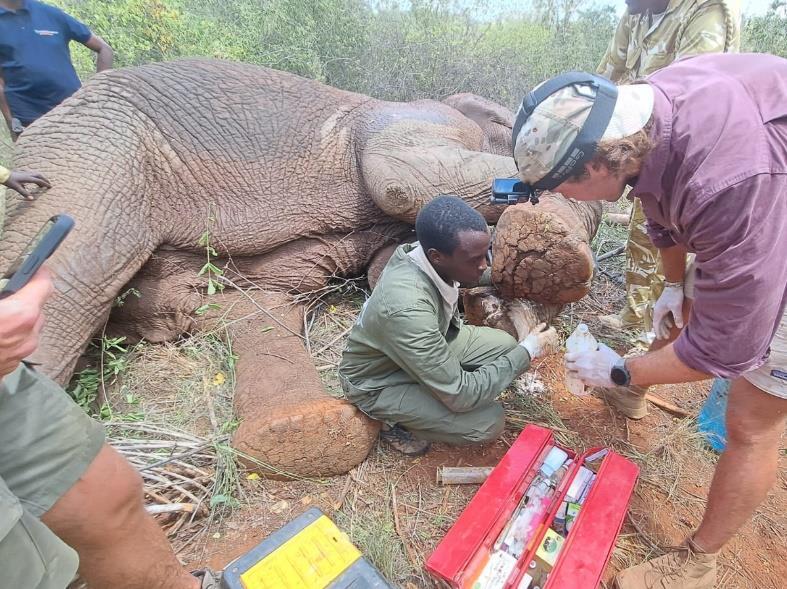
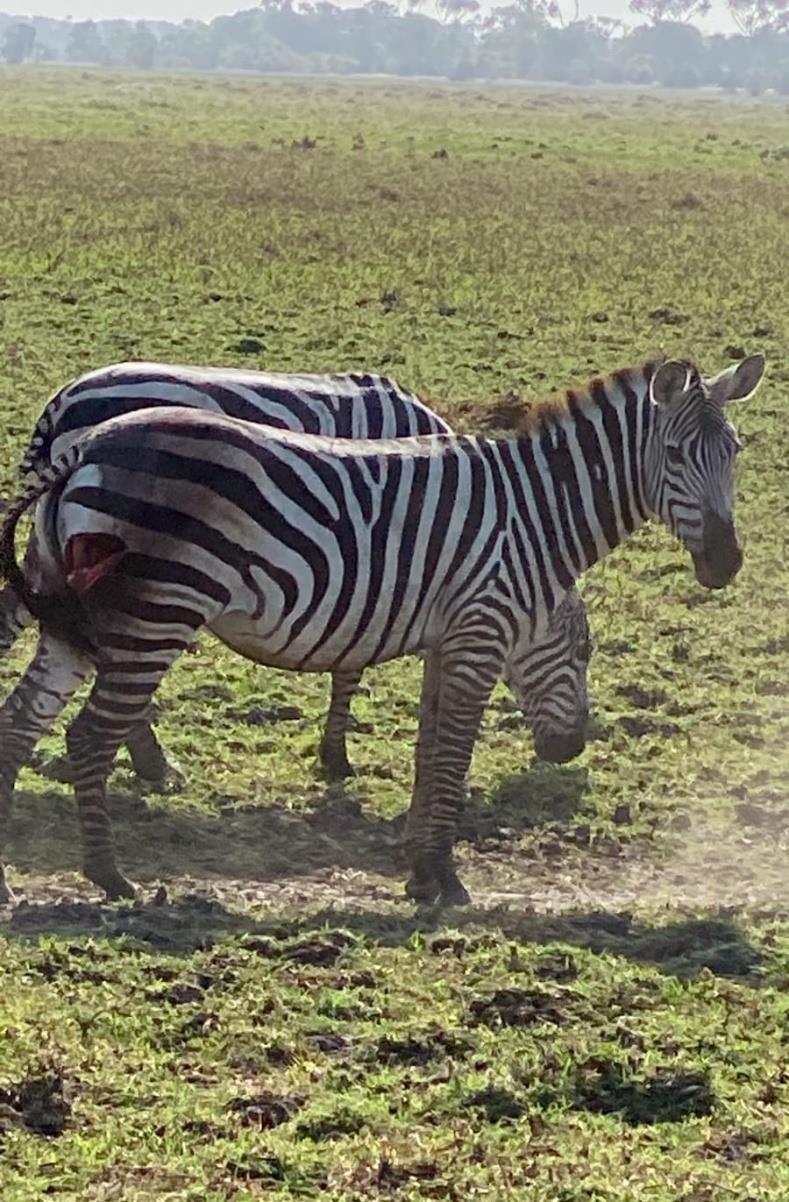
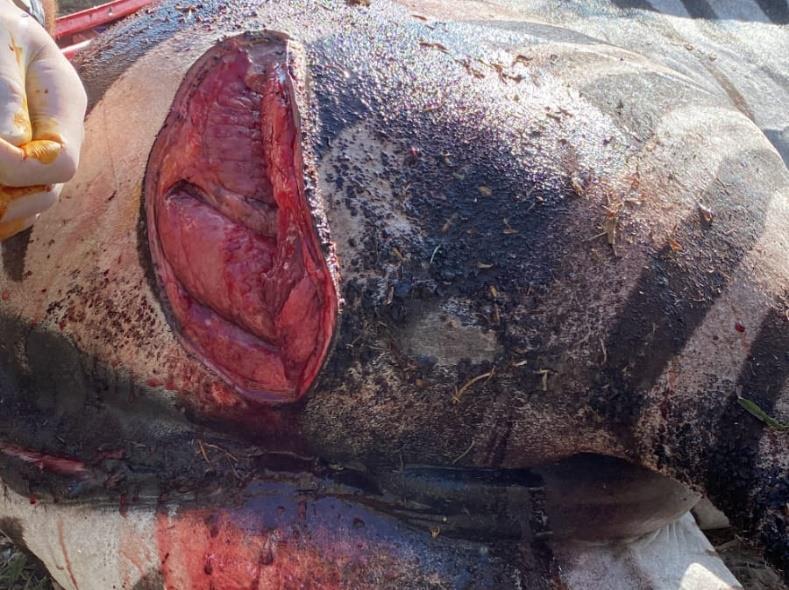
This injured zebra was sighted by the KWS teams at Kipini conservancy, Lamu. She had a deep machete wound on the right thigh.
Immobilisation, examination and treatment
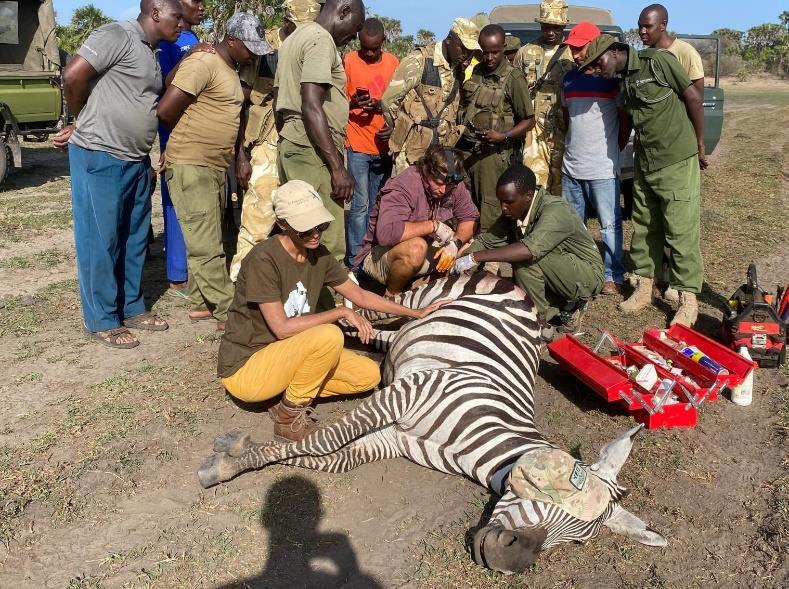
This mare was successfully immobilized using a combination of 6mg Etorphine and 50mg Azaperone, this was delivered remotely in a 1.5cc Dan- inject dart. Darting was done from the vehicle, and it took 4 minutes for the drugs to achieve its full effect.
Examination revealed a deep fresh machete wound on the right thigh. The wound was debrided, cleaned thoroughly and infused with tincture of Iodine. The wound was there-after sutured accordingly followed by topical antibiotic spray application. The zebra was given a shot of antibiotics and pain relief medication parenterally.
Prognosis
She was revived from anaesthesia using 60mg of Naltrexone hydrochloride given intravenously via the jugular vein. She rose 2 minutes later and dashed away. Prognosis is good. .
This injured elephant was spotted by the SWT/KWS teams in Ithumba. He had a wound on lateral right elbow.
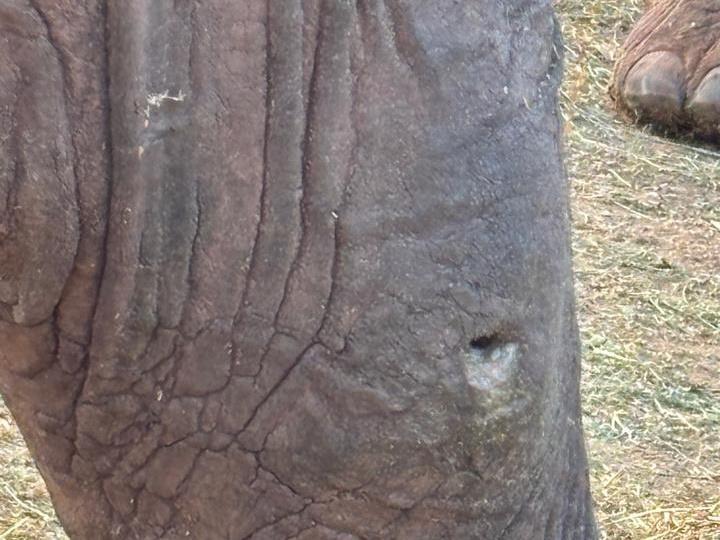
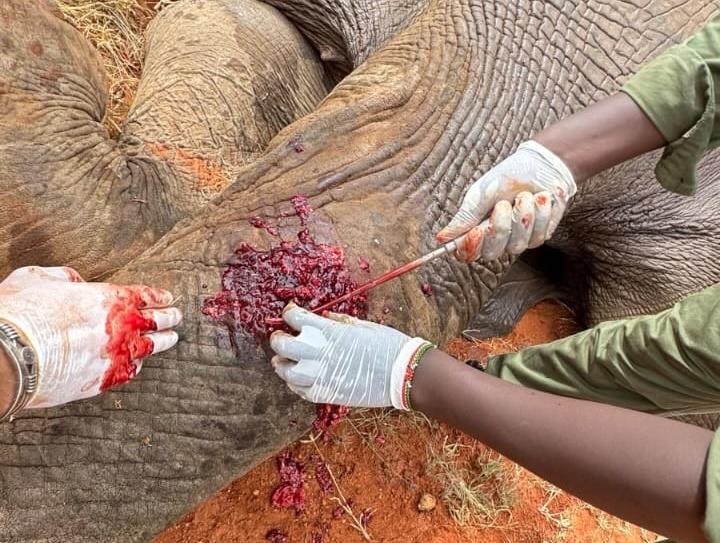
Immobilisation, examination and treatment
This young bull was immobilized successfully using 12mg Etorphine delivered in a 1.5cc Dan-inject dart. Darting was done from foot, and it took 7 minutes for full anaesthesia to be achieved.
Examination revealed a septic arrow wound on the lateral left elbow. The wound was debrided, cleaned and flushed with Hydrogen peroxide. This was followed by rinsing with water and infusing with tincture of Iodine. Antibiotic pessaries were packed in the wound followed green clay and topical antibiotic spray application. The elephant was also given parenteral antibiotics and flunixin anti-inflammatories.
He was revived from narcosis using 150 mg of Naltrexone hydrochloride given intravenously via a prominent ear vein. Prognosis is good.
.
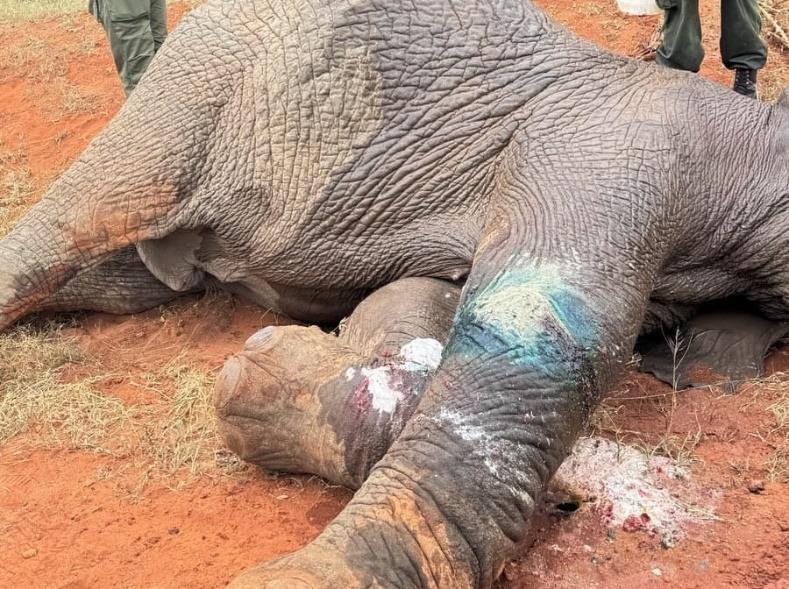
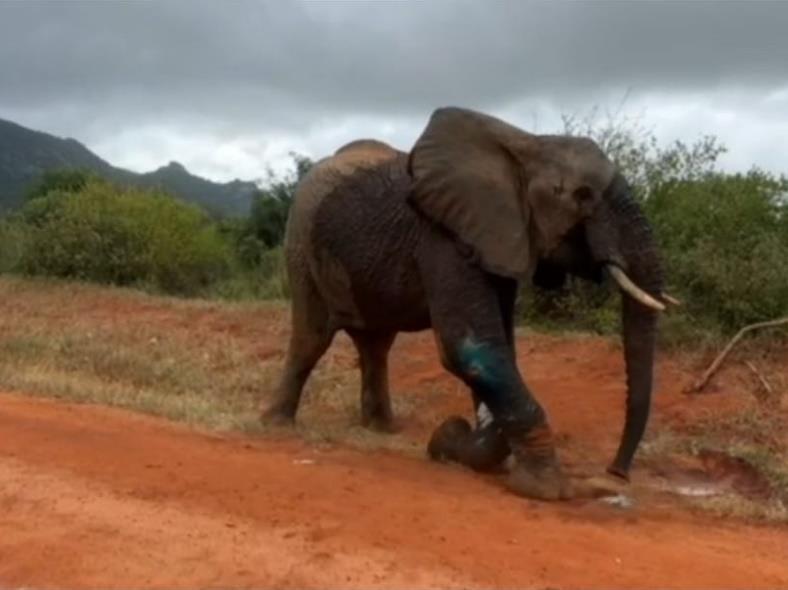
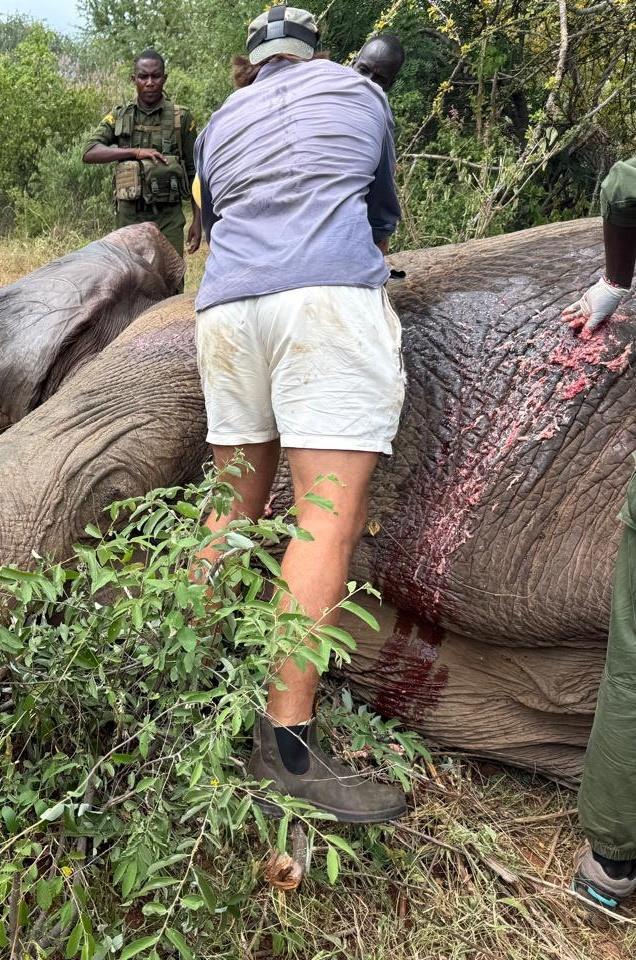
This injured elephant was spotted by the SWT pilot during routine patrols in Ithumba. He had a wound on the left flank.
Immobilisation, examination and treatment
This bull was successfully immobilized using 20mg Etorphine hydrochloride delivered in a 3cc Dan inject dart. Darting was done from the helicopter, and it took 8 minutes for the drugs to achieve its full effect.
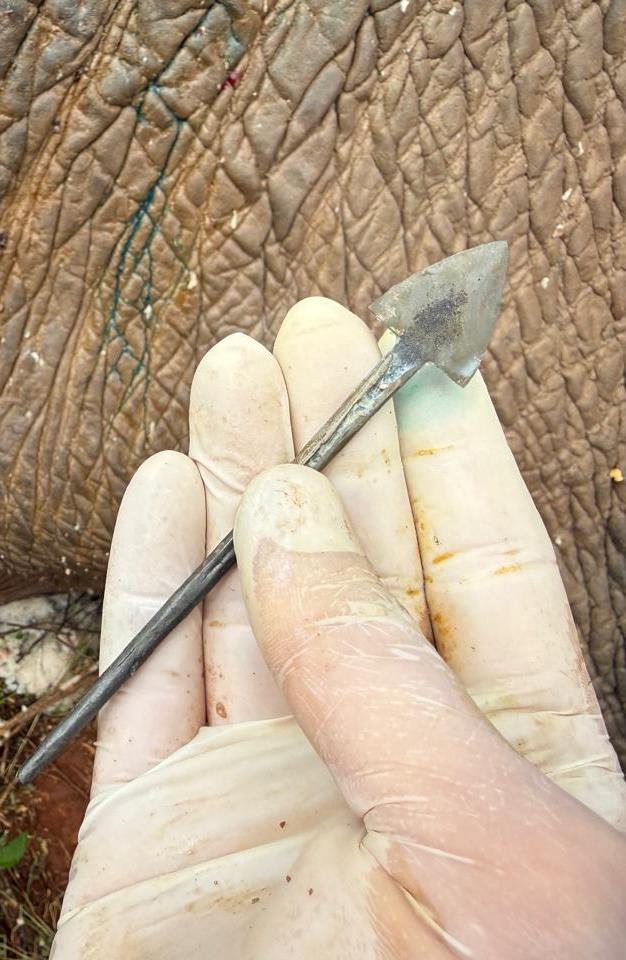
Examination revealed an arrow wound on the left flank. On probing the wound a metallic foreign body was felt, it was carefully retrieved and positively identified to be an arrowhead. The wound was thereafter debrided, cleaned thoroughly, and flushed with Hydrogen peroxide. This was followed by rinsing the wound with clean water, swabbing with sterile gauze and infusing the wound with tincture of Iodine. Antibiotic pessaries were packed into the wound followed by a topical antibiotic spray. He additionally was given Amoxicillin antibiotics and Flunixin anti-inflammatories parenterally.
Prognosis is good.
17 – 28th January 2026
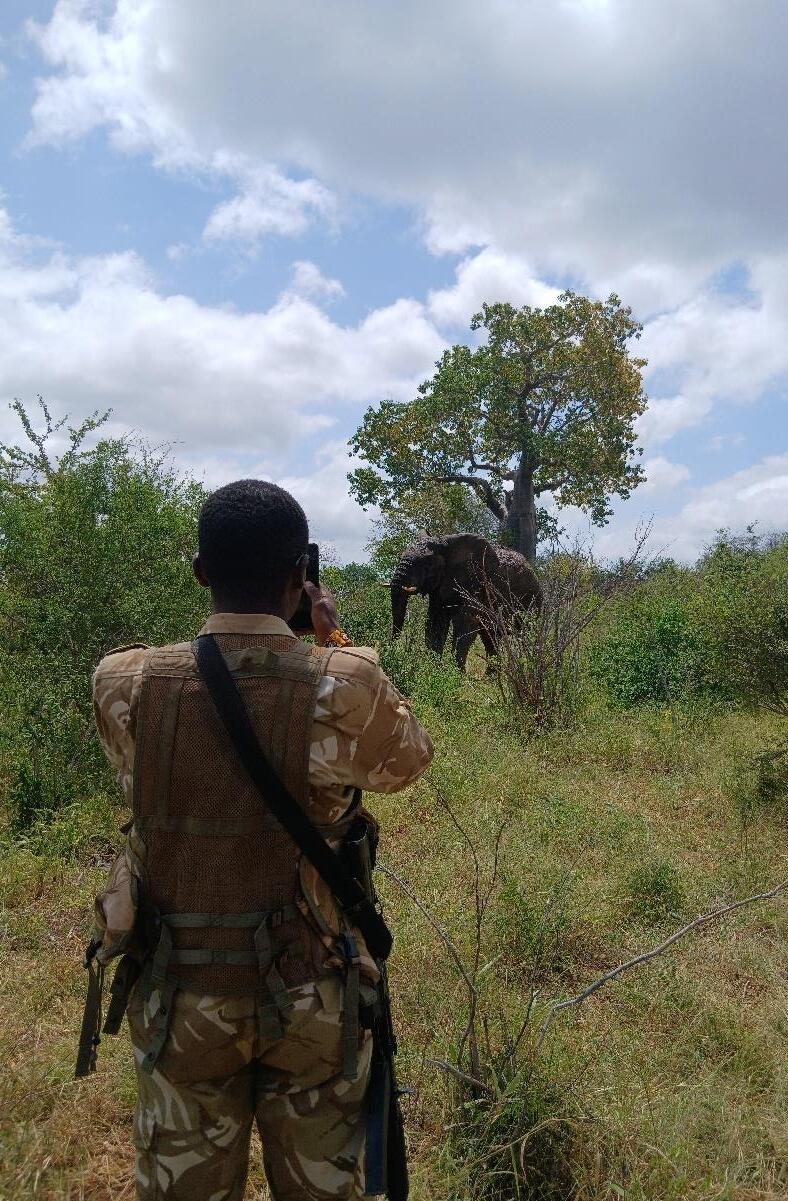
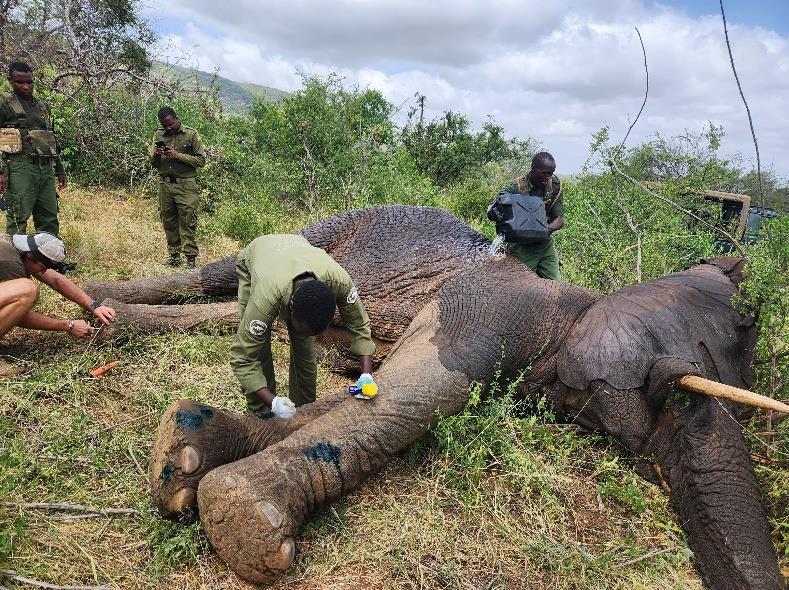
This elephant was reported to be limping on his left fore-limb by SWT rangers in Ithumba area.
Immobilisation, examination and treatment
This bull was successfully immobilized using 18mg Etorphine hydrochloride delivered remotely in a 3 cc Dan inject dart. Darting was done from the helicopter, and it took 10 minutes for the drug to achieve its full effects.
Examination revealed that the elephant had sustained a sprain at the left carpal joint.
He was given Flunixin anti-inflammatories parenterally.
Prognosis
He was reversed from anaesthesia using 180 mg of Naltrexone hydrochloride given intravenously via a prominent ear vein. He rose 3 minutes later and slowly walked away. Prognosis is good.
.
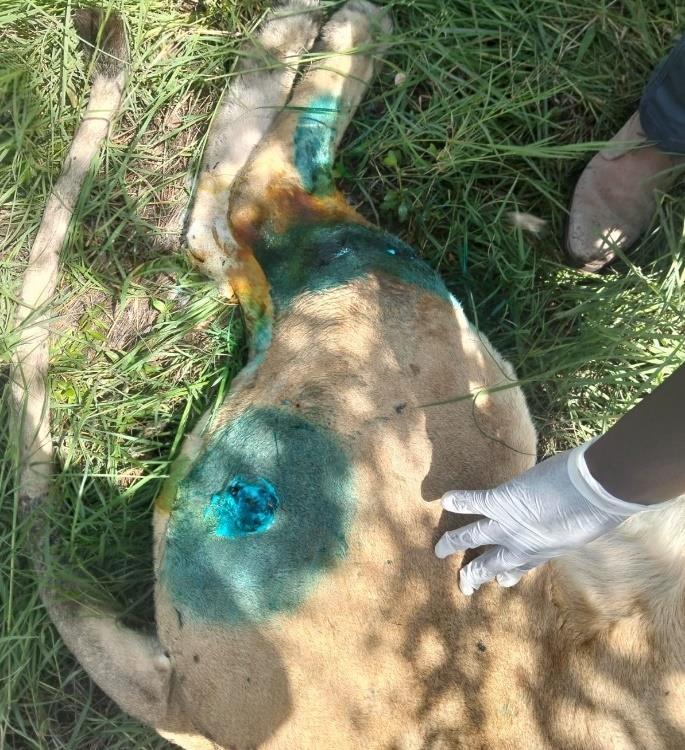
The Unit attended to an injured adult lioness sighted at Hammerkop area, Masai Mara National Reserve. The lioness exhibited signs of distress favoring the left hind limb, with injuries to the shoulder and hamstring region. The lioness was found resting in the shade with her pride members, alert but with limited mobility.
The lioness was immobilized with 300mg Ketamine mixed with 8mg Medetomidine administered via darting from a vehicle at a safe distance. The onset of sedation occurred within 5 minutes, with full sedation taking effect 10 minutes afterwards.
Clinical examination revealed a deep communicating laceration on the left forelimb at the triceps muscle, extending through the skin and subcutaneous tissue from mid-lateral to the medial side. And another horizontal laceration at the junction between Sartorius muscle and gastrocnemius muscle of the left hindlimb with superficial bruises at the hamstring muscles.The wound was thoroughly cleaned with water, lavaged with Hydrogen peroxide and disinfected with Iodine. The lacerations were sutured in two layers to reduce the dead space after which the wound was sprayed with Oxytetracycline spray. The lioness was also given a long-acting antibiotic (Amoxicillin) and an anti-inflammatory (Meloxican) as well as Cloxacillin.
Fair to Good. Contingent upon continued healing and absence of secondary infection. The intervention successfully stabilized the injury, and the lioness is expected to resume normal activity following proper tissue repair.
19 – 29th January 2026
This elephant was spotted limping by the SWT pilot in Finch Hatton’s area.
Immobilisation, examination and treatment
This elephant was successfully immobilized using 17mg Etorphine hydrochloride delivered in a 3cc Dan inject dart. Darting was done from the helicopter, and it took 10 minutes for the drug to achieve its full effect.
Examination revealed that the elephant had dislocated his right elbow joint.
He received shots of Flunixin anti-inflammatory parenterally.
Prognosis
He was revived from narcosis using 170 mg Naltrexone hydrochloride given intravenously via a prominent ear vein. He rose and slowly walked away 3 minutes later. Prognosis is fair.