SWT/KWS RIFT VALLEY MOBILE VETERINARY UNIT
JANUARY 2026


13 Cases in January 2026 6 Poaching Cases 1 Elephant Case
January Report by Dr. Titus Kaitho
The Unit attended to 13 cases interventions during the month of January within Soysambu Conservancy, Sirocco Wildlife Sanctuary, Shompole Conservancy, Crater Lake Conservancy, Kinja Cottages, WRTI-KWS Canine Unit, Oserian - Elsamere, Kongoni Game Valley, Kedong ranch, Lake Nakuru NP among other areas.
Acknowledgement
We sincerely thank Sheldrick Wildlife Trust (SWT) for support, resources & sponsorship of the Rift Valley Mobile Veterinary Unit. Kenya Wildlife Service is acknowledged for general operational & leadership support. Wildlife Research & Training Institute (WRTI) supported the activities by hosting staff at WRTI. We sincerely thank all stakeholders and scouts and all who reported wildlife cases in distress. Thank you all.
12-Jan-26
12-Jan-26
12-Jan-26
Conservancy
Causes The elephant had been wounded on the medial aspect of the right front leg
Treated
19-Jan-26 Waterbuck Crater Lake Conservancy Snared The waterbuck had been snared by a long wire on the neck Successfully Treated
19-Jan-26
19-Jan-26
Conservancy
Causes
buffalo had suffered a broken left horn, infected & maggots infested
Lentolia Conservancy Snared The zebra had been snared and wounded by a winch wire on the right hind leg
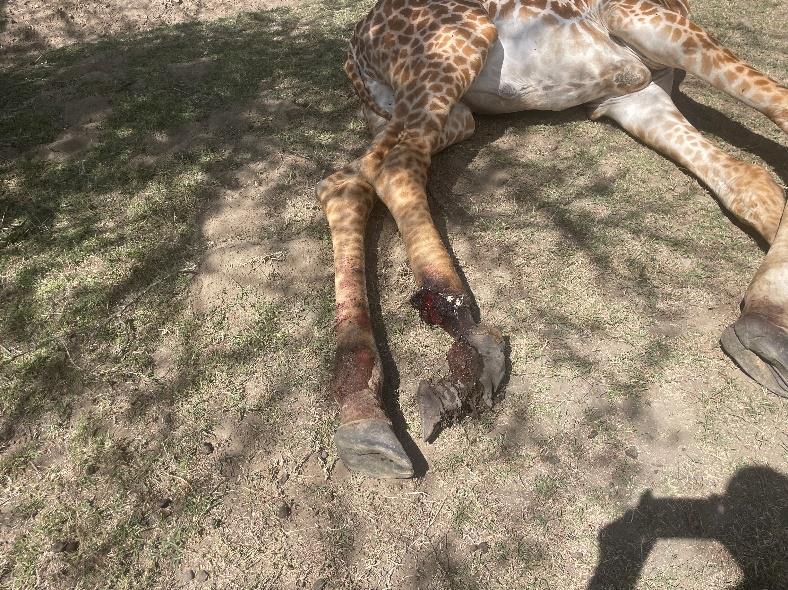
19-Jan-26 Giraffe Mundui Estates Snared The giraffe had been snared by a wire and wounded by a wire snare on right hind leg Successfully Treated
21-Jan-26
21-Jan-26
Causes
canine had suffered chronic diarrhoea and loss of body condition
Kedong Ranch Snared The zebra had been snared by a wire snare which had entangled the legs & neck
Treated
23-Jan-26 Zebra Naivasha Snared The zebra had been snared by a winch wire snare on right hind leg Successfully Treated
25-Jan-26 Zebra Naivasha Snared The zebra had snared by a winch wire on the left hind leg Successfully Treated
26-Jan-26
Causes The wounds were as a result of a territorial fight with another male Successfully Treated
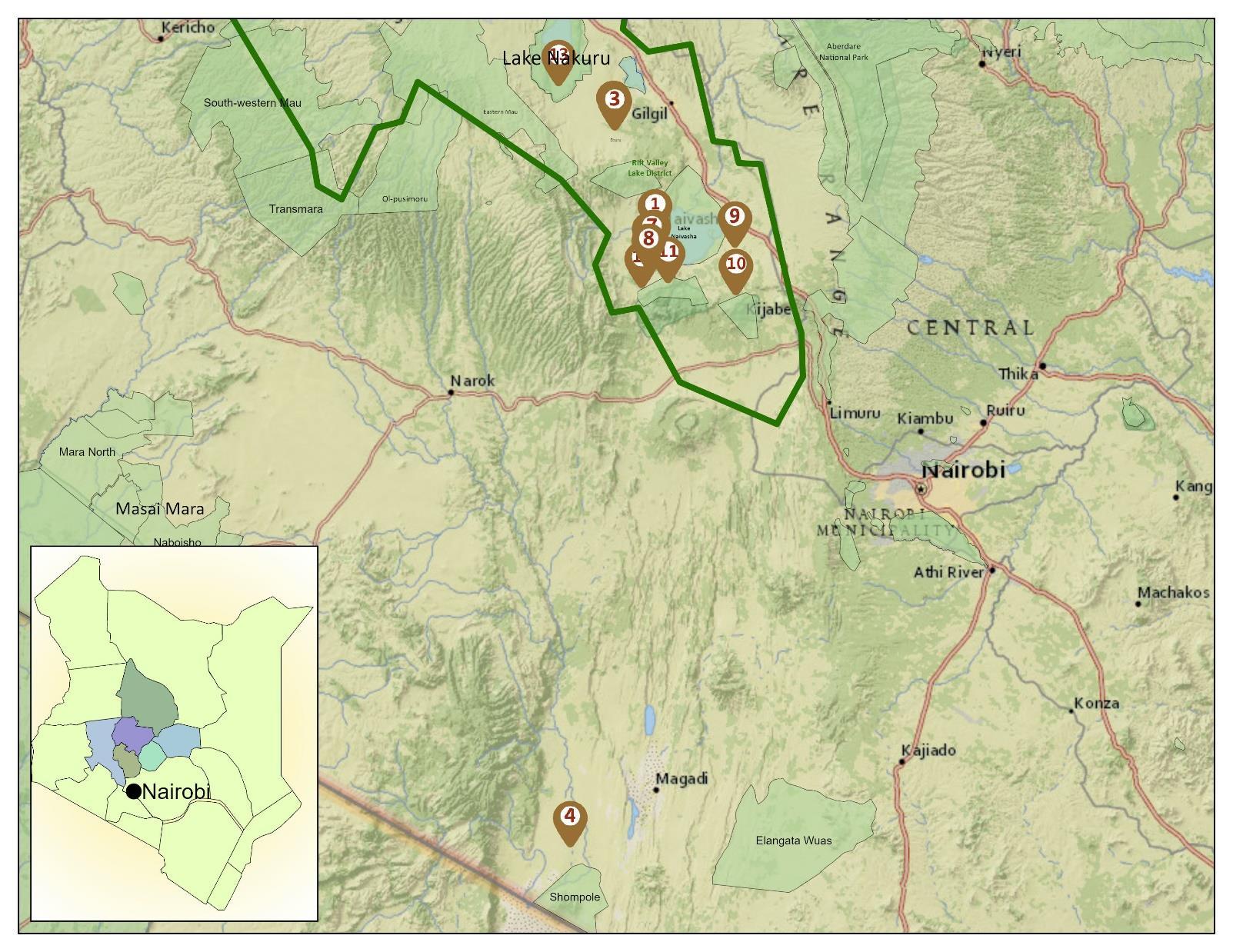
SWT/KWS Rift Valley Mobile Vet Unit Treatment Locations
January 2026
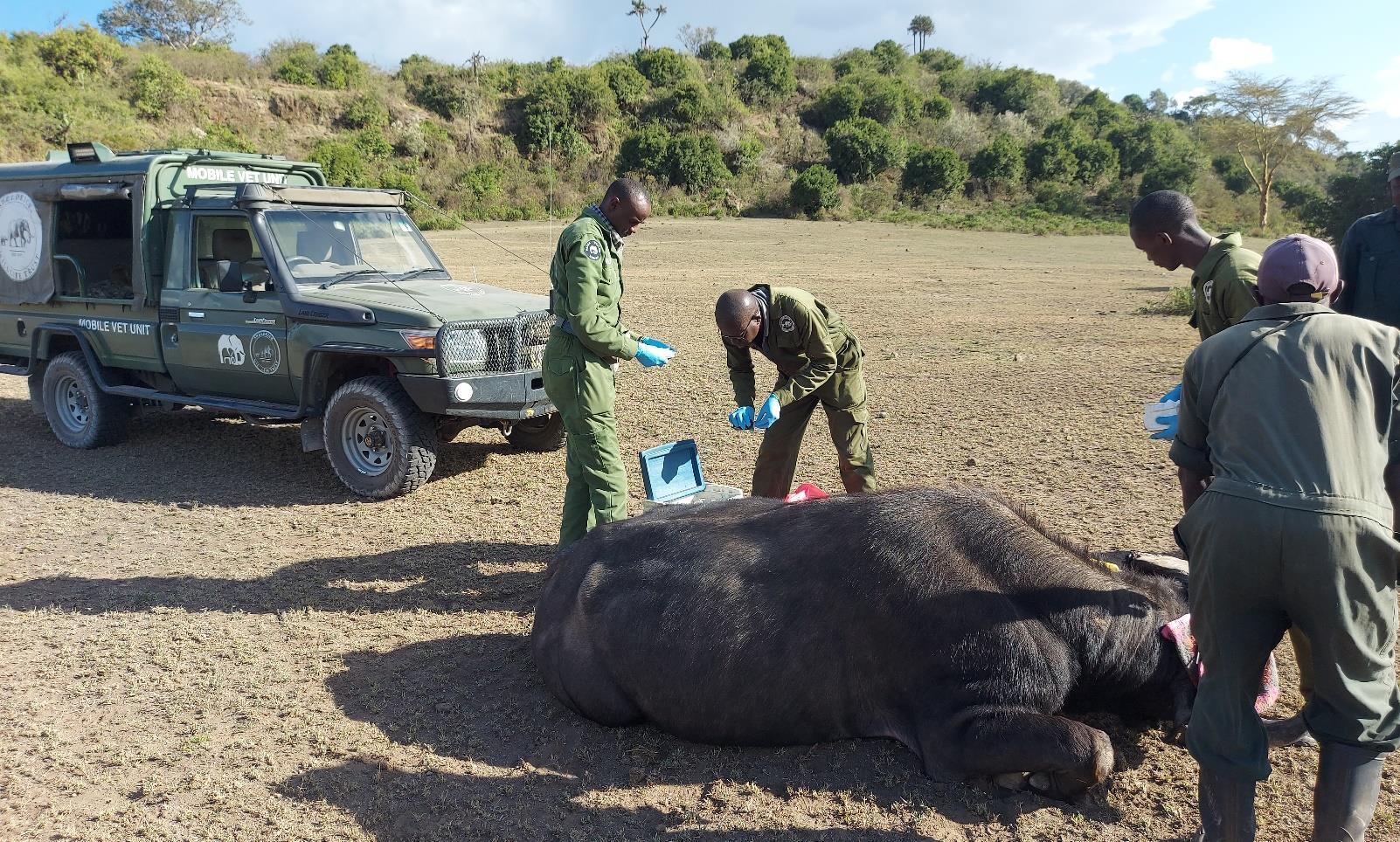
Case 1 – 12th January 2026
Giraffe Natural Causes Sirocco Wildlife Sanctuary
The female giraffe was darted using 1mg Etorphine plus 5mg Azaperone. On examination the calf had suffered an infected suppurative wound on the left shoulder. The scapular area was swollen with pus due to a serious injury. Unfortunately, the giraffe calf succumbed to death on reversal of anaesthesia.
We attempted to do CPR on reversal of anaesthesia using 75mg of Naltrexone given by IV route and ¼ of the dose by IM route but unfortunately, she succumbed to death.
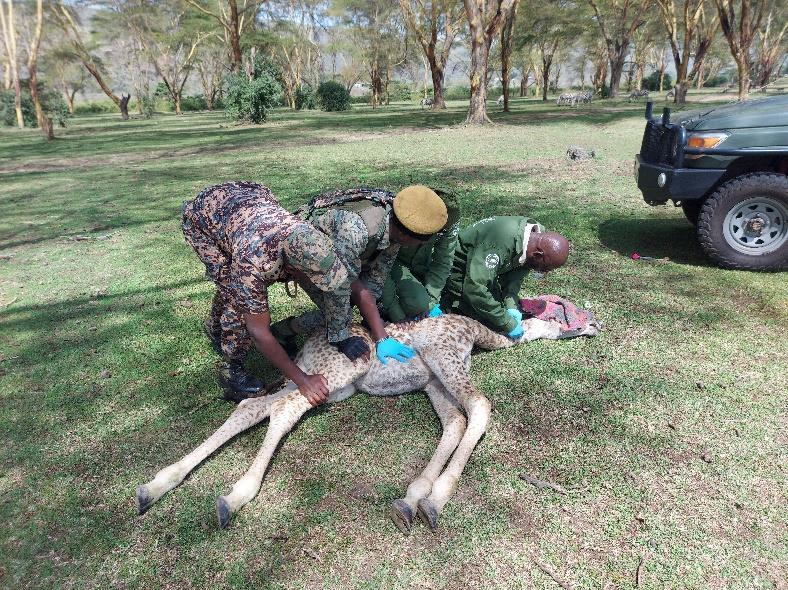
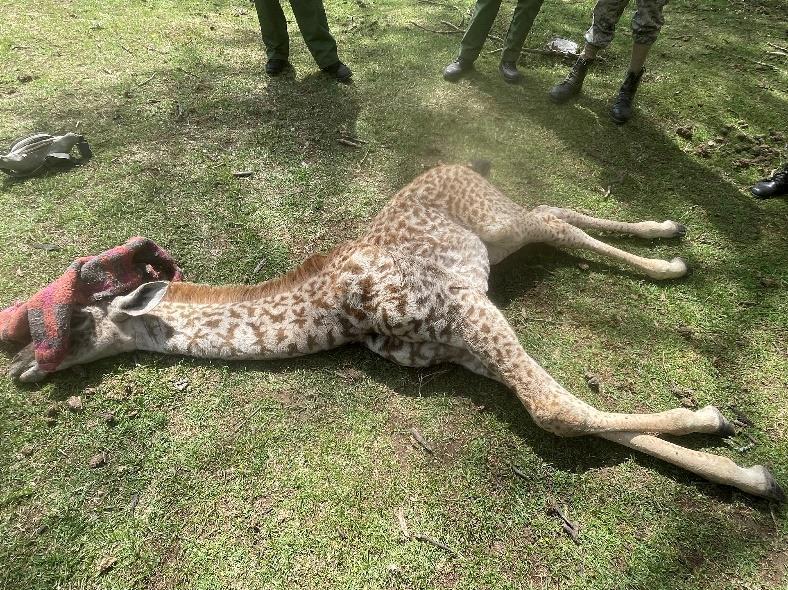
Case 2 – 12th January 2026
Zebra Natural Causes Soysambu Wildlife Sanctuary
The adult male zebra was darted using 5mg Etorphine plus 50mg Azaperone.
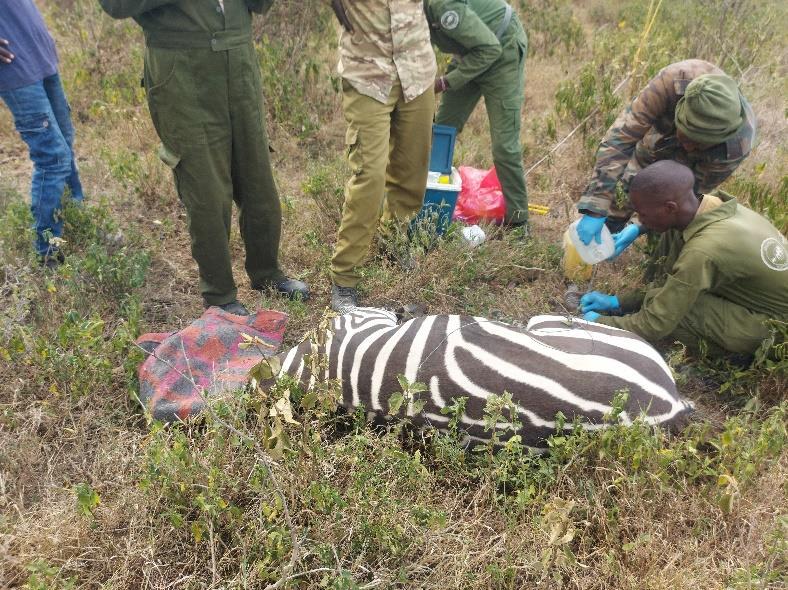
Examination revealed wounds from lions on the back and flank. The wounds were extensive. The flank wound had a skin pocket and hence poor drainage. We surgically intervened and created a drainage site on the lower aspect of the body to facilitate faster healing. The wounds were cleaned and rinsed with water and Iodine. A fly repellent was applied then antibiotics, anti-inflammatories, Catasol and Ivermectin were administered.
Prognosis is good.
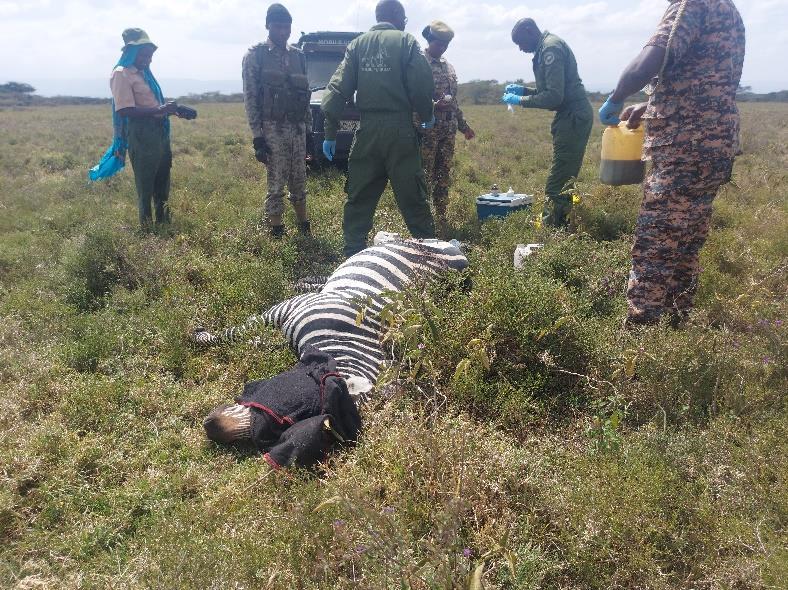
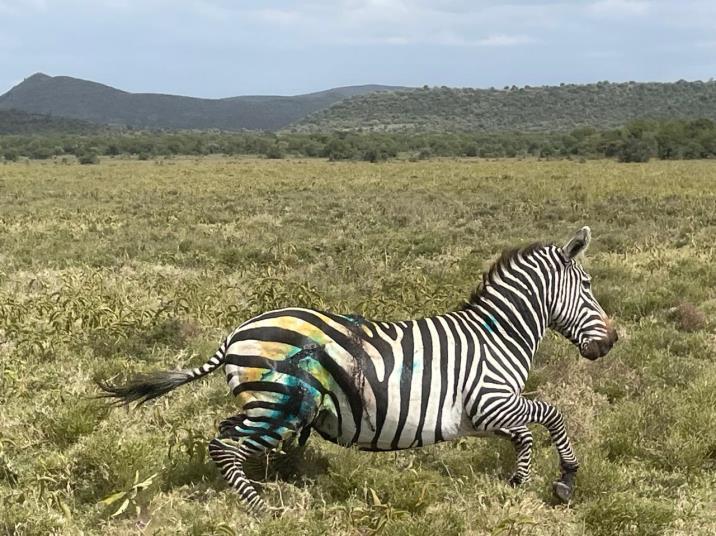
Case 3 – 12th January 2026
Zebra Natural Causes Soysambu Wildlife Sanctuary
The zebra was darted using 5mg Etorphine plus 60mg Azaperone. On examination the zebra had been wounded by a predator on the left hind leg leaving a suppurative and infected wound. The leg was swollen and inflamed and caused severe lameness. The wound was cleaned with water and Iodine then sprayed with a fly repellent. Additionally, the zebra was given 9,000mg Betamox, 250mg Flunixin, 40ml Catasol and 8ml Noromectin. Prognosis is good.
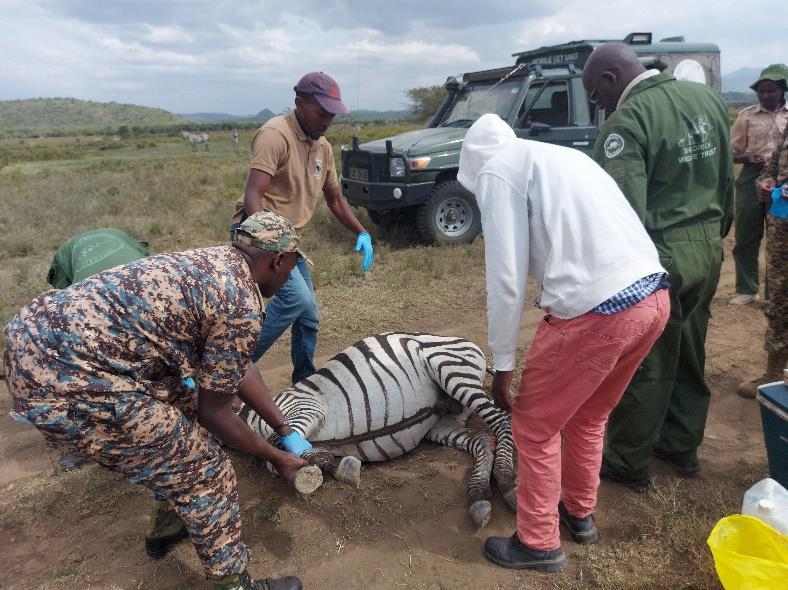
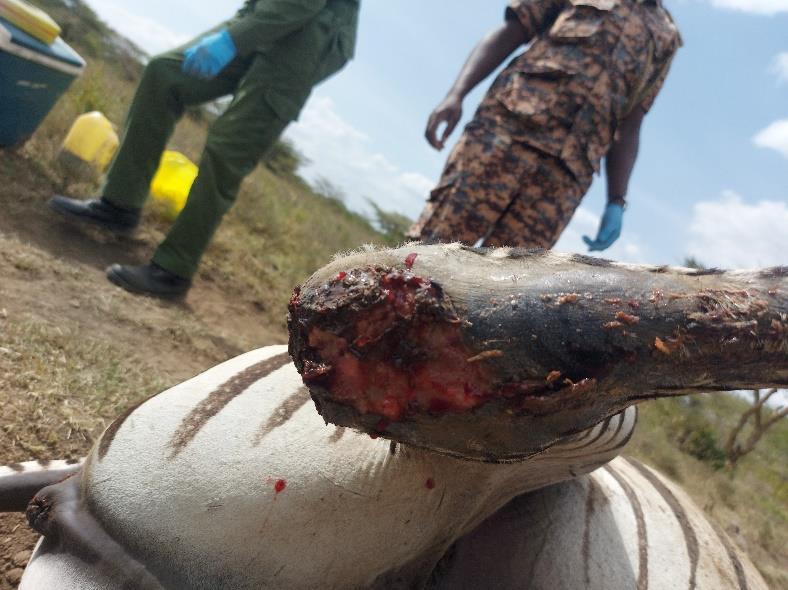
Case 4 – 15th January 2026
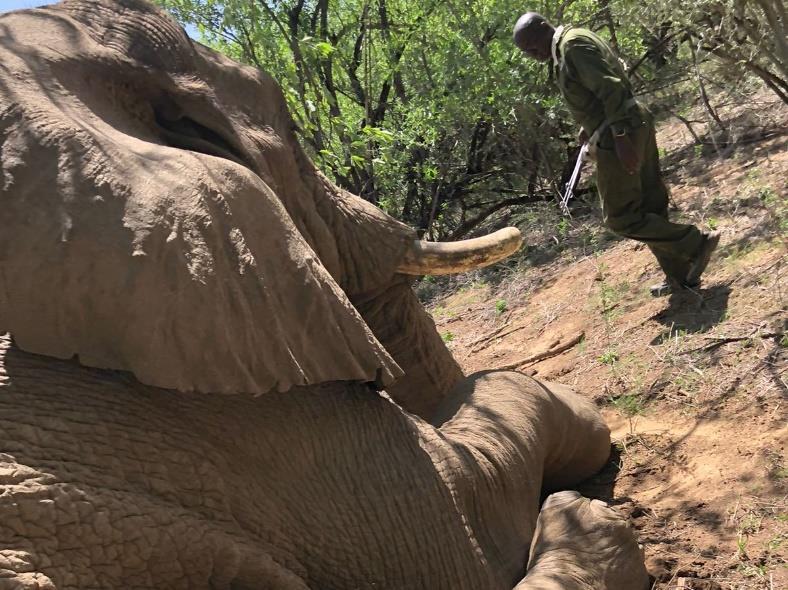
Elephant Natural Causes Shompole Wildlife Sanctuary
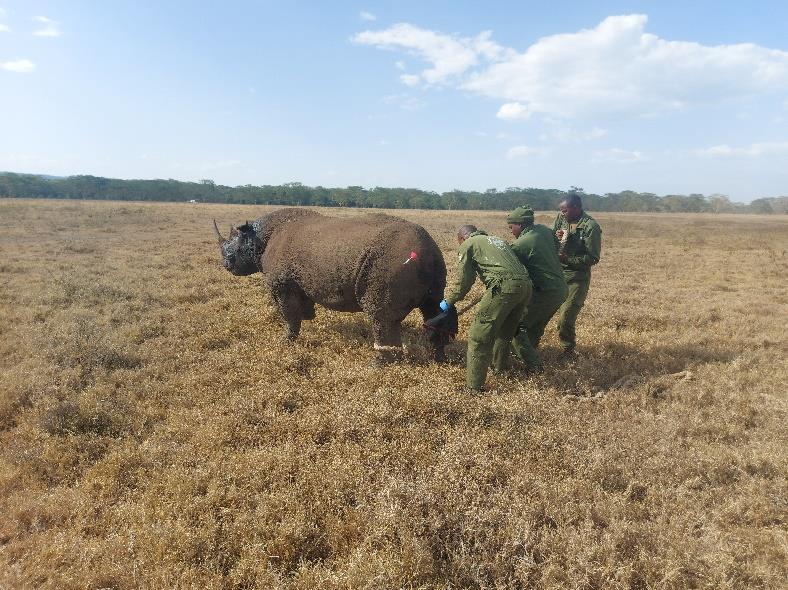
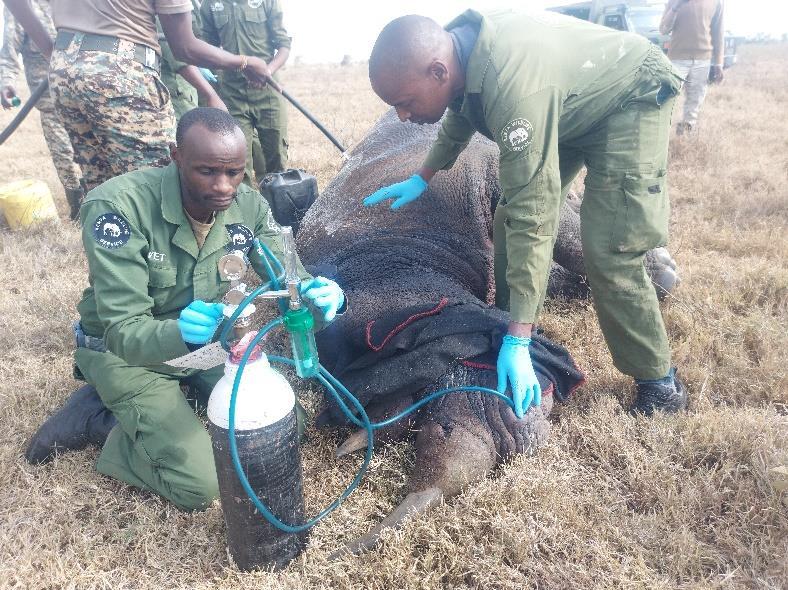
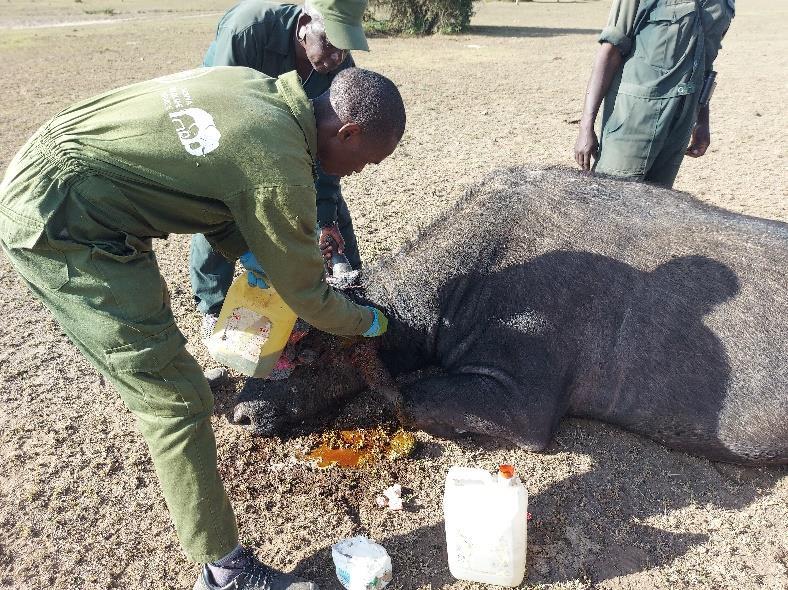
The male elephant was darted using 17mg Etorphine supported by the MEP helicopter. The elephant was always staying in a thick acacia forest, and he went deeper into the forest making access only by foot.
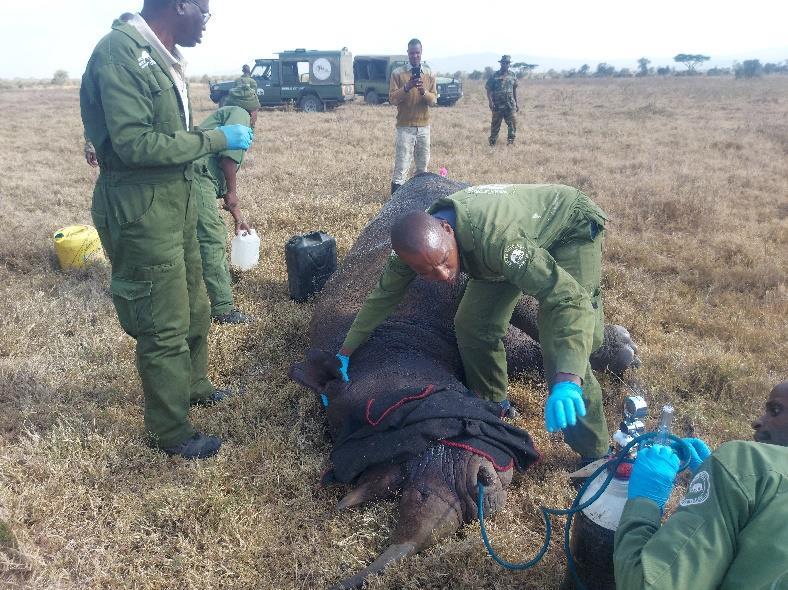
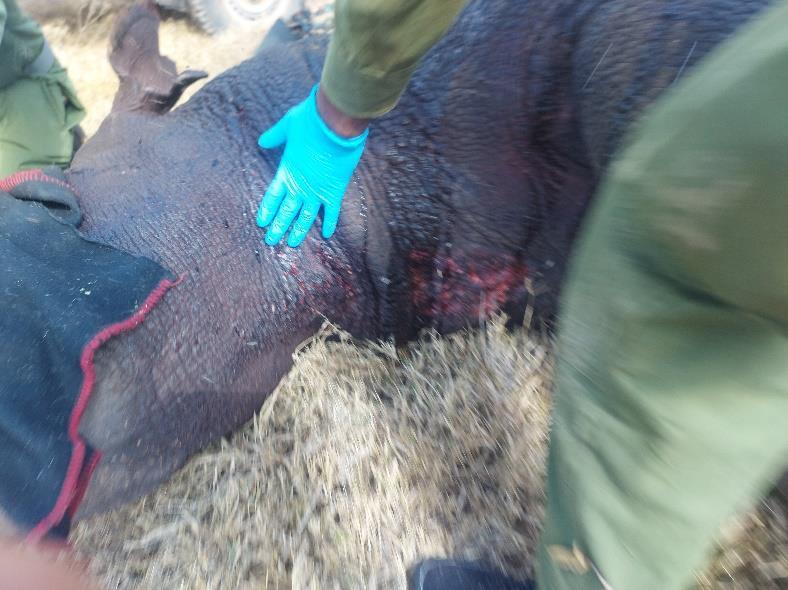
On examination the elephant had been wounded on the medial aspect of the right front leg. The wound was suppurative and infected and the leg was swollen and inflamed which was the major cause of marked lameness. We cleaned the wound with water, Hydrogen peroxide and Iodine then sprayed with Alamycin, a fly repellent. Lastly, the elephant was given antibiotics, anti-inflammatories and Catasol.
Prognosis is good.
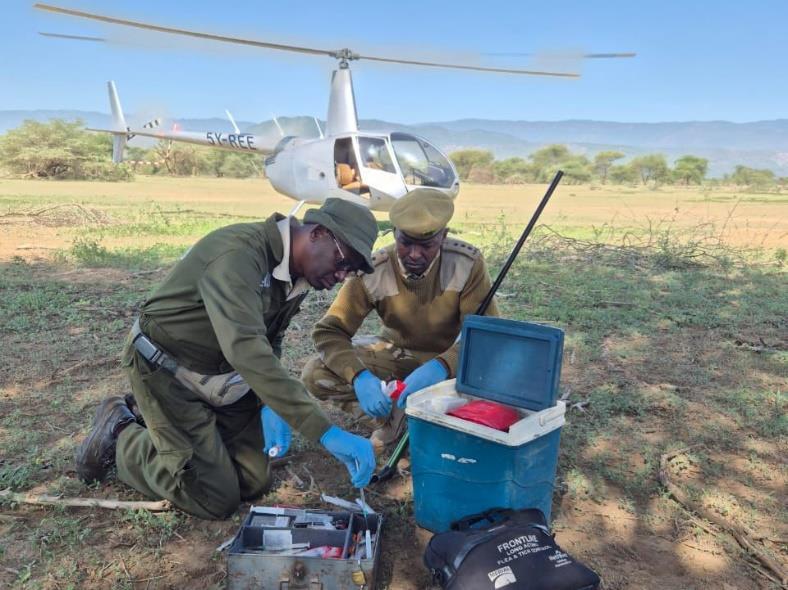
Case 5 – 19th January 2026
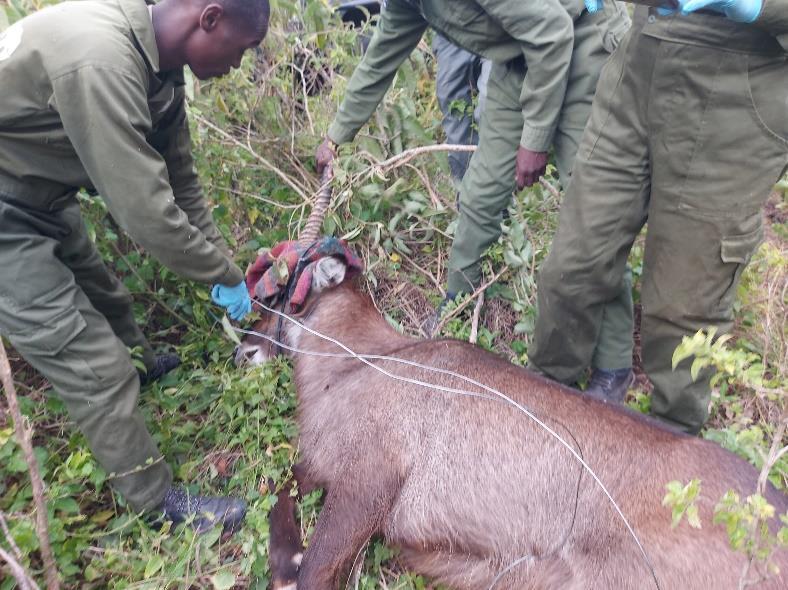
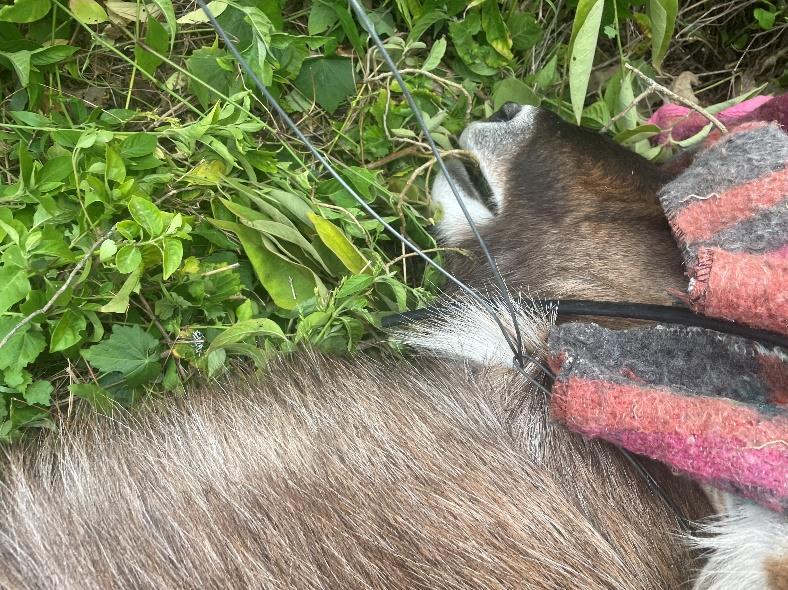
Waterbuck Snared Crater Lake Wildlife Conservancy
The male waterbuck was darted using 6mg Etorphine plus 60mg Azaperone.
The waterbuck had been snared by a long wire on the neck. We promptly retrieved the snare and fortunately, the injuries on the neck were minor lacerations requiring no further treatment.
Prognosis is good.
Case 6 – 19th January 2026
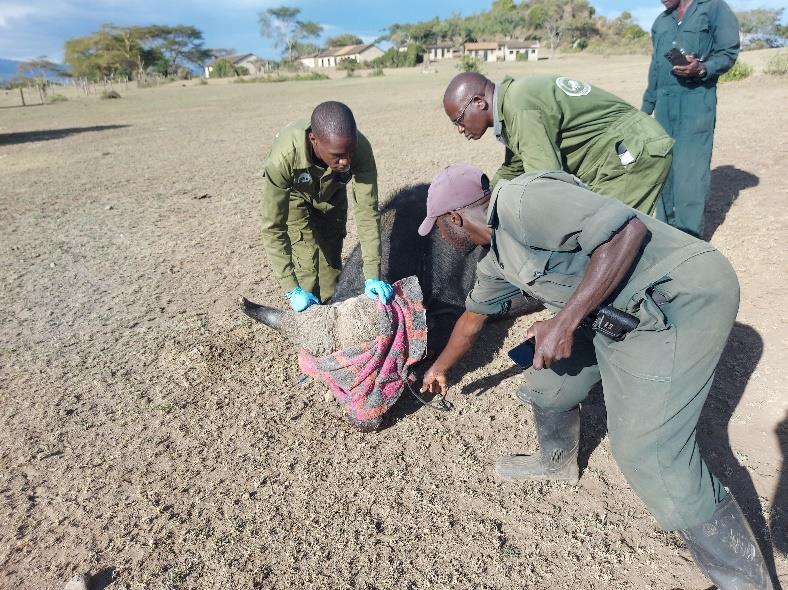
Buffalo Natural Causes Lentolia Wildlife Sanctuary
The buffalo was darted using 9mg Etorphine and 60mg Azaperone.
On examination the buffalo had suffered a broken left horn which was infected and infested with maggots. Cause of the injury is due to territorial fights. We cleaned the wound using water and rinsed with dilute Hydrogen peroxide and tincture of Iodine then sprayed with a fly repellent (Alamycin) The buffalo was also administered with 24,000mg Alamycin, 500mg Flunixin and 10ml Noromectin.
Prognosis is good.
Case 7 – 19th January 2026
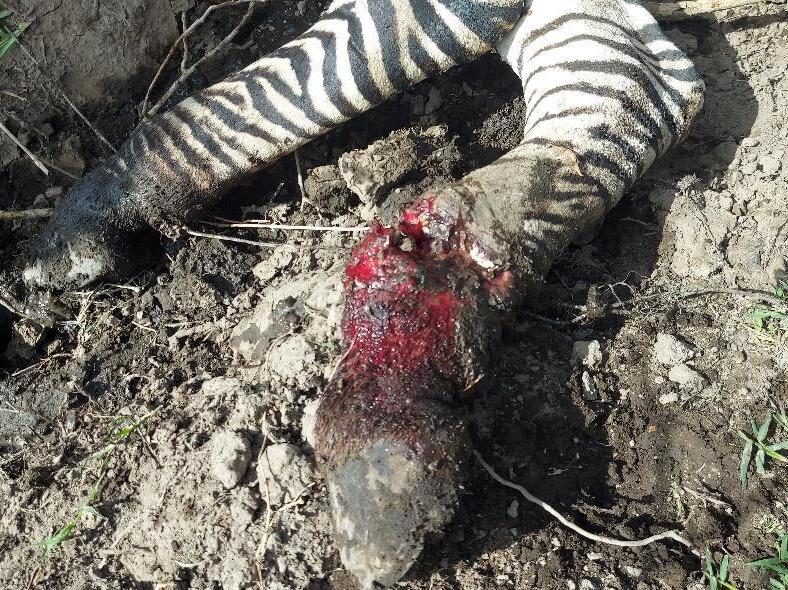
The zebra was darted using 5mg Etorphine and 60mg Azaperone.
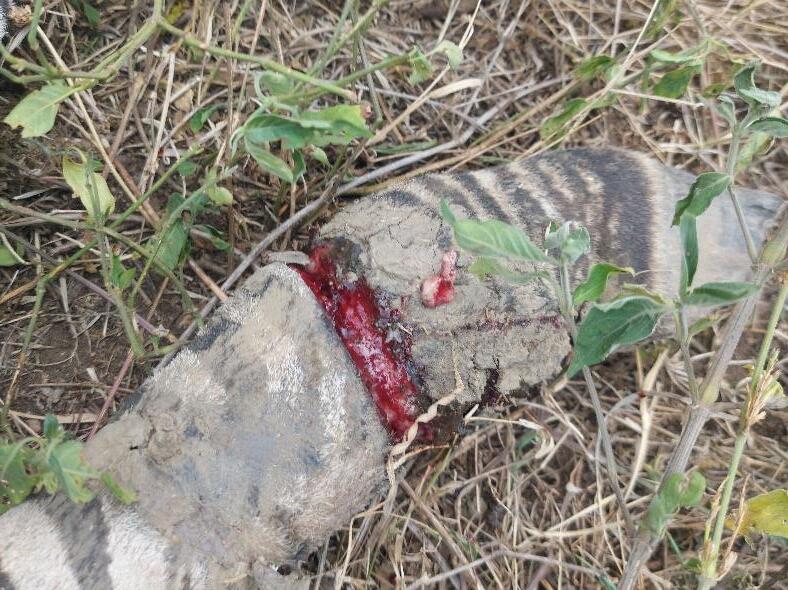
Examination revealed the zebra had been snared and brutally wounded by a winch wire snare on the right hind leg. The snare was removed and the resultant wounds cleaned with water, rinsed with Iodine then sprayed with a fly repellent Additionally, the zebra was given 9,000mg Betamox, 300mg Flunixin, 40ml Catasol and 8ml Noromectin.
Prognosis is favourable
Case 8 – 19th January 2026
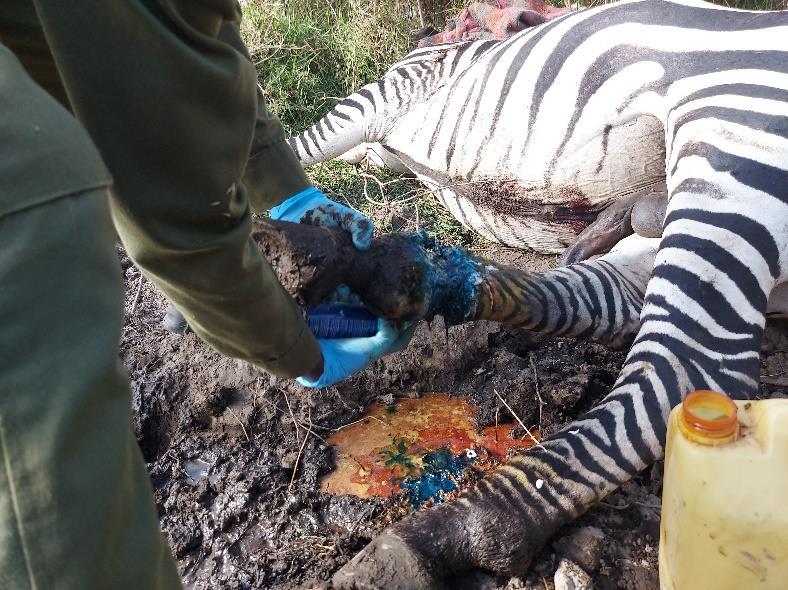
The giraffe was darted using 12mg Etorphine and 60mg Azaperone.
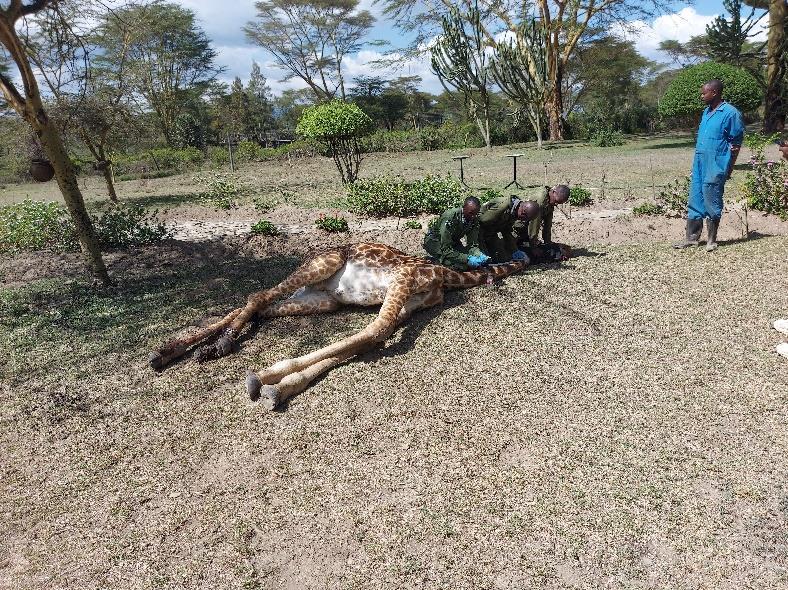
On examination the giraffe had been snared by a wire and severely wounded on the right hind leg. The wound was gangrenous & maggot infested. The hoof had also sloughed off.
The case had a poor prognosis, and the giraffe was put to rest.
Case 9 – 21st January 2026
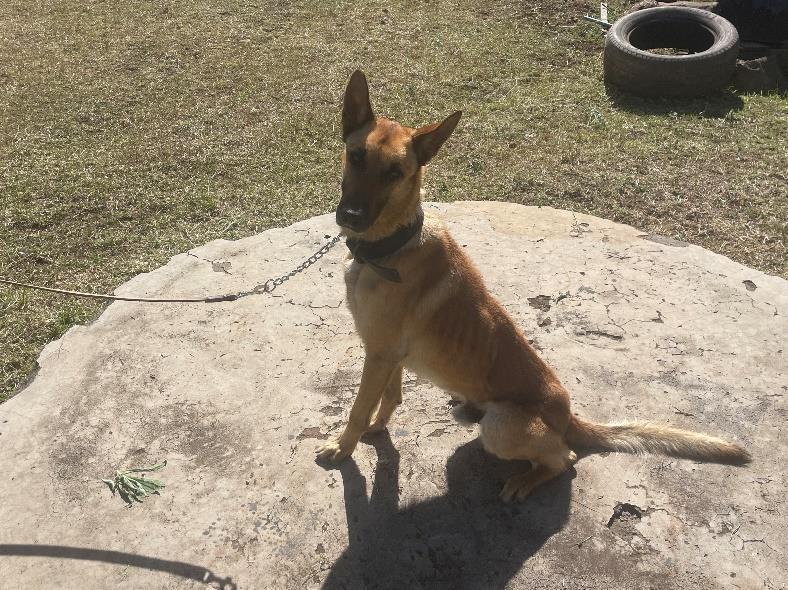
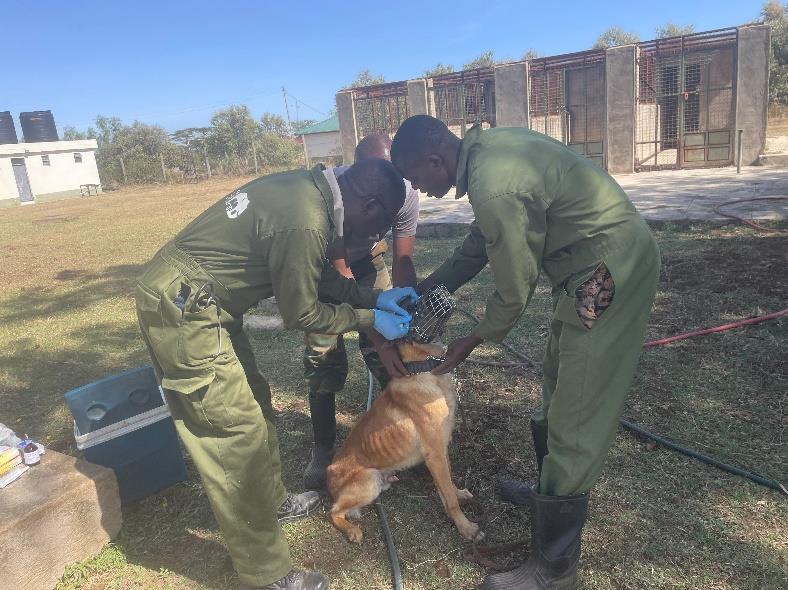
Security Dog Natural Causes WRTI, Naivasha
The canine had suffered chronic diarrhoea, loss of body condition, and his mucous membranes were pale. He also had a degree of anaemia as confirmed by pounding heart sounds.
The dog, Eli, was given 2mg Colvasone, 750mg Betamox to be continued for 5/7 days and 20ml Catasol.
Prognosis of the case after 3 days on review was good. The canine had recovered.
Case 10 – 21st January 2026
The zebra was darted using 5mg Etorphine and 60mg Azaperone.
The female zebra had been snared by a wire snare which had entangled its legs and neck causing significant wounds. We cleaned the laceration wounds with water and rinsed them with tincture of Iodine. A fly repellent (Alamycin® Aerosol) was applied then the zebra was administered 9,000mg Betamox, 250mg Flunixin and 5ml Noromectin.
Prognosis for full recovery is good.
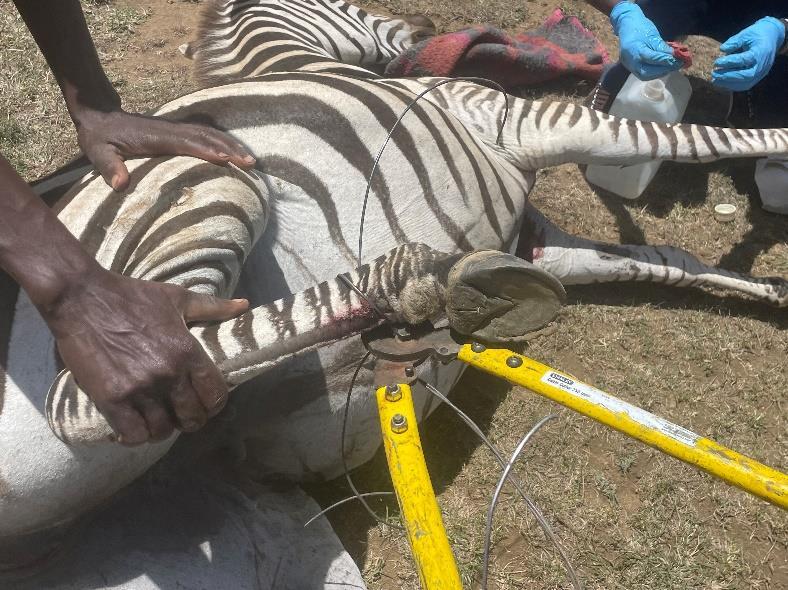
Case 11 – 23rd January 2026
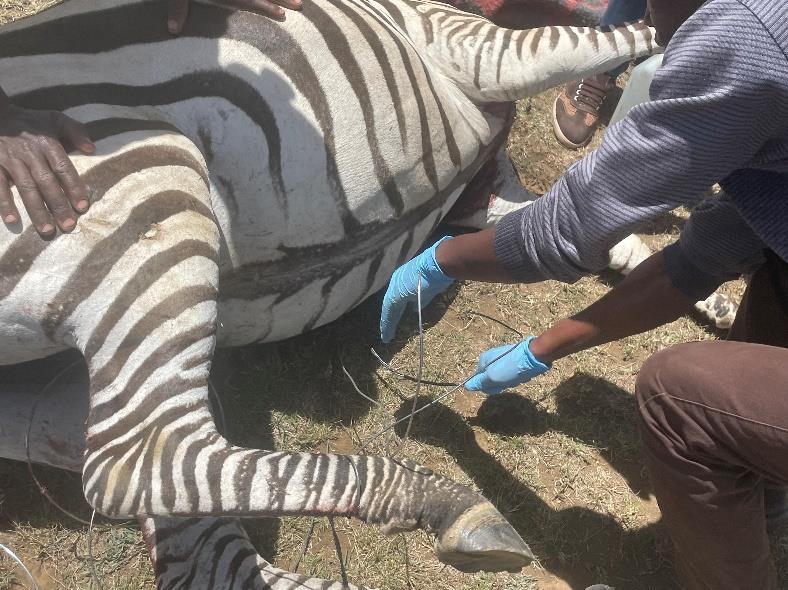
Zebra Snared Osterian, Naivasha
The subadult zebra was darted using 4mg Etorphine combined with 50mg Azaperone.
On examination the zebra had been snared by a winch wire snare on the right hind leg which had wounded the leg. We cleaned the wound with water, rinsed it with tincture of Iodine then sprayed it with a fly repellent (Alamycin) Antibiotics, anti-inflammatories and Ivermectin (to protect against parasites) were also applied. Prognosis is good.
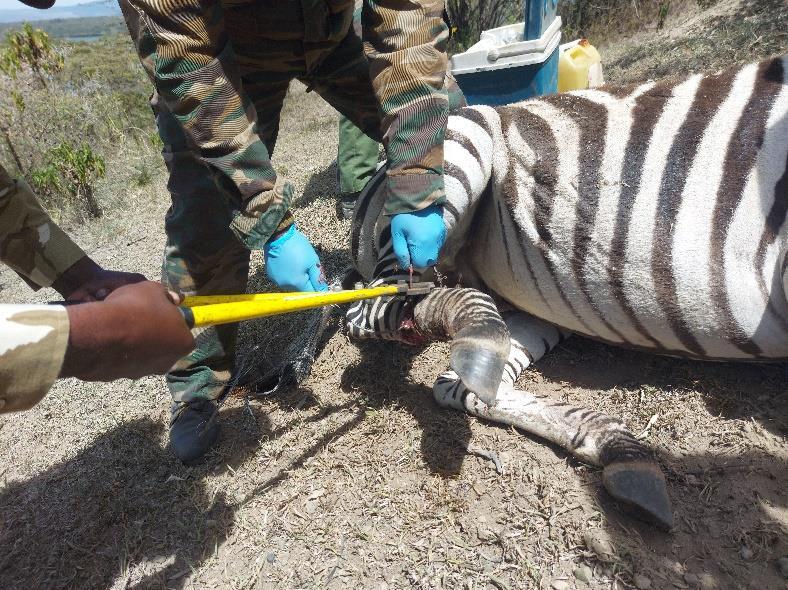
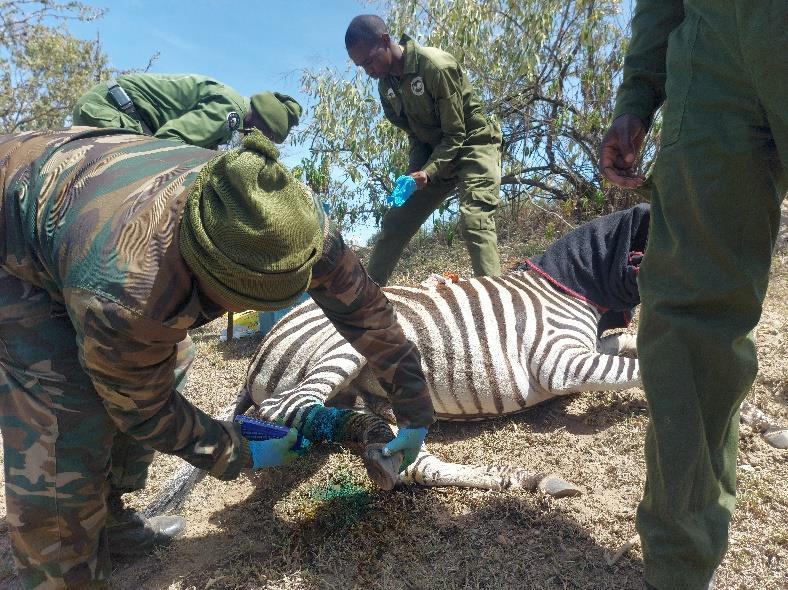
Case 12 – 25th January 2026
Zebra Snared Kongoni Game Valley,
The female zebra was darted using 5mg Etorphine plus 80mg Ketamine.
On clinical examination the zebra had snared by a winch wire on the left hind leg causing a severe injury. We cleaned the wound using water and rinsed the same using tincture of Iodine. A fly repellent (Alamycin® Aerosol) was applied. We also administered 18,000mg Alamycin, 250mg Flunixin, 40ml Catasol and 5ml Noromectin. Prognosis for recovery is good.