SWT/KWS Mt Kenya Veterinary Unit Report for December 2025
SWT/KWS MT KENYA MOBILE VETERINARY UNIT
DECEMBER 2025
7 Cases in December 2025
December Report by Dr. Poghorn
Cases
Rhino Cases
The Mount Kenya Mobile Veterinary Unit undertook various interventions in partnership with other veterinary units in the region and the capture unit from KWS headquarters Nairobi. These included translocation of three southern white rhino from Lake Nakuru and Meru National Parks to Mount Kenya Wildlife Conservancy, embryo transfer on Amaze at Ol Pejeta Conservancy, collaring of a lion and two leopards at Loisaba Conservancy, and an elephant carcass autopsy at Mutara conservancy, Laikipia County.
Acknowledgement
The Mt. Kenya Mobile Wildlife Veterinary Unit thanks the Kenya Wildlife Service for providing leadership and technical expertise. The veterinary team also appreciates The Sheldrick Wildlife Trust (SWT) for providing the financial and logistical support that enables the Unit to fulfil its mandate.
Case Details
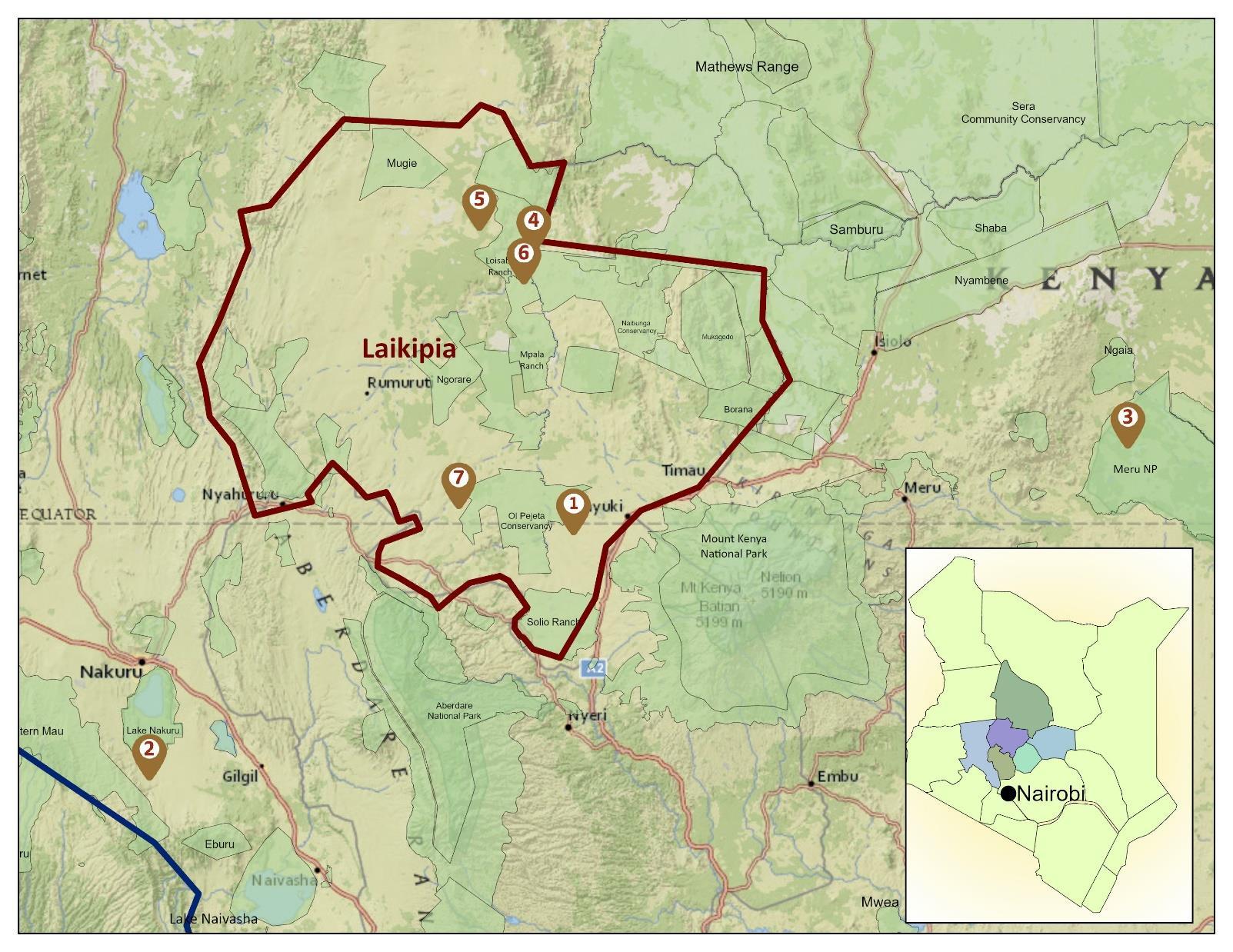
Mobile Vet Unit Treatment Locations
December 2025
Case 1 – 1st December 2025
White Rhino Technical Case Ol Pejeta Conservancy
An embryo transfer procedure was carried on Amaze by the Biorescue and KWS veterinary team. The surrogate southern white rhino female received a northern white rhino embryo during the procedure.
Immobilisation, examination and treatment
Amaze was given the sedative drugs by dart delivered via a helicopter. The first dart did not discharge but the second was successful then topped up by a third delivered through a blow pipe on foot.
The anaesthesia was monitored by evaluating the following parameters.
- Respiratory rate (RR) through observation of thoracic excursions
- Oxygen’s saturation (Sp02)
- Heart rate (HR) through a pulse oximeter
- Partial pressure of carbon dioxide (C02) using capnometry
- Corneal and Palpebral reflexes
The pulse oximeter was placed on an ear tip after the superficial epidermal layer was scraped and cleaned. Two NWR embryos; both very good were thawed and equipment set up.
With Amaze in sternal recumbency, the rectum was thoroughly cleaned and sterilized with a mild disinfectant. The ultrasound probe was inserted into the rectum and positioned and the ET-device, needle and catheter and then very slowly release embryo into the right horn.
There was an old corpus luteum on the left ovary and a new and good one on the right ovary. There was also some fluid on the uterus possible remnants from her estrus cycle.
The embryo transfer exercise took approximately 1 hour and 18 minutes.
Unfortunately, there are no pictorials for this case
Case 2 & 3 – 3rd and 5th December 2025
White Rhino Translocation
Lake Nakuru and Meru National Park
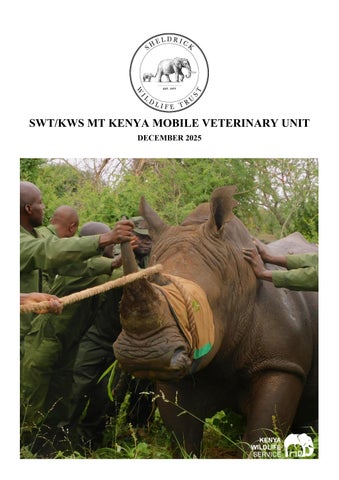
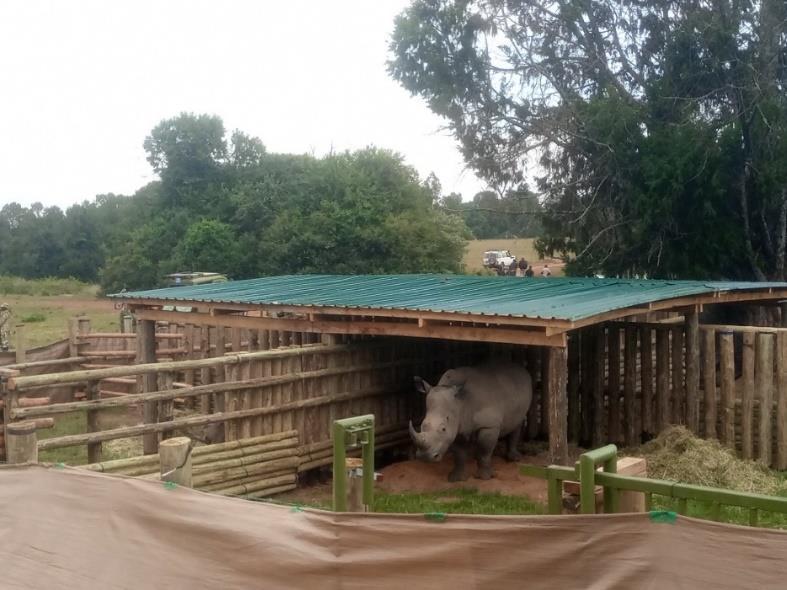
Three southern white rhinos, two females and one male, were translocated and introduced to Mount Kenya Wildlife Conservancy from Lake Nakuru and Meru National Parks
Immobilisation
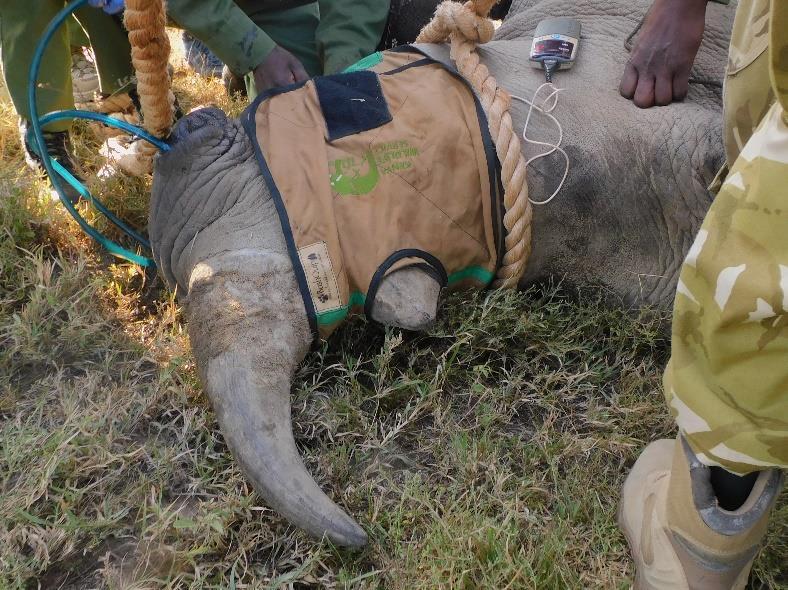
The rhinos were immobilized by darting from a helicopter. The females were darted with 4mg Etorphine and 15mg Azaperone, which was then topped up by Butorphanol The male was darted with 5mg Etorphine and 20mg Azaperone and stabilised with 25mg Butorphanol. The anaesthesia was partially reversed by administration of Diprenorphine (IV), that lightened up the anaesthesia enough for the animal to be walked to the crate. Once in the crate, a second dose of Diprenorphine, was administered (IV) The two female rhinos were notched to give them unique identification marks on the ears. The male rhino had notches already.
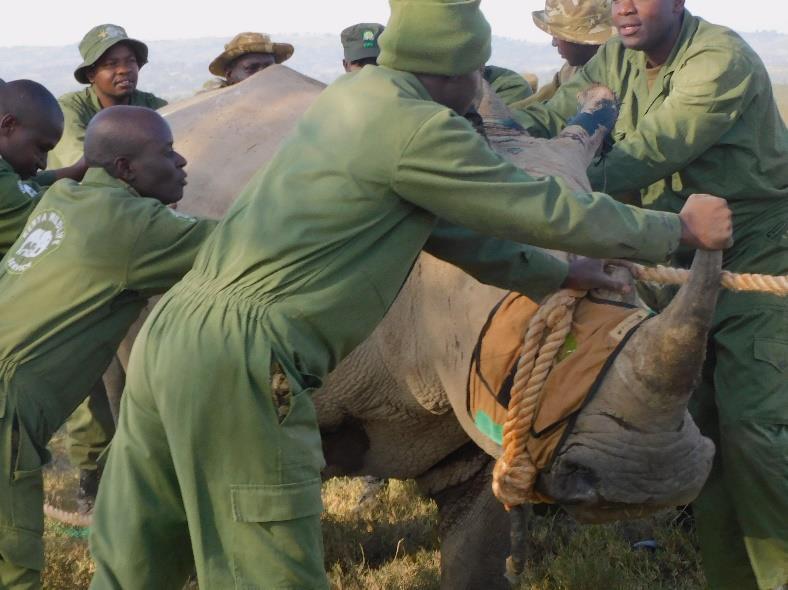
The loading crate was positioned some distance away from where each of the rhinos were captured. Two ropes placed on the animal: one on the head for guiding the animal to the crate, and another on the hindlimb for restraining undesired movements, were employed in getting the rhino into the loading crate.
Relocation
-The rhinos were transported by road and offloaded from the truck at the release site.
Case 4 –7th December 2025
Leopard
Collaring
Loisaba Conservancy
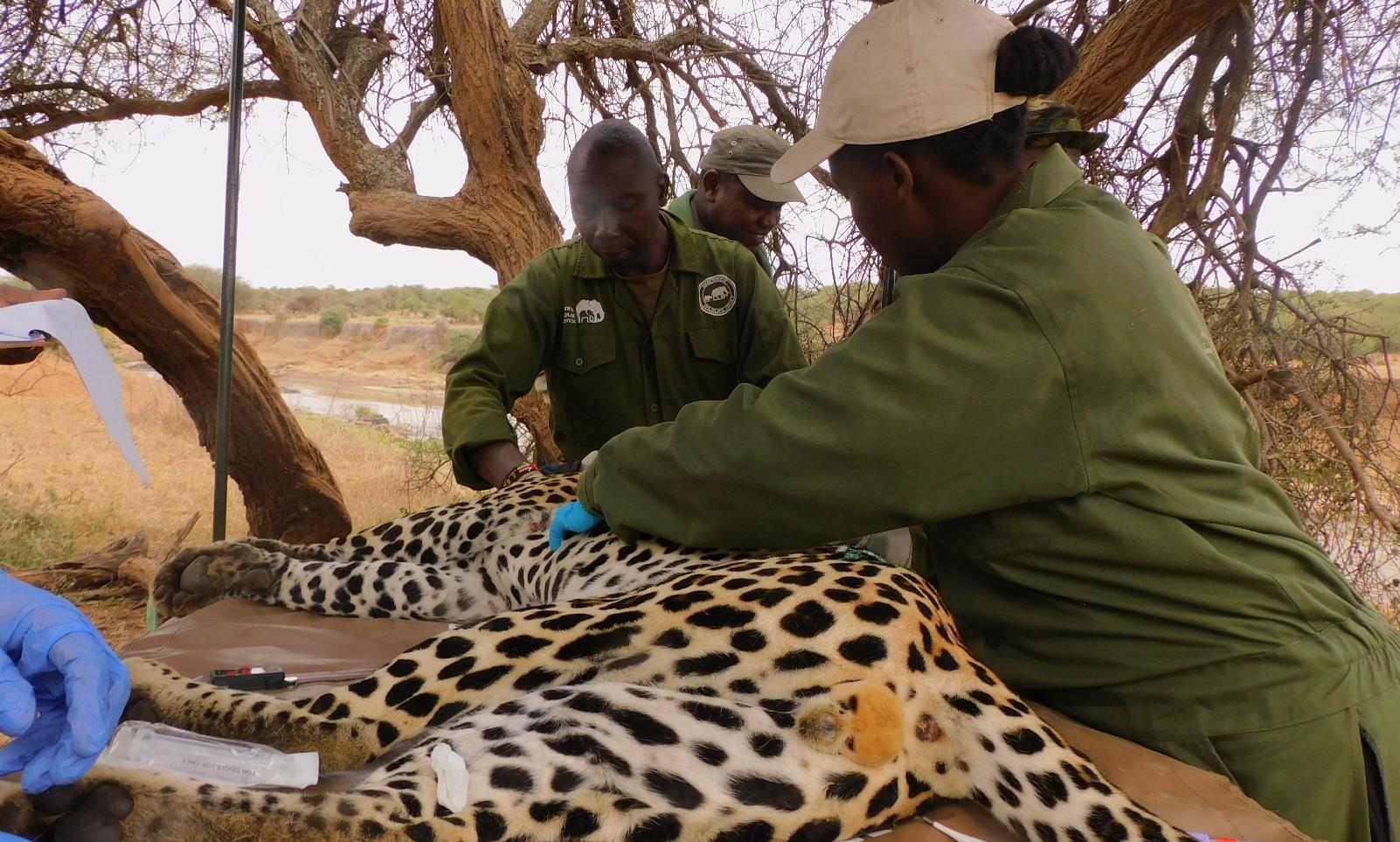
Mt Kenya veterinary unit was called in to assist in immobilising and collaring a leopard as part of a study on human-Leopard interaction within Laikipia ecosystem. Two Leopards were captured for a collaring exercise at Loisaba Conservancy in a partnership with San Diego Wildlife Zoo Alliance and Loisaba.
Immobilisation
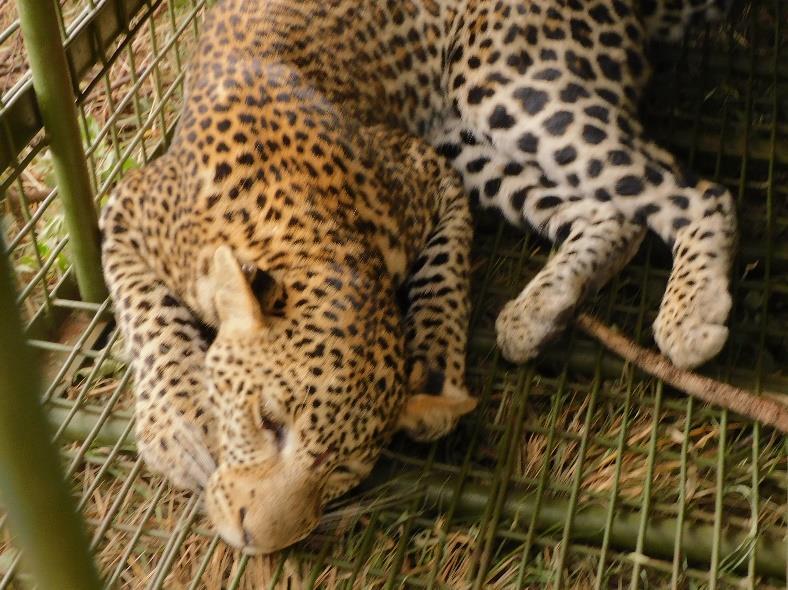
The leopard was trapped in a cage with a bait earlier. She was immobilised by darting on foot with a dart of 120 mg of Ketamine and 1 mg of Medetomidine. The dart partially discharged. A top-up of 50mg of Ketamine was hand injected then top-up of 0.5mg Medetomidine, and 50 mg of ketamine to ascertain total immobilisation of the leopard.
Vital parameters i.e respiratory rate and temperature, were taken and recorded.
Samples, including blood, tissue biopsy, ticks, and body measurements were taken and recorded.
Anaesthesia was reversed using 5 mg of Atipamezole (IM) at the end of the procedure, while inside the cage where she was allowed to recover before being released back into the wild.
The Leopard was not collared after it was found to be a young one.
Case
Lion
Collaring
Loisaba Conservancy
Lions are peak predators within Laikipia County and conflict with humans occurs frequently where lions predate on livestock. To mitigate that, Loisaba Conservancy partnered with Lion landscapes to deploy collars on the lions for monitoring and to prevent livestock predation.
Immobilisation and collaring
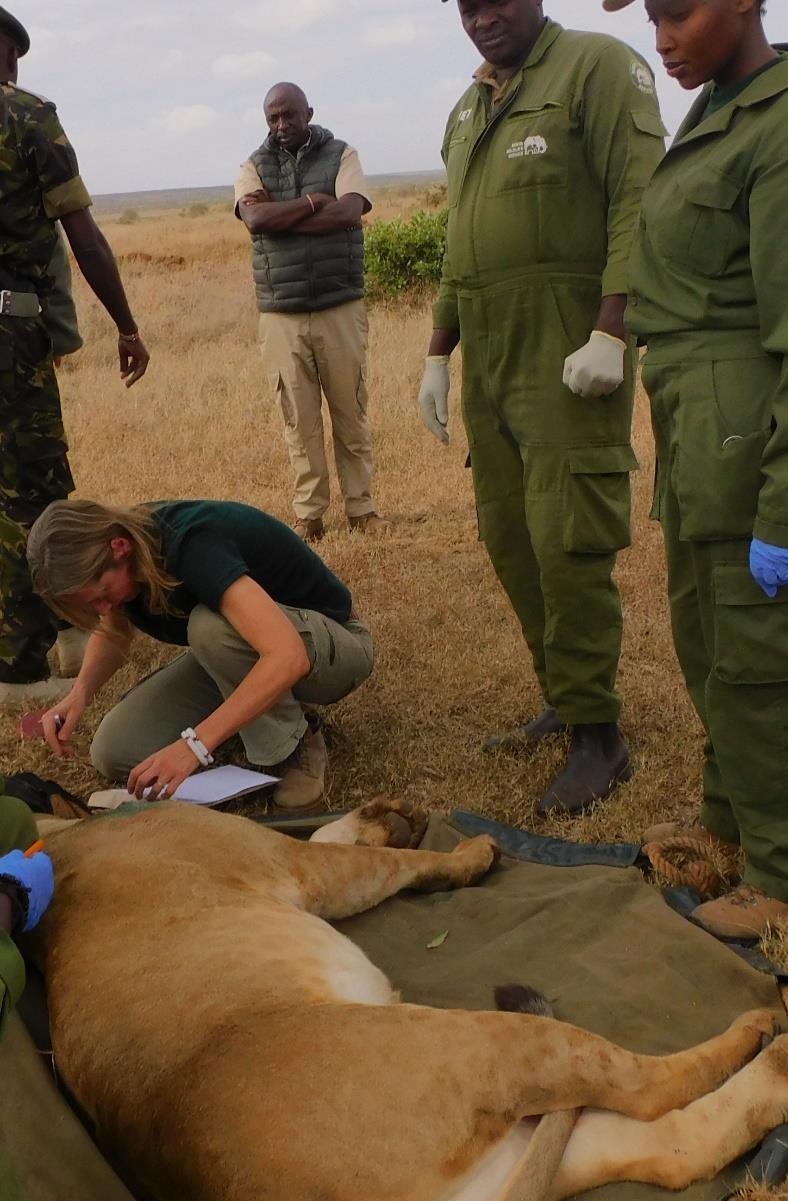
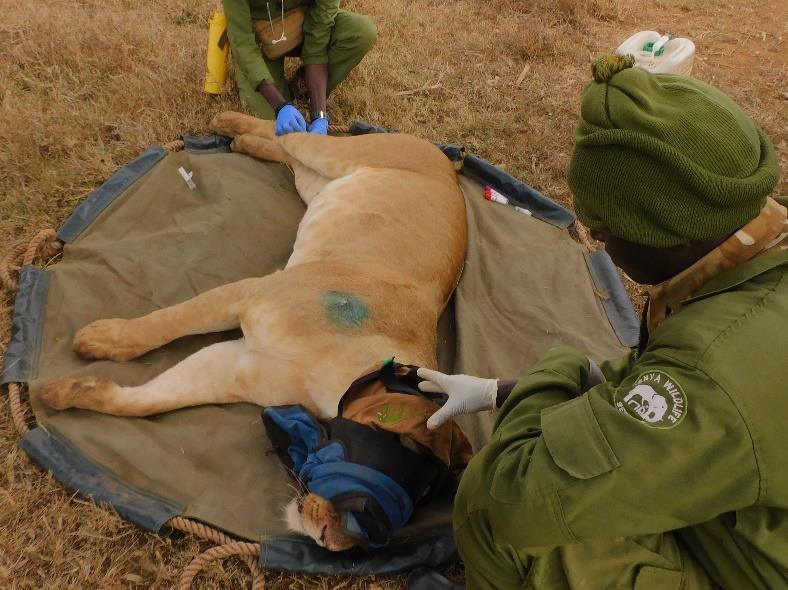
The lion was darted from a vehicle with a dart of 300mg Ketamine and 6mg Medetomidine. The lion was down within 9 minutes after darting. A top-up of 100 mg Ketamine was administered as the procedure was anticipated to take longer with guests joining the exercise. An additional top-up of 50 mg Ketamine after an hour since darting, while the animal was still being handled.
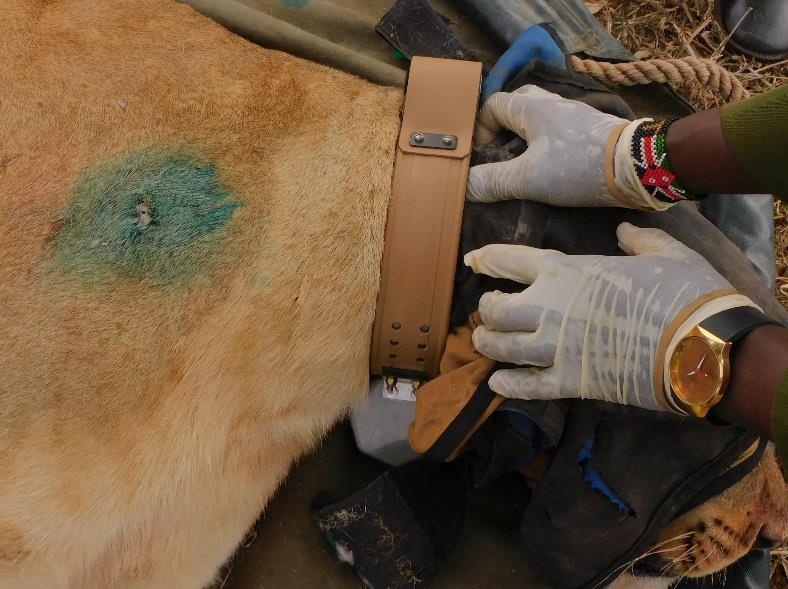
Samples, including blood, ticks, and body measurements were taken of the lion and recorded. A GPS transmitting collar was placed around the neck of the lion, after confirming the fitting by measurement and adjustment of the collar. An antibiotic treatment was administered, using 2500 mg Amoxicillin (IM), to cover for secondary infections for the small wounds that were found on the animal. Fipronil (Frontline), was applied topically along the back line and between limbs to control external parasites including ticks.
The lion was reversed using 30mg of Atipamezole (IM). She was monitored until she achieved full recovery.
Leopard
Collaring
Loisaba Conservancy
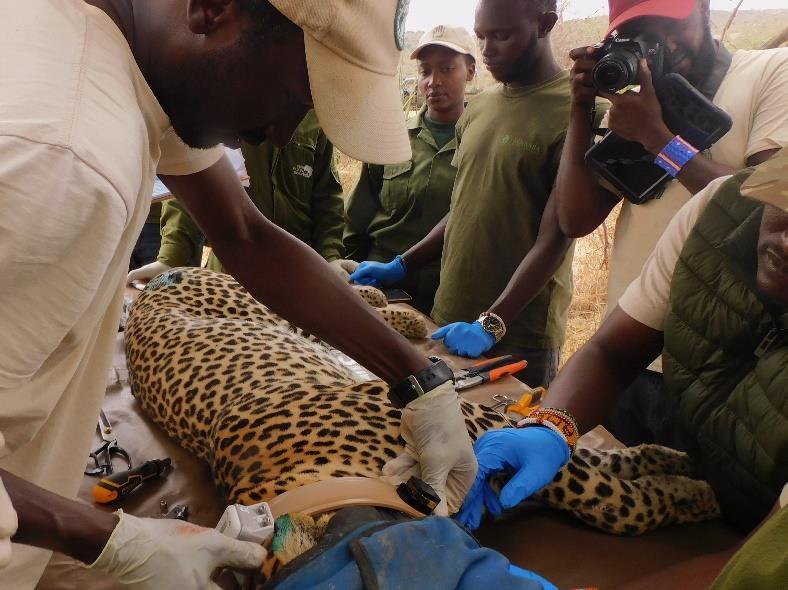
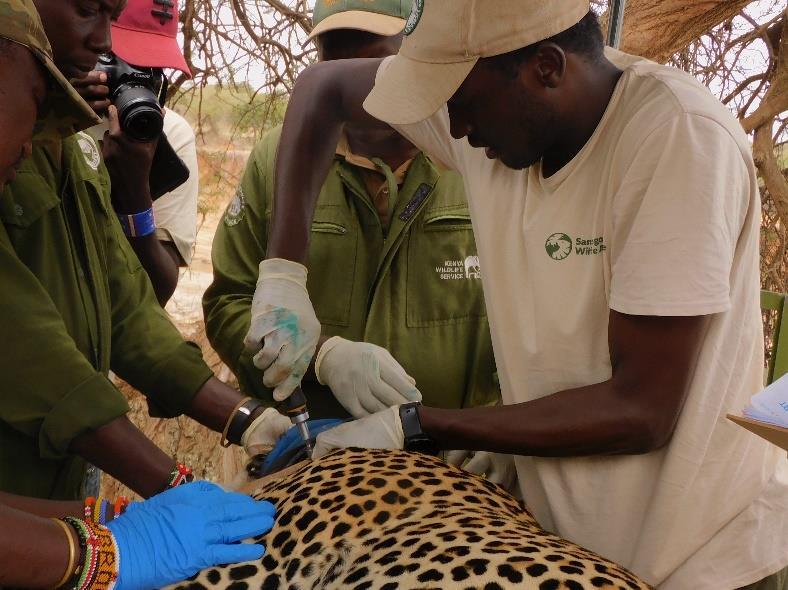
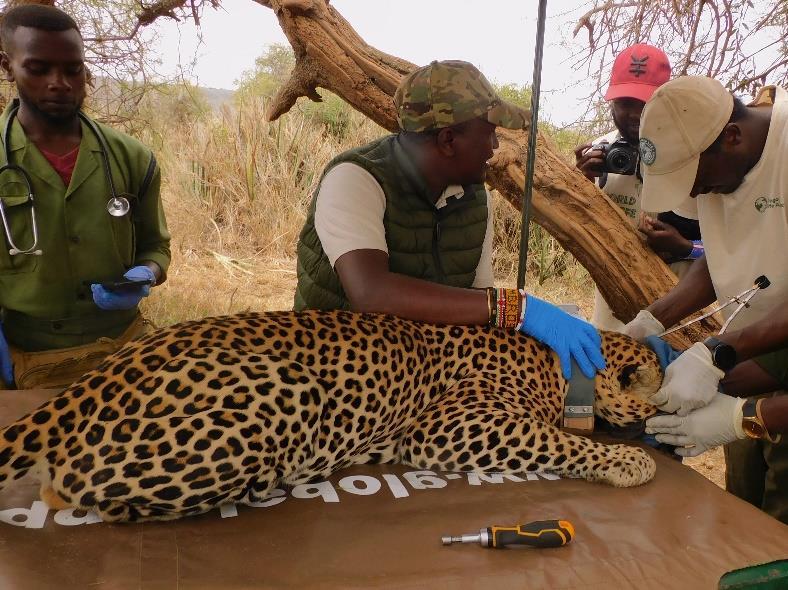
A male adult leopard was trapped, captured and collared on 8th of December at Loisaba Conservancy as part of a study into leopard conflict within Laikipia County.
Immobilisation and collaring
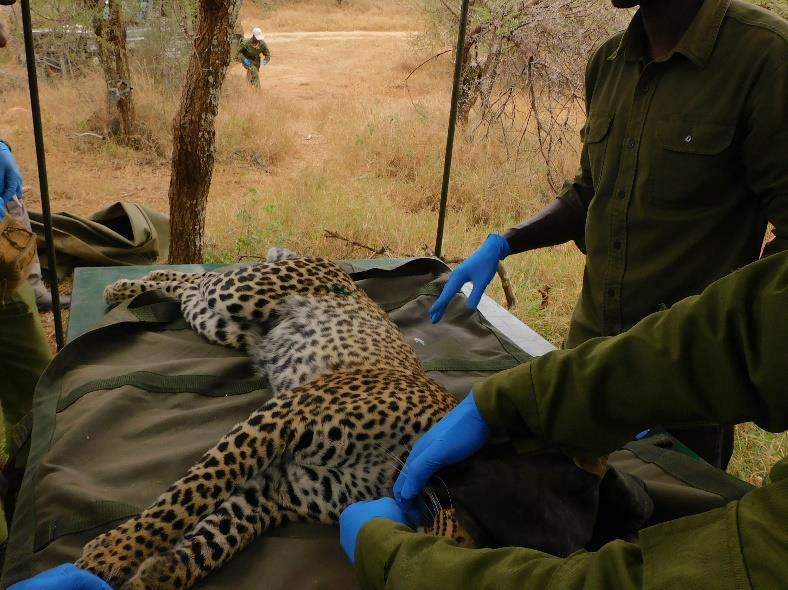
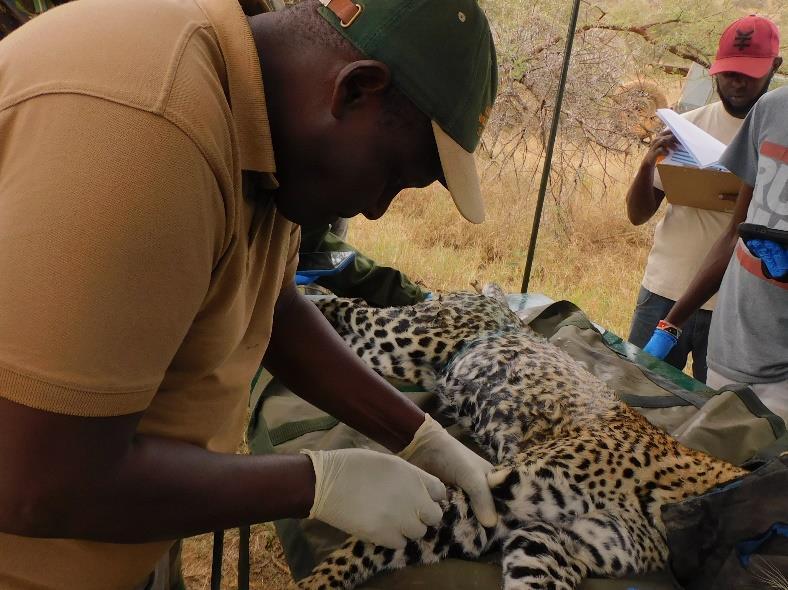
The leopard was darted from foot, while inside the trap-cage, with a dart of 200mg Ketamine and 2mg of Medetomidine, which partially discharged An induction of 8 minutes was recorded. The remainder dose of the immobilisation drug in the dart was then hand injected. The anaesthesia was stable, and no additional top-up was required.
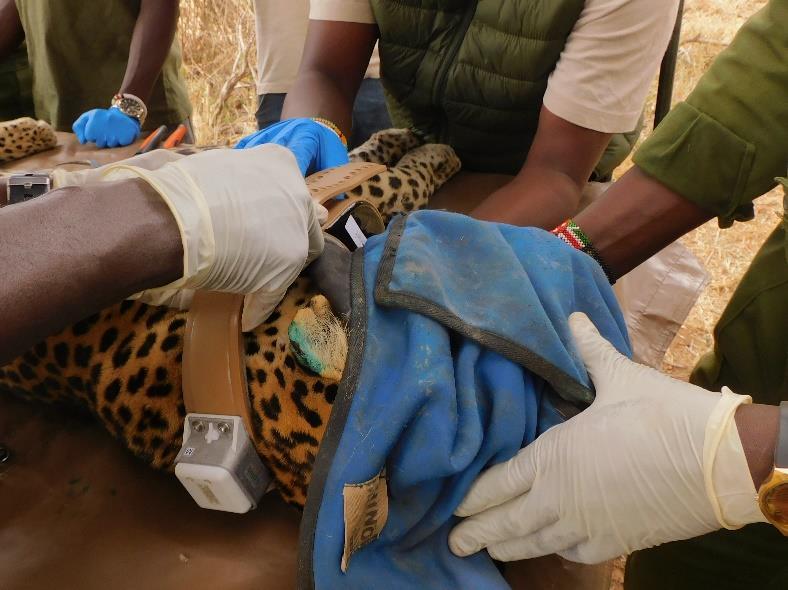
Samples, including blood, ticks, fecal and body measurements were taken of the leopard and recorded. A GPS transmitting collar was placed around the neck of the leopard, after confirming the fitting by measurement and adjustment of the collar. An antibiotic treatment was administered, using 900mg Amoxicillin (IM), to cover for secondary infections for the minor old wounds that were found on the right paw, and leg of the leopard. Fipronil (Frontline), was applied topically along the back line and between limbs to control external parasites including ticks.
The leopard was reversed of anaesthesia while in the cage where he was allowed to recover before release.
Case 7 – 12th December 2025
Elephant
Postmortem
Mutara Ranch
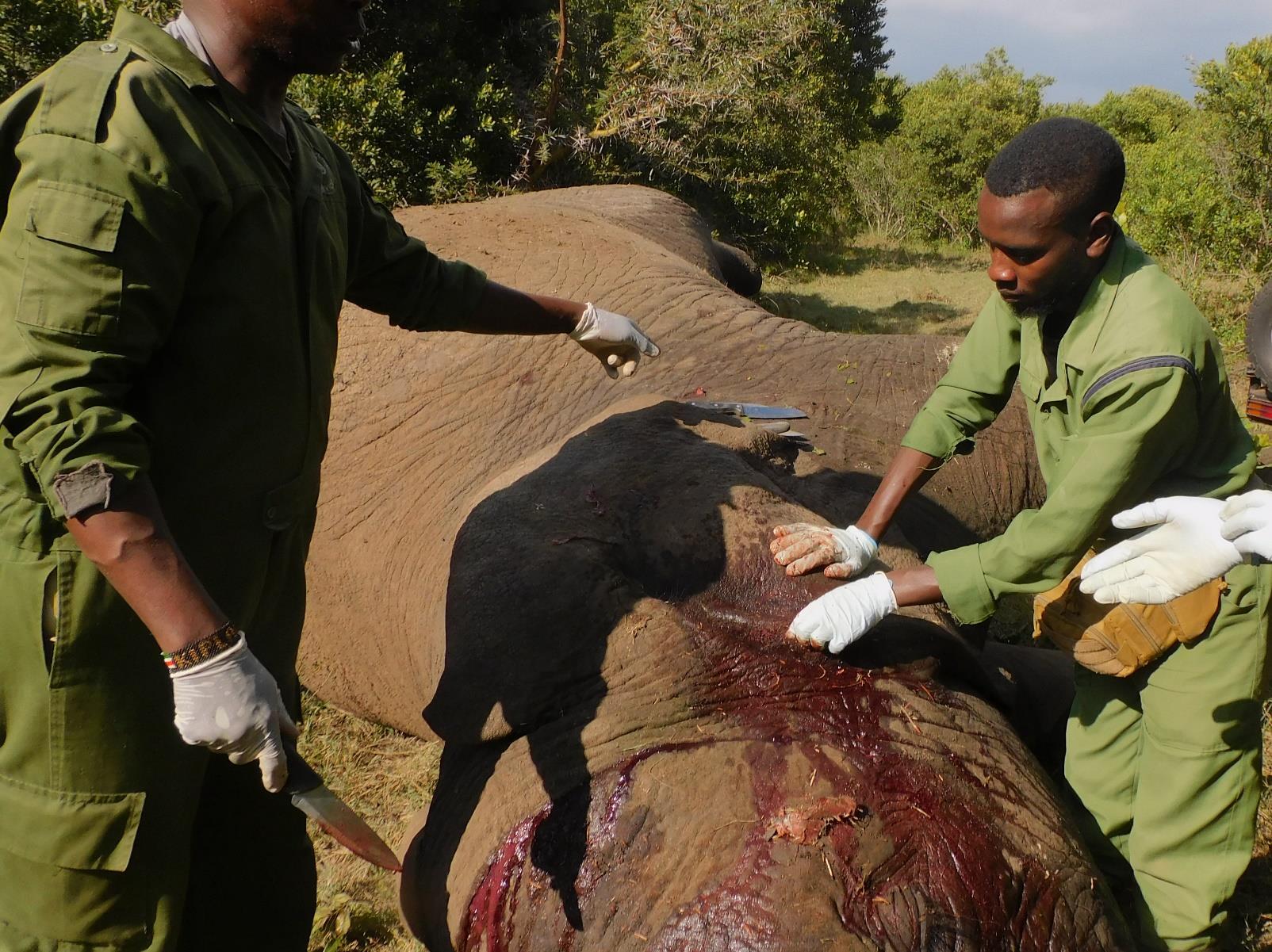
The elephant was reported earlier on this date after it was discovered dead at Mutara; the Laikipia Park KWS unit, together with Ol Pejeta teams arrived at the site.
Postmortem examination
The elephant carcass was found on its left lateral recumbency. It was markedly bloated; the perineum was swollen. The general body condition of the carcass was good.
- The heart, lungs, trachea and thoracic portion of the oesophagus were normal
- Small amount of digested ingesta was found spilled in the peritoneal cavity
- Adhesions were found on the small intestines, and the segments of the colon
- The stomach had small quantity of fresh ingesta with small volume of fluid
- The small intestines were gas-filled, empty of contents, and the mucosa was thickened
- A segment of the transverse colon was compacted with ingesta, and was ruptured through the serosa, leaking contents into the peritoneum.
Prognosis
The transverse colon was found to have a ruptured, causing spillage of ingesta into the peritoneal cavity, and consequently colic and peritonitis. This caused septic shock and death of the elephant.