SWT/KWS Meru Veterinary Unit Report for January 2026
SWT/KWS MERU MOBILE VETERINARY UNIT
JANUARY 2026
4 Cases in January 2026
January Report by Dr.
Aminga Duncan
1 HWC Case 2 Elephant Cases
The month of January was characterized by elevated daytime and nighttime temperatures. In the Meru ecosystem, most seasonal rivers and water pans have dried up. The grasslands have rapidly lost their green coloration, transforming into brown carpets of dry grass and dust.
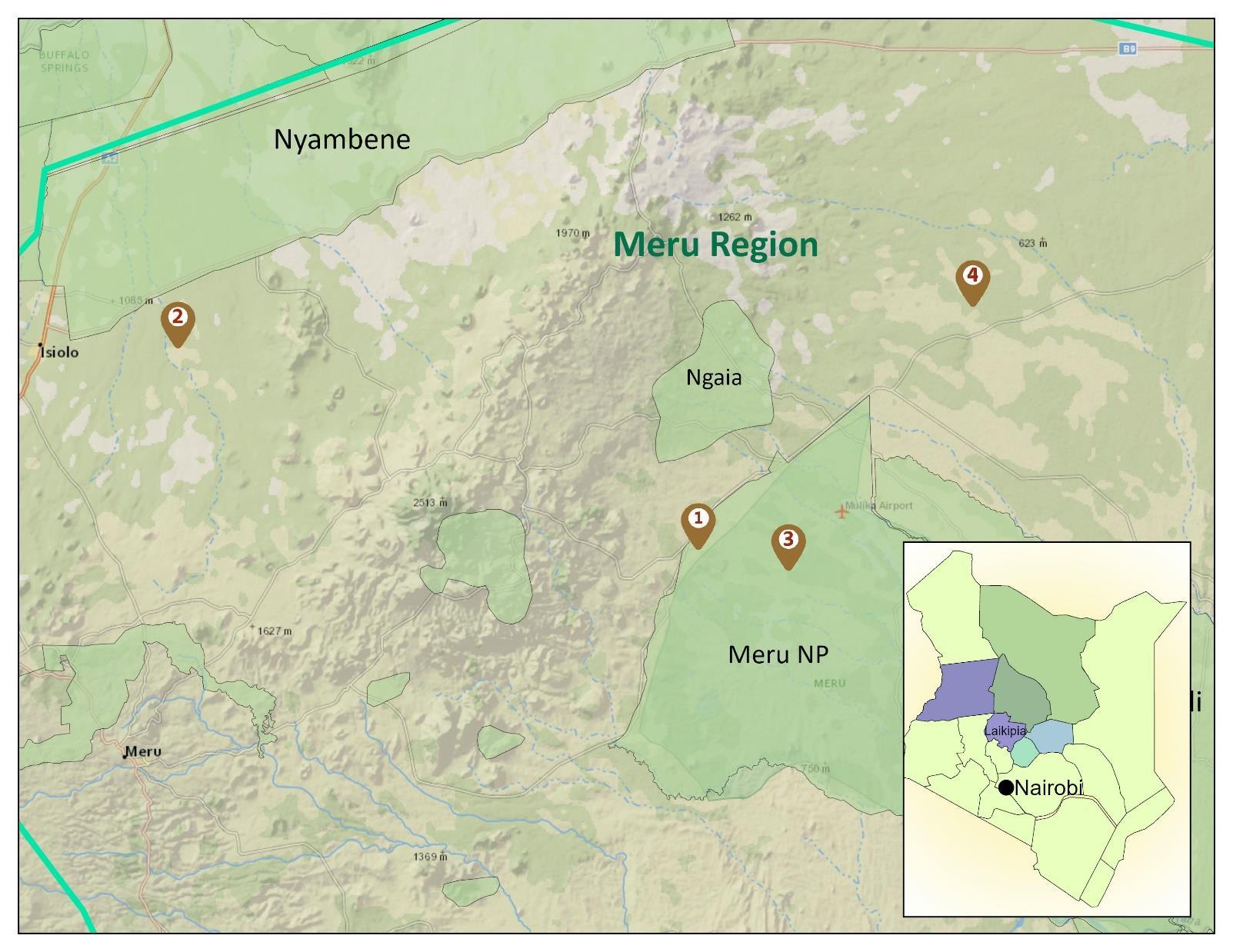
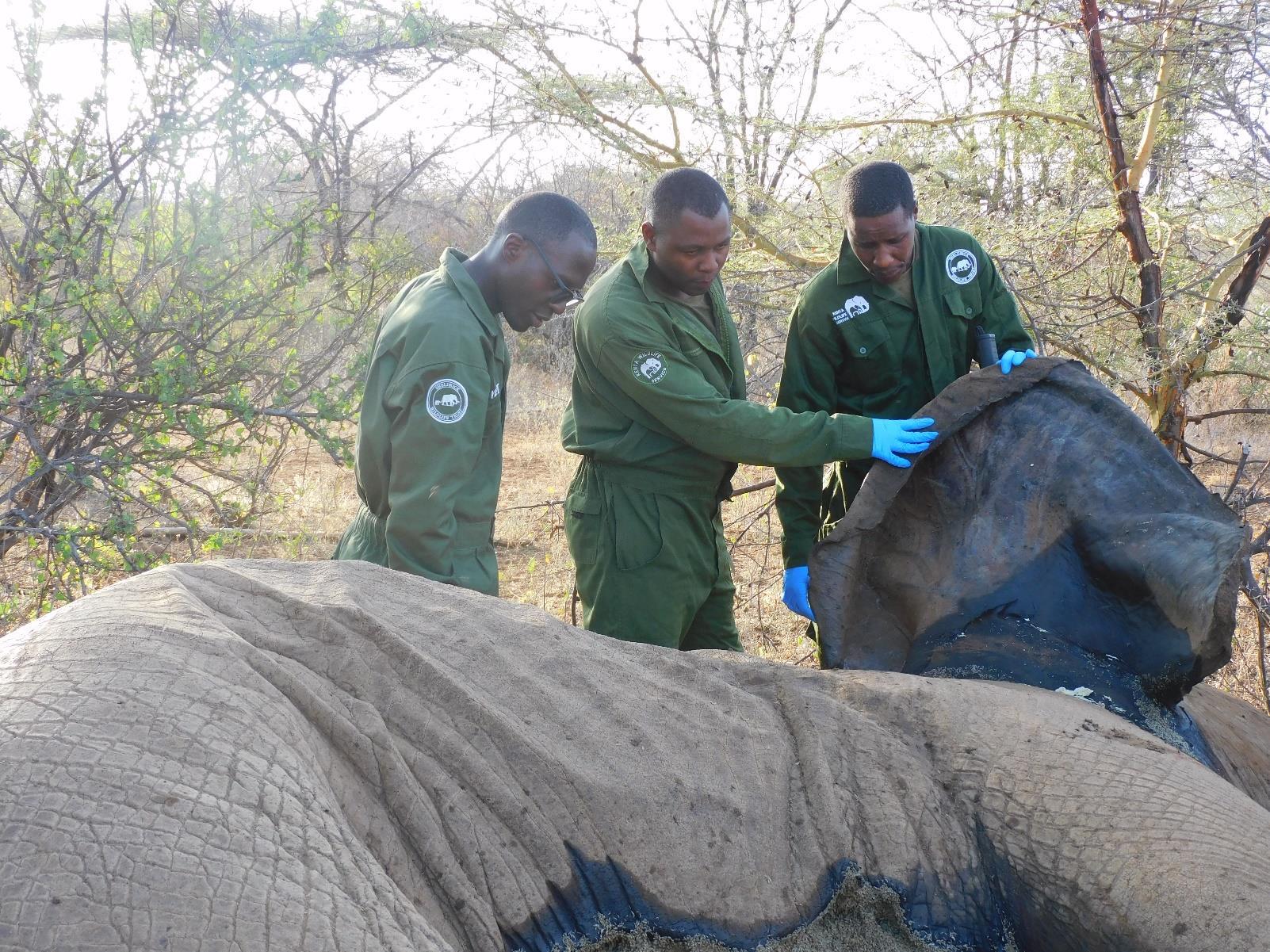
During this period, the SWT/KWS Meru Mobile Veterinary Unit attended to four wildlife cases. In Meru National Park, the team carried out a prophylactic vaccination of a security dog against trypanosomiasis and treated a male white rhino bull for cutaneous wounds and injuries sustained from a territorial fight. In Kiambogo area of Tigania East, the team conducted a postmortem examination on an adult male elephant carcass suspected to have died from gastrointestinal complications.
Additionally, the team conducted an autopsy on an adult female elephant carcass in Kampara area, Kinna, which was suspected to have died from fatal gunshot injuries due to human-wildlife conflict in the area.
Acknowledgement
We sincerely thank Sheldrick Wildlife Trust (SWT) for support, resources & sponsorship of the Rift We extend our sincere gratitude to Sylvie Chantecaille and the Sheldrick Wildlife Trust for their unwavering support of the Meru Mobile Veterinary Unit. Their generous funding continues to play a vital role in safeguarding the health and survival of wildlife within the Meru ecosystem.
We also acknowledge the Kenya Wildlife Service for its exemplary leadership and coordination. The strategic guidance provided by the KWS Head of Veterinary Services and the Senior Assistant Director of the Eastern Conservation Area has been instrumental in strengthening conservation efforts and advancing the welfare of wildlife across the region.
Case Details
January 2026
Case 1 – 12th January 2026
Security Dog Technical Case
Meru National Park
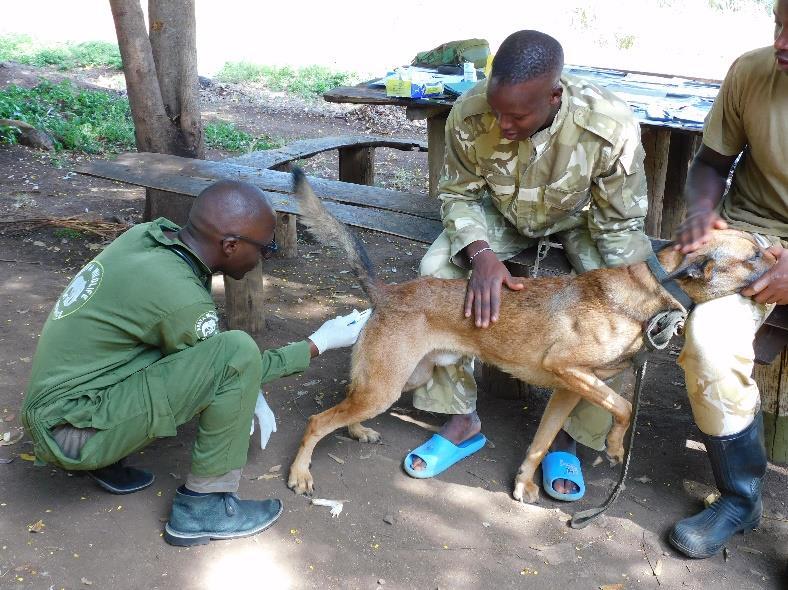
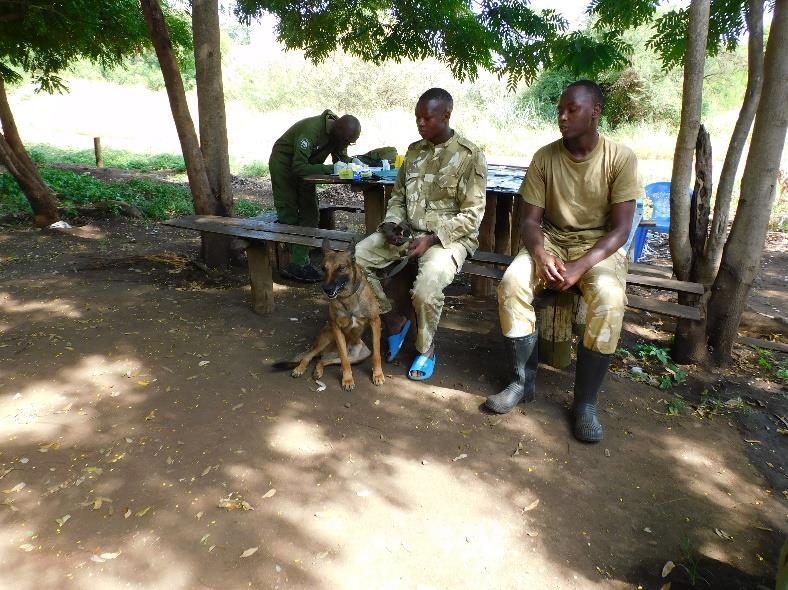
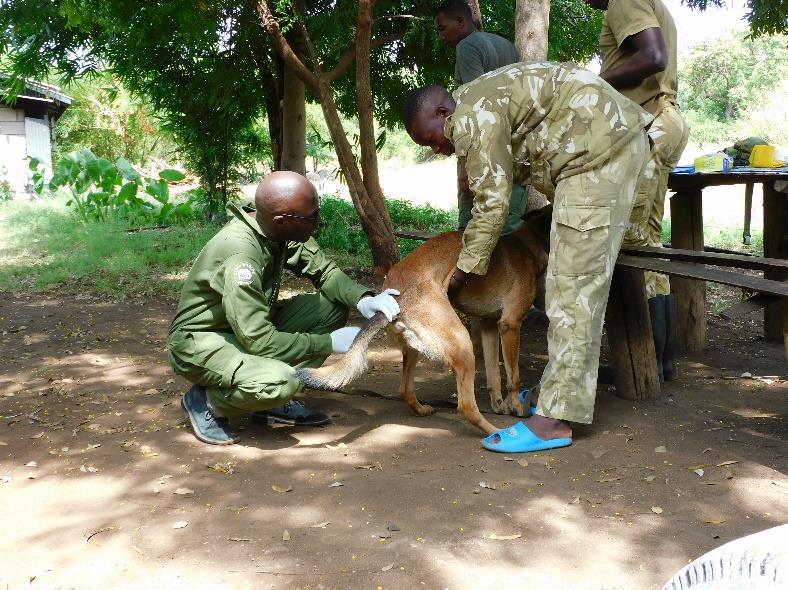
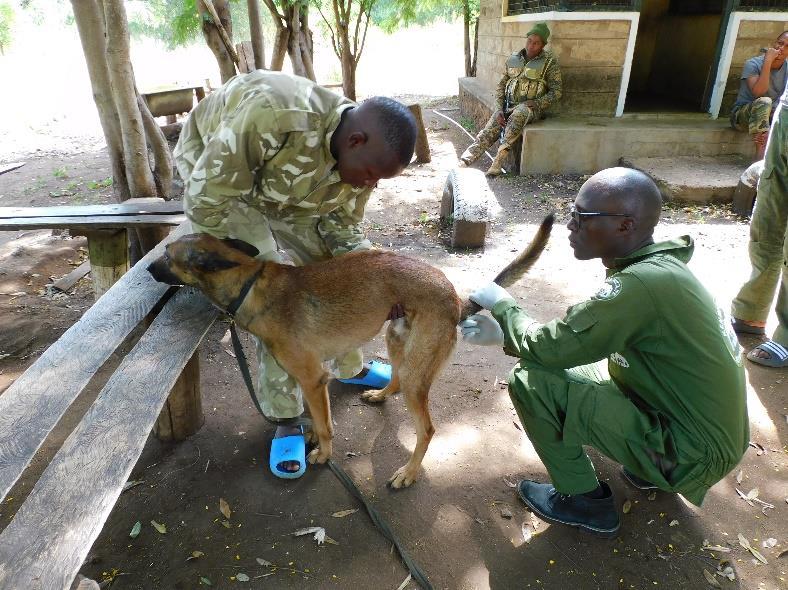
Security dogs play a critical role in wildlife conservation within Meru National Park by tracking poachers and detecting illegal activities across the ecosystem. Despite their invaluable contributions to anti-poaching efforts, these dogs are vulnerable to several diseases, including trypanosomiasis a highly fatal disease transmitted by tsetse flies. To protect their health and ensure their continued effectiveness, the Meru veterinary team took proactive measures by vaccinating Sep, a security dog stationed at the Meru Canine Unit against trypanosomiasis.
Immobilisation, examination and treatment
The dog was introduced to the veterinarian beforehand to minimize excitement during the examination. A physical assessment revealed that he was in good body condition (3/4), active, and alert. His body weight was recorded at 28 kgs and drug dosages were calculated accordingly. He was manually restrained before administering 0.8 mls of Triquin® (a combination of Quinapyramine sulphate and Quinapyramine chloride) subcutaneously on the left side of the neck.
Prognosis
No adverse reactions were observed following drug administration, indicating a good prognosis for recovery.
Case 2 – 16th January 2026
Elephant Postmortem Kiambogo, Tigania East (Isiolo)
The SWT/KWS Meru Mobile Veterinary Unit received a report on the evening of 15th January 2026 regarding the sighting of an elephant carcass in the Kiambogo area of Tigania East Constituency. The veterinary team was requested to conduct a post-mortem examination to establish the cause of death, with the examination scheduled for the following day.
Postmortem examination
The carcass was found lying on its left side, with both tusks having already been retrieved by the KWS Ruiri team for safe custody. The carcass, estimated to be approximately one day old, had unfortunately been extensively dismembered by locals, compromising the integrity of the internal organs and thereby limiting the ability to conduct a conclusive post-mortem examination.
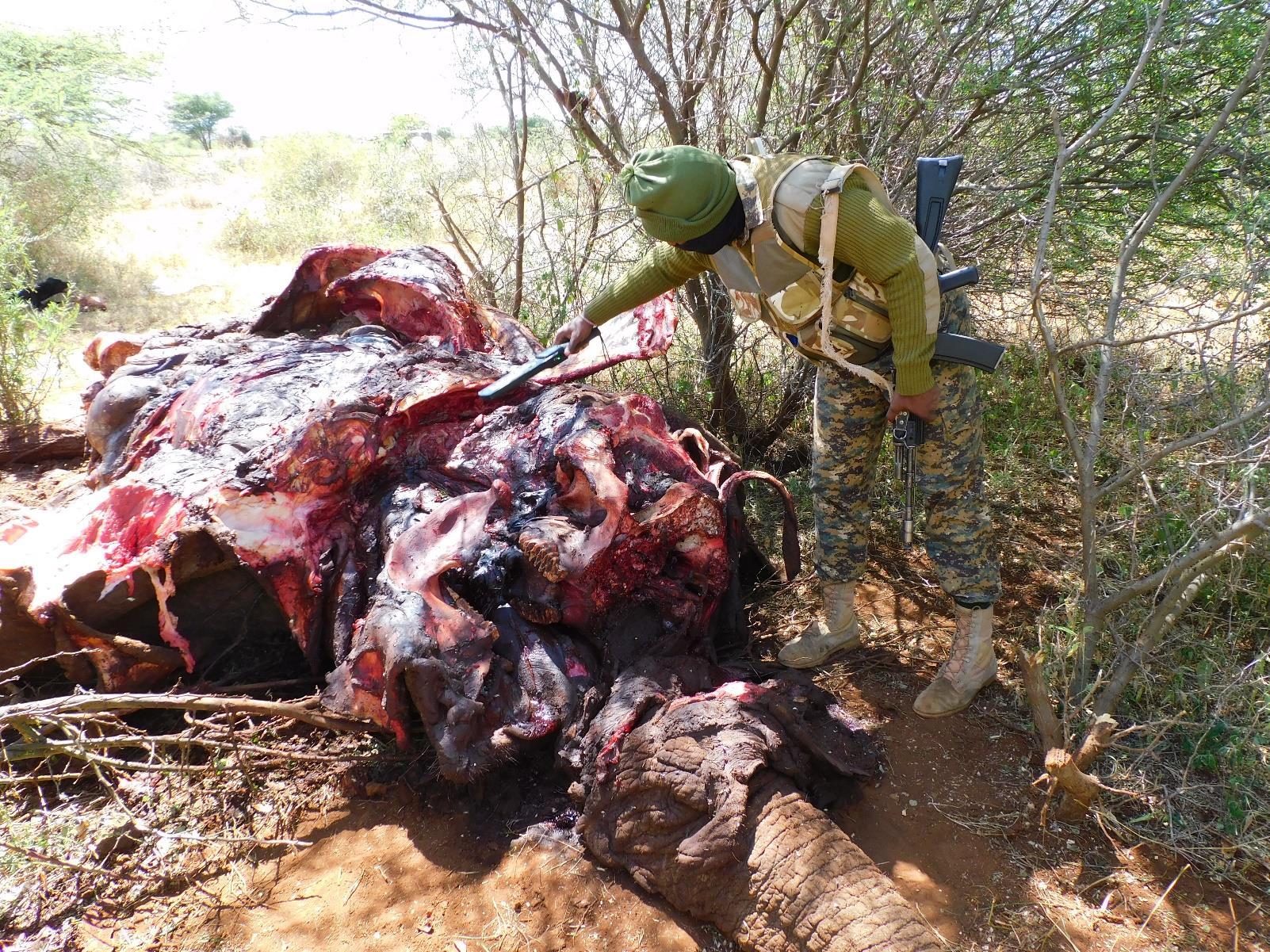
A metal detector was deployed to screen for the presence of any foreign metallic objects, with negative findings.
Cause of death
The exact cause of death could not be conclusively determined; however, the elephant is suspected to have succumbed to gastrointestinal-related complications.
Case 3 – 20th January 2026
White Rhino Natural Causes
Meru National Park
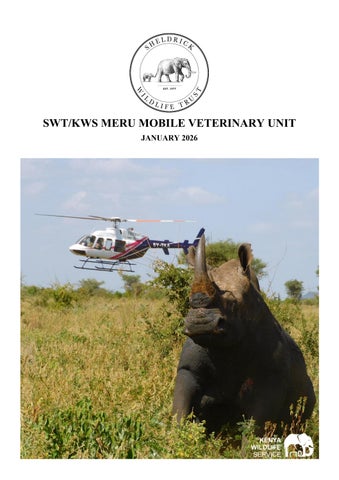
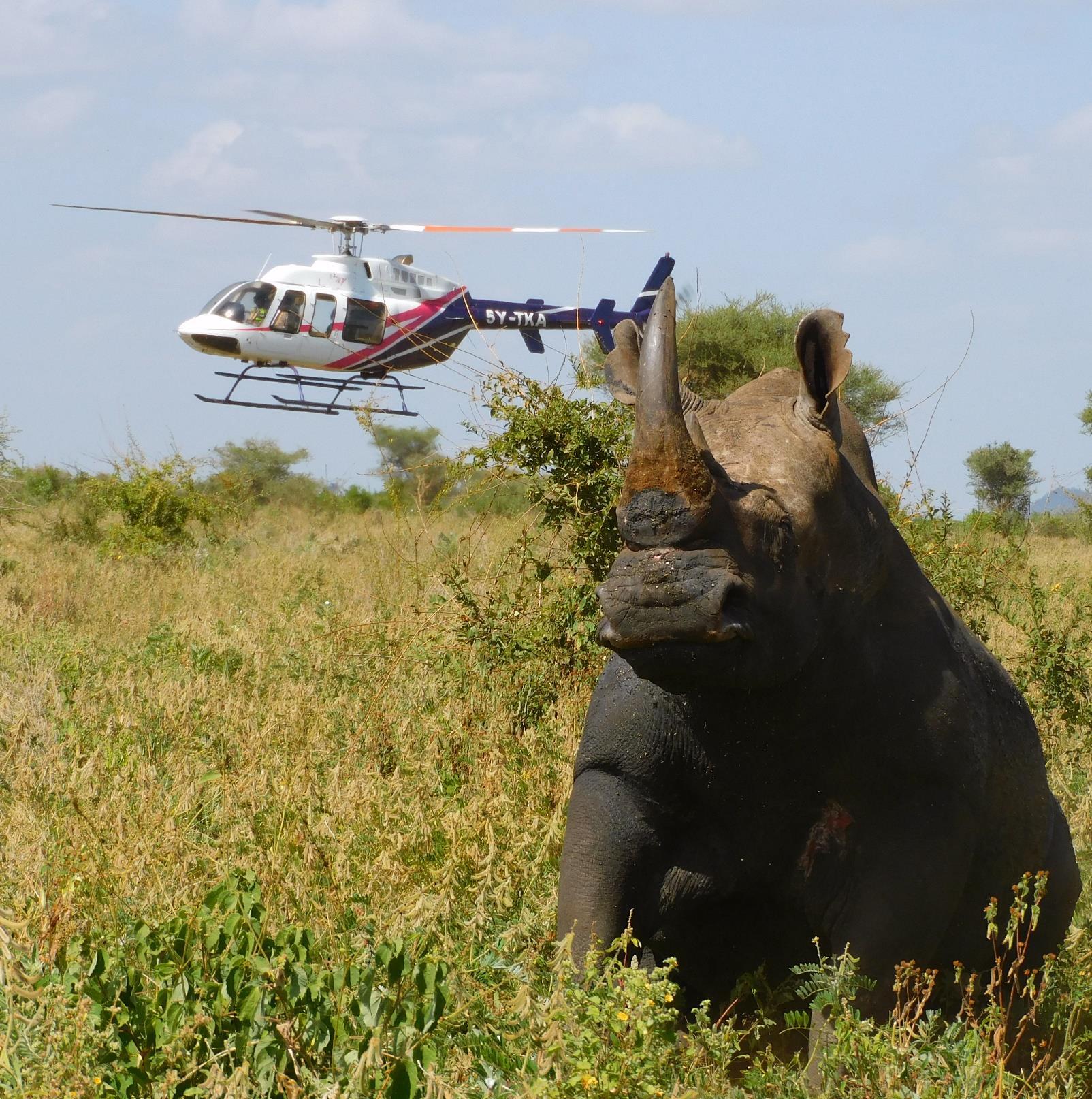
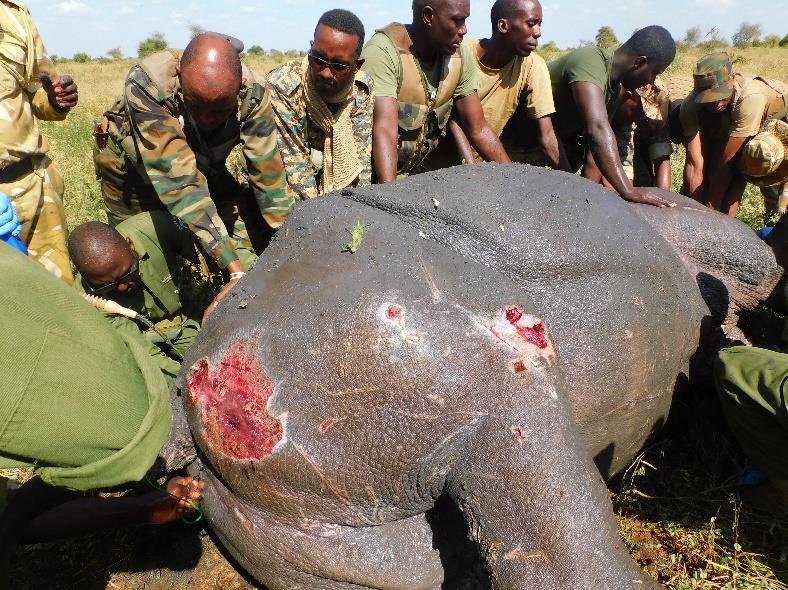
The SWT/KWS Meru Veterinary Team received a distress report regarding the sighting of Obama, a male white rhino in Meru National Park, with injuries suspected to have resulted from a territorial fight. Upon assessment, the rhino was observed to have cutaneous lesions on the rump, as well as laceration and abrasion wounds on the flanks, hindquarters, forelimbs, neck, and around the head.
Immobilisation, examination and treatment
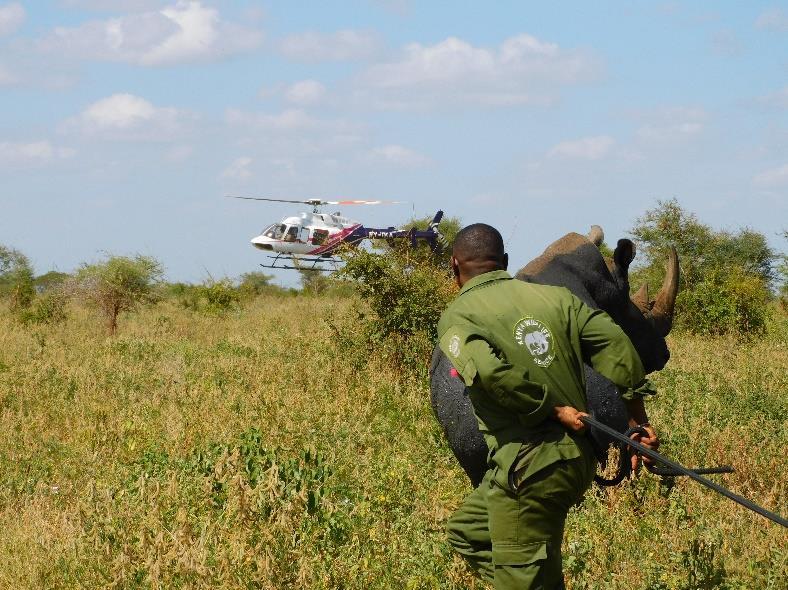
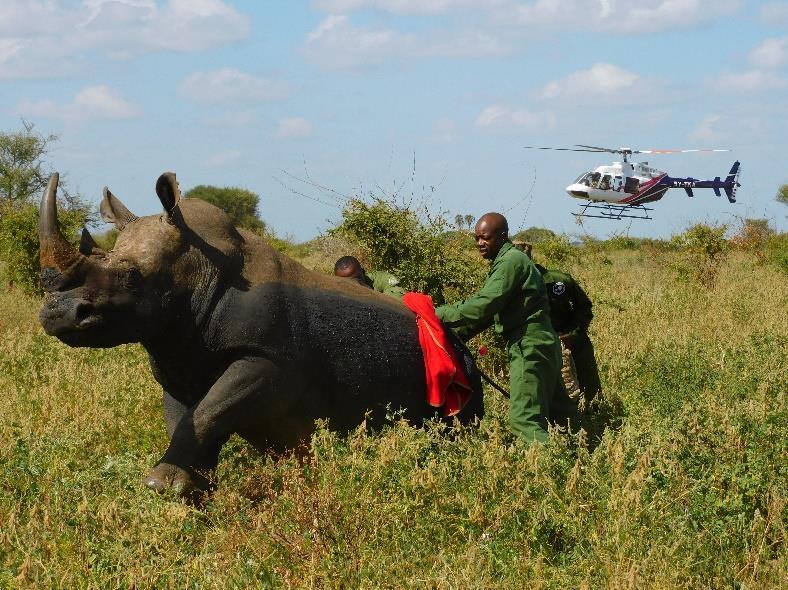
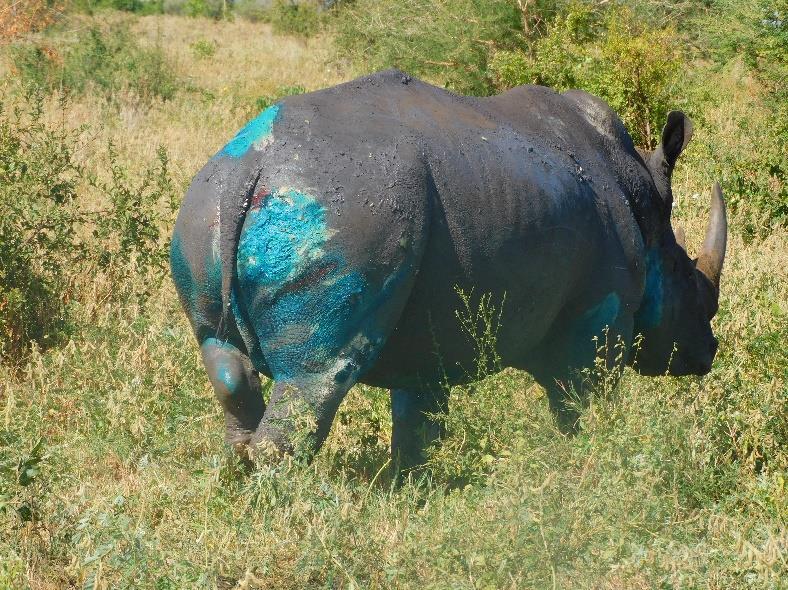
The rhino was found wallowing in mud within a swamp. Using a chartered helicopter, he was carefully guided to an open area and darted with a combination of 5mg Etorphine and 60mg Azaperone. The drugs took effect rapidly, and after approximately seven minutes, the rhino went into left lateral recumbency. To counter the effects of etorphine, 50 mg of butorphanol tartrate was administered intravenously. Upon examination, the rhino was found to have a cutaneous lesion on the right rump measuring approximately 27cm in length and 31 cm in width, in addition to multiple other wounds. All wounds were thoroughly cleaned with water, irrigated with Iodine, packed with green clay for its healing properties, and covered with an antibiotic aerosol to deter flies. Intramuscularly, the rhino was administered 2,000mg Flunixin, 30,000mg Amoxicillin, and metabolic stimulators. Subcutaneously, he received 40mg Ivermectin.
Prognosis
The rhino was given a favourable prognosis for recovery.
Case 4 – 26th January 2026
Elephant
Human-Wildlife Conflict
Kampara area, Kinna
The On the evening of 26th January 2026, the Meru Mobile Veterinary Unit was notified of the sighting of an adult female elephant carcass in the Kampara area of Kinna.
Postmortem examination
The carcass was found lying in left lateral recumbency, with both tusks having been retrieved by the KWS Korbesa team for safe custody. On examination, the carcass was observed to have been extensively scavenged, with most internal organs pulled out and consumed. It was also in an advanced stage of autolysis.
A metal detector scan conducted around the right shoulder region, the mid-thoracic vertebral area, and the rump yielded positive findings for the presence of foreign metallic objects. However, due to the advanced stage of autolysis, the exact trajectory of the foreign materials could not be clearly established. Incisions made on relatively intact tissues revealed findings consistent with internal haemorrhages.
Cause of death
Based on the findings, the elephant is suspected to have died from fatal gunshot wounds, likely associated with human–wildlife conflict in the area.