Sheldrick WILDLIFE TRUST
overview for 2025
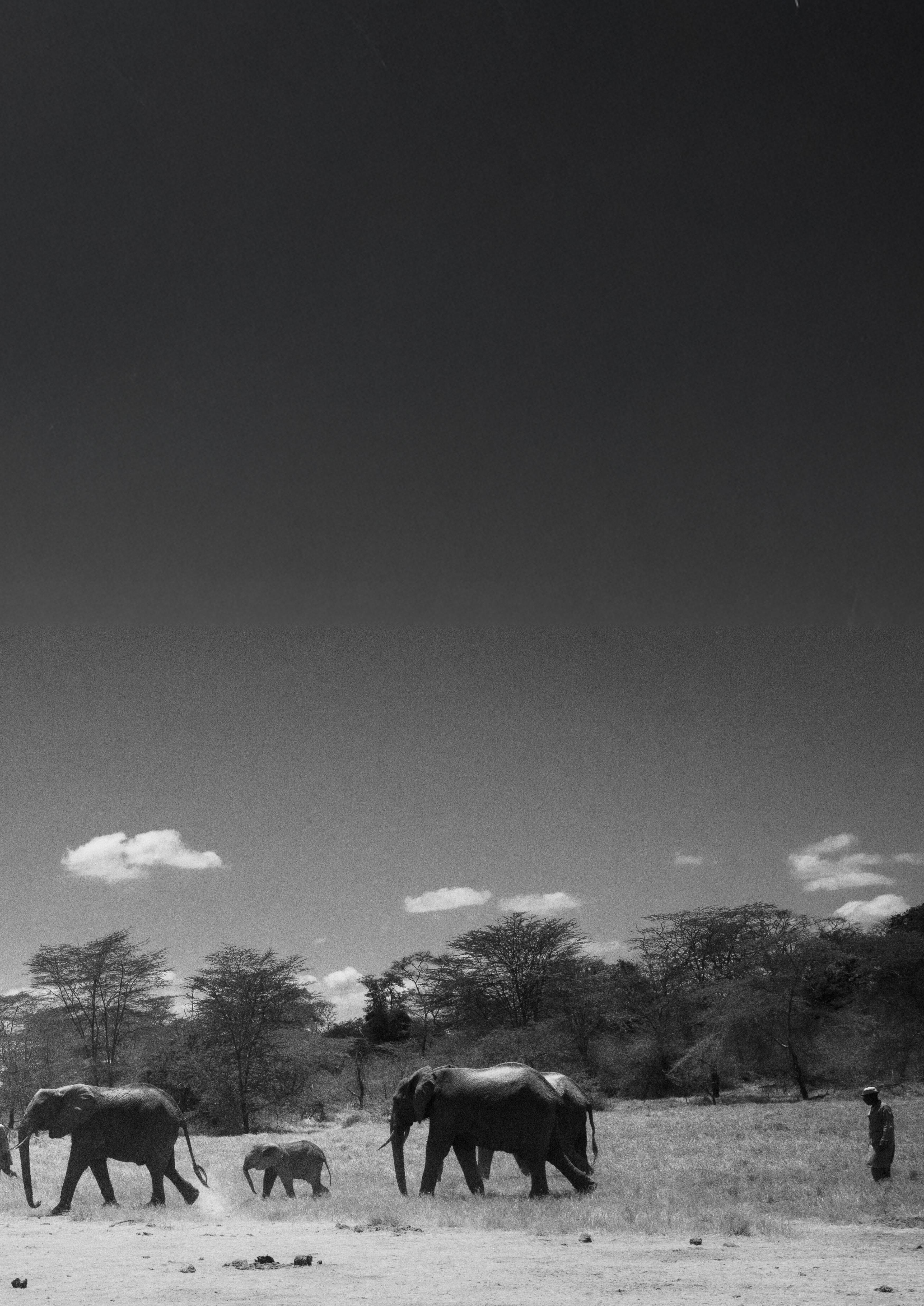
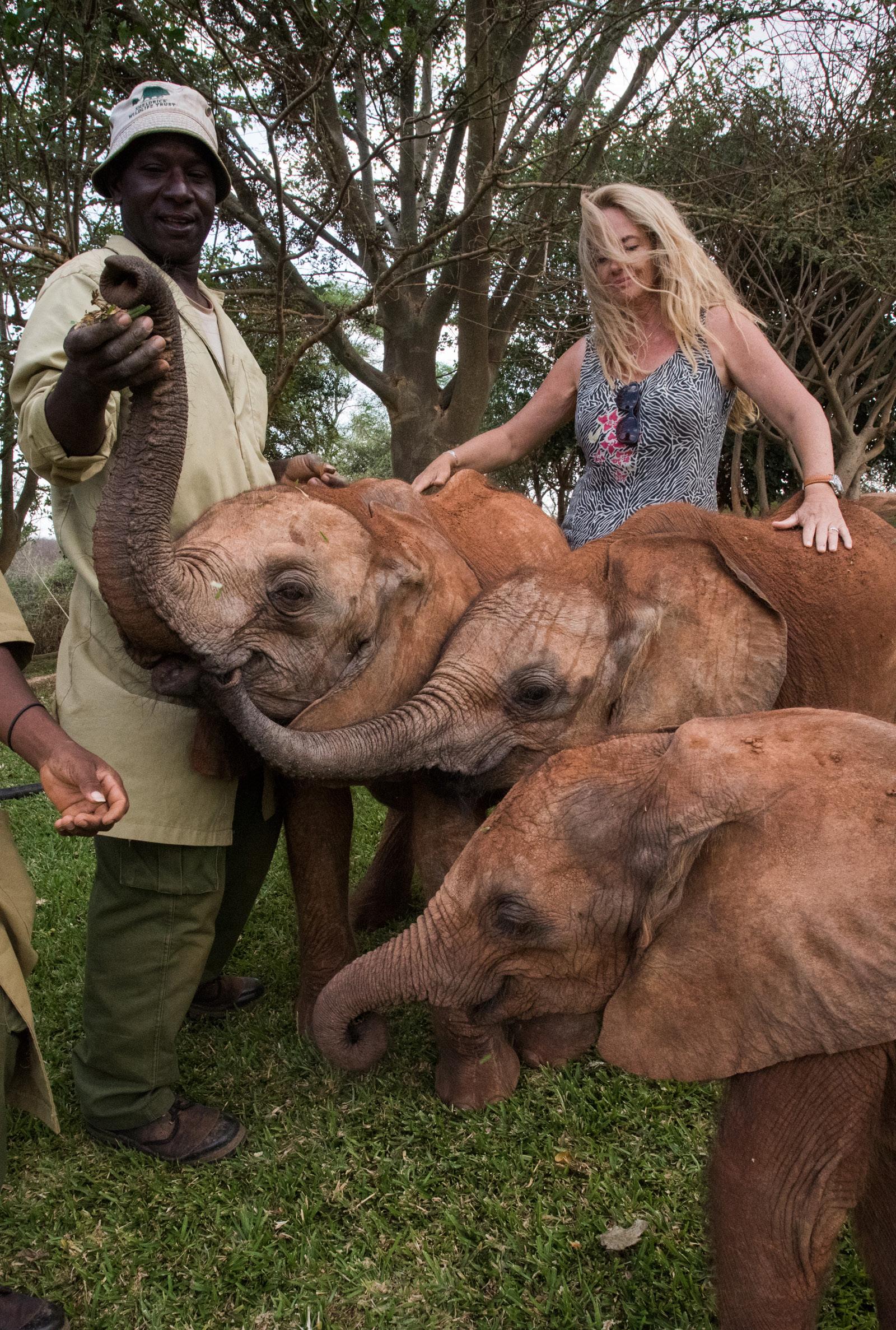
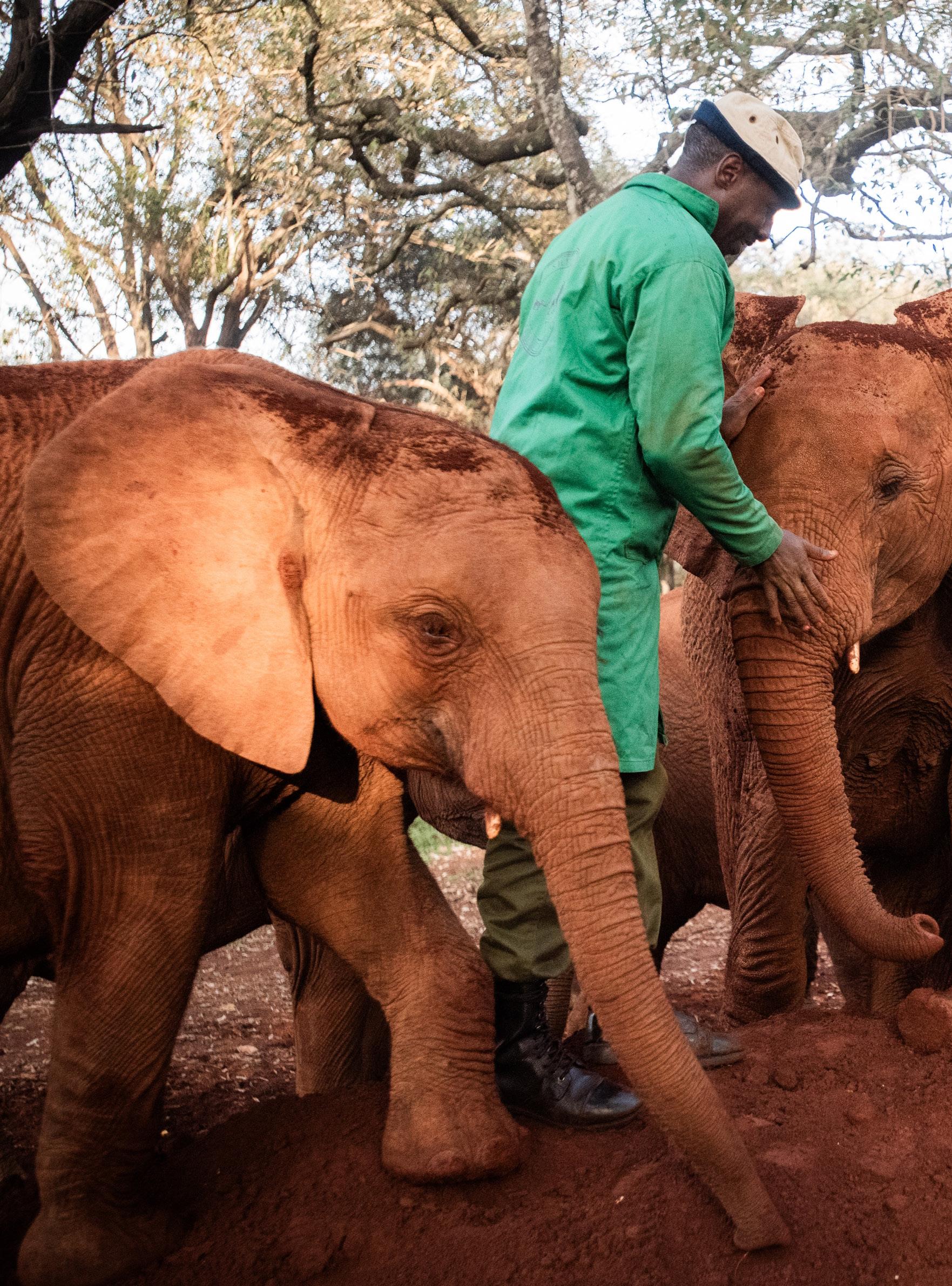
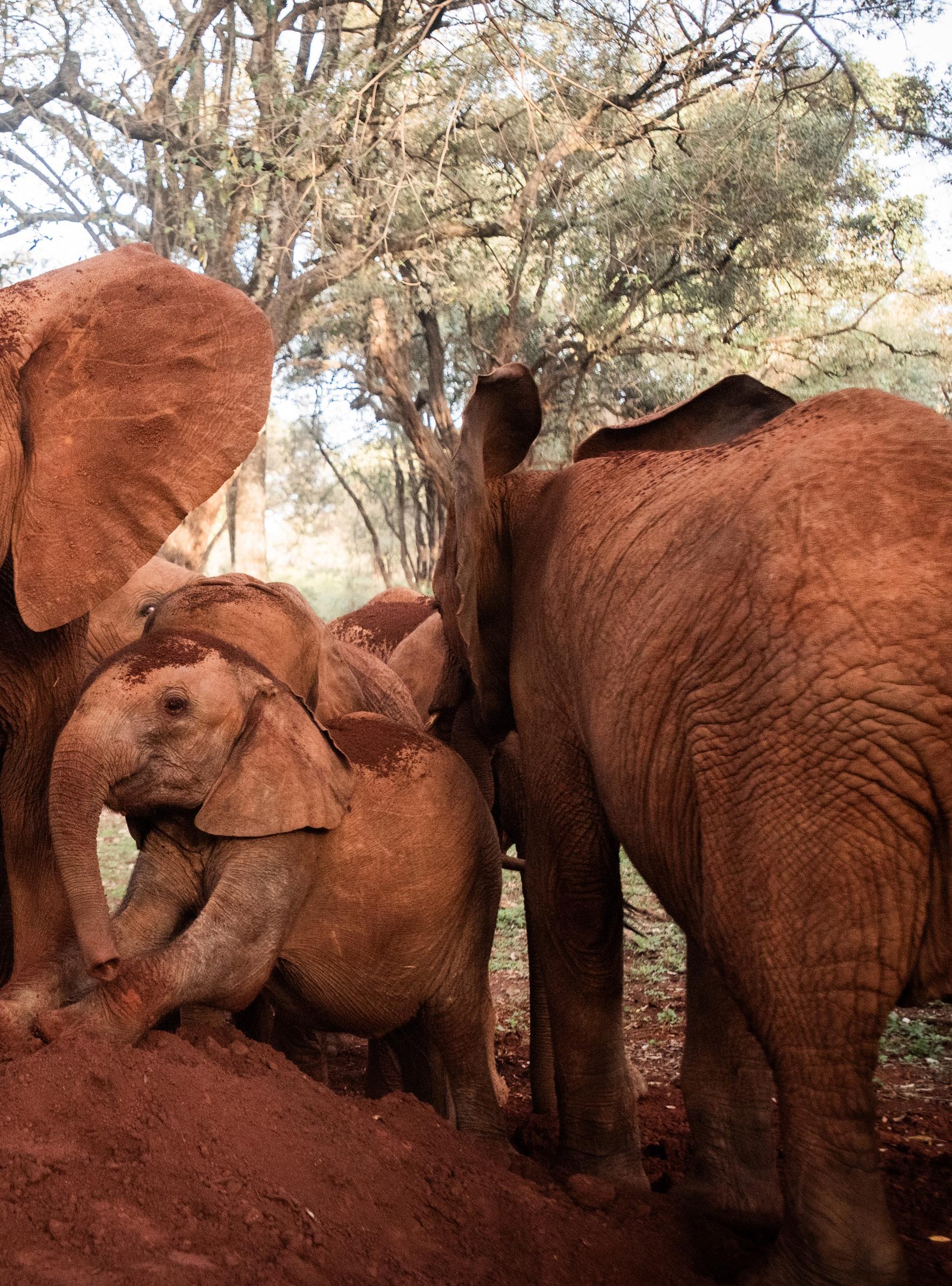
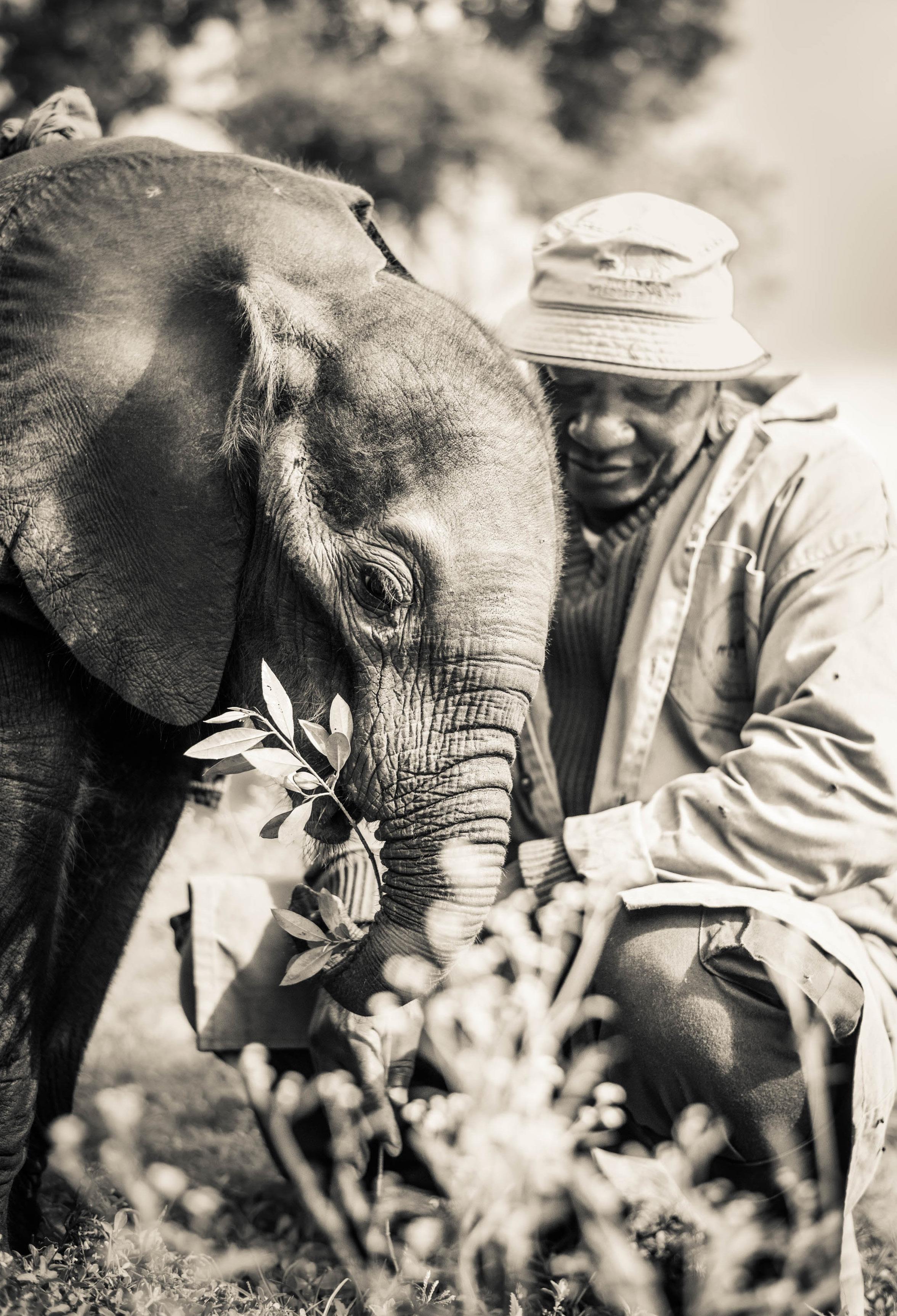
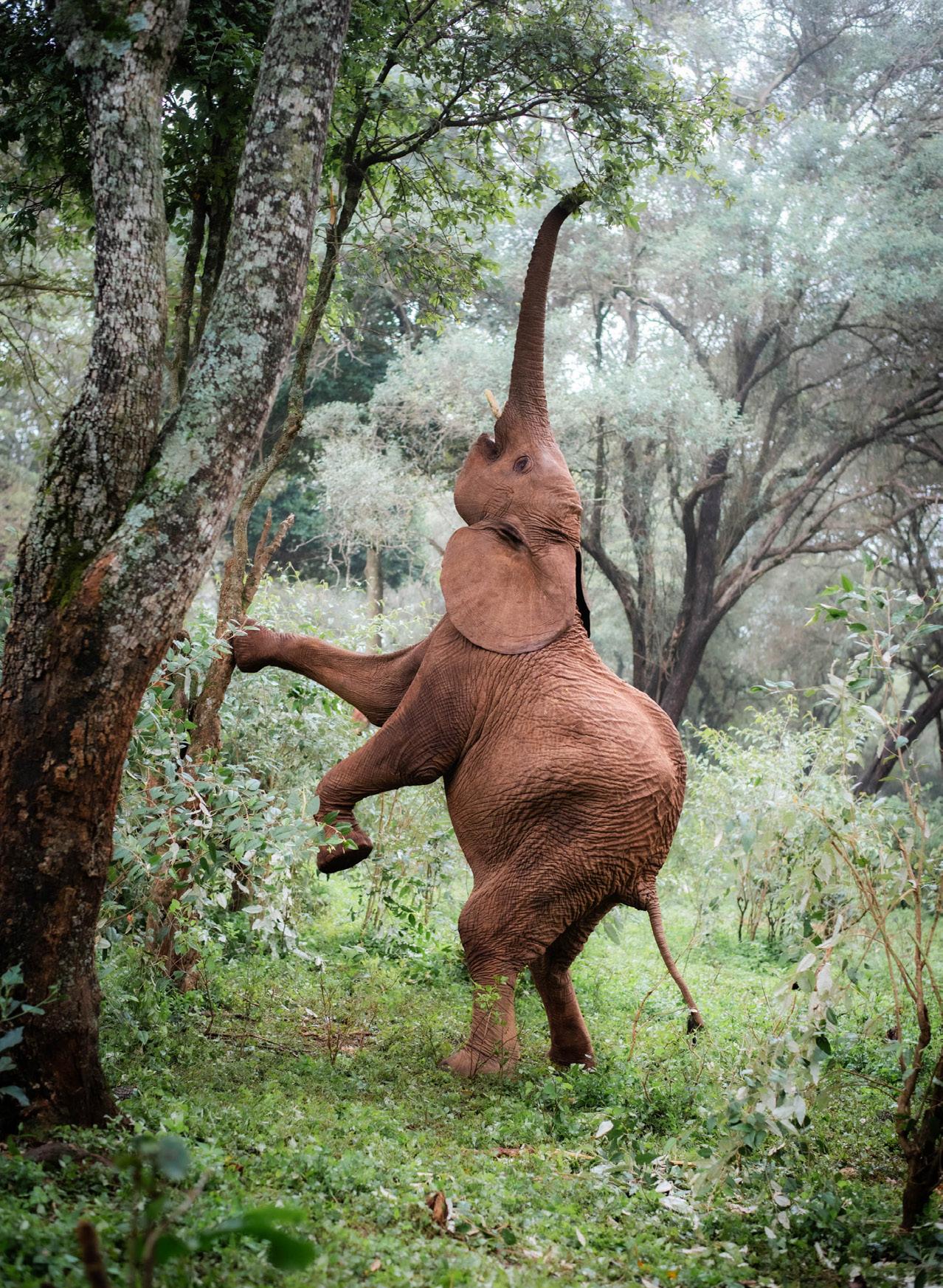
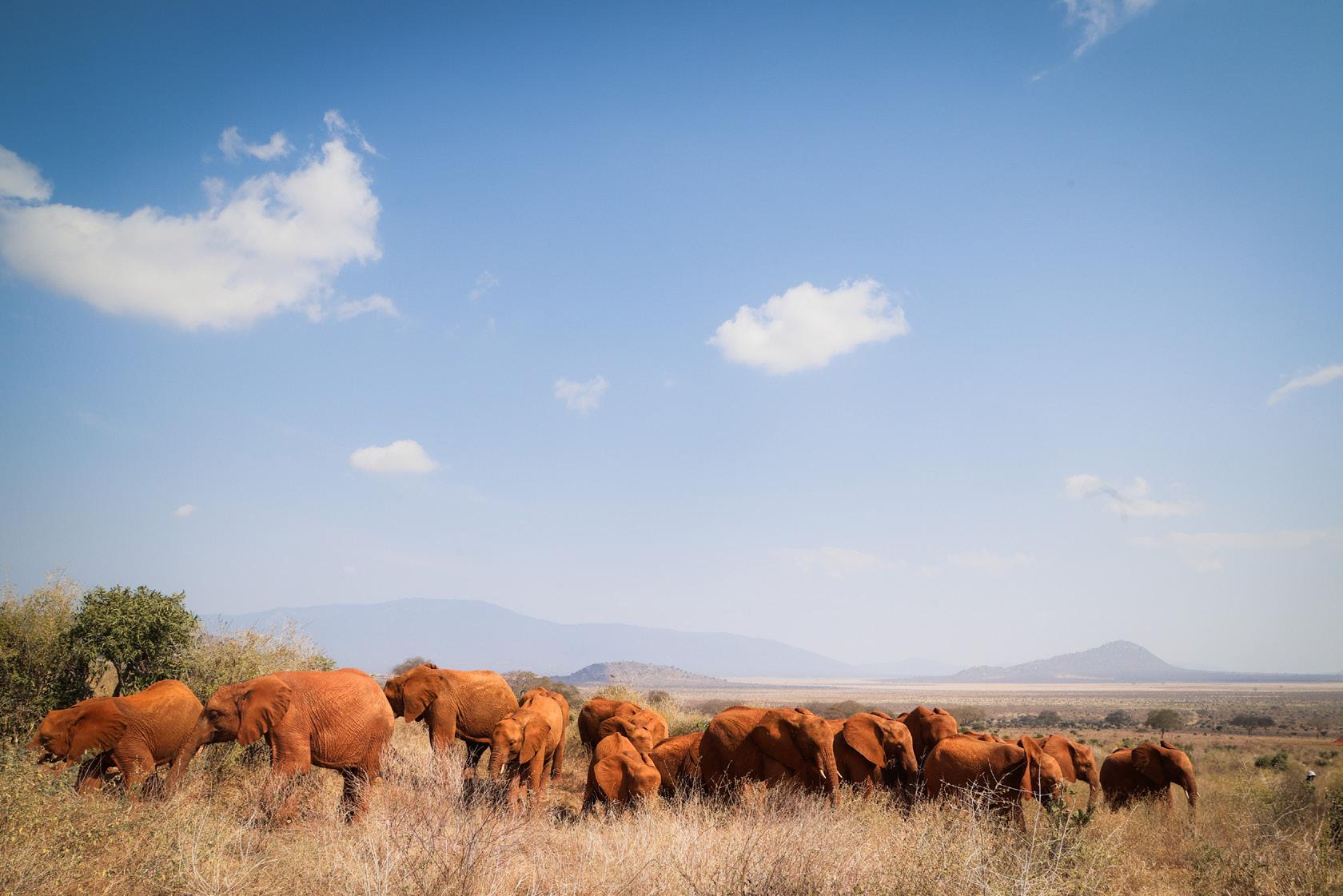
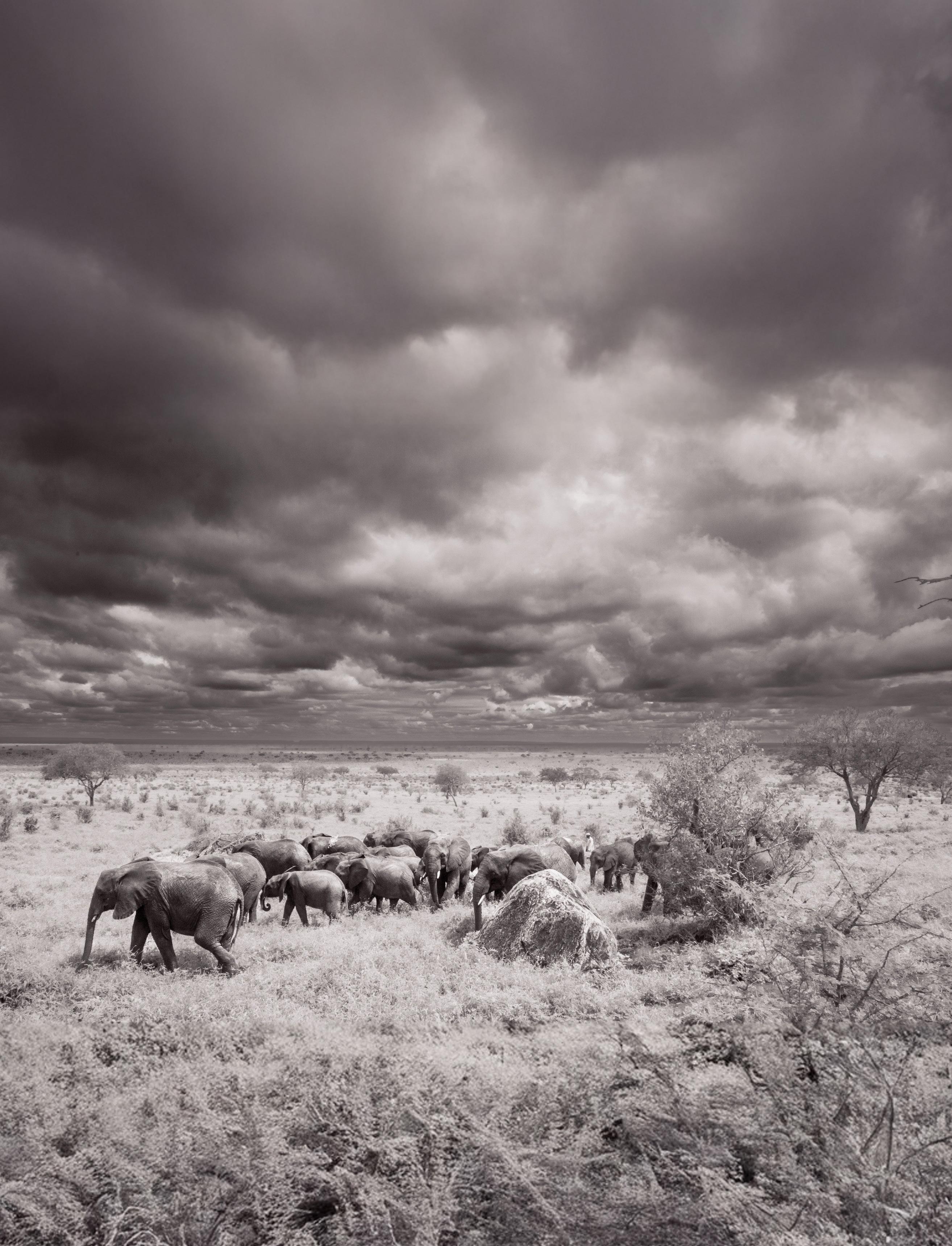
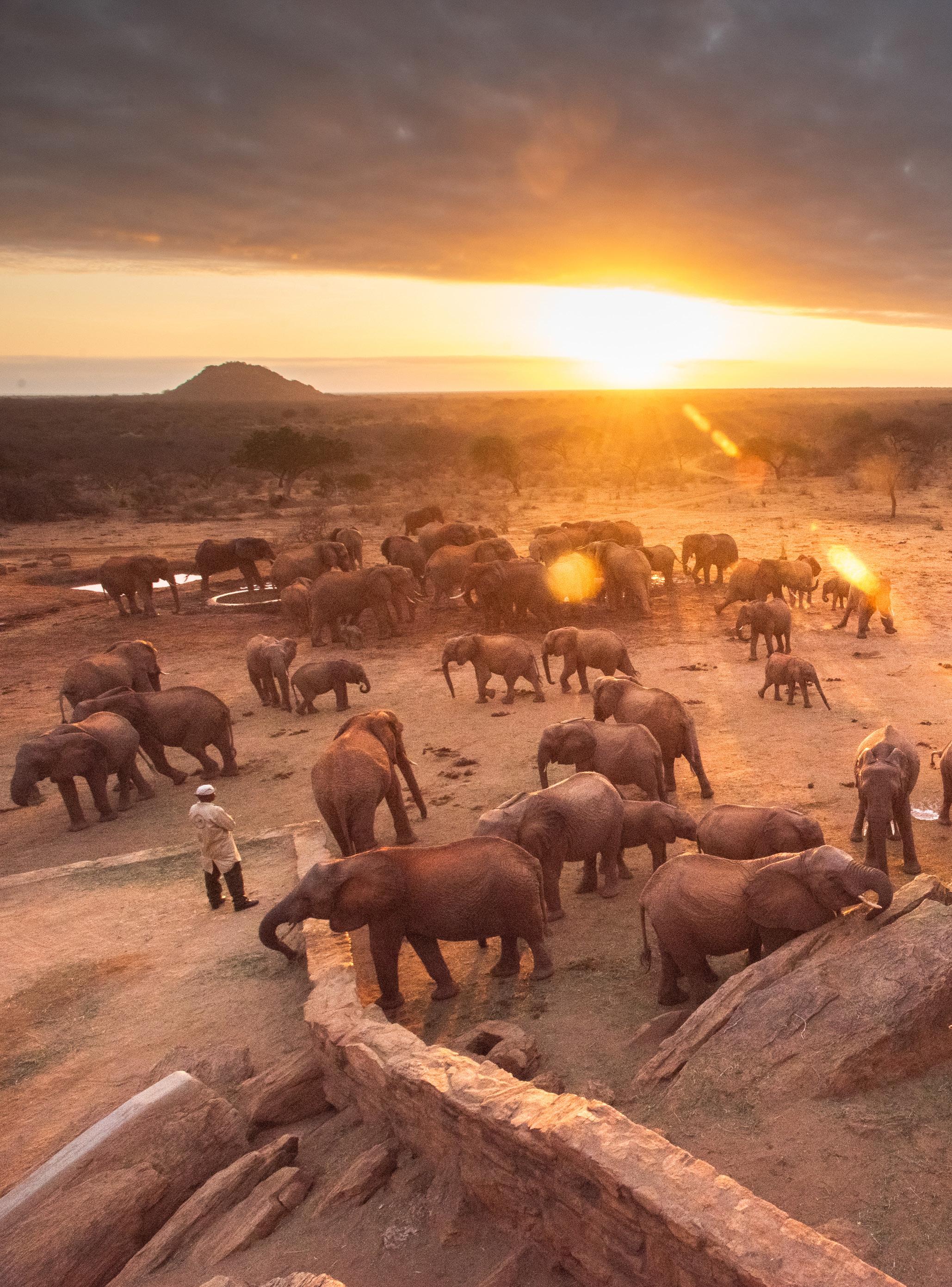
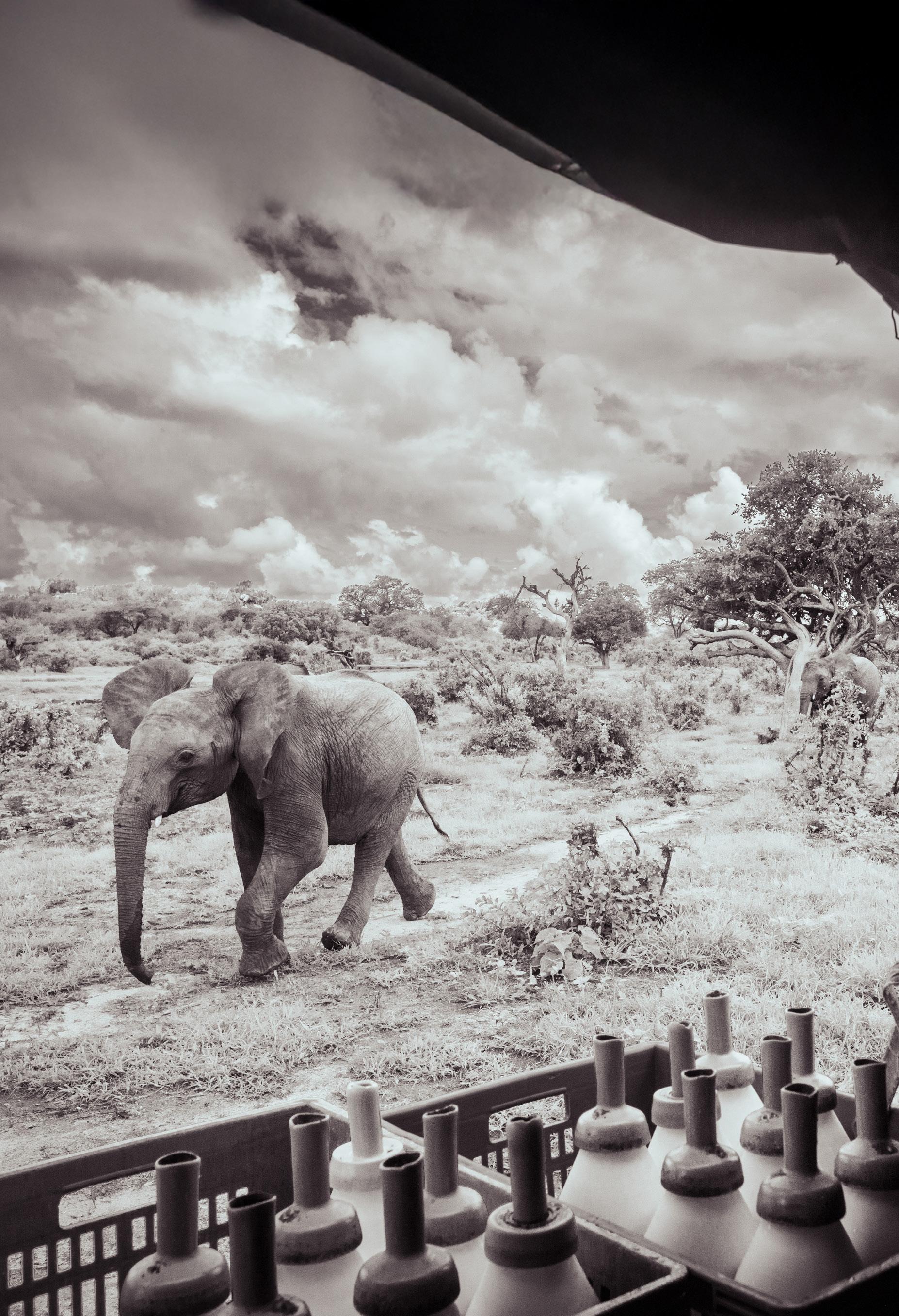
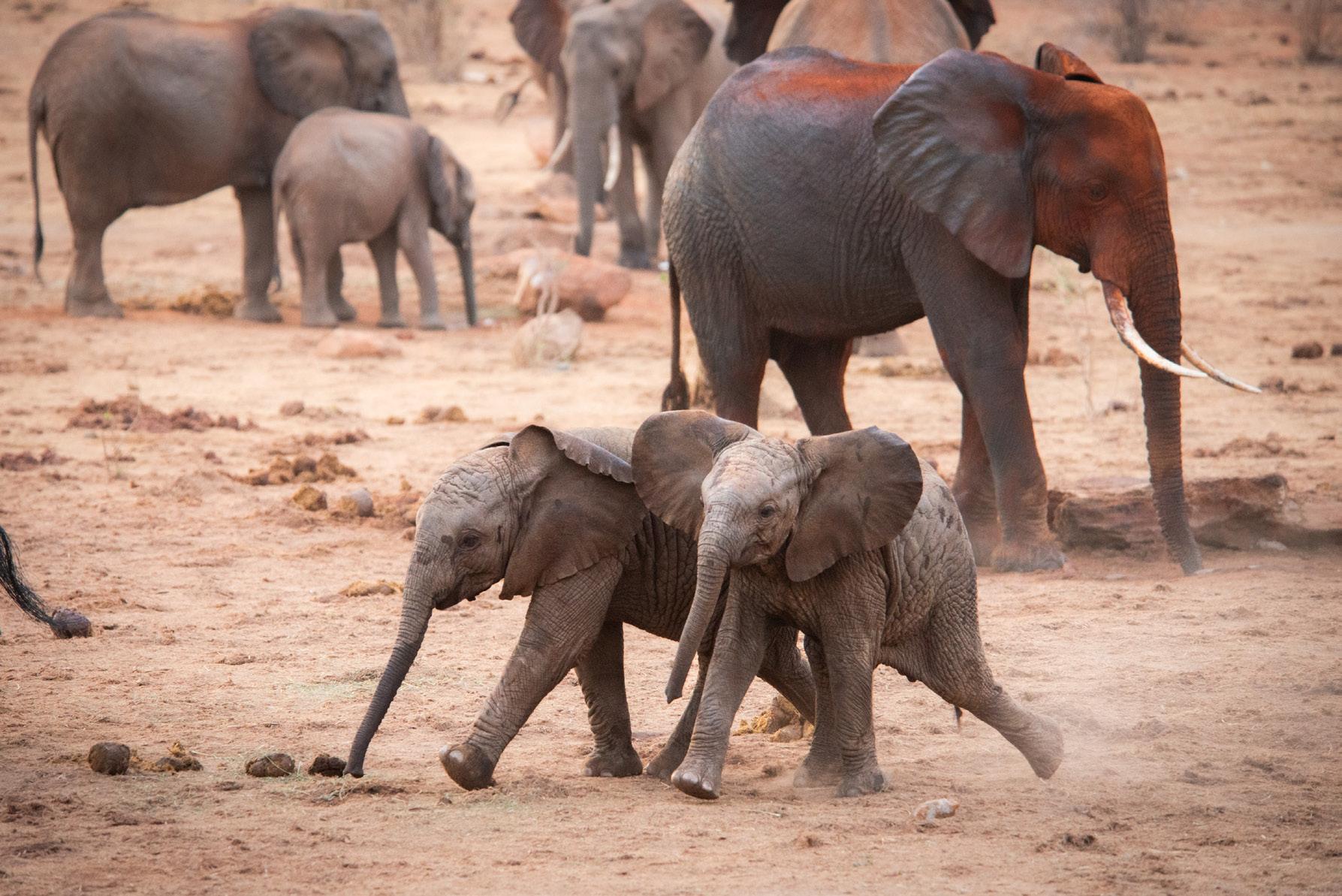
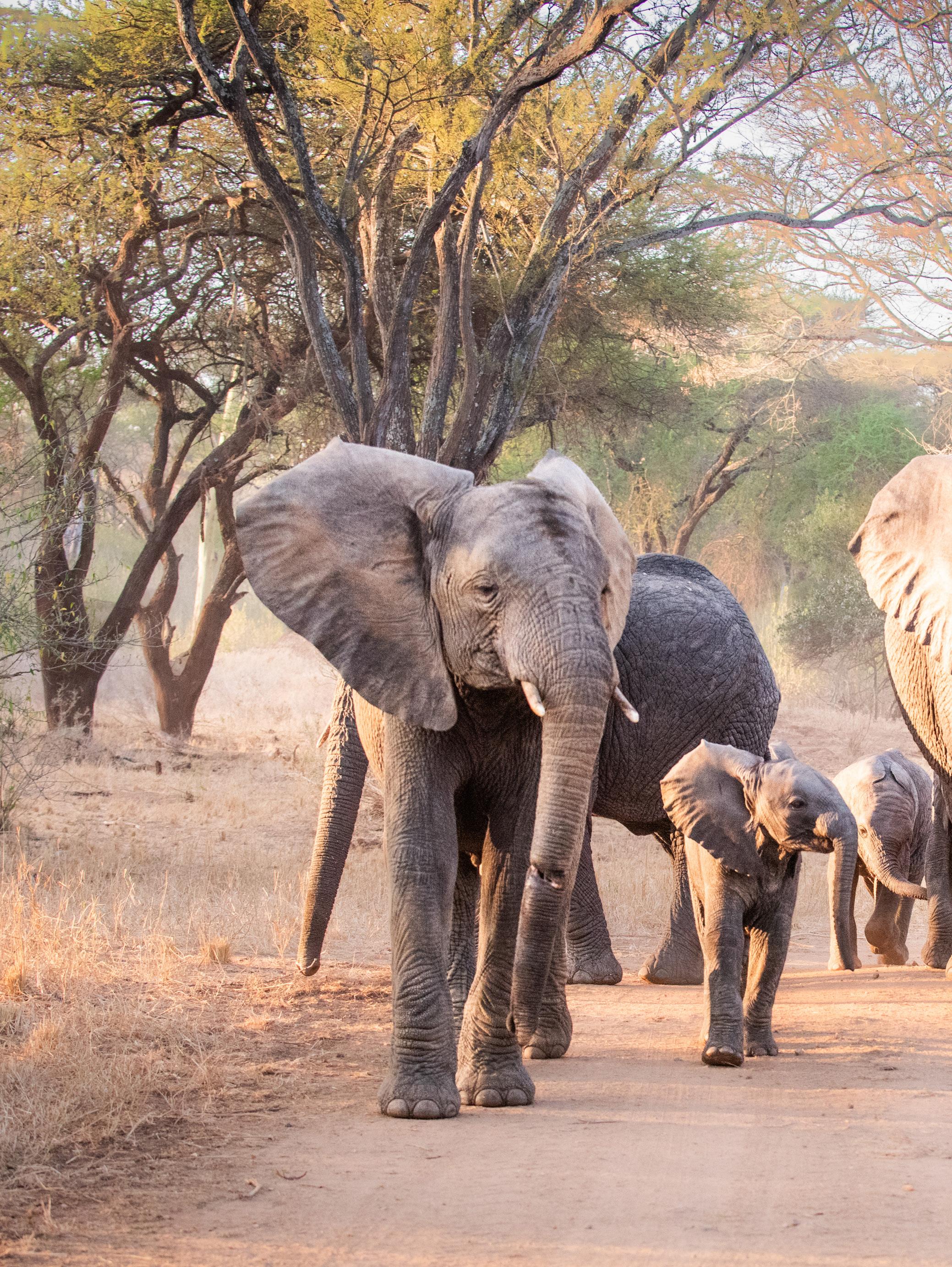
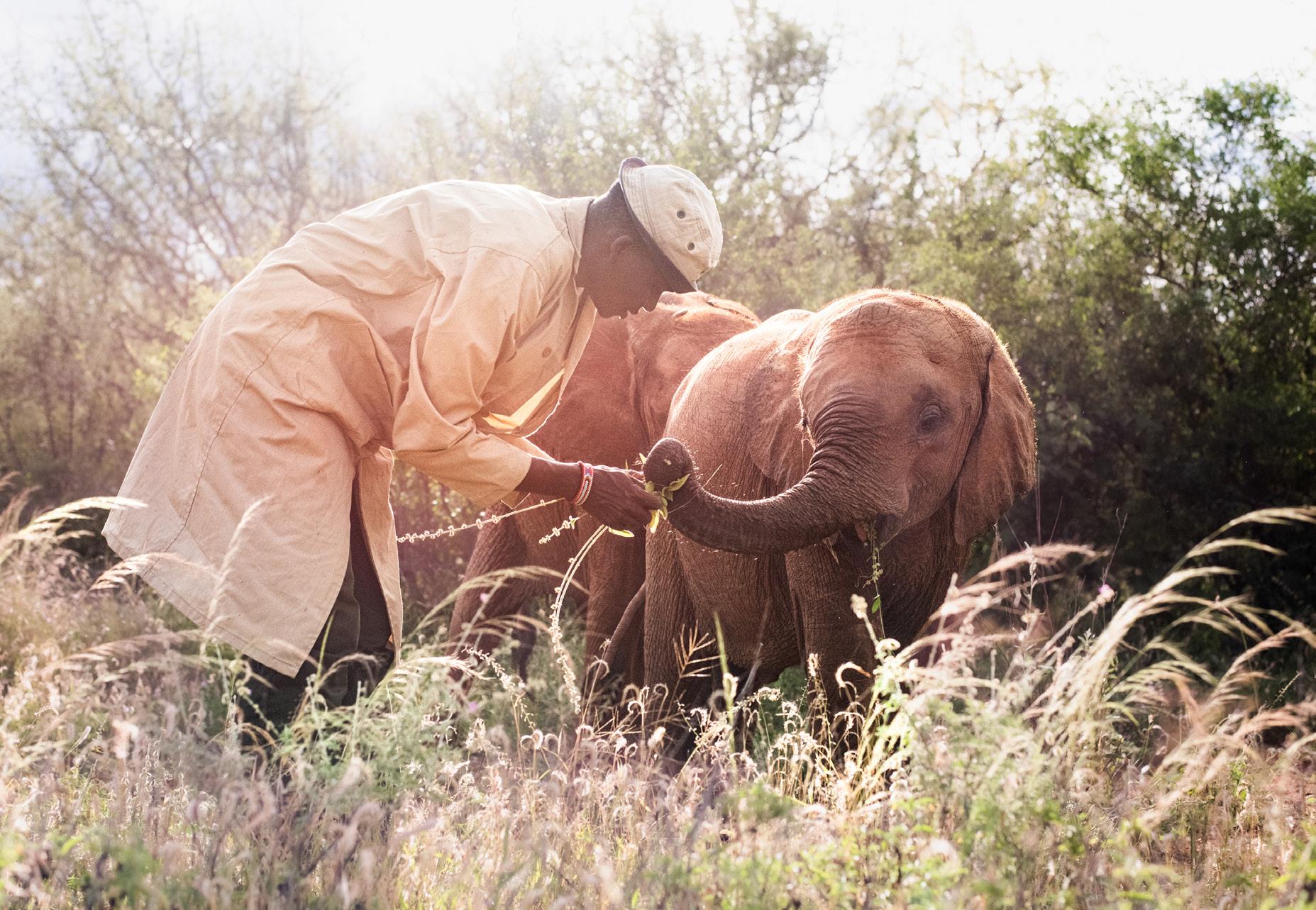
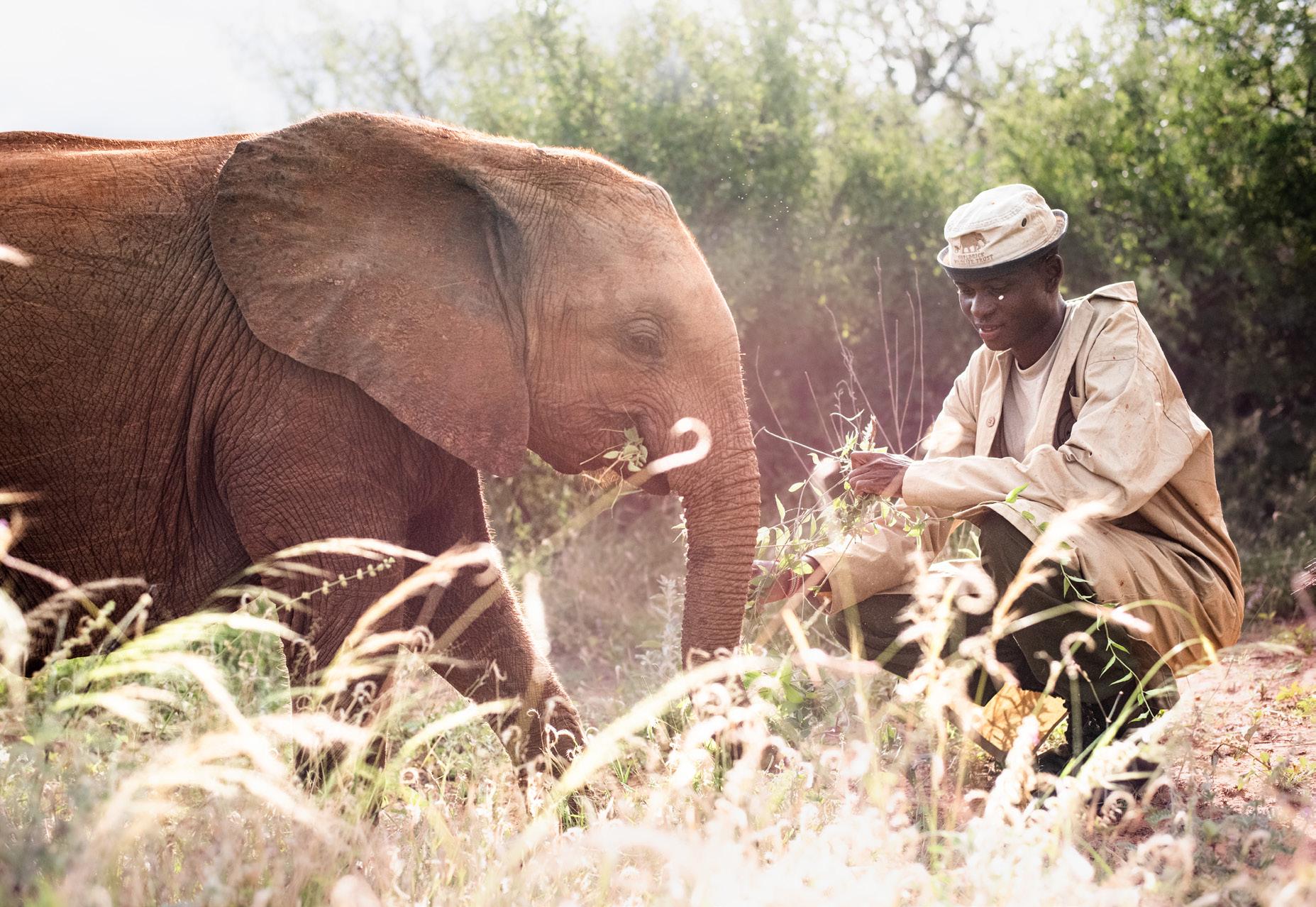
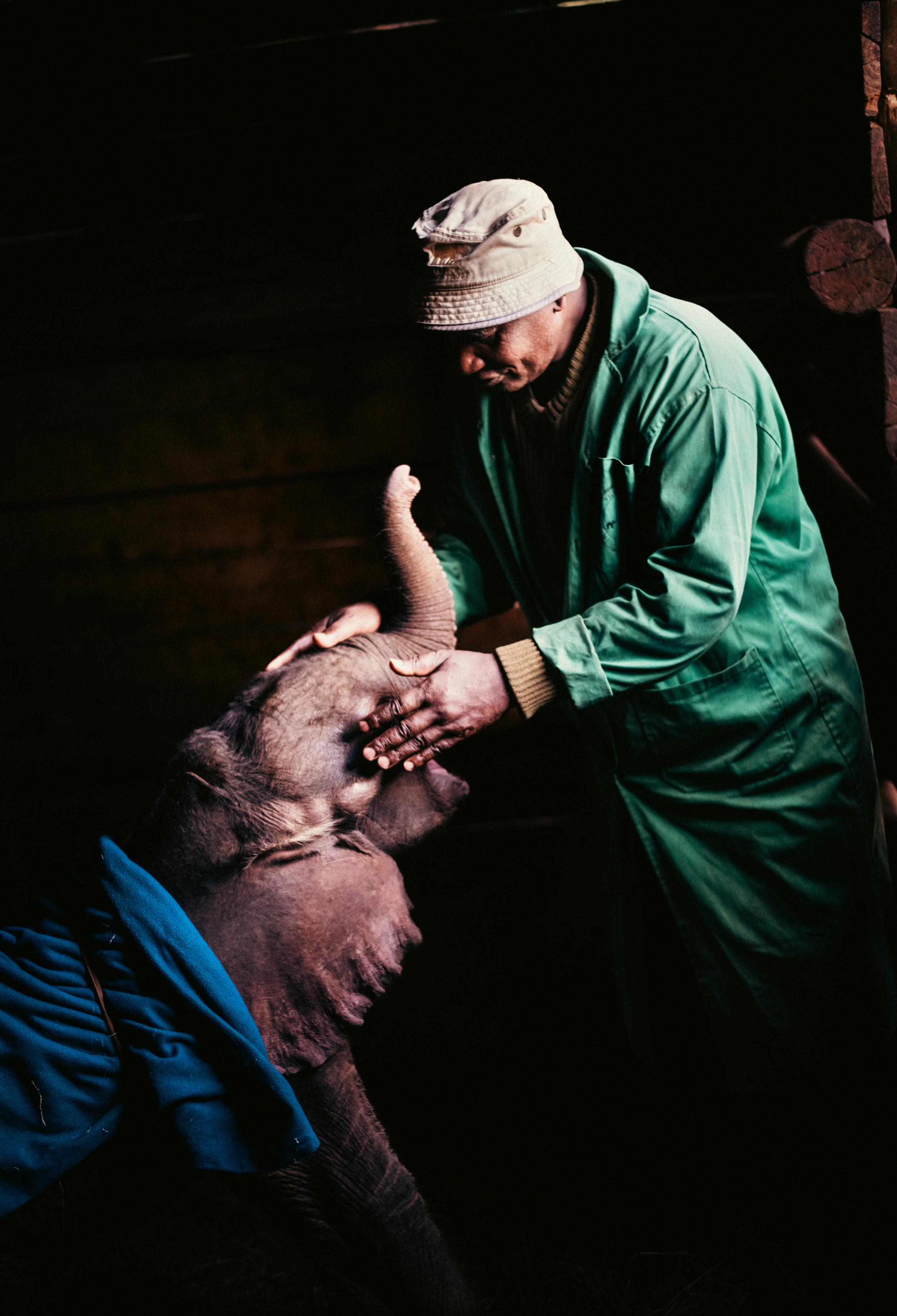
In conservation, impact is often felt incrementally: Landscapes don’t transform overnight; species recovery can take many lifetimes. This is especially true when it comes to elephant conservation. Everything about these creatures is magnified. They are long-lived and slow to mature. Their needs are great, from day-and-night care to emotional guidance. They are both mighty and fragile, as infants and as adults. So much goes into every orphan we rescue: An orphaned elephant’s journey with us can span some ten years before they are ready to reclaim their place in the wild.
But this was a year of bounty — a year in which we met 18 wild calves born to orphans rescued, raised, and rewilded. These little elephants are the fruits of our labours; living and breathing reminders that true conservation is not the work of a moment, but building for generations to come. Field-level work is the scaffolding that makes our Orphans’ Project so successful. Beyond rescuing individual orphans and providing the intensive, long-term husbandry each one requires, we are equally committed to the challenging, far-reaching work to secure the ecosystems they will one day be a part of.
In 2025, that impact took shape through the 49,420 kilometres patrolled on foot by our rangers, the 2,207 flight hours logged by our pilots, and the 1,474 animals treated by our Mobile Vet Units. It came in the form of 41 boreholes that support water for wildlife, the 530 kilometres of fencelines that protect habitats and communities alike. It could be found in the daily school lunches, scholarships, field trips, community hospital equipment, and employment opportunities — supporting the people who live alongside wildlife and fostering the next generation of conservationists.
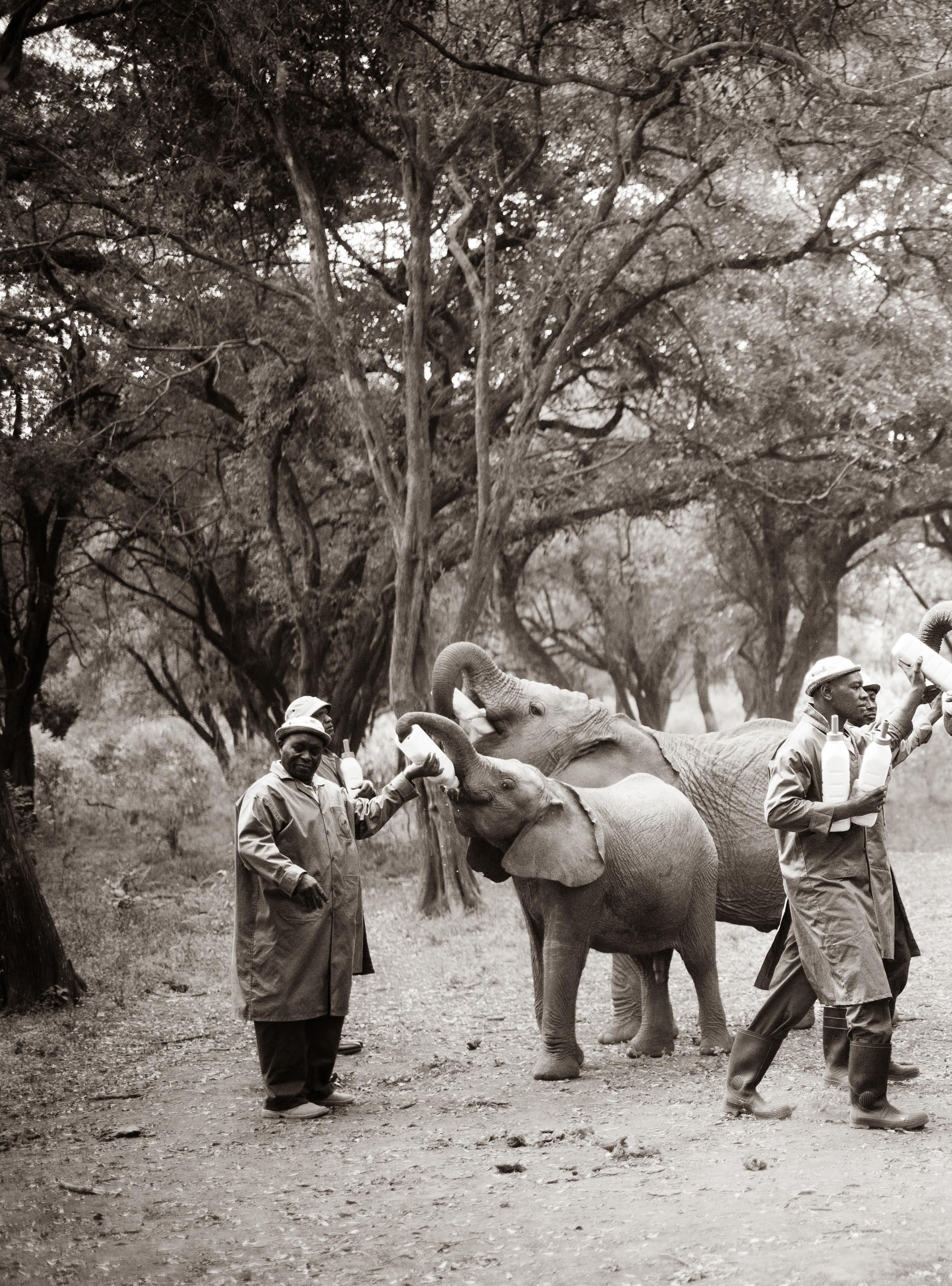
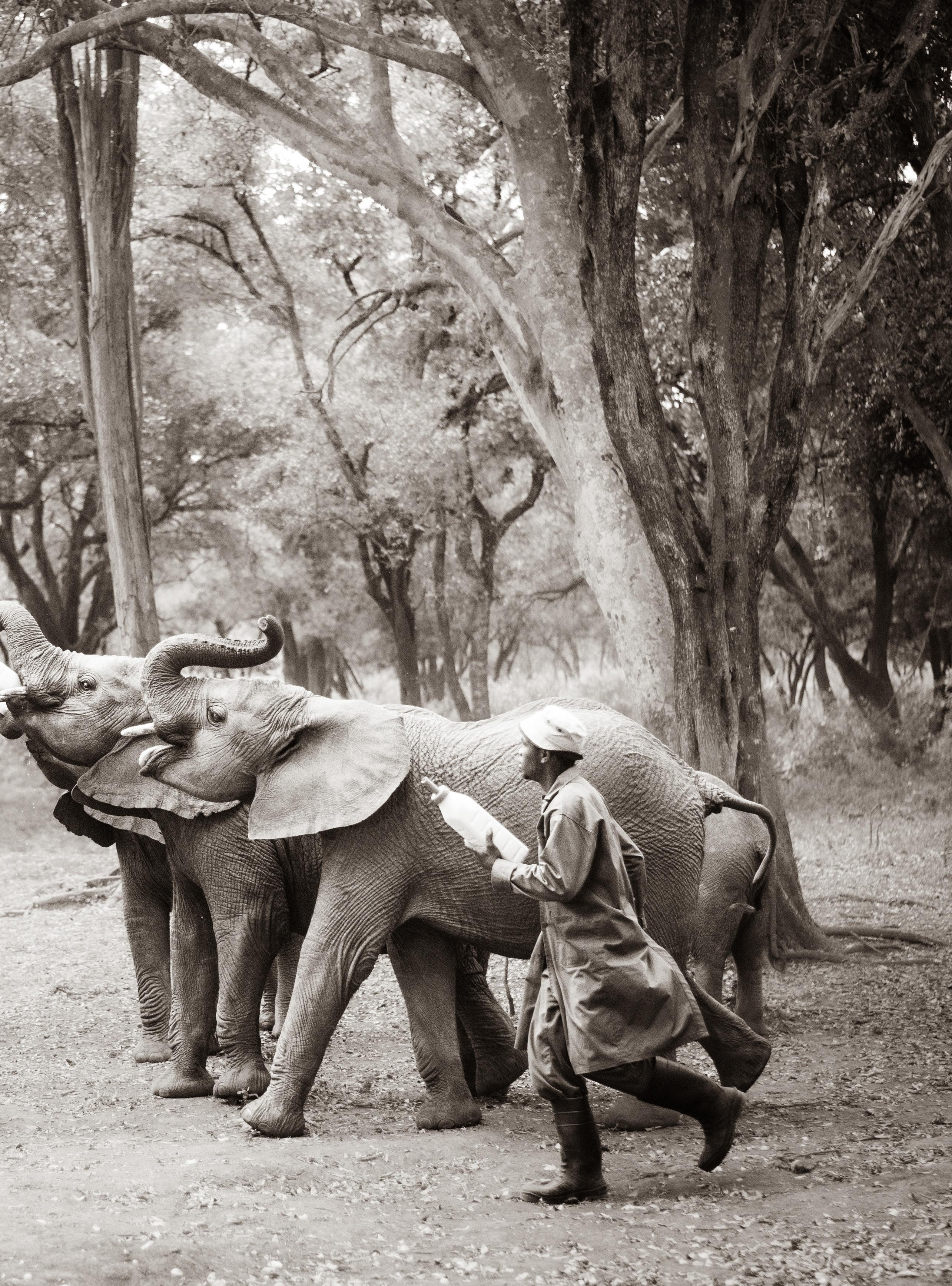
Impact is not only seen in the thrilling field missions, the exhilarating rescues and anti-poaching operations, but also in the routine — mixing milk for hungry elephants, cleaning up rivers and roads, water deliveries, and dawn patrols. For nearly half a century, we have risen with the sun and continued working long after it has disappeared beneath the horizon. This commitment, to both the extraordinary vision and the everyday work that make it possible, is what successful, long-term conservation looks like.
This commitment continues to push us forward. Conservation is a blend of respecting what works and embracing innovation. In 2025, in partnership with the Kenya Wildlife Service, we launched our Drone Unit, complementing tried-and-tested anti-poaching operations with advanced technology. With our partners,
we completed the 110-kilometre fenceline around the Arabuko Sokoke, protecting a fragile and fast-disappearing coastal forest and the endangered species who call it home. To better support Kenya’s largest national park, we established the new Southern Mobile Vet Unit, serving Tsavo and the southern swathe of the country. Our Canine Unit welcomed two new tracker dogs, Bela and Abby, who are already proving to be formidable assets in the field. Across Kenya, we supported extensive black rhino conservation initiatives that further the recovery of this critically endangered species.
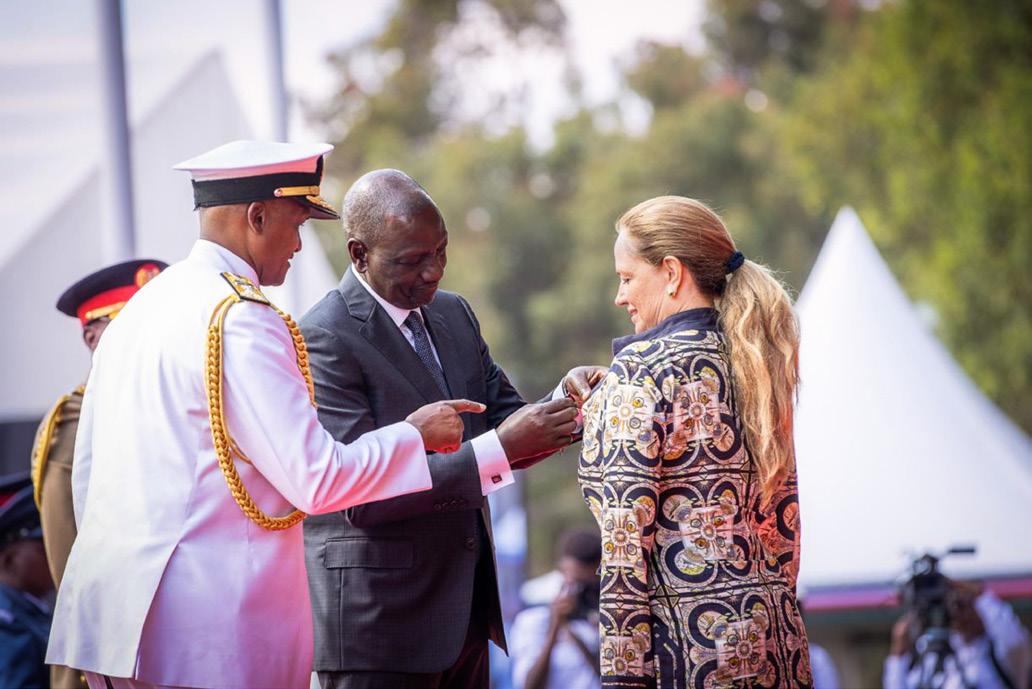
With now 49 years to our name, we have the operational capacity to execute complex, multi-year projects that drive real change. From new generations of elephants to the regeneration of entire habitats, the seeds we have planted continue to take root — driven by a team that has made conservation their life's work. This commitment was honoured on 12th December 2025, when I received the Elder of the Order of the Burning Spear (E.B.S.) from His Excellency President William Ruto at State House. This award belongs to our entire team, from those working on the frontlines to those behind the scenes. It is also a testament to Kenya's own deep commitment to its wildlife and wild spaces.
But the challenges persist and the need continues. As you turn the pages of this newsletter, recognise the critical role you play in each of these stories. Thank you for turning our conservation mission into a reality.
With deepest gratitude,
Angela Sheldrick (E.B.S.) CEO, Sheldrick Wildlife Trust
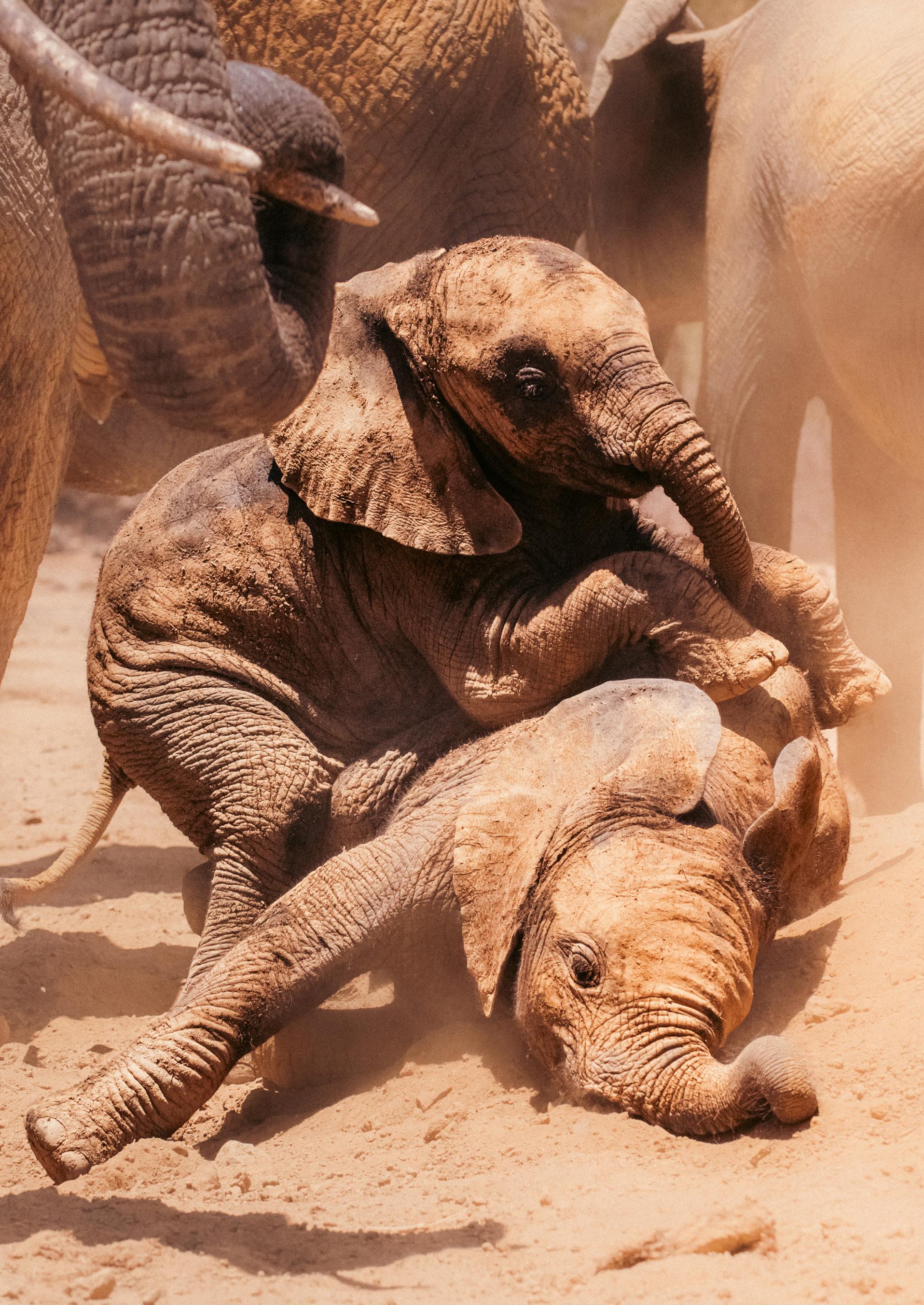
They are both mighty and fragile
or PH ans ’ P ro J e CT
327 orphaned elephants successfully raised 20 orphaned rhinos successfully raised
91 calves born to wild-living orphaned elephants
2025 snapshot
8 orphaned elephants, 1 orphaned rhino, and 1 orphaned giraffe successfully rescued 19 wild grandbabies and great-grandbabies born to ex-orphans
14 orphans graduated from Nairobi Nursery to Reintegration Units
nairobi nursery
12 milk-dependent orphaned elephants
2 orphaned rhinos
January began with new horizons for our Nursery big boys: After many weeks of training, Mukutan, Choka, and Loldaiga were finally ready to take the next step in their rewilding journey and graduate to Tsavo. As always, it was with mixed emotions that the team said goodbye, but they knew the trio were ready for the expanded horizons that our Ithumba Reintegration Unit could afford.
The graduation of our three senior bulls led to an inevitable shakeup in Nursery dynamics. Shujaa was by no means the new eldest bull, but he set his sights on ‘big boy’ status. Following the graduation, he became increasingly assertive, even daring to flout the rules in front of matriarchs Kerrio and Sileita. His elders didn’t take the young upstart seriously, but we still admired his confidence.
Nothing makes us happier than seeing a shy orphan begin to let down their barriers. Many come to us with traumatic rescue stories, so we understand and respect their boundaries. Sholumai was rescued at a slightly
older age and was initially mistaken for dead. She had always been very reserved, so we were delighted in January when she went out of her way to greet a Keeper. She stretched out her trunk, allowing him to touch her in return — a small but special moment.
On the evening of 3 February, we were called to rescue Tali, a malnourished young calf who appeared to have been on his own for a very long time. Mzinga and Nyambeni both impressed and surprised us with their devotion to the new arrival. Despite being so young themselves, the best friends are remarkably responsible and nurturing for their age. They seemed to recognise that Tali needed their support and put their normal daily routines on hold in order to spend every waking minute with their adopted baby.
Pardamat remains our lovable rogue. He is the root of most mischief, but we can’t help but laugh at all his antics. One afternoon in March, Pardamat, Shujaa, Taroha, Talek and Weka had fun chasing a group of warthogs. When one of the small pigs ran towards
Pardamat — rather than away from him, as he expected — the stout elephant sprinted for his nannies at full speed, trumpeting in alarm!
We also witnessed a friendship blossoming between Kamili and Latika. Our two quirky girls could often be found hanging out together, browsing or soil dusting with heads touching. Both had especially difficult starts to their lives, so it was great to watch them branch out and sometimes even behave boisterously. Not so long ago, it would have been unthinkable to see them playing in the forest.
25 May was a milestone for our Nursery herd: It was the day that our big girls — Sholumai, Mushuru, and Sileita — graduated to our Voi Reintegration Unit. Early that morning, the three were shepherded onto the truck and driven to their new home in Tsavo East National Park. Graduations are always bittersweet, but the trio were more than ready for their next step as they gradually prepare for a life back in the wild.
Following the graduation of Sileita, Kerrio stepped into the role of mini matriarch, with Weka as her second-incommand. Although Latika and Kamili are older than her, neither showed the aptitude nor desire to become a leader: Latika has always been selective with her affections, while Kamili dances to her own tune.
June began with training for our next class of graduates: Kitich, Mageno, and Muwingu. They proved to be far more amenable students than the last cohort. Sileita, Sholumai, and Mushuru, our stubborn girls, were often reluctant to enter the truck. By contrast, the next ‘class’ was positively laid-back, plodding quietly up the ramp and into their compartments on most days.
On 9 June, our trio of four-year-olds made the journey to Ithumba. Back at the stockades, the herd was less unsettled than when Sileita left the month prior. They certainly noted the departure, but most of the orphans stayed quiet and calm. Interestingly, there is seldom lasting discord after a graduation. It is as if the orphans recognise that a changing of the guard is necessary.
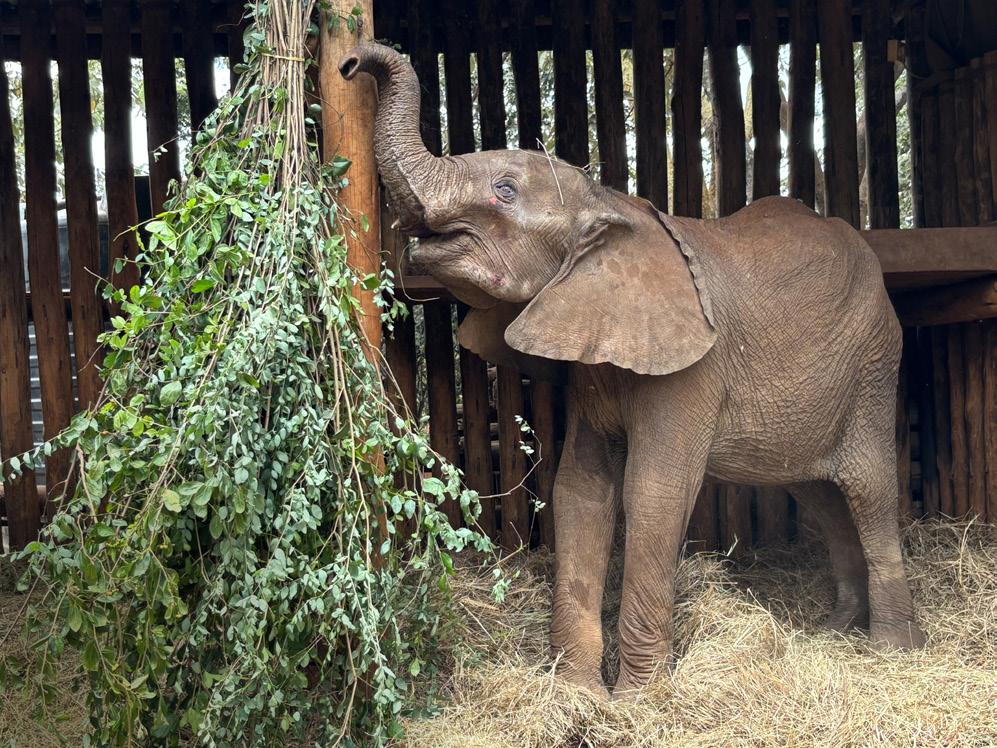
On the afternoon of 17 June, we rescued a tiny new orphan from the Mara. We named her Kipekee, which means ‘unique’ in Swahili. Despite being so small and vulnerable, Kipekee quickly learned the ropes of Nursery life. In fact, she proved to be quite a demanding little
character: She would only leave her warm stable in the morning if her Keeper offered her a milk bottle for her troubles; if any lights were visible from her stable, she staged a protest; and she promptly woke up every three hours for her nighttime feed, without ever needing a reminder. We quickly realised that we had a big character on our hands.
Although it was a month of happy antics and daily mischief among the orphans, July was marred by two heartbreaking losses for our Nursery family.
On the morning of 5 July, Raha, our very special little rhino, started exhibiting symptoms that looked like colic. We immediately consulted our veterinary team, who took bloods and determined that she actually had a bacterial infection. Although we managed to stabilise her, she collapsed the next evening and never woke up. It was always difficult to imagine a future for Raha, given the gravity of the injuries she sustained prior to her rescue. Because her rear end had been mauled, she was unable to digest or defecate properly, and as she grew older, these challenges grew more pronounced. Still, we know that the three years she spent with us were happy ones, and we will always remember our stubborn, squeaking, blanketed bundle of joy.
Unfortunately, the heartbreak continued: Just four days after Raha died, we had to say goodbye to Tali. The young bull had taken a tumble in the orphans’ rowdy play, and while this would be a non-event for most young elephants, it left him with a broken femur that could not be operated on. Given the very poor condition he arrived in, it seems likely that his bones were weakened. The attending vets advised that it would be kindest to ease his passage, which was an extremely difficult reality to face. Tali passed peacefully, leaving all of us totally bereft.
August brought some much-needed comic relief: Until Kipekee was rescued, Wamata faced no competition as the universal favourite. She was rather put out to find herself relegated to ‘older baby’ status and understandably bore some resentment towards Kipekee. One morning, in a truly rare event, Kipekee was left on her own for a minute. Spotting an opportunity, Wamata walked over and gave her a jealous shove. Kipekee trumpeted and the nannies reacted in seconds, charging over to defend their little girl. We smiled to see Kamili at the forefront of the rescue party — our independent girl used to have little interest in the babies.
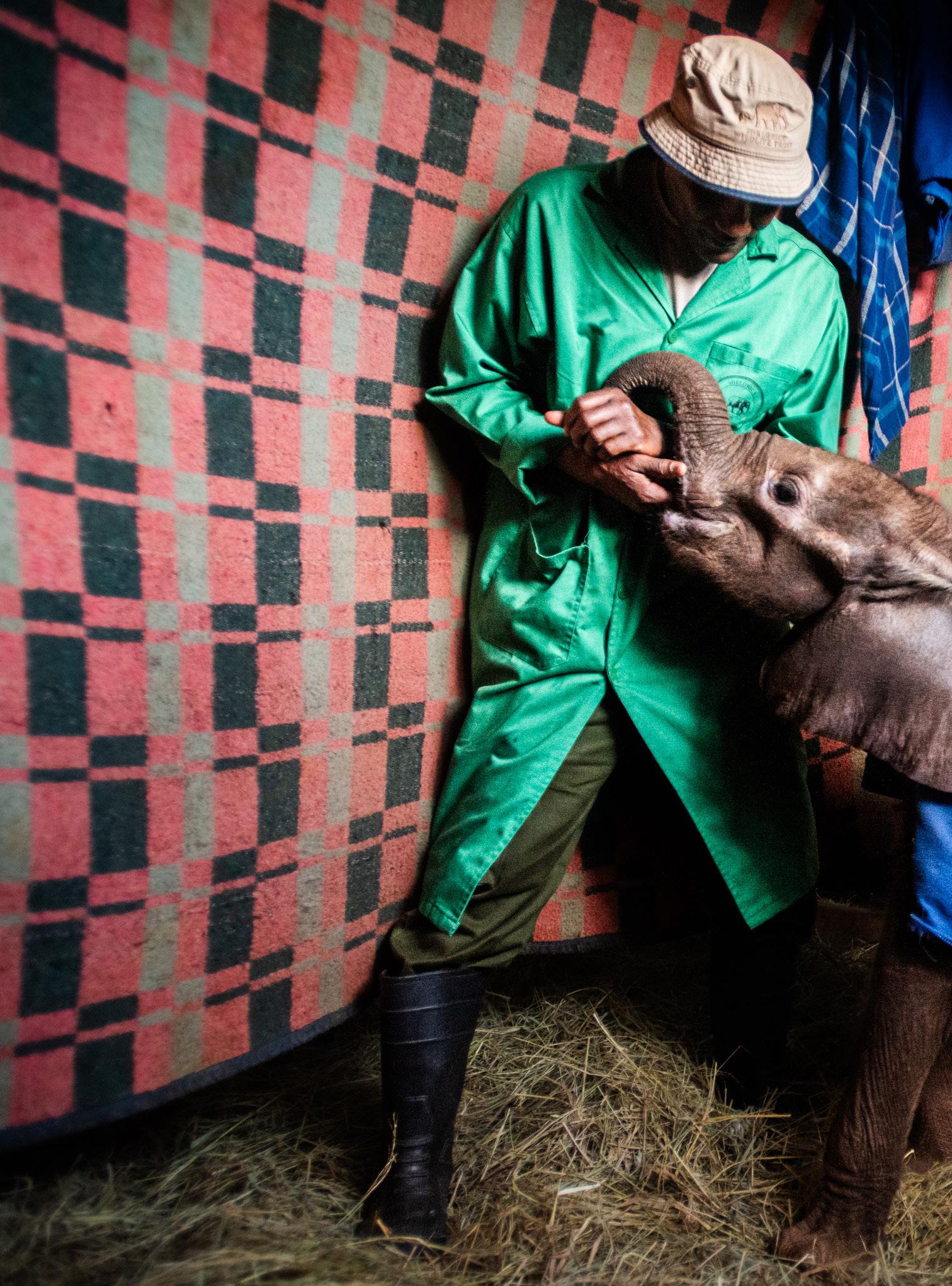
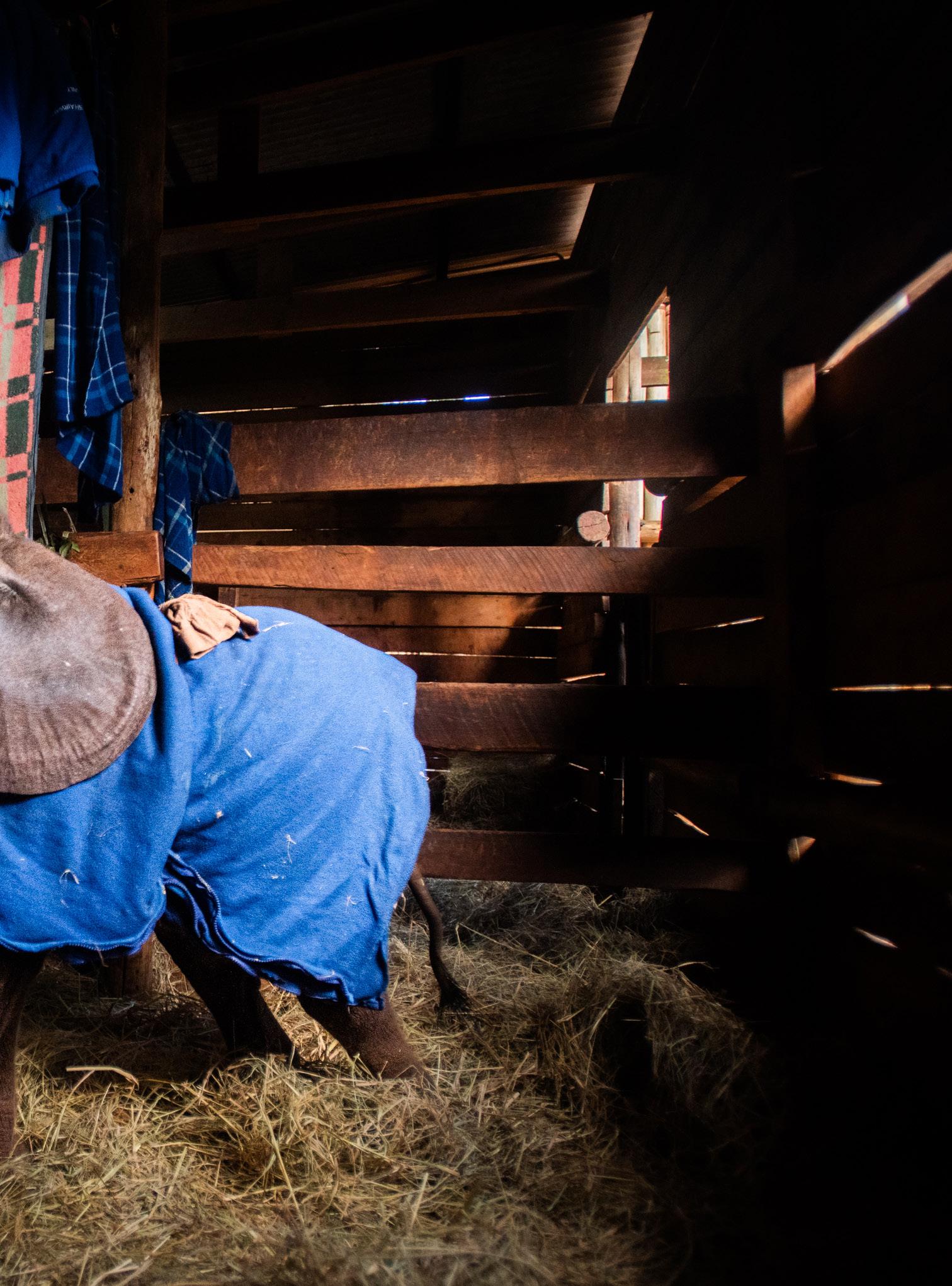
Their needs are great, from day-and-night care to emotional guidance
On the evening of 3 August, a new rescue was brought to the Nursery. The one-year-old bull, whom we named Arthi, was spotted by our pilot during a routine patrol. He arrived traumatised but in reasonable physical shape. After a week to decompress, Arthi was ready to join the Nursery herd. He was calm, quiet, and unfazed as Kerrio, Nyambeni, Mzinga, Talek, and Olomunyak ushered him into the forest, soothing him with trunk touches and rumbles.
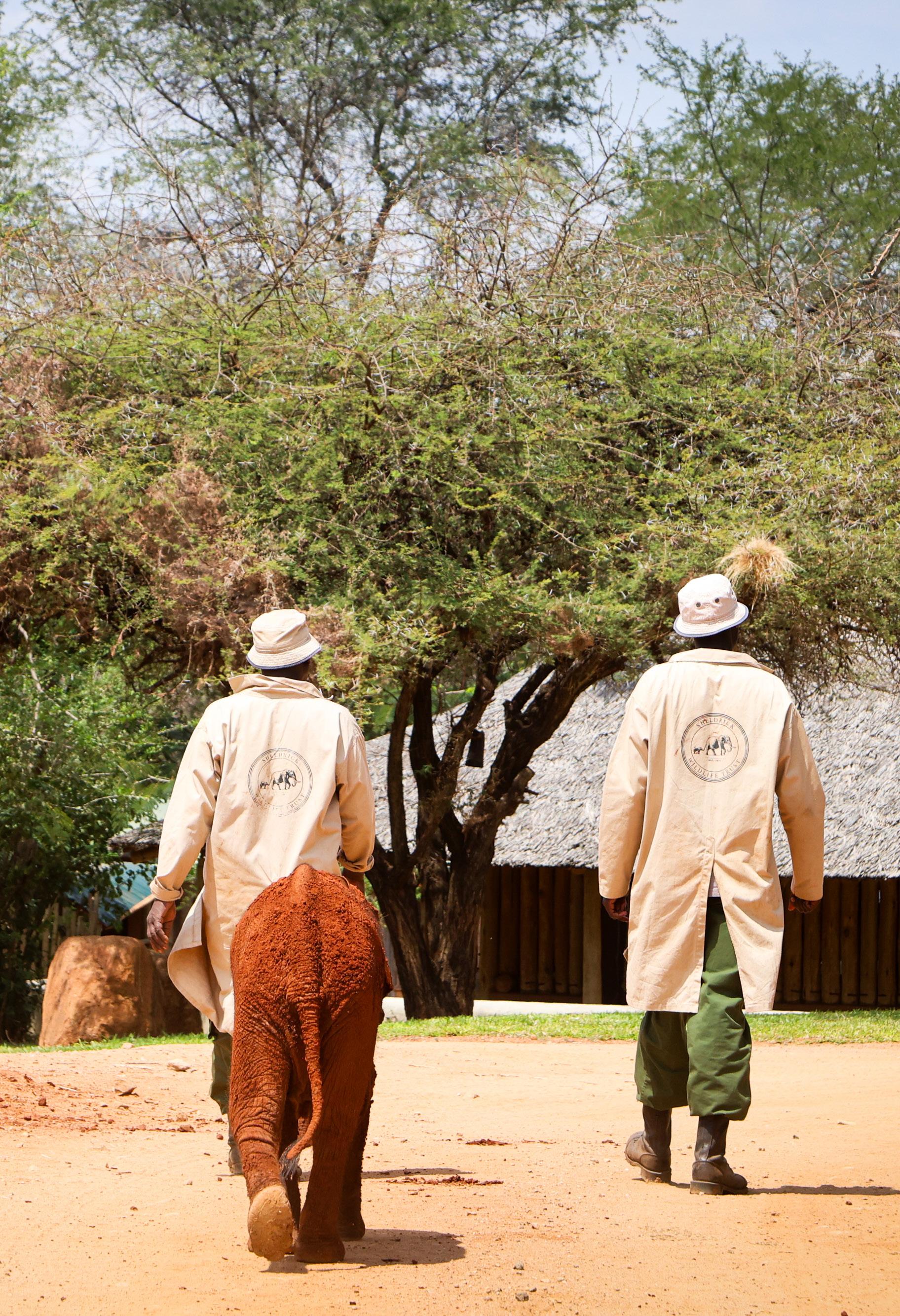
The comings and goings continued on 6 August — graduation day for our Nursery rascals, Shujaa and Weka. Orphans leaving the Nursery always set off very early in the morning so that they travel when the roads are quiet and arrive in time for a morning milk feed. Two Keepers accompany them, and one stays until they have settled into their new home.
The graduation went well. Before long, both Weka and Shujaa were securely in the moving truck and on the way to their new life in Tsavo. The following morning, the herd headed out to the forest as usual. They knew that Weka and Shujaa had left, but behaved normally and seemed to accept the change. Perhaps they were enjoying a relatively peaceful day, following the rascals’ departure!
In contrast to sloppy eaters like Pardamat and Olomunyak, Talek is neat as a pin. She is also unflappable — sometimes too much so for her own good. Even when other orphans push her, she does not respond or retaliate. One September morning, tiny Kipekee shoved Talek so hard that she almost fell into the mud bath. Calmly, Talek regained her balance and went back to browsing. Her turn-the-other-cheek attitude is unusual for such a young elephant.
Taroha is another special elephant. After all the graduations, he became the oldest bull in the Nursery herd. Seniority and the emergence of two tiny tusks would give most young boys a bit of an ego, but not Taroha. Out in the bush one morning, the kind chap was pulling down branches for younger orphans who could not reach the tasty leaves. Not only was he feeding Olomunyak, Wamata, and Talek, but he was also trunk touching them to check that they were fine.
11 September was an extra special day. KWS rescued a young black rhino from the north of Kenya and then requested that he be raised at the Nursery. The one-yearold calf was orphaned after his mother fell off a cliff and
died, likely trying to evade an amorous male. Poor Tytan, as we named her son, scrambled down the rockface to be by her body and then spent several days trying to evade his rescuers.
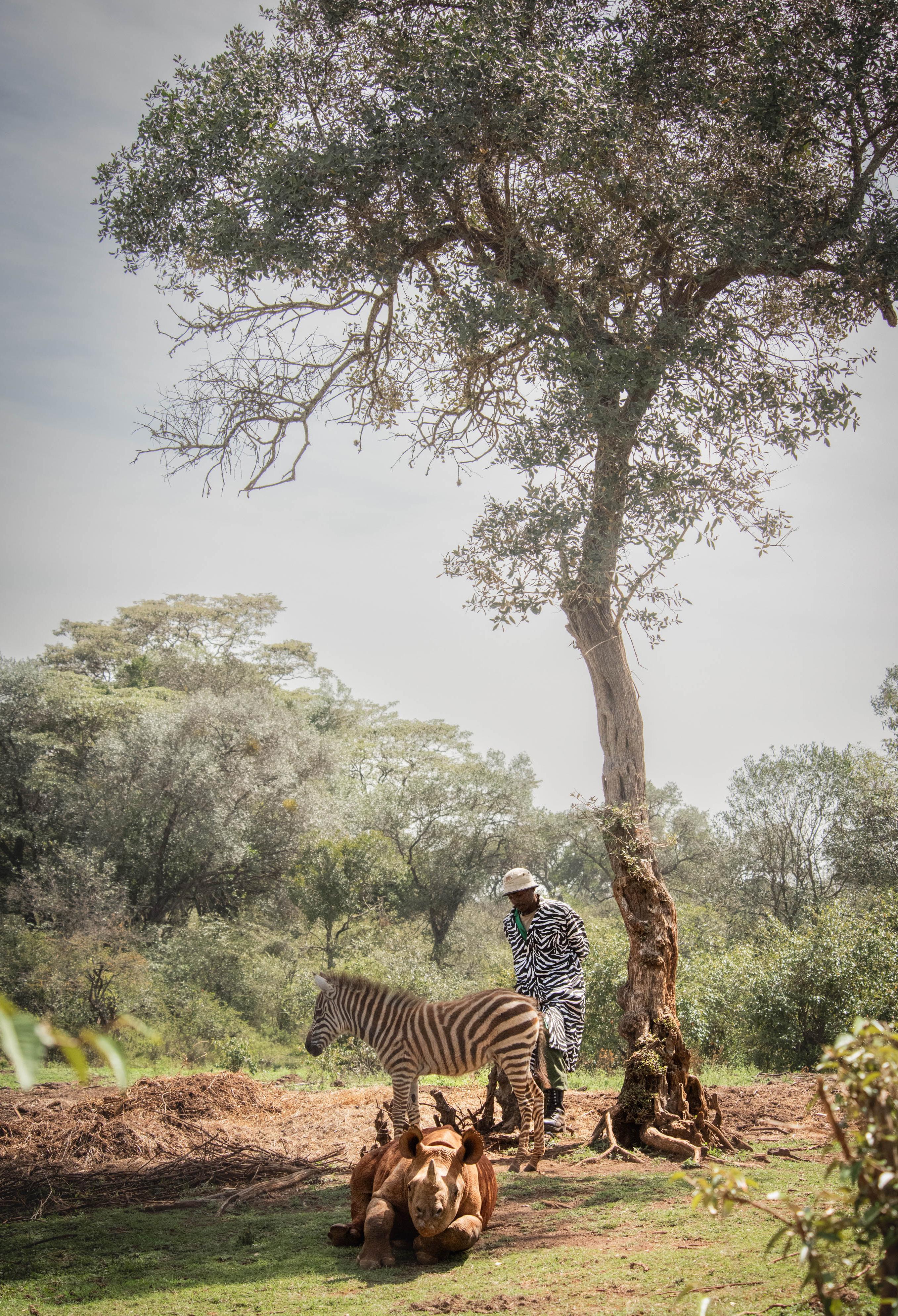
Exactly one week later, another rescue arrived at the stockades — a baby zebra, named Notty. The little girl was found alone and covered in bruises. It later transpired that her mother suffered the same unusual but natural fate as Tytan’s mother, falling off a cliff to her death.
Notty and Tytan became fast friends. Although they sleep in different rooms, they spend every daylight hour together. In the morning, they stroll slowly out to the forest with their Keepers, managing to walk in step despite one animal having short, thick legs and the other long, thin ones. They drink their bottles side by side, browse quietly in the forest as a duo, and walk back to the stockades at lunchtime.
Male black rhinos are very territorial — so the arrival of Tytan left Maxwell very disgruntled. Our 19-year-old ‘Nursery patriarch’ may be blind, but he was immediately aware of the young upstart’s presence. Marking his territory, Maxwell changed his day midden to a new location, right along the fence bordering the path Tytan takes into the forest. Funnily enough, Tytan responded by creating his own little midden on the other side of the fence. With time, we feel sure that both boys will come to accept each other’s presence.
In late October, two new rescues joined us a day apart. The first — Daba — arrived on 20 October. He had been rescued the month prior and then spent some time at our Voi Reintegration Unit. However, his condition wasn’t improving, so the decision was made to bring him up to our Nairobi Nursery, where we could ensure a gentler environment and specialist care.
At just eight months old, Daba’s arrival generated lots of excitement among the nannies. From the outset, he adapted well to his new family. Daba is just a bit older than Kipekee — they sleep in neighbouring rooms in the baby stable block — but has proven to be far more independent. He really likes all the Keepers and often chooses to browse either next to them or next to the mini matriarchs.
The day after Daba’s arrival, a second rescue was flown up from Voi. At 18 months old, Alia was a bit more wary of her new surroundings. After giving her a few days to
settle in, we escorted her out to the forest, where the older girls welcomed her with rumbles. Nyambeni and Mzinga were especially welcoming — they touched her and encouraged her to join them.
On 15 December, Kerrio, Latika, and Kamili graduated from the Nursery and took the next step in their journey back to the wild. This was a day we had been planning for quite some time, helping our special girls launch in the supportive environment of Umani Springs. While all three are thriving today, they have challenging histories — Kerrio came to us partially paralysed, while Latika and Kamili struggled with persistent health issues. As the time came to plan for their futures, we thought they would be perfect candidates for the gentle environment of Umani Springs. It is always bittersweet to say goodbye to graduates, but as the Nursery team watched the truck pull away, they felt an enormous sense of pride for how far these elephants have already come.
As we expected, Muridjo slipped effortlessly into the vacant role of mini matriarch, with Nyambeni and Mzinga as her deputies. Muridjo has always been a playful elephant but has become very caring in the past year.
The year ended with a snippet of custody battles: In the forest, deputy mini matriarch Mzinga was trying to shepherd away Arthi and Daba, wanting to look after them by herself rather than share nanny duties with Muridjo. Evervigilant Muridjo would not allow it. Our new mini matriarch intercepted Mzinga and made the three elephants remain with the herd.
voi rein T egra T ion uni T
19 stockade-dependent orphaned elephants 93 ex-orphans living wild
4 wild grandbabies born to Voi ex-orphans in 2025
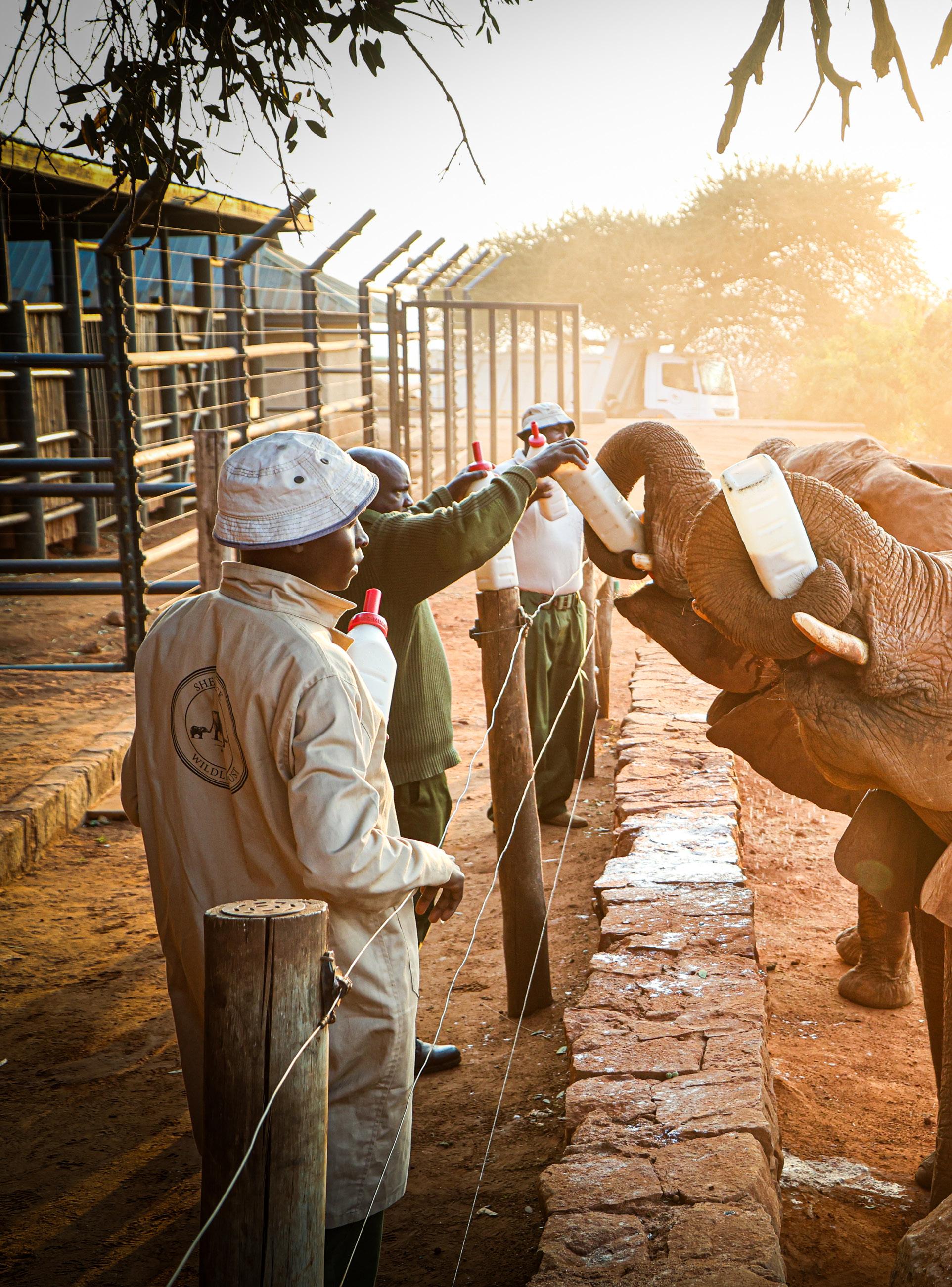
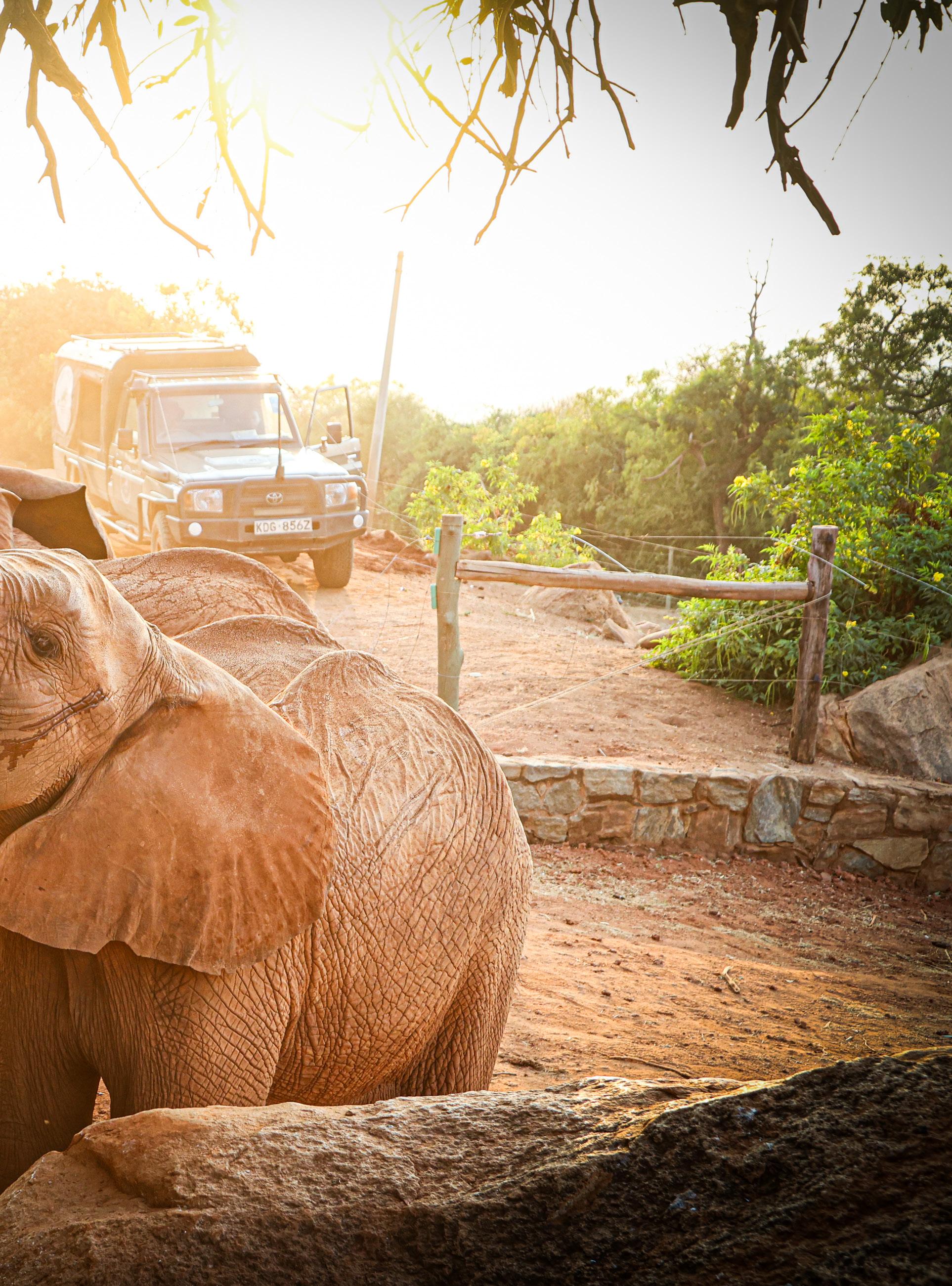
In Voi, the new year started with one big group. After camping outside the stockades on the previous night, ex-orphans Mweya, Mudanda, Sagala, Pika Pika, Rorogoi, Naipoki, Kihari, Mbirikani, and Panda, with Mweya’s babies Mwitu and Mwangaza, enjoyed breakfast with their dependent friends. Former and current orphans shared treats of range cubes and fresh lucerne grass before Mbegu led her dependent herd out to browse over the summit of Msinga Hill.
Only Lasayen and Murit were absent from the ‘usual suspects.’ At the end of December, the big boys joined ex-orphan Mweya’s herd and chose not to visit home for a long stretch. This didn’t worry us — it marked the beginning of the rest of their wild lives! The boys had clearly linked up with new friends who led them further from Voi.
Ngilai and Ndotto, meanwhile, decided to take their reintegration at a slower pace. As the year began, the boys continued to spend most days with the dependent herd before splitting off to join the ex-orphans in the wild for the night. Come morning, we could usually find them outside the stockades, patiently waiting for their younger friends to be let out of their bedrooms.
On 21 January, Tagwa was courted by a wild bull in musth. She welcomed his advances and invited him to approach. They went off together to continue their romance, and Tagwa spent the night out in the bush. We will have to wait and see if a baby arrives in 22 months’ time.
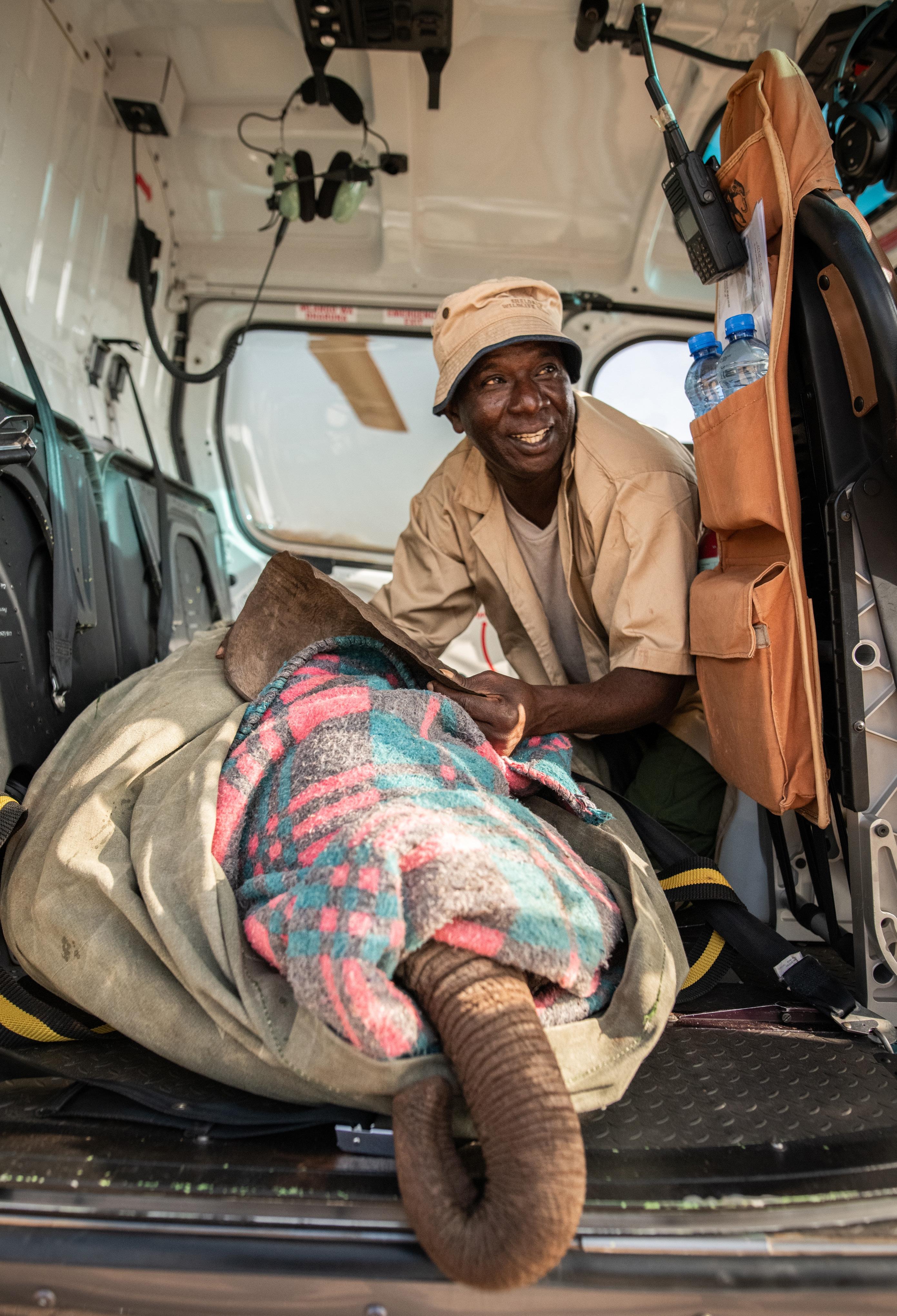
February brought a surprising new addition to our Voi herd: On 13 February, our SWT/KWS Kulalu AntiPoaching Team reported a speared juvenile elephant on the eastern boundary of Tsavo East National Park. He was all but immobile, with a deep wound to his front leg. The SWT/KWS Tsavo Mobile Veterinary Unit conducted a field treatment, but the bull would require multiple follow-ups and his heavily impaired mobility made him vulnerable to lions. Chapeyu, as we named him, was brought to the Voi stockades to heal. At nearly eight years old, he was one of our oldest orphan rescues. As it turned out, it was a week of arrivals. The following
day, 26-year-old Laikipia turned up at the stockades after an absence of many months. Lemeki welcomed him with a trunk touch and a flirtatious wiggle. Laikipia politely greeted her, hung around for an hour or so, and then wandered back to the bush as soon as it was dark.
March was the month that Emoli decided to take the next step in his rewilding journey. Instead of returning to the stockades at night, the eight-year-old started peeling off with Ndotto, Ngilai, and Tagwa. The semi-independent quartet typically retire to the slopes of Msinga Hill — still within sight of the stockades, but feeling very adult.
At the end of the month, newly-independent Murit returned from a spell in the wild. We soon realised this was a recruitment mission: He gathered up his old friends, Ndotto and Ngilai, and went walkabout with them. Tagwa, who had been exploring her independence with Ngilai and Ndotto, chose to remain with the herd. We felt sure she didn’t want to leave without Tamiyoi, who had not yet shown any interest in going wild.
We have noticed that Rokka is very aware of crowded, boisterous environments and diligently avoids them — which is somewhat ironic, given how pushy she was at Kaluku. She can often be found off to the side, in the company of Busara or Losoito or another little friend. Since Emoli decided to join his friends in the wild, Thamana found himself elevated to the enviable position of oldest fully dependent bull. He remains as mild-mannered as ever, but we sometimes wonder if his new status has gone to his head: One May morning, he reclined atop the herd’s big pile of lucerne and lazily ate like a king. The others tolerated his presence in the middle of their food and browsed peacefully around him. May brought new
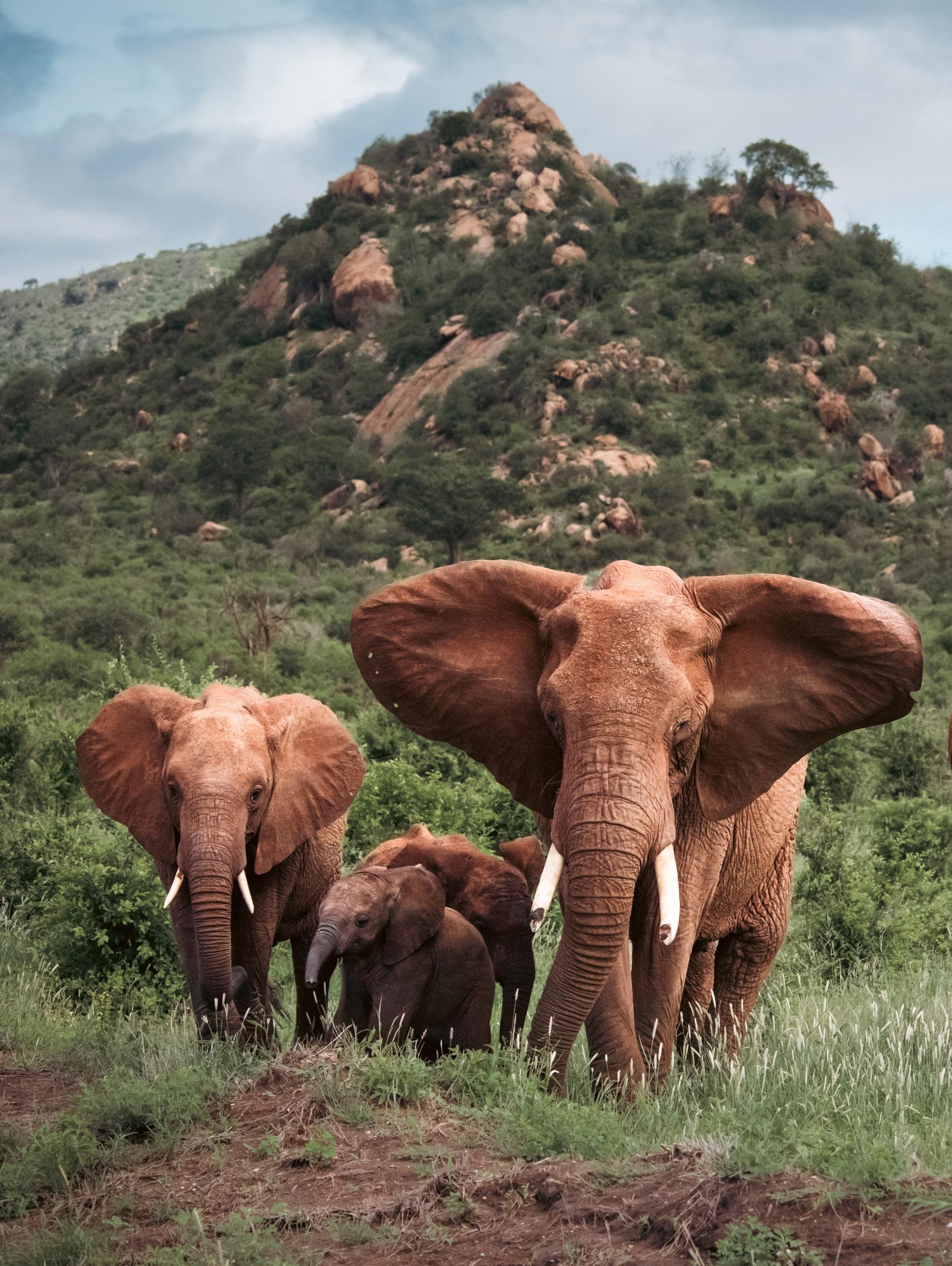
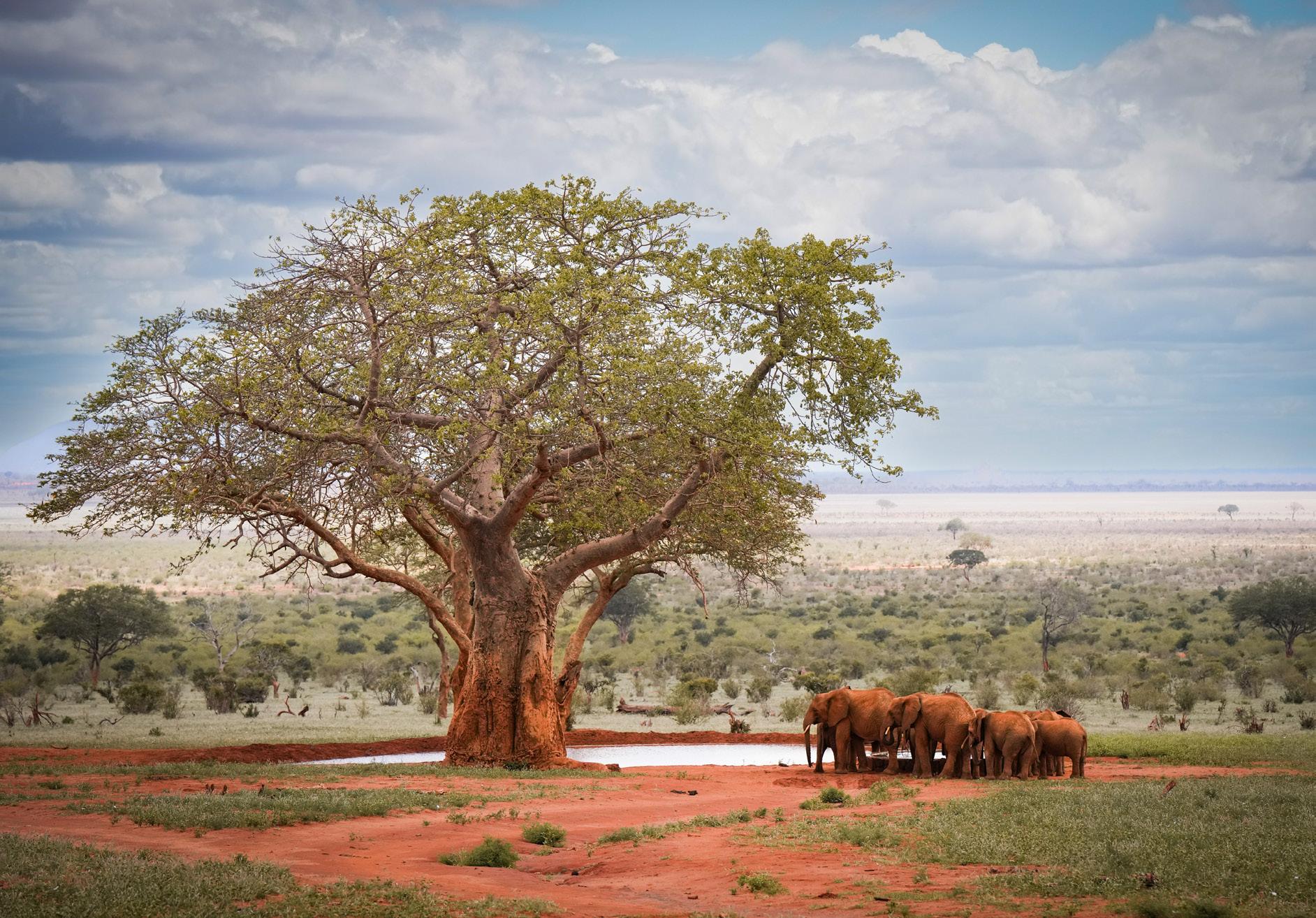
horizons for our beloved Voi matriarch, Mbegu. We always knew the day would come that she felt called to explore her wild side, and at long last, that moment arrived. She was certainly encouraged by her peers, Ndotto, Ngilai, Murit, and Tagwa, who had been experimenting with their independence for many months now. True to form, Mbegu quickly appointed herself leader of the group. While they spent their nights away from the stockades, they continued to link up with the dependent herd most mornings.
On 9 May, just after midnight, Lasayen arrived at the stockades after an absence of five months. He wandered in with Mbegu, Godoma, Tagwa, Murit, Ndotto, and Ngilai. We strongly suspected that it was Mbegu who encouraged him to come home. The past months had clearly been good to him; he looked strong, healthy, and confident.
The highlight of the month fell on 25 May: graduation day! The day started early as we prepared to welcome our newest class of graduates. Sholumai, Sileita, and Mushuru were greeted right off the truck by Tamiyoi, Lemeki, Rokka, and Busara, before the rest of the herd converged. Sileita — who was the mini matriarch of the Nursery herd — was quite overwhelmed, but Mushuru
and Sholumai took to their new home right away. Within days, all three girls were much more settled. Throughout the year, we hosted several local school trips, led by our Community Outreach program. They are a wonderful opportunity for Kenyan children to learn more about their natural heritage in a safe and educational environment. Unsurprisingly, Lemeki was the star of the show — to the children’s delight, she moved along the cordon to greet them with trunk touches.
On 10 June, we were treated to a visit from Emoli. After two months of living wild, he arrived at the stockades in the company of Mbegu, Tagwa, Godoma, Ngilai, Ndotto, and Murit. Some of us believe that, when Mbegu went wild, she encouraged long-absent Lasayen to visit the stockades — and with this visit, she has now done the same for Emoli. He looked very well, but he was a bit standoffish and did not want to play sparring games with the babies. It was as if he felt he had graduated from their juvenile games — never mind that he was the prime instigator of them just a few months earlier.
The month ended with another wild transition — this time, by way of a kidnapping. As the herd was walking
back to the stockades, Manda started trumpeting and running around. He shot straight into a herd of wild elephants, led by a very fiery matriarch we have become familiar with. Despite our best efforts to retrieve him, the herd had whisked him away. Still, Manda was clearly ready and we felt confident that he was in good care: This matriarch has decades of experience and would look after him.
As the year progressed, matriarch Mbegu continued her journey towards full independence, though the younger dependent orphans weren’t quite ready to let their big sister go. Whenever she visits, her adopted babies cluster around her, like chicks surrounding a mother hen. During their daily visits, Mbegu usually stayed close to Busara, Godoma paired off with Baraka, and Tagwa remained near Juni. The three younger girls may be similar in age, but their personalities couldn't be more different: plump Busara is wonderfully easy-going, while Baraka and Juni are more reserved.
On 23 July, ‘Voi Hospital’ welcomed another patient — this time, a two-year-old female elephant who had been found alone. Like Chapeyu, she had been speared or shot in the leg and was hobbling with great difficulty. Given her age and the gravity of her injuries, she would struggle to survive on her own, so she was brought to the Voi stockades. Serenget, as we named her, slept well that first night, clearly relieved to be in safe hands. Her new neighbours — Rokka, Sileita, Sholumai, Mushuru, and Busara — welcomed the little girl with friendly trunk touches.
Losoito, our big personality with the very short legs, is turning into a bossy girl. She trumpets when she thinks anyone is overtaking her for milk bottles and conveniently forgets that we always have enough for everyone. She knows that she can be pushy, because big sister Lemeki will protect her if anyone tries to push back. This year, shy Akina proved to be a water baby of note. She always tries to shoo the rest of the herd out of the pool before swimming, so she can have the whole space to herself. If it's chilly and the other orphans show no interest in swimming, Akina proves everyone wrong by diving in and having a marvellous time.
By contrast, we have noticed that Sileita is like Ndotto in that she doesn't like to submerge herself in water. Instead, she stands guard on the edge of the pool, watching Sholumai and Mushuru wallow. Even though Sileita is now one of the youngest Voi orphans, she still maintains her own little herd, which consists of Nursery
girlfriends Mushuru and Sholumai. She watches both of them hawkishly and never lets them out of her sight.
On 20 August, we decided it was time to encourage Chapeyu outside his stockade. He had been healing well over the past six months, but still proved very reluctant to leave his space, which he clearly saw as a place of safety. This day, however, was different: We opened Chapeyu’s gate, several of the orphans walked inside, and to our surprise, he walked out with them. He had a good first day out, but given how he is still healing, we decided that it would be best to wait before introducing him to the herd again. Chapeyu seemed to agree with this decision and showed no inclination to leave his stockade again.
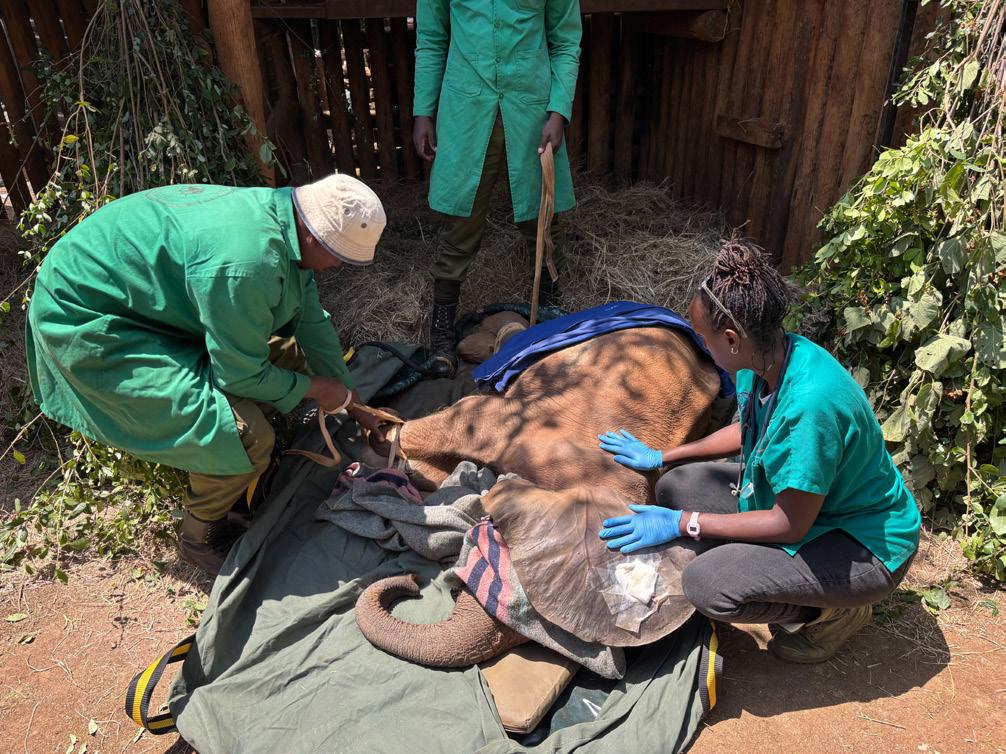
The last day of September delivered yet another new rescue into the mix. Our SWT/KWS Galana AntiPoaching Team spotted an eight-month-old orphan on his own, with no other elephants in the area. Little Daba, as we named him, was brought to the Voi stockades.
Then, on 15 October, we received reports of a thin, solitary orphaned elephant in the Lualeni area. The 18-month-old calf was rescued, brought to the Voi stockades, and put in the stable next to Daba. He rumbled to Alia, as we named her, and the two newbies shared trunk-touch greetings. After giving both babies some time to recuperate, they were brought to our Nairobi Nursery. Before she was rescued, a poacher's snare cut off the tip of Ashanti's trunk, which makes eating more challenging for her than other elephants. But she has lots of friends looking out for her. One afternoon, Ashanti was kneeling to scoop up cubes with her short trunk, flanked by bodyguards Thamana and Epiya. Epiya often positions herself next to Ashanti, just in case roguish Hildana tries to be rough.
November was a wonderful month in Voi, as we welcomed two new grandbabies into the fold. The first arrived on the 12th of November. We woke up to the most exciting news — ex-orphan Naipoki had given birth to a baby boy. The new mother visited the stockades to introduce her son to the Keepers who had raised her. When Naipoki and baby Nsimba walked up the path, there was great excitement. Current and former orphans welcomed her with rumbles and extended trunks. The following day, great drama ensued. Spirits were high with baby Nsimba in the mix, and everyone started excitedly chasing each other around. When Godoma and the ex-orphans ran off towards the river, Juni, Hildana, Kilulu, Seri, Akina, Itinyi, Epiya, Baraka, Dabida, Sholumai, Mushuru, and Ushindi sprinted along behind them.
We followed in our vehicle but could not find them in the thick forest. A chopper was sent out to look for the elephants but could only locate Sholumai and Mushuru, who were with Ngilai, Murit, Mbegu, Rorogoi, Naipoki, and tiny Nsimba. With Naipoki's help, the two girls were shepherded back to the stockades — but the others were nowhere to be seen.
Then, very early in the morning, wise Godoma brought the rest of our truants home from the forest. She led Juni, Akina, Hildana, Kilulu, Seri, Itinyi, Dabida, Ushindi, Baraka, and Epiya up the path to the stockades. The Keepers opened the gates and our runaways (as well as their rescuer) padded happily into their rooms to a chorus of rumbles. Godoma spent the night in her old stockade.
But the month’s celebrations weren't over yet! On 17 November, ex-orphan Mbirikani arrived at the stockades with a beautiful baby boy. She was with Arruba, Ndii, Mudanda, Suswa, Pika Pika, Mweya and her babies Mwangaza and Mwitu, whom we had not seen for many months. Our orphans welcomed the visitors, especially Mbirikani and baby Mica, with excited trumpets and charging. December began on a wonderful note, with the arrival of many visitors — including two new grandbabies. After an absence of many months, Edie and her large ex-orphan herd strode up to the stockades. She arrived with her kids, Eden, Ella, Eco, and Enzo, along with long-lost Panda and Kihari, who came to introduce their newborn babies, Panya and Kiki.
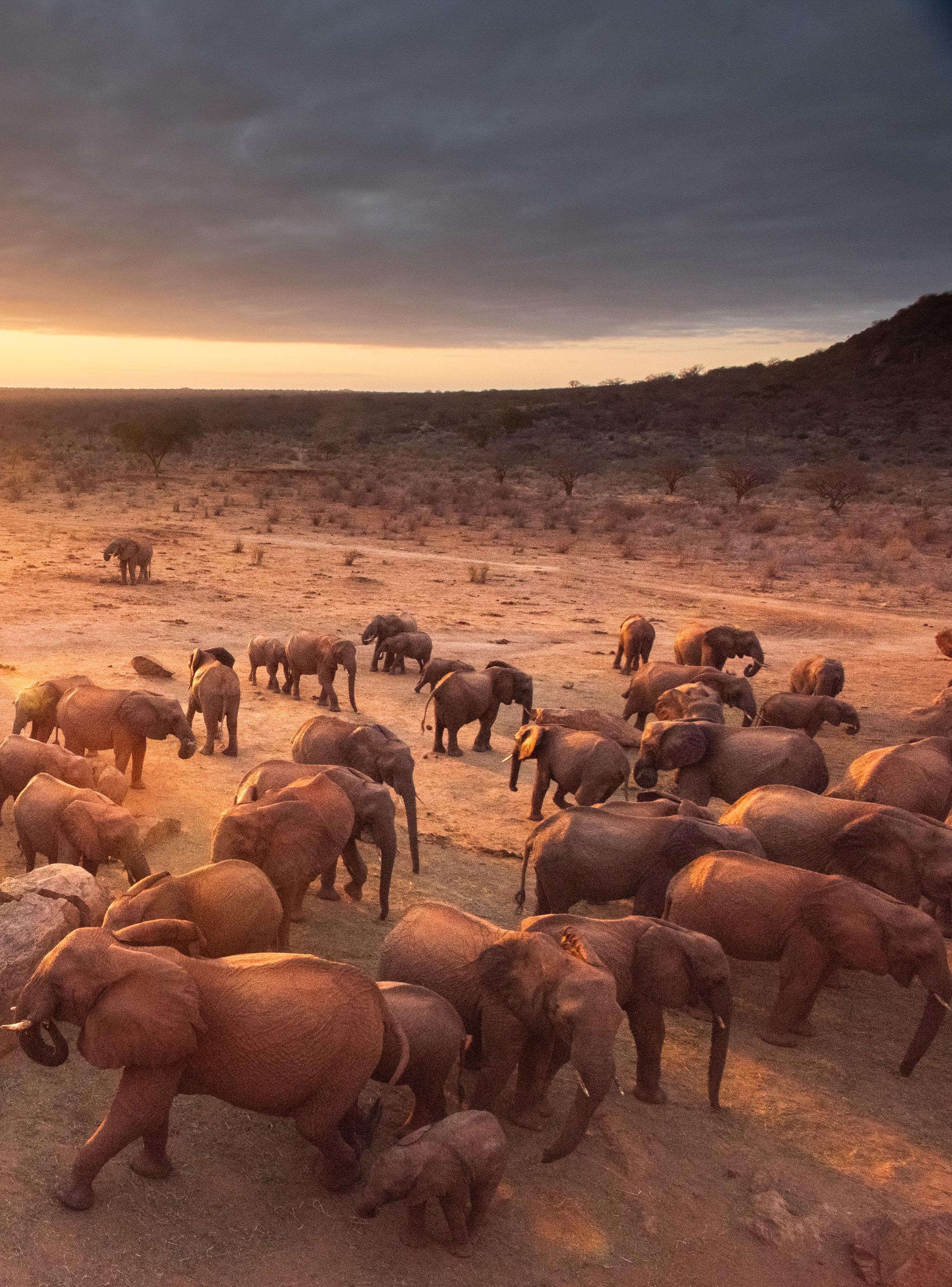
Kenia, Tahri, Ndoria, Araba, and heavily pregnant girls Sagala and Arruba, who joined Mweya’s herd a week or so earlier, also padded up to the stockades. Close behind came Mweya with babies Mwitu and Mwangaza, Mbirikani and baby Mica, Naipoki and baby Nsimba, Ndii, Suswa, Arruba, Mbegu, Ndotto, Pika Pika, Ngilai, Tagwa, Tamiyoi, Murit, and Godoma. In total, we had 54 elephants gathered at the stockade — all orphans, ex-orphans, or wild babies of orphans raised at our Voi Reintegration Unit.
The following day brought a surprise visit from Tundani, who had been absent for nearly four years. He even went into his old stockade to meet Chapeyu. Laikipia, who had been away for nearly a year, popped by later in the month.
6 December was a big day for Chapeyu. Since being rescued back in February, he had left his stockade just once. Every other day, he flatly refused to walk out of his room. That morning, we succeeded in persuading him to join the other elephants. Lemeki stood by Chapeyu’s side to prevent any roughhousing. Later in the day, Ndotto and Lasayen escorted him into the bush.
Chapeyu continued to visit us, just like any other exorphan. After such a long healing journey, it was a real triumph to see him thriving in the wild.
i TH umba rein T egra T ion uni T
14 stockade-dependent orphaned elephants
113 ex-orphans living wild
13 wild grandbabies and 1 great-grandbaby born to Ithumba ex-orphans in 2025
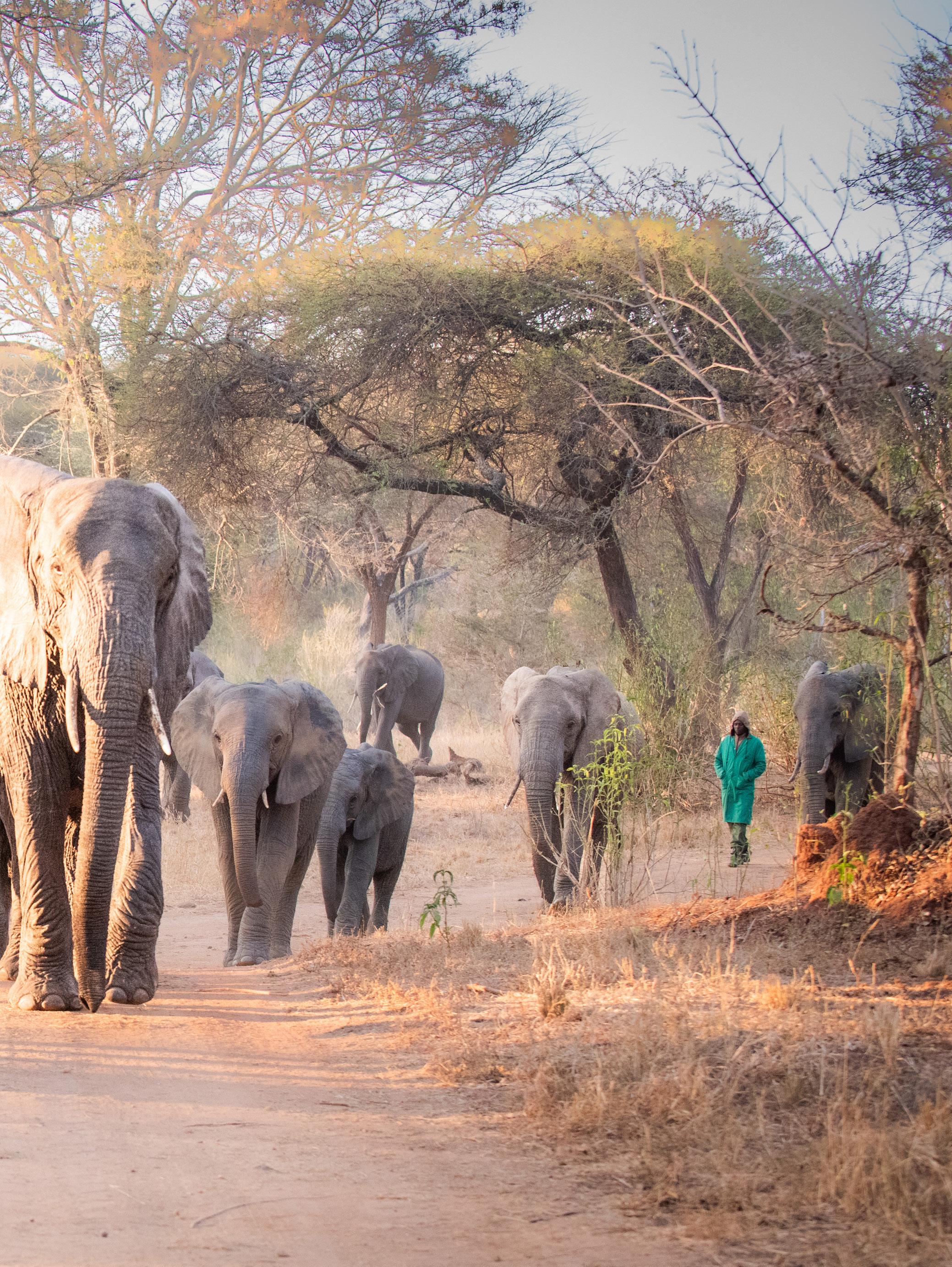
Rewilding happens at a gradual pace, usually aided by junior ex-orphan friends who help pave the way. Early in January, wild-living boys Enkikwe and Sapalan started taking Sattao, Mukkoka, and Kuishi — the eldest members of the Ithumba dependent herd — on jaunts into the bush. These little excursions served as confidence builders: Later in the month, the trio started spending nights outside the stockades. This was a big step, especially for Kuishi and Sattao, who had been taking longer than their peers to explore their wild lives.
We wondered how Esoit, Kuishi’s adopted little brother, would handle her transition to the wild. However, we needn’t have worried: Larro picked up where Kuishi left off, doting on Esoit like a big sister would. We were proud of Larro for showing such thoughtfulness and leadership in that moment.
On 11 January, three new graduates made the journey from the Nairobi Nursery to Ithumba. Just a few minutes before they arrived, Olare, Ola, Ndiwa, Nabulu, and Olsekki turned up. It's amazing how ex-orphans always seem to know that new babies are incoming. Mukutan, Choka, and Loldaiga quickly took to Ithumba life. They knew many members of the herd from their shared Nursery days and were clearly excited to experience the broadened horizons of Tsavo. Only Mayan seemed a bit put out by their arrival, knowing that he and Vaarti had just been ousted from the position of ‘Ithumba babies.’
February began with a visit from old friends: After an absence of some months, Ambo and Kithaka reported to the stockades early in the morning. For new graduates Loldaiga, Mukutan, and Choka, this was their first meeting with Ambo and Kithaka. Predictably, Ambo was welcoming to the three boys and politely introduced himself. By contrast, Kithaka warned Loldaiga, Choka, and Mukutan to keep their distance when he saw them approaching. The three boys made a hasty retreat to avoid trouble with the mercurial bull.
Most juvenile bulls are somewhat bolshy, but Vaarti and Mayan have hearts of gold. Vaarti is particularly good-natured. One morning, he left his stockade with a leftover branch in his mouth. He soon met feisty
Suguroi, who took the branch into her custody. Vaarti didn’t complain but let it go peacefully, knowing what Suguroi was capable of. Another day, the same situation happened with Lodo. We think Vaarti might be onto something — he is never stressed by the little things!
Roho is growing up, but glimmers of the spoiled Nursery boy remain. One morning, the Queen — an impressive wild matriarch we know well — arrived with her family to enjoy supplemental lucerne. Everyone kept a respectful distance, except Roho. After stepping on the Queen’s lucerne, she rebuked him with a swift shove. Smarting from the correction, Roho waited until the Queen’s back was turned, then knocked her young daughter before making a quick, satisfied exit.
March brought a mini baby boom in Ithumba, with the arrival of not one but two new additions to our extended elephant family! The first baby made his debut on 14 March. Early that evening, ex-orphan Sities surprised everyone by showing up at the stockades with a newborn in tow. The first-time mum was accompanied by her longtime friends, Turkwel and Kainuk, and was proud as could be. The rest of Mutara’s herd arrived a few minutes later, and the air was filled with the trumpeting and rumbling of elephant celebrations. Sunni, as we named the baby, is a happy and healthy little boy.
Then, on 29 March, Yatta arrived at the stockades with a newborn girl. Yatta is a very special elephant, as she was one of the founding females who made up Ithumba’s inaugural herd. Today, she is living wild, a matriarch, a mother, and a grandmother. Yara, as we named her new baby, is her fourth calf. We didn’t know it yet, but she
wouldn’t be the only addition to Yatta’s dynasty in 2025. And the baby boom continued: In the very early hours of 29 April, we found Lualeni outside the stockades with her daughters, Lexi and Lulu, and her brand new baby boy, who we named Luki. She clearly made the pilgrimage home right after delivering her little boy. Immediately after having their milk bottles, the dependent orphans made a beeline for the group. Our famous baby lovers, Naleku and Suguroi, tried their best to spend time with Luki, but his protective sisters would not allow it.
April ended on a wonderful note. When the dependent herd arrived at the midday mud bath, they were surprised and delighted to find Jotto and Musiara — who had been absent for a year — relaxing by the pool. The boys left the Ithumba area in April of last year and hadn’t been seen since. Despite all the time that had passed, they knew exactly when and where to meet their humanelephant family.
The baby boom resumed in May. On the first of the month, Sunyei introduced us to her third daughter. It appeared that Wema had ditched her wayward mother, Wendi, in favour of helping Saba and Siku look after their new little sister. The visit was clearly just to show off Sunyei’s latest arrival, whom we have named Subiri. After just five minutes, the group melted back into the wilderness. Not 24 hours after Subiri’s debut, we were treated to another new arrival. This time, it was firsttime mum Makireti introducing us to her beautiful baby boy. She spent quite some time parading around the stockades, ensuring we all properly got introduced to her new baby, whom we named Makimaki. Makireti was diligently shadowed by young Neshashi, who seemed to be Makimaki’s sole nanny.
However, in a very sad turn of events, Makireti showed up a month later without her baby. We don't know how she lost Makimaki, but it was a heartbreaking reminder of the difficulties wild elephants sometimes face. Makireti didn't seem outwardly distressed — wild animals take loss in their stride — and continued to visit us regularly.
On 9 June, we welcomed three more Nursery graduates: Muwingu, Kitich, and Mageno. Mukutan, Choka, and Loldaiga — who knew the trio from the Nursery — were the first to meet the new babies. There was instant recognition among the old friends.
The trio quickly settled into Ithumba life, although some aspects took a bit of getting used to. At the Nursery, they
were the oldest and thus biggest elephants — whereas at Ithumba, they found themselves dwarfed by all the wild visitors. The day after Muwingu, Kitich, and Mageno’s arrival, Mulika and her family joined the dependent herd. The newbies felt intimidated by Mulika’s size — to be fair, she is a notably large female — and chose to keep their distance.
With a few weeks at Ithumba under his belt, however, Mageno changed his tune — he became fascinated with wild bulls. Whenever a friendly-seeming visitor appeared, he would slowly walk close to them, as if trying to measure himself against him. Most orphans give wild bulls a wide and respectful berth, so it was interesting to see Mageno’s boldness. We often observed him approaching wild bulls, stretching his trunk to touch them, clearly admiring their size and presence.
July began in the most wonderful way possible — with the arrival of another grandbaby! On the first day of the month, ex-orphan Kalama arrived at dawn with a brand new baby in tow. The first-time mum wasted no time in introducing her daughter —whom we named Kapuki — to her Ithumba family. Shortly thereafter, Chaimu, Nabulu, Malkia, Sities, Sunni, Kuishi, Tumaren, Tembo, and Ishanga arrived. The air filled with joyous trumpeting and bellowing as they surrounded the baby and congratulated Kalama on becoming a mother.
On 6 August, Nursery rascals Weka and Shujaa graduated to Ithumba. Mutara, Mambo, Sities, Sunni, Turkwel, Sana Sana, Naboishu, Kainuk, Malkia, Kuishi, and Suguta were present and ready to receive the babies. This is standard procedure with our ex-orphans — they always seem to know when new graduates are arriving and purposely position themselves to be their welcoming committee.
There was trumpeting and bellowing in excitement when the babies were offloaded. Mutara and Kainuk forgot that they are now mature, wild-living females, lost all sense of reason, and even tried to climb the wall to reach Weka and Shujaa, clearly hoping to whisk them into their herd. The Keepers shooed them away to give the babies some space. After Weka and Shujaa had their milk bottles, Muwingu, Mageno, and Kitich were brought over to meet them. They immediately recognised their old Nursery friends.
October began with a visit from a special friend. Nearly ten years ago, an aggressive, one-tusked wild elephant
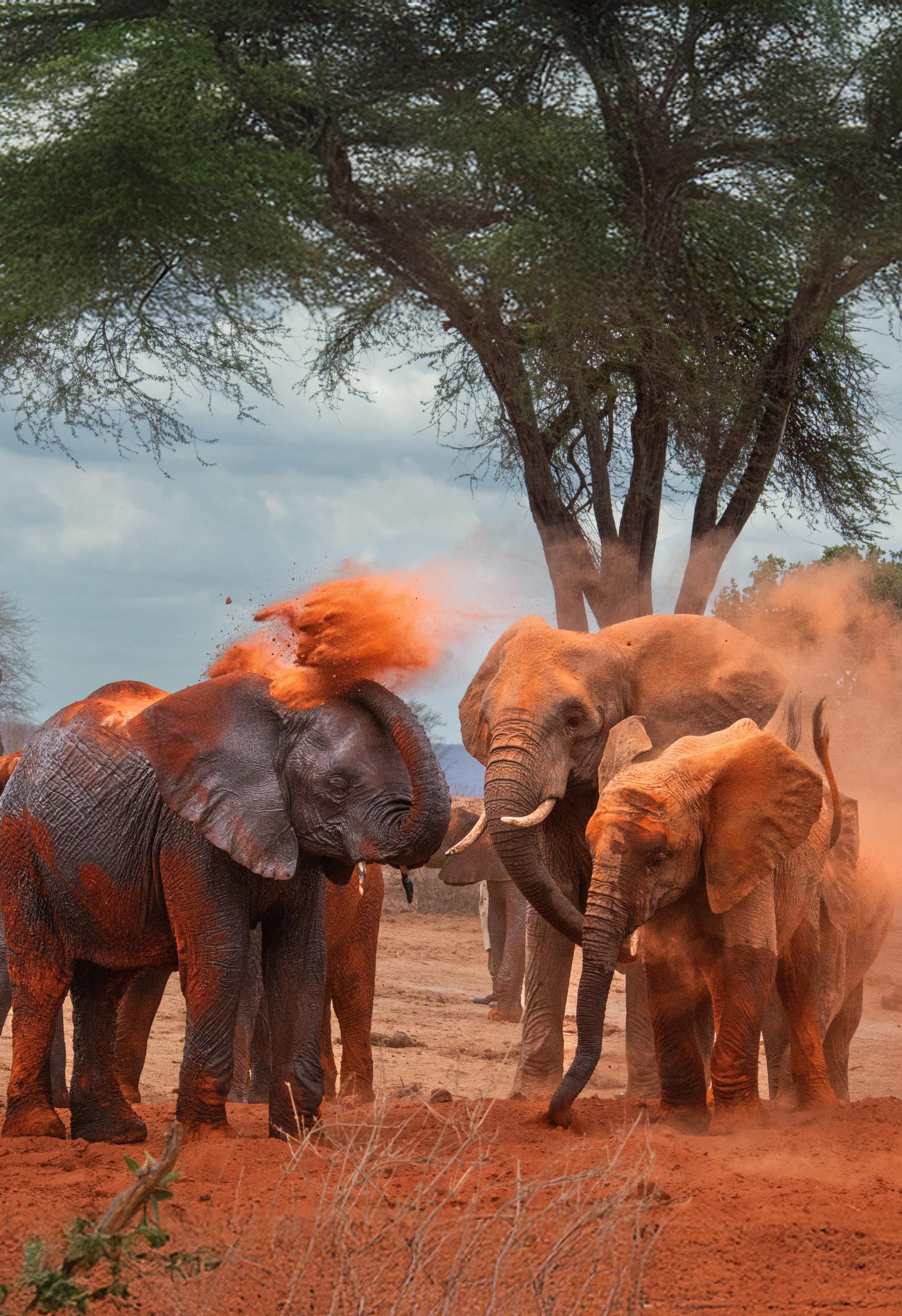
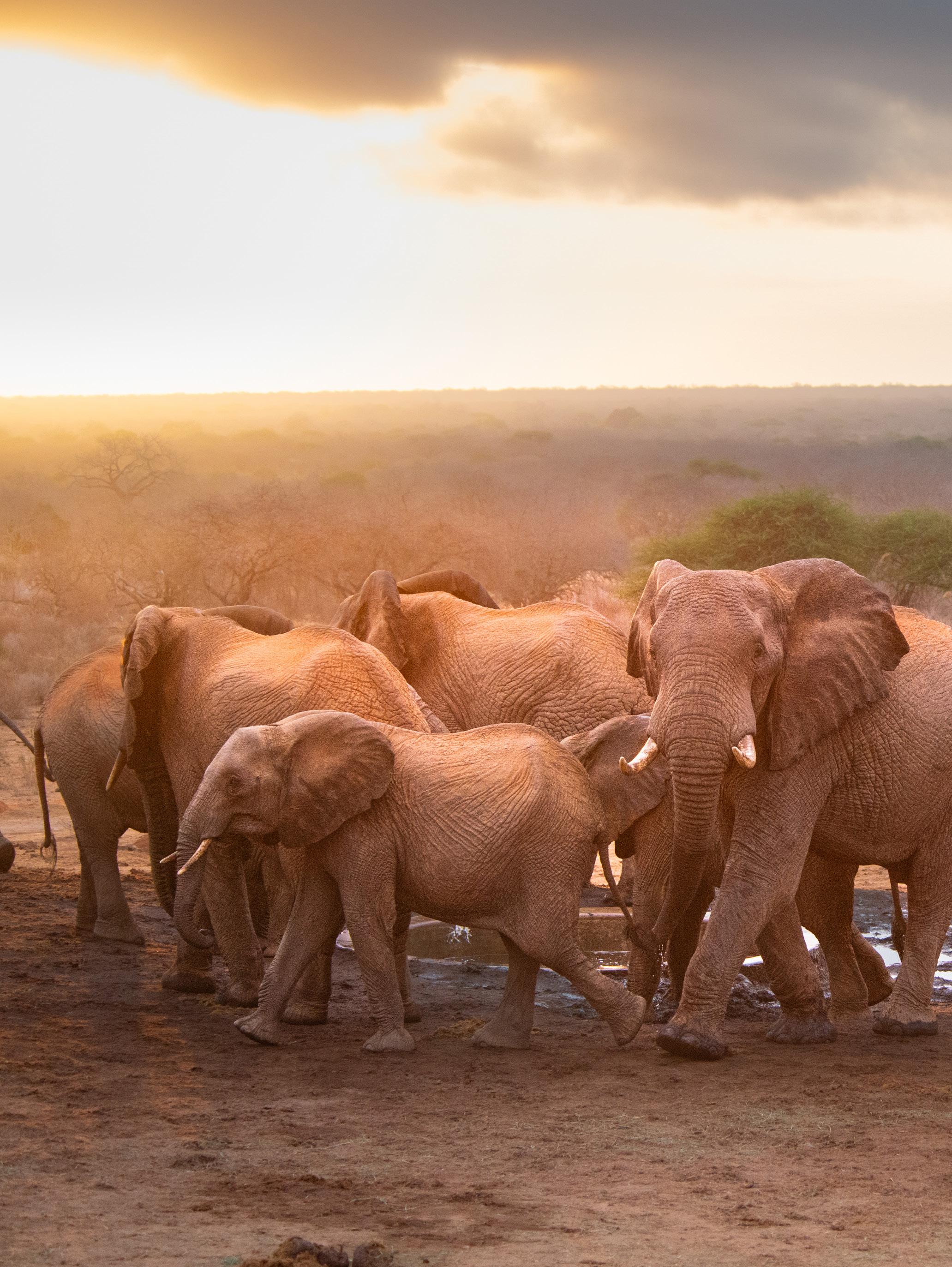
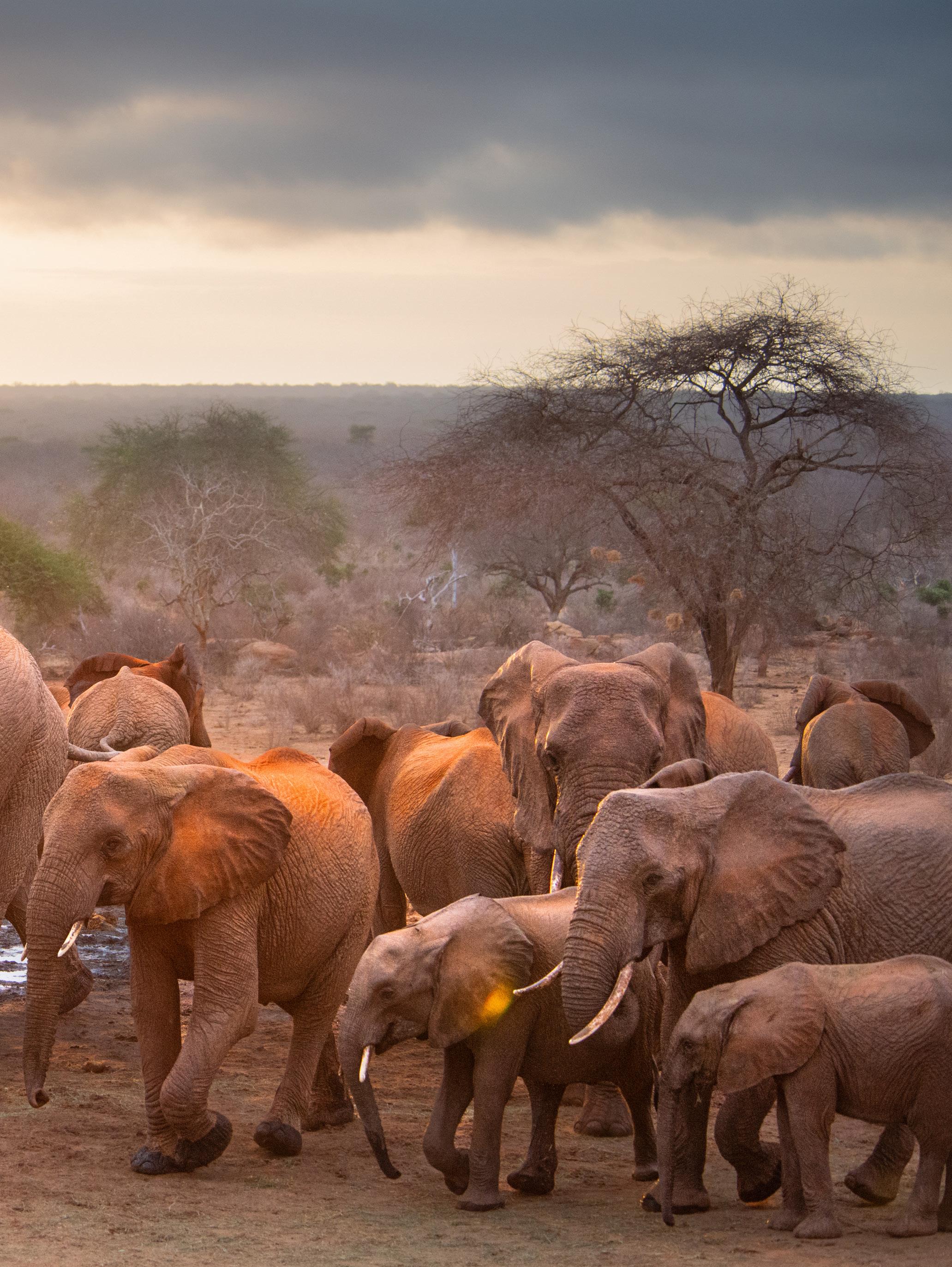
arrived at Ithumba. She was so disruptive that the Keepers nicknamed her Crazy One. Over time, the exorphans taught her that the Keepers are kind and to be trusted, and she became a fixture around Ithumba, as friendly as an elephant raised by our hand. When Crazy One became a mother in 2022, the ex-orphans served as her baby’s main nannies. On 1 October, she strolled up to the stockades with her newest addition — debuting her newborn just as our ex-orphans do.
4 October brought some unwelcome drama: Something spooked the orphans, sending them running eastwards. Three kilometres on, Mayan, Vaarti, Esoit, Loldaiga, and Mukutan turned back, but Muwingu continued leading Choka, Shujaa, Weka, Kitich, and Mageno deeper into the bush, disappearing completely. We mounted a full search, on the ground and in the air, but night fell with no sign of the six. Mukutan eventually led the remaining 13 orphans back to the stockades, while the missing group kept us thoroughly on edge.
The next morning brought some much-needed positivity. Ex-orphan Naserian arrived at the stockades with a large entourage — and her brand new baby girl, whom we named Nyika. The day ended happily when the six truants finally appeared at the midday mud bath after 25 hours away. Muwingu was still leading the charge. She marched them straight to the feeding point, where they waited for their milk bottles as if we were the ones who were late.
The month ended with another wonderful baby debut. On 28 October, Kilabasi introduced us to her newborn daughter. She was accompanied by her son, Kofi, and her long-time friend, Makireti, who was serving as the main nanny to baby Kanika.
Some days are banner days — and 22 November certainly fell in that category. It was a day bookended by two new babies and wrapped up with the happy return of two beloved bulls. The celebrations started early in the morning, when Nasalot debuted her brand new baby girl. The proud mum was accompanied by her sons, Nusu and Noah, along with ex-orphan Mundusi, who is Noah's best friend and an honorary member of Nasalot's family. Only time will tell if Nala, as we named the little girl, is as mischievous as Nusu and Noah.
That same evening, Musiara and Jotto returned 'home' after a long time away. Earlier in the month, our pilots unexpectedly crossed paths with the pair, far from
home and in need of help — Jotto had an injured leg that required treatment. He remembered his human family and accepted an impromptu bush treatment, while Musiara calmly looked on. We were happy to see that Jotto’s leg was already much-improved and that he appeared to be recovering faster than our initial expectations.
The day’s joys weren't over yet. Emerging from the west, Mutara arrived with her firstborn, Mambo — and a brand new baby boy. She had given birth hours earlier and immediately made the pilgrimage home to introduce us to baby Mango. Mambo proved to be a protective big brother and blocked ever-hopeful Suguroi from accessing the newborn.
November ended with some Wendi drama. The notorious reprobate turned up at the stockades with daughters Wiva, Wema, and Wimbi in tow. Abandoning any parental duties, Wendi made a beeline for the parked vehicles, looking for something to eat. After causing sufficient trouble, she strolled off with her daughters, Olsekki, Makena, Namalok, and Mapia in tow.
On 2 December, we had the most wonderful surprise. Matriarch Nasalot arrived with Ithumbah and her newborn baby girl in tow. This is Ithumbah's secondborn, after Iman. The baby, whom we named Iris, looked strong and active but shy. They were with Nusu, Noah, Nala, Mundusi, Naleku, and Namalok.
Not a week later, we met both a grandbaby and greatgrandbaby born to our Orphans’ Project. Early that morning, we awoke to find Kinna, Wendi, and Yatta’s groups outside the stockades. We soon realised that this was no ordinary visit: Yatta’s eldest daughter, 13-yearold Yetu, was introducing us to her brand new baby girl. Yasmin, as we named her, is Yetu’s second-born and Yatta’s second grandchild. Although Yetu has only ever known a wild life, she has always had a deep connection to the human family who raised her mother. She was as excited as any ex-orphan to introduce Yasmin to Benjamin and the other Keepers, proudly parading her around Ithumba.
The day’s celebrations weren’t over yet: Shortly before nine o'clock at night, when the orphans were all in their rooms, Suguta arrived at the stockade compound with her first-born, a baby boy. She was escorted by Larro, Sana Sana, and Naboishu. The small group decided to spend the night at the stockade compound. We named
her son Sullivan. With all the new babies in need of nannying, it was hardly surprising that Naleku started to hear the call of the wild. Truth be told, it was time — she was becoming a bit of a bully! Interestingly, Kindani and Kinyei (who are seven years old to Naleku’s six) showed no such inclination. They are wholly devoted to their ‘little brother,’ Bondeni, and are likely waiting until he is ready to explore his independence.
Naleku’s departure led to an interesting matriarch dynamic in Ithumba. Suguroi saw an opportunity and crowned herself mini matriarch. This was hardly surprising — the Keepers call Suguroi their resident Olympian, as she has never seen a competition that she didn't want to win. However, it is slow-but-steady Kinyei who is the dependent herd’s actual mini matriarch. She is patient, measured, and wise. The group looks to her for crucial leadership, while Suguroi gets to shepherd everyone from A to B.
On 14 December, we met yet another grandbaby. This arrival was especially poignant, as her mother — Makena — had endured much hardship in her path to motherhood. Makena was accompanied by Olare, Ola, Maramoja, Naseku, Sagateisa, Roi, Ndiwa, Gawa, Sunyei, Siku, Saba, and Subiri. It was a brief visit, clearly with the express purpose of introducing her new baby to her human family. Even in the short time they remained with us, however, we could tell that Makena was over the moon. She was extremely diligent, fussing over her daughter and proudly showing her off. We named her Merri.
As 2025 drew to a close, we couldn't help but reflect upon all that happened in Ithumba over the course of the year: We met 13 newborn calves (or as we call them, grandbabies) born to orphans rescued, raised, and rewilded through our Orphans' Project, along with a great-grandbaby born to Yetu. We also welcomed five new Nursery graduates into the Ithumba fold: Weka, Shujaa, Mageno, Kitich, and Muwingu.
umani s P rings rein T egra T ion uni
7 stockade-dependent orphaned elephants
12 semi-independent / ex-orphans living wild 1 wild ‘grandbaby’ born to Umani ex-orphans in 2025
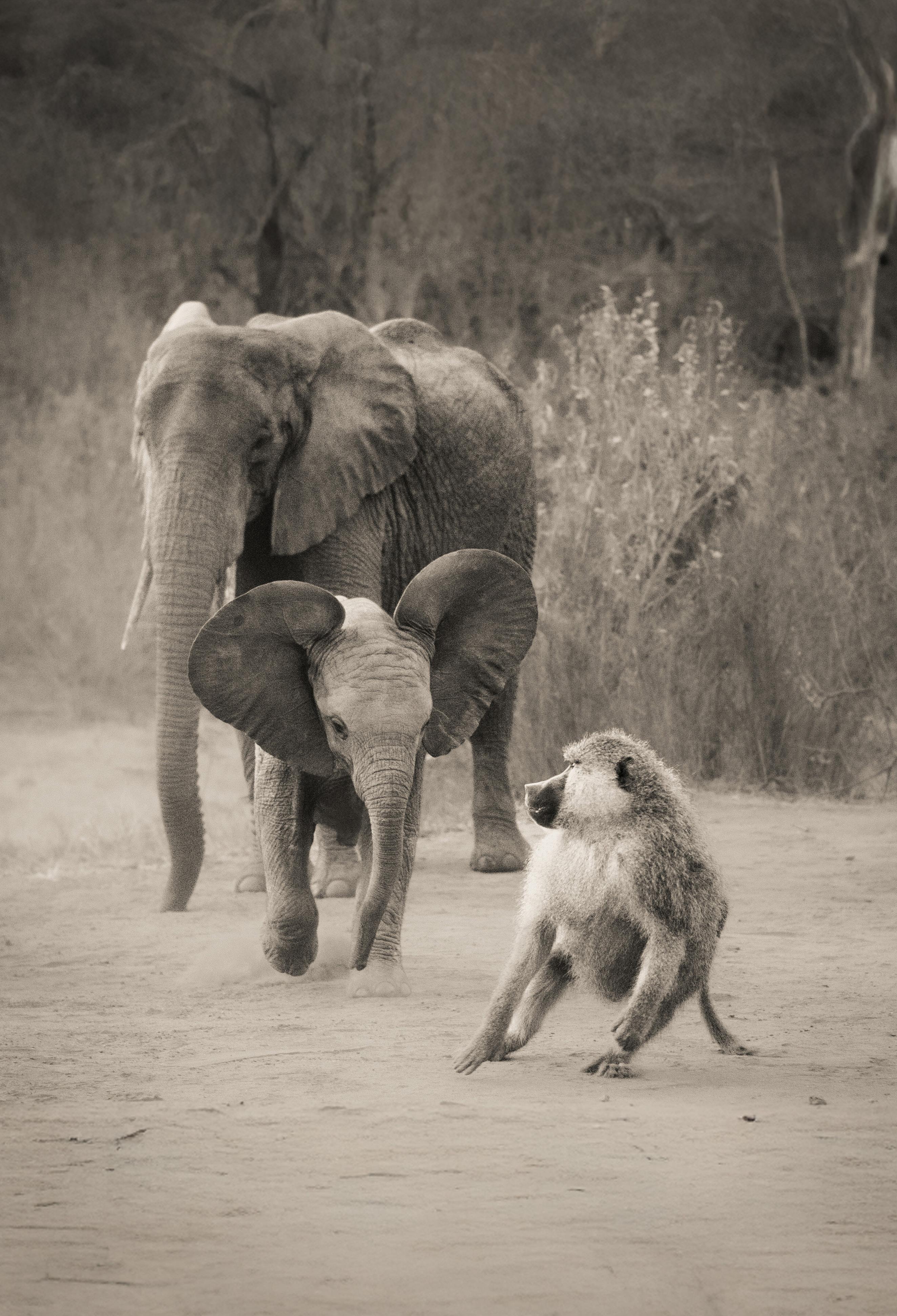
January was marked by a whirlwind courtship for Murera that affected the entire herd. It started when Faraja arrived with an enormous, old bull in tow. We later realised that Faraja was playing a supporting role: He sensed that Murera was in season but, being too young to partner with her himself, he instead presented some suitors for her consideration.
The bull’s presence destabilised the herd. The orphans split into two groups, with the new mothers in one and Murera and Mwana in the other, pursued by the wild bull. For several nights, no one returned to the stockades. It was an odd time for the Keepers, who missed their babies and fretted after Murera, even though this is all part of nature.
After four nights of empty stockades, the Keepers heard a signature squeaky trumpeting from the hills — it could only be Enkesha, with her damaged trunk. They headed out again towards the airstrip area and found Enkesha, Mwana, and Murera who had finally been abandoned by the amorous bulls. Murera was visibly happy to see the Keepers and slowly, the entire team walked home. The trio slept deeply that night inside their bedrooms. In 22 months, we hope Mwana will have a sister or brother! Fortunately, February was far less fraught. The herd operated as one unit, with nightclubbers and stockadedependents going their separate ways by night and then uniting first thing in the morning. Babies Sulwe and Lenny, who were only born in December, continued to dominate everyone’s focus.
Lima Lima’s boy and Sonje’s girl are not related by birth, but they will grow up as brother and sister. Like any siblings, they happily play and then bicker, play and bicker, in a constant rotation! Sulwe is younger by three weeks, but even as a newborn she proved to be a tough girl, more than capable of holding her own against the rascal Lenny. At the beginning of the year, Kiombo joined Ziwa’s wild herd. During his safari, he continued to visit his Umani Keepers and the other orphans periodically. Murera seemed to hold a grudge against him during this time; she is always leery of wild herds and was not pleased that Kiombo brought so many visitors in their midst.
Perhaps swayed by the chilly reception from his matriarch, Kiombo decided to ditch his adopted wild herd and instead link back up with the Umani ex-
orphans. Everyone seemed pleased about this decision: It brought Kiombo back into the mix and kept too many wild visitors away.
Murera is usually a kind and generous leader, but she is notorious for her temper. If someone steps out of place, it takes her a long time to forgive and forget. Such was the case one morning, when Sonje and Mwashoti greedily gobbled up a tasty branch before Murera could reach them. By the time she arrived, her friends had already eaten everything.
This put Murera in a very bad mood — and it was the babies who paid for it. She usually allows Lenny and Sulwe to breastfeed, but this morning, she denied both of them. None of the other leading females dared to approach Murera, as they fear her when she is in one of her moods. Only Mwana and Amali were allowed to be near Murera; the rest were banished until her anger subsided. Our matriarch reigns supreme!
At long last, after months of waiting and wondering, Zongoloni’s baby finally arrived in April. We had been joking that Zongoloni endured the world’s longest pregnancy — each month she got bigger and moodier, yet still no baby arrived. As she lumbered up to the stockades on the morning of 24 April, the Keepers noted that she was finally showing signs of labour. We were intrigued to see that on this day, Zongoloni had brought her old friends Ziwa and Faraja. Faraja also has the distinction of being Zongoloni’s first friend; when she was rescued, she was placed in a Nursery stable next to Faraja. Nowadays, both boys visit their Umani family irregularly. Zongoloni had clearly gathered them to share in this special moment.
Lima Lima, Sonje, and Quanza led Zongoloni to the thickets a short distance away. Zongoloni was walking slowly, and it seemed the group had resolved to escort her to a safe spot under shade to deliver. Moments later,
we heard a yell accompanied by trumpets and rumbles, and knew that she had given birth. The Keepers were warmly welcomed into the heart of the action and got to meet their newest grandbaby, whom we named Zigi.
While everyone immediately fell in love with baby Zigi, Kiasa took it to the next level. She refused to let the baby out of her sight for even a minute. Zongoloni seemed to appreciate the support — she and Kiasa, two feisty girls, have always been kindred spirits.
Zigi’s birth brought balance to our little family, giving us two baby girls and two baby boys. His arrival also marked the closing of the Umani maternity ward — at least until Murera’s next baby arrives. Quanza, meanwhile, is in her own phase and is not yet receptive to suitors. Wild bulls show great interest in her, but she carefully dodges their advances. Unlike the other Umani girls, who associated with bulls and became mothers early in life, Quanza is in no hurry to have a calf. For the time being, she seems to prefer her role as a nanny.
Quanza may not be a mother, but she is by no means at a loose end. She has become a trusted sister figure to both Sonje and Lima Lima, often stepping in as a helper when the new mothers need to send a message to the Keepers. It’s always Quanza — the ‘news reporter’ — who passes along the information, just like she did when Sonje and Lima Lima gave birth. She has become our herd’s best communicator.
Speaking of evolutions: Zongoloni used to be notorious for her fiery temper, but motherhood evened out her character a lot. Sometimes, however, we see glimmers of her old self. One afternoon, Zongoloni arrived at the mud bath in a bad mood. She set her sights on Maktao and Kapei, whom she saw as easy targets, grabbing the boys’ tails and attempting to bite them. The Keepers don’t often have to intervene in the orphans’ affairs, but this was one of those rare occasions.
Kiombo left the dependent herd to explore the wild in May — leaving his sidekick, Maktao, at rather a loose end. To fill the void, he struck up a friendship with our young upstart, Kapei. This was a great development for everyone: Maktao got a buddy and Kapei got a wise, older mentor. One memorable afternoon, Kapei took on Maktao, pushing him into a corner. When Maktao sensed the five-year-old was about to defeat him — and knowing that would be an enormous embarrassment, given his seniority — he stood up on a rock, so Kapei would see him as very tall and powerful and retreat.
As the year progressed, a funny habit emerged amongst our Umani grandbabies. Unlike the orphans, they do not receive bottles, as they get all the milk they need from their mothers. However, they still like to join the dependent herd's dash to the midday milk feed. When they see the others start to run, tiny babies Lenny, Zigi, and Sulwe sprint as if they were all to be bottle-fed. Lenny, who is just as competitive as his mother, Lima Lima, usually emerges the victor in these races.
Amali has taken over Lima Lima's role of 'herd scout' — she is excellent at finding her friends. One July morning, Enkesha and Amali awoke to find the nightclubbers hadn't shown up. The girls were visibly disappointed. They raised their trunks high above their heads, trying to catch a scent. Soon, sharp little Amali began trumpeting as she marched into the forest, with Enkesha following close behind. After about an hour of searching, they found Lima Lima and Sonje with the little babies and walked them back to the Keepers.
On 11 August, Kiombo returned home after a very long absence. He brought his new wild friends right to the stockades, where the Keepers provided lucerne for everyone to share with the orphan herd. We were happy to see him looking exceptionally healthy and content; his wild life clearly suits him. He is growing huge — in fact, he almost confused his Keepers into thinking that he was not Kiombo. However, when they called his name, he responded warmly. He may be growing up, but he still loves his Umani family. Kiombo continued to visit throughout the year, but he has well and truly embraced his wild side.
Jasiri, Faraja, Alamaya, Ziwa, and now Kiombo are our wild boys — they visit their Umani family periodically, but are happily leading independent lives. As the sole elder bull who links up with the dependent herd on a near-daily basis, Mwashoti has become an important role model to the younger boys. One day, Maktao and Kapei approached Mwashoti and tried to get him to join their pushing game. Unfortunately for them, peace-loving Mwashoti did not approve of their brutish behaviour. When Kapei ignored his cues and bit his tail, Mwashoti lost all patience. The younger boys prudently ran over to the girls for safety.
Lima Lima’s son, Lenny, is turning into a social and bold young elephant, just like his mum. Whenever the Keepers take a break under the trees, he approaches them in a friendly manner. Also like Lima Lima, he is delightfully greedy. One September afternoon, a Keeper
called his name and Lenny padded over. He expected to be given pellets, and finding none forthcoming, turned around and pushed the Keeper with his bottom before marching off. Like mother, like son!
We often joke that Lenny has two mothers — his birth mother, Lima Lima, is his mother by night; Murera is his mother by day. Lima Lima is very happy with this arrangement. She loves her son, but she also has many interests and does not seem to want to be hemmed in by a baby all day. When the nightclubbers reunite with the dependent herd in the morning, Lenny makes a beeline for Murera. Mwana doesn’t seem to mind — she accepts that Lenny is her little brother and she must share.
Not every mother is so generous. Sonje loves her own baby, Sulwe, but not her friends' babies. She does not allow Lenny or Zigi to nurse from her. One October afternoon, one of the babies screamed, putting everyone on high alert. It turned out to be Lenny, who had been pushed by Sonje. He was only passing under her, but she thought he was trying to sneak a nurse and wanted to make it clear that such behaviour would not be tolerated. As the year drew to a close, we were increasingly reminded how Murera’s pregnancy was progressing — her infamous mood swings were back in full force. Just as she was when she was pregnant with Mwana, she proved to be a cantankerous expectant mother. Some days, she was affectionate and calm; others, she was irritable and made a big deal out of the smallest infraction. The orphans became adept at gauging her mood and giving her a very wide berth when she was not to be trifled with. Only Sonje and Lima Lima remained unfazed by her temper tantrums.
Sometimes, however, she realises she has gone too far. Such was the case one October afternoon, when Murera went on the warpath at mud bath, shoving Quanza, Lima Lima, Mwashoti, and Enkesha into the water. The Keepers tried to reason with her, but Murera ignored them completely. Later, however, she realised the error of her ways and seemed to feel sorry. She walked back to her Keepers as if to apologise, then quietly moved amongst the herd.
Murera may be feared, but she is also enormously respected and has the herd’s unwavering loyalty. We were reminded of this in December, when a crocodile surprised Amali and Mwana in the springs. Murera bellowed for back-up, which summoned Sonje and her team from deep within the forest. Everyone came charging down the hill, with even little Lenny and Sulwe
racing to support. The mothers handled the situation in a blink, banishing the crocodile and safely escorting the girls away.
15 December was a very special day — Christmas came early for our Umani herd. It had been nearly five years since Umani Springs received a graduating class, and, as always, the orphans seemed to sense that something was happening. After having their breakfast, they loitered just a stone’s throw from the stockades, as if they knew they shouldn’t travel far.
When the graduation truck carrying Kerrio, Kamili, and Latika, made its way through the forest, Murera and Lima Lima rallied the herd back to the stockades. The elephants converged in a chorus of rumbles and trumpets, and little Lenny, Mwana, Sulwe, and Zigi — who had not yet witnessed a graduation — ran toward the truck with their tiny trunks aloft. Murera led the procession, as was fitting for the Umani leader, while Mwashoti walked right up to the truck doors, trying to figure out how to let the girls out himself.
New graduates brought new herd dynamics. Kiasa and Amali were clearly worried about the arrival of three potential nannies and did everything in their power to keep the new girls away from Zigi, Sulwe, and Lenny. Pushy behaviour was to be expected from Kiasa, who has always been a bit unpredictable, but we were disappointed by Amali's churlishness. By month's end, however, she had become more accommodating. Lovely Enkesha and Mwana were friendly from the outset and played well with Latika, Kamili, and Kerrio.
December was a special month for our Umani family. For the first time in many years, we welcomed three new Nursery orphans into the small herd. Lenny and Sulwe celebrated their first birthdays — Lenny on 4 December, and Sulwe on Christmas Day. Both have grown significantly over the past 12 months. We look forward to seeing what 2026 has in store for our family in the Kibwezi Forest.
kaluku uni T
6 milk-dependent orphaned elephants
2 orphaned giraffe
2 orphaned rhinos
The new year began with stalled new horizons for our baby boy, Toto! Mwinzi and Natibu had already made the move to big boy stockades, but Toto remained stubbornly attached to his stable. However, while he continued to grow, his bedroom wasn’t getting any bigger, so we knew the day would come when he would have to upgrade his accommodation.
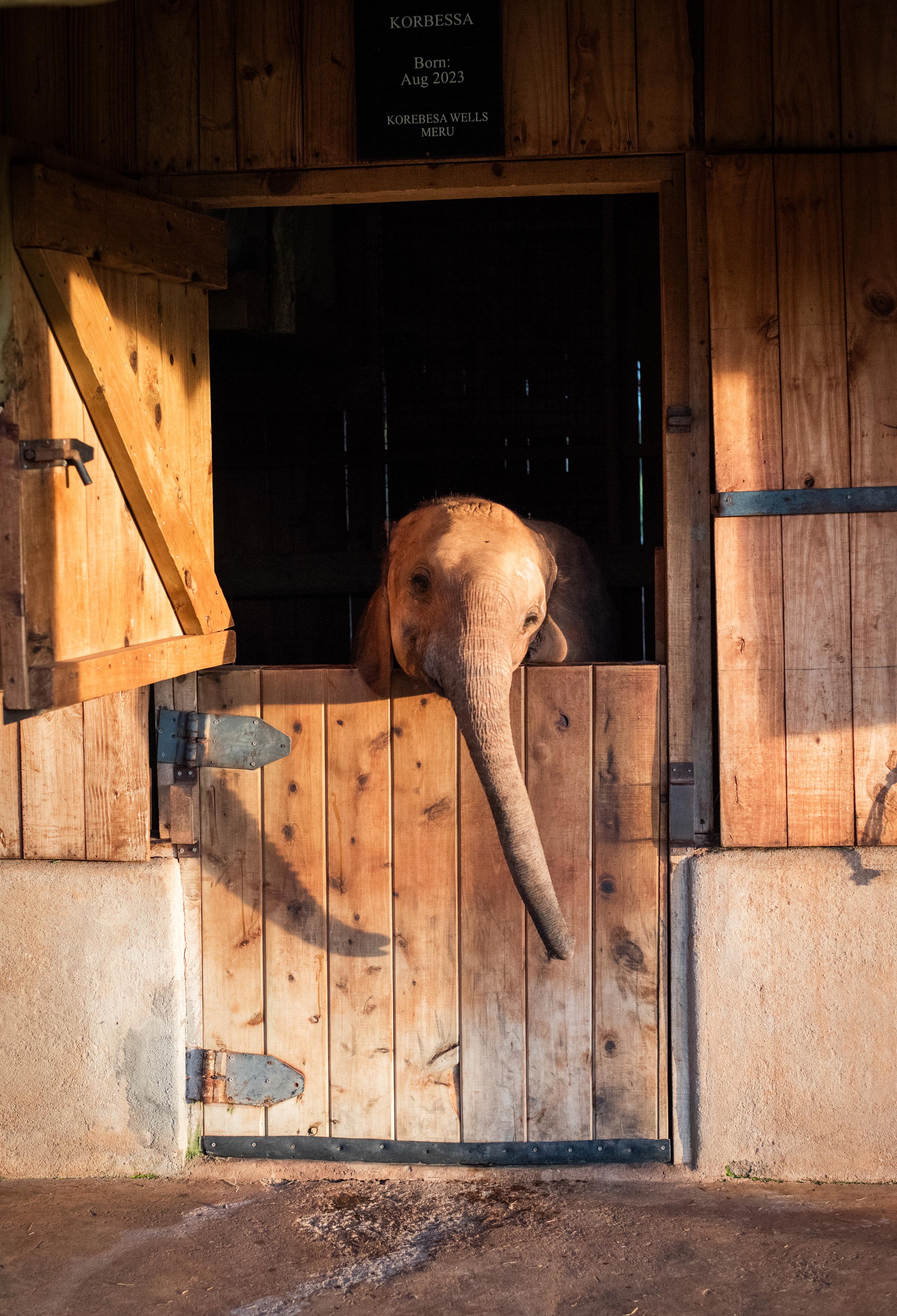
In January, we introduced the idea of a stockade. We started by just showing Toto into the room so he could become more comfortable with the space, before retiring to his usual stable for the night. During the first such introduction, Toto hesitated outside the gate and refused to walk inside. Meanwhile, Korbessa, who had invited herself on the excursion, invited herself inside without a moment’s hesitation.
Korbessa is as canny as she is fearless. One February afternoon, she saw her ‘big brother’, Toto, hard at work uprooting a tasty looking plant. Realising he would not give it up willingly, she devised a clever plan: The stout girl reclined atop the shrub in her signature frog squat, trying to hide it from Toto‘s view. When this didn’t work, she allowed him to continue uprooting it — until it was just loose enough for her to surreptitiously pop it into her own mouth.
Whereas Korbessa plans and plots to achieve her ends, Natibu is more straightforward. He eschews any clever machinations and simply helps himself. This is perfectly in keeping with Natibu’s rather undiplomatic character. For instance, in February, he cottoned onto the fact that Chamboi retires early. Sensing an opportunity, he strolled over to the black rhino’s bedroom, reached his trunk over the stable door, and brazenly started cherry picking the tastiest snacks. Chamboi, who was lying down in the opposite corner, watched him without protest — but when a Keeper came over, the rhino emitted a series of squeaks, as if to say, ‘Can you believe this?!’
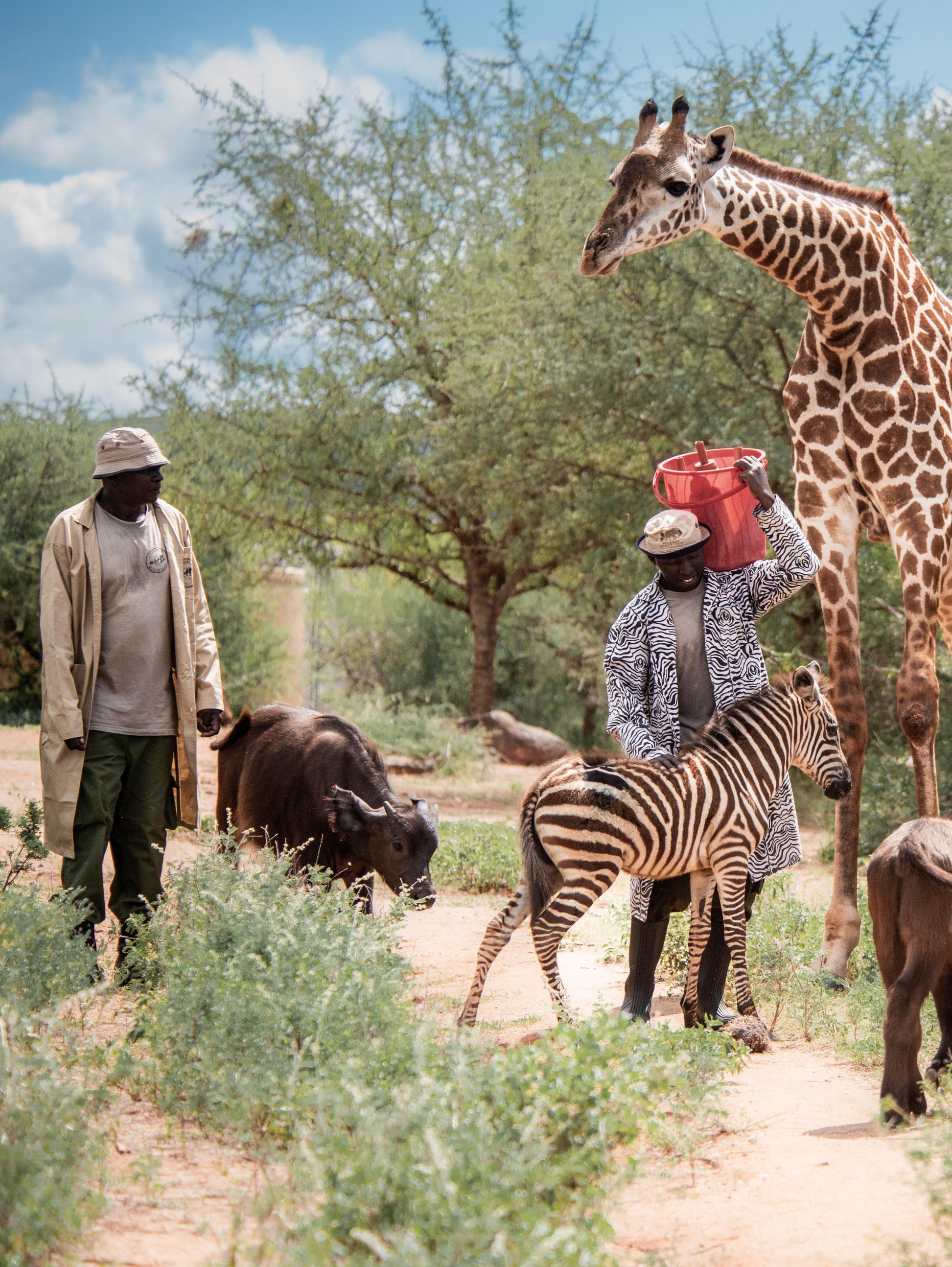
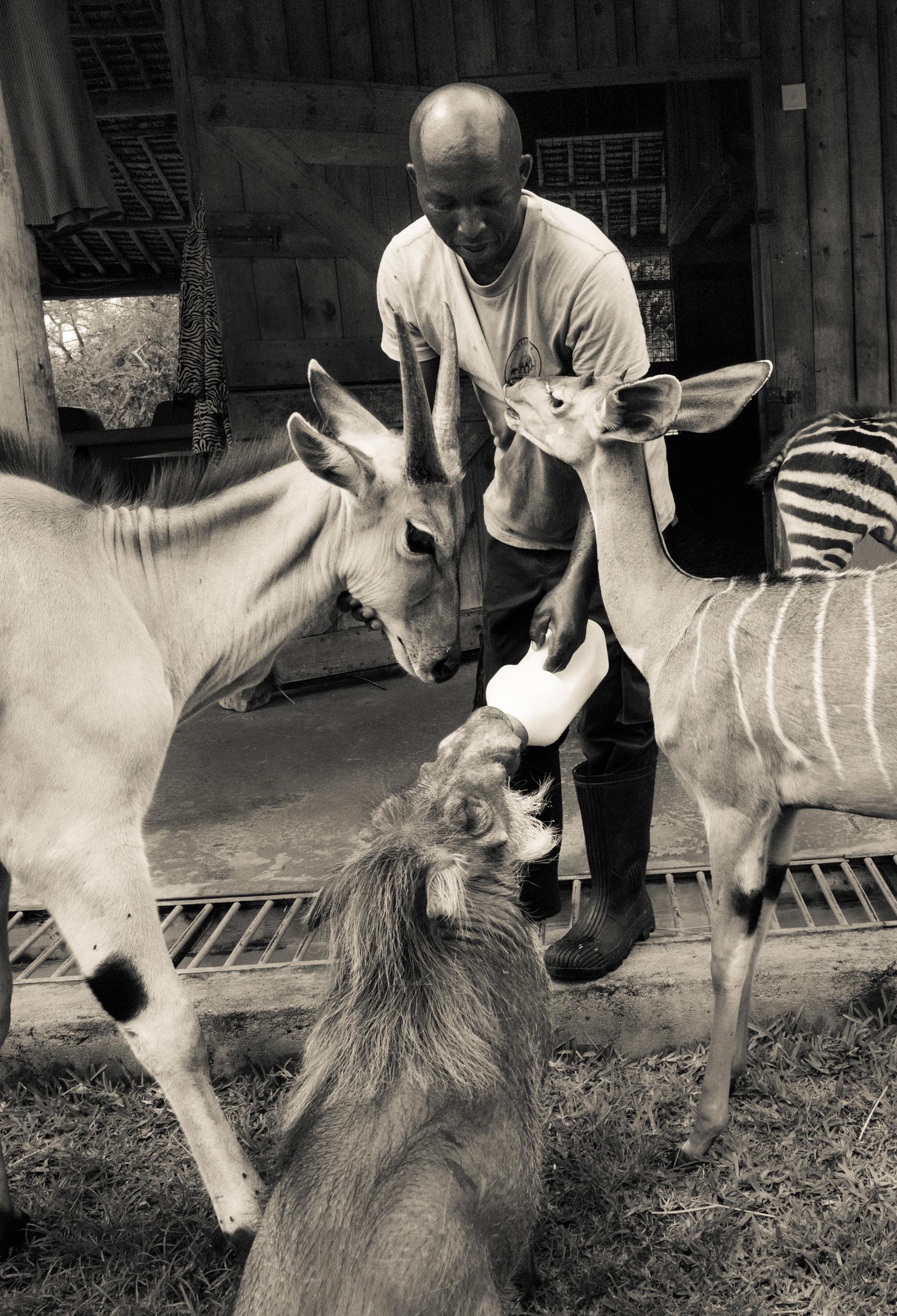
March brought two new members to our eclectic orphan herd. First came Bombi, a tiny orphaned zebra whose mother was killed by lions and who had narrowly escaped their clutches herself. It had been quite awhile since we had had a zebra at Kaluku, and Bombi’s arrival generated great interest amongst the other orphans — particularly Twiggy the giraffe and Mr Bean the warthog.
Fortunately, Bombi healed well from the outset. She immediately bonded with her Keepers, who donned a distinctive zebra-striped coat when on Bombi duty. Zebras are visual creatures and foals imprint on their mother’s striped pattern. The uniform allowed Bombi to imprint on her Keepers as nature intended, without becoming overly attached to any one individual.
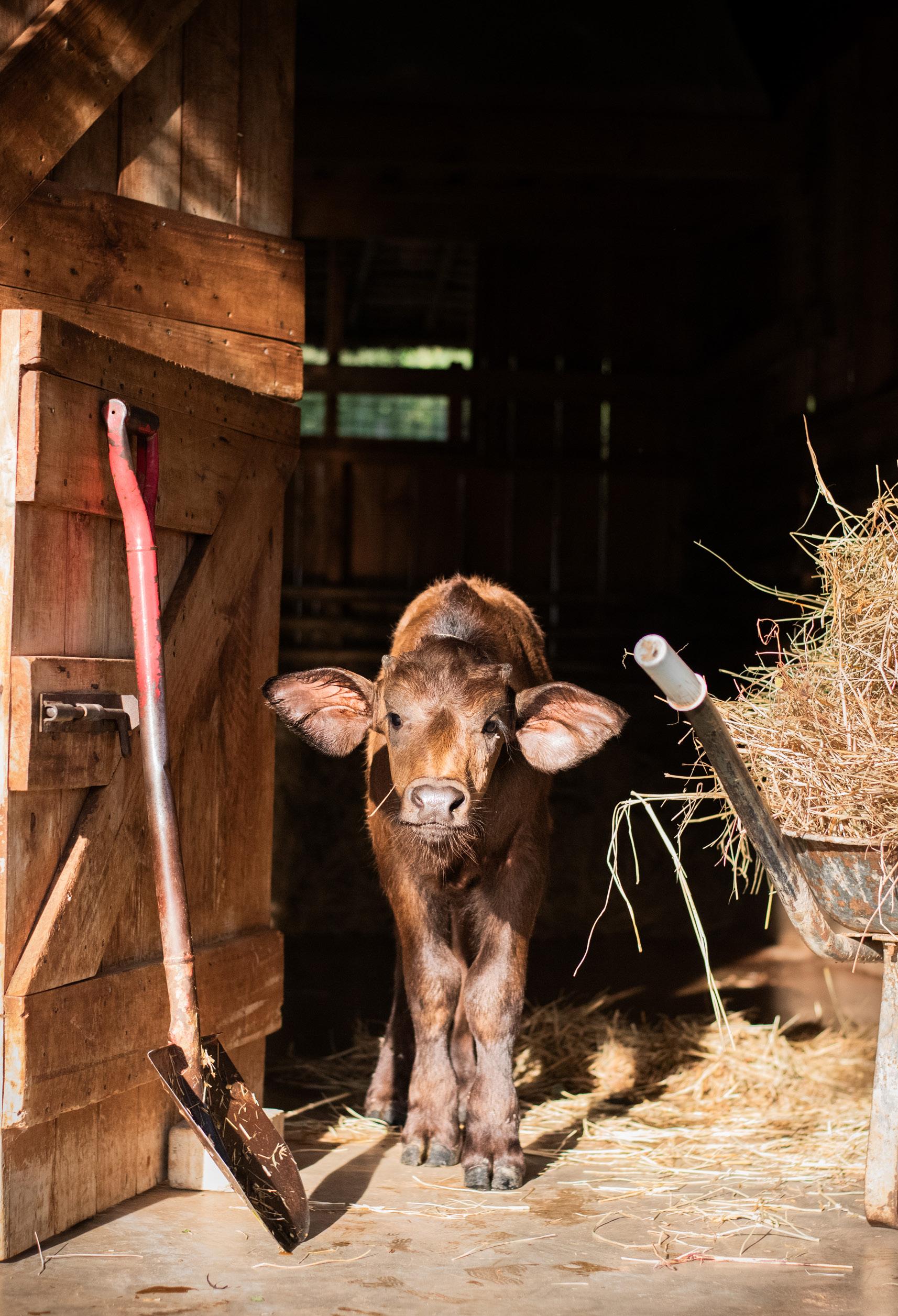
Later in the month, our SWT/KWS Mount Kenya Mobile Vet Unit rescued an hours-old orphaned buffalo. At such a young age, the little calf was highly vulnerable to predators and needed specialised care if he was to survive. Little Gruff, as we named him, was flown to Kaluku and settled right into his new home. He found a ‘big sister’ in Bibi, a fellow orphaned buffalo.
But it was Twiggy the giraffe who took the keenest interest. Whether she’s playing mother hen or just being downright nosey, Twiggy has always liked to keep an eye on all the other orphans. She was first in line to greet little Gruff, reaching her long neck down to meet the tiny buffalo at eye level.
April was a month of room changes for our Kaluku herd. Our biggest stable babies — Toto, Korbessa, and Chamboi — were quite literally outgrowing their bedrooms, and the time had come for them to move up to bigger accommodation.
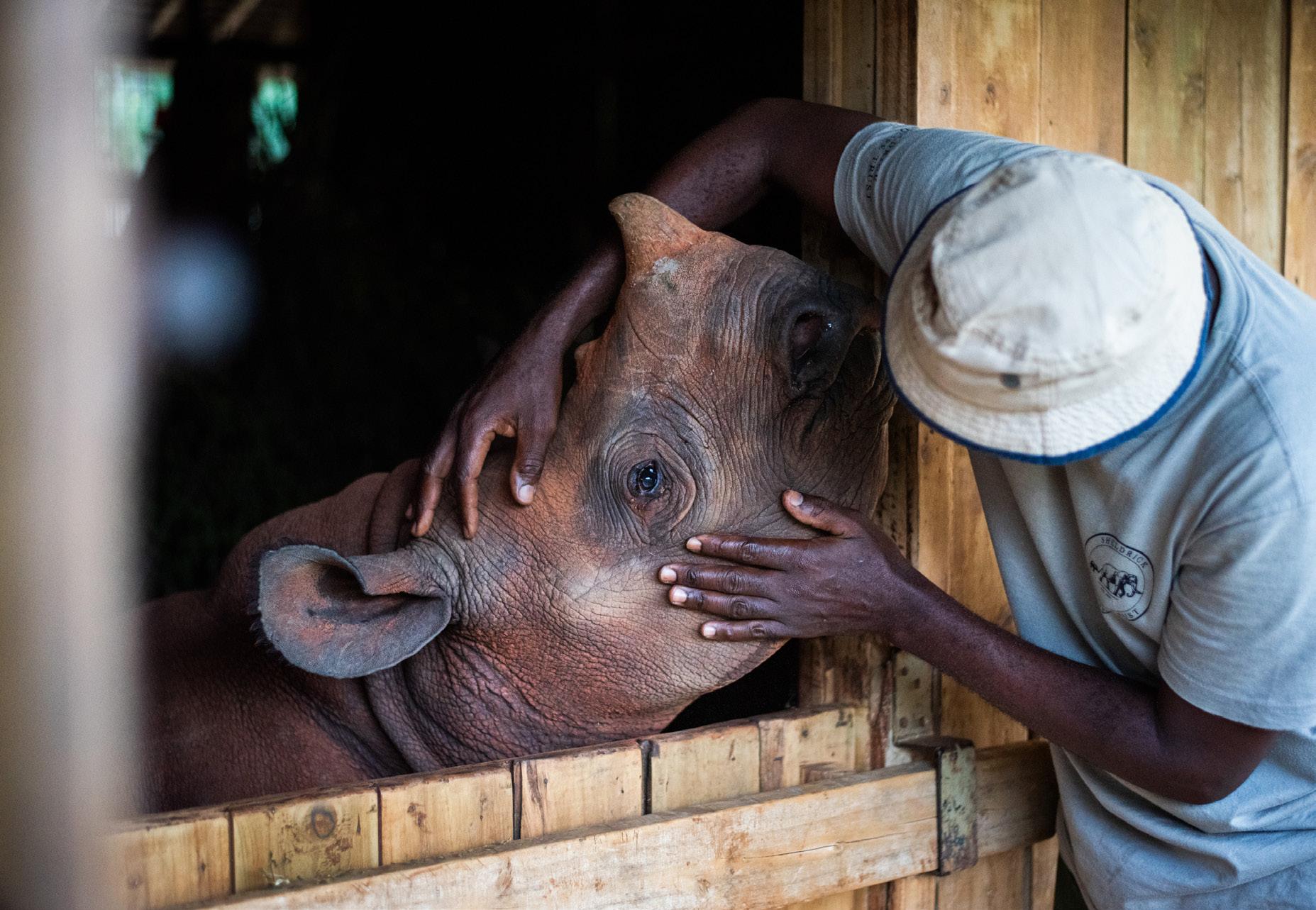
Rhinos are notoriously reluctant to embrace change, so we had to tread gently with Chamboi’s move. He’s not yet big enough for a stockade, but his baby stable had become far too small — although we suspect he would have happily stayed there until he was a fully grown rhino, bursting through every beam and board. We settled on a compromise: a duplex stable that offers double the space, while still giving Chamboi the cosy environment he is so attached to. Because rhinos are creatures of habit, we stocked it with familiar scents to make him feel at home,
including dung piles and his Keeper’s jacket. Chamboi was very out of sorts the first few nights in his new stable, but by the end of the week, he had embraced it as his new territory. Dare we say he even seemed to be relishing the extra space!
However, Chamboi was a breeze compared to Toto. He was more than ready to graduate to a big boy stockade — yet, like Chamboi, he would have continued squeezing into his little stable even as a full-grown bull, if given the opportunity. Knowing what we were up against, we began the transition gradually, giving Toto and Korbessa their evening milk feeds inside the stockade, before ushering them back to their familiar stables. It took some coaxing, but Toto soon embraced the stockade as his dining room. After several weeks of this, we decided that the pair were finally ready to accept their new bedrooms. (Well, Toto was ready — Korbessa had been ready from day one!)
The transition went without a hitch: Just like their stable days, Toto and Korbessa remained neighbours — Korbessa got the middle room, between Twiggy and Toto. She was very happy to be in the thick of things and spent the night rotating between stealing greens from Twiggy and leaning against Toto’s side, watching her big brother sleep and snack.
In May, Twiggy really gave us the runaround. One evening, when it was time to come home, she suddenly pulled a disappearing act. Keepers fanned out in all directions looking for her, but the giraffe was nowhere to be found. Eventually, our pilot joined the search party — and only after several circles round did he find her lurking up by the airstrip. There was a male giraffe in the area, and we wondered if she was trying to follow him. Signs that Twiggy was growing up!
On 26 May, we rescued a tiny orphan from the Mara. All neonate orphans are complex, but Kaikai was particularly challenging. Her mother died of natural causes when she was just a few days old, and the ordeal left her very traumatised. Confused and missing her mother, she spent her first nights at Kaluku pacing her stable and crying. We assigned two of our most experienced Keepers to her care, and as the days and weeks unfolded, Kaikai started to heal from her emotional trauma. It was really lovely to witness her transformation.
Come August, the dry season started to peak — and Mr Bean, our resident warthog, made a plan. He discovered that a specific tent by the stockades is an excellent source of shade. As midday approached, he would wedge between the outside of the tent and the tentpole and
proceed to nap for several hours, only moving at two o'clock when the sun's angle changed and removed the shade. Keeper Peter would bring him a bowl of milk for lunch, which he enjoyed from his reclined position.
In August, we rescued a little orphaned hippo, whom we named Musumbi. He settled right into Kaluku life, making the baby hippo-sized pond and sandy beach his domain. Although he does not socialise with the other orphans, he loves his Keepers — almost as much as he loves watermelon, his favourite snack.
September marked Mwinzi’s third rescueversary. The gaunt, left-for-dead calf we rescued in 2022 has blossomed into a calm, cool, and collected character. As is typical of Amboseli elephants, we suspect that Mwinzi will grow into a very impressive bull. While he is unusually large and burly for his age, he remains as gentle and polite as ever. Mwinzi is a notably independent elephant who cherishes his alone time. He often retreats to the bushes, enjoying a private feast for hours on end.
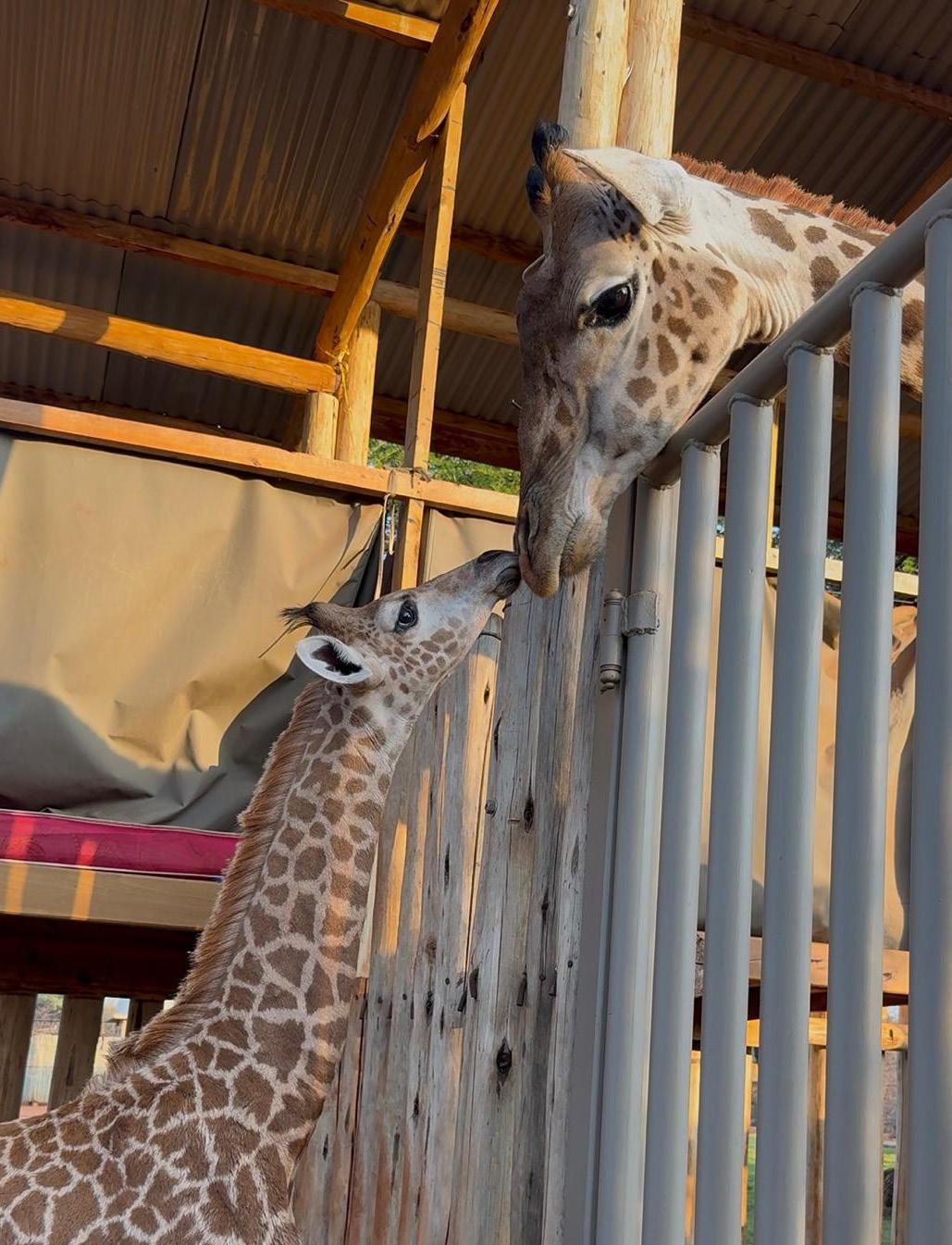
On 5 September, a young orphaned giraffe was reported near Kaluku. She was small, hungry, alone, and very vulnerable to predators. After a truly herculean rescue effort, we managed to capture her and bring her to safety. Pips, as we named her, was clearly relieved to be rescued and embraced her Keepers from the outset. The Keepers coined an adorable nickname for her — Pipsi. She knows her name and responds to it.
We thought that Twiggy would welcome a little sister stabled next door, but she proved to be quite indifferent to Pips. Giraffes aren't known as the most nurturing mothers, so this behaviour wasn’t wholly surprising. Truth be told, Twiggy’s mind was on other things: There were lots of wild giraffes in the area, and Twiggy seemed to be taking great interest in them.
In late September, orphaned ostriches Bam and Boozle reclaimed their place in the wild. They were fully grown and showing signs that they were ready to spread their proverbial wings, so this next step felt perfectly timely. We miss our resident ostriches, but feel sure they will thrive in their wild lives.
November was a very big month for our lovely Twiggy — a whirlwind romance with a wild giraffe culminated in an extended honeymoon. The timing was auspicious: She was whisked away almost four years to the day after she came into our life.
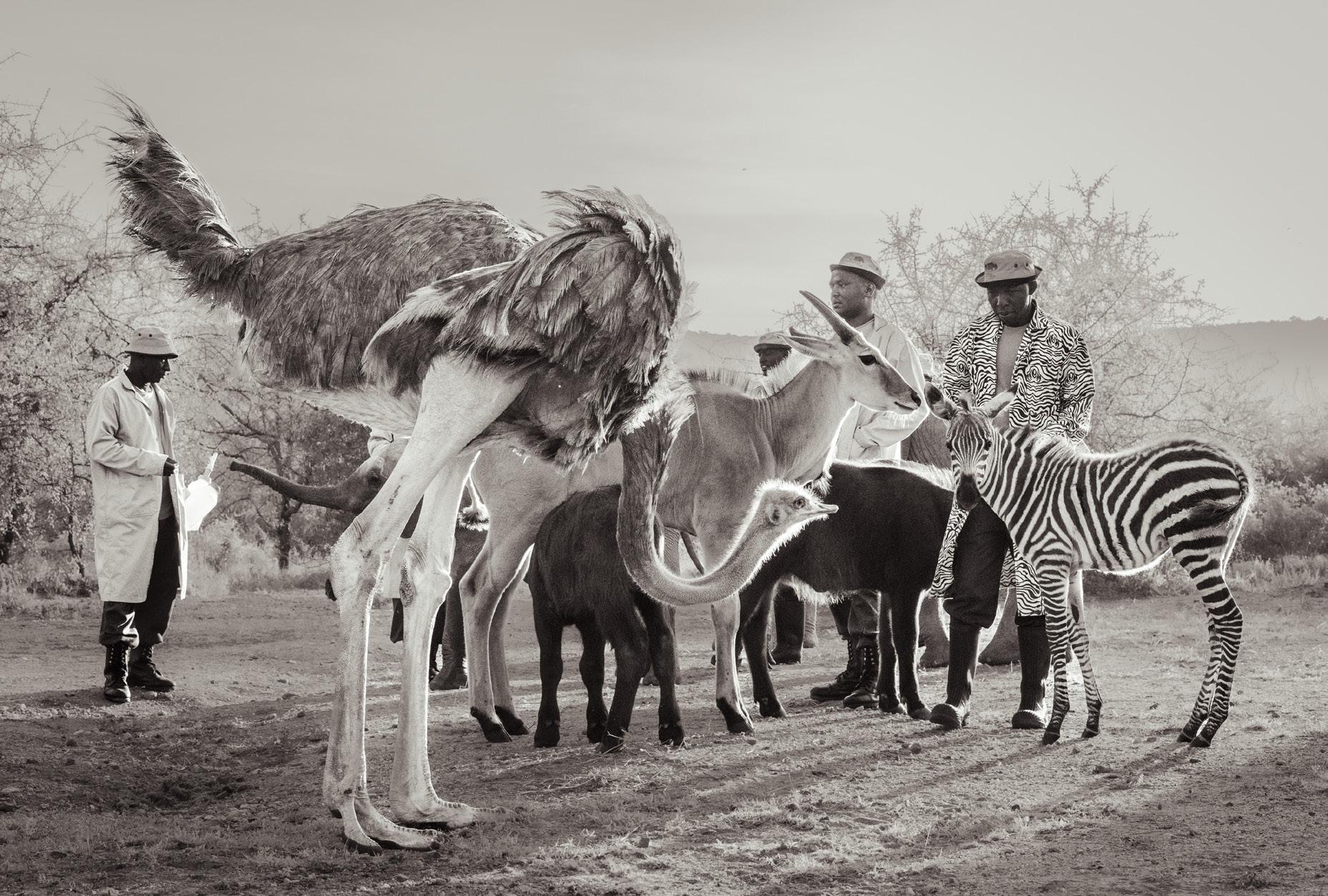
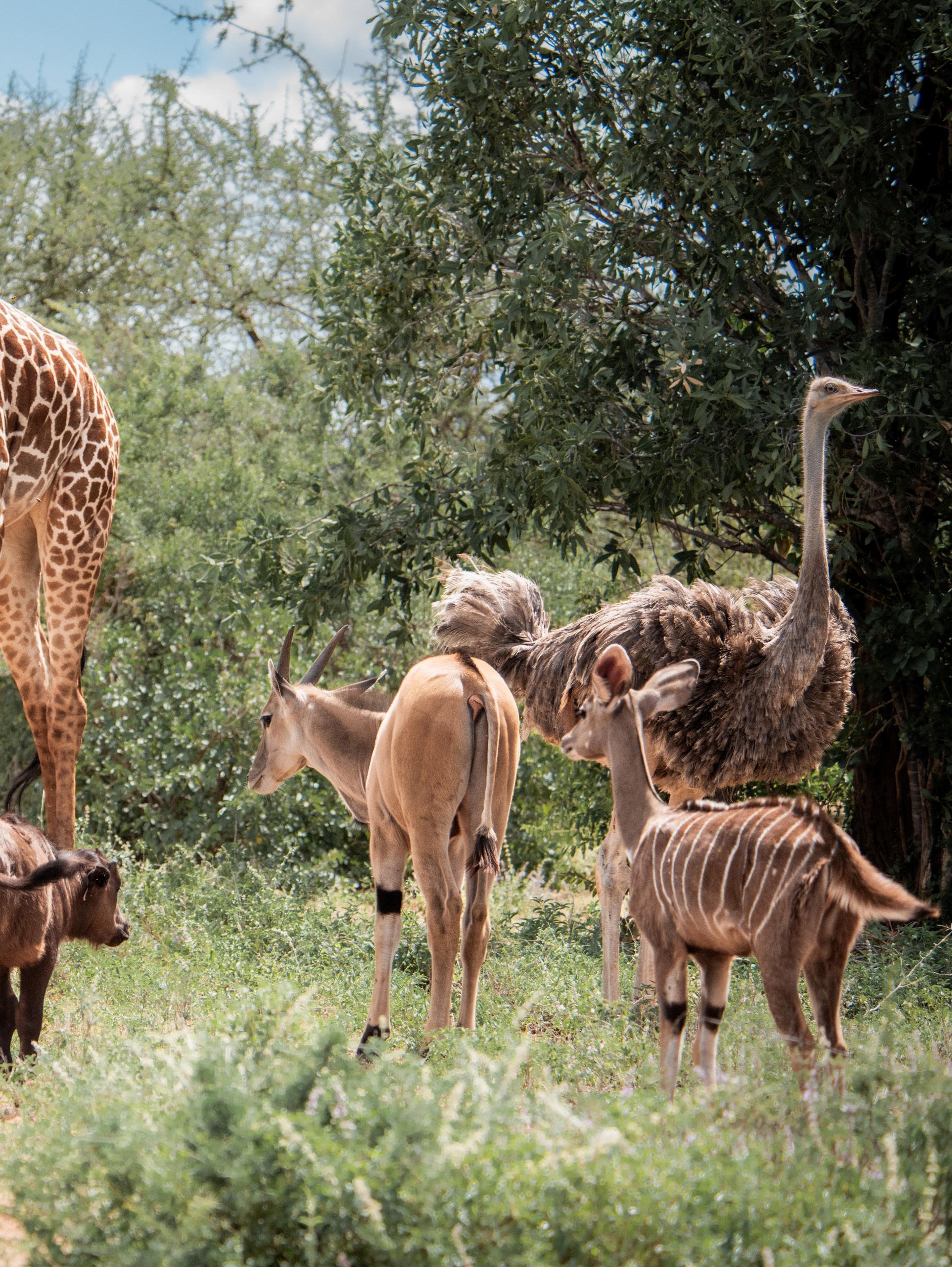
Twiggy has been such a special figure in our Kaluku family. Gentle and generous, she is everyone's favourite nanny. Animals big and small gravitate towards Twiggy — she can usually be found with an odd assortment of orphans, from warthogs to kudus to buffalos to zebras, trailing her like a very tall Mother Goose. Last year, a wild dik-dik even chose to give birth in her stockade, leaving her teeny tiny baby in the giraffe's care until she was strong enough to venture out.
While she was once a clinging vine, Twiggy recently started venturing further into the bush, sometimes disappearing for hours at a time. Finally, a handsome bull whisked her away on an extended ‘honeymoon.’ No doubt she will return to Kaluku in time — perhaps bringing her own baby into the fold.
Pips, Kaluku’s little giraffe, doesn't seem to mind being the sole giraffe — she has her best friend, Bombi the zebra, to keep her company! The girls have become fast friends and spend most of the day together. They are an unlikely pair but perfectly suited.
On the topic of significant sightings: In November, we had several run-ins with the missing 'Ithumba Six!' As you may remember, Kitiak, Ahmed, Tingai, Taabu, Elerai, and Rafiki graduated from the Nursery to Ithumba in late 2023. Just days after they arrived, a kudu frightened the orphans and sent them running. A multi-day, ground and aerial search ensued, but they had completely evaporated.
We have had several confirmed sightings of Kitiak around Kaluku, who has long tusks for his age and a distinctive scar. He seems to have joined a small herd — a herd that we now suspect includes some (or all) of the rest of the Ithumba Six. The herd contains an unusual number of junior elephants who are around the age of our truants, and they could not possibly all be the offspring of the herd mothers. It is a very happy, healthy little group, and we feel sure that it includes our orphans.
November marked six months since Kaikai’s rescue. She is incredibly intelligent and a real princess, just like Korbessa. In fact, Keeper Joseph had a remarkable moment with Kaikai in November. They were walking towards Hippo Beach, as they often do, when she suddenly stopped and lifted her tiny trunk in the air, turning her head to and fro. She was warning him that something was ahead. Sure enough, Joseph heard wild elephants moving out of sight. Because of her alert, they
were able to avoid a potentially risky encounter. On 4 November, a neonate orphan was found on her own in the southern plains of Tsavo East National Park. We rescued her and brought her to Kaluku, where Mishak, one of our most experienced Keepers, was assigned to her care. Little Wangala, as we named her, proved to be a characterful little girl, curious and playful. As the year drew to a close, her first tooth popped out, which catapulted us into the challenging teething process.
By the end of December, Kaikai registered a substantial 159.5 kilograms — impressive for such a young elephant! For now, she remains in the neonate stable block, although she started to join the main orphan herd for their daily excursions. True to form, Natibu was a real rogue, while Toto proved to be a very welcoming big brother. This led to some jealousy from Korbessa, who both wanted Kaikai all to herself and was also envious of any outside attention she attracted.
December also marked the culmination of Mr Bean's reintegration journey. Our wily warthog, whom we rescued in 2024, has grown up so much over the last year. With this came increasing independence as he honed his wild instincts. He seemed very fixed on finding a mate, as is typical for a warthog of his age. We have no doubt he will find one now that he is living wild.
Over at Rhino Base, Apollo had a rather sedate December — punctuated by one very memorable incident. Early in the month, a young lioness managed to get inside his boma, no doubt in pursuit of one of the zebras who had taken up residence with Apollo. The fenceline is as lion-proof as possible. While she somehow got inside, she would have had an extremely difficult time getting herself out.
We called the SWT/KWS Tsavo Mobile Vet Unit to the scene. Given that Apollo’s wandering grounds are 50 acres of wild bush, finding her was no small task. After the better part of an hour, Dr Limo was able to locate her and dart the lioness. The team carefully transported her by vehicle to an area her pride frequents.
Apollo, who never misses a beat when it comes to interesting drama, was fixated on the whole affair. With his Keepers by his side, he stood stock still while everything unfolded, watching with no anxiety but great interest.
2025 orphans rescued
CH a P eyu
Gender: Male
Date rescued: 13 February 2025
Reason orphaned: Spear wound in the leg joint
Age at rescue: 7 years old
Rescue location: Tsavo Ecosystem
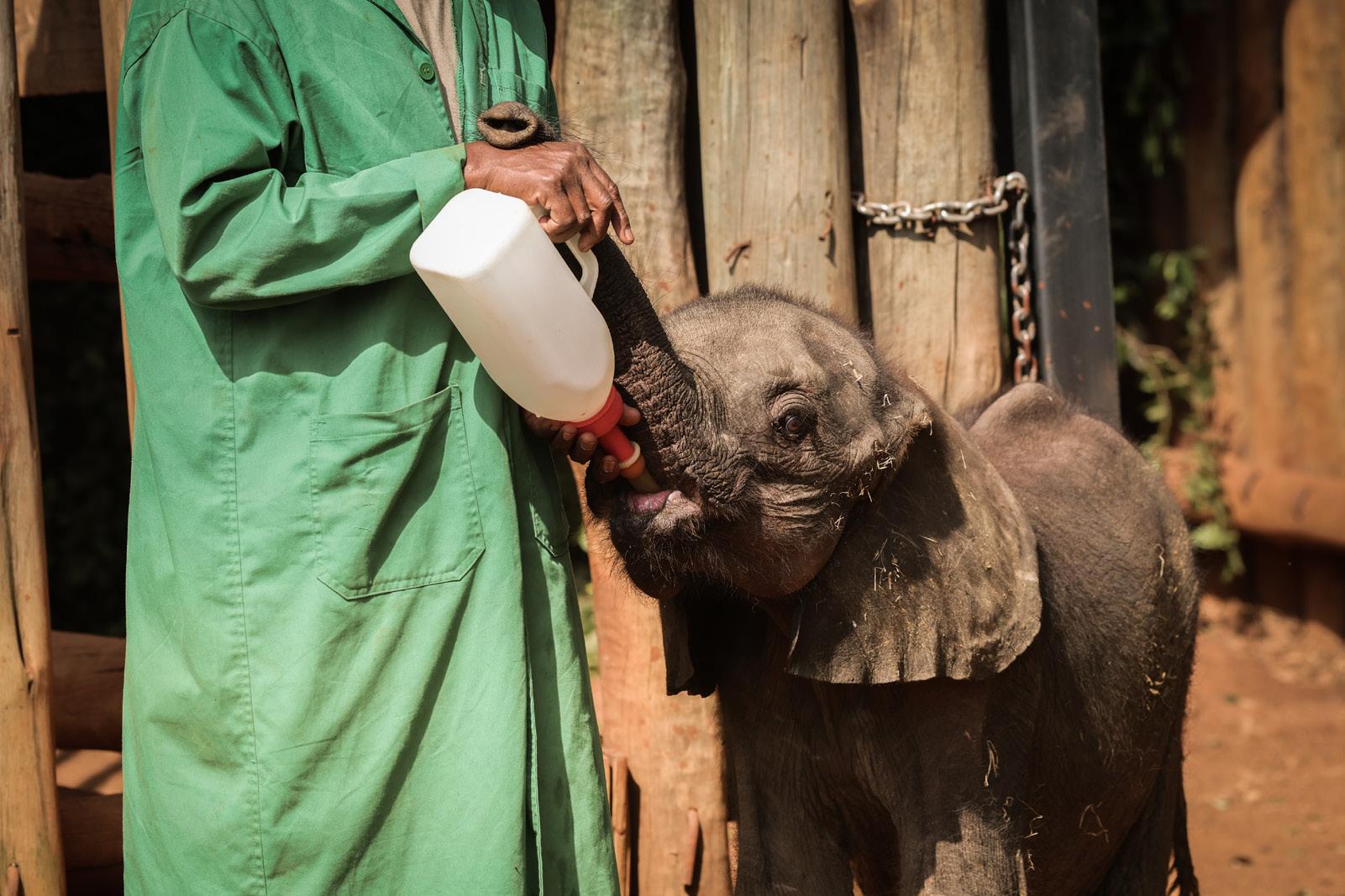
ki P ekee
Gender: Female
Date rescued: 17 June 2025
Reason orphaned: Mother arrowed and died
Age at rescue: 1 month old
Rescue location: Maasai Mara
Kipekee
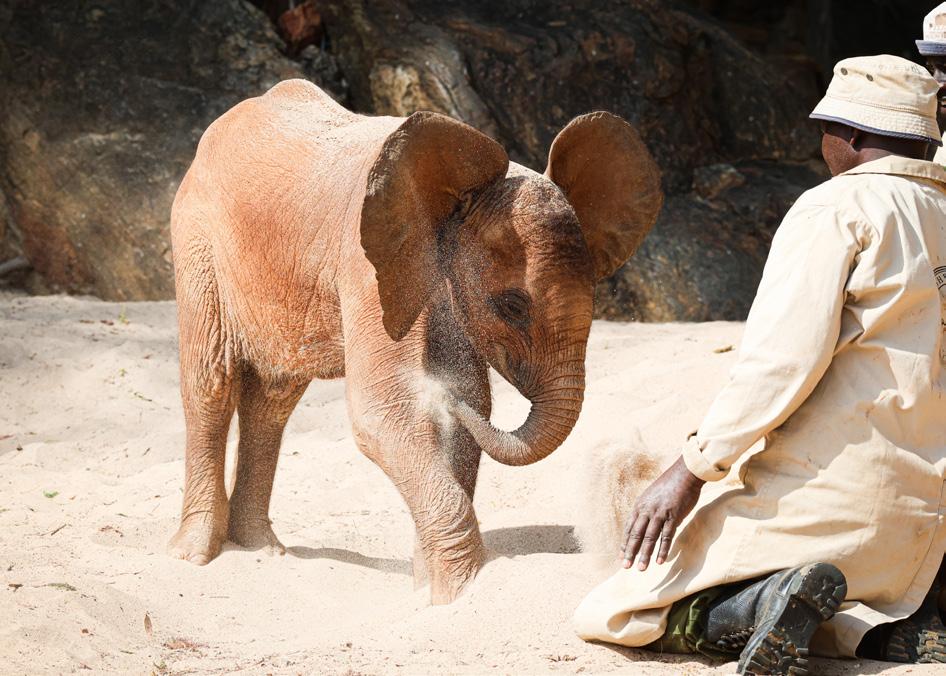
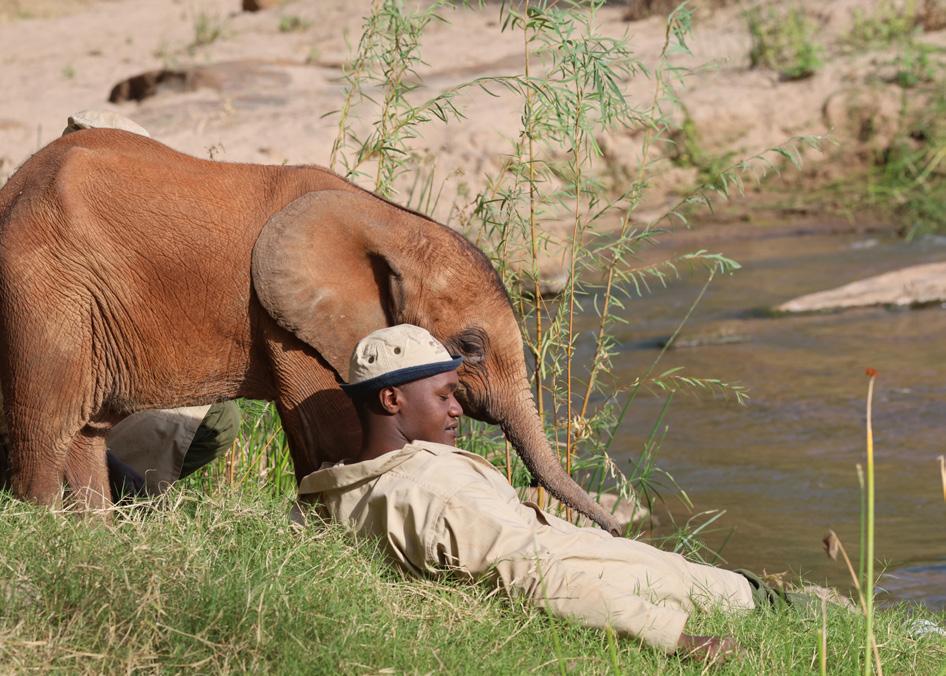
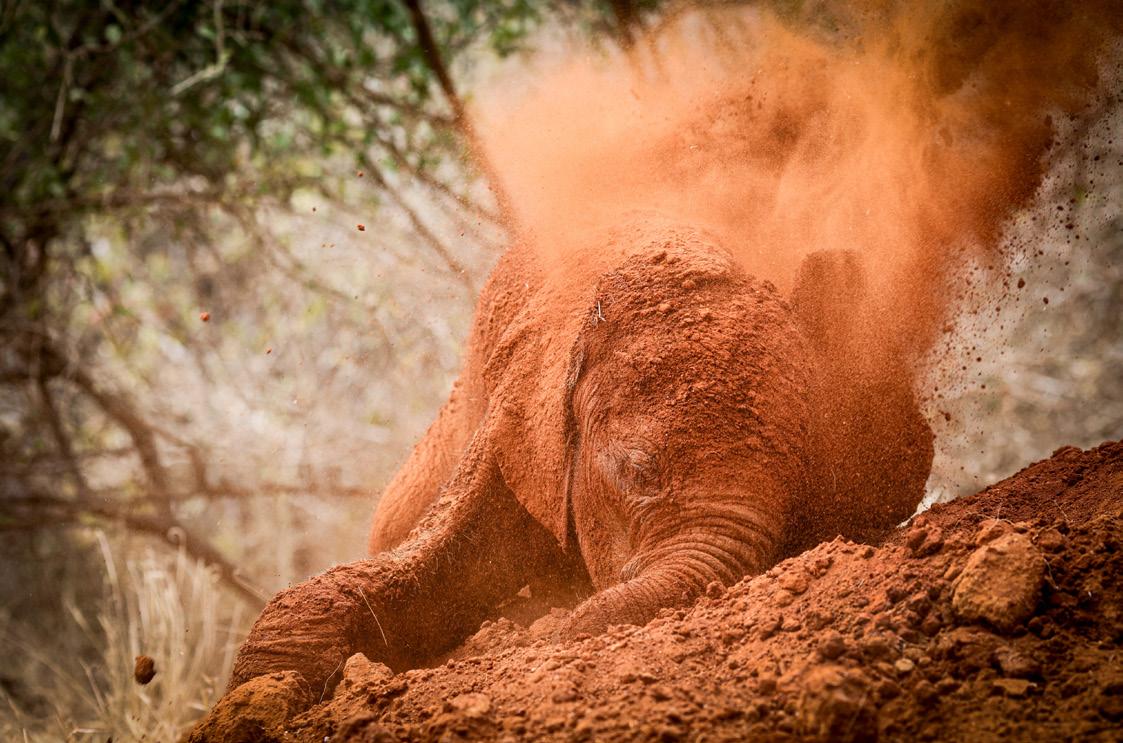
kaikai
Gender: Female
Date rescued: 26 May 2025
Reason orphaned: Mother speared and died
Age at rescue: 1 week old
Rescue location: Maasai Mara
serenge T
Gender: Female
Date rescued: 23 July 2025
Reason orphaned: Bullet wound in the ankle joint
Age at rescue: 2 years old
Rescue location: Tsavo West National Park
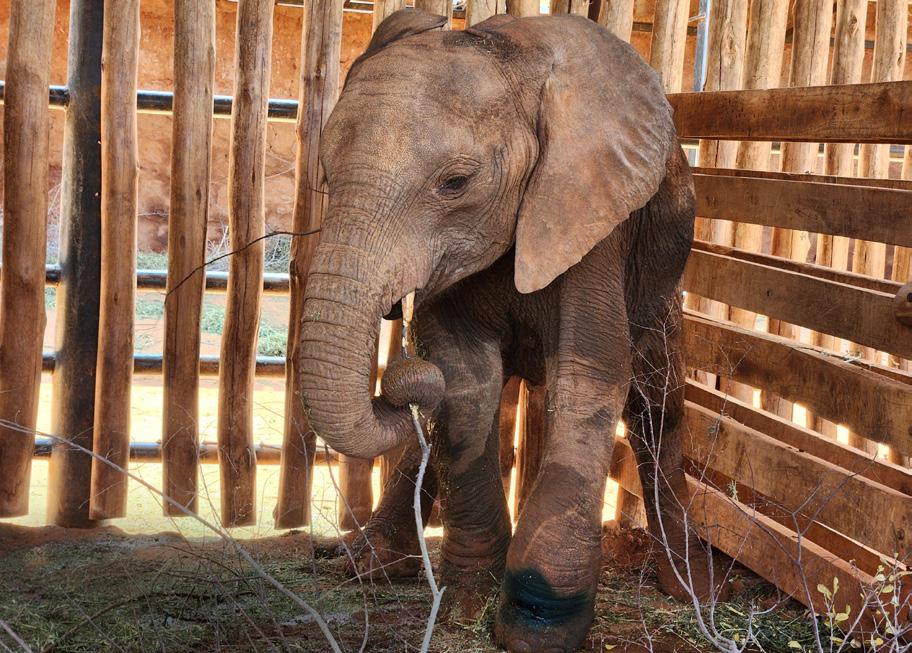
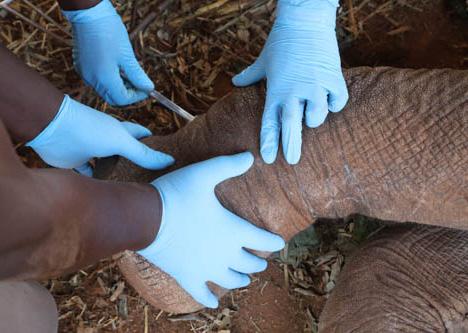
Kaikai
Serenget
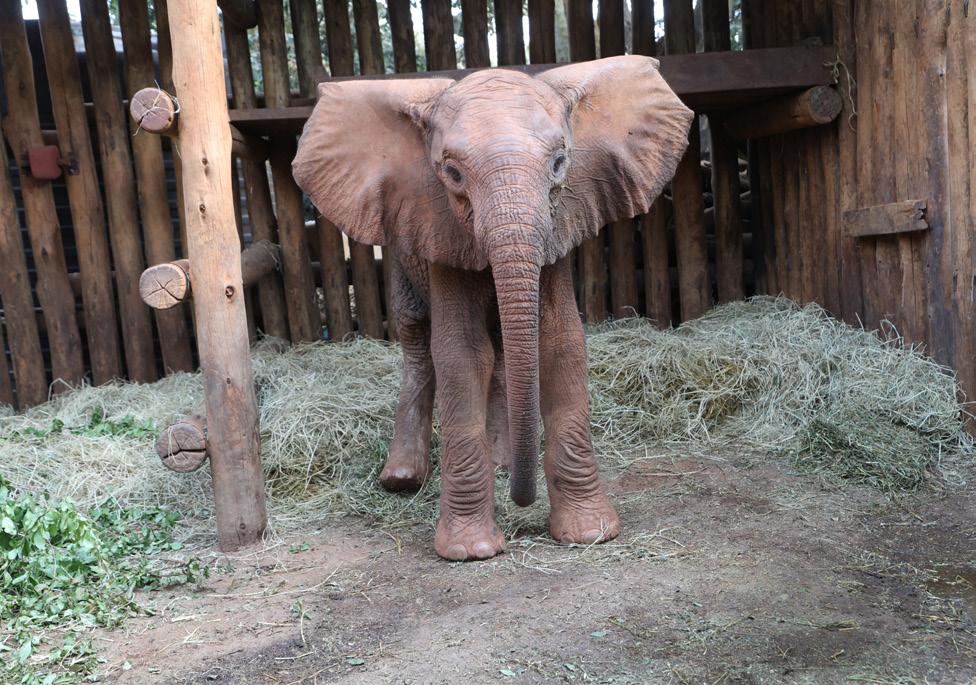
ar TH i
Gender: Male
Date rescued: 3 August 2025
Reason orphaned: Found alone
Age at rescue: 11 months old
Rescue location: Tsavo East National Park
T y T an
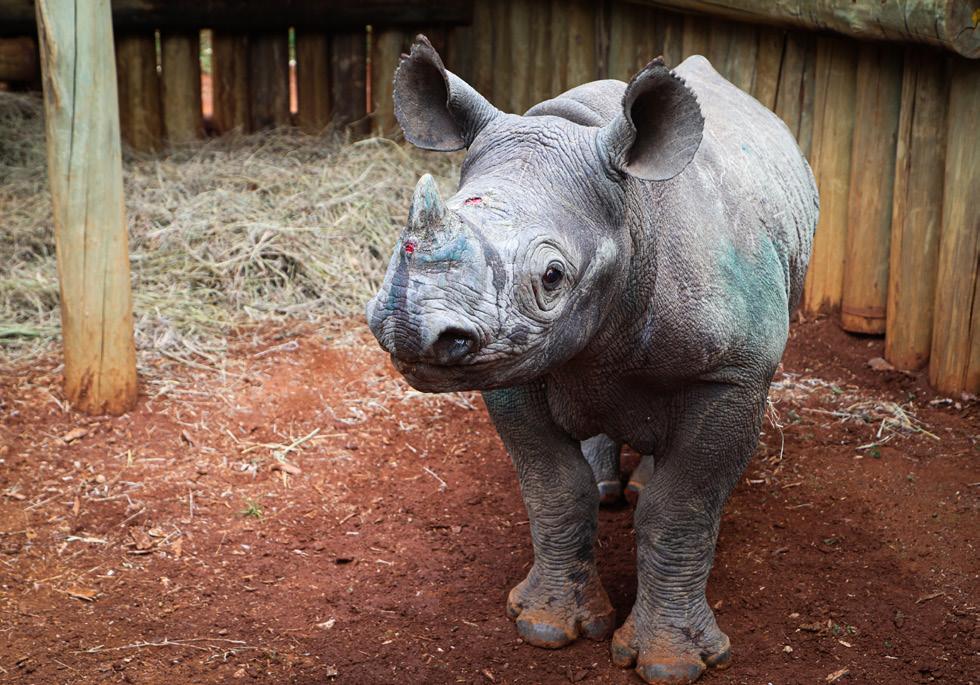
Gender: Male
Date rescued: 9 September 2025
Reason orphaned: Mother fell off a cliff and died
Age at rescue: 7 months old
Rescue location: Borana Ranch, Northern Kenya
Arthi
Tytan
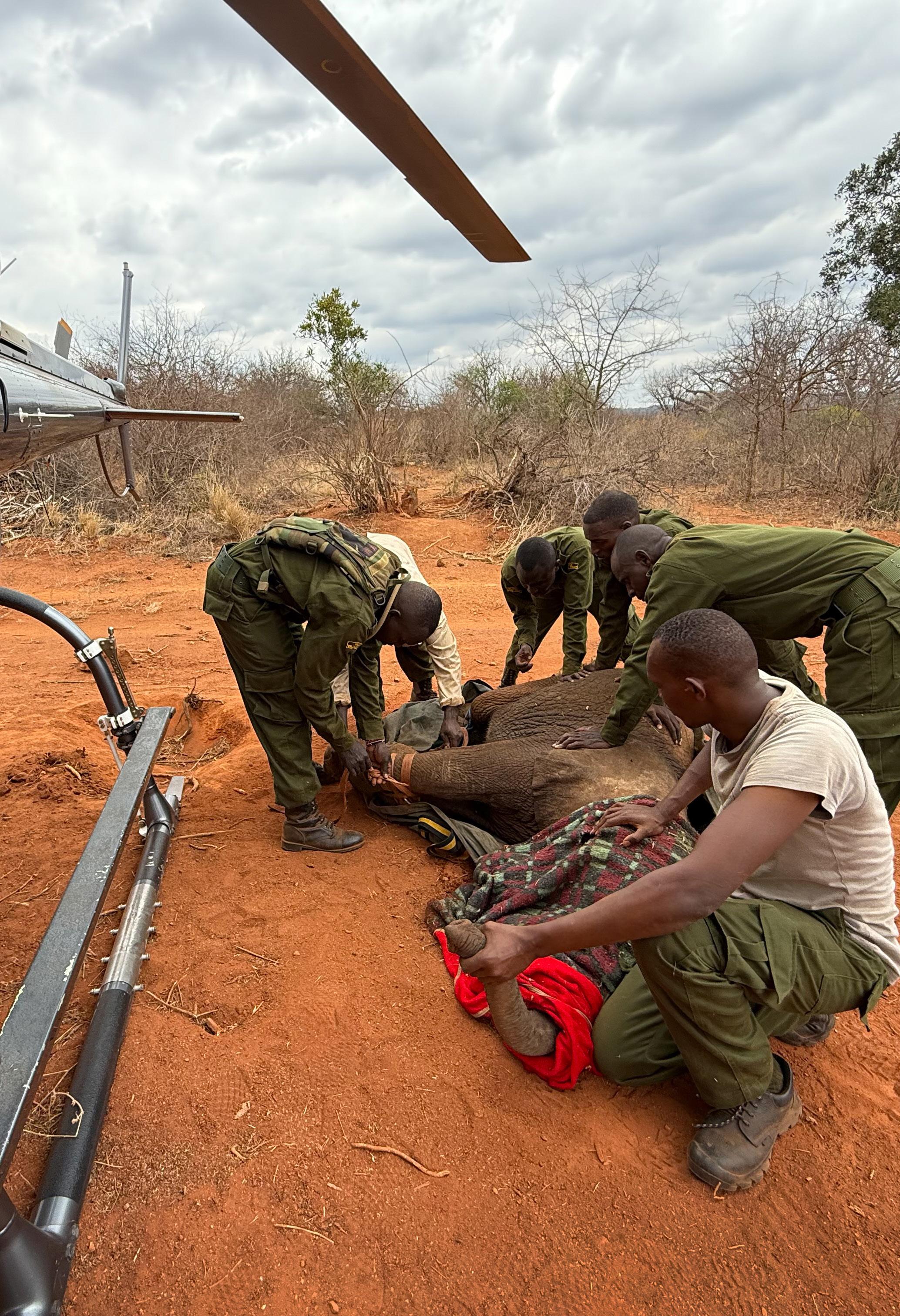
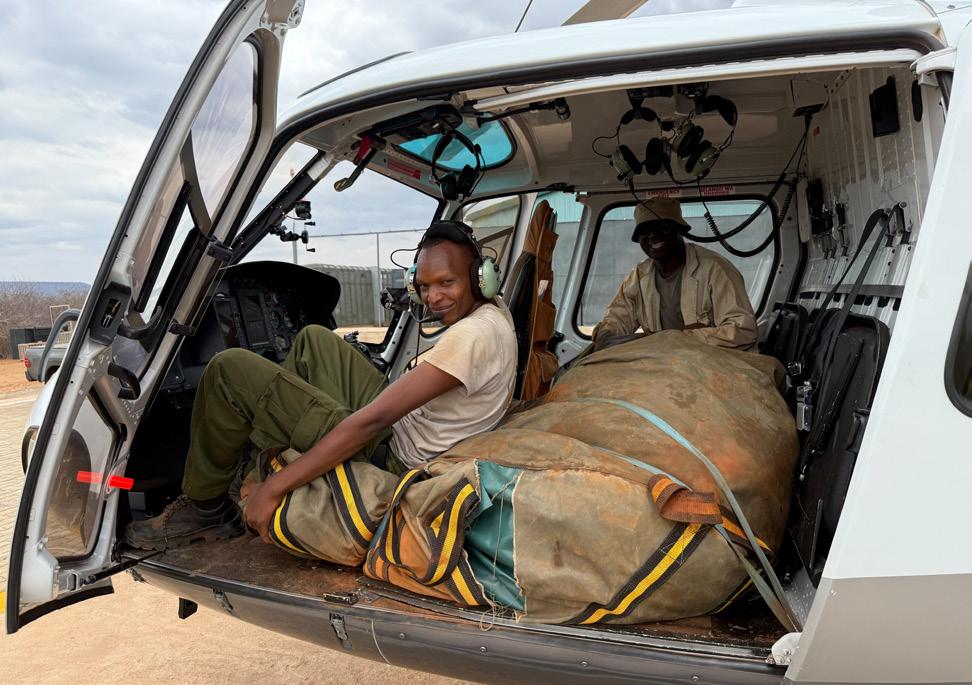
Arthi's rescue
P i P s
Gender: Female
Date rescued: 5 September 2025
Reason orphaned: Mother died
Age at rescue: 2 weeks old
Rescue location: Tsavo Ecosystem
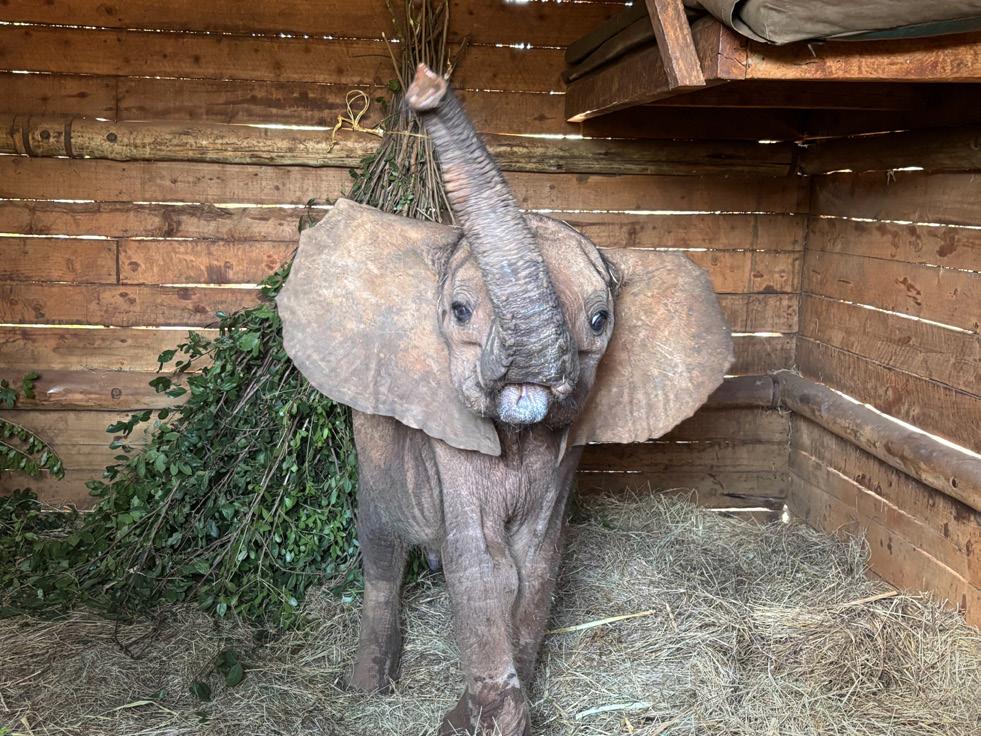
Gender: Male
Date rescued: 30 September 2025
Reason orphaned: Found alone
Age at rescue: 8 months old
Rescue location: Galana Ranch
daba
Daba
Pips
Daba
alia
Gender: Female
Date rescued: 15 October 2025
Reason orphaned: Found alone
Age at rescue: 19 months old
Rescue location: Tsavo Ecosystem
wangala
Gender: Female
Date rescued: 4 November 2025
Reason orphaned: Found alone
Age at rescue: 1 week old
Rescue location: Tsavo East National Park
in memoriam : T ali
Tali was rescued in February 2025. He was weak, emaciated, and had clearly suffered great hardship — we believe he had spent many months alone, trying to survive on his own. Despite everything he had been through, Tali was calm, quiet, and happiest with his Keepers.
We did everything we could to help him heal, but he remained very compromised. In his vulnerable state, an everyday fall had grave consequences. When the vets concluded that he had no chance of recovery, his suffering was humanely ended on 12 July. We find comfort in remembering that Tali’s final chapter was marked by love and support.
Wangala
Alia
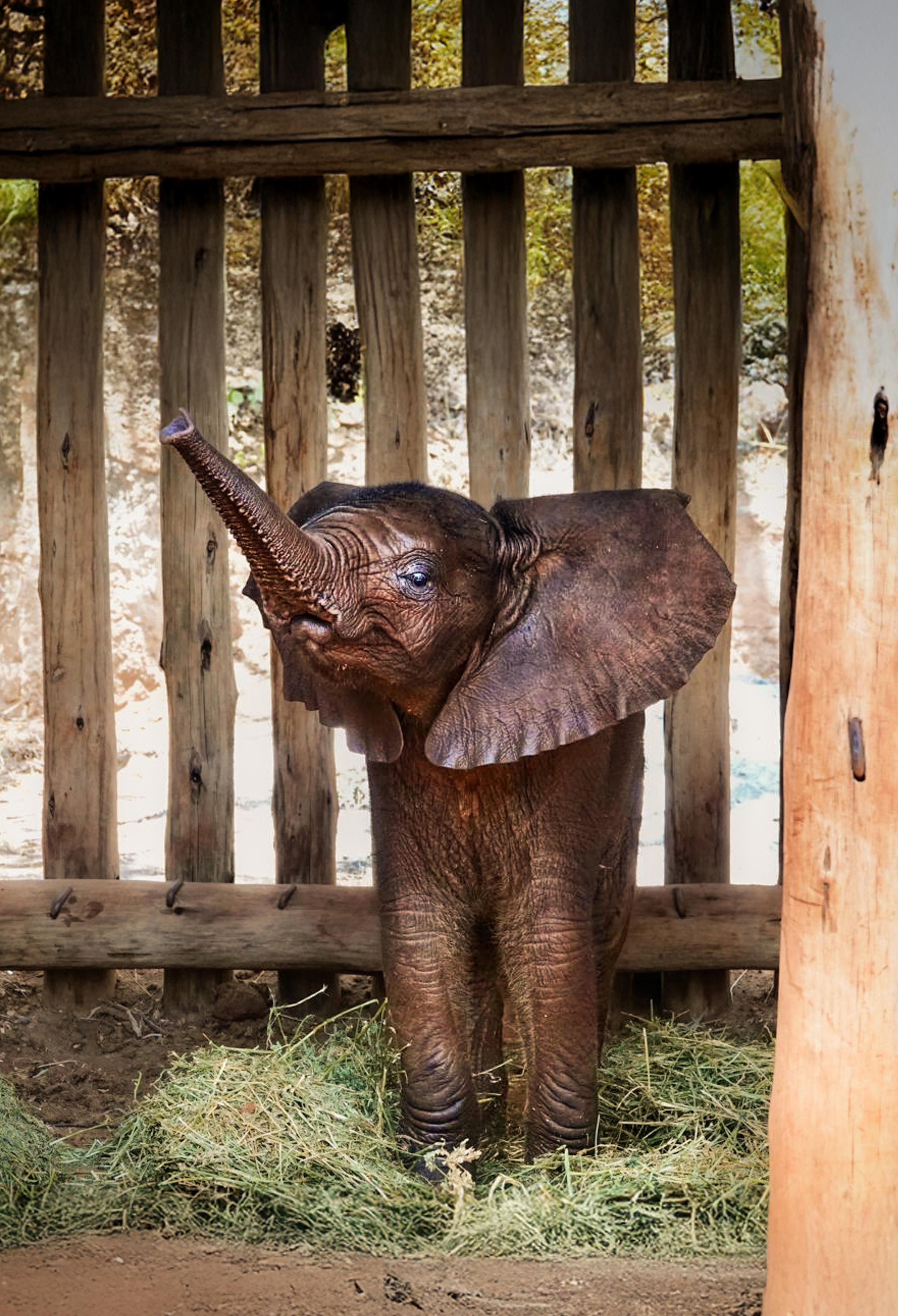
Wangala - Day of rescue
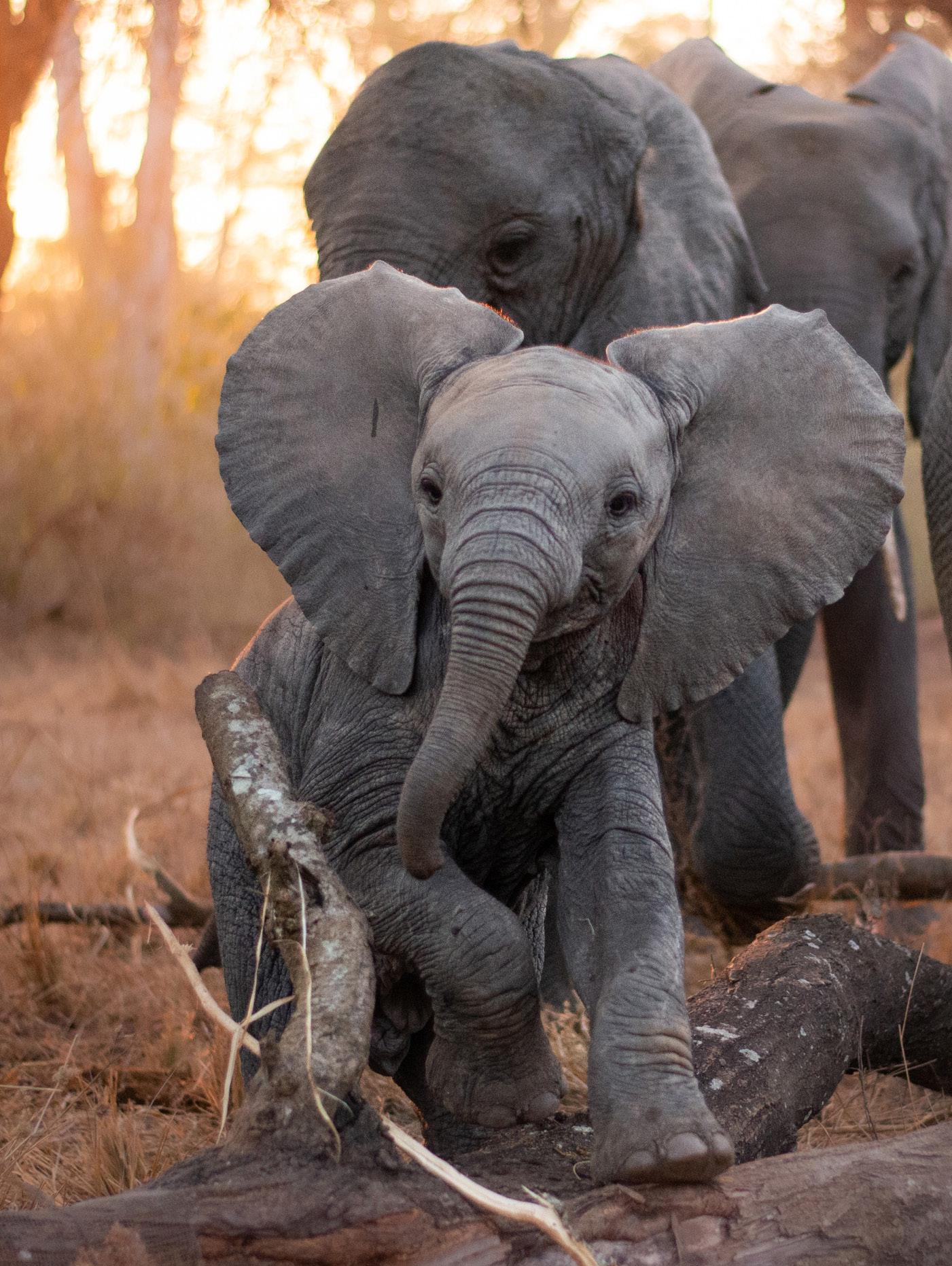
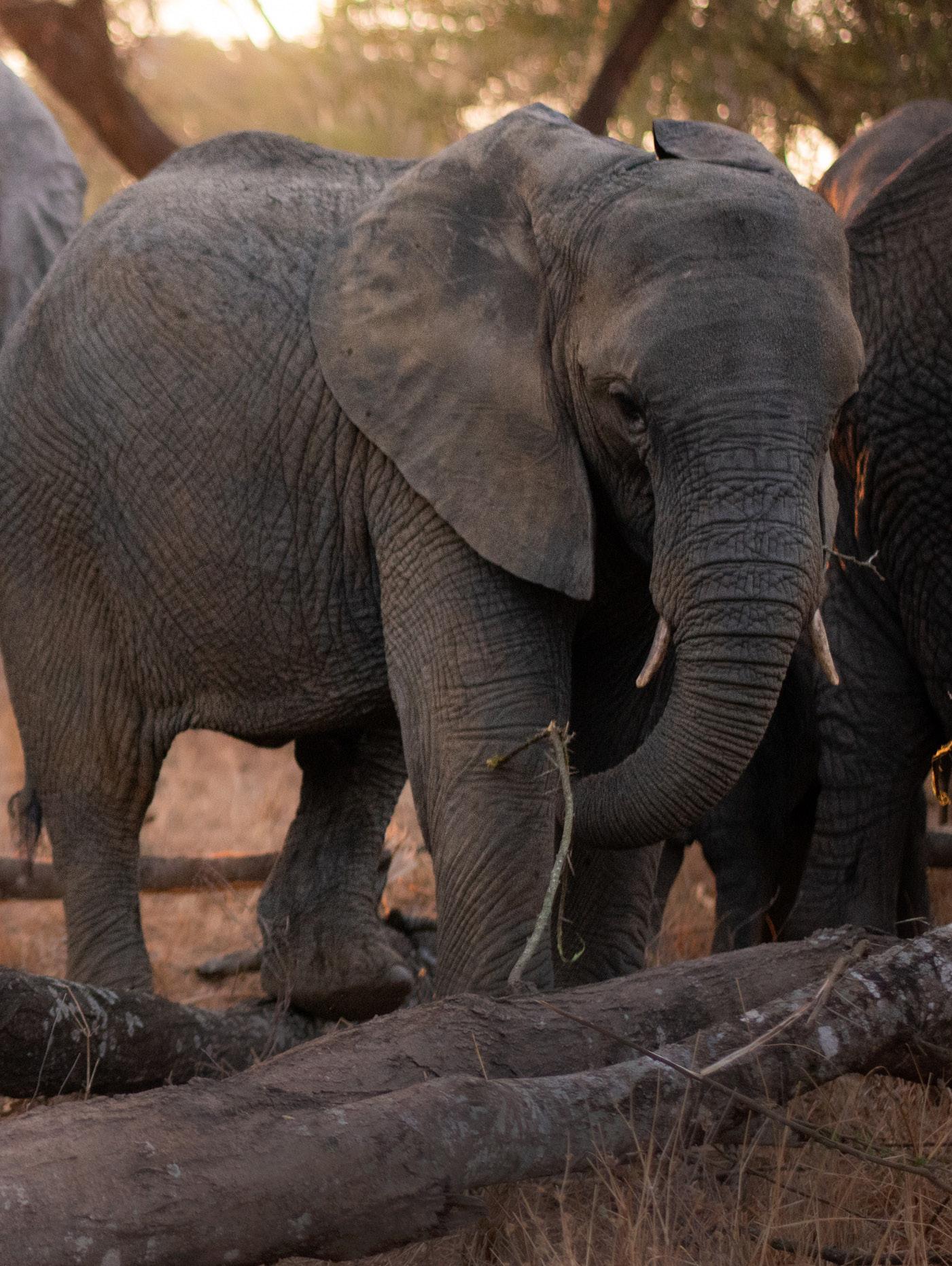
Wild-born babies are the greatest testament to the success of our Orphans'Project.
2025 wild - born babies
91 calves born to orphaned females we rescued, raised, and rewilded, along with several great-grandchildren. The actual number of grandchildren is even higher, considering those we have not been introduced to and the calves sired by our male ex-orphans.
in 2025 we wel C omed 19 new addi T ions T o our ex T ended ele PH an T family :
14 MARCH 2025 sities gives birth to sunni (Male) - Ithumba
29 MARCH 2025 yatta gives birth to yara (Female) - Ithumba
24 APRIL 2025 zongoloni gives birth to zigi (Male) - Umani
29 APRIL 2025 lualeni gives birth to luki (Male) - Ithumba
1 MAY 2025 makireti gives birth to makimaki (Male) - Ithumba
1 MAY 2025 sunyei gives birth to subiri (Female) - Ithumba
1 JULY 2025 kalama gives birth to kapuki (Female) - Ithumba
1 OCTOBER 2025 naserian gives birth to nyika (Female) - Ithumba
27 OCTOBER 2025 kilabasi gives birth to kanika (Female) - Ithumba
6 NOVEMBER 2025 mbirikani gives birth to mica (Male) - Voi
8 NOVEMBER 2025 nasalot gives birth to nala (Female) - Ithumba
12 NOVEMBER 2025 naipoki gives birth to nsimba (Male) - Voi
22 NOVEMBER 2025 mutara gives birth to mango (Male) - Ithumba
1 DECEMBER 2025 kihari gives birth to kiki (Female) - Voi
2 DECEMBER 2025 ithumbah gives birth to iris (Female) - Ithumba
3 DECEMBER 2025 panda gives birth to panya (Female) - Voi
7 DECEMBER 2025 yetu (Yatta's daughter) gives birth to yasmin (Female) - Ithumba
7 DECEMBER 2025 suguta gives birth to sullivan (Male) - Ithumba
14 DECEMBER 2025 makena gives birth to merri (Female) - Ithumba
Very sadly, Makimaki passed away under unknown circumstances.
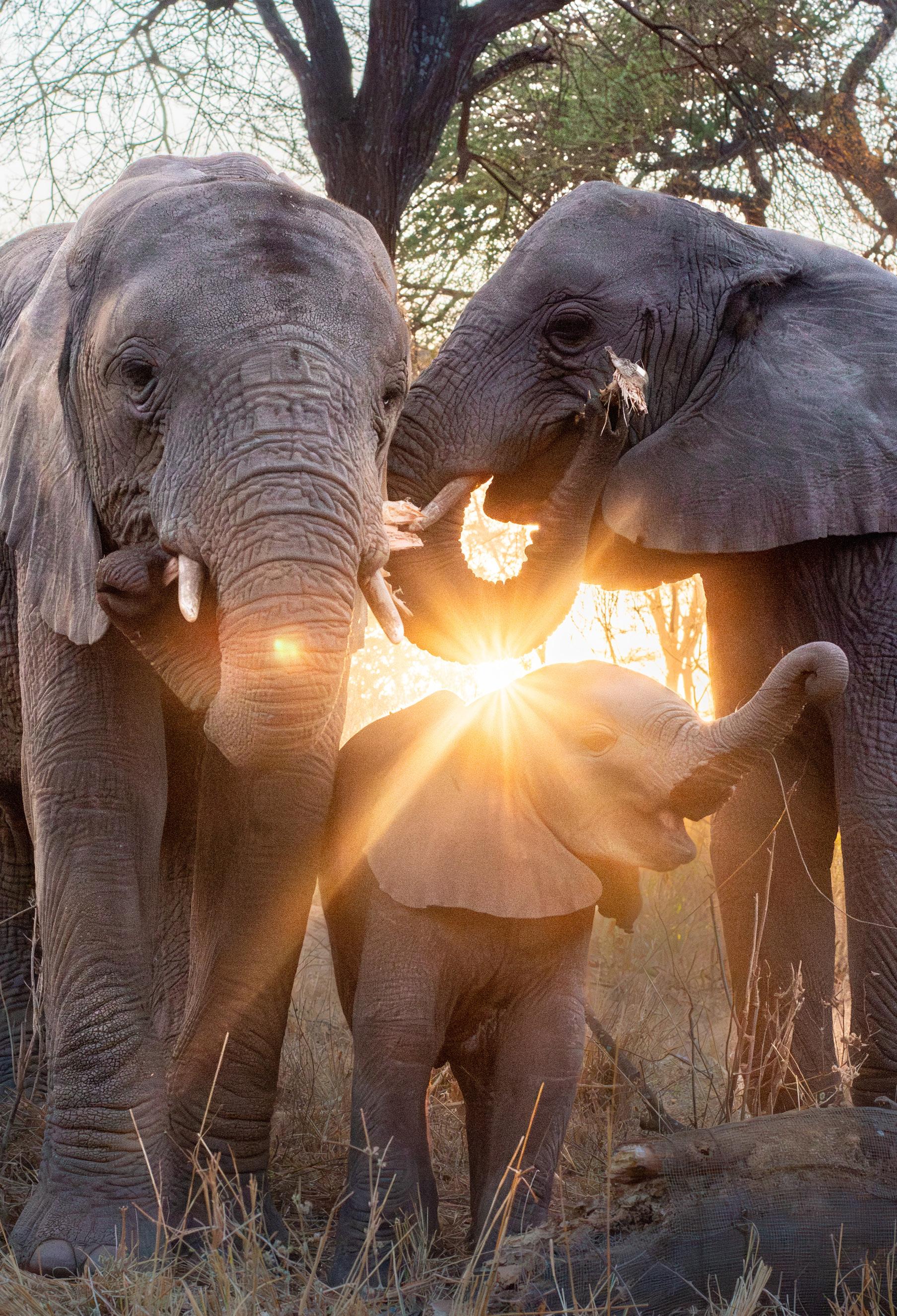
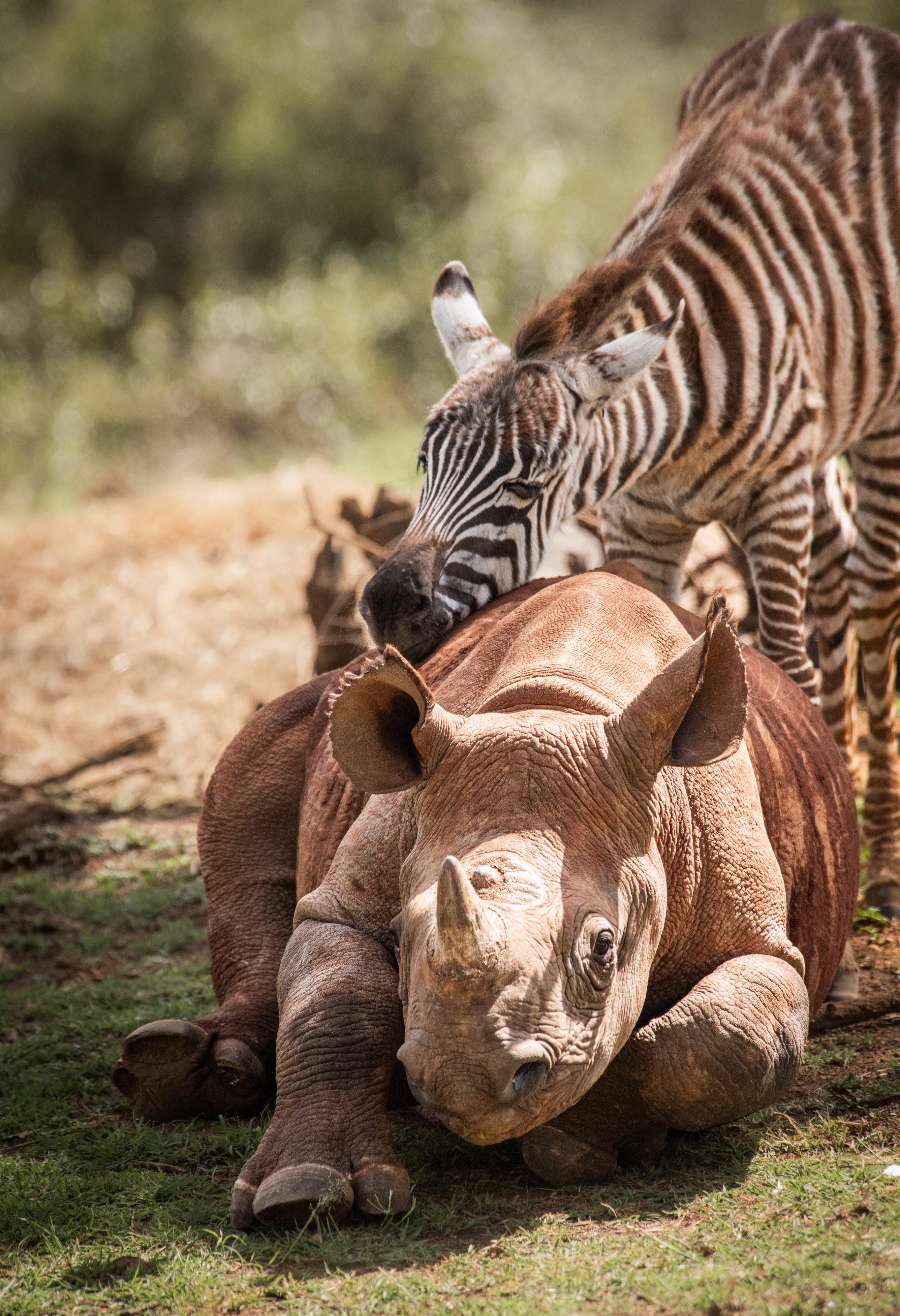
rhino update
T oday , kenya is H ome T o a PP roxima T ely 2,102 r H inos , in C luding 1,059 bla C k r H inos .
Black rhinos are among the most critically endangered species in Africa. Hunting and poaching drove a devastating 98% population decline between 1960 and 1995, reducing the species to a historic low of approximately 2,500 individuals. Thanks to sustained conservation efforts, global numbers now exceed 6,000.
Kenya has played a significant role in that recovery. Despite the heavy losses rhinos suffered at the height of poaching, the country now holds the third-largest rhino population in Africa, behind only South Africa and Namibia.
as of 2025, we H ave four or PH aned bla C k r H inos in our C are .
maxwell
Gender: Male
Date rescued: 14 February 2007
Reason orphaned: Natural causes
Age at arrival: 12 months old
Rescue location: Nairobi National Park
Current location: Nairobi Nursery
Current age: 20 years old
Due to congenital blindness, Maxwell cannot survive in the wild, but he lives a settled and contented life at the Nairobi Nursery. He confidently navigates his network of stockades and maintains close bonds with his Keepers. Although black rhinos are typically solitary, Maxwell is notably sociable, regularly interacting with orphaned elephants and other Nursery residents.
a P ollo
Gender: Male
Date rescued: 21 September 2019
Reason orphaned: Natural causes
Age at arrival: 6 months old
Rescue location: Tsavo West IPZ
Current location: Tsavo Rhino Base
Current age: 6 years old
Apollo is now firmly established at Rhino Base in Tsavo. Confident and increasingly independent, he spends his days exploring, browsing, and pushing the boundaries of his range. While he still checks in with his Keepers, he is steadily shifting his focus outward. In time, he will claim his own territory within the greater Tsavo ecosystem.
CH amboi
Gender: Male
Date rescued: 6 September 2023
Reason orphaned: Natural causes
Age at arrival: 0 weeks old
Rescue location: Tsavo West IPZ
Current location: Kaluku Neonate Unit
Current age: 2 years old
Chamboi has grown considerably since arriving as a days-old neonate. Once entirely dependent on round-the-clock care, he is now sturdy, opinionated, and increasingly sure of himself. He remains closely bonded to his Keepers but is beginning to show the independence typical of a young black rhino.
T y T an
Gender: Male
Date rescued: 9 September 2025
Reason orphaned: Mother deceased
Age at arrival: 7 months old
Rescue location: Borana Ranch, Laikipia
Current location: Nairobi Nursery
Current age: 1 year old
Tytan was rescued after his mother died in a cliff fall. He arrived at the Nursery very nervous, but soon learned to embrace his new human family. Strong-willed and alert, Tytan has formed a firm friendship with Notty the orphaned zebra, who coincidentally lost her mother under very similar circumstances.
in memoriam : ra H a
Tragically, we lost Raha in July 2025. Raha was rescued in September 2022 at just one week old after a predator attack left her with catastrophic internal injuries. Her survival depended on immediate intervention and long-term veterinary care, and from the outset her case required constant management.
Despite the severity of her injuries, Raha enjoyed a good quality of life with us. She was bright, engaged, and closely bonded with her Keepers. However, the long-term damage ultimately proved too great, and she passed away on 5 July.
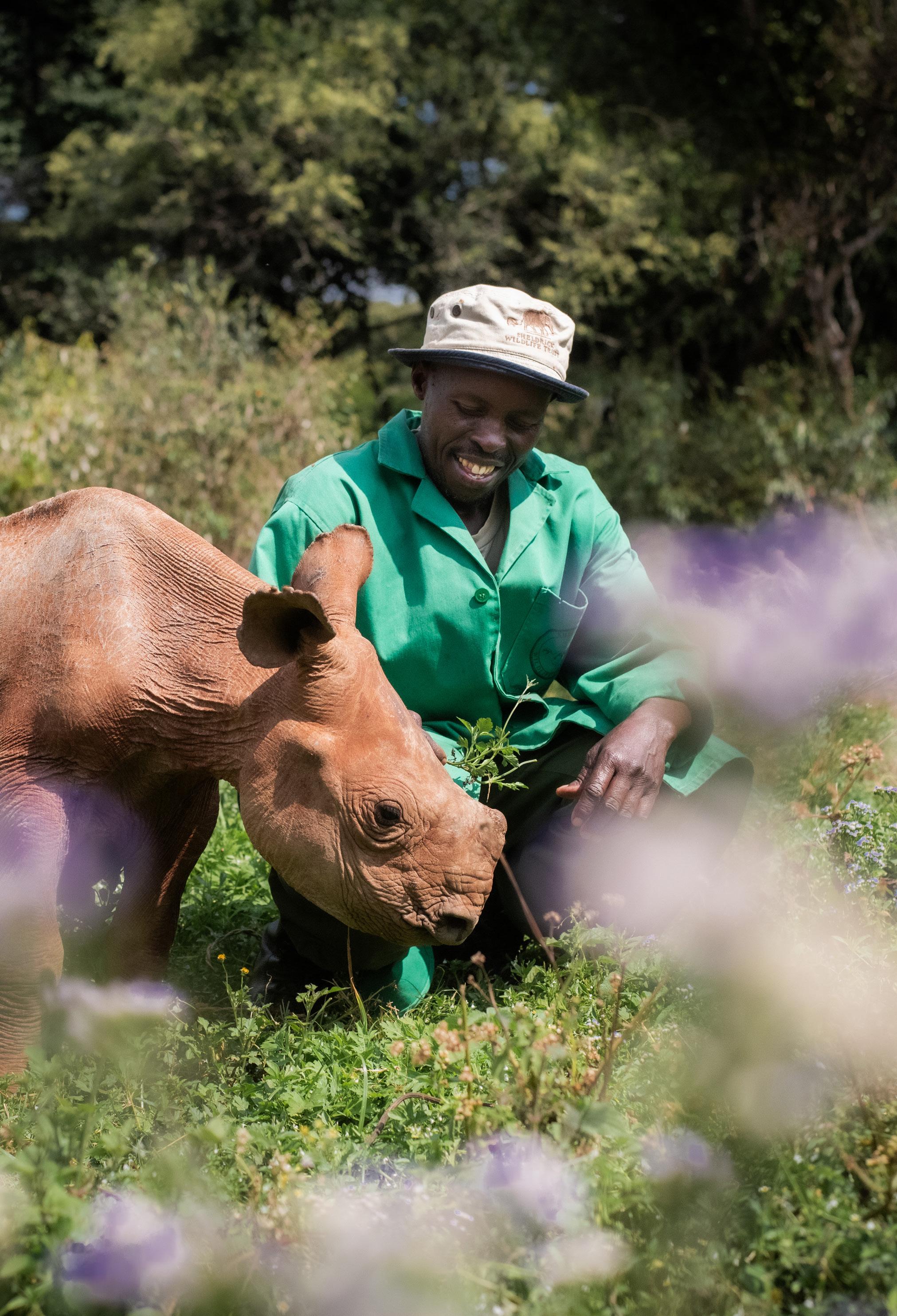
Raha will always hold a special place in our hearts.
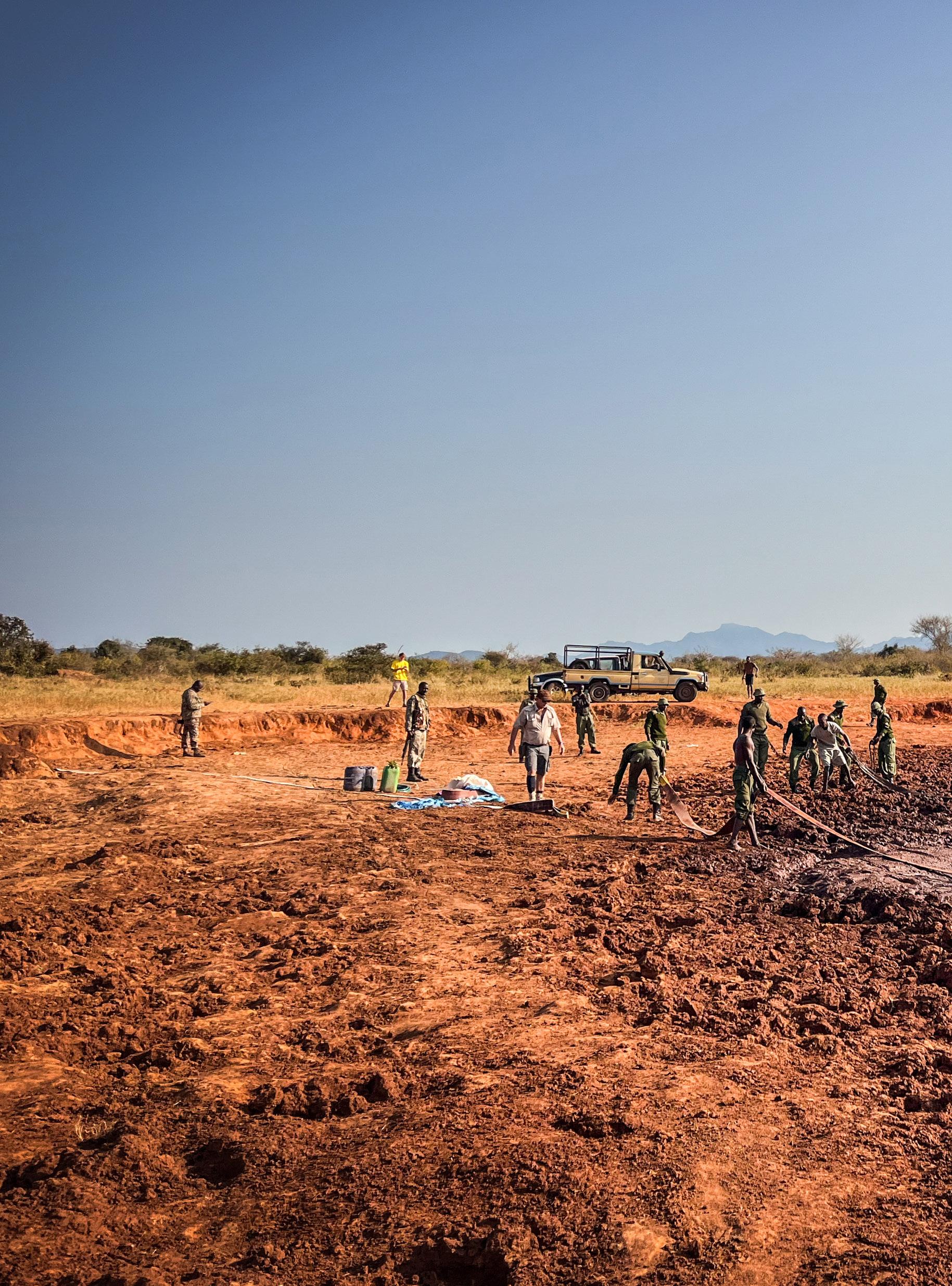
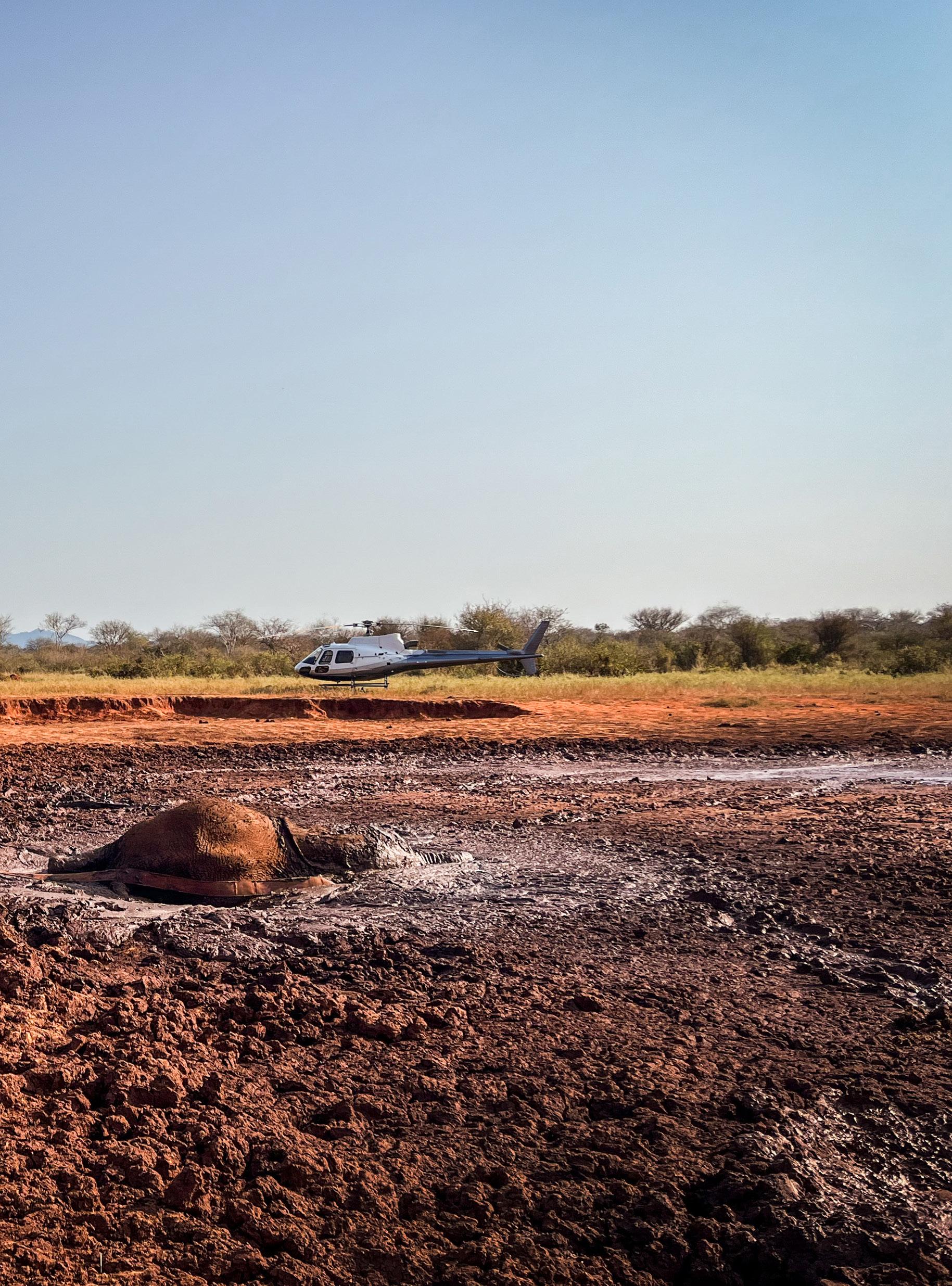
The success of the inaugural Tsavo Mobile Veterinary Unit inspired us to expand the program across the country.
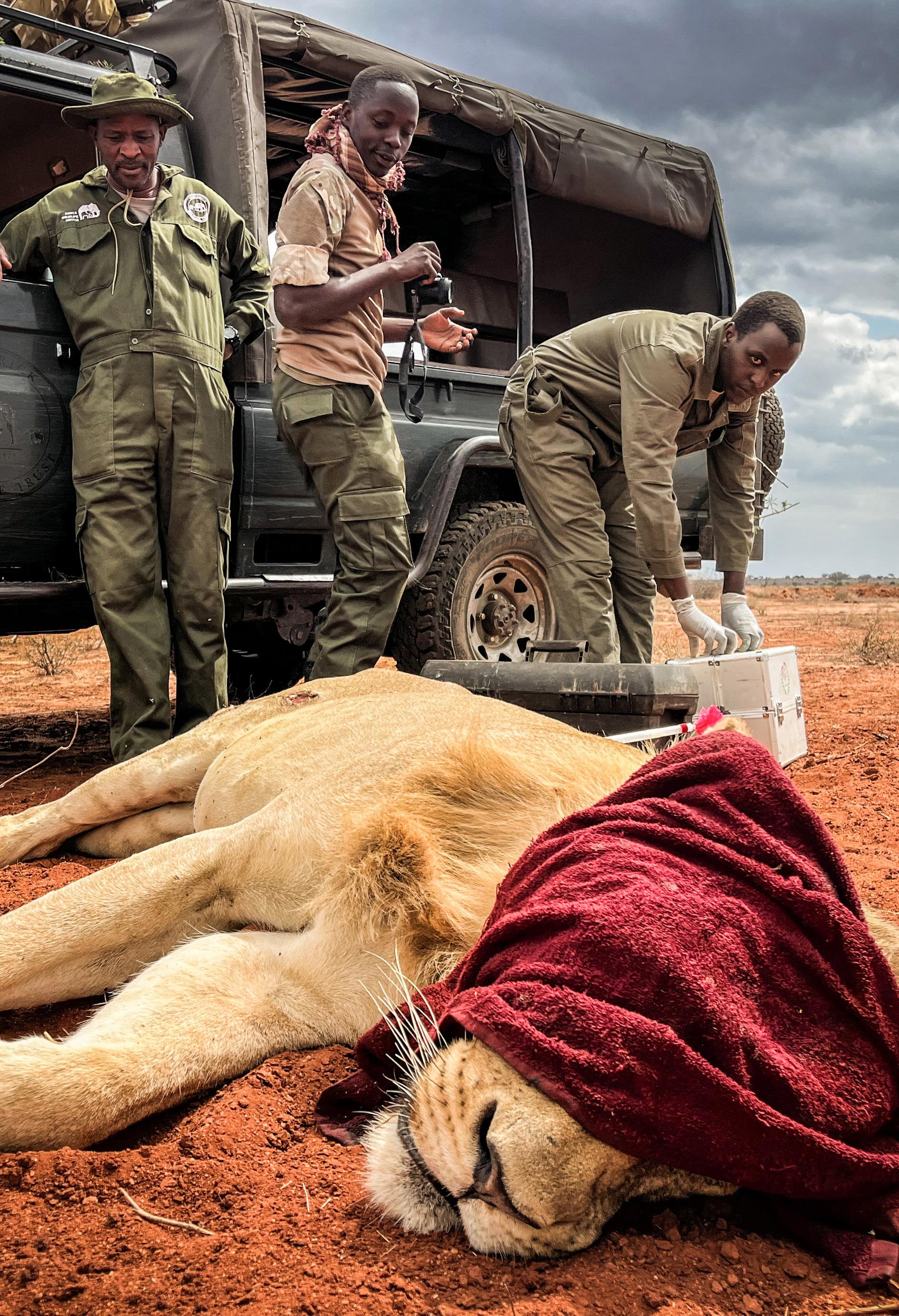
In June 2025, we launched the new Southern Mobile Vet Unit to further meet the demands of the Tsavo ecosystem.
mobile veterinary units
7 Mobile Veterinary Units
1 Sky Vets Unit
17 major ecosystems covered across Kenya
1,474 animals in 682 cases attended in 2025
260 elephants attended in 2025
14,392 total veterinary cases (all-time)
Sheldrick Wildlife Trust launched its first Mobile Veterinary Unit in 2003, working in partnership with the Kenya Wildlife Service. Today, we operate seven SWT/KWS Mobile Vet Units in Kenya’s key regions, along with Sky Vets, our emergency aerial initiative.
Tsavo is Kenya’s largest wilderness and home to its biggest population of elephants, along with a myriad of other species. The original Tsavo Unit was consistently called to treat multiple patients in a day, often in different parts of the landscape. Under the leadership of Dr Lawi Kiplimo, the Southern Unit, our most recently formed Veterinary Team operates in the Greater Tsavo Conservation Area and where needed across southern Kenya, offering a rapid response with support from our Aerial Unit.
Tsavo Mobile Veterinary Unit
Unit Leader: Dr Campaign Limo
Established: 2003
Areas of Operation: Greater Tsavo Conservation Area, Chyulu Hills National Park, and Shimba Hills National Reserve
Mara Mobile Veterinary Unit
Unit Leader: Dr Michael Njoroge
Established: 2007
Areas of Operation: Masai Mara National Reserve, the adjacent Mara Triangle, neighbouring community areas, Ruma National Park, and Lake Victoria.
Meru Mobile Veterinary Unit
Unit Leader: Dr Duncan Aminga
Established: 2012
Areas of Operation: Meru National Park, Bisanadi National Reserve, Kora National Reserve, and surrounding wildlife dispersal areas, parks, and reserves
Amboseli Mobile Veterinary Unit
Unit Leader: Dr Edward Kariuki
Established: 2014
Areas of Operation: Amboseli National Park and the Southern Conservation Area, encompassing Kajiado, Namanga, Magadi, and Lake Natron; Southern Tsavo West, including Lake Jipe
Mount Kenya Mobile Veterinary Unit
Unit Leader: Dr Jeremiah Poghon
Established: 2017
Areas of Operation: Mount Kenya, the Aberdare Range, and Southern Laikipia
Rift Valley Mobile Veterinary Unit
Unit Leader: Dr Titus Kaitho
Established: 2021
Areas of Operation: Lake Naivasha-ElementaitaNakuru region and Bogoria-Baringo region
Southern Mobile Veterinary Unit
Unit Leader: Dr Lawi Kiplimo
Established: 2025
Areas of Operation: Greater Tsavo Conservation Area and southern Kenya, with aerial support
Sky Vets
Unit Leader: On-duty KWS veterinarian
Established: 2013
Areas of Operation: The whole of Kenya, with a focus on emergencies in remote or inaccessible areas
Our seven SWT/KWS Mobile Veterinary Units support wildlife in Kenya’s most important ecosystems: Tsavo, the country’s largest wilderness and home to its biggest population of elephants; the Mara, a savannah renowned for its Great Migration; Meru, a sanctuary for Kenya’s white and black rhinos; Amboseli, a small-but-dynamic ecosystem that is celebrated for its tuskers; Mount Kenya, a rugged region dominated by the highest peak in Kenya; and the Rift Valley, a diverse habitat with an equally diverse array of birds and wildlife.
Anchored by these ecosystems, Mobile Vet Units work across the country, responding to wildlife emergencies on conservation areas, ranches, and community land. Completing the network, Sky Vets, our rapid-response aerial unit, ensures no wildlife emergency is out of reach. Sheldrick Wildlife Trust fully funds and equips each SWT/ KWS Mobile Vet Unit with a customised Land Cruiser and a full suite of veterinary equipment, medication, and anaesthetics. Each team consists of a KWS field veterinarian, KWS capture rangers, and a SWT driver.
The success of our Veterinary Units hinges on close collaboration with our other field conservation programs. Aerial capabilities, particularly in a vast landscape like Tsavo, are essential to detect and access wild patients. In the course of their daily patrols, pilots often make the initial discovery of an ill or injured animal. With their bird’s eye perspective, they are able to spot abnormalities that would otherwise be invisible, from irregular tracks to almost imperceptible signs of injury. Hundreds of animals are alive today because they were sighted by pilots.
Given the vast distances and time-sensitive situations involved, ground-based intervention is often impractical or impossible. Helicopters are central to overcoming these obstacles, allowing veterinary teams to help animals that would otherwise be beyond reach, administer sedation from the air, and shepherd them to a suitable area for treatment. Complementing this, fixed-wing aircraft extend the team's eyes, tracking animal movements and identifying those in need of attention.
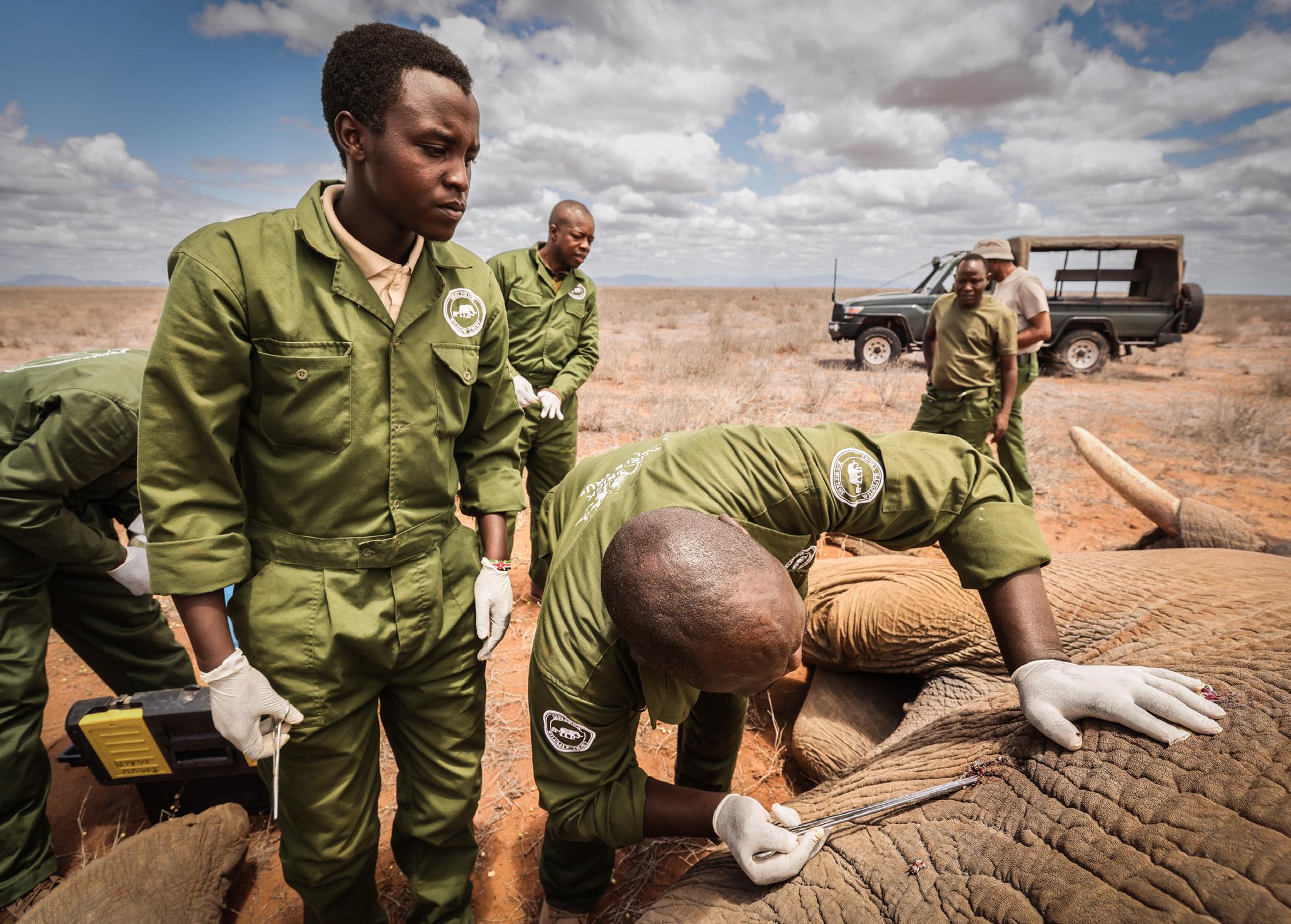
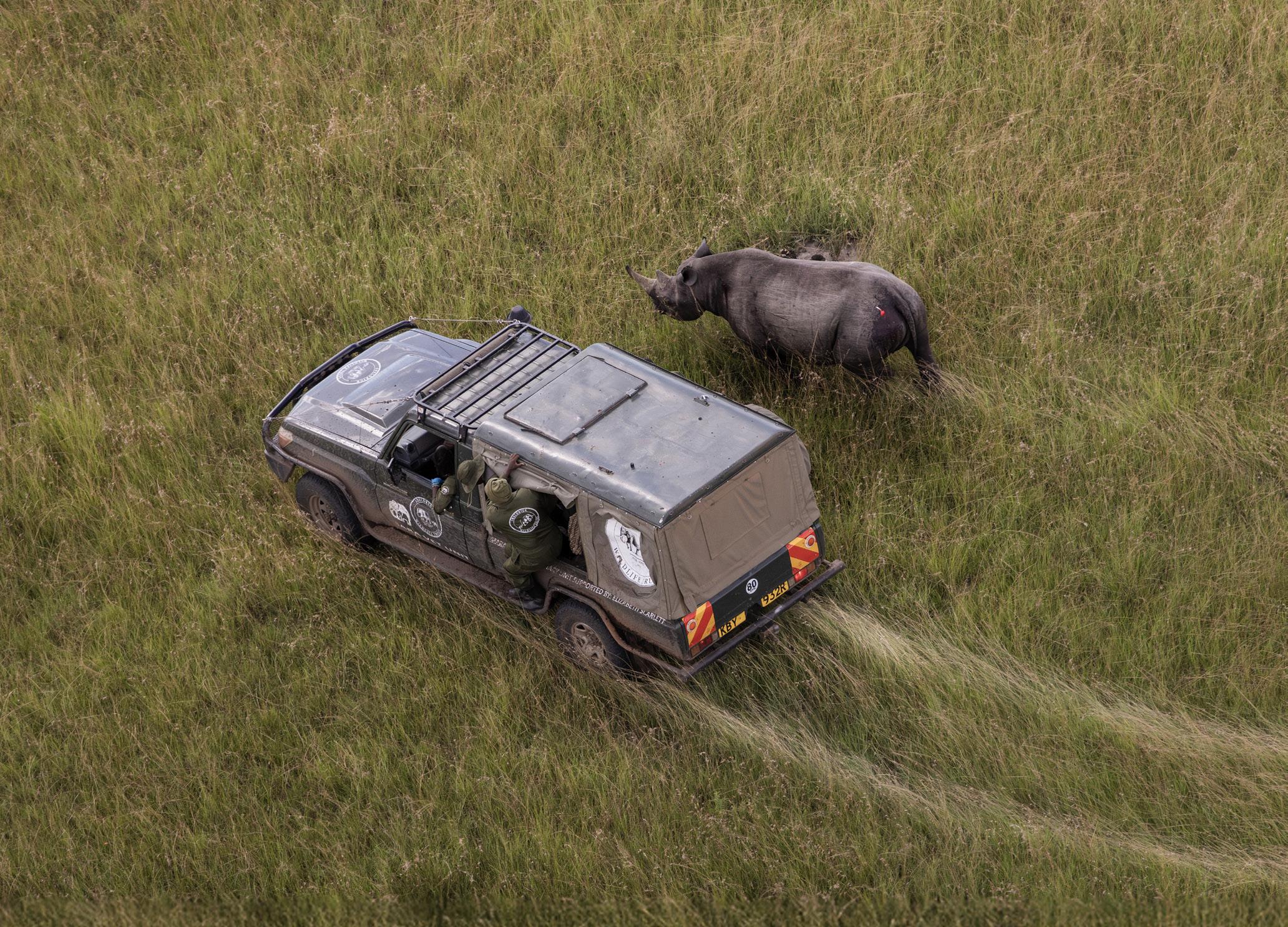
Ground support is provided by SWT/KWS AntiPoaching Teams, who play a vital role at every stage of treatment. Rangers are often the first to identify an animal in distress. They provide hands-on assistance during treatment and continue to monitor the patient through to recovery. Beyond this, we rely on a wider informal network of KWS personnel, local communities, NGOs, lodge staff, guides, and tourists to help identify and report animals in need.
While caseloads vary dramatically from year to year depending on conditions in the field, there is a definitive upward trend. This reflects both the evolving threats facing wildlife and the impact of expanding resources. Greater aerial capabilities and a larger field presence mean more injured animals are being spotted and saved.
In 2025, Vet Units attended to 1,474 animals across 682 cases. Elephants made up the greatest portion of patients, accounting for 36.5% of all 2025 cases. In addition to 249 elephants, teams also attended to 62 rhinos, 107 predators, 54 giraffe, 38 buffalo, 143 plains game, and a variety of other species.
The caseloads of Mobile Vet Units reflects pressures on the ecosystem. Similar to last year, poaching accounted for more than a third of all veterinary cases (259 cases, or 37.9% of total caseload). Nearly half of these patients were snared, either targeted by bushmeat poachers or the unintentional victims of their cruel and indiscriminate traps.
While ivory and rhino horn poaching has declined in recent years, it remains a very real threat, as evidenced by the 128 elephants and two rhinos treated for poachingrelated injuries. Natural causes (163 cases, or 23.9%) and human-wildlife conflict (85 cases, or 12.4%) were the other leading drivers of veterinary interventions. In Q1, Mobile Vet Units attended 216 cases, involving 451 animals. The teams attended 64 poaching incidents and 20 human-wildlife conflict cases.
Elephants featured prominently among the poaching cases, treated for arrow, spear, snare and bullet wounds. Plains game were also heavily impacted by snaring, alongside giraffe, buffalo and a leopard. Additional cases included arrow and machete injuries across several species. Human-wildlife conflict resulted in further
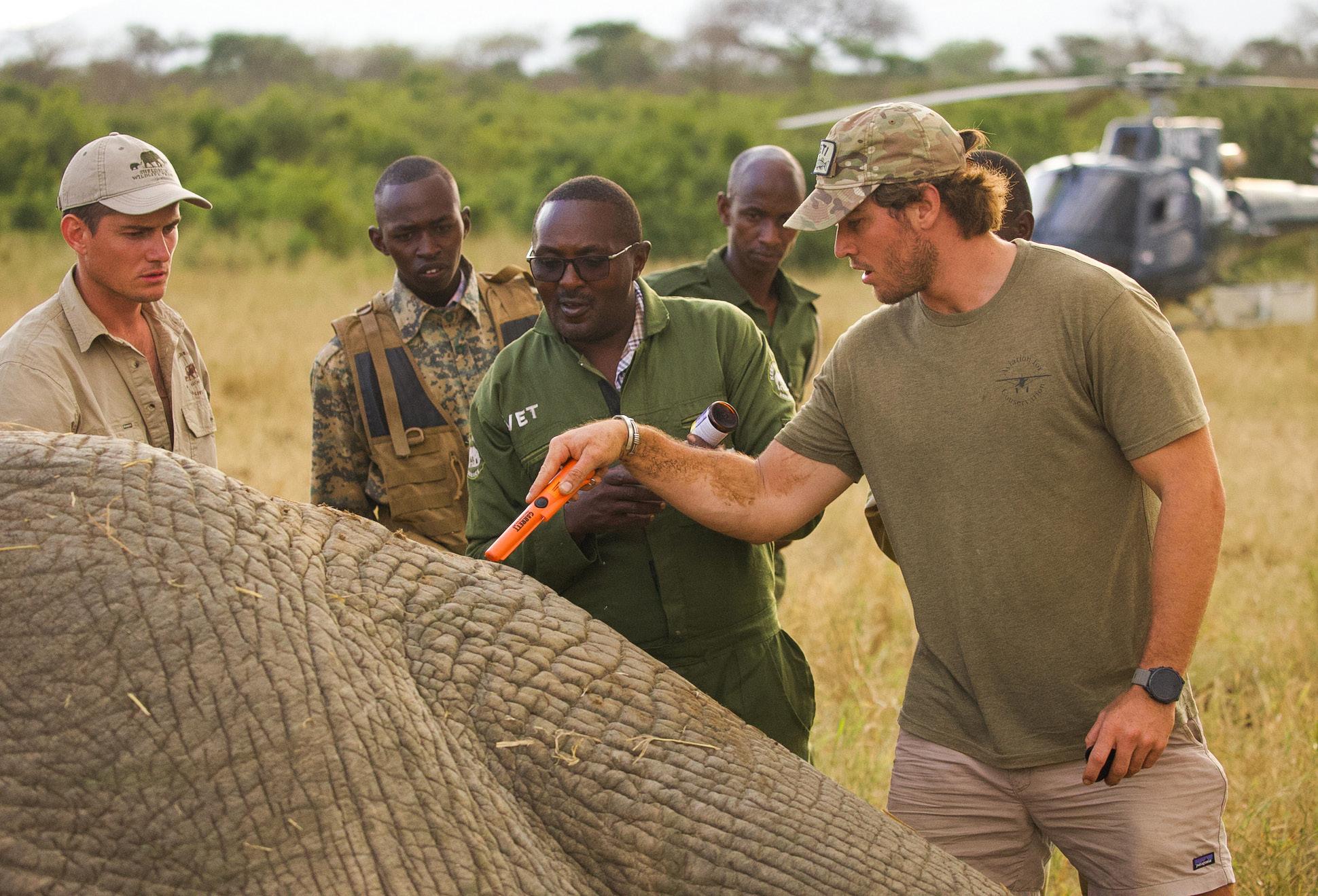
Assessing wound with metal detector
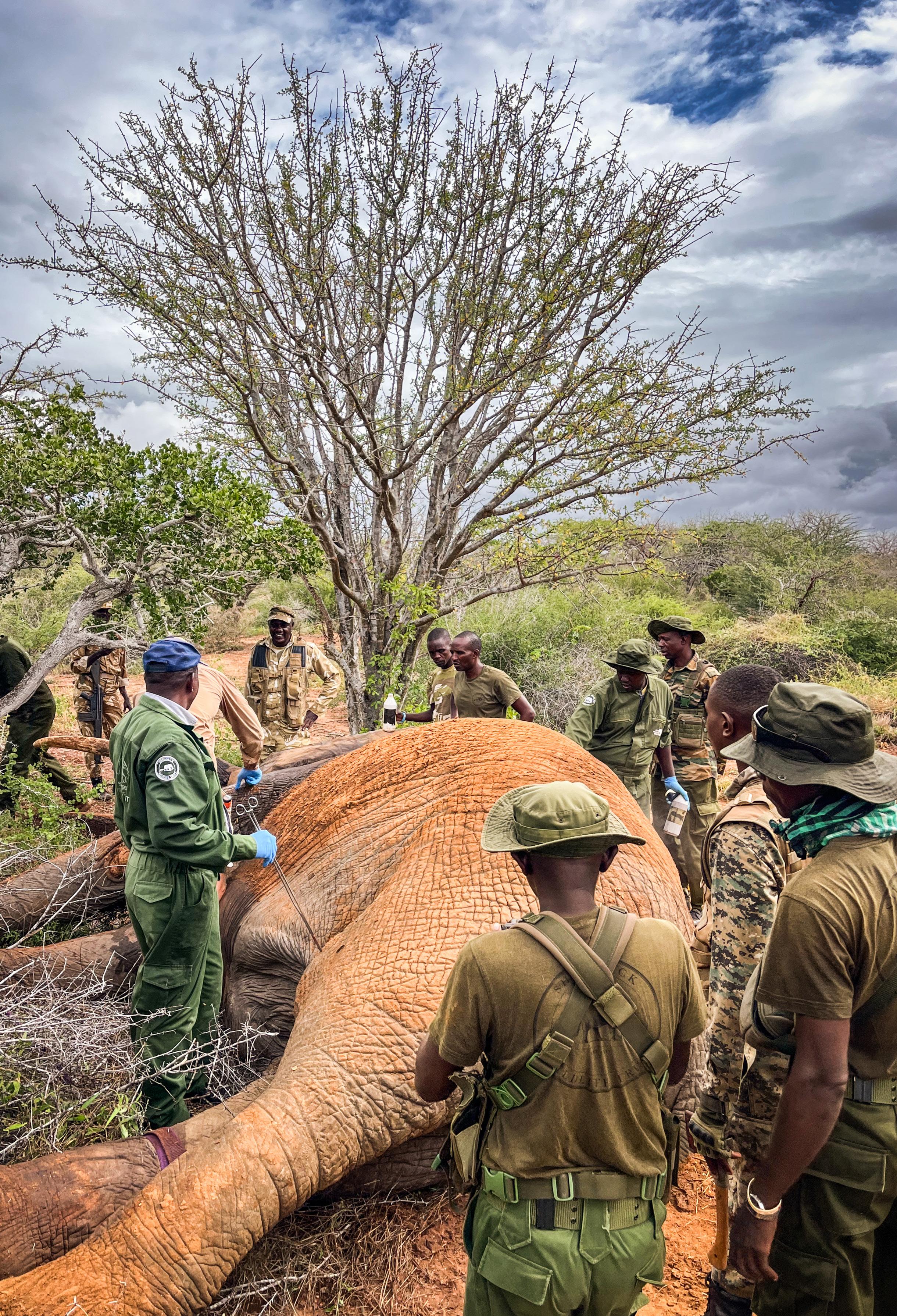
elephant injuries and necessitated the relocation of buffalo, waterbuck, an elephant, a lion and a rhino that had strayed into community land.
Cases arising from natural causes included lions and cheetahs treated for fight or hunting injuries, as well as elephants, rhinos, plains game and giraffe for a range of ailments. The Units also assisted in the translocation of 31 antelope in Ol Pejeta Conservancy.
One of the most significant operations in Q1 was a major black rhino conservation effort in the Mara, building on work undertaken the previous year. With SWT aerial support, the Mara Mobile Vet Unit ear-notched 15 black rhinos and fitted several with horn-mounted radio transmitters, enabling conservation teams to more effectively track and identify these highly vulnerable individuals.
Many operations helped keep wild families together, such as a Sky Vets response that unfolded in February. Suyian Conservancy rangers had reported the adult female elephant struggling to walk, her two young calves — one still nursing — close behind. With the family in an inaccessible area, we mobilised our aerial veterinary initiative. The mother was safely darted, a deeply embedded snare was removed from her forelimb, and her wound was treated. Within minutes of revival, she was back on her feet and reunited with her calves.
In Q2, Mobile Vet Units attended 151 cases, involving 257 animals. This included 57 poaching incidents, 20 human-wildlife conflict cases, 26 cases arising from natural injuries, and 12 relocations. Elephants again accounted for the majority of poaching cases, treated for spear, arrow, bullet, snare and spike injuries. Other species affected by poaching included plains game, buffalo, giraffe, hyena and warthog, with additional cases of poisoning and suspected poaching injuries recorded. Human-wildlife conflict incidents spanned multiple species and causes, including fencing and man-made holes, problem animal control, spearing, dog attacks and litter-related injuries.
Relocations featured prominently across the Units’ work. The teams assisted with the relocation of 58 black rhinos that had either broken out of protected areas or were moved for population distribution and habitat management. A further 46 rhinos, both black and white, were ear-notched to support ongoing rhino management. The new Southern Mobile Vet Unit was launched in
June. One of their first cases involved a lion speared on community land, lying close to a school and surrounded by people, cattle, and cars. The SWT helicopter flew the team to the scene, and the lion was darted and transported back into the park for treatment and release. Despite the severity of his injuries, the intervention was successful.
Some treatments have a straightforward story, others are more of a mystery. In June, the Tsavo Vet Unit treated a bull elephant found with multiple arrow wounds and large chunks missing from his chin and trunk. The pattern of injuries was unlike what we usually see in human-wildlife conflict, where elephants are typically injured while fleeing. By piecing together the unusual placement of the wounds, the team concluded he had likely been struck by arrows, and rather than running away, charged his attacker up a tree — resulting in the head-on injuries. With proper veterinary care, he is expected to make a full recovery.
In Q3, Mobile Vet Units attended 152 cases, involving 222 animals. This included 84 poaching incidents and 22 human-wildlife conflict cases. Elephants continued to represent the majority of poaching cases, with two elephant postmortems attributed to poaching, although the exact cause could not be determined. Snaring of plains game remained prevalent, alongside spear injuries to giraffe and suspected poaching-related injuries in zebras.
Translocations formed a significant part of the Mount Kenya and Meru Units’ caseload, with 70 animals moved to ease pressure in overpopulated areas and strengthen genetic diversity within newly established sanctuaries. The most consequential operation was the translocation of 26 white rhinos to the new Loisaba Conservancy Rhino Sanctuary. Meanwhile, 35 giraffes were safely guided out of fenced farmland and into neighbouring sanctuaries. As is typical in the height of the dry season, elephant rescue operations hit their peak. Over the year, teams helped free 17 elephants from wells, mud, dams, and other unintentional traps. These were complex, labourintensive operations involving animals ranging from fullgrown bulls to small calves.
The most challenging unfolded near the Indian Ocean, where two bull elephants had become trapped in tidal flats. Over four days, teams battled time, terrain, and rising tides to pull off an extraordinary rescue. The full story is told in the addendum, 'Notes From the Field.'
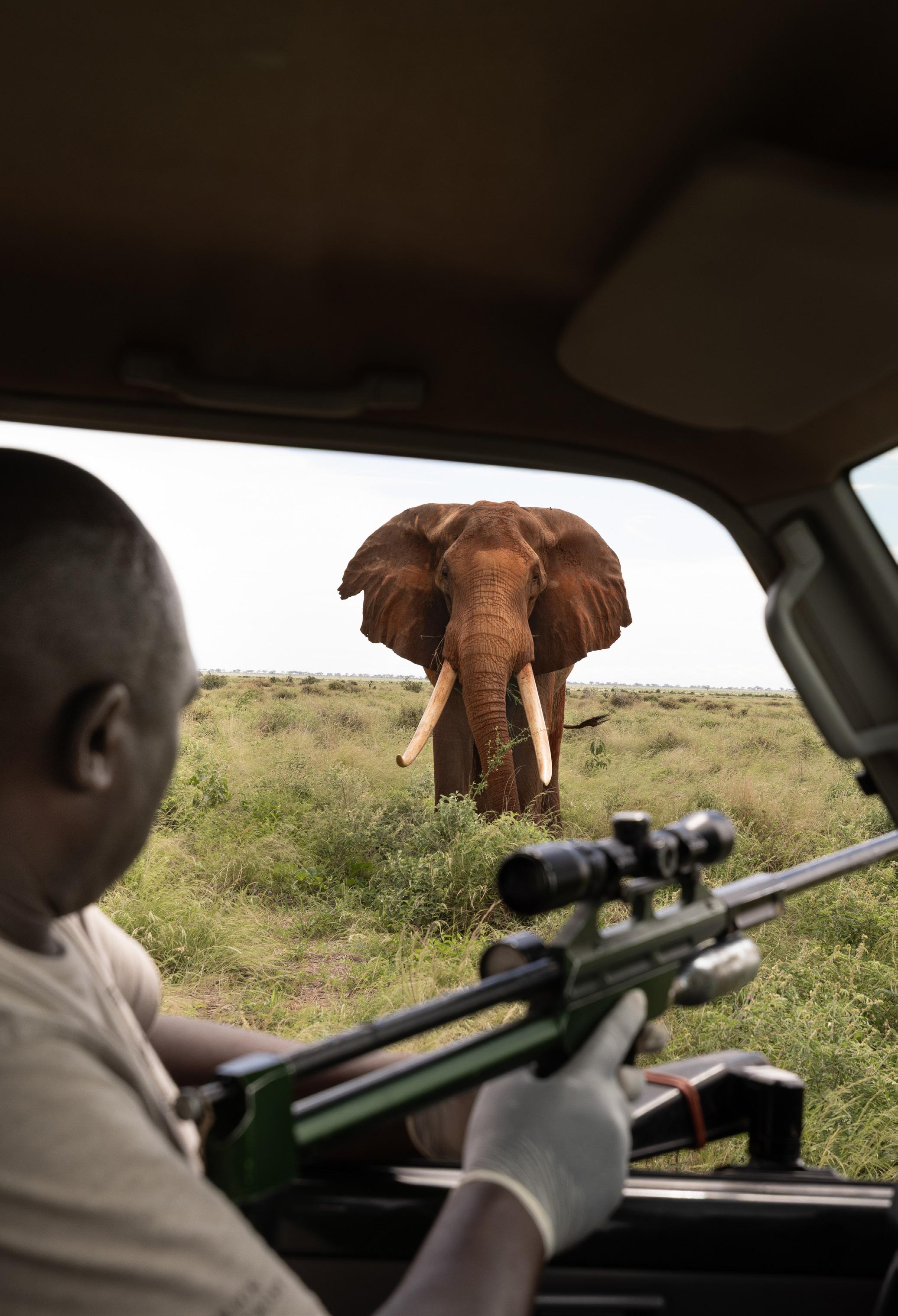
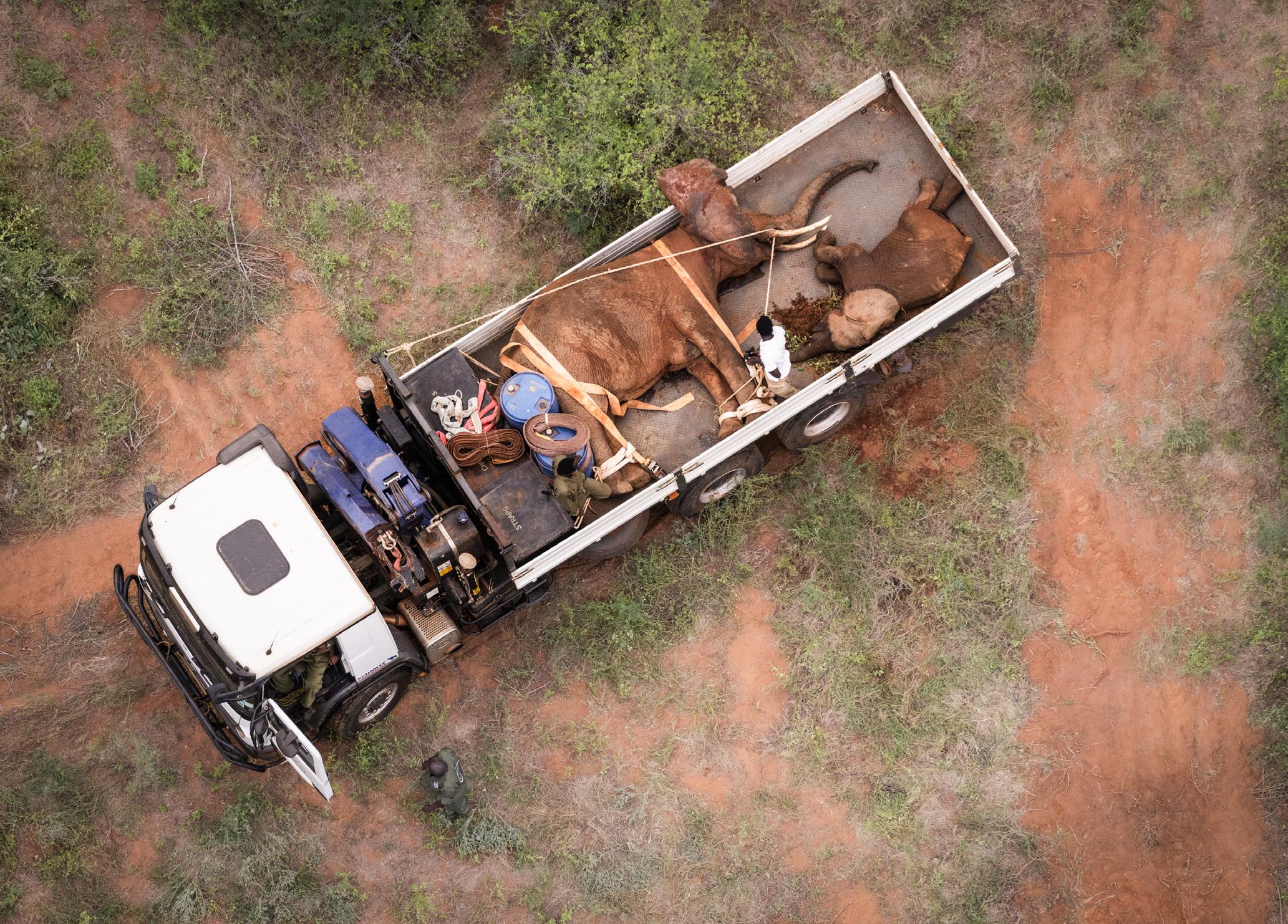
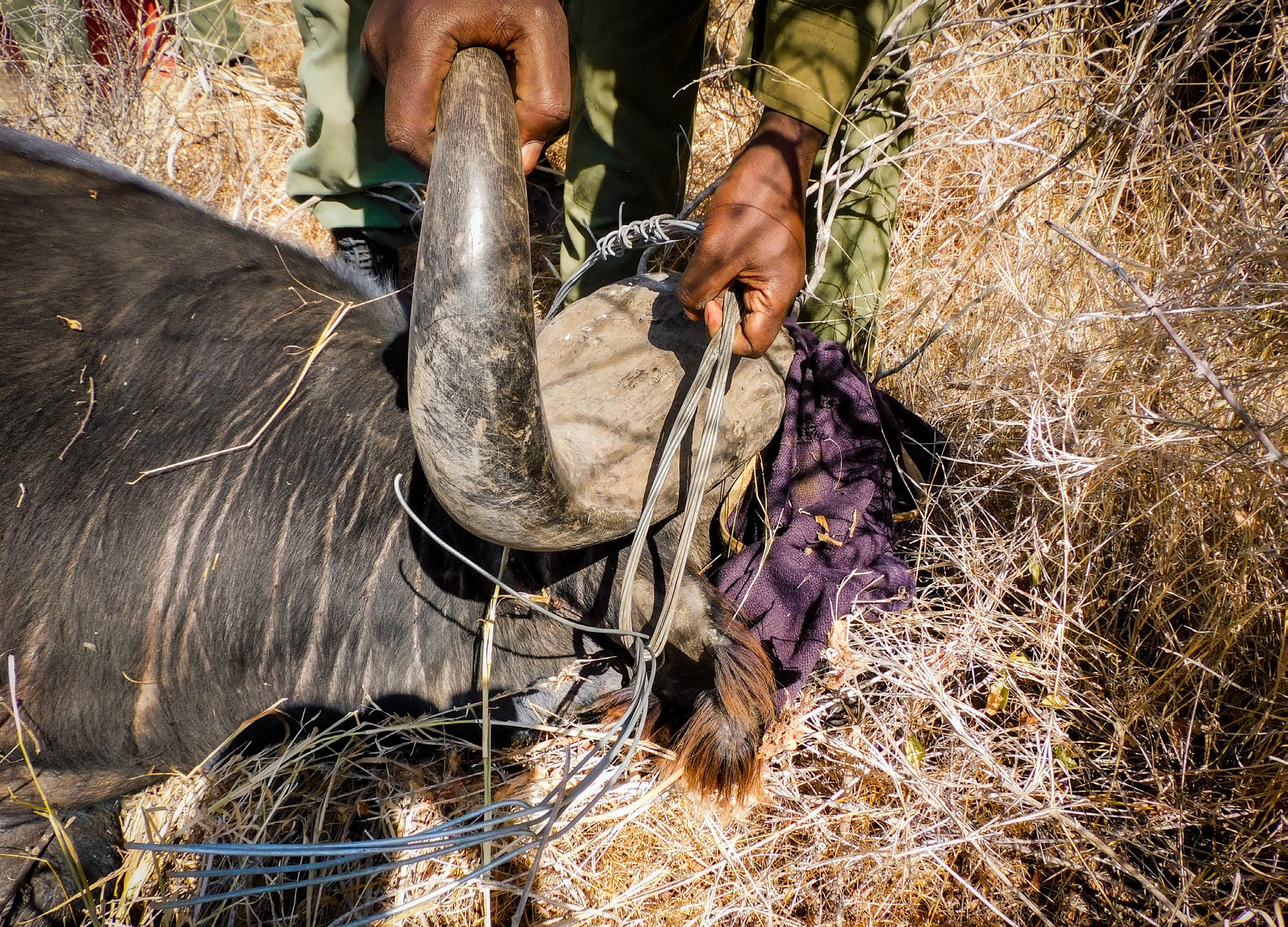
In October, we deployed Sky Vets to treat a snared buffalo on Manda Island, off Kenya's northern coast. Dense bush made spotting him nearly impossible, and the search spanned two days and two islands before the team finally identified their patient on a narrow strip of beach at low tide. The snare was wound so tightly around the buffalo’s front left leg that, without intervention, it would have cut clean through the ankle joint within weeks. It was removed, the wound treated, and the buffalo is expected to make a full recovery.
In Q4, Mobile Vet Units attended 160 cases, involving 541 animals. This included 51 poaching cases, most of which involved herbivores snared for bushmeat. Three elephants and one rhino were also snared — possibly as accidental victims. Teams also treated 10 elephants for spear injuries, six for arrows, and two for gunshot wounds, which marked a significant decrease from the last quarter.
Although rains were largely disappointing in Tsavo, Kenya generally shifted into a welcome rainy season as the year drew to a close. This decreased pressures on humans and wildlife alike, leading to a slight dip in poaching and human-wildlife conflict cases. To proactively address the escalating challenge of human-wildlife conflict,
the Rift Valley Unit performed a detailed assessment of how human activities, such as agricultural fencing, fragment the natural range of plains game. Following the assessment, the team translocated over 300 animals from recently urbanised zones into protected areas.
Not all cases fit a familiar pattern. In December, the Tsavo Vet Unit attended a bull elephant whose right tusk had punctured and become lodged in his own trunk — most likely after losing his balance while probing his nostril. He had been stuck this way for at least three days and was struggling to eat, drink, and even breathe. Without intervention, the outcome could have been fatal. The team darted him, dislodged the tusk, and treated the wound. It was a peculiar case with a positive outcome.
The year ended just as it began: busily. The final week saw seven veterinary operations, including a speared elephant treated by the Amboseli Unit, the Christmas Day treatment of a snared zebra by the Tsavo Unit, and the rescue of an orphaned zebra by the Rift Valley Unit. The little zebra, named Brutus, is now thriving at our Kaluku Neonate Unit and will one day return to the wild. As he grows up in our care, the work of the Vet Units continues.
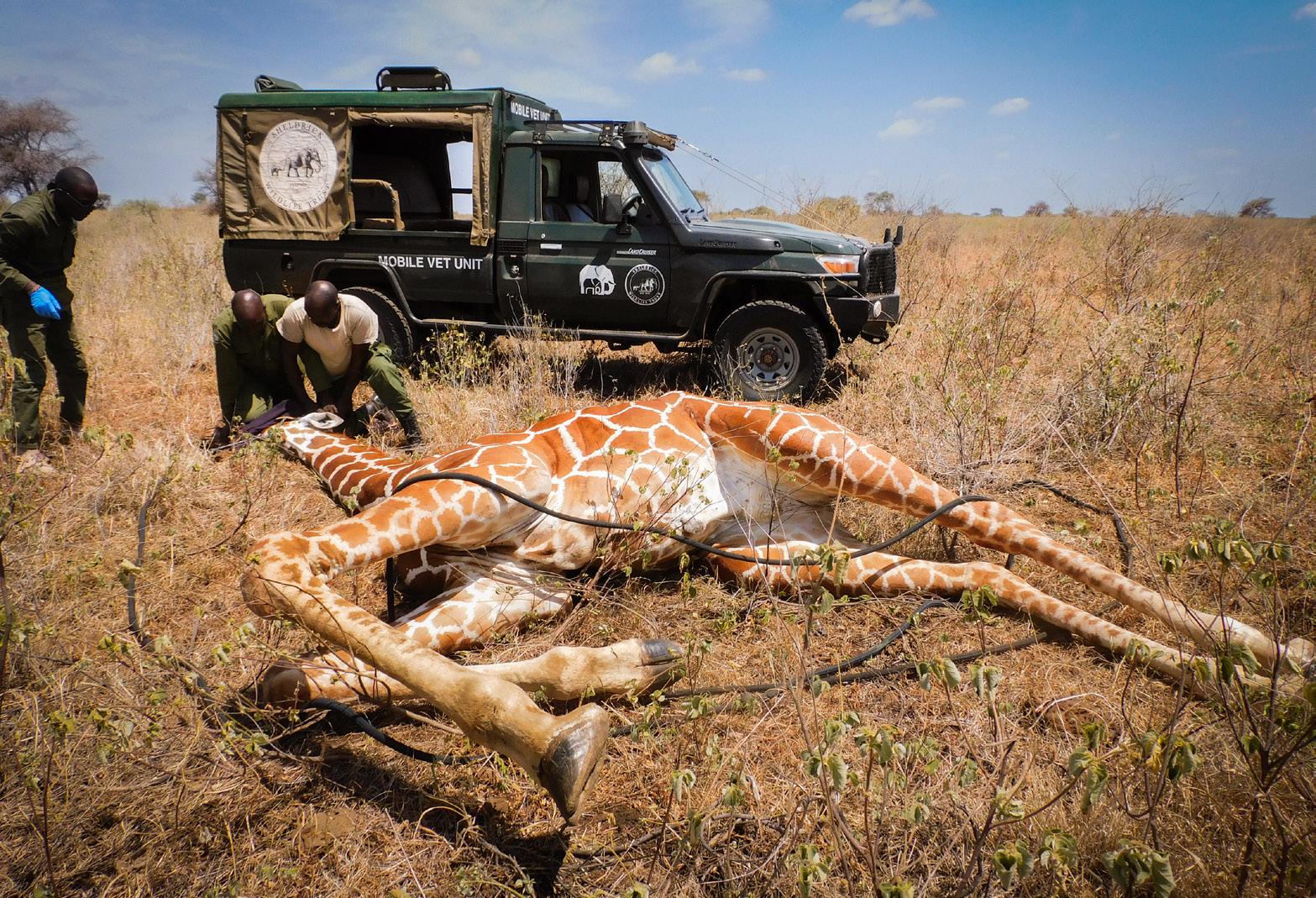
Notes from the Field:
A FOUR-DAY MISSION TO SAVE AN ELEPHANT'S LIFE
In all our decades of elephant conservation, this stands out as one of our more challenging rescue operations yet. Over the course of four days, teams battled time, terrain, and rising tides to pull off an extraordinary elephant rescue mission.
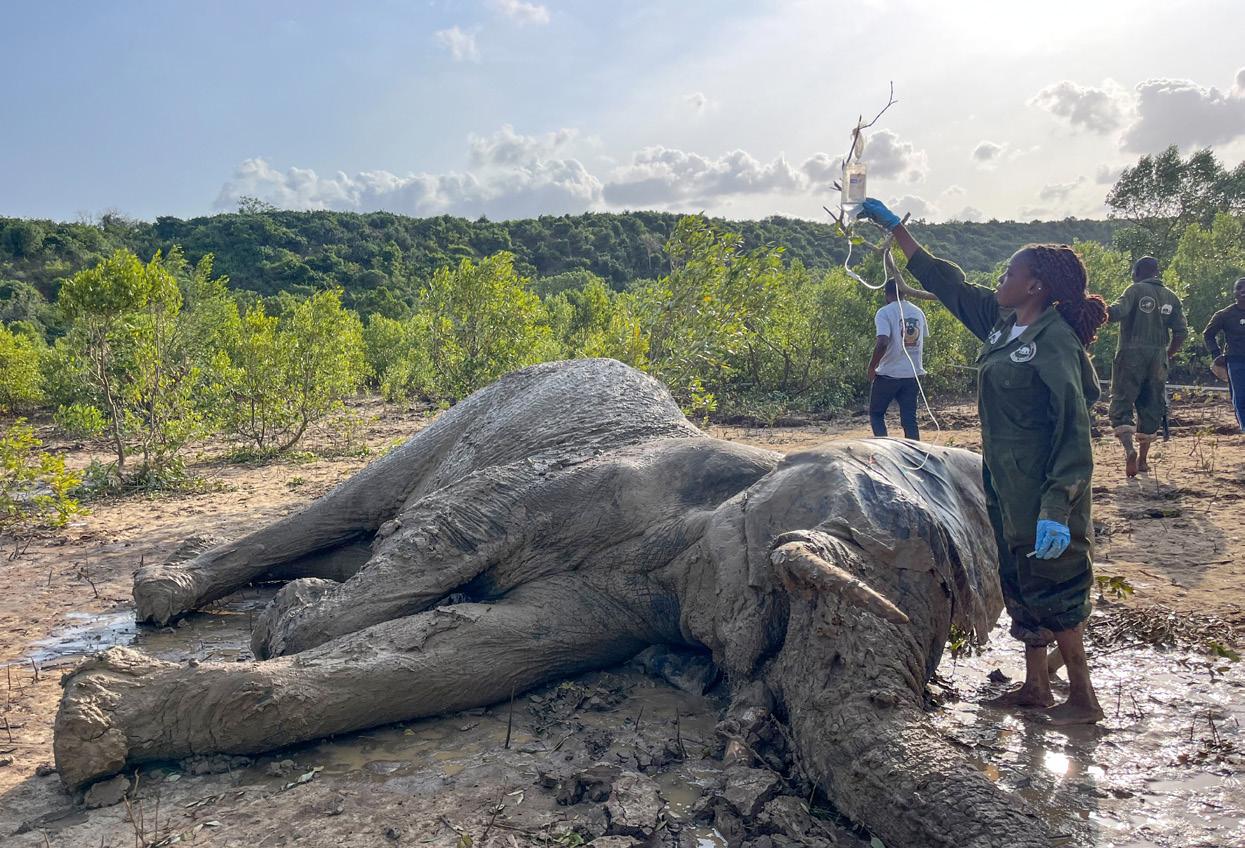
Day 1: Monday, 4 August
At 4 o'clock in the afternoon, the Kenya Wildlife Service reported two elephants stuck in mudflats off tributaries from Kilifi Creek, a tidal creek that flows into the nearby Indian Ocean. Ground teams rushed to the location, but due to the difficult terrain, they had to abandon their vehicles 1.5 kilometres from the site and make the rest of the journey on foot.
The SWT helicopter, carrying more of our team, flew down to the coast to assess the situation. They confirmed from the air that it was 280 metres from where the bulls were stuck to viable hard ground. Time and poor accessibility were going to be an issue — there was only one small access track running down a ridgeline — and in operations like these, every minute counts.
With darkness approaching, it was too late to begin the extraction operation, but that night we set the wheels in motion: A bulldozer was dispatched on a low-loader truck and we procured a long length of rope to pull out the elephants. The real mission would begin the next morning.
Day 2: Tuesday, 5 August
At first light, the helicopter flew the SWT/KWS Tsavo Mobile Vet Unit to the site and ground teams rigged up the equipment. First came the task of excavating the mud around each bull by hand. This allowed rope to be fitted underneath their bodies, which would then be attached to the bulldozer.
As soon as the bulldozer arrived, it was all systems go. One bull was clearly ebbing away, so we turned our attention to him first. He was stuck on his side, which allowed the bulldozer to pull him out fairly easily. Tragically, however, he proved to be too far gone and died shortly after reaching solid ground. It was a heartbreaking turn of events. However, we could still save one life. The second bull was much more stuck, which, perversely, worked in his favour. He was trapped at such an angle that he couldn't even attempt to free himself, as the first bull had clearly been trying to do for hours sapping all his strength. Thanks to his immobility, he wasn't able to over-exert himself, preserving precious energy reserves. His position may have been his saving grace, but it also made it very difficult to pull him. Dragging a five-
ton animal is always a challenge, but especially with 250 metres of rope that has to wend its way through mangrove trunks and thick bush. Time and again, the rope snapped as the elephant's pressure took hold.
It was getting late, but we gathered several webbing straps from our Kaluku stores, which we would link together to cover the distance required. We flew them down to the scene so we could continue our battle to save the bull at first light. We kept trying until it was completely dark. The teams disbanded to get some rest before the next morning's attempt, while the bull was given full ranger protection overnight.
Day 3: Wednesday, 6 August
The day began on a sombre note. The first bull's death was extremely upsetting for all present, and while the other bull had survived the night, we were feeling the tick of time. The webbing tethered together did the trick — with a mighty pull, the bulldozer hauled the bull out of the mud and onto solid ground. He was exhausted, disoriented, and clearly distressed by the loss of his companion.
After giving him time to see his fallen friend, the helicopter and ground teams attempted to shepherd him away from the mudflats. He was very reluctant to move, and while they managed to push him out of immediate danger, he flatly refused to leave the area. Given what he had already been through, we were cautious of further taxing him. We left him with plenty of water so he could rest, rehydrate, and move on when he felt physically able. Late that night, however, we learned of a troubling development: The bull had got himself stuck again, this time in a tidal creek a bit further from the original location. We would be returning to Kilifi Creek the following morning.
Day 4: Thursday, 7 August
By now it was day four of the operation, and everyone gathered with a strong sense of déjà vu. Although the bull was stuck in a new location, he was in an equally inaccessible spot. The original bulldozer had been released after the successful extraction the day before and was now halfway to Lamu. Without time to position our own equipment, a second bulldozer closer to the action was sourced overnight. On the back of a lowloader truck, it slowly made its way to the area, winding along sandy tracks to get as close as it could to the site. Still, 170 metres stood between the bull and solid ground.
Dr Limo of the SWT/KWS Tsavo Mobile Vet Unit administered several rounds of drips, which helped replenish the bull's sapped energy. The tide was out, which favoured the mission, but it was a race against time because we knew his strength was fast ebbing away. The team hand-dug around him and looped straps around his body, then snaked them through the mangroves and to the waiting bulldozer. It hummed into action and hauled him 170 metres to safety.
Freedom came not a moment too soon: Just 30 minutes later, the tides came in and the creek filled with water. Had the bull still been stuck, he would have drowned. The bull got to his feet, collected himself… and immediately set about chasing everyone in his immediate vicinity. This was a promising sign; it showed that thanks to the drips, there was still some fight in him yet. In a moving display of loyalty, he again tried to return to the location where he lost his friend, but we were ready. Working in tandem, the helicopter and ground teams pushed him to his escape route.
Three SWT/KWS Anti-Poaching Teams and KWS personnel shadowed the bull while he gathered himself in the mangroves. At 10 o’clock that night, when most humans were sleeping, he made his streak through community lands. The ground teams followed him over 35 kilometres, making sure he and the communities remained safe. He made several food and water stops along the way, replenishing his spent reserves. After witnessing the brutal ordeal this animal went through, everyone involved was left marveling at the resilience and strength of elephants. Finally, after a harrowing four days, he was safe.
Leave no elephant behind. As this mission so heartwrenchingly demonstrated, it's an ethos that elephants live by. It's also a mission that guides our conservation work. This operation tested even the most seasoned members of our team. But in elephant conservation, every sliver of hope must be pursued — no matter how great the challenge. While the loss of the first bull was a devastating setback, it only further galvanised us to save his friend. Our survivor looked to be in his mid-twenties, which means that he still has the prime of his life ahead of him. Elephants are trying to keep up in a changing world, as fragmentation and habitat loss disrupt the routes they've mapped through generations. But there is hope: Elephants are also incredibly resilient creatures. If we just give them the support they need, they can withstand almost anything. As we work with KWS, communities, and conservation partners to secure vulnerable wildernesses, we will also be there to help any elephant who loses their way.
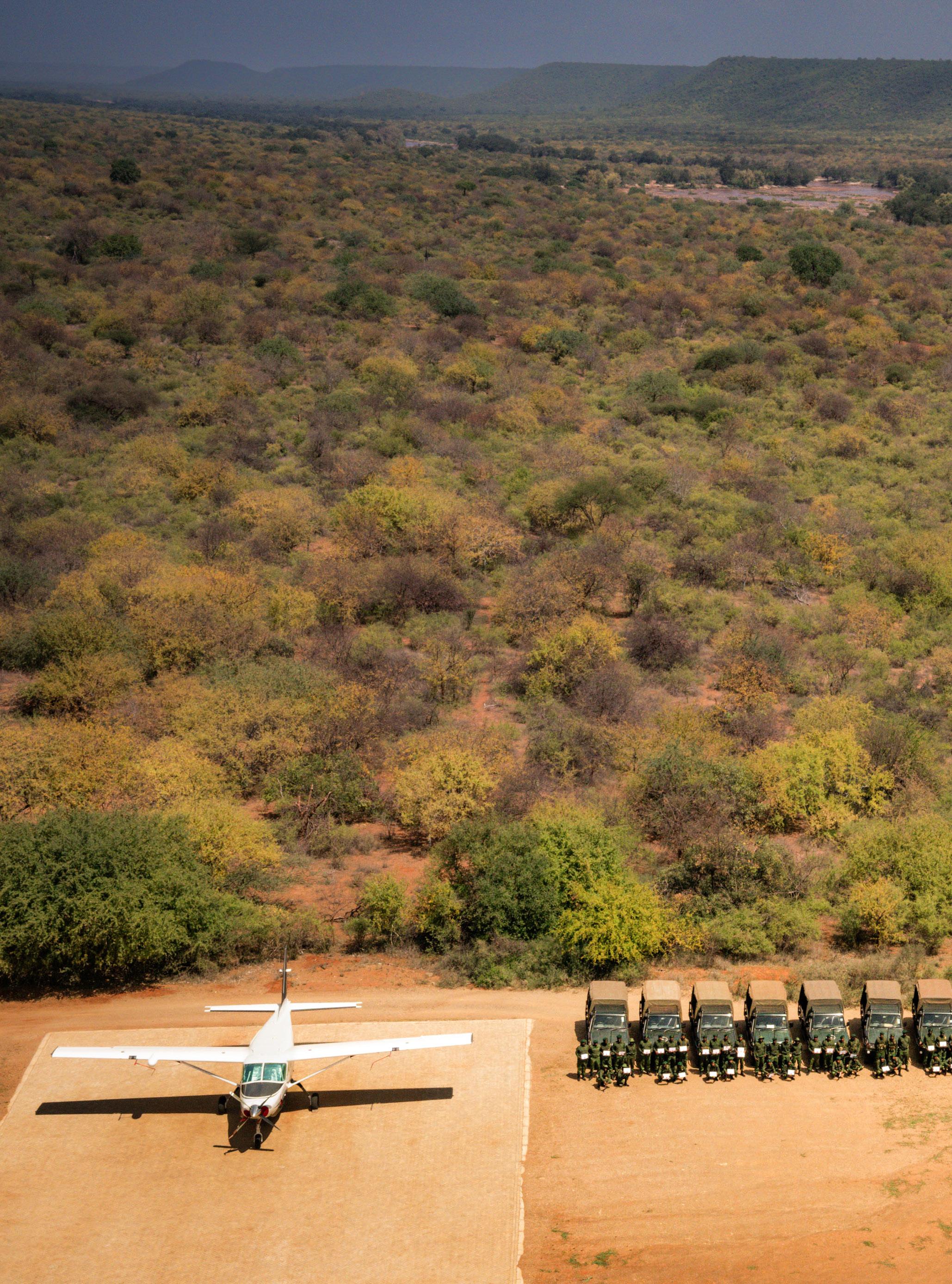
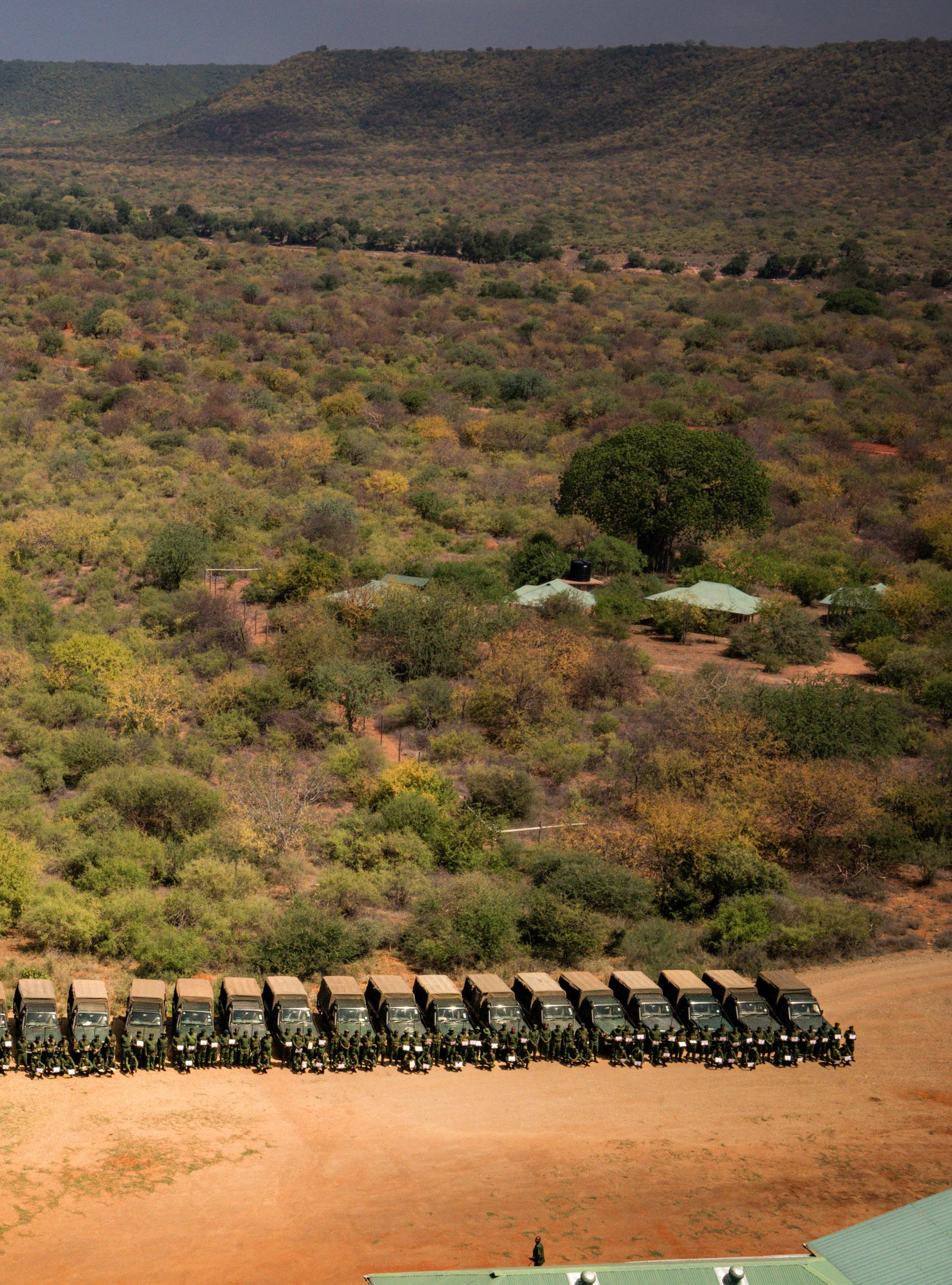
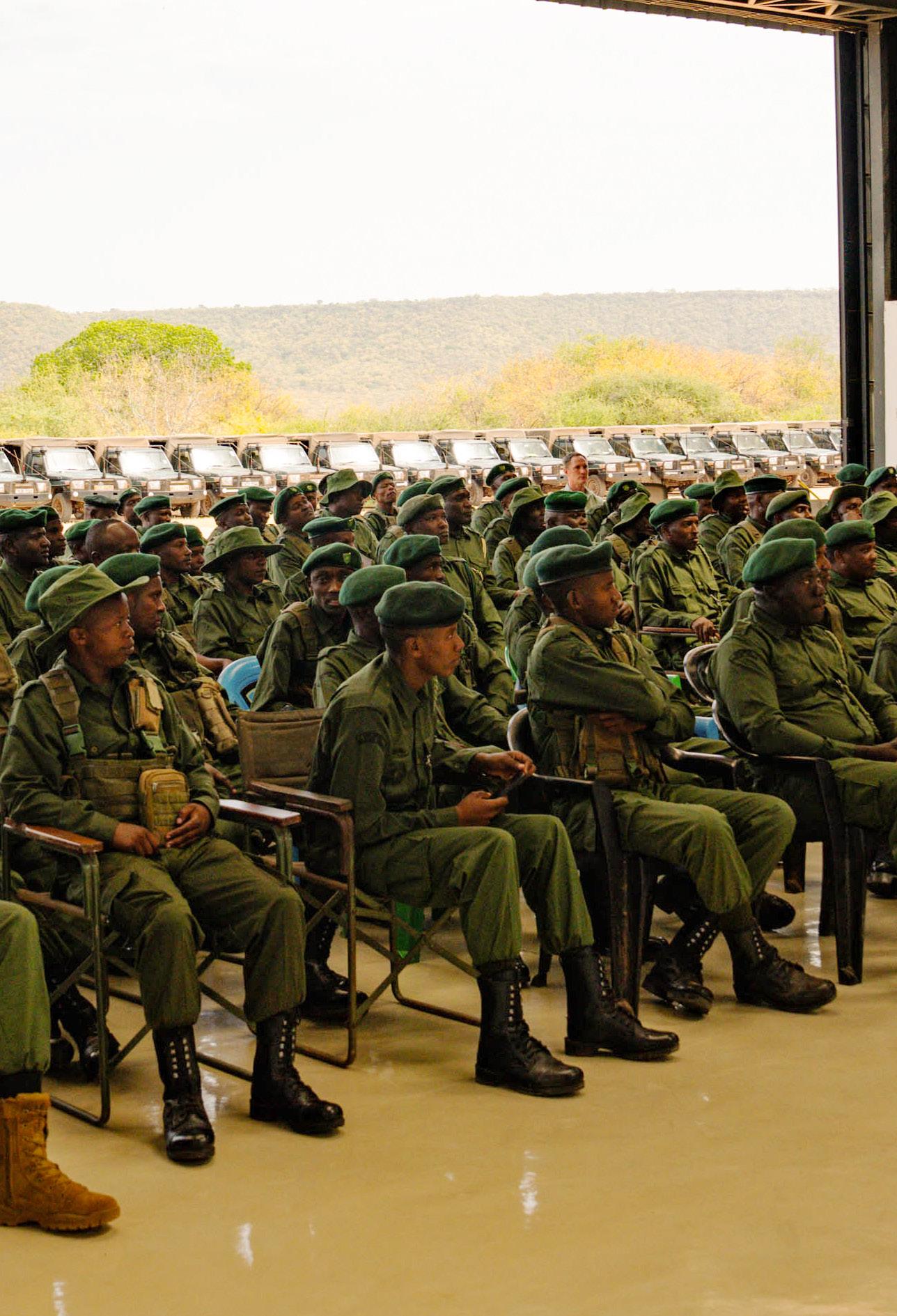
Since launching our first Tsavo-based SWT/KWS Anti-Poaching Team in 1999, our rangers have been frontline defenders of Kenya's wildlife
anti - poaching teams
28 mobile Anti-Poaching Teams
2 Drone Units
1 Canine Unit
9 SWT-funded, partner-operated teams
204 SWT Rangers
433,032 kilometres driven in 2025
49,420 kilometres patrolled on foot in 2025
402 wildlife offenders arrested in 2025
13,978 snares confiscated in 2025
Our rangers have been frontline defenders of Kenya's wildlife— conducting anti-poaching patrols, supporting veterinary treatments, responding to human-wildlife conflict, and assisting with all manner of field emergencies. Today, in partnership with the Kenya Wildlife Service, we operate and support anti-poaching work across the country.
In 2025, our anti-poaching operations evolved in two important ways. The Canine Unit grew with the recruitment of two new tracker dogs, bolstering one of our most effective tools in the field. We also took a landmark step with the launch of the SWT/KWS Drone Unit — the first time aerial surveillance and real-time intelligence have been integrated into our conservation operations, enhancing how we monitor and protect Kenya's parks and protected areas.
From a single foot patrol in Tsavo to 28 Anti-Poaching Teams, a Canine Unit, and now a dedicated drone program, our anti-poaching operations continue to grow in both reach and capability — ensuring Kenya's wildlife and wild places have the protection they need.
In 2025, our Anti-Poaching Unit comprised 28 teams, plus a dedicated Canine Unit and two mobile drone teams, supported by 166 rangers, including 21 scouts deployed in Lamu. Operating across key ecosystems in partnership with KWS, our teams remained a constant presence on the ground — conducting patrols, organising ambushes, gathering intelligence, and responding rapidly to emerging threats.
In total, 402 arrests were made in 2025. Poaching accounted for the largest proportion of arrests, underscoring the continued pressure on wildlife despite
overall gains in elephant and rhino protection in recent years. Snaring and bushmeat poaching remained persistent threats. In 2025 alone, teams confiscated 13,978 snares — thousands of indiscriminate traps that would otherwise have continued to maim and kill wildlife. Rangers also seized 285 weapons, further disrupting illegal operations before greater damage could be done. These figures reflect both the scale of illegal activity and the effectiveness of sustained boots-on-theground patrols.
Each team operates with a specialised 4x4 vehicle, essential for navigating rugged terrain, and is accompanied on patrol by armed KWS rangers with the authority to make arrests. Using aerial support, ground patrol intelligence, and a carefully developed informant network, teams identify hotspots and strategically intercept offenders.
Beyond arrests, Anti-Poaching Teams play a critical operational role across the conservation landscape. They are often first on scene for human-wildlife conflict cases, veterinary interventions, orphan rescues, and translocations. Rangers assist the SWT/KWS Mobile Vet Units during treatments, monitor injured animals before and after intervention, and provide critical field support during medivacs and complex wildlife relocations.
Our rangers are drawn from communities across Kenya and undergo rigorous training at the KWS Training Academy in Manyani. This intensive three-month program prepares them in bushcraft, navigation, communications, first aid, wildlife law, and counterterrorism — equipping them to operate professionally and effectively in high-risk environments.
Tsavo Conservation Area
After more than 25 years of operations, our AntiPoaching Teams continue to adapt to an evolving threat environment. While challenges persist, sustained patrol presence, intelligence-led enforcement, and close collaboration with government partners remain central to protecting Kenya’s wildlife and securing its future.
Mtito - Tsavo Triangle, Tsavo East and Tsavo West National Parks (est. 1999)
Peregrine - Trust land, Tsavo East National Park (est. 2001)
Burra - Southern sector of Tsavo East National Park and surrounding ranch lands (est. 2002)
Ithumba - Northern sector of Tsavo East National Park, including Ithumba Reintegration Unit (est. 2002)
Tiva - Northern sector of Tsavo East National Park (est. 2004)
Ziwani - Southern sector of Tsavo West National Park and surrounding ranch lands (est. 2004)
Chyulu - Chyulu Hills National Park (est. 2006)
Kenze - Kibwezi Forest Reserve Chyulu Hills National Park (est. 2013)
Yatta - Northern sector of Tsavo East National Park, including the Yatta Plateau (est. 2016)
Mobile North - Where most needed in the northern sector of Tsavo Conservation Area (est. 2016)
Sobo - Central and western sectors of Tsavo East National Park (est. 2018)
Mobile South - Northern sector of Chyulu Hills National Park and KARI Ranch (est. 2018)
Chyulu Mobile - Where most needed in Chyulu Hills National Park, Kibwezi Forest, and KARI Kiboko Ranch (est. 2019)
Mukururo - Northern sector of Chyulu Hills National Park (est. 2020)
Thabagunji - Thabagunji area and Yatta Plateau (est. 2020)
Lake Jipe - Lake Jipe area, bordering the Tanzania border (est. 2021)
Dakadima - East of Tsavo, bordering Lali Hills (est. 2021)
Kulalu - Southern border of Tsavo East National Park, within Kulalu and Galana Ranches (est. 2021)
Kapangani - Galana Conservation Area and where needed (est. 2022)
Umbi Mobile - Northern sector of Tsavo East National Park (est. 2023)
Kulalu II - Galana Conservation Area, Shimba Hills, Arabuko Sokoke and where needed (est. 2023)
Kichwa Tembo - Tsavo West National Park (est. 2023)
Tsavo Mobile - Where needed in Tsavo (est. 2024)
Shimba Hills
Kwale - Shimba Hills (est. 2023)
Arabuko Sokoke Forest
Kajiado - Arabuko Sokoke Forest (est. 2021, relocated 2023)
Nakuru-Naivasha-Shampole
Shompole - Naivasha, Soysambu and Lake Nakuru (est. 2021, relocated 2023)
Meru National Park
Meru - Meru National Park and Mwea National Reserve (est. 2014)
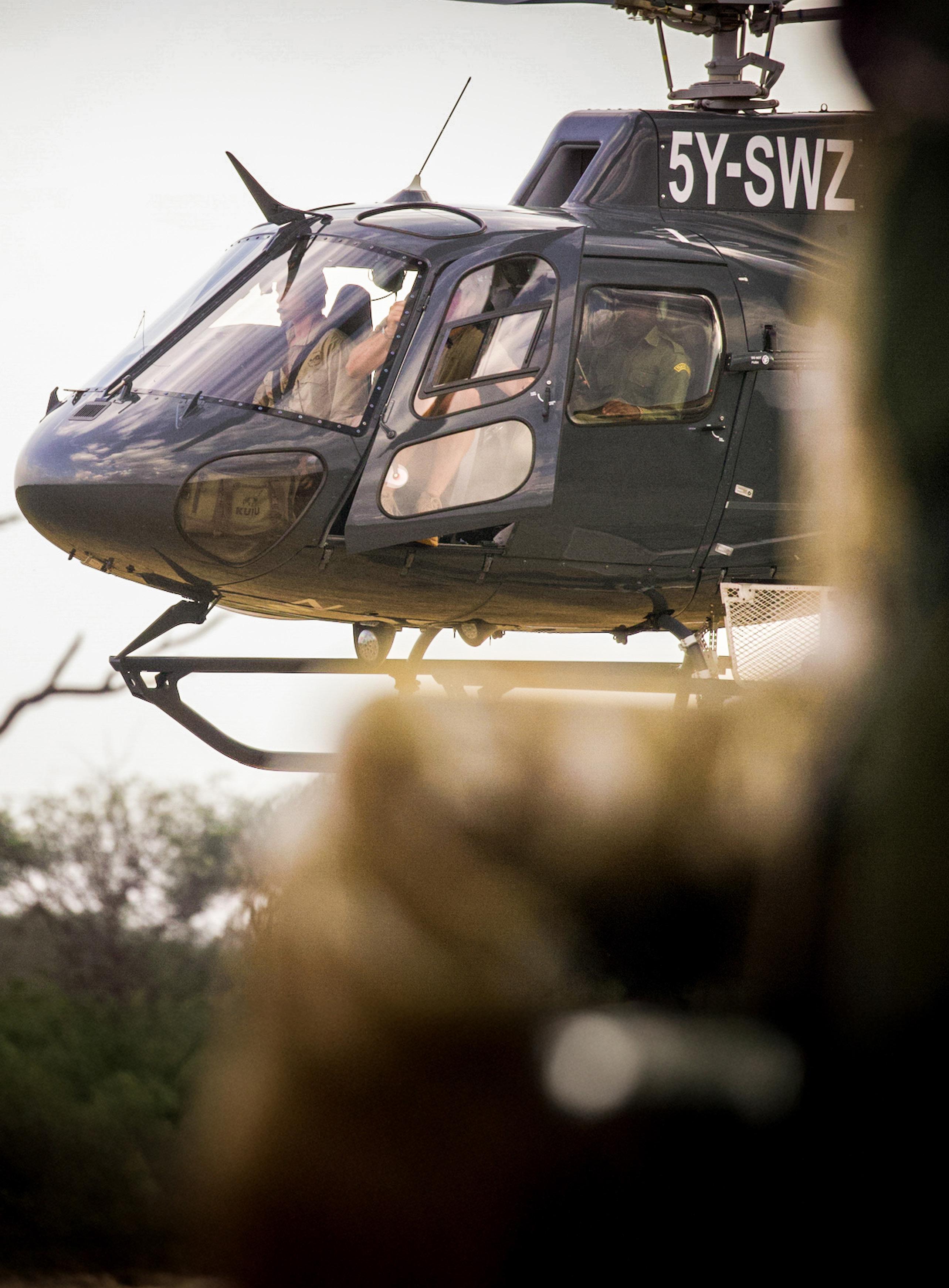
sw T - funded , P ar T ner - o P era T ed an T i - P oa CH ing T eams :
Tsavo Ecosystem
Tsavo Rapid Response Team operated by KWS
Mau Forest
Mau Forest 1 - Managed by Mara Elephant Project (est. 2018)
Mau Forest 2 - Managed by Mara Elephant Project (est. 2019)
Mount Kenya
Mount Kenya Rapid Response Team operated by KWS
Mount Kenya Team operated by Mount Kenya Trust
Mara Ecosystem
Security scouts managed by Mara Conservancy
Mwaluganje Elephant Sanctuary
6 security scouts managed by Golini–Mwaluganje Community Conservancy
Nasaru Olosho Conservancy
20 security scouts managed by Nasaru Olosho Conservancy Trust
Amu Ranch
21 security scouts managed by Lamu Conservation Trust
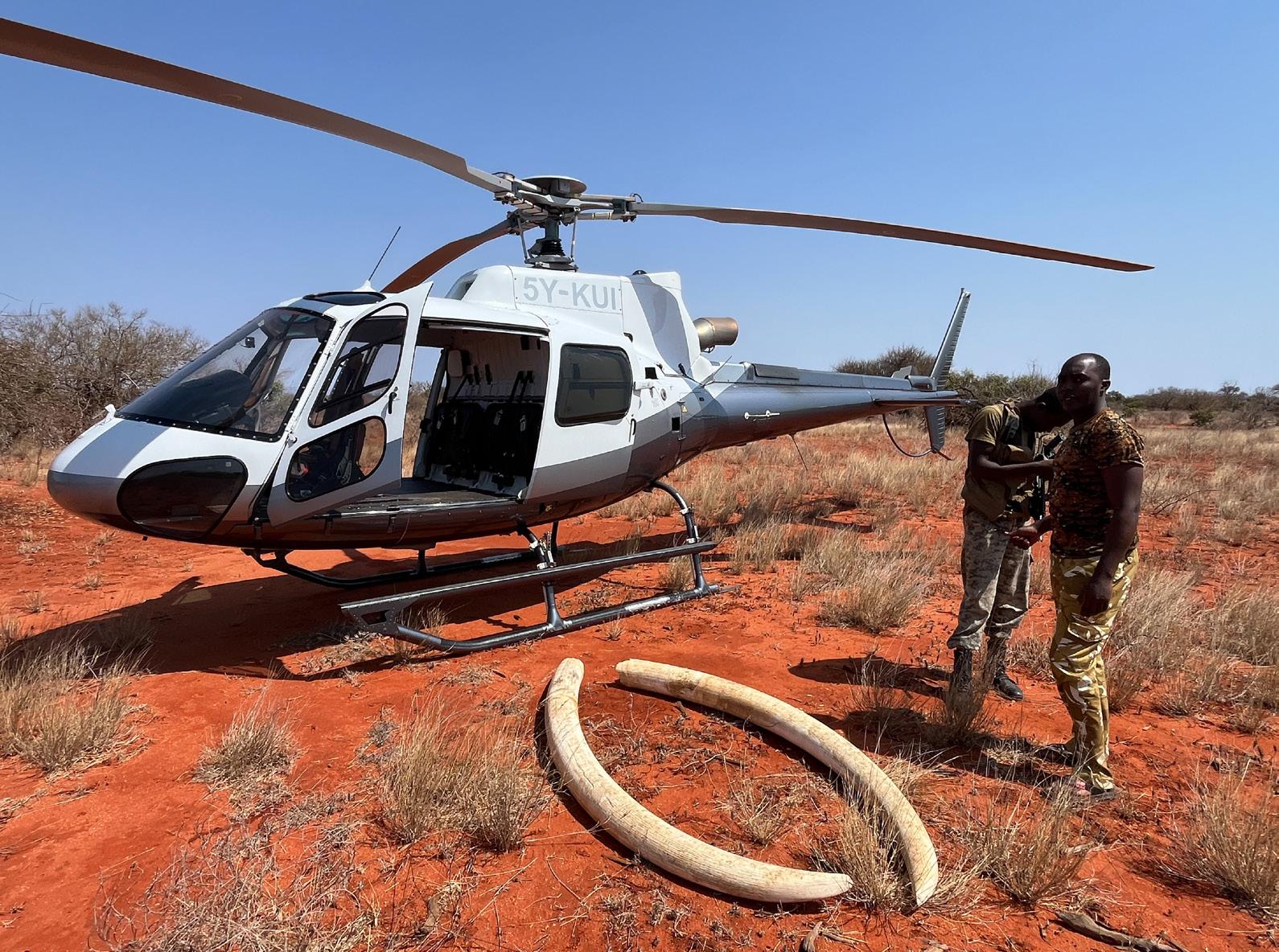
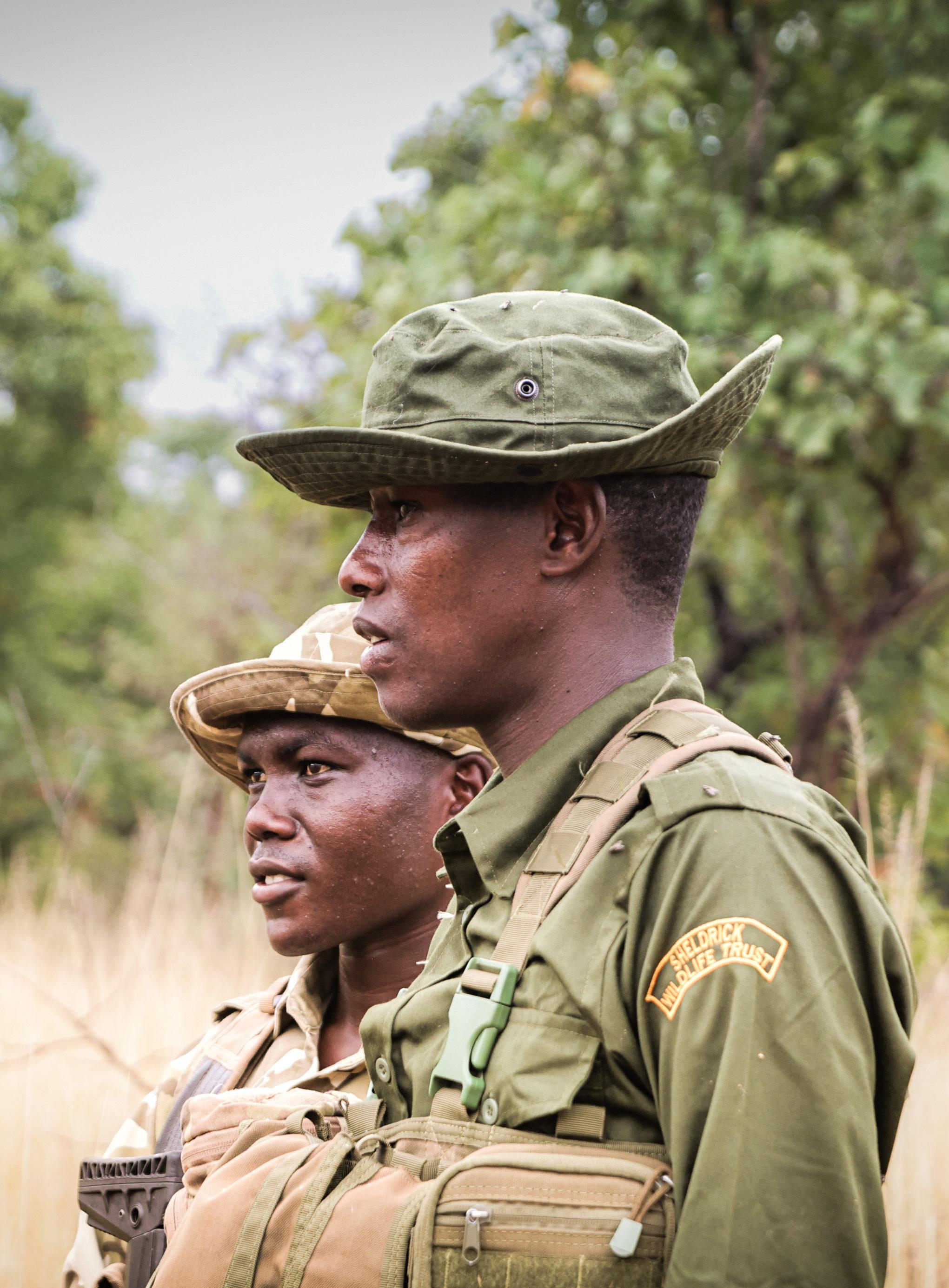
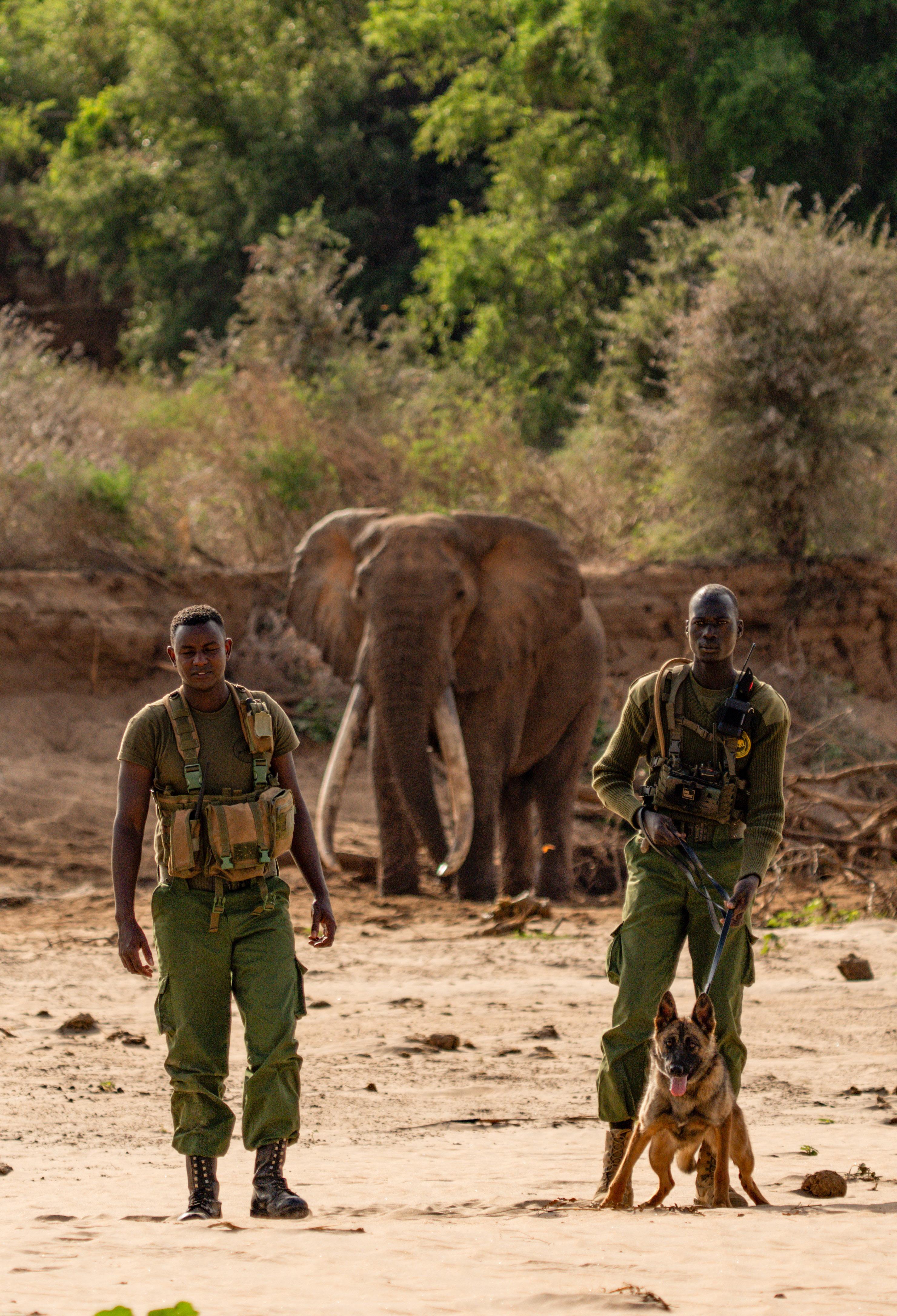
Our Canine Unit continues to be a critical component of anti-poaching efforts across the Tsavo Conservation Area
canine unit
4 SWT Canines
9 Years Operational
Established in 2016 in partnership with KWS, the unit enhances field operations through advanced scent-tracking and detection capabilities, working in close coordination with our Anti-Poaching and de-snaring teams.
2025 was a pivotal year for the Canine Unit. Two new dogs, Bela and Abby, joined the team and underwent a structured onboarding process with our partners at Working Dogs for Conservation, including targeted scent-detection training and integration exercises with our field teams. Over the course of the year, they were operationalised within the broader landscape, building confidence, proficiency, and teamwork alongside experienced handlers and AntiPoaching Teams. Their successful induction has enhanced the unit’s overall capacity, enabling longer-range tracking, more effective pursuit of suspects, and improved coordination across all operational areas.
C anine P rofiles
abby
OUR MOST RECENT ARRIVAL
Abby also joined the team this year and is developing into a highly capable young tracker. She is now confidently completing tracks exceeding two kilometres with 100% accuracy, demonstrating impressive focus and a strong work ethic. With her handler, she is continuing to build experience and confidence in varied environments.
bela
TRACKING & DETECTION
Bela joined the team this year and, despite her youth, is already fast emerging as one of the strongest K9s trained in Africa. Now fully imprinted on ivory detection, she has progressed to tracking aged human scent up to eight hours old — a major operational milestone. During the most recent training period, she successfully completed a five-kilometre track with near-perfect accuracy. Bela’s ability, focus, and athleticism mark her as an exceptional asset to the team.
zora
TEAM VETERAN
Zora is a talented, dependable presence within the Canine Unit. She has always had a determined personality, particularly when it comes to tracking, and that drive continues to serve her well in the field.
aya
PARTIALLY RETIRED
Aya focuses on detection duties and is enjoying her partial retirement at Kaluku. Arthritis medication has made a marked difference to her mobility, giving her a smoother gait and comfort in her day-to-day life. She enjoys a calm, well-supported routine and plenty of attention from the people who know her so well. She continues to join the Canine Unit for evening walks on the airstrip and is sometimes called for detection work.
In July 2025, a dedicated training engagement was conducted in collaboration with Working Dogs for Conservation, focused on strengthening both canine and handler performance.
Key achievements included:
Advanced Tracking Performance: Bela completed a five-kilometre track with near-perfect accuracy, while Abby achieved multiple tracks exceeding two kilometres with 100% accuracy.
Aged Track Proficiency: Both dogs successfully followed tracks with a six-hour delay, significantly enhancing delayed-response capability.
Scenario-Based Field Training: Joint exercises with de-snaring teams simulated pursuit operations over 20+ kilometres of varied terrain, incorporating countertracking challenges.
Operational Technology Integration: Enhanced EarthRanger features were implemented to improve reporting, data management, and oversight within the operations room.
In August, a four-week integration period brought the Canine Unit to Galana, where they worked daily alongside four Anti-Poaching Teams. The focus was practical: building trust in the field, refining communication between handlers and rangers, and ensuring the dogs were confident operating in real patrol conditions.
With both Abby and Bela now able to follow older scent trails and work longer tracks, the unit is better equipped to support teams when information comes in late or suspects have already moved on.
With Bela and Abby now working confidently in the field, Zora continuing to anchor the team, and Aya enjoying her retirement, the Canine Unit remains a steady and reliable part of our anti-poaching operations. The consistency of the handlers and the growing capability of the dogs position the unit well for the year ahead.
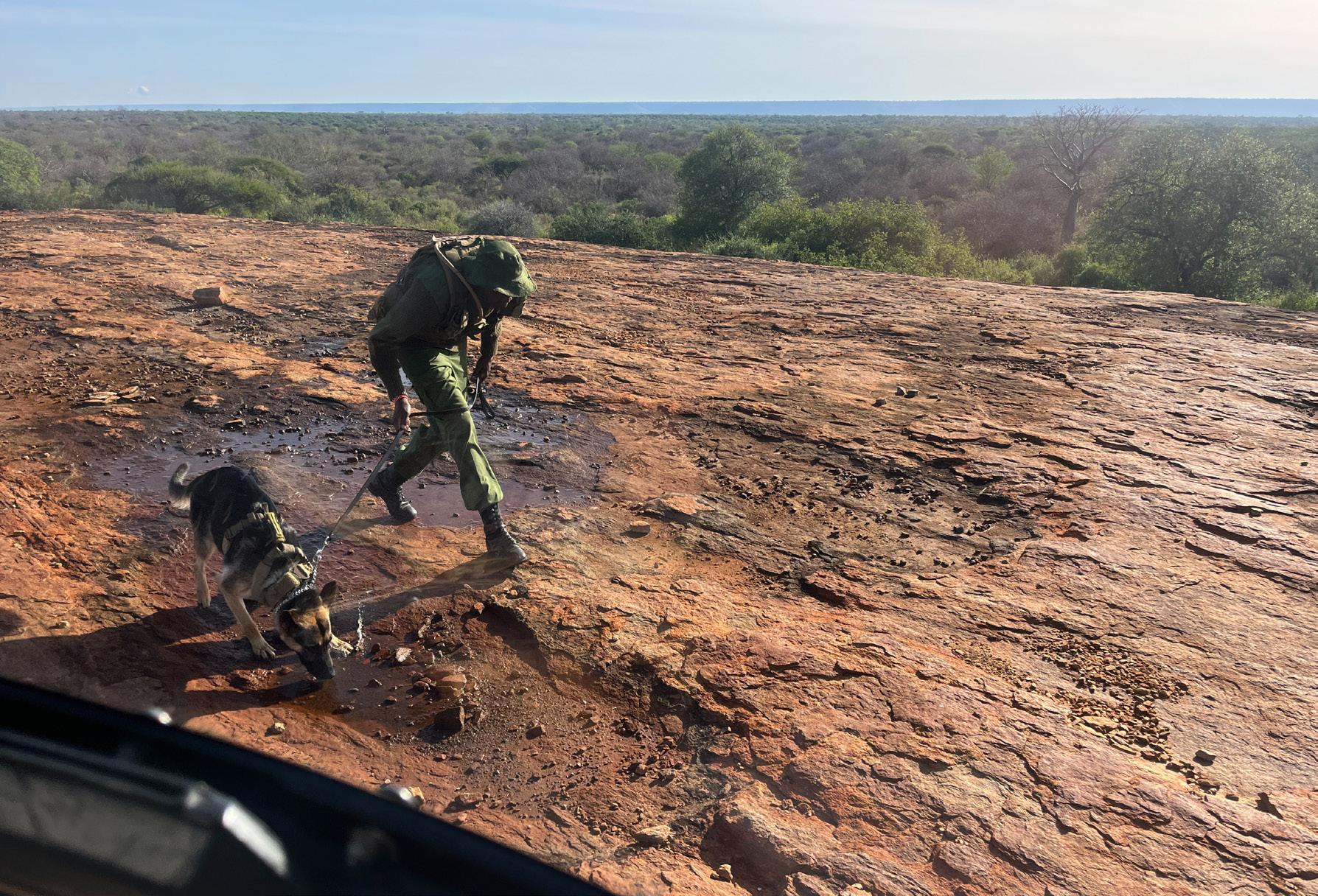
Bela at work
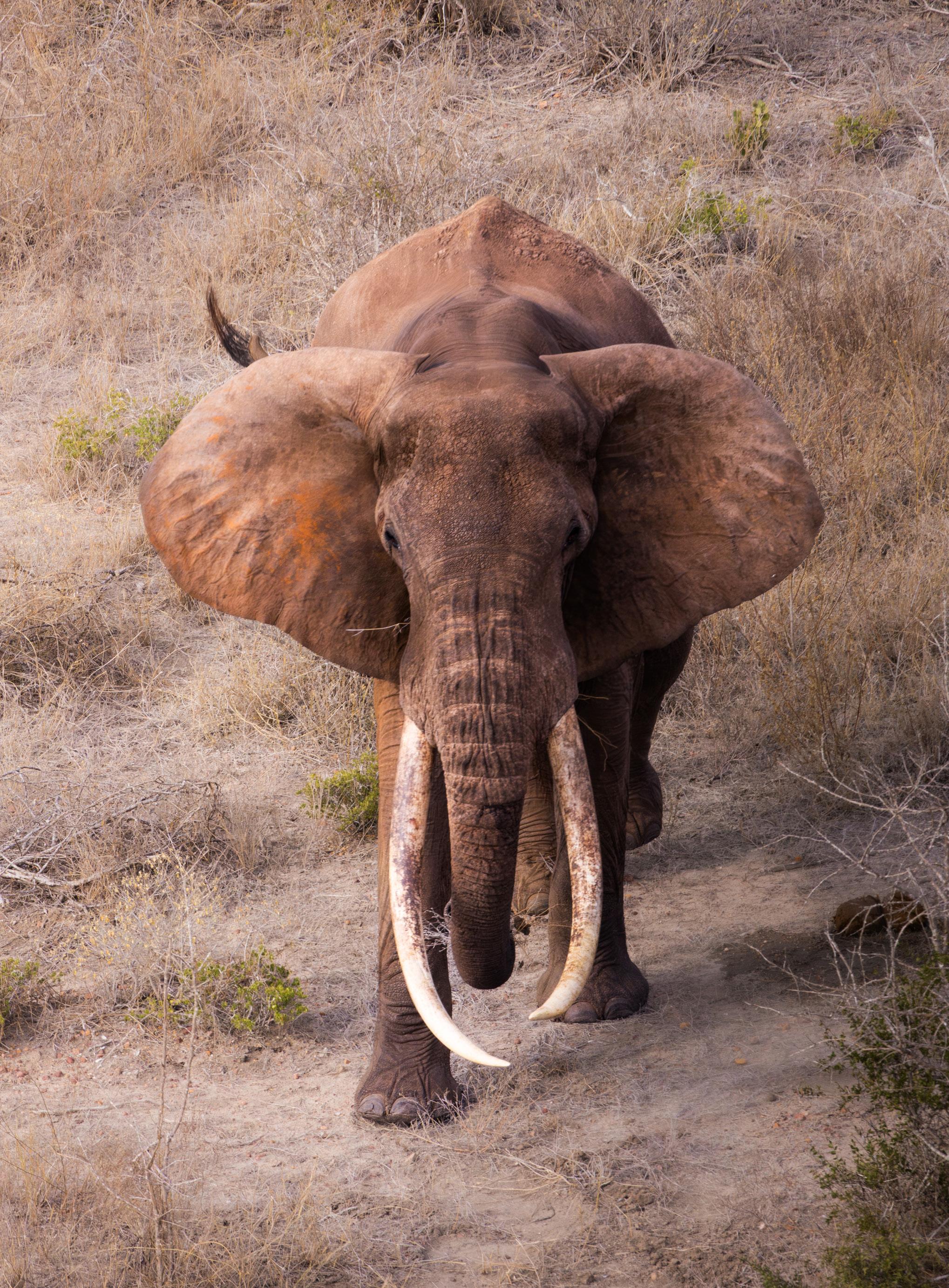
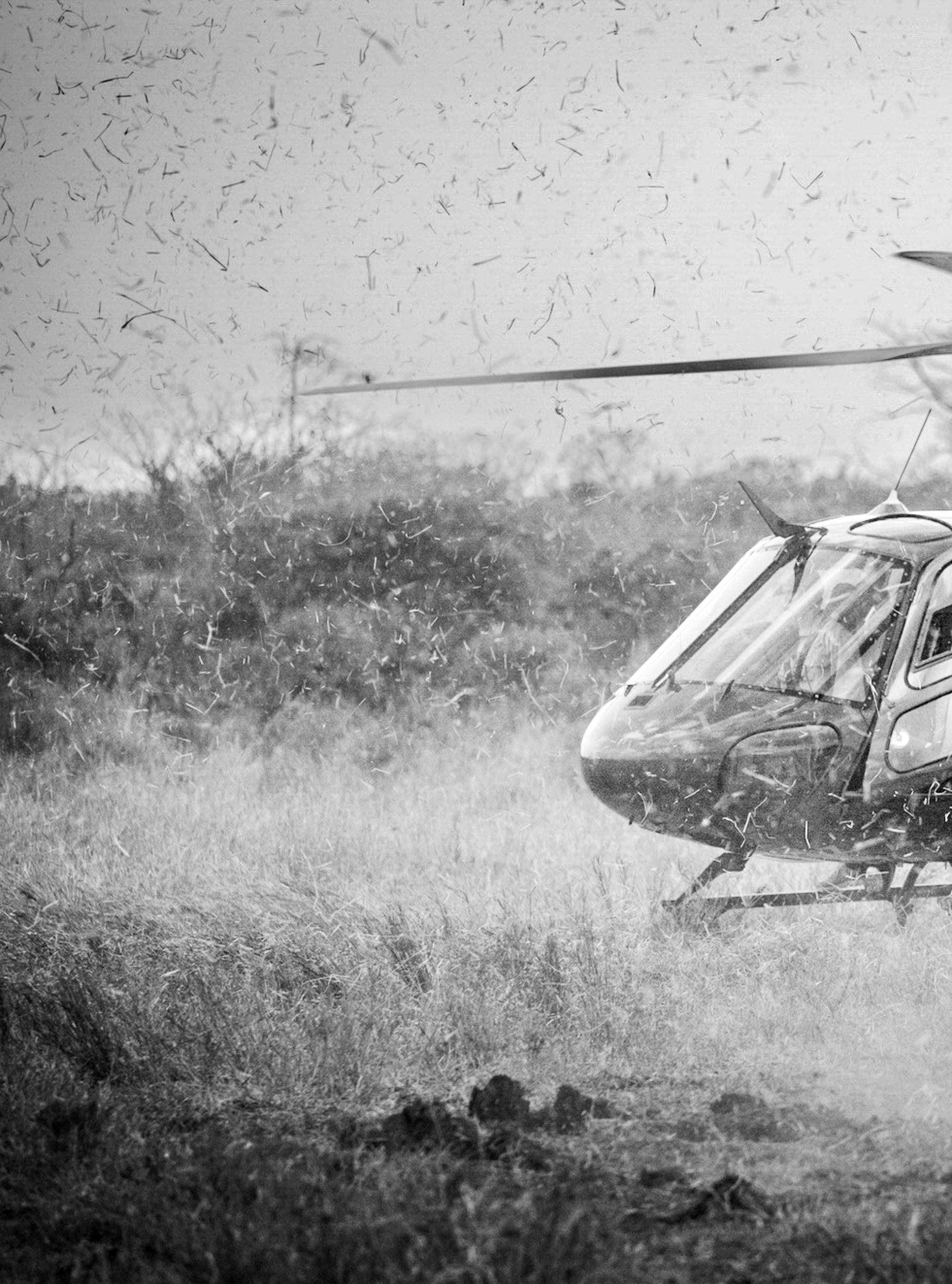
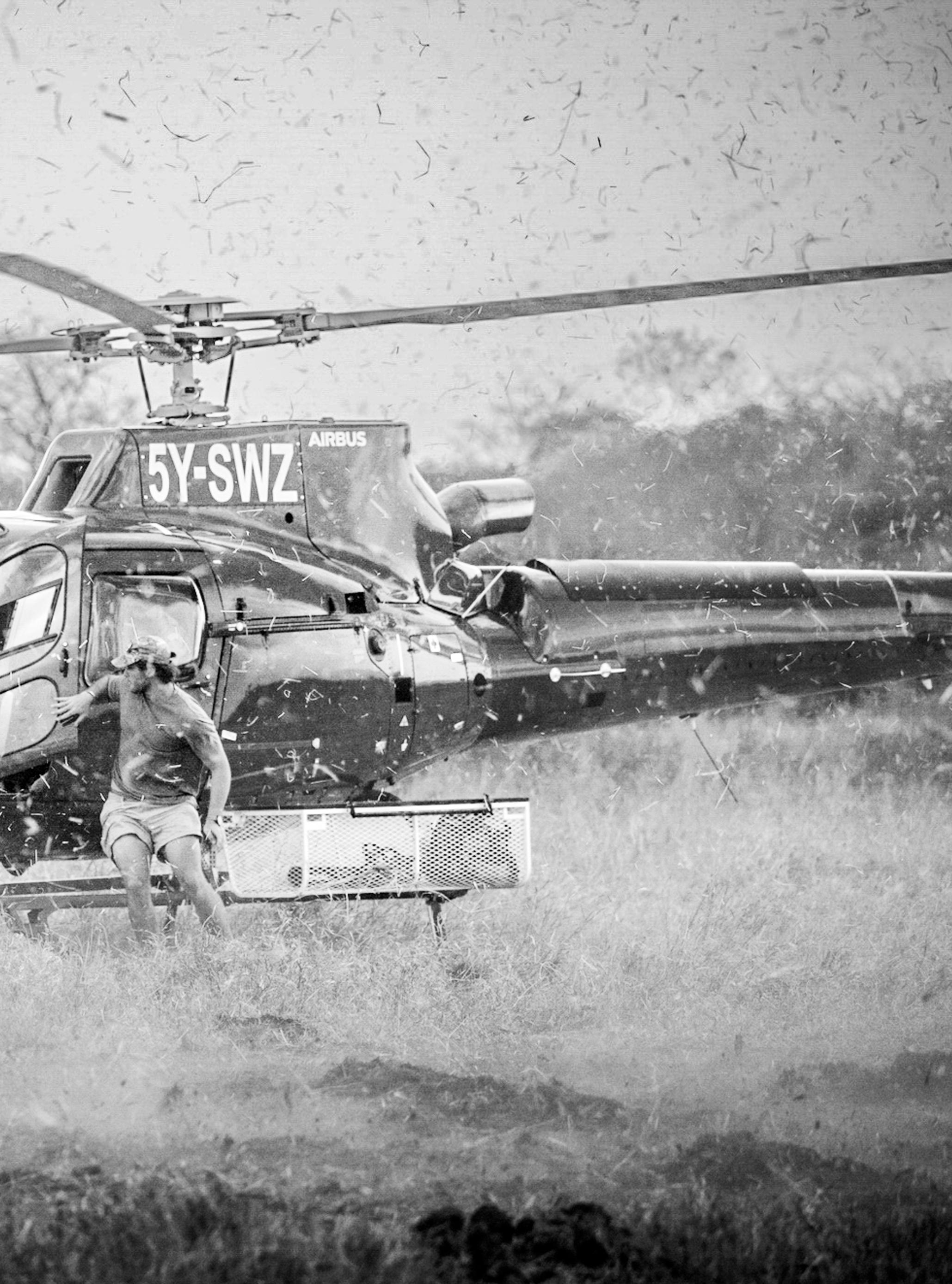
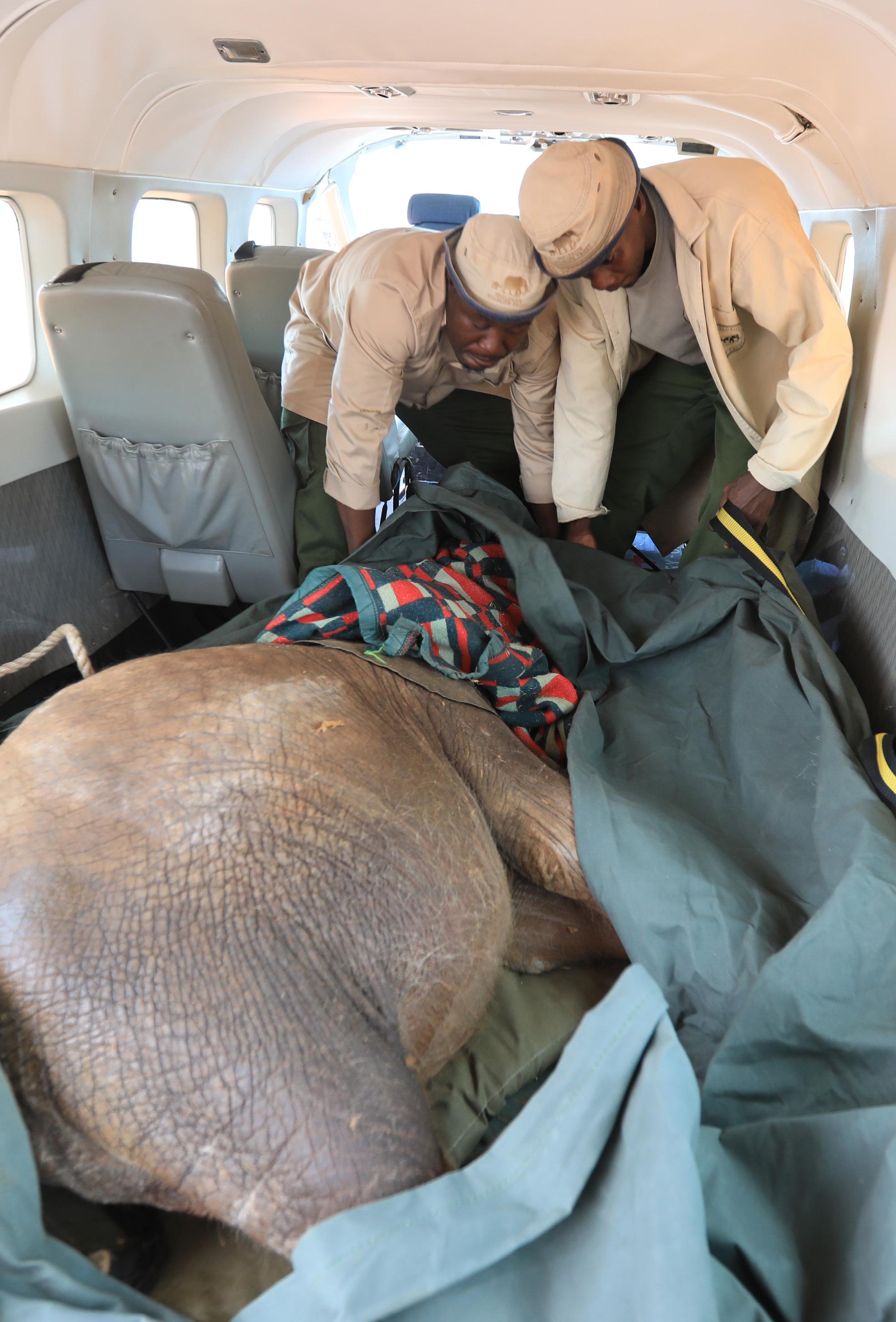
Launched in 2008, our Aerial Unit remains one of the most defining pillars of our field operations.
aerial operations
8 fixed-wing aircraft
4 helicopters
2,207 hours flown in 2025
347,478 kilometres covered in 2025
Kenya still holds rare expanses where wildlife dominates the landscape — nowhere more so than the Tsavo Conservation Area, the largest contiguous wilderness in the country. Covering more than 40,000 square kilometres — comparable in scale to Switzerland — it safeguards Kenya’s largest elephant population alongside countless other species.
Operating effectively across terrain of this magnitude is simply not possible from the ground alone. Dense bush, vast distances, and minimal infrastructure make many conservation interventions inefficient — if not entirely unfeasible — without aerial capability. Aviation is not a luxury in these landscapes; it is an operational necessity.
In 2025 alone, our pilots logged 2,207 flight hours, covering 347,478 kilometres — the equivalent of circling the globe approximately 8.7 times, nearly nine laps around the Earth in a single year.
Over the course of the year, our pilots spotted 103 injured animals in Tsavo and were the architects of many subsequent treatments. That averages to 1.98 animals a week — cases that would have gone unnoticed without aerial detection. Additionally, the Aerial Unit helped extract 17 elephants from dams and wells, ranging from full-grown bulls to family groups to tiny calves. They also moved almost 400 elephants off community land and back into the park in humanwildlife conflict mitigation.
Our aircraft enable us to work in close partnership with the Kenya Wildlife Service, supporting a wide spectrum of critical missions: orphaned elephant rescues, aerial patrols, human–wildlife conflict mitigation, veterinary deployments, ranger insertions, medical evacuations, fire response, and rapid logistical support. Our pilots do far more than fly — they function as aerial observers, first responders, and conservation rangers in their own right.
Aviation has been embedded in our operational philosophy from the very beginning. David Sheldrick understood the strategic value of aircraft early on. As the founding warden of Tsavo National Park, he relied on a bush-ready Super Cub to extend his reach across remote terrain. In 2008, it was fitting that another Super Cub marked the formal launch of our Aerial Unit — a turning point that permanently elevated our conservation capacity.
Now, 17 years on, our fleet has grown to eight fixed-wing aircraft and four helicopters, each fulfilling a precise operational role.
CubCrafters Top Cub (5Y-DTP):
Our benchmark surveillance platform. Designed for rugged backcountry performance, it excels in short takeoff and landing (STOL) conditions. Flying slow patrols — often six hours at a time at approximately 60 MPH — its exceptional visibility makes it ideally suited for widearea reconnaissance over Tsavo.
CubCrafters Top Cub (5Y-NRC):
Added in 2023 and based at our Lali Headquarters in Galana, NRC extends our coverage across Galana and Kulalu Ranches, the Arabuko Sokoke Forest, and other vulnerable coastal ecosystems.
Piper Super Cub (5Y-STP):
A modernised classic. Upgraded with increased gross weight, a more powerful engine, and a widened fuselage, this aircraft combines heritage handling with enhanced field performance. It remains a pilot favourite for good reason.
CubCrafters Carbon Cub FX3 (5Y-STR):
Equipped with advanced avionics, a constant-speed propeller, expanded cabin space, and greater load capacity, the FX3 represents a new generation of bush aircraft. It has significantly enhanced our patrol efficiency across Tsavo.
CubCrafters Carbon Cub EX3 (5Y-STB):
Following the FX3’s impact, the EX3 joined our fleet to meet growing operational demand. Professionally assembled in South Africa and flown to Kenya by our team, it mirrors the FX3’s capabilities and has already strengthened our aerial coverage.
Cessna 206 (5Y-CFZ):
Often referred to as the industry’s ‘workhorse,’ the 206 is valued for dependable load-carrying capacity. We deploy it for longer-range personnel transfers and specialist missions — including transporting tracker dogs and handlers. In mid-2025, it was sent down to South Africa for a machine overhaul and is now back in the landscape.
Cessna 208 ‘Baby’ Caravan (5Y-STW):
Widely regarded as the leading medium-sized bush aircraft, the Caravan is central to our rescue operations. It can carry up to 11 passengers or heavy cargo — including orphaned elephants — in and out of remote strips. Equipped with modern avionics and a LifePort medevac system, it enables all-weather and night operations.
Cessna 185 (5Y-FLY):
A rugged, STOL-equipped aircraft built for unprepared airstrips. Its ability to carry heavy loads into remote terrain makes it indispensable for veterinary deployments and complex field operations.
H eli C o PT er flee T
Airbus EC120B (CXT):
Our lightest helicopter, offering flexibility and costefficiency. Ideal for patrol, surveillance, ranger deployment, human–wildlife conflict response, and select veterinary operations.
Airbus AS350 B3 (5Y-CXP):
A transformative addition to our operations. Powerful and highly versatile, CXP supports anti-poaching deployments, wildlife herding, fire suppression via Bambi Bucket, sling-load logistics, veterinary darting, and direct-to-hospital medical evacuations. Few assets have had a greater operational impact.
Airbus AS350 B3 (5Y-KUI):
Acquired to meet increasing national demand beyond Tsavo, this second B3 expands our reach while maintaining continuous aerial coverage in partnership with KWS.
Airbus AS350 B3E (5Y-SWZ):
The newest addition to the Unit, the B3E delivers enhanced high-altitude performance and a dual hydraulic system for improved redundancy and safety. Its capabilities allow us to operate more effectively across diverse and high-altitude landscapes throughout Kenya.
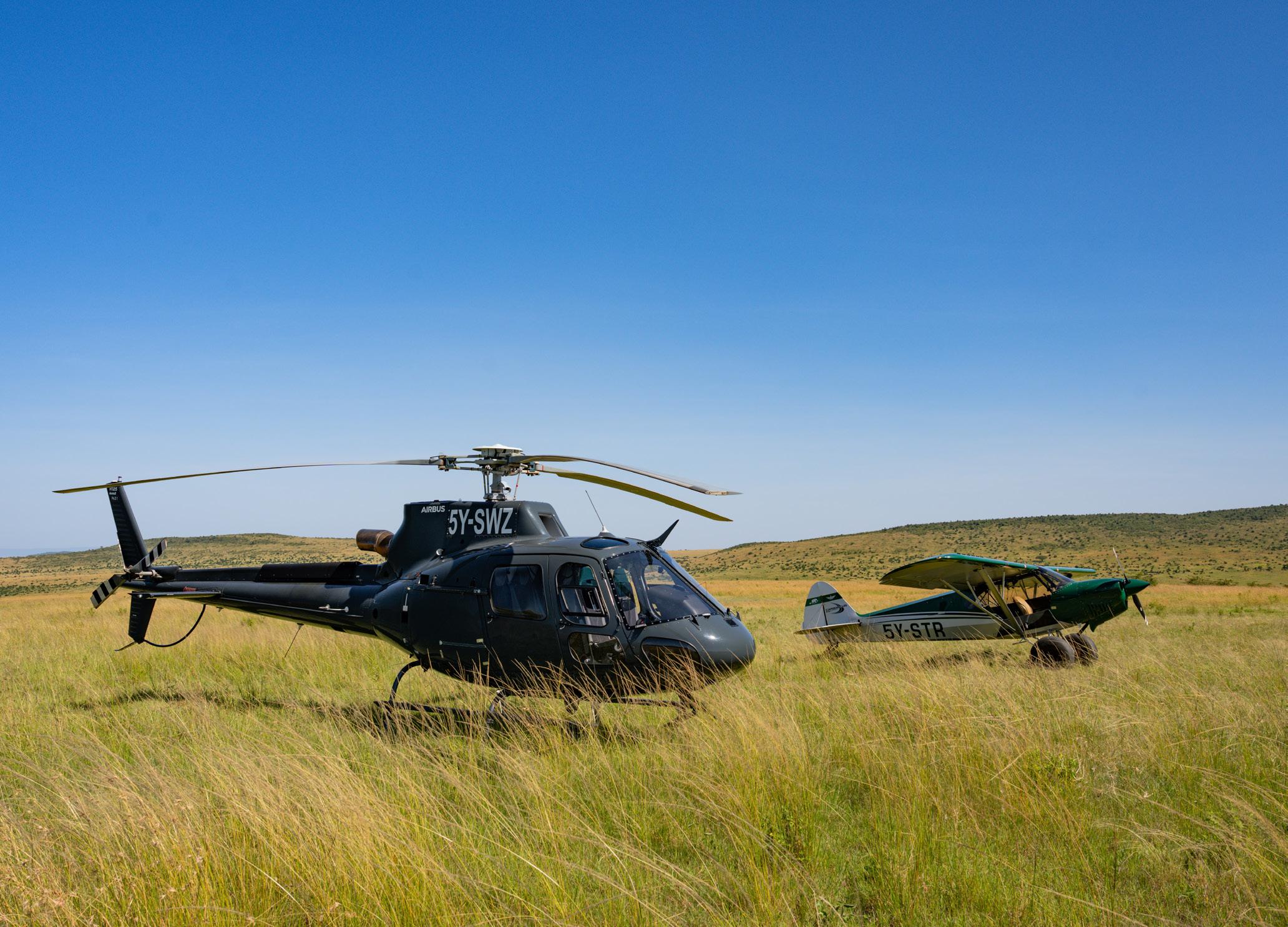
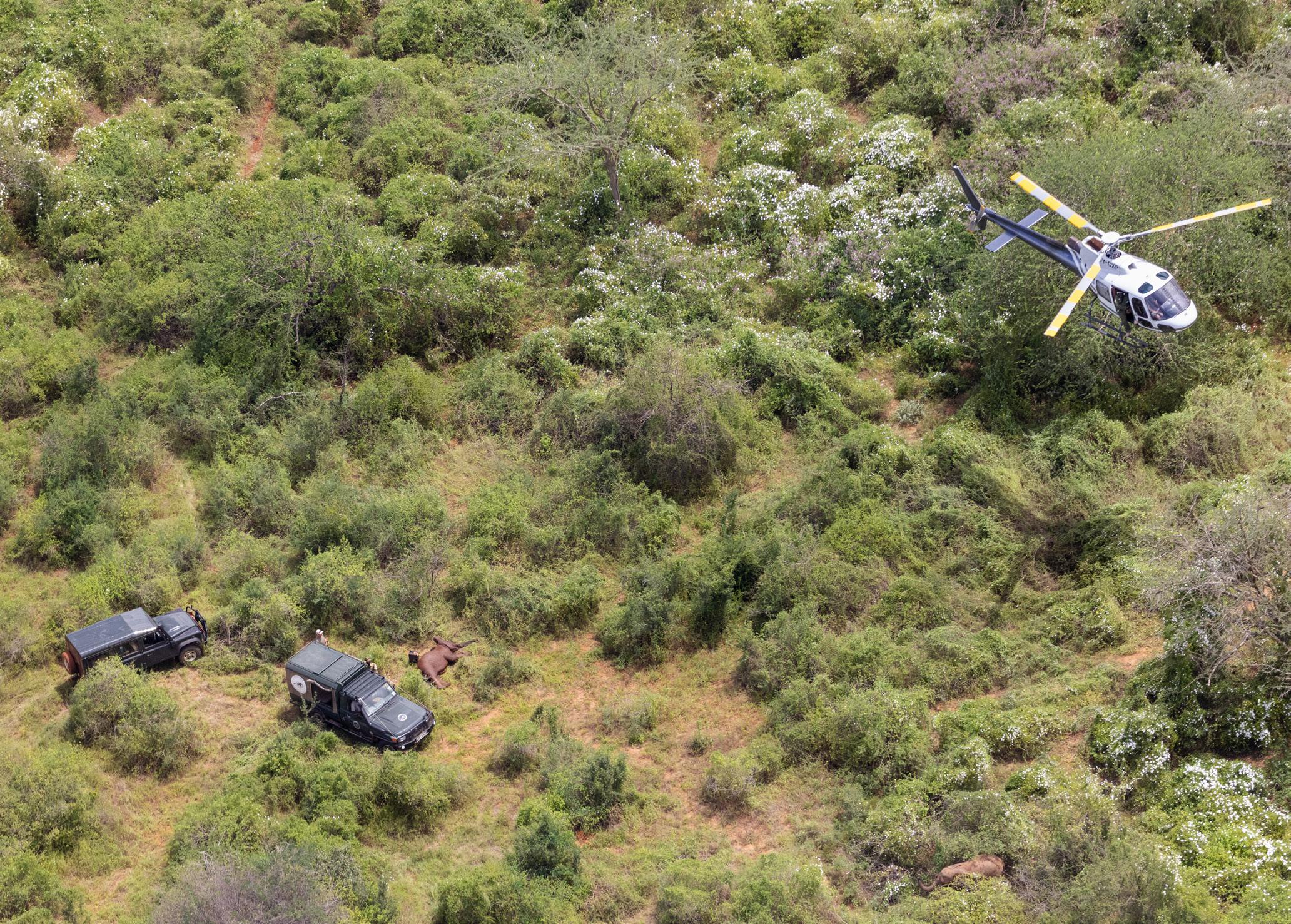
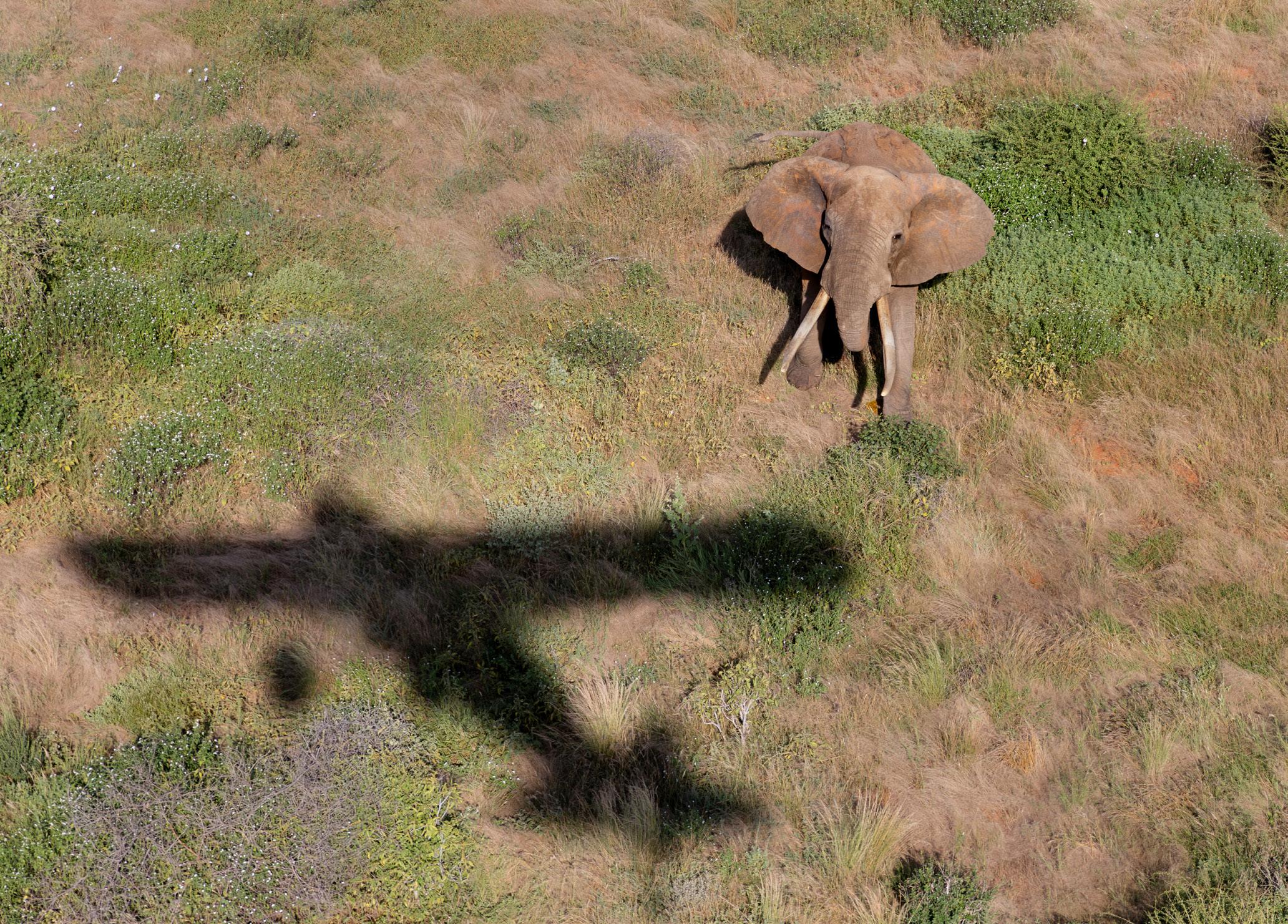
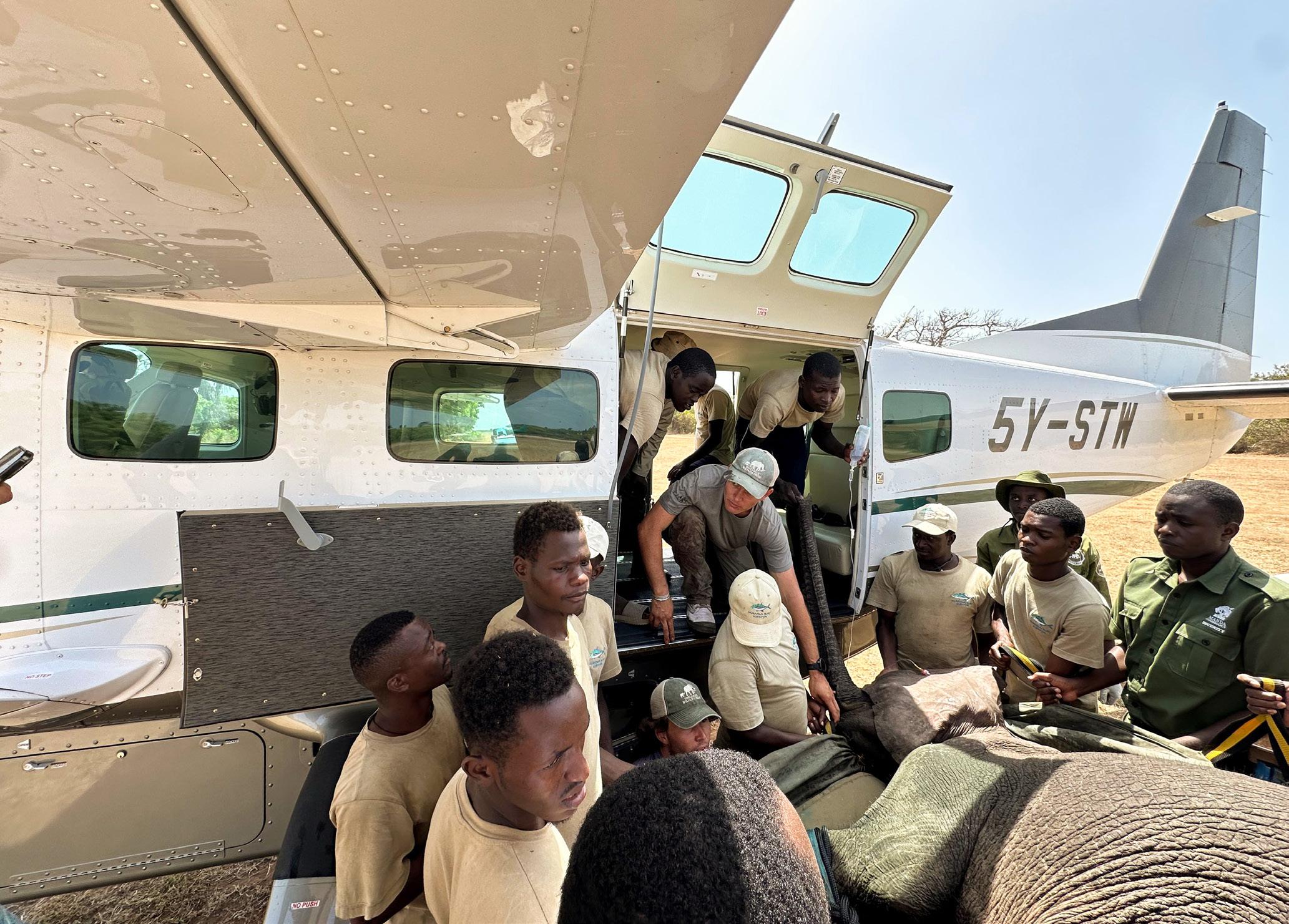
2025 began at pace for the Aerial Unit, with a steady stream of veterinary interventions, human–elephant conflict mitigation, and an unusual international stowaway rescue. Several elephants suffering from arrow, spear, and snare injuries were located during fixed-wing patrols and later darted and treated with helicopter assistance. Particularly memorable were two bull elephants — one repeatedly evading treatment after retreating into Lake Jipe before finally being successfully darted, and another in Kibwezi Forest whose deeply embedded snare required urgent aerial coordination to save his life. A snared leopard in Lamu County was also rescued and treated, which stood out as an encouraging case given the often-fatal outcomes of such injuries.
Human–elephant conflict was present but manageable, with helicopters successfully pushing five groups back into protected areas. The Unit also supported the translocation of an elephant responsible for a fatal incident to Shimba Hills, while orphaned wildlife — including a buffalo calf and an elephant calf deemed safe to remain with a wild herd — required careful assessment. Poaching activity was limited, while widespread outof-season rains refreshed much of Tsavo. A final, unexpected mission saw the team assist in capturing and transporting cyclone-displaced lemurs that had stowed away to Mombasa Port. It was a unique conservation footnote to an otherwise intense month.
February was defined by two major conservation undertakings: the Tsavo Wildlife Census and a largescale black rhino notching and tagging operation in the Maasai Mara. The census, conducted alongside multiple conservation partners, covered vast terrain and yielded promising signs for Tsavo’s elephant population, with only two old carcasses discovered — both with ivory intact. Aircraft also supported the successful earnotching and tagging of 14 black rhinos in the Mara, strengthening monitoring capacity while also assisting with several additional veterinary cases encountered during the exercise.
Back in Tsavo, aerial patrols led to further elephant treatments, including a severely snared juvenile who was transported to Voi Stockades for ongoing care. A lioness trapped in a concrete pit was rescued and treated, while a critically injured ranger was airlifted for emergency surgery following an ambush. Poaching activity remained relatively low, but two unusual early-season fires raised concern, possibly linked to attempts to stimulate grazing for livestock — a reminder that even in quieter poaching periods, other pressures persist.
March saw a sharp escalation in elephant injuries linked to poisoned arrows and human–wildlife conflict, particularly across southeastern Tsavo East and northern Tsavo West. Multiple elephants were treated for arrow and spear wounds, many of whom were located during routine patrols and swiftly attended to with helicopterassisted darting. A dramatic case involved a snared buffalo that was tracked for days from the air after ground teams identified drag marks.
Tragically, one adult bull elephant was discovered freshly poached, its tusks removed. Additional poachers’ harbours and motorbike tracks were identified and followed up by ground teams. Amid these sobering discoveries, there were successes: a zebra calf was rescued, a black rhino that had strayed into a populated area was darted and translocated to safety, and substantial rains transformed previously degraded areas of Tsavo West into flourishing grasslands, drawing wildlife back in significant numbers. April remained busy, though less intense than March. Several elephants with spear and arrow wounds were located and successfully treated, while a giraffe near Rombo Ranch was darted and attended to for a suspected spear injury. The Unit also undertook the removal of a non-functioning tracking collar from a bull elephant — a delicate operation requiring both fixed-wing sighting and helicopter darting.
Aerial patrols revealed well-established poachers’ harbours and a motorbike transporting bushmeat, though the suspect evaded capture in dense vegetation. Marijuana plantations, illegal mining, logging, and charcoal production were also detected and passed to ground teams for action. Despite these challenges, highlights included several big cat encounters and encouraging sightings of sable antelope calves in the Shimba Hills, suggesting a comeback after poaching decimated the species.
May’s defining moment was the large-scale translocation of 12 black rhinos to Segera Conservancy — a complex operation supported from the air and complemented by the retrieval of two escapee rhinos and treatment of injured individuals. Closer to Tsavo, helicopters responded to eight human–elephant conflict cases, including the translocation of a particularly stubborn bull who refused to retreat through the fence.
Veterinary cases increased, with multiple elephants treated for spear and arrow injuries, reflecting heightened human–wildlife tensions. Four carcasses were located
during patrols, with one confirmed as poached — a reminder of both ongoing threats and sustained progress. Orphaned buffalo and kudu calves were rescued, and a newborn black rhino calf sighted in Tsavo West offered a welcome conservation milestone. June brought an intense veterinary caseload but fewer overall illegal activities. Eight elephants received treatment for arrow, spear, and snare injuries, including a collared individual bearing multiple wounds after straying into agricultural zones. A lion with spear and fight injuries was darted, treated, and moved away from the settlement, while a giraffe suffering from paralysis was humanely euthanised following aerial assessment.
Although a number of poaching indicators — camps, spoor, and a freshly poached elephant outside the park — were detected, livestock incursions declined noticeably. The ecological rebound across Tsavo was increasingly visible, with once-degraded landscapes now thick with grass. During one memorable patrol, a pilot recorded sightings of three newborn rhino calves, five leopards, and a lion in a single flight.
July combined a heavy veterinary workload with the onset of fire season. Four elephants were treated for spear and arrow injuries, including one victim of a poisoned arrow likely linked to poaching. Snared buffalo and a giraffe were darted and freed, while two snared zebras in Lamu required complex interventions. Tragically, one buffalo carcass was found stripped by poachers.
Two orphaned elephant calves were rescued and transported to Voi for care. Aerial patrols uncovered poachers’ camps, illegal livestock, charcoal kilns, and logging activity, while firefighting activity picked up as the team helped tackle several large blazes.
August was defined by one of the most challenging rescues in recent memory: two bull elephants trapped deep in mud in Kilifi Creek. Over several days, teams battled difficult terrain, crowd control, incoming tides, and repeated setbacks. One bull tragically died, but through persistence and aerial coordination, the second was ultimately freed.
Additional rescues included orphaned elephants, a snared bull with severe tendon damage, and multiple elephant and antelope treatments. Two suspected poachers were apprehended through aerial operations targeting their camps, and ivory from naturally deceased
elephants was safely recovered. The Canine Unit was deployed by helicopter to track a suspected arsonist who had burned down a joint KWS/SWT ranger camp; the suspect was swiftly apprehended. The helicopter also helped extinguish a subsurface fire in the Chyulu Hills, dropping 2,100 litres of water to aid ground teams who had battled the blaze beneath a lava flow for days.
Two rangers were airlifted for urgent medical care — one struck by a rhino to Karen Hospital in Nairobi, and another gored by a buffalo to St. Joseph's Hospital in Voi. With emergency treatment, both were expected to make full recoveries.
September was a demanding month, defined by veterinary treatments, translocations, and orphan rescues. Multiple elephants were treated for arrow, spear, and even gunshot wounds. In one tragic instance, a speared elephant collapsed and died before treatment could be completed. It was later confirmed that he had been attacked with poison-tipped weapons. Several problem bulls were translocated from conflict zones and crocodiles were relocated following a fatal human attack.
The Aerial Unit helped rescue a very young giraffe who was observed over several days, always alone, along the boundary of Tsavo East National Park. Our teams searched unsuccessfully, both on the ground and from the air, before our Canine Unit eventually picked up tracks leading to her rescue — assisted from above by helicopter. Poaching remained comparatively low, with only isolated carcasses and minor signs detected. Notable sightings included approximately 70 black rhinos in Ngulia Rhino Sanctuary — an extraordinary aggregation reflecting strong protection efforts.
October proved one of the most intensive veterinary months of the year. Nine elephants were treated for injuries ranging from spear and arrow wounds to gunshot trauma and complications from a deceased foetus. Most recovered well, though two cases carried guarded or tragic outcomes.
Three orphaned calves were airlifted to safety, and two habitual problem elephants were translocated deeper into Tsavo East. Aerial patrols revealed active and historical poachers’ harbours, along with rising livestock incursions, particularly in Tsavo West. Though fire season had largely subsided, the helicopter still assisted in extinguishing a blaze in Chyulu Hills. One highlight
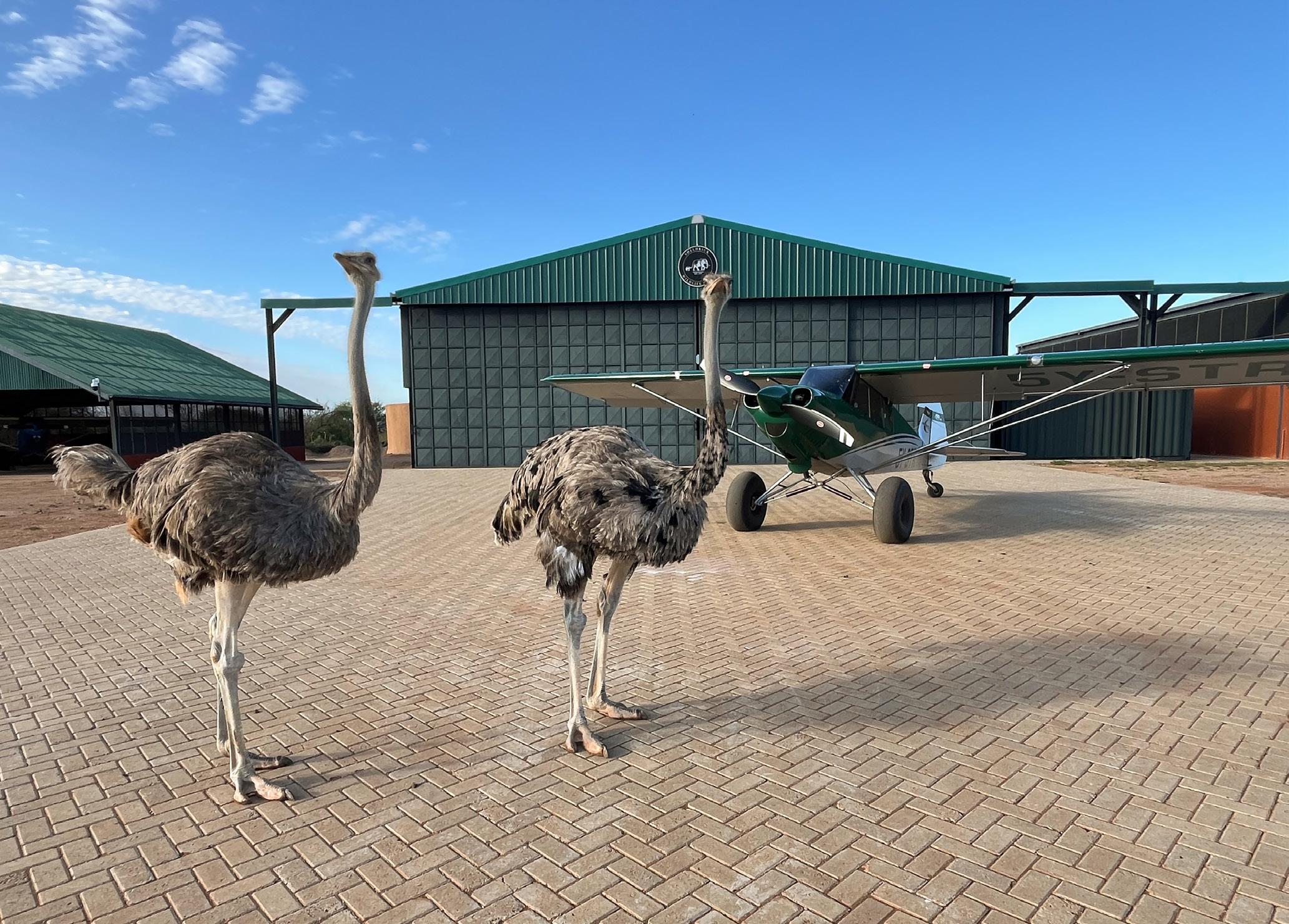
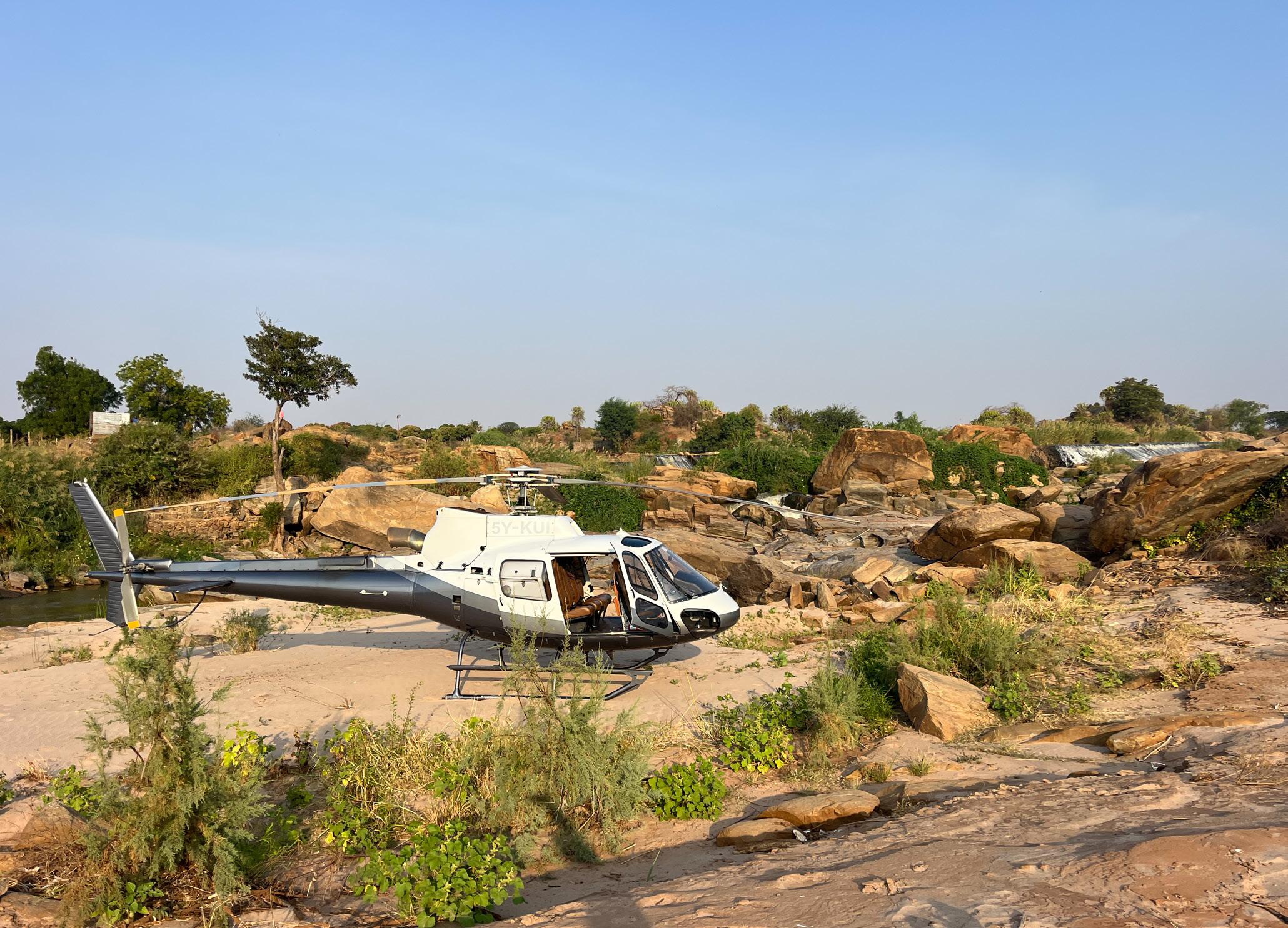
for our helicopter pilot — though not an all-time record — was the sighting of 63 rhinos in a single flight over the Ngulia Rhino Sanctuary.
November’s defining achievement was participation in Kenya’s largest-ever rhino notching and tagging operation, with 90 black rhinos attended in Ngulia Rhino Sanctuary. Over several days, fixed-wing and helicopter teams worked in tandem to notch and fit trackers to individuals, allowing them to be better monitored and protected.
Beyond this landmark operation, helicopters pushed multiple elephant groups back into protected areas, assisted in the veterinary treatment of an arrowed bull, and helped extract a bull elephant from mud, who had been attacked by hyenas in his trapped state. Overall, veterinary interventions were minimal and illegal activity was largely confined to livestock incursions, charcoal burning, and logging outside protected zones.
December followed its customary quieter rhythm but still delivered several unusual and complex cases. Most remarkable was a bull elephant who had accidentally impaled his trunk on his own tusk. Located with aerial assistance, he was successfully darted and freed. A snared giraffe was also located and treated, while several elephants with minor arrow wounds were monitored without intervention.
The Aerial Unit supported the ceremonial selection and capture of a rhino for release during the expansion of Ngulia Rhino Sanctuary. Helicopters responded to several human–elephant conflict cases with high success, while the fixed-wing aircraft participated in a successful search for a child who had been lost for three days. Despite the rainy season, two bushfires were observed, likely linked to illegal grazing practices
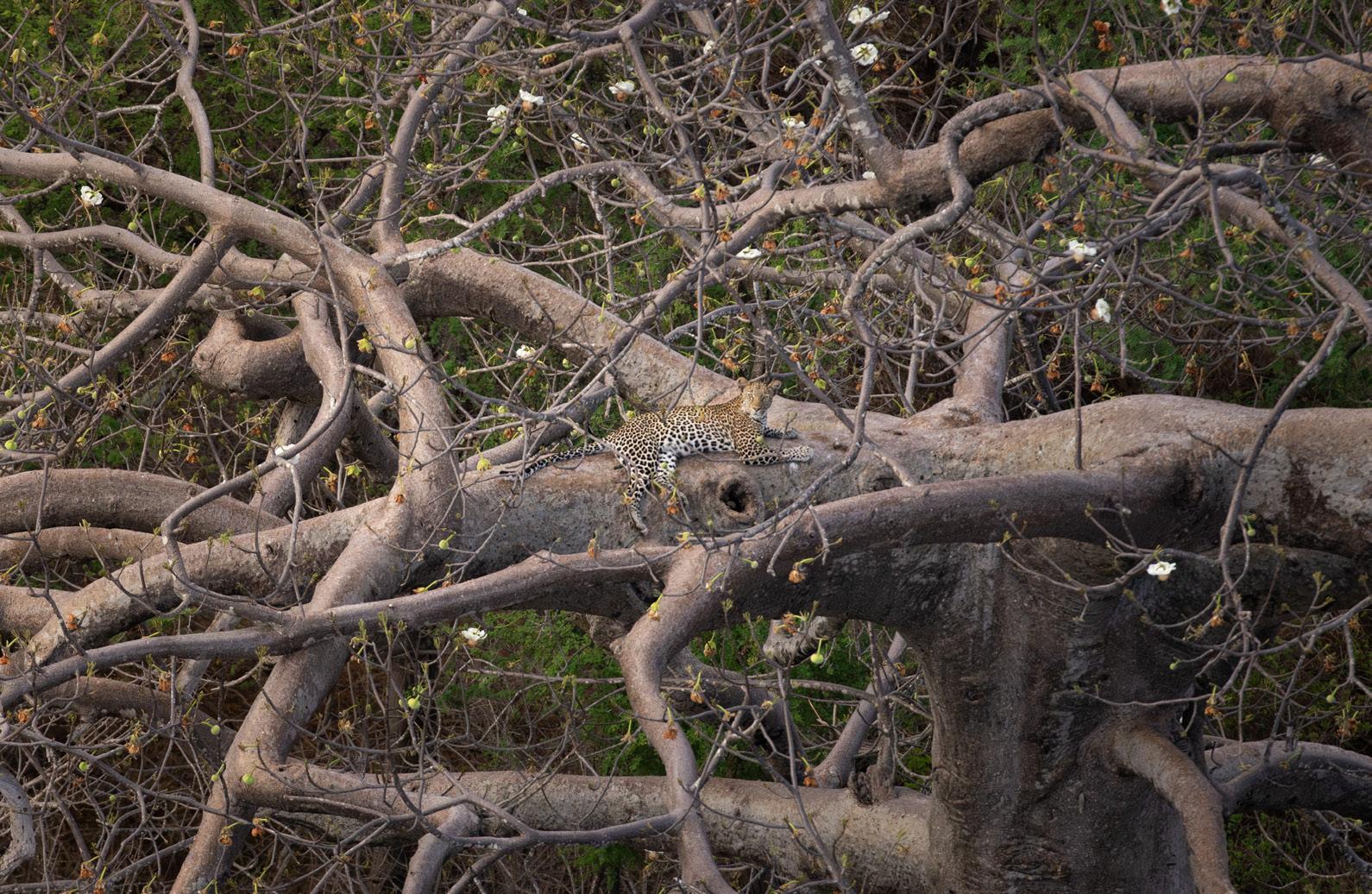
Chance sighting from the air - a leopard resting in the branches of a baobab tree.
Notes from the Field:
ARTHI’S RESCUE LEADS TO THE DISCOVERY OF A SNARED ELEPHANT
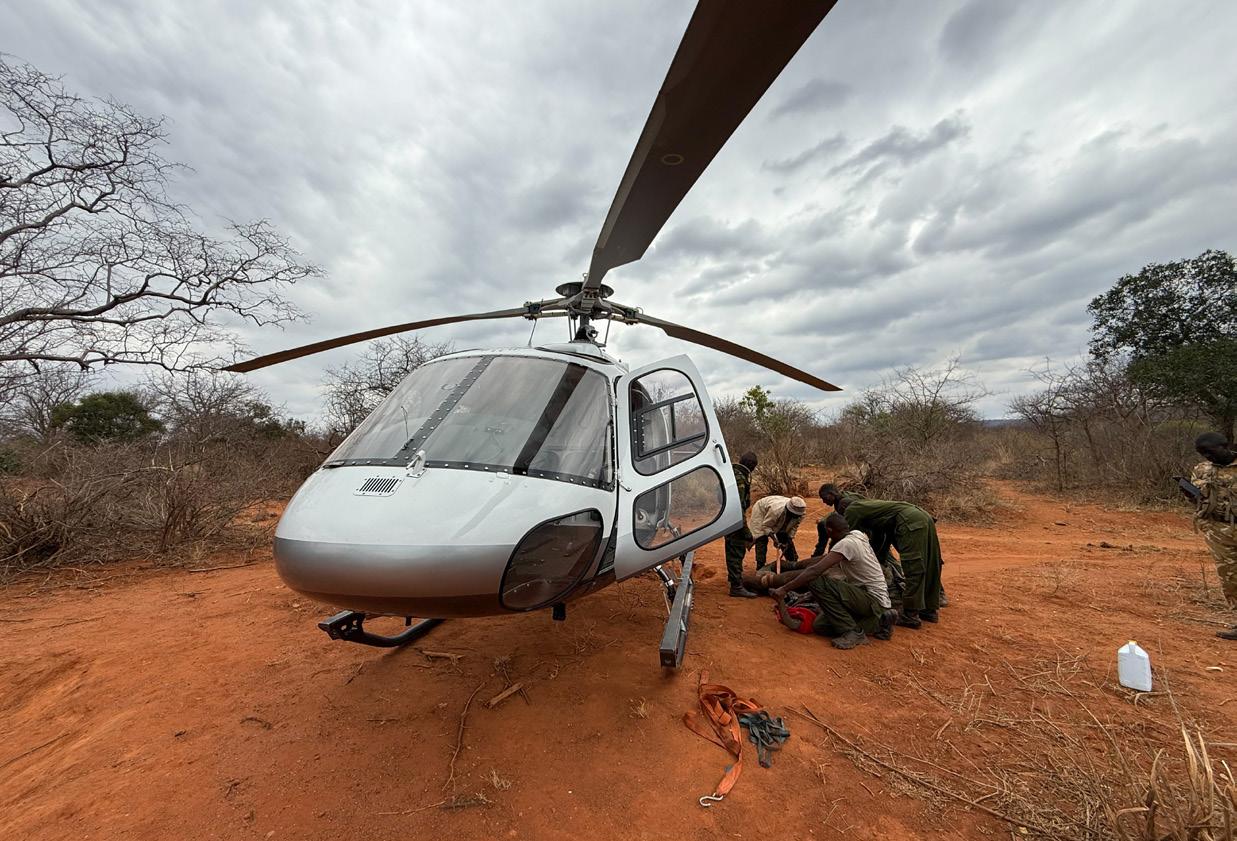
Aerial capabilities give us the ability and agility to respond to multiple field emergencies in a day. They also allow us to spot animals in desperate need before it's too late. On this day, our pilots spotted two elephants in critical situations — an orphaned calf and an injured bull — which enabled us to mobilise life-saving operations for both.
On 3 August, Hamish was conducting a helicopter antipoaching patrol over Tsavo when he spotted a small elephant calf all alone in the bush. At approximately one year old, the little bull was terribly vulnerable and appeared to be distressed. The team observed him from the air, searching for any sign of the calf's family.
To further confirm the situation, a second pilot, Neville, arrived in a fixed-wing. For nearly two hours, he monitored the calf's increasingly concerning situation. We aren't sure how he came to be orphaned, but his situation was dire: Without the protection and support of his herd, a calf of his age was at risk of starvation and predation. By now, it was clear that he was very much on his own, so the Kenya Wildlife Service called for a rescue.
Taru flew the helicopter to the remote rescue site with two Keepers onboard. En route, he sighted an adult elephant with an acute limp. After flying a number of tight circles overhead, he observed that the bull had a snare slicing into his front foot. The injury had seriously hindered his mobility, so he wouldn't travel far. We made note of his location, with a plan in place to return and treat him once the orphan was safe.
Meanwhile, Taru dropped the team and directed them to the calf through the thick bush. While the calf was young, a one-year-old elephant is still a significant size and weight. The team had to cut a small helipad in the bush to allow for extraction. It was a tight squeeze getting him inside the helicopter, but they managed.
As soon as the little orphan — whom we later named Arthi — was safely delivered to Kaluku, the team flew back to the injured bull. After KWS veterinarian Dr. Limo darted the patient from the air, the team moved in to extract the snare and clean the wound. With treatment complete, the elephant was revived and walked off into the bush. It was a day in which aerial surveillance and quick action saved the lives of two elephants — and a potent reminder of why our eyes in the skies are so vital to conservation.
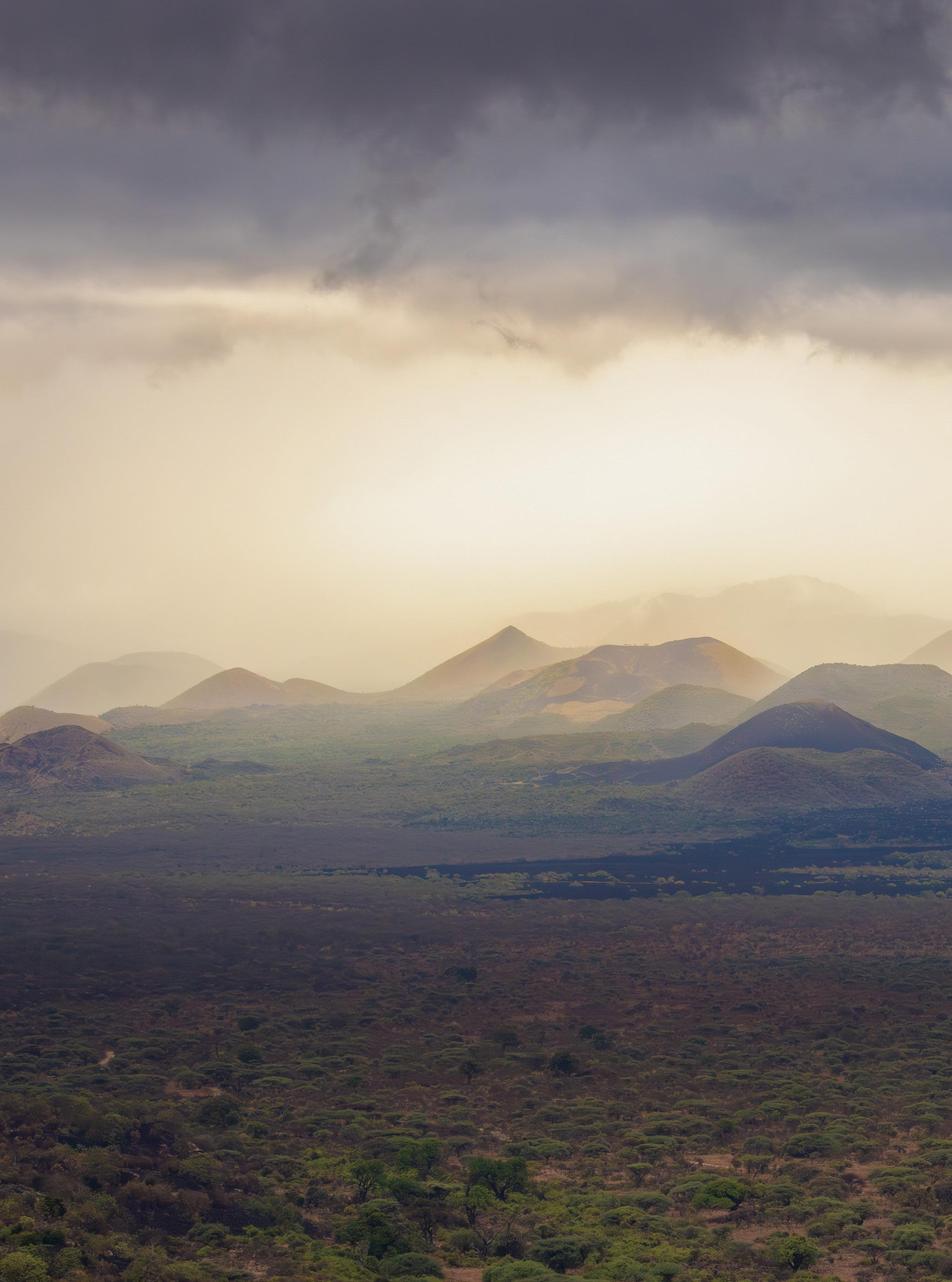
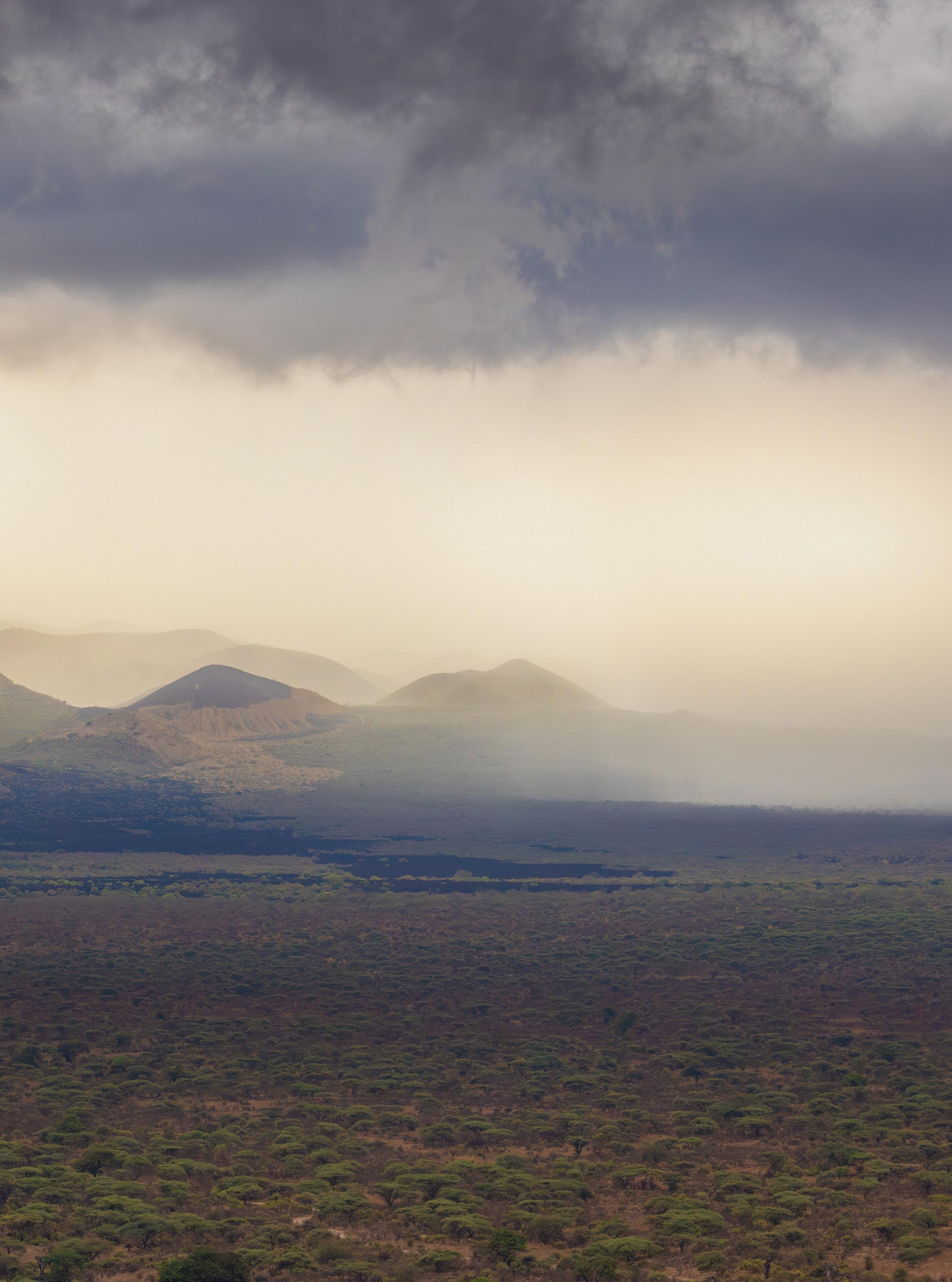
Habitat preservation is the foundation of conservation.
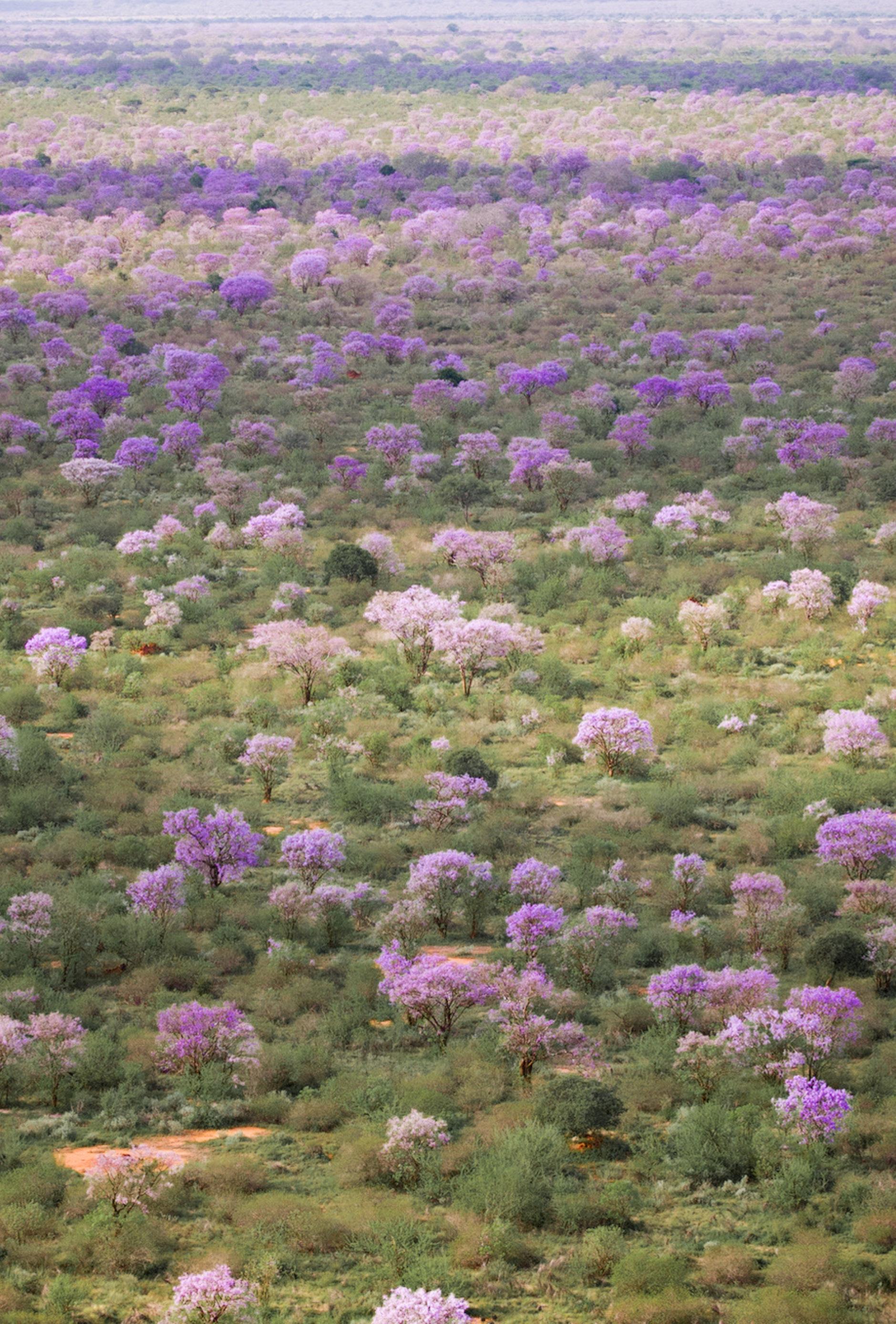
saving habitats
Habitat preservation is the foundation of conservation. Where land is secured, wildlife follows. Where it is lost, no amount of protection, intervention, or investment can compensate. For Kenya's wildlife to have a future, it must first have somewhere to live.
Kenya's 2025 National Wildlife Census captures this reality. Described by President Ruto as a "mosaic of wins and urgent conservation emergencies," its findings highlight both successes in intensive species protection and the devastating impacts of habitat loss and land fragmentation.
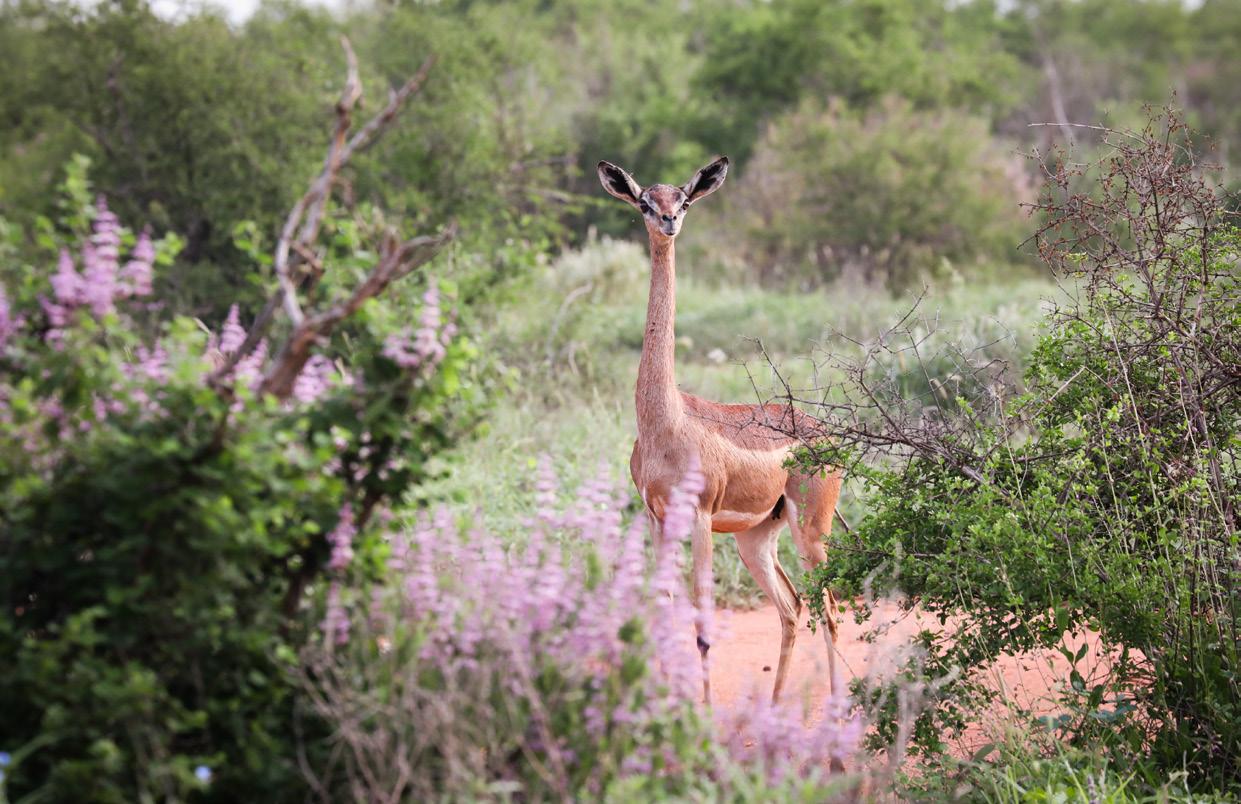
More than 40,000 elephants were recorded in the 2025 census, a 4% increase since 2021; black and white rhinos have risen by the same margin to just over 2,100, and giraffe by 5.4%. Yet many carnivores, ungulates, birds, and marine fauna continue to decline — some nearing extinction even within protected areas. Livestock numbers are rising, and competition for land is intensifying.
Despite the challenges, Kenya continues to set a high standard for conservation, underpinned by a commitment to habitat preservation. The country is home to 27 national parks, 34 national reserves, and a vast network of protected areas and sanctuaries. These are the beating heart of Kenya's natural world — but a heart is nothing without its arteries. Elephants and other animals are migratory by nature, following ancient paths etched through generations. No wilderness should be an island, and securing the buffer zones and landscapes that connect them is imperative.
Our Saving Habitats efforts focus on threatened ecosystems across the country, especially those bordering national parks and other protected areas. Many of these landscapes are critical rangelands for elephants — earth's largest land animal and one of its most vulnerable to habitat loss — but they are also areas of immense biodiversity, home to countless other species.
Working alongside the Kenya Wildlife Service and Kenya Forest Service, local communities, fellow conservation organisations, and key stakeholders, we are committed to securing Kenya's endangered habitats through onthe-ground conservation management, fencelines that protect wildlife areas and reduce human-wildlife conflict, and financial support for community-led conservation initiatives. Beyond the nationally protected areas we help safeguard, we directly protect over two million acres of wilderness.
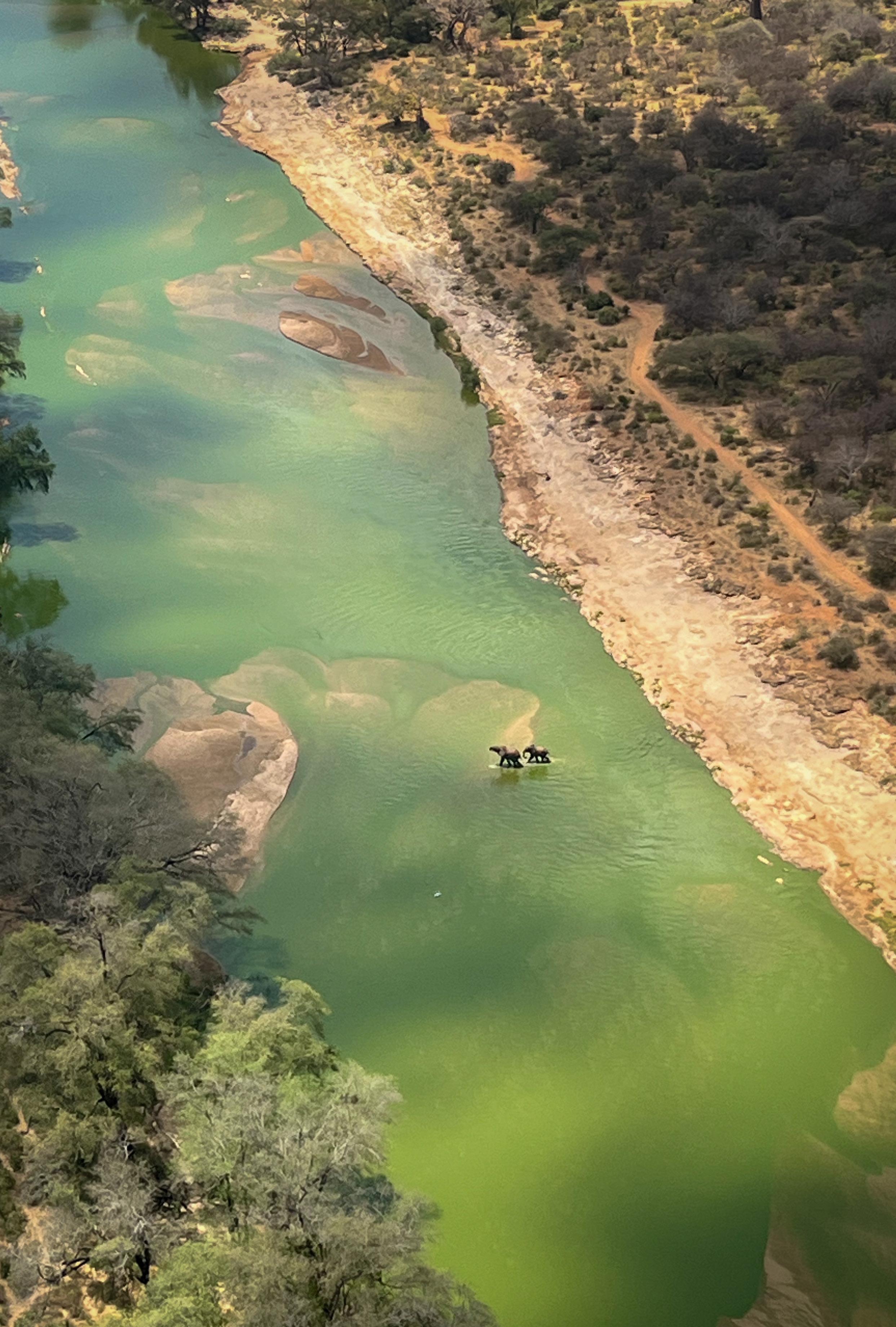
galana and kulalu ran CH es / galana wildlife C onservan C y
Location:
1.8 million-acre ranchlands that make up the ‘eastern frontier’ of Tsavo East, extending towards the coast. Conservation support for this landscape is provided in collaboration with ADC
Total size:
2 million acres
Ecological significance:
Galana/Kulalu Ranches stretch along almost the entire eastern boundary of Tsavo East, collectively covering two million acres that extend towards the coast. They share an unfenced border with Tsavo East, meaning wildlife can roam freely between the park and the ranches. It is an important habitat for elephants, lions, cheetahs, giraffe, wild dogs, leopards, and plains game. The security of Galana/Kulalu is inextricably linked with the security of its neighbouring national park.
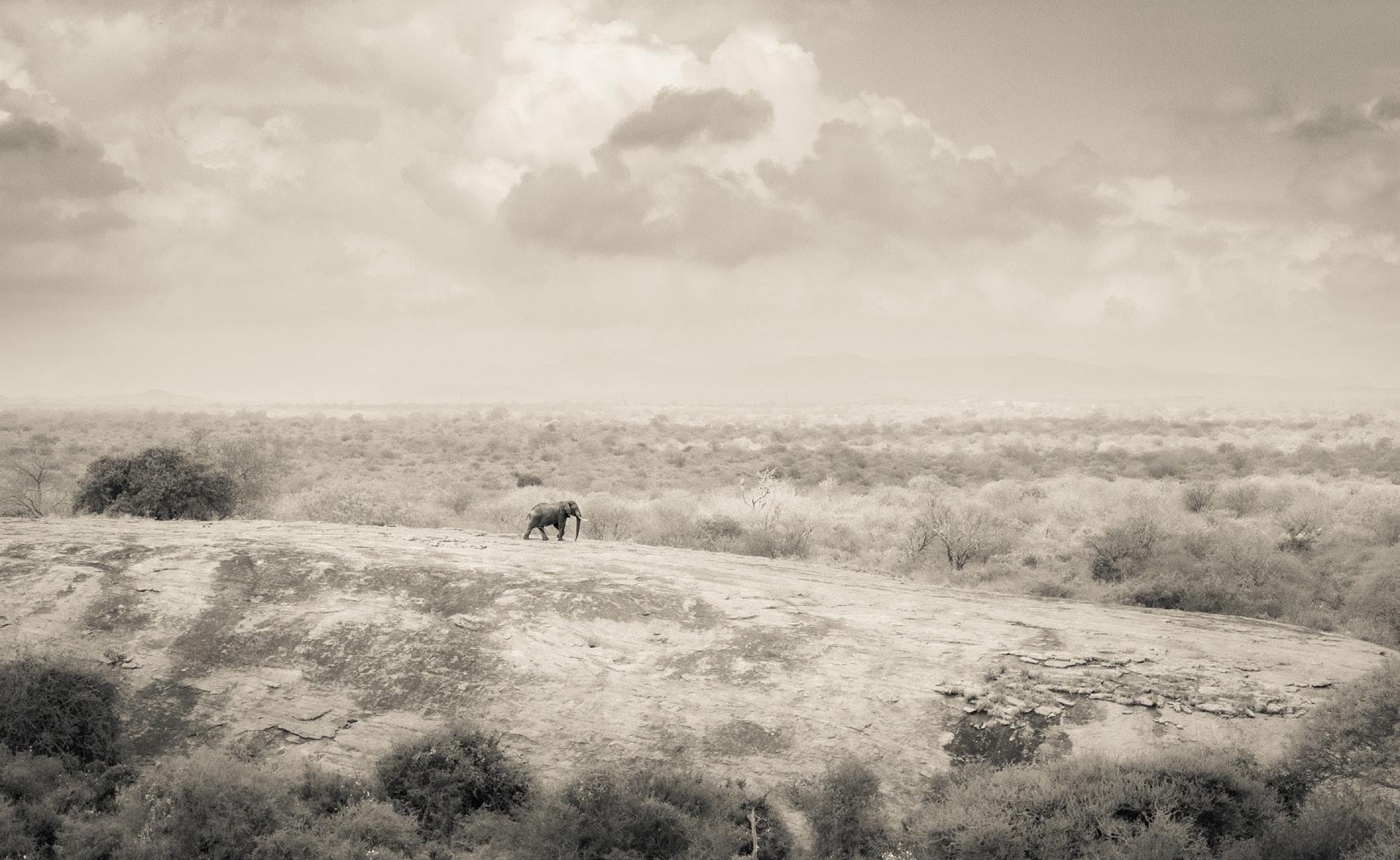
Galana and Kulalu Ranches are managed by the Agricultural Development Corporation (ADC), a parastatal responsible for overseeing sustainable agricultural development in Kenya. The land is designated for mixed-use, supporting selective ranching activities that complement conservation efforts. However, it is a vast landscape, and ADC lacked the resources to adequately focus on the conservation aspect.
Spanning 60,000 acres, Galana Wildlife Conservancy is an annexe of Galana Ranch. In May 2021, we were asked by its board of directors to assume management of the conservancy. However, it soon became evident that to truly secure Tsavo's eastern frontier, we needed to work across both Galana and Kulalu as a whole. In
recent decades, illegal activities had taken hold in the ranches. Bushmeat poachers saw it as open season, using snaring and the lethally effective lamping to kill scores of creatures in a single night. This, combined with illegal cattle incursions from the north and extensive charcoal burning, turned Galana-Kulalu into a shell of a habitat.
Thus, as we continued to build upon our conservation efforts in Galana Wildlife Conservancy, we also reached a second arrangement with ADC, granting the Sheldrick Wildlife Trust the responsibility of managing the conservation mandate for both Galana and Kulalu Ranches. The indomitable Mark Jenkins spearheaded the early work on the ground until his devastating passing in December 2022. We knew the best way to honour
Mark's legacy was to continue the work he started. As we transformed Lali Base into a vibrant field headquarters to anchor our efforts, we got to work clearing roads, grading airstrips, building dams, and reseeding grasslands. We implemented a school lunch program for local students and showed our neighbours that we were also there to support them — the 2023 river rescue of a truck driver marooned in the flooded Galana River stands out as a highlight.
At the core of this work has been the establishment of an extensive ground and aerial presence. Four permanent SWT/KWS Anti-Poaching Teams — Dakadima (established 2021), Kulalu (2021), Kapangani (2023), and Kulalu II (2023) — maintain constant vigilance across the wider Galana-Kulalu region. In 2025, we also hired Danny Woodley to oversee operations in Galana-Kulalu and support works across the Shimba Hills and Arabuko Sokoke Forest. Together, rangers and pilots conduct daily patrols, scout illegal activities, and have made it clear that it is no longer open season on Galana-Kulalu. Between May 2024 and May 2025 alone, the Galana and Kulalu teams drove 65,558 kilometres and walked 3,909 — making 42 arrests, including 29 poachers, and confiscating 752 snares.
An enormous amount of work has also gone into building the infrastructure to support these operations at scale. Lali Camp has been expanded into a fully operational
field headquarters, now equipped with an aircraft hangar, offices, stores, a rebuilt fuel storage facility, and both a solar-powered reverse osmosis machine for potable water and a sunken solar-powered pump supplying all other water needs. The Lali Hills radio repeater has been installed and the network extended to connect the wider landscape. A new ranger base has been constructed for the Kulalu II Anti-Poaching Team, and airstrips at Kulalu Hills, Ngamia, Dakabuko, Dakabuko Hill, Geofries, Alishora, and Tank E have been created or refurbished. The road network now totals over 400 kilometres within the conservancy, with a further 135 kilometres of Galana roads repaired. Extensive acacia planting for reforestation is also underway.
With Lali Camp at full capacity, a dedicated KWS base camp is now under construction on the ranch boundary, close to Lali, funded through a grant from SWT UK. The new camp will accommodate 15 KWS rangers and two officers, providing the additional capacity needed to support the full scope of SWT anti-poaching operations across the growing conservation area.
Transformation does not happen overnight, but four years into our conservation mandate on Galana-Kulalu, we are already seeing tangible results. The environment is flourishing into a very healthy ecosystem — a testament to the resilience of our natural world. We simply protect the landscape; nature does the rest.
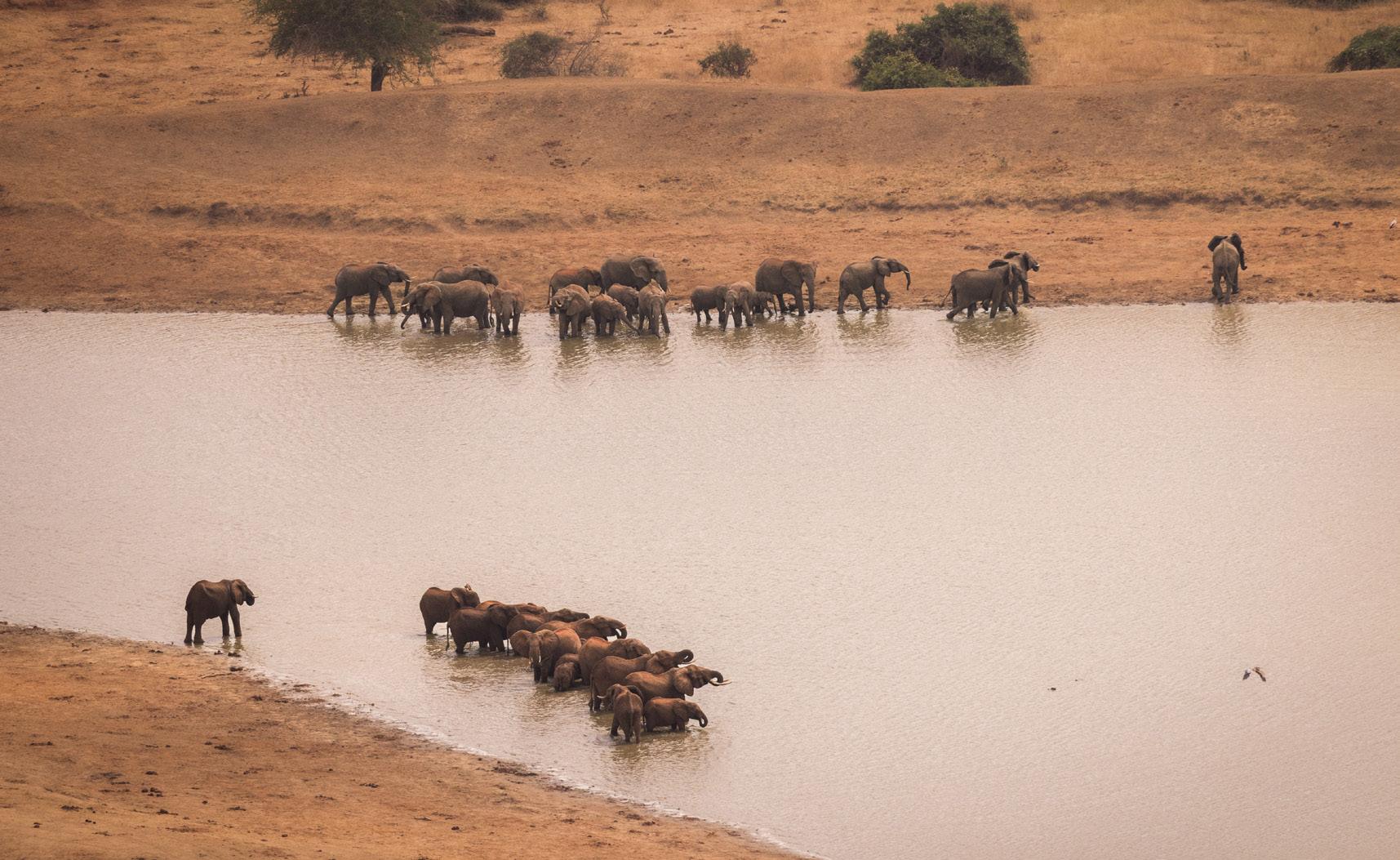
kari ran CH
Location:
Northern border of Chyulu Hills National Park
Total size:
63,300 acres
Ecological significance:
KARI Ranch begins in the northern foothills of the Chyulu Hills, to the immediate northeast of the Kibwezi Forest, which is one of Kenya’s last remaining groundwater woodlands and home to our Umani Springs orphaned elephant unit. KARI is an important dispersal area for the Chyulu Hills and a gateway to the Tsavo Ecosystem.
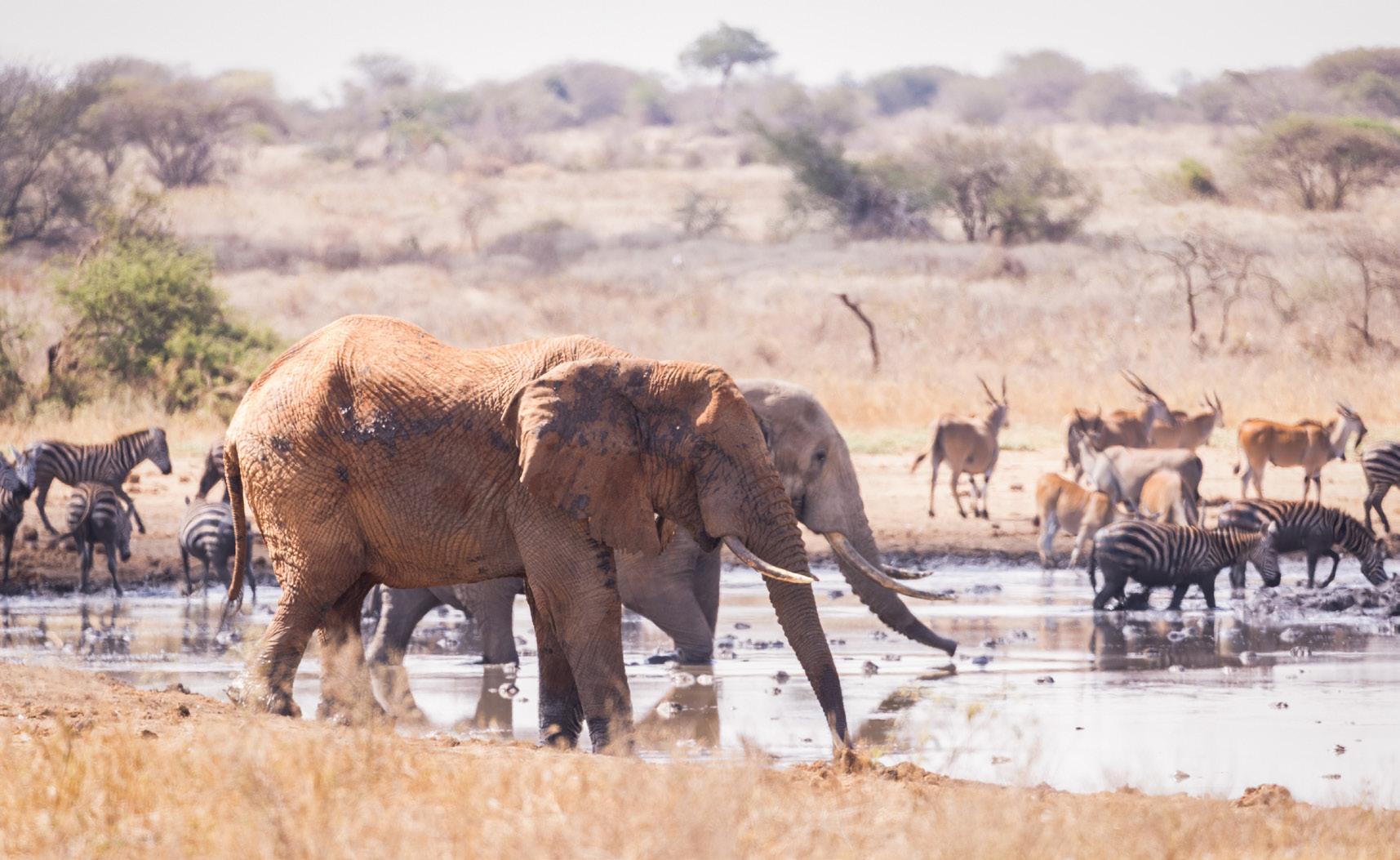
KARI Ranch is a 63,300-acre wilderness located across the foothills of the Chyulu Hills. Given that it sits within a zone of recent volcanic activity, it is of marginal agricultural use. However, it is a favoured rangeland for a variety of wildlife — much of which comes from Chyulu Hills National Park, which lies to the immediate south. While the Chyulu Hills are a pristine habitat, they lack ample surface water. As a result, wildlife frequently venture to KARI Ranch to drink and forage.
These animals could include our very own orphans. Umani Springs, our third Reintegration Unit for orphaned elephants, is located within the nearby Kibwezi ForestChyulu Hills. When orphans reclaim their place in the wild, KARI Ranch will become part of their preferred rangelands. In 2019, we finalised a 25-year lease with the Kenya Agriculture and Livestock Research Organisation (KALRO) to manage the conservation mandate of KARI
Ranch. Years of human-wildlife conflict, illegal livestock grazing, charcoal burning, bushmeat and ivory poaching, and human encroachment had severely impacted the landscape. These issues largely stemmed from KARI's eastern border, which abutted community farmland and was unfenced at the time.
Our first priority was to construct an elephant exclusion fence along the challenging eastern boundary. Spanning 43 kilometres, the fenceline has proven to be an immediate success for both wildlife and the people living alongside them. It effectively deters elephants from leaving the protection of KARI Ranch, while also preventing crop-raiding on neighbouring farms, which has significantly reduced cases of human-wildlife conflict. Askaris, stationed at seven fence outposts, conduct daily patrols to ensure the fence is properly maintained.
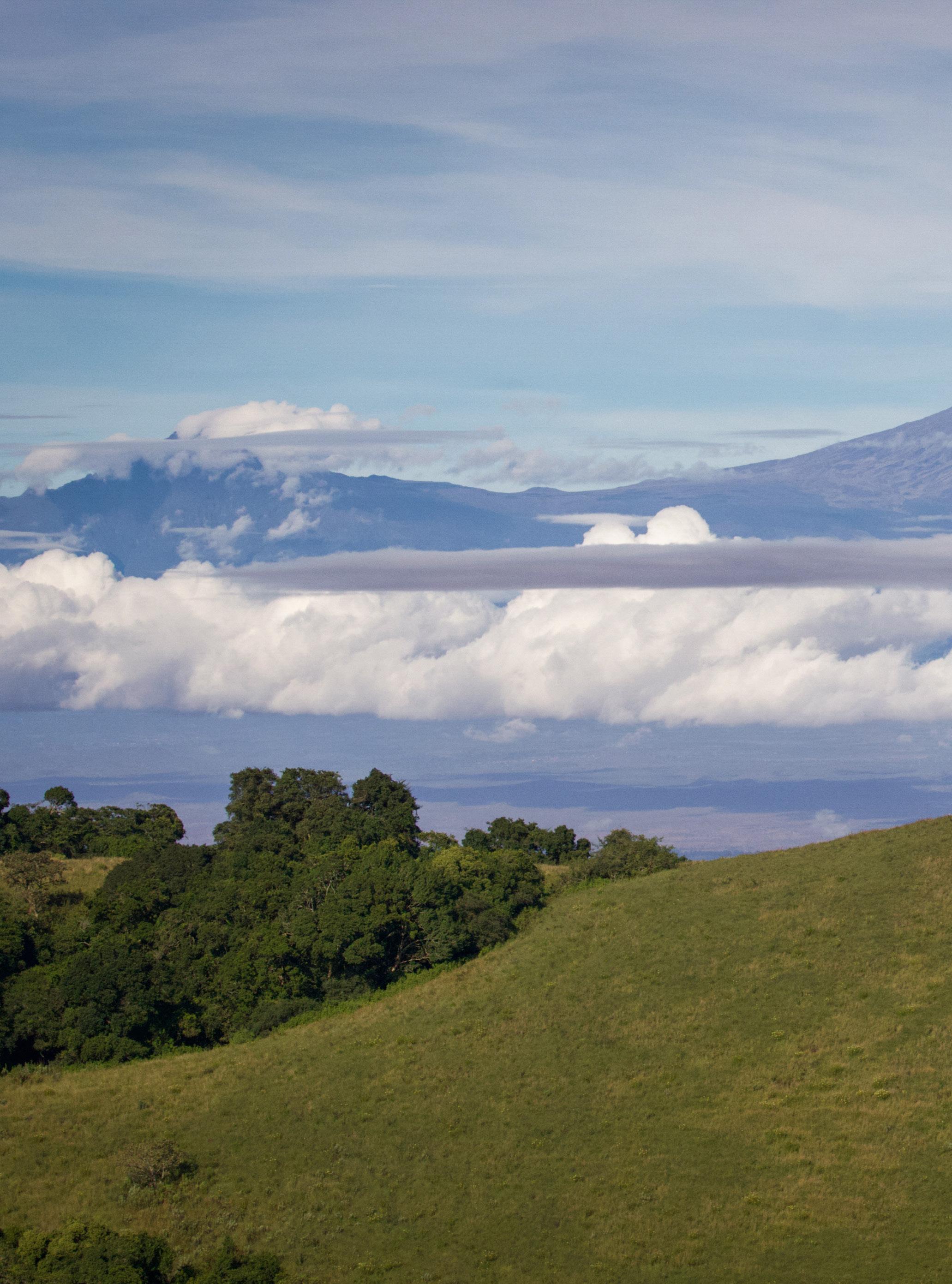
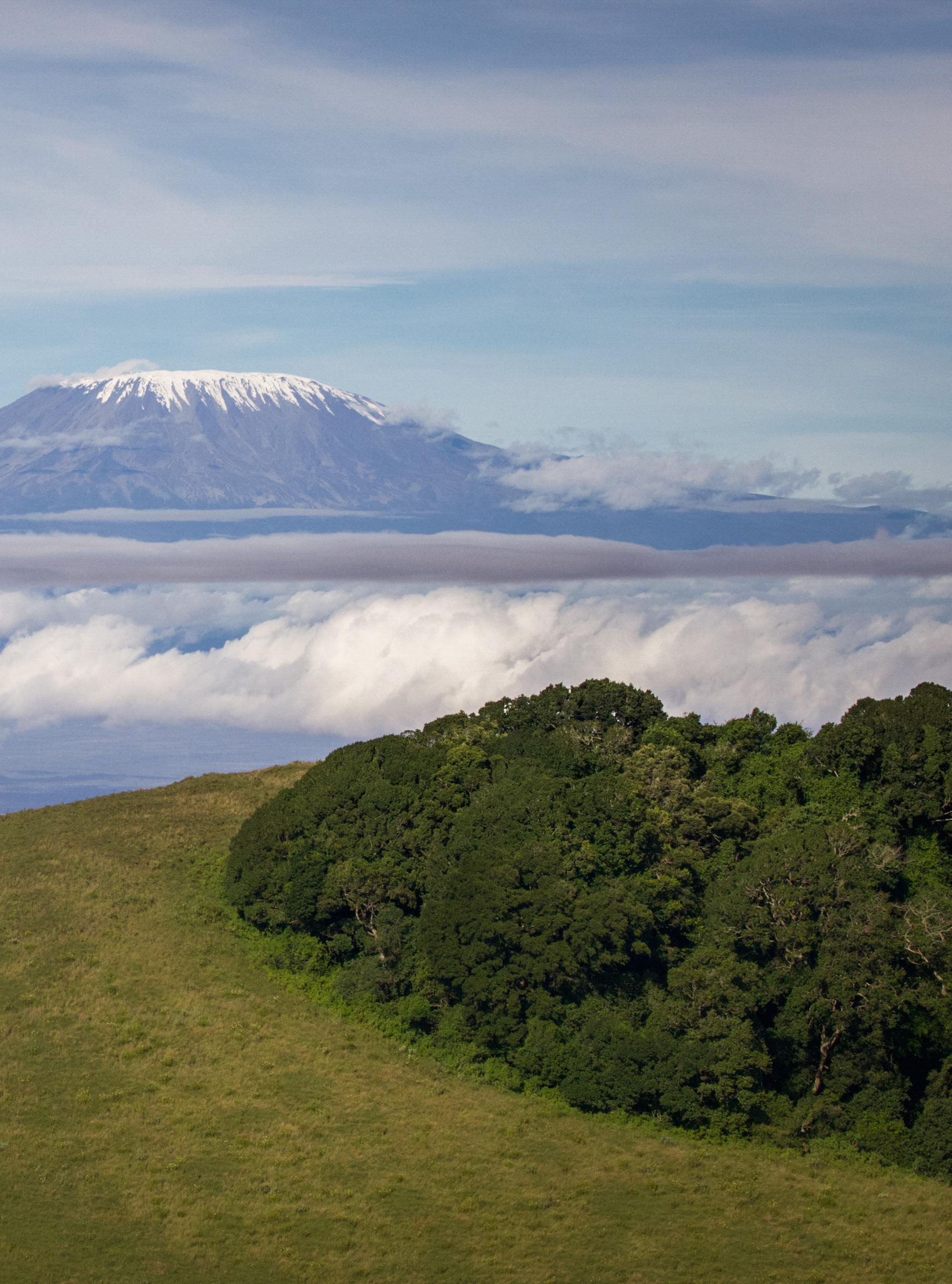
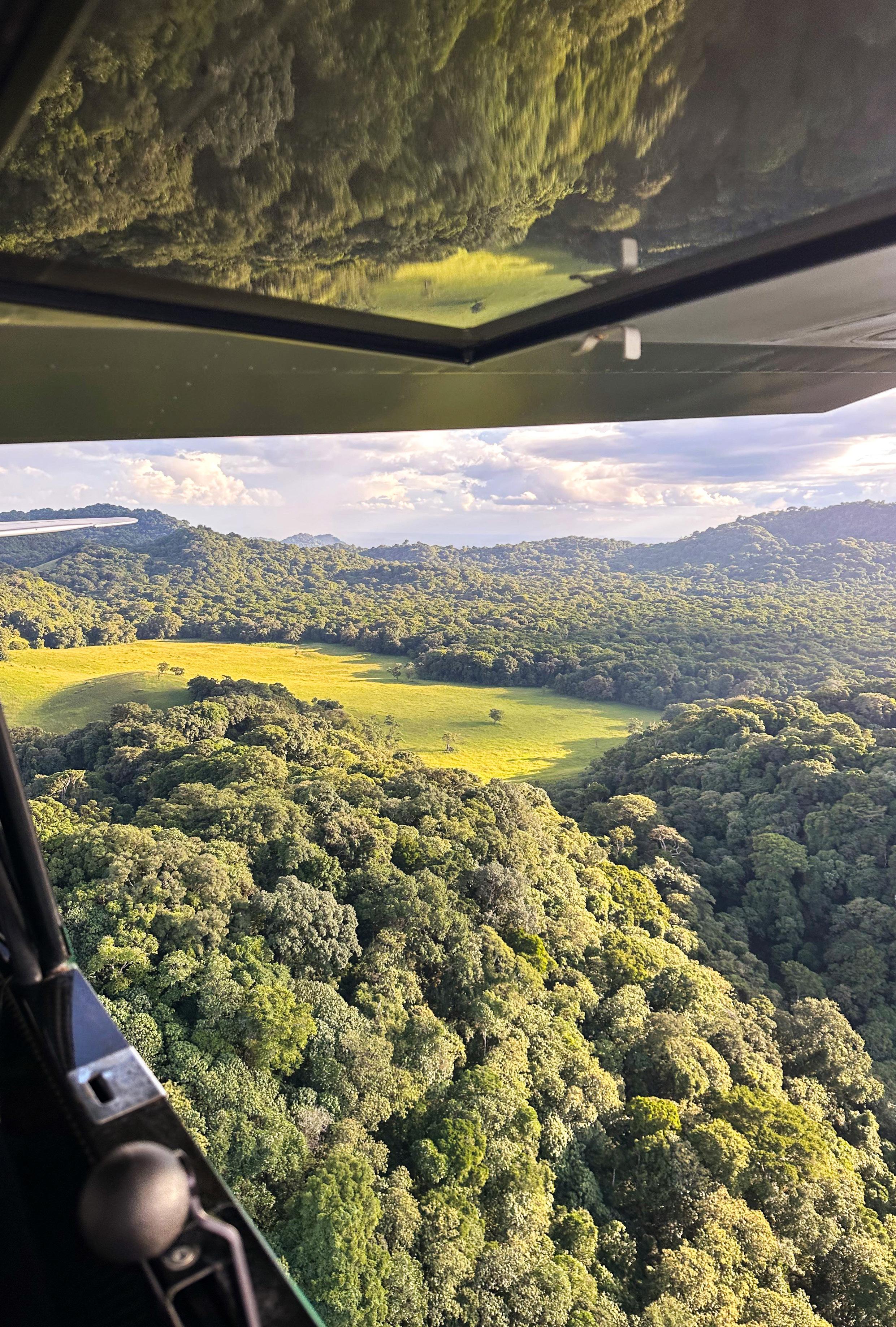
The Kibwezi Forest is an area of rich biodiversity.
We also completed a 2,100-metre elephant exclusion fence around KARI Headquarters and school, a 4,000-metre fence around Kiboko, and a 7,100-metre elephant exclusion zone along the western boundary. Most recently, a new 1,000-metre fence has been constructed to address human-wildlife conflict in an area that has grown increasingly vulnerable as lion and elephant numbers have risen — keeping livestock safe from predators and securing the cattle dip.
Considerable effort has also gone into building a road network befitting the scale of the ranch. A new community road now runs from north to south along the river, replacing the original route that passed through the middle of the ranch and created security vulnerabilities. A dedicated security road has also been created to improve accessibility for field teams. In total, the Trust has covered over 800 kilometres of road grading within the ranch.
As works on KARI Ranch continued to expand, it became apparent that the landscape lacked the infrastructure to provide ample water to support both operations and wildlife. We therefore established two
boreholes — one at the 'Yellow Thorn' site and another at the 'Pool' site — both fully operational, solar-powered, and feeding directly into waterholes for wildlife, with security maintained at each water source.
In 2023, a new tented ranger camp was erected at KARI airstrip. This centrally located, fully outfitted base is used by the SWT/KWS Mukururo and Mobile South Anti-Poaching Teams, who patrol the area on rotation. Their presence has brought the ranch's most pervasive issues — bushmeat poaching and illegal grazing — under control, while serving as a strong deterrent against other illegal activities.
As KARI Ranch demonstrates, successful conservation benefits both wildlife and local livelihoods. Before our presence in the landscape, human-elephant conflict was rampant. Today, these incidents have been reduced to zero. Patrol teams have reported a notable increase in populations of elephants, eland, hartebeest, zebra, and giraffe. We are hopeful that the resident rhinos of Chyulu Hills National Park will eventually venture into KARI Ranch, as it extends into their traditional rangelands.
Location:
Northeast extension of Chyulu Hills National Park
Total size:
18,000 acres
Ecological significance:
The Kibwezi Forest is one of Kenya's last remaining groundwater woodlands. The Umani Springs, located within the forest, are a vital water source for local human and wildlife populations. The Kibwezi Forest is an area of rich biodiversity. It is also home to our Umani Springs Reintegration Unit, our third re-wilding centre for orphaned elephants.
In 2008, we were presented with the opportunity to manage the conservation of the Kibwezi Forest in partnership with the Kenya Forest Service. During her first visit, Daphne Sheldrick famously remarked, 'I honestly cannot see the potential.' It was easy to understand her perspective: Years of illegal activities had reduced the forest to a shadow of its former self.
However, the stakes were too high to let the Kibwezi Forest go to waste. Together with the Chyulu Hills, this area is a vital lifeline for southern Kenya. Its volcanic springs sustain life both near and far, supporting local communities and even supplying water as far as Mombasa for coastal populations.
Upon assuming management of the Kibwezi Forest, our immediate priority was to erect fencelines. The purpose was twofold: to prevent human incursions that led to illegal activities within the forest and to protect bordering homesteads from wandering wildlife, which often resulted in human-wildlife conflict. These fencelines connect the forest to Chyulu
kibwezi fores T reserve and CH yulu H ills
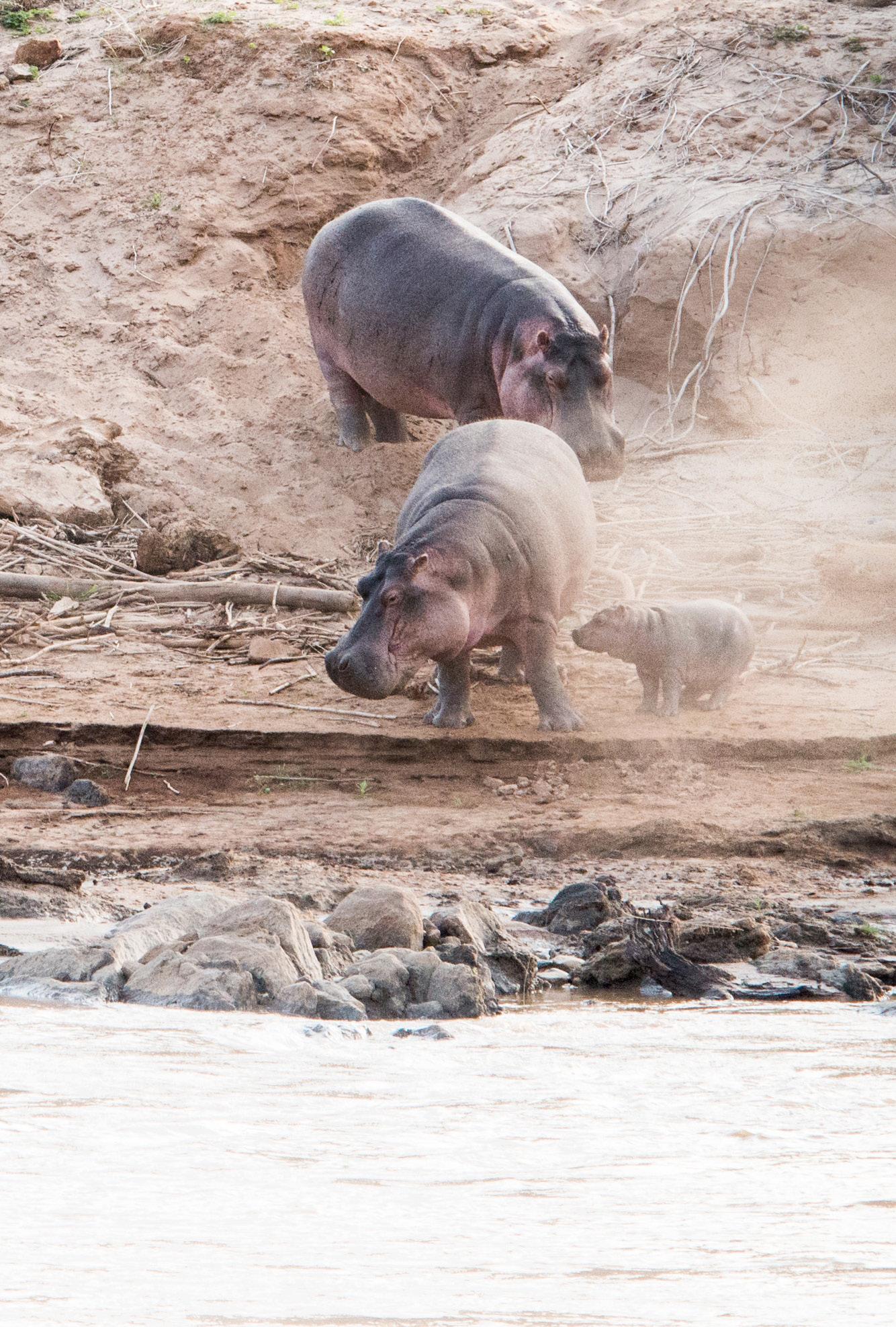
Peregrine Conservation Area is in a corner of Tsavo East at the intersection of the Mtito and Athi Rivers.
Hills National Park, effectively expanding the park while also creating a much-needed buffer for the neighbouring community. In total, we have erected and continue to maintain 93 kilometres of fencelines throughout the Kibwezi-Chyulu landscape, supported by a dedicated crew responsible for maintaining 40 kilometres of roads across the concession.
In 2013, we established the SWT/KWS Kenze AntiPoaching Team, based full-time in the Kibwezi Forest. Thanks to their dedicated presence in the landscape, bushmeat poaching and other illegal activities were quickly brought under control.
The following year, we established Umani Springs, our newest reintegration unit for orphaned elephants, in the Kibwezi Forest. The forest's gentle environment makes it an ideal habitat for orphaned elephants — particularly those who are physically compromised — to reclaim their place in the wild. Although the unit is only 11 years old, four wild-born babies have already been born to our orphan herd.
The Kibwezi Forest is also home to a tree nursery, which nurtures saplings that are then planted in degraded areas in need of reforestation. With a current capacity of just over 55,000 seedlings planted annually, the nursery has
produced 246,705 seedlings since 2018. Tree plantings are a collaborative initiative, engaging participants from the Kenya Forestry Research Institute, Kenya Wildlife Service, Kenya Forest Service, and, crucially, individuals from the local communities. SWT also employs members of the local community to help fight fires in the neighbouring Chyulu Hills, further embedding the Trust's presence in the landscape.
To deepen community engagement and generate even more local employment opportunities, we established a Kibwezi Women's Beekeeping Group in 2021. Women from the local community are employed to look after the apiary's 30 hives, with the proceeds from honey sales going back into community projects. In 2025, our community support extended further still: through a grant from our US Charity, we donated vital medical equipment and supplies to a clinic in Kibwezi Town, providing a meaningful boost to healthcare provision for the communities who live alongside the forest.
Wildlife sightings are a telling barometer of a landscape's health. When we first began our work in the Kibwezi Forest, spotting a single elephant was a rare event. Today, it is an everyday occurrence. Even traditionally cautious family herds with tiny calves in tow have become familiar visitors around the Umani stockades.
P eregrine C onserva T ion area
Location:
Corner of Tsavo East, at the intersection of the Mtito and Athi Rivers
Total size:
5,500 acres
Ecological significance:
The Peregrine Conservation Area makes up a small but vital extension of Tsavo East National Park along two borders, where the Mtito and Athi Rivers meet. It provides an essential buffer zone for the park’s vulnerable corner boundary, which would otherwise be surrounded by human habitation at the junction of the rivers.
The Peregrine Conservation Area lies at the heart of the Tsavo Triangle. Established in 1997, it serves as a key buffer zone for two segments of the Tsavo East National Park boundary while also housing our field headquarters. Today, it encompasses approximately 5,500 acres of protected land.
This conservation area provides a crucial transition zone in a landscape that would otherwise act as a funnel for human-wildlife conflict. Situated at the confluence of the Mtito and Athi Rivers, it forms a vulnerable triangle of land bordered by human settlements on two sides, making it prone to human-wildlife conflict and illegal incursions. By maintaining this buffer, we help safeguard both wildlife and the neighbouring communities.
The Peregrine Conservation Area is also home to our Kaluku Field Headquarters, the central hub for our Tsavo-based operations. It houses our Aerial Unit, Canine Unit, Kaluku Unit — which cares for neonate orphaned elephants, rhinos, giraffe, and other wildlife — our Operations Room, vehicle garage, store, and essential personnel. On the periphery of the conservation area lies Tsavo Farm, which we revitalised in 2019. This sustainable farm supports the local community by providing employment and promoting eco-friendly agriculture. A dedicated tree nursery grows over 600 indigenous trees for reforestation, while a 17,000-litre aquaponics system allows crops to thrive with just 10% of the water required for traditional farming. The farm also sustainably raises chickens and goats.
Additionally, we are expanding our Sheldrick Botanicals Community Project at Tsavo Farm, in which we sustainably grow and harvest bougainvillea petals. This initiative creates jobs for local women while generating conservation funds through the sale of the petals.
When we first established the Peregrine Conservation Area, illegal activities were widespread. Today, signs of human interference are rare. The area now thrives as a haven for wildlife, with regular sightings of leopards, lions, large buffalo herds, and breeding elephant families. In a remarkable sign of trust, zebra and antelope herds often choose to rest on the Kaluku compound lawn, recognising it as a safe refuge.
amu ran CH
Location:
North coast of Kenya, near Lamu
Total size:
63,000 acres
Ecological significance:
Amu Ranch is home to some of the greatest biodiversity on the African continent. It is one of the world’s largest and oldest mangrove forests. Mangroves are essential natural pillars that stabilise the coastline and prevent erosion. They also provide an important habitat for a variety of marine and land creatures.
Nestled on Kenya’s north coast, Amu Ranch is home to one of the world’s largest mangrove forests. This diverse habitat supports a wide range of marine and land species, from small elephant herds to thriving populations of reticulated giraffe, Cape buffalo, topi, and eland. It is also home to some of East Africa’s most genetically diverse lions, including the maneless Tsavo lions and the striking blue-eyed Somali lions.
Like many coastal landscapes, Amu Ranch has faced increasing pressure from encroachment, development, and illegal activities. Yet, unlike much of northern Kenya’s coastline, it has thus far avoided the widespread deforestation that has devastated similar habitats. However, safeguarding this vulnerable ecosystem requires active management and on-the-ground protection.
Since 2012, we have partnered with the Kenya Forest Service, Kenya Wildlife Service, and local stakeholders to protect Amu Ranch. We provide financial support and management expertise to the Lamu Conservation Trust (LCT), a community-led organisation focused on marine conservation and wildlife protection in the greater Lamu region. Our funding has enabled the development of vital infrastructure, including a network of roads, security camps, and outposts. We also support 28 scouts in Lamu who patrol the landscape, ensuring its continued protection.
In 2020, we launched an ambitious tree-planting initiative to regenerate Amu’s coastal mangrove forests. Partnering with Eden Reforestation Projects, we have planted over 14 million mangroves in Lamu to date. Over the past five years, this initiative has flourished, restoring thousands of acres of degraded mangrove habitat that had been lost to illegal logging, charcoal burning, and flooding.
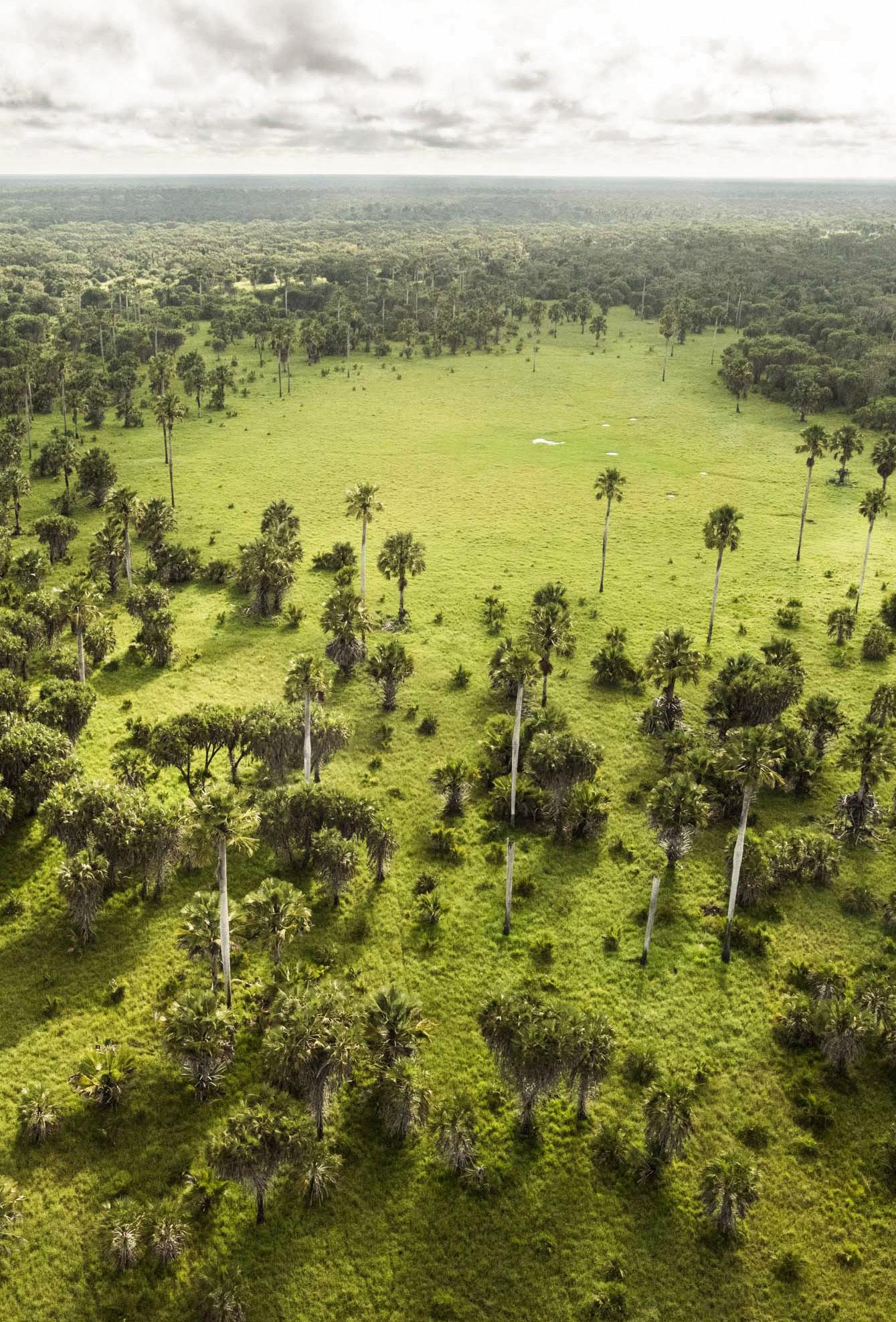
Our initial plantings began in the Milihoi Channel, which extends into Amu Ranch. We explored potential sites by air, boat, and foot, identifying areas suited for large-scale restoration. This effort was carried out by a dedicated local team who had previously formed a ‘beach management’ volunteer unit to protect their mangrove forest. Having sought support from SWT in the past, it was fitting that they became the driving force behind this reforestation project.
Mangroves, which can live for over a century, serve as critical breeding grounds for fish, shellfish, migratory birds, and even sea turtles. Their intricate root systems stabilise shorelines, slow erosion, and provide natural barriers against flooding, making them essential for both biodiversity and coastal communities. Given that fishing is central to life in Lamu County, protecting these forests directly benefits both people and wildlife. Additionally,
with the ability to store three times more carbon than an equivalent area of tropical rainforest, mangroves play a crucial role in combating climate change.
We have also expanded Amu Ranch’s tree nursery. Now capable of producing 260,000 trees per year, the nursery focuses on strategic replanting within Amu Ranch. Despite initial challenges, including security concerns and a prolonged drought, activities are steadily ramping up. The recent construction of a large water reservoir, capable of holding millions of litres of rainwater, will sustain the nursery through dry seasons.
This initiative has also provided significant employment opportunities. To date, it has created over 75 full-time jobs for local community members, along with seasonal work for those involved in seed collection and tree planting during the rainy season.
arabuko sokoke fores T
Location:
Central coast of Kenya, near Watamu
Total size:
104,000 acres
Ecological significance:
The Arabuko Sokoke Forest is the largest single block of indigenous coastal forest remaining in East Africa. It is a stronghold for endangered species, including the golden-rumped elephant shrew, the Sokoke dog mongoose, and the Ader's duiker, along with a rare population of coastal elephants.
Not long ago, lush forests stretched along the entire East African coastline. Today, the Arabuko Sokoke Forest stands as the largest remaining fragment of this once-extensive habitat. Covering more than 100,000 acres, it is a significant stronghold, especially given the widespread fragmentation of coastal forests. Located just inland from Watamu, the forest is home to an extraordinary array of flora and fauna, including many rare and endemic small mammals, such as the golden-rumped elephant shrew. Remarkably, about 200 elephants live within the Arabuko Sokoke Forest, which is a rarity so close to Kenya's coastline.
However, years of illegal activity have taken a toll on the Arabuko Sokoke Forest. Completely surrounded by human settlements, it faces mounting pressure along its boundaries, contributing to habitat degradation and human-wildlife conflict. Illegal logging, charcoal production, and bushmeat poaching continue to threaten its biodiversity. Securing the forest's future requires strengthening aerial and ground patrols, improving infrastructure, reinforcing its boundaries, and implementing a comprehensive conservation strategy.
In 2022, we finalised a co-management partnership for the Arabuko Sokoke Forest Reserve in collaboration with the Kenya Forest Service (KFS), and in 2023, this partnership was formalised with the signing of a Framework for Collaboration. To establish a strong field presence, we deployed our SWT/KWS Kajiado Anti-Poaching Team to the forest, where they are now stationed full-time, with the Kulalu II Anti-Poaching Team deployed on an as-needed basis.
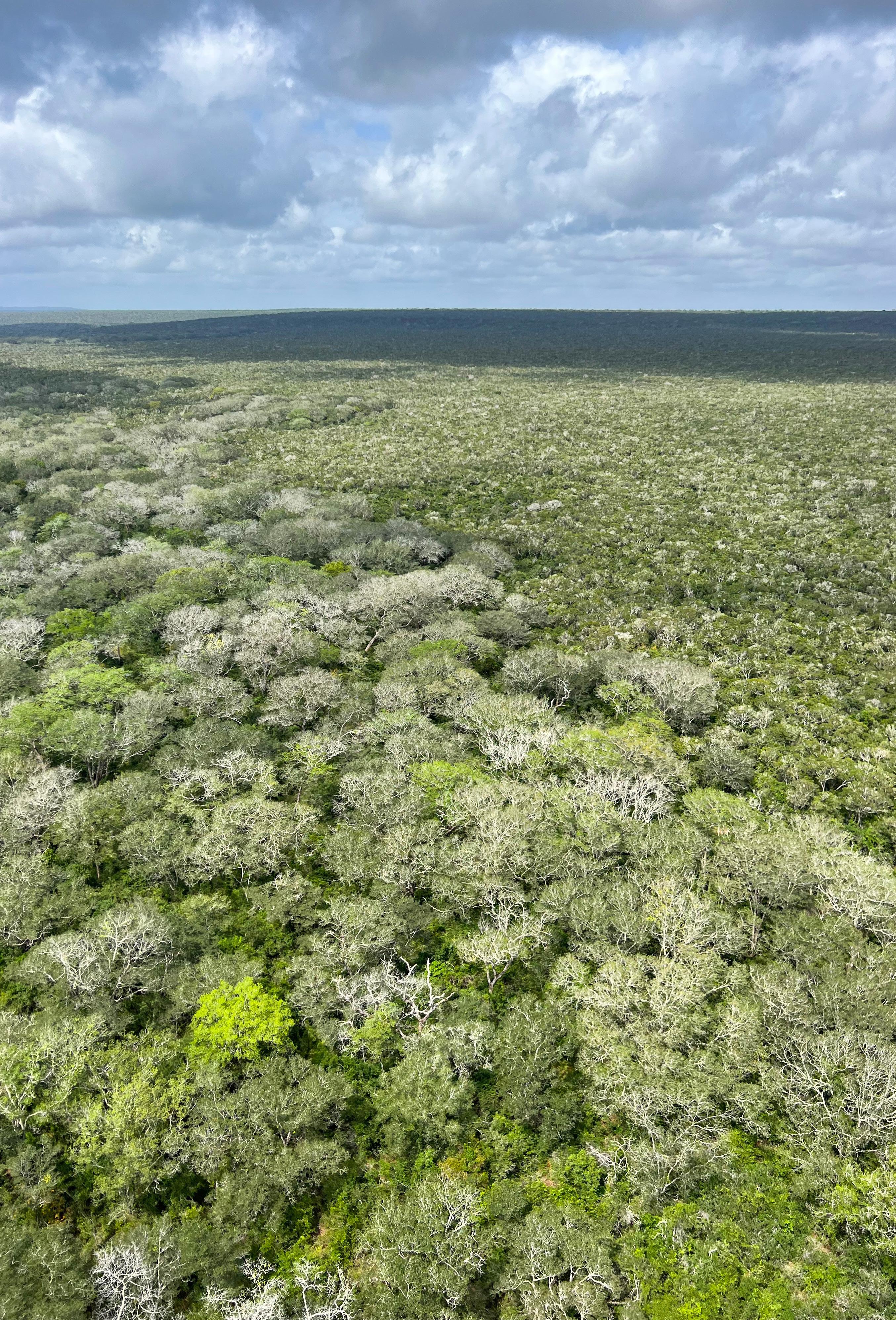
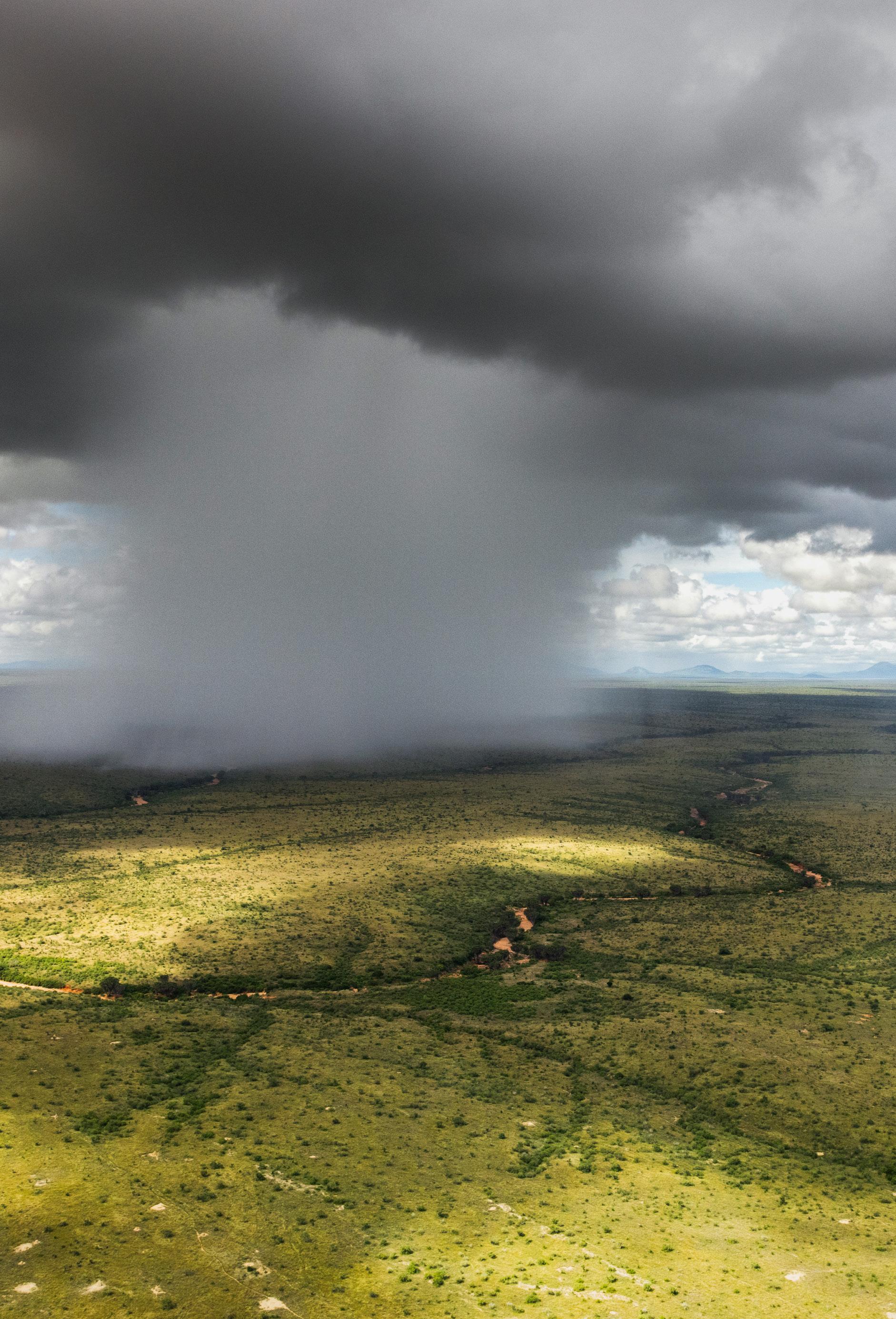
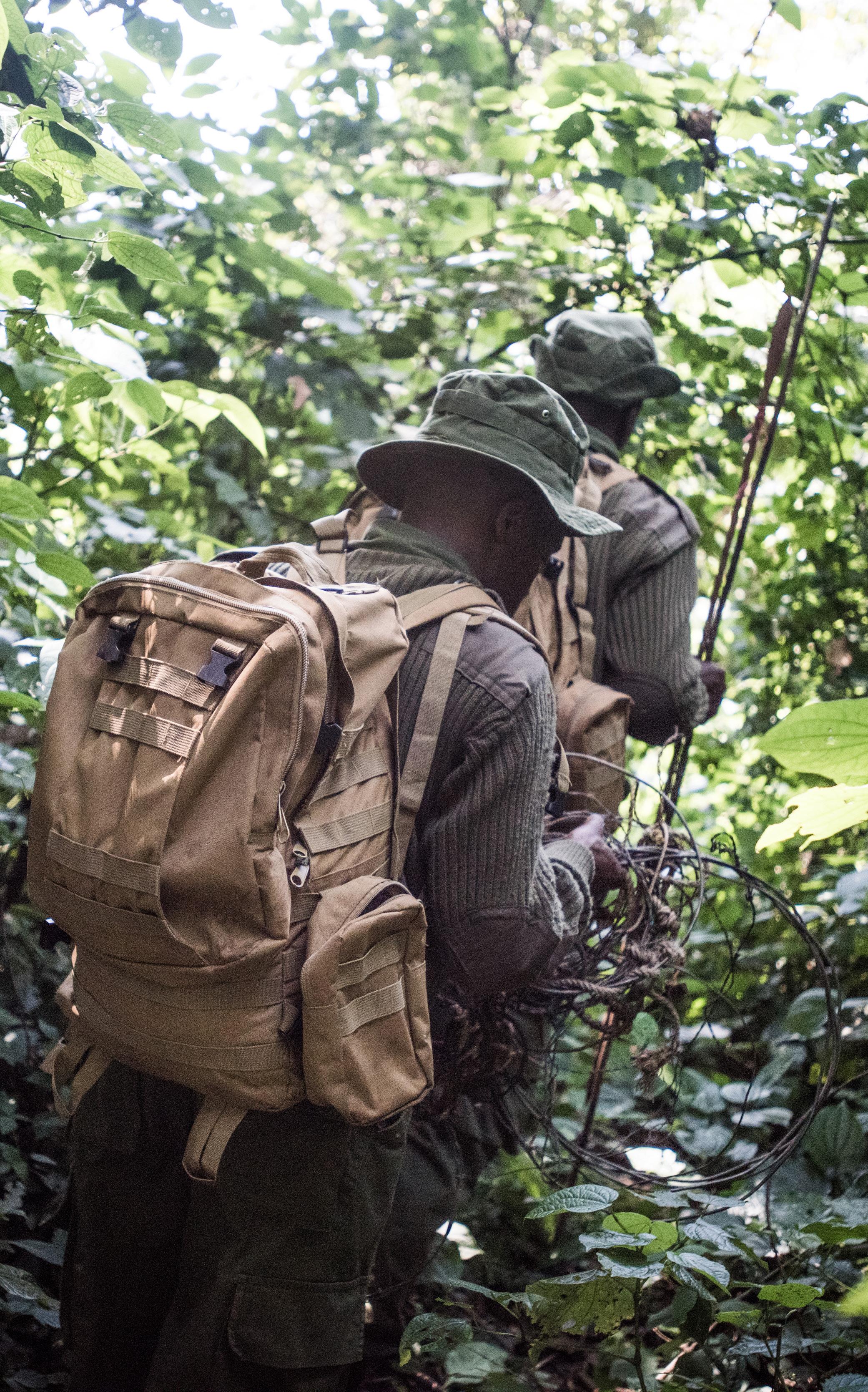
Our Galana-based pilot conducts regular aerial patrols over the forest, with support from the broader Aerial Unit for targeted operations.
On the ground, we have invested heavily in the infrastructure needed to make patrols effective. We provided two new Land Cruisers for KFS teams — maintained by the Trust and operated by Trust drivers — and have created and cleared security roads to improve accessibility across the forest. A water trough has been constructed for wildlife, and a new lookout platform now supports field operations within the forest. We also constructed a fully equipped ranger post, comprising four ranger houses, a mess area, kitchen, office and store block, toilets, and two 10,000-litre water tanks —
providing teams with a permanent, well-resourced base from which to operate.
The most significant milestone, however, has been the completion of a 110-kilometre, 14-strand unshortable electric fence along the forest's perimeter. This was the most urgent undertaking of our work in Arabuko Sokoke: the fence protects the forest's vulnerable elephant population, safeguards its unique endemic flora and fauna, and reduces human-wildlife conflict along the boundaries — delivering long-term security for both the forest and the communities that surround it. This fenceline project was made possible thanks to our partners at Chantecaille Conservation Foundation.
mau fores T
Location:
Rift Valley, southern Kenya
Total size:
675,000 acres
Ecological significance:
The Mau Forest is the largest montane indigenous forest in East Africa. It is a headwater for over a dozen critical rivers, including the Mara River, which supports the wildlife and human communities of the Maasai Mara and Serengeti ecosystems. The Mau Forest is the largest forested area in Kenya and its most important water catchment. Located in the heart of the Rift Valley, it fuels the main rivers that provide water to the western region of the country.
Humans depend on the Mau Forest for their survival, but it is human actions that put its very existence at risk. Over the past half-century, nearly 37% of the forest’s original area has been lost. Many perennial rivers have become seasonal, while clear-cutting of trees has led to soil erosion and flooding. Propelled by steep gradients, eroded soil laden with pollutants and agrochemicals end up in the Mara River, which is the primary water source for countless wildlife and millions of people.
The pressures facing the Mau Forest are many and varied, ranging from land encroachment for settlements to forest degradation through grazing, fires, illegal logging, and poaching. To face these challenges head-on, we teamed up with Mara Elephant Project in 2018 to establish the Mau Anti-Poaching Team. Following the success of this initial team, we deployed a second team in the ecosystem the next year. These Anti-Poaching Teams exemplify how boots on the ground can transform an unprotected area. Indeed, their impact was immediate. Not only did the team support the arrest of poachers, the seizure of ivory, and the removal of snares and other contraband, but their mere presence acted as a powerful deterrent.
One of the most impressive side-effects was the buy-in from communities surrounding the Mau Forest. There was a huge turnout for the recruitment of the second Anti-Poaching Team, and we have since trained an outstanding team of rangers. At last, local citizens feel inspired and empowered to help protect the wilderness on their doorstep.
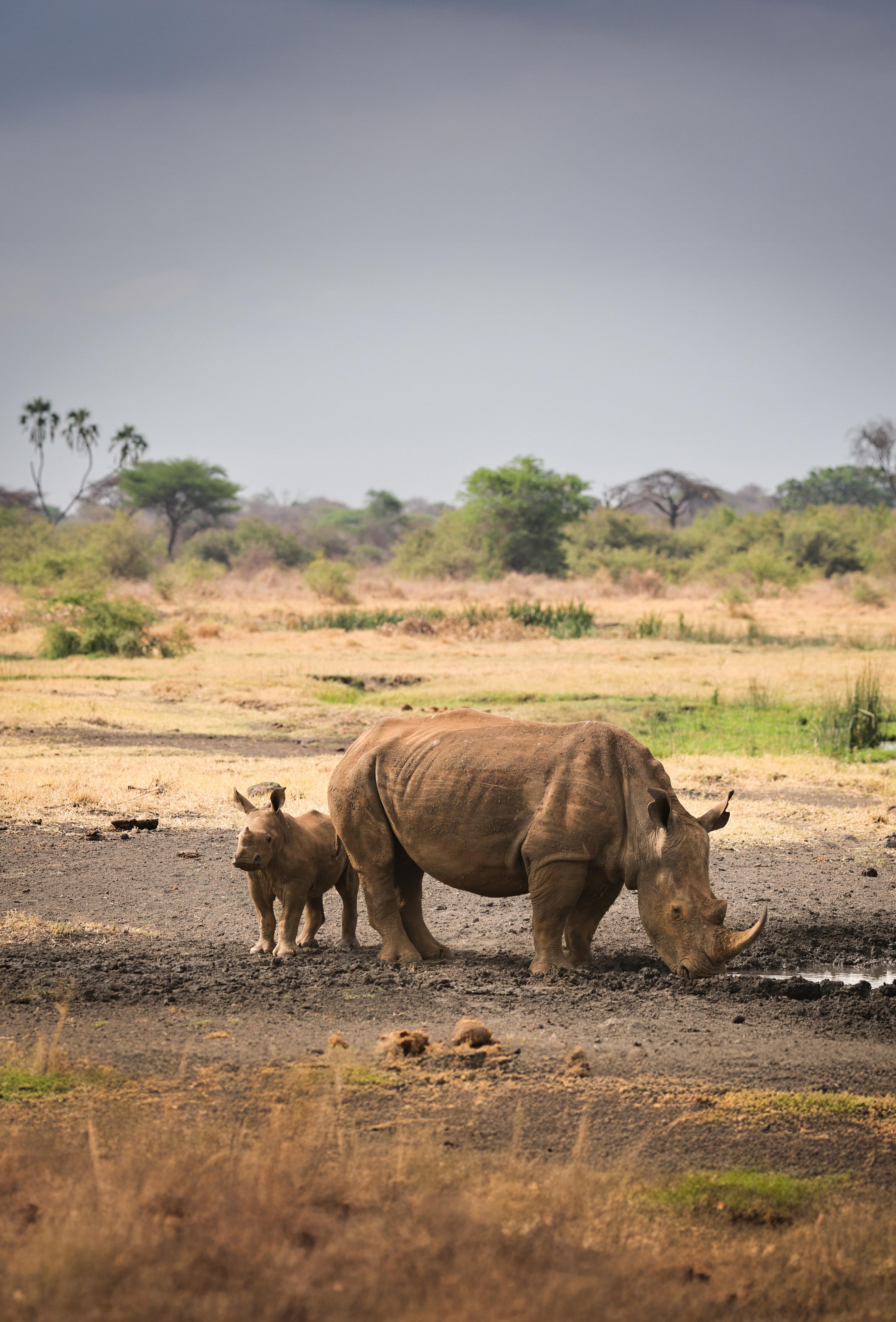
meru r H ino san CT uary
Location:
Meru National Park, northern Kenya
Total size: 21,000 acres
Ecological significance:
An enclave within Meru National Park, the Meru Rhino Sanctuary provides a vital refuge for both black and white rhino populations. Protected areas like Meru play a crucial role in the recovery of critically endangered black rhinos, a species that remains highly vulnerable to poaching.
Meru National Park was established in 1966, around the same time that Elsa the lioness made it a household name. Home to over 500 animal species and 720 plant species — from elephants and cheetahs to caracals and crocodiles — it is one of Kenya's richest ecosystems. Historically, it was also a stronghold for the eastern black rhino, with over 200 individuals in the park alone.
That all changed in the 1970s, when poaching swept across Africa. Driven by demand for rhino horn in the Far East, 98% of Kenya's black rhino population was killed between 1970 and 1983 — a nationwide population of 20,000 dwindled to just 350. Meru suffered the most: 125 carcasses were recorded within the park between 1974 and 1979 alone, and by the turn of the century, both rhino species were locally extinct there.
Fortunately, Kenya takes great pride in its natural heritage. It took an intensive approach to rhino conservation by establishing new populations within dedicated rhino sanctuaries. These secure, fully fenced sanctuaries were set up in former rhino ranges, allowing reintroduced populations to breed naturally and create their own territories.
Meru Rhino Sanctuary began with one white rhino, named Mokora. White rhinos, which had long been extinct in Kenya, were reintroduced to the country in the 1960s from South Africa to support conservation efforts. From the reintroduction of a single rhino, Meru Rhino Sanctuary was born. A founding population of six white rhinos were brought to Meru from Solio Ranch in 2001. In the years that followed, a further 20 white rhinos were introduced from Lake Nakuru National Park, Lewa Downs, and Solio Ranch. Once a white
rhino population had successfully been established within Meru, it was time to reintroduce black rhinos back into their traditional rangelands. As with white rhinos, they began with one male, Kalele, who was also translocated from Lewa Downs. In 2005, 20 black rhinos were brought to the sanctuary from Lewa Downs, Lake Nakuru National Park, and Nairobi National Park. This was the tricky part: Unlike their stolid cousins, black rhinos are notoriously mercurial. Much to everyone’s relief, however, they embraced their new home largely without incident.
But even as the population within Meru Rhino Sanctuary flourished, threats loomed. In the early 21st century, a second wave of poaching dented Africa’s already fragile rhino population. Between 2008 and 2015, at least 5,940 rhinos were killed across the continent.
To help the rhino population recover, protected sanctuaries were the solution. In 2017, we funded a large-scale project to upgrade and extend the fenceline securing Meru Rhino Sanctuary, doubling its size from 35 square kilometres to 83 square kilometres. In 2022, we funded an additional extension, bringing the total fenceline extension to 48.6 kilometres.
The state-of-the-art electric fenceline includes 20 strategic corridors that allow the free movement of animals, except for rhino, in and out of the sanctuary. These corridors were placed in known wildlife routes, essentially turning the sanctuary into a seamless — yet high-security — enclave within the wider Meru National Park.
A rhino sanctuary is only as effective as its security. As we installed Meru’s state-of-the-art fenceline, we also built four security bases dotted along its perimeter. KWS rangers guard the sanctuary day and night, while SWT funds a full-time staff of 12 who monitor the fenceline every single day for any breaks or security breaches. Where we can, we also support KWS operations in Meru National Park, donating two Land Cruiser security vehicles, vehicle upgrades and maintenance, ranger camping gear, and other essential equipment. In 2025, we purchased a Toyota Champ 4WD for the Meru fence maintenance crew to more efficiently patrol.
Our wider support for Meru National Park has spanned more than a decade. In 2013, we established a SWT/ KWS Mobile Veterinary Unit in Meru. To date, the team has attended to 1,307 animals, including 262
rhinos. Operations include ear-notching exercises, translocations, and treatments for injuries and illness.
In 2014, we installed permanent boots on the ground in Meru: our SWT/KWS Meru Anti-Poaching Team. Rangers conduct daily patrols to uncover illegal activities, confiscate snares, gather intelligence, and support field conservation efforts. Their mere presence also acts as a powerful deterrent to would-be poachers and other perpetrators.
Enormous efforts go on behind the scenes to secure Meru Rhino Sanctuary and the wider national park. All the while, the rhinos go about their daily lives, unaware of all the work going on to ensure their safety. The sanctuary may be fenced, but sitting within, you would never know it: It feels vast, untouched, and utterly wild.
Through the years, Meru’s rhino population has begun to flourish of its own accord. Adults are breeding, babies are being born, and the next generation of rhinos is taking root. The hope is that, in time, all Kenya’s rhinos are again able to roam freely across the country’s protected lands. But for now, Meru Rhino Sanctuary is giving them a place to recover and repopulate. In fact, it has turned into an important feeder for other rhino populations across the country.
Meru Rhino Sanctuary is a reminder that no cause is truly lost. From a population of zero rhinos not that long ago, it is presently home to 100 white and 45 black rhinos. In 2024 alone, six black rhinos were born within the sanctuary. This little jewel very much represents a species saved from the brink — and, we hope and believe, with an entire future ahead of them.
moun T kenya
Location: Central Kenya
Total size:
690,895 acres
Ecological significance:
Mount Kenya is the highest mountain in Kenya and the second highest on the African continent. It is an important water tower and home to a wide range of wildlife, including a thriving population of elephants.
Instantly recognisable for its hulking, craggy outline, Mount Kenya is an icon of the African wilderness. But even a 17,000-foot mountain is no match for human encroachment. Over the past several decades, Mount Kenya National Park has effectively become an island, surrounded by dense settlements and agriculture.
Mount Kenya Trust was established to forge a future for the ecosystem, driving conservation and reducing conflict between local communities and the creatures who live alongside them. It spearheaded the Mount Kenya Elephant Corridor, a 14-kilometre elephant migration route that effectively extends the mountain’s footprint for wildlife, connecting it to the Ngare Ndare Forest, Borana Ranch, Lewa Wildlife Conservancy, and beyond to Samburu National Reserve. Over 1,000 elephants use the route each year.
Through regular mobile camping patrols, Mount Kenya Trust effectively secures the mountain, elephant corridor, and surrounding areas against pervasive threats. They respond to any emergency calls within the region, tackling poaching issues and illegal activities, while also supporting elephant rescues and veterinary interventions. However, these teams require proper funding to do their important work. Since 2017, we have supported Mount Kenya Trust and their camping patrols by subsidising the team’s equipment, rations, fuel, and logistics. We have also donated two Land Rover Defender 4x4 vehicles to the team, which have taken their daily operations to the next level. As we fund efforts to tackle illegal activities, we also work to support the animals caught in the crosshairs. In 2017, we established the SWT/KWS Mount Kenya Mobile Veterinary Unit. This team has made an important mark on the landscape, attending to more than 2,652 animals since its inception.
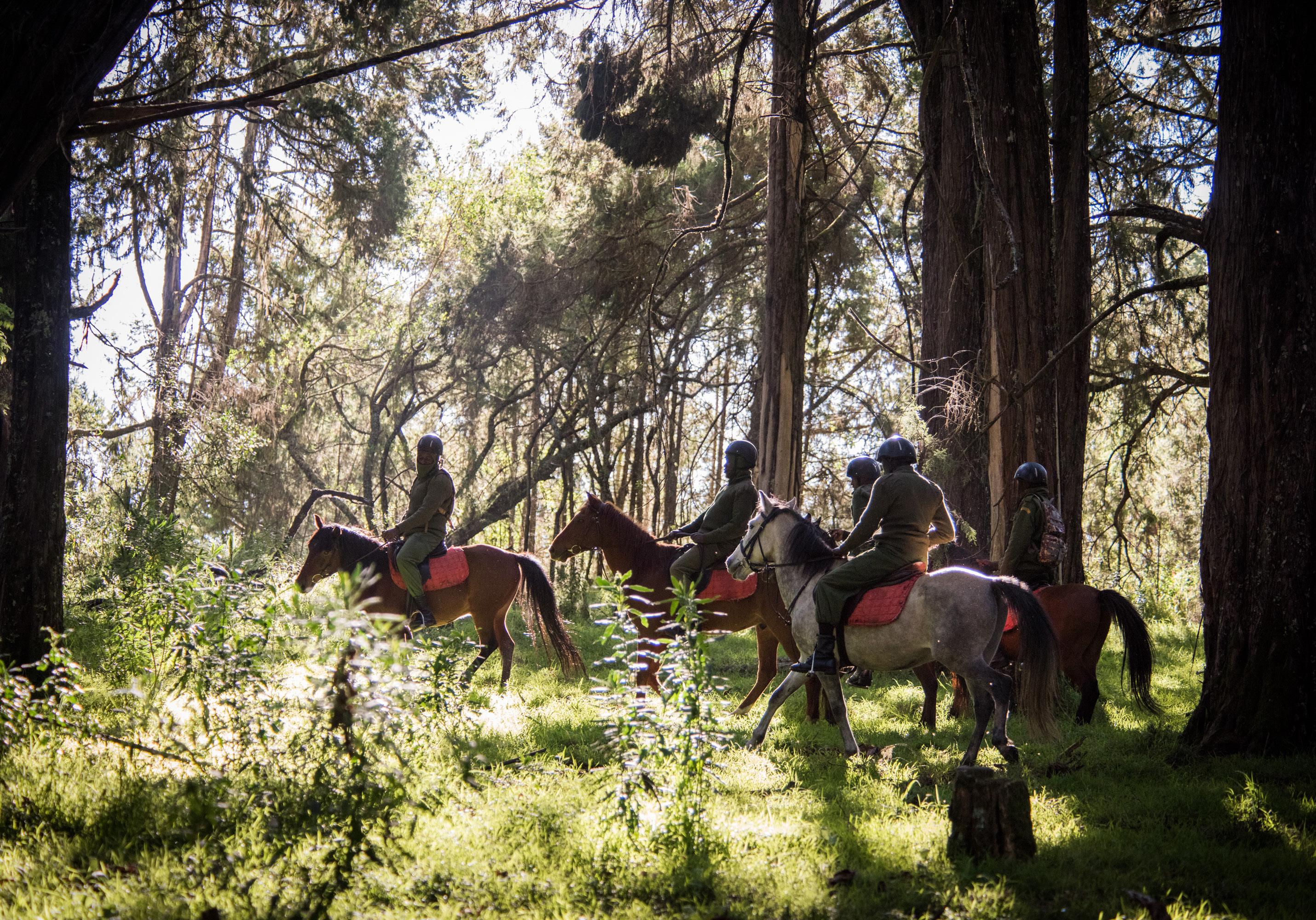
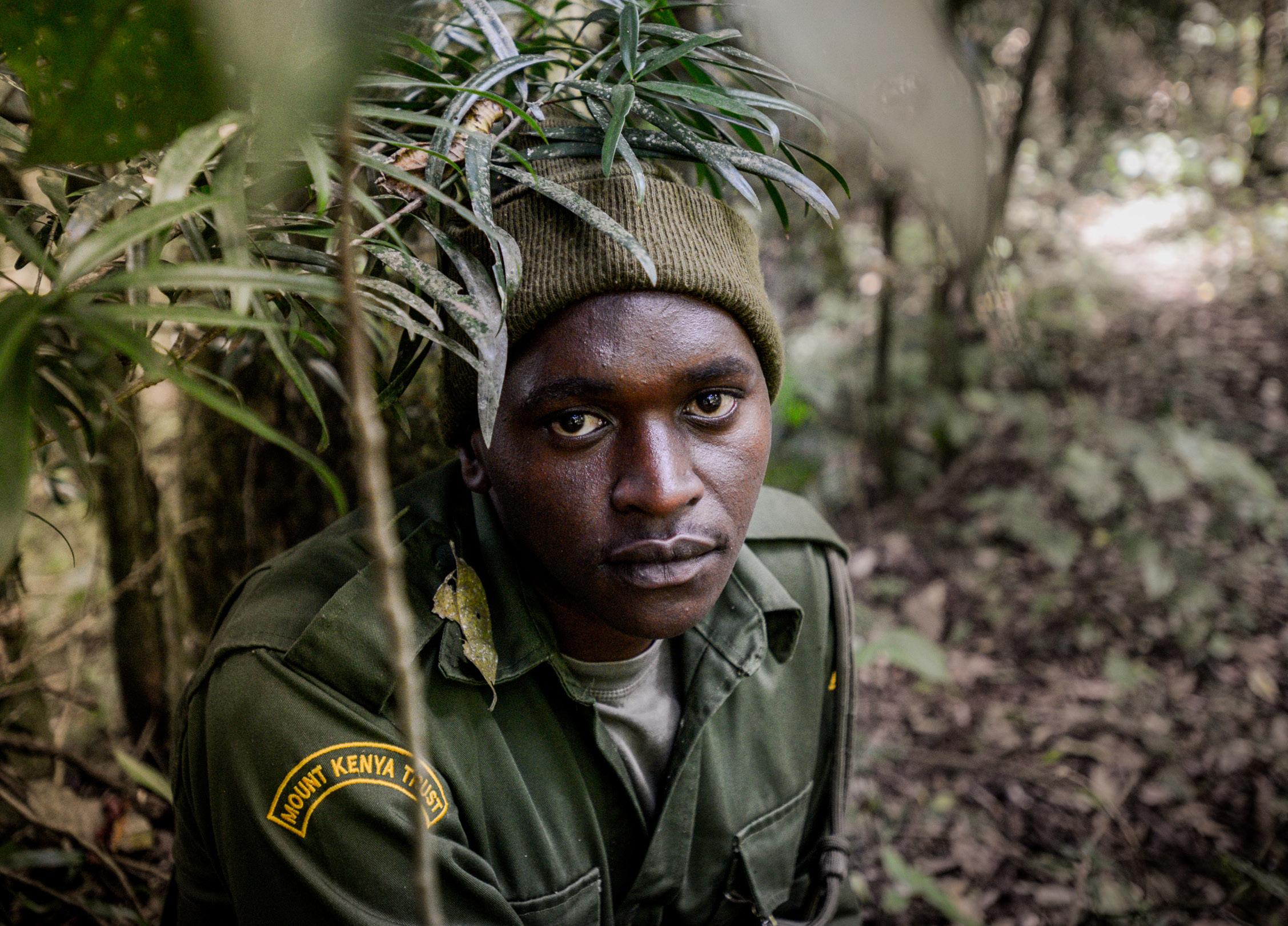
s H imba H ills and mwalugan J e ele PH an T san CT uary
Location:
South coast of Kenya, south of Tsavo East National Park
Total size:
80,232 acres
Ecological significance:
Shimba Hills National Reserve is one of the largest coastal forests in East Africa and home to the highest density of elephant population in Kenya. Mwaluganje Elephant Sanctuary, which sits due north, serves as an important corridor for elephants and other wildlife between Mwaluganje Forest Reserve to the north and Shimba Hills to the south.
The Shimba Hills and Mwaluganje Elephant Sanctuary are the focus of our latest large-scale conservation initiative. As one of Kenya's last substantial coastal forests, the Shimba Hills provides a vital refuge for diverse wildlife. Together with Mwaluganje Elephant Sanctuary to the north, they also serve as an important sanctuary for Kenya's coastal elephants. Following the ivory poaching crisis of the 1970s and 1980s, many elephants sought refuge along the coast. The forested Shimba Hills have remained a steadfast, albeit small, stronghold for the species.
However, human encroachment has progressively fragmented the landscape, restricting the natural migratory route back to Tsavo. The remaining landscape was highly vulnerable to development — which would have had catastrophic implications for coastal elephants and other creatures. Thus, when the opportunity arose to secure Mwaluganje, the Shimba Hills, and the 800acre corridor that connects them, we leapt at the chance. The success of conservation efforts in Shimba Hills and Mwaluganje is deeply rooted in community engagement. Mwaluganje Elephant Sanctuary is a community-owned initiative, where local landowners lease their property to a community-based trust. We continue to distribute annual compensation payments to landowners and subsistence farmers participating in the program, and fund wages for sanctuary staff and rangers, as well as a school bursary program, whilst subsidising essential infrastructure and works throughout the landscape.
In December 2023, we completed a major project: securing the Shimba Hills Conservation Area with a 117-kilometre electric fence. This extensive undertaking, which spanned nearly two years, was essential to conservation efforts, as the old fence had fallen into disrepair and lacked oversight. With support from KWS,
local village chiefs, and the chairman of Mwaluganje Elephant Sanctuary, an educational campaign was launched to inform local communities about the project's benefits. Throughout the project, local communities responded positively, recognising that the new fence would allow them to cultivate their land right up to the reserve boundary without the constant threat of crop raids by wildlife. In the long run, this fence will help mitigate human-wildlife conflict and improve local livelihoods. To ensure the fence's long-term effectiveness, we constructed 11 energiser houses at regular intervals along the fence line. From these bases, full-time fence attendants patrol both sides of the fence, maintaining its functionality and reporting wildlife movements or potential breaches.
In response to persistent threats in the area, we established the SWT/KWS Kwale Anti-Poaching Team, which is now deployed full-time to the landscape, with the Kulalu II Anti-Poaching Team continuing to be deployed on an as-needed basis. Daily patrols have already reduced illegal activities, notably bushmeat poaching and charcoal burning. The SWT's permanent on-site presence has also had the effect of motivating Mwaluganje community scouts, who have benefitted from improved training methods and now conduct intensified daily foot patrols of six to eight kilometres per day.
Also in late 2023, we opened two boreholes within the Shimba Hills Conservation Area. The first feeds a large natural waterhole for wildlife and the second, below the SWT property, supports both wildlife and operational needs. In 2025, we further expanded this water infrastructure by installing five large water troughs throughout the conservation area, periodically filled by the SWT water bowser to support the growing wildlife population.
That growing population has been bolstered by a significant translocation effort. In March 2025, we supported KWS with 21 hours of helicopter and aerial support — covering over 2,155 kilometres — during Phase 1 of an intensive wildlife translocation mission, successfully bringing 180 zebra, 90 impala, and 9 kongoni into the landscape from the Lumo and Lake Jipe areas of Tsavo West.
To support the expanding scope of operations across the ecosystem, SWT has also invested in new heavy machinery, including a 140 GC CAT Motor Grader and a new John Deere tractor with tipping trailer, permanently based within the sanctuary to support fence maintenance, infrastructure works, water access, and anti-poaching
efforts. In the past year, these machines have covered 587 kilometres of road grading, opening up patrol tracks and security access roads — beginning in the southern area of the reserve and extending towards Mwaluganje — to support de-snaring teams and all field units.
With a strengthened SWT presence, intensified patrols, a fully operational electric fence, expanded water infrastructure, and a growing wildlife population, the future of Shimba Hills and Mwaluganje looks increasingly promising. As the habitat is further restored, there is real potential for the reintroduction of additional wildlife and increased visitor numbers — providing valuable economic benefits for local communities and further discouraging illegal activity.
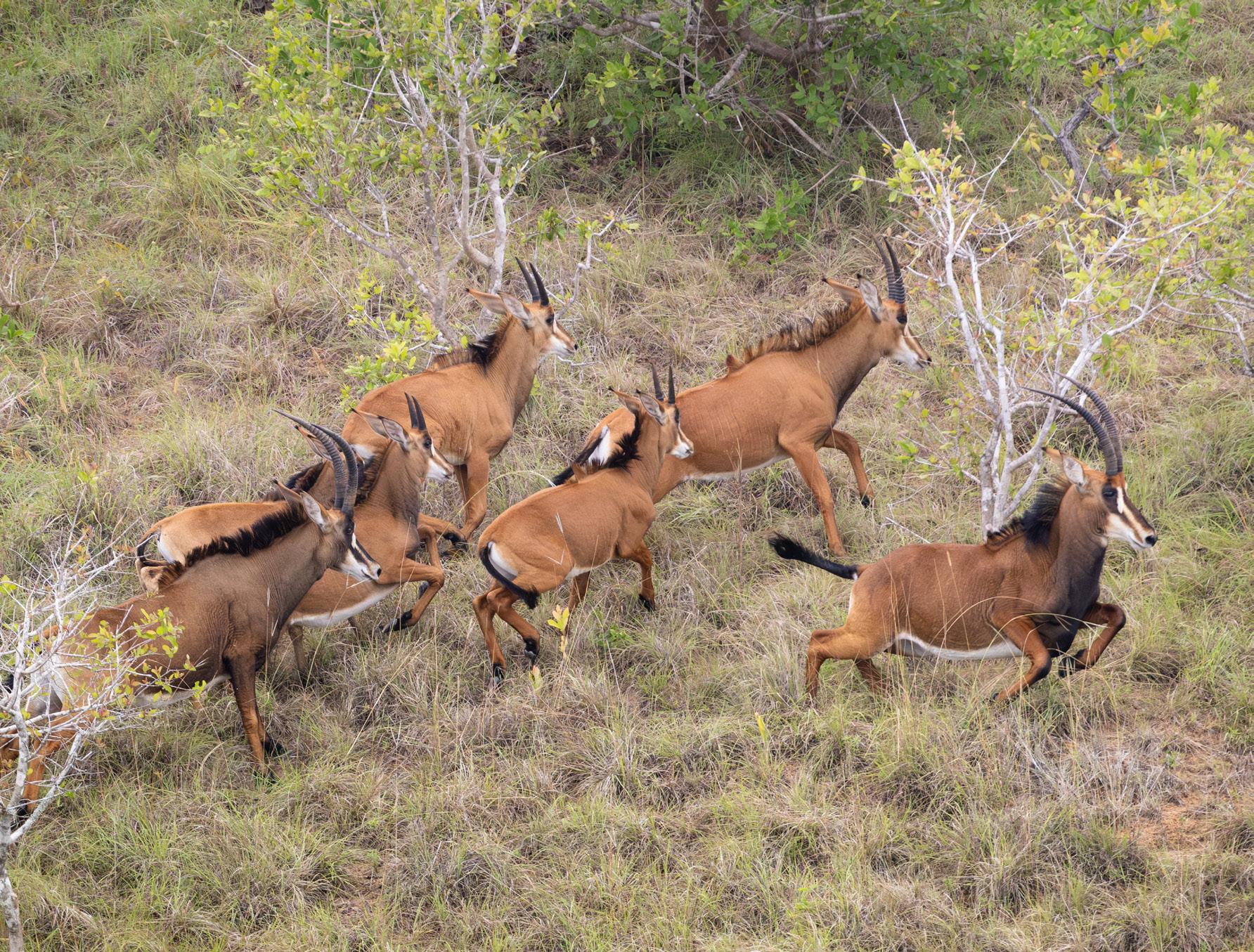
maasai mara national reserve
dona T ed 7 ve H i C les T o TH e maasai mara reserve , funded TH e building of ranger a CC ommoda T ion and ear TH ranger T raining for TH e mara o P s room T eam .
funded TH e maasai mara mobile ve T erinary uni T sin C e 2007, T rea T ing over 2,300 animals .
sw T fixed - wing air C raf T and H eli C o PT ers su PP or T ed TH e su CC essful dar T ing , ear no TCH ing and T ransmi TT er fi TT ing of 27 bla C k r H ino in TH e mara T o en H an C e real T ime moni T oring and P ro T e CT ion .
The Maasai Mara is one of the most important ecosystems in Kenya, a landscape that rightly earns its place among East Africa's most renowned wild spaces. Home to hundreds of species, including exceptional populations of elephants, leopards, lions, and cheetahs, the Mara is a cradle of life.
An area of spectacular biodiversity, the Mara is one of Africa’s greatest tourism destinations and the stage for the Great Migration.
And yet, all that hangs in the balance. Like so many landscapes across Africa, the Mara is caught in the crosshairs of human expansion. While the Maasai Mara National Reserve, Mara Triangle, and many surrounding Maasai conservancies and group ranches remain protected, development and cultivation continue to chip away at the greater Mara ecosystem. This inevitably drives an uptick in poaching, snaring, and most notably, human-wildlife conflict, as animals unwittingly venture outside protected boundaries and come into contact with communities.
We have long been active in spearheading and supporting Mara conservation efforts. Our SWT/KWS Mara Mobile Veterinary Unit has become a life-saving force within the ecosystem. Since it was established in 2007, it has attended to more than 2,300 wild patients. In 2025, we further strengthened their work by rehabilitating two veterinary headquarters serving the Mara: the KWS
Sekenani HQ and our own SWT/KWS Mara HQ, ensuring these critical bases are fit for the demands ahead. In tandem, our Aerial Unit regularly responds to field incidents, from veterinary emergencies to orphan rescues. Our aircraft have also played a central role in a sustained effort to monitor and protect the Mara's black rhino population. In March 2024, a fixed-wing and a helicopter contributed a combined 60 hours and 6,447 kilometres over a seven-day operation, resulting in the successful darting, ear-notching, and LoRa transmitterfitting of 13 eastern black rhinos. In February 2025, both aircraft returned for a second exercise, racking up 83 hours of flight time and over 8,000 kilometres — and successfully tagging and notching a further 14 rhinos. To build on this technology, SWT funded an EarthRanger training program to equip Maasai Mara National Reserve staff to use the new LoRaWAN network we recently deployed, enabling more effective, real-time monitoring of the Mara's rhino population.
Effective conservation is a patchwork of projects and partnerships. In 2018, we teamed up with Mara Elephant Project to establish an Anti-Poaching Team in the Mau
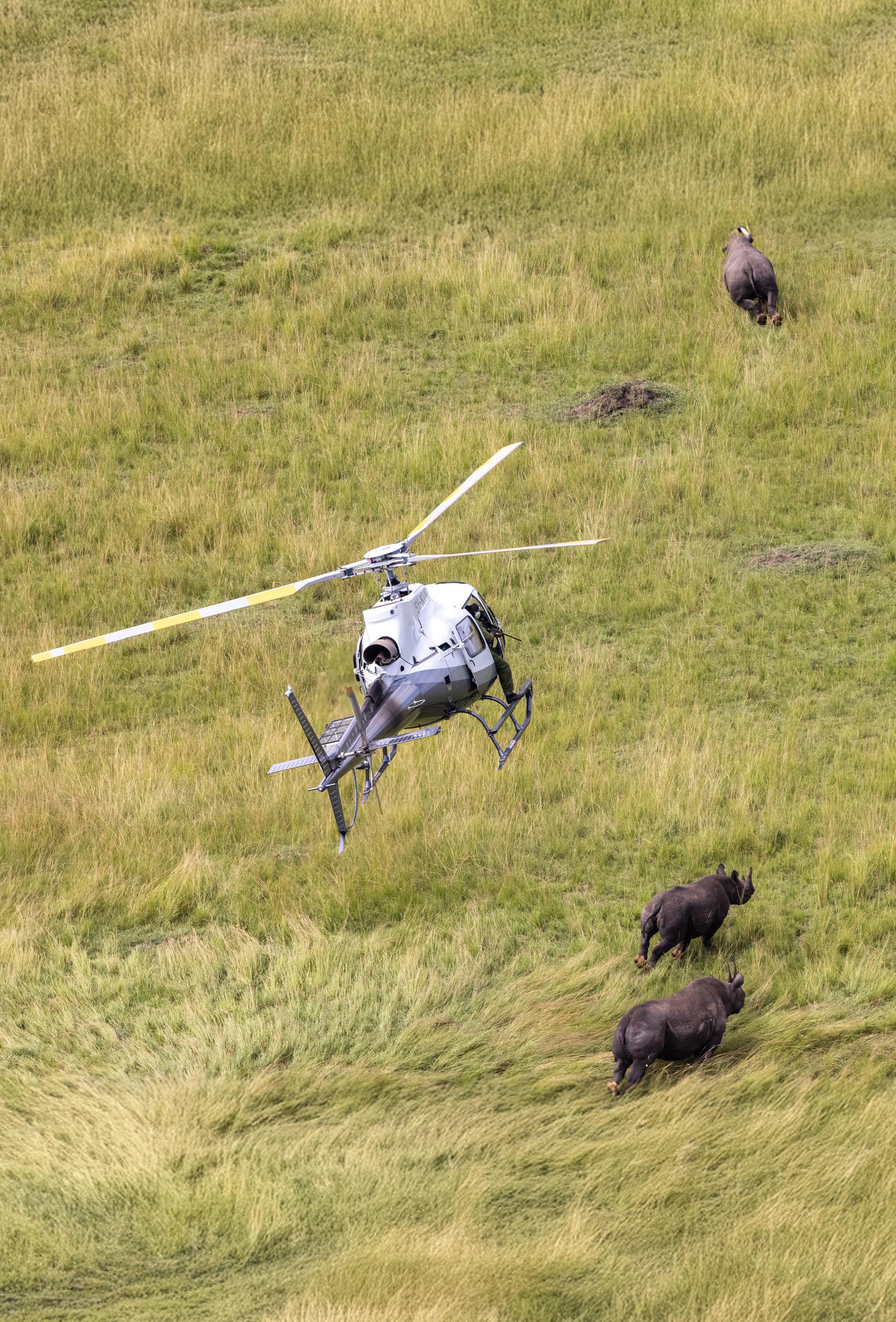
Forest, home to a local population of 650 elephants. The team made such an immediate impact that a second was soon added. Five years on, these rangers continue to exemplify how boots on the ground can transform a beleaguered landscape. We are also proud to fund security scouts operated by Mara Conservancy, who proactively patrol the landscape, respond to illegal activities, and act as a powerful deterrent.
In 2023, we donated two fully customised 4x4 vehicles to Narok County through the Mara Conservancy, dedicated to predator surveillance and protection within the Maasai Mara National Reserve, with a particular focus on its vulnerable cheetah population. This was a direct response to the growing pressures on the Mara's big cats, from human-wildlife conflict to high-density tourism, and teams reported that the vehicles enabled them to more closely monitor predators and rapidly respond to field incidents. Building on that commitment,
in 2025, we donated a further four monitoring vehicles, widening the focus to predator protection across the reserve and to monitor migratory crossings. In an effort to reinforce all the dedicated work being done to protect black rhinos, we also donated a customised Land Cruiser for rhino monitoring. In landscapes of this size, mobility is essential — and these seven vehicles go a long way in furthering conservation.
To house the increased personnel needed to provide security for the Mara's growing rhino population, we have also contracted the refurbishment of the old ranger barracks at Keekorok and the construction of a new building. Together with the rehabilitated veterinary headquarters, this represents a significant investment in the permanent infrastructure underpinning Mara conservation — ensuring that the people working to protect this extraordinary ecosystem have the bases they need to do so effectively.
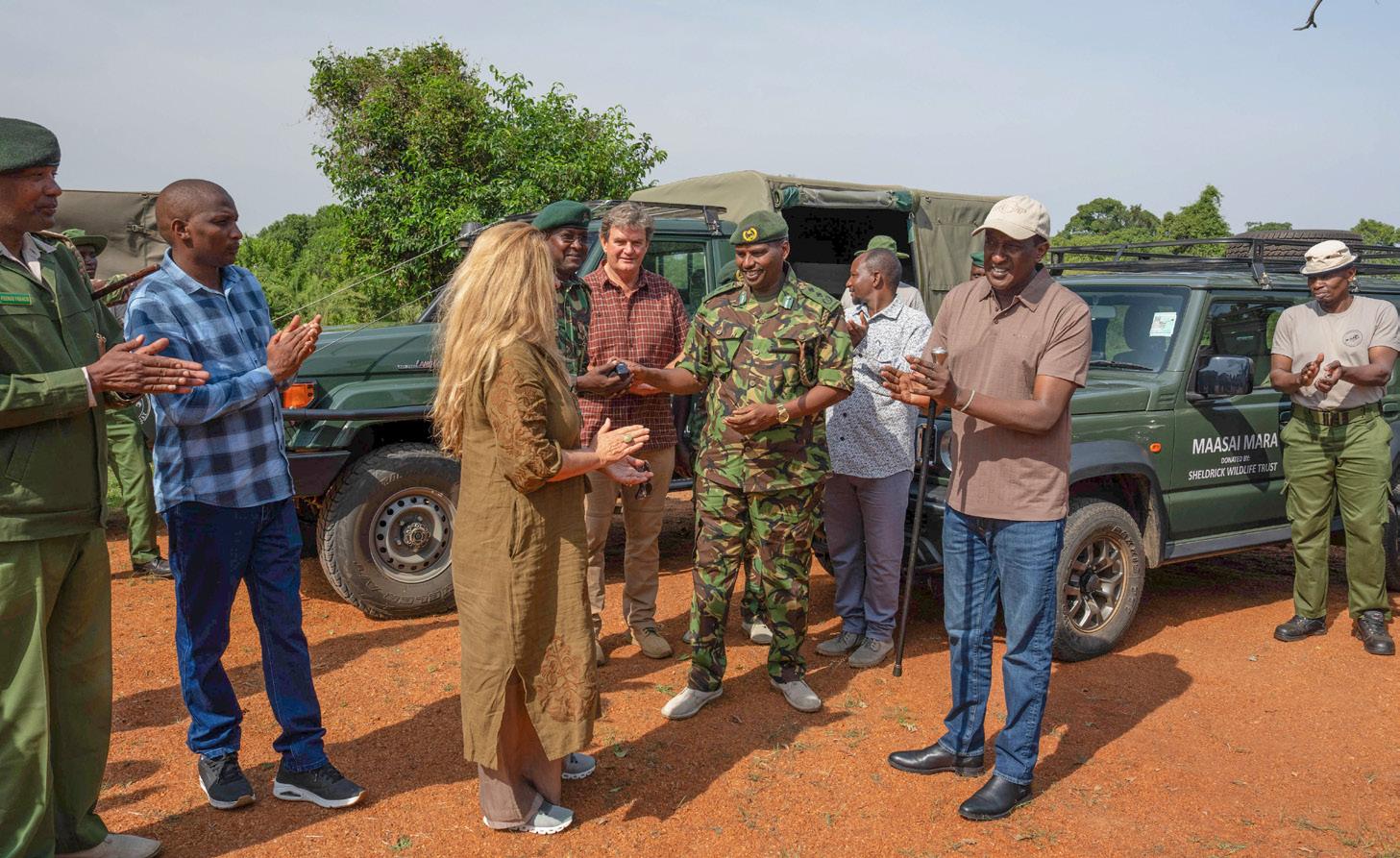
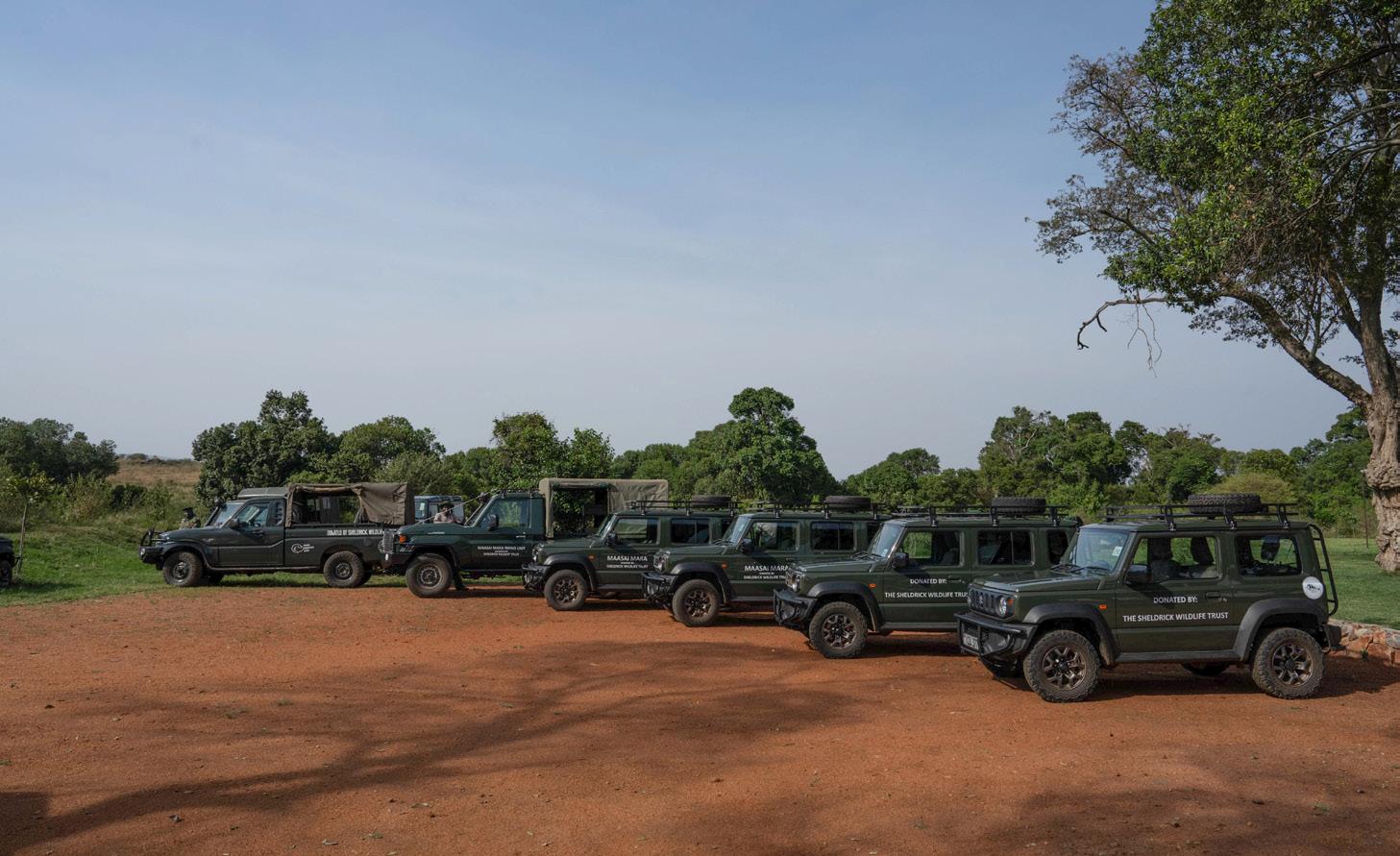
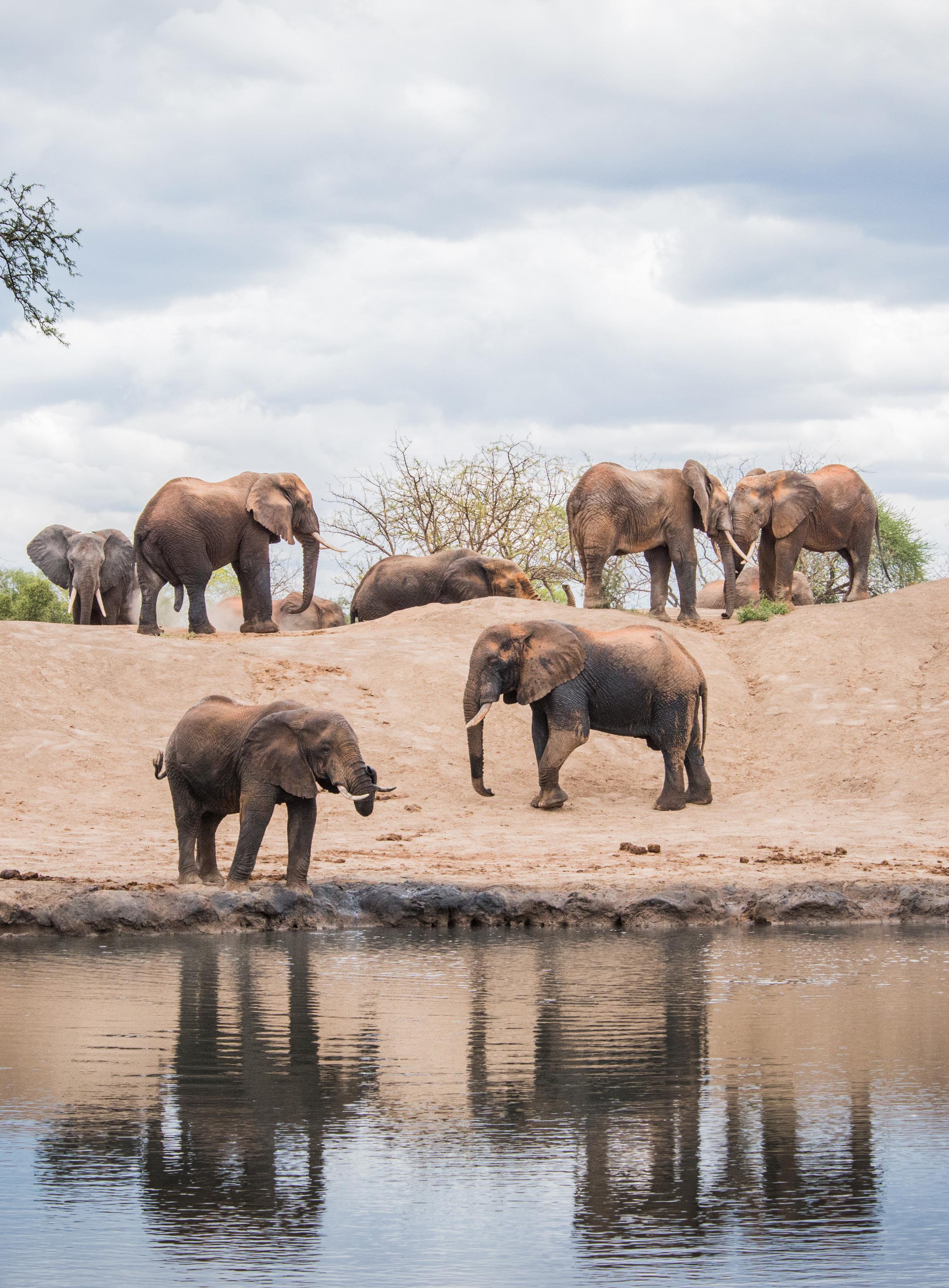
water for wildlife
8 new bore H oles drilled by sw T in 2025 wi TH in TH e T savo C onserva T ion area
Water defines life in Kenya. The country's seasons have always swung between extremes — long dry spells broken by the long rains of March through May, and the short rains of October through December. But those rhythms are becoming increasingly unreliable. Dry seasons stretch longer, rains arrive late or not at all, and droughts that were once periodic have become a recurring feature of the landscape. Climate change is no longer a distant threat here; it is a present reality, reshaping the conditions that wildlife and communities depend upon.
Water for Wildlife, our supplemental water program, is our response to this growing uncertainty. Working in consultation with hydrology experts and the Kenya Wildlife Service, we implement tailored water solutions in areas that struggle with limited or irregular rainfall — ensuring that even in the driest years, wildlife has somewhere to drink. But wildlife are not the only ones who depend on these sources. The rangers, pilots, veterinarians, and field staff doing the hard work of conservation in these remote landscapes need reliable access to water too. A borehole that sustains a herd of elephants may equally sustain the team camped nearby, working to protect them.
Much of this work is concentrated in the Tsavo Conservation Area, where vast, otherwise ideal habitat is rendered largely uninhabitable during the dry season by a lack of natural drinking sources. We drill boreholes where aquifers are plentiful but surface water is scarce, powering pumps sustainably through wind and solar — augmented by generators where needed — to draw water up into troughs and pans designed to accommodate creatures of every size.
To date, we have drilled and/or rehabilitated 63 boreholes across Kenya, eight of them sunk and equipped in 2025 alone. Of these, 41 are actively managed and maintained by SWT.
sw T - funded bore H oles :
• Ndara Windmill - Tsavo East (1997)
• Kanderi - Tsavo East (1997)
• Ithumba KWS HQ - Tsavo East (2000)
• Aruba - Tsavo East (2001)
• Dida Harea - Tsavo East (2003)
• Kaluku 1 - Peregrine Conservancy (2006)
• Kamboyo - Tsavo West (2006)
• Ithumba Airstrip - Tsavo East (2010)
• Kaluku Airstrip - Peregrine (2010)
• Nairobi 1 - Nairobi Park (2011)
• Nairobi KWS - Nairobi Park (2014)
• Ndiandaza - Tsavo East (2014)
• Kampi ya Mawe - Peregrine (2015)
• Ithumba Stockades - Tsavo East (2015)
• K9 Unit - Tsavo Triangle (2015)
• Tiva - Tsavo East (2015)
• Wangalla - Tsavo East (2016)
• Didea Windmill - Tsavo East (2016)
• Amu 2 - Amu Ranch (2016)
• Kalovoto - Tsavo East (2017)
• Kenze - Kibwezi Forest Reserve (2017)
• Thabagunji - Tsavo East (2019)
• Mbololo - Tsavo East (2019)
• Shimo la Shetani - Tsavo East (2019)
• Rhino Base - Tsavo East (2020)
• Nairobi 2 - Nairobi Park (2020)
• Galana - Galana Conservancy (2021)
• Rhino Valley - Tsavo West (2021)
• Milima - Nairobi County (2022)
• KARI Yellowthorn - KARI Ranch (2022)
• KARI Pool Site - KARI Ranch (2022)
• Shimba Hills 1 - Mwaluganje (2023)
• Shimba Hills 2 - Shimba Hills (2023)
• Kaluku 2 - Peregrine (2025)
• Kaluku Airstrip 2 - Peregrine (2025)
• Kulafumbi 1 - Peregrine (2025)
• Kulafumbi 2 - Peregrine (2025)
• Mnathe - Tsavo West (2025)
• Murka Hills - Tsavo West (2025)
• Trust House - Peregrine (2025)
• Tsavo Farm - Peregrine (2025)
We strategically locate each watering point far from communities, drawing wildlife deeper into protected areas. With the dry season comes an inevitable increase in human-wildlife conflict, as elephants and other creatures venture onto community land in search of food and water. By creating water sources deep within the park, we are able to mitigate these oft-lethal encounters. Boreholes also support the field teams and facilities that make conservation possible in the first place.
In areas where boreholes are not a viable solution, we bring in water on wheels. Our bowsers source water from a borehole or well-flowing river, which they then distribute across protected areas. We now operate a fleet of ten bowsers, seven of which have a holding capacity of 20,000 litres — giving us the capacity to rapidly transport 164,000 litres of water. Two further bowsers are currently being imported to expand the fleet. Bowsers are essential in delivering water to our Ithumba and Voi Reintegration Units, which serve older dependent orphans, ex-orphans, and wild elephants, and our drivers maintain carefully orchestrated daily routes across the Tsavo Ecosystem.
Large-scale water distribution in a vast wilderness like Tsavo is an enormous undertaking, requiring dedicated, full-time resources. Every week, our field teams conduct service checks of all water projects, cleaning troughs and tuning equipment as needed.
At Kaluku, which has grown significantly in recent years to meet the demands of the many teams and projects operating across the greater Tsavo Conservation Area, reliable water access is fundamental. We have drilled five new boreholes across the Trust land, all of which have delivered fresh water, with the Tsavo Farm borehole producing an impressive 20 cubic metres per hour.
Also in Tsavo West, we drilled two new boreholes to support anti-poaching and rhino surveillance operations in the area. The Murka Hills borehole required two attempts after the first drilling came up dry. We also undertook the significant task of replacing the entire water system at KWS Kamboyo Headquarters, which is built around Kamboyo Hill. The original system had deteriorated to the point where KWS staff quarters — including those housing several of our SWT/KWS anti-poaching teams — had no reliable water access whatsoever. Wildlife in the surrounding area also depends on overflow water from the headquarters filtering down to nearby waterholes. Works, which include full
excavation, new piping, valves, concrete surrounds, and tank repairs, are ongoing and progressing well, with a temporary supply installed to meet immediate needs.
Elsewhere, notable works in 2025 included: funding five water troughs for wildlife in the Mwaluganje and Shimba Hills ecosystem; the rehabilitation of the Tsavo West IPZ borehole and funding of a hydrology report for a second borehole in the same area; the installation of a new water trough at Manyani for wildlife; new solar power units for Chyulu 2 Station and Tsavo River Gate including rebuild works; a new water solar system at Aruba; a Chyulu water pump repair and replacement at Kamboyo; and ongoing funding of Tavevo Water and Sewage Company water bills for Tsavo East National Park.
The Tsavo Wetlands Project — our ambitious initiative to abstract water from the Athi River, convey it over the Yatta Plateau, and deliver it to the eastern plains where elephants and other animals can drink safely within the park — has required a fundamental rethink of its pumping system. Having worked through several alternatives, we have identified a new solution and expect works to recommence in 2026.
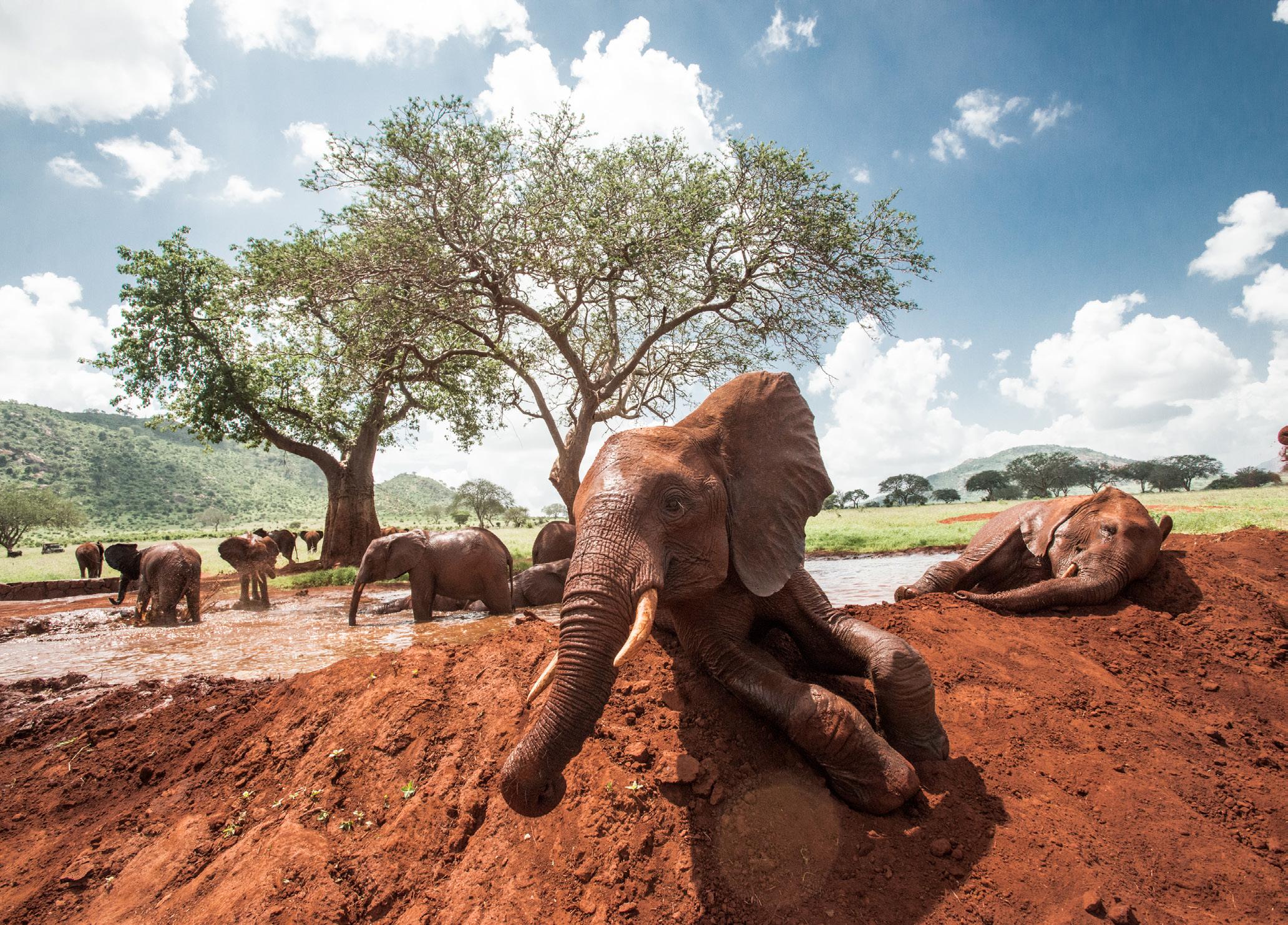
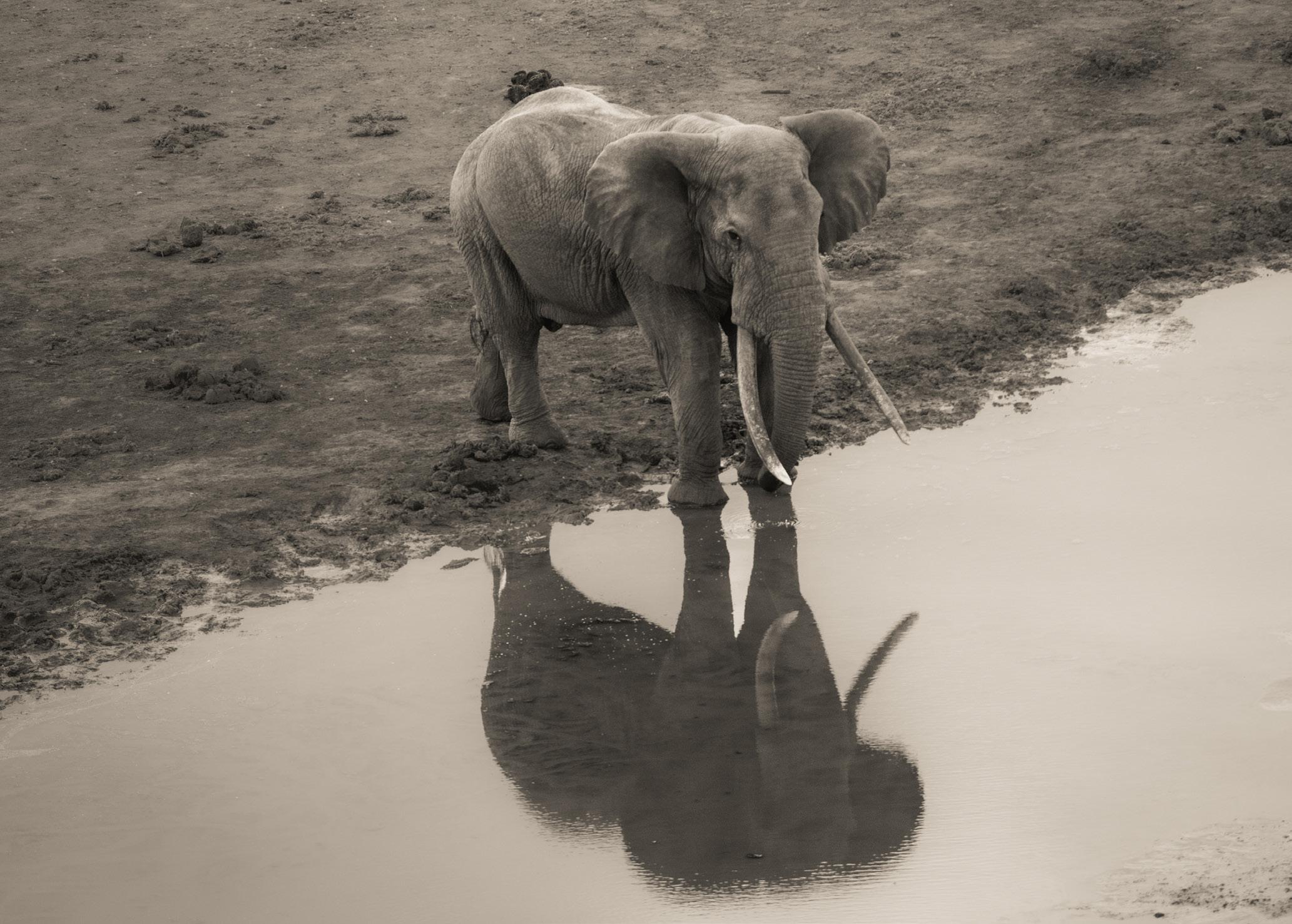
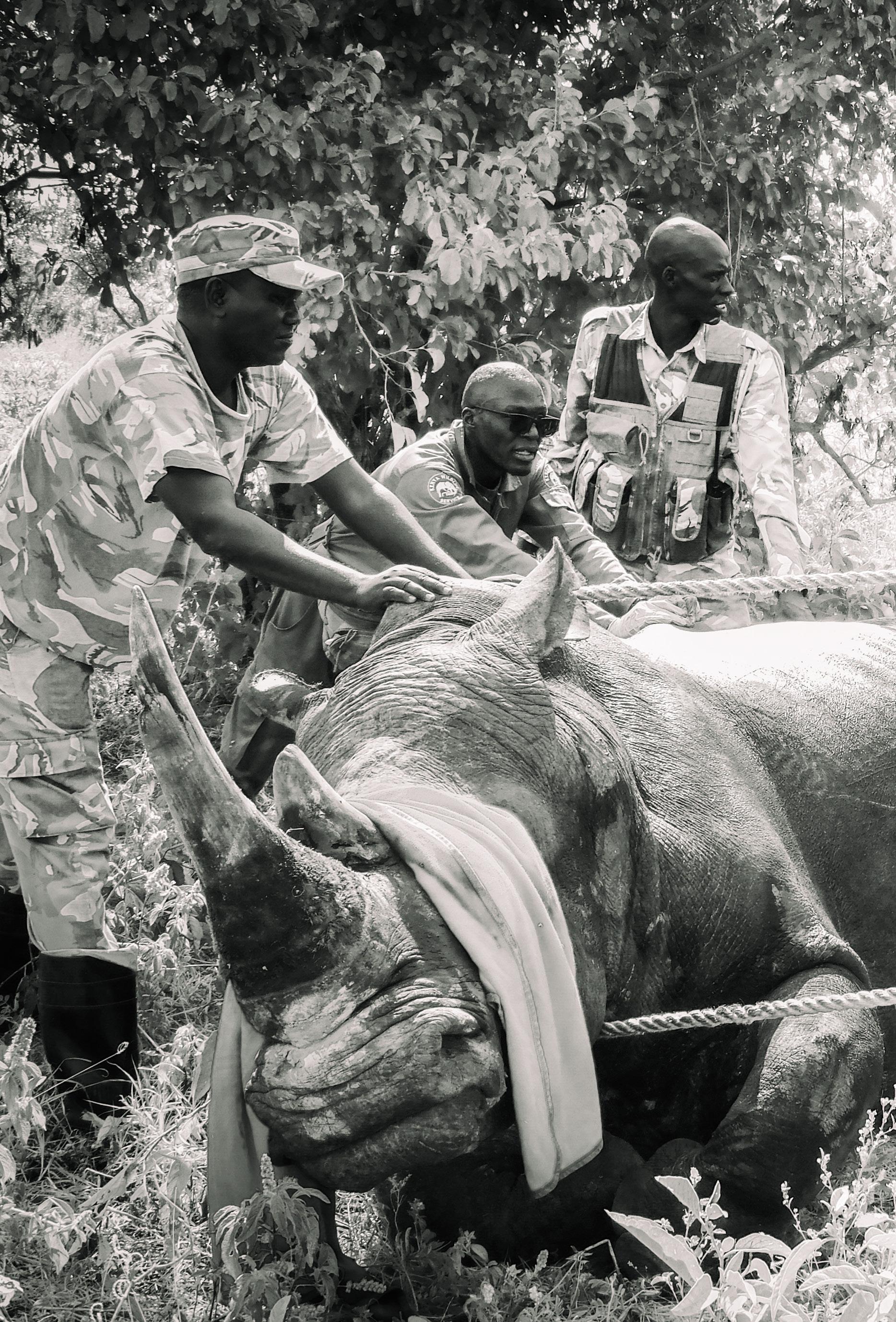
SUPPORT FOR the kenya wildlife service
We have a long-standing partnership with the Kenya Wildlife Service, leveraging our expertise and resources to support conservation initiatives in protected areas nationwide. As Kenya’s authority for wildlife conservation and management, KWS is responsible for safeguarding the country’s wildlife and enforcing related laws and regulations.
Beyond our extensive joint conservation projects, we provide substantial financial support to strengthen KWS’s field operations. While our collaboration initially centred on the Tsavo Conservation Area, in recent years, we have expanded our efforts to address conservation challenges across Kenya.
Human-wildlife conflict has become one of the greatest threats to wildlife, particularly elephants. As human settlements expand, competition over resources has intensified, especially during the dry season when elephants venture onto community land in search of water and food. Without swift intervention, these encounters can be fatal for both humans and wildlife.
To address this growing challenge, we launched the Tsavo Elephant Translocation Unit in 2020. This specialised team is on call to assist KWS in relocating 'problem' elephants. While in situ intervention is always the first approach, there are cases where elephants cannot be safely pushed back into protected areas using vehicles or helicopters. In such instances, our Elephant Translocation Unit is mobilised. Over the years, we have also supported the KWS Animal Capture and Translocation Unit by donating vehicles and equipment to enhance their capacity.
Human-wildlife conflict remained a persistent challenge throughout 2025. We have worked hard to build strong relationships with local communities, who report wildlife incursions to our teams or KWS. Upon receiving a report, we coordinate an aerial and/or ground response to push elephants back into protected areas — and when that is not possible, we mount a full translocation, darting the elephants, loading them onto a truck, and transporting them to safety.
Our Aerial Unit was kept busy from the very first weeks of the year. Five human-elephant conflict cases were
responded to in January, with all elephants successfully pushed back into protected areas. February brought eight cases in which 43 elephants were pushed back into protected land. Healthy rains kept overall conflict levels relatively low in March.
April saw several helicopter responses, though not all concluded successfully — on some occasions elephants could not be located, the bush was too dense, or the area too populated to push them safely. May was busier, with eight cases attended to, including the full translocation of a bull who repeatedly refused to be herded back through the fence.
June saw a reduced number of cases, with helicopters deployed five times to push elephants back into protected land. The team also conducted an aerial assessment in Kilifi County, where 500 elephants had taken up residence in a moderately settled area outside the park. KWS continues to monitor the situation.
August brought one of the year's most demanding operations: the rescue of two bull elephants trapped in deep mud in Kilifi Creek, having been chased by farmers into the estuary after attempting to enter Arabuko Sokoke Forest. The rescue required a helicopter, the Voi KWS/SWT Mobile Vet Unit, and ground teams working in difficult conditions.
The Aerial Unit was busy supporting human-wildlife conflict mitigation in September. Our helicopter assisted KWS in translocating two bull elephants from Amboseli
H uman - wildlife C onfli CT mi T iga T ion
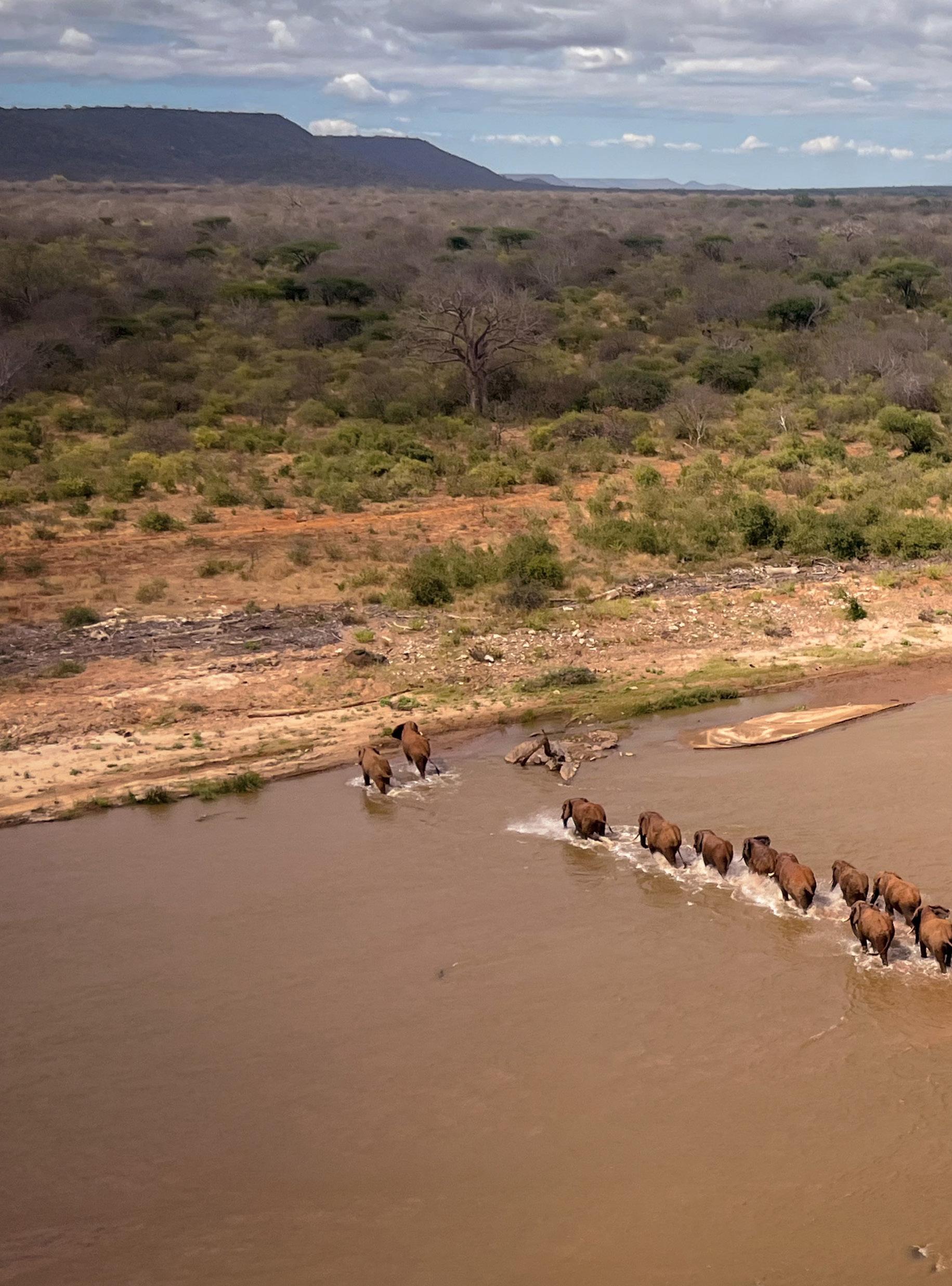
Guiding elephants off community land and back into the national park
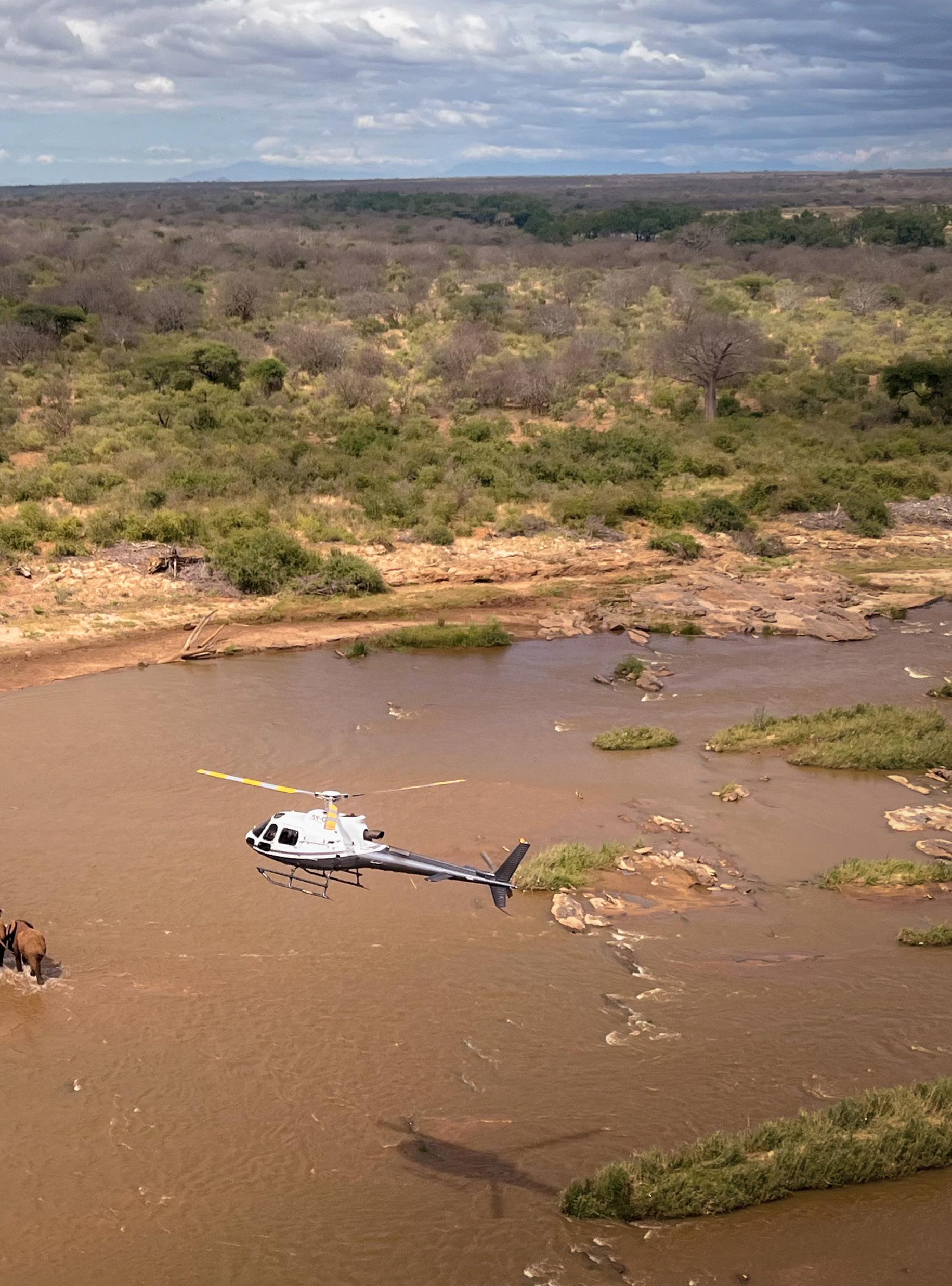
to Tsavo East, another bull from the lower Imenti Forest on Mount Kenya to Tsavo East, and two crocodiles from the Athi River into Tsavo East — the latter following the tragic death of an 11-year-old boy at the same location.
October saw the translocation of two problem elephants — one a habitual fence-breaker, the other simply refusing to return to the park. Fixed-wing aircraft provided overhead coverage as both bulls were darted and loaded onto crane trucks for relocation deep into Tsavo East. In November, helicopters responded to six cases, including
one operation that moved 38 bull elephants back into the park near Gazi in northern Tsavo East. December, though quieter, still required eight helicopter responses, with 34 elephants successfully returned to protected areas.
Across the year, the pattern was consistent: wherever elephants and communities came into conflict, our teams responded — resolving each situation, wherever possible, without loss of life on either side.
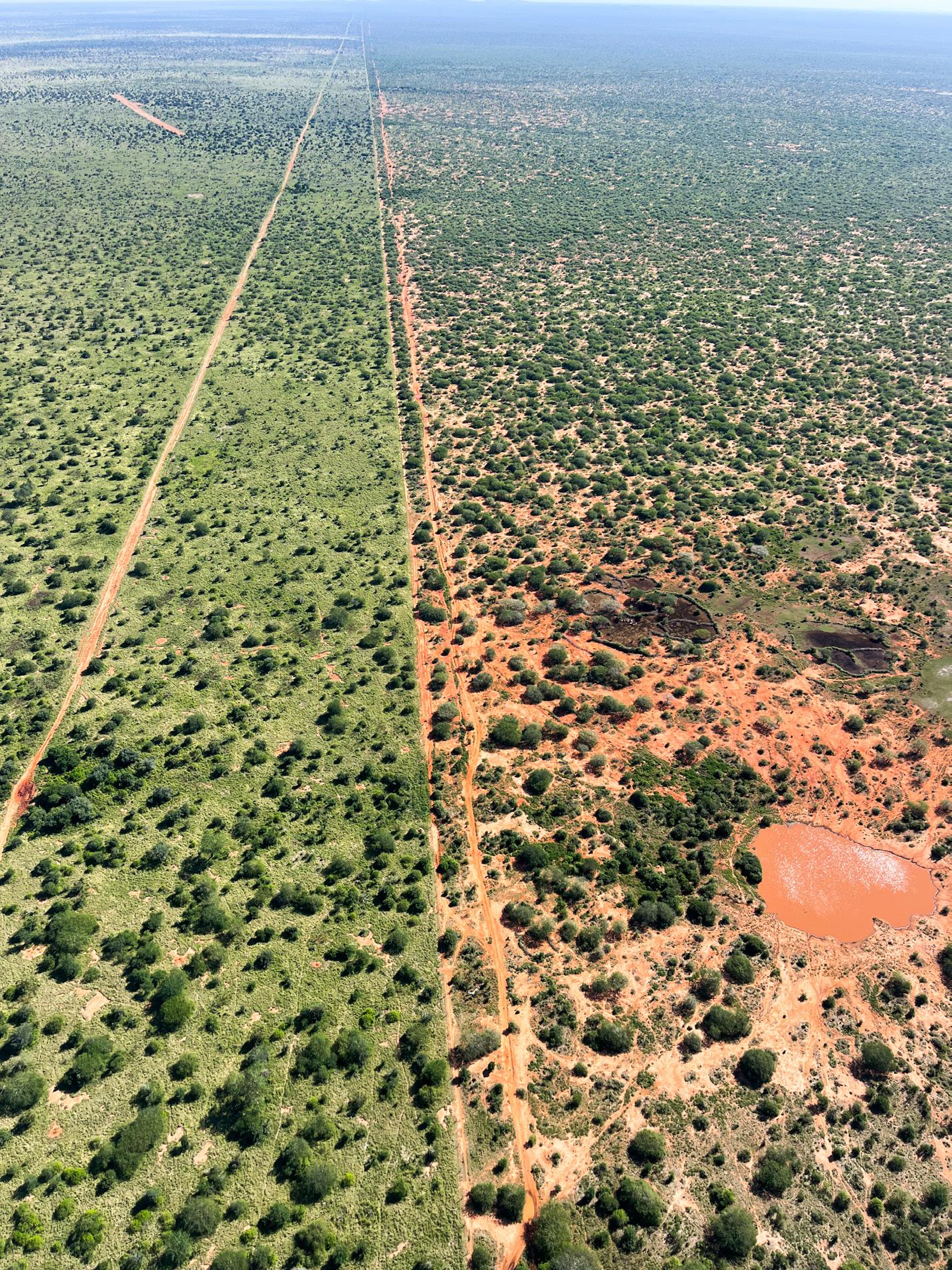
fencelines
sw T H as finan C ed TH e C ons T ru CT ion , P a T rolling , and C on T inued main T enan C e of over 530 kilome T res of ele CT rified fen C elines a C ross kenya .
Fencelines are one of the most effective tools for conservation. These 'wild borders' benefit both wildlife and the communities who live alongside them. Not all landscapes can be fenced — in certain areas, it is essential that natural migratory movement is unimpeded — but fencelines are indispensable on precarious boundaries. These wild borders prevent humanwildlife conflict and inhibit poaching, charcoal burning, logging, livestock incursions, and other illegal activities within protected areas.
sw T funded and main T ains H uman - wildlife C onfli CT mi T iga T ion ele CT ri C fen C elines :
Arabuko Sokoke Forest Reserve 110 km A 14-strand unshortable fenceline securing the border of the Arabuko Sokoke Forest Reserve, protecting the area's threatened elephant population and its unique endemic flora and fauna.
Tsavo East National Park, Northern Area 63 km Originally constructed to prevent elephants and other large animals from straying into community land along the Ithumba boundary, this fenceline was upgraded in 2025 with four additional strands of wire and four outriggers on each post, strengthening its ability to deter elephant damage and reduce illegal encroachment in both directions.
Shimba Hills National Reserve
117 km
Tsavo East National Park, Voi
Kibwezi Forest Reserve & Chyulu Hills
National Park
Our largest fencing project to date, this fenceline secures the Shimba Hills Conservation Area in its entirety. Completed in 2023 after two years of construction, it has been warmly welcomed by local communities, who can now farm right up to the park boundary without the threat of crop raids.
17 km Stretching from Voi Safari Lodge towards the Ngutuni Ranch boundary to Ndara, this fenceline protects elephants and other wildlife from the Nairobi-Mombasa Standard Gauge Railway.
70 km Protecting the Kibwezi Forest along three sensitive boundaries and connecting it with Chyulu Hills National Park, this fenceline prevents illegal activities and has had a transformative effect on the forest's recovery.
Tsavo East National Park. Ndiandaza 4 km This fenceline fortifies the area around the Ndiandaza KWS camp, enhancing security in a crucial sector of Tsavo East National Park.
KARI Ranch
Tsavo East National Park, KWS Voi Headquarters
57 km The primary fenceline runs 43 kilometres along the eastern boundary of KARI Ranch, with additional sections comprising a 2,100-metre exclusion fence around KARI HQ and school, a 4,000-metre fence around Kiboko, a 7,100-metre exclusion zone along the western boundary, and a 1,000-metre fence to address livestock predation and elephant encroachment in a historically vulnerable area.
15 km
Nairobi National Park
16 km
As the hub of all KWS operations in Tsavo East National Park, the security of Voi Headquarters is vital to conservation across the region. This fenceline ensures it remains protected.
Extended in 2023 at the request of KWS, this fenceline protects the KWS Workshop and staff accommodation below the Nairobi Nursery, keeping lions and buffalo away from human habitation.
r H ino san CT uary ele CT ri C fen C elines finan C ed and main T ained by sw T :
Meru National Park, Meru Rhino Sanctuary
Tsavo West National Park, IPZ
El Karama Ranch
48 km
Constructed in partnership with KWS, this fortified fenceline nearly doubled the size of Meru Rhino Sanctuary, providing more space and heightened security for its growing resident rhino population. A 25-kilometre stretch of the original fenceline was rehabilitated in 2023, with further repairs ongoing following flood damage.
16 km Built to enhance the protection of Tsavo West's freerelease rhino population, this fenceline is complemented by a second electric fence around the IPZ KWS security base in Rhino Valley.
30 km Constructed in partnership with the El Karama Wildlife Conservancy as part of the Laikipia Landscape Rhino Sanctuary program, this two-phase fenceline supports the establishment of a new free-ranging rhino population within the conservancy.
In 2025, we completed the 110-kilometre, 14-strand unshortable fenceline securing the Arabuko Sokoke Forest Reserve — a project that had become increasingly urgent given the mounting pressure on this critical coastal habitat. Completely surrounded by community land, the forest and its wildlife had long been vulnerable on all sides. The new fenceline protects not only the area's threatened elephant population but its unique endemic flora and fauna, securing fragile coastal biodiversity and mitigating human-wildlife conflict. As part of the project, we also constructed a new ranger outpost within the forest to support management and operations across the wider conservation area.
Also in 2025, we completed a significant upgrade to the Tsavo East Northern Area boundary fence, which runs some 63 kilometres from the Athi River to Umbi Hill along the Ithumba boundary. Originally constructed with only a few strands of wire at height — designed primarily to deter elephants and large animals from straying into community land — the fence had become increasingly inadequate as wildlife numbers grew. Smaller animals were moving freely beneath it onto community land, would-be offenders were entering the park from communities, and elephants were regularly breaking wooden posts as they pushed against the fenceline. The upgraded fence is now significantly more effective at preventing both wildlife encroachment into community land and illegal incursions into the park.
We employ more than 80 locally engaged, full-time staff who are responsible for the maintenance and monitoring of SWT fencelines. Teams are in constant radio communication with the corresponding SWT/ KWS Anti-Poaching Unit, who are positioned nearby to respond to any security breaches. Most fencelines have been constructed along protected parks and reserves, with a focus on areas that struggle with human-wildlife conflict or illegal activities.
Successful fenceline implementation and management requires resources. First, there is the upfront investment to construct the fenceline. Then, there must be dedicated patrols to ensure their ongoing maintenance and security. However, given how successful they are at protecting habitats and communities, they are well worth the investment.
o P era T ional and infras T ru CT ure su PP or T
In addition to partnering with KWS on large-scale conservation projects, we also fund essential operational and infrastructure support that underpins the success of these initiatives. We support both one-off and ongoing conservation efforts through the donation of vehicles, equipment, and supplies, as well as by using SWT resources to rehabilitate and upgrade KWS infrastructure. These contributions enhance KWS operations and amplify conservation efforts across Kenya.
In 2025, support included:
General Operations
• Purchasing food rations for KWS rangers for a 12-month period in support of operations
• Cutting of invasive Mathenge trees around Kanderi Loop — 500+ trees removed to date
• Funding the IPZ Tsavo East Radio Network Upgrade as a donation to KWS
• Donation of an extensive radio system at Ngulia Mountain
• Installing a digital radio system on Ithumba Hill
• Firefighting support: in 2025, SWT ground and air teams attended to 146 bush fires in total
Water Works
• Funding the rehabilitation of the KWS Kamboyo HQ water system
• Drilling the Mnathe Borehole in Tsavo West for anti-poaching and rhino surveillance operations
• Drilling the Murka Hills Borehole in Tsavo West for anti-poaching and rhino surveillance operations (two attempts required after the first drilling came up dry)
• Funding five water troughs for wildlife within the Mwaluganje/Shimba Hills ecosystem
• Rehabilitation of the Tsavo West IPZ borehole
• Funding a hydrology report for a second borehole in the Tsavo West IPZ area
• Funding Tavevo Water and Sewage Company water bills for Tsavo East National Park
• Weekly servicing of all SWT-built and maintained water installations — 107 site visits in 2025
• Final stages of the Tsavo Wetlands Project in Tsavo East, pumping water over the Yatta Plateau
• Installation of a new water trough at Manyani for wildlife
• New solar power units for Chyulu 2 Station and Tsavo River Gate, including rebuild works
• New water solar system at Aruba
• Installation of two boreholes at Shimba Hills
• Chyulu water pump repair and replacement at Kamboyo
Construction & Road Works
• Building and expanding accommodation for the Nanyuki KWS Veterinary Base
• Rehabilitation of the KWS Sekenani Veterinary HQ in the Mara
• Rehabilitation of KWS Ithumba HQ, including extensive renovations and new buildings
• Keekorok Rhino Barracks renovation and new build
• Cabro ground works at KWS Research Centre in Voi
• Funding the construction of a new camp for KWS Galana W08 ranger teams
• Building new gate houses and a security base at Arabuko Sokoke Forest
• Upgrades and maintenance of roads and airstrips throughout the Tsavo Conservation Area, including a major road network spanning 800 kilometres established in Ngulia Rhino Sanctuary and beyond
• Grading roads and security tracks throughout the Mwaluganje/Shimba Hills ecosystem — over 600 kilometres
Vehicle & Equipment Maintenance & Donations
• Donation of three fixed-wing aircraft for the KWS Airwing, including aircraft assessment costs
• Donation of a Land Cruiser Pickup for the new SWT/WTRI Wildlife Disease Surveillance Unit
• Donation of two Suzuki vehicles for WTRI for data collection, illegal activity, and evidence capture
• Donation of an 8,000-litre water bowser tanker to KWS Tsavo East
• Purchase of a Toyota Champ 4WD for the Meru fence maintenance crew
• Purchase of two Probox vehicles for the KWS Tsavo Intelligence Unit
• Rebuild of a Land Cruiser for the KWS Intelligence Unit
• Commissioning of an Isuzu Prime Mover/Trailer dedicated to wildlife well rescues in the ranches
• Donation of 20 Land Cruisers, 50 four-man tents, 200 bedrolls, chairs, and tables for KWS supported by the Chantecaille Conservation Foundation
• Extensive fuel donations for KWS vehicles in Tsavo East Northern Area, Tsavo West, and the Chyulu Hills, including support for the KWS Tsavo Rapid Response Unit and KWS Tsavo East Company Commander
• KWS vehicle servicing — 17 vehicles and one water bowser serviced in 2025
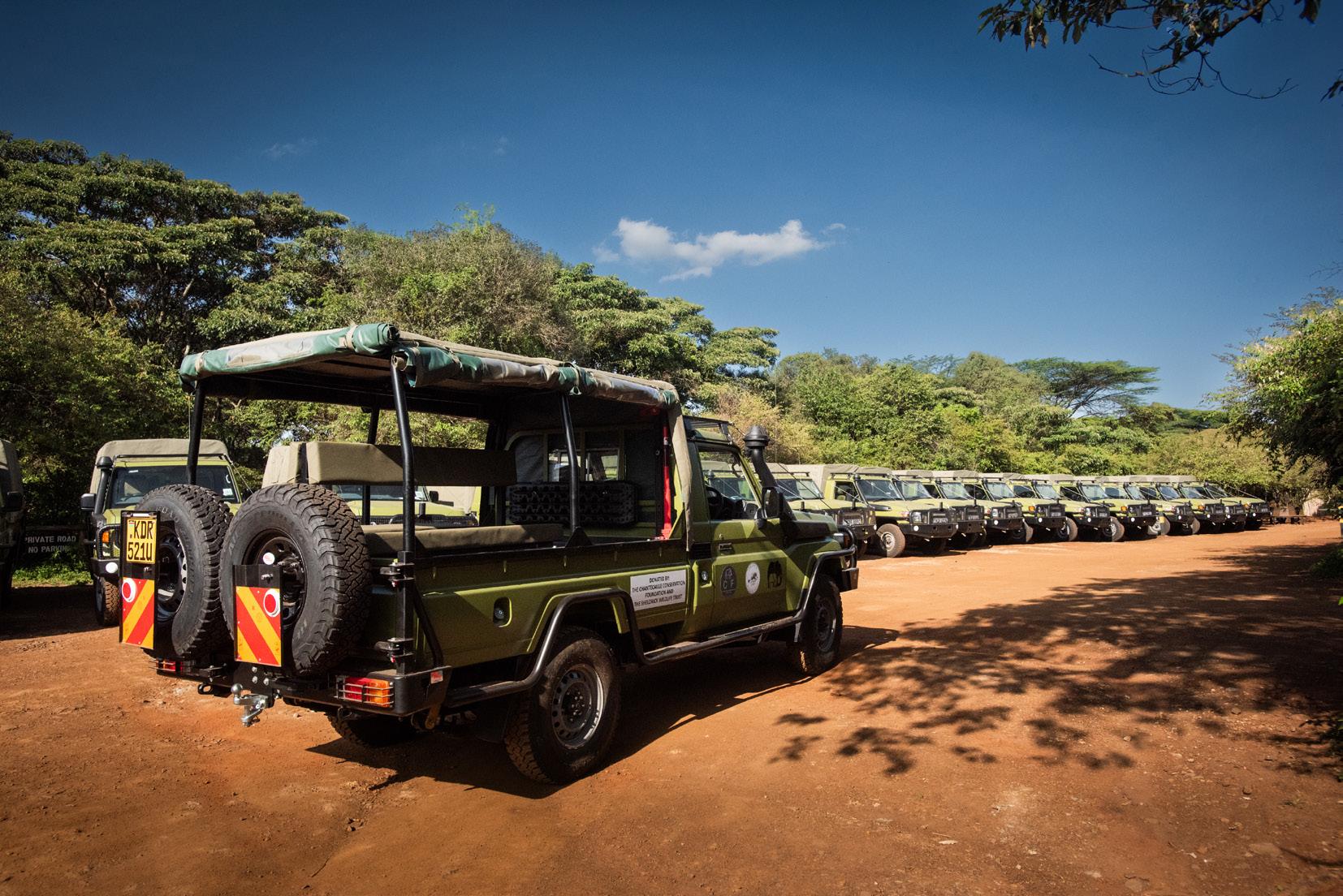
Notes from the Field
HELPING A DEFIANT BULL FIND HIS WAY HOME
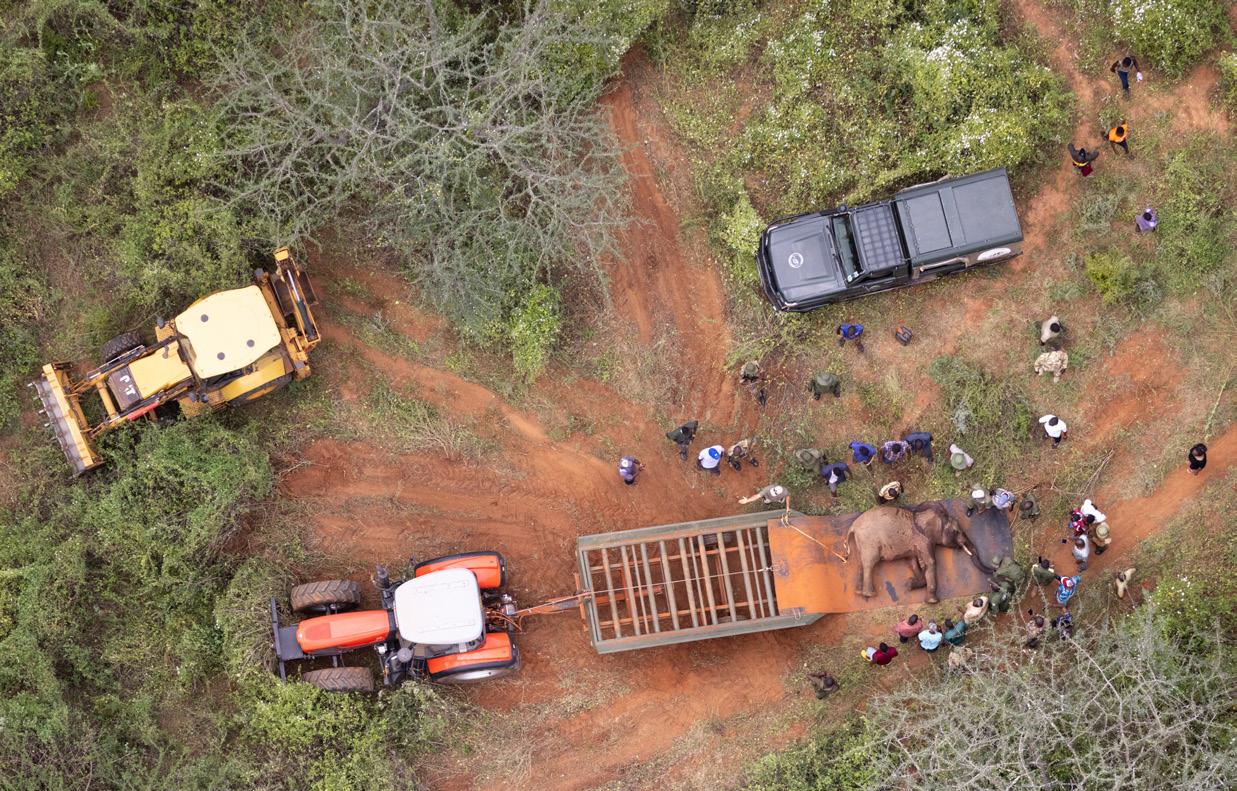
In early October, we carried out a translocation operation to move a young bull elephant who had become marooned on community land, returning him safely to Tsavo East National Park.
This was not a straightforward case. The bull had found himself on the wrong side of the fence separating the park from community land and flatly refused to go back. Over the course of several weeks, many attempts had been made to shepherd him back into Tsavo East — sometimes with the assistance of two helicopters. Each time, he stood his ground, charging the aircraft and refusing to move anywhere near the fenceline.
His continued presence on community land had become a serious problem. He was causing significant damage to crops and water tanks, and his increasingly aggressive behaviour was putting lives at risk. With no options remaining, KWS and SWT mobilised a full translocation operation to return him to the safety of the park.
Translocations are a last resort, only to be mobilised in situations where elephants cannot be safely pushed back into protected areas by vehicle or helicopter. Usually, even the unruliest bulls can be coaxed in a certain direction, but five aerial attempts later, this bull would not be persuaded.
After our fixed-wing aircraft located the bull near a farmer’s field, we mobilised to the scene. With KWS and the SWT/KWS Canine Unit supporting on the ground, our crane truck and backhoe moved into position. Dr Limo of the SWT/KWS Tsavo Mobile Vet Unit darted the bull from the air, and once he was safely immobilised, our teams got to work.
The backhoe cleared a path for the crane truck to reach the anaesthetised bull, who was carefully lifted on board and secured for his journey back home. Dr Limo and team remained by his side throughout, monitoring his vitals.
The drive back into Tsavo East took just under an hour. Inside the park, the young bull was revived on his feet and quickly disappeared into the bush. This sector of Tsavo East is familiar territory for him and has plenty of food and water, so he will feel right at home.
This operation underscores the lengths to which we go to protect both people and wildlife. Thanks to swift action and close coordination between KWS and SWT teams, this defiant bull was safely returned home.
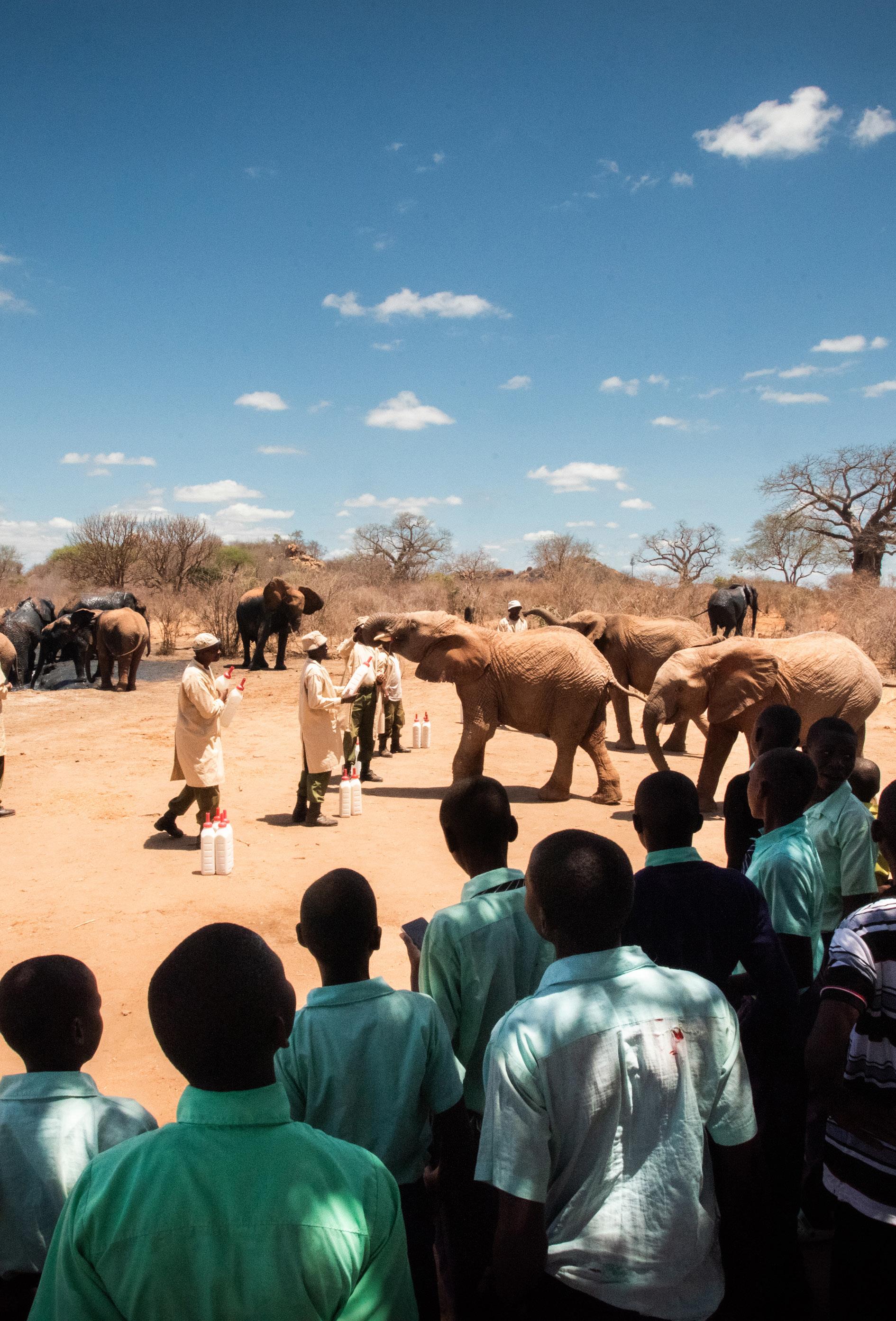
community outreach
Kenya's national parks and protected areas do not exist in isolation. They are surrounded by communities — families and farmers who live alongside elephants, lions, and other wildlife, often with very little buffer between them. For the more than one-third of rural Kenyans living below the poverty line, that proximity brings real hardship: crops raided, livestock taken, livelihoods threatened.
We have long understood that conservation cannot succeed if the people living alongside it are left behind. Meaningful, enduring community support — local employment, education, food security, and practical solutions that reduce the daily pressures of living beside wildlife — is central to our work.
s CH ool T ri P s
Class trips have long been a cornerstone of our community engagement. In many rural communities across Kenya, children have little to no first-hand experience with wildlife. Some only associate elephants and other animals with frightening encounters or crop destruction. By introducing young students to Kenya's wildlife from the safety of a school bus, we provide an engaging and accessible way for them to connect with their country's natural heritage.
These fully subsidised trips offer students the chance to observe wildlife in their natural habitats while learning about the roles they play in the ecosystem. Each trip is guided by our Community Outreach Officer, a charismatic leader with a gift for inspiring the next generation of conservationists.
In 2025, we organised and sponsored 79 field trips, introducing 2,462 students and 166 teachers to Kenya's rich natural heritage. Trips were primarily led through Tsavo East and Tsavo West National Parks, with many incorporating a visit to our Voi or Ithumba Reintegration Units — where students could meet our rescued orphaned elephants and the dedicated Keepers who care for them as they make their gradual transition back to a wild life in Tsavo.
The impact of these excursions extends beyond the classroom. Many students have gone on to establish 'environmental corners' at school, where they collect and nurture tree seedlings to reforest their surroundings. They recognise that wildlife, particularly those living outside protected areas, depend on trees for food and shelter — and this is their way of giving back.
s T uden T s CH olars H i P s
To support the continued education of rural Kenyans, we proudly fund a scholarship program for gifted students in the greater Tsavo Conservation Area. Education in Kenya is costly, and many families struggle to afford schooling for their children.
In 2025, we supported 12 secondary school students from communities bordering the Tsavo National Parks — all from impoverished families, aged between 15 and 18. We covered their annual tuition fees and provided a yearly contribution towards transport to and from school. At university level, we sponsored three students from local Tsavo communities: one in their first year and two in their fourth and final year.
s CH ool dona T ions
We also work closely with local communities to improve school infrastructure. Over the years, we have donated more than 1,200 desks to schools around the Tsavo Conservation Area, along with resources that spark intellectual curiosity and physical activity. In 2025, we donated 308 desks to primary and secondary schools across the Tsavo area, along with sports equipment to encourage activity and wellbeing beyond the classroom.
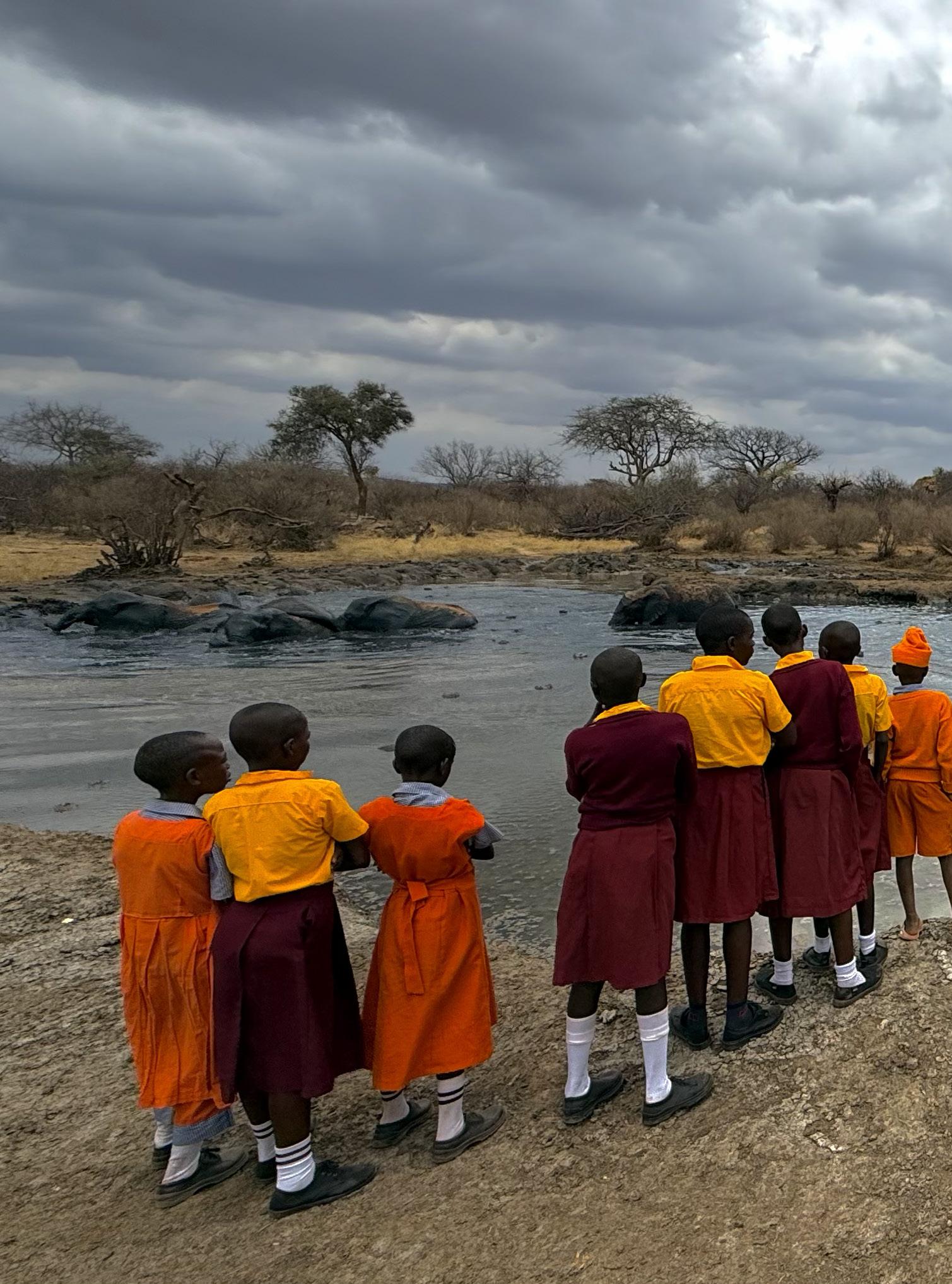
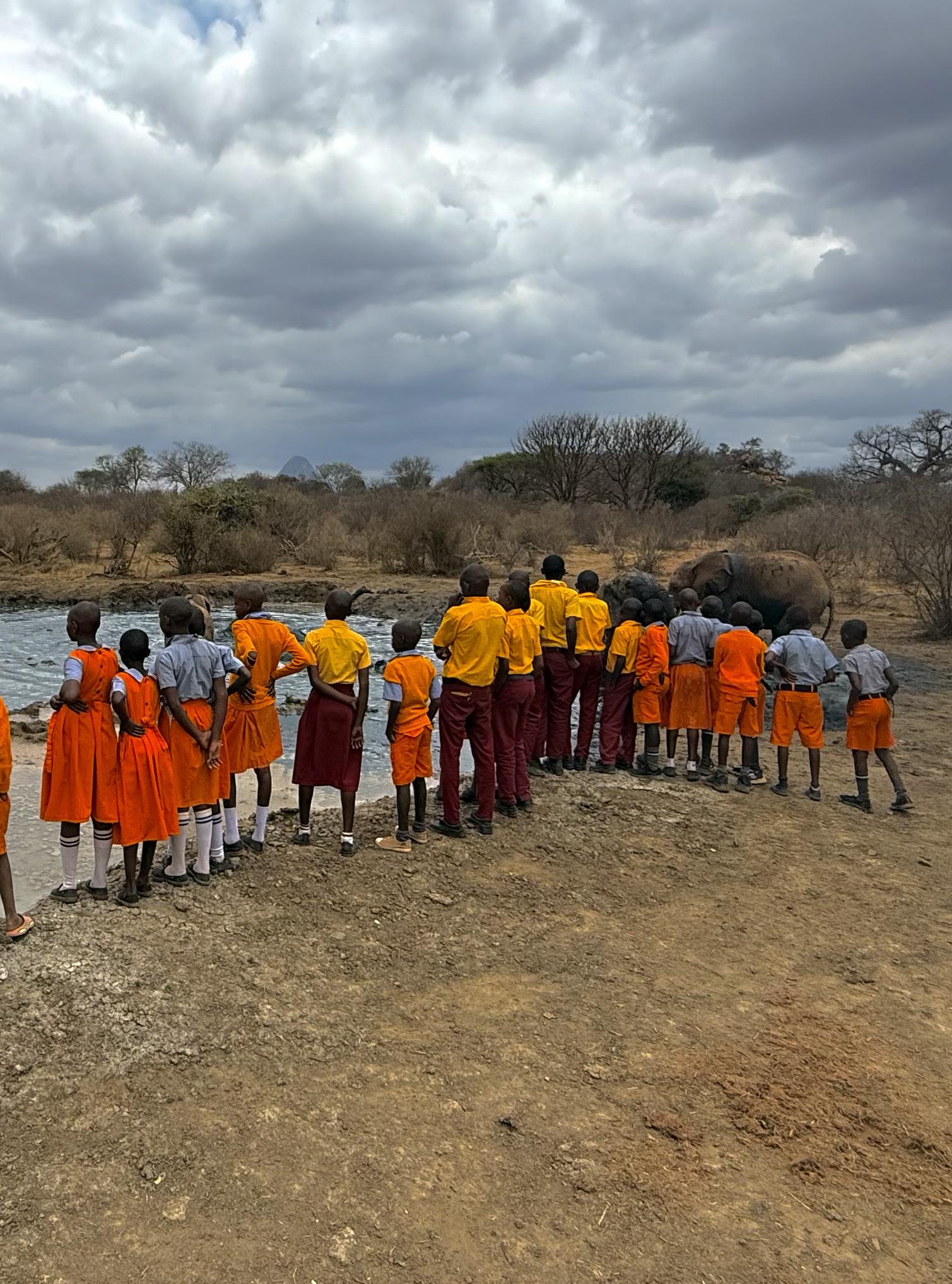
C ommuni T y H os P i T al dona T ion
In rural parts of Kenya, healthcare can be difficult to access. That's why we proudly support the MtitoAndei Sub-County Hospital. Strategically located between Tsavo East and Tsavo West National Parks, this community hospital is a vital care centre in a remote area.
In 2023, we donated a full suite of state-of-the-art medical equipment and supplies to the hospital, including a portable X-ray machine, portable ultrasound, resuscitaire infant warmer, automated haematology analyser, automated chemistry analyser, electric microscope, i-Chroma analyser, baby incubators (x5), dental chair, oxygen concentrators (x3), multi-parameter patient monitors (x2), infusion drip stands (x10), stretchers (x5), medicine trolleys (x3), dressing trolleys (x5), beds and mattresses (x20), industrial laundry washer (x2), industrial dryer (x2), 200-litre freezers (x4), no-frost refrigerators (x4), and generator.
In 2024, the hospital was moved to a new and improved location. To support the upgrade, we donated another comprehensive suite of equipment and supplies, including an anaesthesia machine, a complete CR system X-ray machine, a newborn resuscitaire, CPAP machine, foetal/maternal monitor, electrocardiogram machine, defibrillator, phototherapy unit, operating table and theatre lamp, surgical diathermy machine, patient monitors (x5), suction machines (x4), autoclave, emergency crash resuscitation trolley, nebulizing machines (x4), foetal Dopplers (x3), sterilization drums (x14), desktop computers (x5) and printers (x3), 30 beds with mattresses, bedsheets, blankets, pillows and mosquito nets (x40), and a full complement of office and waiting room furniture. This equipment has enabled the hospital to provide comprehensive care for all patients, attending to all manner of medical procedures and emergencies — already saving lives and enhancing medical care across the Tsavo area.
In 2025, our healthcare support extended to a second facility, Kibwezi Medical Clinic. Our donation included hospital beds with mattresses, a pulse oximeter, a blood pressure machine, a fully automated biochemistry analyser with computer and three-month starter reagents, a baby incubator, and mosquito nets. We also deliver clean water to the clinic three times a week — a simple but essential contribution to a facility serving an area of need in the Tsavo Conservation Area.
food dis T ribu T ion P rogram
Our successful School Lunch Program is now in its fifth year. Conversations with Tsavo-area communities revealed that many families struggled to adequately feed their children, with many children being forced to skip meals — directly impacting their studies. Our program, which serves learning institutions in underserved areas bordering the Tsavo National Parks, addresses this headon. We provide a balanced, nutritious meal for students to enjoy at school each day.
The Chantecaille Conservation Foundation and Helen Danson sponsor the School Lunch Program. In 2025, we expanded the program significantly, distributing food supplies to 91 schools across the greater Tsavo Conservation Area — up from 68 the previous year. Over 16,000 students received daily school lunches, with total food donations reaching 198,140 kilograms, comprising 15,390 kilograms of maize, 14,880 kilograms of beans, 16,250 kilograms of rice, 149,796 kilograms of uji, and 1,824 litres of cooking oil.
The response from schools has been overwhelmingly positive. Teachers consistently report that the promise of a hearty, healthy meal has boosted student morale and improved attendance. Beyond the classroom, the program has also strengthened relationships with the communities we work alongside — fostering goodwill and more positive attitudes towards wildlife and conservation.
CH
yulu wa T er C a TCH men T P ro J e CT
Water is a persistent challenge for rural communities in arid areas. While some schools collect water on a small scale, young students often have to carry water from home or pay for drinking water. To create sustainable, subsidised water sources, we launched the Chyulu Water Catchment Project in 2023.
Between 2023 and 2024, we installed 15 water catchment tanks at schools across the Chyulu ecosystem. These tanks capture and store rainwater, which is then turned into potable drinking water. Each has a 100,000-litre holding capacity, ensuring a reliable water supply throughout the year.
C ommuni T y T ree dona T ions
Reforestation is one of the best climate change solutions available today. Trees are the lungs of our planet, capturing carbon and releasing oxygen back into the atmosphere, feeding all forms of life. Over the years, we have planted millions of trees in key ecosystems, supporting habitats and the people who live alongside them. We conduct community tree plantings throughout the year, focusing on schools, government facilities, and other strategic areas in need of reforestation. Saplings, nurtured in our tree nurseries, are donated to the community at no cost.
In 2025, outreach focused on seedling donations and tree planting, and beehive inspection, with a strong emphasis on propagating indigenous species to help restore degraded community and park landscapes affected by persistent drought and human activity. In total, 21,894 tree seedlings were donated or planted across community groups and locations throughout the Tsavo ecosystem. Species donated included Tamarindus indica, Berchermia discolor, Azadirachtica indica, Acacia mellifera, Acacia eliator, Acacia xanthophlea, Acacia tortilis, Ficus sycomorus, Delonix elata, and Gardenia volkensii.
bee H ives and bee H ive fen C elines
We launched our beehive fenceline project in 2014 as a sustainable, non-aggressive method to mitigate humanwildlife conflict. Elephants have an innate aversion to the buzzing sound of bees, so beehives placed along farm fencelines serve as a powerful deterrent. The project offers a wealth of benefits to farmers: improved pollination of crops, protection against elephant incursions, and income from honey sales — while elephants receive protection in return. Over the years, we have installed 144 hives on community farms historically targeted by crop-raiding elephants, and we maintain a further 72 beehives in the Kibwezi Forest and Tsavo Farm, along with catcher boxes at both locations.
In total, we now manage 198 beehives across our various sites. In 2025, the Community Outreach Team conducted thorough beehive inspection and maintenance exercises across multiple areas, working alongside local bee farmers. Key activities included cleaning and preparing absconded hives, lacing hives with basil to improve colonisation, and assessing colony health — which was found to be generally strong and stable. The team also facilitated discussions on the impacts of climate change on bee activity, particularly in arid and semi-arid regions. In 2021, we established a women's beekeeping group in the Kibwezi Forest, further linking local communities to conservation efforts while creating valuable employment opportunities. Women from the local community are employed to manage clusters of hives in the forest. Each participant has completed a five-day training course and is outfitted with professional beekeeping gear.
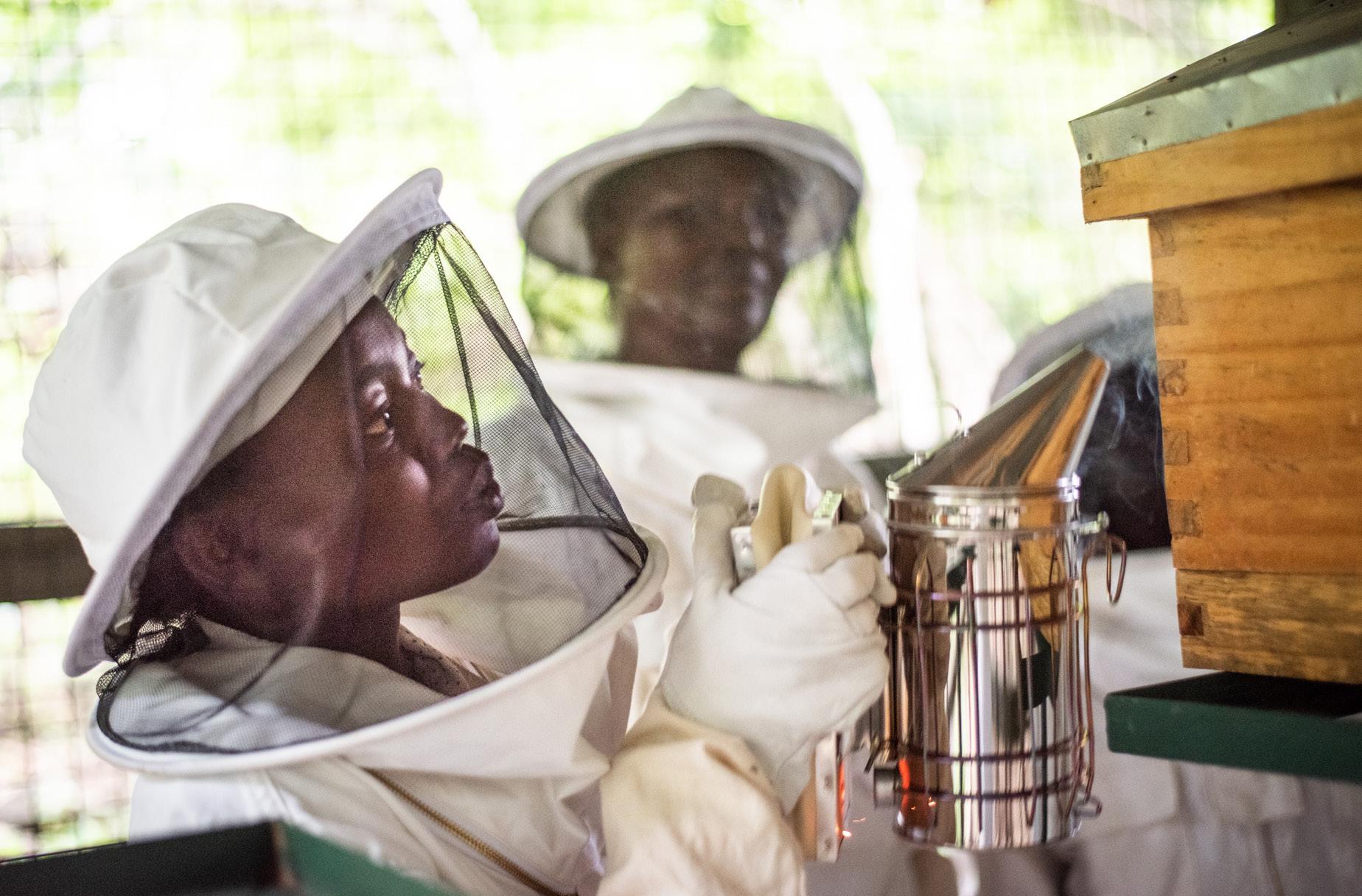
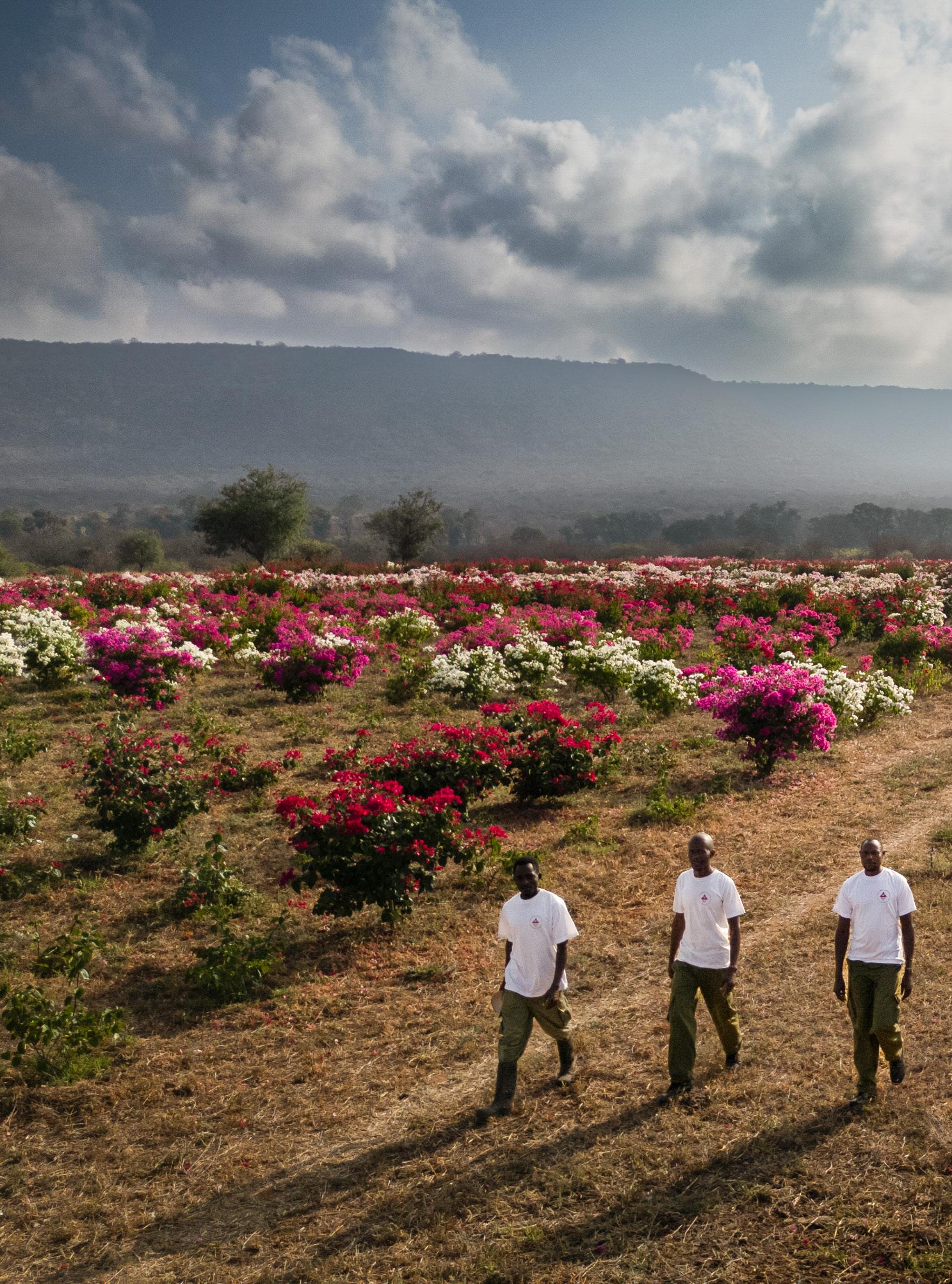
Bougainvillea fields at Tsavo Farm are part of a new community support project.
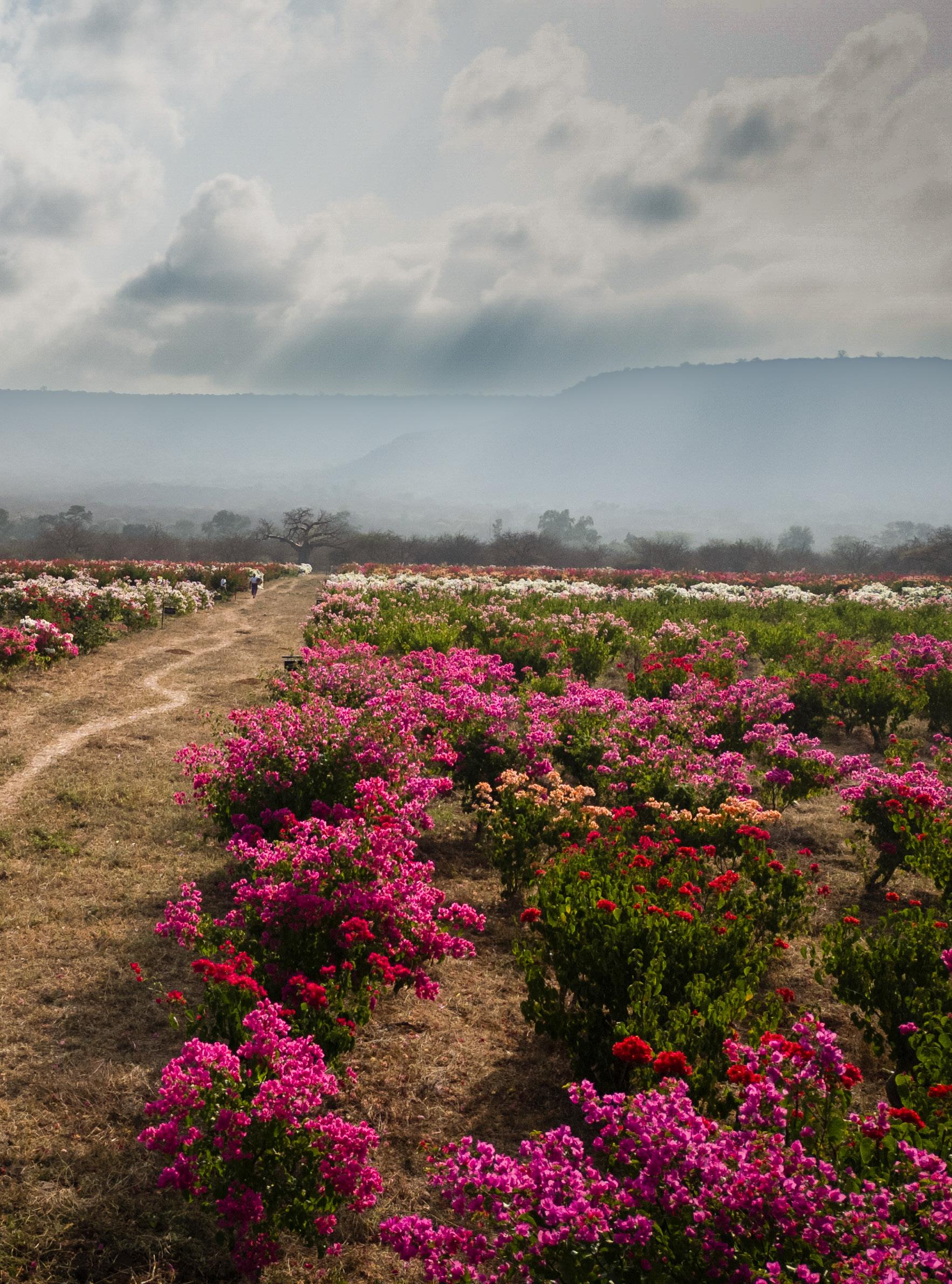



The petals are used to produce botanical confetti, a sustainable alternative to traditional confetti.
Sheldrick Botanicals Community Project
In 2022, we revived the bougainvillea fields at Tsavo Farm as part of a new community support project. Employing women from the local community, we are organically farming and harvesting bougainvillea, whose petals are used to produce botanical confetti — a sustainable alternative to traditional confetti that is free from pesticides, chemicals, and fertilisers.
The Sheldrick Botanicals Community Project has since grown into something broader. At Tsavo Farm, we have established a community farm dedicated to natural botanical products, sustainably grown and ethically produced. The farm provides secure employment for women from the local community, with proceeds channelled back into conservation and community support.
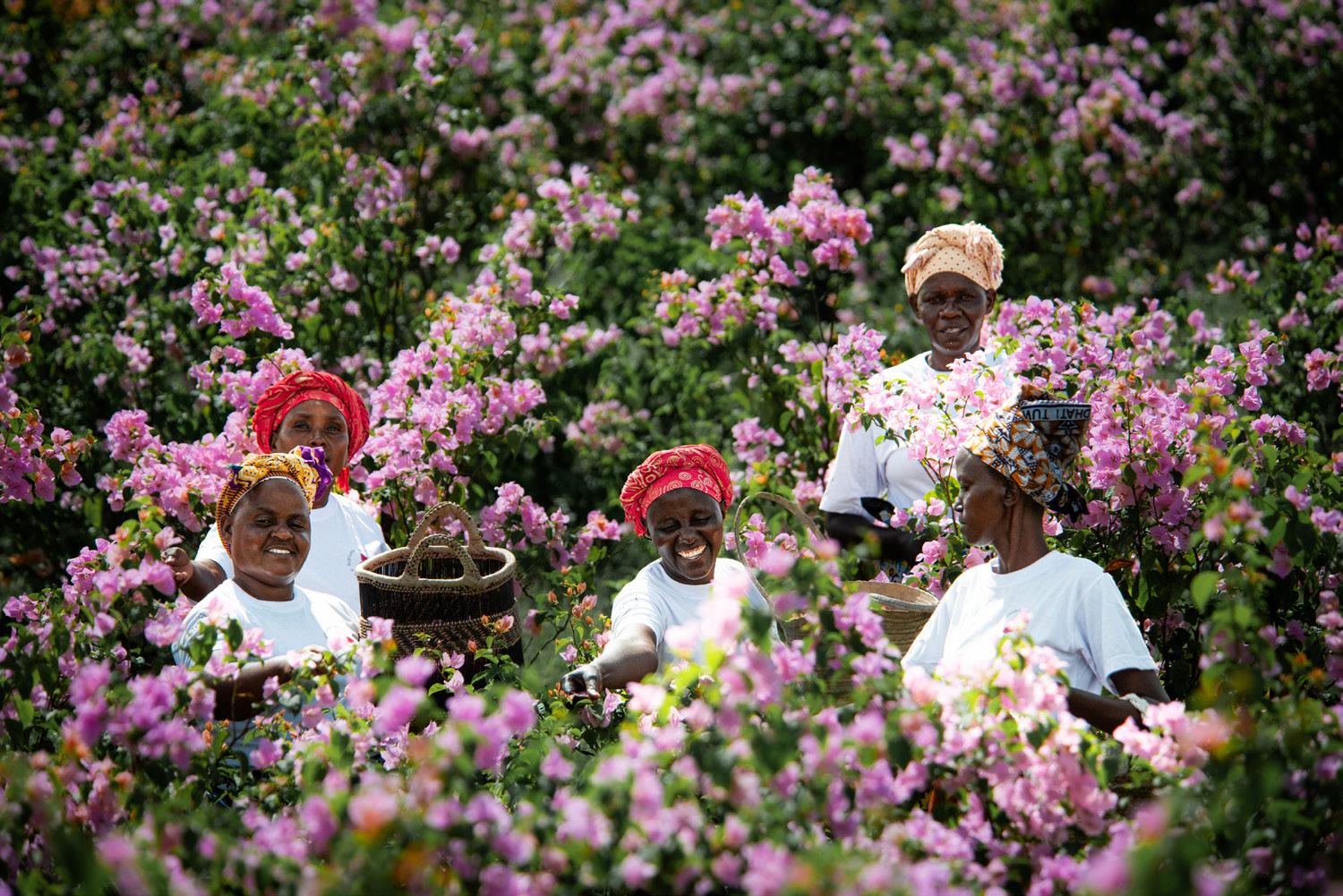
sheldrick lodges
we are H onoured T o be in C luded in TH e new york T imes '52 P la C es T o go ' lis T , TH e only des T ina T ion fea T ured from TH e afri C an C on T inen T in 2024
Sheldrick Lodges are reimagining unique experiences for conscious travellers. Our properties add a unique dimension to our conservation projects, promoting sustainable tourism while directly supporting the ecosystems in which they sit.
Thoughtfully designed and sustainably managed, our portfolio of properties offers a bespoke safari experience for the discerning traveller. Each destination is located within close proximity to one of our three Reintegration Units, giving guests exclusive visiting privileges to meet the orphaned elephants there and experience the Orphans' Project firsthand. Operated through a not-for-profit model, proceeds from our properties support vital conservation projects in the area.
Our portfolio includes three lodges in Ithumba, the remote northern sector of Tsavo East; two on the Galana River, a destination for some of Kenya's most iconic species; and one in the Kibwezi Forest, a groundwater forest known for the array of life it supports. Two properties are currently in construction.
umani s P rings
Umani Springs is an elegant lodge tucked within the ancient Kibwezi Forest, offering an oasis of tranquillity surrounded by birds, butterflies, and wild creatures.
galdessa C am P
Galdessa Camp is an enchanting camp set in the heart of the Galana River, where elephants meander along the shore and hippos wallow in the mud below.
galdessa li TT le
Galdessa Little is an intimate annex perched on the banks of the Galana River, fringed with doum palms and overlooking the Yatta Plateau.
i TH umba H ill C am P
Ithumba Hill Camp is a luxurious tented camp built into the hill that earned it its name, offering panoramic views of Tsavo's rugged wilderness.
i TH umba P riva T e
Ithumba Private is a special annexe to Ithumba Hill Camp, built among the rocks and shaded by giant baobabs — an intimate oasis within the vast wilderness of Tsavo.
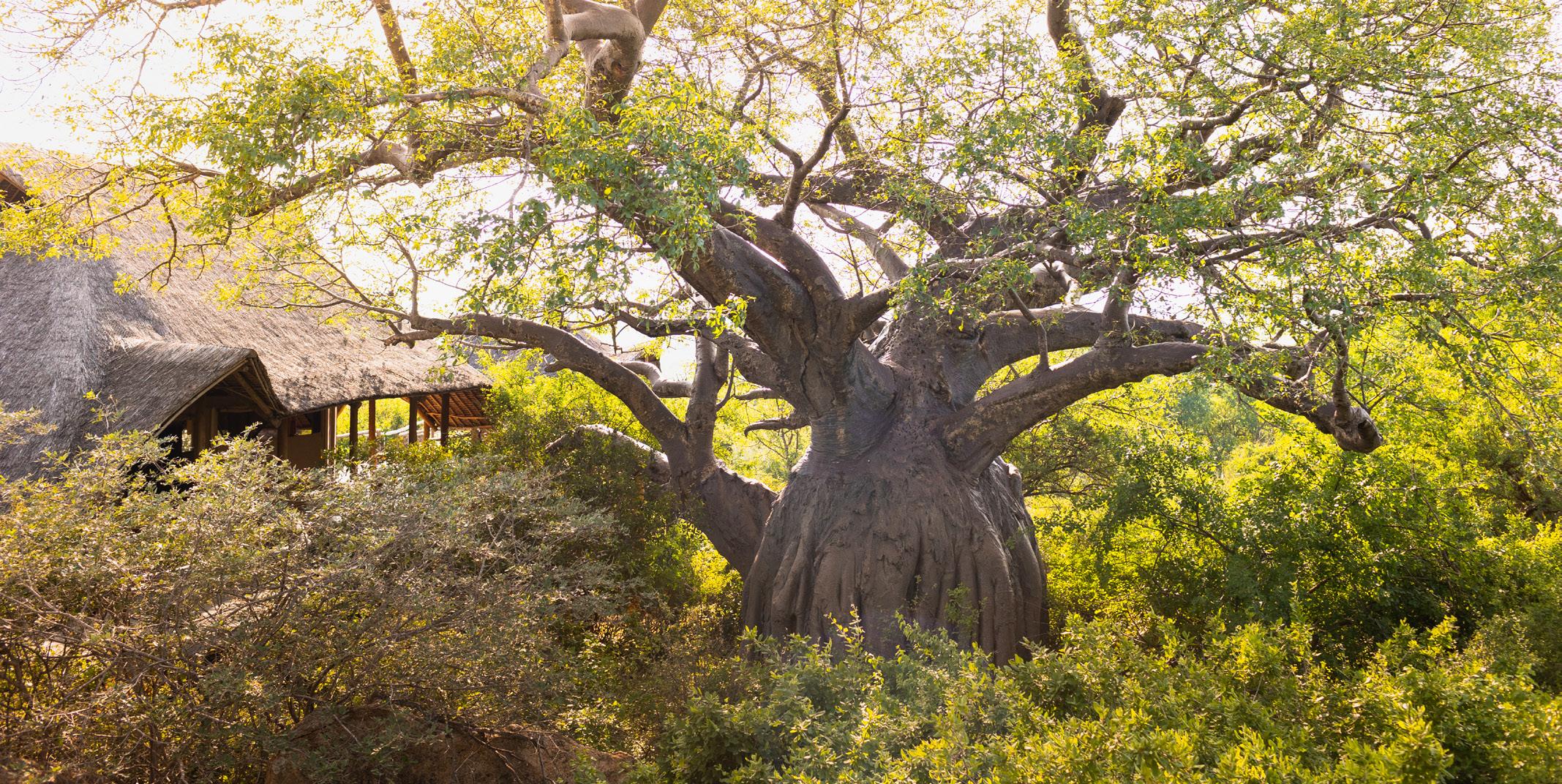
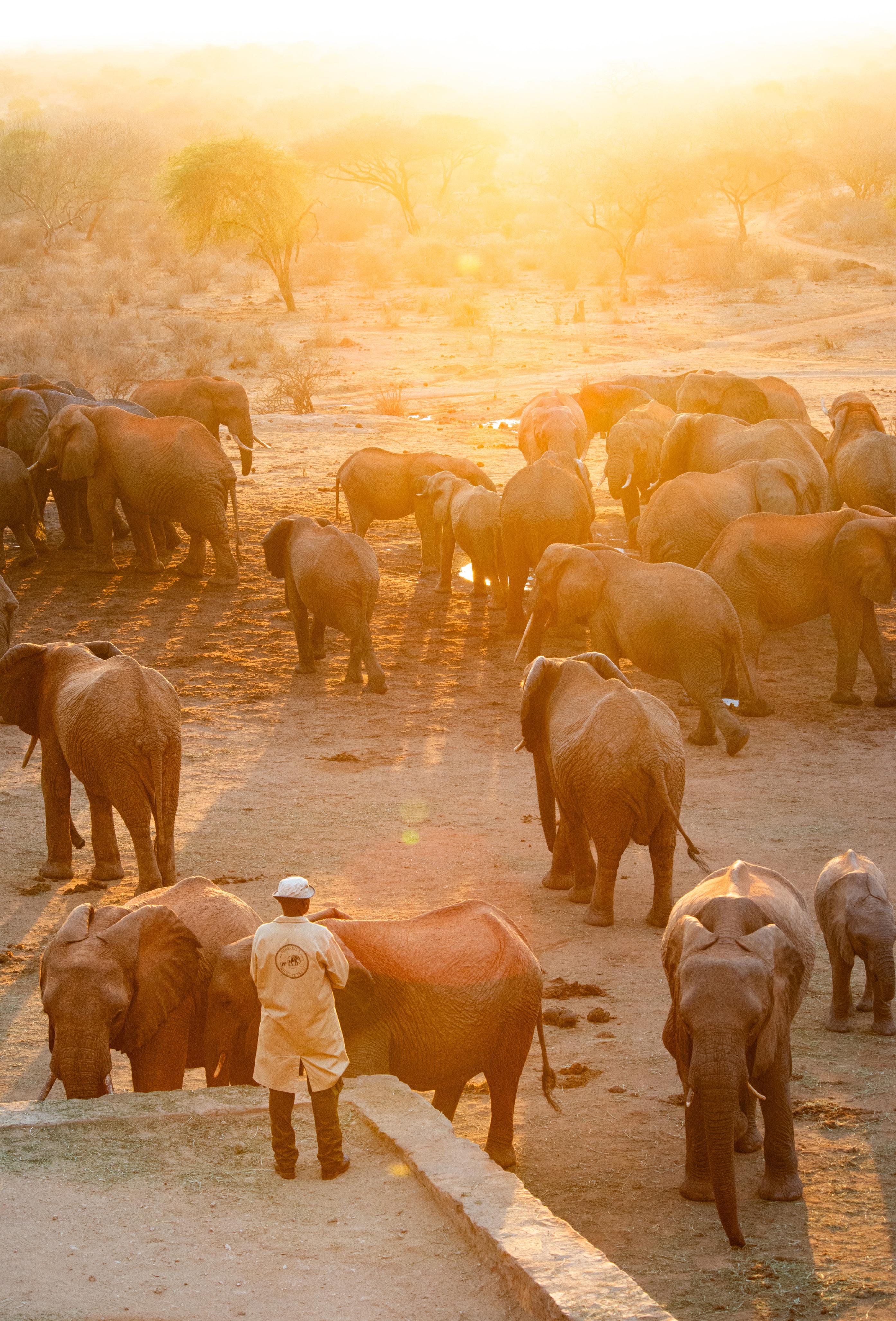
i TH umba C am P
Ithumba Camp is a stylishly rustic hideaway set at the base of Ithumba mountain, designed for the intrepid traveller who relishes big skies, star-studded nights, and an array of fascinating species at the doorstep.
r H ino valley and kilalinda
Two more beautiful properties are in creation. Construction of Rhino Valley, our newest and most ambitious lodge, has been progressing well. Perched on the slopes of Ngulia Mountain in the heart of Tsavo West National Park, this exceptional property is truly one of a kind — designed to blend seamlessly with its breathtaking surroundings and the ever-changing views that define this part of Tsavo. Staff quarters are complete, with the mess and dining areas, pool, and bedroom areas all taking shape. We look forward to debuting Rhino Valley in late 2026.
We have also finalised the purchase of Kilalinda, a 2,300-acre parcel of land with an existing lodge abutting Tsavo Farm along the Athi River. The property joins and extends existing Trust land, bringing an additional stretch of habitat under our management. The lodge itself — once a popular destination in Tsavo East — had fallen into disrepair, and rehabilitation works are now underway to restore and modernise it as a future addition to our tourism offering, with an anticipated opening in 2027.
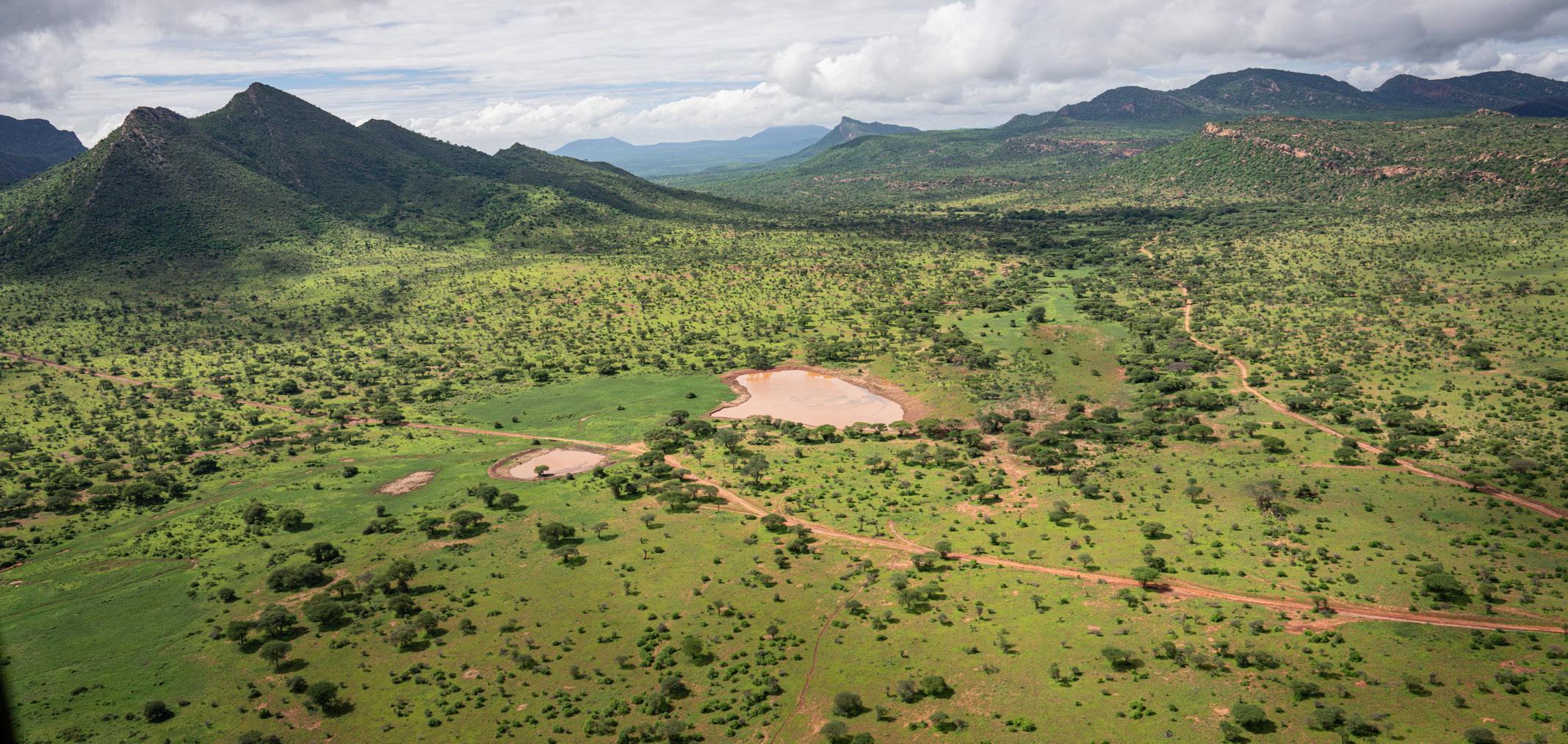
Local Kenya Partners
Big Life Foundation
Galana Conservancy
special thanks
Kenya Agricultural Research Institute (KARI)
Kenya Forest Service
Kenya Wildlife Service
Lamu Conservation Trust
Mara Conservancy
Mara Elephant Project
Mount Kenya Trust
Mwaluganje Elephant Sanctuary
Wildlife Works
Trusts and Foundations
Aaron and Patricia Blumberg Foundation
Andersen-Formolo Family Foundation
Ann and Gordon Getty Foundation
Azura AG - Trustee of Rhino Trust
Broder Foundation c/o Singer Burke Zimmer & Kogan
Bundy Family Foundation
Chantecaille Conservation Foundation
David & Claudia Harding Foundation
Elaine's Elephant Trust
Elbaz Family Foundation
Endeavor Foundation
Erika Rosenthal
Foster Family Foundation
Francis X Melvin Foundation c/o Pathstone
Freedom Reign Foundation c/o Alicia Goetz
Goulder Family Foundation c/o Jill Damato, BoA
Grodman Family Foundation
Grousbeck Family Foundation
Head and Heart Foundation
Lobster Cove Foundation
Marisa Hormel - MIH Trust
Marjorie and John Buyers Foundation, Inc.
Mary Collins
Maue Kay Foundation
Ochiltree Foundation
Okavango Private Foundation
Patricia Bragg Foundation
Patricia Bresky Family Foundation
Patrick and Priscilla MeLampy-Lawrence
Perfect World Foundation
R.K. Mellon Family Foundation
Raindance Charitable Trust
Red Butterfly Foundation
Rockwell Foundation c/o PNC
Scott (Eredine) Charitable Trust
Simeon and Jean Locke Charitable Foundation
The Argus Fund
The Bernard and Anne Spitzer Charitable Trust
The Bruce and Carolyn Costin Martin
Charitable Foundation
The Burkehaven Family Foundation
The Choate Foundation
The Fredman Family Foundation
The Friese Foundation
The Hayes Foundation
The Mateya Wildlife Foundation
The Merlin Foundation
The Moskow Foundation
The Parker Foundation c/o BNY Mellon
The ROS Foundation
The Stephen and Carole Schwartz
Foundation, Inc.
The Wagmore Foundation
Toby & Regina Wyles Charitable Trust
TPC Foundation
William E. Wockner Foundation
William Kessler Family Charitable Trust
Corporations
Chantecaille
Connolly Brothers Ltd
Elizabeth Scarlett
Ethenea Independent Investors S.A.
EUGY / Dodoland
HP Hood LLC - Planet Oat
Katten Muchin Rosenman UK
Louise Mulgrew
Metage Capital
Peake Ranch Wine
Spitalfields
Strulch
Tea Lab
The True Traveller
NGOs
Aktionsgemeinschaft Artenschutz (AGA)
Eden Wildlife Trust
Foreningen Forsvara Elefanterna
Rettet die Elephanten
Sauvez les Éléphants d'Afrique
Serengeti Foundation
Terre et Faune
Vrienden van de Olifant
Individuals and Groups
Acton Family Giving
Adam and Karen Bloom
Alice Gettle
Allison / Shipley Fund
Anne Graham
Anne Welch
Anon Fund c/o Silicon Valley Community
Fund
Barron S. Wall
Berger Family Charitable Fund
Beth Onosko
Bob, Lisa, and Lindsay Kennedy / Arnold F.
Baggins Foundation
Brigit and Mike Grimm
Bruce G. Blumberg
Bryan Coleman and Andrea KirstenColeman
Cackie Trippe McCarty
Candis J. Stern
Carol Deprosse
Catherine Grigoriou
Christine Anderes
Christopher Bogart and Elizabeth O'Connell Foundation
Clarence E. Heller Fund
Cynthia Hubbard
Cynthia Pierce
Daniel Bruno
Darylan Stratten
Dave McKinney
Dave's Fund for Environmental and Social Change
David and Anne Mosley
Dean and Jill Mitchell
Deborah McBride
Debra Head
Diana Fitzgerald
Diane D'Arcy
Diane Rogers
Donald R. Hoak
Doug Bletcher
Douglas Klaucke and Natalie Moses
Dr. Allen and Eileen Holloway
Dr. and Cap'n Funderpants
Ed and Georgi Harris
Elizabeth Wohlford
Em and Me Care Fund c/o Bernstein
Philanthropic Impact Fund
Eric Bischoff and Brandee Wagner
Eric Margolis
Eric Morgridge
Erin Vosti-Lal and Dhyan Lal
Evelyn R. Barrack, PhD
Federico Veronesi
Fiona Preston
Gary Ferguson
Gary Hodges Wildlife Art
Greg and Fiona Hyslop
Greta Smith
Guy Hilton
Gwyn Cable Broyles
Heidi Blackie
Hollis Stern
Howard A. Sweeney
Hugh Robinson
Jacquelyn Ekern
James and Patricia Hilbert
James L. and Karyn Mullen
Jennifer Felts
Jerry and Iris Silver
Jim, Penny and Izzi Lacy Family Foundation
Jiri Kremenak
Jo Goldman
John and Kathleen Burke
Josephine Hawthorne
Judie Graham-Bell
Judith and Matthew Ochs
Julie and Chuck Rolle
Kathryn Ruemmler
KC and Ben Graham
KDG
Kenna Fern Quinet
Kids' Tusk Force UK
Koeberle Family Trust
Kristen J. Aiken
Kristin Davis
Kristin Orr
Lana G. Merkel
Laura De Reitzes
Linda and Brent Gwaltney
Linda and Michael Lyon
Linda Walter
Lisa and Larry Jaynes
Lisa and Valar Mihan
Loi and Adele Nguyen
Lori Daniel
Lori Price
Lorie Tarver
Louise O`Connell
Lynn Kilbourne
Lynn Pearcy
Marc and Suzanne Daniel
Margaret Burchell
Margot Jacobs
Mark and Jacqui Atkinson
Mary and James Holler
Mary and Philip Erdoes Family Foundation
Mayer Martin
Mey Share Foundation, Inc.
Michael and Kay Osborn
Michael and Pegi Touff
Michele Mautino DVM PhD and William Rathbun
Milo and Sandra Eckles
Mindy Frohlich
N S Ramjee
Nancy Hunter
Neil and Valerie B. Krohn
Nicke Hetzel
Parris P McBride-Martin
Parsons Family Trust
Patricia Benjamin
Patricia Drerup Cotter
Paul Vosper and Roberta Browne
PEGASUS Holdings
Peter and Jeri Dejana Foundation
Peter and Shelly Zwick
Rachelle Cinque
Radheya
Ramona Reichert and Ivo Schemionek
Ramsay Family Fund
Rebecca Seltzer
Rima Shah
Robert and Mary Szabo
Robert Stojnic and Claudia Esteves
Robert Weiss
Robin Burkin
Roxie Walker
Russell Williams
Ruth Matilde Mesavage
Sabrina Little and Rich Dimichele
Sallie Davis
Sam and Rebecca Eden
Sandra Farkas
Sandra Lepenske
Scott and Linda Greene
SEI Giving Fund
Shannon Miller
Sheri MacMillan
Sherri and Mat Bickley
Shobhana Natu
Sofie Kirk Kristiansen
Stacy and Lawrence Piccagli
Stephanie Lamp
Stephen and Barbara Smith
Stephen Charles
Stephen R. and Alicia A. Bolze
Steven Petak and Karen Werner-Petak
Susan Doel and Anthony Kaplan
Susan Lee Charitable Fund
Susan Ondrovic
Susan Rugtiv
Susie and Roy Dorrance
Suzanne Bisko on behalf of The Lebid
Family Fund
Sven and Kristin Lindblad, The Wanderlust Fund
Terence Horan
Terry and Judy Bangs
The Ashley Family
The Bachenheimer Family Foundation
The Creel Family
The Denise Lahey Wildlife Conservation
Fund
The Giving Fund / Anonymous
The Great Elephant Migration
The Green Foundation
The Hannah Robert’s Foundation
The Hofmann Family Philanthropic Fund
The Joseph T. Thayer Charitable Fund
The NC Giving Fund
The Seattle Foundation
Tierra Cielo Wildlife and Environment
Fund C/O Genevieve Poirier-Richards and Mark Richards
Tim and Melinda Michael
Tim and Nancy Corwin
Tom and Cathy Staver
Tracy Boyer
Tyler and Hayley Hubbard
Vijay and Jill Shankar
William and Nancy Luebbert
Windfall Fund
Yana Mihaleva
Legacies
Diane M De Guzman
Edward T. Engle, Jr.
Estate of Ann Walsh
Estate of Anne Hutton
Estate of Bob Barker c/o The Prappas
Company
Estate of Carol Jones
Estate of Christina Bays-Lane
Estate of Davetta Faria
Estate of Dawn Palin
Estate of Dawn Williams
Estate of Georgina Blackburn
Estate of Gillian Sherratt
Estate of Heather Melidones c/o Delta Law
Office
Estate of Jacqueline Cater
Estate of Jean Hollingworth
Estate of Jens Rønning
Estate of Jill Reed
Estate of Jo Ann Hoffman
Estate of Joan Bensley
Estate of John Marshall
Estate of Karen Schmidt
Estate of Lesley Ollerenshaw
Estate of Linda Rodgers
Estate of Malcolm Wray
Estate of Margaret Badger
Estate of Margaret Burley
Estate of Nancy Q. McHugh
Estate of Patricia Edworthy
Estate of Patricia Homer
Estate of Paul Smithson
Estate of Robert Gregory
Estate of Robert H. Godbe
Estate of Roberta Quiat
Estate of Robin Kraut
Estate of Rose McClure
Estate of Roy Kitchen
Estate of Sandra Eldridge
Estate of Sue Neal Thornton Little
Estate of Susan Anne Kasulka
Estate of Susan Bratton
Estate of Susan Rosborough
Estate of Theresa L Bannister
Estate of Thomas Greedy
Estate of Yasmine Simpson
Jay Mazur
Jeffrey Lamp
Judy Chouinard
Judy Marie Chouinard Trust
Linda Meyers
Martin Youngleson
R. Atencio Living Trust
Sylvia Saunders
Terry Fisher Administrative Trust
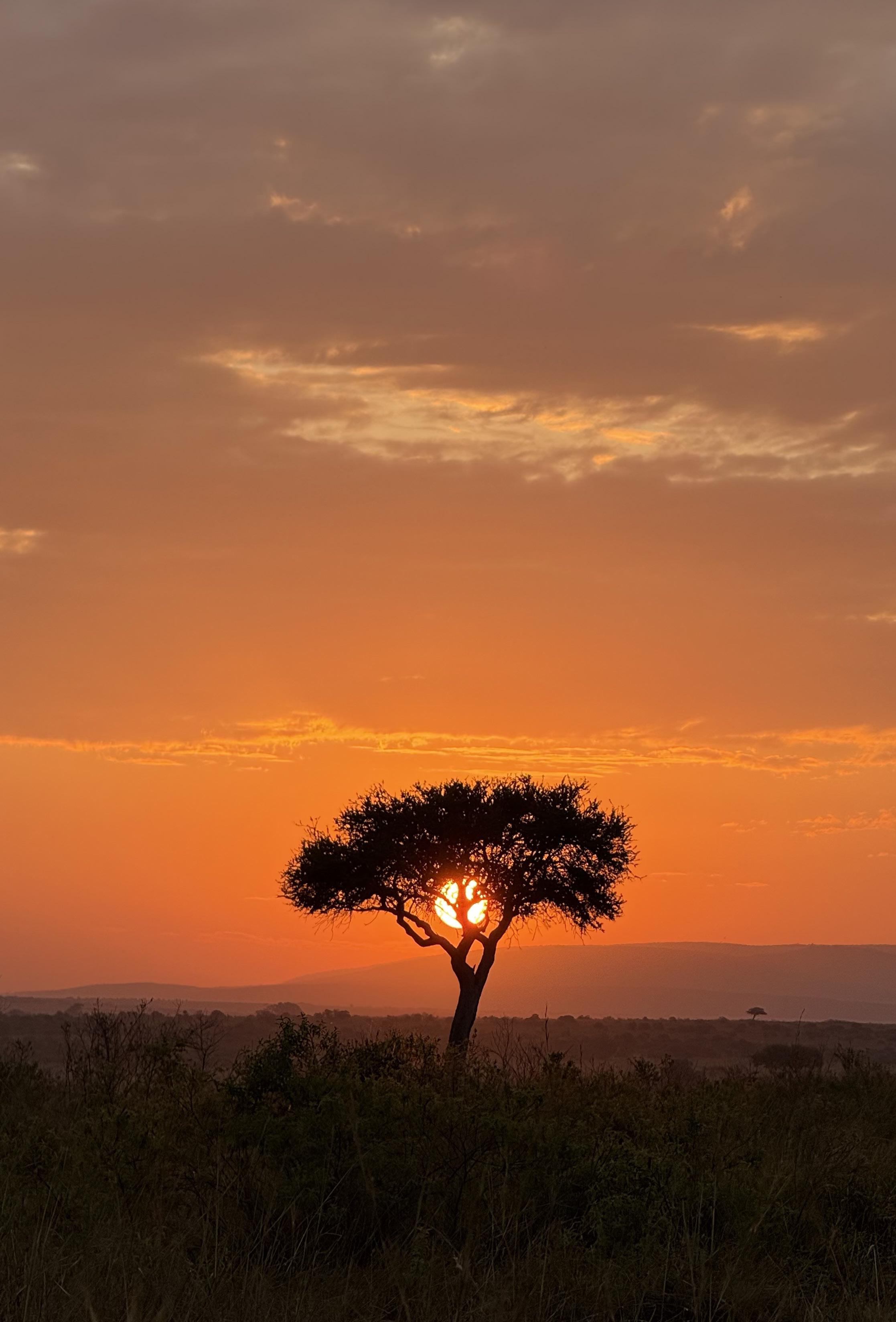
All rights reserved.
Photographs Copyright © The David Sheldrick Wildlife Trust
Photography with special thanks to: Mia Collis, Freya Dowson, Teagan Cunniffe, Robert Carr-Hartley, Roan Carr-Hartley, Taru Carr-Hartley, Hamish Rendall, Neville Sheldrick, and Antony Kimani.
Online donations can be made directly through our website WWW.SHELDRICKWILDLIFETRUST.ORG
The David Sheldrick Wildlife Trust is a charity registered in Kenya. For donations to the Trust, please make cheques out to The David Sheldrick Wildlife Trust.
Sheldrick Wildlife Trust Kenya P.O. Box 15555 Mbagathi, 00503 Nairobi, Kenya
Email: info@sheldrickwildlifetrust.org
Telephone : +254 (0) 202 301 396 +254 (0) 111 044 200
Sheldrick Wildlife Trust UK is a registered charity in England & Wales No: 1103836
Donations to the Trust by U.K. taxpayers can be gift aided.
Sheldrick Wildlife Trust UK
1 Oak Place, Rosier Business Park Coneyhurst Road, Billingshurst RH14 9DE
United Kingdom
Telephone: +44 (0)1372 378 321
Email: infouk@sheldrickwildlifetrust.org
Sheldrick Wildlife Trust USA is recognized by the Internal Revenue Service as a tax-exempt 501c public charity to which contributions, gifts and bequests are deductible for U.S. income, gift, and estate taxes as allowed by law. Checks can be made out to The David Sheldrick Wildlife Trust USA. Tax ID: 30-0224549
Sheldrick Wildlife Trust USA c/o Melissa Sciacca, Executive Director P.O. Box 2281 Laguna Hills, CA 92653
USA
Telephone: +1 (949) 305 3785
Email: infous@sheldrickwildlifetrust.org
Sheldrick Wildlife Trust Canada is a publicly registered charity, enabling Canadian supporters the opportunity to contribute on a tax advantaged basis through donations to the Sheldrick Wildlife Trust Canada. Charity No: 739215754 RR 0001
Sheldrick Wildlife Trust Canada 621 - 22nd Avenue S.W. Calgary, Alberta
T2S 0H7
Canada
Telephone: +1 825 205 5422
Emal: infoca@sheldrickwildlifetrust.org