S H E L D R I C K
AERIAL
W I L D L I F E
T R U S T
SURVEILLANCE
OPERATED IN PARTNERSHIP WITH THE KENYA WILDLIFE SERVICE
J U LY 2 0 2 6 R E P O R T
JULY 2026
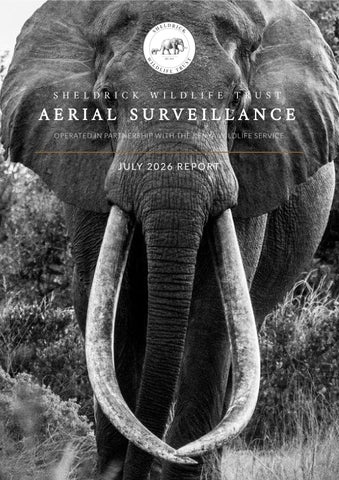
Aerial Unit Monthly Report Operated in support of the Kenya Wildlife Service, Sheldrick Wildlife Trust's Aerial Unit monitors for illegal activity from the skies and offers rapid response assistance in anti-poaching operations, human-wildlife conflict, veterinary treatments, orphan rescues, and all manner of field emergencies. This report details Aerial Unit activities for July 2026
MONTH AT A GLANCE:
27,678 179 25,266 Hours flown:
Kilometres flown:
Areas patrolled: Tsavo East, Tsavo West, KARI Ranch, Chyulu Hills NP, Galana Ranch, Kulalu Ranch, Kipini Conservancy, Amu Ranch, Shimba Hills NR
1
SHELDRICK WILDLIFE TRUST AERIAL UNIT
J U LY 2 0 2 6 R E P O R T
JULY 2026 PATROL MAP:
2
SHELDRICK WILDLIFE TRUST AERIAL UNIT
J U LY 2 0 2 6 R E P O R T
In July, the Aerial Unit flew 179.6 hours and covered 25,266 kilometres. The dry season has now taken firm hold across most of Tsavo, with the landscape opening up as waterholes and seasonal pans continue to shrink. As is typical for this time of year, wildlife and livestock alike become increasingly anchored to the remaining permanent water sources, concentrating pressure on those areas and shaping much of the month's patrol activity. It was a busy month, with a variety of anti-poaching efforts, veterinary support, human–wildlife conflict response, and wildlife rescue. A significant anti-poaching success came on 6 July, when the fixed-wing supported a coordinated anti-poaching operation in the Galana area. The aircraft assisted in an ambush that led to the recovery of three motorbikes and more than 140 dik-dik and game birds, along with hunting equipment. Five suspects escaped towards Dakabuko, and follow-up backtracking operations were mounted in the days that followed, with helpful information provided by local Orma herdsmen. It was a strong result against the organised bushmeat trade that continues to operate across the Galana landscape, and one that reflects the value of combining aerial surveillance with well-coordinated ground teams.
3
SHELDRICK WILDLIFE TRUST AERIAL UNIT
J U LY 2 0 2 6 R E P O R T
4
SHELDRICK WILDLIFE TRUST AERIAL UNIT
J U LY 2 0 2 6 R E P O R T
On 30 July, our helicopter carried out a rescue well beyond our usual operating area, travelling north to Mugie Ranch to collect an orphaned elephant calf. The four-month-old male had been abandoned by his mother for reasons unknown, and was found by KWS, who requested SWT's assistance in bringing him to safety. He was flown to the stockades, where he is now receiving specialist care alongside the Trust's other orphaned elephants. The veterinary caseload in July included a number of interventions. On 30 July, an elephant with an arrow wound to its left flank was located at Choke Ranch with the assistance of Wildlife Works, who provided a live location to the ground teams and helicopter. Dr Lawi and team treated the animal successfully, with a good prognosis. Not every case, however, ended well. On 14 July, an elephant calf was found at Bisadi unable to stand. On assessment, the veterinary team determined it had suffered a spinal injury from which there was no prospect of recovery, and the difficult decision was taken to humanely euthanise the calf. These are among the hardest days for the teams on the ground and in the air, but a preferable outcome to several days of suffering.
5
SHELDRICK WILDLIFE TRUST AERIAL UNIT
J U LY 2 0 2 6 R E P O R T
6
SHELDRICK WILDLIFE TRUST AERIAL UNIT
J U LY 2 0 2 6 R E P O R T
Human–elephant conflict remained a regular feature of the month's flying, with callouts across Ziwani, Kasala, Kitumeni, Wandei, Kamunyu, Ngiluni, Lukenya University, Kiboko, and Gazi. Results were mixed, as they often are with problem elephants – some animals were successfully returned to the park while others, particularly known individuals, proved more difficult. One of the largest single operations came on 28 July at Kiboko, when 30 problem elephants were successfully pushed back into the protected area of KARI and the Chyulu Hills. A persistent one-eyed bull around Kitumeni and Ngiluni continued to resist helicopter herding throughout the month; his blindness on one side makes conventional driving extremely difficult, and he has been earmarked for translocation. Rhino monitoring produced encouraging signs during July. Patrols in both the Tsavo East and Tsavo West IPZs, along with Ngulia Rhino Sanctuary, located several rhino that had not been seen for some time, and newborn calves were recorded across the monitored populations, a positive indicator for the ongoing recovery of this species.
7
SHELDRICK WILDLIFE TRUST AERIAL UNIT
JUNE 2026 REPORT
8
SHELDRICK WILDLIFE TRUST AERIAL UNIT
J U LY 2 0 2 6 R E P O R T
Illegal activity across the month was dominated by the twin pressures of livestock encroachment and charcoal production, particularly across the Galana landscape and the Tana River area. Large livestock concentrations remained anchored to permanent water points such as Midu, Ali Shoroa, Tarasate, and Kone dams, some supporting many thousands of head of cattle, shoats and camels along with resident bomas. Charcoal production continued to be recorded extensively across Kulalu, Galana Ranch, and the Mombasa Cement northern boundary, with ongoing operations by ground teams working to disrupt it. Livestock pressure along the southern Tsavo West boundary near Jipe, Serengeti, and Salaita persisted, though with some signs of improvement by month's end following sustained KWS operations.
9
SHELDRICK WILDLIFE TRUST AERIAL UNIT
J U LY 2 0 2 6 R E P O R T
10
SHELDRICK WILDLIFE TRUST AERIAL UNIT
J U LY 2 0 2 6 R E P O R T
Despite the challenges of a deepening drought, our pilots enjoyed many highlights in July, from witnessing new life to the stark beauty of a drying landscape, along with a myriad of unique and special wildlife sightings.
11
The Aerial Unit, as with all Sheldrick Wildlife Trust's conservation projects, is a donorfunded initiative. Thank you to our global supporters, who help us secure Kenya's habitats for the future and make an impact in the field, each and every day. © 2026 The David Sheldrick Wildlife Trust
12