Operated in support of the Kenya Wildlife Service, Sheldrick Wildlife Trust s
Aerial Unit monitors for illegal activity from the skies and offers rapid response assistance in anti-poaching operations, human-wildlife conflict, veterinary treatments, orphan rescues, and all manner of field emergencies.
This report details Aerial Unit activities for March 2026
MONTH AT A GLANCE:
27,678
Hours flown: Areas patrolled:
167
Kilometres flown:
22,696
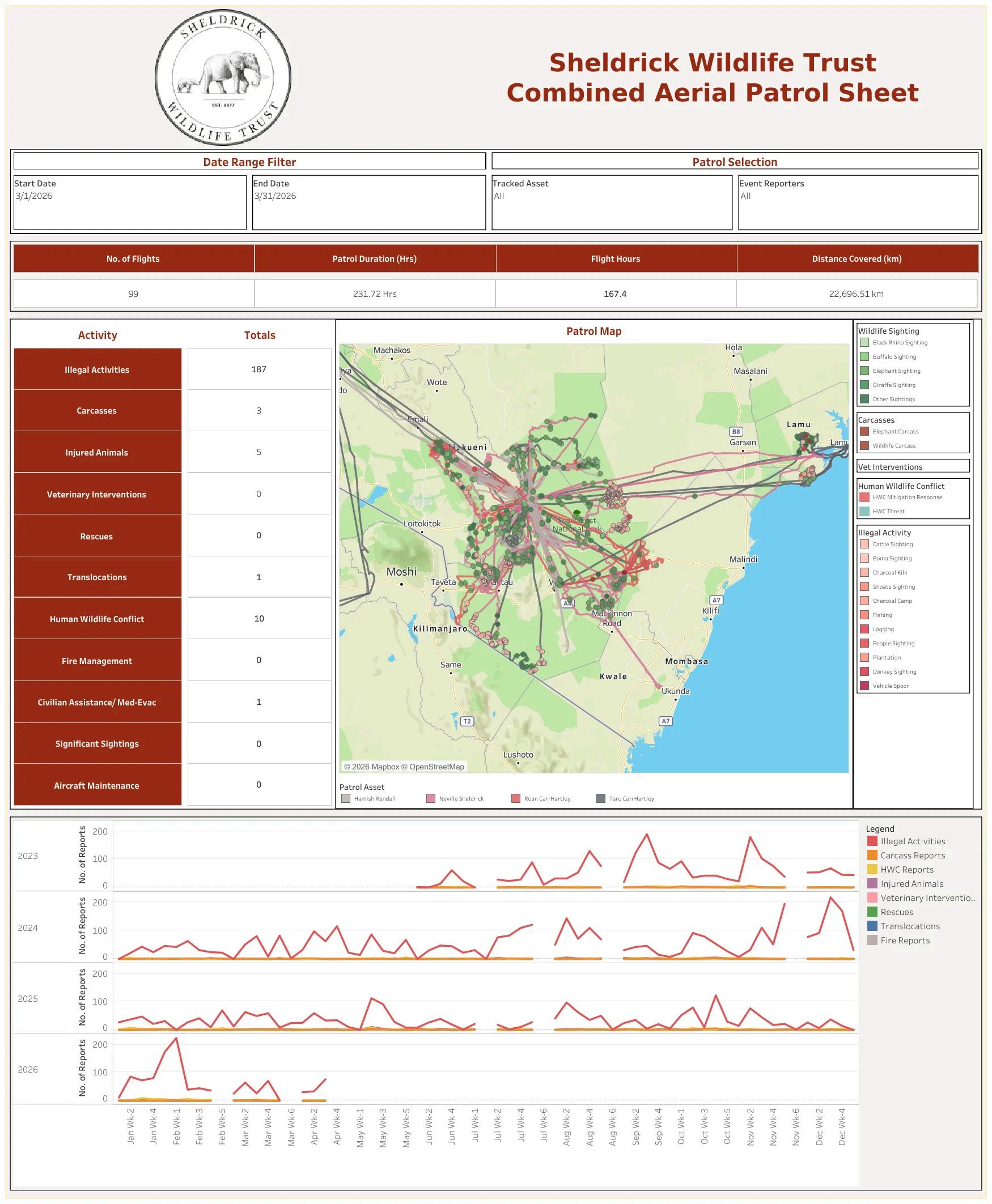
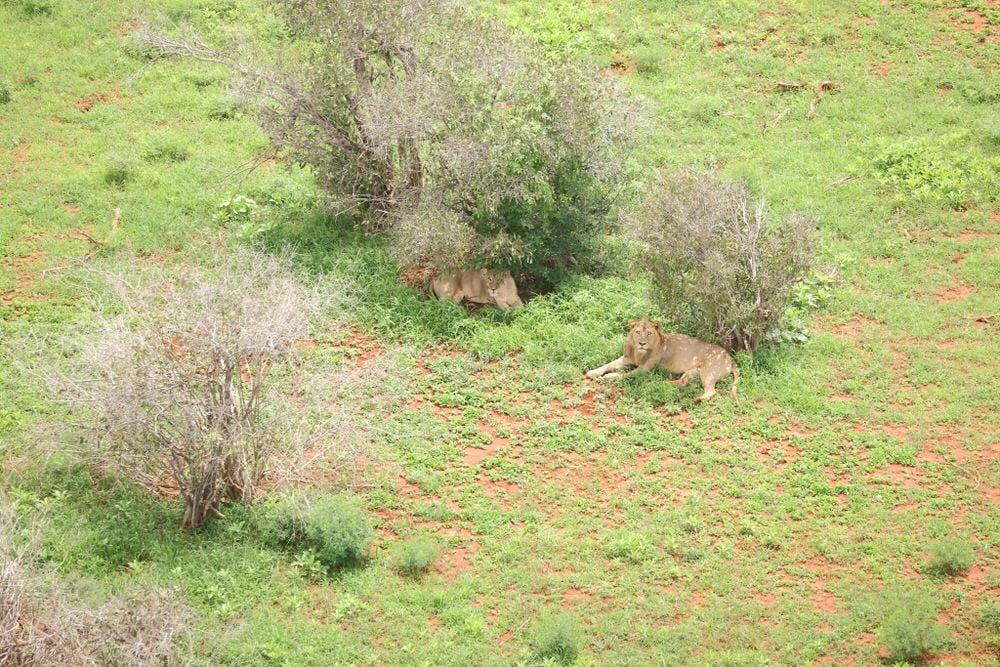
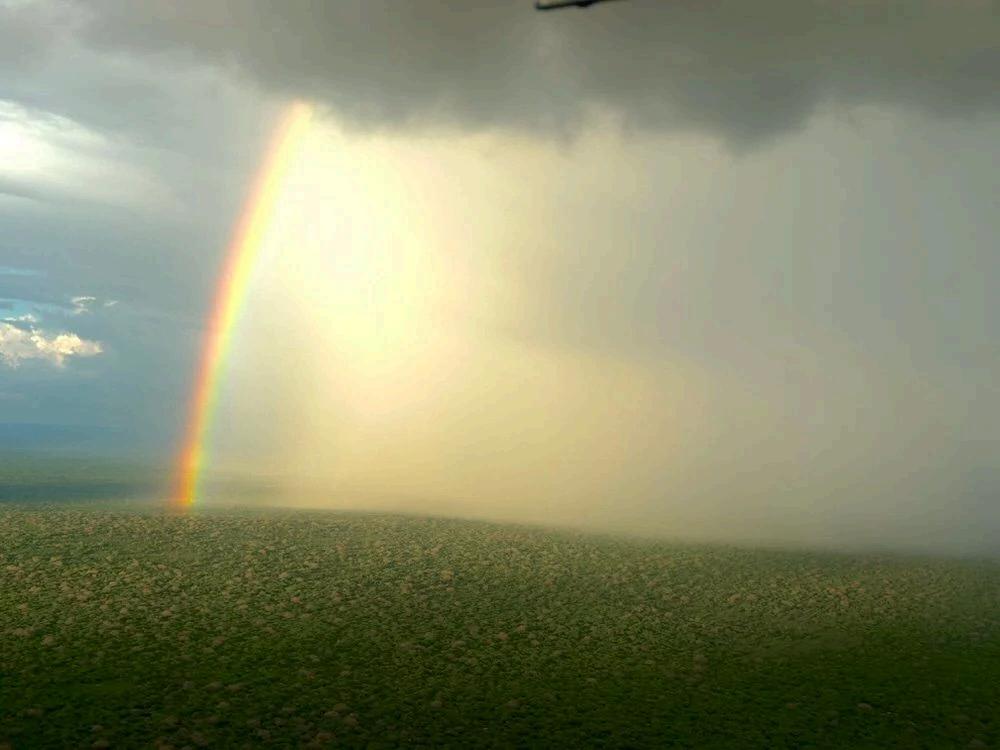
In March, the Aerial Unit flew 167 hours and covered 22,696 kilometres. The month was defined by unusually generous rainfall across the Tsavo ecosystem a welcome but unexpected gift, as the March-April long rains can be disappointing
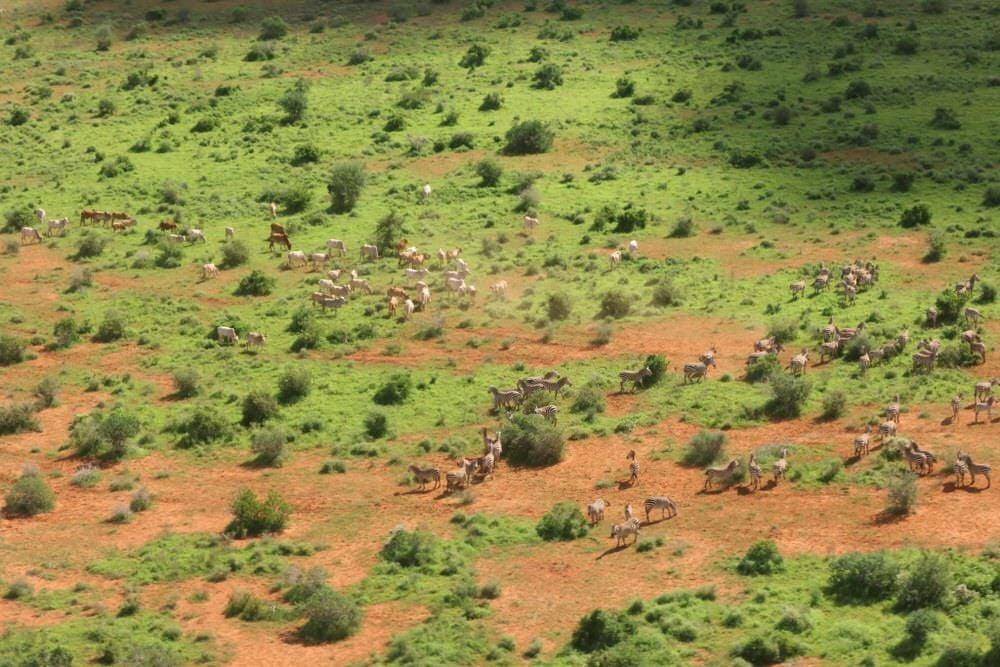
This year, the landscape transformed almost entirely into a lush field of green. The Tiva River flooded dramatically, its
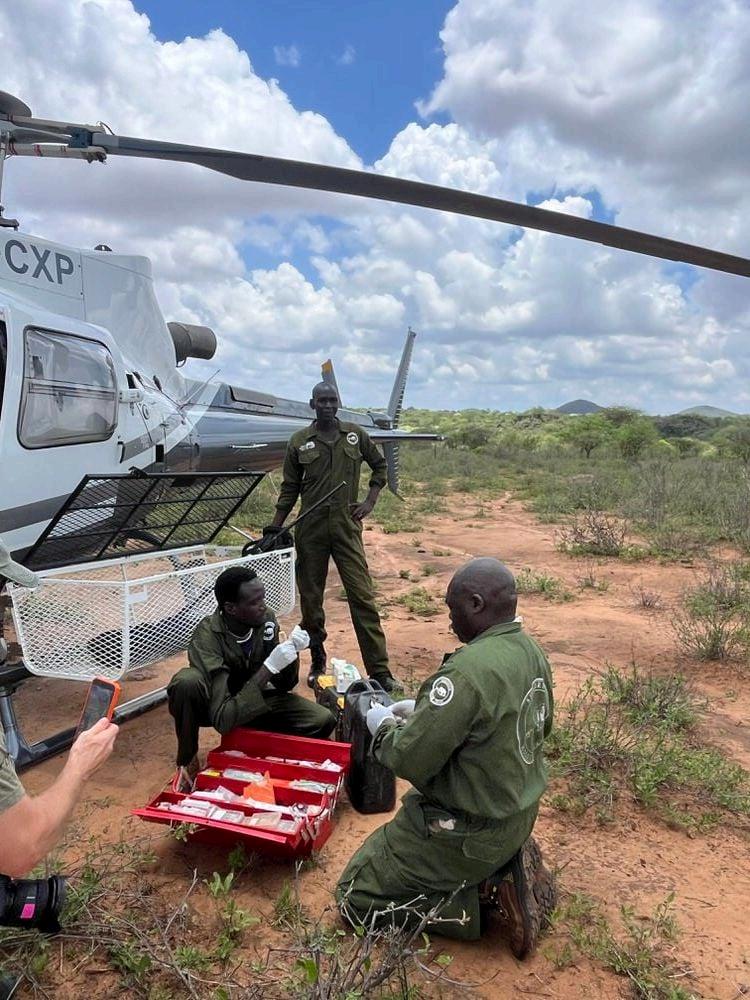
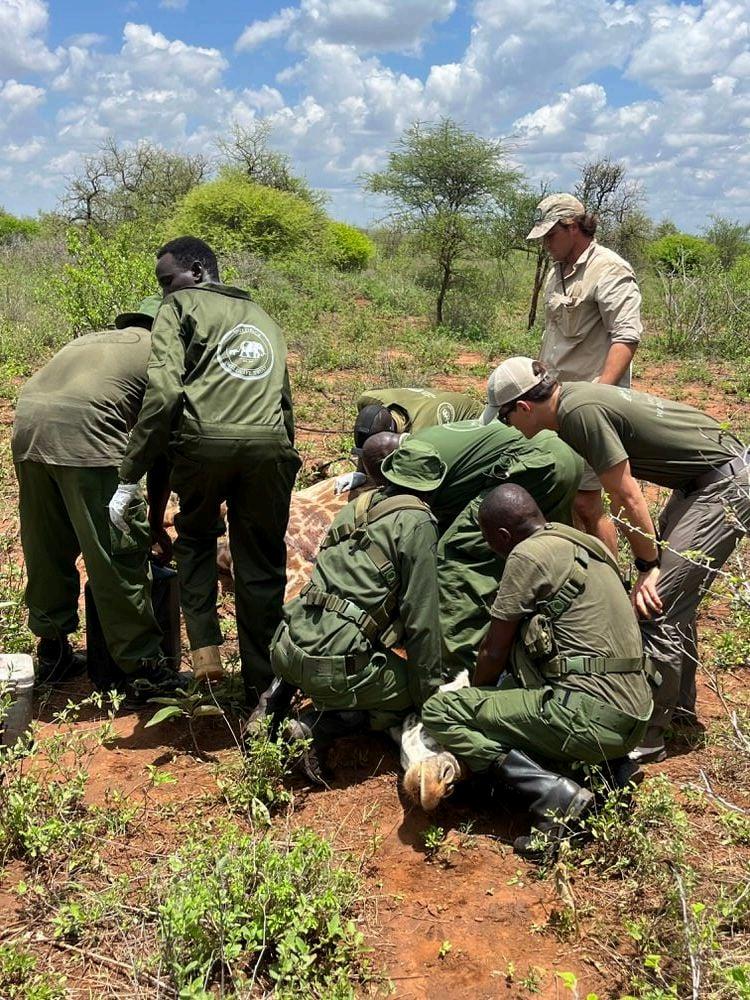
The most persistent and troubling activity during the month came from the Nasaru Conservancy area, where a concentrated outbreak of snaring required aerial intervention on two occasions within a single week. Our fixed-wing aircraft first identified an injured giraffe during a routine patrol on 1st March a snare cutting into the animal's hind left leg. The helicopter and veterinary team mobilised, the snare was successfully removed, and the prognosis for recovery was good.
Human–elephant conflict kept our helicopters busy throughout the month. Elephants were reported outside the protected area on multiple occasions, concentrating around communities near Ngiluni, Kamunyu, Lukenya University, and Darajani The responses were mixed some herds were successfully guided back through gaps in the fence, while a stubborn group near Ngiluni, well known to our team, refused to cooperate despite repeated attempts.
On 26th March, eight bull elephants at Ngiluni were finally pushed back into the protected area The very last flight of the month, on 31st March, responded to a report of four bulls near Lukenya University all four were successfully returned through a gap in the fence and back into the protection of the Park.
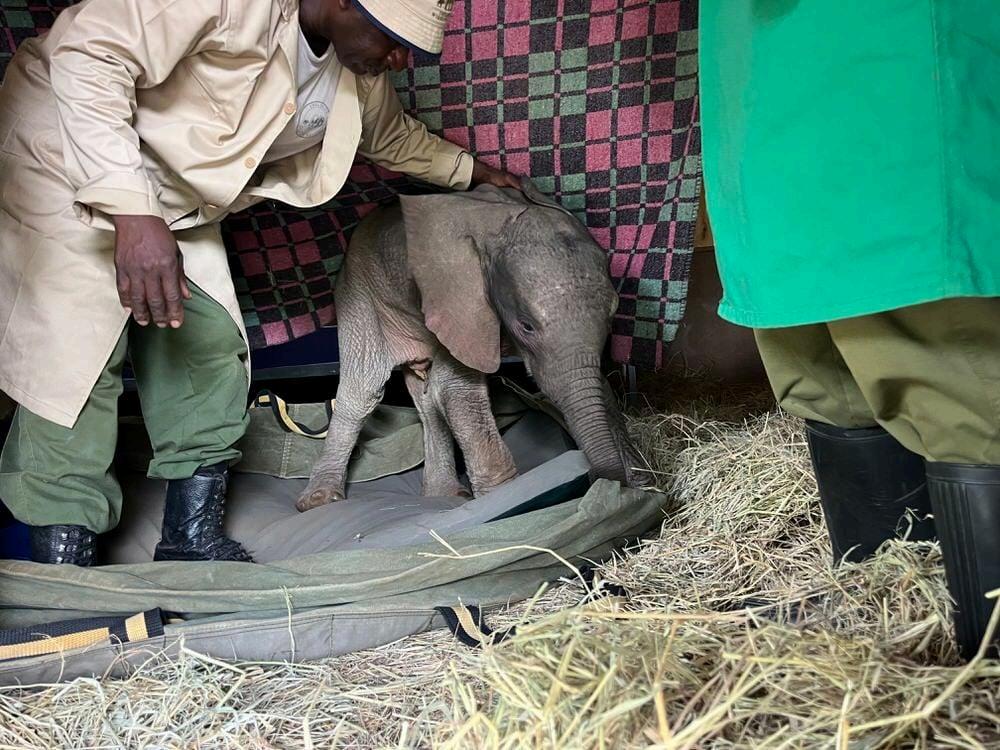
One of the month’s more heartwarming stories unfolded far from Tsavo A two-week-old elephant calf, found abandoned by its mother in Elgeyo Marakwet, was rescued and handed over to KWS-Rimoi. In need of urgent, specialist care, the calf was airlifted in a charter helicopter to Nairobi, where our own helicopter was waiting to collect it and complete the final leg of the journey to our Umani stockade.
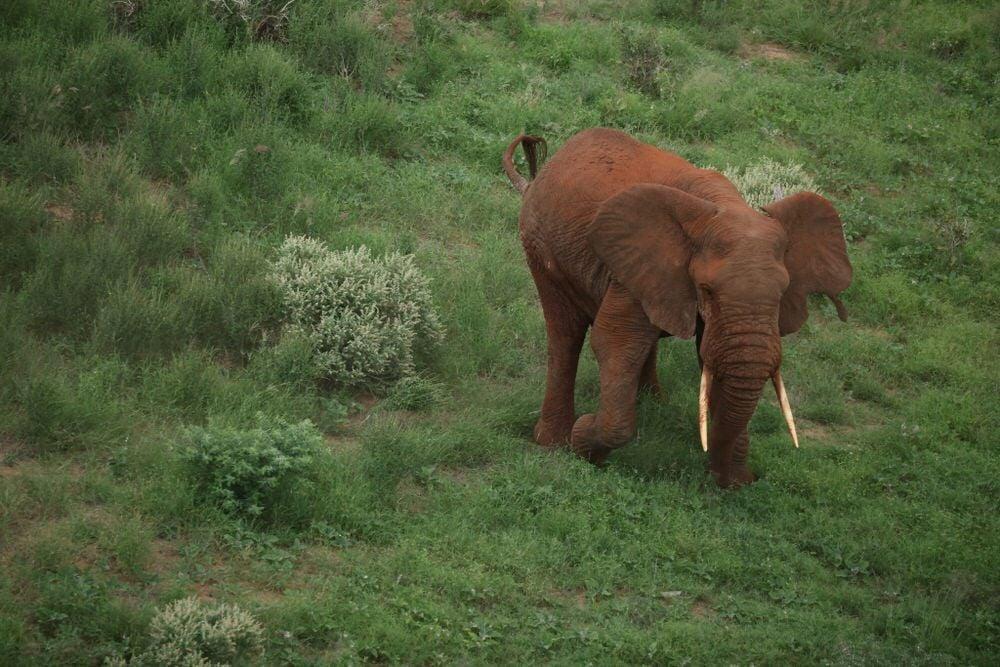
During aerial patrols, one of our aircraft sighted the carcass of a large bull elephant with both tusks intact. The tusks were an impressive 37 and 38 kilograms respectively, and the cause of death appeared to be natural. With the assistance of nearby KWS rangers, the team recovered the tusks and will store them in their safe custody
Illegal activity observed during March included active charcoal kilns along the Kishushe Ranch boundary, ongoing livestock incursions in both Tsavo East and West, and bush clearing on Amu Ranch A charcoal camp was also observed in Kishushe Ranch on the final day of the month
March was a month that reminded us not only how much the health of this landscape depends on rain, but also on our eyes in the sky We can rapidly detect illegal activities over vast areas of Tsavo and beyond and react before damage is done. In many cases, we are able to witness the reversal of degradation as a direct result of our interventions.
The Aerial Unit, as with all Sheldrick Wildlife Trust's conservation projects, is a donorfunded initiative Thank you to our global supporters, who help us secure Kenya's habitats for the future and make an impact in the field, each and every day