By:DavidGarizabaloRodriguez

By:DavidGarizabaloRodriguez
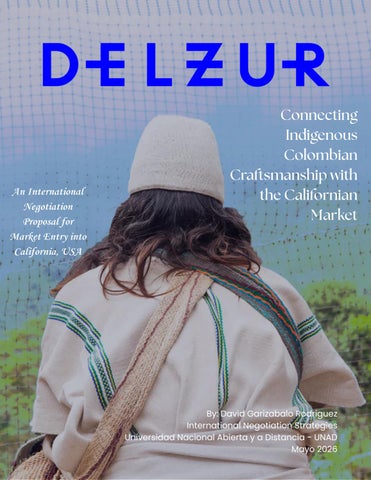
The increasing globalization of markets has created new opportunities for emerging companies from developing economies to access highly competitive international environments. In this context, brands that integrate sustainability, cultural identity, and ethical production processes have gained significant relevance among modern consumers. This digital magazine presents an international negotiation proposal focused on the expansion of Delzur, a Colombian company, into the Californian market in the United States.
The proposal is developed through a comprehensive approach that integrates company analysis, product selection, market justification, and international negotiation strategies. California is identified as a strategic entry point due to its strong alignment with sustainable consumption trends and its influence on global fashion and lifestyle markets. The objective of this proposal is to demonstrate the viability of positioning Delzur as a premium ethical brand through a structured and culturally informed negotiation process.

ombian company esign, production, cialization of hion accessories ollaboration with munities in the Its corporate red on creating cts that integrate edge, sustainable contemporary g both economic Delzur is to genous artisan connecting their h global markets, cultural heritage hical production. to become an cognized brand in fashion industry, ticity, innovation, ibility.
rategic objectives anding into markets, brand positioning ethical segment, ng long-term rtnerships that e growth. Delzur iness model that ility with purpose, bal trends toward ption.
The selected product for this international negotiation proposal is Delzur’s Night Out bags, developed using traditional weaving techniques by Indigenous artisans. Each piece is unique, incorporating natural fibers, cultural patterns, and manual production processes that reflect ancestral knowledge and artistic expression.
The selection of this product is supported by global market trends indicating increasing demand for sustainable and ethically produced fashion. Consumers in highincome markets, particularly in the United States, are shifting their preferences toward products that offer transparency, authenticity,
and social impact. According to industry analyses, the ethical fashion segment has experienced sustained growth driven by environmentally and socially conscious consumers.
In California specifically, the demand for sustainable fashion is significantly higher compared to other states. The presence of environmentally aware consumers, combined with a strong culture of supporting ethical brands, creates an ideal market environment for Delzur’s value proposition. The product not only satisfies functional needs but also delivers symbolic value through storytelling and cultural connection.


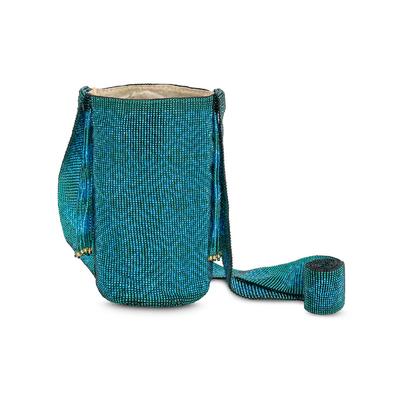
The Delzur’s Night Out handcrafted bags are produced using natural and sustainable materials, including organic fibers and eco-friendly dyes. The production process is entirely manual, ensuring that each piece maintains high standards of quality and authenticity. The bags are designed to be durable, lightweight, and suitable for everyday use, while also functioning as statement fashion items.
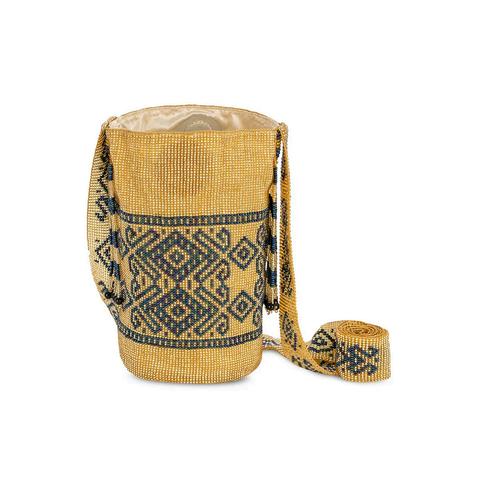
DIMENSIONS:
Bag: 7.8x3.9” / 20x10cm
Belt: 47.2" / 120 cm
The products are made 100% by hand, so the dimensions of each bag can differ slightly.
MATERIAL: Czech glass seed beads
PRODUCTION TIME: 15 days
California is selected as the target market due to its economic strength, cultural influence, and alignment with sustainable consumption trends. As one of the largest economies in the world, California offers high purchasing power and a diversified consumer base that values innovation and ethical business practices.
The state is globally recognized as a leader in sustainability, with consumers showing strong preferences for environmentally responsible and socially conscious products. Cities such as Los Angeles and San Francisco are key fashion and lifestyle hubs, influencing global trends and offering access to premium retail channels.
Compared to other states such as Florida, California provides a stronger strategic fit for Delzur’s brand identity. While Florida has a high demand for fashion products, California’s consumers demonstrate higher awareness and willingness to support ethical and artisanal brands. This creates a more favorable environment for long-term positioning rather than short-term sales.

This phase establishes the foundation of the negotiation by reducing uncertainty and strengthening Delzur’s bargaining position. The company conducts a comprehensive analysis of the Californian market, with particular focus on cities such as Los Angeles and San Francisco, where demand for sustainable and ethically produced fashion is significantly high. During this stage, Delzur identifies and evaluates potential business partners, prioritizing premium retailers whose brand identity aligns with sustainability, cultural authenticity, and conscious consumption. Simultaneously, the company defines its negotiation objectives, including target pricing, minimum order quantities, distribution conditions, exclusivity terms, and brand representation standards.
. Initialcontactand relationship-building
Once the strategic groundwork is completed, the process advances to the relationship-building phase. This stage focuses on establishing trust, credibility, and mutual interest with selected partners through formal presentations,
virtual meetings, and participation in trade events or fashion showcases. The negotiator plays a key role in this phase. Delzur appoints an International Business Development Manager with expertise in sustainable fashion and intercultural communication. This individual is responsible for effectively communicating the brand’s value proposition while adapting to the business culture of California, which emphasizes professionalism, efficiency, transparency, and innovation. The primary objective of this phase is not to close deals, but to build a strong relational foundation that facilitates open dialogue and future agreement.
In this phase, the negotiation transitions into a structured discussion of specific commercial terms. Key aspects addressed include pricing models, order volumes, distribution channels, logistics, delivery timelines, and joint marketing initiatives. Delzur adopts an integrative negotiation strategy, aiming to create value for both parties rather than engaging in purely distributive bargaining. The company positions itself as a
Tpremium brand, avoiding pricebased competition and instead emphasizing differentiation through sustainability, exclusivity, and design.
Tactically, Delzur maintains flexibility in negotiable elements such as delivery schedules, promotional support, or initial order conditions, while remaining firm on non-negotiable aspects such as brand positioning, ethical standards, and product integrity. This balance allows the company to protect its core identity while facilitating agreement.
.
The final phase focuses on consolidating the negotiation into formal agreements and operational execution. Contracts are developed to clearly define responsibilities, commercial terms, delivery conditions, and compliance standards. Additionally, a detailed implementation plan is established, including logistics coordination, inventory planning, marketing activation, and in-store brand positioning. Key performance indicators (KPIs) are defined to measure success, such as sales volume, market penetration, and brand visibility.
A follow-up and relationship management system is also implemented to ensure continuous communication, performance evaluation, and identification of growth opportunities within the Californian market.

This phased approach ensures that the negotiation is not treated as a transactional process, but as a strategic pathway toward long-term value creation, brand positioning, and sustainable international expansion.

The success of the negotiation depends significantly on the understanding of intercultural differences between Colombia and the United States. Californian business culture is characterized by direct communication, efficiency, and a strong focus on results. At the same time, there is openness to innovation, diversity, and socially responsible initiatives
In contrast, Colombian business culture places greater emphasis on relationship building, trust, and flexibility. The negotiation strategy must integrate both perspectives, combining professionalism and clarity with relational skills that foster long-term partnerships.
Key protocol elements include punctuality, clear and structured presentations, data-driven arguments, and a strong emphasis on brand storytelling. Demonstrating authenticity and transparency will be critical in building credibility with Californian partners.
KeyTips
1.Balancedirectness withrelationshipbuilding
2.Professionalismis non-negotiable
3.Leadwithauthenticity andpurpose
The proposed international expansion of Delzur into the Californian market represents a highly viable and strategically aligned opportunity. The combination of a differentiated product, a growing demand for ethical fashion, and a favorable market environment creates strong conditions for successful entry.
Through a structured international negotiation strategy that integrates market analysis, cultural understanding, and value-based positioning, Delzur can establish itself as a competitive player in the premium sustainable fashion segment. This proposal demonstrates that international negotiation is not only a commercial process but also a strategic tool for building meaningful and sustainable global connections.

Referencias
Ciravegna,L,Kundu,S K,Kuivalainen,O,andLopez,L E (2019) Thetimingofinternationalization–Driversandoutcomes Journalof BusinessResearch,105,322–332 https://research-ebsco-combibliotecavirtualunadeduco/linkprocessor/plink?id=9ecdcae4-cdf7-3160bda5-44f4c5a31c45
DELZUR https://wwwdelzurcom/ Luo,X,andZheng,Q (2018) Howfirminternationalizationisrecognizedbyoutsiders:Theresponseoffinancialanalysts JournalofBusiness Research,90,87–106 https://research-ebsco-combibliotecavirtualunadeduco/linkprocessor/plink?id=998456d8-694d-3ca4-a881376330a0b79e
Meschi,P-X,Ricard,A,andTapiaMoore,E (2017) FastandFuriousorSlowandCautious?TheJointImpactofAgeatInternationalization, Speed,andRiskDiversityontheSurvivalofExportingFirms JournalofInternationalManagement,23(3),279–291 https://research-ebscocombibliotecavirtualunadeduco/linkprocessor/plink?id=eb55b03e-fb17-354b-b813-f258692574f2
NaderH Asgary (2019) GlobalBusiness:AnEconomic,Social,andEnvironmentalPerspective InformationAgePublishing https://researchebsco-combibliotecavirtualunadeduco/linkprocessor/plink?id=11ad9249-52de-3e03-8c3c-6fe02b9f19ef
RobvanTulder,AlainVerbeke,andLuciaPiscitello.(2019).InternationalBusinessintheInformationandDigitalAge:Vol.Firstedition. https://research-ebsco-combibliotecavirtualunadeduco/linkprocessor/plink?id=72361f6d-b310-3170-ad18-bd5df023b7b7