The Publishers wish to thank Dr Paweł Ceranka, Prof. Jacek Tebinka and Prof. Maciej Zakrzewski for all their generous help in bringing this publication into being, and all the contributors to this volume: Prof. Philip Murphy, Dr Colin Thom, Dr Andrzej Suchcitz, Prof. Robert Gawłowski and Dr Clarinda Calma.
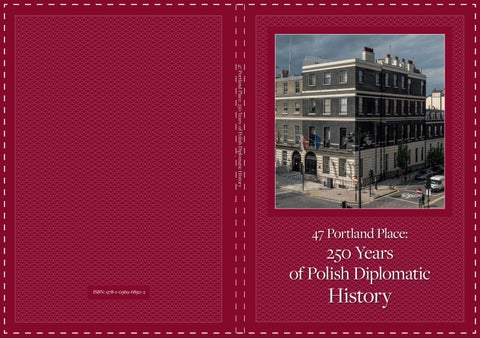
47 Portland Place: 250 Years of Polish Diplomatic History
PHILIP MURPHY Foreword ................................................................................................... 5
COLIN THOM
47 Portland Place: A Social and Architectural History ............. 10
ANDRZEJ SUCHCITZ
Poland’s Diplomatic Envoys and their Residencies up to 1945................................................................................................ 24
ROBERT GAWŁOWSKI
Portland Place in Two Worlds: A Journey through Cold War Diplomacy .........................................................40
CLARINDA CALMA
Design and Detail: Inside the Polish Embassy’s Historic Interiors .................................................................................. 55
List of Permanent Polish Envoys to the Court of St James’s .................................................................. 74 Notes on contributors 78
Foreword
London is a city of hidden treasures. For every museum to which tourists have access, there are dozens of fascinating private buildings they rarely see. The essays in this booklet tell the story of one of these – 47 Portland Place –which has served as the Polish Embassy to the Court of St James’s since 1921. And the story of the building is in many ways the story of modern Poland itself, combining tragedy, defiance and rebirth.
Portland Place remains one of London’s grandest streets. It was laid out in the 1770s by the hugely influential neoclassical architect Robert Adam and his brother James, in an attempt to satisfy the demands of the landed, commercial and industrial elites for elegant town houses in the capital. Over the course of the nineteenth century, the inhabitants of No. 47 included two prominent military figures: the fifth Duke of Richmond, who had fought at the Battle of Waterloo, and Field Marshal Earl Roberts, veteran of a number of Victorian imperial conflicts. Yet by the beginning of the twentieth century, as Colin Thom explains, the sort of lavish domestic arrangements which the Adam houses were designed to accommodate were becoming too expensive to maintain and the buildings themselves were being demolished in favour of flats and offices. No. 47 was lucky enough to have one final private resident, Sir Arthur Basil Markham, whose family wealth enabled him to invest in the refurbishment and modernisation of the building. Hence, when it changed hands in 1921, it was a suitably impressive home for the London Embassy of the Polish Republic.
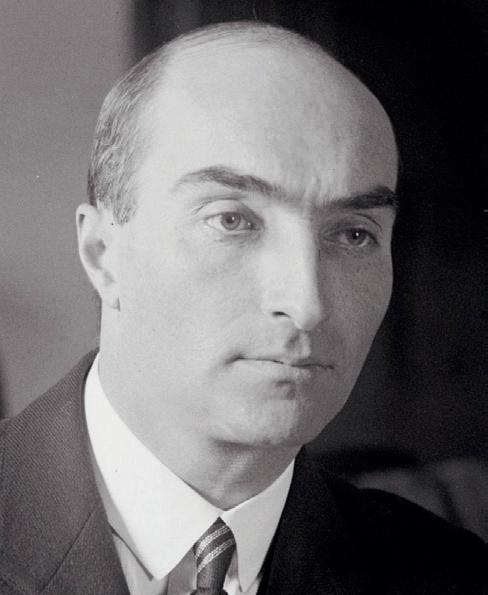
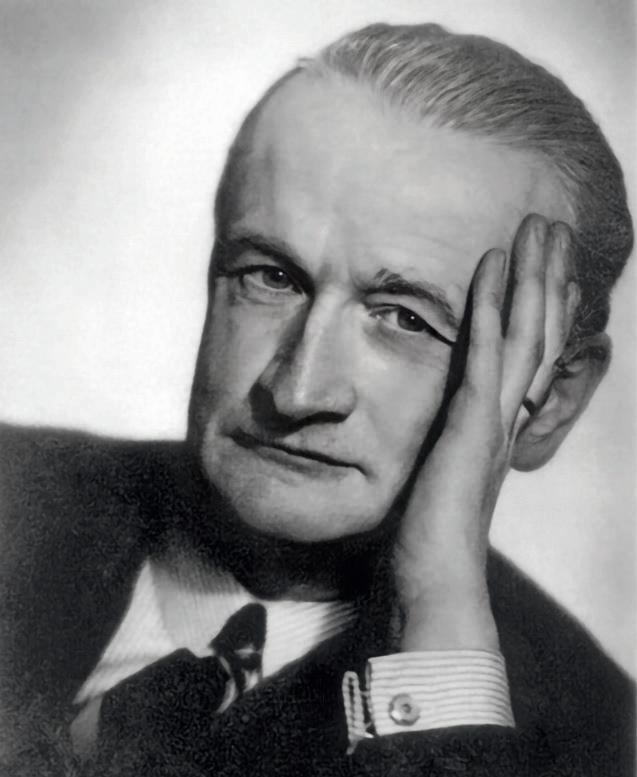
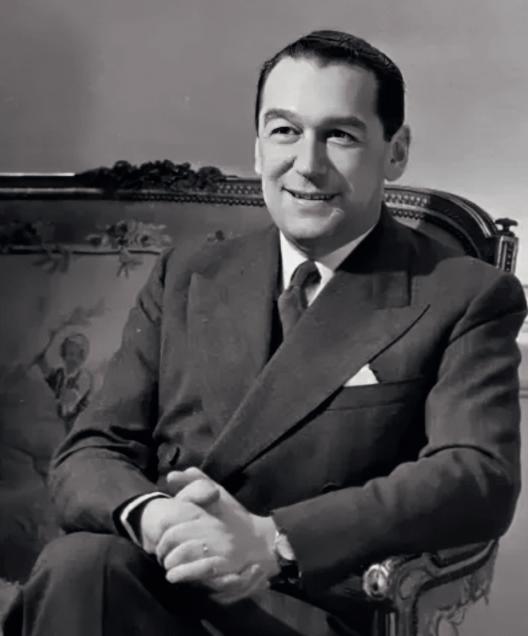
As Andrzej Suchcitz notes, the history of Anglo-Polish relations stretches back a millennium. But it was for the urgent task of building the diplomatic profile of the recently reconstituted Polish state that 47 Portland Place was instrumentalised from 1921 onwards. Central to this story is the extraordinary figure of Count Edward Raczyński, Poland’s Ambassador to London from 1934. Raczyński remodelled the interior of the building to make it more suitable for its current purpose. He succeeded in making it a hub for cultural as well as political diplomacy. It was Raczyński who sought to negotiate a British guarantee of Poland’s territorial integrity in the spring of 1939, and Raczyński whose signature was on the seminal report of December 1942 ‘The Mass Extermination of Jews in German Occupied Poland’, one of the first detailed accounts of the Nazi Holocaust. By this stage, Raczyński was serving as foreign minister of his country’s Government-in-Exile. The government itself used 47 Portland Place as its headquarters for several months in 1940, and it was here that, in July, its Prime Minister, General Sikorski, saw off a challenge to his authority. And finally, it was Raczyński who had the bitter task of handing over the keys of the building to the British Foreign Office on 26 July 1945 after the UK withdrew recognition from the Government-in-Exile. They were then given to the diplomatic representatives of the Russian-dominated Polish Provisional Government of National Unity in Warsaw.
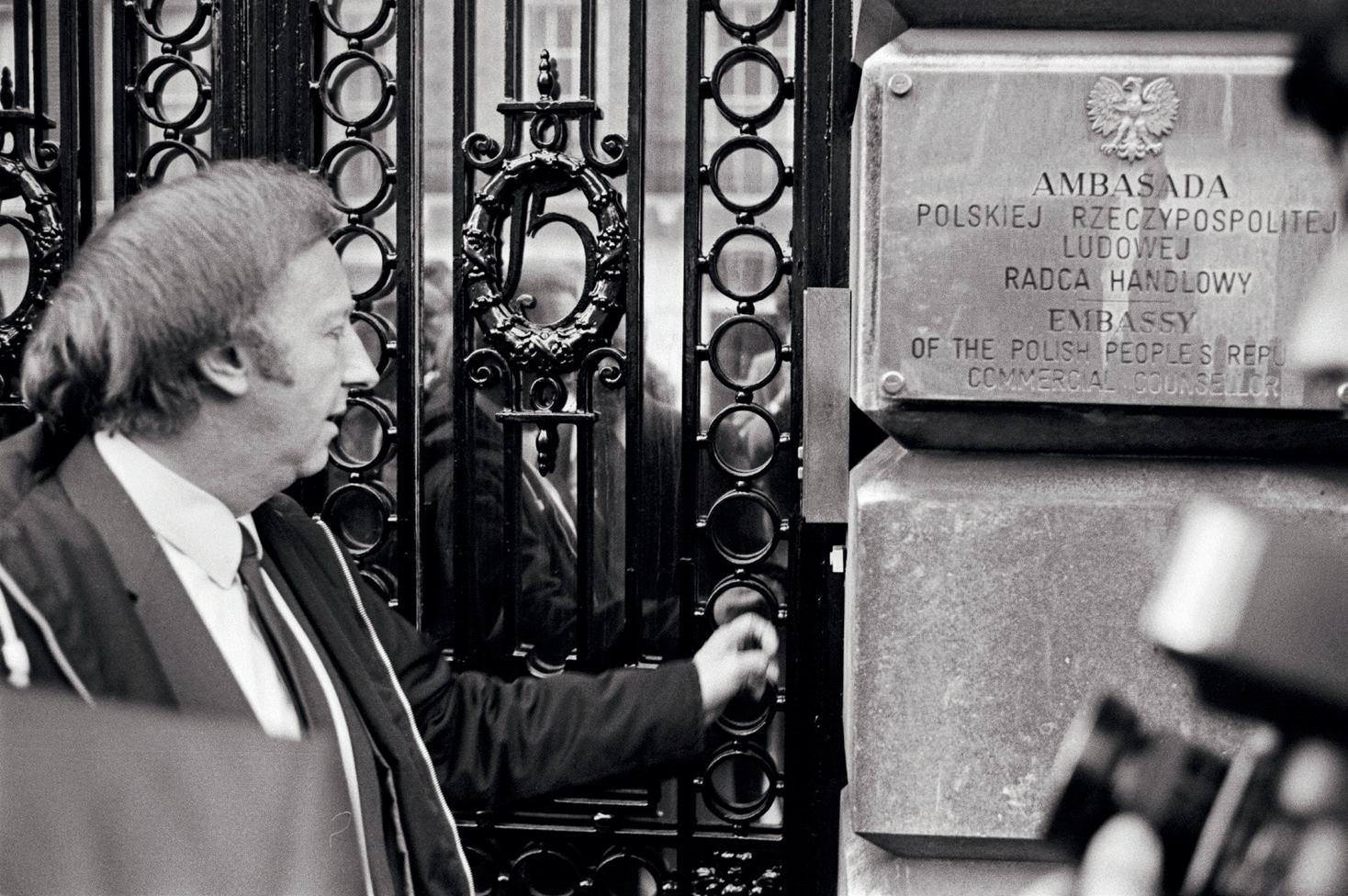
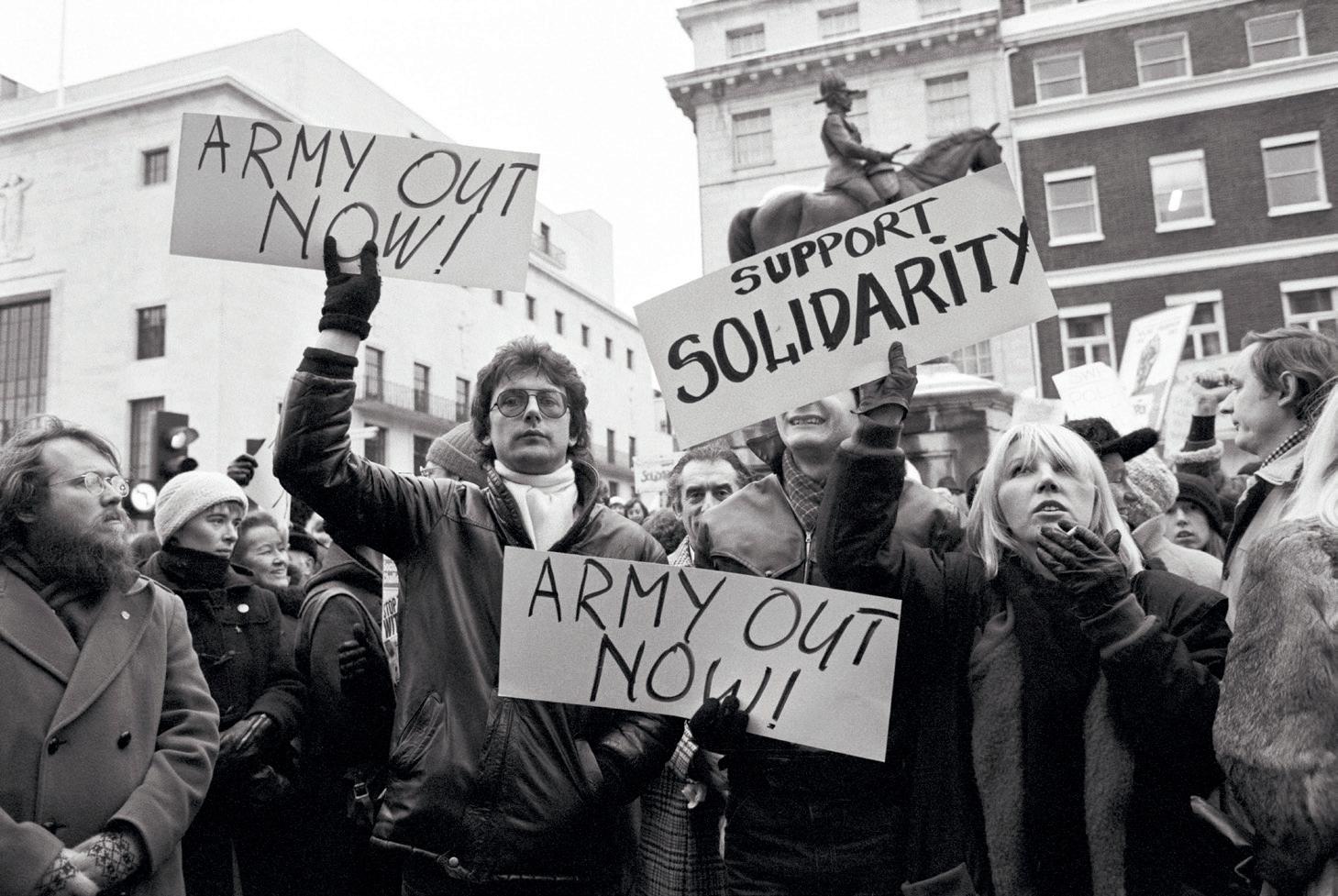
There followed a new phase, which lasted until the dissolution of the Communist government of Poland in 1989. Anglo-Polish relations were chilled by the onset of the Cold War and the British authorities tended to view the Embassy as a focus of hostile propaganda and espionage. The Polish Government-in-Exile continued in existence, providing a London base for the opponents of the Communist regime. Raczyński served as its president from 1979 to 1986, taking part in demonstrations outside the Embassy following the banning of Solidarity and declaration of Martial Law in 1981. Nevertheless, as Robert Gawłowski notes, throughout this period the conventional business of diplomacy continued to be coordinated from the building, including Ministerial visits, trade talks, and cultural events and exchanges.
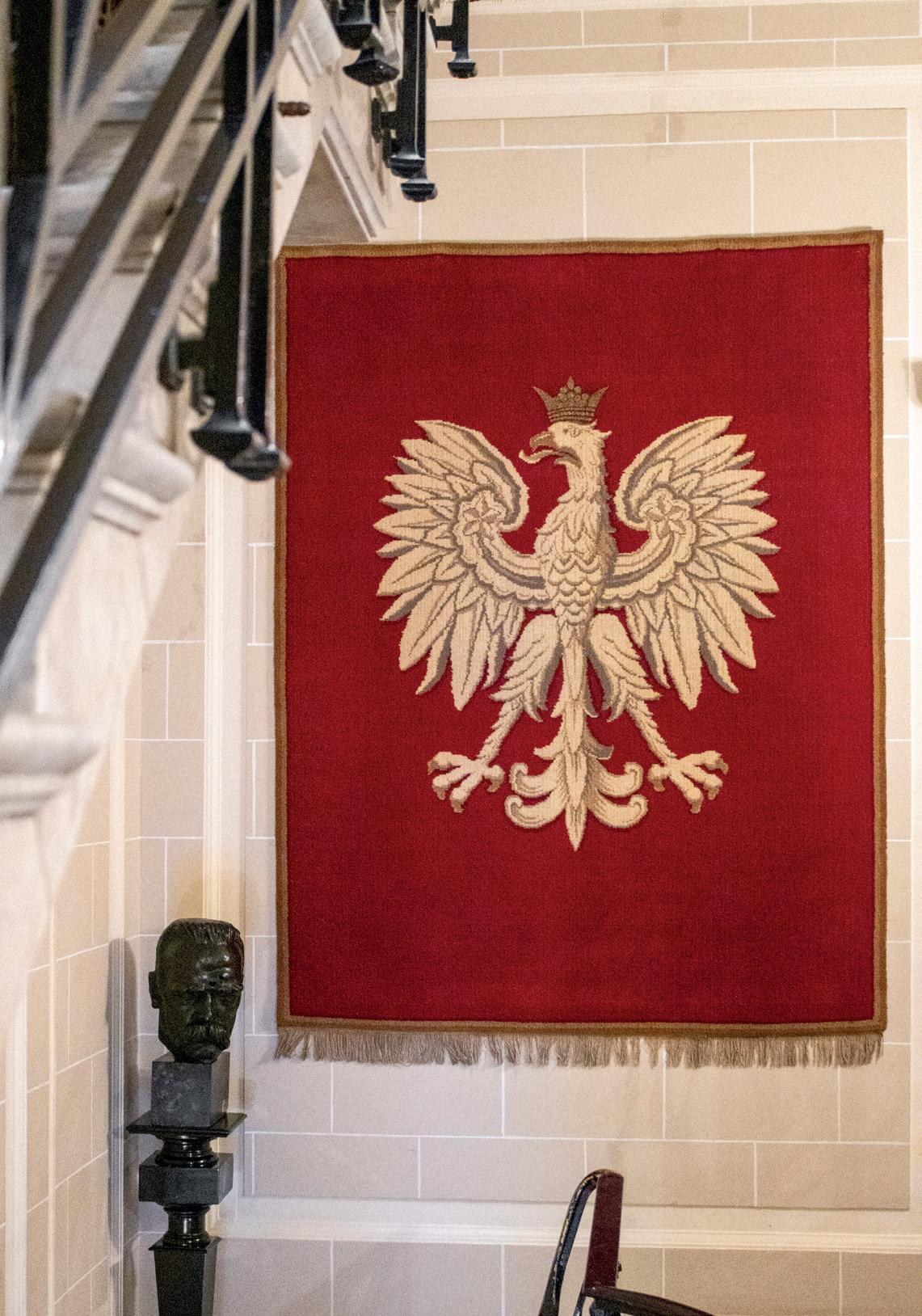
The Embassy now houses the diplomatic representatives of one of the UK’s most important and valued European allies. As Clarinda Calma describes, the building is full of reminders of the past. The memory of Edward Raczyński is kept alive in the name of the main drawing room on the first floor. Artworks from
Poland from earlier centuries decorate the walls. And in the main entrance hall is a copy of the Bletchley Park Polish Memorial honouring the Polish mathematicians who pioneered the cracking of the German Enigma code, providing the Allies with a crucial strategic advantage in the Second World War. This booklet shines a vivid light on the rich history of the building. For those who work at 47 Portland Place and those who visit it, these essays may serve a reminder that the Embassy’s activities represent simply the latest phase in the long and enduring story of Anglo-Polish relations.
Professor
Philip Murphy
Institute of Historical Research, London
47 Portland Place: A Social and Architectural History
Colin Thom
For a long time after it was constructed in the late eighteenth century, Portland Place was one of London’s most exclusive residential addresses. Though it has seen many changes since then – often quite extensive and insensitive changes – it remains one of the capital’s most memorable streets, still popular today with legations and embassies but also now with private schools and creative bodies, such as the BBC and the Royal Institute of British Architects. In this article I would like to look briefly at the street’s history, especially its original development under the Adam brothers’ architectural practice. I will also try and evaluate what it is that makes Portland Place special and give a short account of the history of the building at No. 47, which has been occupied as the Polish Embassy to the Court of St James’s since 1921. Finally, I will close with a brief sketch of the many notable residents who have lived in the house over its twohundred-year history.
The Adam Brothers’
Architectural Vision
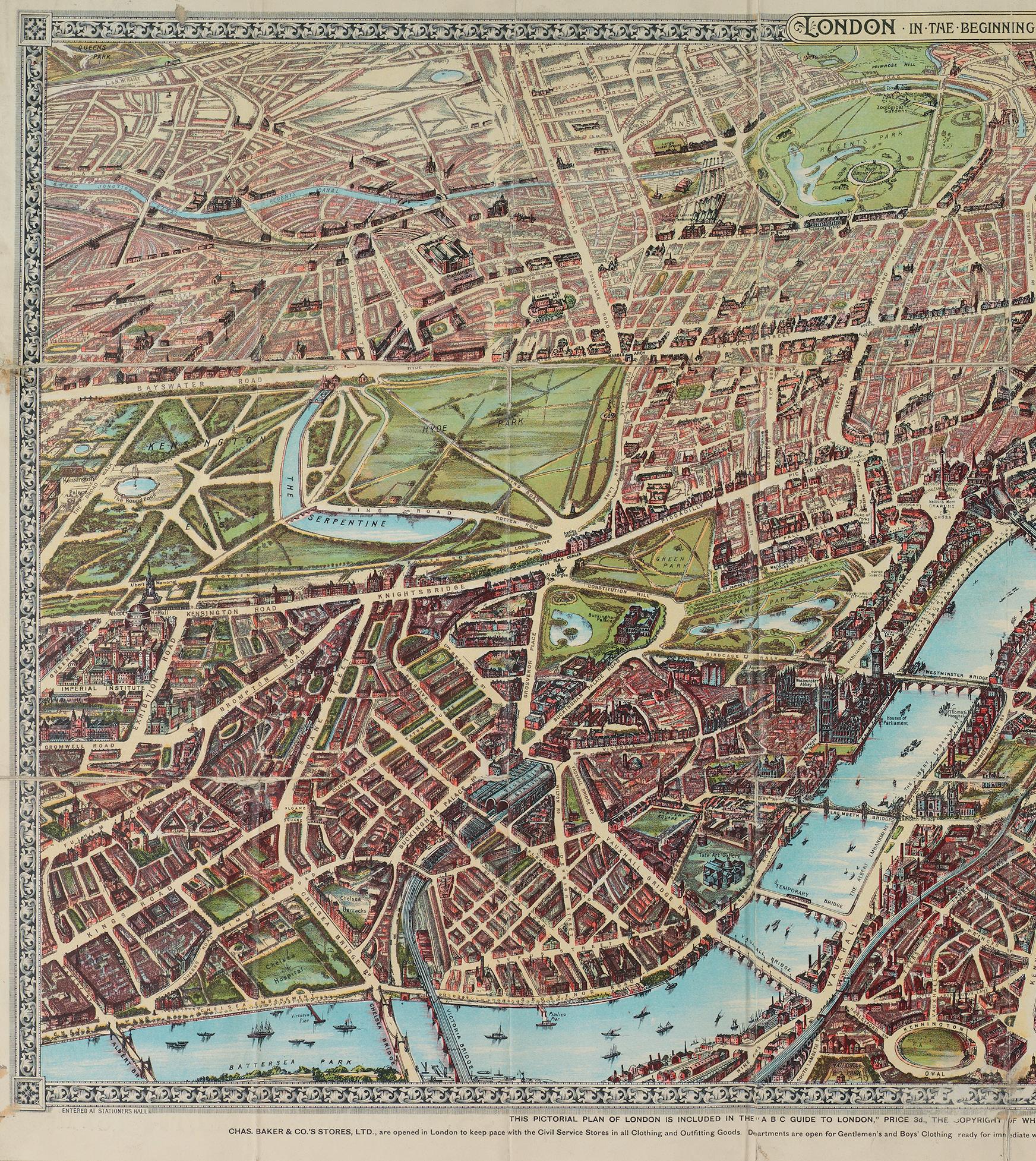
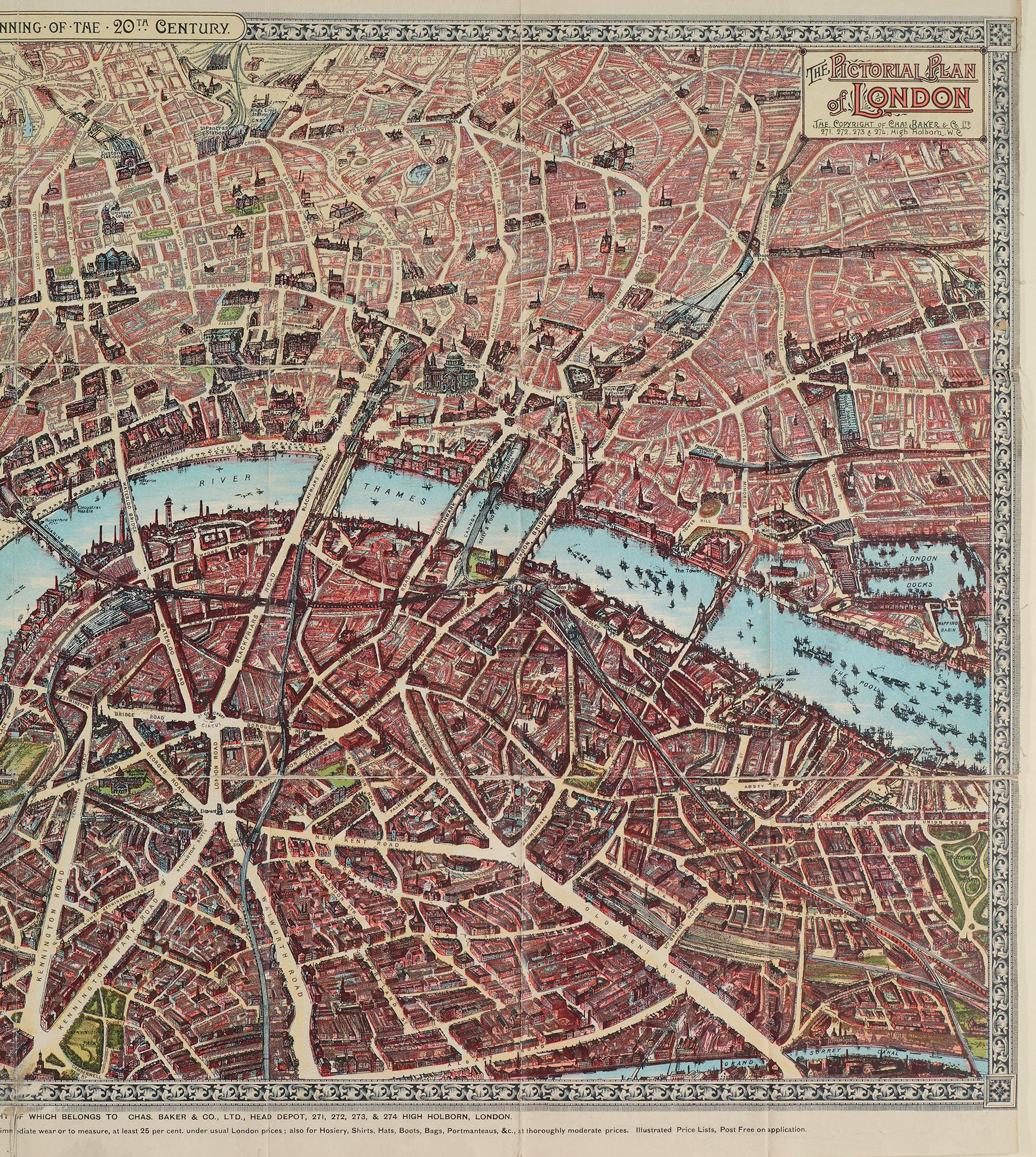
Portland Place was built on what had formerly been fields belonging to the estate of the 3rd Duke of Portland (the predecessor of today’s Howard de Walden Estate) at the north-western extremity of London’s fashionable West End. By 1746 a grid
of new streets was already appearing on the Portland estate, in and around Cavendish Square, just north of Oxford Street, and was beginning to spread northwards.1
The architects responsible for the design of Portland Place were Robert and James Adam, two of the four sons of William Adam, Scotland’s leading architect of the early 1700s, whose practice in Edinburgh the four brothers inherited and continued after his death. The firm’s profits allowed both Robert and James (on separate occasions in the 1750s and 60s) to take the Grand Tour – at the time a common rite of passage for well-educated, wealthy young men, and also aspiring artists and architects.
It was while he was abroad in Italy that Robert Adam (1729-1790), who had a genius for design far beyond that of his brothers, discovered a deep affinity for the architecture of classical antiquity. Adam realised that, using what he had seen in Rome as inspiration, he could create a new decorative style, different from and (in his eyes) superior to what anyone else was offering at the time. Using that Roman aesthetic, filtered through his own design sensibilities, he believed he could create something light and elegant that would appeal to the British aristocracy of the eighteenth century, most of whom had taken the Grand Tour and so would recognise and understand the ultimate sources of Adam’s architecture. And so, on his return from Italy in 1758, instead of going back to the family firm in Edinburgh, as had been the original plan, Robert Adam came to London to set up in practice, at first on his own, and later in partnership with his younger brother James when he returned from his Grand Tour.
The new decorative style that Robert Adam launched in the early 1760s at houses such as Kedleston Hall in Derbyshire and Syon House on the River Thames brought him immediate success, putting him at the forefront of dynamic changes taking place in British architecture at that time. The Adam brothers’ style dominated the later Georgian period and their influence was widespread; they were foremost among the few British architects whose work made an impact abroad, not only in Western Europe but also in Russia and North America.
1 John Rocque, A plan of the cities of London and Westminster, and borough of Southwark, with the contiguous buildings; from an actual survey, taken by John Rocque, land-surveyor, and engraved by John Pine, Bluemantle. London: John Pine & John Tinney, 1746.
Despite occupying the position of one of the country’s most fashionable architectural practices, especially for town and country and houses, Robert Adam and his brother James were never able to secure the key royal and public commissions that they hoped would cement their reputation as the nation’s leading architects – these usually went to their rival Sir William Chambers, who was George III’s favourite. So instead they turned to large-scale, privately funded town-planning developments as an alternative way of making their mark on the architecture of the capital.
This entrepreneurial side to the brothers’ character came from their father, but they far exceeded him in ambition, taking on a colossal building project on difficult, sloping riverside ground at the Adelphi, just off the Strand, at the same time as developing the streets of fashionable houses in and around Portland Place. In the event, a Scottish banking crash disrupted the financing of this development, bringing the Adam brothers to brink of bankruptcy, and they were only able to remain afloat by selling off the leases to most of the Adelphi properties through a private lottery. Financial disarray runs as a continuous thread through the story of the Adam brothers, so I will be touching on this theme again later in this article.
Robert Adam’s Urban Legacy: The Creation of Portland Place
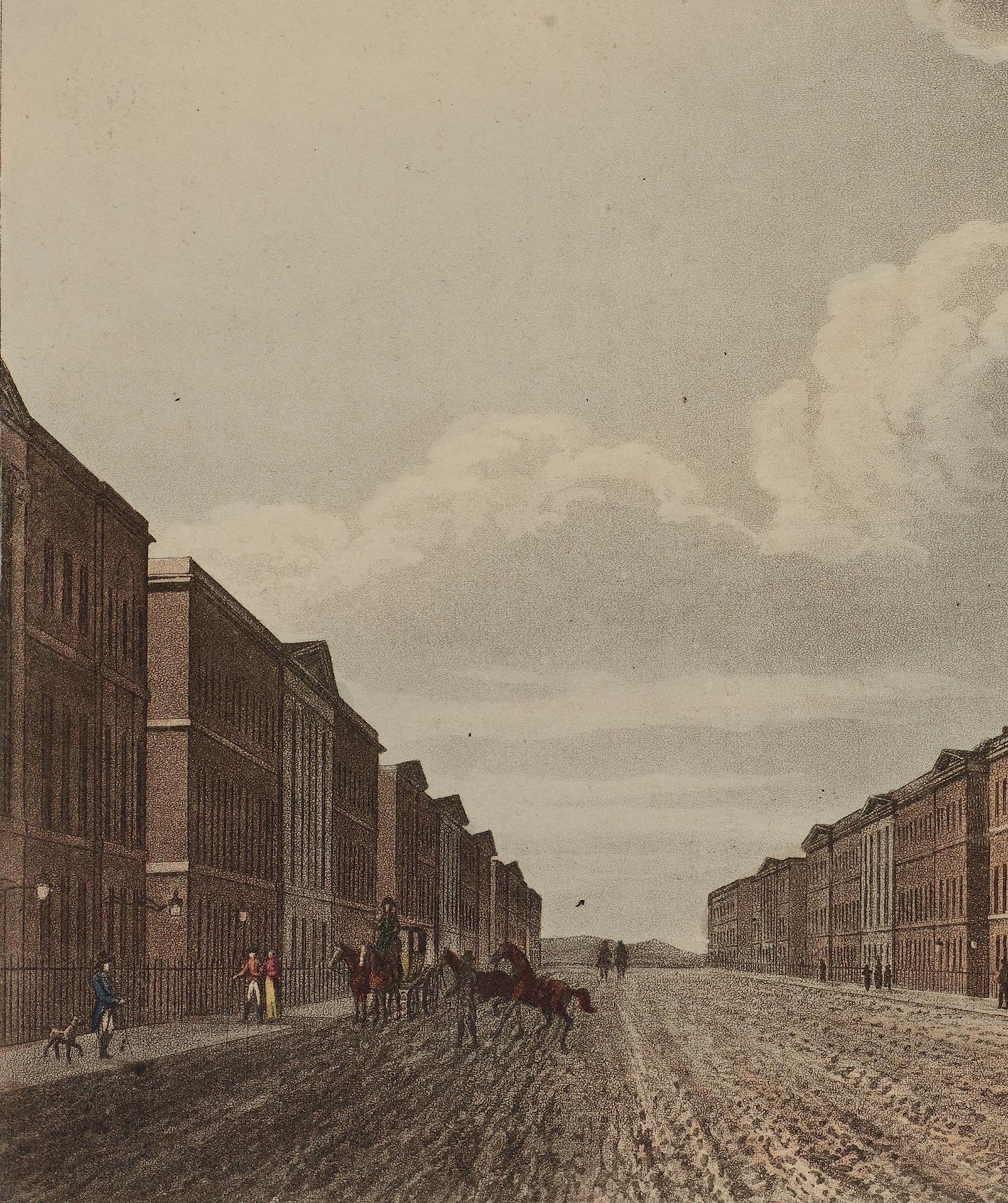
The first thing that anyone coming to Portland Place for the first time notices is the generous width of the street – an unusual sight in central London, more reminiscent of a Continental boulevard. But there was a particular reason for this. Portland Place was built on open fields, with no buildings to its north but with an earlier villa, called Foley House, at its south end, where the Langham Hotel now stands; and Lord Foley, its owner, insisted that his view north over the fields towards Hampstead should not be compromised by any future building development on the Duke of Portland’s estate. And so in their planning, the Adams had to leave a gap as wide as the frontage of his house in order to preserve that view. When the street was first built, the sense of exclusiveness was even stronger than it is today, as originally it was not a through road. Before John Nash
(1752-1835) opened it up in the 1810s and 1820s, building Regent Street at one end and Park Crescent at the other, it was fenced off to the south by the grounds of Foley House and to the north by the perimeter of the Crown Estate, with Marylebone Park (later Regent’s Park) just beyond. Therefore the only possible access for coaches and pedestrians was via the side streets, giving the area the character of a private enclave, and it was very common to see groups of people walking up and down the street, taking the air.
What is sometimes overlooked, though, is the degree to which the Adam brothers’ involvement covered much more than just Portland Place. For instance, their development included Mansfield Street, where building began in the 1760s, and also the land to either side of Portland Place, which was built up by other building tradesmen working under the Adams. This included large parts of Devonshire Street, Weymouth Street, New Cavendish Street, Hallam Street and Great Portland Street – even a short stretch of Harley Street. But Portland Place was where the Adams’ energies and architectural flair were chiefly concentrated.
The Adams began work in Marylebone in late 1760s, which was a boom time for housebuilding in London, and at first Robert Adam designed a mixed environment, with some very large mansions to stand here and there amongst the rows of terraced houses and add variety. But a combination of indecisive, vacillating clients, the Adams’ own financial difficulties, and the effect on the London markets of the increasing political tension in Britain’s American colonies (finally resulting in war in 1775) brought these plans to a halt.
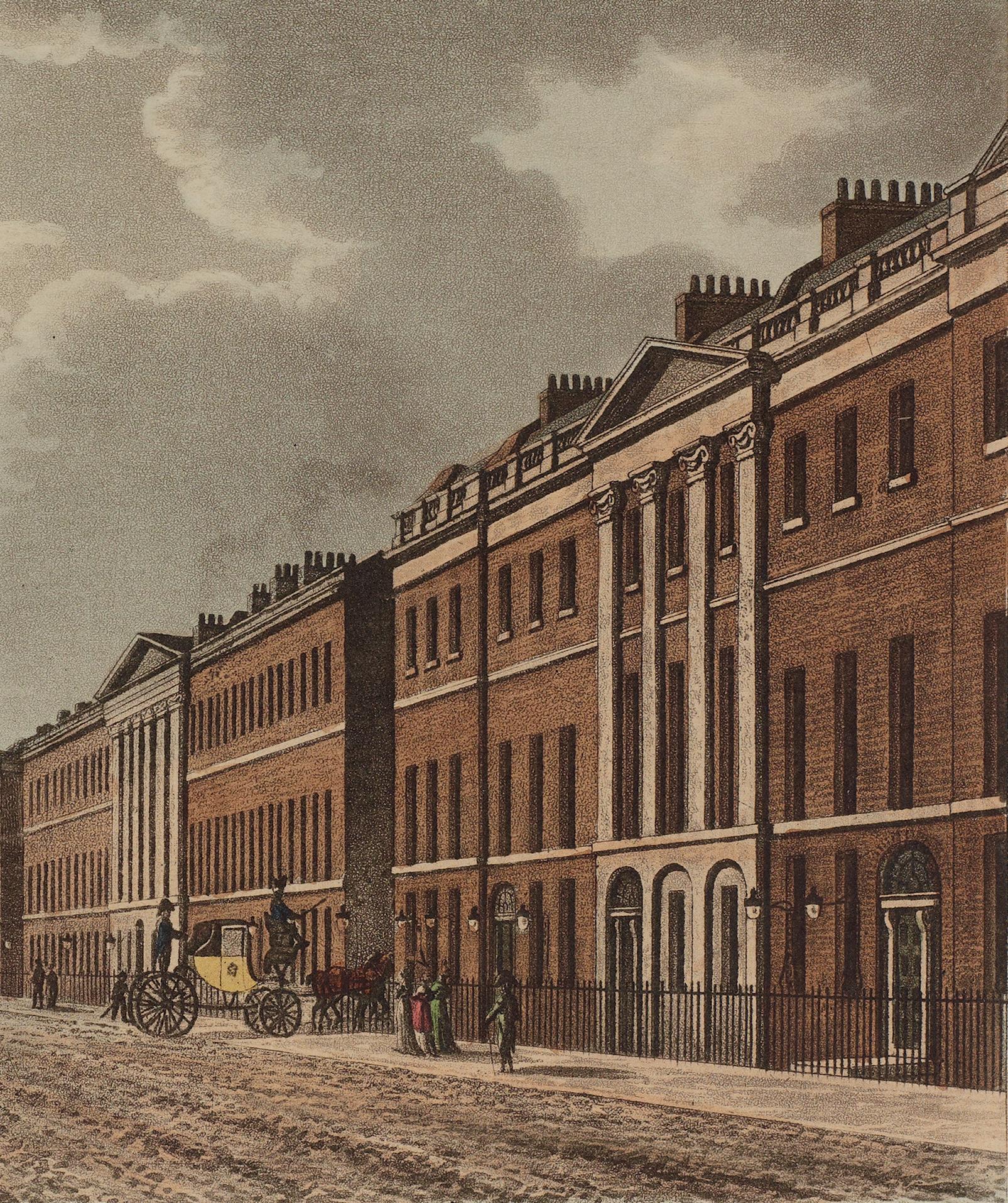
In their place the Adams decided on a street of imposing terraced houses, divided into rows by the several side-streets. The architectural language they employed – the counterbalancing of stucco and brick façades; the use of giant order pilasters and central pediments; balustraded parapets; and simple door openings with pretty fanlights – was to be adapted and repeated by the Adams across the various rows of houses fronting Portland Place. And despite the many changes in the street since then, in places one can still get a good sense of the original Adam design and proportions.
Finally, there was the unusually high quality of the interiors. The Portland Place houses were beautifully decorated by the Adam brothers and their craftsmen in a style similar to, if less lavish than, their country houses, with marble chimneypieces and walls and ceilings onto which were grafted decorative plasterwork
neoclassical motifs, such as sculptural panels of mythological scenes and dancing classical nymphs.
Most of the houses were arranged specifically for entertaining, with the staircase, the fulcrum of the traditional parade made by guests through the reception rooms of the house during a ball or party – or a ‘rout’, as they were often called at the time – being a particular focus for the Adams’ decorative plasterwork. From the very start such houses became popular with the aristocracy, and also with retired military officers, leading men of finance and business, wealthy spinsters, foreign ambassadors and diplomats.
But despite its undoubted artistic and aesthetic success, the Portland Place development did not bring the Adams the financial rewards they craved. Their own continuing money problems and the intensification of the war in America, with the increasing involvement of France on the American side from 1778, discouraged investors and often brought work to a halt, so that many of the houses lay unfinished for ten years or more, and the street did not reach completion until the mid-1790s, after Robert Adam’s death.
Portland Place in Transition: Victorian Growth to Modern Adaptation
By mid-Victorian times it was common for the occupants, prompted by their landlords the Portland Estate (and later the Howard de Walden Estate), to improve and extend their houses. It was around this time that extra storeys were added on top, to provide more accommodation for the large retinues of live-in servants that Victorian society expected or aspired to. Entrance porches and porticoes with big chunky columns became popular. So the street took on a slightly different, more muscular character and lost some of the delicacy and proportions of its original Adam design, but it remained one of London’s most exclusive residential streets. However, such big, old houses were expensive to run and difficult to maintain, and had lost their appeal by the early 1900s, when London’s fashionable residents began to prefer living in stylish flats and the mobility offered by the motor car, and the lure of easier foreign travel by boat or plane. Subdividing such houses into
apartments or converting them to medical use was frowned upon at first by the Howard de Walden Estate, which wanted Portland Place to remain a premier residential area. But eventually their policy became, somewhat ironically, to encourage demolition of the grand Adam houses for rebuilding with blocks of high-class flats – something it would have been happy to oversee right through the street.
As well as the flats, other building types also began to emerge in the 1920s and 30s, the Portland Place area, with its easy connections to Westminster, becoming popular as an institutional base, especially for cultural organisations – for instance the BBC, which built its Broadcasting House complex here at the south end in the 1920s and 1930s, and the RIBA, which came shortly afterwards.
Some of the surviving Portland Place houses then suffered severe bomb damage during the Second World War; and although No. 47 was not hit directly, it was probably damaged a little in the attack that destroyed No. 37 and other houses at the centre of this terrace, which had to be rebuilt entirely.
After the war, institutional and office use continued to become more widespread, with few if any families living in the surviving old houses. But what saved many of them was use by legations and embassies – the flags of many different nations are to be seen flying today along Portland Place – a use for which they were ideally suited, having been designed for people engaged in political and economic discourse, for making business connections, and for entertainment and socialising.
Behind the Doors of No. 47: Stories of Its Residents Through Time
This brings us finally to this house, No. 47, the Polish Embassy. What are its points of interest? How has it changed over the years, and who have been its occupants? The house was built around 1777-8, along with the others in this long row, or terrace. This house and the two adjoining to its south were developed under a Marylebone gentleman named William Ward, who negotiated a lease from the Portland Estate and the Adam brothers in 1776, and who was involved in quite a few property transactions in Portland Place. A bigger plot further to its south, extending as far as what is now the Swedish Ambassador’s residence, on the corner with
New Cavendish Street, was leased to John Chambers, who was the brother of the Adams’ rival, the architect Sir William Chambers (1723-1796).
But William Ward himself did not build the three houses that originally stood on his plot. He would have leased the sites to building tradesmen, who in the eighteenth and nineteenth centuries in London operated a sort of barter system. It worked like this. The landowner, in this case the Duke of Portland, would lease a large swathe of his estate to developers, in this case the Adam Brothers and their representatives, who would pay the Duke a low rent for it, at least to begin with. The Adams would then divide up the land into streets and individual houseplots. These would be leased to the builders and craftsmen, who worked in teams to build and decorate all the houses in a terrace or row, such as this one; and each of them would then be given a lease of a house as payment, or part payment in kind – or sometimes a speculator like William Ward or John Chambers would act as a sort of middleman, taking an extra cut and then doing the subletting to the builders, as happened here. Being perennially short of hard cash, a builder would usually quickly mortgage and then sell on his lease, often to another investor, who might also arrange a mortgage or other loan to buy it. And then that investor would offer a short-term tenancy to an occupant – the last link in the chain. So there is a hierarchy of interests involving several people in each individual house-plot, that is replicated across the entire estate. The beauty of this leasehold system is that, when times were good, each of those individuals stood to make some sort of gain from it – financial or otherwise.
The first person to have a lease of this house was a man named Lawrence Cox, who did not actually live here; he was obviously involved in the construction of the houses with the other building tradesmen, and like a lot of the houses on Portland Place, this one remained unfinished while in his hands for about a decade, until around 1787. Cox was in fact a timber merchant of Rotherhithe, and obviously a successful one judging by the quality of Woolcombe Hall, his country residence in Dorset, which was designed for him by the architect John Crunden (1741-1835).
The first residents here in 1787 were Martin Bladen Hawke (1744-1805), Baron Hawke of Scarthingwell Hall in Yorkshire, a peer and politician who had been a barrister in his youth, and his wife Cassandra. Lord Hawke was the son of a famous British naval hero – Admiral Sir Edward Hawke, the hero of the Battle of Quiberon Bay in 1759, during the Seven Years War, which secured British naval
supremacy over the French and brought to an end the threat of a French invasion. Lady Cassandra Hawke was a cousin of the novelist Jane Austen’s mother (who was also called Cassandra), and Lady Hawke was herself a writer, publishing what is described as a characteristically sentimental novel of the period called Julia de Gramont. There is an interesting copy currently at the Bodleian Library, gifted by the author, which includes an inscription with a little pen picture of her husband, who is described as ‘benevolent’, ‘amiable’ and ‘of great literary turn’ and about whom there is otherwise very little in the way of personal information.2
In the 1810s and 1820s this house was the home of Sir Thomas Henry Liddell, 6th Baronet (1775-1855), the Tory MP for Durham, and his wife Maria. The Liddell family had extensive coal-mining interests in the north-east and were friends of the royal family. George IV raised Liddell’s father to the peerage as Baron Ravensworth, a title which Thomas himself later inherited. Liddell gave George Stephenson, of Stephenson’s Rocket fame, an early chance to design a steam engine that ran on rails at his Tyneside colliery. Liddell also employed the Prince Regent’s favourite architect John Nash to rebuilt Ravensworth Castle for him in 1808, in an elaborate neo-Gothic style. His wife, Lady Maria, was a close friend of Anne Milbanke (1792-1860), Lady Byron, the poet’s wife. So, in terms of their wealth, power and social connections, the couple are fairly typical of the residents of Portland Place in the early half of the nineteenth century.
By the 1830s the Liddells’ place had been taken by the Charles Gordon-Lennox (1791-1860), 5th Duke of Richmond, as recorded in an early London directory, when the house was known as No. 51. The duke was a distinguished soldier and fought at Waterloo, as did his father; and his mother, the previous Duchess of Richmond, the wife of the 4th Duke, is well known for the famous ball she held in 1815 in Brussels the night before the Battle of Quatre Bras, where the British army under the Duke of Wellington inflicted a preliminary defeat on the French under Napoleon. Any feature film you ever see about the Battle of Waterloo usually shows this ball, where news arrived dramatically around midnight of Napoleon’s proximity, having advanced further and far more quickly than expected, prompting
2 Cf. Cassandra Hawke, Julia de Gramont. London: T. Bensley, 1788. Bodleian Library, shelfmark 249.p.778.
Wellington and his officers to rush off and prepare for battle. Some of the officers apparently were still in evening dress when they fought the next day.
The next resident at No. 47, around 1900, was Field-Marshal Frederick Roberts (1832-1914), 1st Earl Roberts, very much the epitome of a British war hero of the late-Victorian period but naturally looked upon a little more uncomfortably today. He helped suppress the Indian Mutiny in the 1850s, which was a particularly brutal affair; did the same against the Afghans at the Battle of Kandahar in 1880; and defeated the Dutch Boers in South Africa in the 1890s and early 1900s. But he doesn’t seem to have shown much interest in the fabric of the house: a brief survey of around 1912 now in the National Archives simply describes it as ‘Corner Mansion, poor decorations, poor stores, no Adams Ceilings’ – so the Adam interiors common to other Portland Place houses had gone by then.
His successors, though, were very different – Sir Arthur Basil Markham (1866-1916), a Nottinghamshire baronet whose family owned many important coalfields in the Midlands and Wales, and his second wife the Lady Lucy Markham (1873-1960), a great social and political hostess.
Records in the archive of the Howard de Walden Estate reveal that the Markhams spent £14,000 on improvements in 1913-14 (which is around £2m in today’s money), virtually rebuilding the entire interior, including a handsome new Edwardian hall and staircase. Sir Arthur also took a lease of Newstead Abbey in his native Nottinghamshire – the former home of Lord Byron – as his regional base, and spent a considerable sum restoring that. They were obviously a very wealthy couple, and it was from the Markham family that the Polish government acquired No. 47 in 1921. (Coincidentally, a few years later, in 1925, Sir Arthur’s daughter Miss Joyous Markham married Count Edward Raczyński, who then served as First Secretary of the Polish Legation.) And so virtually everything you see inside the house today, in terms of its architecture, decoration and fixtures, dates from the Markhams’ time – though of course many of the contents, such as the paintings, furniture, silverware and other objets, have come from Poland, as it is always incumbent upon an embassy to promote its native produce.
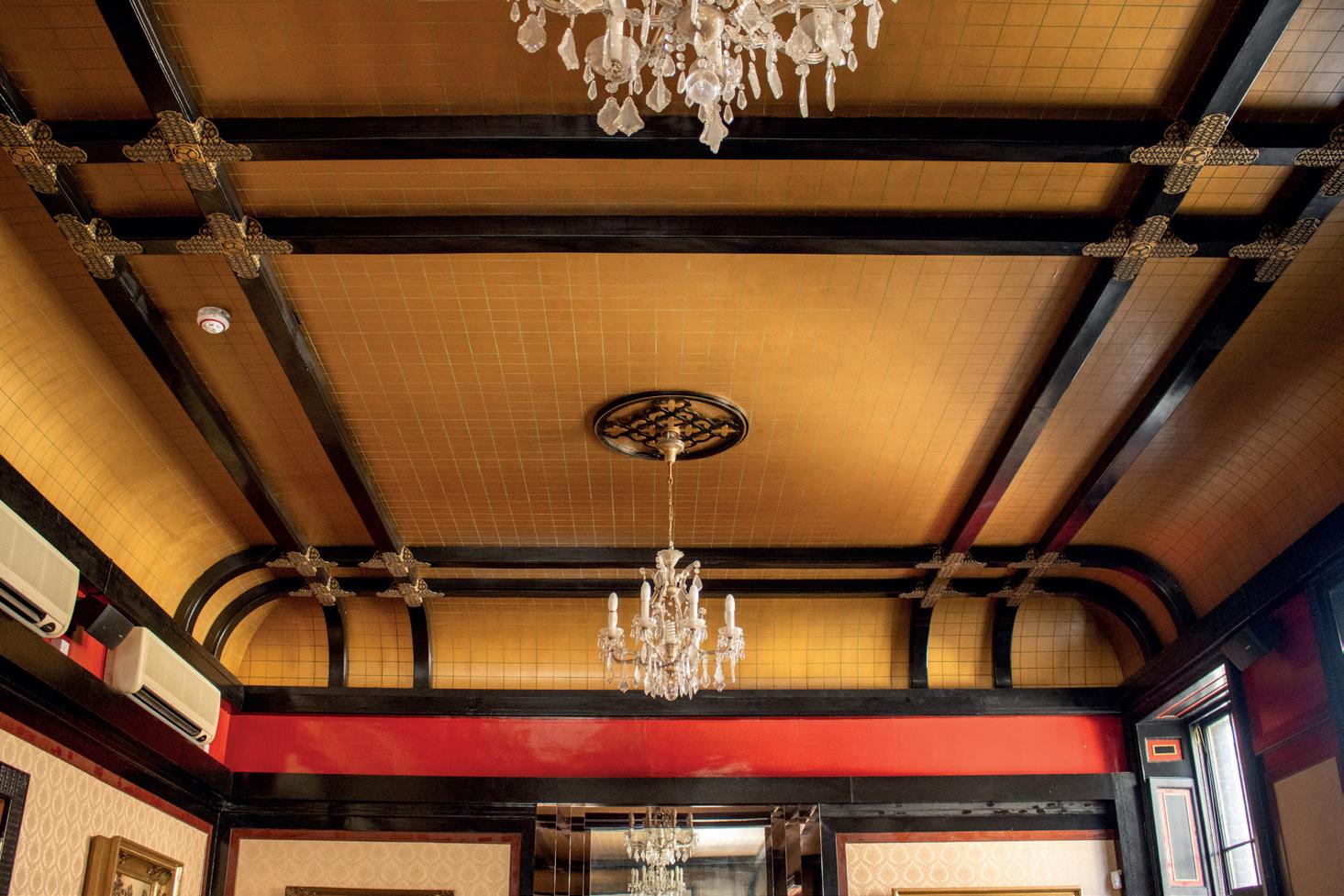
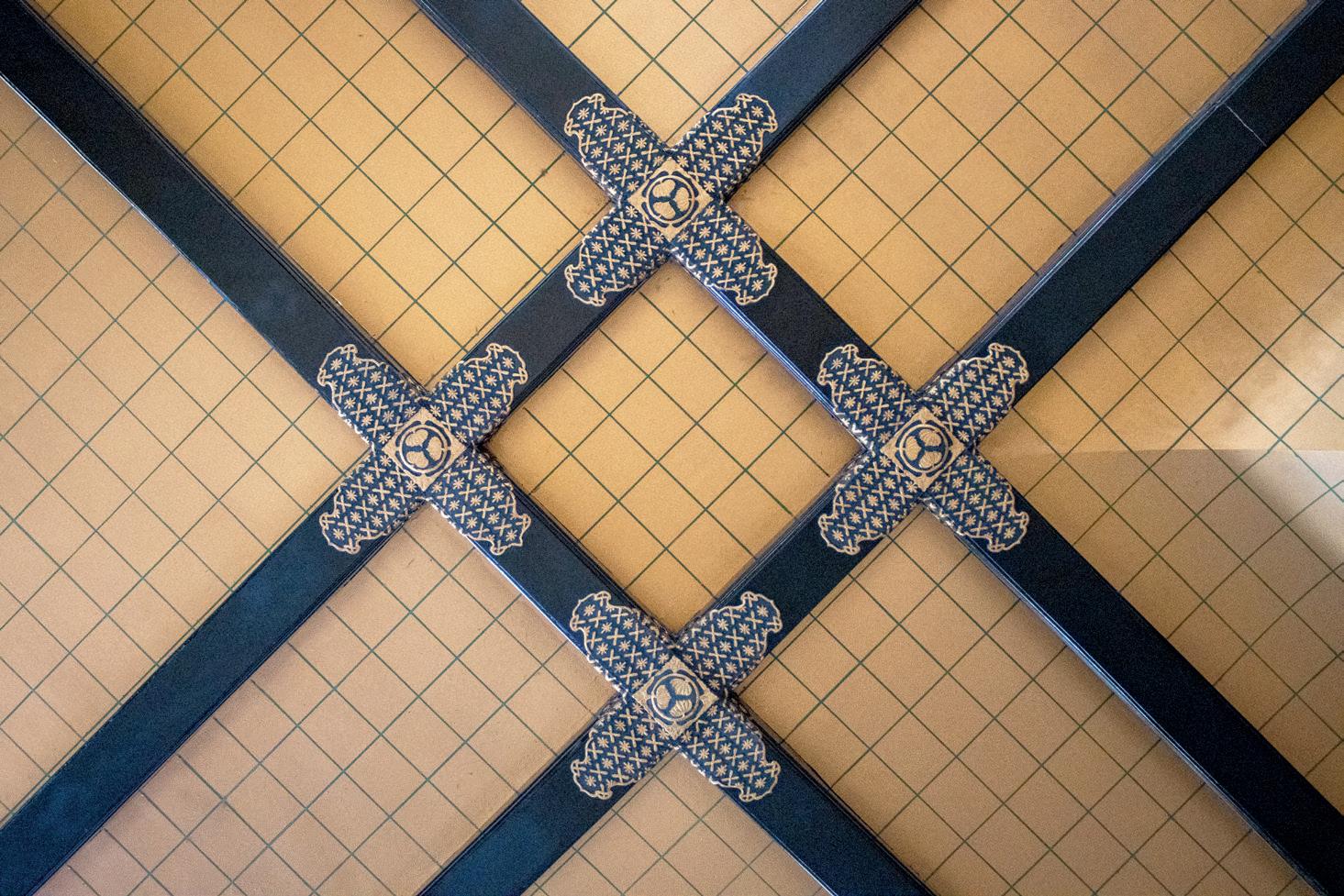
Probably the most unusual survival from the Markhams’ renovation of the house is the large first-floor drawing room executed in a Japanese manner. Though Oriental styles had become popular in Britain in the early twentieth century, this seems quite an unusual choice for the ‘old school’ wealth of Portland Place. However,
Sir Arthur was likely to have been inspired by the Japanese-style sitting room at Newstead Abbey, created around 1900 by the sisters Geraldine and Ethel Webb, two daughters of the big-game hunter William Frederick Webb, who had bought the house in 1861. The Webb sisters had travelled to Japan in the 1890s and returned to Newstead enthused by what they had seen there and determined to create a suitable room to display their acquisitions.3 For many years the Embassy referred to the firstfloor drawing room at No. 47 as ‘the Chinese Room’, as recorded in an unsuccessful request made to Westminster Council in the 1960s asking if the fittings and decorations could be removed and replaced with something a little more Polish in spirit. It is to the Polish Embassy’s great credit that since then, so much care has been taken to restore and maintain these historically significant interiors in their excellent present condition, and to help tell the story of the house for future generations. 4
3 Information on the Webb sisters and the Japanese Room at Newstead Abbey kindly supplied by Anne Anderson.
4 This article is adapted from a lecture given by Colin Thom at the Polish Embassy during the Open House Festival on 14 September 2024. For a more detailed history of Portland Place cf. Philip Temple & Colin Thom, eds. Survey of London Volume 52 South-east Marylebone. Part 2. New Haven – London: Yale University Press, 2017, pp. 489-542.
Poland’s Diplomatic Envoys and their Residencies up to 1945
Andrzej Suchcitz
Anglo-Polish Diplomatic History: from the eleventh century to the Interwar Period
Anglo-Polish relations date back over a thousand years, with the first tentative contacts being made in the eleventh century during the reigns of King Ethelred II the Unready and Bolesław I the Brave. For many centuries commerce and trade remained the mainstay of relations between the two kingdoms. However, it was not until the fifteenth century that greater political considerations began to play an increasingly important role. Monarchs on both sides would send their envoys to each other, usually to deal with specific ad hoc matters rather than to maintain constant bilateral relations.
In 1522, for example, Jan Dantyszek (1485-1548) was sent by King Zygmunt I Stary (1467-1548) to the court of Henry VIII, most probably to quell the international unrest caused by the King’s decision for a peaceful settlement of the Prussian question.5 Another famous diplomatic mission was the mission of Paweł Działyński (1560-1609), who was the envoy of King Zygmunt III (1566-1632). Działyński’s eloquent Latin speech to Elizabeth I in 1597, ostensibly to broker peace between Spain and England, in reality to complain about the dwindling rights of Polish merchants in England, produced a furious response from Queen Elizabeth. However, the mission was a success in the sense that it resulted in detailed negotiations on the latter subject. It was also an inspiration for Shakespeare, who referred to it in Hamlet.
5 Marian Biskup, ‘Polish Diplomacy during the Angevin and Jagiellonian Era (1370-1572)’ [in] The History of Polish Diplomacy X – XX c. Warsaw: Sejm Publishing House, 2005. Pp. 141-159.
From the seventeenth century onwards, an increase in the continuous diplomatic contacts, at least from the English side, was noticeable. This can be exemplified through the appointments of semi-permanent and permanent residents as representatives firstly of England, and from 1707 of Great Britain, to Poland. In addition, envoys with the rank of ambassador would be sent in the event of special missions. Despite the lack of a permanent resident envoy to London, diplomatic contacts were also maintained by the Polish side.
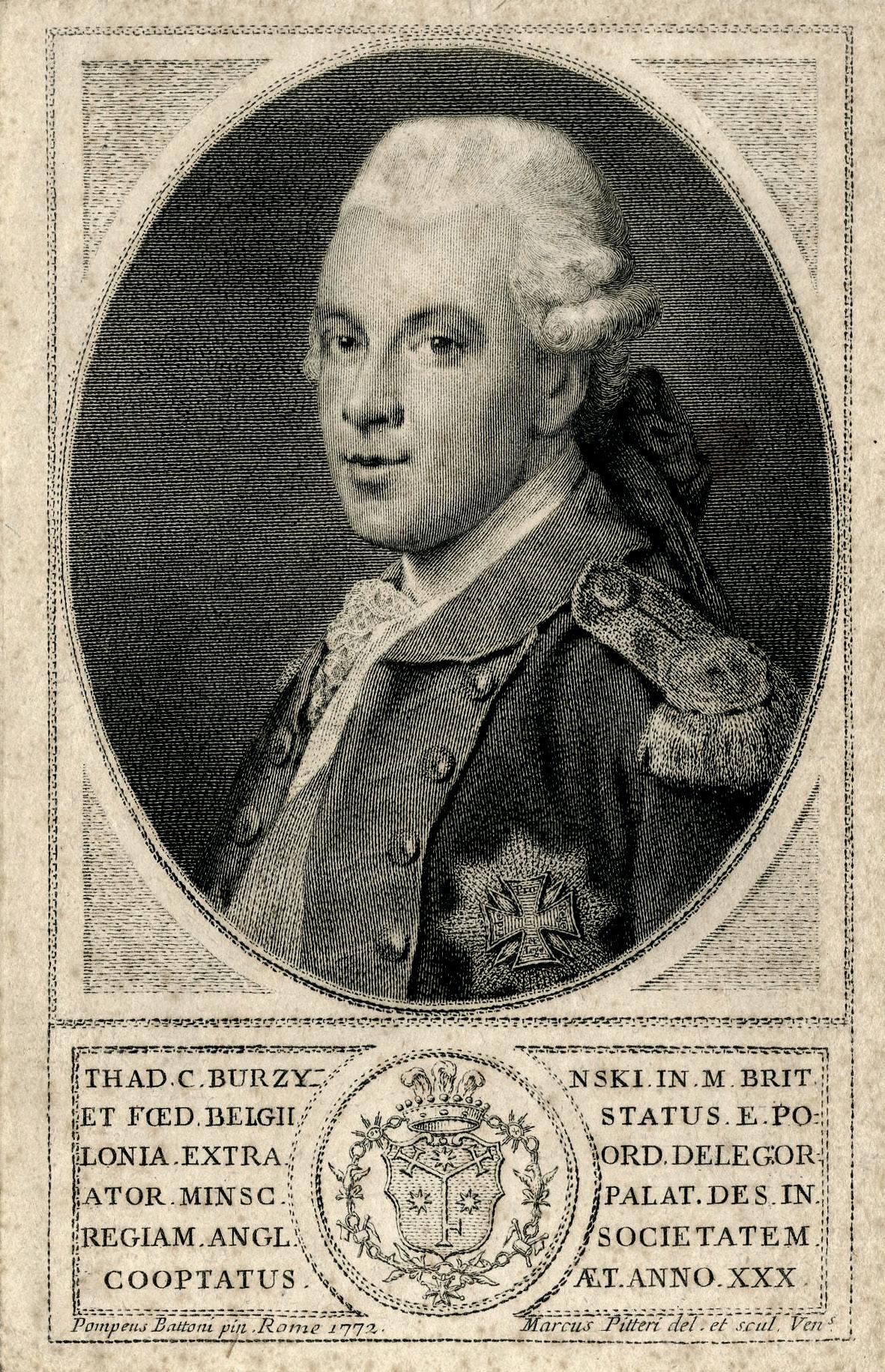
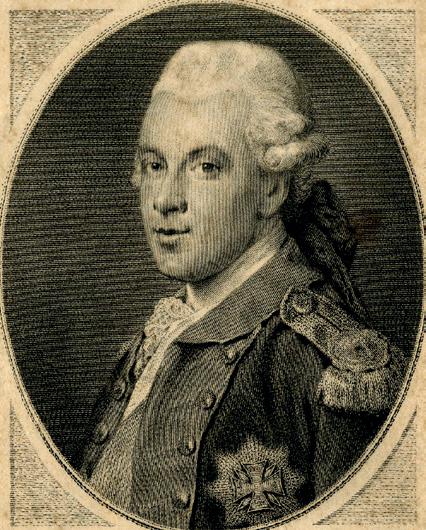
A permanent Polish-Lithuanian diplomatic presence in London was eventually assured in 1769, during the reign of the last King of Poland, Stanisław II August Poniatowski (1732-1798). In 1769, Tadeusz Burzyński (1730-1773) was appointed as Poland’s first full-time envoy. Following his death in 1773, Burzyński was succeeded by his erstwhile secretary Franciszek Bukaty, who was in turn Chargé d’Affaires (1773-1780) and Minister Resident (1780-1785), as well as Envoy Plenipotentiary (1785-1793). Franciszek Bukaty was replaced by his secretary and cousin Tadeusz Bukaty, who held the positions of Chargé d’Affaires (1786-1789, 1794) and of Minister Resident (1794-1795), representing both the King and the Parliament of the Commonwealth of Poland and Lithuania.
The first known addresses of the Polish diplomatic mission in London at the time were Suffolk Street (1770), Carburton Street on the corner with today’s Great Portland Street (1780-1786), Cambridge Street, 47 Poland Street and Hall Street (1786-1791). The Polish Legation was subsequently located on Manchester Square (1791-1794) and on 8 [Upper] Berkeley Street off Portman Square (1794-1795).
The beginnings of the mission coincided with a tragic time for Poland. King Stanisław II August’s attempts to reform and to modernise state institutions were undermined by the country’s weakness and the rapaciousness of its neighbours: Russia, Prussia and Austria. This led to the three partitions of Poland and ultimately its disappearance in 1795 from the map of Europe for 123 years. It was the sad task of Tadeusz Bukaty, the then Minister-Resident, to present his official protest against the partitions, which however was doomed to failure from the start. However, the Polish cause was far from dead, and the struggle to regain independence became the order of the moment. During the November Uprising (18301831), the National Government sent Julian Ursyn Niemcewicz (1757-1841) as its representative to Britain. Nevertheless, he was never recognised in this role by the British Whig Prime Minister Charles Grey (1764-1845), second Earl Grey. Even
less prominence was given to the brief tenure of Józef Ćwierczakiewicz (18221869, also known as Joseph Card) as the representative of the Polish Provisional National Government during the doomed January Uprising of 1863-1864.
On 11 November 1918 Germany surrendered, ending the First World War. As one of US President Woodrow Wilson’s ‘Fourteen Points’, Poland was to be restored to the map of Europe as an independent state with access to the sea.
Britain acknowledged the restoration of Poland’s independence on 26 February 1919. On this occasion, Sir Esmé Howard, Civil Delegate on the International Commission to Poland, wrote to Józef Piłsudski, the Chief of the Polish State, to inform him that ‘His Britannic Majesty’s Government acknowledged Poland’s restoration to independence’, adding, ‘this was the most honourable and agreeable message I had ever had to give in my life.’
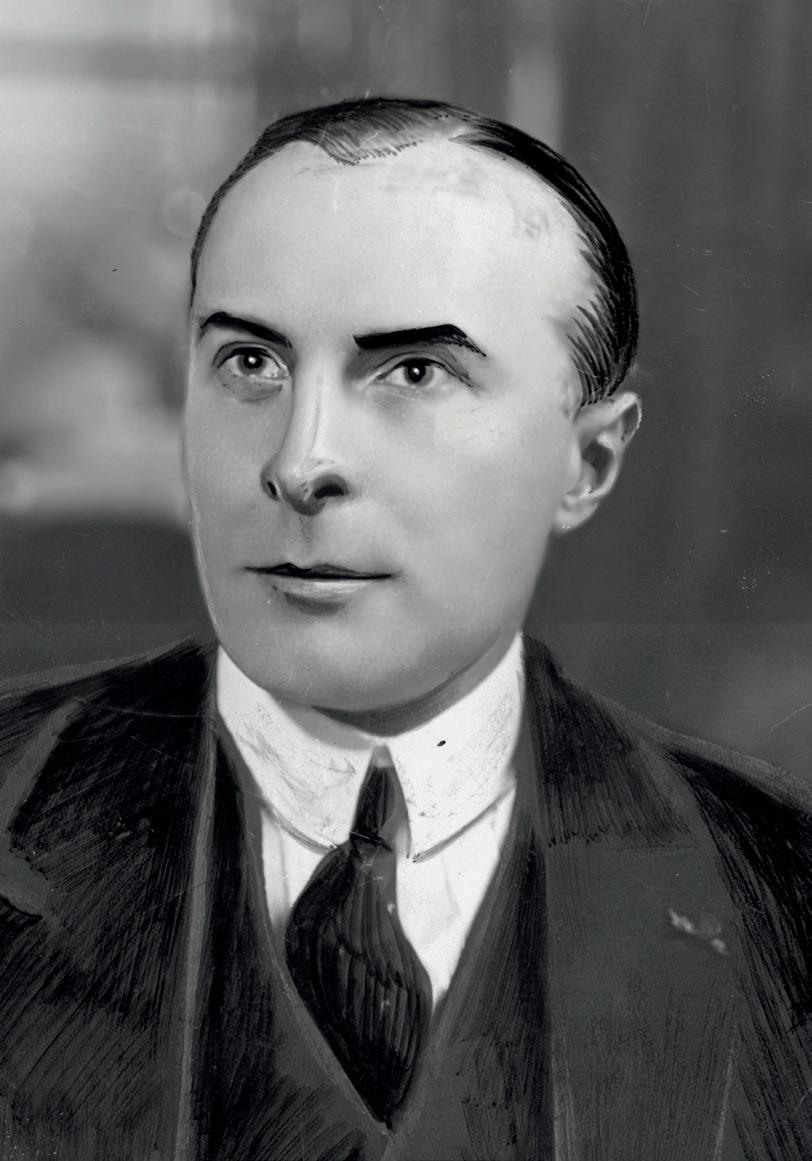
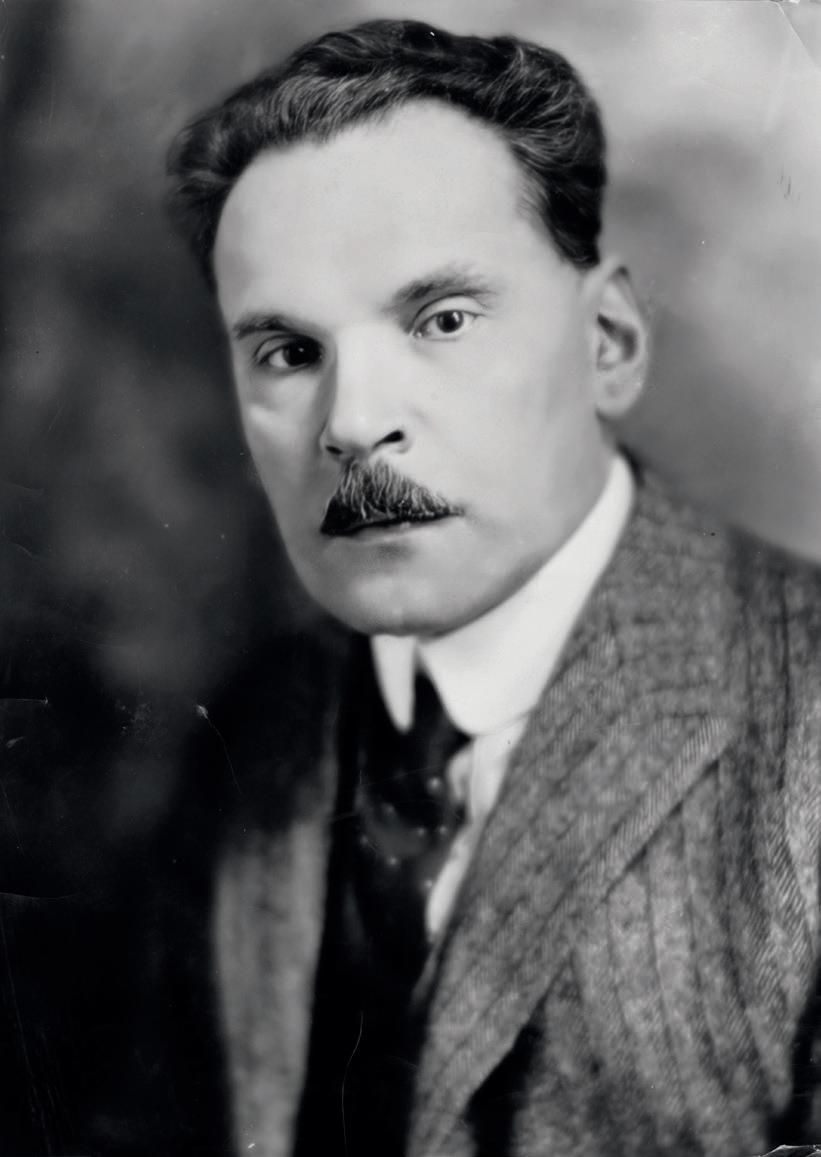
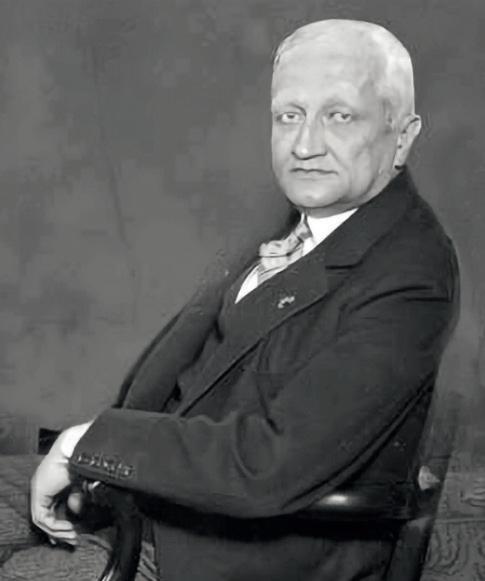
The first official envoys of independent Poland to London were Prince Eustachy Sapieha as Envoy Extraordinary and Minister Plenipotentiary (19191920), Jan Ciechanowski as Chargé d’Affaires (1920-1921), as well as Envoys Extraordinary and Ministers Plenipotentiaries Władysław Wróblewski (19211922) and Konstanty Skirmunt (1922-1929). 1929 was a milestone year in bilateral diplomatic relations, as the missions of Poland and Britain were raised to ambassadorial level and Konstanty Skirmunt presented his ambassadorial accreditation to King George V.
Figure 5. Prince Eustachy Sapieha, the first Polish Envoy Extraordinary and Minister Plenipotentiary to the Court of St James’s in the year 1919-1920, appointed after the restoration of Poland’s independence in 1918. Document no. 3/1/0/2/2483. Warsaw, c. 1920. Photo credit: Polish National Digital Archives.
From Mayfair to Marylebone: Establishing Poland’s Diplomatic Presence in London
Initially, between 1919 and 1921, the Polish legation was situated at 109 Park Street, Mayfair, from where it was moved to Hereford Gardens, then 12 South Audley Street, and finally, from May 1920, to 45 Grosvenor Square, all within London W.1. In October 1921, Minister Władysław Wróblewski (1875-1951) purchased on behalf of the Polish Foreign Ministry a 993-year lease on 47 Portland Place, cornering with Weymouth Street in the Parish of Marylebone. The building has remained the premises of the Polish Embassy to this day. The lease also included two properties on Weymouth Mews (Nos 39 and 40), which were sold at a later stage.
The Polish Foreign Ministry purchased the lease on 4 October 1921 from Lady Lucy Markham CBE, widow of Sir Arthur Basil Markham and future mother-in-law of Edward Raczyński, the next Polish ambassador to London. The other co-owners of the lease at the time were Sir Charles Paxton Markham, elder brother of Sir Arthur Basil, Sir William Bird, solicitor and Conservative MP for Chichester, and William Humble, Manager of Markham Main Colliery. During their ownership of the building the Markhams had installed lifts and bathrooms and decorated the main reception room on the first floor in what they called the Japanese style. The ground floor rooms were decorated in the Louis XVI style with gilded panelling, gold furnishings and dark walls.
Once the building became Polish property, Minister Wróblewski purchased some fine furniture and equipment for the reception rooms, which included a dining set of reproduction Chippendale furniture for 22 people. During Skirmunt’s long tenure, little was added or renovated. The Ambassador was mostly organising musical soirées, which became well-known in London’s diplomatic life at the time. However, major changes at the Embassy were undertaken by his successor, Ambassador Edward Raczyński.
Determined to create a modern embassy – both as a practical working space and as a functional diplomatic centre – Raczyński separated the reception rooms from the offices, enlarged the space for reception purposes, and increased the
Figure 6. Minister Władysław Wróblewski, Polish Minister of Foreign Affairs in 1918, who served as the Polish Envoy to London in the years 1921-1922. It was during his term that the leasehold on 47 Portland Place was bought. Document no. 3/1/0/4/1430. Harris and Ewing, c. 1922 – 1925. Photo credit: Polish National Digital Archives.
number of offices by building another floor onto the Weymouth Street extension. It is interesting to note that during the mid-1930s the annual cost of running the Embassy was around £1,800 (roughly worth around £150,000 today). Apart from renovations, the main expenditures included electricity (as a result of the greater social use of the Embassy and its use as a family house) and telephone charges, which reflected periods of greater political activity and the necessity of maintaining contact with Warsaw and Geneva (e.g. during the Abyssinian crisis of 1935).
From early 1936, 47 Portland Place became one of the key centres of the diplomatic landscape in London. The dark navy coloured walls were painted burnished red. The large Japanese-style drawing room on the first floor was decorated with many objets d’art from Sir Arthur Markham’s collection. Edward Raczyński not only continued the tradition of his predecessor’s musical evenings but also embraced the Embassy’s social life, with the objective of fostering Anglo-Polish relations. It did not take long for the British press to note that ‘the famous music room at the Embassy in Portland Place has become one of the most remarkable in London. Evening gowns glistened as they caught the gleam from old Oriental cabinets, which had special lamps concealed in the beading’
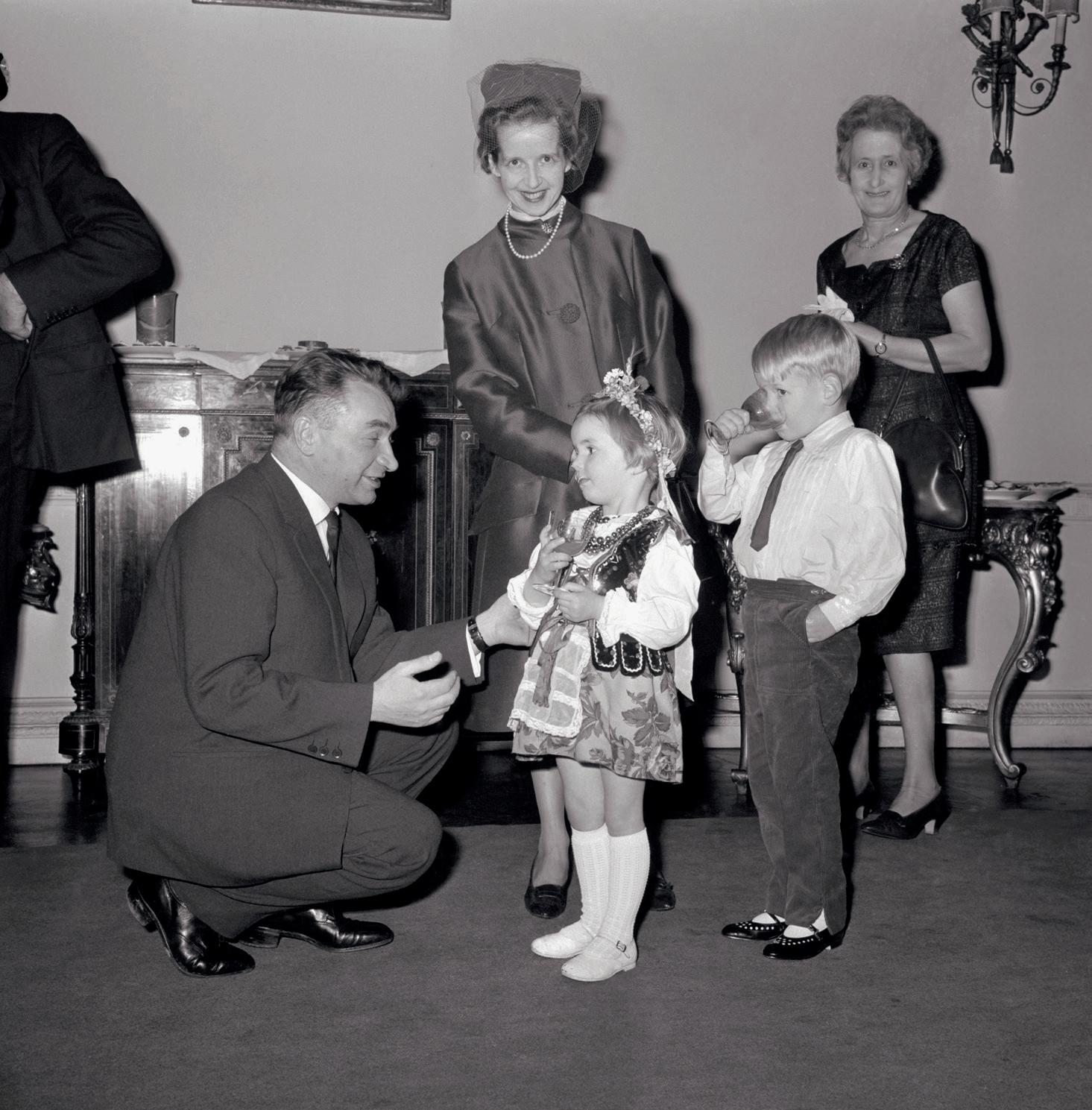
The Ambassador was especially eager to promote various aspects of Polish political, cultural and economic life. For instance, in 1938 he hosted the Polish Ballet dancers, performing in London for the very first time. The Sunday Times of 31 July 1938 reported: ‘The distinction and charm of both the Polish Ambassador and his wife have established the Embassy in Portland Place as a notable centre of social life [...] She and her husband give many musical soirées where their friends are entertained by leading Polish artists visiting London.’ It should be remembered that 47 Portland Place was also the family residence of the ministers and ambassadors. Ambassador Raczyński had three young daughters, who often recalled stories of how they used the diplomatic premises as a play area, some of the games being well out of line with most modern health and safety regulations! In the months leading up to the outbreak of war, there were plans to purchase a muchneeded larger building. Unfortunately, this was not to be.
Diplomacy Under Siege: The Polish Embassy in Wartime London
The outbreak of the Second World War and the invasion of Poland by Germany on 1 September 1939, followed by the invasion from the east by the Soviet Union on 17 September, interrupted the Embassy’s life. The Polish Government, which re-formed in Paris in the autumn of 1939, continued Poland’s struggle alongside its French and British Allies. The rapid and unexpected fall of France in June 1940 led to the evacuation of the Polish Government to Britain along with over 20,000 Polish troops.
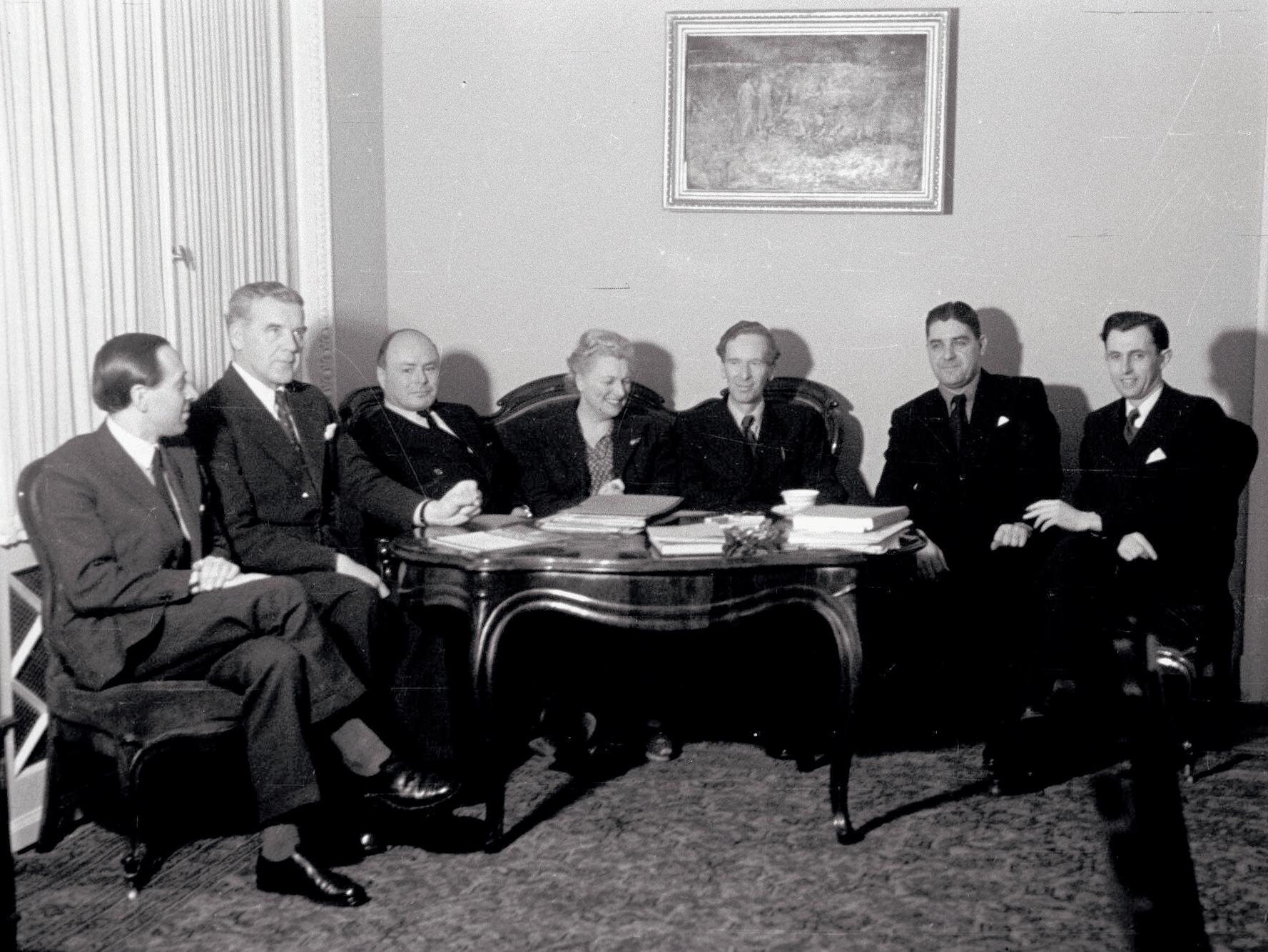
The relative calm of early wartime Embassy life was truly shattered in the summer of 1940, when for a few months 47 Portland Place became the seat of the Polish Government. Ambassador Raczyński was removed from his rooms, which were taken over by Prime Minister Władysław Sikorski and his ministers. In his memoirs Ambassador Raczyński recalled,
Many of those who were now refugees for the second time had, in France, been on the Polish Government’s pay-roll for some kind of real or imaginary work. The same people who, after the disaster of September 1939, had for a second time filled up every corner of the Paris Embassy, now launched themselves upon us in London.
Their invasion was preceded by an ‘official requisition’, whereby I was instructed to place the reception rooms at the Prime Minister’s disposal. Sikorski took for his own office the downstairs drawing room and dining room, which were also used for sessions of the Council of Ministers. [General] Sosnkowski took the blue room and the Minister of Finance, [Henryk] Strasburger, took the ground floor office of B. Leitgeber, the Embassy Press Secretary. Zaleski the Foreign Minister, took the Counsellor’s office on the first floor, where he was assisted most of the time by the Secretary General, Jan Ciechanowski. Zaleski’s action in leaving me my own office and contenting himself with the Counsellor’s was an example of modesty and consideration which I did not find in the same degree among his colleagues.
The large first-floor drawing room was divided by a screen, the smaller half being used first by Wacław Babiński our Ambassador [sic ; he was in fact Envoy Extraordinary and Minister Plenipotentiary] to the Dutch Government, subsequently by [Stanisław] Kot, the Minister for Home Affairs, and finally by [Stanisław] Stroński, the Minister of Information.
The larger half was used by Stroński’s staff and for a time housed some State property […]. Two Treasury officials, and also Babiński and his secretary after they were driven from the first floor, were housed, together with various other newcomers, on the third floor, together with those of my staff […] who had given up their rooms.6
Michał Budny, a junior diplomat at the Embassy, later recalled: ‘I arrived at the Embassy to see an extraordinary scene. All the offices had been taken over by individual members of the Government, on all doors hung their calling cards. The main reception room was mysteriously divided by screens and ad hoc prepared partitions, which divided the official space of individual ministries. In one place a couch, two armchairs and a table were the domain of the Ministry of Foreign Affairs, in another a couple of delicate chairs and a few tables were the domain of the Ministry of Information.’7
Amongst all the Government activity which had encroached on the life of 47 Portland Place at this time, the Embassy building was also witness to a political coup, or rather its somewhat unorthodox conclusion. Following the evacuation of the Polish Army from France in June 1940, there was much dissatisfaction with the Government and General Sikorski. This led to President Władysław Raczkiewicz (1885-1947) dismissing Sikorski as Prime Minister on 18 July and appointing August Zaleski (1883-1973) as the Foreign Minister in his place. This in turn led to a backlash, with deputations to the President insisting he recall Gen. Sikorski as Prime Minister. At the same time three senior officers including the Chief of General Staff, Col. Tadeusz Klimecki (1895-1943), appeared at the ‘Foreign Ministry’ on the first floor of the Embassy and forced Zaleski to resign from his mission
6 Cf. Edward Raczyński, In Allied London. London: Weidenfeld & Nicolson, 1962.
7 Cf. Michał Budny, Wspomnienia niefrasobliwe. Londyn: Polska Fundacja Kulturalna, 1985.
of forming a government, which demand he accepted. General Sikorski was reappointed Prime Minister along with his Government. The political crisis was over.
Because of the inflow of many Government officials, as well as frequent visits of thousands of refugees applying for aid, much of the recently renovated and restored furniture and fittings soon required further renovation. Meanwhile, hundreds of packages arrived at the Embassy having been evacuated from Poland in September 1939, including 74 chests with the state treasures from Wawel Castle, such as the royal insignia, the coronation sword of King Władysław I Łokietek (1260-1333), over 130 ‘Wawel arrases’ – invaluable sixteenth-century Flemish tapestries with gold and silver thread woven into the fabric, as well as priceless manuscripts from the National Library. The state treasures were shipped to Canada later that year.
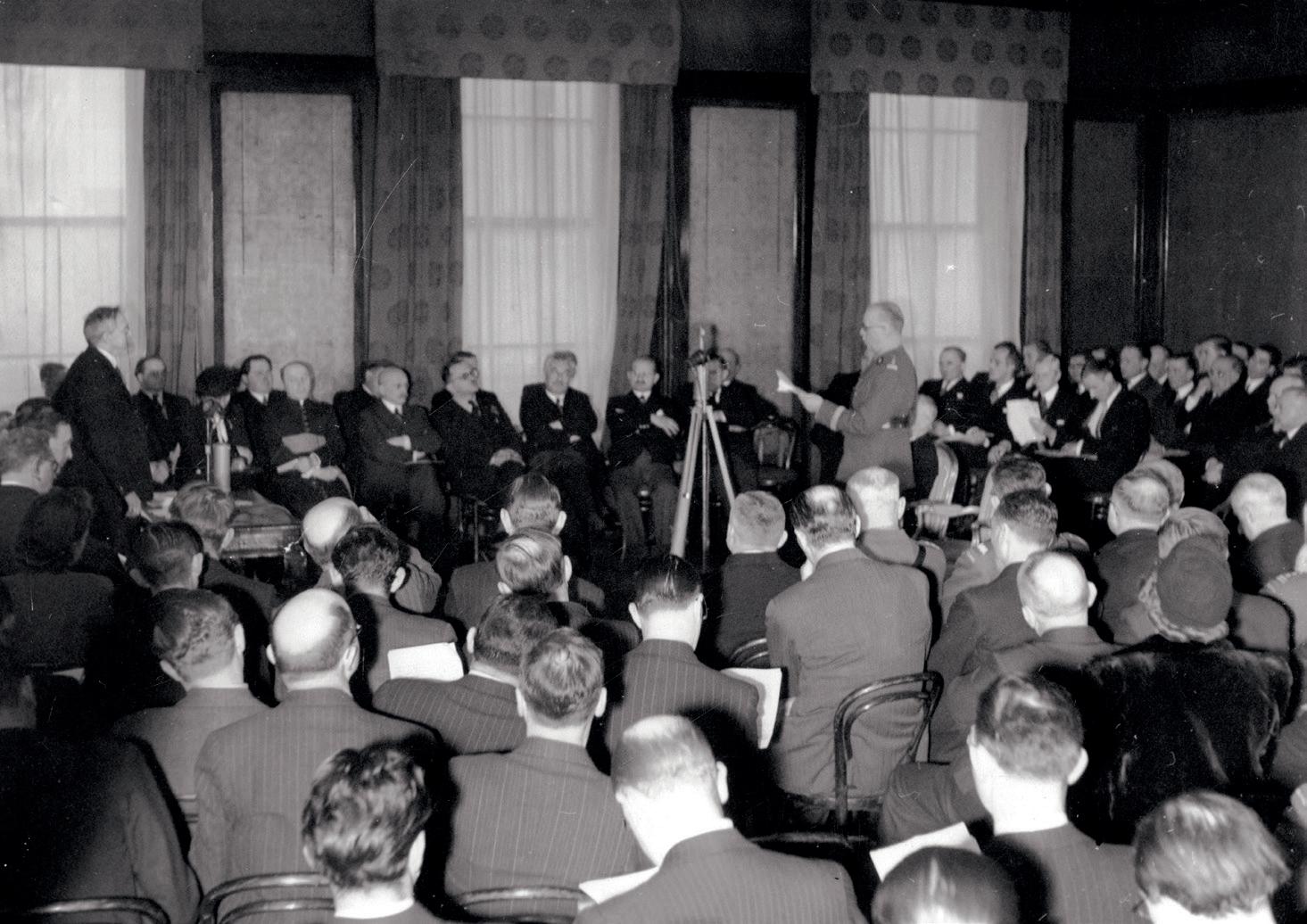
Regular working life at the Embassy was restored only at the end of 1940, when new headquarters were provided for the Government-in-Exile. However, a year later 47 Portland Place became the unofficial office of the Polish Foreign Ministry (officially housed at 70 Cromwell Place), as Raczyński, in addition to his role as Ambassador also became acting and then actual Foreign Minister, a post he held until 1943. In 1942, the opening session of the Second National Council (mini-parliament-in-exile) was also convened in the Embassy, making it one of a very few diplomatic residencies in London ever to have held meetings of both the executive and legislative bodies of their countries.
The decisions made by the allied ‘Big Three’ (the Soviet Union, the United States, and the United Kingdom) at the Tehran Conference in October 1943 and at the Yalta Conference in February 1945 sealed Poland’s fate. Shorn of half its territory, which was handed over to the USSR, Poland effectively fell under Soviet domination, occupation and control. Despite the lack of support from the leading powers of the free world, the Polish Government-in-Exile continued to operate in London until December 1990, remaining the only legally binding de jure representation of the Polish state.
By June 1945 the writing was clearly on the wall. The Polish Government in London and thus the Polish Embassy were ever more isolated, with very limited contact with the British Government. During the second half of June, a skeleton staff oversaw the packing of the Embassy papers, books and furniture. On 5 July 1945 the British Government recognised the self-styled Polish Provisional
Figure 9. War-time Polish Prime Minister General Władysław Sikorski speaks during a joint meeting of the Polish Government-in-Exile and the National Council of Poland at the Polish Embassy in London. Image no. 3/21/0/-/19/3. London, c. 1940 – 1943. Photo credit: Polish National Digital Archives.
Government of National Unity in Warsaw, having withdrawn its recognition of the Polish Government-in-Exile in London that same day. The following day, Raczyński handed to the British Foreign Office the official protest of the Polish Government, which remained unanswered. There remained the task of handing over the Embassy building. The British Government had wanted this to be done by handing it over to the new diplomatic mission from Warsaw when they arrived. This was totally unacceptable to the representatives of the Polish Government-in-Exile in London. Eventually it was decided that as a result of the impossibility of carrying out its tasks and in the face of a fait accompli, the Embassy would be handed over to the British Government along with responsibility for it. In the end, the keys to 47 Portland Place were handed over by Raczyński to Robert Dunbar (1895-1970), Head of the Treaty Department at the British Foreign Office, on 26 July 1945. Dunbar subsequently checked and sealed all the doors and locked up the building. In his note to the British Secretary of State for Foreign Affairs, Raczyński had written, ‘I find myself constrained to hand over to the British authorities the property of the Polish Republic […] and to leave to them the responsibility for the care of the aforesaid property.’ A few weeks earlier, on 4 July 1945, the Embassy staff had bidden a formal farewell to Ambassador Raczyński in his office, presenting him with a commemorative album. The previous day he himself had invited all the staff to his private rooms to thank them for their steadfast service and to bid them farewell.
Portland Place in Two Worlds: A Journey through Cold War Diplomacy
Robert Gawłowski
The Diplomatic Transition: The 1945 Shift from the Polish Government-in-Exile
On 5 July 1945, the British government withdrew official recognition of the Polish Government-in-Exile, which in turn resulted in the withdrawal of the diplomatic status of the then staff of the Polish Embassy in the UK. The British government had now recognized the Soviet-installed Provisional Government of National Unity in Poland as a direct implementation of the resolutions of the Yalta Conference of February 1945. This resulted in the effective loss of diplomatic status of the staff of the Polish Embassy who worked under the Polish Government-in-Exile, and consequently the termination of employment for all those who had been working for the Embassy till then – this was true for all working in the Polish public administration and Polish foreign ministry. The then Polish Foreign Minister, Adam Tarnawski (1892-1956) then convened a meeting with all the employees of the Foreign Ministry during which he informed them that they would be placed on unpaid leave until further notice. As a consequence, the Polish diplomatic staff established the Association of Polish Foreign Service Employees and the Foreign Service Employees’ Mutual Aid Fund, which was used to support former diplomats who had to start a new career path.8 It is worth noting, though,
8 For more cf. Michał Budny, Epilog polskiej służby zagranicznej: W czterdziestą rocznicę [An Epilogue to the Polish Foreign Service], Zeszyty Historyczne: Instytut Literacki, Paryż 1985, Zeszyt 73 also printed
that despite the official takeover by the Provisional Government of National Unity which would later become the Polish People’s Republic, the Polish Government-in-Exile continued their diplomatic missions well into the late 1950s in some countries such as Egypt, Lebanon, Spain, Ireland and the Vatican, where their diplomatic status was still respected.
The symbolic beginning of diplomatic relations between the authorities of the United Kingdom and the Soviet-controlled Provisional Government of National Unity (later, 1952-1989, the Polish People’s Republic) was marked by the handing over of the keys to the building at 47 Portland Place to a Polish envoy of the newly installed Polish government in Warsaw. The official handover took place on 4 August 1945. The diplomatic mission representing the new Polish government staff began its work with a team of 14 people. As Franciszek Szeląg, First Secretary of the Embassy of the Polish People’s Republic in London, noted in his letter to the Ministry of Foreign Affairs: ‘The building is in good condition from the outside (...). There is no library, the cupboards are empty, with a few books here and there’.9 In a subsequent letter, he mentioned: ‘Although the Embassy is still in the process of organising its internal work, it has begun to arrange and organise the first departure of Poles from the country.’ Repatriation of Poles and the reclaiming of Polish property were clearly among the first priorities of the new administration.10
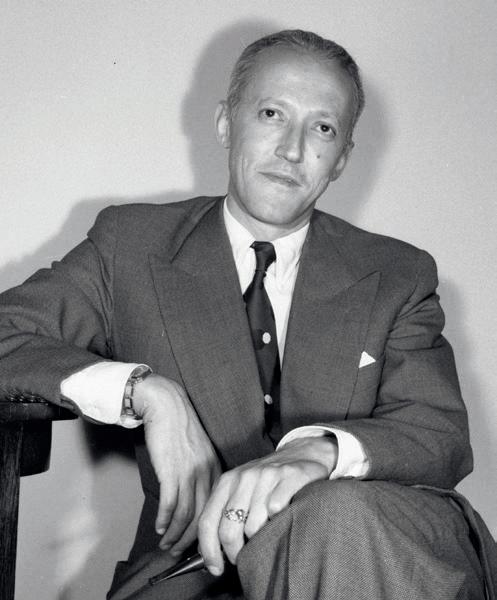
On 1 August 1945, the Ministry of Foreign Affairs sent a diplomatic note to the British Embassy in Warsaw proposing Henryk Strasburger (1887-1951) as a candidate for the position of Ambassador Extraordinary and Plenipotentiary of Poland in London. The agrément was granted later that month on 20 August. The British side had nominated its candidate for the post of Ambassador of the United
as Polska Służba Zagraniczna po 1 września 1939 roku [Polish Foreign Office after 1939], Wydawnictwo Stowarzyszenia Pracowników Polskiej Służby Zagranicznej: Londyn, 1954. This edition was published by the Montgomeryshire Printing Co. Ltd. Newtown, and printed in London. The copy accessed online currently belongs to the Library of the University of Nicholas Copernicus in Torun with a bookstamp of a certain Irena Komarnicka, most probably the daughter of Wanda Komarnicka, cf. https://collections.arolsen-archives.org/en/search/person/81331031. This copy of Michał Budny’s book was accessed online 31 July 2025 Kujawsko-Pomorska Digital Library, kpbc.umk.pl.
9 Correspondence from Franciszek Szeląg to the Ministry of Foreign Affairs dated 8 August 1945, letter no. 109/45, available at: Ministry of Foreign Affairs Archives.
10 Correspondence from Alfred Fiderkiewicz (Chargé d’affaires) to the Ministry of Foreign Affairs dated 9 August 1945, letter no. 100/45, available at: Ministry of Foreign Affairs Archives.
Kingdom to Poland on 15 July. Victor Frederick William Cavendish-Bentinck (18971990) received his agrément two days later, on 17 July. The new British ambassador was not new to Poland, having worked at the British mission in Warsaw during the inter-war period, in the years 1919-1922.
Across the Divide: Polish-British Relations in the Shadow of War and Ideology
With the end of the Second World War, a number of issues arose between the governments of Poland and the United Kingdom which required urgent attention and resolution. These included the financial settlements of the aid provided to the Polish Government-in-Exile, and the settlement of the immigration status of Poles then residing in the United Kingdom who had moved there as a consequence of the war. In the first case, the Provisional Government of National Unity authorised the Polish civil servant and diplomat, Edward Drożniak (1902-1966) to hold talks with the British side on the method of settlement between the two countries. The second issue was the subject of numerous talks which took place in the weeks leading up to 31 October 1947 between the British government and representatives of Polish organisations based in the UK on the one hand, and the representatives of the Polish government on the other. Another issue that was dealt with was the security and takeover of Polish property located in Great Britain. As a result of the adoption of the Nationalisation Act (the Act of 3 January 1946 on the Transfer of Basic Branches of the National Economy to State Ownership), a Protocol on compensation for lost British interests was signed between Poland and the UK. This document both regulated the compensation procedure and established the rules for claiming compensation.
The diplomacy pursued by the Communist Government after 1945 differed greatly from that of the Second Polish Republic (1918-1939). Due to its membership of the Eastern Bloc of countries politically aligned with the Soviet Union and formal difficulties in conducting bilateral relations with the UK, which belonged to the capitalist Western Bloc, great emphasis was placed on building relations with selected social groups, for example selected professional groups, politicians or
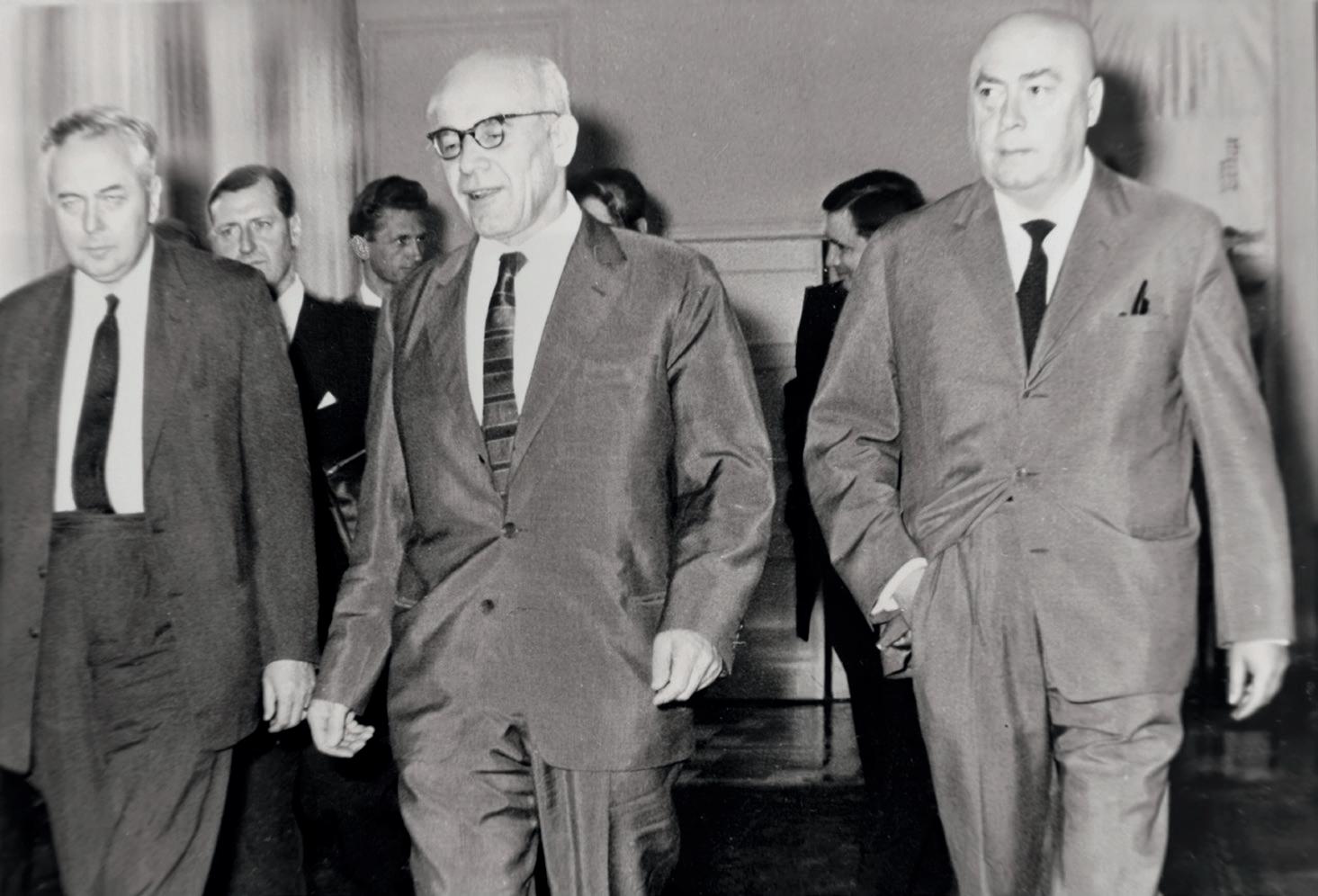
journalists. This was achieved through initiatives such as inviting various delegations to Poland, one example of which was the invitation of the delegation of British economists to Poland in 1947. In October of that year, a delegation of Labour MPs visiting Eastern European countries arrived in Poland. The Embassy of the People’s Republic of Poland was also involved in organising visits by Polish delegations to the United Kingdom. These were people from the worlds of science, music, sport and trade unions. In 1948, a key event organised by the Embassy of the Polish People’s Republic was the celebration of the centenary of Fryderyk Chopin’s visit to London. This provided an opportunity to organise a series of high-profile cultural events, including a concert attended by over 300 guests, among whom was the then President of the Board of Trade, the Labour politician and future Prime Minister Harold Wilson (1916-1995). In June 1948, a plaque was unveiled at 99 Eaton Place SW1, where the pianist had stayed during his visit to London in the spring of 1848; during this visit he had played for a small number of invited guests. In the early years after World War II, the Press Office of the Polish Embassy in London also published a periodical called ‘Polish Facts and Figures’ which presented the Communist government’s viewpoint on political, economic and cultural issues to readers. However, despite all these efforts of the Embassy staff to promote Polish interests in the UK, an analysis of the reports on the work of the Embassy shows that the Ministry of Foreign Affairs was very dissatisfied with the work of the Embassy and the institutions it managed, such as the Polish Cultural Institute.
Aside from these public diplomacy projects, the Embassy was keen to establish contacts at the ministerial and interparliamentary levels. In March 1947, during his train trip to Moscow, the British Foreign Secretary, Minister Ernest Bevin (1881-1951), had the opportunity to see the extent of the war damage that had fallen on the city of Warsaw. A one-day stay in the capital was planned, during which the British government representative was said to have mentioned to the Polish administration representative Włodzimierz Rólski: ‘If I had not been told that there was a city here, I would have thought that this was a hilly country covered with snow’.11 On 27 April 1947, Minister Ernest Bevin met with Polish For-
11 Włodzimierz Rólski, ‘Sprawozdanie z podróży w pociągu Min. Ernesta Bevina przez terytorium Polski przygotowane przez Włodzimierza Rólskiego’ [Report on the train journey of Minister Ernest
eign Minister Zygmunt Modzelewski (1900-1954) at the Polish Ministry of Foreign Affairs in Warsaw. During the meeting, they discussed the conclusions from a conference that had just ended and further explored areas to strengthen Polish-British relations. These talks were continued in London in September of that same year. The British side was interested in the process of rebuilding Poland after the war, justifying this with the need to rebuild English cities damaged after the bombings during the war. On this occasion, in September 1947, a delegation headed by British Labour politician John Silkin (1923-1987), who was responsible for the reconstruction process, travelled to Poland. In 1950, the Royal Institute of Architecture organised a Grand Exhibition of the Reconstruction of Warsaw. Five years later, in the summer of 1955, a group of British journalists was invited to Poland for a presentation on the achievements of the Communist government in the rebuilding of the country. Not too long afterwards, in the autumn of 1957, another trip was organised: this time a group of Polish parliamentarians visited London at the invitation of the British Section of the Inter-Parliamentary Union. The initiative to launch a new format for British-Polish cooperation was motivated by a desire to organise alternating thematic meetings. The first of these, entitled the Polish-British Seminar on ‘Problems of Coexistence and European Security’, took place on 26-29 January 1963. The meeting was attended by parliamentarians from all parties represented in the House of Commons, journalists, and representatives of academic and cultural circles.12 That same year, Labour Party leader Harold Wilson (Prime Minister from October 1964) met with the Leader of the Polish United Workers’ Party, Władysław Gomułka in Warsaw.
Bevin through Poland], Available at the Polish Foreign Ministry Archives.
12 From the Archives of the Polish Foreign Ministry.
Public diplomacy and the organisation of a number of cultural events were considered very important by the Polish Foreign Ministry. There were high hopes for the Polish Cultural Institute, the cultural diplomatic mission of Poland in London, although an analysis of surviving ministerial documents and reports demonstrates that the results were far from satisfactory. The authorities of the Polish People’s Republic were also instrumental in the establishment of many cultural and scientific organisations in the UK. One example is the British-Polish Friendship Society, which was provided with premises leased by the Embassy at 81 Portland Place. The ‘Warsaw Club’ operating there was intended to strengthen individual contacts with British opinion leaders and organise regular events, lectures and meetings with famous authors. The fact that its activities sparked debate and discussions in the House of Lords in the context of intelligence activities testifies to the intense activity of these organisations. Particular controversy shrouded the organisation’s activities and financing.13 In fact, the real goals set for the organisation by the authorities of the Polish People’s Republic were to inform the British public about the work and achievements of the government, as well as to recruit members amongst the local community and activate them.14 The organisation was
13 „Notatka w sprawie księgowania subwencji dla British-Polish Friendship Society przygotowana przez Ambasadę PRL w Londynie w dn. 16 listopada 1950 roku opatrzona klauzulą Ściśle tajne’ [Note on the accounting of subsidies for the British-Polish Friendship Society prepared by the Embassy of the Polish People’s Republic in London on 16 November 1950, marked ‘Strictly confidential’], From the Polish Ministry of Foreign Affairs Archives. See also the Notes from the Debate in the House of Lords on the British-Polish Friendship Society. Volume 169: 14 November 1950. Accessed online 1 August 2025, https://hansard.parliament.uk/Lords/1950-11-14/debates/6c410e04-80ee-490b-8b1a-46e74e7f35f1/ British-PolishFriendshipSociety.
14 MS Ref. No. 237/ XXII-267 „Notatka w sprawie Towarzystwa Przyjaźni Polsko-Brytyjskiej’ [Note on the Polish-British Friendship Society], Cf. Archiwum Akt Nowych, Polska Zjednoczona Partia Robotnicza, Komitet Centralny, Wydz. Zagraniczny – Anglia [Polish United Workers’ Party: Central Committee, Department of Foreign Affairs – England].
also active outside of London. The diplomacy of the Polish People’s Republic also paid a lot of attention to monitoring the activities of Polish independence organisations, in particular those which convened people associated with the military or the administration of the previous Polish government, the Second Polish Republic (active in the years 1918-1939).
The Embassy of the Polish People’s Republic in London also had secret organisational units that carried out operational and intelligence activities. People were employed in various positions either as diplomats or support staff to engage in covert intelligence work. They received their tasks directly from their superiors in the Ministry of Internal Affairs in Warsaw and reported back to them on the results of their work. Until the mid-1950s, their activities were directly influenced by the Soviet authorities. This ‘A1’ intelligence unit at the Polish Embassy in London was established in early 1948 and was mainly responsible for gathering intelligence and information on the situation of the Polish émigré community, including war veterans who remained in the UK.15
It is important to note that the diplomacy of the Polish People’s Republic was subordinate to the leadership of the ruling party, the Polska Zjednoczona Partia Robotnicza or PZPR [Polish United Workers’ Party]. Ambassadors had to prove their membership and cooperate with the ruling party’s basic unit the Podstawowa Organizacja Partyjna or POP [Basic Party Organisation] which represented the ruling party and operated in every governmental department, including every diplomatic mission.16 This naturally sometimes led to some clashes. As Professor Jacek Tebinka noted in one of his publications: ‘On 12 April 1968, a party meeting was held at the Polish People’s Republic Embassy in London, orchestrated by its employees who were actually employed by the Ministry of Internal Affairs and mainly involved in spying on Polish political activists. As a result of that meeting, that lasted several hours, Jerzy Morawski (1918-2012), who was the then Polish Ambassador to London, was expelled from the Polish United Workers’ Party,
15 For more cf. Witold Bagieński, Wywiad cywilny Polski Ludowej w latach 1945-1961 [The Civil Intelligence Service of People’s Poland in 1945-1961], Institute of National Remembrance: Warsaw, 2017.
16 For more cf. Paweł Ceranka, Podstawowa Organizacja Partyjna PZPR w Ministerstwie Spraw Zagranicznych 1949-1989 [The Basic Party Organisation of the Polish United Workers’ Party in the Ministry of Foreign Affairs 1949-1989], Pamięć i Sprawiedliwość, 26/2016, pp. 247-307.
which, according to the initiators, was supposed to mean the end of his posting in London. The Ambassador immediately flew to Warsaw, where the Leader of the Polish United Workers’ Party, Władysław Gomułka (1905-1982), furious at the Ministry of Internal Affairs’ arbitrariness, ordered him to return and continue his duties. The POP organisation, following instructions from headquarters, reinstated Morawski’s membership in the PZPR after a few days.’17
From Trade Talks to Turning Points: Polish-British
Relations on the Road to Freedom
With time, bilateral agreements also became part of the agenda of bilateral relations. One example is the negotiations on a Polish-British trade agreement, which began in London in 1948. They ended with the signing of the Payment Agreement and the Trade Agreement. In the second half of the 1960s, tourist travel was regulated by the signing of a consular convention on 23 February 1967, which entered into force on 13 July 1971, and a convention on health care on 21 July 1967. In the case of tourist travel to the other country, it gave the right to use health care on the same terms as those applicable to British or Polish citizens. In October 1967, an agreement on cooperation in the field of applied sciences and technology was signed. A new impetus for the development of economic cooperation between the countries was the new direction of the communist authorities’ economic policy in the 1970s, which consisted of openness to foreign cooperation with Western countries. In the case of relations between Warsaw and London, this was evident in the trade agreement concluded in August 1969, on the basis of which Lloyds Bank granted Poland a loan of 20 billion pounds, backed by guarantees from the British government. At that time, Great Britain was Poland’s key Western economic partner. Talks were then initiated on the conclusion of economic agreements, which culminated in an economic and trade agreement in April 1971 and an
17 For more information, see Jacek Tebinka, Nadzieje i rozczarowania. Polityka Wielkiej Brytanii wobec Polski 1956-1970 [Hopes and Disappointments: British Policy towards Poland 1956-1970], Wydawnictwo Instytut Historii PAN: Warsaw, 2005.
agreement on economic, industrial, scientific and technical cooperation in March 1973. Against this background, a visit at the Prime Ministerial level took place in the UK. On 15-17 December 1976, Prime Minister Piotr Jaroszewicz (1909-1982) arrived in London, where he met with the then Prime Minister, James Callaghan (1912-2005), among others.18
Considerable effort was put into funding a monument to Fryderyk Chopin in front of the Royal Festival Hall in London. It was supposed to be unveiled in 1974. This was widely commented on in the British press as it was supposed to be the most important event in the planned celebrations of the 30th anniversary of the Polish People’s Republic, but this project was eventually abandoned due to complications in acquiring installation permits from the local authorities.
As a result of the introduction of martial law in Poland in 1981, relations with Western European countries, including Great Britain, were halted. Numerous protests and demonstrations in support of the anti-Communist movement ‘Solidarity’ took place in front of the Embassy building in London. Such activities continued even after the formal end of martial law, and demonstrations were organised to coincide with important national and civic anniversaries, such as 3 May 1985. Polish diaspora organisations actively organised aid and support for Poles in the home country. A significant improvement and shift in the bilateral relations between the two countries was apparent in the second half of the 1980s, when political consultations at ministerial level took place. The then incumbent Prime Minister Margaret Thatcher (1925-2013) visited Poland on 2-4 November 1988, encouraging Solidarity and opposition leader Lech Wałęsa and Prime Minister of the Polish People’s Republic General Wojciech Jaruzelski (1923-2014) to engage in political dialogue. The 1989 roundtable talks between the government and the Solidarity-led opposition leaders produced an agreement to organise Poland’s first semi-free elections since 1947. By the end of August, a Solidarity-led coalition government was formed and in December 1990, Lech Wałęsa was elected President of Poland.
18 For more, see Tomasz Korban, Polsko-brytyjskie stosunki gospodarcze w latach 1971-1980 w świetle Polskich Dokumentów Dyplomatycznych [Polish-British economic relations in the years 1971-1980 in Polish Diplomatic Documents], Pamięć i Sprawiedliwość: 1 (41)/ 2023, pp. 420-444.
Design and Detail: Inside the Polish Embassy’s Historic Interiors
Clarinda Calma
From the day of its official inception at 47 Portland Place, London, the Polish Embassy has been an important centre in the diplomatic landscape of the city. From its early years, it has served as a symbol of Poland, promoting her interests and protecting the welfare of her citizens. It has also hosted many events and receptions, serving as a diplomatic hub bringing together distinguished Polish and British statesmen and public personalities. During the wartime era, as well as its daily diplomatic work, the Embassy served as the initial headquarters of the Polish Government-in-Exile, hosting meetings of national and international importance. Documents of great international and humanitarian significance were drafted and processed in this building, such as the report ‘The Mass Extermination of Jews in German Occupied Poland’, published in London in 1942, the first-ever such official report published by a national government. The years of the Communist regime did not stall Poland’s diplomatic work, as diplomats continued to engage with their British counterparts, albeit on a modest scale; and during the years of the functioning of the Embassy as the official representative of the Polish People’s Republic, especially after martial law was declared in Poland in 1981, the Embassy witnessed civic protests and demonstrations by the Polish émigré community. After Poland’s democratic transformation was initiated in 1989 following its first semi-democratic parliamentary elections on 4 June 1989, the Embassy continued its work as an important centre for diplomatic activity with renewed energy and force. An important turning-point came with the nomination of Tadeusz de Virion (19262010, served as Ambassador 1990-1993), the first non-communist Ambassador to
represent Poland in the UK since the Second World War. Under his diplomatic mission, Ryszard Kaczorowski (1919-2010) who served as the last President of the Polish Government-in-Exile in the years 1989-1990 and also as the de facto Prime Minister of the Polish Government-in-Exile, officially passed its responsibilities and insignia to Lech Wałęsa, who had been elected President in the first semi-free elections in Poland. This official ceremony took place on 22 December 1990 in the Royal Castle in Warsaw and was broadcast nationally on Polish television. Once again, the Polish Embassy represented a truly sovereign and free Poland. In 2015, to mark the 25th anniversary of this symbolic ceremony, a photo-gallery of the statesmen who had served as Presidents of the Polish Government-in-Exile was unveiled at the Polish Embassy by the then Ambassador Witold Sobków.
In 1999 Poland joined the North Atlantic Treaty Organisation and five years later, on 1 May 2004, Poland joined the European Union, ushering in new chapters in Poland’s role on the world stage. As in the past, still today the building at 47 Portland Place continues to be an important centre for promoting Poland and her interests and in strengthening UK-Poland relations. What follows is a brief history of the Embassy based on the material objects and spaces that have witnessed some of the most dramatic events in Polish history. A brief architectural description of the building is followed by a description of the objects on display in the Embassy.
Elegance in Stone and Stucco: Architectural Features of 47 Portland Place
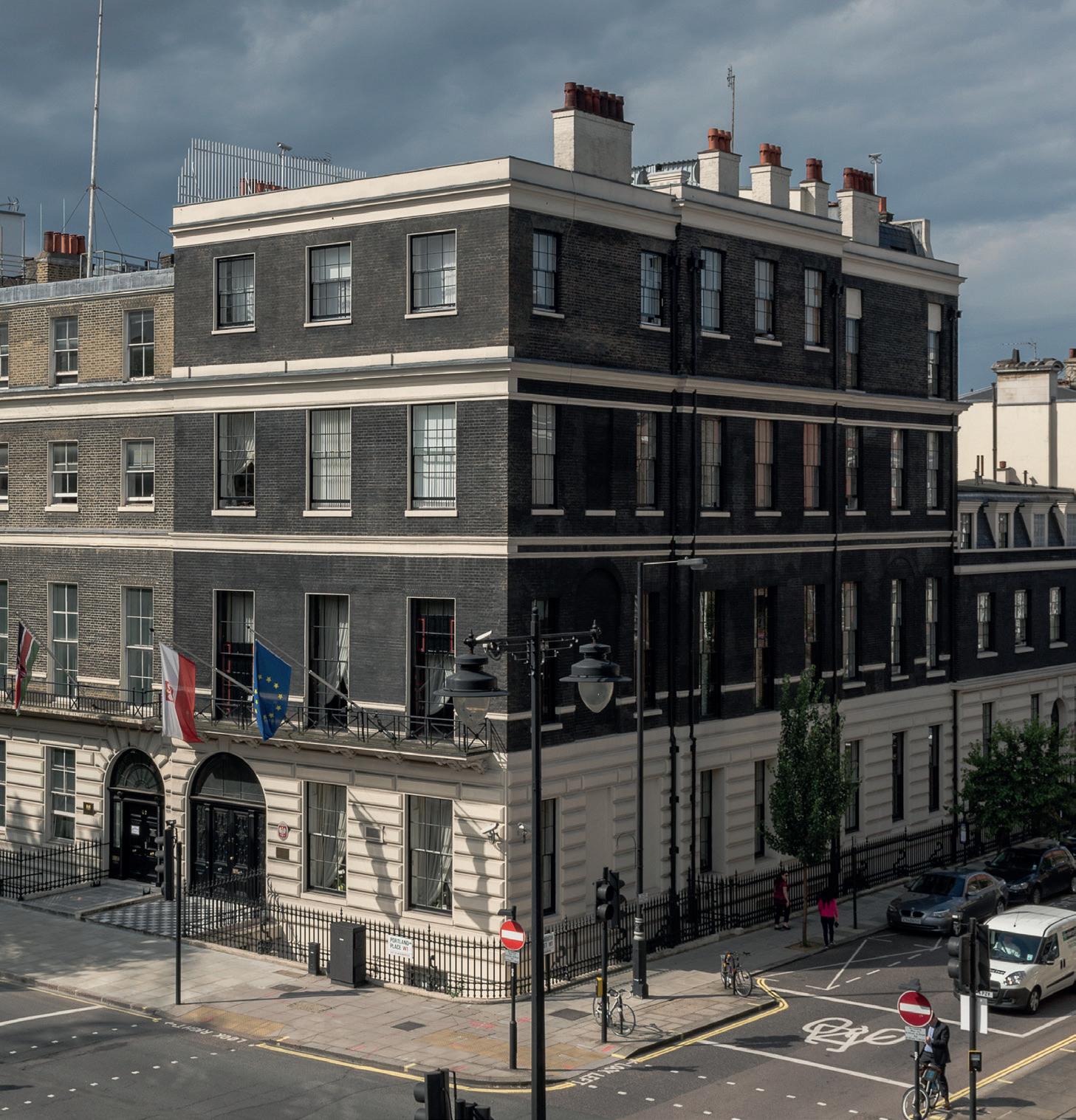
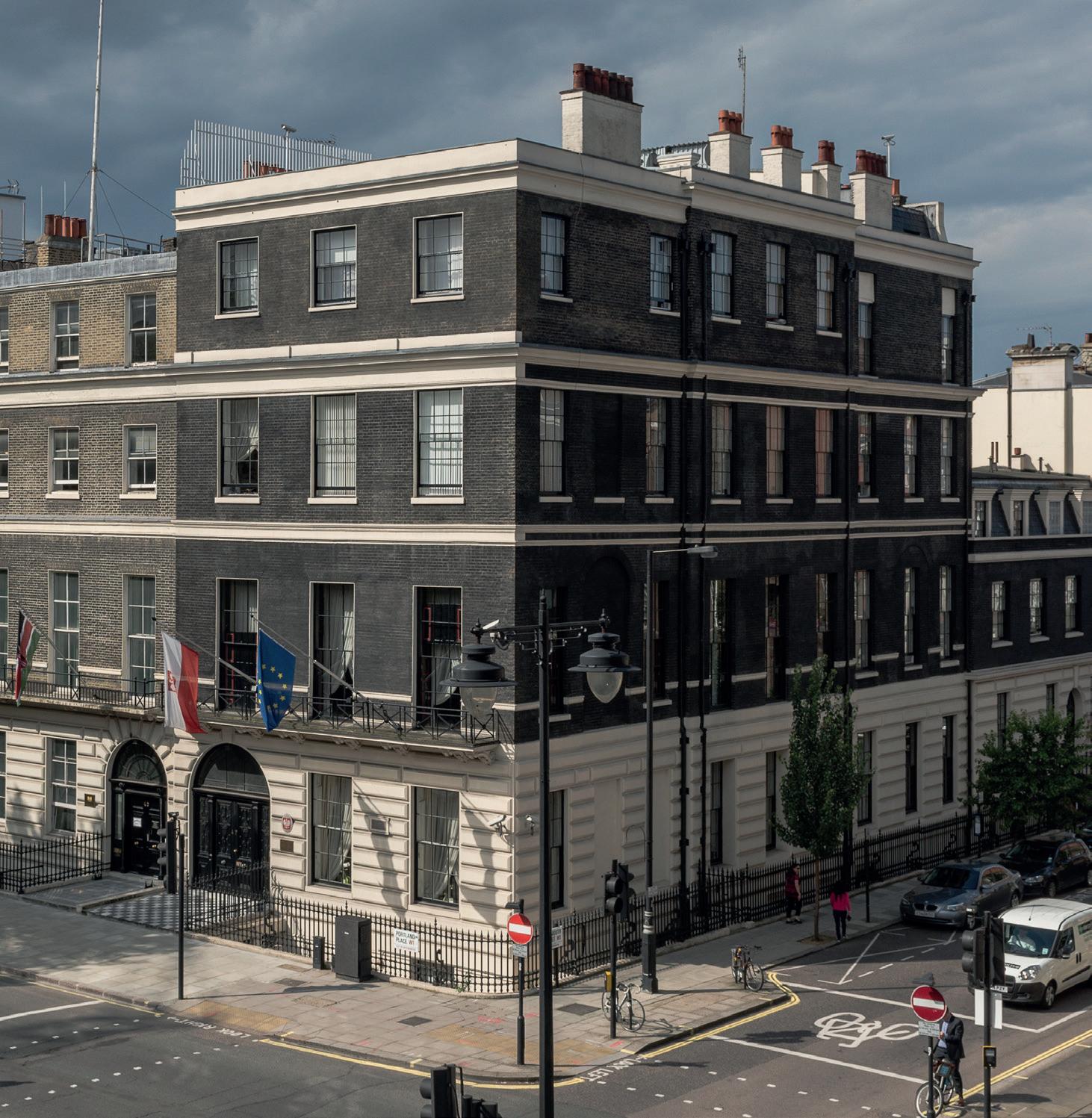
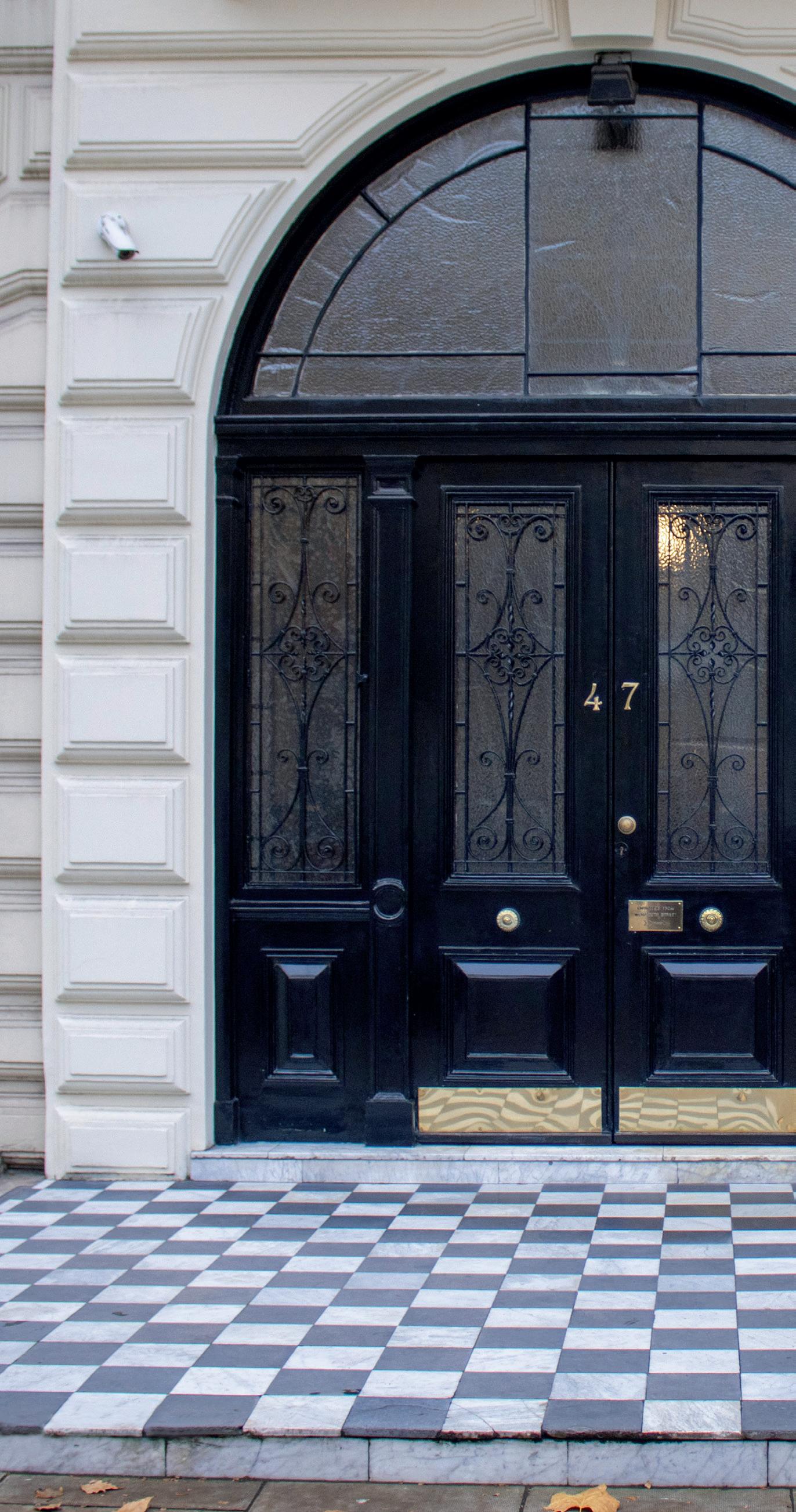
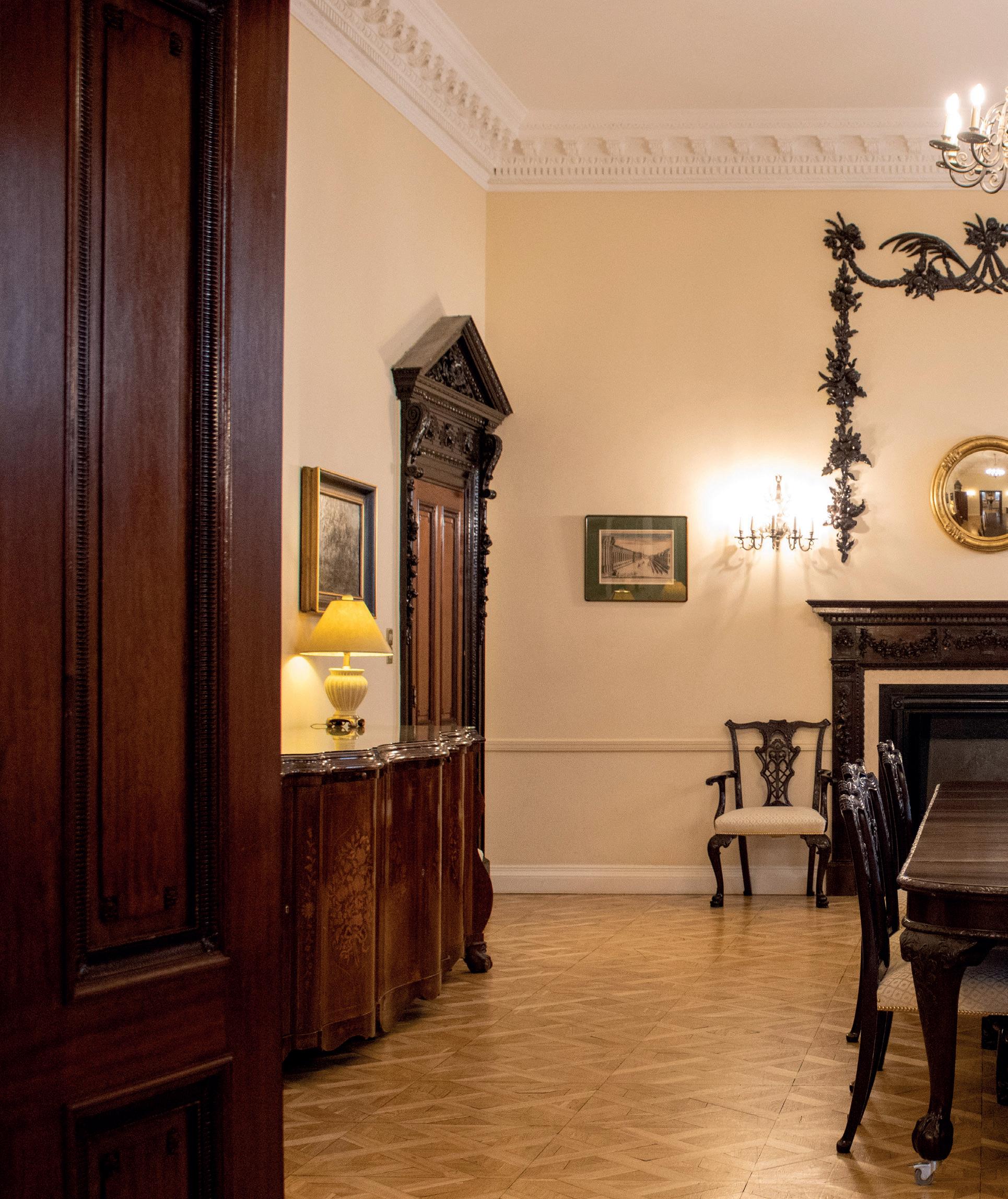
Located on the corner of Portland Place and Weymouth Street, the building is a fine example of a Georgian townhouse. Its four-storey, three-bay-wide front façade is relatively modest. The ground floor walls are in stucco, simulating finely-dressed stonework rustication. A large off-centre arch emphasises the main entrance. A generous front door opens onto a spacious entrance hall, which leads to principal rooms of classical proportions located in the north wing. The walls of the entrance hall are adorned with plaster-bas relief featuring playful putti set against a classical pastoral backdrop, whilst cornices are decorated with medallions and floral embellishments. A graceful stone staircase leads to the first floor. The first-floor L-shaped music room is a rich example of early twentieth-century Anglo-Japanese
eclectic style. Doors to the main rooms are set in archways with pediments resting on Corinthian pilasters, decorated with elaborate wood or stone ornamentation. Characteristic elements of the main rooms include fine painted ceiling tondos and chimney-pieces with fluted oak stiles and ornamental garlands, festoons, vines and wooden wreaths. Classical cornices and plasterwork as well as fine woodwork on portals and chimney-pieces decorate many of its representative rooms. All of this, together with the elaborate ironwork of the entrance and stairway railings, makes the building a notable example of elegant graciousness.
Between Portraits and Ciphers: A Hall of Polish History
The Main Hall opens with many interesting objects which tell about Poland’s wartime history and fight for freedom. One of them is a photo-gallery of the six statesmen who served as Presidents of the Polish Government-in-Exile during the years 1939-1990. The Polish Government-in-Exile was formally established in September 1939, by the then Polish President Ignacy Mościcki (1867-1946), after Poland was occupied by Nazi Germany from the West and the Soviet Union from the East. After the fall of Poland, the Polish Government-in-Exile first moved to France, where it stayed until the fall of France in early June 1940, and then to London in the same month, establishing its seat initially in the Polish Embassy before moving to the Rothschild house at 18 Kensington Palace Gardens. After the withdrawal of support by its Western Allies at the end of the Second World War, the Polish Government-in-Exile continued to operate in the UK as an important symbol of Polish resistance to foreign occupation, with 43 Eaton Place, Belgravia, London, as its political centre.
Another interesting object in this main hall is a copy of the Bletchley Park Polish Memorial in honour of the Polish mathematicians who cracked the Enigma code, designed and currently installed in Bletchley Park in 2002. This copper rendition of the monument commemorates the contribution of the Polish mathematicians, Marian Rejewski (1905-1980), Jerzy Różycki (1909-1942) and Henryk Zygalski (1908-1978), to breaking the Enigma code, which was instrumental in deciphering hundreds of Nazi intelligence and military documents providing access to valuable
information which eventually led to the saving of thousands of lives. Next to this monument is a copy of the German Enigma or cipher machine itself. It was developed in the early twentieth century and was used for military communication by Nazi Germany during World War II. Through the use of an electromechanical rotor mechanism, this machine scrambled the 26 letters of the alphabet from plaintext to ciphertext, protected by a special secure code that was changed daily. On 26-27 July 1939, Polish mathematicians initiated British and French cryptologists into the Polish Enigma decryption theory and techniques, and this proved crucial in cracking the Enigma code. British mathematician Gordon Welchman, who became head of Hut 6 at Bletchley Park, later wrote, ‘Hut 6 Ultra would never have got off the ground if we had not learned from the Poles, in the nick of time, the details both of the German military version of the commercial Enigma machine, and of the operating procedures that were in use.’19
The oldest artwork in the Embassy is the painting of David with Goliath’s Head, attributed to the Italian painter, Domenichino (1581-1641) of the Bologna School of Annibale Carracci (1560-1609). The painting depicts the young David holding Goliath’s head and being welcomed by the Muses with singing and dancing. Domenichino and Annibale Caracci are together known to be the initiators of the Baroque school of art, and their paintings at the Palazzo Farnese in Rome proved influential in the further development of Italian painting. This painting originally hung in 43 Eaton Place, the seat of the Polish Government-in-Exile after the war.
19 Gordon Welchman, The Hut Six Story: Breaking the Enigma Code. Kidderminster: M.&M. Baldwin Publishers, 1982. p. 289.
Echoes of Leadership: A Walk Through Poland’s Diplomatic Past
The main drawing room on the ground floor is named after General Władysław Sikorski (1881-1943) who at one point used this room as his main office during the wartime years. General Sikorski fought with distinction in the Polish Legions, formed part of the Polish Army during the Polish-Soviet War of 1919-1921, and held government posts during the early years of the Second Polish Republic, serving as Prime Minister from 1921-1922. During the years of World War II, he served as the Prime Minister of the Polish Government-in-Exile, Commander-in-Chief of the Polish Army, and General Inspector of the Polish Armed Forces. A quick turn about the room will reveal a ceiling adorned with a tondo dating from the nineteenth or early twentieth century. As this room was originally used as the library during the tenancy of the previous owners, the Markhams, this tondo, very appropriately, depicts Learning as a Muse, one hand resting on the shoulder of a naked man whose rough beard and sprouting hair denote an untaught savage. Both of them are looking up to the figure of Mercury, who is handing a written message to the Muse. Another man, whose costume and feathered head-dress suggest a rich but as yet unexplored continent, holds strings of pearls and a cornucopia. Beyond him are two putti with symbols of architecture and geometry.
Interesting artworks to be found in this room include the portrait by Marcello Bacciarelli (1731-1818) of the Polish King Stanislaus August Poniatowski (1732-1798, reigned 1764-1795) painted ca. 1786. This painting of the last king of the Polish-Lithuanian Commonwealth depicts the King in his military clothing with his regalia, including the crown and sceptre, on the table as the backdrop. Educated by private tutors from Russia and England, Poniatowski was an Anglophile, who established the permanent diplomatic presence of the Polish-Lithuanian Commonwealth in Great Britain. This painting formed part of the collection of the Czartoryski family and was hung in Hôtel Lambert in Île Saint-Louis in Paris, headquarters of the political faction of the statesman and diplomat, Prince Adam Jerzy Czartoryski (1770-1861). King Stanislaus Poniatowski was a great patron of the arts, and it was he who in 1790 commissioned the Frenchman Noël Desenfans (1745-1807) and the
English painter Sir Francis Bourgeois (1756-1811) to curate a collection of European paintings, a project which was later abandoned following the abdication of Poniatowski in 1795. The collection later became the foundation of one of England’s first purpose-built public libraries, the Dulwich Picture Gallery. Another interesting painting is the copy of the Portrait of a Young Nobleman, ca. 1508 by Raphael (1483-1520), dating from 1916. This portrait, by the Italian painter and architect Raffaello Sanzio de Urbino (1483-1520), known as Raphael, of the Italian High Renaissance, is often thought to be a self-portrait of the Italian master. The copy in the Polish Embassy was made in 1916 by a painter called Rob Hausler in Dresden from the original, which is also believed to have belonged to the Czartoryski Collection. The Collection had been brought to Dresden to save it from the destruction during World War I. Having survived that, and having been returned to Poland, the original painting was later lost during World War II. Another interesting artwork in this room is a bronze sculpture of a pheasant by Magdalena Gross (18981946), ca. 1934-1936. Educated in Warsaw and Florence, Magdalena Gross was a Polish-Jewish sculptor and animalier. In 1937 she was awarded the gold medal in the International Exhibit of the Arts and Technique in Paris. She exhibited her works in the Stafford Gallery in London in 1938. When World War II broke out in Poland, she was forced into hiding and survived the war thanks to Jan and Antonina Żabiński, who turned the Zoological Garden in Warsaw, which they managed, into a hiding-place for Polish Jews.
The Main Drawing Room leads to the General Władysław Anders Room or Dining Room. The room was named after General Władysław Anders (18921970), who was a Polish wartime general and politician active in the Polish Government-in-Exile. As a young officer, he fought in the Imperial Russian Army during World War I. After Poland regained independence, he joined the Polish Army and commanded the 15th Poznan Uhlans Regiment. When Poland was invaded in 1939, he commanded the Nowogrodzka Cavalry Brigade and fought in the Battles of Mława and Tomaszów Lubelski. He was captured by the Soviet Army on 29 September 1939. After the Sikorski-Mayski Agreement was signed in London on 30 July 1941, Anders was asked by General Władysław Sikorski to form an army of Polish soldiers known as the Polish Armed Forces in the East, more popularly known as Anders’ Army. A contingent of about 115,000 Polish soldiers were evacuated from Soviet Russia with their families, travelling through Iran to Palestine
to train, and were transferred to serve under the operational control of the British government. Many of these soldiers eventually joined the Polish Second Corps as part of the Polish Armed Forces in the West. Troops from Anders’ Army took part in the Italian campaign including the Battle of Monte Cassino. After the war ended, Anders was stripped of his Polish citizenship by the Communist Government in Poland. He settled in the UK, becoming a prominent figure of the Polish Government-in-Exile, serving as the General Inspector of the Armed Forces and working actively in various Polish émigré charities and organisations.
The ground floor also includes a smaller room, called the Ryszard Kaczorowski Room, which formerly served as Sir Arthur Basil Markham’s Boudoir or private drawing room. This room is decorated in the style of Louis XVI with gilded panelling, gold furnishings and dark walls. The room contains a small portrait of Konstanty Skirmunt (1866-1949), the Polish envoy to the UK in 1922-1929, later serving as Polish Ambassador in 1929-1934. Prior to that, in 1921-1922, he had served as Polish Foreign Minister. This room also features a collection of Polish porcelain manufactured in Ćmielów which was used the Embassy during the interwar period. The room is named in honour of Ryszard Kaczorowski (1919-2010), a statesman and war veteran who served as the last President of the Polish Government-in-Exile in the years 1986-1989. A native of Białystok, Kaczorowski was a dedicated Scouting Instructor of the Polish Scouting Association. As a young man, he revived the ‘Grey Ranks’, a Scouting Paramilitary Group which worked with the Polish Army during World War II. Arrested and initially sentenced to death by the People’s Commissariat of Internal Affairs of the Soviet Union in 1940, he was among those granted amnesty, and would later join Anders’ Army, serving in the 3rd Carpathian Rifle Division.
Figure 21. Close-up of the Anglo-Japanese Room ceiling, with a golden grid ground crossed by dark beams. Each intersection is marked by leather appliqué X-motifs with central medallions resembling Japanese mon or crests, blending textile-inspired patterning with Western structural framing in a manner typical of the late 19th-century Anglo-Japanese style. Image no. 1946. London, September 2025.
Through War and Words: The Legacy Woven into the Walls
The stairway leading to the first floor features a bust of Józef Piłsudski (1867-1935) by the Polish sculptor Antoni Madeyski (1862-1939). Józef Piłsudski was a Polish statesman and one of the founding fathers of modern Poland. He served as Chief of State in the years 1918-1922 and as Prime Minister of Poland in 1926-1928, and again in 1930. He also served as the First Marshall of the Second Polish Republic until his death in 1935. Piłsudski was instrumental in the restoration of Poland’s independence in 1918, after it had been partitioned for 123 years by Austria, Prussia and Russia, and in engineering Poland’s transition into a democratic and constitutional state with an independent judiciary.
The bust itself was a gift from Tadeusz de Virion, who served as the Polish Ambassador to the UK during the years 1990-1993, that is, after the fall of communist rule in Poland. This sculpture was made in 1925 by Antoni Madeyski, who is best known for his sculptures of Polish monarchs, such as the alabaster sculpture of Jadwiga, Queen of Poland (1373-1399) in Wawel Cathedral in Kraków. The bullet-holes on the bust’s forehead are believed to result from its being shot at by an unknown soldier in occupied Poland during World War II.20 The stairway also features a woven wall-hanging depicting the crowned white eagle, the heraldic symbol of sovereign Poland. This is perhaps one of the few objects in the Embassy today which was originally installed during the Communist Period, when the Embassy was formally known as the Embassy of the Polish People’s Republic. The crown was a later addition, painted, not woven, onto the eagle’s head by an unknown Polish artist during the term of Ambassador Tadeusz de Virion when he assumed his role as Ambassador of the Republic of Poland in 1990.21
20 Monika Kuhnke, Sprawozdanie z delegacji służbowej 3-13 lutego 2004r. Archives of the Ministry of the Foreign Affairs of the Republic of Poland.
21 This is based on an oral account by Zbigniew Jusiński, who worked as Embassy chauffeur 1990-1995 and in subsequent years.
The main drawing room on the first floor is called the Edward Raczyński Room. Edward Raczyński (1891-1993) was a Polish aristocrat, diplomat and statesman who had a long, distinguished career. He worked in the Polish Foreign Office from 1919-1945, served as the Ambassador to the League of Nations in 1932-1934, was Polish Ambassador to the UK in the years 1934-1945, Polish Foreign Minister in 1941-1943, and President (de-facto Prime Minister) of Poland-in-Exile, 1979-1986. On behalf of Poland, he signed the Anglo-Polish military alliance of 1939 which secured close military collaboration between UK and Poland during the Second World War. On 10 December 1942 he authored the report ‘The Mass Extermination of Jews in German Occupied Poland’, the first official government report informing the Allies and the West of the Holocaust in German-occupied Poland. His report was written in this Embassy, based on intelligence reports gathered throughout occupied Poland. It was sent to the 26 governments who had signed the ‘Declaration by United Nations’. After World War II, Raczyński settled in London where he actively supported and represented the Polish émigré community in various government and non-governmental organisations in the UK. He was the longest-living (101) and oldest serving Polish President of the Polish Government-in-Exile (from the age of 88 to 95).
The room itself was refurbished and remodelled in Anglo-Japanese style during the residence of the Markhams in the early twentieth century, with ornate ceiling elements characteristic of Japanese ‘kamon’ or family crests. In the Markhams’ time, this room was the space where the family displayed their collection of objets d’art. During World War II, it became an office space for staff of the different Polish government ministries, and was also where at one point precious Polish manuscripts and artworks were stored for safekeeping.
To this day, all these rooms serve as an important space for hosting major social functions, conferences and working meetings. The various artworks and artefacts remain not only as interesting conversation pieces, but more importantly as living witnesses of Polish history in a building which is itself a precious relic of Poland’s long and turbulent past.
List of addresses associated with the Polish Diplomatic Mission in London
The Polish diplomatic missions in London have, in their over 250-year history, mostly been based in Westminster in Central London, a logical choice given its proximity to the centres of government of Whitehall and St James’s Palace.
In the early years of their functioning, the Polish diplomatic missions in London were headquartered in the areas of Pimlico (Cambridge Street); Soho (47 Poland Street); St James’s (Suffolk Street, 1770); Fitzrovia (Carburton Street, at the corner of today’s Great Portland Street, 1780 – 1786); and Marylebone (Hall Street, 1786 – 1791, Manchester Street 1791 – 1794, and 8 [Upper] Berkeley Street, off Portman Square, 1794 – 1795).22
When Polish diplomatic relations with the UK were restored in the summer of 1919, the Polish legation initially settled in the Mayfair area (109 Park Street, Grosvenor Square, summer of 1919; 1 Hereford Gardens, end of 1919-1920; 12 South Audley Street, 1920 –1921; 45 Grosvenor Square, 1921- 1945) before permanently settling in Marylebone at 47 Portland Place, one of the buildings whose official long-term lease was signed on 19 October 1921 by the Polish Foreign Ministry.23
22 Andrzej Suchcitz, The Story of Poland’s Diplomatic Envoys to Britain and Their Residences. Embassy of Poland in London, London: 2018. p. 6.
23 Paweł Ceranka et al., Placówki Dyplomatyczne Rzeczypospolitej Polskiej 1918 – 1945. Ministerstwo Spraw Zagranicznych, Warszawa: 2022. p. 205.
List of Permanent Polish Envoys to the Court of St James’s
1769–1773
1772–1780
1780-1785
1785-1793
1794-1795
Polish-Lithuanian Commonwealth (1569–1795)
Tadeusz Burzyński Ambassador
Franciszek Bukaty Chargé d’affaires
Franciszek Bukaty Minister Resident
Franciszek Bukaty Envoy Plenipotentiary
Tadeusz Bukaty Minister Resident
Second Polish Republic (1918–1945)
1919–1920 Prince Eustachy Sapieha Minister
1920–1921
Jan Ciechanowski Chargé d’affaires ad interim
1921–1922 Władysław Wróblewski Minister
1922–1929
1929–1934
1934–1945
1945–1946
1946–1953
Konstanty Skirmunt Minister
Konstanty Skirmunt Ambassador
Edward Raczyński Ambassador
Polish People’s Republic (1945–1990)
Henryk Strasburger Ambassador
Jerzy Michałowski Ambassador
1953–1960 Eugeniusz Milnikiel Ambassador
1960–1964 Witold Rodziński Ambassador
1964–1969 Jerzy Morawski Ambassador
1969–1971 Marian Dobrosielski Ambassador
1972–1978 Artur Starewicz Ambassador
1978–1981 Jan Bisztyga Ambassador
1981–1986 Stefan Staniszewski Ambassador
1987–1990 Zbigniew Gertych Ambassador
Third Polish Republic (1989–present)
1990–1993 Tadeusz de Virion Ambassador
1994–1999 Ryszard Stemplowski Ambassador
1999–2004 Stanisław Komorowski Ambassador
2004–2012 Barbara Tuge-Erecińska Ambassador
2012–2016 Witold Sobków Ambassador
2016–2021 Arkady Rzegocki Ambassador
2022–2025 Piotr Wilczek Ambassador
Jerzy Michałowski
Henryk Strasburger
Konstanty Skirmunt
Jan Ciechanowski
Franciszek Bukaty
Tadeusz Burzyński
Piotr Wilczek Arkady Rzegocki
Witold Sobków
Barbara Tuge-Ereci ńska
Stanislaw Komorowski
Witold Rodziński
Notes on contributors
PHILIP MURPHY is Professor of British and Commonwealth History at the University of London and Director of the History & Policy research network based at the Institute of Historical Research. His research interests include twentieth-century British and Commonwealth history and the activities of the British, Commonwealth and US intelligence communities.
COLIN THOM is Director of the Survey of London series at UCL’s Bartlett School of Architecture, where he is both editor and contributing author, and assists with teaching on the Bartlett’s MA courses. He is currently working on the Survey’s forthcoming monograph volume on UCL’s Bloomsbury Campus (2026) and the next volume in the Survey’s ‘parish’ series, on South West Marylebone (due out in 2027).
ANDRZEJ SUCHCITZ is a historian and archivist. From 1989–2025 he was Keeper of the Polish Institute and General Sikorski Museum in London and the Polish Underground Movement Study Trust. He is a member of various charities and research societies promoting Polish history. He is Chairman of the Polish Society of Arts and Sciences Abroad and member of the Council of Józef Piłsudski Institute of London. He has written extensively on Polish military history and the history Polish Government-in-Exile.
ROBERT GAWŁOWSKI is Professor of public administration and author of the first biography in English of the Polish codebreaker, Marian Rejewski, titled The First Enigma Codebreaker (2023). He has published widely on public administration and local and local governance. He also works as senior policy analyst at the Polish Embassy in London.
CLARINDA CALMA completed her MA and PhD in English Philology at the Jagiellonian University and conducts research as an independent scholar publishing extensively on the intellectual and cultural exchange between sixteenth-century England and Poland-Lithuania. She is also a Fellow of the Royal Historical Society. She currently works as policy officer at the Polish Embassy in London.