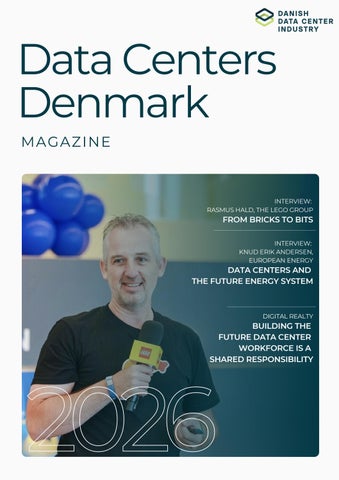

DataCenters Denmark 2026 2026
MAGAZINE

INTERVIEW: RASMUS HALD, THE LEGO GROUP FROM BRICKS TO BITS
INTERVIEW: KNUD ERIK ANDERSEN, EUROPEAN ENERGY DATA CENTERS AND THE FUTURE ENERGY SYSTEM DIGITAL REALTY BUILDING THE FUTURE DATA CENTER WORKFORCE IS A SHARED RESPONSIBILITY
ABOUT
Publisher
Danish Data Center Industry
Vendersgade 74, Building B, 7000 Fredericia, Denmark
About
This magazine is a publication by the Danish Data Center Industry
Data Centers Denmark is the magazine for the Danish and Nordic Data center ecosystem and digital infratructure industry
The team
Christine Kjær Jacobsen, Editor-in-chief
Henrik Hansen
Merima Dzanic
Sofie Teglgaard
Supported by ABB
BOS Power
Decix
Dell Grundfos
NKT
Schneider Electric
Siemens
Thanks to Alberto Ravagni
Hans Godden
Hitesh Kumar Sahoo
Jakob Jul Jensen
Knud Erik Andersen
Oliver Bredgaard
Pernille Hoffmann, Søren Guul & Sarah Gunni Schierup
Rasmus Brandt
Rasmus Hald & Charleen Burton
René Kristensen
Søren Dupont Kristensen
Cover
The LEGO Group and Rasmus Hald
Copyright Danish Data Center Industry 2026
No part of this magazine may be reproduced and/or disclosed by print, photocopy, film, or any other means, without the written consent of Danish Data Center Industry.
The information provided in this publication is for general informational purposes only All information is provided in good faith, however, we make no warranty of any kind, express or implied, regarding the accuracy, adequacy, validity, reliability, availability or completeness of any information provided in this publication
Issue 2, 2026
Digital Publication date 26 March 2026
Contact: info@datacenterindustrien dk
CONTENTS
Executive Summary
From Bricks to Bits: The LEGO Group
Public Perception Is Becoming the License to Operate
COMPUTE & COMPETITIVENESS
Strategy & Trends Transforming the Data Center Industry
Highlights: Danish Market Report 2026
AI, quantum and the infrastructure race
Beyond Power and Land: Why Connectivity Matters
ENERGY SYSTEMS
The Energy System in an Electrified and Digital Economy
From Power Consumers to System Assets
Data Centers and the Future Energy System
How Data Centers Can Support the Energy System: Emerging Models
Powering the future: Denmark’s next steps for energysmart data centers
Engineering the Future of Sustainable Data Centers
From DTU Lab to AI Infrastructure
Accelerating Innovation for a Sustainable Digital Future
Net Zero Start-up Hub Profiles
ECOSYSTEM & COMMUNITY
Data Centers as a Platform for Innovation, Energy Integration, and Digital Growth
Invisible Engines: How Danish companies scale from a strong home market into the global data center industry
Building the Future Data Center Workforce is a shared responsibility
Next Generation in Focus
Closing Europe’s Data Center Skills Gap

APivotalYearforDigital Infrastructure
Across Europe and the Nordics, the role of digital infrastructure is changing. Demand for data processing and storage continues to accelerate, driven by AI, cloud, and the broader digitalization of society. That demand doesn’t come from the data center industry itself. It comes from companies and public institutions that depend on digital infrastructure to run their operations and develop new products and services
Meanwhile, access to energy and grid capacity has become a defining competitive factor - not just for the data center industry, but for economic development more broadly.
The coming period is decisive How digital infrastructure is planned, powered, and integrated into energy systems will shape both competitiveness and the pace of the green transition in the years ahead
With strong foundations in both energy systems and digital infrastructure, Denmark is part of that wider shift But recent developments also show that integration doesn’t happen by itself It requires deliberate choices
This year’s magazine reflects that shift Across 100 pages, industry leaders and experts share perspectives on the topics shaping the industry, from energy and grid capacity to skills, community engagement, innovation, and connectivity
A shared challenge across markets
The challenges facing the industry are not unique to any single country. Questions around energy availability, infrastructure planning, public acceptance, and long-term investment are playing out across markets.
Addressing this depends on closer alignment between energy planning, infrastructure development, and industrial demand, and on continued collaboration between industry, authorities, and energy stakeholders
From scale to integration
Industry growth is no longer just about scale, but about integration into energy systems, local communities, and industrial ecosystems In practice, this means reuse of excess heat, more flexible energy consumption, and closer alignment with surrounding infrastructure
Conditions for our industry are changing AI is changing demand patterns, infrastructure requirements are shifting, and public expectations are increasing This makes transparency, dialogue, and trust essential
This also points to shift in how the industry understands itself and how it is understood by others Data centers are still seen primarily as large energy consumers, rather than as the infrastructure that enables digitalization across society
Towards energy-smart infrastructure
We are seeing a broader shift towards more energysmart data centers, where digital infrastructure and energy systems are planned and developed in close coordination, not as isolated assets, but as active parts of a wider energy system
Denmark is well positioned to play a role beyond its size as an example of how this integration between energy and digital infrastructure can be approached in practice
From local solutions to global relevance
The solutions emerging in Denmark are increasingly relevant beyond its borders This creates new opportunities for export and contributes to a more competitive digital infrastructure landscape
The perspectives in this magazine reflect an industry at a turning point. The question now is how effectively digital ambition and energy realities can be brought together in practice.
If we do this well, digital growth and energy systems can reinforce each other to create value for both economies and societies. If not, the opportunity will move elsewhere

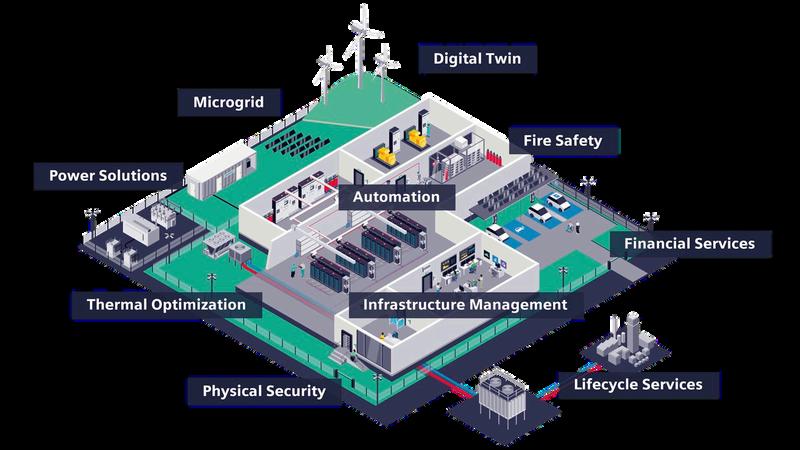
Inan increasingly digital and AI-driven world, scale, density, and resourceconstraintsare raising thestakes fast. Bycombining the real and digital worlds, Siemens help data centers evolve with speed, resilience, and efficiency – from planning and financing to design and build, operate and scale. Meet us in Data Centers Denmark 2026, Datacloud Global Congress 2026 and Future Data Summit Helsinki 2026.
siemens.com/datacenters
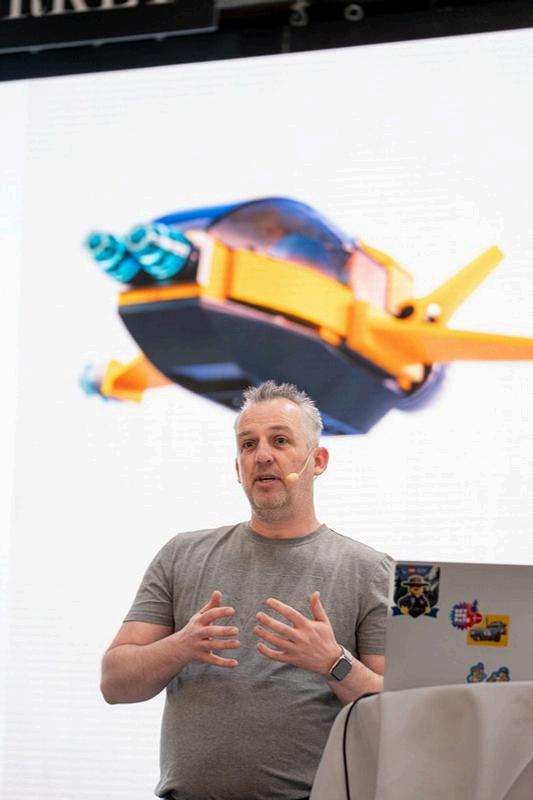
FromBrickstoBits: HowtheLEGOGroup DecidesWhereDataLives
In 2025, the LEGO Group won Danish Data Center Industry’s “Data Center Digital Transformation Project of the Year” award. We sat down with Rasmus Hald, Senior Director, DX & Cloud Foundation at the LEGO Group, to understand how a global icon

Cloud maturity is not about more cloud
When the LEGO Group completed a major phase of its cloud migration, it marked a milestone many organizations are still working toward – but also made clear that the real work was only just beginning Internally, however, it was less of an endpoint and more of a reset in how the company thought about infrastructure altogether
Q: It’s been a year since the LEGO Group received the DDI Digital Transformation Award. Looking back, what are the most important lessons you’ve learned – and what have you actually changed in your DX and cloud foundation since then?
Since receiving the award, a lot has happened The recognition was given for our cloud migration journey, which included decommissioning our general-purpose data center That moment marked an important milestone: reaching our intended level of cloud maturity, where workloads are hosted on the right premise based on their nature and business needs.
One of the most important assumptions we challenged was the idea that cloud maturity simply means moving more to the cloud. In practice, clarity about what runs where – and why – has proved far more important.
By putting the right workloads in the cloud and being deliberate about what stays close to manufacturing and operations, we created the headroom to shift focus from migration to innovation
The transformation has freed up capacity that we are now reinvesting into modernizing the foundations supporting our factories We are doubling down on site-specific data centers that are critical to manufacturing, while evolving them to provide a more cloud-like experience
We can also now pursue new ambitions across both cloud and non-cloud platforms, including leaning much more actively into data and AI

By putting the right workloads in the cloud and being deliberate about what stays close to manufacturing and operations, we created the headroom to shift focus from migration to innovation.
Rasmus Hald
At the LEGO Group, cloud was never the destination The point was to get to a place where infrastructure decisions could be made more deliberately That shifts the question from cloud versus on-prem to something more practical: what belongs where, and why?
Placement is a strategic decision
Q: At a high level, how does the LEGO Group think about the balance between on-prem data centers, colocation, and cloud today?
At the LEGO Group, decisions about where to place workloads always start with a simple question: what are we building, and what value does it create for the business? From there, we evaluate placement based on technical and operational parameters, and value and intent always come first
Our default principle is cloud-first – but only where it genuinely creates value. We believe that, when architected well, cloud platforms offer capabilities that are difficult to replicate internally, particularly around scalability, elasticity, and access to continuous innovation. That said, “cloud-first” does not mean “cloud-only.” Operational reality is a core part of our approach
For workloads that require close proximity to manufacturing, we naturally host them on-premise in data centers located at our production sites This gives us tangible benefits in terms of latency, efficiency, and resilience, all of which are critical for industrial operations where determinism and availability matter as much as flexibility
We use colocation as a pragmatic middle ground It gives us a controlled environment for workloads that do not benefit from public cloud, while still balancing control, cost, and operational simplicity without forcing a one-size-fits-all solution
Here, latency, reliability, and control are not abstract considerations They are operational requirements, which is why local, site-specific data centers continue to play a critical role
At the LEGO Group, decisions about where to place workloads always start with a simple question: what are we building, and what value does it create for the business?
Rasmus Hald
Manufacturing changes the equation
While cloud remains the default at the LEGO Group, proximity to operations, performance requirements, and cost continue to influence where workloads are placed – particularly in manufacturing, where infrastructure decisions are tied directly to physical operations That same proximity to operations also shapes how the LEGO Group approaches resilience and availability
Q: The LEGO Group runs highly visible, businesscritical digital services How has the transformation influenced your approach to resilience and availability?
At the LEGO Group, our digital services are run by product teams that are accountable for clear business outcomes This operating model, which is common in digital-native companies, has also proven to be a strong foundation for running highly visible and business-critical services at scale.
Each product team owns resilience, availability, and operational readiness for the services they deliver, end-to-end. That responsibility sits close to the people making architectural decisions and with the colleagues operating these systems every day. Whether it is keeping production lines running in our factories or ensuring that LEGO com can reliably handle orders at scale, accountability is clearly anchored
One of the most important shifts from the transformation has been moving resilience from something that is centrally imposed to something that is product-led and intentional Teams design for failure, plan for scale, and are operationally on the hook for the outcomes they enable This shortens response time, strengthens ownership, and creates a much clearer link between technology decisions and business outcomes
By aligning accountability, architecture, and operations, we are better positioned to meet the high expectations placed on the LEGO Group’s digital platforms, not just in terms of availability, but also trust, reliability, and readiness to operate under real-world conditions
By aligning accountability, architecture, and operations, we are better positioned to meet the high expectations placed on the LEGO Group’s digital platforms, not just in terms of availability, but also trust, reliability, and readiness to operate under real-world conditions.
Rasmus Hald
Growth, AI, and responsibility
That same model is now under pressure as demand for compute increases
Q: As demand for compute, including AI workloads, increases, how do you balance growth with energy efficiency and responsible use of resources?
We are careful not to scale compute for its own sake Every workload has to justify itself in terms of business value, cost, and resource footprint For us, responsibility starts with accountability – and accountability starts with clarity about outcomes Every product team understands the outcomes they are responsible for delivering and is expected to articulate how their product creates value and contributes to the LEGO Group’s goals
That accountability is reinforced by transparency We invest in making resource consumption visible, including the cost of running specific workloads and guidance on how those workloads can be optimized By giving teams insight into both usage and impact, we enable informed decisions instead of top down restrictions
Together, accountability and transparency allow teams to balance performance, innovation, and resource efficiency in a practical way Instead of centrally limiting growth, we focus on empowering colleagues to make responsible choices based on a clear understanding of trade-offs This is especially important as AI workloads mature, where demand can scale quickly and needs to be evaluated continuously against business value and responsible use of resources
Instead of limiting growth centrally, the focus is on making usage and impact visible so teams can make informed decisions This becomes increasingly important as AI workloads scale and introduce new levels of demand
Q: Looking back, what lessons would you share with organizations embarking on a similar transformation – and where is LEGO still early in the journey?
One of the most important lessons we would share is that public cloud delivers the greatest value when workloads are designed to be cloud native. Simply moving legacy systems to the cloud rarely delivers benefits on its own. Without re architecting to take advantage of scalability, elasticity, and managed services, cloud quickly becomes a more expensive hosting option rather than a transformation
In our experience, a better approach is to either repurchase capabilities as software as a service or to re platform workloads into architectures that genuinely benefit from public cloud And when that is not feasible, the right answer is not to force it, but to choose the most pragmatic hosting model instead Intentionality matters more than ideology
A second lesson is the importance of staying close to cost Cloud introduces a fundamentally different cost model, and without visibility and ownership it is easy to create surprises Accountability for cloud cost needs to sit where decisions can actually influence consumption When teams understand both the value they are creating and the cost of doing so, better decisions follow naturally
There is little doubt that AI represents our next major frontier. We are learning how to best translate new AI capabilities into sustained business value, and how to do so responsibly at scale. That curiosity is driving a new phase of exploration...
Rasmus Hald
As for where the LEGO Group is still early in the journey, there is little doubt that AI represents our next major frontier We are learning how to best translate new AI capabilities into sustained business value, and how to do so responsibly at scale That curiosity is driving a new phase of exploration, and we expect it to challenge our assumptions just as much as cloud did It is a journey we are excited to continue, with plenty more to learn along the way ”
This is not a story about cloud versus on-prem or about choosing one model over another Rather, it is about understanding the trade-offs and making informed infrastructure decisions For the LEGO Group, that has meant moving away from ideology and toward a more deliberate model for where and how data runs, one that continues to evolve as new technologies emerge
About Rasmus Hald
Rasmus Hald is Senior Director of DX & Cloud Foundation at the LEGO Group. He leads the development and operation of the company’s cloud and infrastructure platform, supporting digital services across manufacturing, supply chain, and customer-facing systems.
His work focuses on ensuring that infrastructure decisions are closely aligned with business needs, balancing cloud, on-premises, and hybrid environments to support both innovation and operational resilience
PublicPerceptionIs BecomingtheLicenseto Operate

Community engagement has historically been treated as a softer part of data center development Something that sits next to the “real” priorities - access to power, land, connectivity, and capital - but not quite on the same level
As data centers become more visible, community perception is influencing projects in more direct and tangible ways Not just in terms of reputation, but in how quickly projects move, how they are received politically, and whether they are able to build the kind of local relationships they depend on over time
In that sense, community engagement is no longer a parallel track It is becoming essential
The challenge is not unique to data centers We see the same pattern across infrastructure, in energy, in industrial projects, and in anything that is both physically visible and relevant to society. Projects can be technically sound, fully compliant, and strategically important, and still run into resistance. Especially if they are introduced too late, explained too narrowly, or simply feel disconnected from the place they are being built.
That dynamic is not new, but it is becoming more visible From the outside, projects can feel sudden and unclear From the inside, they are usually the result of years of planning, investment, and technical work The gap between those two perspectives is where friction starts And once it’s there, it is difficult to undo
Across the sector, there is a shift towards taking community engagement more seriously Expectations around transparency are changing, and many companies are engaging earlier and more openly than they did just a few years ago
There is a growing recognition that this is not just about communication, but about how projects are developed and anchored locally
The next step is to make this shift more consistent Communities cannot be brought in once projects are already defined They need to be involved from the very start If engagement starts after the key decisions are made, it will continue to feel like an add-on rather than part of the project itself.
That requires a shift in both mindset and approach. It requires a willingness to engage before everything is finalized. And it requires a more consistent approach across the industry.
Meanwhile, expectations are changing Communities are no longer just asking what is being built They are asking how it fits into the local area, what it means in practice, and what role they themselves play in the process Those are reasonable questions, but they cannot be answered with technical explanations alone
With digital infrastructure becoming increasingly central to both economic development and the energy transition, it also becomes more present in public debate And visibility changes expectations
The implication is straightforward: Access to energy and grid capacity is not just a technical question It is also heavily influenced by public perception and by the industry’s ability to engage with local communities
Operators are increasingly under pressure to prove impact and value creation for their local communities. The coming years will be defined not just by how digital infrastructure is planned, powered, and integrated into energy systems, but also by whether it is understood, accepted, and anchored in the communities where it is built
.
We are starting to see more structured approaches to this Not just at project level, but also through shared platforms that open the industry and create dialogue with communities
Nordic Data Center Week is one example Not because it solves everything – it doesn’t But because it reflects a collaborative and open approach to engagement But moments like Nordic Data Center Wek cannot stand alone, they need to be backed by how projects are actually developed
If the industry wants to scale, it needs to take community engagement and public perception seriously – earlier and more consistently
Compute& Competitiveness
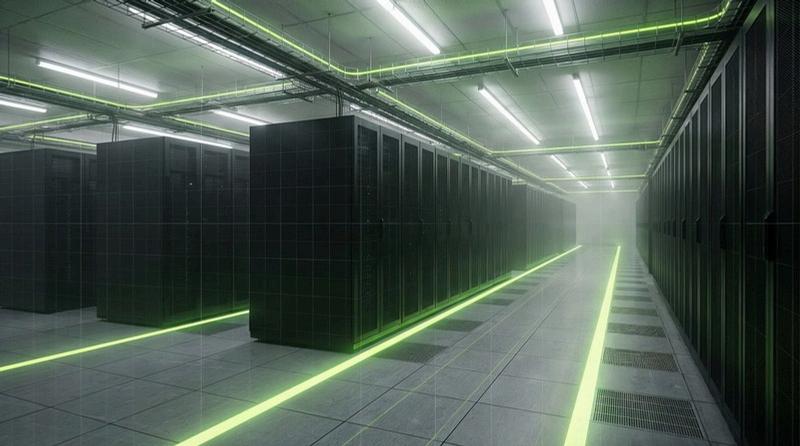
Compute is becoming infrastructure.
AI, high-performance computing, and digital services are driving an unprecedented demand for data processing. Data centers are no longer supporting systems. They are becoming central to competitiveness, innovation, and economic growth.
The question is no longer if demand will grow, but how fast infrastructure can keep up.
Strategy&Trends TransformingtheData CenterIndustry
DDI’s sixth annual market report will be launched on 30 April 2026 We sat down with Merima Dzanic, author of the report and responsible for daily operations and strategy in DDI, to hear her perspectives on the strategy and trends transforming the industry in coming years

Q: If you had to highlight just one key takeaway from this year’s market report, what would it be (and why)?
If I had to highlight one key takeaway, it would be that power, not capital, is now the defining constraint for growth
We are seeing unprecedented demand driven by AI, but the ability to access power quickly, what we call “speed-to-power”, has become the decisive factor for where and how data centers are built
This fundamentally shifts the competitive landscape and puts infrastructure, policy, and planning at the center of market development
Q: This is the 6th time DDI has produced a market report for the Danish data center market What surprised you the most while working on the 2026 edition?
What surprised me most is how quickly the market has shifted from growth-driven to constraint-driven.
Just a few years ago, the conversation was about attracting investment and building capacity. Today, the market is effectively pre-sold, vacancy is at historic lows, and demand, especially from AI, is outpacing supply before projects are even delivered
At the same time, we’re seeing a new layer of demand emerge through AI-native players and much larger, campus-style developments The rise of neoclouds is introducing a new layer in the data center ecosystem, which is particularly interesting from a digital sovereignty perspective, a topic we explore further in the report
Overall, both the scale and pace of change have been remarkable
Just a few years ago, the conversation was about attracting investment and building capacity. Today, the market is effectively pre-sold, vacancy is at historic lows, and demand, especially from AI, is outpacing supply before projects are even delivered.
Merima Dzanic
Q: Based on the report, what do you see as the biggest obstacles and opportunities for growth on the Danish market currently?
The biggest obstacle is clearly grid capacity
There is a growing queue for connections, and tighter screening requirements mean that the most mature projects will move forward, which can be challenging for some projects.
At the same time, this challenge also creates opportunities. Denmark is actively exploring new connection models, alternative energy solutions like behind-the-meter setups, and even green gas as a flexible power source.
Combined with strong fundamentals, renewable energy, political stability, and an established hyperscaler presence, Denmark remains well positioned to capture AI-driven growth, provided the power challenge is addressed
At the same time, we are seeing several European markets develop national data center strategies, reflecting a broader shift, where data centers are increasingly recognised as critical infrastructure for competitiveness, digital sovereignty, and future growth What stands out is the growing alignment between digital ambitions and energy planning, with a clearer intent to enable development
In a context where demand for compute is accelerating rapidly, those markets that create clear, enabling frameworks will be the ones that attract the next wave of investment and innovation
Q: If we were to revisit these questions in 2027, which developments do you expect will have changed the market conversation the most? I think three developments will stand out
First, we’ll likely see new power access models becoming operational, which could significantly reduce time-to-power and unlock stalled projects
Second, AI infrastructure will have scaled further, with more large campus-style developments and a clearer role for neocloud players in the ecosystem
And third, digital sovereignty and public perception will play an even bigger role, not just in policy, but in actual investment decisions and project approvals
In short, the market conversation will move from “can we build?” to “how do we build fast, responsibly, and at scale?”

TRENDS, INVESTMENT ANALYSIS & GROWTH OPPORTUNITIES
DANISH DATA CENTER MARKET REPORT 2026
The following pages include an exclusive sneak peak and executive summary of the 5th annual Danish Market Report.
The full report includes TRENDS, INVESTMENT ANALYSIS & GROWTH OPPORTUNITIES and is free for DDI members.
Not yet a member? Get in touch to hear your options
Free for DDI members
ExecutiveSummary
European market dynamics
The European data center market continues to grow, driven by digitalisation, AI, and cloud adoption. Capacity expansion remains strong across both core and emerging markets. However, growth is increasingly constrained by power availability and grid access, creating a widening gap between announced pipeline and actual build-out.
Market structure and capital environment
The market is becoming more fragmented, with new players such as neocloud providers entering alongside hyperscalers and colocation operators At the same time, financing conditions are becoming more selective, with greater focus on pre-leasing and creditworthiness As a result, access to capital is increasingly determining which projects move forward
Technology and infrastructure shift
AI workloads are driving a shift toward high-density data centers, requiring new approaches to power and cooling Operators are increasingly adopting liquid and hybrid cooling solutions, while designing facilities to accommodate higher energy loads and more complex infrastructure requirements
Policy, regulation and public perception
Data centers are increasingly recognised as critical infrastructure, with growing regulatory oversight across Europe. The implementation of the Energy Efficiency Directive and NIS2 is expanding reporting and compliance requirements. At the same time, public scrutiny around energy use and environmental impact is increasing.
Danish data center market outlook
Denmark remains a key growth market, supported by strong renewable energy availability and digital infrastructure Installed capacity reached approximately 398 MW in 2026, with an additional 208 MW under construction Total capacity is expected to reach around 465 MW by the end of 2026 Looking ahead, total capacity is projected to grow to approximately 1 2 GW by 2030, with hyperscale capacity expected to double and colocation capacity projected to nearly quadruple
Energy and system integration
Power availability and grid access are emerging as the primary constraints on market growth Grid connection timelines in Europe can extend to 5–10 years, significantly exceeding typical data center deployment timelines of 18–36 months At the same time, data centers are playing an increasing role in supporting the energy system, including through renewable energy procurement In Denmark alone, the sector has enabled more than 560 MW of renewable capacity through PPAs.
MarketComposition
The estimated installed capacity stands at 398 megawatts (MW), reflecting an increase of 63 MW from the previous year.
Around, 208 MW is under construction (Q1), with completion expected within the next 1-2 years.
With several projects going live this year, the total installed capacity is expected to potentially reach an estimated total of 465 MW by the end of 2026.
Key Takeaways:
Hyperscale dominates today but the market is rebalancing: Hyperscale accounts for 60% of capacity, but colocation is rapidly closing the gap Colocation is the fastest-growing segment in Denmark: Expected to grow from 30% today to 45% of total capacity by 2030
Capacity is expanding rapidly in the near term: Installed capacity reached 398 MW, with 208 MW currently under construction
Short-term growth pipeline remains strong: Total capacity could reach 465 MW by the end of 2026 as delayed projects come online
110
The current capacity distribution in Denmark is predominantly driven by hyperscale workloads, which include both hyperscale enterprise and hyperscale cloud activity The Danish market remains largely fueled by hyperscale capacity at 60%, followed by colocation at 30% and enterprise at 10%
The colocation segment has been steadily growing and is expected to expand significantly in the coming years By 2030, the colocation segment is projected to account for 45% of the total workload in Denmark
MarketSize&Forecast
The figures below present the projected growth in hyperscale and colocation capacity for the period 2026–2030. These projections are based on currently announced projects and available master plans, and remain subject to change due to potential delays, evolving business strategies, and other unforeseen factors.
Total megawatt (MW) capacity reflects installed power capacity and does not necessarily correspond to actual usage In practice, data centers typically operate at around 60–70% of the total installed capacity
Given the dynamic nature of the sector, the projected growth in MW carries a degree of uncertainty and should be interpreted as an indication of market direction rather than a precise forecast
Projects that have been pushed back from the previous year, have either gone live or expected to by the end of 2026. While hyperscale capacity is projected to double from 318 MW to 648 MW by 2030, the colocation segment is on track to nearly quadruple its capacity, growing from 147 MW in 2026 to 536 MW by 2030. As a result, the distribution of capacity is expected to become more balanced between hyperscale and colocation, with colocation expected to account for approximately 45% of total capacity.
Overall, the data center capacity in Denmark grew from 258 in 2023 to 398 in 2026, marking a 54% increase This corresponds to an average annual growth rate of around 15%, reflecting steady market momentum
Development in capacity growth 2023-2026
2026MARKETREPORT
1
PART
1. Market composition & size
2. Expected power capacity growth 2026-2030
4 Top data center providers estimated racks
3 Key operators and ecosystem overview
PART 5: ENERGY, GRID & SUSTAINABILITY
1 Grid capacity and connection outlook
2 Power pricing and economics
3, Energinet AF25 Outlook for data centers
4 Map: Denmark’s Power production overview
5 System integration and flexibility
6 Power Purchase Agreements
7 Dual energy system and alternative power sources
8 Map: Data center heat reuse developments
PART 6: MARKET PERSPECTIVES
1 End-user demand and IT sourcing trends
2 Hyperscale development strategies
3 Colocation market evolution
Join our network and unlock the benefits
DDI represents the interests of the private sector and public institutions in promoting Denmark as a future hub for sustainable digital infrastructure
We work together to meet the needs of the data center industry by highlighting suppliers, influencing regulations, improving competencies, and sharing knowledge.
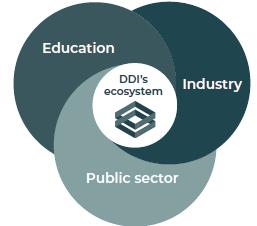
When you join DDI, you join a vibrant and dynamic ecosystem of more than 180 companies working for the Danish data center ecosystem
A DDI membership provides promotional benefits, invitations to educational networking events, live and virtual conferences, the latest industry news, and much more
AI,quantumandthe infrastructurerace: Denmark’sroleinthenext computeera
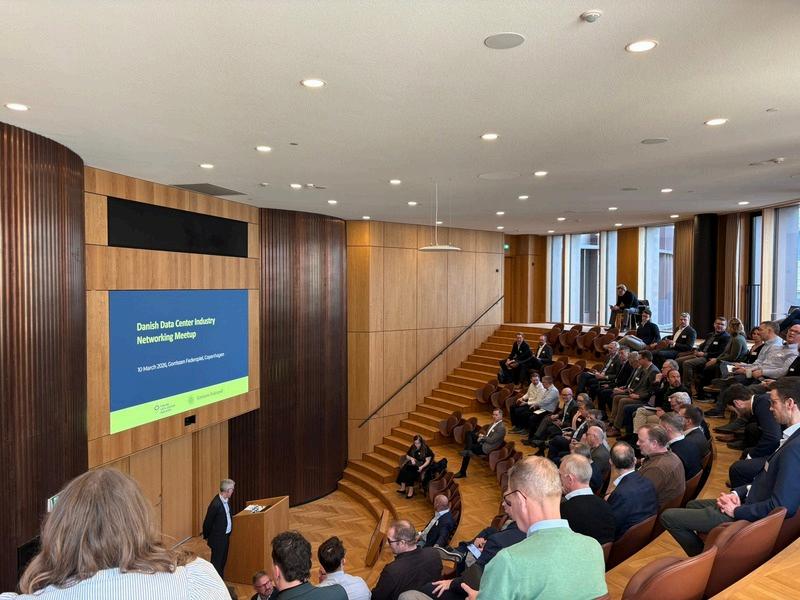
The discussions throughout the afternoon pointed to a common theme: the next generation of computing will depend not only on technological breakthroughs, but also on the infrastructure needed to run them
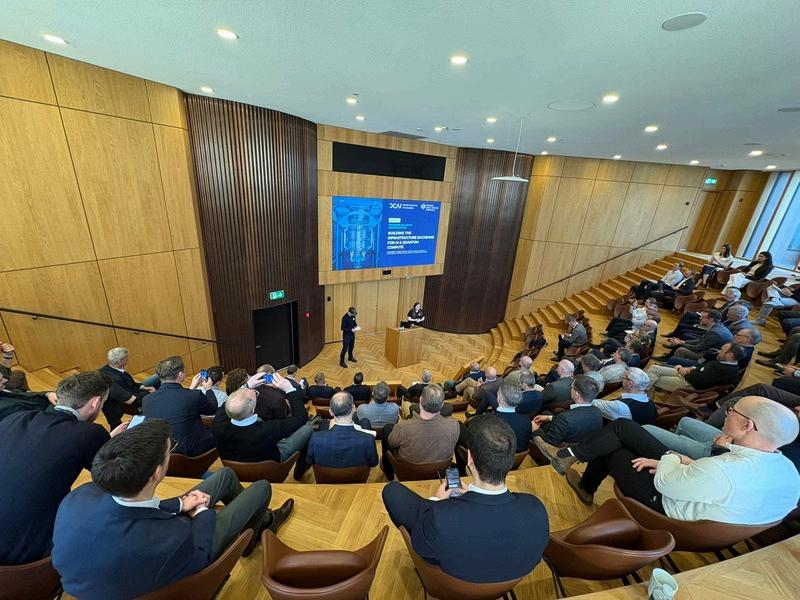
Opening the meetup, CEO Henrik Hansen reflected on the broader political context surrounding the industry “We are in the middle of an election campaign, but not a lot of people are talking about the digital economy –which we think is very important We will do what we can from our side to push this agenda ”
At the same time, demand for digital infrastructure continues to grow rapidly as AI adoption accelerates across industries Hansen pointed to figures from Energinet indicating that roughly 15 GW of potential data center capacity is currently in the connection pipeline, which is more than double Denmark’s current peak electricity demand.
However, the figure reflects project pipelines rather than actual demand. Many applications are early-stage proposals, and other sectors such as batteries and Power-to-X are also contributing to the growing queue for grid access. Energinet recently introduced a temporary pause on new grid connection applications while implementing a new maturity prioritization model
DDI’s upcoming market report, to be published later this spring, will aim to bring more realistic perspectives into the public debate around infrastructure demand
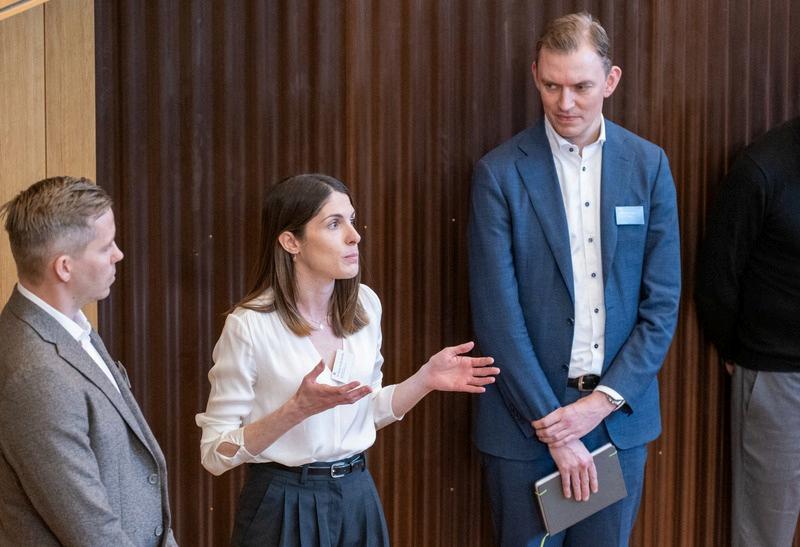
New whitepaper highlights infrastructure challenge The meetup also marked the launch of a new whitepaper exploring Denmark’s role in the emerging hybrid computing landscape Presenting the report, Merima Dzanic, Head of Strategy & Operations at Danish Data Center Industry, emphasized that the shift from research environments to operational infrastructure will be a defining development for the digital economy
“Denmark has a quantum strategy Denmark has an AI strategy But Denmark does not have a data center strategy You can’t build a house without the foundation ”
The whitepaper highlights how hybrid AI–quantum computing will increasingly depend on tightly integrated infrastructure, where AI systems, high-performance computing and emerging quantum processors operate together inside advanced data center environments.
Countries that align digital infrastructure, energy systems and research investments early on will be best positioned to translate technological breakthroughs into industrial competitiveness and economic growth
Denmark has a quantum strategy. Denmark has an AI strategy. But Denmark does not have a data center strategy. You can’t build a house without the foundation.
Merima Dzanic
Legal complexity grows alongside digital infrastructure
The expansion of digital infrastructure is also creating new legal and regulatory challenges
Law firm Gorrissen Federspiel, also the hosts of the networking meetup, recently established a dedicated cross-functional team focused on the data center sector Partner Christian Halskov Saur explained that the firm has worked with infrastructure and technology companies for many years, but that the growing scale and complexity of the sector has created the need for deeper specialization. “Where there is complexity, there is room for us.”
His colleague Tue Goldschmieding highlighted that data center investments must increasingly navigate long time horizons in a rapidly evolving technological landscape Compliance requirements, cybersecurity considerations, geopolitical developments and supplychain dependencies are all becoming part of the regulatory landscape surrounding digital infrastructure
At the same time, many regulatory frameworks originate at EU level while interpretation and implementation may differ between member states, creating additional complexity for companies operating across borders
Quantum computing enters the infrastructure discussion
Stefan Jofors, Senior Analyst at DatacenterHawk, provided an overview of the global quantum landscape and its potential implications for digital infrastructure Quantum computing remains in its early stages and most existing installations remain research-focused However, global investment is accelerating rapidly as governments and technology companies compete to develop commercially viable systems
Technology companies such as IBM, Alphabet, Microsoft and Amazon are investing heavily, with many analysts expecting the first commercially relevant systems to emerge toward the end of the decade.
Rather than replacing classical computing systems, quantum technologies are expected to operate alongside them “What everyone agrees on is quantum is coming and it will have to be integrated into existing data centers, cloud and everything we do,” said Stefan Jofors This hybrid model will require new forms of infrastructure integration between AI systems, highperformance computing environments and quantum processors For data center operators this raises new infrastructure questions, including cryogenic cooling, vibration shielding, specialized power systems and hybrid connectivity between different compute architectures
centers
Artificial intelligence is already changing how data centers must be designed and operated In his presentation, Nikolaj Haaning, Director of Innovation & Sustainability at Rambøll, explored the practical engineering implications of AI infrastructure, where rack densities, cooling systems and power requirements are increasing rapidly
Liquid cooling systems are becoming increasingly necessary as compute density rises, while facilities must adapt to heavier racks, higher power loads and new thermal management requirements
Panel discussion: Can Denmark scale the infrastructure needed?
The event concluded with a panel discussion examining whether Denmark can realistically scale infrastructure for the next wave of computing
Participants included Marc Christensen from Digital Realty, Nicolai Haaning from Rambøll, Poul Kjeldgaard from Dell, Maria Cerdá Sevilla from DTU, and Christoffer Fode from Gorrissen Federspiel
From a research perspective, Maria Cerdá Sevilla emphasized that quantum technologies remain in early stages, but that global investment and collaboration are accelerating The panel also discussed how future applications in areas such as life sciences, materials research and optimization could combine AI and quantum systems in new ways
Several panelists pointed to Denmark’s strong research environment, renewable energy profile and growing digital infrastructure ecosystem as important advantages. Realizing that potential will require stronger coordination between energy systems, digital infrastructure planning and long-term technology policy.
The next wave of computing will not only be shaped by research breakthroughs It will also depend on the infrastructure capable of running those technologies at scale
HybridAI–Quantum computingwilldependon datacenterinfrastructure
A new whitepaper from Danish Data Center Industry (DDI), the Danish Centre for AI Innovation (DCAI), and BoldQubit highlights how the next generation of computing will increasingly take place in advanced data center environments where AI, high-performance computing, and quantum processors operate together.
The report argues that the future of hybrid AI–quantum computing will depend not only on technological breakthroughs, but on the digital infrastructure capable of running these systems at scale. High-density compute environments, reliable energy systems, advanced networking, and specialized facilities will form the execution layer of the next computing paradigm
Download whitepaper here:
The whitepaper outlines a framework for strengthening Denmark’s position as a European hub for hybrid AI–quantum computing
Key recommendations include:
Recognizing data centers hosting advanced computing workloads as strategic digital infrastructure
Aligning digital infrastructure planning with energy and climate policy
Strengthening collaboration between research institutions, industry, and infrastructure operators
Investing in workforce development and operational capabilities for hybrid computing environments
Mobilizing coordinated public and private investment in next-generation computing infrastructure



BeyondPowerandLand: WhyConnectivityMatters
We asked Erik Norup from DE-CIX how connectivity is shaping data center development and what it means for Denmark’s position in the wider European infrastructure landscape.
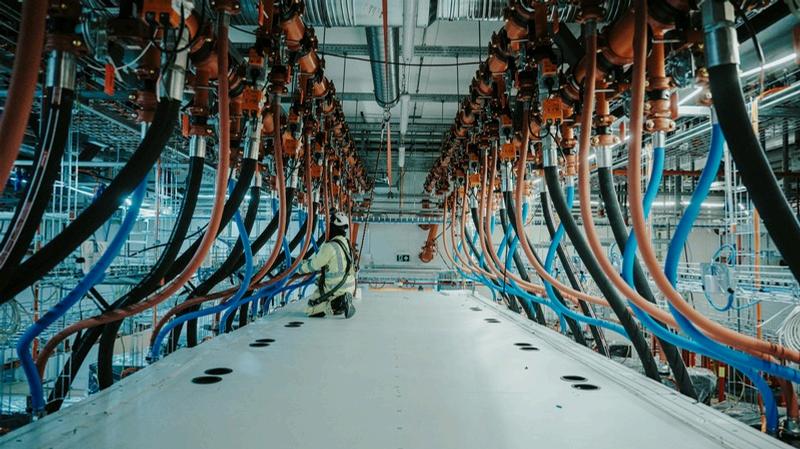
When data center locations are discussed, the focus often falls on land availability and power supply But another factor is just as critical: connectivity Without high-capacity, reliable connections to networks, clouds and users, even the most advanced data center cannot deliver digital services
Q: When people discuss data center location decisions, the focus is often on land and power. Where does connectivity fit into that equation? Connectivity is as important as power It is a utility that needs to be planned well in advance of opening the data center to services
Bringing fiber in from local ISPs is like laying railway tracks You need to determine which services you need - these can be seen as the trains Where should they go, and how they should be configured? Should it be an express train? Should it be protected? And so on.
The world’s best data center is worthless without good connectivity. As an example, the BULK data center campus in Oslo has around 60 networks connected to the site.
If a data center provider has several sites, they are often interconnected so that data and services can move freely between locations - something that Digital Realty and Equinix promote as their “Fabric ” DE-CIX can offer similar connectivity between data centers, as well as between data centers and external networks, enabling smaller local data centers to achieve connectivity comparable to larger players
Q: How would you describe Denmark’s connectivity position today, compared to other Nordic or European data center markets?
Compared to other Nordic markets, Denmark has a clear advantage due to its proximity to Hamburg, Frankfurt, and Amsterdam, which are among the largest cloud centers in Europe Some see Esbjerg as a suburb of Hamburg - part of an economic region with a GDP comparable to Denmark.
Denmark is only around four milliseconds from Hamburg, which is a clear advantage. In addition, Denmark’s full EU membership makes data processing and storage straightforward from a legal perspective for German customers.
The DE-CIX network provides fast, redundant and direct connections to Hamburg, Amsterdam and Frankfurt, home to one of the world’s largest Internet exchanges
Esbjerg’s proximity to the Blåbjerg landing station for the Havfrue cable from the U S also creates opportunities DE-CIX has equipment at both landing stations, enabling a range of transatlantic connectivity services
A Nordic Example: Connectivity and AI readiness in practice
Bulk Infrastructure places connectivity at the core of its data center design
Bulk’s sites support a wide range of workloads, from smaller deployments to large-scale AI environments
Connectivity is built across multiple layers, including terrestrial and subsea fiber routes, access to multiple network providers and interconnection platforms enabling traffic exchange across regions.
AI workloads are typically deployed in hybrid environments, where data and applications move between on-premise infrastructure, cloud platforms and different locations.
Bandwidth requirements are increasing rapidly. While 100G connections have become standard, demand is moving toward significantly higher capacities, driven by distributed AI workloads.
Resilience is ensured through multiple connectivity routes and redundancy at several levels, reducing dependency on single connections
At the same time, the rise of AI is beginning to reshape infrastructure requirements This shift is increasing demands not only on power and cooling, but also on connectivity
Q: With the rapid growth of AI and highperformance computing, how are connectivity requirements evolving for data centers?
AI is a major topic at the moment Many German data centers are approaching full capacity, and it is increasingly difficult to find facilities that can meet the new demands for power and cooling, for example for NVIDIA GPUs
Nordic data centers are relatively new compared to those in central Europe and benefit from lower cooling costs due to the climate Many operators, including BULK, are aligning with future requirements based on the NVIDIA roadmap.
Expanding, for example, a German enterprise AI service to the Nordics is therefore attractive. However, AI places specific flexibility requirements on the networks connecting German and Nordic data centers. For the training phase, capacity and speed are essential, as large datasets must be transferred quickly
For the inference phase, the AI application must be accessible to users in central Europe, making latency and ISP connectivity important
For the backup phase, requirements shift Backup locations may differ from the AI site, with a focus on cost and security rather than cooling Here, the network must provide fast and secure connectivity between AI and backup data centers
As a result, data centers need to define their role, whether as HPC, AI or backup, as each has different requirements for space, power, cooling and connectivity
The world’s best data center is worthless without good connectivity.
Erik Norup
What role does a neutral Connectivity & Internet Exchange player fulfill in a data center ecosystem, and how do they complement traditional network infrastructure?
DE-CIX operates both as a connectivity provider and an Internet Exchange (IX)
Traditionally, enterprise networks were designed to connect a limited number of locations, such as headquarters, subsidiaries and production sites, using technologies like MPLS or managed service providers These setups were typically built in-house, involving multiple contracts, routers and firewalls
With the rapid adoption of cloud services, particularly in the Nordics, this model has changed significantly Many enterprises now operate across multiple cloud providers, often located outside their home country, while maintaining on-premise infrastructure.
As a result, connectivity requirements have become more complex. Applications and data may be distributed across multiple locations, and networks must be flexible in terms of speed and accessibility for users, partners and customers.
This makes direct cloud access, as well as the ability to move data between clouds and locations, increasingly important DE-CIX as a connectivity provider also enables the creation of closed user groups across geographies and supports digital platforms that must be accessible via local ISP networks

Q: Looking five years ahead, what must Denmark get right to combine the green transition with digital competitiveness?
Within five years, Denmark must establish a model where data centers are part of the solution for a wellfunctioning energy system - not simply part of the demand curve
Data centers have the capital strength and long-term electricity demand needed to underpin new renewable energy projects But stronger engagement across the value chain will likely be required
The key principle is additionality New electricity demand from data centers must trigger new renewable capacity that matches consumption both geographically and over time
If Denmark succeeds in linking data center expansion directly to renewable development, while enabling data centers to provide system services, the country can strengthen its position as both a green energy frontrunner and a competitive digital hub.
About Erik Norup & DE-CIX
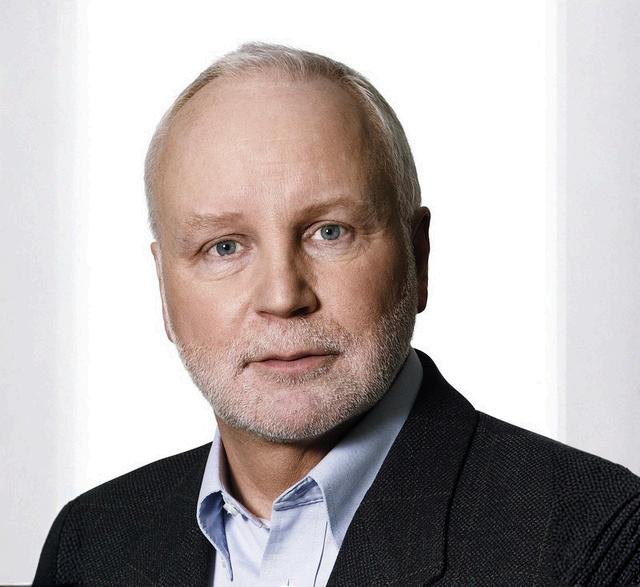
Erik Norup is Business Development Manager, Cloud & Interconnection Services at DE-CIX, where he works with connectivity solutions across data centers, cloud platforms and network providers in the Nordic region
DE-CIX is a global Internet Exchange operator, providing carrier- and data center-neutral interconnection platforms across Europe, the Middle East, the Americas, Asia and Africa Its services enable networks, cloud providers and enterprises to exchange data traffic efficiently and securely
DE-CIX Internet Exchanges are accessible from over 600 cities in more than 100 countries and across more than 1,000 data centers, with more than 4,000 connected networks As a carrier- and data centerneutral platform, DE-CIX provides a meeting point for networks, cloud providers and enterprises
EnergySystems
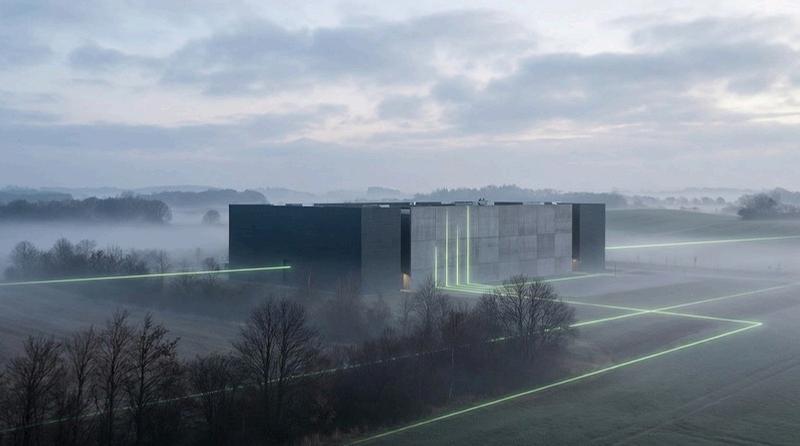
No power. No compute.
The expansion of digital infrastructure is now directly tied to the capacity and flexibility of energy systems. Grid access, electrification, and renewable integration are no longer background conditions. They define where and how data centers can be built.
As demand accelerates, energy has become the key constraint as well as the key enabler.
TheEnergySysteminan ElectrifiedandDigital Economy
How electrification, AI, and new industrial demand are reshaping energy infrastructure planning.
As electrification accelerates across Europe, electricity systems are facing a new reality Growing industrial demand, the expansion of AI infrastructure, and the continued rollout of renewable energy are reshaping how power systems must be planned and operated
Denmark is increasingly experiencing these dynamics firsthand Søren Dupont Kristensen of Energinet, Denmark’s TSO, shares his perspective on the evolving energy landscape, the role of data centers in the energy system, and what it will take to align digital growth with the green transition
Q: Electrification is accelerating across industry, transport, and digital infrastructure How is Energinet experiencing this development right now?
We are experiencing an unprecedented surge in demand. The volume of connection requests now exceeds today’s peak electricity consumption in Denmark by a factor of eight.
Energinet is building infrastructure as fast as possible and constantly optimizing our ability to deliver largescale infrastructure projects. However, demand is growing at an extraordinary pace.
To maintain a clear overview and better align grid capacity with demand, we have introduced a temporary pause on new grid connections while accelerating measures to unlock capacity and rethink how projects are prioritized
Editor’s note: On 2 March 2026, Energinet announced a temporary pause on new grid connection requests to reassess available capacity and prioritize projects
Q: The debate around grid capacity and access to electricity has intensified across Denmark and Europe. From your perspective, what are the key misunderstandings in the broader discussion? The biggest misunderstanding is that grid expansion is simply a matter of “’building faster ’
In reality, developing major transmission infrastructure can take close to a decade Much of that time is spent on permitting processes, legal procedures, and engaging responsibly with the communities affected by new infrastructure.
What’s missing in the public debate is the recognition that grid capacity is a scarce resource. This means we must prioritize how it is used. That is ultimately a political and strategic discussion - not just a technical challenge for the transmission system operator.
If Denmark succeeds in linking data center expansion directly to renewable developmentwhile enabling data centers to provide system services - the country can strengthen its position as both a green energy frontrunner and a competitive digital hub.
Søren Dupont Kristensen
Q: Data centers are a key part of Denmark’s digital infrastructure. How do you see their role within the overall energy system - today and going forward? Data centers are potentially one of the main drivers of future electricity demand growth in Denmark They are critical digital infrastructure, and society depends on the services they provide
At the same time, we must consider how data centers interact with the energy system and ensure they create net value for society
From an energy system perspective, we need data centers to not just be consumers of electricity, but an integrated part of the energy system This includes locating facilities where grid capacity is not scarce and where they can co-locate with renewable generation and storage such as wind, solar, and batteries
The role of data centers in the energy system raises a broader question: how can electricity infrastructure and new industrial demand grow in step? For Energinet, the challenge ahead is not only expanding the grid but ensuring that digital growth and energy system development move forward together.
Q: What structural changes are required for energy infrastructure expansion and growing industrial demand - including AI and data centers - to develop in parallel?
The most important shift is moving toward anticipatory planning We cannot wait until demand is fully materialized before expanding the grid If we do, we are already behind
We need faster and more streamlined permitting and a clearer national framework for prioritization At the same time, large electricity consumers - including AI infrastructure and data centers - must be prepared to offer flexibility
Otherwise, it is simply not possible for us to accommodate the requests for grid connections for data centers
Co-location will therefore become increasingly important Locating data centers alongside wind, solar, and battery storage can reduce the need for grid expansion and enable projects to be developed faster.
Q: Looking five years ahead, what must Denmark get right to combine the green transition with digital competitiveness?
Within five years, Denmark must establish a model where data centers are part of the solution for a wellfunctioning energy system - not simply part of the demand curve
Data centers have the capital strength and long-term electricity demand needed to underpin new renewable energy projects But stronger engagement across the value chain will likely be required
The key principle is additionality New electricity demand from data centers must trigger new renewable capacity that matches consumption both geographically and over time
If Denmark succeeds in linking data center expansion directly to renewable development - while enabling data centers to provide system services - the country can strengthen its position as both a green energy frontrunner and a competitive digital hub.
About
Søren Dupont Kristensen
As Chief Operating Officer at Energinet, Søren Dupont Kristensen is responsible for ensuring that the organisation delivers on its core tasks and strategic priorities
He oversees day-to-day operations and drives execution across major infrastructure and system initiatives
His role focuses on turning strategy into tangible results, improving organisational performance, and ensuring alignment across the business
FromPowerConsumers toSystemAssets
Alberto Ravagni discusses the future for flexible and integrated data centers, repositioning data centers as active infrastructure within energy and industrial systems – and the consequences of doing so.
As data center capacity continues to expand rapidly, the data center industry is increasingly confronted with a dual challenge: supporting exponential digital growth while operating within tightening energy and climate constraints Focusing solely on efficiency and decarbonisation risks overlooking a deeper structural shift required to integrate data centers into energy and industrial systems
Against this backdrop, the concept of Net Zero Digital Energy Hubs is gaining traction Not as a new technology, but as a new way of understanding how digital infrastructure interacts with energy systems, grids, and local communities
Q: What distinguishes a Net Zero Digital Energy Hub from a regular, highly efficient data center?
A highly efficient data center focuses on optimizing its internal performance - reducing energy consumption, improving cooling efficiency, and lowering emissions within its own operational boundaries. These efforts are essential, but they remain largely inward-looking.
A Net Zero Digital Energy Hub goes one step further. It is designed to operate as part of a broader energy and industrial system, interacting with grids, renewable generation, heat networks, and local infrastructure The objective is not only to reduce impact, but to actively contribute to system efficiency and resilience
So the difference is not primarily technological, but structural It reflects a shift from isolated optimization toward more integrated system design
Q: At what point does digital infrastructure become part of the energy system rather than just a consumer of it?
Digital infrastructure becomes part of the energy system when its interaction with energy flows is intentional and embedded into design and operations
This occurs when considerations such as grid constraints, renewable availability, heat reuse opportunities, and flexibility requirements directly influence how facilities are planned and operated At that stage, the data center is not just drawing power from the system but supporting system balance and long-term efficiency.
This transition does not happen overnight, but it fundamentally changes the role of data centers in future energy systems.
In other words, improving efficiency alone does not redefine the role of data centers. System integration does
This transition does not happen overnight, but it fundamentally changes the role of data centers in future energy systems. In other words, improving efficiency alone does not redefine the role of data centerssystem integration does.
Alberto Ravagni
What system integration means for control and autonomy
Moving from isolated facilities to integrated system assets has consequences beyond design and efficiency Repositioning data centers within wider energy systems challenges long-standing assumptions about autonomy, control, and responsibility, while raising new questions about how digital infrastructure is planned and governed
Q: As data centers become more integrated into energy systems, what changes in how they are planned and operated?
As data centers become more integrated into energy systems, they move from operating in isolation toward operating in coordination with other parts of the system
Historically, data centers have been designed for maximum autonomy to ensure reliability and predictability. That model assumes that power is always available on demand and that operations are largely independent from external system conditions.
With deeper integration, operators will increasingly need to consider grid constraints, energy availability, and opportunities for interaction with surrounding infrastructure This may involve closer coordination with grid operators, greater transparency around energy use, and in some cases aligning certain aspects of operations with broader system needs
Reliability remains non-negotiable But the way it is achieved may evolve - from pure redundancy and isolation toward a combination of resilience, flexibility, and system coordination
Q: As data centers become more system-critical, are existing planning and governance frameworks fit for purpose?
In many respects, data centers already function as critical infrastructure due to their importance to economies and societies What is still evolving is how this role is recognized and coordinated within existing planning and energy frameworks
Closer alignment with public planning processes and long-term energy and infrastructure strategies does not necessarily mean more restrictive regulation. Rather, it reflects the need for better coordination as data centers become more interconnected with energy systems and other critical infrastructure.
The key question is whether the industry actively contributes to shaping this coordination, or whether frameworks evolve without sufficient consideration of operational realities and system dependencies
Flexibility in an AI-driven world
Deeper system integration translates into new operational requirements Among these, flexibility is often highlighted as a key enabler Its practical meaning, limits, and trade-offs, however, are not always clearly understood, particularly in the context of rising power densities and AI-driven workloads
Q: Why must flexibility be designed in from day one for digital energy hubs?
Flexibility cannot be effectively added after the fact It influences architectural choices, cooling concepts, power systems, and more, from the earliest design stages
As power densities increase and demand patterns become more volatile - particularly with AI and highperformance computing - flexibility becomes a core system requirement rather than an optional optimization.
Designing for flexibility from the outset is essential if digital energy hubs are to function effectively within future energy systems.
Q: Which workloads can realistically provide flexibility?
Flexibility varies significantly across different types of workloads Certain batch processes and non-timecritical tasks can offer some degree of flexibility, for example by shifting execution in time However, many AI and HPC workloads have strict performance and availability requirements and cannot easily be interrupted or delayed
There is a risk of overestimating how much flexibility can come from compute demand alone Flexibility will need to come from a combination of infrastructure-level solutions including energy storage and backup energy
A realistic understanding of these limits is essential for credible system planning
From collaboration to shared risk
Addressing these constraints cannot be achieved through technical optimization alone The interdependence between digital infrastructure, energy systems, and markets requires coordination across actors who do not traditionally operate within the same decision frameworks
Q: Why do most collaborations fail to deliver system-level change?
Many collaborations are designed to align interests without fully addressing conflicting incentives
However, system-level change requires stakeholders to engage with trade-offs, uncertainty, and shared risk

About Alberto Ravagni and the Net Zero Innovation Hub
Alberto Ravagni is the CEO of the Net Zero Innovation Hub for Data Centers.
Alberto Ravagni brings over 20 years of experience in the energy industry and is a clean energy architect and industry expert in clean energy, energy storage, and fuel cell technologies
He was the co-founder and Managing Director of InfraPrime℠ , a climate neutral data center infrastructure company Previously, he was the founder and CEO of SOLIDPower, a market leading fuel cells company, which commercialized fuel cells generators in megawatt scale for residential, SME, and data center clients including the Microsoft Fuel Cell Energy Lab in Seattle, Washington, USA Ravagni was a member of the first board of the Joint Technology Initiative for Hydrogen and Fuel Cells of the European Commission, a public-private partnership which manages a €1 billion innovation program to drive the transition to zero carbon energy systems Ravagni is a proven entrepreneur who has held global executive management positions
The Net Zero Innovation Hub is an industry consortium launched in September 2023 by Data4, Danfoss, Google, Microsoft, Schneider Electric and Vertiv, to accelerate European data centers towards a net zero future.
When collaboration avoids these complexities, it often results in incremental improvements rather than structural change This is not a failure of intent, but a limitation of how collaboration is typically structured
Q: What role does the Net Zero Innovation Hub for Data Centers play that individual companies cannot?
The Net Zero Innovation Hub provides a neutral platform where system-level challenges can be addressed collectively It enables operators, technology providers, and energy actors to test solutions, de-risk innovation, and explore interdependencies that cannot be resolved by individual organizations acting alone
Looking to the Future
As Net Zero Digital Energy Hubs move from concept to early implementation, the focus is shifting from technological feasibility to system readiness. Whether these models can scale will depend not only on innovation within data centers, but on the ability of energy markets, regulation, and planning frameworks to evolve in parallel.
Q: What would success – or failure – look like by 2030?
Success would mean that Net Zero Digital Energy Hubs are no longer seen as isolated pilots, but as a recognized and scalable infrastructure model supported by markets, regulation, and planning frameworks
Failure would mean that technically advanced solutions remain confined to individual projects because the surrounding systems; energy markets, grid infrastructure, and governance, did not evolve accordingly
In that case, the limiting factor would not be technology, but system readiness
Success would mean that Net Zero Digital Energy Hubs are no longer seen as isolated pilots, but as a recognized and scalable infrastructure model supported by markets, regulation, and planning frameworks.
Alberto Ravagni
DataCentersandthe FutureEnergySystem
As digital infrastructure expands, electricity demand from data centers is becoming a defining factor in the future energy system For renewable energy developers, this rapid growth presents both new opportunities and new challenges.
Knud Erik Andersen, CEO of European Energy, shares how rising data center demand is shaping renewable energy investment, infrastructure planning, and the development of new integrated energy projects
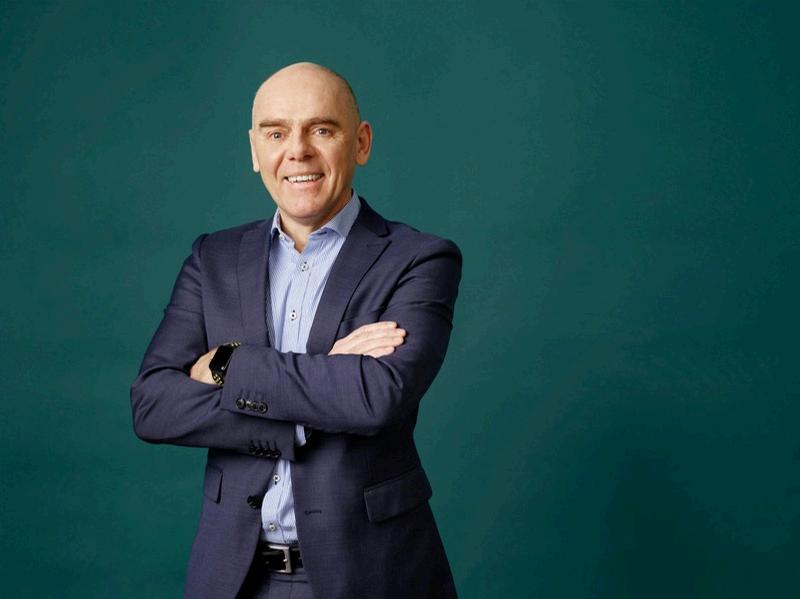
For companies developing renewable energy projects around the world, the scale and predictability of data center demand is increasingly becoming a key factor in investment decisions
Q: From a renewable energy developer’s perspective - and based on your experience building large-scale energy projects globally - how do you see the role of data centers in the future energy system? Will they primarily remain large electricity consumers, or can they evolve into strategic system assets that enable renewable expansion?
Data centers will remain major electricity consumers In the right framework, however, they can also become strategic enablers of renewable expansion Their scale, long-term demand profile and credit quality can help support investment in new generation capacity, storage and grid infrastructure. At the same time, they can play an integral part in sector coupling where, for instance, excess heat can be distributed through nearby district heating systems.
The key question is whether demand is developed in parallel with new renewable energy and system flexibility. If that happens, data centers can support earlier investment decisions on renewables and help create the business case for more integrated energy solutions Over time, the most valuable data centers will not simply be those with access to power, but those designed as part of a more complex energy system
As demand for digital infrastructure accelerates, however, energy systems are struggling to keep pace In many countries, grid infrastructure, permitting processes and planning frameworks were not designed for the scale and speed of electricity demand now emerging from sectors such as data centers, electrified industry and power-to-X
For renewable energy developers, this creates both new opportunities and new constraints
Over time, the most valuable data centers will not simply be those with access to power, but those designed as part of a more complex energy system.
Knud Erik Andersen
Q: Grid capacity, permitting, and connection timelines are under pressure in many markets. What are the most significant structural bottlenecks today when integrating large-scale data center demand with renewable energy expansion?
The biggest bottleneck is that electricity demand is moving faster than the infrastructure needed to support it In many markets, grid buildout and permitting takes too long, and connection queues do not always reflect real project maturity
Energy production, digital infrastructure and district heating need to be planned together
Right now it is still too fragmented, meaning it is difficult to capture synergies between generation, storage, transmission, demand and heat reuse In addition, market design in some regions still does not adequately reward flexibility, co-location or efficient use of constrained grid capacity.
So the issue is not only a lack of generation. It is also a lack of coordinated planning, faster permitting, clearer connection frameworks and stronger incentives for integrated infrastructure development.
These structural challenges also influence how renewable projects are financed and structured Large infrastructure investments depend on long-term visibility around demand, regulation and market frameworks
This is where the growing demand from data centers is increasingly attracting attention from renewable energy developers
Q: The concept of “Digital Energy Hubs” suggests closer integration between data centers, renewables, storage, and heat reuse From a commercial standpoint, what must be in place for this integration to move from concept to scalable investment reality?
First, the commercial model must be bankable That means long-term visibility on electricity demand, a clear route to market for renewable power, and a framework in which storage and flexibility can generate stable revenues.
Second, the physical and regulatory conditions must support integration. Co-location needs to be possible in practice, grid access must be structured in a way that values efficient system design, and there must be local demand or infrastructure for heat reuse if that element is to work commercially
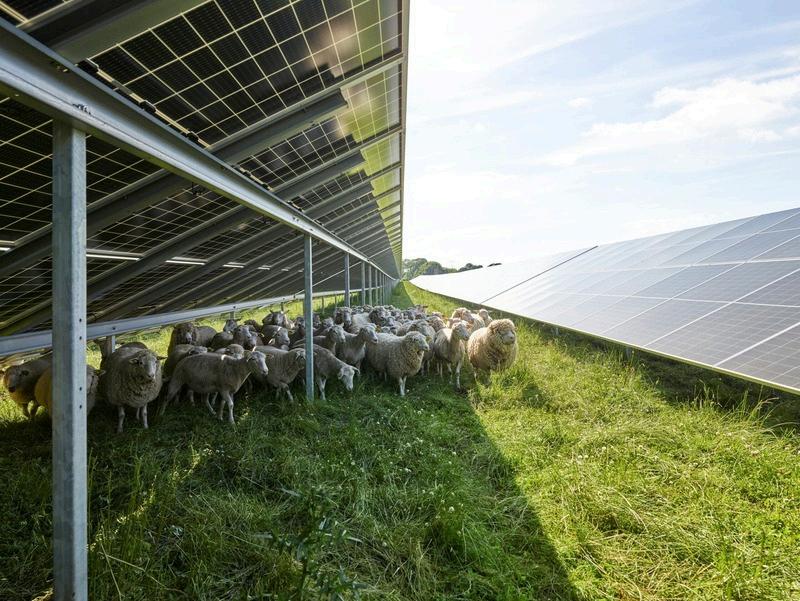
Picture: European Energy Solar Park in Kassø, Denmark Credit: European Energy
In this context, large and predictable electricity consumers can play an important role
Q: What makes a large, long-term electricity consumer like a data center commercially attractive - or challenging - when planning new renewable and storage projects?
What makes a data center attractive is predictability A long-term, large-scale off-taker can provide demand certainty that supports investment in new renewable capacity and storage That improves visibility for developers and lenders and can strengthen the economics of an energy park
The challenge is that data center demand is constant, while renewable generation is variable Bridging that gap requires a combination of storage, grid access, market exposure and, in some cases, backup solutions. It also requires careful structuring of contracts so that risk is allocated realistically between the parties.
Commercially, data centers are therefore very attractive when there is a clear long-term framework and a willingness to build integrated solutions. They become more challenging when the expectation is firm, low-cost, green power without recognizing the infrastructure and flexibility required behind it
At the same time, the sustainability ambitions of many data center operators are helping to accelerate the green transition, which is one of the reasons cooperation can work well
Looking ahead, Andersen expects the relationship between digital demand and renewable energy development to become even closer
Q: Looking toward 2030, do you believe closer integration between energy parks and digital infrastructure can become a meaningful driver of the energy transition? Why?
Yes, I do Already for more than a decade, European Energy has realized renewable energy projects through PPA agreements with companies that use the electricity for data centers By 2030, I believe this integration will become an even more meaningful driver of the energy transition
That said, it will not happen automatically It depends on policy, permitting, market design and commercial discipline But where those elements come together, the combination of energy parks and digital infrastructure can become an important part of the next phase of the transition.
As electricity demand from digital infrastructure continues to grow, the relationship between renewable energy development and large digital loads will become increasingly important for the future energy system
About Knud Erik Andersen
Knud Erik Andersen is CEO, co-owner and -founder of European Energy Knud Erik has extensive experience in the renewable energy sector with all aspects of the value chain
He is responsible for the construction, operation and financing of more than 3 GW of renewable energy capacity in more than 20 countries, primarily in Europe, but also in Australia, USA and Brazil
HowDataCentersCan SupporttheEnergy System:EmergingModels
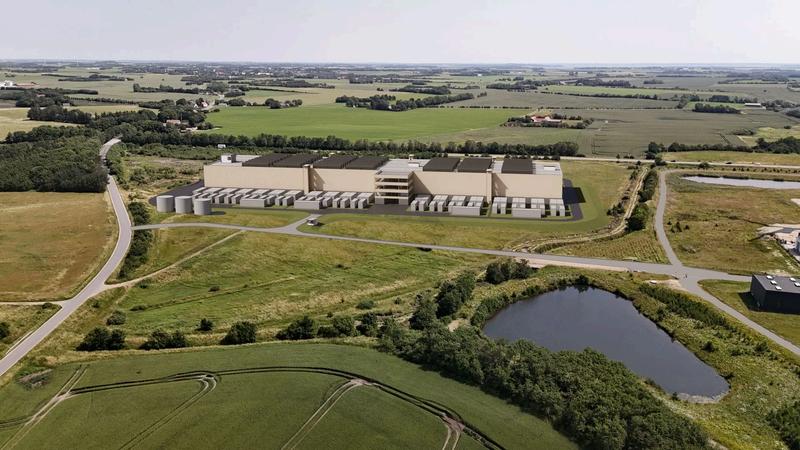
Data centers form the backbone of modern digital infrastructure, supporting everything from cloud services and AI development to healthcare, public administration and financial services
While the computing needed for these societal functions requires growing amounts of power, data centers are increasingly part of the solution
Around the world, projects are emerging that accelerate renewable energy deployment, support electricity grid stability, and reuse surplus heat In some cases, local energy solutions are being developed that allow projects to move forward while grid infrastructure is expanded
When digital infrastructure and energy systems are planned together, data centers can contribute not only to the digital economy, but also to more efficient and resilient energy systems.
In Denmark, where district heating networks and renewable energy already play a major role in the energy system, these models offer particularly strong opportunities for shaping both the digital and energy transition.
These developments are visible in a number of emerging models for integrating digital infrastructure into energy systems The following examples illustrate how these different approaches are already being implemented in practice While each project reflects local conditions, they demonstrate several emerging models for integrating digital infrastructure with renewable energy, electricity grids and local energy systems
How data centers can support energy systems Across Denmark and Europe, a number of projects show how data centers can be active partners in the energy system, pointing to a broader shift in how digital infrastructure interacts with energy systems
One important effect is that large data centers can accelerate investment in new energy infrastructure Their stable and long-term electricity demand can help finance new renewable energy projects
Data centers can also contribute directly to electrical system stability The technical systems inside data centers, including batteries and backup power systems, can support the stability of electricity grids
In regions where grid connections are delayed, localized energy solutions such as microgrids or “bringyour-own-energy” models are increasingly being explored. These systems can allow data centers to move forward while grid infrastructure is expanded. In a Nordic context, such solutions can increasingly rely on low-carbon energy sources, such as renewable electricity, energy storage and green gas supplied through existing gas infrastructure. Surplus heat from data centers can become a resource rather than waste.
In regions with district heating networks or nearby industries, this heat can supply homes and businesses while reducing overall energy consumption The most advanced projects show the benefits of planning digital infrastructure and energy systems together When data centers are integrated into industrial clusters, energy parks or district heating networks from the start, they can contribute to local economic development and more efficient energy use
Digital infrastructure is central to economic growth and technological development The way data centers are integrated into energy systems will play an important role in shaping both the digital transition and the energy transition
Examplesofenergysystemintegration:
Designing AI infrastructure as part of the energy system
CA Group and GreenLab (Skive, Denmark)
CA Group has signed an agreement to establish a flexible AI data center of up to 100 MW IT load at GreenLab’s industrial park in Skive
The project is designed around sector coupling, integrating large-scale digital infrastructure with renewable energy, storage and nearby industrial energy users
The facility will connect to GreenLab’s local energy system, which combines wind and solar production with storage and flexible demand
Backup systems combining batteries and sustainable fuel generation can be used as a flexibility asset when not required for backup, helping balance electricity supply and demand in the local and national grid
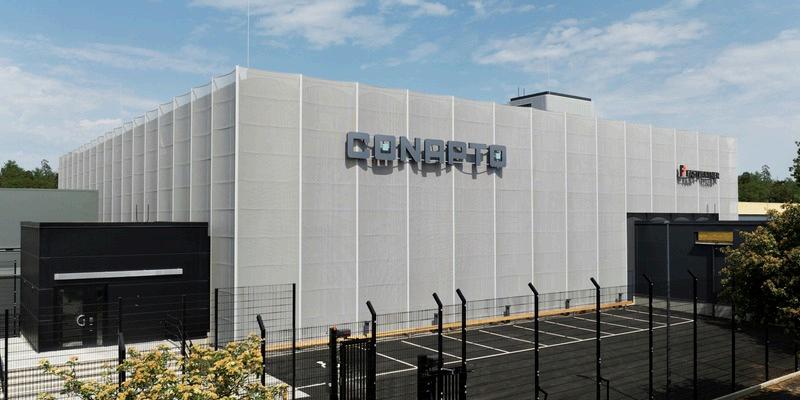
Supporting grid stability with data center infrastructure
Conapto (Stockholm, Sweden)
In Stockholm, data center operator Conapto has upgraded its infrastructure to participate in Sweden’s Fast Frequency Reserve market
Working with Vertiv, Coromatic, and energy platform provider Fever, Conapto has configured its UPS (uninterruptible power supply) systems and lithium-ion batteries so they can respond automatically to small fluctuations in grid frequency, helping stabilize the electricity system
This enables the data center to deliver frequency stabilization services while maintaining its primary role in protecting critical IT systems.
The case illustrates how infrastructure already present in many data centers, such as backup batteries, can also support the stability of electricity systems with high shares of renewable energy
Picture: Stockholm 4 South Credit: Conapto
Reusing data center heat in district heating systems (Odense and Høje-Taastrup - Denmark)
Several Danish projects demonstrate how surplus heat from data centers can be reused in district heating systems
In Odense, heat from a large data center is captured and upgraded through heat pumps before being supplied to the local district heating network The system can provide heating equivalent to around 6–7,000 households
A similar approach is being developed in HøjeTaastrup, where multiple data centers are working with local utilities to supply surplus heat to the regional district heating network
A new project involving a Microsoft data center is expected to deliver enough heat to warm around 6,000 homes once fully operational
Until recently, regulation limited the use of surplus heat from data centers in Denmark, with a price cap on surplus heat making several projects financially unviable The removal of this price cap in July 2025 has improved the conditions for heat reuse projects and is expected to enable additional integration between data centers and district heating systems
Sources: Fjernvarme Fyn, VEKS, and Danish district heating industry reporting
Accelerating clean energy deployment at grid scale Google and Xcel Energy (Minnesota, United States)
In Pine Island, Minnesota, Xcel Energy has signed an agreement to supply power to a new Google data center Under the arrangement, Google will cover the costs associated with its electricity service and related infrastructure
The agreement includes adding 1,900 MW of new clean energy capacity to the grid through the Clean Energy Accelerator Charge structure The new capacity consists of 1,400 MW of wind, 200 MW of solar and 300 MW of long-duration battery storage
The storage system, developed by Form Energy, will provide approximately 30 GWh of energy storage with a duration of up to 100 hours, designed to help balance renewable generation over longer periods
Google will also contribute $50 million to Xcel Energy’s Capacity*Connect program, which deploys distributed battery resources across the grid to strengthen reliability
Circular energy for local industry
Green Mountain and Hima Seafood (Norway)
In Norway, the data center company Green Mountain has partnered with aquaculture company Hima Seafood to reuse surplus heat from a data center to warm water in a trout farming facility
The system transfers heat from the data center’s cooling infrastructure to fish tanks before returning the cooled water to the data center’s cooling cycle The first phase of the project operates at around 1 75 megawatts of heat reuse capacity and may expand further in the future
This collaboration demonstrates how data centers can support local industries while improving energy efficiency
Microgrids as a bridging energy solution
AVK and Pure Data Centres (Dublin, Ireland)
In Dublin, Pure Data Centres and power solutions provider AVK have developed one of Europe’s first data centers operating on a dedicated microgrid The facility, designed for cloud and AI workloads, has a planned capacity of around 110 megawatts and represents an investment of roughly €1 billion.
A microgrid is a local energy system that can generate, store and distribute electricity independently of the main grid.
In this case, the system allows the project to move forward despite long grid connection timelines in Ireland The operators have indicated that the microgrid could later support the national grid once a connection becomes available
The project illustrates how localized energy systems can serve as a transitional solution while electricity infrastructure expands to meet growing demand from AI and digital services.
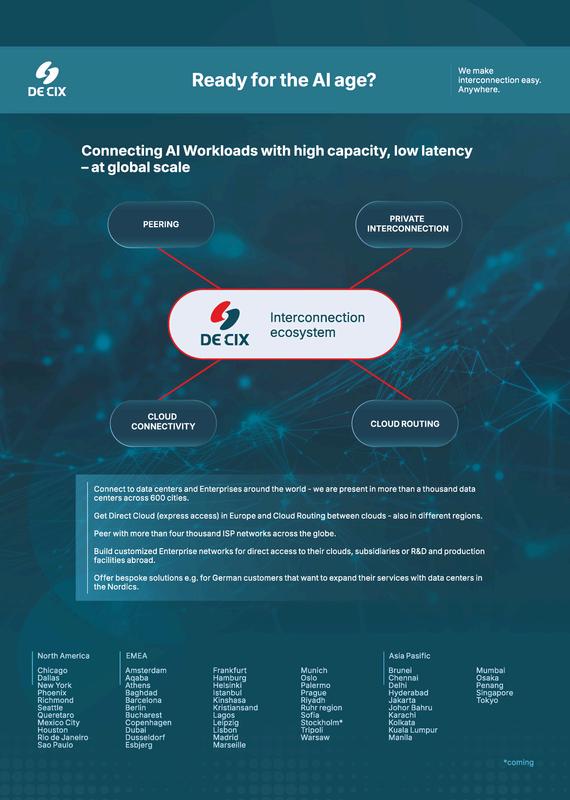
Poweringthefuture: Denmark’snextstepsfor energy-smartdata centers
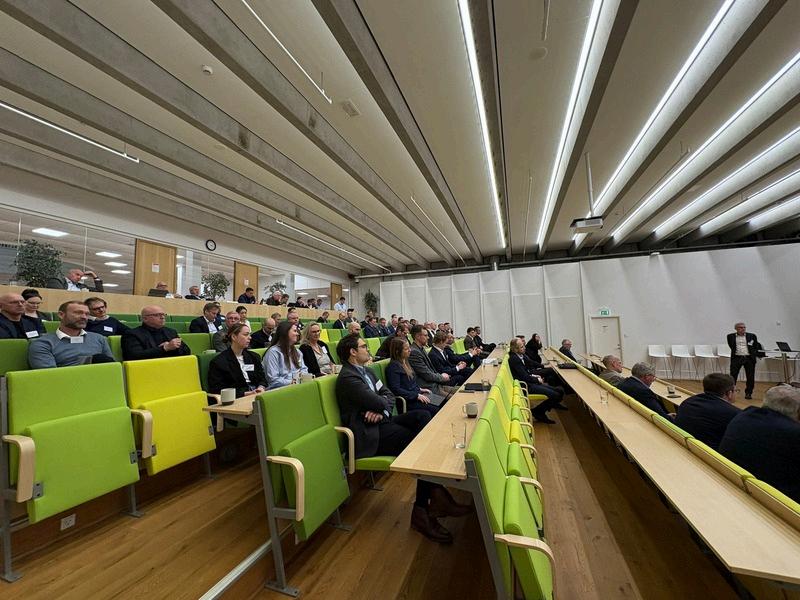
Merima Dzanic, Head of Strategy & Operations, presented DDI’s new whitepaper, “Denmark as a Data Center Nation: Building the Third Pillar of Europe’s Green and Digital Future,” which presents a clear framework for how data centers can evolve from passive electricity consumers to active partners in the energy system, thereby strengthening flexibility, supporting renewable growth, and attracting high-value digital investments
The message was clear: the sector stands at a pivotal moment As Merima explained: “We have 21st century technology running on 20th century infrastructure ” At the same time, Denmark has a structural advantage as “one of the only countries with two nationwide green energy infrastructures The third pillar is a competitive advantage for digital infrastructure Our green electricity grid combined with gas grid is a unique advantage.”
AI data centers push extreme density and faster delivery
The hosts from Schneider Electric highlighted how AI is driving a step-change in how facilities must be designed, built and operated. Henrik Lindberg described the rapid escalation in density. “Around the corner is 1000 kW per cabinet ” Time to market is increasingly decisive, and technologies such as NVIDIA SuperPods keep pushing rack density year after year, forcing continuous redesign
Schneider is positioning itself to support this evolution with liquid cooling, integrated power trains and reference designs developed alongside NVIDIA Niels Frost of Schneider Electric added that with higher density comes higher risk “The cost of a breach is consequential on bottom line and on stock ” Cybersecurity, compliance and visibility across the full power and cooling chain are now central to operating AI-scale environments
We have 21st century technology running on 20th century infrastructure.
Merima Dzanic
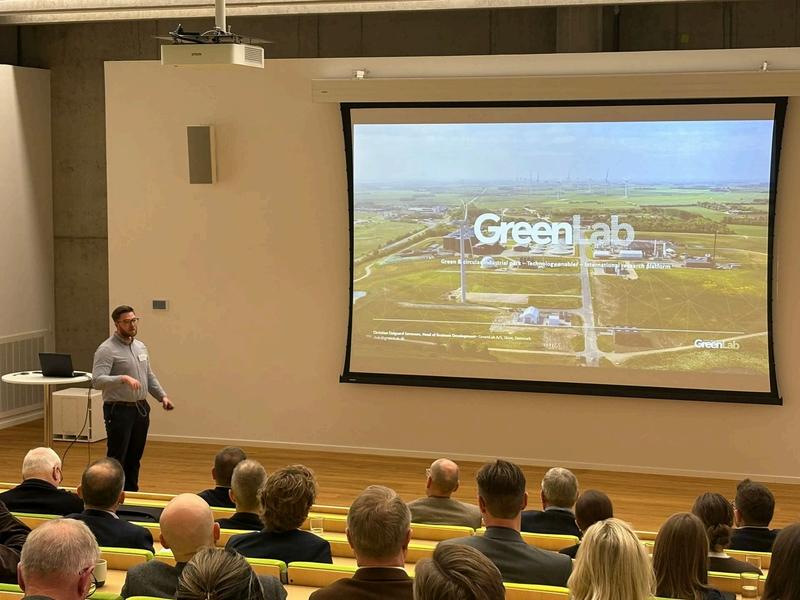
Energy flexibility central to next-generation data centers
DTU’s Henrik Madsen argued that Denmark’s current energy model cannot support the scale and speed of digitalization without major structural change “We need to make a disruption If we don’t disrupt, we won’t be able to compete ” Today’s grid expansion timelines lag far behind data center build times, creating a growing mismatch between needs and capacity
He called for a stronger focus on digital energy hubs, AI-based implicit flexibility and real time dynamic pricing to allow operators to actively support the system. In his view, digitalization is not a challenge to the energy system, but rather a tool to make it coherent, integrated and future-proof.
Energy hubs and industrial clusters create new pathways for green growth
GreenLab’s Christian Dalgaard Sørensen showed what a future energy system can look like when companies collaborate to generate, store, and share resources onsite “We are trying to create the energy system of the future ” He explained that while technology is advancing quickly, the commercial frameworks are still catching up “It is easy to draw this value chain on a board, but creating the commercial contracts is more challenging ”
He emphasized that data centers should not be seen as isolated infrastructure but as part of broader industrial ecosystems where energy, heat, byproducts, and storage interact. “It’s not a question anymore. I believe it’s the solution.”
Denmark’s competitive edge relies on faster planning and grid expansion
Green Power Denmark CEO Kristian Jensen provided a frank outlook on Europe’s shifting energy landscape Denmark’s high share of renewable electricity and its strong electrification profile are competitive strengths, but they are not guaranteed He warned that Denmark risks falling behind due to slow permitting, grid congestion and rising costs As an example, he highlighted how grid connection costs for a 100 MW solar project have increased 1300% since 2019
He stressed that while Denmark can still compete with US on electricity prices, this advantage will only hold if infrastructure expansion and local planning keep pace with demand
Panel: Exploring the need for a national data center and energy strategy
The final panel of the day, which featured Kristian Jensen, Troels Ranis of DI Energi and Niels Andersen from Google, moderated by Henrik Hansen, investigated both opportunities and risk for the future of the industry.
Henrik Hansen challenged the panel as to whether, with the growth of the industry expecting to triple in the coming 5 years, we can meet this demand with the existing infrastructure In other words: can Denmark continue to be a digital frontrunner with the current energy system?
The panel agreed that the broader industry together with utilities and local/national authorities need a more common understanding of what is needed, and how we solve the challenges ahead While there are many advantages for Data Centers in the Nordics, such as an abundance of clean energy and good framework conditions, the industry still has challenges with regulation, high-level government understanding, transformation of the energy system, and how to get more capital investments into the market, and that this should be top-of mind for a coming government after next year’s election – or preferably before.
Niels Andersen captured the moment clearly: “Industrial history is being made right now.”
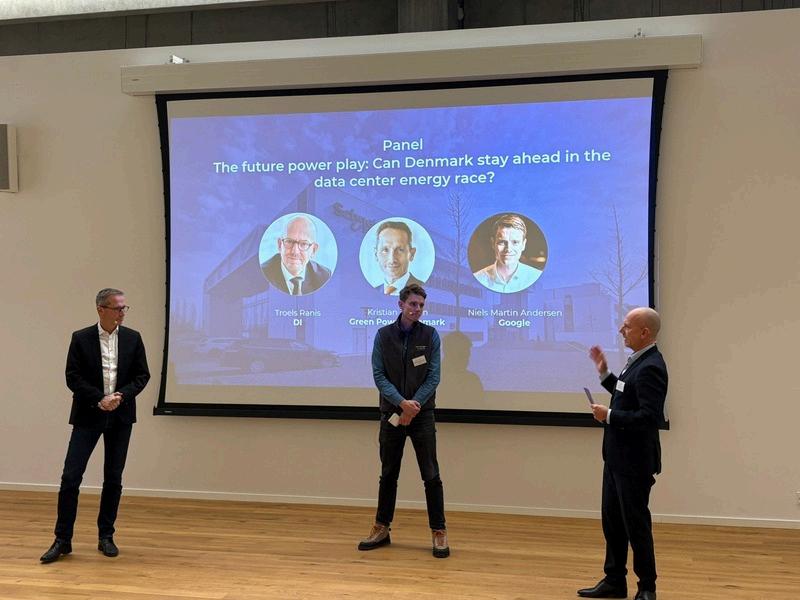
TheThirdPillarofEurope’s GreenandDigitalFuture
The paper, "Denmark as a Data Center Nation: Building the Third Pillar of Europe’s Green and Digital Future," presents a clear framework for how data centers can evolve from passive electricity consumers to active partners in the energy system, thereby strengthening flexibility, supporting renewable growth, and attracting high-value digital investments.
Denmark’s highly renewable electricity system, strong Nordic interconnections, advanced district heating, and a mature digital-energy ecosystem gives Denmark a unique competitive advantage
Denmark’s competitive advantage also comes from its well-developed energy infrastructure - not only a highly renewable electricity system, but also a mature gas network that supports sector coupling, energy storage, and future Power-to-X integration
The ‘Third Pillar’: From Electricity Consumers to Energy Partners
The white paper presents a model where data centers contribute actively to the energy system through: integrated planning with renewables and district heating, operational flexibility and load shifting, hour-by-hour verified green operation aligned with EU standards
This creates more efficient multi-energy zones and strengthens Denmark’s overall energy resilience
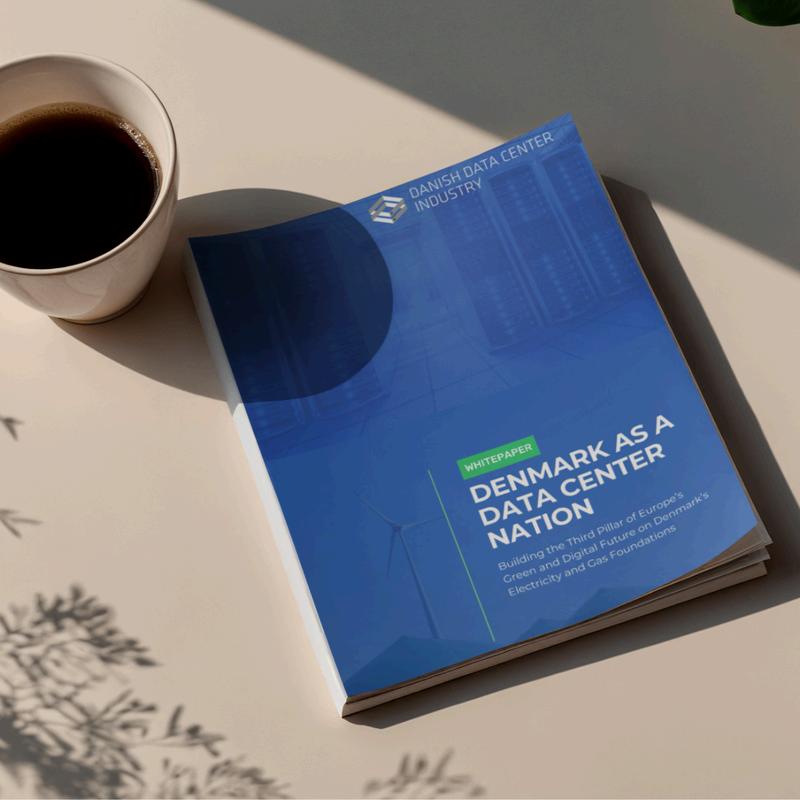
Read whitepaper here:
Innovation& Technology
The next phase of growth depends on innovation.
As data centers scale, existing solutions are no longer sufficient on their own. New technologies are required to reduce energy use, increase flexibility, and enable integration with broader energy systems.
EngineeringtheFutureof SustainableDataCenters
As AI and high-performance computing accelerate, data center infrastructure is entering a new phase of technological development Higher power densities, new cooling solutions, and increasingly intelligent control systems are redefining how facilities are designed and operated
Many of these changes happen at component and subsystem level Jakob Jul Jensen of Danfoss shares his perspective on how new technologies can make data center infrastructure more efficient and resilient.

Q: Data center infrastructure is evolving rapidly with AI and high-performance computing. From your standpoint as a technology leader, what do you see changing most fundamentally?
“n the near term within the next two years highdensity racks will require a completely new power infrastructure that very few people currently have experience designing or operating This could potentially lead to an even bigger gap between demand and supply, both in terms of available products and skilled people
Looking slightly further ahead, five years or more, we may see a shift from single-phase liquid cooling toward the next generation of cooling technologies We are already seeing companies like NVIDIA discussing full liquid cooling architectures, which represents a significant step beyond today’s direct liquid cooling solutions.
The rapid increase in computing density is already forcing a rethink of how data centers are designed. As infrastructure evolves to support new AI workloads, improving efficiency across power and cooling systems becomes increasingly important.
Q: Where do you see the largest opportunities for improving efficiency in future data center design?
More widespread adoption of liquid cooling and the introduction of direct current beyond the IT rack could significantly improve the overall energy efficiency of data centers
Much of this progress happens deeper in the infrastructure stack, where improvements at component level can drive better system performance
Q: Danfoss develops components that sit at the heart of cooling and power systems. Why are innovations at component level often decisive for overall performance?
The highest levels of performance and efficiency are achieved by optimizing systems as a whole However, innovation at component level is crucial for enabling better systems and solutions
For example, if you need more cooling capacity, it is not always possible to increase the physical size of a cooling solution or simply install more chillers or cooling towers. In many cases, the way forward is to innovate in the components that make up the cooling system itself.
As operators look for new ways to improve efficiency and reduce environmental impact, heat recovery is becoming increasingly important
Q: Heat recovery and advanced cooling are increasingly part of next-generation facilities. From your perspective, what technological advances will make these solutions scalable?
The higher we can push chip cooling temperatures, the more viable heat reuse becomes Higher temperatures improve the quality of the recovered heat and make it much easier to integrate data centers into wider heating systems
Looking further ahead, Jensen believes the most advanced facilities will increasingly be designed to interact with the communities around them
Q: Looking toward 2030, what technological capabilities will define the most competitive and sustainable data centers?
The most competitive and sustainable data centers in 2030 will be those that integrate seamlessly with the local community. These facilities will be able to provide heat where and when it is needed, while also contributing to balancing and stabilizing the electricity grid
About Jakob Jul Jensen
Jakob Jul Jensen is a Danish data center industry leader serving as a board member of the Danish Data Center Industry and Director, Data Center Solutions at Danfoss
His work centers on accelerating sustainability in the data center sector, with a focus on improving energy efficiency, reducing and optimizing water use, and promoting the reuse of excess heat for community and industrial applications
FromDTULabtoAI Infrastructure
We asked Phanofi’s CEO, Hitesh Kumar Sahoo, about the emerging constraints in AI infrastructure and what must happen before photonic interconnect technologies move from research to real-world deployment.
As AI infrastructure scales globally, attention is turning to the internal architecture of data centers Power and cooling remain critical, but so does the speed and efficiency with which data moves between processors In Denmark, research in photonics and semiconductor design is beginning to translate into technologies aimed at the next generation of digital infrastructure
Phanofi, founded on research from the Technical University of Denmark (DTU), develops high-speed photonic interconnect technology for AI data center networks and received the 2025 DDI Technology Innovation Award for its approach
Q: AI infrastructure is scaling rapidly From an internal architecture perspective, where do you see the next major constraints emerging inside AI data centers?
The AI industry is hitting power walls. Power, space, and heat are converging into a crisis that no one can engineer their way out of with today's tools.
Inside data centers, we're seeing three collisions happen at once. First, the power grid simply can't keep up with the appetite of modern AI clusters. Second, as we move from 800G to 1.6T links, the heat generated per transceiver is becoming operationally unmanageable And third, copper, the backbone of high-speed interconnects for decades has reached its physical limits You cannot push data faster through copper without the physics fighting back
The industry's answer is fiber But the real challenge isn't just switching materials, it's making fiber-based communication as energy-efficient as the copper it replaces That's the problem we're building toward at Phanofi
Q: Your work focuses on high-speed photonic interconnect chips. What differentiates your approach from today's optical transceiver technologies?
Most data centers today use what's called Intensity Modulation Essentially, data is sent by switching a laser on and off It works, but it's brute-force As bandwidth demands grow, you just add more lasers And more lasers mean more heat, more complexity, and eventually, a system that collapses under its own weight at 1.6T speeds and beyond. me, cost-sensitive, thermally-constrained reality of AI infrastructure. That's the gap we're closing.
The AI industry is hitting power walls. Power, space, and heat are converging into a crisis that no one can engineer their way out of with today's tools.
We took a fundamentally different approach Phanofi uses coherent architecture, the same technology that powers global telecom networks but reimagined for the data center environment Instead of just using light intensity, we encode data using phase and polarization as well That unlocks four times the data throughput per laser compared to standard approaches
Coherent technology has always been considered too expensive and power-hungry for data centers We've spent years proving that assumption wrong Our platform is specifically optimized for the high-volume, cost-sensitive, thermally-constrained reality of AI infrastructure That's the gap we're closing
Q: You have demonstrated your technology in the lab and are moving toward industry-level validation What are the most important upcoming steps between prototype and real-world deployment?
We are at TRL 5 which means we are past theory and past simulations. The physics works. Now it's about proving it works at scale, under real conditions.
In September 2025, we hit a meaningful milestone: our photonic chip successfully interfaced with an industrystandard evaluation board That's not just a lab result It's proof that our technology speaks the same language as the infrastructure already deployed in data centers around the world
The next step is transitioning from that validated prototype to a commercial-grade product, which is where we are focused right now From there, we move into pilot deployments inside live AI data centers, where the real test begins High temperatures, continuous traffic, unforgiving uptime requirements That's where reliability data gets built, and where trust with the industry gets earned
Q: Phanofi builds on research from DTU and operates at the intersection of photonics, semiconductors, and emerging quantum technologies. How important has Denmark's research and industry landscape been in enabling this type of development?
Denmark punches well above its weight in photonics, and that's because of decades of focused investment in photonics and communication technology
As a spin-out from the Technical University of Denmark, we didn't just get IP and lab access We have a culture of entrepreneurship, structured mentorship, and a network that takes deep tech seriously at every stage Innovation Fund Denmark came in at exactly the right moment with early-stage funding that matched where we were in our R&D journey not forcing us to rush but enabling us to go deep.
That said, I won't sugarcoat it: specialized photonics talent is scarce. Globally and locally. This is a field where you can't just hire fast. You need people who've spent years understanding the physics. That gap requires continued, serious investment in STEM education and specialized research. Denmark has the foundation Now it needs to scale the pipeline
Denmark punches well above its weight in photonics, and that's because of decades of focused investment in photonics and communication technology.
Q: You won the 2025 DDI Technology Innovation Award. What specific infrastructure challenge does your solution address and which milestones will determine whether photonic interconnect becomes mainstream in AI data centers?
The award reflects a problem the entire industry knows is coming: the energy-per-bit crisis As AI clusters grow, the energy cost of moving data between chips and servers is becoming a hard ceiling on what's buildable You can't just build bigger; you must build smarter
Phanofi directly attacks that ceiling Our platform delivers four times the data throughput per laser and a 30% improvement in energy consumption, targeting the FR links those critical 2- 10 kilometer connections inside large-scale data centers, where the gains matter most
As for what makes our photonic interconnects mainstream? It comes down to one thing: a live-traffic proof point The moment we demonstrate sustained reliability and measurable power savings in a real AI deployment, the conversation shifts from "interesting technology" to "infrastructure standard " Lowering energy per bit is no longer a nice-to-have It is the only credible path to scaling AI We intend to be the ones who prove it
AcceleratingInnovation foraSustainableDigital Future
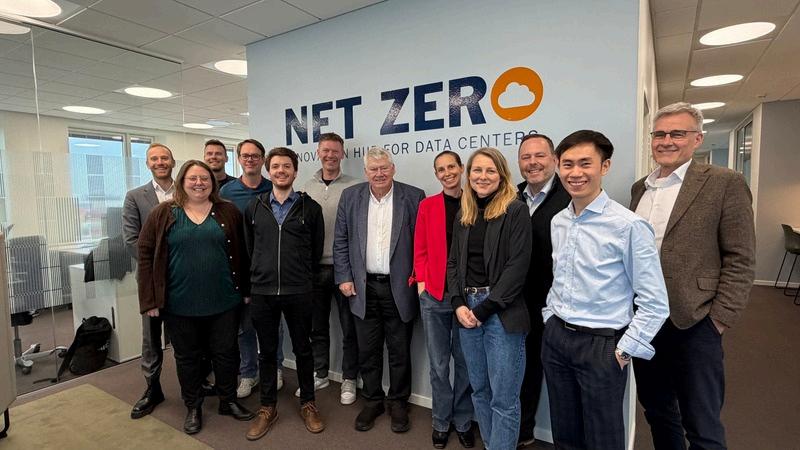
The first Net Zero Start-up Hub was launched in Fredericia in 2025 as a collaboration between the Net Zero Innovation Hub, Google, DTU, Energy Cool, and Business Fredericia
Following an open call for solutions, 12 start-ups were selected to pitch their technologies in September 2025
From this group, six companies were invited to continue into the incubation program The first incubation cycle is currently underway, running from January to June 2026
A structured pathway into the industry
The Start-up Hub is built around a structured process designed to support both technology development and industry integration
The model combines four key phases: Application and selection Pitch and evaluation Incubation program Advisory and mentorship
During the six-month incubation period, workshops and sessions have been held with experts from across the ecosystem. Here, start-ups engage directly with engineers, specialists, and decision-makers, gaining insight into how solutions are evaluated, integrated, and scaled in practice
This direct access is a defining feature of the program
As Tobias Sodoge, Co-Founder & CEO of NeoCarbon, puts it, the key challenge is “how to get innovation from lab to MW scale in a 99 999% uptime environment ” The program is designed specifically to address that gap by connecting start-ups directly with suppliers and operators
For participating companies, this early engagement provides clarity on both technical and commercial pathways
Jesper Christiansen, CEO & Co-founder of Zero Entropy, highlights the practical value: “It has a deep international network and understands the industry inside-out [and] saved us a lot of time in getting highly relevant introductions and… understanding how the industry works.”
Why
it matters
Data centers operate within highly standardized and risk-sensitive environments New technologies must integrate into complex systems, meet strict reliability requirements, and align with established procurement processes
As a result, innovation is not only about developing technologically ready new solutions, but about ensuring that those solutions are ready for adoption
The Net Zero Start-up Hub has structured approach to this challenge
By connecting start-ups with operators, suppliers, and energy system actors early in the process, the program helps align innovation with real-world requirements from the outset In doing so, it strengthens the broader innovation pipeline of the Net Zero Innovation Hub, creating clearer pathways from early-stage ideas to potential industry deployment.
While the program is still ongoing, early engagement between start-ups and industry partners is already helping to define potential testing pathways and collaboration opportunities.
The
first cohort
The companies presented in the following pages are part of the first Net Zero Start-up Hub cohort They represent a range of approaches, from energy and cooling solutions to circularity and system optimization
The ambition of the Start-up Hub is not only to support innovation, but to ensure that it becomes part of a stronger, more structured pathway from idea to infrastructure
Airjoule
AirJoule uses its platform technology to unleash the power of water from air using innovative sorptiion technologies. The patented AirJoule system separates moisture from the air to provide both dehumidified air for HVAC applications and distilled, potable water for regional utilization. AirJoule re-directs thermal “waste” energy to drive the generation of liquid water and regenerate the internal sorbents in a continuous process. The produced water is distilled quality and can be mineralized to meet downstream taste and application needs
About
In the data center industry, AirJoule provides an alternative use for “waste heat” compared to traditional district heating applications and can help data centers improve energy efficiency and water utilization By offtaking thermal energy from the cooling systems, AirJoule can reduce energy use for cooling and improve PUE At the same time, the water produced through the AirJoule process reduces consumption from local sources which improves WUE for the data center operator
AirJoule’s technology enables industrial symbiosis to flourish as data center waste heat can be used to efficiently produce technical water for regional partners and consumers by tapping into sustainable atmospheric moisture sources The produced distilled water can be used onsite for applications ranging from IT hall humidification control to onsite worker consumption without creating additional demand on local freshwater supplies. AirJoule enables data center owners and operators to “bring their own water” and meet regulatory requirements for thermal heat re-use.

Biography:
AirJoule, LLC (“AirJoule”) is the leading platform technology that unleashes the power of water from air AirJoule is a 50/50 joint venture between GE Vernova and AirJoule Technologies Corporation (NASDAQ: AIRJ)
Headquartered in Newark, DE focused on freeing the world of its water and energy constraints by delivering groundbreaking sorption technologies.
Founded (year): 2024
Number of employees: 37 Country: United States
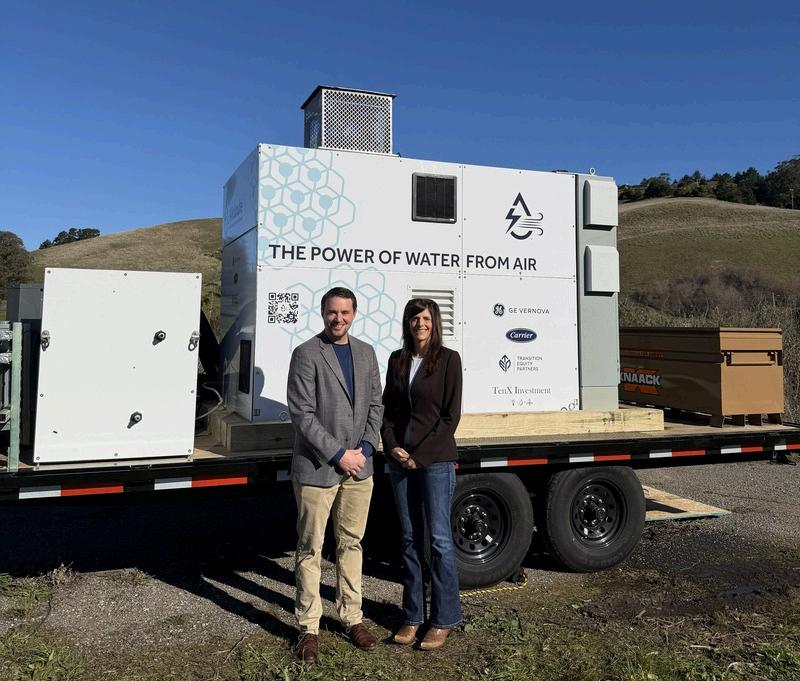
HalideEnergy
Halide Energy is a Finnish developer and manufacturer of copper flow batteries to meet the energy flexibility and long-duration storage needs of grid and industrial adopters, helping to accelerate the energy transition.
Our battery technology overcomes the degradation challenges and thermal risks of Li-BESS, while ensuring full modularity of systems. This allows battery users to maximise operational performance from peak shaving, curtailment mitigation, and grid market services The use of low-cost components and electrolyte allows us to reach market-competitive costing, and are now poised to enter commercialisation within the next year
About
The rising demand for sustainable electrification of data centres means that currently-utilised diesel generators for backup power need to be replaced Copper flow batteries are able to provide the power durations that are necessary for critical DC operations, while providing a more environmentally and financiallysustainable alternative
Biography: Halide Energy
Founded (year): 2025
Number of employees: 6
Country: Finland

Neocarbon
We supercharge datacenter cooling systems with our carbon-negative, water positive cooling solution that converts data center waste heat into value: specifically, our technology redirects electricity from cooling to compute, acts as a thermal buffer for fluctuating AI loads in high power density environments and generates CO2 and water from waste heat and air. We are convinced that the next generation of datacenter cooling will be fundamentally different. We are ready to enable the shift from isolated components to system level optimizations
About
Datacenters currently face both operational and sustainability challenges: Grid connection queues, and skyrocketing electricity demand 25x increases in power density and unprecedented load variability for cooling systems Low water consumption to obtain a license to operate and high pressure to reach ambitious net zero plans Finally, the mandate to reuse waste heat due to the EEA
Our approach is to help the datacenter industry to resolve all these challenges through our plug and play technology in a collaborative way We are aware of the reliability requirements and redundancy needs of the industry, and have therefore already proven the value of our technology during a 8 months pilot in the field
We are currently selecting strategic partners for our next pilots, to enable a rapid, modular scale up afterwards.
Biography:
Secondary CO2 and H2O capturing cooling system for datacenters
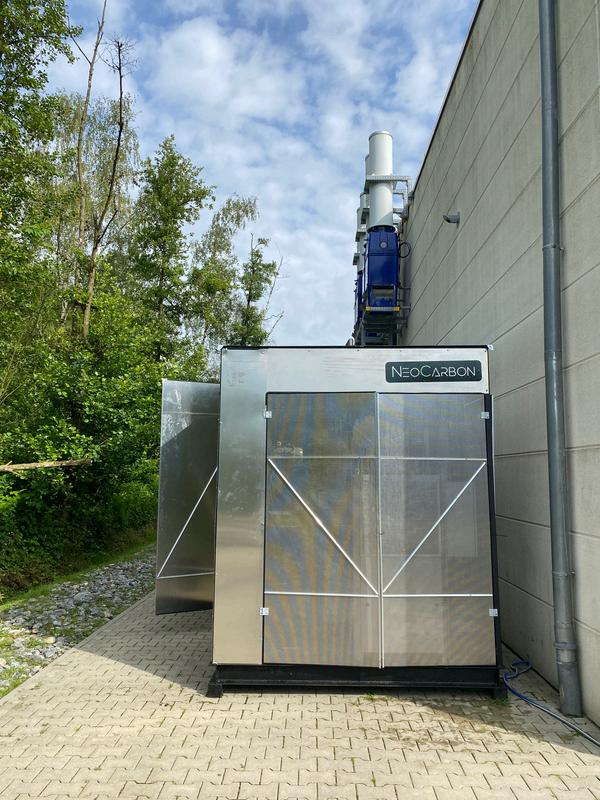
Founded (year): 2022
Number of employees: 16
Country: Germany

ShiptownA/S
Shiptown is a Danish deep-tech company developing hydrogen-based power backup systems designed to ensure clean, dispatchable, and resilient energy supply for energy-intensive industries.
The vision is clear: to make clean energy reliable and available on demand – from seconds to seasons.
The company focuses on delivering robust and scalable solutions that can integrate renewable e reduce carbon emissions, and strengthen energ security in a future constrained by grid capacity a electrification demands
About
The H-Battery enables the transition from diesel standby systems to 100% clean power backup, w supporting increased integration of renewable en Renewable electricity can be converted to hydro stored independently of grid constraints, and late dispatched as stable, on-demand power This strengthens operational resilience and energy fle without compromising reliability
Our approach is to complement existing infrastru with hydrogen-based systems that align with lon decarbonization strategies and increasing grid constraints The H-Battery integrates seamlessly on-site renewable energy, enabling excess gene to be converted and stored independently of grid capacity.
ShipTown is currently advancing through develo and demonstration phases, engaging with the da center sector to ensure future deployment aligns operational and reliability requirements.
Biography:
ShipTown has developed the H-Battery, a high-efficiency power backup system based on reversible fuel cell technology and hydrogen storage.
The system converts electricity to hydrogen for storage and reconverts hydrogen to l i i h d d bli
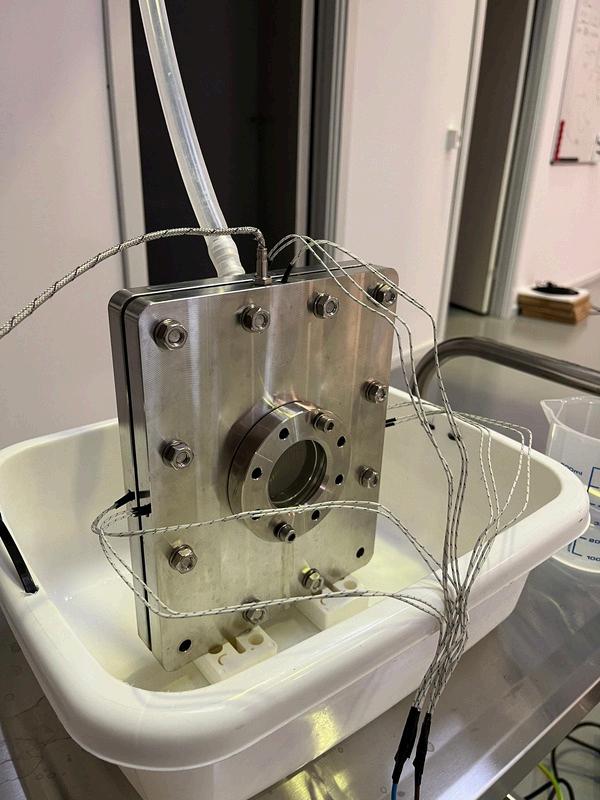
Sperra
Sperra’s MODEM system is a modular, floating offshore data center platform manufactured using 3D concrete printing. Designed for rapid, scalable deployment, MODEM integrates offshore renewable energy, seawater cooling, and modular data center infrastructure to bypass key growth constraints facing the industry: land scarcity, grid interconnection delays, and freshwater consumption.
MODEM enables edge and co-location data center providers to:
Secure clean power through offshore renewable integration
Avoid urban land constraints through offshore siting
Eliminate freshwater use via seawater and passive cooling
Reduce deployment timelines through modular manufacturing
The system is designed for nearshore and offshore deployment, particularly in coastal urban markets where demand for low-latency compute and sustainable infrastructure is rapidly growing Sperra addresses the dual challenge of data center growth and energy transition As demand for computing accelerates, grid bottlenecks, land constraints, and water use are limiting expansion, especially in urban coastal markets

Biography:
Sperra is a US- and Denmark-based climate tech company developing marine infrastructure through 3D concrete printing
With roots in offshore energy and advanced manufacturing, the company is exploring offshore data centers both near urban demand and alongside renewable energy
Founded: 2015
Number of employees: 12
Country: United States & Denmark
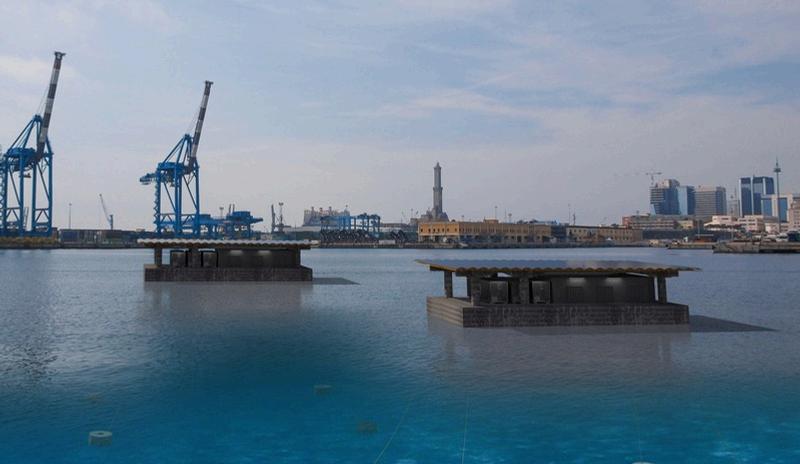
ZeroEntropy
Zero Entropy’s Power Expander works in parallel with the expansion valve, converting otherwise lost energy in the expansion phase into electricity which can be sent back to the grid, improving the energy efficiency. As an added benefit for cooling systems the cooling capacity is improved, because more energy/enthalphy is removed from the refrigerant during our expansion, leaving it in a condition where it can absorb more energy from its surroundings.
It works with a standard system and has a fall-back built into the design
About
Our product improves energy efficiency for chillers and heat pumps for surplus heat
Biography:
Zero Entropy ApS is a Danish energytechnology startup, founded by two successful serial entrepreneurs developing advanced expander technology for highefficiency heat pumps and cooling systems. The company focuses on recovering energy that is normally lost in thermodynamic cycles
Zero Entropy’s core concept is to recover energy that is normally lost in conventional thermodynamic cycles
Founded: 2023
Number of employees: 6
Country: Denmark

BeyondInfrastructure: Ecosystem& Impact
Infrastructure alone does not define the industry.
Data centers do not exist in isolation. Their development is shaped by the ecosystems around them from skilled workforces and local communities to international partnerships and supply chains.
TheExpandingRoleof DataCentersinDenmark

A new Impact report highlights how data centers are becoming an increasingly integrated part of both the energy system and the wider economy - with implications for jobs, infrastructure, and the green transition
Energy use and system integration
Data centers currently account for approximately 5 3% of Denmark’s total electricity consumption As demand for data processing continues to grow, this share is expected to reach around 11 7% by 2028
This raises legitimate questions about energy use and grid capacity But the data also points to a more nuanced reality Data centers are significantly more efficient than decentralized IT infrastructure More importantly, they are increasingly designed to interact with the energy system
In Denmark, excess heat from data centers is already reused through district heating networks, supplying more than 15,000 households. This is not a side effect it is part of how facilities are being integrated into local energy systems.
The implication is clear: the role of data centers is shifting from isolated energy demand to active participation in how energy is used and distributed
Jobs and economic impact
The data also shows a growing economic footprint In 2024, the data center industry supported more than 5,400 jobs in Denmark, with significant growth expected in the coming years
These jobs are not limited to the facilities themselves They span construction, engineering, operations, and a wide supplier ecosystem
At the same time, the sector is contributing to new skill demands, particularly within technical and vocational fields, as well as to closer collaboration between industry and education
Innovation and ecosystem development
Data centers are increasingly part of ecosystems that bring together operators, technology providers, startups, and research environments.
This is changing how innovation happens in the industry. Solutions are not only designed they are tested and deployed in real-world environments. That shortens the path from concept to implementation and reduces the gap between innovation and operation.
A foundation for future growth
Data centers underpin technologies such as artificial intelligence, cloud computing, and quantum development These are not niche applications they are becoming central to productivity, competitiveness, and economic growth
This positions digital infrastructure as a foundational system, alongside energy, transport, and telecommunications
A more nuanced conversation
Public debate often focuses on electricity consumption
The data confirms that demand is increasing but it also shows that this is only one part of the picture
Data centers are both energy users and system contributors They enable digital services, support economic activity, and are increasingly integrated into how energy systems operate.
InvisibleEngines
HowDanishcompaniesscalefrom astronghomemarketintothe globaldatacenterindustry
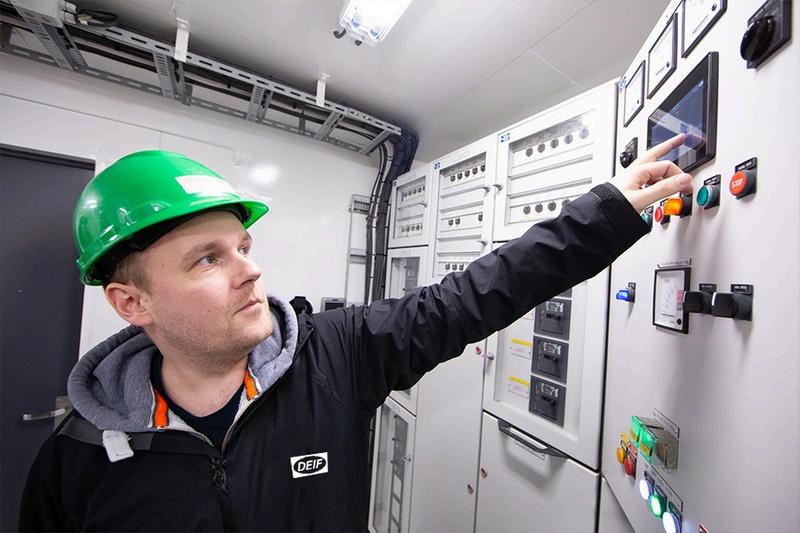
Demand for digital infrastructure is rising quickly, driving the expansion of the data center industry With European capacity alone expected to double or even triple by 2030, abundant opportunities are arising not only for operators, but for the companies supplying the technologies and services behind modern facilities
Companies such as Danfoss and Grundfos have both identified data centers as a growing strategic market In its latest annual results, Danfoss reported that data center-related sales now account for around 7% of total revenue, almost doubling year-on-year Grundfos has similarly pointed to data centers as a key growth driver, with increasing demand for energy- and waterefficient solutions in the segment
Across the value chain, Danish companies contribute to projects worldwide Much of the demand is driven by markets outside Denmark, particularly the United States and Northern Europe. For companies in the sector, export capability is therefore central.
Competition is also intensifying. Danish firms operate in a global supply chain alongside established players from the US, Germany and Asia, where scale, speed and standardization increasingly define competition.
A strong home market remains important For many companies, data centers are not only a source of revenue, but a platform for developing and testing solutions that can be deployed internationally As projects grow more complex, experience gained in Denmark and the wider Nordics can be transferred to other markets Domestic activity is not only about local demand, but about building the capabilities needed to compete globally
Power systems and reliability
For companies such as DEIF, the growth of data centers has made power control and reliability an increasingly important focus area
“Uptime is the key word in data center infrastructure,” says René Kristensen, Datacenter specialist - ATD sales PMO at DEIF DEIF’s solutions manage the interaction between grid connections, backup generators and facility systems - ensuring stable operation in environments where even short interruptions can have significant consequences
While markets such as the United Kingdom have historically driven demand, DEIF is now seeing increasing activity across Europe and in the Nordics Around 90% of the company’s business is exportbased, with data centers accounting for a growing share.
The company expects continued expansion driven by AI and high-performance computing, including new power architectures and solutions designed to improve efficiency and integrate technologies such as battery energy storage.
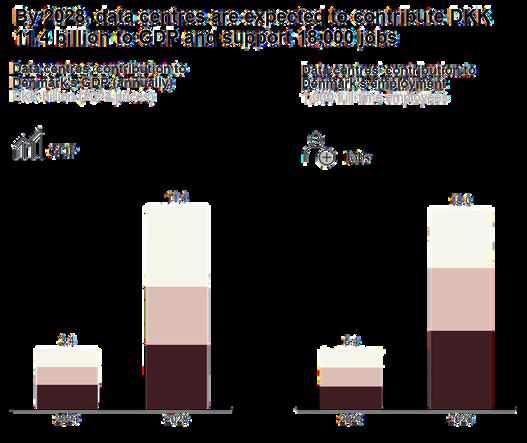
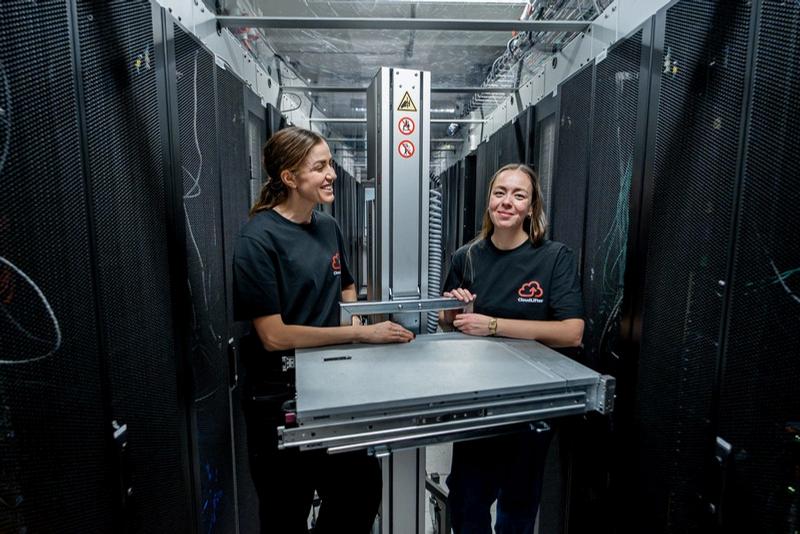
New suppliers entering the ecosystem
The expansion of the data center industry is creating opportunities for companies entering the sector from other industrial domains For Hovmand, this has meant developing lifting equipment to environments where technicians operate in narrow aisles and handle increasingly heavy and sensitive hardware.
According to Oliver Bredgaard, Business Development Manager, Data Centers at Hovmand, the pace of technological development is shaping demand. Many operators now invest in equipment with higher capacity than is currently needed to accommodate future requirements.
Around 90% of Hovmand’s products are exported and used in more than 35 countries, with Europe and the United States as key markets
The company also points to a less visible aspect of the industry: despite its global scale, it remains a relatively close-knit ecosystem where relationships play an important role.
This also reflects a broader shift in the industry. As data centers evolve and become more complex to build and operate, demand is expanding beyond traditional suppliers to include more specialised equipment and services. For companies entering the sector, this creates opportunities to apply existing industrial expertise in new contexts
Engineering and infrastructure expertise
As data center projects increase in scale and complexity, demand for multidisciplinary engineering services is growing For COWI, the sector has become one of its most significant growth areas in recent years The company works across the full project lifecycle, from site selection and permitting to design and execution
Demand is particularly strong in the Nordics, where access to power, climate conditions and political stability continue to attract international operators
“Energy efficiency, scalability and robustness are key design parameters,” says Rasmus Brandt, Market Director, Data Centers at COWI, pointing to the increasing need for early coordination between power, cooling and construction
As projects grow, COWI expects demand to increase further, particularly in areas such as early-stage advisory, energy integration and large-scale project delivery
The international nature of the market is also shaping how these services are delivered Projects are often developed across borders, with operators, investors and suppliers working in integrated teams This places new demands on coordination, standardisation and the ability to deliver consistently across different regulatory and geographical contexts

Cooling and energy efficiency
For companies such as NOVENCO Building & Industry, the data center sector has become a core business area, now representing a large share of activities, and is largely driven by export markets
Demand is primarily led by the United States, which continues to dominate global data center development, while Europe and Asia represent smaller but growing regions.
NOVENCO points to a shift in cooling approaches. While liquid cooling is gaining traction, particularly in AI-focused facilities, air-based systems remain widely used
“Many data centers are still able to operate with aircooled solutions, while more advanced facilities increasingly adopt hybrid approaches,” says Hans Godden, Director Data Center Solutions at NOVENCO
A global supply chain
The expansion of digital infrastructure is creating opportunities across a wide industrial value chain
While Denmark is a relatively small market in global data center development, Danish companies participate in the international supply chain through specialized technologies, engineering expertise and industrial solutions.
For these companies, success depends less on the size of the domestic market and more on their ability to compete internationally. Export capabilities, and the ability to develop, test and scale solutions across markets, are becoming more important Capabilities developed here are applied worldwide, linking domestic activity directly to international growth
BuildingtheFutureData CenterWorkforceisa
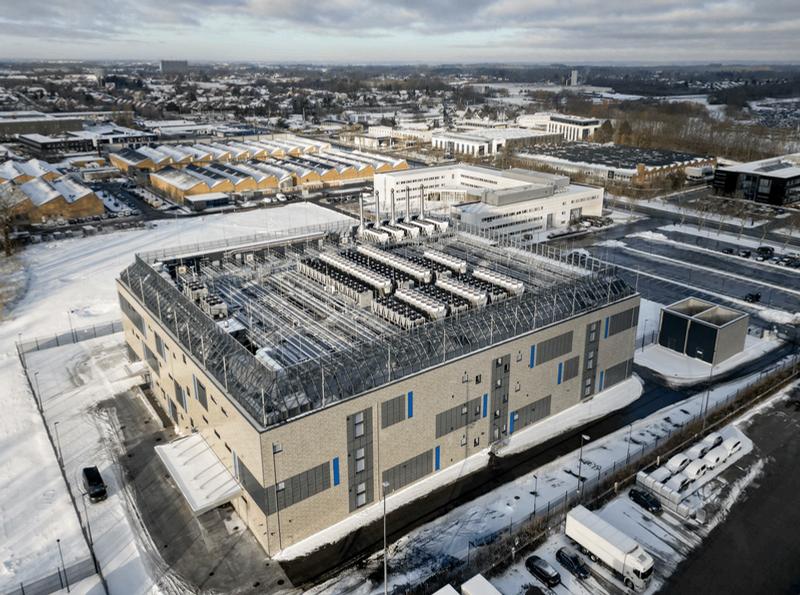
Rethinking talent in a traditionally closed industry
The Data center industry is facing a structural workforce challenge Demand for digital infrastructure is growing, and operating these critical facilities is becoming increasingly complex But the number of people with the right educational background and experience is limited, and competition for them is intensifying
At Digital Realty in the Nordics, this reality has led to the development of a practical program built around early engagement, structured exposure and a willingness to reconsider who gets access to digital infrastructure environments
The Structural Constraint
Operations roles in data centers require experienced professionals Critical infrastructure demands certification, technical depth and independent decisionmaking, so the safest path has been to recruit people who already know the environment. But that approach is under pressure.
Pernille Hoffmann, Managing Director for the Nordics at Digital Realty, points to the growing competition for technical talent as a structural challenge for the industry “Operating modern digital infrastructure requires a broad set of competencies This ranges from electrical and mechanical systems to safety, security and operational management At the same time, the number of people with that combined skillset is limited, and several industries are competing for the same technical profiles If we want digital infrastructure to continue scaling, we also need to invest in developing the workforce that will operate it ”
These candidates often come from marine engineering and technology management programs such as the Copenhagen School of Marine Engineering and Technology Management (TEKNIKA) in Copenhagen, whose graduates have a competence profile relatively close to what data center operations require
Meanwhile, many of these graduates begin their education expecting maritime careers This requires a shift in mindset and clearer communication about the opportunities available in land-based technical roles There are structural limitations as well. Many data centers do not perform core technical trade work themselves. This work is outsourced to vendors, making traditional apprenticeship models difficult. At the same time, poaching talent from vendors risks weakening the overall ecosystem. The result is a narrow and increasingly pressured talent base.
This is the context in which the Nordic Academy emerged within Digital Realty
Opening Up a Traditionally Closed Industry
Data centers have traditionally been designed to remain largely invisible Facilities were physically secured and rarely discussed outside specialist circles At one Digital Realty site in Copenhagen, this mindset was symbolized quite literally by a hedge surrounding the facility A few years ago, a small but symbolic change was made at the site when the hedge was cut down, and the buildings became visible from the outside
The decision reflected a broader shift in thinking about how open the industry should be and about the need to make digital infrastructure more visible and understandable to the outside world The discussion about talent development is part of this larger transition The future of data centers is not only about land, power and infrastructure It is also about who is prepared to operate them.
If we want digital infrastructure to continue scaling, we also need to invest in developing the workforce that will operate it
Pernille Hoffmann
Building the Road While Walking It
The Nordic Academy did not begin as a formalized strategy Initially, the driver was operational The site team needed support with recurring tasks At the same time, HR saw the opportunity to create a direct channel for future talent recruitment So the company did something unusual in a traditionally closed industry They opened their doors to students
For Digital Realty, the Nordic Academy represents a practical way of addressing the talent challenge “Programs like the Nordic Academy allow us to introduce students to the realities of operating critical digital infrastructure much earlier in their careers,” Hoffmann explains “By giving students hands-on exposure to the complexity of data center operations, we can help build a stronger pipeline of future talent while also showing the breadth of opportunities that exist within the industry.”
Students are integrated into the operational environment from day one. They participate in site rounds, monitoring routines and operational observations. Students follow the same onboarding process as operational staff, including safety training and site protocols.
There is, however, a clear boundary Students are not allowed to have any contact with critical infrastructure When critical operations take place, the students step back, observe and learn
Today the Nordic Academy runs on two tracks:
Student assistants who work alongside the site team during their studies, supporting recurring operational tasks and gaining insight into daily routines and procedures
Bachelor students who complete thesis projects in collaboration with the company, often focusing on technical or operational challenges relevant to data center environments
So far four bachelor students and five student assistants have participated in the Nordic Academy
Two have transitioned into permanent roles, with more expected The primary collaboration has been with the Copenhagen School of Marine Engineering and Technology Management (TEKNIKA) in Copenhagen.
Developing the next generation of data center professionals cannot be solved by one company alone. It requires closer cooperation between operators, suppliers and educational institutions.
If we want the infrastructure to grow, the talent pipeline has to grow with it
Pernille Hoffmann
Letting People Inside the Fence
In a sector built around control and risk mitigation, this required a shift Allowing students inside a live data center environment was not something traditionally done
Internally this raised concerns Historically, the company focused on recruiting highly experienced staff due to the required skills and competencies needed to work in critical environments Bringing in less experienced profiles into a live data center setting therefore required careful consideration
There were also external considerations Customers might question the presence of individuals without full operational certifications on site At the same time the company had to evaluate the time invested in mentoring and onboarding students against the value created.
In the end, the alternative of continuing to compete for the same limited pool of experienced professionals carries a higher risk.
Reducing Recruitment Risk
One of the clearest benefits has been mutual assessment Instead of hiring externally and hoping for alignment, the company and the students work alongside each other for months before any permanent decision is made
When and if students transition into permanent roles, they already understand the environment, the expectations and the responsibility involved They also gain exposure to real-time operational complexity In a data center electrical and mechanical systems interact constantly If something unexpected happens, technicians must make decisions independently That level of responsibility cannot be replicated in a classroom alone
Inside the Nordic Academy
For students participating in the Nordic Academy, the experience offers a broad and open introduction to the technical and organizational complexity of data center operations that is unusual for the industry
Participants quickly discover that a data center environment brings together a wide range of disciplines Operations, security, quality management and commercial functions all interact within the same facility
Within operations alone students encounter systems such as generators, UPS installations, ventilation systems and high-voltage equipment The experience exposes them to the scale and technical depth of digital infrastructure early in their careers It also provides insight into the many professional pathways that exist within a data center environment.
Beyond Denmark: Cross-Border Learning
The academy has already extended beyond Denmark. One participant completed six months in Stockholm after finishing his studies, and discussions have taken place about placements in other European locations.
International experience exposes participants to different work cultures, operational approaches and technical environments For students early in their careers this can accelerate learning and broaden their understanding of how large-scale infrastructure is managed across regions
Scaling internationally requires additional structure, including housing, logistics and social support, but the ambition is clear Interest from other regions within the company has followed, and discussions at broader leadership levels indicate that the concept is being watched closely
Nordic Academy - At a Glance
Early-career program developed by Digital Realty
Combines student assistant roles and bachelor thesis collaborations
Participants gain hands-on exposure to live data center environments
Partnership with Copenhagen School of Marine Engineering and Technology Management (TEKNIKA) Several participants have transitioned into full-time roles
A Shared Responsibility
No single operator can solve the structural workforce challenge alone
While cutting down the hedge was visible, rethinking access to the data center and allowing students inside a traditionally closed environment represents a deeper shift It signals a recognition that the future of data centers is not only about land, power and infrastructure, but also about who is prepared to operate them And that preparation has to begin earlier
Within Digital Realty, the academy is not positioned as a branding exercise, but as a necessary investment in the future workforce
The competition for technical talent will intensify The number of qualified graduates will not automatically increase Without earlier engagement the gap will widen Digital Realty is working with educational institutions to increase awareness of data center careers earlier in the study cycle Conversations about training environments and deeper collaboration are ongoing
Hoffmann believes the challenge requires broader collaboration across the industry “Developing the next generation of data center professionals cannot be solved by one company alone It requires closer cooperation between operators, suppliers and educational institutions If we want the infrastructure to grow, the talent pipeline has to grow with it ”
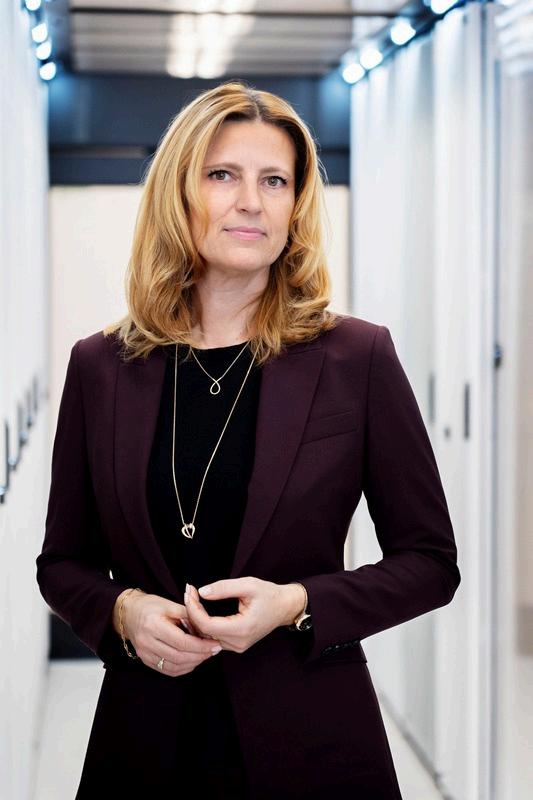
About Digital Realty
Digital Realty brings companies and data together by delivering the full spectrum of data center, colocation and interconnection solutions PlatformDIGITAL®, the company’s global data center platform, provides customers with a secure data meeting place and a proven Pervasive Datacenter Architecture (PDx™) solution methodology for powering innovation and efficiently managing Data Gravity challenges.
Digital Realty gives its customers access to the connected data communities that matter to them with a global data center footprint of 310+ facilities in 50+ metros across 25+ countries on six continents.
NextGenerationinFocus

From school visits in Esbjerg and Fredericia to a pitch event, the Fredericia Talks conference, and career days with Microsoft and Digital Realty, the message was clear: data centers are far more than server halls They are the backbone of our digital and green future
Nordic Data Center Week is a collaboration between the Nordic data center organizations, established to strengthen knowledge and awareness of the role data centers play in a digital society
“We launched Nordic Data Center Week in 2024 as part of a broader awareness and outreach effort, where the data center sector seeks to strengthen dialogue with the local communities it is part of,” says Christine Kjær Jacobsen, Marketing & Communication Manager at Danish Data Center Industry
Students Behind the Infrastructure: Esbjerg and Fredericia
In Fredericia, the Fredericia School of Marine and Technical Engineering (FMS) welcomed local school classes for an introduction to what a data center is, why cooling and security matter, and how surplus heat can be reused in district heating.
For many, it was an eye-opener to see that their digital everyday life has a very physical foundation in large server halls The visit was linked to FMS’s data center specialization program developed with Google and several Danish companies
“These types of partnerships help build a bridge between business, education, and opportunity It is a strong example of how companies, educational institutions, and young people can meet around knowledge, curiosity, and future skills and at the same time, we show young people the many career paths the data center sector offers locally,” says Ruth Axø, Youth Business Playmaker in Fredericia Municipality
Esbjerg: Bulk Infrastructure shows the physical internet
In Esbjerg, Bulk Infrastructure opened its data center to local school classes, offering a rare behind-the-scenes tour Students saw server rooms and cooling systems up close and learned how Esbjerg’s role as an energy hub also makes it central to digital infrastructure
“We want to make data centers more tangible for young people When students see how we work with both technology and sustainability in practice, they realize that this is an industry where they can help shape the future,” says Rune Bråten, Bulk Infrastructure
We want to make data centers more tangible for young people. When students see how we work with both technology and sustainability in practice, they realize that this is an industry where they can help shape the future.
Rune Bråten, BULK
A Creative Challenge: The World’s Most Sustainable Data Center
Students in both cities were invited to design the “world’s most sustainable data center” -with a class prize at stake
The winning drawing, created by a 6th-grade student at Fredericia Friskole, proposed solutions involving surplus heat reuse, alternative energy sources, and even the placement of a data center out in the North Sea
The winner received a diploma during morning assembly, presented by Danish Data Center Industry and Business Fredericia
Innovation and Growth at Fredericia Talks
The week featured the Net Zero Start-Up Hub pitch event, where ten selected companies presented green and energy-focused innovations to a panel of experts from the Danish data center, energy, and startup ecosystems.
The winners were recognized at the Fredericia Talks conference, where decision-makers and industry leaders explored Denmark’s opportunities as a digital and green hub
Seven companies were chosen for a six-month incubation program in Fredericia in 2026, and the top three received cash prizes sponsored by Google
Career Paths and Competencies
Across the country, Nordic Data Center Week also highlighted the engineers and technicians of tomorrow
At TEKNIKA School of Marine and Technical Engineering in Copenhagen, Danish Data Center
Industry joined Microsoft and Digital Realty at a career fair, giving students the chance to meet industry professionals, hear personal career journeys, and learn more about the sector’s future outlook
The week ended with a combined career program hosted by Digital Realty and Microsoft: students visited a normally closed Digital Realty data center, and Microsoft hosted panel discussions and workshops on how to enter one of the world’s fastest-growing industries
Webinars, Networking, and Local Initiatives
The week also included a series of professional webinars from Arrow, Nordcad, Onnec, and Siemens, covering topics ranging from technology development to energy efficiency.
In Skive, Mercantec and DEIF hosted an event giving young people insight into the skills and technologies the data center sector demands
A sold-out networking event with DI Digital explored the question: How can Denmark and Europe secure AI capacity, data security, and the green transition?
The starting point was the publication of The Backbone of Digitalisation, highlighting the growing importance of data centers for society, business, and the climate
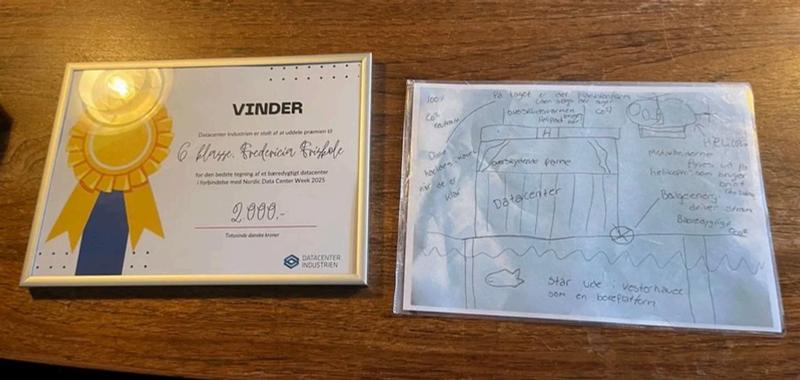
Webinars, Networking, and Local Initiatives
The week also included a series of professional webinars from Arrow, Nordcad, Onnec, and Siemens, covering topics ranging from technology development to energy efficiency
In Skive, Mercantec and DEIF hosted an event giving young people insight into the skills and technologies the data center sector demands
A sold-out networking event with DI Digital explored the question: How can Denmark and Europe secure AI capacity, data security, and the green transition?
The starting point was the publication of The Backbone of Digitalisation, highlighting the growing importance of data centers for society, business, and the climate
A Week of Perspective: Communities, Energy, and Responsibility
Nordic Data Center Week 2025 demonstrated that data centers are a cornerstone of digital infrastructure, job creation, and the green transition.
The week made clear that: technological understanding starts early, young people need direct exposure to digital infrastructure, and Denmark has a unique opportunity to connect green energy with digital systems
At the same time, the week highlighted that political frameworks, local engagement, and strong export ambitions must go hand in hand if Denmark is to seize the opportunities ahead
Nordic Data Center Week returns in 2026
Throughout the week of 21 -25 September 2025, events will take place across Finland, Denmark, Sweden, Norway, and Iceland.
Please contact chja@datacenterindustrien.dk for more information or to host an event.
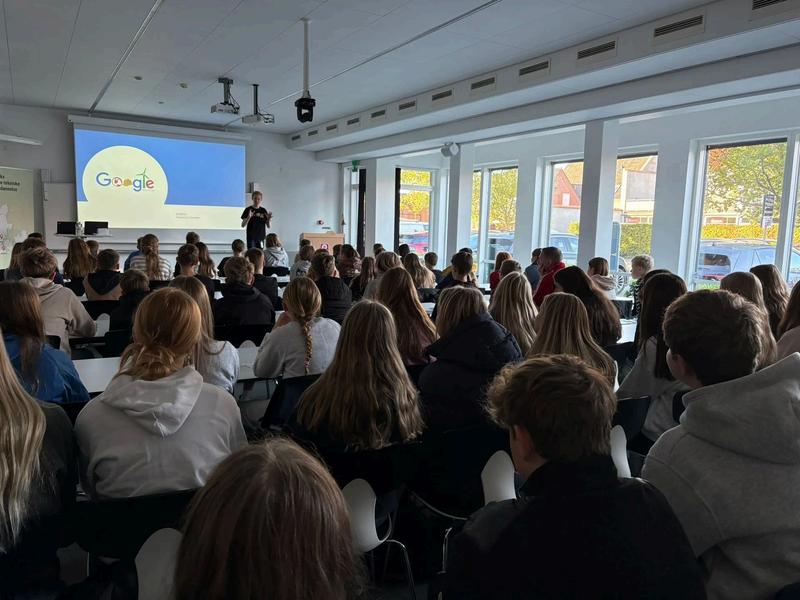
ClosingEurope’sData CenterSkillsGap
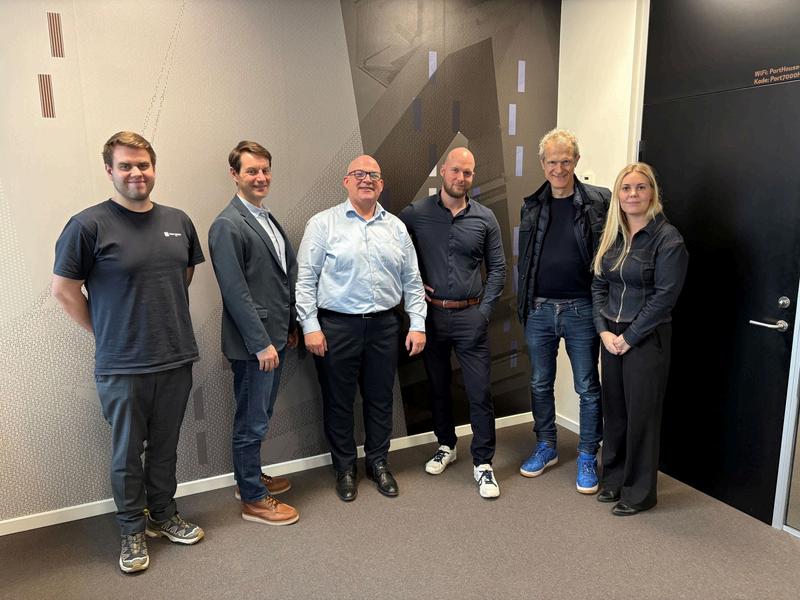
As the data center industry expands across Europe, companies are increasingly investing in initiatives to develop the next generation of talent But building a workforce for digital infrastructure cannot rely on individual training programs alone It requires closer collaboration between industry, education, and regional ecosystems
Across Europe, initiatives such as the Colleges for European Data Center Education (CEDCE) aim to strengthen these connections by bringing together companies, universities, and vocational training institutions In Denmark, the initiative is coordinated by Sofie Teglgaard, who serves as Regional Captain and is also involved in developing a new Centre of Vocational Excellence (COVE) focused on digital infrastructure and data center skills
Why skills are becoming a limiting factor Europe’s data center industry is growing rapidly, driven by increasing demand for digital services, cloud computing, and AI. But the availability of skilled professionals is not keeping pace.
“Skills development is becoming a limiting factor for how fast the industry can scale,” Sofie Teglgaard explains
Data centers rely on a wide range of technical and operational roles, from engineering and IT to facility operations and system management Without a strong and continuous talent pipeline, the industry risks delays, higher costs, and reduced operational resilience
Addressing this challenge is not just about training more people It also requires aligning skills development with the realities of operating modern, large-scale infrastructure
Making the industry visible to future talent
Attracting new talent remains a challenge Many students and young professionals are still unaware of the range of career opportunities within the data center sector
“The industry offers a wide variety of roles, but awareness is still relatively low,” Sofie Teglgaard says. Increasing visibility is therefore essential. not just to attract more talent, but to ensure the industry can scale in step with demand.
This is particularly important as data centers play an increasingly central role in both the digital economy and the green transition, something that resonates strongly with younger generations
Skills development is becoming a limiting factor for how fast the industry can scale.
About CEDCE: Powering Data Center Workforce
The datacenter industry is gaining ground in Europe and the world This creates a demand for skilled industry employees, that are hard to find
Colleges for European Datacenter Education (CEDCE) is a consortium that collaborates to deliver highly skilled graduates that are known with 21st century AI- and green-skills; essential for building the data centers of the future. By preparing tech savvy graduates for the working world, CEDCE boosts regional economic prosperity in datacenter communities. CEDCE is awarded a four-million-euro CoVe-grant from the European Commisson to build data center education from EQF levels 3 to 7 for fulltime students and up- or reskilling for employees
Building a European framework for skills development
To address the skills gap at scale, initiatives such as CEDCE are working to create a more coordinated approach to education and training across Europe moving beyond isolated programs toward a shared European framework
“The ambition is to build a stronger ecosystem where education and industry are aligned,” Sofie Teglgaard explains
By bringing together companies, universities, and vocational institutions, CEDCE aims to ensure that training programs reflect current and future industry needs, and that learners gain skills that are directly applicable in real-world environments
At the same time, the initiative supports greater consistency and collaboration across countries, helping to strengthen the overall quality of data center education in Europe.
In a sector where technology and operational requirements evolve faster than traditional education systems can adapt, this is essential.
From strategy to execution: building local ecosystems
While the challenge is European, implementation happens locally This is where initiatives such as the Centre of Vocational Excellence (COVE) play a key role
In Denmark, the COVE is being developed to bring education providers and industry closer together, with a clear focus on execution rather than strategy
“We have already established a growing network of industry partners, and we are now moving into the execution phase,” Sofie Teglgaard says So far, the initiative has commitments from companies including Schneider Electric, ABB, Energinet, and Bulk
By creating a clearer link between education and industry, initiatives like COVE make it possible to align training with real workforce needs, rather than developing programs in isolation.
They also strengthen local ecosystems, ensuring that skills development is closely connected to regional industry demand while contributing to the broader European effort.
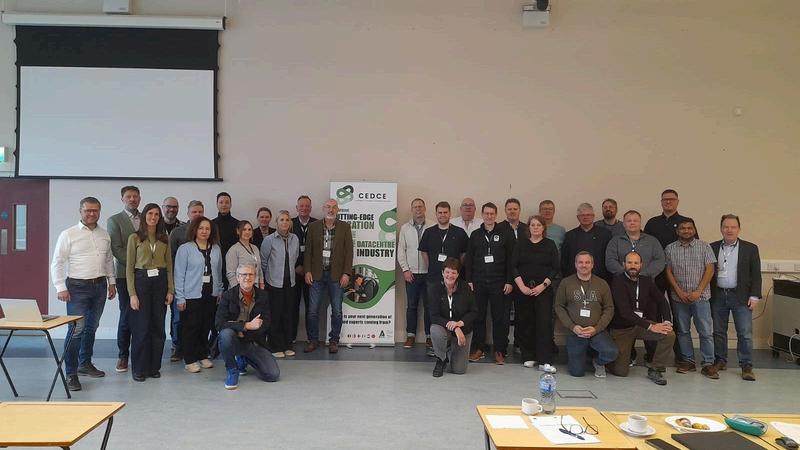
Collaboration as a prerequisite
A common thread across both CEDCE and COVE is the emphasis on collaboration The pace of change in the data center industry means that educational institutions cannot keep curricula relevant without close input from industry Companies also benefit from a workforce that is prepared for real operational environments
“Collaboration allows us to co-develop training, provide hands-on learning, and ensure that skills development reflects real needs,” Sofie Teglgaard explains
This collaboration is not only a practical necessity, but a prerequisite for building a workforce that can keep pace with the industry’s growth
What success looks like Looking ahead, success for initiatives like CEDCE and the Danish COVE will be measured by their ability to deliver a functioning, sustainable talent pipeline.
“Success would be a visible and well-functioning ecosystem where education and industry work closely together, and where we are consistently able to attract, train, and retain talent for the sector,” Sofie Teglgaard says
For Europe, this also means stronger collaboration across borders, more aligned training standards, and broader participation from both industry and educational institutions
As the industry continues to grow, one thing increasingly clear: building digital infrastructure is not only about power and technology It also depends on people with the right skills
Collaboration allows us to co-develop training, provide hands-on learning, and ensure that skills development reflects real needs.
Get involved
CEDCE and the Danish Centre of Vocational Excellence are open to collaboration with companies, educational institutions, and public stakeholders interested in strengthening data center skills and workforce development
For more information or to explore collaboration opportunities, please contact: Sofie Teglgaard st@datacenterindustrien.dk
DDI ECOSYSTEM GUIDE
The DDI ecosystem guide provides an overview that will help organisations make informed decisions, whether you are looking to invest, build, operate, or expand your services on the Danish data center market
The Danish data center industry is a fast-growing sector in Denmark with a rich and thriving ecosystem of high-quality suppliers
These include:
Suppliers who assist data center operators in the initial financing, planning, designing and construction phase
Suppliers delivering infrastructure and architecture products and services (power, cooling, cabling, connectivity) to assist with the setup of the data center
And when the data center is fully operational, suppliers that assist data centers in running their facility, from maintenance and cleaning services to legal and security services.
Download DDI Ecosystem guide here: