

































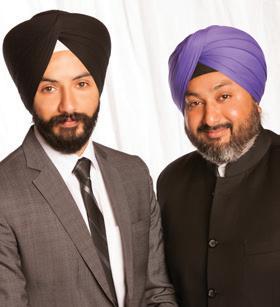
PUBLISHERS
Gurvinder S. Hundal
Ramneek S. Dhillon
EDITOR
Ancy Mendonza Kumar
ASSISTANT EDITOR
Tuhina Ghoshal
ADVERTISING AND SALES
Gurvinder S. Hundal
Ramneek S. Dhillon
Piyush Bisht
COVER Photography: A Master Media
As the days grow longer and the warmth of summer begins to settle in, there’s a renewed sense of energy all around us. May–June is always such a vibrant time - a season of gatherings, celebrations, family moments, and reflection - and this issue of DARPAN captures all of that and more.
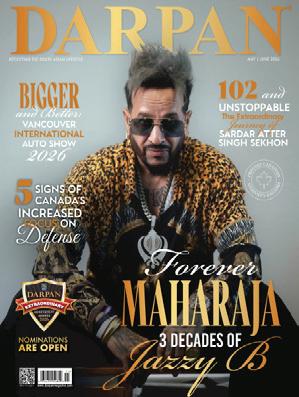
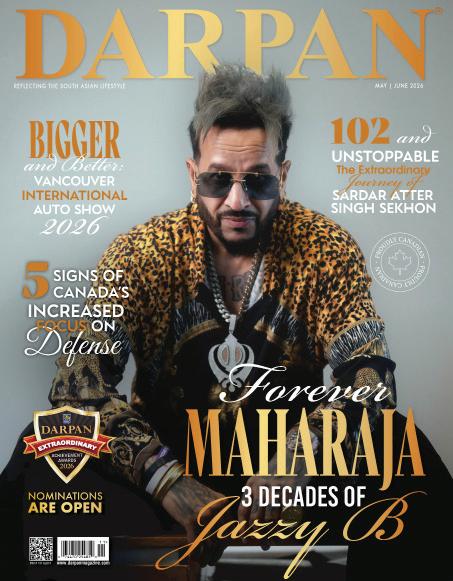
Our cover story this edition celebrates a true icon: Jazzy B, and his incredible three decades in the music industry. For generations of South Asians around the world, Jazzy B has been more than just an artist; he has been a cultural force, proudly carrying Punjabi music and identity onto the global stage. In this special feature, we look back at his remarkable life, impact, and enduring legacy.
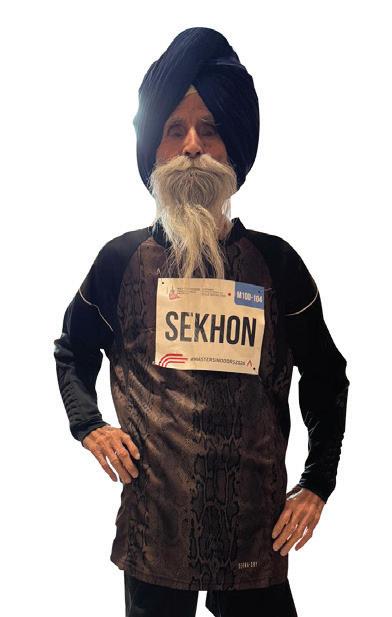
Inside the magazine, you’ll find stories that are heartfelt, thought-provoking, and deeply rooted in community. From our Mother’s Day and Father’s Day feature, Told You So, reflecting on the advice we once resisted but now cherish, to conversations around how marriage is no longer viewed as the ultimate finish line, this issue explores the changing realities of modern South Asian life. We also spotlight inspiring individuals including 102-year-old athlete Sardar Atter Singh Sekhon and Mini collector Nadir Ibadullah, whose stories remind us that passion truly has no age limit.
We’re also proud to look back on another successful DARPAN Power Women of Influence evening. It was an unforgettable celebration of leadership, resilience, and community, and you can read all about the inspiring night in this edition.
And as we look ahead, nominations are now officially open for the DARPAN Extraordinary Achievement Awards, taking place on October 2. If there’s a trailblazer in our community whose story deserves recognition, we encourage you to nominate them and help us celebrate the extraordinary among us.
Here’s to sunshine, connection and stories that bring us closer together.
WRITERS
Benjamin
Naina Grewal
Natasha D'souza
Shweta Kulkarni
CONTACT
Tel: 604-572-0199
Email: info@darpanmagazine.com 340-8140, 128 St. Surrey BC. V3W-1R1
JOIN US ONLINE! Visit: www.darpanmagazine.com @darpanmagazine



DARPAN FEATURE
Param Singh MBE
Nadir Ibadullah
Harinder Singh’s New Book - Guru
Prince Manvendra
Singh Gohil: A Royal Voice for Inclusion,
DARPAN MOVIES
30 DARPAN Power Women of Influence 2026: Stories of Strength and Shifting Narratives
44 Marriage is No Longer the ‘Finish Line’
50 Mother’s Day and Father’s Day Special: Told You So - The Advice We Didn’t Understand… Until We Did
56 5 Signs of Canada’s Increased Focus on Defense
62 How ‘FIRE’ is Fueling the Dream of Never Working Again
DARPAN FITNESS
68 Try Everything, Trust Yourself: Exercise, Nutrition, Recovery, and Examples on How to Experiment
DARPAN RECIPES
74 Chef Jitin Kapoor’s Global Journey to Vancouver’s Culinary Scene
DARPAN STYLE
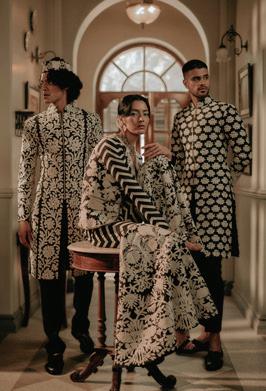
78 Siddartha Tytler’s Miraas Radiates Parsi Charm with Modern Silhouettes
DARPAN BEAUTY
90 The Big Screen Buzz: Bollywood’s Most Anticipated Releases
DARPAN TRAVEL
94 Dupe Destinations: Travel Smarter, Skip the Crowds in 2026
100 - DARPAN CRUISER
DARPAN WEDDING
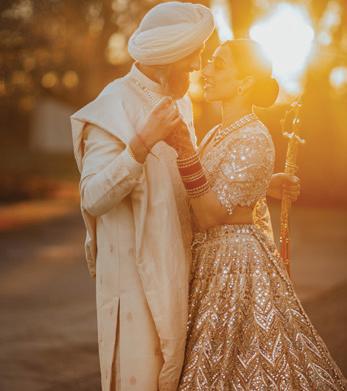
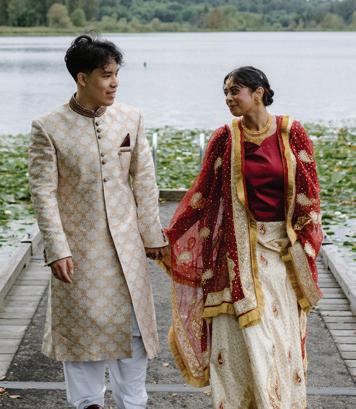
102 Mandy and Amraj
DARPAN AUTO
106 Vancouver International Auto Show 2026
110 2026 Honda Pilot TrailSport
112 2026 Toyota GR Supra MTEV
CANADIAN IMMIGRANTS
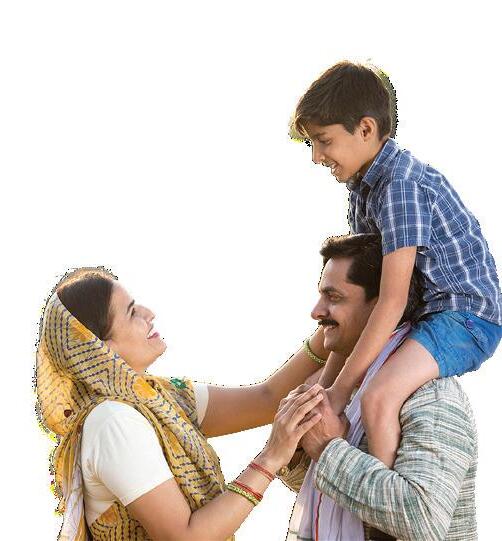
114 Meet the Arora Family


Color Me Brunette - This Season

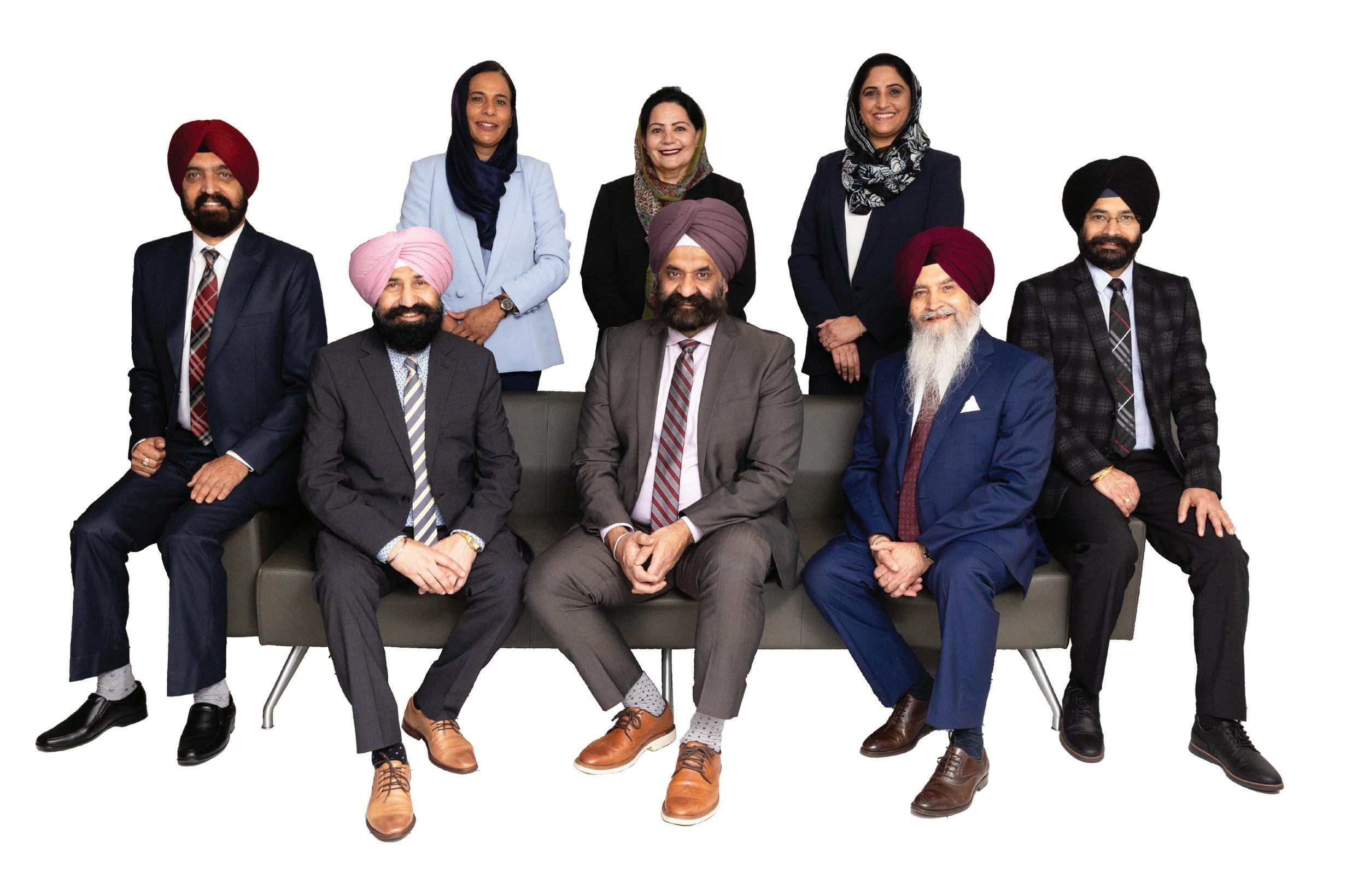


Surrey has seen a troubling rise in shootings and extortion-related incidents over the past year. What is driving this escalation?
What we are seeing is a complex mix of organized crime, fear, and opportunity. Extortion is not a new phenomenon, but the way it is manifesting here has evolved. Criminal networks are targeting South Asian businesses and families while leveraging encrypted apps, social media, and transnational connections to intimidate victims while distancing themselves from the violence on the ground. Obviously, money is a central motive, but creating conditions of fear that will ensure payment is the environment the criminals want. What concerns me most is that these crimes create ripple effects far beyond the intended targets. That is why the response cannot be limited to arrests alone. Enforcement is critical, but so is prevention, community trust, victim support, and early intervention before young people are pulled into that lifestyle.
You’ve previously said, “We make arrests, and they recruit more.” Why does the cycle of gang recruitment continue despite ongoing enforcement and arrests?
Because gangs do not just recruit with fear, they create false promises of identity, belonging, money, and perceived status. If we only remove individuals from the system without addressing the underlying vulnerabilities that made them susceptible in the first place, someone else will fill that void. Over the years, I’ve worked in intelligence, enforcement, and intervention, and I’ve met many young people who were not looking for a criminal lifestyle initially. They were looking for acceptance, purpose, recognition, or quick financial gain. Enforcement disrupts and prevents harm, and it absolutely matters. But long-term success also requires strong families, mentorship, schools, to feel connected before gangs reach them first.
Recent Surrey Police Service statistics show a dramatic spike in extortion cases targeting the South Asian community. What patterns are investigators seeing, and how organized are these networks?
There are certainly patterns investigators are seeing, but I also want to be careful not to overgeneralize or stigmatize an entire community. The vast majority of people in the South Asian community are hardworking, law-abiding individuals who are themselves deeply impacted by this violence and intimidation. What we are seeing is that some extortion attempts involve organized networks with high levels of sophistication. In most cases, threats originate overseas or through encrypted communication platforms, while local actors may be used to carry out intimidation or violence. There are also cases where opportunistic “copycat” individuals attempt to exploit fear and media attention. These investigations are complex and often involve multiple jurisdictions and agencies.
Many business owners and families say they are living in fear but are hesitant to come forward. What would you say to
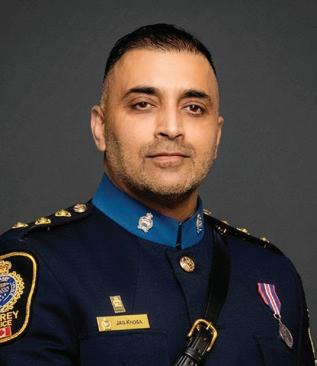
INSPECTOR JAG KHOSA
them?
I understand the fear. But silence can also increase vulnerability. Reporting matters because it gives investigators the ability to identify patterns, connect incidents, assess threats, and intervene before violence escalates. I also want people to know that policing today is not just about taking a report and leaving. Victim safety planning, reassurance, proactive patrols, referrals to support services, public safety camera deployments, and ongoing communication are all part of the response.
BC recently introduced the Firearm Violence Prevention Act, aimed at closing loopholes around organized crime and gun violence. How much of a difference do you believe this can make?
Legislation can be a valuable tool, especially when it helps investigators intervene earlier, disrupt criminal activity, and reduce access to firearms. But laws alone are never the complete solution. The real impact comes from how effectively those tools are integrated with intelligence-led policing, prosecution, prevention, and community partnerships. Organized crime adapts quickly, so our response must evolve just as quickly. I do believe strong legislation sends an important message, but sustainable public safety also depends on investments in youth prevention, mental health support, education, and community resilience.
There have been concerns about police resources being stretched thin, including the reassignment of officers from Surrey’s dedicated gang unit. How much of a challenge is resourcing right now?
Resourcing is always a challenge in policing, especially when dealing with highly complex investigations that require specialized skills,
long hours, surveillance, intelligence analysis, and coordinated operations. At the same time, public safety threats do not pause while organizations adapt or restructure. Police agencies across the region are working collaboratively because organized crime does not respect jurisdictional boundaries. I think it is important for the public to understand that these investigations often involve significant behindthe-scenes work that is not always visible. But yes, sustained investment in public safety resources remains important.
You’ve spent years working on prevention and intervention. Why is prevention just as important as arrests around gang violence?
Because prevention saves lives before they enter the justice system. An arrest may stop someone from causing harm today, but prevention can stop a young person from ever becoming involved in that cycle in the first place. Some of the most meaningful work I’ve been part of involved helping families navigate difficult situations, connecting youth to support, or seeing someone successfully exit that lifestyle.
Social media and encrypted communication platforms have changed how gangs recruit and operate. How has policing evolved to keep up?
Technology has fundamentally changed the landscape. Recruitment, intimidation, coordination, and even conflict escalation can now happen instantly online. Policing has had to evolve through specialized investigative techniques, intelligence analysis, digital evidence collection, and partnerships with other agencies. But this is also bigger than policing. We need more digital literacy, mentorship, and honest conversations with youth before those influences take hold.
Do you believe enough is being done collectively to address the root causes of gang involvement?
Many dedicated people are doing important work, but I believe there is still a gap between recognizing the problem and responding to it early enough. One of the biggest gaps is coordination. Too often, organizations work in silos even though vulnerable youth move between school systems, social systems, peer groups, and online spaces. Prevention requires long-term collaboration, not short-term reactions after violence occurs. We also need more accessible mentorship, culturally responsive services, traumainformed support, and opportunities for youth to succeed outside of the criminal economy.
We’ve heard from people impacted that investigations and arrests in gang-related cases often feel slow-moving. Why do they take time, and what is being done to improve results?
I understand why people feel frustrated, especially when they are living with fear and uncertainty. But organized crime investigations are often extremely complex. Investigators are not just trying to solve one incident; they are trying to identify networks, gather evidence that meets court standards, prevent retaliation, and ensure charges are sustainable. Rushing investigations without sufficient evidence can jeopardize outcomes. That said, there is always room to improve. Agencies are continually looking at better strategies to respond more effectively and proactively.
Trust DARPAN to showcase our community’s best to the world. It’s so inspiring and, honestly, emotional to see South Asian women in positions of influence and leadership. It makes me really proud and hopeful for the next generation coming up.
– Jay Randhawa
Re:Thank you, this means a lot to us. These are exactly the stories we feel honored to tell. Seeing our community’s women lead, thrive, and inspire others is something we never take for granted. We’re so glad it resonated with you.
– DARPAN Magazine
Write to us: editor@darpanmagazine.com
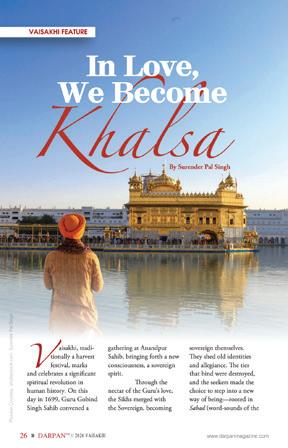
This article was so apt and honestly touched my heart, especially during Vaisakhi. It felt like exactly what the community needed at this time of year. It really made me pause and reflect on my own values and evaluate my inner self. Very powerful and grounding read.
– Lovely Kaur
Re: Thank you so much for sharing this. That’s exactly the kind of reflection we hoped this piece would spark. Vaisakhi is such a meaningful time, and we’re really glad the story resonated with you on a deeper, more personal level.
– DARPAN Magazine
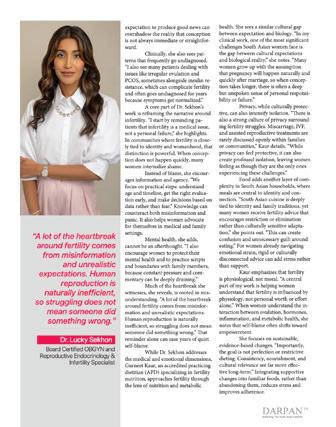
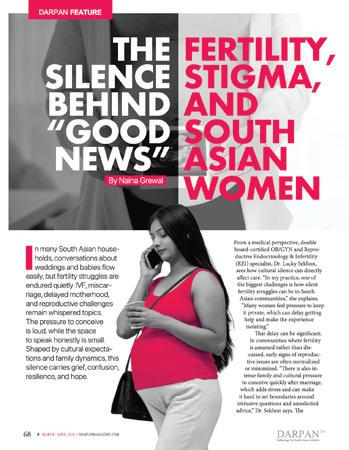
We need to talk more about this, and I’m really glad DARPAN is bringing it up to normalize this conversation. There was some great advice from experienced experts, and it was so well written. Kudos for covering something so important that affects so many women quietly.
– Preeti Sethi
Re: We truly appreciate this. Conversations around women’s health deserve to be open, informed, and stigma-free. We’re glad the expert insights connected with you, and we completely agree, this is a dialogue that needs to keep growing.
– DARPAN Magazine
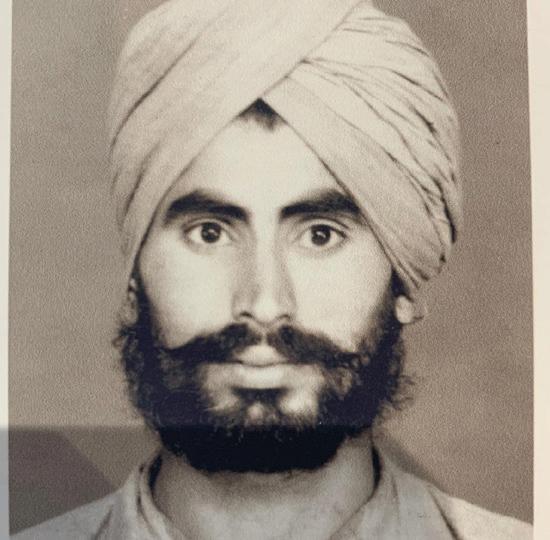
At 102 years old, Sardar Atter Singh Sekhon carries a life story that stretches across continents, eras, and generations, beginning in a small village in pre-partition Punjab and continuing onto international athletics tracks in Canada. He was born in 1923 in Chak 528 GB Manupur, Tehsil Samundri, District Lyallpur (now Faisalabad District), Punjab, Pakistan, where running was not a sport but part of everyday childhood. He recalls early moments shaped by playful challenges among children in
the village, often led by his older brother, encouraging other children to race with his younger brother, turning running into something natural and playful rather than a structured sport.
His early life was later reshaped by the upheaval of the Partition of India. From 1947 onwards, he resettled in Chak Muafi, Khanna, Ludhiana District, Punjab, India, after being displaced during the Partition. Those years were defined by rebuilding life from uncertainty and carrying forward identity through immense
By Naina Grewal
change. Despite hardship, he maintained an early connection to physical activity and running, later finding deeper inspiration in Milkha Singh, whose journey reinforced his belief that discipline and spirit matter more than circumstance.
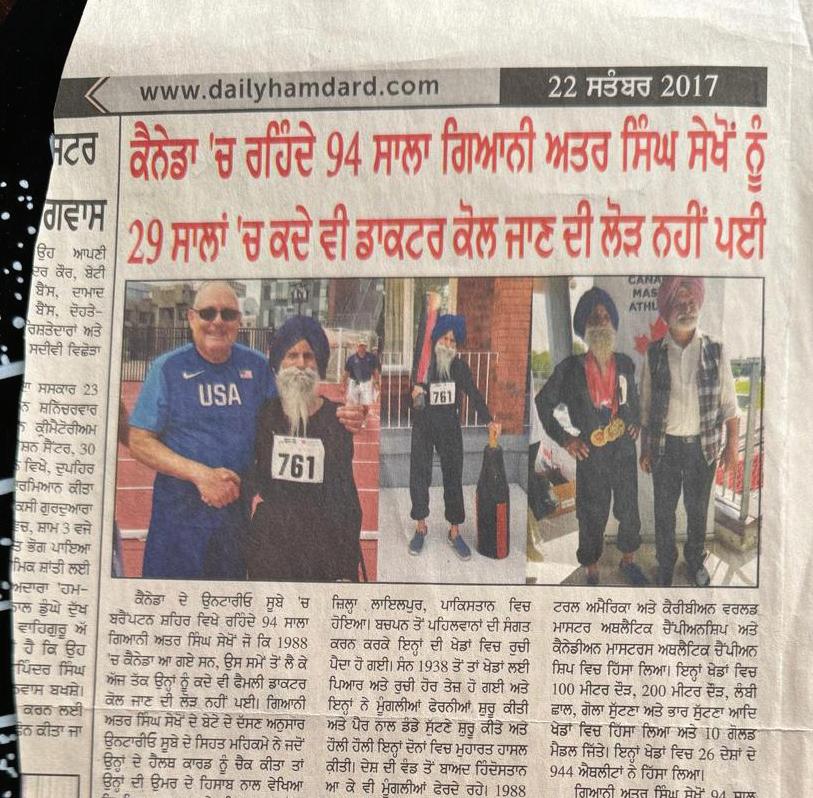
In 1988, at the age of 64, Sekhon immigrated to Canada and eventually settled in Toronto’s Rexdale community. In his 70s, he began exercising more seriously to maintain his health. Competitive athletics came much later, beginning around 2017 when he was nearly 94

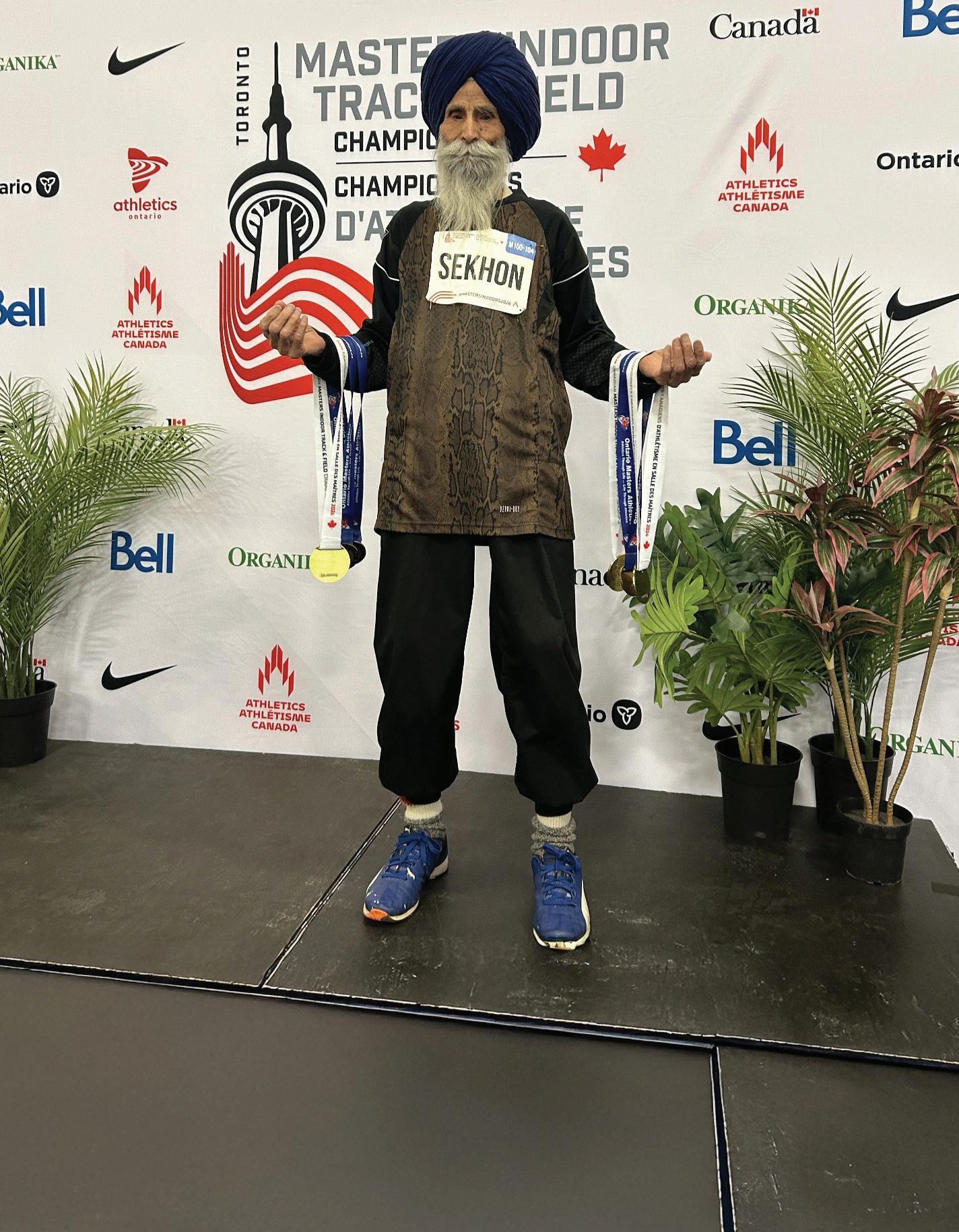






years old. From that point, he gradually entered the world of masters’ sport and built one of the most remarkable latelife athletic careers in Canada. Sekhon mentions, “I am deeply grateful to my nephew, Colonel Harnek Singh Toor in British Columbia, who introduced me to masters athletics and inspired, guided, and supported me throughout this jour ney.”
Today, he competes in the 100104 age category, a rare division. His per formances continue to draw attention.
At the 2026 Canadian Masters Indoor Championships in Toronto, he won four events over two days: the 50 meters in 33.12 seconds, the 60 meters, the 200 meters, and the shot put with a throw of 1.90 meters. Competing at the Toronto Track and Field Centre, he completed what is effectively a multi-event challenge at an age where most athletes have long retired from sport entirely.
His son, Joginder Singh Sek hon, describes his father’s physical and mental strength in simple terms. “The body may be aging, but his drive has not diminished,” he notes, explaining that despite physical limitations, his deter mination remains intact. That image has come to define how those around him understand his endurance, an aging frame powered by an unwavering spirit.
Joginder also emphasizes that his father’s influence extends far beyond

athletics. “It is our privilege, it is our honor. Our father is not just an athlete, but is blessed by the Almighty,” he emphasizes. He describes a life deeply rooted in spirituality and service, where Gurbani remains central. Sekhon has also contributed to supporting individuals beyond sport, including efforts to assist those facing hardship and addiction.
Despite his accomplishments, Sekhon’s approach to training has never been structured in a conventional sense. “Diet and exercise, I don’t have. I have God,” he reflects. He recalls a childhood where nutrition and comfort were not always guaranteed. “I used to think, in my younger years, that if I had received the right support, I might have stood on victory podiums earlier in life,” he adds. “In a way, that dream has come true now.”
Independence is another defining trait. Even at over 100 years old, Sekhon insists on doing most things himself. His son laughs when describing how firm this belief is in daily life. “He always says, ‘Don’t touch me,’” Joginder jokingly shares. “Even on the stairs or when getting up, he feels insulted if someone tries to help him. It does not matter who it is; he wants to do it himself. It is quite remarkable at this age.”
Over the years, Sekhon has
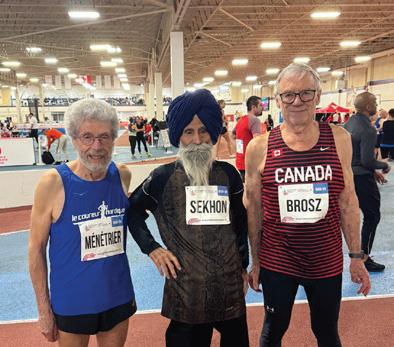
competed across Ontario, national Canadian championships, and international masters events in more than 30 countries under World Masters Athletics competitions, including North, Central American, and Caribbean Masters Athletics. He has earned nearly ten gold medals and competed in both sprinting and throwing disciplines. In the throws pentathlon, which includes hammer, discus, shot put, javelin, and weight throw, he has set Canadian masters records in the 95+ category, and has also competed in long jump events in Edmonton, showcasing rare versatility across disciplines.
His perspective on life remains deeply philosophical. He believes life after 45 should be seen as a celebration rather than a decline, and continues to live accordingly. He often speaks about oneness beyond religion or nationality, expressing gratitude toward humanity as a whole and emphasizing values over division. Even now, he travels independently, continues to compete, and remains active in community life. Beyond sport, he also supports international students facing hardship through a personal fund.
At 102, Sekhon’s journey is not just a record of movement across geography, but a life shaped by resilience, reinvention, and purpose. He expresses, “I convey my deep gratitude, magnanimously, to all those who have inspired, encouraged, guided, supported, and even applauded me throughout my journey of over a century. I wish and pray for a peaceful and loving humanity.”


















Undoubtedly, the message remains unwavering: age does not define ability; discipline, belief, and inner strength do.
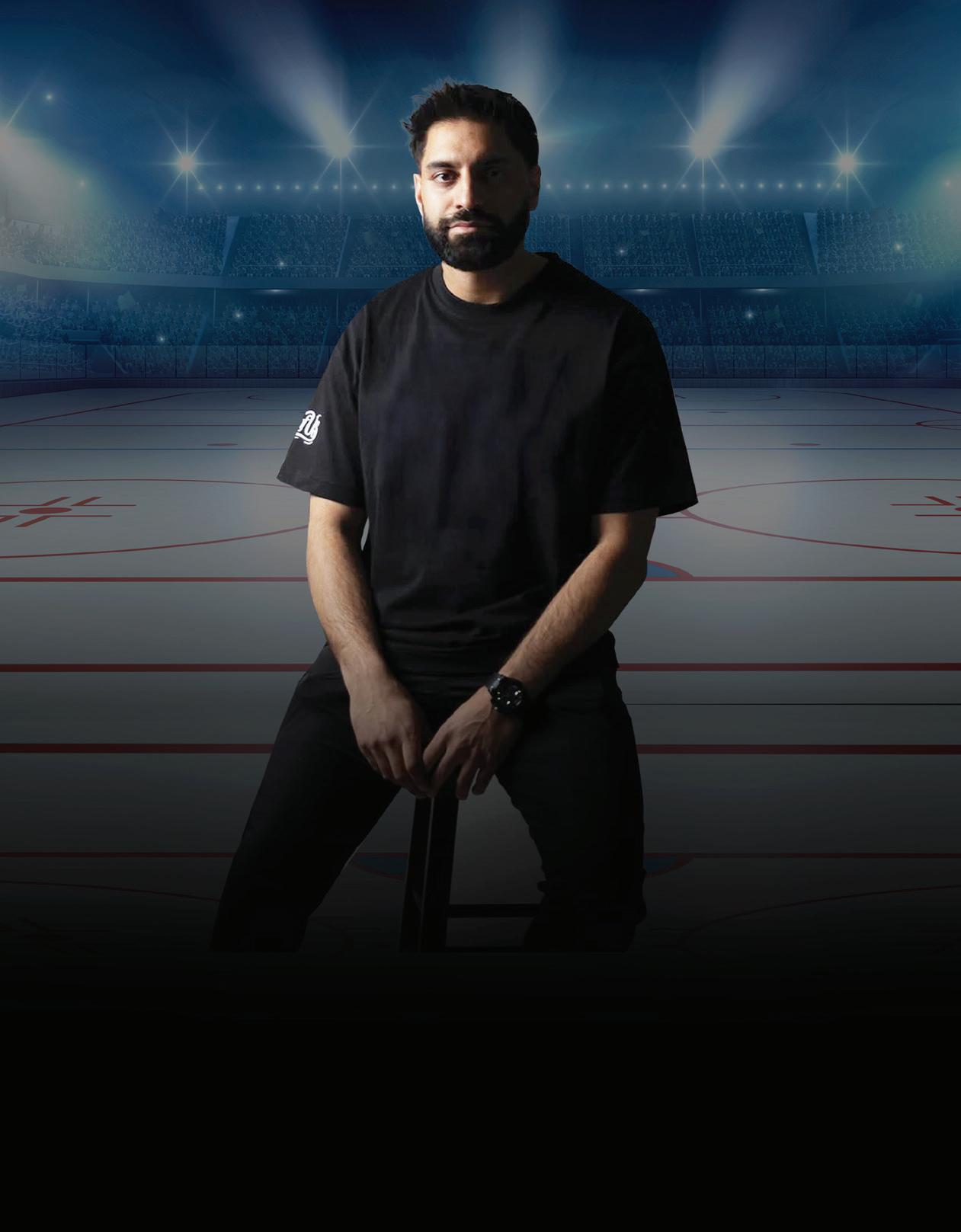
By Natasha D'souza
In a country where hockey is often described as part of the national identity, many South Asian families still grew up feeling like spectators to the sport rather than participants in it. For Lali Toor, that disconnect became deeply personal long before it became a mission.
Growing up in Edmonton, the 34-year-old often found himself as the only South Asian player on the ice. There were few role models who looked like him, little representation in hockey culture, and almost no visible pathway for young Indo-Canadian athletes navigating the sport. Instead of accepting that reality, Toor decided to reshape it. Today, as the founder of Apna Hockey, he has become one of the leading voices driving diversity and inclusion in Canadian hockey.
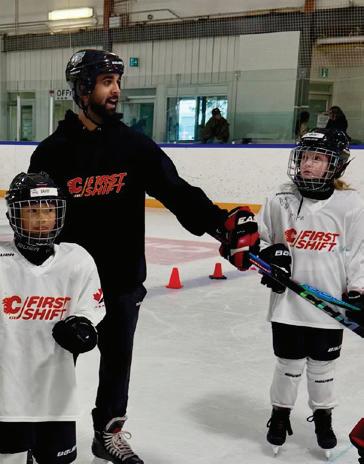
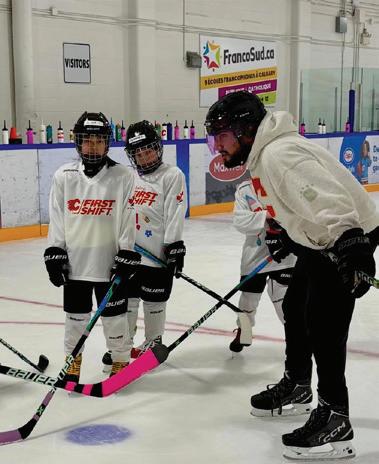






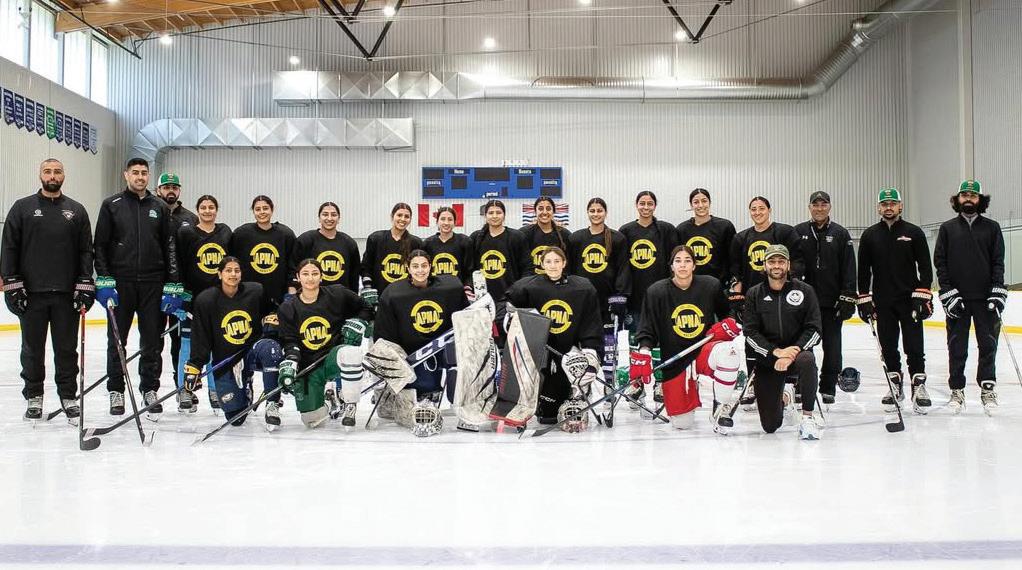
What started as a grassroots initiative has evolved into a movement redefining who belongs in the game.
Founded in 2017 alongside former professional player Dampy Brar, Apna Hockey was created to connect, mentor, and amplify South Asian hockey talent across Canada. The name itself carries emotional weight, “Apna,” meaning “our” in Punjabi, Hindi, and Urdu, reflects the organization’s larger vision of belonging. It is not just about producing elite athletes; it is about ensuring young South Asian players feel seen in arenas where they were once invisible.

pipeline, NCAA, WHL, and U SPORTS. In doing so, it has created visibility where there once was silence.
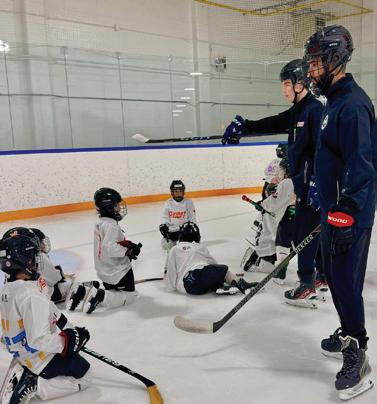
For Toor, representation was never symbolic. It was practical. He understood that when children see athletes, coaches, broadcasters, and community leaders who share their cultural background, the sport suddenly feels accessible. That philosophy has shaped every aspect of Apna Hockey, from mentorship programs and hockey camps to partnerships with NHL organizations and community outreach initiatives.
Over the years, the organization has collaborated with the Edmonton
Oilers and the Calgary Flames on South Asian celebration nights and beginner hockey initiatives designed specifically for newcomer families. Through programs like First Shift, Toor has helped introduce families to hockey in a way that removes intimidation around cost, equipment, and access.
The impact has extended far beyond the rink.
Apna Hockey has become a cultural bridge, bringing together sport and identity in a way that resonates deeply with younger generations of Canadians. The organization has highlighted dozens of South Asian players competing at elite levels across leagues, including the NHL
Toor’s work has also challenged long-held stereotypes around hockey itself. For decades, hockey culture in Canada often appeared distant from immigrant communities, particularly South Asians who traditionally leaned toward sports like cricket or field hockey. But Toor recognized that passion for hockey already existed in these communities—it simply lacked infrastructure, encouragement, and visibility.
Whether through community tournaments, youth camps, Punjabi-language hockey content, or partnerships with national organizations, Toor has consistently emphasized that diversity should not be treated as a side conversation in hockey. It should be embedded within the future of the sport itself.
That commitment earned national recognition when Apna Hockey’s Dampy Brar became associated with the prestigious Willie O’Ree Community Hero Award, honoring efforts to grow the game through inclusion and accessibility. The recognition further validated what
many South Asian hockey families already knew: that Toor and his team were creating meaningful change at the grassroots level.
But perhaps the most powerful part of Toor’s story is that he continues to think beyond the present moment. His vision stretches toward building sustainable hockey ecosystems for South Asian athletes, not just in Canada but globally. In recent years, he has also been involved in initiatives connected to international South Asian hockey representation, including showcases featuring teams connected to India and Pakistan.
Even now, Toor often speaks less about personal success and more about collective progress. The goal is larger than one organization or one generation of players. It is about ensuring that future South Asian children entering a hockey rink no longer feel like outsiders. It is about democratizing opportunities, increasing visibility, and creating space for communities historically underrepresented in the sport. Also, with a strong focus on expanding avenues for girls, Toor is not only simply introducing more diversity into hockey but is helping reshape the cultural imagination of the game itself. Through Apna Hockey, he has built more than a network; he has created a sense of ownership and belonging for a community increasingly carving out its place in Canada’s most iconic game. And for countless young players stepping onto the ice today, that change already feels intimate.







By Ancy Mendonza
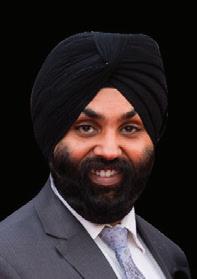
Aconvoy of tiny, colorful classic Minis cruising through Vancouver traffic. People pointing. Kids waving. Someone inevitably yelling, “Look! Mr. Bean’s car!” And somewhere in the middle of it all is Nadir Ibadullah, smiling like a kid seeing his very first Mini all over again.

cousins or anyone,” he laughs. “I would just go sit inside the Mini.”
THE MIGHTY MAN KEEPING ICONIC TINY MINIS ALIVE THERE’S A GOOD CHANCE YOU’VE SEEN THEM BEFORE YOU’VE SEEN HIM.
That love story began thousands of miles away in Pakistan when he was just a fifth grader. His uncle would occasionally pull into the family driveway in a yellow Mini, and while everyone else rushed to greet relatives, young Nadir had only one priority. “I didn’t care about my
Something clicked instantly. He remembers cleaning the car, sitting in it for hours, admiring every inch of it long before he was old enough to drive. Eventually, after relentless convincing, his father persuaded his uncle to sell the car to him.
“My first Mini came into my life when I was in grade five,” he says. “I couldn’t even drive it yet, but I loved it.”
That childhood fascination slowly turned into a full-blown obsession. By the mid1990s, after completing his education




in Pakistan. Back then, maintaining one was anything but easy. Parts were nearly impossible to source, mechanics didn’t specialize in the car, and most people didn’t understand why anyone would spend so much effort restoring one.
But Nadir saw potential where others saw scrap metal. He would hunt down neglected Minis, restore them piece by piece, make them roadworthy again, and sometimes sell them on. He became resourceful too, often using modified parts from Suzukis, Mitsubishis or Hondas to keep them running.
Then came the Mini that changed everything.
Before immigrating to Canada in 2004, Nadir had restored what he calls his “perfect Mini.” It had won admiration back home and even placed first at a local mall display. He parked it safely in his father’s garage before leaving, fully intending to one day ship it to Canada. But time and weather had other plans. The car slowly deteriorated in storage. Rust began taking over, and eventually, Nadir made the difficult decision to sell it. Years later, regret hit hard. He asked family and friends to track it down again. When they finally found it, it was too late. “It was just a shell,” he
Minis forever. “Since then, I decided I’m never selling another Mini again.”
Today, Nadir owns 17 Minis, with one currently undergoing a full restoration. His nimini collection includes rare variants, long-wheelbase pickups, automatic Minis, and highly sought-after classics like a 1967 Mk I Super Deluxe and a 1969 Cooper S Mk II.
“Whenever the Minis are outside, people smile,” he says. “I always say I’m spreading smiles.” And honestly, he’s not wrong. At local car shows, his Minis draw crowds instantly. Some people are fascinated by the engineering. Others just find them adorable. “I’ve heard ‘Oh my God, so cute!’ thousands of times,” he says with a grin. The reactions are part of what fuels him, but there’s a bigger mission behind all this, too.
Nadir wants younger generations to care about these cars. In a world moving rapidly toward electric vehicles and modern performance cars, he worries classic Minis could slowly disappear from the roads altogether. That’s why he’s made it his goal to get more young people behind the wheel—literally.
If teenagers visiting car shows don’t know how to drive a stick shift? No problem. Nadir went out and bought
automatic Minis specifically so younger drivers could experience them. At this year’s Vancouver International Auto Show, he did something that shocked even longtime Mini collectors. He allowed visitors—including children—to sit inside one of his rarest Minis all day long. Most collectors would never risk it. “My heart was beating the whole time,” he admits. “But I wanted people to experience the car.”
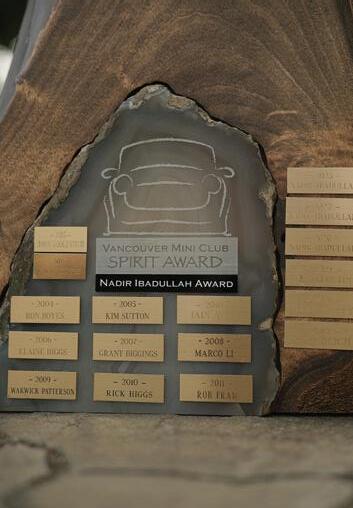
For Nadir, preserving Mini culture isn’t about locking the cars away. It’s about keeping them alive, visible, and loved. That passion has made him something of a legend within Vancouver’s Mini community. He’s won the Vancouver Mini Club Spirit Award multiple years in a row—so consistently, in fact, that the club recently renamed the award after him. Now officially called the Nadir Ibadullah Award, it recognizes the exact spirit he brings into every room, every car show, and every Mini convoy.
And perhaps that’s the legacy he wants most. Not just the collection itself, but the joy attached to it. Because for Nadir, a Mini has never simply been a car. It’s the sound of gears shifting. It’s memories of Pakistan. It’s friendships formed at car shows. It’s the feeling of becoming “a 20-year-old boy again” every time he gets behind the wheel.
Most of all, it’s proof that passion, no matter how small it may look from the outside, can take up a very big space in someone’s life.






By Naina Grewal
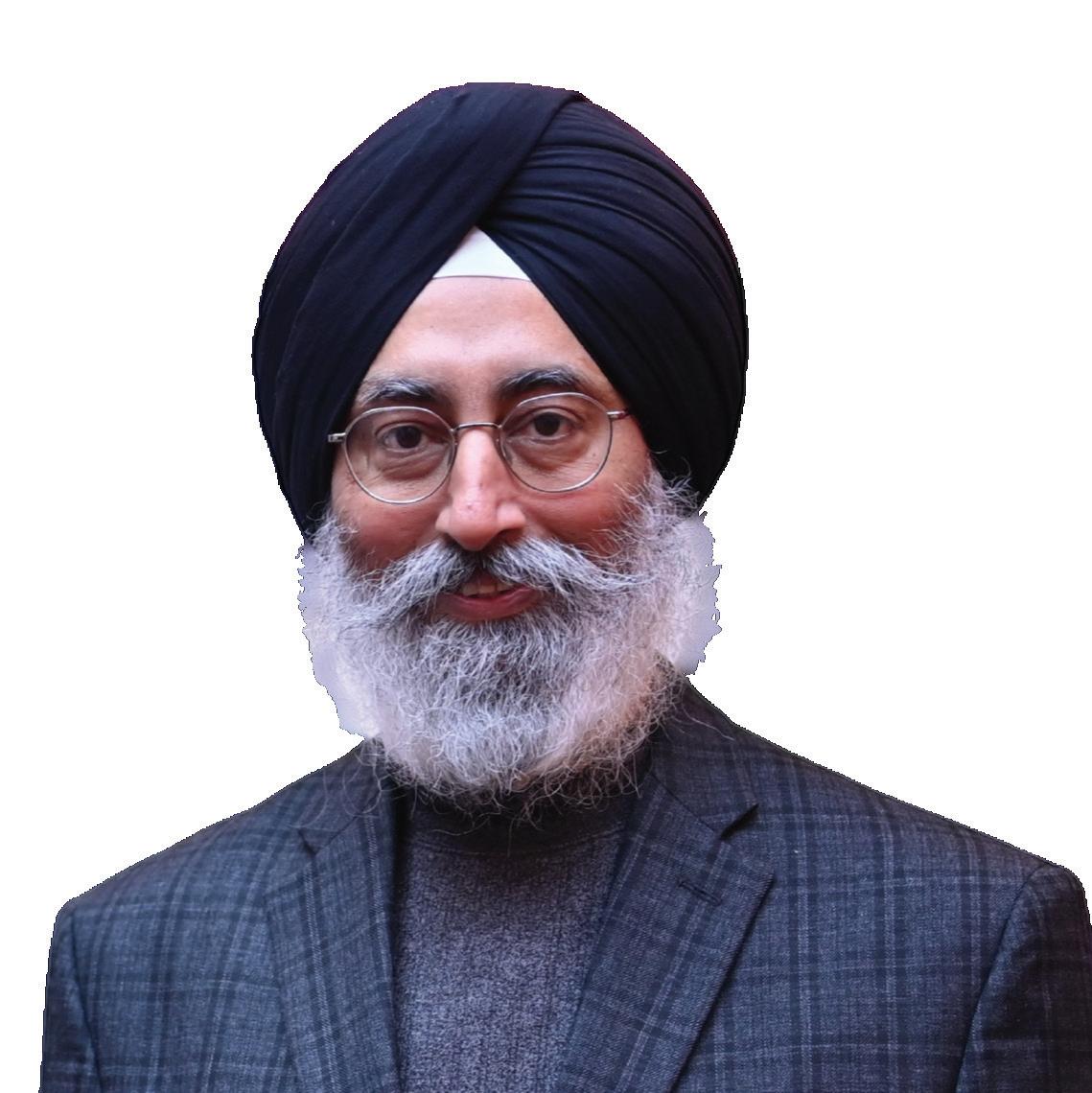
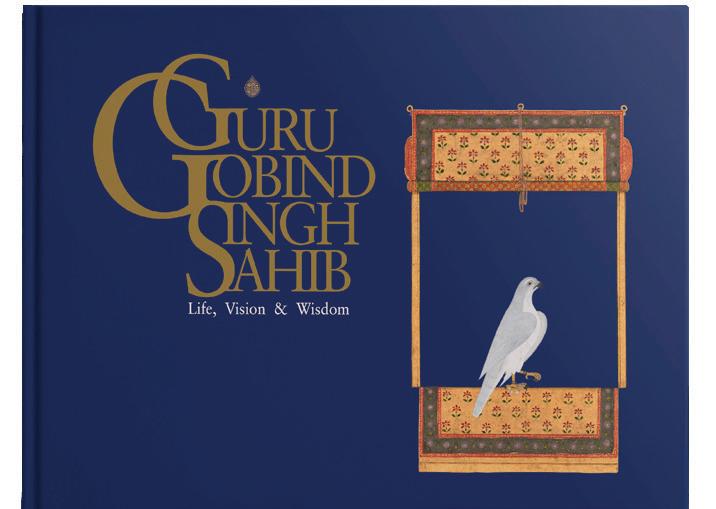
In a year marking the 350th anniversary of Guru Gobind Singh Ji’s coronation, Sikh scholar Harinder Singh offers a strikingly layered contribution to global Sikh discourse through his book, Guru Gobind Singh Sahib: Life, Vision & Wisdom. Singh’s work spans Sikh thought through teaching, research, and public dialogue, and this book arises from that ongoing engagement.
More than a historical account, the work is a carefully crafted convergence of theology, art, and lived experience; it is an effort to move beyond familiar narratives and into a deeper encounter with the Tenth Guru’s vision. At the heart of the book lies an intentional interplay





between text and visual expression. Singh explains, “The writing came first. The sabad (words-sounds) shaped the foundation of the book, particularly the ten Sabad Hajare compositions attributed to Guru Gobind Singh Sahib.”
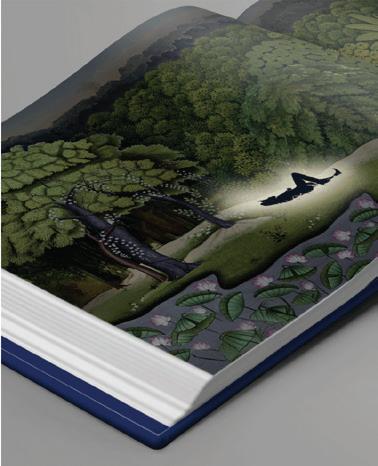
The visual dimension emerged later, developed collaboratively with Kiran Kaur, “The paintings were not meant to illustrate, but to carry the spirit of the compositions into a present-day context and allow a sense of presence to emerge.” This distinction is crucial. Rather than reducing Sikh tradition to imagery, the book preserves its core emphasis on internal contemplation, described by Singh as an experience that cannot rest on explanation alone, but needs space, attentiveness, and a willingness to encounter.
Drawing from historical voices like Bhai Nand Lal Goya and Chandra Sain Sainapati, Singh emphasizes dimensions frequently overlooked, particularly the inward discipline of sovereignty. He details, "Sovereignty is usually read outwardly, in terms of authority or resistance. In the Guru’s articulation, it begins inwardly. It asks for alignment, removes dependence, and places one under a single allegiance.”
Singh’s concept of leadership is also framed as rooted in love and alignment rather than authority. He references the Guru’s teaching, “Guru Gobind Singh Sahib is clear: ‘Jin Prem Kio Tin Hi Prabhu Paio’—those who love come to realize the 1-Divine.” Such a model, he suggests, challenges contemporary leadership cultures that prioritize visibility over
substance, urging instead a shift toward reflection, steadiness, and justice-centered action.
Singh’s personal journey further deepens the narrative. He recounts moving from a childhood sense of “hero worship” to a more intimate and transformative relationship with the Guru. “Hero worship may begin the journey, but it cannot complete it,” he reflects. The shift is not merely intellectual but experiential. He highlights, “Knowing expands understanding. Feeling deepens the connection.” For younger generations, especially those in the diaspora, this movement is not about abandoning inherited traditions but entering them more fully.
While visibility and representation dominate contemporary conversations, Singh urges a return to foundational principles. By presenting Guru Gobind Singh Ji as the embodiment of political-spiritual sovereignty, the book invites readers not only to learn but to reflect on how they live, decide, and align themselves in an increasingly complex world.
Guru
Gobind Singh Sahib is clear: ‘Jin Prem Kio Tin Hi Prabhu Paio’— those who love come to realize the 1-Divine.
-Harinder Singh Author
As Singh puts it, “The question for Sikhs globally is not only how we are seen, but also how we self-identify and live. What guides our decisions? What do we stand under? How do we remain in the Guru’s Command-Grace while living across different contexts?”


Use code: Darpan save 10% )
I
hope that more people see themselves not only as users of technology, but as builders, leaders, and ethical voices"
By Naina Grewal
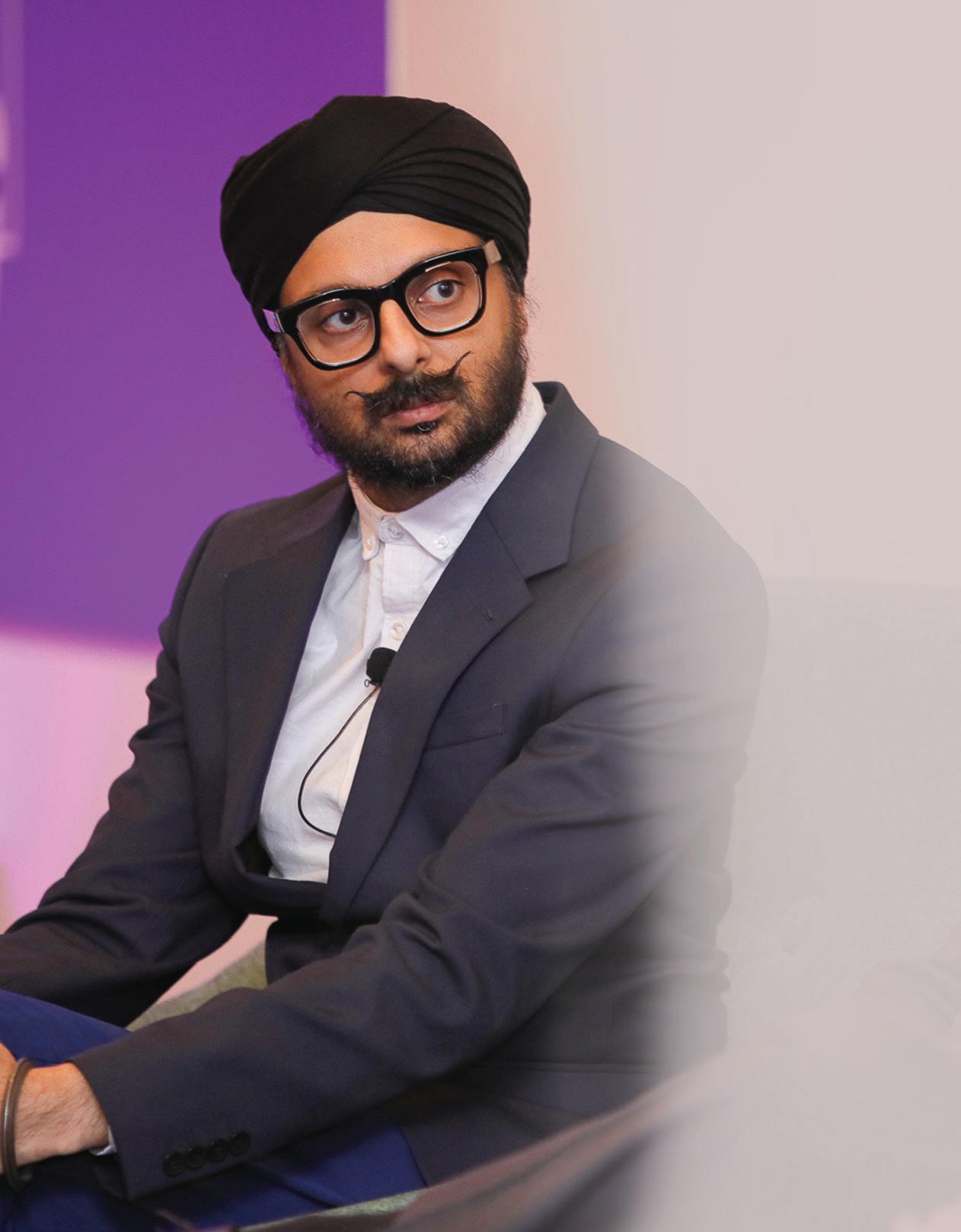
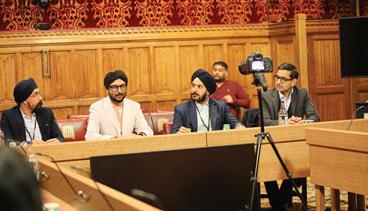
Meet Param Singh MBE. Born in London, he is a British business and technology consultant, entrepreneur, and civic leader whose career bridges engineering, innovation, media, and community impact. Over the years, he has worked with major global organizations, including Ford, Rolls-Royce, Sainsbury’s, Accenture, and MetLife, before moving into the startup space in 2011, where he launched a legal search platform inspired by TripAdvisor. Today, he works at the forefront of data and artificial intelligence transformation within a Fortune 500 organization, while also helping shape one of the UK’s most influential British Sikh professional networks as Founder and Co-Chair of City Sikhs.
Alongside his professional journey, Singh has become a recognized public voice on diversity, inclusion, and representation. He was appointed a Member of the Most Excellent Order of the British Empire (MBE) for services to faith communities and technology, and has also been honored with the “Man of the Year” award at the British Indian Awards. His wider public profile includes appearances on the BBC’s The Ranganation and, earlier, making history as the first Sikh contestant on the British dating show Take Me Out, reflecting a presence that spans both professional and cultural platforms.
His story, however, is deeply rooted in legacy. It begins in 1926, when his grandfather arrived in Sheffield to study Mechanical Engineering, planting the first seeds of a family journey that would span nearly a century in the UK. “My family’s connection with the UK goes back almost 100 years,” Singh explains. That legacy includes manufacturing businesses in pre-partition India that were lost during Partition, followed by his parents’ rebuilding in the UK through small grocery and clothing businesses.
Growing up in a workingclass British-Indian household, Singh was raised with a strong emphasis on education, hard work, and service,
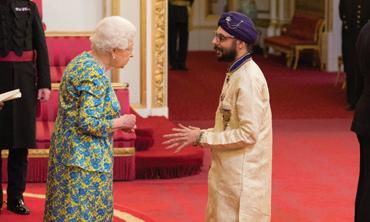
alongside a lived understanding of resilience and reinvention. After studying Mechanical Engineering at the University of Sheffield, he began working as an Aerospace Design Engineer. Despite a strong technical foundation, he chose to move into management consulting. “I wanted to understand technology, business, and organizational change more broadly,” he shares.
Alongside his corporate career, he co-founded City Sikhs after engaging with leadership and interfaith initiatives in London. “City Sikhs was founded to create a professional, inclusive and outward-looking space where British Sikhs could connect, develop as leaders, engage with public life and contribute to wider society,” he reflects. Today, he sees it evolving into a broader civic leadership platform for British Sikh and British Asian professionals, while continuing his work in AI and data transformation, as well as mentoring emerging professionals.
Looking ahead, Singh sees artificial intelligence as a defining force for the next decade. However, he is clear that technology alone is not the story. “The opportunity is not just to respond to technological change, but to shape it in a way that improves lives and strengthens society. I hope that more people see themselves not only as users of technology, but as builders, leaders, and ethical voices in how these tools are developed and applied.”




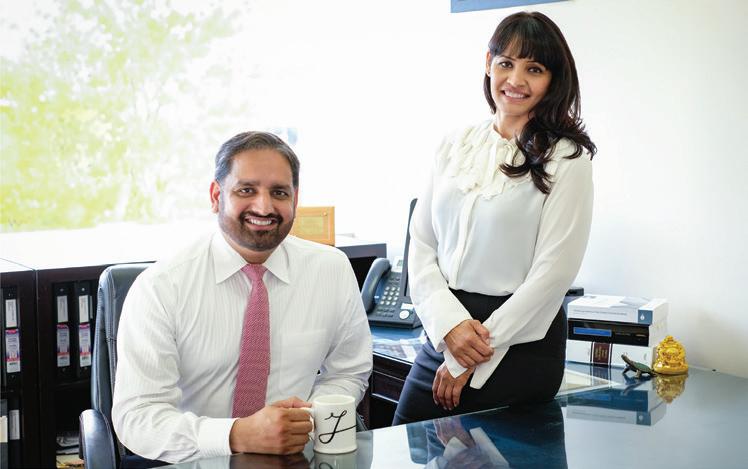






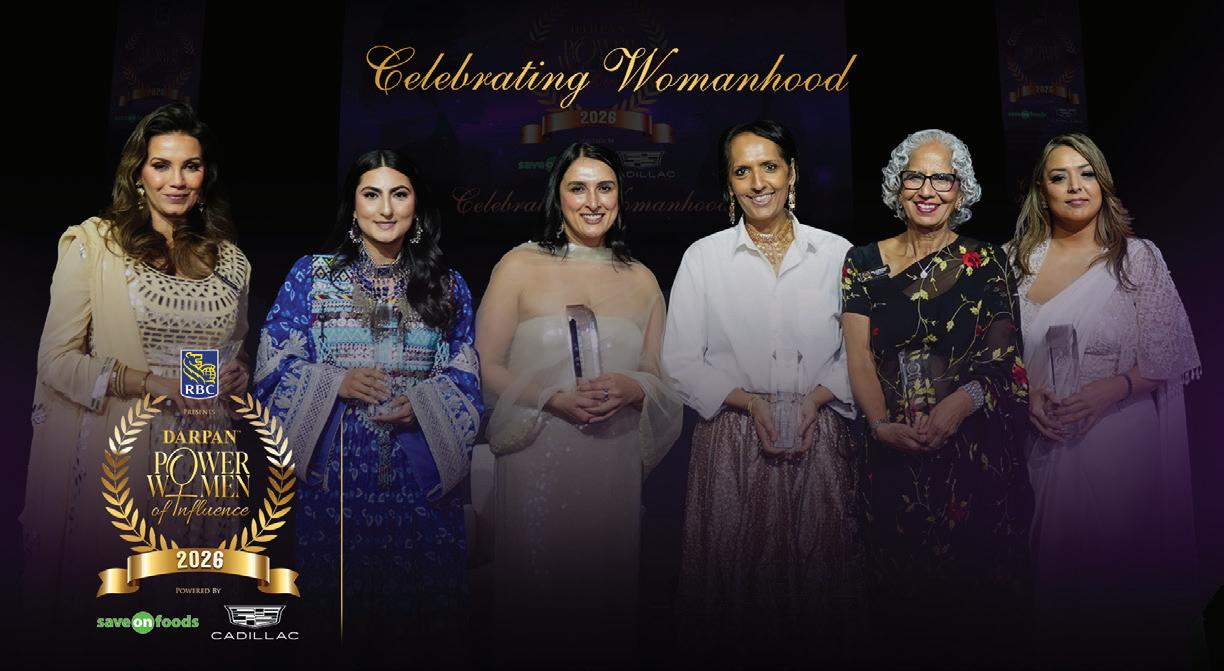
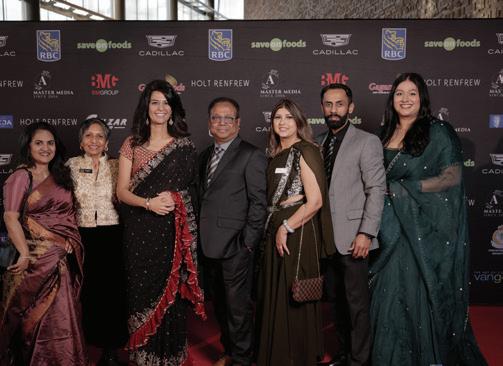
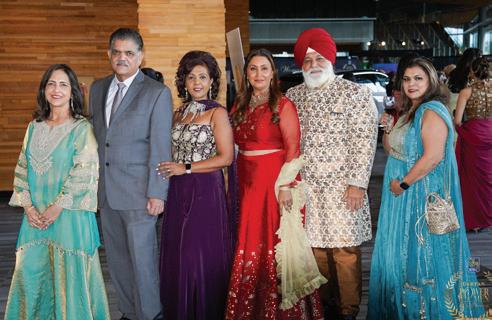
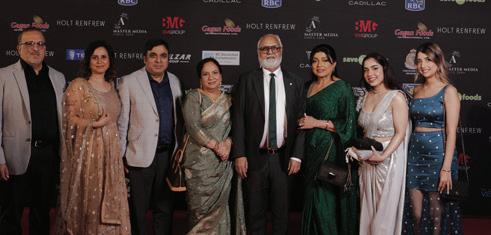
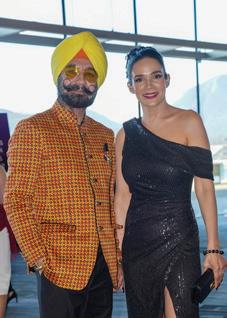
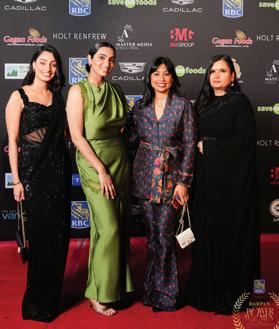
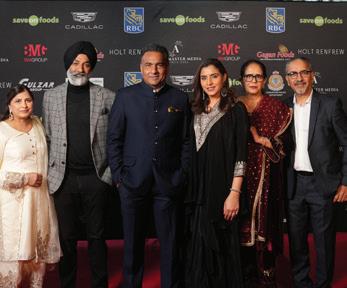
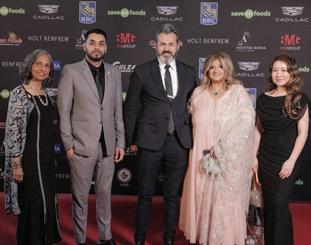
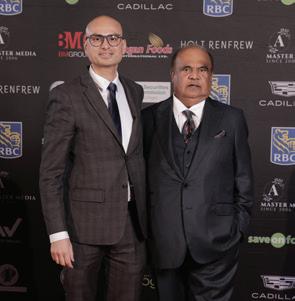
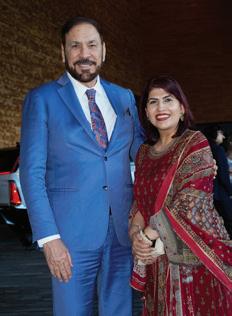
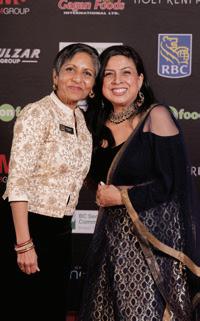
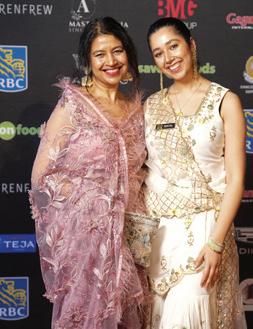
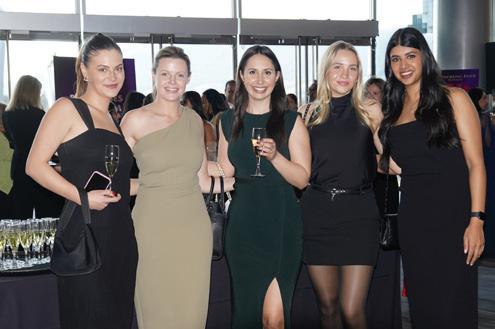
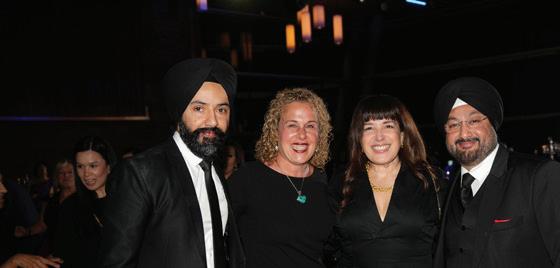
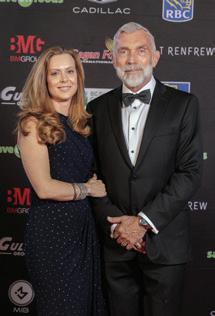
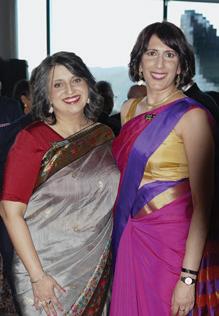
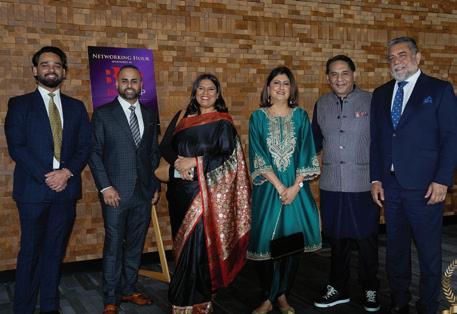
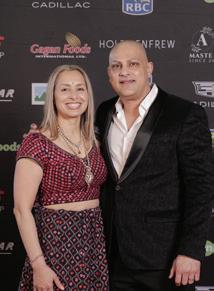
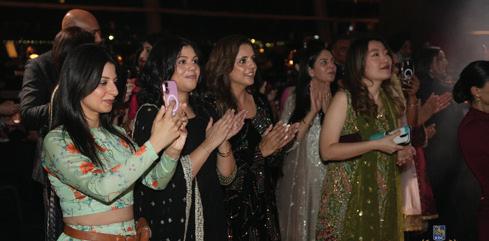
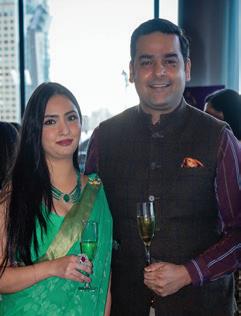
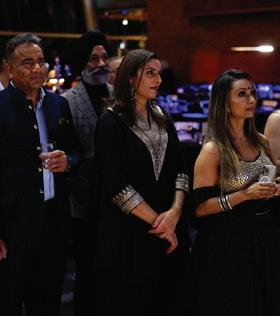
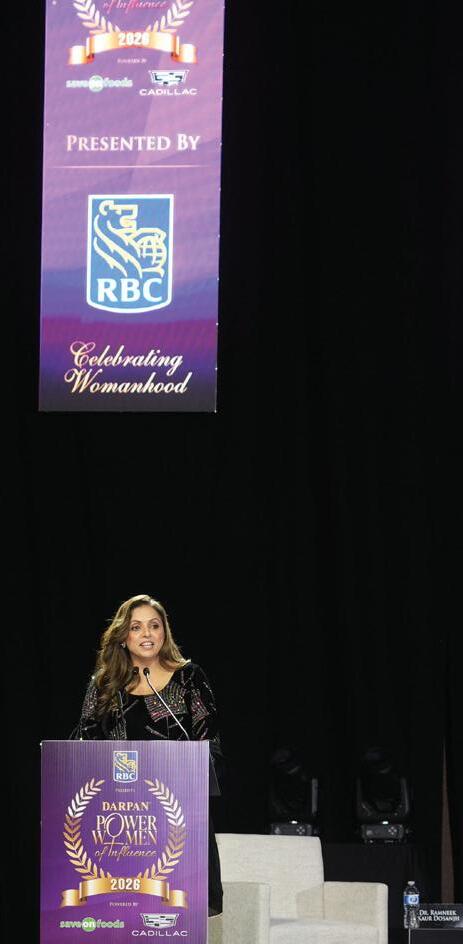
On March 21, 2026, DARPAN Magazine proudly hosted the fourth edition of the DARPAN Power Women of Influence (DPWOI) at the iconic Vancouver Convention Centre—a venue that once again mirrored the scale and spirit of the evening it held. Presented by RBC and powered by Cadillac and Save-onFoods, the event stood as a powerful celebration of women’s leadership, resilience, and the evolving definition of influence across communities and industries. Against the backdrop of Vancouver’s shimmering skyline and the coastal mountains, the evening gathered changemakers, leaders, and storytellers in a shared space of reflection, recognition, and inspiration.
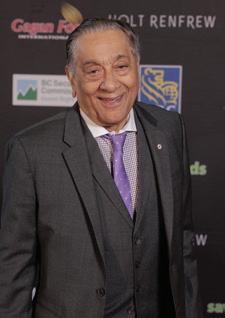
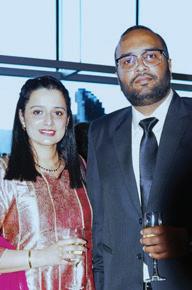
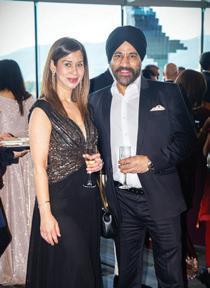
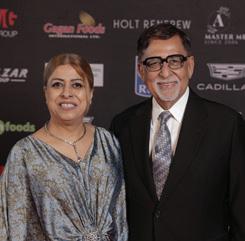
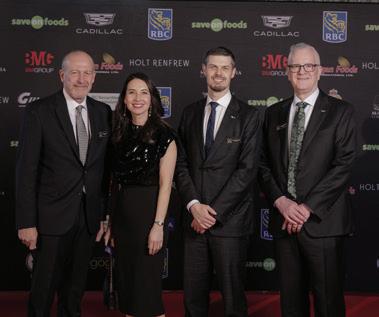
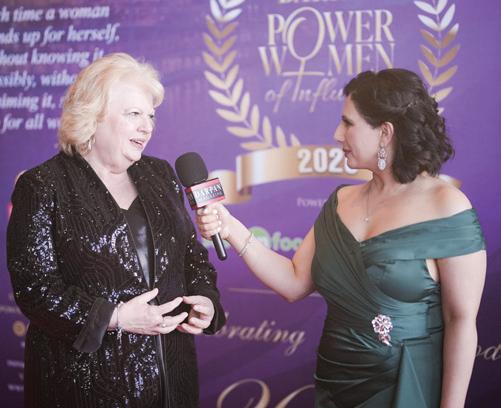
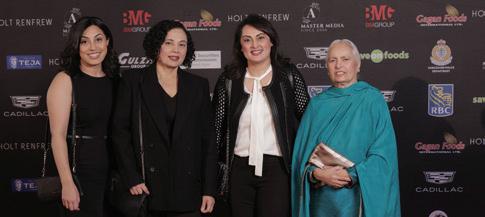
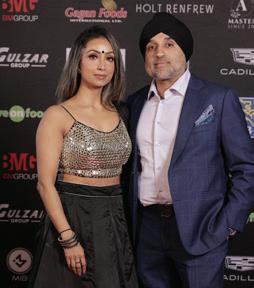
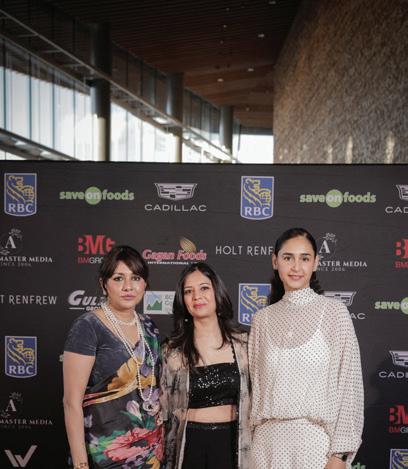
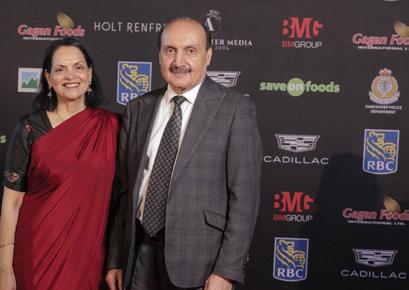
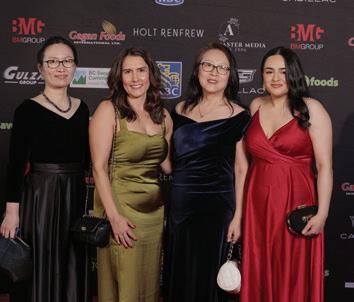
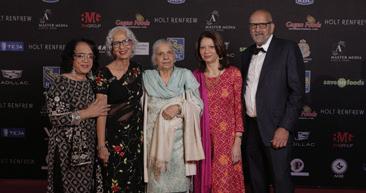
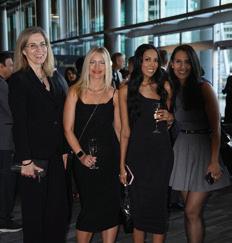
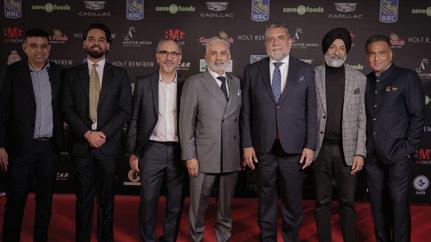
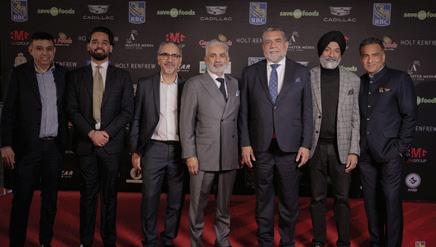
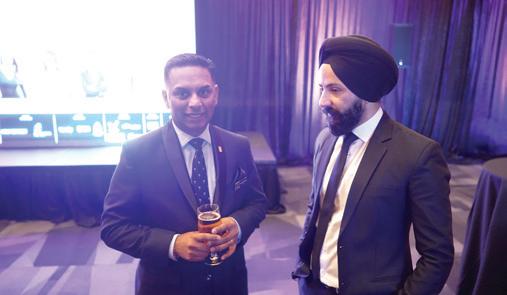
As guests arrived for the red-carpet reception, the energy inside the venue was immediate and unmistakable. Over 550 attendees filled the space, with cameras capturing fashion moments and conversations reflecting anticipation for the evening ahead. The reception, supported by the BM Group of Companies, was elevated by leaders, public figures, and community voices from across British Columbia, reflecting the growing reach and relevance of the event.
By Ancy Mendonza
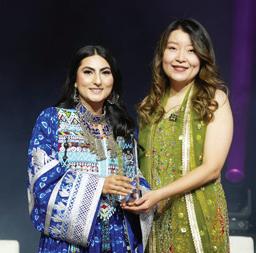
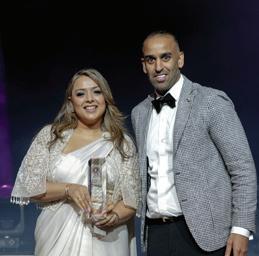
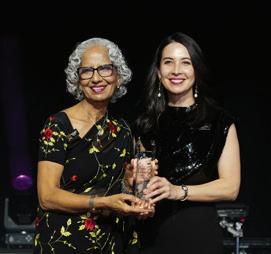
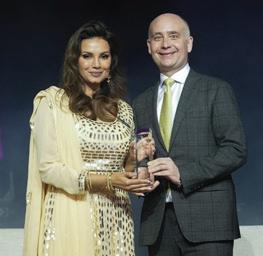
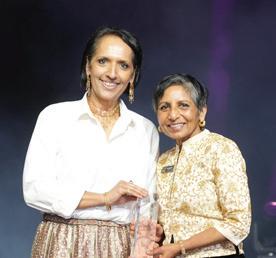
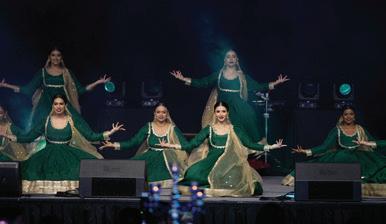
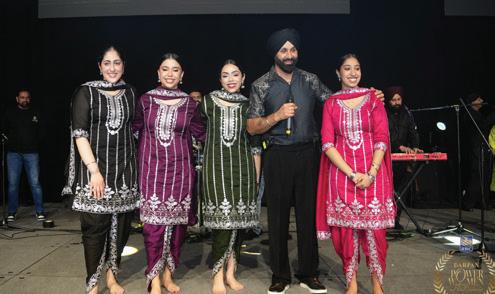
The evening’s opening performance moved away from traditional form, instead offering a beautifully choreographed presentation by the Sunehri Arts Club that highlighted the different stages in a woman’s life and her story: from childhood and identity formation to ambition, struggle, resilience, and legacy. The performance set a
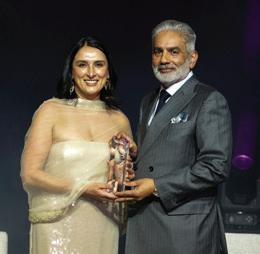
reflective and emotional tone, reminding the audience that womanhood is not a singular narrative, but a layered and evolving journey. The evening started with brief remarks from British Columbia Premier David Eby, who set the tone by acknowledging the importance of equity, representation, and the ongoing work required to build more
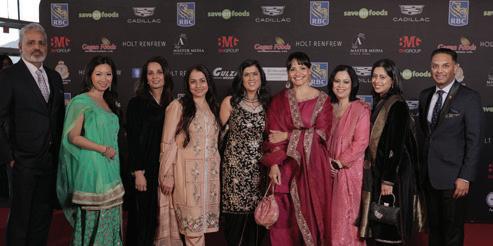

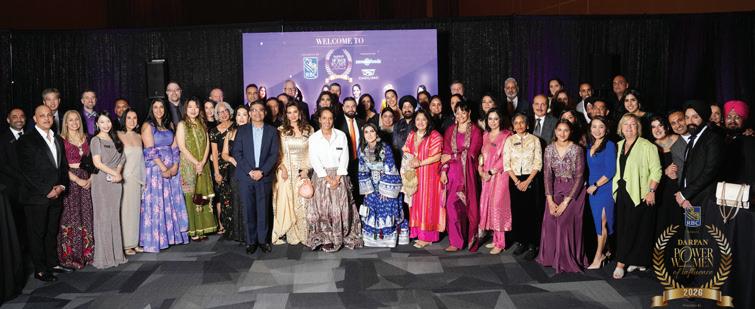





inclusive systems across the province.
Following this, RBC Regional Head-Retail Markets Kam Raman took the stage and spoke about RBC’s continued commitment to advancing inclusion, leadership development, and opportunities for women in business and beyond. Her remarks reinforced the importance of long-term investment in equity-driven progress, particularly within financial leadership spaces.
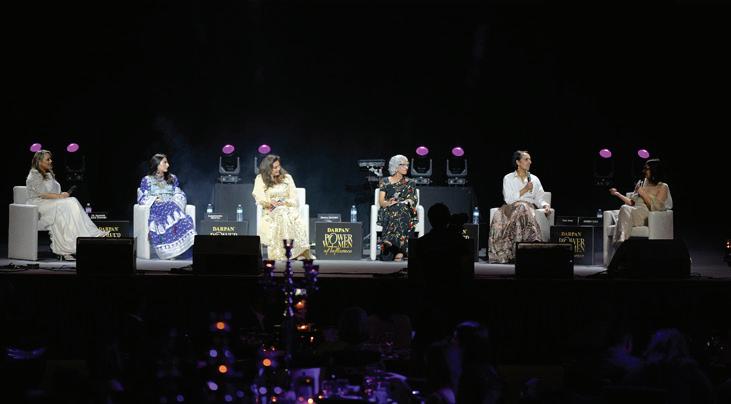
The centerpiece of the evening, the DARPAN PowerTalk series, once again brought together a remarkable group of women whose experiences spanned media, academia, sport, activism, and global leadership. Each speaker offered a deeply personal lens on resilience, identity, and impact.
• Award-winning Journalist Simi Sara opened the series with her talk, “Adapting Through Change Without Losing Your Voice,” reflecting on her three-decade journey in journalism and the importance of staying grounded in authenticity amid an evolving media landscape.
• Professor Emeritus and Social Advocate Satwinder Kaur Bains followed with “Honoring Our Roots and Transforming Pain into Power,” drawing on her decades of research and community work to emphasize the importance of preserving history while transforming lived experiences into collective strength.
• Global Icon, Author, and Miss World 1997 Diana Hayden delivered a compelling address titled “Owning Your Choices and Living Life on Your Own Terms,” reflecting on her journey from international pageants to authorship and public life, while challenging conventional definitions of success and



identity.
• Footballer and Social Activist Farkhunda Muhtaj shared her powerful talk, “Using Your Platform to Create Opportunity for Others,” highlighting her work in refugee advocacy and her role in creating pathways for young women in crisis-affected communities.
• Physician and Health Systems Leader Ramneek Kaur Dosanjh closed the series with “Overcoming Challenges
and Rising with Resilience,” emphasizing healthcare equity and the urgent need to amplify women’s voices within global medical systems.
The panel discussion, moderated by veteran journalist Robin Gill, returning to the DPWOI stage for the second time, expanded the conversation into pressing societal themes, including personal autonomy, public scrutiny, and the evolving media lens on women’s progress. The dialogue also explored leadership in healthcare equity and the importance of reframing DEI narratives. A particularly impactful exchange examined participation gaps in sport among young girls, especially within South Asian communities, and what systemic changes are needed to foster greater inclusion and encouragement.
The evening was further elevated by a strong political presence, including Ministers Jagrup Brar, Ravi Kahlon, Jessie Sunner, MLAs Steve Kooner, Tamara Jansen, Rohini Arora, and Surrey Mayor Brenda Locke, each representing the growing engagement of leadership across municipal, provincial, and federal levels.
Guests were treated to a curated dinner experience after the formal program, sponsored by Gagan Foods International, featuring a diverse culinary spread that reflected the multicultural fabric of the community.
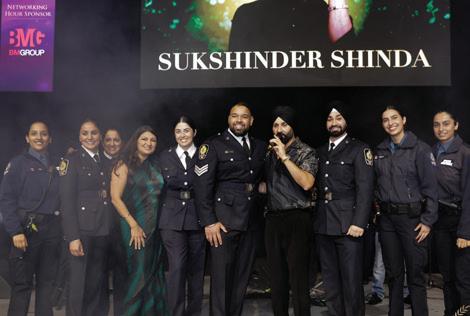
The night reached its celebratory peak with a high-energy performance by Punjabi music legend Sukshinder Shinda, whose timeless hits transformed the ballroom into a dance floor filled with joy, nostalgia, and collective celebration.
Behind the scenes, the seamless execution of the evening was made possible through the dedication of the DARPAN team and the continued support of partners who believe in the importance of platforms that elevate women’s voices and stories.
Reflecting on the evening, President Ramneek Dhillon and Founder Gurvinder Hundal shared, “Each year, DARPAN Power Women of Influence remains a space where stories are shared, perspectives are challenged, and women are celebrated for the impact they create every day.”
As the night came to a close, one message resonated clearly throughout the Convention Centre: progress is not a moment—it is a continuous collective effort. The DARPAN Power Women of Influence 2026 stood as a reminder that women are not waiting for change; they are actively shaping it, leading it, and redefining what influence truly means.


















ttendees’

DARPAN Power Women of Influence event was an incredible space for sharing wisdom on social justice, anti-racism, liberation, and paths forward. It reinforced more women lead, soci-
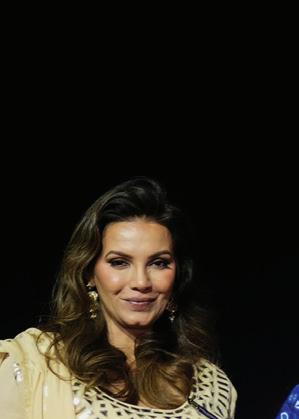
“It was truly enlightening. What I take away from the evening is that you have created an amazing platform for women’s stories to be heard and appreciated. DARPAN is covering so many important issues that we face, and they are very focused in what they do. If everybody does their little bit, we can all bring something valuable to the table."
– Diana Hayden Miss
Philanthropist and Author
Deputy Chair, BC Govern-
It was an honor to attend the DARPAN Pow er Women of Influence event for the second time. What stayed with me most were the women who took the stage - each brought something different. And yet, there was a clear thread connecting them all. Their stories of resilience. Fantastic!"
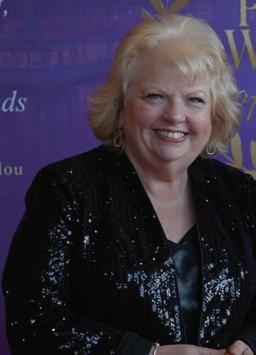
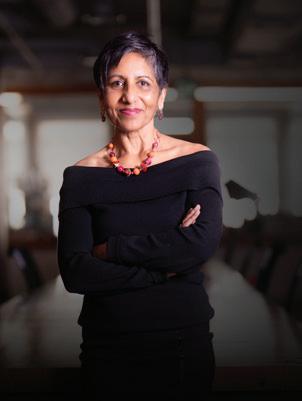
– Nicole Robson, President & CEO, Surrey Hospitals Foundation leaders, thinkers, and influencers in the arts, culture, finance, business, sports, media, non-profit, and academic sectors was truly otherworldly."
I’d like to thank DARPAN women in our province who work so hard to showcase what women, and especially South Asian women, can do. There are so many in the city of Surrey and I’m so proud of them.
– Brenda Locke, Mayor of Surrey
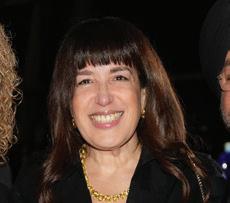
– Rita Parikh, Chair, Vancity Credit Union and Vancity Community Investment Bank
credible. I think young these stories. It shows that it won’t always be can happen if you persevere, work hard, and speak up. There is an end goal, and it is achievable."
– Simi Sara Award-Winning Journalist and Host, Mornings with Simi
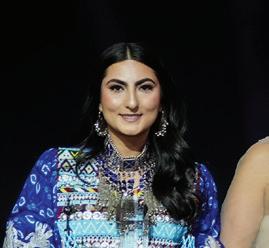
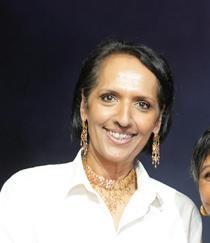
“Thank you for having me. This has been an inspiring evening. I would encourage everyone to attend events like DPWOI, come again next year, continue to support by sponsoring or attending, and vouch for who you think should be recognized. It is such a powerful event.
– Farkhunda Muhtaj Footballer, Social Activist and Global Speaker

“
“It was really special to spend the evening with such inspir ing women who are doing in credible work in their fields. The honest, down-to-earth conversations were easily the best part of the night.”
– Robin Gill, Founder, Robin Gill Communications

There was something special about the night. The room was filled with a genuine sense of connection, and you could feel how inspired everyone was”
– Dr. Ramneek Dosanjh Executive VP, Medical Women's International Association
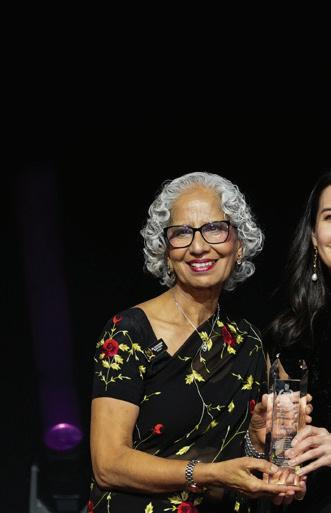
“Words may not convey the depth of my appreciation for everything Team DARPAN did to make the event the stellar one that it was. The feedback from everyone we met and spoke to was absolutely wonderful. You deserve all the praise we can offer.
– Dr. Satwinder Bains, Professor Emeritus and Social Advocate

By Ancy Mendonza
The New York Times once called him the “Michael Jackson of India.”
To fans across generations, he became the “Crown Prince of Bhangra.”
The New York Times once called him the “Michael Jackson of India.”
To fans across generations, he became the “Crown Prince of Bhangra.”
To Punjabi music lovers, he is the “Original Folkstar.”
To Canada’s South Asian community, he is proof that immigrants can arrive with little and still leave a cultural legacy that echoes across continents.
But before the fame, the gold chains, the sold-out arenas, and the unmistakable voice, there was simply a little boy named Jaswinder Singh Bains—or as his mother lovingly called him, Jaswindaarr.
A four-year-old child perched on his Chacha's shoulders in a village gather-
ing in Punjab, staring in complete awe at Ustad Kuldeep Manak.
That moment changed everything.
Just the way he looked, the way he sang, the power in his voice,” Jaswinder Bains recalls, almost as if he is reliving it in real time. “I remember thinking, this is what I want to do.” At four years old, he had already found his calling. Thirty years later, the world is still listening.
Long before Punjabi music filled arenas worldwide, before social media turned

Punjabi artists into global stars, before luxury cars blasted bhangra through downtown Vancouver streets, there was a very different reality for South Asians in Canada.
When Bains moved to Surrey as a child, he entered a country where South Asian families were still trying to carve out space for themselves. Racism was open, casual, and pretty common. “They would swear at us, throw things at us while we walked,” he says matter-of-factly. “It was tough back then.”
Yet, despite it all, he remembers childhood with warmth. Playing street hockey and riding bikes with friends from different nationalities was nothing but normal. “That’s the beauty of being a kid,” he says. “You see everyone equally.”

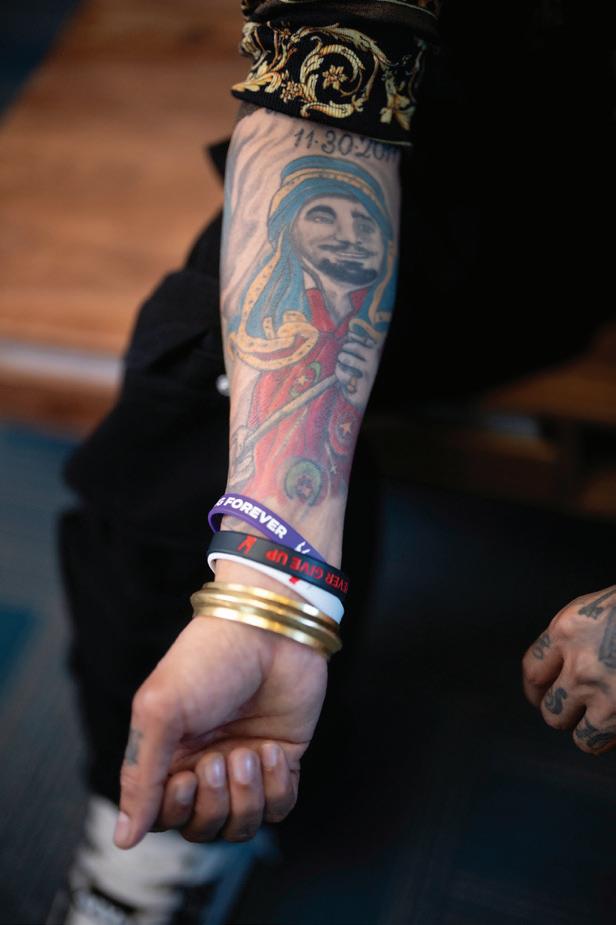

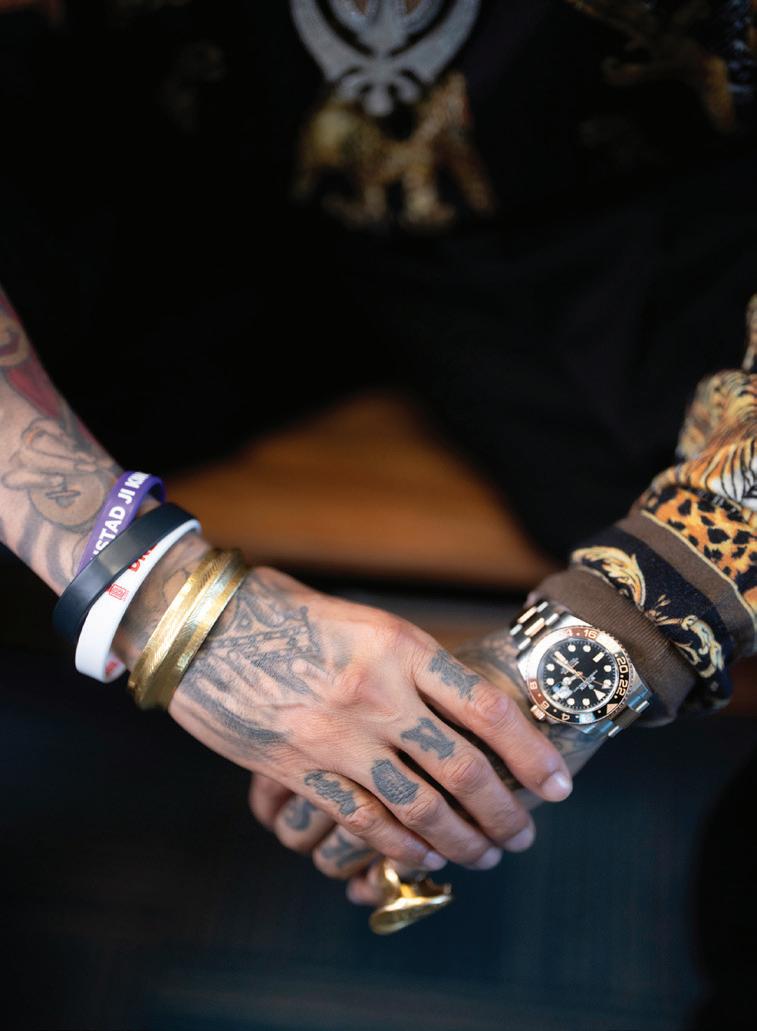

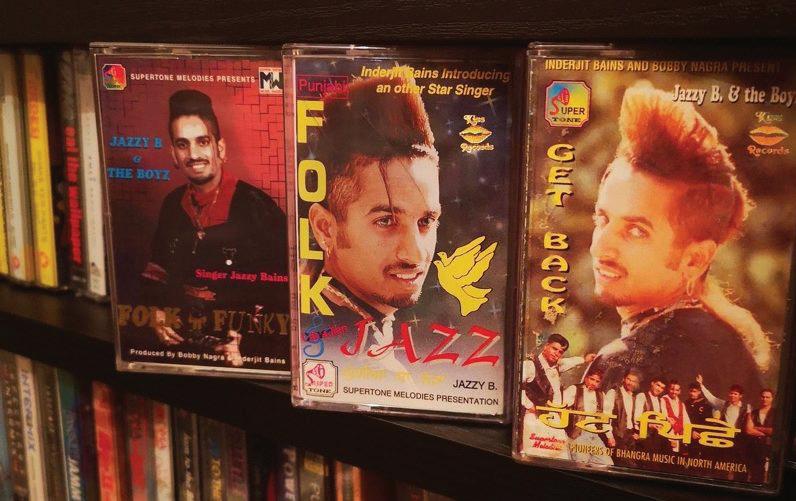
Music, meanwhile, quietly followed him everywhere.
There was no musical lineage in the family. No industry connections, no blueprint. Just his instinct. He and his friends would turn living rooms into stages. Tables became platforms for performances whenever guests visited, and eventually, those same school friends formed a band together called Jazzy B and the Boys.

They rehearsed every Friday in a basement in Surrey. “We would beg people to let us perform at weddings, birthday parties, hockey tournaments—anywhere,” he remembers. There’s something beautifully poetic about that now. One of the biggest Punjabi artists in history once simply wanted someone to hand him a microphone.
Back then, he was still Jaswinder Singh Bains.
Friends shortened it to “Jazz.”
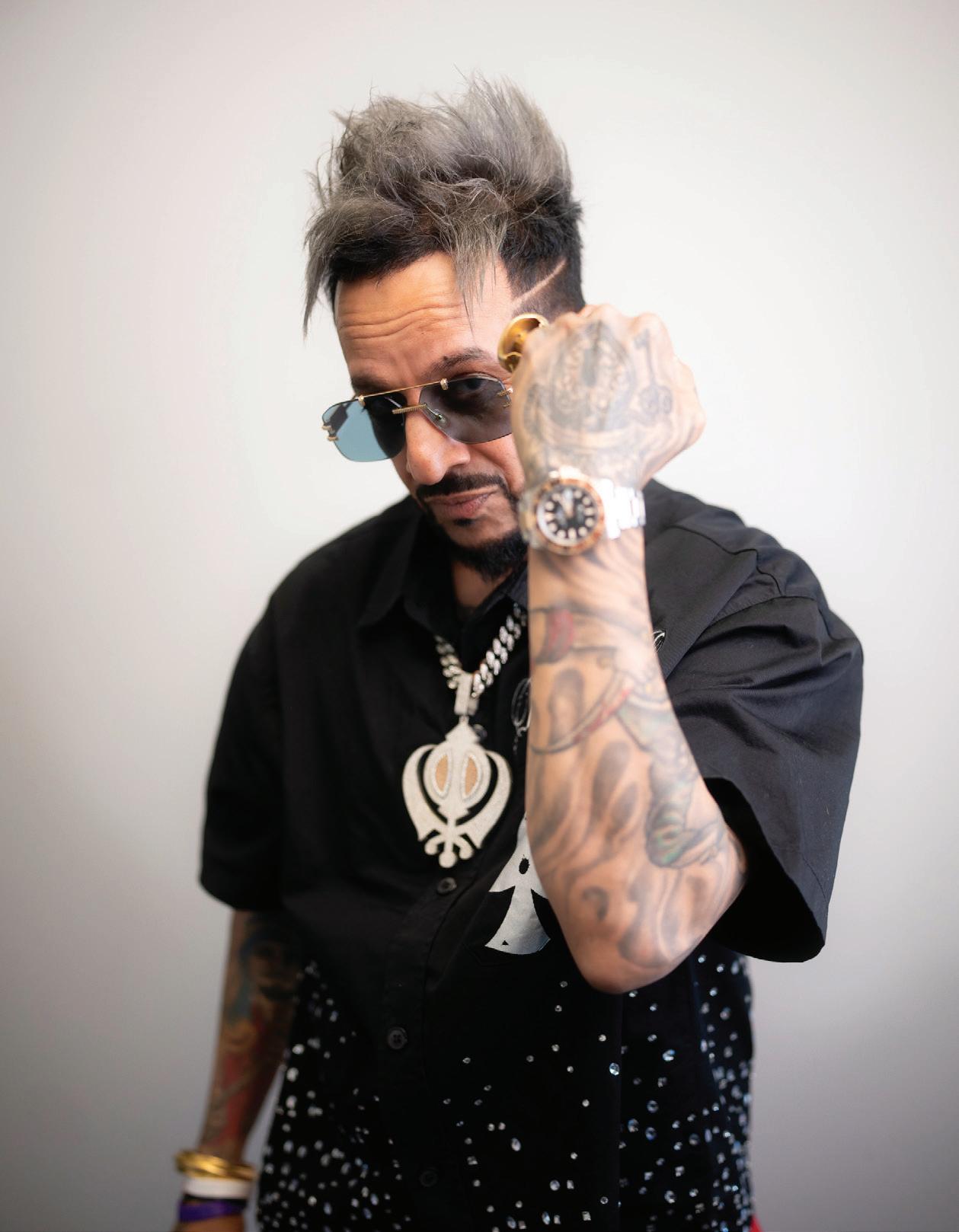
Some called him “Jazzy.” On his earliest albums, the name appeared as Jazzy Bains. Then, organically, fans began saying “Jazzy B.” And it stuck. What also stuck with listeners was his persona—spiked hair, a sharp beard, the flashy jackets, and the gold. Oh, the gold!
Today it feels iconic, but in the early ’90s, it was disruptive. Punjabi singers didn’t look like that. “I always dressed
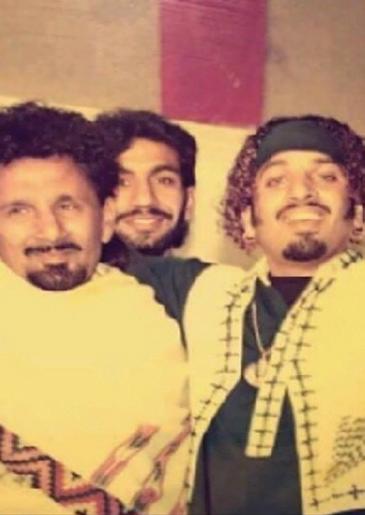
like that,” he laughs. “That was just my personality.” Without even realizing it, he was reshaping Punjabi pop culture in real time.
Before social media, before “branding” became an industry obsession, Bains understood something instinctively: artists are not just heard, they are remembered visually too. People copied his hairstyles, his fashion sense, and even his attitude. Years later, when fans began dressing exactly like him at concerts, even he was shocked. “I felt like Elvis,” he says with a grin.
His debut album Ghugiyan Da Jorra
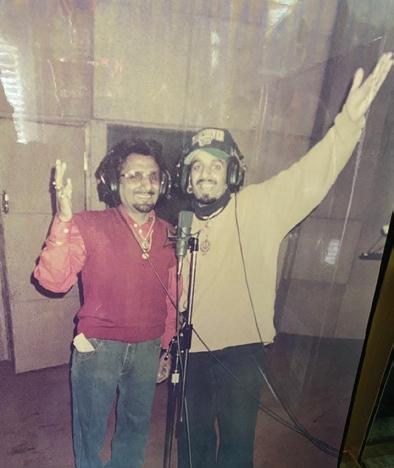
released in 1993.
The process itself felt magical. Recording in studios for the first time, hearing his voice through speakers, and seeing his face on cassette covers was all too surreal. But one crucial conversation changed the trajectory of his career forever.
Sukhshinder Shinda advised him to move to the United Kingdom if he truly wanted to make it in Punjabi music. At the time, the UK was the heartbeat of Bhangra. So, Bains made a decision that would define his life. He left behind his family in Canada and moved to the UK with little more than ambition and belief. “If I didn’t move there,” he says honestly, “I don’t think I would’ve become Jazzy B.”
The move was not the easiest. He missed his mom’s food, his father, his siblings, and the familiarity of home. Suddenly, he was cooking for himself, cleaning for himself, figuring life out alongside other young dreamers trying to survive together. “But that’s when you become independent,” he says. “That’s when you appreciate your parents.”
His parents, initially uncertain about music as a career, slowly began understanding when the songs started gaining traction, and people recognized him. The dream was becoming real.
And then, almost as quickly as it began, everything nearly disappeared.
In the mid-1990s, just as his
career was exploding, Bains developed laryngitis. For nearly a year, he could barely sing. Doctors warned him that continuing could permanently destroy his voice.
Imagine finally reaching the life you dreamed of since childhood—only to suddenly face the possibility of losing it forever. “I used to cry myself to sleep,” he admits quietly. At the height of his popularity in England, he had to cancel shows personally, even wedding performances already booked months ahead. “I remember thinking… that’s it. Career over.”
But the experience transformed him spiritually. Already deeply rooted in faith through his parents, Bains leaned even closer toward spirituality during that dark period. Friends and family prayed for him. Countless Ardaas were done for him at the Gurdwara. And slowly, his voice returned. That experience changed him forever. “It humbled me,” he says. “You realize none of this is actually yours. It can all disappear in a second.”
Perhaps that is why, even after decades of fame, there remains something deeply grounded about him. The ego never fully overtook the human being underneath.
To understand Bains’ impact, you have to understand timing.
Punjabi music in the ’90s was still finding its global identity. South Asians abroad often hid parts of them-
selves to fit in. Many immigrants hesitated to even play Punjabi songs loudly in public. “People used to turn the music down at traffic lights,” Bains remembers. “Now they blast it proudly.” Artists like him changed that confidence.
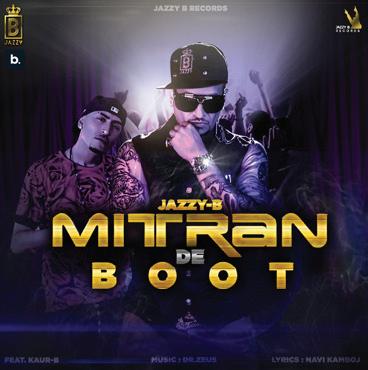
He brought Punjabi music into mainstream spaces that had previously ignored it. He performed at multicultural festivals where Punjabi music was rarely seen. MTV picked up his performances and international media noticed him. And eventually, the world did too. From collaborations with Snoop Dogg to songs appearing in Hollywood films like Deadpool, Bains became far more than just a Punjabi singer.
He became a representation for immigrants, for Punjabi culture, for an entire generation trying to belong in two worlds at once.

For all the highs, however, some losses never leave.
When Bains speaks about his late mother, his voice softens immediately. In 2010, while performing in Norway, he learned that she was critically ill. Still, he went on stage. “That’s the kind of job we have,” he tells me. At the end of the show, he addressed the audience directly and asked them to pray for her. He sang Maa Hundi Ae Maa.
The prayers, he believes, mattered. Doctors had said she only had a few days left to live. She survived another two years. “That gave me more time with her,” he says. “And I’ll always thank God for that.”
Even now, years later, he says there is not a single day he does not miss his parents.
For someone whose influence stretches globally, Bains remains fiercely loyal to Surrey.
“Surrey gave me everything,” he says simply. That connection matters deeply to him because he remembers the journey, from Nawanshahr in Punjab to the streets of Surrey, where he first began dreaming out loud. Even today, he lights up talking about playing street hockey with local kids or running into old school friends.
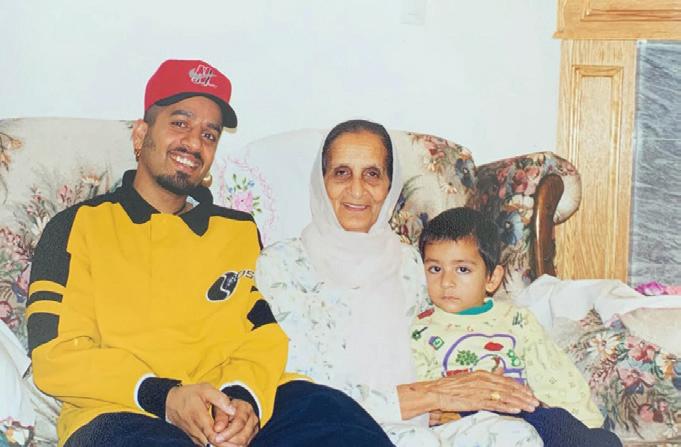
Despite decades of fame, there


is still something unmistakably local about him. He still feels like apna banda. Maybe that is why generations connect with him so deeply. Grandparents love the folk roots in his music. Young fans connect with the style and energy. Kids who were not even born during Dil Luteya still sing every lyric word for word.
Very few artists survive trends. Even fewer become timeless.
Now, more than thirty years into his career, Bains looks at the newer generation of Punjabi artists with pride.
Artists like Diljit Dosanjh and Karan Aujla are filling stadiums globally, but he sees it as one long chain of artists building for the next generation. “Every artist lays a brick for the next person,” he says. That is exactly what he did. He helped make Punjabi music cool internationally before the industry truly understood its own power. He made young South Asians feel proud of their identity at a time when many were still shrinking themselves to fit in. And perhaps most importantly, he showed that success does not have to cost you your roots.
When asked what legacy he wants to leave behind, his answer is unexpectedly simple. “I just want people to say he was a good human being.” Not the biggest artist, not the most famous, not the richest. Just good.
Maybe that is why Jaswinder Singh Bains has lasted three decades while so many others faded with trends. Because underneath the gold chains, the legendary image, and the larger-than-life persona is still that same four-year-old boy sitting on his uncle’s shoulders, completely mesmerized by music.
Still dreaming.
Still singing.
Still carrying Punjab, and Surrey, with him everywhere he goes.

The title “Crown Prince of Bhangra” was given to him by Asian British music pioneer Jatinder Singh Heer. He later turned that title into a song, Crown Prince, with Bohemia.
He made his acting debut in the Punjabi film Best of Luck. His first film appearance, however, was much earlier in Shaheed Udham Singh.

He has sung for Bollywood stars including Akshay Kumar, Saif Ali Khan, and Farhan Akhtar.
His song Coolin earned a 2025 Juno Awards nomination for South Asian Music Recording of the Year.
1. 3. 5. 7. 9. 2. 4. 6. 8. 10.
If he weren’t a singer, he says he would’ve become a hairdresser, and once scored 100/100 on a school project about Wayne Gretzky.
He is the first South Asian entertainer inducted into the BC Entertainment Hall of Fame StarWalk. His StarWalk honor sits alongside names like Michael J. Fox.
During stunt work for Romeo Ranjha, he suffered serious injuries and described it as a near-death experience.
Model-turned-actor John Abraham began his modelling journey through Jazzy B’s music video Surma.
He once performed in front of 80,000 people at Wonderland Toronto. That same concert reportedly broke a Michael Jackson attendance record.
His song Sat Rangey was featured in the Hollywood film Deadpool.

Marriage has long been framed as the ultimate milestone, a finish line that signals arrival into adulthood, stability, and success. However, today, for many, that narrative is being questioned, reshaped, and, in some cases, completely rewritten. Across conversations, a common thread emerges: marriage is no longer the end goal, but one of many possible paths in a much broader, more personal journey.
By Naina Grewal
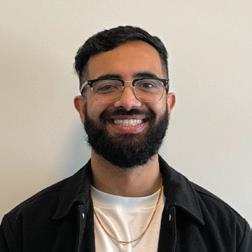
“
Over time, constantly measuring yourself against a timeline that was never yours to begin with can quietly evolve into anxiety, depression, and a persistent feeling that you are somehow behind in your own life.”
- Simrit Gill Registered Clinical Counsellor
Simrit Gill, registered clinical counsellor, underscores the internal conflict many people quietly navigate, “The South Asian community often runs on two conflicting clocks: the internal clock that says ‘I’ll get there when I’m ready,’ and the cultural clock that insists ‘you should already be there.’ When these two forces collide within a person, the result is self-doubt, a shaken sense of self-worth, and a diminished ability to make decisions rooted in what is truly best for oneself.”
Gill outlines that families don’t always apply pressure loudly or directly; instead, expectations settle in silently over time, leaving individuals to wonder whether the voice guiding their choices is truly their own or a reflection of everyone around them.
Gill highlights, “Over time, constantly measuring yourself against a timeline that was never yours to begin with can quietly evolve into anxiety, depression, and a persistent feeling that you are somehow behind in your own life.”
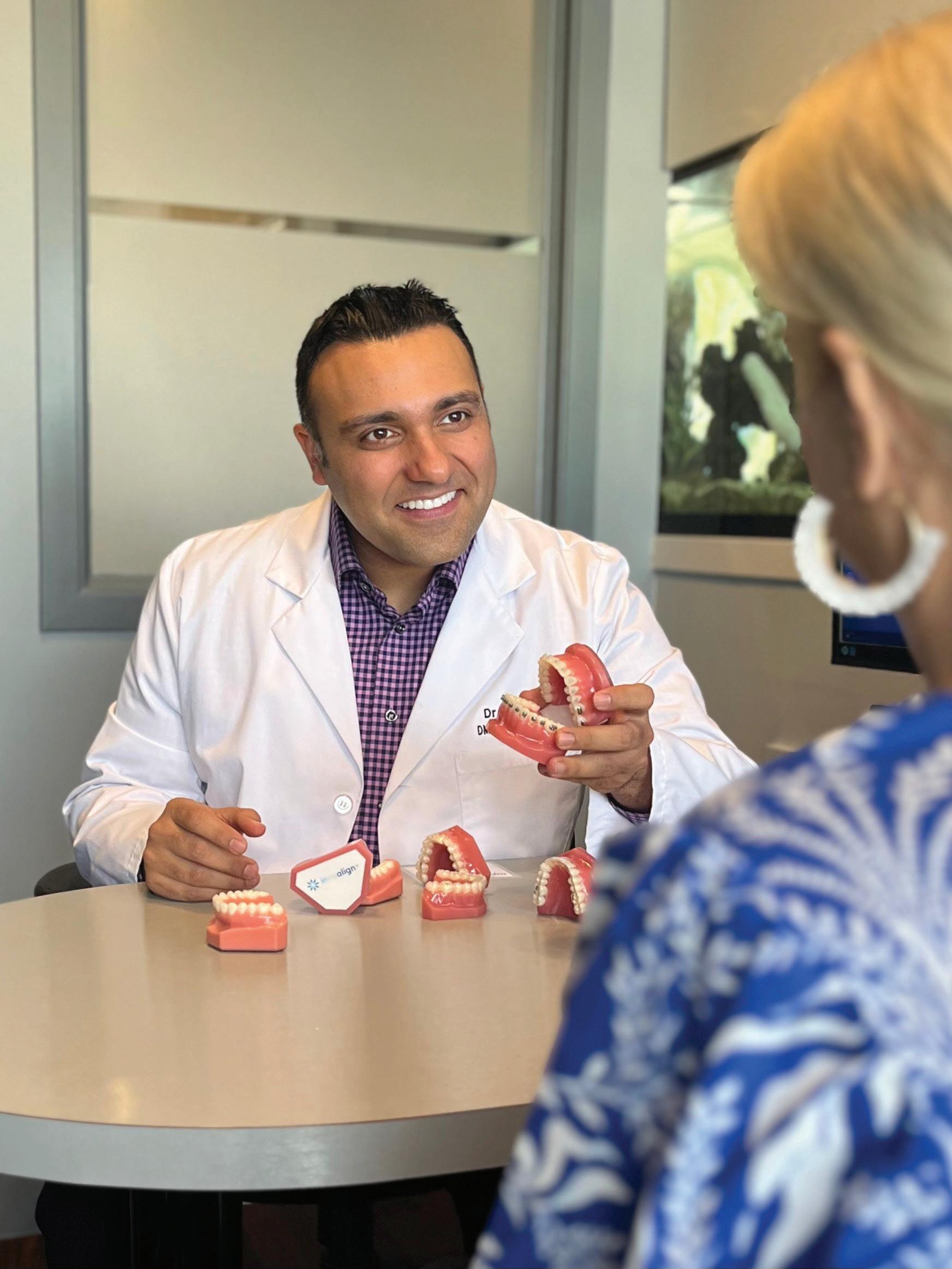
Dr. Vishal Sharma, husband, twin dad, orthodontist, and speaker, sees this shift as part of a larger evolution in identity, “Traditionally,


- Amrita Sandhu Registered Clinical Counsellor, Therapy Cove Counselling
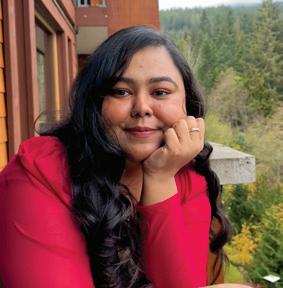
Marriage and kids are slowly becoming a preference rather than a norm. Women are decentering men and marriage, which is changing what milestones look like; we are now celebrating earning a Master’s degree, starting a business, writing a book, or even just living alone for the first time.”
Bhumika Laller Founder of Letters By B Co-host of Two/oo Opinionated
-
“ Many female children of immigrants have fought so hard for their autonomy and independence that when they now hear about their older cousins and sisters having a very hard time in marriage— specifically of challenges with in-laws—it becomes a deterrent to surrendering their hard-earned autonomy and success as individuals.”

timelines around marriage and family in South Asian communities have been quite structured. There was a sequence: study, career, marriage, children, and a sense that deviating from that path meant something was ‘off.’ What’s evolving now is that individuals are starting to separate identity from timeline.” That separation is significant. “People are asking, ‘who am I outside of these milestones?’ not just, ‘when do I get married?’ but ‘why, and with whom, and from what place within
Dr. Sharma emphasizes, “For far too long, the longevity of a marriage has been the barometer of success, with little consideration for the happiness of the people within it. The responsibility for true happiness is a manageable endeavor. The real magic lies in blending the beauty of our cultures and religions with a deep respect for the individuality each of us carries.”
Amrita Sandhu, registered clinical counsellor at Therapy Cove Counselling, contextualizes how these evolving expectations are shaped by both gender and generational shifts. For many women, especially,


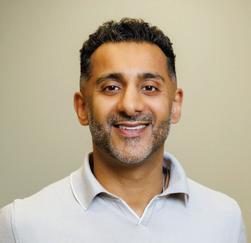
“
When we, as men, understand our strengths, regulate our emotions, and show up with presence and intention, we create stability, not just for our partner, but for our family. It is important for us to recognize the role we play in setting the tone, not through control, but through presence, which comes from being grounded.”
- Dr. Vishal Sharma Husband, Twin Dad, Orthodontist, and Speaker.
independence has changed how marriage is perceived. “I think many female children of immigrants have fought so hard for their autonomy and independence that when they now hear about their older cousins and sisters having a very hard time in marriage—specifically of challenges with in-laws—it becomes a deterrent to surrendering their hard-earned autonomy and success as individuals.”
For men, she points out that the delay in marriage often reflects a different pressure. “For males, the median age for marriage has now pushed into the mid to late 30s as they prioritize becoming financially successful. And the bar for what’s deemed ‘financially successful’ is much higher than it was even 10 years ago.”
Besides financial readiness, there is a deeper, more internal expectation taking shape as well, around what it means to be a partner. Dr. Sharma explains, “When we, as men, understand our strengths, regulate our emotions, and show up with presence and intention, we create stability, not just for our partner, but for our family. It is important for us to recognize the role we play in setting the tone, not through control, but through presence, which comes from being grounded.”
Sandhu notes that both genders now value adventure, travel, and friendship over solely making their parents happy. Yet, guilt often lingers. She describes, “There can be a real feeling of inner conflict.” That dissonance reflects a deeper cultural negotiation between collectivist values and individual desires. Nav Cheema, artist, finance professional, and co-host of Two/oo Opinionated, shares how letting go of rigid timelines has reshaped her perspective. “As I grew up, I realized that life isn’t limited to traditional expectations. For many South Asians, including myself, motherhood isn’t something they want, and being married is not a priority, which reduces pressure and anxiety about the future.”
She adds, “For me, I no longer feel the need to follow a fixed path or urgency to complete a list of life events.” Still, that freedom comes with its own challenges. “As much as I enjoy the freedom, it does have a price, and that is infantilization of my decisions, and people often assume I will eventually change my mind,” Cheema admits.
Bhumika Laller, founder of Letters By B and co-host of Two/oo Opinionated, echoes, “When it came to marriage and kids, for a long time, the concept of a timeline was instilled in the
“
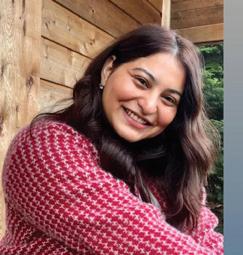
I no longer feel the need to follow a fixed path or urgency to complete a list of life events. As much as I enjoy the freedom, it does have a price, and that is infantilization of my decisions, and people often assume I will eventually change my mind.”
- Nav Cheema Artist, Finance Professional, Co-host of Two/oo Opinionated
brown community, especially women. Getting married was always the end goal; otherwise, I would be a failure.”
That mindset, however, is changing. Laller details, “Marriage and kids are slowly becoming a preference rather than a norm. Women are decentering men and marriage, which is changing what milestones look like; we are now celebrating earning a Master’s degree, starting a business, writing a book, or even just living alone for the first time.”
Ultimately, the societal shift regarding marriage isn’t about rejecting relationships, but redefining them. Marriage is no longer the central goal, but one meaningful choice among many. While navigating family expectations and cultural identity can create friction, it also opens up space for more intentional, authentic lives.


By Naina Grewal

The Advice We Didn’t Understand… Until We Did
Mother’s Day and Father’s Day are moments to pause and reflect on the words of our parents we once brushed off, but now carry with us every day as quiet truths that shape how we think, act, and move through the world. For this special feature, we reached out to members of the community and asked them to look back and share a piece of advice from their parents that didn’t fully make sense at the time, until life unfolded in a way that proved them right.
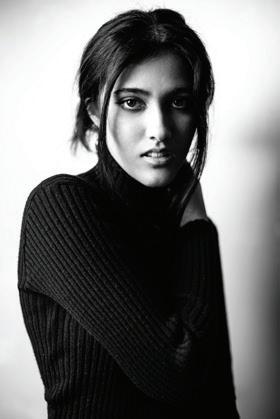
Influencer, Actor, Writer, Producer
Parents: Satinder Dhillon Bhatia & Jatinder Bhatia
Rule of 5: Will this matter in 5 days, weeks, months, or years?
Blowing up at 15, with millions watching, made me paranoid. I’d always been confident, but criticism and fear of judgment began to paralyze me. My mom, my anchor, taught me the “rule of 5”: Will this matter in 5 days, weeks, months, or years? It reminds me how

America young, working multiple jobs, he showed me there are no shortcuts, but only commitment and showing up fully.


Community Journalist
Parents: Paramjit Kaur Kahlon & Nirmal Singh Kahlon
My parents never handed me advice in words. They handed me freedom and let life do the teaching. The lesson I carry most came not from a conversation, but from a single day that held both grief and joy at once. When my grandfather passed away in the middle of my sister’s wedding, none of us knew how to feel. My mother pointed to the Hukamnama that had come when we initiated the Akhand Path the day before. The Guru’s words brought stillness: “That man, who in the midst of pain, does not feel pain, who is not affected by pleasure, affection or fear, and who looks alike upon gold and dust.” That was their teaching: stay centered, trust Akal Purakh’s hukam. I didn’t understand it then. Today, I hold those words close and hope to one day truly walk in their meaning.
Content Creator
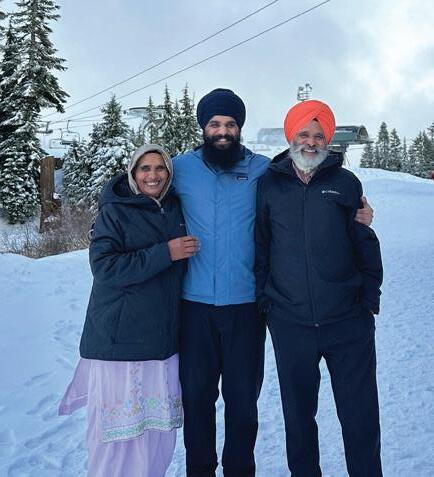
Stay centered, trust Akal Purakh's hukam.

Parents: Nasib Kaur Dhillon & Amanjit Singh Dhillon
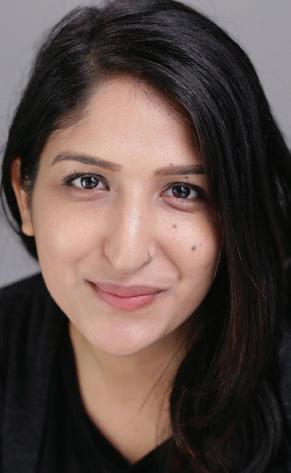
Apply simple math to chaos: add, subtract, and you'll find your answer

Growing up, my parents always told me to keep my emotions in check. My father, a big math enthusiast, would say, “Apply simple math to chaos: add, subtract, and you’ll find your answer.” I never took it seriously. I thought crashing out was the solution. But over time, I realized emotions cloud judgment. Now, I step back and treat situations like equations— what adds value, what subtracts peace, what multiplies problems, and what divides energy. Once I remove emotion and think logically, the solution almost always becomes clear. Turns out, they were right!


Con gure your 2026 Porsche Cayenne Electric using the QR code, then connect with our Porsche Specialists to secure your reservation and experience the future of performance at Porsche Centre Langley.






Leader
Parent: Davinder Kaur Grewal

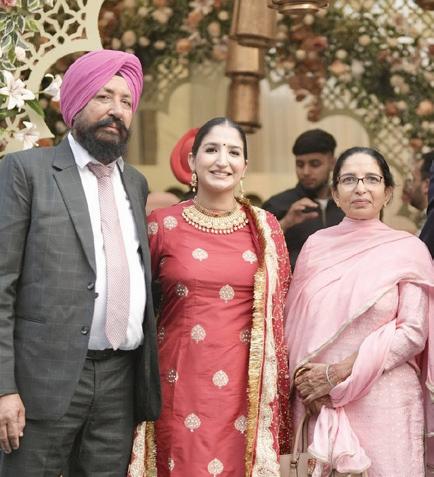
Take your time. Nothing meaningful comes from rushing.

CEO & Founder, Kaur Collective Foundation
Parents: Jatinder Kaur Lehail & Mohan Singh
My parents taught me that without faith, there is nothing. Their lives are grounded in a daily commitment to faith and integrity, and they lead by example, not force. They raised four children with a strong focus on character, depth, and service, never on chasing the world’s idea of success. They reminded us that our path is our own, to be walked in alignment with hukam, not trends, titles, or others’ expectations. They taught us to work hard with humility and to remain forgiving, even when life is difficult. They often remind me that while I have a soft heart, I must build resilience. When life is hard, their answer is discipline: turn to faith, family, and keep moving forward. This blueprint continues to guide me. Everything I do reflects what they modeled: live with faith, act with integrity, and let purpose, not the world, define success.

Growing up, my mom always told me, “Take your time. Nothing meaningful comes from rushing.” Back then, I was impatient and wanted quick results in everything, from career to personal goals. But over time, especially through travel and building my own path, I’ve realized how right she was. The best experiences, growth, and clarity have all come from slowing down, staying consistent, and trusting the process. It’s not about falling behind; it’s about building something that lasts.
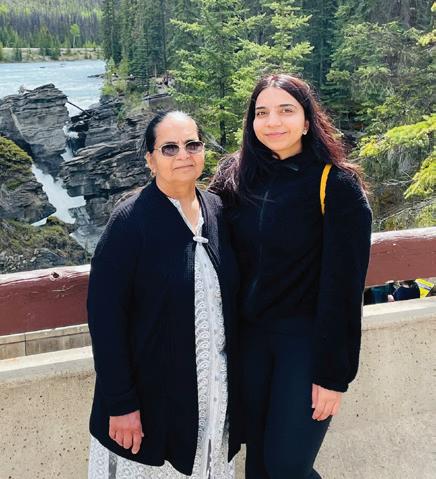
Live with faith, act with integrity, and let purpose, not the world, define success.

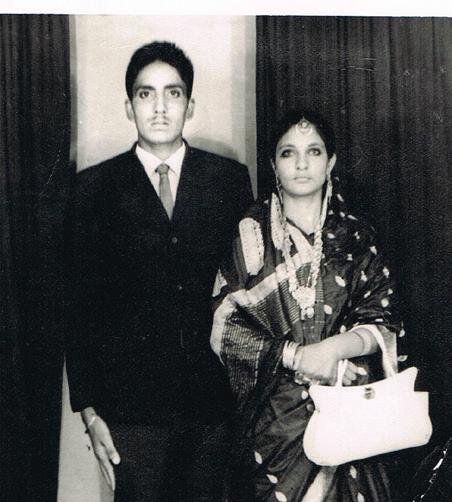
Robin Josan Hair Stylist & Salon Owner
Sardarni Jasdeep Kaur & Sardar Daljeet Singh





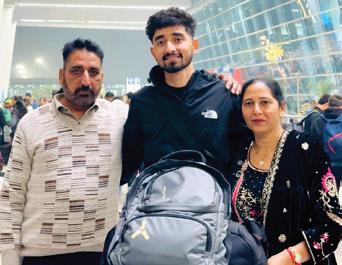
Only your work will speak.

me down and said: “Nobody knows you there. Only your work will speak.” I was young and excited. I thought I’d figure it out. New country, fresh start. We’re not a rich family. If it didn’t work, there was nothing to really come back to. But when I landed in Vancouver alone, with no network and no contacts, I finally understood what he actually meant. He wasn’t saying don’t put yourself out there. He was saying, make sure what you put out is real and make sure the work behind it is solid. The camera can bring them once. The hands bring them back. So, I worked. Every single day. Because every time I picked up my scissors, I heard him say: “Only your work will speak.” Today, I have my own salon in downtown Vancouver. And the first time I sent money home, my mum called, and she was so proud. Papa told me so.


Canada’s defense policy is undergoing a noticeable and increasingly structural shift, shaped by global in stability, evolving security threats, and changing expectations from its closest allies. In recent years, ris ing geopolitical tensions, renewed competition in the Arctic region, and sustained pressure from the North Atlantic Treaty Organization (NATO) regarding capability and spending commitments have pushed Canada to significantly expand both its defense budget and the scope of its military modernization efforts.

key developments that show what this shift looks like in practice:
Canada Reaches NATO’s 2 Percent Defense Spending Benchmark 1 versation about Canadian sovereignty, strategic autonomy, and long-term self-reliance. These discussions take place while Canada remains deeply integrated into continental defense structures, particularly through the North American Aerospace Defense Command (NORAD), and continues close coordination with the United States and NATO allies.
Canada is strengthening its own capabilities while maintaining full participation in collective security ar-
Canada has reached the North Atlantic Treaty Organization (NATO) target of spending 2 percent of gross domestic product (GDP) on defense in the 2025-26 fiscal year. This marks a major








milestone in national defense policy and reflects a significant increase in investment across personnel, equipment, infrastructure, and operational readiness. The rise in spending also includes expanded investment in cyber capabilities, intelligence, surveillance, and other security functions that support both domestic and international operations, strengthening the Canadian Armed Forces in a rapidly evolving global security environment. It signals Canada’s stronger alignment with NATO expectations and a more sustained commitment to collective defense responsibilities, alongside a broader shift toward long-term defense planning and capability development.
Canada has committed to a major multi-year increase in defense spending, with tens of billions of dollars in new investments planned over the next five years. This represents one of the largest sustained increases in decades and signals a long-term shift in how defense capability is being built and maintained. Funding is being directed toward personnel recruitment and retention, equipment procurement, infrastructure upgrades, and digital modernization across the Canadian

Armed Forces. It also supports the longterm strengthening of Canada’s defense industrial base, including domestic production capacity and supply chain resilience. Together, these investments reflect a shift from incremental upgrades toward structured, long-term rebuilding of military capability and readiness.
The Arctic has become a central focus of Canada’s defense planning. Canada is investing in northern surveillance systems, infrastructure, and expanded operational capability in remote regions to strengthen its presence and
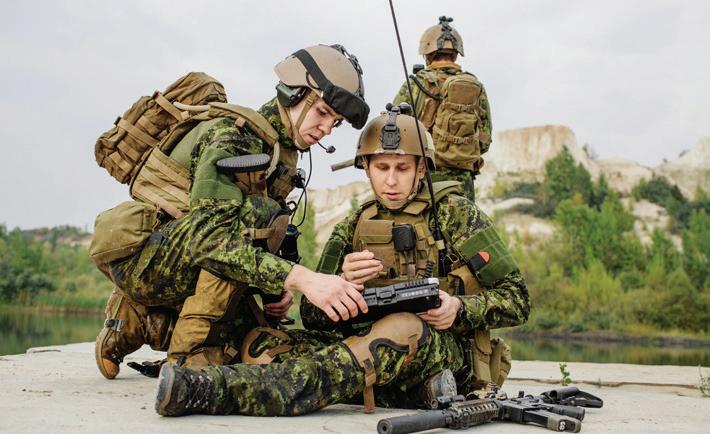
responsiveness in the North. This effort is closely linked to the North American Aerospace Defense Command (NORAD) modernization with the United States, including early warning radar upgrades and improved Arctic monitoring systems. These investments reflect the growing importance of maintaining security in the North as climate change increases access to Arctic routes and resources. Canada’s approach combines a stronger emphasis on Arctic sovereignty and national resilience with continued integration within continental defense systems shared with the United States and NATO allies.
Canada is strengthening its domestic defense manufacturing and supply chains through a new Defence Industrial Strategy. The goal is to reduce reliance on foreign procurement while expanding Canadian production of military technology and dual-use innovation. This includes supporting domestic firms and strengthening supply chain resilience across critical sectors. Key areas of investment include aerospace, shipbuilding, artificial intelligence, cybersecurity, and quantum technologies. Within this, quantum sensing and post-quantum encryp-
tion are being explored as longer-term capabilities for secure communications and defense resilience. This approach links industrial policy more directly to national security priorities while also supporting domestic economic growth, innovation, and high-skilled job creation across Canada’s technology and manufacturing sectors.

A significant portion of defense investment is focused on replacing outdated systems and improving operational readiness across the Canadian Armed Forces. This includes new fighter aircraft procurement, naval expansion, Arctic and offshore patrol vessels, and upgraded surveillance and communications infrastructure to support modern operations in multiple domains. Canada is also maintaining an active international military presence through the North Atlantic Treaty Organization (NATO) and allied operations. This includes deployments in Europe and participation in multinational deterrence and training missions, particularly along NATO’s eastern flank. These commitments reflect Canada’s role in



collective security frameworks and a more consistently operational military posture compared to earlier decades, with greater emphasis on readiness, interoperability, and sustained engagement alongside allied forces.
Canada’s defense strategy is shifting toward a more sustained and structured model of investment, reflecting a reassessment of how it prepares for evolving security challenges. While remaining closely integrated within the North Atlantic Treaty Organization (NATO) and the North American Aerospace Defense Command (NORAD) frameworks, Canada is focusing more on reducing capability gaps, improving readiness, and ensuring long-term sustainability of its armed forces.

A key priority is building domestic capacity in defense manufacturing, supply chains, and emerging technologies. Canada is also strengthening its Arctic presence through improved surveillance, infrastructure, and expanded northern operations. Modernization across land, air, sea, cyber, and space domains supports this shift toward greater resilience and operational independence.


By Aprameya VN
Krishnan
Srinivasan was 35 when he walked into his manager's cabin and resigned. He didn’t resign because he had another job lined up or because he was burned out. He resigned simply because he no longer needed to work.

For the last nine years, the Bengaluru-based software engineer had lived on 40 per cent of his salary, invested the rest with surgical discipline, and built a corpus large enough to fund the rest of his life. He was, by any conventional measure, young enough to be mid-career. He chose to be done. Krishnan is not a lottery winner or an heir. He is a practitioner of FIRE—and he is far from alone.
What is FIRE, and Where Did It Come From?
FIRE stands for Financial Independence, Retire Early. At its core, it is a personal finance philosophy built around one radical idea: that retirement is not an age but a number.
The modern FIRE movement traces its intellectual roots to the book, “Your Money or Your Life” by
Vicki Robin and Joe Dominguez, which argued that you are trading your “life energy” for money. In simple terms, the time you worked to earn money. The book, however, asked whether the trade was worth it.
The concept gained mainstream velocity in 1998 when financial researcher William Bengen established the "4% rule": A retiree can withdraw 4 per cent of their invested corpus annually with a high probability that the money will outlast them over a 30-year horizon. From these two ideas emerged a formula that FIRE adherents now treat almost as gospel.
To calculate your FIRE number, you estimate your annual expenses, then multiply by 25. If you spend CA$50,000 a year, your FIRE number is CA$1,250,000. That is the corpus you must accumulate, by investing in equities or mutual funds, before you can stop











To calculate your FIRE number, you estimate your annual expenses, then multiply by 25. If you spend CA$50,000 a year, your FIRE number is CA$1,250,000. That is the corpus you must accumulate, by investing in equities or mutual funds, before you can stop working and live off returns.

working and live off returns.
The aggressive among them target a savings rate of 50 to 70 per cent of income. The extreme fringe pushes it to 80 per cent. Within the movement, variations have emerged to match different ambitions.
Targets a minimalist lifestyle with a smaller corpus.

Why are Millennials Increasingly Obsessed with FIRE
No generation has taken to FIRE quite like Millennials, and the reasons are not hard to find. This is a cohort that entered the workforce during or just after the 2008 financial crisis. Millennials—born between 1981 and 1996—watched their parents lose jobs, savings, or both, and internalized a deep skepticism of the employee-employer relationship.
The pandemic sharpened that skepticism further. Mass layoffs, the sudden proof that remote work was always possible, and the jarring experience of watching life shrink to a screen all prompted a reckoning with the question FIRE has always asked: Is this how I want to spend my finite time?
Targets early retirement without giving up comfort.

Involves reaching partial financial independence and supplementing with light, low-stress work, the financial equivalent of coasting.

Social media has turbocharged the movement's spread. Reddit forums like r/financialindependence have millions of members sharing savings milestones, portfolio strategies, and resignation letters.
Back home in Canada, FIRE has its own twist amid the rising cost-of-living crisis. Here, Index fund investing is the dominant vehicle to achieve the FIRE figure because no single company’s collapse can wipe out the portfolio.
Interestingly, Canada's universal healthcare system gives FIRE aspirants a structural leg up over their American counterparts. Since coverage is not tied to employment, Canadians who retire early don't face the potentially crippling insurance costs that Americans must budget for a FIRE lifestyle.
There is also generational math at play. Millennials who entered high-paying tech or finance roles in their twenties discovered, sometimes by accident, that high income combined with controlled lifestyle inflation could compound into independence faster than anyone told them was possible.
For all its appeal, FIRE has serious fault lines. The 4 per cent rule was derived from US market data over a specific historical period. Hence, its applicability to Indian or Canadian markets, with their own inflation dynamics and market volatility, has remained a matter of active debate. Moreover, assuming a 6 to 7 per cent real return on equity over decades involves optimism that markets may not always honor. There is also the underestimated threat of lifestyle inflation post-retirement. For example: children's education, medical emergencies, and/or aging parents. Healthcare costs alone can devastate a corpus that looks comfortable on a spreadsheet.
Then there is the psychological dimension that FIRE literature often glosses over. Identity, structure, social belonging: For many people, work provides all three. Early retirees frequently report unexpected aimlessness, a condition some researchers have started calling ‘purpose poverty’. A surprising number return to work, not for money, but for meaning.
FIRE is not a universal blueprint. It is a framework for asking harder questions about time, money, and what you are trading one for the other. Its most valuable contribution is not the retirement math but the insistence that financial decisions be made consciously rather than by default. Whether you retire at 40 or 65, the discipline to live below your means and invest the difference is counsel that ages well. The dream of never working again may be the headline, but financial intentionality is the actual story.




only have five seconds to
a buyer when selling your home”
Rita Chohan Founder & Owner







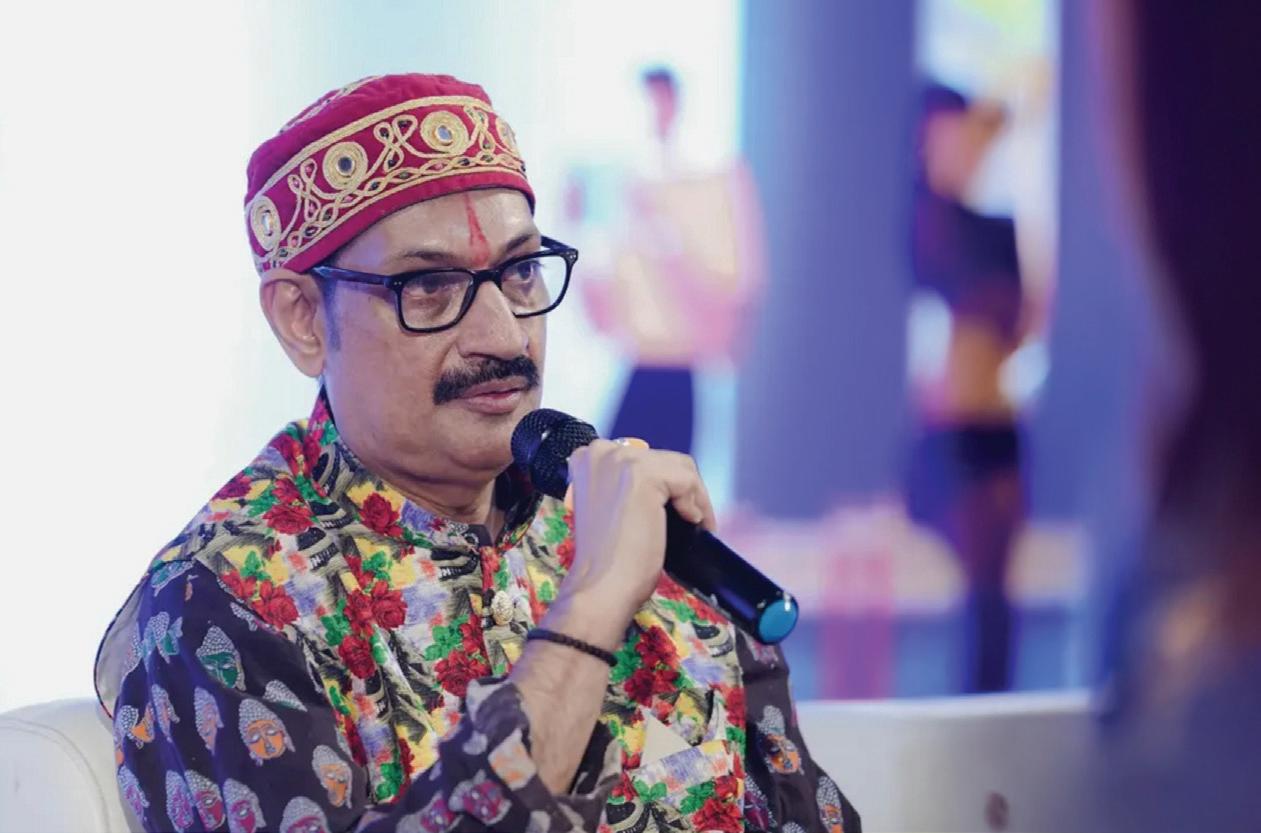
"It was important for me to make my personal truth a public issue, and thereby I decided to come out openly. This became my responsibility because I was representing the LGBTQ+ community at large.”
By Natasha D'souza
For Prince Manvendra Singh Gohil, widely recognized as the world’s first openly gay prince from the Gohil dynasty of Gujarat, living authentically has never been a private journey. It has been a public responsibility shaped by courage, resistance, and transformation. Born into royalty yet defined by truth, he has spent decades challenging stigma and rebuilding the idea of legacy itself.
A global voice of human rights, diversity, and inclusion, he is the founder of the Lakshya Trust that works toward health and empowerment of the LGBTQ+ community in Gujarat, and leads the ‘Manvendra Foundation’, a global coalition platform driving systemic social change. The foundation is rooted in championing equity and dignity for underrepresented groups, building
SDG-aligned corporate and community partnerships, funding and scaling grassroots initiatives in health, education, upskilling, and livelihoods, and serving as a knowledge and advocacy hub for inclusive policy, research, and action. With the launch of its most ambitious initiative yet, ‘GlobalManav’, it moves from awareness to action, building systems that turn advocacy into measurable impact.
Q. Was there a moment in your life when you realized that your personal truth would also become a public responsibility?
My personal truth was definitely going to become a public responsibility because I could not have remained in the closet forever. I have always been a truthful person and wanted to be true to myself and true to others.
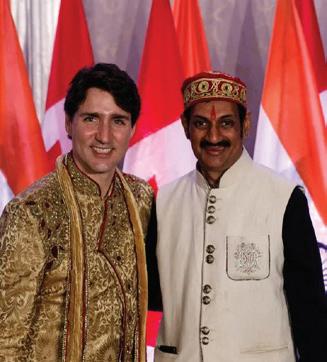
It was important for me to make my personal truth a public issue, and thereby I decided to come out openly. This became my responsibility because I was representing the LGBTQ+ community at large. Eventually, I became an advocate for the issues the community was facing, not just within my state but on a national level, and I also became a global icon for the LGBTQ+ community after my appearance on shows like Oprah Winfrey and Keeping Up with the Kardashians.
Q. Looking back, what was the most difficult conversation you’ve had with yourself or with those closest to you on this journey?
The important conversation I had with myself was that it was necessary to take

the step to be truthful because one cannot live a life of hypocrisy forever. If we do not become vocal or break the silence, then we cannot expect change to happen. I often tell others that even if they do not wish to come out publicly, they need to accept themselves and identify themselves with the identity they belong to. Self-acceptance is the first step—50% of your issues can be solved just by accepting your identity.
Q. As someone born into royalty, legacy is often inherited. But you’ve redefined it on your own terms. What does legacy mean to you today?
Legacy is something you are born with, something you acquire and inherit, and it must continue in future generations, otherwise it gets lost.
For me, legacy is not just about being born in a royal family but also continuing the work I have started for the five pillars: Women, Persons with Disabilities (PWD), the LGBTQ+ community, Scheduled Tribes (ST), and Uniformed Personnel, working for their human rights.
Therefore, for me, legacy was to create the ‘Manvendra Foundation’ as a birthday gift to myself when I completed 60 years in September 2025. This foundation continues championing causes and
commitments I had started even before I came out openly as gay, and enables others to continue the fight. At the same time, I believe legacy today has to move beyond identity and become a system. That is how we normalize acceptance, not just by celebrating it, but by making it structurally and economically relevant.
Q. Has there been a story that deeply changed how you see your role as an advocate? What challenges have you faced? I have met individuals who have told me, “Because of you, I am still alive.” They had thought of ending their lives, but after learning about my fight for LGBTQ+ rights, they found the strength to live their truth. If I have been able to save even one life, I feel mentally satisfied that whatever I have fought and sacrificed has been for the good.
My challenges have been extremely difficult… facing a hypocritical world while being truthful. I have faced stigma, discrimination, humiliation, and violations of human rights. But I continued because I knew one thing, that I am true to myself and true to others, and truth always wins.
Q. When the spotlight fades, what keeps you grounded and committed to this work?
What keeps me grounded is working at the
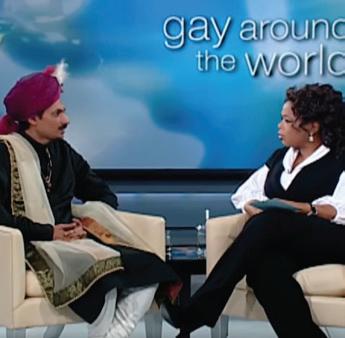
grassroots level. Understanding the difficulties people face and putting myself in their shoes. I have even disguised myself and gone out in public, taking bus and train rides to see the reality people face. That learning helps me to help others.
The second thing is self-love, which is very important. One should love oneself. When we start loving ourselves, our fears and negativity reduce, and we can spread love, peace, and happiness, creating a more harmonious world.
With his efforts anchored in GlobalManav, Prince Manvendra Singh Gohil moves advocacy into a structured global system where awareness is no longer the endpoint, but the starting point for measurable, sustained change driven at the grassroots.

By Asma Kassam
As a kinesiologist and personal trainer of 15 years, fitness isn’t as simple as it used to be.




We have a large variety of options for exercise, multiple opinions about which option is best, and our own lived experience to consider. The terms ‘decision fatigue’ and ‘procrastination’ are real for so many, so let’s dive in, clear some of the noise, and finish with a sense of easy empowerment. When decisions feel big, require us to extend ourselves, and come with no real guarantee, they are subconsciously put off. Wellness and progress are a sum of small, consistent daily actions. We need to find intensities that don’t drain our energy, and routines that align mentally - perhaps even with a sense of community.

Asma Kassam is a Dubai-based health and fitness professional, writer, and marketing strategist specializing in women’s wellness and performance. With a background in kinesiology and experience leading fitness communities, her work explores the intersection of strength training, nervous system health, and sustainable wellness.

















Next up, nutrition. This is admittedly a complex conversation, so let’s break it down into two effective ways to take your dietary habits up a notch without overhauling. The same principles of bite-sized timeframes are especially relevant here. In fact, timeframes and structure are often why people gravitate toward protocols like intermittent fasting. There is minimal room to deviate.
However, some research has shown counterproductive effects of dieting, such as metabolic fatigue, nutrient depletion, muscle loss, and disordered eating disguised as health. Rather than full overhauls, the most practical place to start is stabilizing blood sugar. Eating every 3–4 hours is a simple and effective rule of thumb. Balanced blood sugar results in more sustained energy, fewer crashes and cravings, improved
When we consider exercise, instead of feeling the need to over-commit in order to see results, approach it with a mindset of wellness and curiosity. No lofty goals - rather, a mini experiment that has some built-in structure. Maybe a personal trainer you know is offering a 6-week program, or a fitness studio nearby has a class package that suits you, or there’s a community office run/walk club. I have a client attending her local community center. She enjoys the social aspect and continues to renew her class pack. The nervous system loves
a plan. Let the environment carry the habit until it becomes your own. Making smaller commitments with set times and clear end or expiry dates
fat burning, and hormone balance as insulin and cortisol become regulated. Identify the single meal you struggle with—the one you tend to miss, rush through, or default to convenience, and begin experimenting on how you can improve it. Again, no lofty goals, just know the benefits of balancing your blood sugar, and reap big rewards. Be willing to invest either time or money, or both. And always remember to set a time frame so your brain has a plan it can digest (pun intended).



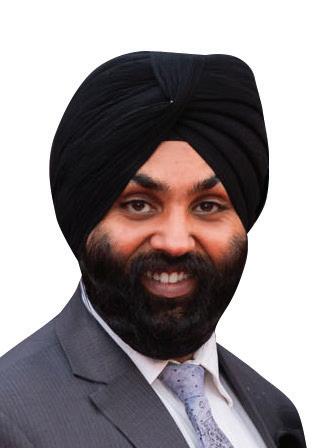

Now to the part that should feel restorative yet often falls to the bottom of the list. Self-care used to mean booking a massage, having a bath, or carving out quiet time. In the longevity era we are in, there is red light therapy, ice baths, infrared saunas, breathwork, sound healing, laughing yoga, and even injectables are being used for wellness and injury management.
While recovery rituals can reinforce a sense of self-nurture, and I do recommend trying practices like breathwork or sauna, we must also create consis-
tent time where we are inputting energy, not constantly outputting it. Sometimes, a simple stress-free walk in nature can recharge your cells. Remember to stop, close your eyes, smell the trees, and take in the fresh British Columbia air.
When all else goes out the window, at the end of the day, we have access to the most restorative modality of all: sleep. Sleep is when our body cleanses, detoxifies, regenerates, and repairs. Personally, as a business owner for most of my life, I saw an immediate correlation between my health and fitness and lack of sleep. Deep breathing throughout the day was the greatest protocol I ever adopted and encourage everyone to do. I protect
my sleep routine so I can live aligned with my purpose of helping others. First, a cup of herbal tea, a homemade cookie or two, magnesium glycinate, followed by teeth brushing and moisturizing routine. Feel free to borrow, experiment, and find your flow.
In closing, while we are fortunate to have many options available, the pressure to choose the right routine can feel overwhelming. Clarity isn’t something we find by thinking harder or researching longer. It’s something we build by engaging, experimenting, and paying attention to what feels supportive, what feels draining, and what you’re more likely to return to.
Not every attempt will be perfect, and not every routine will stick. Trust your intuition, invest a little bit of time and energy, and remind yourself that health is a journey.


From the historic city of Agra to the fast-paced kitchens of luxury hotels and Michelin-starred cruise ships, Chef Jitin Kapoor’s culinary journey has been defined by passion, precision, and perseverance. What began in 2010 as a young commis chef’s introduction to the hospitality industry soon evolved into a career shaped by global experiences, rigorous discipline, and an unwavering commitment to excellence. Along the way, Kapoor honed his craft in highpressure kitchens around the world, learning the value of consistency, teamwork, and creativity from some of the industry’s finest mentors.
Today, as Executive Chef at Glowbal Restaurant, Kapoor brings that wealth of international experience to Vancouver’s vibrant dining scene. Fresh off major milestones, including competing in the Canadian Culinary Championships and stepping into his new leadership role, Chef Kapoor reflects on his work in this exclusive conversation with DARPAN.
Q. You’ve grown within Glowbal Restaurant Group for years—what has that journey taught you about
By Ancy Mendonza
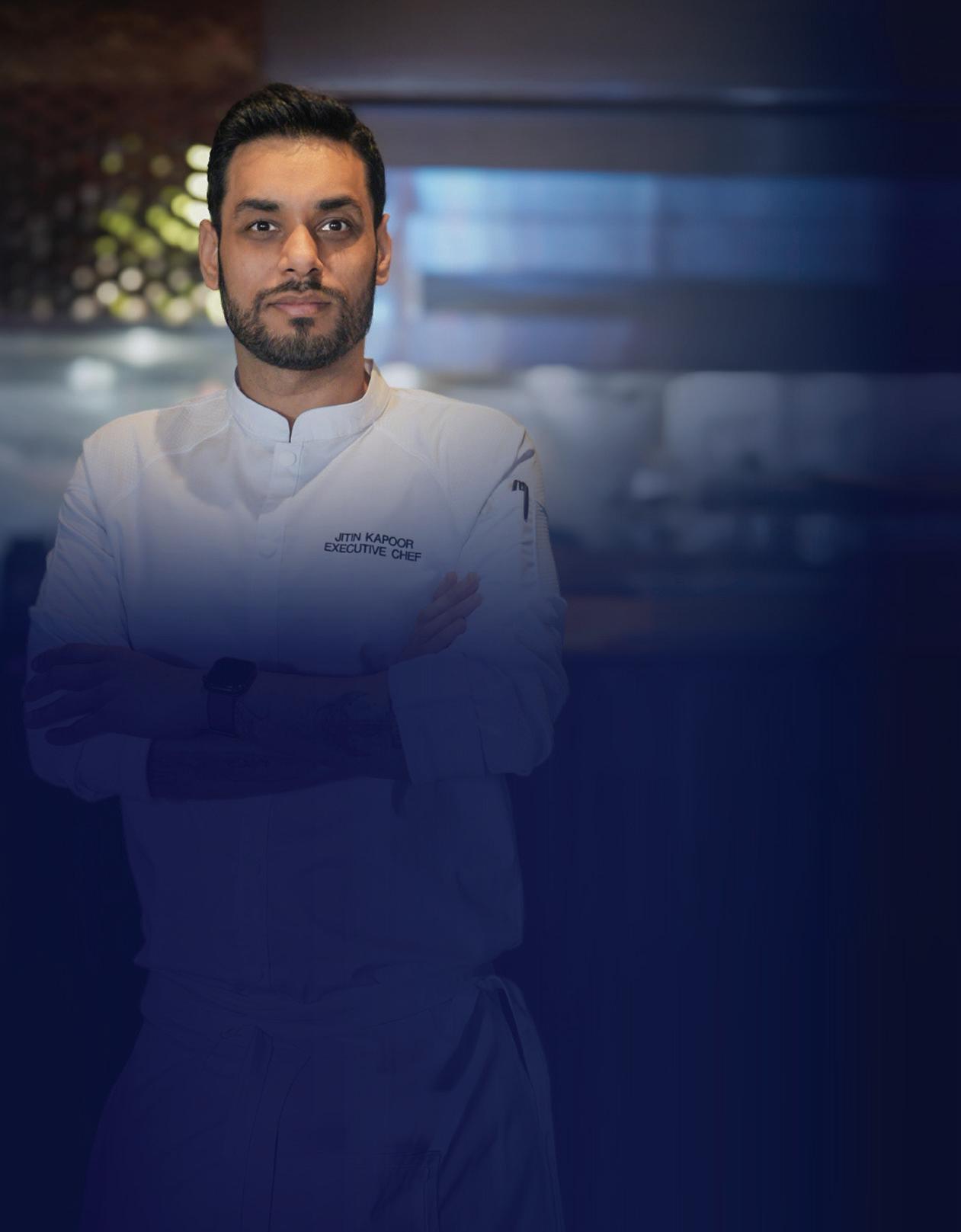
leadership?
Growing within the group has shaped my understanding of leadership. Early in my career, I focused on execution and technique, but over time I realized that kitchens are built around people. Leadership for me today means supporting the team, mentoring young cooks, and creating an environment where everyone feels motivated and respected. As executive chef, my goal is to build a strong team that takes pride in both the food and the experience we create for the guests every day.
Q. What’s the biggest shift from Chef de Cuisine to Executive Chef?
The biggest shift has been thinking about the bigger picture. As Chef de Cuisine, my focus was on daily execution and consistency. Now as Executive Chef, I’m responsible for the long-term culinary vision, menu direction, mentoring chefs, maintaining standards, and making sure the restaurant has its identity.
Q. You’ve worked everywhere from cruise lines to luxury hotels—what experiences have most influenced your approach to Vancouver’s dining scene today?
My early career was in luxury hotels in India, where I learned discipline and classical technique. Working on international cruise ships alongside Michelin-trained chefs exposed me to global cuisines and high-volume operations where consistency is essential. Bringing that experience to Vancouver, I focus on combining refined technique with local seasonal ingredients and creating food that’s approachable yet exciting.
Q. When people talk about your food a year from now, what do you hope they’re saying?
I hope people describe my food as memorable, flavorful, and consistent so that every visit feels exciting and worth coming back for. The greatest compliment is when guests return because they trust the experience. What I would never want to hear is that the food feels predictable or lacks passion. Because as a chef, I always want to evolve and continue pushing creativity forward.


For Sablefish:
• 4 fillets
• Salt
• 1 tablespoon oil
For Aji Verde:
• 1 onion, sliced
• 2 garlic cloves
• 1 tablespoon ginger
• 1½ cups coconut milk
• 1 tablespoon white vinegar
• 1 tablespoon lemon juice
• 1 tablespoon miso
• 1 teaspoon sugar or honey
• 1 cup spinach
• ¼ cup cilantro
Vegetables:
• Bok choy, mushrooms, oil, salt
1. Lightly salt sablefish. Let it sit for 10–15 minutes.
2. For the sauce, sauté onion, garlic, and ginger until soft. Add coconut milk, vinegar, lemon juice, miso, and sweetener. Simmer 10–12 minutes. Add spinach and cilantro, then blend until smooth. Season.
3. Sauté vegetables in a hot pan with a little oil until browned and tender.
4. Cook sablefish in the oven at 200°C/400°F for 10–12 minutes until just cooked. Fry the pappadum until crisp. Aji Verde, Charred Greens & Crispy Pappadum with Serves 4












For Chicken marinade:
• 1 whole chicken, halved
• 2 tablespoons canola oil
• 1 tablespoon French mustard
• 1½ tablespoons curry powder
• 3 garlic cloves, minced
• 1 teaspoon thyme
• Salt
For Crumble:
• 1 cup almonds, chopped
• ½ cup shredded coconut (unsweetened)
• 1 tablespoon maple syrup
• Pinch of salt
For Coconut Curry Sauce:
• 1 tablespoon butter or oil
• 1 onion, sliced
• 3 garlic cloves
• 1 tablespoon lemongrass
• 1 tablespoon ginger, grated
• 1 teaspoon curry powder
• 1½ cups coconut milk
• ½ cup water
• Salt
1. Roast the chicken at 200°C/400°F. Mix oil, mustard, curry powder, garlic, thyme, and salt; rub over chicken. Roast 40–45 minutes until cooked and golden.
2. For the crumble, mix almonds, coconut, maple syrup, and salt. Toast at 175°C/350°F for 5–7 minutes until golden. Cool.
3. For the sauce, sauté onion, garlic, ginger, and lemongrass in butter until soft. Add curry powder, coconut milk, and water; simmer 10–15 minutes. Season with salt and blend for a smooth sauce.

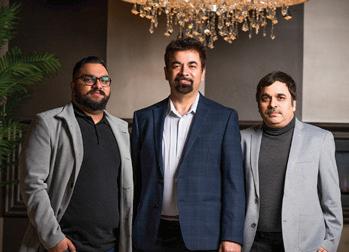

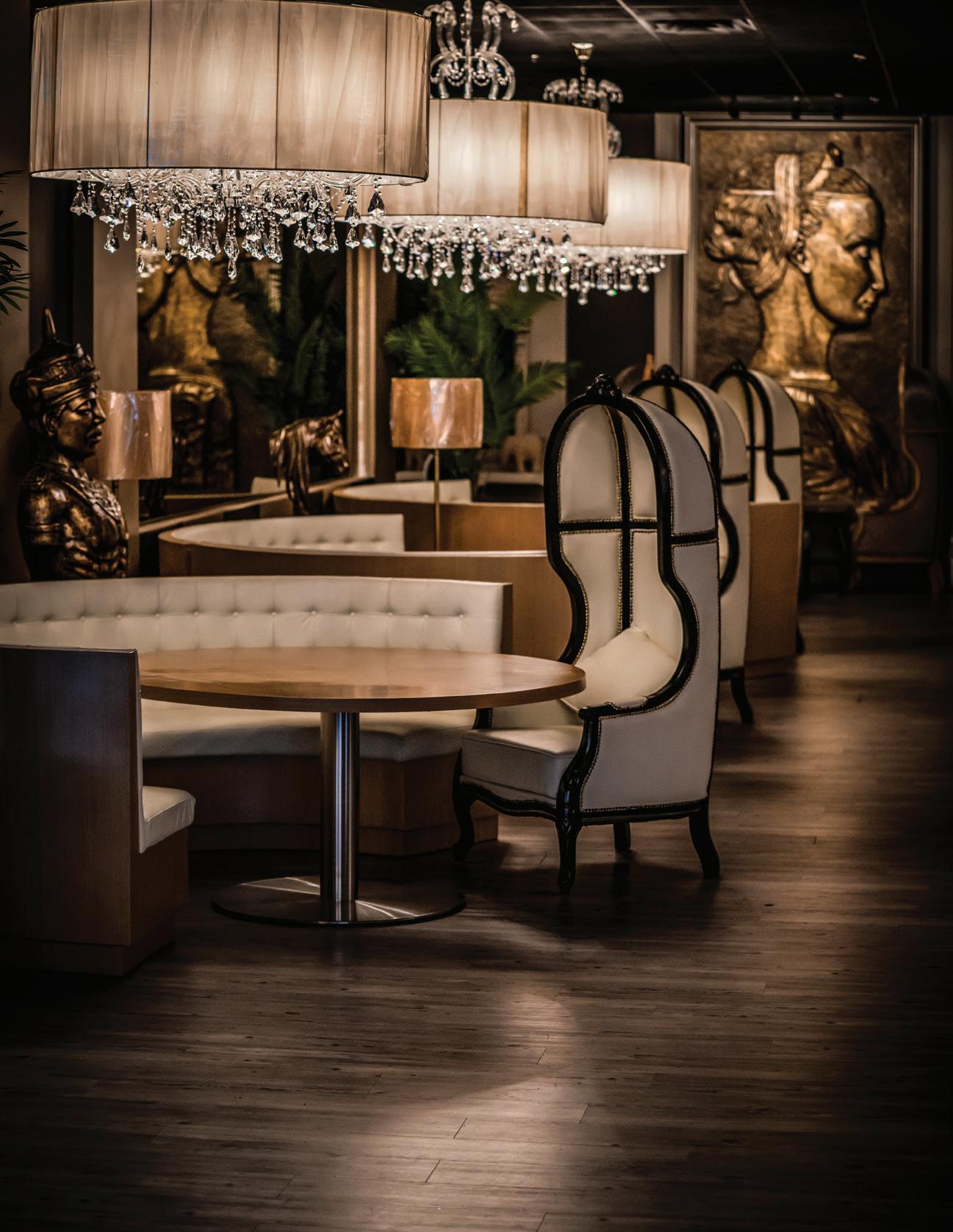

By Shweta Kulkarni
Couturier Siddartha Tytler needs no introduction. In a landscape cluttered with fleeting trends, Tytler’s creations stand out for their bold aesthetic, structured silhouettes, and theatrical flair.
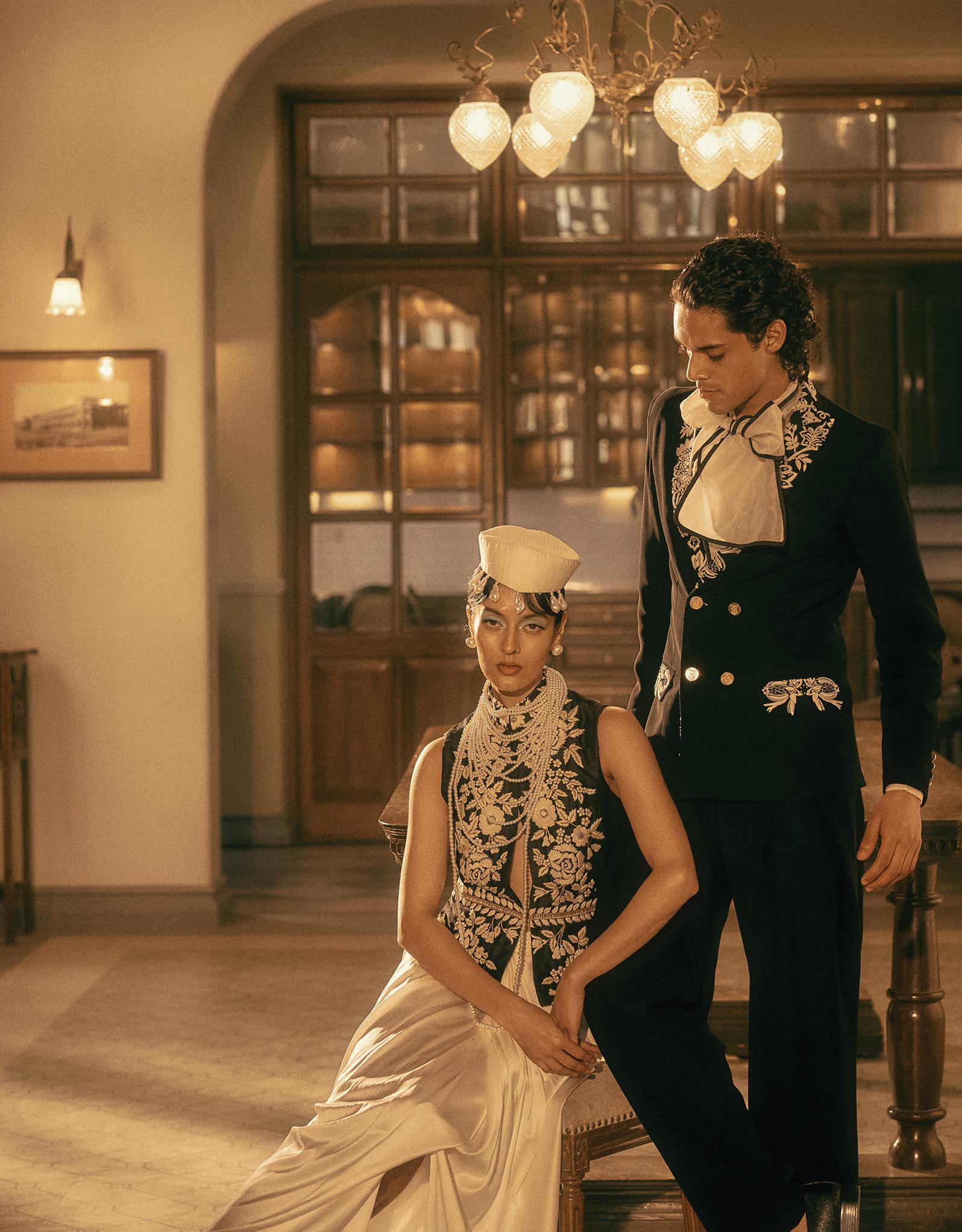
Having showcased globally at venues like the Eiffel Tower in Paris and the Taj Pier in New York, Siddartha Tytler’s eponymous brand has built a reputation for refined elegance. Favored by celebrities including Beyoncé, Kunal Nayyar, Priyanka Chopra, Ranveer Singh, Ranbir Kapoor, and Deepika Padukone, the label remains synonymous with statement-making luxury.
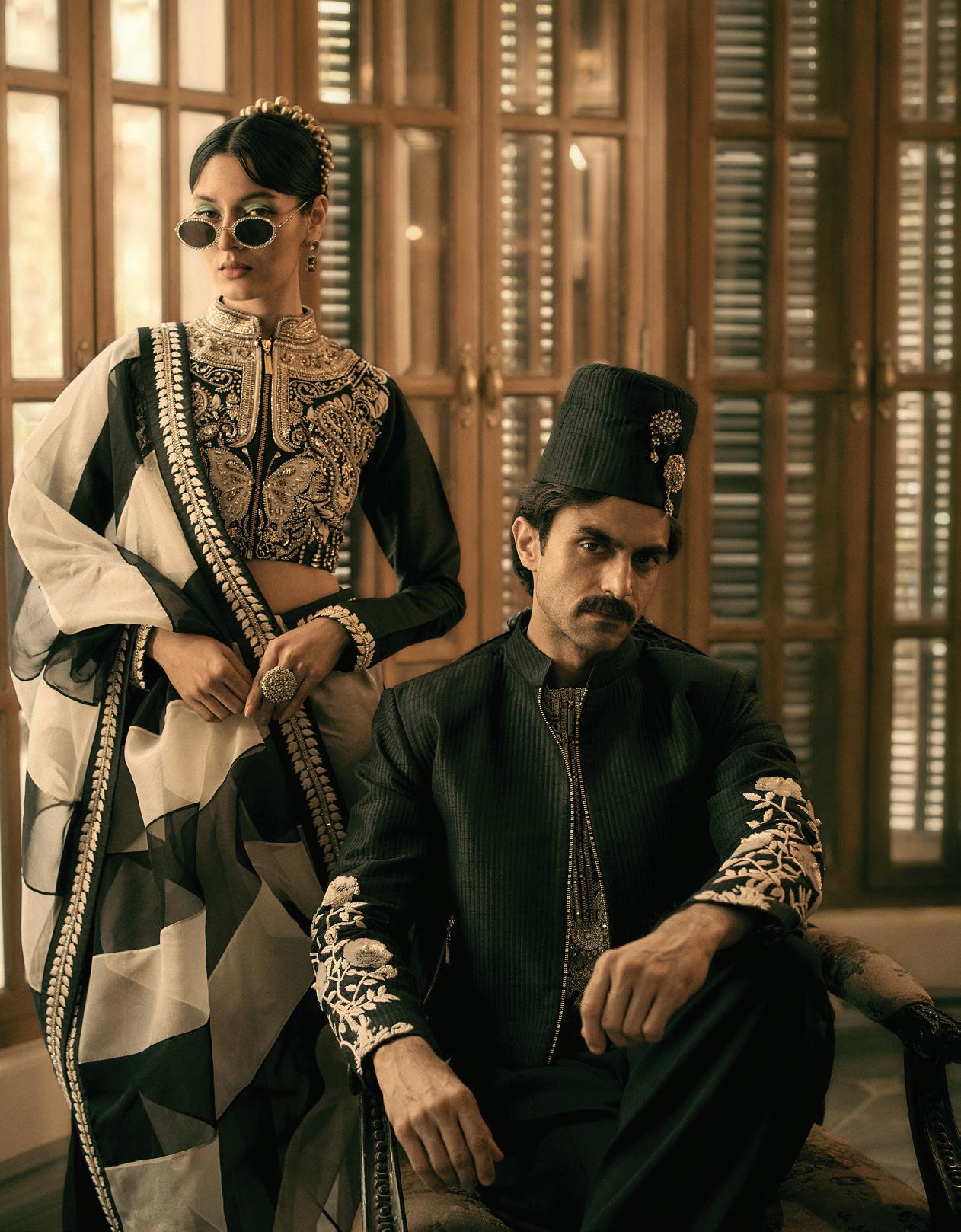
The newest edit, Miraas, marks another milestone. Mixing contemporary aesthetics with traditional codes, the collection is an amalgamation of heritage, craftsmanship, and modern glamour.
An ode to Parsi legacy, Miraas was born from the warmth of a shared meal with friends.
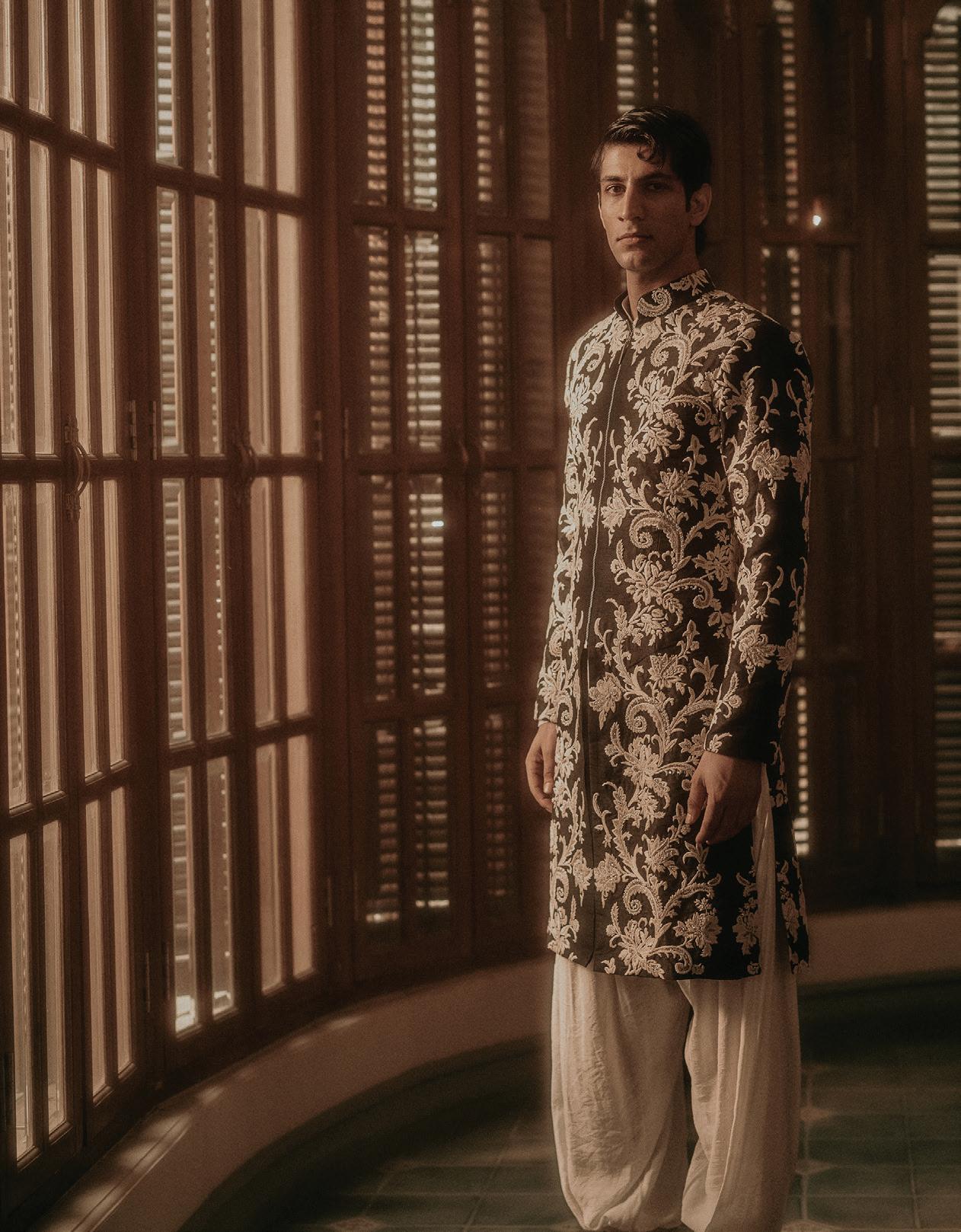
“The inspiration for Miraas was a conversation with friends over dinner. We were discussing their food, culture, and heritage, and it just inspired me to create Miraas,” reflects Tytler. “In Parsi, Miraas means heritage, and what we like to do as a brand is take the old world and make it new. It was about blending two worlds together, and I think it came out beautifully.”
For Miraas, Tytler channeled a sense of vintage charm layered with contemporary elegance.
“It is pretty much the brand’s ethos,” he explains. “We take the old world and make it new, or we take a new technique and make it traditional. It is always about the juxtaposition of time. We like to play with modern silhouettes paired with traditional work, or vice versa.”
At the heart of Miraas lies a tribute to Parsi Gara embroidery. Motifs such as vines, florals, snakes, birds, and bohemian jaals are reinterpreted through jeweled detailing and the atelier’s signature window technique. Intricate thread work is elevated with mirror work, delicate beads, pearls, rhinestones, and layered appliqué, adding depth, texture, and quiet opulence.
“The only new element I explored this season is mirrorwork,” says Tytler. “Apart from that, we have used zardozi, aari, and appliqué work. We have
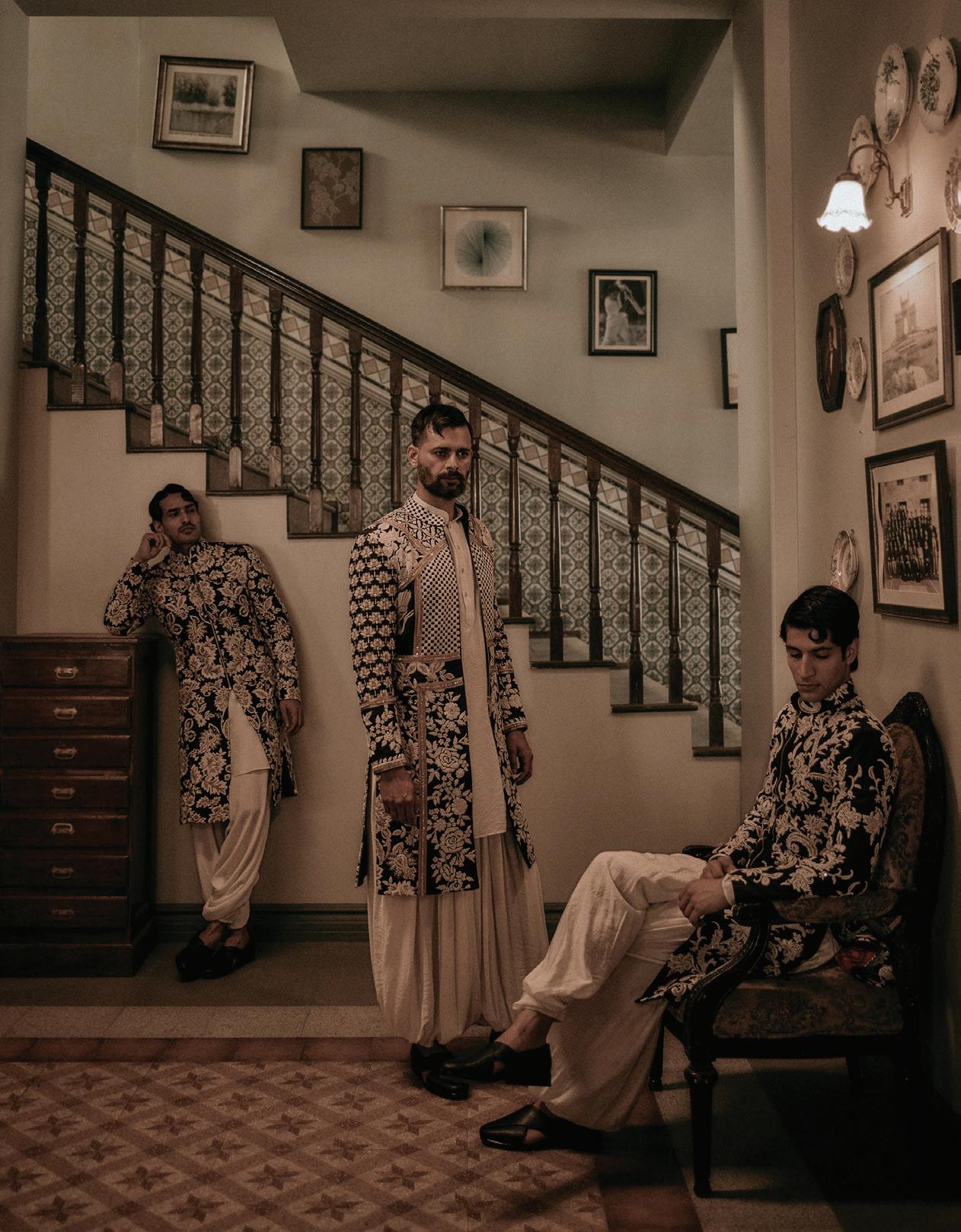
also taken industrial metal chains and embroidered them into silhouettes— that was the modern take on the old world. Our appliqué work signifies the black and white, and we have modernized the Gara embroidery by picking elements like spiders, storks, and snakes to make it feel more modern.”
The collection unfolds in a striking black and white palette punctuated with gold, allowing the craftsmanship to take center stage. “When you see archival Parsi photographs, you see a very strong lean towards blacks and whites. It is classic; it’s something you can buy today and wear twenty years from now without it ever going out of style. Personally, I have always levitated towards blacks, ivories, and metallics. This is one of my personal favorite collections,” informs Tytler.
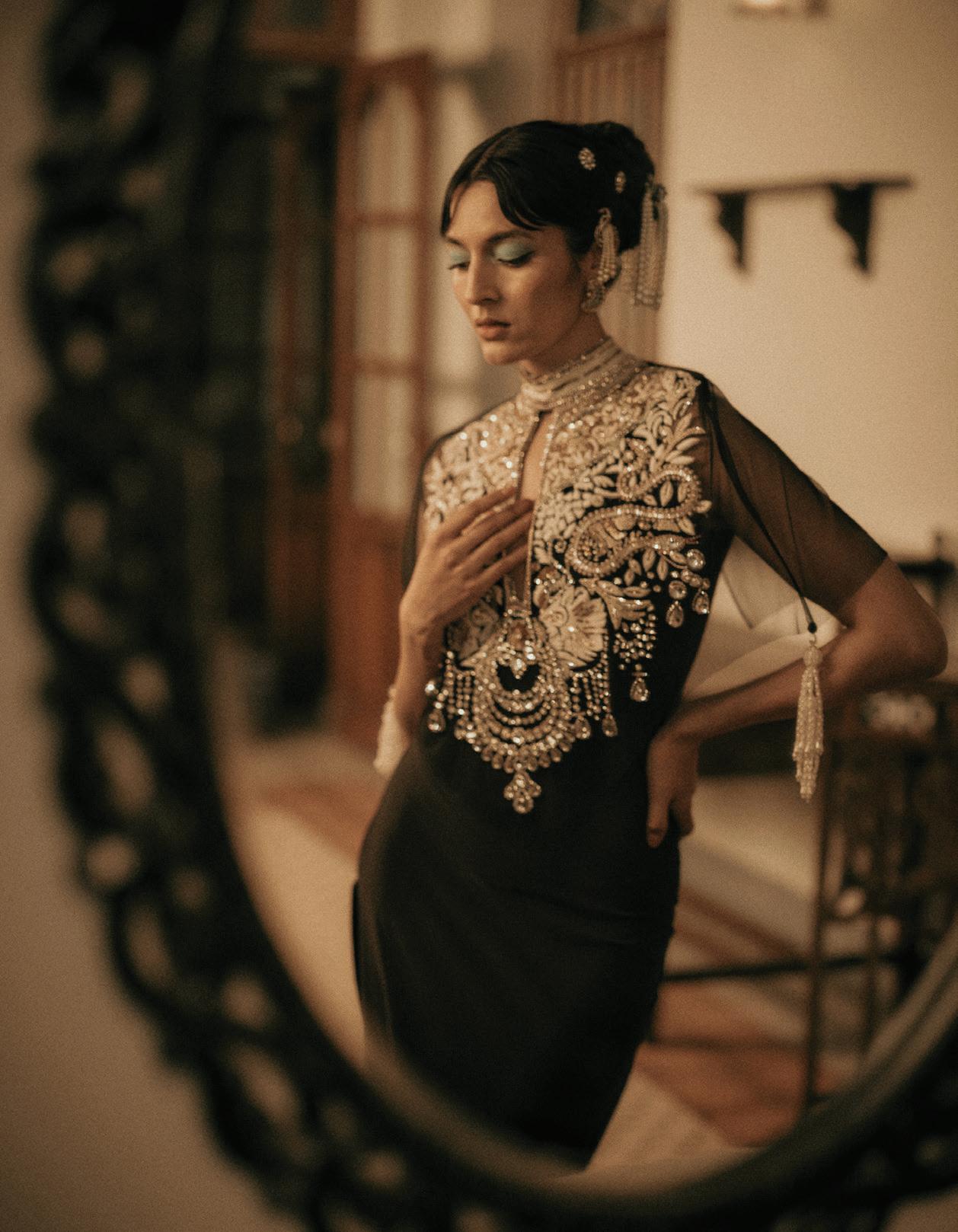
Crafted in luxurious fabrics such as organza, tulle, matka silk, raw silk, satin, blended linen, mulmul, and microfiber, the silhouettes balance structure with movement and transparency with strength.
The collection spans sherwanis, bandhgalas, suits, crop jackets, sharara sets, anarkalis, sarees, drapes, and lehengas— bridging Indian occasion wear with modern fusion dressing.
“The USP for this collection is the high-octane glamour,” Tytler says. “We have unique pieces that make people stand out. It is a collection very close to my heart. It is very different from what I am doing. It was a challenge, but the end product was very beautiful, and I am actually very proud of the whole team, myself, and the collection.”
Prices begin at INR 14,000 and go up to INR 5 lakh, depending on the intricacy of the design.
The collection is available at the Siddartha Tytler flagship store, the brand’s official website: www.siddarthatytler.com, and select luxury online stores.
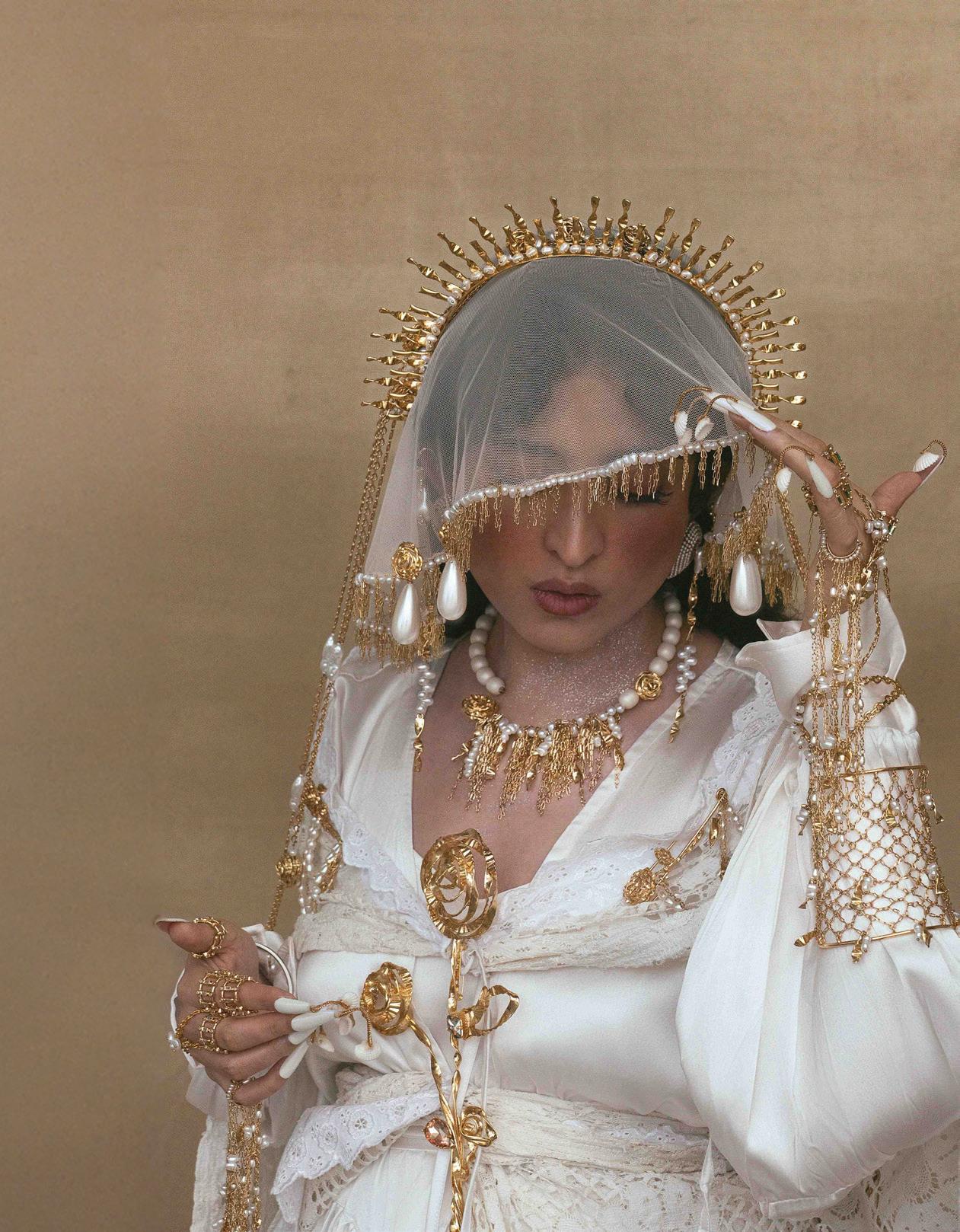
Founded by Nikita Gupta, Amama is rooted in sentiment, memory, and storytelling. The brand’s pieces are designed as modern heirlooms— meant to be worn, loved, and passed down. Its latest SS26 collection marks a fresh new chapter while staying true to that ethos.
Inspired by Golden-Hour Summers
Moving beyond traditional occasion dressing, SS26 embraces an effortless, lifestyle-led sensibility for women balancing destination weddings,
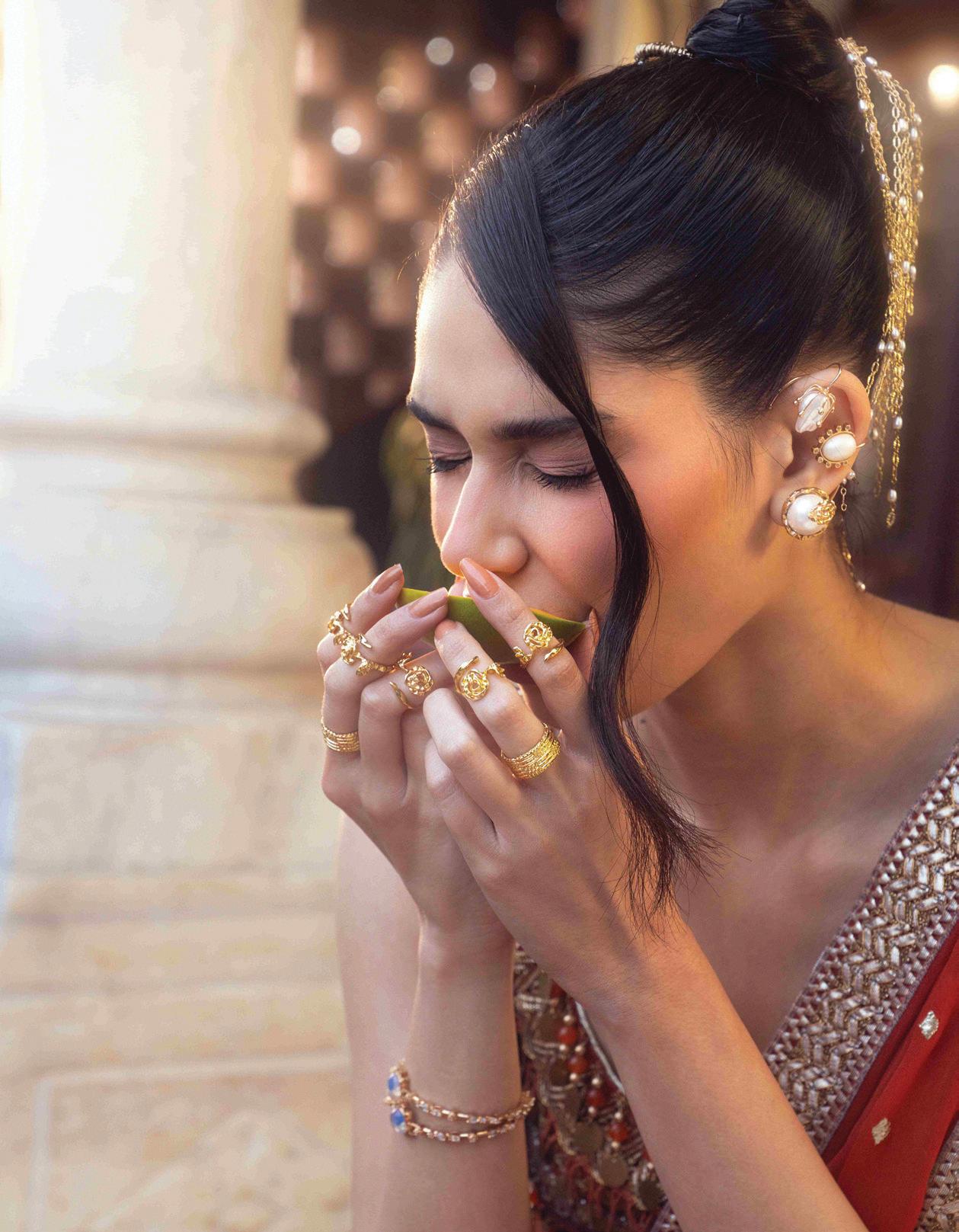
celebrations, work commitments, travel, and intimate evenings. Inspired by flowing fabrics, warm afternoons, and the glow of golden hour, the collection features 22kt gold-dipped pieces with organic twists, soft folds, and curved silhouettes. Pearls add timeless femininity, shells bring a subtle coastal mood, while handwoven raffia introduces artisanal warmth.
“SS26 started as a feeling more than a mood board,” says Gupta. “I kept thinking about how summer feels on the skin and how fabric moves in the wind. I wanted to capture that softness in metal. For me, this collection is about creating statement pieces that don’t feel heavy or intimidating; they feel effortless, like they have always belonged to you.”
At the heart of SS26 are five standout hero pieces: three statement earrings, a sculptural ear crawler, and a bold handcuff. Designs such as Swivel and Twiddle reinterpret movement through structured twists, while Not Your Rose offers a modern take on the floral motif with layered, contoured gold petals. With SS26, Amama steps into a more global, lifestyleforward chapter while staying true to its signature bold aesthetic. The collection is now available online and across Amama stores.
"I brunettethink for this season is definitely a huge
By Michele Marko
Chocolate. Cocoa. Car amel. Espresso. All are evocative of tantaliz ing, mouth-watering flavors. This spring, though, they’re de scriptors for a fresh take on brunette hair colors. As we know, beauty and fashion go in cycles, and this season, brown, in all its variations, is front and center.


"I think brunette for this season is definitely a huge comeback,” declares James Valiant, Suki’s hair group’s award-winning celebrity stylist at South Granville in
Vancouver. “It’s all about rich, glossy, and dimensional shades. There’re definitely some dramatic sides. We’re seeing a lot of espresso, cocoa, and glossy chocolate tones. There’s also a softer side, which is geared towards luxe blonde. Think of soft, monochrome browns and really paler brunette tones that just work with your skin tone.”
Angie Hunt, elite hair stylist and RedkenPro artist for Chatters Hair Salon, agrees: “Brunettes are shining this season… literally.” She references the brand’s hues Glossy Bambi Brunette and Coffee Bean as shades for giving “hair a warm, reflective glow.”
“If you’re craving drama, block coloring is where it’s at,” she says. “Bold, saturated sections create

eye-catching contrast between deep and light tones. Whether subtle or statement-making animal prints, it’s all about multidimensional color that moves and catches the light.”
effects can also be achieved with either highlights applied with foils or balayage hand-painted onto the hair to mimic a sun-lightened effect. “The real essence of balayage is to give some lighter pieces into the hair, whether you want to put in the face frame or on top of the head,” Valiant explains. “It’s an old technique that’s been around since the ‘70s. It’s a sun-kissed look. Rather than the old-school highlights that start at the roots, balayage can start a half inch from the roots. So when it grows, it just grows seamlessly. You don’t get the same demarcation as with highlights.”


achieve a subtle interwoven effect with a variation of colors—such as honey or caramel tones—to create lightness, depth, and texture. To mitigate the harsh line of regrowth, Valiant suggests adding root smudging to extend the time between salon visits. Root smudging uses a color somewhere between the person’s natural hue and the highlight color



and it’s applied to the root area to lift
“You’re going to mimic the same color into the tones so when it grows out, you don’t have the demarcation,” he says. “So, when it grows, it just grows with it. It’s just in the root area, less than an inch. So, it
Hunt recommends “baby lights” around the face for someone with a naturally dark color who wants to go a bit lighter. It gently brightens the hair and helps ease into a lighter look without a major

“What’s trending now is inspired by that sun-kissed, kidsin-summer-light vibe: soft, subtle highlights that mimic how natural light hits hair,” she says. “Think of it as a ribbon of brightness around the face, rather than chunky highlights or a bold money piece. It’s all about a soft, natural transition that feels effortless and fresh.”
Both stylists advise applying a gloss treatment to keep the color fresh between salon touch-ups.
“Gloss is very important,” Valiant notes. “The reason is, especially with darker pigmented hair, when you lift it to a certain color, it just turns brassy. It keeps the
reds out and, on top of that, gives it a lot of shine.”


For cut and style trends, a notable one on social media has been curtain bangs. Hunt says what matters most is whether they suit your face shape, adding that this iteration is softer and more versatile—"fringe connected to the sides with wispy pieces.”
“It’s the fringe with benefits,” she quips. “This way, if you pull your hair up, some strands frame your face or tuck behind your ears, giving a subtle shape.”
Other styles of the moment are texturized pixies, softer lobs and bobs, and lush long locks ‘90s style, say Valiant and Hunt.
“Long hair is definitely in, and I think we’re seeing this a lot on TV and fashion, think of the ‘90s blowout, but what’s really happening is we went through a phase in the last five years when everything was just this curled,” Valiant says. “The whole ‘90s blowout, big voluminous hair is absolutely back.”
A caveat for long hair, he says, is that it must be cut into a shape. Otherwise, it just hangs like curtains—not to be confused with the current sweeping “curtain” bangs trend.
One trend that Hunt favors is the “The Madison” style made famous by actress Michelle Pfeiffer in the TV-series of the same name.
“It’s long and elegant but still feels youthful and vibrant. Age doesn’t have to define your vibe; with the right color, healthy shine, and styling, anyone can pull it off. Even accessories like cuffs or statement clips, like the ones Pfeiffer wore in the first episode, are making a big comeback and can give a personalized twist to your look. The key is customization: a cut can suit your face shape, lifestyle, and hair type, but it’s all about how you make it your own.”









With multi-heroine entertainers clearly setting the tone for the season, and stories rooted in love, heartbreak, and messy relationships taking center stage, the coming months promise plenty of laughter, longing, and largerthan-life drama. Whether it is Pati Patni Aur Woh Do, Hai Jawani Toh Ishq Hona Hai, Cocktail 2 or Main Vaapas Aaunga—all essentially sit on the premise of love and complicated relationships. And then comes Welcome To The Jungle—a film so packed with stars that counting the cast may require an interval. So, if entertainment is what you seek, Bollywood has you covered.

By Shweta Kulkarni

Release date: June 19, 2026
Directed by: Homi Adajania Starring: Kriti Sanon, Rashmika Mandanna, Shahid Kapoor
If the recently dropped first look of the upcoming film Cocktail 2 is anything to go by, director Homi Adajania has mixed another irresistible cocktail—with the right measure of love, friendship, and emotional madness. This time, the trio at the center of the storm includes Shahid Kapoor, Kriti Sanon, and Rashmika Mandanna. Like its predecessor, the film explores modern relationships through glamour, music, and scenic backdrops— but with an entirely new story. Kriti Sanon shares, “The tone and atmosphere are in a comparable realm, yet the narrative and characters are entirely distinct. There’s no direct connection to Cocktail aside from the fact that it encompasses a mix, a cocktail of emotions, camaraderie, drama, music, and stunning locations.” Expect shaken hearts and stirred emotions set in beautiful locations.
Release date: June 12, 2026
Directed by: Imtiaz Ali
Starring: Sharvari, Diljit Dosanjh, Naseeruddin Shah, Vedang Raina
No one tells love stories better than Imtiaz Ali. With Main Vaapas Aaunga, the director returns with what appears to be another emotionally layered romance— this time set against the backdrop of Partition. Apart from its story, the film boasts a formidable creative team: music by AR Rahman, lyrics by Irshad Kamil, and a cast featuring Sharvari, Diljit Dosanjh, Naseeruddin Shah, and Vedang Raina. With Imtiaz Ali’s flair for weaving timelines, memories, and music into cinematic poetry, expectations are naturally sky-high. Describing the film, Imtiaz Ali said, “Main Vapas Aaunga is a simple story of partition time, remembered 78 years later.” Simple story or not, with this team involved, expect anything but ordinary.



Enjoy direct flights from Vancouver to Sydney three times a week, all year round. From iconic beaches to vibrant city life, Australia’s harbour city offers the perfect escape.
Together, Qantas and our codeshare partner WestJet have Australia and Canada covered. Discover where we can take you with our extensive connected networks.
Visit qantas.com or contact your local travel agent to book now.
throngs of people struggling to get a piece of Venetian charm for their socials.
For an equally enchanting experience, swap Venice with Ljubljana. With a history dating back to the Roman era, elegant architecture, expansive green spaces, and, of course, charming bridges over the River Ljubljanica, Ljubljana, the capital of Slovenia, offers a postcardworthy setting without having to break the bank. Golden sunsets and sunrises, candlelight dinners by the riverside, leisurely strolls through architectural marvels, and serene boat rides in the beautiful river, Ljubljana is ideal for travel enthusiasts wanting to indulge in the Venetian charm minus the crowds.
For Bollywood fans, Switzerland is the ultimate dream destination. The snowy peak of Jungfrau, the scenic town of Interlaken, the mountain resort of Zermatt, the beautiful lakeside city of Lucerne, and idyllic Geneva are all undeniably stunning, but they also come with heavy tourist traffic and hefty price tags. Neighboring country
Austria, on the other hand, offers landscapes that are every bit as dramatic and spectacular as the Swiss. Regions like Tyrol, Innsbruck, Vorarlberg, Salzburg, and Graz not only boast breathtaking scenery, but Austria’s historic architecture and vibrant culture also offer an experience that feels richer, while being easier on the pocket. What’s more, as many Austrian towns share borders with Switzerland, you can easily hop across to explore Swiss gems like Zurich, St. Gallen, Rhine Falls, Trogen, St. Moritz, and Säntis. Best of both worlds indeed.
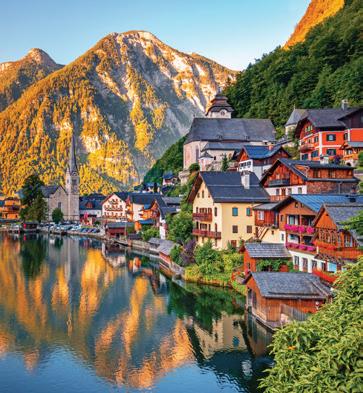
Prague and Krakow very much have the same vibe. Both are famous for their remarkably preserved UNESCO World Heritage historic sites, and their cobblestone streets lined with restaurants, museums, and architectural wonders at every turn. However, walking around the Czech capital city, Prague, especially around popular landmarks like Old Town Square, Prague Castle, and Charles Bridge, can feel more like navigating a sea of people than exploring a historic capital.
On the other hand, Poland’s Kraków, with a similar atmosphere, enchants with its Wawel Royal
Castle, Old Town, and Cathedral that resonates with centuries of royal history. The medieval city is also famed for the historic Kazimierz district, which hums with numerous murals and shop signs, reminiscent of the old Jewish streets. With its historic streets that feel like movie sets, delicious food, and buzzing nightlife, Kraków is Europe's best hidden gem, which is precisely its appeal.
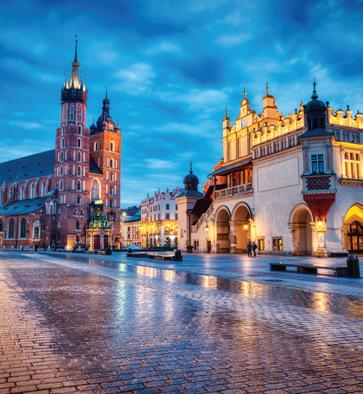
With its pristine beaches, luxury resorts, and vibrant nightlife, the beautiful island of Koh Samui attracts millions of tourists from across the globe every year. But its popularity also means busy beaches, roads full of scooters, traffic congestion and increasingly commercialized shorelines. And to gently break the news to ‘The White Lotus’ fans planning a trip inspired by the show, it wasn’t filmed here. Located near Mauritius, Rodrigues Island can serve as an excellent alternative to Koh Samui if one is seeking a secluded, rugged, and slow-paced island experience rather than a bustling resort destination. Rodrigues offers pristine, uncrowded beaches, hiking, and rich Creole culture, contrasting

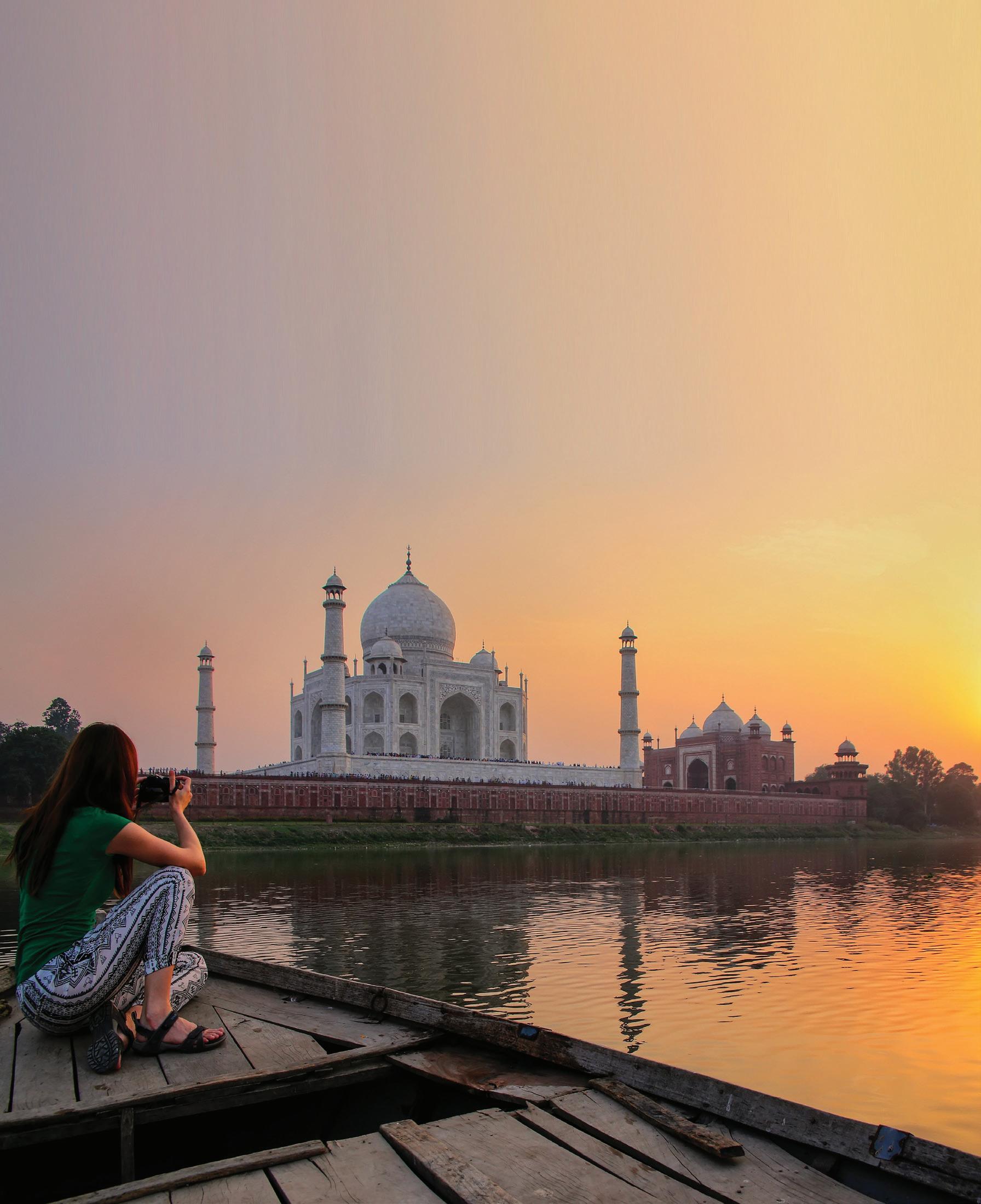






with Koh Samui’s loud nightlife, extensive resorts, and developed social atmosphere.

If you have seen Julia Roberts’ ‘Eat, Pray, Love’, you are surely fascinated by the tropical allure of Bali. In recent years, however, this Indonesian island has also become a top choice for millions of backpackers, influencers, spiritual seekers, and surfers alike. And just like that, Bali is no longer the quiet paradise it used to be. Rather, Bali today is an island bustling with overtourism, congestion, and rising costs.
Indonesia’s Raja Ampat, by contrast, remains relatively untouched and serves as a good dupe for Bali. Meaning Four Kings, Raja Ampat is located off the northwest tip of the Bird’s Head Peninsula in Southwest Papua province, Indonesia. This archipelago of more than 1,500 small islands is home to some of the richest marine biodiversity on Earth, making it truly unique. It is no surprise that many travel publications frequently describe it as one of the most beautiful island regions in the world.







The DARPAN team joined thousands at Vancouver’s iconic Vaisakhi Parade, immersing themselves in a day filled with spirituality, culture, and community connection. As hymns echoed through the streets and volunteers served meals with warmth and generosity, the celebration beautifully showcased Sikh values of equality, service, and togetherness that have defined this cherished tradition for decades.


DARPAN Magazine was proud to be part of Surrey’s vibrant Nagar Kirtan once again, joining hundreds of thousands gathered in celebration of Vaisakhi and the spirit of the Khalsa. From colourful floats and devotional hymns to endless acts of seva, the event reflected unity, faith, and community pride, as the DARPAN team connected with attendees and captured the energy of one of the world’s largest Vaisakhi celebrations.

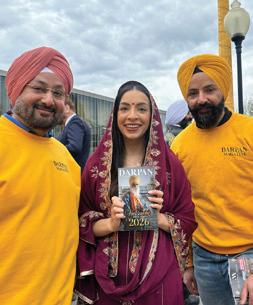







Greater Vancouver Board of Trade’s prestigious Governors’ Gala and Rix Awards 2026 honored Walter Pela with induction into the Council of Governors, while Anthony von Mandl was recognized with the Rix Award for Community Citizenship and Purdys Chocolatier received the Rix Award for Corporate Citizenship. The evening was dedicated to celebrating leadership, philanthropy, and business excellence across British Columbia.
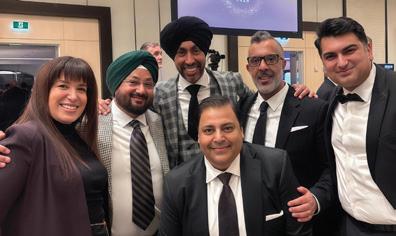
DARPAN Magazine was present at the groundbreaking ceremony of SkyLiving, marking the beginning of an exciting new development in Surrey City Centre. With community leaders, developers, and guests in attendance, the event celebrated innovation, growth, and the future of modern urban living as Allure Ventures unveiled its vision for Surrey’s evolving skyline.
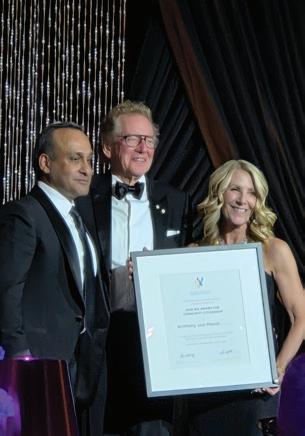
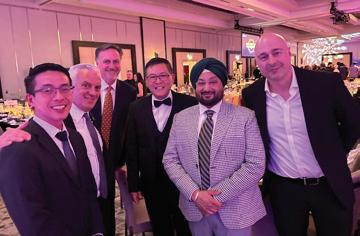





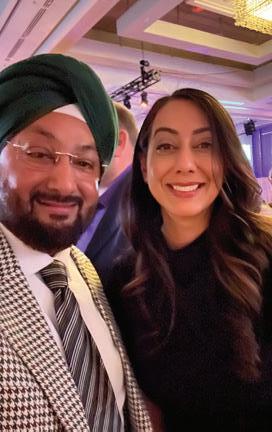

DARPAN Magazine proudly joined more than 400 leaders and professionals at the Surrey & White Rock Women in Business Awards 2026, celebrating the remarkable women driving innovation and change across the region. With an inspiring keynote from Canadian Entrepreneur Manjit Minhas, the event reflected the strength and influence of women shaping Surrey and White Rock’s business community.






Q: How did you two meet, and what was your first impression of each other?
Mandy: Amraj and I met at a mutual friend’s wedding in Las Vegas. They had a chapel wedding with an Elvis impersonator officiating their ceremony. It caught us both off guard as neither of us went into the weekend expecting to meet someone. He was sitting in the back of the limo with some friends, and I thought that he was spoken for. Little did I know that he was trying to find an excuse to talk to me the entire time and finally found a moment to offer me a drink. Amraj was very charismatic, funny, and had an amazing smile. The rest is history.
Q: Can you share the story of your proposal/ engagement?
Mandy: Amraj planned a quiet, intimate moment on Emerald Lake to propose to me. I’ve always wanted to visit Emerald Lake and stay at the lodge and Canoe on the Lake. He planned a getaway to the Canadian Rockies in the summertime. It happened to be raining the day we got to Emerald Lake, but there was a brief break in the rain, and in our plastic ponchos, we decided to venture out on the Canoe. He eventually told me to take my poncho off and turn around for a photo. When I turned around, he proposed in his poncho 5 minutes before it started raining again. It was perfect!
Q: Describe your wedding day for us. Did you have a favorite part of the wedding?
Amraj: The wedding day was a beautiful sunny winter day in Vancouver. My favorite part was after the Ardaas when Mandy and I exchanged rings and had a moment where we both really looked into each other’s eyes as if no one else was in the Gurdwara. The reality of the moment set in, and it felt like the beginning of the rest of our lives together.









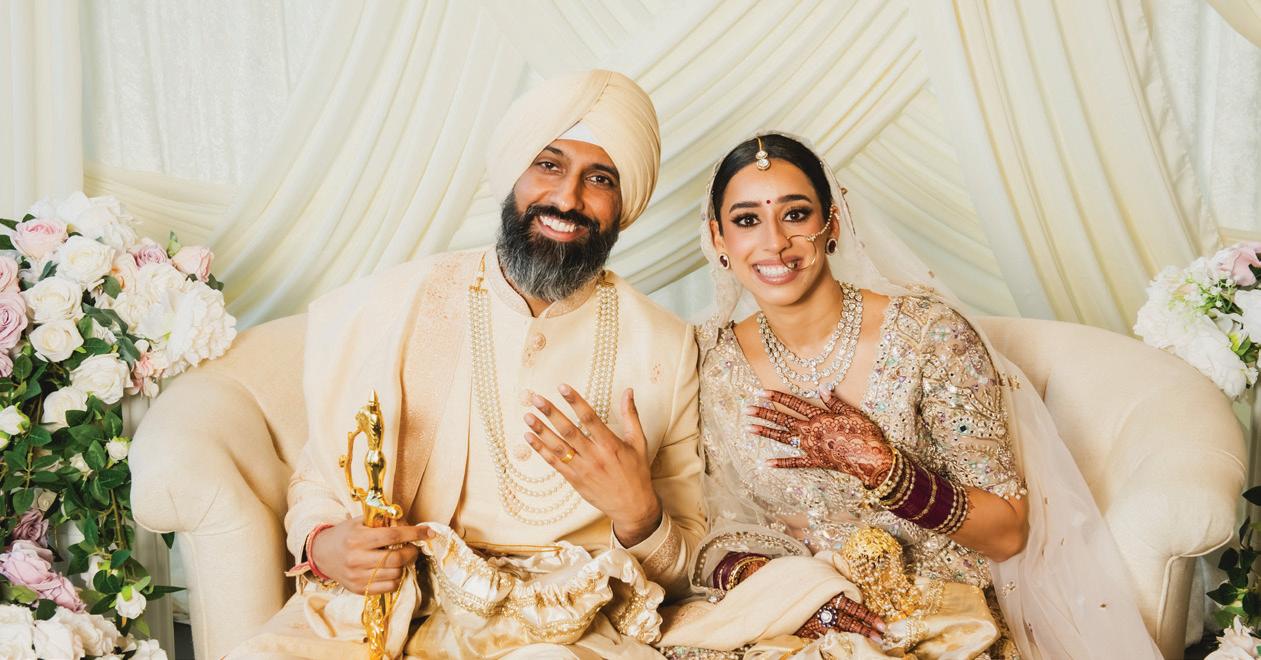
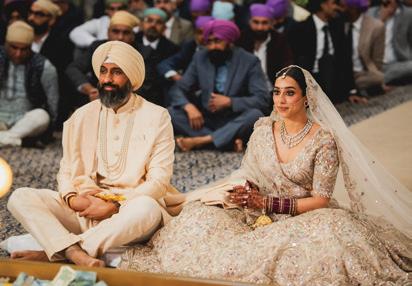
Q: How did you choose your wedding attire for both of you?
Mandy: We decided to shop locally. Both Amraj and I wanted something simple, elegant, and timeless for our wedding day. I wanted to find a lehenga that was unique and stood out without overpowering the rest of my look. Amraj had his Sherwani color match mine and had a very simple design in keeping with his style.
Q: Were any traditions or customs particularly important to include in your wedding?
Mandy: Family is extremely important to Amraj and me, so it was important that we did the Sikh Maiyaan and
Choora ceremonies during the wedding week. Certain family members were unfortunately not here with us, and it was important to both of us to honor them. It gave us both time with our closest friends and family to recognize how important they have been in shaping us.
Q: Where did you honeymoon?
Mandy: We are going to honeymoon in Europe this coming May. Amraj lived in Greece for a few years and learned how to speak fluent Greek, and so we are planning to visit the small towns in Crete where he had the opportunity to live and play professional football.
Q: Looking back, is there anything you would have done differently?
It flew by so fast that we wish we could relive some of the moments and celebrate with our family and friends all over again. It was the most amazing week of our lives.
Q: What do you love the most about one another?
Amraj: Mandy and I are each other’s
best friends. I love that we can be goofy together, and our friendship always comes first. We both love to go on new adventures together, but most of all, we both love coming home to each other every day after work and spending quality time together.
Q: How does it feel to be married, and what are you most looking forward to in this new chapter together?
It feels very exciting to be married and very natural to live together. We are both looking forward to starting our own family together.
Q: If you could give one piece of advice to couples planning their wedding, what would it be?
Don’t sweat the small stuff. Remember that everyone is there to celebrate you and embrace that. It’s one of the only times in life that all your friends and family, the most important people in both of your lives, will be together in one room celebrating you, so make the most of every moment and try to focus on the present.


The Vancouver International Auto Show returned this spring with its best-attended show yet, packing almost 139,000 attendees into the Vancouver Convention Centre over three days in late March. Among the more than 200 vehicles on display were a handful debuting in Western Canada for the first time. Here are DARPAN’s top three picks from this year’s event.
By Benjamin Yong INTERNATIONAL

Looking like part supercar, part fighter jet, the Chevy Corvette CX concept serves as an inspiration for the next generation of the brand’s beloved sports coupe. The result of a joint effort from multiple global General Motors design studios, the boldest feature is the mo-

Founded in California in 2019 by Nikita and Iliya Bridan, twin Ukrainian brothers raised in Nova Scotia, fledging hypercar maker Oilstainlab’s first limited-edition production offering is the HF-11. Combining 1960s retro endurance racing influence and cutting-edge technology, only 25 are planned for global sale, and, interestingly, assembly of the initial units is said to take place at a facility in Quebec.
The vehicle boasts a price tag of $2-plus million, and can be spec’d with either a 650-horsepower, 4.5-litre naturally-aspirated flat-six engine or an 860-horsepower electric motor spinning the rear axle. A six-speed manual transmission is standard, and an optional seven-speed sequential gearbox is available. Weighing approximately 2,000 pounds with a custom carbon fiber tub, the interior is minimalistic and can reportedly accommodate a driver's height up to 6-foot-three-inches complete with a helmet.


torized canopy—which automatically opens upon driver approach—allowing for a military-style ingress and egress. This EV is powered by an electric motor at each corner, producing more than 2,000 horsepower, feeding off a 90-kilowatt-hour lithium-ion battery mounted low for optimal handling. The entire interior is swathed in red, the seats upholstered with ballistic textile to hold occupants in place during high-g cornering, and bits of aluminum and carbon fiber can be found throughout the cabin. All onboard information is projected onto the digital wraparound windscreen, and controls are handled primarily via the steering wheel.




Unveiling the livery of its maiden Formula 1 entrant in February during Super Bowl LX, VIAS guests were treated to an up-close look at the monochromatic color scheme that adorns the Cadillac competing in the 2026 F1 season. Highlights of the race car include a two-tone theme (black on one side and white on the other) and a gradient pattern made up of repeating signature chevron emblems. The brand says the asymmetric design represents a cross-section where “grit, determination, and performance meet aspiration, optimism, and ambition.”
GM entered into a technical collaboration agreement with Ferrari until an in-house powerplant is developed for a future season, and thus Prancing Horse is providing the engines for the cars to be piloted by the veteran duo driver line of Sergio Perez and Valtteri Bottas. With four races already finished, Cadillac is setting its sights on the Canadian GP next month in Montreal.



This street-legal, track-ready ‘Stang is the most powerful production pony car ever, and was revealed in Western Canada for the first time at VIAS 2026. A 5.2-litre V8 mill under the hood makes a tarmac-melting 815 horsepower and 664 lb-ft of torque, and top speed is rated at 325 km/h.













PILOT TRAILSPORT
RUGGED RECREATIONAL VEHICLE
When Honda introduced the initial TrailSport variant on its fourth-generation Pilot back in 2023, while capable for light off-roading, the conservatively-designed crossover didn’t quite look the part aesthetically. The more rugged 2026 refresh addresses this issue nicely, along with standardizing some much-needed technology.
A larger, square gunmetal grille and massive silver-colored bumper cladding on the front immediately give the flagship some much-needed street cred. Similarly, the bigger remixed scuff guard on the rear and 18-inch Shark Grey aluminum wheels provide a tougher appearance. A trim-exclusive Ash Green Metallic paint now replaces the arguably
MSRP: $64,796 (BASE)
MOTOR: 3.5-LITRE V6
HORSEPOWER: 285 @ 6,100 RPM
TORQUE (LB-FT): 262 @ 5,000 RPM
GEARBOX: 10-SPEED AUTOMATIC
LAYOUT: FRONT ENGINE, ALL-WHEEL DRIVE
FUEL ECONOMY: 17.5 L/100 KM MIXED CITY/HIGHWAY (OBSERVED)

too-bright-for-the-segment Diffused Sky Pearl.
The three-row mid-size SUV continues to offer a lot of space inside and makes for a great choice for road-trip adventures, though at present there is no middle bench seat available, so capacity remains capped at seven passengers. The new 12.3-inch Google built-in-powered touchscreen dwarfs the former nine-inch unit, and the 10.2-inch digital instrument cluster, previously only included in the top Touring and Black Edition models, is now equipped across the lineup.
One of the gripes I had with the last TrailSport was that a 360-degree birds-eye view camera wasn’t an option, making parking the lengthy vehicle chal-
By Benjamin Yong


lenging at times—fortunately, this has been remedied. Wireless Apple CarPlay and Android Auto are supported, and navigating the infotainment system is easier due to simplified menus, though I still feel Honda’s software is not as intuitive compared to many competitors. Overall, the driving experience is slightly more refined thanks to the addition of semi-tempered door glass and extra sound deadening in the doors, under the hood, and elsewhere. Engineers have retuned the electronic power steering as well to deliver improved steering feedback. Fortunately, the robust naturally-aspirated 3.5-litre V6, mated to a 10-speed automatic transmission, hasn’t been converted into a lower-displace-


ment turbo. The 285-horsepower engine performs well and sounds great. The i-VTM4 all-wheel drive system skews on the sportier side, able to send up to 70 per cent torque to the rear axle. And of that, 100 per cent can be directed to either the left or right wheel depend ing on traction requirements. In short, handling in the corners is sharp, and understeer is in check.
Drivers have a number of modes to choose from to suit different conditions and use cases: Normal, Econ, Snow, Sport, Sand, and Trail. Having an economy setting is helpful during regu lar commuting as the six-cylinder mill isn’t particularly fuel-efficient: during my week of predominantly city driving, I was averaging 17.5 L/100 km.
Compared to the other grades, the TrailSport is the only one featuring a 25-millimetre suspension lift yielding extra ground clearance, and specialty stabilizer bars and spring/damper tuning to allow for the required articulation and comfort needed for operation in the backcountry. The same goes for the 265/60R18 Continental TerrainContact all-terrain tires and thick steel skid plates protecting the oil pan, transmission, and gas tank. Recovery points are integrated into the front plate, and a tow hitch is installed behind the full-size spare tire.







Representing a nice balance between family hauler and recreational weekend off-roader, the 2026 Honda Pilot TrailSport starts at MSRP $64,796.

MSRP: $73,341.50 (AS TESTED)
GR SUPRA MT
FIFTH-GENERATION
TOYOTA GR SUPRA

MOTOR: 3.5-LITRE TURBOCHARGED SIX-CYLINDER
HORSEPOWER: 382 @ 5,800 RPM
TORQUE (LB-FT): 368 @ 1,800 RPM
GEARBOX: SIX-SPEED MANUAL
LAYOUT: FRONT ENGINE, ALL-WHEEL DRIVE
FUEL ECONOMY: 12.4 L/100 KM
MIXED CITY/HIGHWAY (OBSERVED)
Introduced in 2019, the fifth-generation Toyota GR Supra is about to be retired as the partnership with the also soon-to-be-discontinued sister vehicle, the BMW Z4, is set to end.
The two-seater fastback coupe looks as good as ever, boasting classic sports car proportions, swoopy body panels, and a planted stance. Though based on a German roadster, the exterior design is very much Japanese. The sleek shape is every bit as much about aerodynamic proficiency as it is style, like the double-bubble roof that reduces drag while maintaining occupant headroom. Wide six-lens LED headlamps housing the bottom signature daytime running light strip, the trio of mesh
grilles on the front bumper, duckbill-style liftback, aggressive black diffuser, and long-hooded silhouette together create an unmistakable look whether you see it in your mirror while waiting for a light or zooming past on the street. Inside, the vehicle is much more European, and it’s clear where Toyota spent (or didn’t spend) most of its re-engineering dollars. The touchscreen atop the center stack, dashboard layout, and center console—i.e., the iDrive controller knob—appear to be plucked straight out of an older model BMW. Even the infotainment system is largely unchanged. The overall layout of the cabin and leather seat upholstery (Premium grade), however, feels sportier
By Benjamin Yong


than the luxury-oriented Z4.
Three years into original production, a manual transmission option became available. No surprise here, the six-speed is supplied by German manufacturing powerhouse ZF. Though Toyota had input on the tuning and specific implementation, gearbox shifts are notchy, the clutch is too stiff, and overall operation just isn’t my personal cup of tea. Having the reverse gear to the left of first without any sort of lockout mechanism also doesn’t seem like the best idea. Though a 2.0-litre four-cylinder variant was briefly offered during the in-between years before being axed due to slumping sales, the sole engine setup powering this Supra (in North America)


is a 3.0-litre turbocharged inline-six, mated to either an eight-speed automatic transmission or the aforementioned standard, sending 382 horsepower and 368 lb-ft of torque to the rear 19-inch wheels shod in sticky Michelin Pilot Super Sport tires.
The car accelerates quickly, the dual exhaust note is perfect, and handling is razor sharp, thanks in part to an active rear sport differential capable of distributing torque to either of the drive wheels. Adaptive Variable Suspension (AVS) continuously monitors road conditions and adjusts the level of dampening in the shock absorbers, so the ride is firm when needed and supple for daily driving duties around town. In addition, users can select Sport mode via a button located below the shifter to prime AVS for performance duties beforehand.
For those who care about numbers, 0-100 km/h times are in the four-second range. Fuel economy is also pleasantly efficient for the segment: I averaged 12.4 L/100 km in a primarily city environment.
Finally, for 2026, there is a GR Supra MkV Final Edition (pun intended) being sold featuring an upgraded suspension system, body aero, brakes, and more. Only 25 units are slated for Canada.
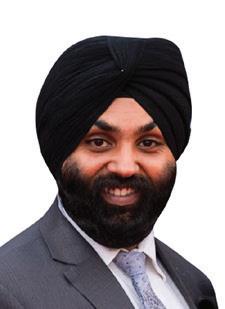
Amarpal Singh
Manager, Residential Mortgages Fraser Valley/Lower Mainland

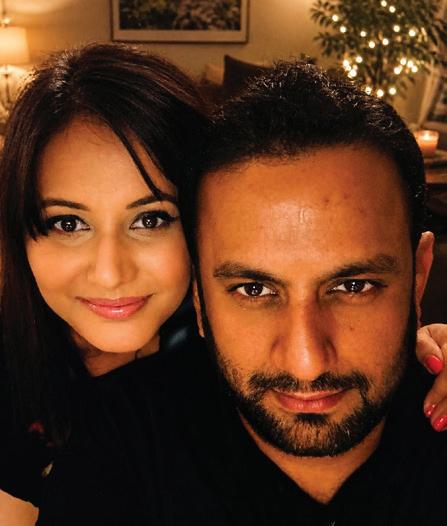
What inspired you to make the move to Canada, and how has your journey been so far?
Love. Simple as that. I fell in love with my wife. Ours was one of those long-distance relationships that, according to everyone around us, wasn’t supposed to work. But as they say, magic does happen. And when it does, you follow it… even if it takes you across the world.
Where did you first stay when you arrived in Canada?
We started our life together in Vancouver’s West End, in a cozy apartment. I still remember the name like it was yesterday, “The WestPort” on Nelson Street. That little place holds big memories..
How would you describe your experience finding a job in Canada?
Challenging—very challenging. I was fresh off the boat and decided to jump straight into real estate. Even though my wife’s family was already in the industry, I didn’t get any handholding. I had to prove myself first.
Robin Arora is a realtor at The Residential Group Realty and the owner of Citymax Properties, where he specializes in design, construction, and renovation projects. Since immigrating to Canada in 2005, Robin and his wife, Arisa Arora, have built a life in Langley, rooted in entrepreneurship, family values, and community.
No shortcuts. I closed my first few deals on my own before earning their trust, and honestly, that made the journey even more meaningful.
What were some of the biggest surprises or challenges you faced?
How genuinely kind and humble people are here. The biggest challenge? Learning how to eat with chopsticks! My wife likes to joke that she’s from a Sikh family… but with Japanese and Thai influences, so I’m the only “Made in India” product in the house. Jokes aside, the real challenge was building credibility. I didn’t want clients to see me as an amateur. I would prepare obsessively, research buildings, understand details, even drive to showings a day in advance just to figure out parking. I learned the business the hard way, but I loved every bit of that grind.
How has your experience as an immigrant shaped your view of Canada?
No country is perfect. I’ve faced some hardships, moments of racism, and the usual
challenges of starting over. But I stayed focused on building a future for my family. You can’t let obstacles define your journey; you have to outgrow them.
What do you miss most about your home country?
Food—without a doubt. Being a Delhi guy, I miss good, simple Dhaba-style food that doesn’t break the bank. I’m not much of a fine-dining person. That said, Vancouver has some incredible options now… You just have to be ready for the bill at the end.
How do you see the future for yourself and your family in Canada?
It’s a challenging time, especially in real estate. Expectations are harder to meet, and businesses are feeling the pressure. I hope that things stabilize, not just for us, but across industries. I also hope BC becomes even safer and stronger for our kids’ future. It’s a shared responsibility; individuals and government both have a role to play.
The day my first son, Arin, was born becoming the first Canadian-born member of our family. And the day I received my first commission cheque… which was ten times what I used to earn in a month back in India. That was a full-circle moment.
Come to Canada with realistic expectations. Life here is beautiful—but there are no shortcuts. Work in a way that lets you sleep peacefully at night, not worry about cutting corners. And if someone from our community tells you, “Don’t worry, ho jayega…”—that’s exactly when you should start worrying!