Let’s plant the seeds for our future together Your idea of growth happens here
Publishers:
Gurvinder
Ramneek
Editor: Ancy Mendonza
Contributing Writers:
Amanat Cheema
Daisy Bains
Harpreet Kaur Kang
Isherpreet Dhaliwal
Mohnaam Kaur
Naina Grewal
Saurav Dutt
Saira Hayre
Surender Pal Singh
Tuhina Ghoshal
Graphic Designer: Hargun Singh Dhaliwal
Advertising &
Gurvinder Singh Hundal
Ramneek Singh Dhillon
Piyush Bisht
Postmaster if undeliverable
Published By: Darpan
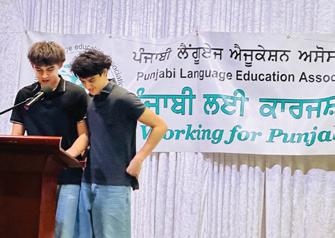
In an era where content is created and consumed at an unprecedented pace, film can often be reduced to something to scroll past, share, or briefly enjoy. However, for Grade 12 twin brothers Rohan and Jaiden Gill, filmmaking has become something far more purposeful: a vehicle for empathy, education, and meaningful social impact. The brothers have spent their high school years not only refining their creative skills but also redefining what it means to be young storytellers in today’s world.
The Gill Twins
Turning Storytelling into Social Impact
By Naina Grewal
Vaisakhi is the celebration of renewal, abundance and giving back to the community. Make your new beginnings simpler this festive season with BMO.
*Terms and Conditions apply. Visit bmo.com/globalmoneytransfer for details.
Their journey into filmmaking began as a shared passion, but it quickly evolved into something deeper when they began to recognize the power of narrative to influence how people think and feel. Through their platform, VISTORI, which is built around the idea of visual storytelling, they have committed themselves to creating films that go beyond aesthetics and entertainment. Instead, their work focuses on real people, real experiences, and real issues. As they explain, “The name reflects the belief that film is not just about visuals or entertainment, but about telling meaningful stories with purpose.” That belief has shaped every project they take on, from community awareness campaigns to cultural storytelling initiatives.
What sets Rohan and Jaiden apart is not just their technical ability, but their intentionality. While many young creators chase trends or viral moments,
the Gill brothers often center on healthcare, cultural identity, and social awareness; these topics are not always easy to communicate yet are undoubtedly deeply important. Through VISTORI, they create story-driven content for organizations, community initiatives, and businesses, with the goal of building emotional connections and inspiring action.
A defining moment in their journey came through their documentary on Logan Boulet, the Humboldt Broncos player whose organ donation following a tragic accident inspired a nationwide movement.
For Rohan and Jaiden, the story was deeply personal, not only as students but as young athletes. What began as a film project soon grew into something much larger. Their documentary became the foundation for an annual organ donation awareness event at their school, an initiative that continues to educate and
engage students year after year. Reflecting on this experience, they share, “This experience showed us that youth leadership is rooted in initiative. By telling a powerful story, we were able to inspire action within the community.”
Their work in healthcare storytelling has continued to expand, including collaborations with organizations such as the Canadian Society of Medical Oncologists and the Canadian Society of Transplantation. Through these experiences, they have learned that even the most complex and technical subjects can become accessible when approached through human-centered narratives. Rather than focusing solely on information, they highlight individual experiences, bringing a sense of humanity to topics that might otherwise feel distant or overwhelming.
Equally important to their work is their commitment to cultural representation. As
second-generation Canadians with Punjabi and Hungarian backgrounds, Rohan and Jaiden understand the importance of preserving identity while making it relevant to younger generations. Their collaboration with Simon Fraser University on a promotional video for the Punjabi language program is one example of how they are using film to celebrate culture in a meaningful way. The brothers note, “Authentic representation fosters deeper connection, not only increasing visibility, but also creating a sense of recognition and understanding.” By showcasing student voices and personal connections to language, the project emphasized the continued relevance of cultural heritage in a modern, multicultural society.
intentional with our time, prioritizing projects that align with our vision and have meaningful impact, rather than overextending ourselves. This focus has allowed us to maintain both academic and creative commitments.”
Balancing their academic responsibilities with their growing platform has not been without challenges, but their partnership has been a key factor in their success. By working together, they are able to divide responsibilities and maintain consistency across projects. They also detail how deliberate they are in choosing which opportunities to pursue, “We are
Looking ahead, both brothers have ambitious plans that reflect their desire to combine creativity with broader societal impact. Rohan intends to pursue a business degree followed by law, with the goal of integrating entrepreneurship, media, and advocacy. Jaiden, inspired in part by their work in healthcare storytelling, plans to pursue a career in medicine. While their paths may differ, their shared foundation in storytelling will undoubtedly continue to influence their work and
the way they engage with the world.
Perhaps the most powerful aspect of their journey is the message it sends to other young people. In a time when it can feel difficult to know where to begin, Rohan and Jaiden emphasize that meaningful change does not require perfect conditions or extensive resources. They advise, “Our own journey began with simple tools and small projects, which gradually grew into larger opportunities. Consistency and purpose matter more than perfection—and that meaningful change often starts with taking the first step.”
Through their work, Rohan and Jaiden Gill are demonstrating that storytelling is not just an art form but a tool for connection, understanding, and change. By focusing on authenticity, empathy, and purpose, they are using film to amplify voices, bridge communities, and inspire action. In doing so, they are not only shaping their own futures but also contributing to a more informed and compassionate society, one story at a time.
Check out their work on www.vistori.ca
As the first turbaned Sikh Chief Coroner of British Columbia, Dr. Jatinder (Taj) Baidwan represents more than a milestone in leadership. He embodies a journey shaped by service, resilience, and a deep commitment to community. In a role that sits at the intersection of medicine, public service, and human understanding, Dr. Baidwan brings decades of experience along with a perspective grounded in Sikh values.
DR. JATINDER (TAJ) SINGH BAIDWAN
Chief Coroner of British Columbia
A Commitment to Service, Data, and Purpose
By Naina Grewal
Raised in London, England, to Sikh immigrant parents, Dr. Baidwan’s story is rooted in perseverance and identity. His father, Beant Singh Baidwan, arrived in the United Kingdom in the 1960s and refused to compromise his faith when asked to cut his hair for employment, taking on difficult jobs before becoming a civil servant. His mother, Gurcharan Kaur Baidwan, played an equally important role in instilling hard work, resilience, and faith. Those values left a lasting imprint. “It is never wrong to do the right thing,” he reflects, a principle that has quietly guided every stage of his life.
Dr. Baidwan joined the British Army at a young age and went on to serve as a medical officer
for nearly two decades, working across numerous conflict zones and global crises, including deployments in Iraq and Bosnia, and humanitarian efforts following the 2004 Indian Ocean tsunami. Alongside clinical work, he built parallel paths in research and leadership. These experiences shaped both his clinical expertise and leadership perspective, allowing him to move seamlessly between frontline care and executive roles.
“I’ve always approached things as a systems person,” he explains. “You don’t change a system based on opinion. You change it based on data. I cannot tell the Ministry of Health what policy to write, but I can show, through data, whether what they’re doing is working or
not.” That mindset became the foundation of his leadership, guiding both his decisions and the direction of his career.
In 2007, Dr. Baidwan moved to Victoria with his wife, Maninderjit Kaur Baidwan, and their three young children. Within months, he established his clinical practice while contributing to medical education. “There was never a point where I decided to leave medicine,” he notes. “I’ve always kept my clinical work going. It was always about asking where I could be most helpful.” That question led him into senior leadership roles within British Columbia’s healthcare system, including Island Health and the Health Employers Association of BC.
Dr. Baidwan’s transition into the BC
Coroners Service in 2017 was driven by a desire to improve a system that was not working efficiently. At the time, post-mortem processes were dependent on the broader health-care system, where growing backlogs meant families often waited weeks for autopsies and months for answers. Drawing on his experience, he spearheaded a more effective post-mortem diagnostic system across the province. In 2024, he stepped into the role of Chief Coroner of British Columbia, approaching it not as a title but as a responsibility. He outlines, “In this role, everything comes down to five essential questions: who the person is, when, where, and how they died, and by what
“
(During COVID-19) we never saw people as numbers. Every person was treated with respect. That mattered.”
means. Our role is to answer those questions clearly and record them in a way everyone can understand, in a Coroner’s report at the conclusion of our investigation.”
Behind those questions lies deeply human work. Every case represents a family’s most difficult moment. “When we meet families, it is often the worst day of their lives,” he shares. “Our job is sim-
ple. Be honest. Be clear and treat people with the respect they deserve as we carry out our investigation. Similarly, we ask for honesty from members of our community as we perform our duties.”
While widely recognized for his data-driven approach, Dr. Baidwan is clear that empathy is not separate from the work he does. It is embedded within it. During the COVID-19 pandemic, when death tolls surged globally, his team made a conscious decision to preserve humanity in every process. “We never saw people as numbers,” he emphasizes. “Every person was treated with respect. That mattered.”
His leadership style reflects the same balance of accountability and compassion. Rather than directing from the top, he leads through
reflection. “If something doesn’t feel right, I don’t jump in with answers. I ask questions,” he observes. “Because when people are upset, it’s rarely just about the outcome. It’s about how they were treated and how they were made to feel.”
At the heart of his approach are Sikh values, particularly seva, or selfless service. For Dr. Baidwan, this is not something separate from his identity. “It’s not something I switch on,” he adds. “It’s who I am. Seva is about understanding the needs of others and putting them before your own.” That perspective also shapes how he defines success.
“It’s never been about money or titles,” he reflects. “When you go, you don’t take any of it with you. You take your karam with you.” Instead, the focus remains on contribution. “It’s not about legacy,” he continues. “It’s about making a meaningful impact while you’re here.”
As Chief Coroner, Dr. Baidwan remains focused on strengthening the system through better data, stronger collaboration, and a deeper understanding of preventable deaths. Beyond policy and process, his work is grounded in a simple philosophy. “Step forward, not for personal gain, but to be of service,” he encourages.
Ask yourself where you can make the most impact. If you lead with that, you will be happier.” “
“Ask yourself where you can make the most impact. If you lead with that, you will be happier.”
As this time of year celebrates renewal, service, and community, Dr. Jatinder (Taj) Baidwan’s journey reflects those very values. From the son of immigrants who refused to compromise their identity, to becoming the first turbaned Sikh Chief Coroner of British Columbia, his story is a powerful reminder that leadership, at its core, is about purpose, courage, and service to others.
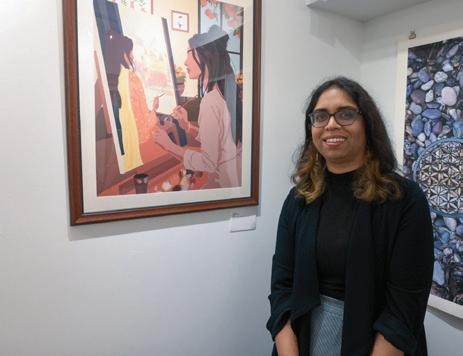
In Surrey, British Columbia’s vibrant South Asian community, sketch artist and illustrator Suki Kaur is redefining what it means to create with purpose. Her work is not just visual; it is deeply emotional, cultural, and connective, offering a language that transcends words.
“At its most basic level, art is an outlet,” says Suki. Growing up as a child of immigrants, she often found herself navigating an in-between space, struggling to fully belong to her roots while also trying to fit into Western society. “I had a hard time connecting with both worlds. Art became my way of communicating.
Sketching Bridges: Suki Kaur’s
Journey of Identity, Expression, and Belonging
By Tuhina Ghoshal
What began as a quiet form of self-expression has since evolved into something far more powerful. Today, Kaur sees art as a bridge, “a second or even third language”, that allows her to connect communities, generations, and identities in ways words often cannot.
From Silence to Storytelling
Suki’s journey with art began not as a choice, but as a necessity. As a child, she experienced selective mutism, a condition that made verbal communication difficult in certain environments. In those formative years, drawing became her voice.
“Whatever I was feeling, I had to get it out,” she recalls. “Art was the only way I knew how.”
Though her path wasn’t linear, she explored careers
in aesthetics and early childhood education; art remained a constant thread. “Everything always circled back to it,” she says. “So, I decided to fully embrace it.”
Rediscovering Roots
Like many children of immigrants, Kaur’s relationship with her cultural identity evolved over time. In her early years, she consciously distanced herself from her heritage, shaped by an environment that emphasized assimilation. “I tried to create work that felt separate from my culture,” she admits.
That changed gradually, particularly after marriage. Her husband, who was raised in India, reintroduced her to language, traditions, and lived cultural experiences in a way that felt authentic and
grounding. Weekly visits to the gurdwara, relearning Punjabi, and reconnecting with everyday rituals reignited a sense of belonging she had once lost.
“It brought me back to that love I felt as a child,” she reflects.
Today, her work draws deeply from those rediscovered roots, often inspired by the quiet beauty of everyday South Asian life. From stories of grandparents to moments of shared care and connection, her art celebrates a tenderness that is both nostalgic and universal. “I like to create pieces that show people loving each other,” she says. “That simplicity, that warmth, that’s what inspires me.”
A Defining Moment: The Canucks Collaboration
A major milestone in Kaur’s journey came with her collaboration with the Vancouver Canucks for their 2025 Diwali logo. Despite a modest online presence, her work caught the attention of Randip Janda, leading to a two-
stage selection process. She was chosen to collaborate with the team’s creative departments, shaping a design that reflected both culture and community.
Drawing inspiration from Phulkari, the traditional Punjabi embroidery known for its intricate floral patterns, Kaur infused the design with cultural meaning. “Phulkari represents joy, resilience, and pride,” she explains.
The color palette was equally intentional - bright yellow and deep pink reflected vibrancy and tradition, while blue symbolized calm and depth. “The idea was to move beyond visual celebration,” Kaur says. “For me, Diwali is about hope overcoming despair, light triumphing over darkness. I wanted it to connect the South Asian community with others across Canada, to reflect shared resilience and humanity.”
Creating Work That Resonates
While the Canucks collaboration brought recognition, it is the emotional impact of her work that remains most meaningful to Kaur. She recalls a moment at a local Christmas market, where a young woman stopped in front of her artwork depicting an
elderly South Asian couple sharing tea. The woman picked up the piece and began to cry. “She told me she had needed to see something like that her whole life,” Kaur says.
For her, that moment defined success. “That’s when I realized, this is why I do what I do.”
Balancing Life, Art, and New Beginnings
Behind her creative practice lies a full and grounded life. Kaur lives in a large, multigenerational household, balancing her roles as an artist, writer, wife, and mother.
Her parents, who immigrated to Canada in
the mid-1980s, navigated significant challenges while building a life for their family. While those experiences shaped her upbringing, Kaur carries them with quiet understanding, allowing them to inform, but not overshadow her journey.
Alongside her visual art, she is working on her debut novel, an Eastmeets-West fantasy inspired by Vedic times, as well as a culturally rooted coloring book celebrating everyday South Asian life.
Writing, much like sketching, has always been an extension of her voice. “It started with poetry, then short stories,” she shares. “Now it’s grown into something much bigger.”
Beyond Recognition: A Deeper Purpose
In a world where identity can often feel fragmented, Suki Kaur’s art offers something deeply reassuring, a sense of wholeness. Through every line, color, and story, she creates spaces where cultures meet, emotions surface, and people find themselves reflected. And in doing so, she reminds us that art, at its truest, is not just about what we see, but about what we feel, remember, and carry forward.
Khalsa In Love, We Become
By Surender Pal Singh
Vo aisakhi, traditionally a harvest festival, marks and celebrates a significant spiritual revolution in human history. On this day in 1699, Guru Gobind Singh Sahib convened a
gathering at Anandpur Sahib, bringing forth a new consciousness, a sovereign spirit.
Through the nectar of the Guru’s love, the Sikhs merged with the Sovereign, becoming
sovereign themselves. They shed old identities and allegiance. The ties that bind were destroyed, and the seekers made the choice to step into a new way of being—rooted in Sabad (word-sounds of the
The Khalsa is not merely an identity to be worn, but a presence that must be cultivated. This is where Khalsa begins: in love, in devotion, in transformation.” “
Wisdom), radiating grace and power.
In this transformation, they became one with the Guru. In Guru, they became the Guru.
The tradition beautifully affirms:
The same miracle was manifested through the disciples. They came to be known as mentor-disciple in one.
This has been the tradition from the very beginning. Just as Nanak established Angad as the Guru.
–Sri Gur Panth Prakash, Chapter 15
Today, we commemorate the inauguration
of the Khalsa Panth. But what does it mean to be the Khalsa at this moment? How does the Khalsa ideal illuminate our inner lives, our communities, our systems?
Bhagat Kabir Ji offers clarity:
Those who know the loving devotion of the Divine have become Khalse.
–Guru Granth Sahib, 655
The Khalsa is not merely an identity to be worn, but a presence that
must be cultivated. It is the constant lighting of the inner lamp, a heart filled with longing for IkOankar (the One). This is where Khalsa begins: in love, in devotion, in transformation.
Professor Puran Singh echoes this transformative love in his reflections on the individual and society. He writes of a world where people dissolve their “i-ness” or self-centeredness, and become new beings through their union with the Divine. He calls us to a vision of a world anchored in deep self-renunciation and love:
“The politics of the Sikh… is the gladsome, spontaneous renunciation of the little self in the love of the Guru... Not the great renunciation, but the small joys of continuous self-sacrifice, at every step, at every breath… Unless the rich atmosphere of peace is brought in, where the tiger and the lamb drink at the same pool, there can come no true culture in the bread-affairs of man.”
This is the call of Halemi Raj—the gentle rule, the Guru’s Kingdom—where dignity, liberty, and justice flow from the love of the Divine. The Guru has
already shown us the way.
This Vaisakhi, let us ask ourselves. Am I a reflection of the Khalsa today? Do I reflect the light, courage, and compassion of the Khalsa? What do I need to do to be an image of the Khalsa? Let us awaken. Let us respond. Let us become.
About the Author: SURENDER PAL SINGH, Senior Research Associate, SikhRI
Surender Pal Singh is a Senior Research Associate at the Sikh Research Institute. He holds a Master’s degree in Religious Studies and English. He is the English Content Reviewer for The Guru Granth Sahib Project. He also develops curricula, presentations, and research papers and delivers topical courses on Sikh theology and culture online. He is the lead instructor of the Gurbani 101 track at Sidak, an annual leadership development program by SikhRI. He has over twelve years of experience teaching Gurbani linguistics and twenty years of experience teaching Sikh theology and culture.
A Commitment to the Welfare of All “Tere Bhane Sarbat da Bhala”
By Daisy Bains
As we enter the season of Vaisakhi, there lies a timeless principle that urges us to look beyond ourselves. At its core, Sarbat da Bhala (welfare of all) is more than just wishing well for others. It is an acknowledgement of our divine oneness and of the idea that
by lifting others, we are, in turn, lifting ourselves. From this perspective, praying for Sarbat da Bhala is not invoking a divine intervention, but rather asking for the strength to uplift ourselves and our communities. It is asking for the strength to act with integrity, compassion, and a deep dedication to the
well-being of all.
During this time of the year, we reflect on how Guru Gobind Singh Ji’s Khalsa embodies this very value. Guru Ji’s hukam (order) was to live for seva (selfless service), protect the oppressed, and uphold justice. More importantly, it was initiated as a collec-
tive responsibility, not just an individual one, which emphasizes our oneness. In order to uphold Sarbat da Bhala, we must seek the empathy to feel and the strength to act, as injustice to our neighbor is injustice to Khalsa; and in turn, should feel like injustice to us.
For myself, the idea of wellness is deeply personal. Time and time again, I have seen our global Sikh community stand together for seva. From Khalsa Aid to Global Sikhs,
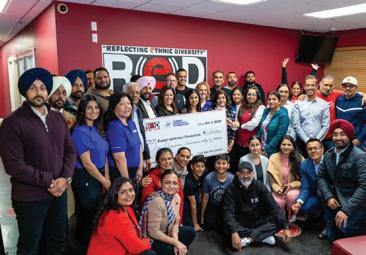
RedFM’s Gurpurab Radiothon to Guru Nanak’s Free Kitchen, and importantly, every Gurdwara that opens its door to anyone in need. It fills me with hope and deep inspiration.
On this note, here’s what Gurbani says about Sarbat da Bhala:
everyone. ||1||
(Raag Kaanrhaa, Ang 1299)
No one is my enemy, and no one is a stranger. I am at peace and united with
On the surface, this Vaak (line) from Guru Arjun Dev Ji represents the idea of unity and neighborliness. Looking deeper, it may suggest that inner peace can stem from external compassion; from recognizing that the well-being of others is inseparable from one’s own. In today’s world, this Shabad reminds us to act against discrimination and to see others through the lens of shared humanity.
(Sikh Ardaas)
May the name, as revealed by Guru Nanak Dev Ji prevail and prosper, forever and ever, may thy will be done wherein lies the good of all.
We recite this at the end of every Ardaas (daily prayer), often repeated, enough that we may overlook the deeper meaning of this powerful bachan (word). By remaining in Chardi Kala and accepting tera bhana (divine will), we are empowered to stay in ever-rising spirits, despite any situation. It asks not for the world to conform to our desire, yet the strength to show up within it. It asks
of us to look beyond the lens of apne (our own), and care for those whom we may never meet. Furthermore, it pushes us to act in ways that reflect “wellness for all.”
This Vaisakhi, let us live our prayers
in action, transforming our ardaas (prayer) into strength for action, for Sarbat da Bhala. Let us uplift all and commit to wellness for everyone.
Nanak Naam Chardi Kala Tere Bhane Sarbat da Bhala.
The Power of One Drop
How Sikh Youth are Expanding the Tradition of Seva
By Amanat Cheema & Isherpreet Dhaliwal
When aiding those who are in need, even the smallest acts can have a profound impact. As Sikhs, we are guided by the teachings of our Gurus to uplift and support those around us. Since the very beginning, the Sikh community has stood up for justice, compassion, and the protection of all people regardless of their identity,
status, or circumstance. When the first Guru, Sri Guru Nanak Dev Ji, began his continental travels on foot, he preached a simple but immensely powerful lesson: true spirituality is discovered through the seva (selfless service) of others. This is a philosophy that has been carried on by Sikhs all around the world and is the very premise of Sikhi as a whole. Today,
as Vaisakhi signifies the birth of the Khalsa Panth, youth are being inspired to expand upon these principles beyond the traditional forms of Seva that we have all grown accustomed to.
To Sikhs across the globe, Vaisakhi is more than a celebration of the harvest season or the time of new beginnings. It marks the birth of the Khalsa on March 30, 1699, a moment
that established the identities of Sikhs as individuals committed to the equality and seva of humanity as a whole. As a community, Sikhs are recognized for their extensive community service to nourish others without judgment of others. Though traditional practices of seva are prominent and deeply valued today, the spirit of the Khalsa continues to evolve through the youth who are constantly expanding upon these religious principles into broader spaces within Western society. Amongst this new wave of transformation is a growing movement to promote blood donation as an extraordinary form of seva. By giving the gift of life to another, we can contribute to a service that deeply resonates with youth and carries a significant humanitarian impact.
At the heart of the Sikh faith lies the belief “Sarbat da Bhala,” translating to the concern for the well-being of all. It serves as a call for Sikhs to provide without expecting anything in return and to protect life wherever it is possible. The donation of blood directly elevates this core concept through allowing individuals the choice to save lives beyond their most immediate environment. It creates unity between donors as they are inspired to aid those in times of need. Despite the progression
of society, blood donation remains an unfamiliar service. Recognizing the great urgency there is for blood donations within the Canadian healthcare system, youth today have been stepping up to make a difference through meaningful projects such as those upheld by the One Blood for Life Foundation.
“One donation can save up to three lives” is more than just a mere statistic; it reflects the core message of the One Blood for Life Foundation and its vision for humanity. As diversity within our Canadian society increases, young donors have been pushing to advocate for this form of seva to people of all backgrounds and beliefs. Many of Surrey’s youth have committed themselves to this initiative, being united by their mutual desire to see this
form of seva be promoted on a larger scale. For these donors, each and every donation made means a potential life saved, and it symbolizes how this quiet manner of service gives back in the utmost ways. To the Sikh youth who founded and led this cause, it was their devotion to the concept of “Sarbat da Bhala” that inspired them to give back to the Canadian healthcare system. Embodying the force of the Khalsa, young donors are lighting the spark across the nation to give blood. By organizing mobile blood donor clinics, raising awareness, and
increasing participation, the Sikh youth in Surrey, British Columbia, have been able to contribute a substantial amount of support towards Canada’s national registries. In the center of the scene in Surrey, the One Blood For Life Foundation, a youthled public health advocacy initiative, has dedicated the past 13 years to contributing thousands of blood donors and stem cell registrants across the region. The work done by these groups serves as a reminder that meaningful change comes through real, tangible actions and not just through intentions. With its humble beginnings
as a small local effort, the One Blood for Life Foundation has transformed into a movement embodying the true spirit of the Khalsa. Reflecting on the values of inclusivity, we are actively observing how seva is being redefined today, and in doing so, we watch as the legacy of the Khalsa Panth transcends beyond
the celebration of Vaisakhi but through the blood of our collective service to humanity.
With the arrival of new beginnings this Vaisakhi season, take the opportunity to recognize the past and bloom towards the future. To celebrate the long-lasting legacy of the Khalsa and the traditions that have been carried
through generations. On this upcoming Vaisakhi, let us embark on the journey towards the future of seva. Carry forth the principles of Sikhi that we have practiced for generations before us. Take the spirit of Vaisakhi into our minds and let seva flow through your veins. One donor, one drop, and a single pulse that reminds us we are all of one blood and one spirit.
The Surrey
NagarKirtan
Collective Resilience and Multiculturalism at Work
By Mohnaam Kaur, Director of Media and Communications, Sikh Heritage Society BC
Growing up as a practicing Sikh woman in the Lower Mainland, Vaisakhi has played a pivotal role in shaping who I am and giving me the confidence to own my identity without fear of repercussion.
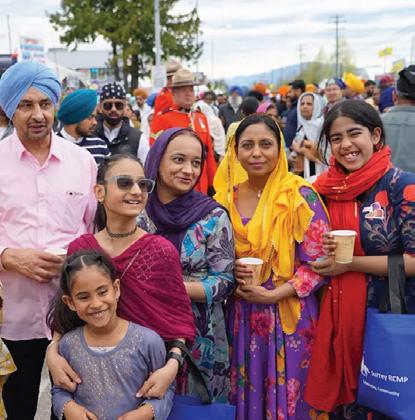
For me, Vaisakhi is far more than a cultural or religious festival; it is a form of collective resilience and an example of multiculturalism at work. It is an affirmation of identity, community, and belonging on a scale that is truly unimaginable unless you have had the opportunity to experience it firsthand.
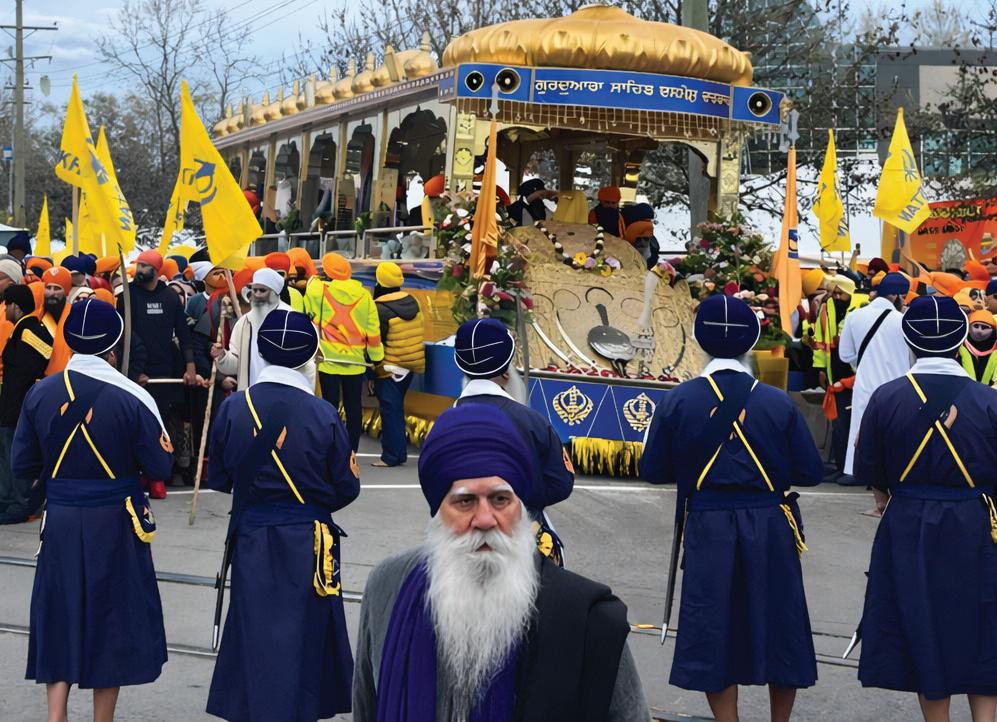
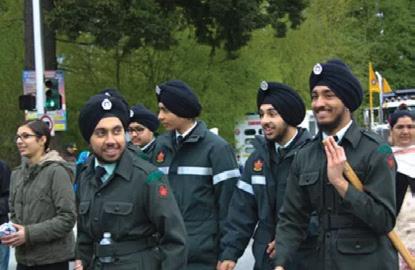
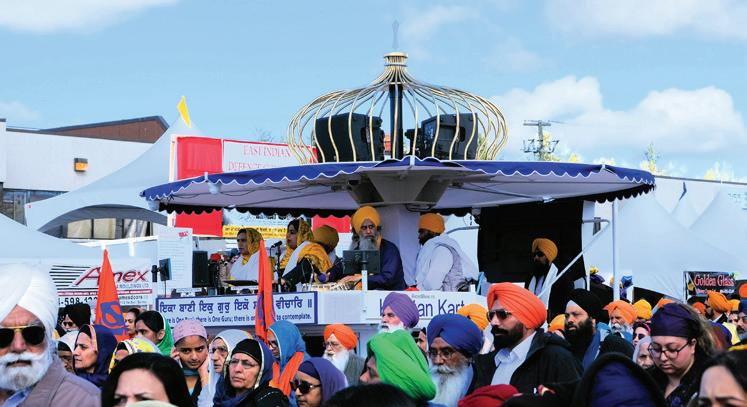
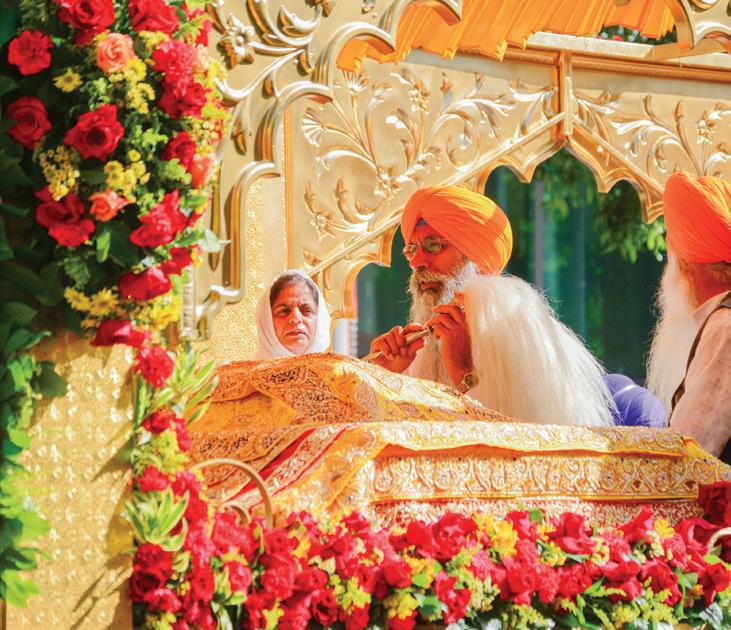
With over 500,000 attendees from a variety of backgrounds, the annual Surrey Nagar Kirtan is the largest Vaisakhi celebration in the world outside of India. At its core, Vaisakhi commemorates the founding of the Khalsa panth by the tenth Sikh Guru, Guru Gobind Singh Ji, and is a celebration of Sikh identity and values.
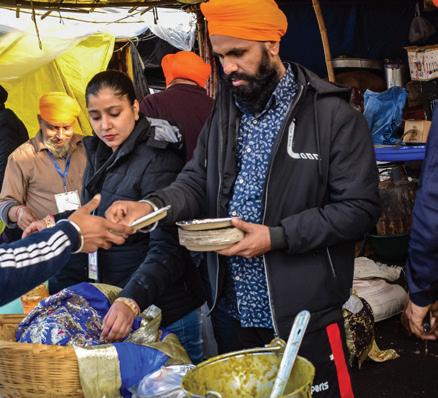
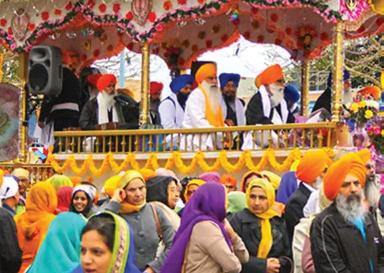
Each year, entire streets are closed off, lined with vibrant floats, with kirtan echoing through the air as hundreds of thousands of people move together in quiet reverence and joyful celebration. Food is prepared and served freely to all without distinction, keeping the Sikh principles of seva and equality alive, in a family-friendly environment free of alcohol and other intoxicants.
With participation from people of all backgrounds, the seva ex-
hibited at the Nagar Kirtan becomes a bridge between communities, bringing us together in a world that so often seeks to divide us. It creates a safe space for intercultural dialogue and education, allowing our non-Sikh neighbors to learn more about who we are and the values that we stand for. Despite the sheer size and scale of the Surrey Nagar Kirtan, each year passes without any incident, and by the next morning, the streets are cleaner than they were before the Nagar Kirtan, thanks to the tireless work of dozens of volunteers.
As a young lawyer and human rights activist, I often find myself reflecting on the ways in which the Nagar Kirtan acts as a reclamation of space and an unapologetic assertion of identity. During a time that is rife
with political polarization and a general global trend towards the resurgence of far-right ideologies that seek to further marginalize minority groups, the Nagar Kirtan stands as an act of collective resilience in the face of adversity. It reminds us to take pride in our identity and to own who we are without feeling the need to apologize for our existence or to assimilate so as to appease the majority.
The annual sea of dastaars (turbans), brown
“
As a young lawyer and human rights activist, I often find myself reflecting on the ways in which the Nagar Kirtan acts as a reclamation of space and an unapologetic assertion of identity”.
skin, and colorful suits that flow through the streets of Surrey is a reminder of the strength, power, and beauty that our community and our faith possess. For me, it also provides a moment of spiritual and personal grounding, where the weight of often being the only Sikh, let alone dastaar-wearing, woman in the room is lifted, and I see myself reflected and celebrated by those around me.
General Civil Litigation
■ MAJOR ICBC CLAIMS
General Civil Litigation
■ MAJOR ICBC CLAIMS
■ MEDICAL & DENTAL MALPRACTICE
General Civil Litigation
■ EMPLOYMENT DISPUTES
■ MEDICAL & DENTAL MALPRACTICE
■ MAJOR ICBC CLAIMS
■ MAJOR ICBC CLAIMS ■ MEDICAL & DENTAL MALPRACTICE
General Civil Litigation
■ EMPLOYMENT DISPUTES
■ PRIVATE INSURANCE DISPUTES
■ MEDICAL & DENTAL MALPRACTICE
■ EMPLOYMENT DISPUTES
■ DEFAMATION
■ EMPLOYMENT DISPUTES
■ PRIVATE INSURANCE DISPUTES
■ PRIVATE INSURANCE DISPUTES
■ MAJOR ICBC CLAIMS
■ DEFAMATION
■ DEBT COLLECTION MATTERS RELATED DOCUMENTS
■ PREPARATION OF WILLS & RELATED DOCUMENTS ■ ESTATE LITIGATION & WILLS VARIATION
■
■ PREPARATION OF WILLS & RELATED DOCUMENTS
■ PREPARATION OF WILLS & RELATED DOCUMENTS
■ ESTATE LITIGATION
■ ESTATE LITIGATION & WILLS VARIATION CLAIMS
■ DEFAMATION
■ PRIVATE INSURANCE DISPUTES
■ MEDICAL & DENTAL MALPRACTICE
■ DEFAMATION
■ DEBT COLLECTION MATTERS
■ DEBT COLLECTION MATTERS
■ EMPLOYMENT DISPUTES
■ DEBT COLLECTION MATTERS
■ PRIVATE INSURANCE DISPUTES
■ DEFAMATION
■ DEBT COLLECTION MATTERS
■ ESTATE LITIGATION & WILLS VARIATION CLAIMS ■
■
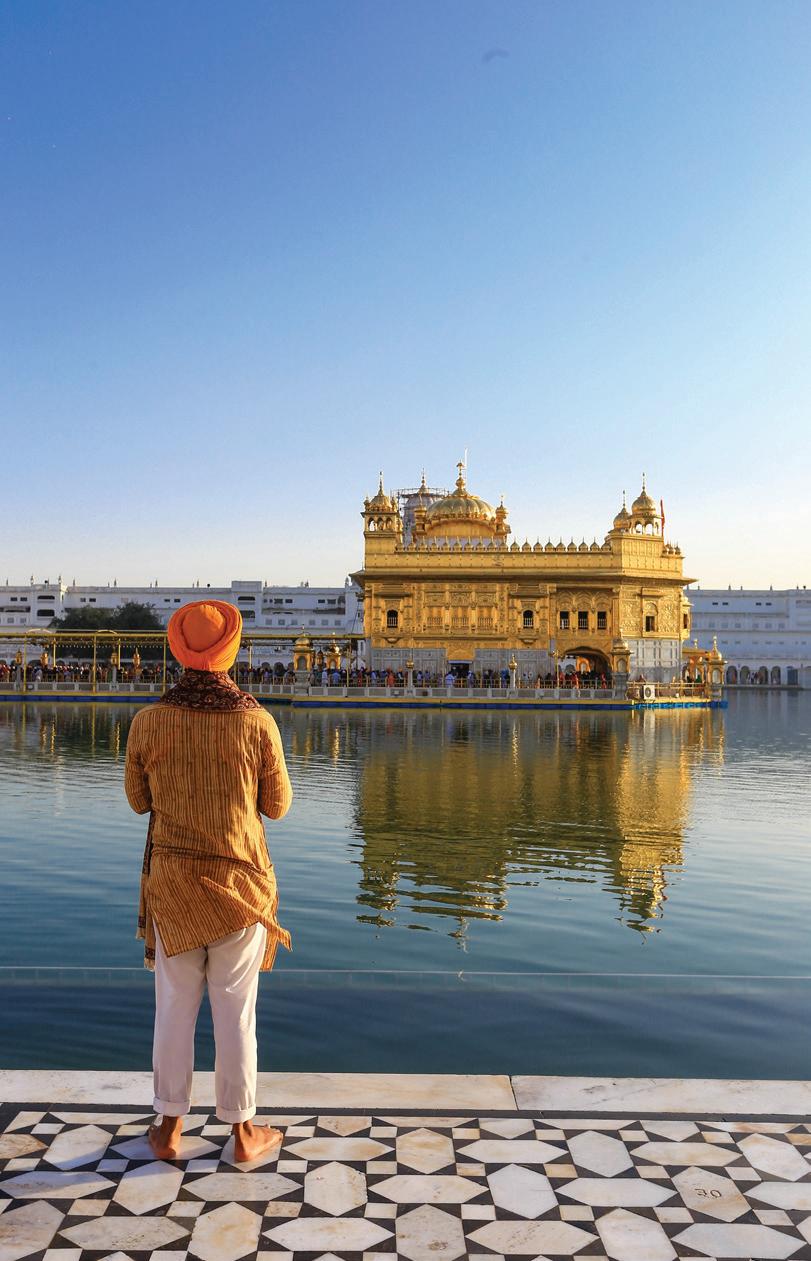
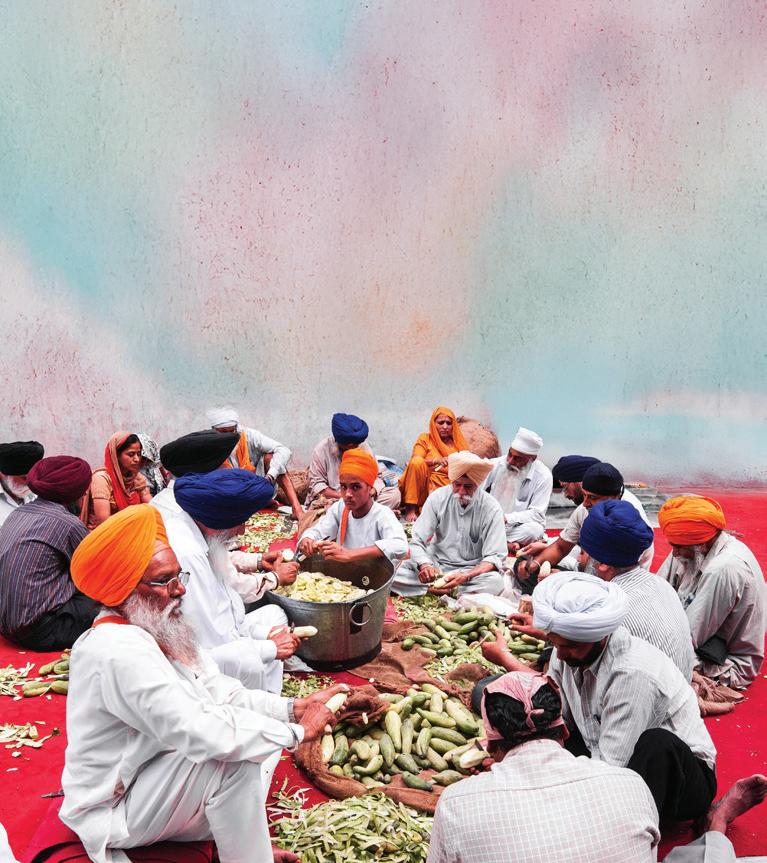
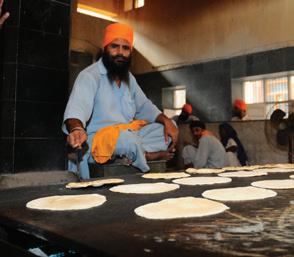
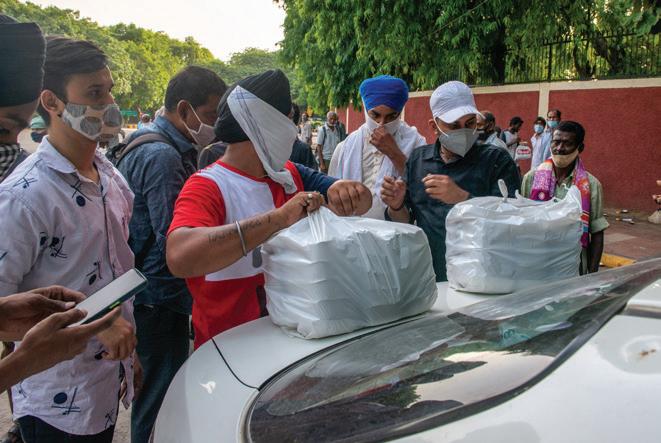
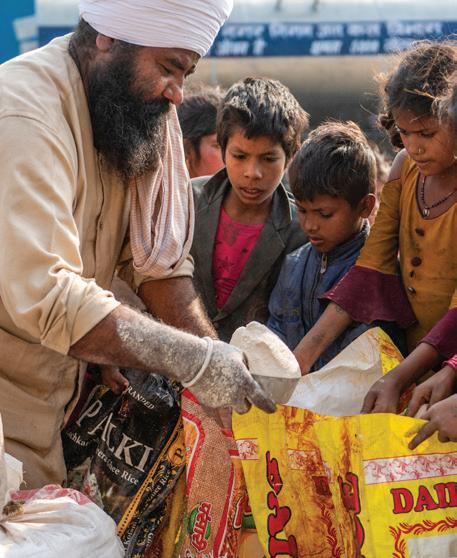
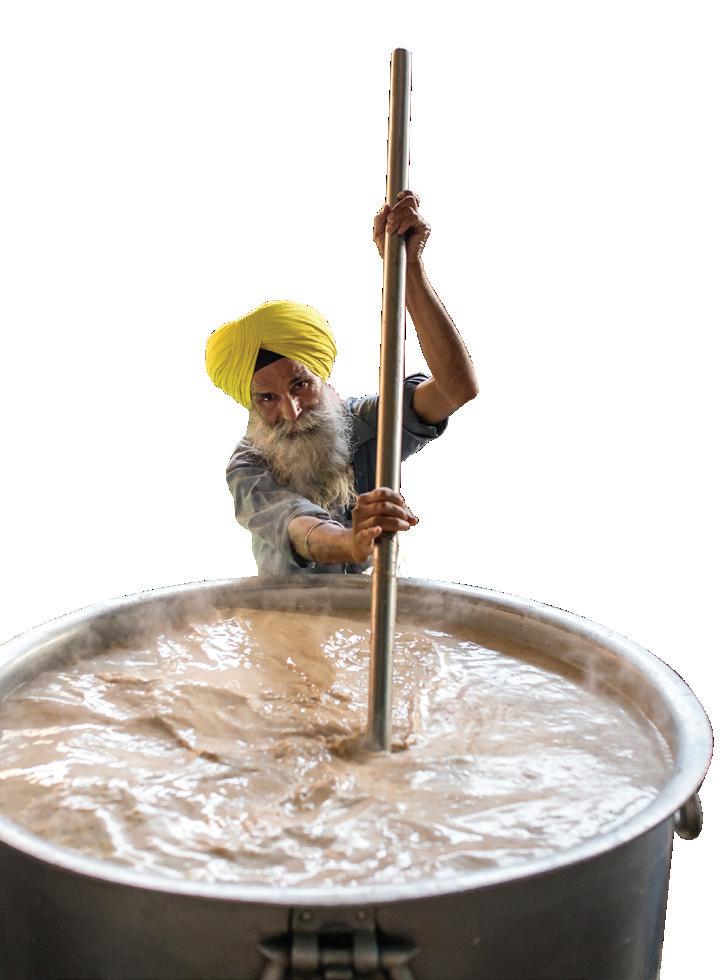
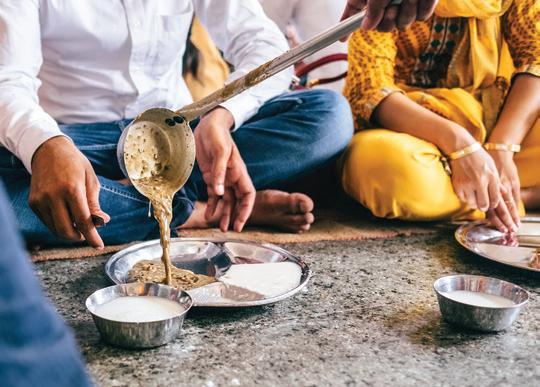
Thetradition of langar is a longstanding symbol of selfless service. No matter where one is in the world, free food is offered to anyone who reaches the doorstep of any Gurdwara regardless of faith. As the largest free kitchen in the world, Sri Harmandir Sahib ji, popularly known as the Golden Temple, serves 50,000 to 100,000 people a day. The concept of langar, in the Sikh context,
No matter where one is in the world, free food is offered to anyone who reaches the doorstep of any Gurdwara regardless of faith.
The Tradition of
Langar
By Naina Grewal
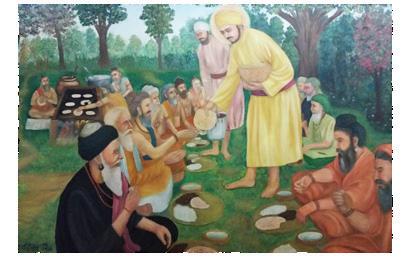
originates from the first Guru, who, in his youth, received money from his father to conduct business. However, rather than yielding a profit, Guru Nanak Dev ji chose to feed hungry pilgrims. Today, many pay homage to Gurdwara Sacha Sauda Sahib ji, situated on the monumental spot where the pilgrims were fed. This event gave rise to a tradition which was further solidified by the Gurus that followed.
FR R IDAY, MAY 29TH, 2026
The strongest wave surrounding the format of langar came from Mata Khivi ji, wife of the second Guru, Guru Angad Dev ji. Being in charge for serving langar, she has been praised in historical texts for her genuine generosity and passion towards serving others. The third Guru, Guru Amardas ji, implemented a rule at Sri Goindwal Sahib ji, according to which no one could meet the Guru until they had eaten langar. This rule was not even bent for the emperor, which was a revolutionary move in a hierarchical society. This Gurdwara is at the center of the inception of many religious elements including sports, Gurmukhi and langar.
The importance of langar and its unique purpose can be traced back to its beginnings in India. At a time when the caste system was heavily dominant, the poor could not even enter religious temples. Using separate utensils, food was often thrown at devotees rather than served based on discriminatory grounds. The concept of Pangat, or langar, introduced a
philosophy where both the king and beggar would eat the same food at the same level. Symbolically, and literally, one is not higher or lower than the other.
Therefore, langar depicts a message of equality and oneness, breaking the shackles of color, caste, community, gender or status. There is no special treatment and nothing is hidden from the public, instilling values of humble acceptance and gratitude. Moreover, the original term being Guru Ka Langar, implicates that the langar does not belong to a specific country, person or institution. Transcending beyond discrimination, even the process of preparation, cooking, serving and cleaning is a shared experience.
For this reason, it is also important to recognize that langar is not just limited to food; it
entails serving people to fulfil their needs in any area – be it of medication, clothing or even education. While langar comes
in many forms, the essence of serving others wholeheartedly allows one to find in themselves the heart to give without expecting anything in return. For both the giver and receiver, the impact is a treasured experience.
In the modern age, however, we must be careful in preserving the true meaning of langar, rooted in its simplicity and compassion towards humanity. As the channels through which we serve evolve, we should not compete with others, but recognize service as a catalyst of unity. Playing our role entails simple steps such as being more mindful, taking only what we need, reducing imperishable waste and promoting health. Taking these steps paves the path for one to reap maximum utility from a more wholesome experience and truly embrace the glory of langar!
Searching In for
Demons
Saurav Dutt, Author & Political Commentator
They trooped through the squinting light, perched down across the dry earth facing the burst of heat hanging over Jallianwala Bagh.
Words plucked the air, rifles clacked and corrected their aim, as men, women, and children turned to see, their own people staring back at them with violence on their lips, violence held in the palm of their coiled hands. There stood the Lieutenant Colonel, and he cried havoc with a sharp bark, and bullets chewed the Vaisakhi heat, and the blood of Indians began to spit and detonate across the shredded air, barely suppressing the quilt of screams.
(Reload-Fire-Reload-Fire)
Then bodies burst through bodies to break free, bolting past the other, to the gate, to the wall, to the well, to underneath those fortunate enough to die faster.
No escape. Nowhere to turn. Backwards, forwards, sideways, met by bullet fire. The throat of the spit-dry well opened, then swallowed up the contorted corpses that flew in to escape;
others crouching to hide from the blitz.
(Reload-Fire-Reload-Fire)
Swiftly did he turn, General Dyer pirouetting on his heels, as did his far too loyal sepoys; the air sat pregnant with scarcely withheld violence, the scorched earth clawed back by fear-bitten fingernails, that clung more desperately, onto the mounds of blood-pitted dirt, some clasping spent cartridges, left smoldering. Dogs soon lapped at the lakes of glossy blood, vultures hooked themselves around the afternoon, snow white clouds, and plunged deeper, to gnaw free the contents of an open eye socket or a hundred.
And Indian blood dotted the bleached walls, and the bodies that did crawl, from one to the other, past kith and kin, eventually had two choices:
Give up the fight.
Play dead.
And the permanence of impending gunfire still clung to the Punjab skyline, as the sound of the demons trotted off into the whip snap of curling time. It was Sunday.
SIKH WOMEN IN HISTORY
Courage, Wisdom, and Spirit
By Naina Grewal
Since the foundation of Sikhism, Sikh women have stood as pillars of strength, spirituality, and service. At a time when many societies around the world relegated women to
the background, Sikhism emphasized equality. Guru Nanak Dev Ji, the founder of the faith, openly challenged gender discrimination, asking, “Why call her bad, from whom kings are
born?” This powerful foundation set the tone for the generations of Sikh women who would go on to shape history.
Mata Khivi: The Force Behind Langar
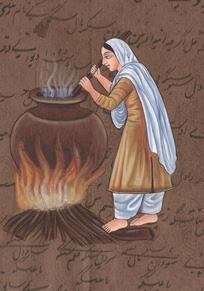
The tradition of langar, or the free community kitchen, is central to Sikh identity. While many associate this practice with the Gurus, it was Mata Khivi, wife of Guru Angad Dev Ji, who played a key role in establishing and expanding this beautiful tradition. Known for her compassion and dedication, she ensured that no one who came to the Guru’s court ever left hungry. Her commitment to equality, service, and nourishment helped lay the foundation for seva, selfless service, as a core Sikh value.
Bibi Nanaki: The First Believer
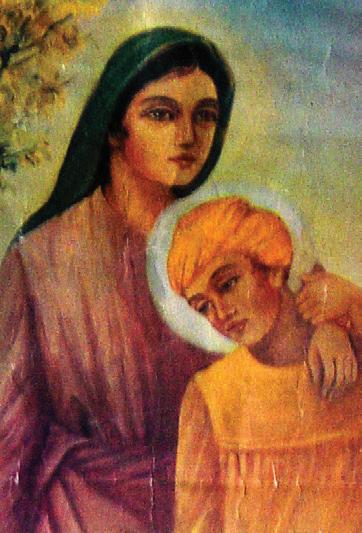
The story of Sikhism begins with a woman, Guru Nanak Dev Ji’s older sister, Bibi Nanaki. She was not only his sibling but also the first to recognize his spiritual greatness. Her unwavering support allowed Guru Nanak Dev Ji to begin his mission with confidence and purpose. Bibi Nanaki’s role is a reminder that behind every great leader, there can be quiet, powerful supporters who help shape history in their own way.
Mai Bhago: The Warrior Saint
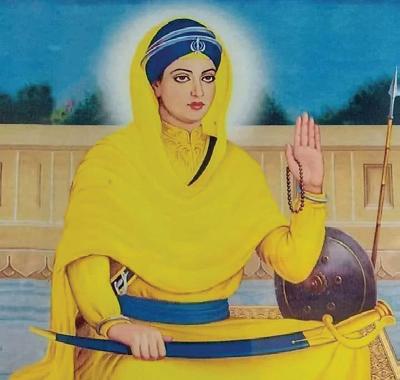
Mai Bhago is one of the most iconic women in Sikh history: a fearless warrior and spiritual guide during Guru Gobind Singh Ji’s time. When 40 soldiers, known as the Chali Mukte, abandoned their duties in battle, she confronted them with fierce conviction and rallied them back into action. Her leadership was so powerful that Guru Gobind Singh Ji, with just those 40 warriors by his side, went on to face an army of 10 lakh Mughal soldiers. Her legacy remains a powerful reminder of Sikh women’s resilience, valor, and unwavering commitment to justice and faith.
Mata Bhani: A Bridge Between Three Gurus
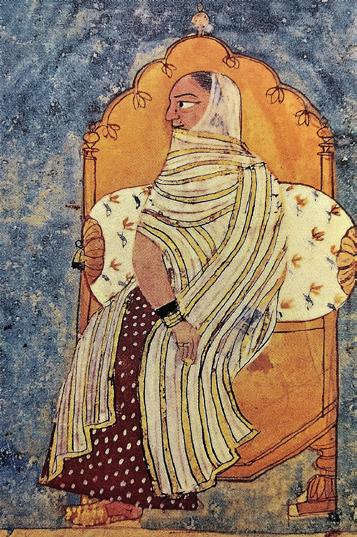
Mata Bhani, daughter of Guru Amar Das Ji, holds a special place in Sikh history as the wife of Guru Ram Das Ji and mother of Guru Arjan Dev Ji. Deeply devoted to the Sikh faith, she supported its growth from within the household. One story tells how she noticed Guru Amar Das Ji meditating on an unstable seat and silently held it steady with her bare hands, causing her palms to bleed. Touched by her devotion, the Guru blessed her, declaring her offspring would inherit the Guruship.
Mata Sahib Kaur: The Mother of Khalsa
Mata Sahib Kaur holds a revered place in Sikh history as the spiritual mother of the Khalsa. Guru Gobind Singh Ji bestowed upon her the eternal title of “Mother of the Khalsa” during the creation of the Khalsa Panth in 1699. It was Mata Sahib Kaur who added sugar crystals, patasas, to the holy nectar, Amrit, symbolizing compassion and grace alongside courage and discipline.
Mata Gujri: The Silent Pillar of Strength
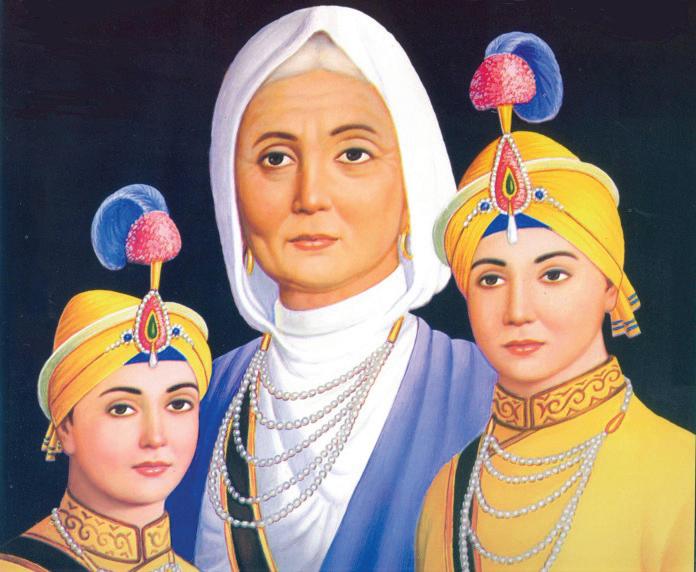
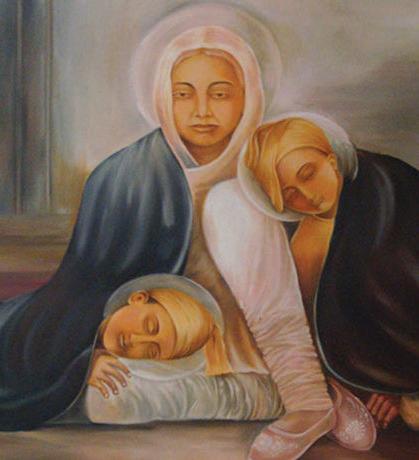
Mata Gujri, wife of Guru Tegh Bahadur Ji and mother of Guru Gobind Singh Ji, is remembered for her quiet strength and deep spiritual conviction. After her husband’s martyrdom, she raised Guru Gobind Singh Ji with steadfast guidance. In her final days, she was imprisoned in freezing conditions with her younger grandson in Sirhind. Despite the hardship, she remained composed and unwavering in faith, inspiring her grandsons to stand bravely against tyranny. Mata Gujri stands alone in Sikh history as the only woman whose husband, son, and grandsons all became martyrs for the faith.
Maharani Jind Kaur: The Last Queen of Punjab
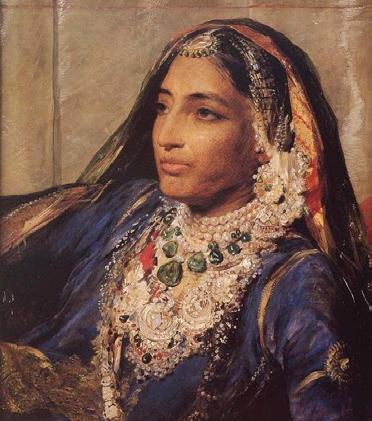
Maharani Jind Kaur, widow of Maharaja Ranjit Singh, was a fearless leader and one of the last reigning figures of the Sikh Empire. As regent to her young son Duleep Singh, she fiercely defended Punjab’s sovereignty during British expansion. In a tragic turn, the British took her young son from her and exiled her from the kingdom. Though imprisoned, she escaped custody, rallied allies, and made tireless efforts to reunite with Duleep Singh and restore the Sikh Empire. While her mission was ultimately unsuccessful, her sharp political acumen, unbreakable spirit, and refusal to be silenced by colonial forces cement her legacy as a queen, mother, and freedom fighter.
JASJIT KAUR Chef
Chef Jasjit Kaur, based in Cambridge, Ontario, is a celebrated culinary force whose journey spans over three decades as a chef, educator, and cultural ambassador. Originally from Chandigarh, India, she brings a deep-rooted passion for North Indian cuisine, seamlessly blending tradition with global influences. A classically trained chef and seasoned culinary instructor, Jasjit has inspired countless food enthusiasts through her teaching, private classes, and community engagement.
Her dynamic presence extends far beyond the kitchen: she has been featured multiple times on CBC Radio and in local publications, and has collaborated with platforms like the Rogers Community Channel, where she serves as executive producer and host of In the Kitchen with Chef Jasjit, now in its second season, with a third underway inspired by her legacy cookbook.
She has also been associated with prominent initiatives such as Saffron Hub’s Canadian Artistic Food Expos and has judged high-profile competitions, including the MasterChef Toronto Challenge and Swad Ke Legends on TV. Most recently, she served as a judge for the Canada Chapter of Kahin Gum Na Ho Jayein 2025.
A United Way Woman of the Year nominee and a 2025 YWCA Cambridge Women of Distinction nominee, Jasjit is deeply committed to causes like food sustainability, cultural preservation, and community empowerment. Currently, she is working on a heartfelt cookbook dedicated to reviving lost Punjabi recipes—a tribute to her late son, Chet, and a testament to her resilience and purpose. To explore her culinary journey and connect with her work, visit www.chefjasjitkaur.com or follow her on Instagram @chefjasjitkaur.
Pictures Courtesy: White Plate Stories
VAISAKHI
Saunf ka Sherbet
By Chef Jasjit Kaur
Ingredients
For the Premix:
• 4 tablespoons fennel seeds (saunf)
• 4 green cardamoms
• 3 tablespoons crystallized sugar, mishri
• 1 teaspoon black pepper
For one glass of sherbet:
• 1-2 tablespoons saunf premix, adjust to taste
• 1-2 teaspoons lemon juice
• Black salt, to taste
• Chilled water
Directions
1. Make the Premix: Add fennel seeds, green cardamoms, mishri, and black pepper to a coffee grinder or spice mill. Grind into a fine powder. Your saunf premix is ready.
2. Prepare the Sherbet: In a glass, add lemon juice and black salt. Add 1-2 tablespoons of the saunf premix,
as per your preference. Pour in chilled water and mix well until everything is combined.
3. Stir well and enjoy this refreshing, cooling summer drink.
Ingredients
• 1 cup yogurt (3.2% or higher fat content)
• 2 tablespoons each ginger & garlic paste
• 1 tablespoon Kasoori methi
• 2 tablespoons mustard oil
• 1 tablespoon deggi mirch
• Black salt to taste
• 1/2 teaspoon carom seeds
• 2 tablespoons roasted gram flour (besan)
• 2 tablespoons whipping cream
• Ghee for basting
Paneer Tikka
By Chef Jasjit Kaur
Directions
1. Add yogurt, whipping cream, ginger garlic paste, Kasuri methi, mustard oil, and deggi mirch in a bowl and mix well.
2. Add black salt, roasted gram flour, and carom seeds and mix well.
3. Add cubes of malai paneer and let it marinate for 30 minutes.
4. Use skewers to cook, on the grill or on the barbecue.
5. Baste with ghee.
6. Serve with sliced onions and chutneys.
NOTE
This marinade can be used for any type of Paneer Tikka. You can also use any other oil/ghee.
Ingredients
For the Saag:
• 3 bunches of fresh mustard leaves or rapini
• 2 bunches of fresh spinach leaves
• 2 tablespoons ginger, chopped finely
• 4-5 garlic cloves, whole
• 3-4 green chilies
• 1 tablespoon makki atta
• Salt to taste
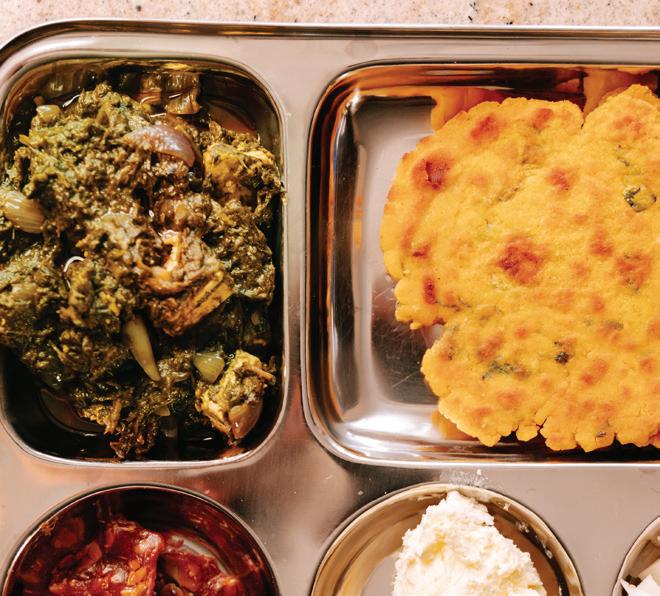
Saag
By Chef Jasjit Kaur
For the Tadka:
• 4 -5 tablespoons ghee
• 2 tablespoons ginger, chopped finely
• 1 tablespoon garlic, finely chopped
• 2-3 onions, chopped
• Green chilies, according to taste
• Salt (optional)
• 2 teaspoons red chili powder
• 200 grams malai paneer, cubed
• 2 tablespoons white butter
Directions
For the Saag
1. Heat 3 cups of water in a pot or a pressure cooker.
2. Wash and roughly chop all the greens. When the water comes to a boil, add the chopped greens, green chilies, ginger, and garlic. Add salt to taste and stir well. Cover and cook. Let it cook until the greens turn soft— approximately 90 minutes.
Directions
For the Saag
3. Add makki da atta Stir continuously to avoid lumps.
4. 4. To make a smooth saag smooth, use a hand blender or a traditional wooden ghotna.
For the Tadka
1. Heat three tablespoons of ghee. Add ginger, garlic, and green chili. Cook for a minute, then add the onions and sauté for 2 to 3 minutes, or until the ghee separates from the ingredients.
2. Add salt and red chili powder to taste.
3. Now, add cooked saag. Mix thoroughly. Add paneer cubes. Mix gently to avoid breaking the paneer.
4. Add two tablespoons of white butter. Stir. Cover and cook for 5 -8 minutes.
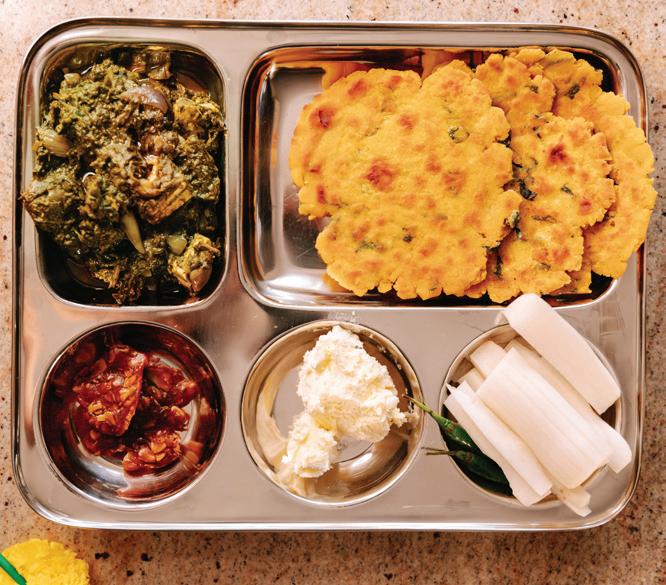
5. Serve hot with a dollop of ghee, makki di roti, radish, jaggery, and a big glass of lassi!
Soba Noodles with Mushrooms & Tofu
By Chef Jasjit Kaur
Ingredients
• 2 bunches of soba noodles (boiled as per package instructions)
For the Sauce:
• 2 tablespoons soy sauce
• 2 tablespoons chili sauce
• 1 teaspoon sugar
• 4 teaspoons balsamic vinegar
For the Stir-Fry:
• 1 tablespoon olive oil
• 1 cup mushrooms, sliced
• A pinch of salt
• 1 tablespoon fresh ginger, minced
• 2-3 green chilies, finely chopped
• 3-4 garlic cloves, minced
• 1 cup extra-firm tofu, cubed
• Green onions, to garnish
• Avocado (optional)
Directions
1. Cook Noodles: Boil soba noodles as per the package instructions. Drain and set aside.
2. Prepare the Sauce: In a bowl, mix soy sauce, chili sauce, sugar, and balsamic vinegar.
Directions
3. Stir-Fry:
a. Heat olive oil in a pan. Add mushrooms with a pinch of salt and sauté until tender.
b. Stir in ginger, green chilies, and garlic. Cook for 1-2 minutes.
c. Add tofu cubes and cook until lightly golden.
d. Add cooked soba noodles and pour the prepared sauce over them. Toss everything until well combined.
4. Serve: Garnish with green onions and serve hot. Add avocado slices on the side, if desired.
Bharwan Bhindi
By Chef Jasjit Kaur
Ingredients
• 2 lbs okra
• 1½ teaspoons garam masala
• ½ teaspoon red chili powder
• ½ teaspoon turmeric
• 1 teaspoon coriander powder
• 2 teaspoons fennel seeds, crushed in a mortar & pestle
• 2 teaspoons mango powder (Amchoor)
• 1 tablespoon tawa fry masala (MDH)
• 2-3 tablespoons oil, to shallow fry
• Salt to taste
• 1 teaspoon lemon juice
Directions
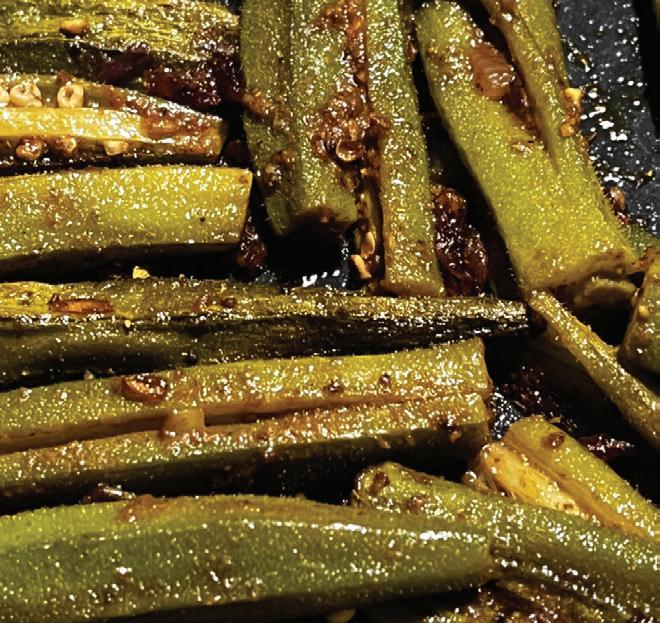
1. Wash and dry okra. Cut the head and tail of each okra, and slit it in the center lengthwise, without cutting through the entire length.
2. Mix all the dry spices in a bowl to create the masala filling. Stuff the filling in each okra and keep it aside.
Directions
3. Heat oil in a wok or a pan and add the okra once the oil is hot. Add lemon juice to keep the color bright and green.
4. Fry the okra covered for 10-15 minutes on low to medium heat. Then cook without the lid on to add crispiness.
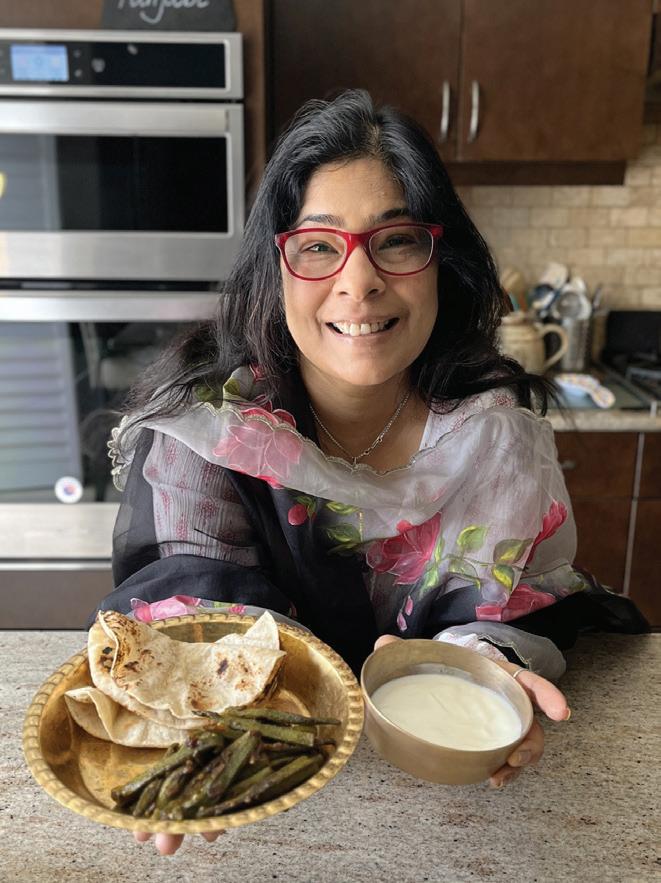
5. Garnish with fresh cilantro leaves and green chilies. Serve with parathas or rotis.
Karah Parshad
By Chef Jasjit Kaur
Ingredients Directions
• 1 cup ghee (clarified Butter)
• 1 cup wheat flour (atta)
• 1 cup sugar
• 3 cups water
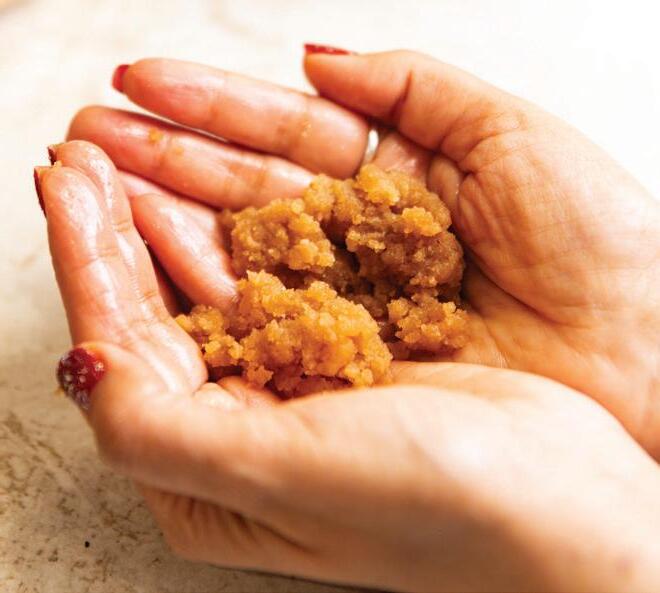
1. Heat ghee in a pan.
2. Add wheat flour and cook till golden and aromatic.
3. While you are roasting flour and ghee, boil 3 cups of water with a cup of sugar in a separate saucepan.
4. Carefully and gradually, add the sugar solution to the aromatic flour and ghee mix. Stir well while adding the hot sugar solution.
5. Continue to stir till everything comes together, and the parshad starts to separate from the ghee.
6. Serve it warm.Continue to stir till everything comes together, and the parshad starts to separate from the ghee.
7. Serve it warm.
Shrikhand Motichoor Laddoos Parfait with Edible Flowers
By Chef Jasjit Kaur
Ingredients
• 2 cups hung yogurt or Greek thick yogurt
• 1/2 cup to 1 cup cane sugar
• 2 ground cardamoms
• 1/4 teaspoon nutmeg
• 1/2 cup almonds
• 1 teaspoon saffron infused in 1 tablespoon warm milk
• 4-5 motichoor laddoos
Directions
1. To hung yogurt, add sugar, cardamom, nutmeg, and almonds. Any other nuts can be added. Add the saffroninfused milk to the mix.
2. Now, in a glass container, start layering the yogurt mix and crushed laddoos. To the last
layer, add whole laddoos garnished with edible flowers if you like.
3. Serve chilled.
Family Law
• Divorce
• Nullity / Annulment
• Cohabitation / Separation Agreement
• Pension Division
• Claims Against In-laws
• Child / Spousal Support
• Guardianship / Contact Orders / Custody / Parenting Time
• Asset / Property Division
• Child Apprehension by MCFD
Criminal Law
• Assault
• Uttering Threats
• Theft
• Peace Bond (Recognizance)
Appointments now available in Fraser Valley (Abbotsford, Mission, Chilliwack & Harrison Hot Springs)
UNIT 2, 6678 152 ST, SURREY V3S 7J2 ( 66A & 152 ST )
Ingredients
For the Sugar Syrup:
• 1 cup water
• 1 cup sugar
• A few saffron strands
• 2-3 green cardamoms
For Shahi Tukda:
• 3-4 slices of white bread (cut into desired shapes)
• Ghee (for frying)
Optional Garnish:
• Chopped nuts
• Green cardamom
Shahi Tukda
By Chef Jasjit Kaur
Directions
1. Prepare the Sugar Syrup: Boil water and sugar together. Add saffron strands and cardamoms. Simmer until slightly thickened, then set aside.
2. Fry Bread: Heat ghee in a pan and fry bread slices until golden and crispy.
3. Assemble Shahi Tukda: Dip fried bread in the sugar syrup briefly, flipping quickly to coat both sides. Place on a serving plate.
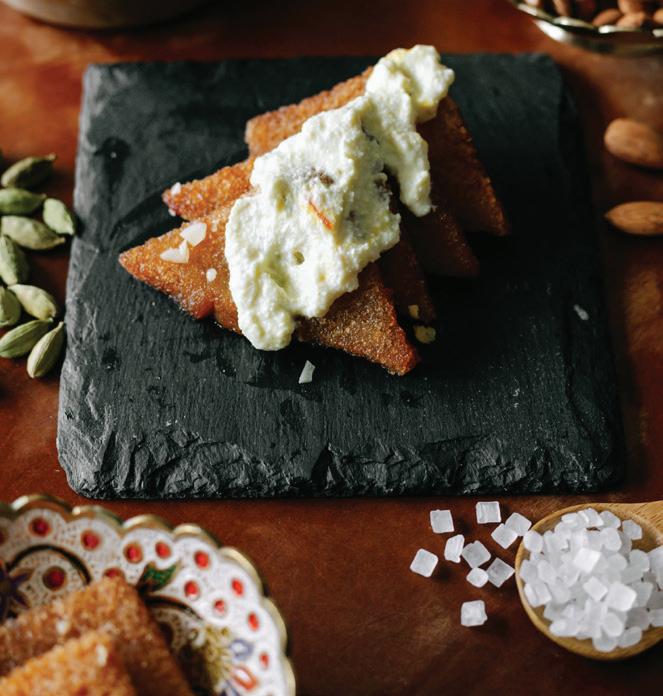
4. Garnish & Serve: Garnish with nuts or cardamom powder. Serve with rabdi or malai for a rich flavor or enjoy plain with chai.
Watermelon Sorbet
By Chef Jasjit Kaur
Ingredients
• 4 cups fresh watermelon, cut into cubes (seeds removed)
• 1-2 tablespoons lemon juice, adjust to taste
• 1-2 tablespoons maple syrup, adjust to preference
Directions
1. Spread the cut watermelon cubes on a tray in a single layer and freeze for at least 4 hours, or until completely frozen.
2. Add the frozen watermelon cubes to a high-speed blender.
3. Pour in the lemon juice and maple syrup.
4. Blend until smooth and slushy, scraping down the sides as needed to help it blend evenly.
1. Mix evaporated milk, condensed milk, cream, sugar, cardamom, and rosewater in a blender. Puree on low speed until combined, for about 30 seconds.
2. Pour into kulfi molds. Cover and freeze for 6 hours or overnight.
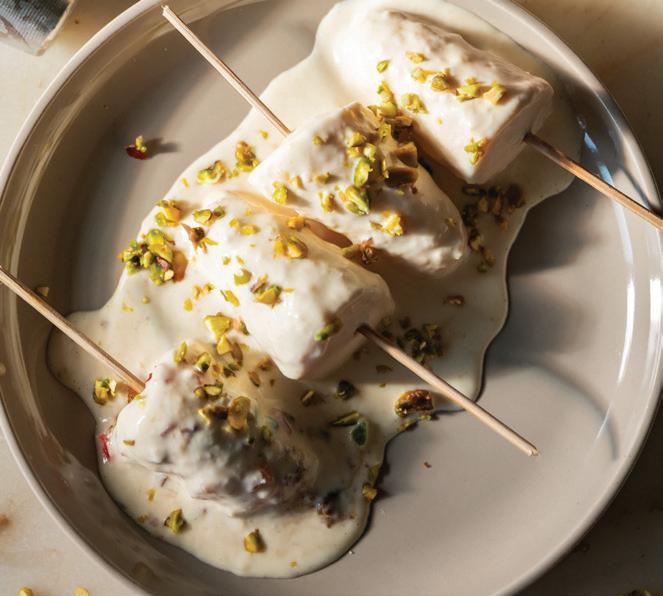
3. Remove from the freezer 5 minutes before unmolding. You can use hot water to make unmolding easier. Garnish with chopped pistachios. Serve immediately or freeze.
Bebe Nanaki: Gursikh THE WORLD’S FIRST ~
By Saira Hayre
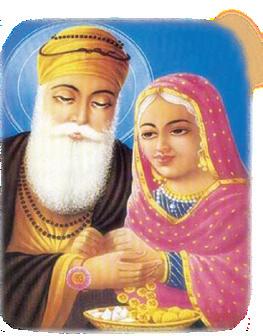
Reflecting on Sikh history, there is no doubt that Bebe Nanaki played a pivotal role in helping shape many aspects of her brother’s life. She also played a key role in helping Guru Nanak Dev Ji fulfill his spiritual endeavors.
From an early age, Guru Nanak Dev Ji’s sister
Bebe Nanaki recognized the fact that her younger brother, who eventually went on to establish the Sikh religion, was not an ordinary human being. In fact, unlike many others, who didn’t realize this truth until later, she knew
that he was on earth to carry out an important mission. As his sister and first devotee, she realized it was his mission to spread the message of Waheguru (God) and she not only followed and believed in his teachings but also supported and encouraged him throughout her life.
JOLLY DHALIWAL
RICK DHALIWAL
MIKE SANGHERA
Bebe Nanaki “really wanted [Guru Nanak Dev Ji] to go out and preach because she knew that he wasn’t just an ordinary person. She knew that what he preached was truth and that it connected to Waheguru (God) and that it would help people.”
Reflecting on Sikh history, there is no doubt that Bebe Nanaki played a pivotal role in helping shape many aspects of her brother’s life. From standing up for him and supporting him when their father did not understand his young son’s noble and spiritually inclined thoughts and actions, to helping arrange his marriage and requesting her husband to find him a job, Bebe Nanaki did it all. Besides all this, she also played a key role in helping Guru Nanak Dev Ji fulfill his spiritual endeavors.
“I think it’s important
to remember that Bebe Nanaki’s role in spreading Sikhi was that she moved many obstacles, which hindered Guru Nanak Dev Ji’s life and in the way of preaching his message,” explains Bhupinder Kaur Biln of the Guru Nanak Sikh Gurdwara in Surrey.
One of the obstacles that Biln is alluding to is the Guru having to leave behind his wife and two sons while he travelled around the world.
Bebe Nanaki “really wanted [Guru Nanak Dev Ji] to go out and preach because she knew that he wasn’t just an ordinary person. She knew that what he preached was truth and that it connected to Waheguru (God) and that it would help people because at that time, people were into so many rituals... she knew that he never turned his back on the truth so she [believed] that he could make a difference in people’s lives and get them detached from all these rituals that [they] were holding on to. So, when Guru Nanak Dev Ji planned to start his missionary work to spread his teachings around the world, Bibi Nanaki encouraged him to go [without any worries] and assured him that she would
look after his family in his absence.”
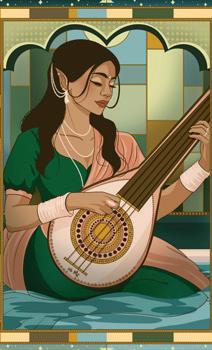
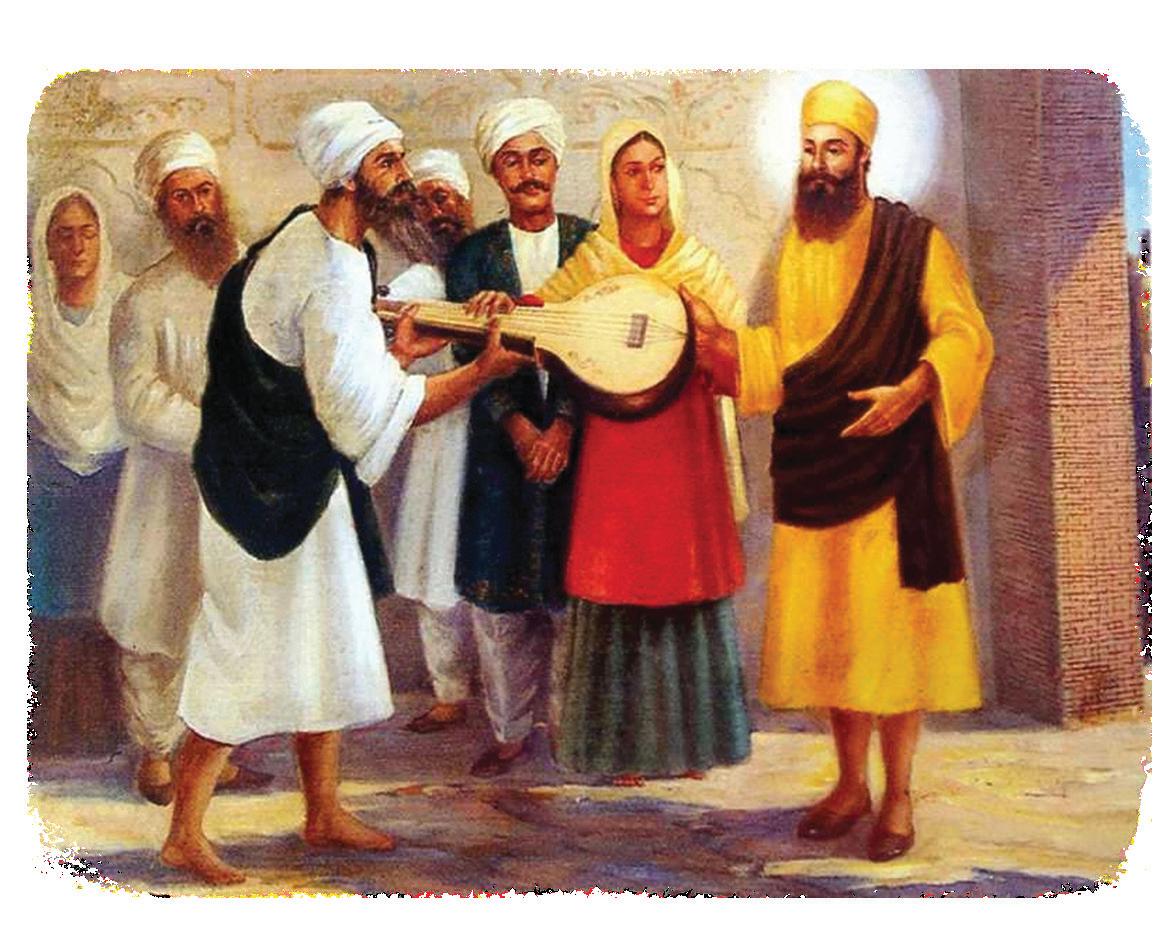
Biln adds that Bebe Nanaki also recognized her brother’s inclination towards music and showed her support towards him and his cause once again when she purchased a stringed instrument and gifted it to his companion Bhai Mardana, who accompanied him during his travels. This instrument, called a Rebab, was played by Bhai Mardana while Guru Nanak Dev Ji recited hymns in the praise of Waheguru.
Interestingly enough, this method of showing praise and devotion towards Waheguru (God), which was started by Guru Nanak Dev Ji and passed down through his successors, is still followed along with Sikhism’s other practices and teachings, many of which were likewise observed and practiced by Bebe Nanaki back in the 16th century.
Indeed, throughout her life, Bebe Nanaki took on many roles and responsibilities. The role that she is most remembered for is that of an understanding, supportive and encouraging sister and devotee who had a major part in helping her guru and brother Nanak Dev Ji spread his message, knowledge and teachings related to the Sikh faith.
Punjabi names—Jaswinder, Rupinder, Sharnjeet, Harpinder, Gurparveen—carry the gravity of history and identity. Yet, sometimes, their multiple vowels leave others stumbling. So, we wring out the richness, condense them into Jas, Rup, Sharn, Harp, Gurp—names that fit neatly into mouths unaccustomed to the syllables of the land of five rivers.
When my name was chosen, it wasn’t a random decision—it was a collaboration between the Almighty and my family. The Guru Granth Sahib gifted me a beginning. The letter ‘ਹ’(ha-ha)—became
SikhWhy I Use My Full Name with Pride
By Harpreet Kaur Kang
Harpreet, meaning the one who loves God. But growing up, I’d slice my name in half, making it smaller, easier. I’d listen to the effortless way others’ names rolled off tongues, watch how easily they were remembered. In classrooms, I shrank my name into something less noticeable—Harp. A name that wouldn’t take up too much space or time. My Punjabi would whisper to me, asking why it was always measured against English, like that cousin every brown mom constantly brags about. I ignored its voice.
Then, one day, my Nani made me see my
name differently. Her full name was Gurmej Kaur Hayer. Jokingly, I told her I’d start calling her GKH— to make her sound hip and cool. She laughed but replied in Punjabi, “I like my name. It’s the name my parents gave me; the name God wanted me to have. Why would I change a gift from God?”
I’ve never seen God, but my Nani was the closest I’d ever gotten. And in that moment, it felt like she was passing down a piece of divine wisdom. Slowly, I realized my name wasn’t meant to be whispered. Punjabi isn’t quiet—it’s a language that
speaks in bold, a language with its volume on loud.
My name is a privilege, a gift shaped by ancestors who knew how to roar. It carries the courage of my Nani, who raised five children. It carries the strength of my mother, who packed her bags and left home for Canada to give me a better future. It carries the resilience of my parents, who worked long shifts and early mornings so I could have a voice. Why hide a name woven from sacrifice and love? Why not say it with pride?
Sikh names aren’t just names. They are blessings, drawn from a
Sikh names aren’t just names. They are blessings, drawn from a sacred book of poetry and wisdom. There is power in hearing a full Punjabi name pronounced, each letter rolling off the tongue like a hymn, purifying the space it enters. A bit of God lingers in these names.
sacred book of poetry and wisdom. There is power in hearing a full Punjabi name pronounced, each letter rolling off the tongue like a hymn, purifying the space it enters. A bit of God lingers in these names. Our names are more than just words; they are a greeting, a Sat Sri Akal. They are a firm handshake from an uncle, a tight embrace from a Bibi who just wants to feed you. They are long, accent-heavy, and deeply intentional—crafted by God, presented to us so that when we say them, we ignite an emotion.
The Spirit of Vaisakhi
The golden fields sway in the breeze, Harvest ripe beneath the trees. April dawns with skies so bright, Vaisakhi comes, bathed in light.
A day of joy, a day of grace, Echoes loud in time and space. Not just crops, but souls are sown, A nation rises, brave and known.
The year was 1699, Guru Gobind Singh ji called divine. In Anandpur, strong and free, He summoned hearts of purity.
“Who will give their head?” he cried, Among the crowd, a hush replied. One by one, five fearless stood, Bound by love, by faith, by blood.
Baptized in the nectar sweet, Five became the Khalsa fleet. Clad in spirit, swords in hand, They stood to guard the sacred land.
Five Ks marked their warrior grace, Steadfast hearts, a fearless face. No caste, no fear, no earthly chains, Only truth within their veins.
Vaisakhi’s sun rose high that day, Washed all doubt and fear away. From Guru’s love, the Khalsa grew, A brotherhood so bold, so true.
Vaisakhi’s light shines bright and clear, Deep within its flame remains, A spirit strong, unbound by chains.
Through depths of time, the Khalsa shines, A guiding light in countless climes.
■ PERSONAL INJURY / ICBC CLAIMS
■ RESIDENTIAL / COMMERCIAL REALESTATE
■ CORPORATE / COMMERCIAL LAW
■ TRUST & SHAREHOLDER'S AGREEMENTS
■ BUYING / SELLING BUSINESSES
■ PROPERTY SUB-DIVISIONS
■ WILLS & ESTATES
■ CONTRACT DISPUTES
■ COMMERCIAL LITIGATION
■ BUILDER'S LIENS
■ COLLECTIONS
■ GENERAL LITIGATION
■ FAMILY LAW
Sonia Virk
Jagmeet Virk
Vaisakhi Crossword Fun
Across
1. Energetic Punjabi folk dance performed at harvest time
6. Eternal Sikh scripture and living Guru
7. Community kitchen open to all, regardless of background
9. Five articles of faith collectively known as the “Five ___”
10. Festival marking the birth of the Khalsa Panth
Down
2. Sikh house of worship and community gathering
3. Traditional double-edged sword symbol in Sikhism
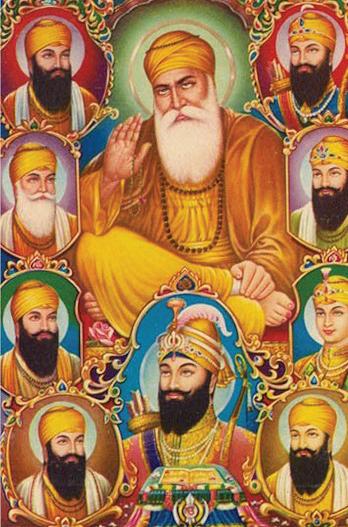
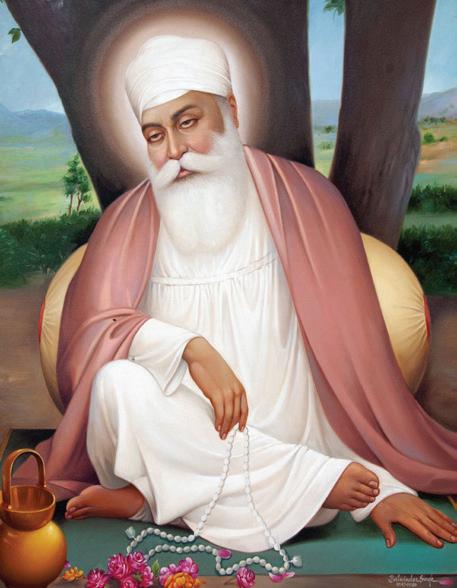
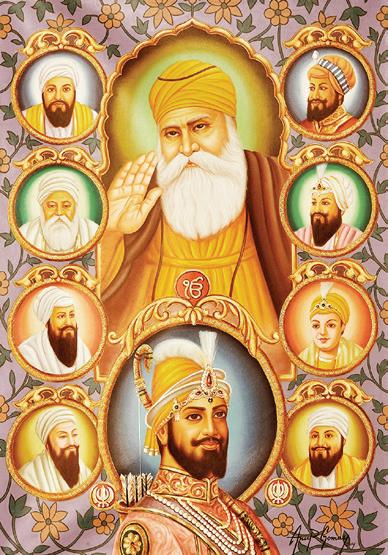
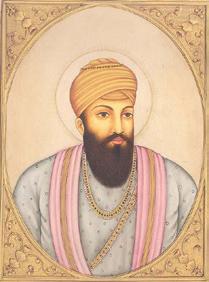
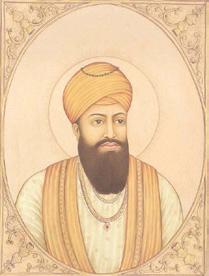
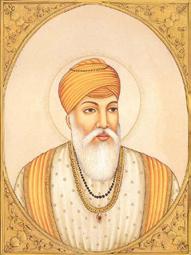
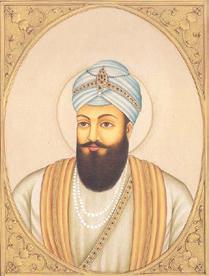
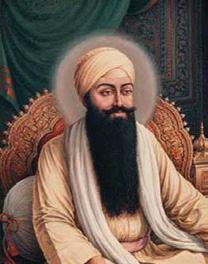
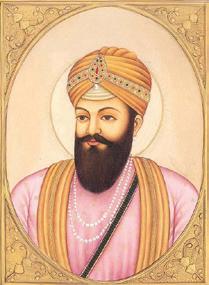
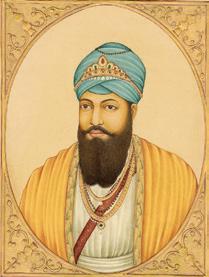
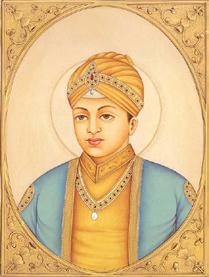
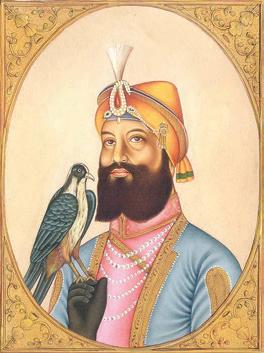
The word ‘Guru’ in Sanskrit means teacher, religious person or saint. However, in Sikhism, ‘Guru’ refers to the descent of divine guidance to humankind provided by the ten enlightened masters. These ten Sikh Gurus founded the religion, starting in 1469 with Guru Nanak and ending with Guru Gobind Singh in 1708. After that, it refers to the Sikh Holy Scriptures as Guru Granth Sahib. The Gurus are widely regarded as the embodiment of one guiding light which passed from one Guru to the next, and which now resides in the Holy Scriptures. The order of the ten enlightened Gurus is as follows:
Sikh Gurus Order of the
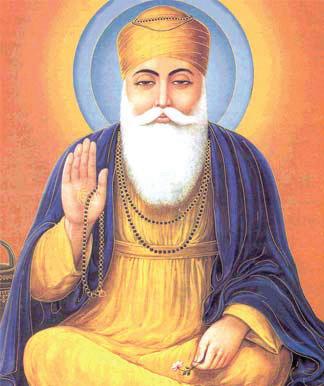
Guru Nanak Dev (1469 to 1539)
Founder of the Sikh faith; apostle of peace, unity and true infinite; possessed divinity and religious authority; first Guru of modern thinkers in India; created Langar, a free kitchen, for all people; teachings are in the Guru Granth Sahib; his philosophies and teachings were enlightened for his time; he criticized the social, political and religious injustices; advocated for equality between men and women; instructed disciples to face and tackle oppression, he knew this couldn’t be accomplished in his lifetime, so he appointed the practice of successors to lead Sikhs in their spiritual mission
Guru
Angad Dev (1504 to 1582)
Compiled the biography of Guru Nanak Dev; introduced Gurmukhi script, medium of writing the Punjabi language; opened schools to educate children; started Mall Akhara, physical and spiritual exercises
Guru Amar Das (1479 to 1574)
Social reformer; removed caste, colour distinction and stigma of untouchables; strengthened Langar on basis of equality; introduced Anand Karaj marriage ceremony; abolished Sati and custom of Paradah
Guru Ram Das (1534 to 1581)
Organized the structure of Sikh society; contributed 688 Shabads to the Granth; planner/creator of Ramdaspur (Amritsar) and designed the Harmandir Sahib (Golden Temple); founder of sacred Sarovar; author of Lavaa, the hymns of marriage rites
Guru Arjan Dev (1563 to 1606)
Completed construction of Amritsar, founded Taran Taran and Kartarpur; collected works of first four Gurus, dictated works into verses for Adi Granth compilation, the only script that still exists in the form first published, a hand-written manuscript; organized Masand ‘missionary’ system
Guru Har Gobind (1595 to 1644)
Wore two swords of Miri-Piri – one represented spiritual authority, while the other temporal; built the Akal Takht (Throne of the Almighty); excelled in matters of the state; built an army with trained horsemen; martial artists and hunters; built fortress at Amritsar called Lohgarh (Fortress of Steel)
Guru
Har Rai (1630 to 1661)
Known for his compassion of life and living things–instead of killing animals, placed them in his zoo; continued military traditions started by grandfather Guru Har Gobind, maintained cavalry of 2,200 soldiers; established ayurvedic hospital and research center at Kiratpur Sahib
Guru Har Krishan (1656 to 1664)
Guru Har Rai named five-year-old Har Krishan to succeed him as the next Guru, rather than his elder son Ram Rai, who was in favour with Aurangzeb and the Mughal Empire; helped heal the sick and in doing so, contracted smallpox and passed away at the age of seven
Guru Tegh Bahadur (1621 to 1675)
Youngest son of Guru Har Gobind; created city of Chakk Nanaki, which later became Anandpur Sahib; contributed hymns to Guru Granth Sahib, including Saloks (Mahal 9); responsible for saving Kashmiri Pandits from Mughal persecution; Aurangzeb issued order for Guru’s arrest, was held for three months and tortured until he would accept Islam; he refused and was martyred at Chandni Chowk
Guru Gobind Singh (1666 to 1708)
Succeeded father Guru Tegh Bahadur at age nine; was a warrior, poet and philosopher; created the Khalsa Panth in 1699–the Panj Pyaare were the first baptised Sikhs; declared the Guru Granth Sahib as his successor, and living Guru for Sikhs; his writings and poems were compiled in volume called Dasam Granth; recited the line “Waheguru ji ka Khalsa, Waheguru ji Ki Fateh,” which is an important religious verse included in the daily prayer of Sikhs
Sikhism is a universal world religion with the message of ‘One God’ for all humanity. It was founded by Guru Nanak Dev Ji in the 15th century and offers a practical approach to life.
All Sikh Gurus imparted one fundamental teaching: that God is one and is the supreme truth. He is the creator, preserver, and destroyer of the universe. The 10 Gurus promoted universal brotherhood and emphasized the importance of living in the world while striving for liberation. In their sacred scriptures, they set three golden rules for their followers –Kirt Karni, Naam Japna and Vand Shakna.
Kirt Karni
Means to work hard and earn an honest and truthful living. The Gurus wanted their Sikhs to be loyal and avoid cheating and lying.
Naam Japna
Means meditation on God’s name. Meditation keeps one truthful, humble and in high spirits. Naam japna is a state-of-mind, in which an individual aligns with the creator’s energy and becomes in touch with the infinite.
Vand Shakna
Means to share, and Sikhs should share their earnings with those in need, thus they are expected to donate their surplus into a separate treasury so it can be used to help the needy. According to the Sikh religion, every individual should contribute 1/10th (also called daswandh) of his income for such projects.