acknowledgements
The ARC Centre of Excellence for Dark Matter Particle Physics (Dark Matter Centre) acknowledges the support of the Australian Research Council.
We also acknowledge the financial and in-kind support provided by our collaborating organisations and partners.
COLLABORATING PARTNERS

INTERNATIONAL PARTNERS







acknowledge and pay respects to the
our respects to their Elders, past, present, and emerging.
The Dark Matter Centre acknowledges the Traditional Custodians of the lands and waters on which we work. We
Elders and Traditional Owners of the land on which our Australian nodes stand. We pay
The Dark Matter Centre acknowledges AV Graphic Design for design services provided for the production of this Annual Report.
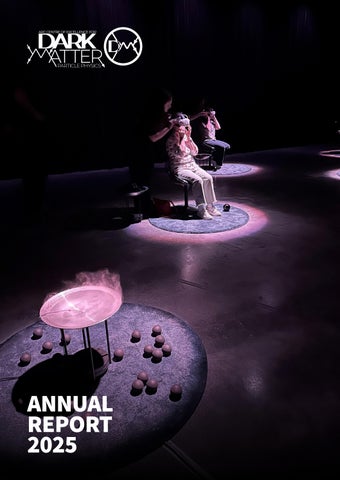
Cover photo: Sensing Dark Matter VR experience in the Science Gallery Melbourne as part of AsiaTOPA 2025
advisory board chair message
2025 has been another productive year for the ARC Centre of Excellence for Dark Matter Particle Physics.
In February, I attended the Centre’s International Scientific Advisory Committee (ISAC) meeting in Halls Gap. I also had the opportunity to visit the Stawell Underground Physics Laboratory (SUPL) which was a highlight of the trip. It was great to see this ambitious project come to fruition and there has been great progress in 2025 with the SABRE South experiment in SUPL.
I enjoyed hearing about the research progress of the different themes of the Centre at the ISAC meeting. Members of the Centre contributed to major international collaborations, supporting new results in the global search for dark matter. There was a strong focus in the presentations on consolidation and longer-term planning and sustainability. The sessions generated lots of discussion and feedback which will help guide the Centre’s research and provide strategic direction for the Special Initiatives funding scheme.
As the Centre enters its final years, it is critical that the research program focuses on definitively completing longstanding programs of work, and some investment into next-generation technologies and areas of research that can advance under their own momentum beyond the end of the Centre.
I am encouraged by the engagement of the Centre’s students, postdoctoral and mid-career researchers. There has been considerable investment into their professional development through initiatives such as the Navigating Academia & Beyond Workshop, Leading Edge Program and IdeaSquare at CERN. The Centre’s Special Initiatives funding has supported a diverse range of ECR led projects. This scheme is a fantastic way for ECRs to apply for funding and run their own projects, setting them up for future academic funding opportunities.
The Centre’s outreach activities continue to inspire, educate and provide professional development for ECRs and schoolteachers. The strong national focus in regional and remote areas was supported by the National Quantum & Dark Matter Road Trip and the Partner Schools Program. In 2025, there was an increased focus on international reach through the International Particle Physics Outreach Group, links with the Boulby Underground Laboratory and the high-altitude muon project with the USA.
Moving forward, there will be an increased focus on the legacy of the Centre. This is particularly critical for the early to mid-career researchers so that they are well-equipped for their careers beyond the Centre. It is also important to maximise scientific outputs, legacy outcome and long-term impact.
It has been a pleasure to read this report, and I commend everyone for the impressive progress made in 2025. I’m excited to see what will be achieved in 2026.
Aidan Byrne
www.centredarkmatter.org
@CDMPP.org
ARC Centre of Excellence for Dark Matter Particle Physics
@arc_cdmpp
@darkmatteraus.bsky.social
acronyms and abbreviations
Institutions:
ANSTO: Australian Nuclear Science and Technology Organisation
ANU: Australian National University
Caltech: California Institute of Technology
CNRS IN2P3: Centre National de la Recherche Scientifique -
National Institute of Nuclear and Particle Physics
DSTG: Defence Science and Technology Group
HZDR: Helmholtz-Zentrum Dresden-Rossendorf
INFN: Istituto Nazionale di Fisica Nucleare (Italian National Institute for Nuclear Physics)
LNGS: Laboratori Nazionali del Gran Sasso
MIT: Massachusetts Institute of Technology
SUT: Swinburne University of Technology
Stockholm: University of Stockholm
UoA: University of Adelaide
UAmst: University of Amsterdam
UFreib: University of Freiburg
UoM: University of Melbourne
UoS: University of Sydney
USheff: University of Sheffield
UWA: University of Western Australia
UWash: University of Washington
General:
AI: Associate Investigator
CDM: Centre for Dark Matter (abbrev for ARC Centre of Excellence for Dark Matter Particle Physics)
Centre: ARC Centre of Excellence for Dark Matter Particle Physics
CI: Chief Investigator
COO: Chief Operating Officer
ECR: Early Career Researcher
EDI: Equity, Diversity and Inclusion
KPIs: Key Performance Indicators
PI: Partner Investigator
Postdoc: Postdoctoral Researcher or Postdoctoral Research Associate
SABRE: Sodium Iodide with Active Background Rejection Experiment
SUPL: Stawell Underground Physics Laboratory


director’s message
In 2025, the ARC Centre of Excellence for Dark Matter Particle Physics continued to advance its research program and strengthen collaboration across nodes and with international partners. Building on the strong outcomes of the 2024 Mid-Term Review, the Centre has shifted its focus toward consolidating achievements, delivering key projects, and maximising the longterm scientific and community impact of our work.
Throughout the year, I travelled to multiple nodes alongside our COO to meet with members, discuss progress, and gather feedback. These visits gave a firsthand sense of the energy and commitment across our Centre, and reinforced confidence in the strength of the connections that hold the Centre together. It has been an energising period, with a range of initiatives reinforcing our shared commitment to a collaborative and supportive environment. A highlight of this was the Navigating Academia and Beyond workshop, organised by early career researchers. This professional development event fostered connections that carried through into our ECR and Annual Workshops later in the year, reflecting a maturing emphasis on structured career pathways and mentoring across the Centre.
Members of our Centre contributed to major international collaborations, supporting new results in the global search for dark matter. Development of the ORGAN, CELLAR, and SABRE South projects continued throughout the year, engaging researchers across multiple themes. Following the milestone of commissioning the SABRE South muon veto system, 2025 focused on sustained data-taking, system optimisation, and integration into broader experimental workflows; a critical step toward achieving the experiment’s scientific goals. In parallel, significant progress was made on clean room infrastructure and glove box systems at SUPL, providing the controlled environment required for low-background detector assembly and preparing for the final stages of the SABRE South experiment. The Centre’s theory program continued to refine models of dark matter interactions, in particular progress extending experimental sensitivity to lower-mass dark matter candidates.
The breadth of our program was further reflected in the wide range of awards and competitive funding secured by our members. These achievements span fundamental research, technology development, and translation-focused initiatives, demonstrating the impact of our program. Notably in 2025, this has translated into continued momentum in recognition and support across diverse areas of activity, including the award of an ARC Future Fellowship to Maxim Goryachev, recognising his contributions to quantum and dark matter research. In addition, the Breakthrough Prize in Fundamental Physics was awarded to the LHC experiments in recognition of their contributions to Higgs boson studies and searches for new physics.
Strengthening leadership and mentoring remains a central part of the Centre’s mission. We were delighted to welcome Michaela Froehlich as a new CI. Michaela has been a valued member of the Centre since its inception and has made significant contributions to the Precision Metrology Research Theme, while also serving as Chair of the Centre Mentoring Committee. Her trajectory shows our commitment to recognising and nurturing leadership from within. This commitment to mentoring and leadership development is further exemplified by three of our postdoctoral researchers successfully completing the Women & Leadership Australia Leading Edge Program, supported by the Centre. This initiative plays an important role building leadership capability and equips researchers for impactful careers both within and beyond academia.
The Equity, Diversity and Inclusion Committee continued to strengthen our inclusive culture through the introduction of Contact Officers within the Code of Conduct framework. This initiative enhances the Centre's capacity for providing a safe, respectful, and supportive working environment, representing an important step toward more formalised support structures and accountability.
Our outreach and engagement program continued to grow in reach and impact. Our Senior Education and Outreach Manager has developed valuable international collaborations through the HERA (High Altitude Engineering for Research in Astrophysics) project and IPPOG (International Particle Physics Outreach Group). The National Quantum & Dark Matter Road Trip once again provided an effective platform for engaging communities across Australia, while building the science communication skills of participating researchers. In 2025, I have seen a stronger focus on sustaining national impact while expanding international outreach partnerships.
In February, I had the pleasure of attending Sensing Dark Matter, an immersive VR experience created by Taiwanese artist Su Wenchi. This impressive installation, which merges art and physics to explore the elusive nature of dark matter, offered a powerful reminder of how interdisciplinary approaches can make complex scientific ideas both accessible and emotionally resonant for broad audiences.
As the Centre enters the later stages of its funding, we are increasingly focused on delivering key projects, strengthening strategic partnerships, maximising scientific outputs and securing a lasting legacy. This is an important transition: from growth and exploration toward impact, sustainability, and the enduring contributions our work will make to fundamental physics and to the community of researchers we have helped to build.
I invite you to explore this report for a detailed account of the Centre’s achievements throughout 2025.
Elisabetta Barberio
strategy
The ARC Centre of Excellence for Dark Matter Particle Physics brings together experts from across Australia and internationally to unlock the secrets of dark matter, while also fostering the science and engineering leaders of the future. These objectives will be realised in the following ways in 2026:
1. Research Program – To transform our knowledge of the universe
• Undertake research to advance the Centre’s theoretical and experimental goals (for full details see Research Program sections and Research Activity Plan for 2026)
• Provide the legacy of a world-class underground physics facility that takes full advantage of Australia’s southern hemisphere location
• Finalise installation and commissioning of SABRE South in SUPL
• Develop new theoretical ideas for what dark matter can be, and the theory underpinning novel strategies to test those ideas with laboratory experiments or astrophysical observations
• Extend the dark matter discovery potential of ORGAN and continue taking data
• Expand the dark matter searches with the ATLAS experiment at the CERN LHC and prepare equipment to upgrade the experiment for the High-Luminosity LHC era
2. Outreach and Education – Inspire a new generation of scientists and engineers
• Deepen our education program with special emphasis on regional schools and expanding the school partners and outreach and education activities that promote diversity and inclusion
• Continue to build and strengthen international collaborations in Outreach through IPPOG and overseas connections
• Run National Quantum & Dark Matter Road Trip
• Engage with educators through professional development and teacher associations
• Work more closely with SUPL on aligned activities such as a community event in the region

3. Foster and develop the emerging scientific leaders of the future
• Run further rounds of Special Initiatives funding for students and ECRs
• Provide diverse training opportunities to Centre members
• Run a mid-year in person ECR workshop
• Renew CoE Mentorloop platform membership and actively promote mentoring opportunities and training for students and ECRs
• Provide leadership opportunities for ECRs across the operations and research activities of the Centre
4. Develop new ideas, technologies and facilities for the next generation of dark matter experiments
• New theoretical ideas and vigorous R&D and prototyping for future dark matter experiments based in Australia and overseas including liquid Xenon detectors (XLZD/DARWIN), gas detectors for directional detection (CYGNUS-Oz), Axion detectors, superfluid, and quantum technologies (see Research Program sections and Research Activity Plan for 2026)
• Develop new low background screening techniques for dark matter direct detection
5. Translate the new technologies to industry, defence and the public
• Provide training in innovative thinking to help translate discoveries into social and economic benefits
• Highlight and promote translation heroes through the Translation Committee
• Run the fourth round of funding for Centre members to apply for DST Group funding
6. and to do so in a cohesive national and international environment with a strong EDI program
• Strengthen national and international collaborations by continuing and expanding common projects and personnel exchanges with our partners
• Continue implementation of the Equity, Diversity and Inclusion action plan
→ Run training for EDI committee and Centre members
→ Expand the opportunities for Centre members to access to carers support
28 August 2019
Centre awarded
14 August 2020
Centre commenced
22 September 2021
Centre launch

11 June 2024
ARC Mid-term review site visit
7 November 2024
ARC approval of Mid-term review and confirmation of funding for the remainder of the Centre.
March 2026
Current day
13 August 2027
Centre end date
governance
*correct as at 31 December 2025
The Centre is hosted by the University of Melbourne, the largest research university in Australia. An overview of the management structure is provided below and is designed to support a coordinated program of research and activities to deliver the Centre’s objectives.
Operation and Management
The Centre Director is Chief Investigator, Elisabetta Barberio. She is responsible for the overall strategic direction and operation of the Centre, with advice from the relevant Centre committees.
The Director is supported by the Chief Operating Officer (COO), Anita Vecchies, who oversees the day-to-day operational matters of the Centre and also provides strategic advice to the Director. The COO oversees the Central Operations Team of professional staff who are responsible for the Centre’s financial management, human resources, outreach and education programs, event management, media and communications and preparation of annual reports and budget documents. Internal communications include fortnightly meetings and an enewsletter.
The Centre has six nodes, the University of Adelaide, the Australian National University, the University of Melbourne, Swinburne University of Technology, the University of Sydney and the University of Western Australia. Each node has a Node Manager, who is a member of the Centre’s Executive Committee. The Central Operations Team works in collaboration with the node administrative team to ensure a coherent and coordinated approach to Centre-wide activities, financial management and reporting requirements.
Executive Committee
The Centre's Executive Committee manages node interaction and cooperation and Centre resources. It also oversees the activities of the various portfolios with a focus on the Centre's substantial gender equity, education, and outreach activities.
Led by the Centre Director, the Centre Executive Committee comprises Node Leaders and the COO. One postdoctoral researcher from the Early Career Researcher Committee also attends the Executive Committee but does not have voting rights.
The Executive Committee is comprised of:
• Chair - Elisabetta Barberio (Director)
• Cedric Simenel (Deputy Director)
• Anthony Williams (Deputy Director)
• Celine Boehm (Node leader, UoS)
• Darren Croton (Node leader, SUT)
• Andrew Stuchbery (Node leader, ANU)
• Michael Tobar (Node leader, UWA)
• Raymond Volkas (Node leader, UoM)
• Martin White (Node leader, UoA)
• Anita Vecchies (COO)
• Leonie Einfalt (ECR representative UoM)
Research Committee
The Research Committee oversees the Centre's research. It is responsible for the Centre’s scientific goals and for building and maintaining the cross-node scientific research collaborations. The four Research Programs each have one Research Program Leader, with the exception of the Direct Detection Program which has two coleaders due to the number and variety of experiments. The Research Committee comprises the Centre Director, the Deputy Director and the Research Program Leaders.
The Research Program Leaders are drawn from a mixture of senior and midcareer researchers, as part of our ongoing succession planning strategy. Junior researchers exhibiting strong research leadership are mentored to gradually replace the more senior program leaders.
The Research Committee is comprised of:
• Chair - Elisabetta Barberio (Director)
• Cedric Simenel (Deputy Director)
• Anthony Williams (Deputy Director)
• Phillip Urquijo and Michael Tobar (Direct Detection Leaders)
• Steve Tims (Precision Metrology Leader)
• Nicole Bell (Theory Leader)
• Paul Jackson (LHC Leader)
• Zuzana Slavkovska (ECR representative, postdoc - ANU)
• Iman Shaukat Ali (ECR representative, PhD student - UoM)
Advisory Board
The Centre’s Advisory Board assists the Centre Director by contributing to the development of strategies and vision for the future and by serving as a vehicle for creating better linkages between academia, industry, and government.
The Advisory Board is comprised of:
• Chair – Aidan Byrne (University of Queensland Provost, Past CEO of the Australian Research Council)
• Sue Barrel (former Chief Scientist at the Bureau of Meteorology)
• Sarah Pearce (Director of the SKA-Low Telescope)
• Len Sciacca (Enterprise Professor, Defence Science & Technology, University of Melbourne)
• Chris Trott (Stawell Gold Mines)
• Robyn Williams (ABC science journalist and presenter)
• Justin Zobel (Pro Vice-Chancellor, Graduate & International Research, Chancellery (Research and Enterprise), the University of Melbourne)
International Scientific Advisory Committee (ISAC)
The role of the International Scientific Advisory Committee is to mentor the Director, the Executive Committee and the Research Management Committee on the scientific program and directions of the Centre. It provides advice to the Director on important emerging new directions in the field of the Centre and on the highest priorities for the allocation of Special Initiatives funds each year.
The International Scientific Advisory Committee is comprised of:
• Chair – Priscilla Cushman (University of Minnesota; Spokesperson of SuperCDMSSNOLAB)
• Elena Aprile (Columbia University, spokesperson of the XENON Dark Matter Experiment)
• Tom Browder (University of Hawaii, USA Spokesperson of Belle II)
• Stephen Buckman (Australian National University)
• Aaron Chou (Leader of axion dark matter group at Fermilab, USA)
• Giuliana Fiorillo (University of Naples)
• Tony Gherghetta (University of Minnesota)
• Sean Paling (Director & Senior Scientist at Boulby Underground Laboratory)
• Karoline Schäffner (Research Group leader of the COSINUS Dark Matter Search, Max-Planck Institute for Physics)
Translation Committee
The Translation Committee sparks, champions and promotes translation and innovation activities and supports associated training.
The committee is comprised of:
• Chair - Christine Thong (SUT)
• Jeremy Bourhill (UWA)
• Maxim Goryachev (UWA)
• Ciaran O'Hare (UoS)
• Jeremy Mould (SUT)
• Jason Oliver (UoA)
• Aaron Quiskamp (UWA)
• Zuzana Slavkovska (ANU)
• Owen Stanley (UoM)
• Anita Vecchies (UoM)
Equity, Diversity and Inclusion (EDI) Committee
The role of the EDI Committee is to “PROCLAIM”:
P: Propose EDI targeted initiatives such as seminars and fellowships
R: Report on EDI activities of the Centre for the annual report
O: Organise EDI events such as training and dedicated workshops
C: Communicate through the website and presentations at Centre events
L: Listen and be a point of contact
A: Advocate EDI best practices via outreach and social media
I: Identify EDI challenges in the Centre and the Dark Matter scientific community
M: Monitor the evolution with respect to the KPI of the Centre
The Equity, Diversity and Inclusion Committee is comprised of:
• Chair – Theresa Fruth (UoS)
• Deputy Chair – Jade McKenzie (UoM)
• Amrita Banerjee (SUT)
• Jeremy Bourhill (UWA)
• Eden Isaac (UoM)
• Michaela Froehlich (ANU)
• Sharry (UoS)
• Navneet Krishnan (ANU)
• Emma Paterson (UWA)
• Haylea Purnell (UoA)
• Zuzana Slavkovska (ANU)
• Phillip Urquijo (UoM)
Mentoring & Careers Committee
Established to coordinate mentoring and training opportunities for early and mid-career researchers in the Centre, the Mentoring & Careers Committee is comprised of:
• Chair – Michaela Froehlich (ANU)
• Irene Bolognino (UoA)
• Darren Croton (SUT)
• Maxim Goryachev (UWA)
• Chiara (Maria) Lisotti (UoS)
• Jayden Newstead (UoM)
Early Career Researcher Committee
Established in order to allow Early Career Researchers (ECRs) to provide input into the Centre, the ECR committee is elected by the Centre’s ECRs and is reviewed annually. The Committee members sit in on the Executive and Research Committees (as outlined above), help coordinate activities targeted to ECRs including the annual ECR workshop, provide regular updates to key committees/groups of the Centre and also represent their peers by seeking their input via surveys and other methods of communication. In 2025 the members were:
• Leonie Einfalt (UoM)
• Zuzana Slavkovska (ANU)
• Iman Shaukat Ali (UoM)
These numbers include people who were Centre members for all or part of 2025. Members are counted in multiple categories if their role in the Centre changed during the year.
centre members snapshot centre members
The following people were Centre members during 2025. Members may appear in multiple categories if their role in the Centre changed during the year.
Director
Elisabetta Barberio (UoM)
Chief Investigators
Elisabetta Barberio (UoM)
Nicole Bell (UoM)
Celine Boehm (UoS)
Darren Croton (SUT)
Matthew Dolan (UoM)
Alan Duffy (SUT)
Michaela Froehlich (ANU)
Maxim Goryachev (UWA)
Gary Hill (UoA)
Paul Jackson (UoA)
Greg Lane (ANU)
Jeremy Mould (SUT)
Cedric Simenel (ANU)
Andrew Stuchbery (ANU)
Geoffrey Taylor (UoM)
Steve Tims (ANU)
Anthony Thomas (UoA)
Michael Tobar (UWA)
Phillip Urquijo (UoM)
Raymond Volkas (UoM)
Martin White (UoA)
Anthony Williams (UoA)
Academic Staff
Irene Bolognino (UoA)
Michaela Froehlich (ANU)
Theresa Fruth (UoS)
Associate Investigators
Paul Altin (ANU)
Laura Baudis (University of Zurich)
Greg Boyle (James Cook University)
Geoffrey Brooks (SUT)
Jeremy Brown (SUT)
Ben Buchler (ANU)
Giorgio Busoni (UoA)
William Campbell (UWA)
Zhenwei Cao (SUT)
Peter Cox (UoM)
Catalina Curceanu (INFN)
Caterina Doglioni (CNRS France)
Nathan Garland (Griffith University)
Zengwei Ge (SICCAS)
Jacinda Ginges (University of Queensland)
Julia Gonski (SLAC National Accelerator Laboratory)
Eugene Ivanov (UWA)
Ayse Kizilersu (UoA)
Dominik Koll (ANU and HZDR)
Shanti Krishnan (SUT)
Grace Lawrence (UCL)
Laura Manenti (UoS)
Ben McAllister (SUT)
Ian McArthur (UWA)
Peter McNamara (University of Toronto)
Wally Melnitchouk (Thomas Jefferson Lab)
Victoria Millar (UoM)
Kim Mintern-Lane (SUPL Ltd)
Francesco Nuti (UoM)
Ciaran O’Hare (UoS)
Chris Power (UWA)
Yuxiang Qin (ANU)
Peter Quinn (UWA)
Marc Schumann (Ufreib)
Federico Scutti (SUT)
Dipan Sengupta (UNSW)
Jafar Shojaii (Macquarie University)
Christine Thong (SUT)
Claudia Tomei (INFN Roma)
Marurizio Toscano (UoM)
Jan Van Driel (UoM)
Craig Webster (SUT)
Christian Weiser (Ufreib)
Roland White (James Cook University)
Yajing Xing (Sorbonne University)
Shihai Yue (SICCAS)
Cindy Zhao (UWA)
Yong Zhu (SICCAS)
Madeleine Zurowski (University of Toronto)
Partner Investigators
Gianfranco Bertone (UAmst)
Marcella Diemoz (INFN)
Sara Diglio (CNRS IN2P3)
Philip Hopkins (Caltech)
Michael Hotchkis (ANSTO)
Aldo Ianni (INFN)
Karl Jakobs (UFreib)
Damian Marinaro (DSTG)
Gray Rybka (UWash)
Luca Scotto Lavina (CNRS IN2P3)
Tracy Slatyer (MIT)
Neil Spooner (USheff)
Anton Wallner (HZDR)
Frank Wilczek (Stockholm)
Postdoctoral Researchers (Funded)
Raghda Abdel Khaleq (ANU)
Adam Batten (SUT)
Lindsey Bignell (ANU)
Jeremy Bourhill (UWA)
Giorgio Busoni (ANU)
Antoine Cools (UoM)
Leonie Einfalt (UoM)
Graeme Flower (UWA)
John Gargalionis (UoA)
Avirup Ghosh (UoM)
Robert Renz Marcelo Gregorio (ANU)
Robert James (UoM)
Kamiel Janssens (UoA)
Albert Kong (UoA)
Navneet Krishnan (ANU)
Tarak Nath Maity (UoS)
Daniel Marcantonio (UoM)
Ben McAllister (SUT)
Alasdair McLean (UoA)
Robert Mostoghiu Paun (SUT)
Jayden Newstead (UoM)
Jason Oliver (UoA)
Aaron Quiskamp (UWA)
Federico Scutti (SUT)
Ellen Sirks (UoS)
Zuzana Slavkovska (ANU)
Xuan-Gong Wang (UoA)
Yiyi Zhong (ANU)
Postdoctoral Researchers (Affiliated)
Eiasha Waheed (UoM)
Alexander Woodcock (UoA)
Students
PhD
Raghda Abdel Khaleq (ANU)
Camron Alley (UoA)
Ananthu Krishnan Anikumar (UoS)
Vishal Ayyagari (UoM)
Amrita Banerjee (SUT)
Victoria Bashu (ANU)
Marina Bazyk (UoM)
Michael Bradley (SUT)
Isabel Carr (UoM)
Sen Sam Chhun (UoM)
Robert Crew (UWA)
Dylan Dance (SUT)
Ferdos Dastgiri (ANU)
Aman Desai (UoA)
Laura Fang (UoM)
Matthew Fewell (UoA)
Gangyong Fu (UoM)
James Gallagher (UoA)
Kenn Goh (UoA)
Matthew Green (UoA)
Zachary Greenfield (UoS)
Kaushik Gupta (UoM)
Cameron Harris (UoA)
Elrina Hartman (UWA)
Michael Hatzon (UWA)
Maaz Hayat (UoM)
Tyler Hughes (SUT)
Nicholas Hunt-Smith (UoA)
Tengiz Ibrayev (UoS)
Ashley Johnson (UWA)
Vanshika Kansal (SUT)
Sharry Kapoor (UoS)
Kael Kemp (UoA)
Renee Key (SUT)
Danish Khan (UoS)
Albert Kong (UoA)
Navneet Krishnan (ANU)
Judith Kull (UoA)
Kyle Leaver (UoA)
Jesper Leong (UoA)
Maria Chiara Lisotti (UoS)
Bill Loizos (UoA)
Shuyi Lyu (UoS)
Emily McDonald (UoM)
Lachlan McKie (UoA)
Michael Mews (UoM)
Lachlan Milligan (UoM)
Shiryo Owa (UoA)
Hitarthi Pandya (UoA)
Sonali Parashar (UWA)
Emma Paterson (UWA)
Subrahmanya Saichan (Sai) Pemmaraju (UoM)
Rafael Perez (UoM)
Thu Le Ha (Joni) Pham (UoM)
Lorenzo Principe (UoM)
Haylea Purnell (UoA)
Riya Raizada (UoS)
Ananthakrishnan Ravindran (UoM)
Amelie Read (UoS)
Tristan Ruggeri (UoA)
Kieran Rule (UoM)
Matthew Rumley (UoA)
Steven Samuels (UWA)
Georgy Sanamyan (UoA)
Iman Shaukat Ali (UoM)
Raj Aryan Singh (SUT)
Alexander (Alexei) Sopov (UoM)
Nathan Spinks (ANU)
Owen Stanley (UoM)
Lucia Stockdale (UoM)
Edmund Ting (UoA)
Adam Ussing (SUT)
Thomas Venville (ANU)
Michael Verde (UoM)
Ho Man Yim (UoM)
MPhil
Daniel Avraham (ANU)
Amelia Lovison (UoA)
Duncan McClay (UoA)
Georgy Sanamyan (UoA)
Ewan Wallace (UoA)
Masters
Aspen Anderson (formerly Reardon) (UoM)
Yona Detaq (UoM)
Samarth Paraskum Gohel (UoM)
Eden Isaac (UoM)
Georgia Juler (UoM)
Akshayan Manivannan (UoM)
Jamie Papworth-Dent (UoM)
Neal Salan (SUT)
Scott Thompson (UoM)
Willem Van der Craats (UoM)
Jinyi Wu (UoM)
Honours
Keahn Brown (UoA)
Charlie Campbell (UWA)
Tsz Kwan (Tiana) Chan (UoA)
Jonathan Charlesworth (UWA)
Samuel Cox (UoM)
Max Fleming (ANU)
Evangelos Hajigabriel (UWA)
Matthew Hancock (UoA)
Tim Holt (UWA)
Yongyu Kang (UoS)
Maya Sharp (ANU)
Technical Staff
Daniel Bennet (ANU)
Padric McGee (UoA)
Adam Sarbutt (UoM)
Abirami Subramaniam (UoM)
Daniel Tempra (ANU)
Tom Tunningley (ANU)
Craig Webster (SUT)
Professional Staff
Linda Barbour (UWA Administration)
Jackie Bondell (Senior Education and Outreach Manager)
Emily Campbell (UoA Administration)
Madeleine Hess (Administration Officer)
Aline Lorieri (Administration Officer)
Jade McKenzie (Database Administrator)
Fleur Morrison (Communications and Media Officer)
Mary Odlum (Finance Manager)
Simon Parsons (SUT Administration)
Petra Rickman (ANU Administration)
Kathryn Ryan (UoM Administration)
Silvana Santucci (UoA Administration)
Niger Sultana (Finance Manager)
Anita Vecchies (Chief Operating Officer)
Vacation students funded by the Centre
Fin Casey (UoS)
Piero Jaksa (UoA)
Jia Qi Lam (UWA)
Mannix Showell (UoM)
Michael Sun (UoM)
Tahlia Williams (SUT)
linkages and collaborations
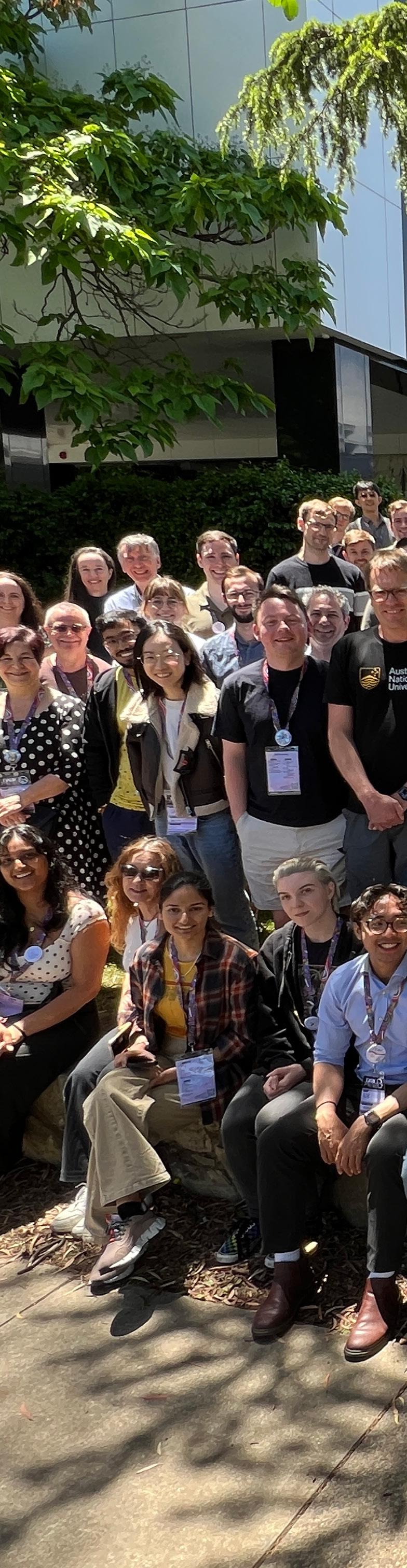
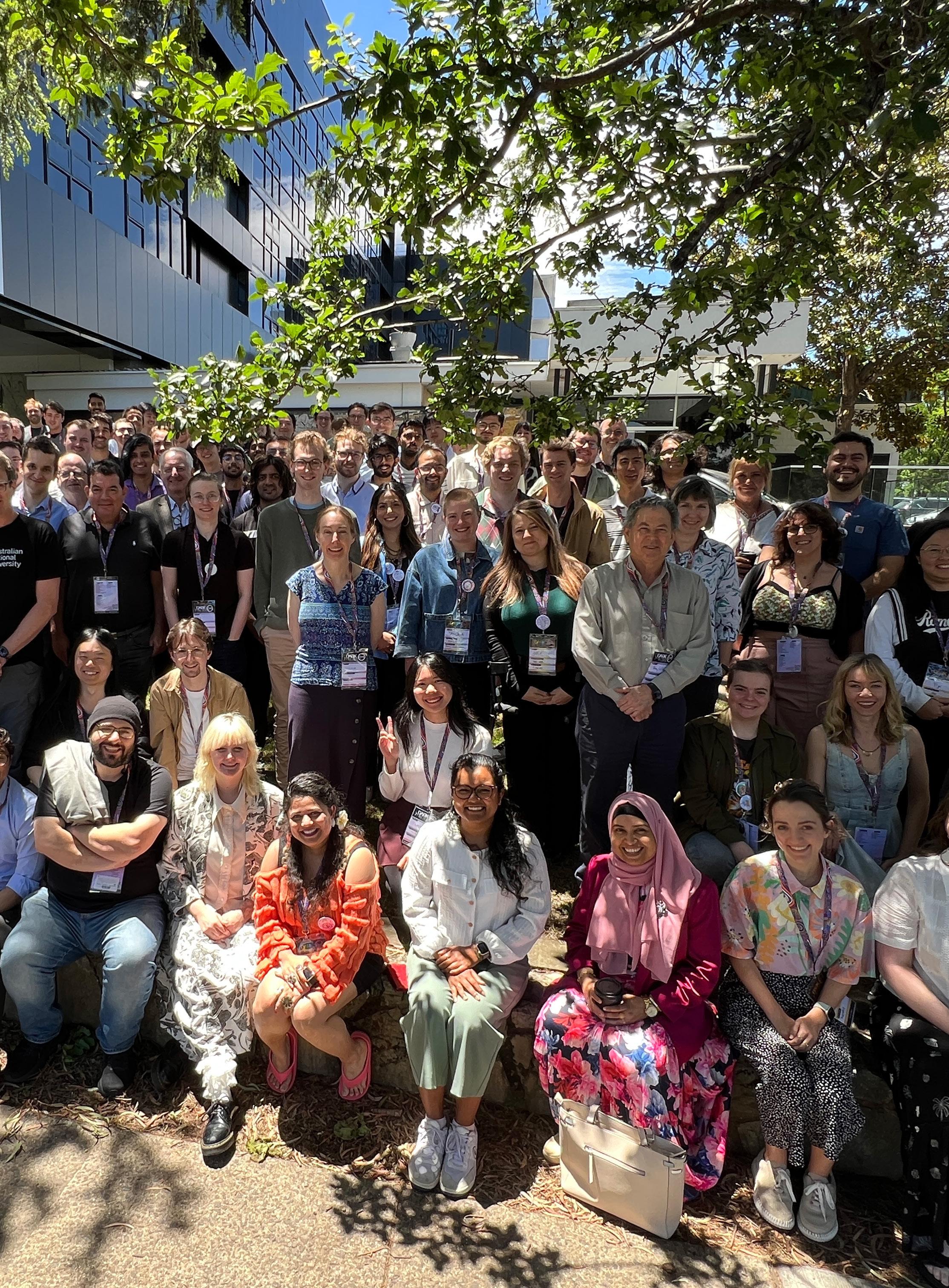
In 2025, Centre members were able to re-establish and build upon national and international collaborations with many opportunities to interact in person. Centre members collaborated with numerous research institutions across Australia and internationally to further Centre research.
Research Organisations
Argonne National Lab, USA
Australian Nuclear Science and Technology Organisation (ANSTO), Australia
Boulby Underground Laboratory, UK*
California Institute of Technology (Caltech), USA
California State University, Fresno, USA
Centre national de la recherche scientifique (CNRS), France
CERN, Geneva, Switzerland
Cruzeiro do Sul, Brazil
Defence Science and Technology Group (DSTG), Australia
Drexel University, Philadelphia, USA
FEMTO-ST Institute, France
FermiLab National Accelerator Laboratory, USA
Grand Sasso Science Institute, Italy
Griffith University, Australia
Helmholtz-Zentrum Dresden Rossendorf (HZDR), Germany
Illinois Institute of Technology, USA
IMT Atlantique, France
Institute of High Energy Physics (IHEP), China
Istituto Nazionale di Fisica Nucleare (INFN) Roma, Italy
James Cook University, Australia
Japanese High-Energy Accelerator Research Organization (KEK), Japan
Kings College London, UK
Kobe University, Japan
KTH Stockholm, Sweden
Laboratorio Nazionali del Gran Sasso (LNGS), Italy
Langzhou University, China
Lawrence Livermore National Laboratory, USA
Los Alamos National Laboratory (LANL), USA
Macquarie University, Australia*
Massachusetts Institute of Technology (MIT), USA
Max Planck Institute for Physics, Germany*
NASA Jet Propulsion Laboratory (JPL), USA
Pacific Northwest National Lab (PNNL), USA
Queen Mary University of London, UK
Shanghai Institute of Ceramics, Chinese Academy of Sciences (SICCAS), China
SLAC National Accelerator Laboratory, USA
Sorbonne University, France
Stockholm University, Sweden
Thomas Jefferson Lab (JLab), USA
TRIUMF, Canada
UCAS, China
UNESP, Brazil
Universita degli Studi di Milano, Italy
University College London, UK
University of Amsterdam, Netherlands
University of Birmingham, UK*
University of California, Berkeley, USA
University of California, Los Angeles (UCLA), USA
University of California, Merced, USA
University of California, San Diego, USA
University of Florida, USA
University of Freiburg, Germany
University of Geneva, Switzerland
University of Göttingen, Germany
University of Hawaii, Manoa, USA
University of Manchester, UK
University of New Mexico, USA
University of New South Wales (UNSW), Australia
University of Queensland, Australia
University of Sheffield, UK
University of South Florida – St Petersburg, USA
University of Toronto, Canada
University of Washington, USA
China
Japan
Australia
University of Zaragoza, Spain
University of Zurich, Germany
Utah State University, Logan, USA
Washington University in St. Louis, USA
Yale University, USA
Research Organisations
New innovative research projects with DSTG
The Centre’s partner organisation, Defence Science Technology Group (DSTG) provides funding to the Centre to support research that is of specific interest to Defence.
CDM held the third open call for applications in October with specific priorities and projects of interest identified by DSTG. The following three projects were approved for funding by DSTG and the CDM Executive Committee. All three projects will involve honours or PhD students working directly with DSTG.
Lead applicant: Lindsey Bignell (ANU)
Co-applicants: Gary Hill, Greg Lane, Lachlan McKie, Jayden Newstead and Kyle Leaver
Project title: Directional Neutron Detection using a Micropatterned Gas Time Projection Chamber (third year of funding)
Lead applicant: Jeremy Brown (SUT)
Student: Lachlan Murphy
Project title: Construction of a Prototype Directional Detector Capable of Inferring Spatial Distributions of Radioactive Materials
Lead applicant: Jayden Newstead (UoM)
Student: TBC
Project title: Nuclear reactor fuel evolution monitoring with coherent scattering of neutrinos
DSTG collaborative projects
Over the past three years, several projects have been undertaken with DSTG support, for their potential to contribute to developments in radiation detection capabilities relevant to the Australian Department of Defence.
A particular area of focus has been on the development of directional detection of gamma rays and neutrons, with simulation studies into the use of directional detector data to infer spatial distribution of radioactivity led by Jeremy Brown (SUT) and investigations to enable directional neutron detection using the CYGNUS TPC led by Lindsey Bignell (ANU). There were also some early in-principle studies conducted, with Jayden Newstead (UoM) investigating the feasibility of using coherent scattering of neutrinos as a mechanism to monitor nuclear reactors, and Jeremy Brown (SUT) leading an investigation into physics-informed machinelearning approaches to efficiently model environmental gamma-ray scatter over large distances in urban environments.
An important aspect of the projects has been student involvement, providing them an opportunity to expand their experience. This included having Lachlan Milligan (then PhD candidate at UoM) working with DSTG researchers, directly contributing to the DSTG development of the Geant4 simulation of a Nested Neutron Spectrometer. Each of these projects has been invaluable to DSTG and Defence in driving forward the science of radiation detection and its application to the security of Australia.
The Centre also engaged with industry in 2025 to develop technologies and equipment to further our scientific work.
Industry linkages and collaborations
CAEN Group, Italy
Epichemistry Pty Ltd, Germany* mDetect, Australia
RMD A Dynasil Company, USA
Stawell Gold Mines, Australia (through SUPL Ltd)
Thornton Engineering, Australia* Quantic Wenzel, USA*


research program overview
Since we have no information on their particle nature or their mass, the Centre’s program covers a wide mass range. CDM research is organised in four integrated Research Program areas:
Program
1:
Direct Detection
(6 nodes, 51 researchers, 34 students)
The Centre’s program covers a wide range of putative dark matter particle masses with Australian based experiments using above-ground precision quantum techniques at UWA and deep underground experiments in SUPL. The ORGAN experiment (UWA) is already producing data and the SABRE experiment (SUPL) is in the construction and installation phase. The Centre is producing new detection technologies to extend our dark matter searches via our robust R&D program.
Program
2:
Precision Metrology
(2 nodes, 9 researchers, 1 student)
Selecting ultra-pure materials for the underground experiments requires the development of excellent ultra-low background radioactivity measurements. The Centre is exploiting ANU and ANSTO Accelerator Mass Spectrometry (AMS) to develop ultrasensitive radioactivity measurement techniques for lead 210. UWA will develop ultra-precise measurements frequencies needed for sub eV dark matter searches.
Program 3:
Large Hadron Collider Searches
(2 nodes, 7 researchers, 14 students)
Dark matter searches with Run3 data at the ATLAS experiment at the Large Hadron Collider at CERN (Switzerland) are expanding our experimental reach to dark matter masses and interactions in regions where the direct detection experiments have less sensitivity.
Program 4:
Dark Matter Theory
(5 nodes, 23 researchers, 18 students)
The Centre’s theoretical program unites and underpins the experimental programs. If dark matter is discovered, this program will develop the theoretical framework to describe dark matter particles and their interactions, incorporating dark matter into a new fundamental theory of nature. It informs and helps interpret the Centre’s experimental results, drives future searches and fosters strong particle-astrophysics links.
direct detection research program
WIMP Direct Detection SABRE South
Nodes involved: ANU, SUT, UoA, UoM, UoS
Chief investigators: E. Barberio, A. Duffy, M. Froehlich, G. Lane, J. Mould, A. Stuchbery, G. Taylor, P. Urquijo, A Williams
Academic Staff: I. Bolognino, T. Fruth
Postdocs: L. Bignell, A. Cools, L. Einfalt, R. James, D. Marcantonio, Z. Slavkovska, Y-Y. Zhong
Students: V. Bashu, S. Chhun, F. Dastgiri, Y. Detaq, G-Y. Fu, S. Gohel, G. Juler, S. Kapoor, K. Leaver, A. Manivannan, M. Mews, L. McKie, L. Milligan, S. S. Pemmaraju, K. Rule, N. Spinks, O. Stanley, J. Wu
Associate Investigators: J. Brown, P. McNamara, F. Scutti, M. Zurowski
Professional and technical staff: P. McGee J. McKenzie, A. Sarbutt, D. Tempra, T. Tunningley
Introduction
The SABRE experiments are a unique pairing of similarly designed detectors with sodium iodide crystal targets that are to be operated in laboratories in the northern and southern hemispheres, where seasonal background will be opposite in phase. The SABRE South experiment is designed to have additional active background rejection from a liquid scintillator veto and will be located at Stawell Underground Physics Laboratory (SUPL). The SABRE North experiment in LNGS will use the same target and crystal detector concept, without the liquid scintillator.
SABRE South is designed to be the most sensitive Nal(Tl) detector built to date and is expected to overtake its nearest competitors within two years after commencing operation. Combined with the dual northern and southern hemisphere perspectives, the SABRE experiments should be able to confirm or refute the DAMA/LIBRA within 3 years of commencing operation.
A SABRE South analysis has examined in detail whether aspects of the DAMA signal could arise as an analysis artefact from decaying radioisotope backgrounds, finding this hypothesis to be incompatible with several features of the observed signal.
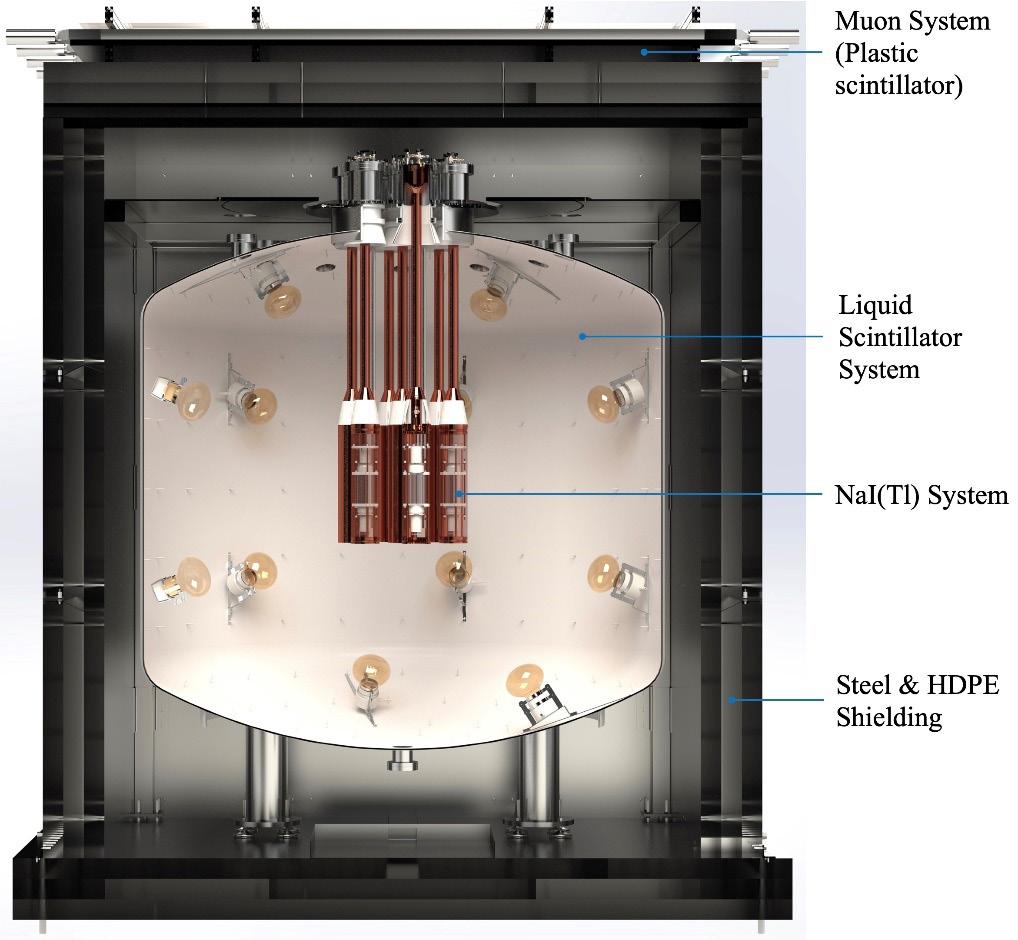
SABRE South has begun installation, with the muon veto and data acquisition systems already in place at SUPL. Construction is progressing toward full completion in 2026. The largest component of the experiment is the 100-tonne steel shielding cube which is under construction at Thornton Engineering and will be assembled at SUPL in Q2 2026. In parallel, a range of off-site activities have been underway over the past year, as described in more detail below.
Among the new NaI(Tl) experiments, SABRE stands out because of its strong investment in radiopure target material. It is currently the only experiment collaborating with both global suppliers capable of producing high-purity crystals comparable to DAMA. There are two NaI (Tl)-based experiments taking data, COSINE and ANAIS . Given that DAMA’s observed signal is 0.01 events/kg/day, SABRE’s superior crystal purity—measured at 0.7 events/kg/day compared to DAMA’s 0.8 events/kg/day —results in background levels 4–5 times lower than ANAIS (3.8 events/kg/day) and COSINE (2.7 events/kg/day). COSINE plans to upgrade its detector to match the purity of SABRE and DAMA NaI(Tl) crystals.
In addition, SABRE South will achieve world-leading sensitivity to bosonic super-WIMPs with masses in the range of 200 MeV to 1 GeV, surpassing existing limits set by COSINE-100 and GERDA. It will also provide highly competitive sensitivity to proton-philic spin-dependent interactions via the Migdal effect, with projected improvements of up to a factor of two over COSINE at a 1 keV threshold and up to 200 times better at a 0.5 keV threshold for masses above 50 MeV.
The liquid scintillator detector is sensitive to neutrinos from supernovae with masses around 10 solar masses, capable of detecting bursts from distances of up to 15 kpc (c.f. it is 8 kpc to the Galactic Centre). This sensitivity enables SABRE South to contribute to the global Supernova Early Warning System (SNEWS), a first for Australia.
The SABRE South Collaboration is strongly supported by working groups, led by early- to mid-career researchers from each participating institution. These working groups meet regularly and have representation across the relevant nodes of the Centre. In 2025, eight students associated with the SABRE South program completed their degrees. SABRE South was well represented at many international conferences in 2025, particularly by early- to mid-career researchers in the collaboration. Broad representation across conferences spanning four continents reflects the maturity and international standing of the SABRE South program.
Nal(Tl) Detector
Seven Nal (Tl) crystals will be grown using Nal astrograde powder obtained from Merck, known for its minimal potassium content. These crystals will be housed in oxygen-free copper enclosures measuring 670mm in length. With dimensions of approximately 150-200 mm in length and 110 mm in diameter, each crystal will weigh about 7 kg, resulting in a total crystal mass of approximately 50 kg. To detect dark matter, each crystal will be equipped with two highly sensitive 76mm Hamamatsu R11065 photomultiplier tubes (PMTs) designed for ultra-low noise detection.
Crystal production and Characterisation
Crystal production is the most critical factor for the success of SABRE South, as the crystals serve as the dark matter target and the leading source of background arises from crystal impurities. SABRE South has engaged producers to follow its developed crystal growth procedures. At SICCAS, the Centre Associate Investigator team used a modified Bridgman method with a double-walled platinum crucible to produce two high-purity NaI(Tl) crystals. SICCAS also grew a large NaI crystal for SABRE South using the seedless Bridgman method. This crystal, initially ~10 kg, was cut to 6.9 kg and is used now for assembly tests at SUPL. Two smaller Astrograde NaI crystals, 38–40 mm in diameter and 100 mm in length after cutting, will be shipped to SUPL soon.
For crystal qualification, 40K content was measured using ICP-MS at Shanghai Jiao Tong University (SJTU), with future measurements planned at Boulby Laboratory (UK) as part of the production process. The SJTU measurements indicate a 40K content of 12 ppb, comparable to DAMA/LIBRA crystals and the Astrograde crystals produced by RMD for SABRE. In addition, in-situ alpha measurements at SUPL will assess 210Pb levels, guiding the choice of surface treatment—chemical etching or mechanical polishing— for each crystal.
Enclosure, glove box and insertion system engineering
Within the copper enclosure, the crystals are mounted directly to the PMTs using high purity copper and PTFE (teflon) parts. The design of the enclosure is complete, and prototypes of the copper end-cap plates have been tested to ensure good seals for handling highpurity nitrogen and to ensure no leakage from the liquid scintillator.
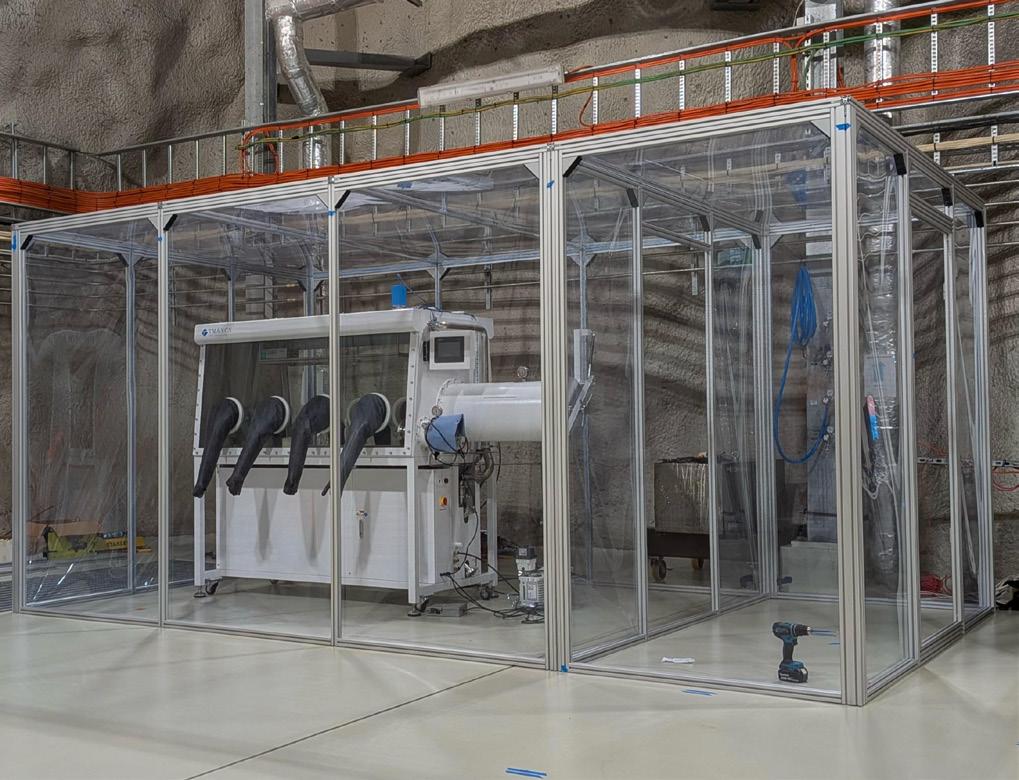
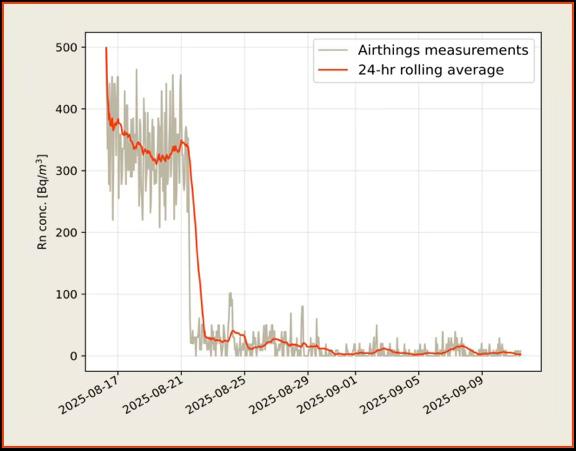
The nitrogen-flushed glovebox for assembly of these detectors has been commissioned and is now located in SUPL. A radoncontrolled clean tent at SUPL has been commissioned and is fully operational, supplying HEPA-filtered air with radon reduced from the typical SUPL level of ~400 Bq/m³ to ~10–20 Bq/m³ via a dedicated above-ground airline. Established cleaning and storage protocols have been developed for all copper, PTFE, and other assembly components, including validated procedures for radon-diffusion-controlled metallised Mylar bagging. Planning for the liquid scintillator preparation and filling procedure has been conducted in close collaboration with the IHEP Beijing group, drawing on their extensive experience from the JUNO experiment. The crystal insertion system is ready for integration with the fluid/ gas handling system.
PMT Characterisation
The isolation of dark matter signatures is challenging due to the low-energy nature of the signals. At room temperature, these can be overwhelmed by PMT-induced backgrounds. An excellent understanding of low-energy backgrounds and single-photon performance is therefore crucial. Tests on the crystal PMTs have focused on single photo-electron response, quantum efficiency, gain and stability over time, as well as dark rate and its temperature dependence [JINST 20 (2025) 07, P07052]. Machine-learning techniques have been developed to mitigate PMT noise with promising results, and a publication on this work is being prepared for submission.
Specifically, single-PMT and paired-PMT background rejection models based on boosted decision trees (BDTs) have been developed, using pulse shape, charge asymmetry, and timing information as inputs. These reach a threshold of approximately 1 keV equivalent energy (5–10 photoelectrons) in the test setup, in both single and paired configurations.
The leading background contributions to SABRE are twofold: (i) PMT and electronics-induced noise, and (ii) radioactive decay and neutrons from spallation. In both cases, machine-learning algorithms were developed and trained on data from the PMT test bench. We are working on new algorithms simulating detector and electronics effects, which are key to achieving the low thresholds needed to fully understand the DAMA/LIBRA signature.
Nitrogen flushed glovebox inside the radon-controlled clean tent.
Radon measurements in the clean tent in SUPL before and after the commissioning.
Veto detectors, calibration systems and shielding
Liquid scintillator veto
The liquid scintillator vessel is made of stainless steel and lined with Lumirror reflector film. It is approximately 3.3 m tall with a 2.6 m diameter and designed to hold 12 kl of liquid scintillator. The main top-flange has seven smaller flanges for the insertion of the crystal enclosures and 12 more flanges for cabling, gas flow, and calibration systems. The liquid scintillator is a mixture of linear alkyl benzene (LAB) and fluorophores PPO and Bis-MSB. The vessel is instrumented with 18 nominal 204 mm Hamamatsu R5912 PMTs with oil-proof electronics bases to detect veto signals at very low energy thresholds, supplemented by 14 additional PMTs donated by IHEP from the decommissioned Daya Bay experiment. The full characterisation tests of all Daya Bay PMTs have been performed in the Melbourne test bench [JINST 20 (2025) 07, P07049].
With the vessel complete, current efforts focus on LAB transport, PMT and Lumirror mounting, cleaning, and fluid handling. In 2021, 17 kL of LAB was procured from Nanjing via the IHEP JUNO group, meeting JUNO’s strict purity standards with excellent photon attenuation and low radioactive contamination. The LAB is stored in Ballarat and is scheduled for transport to SUPL in 2026. The nominal LS mixing will be performed by a GMP-certified pharmaceutical producer using a dedicated N₂-atmosphere mixing vessel. Quality assurance on the stored LAB is planned with support from IHEP visitors in early 2026, with potential further purification steps (water extraction for U/Th removal, N₂ gas stripping for Rn/Kr/Ar) if required.
A test assembly of Lumirror, PMT assemblies, and cabling has been performed at Wantirna in conditions mimicking the SUPL vessel interior, and vessel Lumirror has been cut and cleaned. In 2025, work continued on developing Lumirror templates and PMT assembly procedures, which is challenging due to the vessel’s confined spaces.
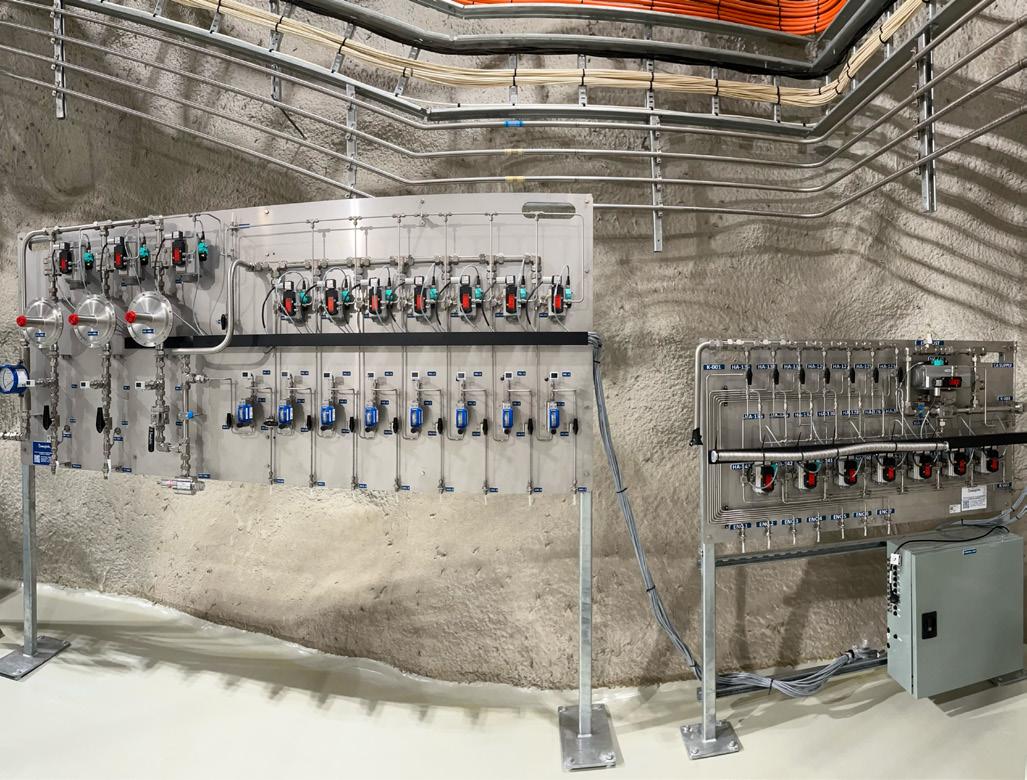
Gas handling system
The gas handling system, which manages high-purity nitrogen supply and control for the crystal enclosures, veto vessel, and crystal insertion system, has been completed and delivered to SUPL. It is currently being integrated with the slow control and remote monitoring infrastructure as part of the progressive commissioning of underground systems.
Calibration systems
SABRE South has three calibration systems: (i) a motorised radioactive source system for the NaI(Tl) crystals and liquid scintillator veto, using sources including ¹³⁷Cs, ²⁰⁷Bi, ²²Na, ¹³³Ba (veto) and ²⁴¹Am, ¹⁰⁹Cd (NaI); (ii) a pulsed 445 nm optical system using an isotropic diffuser and SiPM monitor for the liquid scintillator, currently being finalised with CDM Strategic Infrastructure funds awarded in 2025; and (iii) a radioactive source system for the muon detectors, deployed to SUPL in early 2024. Together these systems are designed to correct for detector response changes over time, which is essential for a robust annual modulation measurement.
Gas handling system in SUPL.
Muon detector
On top of the vessel is the EJ200 plastic scintillator muon detector, composed of eight 3.0 m × 0.4 m × 5 cm modules. The detector is designed for stable, long-term muon-rate measurements and to provide an additional veto in conjunction with the LAB detector. This was the first major system installed at SUPL since its opening. Together with the DAQ, it has been actively collecting data since February 2024 as part of experiment commissioning. Transporting this equipment to SUPL provided invaluable experience in moving large, delicate systems through SGM.
The muon detector is currently measuring angle-dependent flux and flux modulation ahead of its integration with the full SABRE South detector in 2026. Independent cosmic muon measurements at SUPL have already been performed, with a paper documenting the time-averaged muon flux submitted to the Journal of Astroparticle Physics (arXiv:2603.11981). These measurements are a key commissioning milestone, establishing the level of background that could mimic a dark matter signal. The additional data accumulated in 2025, will allow measurement of the muon flux time-dependence, providing a reference for subsequent signal modulation analyses.
Shielding
The vessel is surrounded by a shielding system made of a 100 mm layer of polyethylene sandwiched between two 80 mm layers of high-purity steel, designed to block gamma rays with steel and neutrons with polyethylene. Its efficiency has been fully simulated to ensure background in the crystal detectors remains below 10% of the total expected. The total shielding mass is approximately 110 tonnes. Transport constraints to SUPL required each module to be pre-assembled in segments not exceeding 4 tonnes to comply with truck weight limits.
Data Acquisition, Monitoring and Control systems
DAQ infrastructure
The data acquisition (DAQ) system is built around a CAEN VME crate with 500 MS/s and 3.2 GS/s digitisers, featuring on-board digital pulse processing and zero suppression. A trigger logic unit manages data rates by detecting coincidences within and between subdetector systems. Data are read out via optical links to dedicated DAQ servers. The PMT high-voltage (HV) system uses a CAEN mainframe with three 24-channel boards, controlled through EPICS (Experimental Physics and Industrial Control System). The hardware is fully deployed, and EPICS-based control has been stably used for the SUPL muon run, LNGS DAQ run control, HV monitoring, PMT testbench studies, and detector calibration.
The DAQ software is integrated with slow control and environmental monitoring systems. Over the past year, key milestones include the development of the data-taking workflow with data compression and real-time monitoring for stable operations. The run control interface has been extended to a React-based web interface with secured remote access. Monitoring has been further enhanced through integration with cloud-based tools and automated Slack alerts for out-of-range conditions.
Online computing infrastructure
The local SUPL computing infrastructure for SABRE South was procured with University of Melbourne funding and became operational in early 2024. It includes dedicated multi-core servers for data acquisition, storage, processing, run control, and monitoring, supported by high-capacity storage (66 TB). The system is protected by a smart UPS that also stabilises power to the highvoltage systems. It has been running reliably since 2024, supporting continuous muon data taking.
Software and offline computing
Three major development projects underpin SABRE South.
First, a full GEANT4-based simulation of the experiment, incorporates detector digitisation and resolution effects to realistically reproduce waveform data. This provides the foundation for advanced analysis algorithms across all detector subsystems. It continued to be developed and improved throughout 2025 for use in SABRE South data analysis.
Second, the Python-based analysis framework Pyrate processes data from both the DAQ system and simulation. It supports calibration campaigns, machine-learning pulse shape analysis, and advanced event building that combines information from all detector channels.
Third, offline computing and storage are provided by the University of Melbourne, with 30 TB of fast disk and 150 TB of long-term storage, scalable as required. All collaborators access and analyse data via the UoM Spartan HPC system. A dedicated SUPL–UoM data link enables continuous data transfer and remote detector control and has already demonstrated reliable high-volume muon data transfer.
CYGNUS-Oz
Nodes involved: ANU, UoA, UoM, UoS
Chief Investigators: N. Bell, C. Boehm, G. Hill, P. Jackson, G. Lane, A. Stuchbery, A. Thomas, M. White, A. Williams
Academics: I. Bolognino
Postdocs: L. Bignell, A. McLean, R. R. Marcelo-Gregorio, J. Newstead, Z. Slavkovska
Students: D. Avraham, V. Bashu, N. Disha, K. Leaver, C. Lisotti, I. Shaukat Ali
Associate Investigators: C. O’Hare, L. Manenti
The continued development of micro-patterned gas time projection chambers (TPCs) as a tool for directional dark matter detection is motivated by several imperatives. First, as experiments scale toward ever-greater sensitivity, they will inevitably begin observing interactions from solar neutrinos. This background, that cannot be shielded, mimics the expected nuclear recoil signature of WIMP dark matter. Directional detectors can discriminate against this neutrino fog because solar neutrino events arrive from the direction of the Sun, whereas dark matter particles in the Milky Way halo are expected to be incident from the direction of the constellation Cygnus. Second, since the directional signal encodes a unique astrophysical fingerprint that cannot be mimicked by terrestrial backgrounds, these detectors are uniquely positioned for dark matter discovery and are similarly suited to uncover non-thermal dark matter sources such as boosted dark matter. Finally, common TPC gases contain high levels of fluorine and helium, which are well-suited to probing spin-dependent WIMPs and low-mass WIMPs, respectively. There is also increasing interest for a broader physics case beyond dark matter. Recent work by CDM theorists has focused on the possibilities created by using a directional detector for neutrino physics, including a recent preprint discussing the physics case for a directional detector to probe coherent elastic neutrino scattering. While the rare-event physics case for a directional TPC requires detector scales of approximately 10 cubic metres, there are interesting opportunities in smaller detectors as demonstrated in a recent Nature paper by MARVEL reporting the first experimental observation of the Migdal effect — a key process relevant to low-mass dark matter searches.
The CYGNUS-Oz collaboration brings together CDM experimentalists and theorists from the Australian National University, the University of Adelaide, the University of Melbourne, and the University of Sydney. The collaboration held an in-person meeting in September 2025 over two days in Adelaide with fifteen attendees.
2025 Highlights and Progress
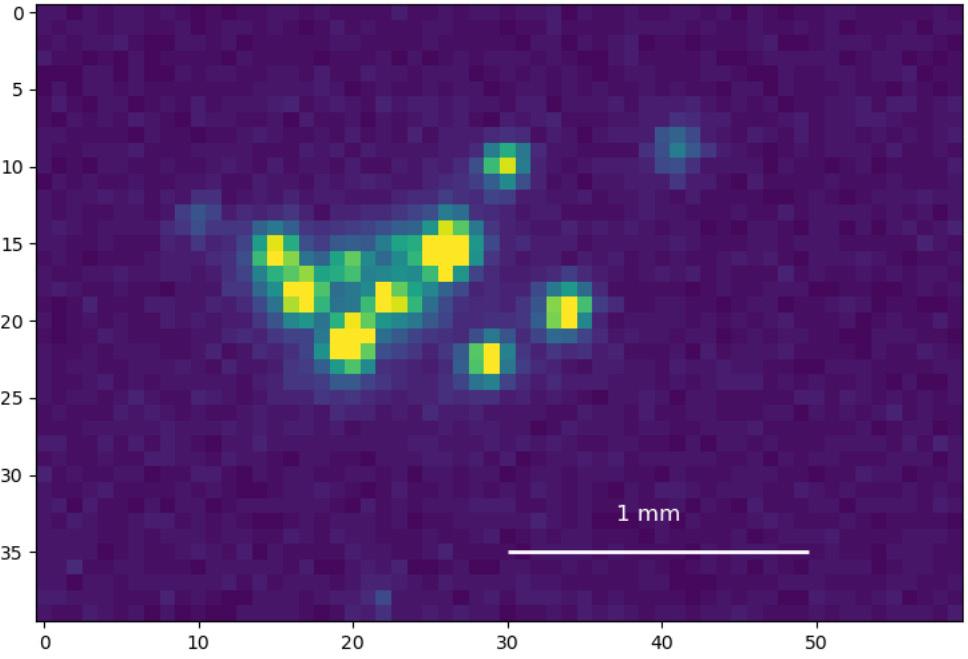
A milestone of the experimental program in 2025 was the acquisition of first sub-mm 3D particle track data with the CYGNUS-n prototype. The figure below demonstrates the outstanding signalto-noise performance of the intensified camera imaging the readout plane, with individual photons visible in the image. Complementing this hardware progress, a new initiative led by A. McLean at Adelaide has seen the development of a Low-cost Avalanche and Readout Device (LARD). Based on 3D printed components, LARD allows a rapid prototyping platform for investigating design parameters for the TPC avalanche gain stage. We have also investigated the use of machine learning methods using the state-of-the-art transformer architecture for directional track reconstruction, in collaboration with E. Shields from the Weizmann Institute. Early results from each of these efforts were recently presented at the international CYGNUS workshop in Kobe, Japan.
The directional neutron detection capabilities of the TPC technology continue to attract support from the Defence Science and Technology Group (DSTG), reflecting the translational opportunities for our detector R&D. DSTG provided an additional $23k in funding this year to study directional neutron detection, building on two previous rounds of support. After some delays awaiting a camera repair, we have recently acquired our first neutron data and this is under analysis.
Radon control is a critical challenge for underground rare-event experiments, and CYGNUS-Oz has established key infrastructure to address this challenge through the DREAMR facility, which was enabled by a $66k 2024 CDM Special Initiatives grant. A first publication from this facility was recently accepted, describing a new methodology for Ra-220 measurement. The work is a collaboration between ANU, the University of Adelaide, and University College London (UCL). The UCL collaboration has arisen from the shared challenge for radon suppression and emanation assay with XLZD, a future liquid xenon experiment. Former CYGNUS-Oz PhD student and now UCL postdoctoral fellow, Ferdos Dastgiri, was a key contributor to this work. This connection highlights the synergies between the radon interests of CYGNUS and other major experiments. Gas TPCs are themselves exquisitely sensitive radon detectors, as demonstrated by our collaborators in the CYGNO experiment and previously in the DRIFT detector. CYGNUS-Oz is well-positioned to pursue this line of research.
CYGNUS-Oz postdocs Alasdair McLean and Robert Gregorio are CYGNO collaboration members and, together with Giorgio Dho (INFN), recently organised a satellite meeting at the CYGNUS workshop to develop collaborative work on 3D reconstruction — a key requirement for precision radon measurement in TPCs. There are also significant translational opportunities for radon research within Australia, with companies from various industries approaching us seeking solutions for radon mitigation in underground mining and radon removal from gas processing streams. CYGNUS-Oz members Lindsey Bignell and Robert Gregorio are key members of the Radon Working Group for the Stawell Underground Physics Laboratory, with Gregorio serving as Technical Co-ordinator.
In addition to deepening collaborative ties with CYGNO, the Weizmann Institute, UCL, and SUPL, the year has seen several positive student outcomes. Two CYGNUS-Oz PhD students graduated in 2025, moving on to positions at UCL and ANSTO respectively. The collaboration currently supports 6 HDR students across experimental and theory programs.
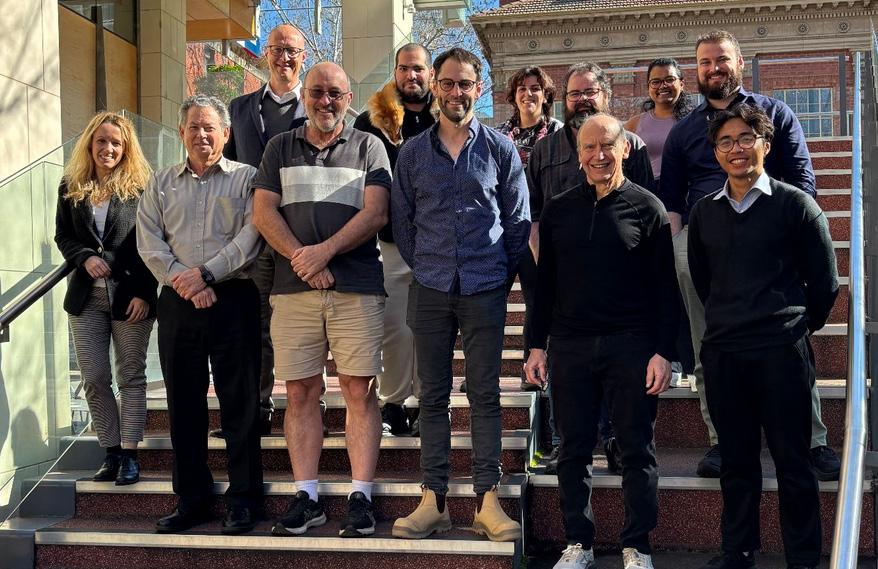
Group photo from the 2025 CYGNUS-Oz collaboration meeting.
A low-energy electron event of sub-mm length recorded in CYGNUS-n.
Current and next generation liquid xenon TPCs
Nodes involved: UoM, UoS
Chief Investigators: E. Barberio, N. Bell, C. Boehm, P. Urquijo
Academic staff: T. Früth
Postdocs: A. Cools, R. James, J. Newstead
Students: M. Bazyk, K. Gupta, T. Ibrayev, D. Khan, O. Stanley, L. Principe, A. Ravindran
Associate Investigators: L. Baudis, P. Cox, C. O’Hare, L. Manenti, M. Schumann, Y. Xing
Partner Investigators: S. Diglio, L. Scotto Lavina
In 2025 the Centre continued working with the international effort to build a next-generation liquid xenon detector. The XLZD collaboration combines the leading experiments (LZ and XENONnT experiments) with the large-scale DARWIN R&D effort. 2025 was an exciting year as the consortium officially became a collaboration. In the XLZD Design Book, which was published in EPJC, the collaboration outlines its vision for a 60-80 tonne detector. With this size, it will be more than a dark matter detector and serve as an observatory for other rare event physics, including solar and supernova neutrinos, alternative low- and high-mass dark matter models, and rare decays.
The Centre members continued to be involved in the development of simulation and statistical inference tools throughout the year. In particular, postdoc Robert James (UoM) led the development of the FlameNEST framework which has now officially been adopted by the collaboration as parametric simulation for physics performance studies. Robert also led WIMP sensitivity projection studies for the collaboration’s requirement task force and Theresa Fruth (UoS) was part of the Simulations Software Task Force. With simulation efforts in the collaboration picking up, several PhD students took part in the XLZD simulation workshop contributing to the development of the GEANT4-based simulation framework.
Under the framework of the CNRS-Australia International Research Project (IRP) coordinated by PI Sara Diglio, the collaboration between CNRS (through its National Institute of Nuclear and Particle Physics, represented by Director Christelle Roy) and the Centre has been further strengthened. This partnership was formalized with the signing of a Letter of Agreement, reinforcing joint efforts to advance dark matter research. In this context, the UoM and SUBATECH teams, coordinated by Robert James and Ananthakrishnan Ravindran (UoM), are advancing a sensitivity study on low-mass dark matter via the Migdal effect for the XLZD detector. This collaborative effort, involving Federica Pompa (CNRS), Lorenzo Principe (UoM), and Owen Stanley (UoM), was presented at the
XLZD Collaboration Meeting and national conferences (French IRN Terascale and Australian Institute of Physics), generating strong interest and laying the groundwork for future publications.
The test platform for new electrode designs for future large-scale dual-phase xenon TPCs at LPNHE in Paris, known as XeLab, continued commissioning throughout 2025. This effort was coordinated by PI Luca Scotto Lavina and AI Yajing Xing, with significant contributions from Owen Stanley, who conducted the first operational runs. In parallel, the XEMIS1 facility at SUBATECH, dedicated to R&D for the XLZD detector, is planned to be loaned to the University of Melbourne starting in early 2027. This initiative aims to strengthen the France-Australia collaboration, enabling Australian teams to develop expertise in liquid-xenon detectors and future shared projects. In the short term, XEMIS1 will be used to test new PMTs for integration into the XLZD design, with coordination by Nicolas Beaupère and Eric Morteau, and participation from Antoine Cools and Kaushik Gupta.
A team from UoS and UoM was awarded Special Initiative funding to initiate multi-node laboratory characterisation of silicon photomultipliers and PMTs as part of the XLZD photosensor R&D, developing simulation models and studying physics implications.
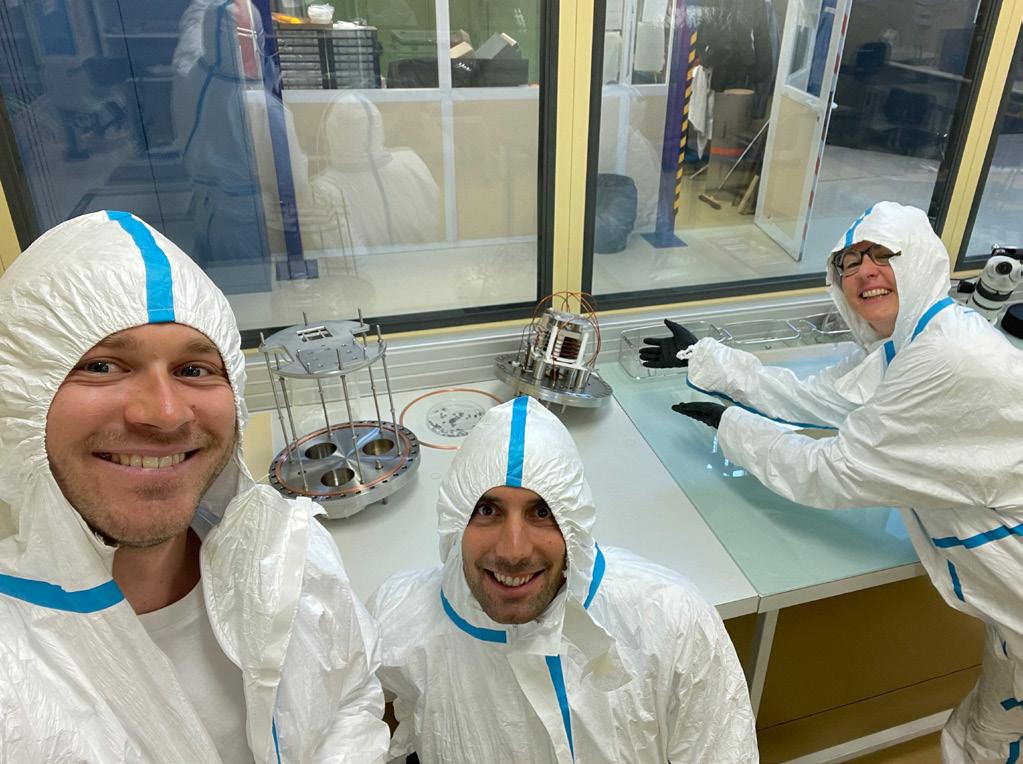
Antoine Cools (far left) and Sara Diglio (far right) with the TPC components at SUBATECH.
AXION and WISP Direct Detection
Nodes involved: UWA, SUT, ANU, UoS
Chief Investigators: M. Goryachev, M.E. Tobar
Postdocs: J.F. Bourhill, G. Flower, A. Quiskamp
Students: R. Crew, M Hatzon, A Johnson, S Parashar, E. Patterson, R. Singh
Associate Investigators: P. Altin, G. Brooks, W. Campbell, C. O’Hare, E.N. Ivanov, B. McAllister, Z.C. Zhao
Partner Investigators: G. Rybka
Research program overview
The Direct Detection (wave-like dark matter) program integrates a suite of complementary detector technologies to search for axions, dark photons, and other weakly interacting slim particles (WISPs) across a broad mass range. These include axion haloscopes such as ORGAN, ORGAN-Q, ORGAN-Low, and ADMX; axion up-conversion experiments such as UPLOAD and UPLOAD-ANYON; and acoustic detector platforms such as MAGE, targeting both scalar dark matter and high-frequency gravitational waves (HFGWs). Together, these experiments provide broad and versatile coverage of wellmotivated wave-like dark matter parameter space.
This experimental program is underpinned by a comprehensive precision measurement and quantum sensing R&D effort, spanning resonator development, quantum-limited readout, advanced materials, and hybrid sensing concepts. These enabling technologies strengthen detector sensitivity, expand accessible parameter space, and support new detection concepts across the program. A general overview of this research is provided in Australian Physics (Australian Institute of Physics Magazine 62(2), pp. 8–12 (2025).
ORGAN
In 2025, ORGAN-Q consolidated its position as the first quantumlimited axion haloscope within the Centre’s direct-detection portfolio and delivered a major experimental milestone with the publication of a near-quantum-limited axion dark matter search around 26 μeV (Phys. Rev. D 111, 095007, 2025).
This result demonstrated mature end-to-end haloscope capability in the microwave regime: stable cryogenic operation, and quantum-enabled readout using a superconducting quantum amplifier, bringing together the key elements required for credible, reproducible sensitivity statements at higher axion masses.
In parallel, 2025 saw the ORGAN-Q instrumentation demonstrate a rapid-response capability for targeted wave-like dark matter searches, which highlights the Centre’s ability to respond quickly to external “hints of detection” with an independent test.
This culminated in the follow-up search for a tentative dark-photon signal near ~19.5 μeV (~4.7 GHz) (arxiv.2510.15361), which was enabled by the 2025 commissioning and readiness of the ORGAN-Q platform. This project was a direct result of a centre collaboration between researchers at the UWA and Swinburne nodes. More broadly, this campaign exemplifies the increasing maturity of haloscope infrastructure internationally: credible claims now demand rapid, independent cross-checks, and well-prepared platforms like ORGAN-Q make that possible on a practical timescale.
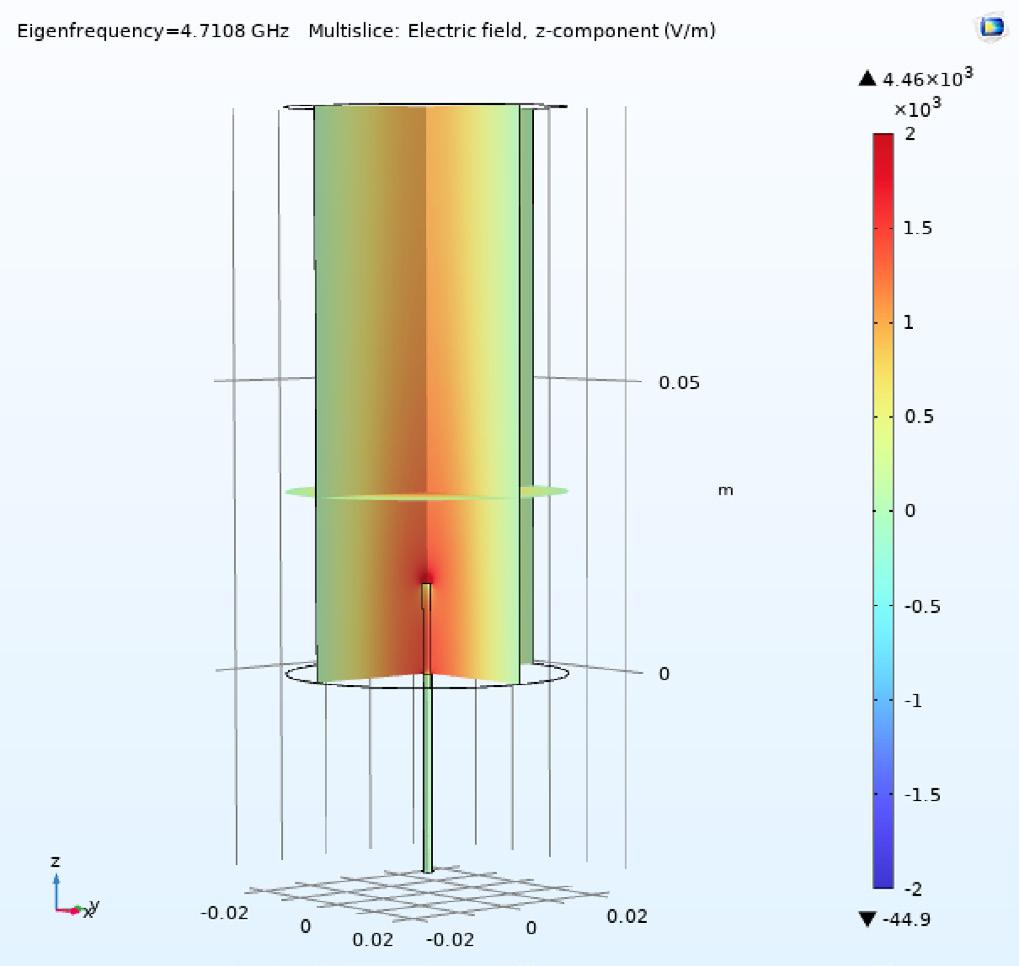
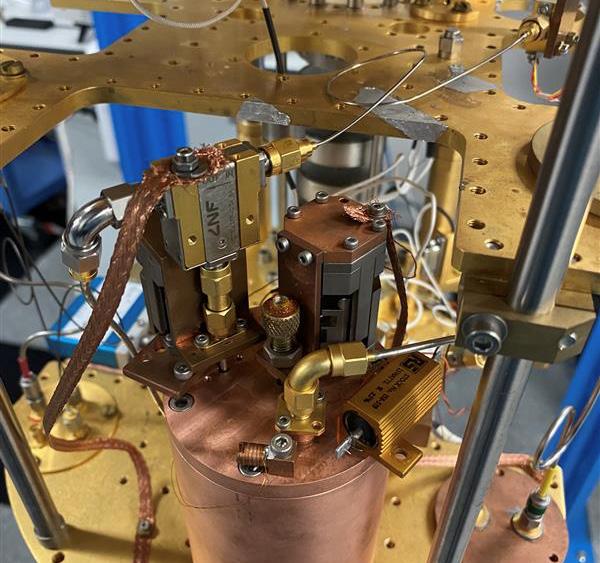
Simulations (top) and experiment (bottom) for the ORGAN-Q dark-photon follow-up experiment.
The AC Up-Conversion Haloscope, UPLOAD-ANYON
During 2025 the UWA group continued to develop low noise oscillators based on high-Q resonators (IEEE T-MTT, 73(12), pp. 10897-10903, 2025), with the goal of using them to upconvert dark matter signals at ultra-low masses. This work also includes: 1) Further understanding of twisted ANYON-resonators necessary to search for axions (Phys. Rev. A, 112, 013530, 2025). 2) The investigation of 3D printed superconducting resonators in collaboration with the University of Birmingham. 3) We continue collaboration with Jefferson Labs to research the use of high quality superconductors and PhD students Emma Paterson and Rob Crew who are working on this project, will travel there to test new cavities.
Axion Dark Matter eXperiment (ADMX)
Generation 1 and 2
In 2025, the ADMX collaboration delivered a particularly strong set of results that advanced the search for axion dark matter across the few-μeV mass range. A major highlight was the reporting of successful experimental bounds around 3.3 μeV with DFSZ discovery ability (Phys. Rev. Lett. Vol. 134, 111002, 2025), an important milestone demonstrating sensitivity to one of the bestmotivated QCD axion models. This was complemented by a second result, Search for Axion Dark Matter from 1.1 to 1.3 GHz, which extended the experiment’s reach across a broader microwavefrequency band and further strengthened ADMX’s position as the world-leading haloscope in this mass range (Phys. Rev. Lett., 135, 191001, 2025). Together, these results show that ADMX is delivering sustained, discovery-class sensitivity while continuing to expand its coverage of compelling axion parameter space. Centre researchers from the Swinburne node contributed critical detector sensitivity simulations to enable the data analysis that led to this result.
The collaboration completed research that enhanced both the technical capability and scientific breadth of the program. This included an improved receiver noise calibration for the 4.54–5.41 μeV search range (Phys. Rev. D, 111, 092012, 2025), increasing confidence in the experiment’s absolute sensitivity and strengthening the robustness of its limits. The collaboration also succeeded in a search for non-virialized axions in the 3.3–4.2 μeV range at selected resolving powers, moving beyond standard halo assumptions to probe narrow spectral features expected from axion streams or other substructure (Phys. Rev. D, 112, L101101, 2025). This was a standout result for UWA, which played a major role in shaping and delivering the non-virialized axion search and its associated analysis.
Collectively, this work shows that ADMX is not only pushing deeper into QCD axion parameter space, but also broadening the scientific reach of haloscope searches through improved calibration, more sophisticated analysis methods, and expanded searches for axion dark matter signatures.
ORGAN-Low Frequency
A key goal for the Swinburne node is the development of ORGANLow, aimed at probing the low-mass axion regime in the 100–500 MHz range. The project continues to move forward with support from the Swinburne node and CDM central. This support provides the resources needed to advance both the design and early implementation of the experiment, ensuring that the Centre’s axion research continues to expand into new parameter space and contribute to the Centre’s broader scientific goals.
The work in 2025 built upon progress made in 2024, when the first prototype detector was constructed and tested. Evaluation of this prototype in 2025 revealed limitations in the initial design, motivating a significant redesign of the experiment. This redesign effort has resulted in both a forthcoming publication on lowfrequency haloscope design, and the construction of a new and improved prototype detector, which was commissioned in late 2025.
Looking ahead, the improved prototype will be used in early-mid 2026 to take initial data and set best-in-range limits on axion dark matter in the target frequency band, a significant milestone for the project. At the same time, work will continue on the full-scale detector, which is expected to be complete in 2026, for full-scale data taking in late 2026/early 2027.
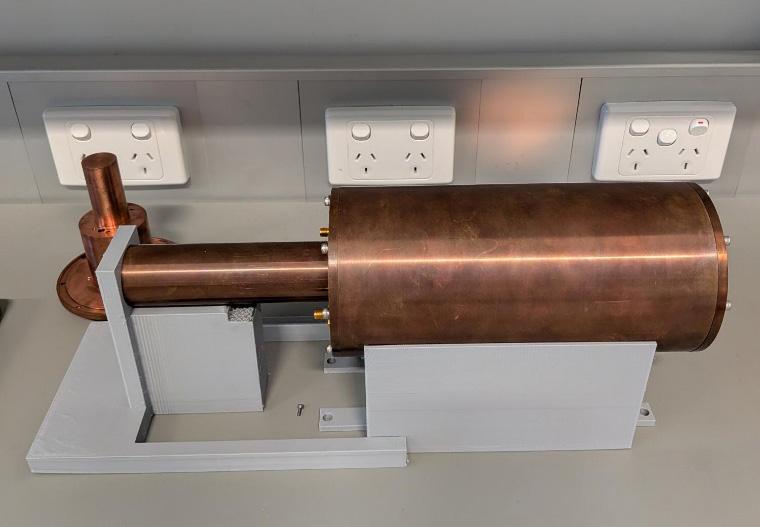
ORGAN-Low prototype detector, to be used in data-taking in early 2026.
Acoustic Detectors: Search for Scalar Dark Matter and High Frequency Gravitational Waves
In 2025, the Centre made significant advances in acoustic detector technologies, which are sensitive to a variety of tests of fundamental physics, including scalar dark matter and high frequency gravitational waves (HFGWs), spanning theory, detector physics, and experimental performance. A key theoretical highlight was a new proposal on the possibility of detecting kHz gravitons from a neutron star merger with a multi-mode resonant mass detector (Class. Quantum Grav., 42(5), 055017, 2025), which developed the case for multimode acoustic detectors as a viable pathway to probing the graviton. This work was complemented by the major Living Reviews in Relativity article on the challenges and opportunities of gravitational-wave searches above 10 kHz (Living Reviews in Relativity, 28, 10, 2025), which helped define the international landscape for this emerging field and positioned acoustic and electromagnetic approaches as an important part of the future HFGW program. For example, through the inverse Gertsenshtein effect, it may be shown that all axion haloscopes are also sensitive to HFGWs. The Centre’s axion team was invited to participate in the European Research Council funded program (GravNet), a world-wide network to search for HFWGs, with the primary aim search for Primordial Black Hole (PBH) mergers, which is another dark matter candidate.
On the experimental side, the team performed the first highfrequency experimental exclusion of planetary-mass primordial black hole mergers with the Multi-Mode Acoustic Gravitational wave Experiment (MAGE), showing how high-frequency resonant detector concepts can be used to place meaningful astrophysical constraints, providing also an important proof-of-principle for this broader detection strategy, relevant for the whole community (Phys. Rev. Lett., 135, 251402, 2025).
These advances were underpinned by a strong program in low-loss mechanical resonators and microwave readout, directly relevant to future searches for both HFGWs and scalar dark matter. This included the investigation on the low-temperature properties of low-loss macroscopic lithium niobate bulk acoustic wave resonators established the material and device performance needed for sensitive phonon-based detection (Phys. Rev. B, 111, 214106, 2025) (URSI Radio Science Letters, vol. 7, 27, 2025), and a study of thermal fluctuations in microwave and mechanical resonators, which clarified important noise limits for next-generation detectors (Appl. Phys. Lett., 127, 243302, 2025). Together, these results strengthened the Centre’s capability in acoustic quantum sensing and laid the technical foundation for a new class of resonant detectors targeting high-frequency gravitational waves and oscillating scalar dark matter signatures.
Quantum Technologies and Metrology
The Centre’s Precision Quantum Sensing and Metrology program delivered a diverse set of advances in resonator physics, cryogenic spectroscopy, spin–photon interfaces, and quantum materials, all directed toward next-generation precision measurement. This included the demonstration of sharp electromagnetically induced absorption in a microwave resonator (Phys. Rev. Applied, 23, 024058, 2025) providing a new interferometric route to extreme spectral control and enhanced sensitivity, together with complementary work on extreme dispersion and gravitational modulation for improved tests of the Aharonov–Bohm effect (URSI Radio Science Letters, 7, 24, 2025). The program also advanced cryogenic materials spectroscopy through whispering gallery mode studies of paramagnetic impurities in high-purity LiF (J. Appl. Phys., 138, 064402, 2025), extending the Centre’s capability to characterise ultra-low-loss crystalline systems relevant to quantum devices. In parallel, the successful coupling of 4H-silicon carbide spins to a microwave resonator at milli-Kelvin temperature represented an important step toward hybrid quantum systems that combine solid-state spin defects with superconducting and microwave platforms (Phys. Rev. Applied, 24, 064075, 2025). Collectively, these results strengthened the Centre’s position in resonator-based metrology, hybrid quantum systems, and precision spectroscopy, while building new tools and physical insight for future sensing applications.
precision metrology research program
Nodes involved: ANU, UWA
Chief Investigators: M. Froehlich, M. Goryachev, S. Tims, M. Tobar
Postdocs: Z. Slavkovska
Students: F. Dastgiri
Associate Investigators: E. Ivanov, D. Koll
Partner Investigators: M. Hotchkis, A. Wallner
Improving the detection sensitivity for those radionuclides identified from the intrinsic background as most likely to impact dark matter detection capability remains the focus of the precision metrology program at the ANU node.
Development of low phase noise oscillators for use as detectors continues at the UWA node. Details are provided in the AXION direct detection section above.
Nuclear metrology
Characterisation of dark matter detector materials
The chemical and AMS measurement procedures are now sufficiently developed to permit measurements of 210Pb in the NaI detector crystal material with the requisite sensitivity, but we have identified, and are addressing the potential for further significant improvement. The reagents used in the chemical extraction and purification process for isolating 210Pb have been assessed for 210Pb content in order to minimize their contribution to the 210Pb atom count. The most important contributions overwhelmingly arise from the IQ acids and from the iron material in which the 210Pb is dispersed to facilitate AMS measurement. These three reagents presently contribute more than 50% of the total count. Trials of alternative iron materials are underway, and purchase of acid subboiling stills is underway. The stills should significantly reduce the 210Pb content of the acids.
ICP-MS
development
During 2025 we commenced development of procedures that allow ICP-MS measurements of Strontium, Ruthenium and Niobium in AMS sample materials. This capability will be necessary for future AMS assessments of 90Sr and 99Tc concentrations.
AMS capability improvements
Operational constraints at HZDR have delayed development of the Super-SIMS (SIMS/AMS system) 40K capability. Initial tests showed promise, and further runs are planned for June/July 2026. The SIMS facility at HZDR already has the capacity to inject directly into an AMS system.
An instability in the 14UD accelerator terminal voltage, coupled with extended maintenance periods, precluded further development of the AMS time-of-flight system used for high mass isotope measurements for most of the year. However, development and assessment of the automated system for measuring heavy isotopes using the fast isotope switching system continued, but the voltage instability prevented assessment of the sensitivity for these isotopes.
The installation of the electrostatic analyser has again been delayed until 2027 as a result of other operational issues with the 14UD accelerator. Consequently, AMS activities during the year brought forward development of 90Sr and 99Tc fission product measurement capabilities. A specialized detector with a 50nm thick SiN entrance window assembly has been adapted to allow 90Sr and 99Tc atom counting. This will be necessary to permit separation of the 90Zr and 99Ru stable isobars. We have investigated additional suitable procedures for the chemical separation and purification of both isotopes from selected naturally occurring materials and trialed ion source measurements of carrier and sample holder materials. We commenced preliminary AMS measurements to identify the optimal charge state and energy for both isotopes, progressed separation and isolation of interfering isotopes, and investigated ways to normalize 99Tc measurements to a different element (as there are no stable Tc isotopes). Initial measurement sensitivities are already comparable with, or better than, the current published limits, and show promise for spin-off applications in radioactive waste management, reactor technologies and monitoring medical isotope releases to the environment.
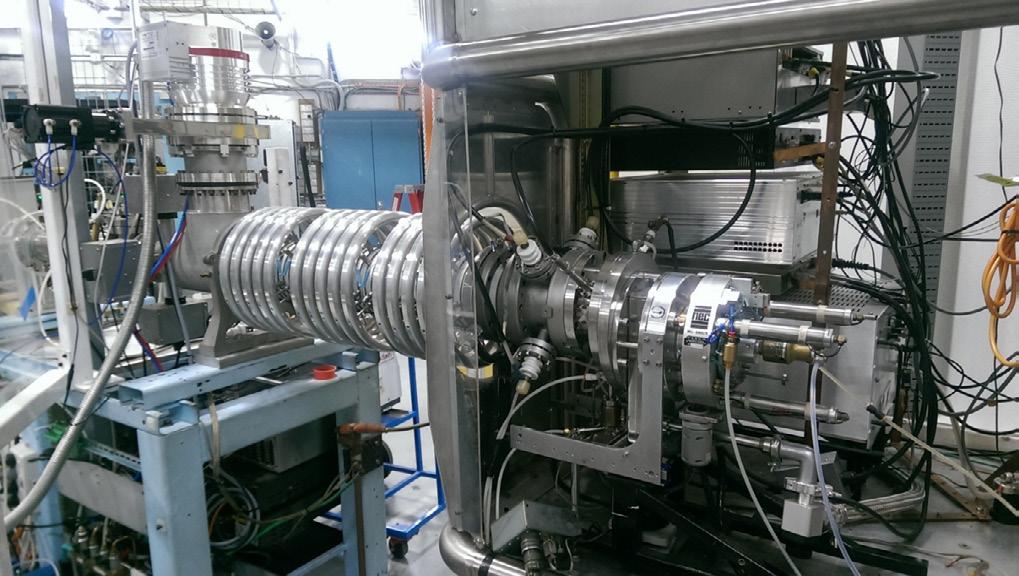
The ANU AMS multi-cathode ion source used to extract atoms from chemically purified samples and inject the desired isotopes into the 14UD accelerator for atom counting. The source has been used extensively for optimizing the efficiency of atom extraction and to identify potential sources of AMS measurement interference for the AMS isotopes under development.
LHC research program
Nodes involved: UoA, UoM
Chief Investigators: P. Jackson, G. Taylor
Postdocs: J. Oliver, A. Kong
Students: C. Alley, I. Carr, A. Desai, M. Fewell, J. Gallagher, M. Green, K. Kemp, J. Kull, A. Lovison, H. Pandya, H. Purnell, A. Reardon, T. Ruggeri, E. Ting
Partner Investigator: K. Jakobs
Associate Investigators: C. Doglioni, J. Gonski
Technical Staff: A. Subramaniam
Collider Searches for Dark Matter: Large Hadron Collider - ATLAS experiment
The Centre provides an opportunity to search for Dark Matter direct production at one of the most notable and unique facilities in the world, namely the experimental environment provided by the world’s highest energy particle collider – the Large Hadron Collider (LHC) at CERN in Geneva, Switzerland. At this laboratory, members of the Centre work on the ATLAS experiment, one of two multipurpose detectors well equipped to search for evidence of dark matter production in proton-proton collisions across a wide range of potential masses and interactions.
During 2025, the ATLAS experiment was recording data at a further improved efficiency compared to 2024, and at a world-leading collision energy of 13.6 Tera Electron Volts (TeV). 2025 represented the largest dataset to date collected in a calendar year. Centre researchers were present at CERN performing shifts in the control room and data quality and software monitoring shifts to ensure the integrity of the data collected. The overall aim of the LHC dark matter program is to find direct evidence of Standard Model particles produced in conjunction with a signature of MET, which it is postulated would be carried away by the dark matter candidates.
Dark matter searches with ATLAS data are underpinned by performance work and require a thorough understanding of the objects particles that leave signals in our detectors. Centre researchers are working to strengthen our understanding of hadronic jets by deploying advanced machine learning techniques and algorithms based on particle flow to extract greater precision. Efforts on calibration and tagging of hadronic jets is also a prominent activity within the Centre. Work on flavour tagging and new techniques in jet calibration has led to publications in 2025. Centre researchers (Alley, Green and Gallagher) were contributors, and session leaders, at the annual Hadronic Calibration Workshop held in Sheffield, UK in September 2025.
Centre researchers have played leading roles in searches for dark matter produced in association with top quarks and acting as a mediator to produce top quark signatures. This program is leading to a suite of legacy analyses using the Run 3 dataset that will act as the gold standard for analysis methods prior to the advent of the next stage of the LHC physics program.
Work with Associate Investigator Gonski has led to the deployment of an ‘Anomaly Detection Trigger’ operating in the 2025 data. This trigger will collect a unique set of collision events and Centre researchers are working on the offline analysis of these events. Work with Associate Investigator Doglioni is on triggerlevel analyses to provide access to a unique sample of otherwise unexplored data.
Beyond performance and physics analysis, Centre researchers contribute to the long-term health, success and productivity of the detector by upgrading it. The next big transition in fundamental physics will come with the upgrade to the High-Luminosity LHC era, with a shutdown lasting from mid-2026 to 2030. The shutdown will provide the opportunity for a near complete refurbishment of the ATLAS detector. Centre researchers are focused on the construction, testing and deployment of modules for the inner tracker upgrade (ITk), with specific focus on module production testing and characterisation for the end-caps of the silicon strip tracker. Having passed review milestones at each of the sites, module production will occur in Melbourne with modules then sent to Adelaide to perform a thermal cycling and rigorous testing procedure prior to them being shipped to CERN for final assembly, integration and ultimately deployment into the experiment throughout the long shutdown period. This effort is providing exceptional training to early-career researchers in the Centre.
In recognition of the global achievements and impact of the LHC physics program, in 2025, the LHC experiments (ALICE, ATLAS, CMS and LHCb) were awarded the Breakthrough Prize for Fundamental Physics, shared by CDMPP ATLAS collaboration members who were qualified authors on ATLAS publications between 2015 and 2024. The entirety of the $3 million USD prize fund from the Breakthrough Prize Foundation was donated to the CERN & Society Foundation. The prize money will be used to offer grants for doctoral students from member institutes to spend time at CERN.
theory research program
Nodes involved: ANU, SUT, UoA, UoM, UoS
Chief Investigators: N. Bell, C. Boehm, D. Croton, M. Dolan, A. Duffy, C. Simenel, A. Thomas, R. Volkas, M. White, A. Williams
Postdocs: R. Abdel Khaleq, J. Gargalionis, A. Ghosh, N. Krishnan, T. Maity, R. Mostoghiu, J. Newstead, E. Sirks, X-G. Wang
Students: V. Ayyagari, L. Fang, J. Gill, K. Goh, F. Hiskens, M. Hayat, C. Lisotti, B. Loizos, D. McClay, S. Owa, R. Perez, G. Sanamyan, I. Shaukat Ali, A. Sopov, L. Stockdale, A. Ussing, M. Virgato, E. Wallace
Associate Investigators: G. Busoni, P. Cox, C. O’Hare, D. Sengupta
The theory program seeks to uncover the fundamental nature of dark matter by developing and testing new ideas about its properties and interactions. Our work spans the full spectrum from foundational model building to phenomenology at the theory–experiment interface. This multidisciplinary effort draws on expertise across particle, nuclear and astrophysics, enabling a complementary and highly collaborative approach. Generating and refining new ideas remains central to the program — from constructing theoretical frameworks that incorporate viable dark matter candidates, to proposing innovative detection strategies, performing detailed sensitivity studies, and strengthening the scientific case for major experimental initiatives.
Over the past year, Centre theorists have continued to advance a broad portfolio of research projects, deepening collaboration across nodes, and reinforcing theory-experiment links through involvement in the DARWIN, CYGNUS and LHC programs. In 2026, we look forward to an in-person Theory Program Workshop, to be held at ANU in February, alongside further face-to-face activities throughout the year and continued cross-node theory seminars and journal clubs conducted online. Some highlights of recent theory research are outlined below; further projects are ongoing.
Detailed nuclear structure calculations for coherent elastic neutrino-nucleus scattering
Leveraging the Centre's diverse expertise, this cross-node project involved collaboration between particle (Jayden Newstead -- UoM) and nuclear theory (Raghda Abdel Khaleq, Cedric Simenel, Andrew Stuchbery -- ANU). The goal of the project was to provide the most precise predictions of elastic neutrino-nucleus scattering -- a crucial background to dark matter direct detection experiments (making up the neutrino fog or floor). Additionally, near-future experiments will meaningfully benefit from these improved predictions through an increased sensitivity to new-physics signals. The calculation used state-of-the-art nuclear and particle theory, and leveraged significant computational resources for the nuclear shell model calculations, carried out by Centre PhD student Raghda Abdel Khaleq.
The calculated cross sections are in good agreement with previous predictions, but with significantly smaller uncertainties [Phys. Rev. D 111, 033003 (2025)]. An example is given below for cesium-iodide; the SHF and Shell model predictions (red and green) refer to this work.
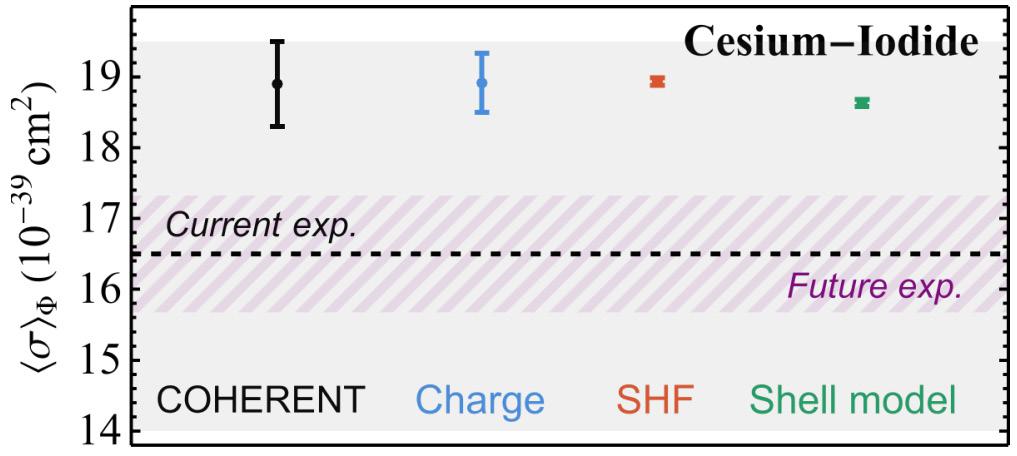
First measurement of the weak mixing angle in direct detection experiments
Current ton-scale dark matter direct detection experiments have reached a significant milestone with the detection of solar neutrinos. Centre postdoc Tarak Nath Maity and Celine Boehm demonstrated that these data can be used to determine a fundamental parameter of the Standard Model—the weak mixing angle—across an energy regime that has never been probed before. Specifically, they show that: a) The recent measurements of coherent neutrino-nucleus scattering by PandaX-4T and XENONnT allow for the determination of the weak mixing angle in the sub-GeV energy range, a regime typically explored only by low-energy neutrino experiments. b) XENONnT electron recoil data enable the extraction of the weak mixing angle via neutrino-electron scattering at an energy scale of approximately 0.1 MeV, corresponding to the lowest momentum transfer probe to date [Phys.Rev.D 112 (2025) 5, 053001].
Neutrinos as background and signal in searches using the Migdal effect
Ionization or excitation resulting from the noninstantaneous response of the electron cloud to nuclear recoil is known as the Migdal effect. Dark matter searches utilizing this process set the most stringent bounds on the spin-independent dark matter–nucleon scattering cross section over a large region of the sub-GeV dark matter parameter space, underscoring its significance in dark matter detection. Centre postdoc Tarak Nath Maity quantified the regions of dark matter parameter space that are challenging to probe via the Migdal effect due to the presence of dominant solar neutrino backgrounds for both liquid noble and semiconductor targets. He demonstrated that a large portion of the relic density allowed parameter space lies within the neutrino background dominated region parameter space. Finally, he also estimated the exposure required to detect neutrino-induced Migdal events in direct detection experiments [In Phys.Rev.D 111 (2025) 12, 123020].
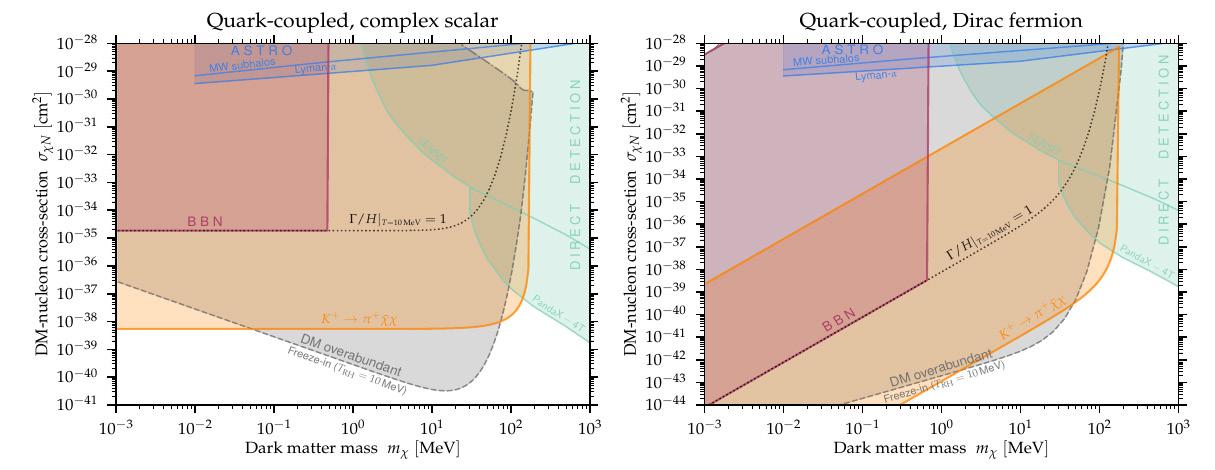
Neutrinos from the Sun can discover dark matter-electron scattering
In Phys.Rev.D 112 (2025) 2, 023025 centre postdoc Tarak Nath Maity and collaborators probe dark matter-electron scattering using high-energy neutrino observations from the Sun. Dark matter interacting with electrons can get captured inside the Sun. This captured dark matter may annihilate to produce different Standard Model particles. Neutrinos produced from these Standard Model states can be observed in IceCube and DeepCore. Although there is no excess of neutrinos in the solar direction, they find that the current datasets of IceCube and DeepCore set the strongest constraint on the dark matter-electron scattering cross section in the dark matter mass range 10–105 GeV.
New Models of Dark Matter Annhilating into Neutrinos
Indirect detection is the search for dark matter annihilation products, emanating from regions of high dark matter density such as the Galactic Centre. This leads to strong limits on annihilation to almost all Standard Model particles. But invisible finals states such as neutrinos are much harder to detect. However, the upcoming Hyper-Kamiokande neutrino telescope will have the capability to probe dark matter annihilation to neutrinos. University of Melbourne PhD student Michael Virgato, together with postdoc Avirup Ghosh, Nicole Bell and Matthew Dolan asked the question: what dark matter models are there which can yield this signal, and what are their properties? They succeeded in constructing new models of both scalar and fermionic dark matter, and showed these models are excellent targets for future neutrino detectors. [Phys.Rev. D 111, 055020 (2025)]
From capture to collapse: Revisiting black hole formation by fermionic asymmetric dark matter in neutron stars
Centre postdoc Giorgio Busoni and collaborators presented a comprehensive evaluation of the interaction of fermionic asymmetric dark matter (ADM) with neutron stars (NSs), with implications for both dark matter physics and astrophysical observations.
ADM, due to its non-annihilating nature, can accumulate in the dense core of a neutron star through scattering with nucleons. If enough ADM gathers, it could become self-gravitating and exceed the Chandrasekhar limit, collapsing into a black hole (BH) that might ultimately destroy the host NS. The authors critically revisit established constraints on the ADM mass and its scattering cross section with neutrons by rigorously including physical processes often simplified in earlier work — such as dark matter capture dynamics, thermalization within the star, gravitational collapse, BH accretion, and evaporation. By employing a more realistic treatment of each stage, including relativistic equations of state and refined microphysics, they find that prior constraints on ADM properties can be relaxed by several orders of magnitude compared to earlier estimates. This work significantly broadens the viable parameter space for fermionic ADM models and highlights the continued importance of neutron stars as sensitive probes of dark matter fundamental properties [Phys. Rev. D 112, 12, 123011 (2025)].
New Limits on Light Dark Matter Interactions with Nucleons
In the past decade, dark matter in the sub-GeV mass regime has been an exciting frontier in particle physics, leading to many new experimental proposals. However, sub-GeV dark matter models face stringent constraints from both the early Universe and precision measurements of the Standard Model. In their paper [Phys.Rev. D 112, 115021 (2025)], University of Melbourne PhD student Joshua Wood, AI Peter Cox and Matthew Dolan used a low-energy effective model to compute new bounds on hadronically interacting dark matter from Big Bang Nucleosynthesis and rare meson decays. The bounds they derived are orders of magnitude stronger than previously existing model-independent constraints for dark matter masses below 100 MeV, with significant implications for proposed direct detection experiments targeting this low-mass regime.
Constraints on the dark matter nucleon cross-section. The orange and red shaded regions are the new bounds derived by Cox, Dolan and Wood in [Phys.Rev. D 112, 115021 (2025)]. Previous constraints from direct detection and astrophysics are shown in green and blue, respectively. The two panels are for scalar and fermionic dark matter.
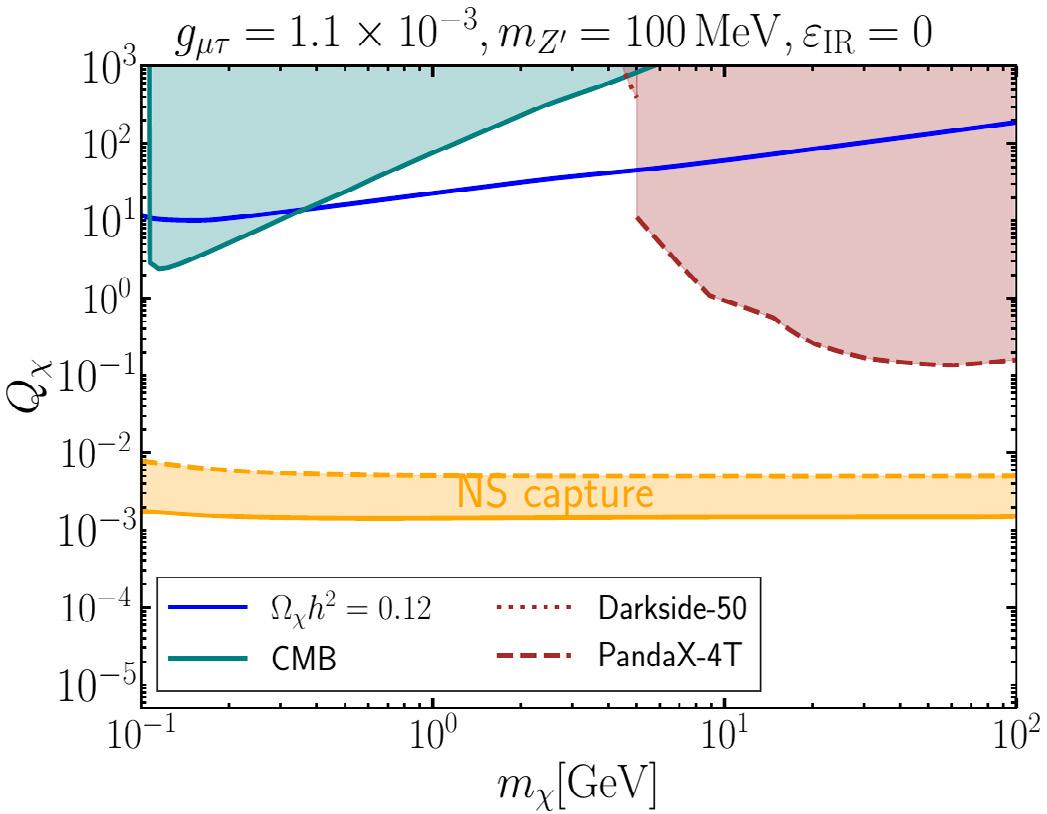
Using neutron stars to probe dark matter charged under a Lμ - Lτ symmetry
Direct detection experiments provide one of the most promising avenues to probe dark matter, but are blind if dark matter has no interactions with nuclei or electrons. However these scenarios can be probed using novel astrophysical methods. Nicole Bell, Giorgio Busoni and Avirup Ghosh considered such an example where dark matter particles are charged under a Lμ-Lτ symmetry. They demonstrated that tree-level interactions with muons enables this dark matter to interact efficiently with the relativistic muon component of a neutron star, heating the star substantially. Using a fully relativistic approach for dark matter capture in the star, they showed that observations of old cold neutron stars can probe substantial, previously unexplored, regions of parameter space for dark matter masses in the range 100 MeV - 100 GeV, offering a powerful and complementary constraint on a model that evades current terrestrial searches. [JCAP 10, 060 (2025)].
Time evolution of the equation of state during perturbative reheating
Centre postdoc Avirup Ghosh and collaborators demonstrated how an accurate determination of the Universe’s equation of state during the post-inflationary reheating phase can affect the resulting spectrum of inflationary gravitational waves. Since inflationary gravitational waves constitute one of the very few clean probes of the earliest and least understood epoch of the Universe, this effect is of fundamental importance. The study introduces a novel approach to consistently track the propagation of inflationary gravitational waves across successive cosmological eras, making it highly relevant to the gravitational-wave research community [Nucl. Phys. B 1018, 116976 (2025)].
Reflections on Chiral Symmetry within QCD
That chiral symmetry is a crucial feature of the strong force was realized before the discovery of Quantum Chromodynamics. However, the full power it exerts on the structure of the nucleon became apparent only afterwards. Anthony Thomas recently presented [Symmetry 17 (2025) 512] a high-level and somewhat personal overview of its role in almost every aspect of proton structure, from its mass and spin to the asymmetry of its antimatter content and its strange quark content. The lessons learned from studying the proton are also vital with respect to the modern challenge of the nature of baryon excited states.
Potential neutron star heating sensitivity compared with existing constraints on DM that couples to a Lμ-Lτ gauge symmetry.
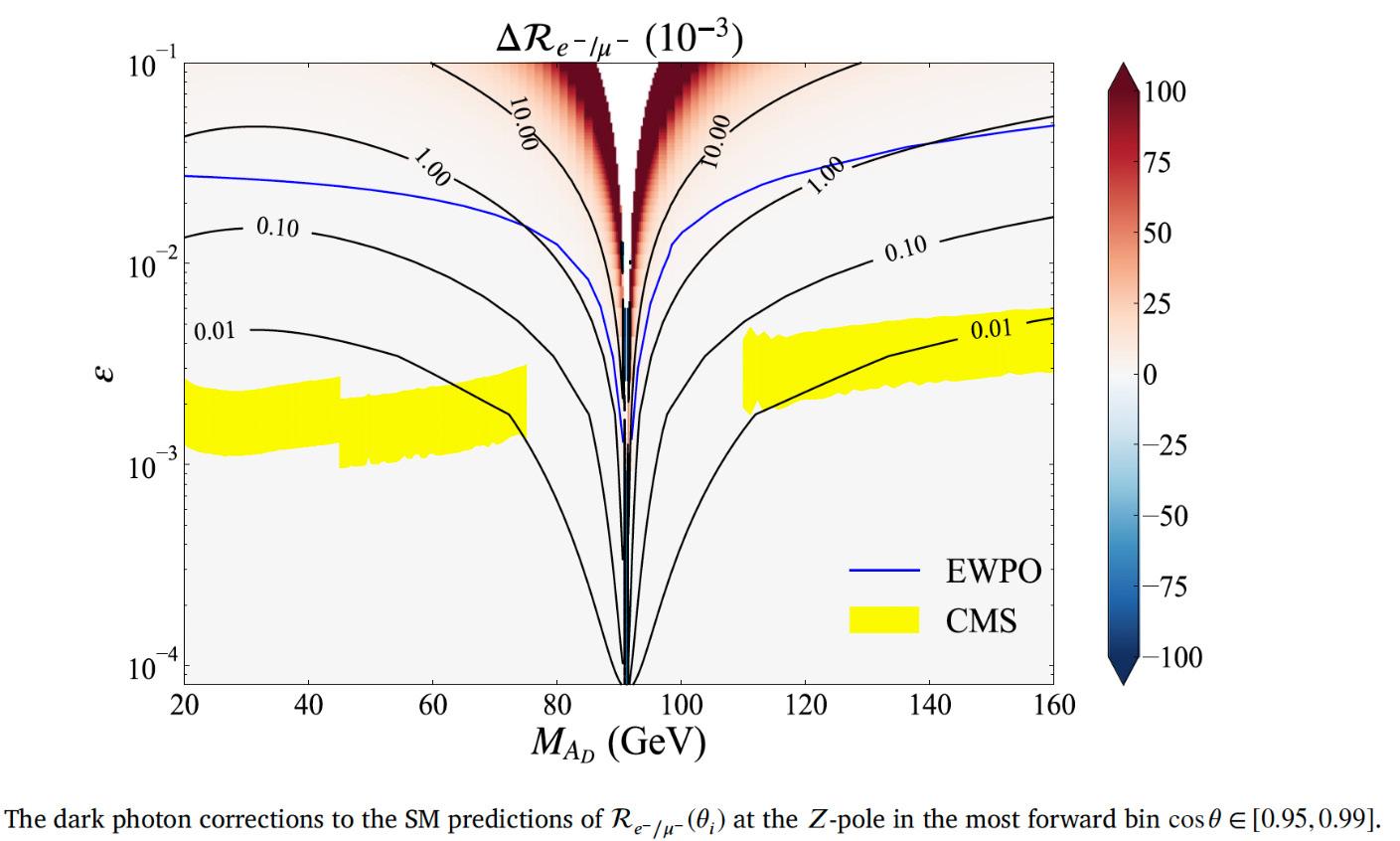
Searching for a dark photon at FCC-ee
The Future Circular Lepton Collider (FCC-ee) has been designed to measure a number of electroweak observables with improvements in precision of orders of magnitude, which will offer great sensitivity to new physics effects. It requires a precision of order 10–5 in the electromagnetic coupling at the Z-pole, α em (M2 Z ). A new method was proposed to directly extract α em (M2 Z ) at FCC-ee by measuring R e-⁄e+(θ) and R e-⁄μ-(θ), where R e⁄l±(θ) refers to the ratio between the number of electrons and the number of leptons (l±) produced at a fixed angle θ
Xuan-Gong Wang and Anthony Thomas investigated the dark photon effects on the cross sections for e+e–→e+e– and μ+μ– at the Z-pole in the most forward bin. An advantage of the μ+μ– channel is that there is no t-channel contribution. The corrections to the Standard Model predictions of R e-⁄μ-(θ) can be as large as 10–4 for the dark photon mass from 20 to 160 GeV and a mixing parameter as small as 10–2, suggesting that the effects of a dark photon may be very significant [Phys. Lett. B 866, 139573 (2025)].
Relaxing constraints on a broad dark photon
Direct experimental searches for a narrow dark photon at the Large Hadron Collider (LHC) have set strong constraints on the mixing parameter, ϵ≤10–3. It has been assumed that the dark photon only decays to the Standard Model final states.
Jake Felix, Anthony Thomas and Xuan-Gong Wang revisited these exclusion constraints if the dark photon is broadened by the decay to dark matter particles with couplings gχ~O(1). As an example, the upper limits on the mixing parameter reported by the CMS Collaboration could be significantly relaxed. Even with a very small coupling, gχ =0.05, the resulting upper bounds on ϵ are shifted to O(10–2), which are comparable with the constraints from electroweak precision observables. This analysis also suggests that future direct experimental searches at e+e– and hadron colliders could put more emphasis on possible signals associated with a broad dark photon resonance [Phys. Rev. D 112, 035011 (2025)].
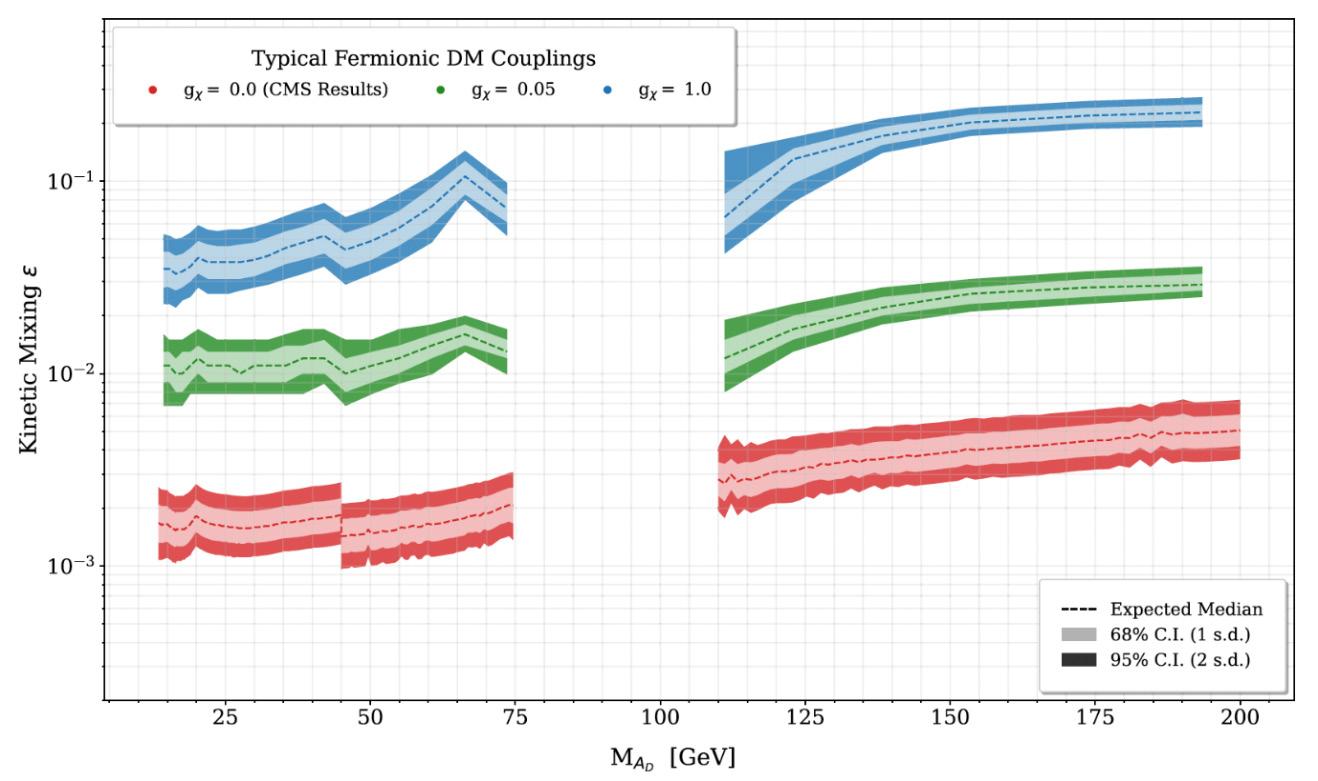
Leading Bounds
on Micrometer to Picometer Fifth Forces from Neutron Star Cooling
If a new fifth fundamental force exists beyond the four fundamental forces we currently know of in nature, then we expect them to be mediated by as-yet undiscovered particles. One popular type of fifth force would involve the mediation of scalar particles. In this publication, AI O’Hare and collaborators set world-leading bounds on a microscopic fifth forces acting over micrometre to picometre distance scales, advancing over previous studies by several orders of magnitude in sensitivity. These constraints rely on the fact that the rate at which old neutron stars cool down can be heavily influenced by the emission of the particles involved in mediating this new force [Phys. Rev. Lett. 135 (2025) 21, 21].
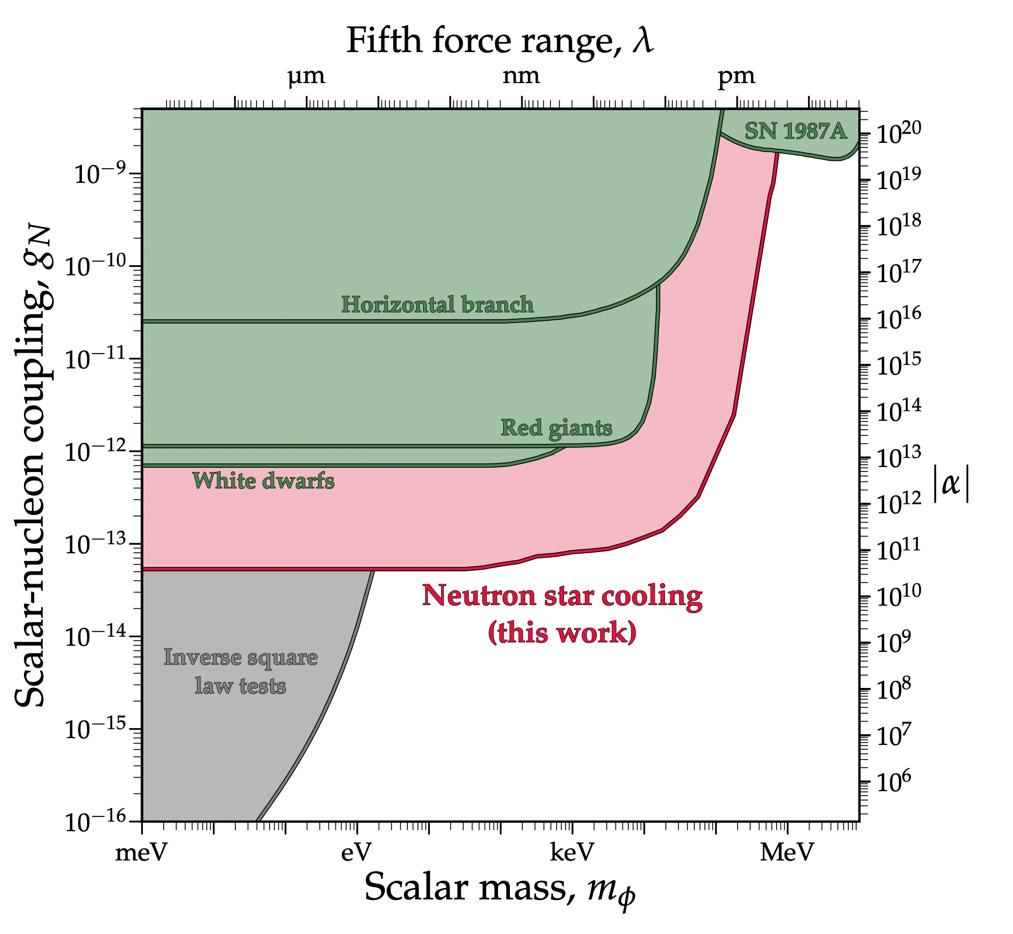
Global
QCD analysis of spin PDFs in the proton with high-x
and lattice constraints
In collaboration with colleagues at Jefferson Lab (the JAM Collaboration), Anthony Thomas recently carried out a comprehensive global QCD analysis of spin-dependent parton distribution functions (PDFs) [Phys. Rev. D 112 (2025) 114017]. Combining all available data on inclusive and semi-inclusive deepinelastic scattering (DIS), as well as inclusive weak boson and jet production in polarized pp collisions, they simultaneously extracted spin-averaged PDFs and fragmentation functions. Including recent Jefferson Lab DIS data at high x, together with sub-leading power corrections to the leading twist framework, allowed them to verify the stability of the PDFs for W2 ≥ 4 GeV2 and quantify the uncertainties on the spin structure functions more reliably. Using new lattice QCD data on gluonic pseudo Ioffe-time distributions, which, together with jet production and high-x DIS data, improved the constraints on the polarized gluon PDF. The expanded kinematic reach afforded by the data into the high-x region allowed them to refine the bounds on higher twist contributions to the spin structure functions and test the validity of the Bjorken sum rule. Improvements in the knowledge of spin dependent PDFs.
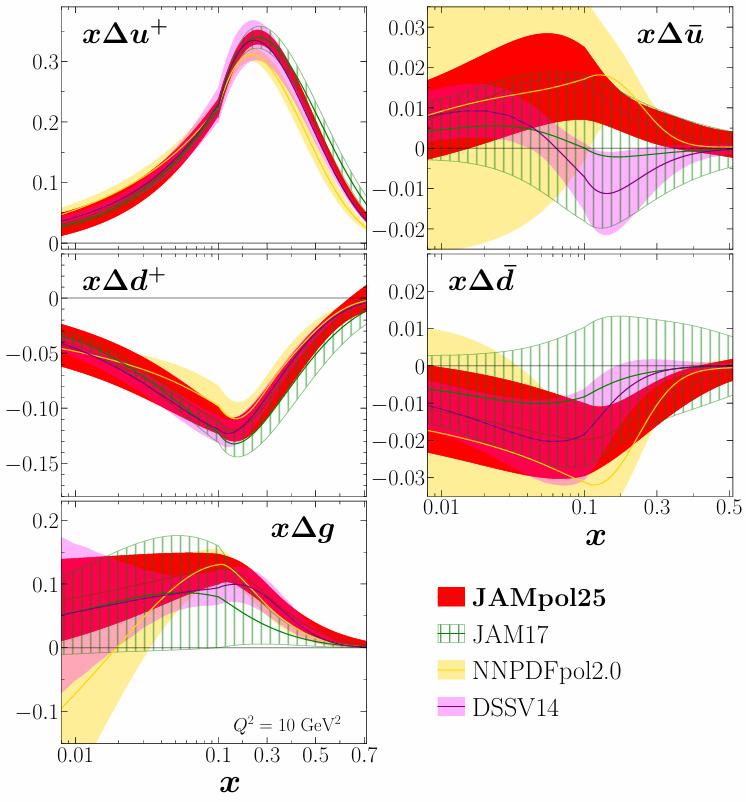
Listening for ultraheavy dark matter with
underwater acoustic detectors
If dark matter is made of extremely heavy particles with masses around a gram, then the number of particles that would pass through conventional human-scale detectors would be undetectably small. In this work, AI O’Hare and collaborators propose the use of a network of underwater hydrophones to detect the sound waves created by ultraheavy dark matter when it passes through ocean water. Networks of underwater acoustic detectors are already proposed to search for ultra-high-energy neutrinos and so this study provides a new physics opportunity for these collaborations [Phys. Rev. D 112 (2025) 6, 063060].
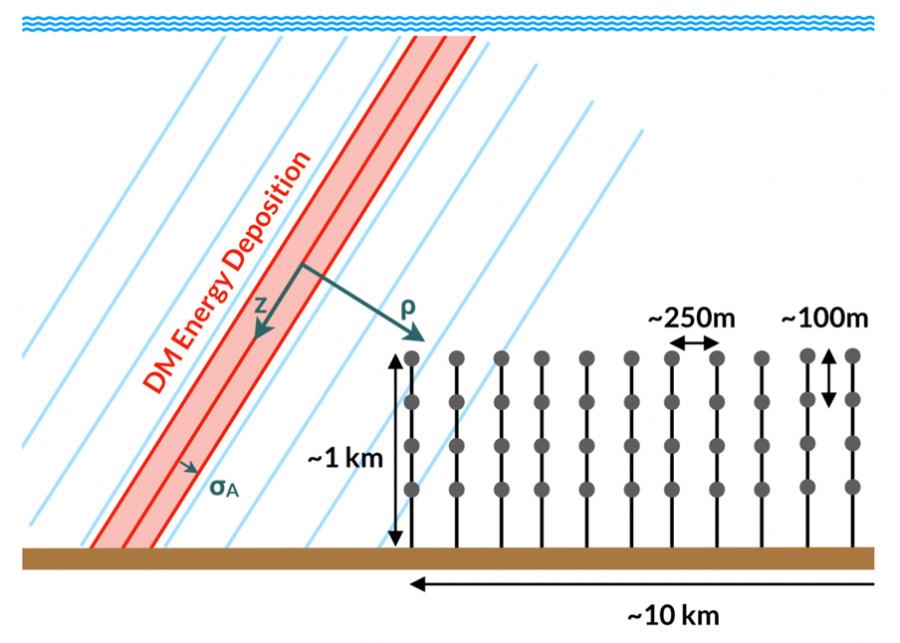
Searching for beyond-standard-model solar neutrino interactions using directional detectors
Direction-sensitive particle detectors are being pursued within the Centre as part of the CYGNUS collaboration, which aims to develop the technology to push searches for dark matter into the so-called ‘neutrino fog’ where conventional approaches fail due to the irreducible neutrino background. As an upshot of this, CYGNUS may also serve as a dual-purpose experiment, where the directional detection of neutrinos from a range of sources could complement traditional neutrino observatories, where directionality is often challenging to measure. In this paper, AI O’Hare, Centre student Chiara Lisotti and their collaborators from the US, forecast the sensitivity of an upcoming small-scale 30-cubic-metre CYGNUS pathfinder to perform tests for new neutrino interactions via the directional detection of solar-neutrino-induced electron recoils [Phys.Rev.D 112 (2025) 12, 123021].
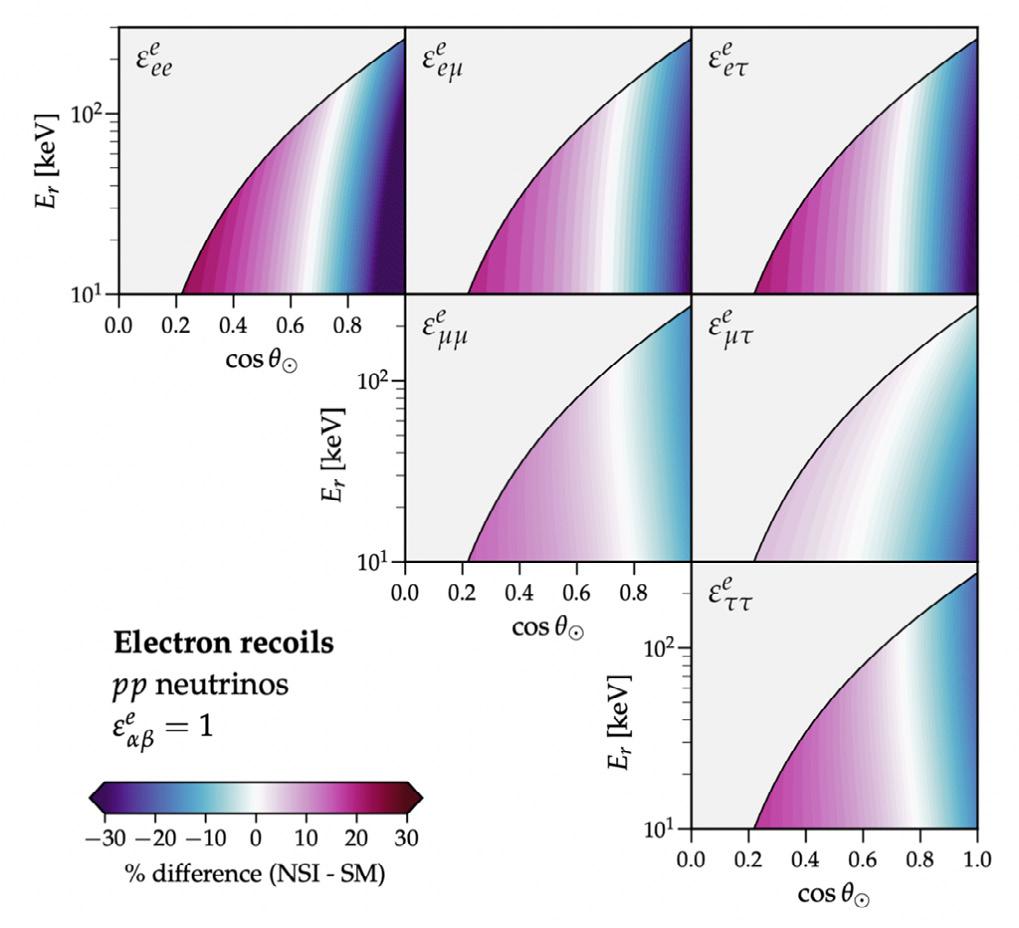
Tidal adaptive softening and artificial fragmentation in cosmological simulations
Traditional N-body simulations often introduce numerical errors that cause dark matter filaments to break apart into non-physical, spurious haloes. This “artificial fragmentation” is a significant hurdle for models with suppressed small-scale power, such as warm dark matter (WDM), as these numerical artefacts can dominate the physical signal.
Centre postdoc Robert Mostoghiu Paun, along with other Swinburne researchers and international collaborators, investigated whether a combination of high-accuracy initial conditions and a new tidal adaptive softening scheme could mitigate these effects. This method adjusts the gravitational force resolution based on the local tidal tensor, aiming to capture gravitational anisotropy more effectively than standard fixed softening and alternative adaptive softening schemes.
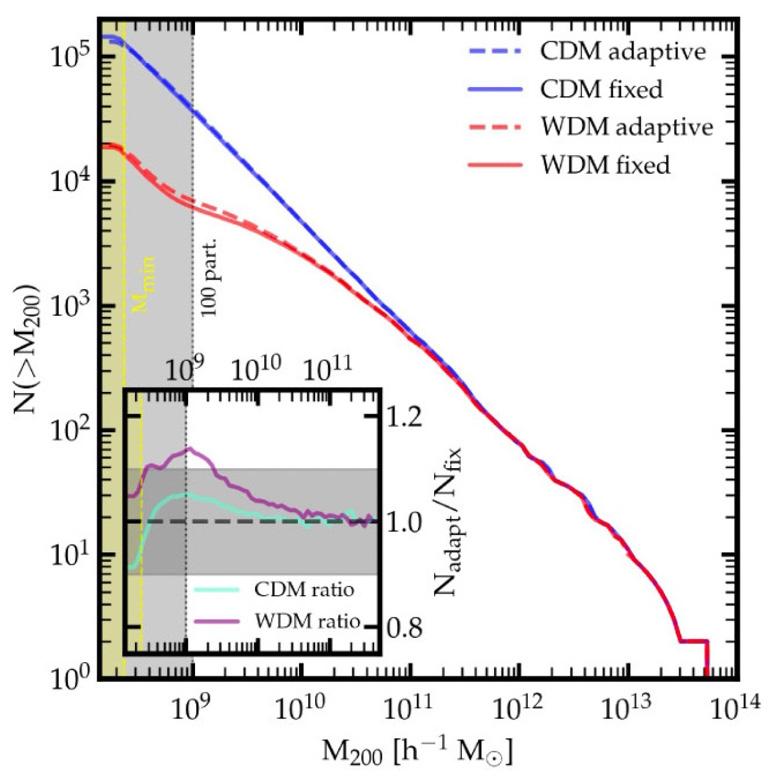
In simplified tests of filamentary collapse, the tidal adaptive approach improved force accuracy, with 40 per cent more particles correctly retaining their positions compared to an optimal fixed softening. However, this improvement did not translate to cosmological simulations; the method failed to significantly reduce the number of spurious haloes in WDM runs. However, the study found that tidal adaptive softening intrinsically shifts the inferred formation times of haloes in WDM simulations, a delay not observed in cold dark matter models. Moreover, the results also highlighted that the initial redshift of a simulation significantly affects the shape of protohaloes, which can impact the algorithms used to identify and remove spurious objects [MNRAS 542, 735746 (2025)]. These findings suggest that current N-body methods still struggle to reliably predict low-mass populations in alternative dark matter scenarios. Future improvements may require redefining adaptive softening criteria or exploring computationally expensive techniques beyond traditional N-body discretisation.
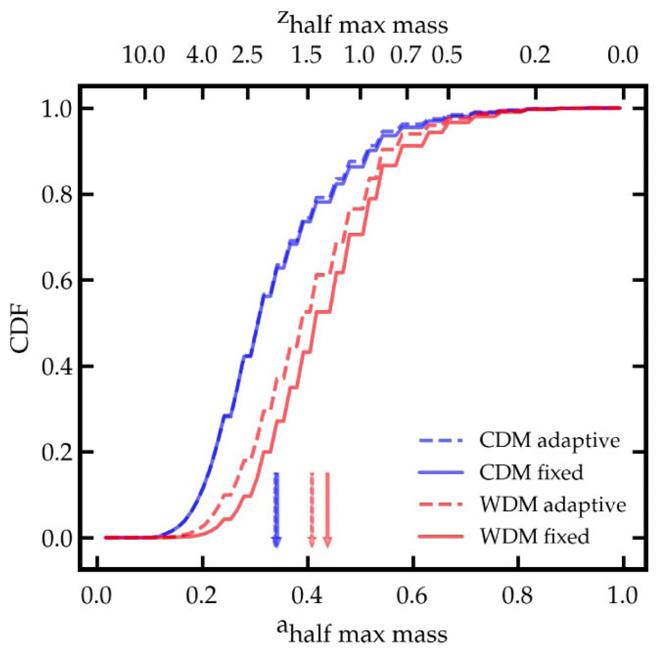

research activity plan for 2026
WIMP Direct Detection:
SABRE South:
• Installation of the shielding in SUPL
• Commissioning of the clean tent space at SUPL, and assembly of the high purity crystal detector modules in the vessel
• Commissioning of the fluid handling system in SUPL
• Continuous operation of the muon detectors for the analysis of flux and angular distribution of muons reaching SUPL
• Start the operation of the SABRE South detector
• Publications cosmic ray background, studies of induced annual modulation, and sensitivity studies for various types of dark matter candidates
CYGNUS-Oz:
• Complete construction of CYGNET TPC prototype
• Translate radon removal system to a scaled up device for use at SUPL
• Continuation of research themes into low-cost avalanche gain, novel negative ion drift gases, machine learning reconstruction tools, and directional neutron detection
Current and next generation liquid xenon TPCs:
• Contributions to analysis and simulations for LZ
• XLZD design and sensitivity studies
• Transport and commissioning of Xemis-1 prototype LXe System for Subatech Nantes, for studies of LXe -photosensor systems
• Commissioning of SI-funded multi-node photosensor bench tests at Melbourne and Sydney
AXION and WISP Direct Detection:
• Continued R&D on quantum technologies and cavity resonators for ORGAN Phase 2, ORGAN Q, ORGAN-Low Frequency and other dark matter experiments. Including superconducting coatings, quantum amplifiers, squeezed-state and/or single-photon detection receivers.
• World first follow up experiment on hinted dark photon detection with ORGAN Q infrastructure
• Investigation of cryogenic implementation of low-noise oscillator designs using high-Q superconducting resonators for UPLOAD and UPLOAD-ANYON.
• Continued investigation of low mass axion detection experiments to increase the range of axion masses covered, with the ADMX and ORGAN collaboration
• Continuation of ADMX sensitivity calculations, data analysis and simulations and modelling for future high and low mass extensions
• Continuation of improvements to existing Scalar DM detection experiments and searches for new physics such as high frequency gravitational waves.
• Enhance world-wide networks with a southern hemisphere location, which search for wave like dark matter and high frequency gravitational waves.
Precision Metrology (nuclear):
• Progress Super-SIMS to characterise ultra-low 40K
• Chemical screening of sample preparation components for 210Pb
• Measurement of 210Pb content in NaI material (ANU/ANSTO)
• Progress Fast Isotope Switching and automated measurement tests (actinides & decay series isotopes)
• Progress development of AMS fission product capabilities
LHC:
• Initiating new search for dark matter produced in association with top quarks.
• Involvement in the search for supersymmetry with top quarks and missing transverse momentum in the dilepton final state.
• Searches using multiple top quarks to observe evidence of dark matter mediators
• Completion of searches for final states with jets, flavour-tagged jets and missing transverse momentum.
• Extension of analyses techniques for further novel searches for dark matter including using displaced vertices.
• Improvement of hadronic jet measurements and algorithms to use global particle flow to better understand hadronic measurements.
• Production and QC of the silicon detectors for the ATLAS inner tracker upgrade for High Luminosity LHC.
Theory:
• Determine constraints on and potential new signatures of wellmotivated dark matter models.
• Develop new techniques to probe low-mass dark matter
• Determine the impact of dark matter on stars and other astrophysical systems
• Determine dark matter nature and distribution from cosmology and galaxy simulations
• Understand and quantify the impact of nuclear structure on dark matter direct detection rates

SUPL update
Prof. Mark Hargreaves AM joined SUPL Ltd as Chair of the Board of Directors in 2025. A Redmond Barry Distinguished Professor Emeritus (Physiology) at the University of Melbourne Prof. Hargreaves brings over 35 years’ experience in academic research, education, and leadership.
Kim Mintern-Lane was appointed Chief Operating Officer of SUPL Ltd in 2025 and, together with Laboratory Officer Steven Rushbrook, has worked closely with Centre researchers and students to support the installation and commissioning of the SABRE South experiment.
SUPL continues to operate as Australia’s only deep underground laboratory, providing infrastructure to support the SABRE South experiment and other future low-background research programs.
SABRE South in SUPL
As detailed above in the SABRE South report, several major components for the experiment were delivered and installed at SUPL during 2025. These include the glovebox used for handling the ultrapure sodium iodide crystals, the clean tent and steel castle used for crystal testing, and associated gas and fluid handling systems.
The muon detector system and DAQ infrastructure continued operating throughout the year, with data collected and a paper submitted in 2025. Additional SABRE South researchers also completed their induction at SUPL to enable them to work in the underground laboratory.
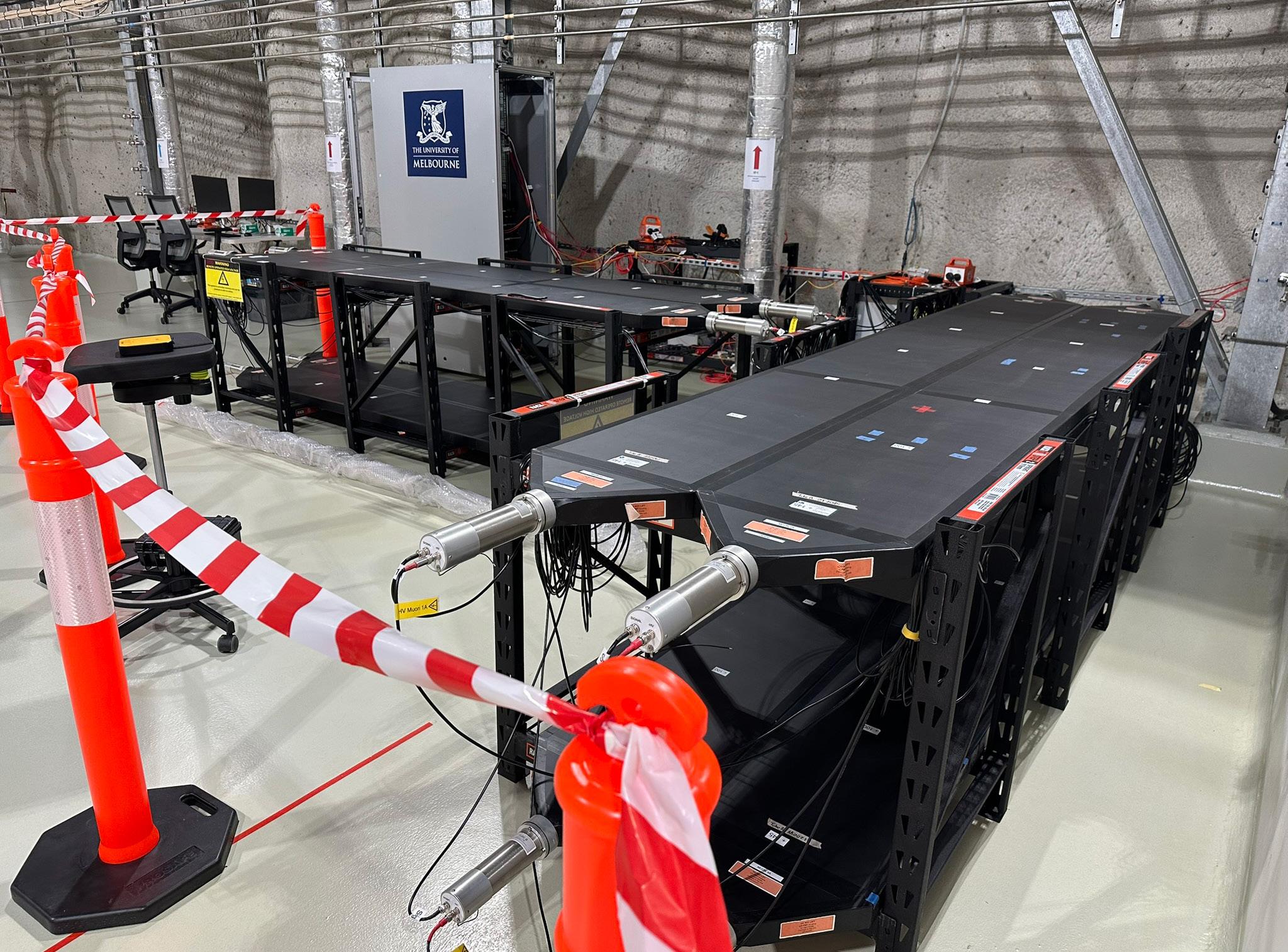
Muon detectors and DAQ installed in SUPL.
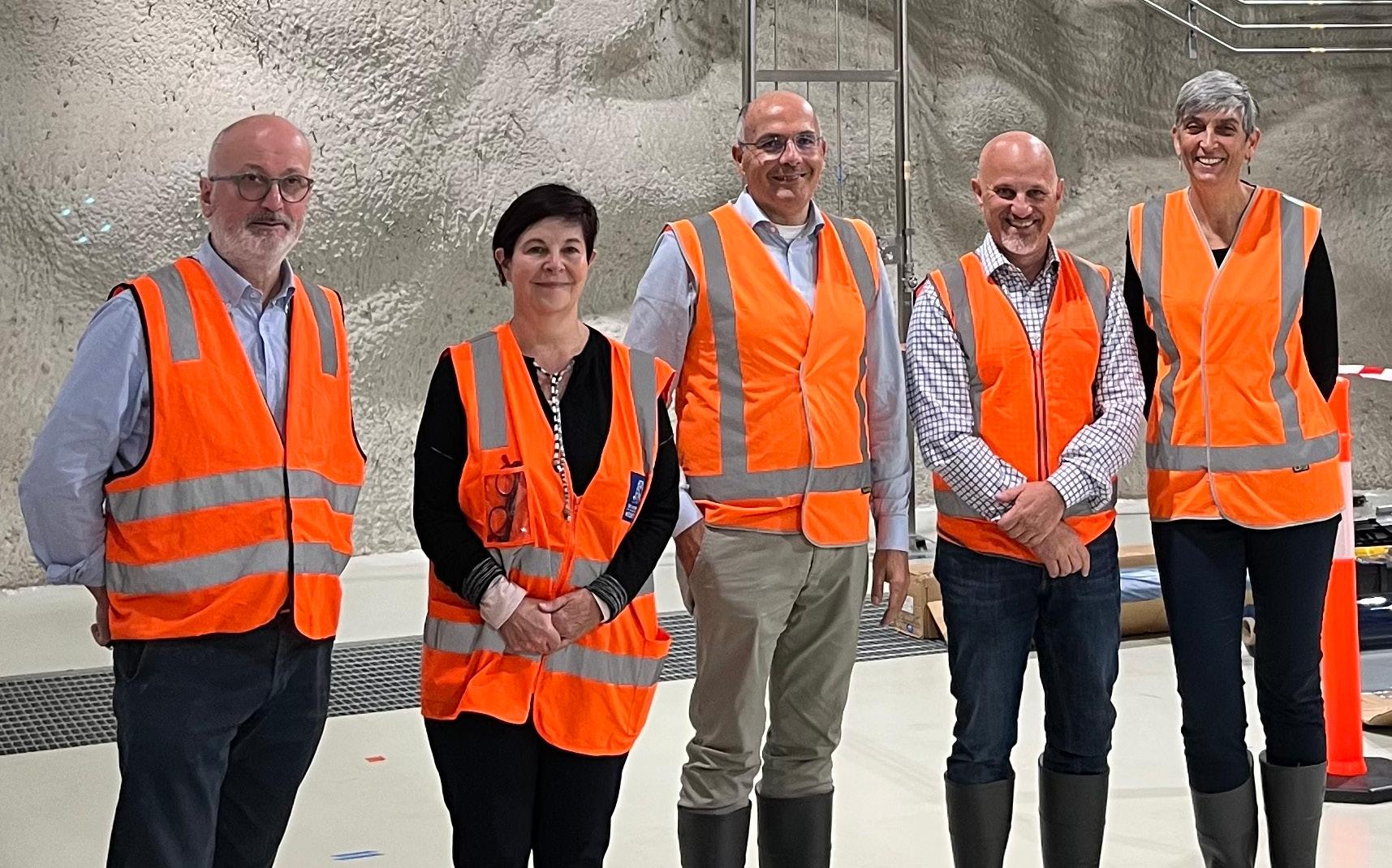
Visitors in SUPL, communication and outreach activities
In addition to experimental activities, SUPL has hosted a number of visitors to the laboratory associated with the Centre during 2025.
In February, as part of the Centre’s International Scientific Advisory Committee meeting held in Halls Gap, Victoria, new ISAC chair Priscilla Cushman (University of Minnesota; SuperCDMS-SNOLAB spokesperson), Professor Tony Gherghetta (University of Minnesota) and Centre Advisory Board Chair Professor Aidan Byrne had a chance to visit SUPL. For more information on the ISAC visit, see the Events section.
A delegation from Italy’s Istituto Nazionale di Fisica Nucleare (INFN) including Prof. Marco Pallavicini (INFN Vice President), Dr. Oliviero Cremonesi (Director of the INFN Astroparticle Physics Division) and Dr. Marco Lazzarino (Scientific Attaché at the Italian Embassy in Canberra) visited SUPL in August during an official visit to Australia. Partner of the Centre, the INFN has long been a strong supporter of SABRE South and SUPL and the delegation expressed strong interest in the progress being made at the facility.
The Centre partnered with the Boulby Underground Laboratory in the UK to celebrate Dark Matter Day, hosting a livestreamed tour of SUPL and the Boulby Laboratory. Scientists from SUPL, the Centre and Boulby provided virtual tours and answered questions from the public during the free online event.
An outreach event for teachers, students and space-enthusiasts attracted 224 participants from eight countries. The event, titled Beyond the Stars - Astronomy Across the Globe, was organised by Jackie Bondell and the Centre for Collaborative Education as part of a collaboration aimed at providing teachers with the tools to bring astronomy and dark matter science into the classroom.
In August, during National Science Week, cosmologist and author Katherine J. (Katie) Mack visited SUPL with SpaceAustralia.com founding director and editor Rami Mandow. Katie first visited the site when it was just a small cavern and refuge chamber within the Stawell Gold Mines.
SUPL managed the feasibility study for the proposed Dark Matter Experience Centre through a project governance group and lead consultants. The study examined design options, economic impact, staging and overall viability of the proposed attraction, and involved engagement with government and community stakeholders.
The Centre continued to support the international profile of SUPL through visits, international conference presentations (including ICRI mentioned later in this report) and through collaboration with SUPL on media and outreach activities.
INFN visit to SUPL. Oliviero Cremonsi (far left), Marco Pallavicini (middle), Marco Lazzarino (second from right).
innovation & translation activities
IdeaSquare,
CERN; innovation and translation program
A cohort of six ECRs attended an intensive 2-week innovation program at CERN’s IdeaSquare innovation platform in July/August 2025. Participants strengthened their innovation capabilities by developing practical skills in reframing fundamental research value to different audiences and for real-world application, and by adopting “orders of magnitude” thinking while designing for life on another planet (we focused on rocket landing), as part of IdeaSquare, CERN’s i2planet initiative. Highlights and achievements included: targeted training in translation and commercial literacy (including commercialisation concepts such as TRL and IRLs); insight into CERN’s Knowledge Transfer Office’s entrepreneurship approaches; masterclasses in science communication and visual storytelling (including PechaKucha-style presentations); creative problem solving & idea generation; and site visits (like the synchrocyclotron & AMS experiment) plus networking with CERN researchers (e.g. cosmology group) that broadened collaboration opportunities for CDM researchers.
“I was able to meet many new people from whom I learnt a lot about different ways of thinking and approaching problems”
- Riya Raizada (UoS)
“I have learnt how to identify specifics of my research that relate to skills that are important to industry.” - Bill Loizos (UoA)
“…my expectations were exceeded, I learned not to be afraid to move outside of my comfort zone and see challenges as opportunities, and developed skills from creativity-boosting techniques, to analogies in science communication, to understanding commercialisation frames like Technology Readiness Levels (TRL) and Investment Readiness Levels (IRL).”
- Robert Mostoghiu Paun (SUT)
Translation Committee: a centre-wide approach to increase impact
CDM established a Translation Committee with representation across all nodes, in order to address some of the challenges identified in 2024 related to translation, such as lack of skills, awareness, time, resource and motivation. This is a key structural achievement for the Centre, to spark translation activity across CDM. The Committee formed three objectives:
1. develop skills & mindset that supports translation, targeting PhD and ECR
2. increase application of science from CDM to commercial and/or societal applications
3. demonstrate alternative career pathways connected to CDM science
Activities the committee are rolling out include a “Translation Hero” quarterly seminar series (online and in-person), online translation skills training (enabled through Special Initiatives funding) to address challenges in identifying where there is application opportunity, support for two ECR translation ideas to be further developed with innovation experts at Swinburne’s Design Factory Melbourne, and building an external-facing web presence to capture CDM’s translation outcomes.
Translation skills taster at the Annual Workshop
Visual thinking, like diagramming, can uncover new connections between existing objects and concepts. It is a practical method any researcher can use to considering how their research might be applied to other domains. A taster exercise that introduced diagramming was run with all CDM members at the annual workshop to give a snapshot of skills for research translation.
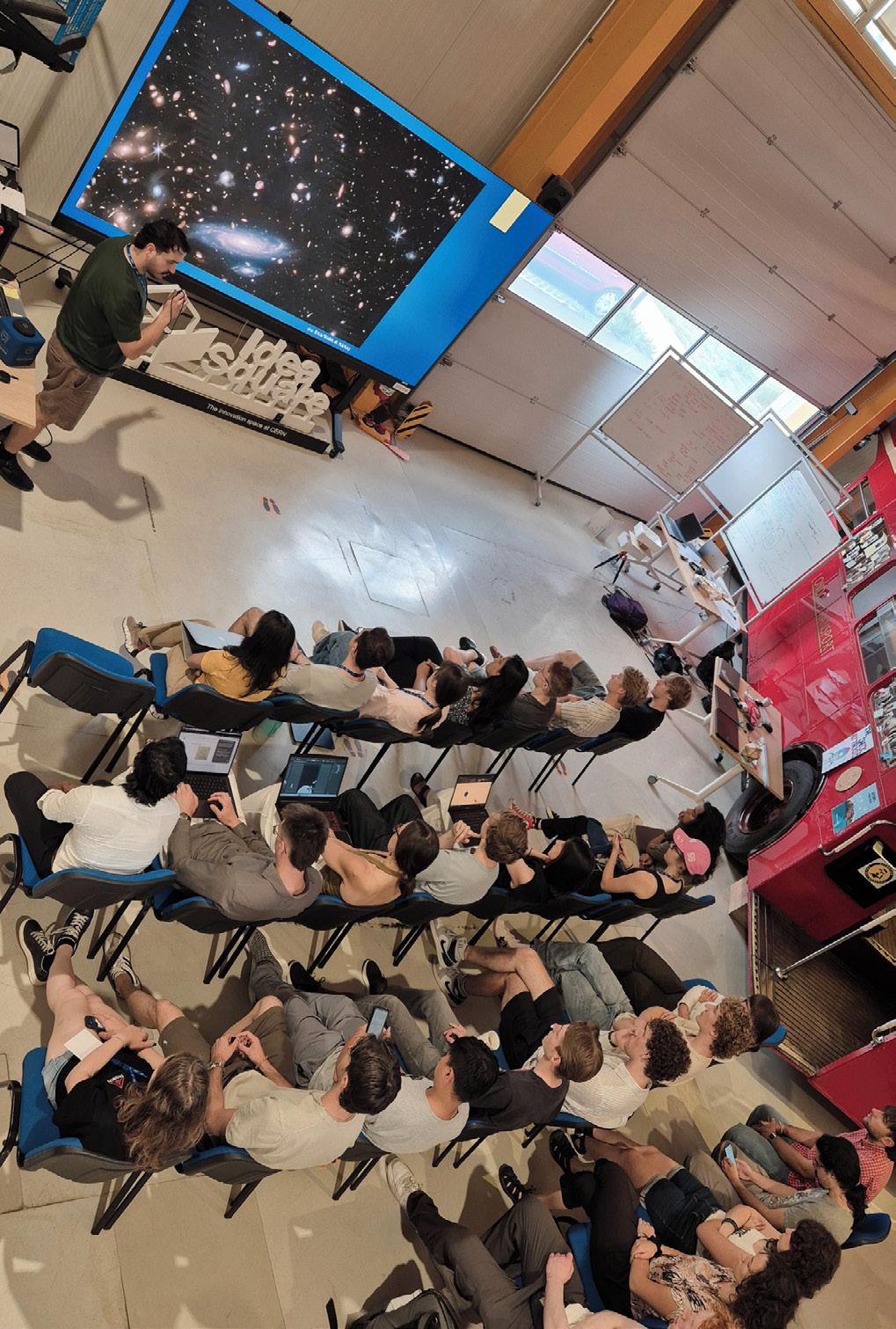
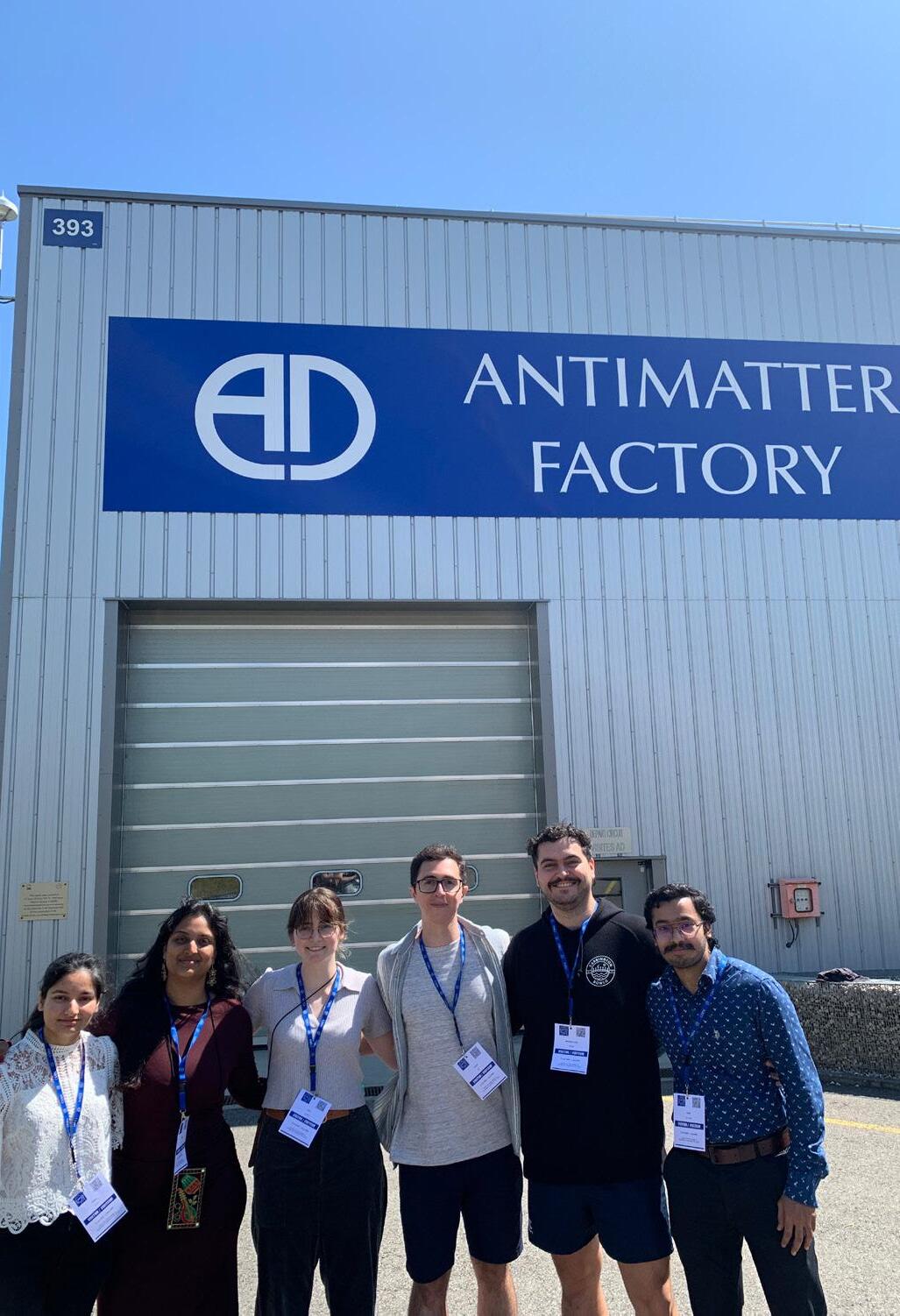
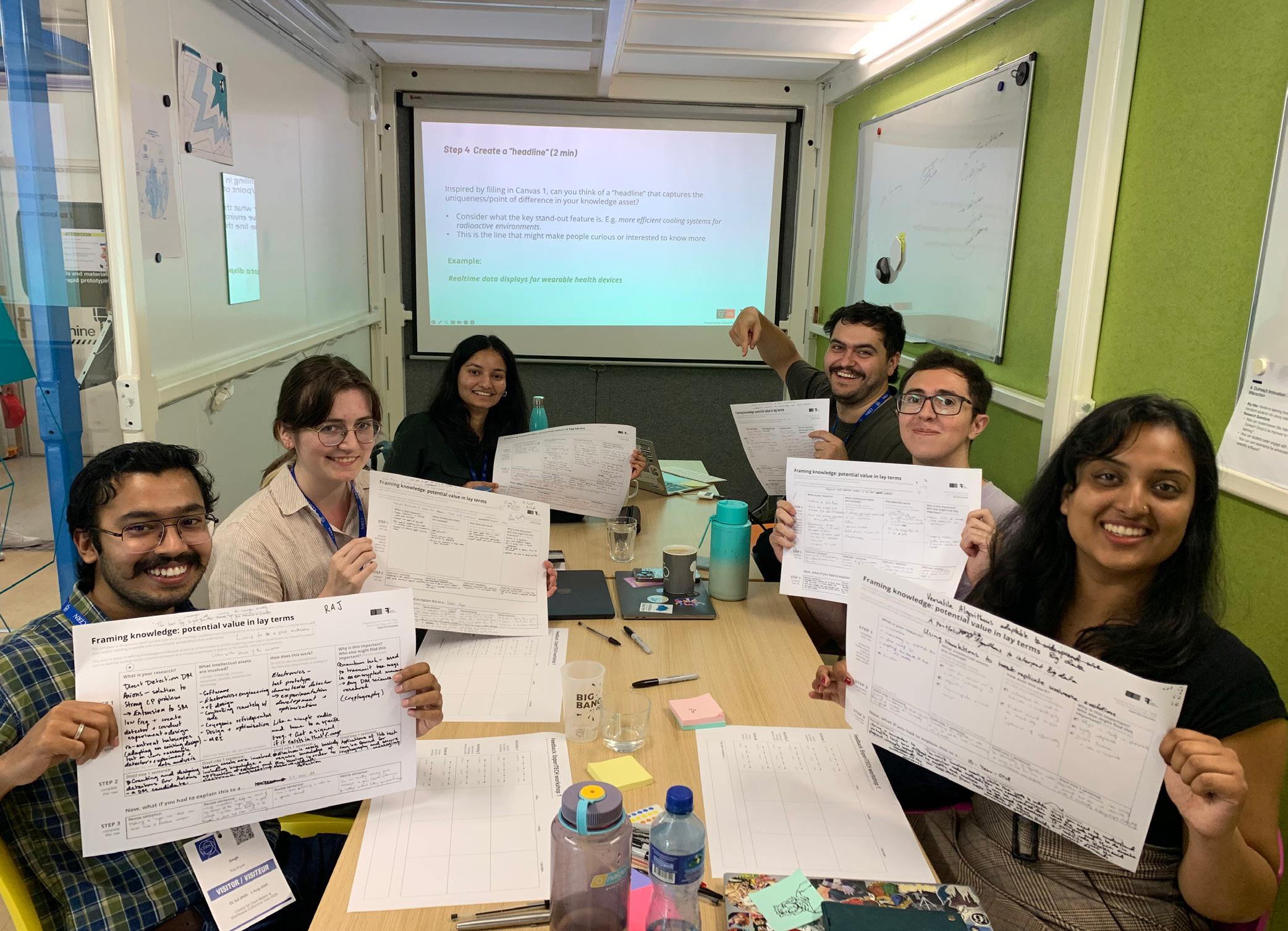
Centre members participating in the IdeaSquare program at CERN. From left: Raj Aryan Singh, Amelie Read, Sharry, Robert Mostoghiu Paun, Bill Loizos, Riya Raizada.
CDM Special Initiatives funding
CDM Special Initiatives ECR funding
In early 2025, the second round of Special Initiatives for ECR led projects was run. Six projects (listed below) received $55,000 of funding with applicants and teams representing every node of the Centre as well as other national and international collaborators.
Fast-Tracking Optical Calibration for SABRE South
Irene Bolognino (UoA) and team members from ANU, UoA, UoM, SUT and the University of Toronto
Effects of Cosmic Background on Precision Acoustic Systems
Will Campbell (UWA) and Ben McAllister (SUT)
This project, a collaboration with Quantic Wenzel, was a study of how cosmic rays affect ultra-precise quartz oscillators. These tiny, crystal-based "clocks" are vital to everything from deep space communications to experimental physics. By measuring their behaviour in the ultra-low background environment in SUPL, the team hopes to uncover how radiation from space might subtly affect their performance and help us push the boundaries of timekeeping and fundamental science. A paper is forthcoming.
CDM TikTok Outreach Project
Chiara Lisotti (UoS), Iman Shaukat Ali (UoM) and Maaz Hayat (UoM)
Enhancing low-background detector development with established instruments and radon-capturing materials
Alasdair McLean (UoA) and team members from ANU, UoS, UoA, University of Sheffield and University College London
High-resolution search for dark matter axions
Aaron Quiskamp (UWA) and Ciaran O’Hare (UoS) and Giovanni Pierobon (UNSW)
Navigating Academia and Beyond: Academic and Career Skills for Particle Physics
Sharry (UoS), Chiara Lisotti (UoS), Iman Shaukat Ali (UoM), Haylea Purnell (UoA), Kael Kemp (UoA) and Amrita Banerjee (SUT)
From 25–27 August, 48 early career researchers from the Centre joined the hybrid “Navigating Academia and Beyond: Academic and Career Skills for Particle Physicists” workshop. The workshop was designed to equip participants with practical tools for academic success while also broadening perspectives on career options outside academia. It aimed to build confidence, support personal and professional development, and strengthen connections within the research community.
The program included sessions on:
• Presentation and public speaking skills
• Post-doc applications and career planning in academia
• Academic and grant writing
• Traditional and non-traditional grant opportunities
• Exploring career paths outside academia
• Understanding and addressing imposter syndrome
To balance learning with connection, a fun bowling night gave participants a chance to socialise and build community in a relaxed setting.
Sharry reflected that ‘From an organiser’s perspective, the experience was incredibly rewarding. We learned how much planning and coordination go into making an academic event successful—from logistics and time management to communication with multiple stakeholders. Most importantly, we discovered the value of teamwork and flexibility in ensuring everything runs smoothly.’

Worskhop organisers Sharry, Amrita, Haylea, Iman and Kael at Strike Bowling.
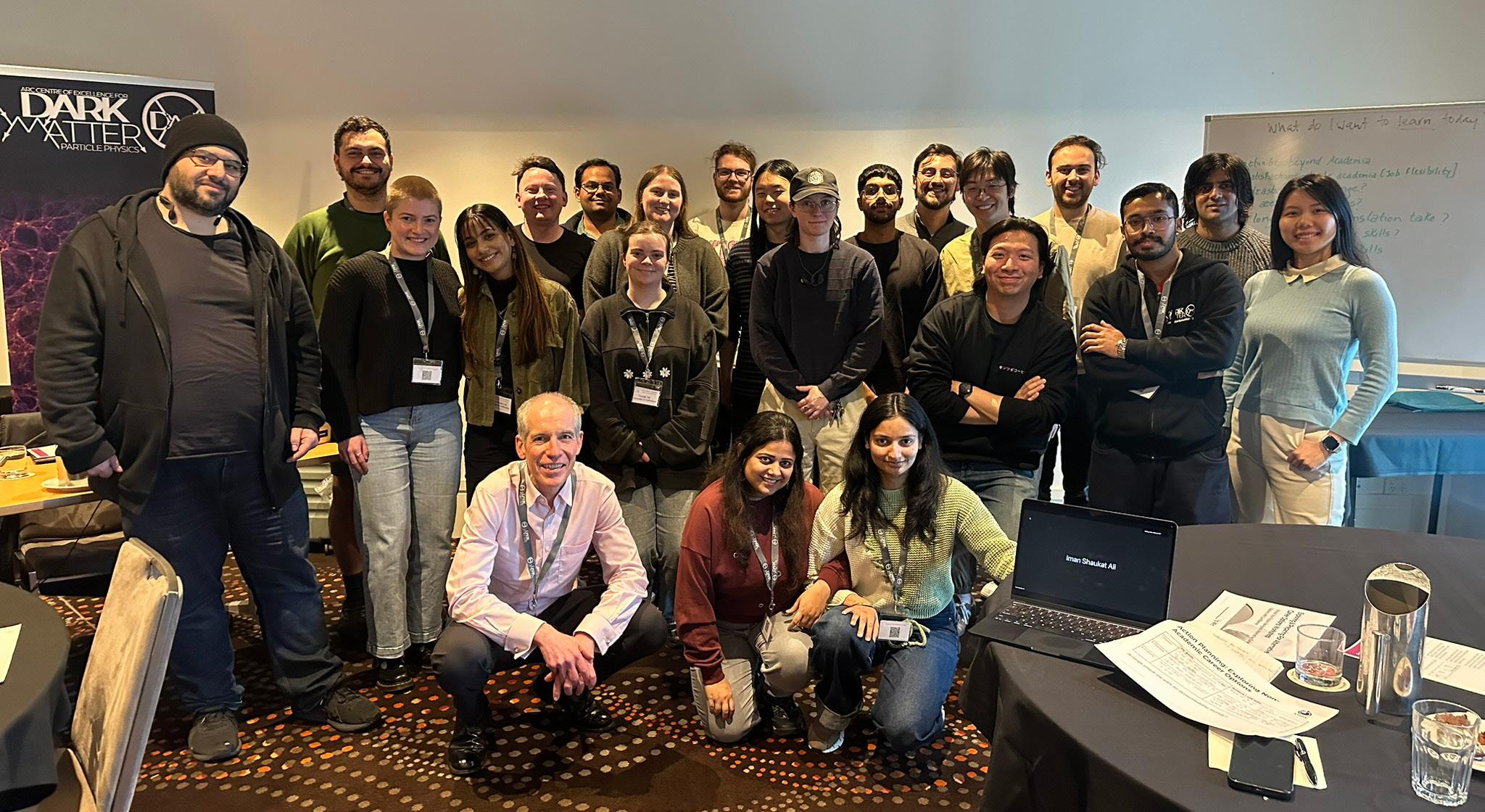
CDM Special Initiatives funding
In late 2025, the second main funding round of Special Initiatives was run. All Centre members could apply for funding for projects in the Centre which aligned with the Centre’s strategic priorities, unifies the Centre or seeds a larger dark matter project or activity that will be of value to the Centre.
Special Initiatives funding can support all aspects of Centre activities including research, mentoring, outreach, equity, diversity & inclusion, and translation.
Almost $340,000 was awarded across six projects representing all the nodes of the Centre and several of our Partner Organisations. A list of projects is outlined below, and we look forward to their progress in 2026.
Calibration systems for the SABRE South Experiment
Irene Bolognino (UoA) on behalf of the SABRE South collaboration
Dark Matter Theory Direction-Setting Workshop 2026
Jayden Newstead (UoM) and team from UoM, SUT, UoA, UoS and ANU
Mitigation Strategies to enable ultra-low lead210 background measurements
Michaela Froehlich (ANU) and team from ANU, ANSTO and HZDR
Multi-Node Photosensor Characterisation for XLZD
Theresa Fruth (UoS), Robert James (UoM) and Laura Manenti (UoS)
Quantum Networks to Search For Wave Like Dark Matter
Michael Tobar (UWA) and team from UWA, SUT, UoS, ANU and international external co-investigators from Jet Propulsion LabNASA, Forschungszentrum Juich, Aalto University, VTT Technical Research Centre of Finland, CERN and GravNet
Translation pipeline for fundamental researchdesigning away barriers
Christine Thong (SUT) and external co-investigator David Mesa
Some of the attendees of the Navigating Academia & Beyond Workshop with Jonathan Lacey from Cruxes Innovation.
equity, diversity and inclusion
The Equity, Diversity, and Inclusion (EDI) portfolio exists to improve gender balance in STEM, support families and carers within the Centre, inspire a new and more diverse generation of researchers, and foster a culture grounded in respect, belonging, and inclusion. The EDI Committee includes representatives from each node and remained active throughout 2025, meeting regularly to plan initiatives, support Centre events, and continue strengthening inclusive practices across the Centre.
Following the 2024 update to the Centre’s Code of Conduct, the role of Contact Officers was formally introduced in 2025. Contact Officers serve as impartial advisors who provide confidential guidance on matters related to the Code of Conduct. They support members in initiating conversations, understanding available pathways for raising concerns, and navigating options for reporting or managing potential breaches. In 2025, seven Contact Officers representing all nodes and a range of career stages completed specialised training with iHR to prepare them for this role.
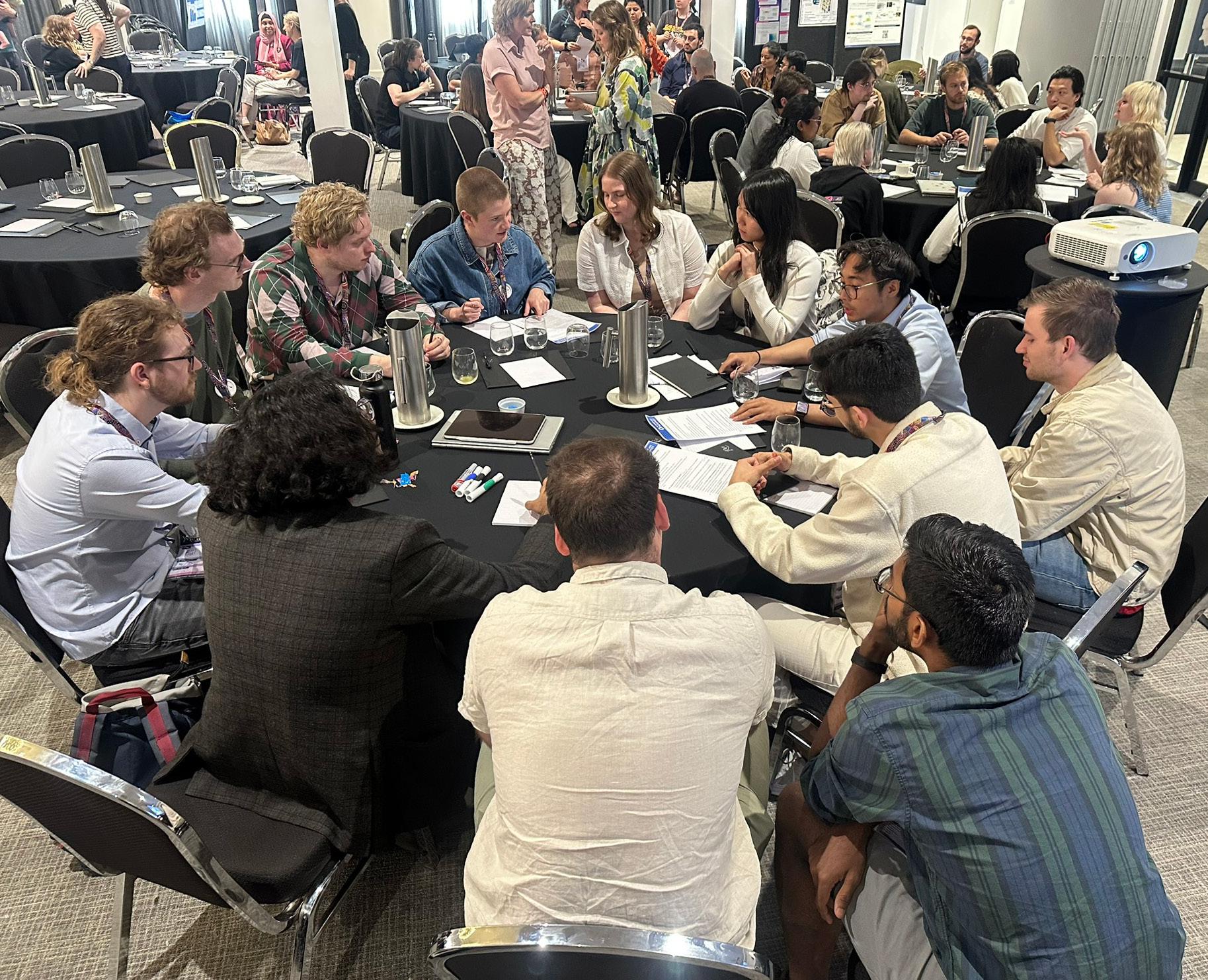
The navigating workplace dynamics session at the Centre's annual workshop.
A key focus early in 2025 was supporting leadership development among early career researchers. The Centre funded participation for postdoctoral researchers Leonie Einfalt, Eiasha Waheed, and Ellen Sirks in the Women & Leadership Leading Edge program. Delivered part-time over four months, this program supports aspiring and early-career women in building confidence, leadership capability, and practical management skills. Through a combination of workshops, peer coaching, interactive webinars, and workplace application projects, participants gained tools to strengthen their leadership practice and contribute to a more inclusive and supportive research environment within the Centre. See Eiasha’s summary on her experience with the program on page 73.
Another major initiative during 2025 was the Centre’s involvement in organising the inSTEM conference. Members of the Centre and EDI Committee, Renée Key, Jade McKenzie, and Anita Vecchies, served on the inSTEM organising committee. The Centre also supported attendance for multiple interstate members, enabling broader participation. See Leonie Einfalt's summary of their experience as an attendee at inSTEM on page 76. inSTEM remains an important annual event dedicated to advancing equity and inclusion for marginalised and underrepresented groups in STEM, while providing opportunities for allyship development, networking, and career support.
The Centre’s Annual Workshop in Canberra continued to serve as an important platform for community building and open dialogue. This year, the EDI Committee invited workplace therapist Kate Diggle to facilitate a session on navigating workplace dynamics and ECR-supervisor relationships. ECRs and supervisors participated in separate and joint discussions to share experiences, identify challenges, and explore expectations in supervisory relationships. These conversations directly informed the development of a new guidance document, Guidance for Supervision and Support of ECRs in the Centre, which will be finalised and circulated in 2026. The document aims to promote clear communication, shared responsibility, and supportive supervision practices, and may serve as a model for other Centres seeking to strengthen their research culture.
The workshop also featured several initiatives designed to celebrate the diversity and creativity of Centre members. Due to strong positive feedback from previous years, the CDM talent show returned, providing members with an opportunity to share artistic, creative, and personal talents in an informal and supportive setting. See photos and Navneet Krishnan’s summary of the event on page 79. The workshop also included a cultural gift exchange, which encouraged participants to share small gifts that reflected their cultural background, personal traditions, or handmade contributions. This activity fostered meaningful conversations and strengthened connections across nodes and disciplines.
Through these initiatives, the EDI Committee continued to strengthen the Centre’s inclusive culture by supporting leadership development, facilitating open dialogue, celebrating diversity, and enabling equitable participation in professional opportunities. These efforts reflect the Centre’s ongoing commitment to creating a respectful, supportive, and welcoming environment for all members, with further initiatives planned for 2026 and beyond.
media and communications
The Centre undertakes a range of Media and Communications activities with the aim of promoting the Centre’s research and scientists, sharing the joy of fundamental science with the wider community, inspiring a diverse future generation of scientists and fostering a sense of cohesion among researchers.
In 2025, hundreds of thousands of people read about or listened to the Centre’s news via the television, radio, print and online media.
Other media and communications activities include the Dark Matters newsletter, the Centre’s website, and social media engagement.
Sharing the excitement of dark matter research
In 2025 we promoted the Centre’s research and achievements in the media, social media, Centre website and Dark Matters newsletter.
We developed a new video series that highlighted the latest news on the SABRE South experiment, titled ‘Spotlight on SABRE South’. These videos were posted on Facebook, LinkedIn, Instagram, BlueSky and the Centre’s website and attracted strong engagement.
We also celebrated Centre members’ involvement in international experiments such as the LZ collaboration and a wide range of research within the Centre in our website, newsletter and social media accounts.
The Centre’s research was also celebrated during public talks throughout the year and during the National Quantum & Dark Matter Road Trip and in Stawell.
We attended the Stawell Easter Extravaganza, where our researchers spoke with community members about the SABRE South experiment, building excitement and a sense of community engagement with the research.
These activities recognise the work that our researchers are doing, highlighting their success among a national and international audience of researchers and the wider public.
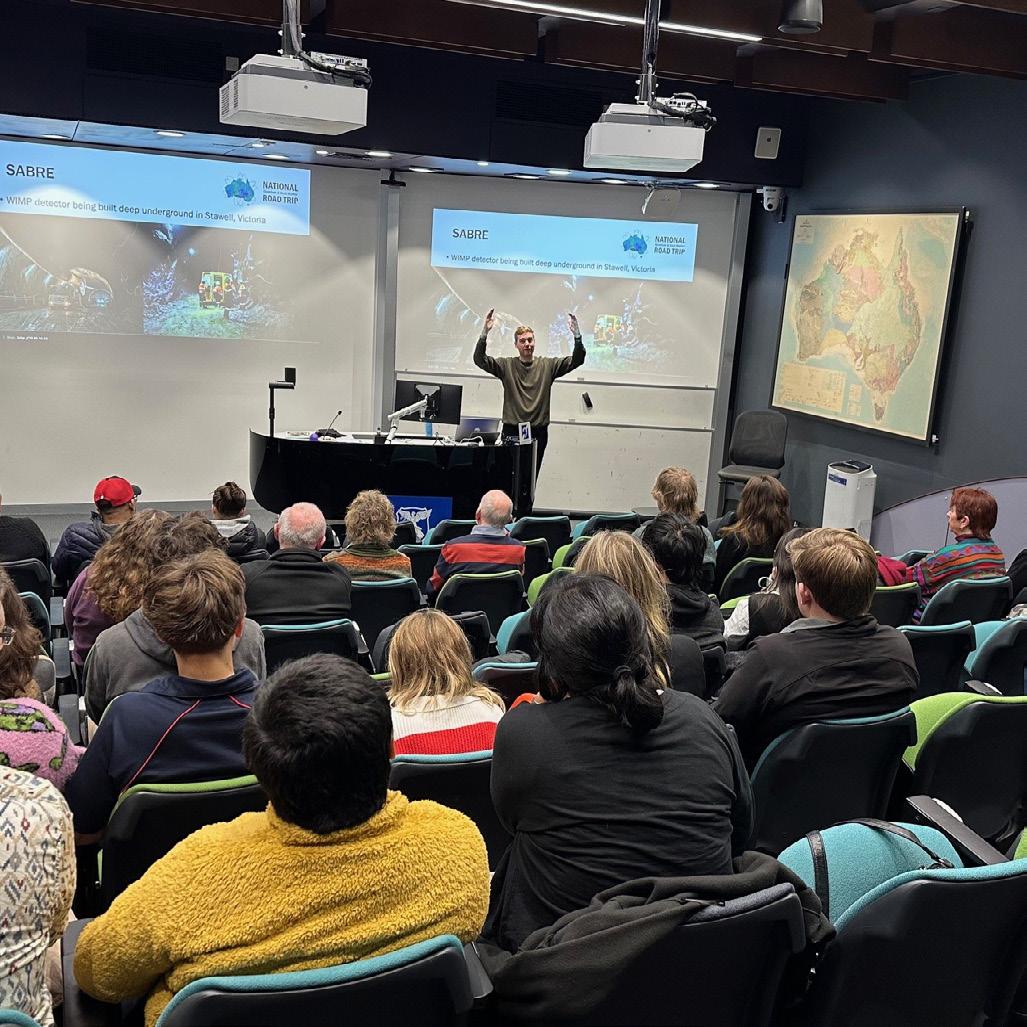
Inspiring rural, remote and regional communities
The Centre promoted science to rural, remote and regional communities with a range of media and social media activities in 2025.
The National Quantum & Dark Matter Road Trip appeared in television segments, and in the local print and radio news and interviews to reach people living in these communities, which are usually under-represented in science careers.
An article about the road trip by the Australia Associated Press reached about 92 publications, including in metropolitan centres and rural towns.
The Centre also engaged with rural, remote and regional students and communities by joining local community groups on Facebook.
We worked closely with regional media in Stawell, promoting research and local events like public talks and live broadcasts from the Stawell Underground Physics Laboratory.
Ben McAllister giving a public lecture in Melbourne during the National Quantum & Dark Matter Road Trip.
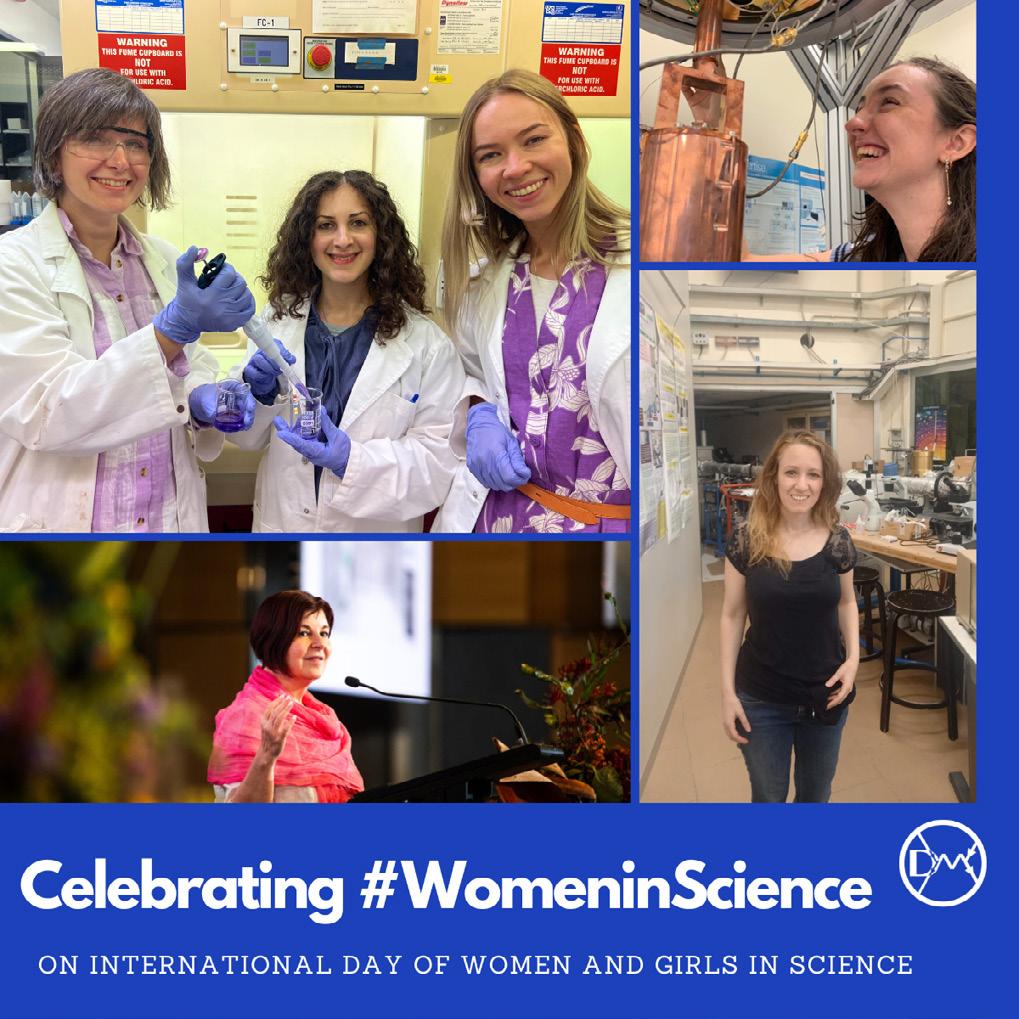
Thought leadership and women in science
The Centre’s media and communication activities aimed to inspire a future generation of students through its thought leadership work. This included promoting the role of female scientists in the media and social media, ensuring girls were exposed to role models in physics.
On International Day of Women and Girls in Science, Elisabetta Barberio was interviewed on ABC Melbourne, which meant that around 41,000 heard from a female physicist working at the top of the field.
We also produced an opinion piece that was published in Education Review highlighting the importance of female role models to students.
Throughout activities like the Partner Schools Program and the National Quantum & Dark Matter Road Trip, we showcased the diversity of scientists in the Centre in our media and communications activities.
These activities also provided female scientists with opportunities to develop their communication skills.
Social media
The Centre’s social media activities have evolved as the channels change and attract different audiences.
We established a BlueSky account in response to the academic and science communities that use the platform.
We retired our Twitter account due to changes in its audience, and increased our focus on LinkedIn due to its increasingly engaged audience. This paid off with impressions more than doubling and a jump in the number of followers.
We also increased our use of video content and highlighted individual researchers from across our nodes, which continues to attract good engagement.
The Centre’s Facebook account was useful for promoting events and targeting specific communities, particularly in Stawell and during the National Quantum & Dark Matter Road Trip. Stawell residents are particularly active on this site and Facebook is a useful tool for engaging with this community.
Student and ECR development opportunities
Communications skills are crucial to the careers of scientists and the Centre’s activities aim to provide students, ECRs and researchers with opportunities to engage with the media and develop their social media skills.
Centre members were closely involved with the writing of media releases, while also engaging with the media.
During the National Quantum & Dark Matter Road Trip, students and ECRs who were interviewed on television and radio, and in print, were provided with one-on-one training.
These interviews gave students media skills and experience, and enabled them to share their interest in science with communities across Australia.
media highlights and stats
The National Quantum & Dark Matter Road Trip appeared before national and international audiences in 2025.
Road trippers spoke on metropolitan radio, national television, international syndication and local newspapers.
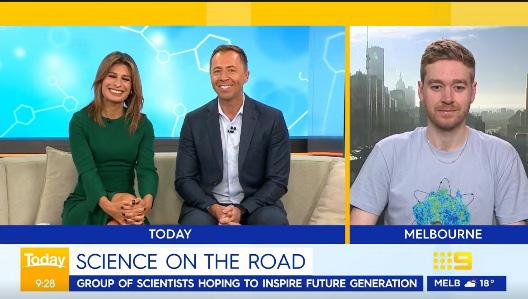
School students were also interviewed and expressed enthusiasm for science, showcasing the value of the outreach activity.
These media appearances provide a platform for researchers to gain media experience, promoted our outreach activities and shared the joy of science, while inspiring a future generation of scientists.
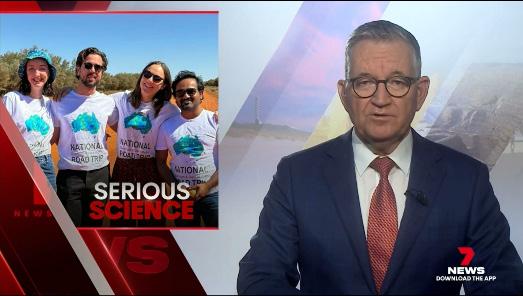

Facebook post reach
4,364 (2021) 12,540 (2022)
(2023) 38,920 (2024) 53,964 (2025)
LinkedIn impressions 1,349 (2021) 10,518 (2022) 19,500 (2023)
(2024) 128,054 (2025)
LinkedIn Followers
139 (2021)
503 (2022)
756 (2023)
1,099 (2024) 1,484 (2025)
Road Trip Facebook views 42,800 (2024)
(2025)
Road Trip Instagram views
(2024)
(2025)

The Centre spoke directly to educators and engaged in thought leadership through its opinion pieces published in Education Review.
These articles highlighted the importance of role models in physics, exemplified by the National Quantum & Dark Matter Road Trip and Regional Partner Schools Program.
On International Day of Women and Girls in Science, Elisabetta Barberio also spoke to ABC Radio Melbourne’s audience of 41,000 listeners about her work.
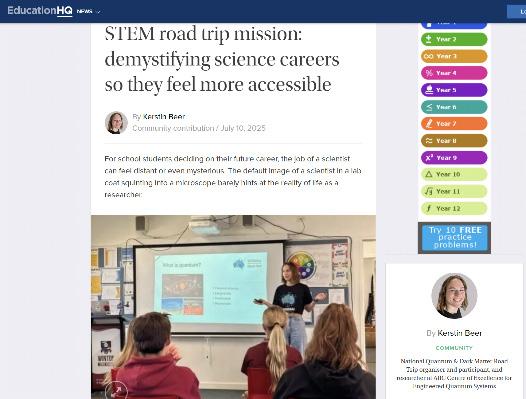
The Centre publicised its research to recognise the work of researchers and build excitement about current projects.
A highlight was an article on the ABC about the SABRE South experiment which also attracted considerable interest on social media.
Two Centre members were involved in significant international research. Their success attracted engagement in the media and across social media channels.
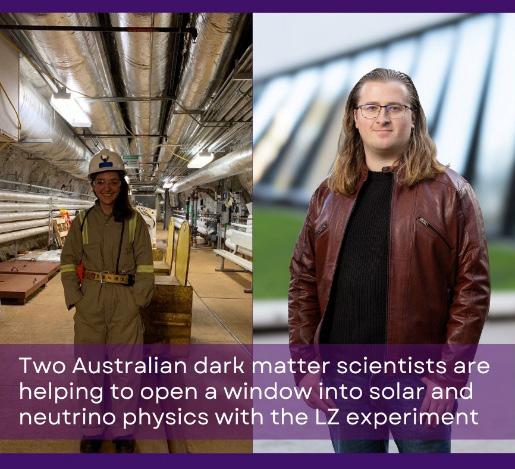
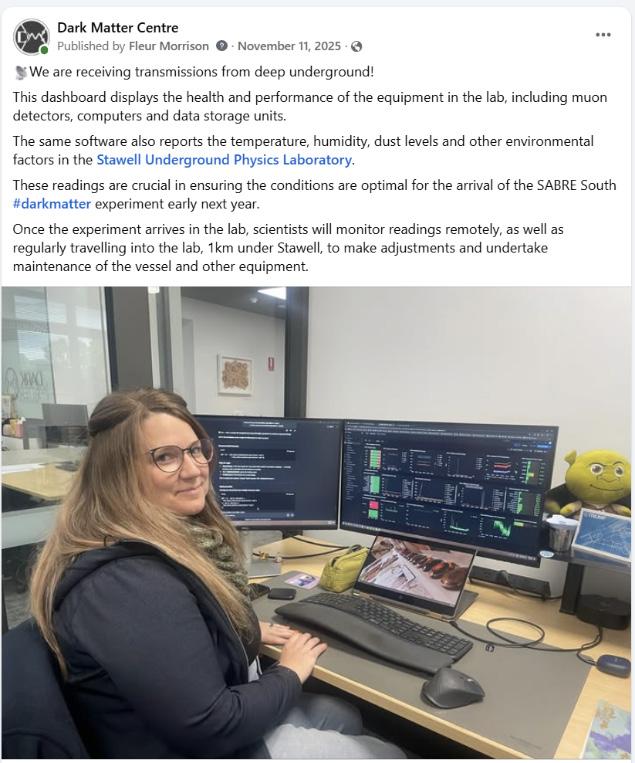
2,393 views on Facebook
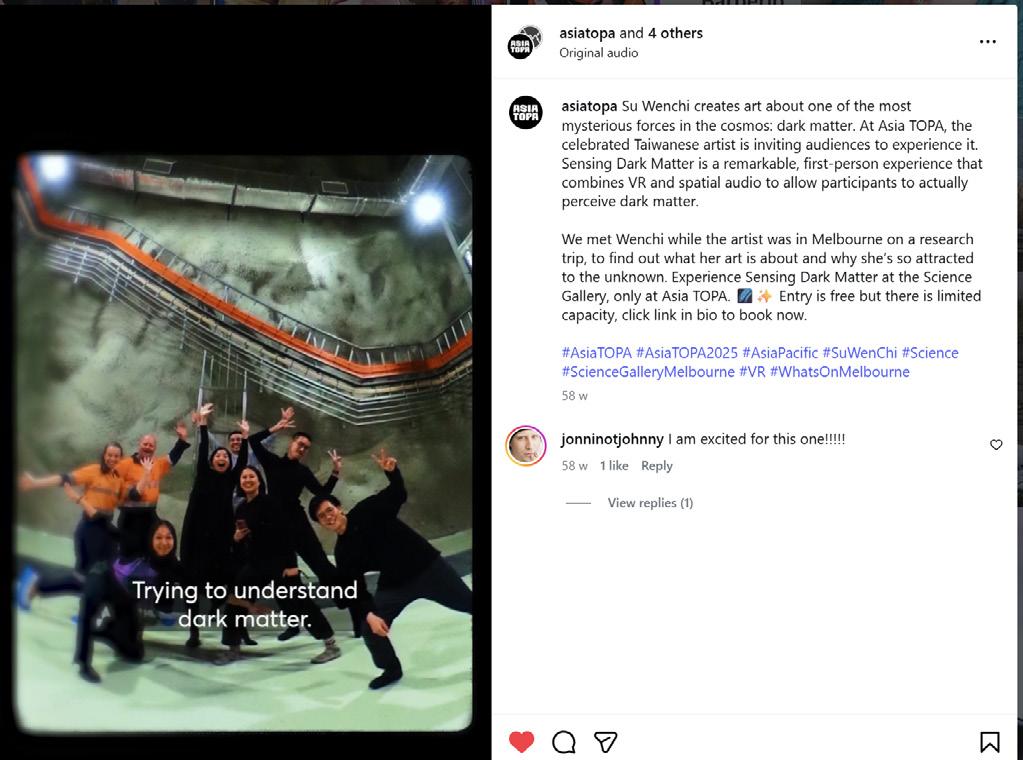
3,929 views on Instagram
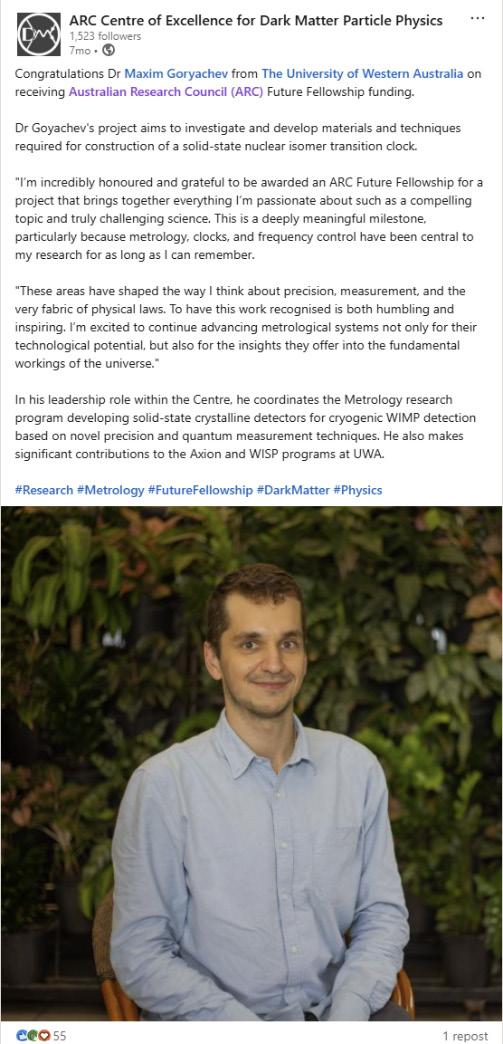
3,929 views on LinkedIn
outreach, education and engagement
The vision of the education and public outreach program of the Centre is to share the excitement and benefits of Australia’s hunt for dark matter to inspire and train a new generation of innovative thinkers. In 2025, there were many opportunities for in person outreach and education activities and Centre members were able to interact with over 116 schools, visit and participate in conferences and participate in 24 public events.
Regional Partner Schools Program
Building on the outcomes reported in the 2024 Annual Report, the Regional Partner Schools Program continued to deepen sustained relationships between the Dark Matter Centre and regional secondary schools in New South Wales. In 2025, the focus shifted to refinement and expansion, with increased emphasis on training more CDM early career researchers to engage with school students, creating science role models.
The CDM Regional Partner schools program supported classroom visits, virtual mentoring, teacher professional development, and authentic research extensions such as muon detection activities to over a thousand students and dozens of teachers in Australia.
Regional partner schools are centred in Western Victoria and the Riverina area of New South Wales and supported by CDM scientists from Melbourne, Adelaide, Sydney, and Canberra.
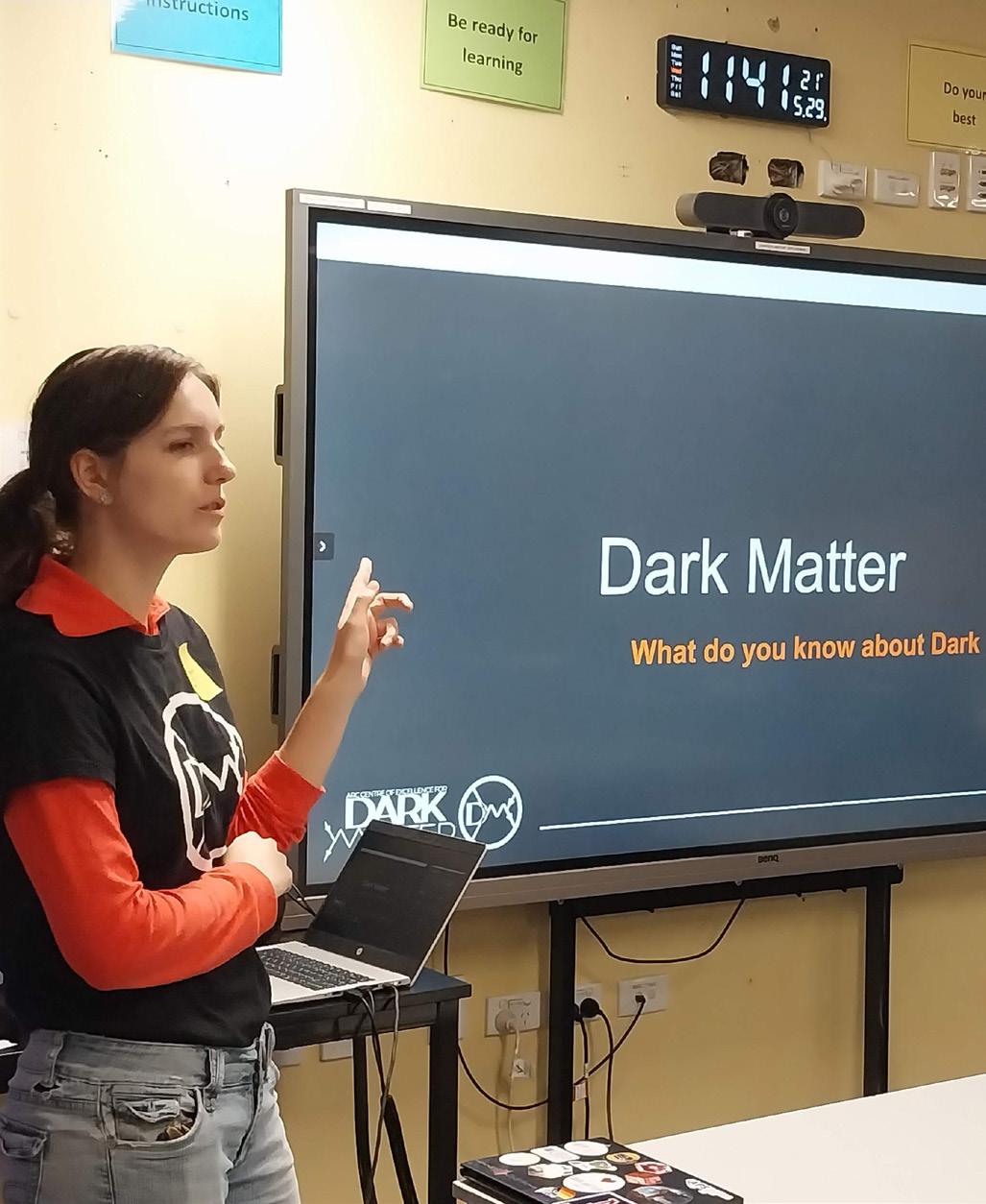
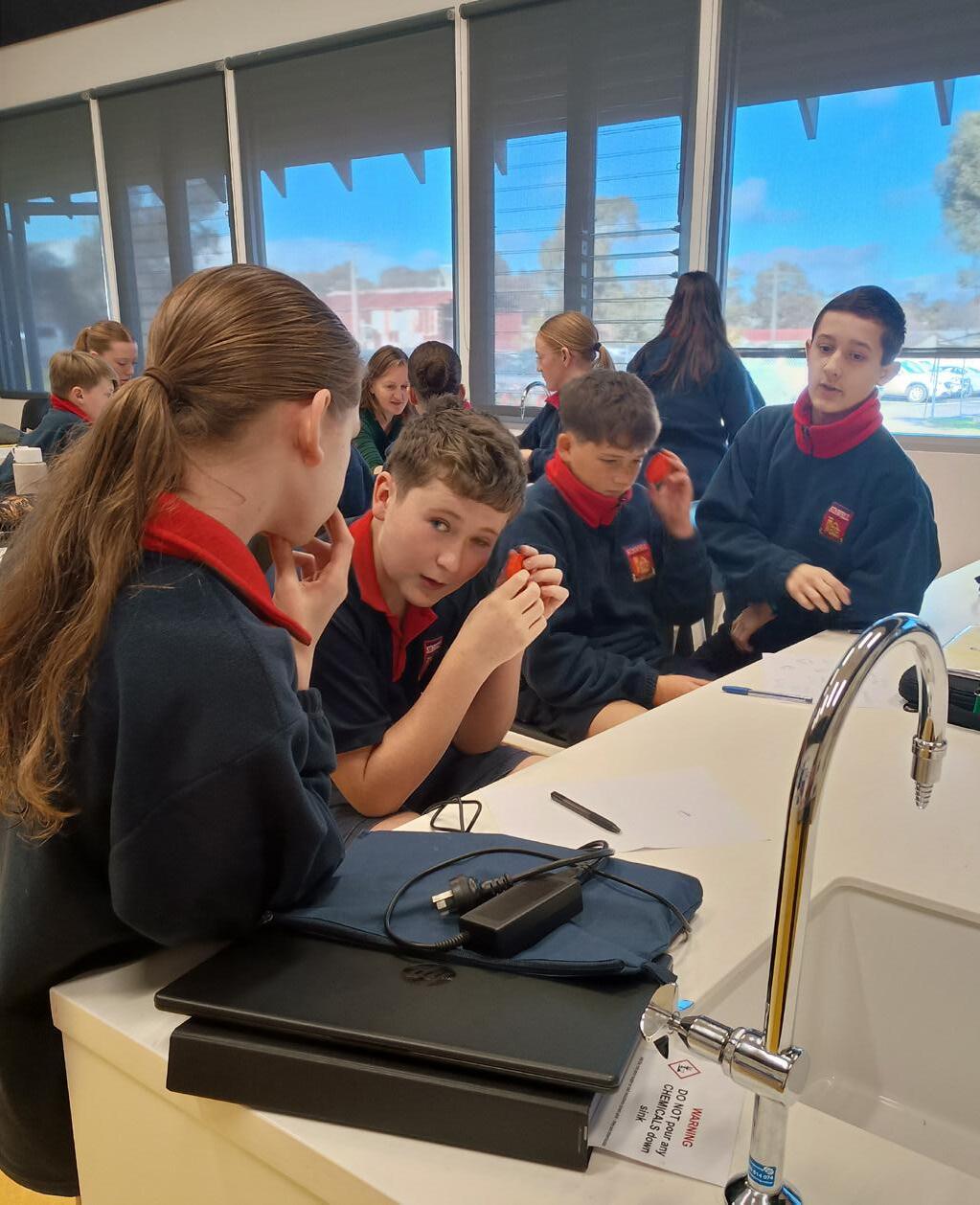
Ellen Sirks (UoS) running a session at the NSW regional partner school.
Community Engagement in Stawell
The Dark Matter Centre maintained strong connections with the Stawell community through a range of locally focused outreach activities.
Highlights included:
• A careers talk featuring Jackie Bondell, Kim Mintern-Lane (Manager, SUPL), and Brandon Rodriguez (formerly Jet Propulsion Laboratory, now California Institute of Technology), providing students with diverse STEM career perspectives.
• A public outreach table at the Stawell Easter Extravaganza, engaging families with hands-on activities and conversations about underground physics.
• A public lecture in Stawell by Elisabetta Barberio, offering the community direct access to leading research in astrophysics and dark matter.
These activities reinforced SUPL’s role as both a global research facility and an integral part of the local community.
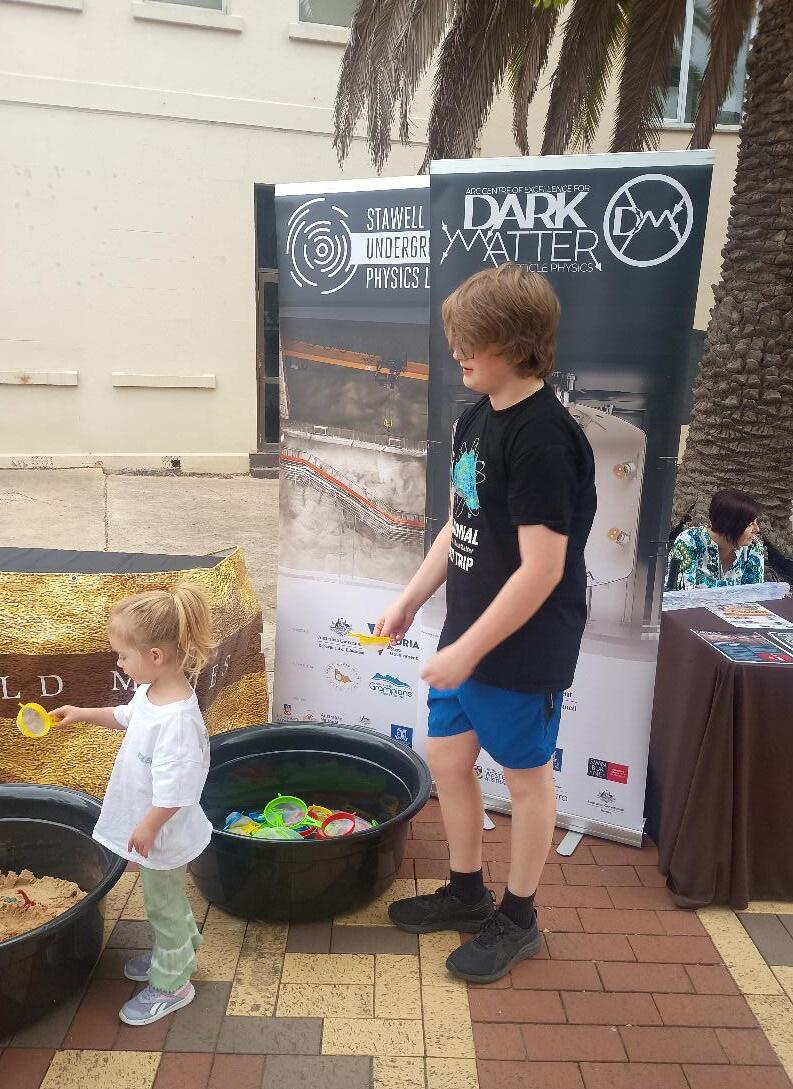
Girls In STEM:
The Dark Matter Centre continued its strong commitment to supporting girls and gender-diverse students in STEM through targeted events and collaborations.
Key activities in 2025 included:
• Dark Matter Women in Art and Science, a public talk delivered by Jackie Bondell in collaboration with artist Ali McCann, highlighting the intersection of creativity, identity, and scientific practice. This event was organised by Yarra Libraries to coincide with the International Day of Women and Girls in Science.
• Co-organisation with leadership from Theresa Fruth of Physics Unboxed, a program run by the School of Physics, University of Sydney. Each Physics Unboxed event is a one-day program, designed to encourage high school girls to continue their studies in Physics in the HSC and beyond, as well as paint a clear picture of what careers in STEM can look like by engaging secondary students with hands-on physics experiences and career conversations. Almost 280 high school girls from across Sydney and beyond attended.
• Contributions to the Girls in Tech event at St Peter’s Girls’ School (Adelaide), showcasing diverse STEM pathways. Haylea Purnell and Amelia Lovison from the University of Adelaide led a hands-on workshop and hosted a stall to share their enthusiasm for physics with over 300 Year 5 and 6 girls from schools around Adelaide.
Collectively, these initiatives reached hundreds of students and reinforced visible, relatable role models in physics and space science.
International Collaborations
The Dark Matter Centre continued to strengthen its international education and outreach collaborations in 2025 through active involvement with the International Particle Physics Outreach Group (IPPOG) and the AstroAccel Astronomy Education and Outreach network.
Through IPPOG, CDM facilitated new connections with the USbased QuarkNet program, exploring opportunities for collaboration on teacher-focused muon detector programs and shared professional learning resources. These discussions align closely with the Centre’s growing expertise in school-based muon research, including HERA.
The Centre also participated in Dark Matter Day, delivering a joint livestream event with the Boulby Underground Laboratory, reinforcing international collaboration and shared public engagement around dark matter science.
Stawell Easter Extravaganza.
Global Connections in Particle Physics Outreach
In May, CDM Senior Education and Outreach Manager Jackie Bondell travelled to North America for a series of meetings focused on education and outreach in particle physics. The trip began at Fermilab, just outside Chicago, Illinois (USA), where Jackie attended the annual meeting of the International Particle Physics Outreach Group (IPPOG). As the Australian representative to IPPOG, she presented on CDM’s work to broaden access to muon physics research opportunities for secondary students in regional partner schools, highlighting the collaborative HERA (High-Altitude Engineering and Research in Astrophysics) project.
The IPPOG meeting also featured presentations from representatives of other countries and physics laboratories, along with tours of Fermilab’s experiments and facilities. A standout moment was a half-day workshop delivered by the U.S.-based QuarkNet Collaborative, which focuses on supporting physics teachers through hands-on activities, professional development, and mentoring.
Following the IPPOG meeting, Jackie travelled to Lead, South Dakota (USA), to meet with the Education and Outreach team at the Sanford Underground Research Facility (SURF)—the deepest underground physics laboratory in the U.S. and home to major neutrino and dark matter experiments.
SURF has a long-standing outreach program with a strong focus on rural school engagement, teacher professional development, and large-scale community events such as Neutrino Day. With many parallels to CDM’s work with regional schools and ties to the Stawell Underground Physics Laboratory, the visit offered valuable insights and multiple opportunities for future collaboration. While at SURF, Jackie also toured the underground LZ dark matter experiment and met the team responsible for its day-to-day operations.
The final leg of the trip took Jackie to Vancouver, British Columbia (Canada), where she visited TRIUMF, Canada’s national particle accelerator centre. Over several days, she toured the facility and met with leaders across Education and Engagement, Media and Promotion, Stakeholder Engagement, and Early Career Researcher (ECR) support. These meetings identified key areas for collaboration, including professional development for ECRs and best practices in engaging with local Indigenous organisations. Jackie also reconnected with CDM alum Dr. Emily Filmer, now a postdoctoral researcher at TRIUMF, to discuss ECR-focused science communication training.
This international trip helped build valuable partnerships to scale CDM programs to new geographic regions and provided opportunities to share and adopt global best practices in particle physics outreach—further strengthening CDM’s efforts to connect research with communities across Australia.
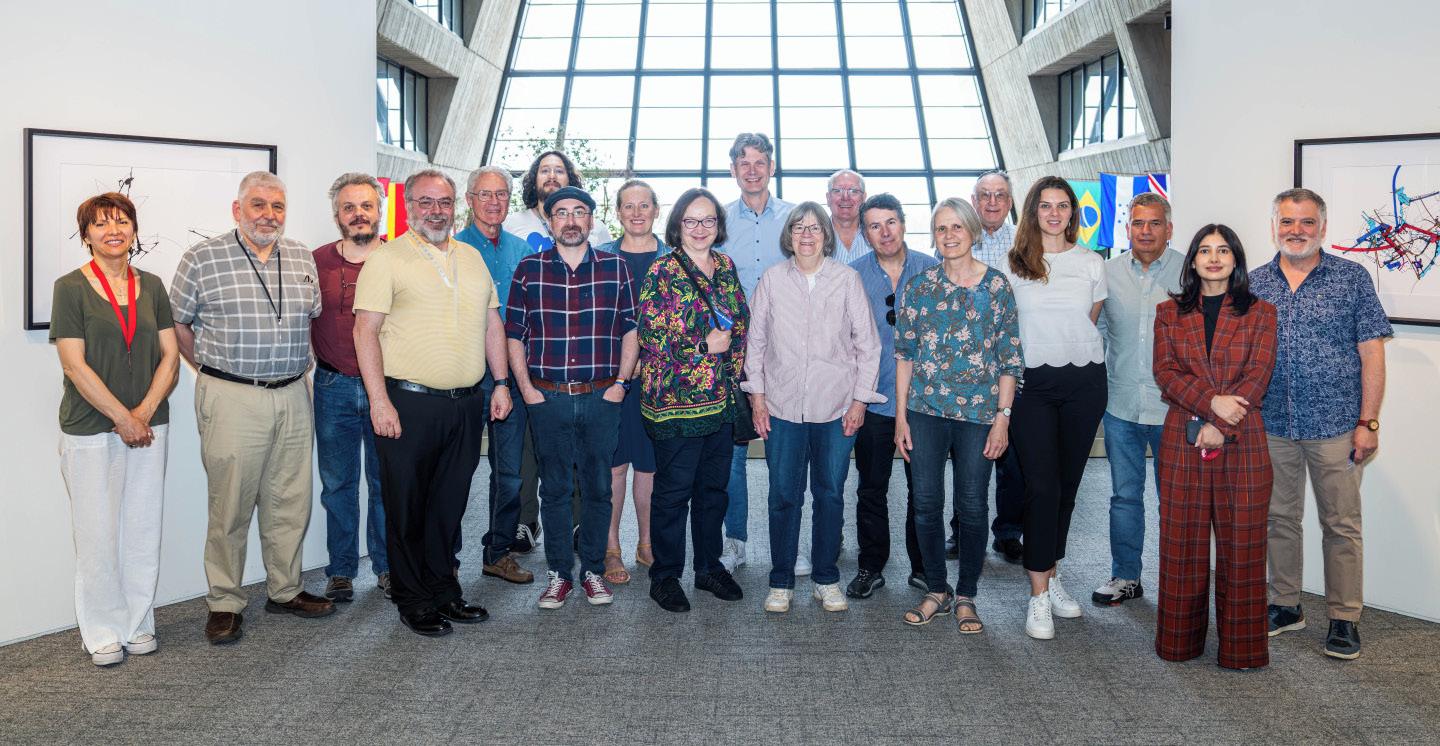
IPPOG meeting at Fermilab.
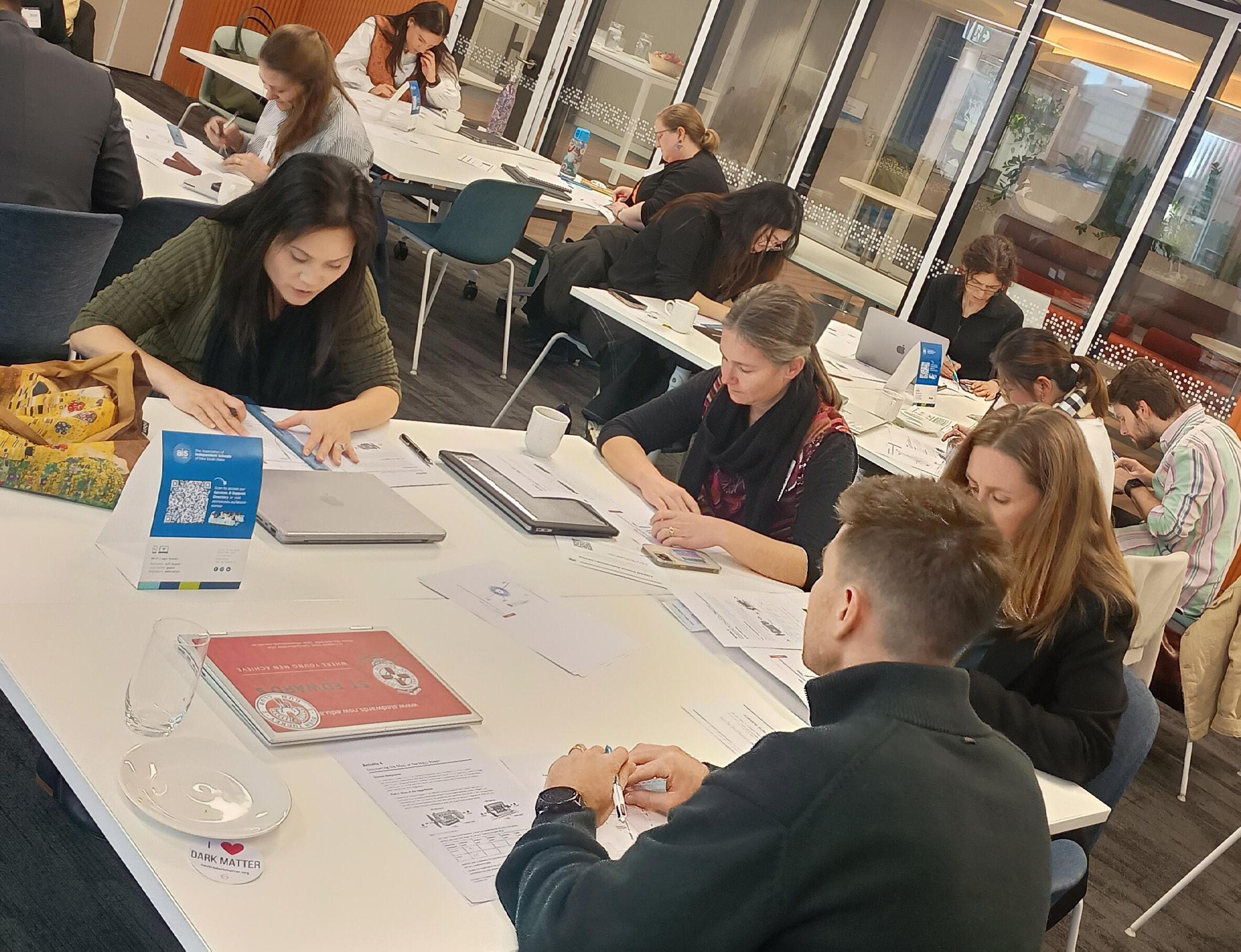
underground on dark matter experiments, astrophysicists studying the skies from mountaintop observatories, and cultural astronomers sharing sky stories.
Students experienced real-time interactions with researchers, explored why underground laboratories are essential for particle physics, and gained a rare window into Australia’s unique contribution to global astrophysics research. The event highlighted SUPL as both a world-class research facility and a powerful platform for education and outreach.
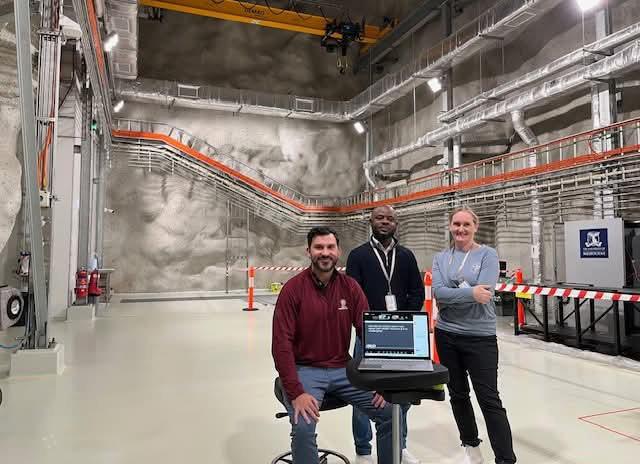
In NSW, in conjunction with the IPPOG Masterclass program, CDM hosted a full-day teacher PD for physics and physical science teachers, introducing them to concepts around the Standard Model and the functionality of the ATLAS detector. Teachers completed both analog and digital lessons to introduce their students to the discovery of the Higgs boson. CDM alumni Harish Potti gave the science background talk while Jackie Bondell led the teachers through the educational activities aligned with ATLAS.
In Victoria, the Centre continued its active involvement in physics teacher professional development programs, such as the VicPhys organisation and the VCE Science Conference series, supporting teachers to integrate contemporary physics topics, such as dark matter, gravitation, and particle detection, into senior secondary curricula. These engagements emphasised practical classroom strategies, assessment alignment, and sustained teacher confidence.
In SA, CDM led a professional development session for educators at the Australian Space Discovery Centre in Adelaide. In this session, educators were led through the same activities the Centre delivers as part of the Partner Schools Program, introducing activities to encourage learning about phenomena that cannot be seen. This was part of a National Science Week initiative.
ATLAS masterclass teacher professional development session.
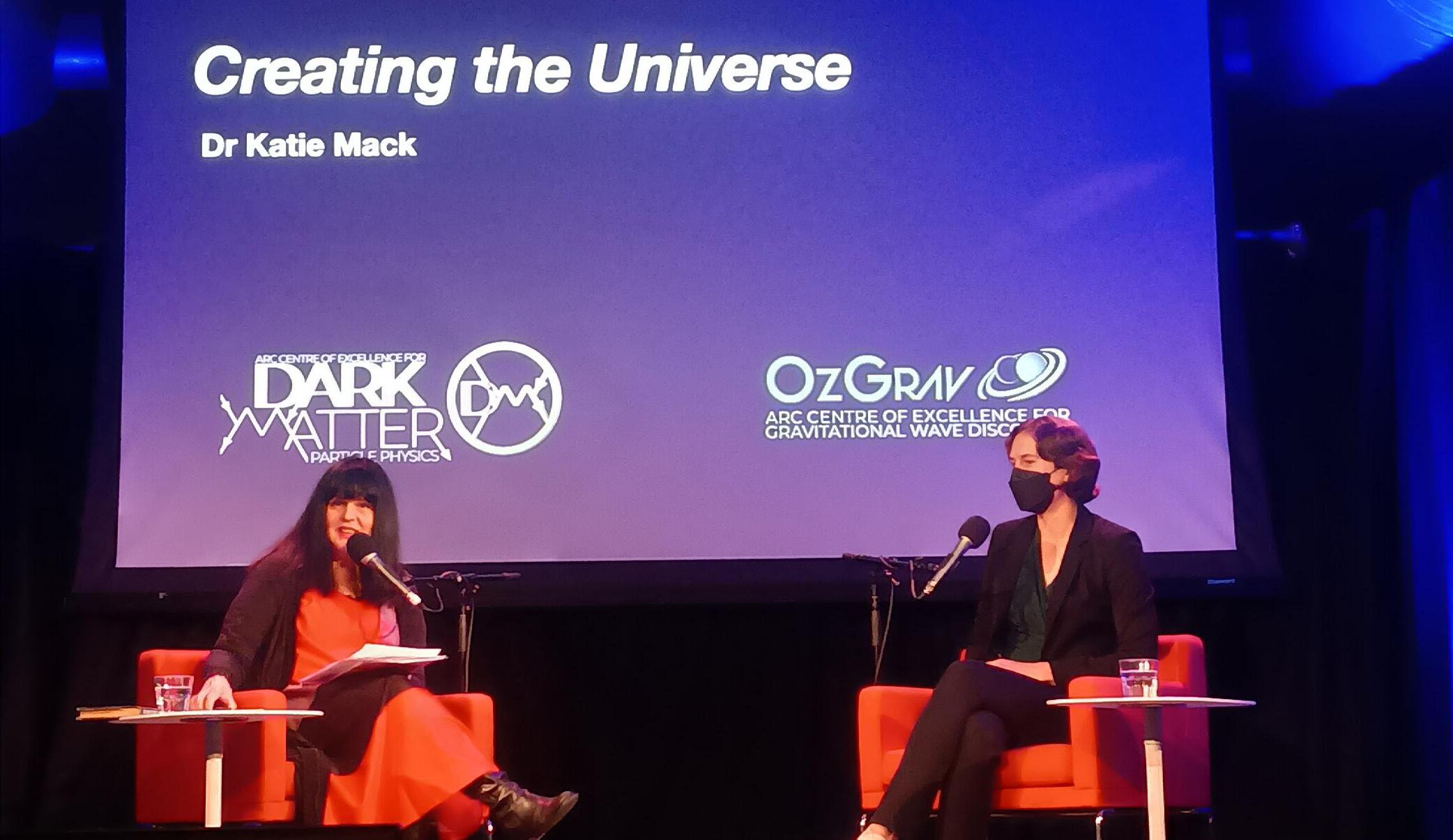
Visiting Scholar Series: Katie Mack
In July 2025, the Dark Matter Centre hosted theoretical astrophysicist and science communicator Katie Mack for a multievent program that combined public engagement, student-focused activities, and interdisciplinary collaboration.
The visit included a public lecture at Swinburne University of Technology, where Mack engaged a broad audience with contemporary cosmology and the science of the universe’s origins and ultimate fate. This event attracted strong public interest and reinforced the Centre’s commitment to accessible, high-profile science communication.
Mack also participated in a science communication panel for students, alongside CDM’s Alan Duffy. The panel provided practical insights into communicating complex science across media platforms and career pathways in research and public engagement.
As part of her visit, Mack toured the Stawell Underground Physics Laboratory, engaging with researchers and learning about Australia’s unique contribution to global dark matter experiments.
The program concluded with Creating the Universe, an interdisciplinary art and science event at the Wheeler Centre, developed in collaboration with artist Alicia Sometimes. This event explored cosmology through creative practice, highlighting the shared storytelling and sense-making at the heart of both art and science.
Together, these events showcased the Dark Matter Centre’s leadership in delivering high-impact, interdisciplinary outreach that connects cutting-edge research with diverse audiences.
public lectures
In addition to public lectures that formed events during National Science Week and as part of the National Quantum & Dark Matter Road Trip (detailed further below), Centre members also gave a number of public talks across the country.
• Elisabetta Barberio – Exploring the Universe 1km Underground in Stawell for the CDM ISAC visit
• Jackie Bondell with Ali McCann – Dark Matter Women: Art and Science for the International Day of Women and Girls in Science
• Jackie Bondell – Detecting the Unseen: Dark Matter for Sea Lake Astrofest
• Jeremy Bourhill and Emma Paterson – The Twisted Project for the EQUS Legacy Showcase at UWA
• Peter Cox – Fundamental Forces in the Early Universe for the Physics Gymnasium Lecture Series at the University of Melbourne
• Anthony Thomas – Neutron Stars for the ASSA General Meeting: March 2025

case study
HERA - High Altitude Engineering and Research in Astrophysics
Overview
The High Altitude Engineering and Research in Astrophysics (HERA) project is an international student research program that connects secondary school students with university researchers to design and conduct authentic particle physics investigations. Through a combination of ground-based and high-altitude experiments, students explore cosmic rays and muons, gaining hands-on experience with detector technology, data analysis, and scientific collaboration.
Australian Engagement and Leadership
In 2025, the Dark Matter Centre significantly expanded Australian participation in HERA, with a strong focus on accessible, groundbased research using mDetect muon detectors. Bondell led the integration of mDetect detectors into Australian classrooms, supporting students to investigate muon flux variations as a function of altitude, shielding, and geomagnetic effects. These investigations align closely with Australian curriculum requirements while introducing students to experimental techniques used in contemporary astroparticle physics.
Training, Mentoring, and Capacity Building
A core strength of HERA is its emphasis on training and mentoring. Australian teachers received targeted professional learning in detector operation, data collection, and experimental design, enabling them to confidently support student research projects. Early-career researchers from the Dark Matter Centre were embedded as mentors, providing students with direct access to practicing scientists and strengthening researchers’ science communication skills.
Students participated in structured research pathways, progressing from guided investigations to student-led experimental questions. This scaffolded approach ensured accessibility while maintaining scientific rigor.
Student Research Opportunities
Students generated and analysed real datasets, developing skills in coding, uncertainty analysis, and scientific reporting. The program was targeted to the centre’s regional partner schools, increasing access to advanced STEM research opportunities.
International Collaboration
HERA is inherently international, linking Australian students with peers and researchers in the United States. Through virtual meetings, shared datasets, and joint presentations, students experienced science as a global endeavour. The Dark Matter Centre’s involvement strengthened Australia’s contribution to the program and positioned it as a leader in scalable, school-based astroparticle physics research.
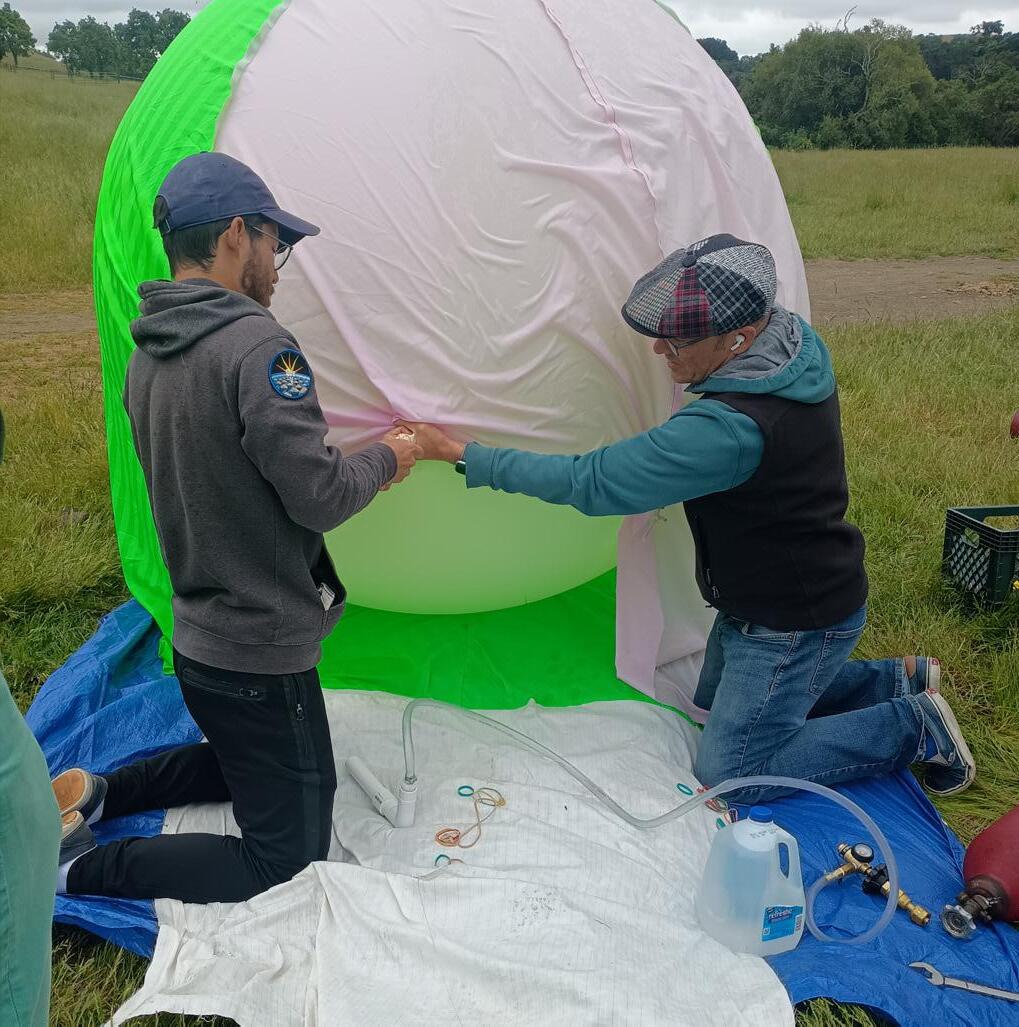
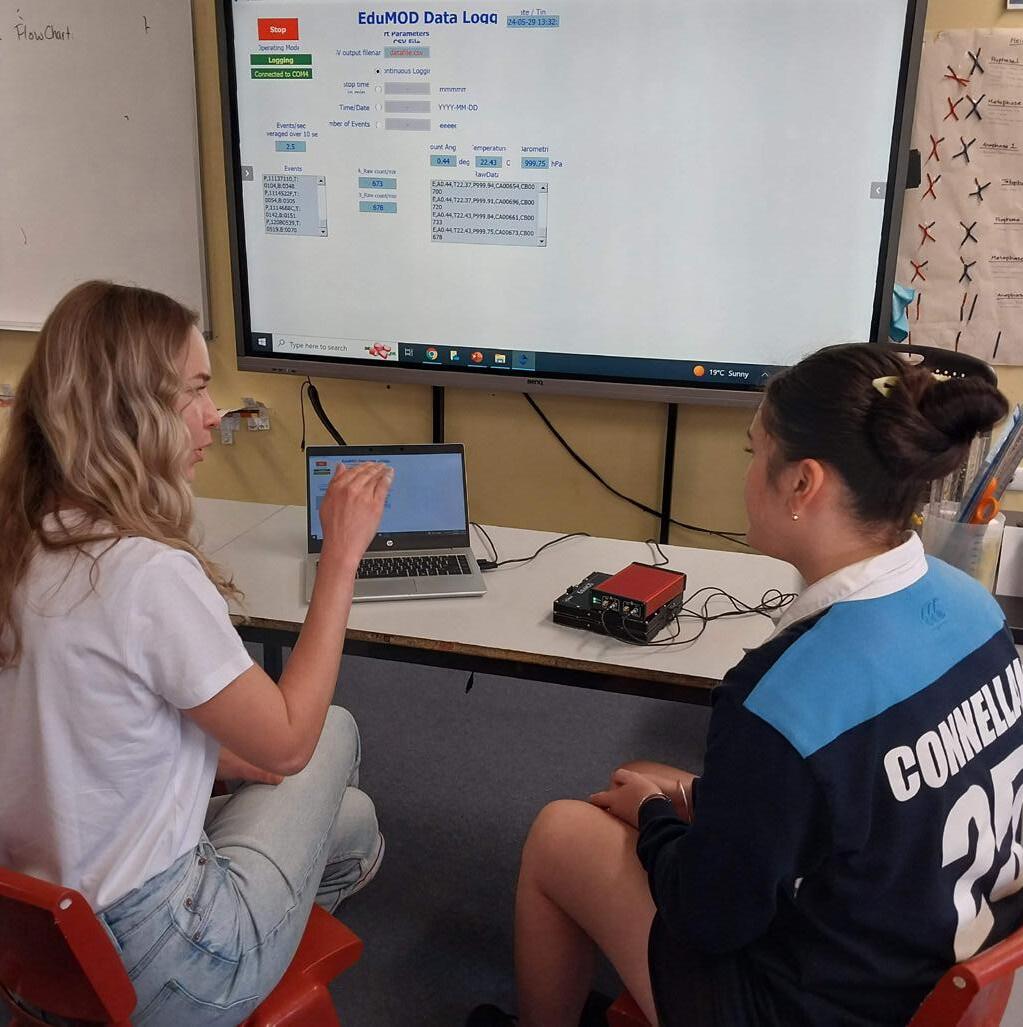
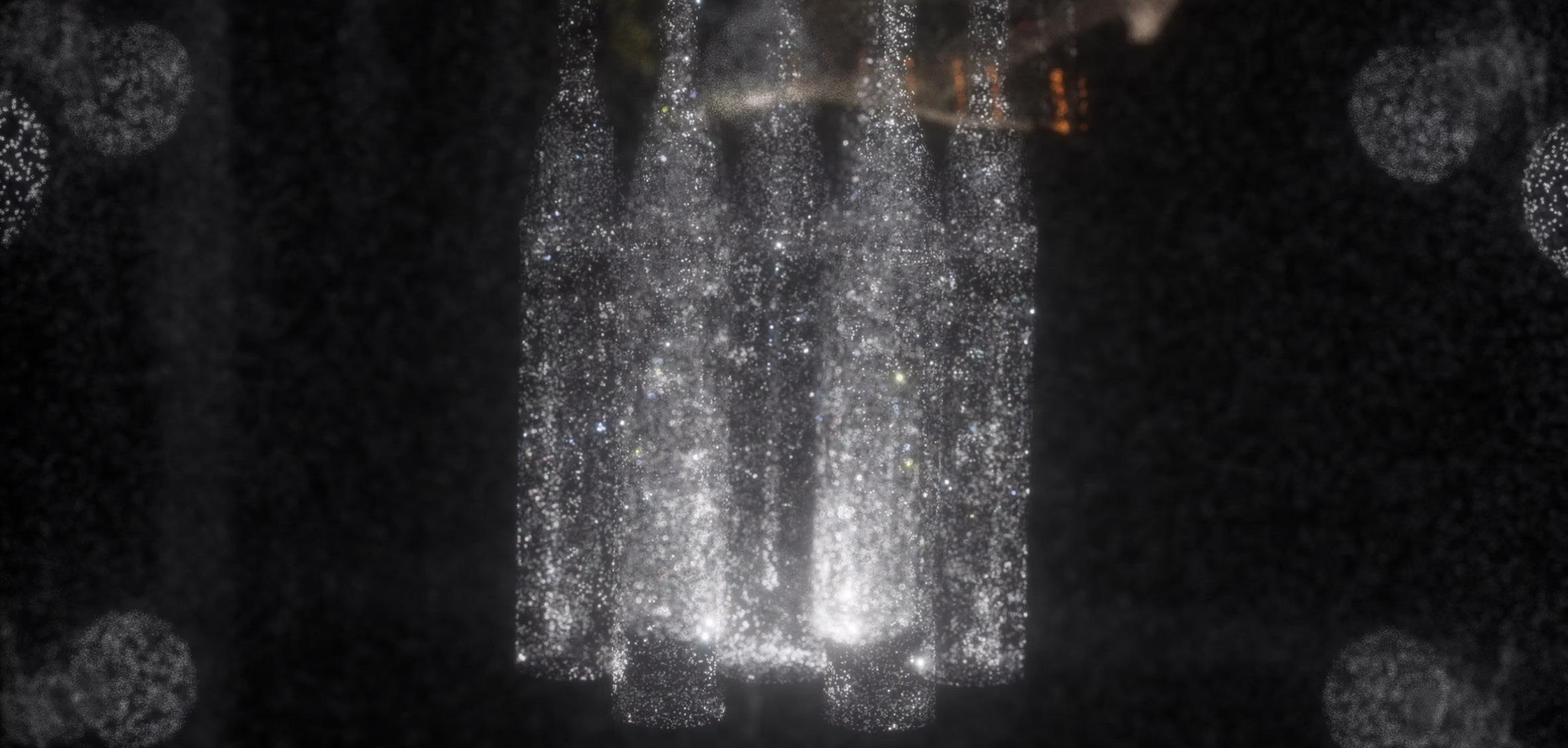
case study
Sensing Dark Matter at Asia TOPA 2025
Overview
An exciting artist residency and collaboration with Taiwanese artist Su Wenchi culminated in a VR exhibition titled Sensing Dark Matter at the Science Gallery Melbourne as part of Asia TOPA (a triennial festival of Asia Pacific performance).
Su Wenchi is an accomplished multidisciplinary artist who skilfully melds choreography, dance, and new media arts.
This was a co-production between Asia TOPA, Arts Centre Melbourne, SPRING Performing Arts Festival, Taipei Performing Arts Center, WestK Hong Kong. Collaborators included the ARC Centre of Excellence for Dark Matter Particle Physics, Science Gallery Melbourne, Stawell Underground Physics Laboratory (SUPL), The University of Melbourne and the National Taiwan Science Education Center.
Artist residency
The dialogue between art and science has become central to Su Wenchi’s artistic practice. To create Sensing Dark Matter, Su Wenchi and her YILAB team visited Australia through an artist residency partly supported by the Centre. They spent time speaking to Centre researchers about dark matter and the SABRE South experiment and visited the Stawell Underground Physics Laboratory.
“If you are a jellyfish in the water, you don’t realize there’s water around because you live in the water. That’s how you are with dark matter. Because you are surrounded with it everywhere.”
In a true intersection between art and science, the team employed 3D scanning, motion capture and sound recordings to transform the underground caverns, laboratory, detectors and a dancer’s choreography into digital particles in a virtual universe.
Sensing Dark Matter at Asia TOPA
Su Wenchi says “When I hear the word “dark,” I think of darkness, shadows, and weight.
But dark matter neither absorbs light nor interacts much with other matter.
According to scientists, dark matter is a crucial part of our universe - without it, Einstein’s Theory of General Relativity would not hold.
In an underground laboratory, in a self-isolating atmosphere, we attempt to connect to this invisible - yet real - matter, inviting the body to experience sensations beyond our senses.”
In early 2025 as part of Asia TOPA, Sensing Dark Matter had a ten-day sold out screening at the Science Gallery Melbourne. Visitors entered a darkened room and with VR headsets and other sensory materials and spatial audio, were transported to a speculative universe where dark matter and its gravitational effects became perceptible.
An audience member said “We loved being able to position ourselves in the mine and were just in awe of what it felt like to enter the detector and fly up through the crystals…”
Sensing Dark Matter was also screened in different arts festivals in South Korea, Holland, Taiwan and China in 2025 and will hopefully return to Australia again in the future.
www.suwenchi.com/sensing-dark-matter
national science week
National Science Week is always a great opportunity to promote dark matter research to students and the wider community. In addition to the National Quantum & Dark Matter Road Trip, the Centre also ran a professional development session for educators at the Australian Space Discovery Centre in Adelaide and coordinated activites around a visit from Katie Mack. You can read about these earlier in this report.
National Quantum & Dark Matter Road Trip
The National Quantum & Dark Matter Road Trip is a wellestablished and impactful initiative of the ARC Centre of Excellence for Dark Matter Particle Physics (CDM) and the ARC Centre of Excellence for Engineered Quantum Systems (EQUS). In 2025, there was legacy funding and support from EQUS and a pilot school event in Melton, Victoria was jointly run with the ARC Centre of Excellence in Quantum Biotechnology (QUBIC) and successfully road tested some new quantum inspired demonstrations to over 350 students.
The aims of the road trip are to bring quantum physics and dark matter directly to schools and communities (particularly regional and remote) across the country. To raise awareness of Australia’s contribution to global dark matter research and the increasing relevance of quantum technologies in everyday life. Public engagement, through hands-on activities and engaging presentations, with this world-class research fosters a deeper appreciation of the critical role science and engineering play in shaping our society.
Over five years, the road trip has covered over 25,000km across all states and territories of Australia, reached almost 2,500 people at 58 public events and 6,000 students in 100 regional and remote schools.
In 2025 the road trip was supported by a National Science Week Grant and additional funding for satellite events from the Australian Institute of Physics. Two teams of 15 scientists travelled over 4,000 kilometres from Karratha to Perth in WA and Adelaide to Sydney across SA and NSW plus 5 scientists at two satellite events in Alice Springs and Kalgoorlie. We visited 29 schools and held 15 public events, some of which were held in the regional and remote areas of the road trip and others in capital cities where even more of our scientists participated across Australia (Perth, Adelaide, Melbourne and Sydney). In total we engaged 2,500 people in person.
By introducing real scientists and exciting research, we aim to ignite curiosity and inspire young people to pursue careers in STEM. Seven of our fifteen scientists on the road were women, and our road trippers also represented a wide range of cultural backgrounds. We have reshaped our sessions to include informal conversations about what scientists do day-to-day, the diverse pathways into science careers and the different people who work in STEM. These conversations help demystify science and make it feel more accessible and achievable.
The media reach for the road trip was well over 350,000 people across national and local print, tv, radio and online. This placed science on the national agenda, provided professional development for young researchers and showcased diverse researchers to a mainstream audience, including those in regional and remote areas.
We acknowledge the enthusiasm, professionalism and commitment of the CDM road trippers who participated in the road trip, satellite and individual events: Elisabetta Barberio, Jackie Bondell, Will Campbell, Robert Crew, Laura Fang, Theresa Fruth, Ben McAllister, Jade McKenzie, Wi Han Ng, Isabelle Ostrowski, Riya Raizada, Iman Shaukat Ali, Raj Aryan Singh, Owen Stanley and others who supported the individual events.
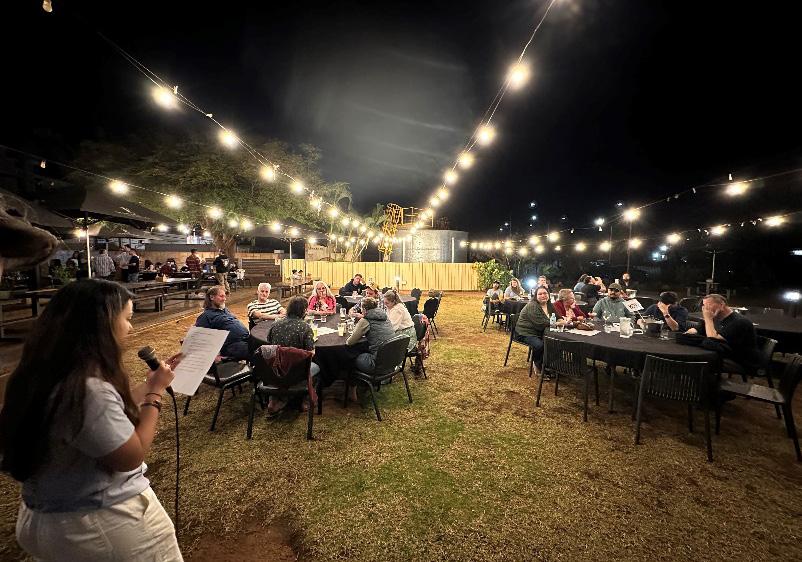
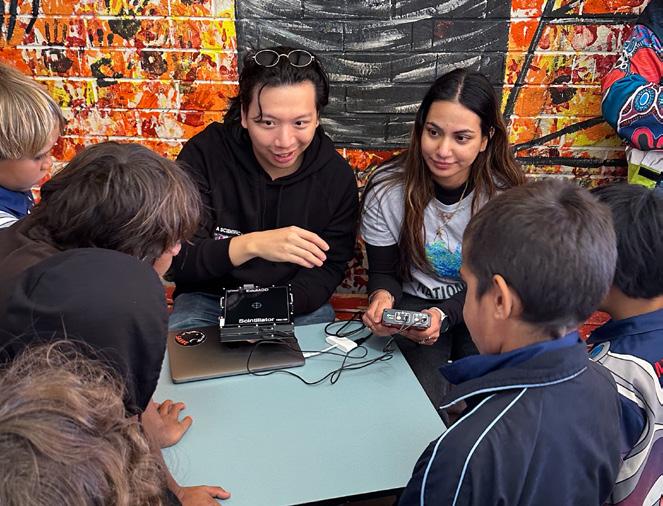
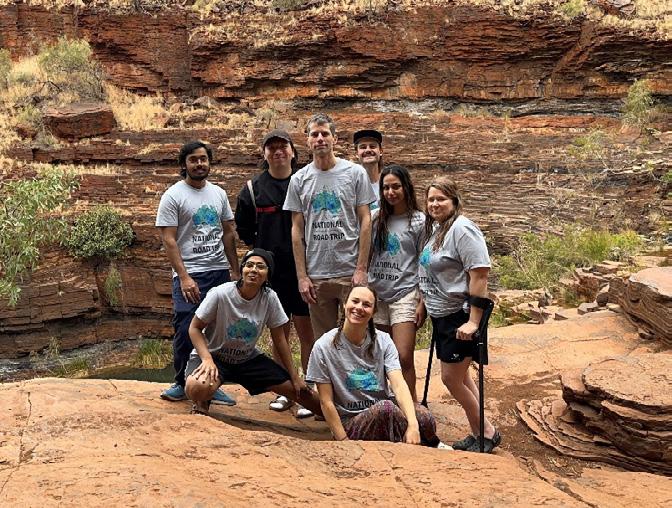
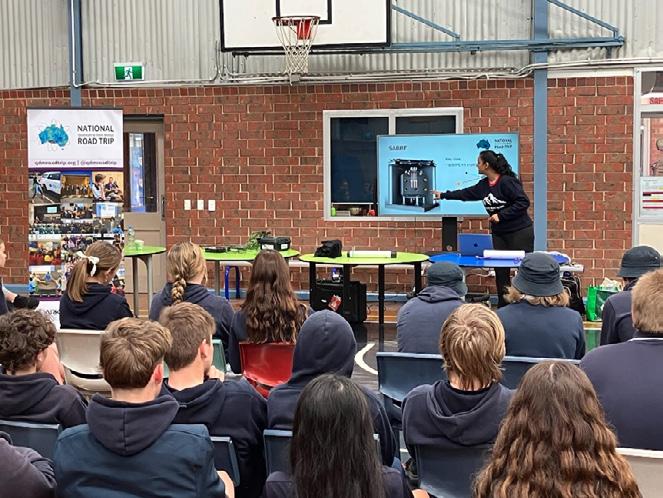
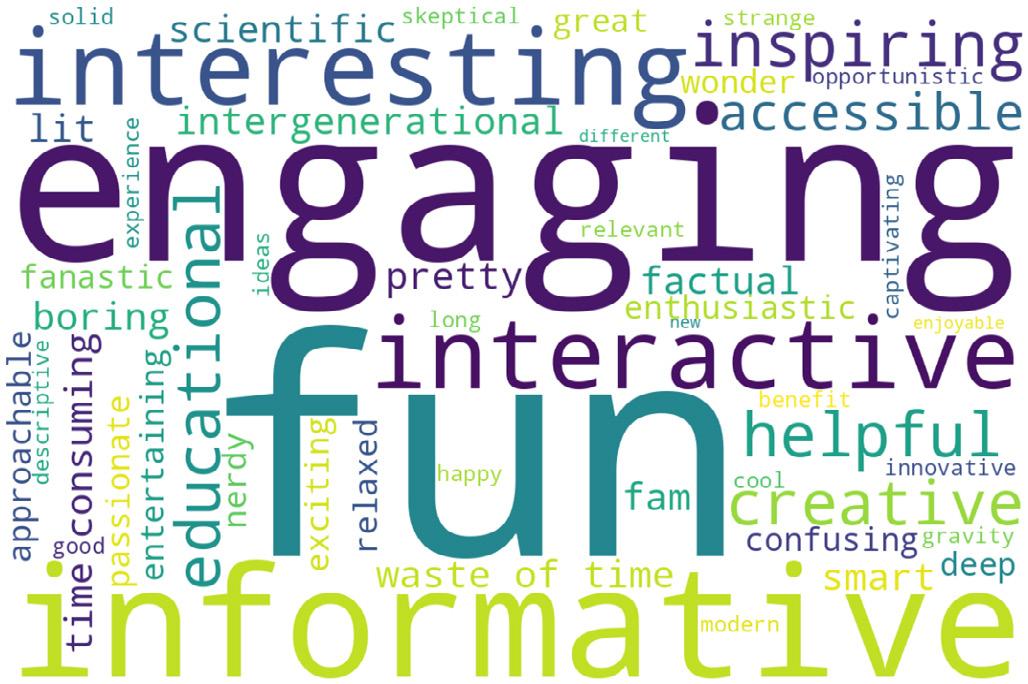
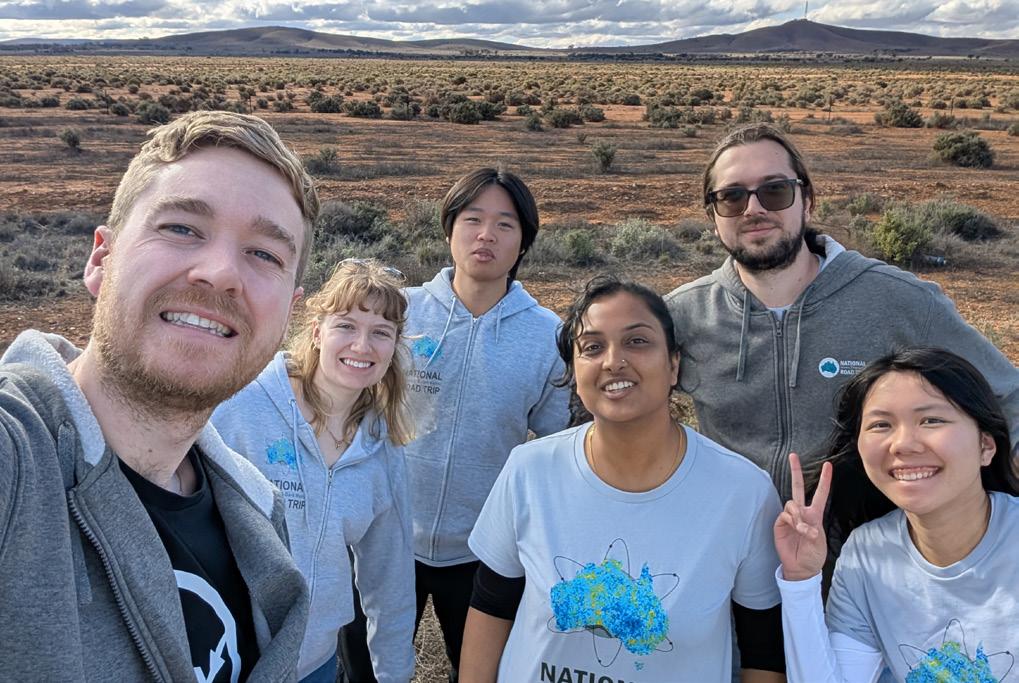

member profile

Zuzana Slavkovska
A passion for science and for sharing her knowledge with others motivates Zuzana Slavkovska in her work as a researcher, communicator, mentor and leader.
The Australian National University postdoctoral researcher’s areas of expertise and focus are in precision metrology using accelerator mass spectrometry and direct dark matter detection.
Zuzana’s direct detection work has centred on the characterisation of ultra-pure sodium iodide crystals for the SABRE experiment, with a specific focus on quantifying and reducing radio impurities.
She is also committed to communicating her research to future scientists through the media, outreach activities and events like Dark Matter in the Pub.
Zuzana grew up in Slovakia before completing her studies in Germany and her love of languages led her to Australia to fully embrace the English language.
Her role at ANU appealed to Zuzana as it offered the perfect bridge between her background in activation experiments in nuclear astrophysics and the new possibilities of AMS measurements with the 14UD accelerator.
She appreciates the intellectual challenge of her work with the Centre and the opportunities to develop her communication and leadership skills.
“I have always wanted to be involved in a large-scale experiment from start to finish, and the SABRE South experiment provides that opportunity. In this project, I have taken on several leadership and coordination roles, which have allowed me to further develop my skills. The work also enables me to collaborate with international colleagues and travel worldwide, gaining experience with different facilities, instruments, and cultures. I also enjoy teaching, and this position gives me the chance to share my knowledge and mentor others.”
In her career, Zuzana aims to continue to advance her research through involvement in large scale research projects.
“I hope to grow as a scientist by tackling challenging questions like the dark matter, and exploring new frontiers in my field. I am excited to see the SABRE experiment up and running in the near future and am eager to play an active role in it, while continually developing my skills.
Sharing my excitement for science - whether through teaching, outreach, or simply discussing ideas with curious mindswill always be central to my journey, and I hope to inspire others as I continue to learn and discover.”
ECR report
A thriving research centre relies on its ECRs, and the Centre plays an active role in ensuring they have the support, skills, and community needed to develop and succeed.
Each year, elected ECR representatives serve on the Centre’s Committees, helping to maintain a strong two-way connection. In 2025, those representatives were Iman Shaukat Ali (UoM) and Zuzana Slavkovská (ANU) on the Research Committee, and Leonie Einfalt (UoM) on the Executive Committee.
This year saw two major ECR events: the Navigating Academia and Beyond workshop in August and the ECR workshop held ahead of the CDM Annual Workshop in November.
Navigating Academia and Beyond Workshop
A dedicated organising committee of Centre ECRs put together a hybrid three-day professional development workshop, “Navigating Academia and Beyond” (see Special Initiatives section for details).
The workshop covered a broad range of topics including presentation and public speaking skills, academic writing, grant writing, imposter syndrome, postdoc applications, and non-academic career pathways. Sessions were delivered by both internal and external speakers, and the event was also offered via Zoom with recordings made available for those who could not attend in person. A total of 48 participants joined the workshop including in-person and online attendees. A social evening provided ECRs with the opportunity to mingle in a relaxed environment, and foster connections beyond the structured workshop sessions.
Among the 27 ECRs who responded to the post-workshop survey, the vast majority rated the program highly across all dimensions. A number of attendees specifically highlighted the imposter syndrome sessions and the careers panel as standout parts of the program. Feedback will be passed to the 2026 organising committee to continue building on what worked well.
CDM Annual ECR Workshop
The ECR Committee organised the annual ECR workshop, held over two days prior to the CDM Annual Workshop in Canberra. The program was built around science and career development in roughly equal measure. To give ECRs, particularly newer members of the Centre, a solid grounding before the main workshop, we invited keynote speakers covering the Centre’s core research areas: direct detection, theory, LHC physics, metrology, and cavity-based direct detection. These were complemented by eleven ECR talks that showcased research from across the Centre at a very high level.
On the career development side, Fred Hiskens, a former Centre member now working at Beyond Zero Emissions, gave a candid and practical talk on how he made the move out of academia and how others might do the same. Ciaran O’Hare shared his own experience navigating the challenges of building a successful academic career. Both sessions sparked a lot of discussion. Social events on both evenings rounded out the program. These included Powerpoint karaoke at the welcome drinks and bouldering or an arcade outing on the second night providing relaxed opportunities for networking.
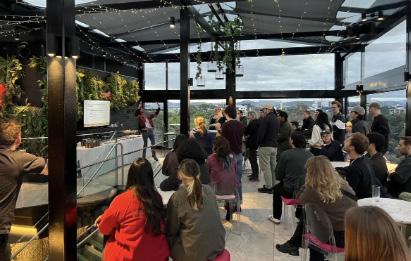
Post-workshop survey results reflected a successful event: 92.3% of respondents said the program was well-balanced and felt closer to their fellow ECRs afterwards, and pacing was rated 4 or 5 out of 5 by 88.5% of participants. Written feedback, including requests for more content on academic writing, grant applications, and mentoring, will be passed on to next year’s committee.
All in all, 2025 was a strong year for ECR activities in the Centre which provided real opportunities to develop skills and strengthen connections across institutions.
Picture from the karaoke night, ECR Workshop.
member profile
Giorgio Busoni
In a career that has crossed multiple national and international borders, Giorgio Busoni has reaped the professional and personal benefits of collaboration.
The Adelaide University theoretical physicist began his studies in Italy, before undertaking a position at the University of Melbourne, then moving to Germany for a role at the Max Planck Institute in Heidelberg.
He joined the Dark Matter Centre as a research fellow at the Australian National University node.
In his role as a senior postdoctoral researcher in Adelaide, his research is just as diverse, across several interconnected areas of dark matter physics, ranging from astrophysical probes to laboratory experiments and more formal theoretical developments.
One major focus of his work is the study of dark matter capture in stars, a topic in which he has developed strong international expertise. If dark matter has non-gravitational interactions, stars moving through the galaxy may capture dark matter particles, which then accumulate in their interiors and affect their properties.
While this idea was originally explored in the context of the Sun, his recent work has extended it to more extreme stellar environments such as neutron stars, white dwarfs, and the first generation of stars (Population III stars). These objects act as powerful laboratories for dark matter. For example, neutron stars are so dense that a teaspoon of their material would weigh billions of tonnes. Their extreme density makes them highly efficient at capturing dark matter. The accumulated dark matter could heat the star, preventing it from cooling as expected, or in more extreme cases even trigger its collapse into a black hole.
White dwarfs, the remnants of Sun-like stars, offer complementary probes: dark matter could modify their luminosity or internal oscillations, which can be measured with high precision. Similarly, Population III stars provide insight into dark matter in the early universe.
Other major components of Giorgio’s research are dark matter direct detection, including the SABRE South experiment, and exploring how quantum information principles may give rise to symmetries that stabilise particles such as dark matter.
Giorgio says that collaboration played a significant role in these projects and those undertaken throughout his career.
“Collaboration has been central to both my professional and personal development. It has given me the opportunity to live and work in different countries, including Italy, Australia, and Germany, and to experience diverse cultures and environments,” he said.
“From a research perspective, working with a wide range of collaborators has allowed me to expand my expertise beyond my original training, particularly into astroparticle physics and related areas. It has also exposed me to different research cultures and ways of approaching problems.
On a personal level, these experiences have been extremely enriching and have allowed me to build lasting relationships within the international scientific community.”
In 2026, Giorgio aims to develop several research directions that build on his current work while expanding into emerging areas, such as the study of neutron stars and collider searches.

mentoring committee report
The Centre’s mentoring committee met four times across the year to plan events. We contributed to the workshop “Navigating Academia and Beyond: Academic and Career Skills for Particle Physicists” detailed elsewhere in this report. A total of 48 participants joined the workshop including in-person and online attendees. The CDM Mentoring Committee organised a session about “Overcoming Imposter Syndrome” facilitated by Prof Merryn McKinnon from the Australian National University. Over the course of three hours, the participants learnt about the different types of imposters, how to navigate those types and were actively engaging and reflecting on their own experiences. It was lovely to see such a high engagement from all participants.
Our Centre is part of the ARC Centres of Excellence Mentoring Program called Mentorloop which is an ongoing resource available to Centre members with mentors and mentees spanning 12 ARC Centres of Excellence. As part of the onboarding process for new Centre members, there is an overview of the mentoring support available including details about joining Mentorloop. The Centre has 35 members signed up to Mentorloop as a mentor, mentee or both and over 440 participants across all Centres of Excellence.
The Mentoring Committee also organised an information session run by Fleur Morrison about “Building your profile and getting noticed on LinkedIn” at the Centre’s Annual Workshop in Canberra. Fleur talked about the media and different communication portfolios, the reasons why it might be beneficial to use LinkedIn and how to build a professional profile as a researcher which was underpinned by PhD Sharry Kapoor’s own experience, and she gave valuable advice to the participants. Overall, this was an informative session for attendees who were new to LinkedIn or uncertain how to use it efficiently.
Further mentoring and development opportunities arising from other activities such as the National Quantum and Dark Matter Road Trip, Education and Outreach activities, and ECR committee members sitting on Centre committees are mentioned in other sections of this report.
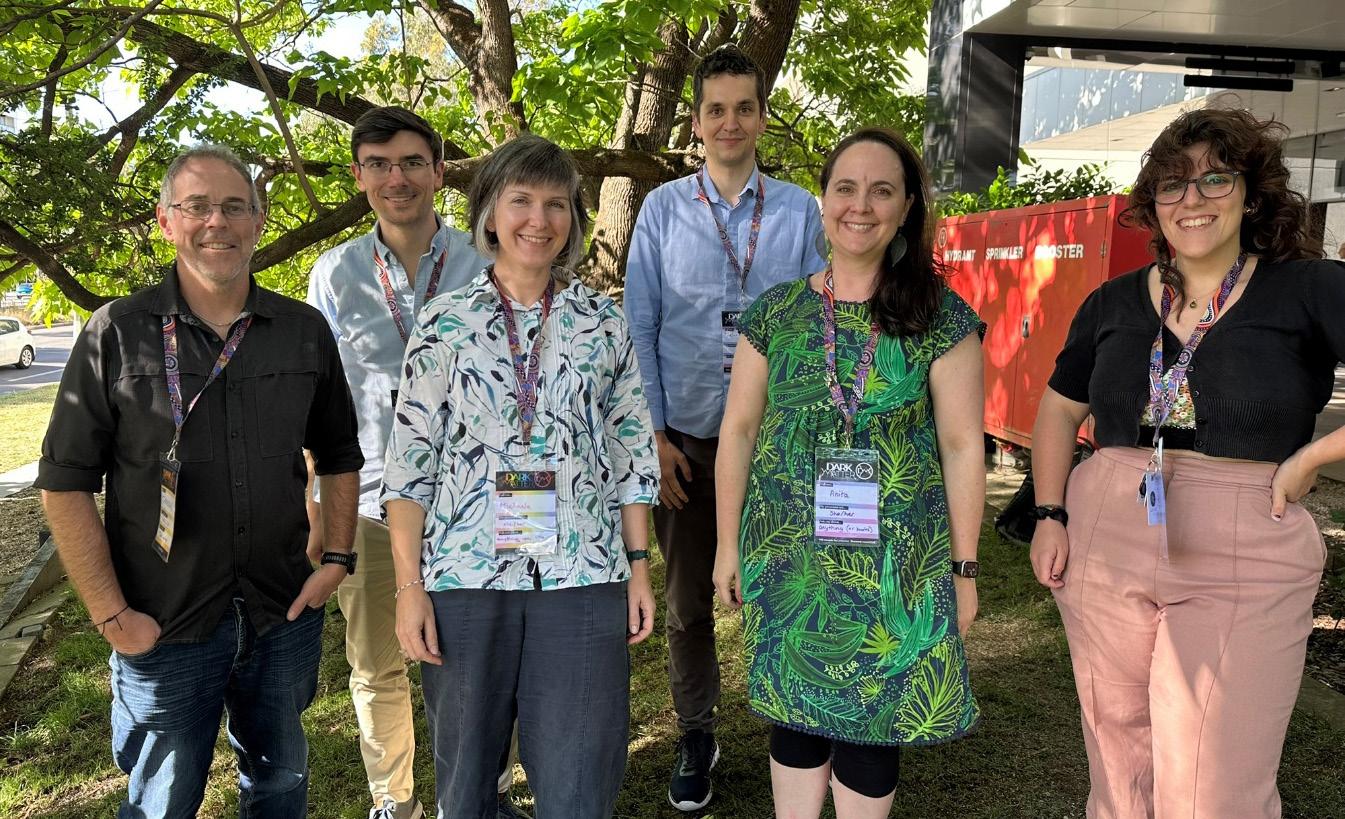
CDM Mentoring Committee (left to right): Darren Croton, Jayden Newstead, Michaela Froehlich, Maxim Goryachev, Anita Vecchies, Chiara Maria Lisotti; absent: Irene Bolognino.
training and development
CDM is committed to the development of all of its members. In 2025, the Centre offered a range of formal and informal training activities, many with a strong focus on equity, diversity and inclusion. These included:
• IdeaSquare – CERN Innovation Experience
• Imposter Syndrome – Merryn McKinnon (Navigating Acacemia & Beyond Workshop)
• Navigating Academia & Beyond Workshop
→ Presentation and public speaking skills
→ Post-doc applications and career planning in academia
→ Academic and grant writing
→ Traditional and non-traditional grant opportunities
→ Exploring career paths outside academia
• ARC Funding Schemes and Application Processes – Katie Cox and Misha Hutchings (ARC at the CDM ECR workshop)
• Careers Outside Academia - Beyond Zero Emission (CDM ECR workshop)
• Careers Inside Academia (CDM ECR workshop)
• Navigating Workplace Dynamics and ECR-supervisor relationships – Kate Diggle and the Workplace Therapist team (CDM annual workshop)
• Building your Profile & Getting Noticed on LinkedIn (CDM annual workshop)
• Contact Officer Training - iHR
• Formal induction training at the Stawell Gold Mine to work in SUPL
• Coaching on media skills and messaging to students and ECRs who were interviewed on radio for different opportunities and during the National Quantum & Dark Matter Road Trip
• Leading Edge Program - Women & Leadership Australia
• inSTEM 2025 - various training and professional development opportunities
• CoE Summit 2025 - professional staff training and development
CDM Vacation Studentships
Over the 2024/25 summer vacation period, CDM supported six vacation studentships across six nodes of the Centre. Students underwent a competitive application process and were selected to undertake a 4-8 week dark matter research project.
Reflections on the Leading Edge Program by Eiasha Waheed
Throughout my research career, I have realised that leadership skills are essential at every stage of a career. Technical expertise is not enough - being able to lead, influence and collaborate effectively is equally important.
Over four months in 2025, I took part in the Leading Edge Program with Women & Leadership Australia. I was curious about how much difference a structured leadership program could make to the way I work and think. Now I see that it was a very worthwhile investment, for my professional growth and for how I approach challenges more generally.
One of the strongest parts of the program was how it encouraged me to look at leadership beyond just the tasks of managing projects. It pushed me to reflect on my behaviors, habits, and assumptions, and how they shape the way others experience me as a leader.
The applied learning approach was another highlight. Rather than only talking about concepts, it gave me space to practice, experiment and then reflect on the outcomes in the form of “peer coaching sessions” and a “workplace application project”. Each module focused on a key leadership theme and the combination of expert input, practical activities, and time for reflection made the learning very applied and immediately relevant.
Throughout the program, I practiced listening more deeply, asking better questions, and thinking about influence in a more strategic way.
The group aspect of the program was one of the best parts. Being with a diverse group of women from different fields and at different stages of their careers gave me fresh perspectives and showed me that many of the challenges I face are shared by others. The structured discussions and the informal conversations reminded me how important it is to have networks and support in leadership.
events
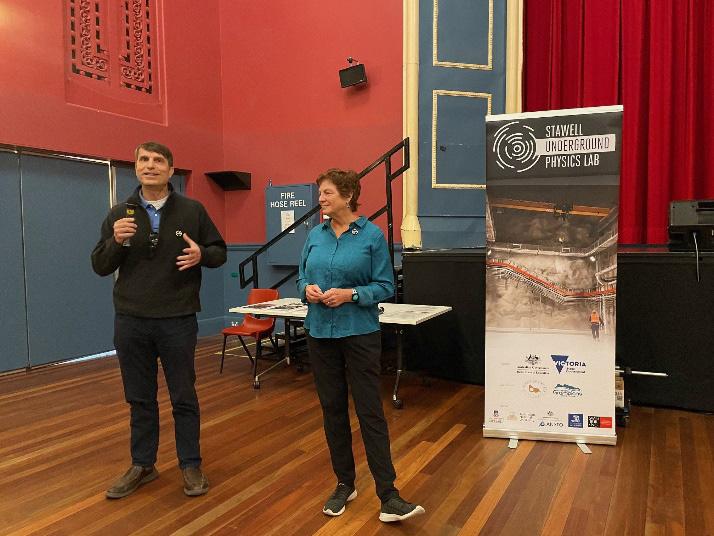
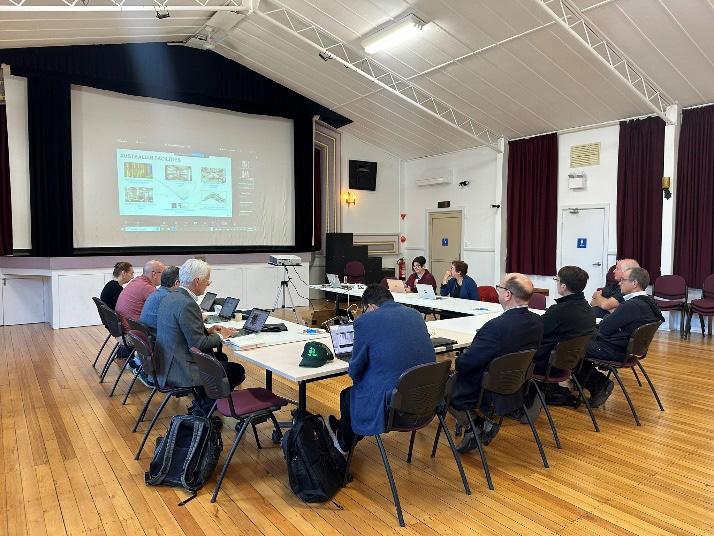
Centre events offer members from across all nodes with the opportunity to collaborate to share information and skills that will assist students and researchers in their academic and industry careers. In 2025, there were many in person events and travel opportunities.
The Centre’s ECR and Annual Workshops were the main opportunity for the whole Centre and some international Centre members and guests to come together in person. Both are profiled in more detail in other sections.
There were also a number of workshops, meetings and conferences organised by Centre members which are profiled below.
CDM also highlights days of significance on the scientific calendar in order to promote an understanding of dark matter and physics careers in the wider community, and to celebrate the work and achievements of members. These include National Science Week and Dark Matter Day, profiled in other sections of this report.
ISAC meeting comes to Stawell and Halls Gap
In February, two international members and one Australian member of our ISAC visited Stawell and Halls Gap for the Centre’s ISAC meeting. The Chair Professor Priscilla Cushman (University of Minnesota; Spokesperson of SuperCDMS-SNOLAB ) and Professor Tony Gherghetta (University of Minnesota) and Professor Jordan Nash (Monash University) came in person to meet with members of the Centre’s Research and Executive Committees and visit SUPL. The meeting consisted of a half day of presentations and updates from the Centre’s research themes as well as Q&A. The committee then provided feedback to the Centre’s leadership (Executive, Research and ECR Committees) as well as a report outlining their assessment of the research priorities of the Centre.
Priscilla and Tony answering questions following Elisabetta Barberio’s public lecture in Stawell.
ISAC meeing in Halls Gap.
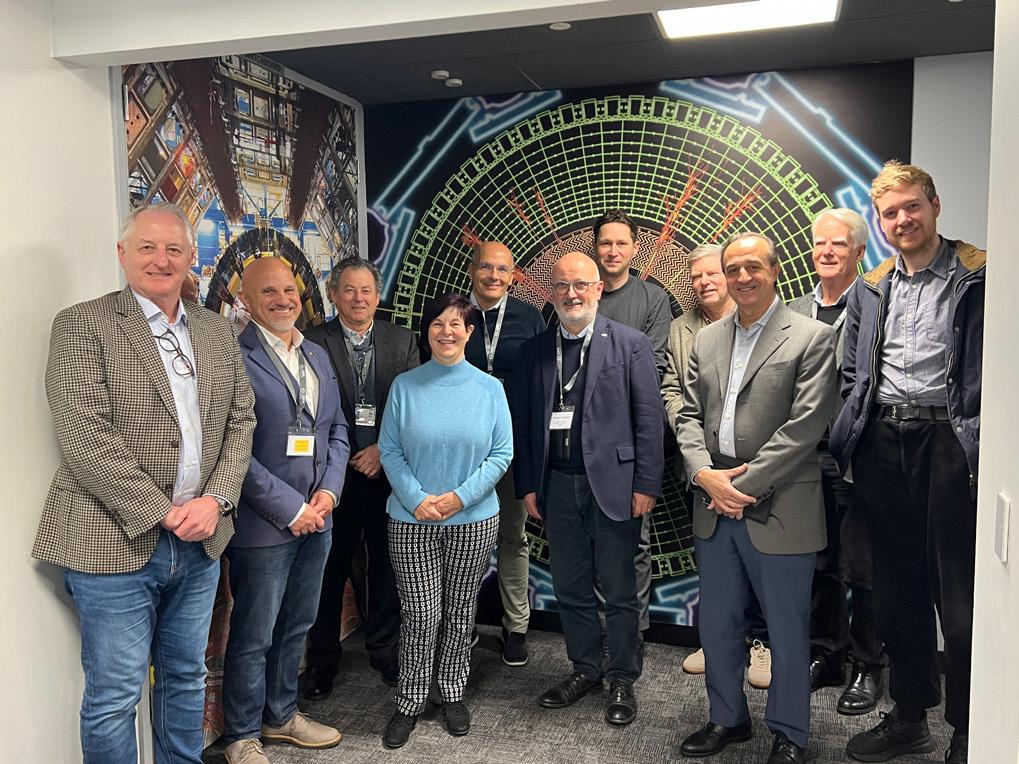
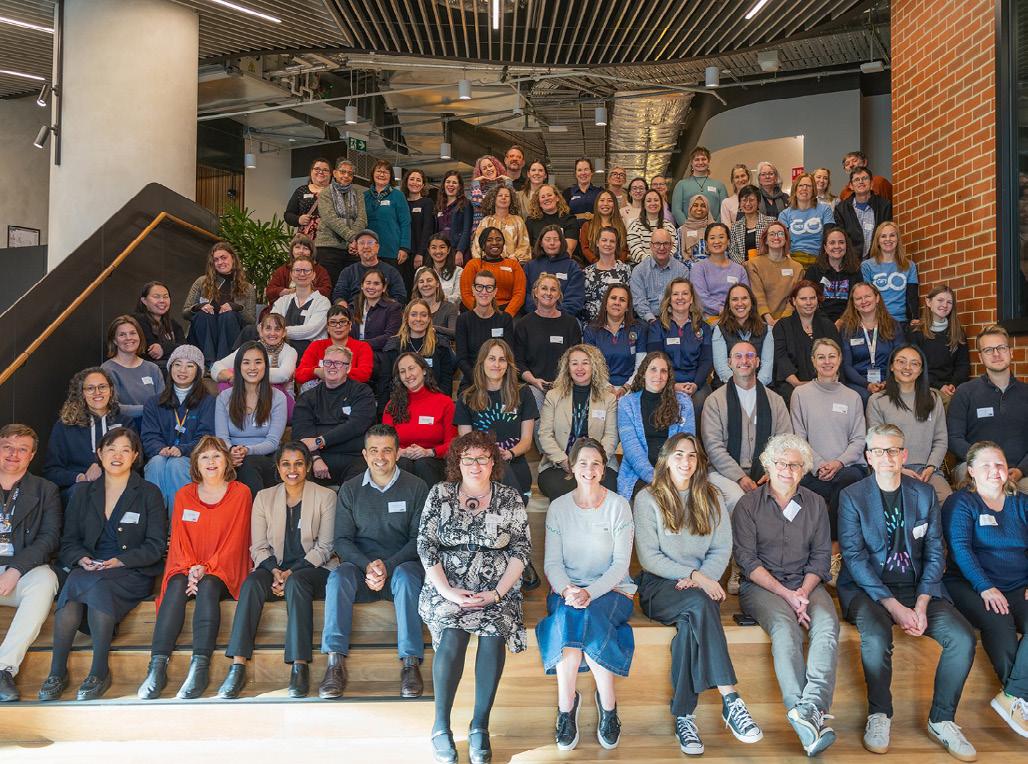
INFN visit to Australia
A delegation of some of the leadership of Italy’s Istituto Nazionale di Fisica Nucleare (INFN) including Prof. Marco Pallavicini (INFN Vice President), Dr. Oliviero Cremonesi (Director of the INFN Astroparticle Physics Division) and Dr. Marco Lazzarino (Scientific Attaché at the Italian Embassy in Canberra) visited the University of Melbourne, the Australian Research Council and SUPL in August during an official visit to Australia.
Partner of the Centre, the INFN has had a longstanding collaboration with SABRE South through the Laboratori Nazionali del Gran Sasso. The delegation had discussions with Centre members about SABRE South and CELLAR during their visit and were very supportive of the research being undertaken in SUPL.
Collaboration and knowledge sharing at the 2025 ARC CoE Summit
Organised and facilitated by the Melbourne based ARC Centres of Excellence, the 2025 CoE Summit was held over three days and brought together over 150 Directors, COOs and professional staff from 24 Centres of Excellence across Australia. This annual event is designed to share challenges, insights and best practice, build cross-Centre collaboration and provide professional development. Dark Matter Centre members were on the organising committee and made key contributions to the program.
The Director and COO day featured a keynote by Prof Ute Roessner (ARC CEO), presentations on engagement and impact, panels on governance boards and succession planning and parallel sessions on leading with influence and operations best practice. The professional staff day featured a keynote by Prof Gavin Reid (ARC Executive Director), panels on career development, winding down CoEs and cross-Centre collaboration and round table discussions on various topics.
Professional staff also ran separate community of practice workshops on finance, databases, training & professional development, communications and EDI that provided valuable opportunities to swap ideas, share challenges and celebrate wins.
INFN delegation, Centre members and University of Melbourne representatives during their visit to the University of Melbourne.
CoE summit professional staff day (photo credit: Carl Knox).
2025 inSTEM Conference celebrates diversity
InSTEM is a conference for Centre of Excellence members, dedicated to advancing equitable practices for marginalised and underrepresented people in STEM, while also welcoming those committed to becoming better allies. It provides a safe, inclusive space to connect and share experiences, and learn from experts on advancing careers in STEM while fostering inclusivity.
CDM and OzGrav co-led the organisation of inSTEM 2025 with support and sponsorship from seven other Centres of Excellence.
Centre members Anita Vecchies, Jade McKenzie, Renee Key and Michael Tobar were also on the organising committees. 14 CDM students, postdocs, academics and professional staff attended representing five nodes. Anita Vecchies and Elisabetta Barberio presented and took part in a panel discussion on Navigating STEM as a Culturally and Linguistically Diverse (CALD) individual and supporting CALD individuals in the STEM workplace. There were also many other valuable sessions for participants.
Centre postdoc Leonie Einfalt said she valued the opportunity to talk in-depth about diversity, equity and inclusion issues.
“The 2025 inSTEM conference was a great reminder of how important it is to have dedicated spaces to talk about diversity, equity, and inclusion in STEM. While DEI sessions at scientific conferences are often short or poorly attended, inSTEM created an environment where these topics were front and centre - and where people felt comfortable speaking openly, connecting, and finding allyship.
The workshops and interactive sessions were especially useful, covering everything from mental health and self-care to networking and using LinkedIn effectively. It was also incredibly well organised (and very well catered!), which made the experience all the more enjoyable.”
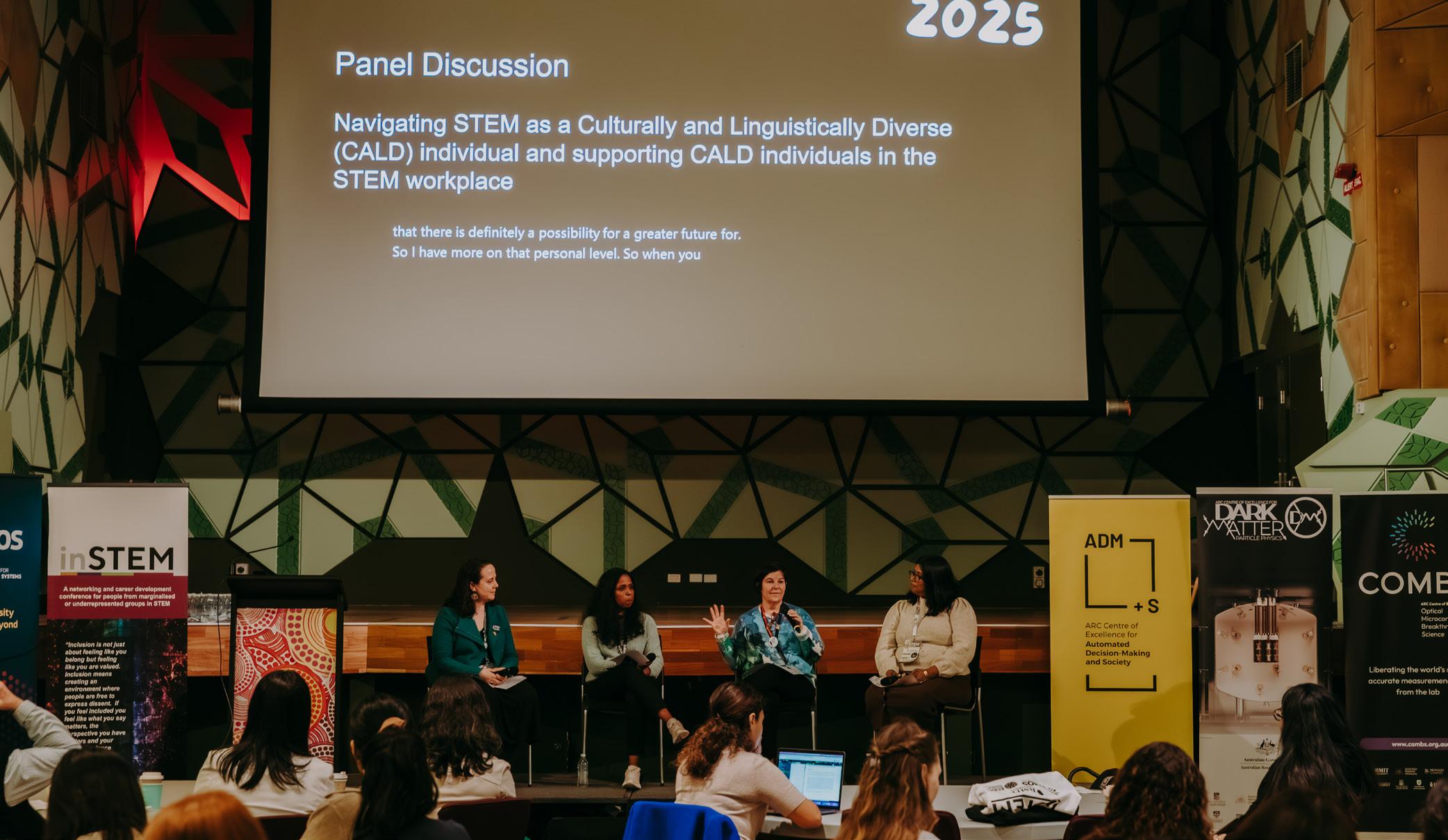
Photo credit: Matto Lucas
Centre members coordinated and participated in several other meetings during the year that are mentioned in other sections of this report. These included the SABRE Collaboration Meeting, the Centre’s Theory Program Workshop and the CYGNUS-Oz collaboration meeting.
There were many Centre researchers who helped organise, give talks, keynotes and plenary presentations at international conferences and workshops throughout the year. Some of the keynotes and plenary talks included:
• XVIIIth International Conference on Interconnections between Particle Physics and Cosmology (PPC 2025) – Nicole Bell, plenary titled, The Capture of Dark Matter in Stars
• 69th DAE Symposium on Nuclear Physics – Cedric Simenel, plenary titled, Impact of nuclear structure on WIMP-nucleus and coherent elastic neutrino-nucleus scattering
• URSI Asia-Pacific Radio Science Conference – Michael Tobar, keynote titled, Precision Measurement and Signal Generation to Test Fundamental Physics
• The 21st International Conference on Hadron Spectroscopy and Structure (HADRON2025) – Xuangong Wang, plenary titled, Evidence for and implications of a dark photon
• 21st Rencontres du Vietnam – Martin White, plenary titled, Dark Matter constraints from GAMBIT
• International Symposium on Cosmology and Particle Astrophysics (CosPA 2025) and UCLA Dark Matter 2025 – Phillip Urquijo, plenary titled, The SABRE South Experiment at the Stawell Underground Physics Laboratory
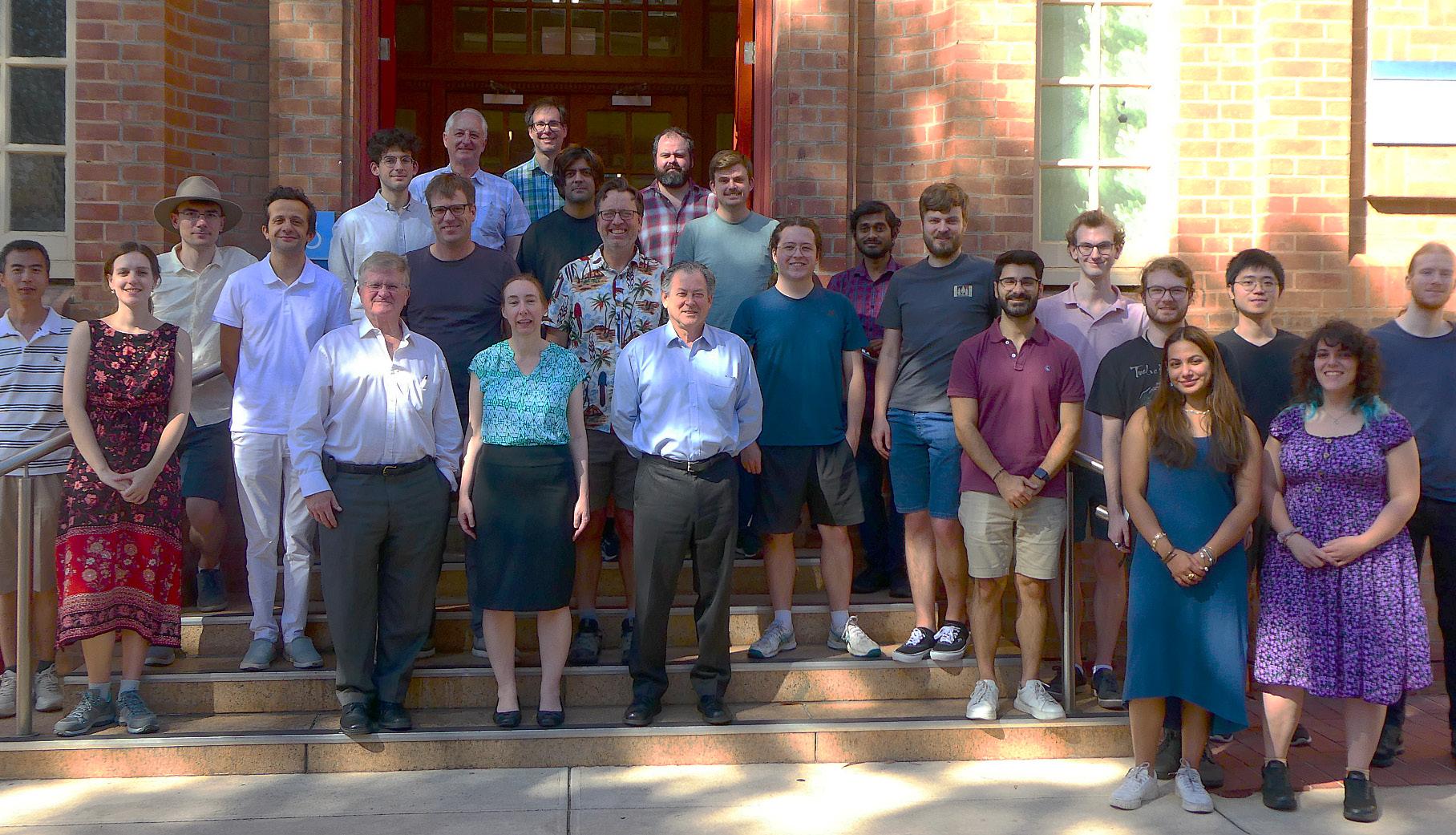
Participants at the Centre’s Theory Program Workshop in Adelaide.
annual workshop
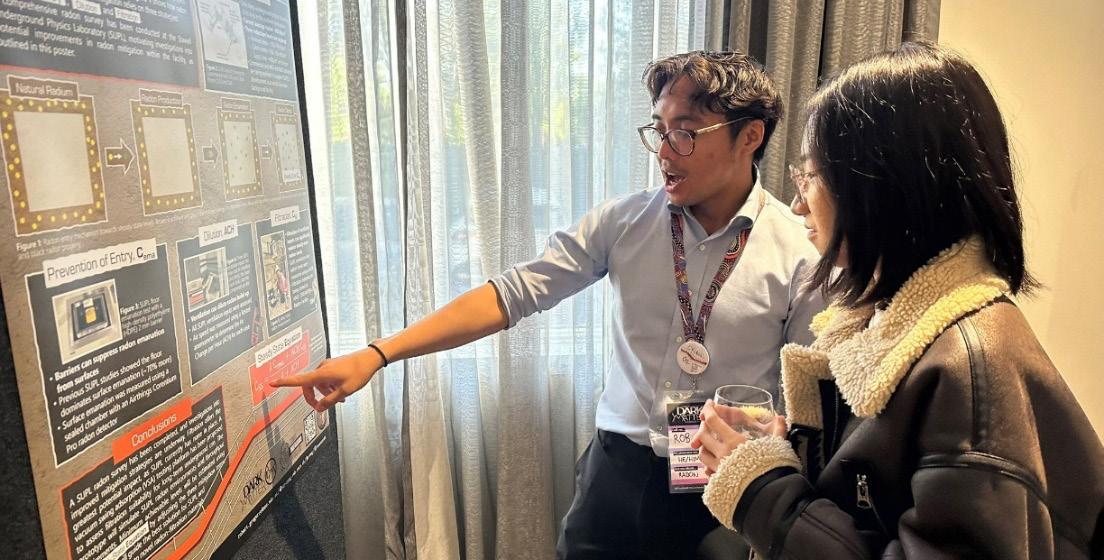
The fourth in-person Centre Annual Workshop was held in Canberra in November. Over 100 Centre members, collaborators and guests met to discuss the dark matter research of the Centre as well as sharing updates on the various nonresearch portfolios of the Centre (EDI, Media & Communications, Outreach & Education, Mentoring and Innovation & Translation).
The keynotes included 'Dark matter from an astronomical perspective' by Professor Ken Freeman, 'Directions being pursued in dark matter model building', 'Building dark matter direct detection experiments' and 'Opportunities and challenges of light dark matter searches'. Fifteen HDR students and postdocs gave short talks on research spanning all the research themes of the Centre and we also had updates on SABRE South and SUPL. The poster session, AI discussion panel, 3MT talks and panels session on AI were also very engaging. Other training sessions conducted at the workshop are described elsewhere in this report.
Highlights from the post event survey included the mix of topics of the talks, hearing about all the research across the Centre, the sense of community created by connecting with other Centre members, the 3MT competition and of course, the talent show!
“I really enjoyed reconnecting with everyone, meeting the new members, and hearing about the variety of research happening across the Centre. The 3MT competition was a highlight; it was engaging, fun, and a great way to see people communicate their work in a simple and accessible way.”
Thank you to everyone who dedicated time to supporting the planning, organisation and delivery of another successful workshop.
Robert Renz Marcelo Gregorio and Shuyi Lyu during the poster session.
By Navneet Krishnan
Continuing the tradition established at CDM 2024, The 2025 CDM Annual Workshop included a talent show presented during the workshop dinner. The 2024 talent show proved to be very popular, and there was strong demand for another in 2025.
Centre members who expressed interest were given the opportunity to present or perform a particular skill or hobby they wished to showcase. The 2025 show included:
• A live English musical performance by Nav Krishnan, Cedric Simenel, and Victoria Bashu from the ANU node.
• A live English singing performance by Kael Kemp from the Adelaide node, set to a backing track he pre-recorded.
• A live Hindi singing performance by Riya Raizada from the Sydney node.
• Five simultaneous live chess games between the Adelaide Node’s Kyle Leaver and volunteer participants.
• A traditional Indian dance performance by Amrita Banerjee from the Swinburne node.
The breadth of performance types means Centre members expressed not only individual skills, but aspects of their culture. This has presented a way to further develop community ties between Centre members. The audience responded favourably to the 2025 talent show, and interest in a 2026 talent show has already been expressed.
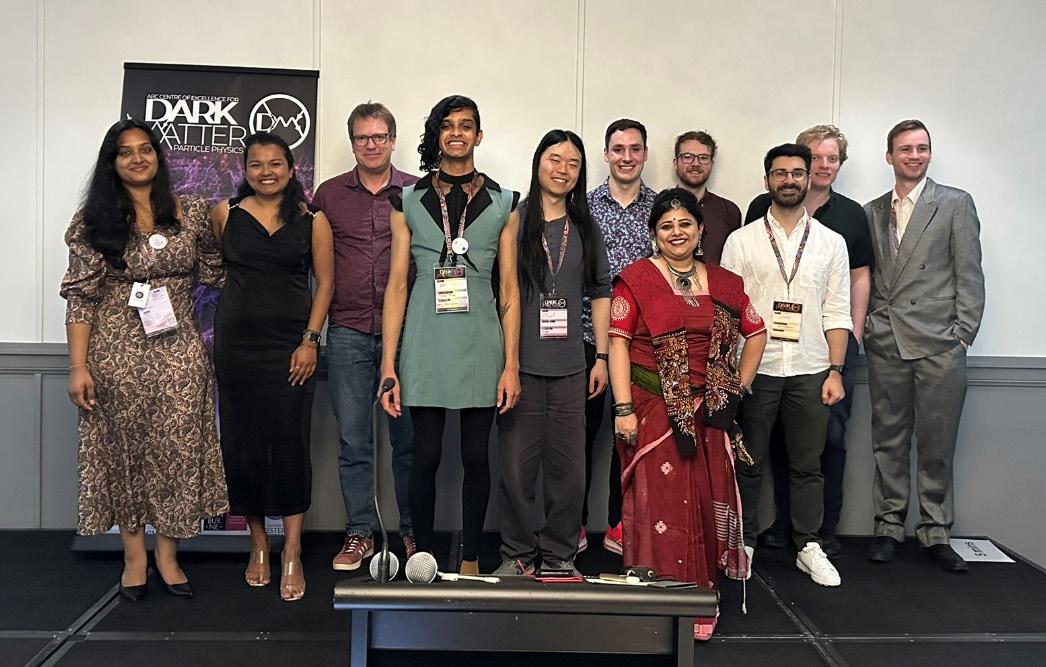
Performers in the talent show at the CDM Annual Workshop.
2025 CDM Awards
This year marked the fifth anniversary of the Dark Matter Centre awards. These awards recognise Centre members who have shown leadership, actively engaged in core Centre activities, and embodied the values we want to reflect in our culture.
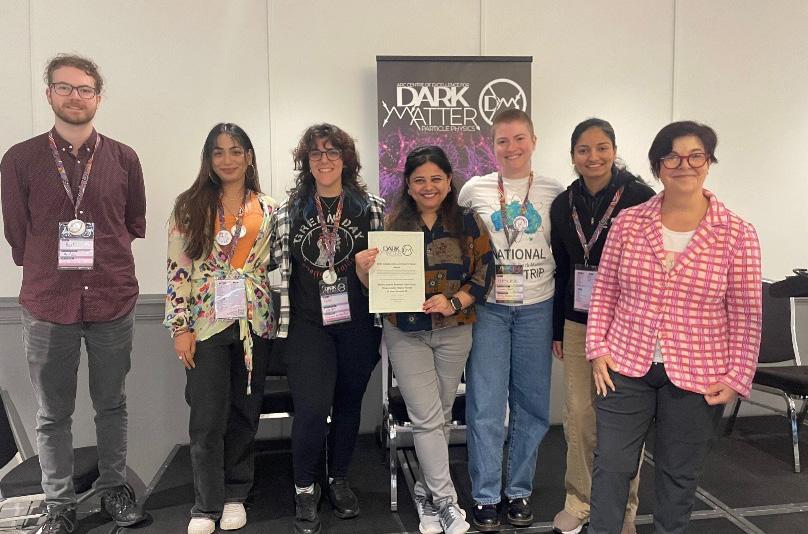
CDM Outreach and Impact Award
The award acknowledges those who have gone above and beyond the expected level of outreach involvement. This was another excellent year for outreach across the Centre.
PhD Chiara Lisotti from the University of Sydney secured Special Initiatives funding with colleagues to develop a dark matter–focused social media presence on TikTok and Instagram. Their “DMystified” channel has reached audiences in Australia and internationally, engaging younger generations in an accessible and contemporary way. In addition, she contributes to other outreach activities including the HERA program and rural school visits in NSW. She has participated in the STEMPals program exchanging letters with primary school students to teach them about dark matter and she also volunteered for the National Quantum and Dark Matter Road Trip events in Sydney.
CDM Collaboration and Centre Values Award
This award recognises Centre members who exemplify the Centre’s core values, collaboration, equity, diversity and inclusion, and who work effectively across nodes, disciplines, and partner organisations.
PhD student team members Sharry (UoS), Amrita Banerjee (SUT), Kael Kemp (UoA), Chiara Lisotti (UoS), Haylea Purnell (UoA), and Iman Shaukat Ali (UoM) were awarded a special initiatives grant led by Shary to run a workshop to help Centre students and postdocs with professional development training.
They organised and ran a hybrid three-day workshop covering a range of practical topics to support Centre students and postdocs. The program was developed in response to feedback from their peers and the ECR cohort, which highlighted gaps in existing training. It included a mix of talks, panels and external facilitators. The workshop brought together participants from different nodes and research groups, strengthening connections across the Centre. They embodied the Centre’s values throughout the workshop. They were professional, collaborative, enthusiastic, supportive and inclusive, creating an environment where participants felt comfortable, open and engaged.
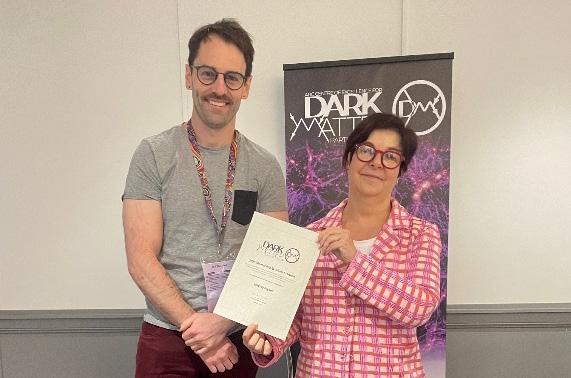
CDM Mentorship Excellence Award
This year we introduced a new award category to recognise a Centre member who has provided guidance and support to other researchers. It celebrates those who go beyond their formal roles to nurture talent, foster growth and inspire excellence. The panel selected two recipients for this inaugural award. There were two recipients of this award.
Before becoming a Chief Investigator, Darren Croton (SUT) volunteered to chair the Mentoring Committee, and after stepping down he continued as an active member. He has worked closely with the committee to introduce successful new mentoring initiatives, such as virtual and in-person speed mentoring. He supported the transition of committee leadership by helping Michaela Froehlich step into the chair role. Darren has made meaningful contributions both to the Centre as a whole and to individuals. His openness and willingness to be vulnerable make him relatable and approachable. He leads by positive example, actively engages in Centre activities and encourages others to do the same. His actions have had positive ripple effects across the Centre.
Lindsey Bignell, researcher at the Australian National University, has been an active and supportive collaborator and mentor since the Centre’s inception, supervising and mentoring students at ANU and other nodes. He is particularly welcoming of new members from across the Centre, helping them integrate quickly and contributing to collaborative outcomes. In both research and leadership roles, he approaches his work as a guide and mentor, promoting collaboration and empowering others to develop their own skills. He encourages students to explore their ideas, and he advocates for ECRs applying for their own grants to establish independent research programs. Lindsey provides genuine personal support, showing care for wellbeing and valuing the human side of mentoring.
Best Poster Award (Panel vote)
Robert Renz Marcelo Gregorio (ANU)
For the poster titled “Radon Mitigation Strategies or Low-Background Underground Operations”
Best Poster Award (Centre member vote)
Isabelle Ostrowski (UoM)
For the poster titled “Search for B-Mesogenesis at Belle II”
Best Short Talk Award
Iman Shaukat Ali (UoM) and Chiara Lisotti (UoS)
For their talk titled “Constraining Boosted Dark Matter Using Directional Detectors”
3 Minute Thesis Award
Haylea Purnell (UoA)
For the talk titled “Anomaly Detection”

awards and honours
ATLAS Collaboration – including Centre members from UoM, UoA and Freiburg
2025 Breakthrough Prize in Fundamental Physics awarded by the Breakthrough Prize Foundation
This $1 million prize was awarded for detailed measurements of Higgs boson properties confirming the symmetry-breaking mechanism of mass generation, the discovery of new strongly interacting particles, the study of rare processes and matterantimatter asymmetry, and the exploration of nature at the shortest distances and most extreme conditions at CERN’s Large Hadron Collider.
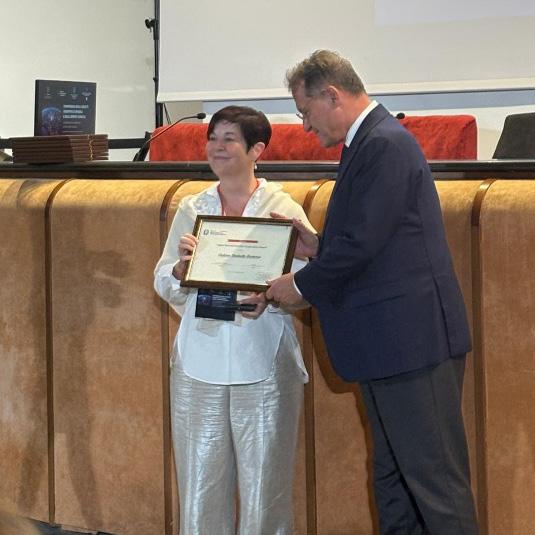
Elisabetta Barberio (UoM)
Italian Bilateral Scientific Cooperation Award awarded by the Italian Ministry of Foreign Affairs and International Cooperation
The award recognises Professor Barberio’s distinguished service to science and international collaboration, in particular the impact of her leadership of the SABRE South experiment and development of the Stawell Underground Physics Laboratory (SUPL). It also recognises her long-standing collaboration with Italy’s National Institute for Nuclear Physics (INFN).
Maxim Goryachev (UWA)
ARC Future Fellowships awarded by the Australian Research Council
Charles Grant (UoA)
Dean’s Commendation for Doctoral Research Excellence awarded by the University of Adelaide for exemplary dedication, innovation, and scholarly excellence in their respective fields of study
Michael Hatzon (UWA)
International Union of Radio Science: Young Scientist Award awarded by the International Union of Radio Science
Maria Chiara Lisotti (UoS)
Faculty of Science Postgraduate Research Prize for Leadership awarded by The University of Sydney
Lorenzo Principe (UoM)
Laby PhD Travelling Scholarships awarded by The University of Melbourne
Ben McAllister (SUT)
School of Science Research Excellence Award awarded by Swinburne University of Technology
Ben McAllister (SUT)
2025 VIC Young Tall Poppy Science Award awarded by the Australian Institute of Policy and Science
Shiryo Owa (UoA)
Dean’s Commendation for Doctoral Research Excellence awarded by the University of Adelaide for exemplary dedication, innovation, and scholarly excellence in their respective fields of study
Ananthakrishnan Ravindran (UoM)
Laby PhD Travelling Scholarships awarded by The University of Melbourne

Kieran Rule (UoM)
Laby PhD Travelling Scholarships awarded by The University of Melbourne
Georgy Sanamyan (UoA)
Dean’s Commendation for Doctoral Research Excellence awarded by the University of Adelaide for exemplary dedication, innovation, and scholarly excellence in their respective fields of study
Owen Stanley (UoM)
3MG Travel Grant
awarded by the 3MG Doctoral School at Nante University
Anthony Thomas (UoA)
Elected as an AIP Honorary Fellow by the Australian Institute of Physics
Mike Tobar (UWA)
European Frequency and Time Award (EFTF Award) awarded by The European Frequency and Time Forum
Mike Tobar (UWA)
IEEE C. B. Sawyer Memorial Award awarded by IEEE Ultrasonics, Ferroelectrics, and Frequency Control Society
student completions
Honours:
Keahn Brown (UoA)
Max Fleming (ANU)
Matthew Hancock (UoA)
Yongyu Kang (UoS)
MPhil:
Georgy Sanamyan (UoA)
Masters:
Willem van der Craats (UoM)
Aspen Anderson (UoM)
Samarth Gohel (UoM)
Akshayan Manivannan (UoM)
Jamie Papworth-Dent (UoM)
Jinyi Wu (UoM)
PhD:
Raghda Abdel Khaleq (ANU)
Marina Bazyk (UoM)
Ferdos Dastgiri (ANU)
Guangyong Fu (UoM)
Tyler Hughes (SUT)
Nicholas Hunt-Smith (UoA)
Albert Kong (UoA)
Navneet Krishnan (ANU)
Lachlan McKie (ANU)
Shiryo Owa (UoA)
Edmund Ting (UoA)
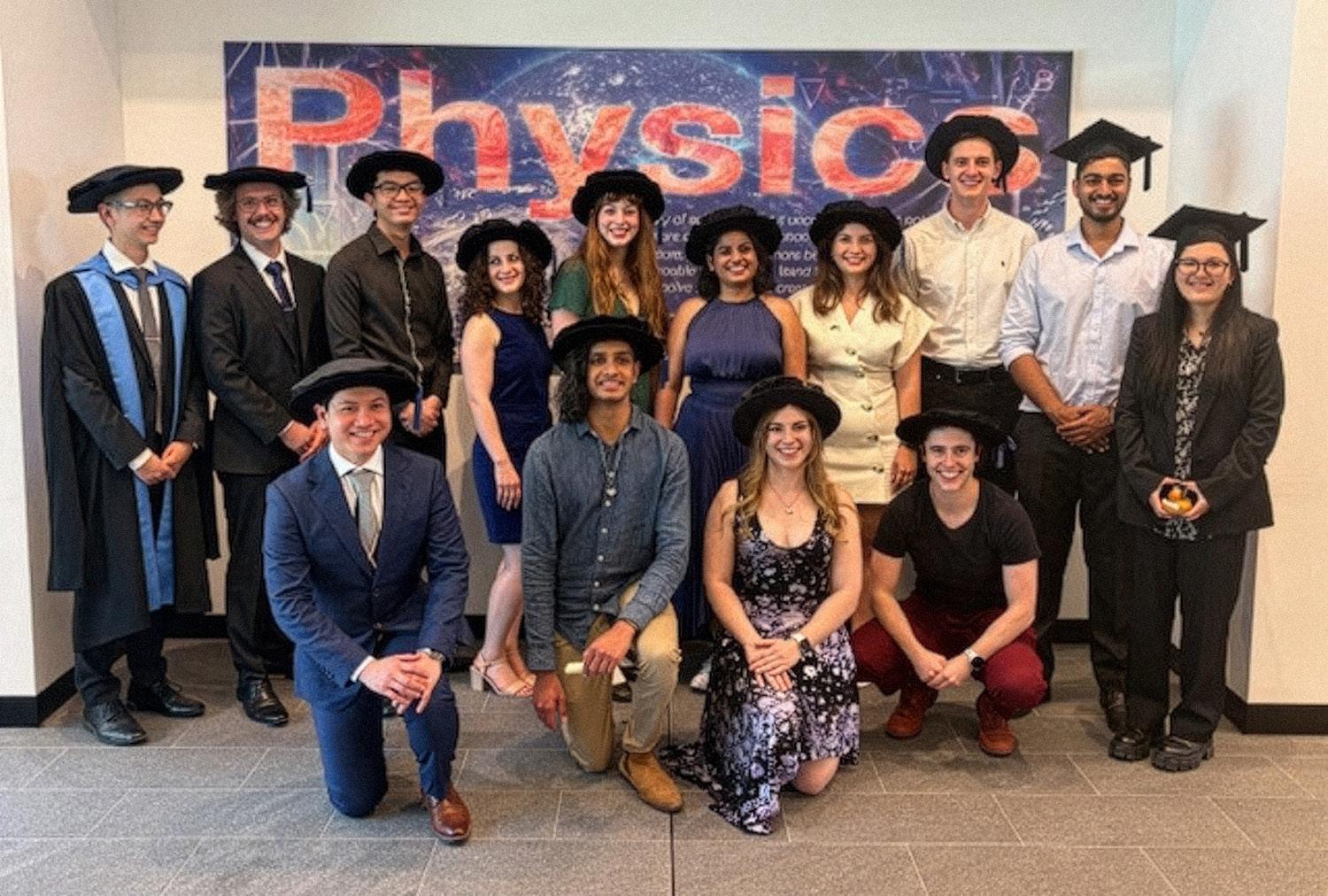
ANU PhD graduates. Lachlan McKie (back row, second from left), Ferdos Dastgiri (back row, fourth from left) and Navneet Krishnan (front row, second from left).
R. Abdel Khaleq, J. L. Newstead, C. Simenel and A. E. Stuchbery, Detailed nuclear structure calculations for coherent elastic neutrino-nucleus scattering, Physical Review D, 111, 033003 (2025) https://doi.org/10.1103/PhysRevD.111.033003
Y. Afik, F. Fabbri, M. Low, L. Marzola, J. Antonio Aguilar-Saavedra, M. M. Altakach, N. A. Asbah, Y. Bai, H. Banks, A. J. Barr, A. Bernal, T. E. Browder, P. Caban, J. A. Casas, K. Cheng, F. Déliot, R. Demina, A. Di Domenico, M. Eckstein, M. Fabbrichesi, B. Fuks, E. Gabrielli, D. Gonçalves, R. Grabarczyk, M. Grossi, T. Han, T. J. Hobbs, P. Horodecki, J. Howarth, S-C. Hsu, S. Jiggins, E. Jones, A. W. Jung, A. H. Knue, S. Korn, T. Lagouri, P. Lamba, G. T. Landi, H. Li, Q. Li, I. Low, F. Maltoni, J. McFayden, N. McGinnis, R. A. Morales, J. M. Moreno, J. R. Muñoz de Nova, G. Negro, D. Pagani, G. Pelliccioli, M. Pinamonti, L. Pintucci, B. Ravina, A. Ruzi, K. Sakurai, E. Simpson, M. Sioli, S. Su, S. Trifinopoulos, S. E. Vahsen, S. Vallecorsa, A. Vicini, M. Vos, E. Vryonidou, C. D. White, M. J. White, A. J. Wildridge, T. A. Wu, L. Zani, Y. Zhang and K. Zoch, Quantum information meets highenergy physics: input to the update of the European strategy for particle physics, The European Physical Journal Plus, 140, 855 (2025) https://doi.org/10.1140/epjp/s13360-025-06752-9
N. Aggarwal, O. D. Aguiar, D. Blas, A. Bauswein, G. Cella, S. Clesse, A. M. Cruise, V. Domcke, S. Ellis, D. G. Figueroa, G. Franciolini, C. GarcíaCely, A. Geraci, M. Goryachev, H. Grote, M. Hindmarsh, A. Ito, J. Kopp, S. M. Lee, K. Martineau, J. McDonald, F. Muia, N. Mukund, D. Ottaway, M. Peloso, K. Peters, F. Quevedo, A. Ricciardone, A. Ringwald, J. Steinlechner, S. Steinlechner, S. Sun, C. Tamarit, M. E. Tobar, F. Torrenti, C. Ünal and G. White, Challenges and opportunities of gravitational-wave searches above 10 kHz, Living Reviews in Relativity, 28, 10 (2025) https://doi.org/10.1007/s41114-025-00060-5
N. F. Bell, G. Busoni and A. Ghosh, Using neutron stars to probe dark matter charged under a Lμ-Lτ symmetry, Journal of Cosmology and Astroparticle Physics, 10, 060 (2025) https://doi. org/10.1088/1475-7516/2025/10/060
N. F. Bell, M. J. Dolan, A. Ghosh and M. Virgato, Neutrino portals to MeV WIMPs with ��-channel mediators, Physical Review D, 111, 055020 (2025) https://doi.org/10.1103/physrevd.111.055020
G. Busoni, J. Gargalionis, E. N. V. Wallace and M. J. White, Emergent symmetry in a two-Higgs-doublet model from quantum information and nonstabilizerness, Physical Review D, 112, 035022 (2025) https://doi.org/10.1103/r5ps-pmh3
A. B. I Beneito, J. Gargalionis, J. Herrero-Garcia and M. A. Schmidt, Squeezing proton decay and neutrino masses: upper bounds on standard model extensions, Journal of High Energy Physics, 2025, 83 (2025) https://doi.org/10.1007/jhep10(2025)083
D. Cleaver, C. McCabe and C. A. J. O’Hare, Listening for ultraheavy dark matter with underwater acoustic detectors, Physical Review D, 112, 063060 (2025) https://doi.org/10.1103/jpzr-msx1
W. M. Campbell, L. Mariani, M. E. Tobar and M. Goryachev, Experimental Limits on Planetary Mass Primordial Black Hole Mergers, Physical Review Letters, 135, 251402 (2025) https://doi.org/10.1103/c1kj-rj3c
W. M. Campbell, S. Parashar, L. Mariani, M. E. Tobar and M. Goryachev, Low-temperature properties of low-loss macroscopic lithium niobate bulk acoustic wave resonators, Physical Review B, 111, 214106 (2025) https://doi.org/10.1103/physrevb.111.214106
C. Cocuzza, N. T. Hunt-Smith, W. Melnitchouk, N. Sato and A. W. Thomas, Global QCD analysis of spin PDFs in the proton with high-�� and lattice constraints, Physical Review D, 112, 114017 (2025) https://doi.org/10.1103/6fn9-1wqb
P. Cox, M. J. Dolan and J. Wood, New limits on light dark matternucleon scattering, Phyiscal Review D, 112, 115021 (2025) https:// doi.org/10.1103/ww13-v14j
R. C. Crew, E. N. Ivanov, G. Flower, M. E. Tobar and M. Goryachev, Microwave Oscillator Based on Two Optimally Tuned YIG Filters, IEEE Transactions on Microwave Theory and Techniques, 73, 12 (2025) https://doi.org/10.1109/tmtt.2025.3617506
A. Fawaz, J. Bourhill, S. Castelletto, H. Abe, T. Ohshima, M. E. Tobar, T. Volz, M. Goryachev and S. R. Nair, Coupling 4H -SiC spins to a microwave resonator at millikelvin temperatures, Physical Review Applied, 24, 064075 (2025) https://doi.org/10.1103/zpzb-qp71
J. R. Felix, A. W. Thomas and X. G. Wang, Relaxing constraints on a broad dark photon, Physical Review D, 112, 035011 (2025) https:// doi.org/10.1103/cv86-8nx3
D. F. G. Fiorillo, A. Lella, C. A. J. O’Hare and E. Vitagliano, Leading Bounds on Micrometer to Picometer Fifth Forces from Neutron Star Cooling, Physical Review Letters, 135, 211003 (2025) https://doi. org/10.1103/tlqz-713s
A. Ghosh and D. Ghosh, Time evolution of the equation of state during perturbative reheating and its impact on the inflationary tensor perturbation spectrum, Nuclear Physics B, 1018, 116976 (2025) https://doi.org/10.1016/j.nuclphysb.2025.116976
M. Ghrear, A. G. McLean, H. B. Korandla, F. Dastgiri, N. J. C. Spooner and S. E. Vahsen, A comparison of Micromegas with x/y strip charge readouts for directional recoil detection, Nuclear Instruments and Methods in Physics Research Section A: Accelerators, Spectrometers, Detectors and Associated Equipment, 1072, 170190 (2025) https://doi.org/10.1016/j.nima.2024.170190
M. T. Hatzon, G. R. Flower, M. Goryachev, J. F. Bourhill and M. E. Tobar, Sharp electromagnetically induced absorption via balanced interferometric excitation in a microwave resonator, Physical Review Applied, 23, 024058 (2025) https://doi.org/10.1103/ physrevapplied.23.024058
M. T. Hatzon, E. N. Ivanov, A. Quiskamp and M. E. Tobar, The study of thermal fluctuations in microwave and mechanical resonators, Applied Physics Letters, 127, 243302 (2025) https://doi. org/10.1063/5.0305008
A. Li, A. L. Watts, G. Zhang, S. Guillot, Y. Xu, A. Santangelo, S. Zane, H. Feng, S-N. Zhang, M. Ge, L. Qi, T. Salmi, B. Dorsman, Z. Miao, Z. Tu, Y. Cavecchi, X. Zhou, X. Zheng, W. Wang, Q. Cheng, X. Liu, Y. Wei, W. Wang, Y. Xu, S. Weng, W. Zhu, Z. Li, L. Shao, Y. Tuo, A. Dohi, M. Lyu, P. Liu, J. Yuan, M. Wang, W. Zhang, Z. Li, L. Tao, L. Zhang, H. Shen, C. Providência, L. Tolos, A. Patruno, L. Li, G. Liu, K. Zhou, L-W. Chen, Y. Fan, T. Kajino, D. Lai, X. Li, J. Meng, X. Tang, Z. Xiao, S. Xiong, R. Xu, S-G. Zhou, D. R. Ballantyne, G. Fiorella Burgio, J. Chenevez, D. Choudhury, A. F. Fantina, D. K. Galloway, F. Gulminelli, K. Hebeler, M. Hoogkamer, J. E. Horvath, Y. Kini, A. Kurkela, M. Linares, J. Margueron, M. Mendes, M. Oertel, A. Papitto, J. Poutanen, N. Rea, A. Schwenk, X-Y. Song, I. Svensson, D. Tsang, A. Vuorinen, N. Andersson, M. C. Miller, L. Rezzolla, J. R. Stone and A. W. Thomas, Dense matter in neutron stars with eXTP, Science China Physics, Mechanics & Astronomy, 68, 119503 (2025) https://doi. org/10.1007/s11433-025-2761-4
T. N. Maity, Neutrinos as background and signal in searches using the Migdal effect, Physical Review D, 111, 123020 (2025) https://doi. org/10.1103/h3th-6wsr
T. N. Maity and C. Boehm, First constraint on the weak mixing angle using direct detection experiments, Physical Review D, 112, 053001 (2025) https://doi.org/10.1103/1lgl-bx7v
T. N. Maity, A. K. Saha, S. Mondal and R. Laha, Neutrinos from the Sun can discover dark matter-electron scattering, Physical Review D, 112, 023025 (2025) https://doi.org/10.1103/3f66-nfd5
R. A. Mostoghiu Paun, D. Croton, C. Power, A. Knebe, A. J. Using and A. R. Duffy, Tidal adaptive softening and artificial fragmentation in cosmological simulations, Monthly Notices of the Royal Astronomical Society, 542, 2 (2025) https://doi.org/10.1093/ mnras/staf1229
J. Mould, Dark Matter Genesis, The Astrophysical Journal, 984, 1 (2025) https://doi.org/10.3847/1538-4357/adaebe
J. Mould and B. Thakore, Primordial Black Holes as Coma Cluster Dark Matter and the Unresolved γ-Ray Background, The Astronomical Journal, 170, 261 (2025) https://doi. org/10.3847/1538-3881/adf5c3
S. Owa, D. B. Leinweber and A. W. Thomas, Nucleon resonance structure up to 2 GeV and the nature of the Roper resonance, Physical Review D, 111, 116002 (2025) https://doi.org/10.1103/ tt7s-p9gj
S. Parashar, W. M. Campbell, J. Bourhill, E. Ivanov, M. Goryachev and M. E. Tobar, Up-conversion of phonons to photons in a mechanically coupled split-post resonator, URSI Radio Science Letters, 7 (2025) https://doi.org/10.46620/25-0027
E. C. I. Paterson, J. Bourhill, M. E. Tobar and M. Goryachev, Electromagnetic helicity in twisted cavity resonators, Physical Review A, 112, 013530 (2025) https://doi.org/10.1103/6gp4-76td
A. P. Quiskamp, G. R. Flower, S. Samuels, B. T. McAllister, P. Altin, E. N. Ivanov, M. Goryachev and M. E. Tobar, Near-quantumlimited axion dark matter search with the ORGAN experiment around 26 μeV, Physical Review D, 111, 095007 (2025) https://doi. org/10.1103/physrevd.111.095007
S. Robles, D. Vatsyayan and G. Busoni, From capture to collapse: Revisiting black hole formation by fermionic asymmetric dark matter in neutron stars, Physical Review D, 112, 123011 (2025) https://doi.org/10.1103/d19k-zfjf
S. Samuels, W. Campbell, M. E. Tobar and M. Goryachev, Cryogenic microwave whispering gallery mode spectroscopy of paramagnetic impurities in high-purity crystalline LiF, Journal of Applied Physics, 138, 064402 (2025) https://doi. org/10.1063/5.0283131
A. C. Shekar, C. Lisotti, N. Mishra, C. A. J. O’Hare and L. E. Strigari, Searching for beyond-standard-model solar neutrino interactions using directional detectors, Physical Review D, 112, 123021 (2025) https://doi.org/10.1103/sgnz-cw31
A. Thomas, Reflections on Chiral Symmetry Within QCD, Symmetry, 17, 4 (2025) https://doi.org/10.3390/sym17040512
G. Tobar, I. Pikovski and M. E. Tobar, Detecting kHz gravitons from a neutron star merger with a multi-mode resonant mass detector, Classical and Quantum Gravity, 42, 055017 (2025) https://doi. org/10.1088/1361-6382/adae4a
X. G. Wang, N. T. Hunt-Smith, W. Melnitchouk, N. Sato and A. W. Thomas, Constraints on the ��(1)��−�� model from global QCD analysis Physical Review D, 111, 015019 (2025) https://doi. org/10.1103/PhysRevD.111.015019
X. G. Wang and A. W. Thomas, Searching for the dark photon at the Future Circular Lepton Collider, Physics Letters B, 866, 139573 (2025) https://doi.org/10.1016/j.physletb.2025.139573
ADMX Collaboration
ADMX Collaboration authors from the ARC Centre of Excellence for Dark Matter Particle Physics are Elrina Hartman, Maxim Goryachev, Ben McAllister, Aaron Quiskamp, Gray Rybka and Michael Tobar.
ADMX Axion Dark Matter Bounds around 3.3 μeV with Dine-FischlerSrednicki-Zhitnitsky Discovery Ability, Physical Review Letters, 134, 111002 (2025) https://doi.org/10.1103/PhysRevLett.134.111002
Improved receiver noise calibration for ADMX axion search: 4.54 to 5.41 μeV, Physical Review D, 111, 092012 (2025) https://doi. org/10.1103/physrevd.111.092012
Search for Axion Dark Matter from 1.1 to 1.3 GHz with ADMX, Physical Review Letters, 135, 191001 (2025) https://doi. org/10.1103/d7mg-6sqq
Search for nonvirialized axions with 3.3 4.2 μeV mass at selected resolving powers, Physical Review D, 112, L101101 (2025) https:// doi.org/10.1103/rlbt-65rc
ATLAS Collaboration
ATLAS authors from the ARC Centre of Excellence for Dark Matter Particle Physics are Elisabetta Barberio, Isabel Carr, Aman Desai, Caterina Doglioni, Matthew Fewell, James Gallagher, Charles Grant, Matthew Green, Paul Jackson, Albert Kong, Judith Kull, Emily McDonald, Hitarthi Pandya, Joni Pham, Haylea Purnell, Tristan Ruggeri, Geoffrey Taylor, Edmund Ting, Phillip Urquijo and Martin White.
A precise measurement of the jet energy scale derived from singleparticle measurements and in situ techniques in proton–proton collisions at √�� =13 TeV with the ATLAS detector, The European Physical Journal C, 85, 927 (2025) https://doi.org/10.1140/epjc/ s10052-025-14409-1
A search for dark matter produced in association with a dark Higgs boson decaying into a Higgs boson pair in 3b or 4b final states using ���� collisions at √�� =13 TeV with the ATLAS detector, Journal of High Energy Physics, 2025, 67 (2025) https://doi.org/10.1007/ JHEP09(2025)067
An implementation of neural simulation-based inference for parameter estimation in ATLAS, Reports on Progress in Physics, 88, 067801 (2025) https://doi.org/10.1088/1361-6633/add370
ATLAS searches for additional scalars and exotic Higgs boson decays with the LHC Run 2 dataset, Physics Reports, 116, 184-260 (2025) https://doi.org/10.1016/j.physrep.2024.09.002
Climbing to the Top of the ATLAS 13 TeV data, Physics Reports, 116, 127-183 (2025) https://doi.org/10.1016/j.physrep.2024.12.004
Configuration, Performance, and Commissioning of the ATLAS b-jet Triggers for the 2022 and 2023 LHC data-taking periods, Journal of Instrumentation, 20, P03002 (2025) https://doi.org/10.1088/17480221/20/03/P03002
Constraint on the total width of the Higgs boson from Higgs boson and four-top-quark measurements in ���� collisions at √s=13 TeV with the ATLAS detector, Physics Letters B, 861, 139277 (2025) https://doi.org/10.1016/j.physletb.2025.139277
Energy scale and resolution for anti-kt jets with radius parameters R=0.2 and 0.6 measured in proton-proton collisions at √s=13 TeV with the ATLAS detector, The European Physical Journal C, 85, 606 (2025) https://doi.org/10.1140/epjc/s10052-025-14226-6
Erratum to: Search for neutral long-lived particles that decay into displaced jets in the ATLAS calorimeter in association with leptons or jets using ���� collisions at √s=13 TeV, Journal of High Energy Physics, 2025, 61 (2025) https://doi.org/10.1007/ JHEP11(2025)061
Expected tracking performance of the ATLAS Inner Tracker at the High-Luminosity LHC, Journal of Instrumentation, 20, P02018 (2025) https://doi.org/10.1088/1748-0221/20/02/P02018
Exploration at the high-energy frontier: ATLAS Run 2 searches investigating the exotic jungle beyond the Standard Model, Physics Reports, 116, 301-385 (2025) https://doi.org/10.1016/j. physrep.2024.10.001
Measurements of WH and ZH production with Higgs boson decays into bottom quarks and direct constraints on the charm Yukawa coupling in 13 TeV ���� collisions with the ATLAS detector, Journal of High Energy Physics, 2025, 75 (2025) https://doi.org/10.1007/ JHEP04(2025)075
Search for a new scalar decaying into new spin-1 bosons in fourlepton final states with the ATLAS detector, Physics Letters B, 865, 139472 (2025) https://doi.org/10.1016/j.physletb.2025.139472
Search for cascade decays of charged sleptons and sneutrinos in final states with three leptons and missing transverse momentum in pp collisions at √s=13 TeV with the ATLAS detector, Physical Review D, 112, 012005 (2025) https://doi.org/10.1103/6gy3-cb4t
Search for Dark Matter Produced in Association with a Dark Higgs Boson in the ���� Final State Using ���� Collisions at √s=13 TeV with the ATLAS Detector, Physical Review Letters, 134, 121801 (2025) https://doi.org/10.1103/PhysRevLett.134.121801
Search for decays of the Higgs boson into scalar particles decaying into four or six �� quarks using ���� collisions at √�� =13 TeV with the ATLAS detector, Physical Review D, 112, 072005 (2025) https://doi. org/10.1103/mzld-ldlt
Search for displaced leptons in √s=13 TeV and 13.6 TeV ���� collisions with the ATLAS detector, Physical Review D, 112, 012016 (2025) https://doi.org/10.1103/w8hh-xf24
Search for electroweak-scale dijet resonances using trigger-level analysis with the ATLAS detector in 132 fb−1 of ���� collisions at √�� =13 TeV, Physical Review D, 112, 092015 (2025) https://doi. org/10.1103/15p2-bkg8
Search for emerging jets in ���� collisions at √s = 13.6 TeV with the ATLAS experiment, Reports on Progress in Physics, 88, 097801 (2025) https://doi.org/10.1088/1361-6633/adfe17
Search for events with one displaced vertex from long-lived neutral particles decaying into hadronic jets in the ATLAS muon spectrometer in ���� collisions at √�� =13 TeV, Physical Review D, 112, 092001 (2025) https://doi.org/10.1103/cmql-s9sq
Search for Higgs boson decays into a Z boson and a light hadronically decaying resonance in ���� collisions at √s=13 TeV with the ATLAS detector, Physics Letters B, 868, 139671 (2025) https:// doi.org/10.1016/j.physletb.2025.139671
Search for long-lived charged particles using large specific ionisation loss and time of flight in 140 fb−1 of ���� collisions at √s=13 TeV with the ATLAS detector, Journal of High Energy Physics, 2025, 140 (2025) https://doi.org/10.1007/JHEP07(2025)140
Search for new physics in final states with semivisible jets or anomalous signatures using the ATLAS detector, Physical Review D, 112, 012021 (2025) https://doi.org/10.1103/44zp-mh1q
Search for squarks and gluinos in ���� collisions at √s=13 TeV and 13.6 TeV in events with τ-leptons, jets and missing transverse momentum using the ATLAS detector, The European Physical Journal C, 85, 1437 (2025) https://doi.org/10.1140/epjc/s10052025-14957-6
Search for supersymmetry in final states with missing transverse momentum and charm-tagged jets using 139 fb−1 of protonproton collisions at √s=13 TeV with the ATLAS detector, Journal of High Energy Physics, 2025, 193 (2025) https://doi.org/10.1007/ JHEP02(2025)193
Search for the production of a Higgs boson in association with a single top quark in ���� collisions at √s=13 TeV with the ATLAS detector, Journal of High Energy Physics, 2025, 93 (2025) https:// doi.org/10.1007/JHEP10(2025)093
Searches for direct slepton production in the compressed-mass corridor in √s=13 TeV ���� collisions with the ATLAS detector, Journal of High Energy Physics, 2025, 53 (2025) https://doi.org/10.1007/ JHEP08(2025)053
The environmental impact, carbon emissions and sustainability of computing in the ATLAS experiment, The European Physical Journal C, 85, 1397 (2025) https://doi.org/10.1140/epjc/s10052-02514976-3
The performance of missing transverse momentum reconstruction and its significance with the ATLAS detector using 140 fb−1 of √s=13 TeV ���� collisions, The European Physical Journal C, 85, 606 (2025) https://doi.org/10.1140/epjc/s10052-025-14062-8
The quest to discover supersymmetry at the ATLAS experiment, Physics Reports, 1116, 261-300 (2025) https://doi.org/10.1016/j. physrep.2024.09.010
Euclid Collaboration
The Euclid Collaboration author from the ARC Centre of Excellence for Dark Matter Particle Physics is Vanshika Kansal (SUT).
Euclid preparation: LX. The use of HST images as input for weaklensing image simulations, Astronomy & Astrophysics, 694, A262 (2025) https://doi.org/10.1051/0004-6361/202451587
Euclid preparation: LXIX. The impact of relativistic redshift-space distortions on two-point clustering statistics from the Euclid wide spectroscopic survey, Astronomy & Astrophysics, 697, A85 (2025) https://doi.org/10.1051/0004-6361/202452480
Euclid preparation: LXVI. Impact of line-of-sight projections on the covariance between galaxy cluster multi-wavelength observable properties: insights from hydrodynamic simulations, Astronomy & Astrophysics, 695, A282 (2025) https://doi.org/10.1051/00046361/202451347
Euclid preparation: LXX. Forecasting detection limits for intracluster light in the Euclid Wide Survey, Astronomy & Astrophysics, 698, A14 (2025) https://doi.org/10.1051/0004-6361/202553887
Euclid preparation: LXXI. Simulations and nonlinearities beyond ΛCDM. 3. Constraints on f(R) models from the photometric primary probes, Astronomy & Astrophysics, 698, A233 (2025) https://doi. org/10.1051/0004-6361/202452184
Euclid: Detecting Solar System objects in Euclid images and classifying them using Kohonen self-organising maps, Astronomy & Astrophysics, 694, A116 (2025) https://doi.org/10.1051/00046361/202451767
Euclid: IV. The NISP Calibration Unit, Astronomy & Astrophysics, 697, A4 (2025) https://doi.org/10.1051/0004-6361/202450345
Euclid: V. The Flagship galaxy mock catalogue: A comprehensive simulation for the Euclid mission, Astronomy & Astrophysics, 697, A5 (2025) https://doi.org/10.1051/0004-6361/202450853
LZ Collaboration
LZ Collaboration authors from the ARC Centre of Excellence for Dark Matter Particle Physics are Theresa Fruth (UoS) and Robert James (UoM).
Dark Matter Search Results from 4.2 Tonne−Years of Exposure of the LUX-ZEPLIN (LZ) Experiment, Physical Review Letters, 135, 011802 (2025) https://doi.org/10.1103/4dyc-z8zf
Two-neutrino double electron capture of 124Xe in the first LUXZEPLIN exposure, Journal of Physics G: Nuclear and Particle Physics, 52, 015103 (2025) https://doi.org/10.1088/1361-6471/ad9039
SABRE South Collaboration
SABRE South Collaboration authors from the ARC Centre of Excellence for Dark Matter Particle Physics are Elisabetta Barberio, Victoria Bashu, Lindsey Bignell, Irene Bolognino, Geoff Brooks, Sen Sam Chhun, Ferdos Dastgiri, Alan Duffy, Michaela Froehlich, Theresa Fruth, Guangyong Fu, Gary Hill, Robert James, Kamiel Janssens, Sharry Kapoor, Greg Lane, Kyle Leaver, Padric McGee, Jade McKenzie, Lachlan McKie, Peter McNamara, Michael Mews, Lachlan Milligan, Jeremy Mould, Wi Han Ng, Kieran Rule, Federico Scutti, Zuzana Slavkovska, Owen Stanley, Andrew Stuchbery, Geoff Taylor, Daniel Tempra, Tom Tunningly, Phillip Urquijo, Anthony Williams, Yajing Xing, Yi Yi Zhong and Madeleine Zurowski.
Characterisation of Hamamatsu R11065-20 PMTs for use in the SABRE South NaI(Tl) Crystal Detectors, Journal of Instrumentation, 20, P07052 (2025) https://doi.org/10.1088/1748-0221/20/07/p07052
Photomultiplier requirements and pre-calibration for the SABRE South Liquid Scintillator Veto, Journal of Instrumentation, 20, P07049 (2025) https://doi.org/10.1088/1748-0221/20/07/p07049
The SABRE South technical design report executive summary, Journal of Instrumentation, 20, T04001 (2025) https://doi. org/10.1088/1748-0221/20/04/t04001
XLZD Collaboration
XLZD Collaboration authors from the ARC Centre of Excellence for Dark Matter Particle Physics are Elisabetta Barberio, Laura Baudis, Marina Bazyk, Nicole Bell, Celine Boehm, Sara Diglio, Theresa Fruth, Robert James, Laura Manenti, Jayden Newstead, Ciaran O’Hare, Lorenzo Principe, Ananthakrishnan Ravindran, Marc Schumann, Luca Scotto Lavina, Owen Stanley, Phillip Urquijo and Yajing Xing.
Neutrinoless double beta decay sensitivity of the XLZD rare event observatory, Journal of Physics G: Nuclear and Particle Physics, 52, 045102 (2025) https://doi.org/10.1088/1361-6471/adb900
The XLZD Design Book: towards the next-generation liquid xenon observatory for dark matter and neutrino physics, The European Physical Journal C, 85, 1192 (2025) https://doi.org/10.1140/epjc/ s10052-025-14810-w
Refereed Conference Proceedings
I. Bolognino on behalf of the SABRE South Collaboration, The SABRE South Experiment at the Stawell Underground Physics Laboratory, Proceedings of Science, PoS (QCHSC24) 199 (2025) https://doi.org/10.22323/1.483.0199
Other Publications
M. E. Tobar, The precision frontier: low-energy experiments to search for new physics, Australian Physics Magazine, 62, 2, 8-12 (2025) https://www.aip.org.au/page-18314

financial report
Statement of Income and Expenditure for Year ended 31 December 2025, preceding calendar year and estimated budget for 2026
* 2021 - University of Melbourne support for SABRE, 2022 $20,000 National Science Week Grant (UoM_CDM Road Trip), $1,250 National Science Week Grant (ANU_Dark Matter in the Pub), 2023 - $20,000 National Science Week Grant (UOM_CDM Road Trip), $80,000 University of Melbourne DVCR support for SABRE for expenditure in 2024, 2024 - $40,000 University of Melbourne Science Faculty and School of Physics support for SABRE. Funds expended on SABRE along with $80k received in 2023. $2,250 National Science Week Grant (ANU_Dark Matter in the Pub), *2025 - $669,556.75 received since Sep25 as interest allocation for the total ARC income for UOM. $20,000 National Science Week Grant; $15,000 from EQUS; $15,000 AIP (UoM_CDM Road Trip)
^ ANU given $629,596 towards University contributions in 2022 for 2023-2026
# Carryforward includes $2,500,000 of ARC Grant to fund the first six months of 2027 due to Centre starting in August 2020.
In Kind Contributions
# PI Neil Spooner is an Honorary and his in kind time cannot be included in the contributions.
www.centredarkmatter.org
@CDMPP.org
ARC Centre of Excellence for Dark Matter Particle Physics
@arc_cdmpp
@darkmatteraus.bsky.social