Hello, I’m Daritza Francisco, an architecture student with a passion for creative and adaptable design. I’m especially interested in facade systems and how form, performance, and user experience come together. I love exploring new ideas and am excited to keep learning and growing through professional opportunities in architecture.
DARITZA FRANCISCO
EEMAIL
dfran159@fiu.edu
EDUCATION
Florida International University
Master of Architecture
Anticipated May 2027
HONORS & AWARDS
Dean’s List
• Spring 2023 - Fall 2023
• Spring 2024 - Fall 2024
• Spring 2025 - Fall 2025
SKILLS
Autocad
Rhinoceros 3D
Lumion
Illustrator
Photoshop
Indesign
Revit
D5 Render
PPHONE (786) 814-9882
EXPERIENCE
L LOCATION Miami, FL
FIU School of Architecture Digital Lab - Lab Assistant March 2025 – Present
• Assisted in managing and maintaining large-scale printers to ensure efficient and high- quality output.
• Support the setup and operation of 3D printing processes, including model preparation and troubleshooting.
Kaller Architecture - Architecture Intern January 2026 - March 2026
• Assisted in the development of architectural content and project documentation for active projects.
• Prepared presentation materials and diagrams to communicate project concepts to the team and clients.
The Companies of R & S – Shadowing Experience Summer 2024
• Assisted principal with drafting of client proposals and coordinating window installation scheduling for residential projects.
• On-site visits to construction sites, sketching floor plans and mapping window placements to ensure accurate installations.
HRA Charter Oak Square, Inc. – Office Intern Summer 2023
• Assisted office manager with special projects, data entry and file maintenance.
• Performed other clerical tasks including copying, scanning, email, coordinating and scheduling meetings and conference calls.
Publix Supermarket – Grocery Clerk October 2021 - March 2022
• Provided excellent customer service and resolved inquiries.
• Managed inventory and ensured stock accuracy.
INFILL HOUSE
Residential Housing
WOLFSONIAN EXT. Museum Expansion
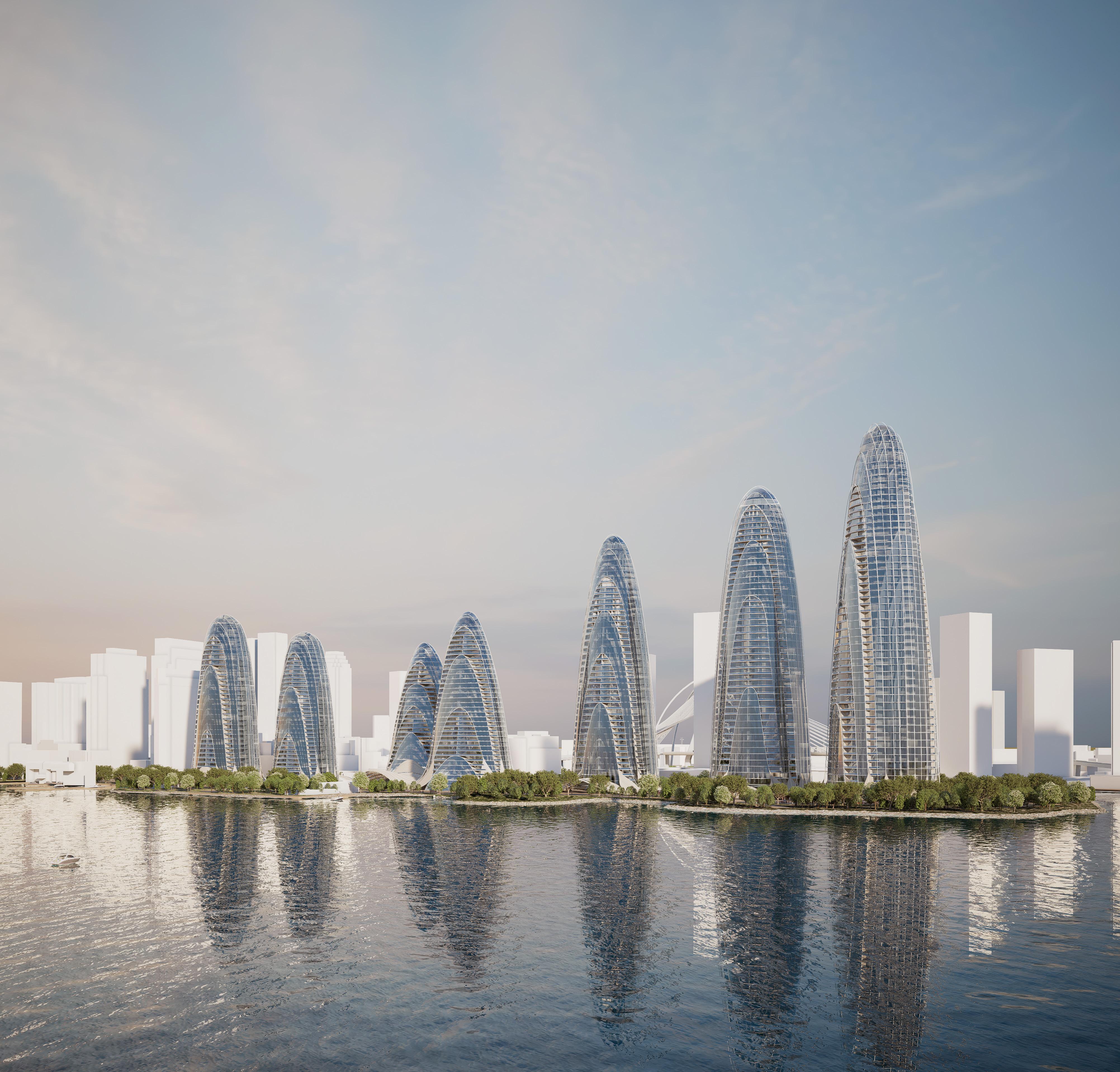
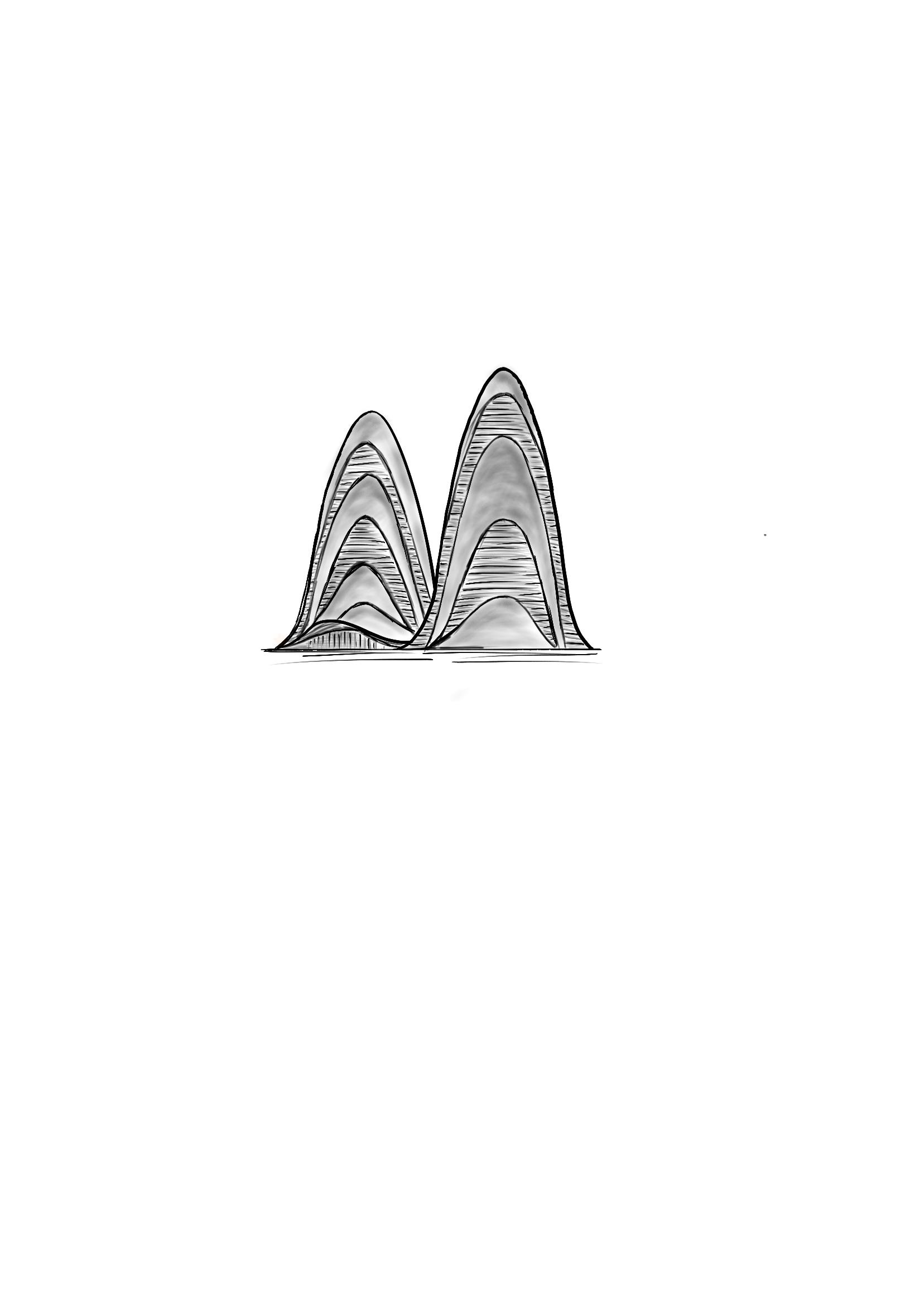
gather and connect. They work both as part of the structure and as places for people to share experiences.
Tall vertical forms rise between these layers, creating a contrast between the ground and the skyline. Together, these elements create a rhythm throughout the space, turning the challenges of a dense city into new possibilities. The project reflects the energy of the city, shaped by nature, people, and time.
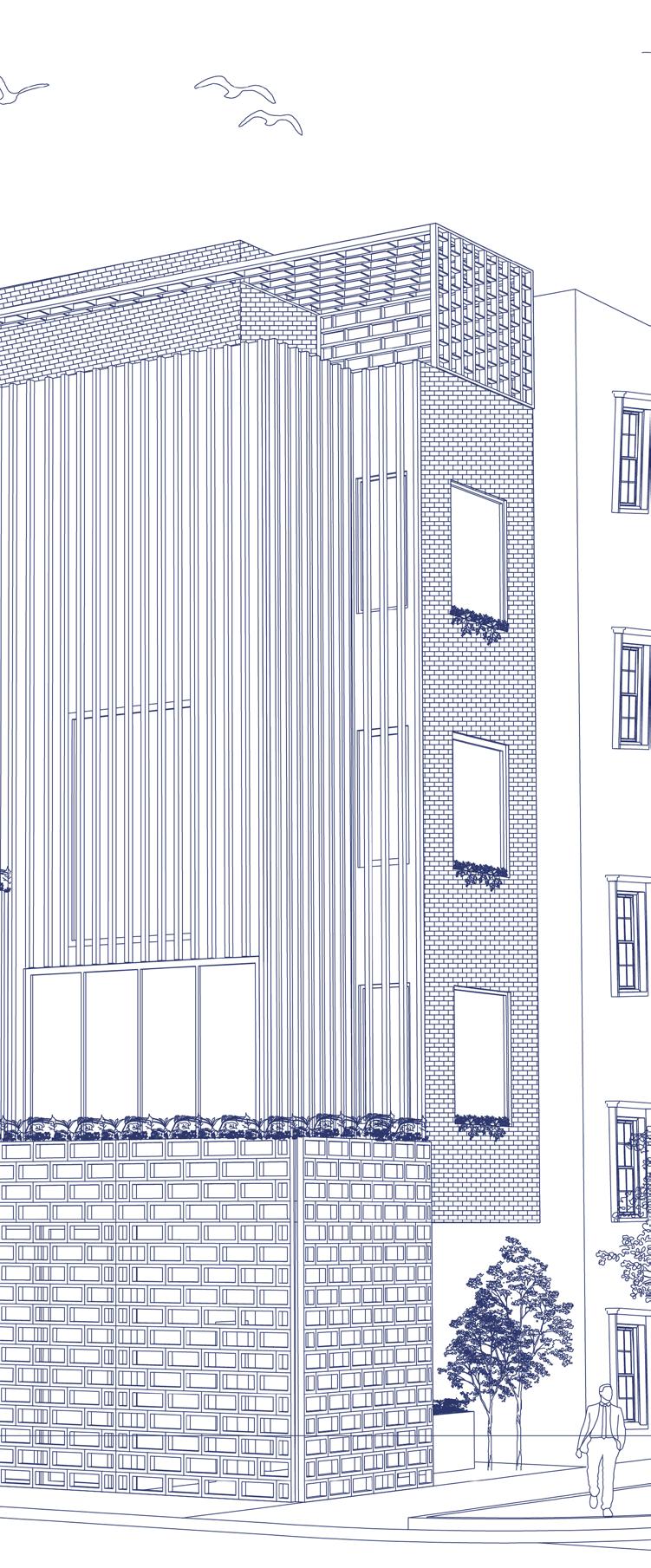
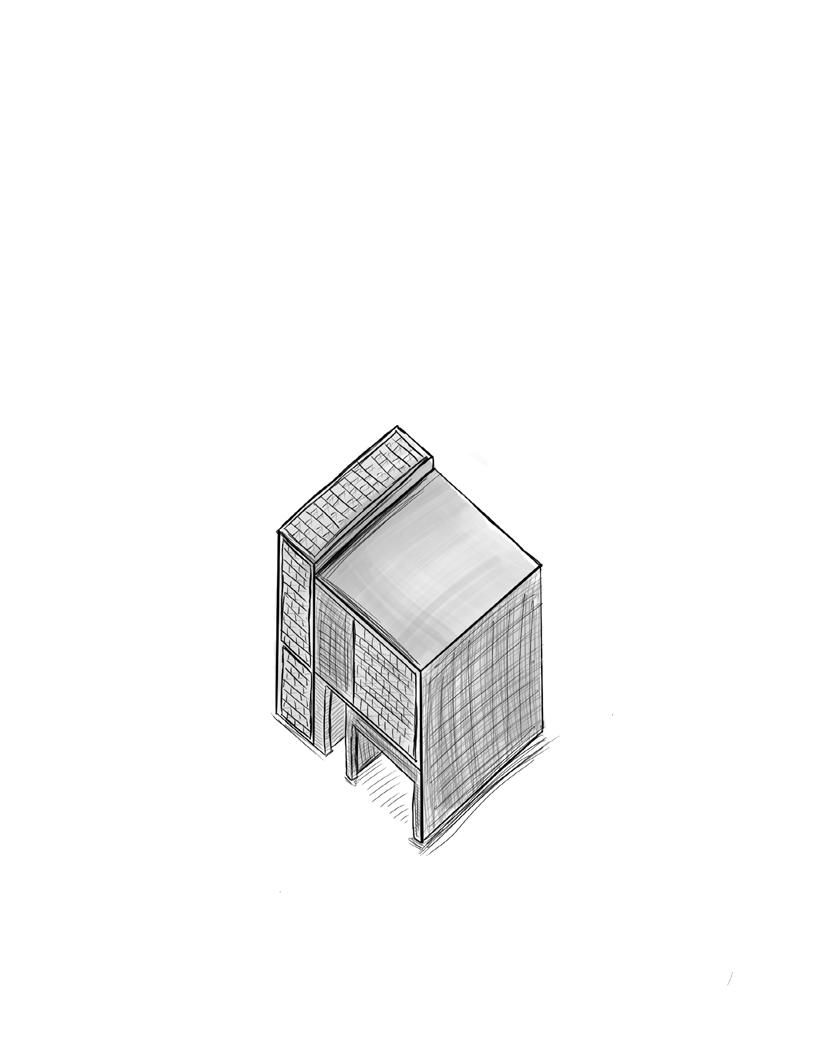
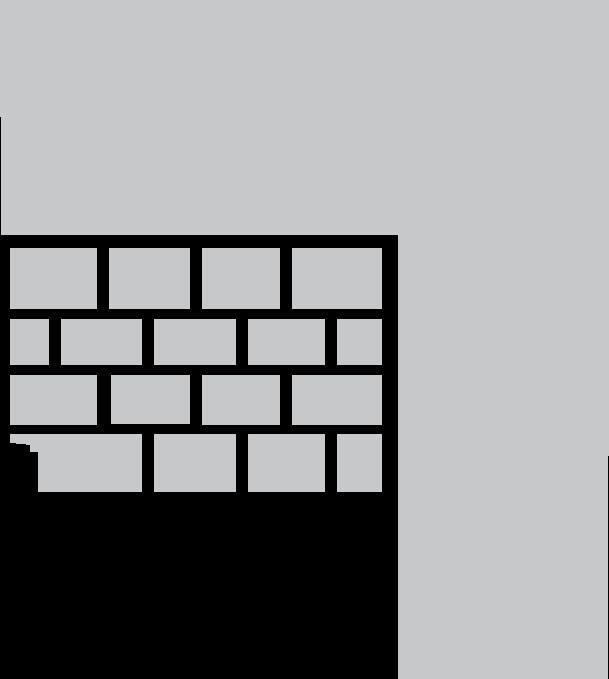
The Carriage House is a small home designed as a calm and private space for a writer. The outside has a metal facade with a pattern inspired by Savannah’s historic brick, but shown in a bigger, more modern way. This creates a connection between the city’s history and a new design. The same pattern and shapes continue inside, helping the whole space feel connected.
The interior includes built-in furniture, hidden storage, and carefully sized rooms to support daily routines, focus, and quiet thinking. The design pays special attention to natural light, materials, and how spaces flow from one to another, creating an atmosphere that feels peaceful and encourages creativity.
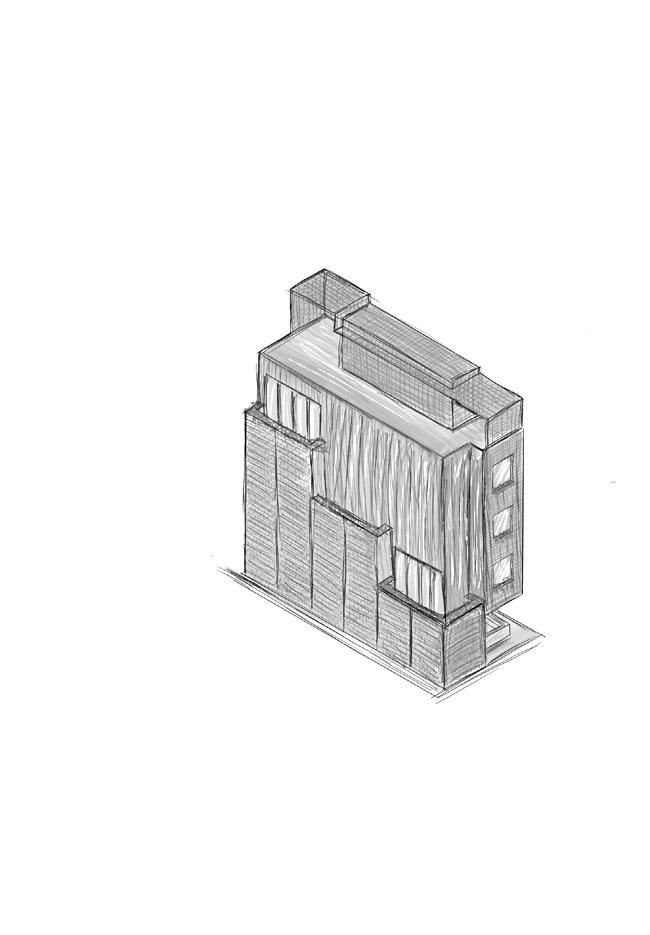
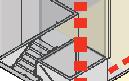
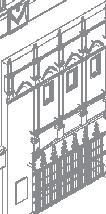
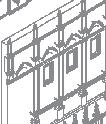
The Infill House looks at housing design through the idea of stacked bricks and layered spaces. The floors are slightly shifted, which creates openings that become balconies and terraces. These spaces bring in natural light, fresh air, and outdoor areas for the people living there.
A central core holds the stairs, circulation, and structure, helping connect the different parts of the building. The brick-inspired facade ties the whole design together while also relating to the historic buildings around it. The project explores how a modern home can fit into an existing city while still having its own strong identity and character.
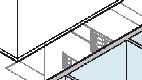
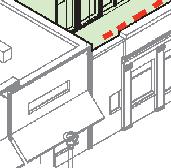
Initial massing volume –defining the building’s full height within site limits.
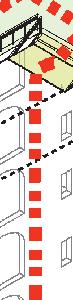
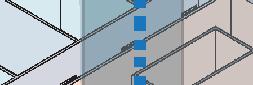
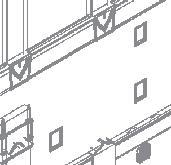
Material distinctions ehance spatial use brick panels define social balconies, while verticallouvers maintain privacy at the rear
Material distinctions enhance spatial use—brick panels define social balconies, while vertical louvers maintain privacy at the rear
Material distinctions enhance spatial use—brick panels define social balconies, while vertical louvers maintain privacy at the rear
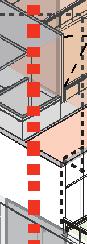
Social and private zones articulated—balconies emerge as social thresholds through brick-like massing shifts.
Social and private zones articulated—balconies emerge as social thresholds through brick-like massing shifts.
Social and private zones articulated—balconies emerge as social thresholds through brick-like massing shifts.
rectangle
Initial massing volume –defining the building’s full height within site limits.
Initial massing volume defining the building’s full height within site limits.
Initial massing volume –defining the building’s full height within site limits.
Site footprint: 60’ x 24’ base rectangle
Wolfsonian FIU Extension
Miami Beach, FL
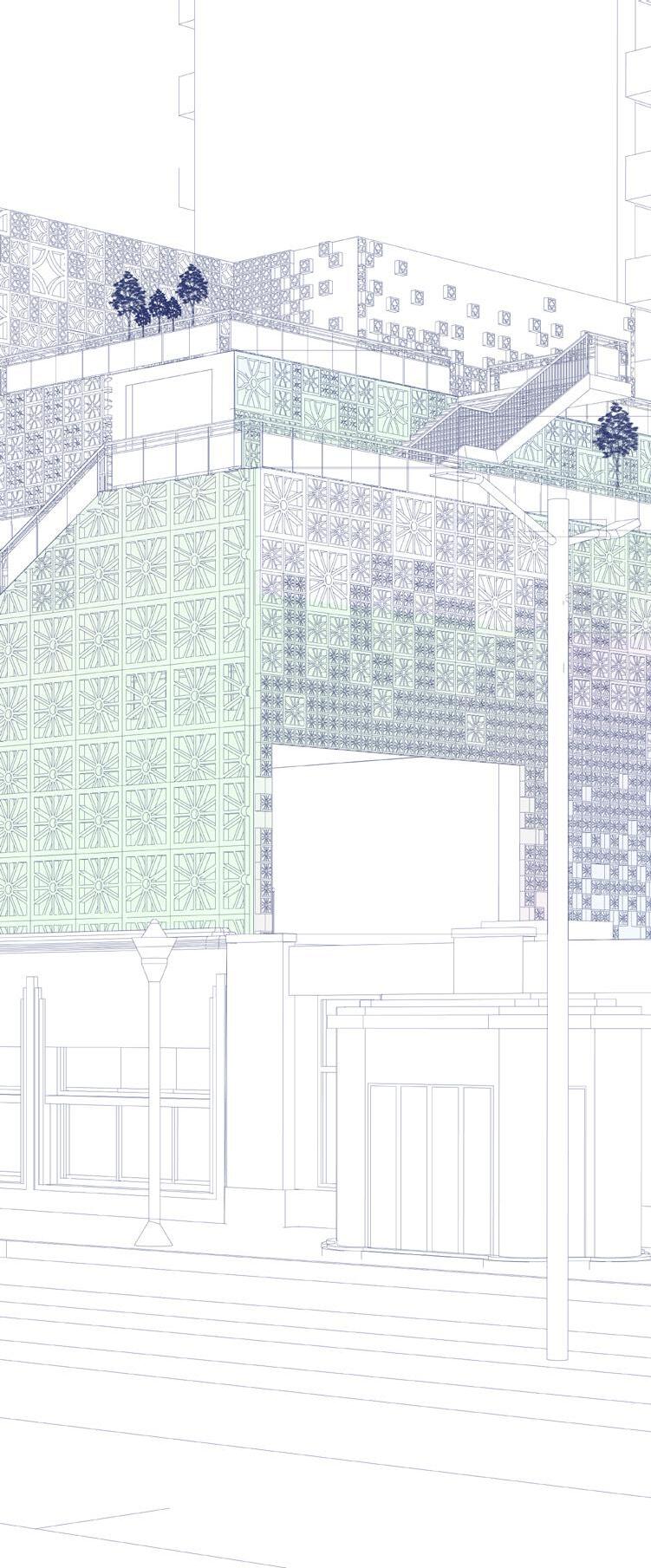
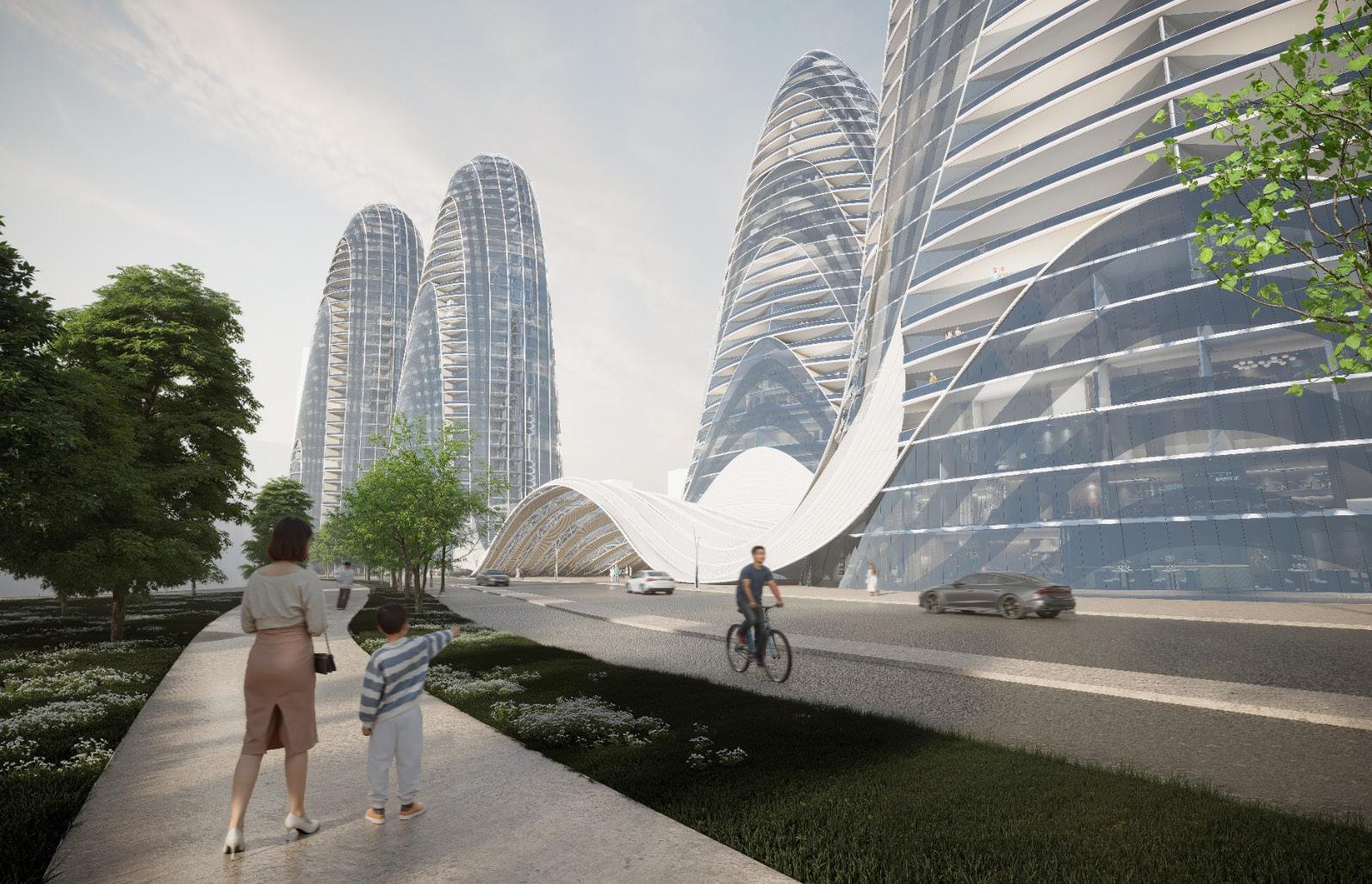
This project expands the museum with new galleries, research areas, classrooms, and public spaces. The goal is to strengthen its role in Miami Beach’s cultural life while also creating better connections to the surrounding city and public spaces. The design focuses on making the building welcoming and easy to move through, using layered paths and shared areas that encourage people to explore and gather.
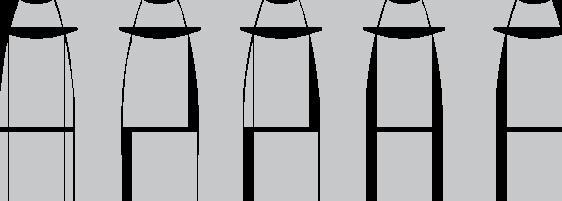
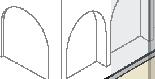
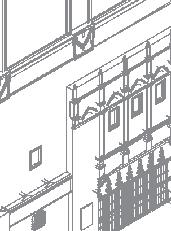
The facade uses breeze blocks that change in density depending on what is happening inside the building and the needs of the climate. This helps control light, views, and privacy, while also creating interesting shadows and depth across the exterior.
25’x25’ grid applied to 125’x150’ site to guide massing and spatial layout.
25'x25' grid applied to 125'x150' site to guide massing and spatial layout.
Full-site massing placed over grid as primary volume
Full-site massing placed over grid as primary volume
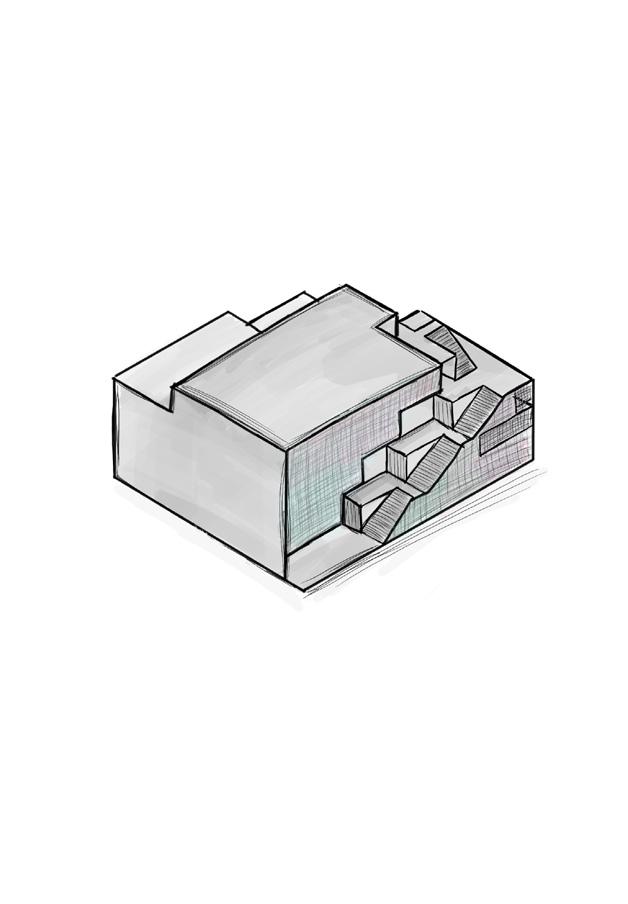
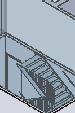
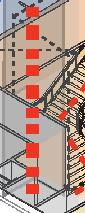
Exterior stairs introduced to connect levels and activate outdoor terrace
Exterior stairs introduced to connect levels and activate outdoor terraces
The building’s facade is divided into three main sections, each with a different breeze block pattern based on the spaces inside. The blocks vary in size: small, medium, and large depending on how much light and privacy each area needs.
The building’s façade is organized around three primary masses, each assigned a distinct breeze block pattern that re ects its character and function. Within each mass, the size of the breeze blocks—small, medium, or large—varies based on how much light and visibility the interior program requires. For example, areas like galleries or archives, which require controlled lighting and privacy, use smaller, denser blocks to lter sunlight and minimize glare. In contrast, spaces like studios or breezeways which bene t from openness and natural light, use larger, more open breeze blocks to create airy, well-lit environments. This system creates a functional and visual gradient across the façade, tying daylight, privacy, and ventilation directly to the building’s interior use.
More private spaces like galleries use smaller blocks to control sunlight, while open areas like studios use larger blocks to bring in more light and air. This creates a gradual change across the facade that connects the exterior design to the building’s interior use.
Volumes extruded and recessed to define hierarchy and create setbacks
Volumes extruded and recessed to define hierarchy and create setbacks
Strategic voids carved into mass to enable passive airflow across the site
Strategic voids carved into mass to enable passive airflow across the site
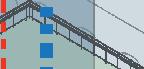
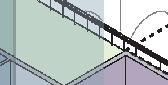
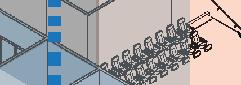
The building uses colors to organize the spaces— blue for private areas, pink for public spaces, and green for outdoor areas. This helps people move through the building easily. The colors are inspired by Miami Beach, connecting the design to its surroundings.
The building uses a color-coded gradient—blue for private, pink for public, and green for outdoor spaces—to re ect program and guide circulation. Inspired by the pastel tones of Miami Beach, this system connects the building to its context while reinforcing spatial hierarchy. Blue marks o ces and research zones, pink highlights galleries and public areas, and green de nes terraces and breezeways. The result is a clear, vibrant, and