


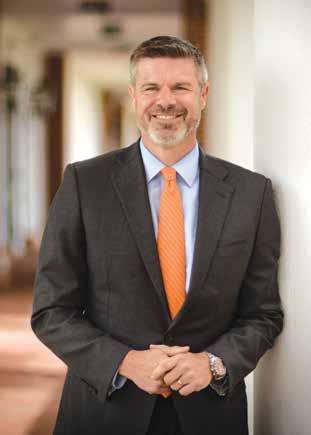
When I agreed to serve as interim dean earlier this year, I did so with a deep sense of gratitude, responsibility and optimism for where Darden stands today.
Over the past several months, I’ve been reminded again and again that Darden’s greatest strength is not a ranking, building or program. It is a community defined by excellence, generosity and a shared commitment to helping one another grow and lead.
I am deeply grateful to UVA President Scott Beardsley for his decade of visionary leadership as dean and for the strong foundation he helped create for Darden’s future. His leadership positioned the School for continued growth and ambition while preserving the culture and values that make this place distinctive.
I also want to congratulate my longtime faculty colleague Yael Grushka-Cockayne on being named Darden’s 10th dean (Page 6). She begins her new role 1 August, and I look forward to supporting her during the transition as I return to the faculty.
“In a relay race, you pass the baton at full speed. My goal throughout this interim period has been simple: to help ensure Darden continues moving forward with momentum, confidence and purpose.
It has been an honor to help steward the School during this period of transition and momentum. That momentum is reflected throughout this issue of The Darden Report. You’ll see stories that reflect the School’s continued investment in people and community — from the growth of the Executive MBA format through 20 years (Page 20) and the continued transformation of Darden Grounds (Pages 9 and 19).
You’ll also read about faculty and alumni exploring some of the defining questions of our time: how artificial intelligence will reshape work and human flourishing (Page 26), how leaders can navigate uncertainty and disruption, and how institutions can evolve while remaining true to their values (Page 32). Our cover story (Page 14) puts the minds of Darden faculty, alumni and students to work on one of the most consequential social issues of our time — the housing shortage crisis.
During our Darden graduation ceremony (Page 10) on Flagler Court in May, I spoke with graduates about one of life’s most important questions: “Where is my place?”
I remain grateful every day for having found mine here at Darden. In a relay race, you pass the baton at full speed. My goal throughout this interim period has been simple: to help ensure Darden continues moving forward with momentum, confidence and purpose.
I have no doubt the best chapters of Darden’s story are still ahead.
MICHAEL J. LENOX
Interim Dean, University Professor and Tayloe Murphy Professor of Business Administration, Darden School of Business
Jim Faulconer 434.981.0076 jfaulconer@mcleanfaulconer.com


$4,450,000 | MLS 673409 | Ivy J. Faulconer, 434.981.0076 & W. Faulconer, 434.987.9455

HALL ESTATE & VINEYARD
$4,200,000 | MLS 674329 | Crozet J. Faulconer, 434.981.0076 & W. Faulconer, 434.987.9455
At the base of the Blue Ridge Mtns. Sits this exceptional 212-acre estate, offered in three ways: RESIDENCE TRACT: Quality 6,000 sf home, 37 acres, pond, panoramic views, $4,200,000; WINERY TRACT: 93 acres, spacious multi-purpose building, all equipment, 25-acre vineyard, $2,500,000; BACK FARM: Private setting, 78-acre farm, cottage, barns, building sites, $2,200,000. A rare blend of natural beauty, architectural distinction, & viticultural pedigree.
AIRE
$3,275,000 | MLS 671230 | Charlottesville Charlotte Dammann, 434.981.1250

$3,450,000 | Charlottesville Court Nexsen, 646.660.0700

$2,600,000 | MLS 675824 | Keswick Mark Mascotte, 434.825.8610

Jim Faulconer 434.981.0076 jfaulconer@mcleanfaulconer.com


OWENSVILLE RD
$2,450,000 | MLS 675511 | Charlottesville Court Nexsen, 646.660.0700

FREE UNION RD
$1,860,000 | MLS 672174 | Charlottesville Jeremy Fields, 434.270.1220
$4,450,000 | Madison Court Nexsen, 646.660.0700
An Italian-inspired villa on 17 landscaped acres, Monte Ventoso captures the essence of a private Mediterranean retreat in Virginia’s Blue Ridge foothills. Resort amenities—ozone pool, cold plunge, outdoor kitchen with dual-sided fireplace—pair seamlessly with radiant-heated interiors and refined architectural detail. Perfectly positioned between Washington, D.C. and Charlottesville, the estate offers effortless access without compromise to its extraordinary seclusion.

$2,395,000 | MLS 676425 | Nellysford C. Nexsen, 646.660.0700 & M. Mascotte, 434.825.8610

EDNAM
$1,500,000 | MLS 676081 | Charlottesville Katherine Leddington, 646.593.0333

THE ROCKS
$1,890,000 | MLS 675416 | Ivy Jim & Will Faulconer, 434.981.0076

GLENMORE
$980,000 | MLS 675547 | Keswick Jim & Will Faulconer, 434.981.0076


Darden’s Executive MBA turned 20 this year. Relive the journey from EMBA’s early days in Charlottesville to UVA Darden DC Metro, where the program is thriving.


Darden experts explore how purpose-driven
Leaders
The Darden Report is published twice a year with private donations to the University of Virginia Darden School Foundation.
© 2026 Darden School Foundation Summer 2026, Volume 53, No. 2
University of Virginia Darden School of Business Office of Communication & Marketing P. O. Box 7225 Charlottesville, Virginia 22906-7225 USA communication@darden.virginia.edu
Mike Lenox
Interim Dean, University Professor and Tayloe Murphy Professor of Business Administration
Robert Weiler
President, Darden School Foundation

EDITOR
Jay Hodgkins
ART DIRECTION & DESIGN
Hyphen
WRITERS
David Buie-Moltz
Lauren Foster
Caroline Mackey
Molly Mitchell
Seb Murray
Sally Parker
CLASS NOTES EDITOR
Egidijus Paurys
PHOTOGRAPHY
Tom Daly
Ali Johnson
Jack Looney
Caroline Mackey
Andrew Shurtleff
Sanjay Suchak
ILLUSTRATION
Matt Chinworth
Hyphen
Raven Jiang
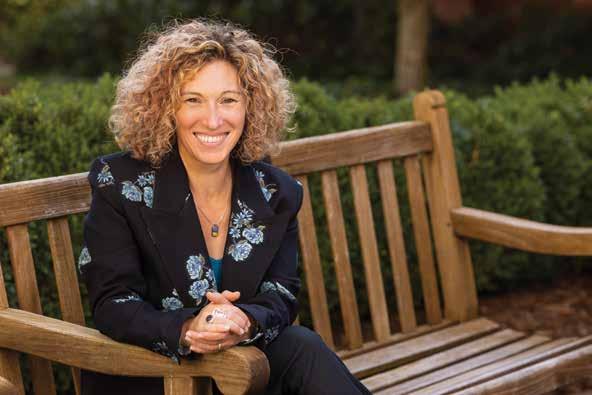
THE UNIVERSITY OF VIRGINIA named longtime Darden Professor Yael Grushka-Cockayne as the School’s 10th dean, effective 1 August. She is the first woman permanently appointed to lead the school in its 70-year history.
Grushka-Cockayne most recently served Darden as vice dean, senior associate dean for the Full-Time MBA program and academic co-director of the LaCross Institute for Ethical Artificial Intelligence in Business. She will succeed Scott Beardsley, who was serving in his third term as the Darden School dean when he became UVA president in January.
“Yael is exactly the kind of leader this moment calls for,” Beardsley said. “She believes deeply in Darden’s student-centered learning model and understands how business education must evolve in a world shaped by data,
“YAEL BELIEVES DEEPLY IN DARDEN’S STUDENTCENTERED LEARNING MODEL AND UNDERSTANDS HOW BUSINESS EDUCATION MUST EVOLVE IN A WORLD SHAPED BY DATA, ARTIFICIAL INTELLIGENCE AND GLOBAL COMPLEXITY.”
—
UVA PRESIDENT SCOTT BEARDSLEY
artificial intelligence and global complexity.”
Grushka-Cockayne has taught across all of Darden’s MBA formats, including courses in decision analysis, project management and coding with GPT. She has also taught Darden Executive Education & Lifelong Learning classes and led global learning experiences in Austria, South Africa, Morocco, Sweden, Israel and Japan.
In addition to her time at UVA, Grushka-Cockayne previously served as a visiting associate professor at Harvard Business School and adjunct faculty member at the New York University Stern School of Business. She earned a doctorate in management science and operations and a Master of Research in decision sciences from London Business School.
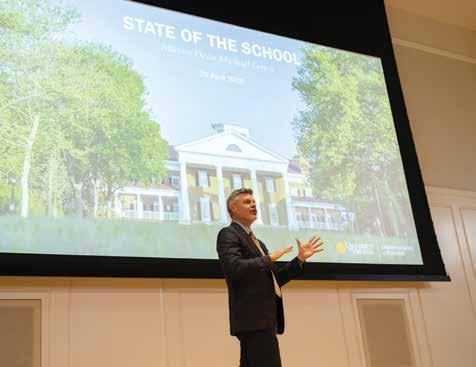
Interim Dean Mike Lenox used his State of the School address on Darden Reunion Weekend to deliver an update on the Darden
Launchpad 2026 strategic plan and to emphasize that his primary goal as interim dean is to sustain the School’s momentum during a period of change.
“My goal over my deanship here is to lead us through this transition and pass the baton at full speed,” he said.
At the heart of Darden’s progress, Lenox noted, is clarity of purpose.
“We know exactly who we are, how we create value and how we’re differentiated from all of the other business schools,” he said. “We’re the world’s best educational experience, taught by the world’s best faculty, with the most inclusive and engaging community you will find among business schools.”
Lenox emphasized the need to maintain faculty excellence through generational change. The School has hired more than 41 new faculty members over the past five years.
While honoring the legacy of the faculty giants who made the School what it is today, Lenox reassured the audience that the future is in good hands. “I can tell you they are amazing,” he said of newer faculty members. “They have embraced the values and norms that we hold dear. They are incredible case teachers.”
When Darden Dean Emeritus Bob Bruner approached the end of his deanship, he offered what seemed then to be a provocative question in the form of a case: What would it take to become a top-five business school by the year 2025?
Now, in 2026, the School has achieved Bruner’s vision. In that same spirit, Lenox introduced a new strategic provocation in which to frame Launchpad 2026. “The next rung on the ladder for Darden is nothing short of being the best business school in the world,” he said.
Importantly, he clarified, this ambition is not about rankings alone. “We define what ‘best’ means,” he said. To achieve the ambition, the Launchpad 2026 strategy is focused on four priority areas:
→⃝ MBA Forward: Enhancements to the First Year curriculum and continued growth in flexible MBA formats.
“WE KNOW EXACTLY WHO WE ARE, HOW WE CREATE VALUE AND HOW WE’RE DIFFERENTIATED FROM ALL OF THE OTHER BUSINESS SCHOOLS.”
— INTERIM DEAN MIKE LENOX
→⃝ AI Forward: Experimentation with AI across teaching and learning, including classroom use of AI tools, innovative applications and continued research from the LaCross Institute for Ethical Artificial Intelligence in Business.
→⃝ Faculty Forward: Investments in faculty development and a major renovation of the Faculty Office Building to better reflect Darden’s collaborative culture.
→⃝ Community Forward: Intentional efforts to strengthen connections across students, faculty and alumni — including the launch of new student housing and initiatives focused on well-being, engagement and shared experiences.
Following Lenox’s remarks, Darden School Foundation President Rob Weiler took the stage to celebrate recent fundraising efforts. In March, around 1,700 donors raised more than $1.6 million during the 24-hour Day for Darden fundraising event. This year’s reunion classes’ collective gift to the School totaled more than $9.4 million as of June, with the total expected to rise.


ains in research impact, alumni career outcomes, strength of the alumni network and career support lifted Darden into the Top 10 U.S. full-time MBA programs in the 2026 Financial Times business school ranking, reaching a new high at No. 9. Financial Times ranked Darden the No. 19 MBA program globally, up from No. 20 last year. Darden ranked as the No. 2 U.S. public business school, up from No. 3 last year. This marks the third consecutive year Financial Times placed Darden in the top three.
Among U.S. schools, Darden ranked No. 4 for the percentage of 2025 graduates employed at three months after graduation. Darden ranked No. 2 in the world for alumni who felt they had achieved their goals with the degree and No. 10 in the world for both quality of alumni network and for alumni salary outcomes three years post-MBA.
In research, Darden reached an all-time high, rising 16 places to No. 36.
US News Ranks Darden No. 1 in Career Outcomes
In the latest U.S. News & World Report rankings, Darden was No. 1 for employment rates at graduation and three months out among the Top 20 U.S. business schools. The School also has the highest average starting salaries and bonuses among public schools, according to the ranking.
Darden was ranked No. 2 among public schools and No. 11 among all schools by U.S. News. The results continue Darden’s momentum from recent rankings.
Darden ranked No. 1 among public, full-time U.S. MBA programs in the country, according to 2025-26 rankings from Poets & Quants released in December.

That marked the third consecutive year Darden came out on top among public schools in the publication’s annual rankings — a composite of five leading evaluations, including U.S. News & World Report, the Financial Times, Bloomberg Businessweek, LinkedIn and The Princeton Review. NO. 10 NO. 2 NO. 2 NO. 1 NO. 2
U.S. PUBLIC B-SCHOOL ( FINANCIAL TIMES ) U.S. PUBLIC B-SCHOOL ( U.S. NEWS & WORLD REPORT ) CAREER OUTCOMES ( U.S. NEWS & WORLD REPORT )
ALUMNI AIMS ACHIEVED, GLOBALLY ( FINANCIAL TIMES )
ALUMNI SALARY OUTCOMES, GLOBALLY ( FINANCIAL TIMES )

DARDEN HAS SECURED the philanthropic commitments needed to launch a comprehensive renovation of the Faculty Office Building on its Charlottesville Grounds. The project will reshape one of the School’s most important academic homes into a brighter, more connected hub for faculty and students.
With commitments now in place to reach the $15 million fundraising threshold required to begin work, Darden is moving forward with design and approvals for construction to start in summer 2027. Work will be phased over multiple summers to minimize disruption to classes and daily activity on North Grounds.
The project is supported by a group of alumni and friends, including David M. LaCross (MBA ’78) and Kathleen O. LaCross; Steven C. Voorhees (MBA ’80) and Celia Voorhees; James A. Cooper (MBA ’84) and Stacy Cooper; Robert W. Smith (MBA ’87) and Teresa Smith; Bruce R. Thompson (MBA ’90); the Altec/Styslinger Foundation; J. Byrne Murphy (MBA ’86) and Pamela Murphy; Adair Newhall (MBA ’09) and Kathryn Newhall; and an anonymous donor.
The renovation will keep the building’s Jeffersonian character while adding:
▶ A winter garden within the building’s north courtyard — a light-filled, two-story space with flexible seating
▶ A reoriented north entry and redesigned interior stairways
▶ A southeast entry and patio that connect the building to the planned Darden Park
▶ A large seminar room and multiple conference rooms and collaboration zones
▶ Enhanced wellness and support spaces, including wellness and mothers’ rooms and updated single-user restrooms
▶ Updated finishes, lighting and transparency throughout
“We heard loud and clear that faculty and students wanted more places to bump into each other, share ideas spontaneously and build relationships outside the classroom,” said Interim Dean Mike Lenox.
⃝↓ Naming opportunities for the renovated Faculty Office Building include collaborative work spaces (pictured below) as well as the building itself, faculty pavilions, seminar and conference rooms, primary entries and lounges, and individual offices. Learn more at drdn.mba/fob.
Darden is advancing design work with architecture firm Goody Clancy and anticipates formal approvals from the UVA Board of Visitors and other University review bodies as the project moves toward an expected construction start in summer 2027.
Throughout construction, the Faculty Office Building will remain in use, continuing to house Darden faculty.
While Darden has reached the fundraising milestone required to move the project into the construction phase, significant naming opportunities remain for donors who wish to leave a mark in the heart of the School’s academic life.
Spaces available include the Faculty Office Building itself, faculty pavilions with outdoor porches, primary entries and lounges, seminar and conference rooms, collaboration and work lounges, and individual faculty and staff offices.


THE MBA CLASS OF 2026 TOOK PART IN UVA FINAL EXERCISES ON THE LAWN AND DARDEN’S ACADEMIC REGALIA CEREMONY ON FLAGLER COURT IN MAY. MEET THE NEWEST MEMBERS OF THE DYNAMIC DARDEN ALUMNI NETWORK.
352 FULL-TIME MBA GRADUATES
115 EXECUTIVE MBA GRADUATES
61 PART-TIME MBA GRADUATES
12 DUAL-DEGREE GRADUATES
23 students received the C. Steward Sheppard Award recognizing exceptional service to the School of a nonacademic nature: Roger Ahlstrom, Meghan Allen, Alexa Bartels, Christianne Campbell, Hayden Daggett, Destin Fleming, Joel Flesher, Melanie Goerke, Alys Herbert, Ellen Johnson, Micah Kiser, Matias Manriquez, Stuart Nystrom, Ramotu Ogbleba, Ngoc Pham, Muhammad Rashid, Juan Manuel Larrain, Maria Servodidio, Lian-Hwa Sun, Cedric Thomas, Jaclyn Toassavanien, Charlotte Vance.
Sinmi Oyekola and Elena Céspedes were the recipients of the Frederick S. Morton Award, presented to students for excellence in leadership.
Bruce McAdams was the recipient of the Executive MBA Faculty Award, presented to an outstanding student in the Executive MBA program.
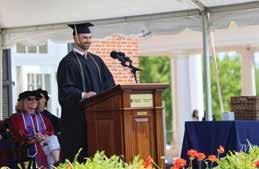
Stuart Nystrom (PTMBA ’26) addressed the second cohort to graduate from the Part-Time MBA program at Darden’s academic regalia ceremony on 16 May, lauding his classmates for their ability to successfully balance their families, education and careers all at the same time.
⃝↑ Full-Time MBA class speaker Mel Phillips (MBA ’26) celebrates with a fellow graduate on Flagler Court during Darden’s academic regalia ceremony in May.
CLASS OF 2026 ELECTED GRADUATION SPEAKERS
Mel Phillips / Full-Time MBA
“All of us know how to think on our feet. We know how to listen. We know how to sift through the minutiae and decide what matters.”
Bruce McAdams / Executive MBA
“In this moment, may the world pause, may your heart slow, may the noise around you grow quiet, and may you see with great clarity that you have the power to shape someone’s life for the better.”
Stuart Nystrom / Part-Time MBA
“There is not a single person in this cohort who did not earn a promotion, make a career or job change, or launch a new venture during this program. Not after graduation. During.”
FACULTY MARSHALS ELECTED BY THE CLASS OF 2026
Yiorgos Allayannis / Full-Time MBA
Pnina Feldman / Full-Time MBA
Bo Sun / Full-Time MBA
Gaurav Chiplunkar / Full-Time MBA
Luca Cian / Executive MBA
Yael Grushka-Cockayne / Part-Time MBA
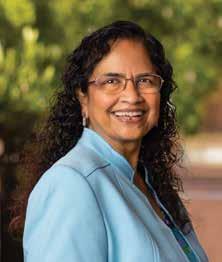
Since joining the Darden School faculty in 2004, Professor Saras Sarasvathy emerged as one of the world’s most influential thinkers in entrepreneurship and the architect of effectuation — a unique logic of entrepreneurial thinking and decision-making.
After 22 years, the Paul M. Hammaker Professor of Business Administration and former academic director of the Batten Institute for Entrepreneurship, Innovation and Technology retired this spring.
Long before she developed the theory that would reshape how scholars and practitioners understand new venture creation, Sarasvathy was a young founder herself. In the 1980s, Sarasvathy lived in Mumbai, India, with a dream of opening a restaurant. Short on
funds, she began with what she had. She knew how to cook, so she launched a lunch delivery service. She didn’t advertise. Instead, she engaged customers in conversations and gathered feedback.
The business initially thrived. But after she hired a delivery person, orders plummeted. She soon found out that customers weren’t just buying her food. They were buying her conversation and charisma. Thus, her first lesson in the unpredictability of entrepreneurship was that the value you create may not be the value you intended.
Sarasvathy’s early entrepreneurial setbacks redirected her ambition to research, and she earned a Ph.D. at Carnegie Mellon University. She examined how America’s most accomplished entrepreneurs think, and what she uncovered challenged prevailing assumptions: Expertise in entrepreneurship came from a fundamentally different way of thinking. She called this unique logic of expert entrepreneurs effectuation, and she distilled it into teachable and learnable principles.
Sarasvathy’s groundbreaking book, Effectuation: Elements of Entrepreneurial Expertise, recast entrepreneurship from a unique talent possessed by a rare breed of “born entrepreneurs” to a learnable method accessible to anyone. Her contributions to the study of entrepreneurship earned her widespread recognition. In 2019, the Global Consortium of Entrepreneurship Centers honored her with its Legacy Award. In 2022, she received the prestigious Global Award for Entrepreneurship Research from the Swedish Entrepreneurship Forum. In 2023, she delivered the Schumpeter Lecture on “Innovation in Enterprise” at the European Union’s SME Assembly.
“Entrepreneurship has always been the ultimate fallback,” Sarasvathy said. “By teaching it broadly, we make it a viable option whenever it’s needed.”
MEDICAL CAREER LED MATHERNE TO ‘MAGICAL’ DARDEN EXPERIENCE
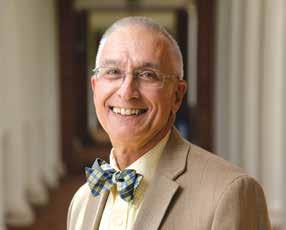
After more than a decade as a professor of practice helping Darden students navigate the intersection of business, medicine and leadership, Dr. Paul Matherne (EMBA ’10) is retiring from the School, capping a career that spanned pediatric cardiology, medical research, hospital leadership and the classroom.
His journey with Darden began in 2008, when he arrived as an Executive MBA student.
The decision to attend Darden transformed not only his career but also the way he approached problems, leadership and teaching. He says he left the Darden classroom more equipped for a transition into administrative leadership, serving in roles including chief medical officer of UVA’s Children’s Hospital and later as interim chief medical officer of the UVA Health System during the early days of the COVID-19 pandemic.
“In medicine,” he says, “You learn that you’ve got to be fast and you’ve got to be right.” But in leadership roles like running a hospital, he learned it’s best to take a different approach.
“It’s about looking at lots of options to solve problems and not locking in on an answer right away.” That flexibility allows teams to participate constructively in decision-making.
Parallel to his career with UVA Health, Matherne cultivated a teaching career at Darden.
Since 2012, he has helped shape Darden’s healthcare curriculum, including developing six electives covering healthcare and the nonprofit sector. Along the way, he published 38 business cases and served as the Darden faculty advisor for the joint MD/MBA degree.
Known for his energy and accessibility, Matherne frequently hosted students outside the classroom, from bourbon tastings to gumbo-making lessons. He notes that the broad range of students has always kept life at Darden interesting.
“There are times I have just wanted to pinch myself,” he says. “It’s magical in the classroom here. It’s really special.”
BY JAY HODGKINS
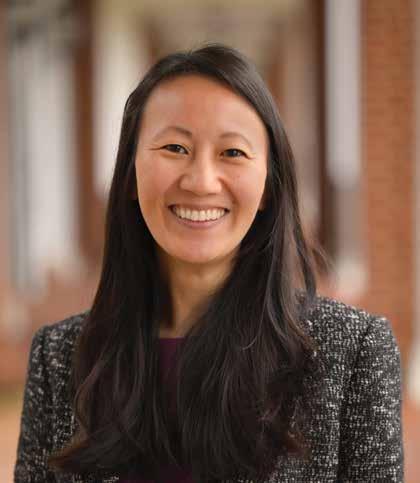
When Professor Yo-Jud Cheng finished her undergraduate degree at Wellesley College, she had a sense her academic career wasn’t finished. Growing up in Taipei, Taiwan, her father was a professor for her entire life, but it was her mother’s experience — pursuing a Ph.D. while Cheng was in grade school — that gave her a glimpse of what it was like to become an academic.
“I have so many fond memories from high school of my mom and me sitting next to each other at our computers, working on essays late into the night,” Cheng said. “Throughout that time, I was always listening to my parents’ dinner table conversations, where they were constantly learning and discussing new questions. It piqued my interest in pursuing a graduate degree myself.”
She returned to Boston, Massachusetts, a few years later to pursue her DBA at Harvard Business School with an eye on following in her parents’ footsteps. That’s where she discovered the research passion that drives her to this day: corporate governance and, in particular, the decision-making behind CEO transitions.
“I’m fascinated by the planning processes that underlie leadership changes,” Cheng said. “When you talk to board directors and ask them to name their top responsibilities, hiring and firing the CEO almost always rises to the top. Directors know that selecting a CEO is one of the most important decisions they make. And yet, so many boards struggle with running effective transition processes. This is true across a wide range of organizations, from startups to nonprofits to large public companies with extensive resources.”
Cheng’s breakthrough moment studying the topic came when her graduate school adviser connected her with a senior HR leader at Cisco who had just helped the organization navigate a lengthy CEO transition process to replace longtime CEO John Chambers. Cheng’s adviser suggested they write a case study on the Cisco CEO transition, but he urged her to go much deeper than his initial contact. She interviewed more than a dozen C-suite executives, board members and search consultants.
“The opportunity to connect my academic experience with the firsthand insights from
those interviews deepened my appreciation of the importance of rigorous research that stays relevant to what’s most important to practitioners and managers,” she said.
Now in her seventh year at Darden, Cheng said she’s been able to continue diving deeper on the same line of research thanks to not only the steady supply of CEO transitions, each unfolding differently, but also the Darden students in her classes who constantly fuel her with new perspectives and research questions.
The mutually reinforcing relationship between research and the classroom has grown even stronger since Cheng became the faculty adviser for Darden’s Golub Capital Board Fellows Program. The program matches MBA students with local nonprofits to serve as nonvoting board members for a year and complete a strategic capacity-building project.
Last year, the program received a substantial development grant from Golub Capital to support the growth of the program and to establish the program as a signature element of Darden’s experiential learning initiatives.
“The Board Fellows Program brings together my interest in board governance with a unique opportunity to contribute directly to the Charlottesville community while creating valuable learning experiences for our students,” Cheng said.
After growing up and spending most of her life in major metropolises, Cheng admits it was a “big leap of faith” to come to Darden, in the comparatively small college town of Charlottesville. In hindsight, however, she said it was the best decision she could have made.
When she was interviewing for a faculty position, Cheng said many universities took her out to nice dinners at restaurants. But at Darden, she was treated to dinner at Professor Jared Harris’s house with his family. In addition, the classroom was a second thought at best on some visits, but at Darden, Cheng attended a class. She said sitting in not only let her experience the energy in the room up close but also gave her a sense of how important teaching was at the School.
“My Darden visit stood out. I got a great sense of the culture,” Cheng said.
When it was finally time to teach her first Darden class in Q2 of the 2019–20 academic
“THE SIZE AND STRUCTURE OF DARDEN CLASSES, ALONG WITH OUR SOCIAL EVENTS AND COLLEGE-TOWN SETTING, ENABLE STUDENTS TO BUILD DEEP RELATIONSHIPS WITH ONE ANOTHER. THAT SENSE OF COMFORT AND CAMARADERIE IN THE ROOM GREATLY EXPANDS WHAT WE CAN ACCOMPLISH TOGETHER.”
year — the First Year core “Strategy” class — Cheng said she was nervous. While she was steeped in the case method from her time at Harvard, she was worried the students would be disappointed to have a new professor teaching her first course.
She decided to be honest and tell them it was her first class, anyway.
“The class burst into applause the second I told them,” she said. “It was such a warm welcome to Darden and encapsulates what is special about this community.”
From John Forbes to Alec Horniman to Bill Sihler, many of Darden’s early professors came from Harvard Business School and would jokingly refer to their alma mater as “that other case method school to the north.” Cheng confirms that while the two schools share case method DNA, there is still something distinctly different about the student experience.
“The size and structure of Darden classes, along with our social events and college-town setting, enable students to build deep relationships with one another,” she said. “That sense of comfort and camaraderie in the room greatly expands what we can accomplish together.”
Cheng said she’s been pleasantly surprised by how well she gets to know students. Given Charlottesville’s size, she said it’s not uncommon to bump into students out on the town. Her husband used to be baffled that they would want to stop and talk to her, rather than keeping their distance.
Darden also creates many opportunities for faculty and students to forge deeper connections, from Darden Cup events to Cold Call social gatherings on Thursdays. One of her favorite opportunities to connect is the annual Building Goodness in April charity auction, in which professors donate experiences that students bid on to raise money for the Building Goodness Foundation.
For the past several years, she has hosted students at her house to learn how to make traditional dumplings, like the ones she grew up making with her family in Taiwan.
“It’s such a fun, interactive and communal way to make a meal together,” she said.
Cheng instructs students on how to cut vegetables, make the filling and correctly fold the dumplings. However, don’t mistake Cheng’s kitchen for the case method classroom. She’s not afraid to lecture when it comes to making a proper dumpling.
“Some things I’m very particular about,” she said. “Like overstuffing. I tell them over and over, ‘You’re not going to be able to close your dumpling if you put too much filling in there,’ but people get greedy. So I harp on them a little bit. I embrace this as one of my few opportunities to tell my students exactly what they’re supposed to do.”


CAN BUSINESS AND GOVERNMENT WORK TOGETHER TO SOLVE IT?
In the Oval Office, U.S. President Donald Trump held up a mock newspaper front page bearing the headline: “Trump to City: Let’s Build.”
Across from him, New York City Mayor Zohran Mamdani had just pitched a plan to deliver 12,000 new homes in the city using federal funds.
The February meeting signaled an unlikely alliance of a Republican president and a Democratic mayor, often at odds politically, finding common ground on the pressing need to expand housing supply.
The increasingly rare bipartisan push to solve the critical shortage of housing is not just happening in New York but across the United States. That’s because the nationwide shortage has led to surging home prices and rents in markets from Los Angeles, California, to Charlottesville, stretching many Americans’ ability to afford the most basic necessities.
AMERICAN HOMEBUILDING HAS failed to keep pace with demand since the 2008 global financial crisis, when construction activity fell sharply. It has since remained about 40% below long-term averages, with an estimated shortfall now of around 6 million homes, according to a 2026 Nuveen Natural Capital report.
Meanwhile, prices have risen faster than incomes, pushing homeownership further out of reach for many Americans. Over the past five years, home prices have increased by roughly 54%, compared with wage growth of about 29%, according to the U.S. Bureau of Labor Statistics.
The post-pandemic rise in borrowing costs has further hampered affordability. U.S. mortgage rates peaked at nearly 8% in 2023 — their highest level in more than two decades — and remain elevated compared to pre-pandemic levels.
The issues are compounding because housing supply continues to lag. Permitting, financing and construction take years.
“Demand shows up in prices quickly; supply shows up in units slowly,” says Rodney Sullivan, executive director of Darden’s Richard A. Mayo Center for Asset Management.

RODNEY SULLIVAN EXECUTIVE DIRECTOR, DARDEN’S RICHARD A. MAYO CENTER FOR ASSET MANAGEMENT
Over the past five years, home prices have increased by roughly 54%, compared with wage growth of about 29% (U.S. Bureau of Labor Statistics)
IF SUPPLY IS the constraint, policy cannot carry the full burden. Business has a key role to play, too, and its efforts are taking shape across the U.S. Investors and developers are taking a range of approaches — preserving existing housing, streamlining access to capital, and finding ways to build faster and more cheaply.

Among policymakers, a focus recently has been on institutional investors, with the U.S. Congress considering bills to block them from buying large volumes of single-family homes. The concern is that investor demand is pushing up housing costs, something that is coming into sharper focus amid broad-based inflation and the overall rising cost of living.
But Sullivan stands by the assertion that the central problem is fundamentally one of supply. The focus for policymakers and investors should be on efforts that increase housing stock, he says.
“Large investors can’t solve a shortage by buying existing homes — that mostly reshuffles who owns the same units,” says Sullivan. “These investors can help most where the problem is fundamentally supply: financing and scaling new construction.”
Restrictions may appeal politically. But if they deter investment in new construction or rental housing, Sullivan says they risk tightening supply even further.


FOR SOME INVESTORS, the opportunity they see is preserving existing homes that might have otherwise not been a viable option for the average American.
Summer Kassir Haltli (MBA ’10), a partner at real estate investment group FCP, co-founded the firm’s housing preservation strategy.
She focuses on maintaining affordability in existing properties for residents earning about 80% of area median income. That’s teachers, nurses, police officers and other essential American workers.
Rather than building new units, her approach delivers affordability with existing housing, which she says can be executed more quickly and at lower cost.
Preserving existing housing often scales faster than building new units. “We see it as a highly efficient and scalable solution,” Haltli says.
It is, after all, a long-term investment strategy built around keeping properties full and generating steady rental income.
The model depends on partnerships with state and local governments, as well. In exchange
INVESTORS CAN HELP MOST WHERE THE PROBLEM IS FUNDAMENTALLY SUPPLY: FINANCING AND SCALING NEW CONSTRUCTION.
for restricting rents, owners can receive property tax breaks, allowing them to keep rents affordable while still generating returns.
Access to capital, meanwhile, remains a central constraint, and some private industry leaders are trying to improve its availability. Among them is Erik Smith (MBA ’23), co-founder and CEO of Li-Check, a platform that streamlines applications for Low Income Housing Tax Credits.
Those tax credits are the main financing tool for affordable housing in the U.S., he says.
They’re administered at the state level, with each jurisdiction setting its own rules. Smith says that fragmentation creates friction for housing developers, who face different underwriting rules in each state, making it harder to enter new markets and scale developments.
“In capital markets, friction signals inefficiency and inefficiency limits supply,” Smith says.
The same dynamic applies to local incentives. He says tools such as payment-in-lieu-of-taxes agreements are designed to support affordable housing by lowering property taxes, but their design can determine whether a development moves forward. In some cases, he says developers cannot fully borrow against the tax savings — reducing available financing and undermining the economics of a deal.
“Structure matters,” Smith says. “Thoughtful design grounded in how deals are actually capitalized can ensure these incentives expand rather than restrict feasible development.”
Li-Check aims to streamline applications across states, reducing barriers for developers and helping more projects move forward. In a supply-constrained market, access to capital matters as much as capital itself.
But capital alone does not deliver housing.
Ask Reg Jones (MBA ’11), president of Pratt Homes, which designs and delivers modular and manufactured houses. He argues that factory-built housing can deliver both speed and cost advantages over traditional construction. Modular homes can be built at a lower cost per square foot and are ready for occupancy up to 50% faster, he says.
The main barrier to greater adoption is perception, which often depends on local policy. “Working with local governments is critical to acceptance,” Jones says. Local policy also determines how quickly new housing can be delivered.

THOUGHTFUL DESIGN GROUNDED IN HOW DEALS ARE ACTUALLY CAPITALIZED CAN ENSURE POLICY INCENTIVES EXPAND RATHER THAN RESTRICT FEASIBLE DEVELOPMENT.

PRESIDENT OF PRATT HOMES
THE CONSTRAINTS ARE now pricing out the next generation. The pressure is felt by those preparing to enter the real estate industry, like Nate Mancini (MBA ’26), vice president of careers for the Darden Real Estate Club during the 2025–26 academic year. He points to a market where construction costs have risen and new development has become harder to justify.
“Supply is not that high and it’s hard to build it higher,” he says.
The result is personal. “My generation’s purchasing power has been diminished by cost and inflation,” Mancini says. “It has not made sense for us to buy homes.”

Like Jones, he argues the challenge is often local. “You need public policy on your side,” he says, pointing to the role of tax breaks in making projects viable. Development is also risky. “You have to lay out equity up front just to get to financing,” he says.
The message from the Oval Office was simple: build. However, finding pathways to do that is complex and will take public-private partnership at every level from local to federal so that both the current and future generation of real estate industry leaders can finance, design and execute projects on the ground.


ACROSS THE COUNTRY, the housing conversation is a question of supply — where will it come from and how quickly can it reach the market?
At Darden, one answer is already taking shape.
By summer 2027, the School will open its first on-Grounds student housing, adding 216 units and 338 beds and bringing a significant share of Full-Time MBA students onto North Grounds.
For decades, Darden Full-Time MBA students have lived across Charlottesville, competing in a constrained rental market and commuting to class. This project shifts that pattern. More students living on Grounds means less demand in nearby neighborhoods — a targeted, practical step in a small community market where incremental changes matter.
On-Grounds housing also strengthens the Darden experi -
ence. Living steps from classrooms, faculty and each other with access to private apartments and shared spaces creates more opportunity for connection, discussion and, ultimately, preparation.
Seen alongside UVA’s broader push to relieve pressure on the Charlottesville housing market, the project offers a clear example of how institutions can act within their own footprint — contributing in ways that are local, tangible and aligned with their mission.
BE PART OF WHAT COMES NEXT
Naming opportunities and ways to support the project are available at drdn.mba/housing.

Looking Back at the Executive MBA, From 20 Years Ago to Today
BY DAVID BUIE-MOLTZ
“You show up in one mode and go home in another. You’re sharper. You’re seeing your job differently by Sunday afternoon.” ⁛ Evan Inra ( EMBA ’08)
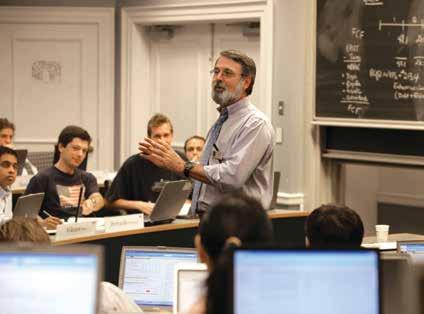

In the mid-2000s, weekend and executive MBAs were already a familiar feature of the business school landscape. Many leading programs offered a path for full-time professionals to earn an MBA without stepping off the career track.
Darden chose a different approach. It waited.
If Darden was going to bring its famously intense case-method experience to working professionals, it wasn’t going to dilute what made a Darden MBA feel like Darden. No “lite” curriculum. No side door.
So when the first cohort of what became the Darden Executive MBA assembled 20 years ago in Charlottesville in 2006, the experiment wasn’t really about a new format. It was a test of an old institutional instinct: If the learning is real, people will show up. Even on weekends.
‘WHY
Everyone in that first group remembers hearing
some version of the question — from colleagues, spouses, friends and sometimes their own inner voice. Why give up so many weekends (and weeknights) for more work?
For Evan Inra (EMBA ’08), then a project manager at an IT services company in Northern Virginia, the skepticism came from inside his own office.
“My boss agreed to sponsor me,” he remembers, “but even he said, ‘What are you doing this for? Why are you putting yourself through this?’”
Thomas Benjamin (EMBA ’08), then working at a Northern Virginia defense consultancy, heard it, too. “Some folks thought, ‘Sure. You pay your money, and you’ll get a degree.’ And I’d tell them: ‘No. This is real. It’s all the coursework — just crammed into a few days.’”
Davina Myers (EMBA ’08), then a Washington, D.C., area consultant, remembers getting a version of the question from the other side of
the table — during her admissions interview.
“I remember the interviewer saying they were surprised,” she says. “If I were even remotely considering a career transition, why wouldn’t I go to the full-time program?”
At the time, there was still an assumption that the Executive MBA was mainly for people doubling down on the trajectory they were already on — not changing it. The first cohort quietly challenged that idea.
Inra, Benjamin and Myers were not chasing an extra line on a résumé. They were signing up for something rarer in the life of a mid-career professional: serious, structured learning in front of peers with nowhere to hide.
Darden bet there were enough people who still wanted that kind of discomfort — enough to build a program around it.
The first cohort was the proof. Twenty years later, that small group has grown into a network of more than 1,600 Executive MBA alumni.
A residency does not feel like time off from work. It feels like a different kind of work — one that runs on attention instead of urgency.
“You show up in one mode and go home in another,” Inra says. “You’re sharper. You’re seeing your job differently by Sunday afternoon.”
Any notion that the Executive MBA might be a gentler version of the full-time program disappeared in the first residency.
“Our professors made it very clear they weren’t going to treat us any differently than Full-Time MBA students,” Inra says. “They weren’t going to go easy on us.”
He still remembers an early cold call from longtime Professor Bob Conroy that landed like a warning shot. A student wasn’t ready and tried to bluff his way through.
“It was probably one of the most uncomfortable half hours of my life,” Inra says.
The lesson wasn’t really about the specific case. It was about posture: Do not pretend. Own what you know and what you don’t. Be ready — or say you’re not.
“I think there is just a huge amount of subtle knowledge that comes from being exposed to any other culture than your own.” ⁛ Davina Myers ( EMBA ’08)

“WHEN THE RESIDENCY ENDED, I’D GO HOME, DECOMPRESS AND THEN ROLL RIGHT BACK INTO WORK. YOU LIVED IN THIS RHYTHM OF READ, ARGUE, APPLY.”
For Benjamin, the pressure started long before anyone sat down in a classroom.
“The hardest part was the prep,” he says — the reading and casework done after hours on Monday, Tuesday and Wednesday to arrive as prepared as possible. “When the residency ended, I’d go home, decompress and then roll right back into work. You lived in this rhythm of read, argue, apply.”
For Myers, the hard part wasn’t a single cold call. It was the volume — and the constant act of balancing it with everyday work. And then there were the team projects.
“That’s life,” she says — learning how to collaborate under pressure with different skill sets, while everyone is juggling full schedules.
At some point, the first group stopped calling it “the program” and started calling it “our cohort.”
It sounds like semantics. It isn’t.
Thomas Benjamin ( EMBA ’08)
A program is something an institution offers.
(below) Class of 2008 Executive MBA alumnus Evan Inra was a member of the program’s first cohort, which held weekend residencies in Charlottesville. (right) The Rosslyn skyline along the Potomac River signals the home of the Executive MBA program: UVA Darden DC Metro at the Sands Family Grounds.
A cohort is something people build together, on top of whatever the syllabus says.
You could see that shift in small scenes: people swapping notes in the parking lot before class, comparing travel routes, checking in after a tough case discussion, laughing at how much the weekend demanded — and admitting that was exactly why they signed up.
For Inra, it crystallized at a dinner at the home of Professor Marian Moore, who helped launch the Executive MBA and later served as its founding dean.
“There was just so much joy there,” he says. “I had a couple of really meaningful conversations.”
By the end of the night, the label had changed.
“It went from, ‘This is a class’ to ‘This is our family.’”
Benjamin remembers the same bond forming in the in-between moments — especially in learning teams, in which people could be honest about what they were juggling.
“There were plenty of chances to let people vent,” he says — the missed flights, the late-night emails from work, the logistics of
“I’d come back to work and my team would tease me. ‘Oh, here come the MBA tricks again. But it wasn’t a trick. It was just a better way to think about the problem.” ⁛ Evan Inra ( EMBA ’08)

families and jobs and homework. “A little bit of commiseration,” he calls it.
That is the quiet engine of any great Darden experience, regardless of format: not the building, not the schedule, but the way the people in the room make each other better and build connections that persist even 20 years later.
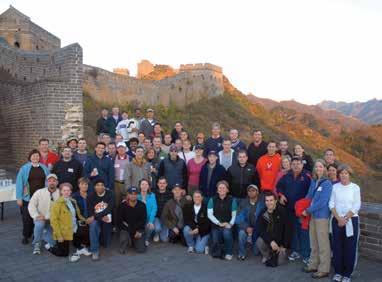
On the program’s leadership experience in China, Myers remembers the cohort sleeping on a section of the Great Wall in sleeping bags — “turns out it’s actually very, very cold,” she says — and rappelling down in the morning.
It was the kind of shared, unfamiliar experience that changes how you see leadership — and the kind of memory that doesn’t belong to a program. It belongs to a crew.
Ask those first-cohort alumni what made the experience unmistakably Darden, and they talk about peer education.
“The faculty were phenomenal,” Benjamin says. “But the surprise was the cohort. You learn a ton from each other — what’s happening in
different organizations and how other leaders are approaching the same kinds of problems.”
They also talk about perspective — being pushed outside their default assumptions.
“I think there is just a huge amount of subtle knowledge that comes from being exposed to any other culture than your own,” Myers says, reflecting on the program’s global experience.
They talk about practicality — the feeling of class spilling into Monday morning.
“I’d come back to work and my team would tease me. ‘Oh, here come the MBA tricks again,’” Inra says. “But it wasn’t a trick. It was just a better way to think about the problem.”
While the first cohort’s story belonged to Charlottesville — long days in class, late nights at the old Darden Inn, the next chapters unfolded 120 miles to the north.
Today, the home base for Executive MBA residencies is the Sands Family Grounds at
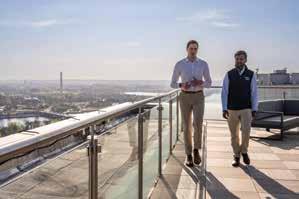
THAT IS THE QUIET ENGINE OF ANY GREAT DARDEN EXPERIENCE, REGARDLESS OF FORMAT : NOT THE BUILDING, NOT THE SCHEDULE, BUT THE WAY THE PEOPLE IN THE ROOM MAKE EACH OTHER BETTER AND BUILD CONNECTIONS THAT PERSIST EVEN 20 YEARS LATER.
UVA Darden DC Metro in the Rosslyn district of Arlington, Virginia, just across the river from Washington, D.C.
Students still come to Charlottesville at key points along the way, but the center of gravity now sits in one of the most consequential professional ecosystems in the world.
For some Executive MBA students, that geography is practical — closer to home and work, an easier commute for an intensive weekend. For others, it is strategic — a way to plug into a region where public policy, national security, finance, consulting, technology and entrepreneurship intersect every day.
To the first cohort, the most meaningful part of the change isn’t the skyline view from Rosslyn. It’s what the expanded footprint makes possible: more people getting the same kind of experience they did.
Myers credits the format itself. Even early on, it wasn’t “purely virtual.” The in-person residencies — the room, the pressure, the eye contact — were part of what made the learning stick, at a time when the technology was still catching up to the ambition.
“I loved the change of scenery,” Inra adds.
“That mental switch — like, OK, now I’m in academic mode, and I can fully immerse. That’s a big part of what made it work.”
Two decades in, it is easy to forget how improbable the original gamble looked on paper: Ask high-performing professionals to give up a slice of their lives — weekends, evenings, energy — for something no one required them to do.
The answer turned out to be a particular kind of person Darden has always attracted: people who are serious enough about their work, their communities and their own development that a “lost” weekend looks like an investment.
Those weekends have turned into promotions, company launches, career pivots and quiet Monday-morning changes in how people lead their teams. They have also added up to something bigger for the School itself: a 1,600-plus-person Executive MBA alumni network and a program that has become one of the ways Darden extends its mission beyond Charlottesville.
EMBAS SUPPORTING EMBAS
With 20 years of Darden’s Executive MBA in the rearview mirror, a new, alumni-led initiative is focused on strengthening the program for those coming next.
The effort brings alumni together across cohorts to support scholarships, enhance the residency experience and reinforce the standard that has defined the program from the start.
Support for the initiative can be directed through the Darden Annual Fund by using the “EMBA Scholarships & Student Experience” designation when making a gift. Funds help ensure access for high-caliber students and sustain the intensity, faculty engagement and peer learning that define the EMBA experience.
The EMBA alumni spurring the initiative say it is not about building something new. It is about maintaining what works, which is reflected by how EMBA alumni continue to engage. Early cohorts engage with current students through conversations that pick up quickly and go deep. Their shared Darden experience and understanding still hold.
For those who have been through it, the value is clear. The opportunity now is to make sure the EMBA experience remains just as strong for those coming next.
TO GIVE : Visit drdn.mba/give and select “EMBA Scholarships & Student Experience.”
TO LEARN MORE : Contact Sarah Bullock at BullockS@darden. virginia.edu.
BY SALLY PARKER
ILLUSTRATIONS BY RAVEN JIANG


IN 2021, AN INTERNAL WHISTLEBLOWER ALLEGED THAT META KNEW ITS FACEBOOK ALGORITHMS WERE AMPLIFYING HARMFUL CONTENT, INCLUDING THE PROMOTION OF POSTS THAT WORSENED BODY IMAGE, ANXIETY AND EXPOSURE TO SELF-HARM MATERIAL AMONG TEENS. BUT THOSE SAME SYSTEMS ALSO DROVE ENGAGEMENT. METASTRUGGLED TO ACT.
THE ALLEGATIONS TRIGGERED A WAVE OF MEDIA COVERAGE AND PROMPTED REGULATORY AND LEGAL SCRUTINY THAT CONTINUES TO THIS DAY.


_ (_\_) (__<_{} (_/_) |\ | \\| /| \|// |/ ,.,.,|.,.,.
Darden experts are exploring the balancing act between AI’s promise and perils through research on how AI systems promote human flourishing — and squash it.
“These are groundbreaking changes in our society. It is critical not just to be at the technological edge, but to be at that human-AI intersection edge as well,” says Professor Roshni Raveendhran. She studies how novel technologies affect flourishing in individuals and workplaces and teaches the Darden elective “Minds and Machines: Flourishing in the Age of AI,” which helps students explore what it means to harness the power of AI for the well-being of themselves, the workplace and society.
AI users flourish when the technology is integrated thoughtfully, Raveendhran says. They have an enhanced sense of individual autonomy, feel they are perceived as competent by others and improve their social relations — all basic psychological needs that humans share.
A consistent finding in her research is that people believe engaging with AI is less socially risky than interacting with humans. Because AI is a machine, the thinking goes, it doesn’t
carry the judgments or other social motivations that people have.
In one study, people who talked to AI about minor problems — a boss was rude, a driver cut them off — reported feeling less stress and anxiety afterward because they believed AI was less likely to form negative judgments of them than a human would.
Another study looked at the effect of technologies that track worker behavior. A laptop software might provide feedback on time spent on a task or the number of breaks taken in a day. Users of the technology reported feeling much as they would using a smart device that tracks fitness goals.
“With the technology, we experience that as informational and not as evaluative. We feel more autonomy. It feels like information you would like to know about your behaviors,” Raveendhran says. “But when we hear the exact same things from humans, even if they’re not objectively judging us or causing harm in any way, we experience that context as evaluative — just because humans have the capacity to form judgments.”
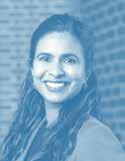
Roshni

Luca
A key driver of AI’s role in supporting human flourishing is people’s beliefs about the technology. While AI is perceived as a supportive tool for many things, it also can be eyed with suspicion when it steps in uninvited. For example, a news story written by AI or a chatbot that insists on handling your question when you’d rather speak with a human agent.
“AI doesn’t fail because the code is wrong, though that is sometimes part of it. It fails because it isn’t designed for how the human mind actually receives it,” says Professor Luca Cian, who studies AI strategy and psychology.
“In companies and government, very few people understand the psychological aspects of AI. You can write the most beautiful and perfect AI recommender or agent, but if people don’t trust it and don’t use it, then it’s useless.”
People are more likely to trust AI that is developed or adopted in ways that support human thriving at every step, Raveendhran says. In an ideal scenario, stakeholder input is reflected at all levels — from designers, technolo -
gists and organizations to policymakers, employees and other end users. Psychological impacts are noted with intent to ensure the rollout is driven by purpose.
“All stakeholders have to figure out the bounds of these technologies,” Raveendhran says. “How can we embed and integrate these technologies in a way where people feel trusted and valued?”
In a study that measured news readers’ trust of AI-written content, Cian and his co-authors found that people rated the same news headlines as less accurate when labeled as AI-written than when labeled as human-written. The effect held regardless of the headline’s actual veracity. AI authorship dragged down perceived accuracy even for objectively true news.
In another study, Cian and his co-authors found that consumers prefer AI-based recommendations when they’re choosing for utilitarian reasons (e.g., a vacuum cleaner) but prefer human recommendations for hedonic choices (e.g., a fragrance) because they assume AI is good with facts but bad at experience and emotion. Companies like Netflix could respond to the finding effectively, Cian suggests, by emphasizing AI picks for informational content like documentaries and picks from “similar users” for emotional content like horror movies.
“The single most reliable trust restoration move I found in my research is that it’s very important to keep a human in the loop most of the time,” Cian says. “People think a human would compensate where the AI is less competent, and the other way around.”

“PEOPLE BELIEVE THAT AI, COMPARED TO A HUMAN, IS LESS LIKELY TO MAKE JUDGMENTS BASED ON BIAS AND DISCRIMINATION.” — PROFESSOR

AI is disrupting entrenched systems, but it also brings enormous potential to fuel flourishing systems, Cian says. The opportunity calls for leaders with a moral compass.
In one study, participants were treated unfairly by either a human or AI in a money-allocation game. Participants then had a chance to call out a different, unrelated human who had also behaved unfairly. People who had been wronged by the AI were significantly less likely to push back on the second person — what Cian and his co-authors call “AI-induced indifference.” Because people blame AI less for unfairness, exposure to unfair AI seems to dull our reaction to unfairness in general.
“It’s fundamental for us to study the moral changes AI is bringing with it. If people are less sensitive to AI — less likely to blame it for unfair actions — we risk a whole class of people using AI to do unfair things at arm’s length,” Cian says.
At the same time, the use of AI can also enhance how others perceive us — again, because it’s thought to have lower social motivations. In a study, Raveendhran looked at perceptions of women working in male-dominated industries. When the screening process involved AI, people evaluated women employees more favorably than if AI were not used, believing the technology is less likely to discriminate.
“The important thing to understand here is that these are people’s perceptions. These are not objective realities,” she notes. “People believe that AI, compared to a human, is less likely to make judgments based on bias and discrimination.”
Society’s understanding and expectations of AI will keep evolving, Raveendhran adds. Lessons learned from previous groundbreaking tech advances — the internet, social media — will help center the human experience to some extent. But AI’s unprecedented reach into every facet of daily life calls for stronger guardrails and new approaches, such as greater collaboration between academia and practitioners.
“Humans are the fundamental piece of this puzzle,” Raveendhran says. “It’s a human question, and that’s what we need to be thinking about.”
“It’s very important to keep a human in the loop most of the time. People think a human would compensate where the AI is less competent, and the other way around.”
— Professor Luca Cian
Darden is steadily expanding how it prepares MBA students for a workplace being reshaped by AI.
In the fall, the School introduced the AI, Data Analytics and Decision Sciences concentration, giving students a structured path to build technical and analytical depth in one of the fastest-growing areas of business.
This spring, Darden extended that effort with something more immediate and applied.
A new noncredit course, “Business Applications of Generative AI,” focuses on how AI is already showing up in day-to-day work. Delivered asynchronously and designed to fit alongside the MBA experience, the course emphasizes when AI adds value, how to prompt effectively and how to translate outputs into clear, credible, businessready deliverables.
In about 15 to 18 hours, students move from experimentation to application — working through real scenarios and producing work that reflects sound judgment and professional communication.
Students who complete the course earn a digital badge for LinkedIn. For employers, it offers a visible signal of applied fluency.
More broadly, it reflects Darden’s approach. As AI accelerates, the differentiator is not just access to tools, but the ability to use them well — navigating ambiguity, interpreting imperfect information and making decisions that hold up in practice.

BY JAY HODGKINS
IF 2025 WAS THE YEAR OF MASSIVE INVESTMENTS IN AI, PROFESSOR YIORGOS ALLAYANNIS BELIEVES 2026 IS
If returns on AI investments become reality, Allayannis said it will have major ramifications on global labor markets and economic output, as well as talent needs and employment.
Even in the age of AI, talent is still destiny. As such, talent and HR leaders play a foundational role helping their organizations navigate AI disruption and challenges of all kinds through hiring and talent development.
Sands Institute Chief Digital Learning Officer Anne Trumbore, who studies learning science and education technologies, said continuous employee learning is critical to build a sustainable, skills-based talent system that keeps pace with AI-driven change. “Organizations must cultivate adaptable internal talent,” she said. “The key over the next 12 months is investing in transparent skills strategies, AI-enabled learning and early talent pipelines that make continuous development part of everyday work.”
Devin Bigoness, Darden Executive Education and Lifelong Learning chief client officer, believes an overarching challenge for HR leaders is to drive talent development that balances keeping pace with the changing world and providing enough depth for real-impact capability development. Bigoness said achieving that balance requires HR leaders to manage at least four competing variables to find the talent development sweet spot:
• Speed and pace to keep up with rapid change
• Cost efficiencies and value creation
• Program scalability that is focused enough for impact
• Targeted, focused solutions for key talent populations that also lift organizational capabilities more broadly
As a scholar who studies technology disruptions, Interim Dean Mike Lenox believes C-suite leaders should be focused on three intersecting, AI-related strategic trends: digitization, decarbonization and decoupling.
“Digitization, especially generative AI, is proving to be the general-purpose technology both celebrated and feared that is disrupting a wide swath of business sectors,” Lenox said. “I suspect

Anne Trumbore Chief Digital Learning Officer, Sands Institute for Lifelong Learning
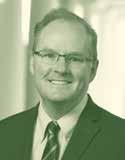
Devin Bigoness Chief Client Officer and Executive Director, Darden Executive Education & Lifelong Learning
that in the next 12 months, we will begin to experience the shakeout phase of the AI lifecycle where some high-flying startups and oncesuccessful incumbents will fail in the face of increased competition.”
Marketing Professor Luca Cian agrees with Lenox that 2026 will be defined by an AI shakeout as business leaders — ranging from the C-suite to function heads — push organizational AI acceptance in the face of a trust crisis. “The difference isn’t the technology, it’s the psychology,” Cian said. “The companies that win will be those that understand AI adoption isn’t a technology problem — it’s a trust problem. And trust requires psychological architecture, not just technical infrastructure.”
Lenox said decarbonization is intersecting with digitization as the acceleration of AI drives massive energy demand that is pressuring businesses’ energy and sustainability goals. Lastly, he defines decoupling as the separation of major global trade partners and supply chains, which is changing how businesses get access to technologies critical to business success.
“The key to managing such major disruptions is to keep an eye on the big picture and not to overreact to the daily news cycle,” Lenox said. “Pay attention to the patterns of disruption that are well documented. Continually ask not only, ‘Where are market opportunities being created,’ but also ‘How do our evolving capabilities create valuable competitive positions in a transforming marketplace?’”
The pace of change in the face of a technology disruption as upending as AI can be daunting. However, it’s important to remember disruptions like AI are driving economic growth and unprecedented levels of new business value. Managing change is about finding the right strategies to capture the value.
Trumbore offers hope that organizations are making great progress empowering their employees to manage change and thrive amid the chaos of AI and other disruptions.
Leading employers are already treating learning as a strategic asset, and this trend has real momentum.
“Leading employers are already treating learning as a strategic asset, and this trend has real momentum,” she said. “Companies are building internal talent marketplaces and partnering with schools to create applied learning pathways. These actions signal a shift from episodic training to continuous capability building, which will meaningfully close skill gaps.”
LEARN MORE about UVA Darden Executive Education & Lifelong Learning talent development programs custom-built for your organizational needs at darden.virginia.edu/executive-education.
Professor Scott C. Miller can pinpoint the moment he decided to study economic history.
September 15, 2008. London. He had just emerged from a Tube station when the news broke: Lehman Brothers had collapsed in the biggest bankruptcy in U.S. history.
“I was seeing people who looked like I felt on 9/11,” says Miller, who is also director of the Democracy and Capitalism Lab at UVA’s Karsh Institute of Democracy and a senior fellow at UVA’s Miller Center of Public Affairs.
Fast forward nearly two decades and Miller teaches the elective “Financial Crises & Civic Reaction” to Full-Time MBA students and “Financial Crises: Lessons for Democracy & Capitalism” to Part-Time MBA students. He sat down with Darden Ideas to Action recently to share some of the most important insights he’s learned about financial crises.
One myth about financial crises is that they are rare.
There is typically a crisis of some sort — a category that could encompass a banking crisis, a currency crisis or a sovereign debt crisis — happening around the world at any given time in recent history.
Fed chairman Paul Volcker once wittily remarked that “about every 10 years, we have the greatest crisis in 50 years.”
Miller’s financial crises courses at Darden are predicated on his belief that “the big changes we see in societies and political systems, especially economic shifts, tend to come after episodes of great financial or economic distress.”
These are the “elbow joints of history,” he says.
“You may have movements, but then something tends to break in the economy or financial system, and because that is the one thing that touches everyone in a society, that tends to cause shifts, and that can either be a very good thing or a bad thing.”
The depression of the 1780s in the United States spurred the creation of the U.S. Constitution and a fundamental change in how the American economy worked. Looking to Europe, a financial crisis led to the French Revolution and the raft of beheadings that happened in Paris.
“And you could also argue that it was a series of financial crises that really emboldened the rise of Nazism in Germany in the 1930s,” says Miller. “These are the pivot points.”
The goal of Miller’s classes is straightforward: Help students understand financial crises, as they will likely face at least one during their careers. And equip them with the leadership skills needed to navigate a crisis successfully.
“The problem is that crises are shrouded in myth, and people tend not to understand what they are and how they work,” Miller says. “If you assume a crisis is going to play out in one way, but it ends up going another, you can make a series of really bad decisions.”
Miller helps students understand both how crises work and, as future business leaders, how to navigate them. “Here’s how you need to act. Here’s how you need to lead your firm or your agency and how to understand how these crises affect broader society. Because these are linchpins of how political systems and societal systems move. It is connective tissue.”
Another popular class Miller teaches is “Alexander Hamilton: Lessons in Management, Strategy and Leadership,” offered in the Executive MBA program.
The irony of teaching a class on Hamilton at the University founded by his bitter political rival, Thomas Jefferson, is not lost on Miller.
“They were very at odds,” says Miller of the two Founding Fathers. “Hamilton called Jefferson ‘a man of scattered and sublimated imagination who had no sense for good taste or good government,’ and Jefferson said that Hamilton was ‘the new Caesar who was going to
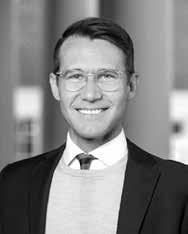
Scott C. Miller Assistant Professor of Business Administration

subvert the Republic.’ So you definitely had no love lost between them. What I will say, though, is you have to understand both of them to understand Americans and America today.”
Miller is fond of saying America “is a Hamiltonian country with a Jeffersonian spirit and brain.”
What initially drew Miller to Hamilton was his backstory: Hamilton was a striving immigrant from the West Indies who rose to become George Washington’s chief of staff, shaped the U.S. Constitution, created the nation’s financial system and ultimately died in a duel with the vice president.
“I was very compelled by his story,” he says.
But there are also important takeaways from his life.
“First, he had to deal with a very specific set of economic, financial and strategic problems that few historical figures ever had to face. He was tasked with reforming, operating and guiding an entirely new economic and financial system — one that, in many ways, operated like a startup.”
Second, Hamilton’s record was not without flaws.
“He was quite brilliant and did some really amazing things, but he also had some gargantuan failures,” Miller says. “I think it’s important for students to study someone who was truly brilliant and achieved truly great things that reshaped the United States and the world but also made some catastrophic decisions.”
Recently, Miller brought Hamilton to life in the classroom — in a manner of speaking. Working with Fred Telegdy, a senior instructional designer at Darden, Miller created a customized Hamilton chatbot.
For the final exam, students had to “talk” with Hamilton for 20 to 30 minutes and critique one or more of his policies. They also had to critique the AI model.
“It was an amazing experience,” says Miller. “We’re already working on making it a face-to-face, effectively a Zoom exam, with Alexander Hamilton next year, which is terrifying and wonderful at the same time.”
Miller believes that democracy and capitalism are essential to each other.
“The goal of the lab is to understand the synergies between free markets and free people and the tensions between them,” says Miller. “If we are to remain free and prosperous, we need to understand the relationship between these things, acknowledge the conflicts and do everything we can to find ways to integrate them more fully.”
This article originally appeared on Darden Ideas to Action.
Visit ideas.darden.virginia.edu for more thought leadership from Darden School experts.
Gordon “Gordy” Crawford (MBA ’71) retired in 2012 after 41 years at the Capital Group, a global investment management company with $2.6 trillion in assets under management. During his career, he lived in Los Angeles, California, where he rose to be a top expert in media and entertainment, serving as chair of Southern California Public Radio and vice chair of the Nature Conservancy. For years, the Darden Principal Donor has been a loyal member of the Hickory Club and Darden Society and has supported initiatives at Darden, including the redevelopment of C. Ray Smith Alumni Hall. In this edition of 20 Questions, he looks back on lessons learned, looks to the future of investment management and dispenses a little advice on enjoying retirement.
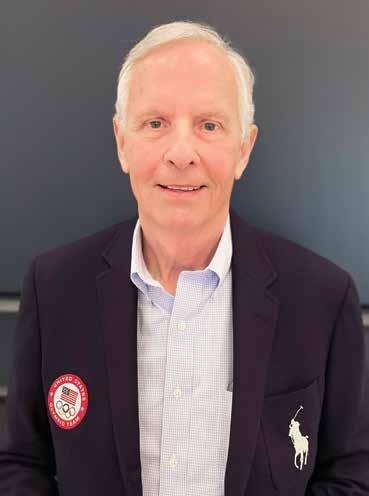
1. What was your first job? Upon graduation, I went to work for Capital Research and Management. I stayed there for 41 years.
2. What’s the best advice you have ever received? C. Ray told me to skip my bartender job, go home, put on a suit and interview with Capital. I wasn’t signed up.
3. Whom do you most admire? Successful people who are also kind and ethical
4. When and where do you do your best thinking? My home offices
Spend quality time with your family. Be kind, empathetic and ethical. Focus on your health and give back. I’ve been super lucky and blessed.
5. What’s been on your mind lately?
Feckless politicians, a 50-year explosion in global debt and massive government deficits that no one cares about.
6. What are you reading these days? Business news, military history, biographies of Barry Diller and John Malone
7. How do you recharge? At my second and third homes with golf and fly fishing
8. What’s your motto? Be effective. Be kind. Give back.
9. How do you deal with conflict? I am conflict averse.
10. What characteristics do you look for in people?
Effectiveness, kindness, empathy
11. What makes you feel hopeful? Not much!
12. What is your favorite cause?
The U.S. Olympic and Paralympic Foundation, The Nature Conservancy, Southern California Public Radio
WORK HARD, STAY HUMBLE, SEE THE BIG PICTURE, INVEST LONG TERM.
13. If you could live anywhere, where would it be? Where I am.
14. What do you lose sleep over?
See my answer to question No. 5.
15. Which class at Darden impacted you the most?
Finance with Professor Bob Sihler
16. What’s your favorite Darden memory?
In the Darden portfolio, shorting two stocks on a Friday. It was the first time the fund had ever shorted. The stocks opened down on Monday.
17. What was the most important lesson you learned during your career in investment management?
Work hard, stay humble, see the big picture, invest long term.
18. What about the investment management field’s future intrigues you most?
There will always be a role for great investors, AI notwithstanding.
19. What are your tips for leading a fulfilling and purpose-driven life after retiring from your primary career?
Spend quality time with your family. Be kind, empathetic and ethical. Focus on your health and give back. I’ve been super lucky and blessed.
20. As Darden enters a new chapter following completion of the Powered by Purpose campaign and Scott Beardsley’s tenure as dean, what do you think is most important for the School to focus on moving forward? Graduate effective, ethical people.
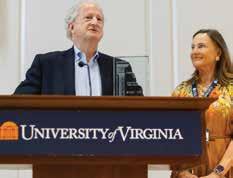
Peter M. Grant II (MBA ’86), a veteran investment banker and private equity investor who has played a central role in shaping the University of Virginia’s recent fundraising efforts, was named the 2026 recipient of the Charles C. Abbott Award during Darden Reunion Weekend.
The award is the School’s highest recognition for alumni and is given to graduates whose leadership, service and philanthropy have had a sustained and consequential impact on the institution.
“If you’re here this weekend, it’s because you’re engaged, and this place did something for you, hopefully transformative. It did for me,” Grant told Reunion attendees upon receiving the award.
A founding partner of Anchormarck, Grant has spent more than two decades in senior roles across investment banking and capital markets, including leadership positions at RBC Capital Markets and Dain Rauscher Wessels.
At UVA, he has served on the Darden School Foundation Board of Trustees since
2015 and holds a range of leadership roles across the University, including past chair of the Alumni Association Board of Managers and current member of the Board of Visitors. His service has also included roles with the Jefferson Scholars Foundation and the College Foundation.
He is perhaps best known at UVA for serving as chair of the Honor the Future capital campaign, one of the most ambitious fundraising efforts in university history.
His philanthropic giving includes support for faculty excellence through an endowed professorship at Darden, as well as broader investments across the University.
“Those who’ve served alongside Peter — which I’ve had the opportunity to do for quite some time — know he always asks thoughtful questions, he listens carefully and he leads in a way that elevates everyone around him,” said Cathy Friedman (MBA ’86), fellow member of the Darden School Foundation Board of Trustees.




BY CAROLINE MACKEY
Most people don’t think twice about their underwear. Gibboney Huske (MBA ’97) did. After decades in finance, a small frustration turned into something bigger, eventually becoming Southern Fancy, a brand built around a simple idea: everyday essentials shouldn’t feel like a compromise.
Huske came to Darden with a clear interest in finance, eventually building a career spanning Wall Street. She worked as a sell-side analyst at Credit Suisse First Boston, later joining Legg Mason, where she became a portfolio manager for a global growth fund.
Over time, she also launched a hedge fund with a colleague, spending years immersed in global markets. It was, by her own account, a dream job, but one that came with intensity.
“There was basically one day that all the markets were closed,” she says. “It was all-consuming.”
Eventually, she started to picture something different. But the idea that would become Southern Fancy didn’t start with a business plan. It started with something small.
Huske found it increasingly difficult to find high-quality cotton underwear, something she later connected to supply chain disruptions following the ban on Uyghur cotton.
There was no simple solution to a complicated supply chain situation, so she decided to figure it out — starting a business from scratch.
Huske enrolled in a program through the Carolina Textile District to learn the basics of U.S.-based manufacturing, went to a major lingerie trade show in Paris, France, to make connections and began piecing together a supply chain. What followed was a slow, iterative process, figuring things out as she went.

“ YOU HAVE TO CONVINCE PEOPLE OF YOUR VISION, BUT ALSO LEVERAGE THE STRENGTHS THAT OTHER PEOPLE HAVE.
Huske’s approach to the business is shaped by her background in investing. She’s not thinking about it as a fashion brand as much as a consumer business built around a core collection, something people buy over and over again.
By going direct-to-consumer, she avoids the traditional department store model and keeps more control over pricing, margins and how the brand shows up.
As she’s built Southern Fancy, Huske has found herself returning to lessons from her time at Darden, sometimes in ways she didn’t expect.
Operations, once her least favorite class, is now a big part of what she’s doing.
“I was like, ‘Oh my gosh. It’s operations,’” she says. “I have worked myself into another operations problem.”
More broadly, she credits Darden with helping her build confidence, especially as someone who describes herself as naturally introverted.
Southern Fancy is still a small but growing business with a long way to go. The company has launched two designs, with more on the way. Building the business has also changed how Huske thinks about leadership.
“You have to convince people of your vision,” she says. “But also leverage the strengths that other people have.”
BY CAROLINE MACKEY
Jordan Clarke (MBA ’19) believes he would have never arrived at Nike’s Jordan Brand — where he leads their Global Football, American Football, Baseball and Training businesses — without Darden.
But his path didn’t start in a corporate office. It started on the basketball court, where he spent years playing in college and professionally overseas.
Clarke always knew basketball wouldn’t last forever. Still, that realization is different when it actually arrives. During his senior year at Drake University, injuries began to take a toll. His knee required constant treatment, and he was medically flagged by the NBA, effectively closing the door on that path.
He was still able to play internationally for several years, including in Denmark, England, Chile and Argentina. But even while competing, he was thinking ahead. He began working through the CFA curriculum, explored building a startup and spoke with professionals across industries to better understand what might come next. That process ultimately led him to Darden.
The transition from professional athlete to business school student wasn’t without its challenges. There were cultural shifts, especially in communication style.
“There’s a level of bluntness in athletics that you usually have to adjust in a classroom or conference room,” he said.
Perhaps the biggest shift was learning how
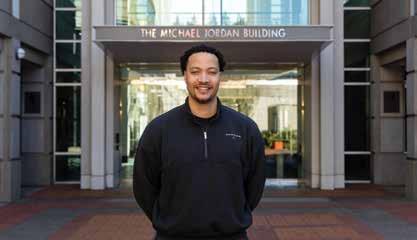
to navigate a classroom filled with peers who had years of professional experience.
“You walk into a classroom with people who’ve been working in corporate for five to eight years, and there are things that are second nature to them that you are experiencing for the first time,” he said.
Over time, Clarke learned to reframe that gap, not as a disadvantage but as a competitive advantage that allowed him to evaluate ideas and process the world differently.
Looking back, the lessons that stayed with him most weren’t necessarily technical. Instead, they were foundational.
“Org structure is the foundation for everything a business does,” Clarke said. “You can have great people, but if they’re not set up the right way, it doesn’t matter.”
Clarke’s role at Jordan Brand spans everything from strategy to product direction to storytelling — all centered on understanding the consumer. He is also helping build new areas of the business.
“When you’re building something new, if you don’t follow through and execute, nothing happens,” Clarke said. “You have to have a clear vision, build internal momentum around that vision and relentlessly push toward that vision regardless of the obstacles.”
“
WHEN YOU’RE BUILDING SOMETHING NEW, IF YOU DON’T FOLLOW THROUGH AND EXECUTE, NOTHING HAPPENS. YOU HAVE TO HAVE A CLEAR VISION, BUILD INTERNAL MOMENTUM AROUND THAT VISION AND RELENTLESSLY PUSH TOWARDS THAT VISION REGARDLESS OF THE OBSTACLES.
Darden was the bridge between two very different chapters for Clarke — one defined by competition on the court, the other by leading in business.
The path it created was clear: from Darden to consulting and, ultimately, to Nike. But just as important were the relationships and perspective he gained along the way.
“Some of my best friends have come from my time in Charlottesville. Experiences don’t get much more transformative than that.”
The Darden School offers its condolences to the families of the following individuals whose deaths have been reported to us in the past six months.

LESLIE B. BELSHA JR. (TEP ’76)
REBECCA LIVINGSTON BRAY (MBA ’86)
STEPHAN ROBERT BRUCE (MBA ’81)
KRISTIN L. COLBER-BAKER (MBA ’90)
ROBERT L. GAINES (MBA ’63)
STEPHEN ROSS GEORGE (MBA ’81)
BARBARA ANN GILLETTE (MBA ’87)
LARKIN DRUMMOND GLAZEBROOK (EMBA ’21)
W. GIBSON HARRIS II (MBA ’68)
WILLIAM DALLAS HAWFIELD JR. (MBA ’69)
WILLARD DUNBAR HOSKINS III (TEP ’66)
DAVID W. HUBBARD (MBA ’73)
ROBERT E. HUNTER MD (TEP ’81)
LEGRAND P. HYDE III (MBA ’68)
PETER S. KIRBY (MBA ’91)
RICHARD CARL KREUTZBERG (MBA ’69)
JAMES NEIL LAMAR (MBA ’84)
CHARLES B. LANDGUTH (TEP ’89)
WALTHER GEORGE MASER (TEP ’67)
E. C. ORFANEDES (MBA ’69)
PATRICIA R. PERIOLAT (MBA ’94)
WILLIAM H. RIANHARD (MBA ’69)
LAWRENCE WOOD ROBERT IV (TEP ’64)
RICHARD H. RUEDI (MBA ’59)
HENRY GREGORY SHEA JR. (MBA ’76)
JAMES P. SINCLAIR (MBA ’65)
CHRIS G. SORENSON (MBA ’76)
GREGORY S. THOMPSON (MBA ’75)
CHARLES B. WILSON (MBA ’71)
The two leadership boards of the Darden School of Business are composed of nearly 100 distinguished leaders who serve as an innovative force in the advancement of the Darden School throughout the world.
(as of 30 June 2026)
Thank you to our alumni and volunteer leaders for their continued unwavering support for Darden.
Chair
John D. Fowler Jr. (MBA/JD ’84) Baycrest Capital LLC
Vice Chair
Robert W. Smith (MBA ’87) Retired, T. Rowe Price Co.
Immediate Past Chair Frank M. Sands (MBA ’94) Sands Capital
Scott C. Beardsley University of Virginia
John P. Bolduc (MBA ’90) H.I.G. Capital
Kimberly Brown Morrish (MBA ’93)
Canterbury Partners
Pablo Ciano (MBA ’00) DHL Group
Rodney B. Clemente (EMBA ’17) Energy Recovery Inc.
William H. Coogan Jr. (MBA ’82) Retired, Firstmark Corp.
James A. Cooper (MBA ’84) Thompson Street Capital Partners
Guillaume M. Cuvelier (MBA ’91) Alps Beverages LLC
Robert G. Doumar Jr. (MBA/JD ’88) Park Square Capital LLP
Debra D. Draughan (MBA ’84) The Process Management Group LLC
Franklin S. Edmonds Jr. (MBA/JD ’95) Covey Hill
Marietta Edmunds Zakas (MBA/JD ’84) Mueller Water Products Inc.
Richard B. Evans University of Virginia Darden School of Business
Catherine J. Friedman (MBA ’86) GV
George S. Geis
University of Virginia School of Law
Peter M. Grant II (MBA ’86) Anchormarck LLC
Gregory B. Graves (MBA ’89) Entegris
Ira H. Green Jr. (MBA ’90) IHG Advisors, LLC
Owen D. Griffin Jr. (MBA ’99) Currie Medical
Constance J. Hallquist (MBA ’91) Garnet Hill
Taylor Heaps (MBA ’13) Baird
Robert J. Hugin (MBA ’85) Retired, Celgene Corp.
Martina Hund-Mejean (MBA ’88) Mastercard International, Inc.
Mark J. Kington (MBA ’88) Kington Management Corporation
David M. LaCross (MBA ’78) Morgan Territory Brewing
Beverly B. Ladley (MBA ’92) Foundation For The Carolinas
Michael Lenox University of Virginia Darden School of Business
Nicole McKinney Lindsay (MBA/JD ’99) Mastercard International, Inc.
Amanda Lozano (MBA ’09) North Fork Partners LLC
Richard A. Mayo (MBA ’68) Game Creek Capital
Donald E. Morel Jr., Ph.D. (TEP ’97) Progenitor Capital Partners LLC
Adair Newhall (MBA ’09) Greenspring Associates
Diem H.D. Nguyen (MBA ’01) SIGA
Carl E. Peoples (MBA ’94) Goldman Sachs Group Inc.
Charles E. Poston Jr. (EMBA ’17) Troutman Strategies
Vincent M. Rague (MBA ’84) Old Mutual Holdings PLC
Matthew J. Reintjes (MBA ’04) YETI
Michael Sabel Venture Global LNG
Erik A. Slingerland, Ph.D. (MBA ’84) EAS International S.A.
Shannon G. Smith (MBA ’90) Abundant Power Group
Susan N. Sobbott (MBA ’90) American Express
Cynthia K. Soledad (MBA ’02) Egon Zehnder
Anand E. Stanley (MBA ’03) Airbus
Mark J. Styslinger Altec Industries Inc.
Melissa Thomas-Hunt University of Virginia Darden School of Business
Bruce R. Thompson (MBA ’90) Bank of America Corp.
Kelly M. Thomson (MBA ’99) Mubadala Capital
Lowell S. Ukrop (MBA ’89) University of Virginia Darden School of Business
Edward W. Valentine (MBA ’93) Harris Williams & Co.
Steven C. Voorhees (MBA ’80)
Chair
Cynthia K. Soledad (MBA ’02) Egon Zehnder
Vice Chair
Taylor P. Heaps (MBA ’13) Baird
Jennifer Beckett (TEP ’25) U.S. Department of the Air Force
Jennifer Briggs (MBA ’14) Revolution Medicines
Stephen G. Brooks (MBA ’09)
Mary Buckle Searle (MBA ’86)
Jordan C. Casserley (MBA ’20) McKinsey & Co.
Sandhya K. Chhabra, MD (EMBA ’17) Albemarle Endocrinology
Sean M. Corrigan (MBA ’05) Boston Consulting Group
Lynnette D. Crowder (EMBA ’10) Mill Rock Packaging
Richard P. Dahling (MBA ’87)
Zhana M. Edmonds (MBA ’19) CVS Health
Richard C. Edmunds III (MBA ’92) PricewaterhouseCoopers LLP
Rachel M. Edwards (MBA ’22) AfterWorld
Teresa A. Epperson (MBA ’95) Annise
Sarita T. Finnie (MBA ’01) Novartis
Theresa O. Frankiewicz (MBA ’87) Retired, Crown Community Development
James Freedman Aponte (MBA ’10) META
Michael J. Ganey (MBA ’78) GaneyNPD
Lee S. Gordon (MBA ’80) Morningstar Corp.
Leslie P. Gordon (MBA ’89) Korn Ferry
Betsy N. Gorton (MBA ’04) Goldman Sachs Group Inc.
Jacqueline Grace (MBA ’10)
Dave Heimbach (TEP ’22) Metronet Broadband
Karen O. Henneberger (EMBA ’20) Seven Rules Consulting LLC
Sonia L. Hounsell (MBA ’99) FunkkOFF! Inc
Nathan A. Hukill (PTMBA ’25) AstraZeneca Pharmaceuticals
Gen A. Izutsu (MBA ’15) Veralto
Marcien B. Jenckes (MBA ’98) COMCAST Corp.
Melissa Jenkins (MBA ’16) Kansas City Current
Kendall Jennings Hayden (MBA ’12) Accenture
Wei Jin (MBA ’99) Northwestern Mutual Life Insurance Co.
Patrice Ju (MBA ’14) Google
Matthew A. Kaness (MBA ’02) Goodwillfinds.com
Markus A. Kritzler (MBA ’04) Carbon Upcycling Technologies
Michael J. Lipsey (MBA ’08) Compass Communities
Xiang Liu (MBA ’05)
Jared H. Love (MBA ’07) NBCUniversal
Kristina F. Mangelsdorf (MBA ’94) KFM Executive Coaching
Sherry McCray (MBA ’05) Exelon/Constellation
Lois M. McEntyre (MBA ’95)
Michael W. Meredith (GEMBA ’17) Command Star Capital, LLC.
Tami M. Moore (EMBA ’09) Tillman Fiber Co
Tiffani C. Moore (EMBA ’16) Federal Housing Finance Agency
Betsy M. Moszeter (EMBA ’11) Newday Impact Investing
Lauren A. Murphy (MBA ’94) Prime Therapeutics
Nikhil Nath (MBA ’00) InterGlobe Enterprises
Ann H.S. Nicholson (MBA ’01) Corning Inc.
Alyssa N. Perez-Melendez (MBA ’20) Bain & Company Inc.
Alex R. Picou (MBA ’89) JP Morgan Private Bank
Anthony J. Ranghelli (GEMBA ’24) Bank of Charles Town
Jason Sinnarajah (MBA ’07) Washington Nationals
Sara Smith (EMBA ’25) NVR Inc.
Charles M. Stewart (MBA ’24) Brown Advisory
David L. Tayman (MBA/JD ’97) Tayman Lane Chaverri LLP
Zachary G. Upcheshaw (MBA ’15) Goldman Sachs Group Inc.
Brandt A. Vaughan (MBA ’99) Ballmer Enterprises
Gerrud Wallaert (TEP ’18) BrightMark
Carter T. Whitelow (EMBA ’24) Willcox Savage Consulting
Daniele M. Wilson (MBA ’11) Google
Chong Xu (MBA ’14) F-Prime Capital Partners
Jose M. Zertuche (MBA ’00) BlackRock
“DARDEN’S STRENGTH HAS ALWAYS BEEN ITS PEOPLE AND THE DEEPLY HUMAN APPROACH TO BUSINESS EDUCATION: RIGOROUS, STUDENT-CENTERED, GROUNDED IN DISCUSSION, COMMUNITY, AND COMMITTED TO DEVELOPING RESPONSIBLE LEADERS WHO ARE PREPARED TO MAKE A POSITIVE IMPACT IN THE WORLD.”
— PROFESSOR
YAEL GRUSHKA-COCKAYNE, DARDEN’S 10TH DEAN EFFECTIVE 1 AUGUST


Darden’s Next Chapter program is an immersive, 7-month journey for executives approaching retirement or transition, focused on moving from uncertainty to clarity and building a concrete plan for what’s next.
• Access faculty & experts across UVA.
• Learn alongside current UVA graduate students for intergenerational insight.
• Gain clearer direction, new pathways for impact and a strong peer network.

Recruiting inaugural class now. Exclusive discounts available for Darden alumni!

University of Virginia Darden School Foundation

“ALL STAKEHOLDERS HAVE TO FIGURE OUT THE BOUNDS OF THESE
HOW CAN WE EMBED AND INTEGRATE THESE
ROSHNI RAVEENDHRAN, ASSISTANT PROFESSOR OF BUSINESS ADMINISTRATION