AMERICAN COMP LEAGUES
DRIFT ILLUSTRATED FEATURE
FUELFEST X RC DRIFT
RC DRIFTING IN JAPAN
RC SCALE TOWN
ROADSIDE RC - CHARGERS
THE INTERVIEW - ANTHONY TORRES
TRACK SPOTLIGHT - RC CAR WORLD
WHAT IS A ‘MATSURI’ ?

AMERICAN COMP LEAGUES
DRIFT ILLUSTRATED FEATURE
FUELFEST X RC DRIFT
RC DRIFTING IN JAPAN
RC SCALE TOWN
ROADSIDE RC - CHARGERS
THE INTERVIEW - ANTHONY TORRES
TRACK SPOTLIGHT - RC CAR WORLD
WHAT IS A ‘MATSURI’ ?
PUBLISHER: DARC MAG LLC STEPHEN PLATT
DESIGNER: OMG - BRIAN O’NEILL
EDITOR: LIZ SHAW
CONTRIBUTORS: COVER PHOTO: KYLE HOEFER @KROMA_RC
DREW BARRON, MATT BARTELL, ANTHONY BLAKE II, CJ MEDIA, CORY CLARK, DAVID DO, STEVE FUJITA, JOSH GEEG, KYLE HOEFER, ALEX JORDAN, KENNETH KENNEDY, KROMA_RC, JUSTIN LASHELLE, MIKEHOWL, ADAM MAH, BETO MARIN, MIKE PEEZEE, SCALE MAGIC, JAKE SCHAFFER, MIKE SIENCZENKO, KONSTANTIN STANCHEV, JOHN STANGLE, ANTHONY TORRES, TROY (ROADSIDERC), TYLER WATT, MATT YOUKHANA

DARC MAG is FREE to view online download from DARCMAG.COM
Pick up your copy also at these locations:
AMAIN 2860 Fair St. Chico, CA
Casa Drift 4629 S 108th St, Greenfield, WI
Coastal RC Drift 2561 El Camino Real, Carlsbad, CA
Cookeville Raceway & Hobbies 1210 N Willow Ave, Cookeville, TN
DARC 10420 Plano Rd #105, Dallas, TX
Drift In' 3515 Franklin St suite c, Michigan City, IN
Drift-PDX 4834 N Interstate Ave Portland OR
DriftSet 509 Central Ave, Massapequa, NY
Drift Manji RC 5 Valley Road, Liversedge, UK
Drift Ninjas RC 6625 Robinson Ave, Allen Park, MI
Drift Scene 315 Fingerlakes Mall, 1579 Clark Street Road, Auburn, NY
Feint! RC 2700 Commerce Pkwy Bldg, A Unit #2, Lancaster, NY
Garage RC Hobbie 4001 E 29th St, #82, Bryan, TX
High Voltage Garage 1199 E Central Ave, Wichita, KS
HobbyTown RVA RC Drift Garage 9900 West Broad Street, Glen Allen, VA
HobbyTown Rockford, IL 3782 North Alpine Road, Rockford, IL
Iron City RC Hobbies 2980 Lebanon Church Rd, West Mifflin, PA
Key City Hobby 3914 Cornell Place, Ste 1, Frederick, MD
Pop's Dirty South 1717 Rabbit Ln, Lake Charles, LA 70605
Prodigy RC 3231 N Decatur Blvd. Suite 134, Las Vegas, NV
RC Car World 2305 Garry Road, Cinnaminson, NJ
RC Drift Scene 315 Fingerlakes Mall, Clark Street Road, Auburn, NY
RC Driftway 3065 Cranberry Highway, East Wareham, MA
ROC Drift 1250 State Route 104, Ontario, NY
RC Drift Factory 5504 N Everglade Ave, Odessa,TX
Scale Science 2255 S Wadsworth Blvd Suite G3, Lakewood, CO
Scaletopia 5007 Victory Blvd, Yorktown, VA
Shaka Hobbies 1204b State Hwy 110, Whitehouse, TX
Super G 1376 Maine Ave, Baldwin Park, CA
TCRC Drift 2465 North Main Street, Suite 3C, Sunset, UT
THS - The Hobby Shop 900 Lacy Dr, Leander, TX
Tandem RC - Mesa, Arizona 909 S Dobson Rd #19, Mesa, AZ
Triple Crown RC Hobbies 2825 Epperly Drive, Del City, OK
Vertex RC 5595 Magnatron Blvd t, San Diego, CA
Zero Traction 500 Polk St suite 9, Greenwood, IN
The opinions expressed by contributors and advertisers in this magazine are their own and do not necessarily reflect
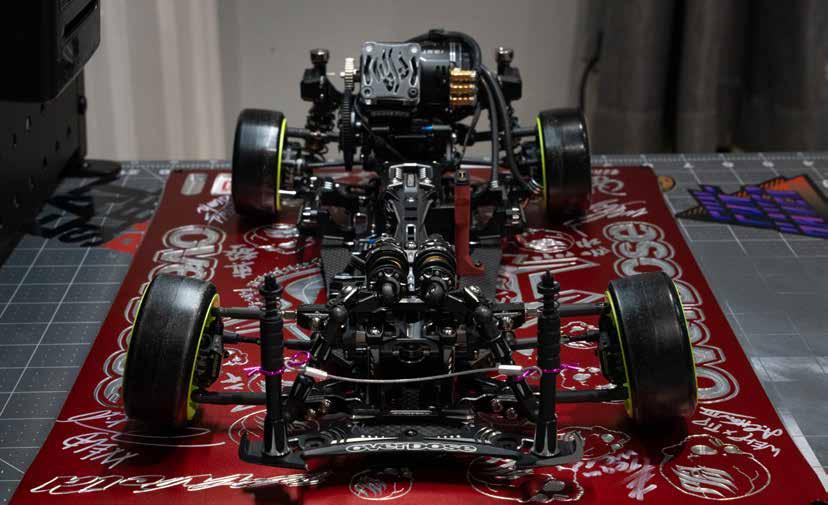
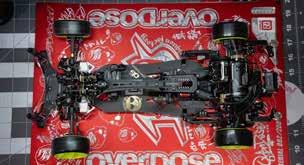
This build is based on a full option Overdose GALM, originally released around 2017. It’s not rare, but absolutely respected. With the GALM, the “special” part that gets released isn’t just a limited run or color, it’s how each driver makes it their own.
The main modifications, subtle but purposeful, are custom mounting holes to run an Overdose TC deck configuration on an Overdose Transrange deck. The goal is to have a more rigid deck while still taking advantage of the newer TC-style layout. The work was done by Bingo Racing Design, keeping it clean, functional, and true to the GALM’s catalogsupported spirit.
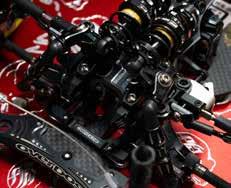
Suspension is built around proven parts: HG4 dampers with Overdose helper springs (front 1.2 2045, rear 1.2 2050). Fluids are tuned for response and stability, running 15wt Moty x OD oil up front and 25wt in the rear. Drivetrain uses an Overdose ball diff, giving a smooth, tunable feel that matches the chassis’ high-end character.
Electronics are a high-level mix of Acuvance, Futaba, and Reve D, chosen
for performance and simplicity. The ESC is an Acuvance XarvisXX and Agile motor combo in all 3 turns, 10.5, 11.5, and 13.5, to change depending on the track. Support comes from Acuvance Blaze and Acutron capacitors, with a Futaba 10PX radio, all tuned with Acuvance Tao II and SBUS tools. Steering and stability are handled by Reve D’s RS-ST PRO servo and Revox gyro. My choices here are personal, as I’ve been part of the Acuvance team for quite some time and believe in the product and user interface at a high level. I stick with Reve D because the simplicity and quality of the servo and gyro are truly unmatched.
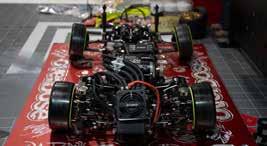
Alignment is aggressive up front with 11.5° camber and 1° toe and Ackermann set so it’s not crossing. Rear alignment stays straightforward with 0° toe and 3° camber. Final drive ratio is treated as a tuning tool, typically staying around 8 - 9, sometimes dropping to 6 - 7, depending on how big and fast the layout is.
As tested, the chassis is “free if my wife asks”, but realistically around $3,200, and with electronics the full value is estimated around $4,000. On track, it drives ‘like a dream’, aggressive and fast, but always a work in progress.
David Do - Yokomo Rookie Drift RD 2.0
The build started as a Yokomo Rookie Drift RD 2.0, which isn’t particularly rare. I’d estimate it was produced in 2024. This is a ‘zero brand loyalty’ build, and I’ve mixed parts based on what I like and what works. For the chassis, I’m running a Team AD chassis plate conversion.
Up front, I’m using a Team AD front bulkhead with inboard front suspension. I retrofitted it with a Yokomo RD 2.0 aluminum steering wiper because I preferred the feel of that steering system over the Team AD steering system. I’m also running Reve D upper and lower control arms, plus G-Buster front knuckles set to the high kingpin adjustment. In the rear, I’m running Yokomo RD 2.0 aluminum rear lower arms and Yokomo aluminum rear hub carriers.
I kept the plastic RD 2.0 transmission because it’s sealed, so debris doesn’t get into my idler gears. The Team AD chassis conversion lets me add rigidity by using standoffs to brace between the top and lower decks. The Team AD front bulkhead and inboard front suspension let me change preload without changing ride height. Switching to the RD 2.0 steering wiper setup also allowed me to move the servo into a horizontal position, which made it possible to add the standoffs. I’m running Yokomo Big Bore shocks with 250 cSt oil in the rear and 50 cSt up front. I run a gear diff with 6000 cSt oil.
For electronics, I’m running a Hobbywing XR10 G3X ESC with an Acuvance Blaze capacitor, with a Yokomo DX2 13.5 motor. I chose the XR10 G3X because it has a 1200A peak amp draw rating, so I never feel like the power isn’t there when I need it. For the gyro and servo, I’m running a Reve D Revox combo because it’s easy to tune.
Up front, I run a little over 2° of toe out, -8° of camber, and Ackermann that’s relatively open compared to others I’ve seen. In the rear, I run 3° of toe in and -3° of camber. My final drive ratio (FDR) is around 7.
As a rolling chassis, it’s probably about $800. With electronics, I’d estimate it’s around $1,500 total. The steering feels very direct, and the car likes to pick up grip where I need it. Overall, it’s very easy to drive.
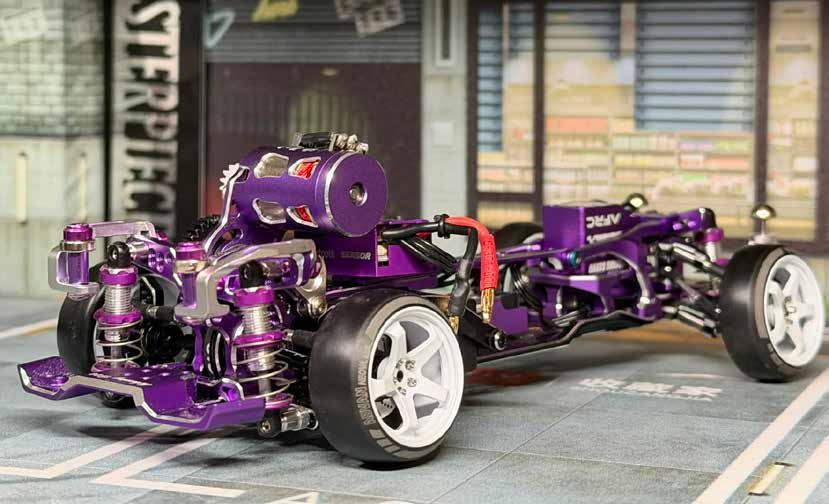
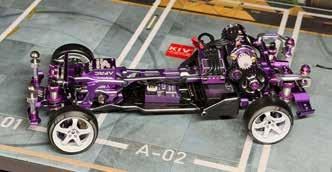
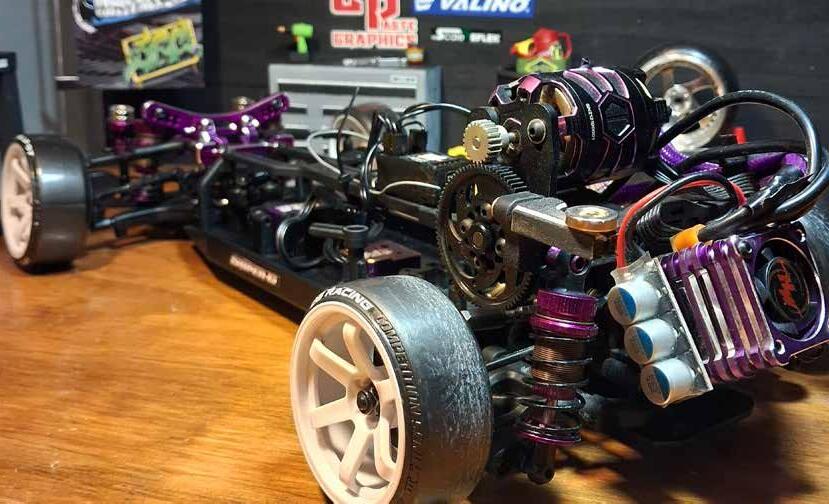
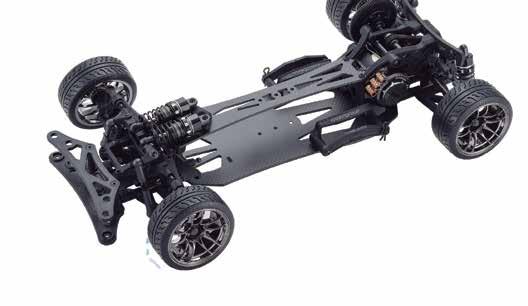
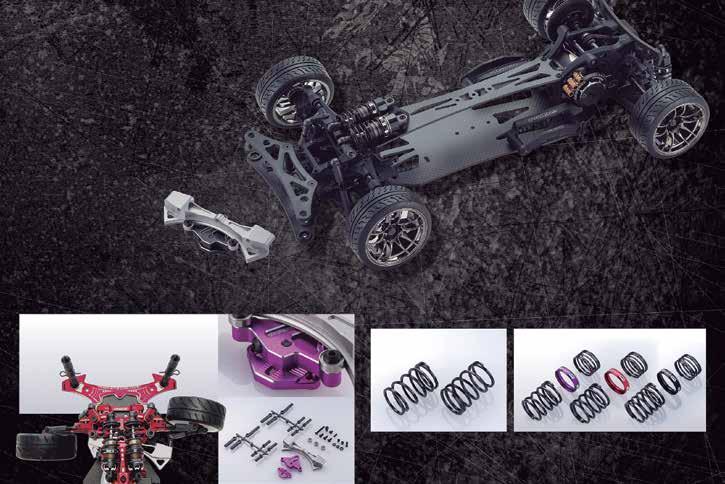
This build starts with a MA Racing D24 Limited Purple Edition microscale RC drift chassis that’s both a serious performer and legitimately hard to find; only 140 purple editions were made, with production estimated around 2024. Even before upgrades, the D24 platform is known for feeling surprisingly “big scale” in how it responds, and this particular setup leans into that.
The biggest mechanical change is a belt-drive delete, converting the drivetrain by using an extra spur gear from the MA Racing 1.3 and an idler gear from the MA Racing DLR8. The result is a cleaner, more direct drive feel, paired with a solid diff for consistent rear-end behavior and predictable rotation.
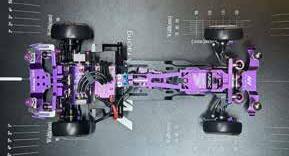
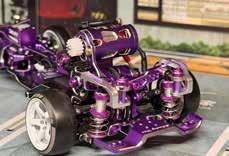
Suspension stays stock with MA Racing dampers, and that’s not a compromise. These shocks are widely considered some of the best in micro scale. The Teflon-lined shock bodies keep everything smooth, which matters as tiny changes in friction can completely change how a small chassis transitions.
Electronics are built around the latest AFRC components, a programmable servo, plus an ESC with Bluetooth tuning for quick adjustments. In micro drift, space is everything, so the setup uses the GT55 gyro/RX combo, saving room while still delivering control that’s good enough for ‘big scale’ standards.
Alignment is tuned aggressively up front for steering and angle, with -6° camber, 2° toe out, 3° caster, and Ackermann close to parallel. The back is kept clean and stable with -1° camber and 0° toe.
Retail price for the chassis as tested is around $399, and with electronics the full build is estimated at roughly $750. On track, the payoff is in the feel, this D24 can be dialed to drive like the big cars, and in its current form it’s described as feeling much like a Yokomo SD-2, a clear sign of how fast micro drift chassis are evolving.
Twitch emailed DARC Mag about his chassis. After reading what he had to say, we couldn’t say no.
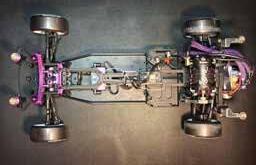
“My Yokomo RD 2.0 chassis is more of a budget chassis build. Not sure if it is magazine-worthy but it’s worth a shot right? I absolutely love the magazine; I can’t get enough of it. My wife and I built a pretty sweet track in the basement so we can maximize our seat time. I just love everything about the RC side of drifting. I’m nowhere near any of these guys in the magazine, but the magazine inspires and pushes me to get better. So thanks for all you guys do for the hobby, I genuinely appreciate it!”
It’s cool to hear that someone holds the featured drivers in such high regard. This chassis is also an important one because it’s practical and has all the top recommended tried-and-tested electronics and he’s focusing on seat time. Here’s how he got started the right way.
The base chassis for this build is a Yokomo RD 2.0, chosen because of the impact they’ve had on RC drifting, and the history behind the brand. I believe it was released in 2023.
I’ve updated the front bulkhead, shock tower, and curved sliderack upper arm mount. Next up will be upper and lower arms, a bell crank set, and a carbon chassis. I’m running Yokomo Big Bore shocks with Yokomo standard shock springs, Yokomo shock oil, 100wt in the rear and 200wt up front. The diff is a stock gear differential.
My electronics setup is a Hobbywing XD10 Pro Drift Spec brushless ESC with a Hobbywing D10 Drift Spec 13.5T brushless motor. I chose that combo because it’s linear and reliable. I’m running a Yokomo DP-302 V4 gyro and Yokomo SP-02D servo.
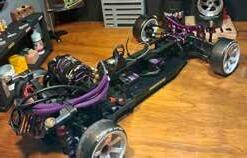
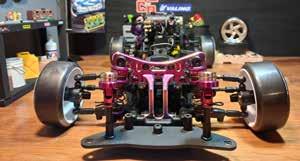
I run -7° camber up front, toe is eyeballed, and Ackermann is slightly positive to help with initiation. In the rear, I’m at -4° camber with a slight toe-in, roughly 1.9° (stock). My FDR is 9.45.
You can grab a Yokomo RD 2.0 kit from Super-G for $210. With electronics, the estimated value of my RD 2.0 is roughly $900–$1000. It’s a ton of fun to drive and I can put the car wherever I want on the track. It flicks awesome, is very stable, and holds angle really well. I love driving this thing.
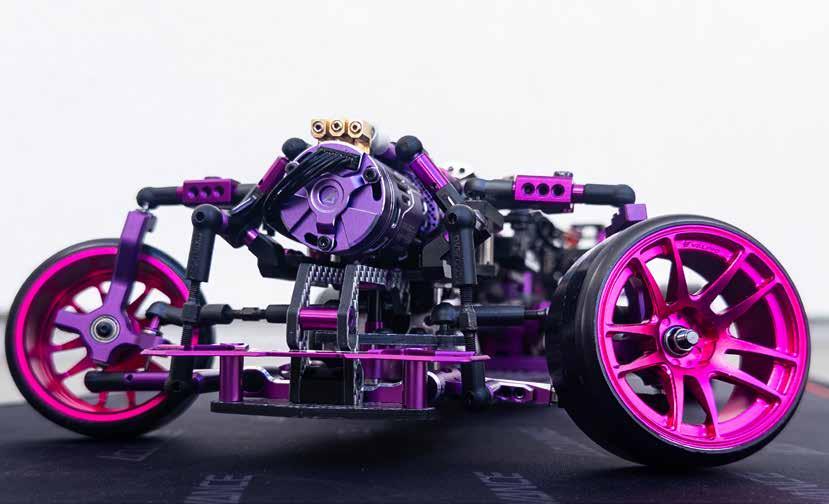
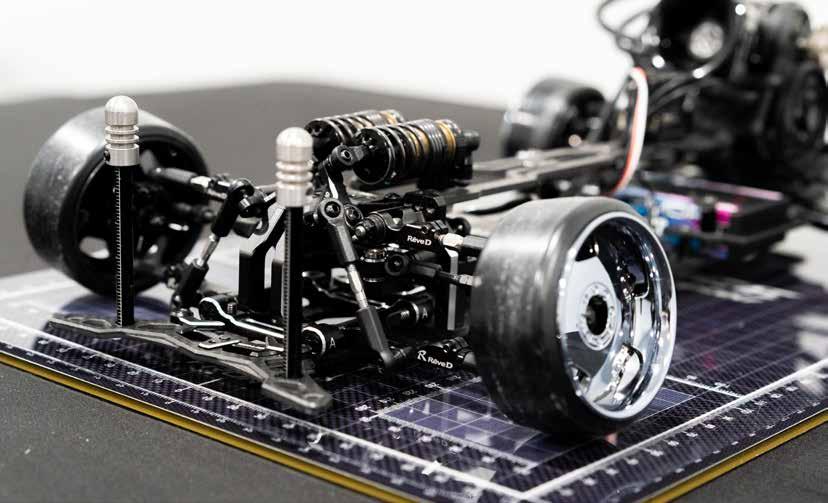
The Hydra FR-D is a one-off chassis born from a deep appreciation of drift platforms across different eras - blended into a single, modern execution. Its foundation draws from the Wrap-Up Next FR-D V3/ V5 and the Scale Reflex Hydra Deck. By incorporating components from the original FR-D conversions and reworking the overall layout, this build merges those ideas into an entirely new form.
The drivetrain concept is rooted in WrapUp Next’s front-motor conversion for the Yokomo Drift Package. That philosophy was carried over and reimagined inside a fully custom carbon deck system. The deck uses the Hydra’s form factor as a starting point, but it’s been heavily modified to let older legacy parts and modern components coexist.
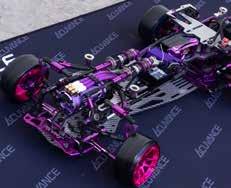
was integrated around the motor using Yokomo BD12 mounts and AD rockers up front, with an AD free roll mount at the rear. A second upper deck supports the IFS and D-Like Tri upper arms, enabling taller knuckles while keeping a low profile under the body. Both assemblies rely on carbon rigidity, minimizing extra mounts and freeing critical space.
Rear suspension centers on the D-Like Multi-link from the Re-R chassis. It’s snappy yet smooth, fun outdoors, and confident on tile. Behind it sits the Overdose Divall gear case conversion, with quick-change ratio options.
While the completed chassis was produced in 2025, much of the hardware spans designs from the last decade, giving it a blend of old-school and modern. The real work was making it all function as one cohesive machine - starting with the front end.
The FR-D V5 introduced a floating motor mount that allowed slide rack steering beneath the motor, but this build instead uses a singlewiper system inspired by the Team AD XF for a more controlled, predictable feel. Once steering placement was locked in, everything else was built around it. An IFS shock system
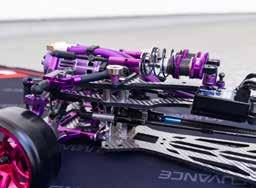
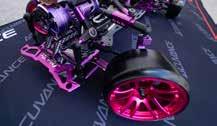
Damping is TRF-based with RCArt 28mm shafts/cylinders, Topline internals, and an RC926 dress-up kit. Power runs through an Overdose 42/14 Divall ball diff.
Electronics are full Acuvance/ Futaba - Acuvance 10.5T Merv-Era (level-30 rotor), Xarvis ESC, Futaba CT700 servo, R334SBS-E receiver, and Acuvance SBUS. Setup: -8° front camber, -1 to -2° rear, active rear toe 0 to -2°, estimated FDR 10 - 11.
After years of collecting and countless hours designing, the Hydra FR-D is effectively priceless and on track and drives even better than I ever imagined.



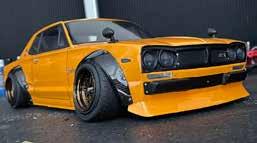
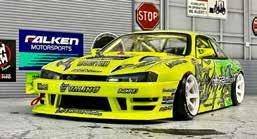
“I prefer airbrushing over spray cans because it allows full freedom in color choice, including mixing custom one-off colors that make builds more unique. Mission Models paints are among the best water-based acrylics for airbrushing, offering a wide color selection, easy use, and unmatched consistency and quality.”
-Josh Geeg, Scale Artist
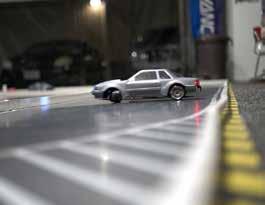

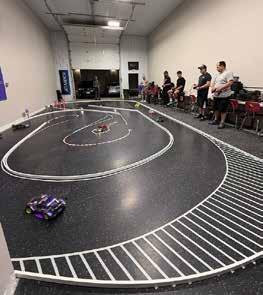




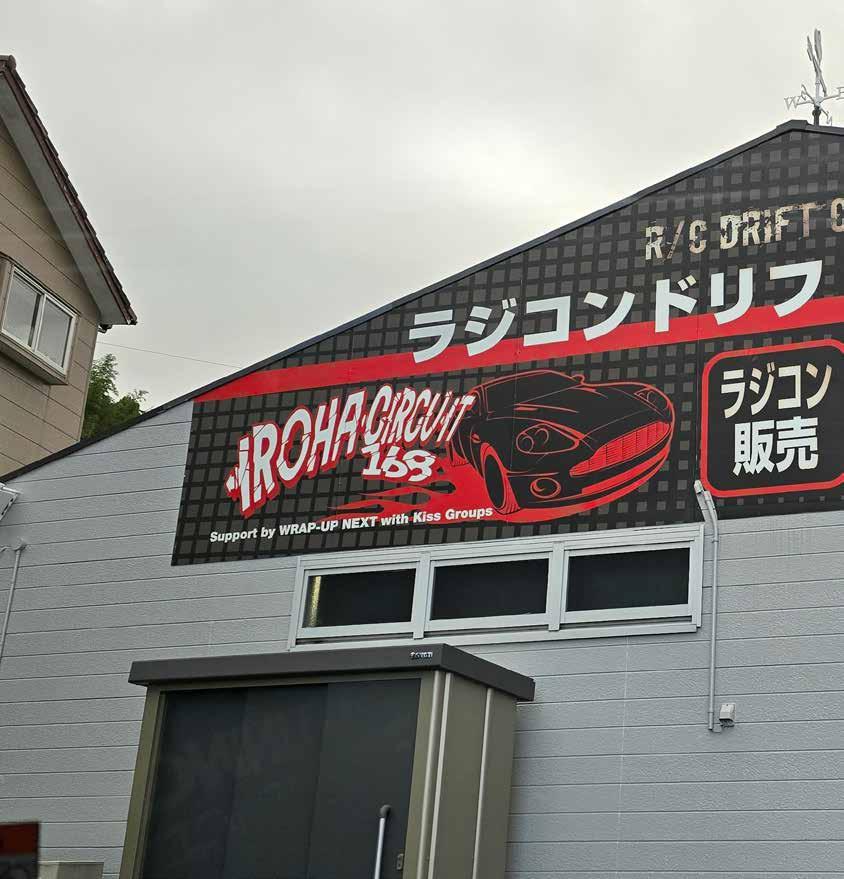
Matt Youkhana got into RC way back when Toys R Us had cars sitting behind glass cases. Tyco RC and Nikko (the Radio Shack staple) were the go-tos, at around $130 each at the time (roughly $290 today), and about as fast and available as it got. His first “drift” chassis came in 2013, and he’s the first to downplay it, “Nothing special. I believe it was just an MT4 chassis with an aluminum driveshaft and hard plastic tires with metal rings around them.”
A year later, Matt picked up what he calls the world’s first counter-steer chassis: the Street Jam OTA-R31. “I still own this one and use it all these years later. Nobody ever knows what it is until they take a closer look at it because it has gone through major changes. People assume it’s a YD2 of sorts.”
His 2026 lineup reflects years of collecting and experimenting: a Street Jam OTA-R31 weight-shift dual servo, an OTA-R31 rear motor conversion, an R31 House GRK Global (original 4WD) converted to RWD, a Yokomo DIB dual servo, a Tamiya CC01 RWD, TT01 RWD, TT02 RWD, and a custom “demon-roll” Yokomo YD2S.
For Matt, the draw of Japan isn’t just the tracks, it’s what the scene
represents. “It’s hard to explain exactly when people ask. Everything else aside, it’s nice to know where the future of RC drifting in particular is heading. Japan tends to be #1 in trends. The Western world is always two to three years behind, which is a good enough reason. Networking is a powerful tool and can easily help you learn.”
He doesn’t make it out there every year, but tries to go as often as life allows. “I usually prepare a few months in advance, building on my basic vocabulary and learning a few more phrases that help me get around.”
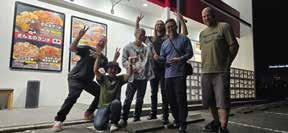
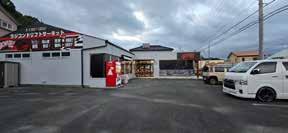
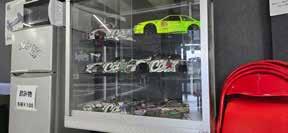
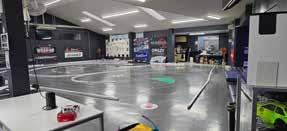
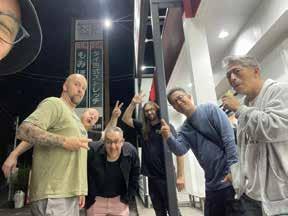
Rather than locking in a rigid plan, he keeps the trip flexible. “Maybe it’s a guy thing, but pretty much if I come across somewhere cool, I’m going there. I find social media pages, let the track know I’m visiting, and hope for a reply. Usually everyone is friendly and accommodating; typically they get a bunch of locals to visit as well.”
One of the biggest differences he notices between Japan and the US comes down to travel and how it shapes track culture. “Since it’s fairly difficult and inconvenient to drive around rural Japan (tolls are very expensive), the locals stay local, especially on weekdays. Unless it’s a major event, they just stay in their prefecture (state). That way, they support their local track.”
Matt ties the main differences to access, both to trends and to parts. “RC drifting is more popular in Japan than in America,” he says. “I think one of the key reasons is the easy access to new trends that keep it more interesting, as well as an unfathomable selection of parts at almost any hobby shop, including small ‘mom-and-pop’ establishments.”
Matt’s lasting impressions come from the everyday locals and the track owners. “It’s hard to explain the vibe,” Matt says. “If you’re going there for your first time, put yourself out there. Don’t keep to yourself. Most RC drift tracks are like social clubs, as it’s the only time people get to let loose after work. For the best experience, learn a few basic words and greetings, and practice them. That typically breaks the ice, then you can bust out your phone and translate back and forth. The only place the phone is not necessary is RC-TOGO, as Ario-san speaks perfect English.”
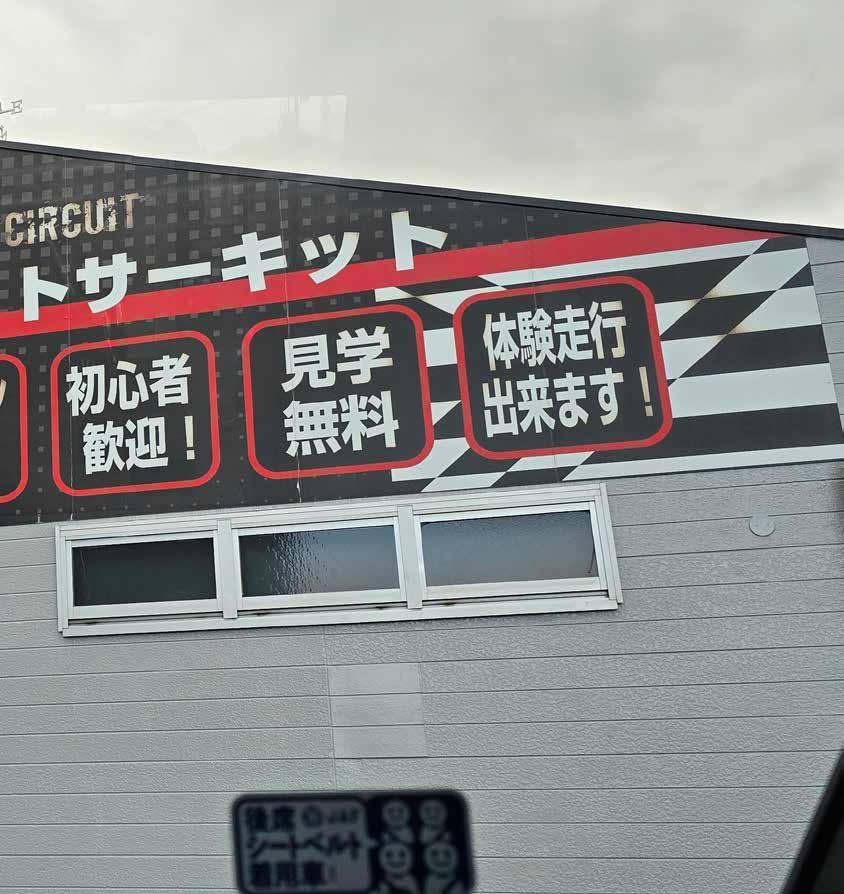

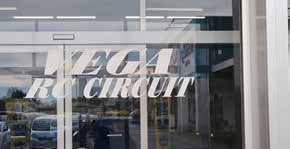

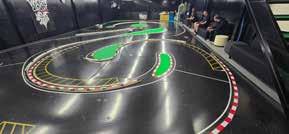
The first and last stop for many travelers is Win’s Circuit, less than 20 minutes away from Narita Airport, and the track is open 24 hours for members. “Our go-tos for the first few days are Win’s Circuit (Narita), OAHU, RC-TOGO, and RCC. Masumi Matsushita, aka RCC Mama, is one of the nicest human beings you will ever meet. She always makes us feel welcome. Ario-san from RC-TOGO is considered a good friend now. The vibe at RC-TOGO is on another level and they are probably

the people we like to hang out with the most. Ario-san has a dry sense of humor, as well as the people that attend the track, which matches mine. He keeps it well maintained, while trying to keep up with the latest ‘parts’ trends, and they have the most Tamiya chassis I have seen at any Japanese track, which is pretty cool.”
Matt’s piece of advice for anyone planning a scheduled tour, especially with a group, is to keep the numbers small. “It would be cool to organize a large group of people to travel Japan with, but it’s difficult to achieve whatever goals you plan for yourself. Everybody wants to go somewhere different and do different things. You can plan an itinerary, but that all goes out the window when you arrive as you’re overwhelmed by the sights and you lose track of time because you want to explore. It would also be difficult for a large group to visit the tracks as most of them are in much older buildings. There isn’t always enough room to accommodate that many people at once. A lot of these buildings are in shambles, with walls and floors falling out. No joke - some floors were so bad they laid down pallets to walk across.”
While the ‘Tour of Japan’ crew changes every time, the most recent trip included Ryan Hellrung, Christopher Gross, and Eric Schlembach. “Besides drifting, if you enjoy anything Japanese, just go before it’s too late. The food, night-life, and culture is amazing.”
Follow Matt on IG: @taco_stamp

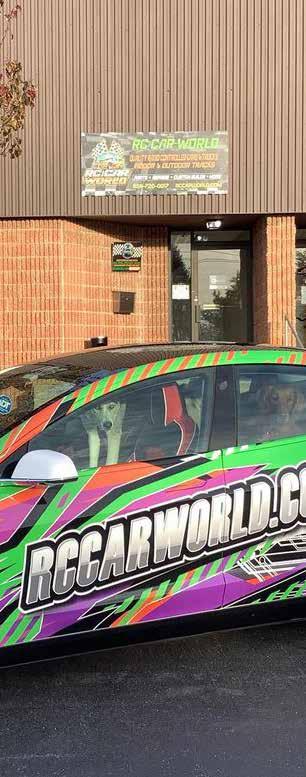
RC Car World (RCCW) isn’t just a retail shop; it’s been a pivotal force in the global RC drift community for over a decade. Since 2013, owners Mike and Gia Sienczenko have cultivated a thriving hub, evolving from a humble carpet track to epoxy, and now state-of-the-art P-tile, continuously pushing the boundaries of the sport. What began as a small local spot has blossomed into one of North America’s premier RC drift tracks, even hosting legends like Tetsujin’s Atsushi Mizunaga in its early days.
A pivotal moment arrived in 2019 when five drivers who weren’t well-known—including Berto Cosse, Rob Fischetti, and Alex Jordan—representing RCCW and Team Endless, descended upon the US RC Drift Championships in Houston. Against a field of top talent from across the nation, Berto Cosse emerged victorious, claiming the coveted title of US RC Drift Champion. This monumental win wasn’t just a personal triumph; it firmly cemented RCCW’s reputation on the map, drawing drivers from coast to coast eager to experience our signature aggressive drifting style and the vibrant personalities that define our community.
The momentum continued as Alex Jordan took the helm as track curator and coach, a role in which he continues to elevate drivers and sculpt the Northeast drift scene. RCCW has served as a crucial proving ground for many prominent and sponsored drivers, who honed their skills here before making their mark nationwide. This commitment to progression led to the founding of the Scale Drift Series (SDS) at RCCW, a competition designed to mirror the authenticity and intensity of 1:1 drifting more closely than any other major event worldwide.
Today, RCCW is a magnet for top talent, regularly drawing drivers from across twelve states—NJ, NY, CT, NH, DE, MA, PA, RI, MD, ME, VA, WV—and even Quebec during intense SDS rounds. Our track becomes the ultimate monthly proving ground where the Northeast’s best vie for supremacy. Our drivers, like SDS and North American Championship (US/CA) winner Anthony Torres, are not only dominant on our home turf but also seasoned competitors on the broader international stage, frequently traveling to compete at other prestigious events, including the annual North American Championship in Quebec.
Beyond the fierce competition, RCCW offers a truly unique experience. Saturdays and major events pulsate with an energy akin to a Grid Life festival, creating an unforgettable atmosphere. Expect genuine Jersey hospitality: no drama, just a welcoming vibe filled with lighthearted banter and friendly trash talk. Spontaneous challenges and call-outs are a regular occurrence. Do you believe you have what it takes to be the best? Come test your skills, soak in the unparalleled vibes, and become part of the RCCW legacy!

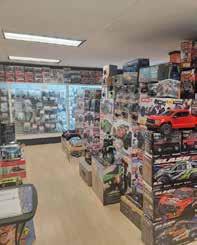
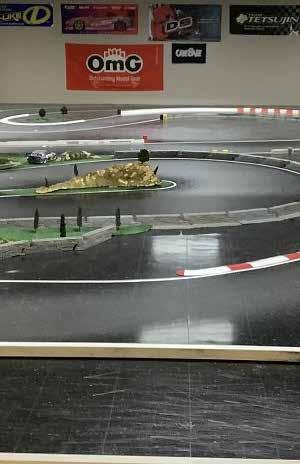
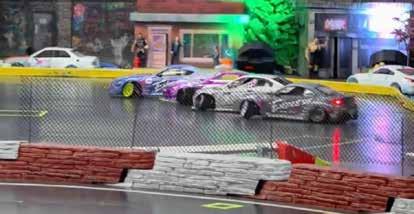
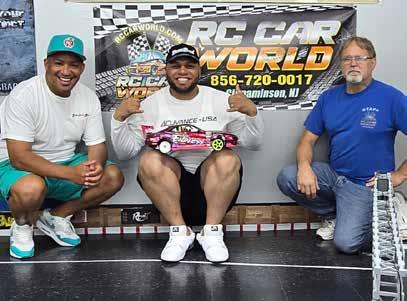
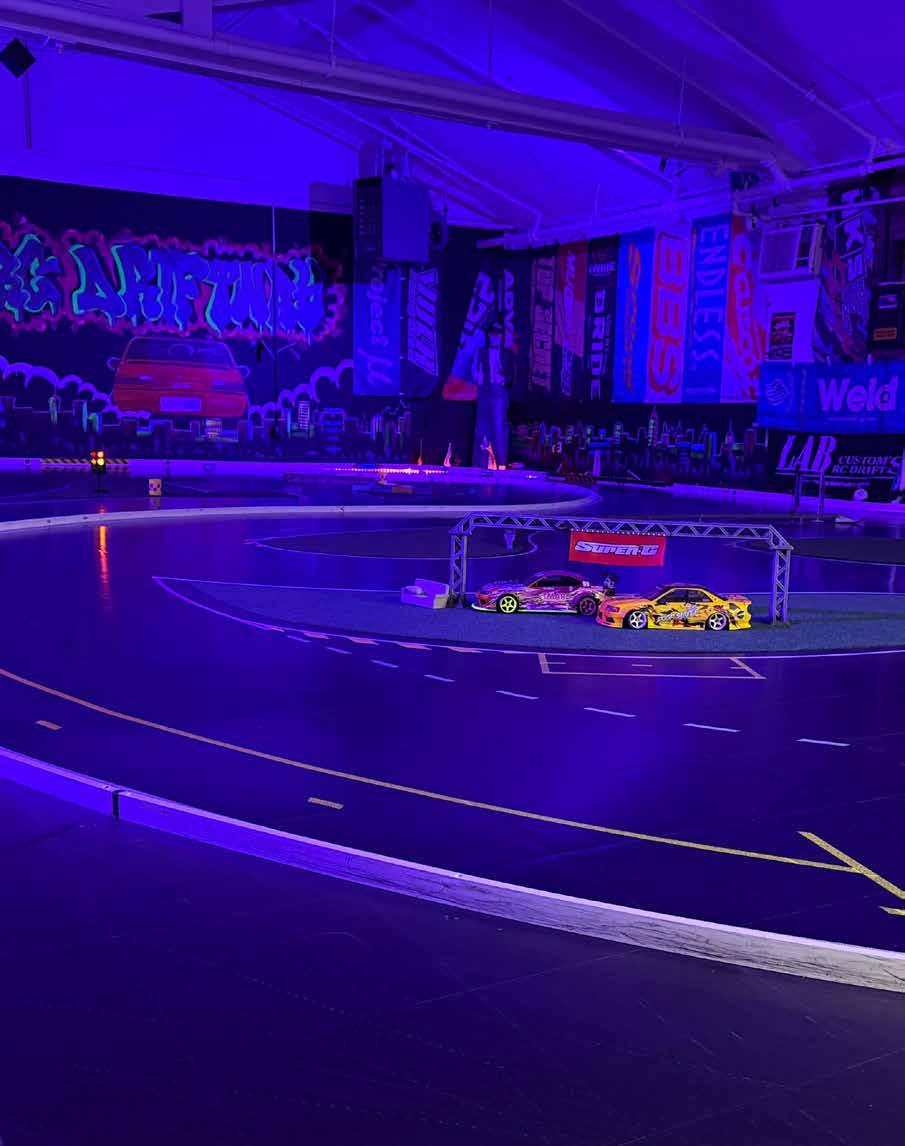
Now home to the largest J-Tile RC drift track in New England, RC DRIFTWAY delivers a consistent, dialed surface built for serious drivers, and welcoming for newcomers.
With exclusive access to premium products imported directly from Japan, RC DRIFTWAY connects drivers to authentic drift culture, plus the latest chassis, parts, and tuning trends.


Founded just three years ago, RC DRIFTWAY started as a true grassroots effort, inside a construction bay, fueled by passion, hard work, and a deep love for RC drifting.

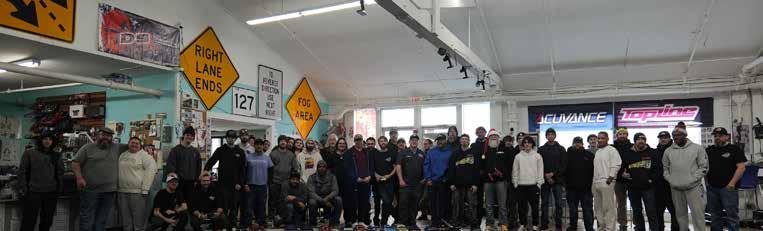
Welcoming atmosphere, spacious pit areas, strong grassroots spirit, and a place where every skill level can learn, compete, and drive sideways together.
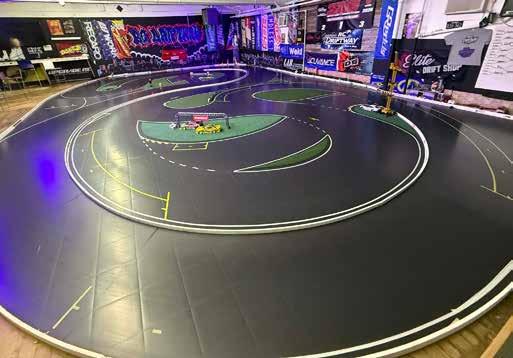
As an official SDC Regional Track, we host competitive events and laid-back sessions, keeping the scene active and the community growing.
BY KEN KENNEDY - PHOTOS BY DREW BARRON
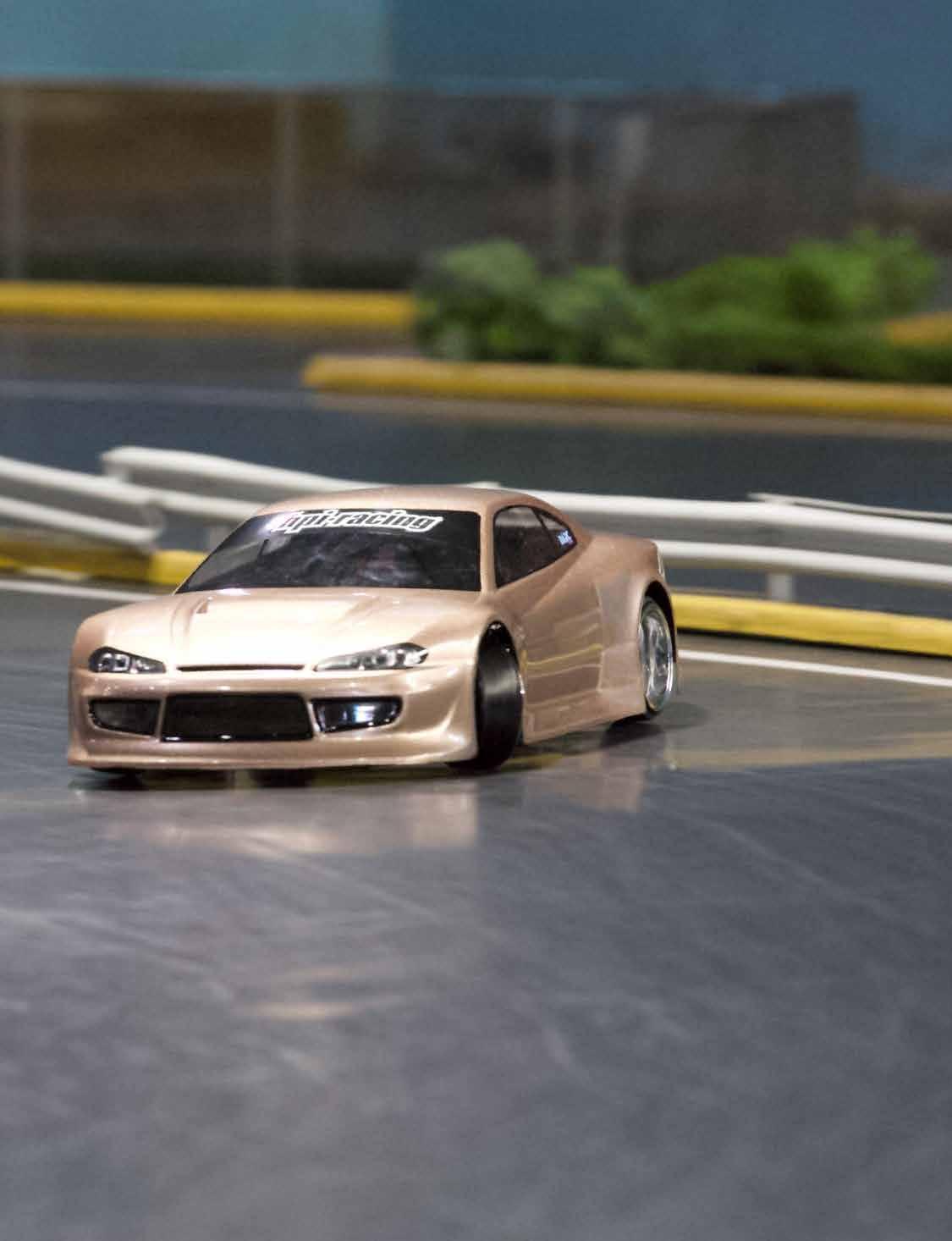
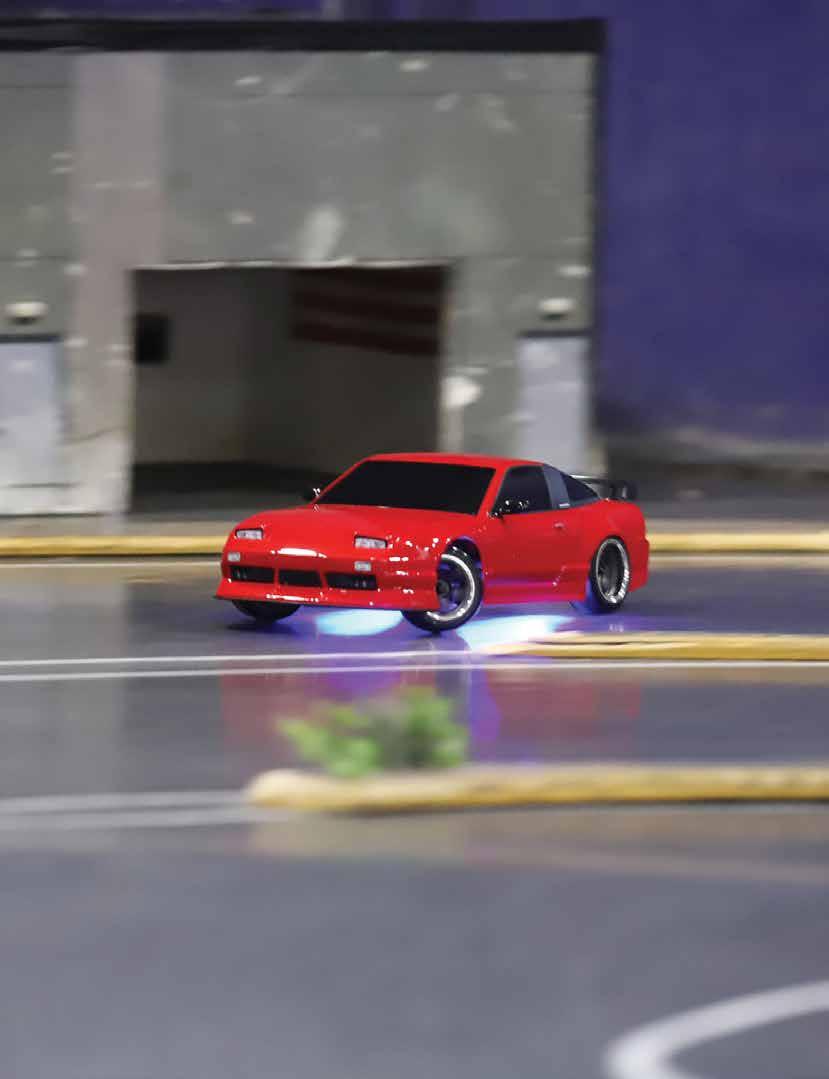
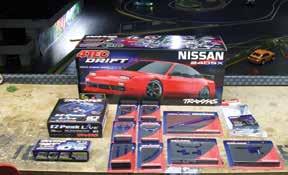
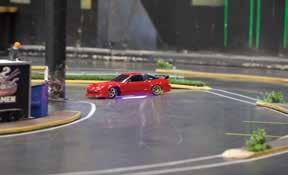
Our Initial Thoughts when taking the Traxxas 4-Tec drift car out of the box were that it’s an interesting mix of what we’ve grown to love from Traxxas and drift culture styling. The new 240SX S-chassis body looks great and fits the drift vibe perfectly.

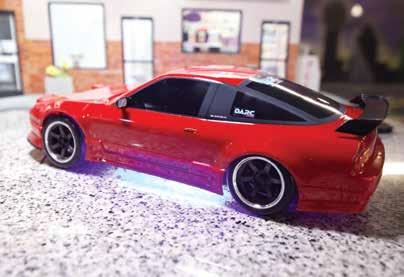
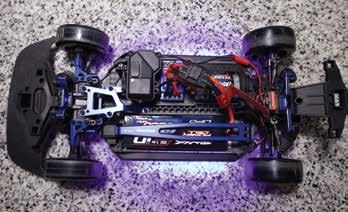
When outside on rough concrete with the stock tires, the car drove well. It was stable and felt like it was designed to be driven on rougher, less consistent surfaces. On our P-tile track, the stock tires were a limiting factor. They didn’t want to grip up and the car wouldn’t hold angle. We opted for our track spec DS Racing LF3 tires and the car improved straight away. The tire change made the tuning more noticeable and gave us a better baseline to judge the steering geometry and electronics.
The ‘throttle reflex’ reduces the throttle when the car starts to go sideways. Based on our experience with Traxxas drift cars that come through the track (and we’ve seen quite a few), we typically turn off the ‘throttle reflex’. It feels like the car is ‘helping’ in a way that actually interrupts proper drift throttle control.
During the review, we had an in depth conversation about why the ‘throttle reflex’ can interfere with the way experienced drift drivers expect a car to respond. To understand why this doesn’t work with how we drive, one needs to understand how we initiate a drift. To initiate, we break traction, usually by a quick brake tap (E-brake), a weight shift (a fishtail), or a sudden throttle pulse (raw torque). In competition, most drivers initiate into the zone using a quick throttle pulse to match the zone’s designated angle, then back down to a low, steady, and controlled throttle rate to hold that angle throughout the zone. If the gyro is reducing throttle as you approach the zone, you can’t initiate the drift in that way, and you don’t have enough throttle to set and hold angle once you’re in it. That’s why we need to turn off gyro-responsive throttle control. You can learn to drift with it on, but it builds bad habits.
When we turned off the gyro’s throttle response, the car felt more like what we’d expect from a drift platform on the track, allowing us to throw snappy backies and get back on throttle after a 180° turn.
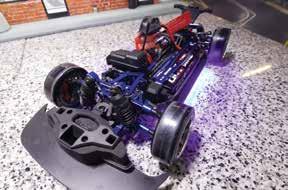
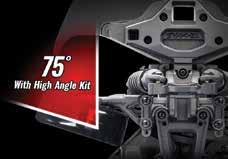
Between the updated steering components and the new angle kit, the car gets serious steering angle, about 85° on the lead wheel, and the Ackermann looks good. This matters because it’s not just about ‘more angle’; Ackermann is the difference between the lead vs trailing wheel angles and the positive amount gives an easier driving experience. The updated knuckles and steering wiper set gave the car a longer steering throw than the older stock configurations, which didn’t feel like they hit full lock properly. This was a big improvement.
That said, we noticed a bit of slop in the front steering. It wasn’t coming from the aluminum steering rack, but rather the servo and servo horn. The aluminum steering upgrades will become more effective when the servo and horn match the precision of the rest of the system, as less slop allows you to increase the gyro gain without creating ‘gyro wobble’ in mid-drift.
The car would benefit from wider shock towers, more shock mounting position options, and oil-filled dampers. The suspension needs more adjustability to really dial in the weight transfer and stability for track use.

Some minor damper tuning changes that we found to be the most impactful were:
• Moving the shocks to the outermost position on the shock towers
• Reducing pre-load in the rear dampers slightly (lowering the rear)
• Increasing pre-load in the front dampers slightly (raising the front)
The rear toe was preset to its max at 2° toe-in, but it can be adjusted to less. Rear toe-in would give more throttle response during the drift. There’s also an option to move the front upper arms back to add caster (it’s effectively at zero caster in the current position), and that’s something we plan to keep experimenting with.
Ken sees this chassis as a gateway drug. It’s going to get people hooked, especially outdoors, where it feels like it’s designed to work best. With the aluminum steering wiper setup and new angle kit delivering real angle, it becomes far more tunable and interesting to serious drift drivers. For the track, we recommend the gyrothrottle interference is turned off, servo/gyro quality is improved (as with ALL ready-to-run kits), damper tuning or upgrades, and testing-and-tuning of other steering geometry options. We are happy to report that the tuning potential is there for the Traxxas 4-Tec to be a track-ready drift car.

DRIFT ILLUSTRATED Magazine is the only dedicated print drifting magazine in the United States, created to document and celebrate drifting as a culture from grassroots drivers and builders to events, lifestyle, and the people pushing the scene forward. By blending authentic storytelling with high-quality print, Drift Illustrated brings drifting back to something tangible and collectible. Drift Illustrated has asked DARC MAG to publish a regular article for their issues, this is what we published in the current issue.
RC drifting began gaining traction in the United States around 2012. At that time, RC drift cars were all-wheel drive and known as “countersteer” (CS) chassis. These cars relied on a “CS ratio” that determined how much faster the rear wheels spun compared to the front wheels. For example, a 2.0 CS ratio means the rear wheels rotate twice for every single rotation of the front wheels. This constant slip allowed the cars to drift more easily, but the motion was closer to that of a hovercraft.
Around 2014, RC drifters wanted more realism and began transitioning to rearwheel-drive (RWD). While gyros were commonly used in CS setups, they weren’t necessary. They are with RWD though, because our reaction time is not quick enough to catch the car before it spins out. The gyro does more than just that though; it mimics real vehicle behavior by automatically steering in the direction of the skid, significantly increasing realism and control.
RWD RC drift cars also introduced a completely different front-end geometry, allowing for steering angles approaching 85°, similar to full-scale drift angle kits. When combined with ultra-soft suspension, smooth and precise steering servos, refined throttle control, and community organization through social media, the RWD RC drift movement began in America.
WHERE RC DRIFT IS NOW - RC drifting has become an international competitive sport, but it’s much more than competition. At its core, the RC drift community is a brotherhood of analytical thinking, car-obsessed enthusiasts who gather to showcase custom builds, share tuning knowledge, and learn how to drive together in synchronized tandem trains. While the competitive scene continues to expand, many drivers are equally interested in chill sessions, hanging out, meeting new people, and dialing in their chassis to match their personal driving style.
Body manufacturers are releasing increasingly sophisticated body kit designs licensed by brands including Origin Labo, Liberty Walk, Pandem, and BN Sports. Wheel options continue to expand as well, with realistic replicas of Hayashi Street, Watanabe, Worx Equip, TE37, Gram Light, and SSR wheels. Scale detailing has also reached new heights, thanks to companies like SRC and Addiction. RC drifting has become a deep, ever-expanding rabbit hole, and more people are getting involved every day. RC drift chassis have been produced worldwide by countless manufacturers. American manufacturers did not initially recognize RC drifting’s potential, but that’s changing. Drifting is now recognized as the fastest growing form of RC and companies are producing better and more advanced products.
- America has several seasoned and talented competitive RC drifters. Jake Dotter is a notable driver with a genuine sportsmanlike demeanor whose home track is Drift PDX in Portland, Oregon, USA. At last year’s premier American RC drift event, the SDC Worlds in Baldwin Park, California, Jake fought his way through the lower brackets to the one open slot in the top 32. Having achieved this goal with laser focus, he then learned his first battle would be with an RCDC World Champion, Japanese driver Hayoto Yoshiba. Jake just smiled, as he already knew of Hayato’s aggressive style and saw the battle as a dream opportunity. Watching his opponent go on to win the SDC Worlds 2025 made the experience even more meaningful. With a different first battle of the top 32, Jake would have likely advanced much further. For the 2026 season, he joins Team Reve D, representing the Pacific Northwest. Keep an eye on him this year!
Justin Wilming was deemed the ‘Top American Driver’ of the competition, based on being the highest qualifier in the top eight, as none of the American drivers made it to the top four. Other notable competitive RC drift drivers in the United States worth following are Mikko Yang of California, Junior Barba of Texas, Logan Mineer of Oregon, and Anthony Torres of New Jersey, all of whom have been featured in “The Interview” and the “Chassis Showcase” articles of DARC Mag.
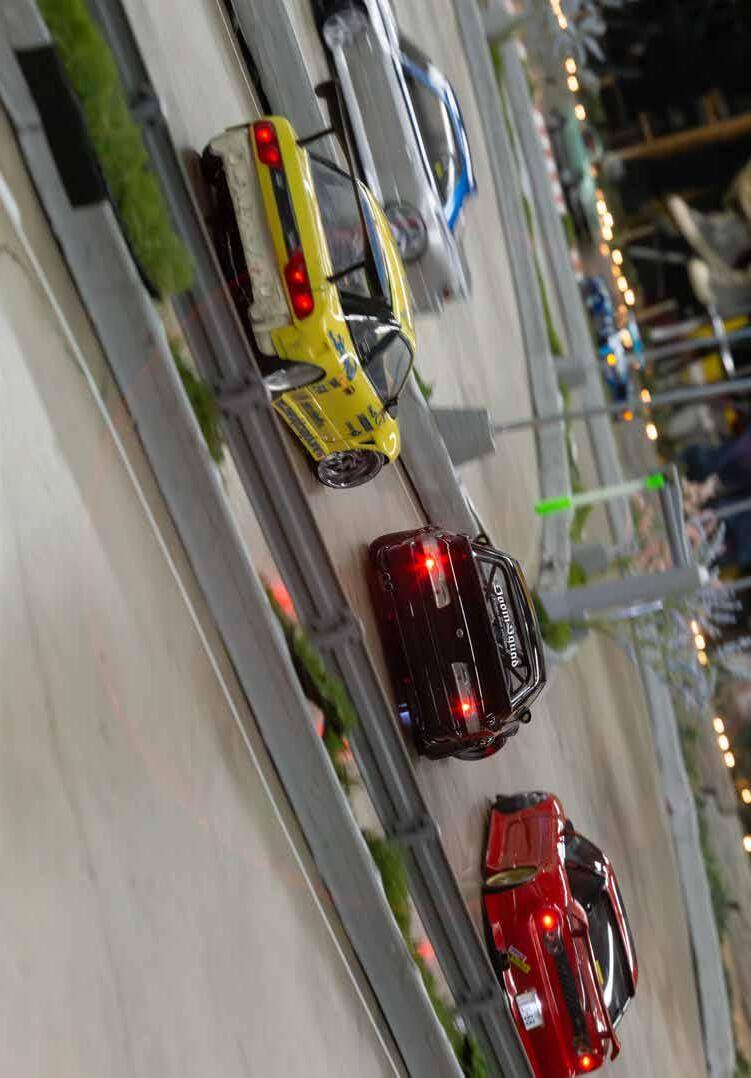
TALENTED SCALE ARTISTS - Matt Bartell is a master of scale builds. Based in the Upper Midwest, Matt emphasizes the ‘Street Style’ side of the RC Drift World, creating drift bodies much like you would see at Final Bout. His home track is Jake’s Mischief Factory in Milwaukee, Wisconsin, where Jake Schaffer has created immersive scale city scenes. Their driving style is slow, smooth, and fun, like teenagers drifting the city streets late at night. The vibe is relaxed, social, and visually immersive, with everyone sliding in sync.
Josh Geeg is a master scale artist of cars that are more functional for RC drift competitions, as he is a competitor himself. Based in Los Angeles, California, with Super G as his home track, he has reimagined famous liveries such as Falken Tires, Drift Games, and the BAPE Livery. He includes exceptional detail such as straight pipes, roll cages, and full engine bays, while keeping the functionality of a competition-ready RC drift car. Other talented scale artists of note include Matt Youkhana, Mike Peezee and Joe Ferguson.
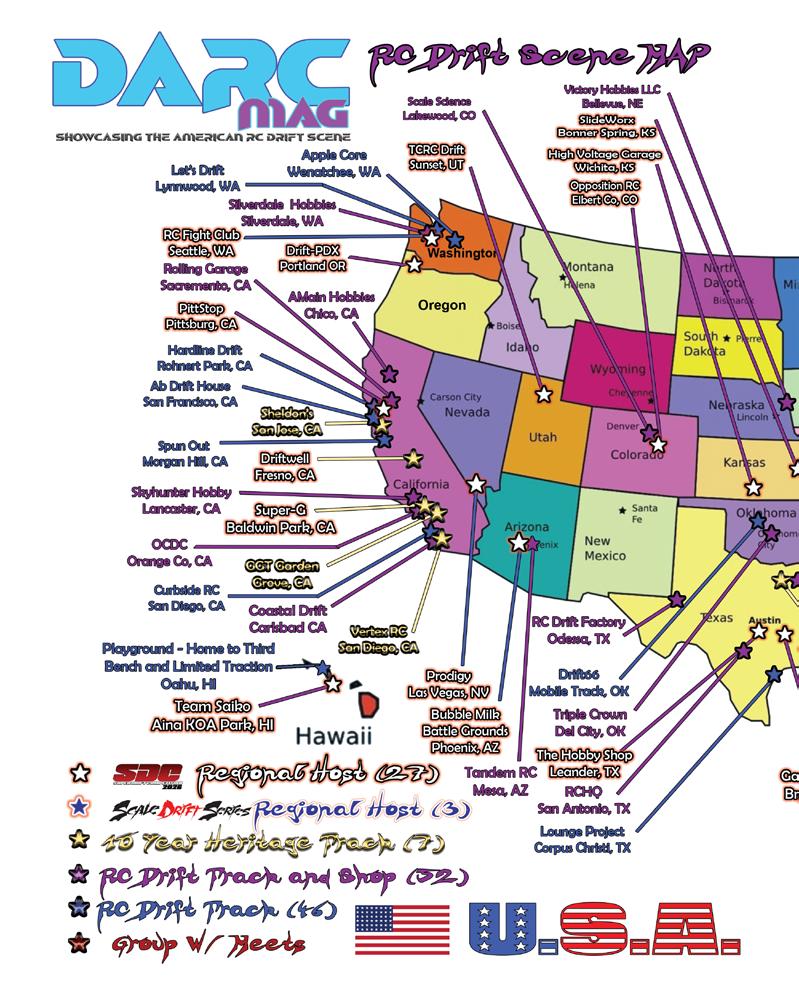
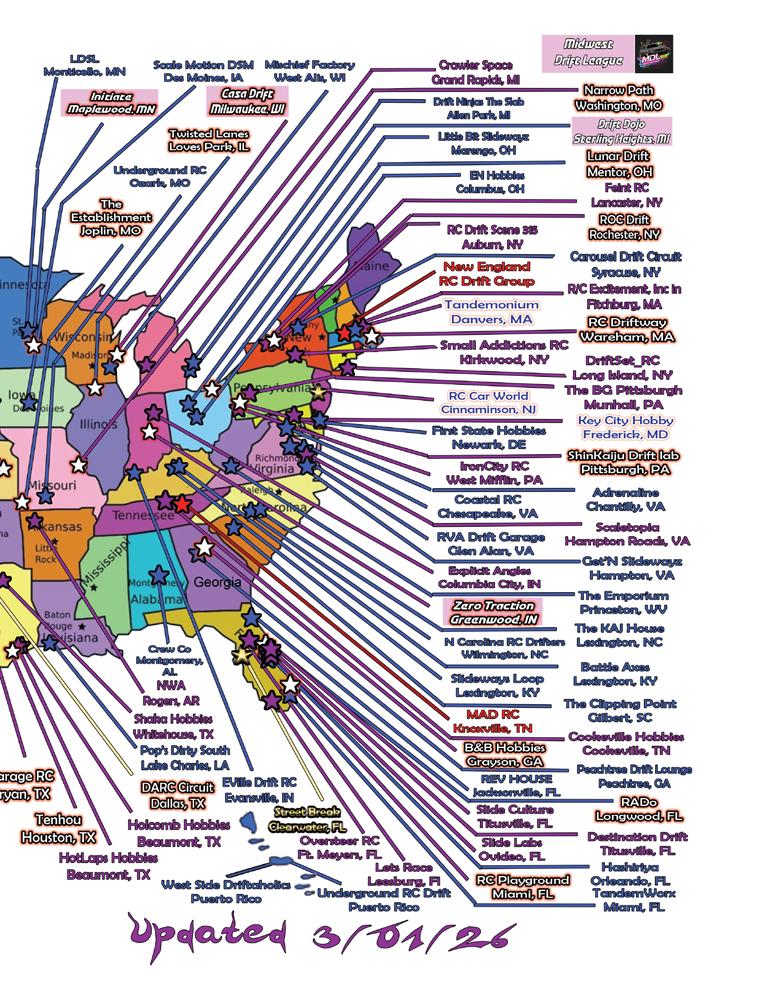
WHERE RC DRIFT IS HEADING - Between chassis tuning and driving techniques, differential choices, damper building, rapidly evolving electronics, and scale artistry, RC drifting is the most technically advanced and rewarding form of RC the industry has ever seen. The need for a place to share tuning knowledge, along with the growing demand for smooth, polished concrete or imported Japanese P-Tile surfaces, has led to new tracks popping up every month across the United States. In 2013 there were only five tracks, now there are 60. As more people catch on and more tracks keep opening, we expect the hobby to continue to grow and thrive.
Drift Illustrated Magazine is available at select drift events, partner shops, and online. Each issue features real drivers, real builds, and real stories from across the drifting world. To find the latest issue, pickup locations, or to purchase online, follow Drift Illustrated on social media or visit the official Drift Illustrated channels. We look forward to the crossover between DARC Mag and Drift Illustrated being a solid bridge between both scenes.
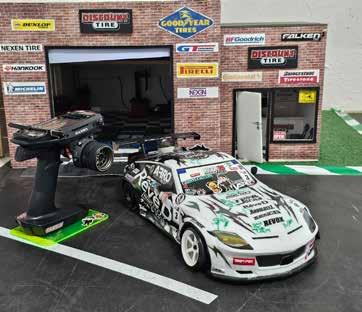
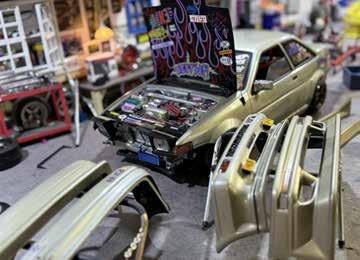
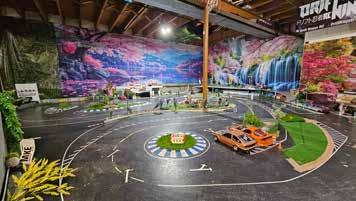
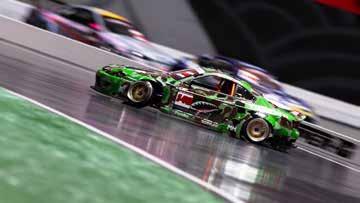
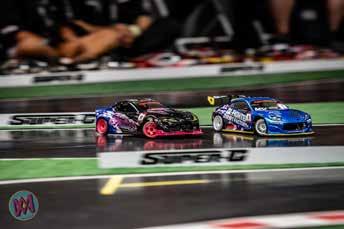
The competitive side of the hobby is growing quickly and attracting more high-level drivers from other disciplines of RC. RC drifting has no shortage of competition, but not every series is built for the same drivers or the same vibe. This article looks at three leagues: MDL, a new Midwest winter series built for structured practice close to home; SDS, the independent East Coast series focused on true-to-life, highenergy, contact-friendly drifting; and SDC, the nationwide standard that helped define modern RC drift judging and continues to fuel World-level competition.
Since 2025, MDL started as Casa Drift owner Beto Marin’s idea, sparked after his visit to SDC Worlds in October 2025. He left that weekend thinking that the Midwest needed more comp practice, especially in the offseason. He already wanted to start a winter series for the Midwest, but he wanted it to be bigger than just one track. The energy out there was calling for higher-level driving, and in his eyes, competition was the best way to drive growth.
Within a week, Beto was on the phone with every Midwest track owner he knew and worked out how to get the MDL Series going. The goal was simple: keep the SDC vibe going, but make it more accessible to the Midwest, with the idea of ‘SDC Lite’. A few weeks later, four tracks were in: Casa Drift (Wisconsin), Drift Dojo (Michigan), Initiate Drift (Minnesota), and Zero Traction (Indiana).
The season is wrapping up (at the time of this article) with the finals in Chicago on March 8, where all tracks will get together to crown the Midwest champ. For Beto, the Finals are basically a mini SDC Worlds for the Midwest. It’s a one-day rented-location setup where the whole region can show up and throw down.
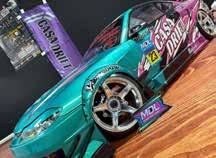
Casa Drift absolutely participates in SDC, and they love the series. Beto’s very grateful for the support and respect the series has received from the community, judges, camera team, Super-G, and the drivers. He sees MDL as a stepping stone towards SDC. MDL has similar rules, but more lenient with a chilled vibe, yet still giving competitors that next-level feel. Casa Drift’s weekly ‘Fun Comp’ is ‘run-what-you-brung’ with no eliminations, every Sunday. MDL tightens things up with a few body and chassis rules to keep costs down. They hold tires for the group and the day runs with open drifting in between. It’s still single bracket elimination, but easier on qualifying and overall rules.
MDL judging is similar to SDC, but with fewer judges, giving them a chance to jump in and have fun. MDL formats can vary from track to track and each location can run what works best for their drivers. The overall Finale is meant to feel like SDC Worlds. That’s the whole point, give drivers Worlds-style practice without making the off-season feel like life or death. The actual SDC Regional rounds are where the real seriousness stays, where they have longer days, more judges, more cameras, and careful car inspections, the full deal.
For more info email CasaDriftLLC@gmail.com to join the MDL Series
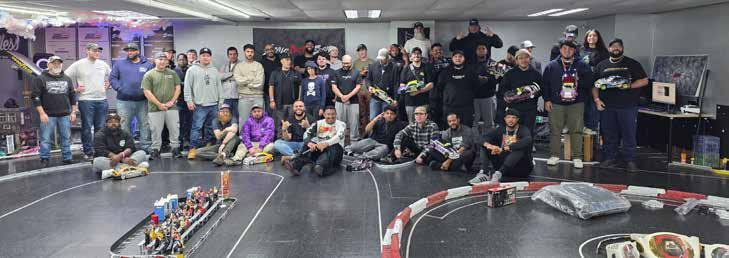

Since 2018, SDS is an independent competition series created and funded by Alex Jordan. It originally started in 2018 with events in a backyard and at The Hobby Shop in New Jersey. RC Car World (RCCW) soon became the headquarters after Alex built real trust with the owner, Mike Sienczenko, and the local scene. By 2025, SDS was running rounds at RCCW, Tandemonium (MA), Strictly Sideways (Toronto), and Elite Drift Shop (Montreal).
SDS stands out because Alex has always chased one thing; making RC drifting feel as close to full-scale as possible. He allowed car-to-car contact early on, along with wall taps, music,
Alex also introduced a visual drive-line that shows judges, spectators, and competitors the proper line. To this day, only tracks that have hosted SDS events use that method. To clear up any confusion; SDS and SDC have no affiliation. SDS is independently funded,
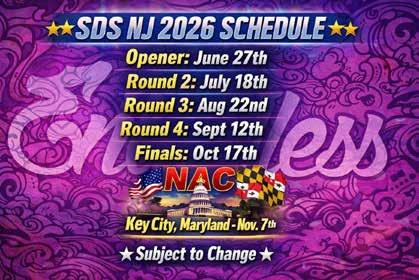
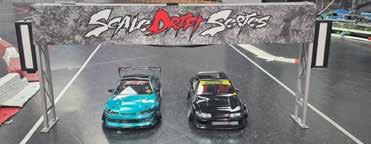
loud cheering, and scale accessories like headlights and soundboxes. He brought ‘spotters’ into the mix, or coaches, that tell the driver what they see during the first half of the battle and advise on challenging calls. He also made sure walls were part of the show, but never the whole story. His layouts typically keep walls two to three inches off the off-track line, a style more people are starting to adopt now that RCDC helped popularize it this year.
with no help from any shop besides the use of their track, which SDS pays for.
Reve D’s partnership with SDS grew after their 2025 East Coast Tour. They connected with the unique event style and the personalities around it. Reve D is now the title sponsor and official tire of SDS, supplying tires for the series, with a dedicated representative present throughout the year.
For more info email Cre8ve@yahoo.com to join the Scale Drift Series
Since 2014 SDC first started as the ‘Super-G Anniversary Meet’. Their NorCal family, Limited Traction and Team Bushido, wanted to come down to celebrate and have a friendly competition. The team at Super-G quickly realized, even leading up to this, that there were no solid rules set. At the time, everyone was doing their own thing, applying what was being done in Formula Drift, but that didn’t translate very well. This gave rise to some new rules for RC drift being laid out. Katsumi Kuwakino, of Yokomo USA, had been running comps long before there even was a Super-G and was there to give his expertise. Ken Gushi helped them understand why some of the rules in full-scale drift were necessary. Together, these guys provided invaluable help and advice.
From there, a panel of longtime RC drifters gathered and discussions were had as to what would work, with the intention of setting a standard that they could all judge by. At that time,
even the judges couldn’t decide what they wanted to see. RCDC was just forming as well, and while Super-G was working on SDC rules, RCDC had released theirs. Many of the SDC rules were similar, although RCDC had a few more chassis regulations. Some of those standards were adopted with the aim of keeping some sort of continuity between the two. Since then, the rules have been evolving every year and there is now a solid foundation. Before this, one judge might have wanted to see competitors drive smooth and flowy, while another might have wanted to see more aggressive driving. The acceptable levels of contact were so inconsistent, it was hard to have a comp and not have the judges be accused of bias. Now, the judges, for the most part, are all looking for the same thing and the competitors all know what they should be working towards.
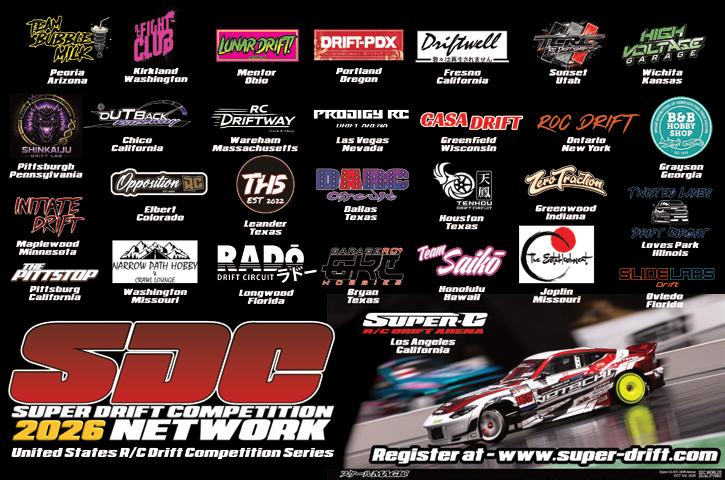
After the first or second year, other tracks wanted to take part in Super-G’s ‘Anniversary Meet’, and it was open to anyone who wanted to participate. SDC has grown from there; eleven years later, they have 27 Hosting Tracks (Regions) across the United States, with nearly 1,000 registered competitors. Originally known as Super Drift Championship, SDC changed its name to Super Drift Competition, since that was more fitting for a series.
Starting in 2026, winners of two international series, RCDC and WTDC, will be provided airfare to compete in SDC 2026 Worlds at Super-G R/C Drift Arena in Los Angeles, October 2-4, 2026. This is in addition to the lodging provided for each Regional Champion of the competitors in the United States.

For more info email SDCworlds@ gmail.com to join the SDC




Florida 3/14 4/11 5/9 6/27 7/18 8/22


2/21 3/21 4/18 5/16 6/20

Nevada
2/28 3/14 4/11 5/2 6/14 7/17

4/18 5/9 6/13 7/18 9/5



Texas 3/11 4/11 5/2 6/13 7/11 8/29 The PittStop Pittsburgh, CA 4/4 5/9 6/6 7/25 8/15


Drift Mentor, Ohio 2/28 3/28 4/25 6/13 8/1 Driftwell Fresno, California
3/21 4/18 5/9 6/13 7/18 8/29





Drift
WI 3/29 4/26 5/17 6/7 7/12 8/9

York 3/14 4/11 5/9 6/13 7/11 8/8


B&B Hobby Shop Grayson, Georgia 4/4 5/23 6/20 8/1 Zero Traction Greenwood, IN 4/11 5/16 6/20 7/18 8/15 9/5 Tenhou Circuit


Lanes Loves Park, IL 3/21 4/18 5/16 6/13 7/25 8/8


5/11 6/13 8/8

Drift
MN 3/14 4/4 5/9 6/6 6/20 7/18 8/15 8/29 Narrow Path Hobby Valley Park, MO 3/14 4/18 5/16 6/20 7/18 8/15

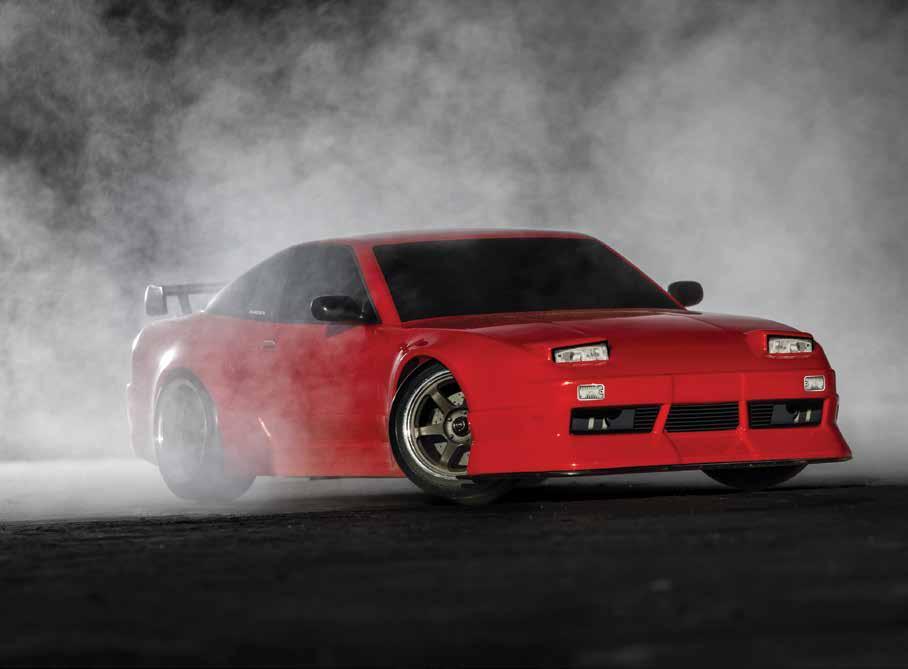
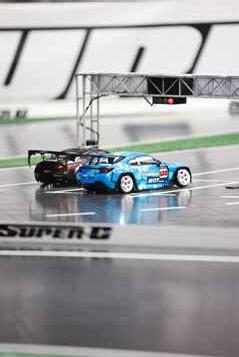
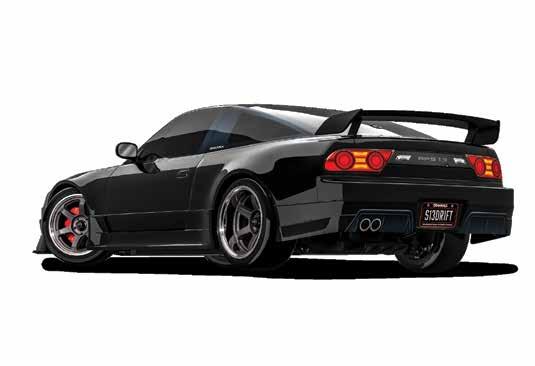
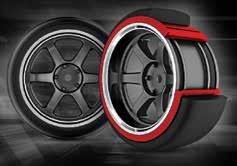
A favorite at drift competitions, the S13 Nissan® 240SX combines light weight, rear-wheel drive, and almost perfect 50/50 weight distribution. Traxxas creates the ultimate RC drift car by adding an incredible replica Nissan 240SX body to the proven 4-Tec® Drift chassis. Outfitted with advanced TSM® Drift technology, 4-Tec Drift is easy to master and endless fun to drive with its smooth, predictable slides and high-tech chassis.




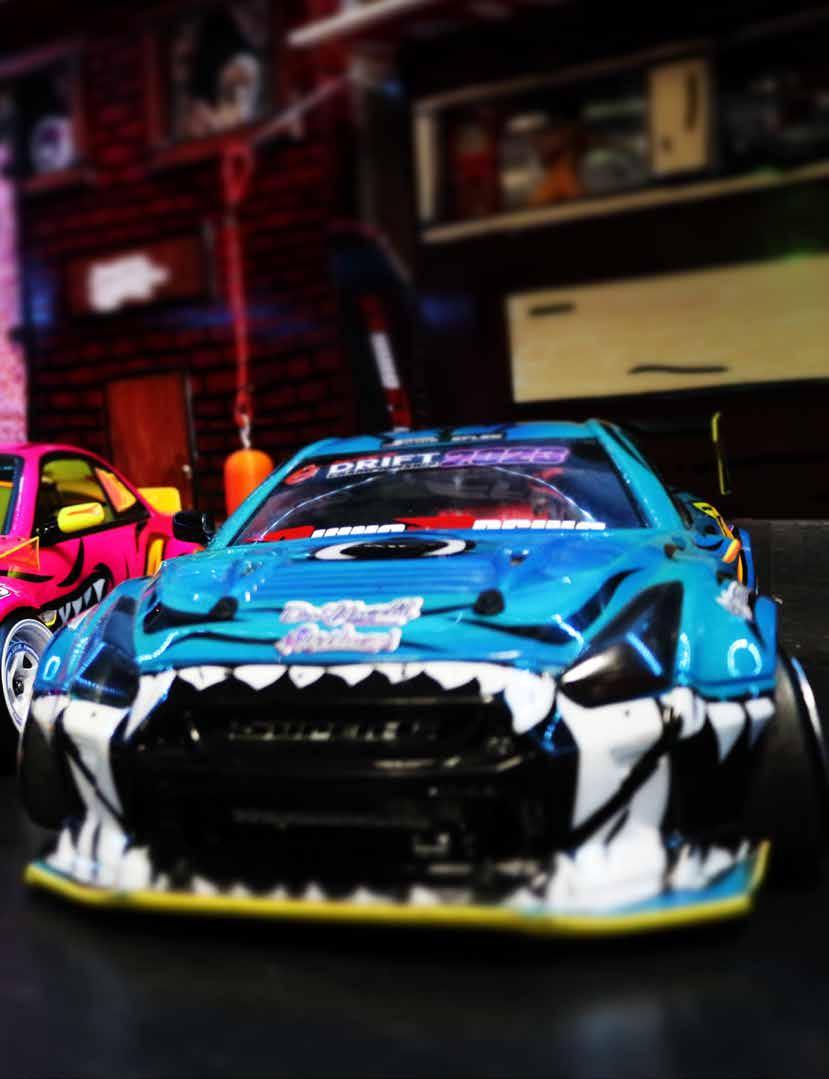



Coming from 1/10 scale to 1/24, I have to say I am enjoying the world of 1/24 more than I thought! I picked up a MA Racing D24 in 2024 which handles surprisingly well on its own with minimal tuning. What sparked the interest was the fact it was an RC in small scale with plastic model cars used as bodies. I will say that the body work is more tedious than 1/10, at least in my opinion. I am still learning bodywork/painting with this one! Shout out to Steven Fest, Shawn White, and John Stangle over at Small Scale Drifters and Henry L. for all the help!
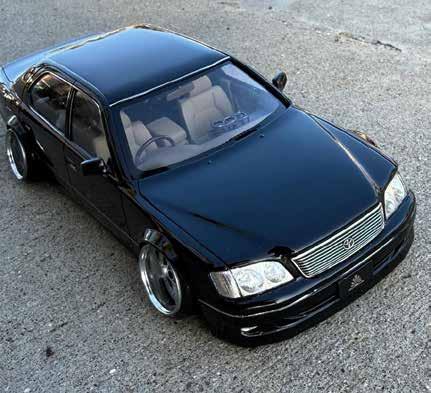
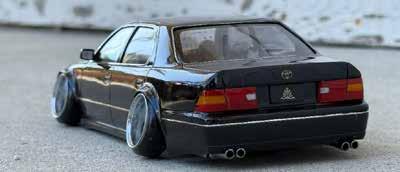
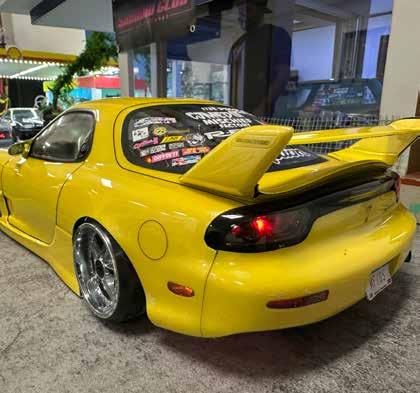
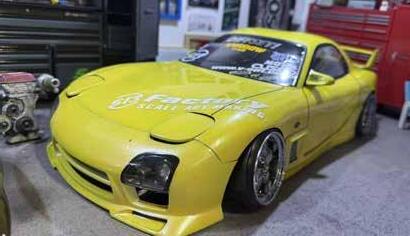
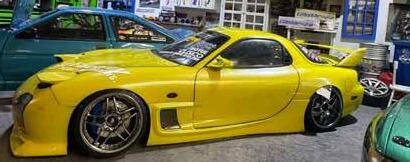
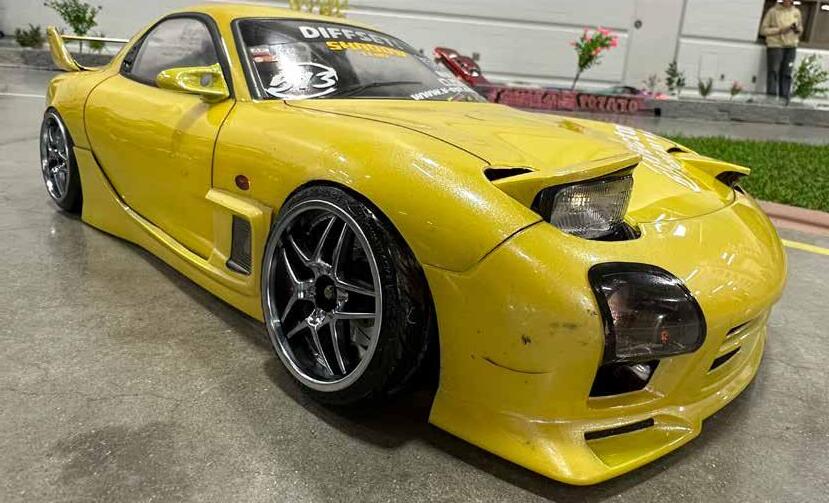
I’d been chasing an ABC Hobby Mazdaspeed FD RX-7 body for a long time - hard to find, and even harder to acquire at a decent price. When I finally found one, I knew it had to be yellow. It’s finished with the Mazdaspeed full kit and Mazdaspeed wing, Ganador mirrors, SRP door handles, an Eto Works muffler, and Wrap-Up rear lenses. Up front, it features manual-operated flip-ups, while Bao La Endless brake calipers add the right motorsport detail. The final touch is the 513 Factory hood logo to seal the Mazdaspeed vibe.
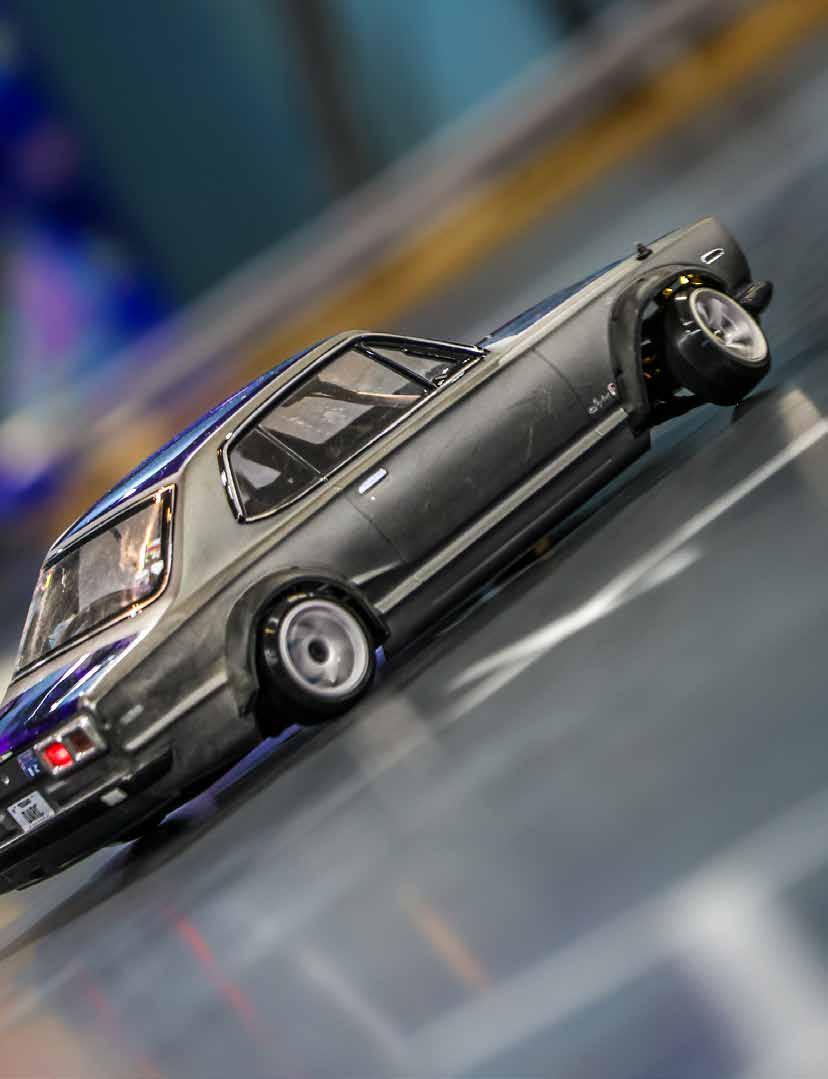
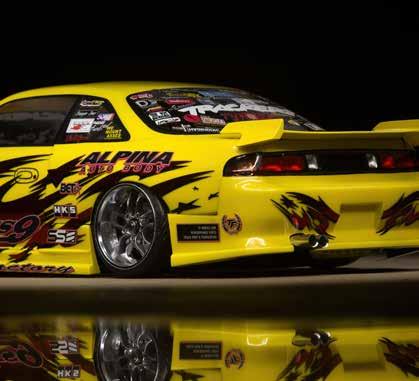
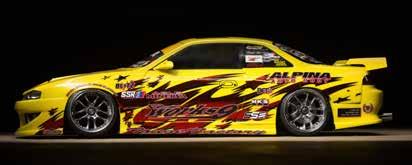
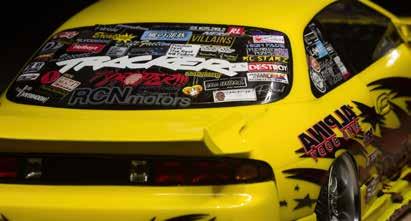
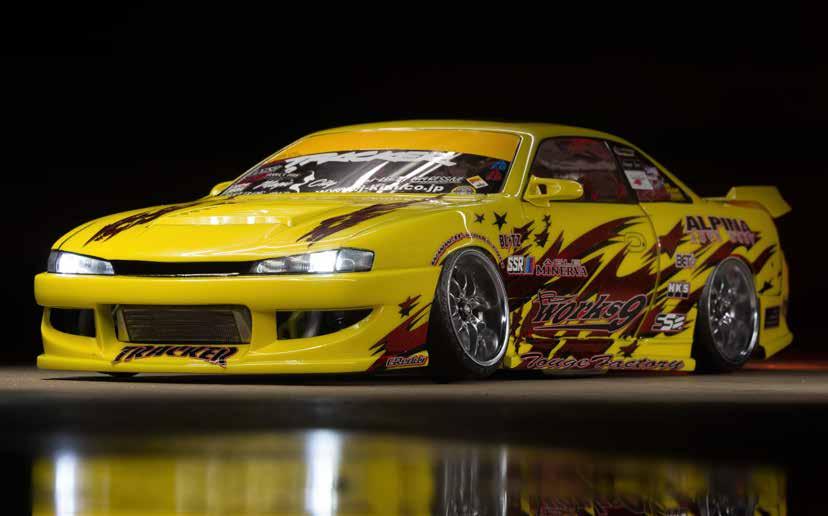
Jake’s S14 build was built for Bobby Angel Rios, who slowly acquired the parts for the build. It consists of a Yokomo Kouki S14, RC-Art over fenders, RC-Art Works 9 full body kit, and Ganador mirrors that I printed. I also added removable bumpers for realism, and without sacrificing the $300 front bumper when being driven. Jake’s Mom helped us get the livery from Lazy Rocket and he blew it out of the water! In the end, we had all the window stickers remade by him. Jake would be proud, as his 1:1 S14 lives on in 1/10 scale.
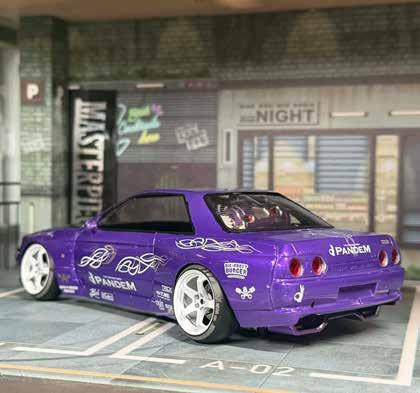
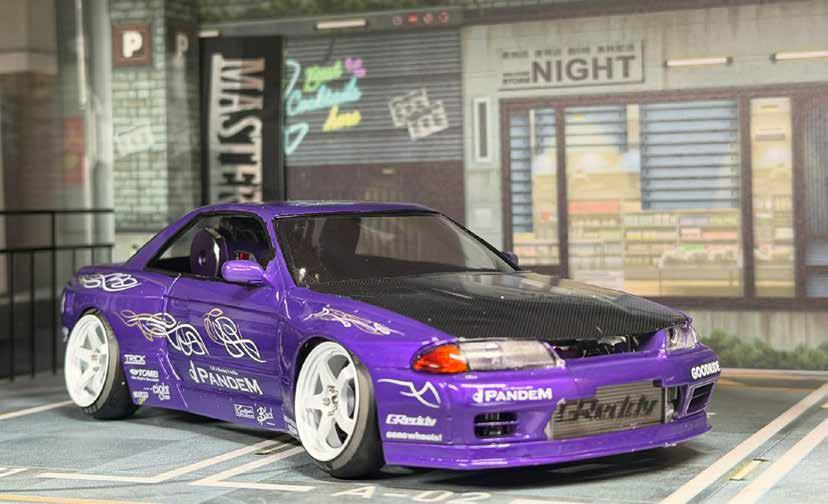
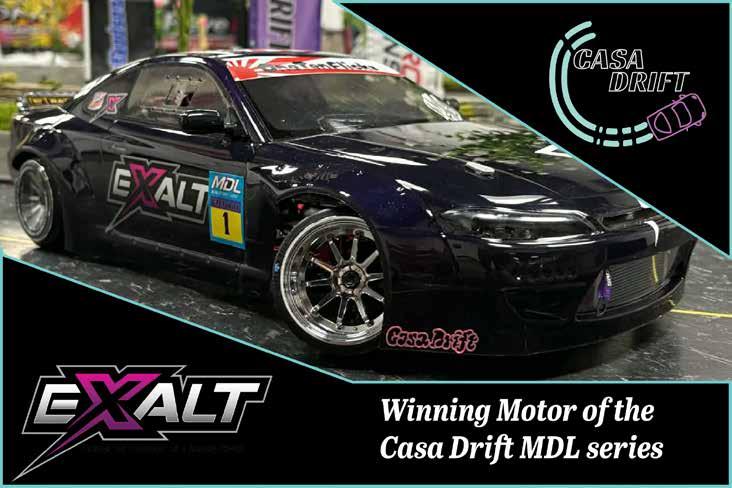
This build started as a stock Tamiya R32, but it didn’t stay that way for long. I went all-in with a Hobby Design widebody kit, which meant plenty of cutting, grinding, and test-fitting to get every panel sitting tight and clean. Once the bodywork was complete, it was primed and sprayed in Cadbury Purple Pearl by Zero Paints. The livery is finished with custom water-slide decals of my own design. The wheels were custom made by Gene, featuring the latest rim design with custom hubs and five titanium lug bolts per wheel.
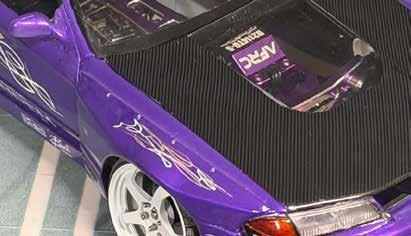
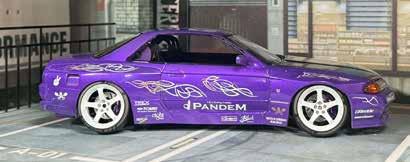
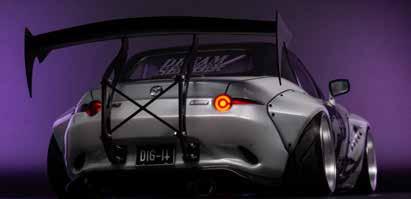
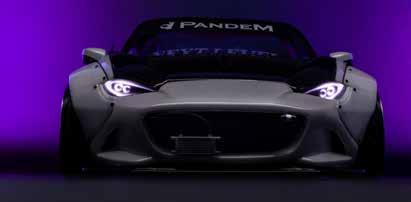
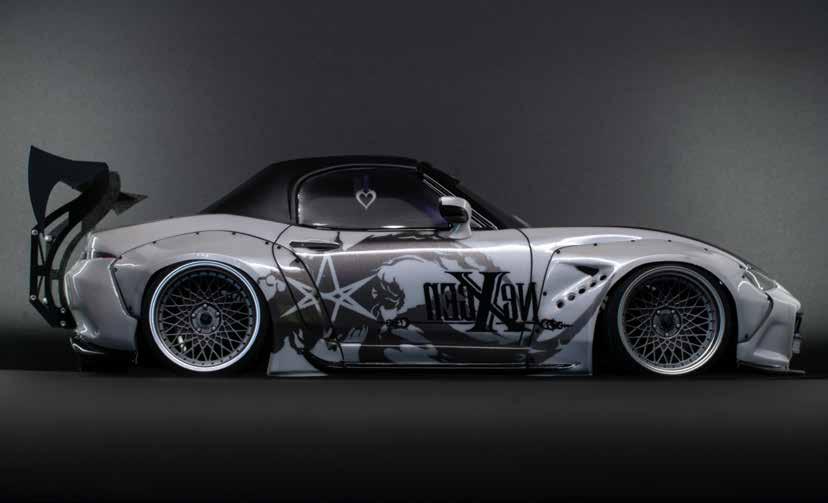
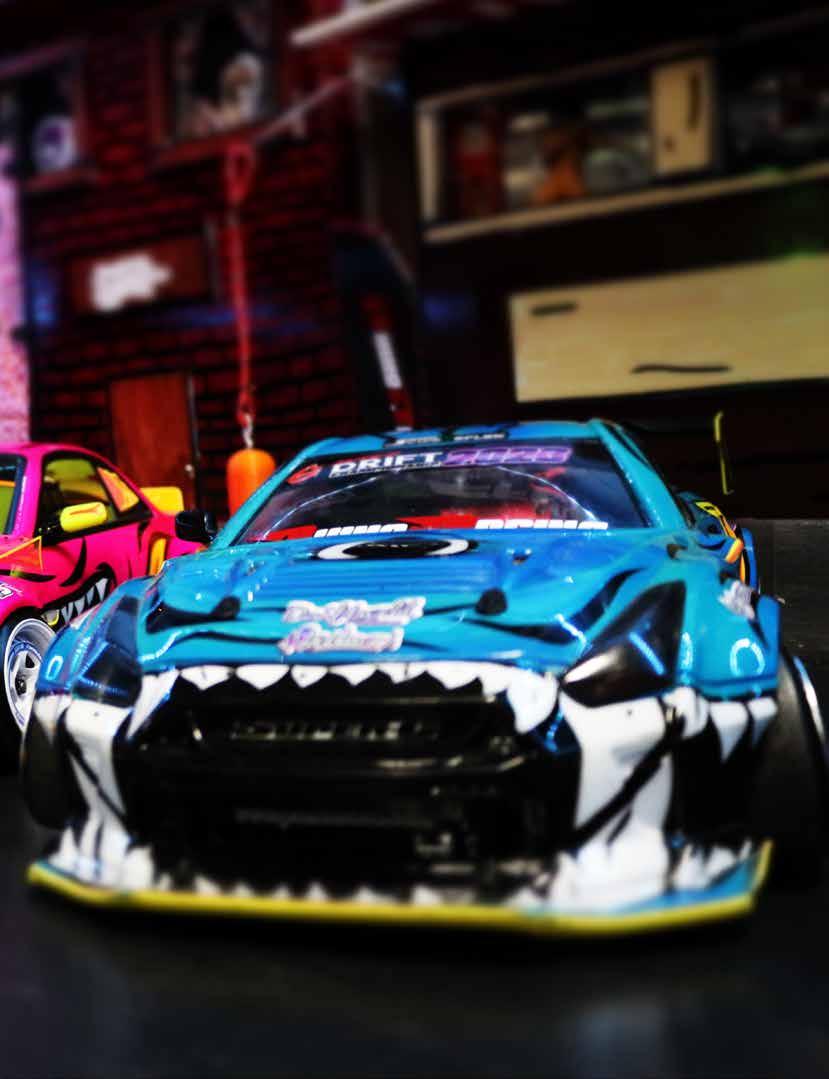
This Shibata R31 House Miata ND is a special one for me. As a longtime Miata and M-chassis freak, it’s my first serious attempt at airbrushing, and my second true drift body after a year of slow, five-month builds. I designed a custom livery that blends my hobbies, with “Bring Me The Horizon” musical artist references worked into nearly every piece. The rear wing and front and rear light buckets are my own designs, 3D-printed in translucent PETG for a halo effect. The whole body, including the carbon hood, is finished in Createx Wicked Colors Pearl paints.
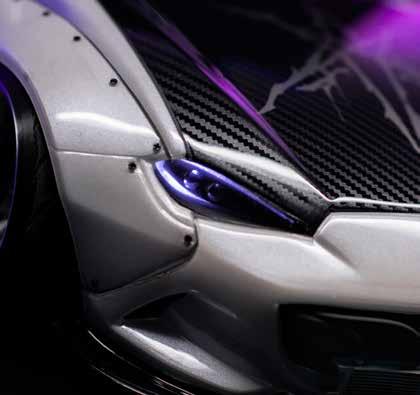
KYLE HOEFER - PHOTO CREDIT @KROMA_RC
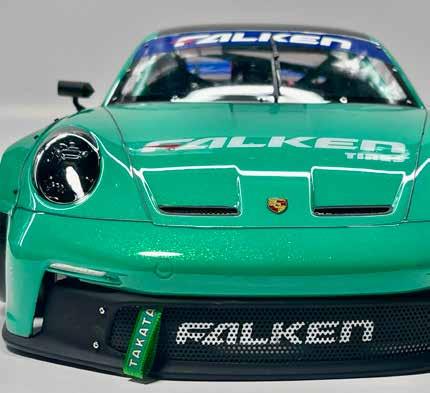
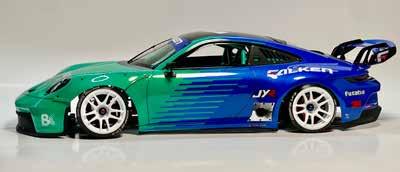
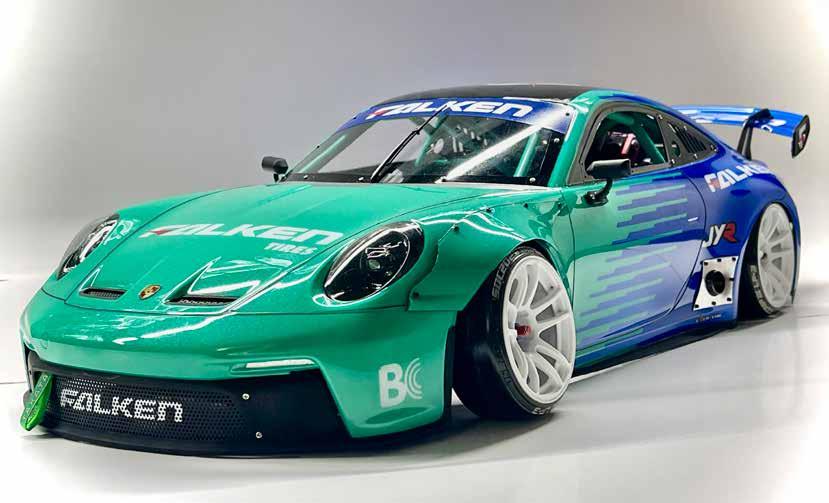
I started with a Tamiya Porsche body and leftover Taka livery, wanting to create something you don’t see all the time. The stock body was too narrow and the wheelbase was off, so I bought a second body for parts. I widened the front by 5.5 mm per side, creating a subtle GT3 RS look, and reshaped the rear into a Liberty Walk-style setup. Moving the rear overfenders back fixed the wheelbase, and spacing the lower sections gave a mild “stock-plus” feel. I relocated the factory wing, sprayed layered candy colors over flake, added lights, a cage, intercooler, and small details, then mounted it up.
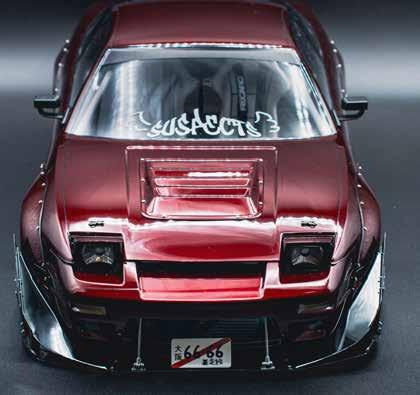
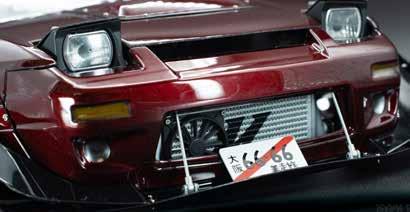
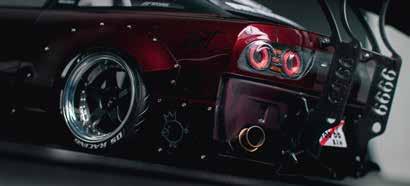
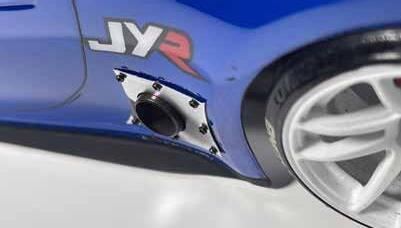
This Tamiya Porsche 992 GT3 features a custom Falken Tire livery with aqua and fluorescent green flake and pearl blue, all painted with Mission Models and fully hand-painted logos. It includes detailed custom work including a relocated rear wing, handmade titanium/aluminum side-exit exhaust, styrene roll cage, added front grille, LED lights, and Pandem-style wide fenders. Finished with scale details including a Takata tow strap and Reve D mirrors, the car keeps body modifications minimal while delivering a unique, head-turning presence on track.
JOSH GEEG
RC DRIFT ON A BUDGET
Whether it is the 2S packs powering our vehicles themselves or the batteries in our transmitters, chase cars, or camera equipment, we need to be able to charge these to keep going. In this article, Troy has kindly put together some useful advice.
Over the years I am frequently asked, “what is the cheapest battery charger folks can get away with buying?” Yes, it hurts to drop another $150+ on a quality charger, but it is a purchase that will support your hobby for years to come…and hopefully help keep you safe as well. When choosing an RC battery charger, there are few things to always keep in mind:
What batteries are you going to need to charge? You need something to charge those 2S packs…but do you have standard LiPos or LiHV packs? Do you have any Li-Ion in your transmitters you will want to charge? Do you also want the versatility for charging your crawler, basher, FPV, or plane batteries? My recommendations will be able to handle multichemistry and charge across multi-channels to suit all of these uses.
Types of charging are important. The ability to both balance charge and storage charge is critical to getting the most life and performance out of your batteries. There are other settings that chargers will frequently come with, but these two settings are all I use on a regular basis.
Pit space can be at a premium at some tracks. Size matters. When looking at the space you have, it isn’t just about the footprint of the charger itself, but which other wires you will need.
Safety is important. The risk of LiPo fires is real. Some chargers have more safety features builtin than others. This can include reverse polarity
protection, cell count verification, visible voltage per cell monitoring, and even automatic battery recognition.
After years of testing, these are all ones that I had good performance from. I have broken them down based on what you are looking for.
4 ports - $230 on Amazon
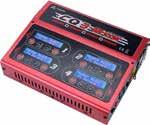
With all of the types of RC that my two boys and I dowe have a LOT of batteries. When we are preparing to go out for some fun, I need something that allows me to charge batteries FAST. I have used this BGUAD CQ3 charger for years with great results. 100W x4 channels mean I can charge anything from a 1S drone battery all the way up to a large 6S basher pack at the same time. When paired with an ‘octopus’ with many charge leads, it keeps all of the batteries ready when needed. The only real drawback to this charger? It is HUGE - using it as a portable charger to take to events isn’t ideal.
4 ports - Under $200 (Amazon)
The SKYRC Q200 Neo has less power per channel, but smart-distribution of that power to still get up to 100W per channel for the batteries that need it. It saves you a little money, and will handle everything you need in RC drifting.

$60 (Amain Hobbies)
The GensAce IMARS S100 has all of the features of its
bigger dual-port brother, but in a small package and single port. If you want to get in as cheap as possible, you have to give something up to get the price down. Since we can’t skimp on safety, the only option is to reduce the number of channels to charge on. Depending on your needs, this may be perfectly acceptable. In drifting, our batteries tend to last quite some time, and even with just minimal planning ahead, one of these single-port chargers is sufficient. You keep all of the safety features and 100W charging, but at a reduced price.
$50 (Amazon)
The BGAUD C1-XR is also a 100W, single port charger. It is the smaller version of my big ‘at home workhorse’. It’s a solid choice when your charging needs are minimal.

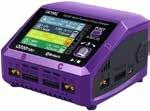
Just over $100 (Amain Hobbies)
The IMARS D300 (and recently released D300 PLUS!) can give you up to 150W per channel - so you never need to worry about plugging in those big 6S basher packs, and it will never break a sweat with 2S drift shorty packs. This charger hits that sweet spot of price, features, and capability. If you run any of the GensAce G-tech batteries this is a smart-capable charger. The new Plus version adds Bluetooth app connectivity as well!
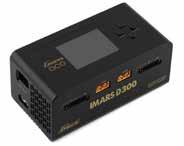
Just over $100 (Amazon)
The HOTA D6 PRO is a solid alternative to the IMARS D300 which adds wireless cell phone charging. The only hesitations I have are that the roller wheel isn’t as robust as I would like and the menu interface is less intuitive than the GensAce, but others may feel right at home with it.
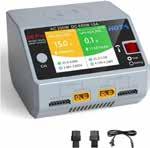
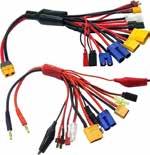
$10 (Amazon)
With ‘THE OCTOPUS’, you can choose from bullet leads or XT60. I find these really helpful as I transition from drift batteries to crawlers, bashers, and other batteries. These have saved me from needing to solder or purchase a lot of adapters.
Under $10 (Amain Hobbies)
The RACER’S EDGE RC LIPO BAG is not only a good safety feature - but many tracks actually require them when charging on site. I keep one at home and one in my travel pit bag.

I hope this article has given you something to think about related to your personal RC charging setup. Interested in knowing more about any of these? I have dedicated videos for each of them on my YouTube channel, RoadsideRC.
At a car show, you’ll see it happen in real time. Someone spots a tiny streetscape, leans in, and utters the phrase Cory Clark hears constantly, “Wow, this really exists?”
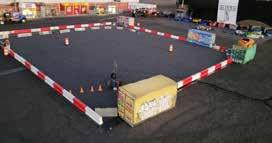
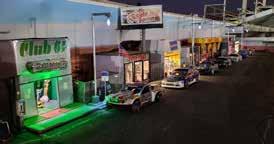
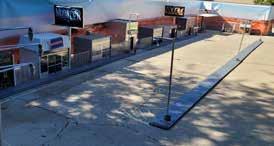
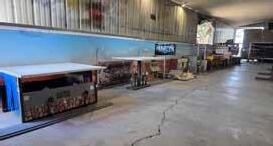
Cory is the creator behind RC Scale Town, a portable 1/10-scale city setup, which he takes to RC events, campand-crawls, and car shows. It’s not just a backdrop for photos, it’s a full environment built to make RC vehicles look like they belong in a real place, with buildings, props, and details that pull people in and keep them there.
The idea, born with friends and built over time
It didn’t start as a polished ‘concept’, but rather with Cory and his buddies wanting a scale environment around their scale RCs. “It started with G6,” he says, “developed from there, and has grown into what it is now. That’s what makes RC Scale Town feel alive, it evolves. Each event adds a new challenge, building, prop, and reason to refine the scene so it feels more realistic.”
Not tied to one track or venue, Cory sets up wherever the RC community is gathering. “Everything we do - ‘Camp and Crawls’ and RC events - is where the RC towns are set up,” he says. “That flexibility is a big part of the magic. One weekend it’s an RC event, the next it’s a car
show, and suddenly people who’ve never touched a transmitter are staring at a miniature world like it’s a movie set.”
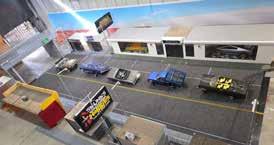
Built for 1/10 scale, with purpose
RC Scale Town is designed around 1/10-scale RCs, and Cory is consistent about it. That commitment matters. Scale scenes fall apart fast when proportions don’t match. Cory’s setups work because they’re built around a clear target, and he makes choices that keep the world feeling cohesive.
No blueprint, just the right materials for the idea
Ask Cory if he has a standard method for building, and he’ll tell you straight up, “I don’t have a standard for building my town, I use a lot of scrap material that I have that suits any idea. Then I buy materials to finish out the build.” That’s RC Scale Town in a nutshell: creative and resourceful. The structure might come from whatever’s on hand, but the realism comes from the finishing work, texture, paint, and the small details that turn ‘a model’ into ‘a place’.
Props, prints, thrift finds, and the constant scale hunt
The secret weapons of any good scale scene are realistic looking props, and Cory has built a system for sourcing them. “I 3D print a lot of items, search thrift stores for figurines, and track down props online by searching terms such as ‘world minis’ and ‘miniatures’. The
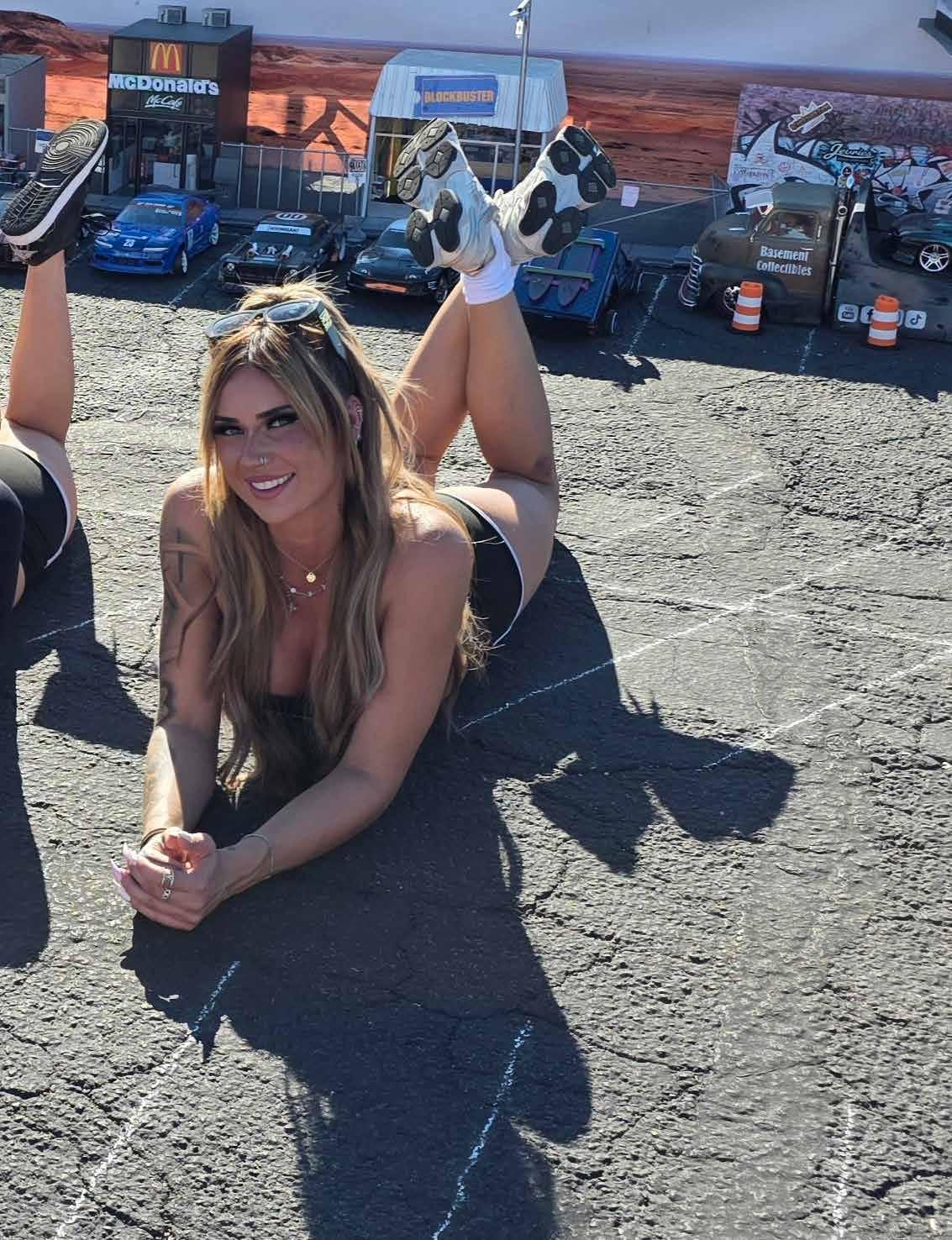
most common problem that every scale builder runs into is that a lot of props are made for railroads or dollhouses, and they’re often not true 1/10 scale. For figurines, I prefer 67 inch figures, and I’ll still use 1/12-scale dollhouse materials when it makes sense visually. The trick isn’t following labels, it’s choosing what reads right.”
Advice for anyone building scenery for events
Cory’s best advice isn’t about glue or paint, it’s about planning. “My advice to set up a scale event is meet with the event coordinator and see what they are looking for,” he says. “That’s how you make a scale setup work in the real world. Space, flow, safety, theme, and crowd movement matters when you’re building something that has to survive an event day.” As for technique, Cory keeps it simple: “Work with products you know and what you are comfortable with. When building for travel and setup, reliability beats experimentation.”
Favorite events, and why they stand out
Cory’s favorite events are the ‘Camp and Crawl’ that is hosted every year, and the ‘Arizona Super Show’. “The people who go to those events seem to appreciate the work, which fuels my motivation. Scale building takes time, and hauling a whole town to an event takes even more. When people stop, ask questions, take photos, and genuinely
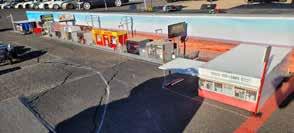

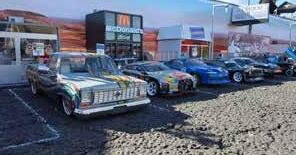
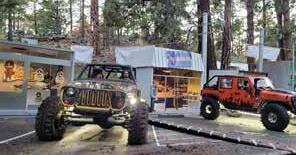
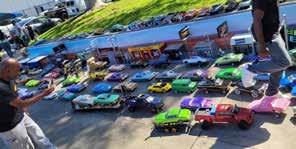
get it, it validates the hours that went into every wall, sign, and tiny detail.” RC Scale Town also reaches beyond RC culture. Cory says, “Most people don’t know that it exists for car shows and aren’t aware of the RC culture.” That’s the bridge he’s building, a way to show outsiders that RC isn’t just toys. It’s craftsmanship, engineering, and community.
It takes a crew
Even though Cory is the creator, RC Scale Town isn’t a solo mission. “I’d like to thank the people and organizations who have supported me: Anthony Au (Shubbydog RC), Randy Doshier, Jason Marsiano, Robert Campbell (Skunks Hobbies), Alex (Monster Graphics), Chris (Straight Up RC), and Celene and Tony at the Arizona Super Show.”
If you see RC Scale Town at an event
Take the extra minute to look closer, watch the cars roll through, and say, “Wow, this really exists?”
Cory doesn’t currently offer tutorials, but he shares photos and videos of his builds and setups.
Instagram: @corylclark.rcscaletown
Facebook: Cory L Clark and RC Scale Town
TikTok: Rc.Scale.Town
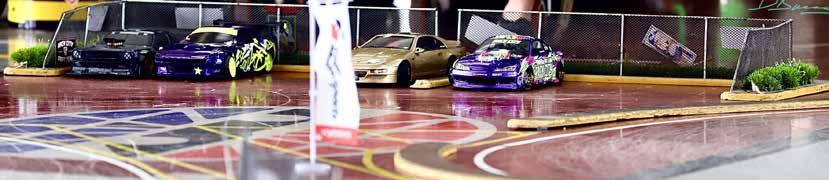

FuelFest has been a key American drift event for the last four years and is the perfect place to present RC drifting to the culture it is based upon.
Spearheaded by Cody Walker, as a tribute to his late brother Paul Walker, FuelFest is built around the drift and street scene, along with concerts, a big stage, and full-scale action..
When asked about the RC drift community’s involvement, Randal Smothers, Global Marketing & Operations Director of FuelFest, put it plainly:
“One of the most beloved attractions at FuelFest is the RC drift course! People with all different types of RC drift builds, whether store-bought or custom made, come to slide on the track and make new friends in the process. Not only do local tracks bring their crew of drivers to keep the track hot, but show-goers bring their own cars from home to join in with everyone else; the FuelFest community welcomes the participation!”
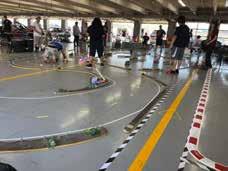
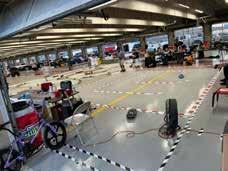
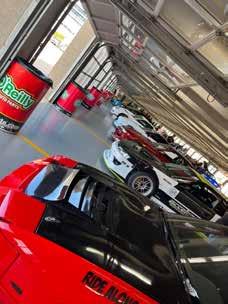
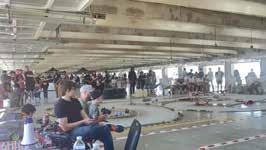
Success in Dallas: The crowd loves it - Every year, DARC Circuit has set up an indoor RC drift track inside the NASCAR garage, the same space where full-scale drift cars pit, prep, and launch for ride-alongs. Showgoers can experience a ride-along for a fee, and return grinning, having just unlocked a life achievement. More people have shown up each year with RC drift cars, specifically to drive the course. Many travel from smaller towns with no local drift track, so
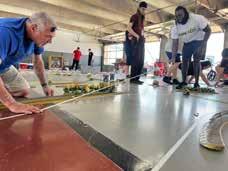
FuelFest becomes their one shot each year to slide with experienced drivers.
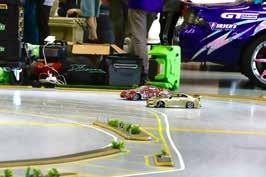
To make it happen, DARC Circuit brings a dedicated 25-person setup crew, including drivers. They arrive early and build a full track in two to three hours, complete with parking spaces, hatching, and scale scenery. Last year, Kyosho provided sponsored Fazer D2s for rentals, run on a smaller, newbie-friendly ‘lima bean’ shaped layout. If drivers can lap the small track in a rental RC without hitting anything, they earn a run on the big track, but rarely do. That’s what makes the moment work - people leave with real respect for the skill it takes.
FuelFest is the only car show that DARC Circuit sets up a track at each year. It’s labor intensive, costs money in supplies, and the local track is closed for the day, so the event has to be worth it; and FuelFest definitely is.
As FuelFest expands into more cities and countries, DARC Circuit and DARC Mag have a bigger vision: for every FuelFest around the world to feature the local RC drift community. The crossover between full-scale and 1:10 scale drifting is already there - the missing element is structure, connection, and making it worthwhile for the crew’s effort.
Arizona proved it too: The crowd wants more - In 2025, Chris G of Straight Up RC partnered with Cory Clark of RC Scale Town to bring a full RC showcase to FuelFest Arizona, and the response made one thing clear - this belongs at every show.
FuelFest Arizona 2025 was held at Firebird Motorsports Park in Chandler, Arizona. The RC footprint went beyond

a simple track. The centerpiece was an RC scale drift-burnout pit built on carpet, with scale barriers, entry and exit gates, and the details that sell the illusion, traffic cones, J barriers, and scale Conex boxes covered in street art. Surrounding it was a full RC Scale Town with handmade buildings and an RCsized parking lot to mimic a real car meet. Chris and Cory hosted the setup, but made it clear it wasn’t their space, it was the community’s. Local RC enthusiasts came through, and people traveled in from out of state too, including guests from Colorado and New Mexico. The driver crew from Tandem RC even made a guest appearance to put on a drifting display.
The crowd reaction was exactly what Chris and Cory had hoped for. People stopped and watched, kids got locked in, adults got curious, and spectators became participants. Several guests bought RCs from vendors, and came back to drive. One guest who didn’t even own an RC drift car bought his first one at the event, then drove on the track setup for the first time.
The FuelFest team was supportive. Chris had offered RC participation at other events in the past and had been denied, but FuelFest understood the concept instantly.
and a bigger plan - DARC Mag has agreed to organize an RC drift track at FuelFest, on July 25, 2026 at Manston Airport, UK. The plan is to work with tracks across the UK, organize a setup crew, and deliver a first-class RC drift experience for FuelFest show-goers.
This UK show will be a proof of



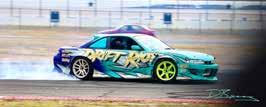
that works for both FuelFest and local RC communities, it can be replicated globally. That’s where the next conversation needs to go: how do we make it mutually beneficial? If FuelFest wants consistent, high-quality RC drift experiences at every show, and if local tracks want the exposure that comes with being in front of tens of thousands of the right people, then setup crews need support. That can take the form of sponsorship of build materials, travel support, crew passes, vendor compensation, or brand partnerships that reward people’s efforts.
The ask: bring your local track to FuelFest - RC drifting clearly belongs at FuelFest. If you run an RC drift track, lead a local crew, or can build a mobile layout, FuelFest is a rare chance to put the hobby directly in front of full-scale drift culture and grow your local scene fast.
The path forward is simple:
• Local tracks bring the community, track layout, and continuous tandem trains
• FuelFest provides the audience, the location, and the cultural crossover
• Sponsors fund the setup crews so their efforts are sustainable
If we do this right, the bridge between 1:1 drifting and 1:10 drifting becomes a global on-ramp for new drivers and a stronger community, wherever FuelFest goes.
@fuelfest @straightuprc
@driftamericarc

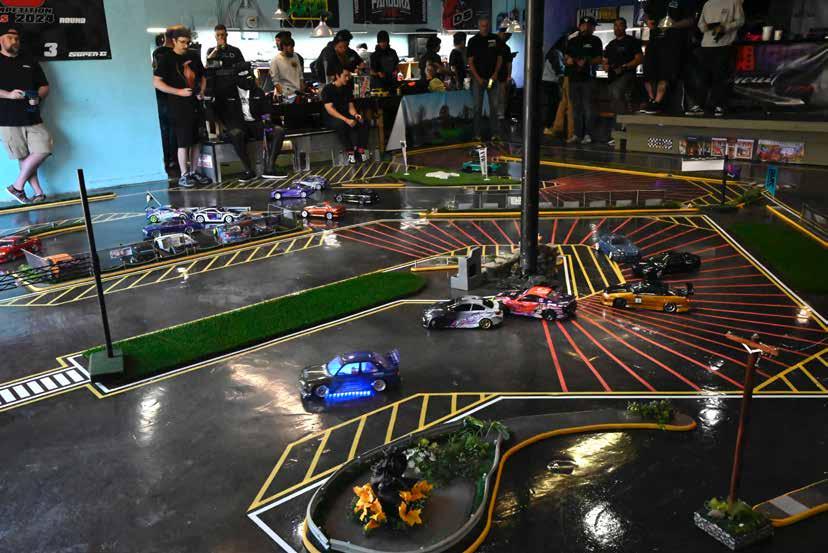
The concept of a Matsuri may be foreign to newcomers of the RC drift hobby, but for the veterans it has a deep meaning. What is a Matsuri? In the full scale drift world, it’s a festival, which is actually the meaning of ‘Matsuri’ in Japanese. The concept originated in Japan as a religious festival held at Shinto shrines to honor or pray for a good harvest and health, or to celebrate deities.
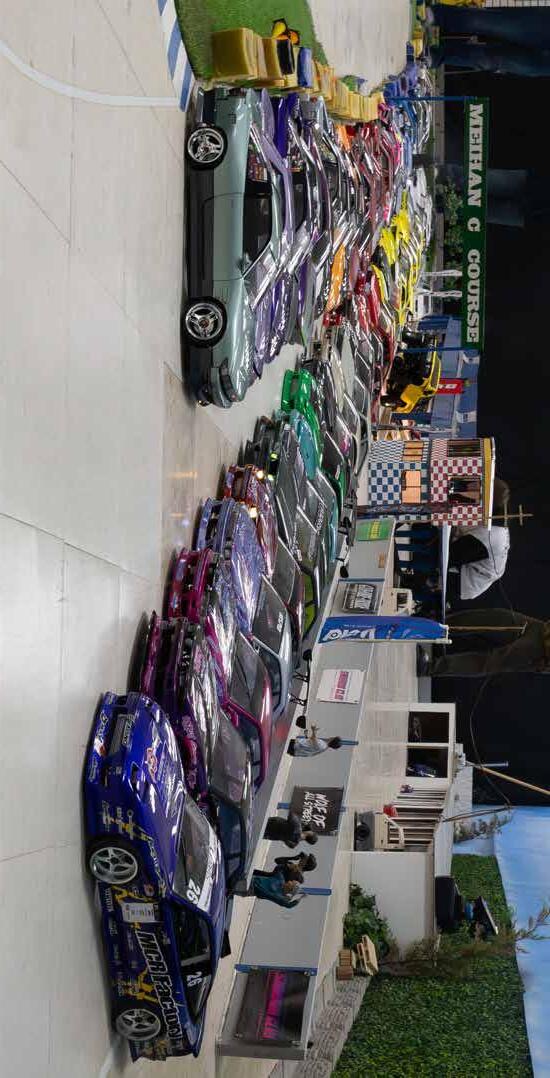
A Matsuri isn’t about competitions or gearing up for something, but more an opportunity to celebrate the hobby and how far it has come. It’s a chance to drive together and have some laughs, eat some good food and listen to some good music. It’s the focus event of the year for most tracks and people spend a lot of time preparing specific builds or bodies for it.
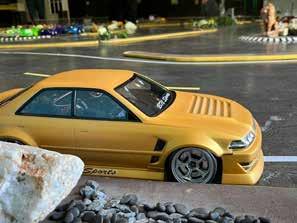
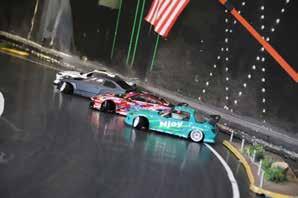
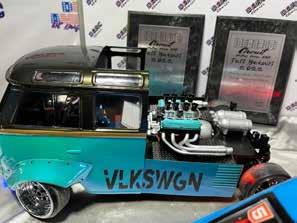
DARC Mag is staying local in this article with DARC Circuit, located in Dallas, Texas, to talk about some of the MATSURI TRADITIONS there. Their first Matsuri was held in 2016; it’s unlikely they were the first in the country to hold one though. Street Break Circuit was certainly celebrating with Matsuri events at their track, and possibly some others in the US were doing the same. As one of the first tracks in the US, they’ve been lucky to watch more and more tracks adopt the Matsuri as a way to celebrate the hobby.
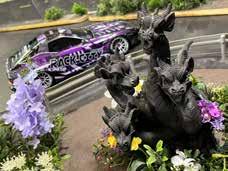
Two Matsuris are held throughout the year, one in the spring, the other in the fall. The fall Matsuri is typically the most popular, as it is the busier season. The Matsuri always centers around a PHOTO SHOOT, where they have a designated photographer to be sure to get great shots of everyone’s cars. First, the
cars are grouped together, then they’re scattered around for individual shots with SCALE SCENERY, often tied in with the season: a floral arrangement, fence, natural scenery, cityscape background, random curb or rumble strip, or scale garage.
Another Matsuri tradition is the BODY COMP, judged using a scored checklist, which includes color quality, painted on graphics, engine bays, and LED lights. While past competitions were based on popular vote, sometimes people have won with bodies that were on a dummy chassis and not painted themselves. This method short changed the person who had a drivable car and did the work 100% themselves. To avoid this from happening, two factors were added to the scoring system that are worth 10 points each: Does this car drive and did you make it 100% yourself? Without these two 10 point scores, it would be impossible to win the competition. The winners of the fall Matsuri scale artist competition 2025 were featured in the last issue of DARC Mag in the Scale Artist Showcase.
DRIFT GAMES are an important part of the Matsuri tradition. They enable drivers of all skill levels to participate, creating memorable moments and big laughs. For drift game inspiration, check out our Fun Ice Breakers For Any Event feature in issue 5.
Local favorite LIVE DJ Eddie Rose has become a Matsuri tradition, providing great music throughout the day. People
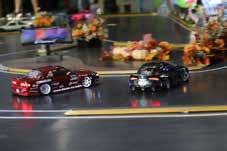
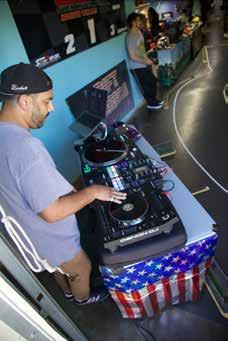
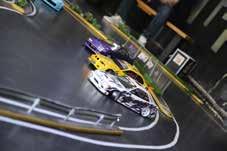


come from all over Texas, Oklahoma, and Kansas to take part in the celebration. Trains are constant throughout the day, as top drivers from all regions converge together to celebrate this great hobby that we all love.
The Matsuri can also be a BAPTISM BY FIRE for new drivers. They hear stories and see pictures beforehand, but until they actually go, they just don’t know what it’s about. All of the seasoned drivers take the time to show the newer drivers the ropes of tuning and driving and they become better drivers just by showing up.
VETERAN DRIVERS RETURN to touch base with old-time friends and see how the hobby has grown in their absence. Sometimes people have kids or get caught up in life and don’t have the free time that they used to, but this is an opportunity to come back around and relive the good old days.
As the hobby grows, more American tracks develop their own Matsuri traditions.
The Matsuri is a meaningful event for the hobby and a fundamental part of it. It celebrates the fun times that we have by accident every time we show up to the track.
DARC Mag looks forward to featuring the Matsuris at other tracks in the future.
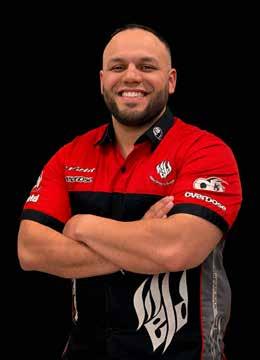
Hey All! I’d like to introduce Anthony Torres, who I first met at the 2024 Super-G Drift Competition. He is always willing to answer a question and never seems to be down. You can tell from the way he talks about drift and how he drives that he is always ready to have a good time.
Adam: Hi Anthony, welcome to the DARC Mag Interview. Can you please give us a quick intro?
Anthony: I’m Anthony Torres, located in New Jersey, and my home track is RC Car World in Cinnaminson, NJ. My current sponsors for 2026 are Acuvance USA and Weld-Overdose.
Adam: What originally pulled you into RC drifting and what was your first chassis?
Anthony: I’ve been into cars my whole life, so when I heard about this hobby six years ago, I immediately did my research and chose the Yokomo SX3.
Adam: Did you know that RC drifting was going to be such a big part of your life?
Anthony: Absolutely……NOT! Never in a million years would I have predicted the impact of this hobby. I always said I was going to go to Japan, but it’s crazy that it was to drive RC cars. This hobby has changed my life in many unexpected ways and I love it.
Adam: How do you manage your nerves when the pressure is on?
by Adam Mah of RC Drift Talk Podcast - YADMAH
Adam: How do you mentally walk through a track before driving it?
Anthony: I don’t, I just drive the track in the beginning, work on hitting zones, and adjust from there. I have fun first!
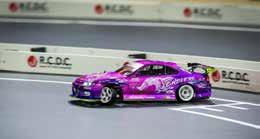
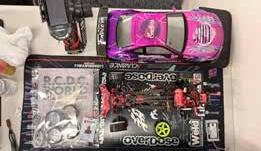
Anthony: I try to manage all my thoughts and calm down, focus on the small things like boxes, reference points, and judges’ cues. I close my eyes and imagine the run. Recently, I have been praying to God and I thank him for this opportunity, and that’s been very relaxing, especially during the last couple of events.
Adam: What helps you bounce back after a rough run?
Anthony: My brother, teammates, and friends, especially the ones back home! If it wasn’t for my home scene and all the support, and I mean all the support, I don’t think I would push as hard as I do.
Adam: How do you keep your energy up during long competition days?
Anthony: If you know me, you know I’m the energy in the room! I bring smiles, laughter, dirty jokes, even Dad jokes; I’m here for a good time. The competition is just a perk.
Adam: How would you describe your driving style?
Anthony: ‘Organic’, I go with the flow. If it’s a big angle track, we throwing backies!!!! I will say this: I’m not scared of anyone being on my door. My motto is this: if I give you the door you better shut it because I’m not trying to run away. I’m trying to scrape every wall with my bumper and if I happen to make you crash in the process, just know we will be screaming “GOTTTTT EMMMMMMM”.
Adam: What element matters the most to you: line, angle, speed, or smoothness?
Anthony: Drifting is all of those things, but here’s how I would teach someone. First, learn the line and get your car in the correct spot. As a lead driver, your obligation is the line, no matter what.
Second, now that you’re on the line, it doesn’t automatically make you the best driver. Now it’s time to showcase your skill with either big angle, fast entries/flicks, or wall rides. That’s where the magic is at. I’m not talking just about comps. I’m talking about every time you’re in front of someone.
Adam: How do you adjust when following different kinds of drivers?
Anthony: I hit them LOL. I usually gauge them based on if I’m pushing them too hard.
Adam: What common habits do you notice in new drivers?
Anthony: They want more car than they can handle. They want to be the fastest but can’t fulfill the requirements of the lead. They want to just be on your door to say they got close. In most cases, it’s with minimum angle, while the lead is at max angle.
Adam: How do you figure out what you need to work on next and what skills are you working on currently?
Anthony: I look at what my goal is for the future. Right now, I want to work on having aggressive flicks and holding angle without any corrections. I’m working on throttle control and grip management. I wanna hold that dude’s hand throughout the whole lap. No gap, no space, just ‘doored’ to the max.
Japan as well as being in a completely different mix of drivers with various styles? How did you overcome those challenges?
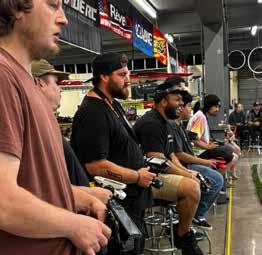

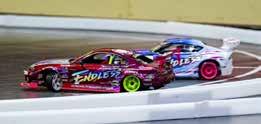
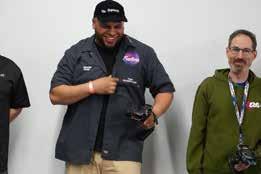
Adam: What motivated you to compete at RCDC (Radio Controlled Drift Competition), Japan in 2025?
Anthony: It’s the best of the best. It was awesome and so professional. It felt almost surreal and is the standout moment in my career so far.
Adam: Did you feel any additional pressure for being in a new and foreign environment, for both being in
Anthony: I’ll be 100% with you, I didn’t feel any pressure from Japan. I wasn’t there for Japan, I was there for America, especially the East Coast. They were my motivation and my strength. I don’t think too far ahead and I live in the moment. My thought was to get tickets to the prom then worry about the dance afterwards, if that makes sense.
Adam: What was the toughest part about battling Japan’s toptier drivers?
Anthony: The toughest part was understanding their mindset. It was equivalent to Formula Drift and it definitely opened my eyes to how I can still push the bar higher.
Adam: What takeaway or personal growth moment did RCDC give you?
Anthony: The takeaway is to keep progressing. I’m nowhere near the top of the mountain. I want to set small goals and accomplish them: achieve top five, qualify better, or even beat one of the Drift Kings.
Adam: What goals are you most excited to chase next?
Anthony: I want to be a DK one day, not just of the East Coast, but of the World.
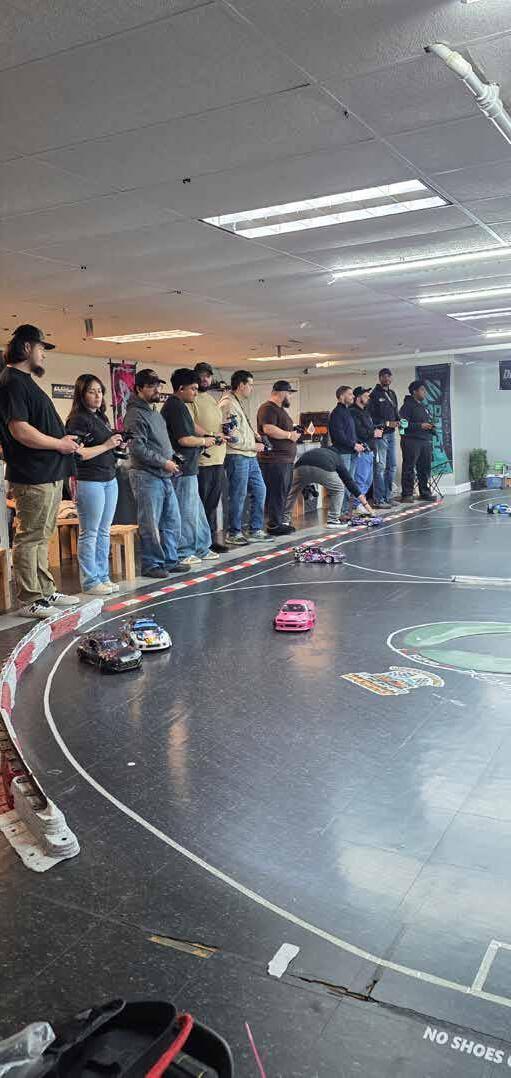

Deeply rooted in the RC drift competition scene, RC Car World (RCCW) was founded in 2013 by Mike Sienczenko. While covering the competition scene in America, the DARC Mag Team talked to Alex Jordan, organizer of the Scale Drift Series (SDS), which is held at RCCW. It seemed fitting to spotlight his home track in this issue and hear more about it.
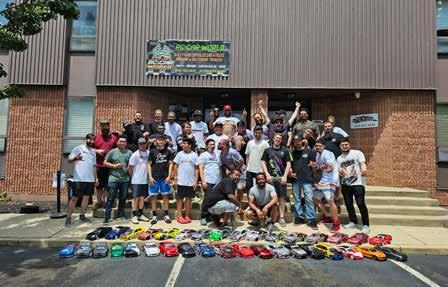
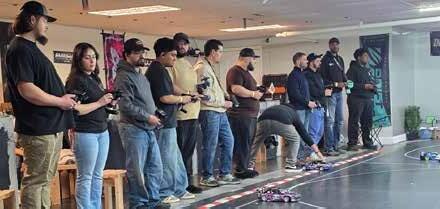
The Foresight - RCCW began supporting RC drifting when other shops considered it “too niche”. Huge props to Mike for going out on a limb to support the hobby; the community certainly appreciates the faith. Mike explains his initial thinking, “I’m a car enthusiast and hobbyist. I saw drifting was growing in popularity due to certain movies as well as the import tuner crowd. There were very few tracks at the time and we felt that it was a great addition to our store. At first, we saw a gradual increase in participation, but we quickly noticed that the drift crowd was very friendly and supportive. Alex Jordan has been key to the growth of local tracks, especially ours, and has worked tirelessly to grow the RC drift scene. Running the track and events is a lot of work and takes devotion. While I try to be as supportive as I can, I have to give Alex credit for the evolution of our track and its participants.”
Competitions - Since Alex took the helm, RCCW has been a comp-heavy scene. He recounts, “Mike gave me creative freedom for the RC drifting side of the business after I hosted an ‘Endless’ event at the original location. New Jersey already had an aggressive style and competition oriented scene, so I just leaned more into that. Once given the go ahead from Mike, I made sure we competed every day. I
coached drivers and designed layouts to test their skill while maximizing flow. We used to do friendly comps every weekend, sometimes even twice a day. Now, with the growing scene, we comp once every other week, just to keep guys on their toes, competing for a belt rather than ranks or awards. ”
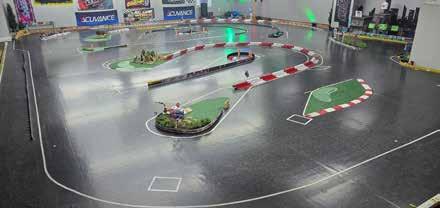
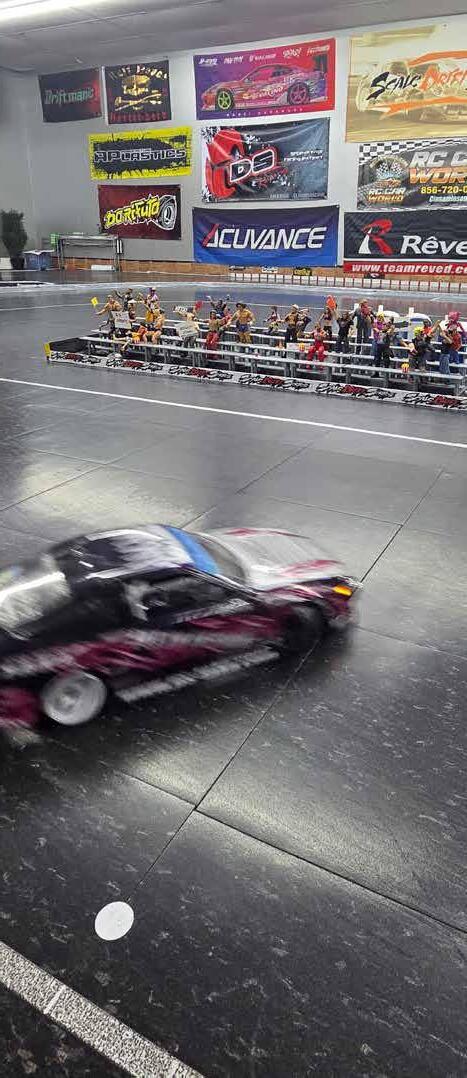
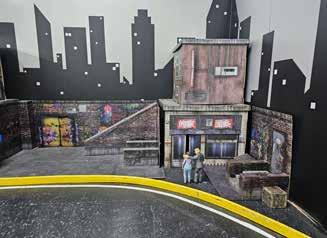
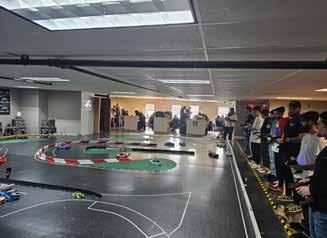
The Track - RC Car World mainly deals with on and off-road RC. The old location had two off-road courses and one drift track. RC drifters were there seven days a week, so the new location included a super unique 1800 square ft P-tile layout. Alex explains, “Our track layout is an original design, rectangular but wide. It’s P-tile done the right way. I design our track in a unique way, using drive lines which can be run in multiple paths without having to redo the track. The lines always flow without creating ‘choke points’, catering to fast or slow drivers. We’ve done roughly eight different layouts this way and there is never an issue for large trains.” Alex describes the scale presence at RCCW, “We do have some scale scenery, my favorite is the scale crowd, but currently it’s off due to a refresh coming up. In competitions, I award the highest placed driver using roll cages, lights, and liveries a $100 prize to encourage more realistic drift cars.” Aside from the trackspec tire, the Reve D AS-01, the tuning at RCCW is open because of the size, layout, and line changes, so drivers can’t just cater to speed. In Alex’s words, “For a very long time we forced everyone to run 33/67 weight bias, but everyone has learned not to use weight as a crutch to gain speed and grip, so now it’s open.”
Teams - While many teams visit every weekend, ‘Endless’ is notable as it was founded at RCCW and is their longest running. Alex points out, “In the North-East, we have drivers and teams from several states on a casual day. Here, drivers are selective and don’t form large teams like you would see in the current climate of RC drifting.”
The Vibe - RC drifting at RCCW has a vibe that appeals to other genres of RC. Alex proudly states, “The off-road guys cross over to drift all the time. Every day on the drift side, music is blasting, guys are laughing and talking trash, and our vibe is next level. It’s easy at RCCW. Even when we are competing, it’s always ‘community first’ which is attractive to other RC hobbyists.”
Credits - Alex has some people he would like to mention, “Thanks to Anthony Torres, such a big personality, and full of life. He is my biggest helper, but before him was Steve Lee. Steve and I could get a lot done, Anthony talks too much and it takes us a bit longer!”
Follow RC Car World Instagram @rccarworld | Facebook RC Car World
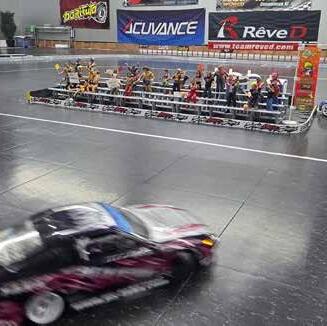
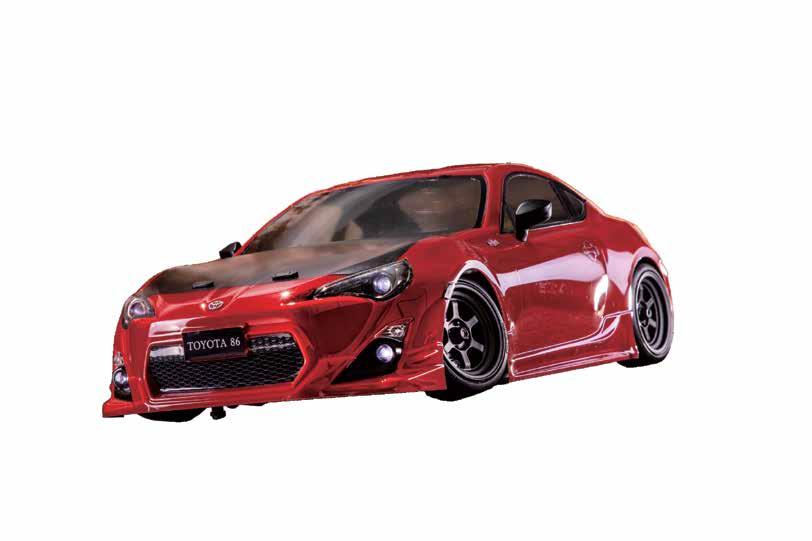
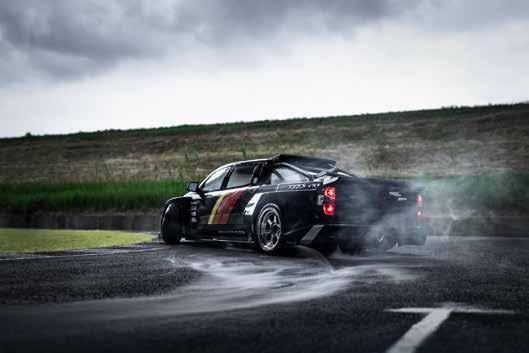
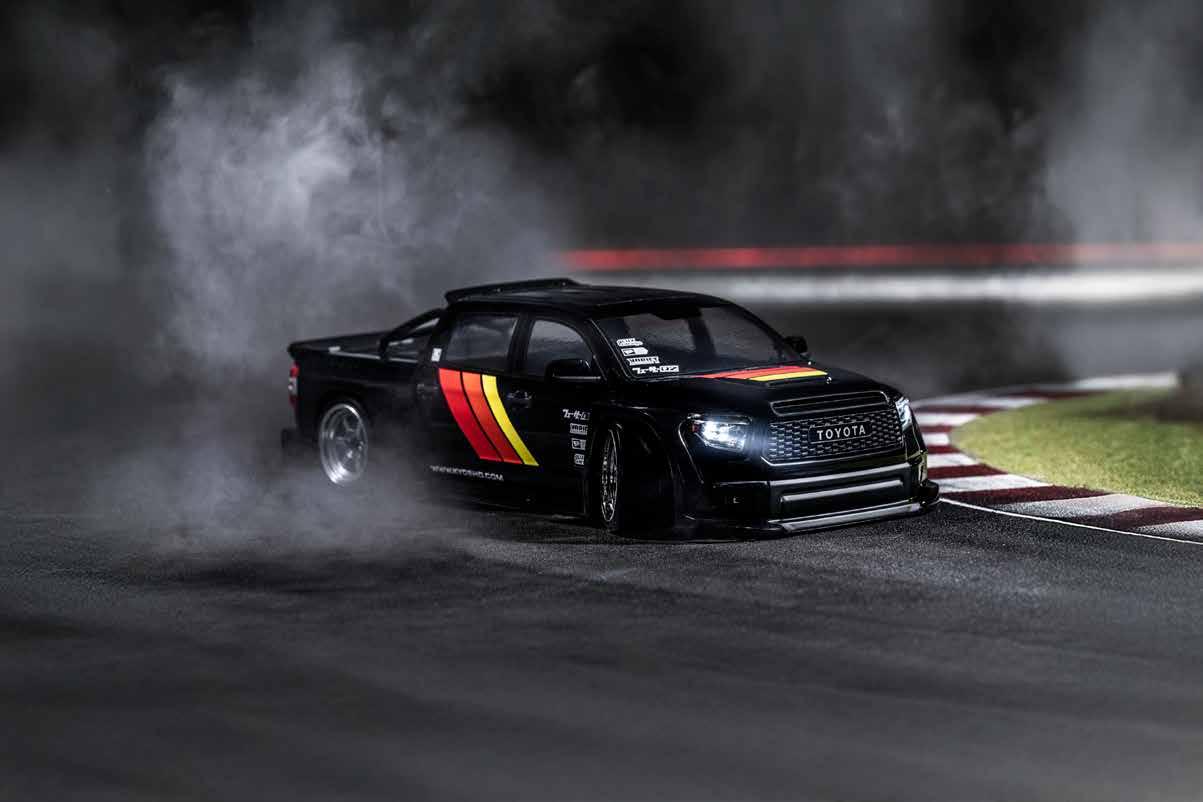
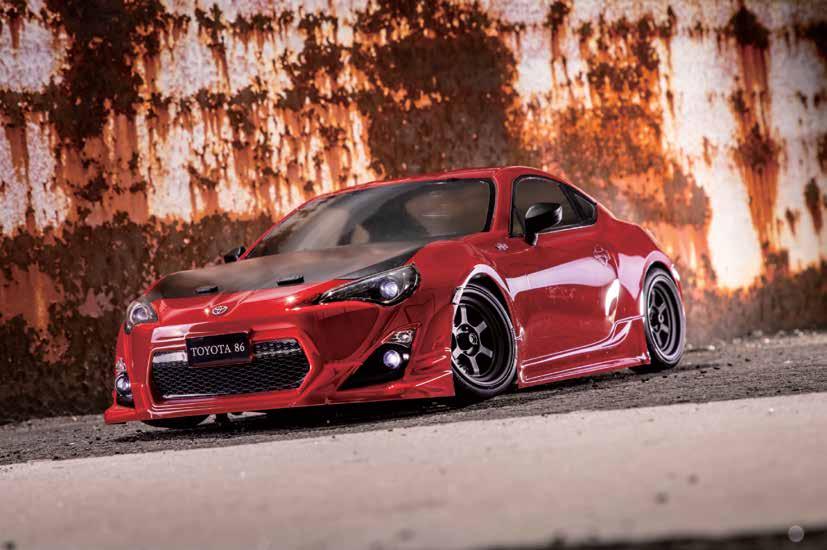
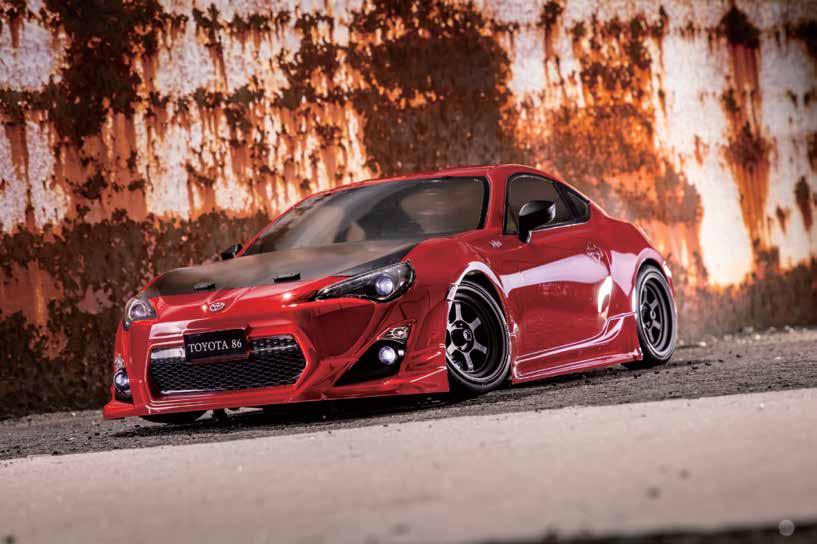
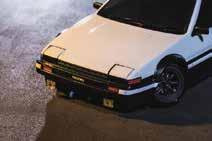
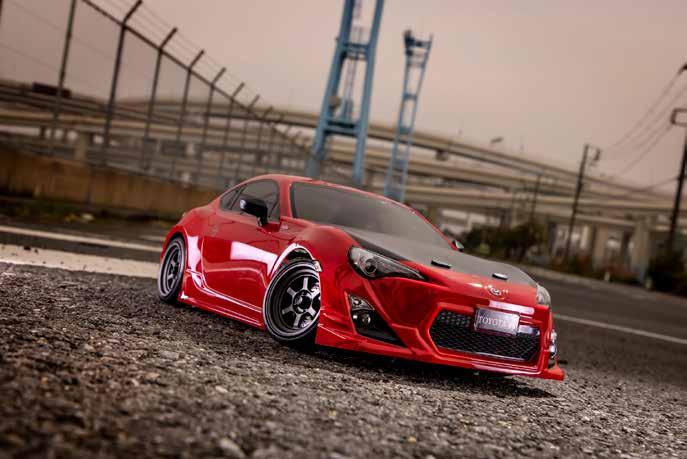
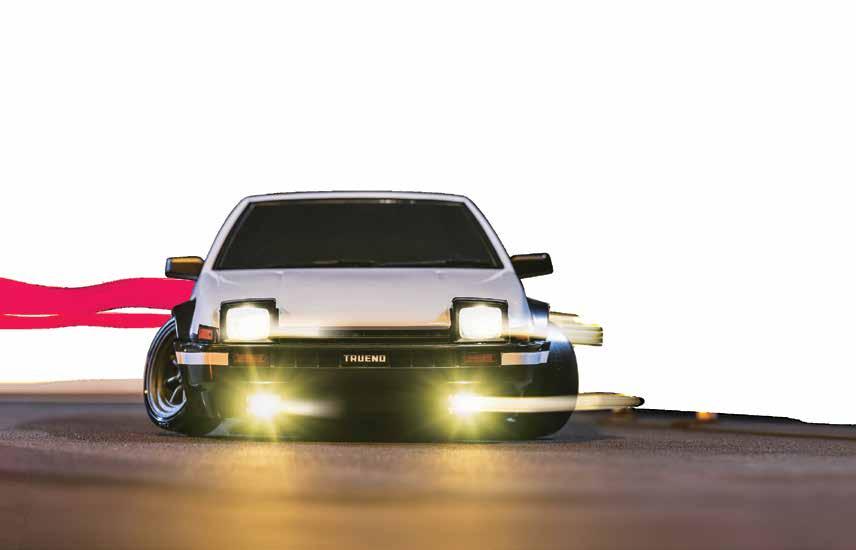
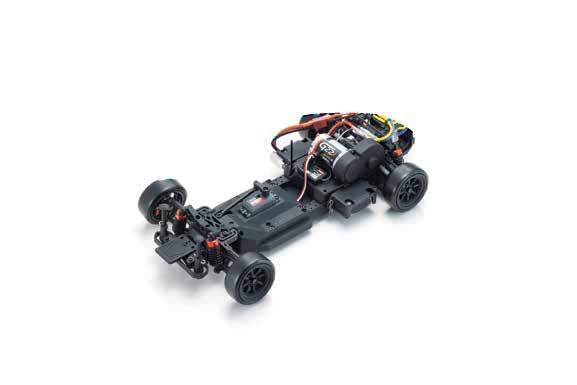

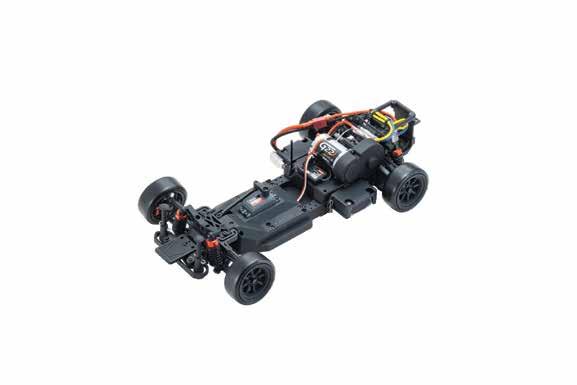


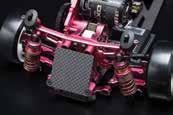
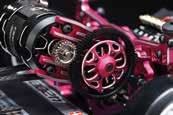
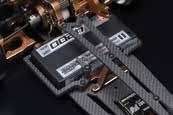
A SPECIAL LIMITED EDITION PINK/BRONZE VERSION of the super popular SD3.0 machine will be released at the end of March! This competition kit not only features anodized aluminum coloring, but also a wealth of newly designed parts, resulting in a spec upgrade that could be called a brand new machine.
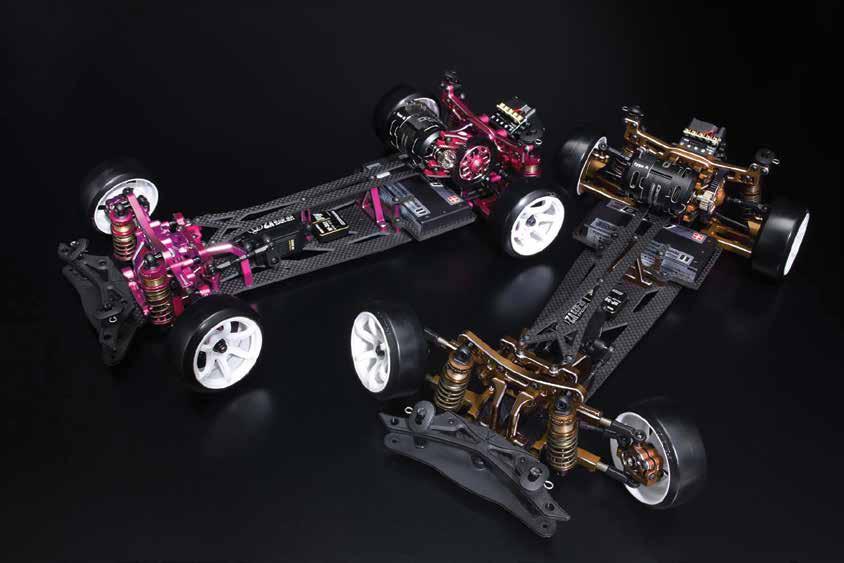
• NEW HEATSINK MOTOR MOUNT
• NEW SPUR GEAR HOLDER
• NEW SHOCK TOWER
• NEW ALUMINUM/GRAPHITE BATTERY HOLDER
• NEW ALUMINUM VARIABLE TRAIL STEERING BLOCK
• ALUMINUM FRONT & REAR SUSPENSION ARMS
• ALUMINUM REAR HUB CARRIER
• REAR ESC MOUNT