






- STEPHEN PLATT
OMG - BRIAN O’NEILL
EDITOR: LIZ SHAW
CONTRIBUTORS:
ADAM MAH, CHRIS CRUZ, CJ MEDIA, DAVE STEVENS, DAVID DONALDSON, JOSH GEEG, JUNIOR BARBA, KONSTANTIN STANCHEV, LUIS NIEVES, MARK SANTA MARIA, “MASTER KEN” KENNEDY, MATT BARTELL, MICKEY MARQUEZ, RANDY SANDERS, SCALE MAGIC, STEVE FUJITA, VICTOR HO, VIKTORIA SILK, WAREN JOHNSON

DARC MAG is FREE to view online download from DARCMAG.COM Pick up your copy also at these locations:
412RC INC 3109 W Liberty Ave suite 200 Pittsburgh, PA
CASA DRIFT 4629 S 108th St. Greenfield WI
CATSCOOTZ 1579 Clark Street Road, Auburn, NY
COASTAL RC DRIFT 2561 El Camino Real, Carlsbad, CA
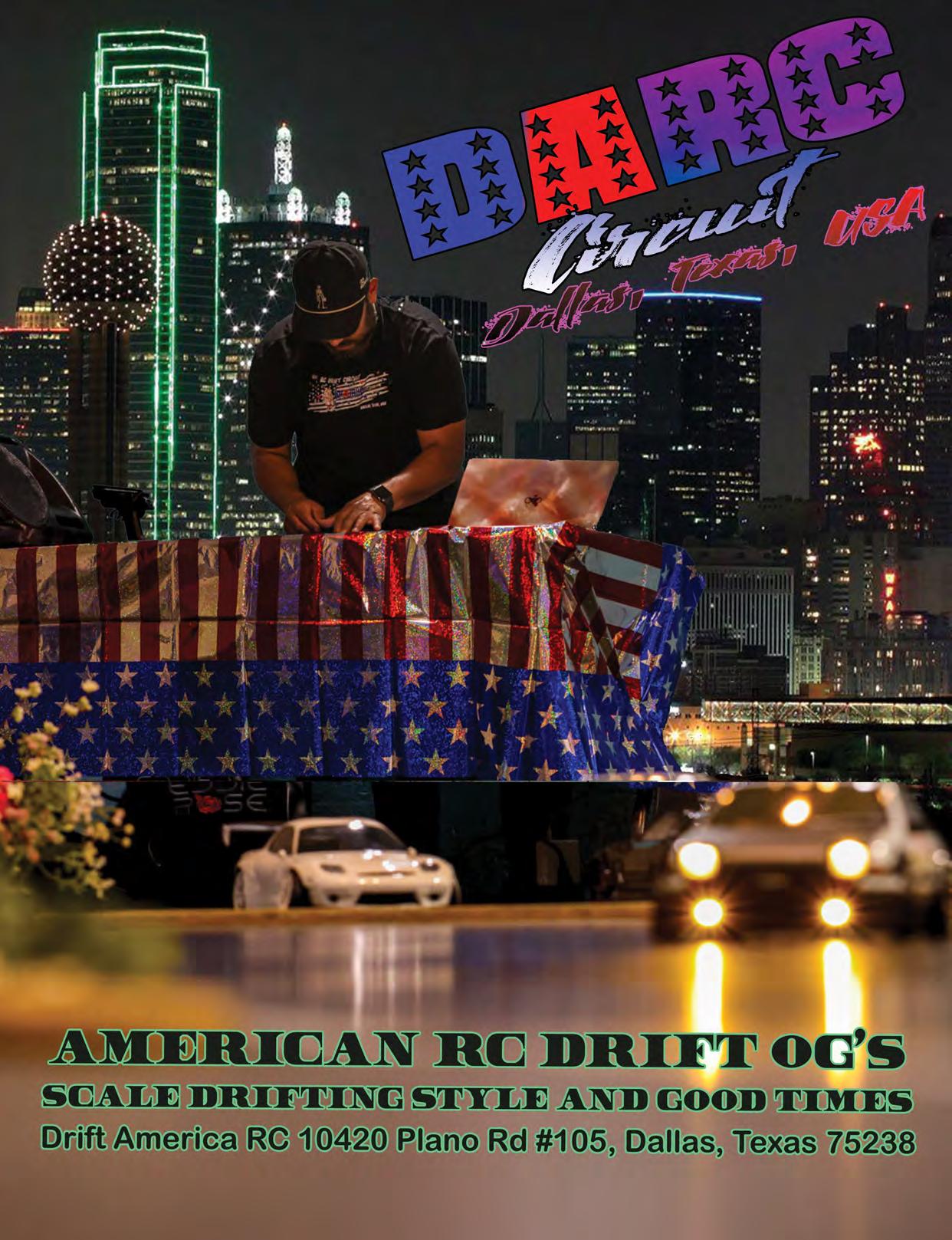
DARC 10420 Plano Rd #105, Dallas, TX
DRIFT IN' 3515 Franklin St C, Michigan City, IN
DRIFT MANJI RC Unit 5, Valley road, Liversedge, United Kingdom
DRIFT NINJAS RC 6625 Robinson Ave, Allen Park, MI 48101
DRIFT SCENE 315 Fingerlakes Mall, 1579 Clark Street Rd, Auburn, NY
HIGH VOLTAGE GARAGE 1199 E Central Ave, Wichita, KS
HOBBYTOWN RVA RC DRIFT GARAGE 9900 West Broad St, Glen Allen, VA
POP'S DIRTY SOUTH 1717 Rabbit Ln, Lake Charles, LA
RC CAR WORLD 2305 Garry Road, Ste A, Cinnaminson, NJ
RC DRIFTWAY 3065 Cranberry Highway, East Wareham, MA
ROC DRIFT 1250 NY 104 Suite 20, Ontario, NY
SCALETOPIA 507 Victory Blvd, Yorktown, VA
SHAKA HOBBIES 1204 TX 110 Suite B, Whitehouse, TX
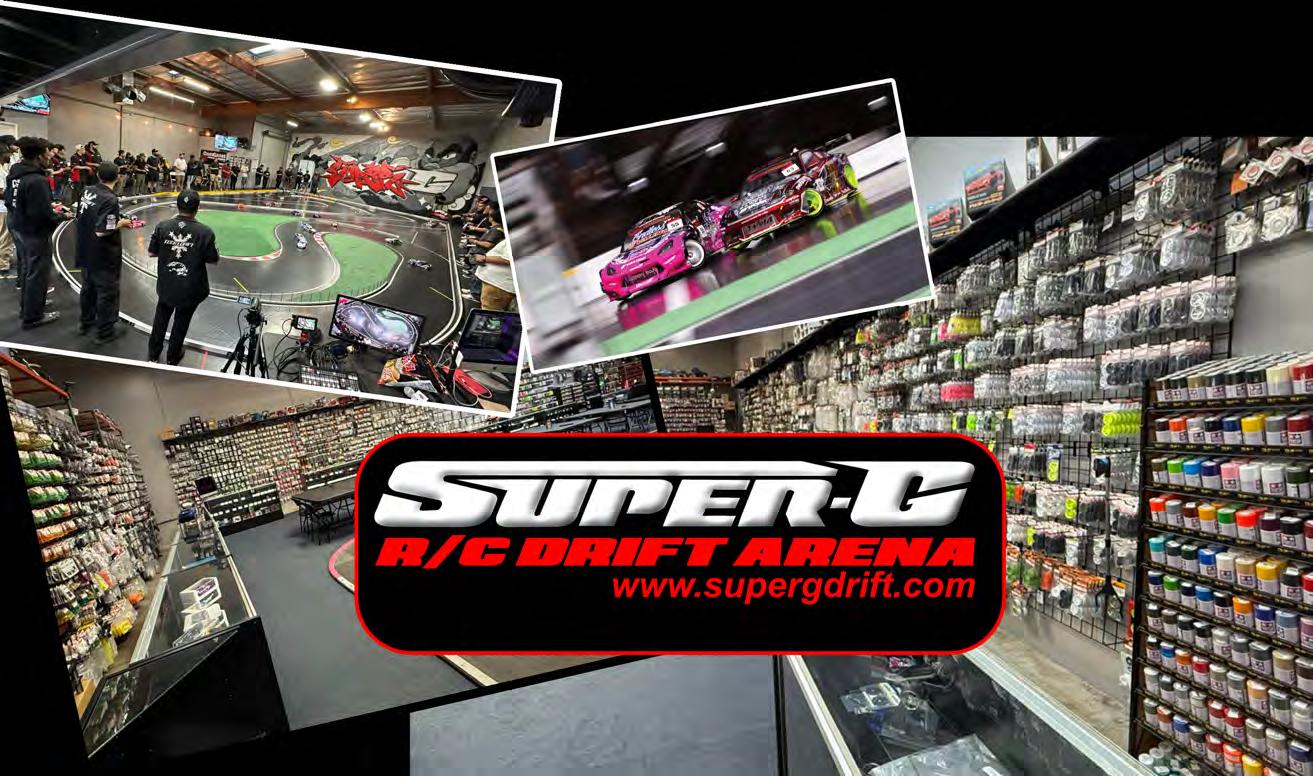
SUPER G 1376 Maine Ave, Baldwin Park, CA
TANDEM RC 909 S Dobson Rd #19, Mesa, AZ 85202
THS - THE HOBBY SHOP 900 Lacy Dr, Leander, TX
VERTEX RC 5595 Magnatron Blvd T, San Diego, CA
ZERO TRACTION 500 Polk St, Suite 9, Greenwood, IN

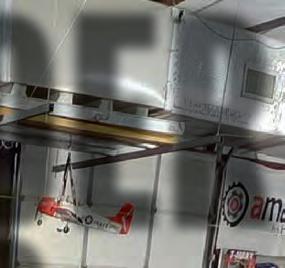




RC TRACK ACCESS O ers hourly drift car rentals, daily practice access ($20), and full monthly memberships ($80) for unlimited drift sessions!
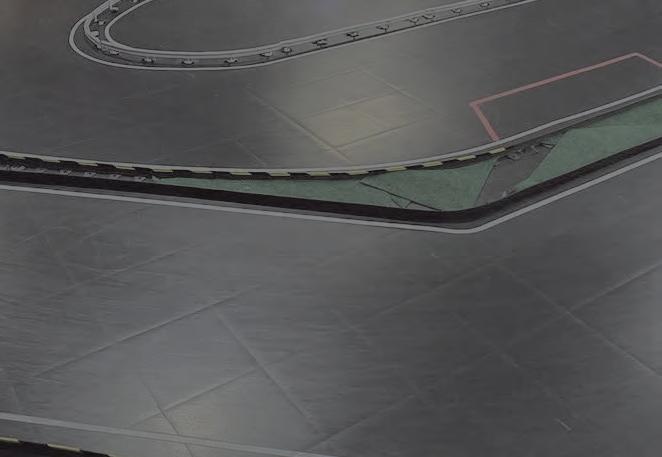
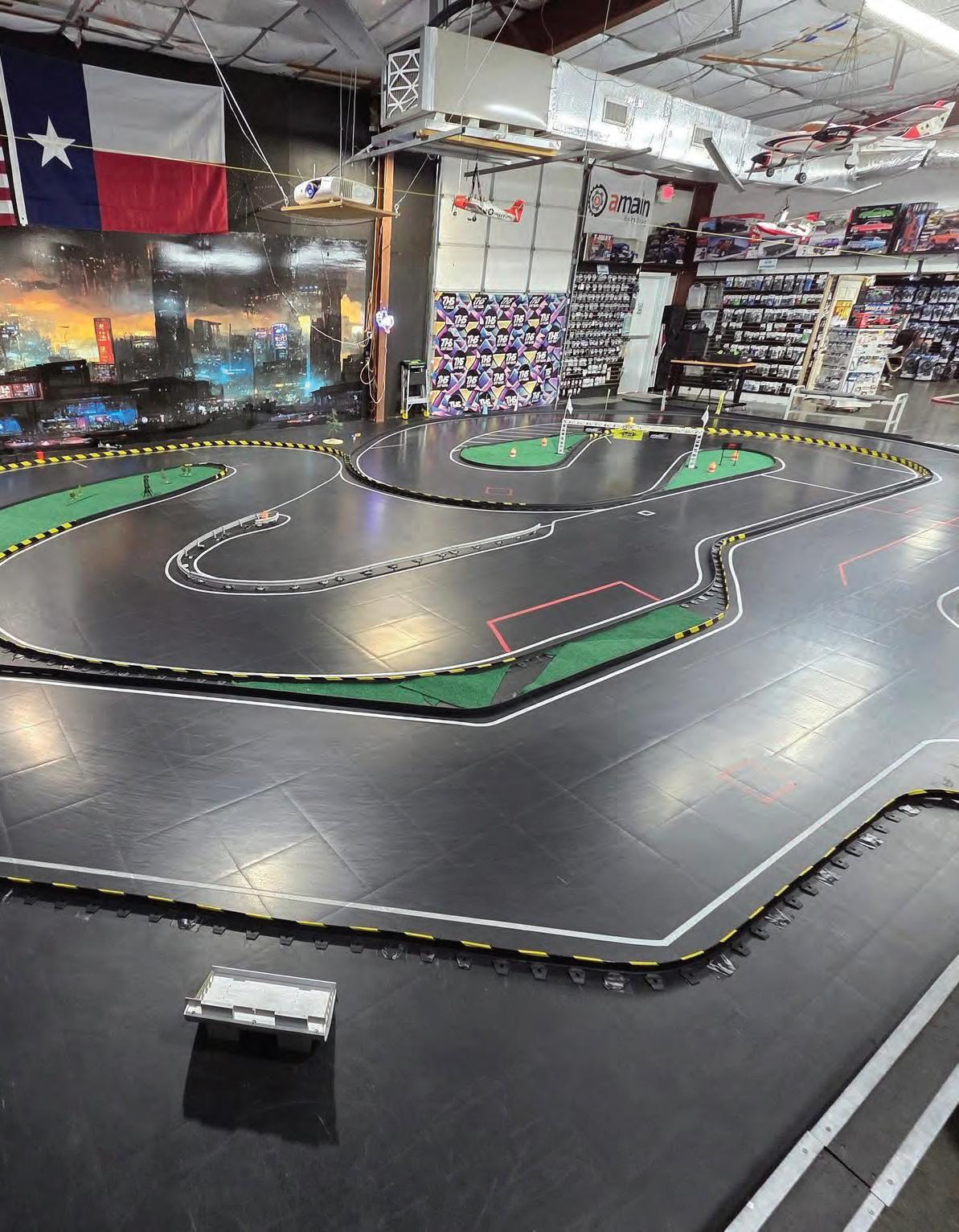
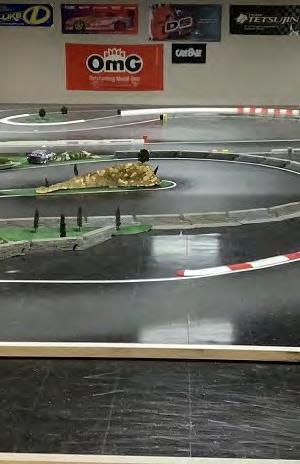
MULTIPLE RC TRACKS Features four unique RC tracks including a dedicated DRIFT TRACK, outdoor CRAWLER COURSE, and indoor MINI Z TRACK.
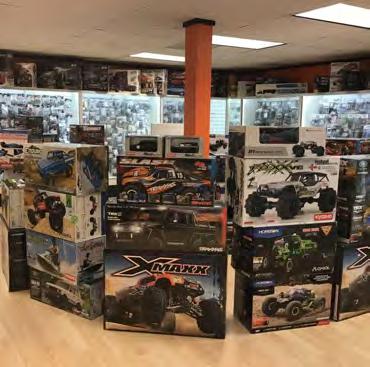
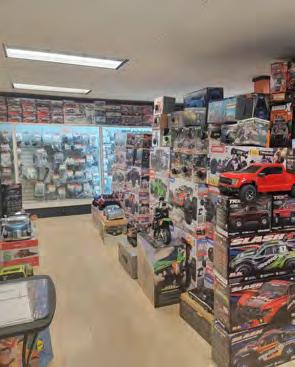
WIDE PRODUCT SELECTION Carries over 2000+ RC vehicles, model kits, Gundams, RC airplanes, and boats.
COMMUNITY & EVENTS Hosts local and international events, bringing in global RC enthusiasts and fostering a vibrant community atmosphere.
FAMILY-ORIENTED & ACCESSIBLE Open seven days a week with extended hours, including exible holiday availability to support the RC community as extended family.

























The base chassis used for this build is an Overdose Vacula 2. I believe it was produced in 20182019. The retail price was $500 at that time not including any upgrade parts.
Since I bought it in 2022, I’ve upgraded the purple servo holder, rear uprights, front bumper plate, front lower arm, and servo horn. Overdose parts aren’t as easy to come by as some other RC drift companies, but that’s the fun part about this chassis. Fully upgraded or not, this chassis rips.

I’ve always admired Overdose. I’ve owned a couple, in fact I still own an original Vacula from back when Rear Wheel Drive (RWD) chassis first came out. I had taken an All Wheel Drive (AWD) Vacula and transitioned it to RWD. It was the most tuning fun I had modifying a chassis… up until then.
Nothing special is needed for tuning, the basic set up works really well on this chassis. It’s one of the reasons I enjoy it.
The dampers I used are the OD gen 1 dampers with the 6 hole pistons filled with 20w OD Mineral oil all around I run an Overdose ball diff which meshes really well with the belt drive system this chassis has.
I set up the Front Ackerman at -4 with the original OD slide rack The rear camber is at -10.
I’m a big fan of Accuvance electronics, so I went with the older model Accuvance Keyence with a 13.5 Accuvance BS Dual Luxon motor as I felt it would feel best at our track here at Darc.
For servo I went with the Reve D RS-ST and for gyro I went with Sanwa SGS-02. I feel these 2 pair really well together and I’ve had zero issues with them.
I would estimate my drift machine’s value at 900 USD.
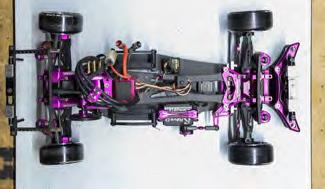
The Overdose Vacula 2 drives very, very smoothly, almost like it drives itself.
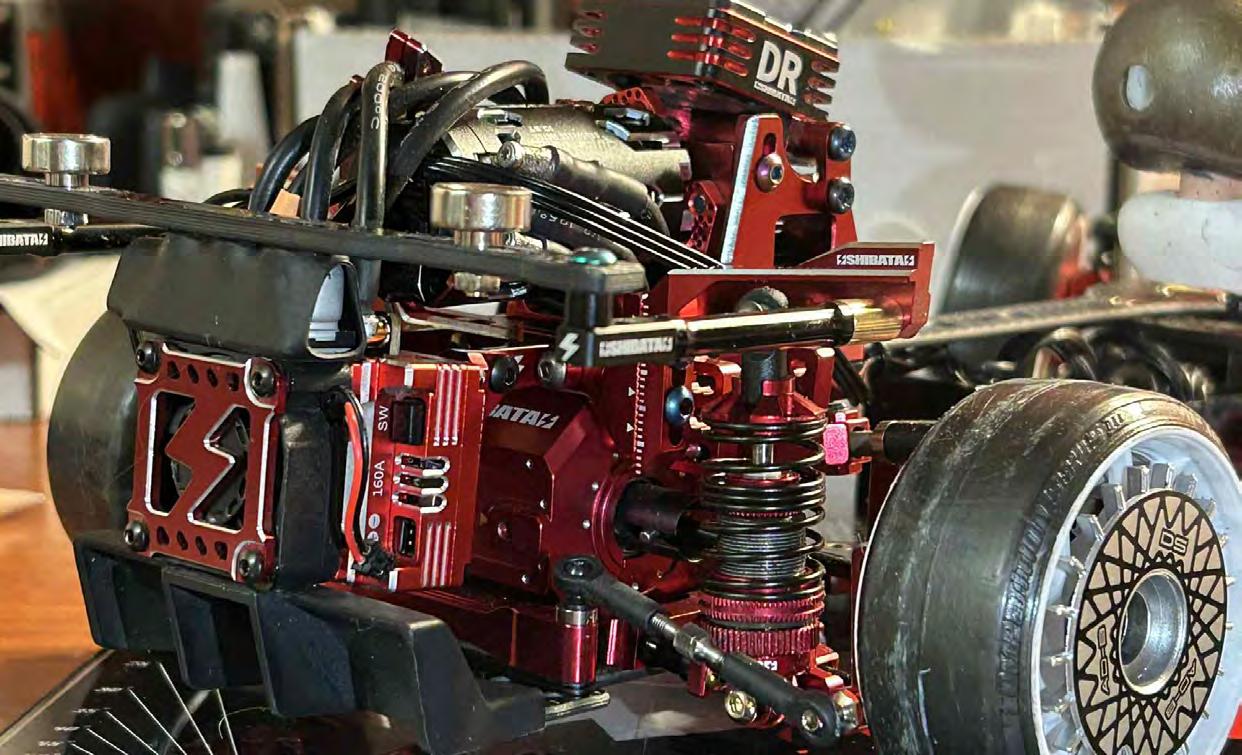
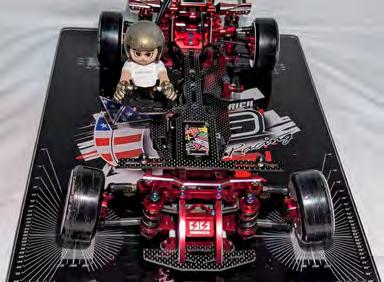
This base chassis is a SHIBATA GRK5 Kodai Sobagiri Limited Edition.
It was produced around the 4WD days but I got into them back in 2020.
I’m not too sure what the cost in the US was. I want to say anywhere from $1,000 to $1,400. I was blessed with mine from a very good friend of mine in Japan.
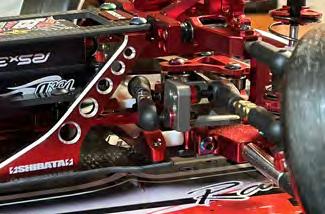
I haven’t made any major upgrade modifications. I have a few option parts that were all sold for the chassis by SHIBATA. It also has the House Of RWD titanium bolt conversion and tie rods.
I particularly like the stability and smoothness of how the chassis naturally drives.
The stock kit offers a few unique layouts, I really enjoy the kit for this reason. I’m always into trying different set ups and layouts. Currently I’m running a full SHIBATA damper set up. The mineral oil for the front is 35 weight and 45 weight for the rear. The springs in the rear are 9.5 SHIBATA Dual Rates and the front are 5.0 L/R Symmetrical.
For electronics I’m using the Reve D Breve ESC, Rocket Super Sonic 10.5 Motor (a smaller 380 size motor for smaller 1/14-1/12 scale RC), KO Propo RSx3 one10 Version D Servo, KO Propo KG-X gyro, and Acuvance Trace Becter Caps, Cavalier Trace. I went with the Reve D
Breve ESC because after running a few other brands, I felt the Breve was the most user friendly and simple to use. One thing it has that’s new to me compared to any of my chassis in the past is the 380 size motor. I went this route because I wanted to build a rear motor set up without the rear being too heavy. Normally on my GRK’s I run the SHIBATA brand from the 10.5, 13.5, 15.5.
The amount of toe, camber, and Ackermann changes quite a bit depending on track and size. Right now I’m set up for a polished concrete track. I’m running -4 degrees of camber for the rear and -13 degrees of camber for the front. The rest I eyeball and make sure it’s all equal with measurements on the tie rods, gaps, etc.
I estimate the electronics to cost 60 for the gyro, 80 for the servo, 60 for the motor, 220 for the ESC, and 60 for both caps, so around 480 USD in total. I use a Futaba 10px radio that’s estimated to be around 1000 USD. So altogether a little over 2000 USD. Unfortunately, the KO Propo servo and gyro are both discontinued.
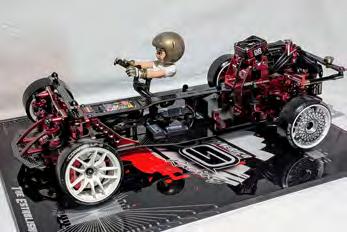
I’ve been told it’s a real “set it and forget it” chassis but super smooth. One thing I love about it is that you can stay relaxed while driving it… even in comps.
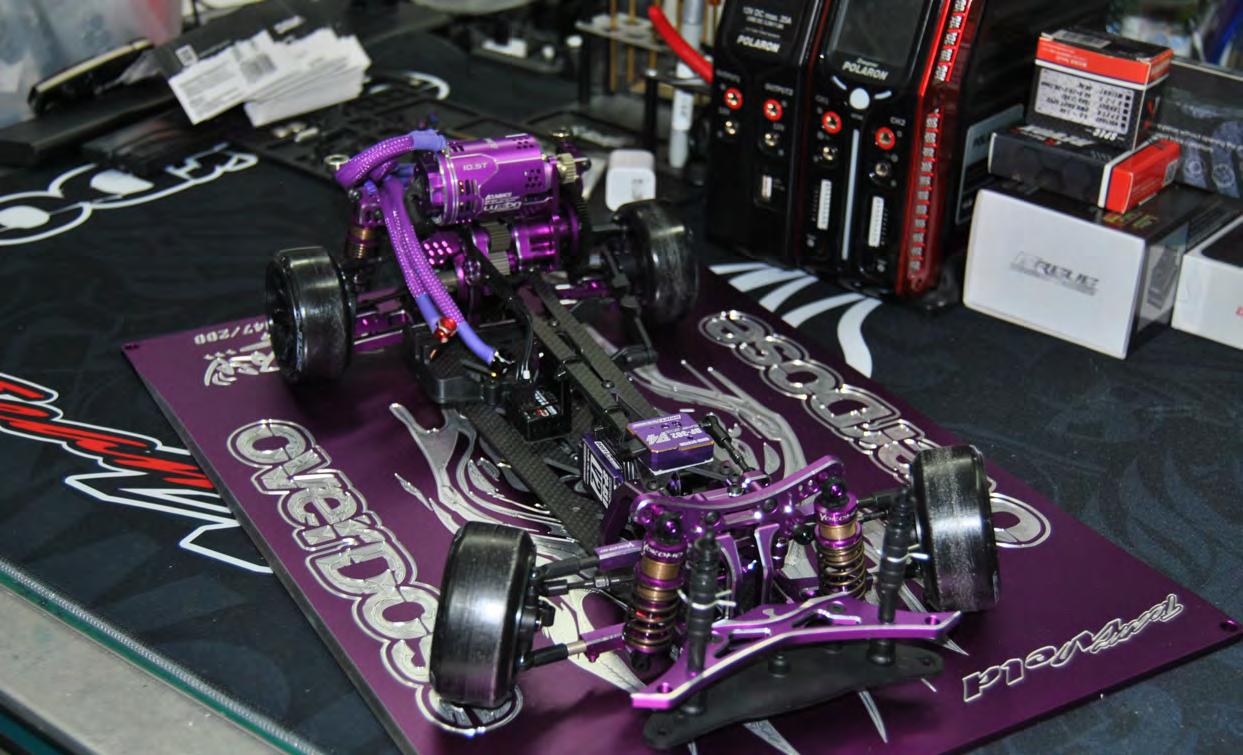
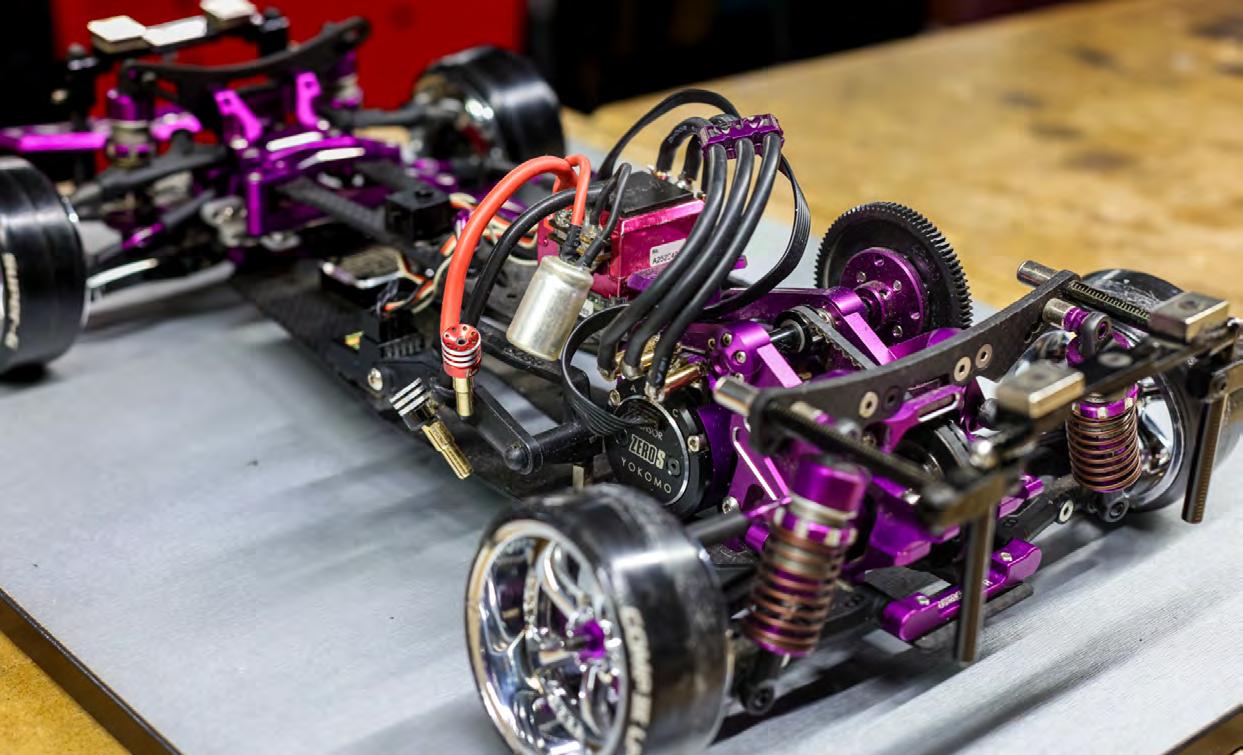
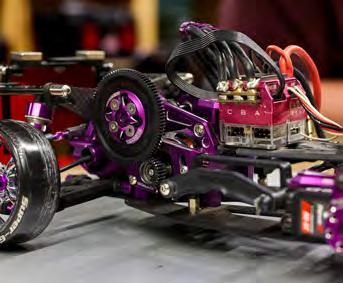
This base chassis is the Yokomo SD3.0, purple edition, finished out with the additional purple upgrades.
I really like that it has the familiar feel of the Yokomo YD2-SXIII, but more refined. The quality is always top notch and it goes together relatively quickly. It’s also easy to get a base suspension tune for our track.
I generally run full ceramic bearings, I don’t like the kit bearings.
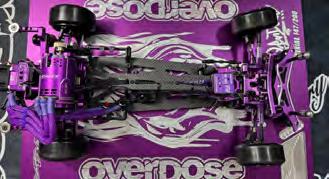
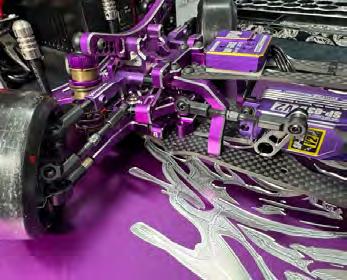
It has a CLSD in it, 8 soft spring. The CLSD is a differential that allows you to make adjustments by changing the internal gears and springs. There is an option for the soft or hard springs and an option to run 4 or 8 gears, depending on whether you want the feel of an open differential or a stiffer, more solid spool-like feel.
The CLSD diff feels great when entering the long sweepers and it helps with being able to hold a pretty hard angle through them. I’m going to try the 8 gear, on soft spring and see how the change feels. I may end up switching it to a ball diff.
The dampers are the Yokomo big bore with the Yokomo tapered pistons and Reve
D dual rate springs for the rear dampers. I have 10 weight mineral oil for the front and 15 for the rear.
I have installed all Yokomo electronics on this chassis, except for the Accuvance Fledge 10.5 motor with the standard rotor. It also has the Yokomo RPX II Drift Spec Electronic Speed Control (ESC), Yokomo DP-302 V4 gyro, and Yokomo SP-03V2 servo. My normal “go to” is the Accuvance RAD ESC, Futaba GYD550 gyro, and Futaba CD700 servo, but for this build I wanted to keep the chassis all Yokomo.
In the front I run 10-12 degrees of camber with 1-3 degrees of toe. The amount of Ackermann varies based on the amount of full lock on the lead wheel and the angle of the drag wheel. For the rear wheels I run 0.5-1.5 degrees of camber with either zero toe or 0.5 degrees of toe in. With electronics I would value the car around 1400 USD.
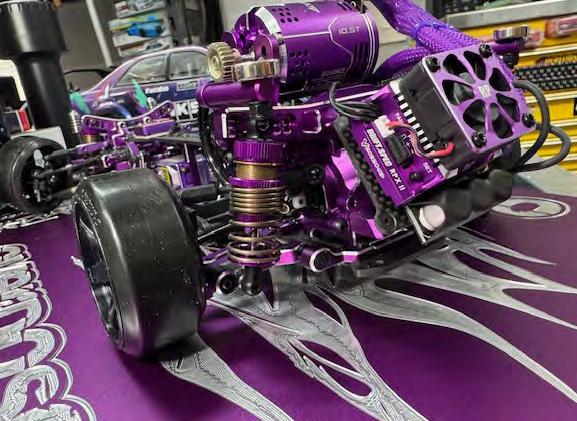
It feels good to drive! I like my chassis to feel planted, but still be able to give it a hard flick when entering the sweepers or transitioning on the turns while maintaining it’s smoothness.
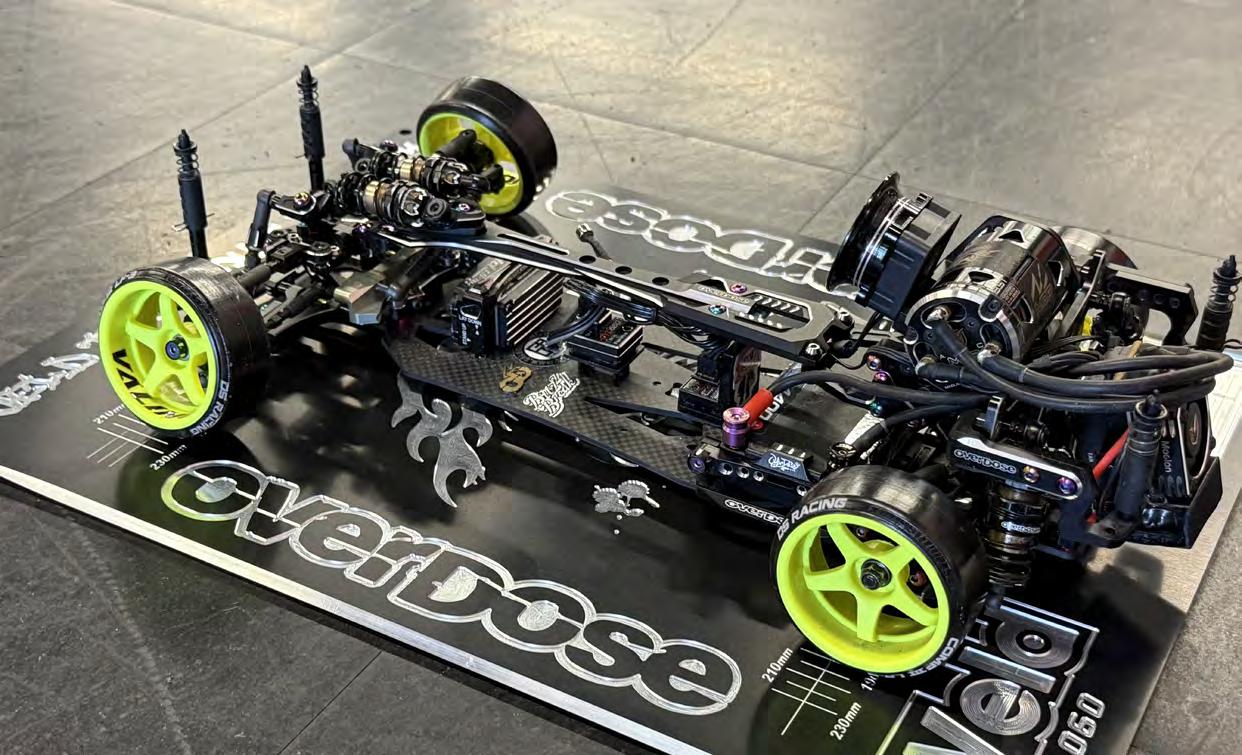
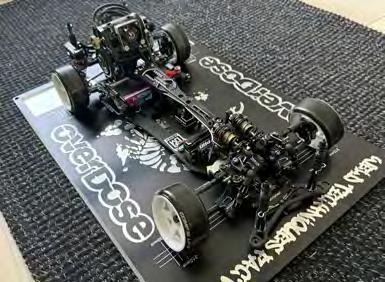
The base chassis for this build is the Overdose GALM. The base retail price is difficult to estimate. I would say 3,000 USD for the retail price with the full options, or 400 USD for the base model of the chassis.
There are no additional modifications or conversions on this chassis, but the chassis is currently fully optioned with only the finest Overdose optioned parts. I set up the High motor configuration on the trans range deck.
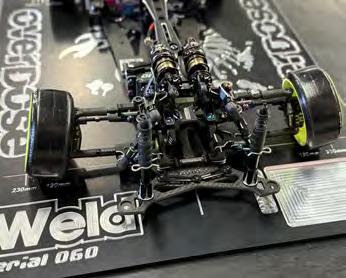
The Overdose GALM is a high performance chassis that has endless amounts of fine adjustments. It delivers a precise feeling of drifting that I haven’t found in any other chassis. The option parts for it are very performance driven and you can set up three different configurations using OEM option parts (high motor, low motor, rear motor). It’s a tuner’s dream!
The high motor mount configuration has been the goto for many drivers on different platforms. Compared to the transitional low motor mount configuration, it moves the weight up top so it provides more side-bite and more roll overall on the chassis. The rear motor configuration is where the motor sits behind the rear suspension pin, giving you the feeling of pushing the car forward from the rear end. They are different tuning options for different characteristics and preferences of the driver. The GALM can do all three configurations.
For the damper setup, I run the overdose
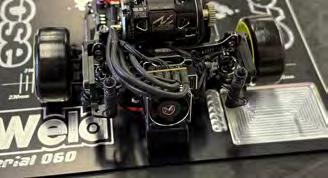
high grade shocks version 4 with OD springs and OD 10 weight mineral oil. I use the Overdose ball diff for the gear configuration for the Overdose GALM as it seems to mesh perfectly with the gears. I am currently running a Maclan MDP motor and ESC. I am a Maclan team driver and I trust the people that helped develop the platform from day one. It has given me three wins in Texas SDC rounds, so I’ve really grown to count on the Maclan Combo. For the servo/gyro combination, I am using Reve D RSST Pro with Futaba GYD550. For toe, camber, and Ackermann, I honestly just eyeball everything. I make sure I have minimal toe in front and 0 toe in the rear. The camber is dictated by the Ackermann setup in the front. The rear I run as much of a contact patch as I need per track.
With electronics, I would estimate the value of this chassis to be around 5,000 USD. I have the GALM Anniversary chassis too, but don’t drive it often. It’s a rare collectors item. The Anniversary GALM is 2,500 USD as a roller with no hop ups.
My daily GALM chassis feels direct, quick, and does everything you need on demand. In the corners, it catches very well and allows you to continue the drift without any delay. The Overdose GALM is the most tunable and direct feeling platform I’ve ever had.
w/ Mark Santa Maria

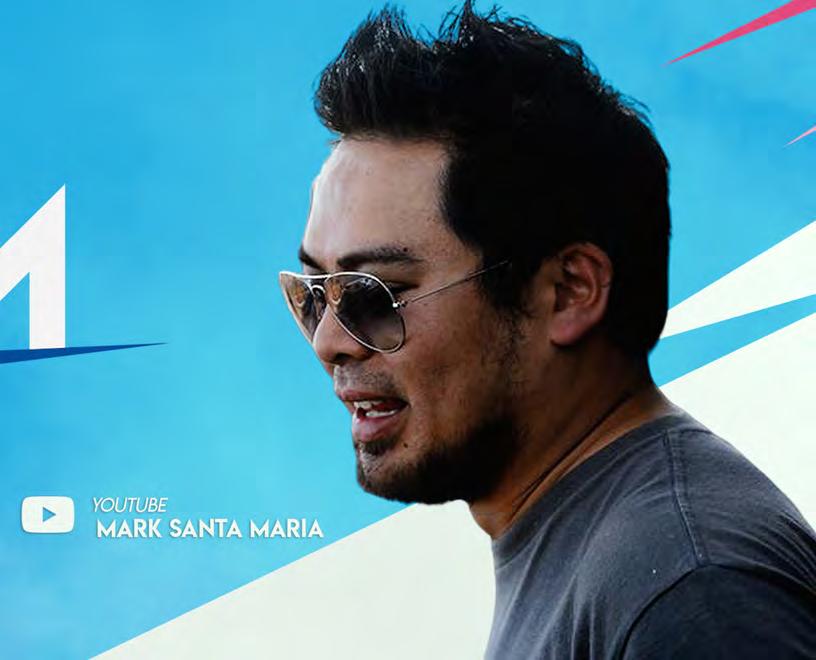
Mark Santa Maria has dipped his toe in just about every form of RC, including drifting. Drifting is only just starting to break the surface in America, but it has been very underground for the last 12 or 13 years. We asked Mark what his thoughts are about RC Drifting….
I think the RC drifting community has the best camaraderie of all the RC communities. Camaraderie is one of the things I love about the RC community, although it's different in drifting because if one car looks bad in the line, the entire line looks bad. They all have to work together to make the coolest drift sequences. Seeing a line of cars drifting together is amazing.
With that said, I think of all the types of RC driving, drifting is the most difficult for me. It's likely because I come from a racing background. While countersteering is second nature for me, I can't countersteer as well as a gyro. That's the hardest thing for me, trusting the gyro. Coming from a racing background, as soon as I feel the rear end come loose I try to self correct. Also, adjusting the slide with the throttle doesn't come easy to me. It's almost the complete opposite. In off road racing, it's all about grip and control. In drifting, grips seems to be your enemy. I think for me it just takes a day for me to dedicate to practicing and getting it right. Unfortunately a full day at the track doesn't come easy for me lately. Someone told me once that trusting the gyro is symbolic of letting go of control in life. I like that.
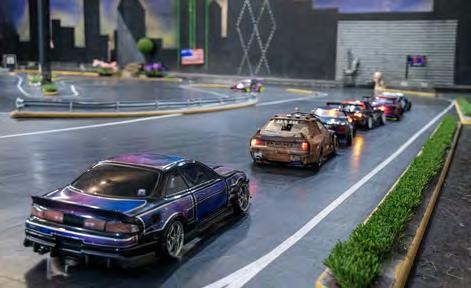

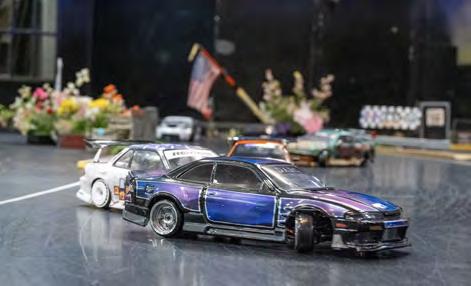
I always wonder if getting a better car will make it easier. Then I will let an experienced drifter drive my car and I realize it's just me. I’ve been told that this is a common misconception in drifting. A better car won't necessarily make you a better driver. It helps a little, but nothing beats seat time. It's frustrating to those with means to get better equipment.
The best RC drift experience I've had so far was being invited down to The Hobby Shop in Leander, Texas. I'm not sure what the event was called but they flew in influencers from all over the nation. There was a swap meet for sure… that's what originally brought me to the event… I love shooting swap meet vlogs! I got to meet Brad Bollman from RC Supremecy and Vittoreo Santiago. Both Brad
and Vit were super cool to hang out with and they let me try out their cars. I couldn't drive their cars either, but I could tell the difference. Between us 3, we reached easily over a million on social media. It gave us the opportunity to cross collaborate and have a really deep dive into the culture.
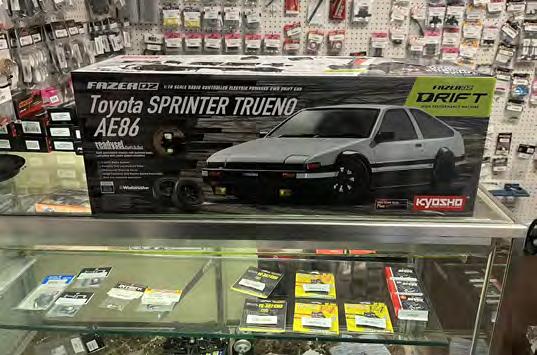
I haven't actually practiced drifting much on my own. I usually drift when I get a car to review that is specifically a drift car. Most recently, I reviewed the Kyosho Fazer D2 Drift Spec. The AE86 is definitely my favorite drift car body. The funny part is, when manufacturers reach out to me to review drift kits, I make sure to disclose I am not good at drifting.
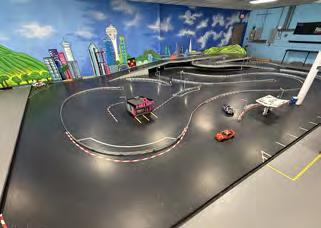
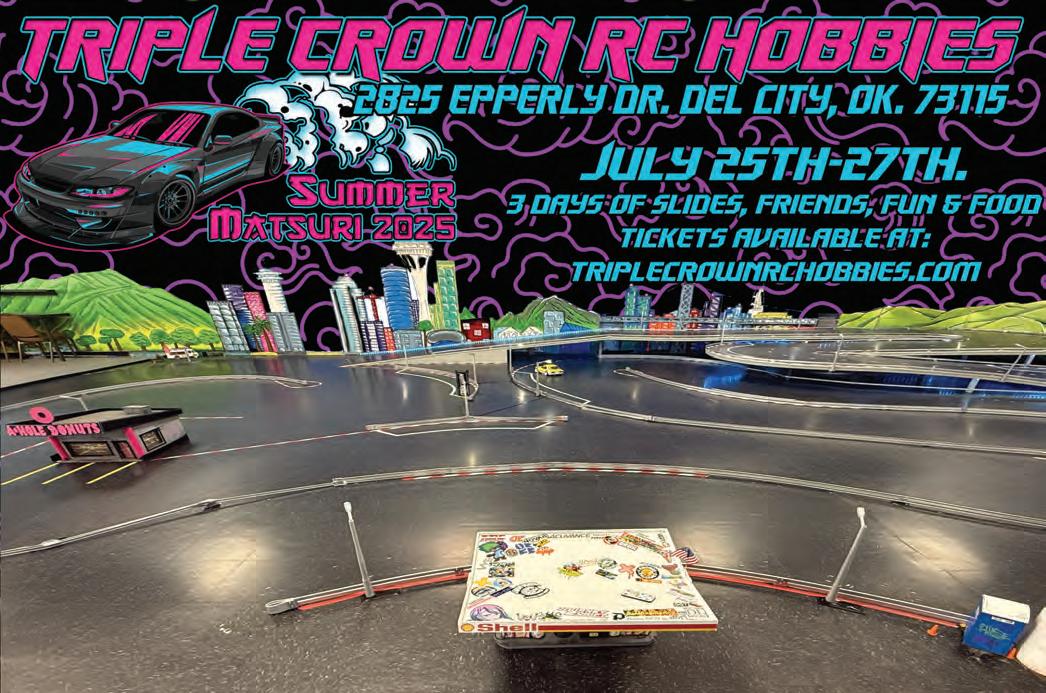
I recently toured a hobby shop in Del City Oklahoma called Triple Crown RC Hobbies. I thought it was a really cool drift track. There were 2 levels and it was probably the biggest drift track I have seen.
Triple Crown is having their first Matsuri (RC Drift Celebration) on July 25th-27th and it looks like it’s going to be a great time. I’m glad DARC Circuit is always nearby to help me to review and give me a good track layout and surface to test on.
I love the scale aspect of RC drifting. I’ve always loved scale trail rigs. In fact, it's the RC kick I am in at the moment. Not rock crawling but just building a cool looking scale truck and hitting the trails. I was in line when the original Fast and Furious hit the movie theaters. The import lifestyle is something that hits home for
me. I’ll probably catch some flack for this, but my favorite movie in the Fast and the Furious franchise was Tokyo Drift. Not just because of the cars but because of the culture it showed in Japan. With that said, I love the looks of scale drifters. It's like living the lifestyle without the risk of wrecking a beautiful car or the cost of burning up tires.
I know I’m not alone when I say this, but my favorite car in Tokyo drift was definitely Han’s orange Veilside FD RX7. I didn't know it was an RX7 at first. I also really like the blue Nissan Silvia S15 Spec-S, "Mona Lisa", they took the engine out of for the hero car.
I do see a difference in the drift community from other communities. Although all communities have camaraderie and a sense of family, the drift community seems more laid back and relaxed. Not overly competitive. There are no elitist mentalities and no smack talk. They just slide and chill.
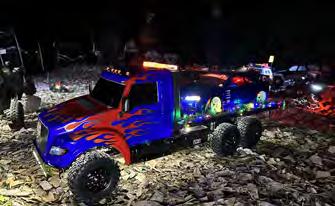
Just as the drift community wants people from the other communities to try drifting, I think the drift community should do the same. I am starting to see drift people come to my crawl and trail events. Once they get to know everyone, it exposes drifting to the other communities. When people cross into other disciplines of RC, they should bring their other cars to be exposed to the group. For example, if I pull into a hike with my drift car on a trailer, or go to a big RC race with my drift car in my pits, people will ask questions and other people will be intrigued.
With regard to growing the RC community, RC drifting is one of the few RC activities that doesn't take much room and isn't dangerous to the public (high speed and flying cars hurt). It would be cool to see drift setups in malls, events, or any other area that gets a lot of foot traffic.
Mark has several irons in the fire and we’re very thankful for his time and input. Mark has the @ MarkSantaMaria Youtube channel as well as the msmvlog.com
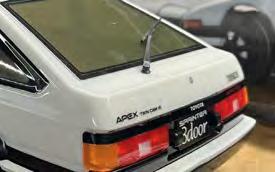
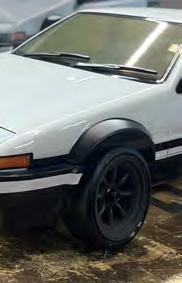
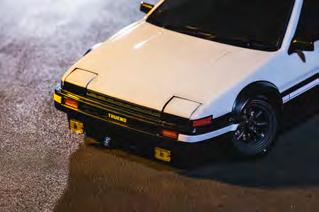
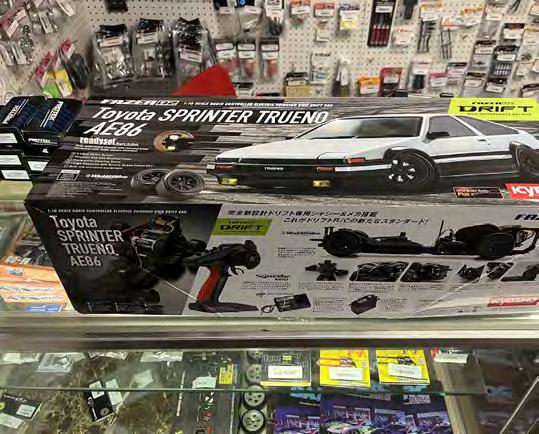
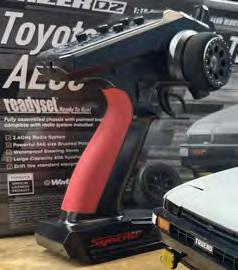
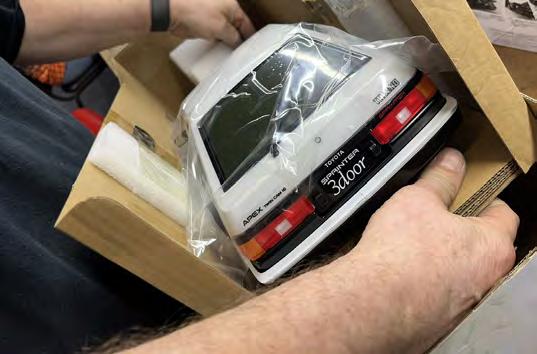
Our initial thoughts taking it out of the box are about the incredible details in the body. There are some nice windshield wipers and a pretty cool license plate. The tail lights look very realistic and it appears that the headlights pop up and down. Ken said you can fashion a mini servo in there to get them to pop up and down. There are also side mirrors. We noticed that the widebody fenders are semi gloss black as well as the windshield wipers, which gave it some contrast and made it look more realistic. The wheels are actually pretty realistic looking also. The remote is like none we’ve seen before, but we liked that there are actual dials so you could tell what the settings were. It doesn’t look like any other readyto-run we’ve seen before.
It does not come with the battery. It does come with Dean’s connectors, which is a good thing. Chances are, you already have a battery with Dean‘s connectors. We suspect it doesn’t come with a battery because it is easier to ship that way. People tend to toss the Ni-Cad battery that the ready-to-runs come with anyway, so it’s kind of a waste. We think it was a good decision to not include it. Just be aware that you’ll need one.
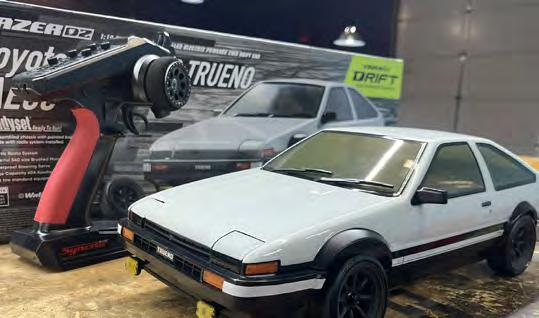
We just put down a new P-tile surface at our local track, so we’ve been using P-tile only Tires. We spoke with our local Kyosho rep and he advised that the tires were not designed for P-tile, but instead they were designed for asphalt. Therefore, swapped the wheels and tires, as these tires were glued. What to choose, what to choose? We have a pretty good selection of Topline wheels. We were thinking some TE-37 or maybe a mesh? Topline makes some nice mini Watanabes, but we didn’t have any mini P-tile tires. We had full size Watanabes in chrome that would look cool, but we felt that it would change the look of the car. It would, however, highlight that we did change the tires for the review . When we spoke to the Kyosho rep, he said that the stock wheel offset is 5. Checking our inventory, we did have some Topline Watanabe’s in chrome with a 5 offset, so
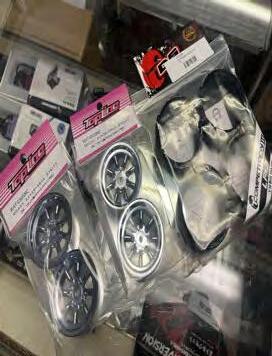
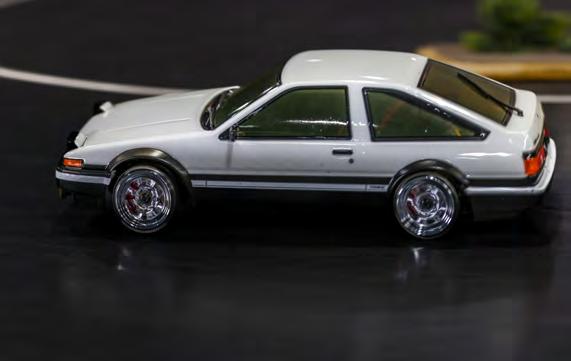

we opted to use them with the DS Racing Comp 3 LF-3 tires. The DS Racing Comp 3 LF-3 tires seem to be the standard P-tile tire in the US and what they’re using in the SDC comp series finals. The chrome really dazzled up the Trueno! We had issues with the calipers, as they were causing drag on the wheel so we had to remove them. We feel that with a little work they would not drag. The car drove much better after we fixed this issue.
In the initial drive, the front end was sitting a little too low for our track. It did come with some preload spring spacers for the front dampers, so we put some of the bigger 2 mm spacers in there. This raised up the front a little bit and the weight seemed like it was more balanced. Still, the back felt very loose. The gyro definitely felt like it needed to be turned up for our driving taste. The rear dampers need to be lifted up a little as well to shift some weight off of the back. We turned the gyro up to about 75% and put it back on the track. The P-tile tires were brand new so that would count for some of the additional slip. We took it off the track and turned the gyro up to about 85%.

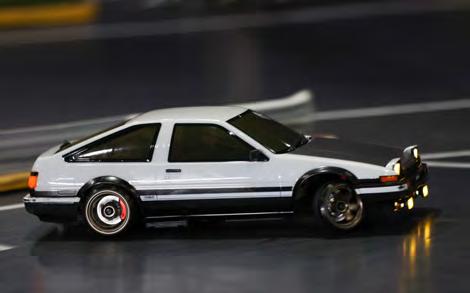
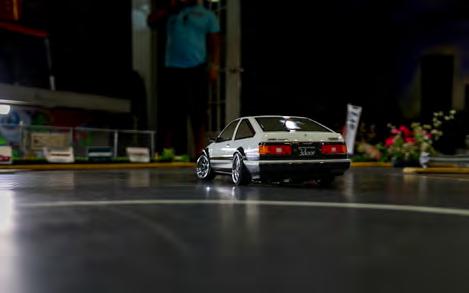
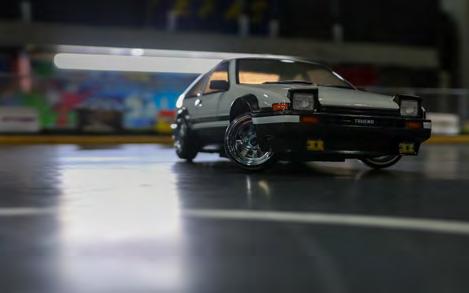

After driving a few laps, the tires started to break in and the gyro started to wobble a little bit, so we turned it back down a little. There’s a little bit of understeer when you try to “Manji” it (switch back drift directions), but that’s to be expected from a stock set of dampers. The receiver has a gyro function built into the throttle that apparently makes it back off of the throttle when you start to slide automatically. We found it annoying at first, as we are experienced
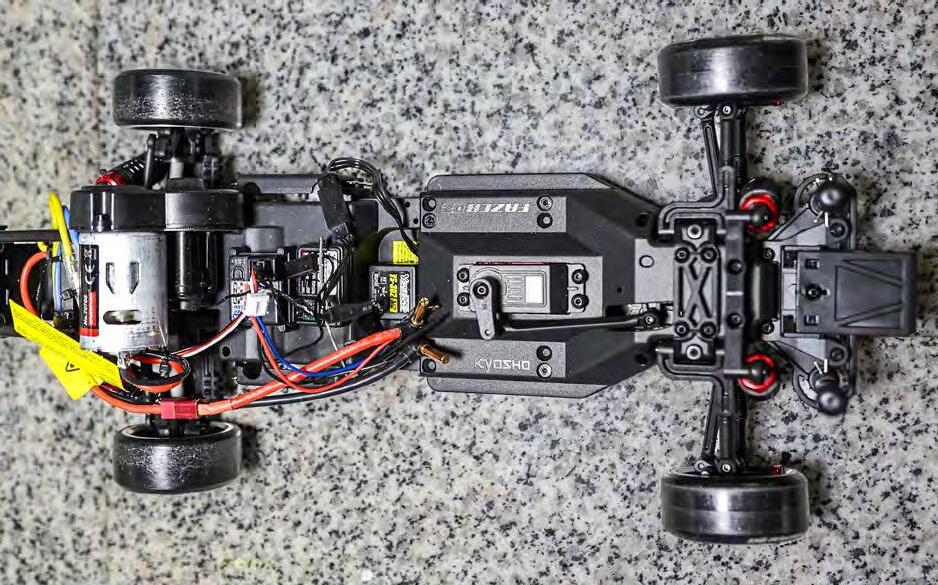
drifters, and turned it off. It’s good that it’s an option to turn it off. We later played around with it though. It’s there so that you can turn up the throttle gyro for those that want to go full throttle all the time. It actually drives better because it backs off on the corners rather than spinning out from too much throttle. After a little understanding, we see why they made it that way and think it should actually make learning to drift easier for some people. The built in steering gyro in the receiver also works pretty well.
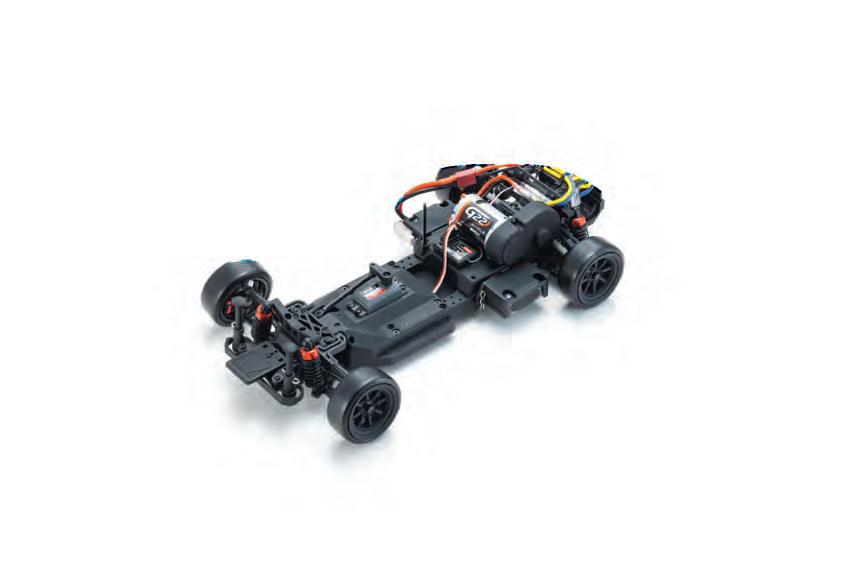
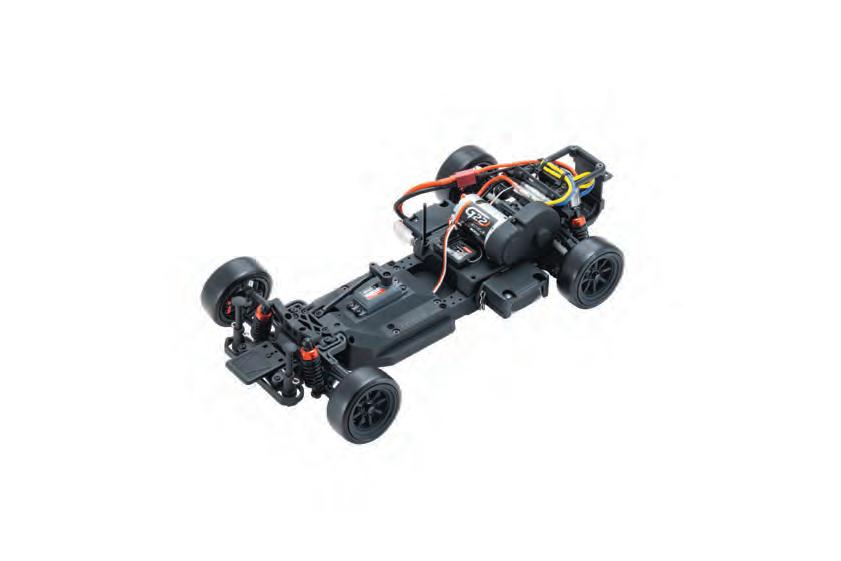
We moved the motor to the high position to add some weight shift. We wanted to see how much better the car performed with just a few small electronic upgrades. The first mod we did was change the servo to a drift-spec Yokomo SP-02DV2 servo. We added the Yokomo 502 gyro and it was a little better than the stock. It felt a little more responsive and consistent. Interestingly, the wheels also turn a little faster with the Servo/Gyro upgrade.
We also switched to the Sanwa MX-6 radio, and it drove even better as the throttle was easier to control.
In conclusion, it’s a very capable chassis that will run with many others out there. The stock suspension is sufficient and the overall chassis setup slides really well. It has enough factory adjustments to help someone get drifting and learning to tune. With a few electronic upgrades it gets better and better. While the brushed motor and electronic speed control (ESC) are great for starting out, we may try putting in a brushless system in the near future. We really can’t wait to get the lights and kit to add the pop up headlights.
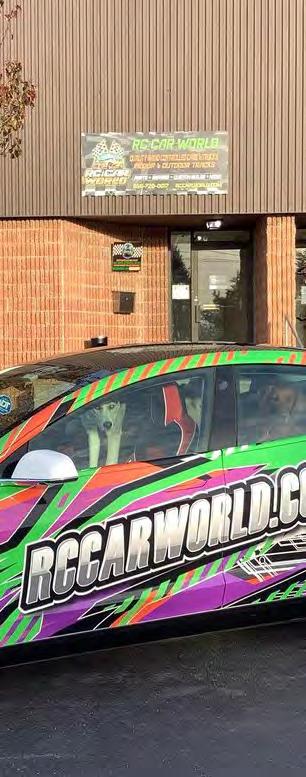
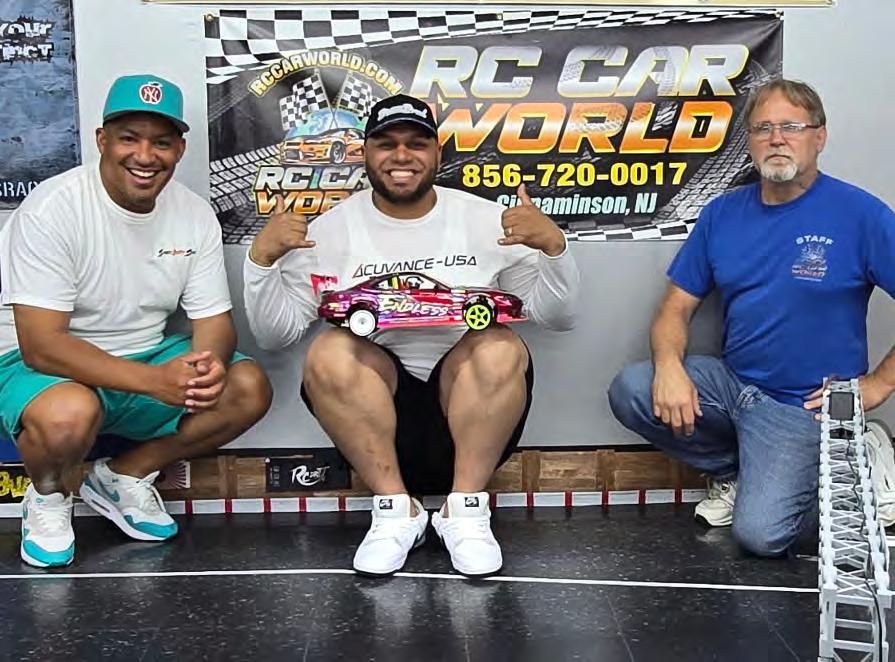
RC Car World (RCCW) isn’t just a retail shop; it’s been a pivotal force in the global RC drift community for over a decade. Since 2013, owners Mike and Gia Sienczenko have cultivated a thriving hub, evolving from a humble carpet track to epoxy, and now state-of-the-art P-tile, continuously pushing the boundaries of the sport. What began as a small local spot has blossomed into one of North America’s premier RC drift tracks, even hosting legends like Tetsujin’s Atsushi Mizunaga in its early days.
A pivotal moment arrived in 2019 when five drivers who weren’t well-known—including Berto Cosse, Rob Fischetti, and Alex Jordan—representing RCCW and Team Endless, descended upon the US RC Drift Championships in Houston. Against a field of top talent from across the nation, Berto Cosse emerged victorious, claiming the coveted title of US RC Drift Champion. This monumental win wasn’t just a personal triumph; it firmly cemented RCCW’s reputation on the map, drawing drivers from coast to coast eager to experience our signature aggressive drifting style and the vibrant personalities that define our community.
The momentum continued as Alex Jordan took the helm as track curator and coach, a role in which he continues to elevate drivers and sculpt the Northeast drift scene. RCCW has served as a crucial proving ground for many prominent and sponsored drivers, who honed their skills here before making their mark nationwide. This commitment to progression led to the founding of the Scale Drift Series (SDS) at RCCW, a competition designed to mirror the authenticity and intensity of 1:1 drifting more closely than any other major event worldwide.
Today, RCCW is a magnet for top talent, regularly drawing drivers from across twelve states—NJ, NY, CT, NH, DE, MA, PA, RI, MD, ME, VA, WV—and even Quebec during intense SDS rounds. Our track becomes the ultimate monthly proving ground where the Northeast’s best vie for supremacy. Our drivers, like SDS and North American Championship (US/CA) winner Anthony Torres, are not only dominant on our home turf but also seasoned competitors on the broader international stage, frequently traveling to compete at other prestigious events, including the annual North American Championship in Quebec.
Beyond the fierce competition, RCCW offers a truly unique experience. Saturdays and major events pulsate with an energy akin to a Grid Life festival, creating an unforgettable atmosphere. Expect genuine Jersey hospitality: no drama, just a welcoming vibe filled with lighthearted banter and friendly trash talk. Spontaneous challenges and call-outs are a regular occurrence. Do you believe you have what it takes to be the best? Come test your skills, soak in the unparalleled vibes, and become part of the RCCW legacy!
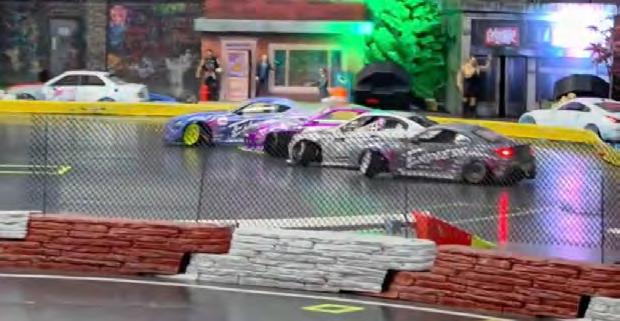

Viktoria Silk, a rising artist and longtime supporter of the RC drift scene, has shown genuine appreciation for the community, regularly attending events and championing the culture. Following the release of her music video “Display,” which featured RC drift cars, the DARC Mag team sat down with her to explore the connection between her music and motorsports.
When the beat for “Display” was created, the artist behind it already had a vision. “Drift phonk was my inspiration. I’d lose hours to YouTube mixes with incredible drift footage. I knew the video had to reflect that world or the track wouldn’t feel complete.”
While filming with full-size drift cars wasn’t realistic, the idea didn’t stall. “I remembered seeing RC drift cars at Fuel Fest in Dallas. I found the community on Facebook, reached out, and they welcomed me in. They helped bring the whole vision to life.”
RC cars didn’t just fill a gap, they brought their own energy. “The tone and pace of the music matched perfectly. The footage was so good up close, it wasn’t obvious they were 1:10 scale. That twist made it more fun.”
After the editorial, we caught up with Waren Johnson of Rack City RC Drift. His crew helped bring Viktoria Silk’s “Display” music video to life with an RC drift demo that blended sound, smoke, and style. “When Viktoria reached out, it was an easy yes,” said Johnson. “We’re always down to show RC drift to new people, and a music video felt like the perfect crossover. It was fun, creative, and exactly the kind of thing Rack City lives for.”
He added, “The team loved being part of the production and seeing how it all came together. If Viktoria ever needs us again, all she has to do is call.”
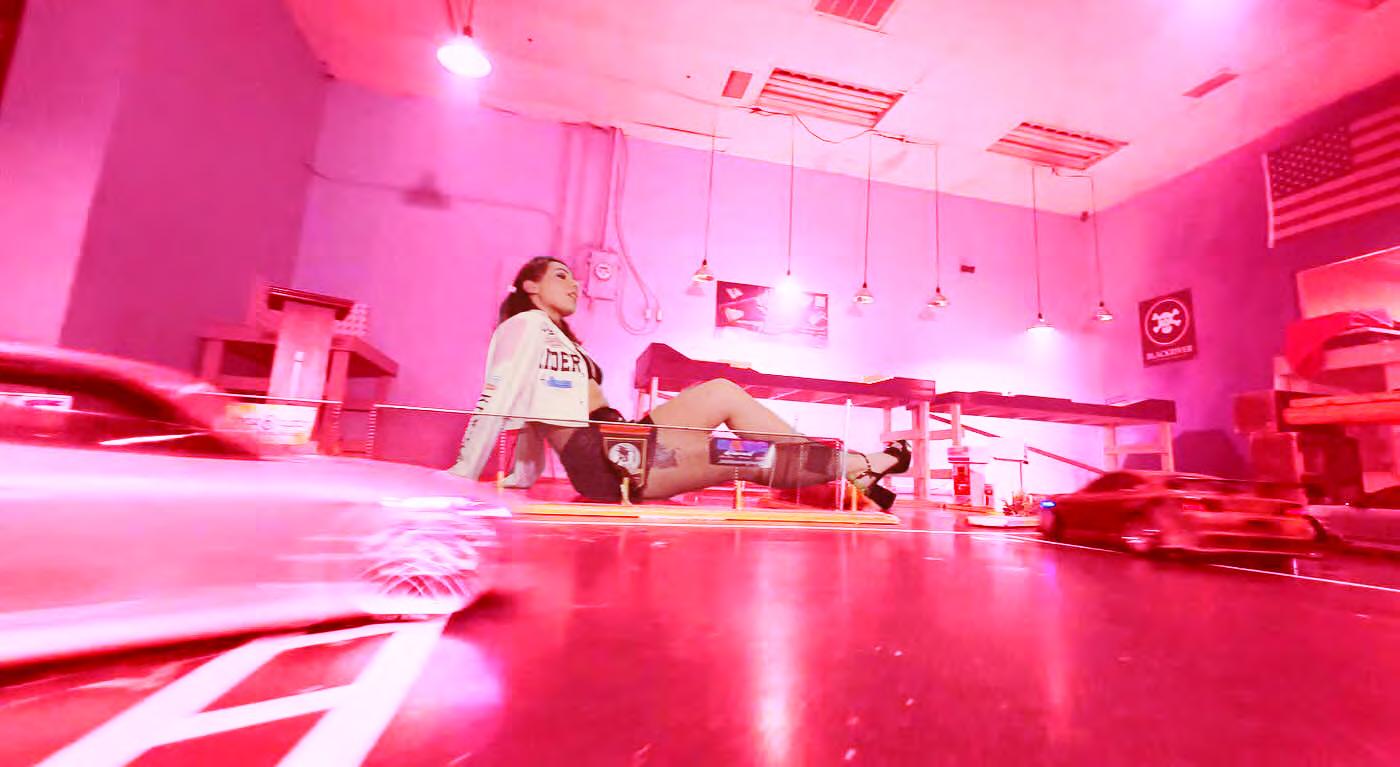
The shoot included fog machines, LED lighting, and full setups. “It was insanely creative. I’d love to feature RC drifting again. The response was huge.”
Inspired, the artist now wants to create a song using real drift sounds. “Tires, engines, crowds— everything. And now that I think of it, the RC sounds might be even more fun to sample.”
The passion for car culture runs deep. “My Dad always had modded sports cars and took me to car shows. I’ve been to Formula D events and still follow drifting online. Chelsea DeNofa and Piotr Więcek are my favorites.”
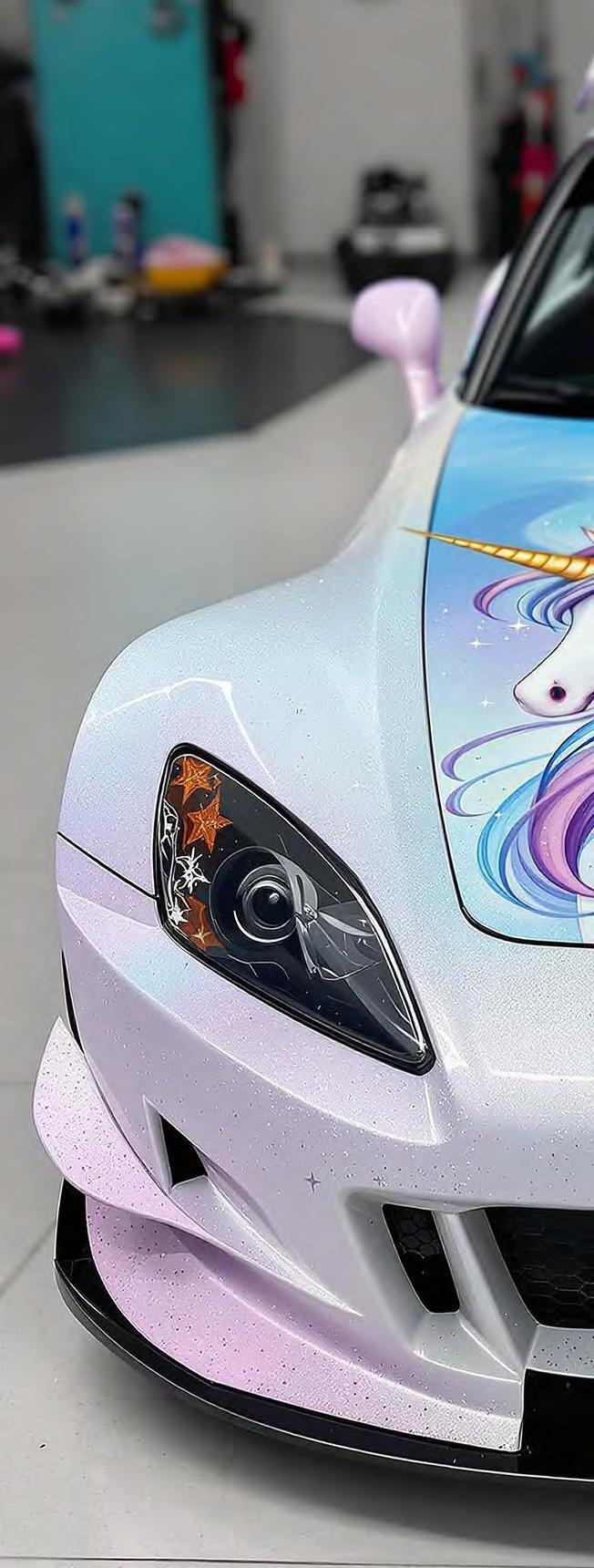
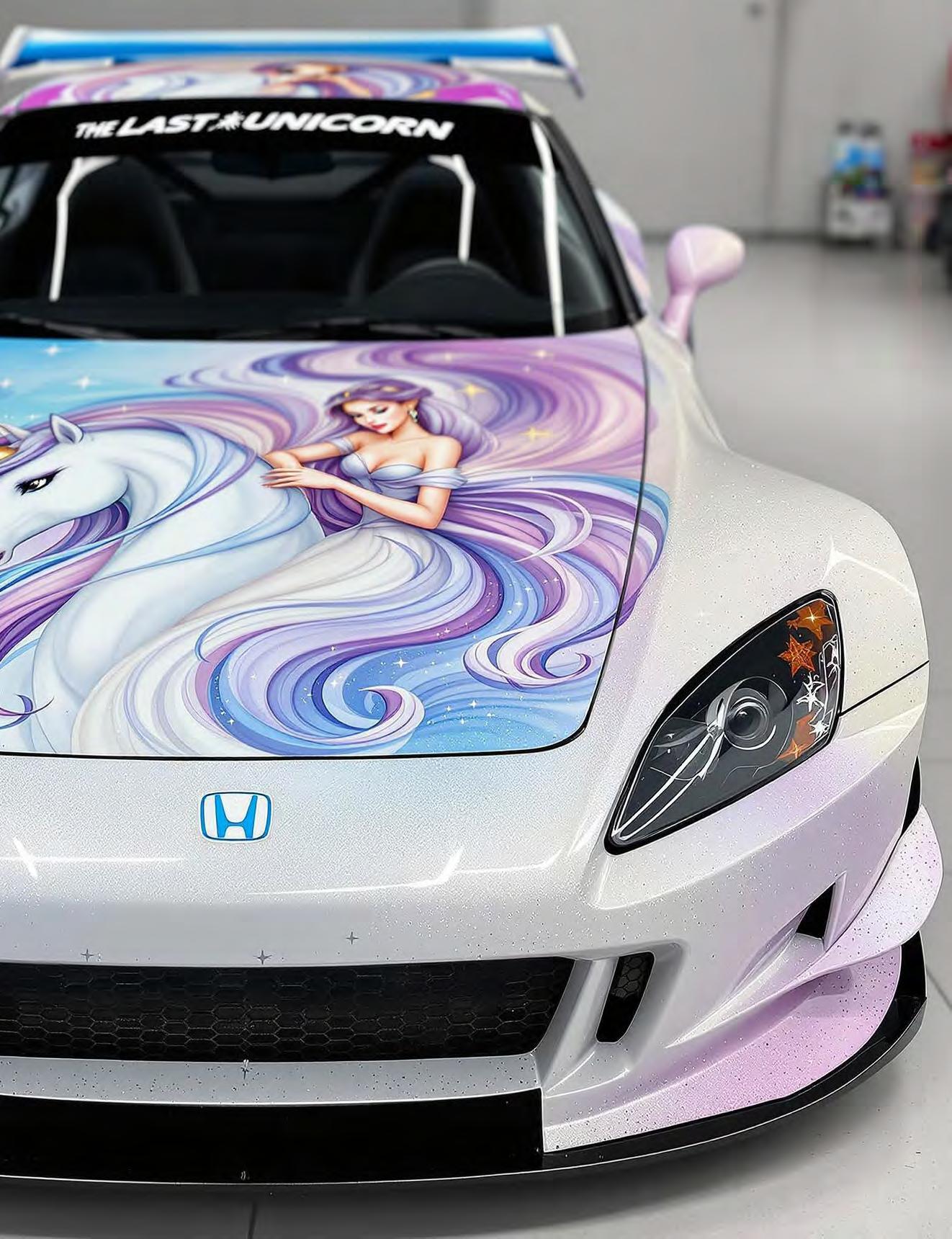
is one of my favorite stories, with glittery whites, lavenders, and blues, with an image of Lady Amalthea.”
“I want people to see how unique this culture is. Display was my favorite project because of the RCs. And honestly, it’s going to be tough to top it without doing it again—bigger. I am so excited to see the community grow and to see further editions of the magazine!”
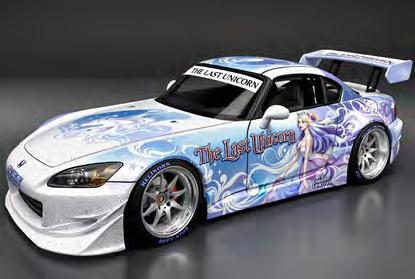
As the artist continues to grow their platform, RC drifting remains close. “If I could create any RC car body, I would choose a Honda S2000, with a “The Last Unicorn” themed livery, which
Follow Viktoria: Instagram, TikTok, YouTube @viktoriasilk



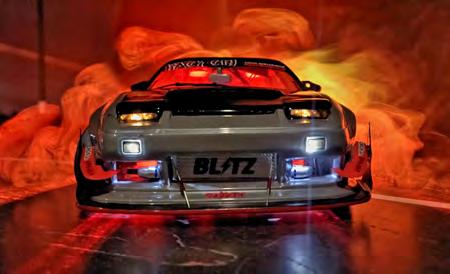


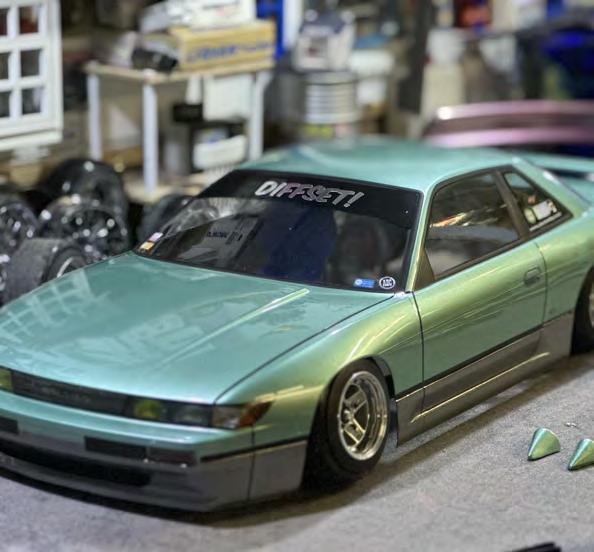
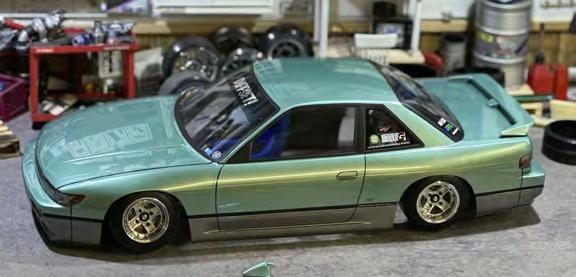
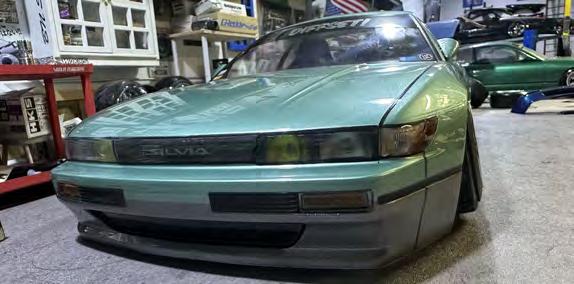
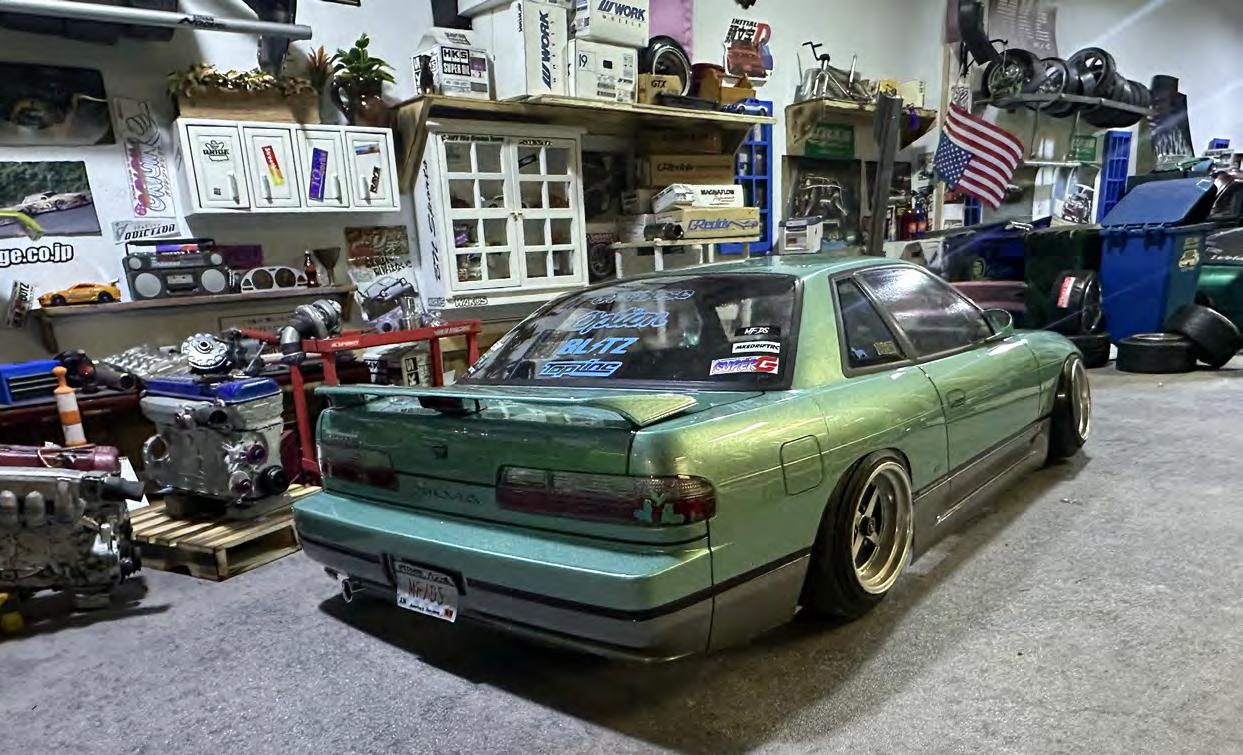
I have done a couple or a few two tone s13s, The two tone S13 is for sure my favorite. So much so that I painted my 1:1 car two-tone. This one is pretty basic. Abc hobby S13 silvia shell | Silvia Brick headlamps | Oem corner lights | Homemade antenna | Homemade muffler | Rouge nights Bomex mirrors color matched | DMax style tail lamps | OEM silvia wing
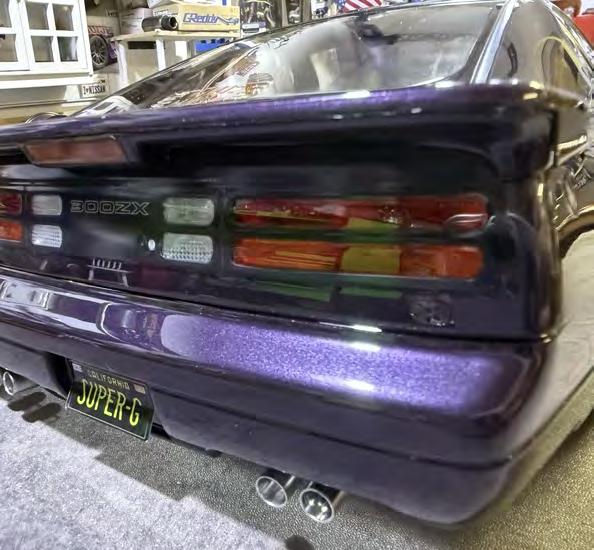
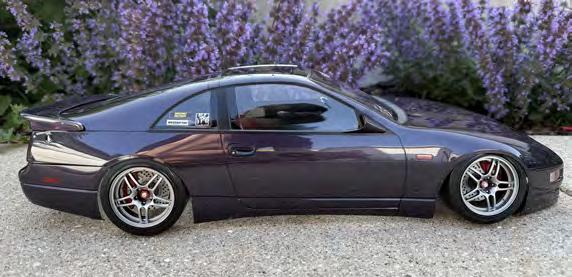
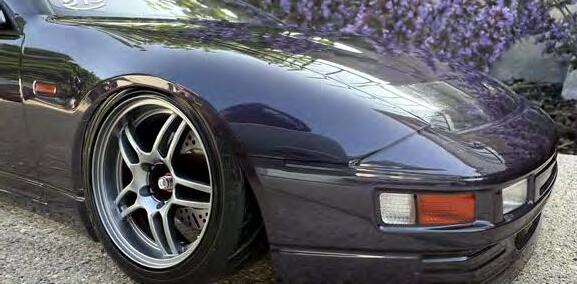
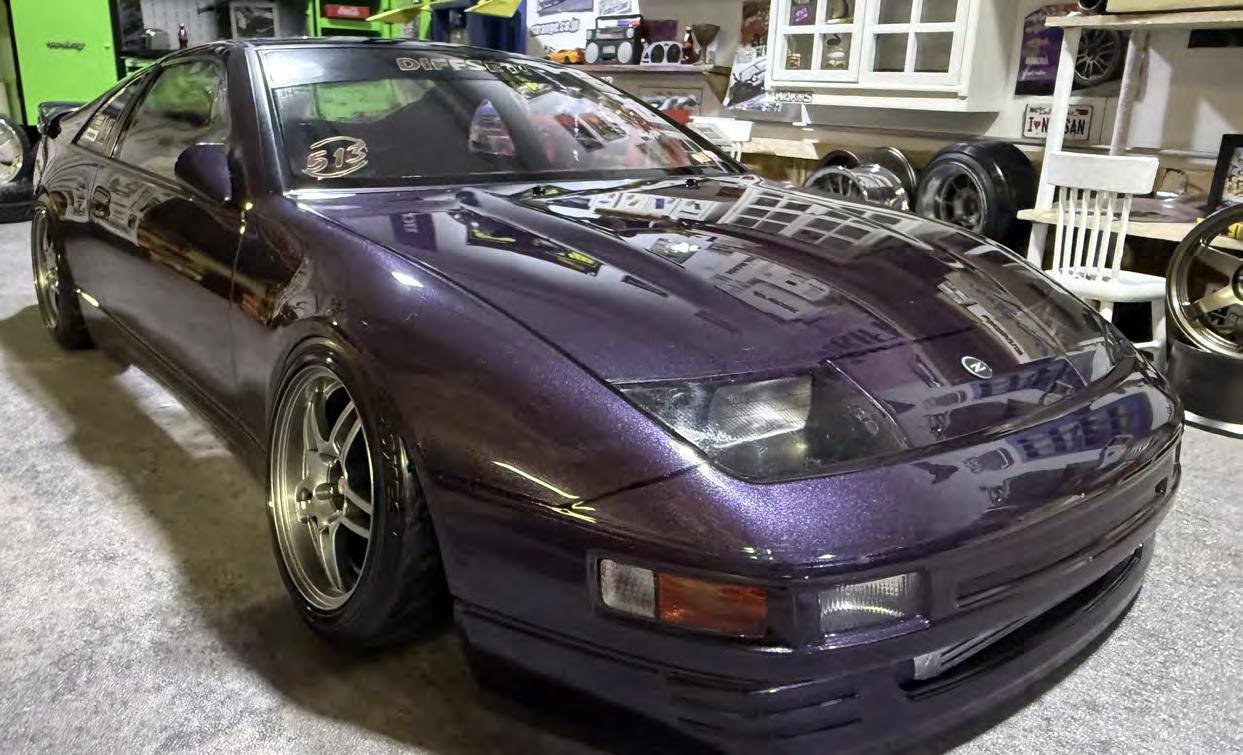
Nate Erman, Mike Prizza’s brother, wanted a clean OEM look. He’s a true Z enthusiast. This build features a custom dark purple pearl paint, SRP scale door handles, SRP windshield squirters, scale stickers, custom quad exhaust, ETO R33 wheels, OEM lights, OEM looking glass, OEM wing, and a tinted T-top.
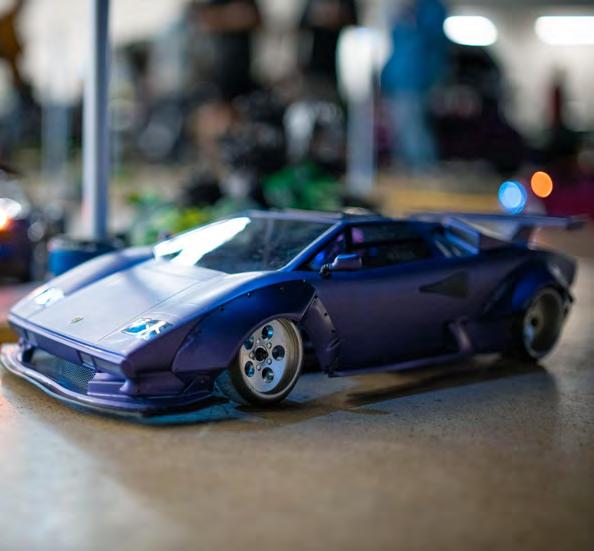
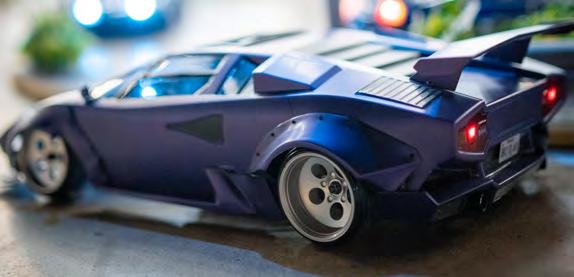
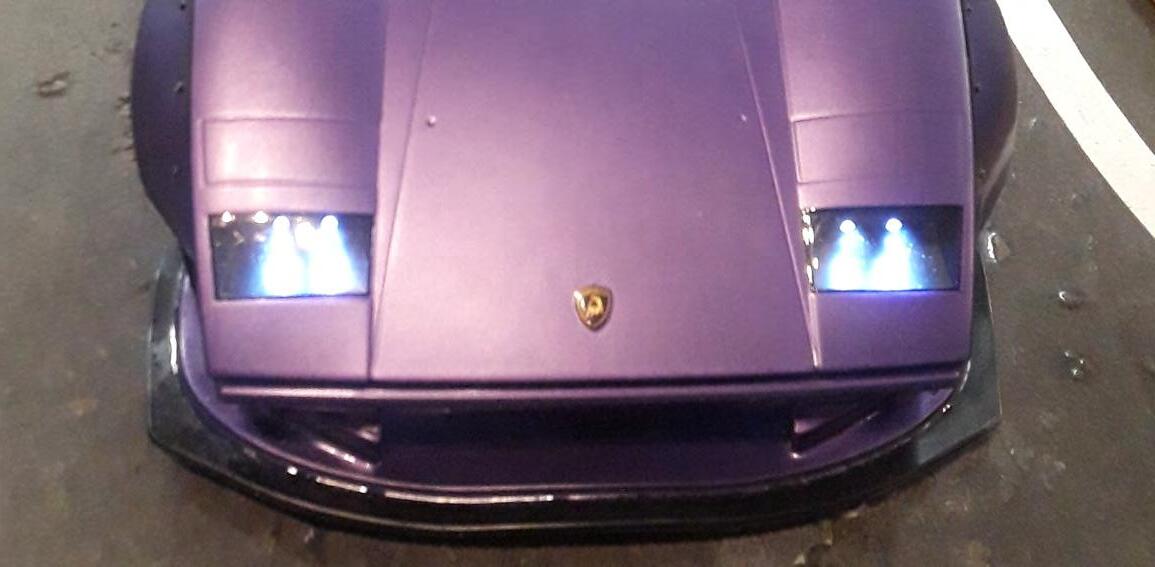
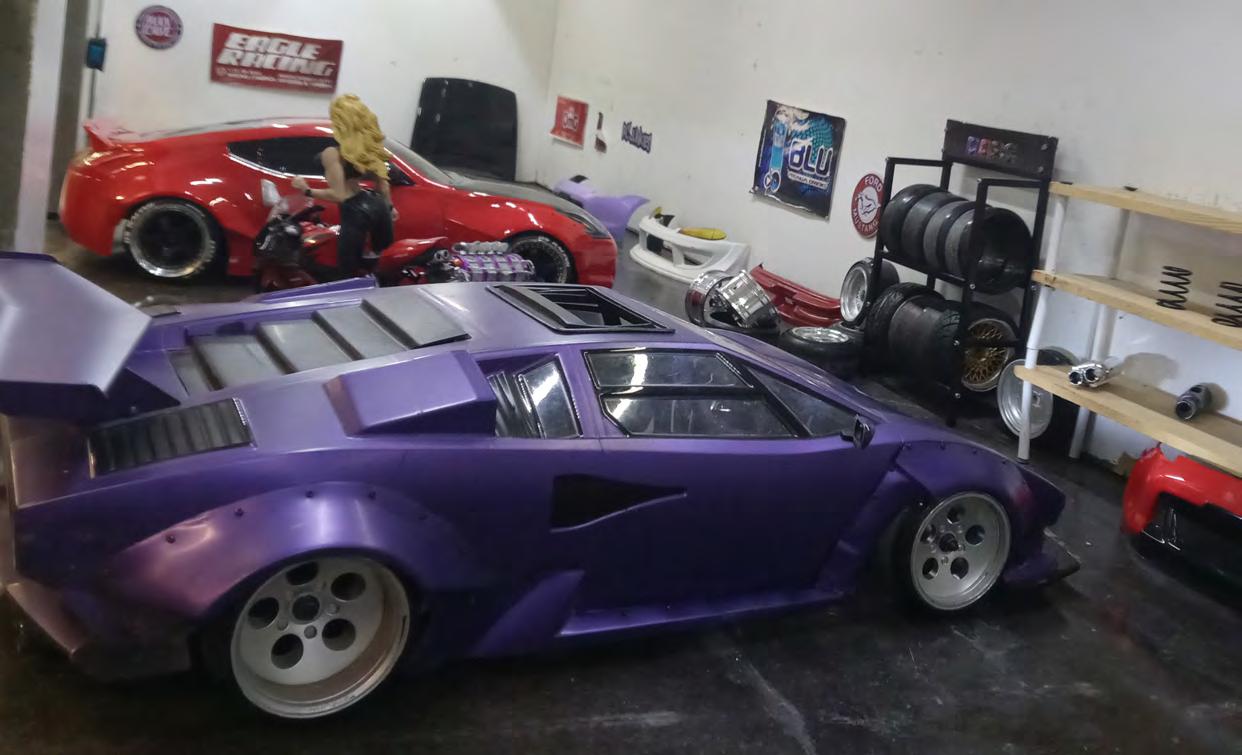
This is a Tamiya Lamborghini Countach, which is no longer in production. Added to this build was the Demi Works Rocket Bunny body kit designed for the 370Z as well as the Matrixline GTR front and rear splitter and diffuser set. Side steps and rear window louver set were added from a Matrixline Lamborghini Murcielago. The original Countach Wheels were widened to 35 mm in the rear and narrowed to 21 in the front.
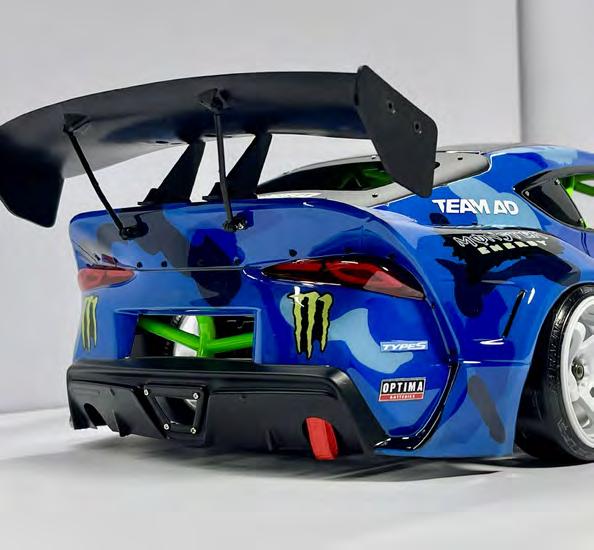
This is one of my latest builds, the Toyota A90 Supra with 100% painted livery. It’s inspired by Daigo’s Supra that he drifts in Japan. This was actually my 2nd time doing a full airbrush paint job and it got me hooked. The roll cage is hand made with styrene rods and painted a bright green to make it pop with the blue camo paint job. I built this body because no one in the United States was doing these types of paint jobs, likely due to the complexity. This was my competition body for half of the SDC 2025 So-Cal season.
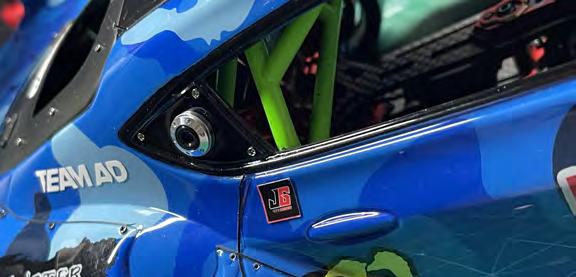
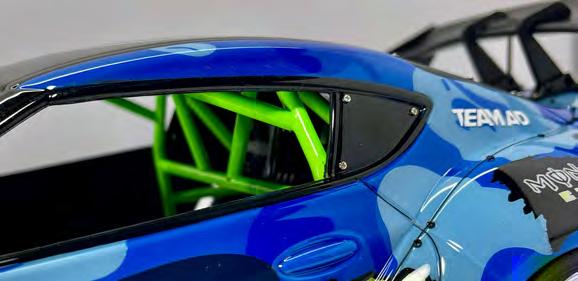
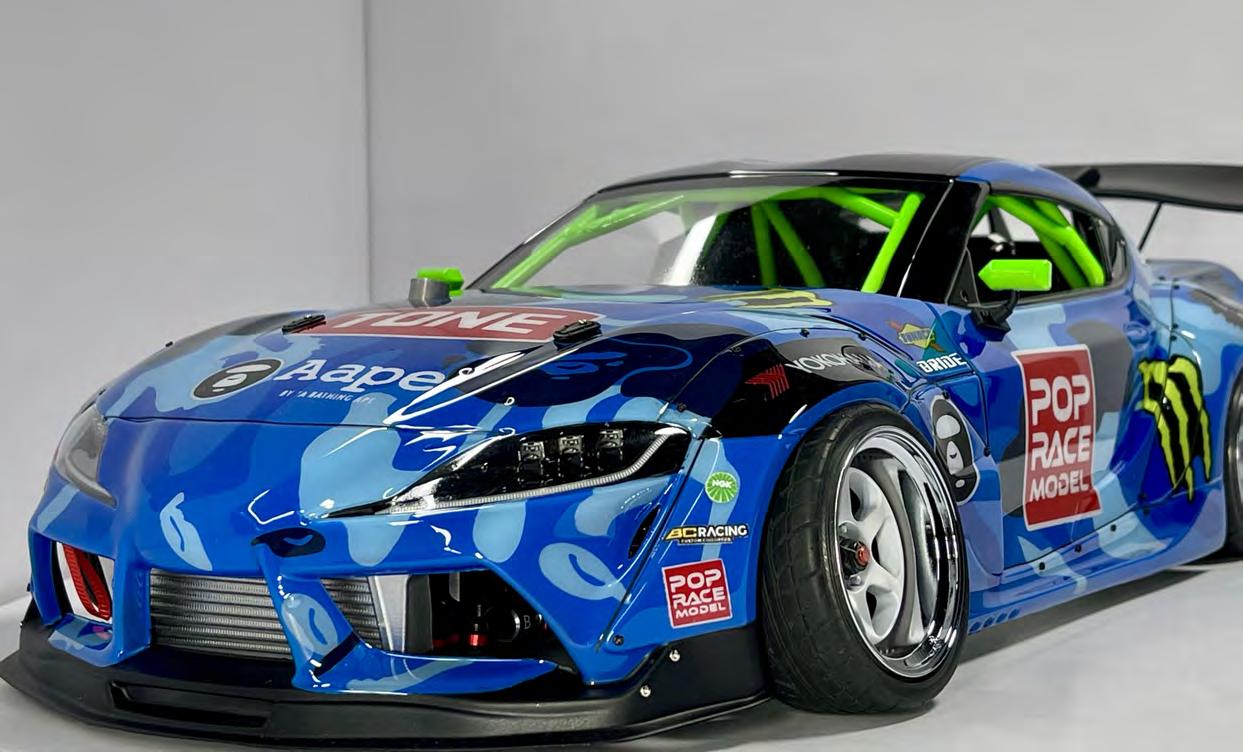
Addiction multi piece DMax Nissan S13 Silvia. Rogue nights SR20 with custom styrene engine bay, bumper bars, and accessories, Greddy BOV made by hand. Removable bumpers. Sits on a modified Sakura D5. It took two years to “finish” and still drives very well, even with all of the added weight. The headlights move by hand. This build was inspired by final bout/grassroots drifting… and Matt Youhkana.
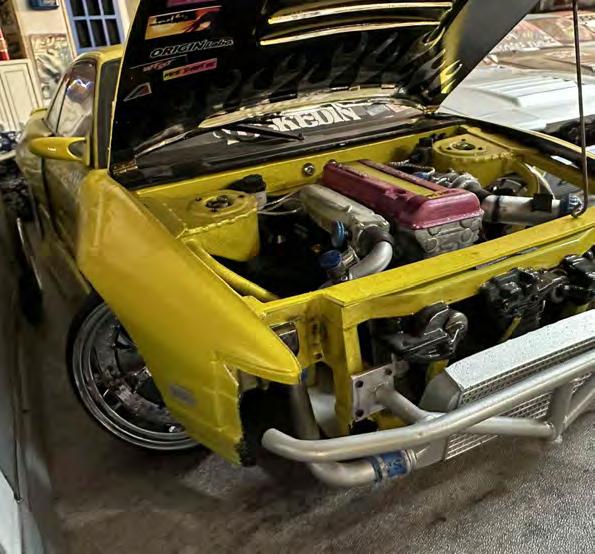
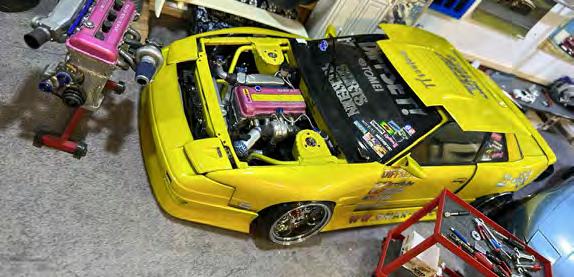
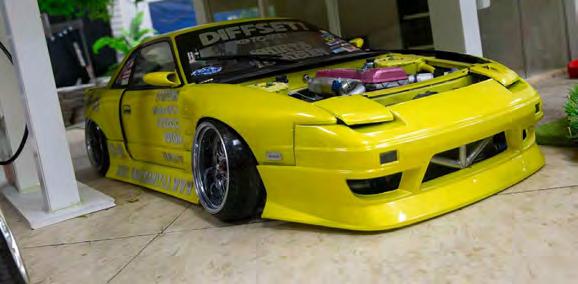
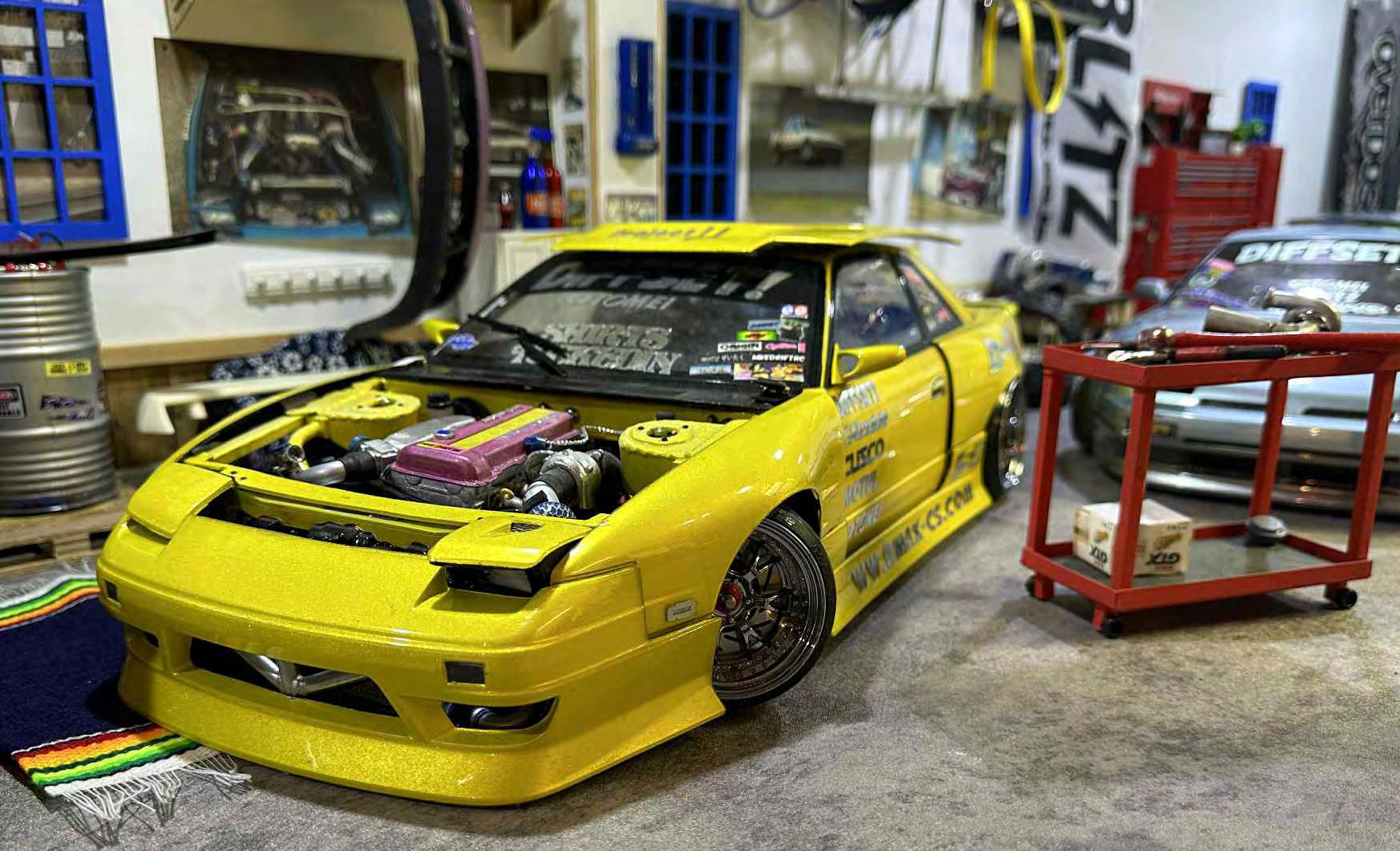
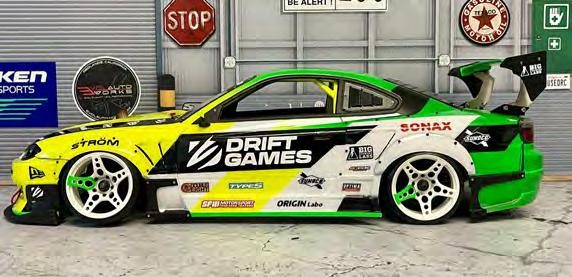
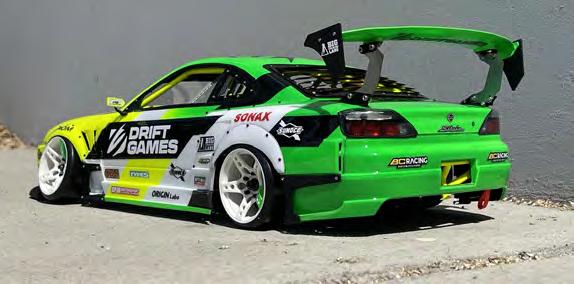
Here is my Reve D S15 with a Drift Games livery I painted. Inspired by Irish and Japan style, this body is about 65% painted and the rest has some decals made by me. The livery was 100% made from scratch. The wing and rear louvers are by Easy88Made, which is no longer obtainable. What makes this body unique is the vibrant colors and the ability to make it how I want it. This isn’t an exact replica but close.
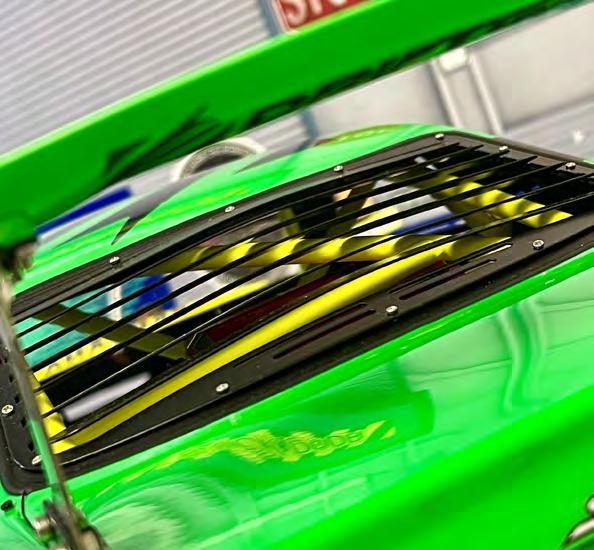

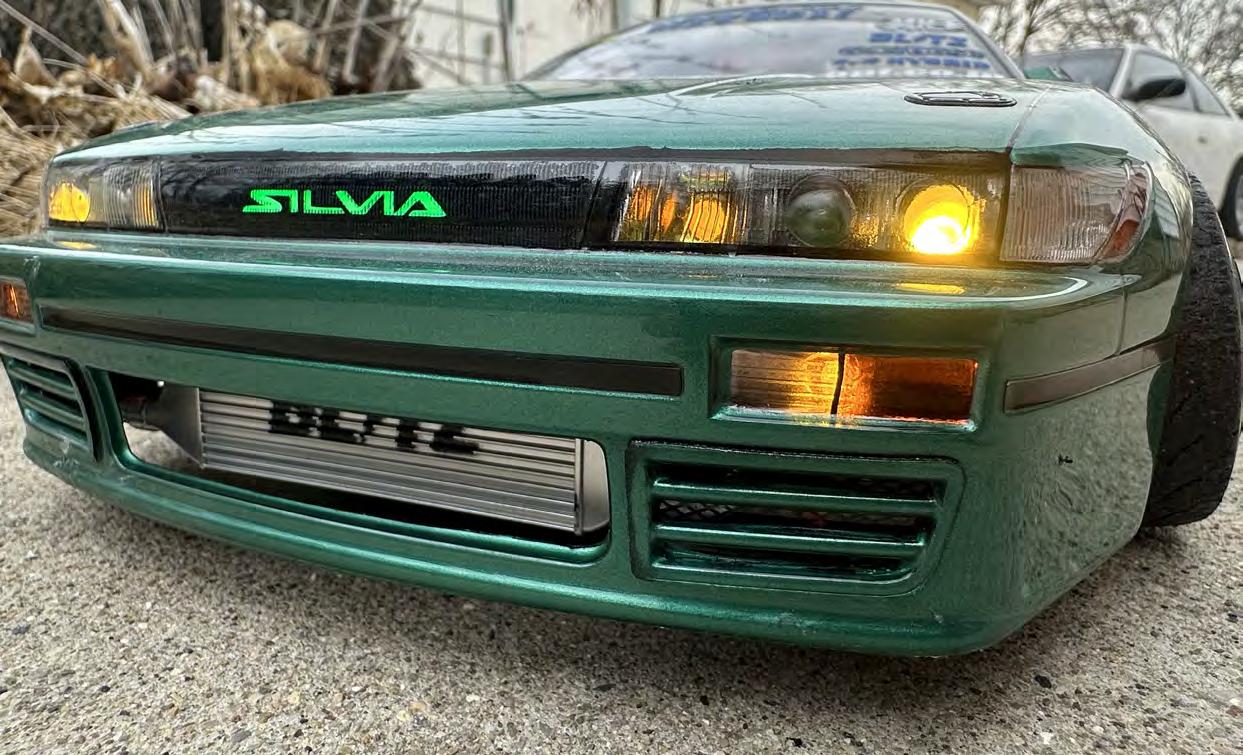
This is my ABC Hobby Nissan Sil-80 (Silvia Front - 180SX Rear). It’s on a D-Like RER Hybrid Chassis that I run outside in my “Tearitup” videos. This build features a Silvia light up grille, custom dual projectors, Silvia aero bumper, Type X rear spats, 513 factory paint matched rain guards, Rouge Nights Bomex mirrors, B wave wing Yokomo street style side skirts, custom sunroof, and Carbon rear window covers.
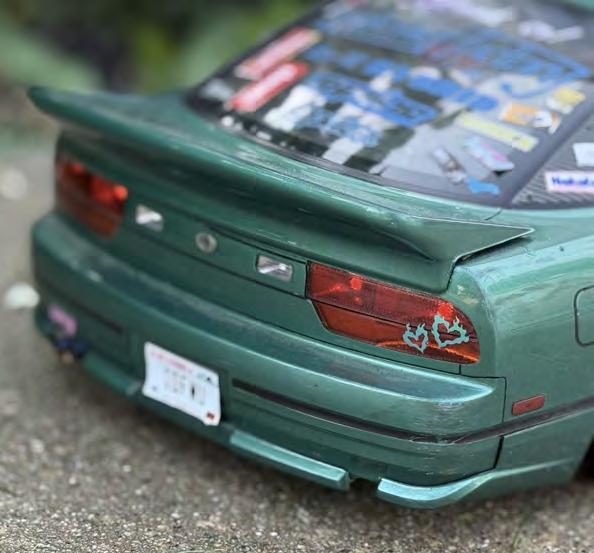
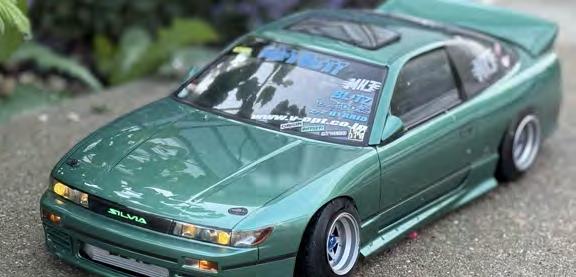

Matt Bartell - ABC Hobby Nissan Sil-80
By Steve Fujita
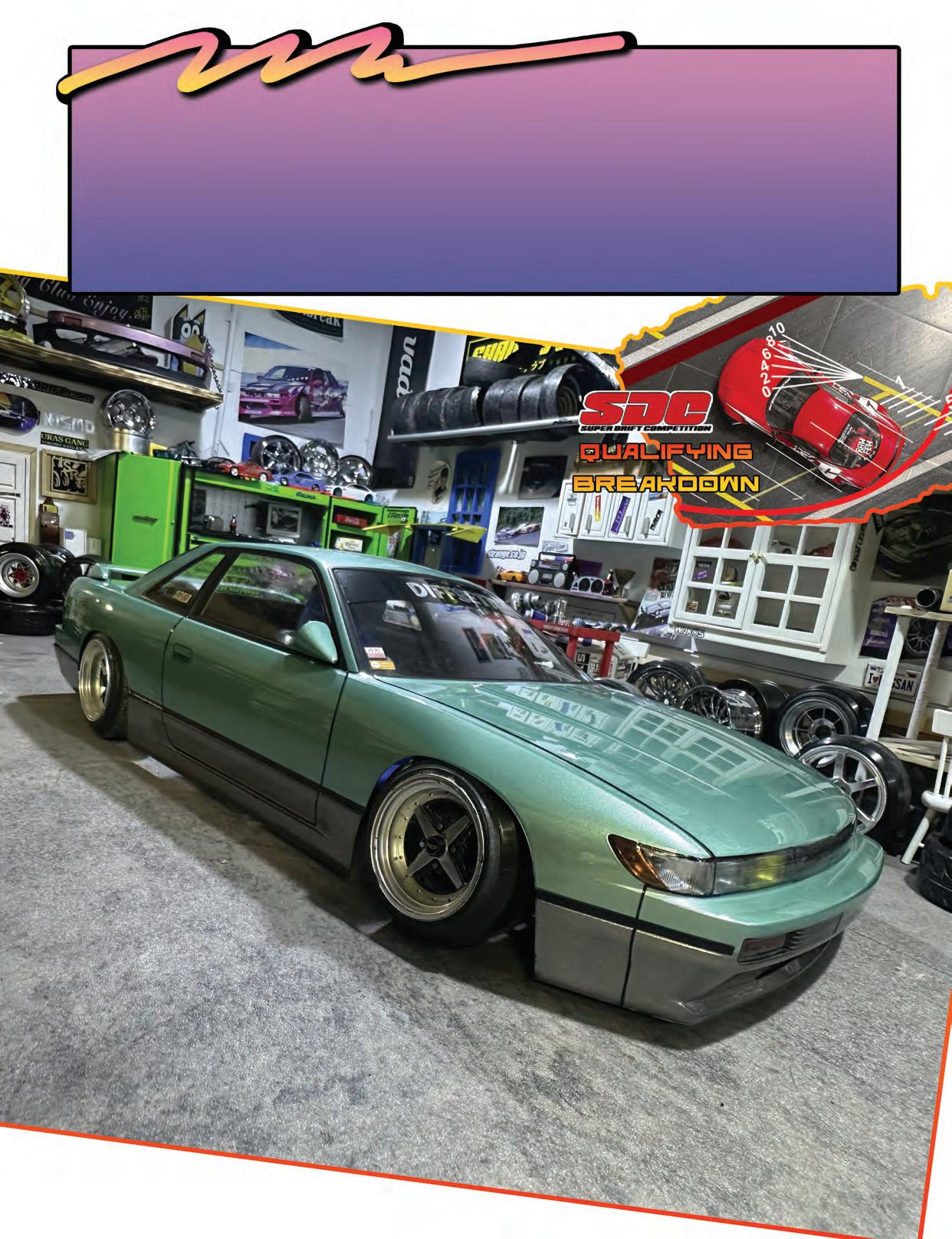
In the last issue of DARC Mag, we featured an overview of R/C Drift Competitions. Now, we can start to dig into the details that make up each stage. There are 2 different stages, Qualifying (Tanso) and The Battles (Tsuiso). Here, we will be discussing the first stage, Qualifying.

The first stage of an R/C Drift Competition is Qualifying. During Qualifying, each competitor completes a designated number of solo runs (usually 2). The objective during Qualifying is to run the Qualifying Line as accurately as possible while making it look good.
Each run will be awarded a score based on the competitors’ performance. These scores are used to determine Qualifying Position and ultimately who they will face in the following stage - The Battles (Tsuiso).
Judges - For Qualifying, the normal setup is 3 judges. There are different variations, but the standard setup seems to be one judge for Line, one for Angle, and one for Style. This has proven to produce the most consistent scoring overall. After each run, the scores are added to arrive at the final score for the run.
Scored Zones - During Qualifying, there are Scored Zones (usually 3-4). Each of these zones are scored by how well the competitor executes their pass through each of these areas. They are awarded separate scores based on the Line and Angle they can MAINTAIN through these areas.
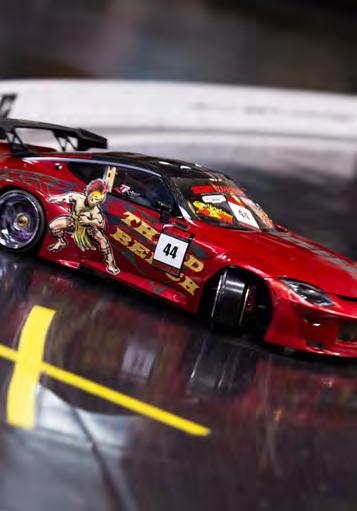
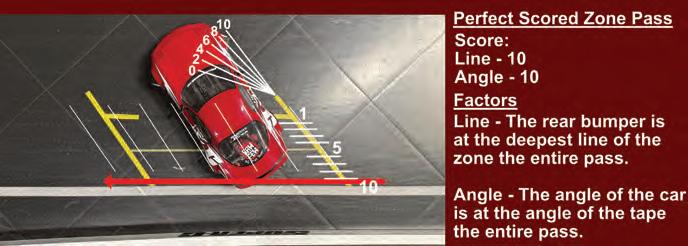
The objective is to pass through the ENTIRE Scored Zone with the highest possible points. Both Line and Angle are scored at the competitors WORST scoring area in the Scored Zone.
For example, if you enter at a score of 10 for Line, and exit at a score of 5 for Line, your score for Line in that particular zone will be 5. If you enter at a score of 5 for Line, and exit at a score of 10 for Line, your score for Line in that zone will be 5.
If you enter at a score of 10 for Line, come out into the 8 scoring area, then exit at a 10 for Line, your score will be 8 for that zone. This is because each Scored Zone is scored at the WORST scoring area within the zone, NOT the best.
To score a 10 for Line in a given zone, you must enter at a 10 for Line, maintain the 10 for the entire zone, and exit at a score of 10 for Line. This will be an earned score of 10 for Line for that zone.

Angle is scored the same way. It is the Angle Judge’s decision on whether or not a score for Angle will be awarded if the competitor scores a zero for line. Often there is a slight bit of leeway. In the illustrations, usually touching the angle markings is enough. This is established before the very first qualifying run, and is carried out the same for each run.
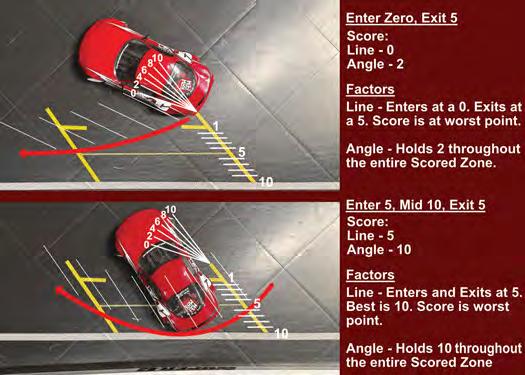
The only areas where Line and Angle will be awarded any points are in the Scored Zones.
Style Points - The rest of the Qualifying Line will be judged on Style. Style is everything outside of the Scored Zones. How well is it done? How good does it look? How difficult is it?
Factors considered in scoring Style:
Aggressive Driving - Big angle and snappy, quick transitions, big, early initiations, wall-rides, high risk maneuvers, above average speed and/or angle, etc. all are big point earners for Style.
Smoothness and Commitment - Minor corrections in line and angle will earn an average score.
Deviating from the Qualifying Line - Doing this will drop Style below average points. Average, safe driving will earn an average Style score. This is usually the median of possible Style Points.
Example: 20 Style Points possible, average is 10 points. If 30 Style Points are possible, the average score is 15 points. Typically, total possible points are a perfect 100. 40 for Line, 40 for Angle, and 20 for Style.
How the Scores Are Used - Once each competitor has completed their 2 qualifying runs, the better of their 2 scores is used to determine the qualifying order. The highest score of the day is recognized as the Top Qualifier for the competition. Some regard this as the highest honor since there is no luck involved, just pure skill they themselves are in full control of.
Once the qualifying order has been established, the competitors are seeded into a bracket where each competitor is matched up against another in groups of 32. Top 32 competitors are matched against each other with the number 1 qualifier going against the number 32 qualifier, the number 2 against number 31, etc. This ensures the highest probability the top competitors will meet at the end and battle for the top spots of the competition.
This is how the Qualifying Stage is run, scored, and used for an R/C Drift Competition. In the next issue we will cover the Battles, the most exciting part of any R/C Drift Competition.
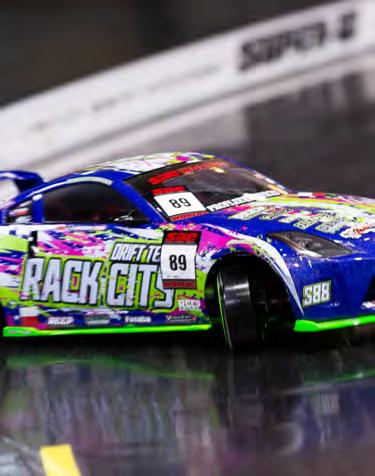
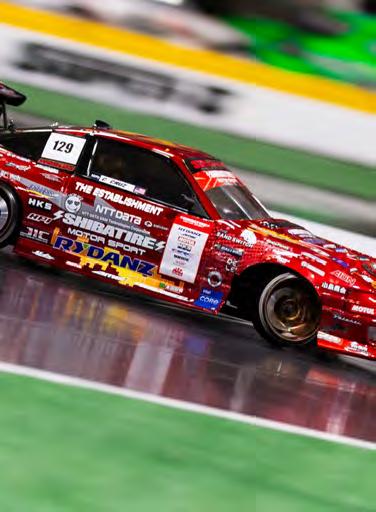
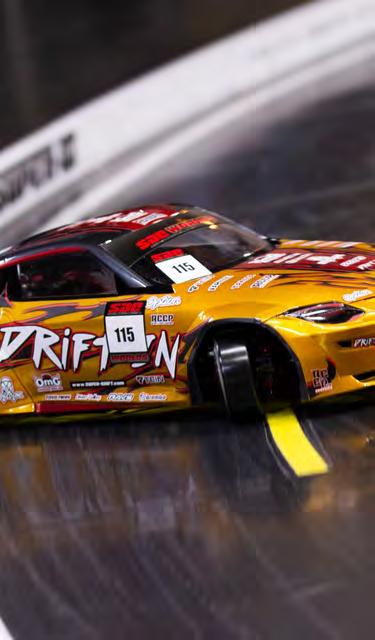
For the 2nd interview in the DARC Mag Interview Series with Adam Mah, we will be interviewing a man who has made some serious waves in the RC drift scene in America and around the world, Junior Barba. Junior has taken his RC drifting competition career quickly to a world-class driving level. Let’s hear from him about his journey.
Adam: Hello, thanks for taking the time to do this interview. I would first like to start by having you do a quick introduction of who you are and where you come from. Please tell us about any awards and accolades that you have received.

by Adam Mah of RC Drift Talk Podcast - YADMAH

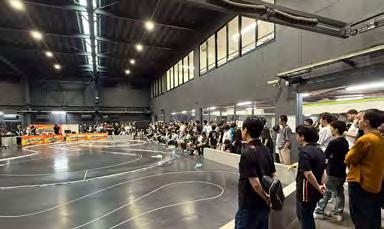
country. The group that went there was awesome. I experienced a new culture and made many new acquaintances. The food was so good! Man, once the jet lag was history, I ate so much delicious food! The sleepless nights were worth it all. Another great experience was my trip to Japan! Japan is a must for anyone! Japan is welcoming, clean, and it feels like you’re living in a video game in most places.
Adam: What are some of your goals for RC Drifting this year?

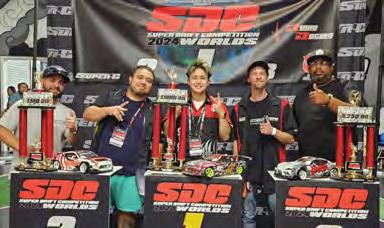
Junior: Hi, my name is Junior Barba and I’m currently living in Texas. I was born in Los Angeles. Some of my accomplishments have been winning Texas overall Drift King at the Texas SDC Finals, getting 2nd place at the SDC 2024 Worlds competition, and making it into the top 16 bracket at TDC Worlds in Malaysia. I’ve been RC drifting for 3 years, working on the 4th currently. I’m sponsored by the RCO, Accuvance, and The Hobby Shop (THS) Leander. My grass roots team is the Lonestar Pals.
Adam: Where is your home track and where is it located?
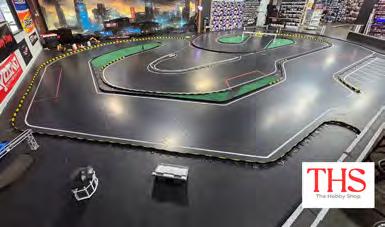
Junior: My home track is The Hobby Shop (THS), located in Leander, Texas, near Austin.
Adam: What is your favorite chassis to drive? If possible, can we get the tech specs? What electronics package are you running? What dampers do you use? Do you have any conversions?
Junior: My favorite chassis is my RCO Kaiju Full Conversion Reve D RDX. For the electronics inside, I’m using an Acuvance Agile 11.5 Motor, Accuvance XX Xarvis Electronic Speed Control (ESC), Reve D RS-ST Pro servo, and a Reve D Revox gyro. I use Axon brand dampers. The front is stock except for the aluminum knuckles.The rear is also stock except for the upgraded Reve D arms.
Adam: Who in the hobby inspires you and why?
Junior: My Lone Star Pals squad. Kevin Tan. Anyone who pushes me past my comfort zone. My wife, because without her support, these trips would not be possible.
Adam: What was your favorite experience in the hobby this past year?
Junior: My best experience so far was going to Malaysia. It was my first time leaving the
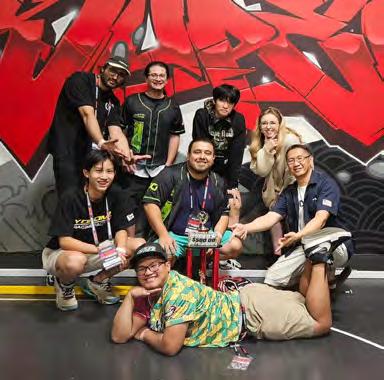
Junior: Some of my goals would be to compete at the RCDC Competition in Japan! After having the opportunity to go to Japan, it would be an honor to go drift with some of their top players. Another goal would be to podium a 2nd time at SDC Worlds in California.
Adam: What would your perfect RC Drift holiday look like?
Junior: A perfect holiday for me would consist of my “roots” team joining me with the RCO crew and traveling to Japan to RC drift and explore, eat, drift, and sleep! We could maybe do a little traveling in Japan and definitely go to the Tokyo Motor Show and Japan’s famous Daikoku Parking Area Car Meet during Tokyo Auto Salon.
Adam: On that vacation, which tracks are you wanting to go to?
Junior: I would love to visit Yachio again, which is currently my favorite track in Japan! I would also go back to Drift Base, which is my 2nd favorite track. This location is one to visit. I would like to go to Joyus and, really, any other tracks in Japan.
Adam: If you could invent a new feature of RC Drifting, what would it be and why?
Junior: I’d like to be able to throw on some goggles and control the car with my mind.
The following questions were pulled from the Special Stage live stream on Monday 6/9/10. I had the chance to interview a few of the members of Team RCO, the following are some of the excerpts from that interview, specifically focusing on Junior’s answers. For the full stream you can visit my
Youtube channel youtube.com/@ yadmah. Thanks to Kevin with RCO for leading this stream.
Kevin: How was your first meal in Japan?
Junior: Oh My God! We ate like we do at Brazilian steakhouses back at home. We went to an all you can eat wagyu and crab place. And, let me tell you, it’s going to be so hard to top when I go back to America. It’s so good.
Adam: And this is coming from a Texas boy. Junior: Yeah, it’s on another level.
Kevin: How was your first experience in Japanese train stations?
Junior: There’s so much going on and there are bakeries everywhere. Here, all I smell is sweet bread and we aren’t even stopping to try it. If I was alone, I probably would have stopped at all of them.
Kevin: So, you had a chance to ride one of the highspeed trains, the Narita Express. This one goes a little more than 100 kph. Did you feel it?
Junior: Actually, It looks like you’re chilling in a movie and it’s so quiet. You can’t even hear it. The views are amazing. The cars are amazing too. If you ever have the chance to come to Japan, don’t even think twice, just fly out. It’s an easy one.
Adam: This question is for the RC drifters that are traveling elsewhere now. What are you taking with you as far as your bag of choice to haul your car?
Junior: All I packed was a suitcase with 5 days of clothes because we’re going to be here for 10 days, so I figured I’d recycle it. I just brought my car with me and on the top drawer of my two-compartment hauler I threw my transmitter and batteries. That left most of my huge suitcase empty to take back some stuff. I’m taking a Reve D chassis back for a friend. I’m trying to get him, you know, on the Reve D Side. That’s it. As long as my car, my transmitter, and my batteries, make it there, I’m good.
Kevin: Did you have any issues with the new Overdose bag?
Junior: No, I have the Overdose bag that I’ve had in my closet for a while. I kept it for travelling purposes as a travel bag. And when I got there, they did let me take it on the flight, but it was a close one. Technically it was bigger than the cabin size. I told the lady at check in that there was expensive equipment in the bag. She said, “Okay, just take it, if they don’t let you, you’re missing your flight.” I was like, “Alright”. It wasn’t very pleasant, so I might be upgrading to something a little smaller.
Kevin: What was your impression when Matsuzaki brought out his yellow GR 86?
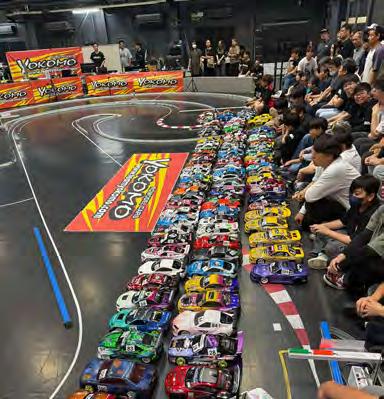

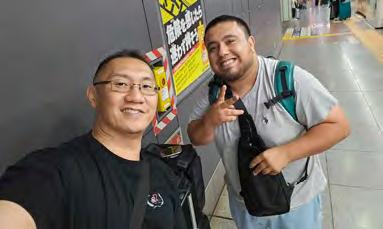
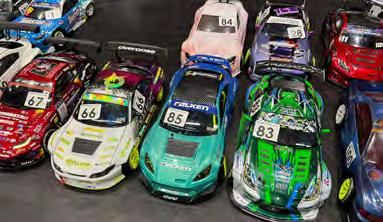
Junior: I’ve never seen a car like it, it was so fast. It literally looks like he has a
touring car on the track. As you’re drifting, he will come around you and take off and leave you behind. It’s ridiculous.
At the time of the interview, Junior’s trip was on day 5 of 10
Kevin: So, that was the first half of day 3. Then Hikaru showed up.
Junior: It was unbelievable. I saw him over there driving in Super Saiyan mode. As soon as he got on the track, it was as if he didn’t know how to drift less than 90 degrees. He has to drive almost backwards. I’m not even joking. When he’s coming out of the exit at the same angle he’s going in at, it’s ridiculous. It’s Awesome.
Adam: So, what I’m actually hearing is that you guys have reached Super Saiyan levels and Hikaru is technically Ultra Instinct.
Junior:Yes, that exactly!
Adam: Is Japan style more high risk/high reward style over our stricter attention to the clipping points?
Junior: The style is just on another level. Videos don’t do it justice. Seeing it in person is so different. That alone should be your reason to visit Japan.
Kevin: How does the style at Yachiyo compare to the style at US tracks?
Junior: US style is more about smoothness. There’s only so much aggression you can apply. Here in Japan, it looks like the car is about to lose control, but it just stays stable. It was something I had to see in person because on video it looks completely different. After seeing it in person I realize that this level of RC drifting can actually be achieved. It’s awesome.
In only his 4th year of RC Drifting, Junior has made accomplishments that would take some all of their lives. Keep an eye on this man. With the help of his RCO Crew, there’s no limit to what the future holds for his career.
Onwards and upwards Junior!


Follow Adam: yadmah

anotherlevelof
ByDavidDonaldson
my high mount weight shift setups perfectly just by using the other contributing factors for weight shift. Of course, a big factor is learning to adjust your driving style to the performance of a weight shift car.
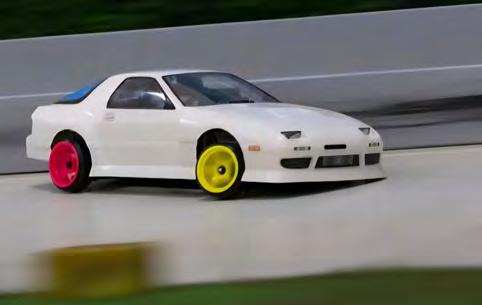
I’ve been in the RC Drift hobby for about a year and half now and during this time I’ve focused on the weight shift builds, also known as “Load Transfer Systems” (LTS). “Weight shift” is what happens when the car transitions, as if in the middle of an “S” shaped road, and the weight of the car shifts from one side all of the way to the other side. Encouraging this weight shift, or transfer of load, can speed up the transition and make the chassis drop to the outside and snap into the slide.
Aside from how they physically look sliding and dragging the bumper, the appeal is how well a properly set up weight shift car can perform. Despite being a “far from ordinary” set up, it’s another level of being able to express your creativity with a chassis setup in an already extremely personalized hobby.
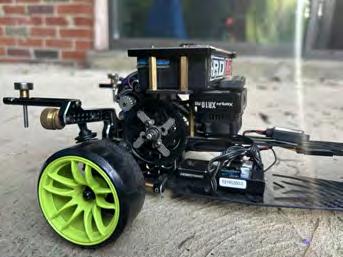
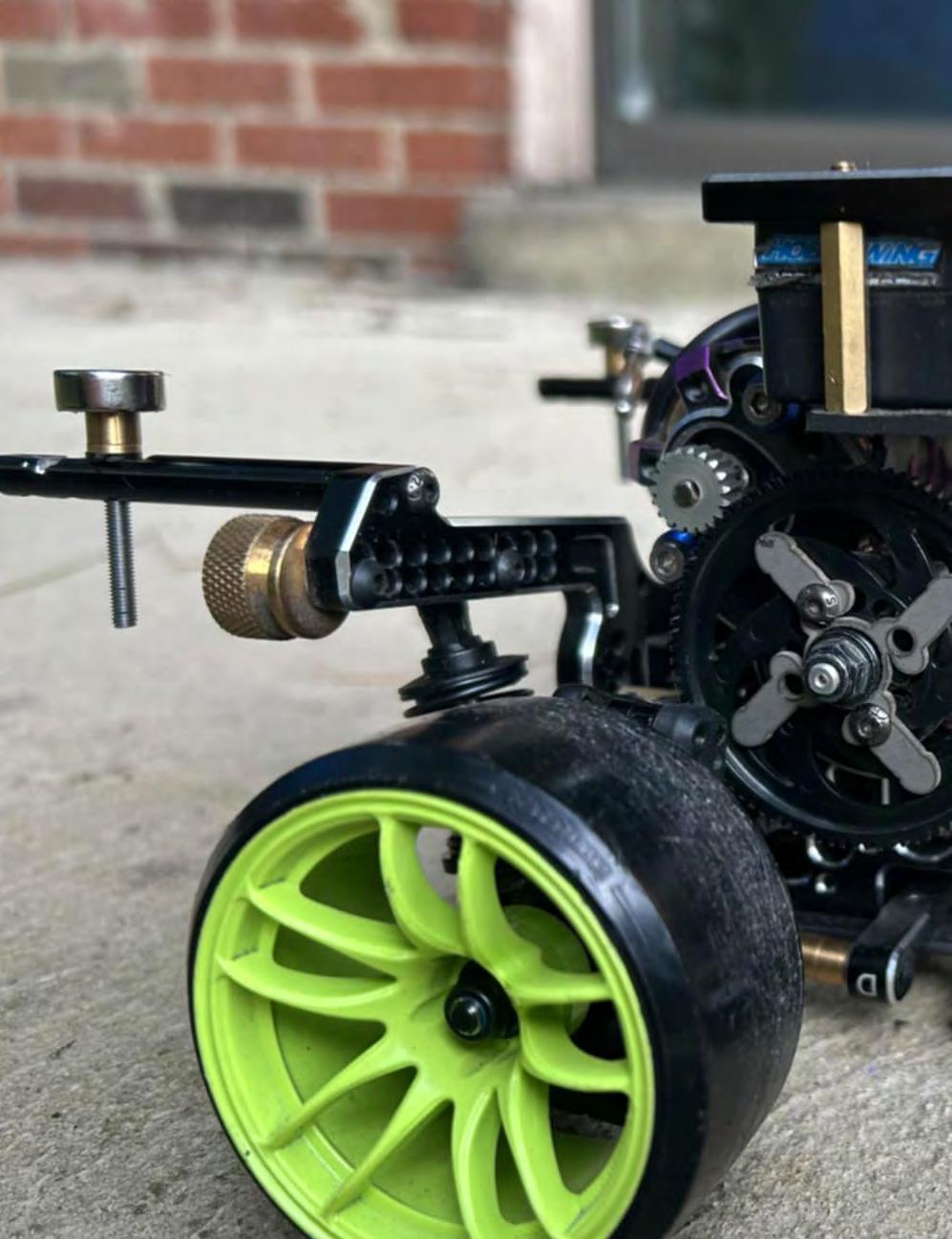
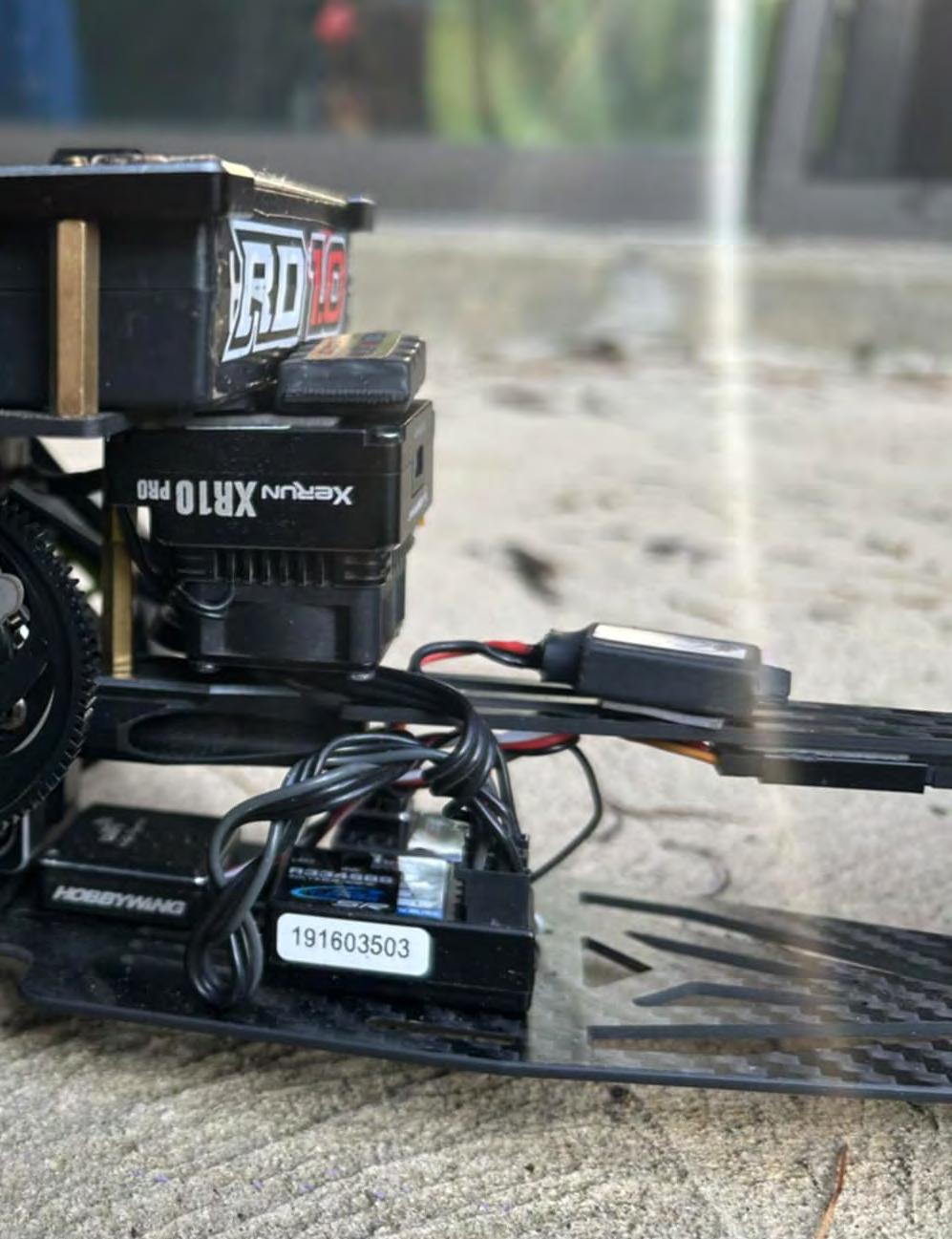
When most people hear or think of a weight shift (LTS) car they think of a high Center of Gravity (COG), which you do want. You can achieve a high COG by using a high battery mount, high motor mount, high esc mount, and high mount knuckles. That is typical for a chassis geared towards roll. However, the LTS setup also allows you to utilize and fine tune where the weight is being transferred. It can be transferred wherever you want to find more traction, transition speed, or style points. I’ve actually seen low battery set up cars perform and mimic one of
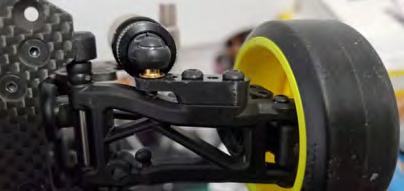

The main thing to pay attention to in your alignment for a big body roll car is camber progression in the rear. Camber progression is how the contact patch of your rear tire is affected by the suspension stroke or travel. Some like their camber progression or gain to come through the car squatting. Some prefer it to progress through the body roll. Most of my set ups and most other setups I’ve noticed utilize standoffs or a higher mounted short rear link. That’s because it causes the lead rear tire to remain flat through the progression stroke, as opposed to excessive tire roll from the chassis rolling. This also can be countered with rear camber as it’ll flatten out through the stroke.

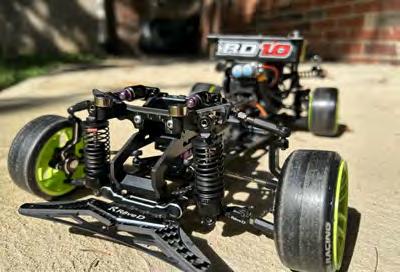
The next aspect some but not most consider is roll center. I tune my roll center with my suspension blocks. I set the upper link so that it meets the hub. Flipping suspension blocks and raising that contact point of the upper arm (or link) in turn lowers the roll center, induces roll, and stabilizes the chassis. The usual arrangement for a LTS is high COG, low roll center.
“Lever ratio” is an interesting setup modification I’ve discovered. The Lever ratio is the distance from inner suspension pin to shock mount, divided by distance from inner suspension pin to tire contact patch. With a weight shift build it’s considered ideal to have a higher lever ratio opposed to a lever ratio that’s closer to one. A ratio closer to one would be having the shock mounted
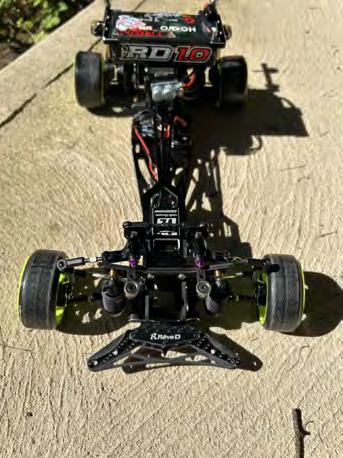
as close to the hub carrier or tire contact as possible . This would potentially give the shock a stiffer action (also dependent on spring selection). A higher ratio or damper closer to the inner suspension pin, in a vertical orientation, will give more droop and spring action. Spring shock length, and suspension block are all dependent on chassis set up.
My chassis weighs about 1400 Grams. Another big factor for LTS is chassis weight placement. I generally try to keep the main deck as light as possible and keep the bigger items, the Electronic Speed Control (ESC), battery, and motor up high.
Damper Length and Spring Rates are also very important. The largest shock length I’ve found to work so far are the MST TR60 dampers. I use the TR series on everything and love them. My “go to” damper springs are the WUN compression springs, which always seem to work really well. They come in a 3 pack with different rates to test and tune with. I usually land on the yellow springs in the rear and red springs up front, but it’s also dependent on chassis weight, lever ratio, and damper length. I’ve heard that using either the front or the rear stock D-Like RER Hybrid springs work well. I’ve found so far that running a lighter oil has worked best. If the shock has a silicone oil o-ring, then I like using the Reve D 5wt. If it’s a mineral oil O-Ring, then I like the MST mineral oil the 5 or 10. I usually drill the stock pistons out to 1.2-1.5mm diameter and that seems to work pretty well for me.
I haven’t ever messed with any cantilever setups but I’ve played with my fair share of standard suspension geometry set ups. I’ve always used a traditional style shock configuration. I certainly don’t think using a monoshock would have any negative effects. If anything, it might toss it a little harder due to the increased traction and transfer of weight. I would like to test using a sway bar because I would like to see how they help reduce chassis roll while maintaining weight shift.
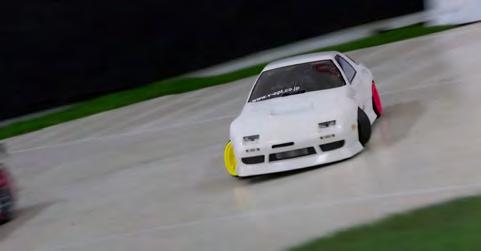
definitely see the front corner rise and the rear corner drop while it’s moving. Guys at the track always tell me “man I love watching your cars just heave in and out of transitions”.
I’ve seen some LTS cars get up on 3 wheels and I think it looks great. My LTS builds don’t always get up on 3 wheels, but you can
I don’t set the ride height terribly high, it isn’t monster trucking. However, it’s not like stanced out low life scraper either. With the body on it, it looks normal and somewhat laid out, but when it’s in motion it comes alive. There is definitely a lot of droop. I adjust the preload (spring tension) rings on the dampers to how I like them to feel and then adjust the ride height using the shock cap length or rod piston shaft end length. I don’t adjust the ride height with preload and I try to keep my preload as little as possible. My current LTS car can drag the rear bumper if I toss it and get in throttle hard enough. I’d still consider that to be a moderate amount of roll. My current rig was one of my first successful LTS builds that I could start noticing the body roll and performance changes. When a weight shift car is properly set up, it can actually be a comp weapon for big speed and angle tandems. The additional traction really is something that should be experienced at least once. It’s fast, fun, and looks so cool moving.
Currently, my main LTS car is my Shark, which started out just as a normal Shark on a Hydra deck, but I slowly convinced myself to set it up how I wanted to . I’m in the process of building another Yokomo YD/RD2 based LTS car as well. I’m also waiting for my Wrap-Up-Next (WUN) Travis2 to arrive.
If you’re going to tune a weight shift chassis, you’ve just got to commit. I recommend having one chassis that’s set up and works so you can have something functional while getting your weight shift car set up. It’s a process, but it can be very rewarding once it’s there. A weight shift car can work against you just as much as it can improve your RC drift experience. Seek advice, express yourself and enjoy the process along the way.