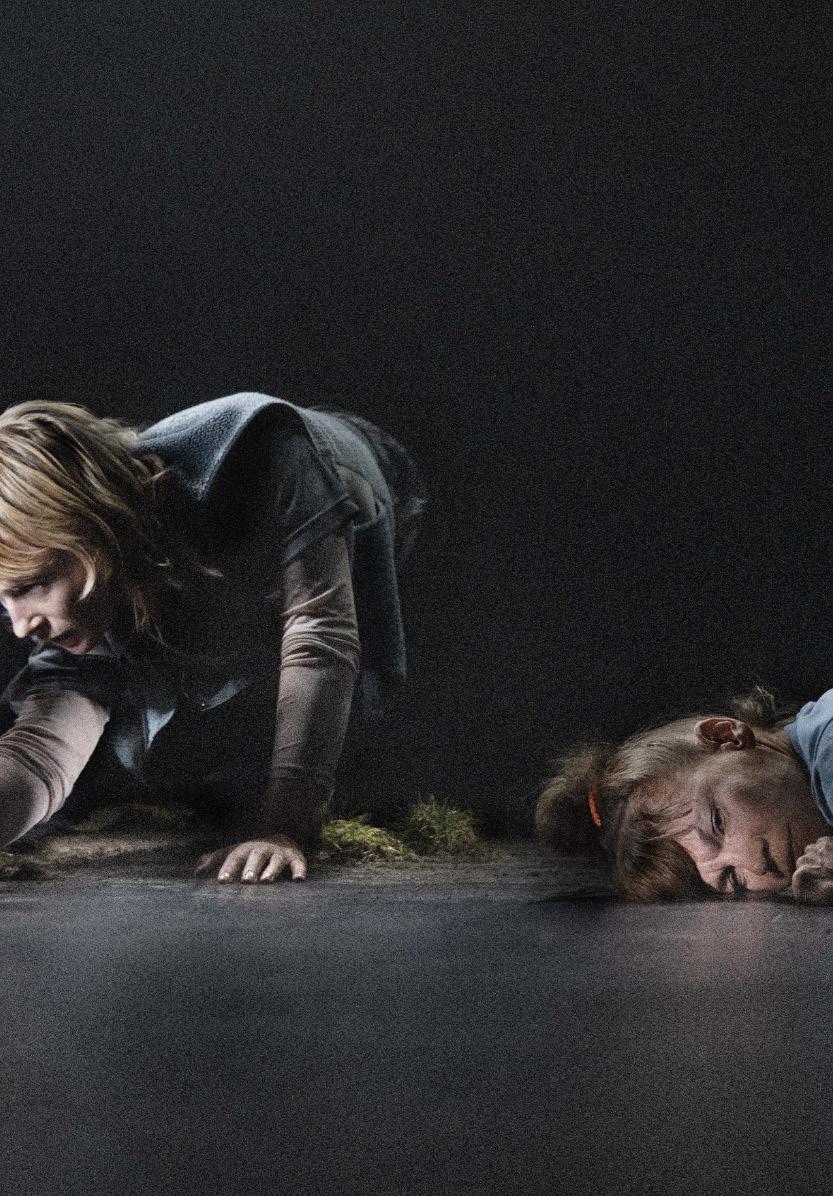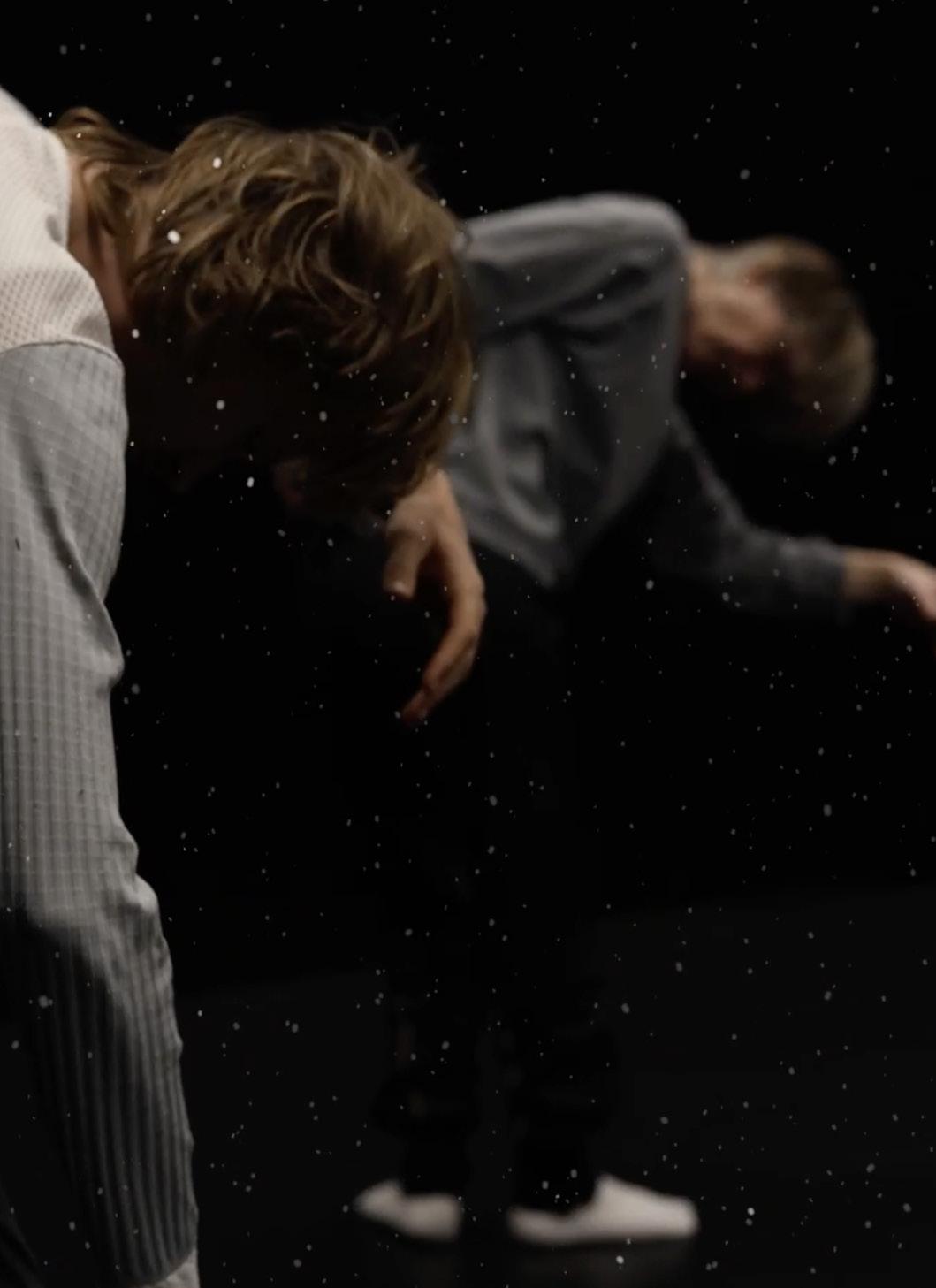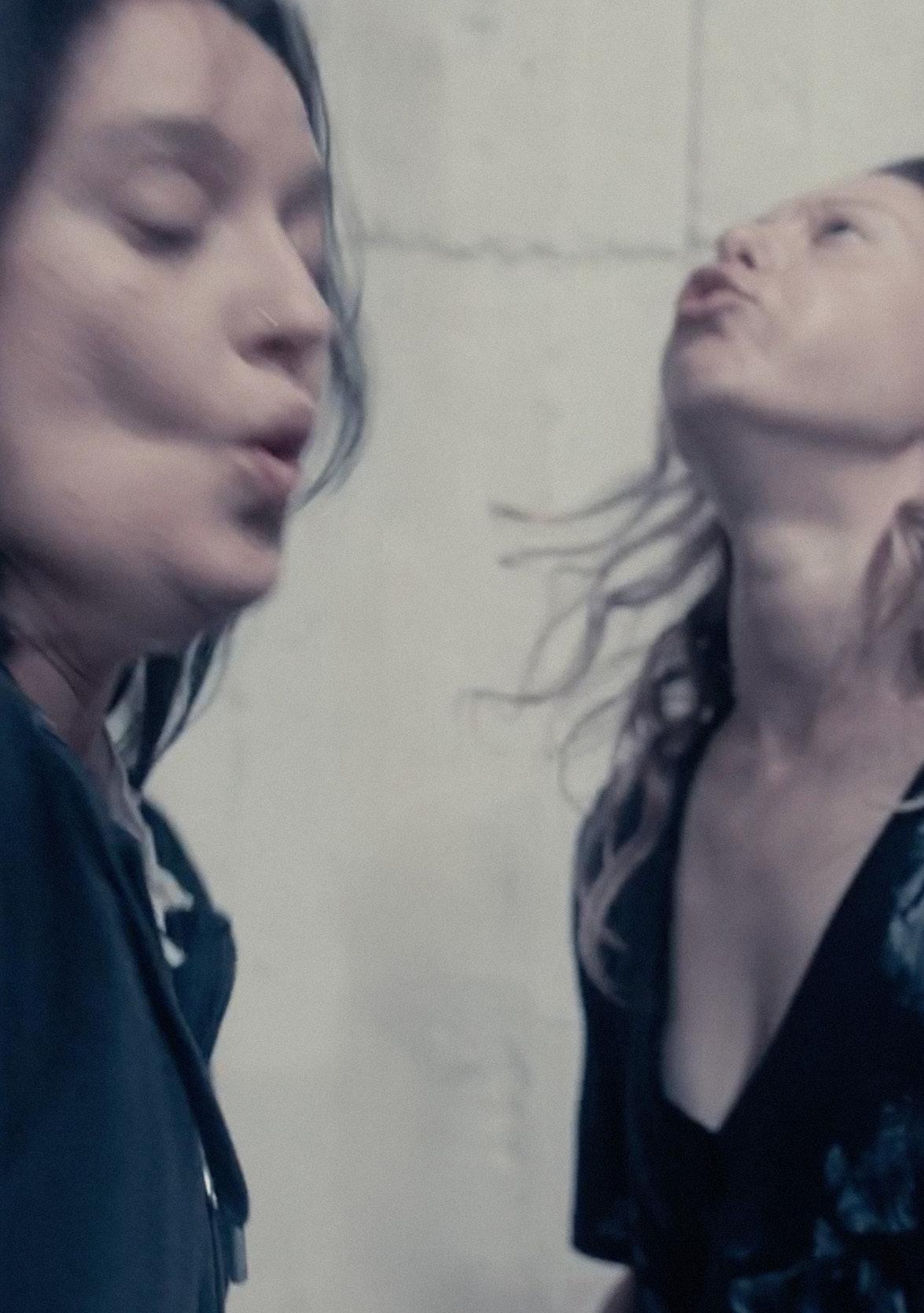

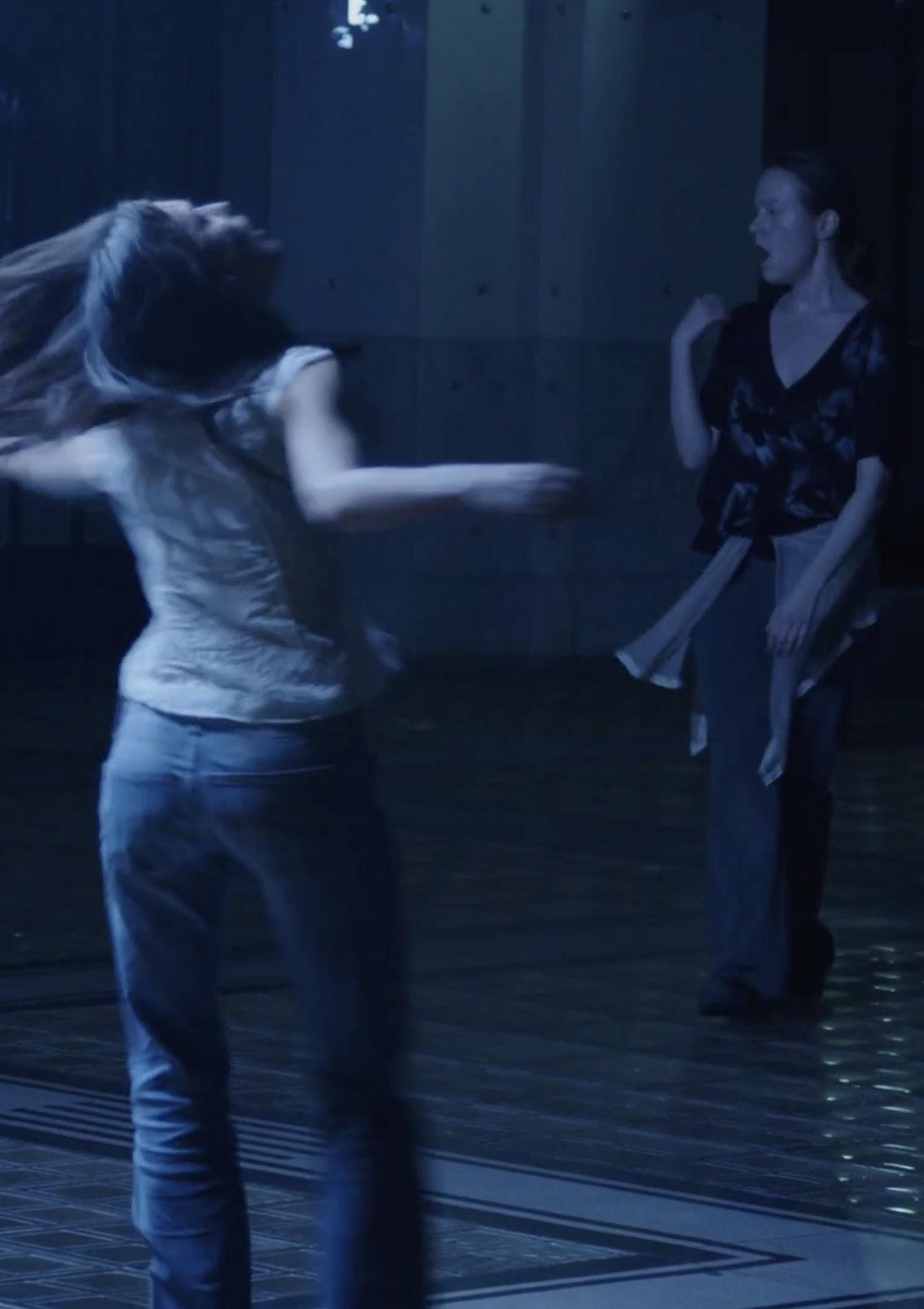
Photo Karl Oskar Gustafsson (still photo from trailer)
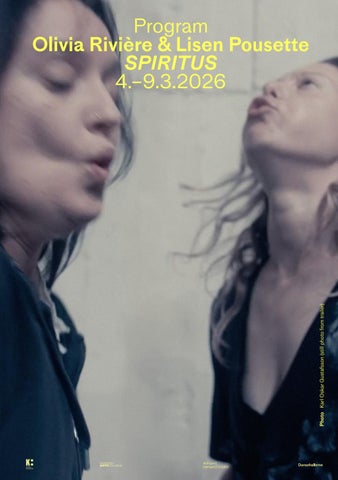
Spiritus is a work engaging with ideas of ‘resonance’, where resonance is understood as an acoustic phenomenon as well as something describing a relationship. In the performance, Olivia Rivière and Lisen Pousette enter un-set performative situations with body and voice that oscillates, stay responsive and spin off of eachother.
Their practices of resonance originate from whatever voices; the small cries, wet, dry, high-pitched forms of “screams” and melodies. While exploring the specific timbre and force, the sounds invoke a variety of textures and gestalts. “Spiritus” is a play with this as the work taps into the word’s meanings and derivations: breathing, mood, geist as well as alcohol and intoxication.
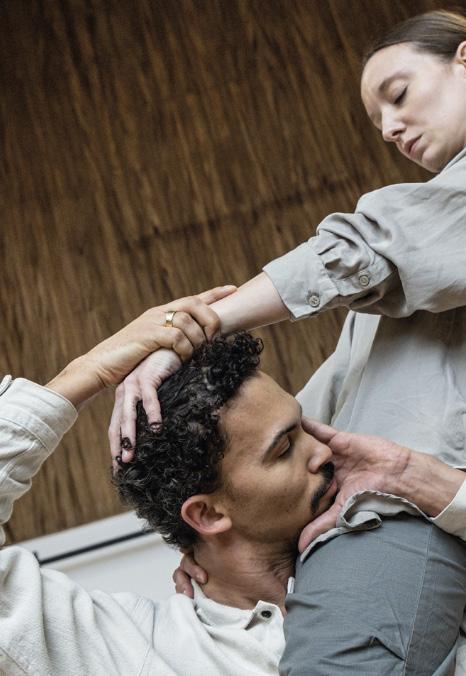
In Spiritus, states of listening, observing and responding are practiced through their sensing selves. They therefore invite the audience to listen to the subtle nuances in their song, the small exchanges, those that we rarely notice, even though they are so crucial in the approach of a discernible change.

By and with Olivia Rivière and Lisen Pousette
Music and sound design
Scenography
Dramaturgy
Kristian Alexander
Anna Moderato
Ida Larsen
Costume Olivia Rivière and Lisen Pousette
Lights Olivia Rivière and Lisen Pousette in conversation with Erik Molberg Hansen
Photo
Page 1: Karl Oskar Gustafsson (still photo from trailer)
Page 3: Lisen & Olivia
Page 5: Kristian Alexander
Page: Karl Oskar Gustafsson (still photo from trailer)
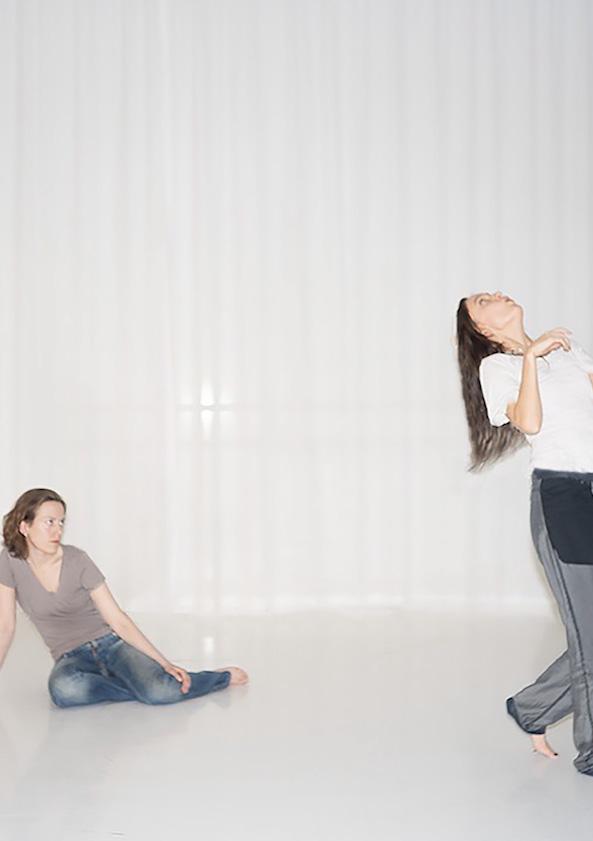
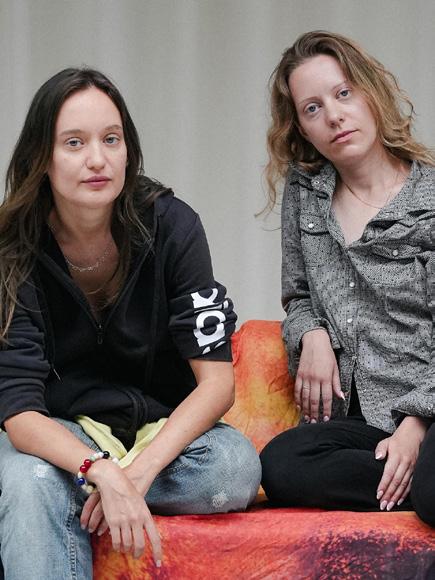
Olivia Rivière and Lisen Pousette form a choreographic duo based between Copenhagen and Stockholm. Both coming from a classically trained choir background, have been exploring the embodiment of extended vocal practices since the beginning of their collaboration in 2017. Their work takes a somatic approach as its entry point, engaging voice and sound as choreographic
materials. Through their materiality, affective potentials and reach, the work seeks to skew and expand the gendered voice. Drawn to visceral expressions such as growling and variations of screaming, they move through different moods and intensities, creating open-ended situations that seek out relation.
Together, they have created Ever Losing (2019), DUNKEL (2022), Spiritus (2024), a durational group version of Spiritus (2024), and site-specific work I Hear Bells (2025). Their works have been presented at venues such as ImpulsTanz (Austria), MDT (Sweden), Weld (Sweden), Dansehallerne (Denmark), Roskilde Festival (Denmark), Black Box Theatre (Norway), Norberg festival (Sweden), Les Urbaines (Switzerland), Uferstudios (Germany), Angewandte Interdisciplinary Lab (Austria), Centre Chorégraphique National (FR), Saruya (Japan) and Gallery Shower (South Korea).
Olivia is based in Copenhagen and collectively runs the space DANSEatelier, exploring new modes of exchange that can enhance our senses of collective thinking and interdependent living. She has an MA in Choreography from the Exerce program at Centre Chorégraphique National, Montpellier.
Lisen is based in Stockholm and holds an MA in Choreography from Stockholm University of the Arts. She was part of initiating P0$$E, a dance- and reading circle with a sister group in Copenhagen, and today hosts the performance evenings Kafé Mix at höjden, an artist-run space for autonomous production and exchange.
When and how did the idea of using the voice as the primary choreographic material emerge?
As kids, we attended the same elementary choir school in Stockholm, where we had at least one choir lesson every day. When we entered the studio together in 2016, now as both friends and dance colleagues, it felt natural to begin exploring the voice. We were curious about the years of vocal practice stored in our bodies. At the same time, we wanted to move as far away from classical choir singing as possible. Growling became our first entry point into extended vocal techniques: an extremely physical practice that immediately drew us in and spoke to the themes we wanted to explore.
This led to our first full-length work together, Ever Losing (2019).
Over time, we expanded this practice to include other vocal qualities with a strong material presence, building a choreographic language that is visceral, state driven and relational - all of which are themes we continue to explore in our work
What do you consider to be the strength of your shared dynamic, and how does it manifest in the work?
We would say that we are both very similar and can have a “twinning” effect, for example, we share loads of reference points and have very similar artistic preferences and at the same time, we have differences that complement and keep us fascinated with each other.
Right now we are in the midst of organising a minifestival echoing some of the particularities we look for in choreographic sound and listening, at Weld in Stockholm, where we realised after gathering some works together that we wanted to take part in this festival are duos. This was a fun surprise! And it feels significant, what sensitivities these types of relations bring about
How do you draw on your background in vocal and choral practice when structuring movement and timing?
Working choreographically with voice and sound makes it equally important to see the dramaturgical curve of the choreography respectively the sound and voice material. We’d like to think of the idea that one could separate the sound from the rest of the work and still fully feel the core of the piece. We also look at it musically, considering how it functions in its own right. Since we work somatically, the voice is often the motor for movement, forming how we develop movement practices and scenes.
What role does resonance play for you, both as a physical experience in the body and as a dramaturgical device?
A big role! When we made Spiritus we departed from the idea of resonance as something you can’t control - this was tricky and even contradictory - how to choreograph something that is uncontrollable? We have worked with the idea of resonance as a responsive relationship - a call, a response, and a transformation - and we are happy that we have dared going more and more into formats where we can let the material be more improvised and listening, and understanding more what types of framework we need for that
Has the work changed character in its encounter with different spaces and audiences?
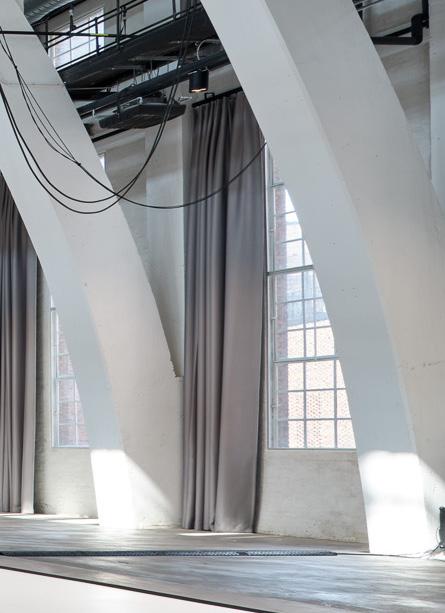
Yes, it has. We premiered Spiritus in a quite characteristic and raw theatre space, so not the typical black box. Being in a less theatrical space felt important for this work. At that time, the audience were seated in small islands of chairs. After that, Spiritus was lucky to tour to quite a few different places. But it wasn’t until we experienced the piece in a gallery setting, at Shower Gallery in Seoul, that something started to shift more clearly. The immediacy and intimacy of an audience being more convivial and close was something we wanted to keep
At the same time, change and transformation - regardless of the space - are part of the essence of Spiritus. As we write in the performance text, we enter un-set performative situations that spin off each other.
Dates and times
4.3.2026, 20:00
5.3.2026, 18:00
8.3.2026, 17:00
9.3.2026, 20:00
Double bill Thursday March 5th
18:00–19:00 Spiritus
19:10–19:40 Artisttalk in Hallen with Olivia Rivière and Lisen Pousette moderated by Jonas Schnor
20:00–21:00 High Tide by Emilie Gregersen
21:00–21:30 bar is open for hang out
Duration and stage approx 1 hour in Hallen
Dansehallerne’s address Franciska Clausens Plads 27, 1799 Copenhagen V.
Accessibility
The venue is wheelchair accessible, with an elevator providing access to the stages. All restrooms are genderneutral, and an accessible toilet for wheelchair users is available.
Dansehallerne is a national center for dance and choreography. Our focus lies in presenting and co-producing Danish and international productions for all ages. We are a gathering point for passionate dance audiences and professionals. From our center, we communicate professional knowledge of the art of dance, and we drive discussions about all aspects of the art of dance, at an intermediate level and in-depth.
Being a national center, as well as a gathering point for the local and international communities, we continuously work to ensure the best possible settings for artistic production and for the audience’s encounter with the art of dance. Every year, people from all around the country can experience the best that dance has to offer. And for several hundred artists, Dansehallerne is the year-round base and interface for professional activities within the field of dance.