I guess I should welcome everyone to the frigid north. My goodness this weather has been up and down up till this point. Now it is all down. BRRR!
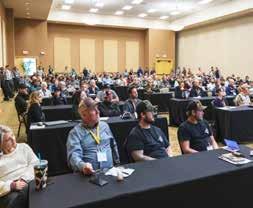
Well its that time of the year. Convention time!! As I have been saying the board members have been working hard at putting this show together. We are obviously swinging for the fences this year with moving the venue down to the Lansing area at Eagle Eye Golf and Banquet facility and changing up the itinerary with a Friday night auction as well as Saturday. The times have changed a little as well with the cornhole tournament being a bit later on Friday and our auction on Saturday being pushed back some. We are hoping to have the biggest convention to date. So tell your friends and family because there will be games for everyone. More details about times and hotel info are in this magazine as well as on facebook and our website. If you would like to make a donation please feel free to reach out to myself or any board member.
I look forward to seeing everyone there.
Thank you and God Bless.
Ken Brown President - UDFoM
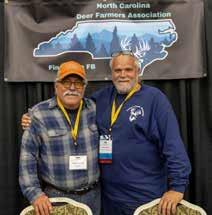
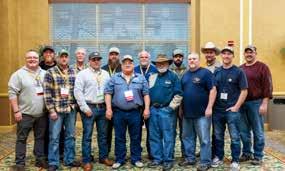
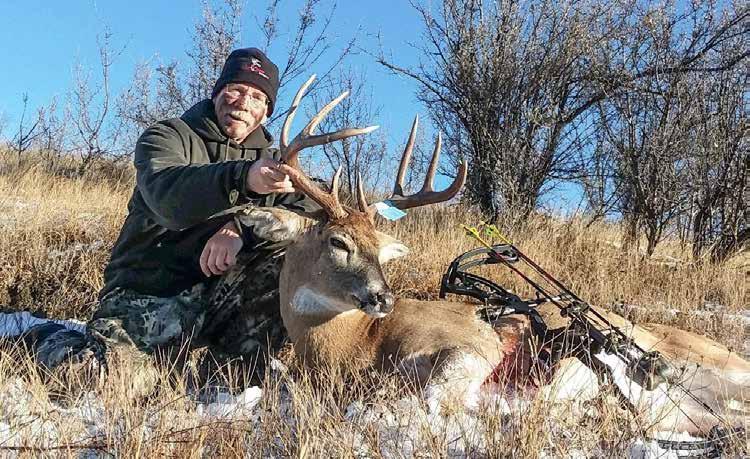
2025 NADeFA Convention Photos
Name:
United Deer Farmers of Michigan Membership Application
March , 2025 - March , 2026
Business Name: Species Raised:
Mailing Address:
City, State, Zip:
Home Phone: Cell Phone:
Email Address:
Membeship Status: New Renewal
Would you like to volunteer for any of the following UDFoM committees (check all that apply):
This will be a full registration & includes voting privileges, with a maximum of one vote per year per application.
This will be a full registration & includes voting privileges, with a maximum of one vote per year per application.
If you would like to pay with a credit card please enter your information here: Name on card
Three digit code on back Type of card
Signature
I hereby make application for membership to United Deer Farmers of Michigan, agreeing to conform to the Code of Ethics and Bylaws governing the Association.
A 9x9 square must be filled in with numbers from 1-9 with no repeated numbers in each line, horizontally or vertically.
To challenge you more, there are 3x3 squares marked out in the grid, and each of these squares can’t have any repeat numbers either.
• All-Milk Protein from Premium Food-Grade Milk Ingredients
• Essential Vitamins and Complex Minerals
• Balanced Fatty Acids
• Improves Digestion
• Promotes Growth and Performance
FEEDING DIRECTIONS: WHITE-TAILED DEER
• Fawns up to 1 week of age: Feed 16 oz. of formula daily, divided into 4 – 6 feeding.
• Fawns 1 week to 1 month of age: Feed 24 to 30 oz. of formula daily, divided into 4 feedings.
• Fawns 1 month to 2 months of age: Feed 30 to 35 oz. of formula daily, divided into 2 to 3 feedings.
• Fawns 2 months to weaning: Gradually decrease formula and number of feedings to approximately 15 oz. of formula once daily until fawn is fully weaned at 12 to 14 weeks of age. Provide a weaning diet and fresh clean water to the fawn.
For oral use only. These feeding directions are guidelines. As each animal is an individual, the feeding rate may be increased or decreased according to the needs of the neonate.
Feeding directions for other species can be found on our website.
• No Refrigeration Needed
• Easily Palatable
• 18 Month Shelf Life
• Available in 20# & 8# pails
• 24/7 Technical Advice & Support
• Formula for other Exotics and Wildlife Available
FEATURE STORY
Nature’s Best Whitetails - Devoting Heart and Soul to Quality Deer
By: Gail Veley
Tom Witte found it hard to routinely go about his day recently, raising deer full time and devoting 24/7 to his herd. He had just lost one of his very favorite doe, Goose, at five years old. She was prone to seizures. Having bottle fed, protected and babied her for her entire life, it wasn’t easy losing a deer that followed him around, “helping” him with various projects. And it’s not as though the hole in his heart couldn’t be filled again by another of the 250 (or so) deer that thrive at Nature’s Best. It’s that he already gives his whole heart to every single one of them.
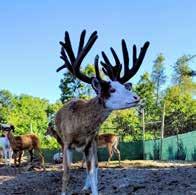
Since 2016, Nature’s Best Whitetails, a 20-acre deer paradise in Reed City, Michigan has raised mainly typical deer. The farm is also home to 25 piebalds (and counting), which are a more recent addition. In his passion to raise the deer, Witte has been known to stay up all night during fawning season, with an ample supply of warm towels on hand should a newborn need extra warmth or comfort. If skies turn gray and the spring air holds a chill, he’s scooping up fawns to put in his house or barn overnight to keep them dry and toasty. Many of these instincts come innately now, having learned about deer from his parents, who owned several.
“I grew up loving to hunt,” Witte, 52, said. “Instead of a car for my 16th birthday, my parents gave me a 30-06 rifle. But now I’d rather spend time with my deer. That’s what I love more than anything. I get more excitement over taking other people out hunting rather than doing it myself. Last year I took my mother, who’s now 74, to Iowa. She shot a 160” ten-point on her own.”
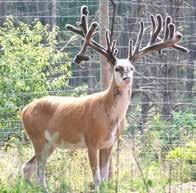
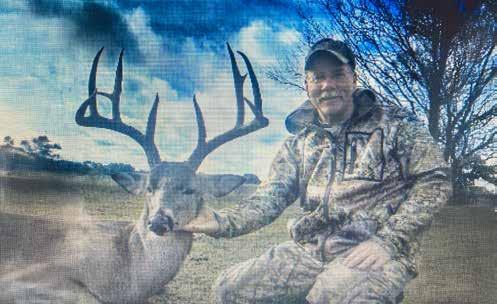
As much as he appreciates those types of experiences, Witte also appreciates the immense opportunities to raise deer from the best genetics possible. The farm is currently home to six regularly used breeding bucks, one of them being Picture Perfect, a GS-typical buck whose pedigree includes Storm Express , King Express , Grizzly and Justified. Picture Perfect, 28 inches wide with a 6 x 6 frame, was 200” at two-years-old and well over 200” at three and four. Having originally created his herd with genetics from Pine Creek Deer Farm, Witte is now moving towards an SS herd. By breeding SS does with bucks such as Picture Perfect, he is on the way to achieving that goal. “You can’t just stop with what works,” he said. “Every breeding season we A.I. 10 to 15 does a year for new genetics.” Witte is also hoping to raise more piebalds, after having won First Place at NADeFA with Tucker in 2025 for the best Non-Typical Yearling Piebald at 177 inches.
Helping Witte to further focus on his goals are his wife Jennifer, along with farm helpers Becky and Breanna, who divide shifts during fawning season. “My daughter Amber and my grandkids, Wells, 6, and Ellie, 4, love coming up to the farm and have the same love for deer that I do,” Witte said. “I usually have to literally drag Ellie out of the pens, or she would spend 24 hours a day with the deer. I’m a 2nd generation deer farmer and hopefully they will be 3rd and 4th generation deer farmers.”
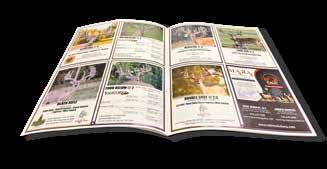
Breeder Buck 2025 Showcase Magazine is here!
Just in time for semen sales, getting ready for breeding season!
We created this magazine in order for 2025 Breeder and Hunting Preserve advertisers to showcase their most recent photos of their bucks close to the last days of antler growth. We realize establishing a collective deadline for all states Fall magazines to publish on the same date to obtain last-minute photos would be impossible to achieve. With this magazine, advertisers have one more chance to showcase their bucks.
~ Thank you to all that participated!
If you’re interested in advertising or featuring one or more bucks in the 2026 Showcase please call 435-817-0150 or email deerassociations@gmail.com for more information. There are limited spaces available, call today to reserve your space!
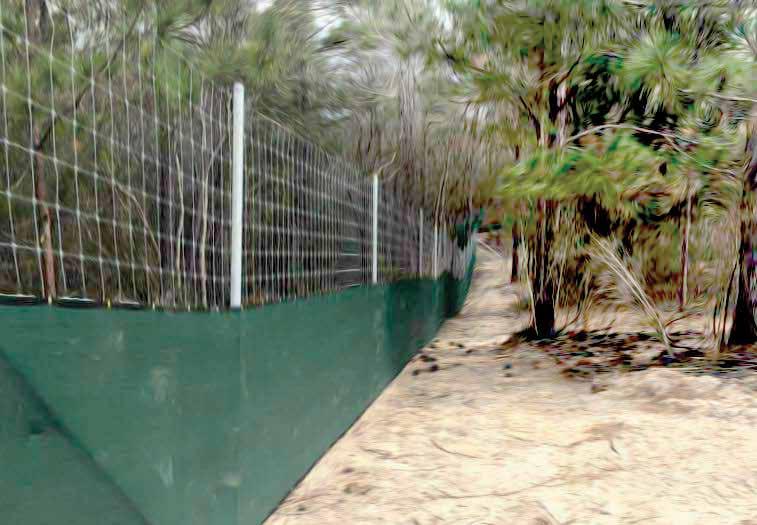
STRAIGHT SHOOTER GAME FENCING
Science that delivers the health & productivity you require
G FORC E™
SCIENTIFICALLY FORMULATED NATURAL SUPPLEMENT TO HELP GROW LARGE, HEALTHY DEER AND BIG ANTLERS!
Nutrient rich formula contains highly bioavailable ingredients, including our proprietary calcium/phosphorous complex with Antler D TM, that are required to support body and bone growth, especially for fast growing bucks
Contains probiotics and targeted enzymes to support gut health and proper digestion
Available in pellet or powder that can be top dressed or mixed in feed. Great for antler growing season and young bucks, too
PeaceMaker
PRECISELY FORMULATED TO HELP MAINTAIN A NORMAL AND RELAXED DISPOSITION IN ALL CERVIDS
Provides optimal levels of magnesium, Vitamin B1 and inositol to promote calmness and provide help for restless animals
Contains no herbals, tryptophan or chemicals, eliminating concerns of unwanted side effects
Use PeaceMaker to “keep the peace” during pre-rut, rut, transportation, weaning and anytime destructive behavior may occur
ENTERIC HEALTH FORMULA
POWERFUL SOLUTION FOR HEALTH & PRODUCTIVITY
Helps maintain digestive health and productivity
Contains micro-encapsulated probiotics, targeted enzymes and a novel fiber complex
Use in does before fawning, during lactation and all cervids during times of environmental stress
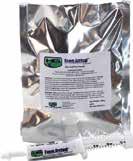
FAWN ARRIVAL™ POWDER & PASTE
HELPS PRODUCE HEALTHY, FAST GROWING FAWNS
Helps maintain normal digestive health
Supports a healthy immune system
Feed powder for 14 days to bottle fed fawns
Paste is ideal for fawns left on does
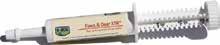
FAWN & DEER XTR™
ROBUST FAST RESPONSE FOR FAWNS & OLDER DEER
Innovative formula delivers max digestive support, especially in newborns
Rapidly delivers help for GI health and a functioning immune system
May also be used post-tranquilization to support healthy recovery
INCREASE CHANCES OF HUNTING SUCCESS WITH PROPERLY PLACED TRAIL CAMERAS, DEER STANDS AND SCENT HIDING
By: Gail Veley • Sponsored by the United Deer Farmers of Michigan
It was the early 1980’s, and students at Missouri State University were deep in the woods, thoughtfully stretching a thin line of string, low and across a well-traveled deer path. They had just invented, so to speak, the first active infrared device to study deer behavior. One trip of the string by an unknowing cervid would capture one brief moment, until the string was reset. This unique device later led to the creation of the first trail camera, which caught images using a 35-millimeter camera triggered by infrared signals.
“When trail cameras first started gaining real popularity, in the early 2,000’s, they were only a novelty item,” explained Tom Nelson of Grand Ledge, Michigan. “In about 2005 more and more people were using them. But they were in their infancy stage and hard to install.”
Using these cameras involved putting a camera card in a reader, physically retrieving the card, checking the photos and potentially leaving a lot of human scent behind. Today, trail cameras include GPS and wireless tracking abilities, making the ability to check them remotely much easier, but perhaps a time-consuming or addictive 24/7 activity. Trail cameras changed everything for hunters and for those who don’t want to merely hunt “old school” and be surprised at what they encounter.
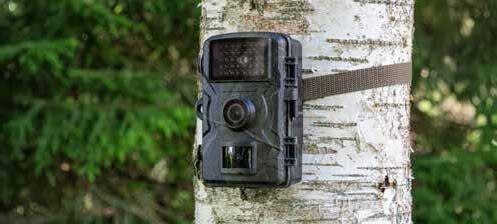
Placing a trail camera to track trophy treasures is a bit of an art. “You need to use trees that are at least close to 12 inches in diameter to put the attachment strap around, and then off the trail a bit so they are harder to notice,” Nelson said. “About waist high is pretty good with very few obstacles around so you
get a good look at the landscape.” Wearing rubber gloves to install cameras will also help hide your scent and detract from educating deer as to where humans may have been. And whether you are checking one camera or 10, careful camera placement might also ensure it doesn’t get stolen, as good ones can cost as much as $300.
While cameras can reveal a lot about native and transient deer activity, “I’ve heard hunters say that they’re not going hunting because they had nothing on their camera,” Nelson shared. “But a couple years ago I shot a prize buck on my property, and I never had a picture of him. So, I say you should go hunting regardless of what you find.”
Cameras, in addition to tracking game, can also help determine the
best location for a morning versus an evening deer stand. Ideally, choosing a deer stand location preseason could allow you pick an adequate cover tree such as an older or mature oak or pine, with ample branches or leaves that stay on longer in the fall to help provide camouflage. With this type of cover “deer will walk right by you.” Nelson said. While the first tree stands amounted to a wooden seat affixed to a wooden ladder, the idea of hiding from your prey can be attributed to Native Americans, who used to dig holes in the ground to hide from and ambush their next meal. Yet, the idea of being on higher ground for hunting eventually took precedence, hence the invention of the first commercial tree stand by Andy Anders. Initially produced in the 1940’s, Anders modeled his tree stand based on stands used by Japanese snipers in World War II. Today, rather than wood, tree stands are made primarily out of metal for longer durability. Often incorporated into deer stands are deer blinds. Instead of merely being used on the ground, they are frequently used as an additional component of the tree stand. They can be elevated eight, 10 or 20 feet high for more efficient vantage points and protection, replacing exposed platforms used to sight deer and with it, the necessity to wear a safety harness.
“In choosing an ideal tree stand location you also always want to look for travel corridors and ridge lines in determining where your
stand or blind will be,” Nelson said. “Deer tend to want to stay in cover and utilize narrower passages going to food plots. Wind direction is an important factor, too, where your scent won’t be easily discovered. Having more than one tree stand could work in your favor especially if you have limited time. For the average hunter a tree stand or blind will pay off and better the chances that you will harvest something.”
Nelson still remembers sitting stone quiet in a tree stand with a young, first-time hunter, when the hydraulic crack of his now opened soda can abruptly broke through the forest serenity. “I was not expecting that,” Nelson said. “I just about jumped out of my skin. He still remembers that, and he’s never done it since.”
Thus, Nelson also recommends carrying hand snippers to clear anything you might brush up against while entering or exiting a tree stand or blind, adding to the ability to be as silent and undetected as possible.
Eliminating unnecessary noise and disguising your personal scent can further ensure greater hunting success. In knocking your scent down, deer may never detect your presence or might think you trekked through an area hours ago, or even the day before rather than recently. “The goal is to be as 100 percent as scent-free as you can,” Nelson said. “Shower with unscented soap and use unscented detergent for laundry. Hang your clothes outside to dry and keep them sealed in a plastic bag until you have arrived at your hunting destination to change. Wear rubber boots because they will not soak in scent.” Charcoal liners, found inside camouflage clothing, also absorb human scent. Ozone machines screwed into the tree of your stand location can help create an ozone layer knocking down human scent. In addition, using doe or buck urine can both attract deer and cover human scent.
Lastly, Nelson strongly suggests carrying a few important items with you on every hunt. These include a knife, flashlight, toilet paper, a snack such as granola bars, water in a nonplastic bottle and a cord-of-rope. “Remember that while they are ways to make hunting easier, hunting really isn’t supposed to be easy,” Nelson emphasized. “I had a friend who would wear a flannel shirt and never camouflage and hunted the old-fashioned way walking through the woods. He wasn’t always successful, but he had a great time. Sometimes it’s more about the adventure, and being out in nature, that’s most important.”
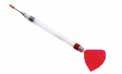
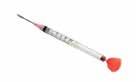
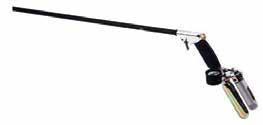
is formulation contains higher concentrations of active ingredients than the original MK™ kit, allowing for lower dose volumes and the use of a smaller dart, resulting in improved accuracy during capture.
is kit builds on our MKB™ formulation by adding midazolam for superior muscle relaxation and more reliable sedation. Recommended for immobilizing large exotic hoofstock species, including bongo, kudu, gazelle, eland, other African hoofstock and certain domestic wildlife species. MK2™ Kit MKB™ Kit
Contains higher concentrations of active ingredients than the MKB Kit, allowing for lower dose volumes and a smaller dart to improve accuracy during capture. Recommended for super exotics and large cervids that may be more diffi cult to sedate.
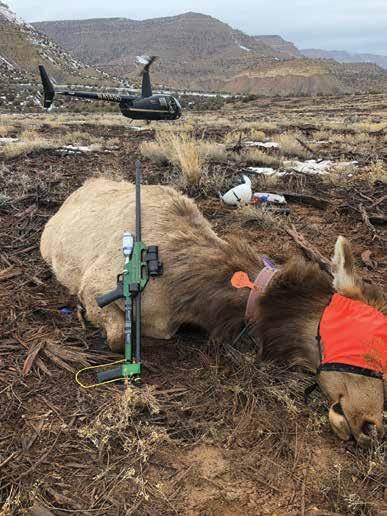
This thick, hearty and healthy slow cooker venison stew is made in the crockpot with tender hunks of deer meat, vegetables, and a rich & flavorful broth.
Ingredients
• 2 lbs. venison stew meat (or elk, antelope, moose, beef, bear – really any red meat)
• ¼ cup all purpose flour
• 2 tsp. salt, divided
• 1 tsp. pepper
• 1–2 Tbsp. high heat tolerant oil or fat (duck/deer/ beef fat, avocado oil, clarified butter)
• 1 lb. baby, gold potatoes, quartered
• 3–4 large carrots, diced
• 3 celery stalks, diced
• 1 onion, diced
• 4–5 garlic cloves, minced
• 2 tsp. Herbs de Provence
• 1 (15oz.) can diced tomatoes, drained
• 4 cups beef or venison stock
• ½ cup red wine (dry red like a Cabernet or Bordeaux is lovely)
1. Mix together the flour, 1 teaspoon of the salt, and 1/2 teaspoon of the pepper in a medium bowl. Pat the venison very dry with a towel to remove any liquid. Toss the venison chunks in the flour mixture until everything is coated and the flour is absorbed.
2. Heat a large skillet over medium-high heat and add the oil or fat. Once hot, sear the venison on all sides. You may need to work in batches to avoid overcrowding the meat.
3. Once seared, transfer the meat to the bottom of a slow cooker with the potatoes.
4. Then layer in the carrots, celery, onion, garlic, Herbs de Provence, the remaining 1 teaspoon of salt, the remaining 1/2 teaspoon of pepper, tomatoes, stock, wine, and Worcestershire sauce.
5. Set your slow cooker on low for 8-9 hours.
6. Optional (for thick stew) – After about 6 hours, remove a few spoonfuls of the broth and pour into a bowl or cup. Stir in the starch until the starch dissolves making a slurry. Pour the slurry into the stew, stir well and skew the lid for the remaining cook time.
7. Serve with crusty bread & get cozy!
NAMING DEER
CREATING CATCHY, UNIQUE AND MEMORABLE NAMES
By: Gail Veley • Sponsored by Whitetails of Louisiana
It was Halloween night a few years ago, and the considerably long and scenic road to Elam Woods Whitetails in Baskin, Louisiana never saw any trick or treaters. A storm was rolling in, dark and rumbling. As crashes of thunder and streaks of lightening illuminated the surroundings, Ben and Krystal, two adult children of Elam Woods Owner Bill Holdman, spotted something moving across the front lawn. “Dad, we have a trick or treater,” they both exclaimed. “Finally.”
As Holdman opened the front door to investigate, he didn’t find a trick or treater, but rather, a five-monthold buck fawn that had wandered out of its pen. “We named him Gray Ghost,” Holdman said. While naming deer can have a more lighthearted and humerus side to it, a unique name may help people long remember your farm or the buck. Having bucks with unique names can also “help promote a lineage and genetic line and can even give a real boost to a certain line,” said Henry Woodard of Woodard Whitetails in Glasglow, Kentucky.
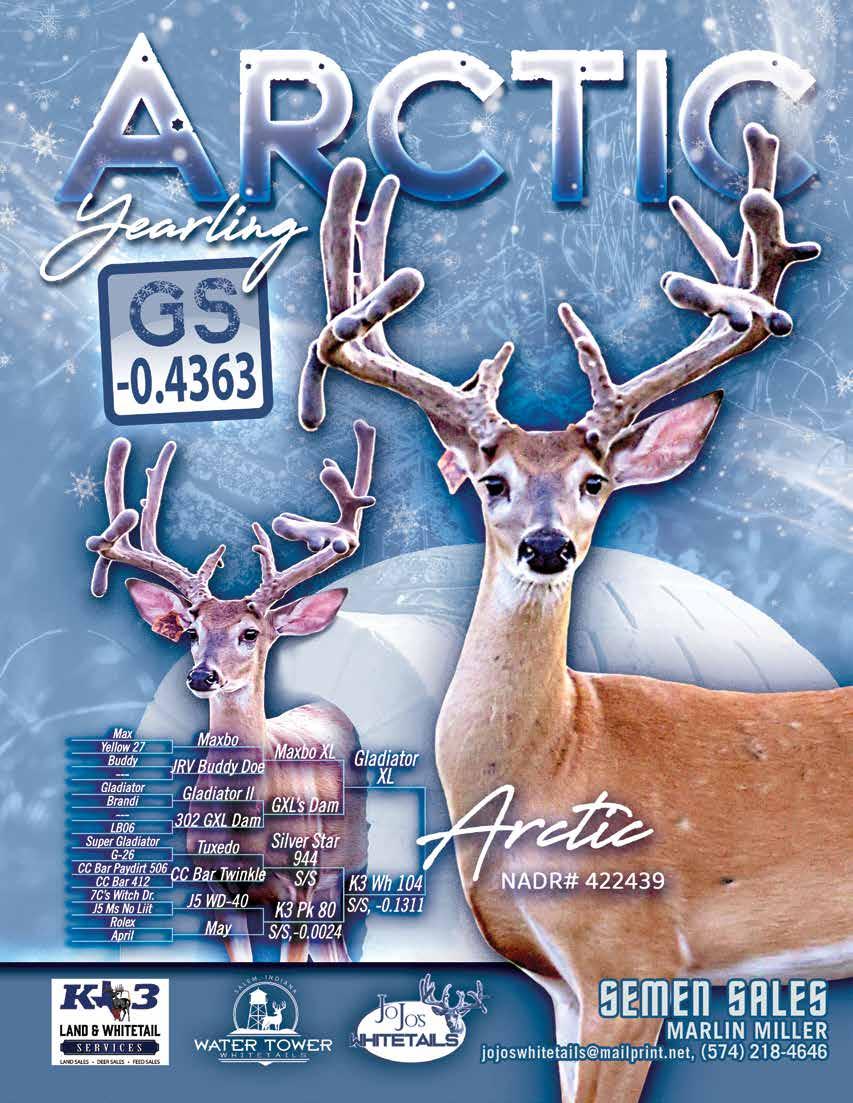
Woodard, who purchased the infamous buck Gladiator as a mere 63” yearling in 2004, couldn’t have known then that the little buck, named so after the movie Gladiator, would “blow up” at two and go on to sire many more great producers with names such as Gladiator II, Gladiator Supreme, Gladiator XL and Gladiator Select. Owning Gladiator proved to be extremely profitable for Woodard and provided the backbone to carry this head-turning lineage forward. Semen straws sold quickly. Later,
Gladiator was bought by Lone Hollow Whitetails where he lived to be 16.
“It was different back then when Gladiator was on the scene,” Woodard said. “CWD wasn’t the big issue it is now. We had DNA and parentage testing and didn’t have to worry about CWD. Still, Gladiator was an ‘SK’ with a -3.78 GEBV. When you get a buck out there for promotion and give him an iconic name, once they have solid production on the ground you are at whole different level.”
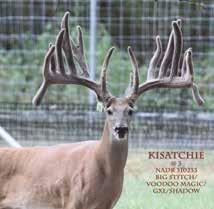
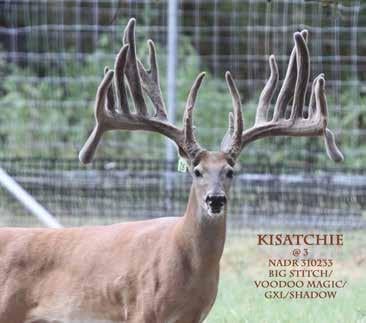
Having bucks with unique names “has helped us when placing magazine ads,” Holdman explained. “We had an ad with a buck named Kisatchie, after Kisatchie National Forest here in Louisiana. In the ad he was standing in the middle of tall pine trees. We had another buck named Cotton Picker and had him standing in the middle of a cottonfield in his ad. We found it’s been an effective way to promote them.” At Elam Woods, deer are often named after places in Louisiana, country music legends or songs. Some of their current breeding bucks include Twitty, Easy Touch, Slow hands and Heated Rush. “Those names caught on really well,” Holdman said. “Everybody knows who they are.”
Patriotic names and names of songs also often work well to do a deer “justice” and therefore make them more memorable. The best buck ever raised by Woodard, called Louisville Slugger, was impressive even as a yearling, and named after the well-known baseball bat company. “I thought it was iconic and not easily forgotten,” Woodard said. “We also have Mr. Incredible after the movie ‘The Incredibles’ and he had two sons, Dash and Jack.” However, no buck, no matter its name, is worth anything unless they are registered with NADR. “If someone is able to look up a buck on NADR, and think that will work on their farm, they will more than likely be interested in him,” Holdman said.
In addition, having a buck who will raise the bar for the deer industry and essentially out-produce himself, pass his genes along and also be useful for outcrossing, is what will make him truly great. “You don’t see that with every deer,” Woodard concluded. “Having that will certainly get you noticed.”
THE BENEFITS OF FEEDING TREATS TO DEER
WHY, WHEN AND WHICH KINDS ARE SAFE?
By: Gail Veley • Sponsored by The Illinois Deer Farmer’s Association
Staying on top of herd health finds many deer farmers to be big proponents of feeding treats to their whitetail deer. Safe options could include animal crackers, peanuts, marshmallows, horse treats made with oats, golden oreos or other similar non-chocolate cookies. “Feeding treats helps me to get a good look at them every day,” said Chase Baker of Baker Whitetails in Junction, Illinois. “Each deer has a distinct personality and if they aren’t acting like themselves then I know something is wrong. If I can get closer to one that normally I couldn’t or pet one I normally can’t, there’s a problem. Or if one that is normally friendly and right up front is hanging out in the back, then I know I need to attend to it. There could be any number of things wrong from a soundness issue, a wound or a virus.”
Baker, who prefers to feed animal crackers and buys them in bulk, also adheres to certain safety rules while feeding treats. He only feeds bucks outside the fence and never touches them. He also never wears gloves, to allow his deer to be familiar with his scent. Baker also recommends feeding treats during a specific time of the day, to help
ensure that expectant deer will be ready, waiting and easier to find. Through Baker’s year-round routine of feeding treats, it allows him to check for ailments specific to certain times of the year such as pneumonia in the fall or EHD in the summer months. While feeding treats year-round can be ideal, in places such as New York where winters can be much colder and more brutal, Dana Hoover of Mountainside Whitetails in Penyan, New York abstains in the winter from doing so. “Starting after NADEFA when the weather turns nicer, we start feeding treats again,” Dana shared. “I like to feed peanuts for the protein aspect and that way I won’t get sticky hands like I would feeding something like diced up apples. Peanuts rattle when they hit the ground, and the deer know the sound.”
Dana and his wife Ella feed treats from early spring until early fall and revel in the time they spend in the deer pens. They have found that throughout the winter, their deer tend to get wilder due to reduced interaction. As soon as the peanuts come out and Ella resumes her daily practice of walking though the pens, the deer calm right down
(and fawns get used to seeing humans from the very onset.) “This really helps our program,” Hoover said. “We can safely watch them grow and catch stuff early on. It also gives us a head start on any potential antler infections. We’ve definitely caught most of them early on during the years.”
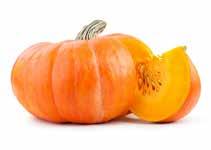
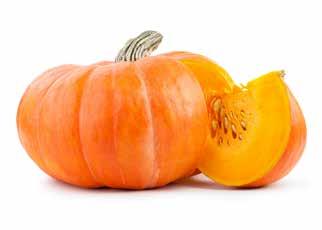
Medicinal benefits from other types of food such as raw pumpkin, also perceived by deer as a treat, is a natural dewormer as a result of the fiber content. In addition, acorns, watermelons, apples, alfalfa, soybeans and legumes provide vitamins, protein and energy. However, certain foods such as cucumbers, rhubarb plants, potato leaves, tomato leaves, onions, garlic, daffodils, foxgloves and poppies are either toxic, or generally unpalatable to deer, and should not be found near where they thrive. “If you have a garden, make sure it is fenced off properly and your deer are unable to get in there,” Baker said. “Regardless of whether you’re growing watermelons or tomatoes.”
UDFOM Magazine Deadlines 2026
Spring: April 7th
Summer: July 7th
Fall: October 13th
Winter: Jan 12th, ‘27
Whitetails of Oklahoma Annual Fundraiser - Feb 6-7, 2026 - Sallisaw, OK
Illinois Deer Farmers Association Fundraiser - Feb 20-21, 2026 - Altamont, IL
Alabama Deer Association Spring Auction - Feb 21, 2026 - Cullman, AL
Iowa Whitetail Deer Association Winter Banquet - Feb 21, 2026 - Timberghost Ranch Lodge
Pennsylvania Deer Farmers Association Eastern Winter Classic - Feb 27-28 - Morgantown, PA
Kansas Deer & Elk Association Convention - Feb 28, 2026
United Deer Farmes of Michigan Annual Convention - March 6-7, 2026, Bath Township, Michigan
Southeast Trophy Deer Association Spring Fling - March 6-7, 2026 - Orlando, FL
Whitetails of Wisconsin Annual Banquet & Fundraiser - March 13-14, 2026 - Wisconsin Dells, WI
NADeFA Spring Open - March 20, 2026 - Sandusky, OH
KALA Summer Showcase - Aug 8, 2026
Whitetail Deer Farmers of Ohio Convention - Aug 13-14, 2026
Southern Top 30 - Aug 20-21, 2026 - Louisiana
TDA Annual Convention - Aug 28-29, 2026 - San Antonio, TX
Use this QR Code or go online to DeerSites.com for more deadlines and up to date event information!
HOW TO SPOT AND TREAT PNEUMONIA IN WHITETAIL DEER
By: Gail Veley • Sponsored by The Pennsylvania Deer Farmers Association
In terms of saving whitetail deer from succumbing to upper respiratory diseases such as pneumonia “the most valuable animal on your property is the one that just died,” explains Josh Newton, COO of Cervid Solutions and Operations Manager of Red Ridge Whitetails in Williamsport, Pennsylvania. “Because this deceased deer can provide insight as to what caused their death and give you greater abilities to treat others with an appropriate antibiotic regiment.”
Being that pneumonia can manifest itself virally, bacterially, chemically or as a result of an injury, some antibiotics may work better than others for effective treatment. And pneumonia, aside from the type caused by an injury, is almost always contagious. In addition, fluctuating weather patterns, such as severe drops in temperature or significant precipitation, can play a vast role in the overall health and longevity of a cervid herd or how susceptible they may be in contracting pneumonia. “Each farm is judged on it’s merits individually,” Newton said. “A northern deer farm is far different than a farm in an area such as southern Missouri where winter is a lot less hard on animals from a pneumonia standpoint.”
Symptoms of pneumonia, which can affect deer of all ages including fawns to older adult deer, can include a chronic dry cough, erratic shallow rapid breathing (most noticeable as a bouncing motion in the flank area), foaming at the mouth (unlike the look of chewing cud), diarrhea and nasal discharge. These symptoms are usually accompanied by dehydration as fawns tend to lose their desire to nurse and adult deer tend to lose their desire to eat and drink.
“Pneumonia is probably one of the most significant diseases that affect farmed deer,” said Dr. Rachael Weiss of Applied Reproductive Concepts in Greencastle, Pennsylvania. “If a farmer is losing a significant number of deer, I always recommend a necropsy and culture because many don’t know what is affecting their deer. The necropsy and culture will be a baseline to appreciate what is going on and choose the most appropriate treatment options.” To this end, choosing the right antibiotic (such as Draxxin, Zactran or sulfa drugs such as SMZ’s) can be the difference between life and death as some forms of pneumonia may be resistant to certain antibiotics. “We refer to this as the MIC or Minimal Inhibitory Concentration factor,” Newton explained. MIC defines levels of susceptibility or resistance of certain bacterial strains to administered antibiotics. “Having a reliable MIC assessment impacts your choice of a therapeutic strategy because of the potential effectiveness on an infection therapy,” he emphasized.
Newton feels any decisions regarding treatment regiments should always start first with your veterinarian. Therefore, having a good VCPR (Vet Client Patient Relationship) is just as important as developing a keen eye for illness, as antibiotics can only be acquired through veterinarian prescriptions. Acting quickly to isolate sick animals could also help save others if done promptly.
This, along with maintaining an ideal number of deer in your pens, is another important proactive and preventative measure.
“Ask yourself, what is your “Morbidity and Mortality Goal” for your farm and how many deer you are willing or able to lose,” Newton asked. “Also think about this. What is the maximum number of deer you could safely raise in the worst conditions? Consider your fawn program, too, and then bump back the number of deer in your pens. Because realistically, how much time and money do you want to spend intensely managing deer or treating sick animals?”
BEWARE OF HAVING A PET BUCK
By: Gail Veley • Whitetail Deer Farmers of Ohio
On December 31st, 2025, Levi Miller held his five-monthold grandson Zachary in his arms and told him softly “grandpa has to go feed the deer. I’ll be right back.” With that said, Miller, a man who raised his first deer at age 14, who has raised deer for a total of 30 years, walked off alone to feed his herd. Reaching the first pen, he felt a sense of contentment in seeing three-year-old Buddy walk towards the gate of his chain link fenced pen, where he lived among doe fawns. Having bottle raised him, Miller had unwittingly convinced him along the way that he wasn’t really a deer. He was merely a family pet who laid outside their front door like a guard dog, waiting for scratches on the head. A pet that never for one second had any desire to hang out with other bucks, not to mention any behavioral acknowledgement that anything like the rut even existed. Therefore, to protect Buddy, he placed in a pen with doe fawns, rather than with other bucks.
Miller opened the gate and slipped in, ready to turn and give expected head scratches to Buddy. “As soon as I latched the gate. I was knocked on the ground,” Miller said. After a powerful force of wham! Miller found himself staring in disbelief at his pet buck who was shaking and snorting from adrenaline. Miller quickly got up to take cover behind a water trough. Wham! He was back on the ground. Although Buddy’s antlers had been cut, he still had stickers on his head which gored into Miller’s legs and hands as he tried to fight him off. Climbing the chain link fence was out of the question. Wham! As he was thrown against the chain link again and again, Miller thought he’d never see his grandson again. Wham! “I grabbed ahold of his stickers in my hands to hold him off, but I was getting exhausted,” Miller said. “I
finally made it out the gate and into the alleyway, but he came with me. I couldn’t yell for help. The wind was knocked out of me.”
Luckily, the alleyway provided some thing the pen didn’t, woven wire preserve style fencing. Asking the Good Lord for one more burst of strength and for the chance to see his grandson again, Miller started to slowly climb the fence while Buddy tried knocking his feet out from under him. But Miller finally made it to the very top of the fence and collapsed across it, hoping desperately he’d find his phone and call for help. Right at that moment, one of Levi’s son’s Caleb, looked out the window and towards the barn. He immediately spotted Miller and in an instant Caleb and two of Miller’s other sons, Jeremy and Daniel, came charging out. With an urgent force matched by Buddy’s adrenaline, Daniel ripped a two by four off a nearby fence and gave
Buddy a firm whack in the head, sending the buck running. Assisted back to the house safely, Miller was bloody and hurting from head to toe. By Friday morning January 2nd his hands and legs were completely swollen and hosting deep holes. A doctor ordered him to take pain pills and steroids. Miller is expected to make a full recovery. “I got complacent, I guess. I knew better,” Miller said. “My sons said ‘Dad, you taught us better than this.” Buddy is still living at Miller’s farm, however, no one is permitted to go anywhere near him. And that is how it will remain. Permanently. “Don’t ever think you can really tame a buck,” Miller said. “I’m feeling immense gratitude to be alive.”
United Deer Farmers of Michigan
If you would like your farm or business featured on our business card pages, email a digital pdf file or scanned image (must be readable resolution) of your business card to:
Ken Brown prwhitetails@gmail.com
This gives UDFOM members a way to reach out to one another for services and to buy or sell deer! There will be limited pages for these card spreads, first come first serve. The overflow will be placed in the next issue and cards will be rotated each quarter.
• United Deer Farmers of Michigan
• West Virginia Deer Farmers Association
• Whitetail Deer Farmers of Ohio
• Whitetails of Louisiana
• Whitetails of Oklahoma
Buckaneer
Package: *
44 ISSUES FOR 1 YR.
Reaching out to over 2500 members (11 Publications x 4 quarters)
19 State Associations - Approx. 2500 readers
$200 / Issue ($8815. / Yr) ~ Full Page
$113 / Issue ($4990. / Yr.) ~ Half Page (55-59% Discount off single ad placement)
Yearling Package:
*
4 ISSUES FOR 1 YR.
(1 Publication x 4 quarters)
$267 / Issue ($1069. / Yr) ~ Full Page
Doe-Re-Mi Package:
16 ISSUES FOR 1 YR. (4 Publications of your choice x 4 quarters)
$233 / Issue ($3730. / Yr) ~ Full Page
$128 / Issue ($2052. / Yr.) ~ Half Page (48-54% Discount off single ad placement)
$145 / Issue ($581. / Yr.) ~ Half Page (40-48% Discount off single ad placement)
Magazine ANNUAL
$540 ~ Full Page*
$250 ~ Per Quarter Page
$135 ~ Per Quarter Page
- Current Advertiser in quarterly magazines.
$180 ~ Per Quarter Page
- Current Member of any of the Associations we serve
* Must be a current advertiser, limited space available