





IF YOU HAVEN’T TRIED PNEU-DART’S RDDS, YOU’RE MISSING MORE THAN YOUR TARGET
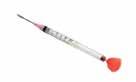
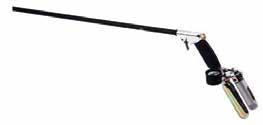
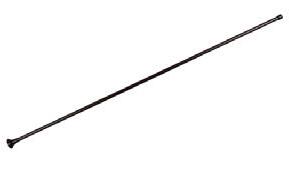
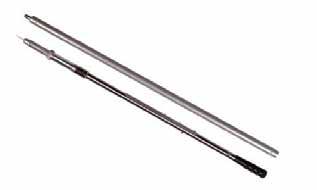
Did you know impact trauma can negatively influence medical treatment? We do. Which is why we’ve spent 55+ years perfecting the ideal remote delivery device. Shorter in length and lightest on the market, our disposable RDDs, with patented Slo-Inject ® technology, provide ultimate accuracy while reducing the potential for problematic hematomas. Pneu-Dart. When you can’t afford to miss.®
















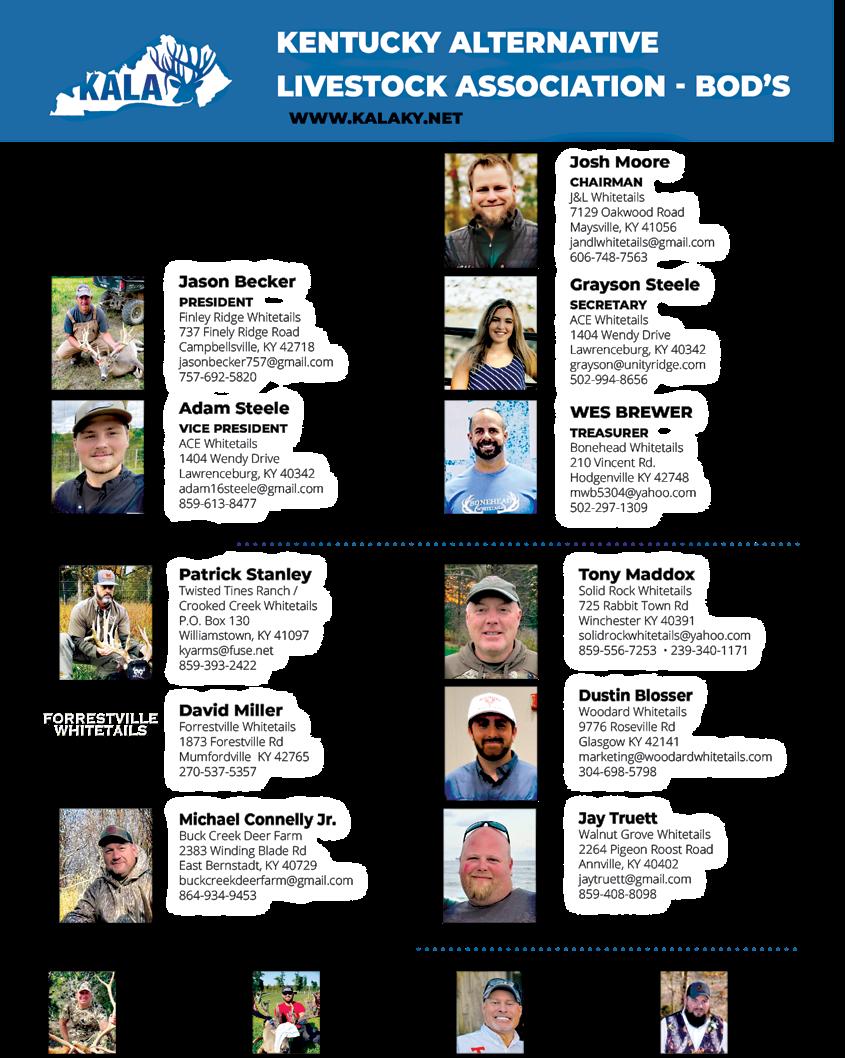
2026 has started off great for KALA! At our first quarterly meeting in February, new Board of Directors were elected as well as a Vice-President, who are ambitious and motivated. Let’s welcome Dustin Blosser, Jay Truett, and Michael Connelly Jr. to the Board and congratulate Josh Moore for being named the chairman of the Board and Adam Steele as the Vice-President. These members are committed to improving the organization and working together to get things achieved. I’m truly looking forward to seeing what this set of Board of Directors and Executive Officers are able to accomplish! This is the start of a FULL year of new and exciting things for KALA!
I want to personally thank Joe Miller and Henry Woodard for their long lasting active roles on the Board. I appreciate all y’all have done and your work doesn’t go unnoticed. And on behalf of KALA, THANK YOU! You two have been founding men of KALA and have guided this organization to where it is today.
At the end of February and early March, F&W introduced a 35 page bill that was placing “captive bred” amongst the wildlife definition. Our lobbyist and a couple KALA members were active within the Capital to make our concerns known. Due to the amount of negative noise surrounding the proposed bill, it was completely revised down to only eight pages. This included the definitions being removed, eliminating our threat. While the legislative session is not over until April 15th, KALA remains vigilant.
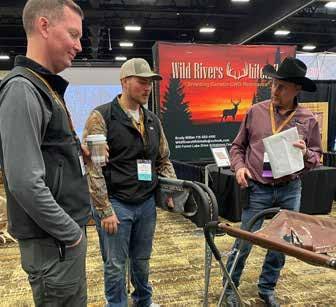
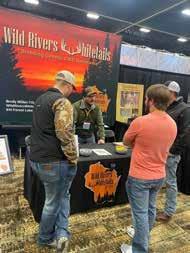
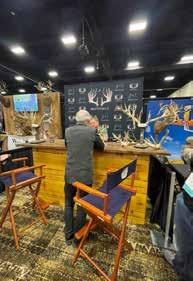
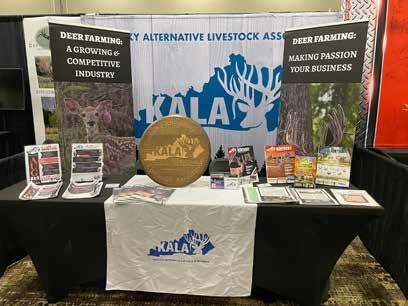
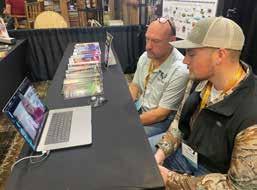
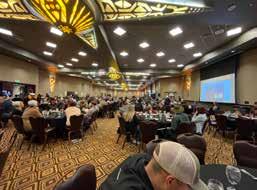
Also in March was the NADeFA Conference, which was in Sandusky, OH this year at the Kalahari Resort. KALA was able to set up a booth and was WELL represented. We had numerous Kentucky deer farmers in attendance. KALA was able to build relationships with other farmers nation-wide (even worldwide– cervid farmers from New Zealand had a booth set-up), conduct interviews with our magazine publishing company for KALA articles, discuss with other farmers/businesses about our showcase event in August, talk with other farmers seeing how their farm runs, and learning how to better our own state’s deer farming industry! Overall, NADeFA was a great opportunity and I am ecstatic to be able to say KALA showed up!! I also want to personally thank Dustin for getting all the booth equipment before heading north as well as setting up and taking down the booth.
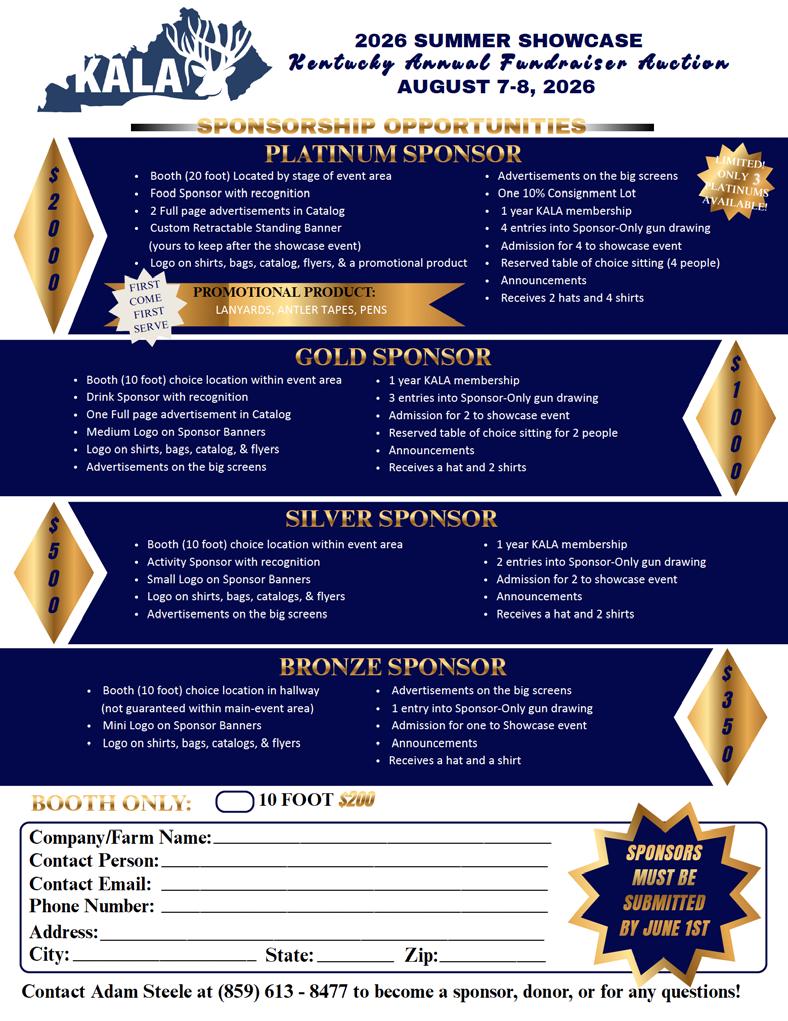
The planning for the Summer Showcase is already underway! The Showcase Committee as well as the Board have been meeting over the past couple of months getting a head start. Several new ideas and engaging activities are in the works! Be on the lookout for a flyer in the near future. The sponsorship tiers were revamped this year, making sponsorships well-worth the investment! The flyer is available on page 48. If your farm or a business you know would like to be a sponsor, set-up a booth, donate a live or silent auction item, or have any questions regarding the showcase, contact Adam Steele at (859) 613 - 8477.
KALA is also planning to return to the State Fair, which is August 20-30th this year. This is one of the best opportunities KALA has to get our voices and efforts in front of the public, especially to share what deer farming is all about and debunk the various myths about CWD. KALA will be able to provide passes to get in the Fair if you volunteer to man the booth. We will be planning pass coordination earlier this year to avoid the inconveniences we’ve had the past couple of years. We’ve had great feedback from the members who have volunteered as well as from the public, even thanking us for what we do as deer farmers. I’m eager to see the opportunities KALA gains from this year’s fair!
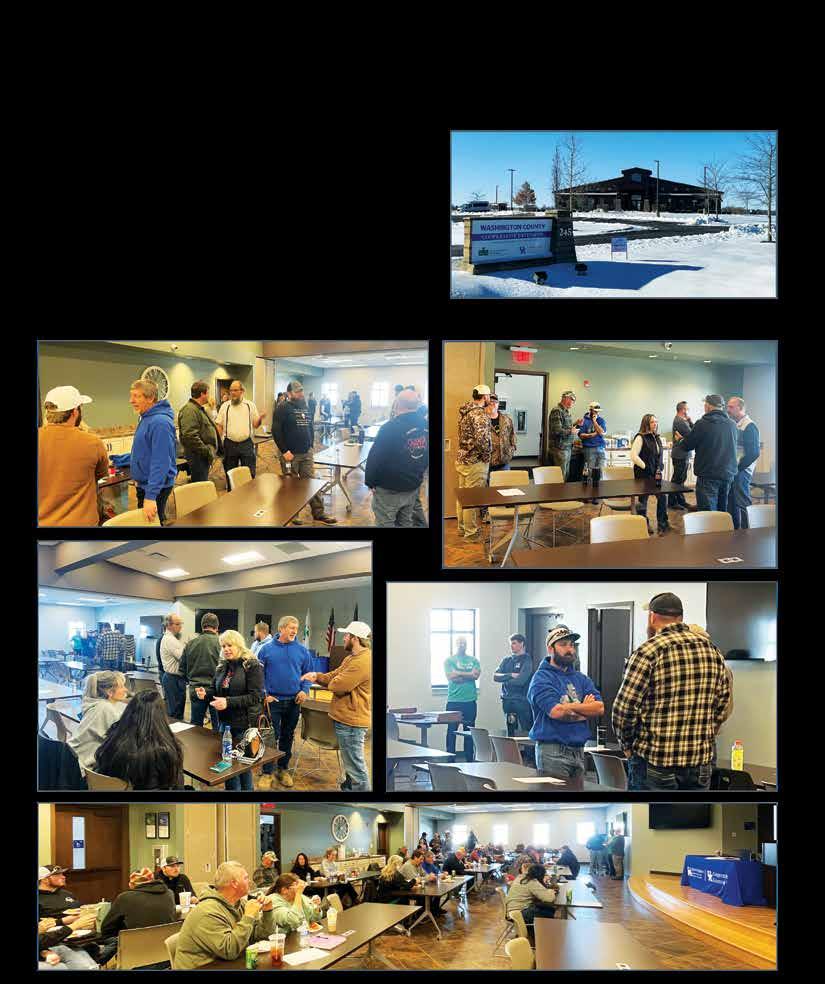
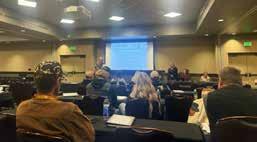
We hope you will plan to join us at our 2026 quarterly meetings as well. Our next one is scheduled for May 9th at the Washington County Extension Office at noon EST.
Spring is always a busy time for deer farmers with fawning season approaching, inventory deadlines, and all the certifications , but I wouldn’t trade it! Being a deer farmer is a lot of work on the forefront of the farm and behind the scenes with organizational matters, but I count it a blessing.
See y’all in May, Lord willing!
Grayson Steele, Magazine Chairman
Maryann Hall & Sarah Sears, Magazine Committee





By Grayson Steele

One of the most important roles of any organization is advocacy. State organizations serve as the first line of defense—monitoring legislation, responding to regulatory changes, and ensuring that the voices of producers are heard in the local capital. Just in the past couple of years this has been evident in Kentucky, when legislation was proposed against
the time or experience, then you had better support the association that does.” He urged everyone to become a member of their state and national association and to do their best to attend and support them.
When members support both, their voices are amplified. Their voices don’t stop at state lines— they become part of a coordinated effort that influences the future of agriculture across the country.
communications provide a wider lens—offering insight into trends, challenges, and innovations from across the country. Together, they give producers the knowledge they need to stay competitive and make informed decisions that directly impact their operation’s success. Weinsheimer commented, “staying connected across state lines is very important because what happens in one state can (and often does) impact another.” Having a well-rounded

Relationships are at the core of any successful industry. Through meetings, farm days, events, and shared endeavors, members build connections that often turn into lasting friendships, mentorships, and business partnerships. Josh Moore urged members to get involved saying, “relationships are a must and they’re difficult to build from home.” There’s real strength in connection.
industry.” These connections create a support system that extends far beyond formal meetings and casual introductions.
Whether promoting products, services, or ideas, national and state organizations open doors that might otherwise remain closed. Alternative
things differently. Connelly agreed, saying, “traveling to different states has allowed us to see what everyone is breeding or targeting that year through the auctions, which has also led us to become partners of several out-of-state deer.” In addition to Josh Moore having various sales market opportunities which were once unreachable, he also was introduced to the possibilities of embryos and flushes, which were

sustainability, especially in the public’s eyes. Deer farming is often a controversial topic, and without unity, the industry risks weakening from within. Membership is one of the simplest and most affordable ways to support the voice of these organizations and defend the right to deer farm. The industry has already taken hits in legislative battles, and those moments prove one thing: numbers matter. A stronger membership base means stronger advocacy, greater influence, and a united front that cannot be ignored. If farmers don’t stand together, decisions will be made without them. Joining isn’t just beneficial— it’s necessary. Membership signals that you are staying informed, following responsible practices, and committed to preserving both your livelihood and the future of the industry.
to the industry. For example, local and state regulations are one of the first things new deer farmers need to consider and familiarize themselves with, and “there’s no better way to do that than joining your state and national association” Weinsheimer shared. Being supportive when farmers enter the industry might be one of the main differences between a growing or declining industry within states.
Seasoned members benefit from farm help and encouragement. Support is also a leading factor for farmers within the state. Knowing other members will be there at a moment’s notice is a relief, especially in an industry where even a small, uncontrollable mishap can quickly become intense.
effort to preserve, protect, and advance alternative agriculture for generations to come.









By Grayson Steele
Nestled in the rolling countryside of Stanford, Kentucky, Thornhill Whitetails is a family-driven operation built on passion, persistence, and a deep respect for the animals in their care. Owned and operated by Steve and Karen Patterson, the farm represents not only a growing deer operation, but a legacy that spans generations.
Since bringing their first deer to the farm in 2020, the Pattersons have embraced the challenges and rewards of the whitetail industry. What started with eight bred does has grown into a carefully managed breeding program
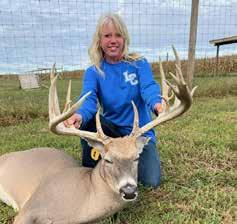
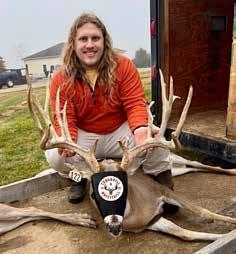

focused on quality genetics, strong relationships, and long-term success.
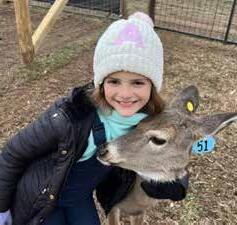
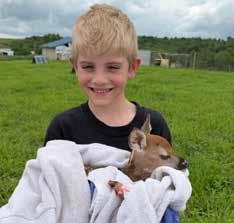
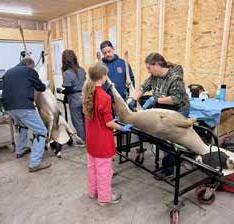
At the heart of Thornhill Whitetails is family. Steve and Karen handle the day-to-day responsibilities, ensuring the deer are well cared for and operations run smoothly. Their children and even grandkids play an essential role in supporting the farm’s success. Their daughter, Kristin and her husband, Bruce Williams, are always ready to lend a hand, whether it’s bottle feeding, working deer through the handling facility, or tackling fencing projects. The next generation is already making an impact, as grandchildren, Annabelle and Jack Williams, proudly take on their roles as “farm hands.” Steve shared that Annabelle can draw up meds and gathers the supplies, especially during the A.I. season. Together, Annabelle and Jack assist with daily routines, unlocking gates, helping with feed and water, and making sure every deer is accounted for. During fawning season, Annabelle also works closely with Karen (“Nonna”), helping tag newborns. “We look forward to seeing both Annabelle and Jack helping with bottle feeding this season,” Steve added. Their son, Connor Patterson and his wife, Rachel, though living a few hours
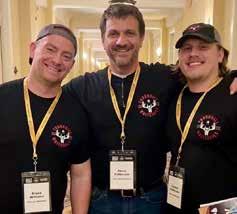
away, remain deeply involved. Connor’s strong understanding of genetic lines helps guide the direction of the breeding program, while also assisting with marketing and sales efforts. Additional support comes from Mike Peyton, Steve’s cousin, who contributes to daily tasks such as feeding, watering, and general farm maintenance. Steve said, “It’s nice to have someone that cares about the animals and helps with everyday tasks.” All the family’s involvement highlights the family-centered nature of the operation.
Like many in the industry, the Pattersons’ journey into deer farming began unexpectedly. The Pattersons had never heard of deer farming, until meeting Bobby Mills of Barbourville, Kentucky. After visiting several farms, Steve quickly realized this was something he wanted to pursue. “After (almost) convincing my wife that it was a great idea, we purchased 8 bred does… and we were deer farmers!”
As with any agricultural business, the road hasn’t been without challenges. Steve is candid about one of the biggest hurdles: “I’ll just say it. Money.” He explains that there is always a balance between vision and reality. “It’s always a challenge and a necessity to balance what you would like to do… and what you can actually afford to do.” Over time, he has come to accept that “farming is a long-term investment.”
Many of the lessons learned have come through experience—what Steve refers to as the “school of hard knocks.” Looking back, he notes that starting with fewer animals would have allowed more time to learn the
business while reducing the initial investment and risks.
While the Pattersons have clear ambitions, they measure success by more than just numbers. Their goals center around three key principles: providing the best possible care for their deer, maintaining honesty and fairness within the industry, and producing impressive typical whitetails with strong genetics. Though they aspire to be recognized among Kentucky’s top deer farms, they remain focused on steady progress and continuous improvement.
When asked what advice they would offer others in the industry, Steve is humble in his response not feeling qualified to answer as they “still look to more experienced farmers for guidance,” but if other farmers are looking to them for guidance, Steve emphasized, “I consider that a great compliment and I am always willing to tell people what has worked for our farm.” Their approach is simple but meaningful: “Listen to as many people that are willing to help you. Then make your decisions—with prayer.”
Learning and gathering insight from those with experience and making decisions grounded in both knowledge and faith has been the guiding principle for their farm.
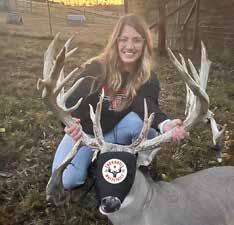
Looking ahead, profitability is a key goal for Thornhill Whitetails. For the Pattersons, that success is tied closely to building a well-respected operation. Their vision is to become a trusted source within the industry—offering everything from semen and breeder bucks to high-quality does. With a strong foundation, clear goals, and a dedicated
support system, they are steadily working toward that vision.
The Pattersons are quick to credit their involvement with the Kentucky Alternative Livestock Association as a meaningful part of their journey. “We truly appreciate the relationships that have developed due to our KALA membership,” Steve shares. He adds that the support system is invaluable: “It’s wonderful to have those around you to share experiences that happen when raising these beautiful animals.” The relationships built through the organization have provided both guidance and support through the highs and lows of deer farming. It is a community that celebrates success together and supports one another through challenges.



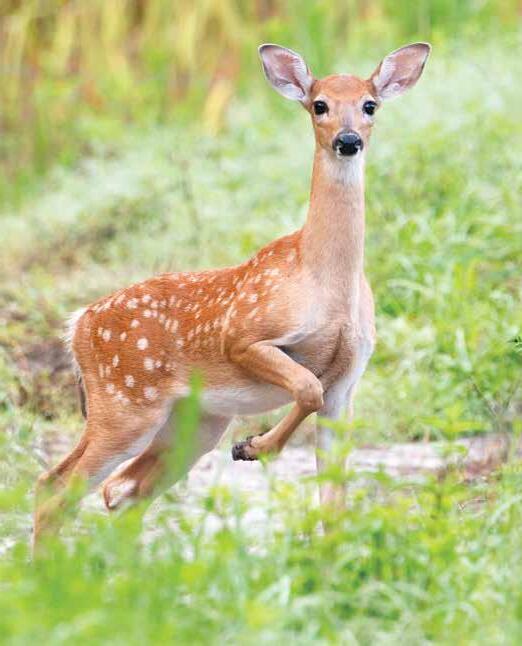
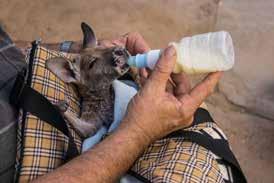
• Fawns up to 1 week of age: Feed 16 oz. of formula daily, divided into 4 – 6 feeding.
• Fawns 1 week to 1 month of age: Feed 24 to 30 oz. of formula daily, divided into 4 feedings.
• Fawns 1 month to 2 months of age: Feed 30 to 35 oz. of formula daily, divided into 2 to 3 feedings.
• Fawns 2 months to weaning: Gradually decrease formula and number of feedings to approximately 15 oz. of formula once daily until fawn is fully weaned at 12 to 14 weeks of age. Provide a weaning diet and fresh clean water to the fawn.
For oral use only. These feeding directions are guidelines. As each animal is an individual, the feeding rate may be increased or decreased according to the needs of the neonate.
Feeding directions for other species can be found on our website.


• All-Milk Protein from Premium Food-Grade Milk Ingredients
• Essential Vitamins and Complex Minerals
• Balanced Fatty Acids
• Improves Digestion
• Promotes Growth and Performance
• No Refrigeration Needed
• Easily Palatable
• 18 Month Shelf Life
• Available in 20# & 8# pails
• 24/7 Technical Advice & Support
• Formula for other Exotics and Wildlife Available

By: Gail Veley
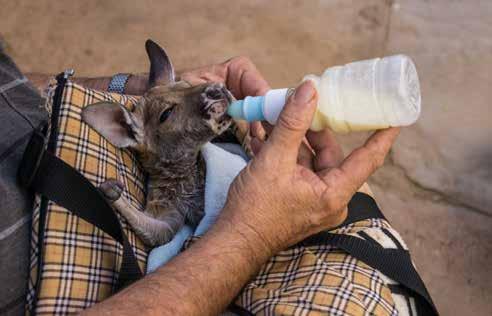
It wasn’t just belief in his products that prompted Nick Vlamis to start his company, Fox Valley Nutrition, Inc., in 1995. It was because the need for his products weren’t being filled anywhere else. Since the very beginning Nick has valued every customer, particularly the four-legged ones, by producing milk replacers, supplements and feeding supplies for young wildlife, domestic and exotic animals. Since founding his company, Nick has been helping orphaned neonates maximize their health, growth and performance potential through species-specific milk replacers and supplements. “It’s a blessing for all the animals that we save,” Nick said. “It makes it much less about making money and more about gratification. My customers are not just an invoice. And the quality of our products has never been compromised.”
Fox Valley, headquartered in Huntley, Illinois, sells their products in the U.S.A., Canada, Australia, Costa Rica, The Netherlands, Germany, Italy, Spain and also in the United Kingdom. They specialize in species-specific milk replacers, made with the finest raw ingredients available, to create the same composition found in natural milk. To date, more than 60 different types of milk replacers are offered to various species ranging from whitetail deer fawns, elk, moose, kittens, puppies, goats, cows, llamas, wallabies, raccoon, shrew and baby humpback whales among many others. In starting Fox Valley, Nick knew he’d be successful because “no one else had anything species-specific. Back then a raccoon would fall under feline. Everyone was taking existing puppy or kitten formulas and trying to make it work for other animals,” he said. “However, if you have a formula as close as possible to the actual animal you have, it can cause better health and greater
performance. Anything less can result in feeding problems and other issues.”
Not only do Fox Valley’s milk replacers aid in the overall health of each neonate, but their supplements do also, as they are formulated to combat dehydration, diarrhea and disturbed intestinal flora. “I got my start at a National Wildlife Rehabilitators Association conference,” Nick explained. “We were always finding orphaned fawns. I let them have free field trails of my formulas. They saw it worked and had great trust in it, making me believe I was on the right track.” Customers also trust that should they call Nick with questions, he will make every effort to speak to them directly. He has spent immense time promoting his products to veterinarians, colleges, conferences, trade shows and other venues. He knows the results speak for themselves, yet finds great joy when customers write or call to express their gratitude. Nick also feels great gratitude for his employees Walter Amador, Chris and Heather Vlamis as well as Tyler Eldrup and Jonathan Cielo. Amador’s scientific background is key to carefully blending all product nutritional ingredients
to “spec.” Nick’s son Chris manages key components in the development and distribution of products, while Heather’s (Nick’s daughter-in-law) computer knowledge and synergistic personality greatly assists in customer service through phone orders and in creating an effective website. Nick is also very grateful to Tyler Eldrup and Jonathan Cielo who oversee the packing and shipping of products.
“We have the best wildlife milk replacer available,” Nick said. “The products are easy to mix and have an 18-month shelf life. They also come in convenient sizes in sturdy, reusable plastic buckets and have been thoroughly field-tested by rehabilitators.” Should product prices ever increase, Nick will always explain the reason to his customers. “I will not substitute a cheaper product to make a buck,” he said. “I will always offer the same high-quality products I have stood behind since day one. I believe Fox Valley Nutrition is the Cadillac of neonatal formulations. We strive to be a growing world-class manufacturing organization that responds to customer-driven demands while consistently exceeding expectations.”








This year, Congress and the administration will face several major deadlines and policy decisions that are expected to shape the legislative agenda. Lawmakers will work to avoid another government shutdown while attempting to advance unfinished priorities, including full-year appropriations and reauthorization of the farm bill. At the same time, trade policy, court rulings, and the upcoming midterm elections are expected to influence both congressional activity and the broader political environment.
Congress must pass full-year spending bills or a short-term funding extension before January 30 in order to prevent another government shutdown. Neither the Democrats or Republicans are understood to want a repeat of last year’s shutdown, which was the longest in history. As of the week of January 5th, the Agriculture-FDA, Legislative Branch, Military ConstructionVeterans Affairs appropriations packages have been enacted through the Continuing Resolution which brought an end to last year’s shutdown. Congress has introduced appropriations bills for Commerce-Justice-Science, Energy and Water, and Interior-Environment which are expected to be passed by Congress before the January 30 deadline. No agreement has been reached on other appropriations measures.
Agriculture Committees in both the House and the Senate will attempt to pass a five-year farm bill after the 2018 bill expired in 2023. While many policies that the farm bill provides have been continued through short-term extensions and the One Big Beautiful Bill Act, lasting updates to conservation, forestry, rural development, and the farm safety net were not extended. Senate Agriculture Chair John Boozman (R-AK) is committed to advancing a bill which includes increasing the limits on federally backed farm loans. However, there are concerns about staffing shortages at the Department of Agriculture after their workforce was cut by several thousand people last year.
In July, the United States-Mexico-Canada Agreement is up for review. President Trump has indicated that he may pull out of the $1.5 trillion trade agreement rather than extend it for another 16 years. However, the agreement has been credited with protecting consumers from rising prices amid the President’s tariff regime, meaning the administration may choose to maintain the U.S.’ participation in the pact.
The Supreme Court will also issue a ruling on President Trump’s tariff policies by June at the latest. The court will issue a ruling on President Trump’s use of the International Emergency Economic
Powers Act to set 10-50 percent tariffs on most imports as well as duties on Mexico, Canada, and China to address fentanyl trafficking.
In November, Republicans will seek to maintain control of both the House of Representatives and the Senate in the midterms. Democrats are unlikely to win the 4 seats they need to take control of the Senate. However, Republicans have a very thin majority in the House, so Democrats are widely expected to win control of that chamber. As a result, Minority Leader Hakeem Jeffries (D-NY) is anticipated to become the House Speaker after the elections. In order to secure this victory, Democrats are expected to continue to campaign on affordability, how tariffs affect affordability, and the release of the Epstein Files.
The congressional map may be reshaped before the November midterm elections. After Texas began a redistricting effort to secure 5 extra Republican seats, states across the country have redrawn their maps. Republicans in Florida and Kansas as well as Democrats in Virginia, Illinois, and Maryland will continue the redistricting effort this year ahead of the elections.
Overall, the year ahead is expected to be defined by shortterm legislative solutions, election-year politics, and movement around trade and economic policy. While Congress is likely to move forward on must-pass items such as appropriations, progress on longer-term priorities may take a back seat. With the midterm elections approaching and potential changes to congressional maps, political considerations are expected to play a significant role in shaping outcomes across policy areas.
Carolina Herrera
Resources:
• https://www.axios.com/2026/01/05/ congress-government-funding-package
• https://www.politico.com/news/2026/01/03/ trump-shutdown-january-00700940
• https://www.eenews.net/articles/ spending-permitting-highway-bill-congress-2026-to-do-list/
• https://www.politico.com/news/2025/12/14/why-inflation-angstmay-temper-trumps-trade-threats-to-mexico-canada-00689322
• https://www.politico.com/news/2025/12/14/why-inflation-angstmay-temper-trumps-trade-threats-to-mexico-canada-00689322
• https://www.bgov.com/news/T8GC6LKK3NYE
• https://thehill.com/homenews/campaign/5662275-statesredistricting-2026-fight/




If you are a KALA Member and would like to share one of your game recipes to KALA’s Kitchen and be featured in one of our upcoming KALA Magazine issues please contact Maryann Hall at solidrockwhitetails@ yahoo.com or call 859-556-7262. All you have to do is be a KALA member to participate!

• 3 cups mashed sweet potatoes (Peel and boil or use canned sweet potatoes)
• ¾ cup sugar
• ½ stick salted butter
• ½ cup milk
• 1 teaspoon vanilla
• ¼ teaspoon salt
• 1 cup brown sugar
• ½ cup all-purpose flour
• ¼ cup softened butter
• 1 cup chopped pecans

1. Mix potatoes and the five main ingredients listed above together and pour into a small casserole dish.
2. Mix the topping ingredients and sprinkle over the potatoes.
3. Bake at 350 for 30-40 minutes.
INGREDIENTS
• Yellow Cake Mix
• 4 Eggs
• ¾ cup Oil
• 16 Oz Sour Cream
• 1 ½ cups Brown Sugar
• Cinnamon
INSTRUCTIONS
• 3 cups Powdered Sugar
• Milk

1. Take any one of your favorite yellow cake mixes in a box and add 4 eggs, 3/4 cup of oil, 16 ounces of sour cream and blend together well. In a separate bowl, mix 1 ½ cups brown sugar and 2 to 3 tablespoons of cinnamon, with a fork. Grease and flour your cake pan. Pour in your mixed cake batter, then sprinkle the brown sugar and cinnamon mixture over the top. Swirl it into the cake batter with a fork.
2. Bake at 350 degrees until done. Let the cake cool and poke holes all over the top. For the icing, mix 3 cups of powdered sugar and milk a little at a time until it is well mixed. Pour mixture over the cake and make sure it gets into all the holes and on the sides of the pan to make the cake moister.
3. You can serve warm or cold. Enjoy!!!








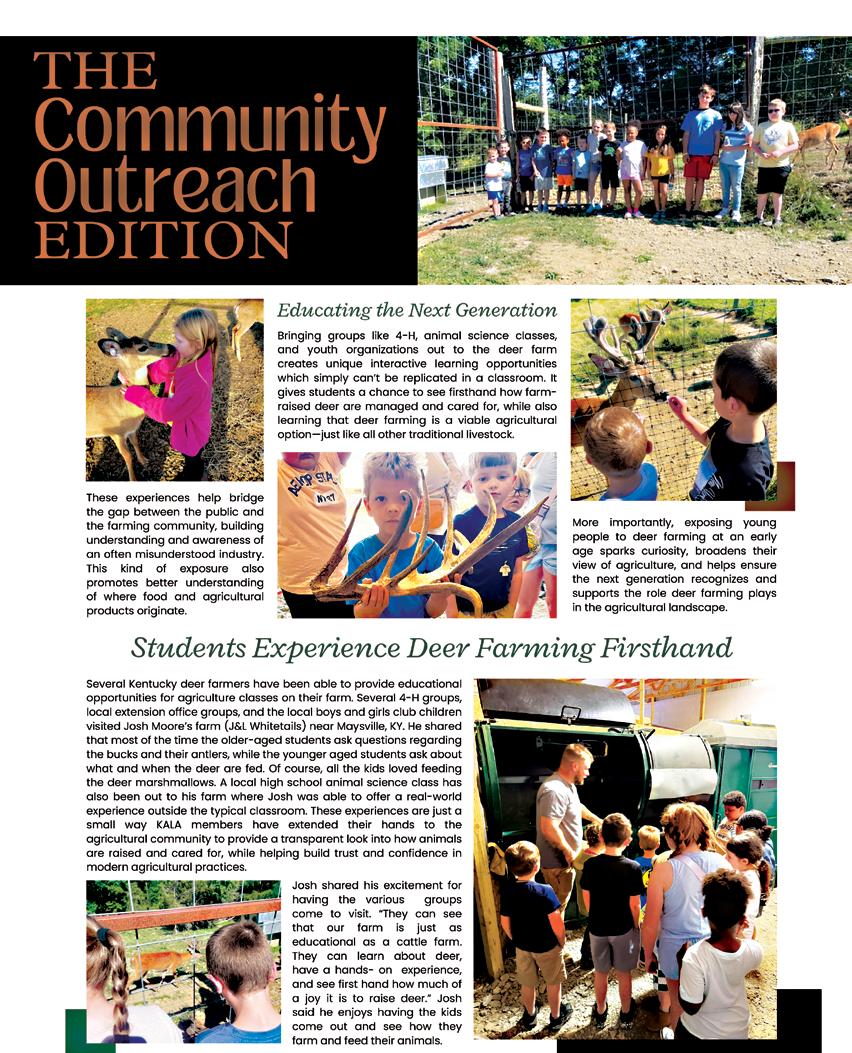
entucky deer farmers have found a unified voice for opposing legislation through the use of outreach campaigns, social media and face-to-face meet ings with legislatures. As a result, they recently helped defeat pro posed legislation which could have permanently shut down or greatly altered the operations of many Kentucky deer farms. House Bill 700, proposed in 2025 and declared an emergency, intended to create CWD 30-mile radius “zones” around areas where positive CWD cases were found in both wild or captive bred deer populations. As per the bill, any deer farmer located within a positive zone would be quarantined for five years and unable to move or acquire deer, unless they erected double fencing, perhaps ultimately forcing them out of business due to the expense. After spending con siderable time at Kentucky’s state capital, KALA members helped defeat the bill, which could have permanently ended deer farming for many in Kentucky, said KALA Board of Directors Member Micheal Connelly.
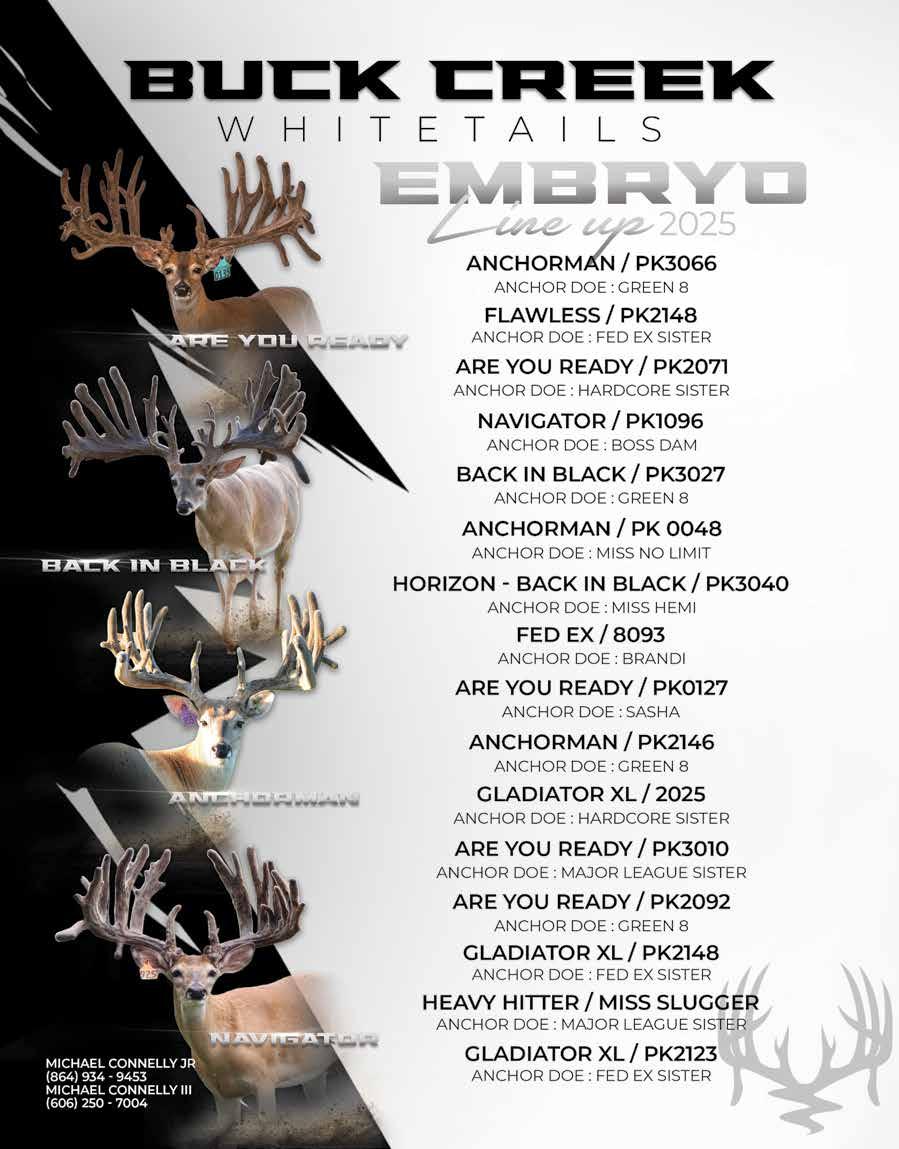
Connelly, owner for four years of Buck Creek Whitetails in East Bernstadt, Kentucky, is currently serving his first year with the board. However, in 2025, when the tide began to unfavorably shift in Kentucky towards deer farming, Connelly, KALA Vice President Adam Steele and several other KALA members took action. Steele literally spent weeks up at the capital and took time off work to be there at the most crucial moments and emailed (along with other concerned KALA individuals) every single legislator about the detriment of this bill. “It was the prospect of losing our liveli hoods and everything we’ve worked so hard for that kicked us into gear,” Connelly said. “We appreciate our






KALA Magazine Deadlines 2026
Spring: March 31st
Summer: June 30th
Fall: October 6th
Winter: January 5th, ‘27

Use this QR Code or go online to DeerSites.com for more deadlines and up to date event information!
Indiana Deer & Elk Farmers Association - July 31-Aug 1st - Nappanee IN KALA Summer Showcase - Aug 8, 2026
Whitetail Deer Farmers of Ohio Convention - Aug 13-14, 2026
Southern Top 30 - Aug 20-21, 2026 - Louisiana
Whitetails of Louisiana - Aug 21-22, 2026 - Marksville, LA
TDA Annual Convention - Aug 28-29, 2026 - San Antonio, TX








Reservation for space and buck info will be due no later than August 12th, 2025. If you have an existing picture ready to go, that will also be due at that time. If you would like to send in a last minute photo of your buck, the cutoff date is September 1st by 8am CST. Placement will be in order of first come first serve. Printing and mailing will start September 4th and be in hand between September 16th20th. Just in time for semen sales getting ready for Breeding Season. These will be mailed to Breeders and Ranch members of the 20 state associations we service.
More information will be mailed out to all current advertisers closer to the date.
Pre-register and we will contact you for further information
PRIME SPOTS WILL BE AUCTIONED
ONLINE AT MCCLUNG SALES: JULY 2026 Name: First

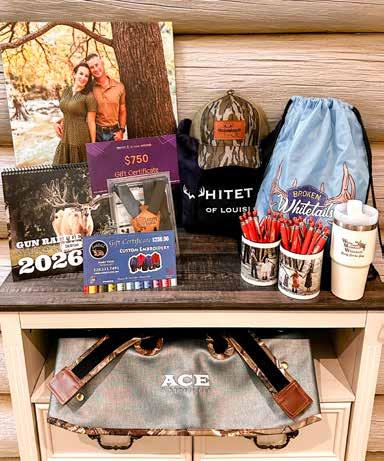
As most of you know, D&K Design has been at the forefront of overseeing a membership drive for many state deer associations for the past years. As part of servicing 19 states with quarterly publications, we were proud to also offer this service. 2025 we included in our grand prize drawing, donations from each state association. Many of their members stepped up to donate a product or service.
Memberships are collected throughout the year and at events such as NADeFA and Top 30. Each participant that spent over a certain amount on memberships was included in our end of year drawing.

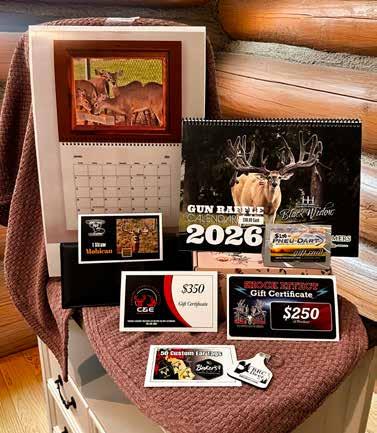
Meryle Frey’s Winnings ~
• $250 Shock Effect Certificate
• 50 Custom Ear Tags
• $350 C&E Solutions certificate
• Legends binocular harness
• Ohio Gun Raffle Calendar
• 10 Personalized calendars
• 1 Straw of Mohican
• $250 Gift Certificate from Pneu-Dart
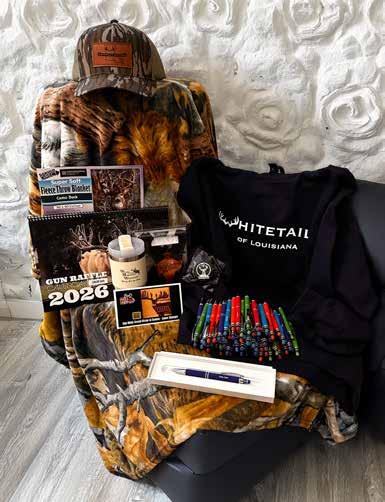
2025 winners included Shane and Jennifer Horrocks of C&E Bio Solutions and Max Rax feed company, Amber Boldt, a loyal D & K Design supporter, James Weaver of Dutch Creek Whitetails in Fredericksburg, Ohio and Meryle Frey from Fish Lake Whitetails in Indiana.
Winners received gifts, valued at over $1,800. which also included certificates for deer industry goods and services.
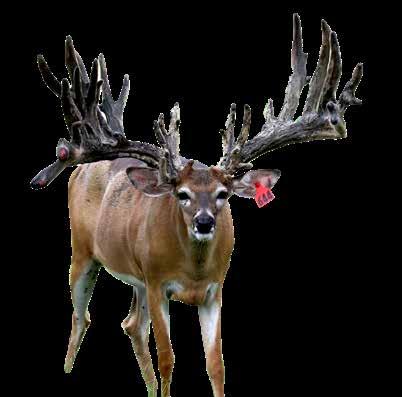

“I found the semen straw of Cruiser from Rocky Ridge Whitetails to be very worthwhile and appealing,” James Weaver said. “I say YIPPEE! I hope I win again!”
Merle Frey felt that winning for him was a bonus, on top of the fact that he became a member of several state associations. “The items that were in my basket were things I was already using like Shock Effect and products from C & E Bio Solutions,” he said. “I’m also really glad to have gotten a semen straw of Mohican that Woodard Whitetails donated. Being a member of these associations has been worth it even without winning, and I appreciate everyone who donated the items I won.”
Shane and Jennifer Horrocks, huge supporters of each state association, strong advertisers and advocates for state memberships, were equally pleased. “What a great way to have our enthusiasm rewarded by winning a raffle,” Shane said. “Our basket was very thoughtfully hand selected by Kathy and we really appreciated receiving it.”
Amber Boldt, who has gladly pitched in and helped transport D & K Design booth to industry events, was very pleased with her raffle win as well.
This helps keep the momentum going and further fuels my desire to have every state continue to donate items, in an effort to make these raffles one of the most anticipated activities at our events. We sold over $8,000 in memberships total! I appreciate everyone who has donated in the past and plans to donate in the future. Your support will win you recognition throughout the year. Ask me for more details!














By Grayson Steele
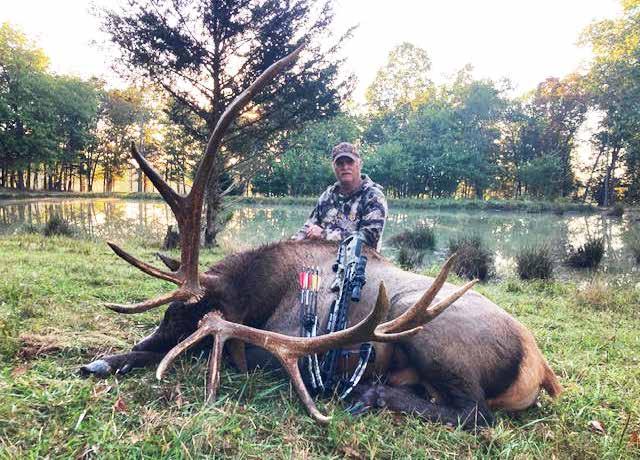
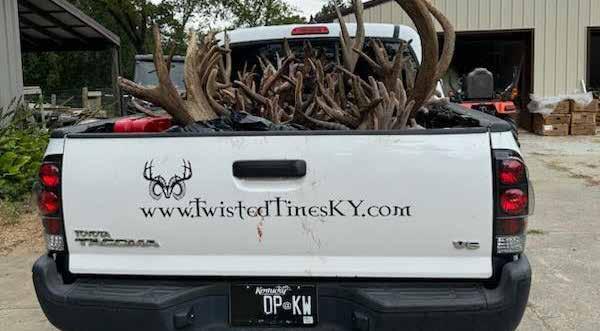
For the Stanley family, building a hunting preserve wasn’t part of some grand business plan—it was simply the natural result of a lifelong passion. Twisted Tines Ranch, LLC is a full-scale hunting operation in Berry, Kentucky, where Patrick and Monica Stanley, alongside their family, have spent the last six years creating something that reflects who they are and what they value.
Before there were elk, bison, and whitetail, there were kids bringing home animals that needed care. The Stanley family raised everything from flying squirrels and rabbits to birds and raccoons, learning early on what it meant to be responsible for wildlife. So when they discovered the opportunity to raise cervids, it wasn’t a stretch—it was simply the next step. As Patrick Stanley put it, “Once we learned we were able to raise big game, it was a no-brainer.”
Like many in the industry, the transition into raising cervidae came with a steep learning curve, but through persistence and the help of others, they’ve built a program they’re proud of.
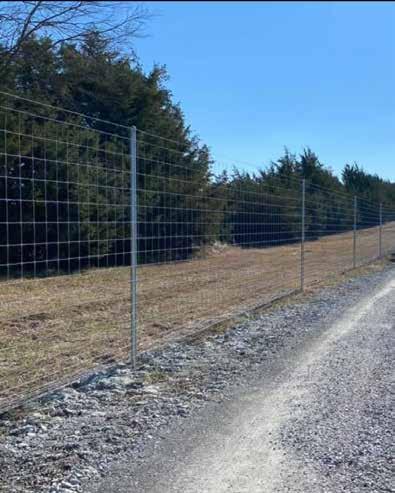
Running a preserve of this scale comes with daily responsibilities that go far beyond what most people see. With 2.5 miles of fence surrounding the property, routine checks are essential. Patrick explained, “Our fences must be checked daily to be sure they are in full working order.” The terrain presents its own challenges. To keep up, the family has turned to drone technology, allowing them to inspect areas that would otherwise be nearly unreachable. “This has helped significantly with the backside of our preserve, as it has extremely steep terrain that is difficult to navigate with ATV’s.” Cameras are also used
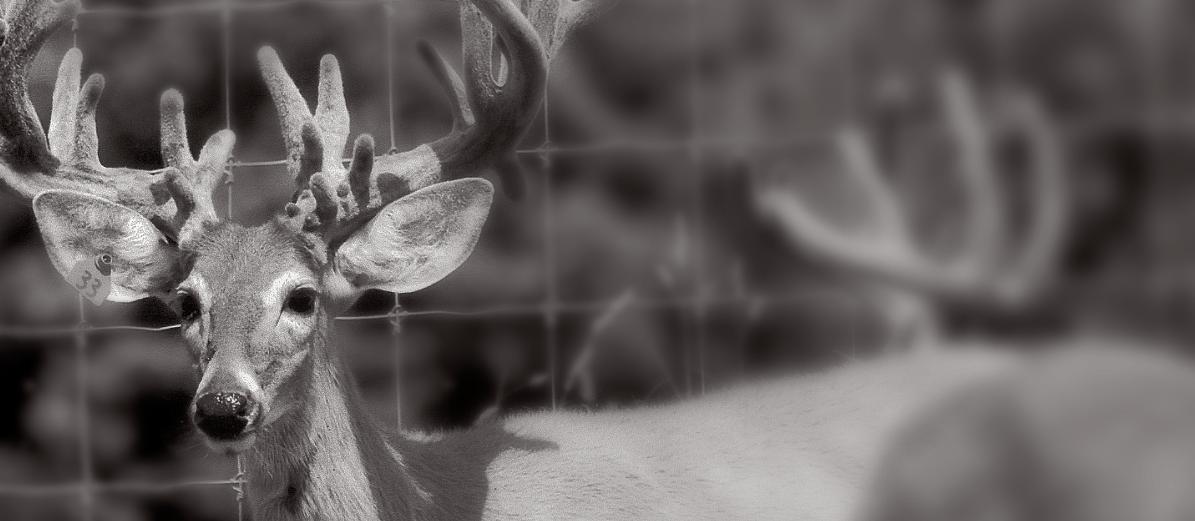
to keep an eye on the herd in both their preserve (HMP) and their breeding program (HCP).
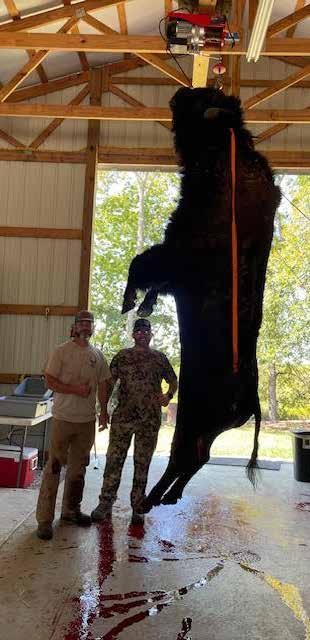
The animals themselves bring a unique set of challenges. Elk and bison, while a major draw, are known for their destructive tendencies— breaking glass in blinds and UTVs and damaging anything reflective. “The elk and bison break any glass window they can find… they love to bash mirrors and glass,” Patrick said. Rams add their own level of wear and tear, often targeting metal structures. Meanwhile, predators and outside pressures remain a constant concern. He also noted, “Other challenges are neighbor dogs that seem to always find a way in as well as coyotes.” Compared to them, species like whitetail deer, blackbuck antelope, and fallow deer are far more manageable. In a preserve setting, hands-on care is limited,
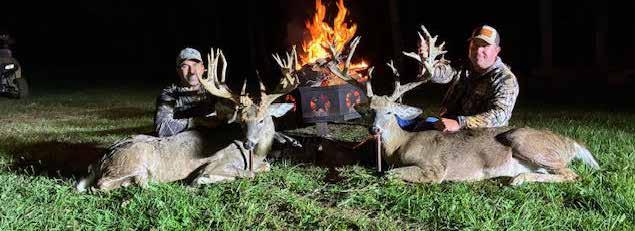
natural loss is simply part of this farming business. “We experience a natural loss of about 5–10% each year in the preserve.”
Despite the behind-the-scenes challenges, the experience for hunters is carefully thought out. Blinds are positioned with safety as a top priority, offering both groundlevel and elevated options. Each one is equipped for comfort, with carpeted floors, office chairs, heat, and glass windows. A small lake adds another layer to the experience, giving hunters a place to relax, watch wildlife wade in, or even go fishing in between hunts.
But what keeps people coming back isn’t just the hunt—it’s the relationships. Over time, many clients have become close friends. Patrick said, “We have developed so many friendships with our clients, it’s almost unfathomable.” Those connections often extend well beyond the ranch. “We have visited them, taken trips with them and been invited to their houses for family functions. This is what it’s all about, creating friendships for years to come.”
Looking ahead, 2026 will bring some changes. After growing larger than they originally intended, the family has made the decision to scale things back. “We have grown to a point that has superseded our initial goals and have decided to scale back to
get to where we once were,” Patrick explained. “We’ve never wanted to grow big. We like having a smaller scale, manageable farm that we can give 110% attention to detail.” Their focus remains on quality over size.
From the lodge to the field, that attention to detail shows. Meals are prepared and the lodge is maintained by Monica and their daughter, who take pride in creating a welcoming environment. Patrick shared that their guests “constantly thank us for the cleanliness of our lodge, the quality of the food and the selection of bucks in the preserve.”
At its core, Twisted Tines Ranch is built on something deeper than just
the hunting experience. “We are a God fearing Christian family that takes pride in our faith, family and how we treat others,” Patrick said. That mindset carries into every part of the operation. “Guests deserve honesty, integrity and a fair price and that’s what we are giving.”
Nutrient rich formula contains highly bioavailable ingredients, including our proprietary calcium/phosphorous complex with Antler D TM, that are required to support body and bone growth, especially for fast growing bucks
Contains probiotics and targeted enzymes to support gut health and proper digestion
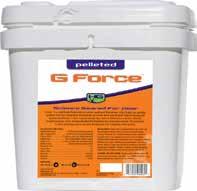
Available in pellet or powder that can be top dressed or mixed in feed. Great for antler growing season and young bucks, too
PRECISELY FORMULATED TO HELP MAINTAIN A NORMAL AND RELAXED DISPOSITION IN ALL CERVIDS
Provides optimal levels of magnesium, Vitamin B1 and inositol to promote calmness and provide help for restless animals
Contains no herbals, tryptophan or chemicals, eliminating concerns of unwanted side effects
Use PeaceMaker to “keep the peace” during pre-rut, rut, transportation, weaning and anytime destructive behavior may occur
POWERFUL SOLUTION FOR HEALTH & PRODUCTIVITY
Helps maintain digestive health and productivity
Contains micro-encapsulated probiotics, targeted enzymes and a novel fiber complex
Use in does before fawning, during lactation and all cervids during times of environmental stress

HELPS PRODUCE HEALTHY, FAST GROWING FAWNS
Helps maintain normal digestive health
Supports a healthy immune system
Feed powder for 14 days to bottle fed fawns
Paste is ideal for fawns left on does

ROBUST FAST RESPONSE FOR FAWNS & OLDER DEER
Innovative formula delivers max digestive support, especially in newborns
Rapidly delivers help for GI health and a functioning immune system
May also be used post-tranquilization to support healthy recovery


If you would like your farm or business featured on our business card pages, email digital pdf or scanned image (must be readable resolution) of your business card to:
Grayson Steele: grayson@unityridge.com
Business Cards rotate as space allows. If you have any concerns, double check your membership is up to date and feel free to contact us and resend your card.





























MK2™ Kit


(Medetomidine/Ketamine 10/200 mg/mL + 2X Atipamezole 20mg/mL)


MKB™ Kit PROPRIETARY FORMULA PROPRIETARY FORMULA
e
MKB2™ Kit PROPRIETARY FORMULA
(Medetomidine/Ketamine/Butorphanol 20/100/50 mg/mL + Atipamezole 40mg/mL + Naltrexone 50mg/mL)


(Medetomidine/Ketamine/Butorphanol 10/50/25 mg/mL + Atipamezole 20mg/mL + Naltrexone 25mg/mL)


Contains higher concentrations of active ingredients than the MKB Kit, allowing for lower dose volumes and a smaller dart to improve accuracy during capture. Recommended for super exotics and large cervids that may be more diffi cult to sedate.
MKBM™ Kit PROPRIETARY FORMULA
(Medetomidine/Ketamine/Butorphanol/Midazolam 20/100/30/20 mg/mL + Atipamezole 40mg/mL + Naltrexone 50mg/mL)


is kit builds on our MKB™ formulation by adding midazolam for superior muscle relaxation and more reliable sedation. Recommended for immobilizing large exotic hoofstock species, including bongo, kudu, gazelle, eland, other African hoofstock and certain domestic wildlife species.








By: Gail Veley • Sponsored by The Pennsylvania Deer Farmers Association
Early on in the start of each new year, Amy Stefanowicz takes inventory of everything she’ll need for the upcoming spring. Fawning season and the expectation of 54 fawns might be a few months away, but then again, it’s as though it’s right around the corner. Bottles, nipples. Check. Fawn paste, probiotics, goat’s milk, puppy training pads, cleaning supplies. Check, check, check. Known for her expertise in successfully raising calm and well-acclimated deer, Amy and her husband Jason of Awesome Whitetails in Middlebury, Pennsylvania may have the science of raising fawns perfected as this year marks their fifth season. In addition to meticulously managing a fawn’s health and immune system, Amy believes acclimating them to outside stimulus is just as important. Given that deer generally become comfortable with specific individuals, she plays a radio 24/7 inside the barn to get them used to strange noises and voices. “I’ve found this really helps them to not overreact if someone new comes around,” Amy said.
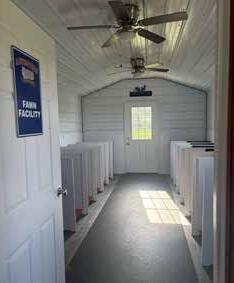
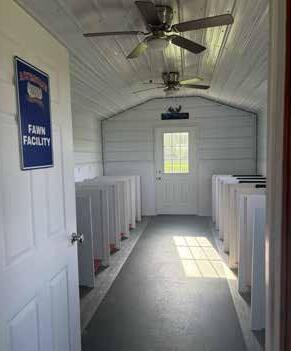
However, the most pressing initial issue is a fawn’s intake of colostrum within 12 hours of birth. Good, diligent mamas and babies that latch on pave the way for the next steps Amy takes. After each doe fawn (and struggling buck fawn) intakes sufficient colostrum, they are pulled and moved into a fawn facility where they spend up to three weeks isolated inside a 2 x 3 feet durable polymer box complete with drainable rubber (piglet) flooring, allowing urine and droppings to fall into a black tray beneath the flooring, covered by a puppy pad. Unlike wood that may allow germs to soak in and remain active and risky, Amy knows plastic does not do that and is much easier to clean. This can ensure a healthier fawn, one that will be introduced to other healthy fawns.
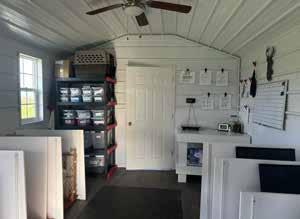
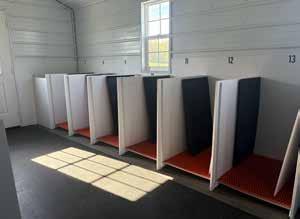
Sometimes fawns may need more intensive care and if so, may spend time in a bedroom or dog crate inside the house, until they are strong and healthy enough to be in the official fawn barn. Building up their strength and immunities also involves the careful administration of vaccines, so as to not puncture their fragile skin. Next, ear tags are attached and microchips inserted. Inside each 2 x 3 fawn box Amy also places a small bowl of natural dirt to softly and safely introduce them to their eventual life outside in the deer pens, which usually occurs after week three. “Unless you have a jumper,” Amy, 46, explained. “They might need to go outside sooner.”
Amy’s bottle-feeding regimen includes a combination of goat’s milk and red cap milk, given at 6 a.m., 2 p.m. and 9 p.m. for four weeks, followed by two feedings from week five until week nine, when henceforth bottles are offered merely once a day. After 13 weeks, fawns fully transition to solid food and water. Through this micro-management system, Amy has gained a reputation as being somewhat of an expert on the process of raising healthy, calm and well-acclimated deer. Her advice has even been sought out by numerous others in the industry.
“Jason and I just firmly believe in our process,” Amy said. “We feel it’s worth it in the long run and have found our deer are more ready to face whatever may come as they grow into healthy mature adults.”


• United Deer Farmers of Michigan
• West Virginia Deer Farmers Association
• Whitetail Deer Farmers of Ohio
• Whitetails of Louisiana
• Whitetails of Oklahoma
Package: *
44 ISSUES FOR 1 YR.
Reaching out to over 2500 members (11 Publications x 4 quarters)
19 State Associations - Approx. 2500 readers
$200 / Issue ($8815. / Yr) ~ Full Page
$113 / Issue ($4990. / Yr.) ~ Half Page (55-59% Discount off single ad placement)
*
4 ISSUES FOR 1 YR.
(1 Publication x 4 quarters)
$267 / Issue ($1069. / Yr) ~ Full Page

16 ISSUES FOR 1 YR. (4 Publications of your choice x 4 quarters)
$233 / Issue ($3730. / Yr) ~ Full Page
$128 / Issue ($2052. / Yr.) ~ Half Page (48-54% Discount off single ad placement)

$145 / Issue ($581. / Yr.) ~ Half Page (40-48% Discount off single ad placement)



Magazine ANNUAL
$540 ~ Full Page*
$250 ~ Per Quarter Page
$135 ~ Per Quarter Page - Current Advertiser in quarterly magazines.
$180 ~ Per Quarter Page
- Current Member of any of the Associations we serve



* Must be a current advertiser, limited space available




The rules for sudoku are simple:
A 9x9 square must be filled in with numbers from 1-9 with no repeated numbers in each line, horizontally or vertically.
To challenge you more, there are 3x3 squares marked out in the grid, and each of these squares can’t have any repeat numbers either.
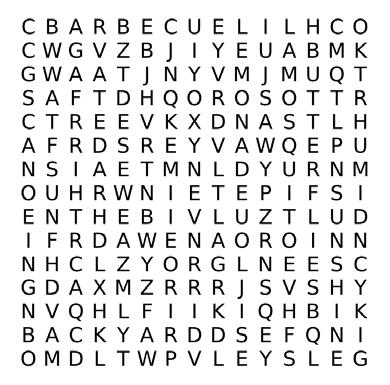
Adventure
Backyard Barbecue
Butterflies
Canoeing
Festivals
Fireworks
Gardening
Hayride


“Discover how our