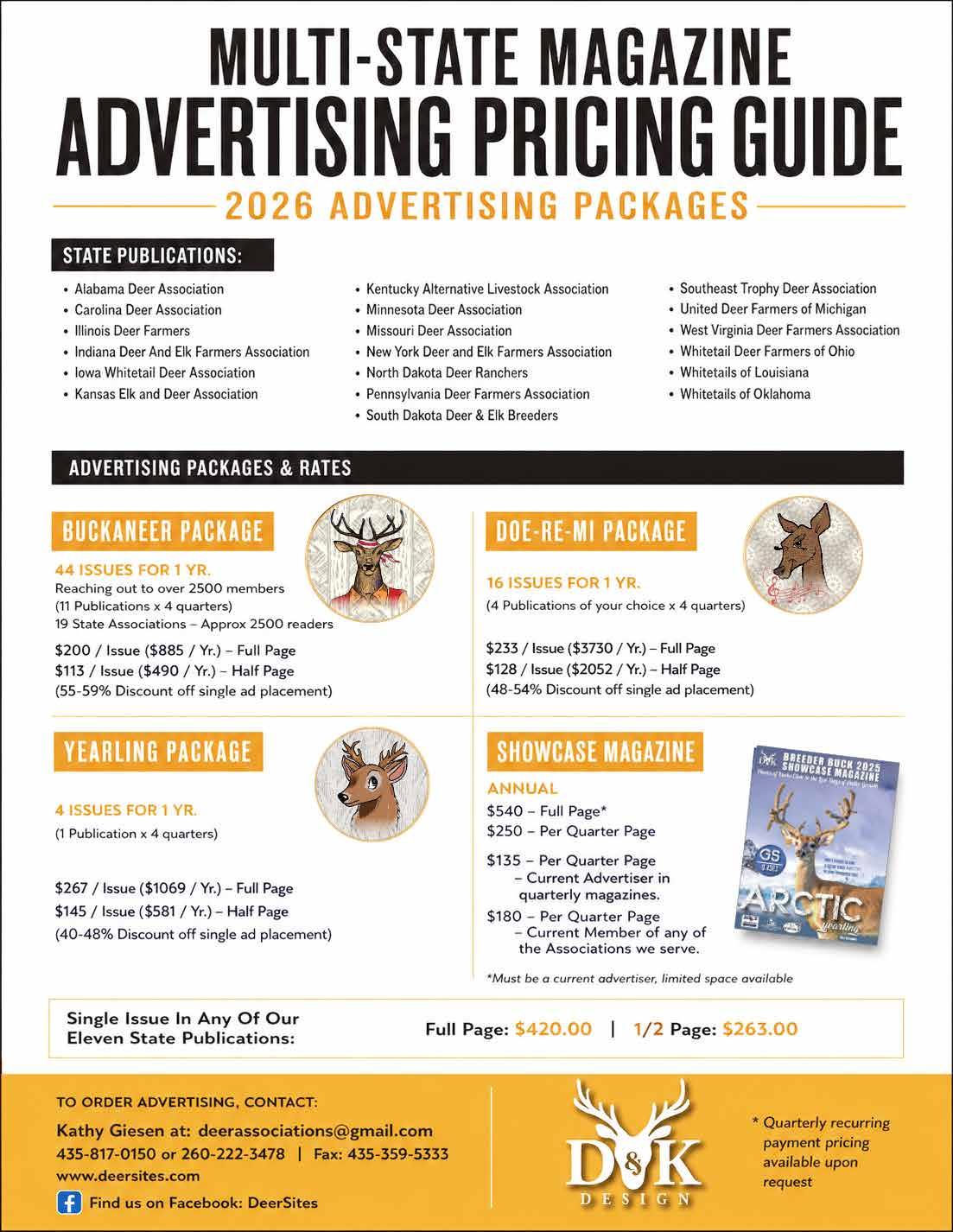
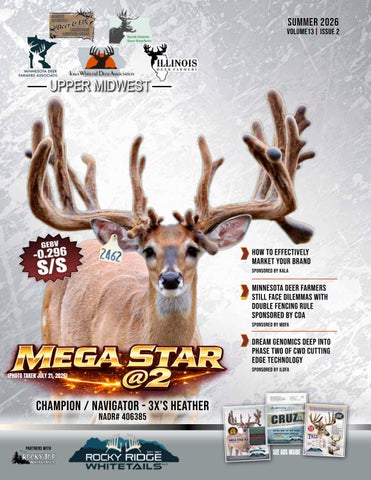




HOW TO EFFECTIVELY MARKET YOUR BRAND
Sponsored by KALA
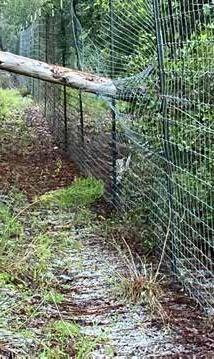
MINNESOTA DEER FARMERS STILL FACE DILEMMAS WITH DOUBLE FENCING RULE
Sponsored by CDA
Sponsored by MDFA
DREAM GENOMICS DEEP INTO PHASE TWO OF CWD CUTTING EDGE TECHNOLOGY
Sponsored by ILdfa





PRESIDENT
Ben Henico (2025) Timeless Whitetails 4468 E Sterling Rd Creston, OH .44217 benhenico@yahoo.com 330-730-0571
VICE PRESIDENT
Paul Troyer Jr (2027) 16444 Huntley Rd Huntsburg Ohio 44046 440-476-5743
EXECUTIVE DIRECTOR
Levi Miller (2023) Sterett Knob Whitetails 2395 Harrison Rd Fredericksburg, OH 44627 wdfomiller@gmail.com 330-231-3359
TREASURER
Gary Maxwell (2026) Double G Whitetails 2021 West Sterling Rd Burbank, OH 44214 330-201-1798
SECRETARY
Emanuel Weaver (2027) 5373 Kansas Rd Apple Creek Ohio 44606 330-698-5504
BOARD MEMBER
Dan E Miller (2026) Outback Whitetails 13250 Clay St Middlefield, OH 44062 440-636 3781
BOARD MEMBER
Jacob Hostetler (2025) 2345 Arbor Rd. Ne Carrollton, OH 44615 740-543-4274
BOARD MEMBER
Joe Johnson (2028) Whiskey River Whitetails 5428 Briggle Ave SW East Sparta, OH 44626 269-209-5835
BOARD MEMBER
Delvy Workman (2027) 1079 CR 2075 Ashland Ohio 44805 419-651-2559
BOARD MEMBER
Caleb Miller (2027) Stone Ridge Whitetails 25963 Township Road 111 Warsaw, OH 43844 740-485-1295
WDFO board meetings are normally held on the third Monday evening of every other month. Past board members are encouraged to attend when possible and serve in an advisory position. Any WDFO member is welcome to attend board meetings. If you would like to attend a meeting please contact any board member.
Any WDFO member is welcome to submit articles or stories they would like to see published. Articles will be screened by the WDFO board before printing. If you are interested in advertising refer to the Magazine Advertising rates sheet included in this issue.
Hello everyone,
I hope this letter finds everyone doing well. Hopefully everyone’s deer and fawns are doing good as well, with this heat we’ve been having. I just had three more fawns born on July 8th from two does, one I didn’t think was bred. The good news is that two of them are buck fawns, all three are doing good so far. I suppose if the heat is all we have to complain about, then we are doing pretty good.
Even as I’m writing this the smoke from the Canadian wildfires has a smokey haze over a lot of our state, reminding me that there are a lot of people who are going through really hard loss right now. I pray that God will be with each situation.
It never gets old watching the older buck’s antlers grow out and seeing how the yearlings are turning out. Speaking of bucks, I’m really looking forward to our Fall Deer Convention and buck auction on August 13th and 14th. I think we have a great schedule of events planned again for this year. I hope everyone can make it, and look forward to seeing you there.
God Bless you all,
Ben Henicow




I hope everyone is having a great fawning season! Like many of you, we’ve had a few fawn losses this year, but we’re thankful for the healthy fawns we’ve welcomed and are looking forward to the months ahead.
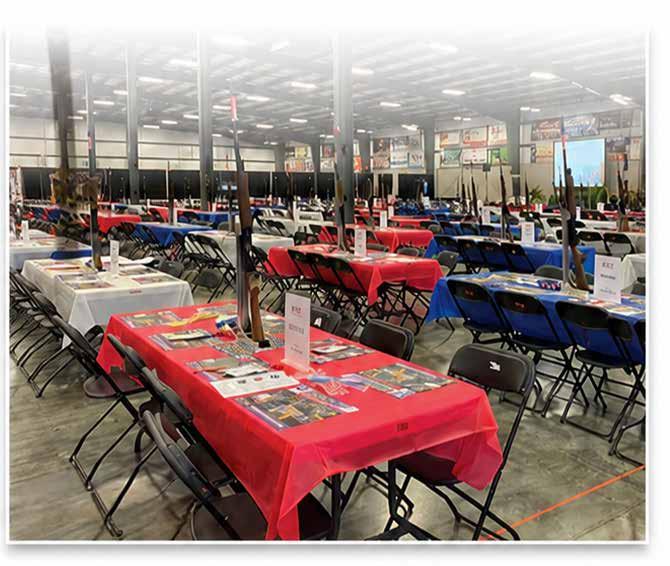
I also want to invite everyone to join us at the Ohio Fall Deer Convention at the Mount Hope Event Center on Thursday and Friday, August 13–14. It’s always a great time to catch up with old friends, meet new members, and enjoy everything our association has to offer.
We still have a few gun tables available, so if you’ve been thinking about reserving one, now’s the time! Booth spaces are almost completely sold out, and we’re excited to have such a great turnout.
As you’re getting ready for the convention, don’t forget to bring an auction basket and any items you’d like to donate to our silent or live auction. Every donation helps make the event more fun and supports the work of our association.
We’d love to see everyone there, so mark your calendars and come spend a couple of great days with us in Mount Hope. Safe travels, and we’ll see you in August!
Levi Miller WDFO Executive Director



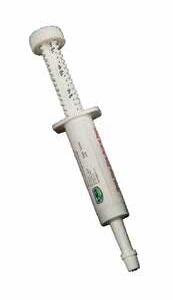
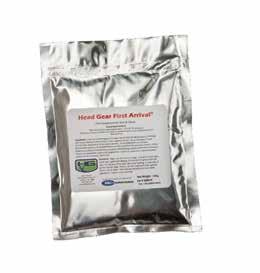
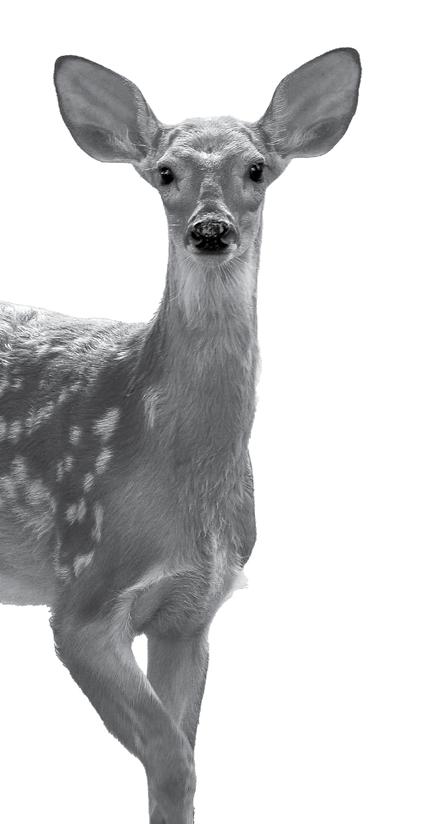
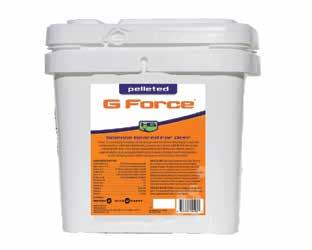
Supports digestive health and natural immunity
Powered by Encrypt® fiber technology
Powder (Bottle Fawns Only)
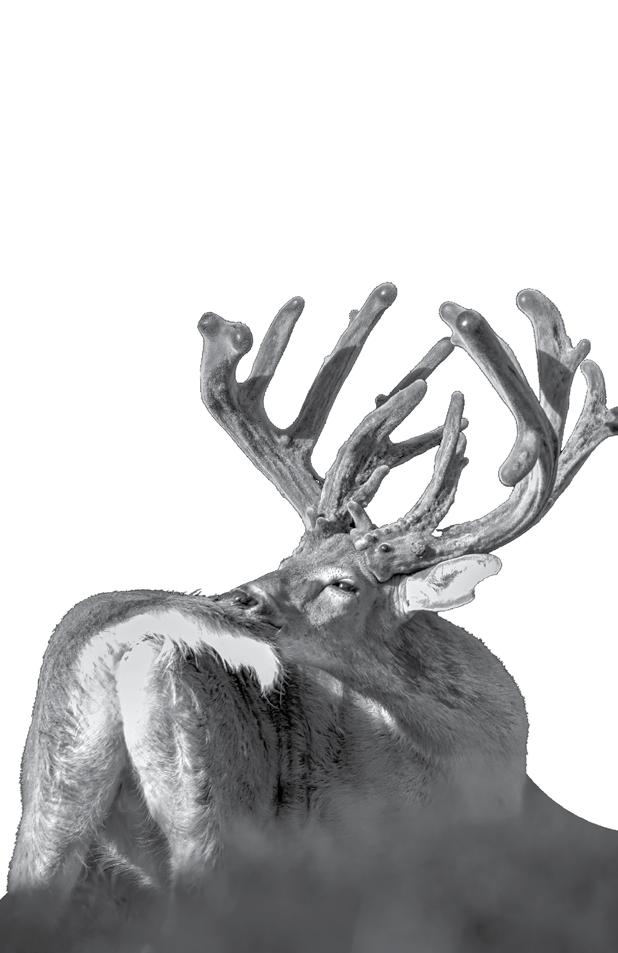
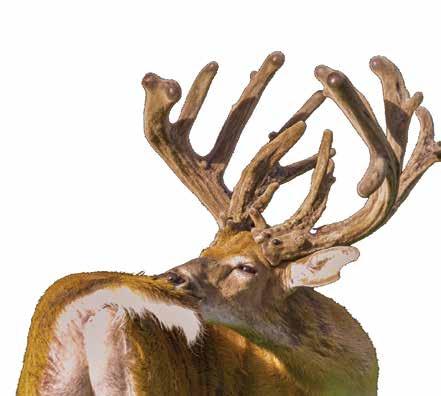
Drives early bone growth and structural development
Optimizes efficient nutrient utilization
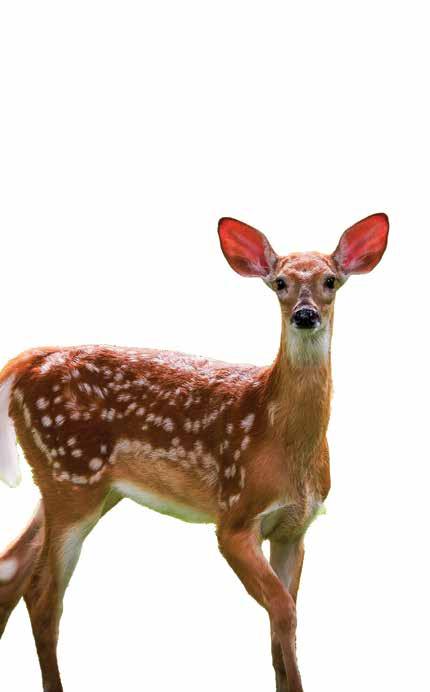
Powered by proprietary Calcium & Phosphorous Complex and Enzyme pack!
Pellet or Powder
Top dress or mix in feed
Start now.
* Schedule Subject to Change
Wednesday August 12
12:00 Event Center Opens for Booth Setup
Thursday August 13th
7:00 Doors Open
9:00 Buck Auction Starts
11:30 Free Noon Meal
2:00 Gun Blitz Opens
4:30 Annual WDFO Membership Meeting
5:00 Dinner
6:00 Entertainment
7:00 Breeder Auction
Friday August 14th
7:00 Doors Open
9:00 Buck Auction Starts
11:30 Free Noon Meal
2:00 Gun Blitz Opens
5:30 Dinner
6:30 Last Man Standing
7:00 WDFO Benefit Auction
* All raffles to be drawn immediately after benefit auction ends.

Can be purchased for gun tables for $175 per seat. There will also be plenty of free seats available if you do not wish to purchase a table.
$250 each. Booth space will be very limited.
Kawasaki Mule 4010 4x4
Stihl HT 135 Pole Saw
Blackstone Griddle
St. Croix Rod & Reel
Solo Stove ‘Bonfire’
Sewing Machine
$500 Cash Mixer
Draw subject to availability.
$1200 Table purchase includes all meals for event. Each table wins a winchester 400 Legend and gets 8 UTV tickets. 8 cards of basket raffle tickets and other free gifts.
Wednesday Evening Activities

At Double H Whitetails
3:00 PM Till Dark
Farm Tours:
3:00pm till dark
Food:
Enjoy free Byler’s BBQ from 4:00-8:30pm
Entertainment:
County Line Band - 6:00pm to 8:30pm
Update on CWD & Breeding For Resistance to CWD: 7:00pm by Keith Warren
The cost of the event is free. Consider booking a room and spending a night or two.
This event is open to the public. Everyone is welcome!
Mt Hope Event Center 8076 St Rt 241 Millersburg OH 44654
Sleep Inn - Mt Hope 330-294-9977
Ask for WDFO group rate

August 13th & 14th


Previously purchased Value Added Memberships will expire after the Summer magazine.

Whitetail Deer Farmers of Ohio Magazine Deadlines 2026
Spring: April 14th
Summer: July 14th
Fall: October 20th
Winter: January 19th, ‘27

Use this QR Code or go online to DeerSites.com for more deadlines and up to date event information!
Indiana Deer & Elk Farmers Association - July 31-Aug 1st - Nappanee IN
KALA Summer Showcase - Aug 8, 2026
Missouri Deer Association Picnic & Meeting - Aug 8, 2026 - Clark, MO
Whitetail Deer Farmers of Ohio Convention - Aug 13-14, 2026

Pennsylvania Deer Farmers Association PA Eastern Fall Stocker Auction - Aug 29th - State College, PA
Southern Top 30 - Aug 20-21, 2026 - Louisiana
Whitetails of Louisiana - Aug 21-22, 2026 - Marksville, LA
TDA Annual Convention - Aug 28-29, 2026 - San Antonio, TX
Iowa Whitetail Deer Farmers Winter Meeting - Feb 27, 2027 - Waterloo, IA
Pennsylvania Deer Farmers Association Winter Benefit Auction - Feb 26-27









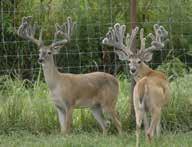
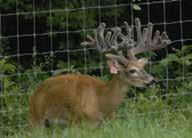
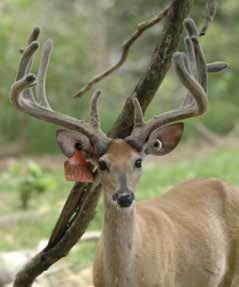


Hello, I am Lester Schlabach from Shady Meadow Whitetails. I have been asked to run for a board member position. My wife and I have seven children—two girls and five boys. I am 56 years old and have been involved in the deer industry for 18 years. We appreciate this industry and the people who are part of it, and we always look forward to the annual WDFO Auction and Benefit. We are grateful for all the Board does to support deer farmers.
Hello fellow deer farmers, I’m Gary Maxwell. I along with my wife Michelle operate Double G Whitetails in Burbank, Ohio. Our farm consists of approximately 100 deer, catering to the stocker market. We bought our first deer in 2007.
• I spent 49 years trucking and owned my own truck for 40 years. We have one son Garrison who has taken over my truck and enjoys seeing our country!
• I currently serve as Treasurer, board member, and on the food committee for WDFO.
• We have some good guys running for board and if I’m elected I will do my best to help further our industry and WDFO. Thanks
I am Dan Miller. Weh ave been raising deer since 2005. I have enjoyed working with WDFO board members. I think we should work on opening the boarders. I think it would be better for everyone. If re-elected I will try to promote the deer industry but I do feel there are others more qualified than I am.


Hello, My name is Reuben Nisley. My wife Larene and family of 4 boys and 2 girls live in Fredericksburg, Ohio where we operate Nisley Whitetail Acres since 2006.
My name is Caleb Miller. I am currently serving the remaining term for a former board member. I am co-owner of Stone Ridge Whitetails. My Dad and I have been raising Whitetails for 14 years. I believe that it is important to keep the passion of deer farming alive. My wife Heidi and I have been teaching the next generation, our son, the values, hard work and dedication it takes to be a deer farmer. I take pride in representing people’s ideas and concerns and to do my part to make Whitetail Deer Farmers of Ohio represent all Ohio deer farmers. My goal is to continue on WDFO’s legacy and make sure that this organization continues for years to come.







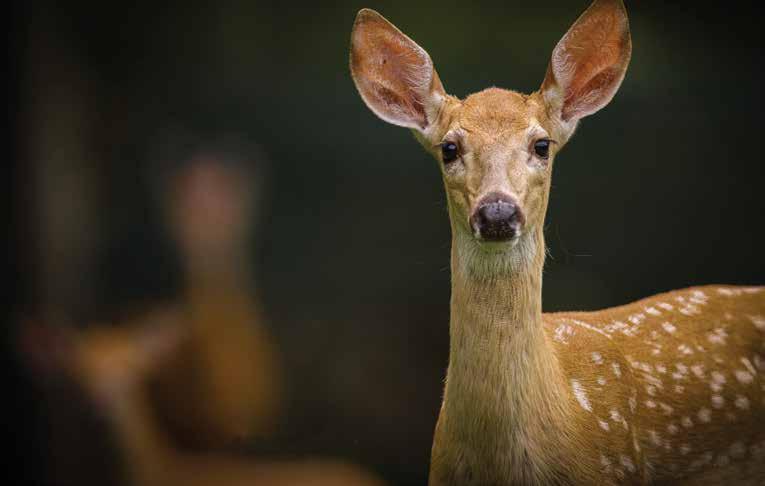







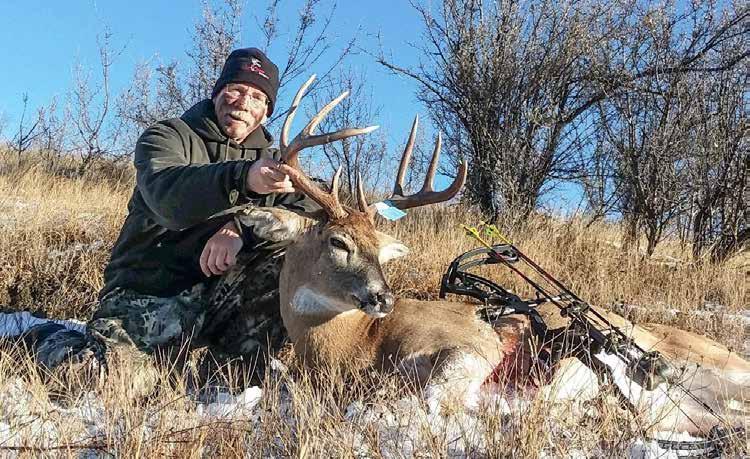
By: Gail Veley • Sponsored by the United Deer Farmers of Michigan
It was the early 1980’s, and students at Missouri State University were deep in the woods, thoughtfully stretching a thin line of string, low and across a well-traveled deer path. They had just invented, so to speak, the first active infrared device to study deer behavior. One trip of the string by an unknowing cervid would capture one brief moment, until the string was reset. This unique device later led to the creation of the first trail camera, which caught images using a 35-millimeter camera triggered by infrared signals.
“When trail cameras first started gaining real popularity, in the early 2,000’s, they were only a novelty item,” explained Tom Nelson of Grand Ledge, Michigan. “In about 2005 more and more people were using them. But they were in their infancy stage and hard to install.”
Using these cameras involved putting
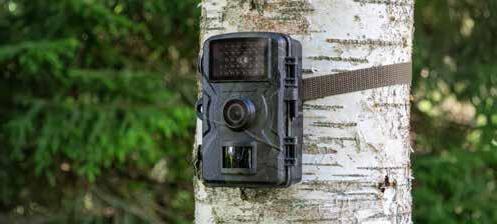
a camera card in a reader, physically retrieving the card, checking the photos and potentially leaving a lot of human scent behind. Today, trail cameras include GPS and wireless tracking abilities, making the ability to check them remotely much easier, but perhaps a time-consuming or addictive 24/7 activity. Trail cameras changed everything for hunters and for those who don’t want to merely hunt “old school” and be surprised at what they encounter.
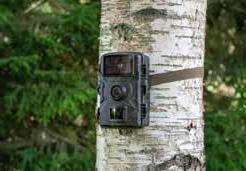
Placing a trail camera to track trophy treasures is a bit of an art. “You need to use trees that are at least close to 12 inches in diameter to put the attachment strap around, and then off the trail a bit so they are harder to notice,” Nelson said. “About waist high is pretty good with very few obstacles around so you get a good look at the landscape.” Wearing rubber gloves to install
cameras will also help hide your scent and detract from educating deer as to where humans may have been. And whether you are checking one camera or 10, careful camera placement might also ensure it doesn’t get stolen, as good ones can cost as much as $300.
While cameras can reveal a lot about native and transient deer activity, “I’ve heard hunters say that they’re not going hunting because they had nothing on their camera,” Nelson shared. “But a couple years ago I shot a prize buck on my property, and I never had a picture of him. So, I say you should go hunting regardless of what you find.”
Cameras, in addition to tracking game, can also help determine the best location for a morning versus an evening deer stand. Ideally, choosing a deer stand location preseason
could allow you pick an adequate cover tree such as an older or mature oak or pine, with ample branches or leaves that stay on longer in the fall to help provide camouflage. With this type of cover “deer will walk right by you.” Nelson said. While the first tree stands amounted to a wooden seat affixed to a wooden ladder, the idea of hiding from your prey can be attributed to Native Americans, who used to dig holes in the ground to hide from and ambush their next meal. Yet, the idea of being on higher ground for hunting eventually took precedence, hence the invention of the first commercial tree stand by Andy Anders. Initially produced in the 1940’s, Anders modeled his tree stand based on stands used by Japanese snipers in World War II. Today, rather than wood, tree stands are made primarily out of metal for longer durability. Often incorporated into deer stands are deer blinds. Instead of merely being used on the ground, they are frequently used as an additional component of the tree stand. They can be elevated eight, 10 or 20 feet high for more efficient vantage points and protection, replacing exposed platforms used to sight deer and with it, the necessity to wear a safety harness.
“In choosing an ideal tree stand location you also always want to look for travel corridors and ridge lines in determining where your stand or blind will be,” Nelson said. “Deer tend to want to stay in cover
and utilize narrower passages going to food plots. Wind direction is an important factor, too, where your scent won’t be easily discovered. Having more than one tree stand could work in your favor especially if you have limited time. For the average hunter a tree stand or blind will pay off and better the chances that you will harvest something.”
Nelson still remembers sitting stone quiet in a tree stand with a young, first-time hunter, when the hydraulic crack of his now opened soda can abruptly broke through the forest serenity. “I was not expecting that,” Nelson said. “I just about jumped out of my skin. He still remembers that, and he’s never done it since.” Thus, Nelson also recommends carrying hand snippers to clear anything you might brush up against while entering or exiting a tree stand or blind, adding to the ability to be as silent and undetected as possible. Eliminating unnecessary noise and
disguising your personal scent can further ensure greater hunting success. In knocking your scent down, deer may never detect your presence or might think you trekked through an area hours ago, or even the day before rather than recently. “The goal is to be as 100 percent as scent-free as you can,” Nelson said. “Shower with unscented soap and use unscented detergent for laundry. Hang your clothes outside to dry and keep them sealed in a plastic bag until you have arrived at your hunting destination to change. Wear rubber boots because they will not soak in scent.” Charcoal liners, found inside camouflage clothing, also absorb human scent. Ozone machines screwed into the tree of your stand location can help create an ozone layer knocking down human scent. In addition, using doe or buck urine can both attract deer and cover human scent.
Lastly, Nelson strongly suggests carrying a few important items with you on every hunt. These include a knife, flashlight, toilet paper, a snack such as granola bars, water in a nonplastic bottle and a cord-of-rope. “Remember that while they are ways to make hunting easier, hunting really isn’t supposed to be easy,” Nelson emphasized. “I had a friend who would wear a flannel shirt and never camouflage and hunted the old-fashioned way walking through the woods. He wasn’t always successful, but he had a great time. Sometimes it’s more about the adventure, and being out in nature, that’s most important.”

By: Gail Veley • Whitetails of Louisiana
With the goal of perhaps becoming the next “Oklahoma,” Whitetails of Louisiana President Brandon Bollinger and WOL Vice President Josh Kaplan have spent the better part of six months participating in the Louisiana Department of Wildlife and Fisheries CWD Task Force meetings. These meetings, the most recent one being December 3rd, 2025, are conducted at the State Capital in Baton Rouge, Louisiana, and have also included representatives from The Louisiana Department of Agriculture, The Louisiana Department of Natural Resources as well as owners of feed stores and others who are in some manner affected by CWD. In an effort to gather information, foster an understanding of CWD and what’s being done to minimize it, lengthy discussions have taken place at each meeting. At an October 9th CWD Task Force meeting, questions were answered by Dr. Daniel Myrick, DVM, which focused mainly on the benefits of becoming a Certified CWD Free Herd (and the accountability system needed on behalf of all 241 deer farms and preserves combined) in Louisiana, to operate compliantly.
Leading up the genetic side of a meeting discussion on December 3rd was Arkansas Game and Fish, who strongly believe that Mother Nature, or albeit the concept of “survival of the fittest,” will ultimately weed out those deer who are more susceptible to CWD, and allow healthier deer to flourish. In addition, Dr. Christopher Seabury presented his research on predictive genetics in a letter addressed
to the task force. It included the following excerpt:
“Relevant to your interest in CWD management, and to my best knowledge, I am the only person in the world who has effectively cleaned up a CWD positive breeding herd to date; which included a combination of best management practices and the utilization of my custom technology,” Dr. Seabury wrote. His letter also included “it is clear that CWD-risk can be managed, mitigated, and even controlled within breeding facilities; with the overall effectiveness of our best management practices being subject to influence by state-level variations in implementation and execution. I would be happy to work with you and the state of Louisiana to help mitigate CWD risk in your breeding facilities. Interestingly, mother nature does not over-fix problems; she doesn’t need free-ranging deer to be 100% resistant to CWD in-
fection. She only needs free-ranging deer to accumulate enough CWD resistance (on average) to become “tolerant”; meaning that they can often still become infected, but the disease does not cause rapid or acute death that precludes reproduction. I hope state inferences and actions will be guided by real evidence, as opposed to the many common ideological talking points for which no meaningful scientific evidence exists.”
Bollinger and Kaplan are very grateful for their inclusion on the CWD Task Force and the invaluable contribution by Dr. Seabury. “We look forward to attending more meetings and seeing where this goes,” Bollinger said. “We see our participation as vital to helping minimize CWD not only in Louisiana, but in other states, too.”



By: Gail Veley • Sponsored by The Alabama Deer Association
n order to make a profit in the deer industry “don’t spend any more than you can afford to lose,” explains Nathan Blosser of Blosser Whitetails in Buffalo, Missouri. “Have a lucrative career or side business and put the money back into the deer.” While this advice has been taken to heart by many entrenched in the industry, making a profit also involves patience, making timely decisions and the willingness to take risks. There are many popular and successful deer farmers with vast clientele, who appear to never struggle or have setbacks. However, they almost certainly didn’t start out that way. Virtually every deer farmer has struggled through successes and failures, some very monumental. “There were times that I despaired with losing so many deer that I wanted to get out,” Blosser, who started the farm in 1994, said. “But by staying in, it rebuilds faster than you think. In 2005 I lost 70% of my herd. In 2009 I had my best financial year ever. Then in 2012 and 2015 I lost 100 head of deer each year and even left my farm for a while in 2012. I couldn’t stand being around it and brought someone in to handle all the dying deer.”
However, Blosser, now a deer farmer for 32 years, believes deep down
that you should never make drastic decisions when you’re feeling low and defeated. Six years into starting the farm, he and his wife Elaine decided to clear out their old genetics and invest in a really nice buck, BW Sunny, owned by Dean Bontrager. “From there we went into the breeding market and through BW Sunny, produced his son Sundowner. Now, we feel we will make a profit each year,” Blosser said. “When we decided to get more serious, I had a good friend of mine tell me to attach yourself to other successful people. Don’t try to reinvent the wheel. And it’s okay to work with people who have made mistakes because you learn from them.” In addition to creating a solid business plan built around marketable genetics, Blosser feels another way to add to your profits is through positive advertising and good pictures showing such things as antlers at their largest, along with a landscape that looks lush, bountiful and void of fences in the background.
Yet genetic and promotional advice aside, as a newcomer or even more seasoned deer farmer, how do you make enough seed money to continue building your herd? “Everyone is told that when they start a deer farm to buy bred does,” said Josh Newton,
a deer farmer for 27 years and owner of Deer Wizard Ranch in Williamsport, Pennsylvania.
“But why not buy a group of yearling bucks and in 30 months turn them into cash. You’re cutting your time tremendously in making a profit. Even though it could typically take up to 10 years to really see a profit in the deer industry, today it could be as little as five because there are so many advantages now.”
At this point in their careers, both Newton and Blosser feel more certain that success will outweigh failures. But Blosser cautions “you cannot have a million dollar dream with a minimum wage work ethic. You cannot raise profitable deer without good feed and top end genetics. Closely watch your input. Lastly, watch your genetics and know who your customers are. Establish very good working relationships. Be personable and caring.”

Gentle on the animal and trusted by veterinarians, handlers and owners for every species or procedure
COMPLETE KITS WITH SEDATION AND REVERSAL AGENTS, OR SOLD SEPARATELY.

Medetomidine/Ketamine/ Butorphanol 10/50/25 mg/ml 10ml + Atipamezole 20mg/ml 30ml + Naltrexone 25mg/ml 10ml

Medetomidine/Ketamine 5/150 mg/ml 30ml + Atipamezole 20mg/ml 30ml

Medetomidine/Ketamine/ Butorphanol 20/100/50 mg/ml 10ml + Atipamezole 40mg/ml 30ml + Naltrexone 50mg/ml 10ml
Other Sedation Kits
MKB2™ Kit
MKM™ Kit
MKBM™ Kit
CALL (940) 373-7171
Medetomidine/Ketamine/Butorphanol 20/100/50 mg/mL + Atipamezole 40mg/mL + Naltrexone 50mg/mL
Medetomidine/Ketamine/Midazolam 3.3/150/5 mg/ml 10ml + Atipamezole 20mg/ml 30ml
Medetomidine/Ketamine/Butorphanol/Midazolam 20/100/30/20 mg/mL + Atipamezole 40mg/mL + Naltrexone 50mg/mL
OTHER POPULAR PREPARATIONS
• Medroxyprogesterone Acetate 200mg/mL
• Dexamethasone Sodium Phosphate 24mg/mL
• Atipamezole
Hydrochloride 20mg/mL
• Tolazoline HCl 100mg/mL

The information in this advertisement is general and provided as an informational aid. It does not cover all possible uses, actions, precautions, side effects, or interactions of the medications shown, nor is it intended as medical advice or for evaluating the risks and benefits of any medication. Consult your veterinarian for diagnosis and treatment of health problems. The information and statements here have not been evaluated by the Food and Drug Administration (FDA), and the FDA has not approved these medications to diagnose, cure, or prevent disease. Medications compounded by Mixlab are prepared at the direction of a veterinarian and are not intended for use in food or food-producing animals. Mixlab does not recommend, endorse, or represent the efficacy, appropriateness, or suitability of any dosing, products, procedures, treatments, services, opinions, veterinary providers, or other information contained in this advertisement. Mixlab is not responsible or liable for any advice, course of treatment, diagnosis, or other information, services, or products obtained through this advertisement.

By: Gail Veley • Sponsored by the Kansas Elk and Deer Association
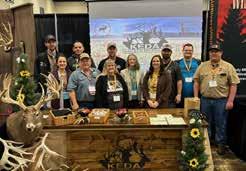
When NADeFA 2026 opened its doors on March 18th, there was a new addition among the gathering. The Kansas Elk and Deer Association (KEDA) had a booth and 14 members representing them. “We feel that Kansas is ready and able to make a bigger impact in the deer industry,” said KEDA President Karla Kretschmer. “We may be a smaller association than others, but we are growing. Kansas is getting close to having 100 cervid licenses in our state. Our KEDA annual conferences keep getting better and better and we are getting good feedback about them. We have reached out nationwide for more donations for our auction, so we thought NADEFA would be a great opportunity to put our faces to our KEDA organization. The speakers were very informative, and we came away with many great ideas for our 2027 Conference.
According to NADeFA Membership & Advertising Coordinator Lisa Weinsheimer, seven state deer associations had booths at NADeFA. They included KEDA, The Carolina Deer Association (CDA), Whitetail Deer Farmers of Ohio (WDFO), Indiana Deer and Elk Farmers Association (IDEFA), The Pennsylvania Deer Farmers Association (PDFA), Kentucky Alternative Livestock Association (KALA) and The Illinois Deer Farmer’s Association (ILDFA). “Playing a larger part in the deer industry is something Kansas is really excited about,” Kretschmer said. “The KEDA Board would like to thank those who did attend NADeFA 2026. They include Jeremy Salenius, Brad and Shirley Farmer and their son Gary, Becky and Brenden Compton, Mike Kretschmer, Lacee Lamb, Dan Plummer and Jake Lamb.” Participating as an association at NADeFA 2026, including sitting in on several meetings, solidified
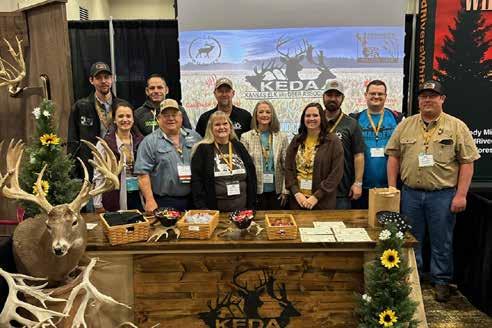
to KEDA that it was also time to try another first. On April 20th Lamb and Kretschmer, on behalf of KEDA, traveled to Washington, D.C. for the NADeFA Fly-In. “This was truly a great experience for us to be able to watch and be a part of the world of cervids behind the curtain,” she said. “Jake and I met with representatives for Cherise David, Tracy Man and Jerry Moran. We also met with Ron Estes and Derek Schmidt personally. Schmidt sat with us for 30 minutes talking about Kansas service and CWD in Kansas.”
On April 30th, 2026, The U.S. House of Representatives passed the Farm, Food and National Security Act of 2026, the first to be passed in six years. As of May 30th, 2026, the bill is now sitting in the U.S. Senate and waiting approval. Within the bill is a line item granting significant research funds to CWD. Understanding the impact that deer farmers have on legislative outcomes makes flying to D.C. essential. “Shawn has worked so hard for all of us,” Kretchmer said. “We are grateful for him and for Troy Zacchini to step into this role. There was a lot of planning to schedule each meeting with representatives from each of our states and USDA/ APHIS. Thank you to Capitol Hill Consulting. Also, a big thank you to the Office of Senator Jerry Moran. We got a VIP tour of the Capitol. Parts of our tour were emotional, especially as we celebrate our 250th Birthday of The United States of America. On behalf of the KEDA Board - Happy Birthday America!



Summer sausage crisped with golden potatoes and onions, lifted by a sharp mustard seed vinaigrette. Cozy, rustic, and elevated enough for a weekend brunch.
• 8 oz Venison Summer Sausage, sliced into ¼-inch coins
• 1 lb Yukon Gold potatoes, diced small
• 1 Yellow onion, diced
• 1 tsp Fresh thyme, chopped
• 3 Tbsp Olive oil
• Salt, to taste
• Black pepper, to taste

Mustard Seed Vinaigrette
• 1 Tbsp Grainy mustard
• 1 tsp Dijon mustard
• 2 Tbsp White wine vinegar
• 1 tsp Honey
• 4 Tbsp Olive oil
• Salt, to taste
• Black pepper, to taste
• Directions
• In a mixing bowl, whisk together grainy mustard, Dijon mustard, vinegar, and honey.
• Slowly stream in olive oil while whisking until emulsified. Season with salt and black pepper to taste.

1. Heat olive oil in a cast iron skillet over medium-high heat. Add potatoes and cook, stirring occasionally, until beginning to crisp, about 8–10 minutes.
2. Add onion and thyme, cook until softened and lightly caramelized, 5–6 minutes.
3. Push vegetables to the side, add sausage coins, and sear until browned on both sides. Toss everything together and season with salt and black pepper.
4. In a mixing bowl, whisk together grainy mustard, Dijon mustard, vinegar, and honey. Slowly stream in olive oil while whisking until emulsified. Season with salt and black pepper to taste.
5. Transfer hash to a platter or individual plates.
6. Drizzle with mustard seed vinaigrette and serve immediately.
7. Spoon hash onto a warm platter, drizzle vinaigrette lightly, and garnish with extra thyme leaves.
IF YOU HAVEN’T TRIED PNEU-DART’S RDDS, YOU’RE MISSING MORE THAN YOUR TARGET
Did you know impact trauma can negatively influence medical treatment? We do.
Which is why we’ve spent 58+ years perfecting the ideal remote delivery device. Shorter in length and lightest on the market, our disposable RDDs, with patented Slo-Inject® technology, provide ultimate accuracy while reducing the potential for problematic hematomas. Pneu-Dart. When you can’t afford to miss.®
By: Gail Veley • Sponsored by the Southeast Trophy Deer Association
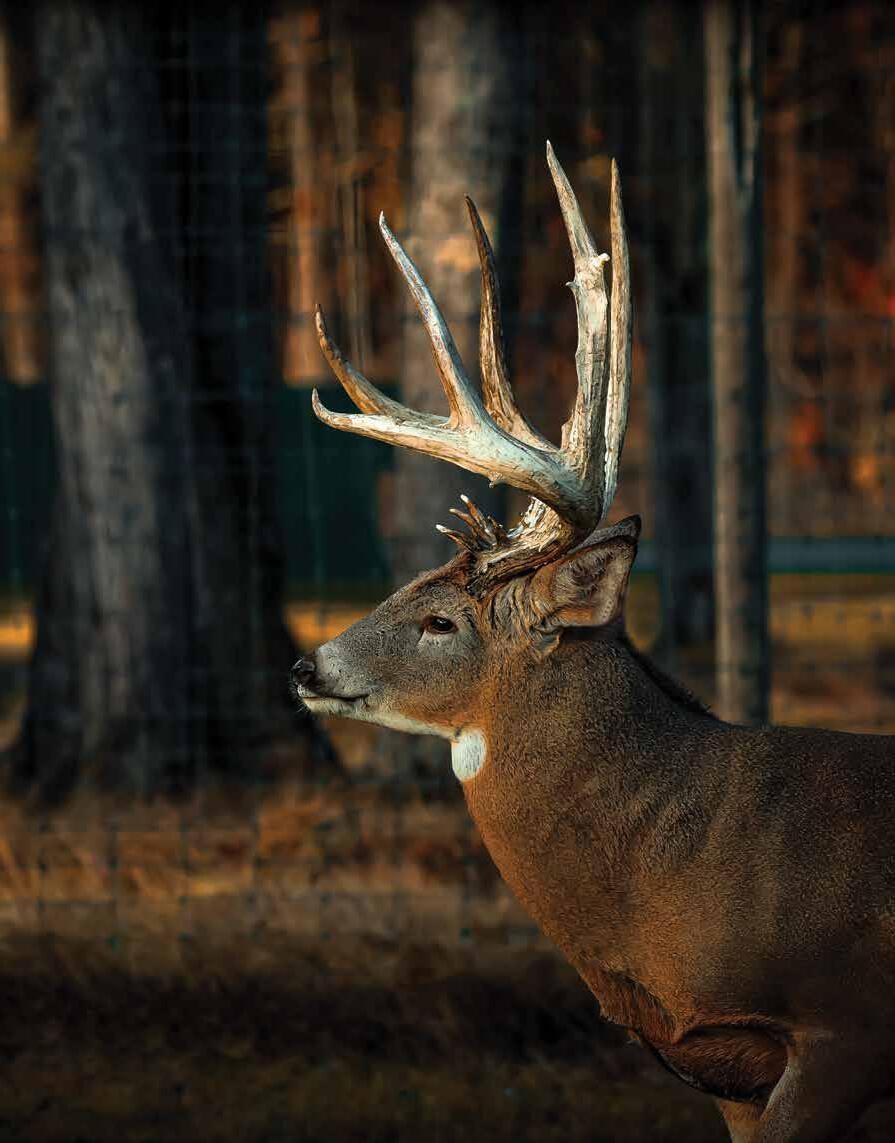
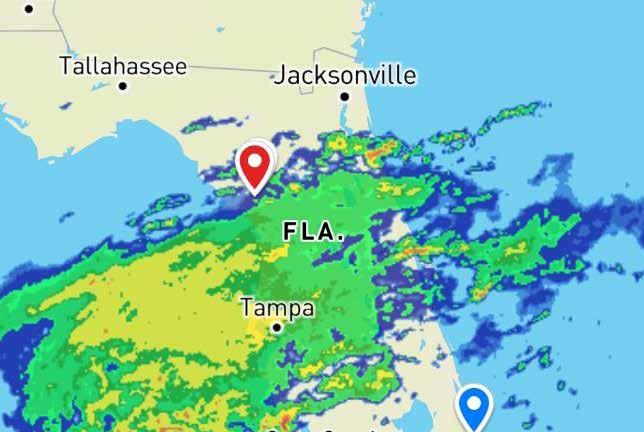
Blackened skies greet the horizon during an Indian summer day in Florida. A tropical storm is brewing over the Atlantic coast and predicted to make landfall. It’s still too soon to tell if this one will become a hurricane. However, Florida deer farmers can tell you it’s never too soon to prepare for what will more than likely be a storm with very high winds and heavy rainfall. “We may take the weather with a grain of salt,” said Mike Vizcaino of Osceola Whitetails in Pomona Park, Florida. “But if you’re not prepared it could be very, very costly.”
Preparedness for your deer herd comes in the form “of the same types of things that you would do for your own family,” shared Dr. Bill Leffler of 2 Base Down Farm in Morriston, Florida. Ample supplies of drinkable and usable water, food and medication are top of the list, followed by power generators (for potentially very long power outages) as well as fencing supplies for repairs.
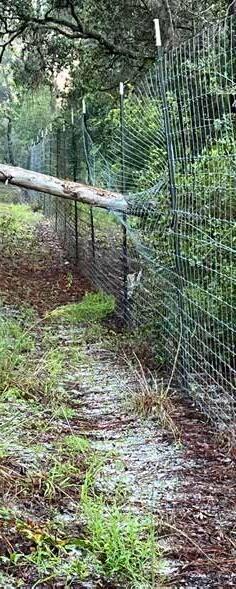
Other forms of preparedness include how you choose to design your deer farm from the very start, knowing that flooding and high winds could be issues. While Vizcaino was most affected by Hurricane Debby earlier in 2024, a majority of the damage was caused by high winds and trees falling onto portions of the 4.5-mile fence surrounding his 450-acre preserve, not flooding. “We had long since removed trees from our fence line,” he said. “Fallen trees from Debby didn’t take my fences all the way down. You need to make sure you have a strong enough fence that it can take a direct hit. I always keep a
330-foot roll of wire fencing on hand at all times, along with other normal fencing supplies like gripples that help with splicing wire, giving me the ability to make faster repairs.”
The ability to act quickly after a storm can be the difference between saving or losing your herd, Leffler said. This includes avoiding contaminated water. “This is why I don’t like ponds or have ponds in my pens,” Leffler said. “If you don’t have measures in place to handle flooding, it’s almost too late after the fact.” Inevitably, diseases such as EHD, blue tongue and pneumonia emerge within 10 to 12 days after a storm from standing water, creating the absolute necessity to make sure medications are on hand as deer can die very quickly once affected. Your feed supplies need to be adequately stocked as well, as making a trip to the feed store may not be possible. However, feed supplies can also be ruined by a storm, causing a very difficult and stressful situation.
“We’re fortunate to have our deer standing on hay fields that they can eat,” Leffler said. “Other farms are dirt and clay. The opportunity to build on or move your animals to higher ground can also be helpful, if you’re able to do it.” Another key component in saving your herd is the ability to let them out of their pens so that in the panic that ensues during a storm, fences within close proximity aren’t a hazard to them. “If you have the means to fence in your entire property, I recommend you do it,” Leffler said. “This way you can let them out of their pens if the need arises and have less chance of losing your animals.”
In addition, “after a storm you may need to bump up your feed because of the extra stress placed on your deer by adding a top dressing with minerals and protein to get through those trying times,” Leffler said. “A lot of people can miss the fact that their deer might need a little extra help and may also need extra vaccines long before a storm approaches. And lastly, breed the toughest deer you can, adding to the likelihood they can endure the harder times.”

By: Gail Veley • Sponsored by Carolina Deer Association (CDA)
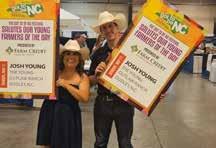
Josh Young tries to never spread himself too thin. Yet, it would be easy to wonder how he fits everything into his life that he does. Young, 35, is a self-sustained deer farmer and longhorn cattle and pig rancher who devotes a large majority of his time promoting deer farming. On May 17th he was awarded the “Got to Be N.C.” Young Farmer of the Day Award by North Carolina AG Commissioner Steve Troxler. The award recognizes outstanding young agricultural leaders between the ages of 18 and 40. Honorees participate by riding in an annual spring festival Tractor Parade, receive a prize pack and are also featured in agricultural blogs and various types of media coverage. He credits and thanks some of his closest friends, Ms. Janice and Ms. Patricia, for nominating him for the award in March of this year.
However, as much as this award means to him, it is equally meaningful to him that people understand and embrace deer farming. Young
estimates that he attends close to 25 festivals a year in North Carolina, taking the Carolina Deer Association (CDA) along with him. “I introduce people to the fact that you can raise deer as livestock,” Young said. “When you show them that they are tagged just like cattle, they start to understand. Their next question is always about buying venison. I say that we are working on it with the USDA.”
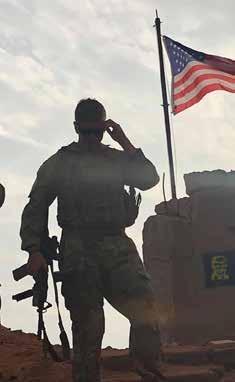
Young, who started the YoungOutlaw Ranch in Dudley (Wayne County), North Carolina in 2021, currently has eight deer and counting on his 45-acre property. Prior to starting his farm, he spent six years serving in the Marine Corps and three years serving in the United States Armed Services. “Growing up, I always wanted to be a Marine and a cowboy. Now I’ve done both,” he said. Young, a first-generation farmer to rancher, learned the value of hard work and the love of anything outdoors from his late grandfather, Fred Young. “I got to watch westerns with him,” Young reflected. “He was also in the army. He was big on work ethic. He laid tile and played tennis in his mid-60’s and even taught me how to water ski. I would give anything for him to be here now.”
Young credits his internal drive and ambition to his grandfather, and he is certain he still plays a part in every decision he makes. In November of 2024, Young and other dedicated individuals officially formed the Carolina

Deer Association, a 501 (c)(3) organization dedicated to promoting deer farming along with addressing and curbing misconceptions about the deer industry. In creating the association, they also became a member of the “Got to Be N.C.” program, a statewide program designed to assist agri-businesses and associations grow and expand. Young’s official role within CDA is Director of Public Relations, something that fits as perfect for him as a glove. “Through the ‘Got to Be N.C.’ program, deer farming is solidified as an official form of agriculture,” Young said. “CDA participates in the annual spring festival at the fairgrounds that attracts more than 120,000 people. I’m glad that deer farming can get the positive attention it deserves. I’m proud to be a part of it and proud to help teach the next generation about our way of life.”
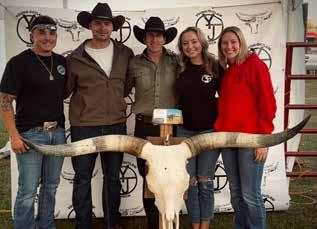



Dedication is exactly what every successful deer farmer learns and what Stefanowicz now exuberates not just in owning and operating Awesome Whitetails in Middlebury Center, Pennsylvania with her husband Jason, but also in her job as an Accounts Receivable staff member for D & K Design. D & K Design, producer of 11 quarterly state deer association magazines, saw Stefanowicz as the perfect fit for the job.
“I’ve known Amy for years, along with Jason,” said D & K Design Magazine Editor Kathy Giesen. “When I heard that Amy was looking for a part-time job, Jason joked that she could come work for me. Well, I took him up on it. Amy is very personable, well-known in the deer industry and very detail oriented. We are so glad to have her on board.”
As a young girl growing up on a hobby farm near Telford, Pennsylvania where
“Amy

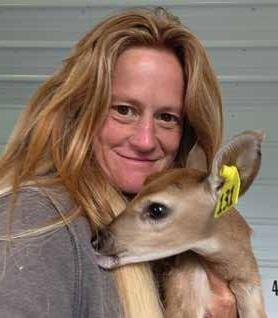
great example of devotion back then, and along with it they both nurtured their daughter’s interest in agriculture, 4-H and even bowling. As the years passed, Stefanowicz found herself drawn to both horses and teaching, and even dreamed of becoming a barrel racing competitor on the national circuit. Ultimately, she was compelled to pursue early childhood education at Montgomery Community College, shortly after graduating from Dock Mennonite Academy.
Later, she met Jason at a birthday party, ultimately fell in love and married him on September 11th, the same day as her birthday, in 1999. Now, through the creation of their deer farm and the daily caring for deer, Stefanowicz has found the perfect combination of her passions as a teacher and animal lover. Her advice on raising fawns has been sought out by uncountable people in the deer
as devoted to their deer as she and Jason are, as it allows her and Jason to attend industry events on a fairly regular basis.
If she had but one wish, it would be that her parents were still alive, sharing in all the joys and challenges of raising deer. However, she finds comfort in knowing her success is firmly rooted in the life lessons they taught her. If you don’t already know Amy, visit the D & K Design booth at the next event they may be found at, and say hi!

Amy









Scan QR Code to View the 2025 Magazine!




Reservation for space and info will be due no later than August12th,2026. If you would like to send in a last minute photo of your buck, the cutoffdateisSeptember1st by 8am CST.
Printing and mailing will start September 4th and be in hand between September 16th-20th. Just in time for semen sales getting ready for Breeding Season. These will be mailed to Breeders and Ranch members of the 19 state associations we service.
Semen,embryos,breederbucks,andmorecanallbelisted!
PRIME SPOTS WILL BE AUCTIONED ONLINE AT MCCLUNG SALES: JULY 21ST - 23RD 2026

Showcase Advertising Rates for 1/4 Page Advertising Space:
- Current Advertiser in Quarterly Magazine: $135
- Current Member of any of the Associations we Serve: $180
- Non-Member and Non-Advertiser: $250 *Buy4foraFullPage!
To Sign Up Contact:
Samantha Uchytil • 320-905-2622 • deerassociations@gmail.com
Kathy Giesen • 435-817-0150




If you would like your card featured on our
card pages please send your card
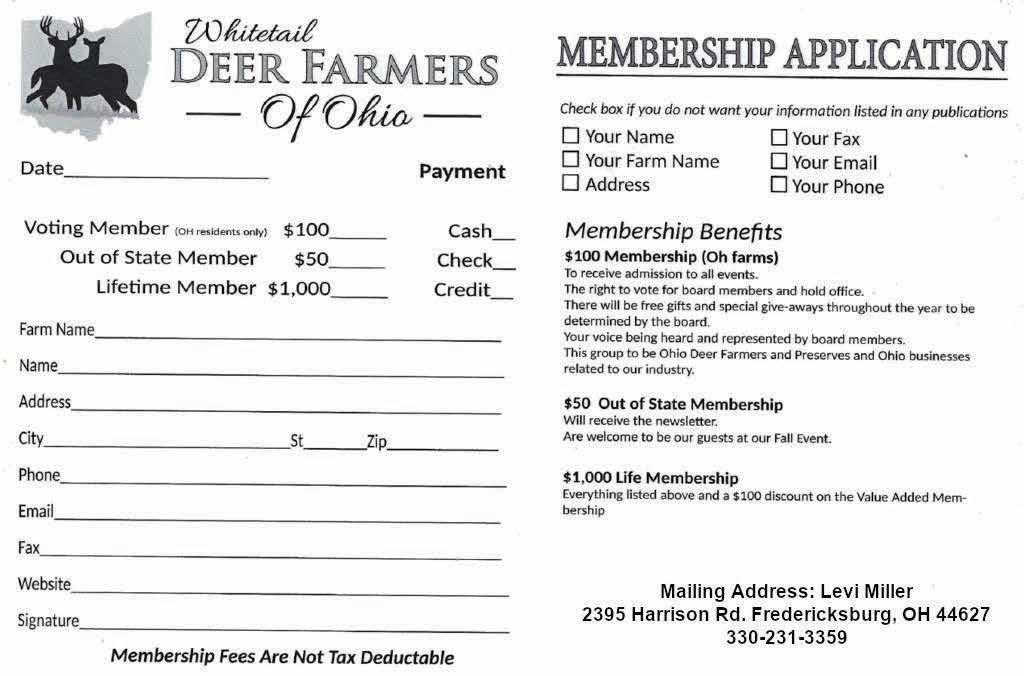
This gives Whitetail Deer Farmers of Ohio members a way to reach out to one another for services and to buy or sell deer! There will be limited pages for these card spreads, first come first serve. The overflow would be placed in the next issue and cards will be rotated each quarter according to space availability.

FREE business card ads for members of the










The rules for sudoku are simple:
A 9x9 square must be filled in with numbers from 1-9 with no repeated numbers in each line, horizontally or vertically.
To challenge you more, there are 3x3 squares marked out in the grid, and each of these squares can’t have any repeat numbers either.
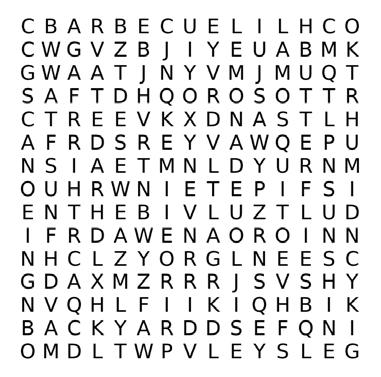
Backyard
Barbecue
Butterflies
Canoeing
Festivals
Fireworks
Gardening
Hayride
Strawberries Sunshine Watermelon