3

3
by Allie Zagroba, Ridellion Editor

River Dell students are trading the familiar hallways and classrooms for cathedrals, glaciers, neon skylines, and black sand beaches as international trips become a growing part of the River Dell experience. Through the school’s recent trips to Spain and Iceland, and an upcoming spring break in Japan, students are discovering that learning is about more than just lessons in a classroom. It is about experiencing new places, cultures, and challenges alongside their friends.
For many students, the trip to Spain marked their first time traveling internationally without their parents, which added a layer of independence that made the experience feel both exciting and overwhelming at first. Over the course of two weeks, split between Seville and Cadiz, students balanced structured Spanish classes with the freedom to explore cities
bursting with rich history, culture, and energy.
Mira Yilmaz, a River Dell student who went on the trip, described the experience as “a completely different experience from a typical day school trip,” explaining that it allowed her to expand her understanding of Hispanic culture while also forming and strengthening friendships in a way that would not have been possible in a classroom setting. Her sense of growth extended beyond academics, showing up in the way students adapted to new environments and to each other.
Seville offered a strong connection to history, with its architecture and atmosphere creating a setting that often felt almost unreal. Watching the sunset from Las Setas, for example, transformed the city into something that felt both timeless and vivid. For Sabrina Haskell, the cathedral stood out as one of the
most memorable parts of the trip, not only because of its beauty but because of the experience she shared there with her friends. “My friends and I signed our names on the wall of the cathedral, which was so much fun, and the view was beautiful,” she recalled. The Flamenco performance on their final evening added another layer to their cultural learning experience, turning something they had previously studied in school back home into something immediate and expressive.
Cadiz, in contrast, offered a completely different atmosphere, one that many students ultimately preferred because of its relaxed, coastal environment and the sense of freedom it allowed. Without the same intensity of sightseeing, students were able to spend more time simply enjoying where they were, whether that meant walking through town in the
evening, sharing meals, or spending time by the water. Mira’s favorite moment captured that feeling perfectly, as she described the group going to a private beach where they paddle boarded, played volleyball, and spent time together in a way that felt effortless and unstructured. Sabrina also appreciated the independence, noting that students were allowed to go out in smaller groups at night, which made the experience feel more personal and less guided. She ultimately described Seville as ideal for those drawn to history, while Cadiz felt better suited for anyone who enjoys the beach and a slower pace.
Cultural differences became part of everyday life, sometimes in ways students had not anticipated. Siestas, for example, which had felt unfamiliar at first, quickly started to feel essential, especially given the combination of late nights and early mornings. Sabrina admitted that she had not thought much about them before the trip but came to appreciate how necessary they felt once she experienced them herself. At the same time, certain familiar places and things appeared in unexpected ways, as students noticed well known chains like McDonald’s and Starbucks in both cities, offering small reminders of home.
Food, however, was more unpredictable. The meals provided through the pro-
gram were not particularly popular, ultimately pushing students to explore local restaurants and try new dishes, which many felt added to the authenticity of the experience. What initially seemed like a drawback became an opportunity to engage more directly with the local culture and food.
The emotional side of the trip was just as significant as the cultural one. Being away from home proved more difficult than some students had expected, particularly in the first few days. Mira reflected that she had not realized how challenging it would feel to be so far from her parents, although that feeling gradually faded as she became more immersed in the experience. Language barriers, which initially caused concern, turned out to be less of an issue, as many locals spoke English and were welcoming and helpful.
Perhaps the most meaningful change took place within the group itself. What began as a collection of students who did not know each other particularly well gradually turned into a close, supportive community. Sabrina observed that by the end of the trip, everyone had grown more comfortable with each other, while Mira emphasized the lasting friendships that came out of the experience.
Even with such a positive experience, students reflected on small ways the trip could be improved, including
continued on page 4
by Ava Wittreich, Ridellion Editor

The River Dell Hawks competition cheer team closed out their season with an astounding perfect 8-0 season and claiming the division champs title this winter 2026 season. Combining tedious and bold choreography with physical strength and confidence, the competition cheer girls prove they are more than bows and ponytails, but powerful athletes. Securing the highest score at a few of their competi-
tions, the hawks walk out of their season victorious Competition cheer is an incredibly competitive varsity sport in the Big North with about 20 teams in surrounding high schools in different divisions. Each team has about 2 and a half minutes to showcase a high intensity performance, being judged on stunting, choreography, jumps, execution, building, technique, and overall routine flow. The River Dell
team begins practices in late 2025 for the winter season and tryouts are in the late fall for those looking to join this successful team. The girls share their successes beyond the mat, as they continue to coach and support the River Dell Cheer youth programs consistently throughout the school year to inspire the next generation of River Dell cheerleaders. From the first practice of the season, the Hawks set an ambitious standard for themselves. Long hours in the gym, countless repetitions of stunts and tumbling passes, and a relentless commitment to precision became the rhythm of their weeks. Every athlete contributed to building a routine that demanded both physical strength and mental toughness. As upperclassman athlete Delia Pfleging-Howes. put it, “It was great. A lot of hard work and many long hours went into
perfecting the routine. A lot of great teamwork and team bonding strengthened the group and made the team in general super strong.”
That sense of unity became the key factor to success in the season. Whether they were drilling choreography, pushing through conditioning, or supporting each other through tough practices, the Hawks built a culture where every athlete felt valued.
Team bonding nights, shared traditions, and the simple act of showing up for one another transformed the group into something more than a team: into a River Dell family.
On the mat, that connection showed their trust in bold stunts and group confidence in their competitors. Off the mat, they carried themselves with pride, sportsmanship, and the unmistakable energy that defines River Dell athletics. The girls supported each oth-
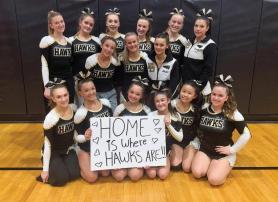
er despite multiple injured players and hardships the competitive sport brought. This season wasn’t just about scores or placements; it was about growth. The Hawks walked away stronger, closer, and more confident in what they can achieve together as 2025-26 Division champions. And with the foundation they’ve built, the future of River Dell competition cheer looks brighter than ever.
Audrey Cho Editor-in-Chief
Sophie Gang
Delilah Recio
Co Editors-in-Chief
Parnika Thota
Yuna Hiura
Sarah Chun
News Editors
Allie Zagroba
Ava Wittreich
Sports Editors
Giada Caputo
Maddie Krieger
Entertainment Editors
Tatum Leung
Seoyeon Kim
Michelle Kim
Op-Ed Editors
Hannah Yun
Emma Pulumbarit
Rida Desai
Features Editors
Copy Editor
Audrey Cho
Deborah Chun
Madison Rosabal
Michelle Kim
Kaileigh Taylor
Ava Wittreich
Sarah Chun
Lauren Morgner
Hope Arturi
Maddie Krieger
Delilah Recio
Samiya Bovell
Allie Zagroba
Natalie Vadakkan
Sophie Simonyan
Emma Pulumbarit
Email us at RDHSRidellion@ riverdell.org with an editorial idea or a response to something you’ve read.
by Emma Pulumbarit, Ridellion Editor

Source: Pngtree
Deep reds, bright blues, and vibrant greens glitter the dance floor just like iridescent colors scattering through a glass prism. There’s a giddy, gleeful atmosphere in the air, all students awash with a unifying gratefulness to be young, together, and full of life. Here, at the pinnacle experience of American high school life, prom night reigns as the most remarkable core memory for most. But recently, enthusiasm towards this event is waning with more students choosing to skip this dance. You heard that right- high schoolers in River Dell are opting not to attend one of America’s most glorified, romanticized milestones, which begs the question: is prom really worth it?
You may be wondering how anyone could pass up the chance to escape school, let loose, relieve stress, and go party. However, reality isn’t so picture-perfect; in fact, this social event can be an overwhelming experience for many due to a myriad of reasons. Anxious teenagers are scrambling to find a date with some even asking out those whom they have never once spoken to before. Maybe
some students are trying to live up to the social expectations of bringing a date just to say they had one, or maybe some would just love to maximize the full “prom experience.” Either way, no one can dispute the fact that these date-situations can get messy. It’s hard putting yourself out there to ask someone out, and it’s equally hard to reject that person’s vulnerability. Meanwhile, securing the date is just the first step. Students then have to worry about cheesy promposals, hanging out with their date (which may be awkward for some), body image in form-fitting attire, appearances, and prom-etiquette they aren’t yet familiar with. Furthermore, if one friend backs out from the dance, it can seem as if the rest of the friend group follows right behind them. Suddenly, you - who were ready to seize the night and have some fun - begin second-guessing whether you should attend at all since your buddies decided to skip. Not to mention, dancing for the first time with a hundred other teens can feel awkward, unfamiliar, and embarrassing, especially without the support of your friends by your
side. Ultimately, there is an enormous, looming amount of social pressure and emotional stress that many students end up dwelling on, contributing to the decision to skip prom. And it’s no wonder why so many kids are choosing not to attend. Above all these worries comes the overarching dealbreaker: the cost. It’s not just the $160 and $200 entry tickets (for junior and senior prom, respectively) that make the dance unattractive, but also the expenses that compile from buying gowns, getting hair done, tailoring suits, and shopping for shoes. Especially for those who aren’t that interested in dancing, it can seem like prom is simply a more expensive way to sit at a fancier dinner table instead of eating in the school cafeteria. Of course, there are those who just aren’t interested in the dance simply because it isn’t their cup of tea. Since these social gatherings can be extremely overstimulating, it makes sense that students feel drained by them. For those who don’t get swept up into feelings of FOMO and are fulfilled by making memories with their close inner circle on their own terms, an expensive party would not be their top priority. With these pressures, expenses, and valid preferences, it’s easy to understand why some students decide prom isn’t for them. Of course, despite all the negative aspects of the dance, there is a reason why many students have still signed up: prom is about making memories. After years of keeping up with academic stress while trying to balance our personal lives, this dance offers a chance to celebrate our hard work, our effort, and how much we have grown over
the years. It’s a classic part of the American high school experience and represents a huge milestone in our lives. Not to mention, it’s an opportunity to have fun with our friends and classmates. Just picture it: you and your friends getting dressed, feeling glamorous, taking photos, dancing with everyone, laughing, and creating memories you’ll talk about long after graduation. Moments like these don’t happen very often, and prom can serve as a reminder to live life presently and appreciate the time we have together. It’s also a chance to strengthen friendships, feel special for a night, and even talk to people you may never have had the chance to connect with before. For many students, prom is a privilege not everyone has the opportunity to experience, which gives us even more reason to seize the chance to attend and be appreciative.
All in all, prom may not be the right choice for everyone, and that’s completely okay. Skipping it doesn’t mean you’re missing out on your entire high school experience, nor does it mean you won’t have other chances to create meaningful memories with your friends. There are other ways to celebrate this time in your life. But, for those who do choose to go, prom can be a fun and meaningful way to mark this incredible milestone with your peers. Whether students attend prom or not, what truly matters is spending time with the people who make high school memorable. And if some part of you, deep down, really wants to go, then maybe it’s worth grabbing that opportunity with both hands and making the most of the night.
by Sophie Simonyan, Ridellion Reporter
As the second semester continues to take students at River Dell by storm, juniors are feeling the pressure more than ever. From guidance meetings and teacher recommendations to upcoming AP exams and the talk of prom circulating through the halls, the futures of these students are becoming increasingly difficult to ignore. For many juniors, the pressure begins in the classroom. Grades suddenly feel more important, teachers raise expectations, workload increases, and students discover that balancing school, extracurriculars, and social life comes with new challenges that demand the utmost effort and dedication. At the beginning of February, students across River Dell completed their midterms, bringing a sense of relief for most underclassmen. However, juniors knew that those exams were only the beginning, and that beyond the midterms awaited AP exams, the SAT/ACT, and
the NJGPA, a mandatory standardized test required for graduation in the state of New Jersey.
This year, students also continue to explore possible colleges and career choices. Early January marked the beginning of individual junior meetings for students and their parents/guardians. These meetings were primarily focused on extracurricular involvement, the SAT/ACT, electives for senior year, and plans for further education. Sophia Michels, an 11th grader at RDHS, said she felt “excited” to find so many good options for her major. “It helped me look into specific schools and narrow down my options for college,” she explained, a summary of the general impression that these conferences left on students.
Delilah Recio, who’s also in the middle of her junior year, reflects on her meeting and how she’s feeling after reaching the midyear checkpoint.
“Already thinking about college applications and standardized tests is really scary,” she confessed. “I mean my classes aren’t getting any easier; balancing my extracurriculars and the workload from all my classes has been the toughest challenge. I just need to get through the day and do the best I can.”

On the bright side of this rocky year, many expressed their excitement about junior prom and how they enjoyed the opportunity for “taking pictures and having a fun night with all my friends without having to worry about school or homework,” said one student who wished to remain anonymous. Others voiced similar opinions, proving further that while most of junior year translates to endless studying and stress, beyond that lie festiv-
ities such as prom, which feel like a social reward to most students, as they can interact, wind down, and make endless memories that count for the real high school experience. Once again, these are juniors, but not for long. Many before them already faced it, many are living it now, and countless others will step into it in the years ahead. But what really counts is the lessons they take out of it, the growth they experience, and the impact they make. Class of 2027, juniors today, seniors tomorrow, graduates forever after. Where’d all the time go?
by Delilah Recio, Ridellion Editor
Two main topics of conversation for students around this time would be:
“Have you signed up to take the SAT? When are you taking the ACT or SAT?” This can become very stressful for students in the spring, especially for juniors that want to achieve a high score before the fall when college applications open. With many colleges now being test-optional, there’s also that question as to whether taking these standardized exams is worth the expense and the stress. Many students tend to lean toward taking the SAT than the ACT because of their own preferences and strengths, but some only pick it because of their lack of knowledge of the ACT, so they choose the more “familiar” exam. If we must take the risk of taking these tests, wouldn’t you want to know the inside scoop of each one, helping you weigh the pros and cons between the two?
Luckily, I’m in the middle of this daunting time where college fairs, counselor meetings, and requirements for next year are approaching, and I know just how to help!
Before I dissect both exams into further detail, I cannot stress this enough: you are doing the best you can. Standardized tests can easily become the pinnacle of a student’s anxiety and stress levels, on top of their daily workload and extracurriculars. Not being much of a test taker myself, when I first heard about the SAT, all I wanted to do was avoid it for as long as I could and maybe get through by not taking it at all. I didn’t want to get pressured by my parents to take it several times or get a crazy high score, which was also one of my main concerns; there
are many students who have to deal with parental expectations to achieve the highest score, thereby getting them into top-notch universities across the country. Students must remember that admission officers also take into consideration
the entire profile of each applicant; they look at GPA, the classes they took in high school, letters of recommendation from teachers and mentors (if they accept them- some state schools don’t!), extracurriculars, and personal essays.
The purpose of both exams
their junior and senior year (even sophomores who take the PSAT and want to plan ahead) will receive support from their counselors, so that they have the confidence to submit any standardized test scores to their college or colleges of choice.
hour and 5-minute exam; with science or writing it’s an additional 40 minutes. Adding both a science and writing section for the ACT would take three hours and 25 minutes (what a way to spend your Saturday, am I right?)

is to evaluate students’ skills in reading and mathematics, giving admissions officers another way to view an application that will help them determine whether they can handle the workload at their university and if they should be considered for merit-based scholarships. College admission officers and high school counselors recommend that students only submit their test scores to schools if it strengthens their application; one way to determine that is if students research the average SAT or ACT scores for the school they’re applying to and see if their scores match up. If they do, they should submit them! If their scores are lower than the average, then they might consider the fact that maybe it could hurt the chances of getting in rather than helping it. Regardless, students in
The SAT and ACT each cost $68 to register, with an additional $25 if the student chooses to take the optional writing section for the ACT. Juniors and seniors in the U.S. with demonstrated financial need can receive fee waivers for up to two attempts on each exam. One key difference between the SAT and ACT is that the SAT is completely taken on computer, while students have the option to either take the ACT online or on paper. According to The Princeton Review, “the SAT is a multiple-choice, computer-based test created and administered by College Board,” (you probably recognize College Board if you’re taking AP classes or plan to take them next year).
The SAT is a two hour and 14-minute test, with sections: Evidence-Based Reading & Writing and Math. The ACT is a two-
by Lauren Morgner, Ridellion Reporter

The “slop bowl” phenomenon is everywhere, and it didn’t happen by accident. Cava, Chipotle, Chopt, Sweetgreen, Just Salad, Dig, Naya, Honeygrow. These are just a few restaurants where customers can acquire a flavorful bowl of mush. What’s the appeal in a meal that looks like food a mama bird regurgitates to feed her young? The “slop bowl” is the term for semi-casual chain restaurants serving bowls made up of mixed ingredients. This food trend
is deeply entrenched in corporate culture, but it has also invaded the palates of suburban teenagers. The bowl is the new “It Girl.” A number one meal with fries and a shake is practically ancient these past few years.
The “King” of the Slop, Chipotle, burst onto the scene in 1993 with the revolutionary burrito bowl, a concept entrepreneurs have gone on to copy and paste all
over the country to chase that same “slopularity”. The assembly-line-like customization of fresh ingredients is enticing for those looking for quick service and food that feels more premium than McDonald’s. The popularity of the “slop bowl” coincides with the wellness boom that has invaded every corner of social media. These “slop bowl” restaurants offer a variety of flavors: Mexican, Greek, Mediterranean, Middle Eastern,
Indian, etc. but, they all follow a similar format: protein + grains + greens + sauce. It looks healthy and tastes fresh, but you’re ultimately consuming 1,200 calories.
Emma Beddington wrote a bitter op-ed for The Guardian about her revulsion for the “bowlification” of fast casual dining. She argues that these restaurants are gentrifying traditional dishes and ridding them of their true spices. Most of her criticism was aimed at how the bowls provide “joyless refueling”, which poses the question: do consumers want food that gives them an experience, or do they want food that just provides the necessary sustenance? Is bowlification truly a new concept though? We’ve seen it on social media before via the “smoothie bowl,” the “yogurt bowl,” Lizzo’s viral “nature cereal,” etc. Bowls have been used dating back 18,000 years to Mepsotamia, Greece, and China. Bowls were important in ancient homes, kitch-
There are three sections to the ACT- English, Math, and Reading-with two optional sections of writing and science. For the SAT, the highest score one could obtain would be 1600, while the highest one could obtain for the ACT would be 36. It should also be noted that if students choose to take the science section of the ACT, it will not be included in their composite score (which is an average score ranging from 1-36 of your English, Math and Reading scores).
Another key difference between the two exams is that the ACT focuses more on curriculum taught in high school, which explains having a science portion for students to take who excel in subject courses in school. Not to say that a student like that will not do as well on the SAT, but it’s more geared toward problem-solving and critical thinking questions, with a close-up on reading comprehension and math. This can help students narrow down as to which exam would be better for them to take.
A “superscore” allows students to take their high-
est score from each section of the SAT or ACT and combine top scores to send to colleges. This is where taking the SAT or ACT more than once is beneficial; a lower score on one section won’t necessarily drag down a higher score. However, not all colleges and universities accept “superscoring,” so it’s important that students conduct their own research when they start to narrow down colleges.
To prepare, some students take classes from local businesses or tutors after school or on the weekends. Some of these include Huntington Learning Center, C2 Education, Fusion Academy, Prestige, and Mathnasium. There are also free online videos or websites like Khan Academy or even on YouTube that can help someone who plans to self-study for the SAT/ ACT. Another way to study would be to get Reading/ Writing and Math physical workbooks to study wherever you go. Personally, I plan to self-study, and I’ve benefited from using Barron’s 6 SAT Practice Tests booklet and The Princeton Review’s Reading/Writing and Math SAT Workbooks. Additionally, another way to better prepare for the SAT would be to utilize College Board’s practice tests; they test you in the same format as the digital SAT, and it can familiarize students with tools and techniques to utilize on test day. This can be a daunting task to sign up for these tests but go in with a positive attitude and know that you’re doing the best you can. I wish students the best of luck in the midst of testing season, and I hope to see your name on the SAT/ ACT exam list this spring!
ens, and shrines. The Chinese evolved ceramic bowls into its own art form. Mediterranean cultures have bowls as symbols displayed in funerals and celebrations. In the Middle Ages of Europe, large wooden bowls were used in meals to eat “family style”; during the Renaissance, these dishes were a cultural indicator of wealth and prestige. It’s no wonder they’re trending in the Modern Era; they’re the perfect addition to your Instagram feed. It’s a way to let everyone know not only is your diet healthier than theirs, but your food is also prettier. There are real psychological factors that make food in bowls more appealing. In one study published in The Flavor Journal, round shapes and warm-toned bowls were linked to enhanced perceptions of pleasantness and fruitfulness. Everything about a dish served in a bowl exudes comfort and safety.
Now in 2026, the “Slop Bowl economy” has hit a
rough patch. The masses are realizing that these $20 bowls might not be the best bang for their buck. Price hikes, inadequate portions, and market oversaturation have led to slumping sales. Will we live to see the extinction of the plate or the fall off of the bowl? Only time will tell.
Lauren Morgner’s Cava Order: Greens and Grains bowl with romaine and brown rice. Regular Hummus, Crazy feta, and tzatziki. Spicy lamb meatballs. Corn, cucumber, broccoli, pickled onion. Garlic dressing.
Lauren Morgner’s Chipotle Order: Burrito bowl with brown rice barbacoa, no beans and queso. Corn salsa, Pico de gallo, cheese, romaine, guacamole.
Lauren Morgner’s Sweet Green Order: Chopped romaine, wild rice, carrot, cucumber, apple, spicy broccoli, pickled onion, garlic breadcrumbs, roasted chicken, crumbled bacon, green goddess ranch, umami seasoning.
by Audrey Cho, Ridellion Editor

Throughout my entire academic career, I have struggled at times with drumming up enough motivation to finish that paper, study for that test, or brainstorm for that project. It’s never easy—for any of us—to find the strength to keep pushing ourselves academically, especially when we’re already more than halfway through the school year.
I had heard rumors that this lack of motivation during the spring semester would increase greatly once I became a senior, but truly nothing could prepare me for the slothfulness, for lack of better words, that I would feel upon the beginning of January.
I have always been a hard worker in school. Ever since my freshman year, I have never had trouble getting
assignments in and making sure I’m prepared for tests. What I have been feeling recently, though, isn’t caused by a lack of interest in my studies. I’m still as interested as ever in chemistry, literature, and government. What I — and so many of my classmates — have stopped taking interest in is much simpler than the content of our classes itself: we have stopped taking interest in our grades. Personally, I think the biggest cause of all our collective senioritis is the fact that many of us are already committed to college. For those of us who are not, well, second semester senior grades simply don’t matter very much, whether you’re committed to college or not. Even for Regular Decision admissions, which typically
come out late March through early April, students don’t have to turn in any grades from their second semester of this school year until after they’ve been admitted. The fortunate truth is that second semester senior grades aren’t important at all. So why do they even matter? Who says that we seniors still have to try to earn A’s now that we’re on the final stretch of our secondary academic career? The unfortunate truth is that even though we don’t have to continue to perform well in our classes, we should. After all, it would be a shame if after all of this hard work we’ve all done during the last four years, we let go of our standards for ourselves. And I’m not talking A’s here; I’m talking about anything within the A-B range. However, I
do believe that we all owe it to ourselves to keep going— to continue our academic journeys as best we can, even if this academic journey is about to end for us seniors.
I believe that however we’ve been doing our entire high school years, we should continue to keep that standard up for ourselves. If we’ve had some bad grades here and there during our freshman, sophomore, and junior years, then maybe this is our semester: the final chance for redemption. There’s something beautiful about finishing strong, even if it currently feels like our performance doesn’t matter. Here are the tips I have been using for myself that I believe will help us all finish strong before that final month of pure fun in June, when we can allow ourselves to completely relax and enjoy each other’s company before we all go our separate ways. Join me in battling senioritis before it’s too late.
Pace yourself. My biggest piece of advice is the rule I’ve been following myself for all four years of high school. Be kind to yourself, and if you have five tests in one day, let yourself slip a little bit. Even though you only have one semester left as a senior, it’s still a marathon, not a sprint. Don’t pull all-nighters and take good care of yourself. If you have a lot going on, you shouldn’t be too hard on yourself, but if there isn’t, you shouldn’t be too easy on yourself, either. For example, toward the end of January, I felt like I wasn’t even in school anymore because of the shocking lack of work I had. But rather than basking in my newfound
by Lauren Morgner, Ridellion Reporter
Over three decades ago the O.J. Simpson case focused the spotlight on the correlation between male athletes and violence against women. In the last year, rampant headlines acknowledged male athletes to be disproportionately linked to violence against women. A significant link exists between contact sports (football, basketball, hockey, etc.) and sexual and/or physical aggression. The National Institutes of Health (NIH) suggests this correlation is linked to a culture of toxic masculinity, underreported acts of violence on college campuses, lackadaisical punishment, and false claims.
During the 2025 NFL season, several high-profile NFL players faced allegations, arrests, and lawsuits regarding violence against women. The NFL players were Rashee Rice (KC), James Pearce Jr. (ATL), Christian Barmore (NE), Quinshon Judkins (CLE), Xavier Worthy (KC), Tyreek Hill (MIA), Stephon Diggs (NE) and Justin Tucker (BAL).
Rashee Rice’s former partner alleged years of domestic abuse. His teammates responded in an outcry to the NFL to “free him” as he served a six-game NFL suspension to start the 2025 season. New England teammates Barmore and Diggs were in the headlines regarding domestic violence charges including assault and battery. As of today, both players have not received formal NFL suspension; they went on to play in the Super Bowl, ultimately conceding defeat to the Seatle Seahawks. Early into the 2025 NFL season, Baltimore Raven’s kicker Justin Tucker was accused of sexual misconduct by 16 massage therapists in the Baltimore area. Although Tucker—who holds the NFL record for the longest Field goal (66 yd.)— denied the allegations, he received a 10-game suspension and was eventually released by the Ravens. Tucker is not the first NFL player to have allegedly violated a massage therapist; such allegations have been seen before in the
league most notably by quarterbacks Deshaun Watson and Brett Favre.
The NFL’s code of conduct generally mandates a six-game suspension for domestic violence. In January 2026, the league claimed it would be working on toughening standards for domestic violence cases. Critics claim that accused professional athletes and even those who were prosecuted for sexual/ domestic assault are often given preferential treatment by police, judges, and League leaders, asserting the NFL fails to suspend players on a consistent basis, and that these players do not lose their lucrative endorsement deals and contracts. The Philadelphia Eagles have a strict, firm policy against drafting or scouting players with a history of violence against women. NFL players are huge role models for young boys, and inconsistent punishment may perpetuate the cycle of male aggression and violence against women by showing these children this is something the world accepts.
freedom, I decided to look out for the future me by getting ahead. I studied for tests that felt like they were years away, and I even asked some teachers about what would be going on during the next few weeks so that I could get a head start. Pacing yourself is one of the keys to getting through the second semester of senior year without experiencing extreme burnout, one of the most common symptoms of senioritis.
Still, nothing beats good old coffee as a method for combatting senioritis. “I drink a lot of caffeine,” said my friend, who wishes to remain anonymous, when I asked her how she dealt with difficult days as a senior. “Like, a lot.”
She also admitted that part of the reason she keeps her grades up still, even though she’s now committed to college, is because her parents get mad at her if her grades are bad — something most of us seniors can relate to.
Finally, nothing motivates people as well as the reward system does, which is why it’s so important to look ahead into the future as we wind down our high school years. To stay motivated, it’s helpful to think about some of the fun things coming up. Once June hits, finals and AP exams will be over, and we’ll even get to turn in our computers. After that, we only have fun things ahead: senior field trips, prom, after-prom, and graduation. We only have a few months left of “real” school, which is why it’s important to stay focused for now. Working hard until the very end will make it all the more worthwhile.

Research from Middlesex University looked at 117 cases of NFL players arrested for domestic violence against women; only 21 players were convicted. In the summer of 2025, NHL Goaltender Carter Hart and four other hockey players were acquitted of sexual assault charges following trial in Ontario. All five players were cleared to sign contracts starting October 15, 2025, and play as early as December 1, 2025. Countless other players for the NHL have been accused of domestic and sexual violence. Like the NFL, they retained their contracts and even continued to play while under investigation for crim-
inal, sexual and domestic assault. The NHL is one of the only major sport leagues that doesn’t have a sexual and domestic violence policy. Machismo attitude entrenched in professional male leagues can create a system that tolerates violence against women. 99% of NFL players will have developed CTE—brain trauma that leads to increased violence—but by college 91% of football players already have it. Coaches and Leagues invest too much into the players to risk their careers over cases of violence or other misconduct, leading them to invoke excessive protection.
by Samiya Bovell, Ridellion Reporter
We’ve all been there, losing hours scrolling on our favorite social media platform, but have you ever wondered why? As various lawsuits pile up against TikTok, Instagram, Snapchat, and YouTube, now known as the “Social Media Addiction Trials,” the country is asking whether these apps are intentionally engineered to keep users hooked.
The bellwether case (trial that sets a precedent for others) in Los Angeles centers on allegations from a 20-year-old woman (referred to as KGM) and her mother, who maintain that social media platforms were deliberately designed to be addictive, contributing to KGM’s anxiety, depression, and body image struggles. Meta and YouTube deny the accusations. Meta argues that KGM’s difficult upbringing caused her mental health issues, while YouTube insists it is an entertainment network, not a social platform, and that KGM barely used the features she claims are addictive.
Although Snapchat and TikTok settled before the trial began, they remain defendants in other cases. These companies, along with Meta and YouTube, argue that no conclusive evidence links social media use to mental health problems or addiction. Meta also faces a separate lawsuit in New Mexico accusing the company of enabling sexual exploitation on its platforms.
For years, social media companies have relied on Section 230 of the Communications Decency Act of 1996, which protects platforms from liability for user-posted content. Now, however, they are being

challenged not for what users post, but for design choices —like infinite scrolling, autoplay, and beauty filters — that plaintiffs argue are engineered to maximize screen time and harm mental health.
As the bellwether case, its outcome will guide thousands of similar lawsuits across the country. If KGM and other plaintiffs lose, social media companies may avoid accountability and continue using addictive formats. If they win, platforms could face billions of dollars in damages and be forced to redesign their apps. KGM’s case may be harder due to her complicated upbringing, and the jury could find one company liable while clearing another because YouTube and Meta face slightly different allegations.
Later in June, one of hundreds of lawsuits filed by school districts is scheduled to go to trial, raising similar claims about the harmful design of social media platforms. In total, around 250 school districts and 1,600 individual plaintiffs are involved in the broader proceedings. The situation echoes the tobacco lawsuits of the 1990s, when companies publicly denied the addictiveness and dangers of their products despite knowing the harm.
continued from page 1
better program meals and more time in Cadiz.
Despite those suggestions, the overall takeaway was clear, as many students left with a strong desire to continue traveling. Sabrina expressed interest in going anywhere, while Mira hoped to return to Spain or explore other parts of it in the future.
As Spain became a lasting memory, the trip to Japan carrie a different kind of excitement. For Jocelyn Kang, the trip represents an opportunity to experience a culture that feels entirely different from anything she has encountered before, from its traditions and history to its food and daily life.
She expected the cultural differences to be significant, especially when comparing Europe and Asia, and was particularly excited about visiting Tokyo, which she saw as a vibrant and fast moving city filled with endless opportunities to explore. The city’s reputation for advanced technology is another aspect that stands out to her, especially since she has heard about it from her dad.
At the same time, she recognizes that the trip came with its own challenges, including adjusting to a drastically different time zone and navigating shared living spaces without the comfort of home. Despite that, she believes the experience was made easier by traveling with friends and expected that the group dynamic would develop in a positive way.
More importantly, she feels that the trip deepened her interest in travel overall,
by Michelle Kim, Ridellion Editor
On February 3rd and 4th, River Dell students spent a total of eight hours hunched over their desks taking the reintroduced midterms. Students had to be tested on four core subjects: English; mathematics; science; and social studies. Many students had mixed opinions regarding these tests, so let’s dive into what students thought of the return of midterms.
Overall, students had different thoughts about the difficulty of midterms and how stressed they were about it. Some stated that the midterms weren’t as hard as they expected them to be. Others shared that they stressed about these exams, mainly because they wanted to do well.
But the question is, how did high school students study for the tests? Parthiv Arun, a sophomore, explained that he “redid all the worksheets in the OneNote and the problems on my math and chemistry tests.” Others reread their notes and worked on the
studies guides that they were given.

A class that helped some students prepare for the midterms was AP Language and Composition. Junior Jenna Yum says, “Since the format of the midterm was similar to how the actual AP test would be like, I think it gave my classmates and me a good preview of what to expect on the test day.”
When asked about the benefits of midterms, Arun suggests that the exams could “help [him] in the future if [he] has tests like that in college, and also it might help [him] retain the material [he] learned all year.”
But others argue the opposite. Some students believe that midterms are not at all beneficial. Yum shared that she believed midterms “added a lot of stress to my plate and probably many other people as well. Since students have things such as extracurriculars and jobs, it’s hard to find time to
with destinations like Italy and London already on her list for the future, each offering its own mix of history and culture that she hopes to experience firsthand.
While Spain centered on culture and connection, Iceland offered something entirely different, immersing students in a landscape defined by its scale and intensity. For Ashton Aller, one of the most memorable moments was hiking across one of the country’s largest glaciers, where the view from the top created a sense of openness and isolation that was unlike anything he had experienced before.
Gullfoss Waterfall stood out as another highlight, not only because of its size but because of the force of the water and the strength of the surrounding wind, which made the environment feel even more dramatic. The weather itself became a defining feature of the trip, as the constant wind made the cold more noticeable while also contributing to the overall atmosphere.
Despite the harsh conditions, visibility remained clear, allowing students to see mountains stretching far into the distance. Icelandic culture also left an impression, particularly the country’s belief in trolls, which added an unexpected and almost surreal element to the experience.
Ashton explained that the trip carried a strong sense of adventure, even during quieter moments such as long bus rides, which offered continuous views of the landscape and reinforced how
vast and remote the country felt.
Unlike some of the other trips, Ashton would not change anything about the experience, as he felt that every part of it contributed to its uniqueness. It also sparked an interest in exploring more of Europe in the future.
Across each of these trips, a common theme emerges, as students return with a greater sense of independence and a broader understanding of the world around them. They learn how to adapt to unfamiliar environments, navigate challenges, and build connections in situations that push them outside of their comfort zones.
At the same time, it is often the challenges themselves that make the experience so meaningful, whether that involves adjusting to a new time zone, dealing with unpredictable weather, or simply being far from home for the first time. Those moments, combined with the excitement of discovering new places, create experiences that stay with students long after the trip has ended.
From paddle boarding in Cadiz to standing on a glacier in Iceland to the hustle and bustle of Tokyo, these journeys shape the way students see the world and their place in it. As Mira put it, these experiences “opened up a whole new side of the world,” and for many River Dell students, that sense of discovery is only just beginning.
by Hope Arturi, Ridellion Reporter
study for four different midterms at the same time.”
Julien Cheung, a freshman, also agrees that midterms weren’t necessary. He argues that midterms also take up a lot of study time. He explains that students could’ve “spent their time more productively for more current tests.” Cheung also believed that midterms were negatively affecting class time. Because of midterms, it interrupts lessons and prevents teachers from giving tests and quizzes and moving onto the next topic.
Midterms caused a lot of commotion and mixed opinions, but it’s unknown for now whether the school will change these exams or how they affect students’ final grades.
During his final days in office, Governor Phil Murphy signed a bill banning cellphone-use during school hours in all public-school districts throughout the state. While supporters highlight benefits such as improved focus, engagement, and health, questions remain about how the new law will be implemented.
Murphy’s cellphone ban followed a recent ceremony held at Ramsey High School, which banned cellphones this school year. Staff have noticed a notable increase in students’ engagement and attention, as well as positive mental and emotional effects. Experts and parents alike have long voiced concerns about excessive screentime leading to anxiety and stress among students. The hope is that restricting cellphone access during the school day will alleviate some of these issues. Meanwhile, East Newark’s school district has operated phone-free for five years, with many students
expressing satisfaction with the policy.
Despite these observed benefits, significant concerns persist in the minds of students and guardians. Many parents and caretakers worry about losing contact with their children during the school day or about students with medical needs who rely on phone-based internet. Abrupt bans can additionally cause distress in students who are heavily accustomed to having constant access to social media and digital communication. There are also logistical questions about enforcement: Can all districts realistically keep all students off their phones all day? Schools like Ramsey use locking pouches, but challenges remain for students who leave campus during lunch or need to contact parents in emergencies. While the cellphone ban offers clear advantages, se eral details must be ironed out before it takes effect next school year.
by Audrey Cho, Ridellian Editor
It always starts around December: the hushed whispers in the hallways about who’s going with whom, what colors are trending, and what everyone’s after-prom plans are. From December onwards, prom becomes a quickly-descending event, and while it’s an exciting one, it can also be stressful. Here are some tips for preparing for one of River Dell’s biggest events of the year without getting too overwhelmed. For girls, getting a prom dress might be one of the most stressful aspects of preparing for prom, just because there’s so much to think about. Length, color, and style are all factors that play into the final dress decision. I collected information on where most people get their prom dresses, and I found that there’s no clear winner when it comes to a nearby or online store; people really get their prom dresses from all kinds of different places. If you’re not on a budget, you might find some gorgeous dresses at Gattinolli, a boutique in Ridgewood, or The Fig Leaf, a fan favorite in Maywood. Online options for highend dresses include Sherri Hill, Gattinolli, and Jovani. These dresses can be pretty expensive, though, so if you’re looking to save money on a dress you might only wear once, ordering from a cheaper online site might be a better and more economic option. For another school’s prom that I went to last year, for example, I got a satin dress from Princess Polly, one of my favorite online options. Last year, I also attended senior prom, and I got another dress from Princess Polly for that prom. Both dresses were
only about sixty dollars each! And, if you want to have the experience of looking in-store but don’t want to spend too much, one of my personal favorite hacks is looking in the bridesmaid’s dresses section. For my own junior prom last year, I got a gorgeous navy gown from the bridesmaid’s section of David’s Bridal, just off of Route 17, and it ended up being a great choice. And now for the real question: what kinds of dresses are trending this year? Last year, we saw a lot of primary colors, for both junior and senior prom. Red was a common option, and so was blue. For those looking to go more elegant than bold, champagne was a great option. But what are we seeing for this year? This season’s prom dresses are arguably the most unique and distinctive in their style: flowing, elegant dresses, without as much glitter and as many sequins as we saw last year. This year’s dresses are chic and streamlined, with more body and volume to them than last year’s “mermaid” looks. According to the Sherri Hill blog, the fashion forecast for the most popular looks is “romantic meets modern details.” This seems to be true for River Dell; when looking through the Senior Prom Dress Facebook page, I’ve seen a lot more classic dresses and lines than I’d seen last year, with more modern prints and playful accentuations. Speaking of prints, printed dresses are going to be making a comeback as well, and lots of bright colors are being shown — including yellow. Everyone has been talking about how popular yellow is going to be as a prom color for this year, and so far that
prediction appears to be true, at least based off of the dresses some of the seniors have been posting on the Facebook page. Yellow is definitely a statement, but when it’s styled right, it can be a really unique, bold look. When it comes to men’s suits and what they decide to wear, a lot of people go for the classic black tuxedo. Others, though, might pick suits that reflect who they are and how they want to present themselves. Boys sometimes try to match the color of their suit to the color of their date’s dress, too — a bold move that could easily go very wrong, depending on the color of the dress. A lot of boys last year, if they didn’t go with a traditional black tuxedo, decided to do a light blue suit or a patterned suit. This year, white is being predicted as one of the most popular colors for tuxedos. White could turn out to be the new black this year, say many prom blogs. The corsage options seem endless at first, but the different categories of corsages can really be broken down very simply into a few different choices to make: flowers, flower number, and ribbon color. Most girls get their corsages — and boys get their boutonnieres — from River Dell Flowers and Gifts on Kinderkamack Road, which offers a lot of options when it comes to all of these aspects of a corsage or boutonniere. In terms of flowers, there’s usually an option to get one flower, two flowers, or four flowers on the corsage. Personally, I got two last year for my junior prom, and in June I got four for the senior prom, and I preferred the two. Sometimes, carrying all that weight gets heavy when you’re dancing!

Source: Rampage
While most people go for roses, there are other options, like lilies, carnations, or orchids. A lot of prom couples opt to go and pick out their corsage and boutonniere together, but other times it’s just easier to get it on your own. It is common, however, for each person to pay for the other person’s flower. In general, corsages just slip right on your wrist, but boutonnieres have to be pinned on carefully. Sometimes the girl helps pin it on, but, speaking from experience, be careful not to stab your date with the pin by accident!
When it comes to figuring out what you want to look like on your special evening of celebration, a lot of girls think about self-tan. While self-tanning is a good option, it’s safest when you’ve had prior experience doing it. When you’re doing it for yourself for the first time, it’s easy to mess up and tan yourself unevenly, which never looks quite right.
Many prom-goers are more excited about what comes after prom than prom itself: Seaside Heights. Going to Seaside every year after prom for the weekend is a long-time River Dell
tradition beloved by most of the students. While it’s a really fun trip, there are other options for places to go after prom. After another prom I went to, I opted for a sleepover with a few close friends instead of driving all the way down the shore for an entire weekend. And after senior prom, my date decided to drive off to a cabin in the woods with some of his friends for a few nights. And, of course, if you’re tired and need some introverted recharging time, there’s nothing wrong with just going home. You already had a great time at the prom; why not end it on a high note? And now for the question you’ve probably been reading for this whole time: what should you do about getting a date? That’s a question I can’t entirely answer. Sometimes it’s really hard to find a date, whether you want to go just as friends or something more, which is why going to the prom by yourself is totally okay. The night isn’t about being on a date; it’s about celebrating this chapter of your life with the people you love most.
by Ava Wittreich, Ridellion Editor
This year, several River Dell High School students are transforming their passions into action through several new clubs that combine community and purpose to the school. From aspiring healthcare professionals to student-athlete advocates, these groups demonstrate what it means to turn interests into impact.
One of the standout additions is the Future Doctors and Nurses’ Club, aimed at students who are passionate about healthcare careers and want to better prepare themselves for college. The club’s founder, Sam Intorre, explained, “I started the Future Doctors and Nurses Club to create opportunities for students interested in healthcare to learn more about the field and connect with professionals.”
Since the club began at the beginning of this year, opportunities to gain experience and certifications in the medical world, such as CPR training. Moreover, they
have provided real life insight through talks with various medical professionals as guest speakers,”which can offer students a chance to know the realities of a job in healthcare. One of their most recent guest speakers was Dr. Zhou, an anesthesiologist from Holy Name Medical Center, who talked about his college journey from Penn State to New York-Presbyterian Medical Center and how he was able to get through the challenges of Med School. This is crucial to students especially with popularity in healthcare when deciding their path after high school, as these speakers can encourage students to delve into the healthcare path and provide connections in their field. The goal is to help students “gain real world skills” as well as giving “back to current healthcare workers by inviting guest speakers to share their experiences and inspire students.” The inspiration and connection the students have built from this
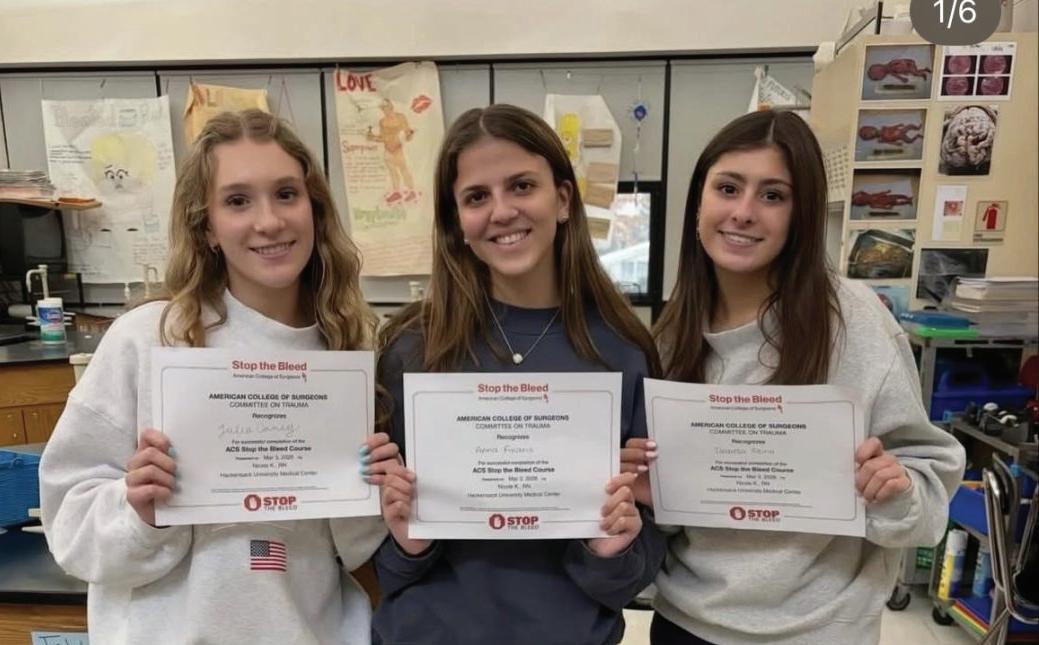
club in only a short amount of time demonstrates the power as well as resources one River Dell student possesses to make a change in the community and the lives of others. By connecting students to industry experts and hands-on experiences, the club provides a powerful bridge between classroom learning and career explora-
tion.
Another meaningful initiative gaining momentum at River Dell is the Morgan’s Message Chapter, part of a national organization devoted to destigmatizing mental health in athletics. Its founder, Kayleigh Windram shared, “I brought Morgan’s Message to River Dell so student athletes can
feel safe and supported.” As a multi-sport athlete and lacrosse commit, she is dedicated to supporting her teammates and other fellow athletes encouraging that “being a student athlete comes with many challenges, and it’s important to remind ourselves that we are just human.” continued on page 7
by Madeleine Krieger, Ridellion Reporter
As someone unfamiliar with the story of Hamnet, I had few expectations of what I thought this film would look like: Aside from a few main plot points, I’ll concede that I knew very little about the film or its inspiring story. However, after watching it, it became evident that any expectations I had would have proved insignificant compared to the visual masterpiece I experienced. Hamnet was unlike anything I’d ever seen before and is, without a doubt, a must-see for the literary lovers and the Shakespeare superfans.
Directed by Chloe Zhao, Hamnet explores the life of literary icon, William Shakespeare, and offers a theoretical explanation as to why Shakespeare was inspired to compose his incomparable Hamlet.
While this story was most recently translated by Zhao, it was first brought to life in the 2020 historical fiction novel Hamnet by Maggie O’Farrell. In the novel, O’Farrell explains, through the perspective of Shakespeare’s wife Agnes, a proposed period of Shakespeare’s life and how it inspired the writing of Hamlet.
While the book debuted nearly six years ago, the motion picture was re-
leased in November of 2025 and has since gained the attention of many critics. Hamnet was nominated for six Golden Globes (won two) and eight Oscars. In the award-show concentration, Hamnet is typically praised for its visual artistry and aesthetic, something that really stood out to me in this film.
Much of Hamnet takes place in the English countryside, a destination that provides a lot of nature and scenic landscapes. While a lot of the story is set in the Shakespeare family home, a constant that Zhao creates is the presence of the countryside and its enchanting forestry. Agnes, the central woman character in this story, is said to have come from a family rooted in magic, specifically, a mother better known as a healer and a “witch”. Consequently, Agnes possesses those same healing and “witchy” qualities as her mother and takes to the forest often to connect herself with her spiritual roots. Not only is the landscape itself breathtaking, but Zhao often uses camera shots and scene choices that emphasize the movement in the surrounding nature: she captures the ebb and flow of breezes, the tension before storms, the serenity from chirping birds and sunlight. Often, these
moments foreshadow plot points as well – the use of storms to symbolize tension rising is one of the most prevalent examples of this technique. Zhao’s ability to demonstrate the beauty of the forest contributed to the film’s overall aesthetic and artistic impact. The awe-inspiring scenes in the forest are a product of the care that went into the making of this film, and the curated imagery she presents is just one element that cements this film as a visual work of art.
Another aspect of Hamnet that seemed to take awards season by storm, was the sheer dramatic talents of this film’s cast. The film’s leading man, Paul Mescal, surely deserved his flowers as he delivered such poignant lines and a beautiful performance. But he was undoubtedly outshined by his female counterpart. Jessie Buckley plays Agnes in this film and is nothing short of a theatrical powerhouse. Agnes’s journey is incredibly nuanced, from the second she appears as a free-spirited daughter, to the minute the film ends with her as a tortured mother. I was first captivated by Buckley when she portrayed a young Agnes being disowned by her family after admitting to her illegitimate pregnancy with

-in her confession scene, Agnes is both hopeful at the news of having a child with her true love, and fearful for she knows her family won’t approve. Buckley’s ability to capture both emotions with such fullness was incredible. She exhibited no restraint both in this scene and its following moments: she cried hard, begged fervently, and wasn’t afraid to scream as loud as she could at one moment, then cower in fear the next. I would be remiss if I didn’t also mention the technical skill Buckley brought to the scene in which her son, Hamnet, passed away. Truly, I’ve never seen an actress perform so well, that I forgot the tragedy didn’t happen to her in real life. Buckley transcended artistry in her role as Agnes, rather, she exuded life and brought more emotion to this role than I could have ever imagined.
The other acting performance that stood out to me, was that of Jacobi Jupe, the 12-year-old actor who bravely portrayed Hamnet, the film’s namesake. At such a young age, it is rare that an actor would seem so experienced in tragedy. Jupe, however, dispelled this very claim. In his death scene, Jupe brought so much humanity to Hamnet, giving him the role of a devoted brother, dedicated to saving the soul of his twin sister. Jupe was able to let Hamnet look death in the eyes and accept it without fear, solely so that his sister wouldn’t have to. I’d be lying if I said I had dry eyes at any point during this scene. Even now, I’m still at a loss for words to describe just how incredible and other-worldly Jupe’s acting was. His talent is so new and his message as Hamnet was so strong: be brave and let love rule.
That same message was carried throughout the entirety of Hamnet and was the last aspect that made
me love this movie as much as I did. In Shakespeare’s life, he let love carry him through the most important moments in his development. My favorite part of the film was getting to experience the growth in his and Agnes’s love story. Specifically, I adored how Zhao incorporated Shakespeare’s writing of Romeo and Juliet and how it was inspired by him meeting Agnes for the first time. Getting to see Shakespeare actively write the age-old tale about true love directly after he met his own true love, was an amazing detail. More, Shakespeare’s love for Hamnet is what ultimately moved him to write Hamlet; with so much grief and nowhere to place it, he translated his love and loss into creativity and was able to commemorate his fatherly love in his own way: through writing. Shakespeare relived the tragedy of losing his son when he wrote Hamlet but writing it allowed him to show his son’s story and his bravery to the world, and to prove that tragedy can be beautiful.
Overall, Hamnet gained five stars in my eyes. It is a beautiful story filled with artistry and care, and Zhao was able to capture it so gracefully. The acting from each character truly carried this film from beginning to end, and the cast’s spectacular performances were wildly inspired. This film explained what it truly means to love someone or something. True love involves risk taking, sacrifice, and understanding that love is not linear and is always complicated. Most of all, Hamnet offered a sentiment that is so important to remember in today’s troubled world: love, no matter how scary or risky it may be, is life’s greatest gift.
continued from page 6 Whether advocating for mental health awareness and care, exploring medical careers, or supporting global
In Morgan’s Message, the club hosts fundraisers and dedication games in a variety of sports. Recently, they have hosted a field hockey and volleyball game where athletes wore bows to represent MM. In doing so, the athletes show dedication to Morgan’s Message, reminding themselves and each other that they are not alone in mental health struggles, and that help is always available when needed. To continue the initiative, she encourages peers to be sure to look out for the many more events planned in the spring to help River Dell prioritize mental health in athletes! Through these efforts, students are not only raising awareness about mental health but also building an environment where empathy and understanding take precedence. Meanwhile, River Dell TEEEM (The Empathy, Equality, and Entrepreneurship Mission) continues
to grow its influence as it takes on its first year as an official River Dell club. The club empowers students to take on global humanitarian challenges through entrepreneurship and leadership development. By running fundraisers and awareness campaigns, members support the Nayaka project of education of children in Uganda, while learning essential business and teamwork skills. Most recently, student representatives Adelle Frost, Kailyn Murray-McCormick, Catherine Pollinger and Brooke Marchetti supported the pod at the TEEEM midyear workshop, sharing outcomes and connecting with other schools. Moreover, Maya Naltner, Amaia Iturrate and Delia Pfleging-Howes impressed the judges and won hundreds of dollars in support in the Shark Tank project for the pending fundraiser in May, continuing to support the cause and represent River Dell in a pos-
itive way. Beyond the couple thousands of dollars sent to support the education of children of Uganda, River Dell TEEEM has begun a new effort to connect more directly to the peers themselves. They have begun to zoom at 7:00 AM weekly with a Nayaka classroom to teach peers about businesses and entrepreneurship, skills that can highly benefit the underprivileged society while simultaneously providing culture immersion, teaching opportunity and unlikely friendships for the American students at River Dell. This club has made in impact in the lives of River Dell students and Ugandan students while also learning real-life skills and immersing in a job simulation through efforts. Together, these clubs reflect the best of River Dell’s student spirit: motivated individuals who see a need, take initiative, and inspire their peers to make a difference.

causes, these new organizations show that passion at River Dell goes hand in hand with purpose.
by Deborah Chun, Ridellion Reporter
Donna Tartt’s Pulitzer Prize winning novel The Goldfinch follows the unfortunate life of Theodore Decker from adolescence to adulthood in four arcs: “The Tragedy,” “The Barbours,” “Las Vegas,” and “New York.”
“The Tragedy” shadows thirteen-year-old Theodore after his suspension from school as the tension between him and his mother become palpable and bubbling. The duo is on their way to a parent-administration conference but take shelter at the Metropolitan Museum of Art from the pouring rain. A domestic
terrorist bombs the entrance of the building, instantly killing his mother with the flying debris and knocking him unconscious. He accidentally steals Carel Fabritius’ painting “The Goldfinch” and navigates the way back home in all the debris and blood of other museum visitors.
“The Barbours” follows Theodore as he is taken in by the wealthy Barbour household, while simultaneously struggling with a burning question: Should he return the painting back? Navigating a new existence without the presence of his mother, he tentatively cultivates a
connection with the family and Hobie, a nurturing and gentle father figure who teaches Theo woodworking and antique restoration. But as he is slowly picking up the pieces of his life under the Barbours’ care, he is suddenly whisked away to the mineral emptiness of Las Vegas by his dead-beat dad.
“Las Vegas” describes Theodore’s high school years: living with his gambling-addicted father and Xandra, a sultry and cynical cocktail waitress; overdosing on various drugs; drinking himself into a coma. He develops an obsession with
the captivating painting, tying the trauma of losing his mother to the object in the unfamiliar desert. He also forms a rapid and intense bond with Boris, a mentally ill teenager who comes from many cultures.
“New York” brings Theodore back to the bustling city, as he finds work as Hobie’s partner in the antique-restoration shop, dabbling in selling forgeries and clinging to his talisman — “The Goldfinch”. He is drawn down a slippery slope to the criminal underworld.
Overall, this is a harrowing coming-of-age literary
by Deborah Chun, Ridellion Reporter
As the saying “April showers bring May flowers” succinctly conveys, spring is the season for new beginnings, from icy adversities to fresh starts. With the remnants of winter melting and budding blossoms to signal the arrival of a new warm season, here are some books that embody spring!
The Twilight Garden by Sara Nisha Adams: In a small, quaint town in London, Winston and Bernice, two feuding neighbors, are brought together to resurrect the neglected community garden that connects their houses. The novel alternates between their present-day conflict and a past timeline in the 1970s and ‘80s, which describes the once vibrant and welcoming sanctuary cultivated by Maya and her family. The Twilight Garden is a beautiful and uplifting novel that explores community, chosen family, loneliness, and healing.


Flowerheart by Catherine Bakewell Bakewell’s Flowerheart is considered a cozy, cottagecore-style fantasy that fuses romance, self-reflection, mental health, and corruption. It is about Clara Lucas, a girl with wild, tempestuous magic that causes poisonous flowers to bloom. When her deadly powers endanger her father’s life, she makes a bargain with her estranged childhood best friend Xavier, once a sweetheart, but now an elusive and mysterious figure. However, when she discovers a deep-seated magical contamination in the queendom’s council, Clara must use her unruly magic to save her community. (You can find this in the school library!)
fiction novel on grief and obsession, with gritty and depressing descriptions. I picked up this book after reading and enjoying Donna Tartt’s Secret History (albeit lengthy and agonizing to read at points). Tartt has such a magical, captivating way with words that pulls you into the pages. However, I would give this book a three out of five stars, because while Tartt’s prose is exceptional, this book is wordy and bleak. Each page has an acerbic taste, that accumulates into a general distaste of the constant melancholy.

Sophie’s World by Jostein
Gaarder
A coming of age novel, where teenage girl Sophie Admunsen’s existence is upended by the arrival of mysterious letters asking fundamental questions like “Who are you?” and “Where does the world come from?”. She ruminates over these philosophical concepts in a quaint den in her garden, sometimes accompanied by her marmalade cat, Sherekan.

by Madison Rosabal, Ridellion Reporter
Bestselling author, Frieda McFadden’s #1 New York Times Best Selling Psychological Thriller, The Housemaid, hit theaters as a film adaptation last December. Directed by Paul Feig, The Housemaid is suspenseful and twisted, keeping viewers at the edge of their seats from beginning to end. Starring actors Sydney Sweeney and Amanda Seyfried, the film tells a dark and chilling story about secrets, lies, and abuse inside a wealthy household. The movie follows Millie (Sydney Sweeney), a young woman carrying struggles and broken pieces from her past life that she is looking
to put back together. Things take a turn for the better when she gets hired as a livein housemaid at a luxurious mansion owned by the seemingly perfect Winchester family. The house is sublime, and her boss, Nina (Amanda Seyfried), seems to be such a kind, welcoming, and understanding person. However, as the movie continues things quickly begin to feel odd and the longer she spends working in the house, the more lies and secrets come to the surface when nobody is looking. The movie’s heart racing suspense pushed forward the plot throughout. The story is full of unexpected
twists and turns that kept audiences hooked. Just when you think you understand what is happening, the plot goes completely left. Amanda Seyfried delivers a powerful performance as Nina, bringing an intensity and incorporates fear into her role. Sydney Sweeney also does an acceptable job showing Millie’s determination and integrity. While some reviews say the performances are uneven and could use work, many can agree that both actors bring to life the emotion and personalities within each character for both of their roles. However, it is worth not-

The Last Garden in England by Julia Kelly
The Last Garden in England is a historical fiction novel that centers around the gardens of Highbury House, exploring themes of connection and loss. It spans across three different time periods (1907, 1944, and modern day), following the lives of five women linked by the estate’s evolving landscape and it’s long-hidden secrets. The story shadows a present-day garden restorer, a talented female garden designer in 1907, an orphaned land girl during WWII, an ambitious cook, and an anxious widow. The book is praised for its in-depth, historical detail and colorful descriptions of English gardens.
The Wind in the Willows by Kenneth Grahame
A classic 1908 children’s novel that follows the misadventures of four anthropomorphic animal friends — mild-mannered Mole, friendly Rat, wise Badger, and the impulsive Mr. Toad — along the riverbank and surrounding woodlands of England. The timeless tale centers on Toad’s obsession with motorcars (which lands him in the best-guarded prison), and his best friends’ efforts to help him. The Wind in The Willows, youthful and full of sunshine, explores camaraderie, morality, and the simple pleasures of nature. (You can also get this in the school library!)

ing that there are some mixed opinions about the film. Some feel that parts of the story are unrealistic or overly dramatic and leave out some plot gaps in the movie. Others say the film includes too much violence and shocking content regarding domestic abuse.
The movie has 73% tomatoes and many reviews on its portrayed dynamic of what it’s like being in a situation where you cannot speak up. Some reviews on Rotten omatoes had different perspectives. One film critic, John Serba, said “The Housemaid exists firmly in the not bad/could be better realm. We expected nonsense, and
nonsense we got, and appreciators of such will find plenty to gnaw on here…” while others claim it is “a sleek, smartly constructed thriller that understands how to manipulate expectation, perspective, and fear.”
Overall, The Housemaid is an engaging psychological thriller that has really became popular and continues to thrive ever since it came out. If you enjoy suspenseful psychological thrillers this film is for you, and make sure to get caught up because the second movie is scheduled to start production later this year!