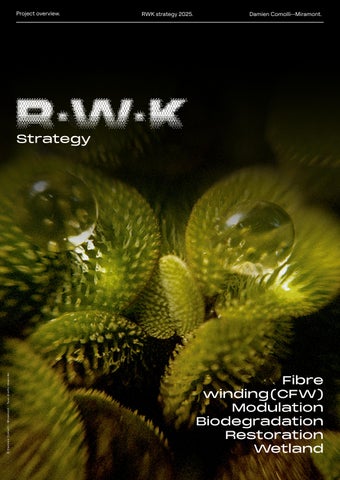
data site-driven project
Wetlands, and peatlands in particular, are recognized for their numerous ecosystem services: CO₂ capture, biodiversity preservation, and regulation of erosion and flooding, among others. In a transitional ecosystem such as a peatland, the evolution of species can be interpreted through the well-known r/K selection model used by biologists. Species with an r-strategy are the first to colonize. They are considered pioneer and typical species, preparing the way for K-strategy species, which are more competitive and eventually dominate in a stabilized environment.
However, in France, peatlands and wetlands in general have undergone profound transformations due to intensive exploitation and land artificialization. Between 50% and 75% of peatlands and other wetlands, as well as nearly 15 Regional Natural Parks, are affected nationwide1. These pressures have led to severe degradation, which European policies now aim to reverse through restoration goals set for 20502 .
Aware of the urgency, many sites are being rewetted. Yet, given the scale of the damage, spontaneous revegetation remains difficult. How can we help plant species reclaim their original habitats ? This question currently arises, for example, in the Sèves peatland in the Cotentin region. There, scientists from the Cotentin and Bessin Regional Natural Park, including Sébastien Gogo, a physicist specializing in peat environments, have supported me in studying the landscape dynamics of these fragile ecosystems and in defining the project’s objectives together.
Among the local resources identified in Normandy, the flax industry stands out as a major asset. Investigating the transformation potential of this material led me to explore an innovative process: coreless filament winding3. This technique reveals the structural potential of natural fibers such as flax.
An iterative process combining algorithmic research and material experimentation resulted in a parametric multi-axis winding algorithm capable of generating unique fibrous modules. Once assembled, these modules form floating rafts designed to host reintroduced sphagnum mosses. These structures act as catalysts, stimulating the emergence of pioneer species. Their biodegradable and temporary nature is carefully studied to minimize their impact once the ecological process has been initiated. Preliminary in-situ experiments with a few modules have already shown encouraging results. In the long term, the goal is to observe an effective regeneration of carbon sinks over larger areas.
1 Source : parcsnaturelsregionaux.fr
2 Proposal for a Nature Restoration Law, European Commission, june 2022.
3Coreless Filament Winding, Institute for Computational Design, Stuttgart.
The digital language guiding the generation of modules opens the way toward a fully automatable version of the project. As of today, the operator’s hand is guided by a sequence of points to follow, previously calculated and progressively positioned within a simulated space. With this process, the production time averages one module per hour, while the cost of raw materials is significantly reduced compared to more conventional lattice-based supports, since here, the woven volume becomes the structure itself.
This work would benefit from a deeper dialogue with the Regional Natural Parks in order to refine the hypotheses for raft deployment, and to make the project both marketable and scalable. This research project thus illustrates how digital tools invite us to weave new connections between material, innovative processes, and evolving landscapes. It stands as a synthesis of ecological commitment, innovation, and multidisciplinary collaboration.

Sèves peatland, Normandie → Manche → Cotentin.
«Peatlands represent 3% of the Earth’s surface but contain between 25% and 33% of the world’s soil carbon.»
Sébastien Gogo, CNRS.


State of play of human activities and the natural environment : balances of power reshaping the landscape.

Sources : ©Pnr des Marais du Cotentin et du Bessin, ©IGN, INPN,
Géoportail.

Sources : ©Pnr des Marais du Cotentin et du Bessin, ©IGN, INPN, Géoportail.
❶ Land cover photogrametry
❷ Grey level pixelized topography.
❸ Loyd's Voronoi relaxation depending on grey values.
❹ Voronoi pattern focused on limited area.
❺ Dual mesh algorithm.
❻ generate multipipe mesh.
❼ Retrieve nonsubmerged modules.


VIDEO


Coreless winding device.


Floating raft cell composed of 14 modules. 2.55 x 2.30 m


1:5 scale reproduction. - 3 months of evolution.


Multi axes weaving parametric algorithm.
Rhinocéros & Grasshopper
A sequence of points arranged in space is calculated and positioned independently for each module.


Mecanical device for filament winding.


Strategy