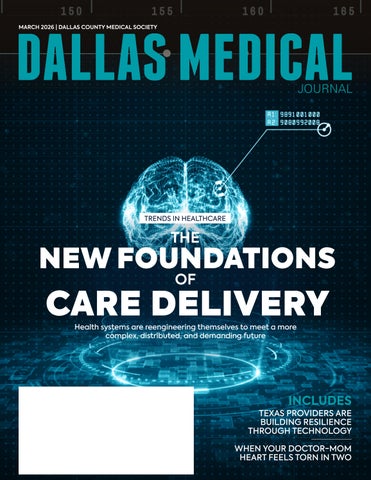
NEW FOUNDATIONS CARE DELIVERY
Health systems are reengineering themselves to meet a more complex, distributed, and demanding future

TEXAS PROVIDERS ARE BUILDING RESILIENCE THROUGH TECHNOLOGY
WHEN YOUR DOCTOR-MOM HEART FEELS TORN IN TWO INCLUDES












EXECUTIVE





Jon R. Roth, MS, CAE





EDITOR,

EDITORIAL


Stephanie Jennings



DESIGNED


Morganne Stewart


ADVERTISING
Business Development


COMMUNICATIONS COMMITTEE



Ravindra Mohan Bharadwaj, MD, Chair
Sumana Gangi, MD



Jawahar Jagarapu, MD


Dylan Jacob Kruse


Ravina R. Linenfelser, DO



Sina Najafi, DO


Erin D. Roe, MD, MBA



Katelyn Williams, MD




BOARD OF DIRECTORS






Gates B. Colbert, MD, President
Vijay V. Giridhar, MD, President-elect

Sheila Chhutani, MD, Secretary/Treasurer




Shaina M. Drummond, MD, Immediate Past President


Justin M. Bishop, MD


Kimulique Harkley Allen, MD

Max I. Galvan, MD

Nazish Saeed Islahi, MD







Benjamin C. Lee, MD
Allison Moore Liddell, MD
Riva Louise Rahl, MD
Thomas Schlieve, MD











Trends in Healthcare
Gates B. Colbert, MD 2026 President, Dallas County Medical Society
AS DOCTORS LOOK AHEAD TO 2026, IT SEEMS MANY
of us share the same hopes we carried into 2025. Each new year brings renewed optimism and a sense that a fresh start is possible. While we accomplished a great deal in 2025, ongoing changes mean there is still much to be done. Physicians continue to balance the demands of caring for ourselves with our responsibility to our patients, a commitment we all pledged to uphold. The US healthcare landscape stands ready to both ease aspects of our daily work and reinforce existing challenges.
THE IMPACT OF AI
Artificial Intelligence is at the center of countless conversations, articles, and discussions. We recognize that this technology is upon us. But the question remains: Is it here to replace us or to support us? AI remains a somewhat ambiguous concept, and its full impact is still uncertain. Nevertheless, it is clear that we must learn to adapt to it. According to McKinsey Consultants, 85 percent of healthcare organizations surveyed plan to pursue or have already
implemented AI in their operations. Initial uses may focus on behind-the-scenes tasks, such as payment processing or research data collection. However, how AI will shape direct patient care or radiology remains unclear. Both DCMS and TMA are closely monitoring these developments and have planned multiple educational opportunities with healthcare experts in 2026.
2026 HEALTHCARE LAW
Many healthcare advocates are relieved that 2026 is not a legislative year for the Texas Legislature. This provides us with time to observe how recently enacted laws are implemented and to prepare for the 90th Texas Legislature in 2027. TMA and DCMS leaders have already begun collaborating with colleagues statewide to set legislative priorities that affect physicians and patient care. One of the most promising developments is a $1.4 billion federal funding initiative over five years to support rural health. This investment will strengthen rural hospitals, enhance technology, and bolster the healthcare workforce and infrastructure. Although Dallas County itself is not ru-
ral, our hospitals and clinics regularly serve patients from neighboring rural areas. Investments in rural health will ultimately help us provide better care to complex patients referred to us and ensure they receive appropriate follow-up once they return home.
THE BUSINESS OF HEALTHCARE
Physicians continue to grapple with the corporatization of healthcare, a challenge that has only grown as over 70% of us are now employed rather than in physician-owned private practice. Healthcare entities have many simultaneous goals, such as efficiency, productivity, and workforce management, but physicians’ needs are often not prioritized. Yet, no care can be delivered nor paid for without the essential services physicians provide. To address these challenges, physicians must remain engaged in discussions and solutions, especially as other stakeholders increasingly shape healthcare delivery. As I stated in my inaugural speech, we cannot afford to become complacent and exclude ourselves from decision-making. Despite our busy schedules, we must prioritize applying our valuable experience to help shape the future.
Non-healthcare financial investment in physician practices continued to expand in 2025 and shows no signs of slowing in 2026. Private equity (PE) firms are acquiring a growing number of healthcare entities, from hospitals and health systems, to physician practices and nursing facilities. In 2024 alone, there were over 1,000 acquisitions, with platforms (such as those in dermatology) broadening their reach to increase market share. While new capital can help modernize healthcare delivery, it is essential to thoroughly evaluate the contractual obligations that come with it. Many physicians report that PE partnerships have brought financial benefits and expanded healthcare services. However, it’s important to consider the impact on future physicians, who may not share in these initial advantages. Ethical and regulatory questions also arise regarding the influence of non-physician investors determining the hands-on delivery of healthcare.
GOVERNMENT
The arrival of a new Presidential Administration in 2025 brought rapid changes, particularly with Robert Kennedy Jr. as the new HHS Secretary and the launch of the Make America Healthy Again (MAHA) initiative. Adjustments to NIH funding and existing grants have introduced considerable uncertainty in health and research. Ongoing ambiguity around vaccination policy has further eroded trust among the public and health professionals alike. While I won’t delve deeper to avoid political division, it is clear that government involvement in the patient-physician relationship remains an ongoing challenge. As Dr. Jayesh Shah, current TMA President, aptly says: “Let Doctors Be Doctors.” Our training and experience have shown we are best equipped to treat patients and manage outcomes, both positive and negative. Physicians should be empowered to care for patients as they have been trained, in accordance with Texas Medical Board law, free from political interference and liability concerns. DMJ
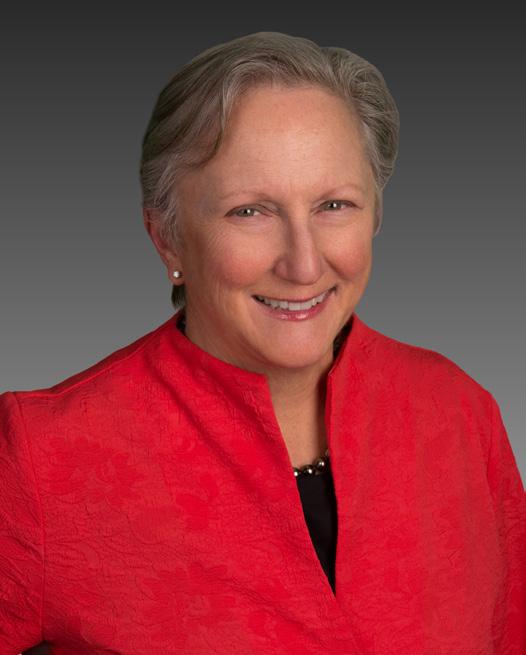
Sue S. Bornstein, MD, Receives National Award from the American College of Physicians
The American College of Physicians (ACP), the national organization of internal medicine physicians, has awarded Sue S. Bornstein, MD, MACP, FRCP, the Alfred Stengel Memorial Award for Outstanding Service to the American College of Physicians. Dr. Bornstein and other award recipients will be recognized during ACP’s annual Convocation ceremony on Thursday, April 16, 2026, at the Moscone Center in San Francisco, CA. The ceremony is part of ACP's annual scientific conference, Internal Medicine Meeting 2026, which runs through April 18. ACP is the largest medical specialty organization in the United States.
The Alfred Stengel Memorial Award for Outstanding Service to the American College of Physicians is bestowed for outstanding service to ACP. Dr. Bornstein is a past Chair of the Board of Regents of ACP and the current Chair of the ACP delegation to the American Medical Association (AMA). She was recently named Chair of the ACP Executive Vice President Search Committee. She has been elected to Mastership (MACP) in the American College of Physicians, which recognizes outstanding and extraordinary career accomplishments.
In addition to her national leadership, Dr. Bornstein is a long-standing leader in internal medicine in Texas. She currently serves as Executive Director of the Texas Medical Home Initiative and is co-leader of the Texas Primary Care Consortium. Dr. Bornstein graduated from the Texas Tech School of Medicine and completed her residency at Baylor University Medical Center in Dallas. She has served on numerous committees of the College and in organized medicine in Texas. She is the recipient of numerous awards for her service from both state and national organizations. DMJ
ProAssurance has the experience, financial resources, and network of defense litigators you can rely on.
For five decades, ProAssurance has stood alongside physicians and healthcare professionals through some of the most complex and challenging moments in medicine.
We were founded during a time of profound change in healthcare liability. Since then, the industry has evolved—but our focus has remained the same. Through experience gained, cases defended, and trust earned, we have remained committed to supporting good medicine with strength and stability.
As we mark our 50th year, we honor the physicians, partners, and professionals who shaped our story.


The AI Revolution in Medicine: Transforming How You Practice, Not Who You Are
Jon R. Roth, MS, CAE
AS I SIT DOWN TO WRITE THIS MONTH’S editorial, I find myself doing something that would have seemed extraordinary just a few years ago: consulting an artificial intelligence tool to help organize my research notes. That small act captures the essence of what is unfolding across the healthcare landscape (and everywhere else!). Artificial intelligence is no longer a distant promise or a subject reserved for academic conferences. It is here, in your examination rooms, operating suites, and administrative offices, quietly and profoundly reshaping the practice of medicine.
The Dallas County Medical Society (DCMS) has long championed innovation that serves our physician members and their patients, and this March edition of the Dallas Medical Journal is dedicated to the trends defining healthcare’s future. Among those trends, none carries greater transformative potential than AI. It is our responsibility to understand where we are, where
we are heading, and where the guardrails must be placed.
THE QUIET REVOLUTION: AI TAKES ROOT IN CLINICAL PRACTICE
The integration of AI into healthcare has accelerated at a pace that has outstripped even the most optimistic projections. The American Medical Association (AMA) reported this year that more than 80% of physicians now use AI in their professional work, a rate double that reported in 2023. More than three-quarters of those physicians say AI improves their ability to care for patients. The global healthcare AI market, valued at roughly $5 billion dollars in 2020, now exceeds $45 billion.
Here in Dallas, our institutions are leading this charge. UT Southwestern Medical Center launched its AI with Meaning initiative, a systemwide effort to integrate artificial intelligence across clinical care, research, education, and administration. Steve Jiang, Ph.D., Professor of Radiation Oncology and Director of UT Southwestern’s Medical Artificial Intelligence and Automation Laboratory, has built one of the nation’s premier AI re-
search programs. His team’s work developing AI algorithms that generate three-dimensional radiation therapy plans in near real time is a powerful example of what is possible for cancer patients who cannot afford to wait days for treatment.
At Baylor Scott & White Health, J. Michael DiMaio, M.D., is pioneering AI-powered wound imaging systems that help physicians make better clinical decisions for burn and wound patients by producing predictive analytics at the point of care. Meanwhile, the most immediately felt AI application for many of our physician members has been the emergence of ambient AI scribes, which are tools that listen to physician-patient conversations and generate clinical documentation in real time. Across the country, these tools have already saved physicians thousands of hours of documentation time, with one large health system reporting nearly sixteen thousand hours recovered in a single year. For physicians who have spent too many evenings completing charts for a long time, this technology represents a meaningful step toward reclaiming the parts of medicine that drew us to the profession.
WHERE WE ARE TODAY AND WHERE WE WILL BE TOMORROW
The current state of AI in clinical medicine can be described as a transition from pilot to deployment. Ambient scribes are being adopted across primary care, emergency medicine, and specialty practices. AI-driven documentation programs are enhancing revenue cycle accuracy, with Baylor Scott & White Health reporting a projected $40+ million-dollar annualized revenue improvement through AI-assisted coding review. Administrative AI automates prior authorizations, predicts claim denials, and streamlines scheduling.
In diagnostics, AI is augmenting the physician’s eye. David Sher, M.D., Professor of Radiation Oncology at UT Southwestern, collaborated with colleagues to develop an AI tool that optimizes head and neck radiation therapy planning, reducing radiation exposure to healthy tissues in a significant majority of cases. Satwik Rajaram, Ph.D., and Payal Kapur, M.D., also at UT Southwestern, are using AI to predict tumor genomics from pathology slides. This capability could spare patients expensive molecular testing.
Looking six months ahead, industry leaders predict that AI agents (autonomous software performing multi-step tasks) will handle not just note generation but referral orders, prior authorization letters, and payer submissions, all pending physician approval. The 2026 CPT code updates already reflect this shift, introducing codes for AI-augmented services. Eric Peterson, M.D., Vice Provost and Senior Associate Dean for Clinical Research at UT Southwestern, recognized the need for responsible governance when he helped lead the institution’s participation in the Trustworthy & Responsible AI Network (TRAIN), a national consortium working to establish safety standards for healthcare AI. His leadership reminds us that moving fast must not mean moving recklessly.
WHAT AI CANNOT REPLACE: THE IRREPLACEABLE PHYSICIAN
For all its extraordinary promises, artificial intelligence carries limitations that the profession must acknowledge with clear eyes. AI systems learn from historical data, and when that data contains racial, gender, or socioeconomic biases, algorithms can perpetuate and even amplify them. Current AI scribes, while increasingly accurate, can miss or misinterpret critical clinical information, struggle with non-English speakers, and occasionally generate fabricated content that physicians must catch before it enters the medical record. The Federation of State Medical Boards has made clear that physicians remain fully responsible for all documentation, regardless of how it was generated.
But the most important limitation of AI is not technical; it is human. No algorithm can sit with a patient who has just received a devastating diagnosis and offer the compassion that comes from shared humanity. No neural network can replicate the subtle clinical instinct of an experienced physician. You know that feeling that something is not quite right, informed by years of training and thousands of patient encounters. AI can analyze patterns in data with breathtaking speed, but it cannot understand what it means to be afraid, to hope, or to grieve.
This is why DCMS believes firmly that AI must remain a tool in the physician’s hands, not a replacement for the physician’s judgment. Our role is not merely to interpret data but to apply that information to the person in front of you, including their values and wishes, their fears, and their goals for their own health and wellbeing. That interpretive act requires wisdom, empathy, and moral reasoning that remain uniquely human capacities. At least for now. We would be naive to think that engineers and AI models are not moving just as fast in these areas of accelerated development as they are the data models themselves.
I encourage our physician members to engage with AI thoughtfully and proactively. Learn what these tools can do. Understand their limitations. Advocate for governance structures that protect patients and preserve physician autonomy. And above all, remember that technology serves its highest purpose when it frees you to do what only you can do: be present with your patients in their moments of greatest need.
The AI revolution in medicine is not something happening to us. It is something we have the opportunity and the obligation to shape. DCMS stands ready to help lead and report on that conversation, and I am proud to stand alongside the physicians of Dallas County as we navigate this extraordinary chapter in the history of the profession. DMJ

Jon R. Roth, MS, CAE DCMS EVP/CEO

















HEALTHCARE FOUNDATIONS SHIFTING OF THE
OPERATIONAL, ECONOMIC, AND EXPERIENTIAL TRENDS REDEFINING PHYSICIAN PRACTICE
by J. Carr Vineyard, M.D.
HEALTHCARE IS NOT LACKING INNOVATION.
If anything, the pace of clinical and technological advancement continues to accelerate. New tools, new techniques, and new capabilities are expanding what physicians can do for their patients in impactful ways. Yet for many physicians, the most pressing challenges today are not rooted in a lack of clinical capability but in how care is delivered, accessed, and sustained within increasingly complex systems. Across specialties, the reality is becoming clearer: the defining pressures in modern healthcare are operational, economic, and experiential. While innovation continues to shape what is possible in medicine, these broader forces are redefining what it means to practice effectively.
The financial realities of care delivery are increasingly shaping how physicians practice. Shifting reimbursement models, rising operating costs, and increasing resource demands are shaping decisions that extend well beyond the balance sheet. These pressures affect staffing, access, and the pace at which innovation can be adopted, creating tradeoffs that are often felt directly in the clinical environment. As a result, economic considerations are no longer separate from patient care; they are now embedded within it.
In growing and competitive markets, like Dallas-Fort Worth, these trends are particularly visible. Population growth, rising patient expectations, and increasing competition are converging, creating an environment where physicians must navigate both opportunity and complexity. The result is a healthcare landscape where success depends not only on clinical expertise but on how well care is delivered within the system that surrounds it.
ACCESS AND OPERATIONAL STRAIN ARE REDEFINING CARE DELIVERY
One of the most immediate and universal challenges facing physicians today is access. Across the country, patients are experiencing longer wait times, scheduling delays, and difficulty navigating increasingly fragmented systems of care.
For physicians and practice leaders, this is not simply a matter of in-
convenience. Access has become a defining component of quality. Delays in care, gaps in communication, and administrative inefficiencies all contribute to a patient experience that can undermine even the highest level of clinical expertise.
At the same time, practices are managing persistent staffing shortages, rising administrative burdens, and growing patient volumes. These operational pressures are not new, but they have intensified in recent years and, in many cases, are now the primary constraint on a physician’s ability to deliver timely care.
This is where the conversation around healthcare quality is evolving. It is no longer sufficient to focus solely on outcomes within the clinical encounter. Quality is more often measured by how efficiently and effectively patients can access care in the first place.
A significant contributor to these challenges is the fragmentation that exists across many healthcare systems. Patients often move between primary care, specialty care, imaging centers, and ancillary services with limited coordination between each step. For physicians, this can mean incomplete information, duplicated efforts, and delays in decision-making that extend beyond the initial point of care.
These gaps are not always visible at the surface, but they have important downstream effects. Delays in access can lead to delayed diagnoses, missed follow-ups, or patients disengaging from the care process altogether. From a physician's perspective, inefficiencies in coordination can create additional administrative work, increase time spent tracking information, and reduce overall clinical efficiency.
Addressing these challenges requires more than incremental operational improvements. It calls for a more integrated approach to care delivery, prioritizing communication, continuity, and accountability across the entire patient journey. While this level of coordination is difficult to achieve, it represents a critical opportunity to improve both patient outcomes and the physician experience.
In many cases, improving access is not simply a matter of adding capacity but of using existing resources more effectively. Variability in scheduling, uneven demand distribution, and limited
visibility across care settings can all contribute to bottlenecks that are difficult to identify without a broader operational view. This often requires a shift toward more data-informed decision-making, allowing practices to better anticipate demand, align resources, and reduce unnecessary delays. As patient expectations continue to rise, this type of operational insight is becoming more critical. The ability to provide timely access is not only a matter of efficiency; it is central to maintaining patient trust and engagement over time.
In response, many organizations are investing in workflow redesign, centralized scheduling models, and improved communication systems. These changes are often incremental, but collectively, they represent a broader shift toward operational excellence as a core component of medical practice.
While clinical expertise remains essential, it must be supported by systems that allow that expertise to be delivered in a timely, coordinated, and patient-centered way.
TECHNOLOGY: OPPORTUNITY MEETS PRACTICAL CONSTRAINT
There is no question that technology, particularly artificial intelligence, is poised to transform healthcare. From diagnostic support tools to predictive analytics and administrative automation, the potential applications are significant.
However, the practical implementation of these technologies remains unknown. While the conversation often centers on possibility, the day-to-day experience for many physicians is one of cautious evaluation rather than rapid adoption.
There are real barriers. Cost, training, interoperability with existing systems, and data governance concerns all influence how, and how quickly, technology can be integrated into practice. Just as important, there is growing recognition that technology must enhance, not complicate, the physician experience.
The most meaningful applications of AI and digital tools will likely be those that reduce administrative burdens, streamline workflows, and support clinical decision-making without adding friction. In other words, technology should serve as an enabler of better care, not an obstacle to delivering it. Adoption, therefore, will not be driven solely by innovation but by practicality. The technologies that succeed will be those that integrate seamlessly into clinical environments and provide clear, measurable value.
As these technologies continue to mature, their impact will likely be felt first in areas that support, rather than replace, clinical care. Administrative workflows, documentation, and patient communication represent some of the most immediate opportunities for measurable improvement. Tools that reduce time spent on charting, streamline prior authorizations, or improve information flow between care teams have the potential to address some of the most persistent sources of inefficiency in practice.
Over time, more advanced applications will continue to develop,
particularly in areas such as clinical decision support and predictive analytics. However, broader adoption in these domains will depend on trust, validation, and seamless integration into existing workflows. Physicians must have confidence in the accuracy of these tools and in their ability to enhance clinical judgment without introducing unnecessary complexity.
Successful implementation will depend on more than access to new technology. It requires thoughtful integration, appropriate training, and alignment with the specific needs of a given practice. Organizations that approach technology as a tool for addressing clearly defined operational challenges, rather than as a standalone solution, will be better positioned to realize its value.
As adoption evolves, the focus will increasingly shift from capability to consistency. Technologies that reliably reduce burden, improve efficiency, and support patient care in measurable ways will ultimately define their role in clinical practice. In that context, the most impactful innovations will be those that fit naturally into the physician workflow, reinforcing rather than reshaping the way care is delivered.
THE EVOLUTION OF CARE DELIVERY MODELS
The rapid expansion of telemedicine during the COVID-19 pandemic marked a turning point in how care is delivered. What was once considered an alternative modality is now an expected component of care for many patients.
Today, the conversation has shifted beyond telemedicine itself to the development of more integrated, hybrid care models. These models combine in-person visits with virtual touchpoints, remote monitoring, and digital communication to create a more flexible and accessible care experience.
This evolution offers clear advantages. It can improve access, increase efficiency, and allow for more continuous engagement with patients, particularly those managing chronic conditions. However, it also introduces new complexities. Physicians must balance convenience with continuity, ensuring that care remains coordinated and comprehensive across multiple touchpoints. Clinical judgment still depends on appropriate evaluation, and not all interactions can, or should, be virtual.
Reimbursement structures and regulatory frameworks continue to evolve, creating both opportunity and uncertainty. Practices must navigate these changes while maintaining consistency in care delivery. Increasingly, physicians are operating within models that place greater emphasis on efficiency, coordination, and measurable outcomes, often without a corresponding reduction in administrative complexity.
This shift has substantial financial implications. The cost of delivering care continues to rise, driven by staffing needs, technology investment, compliance requirements, and infrastructure demands. Reimbursement does not always keep pace with these increases, putting pressure on margins and limiting the flexibility of how practices allocate resources.
As a result, economic considerations are becoming more directly tied to care delivery. Decisions around scheduling, staffing, and even care models are more directly influenced by financial sustainability. For physicians, this introduces a new layer of complexity as they balance clinical priorities with the operational and economic realities that shape how care can be delivered in practice.
Perhaps the most significant shift is in patient expectations. Convenience, accessibility, and flexibility are no longer differentiators; they are baseline requirements. Patients more often expect healthcare to function in ways that align with other aspects of their lives. For physicians, this
requires a thoughtful approach to care design, one that maintains the integrity of the physician-patient relationship while adapting to new modes of interaction.
PHYSICIAN BURNOUT AND WORKFORCE SUSTAINABILITY
Few topics have received more attention in recent years than physician burnout, and for good reason. The demands placed on physicians today extend far beyond clinical care.
Administrative requirements, documentation burdens, staffing challenges, and increasing patient volumes all contribute to an environment that can be difficult to sustain over time. While individual resilience is often discussed, it is clear that burnout is not simply a personal issue. It is a structural one.
Efforts to address burnout must reflect that reality. Wellness initiatives and resilience training have value, but they are not sufficient on their own. Consequential change requires reexamining how care is delivered and how physician time is utilized. This includes reducing unnecessary administrative tasks, improving support staff capacity, and leveraging technology in ways that genuinely alleviate workload rather than add to it.
There is also a broader workforce consideration. Recruitment and retention are becoming more challenging in many specialties, particularly in high-demand regions. As patient needs continue to grow, the strain on the existing workforce increases accordingly.
Sustainable physician practice depends on creating systems that allow clinicians to focus on what they do best: caring for patients. Without that foundation, even the most advanced clinical capabilities cannot be fully realized.
THE RISE OF CONSUMERISM IN HEALTHCARE
Another defining trend is the growing influence of consumerism in healthcare. Patients today have more choices than ever before, from urgent care centers and retail clinics to direct-to-consumer telehealth platforms. With these options comes a shift in expectations. Patients are now evaluating their healthcare experiences in the same way they assess other service-based interactions—prioritizing convenience, transparency, and responsiveness.
For traditional physician practices, this represents both a challenge and an opportunity. While clinical outcomes remain paramount, the overall patient experience is playing a larger role in patient decisionmaking and long-term loyalty. Access, communication, and service delivery are no longer secondary considerations. They are central to how patients perceive quality.
Practices that invest in improving these aspects of care are better positioned to compete in an evolving landscape. Those who do not may find themselves at a disadvantage, regardless of clinical capability. Importantly, this shift does not diminish the physician's role. Rather, it expands it. Delivering high-quality care now includes clinical excellence and the ability to meet patients where they are, both literally and figuratively.
DATA, PRIVACY, AND THE IMPORTANCE OF TRUST
As healthcare becomes more digitally driven, the volume of data generated and shared continues to grow. Electronic medical records, remote monitoring devices, and AI-driven tools all contribute to a more datarich environment.
This data has the potential to significantly improve care, supporting better decision-making, enhancing coordination, and enabling more
personalized treatment approaches. However, it also brings increased responsibility. Protecting patient information and maintaining trust are critical, not only from a regulatory standpoint but also from a patient relationship perspective. In an era of increasing cybersecurity threats and evolving regulations, trust has become a key differentiator. Patients are more aware than ever of how their information is used, and expectations around privacy continue to rise.
Physicians and healthcare organizations must navigate the balance between leveraging data to improve care and ensuring that privacy and security are not compromised. This requires not only technical safeguards but also a clear commitment to transparency and accountability.
Trust, once lost, is difficult to regain. Maintaining it must remain a central priority as healthcare continues to evolve.
LOOKING AHEAD
The future of healthcare will undoubtedly be shaped by continued clinical innovation. Advances in diagnostics, treatment, and technology will continue to expand what physicians can deliver. However, the most immediate and consequential changes are occurring in how care is structured, accessed, and experienced.
For physicians, this represents a fundamental shift in how success is defined. Clinical expertise remains foundational, but it must now operate within systems that demand efficiency, coordination, and adaptability. The ability to navigate operational complexity, respond to economic pressures, and meet evolving patient expectations is becoming just as critical as the care delivered within the exam room or operating suite.
In this environment, the most successful practices will be those that approach these challenges with intention. This includes investing in systems that support access and coordination, adopting technology in ways that reduce—not add to—complexity, and building care models that are both patient-centered and financially sustainable.
It also requires a broader shift in perspective. Many of the challenges facing physicians today are not isolated issues to be managed individually, but interconnected dynamics that must be addressed collectively. Collaboration across specialties, alignment between clinical and administrative leadership, and a willingness to rethink traditional approaches to care delivery will all play an important role in shaping the path forward.
These shifts also highlight the importance of adaptability at both the individual and organizational levels. As healthcare systems continue to evolve, the ability to respond thoughtfully to change will be essential. This includes reexamining long-standing processes and assumptions that may no longer serve patients or physicians effectively, in addition to adopting new technologies and care models.
Ultimately, the future of healthcare will not be defined solely by what we are capable of doing but by how effectively we deliver that care within the systems that support it. Physicians who can balance innovation with operational discipline and clinical excellence with system-level awareness will be best positioned to meet the demands of an evolving healthcare landscape. DMJ
The HIP New HIPAA: What Healthcare Organizations Need to Know About the Latest Regulatory Overhaul
by Jeffery P. Drummond, Partner, Jackson Walker LLP, and Cheryl Camin Murray, Partner, Jackson Walker LLP
The healthcare sector may face a one-two regulatory punch under the Health Insurance Portability and Accountability Act of 1996 (HIPAA). If finalized as proposed (a big question mark given recent regulatory actions), a sweeping proposed overhaul of the HIPAA Security Rule could fundamentally reshape cybersecurity obligations for healthcare providers and health plans (referred to as covered entities) and their contractors and vendors (referred to as business associates). Meanwhile, a separate but equally important update to the Notice of Privacy Practices (NPP) requirements—with a compliance deadline of February 16, 2026—demands immediate attention from organizations that handle substance use disorder (SUD) records. Together, these changes represent a significant modernization of the HIPAA regulatory framework over the past decade.
PROPOSED SECURITY RULE MODERNIZATION: RAISING THE CYBERSECURITY SAFEGUARDS FLOOR
On December 27, 2024, the U.S. Department of Health and Human Services (HHS), Office for Civil Rights (OCR) issued a Notice of Proposed Rulemaking (NPRM) to strengthen the HIPAA Security Rule. Published in the Federal Register on January 6, 2025, the NPRM launched a 60-day public comment period that concluded on March
7, 2025, during which HHS received thousands of comments. This proposed rule has not been finalized, but it is worth watching; if finalized as proposed, it would represent the first major update to the Security Rule since the HIPAA Omnibus Rule of 2013.
Perhaps the most consequential proposed change is the elimination of the distinction between "required" and "addressable" implementation specifications in the HIPAA Security Rule. Under the current HIPAA security framework, "addressable" safeguards allow organizations flexibility to weigh risk and cost when deciding how— or whether—to implement certain specifications. The proposed rule, if passed, would make virtually all specifications mandatory, with only limited exceptions.
Another notable proposed requirement is mandatory multi-factor authentication (MFA) for all technology assets containing electronic protected health information (ePHI). Users would be required to verify their identities using at least two credentials—such as personal identification numbers, passwords, biometric data, or security tokens—before accessing sensitive systems. Encryption of ePHI, both at rest and in transit, would also become mandatory, with limited exceptions that must be documented.
The NPRM further requires covered entities and business associ-
ates to develop and maintain comprehensive written technologyasset inventories and network maps detailing all devices, applications, and systems that interact with ePHI. These inventories must be updated at least annually or whenever significant operational changes occur. Organizations would also be required to conduct and document annual compliance audits of their administrative, technical, and physical safeguards. Vulnerability scanning would be required in accordance with the entity’s risk analysis or at least every six months, with penetration testing required annually.
Patch management also receives heightened attention. The proposed rule would require written policies and procedures for applying patches, updates, and upgrades to electronic information systems on specific timelines. Business associate oversight obligations would also expand. Business associates would be required to provide written verification at least once every 12 months certifying that they have reviewed and tested the effectiveness of the technical safeguards required by the Security Rule. Additionally, all business associates would be required to notify covered entities within 24 hours of activating their contingency plans.
In reality, it has become standard practice and expected for organizations to implement many of these newly required elements, such as encrypting protected health information, conducting asset inventories, conducting penetration testing, and adopting other safeguards. Thus, for entities that have previ-
ously made significant efforts toward HIPAA compliance, the new safeguards might not have as profound an impact.
The proposed rule's future, however, remains uncertain. President Trump's January 31, 2025, executive order imposing a regulatory freeze on new rulemaking pending review has introduced ambiguity about whether the rule will proceed as proposed, be revised, or be withdrawn. Nonetheless, the regulations may be finalized in May 2026, but OCR has not confirmed when the final rule will be released.
NOTICE OF PRIVACY PRACTICES: THE FEBRUARY 16, 2026, DEADLINE
While the Security Rule changes are still proposed, a separate set of requirements with an imminent compliance deadline demands attention now. In February 2024, HHS finalized significant revisions to 42 CFR Part 2, the federal regulation governing the confidentiality of SUD treatment records. The final rule aligns many aspects of Part 2 with HIPAA, particularly regarding disclosures for treatment, payment, and healthcare operations, while preserving Part 2's historically more stringent privacy protections for SUD information.
Crucially, the final rule requires HIPAA covered entities—not just SUD treatment programs—to update their NPPs by February 16, 2026. This obligation extends to any healthcare provider or health plan (a covered entity) that creates, receives, maintains, or transmits Part 2-protected SUD records, including through integrated care models, care coordination arrangements, or health plan operations. Updated NPPs must describe how Part 2 records may be used and disclosed, include a statement regarding the prohibition on using SUD records in civil, criminal, administrative, or legislative proceedings against the patient without specific written consent or a court order, and provide patients the right to opt out of fundraising communications involving Part 2 records prior to receiving such communications. OCR has begun accepting complaints and enforcing the Part 2 requirements, making timely compliance essential. (See OCR Press Release, Office for Civil Rights Announces Civil Enforcement Program for Confidentiality of Substance Use Disorder Patient Records, February 13, 2026.)
LOOKING AHEAD
Healthcare organizations face a rapidly evolving regulatory landscape. While the Security Rule NPRM signals where cybersecurity compliance is headed, the NPP updates under the Part 2 final rule are already here and enforceable. Organizations that proactively assess their compliance posture against both sets of requirements will be best positioned to avoid enforcement risk and strengthen the protection of patient information in an era of escalating cyber threats. DMJ












Texas Providers Are Building Resilience Through Technology
by Vikram Sheshadri, PhD, Chief Technology Officer, Med Tech Solutions
Texas healthcare organizations operate in a landscape where uncertainty is ever-present. Leaders are balancing federal funding volatility, persistent staffing shortages, evolving payer requirements, and an increasingly complex regulatory environment.
These pressures bring measurable financial challenges. Community Health Centers (CHCs) in Texas, for example, are feeling the impact. Texas is one of seven states in which CHCs reported an average loss exceeding 10% of revenue in 2024.1 This is one indicator of what both publicly funded and private healthcare organizations across the state face as they navigate tighter budgets and shrinking Medicare and Medicaid reimbursements.
In this environment, technology is the key to building resilience. It drives a healthcare organization’s ability to protect revenue, reduce administrative burden, maintain compliance, drive efficiencies, and adapt to constant external change – all without compromising care.
REFERENCES


BUILDING
FINANCIAL STABILITY THROUGH STRONGER EHR–RCM ALIGNMENT
As financial pressure increases, Texas healthcare organizations are taking a closer look at how their EHR systems support accurate and efficient reimbursement throughout the process, rather than viewing revenue cycle performance as a downstream function. Successful organizations focus on four technology-enabled moves:
Leveraging AI and Automation: Modern EHR platforms play a central role in this effort, incorporating AI features that drive accurate and complete capture of information. Ambient listening, for example, can generate and recommend proper coding during a patient encounter. Furthermore, automated tasks, templates, and rules engines can help reduce the risk of error, which can lead to claims denials.
Optimizing the EHR System to Accurately Code to the Highest Allowable Level: For multi-specialty healthcare organizations, capturing the full complexity of patient encounters as patients move between specialties and care sites can pose a challenge.
A well-optimized EHR system ensures accurate, defensible coding, while closing documentation gaps and securing appropriate revenue.
Using Analytics to Proactively Manage Denial Drivers: High-performing organizations leverage AI-powered denial trend analysis as they track denial reason codes, payer-specific trends, and documentation patterns. This uncovers root causes to avoid preventable issues and improve first-pass clean claims rates.
USING TECHNOLOGY TO OFFSET WORKFORCE CONSTRAINTS
Staffing shortages remain an operational challenge across Texas. It is estimated that 224 of 254 counties in Texas are “health professional shortage areas.” More than six million Texans live in these areas. This can impact access to primary care, mental health services, and other specialties.
As the shortages persist, many healthcare organizations are focusing on reducing administrative burden on already stretched teams. The strongest operational gains come from targeted technology investments that allow clinical and administrative teams to oper-
1. Geiger Gibson Program in Community Health, Milken Institute School of Public Health. (n.d.). 73. Widening Holes in the Safety Net: Community Health Centers at Risk. https://geigergibson.publichealth.gwu. edu/73-widening-holes-safety-net-community-health-centers-risk 2. Texas Healthcare Workforce Task Force. (2024). Building Texas’ future healthcare workforce. In Final Report. https://gov.texas.gov/uploads/files/press/2024.10.01_-_Healthcare_Workforce_Report_FINAL_v4_.pdf
ate more efficiently and effectively:
Automating Repetitive Administrative Task: Manual eligibility verification, benefits checks, documentation gathering, routine outreach, and status checks are timeconsuming and leave room for human error. Automating workflows can reduce manual burden while improving consistency and accuracy. This provides relief for already stretched teams, prevents denials prior to submission, reduces the work required to rectify, and minimizes disruption of cash flow.
Standardizing Workflows to Ensure Consistency and Reduce Training Burden: In a labor market with regular turnover, healthcare organizations need workflows that don’t rely on legacy knowledge. Standardized intake processes, consistent documentation templates, and role-based training reduce dependency on a few experienced individuals and simplify onboarding.
Adopting Support Models that Match Today’s Healthcare IT Reality: Forward-looking organizations rely on IT partners and managed services to deliver critical capabilities efficiently and cost-effectively. Managed wraparound services and targeted support can drive operations without permanent overhead. This is particularly true for EHR optimization, analytics enablement, revenue-cycle performance improvement, and managed, holistic healthcare IT services.
NAVIGATING EVOLVING PAYER REQUIREMENTS WITHOUT DISRUPTING
CARE
Payer requirements are becoming more prescriptive and are changing frequently. Many healthcare organizations struggle to keep pace because processes, technology configurations, and workflows are not always designed to adapt quickly.
When providers fall behind these changes, it often presents as denied claims, resulting in delayed reimbursement and lost revenue. Technology plays an important role in managing these requirements without disrupting care delivery. Successful initiatives include:
Building Payer Rules into Workflow Design: When payer documentation requirements are addressed at the point of care through templates, prompts, required
fields, and smart checklists, healthcare organizations reduce downstream rework and avoidable denials.
Improving Interoperability and Data Access to Reduce Paper Chasing: Many payer requests boil down to proving medical necessity. When clinical history, imaging, labs, prior therapies, and visit documentation are easier to find and compile, authorizations and appeals become less disruptive.
Using Analytics to Identify Where Payer Policy Is Costing Time and Revenue: Leading healthcare organizations analyze authorization turnaround times, denial rates by service line, and appeal success rates to decide where to standardize, where to escalate, and where to redesign processes.
STAYING AHEAD OF REGULATORY CHANGE THROUGH GOVERNANCE AND TECHNOLOGY
Regulatory change shapes how healthcare organizations manage data, protect patient information, document care, and retain records. As requirements evolve, organizations that keep pace treat compliance as a core component of their healthcare IT strategy.
Effective adaptation hinges on four core technology capabilities:
Ensure Ongoing HIPAA Compliance: Healthcare organizations maintain alignment with HIPAA rules by embedding compliance into their IT strategy. They include components such as a HITRUST-certified cloud platform, controlled, secure access to patient information, and regularly completed and documented annual Security Risk Assessments (SRAs).
Establish Strong Governance to Ensure Consistency and Accountability: Clear governance structures define ownership for workflows, documentation standards, system configuration changes, and training. When regulatory updates occur, governance ensures changes are implemented consistently across the organization.
Maintain a Security Posture Aligned with Evolving Regulatory Expectations: As healthcare organizations manage growing volumes of sensitive clinical and financial data, regulatory expectations around privacy, access controls, auditability,
and incident response continue to rise. Sustaining compliance requires holistic security practices, including identity management, role-based access, monitoring, and response.
Implement Data Management and Archiving Strategies That Support Compliance: Regulatory requirements governing record retention, audit readiness, and data availability place increasing demands on how information is stored and maintained. Effective data management and archiving strategies ensure records remain secure, searchable, and accessible when needed for audits, payer reviews, or legal inquiries, without creating unnecessary operational burden.
CONCLUSION
Texas healthcare organizations will continue to face uncertainty, but resilience can be built deliberately through strategic, comprehensive technology strategies that address ongoing pressures. Strengthening EHR–RCM alignment, extending staff capacity through automation, embedding payer requirements into workflows, and addressing regulatory requirements are foundational to sustaining access, performance, and quality of care across Texas communities. DMJ
About Vikram Sheshadri, PhD
Vikram Sheshadri, PhD, oversees all product research, development, and optimization for Med Tech Solutions, enabling healthcare providers to better leverage their EHR and IT systems to drive operational alignment and patient care efficiency. Prior to his role with MTS, Sheshadri served as VP of Product Development for eMedApps. He holds 26 years of direct experience in healthcare IT, focusing on technology innovation, especially for underserved community health centers, FQHCs, and tribal health facility needs. Sheshadri received a PhD in mechanical engineering from Purdue University and was a Postdoctoral Fellow with a joint appointment at Northwestern’s School of Medicine and the Rehabilitation Institute of Chicago. He and his family live in the Houston area.

Proton Therapy: Advancing Precision in Cancer Care
by Kayla Hui, MPH, Contributing Writer, Texas Center for Proton Therapy
Traditional radiation has long been considered the gold standard for treating different types of cancers. But as cancer care has advanced over the past two decades, patients now have access to more precise, targeted treatments — one of the more notable being proton therapy.
Proton therapy is an advanced form of radiation treatment that uses highly targeted proton beams to destroy cancer cells. “Proton therapy uses a beam only millimeters-wide to deliver radiation directly to the tumor,” said Jared Sturgeon, M.D., Ph.D., a boardcertified radiation oncologist at Texas Center for Proton Therapy. “We can control where that beam stops, allowing us to completely treat the tumor while reducing radiation to nearby healthy tissues.”
Because of that precision, proton therapy is used to treat solid tumors for a variety of cancers, from pediatric cancers and sarcoma to cancers of the breast, prostate, head and neck, and brain. That precision is also valuable for cancers found near sensitive organs. Colorectal cancer is one of those cancers, making it a timely focus as we recognize Colorectal Cancer Awareness Month.
PROTON THERAPY BENEFITS
Colorectal cancer is the leading cause of death among men and women under 50 in the U.S. However, it is becoming increasingly common among younger adults, underscoring the importance of early screening and access to advanced treatments like proton therapy.
While proton therapy isn’t necessary for every cancer case, it can offer meaningful benefits for some patients, according to Dr. Sturgeon.
One of the benefits is precision targeting, which is valuable for adults diagnosed with colorectal cancer, as it allows clinicians to focus radiation directly on the tumor while reducing risk to nearby pelvic organs such as the bladder, bowel, and reproductive organs. Protecting these structures preserves long-term quality of life and fertility and may also lower the risk of secondary cancers later in life. In some cases, proton therapy may also be effective in treating colorectal cancer that has spread to the liver, lymph nodes, or bone.
Because protons deposit most of their energy directly at the tumor and not beyond it, patients often experience fewer side effects, such as bowel irritation. “That can make treatment more manageable day to day and may help reduce long-term side effects,” explained Dr. Sturgeon.
In addition to this slew of benefits, proton therapy is also con-
sidered a safer option for select patients needing repeat treatment after prior radiation, surgery, and/or chemotherapy.
PROTON THERAPY IN TEXAS
Because proton therapy centers require highly specialized equipment and significant capital investment, they remain relatively rare in the United States, with an estimated 47 centers currently in operation.
Texas Center for Proton Therapy is one of only two proton therapy centers in the state and remains the first and only proton therapy center in North Texas, serving the Dallas-Fort Worth region. Celebrating its 10th anniversary in November 2025, the center has treated over 5,000 patients to date and is well on its way to treating its 6,000th patient by the end of summer 2026. It offers three pencil-beam scanning treatment rooms, advanced on-site imaging, a 220-ton cyclotron, and support services.
“At Texas Center for Proton Therapy, our focus is on delivering precise care that supports patients during treatment and long after,” said Dr. Sturgeon. DMJ
ABOUT TEXAS CENTER FOR PROTON THERAPY
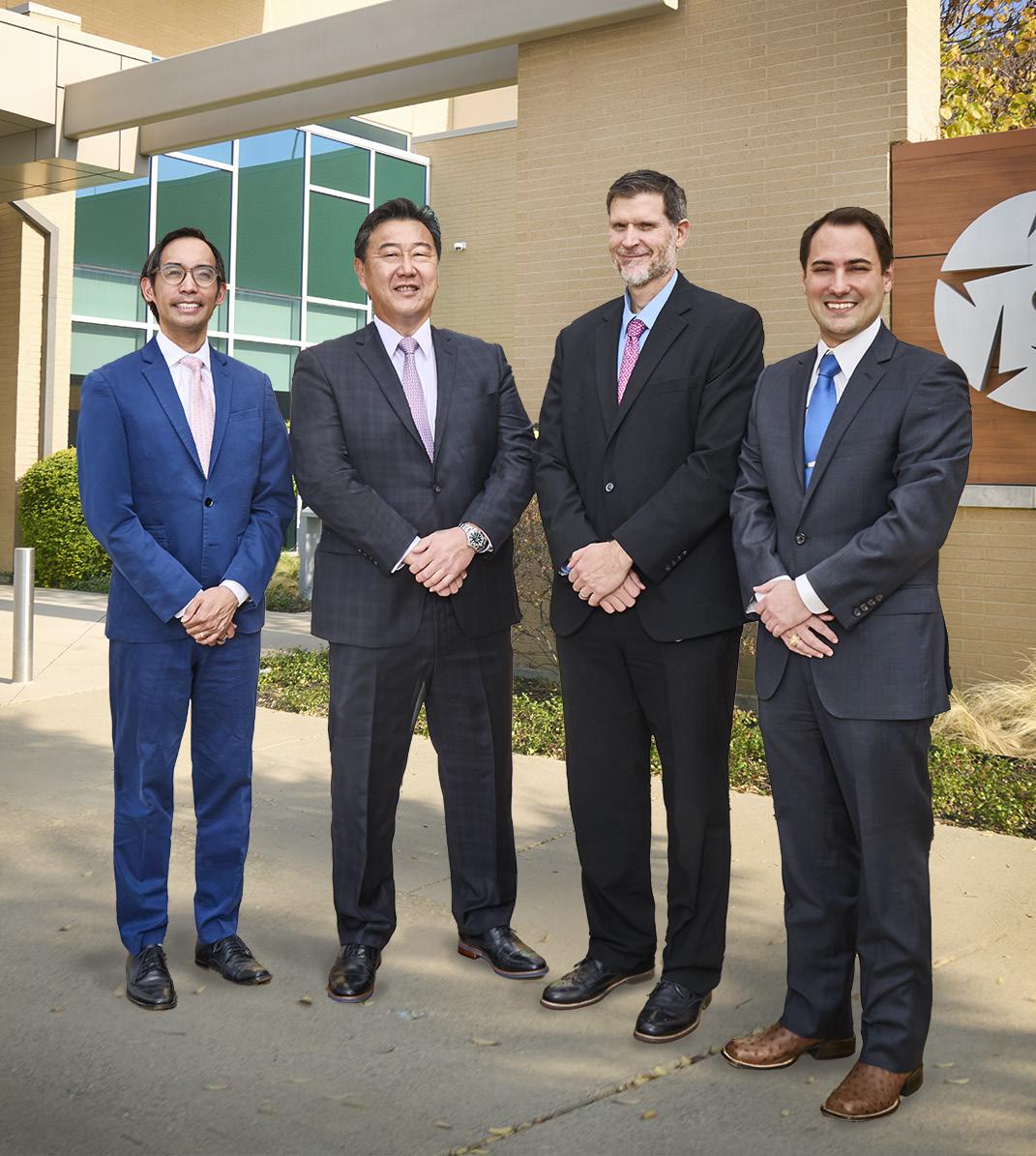
The Texas Center for Proton Therapy is the first proton therapy center in North Texas and among the most technologically advanced in the state. The center provides patients with access to the latest generation of proton therapy technology, including image-guided pencil-beam scanning across multiple treatment rooms. A collaborative effort of US Oncology, Texas Oncology, and Baylor Scott & White, the center is dedicated to delivering advanced, patientcentered cancer care. Its physician team includes radiation oncologists Andrew K. Lee, M.D., MPH; Jared Sturgeon, M.D., Ph.D.; Victor Mangona, M.D.; and Steven Montalvo, M.D., FAAP, who specialize in the delivery of highly precise, individualized proton therapy.
For more information, visit www.TexasCenterForProtonTherapy.com or call 469-513-5500.
When Your Doctor-Mom Heart Feels Torn in Two

by Proshad Efune, MD, MSCS
Maman, you’re going to be at my camp’s musical performance tomorrow, right?” My 8-year-old son, Rami, looks at me earnestly at dinner.
“Rami, as usual, I’m going to try my best. I stayed late in the OR today so I can be relieved on the earlier side tomorrow. No promises, though.”
“Please! You have to be there. I’ve worked so hard on my performance!”
"You have to be there." This is a typical refrain in our household, particularly from Rami, my older son. His emotions run deep, and they swing so sharply that you’re often left with whiplash. He’s also an empath, which means it’s challenging for me to distinguish whether he’s experiencing and mirroring my emotions, or if the feelings he’s having are truly his own. Is he sensing my anxiety over this?
I am optimistic about my chances to make his performance, though. I colluded with the board runner this afternoon to be relieved late today—but not so late as to miss dinner and disappoint my family—so that I can be out on time tomorrow.
“It’s summer, so we are, of course, very busy, but you ought to be out on time tomorrow,” the board runner reassured me.
The following day, I have one case—one that typically lasts less than two hours. It can’t start until 11, because the baby having surgery needs an MRI under anesthesia first. Great, OK, I’ll still be fine, I think.
“Can you finish the case?” asks the board runner that morning.
“Yes, no problem!” I reply. I’m a team player; I’m not going to put my child’s silly theater performance ahead of my team's needs. Plus, I think, I really should be fine.
But then, reality crashes into intention, as it so often does when you’re a physician and a mom. The surgery runs longer than expected. I am watching the clock constantly, calculating and re-
calculating how late I can stay and still make it. Should I hand over now? No, we should still be done in time… rats, now we’re not. But we’re so close to finishing. I’ll just finish this. It will be OK. I owe it to the baby, to the surgeon. I owe it to my colleagues.
Then the complications begin during emergence. Breath holding, coughing, hypoxemia. Right, this baby has a positive viral panel: I did warn both her mother and the surgeon. I can feel my own chest tightening, the two halves of my identity—doctor and mother—pulling in opposite directions. Every minute that passes narrows my window to see any of Rami’s performance.
I stay as long as I can, but the baby isn’t improving, and she needs more time before extubation. I make the decision; I need to hand it over. I call the board runner. “I’m so sorry: This is the worst time to hand off.”
“Go,” he says. “I got this. This is what I’m here for.”
Damn. His kindness in this situation is unexpected. Another emotion enters the swirling vortex in my mind—shame for underestimating my colleague.
I run out of the hospital and speed to the school, heart heavy with guilt for leaving my sick patient, burdening my colleague, disappointing the surgeon, and not leaving earlier, before complications arose. All of it is too much. I should have known better, should have been better. A text comes in from the board runner: “Well, she continued to have several more respiratory events.” My heart cracks. “But we got the tube out, and she’s OK now.”
Thank God.
Then, I have a brilliant idea. I’ll take the Express Lane! Horrible idea. I take the wrong lane, and now I’m deep in the bowels of the highway system. The GPS updates: Five extra minutes are added to my estimated arrival time. That’s $20 I’ll never get back, I think bitterly.
My mind is swirling as I park like a maniac and sprint towards the
auditorium. I’m 35 minutes late, but the performance isn’t over yet. Maybe I can still catch him. I pound on the door of the auditorium. Of course, it’s locked for safety. A parent opens the door and eyes me wearily. A group musical number is ending. My eyes scan the stage— there’s Rami! His face lights up in relief and excitement, then drops. He’s trying to mouth something to me. I find a seat. What is he trying to tell me? Then he does it again.
“You missed my performance.”
I freeze, my breath catching. The tears come. All the adrenaline, the stress, the second-guessing. I still missed it. Despite everything, despite pushing through the guilt, panic, and traffic, I missed it. I failed everyone today. The guilt is suffocating.
The performances continue as I sit there numbly. Then something happens. The camp director walks onto the stage. He’s a well-known and beloved music teacher in our district. He explains that there were technical issues earlier during the performance, and they are going to redo one of the numbers. “Sorry about this—I hope you understand,” he tells the audience.
The cast reassembles, and to my surprise, Rami joins them. Wow, how lucky.
He sings and dances his heart out and delivers his solo lines with more gusto than I’ve ever seen from him. At the end, beaming, he
mouths, “You got to see me!”
After the show, Rami runs up to me. I hug him tightly. “That was incredible! I’m so happy I got to see you,” I tell him.
Then the camp director approaches. “Hi, I saw you come in late and recognized the scrubs. When I saw how heartbroken you were to miss Rami’s performance …” he pauses. “I understand the sacrifices you make …” At this point, I understand what he’s done. The tears come anew. “Well,” he finishes, smiling, “I just wanted to make sure you got to see Rami perform.”
I am at a loss for words. In this moment, I feel something extraordinarily rare. Seen. Understood. This grace, shown for a working parent—especially one in medicine—is overwhelming.
We hold ourselves to impossible standards. Every decision comes at a cost; every choice leaves someone behind. We carry this weight that we must do it all, and we must do it perfectly— even though no one can always be perfect. But sometimes, even when we fall short, the world offers us these tiny, beautiful mercies. A colleague who takes over without resentment. A teacher who goes out of his way to give a mother a second chance.
When I think back on that day, one thing strikes me most. It meant so much to me just to be seen. May we all pay this kindness forward and always make the effort to see one another. DMJ

Image Matters to our patients,
!
The Physician Network







Broker - Compliance with Confidence
Easily understand your specific CME requirements and compliance status, find and take renewal-ready courses, and report your course completions directly to the Texas Medical Board for a hassle-free renewal.
Benefits: Find, complete, and report approved CME; View your forever course history; Take CME on the go with the free mobile app; Access to 24/7 support and more!
Dallas County Medical Society (DCMS) does not endorse or evaluate advertised products, services, or companies nor any of the claims made by advertisers. Claims made by any advertiser or by any company advertising in the Dallas Medical Journal do not constitute legal or other professional advice. You should consult your professional advisor.
Fertility Specialists
Dallas-Fort Worth Fertility Associates
Growing Family Trees Since 1999
www.dallasfertility.com
Samuel Chantilis, MD
Karen Lee, MD
Mika Thomas, MD
Ravi Gada, MD
Laura Lawrence, MD
Jennifer Shannon, MD
Monica Chung, MD
Melanie Evans, MD
Dr. Jennifer Chae-Kim
Dallas: 5477 Glen Lakes Drive, Ste. 200, Dallas, TX 75231, 214-363-5965
Baylor Medical Pavilion: 3900 Junius Street, Ste. 610 Dallas, TX 75246, 214-823-2692
Medical City: 7777 Forest Lane, Ste. D–1100 Dallas, TX 75230, 214-692-4577
Southlake: 910 E. Southlake Blvd., Ste. 175 Southlake, TX 76092, 817-442-5510
Plano: 6300 W Parker Road, Ste. G26 www.cebroker.com www.pownell.com
H. Pownell, MD, FACS
Certified, American Board of Plastic Surgery
Dallas Office
7115 Greenville Ave. Ste. 220 (214) 368-3223
Plano Office 6020 W. Parker Road, Ste. 450 (972) 943-3223
Linda L. Burk, MD
Jane E. Gilmore, MD
Ophthalmology (214) 987-2875
Premium Cataract Surgery
Glaucoma Treatment
Cornea Disease
Diabetic Eye Exams
Optical Shop
Multifocal Cataract Implants
1703 N. Beckley Ave. Dallas, TX 75203
John R. Gilmore, MD Otolaryngology (214) 361-5285
Sinus Disease
Balloon Sinuplasty
Ear, Nose & Throat Disorders
Facial Plastic Surgery
Hearing Loss & Hearing Instruments
10740 N. Central Expy., Ste. 120 Dallas, TX 75231
www.DallasEyeAndEar.com
Maurice G. Syrquin, MD
Marcus L. Allen, MD
Gregory F. Kozielec, MD
S. Robert Witherspoon, MD
3414 Oak Grove Ave. Dallas, TX 75204 | (214) 521-1153
Baylor Health Center Plaza I 400 W. Interstate 635, Ste. 320 Irving, TX 75063 | (972) 869-1242
3331 Unicorn Lake Blvd. Denton, TX 76210 | (940) 381-9100
1010 E. Interstate 20 Arlington, TX 76018 | (817) 417-7769
Robert E. Torti, MD
Santosh C. Patel, MD
Henry Choi, MD
Steven M. Reinecke, MD
Philip Lieu, MD, FASRS
1706 Preston Park Blvd., Plano, TX 75093 | (972) 599-9098
2625 Bolton Boone Drive, DeSoto, TX 75115 | (972) 283-1516
1011 N. Hwy 77, Ste. 103A Waxahachie, TX 75165 | (469) 383-3368
18640 LBJ Fwy., Ste. 101 Mesquite, TX 75150 | (214) 393-5880
10740 N. Central Expy., Ste. 100 Dallas, TX 75231 | (214) 361-6700
8315 Walnut Hill Lane, Ste. 125, Dallas, TX (214) 363-6000
James R. Sackett, MD
Daniel E. Cooper, MD
Paul C. Peters Jr., MD
Andrew B. Dossett, MD
Eugene E. Curry, MD
Daniel A. Worrel, MD
Kurt J. Kitziger, MD
Andrew L. Clavenna, MD
Holt S. Cutler, MD
Mark S. Muller, MD
Todd C. Moen, MD
J. Carr Vineyard, MD
M. Michael Khair, MD
William R. Hotchkiss, MD
J. Field Scovell III, MD
Jason S. Klein, MD
Brian P. Gladnick, MD
Bradford S. Waddell, MD
William A. Robinson, MD
Tyler R. Youngman, MD
Justin Cardenas, MD
9301 N. Central Expy., Ste. 500, Dallas, TX 75231
3800 Gaylord Pkwy., Ste. 710, Frisco, TX 75034
Phone: (214) 466-1446 Fax: (214) 953-1210


AT MIDFIRST BANK, THE LARGEST PRIVATELY OWNED bank in the U.S., you will be treated as a priority. MidFirst Private Bank provides physicians with responsive and reliable service and is dedicated to providing customized solutions to help you achieve your financial goals. Call us today to discover how our concierge-level service can accommodate your business and personal financial needs.
Utilize our jumbo mortgages and construction loans with preferred interest rates for primary residences. We offer expanded loan-to-values (0% down up to $1 million; 10% down up to $1.5 million; 15% down up to $2 million) and no PMI (Private Mortgage Insurance).
Let us assist in additional financial solutions that you may need. Our lending solutions range from investment properties, vacation homes, practice buy-in facilities, home equity loans, stock secured, personal loans, to boat and plane loans.

ALEDADE DELIVERS BETTER HEALTH, BETTER CARE AND lower costs, creating a health care system that is good for patients, good for practices and good for society. It is the largest network of independent primary care, enabling clinicians to deliver better patient outcomes and generate more savings revenue through value-based care. Aledade’s data, personal coaching, user-friendly workflows, health care policy expertise, strong payer relationships and integrated care solutions enable primary care organizations to succeed financially by keeping people healthy. Together with more than 2,400 practices and community health centers in 46 states and the District of Columbia,
Aledade manages accountable care organizations that share in the risk and reward across more than 200 value-based contracts representing nearly 3 million patient lives.
Short
Consider this: What if an illness, injury, or the birth of your child interrupts your ability to practice?
Here’s the challenge: Long term disability insurance may take 90 to 180 days to begin paying benefits, which is far too long to go without income when you still have ongoing expenses.
Here’s the answer: The TMA Member Short Term Disability Insurance plan, issued by The Prudential Insurance Company of America, provides an early layer of financial protection — your first line of defense.
Here’s what you can count on: Guaranteed acceptance for benefits that offer an accessible way to manage medical and non-medical costs, including student loan payments, housing costs, childcare, and other everyday necessities.

TMA Member Guaranteed Acceptance
• Guaranteed acceptance for up to $6,000/ month for TMA members under age 55
• Weekly cash benefits for up to 13 weeks
Faster Access to Benefits
• Benefits begin on day one for an accident
• Benefits begin on day seven for a covered illness
• Benefits are paid directly to you, regardless of other insurance
Coverage Designed for Physicians
• Pregnancy coverage: 2 weeks prepartum, 6 weeks postpartum, 8 weeks for a c-section
• Coverage for partial and total disability
• Affordable premiums
• Portable coverage as long as you remain a TMA member
• Dedicated claims assistance, including help with forms, questions, and updates
• Quick and convenient enrollment
Don’t let life’s “what ifs” put your income at risk. Short term disability coverage through TMA Insurance Trust offers meaningful support to help keep financial pressures in check as you focus on your recovery.

You can get started at any time. Visit tmait.org. Scan the QR code to enroll, or call 800-880-8181 for assistance from a TMA Insurance Trust advisor Monday through Friday from 8:00 AM to 5:00 PM CST.