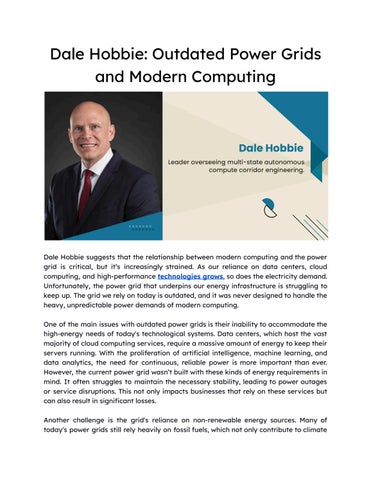
Dale Hobbie: Outdated Power Grids and Modern Computing
Dale Hobbie suggests that the relationship between modern computing and the power grid is critical, but it’s increasingly strained. As our reliance on data centers, cloud computing, and high-performance technologies grows, so does the electricity demand. Unfortunately, the power grid that underpins our energy infrastructure is struggling to keep up. The grid we rely on today is outdated, and it was never designed to handle the heavy, unpredictable power demands of modern computing. One of the main issues with outdated power grids is their inability to accommodate the high-energy needs of today's technological systems. Data centers, which host the vast majority of cloud computing services, require a massive amount of energy to keep their servers running. With the proliferation of artificial intelligence, machine learning, and data analytics, the need for continuous, reliable power is more important than ever. However, the current power grid wasn’t built with these kinds of energy requirements in mind. It often struggles to maintain the necessary stability, leading to power outages or service disruptions. This not only impacts businesses that rely on these services but can also result in significant losses. Another challenge is the grid's reliance on non-renewable energy sources. Many of today's power grids still rely heavily on fossil fuels, which not only contribute to climate