DAIRY ST R25
Volume 25, No. 14

Deafness not a deterrent for Rickert
By Stacey Smart stacey.s@dairystar.com
ELDORADO, Wis. —
When meeting Andrew Rickert for the rst time, it can be hard to tell he is deaf. Born with normal hearing, Andrew’s world did not turn silent until around 20 months of age after he contracted spinal meningitis. Exposed to a year and a half of sounds would provide him with audible speech later in life.
“Andrew’s speech is so good because he heard for 1.5 years compared to a person born deaf,” said his dad, Jim. “The memory of speech makes a difference.”
Farming in silence
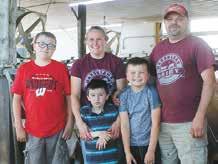
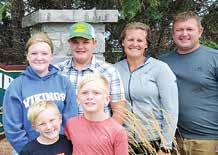
Miles, Emma, Jonah and Micah — farm with Andrew’s parents, Jim and Kelly; his grandfather, Don; Jim’s brother, Greg; and Greg’s son-inlaw, Andy DeVries. The Rickerts milk about 1,000 cows and farm nearly 2,100 acres at Rickland Dairy near Eldorado.
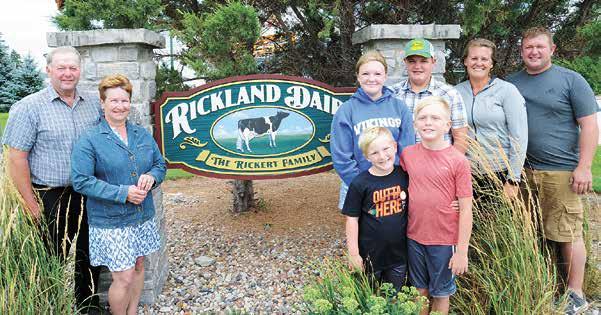
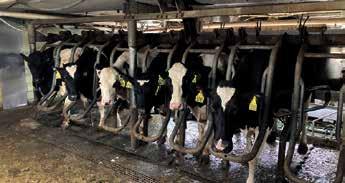
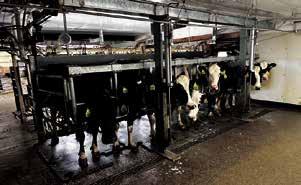
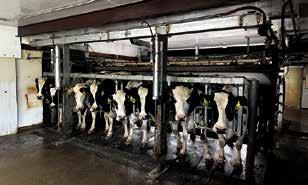
Cows are milked three times a day in a double-16 parallel parlor with a rolling herd average of 30,000 pounds of milk, 3.8% butterfat and 3.1% protein.
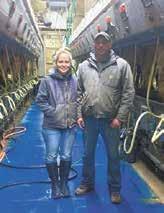
Emma, Miles, Shannon and Andrew — milk about 1,000 cows and farm nearly 2,100 acres at Rickland Dairy near Eldorado, Wisconsin. Andrew has been deaf since around 20 months of age a�er contrac�ng spinal meningi�s.
Andrew is good at reading lips and can understand much of what people say. He can
then respond verbally. “People know they have to face me so I can read their

lips,” Andrew said. Andrew and his wife, Shannon, and their kids —
The Rickerts are passionate about registered Holsteins, and this year, the family received a special honor when they were named Wisconsin’s 2023 Distinguished Holstein Breeder.
The family has bred or developed over 110 Excellent cows and sent 97 bulls to stud.
The difference 2 cents can make
Dairy Checkoff Reform Proposal seeks to divert portion of dollars to food banks
By Stacey Smart stacey.s@dairystar.com

TAYLOR, Wis. — Tom Olson has an idea. He believes his idea will move a lot of dairy product while putting dairy checkoff dollars to good use. As a result, he is seeking a 2-cent slice of the dairy checkoff.
In the Dairy Checkoff Reform Proposal, Olson is asking Congress to amend the Dairy Product Stabilization Act of 1983 to allow dairy producers to divert 2 cents out of the 15 cents per hundredweight they pay to a parent food bank in their state.
Two cents can add up quickly. In 2019, the U.S. produced 218 billion pounds of milk, Olson said. The to-
tal checkoff of 15 cents per hundredweight equaled $327 million that was paid in by dairy farmers. Two cents per hundredweight would equal $43.6 million per year that could be spent on dairy products for food banks.
“The checkoff was supposed to help the farmer keep farming,” Olson said. “But when you look at the declining dairy farm numbers since 1983 when the checkoff was started, it is impossible to say this program helped the dairy industry.”
Olson milks 30 cows near Black River Falls and is the president of the Dairy Pricing Association. His proposal is an extension of what DPA does on a regular basis. Based
in Taylor, DPA has been buying and donating dairy products since 2011. The money raised by this dairy farmerfunded group comes from approximately 200 members in 10 states.
DPA is a grassroots, voluntary dairy farmer organization that uses producer assessments to purchase excess dairy products from the marketplace. These products are then donated to humanitarian causes that do not displace existing sales. DPA is a regular, active buyer in the daily cash-traded block cheddar cheese market, which the group sees as a benet to milk checks across the nation.
DPA’s mission is to promote domestically produced dairy products and establish the minimum price the dairy industry receives for its pro-
duction. At the same time, they maintain a level of milk production to meet the needs of the consumer.
“The need for dairy products for use in food banks across the nation is unbelievably large,” Olson said. “The dairy donation program that started during (the pandemic) has ended and left a lot of low-income people struggling to keep dairy in their family’s diet.”
After the program ended, Olson received a call from the Jackson County housing and urban development program which was looking for more donations of dairy products.
“Some of the people they serve are handicapped or elderly, and all are low income,” Olson said. “They’re all on a real tight budget and have to choose how to spend money, whether it be on food or medicine.”
As a result, DPA bought and sent 534 pounds of ched-

dar cheese to Jackson County in July. The county has 90 recipients who qualify for the HUD program.
“They were really happy to get the cheese,” Olson said. “It made these people’s day.”
When stores remove dated products from the dairy case, Olson said low-fat and non-fat milk is what does not sell and is then donated. Under his proposal, farmers would have the ability to donate 11 million gallons of whole milk or a whole array of dairy products to food banks and soup kitchens annually.
“Food banks have different needs across the nation, but they all have one thing in common and that is the need for dairy products,” Olson said. “When I look at what food banks receive for donations, the thing I see that is in short supply is whole milk.”
September 9, 2023
“All dairy, all the time”™
C E L E B R A T I N G 2 5 Y E A R S
Turn to RICKERT | Page 6 Turn to CHECKOFF | Page 8
Tom Olson Dairy farmer
STACEY SMART/DAIRY STAR
The Rickert family — Micah (front, from le�) and Jonah; (back, from le�) Jim, Kelly,
LOOK INSIDE FOR OUR WORLD DAIRY EXPO PREVIEW EDITION! PREVIEW
Published by Star Publications LLC

Mark Klaphake - mark.k@dairystar.com
320-352-6303 (ofce)
320-248-3196 (cell)
320-352-0062 (home)

Ad Composition - 320-352-6303
Nancy Powell • nancy.p@dairystar.com
Karen Knoblach • karen.k@star-pub.com
Annika Gunderson • annika@star-pub.com
Editorial Staff
Jan Lefebvre - Assistant Editor
320-290-5980 • jan.l@star-pub.com
Maria Bichler - Assistant Editor
maria.b@dairystar.com • 320-352-6303
Danielle Nauman - Staff Writer
608-487-1101 • danielle.n@dairystar.com
Stacey Smart - Staff Writer
262-442-6666 • stacey.s@dairystar.com
Abby Wiedmeyer - Staff Writer
608-487-4812 • abby.w@dairystar.com
Tiffany Klaphake - Staff Writer
320-352-6303 • tiffany.k@dairystar.com
Amy Kyllo - Staff Writer amy.k@star-pub.com Consultant
Jerry Jennissen 320-346-2292
Advertising Sales Main Ofce: 320-352-6303 Fax: 320-352-5647
Deadline is 5 p.m. of the Friday the week before publication
Sales Manager - Joyce Frericks

320-352-6303 • joyce@dairystar.com
Mark Klaphake (Western MN) 320-352-6303 (ofce)
320-248-3196 (cell)
Laura Seljan (National Advertising, SE MN)
507-250-2217 • fax: 507-634-4413 laura.s@dairystar.com
Jerry Nelson (SW MN, NW Iowa, South Dakota)
605-690-6260 • jerry.n@dairystar.com
Mike Schafer (Central, South Central MN)
320-894-7825 • mike.s@dairystar.com
Amanda Hoeer (Eastern Iowa, Southwest Wisconsin)
320-250-2884 • amanda.h@dairystar.com
Megan Stuessel (Western Wisconsin)
608-387-1202 • megan.s@dairystar.com
Kati Kindschuh (Northeast WI and Upper MI)
920-979-5284 • kati.k@dairystar.com
Julia Mullenbach (Southeast MN and Northeast IA)
507-438-7739 • julia.m@star-pub.com
Bob Leukam (Northern MN, East Central MN)
320-260-1248 (cell) bob.l@star-pub.com
A hearing on possible reform of the Federal Milk Marketing Orders is underway near Indianapolis. “The last time we had a big process like this was about 20 years ago,” said Stephen Cain, director of economic research and analysis, National Milk Producers Federation.
“We’ve developed a big package that we think will help the U.S. dairy farmer, but we’re not the only kids on the block; there’s other groups in there that will have different opinions.” This hearing process is expected to last a few weeks. A recommendation from this hearing will likely happen in February or March, and a nal decision is expected next summer.
Common ground in FMMO hearings
The FMMO hearings are a drawn-out process. Edge Dairy Farmer Cooperative Public Affairs Director Travis Senn is not surprised, saying there is a lot of ground to cover. “There’s discussion on milk composition, looking at component levels in how milk is priced,” Senn said.

“There are also discussions on Class III and IV pricing factors; that’s primarily going to discuss the make allowance.” There are numerous ideas being proposed, but Senn said there is a lot of commonalities. “I think everyone involved in this is looking for a modernization of the system we have currently and how can we make what we have better,” he said.
EPA, Corps issue new WOTUS denition

The Environmental Protection Agency and Army Corps of Engineers have issued their shared nal rule amending the denition of the Waters of the United States. This change was necessary after a recent Supreme Court decision. The EPA plans to lead a webinar detailing the updated WOTUS denition Sept. 12.
Farm bill faces hurdles

According to Russell Group President Randy Russell, the farm bill is facing a few hurdles before it can cross the nish line. Nutrition programs will likely be a point of contention, especially with House Republicans only holding a four-seat margin. “As you pick up Republicans because you make changes to SNAP, you likely lose Democrats, so it’s a real balancing act,” Russell said. Food security is considered national security, and Russell sees that coming up in the farm bill debate.
Helping to ll the gap
CoBank released a study that considers how beef on dairy genetics is affecting the supply chain and the beef market. CoBank Lead Animal Protein Analyst Brian Earnest said beef-dairy crosses are helping to ll gaps left by the shrinking U.S. beef herd. “We wanted to explore what it means to utilize more common beef genetics in the dairy industry and the effects on the beef supply chain from the cattle feeders to the packing community,” Earnest said. Earnest is seeing more beef-dairy genetics adopted in recent years.
Page 2 • Dairy Star • Saturday, September 9, 2023 Dairy Prole brought to you by your North America dealers.
Ag Insider Turn to AG INSIDER | Page 5 DAIRY
ISSN Print: 2834-619X • Online: 2834-6203 522 Sinclair Lewis Ave. Sauk Centre, MN 56378 Phone: 320-352-6303 Fax: 320-352-5647 www.dairystar.com Deadlines The deadline for news and advertising in the Dairy Star is 5 p.m. Friday the week before publication.
year subscription $40.00, outside the U.S. $200.00. Send check along with mailing address to Dairy Star, 522 Sinclair Lewis Ave., Sauk Centre, MN 56378. Advertising Our ad takers have no authority to bind this newspaper and only publication of an advertisement shall constitute nal acceptance of the advertiser's order. Letters Letters and articles of opinion are welcomed. Letters must be signed and include address and phone number. We reserve the right to edit lengthy letters. The views and opinions expressed by Dairy Star columnists and writers are not necessarily those of the Dairy Star / Star Publications LLC. The Dairy Star is published semi-monthly by Star Publications LLC, 522 Sinclair Lewis Ave., Sauk Centre, MN 56378-1246. Periodicals Postage Paid at Sauk Centre, MN and additional mailing ofces. POSTMASTER: Send address changes
Dairy Star, 522 Sinclair Lewis Ave.,
Centre,
© 2023 Star Publications LLC
Federal Milk Marketing Order reform By Don Wick Columnist
ST R
Subscriptions One
to
Sauk
MN 56378-1246.
General Manager/Editor
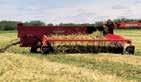
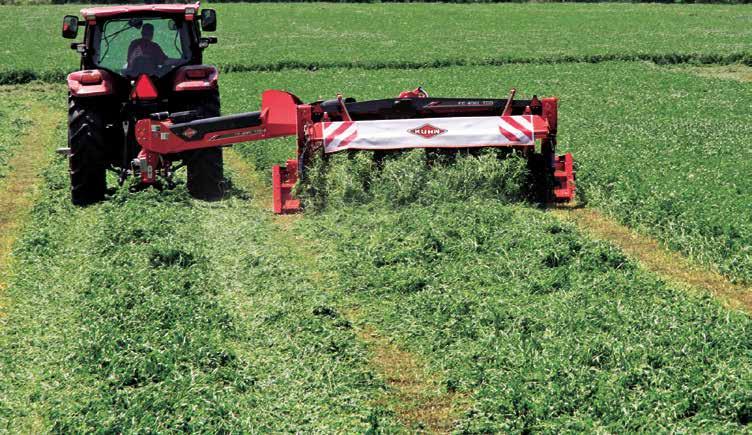
Conditioners INVEST IN QUALITY ® www.kuhn.com Farmers’ Implement Allenton D & D Farm Supply Arcadia Cherokee Garage Colby Beaver Machine Coleman Kalscheur Implement Cross Plains Komro Sales & Service Durand Eron Equipment Junction City Luxemburg Motor Co. Luxemburg Riesterer & Schnell Marion Lulich Implement Mason Lindstrom Equipment Mondovi East Side Farm Equipment Monroe Midwest Machinery Co New Richmond Steinhart Farm Service Platteville Gruett’s Inc. Potter Gibbsville Implement Waldo Carl F. Statz & Sons Waunakee A.C. McCartney Durand, IL Peabudy's North Pecatonica, IL Visit your local KUHN Hay and Forage Dealer today! THE HAY AND FORAGE TOOL SPECIALISTS Mowers Mergers Rotary Rakes Wheel
Tedders Harvesting high-quality hay and forage is the focus of KUHN's hay tool innovation. Our commitment is to help you gain a maximum return on investment by providing products known for performance, reliability, and longevity. THE MOST
time,
and improve
Mower
Rakes
COMPLETE HAY LINE Cut • Dry • Harvest Save
money
hay quality with KUHN.


















For additional stories from our other zone, log on to www.dairystar.com Dairy Star • Saturday, September 9, 2023 • Page 3 Dairy Checkoff Reform Proposal seeks to divert portion of dollars to food banks First Section: Pages 1, 8 Taylor, WI Kids Corner: The Mogas Third Section: Pages 10 - 11 Spencer, WI UW-River Falls students win new product competition First Section: Page 9 River Falls, WI Dairy’s Working Youth Third Section: Page 9 Barron, WI What do you enjoy about your position as a milk hauler? First Section: Pages 15 -16 FROM OUR SIDE OF THE FENCE: Zone 2 Zone 1 Larsons carry on family tradition with high-producing herd, top-notch people Third Section: Pages 2 - 4 Evansville, WI Deafness not a deterrent for Rickert First Section: Pages 1, 6 - 7 Eldorado, WI 7 generations of work, success First Section: Pages 31 - 32 Lyndon Station, WI Dairy Prole First Section: Page 33 Norwalk, WI Women in Dairy First Section: Page 29 Fennimore, WI Columnists Ag Insider Pages 2, 5 First Section Pa Fir Fi s Ramblings from the Ridge Page 36 First Section Ram fro R Pa The “Mielke” Market Weekly Pages 6 - 7 Second Section Veterinary Wisdom Page 37 First Section Vet V W Pa Firrs From the Zweber Farm Page 38 First Section F Zwe P Fir Country Cooking Page 22 Second Section y n C C P The NexGen Page 39 First Section COMPLETE MANURE EXPERTS We are your “Waste System Specialists”! Hull, IA • (712) 439-2081 Watertown, SD • (605) 753-0300 www.automatedwastesystems.com

















Page 4 • Dairy Star • Saturday, September 9, 2023 S ONE SHO • 9 EMOLLIENTS - Ultimate teat conditioning • USE PRE & POST • GREEN COLOR for High-Vis Marking Max Protection until the next next milking D UA L G E R M I C I D E DUAL GERMICIDE C H LO R I N E D I OX I D E CHLORINE DIOXIDE THE PREMIER GERMICIDE ON THE MARKET economical and more effective than iodine! SAVE UP TO $1/GALLON over Iodine! FOR MORE INFO - CONTACT ONE OF THESE DEALERS... Lang’s Dairy Equipment, Inc. 2337 Millennium Rd. • Decorah, IA 52101 (563) 382-8722 295 East Main Street • Lewiston, MN 55952 (507) 452-5532 Precision Dairy Equipment 24548 IA-13 • Elkader, IA 52043 (563) 245-2560 Tri-County Dairy Supply, Inc. 4107 N US HWY 51 • Janesville. WI 53545 608-757-2697 Bob’s Dairy Supply 540 E. County Rd. A • Dorchester, WI 54425 (715) 654-5252 Anderson Dairy Systems, Inc. 1312 13 1/2 Ave. • Barron, WI 54812 (715) 537-3300 Eastern Iowa Dairy Systems 105 3rd Ave. NW • Epworth, IA 52045 (563) 876-3087 Farm Systems 58 Interstate Drive • Melrose, MN 56352 Brookings SD • (320) 256-3276 Leedstone 222 E Co Rd 173 SE, Melrose, MN 56352 (877) 608-3877 24260 Cty. Rd. 27 • Plainview, MN 55964 (800) 548-2540 1720 Freitag Dr. • Menomonie, WI 54751 (866) 467-4717 2580 9th St. E. • Glencoe, MN 55336 (877) 864-5575 Fuller’s Milker Center, LLC 423 U.S. 61 • Lancaster, WI 53813 900 US Hwy. 14 West • Richland Center, WI 53581 (800) 887-4634 Gorter’s Clay & Dairy Equipment 1400- 7th St. SE • Pipestone, MN 56164 (507) 825-3271 Redeker Dairy Equipment W12287 Liner Rd. • Brandon, WI 53919 (920) 346-5576 United Dairy Systems 210 N. Industrial Pkwy • West Union, IA 52175 (563) 422-5355 132 W 11th St. • Monticell, IA 52310 (319) 465-5931 Advanced Dairy LLC 9 State Rd. 29 • Spring Valley, WI 54767 (715) 772-3201 913 W. Main St. • Mondovi, WI 54755 (715) 926-5777 967 West Ave. N • West Salem, WI 54669 (608) 633-6690 2195 Hwy. 23 • Mora, MN 55051 (715) 772-3201 117 West Circle Dr. • St. Charles, MN 55972 (507) 932-4288 1449 Homecrest Ave SE • Wadena, MN 56482 (218) 632-5416 THE NEXT GENERATION IN ON-FARM WATER TREATMENT Chlorine Dioxide Technology HIGHLY EFFECTIVE AGAINST: Prototheca • Staph Aureus Mycoplasma • Pseudomonas Dirty Water? • Respiratory Issues • Scours • Crypto • Salmonella • E-coli GREATLY REDUCED: Pure 3000 CLEAN IT UP WITH Removes IRON, MANGANESE and SULFUR in water! HEALTHIER CALVES HEALTHIER COWS WEAVER Equipment, LLC. has been dedicated to providing dairy stalls and crowd gate solutions since 1994. Our current lineup includes various stall systems, flexible cabinet designs, CIP drawers and cabinets as well as several crowd gate options. Our focus continues to be to provide solid craftsmanship, designs, and services combined with obvious cow comfort features so every farmer has maximum uptime and production. PARLOR STALLS (800) 887-4634 | Dairy Supply Online: www.dairysupplyonline.com 423 US Hwy 61 N Lancaster, WI 53813 900 US Hwy 14 W Richland Center, WI 53581 www.a lb any Ch rys l er.com www.a lb any Ch rys l er.com www.a lb any Ch rys l er.com www.a lb any Ch rys l er.com www.a lb any Ch rys l er.com www.albanyChrysler.com www.albanyChrysler.com www.albanyChrysler.com www.albanyChrysler.com www.albanyChrysle r.com www.albanyChrysler.com www.albanyChrysler.com www.albanyChrysler.com www.albanyChrysler.com www.albanyChrysler.com www.albanyChrysler.com 34650 225th Ave. - Albany, MN 56307 320-845-2801 • 800-392-3426 SALES HOURS: Mon.-Thurs. 8:30 AM - 7:00 PM; Fri. 8:30 AM - 6 PM; Sat. 8:00 AM - 3:00 PM SERVICE HOURS: Mon.-Fri. 7:00 AM-5:00 PM; Sat. 7:00 AM - 1:00 PM 2021 RAM 1500 NIGHT EDITION 2021 RAM 2500 BIG HORN 2020 RAM 1500 BIG HORN UT5147, One Owner, 6.5ft Box, Hemi Engine $46,990 UT5086, One Owner, 8.4inch Touch Screen Radio, Anti-Spin Rear Axle $38,990 UT5118, Blind Spot, One Owner, Back-Up Camera $47,990 UT5071, One Owner, 5.7l Hemi V8, Black 20 Inch Wheels $42,990 UT5117, One Owner, Touch Screen Radio, Back-Up Camera $36,990 UT5149, One Owner, 3.6l VVT 6 Cylinder Engine, Gun Box $49,990 2019 RAM 1500 LAR AMIE 2020 RAM 1500 NIGHT EDITION 2023 RAM 1500 BUILT TO SERVE SPECIAL EDITION
Con nued from AG INSIDER | Page





Hastings Creamery reverberates through dairy community
The closure of the Hastings Creamery has left dairy farmers on both sides of the river without a place to sell their milk. “About 14 or 15 producers that are involved with Hastings are from Minnesota, but the majority, 25 or 26, are from Wisconsin,” said Minnesota Agriculture Commissioner Thom Petersen. The Minnesota Department of Agriculture and Wisconsin Department of Agriculture, Trade and Consumer Protection are trying to nd a home for the milk displaced by the closure, but most dairy processors are already operating at capacity.
Interest rate hikes likely
The Personal Consumption Expenditures price index rose 3.3% in July. That’s up from 3% in the June report. This rate is down from the peak of 7% last summer, but it remains well below the 2% growth rate sought by the Federal Reserve Bank. The ination rate is being monitored closely as the Fed considers additional interest rate increases.
Hurricane impacts butter market
As Hurricane Idalia hit the Southeast, cream volumes were redirected away from the southern states. As a result, Total Farm Marketing’s market update suggests cream is more readily available. That could keep short term pressure on the butter market.
Trade advisory committees appointed


The U.S. Department of Agriculture has announced the members of its Agricultural Policy Advisory Committee. The list includes Michael Dykes of the International Dairy Foods Association and Jim Mulhern of the National Milk Producers Federation. The Agricultural Trade Advisory Committee in Animals and Animal Products membership includes Jaime Castaneda of the National Milk Producers Federation, Cassandra Kuball of Edge Dairy Cooperative, Michael Lichte of Dairy Farmers of America, Ken Meyers of MCT Dairies, Patricia Smith of Dairy America and Chad Vincent of Dairy Farmers of Wisconsin.
Sustainably produced


Canola is grown primarily for the oil, but the Canola Council of Canada is also advocating canola meal as part of
the dairy ration. CCC Canola Utilization Director Brittany Wood said cows fed canola meal as the primary protein source produce more milk. Canola meal is also promoted as a sustainably produced dairy feed. “We have done some research to look at methane emission when cows are fed canola meal, and we have ndings that support that canola meal-fed cows are producing less methane than when fed other protein ingredients, say soybean meal, for example,” Wood said.
Jones picked for FDA post
Jim Jones has been appointed as the rst deputy commissioner for human foods at the Food and Drug Administration. Most recently, Jones has led his own environmental consulting rm. He previously spent more than 30 years at the EPA.
Edge adds Hensley to team
Laura Hensley is the new communications lead for Edge Dairy Farmer Cooperative. Most recently, Hensley was an account director at a Wisconsin marketing agency called C.O.Nxt.
WBA recognizes Bock, Kujawa
The Wisconsin Bankers Association has presented its Leaders in Banking Excellence Award to Michael Bock and the late John Kujawa. Bock is with the Dairy State Bank at Rice Lake. Kujawa was the president emeritus at Farmers and Merchants Bank of Berlin.
UWRF honors Graham
Dr. James Graham is the rst recipient of the University of Wisconsin-River Falls Excellence Award in Service. Graham is a professor of agricultural education.
Trivia challenge
On average, Americans consume 1.4 servings of dairy products every day. That answers our last trivia question. For this week’s trivia, what is a turophile? We will have the answer in our next edition of Dairy Star.
Don Wick is owner/broadcaster for the Red River Farm Network, based in Grand Forks, North Dakota. Wick has been recognized as the National Farm Broadcaster of the Year and served as president of the National Association of Farm Broadcasting. Don and his wife, Kolleen, have two adult sons, Tony and Sam, and ve grandchildren, Aiden, Piper, Adrienne, Aurora and Sterling.
Dairy Star • Saturday, September 9, 2023 • Page 5 www.midwestlivestock.com ZUMBROTA, MN 800-233-8937 RENNER, SD 605-274-3656 MENOMONIE, WI 715-235-5144 F A N S | G A T E S | S T A L L S | H E A D L O C K S | R U B B E R | C U R T A I N S | M A N U R E S Y S T E M S Celebrating 50 years in business! Hinsch Dairy, Goodhue, MN
TURNER VERTICAL LIFT UPDATE BEFORE AFTER 608-524-9958 » www.forwardfarmlines.com RUGGED, RELIABLE, and ECONOMICAL
2X8
2
320-836-2145 or 800-450-2145 www.famofeeds.com Check out our newly redesigned website to nd a Famo Feeds dealer near you! At Famo Feeds, we strive to provide the best support for your operation and work to accommodate your specific needs. From calf to cow and everything in between! TRUST THE EXPERTS • Milk Replacers • Starter Feeds • Protein Concentrates • Premixes • Minerals • Animal Health Products • Lick Tubs FEED THEM FAMO!
Repair vs. Replace
Electronic Dairy Board Repair Service
Specializing in: WestfaliaSurge, BouMatic, & DeLaval pulsators & Takeoffs, circuit boards, Mueller milk tank circuit boards.


Call: (c) 406-590-7764 www.circuit xer.wixsite.com/
Andrew is the fourth generation on his family’s farm that dates back to 1936. Over the last decade, he has been transitioning into an owner. Andrew currently works full time on the farm and also hauls the farm’s milk in addition to working full time at Saputo. Andrew manages heifers and steers, helps with eldwork and manure hauling, and also hauls and chops straw and hay for feed preparation.
When Andrew got his commercial driver’s license, the farm bought three tankers. He recently helped another farm start hauling their own milk and assists them in taking their milk in. Most days, he hauls three or four loads.
He also works 12-hour shifts at Saputo from 6 p.m. to 6 a.m. 15 nights per month. Starting in the cheese plant, Andrew now works in the intake department.
“The job provides health insurance for my family,” Andrew said.
Being a part of the deaf community is how Andrew met Shannon, who is an American Sign Language-certied interpreter. The couple met in Milwaukee in 2006 at a comedy show for deaf people and interpreters. Four months later, they were engaged.
Shannon interprets in the community in all facets — from factories and hospitals to schools, theaters and retailers. She previously worked at the University of Wisconsin-Milwaukee for 14 years and began freelancing in the community when Andrew started working at Saputo.
When he was 4 years old, Andrew received a cochlear implant which restored his hearing to about 75%. He was the youngest person in Wisconsin at the time to have the procedure, which was done in Indianapolis in 1987.
“It was pretty scary,” Kelly said. Jim agreed.
“The operation was considered experimental at the time, and there was no place around here that did it,” he said.
Andrew’s response to the implant was instantaneous.
“You could see it in his eyes when they hooked it up and he could hear again,” Kelly said.
The following months were lled with Andrew trying to learn different


year later,

could recognize what the sounds were, and it made sense to him.
“He could even hear a dog barking in the house next door,” Kelly said. “When we were in a store, he could hear people talking on the intercom and would ask, what did they say?”
The Rickerts went back and forth to Indianapolis many times for checkups.
“Rehab was an indescribable amount of work,” Jim said. “They tested sounds to set a map on the implant while determining which sounds were too loud and which were too quiet.”
Andrew’s hearing is different from someone who is not deaf, Kelly said. He hears in tones, amps and frequency which have been adjusted as needed. He can hear 16 different tones. Electrodes were placed into the cochlea during the operation, and the internal piece implanted is the original. The external device is replaced every ve years.
“This is the only thing I’ve ever known,” Andrew said. “Without the external device, I can’t hear anything.”


He turns the device off when he is on the farm because it will short out with moisture or dirt. He will put it on for meetings and other occasions.
Andrew began signing as soon as his parents discovered he was deaf.
“The whole family learned how to sign too,” Kelly said. “We all took a class.”
Not only did Andrew’s parents and younger brother, David, learn how to sign, but so did grandparents, aunts and uncles. Andrew relied not only on signing to communicate, but he also read lips and talked.
After learning sign language so she could communicate with her son, Kelly decided to make a career out of signing and became a licensed educational sign language interpreter. She has been interpreting in schools since 1994.
Growing up, Andrew attended a grade school in Oshkosh that had a regional deaf program. From fth through eighth grade, he went to a local school that had an interpreter. His high school years were spent at Winnebago Lutheran Academy where his mom
Page 6 • Dairy Star • Saturday, September 9, 2023 507-879-3593 – 800-821-7092 Box 116, Lake Wilson, MN 56151 – www.bluehilltop.com 507-879-3593 – 800-821-7092 Box 116, Lake Wilson, MN 56151 – www.bluehilltop.com Blue Hilltop, Inc.
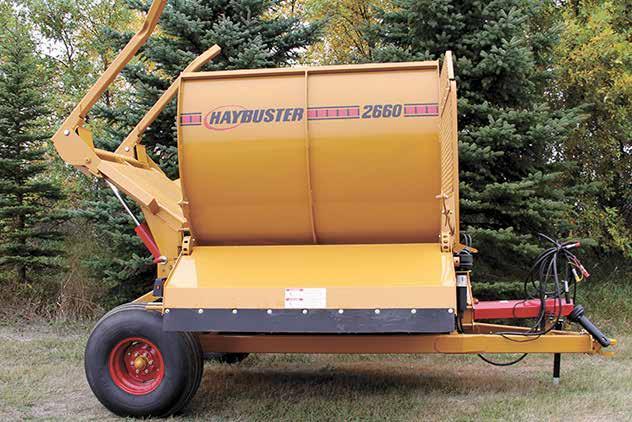
2660 BALEBUSTER BALEBUSTER
With big bales getting bigger and heavier, the 2660 has been made even more durable than previous models. Featuring an increased diameter of the rotor shaft and bearing, as well as the conveyor shaft. The chain attachment to the slats is more durable. Also, the width of the table has been increased to eliminate dead spots where material can build up. The loader forks have been moved over to help center the bale while loading in the bale chamber.
www.LangeAgSystems.com Specializing in Livestock Equipment and Construction, New and Used Bagging Machines, Silage Bags, Bunker Covers and Grain Storage!
boumaticboardrepair
Con nued from RICKERT | Page 1 Turn to RICKERT | Page 7
STACEY SMART/DAIRY STAR
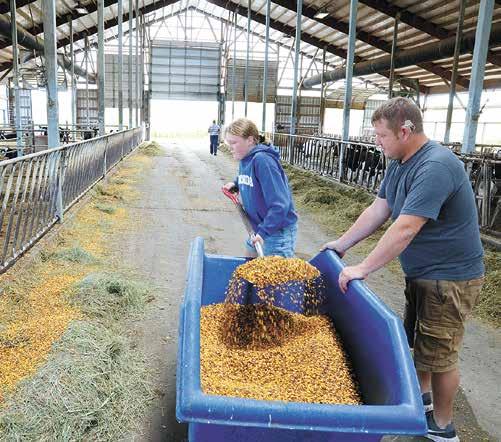
Emma Rickert feeds grain to calves Aug. 17 while her dad, Andrew, pushes the feed cart on their farm near Eldorado, Wisconsin. When he was 4 years old, Andrew received a cochlear implant, which restored his hearing to about 75%. sounds. A
he
was his interpreter. She interpreted for Andrew for two years until he told her he wanted to be on his own. Andrew was the third generation in his family to attend the University of Wisconsin Farm and Industry Short Course where he also had an interpreter.

Andrew’s oldest two children, Miles and Emma, know the basics of sign language, and Jonah and Micah are always learning more signs. When communicating with their dad, Andrew’s children use gestures when needed, but Andrew said he understands his family well because he is around them all the time. Texting is another form of communication that has been a great help to Andrew.
“Texting puts him on the same level with other people,” Kelly said.

Never content to settle for mediocre, Andrew was a go-getter who always pushed himself to achieve everything he was capable of. He was successful at showing cattle and consistently placed near the top or took rst place in showmanship. In 2001, he took reserve champion of the junior show at Wisconsin Championship Show.
“We were blessed with being able to have a cow board at Tom and Kelli Cull’s of Budjon Farms and be in their show string,” Andrew said. “Showing allowed me to meet famous people in the industry.”
Andrew was also active in Junior Holsteins, and in 2004, he was one of six youth in the nation to be named a Distinguished Junior Member by Holstein Association USA, the highest honor given to a Junior Holstein member. Andrew was also named Wisconsin Outstanding Holstein Boy that year.

Andrew’s deafness impacted and inspired those around him. For example, one of his 4-H friends became an audiologist because of her friendship with Andrew.

Involved in 4-H and Junior Holsteins, Andrew’s children are following in their father’s footsteps. They show dairy and beef cattle, and each one showed a steer they sold at the meat auction this summer at their county fair. Miles won the 3-year-old quality milk award, and Micah won reserve champion at little britches show in the 6-year-old division. The kids also partake in the fair’s pedal tractor pull. Miles has participated in dairy bowl since age 8 and went to state for dairy judging.
The kids are also involved in many sports, including basketball, baseball, volleyball, soccer, softball and ag football. Emma’s dream is to play volleyball at the University of WisconsinMadison and attend vet school there.


Miles, Andrew’s oldest son, covers a lot of his dad’s work on the farm when Andrew is hauling milk or working at Saputo. This includes cleaning heifer barns, giving calves feed, hauling manure, running the footbath, bedding animals and helping check postfresh cattle on weekends.
Andrew’s busy lifestyle is lled with his family and the farm and other facets of the dairy industry. Determined to excel, Andrew was never concerned with what he did not have, and instead, he fully utilized the gifts and talents he did have.





“If I encountered a challenge while growing up, I always found a way to overcome it,” Andrew said. “I always felt like everyone else.”
Dairy Star • Saturday, September 9, 2023 • Page 7 ★ TrelleborgLugGeometryprovides premiumfeedcompactionandtillagetraction ★ On-Farm Tire&Wheel Service VeteranOwned&OperatedSince1983 SaleEnds09/22/23CashorGoodCheckPrices SILAGETRUCKTIRE&WHEELPACKAGES BUNKERRIMS Deeplugsformaximumtraction FallTire ‘’SweetSpot’’ Rebuild your packing tractor rims! 4tiresonhubpilotrims Alliance331 600/40x22.5$6,350 600/50x22.5$6,995 700/40x22.5$7,200 TrelleborgT423 620/50x22.5$7,850 650/45x22.5T440$6,200 40mph SharpAngelsforPackingTightly NewInStock 71070R42 Trelleborg TM-900 18@$3,675 Allaince AgriStarII 16@$2,250 New ChangeOver 71070R42 Firestone MaxiTrac 4@$2,550 Trelleborg VF80070R38 16@$3995 NewTires InStock RebatesAvailable RebatesAvailable Con nued from RICKERT | Page 6 Call Us At (715) 223-3361 Or visit us on-line at www.cloverdaleequip.com N13835 County Rd. E - Curtiss, WI 54422 HOME OF THE CLOVERDALE MIXER IN STOCK EQUIPMENT! McHale V6750 4 IN STOCK McHale V660 3 IN STOCK New Anderson Hybrid X New Anderson RB200 Artex SB450 & Hoosierland 1450 ALSO IN STOCK: Artex SB200 & Hoosierland 1300
ST R






















Con nued from CHECKOFF | Page 1








Under Olson’s proposal, the parent food bank would oversee distribution of money to local food banks and soup kitchens with this money earmarked to be used for dairy products only. Producers in every state would choose where the 2 cents is sent and would also have the choice to pull it from their state checkoff or national checkoff.




“Checkoff dollars would be diverted for a better use under my proposal,” Olson said. “It’s going to move a lot of dairy product versus what the money is doing now. Right now, it’s pretty much just advertising. But it’s a form of advertising too when you’re getting milk, cheese, yogurt and ice cream in front of people.”
Olson was invited to the Congressional Agriculture Committee Meeting held in La Crosse Aug. 16. The


hearing was a listening session with members of Congress on farm bill priorities to learn what farmers would like to see changed in a farm bill. Olson’s proposal was sent home with members of Congress that day. The proposal is also being sent to all 51 members of the House ag committee.
“This proposal can stand alone,” Olson said. “It doesn’t have to be done through the farm bill.”

DPA is looking for signatures of support for the Dairy Checkoff Reform Proposal to present to Congress. Dairy producers and consumers can sign the proposal on DPA’s website.





“We hope to get as many signatures as we can,” Olson said. “I urge dairy farmers to sign this proposal and help put our checkoff dollars to good use.”

Page 8 • Dairy Star • Saturday, September 9, 2023 ARCADIA, WI D&D Farm Sup. 608-323-7001 DECORAH, IA Lang’s Dairy Equip. 563-382-8722 FREEPORT, MN Arnzen Construction 320-836-2284 Hartung Sales & Serv. 320-836-2697 JANESVILLE, WI Tri-County Dairy Sup. 608-757-2697 LANCASTER, WI Fuller’s Milker Center 800-887-4634 LEWISTON, MN Lang’s Dairy Equip. 507-452-5532 MARSHFIELD, WI Podevels Farm Serv. 715-384-6193 800-742-5748 MELROSE, MN Farm Systems 320-256-3276 MENAHAGA, MN Dairyland Equip. 218-564-4958 MT. HOREB, WI The Scharine Group 608-437-5557 PENNOCK, MN D&D Ag Supply & Construction 320-599-4466 RICHLAND CENTER, WI Fuller’s Milker Center 800-887-4634 ROCK VALLEY, IA Prairie Land Ag Sup. 712-476-9290 SAUK CENTRE, MN Dairyland Supply 320-352-3987 800-338-6455 SPARTA, WI Preston Dairy Equip. 608-269-3830 ST. CHARLES, MN Advanced Dairy 507-932-4288 WEST UNION, IA United Dairy Systems 563-422-5355 WHITEWATER, WI The Scharine Group 608-883-2880 WITHEE, WI Hoover Silo Repair 715-229-2527 www.jdmfg.com Family Owned & Operated in Eau Claire, Wisconsin Where to buy : : #RequestTheTest RequestTheTest Something new is coming... YOU DESERVE MORE makes the best fans in the world. SUPER MAGNUM
Find up-to-date dairy industry information right in your mailbox. Features from the barn, markets, columnists, profiles, opinions from your neighbors and timely dairy information Subscribe Today! ONLY $40.00 FOR A 1-YEAR OUTSIDE THE U.S. $120 Clip & Mail with Payment: DAIRY STAR 522 Sinclair Lewis Ave. • Sauk Centre, MN 56378 Name ________________________ Address______________________ City__________________________ State________ Zip________________ A Gift from: all“Alldairy, the time”™ The Dairy Star is currently sent out free to all registered dairy producers in Minnesota, Iowa, North Dakota, South Dakota, Wisconsin, Norther IL and UP Michigan. DAIRY
or Scan to Subscribe!
A smooth dose of dairy
UW-River Falls students win new product competition
By Abby Wiedmeyer abby.w@dairystar.com
RIVER FALLS, Wis. — Five University of Wisconsin-River Falls students were recognized July 17 as winners of the 2023 Dairy Management Inc. New Product Competition with their original dairy product, RootCurd.
Dr. Rohit Kapoor, vice president of product research at DMI, said the goals of the competition are to inspire the next generation of dairy scientists and to fuel product innovation into the marketplace.
“You may not end up seeing the exact same products which win these competitions as such, but processors always keep an eye out,” Kapoor said. “They get inspired by these concepts.”
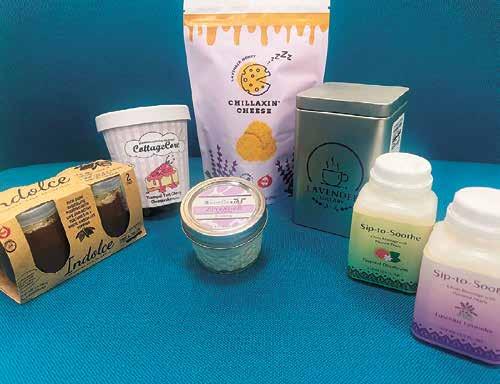
The competition is based on a specic theme each year that is grounded in consumer research and trends. This year, the competition was focused on creating a dairy product that had calming effects, since consumers are constantly looking for products to enhance their emotional and mental well-being.
The winning team was comprised of ve undergraduate students: Kate Petersen, Yihong Deng, Rafael Larosiliere, Anna Euerle and Ashley Gruman.
RootCurd is a smooth pudding featuring root curry and lavender that contains 89% dairy ingredients.
Gruman said the process for creating a new product from start to nish provided many learning opportunities.
“The biggest takeaway from the competition was having all these ideas, excitement and energy to create this product but you always forget about all the issues you’re going to run into and all the things you’re going to have to overcome,” Gruman said. “It took a lot of patience and trial and error.”
The team started ideating in October 2022. They narrowed their ideas to two products and eventually went ahead with the product they thought would turn out the best. They used the test kitchen at the university and met every week to research and experiment with prototypes.
Once they decided on the concept of RootCurd, they ran into challenges, especially achieving the desired puddinglike consistency. After weeks of trial and error, they determined that even minor components like the rate of heating in the
pan and the storage temperature of ginger were all having an effect on the product.
“That was one of our biggest challenges,” Gruman said. “Once we gured that out, things went pretty smoothly.”
Another aspect of the product that coincided with consumer trends is the clean label. RootCurd is made up of ve ingredients, all of which are considered wholesome and nutritious. It is sweet with a little spice and boasts a high-protein, low-calorie content that includes 20 grams of protein. It comes in a yogurtsized package.
The team’s advisor, Dr. Grace Lewis, said that they would follow the exact same procedure for weeks and end up with different results. The nal product report was due in April, by which time the team had worked out all the kinks.
“The students overcame a lot of challenges along the way,” Lewis said. “They worked really hard.”
The competition provides real life experience to students who are all on the path to a food science career. Lewis said one of the students on the team was able to bypass the rst round of interviews when joining the industry because of their contest experience.
“Going through this process is so fundamental for the real-world experience that many companies require for entry-level positions,” Lewis said. “The industry recognizes this competition as some initial experience.”
Kapoor agreed.
“The larger impact is the type of ex-
perience that Ashley and her team members get with the whole process of trying to nd a solution when you are kind of stuck in a rut,” Kapoor said. “Those are real life experiences of what a food scientist would experience in the industry when they are working for a company.”
The winning team was awarded an $8,000 cash prize to split between the ve members. Gruman said this will help those continuing on to graduate school, like she is, and provide a head start for those heading to the workforce.
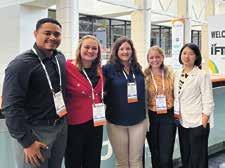
The top three participating teams were able to attend the Institute of Food Technologists’ FIRST (Food Improved by Research, Science and Technology)
conference in Chicago where winners were announced. Lewis said she is grateful for DMI supporting a portion of the travel cost to help make the experience possible since the event offers a good networking opportunity for the students.
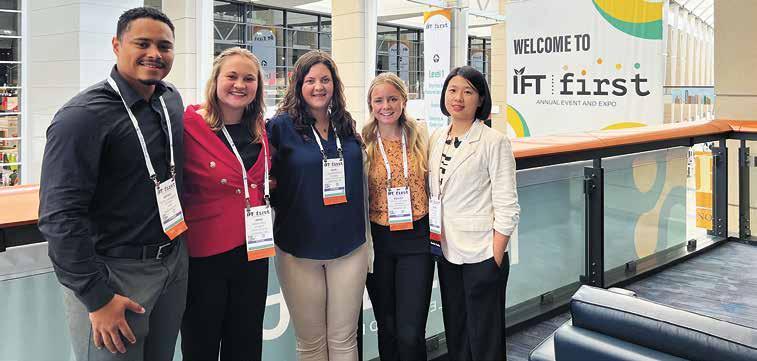
Kapoor said the competition is further fueled by the participation of industry sponsors who served in the competition as judges.
“We are very proud that our dairy farmers have recognized that this has a signicant value and continue to support this competition,” Kapoor said. “It’s a perfect collaboration between dairy farmers and the processors to realize this great initiative.”
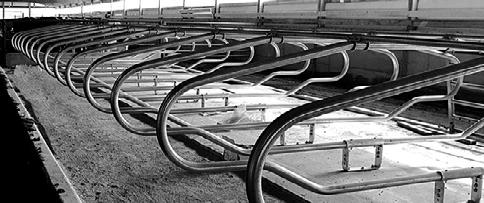
Dairy Star • Saturday, September 9, 2023 • Page 9 PARLOR STALLS • STALL SYSTEMS • CABINETS • CIP DRAWERS • CROWD GATE “Cows flow through the parlor well and I like that the parlor is run on air. The cabinets keep the electrical protected and out of the way, but can be easily accessible if needed. Fuller’s helped us develop our vision and provide us phenomenal service.” Jenny Toberman • Bagley, WI WEAVER PARLOR INSTALLED 2020 (800) 887-4634 | Dairy Supply Online: www.dairysupplyonline.com 423 US Hwy 61 N Lancaster, WI 53813 900 US Hwy 14 W Richland Center, WI 53581
PHOTO SUBMITTED
Five University of Wisconsin-River Falls students — Rafael Larosiliere (from le ), Anna Euerle, Kate Petersen, Ashley Gruman and Yihong Deng — celebrate July 17 as winners of the 2023 Dairy Management Inc. New Product Compe on with their original dairy product, RootCurd. The product is a smooth pudding featuring root curry and lavender.
ABBY WIEDMEYER/DAIRY STAR RootCurd (front, center) pudding was the winning product in the 2023 Dairy Management Inc. New Product Compe on produced by a team of ve students from the University of Wisconsin-River Falls. Its sweet and spicy avor featured soothing lavender and root curry and is made with 89% dairy ingredients.
Advanced kernel processing is the secret to a perfect dairy dinner. Experience KP Rolls with square-edged tooth engineering. They serve up the feast—fair and square.
Iowa, North Dakota legalize sales of raw milk
A dairy producer, legislator, veterinarian weigh in
By Stacey Smart stacey.s@dairystar.com
Editor’s note: Dairy Star aims to provide our readers with a closer look into relevant topics to today’s dairy industry. Through this series, we intend to examine and educate on a variety of topics. If you have an idea for a topic to explore in a future issue, send Stacey an email.
HARLAN, Iowa — After nearly two decades of trying to legalize the sale of raw milk in Iowa, supporters of this legislation nally saw success July 1.
On that day, farm-to-consumer sales of raw milk in liquid form became legal in the Hawkeye State.
“It was high time this type of legislation be passed,” said Esther Arkfeld, who owns and operates De Melkerij micro-dairy near Harlan. “Raw milk has nally become a topic that can be openly discussed. Now that laws have changed, this opens things up for us, and our customers are much happier.”

Working closely with Sen. Jason Schultz, who had been leading the raw milk bill for 17 years, Arkfeld played a role from a grassroots perspective in helping that legislation pass.
717.354.5040




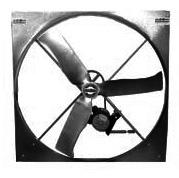
55” Panel Fans

“It’s more of a people’s bill allowing that neighbor-to-neighbor transaction; it wasn’t a producers’ bill,” Arkfeld said. “This bill would not cover larger producers, but the law does allow small farms to be able to meet a niche demand.”
The law in Iowa states that a herd can only have 10 active lactating animals. Arkfeld milks four A2A2 Jerseys and has been running a herdshare program for about 1.5 years. Customers buy shares of a cow, and each share entitles a person to 1 gallon of raw milk each week. Customers can purchase multiple shares or half shares. They also pay a monthly boarding fee for every share to pay for the care of their cow.
Arkfeld has more than 20 customers, and each one buys anywhere from 1 to 3 gallons of milk per week. Arkfeld doubled in size from two to four cows around the time the legislation passed.
“We’re very small in the dairy world, but our biggest objective is quality over quantity,” Arkfeld said. “I have a long waiting list and could add to my herd and be up to 10 cows, but I want to make sure our quality doesn’t suffer. I don’t want to overextend ourselves.”
• The highest air ow in a circulation fan - 33,900 CFM.
• Cast aluminum blades have a lifetime warranty.
• Totally enclosed maintenance free, high ef ciency motors have a full two year warranty.

Model VP CA: Belt Drive, 1 HP, 115/230 volt, 9.6/4.8 amps single phase one speed 587 rpm
To ensure the milk she sells is safe for human consumption, Arkfeld follows strict protocols. Under mentorship of the Raw Milk Institute, she has put a risk analysis plan in place and conducts bacteria testing multiple times per month to ensure her processes are working. Yearly health testing of animals and proper veterinary care are also part of the puzzle, she said.
“The Raw Milk Institute is a wonderful resource whether you’re milking just one cow for your family or milking 600 cows,” Arkfeld said.
Arkfeld’s farm is currently the only Raw Milk Institute-certied dairy in Iowa.
“I comply with their certication and testing requirements,” Arkfeld said. “Our Iowa law has incorporated testing requirements, but mine are a little stricter.”




On Aug. 1, on-farm raw milk sales became legal in North Dakota as well. Like in Iowa, farms are free to sell milk directly to the customer for his or her own personal consumption. The bill was sponsored by Rep. Dawson Holle. Holle and his family milk 900 cows on their fthgeneration dairy farm near St. Anthony. Holle believes the new law presents opportunities to North Dakota’s dairy farmers.
“It opens the area of family farms to be scalable once again,” Holle said. “You don’t have to have a 1,000-cow dairy; you can have a 100-or-less-cow facility.”
Holle said he has seen raw milk sell for $15 to $20 per gallon.
“You don’t need that many cows when producing raw milk,” he said. “It cuts out the middleman and just benets the customer and farmer. The farmer gets as much bang for their buck.”
According to the North Dakota Department of Agriculture, as of July 1, there were 33 Grade A dairy farms in North Dakota.
“The number of dwindling farms in North Dakota is another reason I introduced this bill,” Holle said. “We lose one to two farms every year, and we have to do something about it. That’s one of the reasons I decided to get involved in legislation in the rst place.”
Before raw milk sales were legal in North Dakota, the state offered a herdshare program.
“That idea is not really scalable,” Holle said. “You either do a herdshare program or sell your milk to a processor. There was no area for any of those small-town farmers wanting to milk 10 to 40 cows. There was no way to make money.”
When over 50 people came to testify in favor of raw milk at a hearing, Holle said he knew the demand for this product was large.
“These people drank raw milk and thought it was crazy you can’t buy it unless you own a share,” Holle said. “I saw this raw milk movement taking place. The support it had was amazing.”
Holle also sees the legalization of raw milk as a benet to the small-town community.
“When people realize their food is shipped from out of state or from different parts of the state into their local towns, they want to do their part to support the area surrounding them,” Holle said. “If they are supporting local dairy farms, then hopefully the community as a whole will see a rise in economic activity.”
Drinking raw milk comes with potential risks, and many public health experts discourage its consumption.
“There are many different bacteria and parasites in raw and unpasteurized milk, and some can be very serious, even fatal,” said Dr. Joni Scheftel DVM, MPH, DACVPM. “This is why we recommend milk be pasteurized because it kills all the pathogens that can make you sick.”
Scheftel is the state public health veterinarian at the Minnesota Department of Health and supervisor of their Zoonotic Diseases Unit. Scheftel said the most common bacteria people get from drinking raw milk is Campylobacter, which causes fever and diarrhea. About 20% of people with this infection are hospitalized, but deaths are rare.

The most serious bacteria found in raw milk is E.coli O157, Scheftel said. The effects of this bacteria are often most detrimental to children who encounter it.
About 34% of people with E.coli O157 are hospitalized. Approximately 14% of children less than 5 years of age and 9% of children 5 to 9 years of age go on to develop a serious complication called Hemolytic Uremic Syndrome. HUS results in destruction of red blood cells and kidney failure, potentially requiring blood transfusions, dialysis and kidney transplants. Some children do not survive.
Parents whose children were in the hospital with HUS infections have told Scheftel statements such as, “I thought I did my homework. I thought I understood the risks, but I never knew how sick my child could get from drinking raw milk.”
“I’ve heard those words many times,” Scheftel said. “No matter how clean a farm is or how careful farmers are with their equipment, these germs are a natural part of cow manure and may accidentally get into milk. This is why we pasteurize milk — to make it safe to drink.”
Although she does not recommend people drink raw milk, Scheftel said she is not against the raw milk law in Minnesota which allows on-farm sales.
“If you want raw milk, you can go to a farm and pick it up,” Scheftel said. “This limits the number of people consuming raw milk, and the law is fair, because there is such a strong demand for it. However, I would be totally against the sale of raw milk at the retail level.”
In both Iowa and North Dakota, raw milk may not be sold at the retail level as it is in some states, such as California and Pennsylvania.
In Iowa, Arkfeld plans to continue with her herdshare program rather than selling direct to the consumer.
“Herdshare allows me to know how much milk to produce because I know how much milk my customers need
Page 10 • Dairy Star • Saturday, September 9, 2023
| New Holland, PA
A CLOSER LOOK
Turn to RAW MILK | Page 11
Esther Arkfeld Dairy farmer
Rep. Dawson Holle North Dakota
Dr. Joni Scheftel DVM, MPH, DACVPM MN Dept. of Health
Shawn Plaff Plaff Public Affairs
133 Atlantic Ave. NE • Pennock, MN 320-599-4466 NEW High Pressure Fog Ring Now Available
each week,” Arkfeld said. “They know it’s going to be as fresh as possible. We always have extra milk, so we might expand and sell a few gallons here and there.”
Arkfeld said many of her customers could not consume pasteurized dairy but found they are able to consume raw dairy.
“By no means is one better or worse than the other,” she said. “I believe there is room for both and a need for both.”
Growing up in Europe, Arkfeld said it was ne to drink raw milk.
“It was no big deal,” she said. “But when we moved to the U.S., we found things are very different.”

In Wisconsin, proposals like those in Iowa and North Dakota have come through over the past 15 years, but they were never passed. Wisconsin does not allow on-farm sales of raw milk, except at the incidental level.
Wisconsin Statute 97.24 prohibits the sale or distribution of non-Grade A milk to consumers, and states that Grade A milk must be pasteurized, which has been the law since 1957.




However, Wisconsin does allow incidental sales of raw milk directly to a consumer at the dairy farm where the milk is produced, for consumption by that consumer (or the consumer’s family or nonpaying guests). But those sales are also illegal if done as regular business or if they involve advertising of any kind.
“Fortunately, lawmakers and governors of two different parties have realized the signicance of Wisconsin’s nearly $50 billion dairy industry and the potential damages a raw milk outbreak could cause that industry,” said Shawn Pfaff, independent contract lobbyist and president of Pfaff Public Affairs.
A former spokesperson for the previously active Wisconsin Safe Milk Coalition, Pfaff was part of the effort to defeat proposed raw milk legislation in the state in 2015. Prior to that, Gov. Jim Doyle vetoed legislation to legalize the sale of raw milk in 2010, which was shot down again in 2013 by Gov. Scott Walker.
“It’s impossible to make an unsafe product safe,” Pfaff said. “There’s a reason we have pasteurization. It kills the bacteria found in milk, making it a safe product to drink.”
Scheftel said that bacteria in milk today is more virulent and resistant to antibiotics compared to bacteria of the past, increasing the likelihood that it will cause serious illness in people. An example is E.coli O157, which did not exist before 1982.
Every year, 60 to 80 cases of sickness caused from consuming raw milk pop up in Minnesota. But Scheftel said this is a gross undercount and only includes people who went to the doctor, had the organism cultured, reported they drank raw milk and agreed to be interviewed.
“The number of people who get sick each day from drinking raw milk is much higher than those we can identify,” Scheftel said.
Of the people interviewed, Scheftel said nearly 40% are less than 10 years of age. Among children less than 5 years of age who got sick from drinking raw milk, she said 76% receive the milk from their own farm or a relative’s farm.
“There is no safe raw milk,” Scheftel said. “My recommendation is to drink pasteurized milk on and off the farm.”

For Arkfeld, her journey into milking cows and drinking their raw milk began six years ago when she discovered her daughter could not consume pasteurized milk.
“Dairy products have wonderful nutritional benets, and when we found that raw milk outlet, we were able to provide my daughter with good nutrition,” Arkfeld said.
Despite the possible dangers that drinking raw milk can present, a demand for this beverage does exist, and Arkfeld said she goes above and beyond to ensure its quality.
“Your end customer is going to consume raw milk the way you produce it, and you have to make sure you do it in the best, most proper and caring way possible,” Arkfeld said.
DHIA believers for over 50 years!
What are some of the DHIA tests you use?
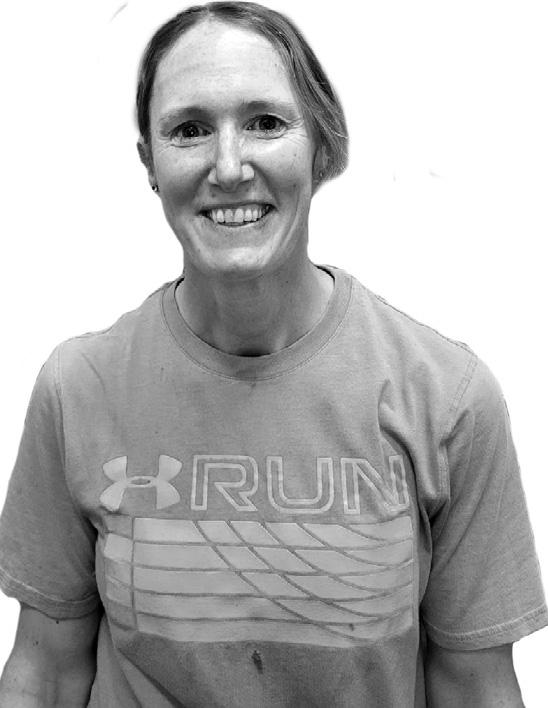











We utilize the Johnes test, standard plate count, somatic cell count, and mastitis culture tests.

Which is your favorite and why? I like the somatic cell count test to see if there are certain cows that have a chronic high
How does testing with DHIA bene t your dairy operation? DHIA bene ts the dairy by being an independent source helping us make decisions regarding herd health and productivity.
Tell us about your farm. I farm here with my brother, Perry, and my sisters, Brenda and Becky. We are a second generation family farm. We raise our youngstock, nish out our dairy steers, and farm about 900 acres.
Dairy Star • Saturday, September 9, 2023 • Page 11 320-808-3936 300 E Main St. Osakis, MN 320-859-5340 Visit us online at www.osakissilo.com 24 Hours 7 Days A Week Call Anytime The Best Service Crews, The Best Replacement Parts, The Best Service... That’s The Osakis Silo Advantage To You!!! EVERYTHING SILO Fall Pre-Chopping Schedule is Filling Up Fast! DON’T’ DELAY, CALL TODAY!
Con nued from RAW MILK | Page 10
Quality Consistency KLC Farms Roasting, Inc. 320-352-3326 Visit www.roastedbeans.com Preferred By Bovines Everywhere AN EXCELLENT CHOICE IN BALANCING YOUR RATIONS Are your cows getting the Amino Acids they need? Energy Protein Amino Acids Bypass Protein KLC roasted beans have an excellent Amino Acid profile, made nutritionally available through our unique roasting process. Sauk Centre, MN Buffalo, MN 763.682.1091 www.mndhia.org
Now MORE than ever
DHIA:
Rhonda Kuechle Kuechle Dairy • Watkins, MN Milking 240 cows With DHIA since 1970
CO2 reduction: The invisible new asset


Midwest Forage Association holds carbon credit seminar at

 By Amy Kyllo amy.k@star-pub.com
SPRING VALLEY, Minn. — Carbon credits could be one way for farmers to make more money on cash crop elds. This relatively new marketplace creates opportunities to be paid for incorporation of environmentally friendly practices.


“Carbon Credit Talk” was led by Ryan Stockwell of Indigo Ag and Matt Kruger of Truterra. The seminar was part of Midwest Forage Association’s forage eld day and dairy tour Aug. 8, the afternoon portion of which was hosted at Nate Heusinkveld’s dairy near Spring Valley.
A carbon credit represents 1 ton of sequestered carbon dioxide or avoided carbon dioxide emissions.


day

These credits have value in today’s increasingly climate-aware business culture.

“This a tradeable asset,” Stockwell said. “This is a representation of something that we cannot see.”


Stockwell said carbon credits are important for companies trying to reach environmental goals, especially for those with emissions which are difcult or costly to eliminate.
Carbon credit buyers include companies like Walmart, Anheuser-Busch, The North Face, Nestlé and Shopify. Stockwell said that products with a sustainability attribute grow 2.7 times faster in market share than

their peers.
“This is a market-driven reality, and they are trying to keep up and be competitive in their market spaces,” Stockwell said. “They have emissions that they can’t get rid of, and that’s where carbon credits come into play.”
Though the buyers’ actual emissions may remain the same, their overall balance sheet of carbon emissions is closer to equilibrium thanks to carbon credits purchased from a eld which may be hundreds or even thousands of miles away from their operation.
The value of the carbon credits on a eld depends on individual factors. Stockwell said a carbon credit’s worth on the market is $30 to $50 dollars.
“This is the cherry on top” Stockwell said. “This isn’t the ice cream when it
comes to income.”
Kruger said farmers in Minnesota last year made $1.50 per acre to $36 per acre because of carbon credits with an average of $12 per acre.
“Are you going to get rich?” Kruger said. “No, you’re not getting rich off this. ... Is the price going up? Yes, every year the price per metric ton has been going up.”
There are two ways to earn money off of carbon sequestration and avoided carbon emissions: carbon credits and supply chain inset.
Carbon credits function by establishing a baseline of cropping practices on a piece of property. Then, carbon credits can be created by farmers additionally incorporating practices which increase carbon sequestration or avoidance compared
to earlier practices.
Supply chain inset is a newer market which gives farmers a premium on crops grown in a way which incorporates carbon sequestration and avoidance management practices. Supply chain inset is a way for farmers who have established carbon reduction practices to be paid for their efforts. In the carbon credit sphere, there are two main ways to create additionality to carbon reduction after a baseline has been established. The rst is incorporating cover crops and the second is reducing tillage. Stockwell said carbon sequestration practices are benecial to a farm beyond the money gained by carbon credits.
Page 12 • Dairy Star • Saturday, September 9, 2023 MINNESOTA Mid-Central Equipment Henning, MN Northland Farm Systems Inc. Owatonna, MN SOUTH DAKOTA Lake County International Madison, SD IOWA Mark’s Tractor & Implement Osage & Dumont, IA Reiser Implement Waukon, IA WISCONSIN D&D Equipment Chilton,WI Lindstrom Equipment Mondovi & Menomonie,WI Luxemburg Motor Company Luxemburg, WI CONTACT YOUR LOCAL GEHL DEALER TODAY! SOLID DESIGN *ATPARTICIPATINGDEALERS EXPIRES 3.31.21 ON ALL NEW GEHL SKID STEERS AND CTLS LOW-RATE FINANCING CASH BACK UP TO $2, $2,500 CALL YOUR LOCAL GEHL DEALER TODAY! Turn to CARBON CREDIT | Page 13
eld
Ryan Stockwell Indigo Ag
Matt Kruger Truterra
“You’re increasing water holding capacity and inltration, and improving your drainage,” he said. “There are so many agronomic values, so this should make agronomic sense for your farm.”

Carbon credits are veried through registries. Stockwell said these registries ll a role similar to the U.S. Department of Agriculture’s certied organic seal to help buyers understand that they are getting a legitimate product.
Stockwell gave several items to consider when choosing a carbon credit company. First, he said it is important to make sure the company chosen has an adequate customer base so that there will be a market for the carbon credits.
The second thing Stockwell said to consider when choosing a carbon credit company is their prot structure. Some companies buy carbon credits wholesale and sell them at retail while other companies struc-
ST R


ture it so that the more money a farmer makes the more money the company makes. Choosing a company with the latter structure helps ensure the company has a farmer’s best interest in mind.
The nal three factors to consider, Stockwell said, are a company’s payment rates, making sure that the crop grown and land is eligible, and ensuring that the carbon credits the company issues are registry-issued credits.
Kruger, who has family members who dairy farm, said that, currently, carbon credit systems do not function well on dairy farmland. Corn silage elds end up scoring low for carbon credits because of the amount of biomass being removed from the elds. Manure incorporation, depending on how it is done, can also create additional tillage, which is negative for creating additionality.
Health Report



Flags animals falling below optimal health; track condition progress

Breeding Report
IDs animals in heat by Breeding
Window & Heat Index

Tags Maintenance Report Alerts you to tags not read by the system & abnormal readings



Group Routine Report
Provides insight into daily routines & herd activity


Group Heat Stress Report

Displays current status & trends of behavior (panting, ruminating, eating)


Dairy Star • Saturday, September 9, 2023 • Page 13 Melrose, MN Brock Zierden—320.293.6192 bzierden@Leedstone.com Glencoe, MN Paul Becker—320.510.0200 pbecker@Leedstone.com Plainview, MN & Menomonie, WI Darren Pieper—715.307.5750 dpieper@Leedstone.com • Leedstone.com/equipment-team • Family & veterinarian owned since 1994 • CONTACT YOUR LEEDSTONE REP TODAY! SCR-ALLFLEX (SENSEHUB) MONITORING IS NOW AVAILABLE AT YOUR LEEDSTONE LOCATION Gain reliable, consistent data to help you manage your cows on an individual level. The leading monitoring technology & service you already know as SCR Dairy or Allflex Dairy monitoring are now fully integrated within SenseHub Dairy.
your cows better tomorrow than you do today!
Know
Get SenseHub —this unique, full-solution approach helps you simplify tasks, improve herd health & increase reproduction rates. S B) YOUR EQUIPMENT DEALERSHIP (SENSEHU CR LFLEX Do You Have Your Bunker Covers? Contact us at 877.608.3877 to order them today! p is wing m, 5% pen ningful d of 30 y: A low ows int mayfeed N Stre Figure 1: Group Heat Stress Graph Figure 2: Group Heat Stress Graph 2 tinereport intothe edailyroutine rtantfactor n.Over mination scan muchperienced mparing o-week sedto such eduleas lock e ging.used tepen ding NCYHE OF UTINES Figure Figure2: Con nued from CARBON CREDIT | Page 12 N6503 Pit Road Mount Calvary, WI, 53057 920-922-9966 americanimplement920@gmail.com IMPLEMENT INC White 2-135, duals, front weight Call for Pricing WE BUY SCRAP METAL! John Deere 310A Excavator Call for price Oliver Super 77 3,372 hours $4,000 USED PARTS AVAILABLE! Glenco soil finisher Call for price John Deere 12 row vacuum planter Call for price
We can help you with your farm or small business websites, printing & sign needs! For more information, contact your area rep listed on Page 2 of the First Section. DAIRY
WEB DESIGNS















































Page 14 • Dairy Star • Saturday, September 9, 2023 SAUK CENTRE, OFF I-94 ON THE CORNER OF HWY. 28 & 71 SOUTH Steerable Series Spreaders Excellent maneuverability and control on all types of terrain. LIQUID MANURE TANKS, PUMPS AND AGITATORS Powerful PTO Pumps & Agitators To Handle Liquid Manure In Stock WE ARE YOUR NEW TRIOLIET DEALER! In Stock Penta 6730 Parts in Stock! Many Different Sizes In Stock Parts In Stock HYDRA-SPREAD In Stock 12” VERTICAL PIT PUMP Pump 12,000 GPM with more efficiency and less foam • Unique agitator • Triple port outlet • White iron pump housing Parts In Stock Spreaders Maximum Spreading Ef ciency Maximize your productivity and performance with the KUHN Knight SLC 100 Series ProTwin® Slinger® manure spreaders. Truck-mount and trailer models are available with capacities ranging from 2,600 to 5,000 gallons. In Stock Parts In Stock VT600 T WIN-SCREW VERTICAL MIXER S Sto Stoc M i n n e s o ta ’s LargestFeeding and ManureHandli n g D e a rel Ifyouhavea barn, we haveasolution. www.dairylandsupply.com Parts In Hand In Stock Designed to Suit your Needs Stock HOLY COW!!! Have you seen the inventory at Dairyland Supply lately? SAVE TIME & MONEY! AGRI-CHOPPER SUPERCART SUPER Parts In Hand Parts In Stock
from our side our side OF THE FENCE THE

What do you enjoy about your position as a milk hauler?
Kyle Hemmersbach Muscoda, Wisconsin Hemmersbach Trucking
16 years of experience


Tell us how you became involved in hauling milk.
My grandpa, Leo Hemmersbach, had a milk route out of Cashton, Wisconsin, for many years. Then my dad had his route as well. In 2014, I bought the truck and route from my dad, and we created Hemmersbach Trucking. We went to three trucks right away.
Tell us about a typical day. My company has 17 trucks, and we haul 1.5 million pounds a day. Personally, I drive the oldest truck in the eet — a 2009 Mack. I pick up six farms overnight. It comes out to three loads for a total of 225,000 pounds. I start at 4 p.m. and drive until about 6 a.m. A lot of our farms are on three-times-per-day milking, so the best windows to pick up are between 6-8 p.m. and 2-4 a.m.
What do you enjoy about your occupation? I enjoy the challenge. It’s challenging mentally to try and stay on top of everything and make all the logistics work. It’s a demanding, yet rewarding job.
What are the biggest challenges with hauling milk? Employee retention and keeping employees happy, maintaining schedules and making sure everyone has time off, and making sure I also get time with my family. Another big challenge is accommodating milking schedules as farms grow and move to milking three times per day. It reduces the windows of opportunity for picking up their milk.
What is your favorite time of year to haul milk? Typically, fall is my favorite because the crisp, cool evenings are nice after a hectic summer. But, it is hard to top that rst uffy snow. Driving at night, I often make the rst tracks on the road, and there is something really satisfying about a nice 10-degree snow when you get out of the truck and the snow crunches under your feet.
Tell us about a unique time when you had trouble hauling and how you overcame it. The coronavirus pandemic was the worst, trying to maintain logistics and keep employees and farmers protected. We had a couple employees get sick, and we just had to wait it out like everyone else. Hauling at night helped with some of that because there was less interaction. Also, anytime I have a takeover of milk from another hauler, where we are trying to blend routes, is a challenge. I try to work with the eld reps and the farms to cater to everyone’s milk schedules as best as we can.

What things are essential for you to have when there is a busy day ahead? I used to listen to the radio, but now I end up talking on the phone a lot. I spend a lot of the night driving, talking with employees, and during the day there are always business calls. I always bring a book with me though, so when I have down time waiting for milk to pump, I can catch a half hour or 45 minutes doing some reading. All the other guys have XM radios in the trucks.
What do you enjoy doing in your spare time? Being a dad to my four kids — Matthew, Anntonio, Aidenn and Merridith.
Emma
Vine Neillsville, Wisconsin Vine Trucking
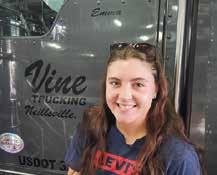
One year of full-time experience

Tell us how you became involved in hauling milk. I became involved when my dad was given an opportunity to own his own business, which was luckily milk hauling. Instead of sitting at home, I would go in the truck with dad, and it just became a nice routine in my life. I ended up really enjoying it and couldn’t seem to stay away from the truck and not go to work.
Tell us about a typical day. I haul three loads a day, which amounts to 150,000 pounds of milk. I usually work 10-12 hours. I drive a Kenworth W900.


What do you enjoy about your occupation? It is nice being in my own truck, going about my day and doing my own thing, but then when I get to farms or the milk plant, it’s always nice to see all the familiar faces. I enjoy the interaction.
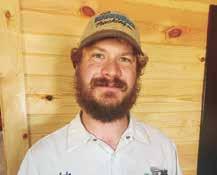
What are the biggest challenges with hauling milk? I would say when the unexpected happens — unexpected weather or even just something breaking on the truck. You never plan it, and when it happens, it can go from an early, easy day to a long catching-up day.
What is your favorite time of year to haul milk? I would say fall or closer to the wintertime because I enjoy being challenged. I enjoy trying to navigate the roads and gure out a route and what I can and can’t do. It really does challenge me to keep going and not give up. Driving in the winter can be really scary, but you’ll never learn until you do it.
Tell us about a unique time when you had trouble hauling and how you overcame it. I was driving the whole winter by myself. This is my rst year with my commercial driver’s license, and I was so used to being with my dad and knowing what to do; we were a team. When it came to being stuck or dealing with the worst snowstorms by myself, I had to really focus and rely on myself to not give up. The job has to get done, and you can’t just up and quit. It was scary for it being my rst year, but I achieved it.
What things are essential for you to have when there is a busy day ahead? I denitely need snacks. I always have to have my favorite songs and a pack of gum, so at least if I’m running behind and having a bad day, I have those to keep me sane.
What do you enjoy doing in your spare time? I enjoy spending time with friends and my family when I have a chance. With having this type of job and lifestyle, I never really know when I will have a day off, so when I do have a day off, I try to make the most of it.
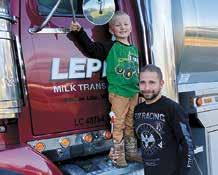
Michael Petersen pictured with his son
Noah Random Lake, Wisconsin
Irv Lepp Milk Transit



Four years of experience



Tell us how you became involved in hauling milk. I started hauling milk due to my grandfather, Irv. He has been hauling milk for over 50 years. I rode along while growing up but never thought I would become a milk handler. One day, he mentioned selling his route. As this is a legacy he has had for many years, I couldn't overcome it coming to an end. I stepped up to the plate and said I would like to carry on his legacy.
Tell us about a typical day. A typical two-load day starts at 2 a.m. and goes until 3:30 p.m. We haul around 100,000 gallons of milk per day. On a single-load day, we start at 7:30 a.m. and are done around 4:30 p.m. On those days, we haul 50,000 gallons of milk. As of now, we currently pick up 12 farms. We are a one-truck operation and run a Western Star.
What do you enjoy about your occupation? One of the enjoyments of hauling milk is getting to communicate with our farmers. As we pick them up every day, each one creates a special bond in the work environment. There is never a dull moment.
What are the biggest challenges with hauling milk? One of the biggest challenges with hauling milk right now is supply and demand. Someday, we would like to grow as a company, but along with that, there is a shortage of nding drivers.

What is your favorite time of year to haul milk? My favorite time to haul during the year would be fall with its comfortable working temperatures. With that being said, you also get to see the joy of the farmers as the end of harvest season comes with their hard work that year completed in the elds.
Tell us about a unique time when you had trouble hauling and how you overcame it. As much as nobody likes having troubles, one of a trucker’s worst nightmares is breaking down while hauling milk. As many of you know, pick-up times are on tight schedules. In most cases, we can overcome and repair on the spot, but in some cases, we do bring out a spare truck.
What things are essential for you to have when there is a busy day ahead? Some essential things to help get through the day are a nice, fresh donut followed with energy drinks. I also like listening to the Octane station on the radio.
What do you enjoy doing in your spare time? When I’m not hauling milk, I spend my time enjoying it with my son and daughter. I also enjoy outdoor activities, wrenching on vehicles and riding motorcycles.
Dairy Star • Saturday, September 9, 2023 • Page 15 Turn to OUR SIDE | Page 16
Appleton, WI | Grooving America’s dairies since 1992! WE GROOVE SLATS! | SERVICING THE ENTIRE U.S. 608-225-3595 | www.PandDBarnFloorGrooving.com CONCRETE FLOOR GROOVING: P & D Grooving cuts grooves 3/4” wide, spaced 3-1/2” in between grooves, to give you protection against slips and falls that cause serious injuries to your cattle! I GROOVE NEW AND OLD CEMENT: To give maximum protection, we recommend “double cutting” where there are no existing grooves to make a diamond pattern or cutting diagonally over existing grooving to make a diamond pattern. Call Doug Today! ING: / ed 3-1 2” ainst r cattle! FREE STALL ALLEYS CROSS OVERS | RETURN ALLEYS “Grooving Doesn’t Cost... It Pays!” ROOVENEWANDOLDCEME HOLDING PENS COW YARDS Recommended by veterinarians, nutritionists, breeders and hoof trimmers BEFORE GROOVING AFTER GROOVING BARN FLOOR GROOVING AND • Reduce Injuries • Increase Milk Production • Increase Heat Detection • Better Drainage Prevent your cows from doing the splits! CONCRETE PRODUCTS 1-800-982-9263 Serving Minnesota, Iowa and Wisconsin Since 1965 www.alsconcreteproducts.com AL’S FEED
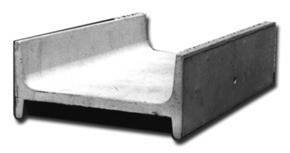
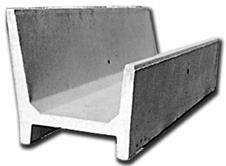
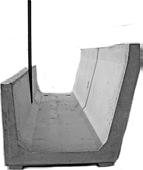
• Fence line feed bunk with slanted back • 15” feed trough depth • 24” high front side (Also available in 18-1/2” height for smaller cattle) • Deep Feeding Capacity • Long Service Life & Cattle Safe • Available in 12”, 14” and 16” depths • 38” wide, 34-1/2” high on back side • 24” high on front side • 20” deep feed trough • 6” feed saver lip ALSO AVAILABLE: • Cattle Slats • Holding Tanks • Cattle Guards • Bunker Silo Pictured with optional guard rail post mounted on the inside of the bunk or can also be placed outside. Fence Line Feed Bunk H- Feed Bunk Super High Capacity Fence Line Bunk J-Bunks & H-Bunks available for large and small animals
BUNKS
Ian Wetterau
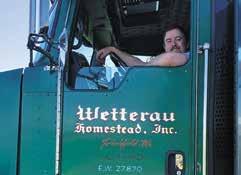
Richeld, Wisconsin
Wetterau Homestead Inc.
Nine years of experience


Tell us how you became involved in hauling milk. My dad bought his rst milk route in 1982 and started a trucking company hauling milk. He bought several routes in the years stretching up to today. I took over hauling milk when I turned 18. I was part time through college, hauling mostly on weekends, and then began hauling full time after college. My dad is still involved in the business, but I do the milk hauling every day.
Tell us about a typical day. I start about 2 a.m. and pick up a load of eight to nine farms. I then dump it off at the milk plant and go out and pick up another load. After I drop off my second load at the plant, I wash my truck. I’m usually done around 1 p.m. I have about 18 stops total from Washington, Ozaukee, Sheboygan and Dodge counties. The two co-ops I haul for are Dairy Farmers of America and Family Dairies USA. A lot of the milk goes to Kemps as well as a couple of cheese plants. I haul about 13,000 gallons per day in my Peterbilt 389 seven-axle straight truck that has a 6,500-gallon tank.






What do you enjoy about your occupation? I enjoy driving through the countryside and being a part of agriculture. I also enjoy talking with farmers. I grew up around these people and have known all my farmers my whole life. It’s kind of like we’re family because I’m on their farm every day, and I become part of their operation. It’s really nice to pick up their milk and talk with them and be a part of feeding the world.
What are the biggest challenges with hauling milk? It takes a very hardworking and strong-willed person to do this job. It’s seven days a week, 365 days a year. There’s no stopping it. It doesn’t matter what the weather is or how you’re feeling healthwise. You
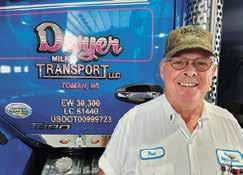
Paul Dwyer Tomah, Wisconsin Dwyer Milk Transport
41 years of experience

Tell us how you became involved in hauling milk. In 1984, my family needed additional income on our farm. I worked part time for Wilbur Jinkins by hauling milk. In 1986, we sold our cows, and I transitioned to hauling milk full time until I got laid off. Then I drove the school bus for a short time until I started hauling milk again for Leo Hemmersbach. Then I hauled milk for Wisconsin Dairies until 1989 when I got laid off again. Finally, I worked for Wilbur Jinkins again for two months until I bought him out in 1989. I gured if I showed enough enthusiasm, I could be an owner someday. I never dreamed it would happen that fast. He was gracious enough to nance me. I started with one truck and two routes. Since then, our company has grown to nine trucks and 11 routes. Tell us about a typical day. Between all of our trucks, we haul 6,000 gallons per load in quad trucks. Our average haul weight is 46,000 pounds, so a daily gross weight for us is 75,000 pounds. We average between seven and 10 farms per load. Wilbur always told me, if you don’t like change, don’t haul milk because it changes daily. He wasn’t wrong. Sometimes we have to switch routes around to get everyone picked up, but we usually end up doing so without too many added miles. We pick up farms as far north as Hudson, Minnesota, and as far east as Thorp, Wisconsin. We mainly haul into Westby Cooperative Creamery in Westby, Wisconsin.
What do you enjoy about your occupation? Everything. The freedom of being my own boss is nice, but I realize that every one of those farms is my real boss. Whether I’m in the truck or it’s one of my drivers, we work for the farmers. I enjoy building relationships with the farms. I’m not just their milk hauler; I’m their friend. The relationships have made a
have to get the milk hauled. With the current economy and labor shortages, it’s hard to nd people who want to drive part time to help me on weekends or during the week if I’m in a pinch. It takes a strain on your personal and social life, but I grew up with it, so I’m used to it. As a milk hauler, you sacrice a lot of personal and social time for your career and our business of hauling milk. If you can’t nd help, you have to do it yourself day in and day out, but you make time when you need to. If a farmer calls and has an issue, I cater to them. For example, if they need their tank tested or a cooler breaks, I go back out and do whatever I can for them.
What is your favorite time of year to haul milk? Summertime is my favorite time of year to haul milk. You can keep your truck shiny and clean. There is no snow on the ground and no rough driving conditions. The weather is nice and calm with sunny skies. You can enjoy yourself while you’re out there when there are no weather or road factors to get in your way.
Tell us about a unique time when you had trouble hauling and how you overcame it. Maybe once a month or once every other month, the milk plant gets full, and you can’t unload any trucks for a few hours. I’m on a time schedule and have to get in and out so that I can get back out on the road and pick up milk before farmers start milking their cows again. If there’s nowhere to go with the milk, I have to pivot and take the loaded truck back to our yard. We have a spare truck on hand for situations like this. I hop in that and get the next load and deliver it to the plant and go back and get the other truck and unload. It complicates things when you’re pushed for time and factors are out of your control.

What things are essential for you to have when there is a busy day ahead? I have a Bluetooth headset so I can talk to my fellow milk hauler friends while driving. I always pack a lunch and make sure I have plenty of food to keep myself full. I also like to listen to a local radio station that plays classic country music.
What do you enjoy doing in your spare time? I am a cash crop farmer; that’s my biggest passion. I run about 600 acres of corn and soybeans. I love it in the spring and fall when I plant and harvest my crops. I also like UTV riding and spending time with family.
good business better. When we sold the cows, I wanted to do something that kept me in the industry and kept me on farms. Hauling milk absolutely does that for me.
What are the biggest challenges with hauling milk? The biggest challenge for us is guring out how to stabilize the producer base, and that depends on how well the plant performs and pays. I am afraid there is going to be a mass exodus of small farms because they can’t have 1986 prices with 2023 costs. There is no reason a dairy farmer should get less than $20 per hundredweight in 2023.
What is your favorite time of year to haul milk? Spring. I enjoy driving down the road, seeing the elds green up, the smell of fresh turned dirt and watching it all happen over again. I enjoy fall and watching for colors, but spring is where the rebirth is.

Tell us about a unique time when you had trouble hauling and how you overcame it. In 1996, we had a blizzard where we got 26 inches of snow in 12 hours; then it snowed the next day until there was 33 inches total. The winds got up to 45 mph and caused drifts that covered the milkhouse at one farm. I was driving overnight then and left my house at 4:30 p.m. and did not make it to Kwik Trip in La Crosse until 2 a.m. I had to skip the drifted farm until the next day. Luckily, a plow truck driver was able to get me in and out of the driveway. In the winter of 1997, we had 34 straight days of ice. I had to put chains on every single day.
What things are essential for you to have when there is a busy day ahead? A thermos of coffee and my lunch pail, for sure. Otherwise, I like having the trucks in top-notch shape for the road. Planning ahead helps avoid problems. I even get my paperwork prepared in advance so that there is as little as possible to do while I’m at the farms. This gives me time to scrub bulk tanks and wash oors. I try to leave every milkhouse in better shape than it was when I got there, just to help the farmers.
What do you enjoy doing in your spare time? My wife and I visit our grandkids or go dancing. We nd dancing to be relaxing and fun. We have made good friends by dancing to old-time music and swing dancing.

Page 16 • Dairy Star • Saturday, September 9, 2023 Con nued from OUR SIDE | Page 15 ®





















Dairy Star • Saturday, September 9, 2023 • Page 17 JOIN OUR TEAM Now Hiring Service Technician Intern Apply Now! SCAN ME bit.ly/3fwYBl6 Paid Internship +1-800-636-5581 | Proudly serving you from Brookings, SD; St. Peter, MN; and Melrose, MN! DEALER Cutting-Edge Milking Equipment | Supply Delivery | Preventive Maintenance Herd Advisory & Software Support | Manure Management Services | Feed Management farm-systems.com © 2022 Farm Syststeems. All rig ts hts rese e rved. A-3386648395 Need Service? Keep your operation up and running with Farm Systems Your Local Milking, Manure and Feed Management Solutions & Service Provider
Describe your farm and facilities. We are a fourthgeneration dairy farm. We have a 300 cow freestall barn with slatted oors, and we milk in a double-8 parallel parlor. Our herd is comprised of crossbred cows.
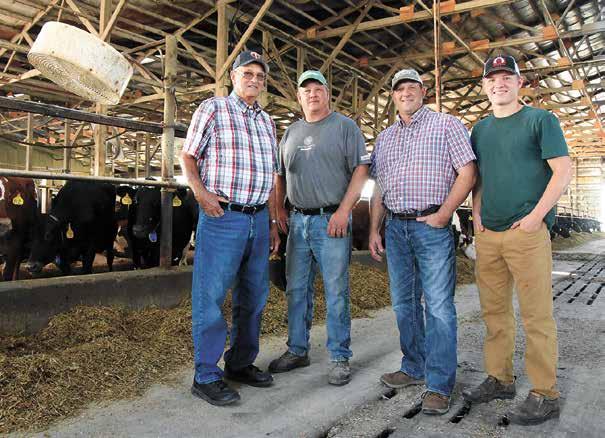


What forages do you harvest? We harvest alfalfa and corn silage.
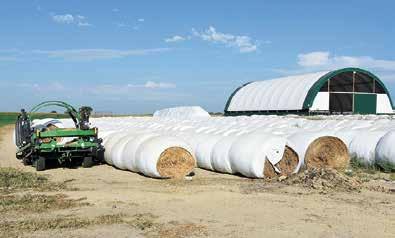
How many acres of crops do you raise? We have 1,400 acres, and we raise







corn, soybeans, wheat and alfalfa.

Describe the rations for your livestock. Our ration includes 50 pounds of corn silage, 14 pounds of a vitamin-mineral mix, which includes 4 pounds of dry corn; 8 pounds of high-moisture corn, 8 pounds of baleage and 7 pounds of dry hay.
What quality and quantity do you harvest of each crop? We raise 195 acres of

The Gjerdes harvest baleage at 25%-40% moisture on their dairy. They have 195 acres of alfalfa.
alfalfa and take four crops per year. We do baleage and try to harvest that at 25%40% moisture. We harvest
4,500 tons of corn silage, and we harvest at 65%-70% moisture. We also harvest 20,000 bushels of high- Turn to FORAGE | Page 20

moisture corn at 25%-35% moisture.
Page 18 • Dairy Star • Saturday, September 9, 2023 FORAGE PROFILE Gjerde Farms LP, Paul, Kraig,
Weston
of Sun-
Minnesota | Kandiyohi County | 340 cows Lake Lillian, MN www.hansonsilo.com “On Call” Service 24/7 1-800-THE-SILO GIVE YOUR SILO NEW LIFE! Best warranty in the industry! SCHEDULE YOUR SILO RELINE NOW AND NEW UNLOADER WHEN YOU ARE EMPTY. SOPHISTICATED VERTICAL MIXING WAGONS Parts and service available at both our Lake Lillian & Sauk Centre, MN locations. Trioliet 1300 Cu. Ft. Twin Screw TMR Trioliet 1800 ZK Blower Unit TMR Mixer • Trust the real specialists who replaster the most silos! • Great pricing • Best quality MANY MODELS TO CHOOSE FROM! BEDDING CHOPPER 48” SELF-PROPELLED Quick and ef cient bedding with much less effort. NEW & USED SILO UNLOADERS MATS FOR DAIRY & BEEF • Slatted barns • Working Areas • Chute Mats • Show Barns United-Suckow Dairy Supply 563-422-5355 West Union, IA Save money by replacing your powder milk The new MTX 4.0 featuring Smart Mix, Smart ID & the Calf Guide System will ramp your calves up to wean them off of milk just like an auto feeder, no matter who is feeding the calf! The Smart Mix knows how much milk, milk replacer or combination that you need to mix for the next feeding. No guess work. United Dairy Systems West Union, IA • 563-422-5355 Monticello, IA • 319-465-5931
Obert and
Gjerde
burg,
MARK KLAPHAKE/DAIRY STAR
Obert, Kraig, Paul and Weston Gjerde stand in their freestall barn Sept. 4 on their dairy near Sunburg, Minnesota. The Gjerdes milk 340 crossbred cows.
MARK KLAPHAKE/DAIRY STAR
“We have been using Udder ComfortTM a long time. Today, we use the Udder Comfort Battery-Operated Backpack Sprayer to apply it quickly and easily on all animals in our fresh groups daily,” says Britney Hill (above), herd manager and part of the next generation operating Four Hills Dairy, Bristol, Vermont. They milk 2300 cows, calving 10 animals a day, applying Udder Comfort to fresh groups daily for a 5-day course. They also love Udder Comfort for their award-winning show cows.
“With the Udder Comfort Battery-Operated Sprayer, we can do all in our fresh groups without slowing our parlor throughput,” Britney reports.


“It’s convenient, efficient, easy to maneuver, and the battery charge lasts,” she says.























“With Udder Comfort, our fresh cows are more comfortable, and our fresh heifers adjust to milking much faster with better letdown. Doing all in our fresh groups helps keep our SCC around 130,000,” Britney explains.


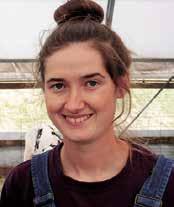
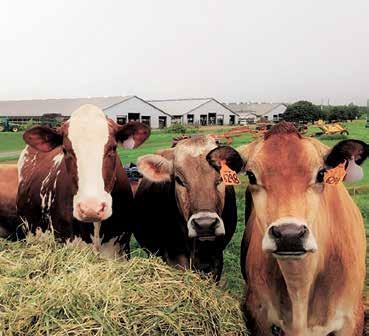
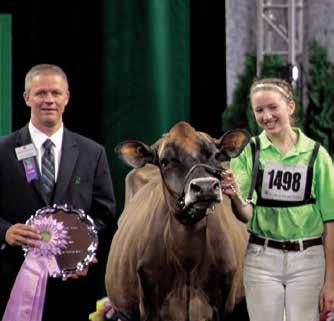
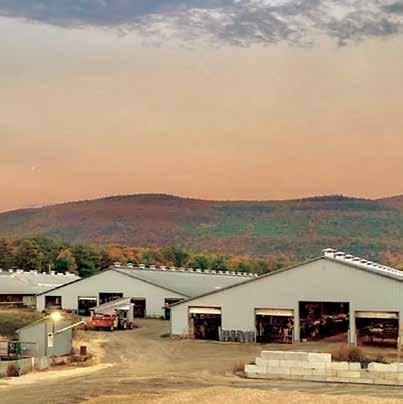
Dairy Star • Saturday, September 9, 2023 • Page 19 Martin Ag Supply LLC 3128 Mitchell Line St. Orchard, IA 50460 641-982-4845 2019 New Holland C237 340 Hrs., Cab Heat Air, 2 Spd, Hi Flow Hyd., Power Quick Tach, Radio, Cloth Air Ride Seat, Self Leveling Ride Control, Flasher Kin 7 Pin Electric, Fully Loaded, Local Trade, Well Taken Care Of $59,900 2020 Bobcat T595 1450 Hrs., Cab Heat Air, 2 Spd, Standard H/F Ctrls, Power Bobtach, Air Ride Seat, Radio, New Tracks, Bucket Included, Weight Kit, Runs and Drives Great $45,500 2019 Case IH Puma 150 CVX 3165 Hrs., MFWD, Full Suspension Front and Cab, 50K CVX Trans (32mph), Exhaust Brake, Air Brakes, Electric Mirrors, 540 54E & 1000RPM PTO, 4 Remotes, LED Work Lights $99,000 2022 Kubota SCL1000 195 Hours, Aux Hyd. Interface, Quicktach, Ride on Platform, 42” Bucket, Basic Warranty through 9-1-15, Serviced, Job Ready $37,500
FOUR HILLS DAIRY, BRISTOL, VERMONT The Hill Family, Britney Hill, herd manager 2300 cows, 84 lbs/cow/day, SCC avg. 130,000
faster,
“Fresh heifers adjust to milking much
with better letdown.”
- Britney Hill
Our WORLD DAIRY EXPO booth MOOVED to the Exhibition Hall! EH 2809-2909 See you ‘where dairy meets’ in Madison Oct. 1-6! For external application to the udder only, after milking, as an essential component of udder management. Wash and dry teats thoroughly before milking. Her Comfort is Our Passion! Softer udders Faster milking Better quality MORE MILK 1.888.773.7153 Quality Udders Make Quality Milk Helping reach their potential since 1998!
Congratulations to Sarah and Megan Hill with their bred-and-owned Junior 3-yr-old Four-Hills Lola Guns N Roses, Intermediate and Reserve Grand Champion of the 2022 World Dairy Expo Jersey Junior Show
Describe your harvesting techniques for alfalfa and corn silage. The corn silage is done with a John Deere self-propelled chopper with a kernel processor. The alfalfa is done with a John Deere round baler with a precutter.
What techniques do you use to store, manage and feed your forages? Our corn silage is on a cement pad and covered with a vapor barrier and a 2-mil tarp. Then it’s covered with tire sidewalls. All the corn silage has inoculant applied. The baleage is precut with the baler and wrapped with a bale wrapper. Our highmoisture corn is run through a hammermill and bagged. The feed is fed with a total mixed ration mixer.
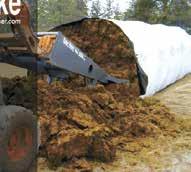
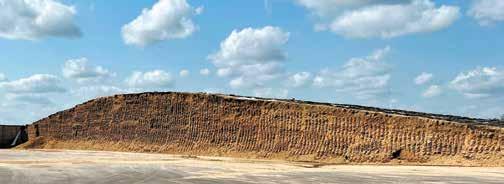
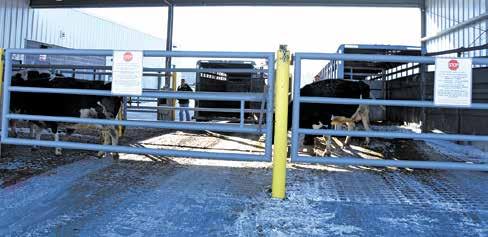
How does quality forages play in the production goals for your herd?
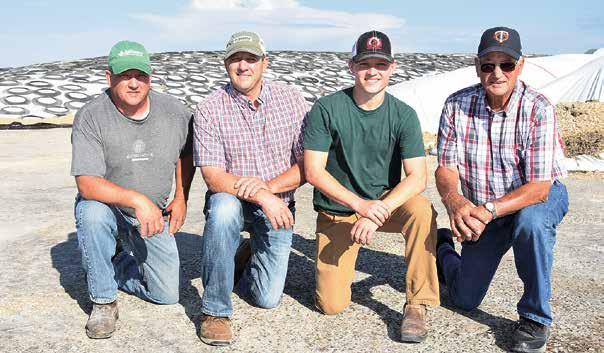


The better quality feed we can put up the easier it is to achieve our goals.



What are management or harvesting techniques you have changed that has made a notable difference in forage quality? It was getting hard to put up good dry hay so we switched to baling wet hay.
The Gjerdes chop corn Aug. 31 near their farm by Sunburg, Minnesota. They chop around 4,500 tons of silage at 65%70% moisture.
Describe a challenge you overcame in reaching your forage quality goals. We’re not hiring for chopping hay, which is nice, but we had to buy more hay equipment, a baler with a precutter and a bale wrapper.
Page 20 • Dairy Star • Saturday, September 9, 2023 TOP PRICES PAID & CONTRACTING AVAILABLE Your Market For: Holstein Steers • Fed Dairy Cows • Lean Dairy Cows Your local area buyer for MN, IA and WI. Long Prairie Buying Station Bruce Belter • 507-429-0359 Holstein Steers • Lean Cows • Bulls • Fed Cows Tyrel Lembke • 877-300-9298 Long Prairie, MN Lean Cows • Bulls Dean Derricks • 920-655-4730 Green Bay, WI Holstein Steers • Fed Cows • Lean Cows Chad McQuade • 605-668-4275 Yankton, SD Lean Cows • Bulls Mike Baczwaski • 800-445-0042 Gibbon, NE Fed Cows • Lean Cows • Bulls Cody Ritter • 320-293-5212 • 320-732-8358 Long Prairie, MN Green Bay Dressed Beef Lake Lillian, MN 1-800-THE-SILO CONTACT YOUR LOCAL DEALER TODAY! IOWA Post Equipment 712-476-4500 WISCONSIN Dorner Equipment Green Bay • 920-655-3215 St. Joseph Equipment Lacrosse • 608-769-7796 Swiderski Equipment Wausau • 715-551-7893 Ritchie Equipment Cobb • 608-623-2331 easyrakefacer.com SILAGE FACER www.easyrakefacer.com SILAGE FACER www.easyrakefacer.com PATENT #7,588,203, #8,011,608, #8,336,795 NO MOVING PARTS MAINTAIN CUT LENGTH STAY IN THE HEATED CAB CALL FOR YOUR ALL DEMO TODAY
Con nued from FORAGE | Page 18
PHOTO SUBMITTED
MARK KLAPHAKE/DAIRY STAR Kraig, Paul, Weston and Obert Gjerde kneels by their forages Sept. 4 on their dairy near Sunburg, Minnesota. The family recently nished chopping corn.
JD
Sep. hrs., #554050 ..................................... $405,000

JD S770 2018, 2261 hrs., 1652 Sep. hrs., #549678 ................................. $259,900
JD S760 2019, 1206 hrs., 871 Sep. hrs., #565714 ................................... $279,900
JD S690 2017, 1433 hrs., 1187 Sep. hrs., #549457 ................................. $280,700

JD S690 2017, 2104 hrs., 1461 Sep. hrs., #552684 ................................. $249,900
JD S690 2017, 2508 hrs., 1605 Sep. hrs., #568113 ................................. $239,000
JD S690 2015, 2400 hrs., 1615 Sep. hrs., #550872 ................................. $232,900
JD S690 2016, 2544 hrs., 1820 Sep. hrs., #547267 ................................. $219,900




JD S690 2012, 2314 hrs., 1645 Sep. hrs., #551148 ................................. $149,000
JD S690 2014, 2280 hrs., 1440 Sep. hrs., #568112 ................................. $139,000
JD S680 2017, 1516 hrs., 1053 Sep. hrs., #273646 ................................. $219,900


















JD S680 2014, 2349 hrs., 1668 Sep. hrs., #531966 ................................. $195,000
JD S680 2014, 2328 hrs., 1575 Sep. hrs., #555096 ................................. $169,900
JD S680 2013, 2485 hrs., 1604 Sep. hrs., #551147 ................................. $165,000
JD S680 2013, 2575 hrs., 1906 Sep. hrs., #563909 ................................. $160,000
JD S680 2012, 1493









JD S660 2012, 1643 hrs., 1188 Sep. hrs., #554132 ................................. $179,900

JD 9870 STS 2011, 3650 hrs., 1750 Sep. hrs., #567383 .......................... $109,900

JD 9870 STS 2008, 3261 hrs., 2494 Sep. hrs., #566621 ............................ $97,500
JD 9870 STS 2009, 3579 hrs., 2579 Sep. hrs., #563914 ............................ $94,500
JD 9860 STS 2005, 4528 hrs., 3240 Sep. hrs., #564977 ............................ $59,900
JD 9860 STS 2004, 3924 hrs., 2537 Sep. hrs., #559820 ............................ $55,000
JD 9770 STS 2010, 2058 hrs., 1558 Sep. hrs., #567790 .......................... $120,800


JD 9770 STS 2009, 3095 hrs., 2350 Sep. hrs., #568125 ............................ $99,900
JD 9750 STS 2003, 5105 hrs., 3367 Sep. hrs., #565004 ............................ $37,500

JD 9670 STS 2010, 2525 hrs., 1667 Sep. hrs., #566916 .......................... $114,900
JD 9650W 2000, 3680 hrs., 2665 Sep. hrs., #568122 ................................ $45,000




JD 9570 STS 2011, 2019 hrs., 1231 Sep. hrs., #555820 .......................... $132,500
JD 9570 STS 2009, 2367 hrs., 1597 Sep. hrs., #556547 .......................... $104,900
JD 9560 STS 2004, 4638 hrs., 2982 Sep. hrs., #567094 ............................ $52,500

JD 9600 1995, 4000 hrs., #568110 ........................................................... $28,900
JD 9600 1991, 5313 hrs., 3614 Sep. hrs., #567724 ................................... $24,900
Case IH 2388 1998, 3876 hrs., 2943 Sep. hrs., #549406........................... $34,900
SPECIALTY HARVESTING
Pickett Twin-Master 2019, #553918 ................................................... $187,000

Dairy Star • Saturday, September 9, 2023 • Page 21 Equipment and pictures added daily • Go to www.mmcjd.com Locations throughout minnesota & western wisconsin! CALL TODAY! (320)365-1653 SEE OUR COMPLETE INVENTORY WITH PICTURES AND DESCRIPTIONS AT: www.mmcjd.com 2021 John Deere S790 705 hrs., #555189 $499,500 Financing subject to pre-approval through JD Financial. Some restrictions apply. See dealer for details. 18-MONTH INTEREST WAIVER + OTHER FINANCE INCENTIVES AVAILABLE ON SELECT COMBINES COMBINES JD X9 1100 2021, 880 hrs., 715 Sep. hrs., #552921 ................................ $769,000 JD X9 1100 2021, 947 hrs., 735 Sep. hrs., #552917 ................................ $749,000 JD S790 2022, 44 hrs., 21 Sep. hrs., #553771 ......................................... $695,000 JD S790 2022, 25 hrs., 20 Sep. hrs., #560618 ......................................... $639,500 JD S790 2022, 25 hrs., 20 Sep. hrs., #560619 ......................................... $639,500 JD S790 2022, 144 hrs., 90 Sep. hrs., #557140 ....................................... $629,900 JD S790 2022, 461 hrs., 368 Sep. hrs., #566460 ..................................... $624,900 JD S790 2022, 230 hrs., 155 Sep. hrs., #563325 ..................................... $599,900 JD S790 2022, 455 hrs., 316 Sep. hrs., #566694 ..................................... $579,900 JD S790 2022, 482 hrs., 314 Sep. hrs., #563815 ..................................... $579,500 JD S790 2022, 334 hrs., 269 Sep. hrs., #554381 ..................................... $579,500 JD S790 2021, 752 hrs., 530 Sep. hrs., #191075 ..................................... $549,500 JD S790 2021, 833 hrs., 551 Sep. hrs., #565421 ..................................... $499,900 JD S790 2021, 705 hrs., 526 Sep. hrs., #555189 ..................................... $499,500 JD S790 2021, 938 hrs., 770 Sep. hrs., #557277 ..................................... $479,000 JD S790 2018, 1576 hrs., 1000 Sep. hrs., #552352 ................................. $329,000 JD S790 2018, 1649 hrs., 1218 Sep. hrs., #549845 ................................. $309,000 JD S790 2019, 1775 hrs., 1426 Sep. hrs., #532032
$299,000
.................................
S780 2022, 300 hrs., 280 Sep. hrs., #561020 ..................................... $623,000
S780 2022, 344 hrs., 251 Sep. hrs., #563618 ..................................... $619,000
S780 2022, 250 hrs., 165 Sep. hrs., #567271..................................... $585,000
S780 2022, 384 hrs., 262 Sep. hrs., #568072 ..................................... $569,900
S780 2022, 256 hrs., 177 Sep. hrs., #554707 ..................................... $569,000 JD S780 2022, 242 hrs., 183 Sep. hrs., #554094 ..................................... $565,000 JD S780 2022, 395 hrs., 323 Sep. hrs., #553546 ..................................... $549,900 JD S780 2022, 471 hrs., 347 Sep. hrs., #563635 ..................................... $549,000 JD S780 2021, 500 hrs., 300 Sep. hrs., #567515 ..................................... $519,900 JD S780 2021, 656 hrs., 469 Sep. hrs., #191047 ..................................... $481,000 JD S780 2021, 799 hrs., 607 Sep. hrs., #556191 ..................................... $479,900 JD S780 2020, 964 hrs., 740 Sep. hrs., #564897 ..................................... $419,500 JD S780 2020, 1290 hrs., 941 Sep. hrs., #550187 ................................... $369,000 JD S780 2019, 1287 hrs., 931 Sep. hrs., #558869 ................................... $349,000 JD S780 2019, 1602 hrs., 1058 Sep. hrs., #549682 ................................. $319,000 JD S780 2018, 1217 hrs., 826 Sep. hrs., #555412 ................................... $319,000 JD S780 2018, 1460 hrs., 1000 Sep. hrs., #567716 ................................. $309,900 JD S780 2018, 1521 hrs., 1130 Sep. hrs., #551736 ................................. $305,000 JD S780 2018, 2754 hrs., 1901 Sep. hrs., #567178 ................................. $234,900 JD S770 2022, 149 hrs., 91 Sep. hrs., #567225 ....................................... $574,900 JD S770 2022, 272 hrs., 148 Sep. hrs., #567222 ..................................... $564,900 JD S770 2022, 274 hrs., 195 Sep. hrs., #554014 ..................................... $560,000 JD S770 2022,37 hrs., 20 Sep. hrs., #563704 .......................................... $546,000 JD S770 2021, 721 hrs., 585 Sep. hrs., #560264 ..................................... $425,900 JD S770 2021, 568 hrs., 486
JD
JD
JD
JD
hrs., 1064 Sep. hrs., #568059 ................................. $159,900 JD S680 2012, 2631 hrs., 1790 Sep. hrs., #548165 ................................. $147,500 JD S680 2013, 2851 hrs., 1892 Sep. hrs., #566617 ................................. $147,000 JD S680 2012, 3247 hrs., 2222 Sep. hrs., #552735 ................................. $139,000 JD S680 2013, 2921 hrs., 2175 Sep. hrs., #567139 ................................. $130,600 JD S680 2012, 2756 hrs., 2032 Sep. hrs., #552659 ................................. $119,900 JD S670 2017, 1455 hrs., 1129 Sep. hrs., #561378 ................................. $274,900 JD S670 2013, 3172 hrs., 2161 Sep. hrs., #566670 ................................. $141,100 JD S670 2013, 3512 hrs., 2324 Sep. hrs., #567643 ................................. $114,900 JD S660 2014, 1732 hrs., 1317 Sep. hrs., #532082 ................................. $189,500
#191653 ................................................... $186,750 Pickett Twin-Master 2018, #190991 ................................................... $180,000 Pickett Twin-Master 2012, #542862 ................................................... $127,900 Pickett c8030 2017, #554842 ................................................................. $37,500 2012 John Deere S680 2631 hrs., #548165 $147,500 $249,900 2017 John Deere S690 2103 hrs., #552684 $219,900 2016 John Deere S690 2544 hrs., #547267 $369,000 2020 John Deere S780 1290 hrs., #550187 $619,000 2022 John Deere S780 337 hrs., #563618 $319,000 2019 John Deere S780 1602 hrs., #549682 $639,500 2022 John Deere S790 25 hrs., #560619
Pickett Twin-Master 2019, #554430 ................................................... $187,500 Pickett Twin-Master 2020,
Bongards’ Creameries
Has been a quality market for MN dairy farmers for over 100 years. MN producers provide one of the country’s most distinctive brands of cheese that is still made using the same Old World craftsmanship and has been combined with cutting-edge technology to produce cheese that delivers unforgettable taste with unparalleled quality. MN Dairy farmers and Bongards, quality that stands the test of time. We offer a competitive base price, premiums, and the best eld representatives in the industry.
United

Systems, Inc. West Union, IA 563-422-5355




Monticello, IA 319-465-5931
WISCONSIN
Advanced Dairy Spring Valley, WI 715-772-3201
Ederer Dairy Supply Plain, WI 608-546-3713
DeLaval Dairy Service















Kaukauna, WI 866-335-2825
Joe’s Refrigeration Inc. Withee, WI 715-229-2321





















































Mlsna Dairy Supply Inc. Cashton, WI 608-654-5106
Professional Dairy Services Arlington, WI 608-635-0268

Redeker Dairy Equipment Brandon, WI 920-346-5579

The Scharine Group Inc. Whitewater, WI 800 472-2880
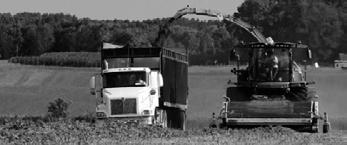

Mt Horeb, WI 800-872-3470
MINNESOTA & SOUTH DAKOTA
Farm Systems
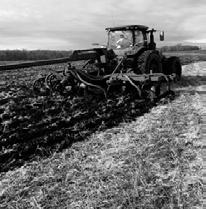




Melrose, MN 320-256-3276
Brookings, SD 800-636-5581
Advanced Dairy Mora, MN
320-679-1029
Pierz, MN
320-468-2494
St. Charles, MN
507-932-4288

Wadena, MN 218-632-5416
Page 22 • Dairy Star • Saturday, September 9, 2023 Contact one of the following dealers to learn more:
IOWA Prairie Land Ag Supply Inc. Rock Valley, IA 712-476-9290
Dairy
is a registered trademark of Tetra Laval Holdings & Finance S.A. and “DeLaval” is a registered trade/servicemark of DeLaval Holding AB © 2023 DeLaval Inc. DeLaval, 11100 North Congress Avenue, Kansas City, Missouri 64153-1296. Dairy producer testimonials reflect their real-life experience using DeLaval products. Results in testimonials have not been independently verified and DeLaval does not claim the results are typical. Actual performance and improvement will depend on a number of factors, including prior milking practices, type of cows, farm and herd maintenance practices. Testimonials do not constitute warranties or guaranties of service or performance. www.delaval.com MY VMS™ LETS ME FARM MY WAY YOUR VMS™ YOUR WAY I am adding a fourth robot to farm 200 cows on my own, VMS™ makes that possible, which is my way. Jeremy Haas Haas Dairy, Wisconsin, USA 160 cows on 3 VMS V300 “ To find out more about how VMS™ can work your way, visit delaval.com or call your local DeLaval representative. Woeste Custom Harvesting Upper Midwest Pumping www.uppermidwestpumping.com info@uppermidwestpumping.com 21171 US Hwy. 71 Long Prairie, MN 56347 Tim 320-247-3857 Brian 320-293-2703 Licensed & Insured • 40+ Years of Combined Agricultural Experience (and that’s just between the two owners) U P P E R M I D W E S T PUMPING Customized to Your Operation Specializing in Custom Pumping and Drag Hose Applications Custom Forage Harvesting of Hay and Corn Silage Call now to get on our schedule! 13200 Co. Rd. 51 Bongards, MN 55368 (952) 466-5521 Fax (952) 466-5556 110 3rd Ave. NE Perham, MN 56573 (218) 346-4680 Fax (218) 346-4684
Modern technology on Merryville Farm
146-year-old dairy hosts eld day
By Jan Lefebvre jan.l@star-pub.com
WAVERLY, Minn.
When Swedish ancestors of Bill and Steve Uter established Merryville Farm near Waverly in 1877, hands and pails were the components of their milking system.
Today, Bill and Steve, along with Bill’s son, Mike, milk 285 cows using a DeLaval robotic milking systems with four units, which were added three years ago in a retrotted, guided-ow system. Robotic feeders are used in the calf facility, and, this year, a Valmetal automatic bedding system was installed in the freestall barn, allowing the Uters to bed stalls without entering pens. The system is the rst one installed in Minnesota.
The Uters’ use of technology was the topic at hand Aug. 1 during the University of Minnesota Extension’s Summer Dairy Field Day at Merryville Farm.
During the introduction, Bill explained why the family added specic technologies. He and Steve both worked in agricultural business before taking over the farm from their parents, Ron and Kay, in 1994.
Summer Dairy Field Day at Merryville Farm near Waverly, Minnesota. During the event, the Uters demonstrated technologies added to their family’s dairy farm in recent years.
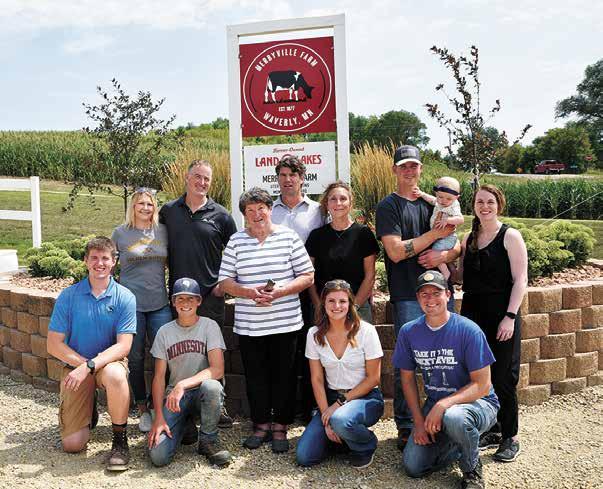
“Then it was the original 40-cow tiestall barn and a hay shed, and we had a little bit of land to work with and some supportive parents,” Bill said.
… “We are featuring (how we added) technology to an existing setup.” Bill said lack of labor was a factor in adding technology.
“We’ve reduced our labor signicantly and boosted efciency through production per cow,” he said.
In the freestall barn, the
farm’s most recent technology was showcased – the automatic bedding system. Part-time Merryville Farm employee Dylan Marketon demonstrated the system by running the bedding cart over one side of the barn using an application on his phone while Steve explained the system.
“This is the third machine like this used in the United States,” Steve said.
The other two are in Wisconsin, and the Uters visited one of those sites. After much consideration, the Uters chose to proceed with the Canadian company.
“We do both drop bedding and spread bedding on the cows,” Steve said. “What (the system’s bedding cart) does is ride rails (at the ceiling) that go all the way around the barn on the outsides then curl on the ends and come back over the top of the insides over the cows.”
The bedding is made by grinding straw and mixing it with sawdust using a vertical mixer. It is then automatically fed into the bedding cart.
The system can be programmed to disperse different amounts of bedding as needed. The barn has a tail-to-tail conguration for stalls.
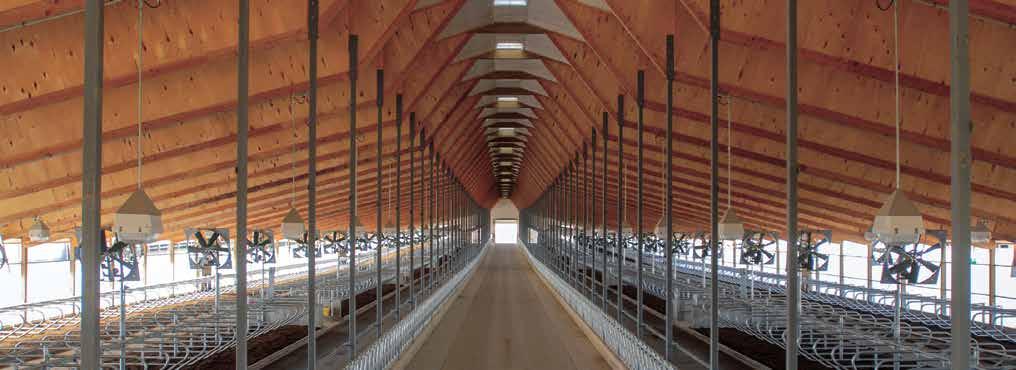
Dairy Star • Saturday, September 9, 2023 • Page 23 You Know Farming, AND SO DO WE. 400 Brickl Road | West Salem, WI 54669-0125 Toll Free: (800) 658-9030 | Web: BricklBros.com Specializing in Custom-Designed Agricultural Facilities Since 1970. Big or Small, We Design/Build Them All. Designers | Construction Managers | Builders Turn to UTERS | Page 25
TIFFANY KLAPHAKE/DAIRY STAR
Zach Uter (front, from le ), Dylan Marketon, Miriana Uter and Joe Uter; (back, from le ) Lori, Steve, Kay, Bill, Vicki, Mike, Aria and Megan Uter were on hand Aug. 1 to host the University of Minnesota Extension’s

















Page 24 • Dairy Star • Saturday, September 9, 2023 ‘22 Gehl R220 T-Bar H-Ctrls, Dsl, 2500 Lift Cap, C&H, 2 Spd, 3,890 hrs. - $38,800 Woods S20ED 20 Ft, Pull Type Hitch, 4 Rear Tire Option, Side Slice Knives $8,500 HINIKER 4000 15’ Stalk Chopper, 9.50L-15 Tires $5,500 ‘03 Gehl 1085 Tandem Axle, Metal Stop, TR30382 Row Corn Head, Chopper in Working Condition - $4,900 ‘22 Penta 5530, 3’ Flip Up Stainless Steel Conveyor, 3/4” Flighting, 2810 Scale Head, Demoed, New! - $51,500 ‘20 Kuhn Primor 4270M Bale Processor - $24,000 NEW GEHL All Wheel Loaders Models Available: AL650, AL750, AL950 Call For Price and Details ‘09 Kuhn Knight 8132 425 Truck Tires, 3200 Gal. - $25,500 Tubeline TL1700SR Square Bale 3’x3’ Up to 7’ Long, Rd Bale 4’x4’ to 5’x6’, Hyd Drive, Twin Bale Wrap Stretchers - $28,500 ‘22 Gehl RT215 ISO/JS Ctrls, Dsl, Square Bar 17” Tracks, 3000 Lift Cap at 50%, C/H/A, 2 Spd, 1375 hrs, - $53,500 NEW ARTEX SPREADERS Models Available: SB200, SB600, SB700, SB800, SBX 950 Call For Price and Details ‘16 Kuhn Knight PS160 600 Cu Ft, Verti Beater, Swing Endgate, Hyd Apron Drive $45,500 VB 3100 SERIES VARIABLE CHAMBER ROUND BALERS • Fast, consistent bale starting in diverse conditions • Simple, heavy-duty driveline and chains for reliability Produces 4x5 and 4x6 bales Cutting and non-cutting models NEXT-LEVEL , HIGH-DENSITY BALING INVEST IN QUALITY ® KuhnNorthAmerica.com tfn Les Kuehl Repair Service 30+ Years Experience No Emergency Charges--Ever! • Sealed silo parts & service • Best chains on the market • Used and rebuilt unloaders • Stainless steel roofs • Stainless steel conveyor chains 320-760-2909 Eve. 320-762-1827 YOUR CENTRAL MINNESOTA GOLIATH REPAIR SERVICE! • All parts needed to service your Goliath Unloaders Not af liated with the Harvestore brand Call for early maintenance specials WHO WILL YOU FIND IN OUR Business Directory? TO BE INCLUDED IN THE DAIRY STAR BUSINESS DIRECTORY CALL 320-352-6303 LOG ON TO: www.dairystarbusinessdirectory.com BULK OR BAG Wood Shavings S&S Wood Products 35335 Green Street | Independence, WI 54747 800-234-5893 | 715-985-3122 Tell the advertisers you saw their ad in the Dairy Star!
how the guided-ow system works in the freestall barn Aug. 1 at Merryville Farm near Waverly, Minnesota. The Uters milk 285 cows with four DeLaval robo c milking systems and bed the cows using the only Valmetal automated bedding system in Minnesota.
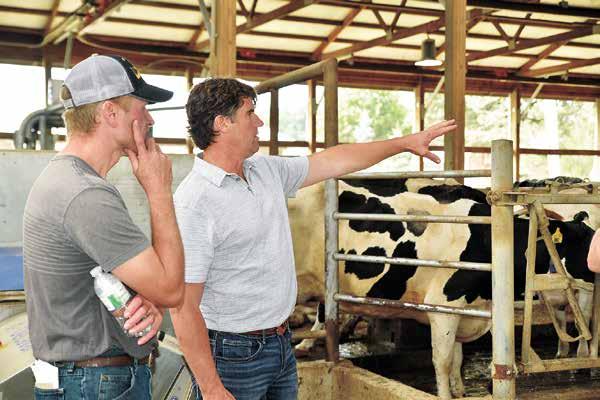

The cart comes back to its base to rell and keeps working until the barn is done for each bedding time, which happens twice a day at 5:30 a.m. and 4:30 p.m., taking a little over an hour each time.
“Before we had this, we were going in there with a cart and a shovel and bedding the stalls – a two-hour-a-day job, a horrible job, with the dust and the physical labor and the cows in there,” Steve said. “The reason we used the cart and shov-
el is we didn’t want to move the cows. If we would have to move the cows over from where they are lying to this alley to bring in a loader to bring the bedding in, we would lose 8-10 pounds per day just by the disruption of their schedule.”
If bedding lands directly on cows, Steve said, they simply shake it off.
“We put the rail system in ourselves,” Steve said. “We cut the metal, designed and built

the brackets, had them galvanized, put them up, and put the rails in.”
The rails are 40 feet long and 330 pounds each, so even getting them into the barn was a challenge, much less lifting them.
“It was quite a project,” Steve said. “That’s why there’s probably only three of them in the United States.”
They began in early August 2022, installing up to 10







brackets each day as other farm work allowed. They also built an apparatus to hang on the rails, or I-beams, so they could use a trolley on each rail that was in place and roll the next rail into place from it and attach it to that previous one. Time only allowed for placing two or three rails each day.
Including waiting times for parts to arrive or to be galvanized, the process was completed by the end of November, but they then had to wait for corner pieces to be shipped. The Uters were nally able to begin using the system three months ago.


In another session, Bill, along with Randy Kuechle from Farm Systems in Melrose, explained the robotic milking system on the farm, which incorporates guided ow. Younger cows are kept on one side of the barn and older cows on the other. The Uters also use their parlor for milking special-needs cows, which typically number around 40.
“We take a conservative approach with everything,” Bill said. “We wanted to make sure we had enough milk owing at all times before we populated this (freestall) barn, and we just kind of stuck with it. … We did not put the milk catches on our robot. (Milk from) every cow in (the freestall barn) goes into the bulk tank.”
The Uters looked at both guided-ow and free-ow systems for the barn when retrotting it with robots and saw
pros and cons with each. In the end, mostly due to not having options for expanding the barn because of where it sits, they chose guided ow.
“The free ow would have gobbled up a lot of stalls,” Bill said. “The main part of the barn was built in 1994, and we built it as a cold barn. The alleys are narrow; they were never designed for scrapers. We’ve added on to each side of the barn since then, and we can move more cows with the guided-ow system and not have a lot of congestion at the front of the barn. We didn’t need that big waiting area compared to a free-ow situation.”
Bill said the system is working well and increasing milk production.

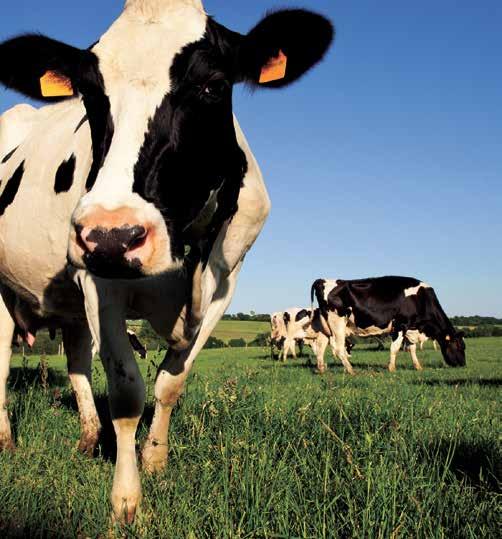
“We didn’t want to be fetching cows all the time,” Bill said. “With this system, if there’s a cow that’s in the (needing-to-be-milked) list, we simply get her up, and she walks down and milks herself.”
Currently, after a cow walks in and the gate closes, the robot cleans and dries the teats, milks the cow, sprays and dries the teats again, and releases the cow in, on average, 6 minutes and 30 seconds. The robots read the collar of each cow, knowing its size, teat placement, milking schedule and other data. If it is not time for a cow to be milked again, she is sent back around the guided ow.


Dairy Star • Saturday, September 9, 2023 • Page 25 Why withdraw your milk if you can sell it? SELL YOUR MILK, DON’T WASTE IT! Call +1 (800) 918-0902 americas@ozolea.it Your new no-withdrawal ally in lactation and at dry-off. Stand out from the herd. DAIRY ST R R 522 Sinclair Lewis Avenue, Sauk Centre, MN | 320-352-6303 | www.dairystar.com Professional Print, Website & Sign Solutions for Farms & Small Businesses Contact your area sales representative listed in First Section, page 2 to learn how our customized services can help your farm or business! Con nued from UTERS | Page 23 Turn to UTERS | Page 26
TIFFANY KLAPHAKE/DAIRY STAR
Bill Uter (right) shows a guest
Mike was on hand at the farm’s calf facility to talk about the robotic feeding system. When Bill and Steve rst took over the farm, heifers were purchased, as was their feed. As they acquired land to rent and later buy, they added heifer facilities and more of their own feed. Currently, the Uters grow all of their own forages but purchase grain for the calves and the milking ration.
“All of our bull calves we sell within the rst week or two,” Mike said. “The robots here are able to handle 120 calves, but we built this barn so we could feed 60 heifer animals, and if something were to happen to the farm, we could do 120 bull calves.”
Heifer calves are rst put in hutches for a maximum of 14 days. Then they move into the barn to the young-calf pen for two to three weeks for priority feeding with two of the robots, each with two nipple stations. From there, calves are moved to the older-calf pen, which also uses robotic feeding. In the past, all calves were fed by hauling whole milk from the barn, so labor has been reduced by automating feeding.
The Uters raise their heifer calves. When heifers are conrmed pregnant, they go to a neighboring farm until up to three weeks pre-fresh, and then they are brought back to the Uters’ farm to calve. Mike said the farm usually adds around one to two calves per day.
In another session, Barry Visser of Vita Plus described the Uters’ feeding ratio. The farm has two bunkers of corn silage. The Uters have their silage custom chopped.
“About 40% of the dry matter the cows are eating is from that corn silage,” Visser said.

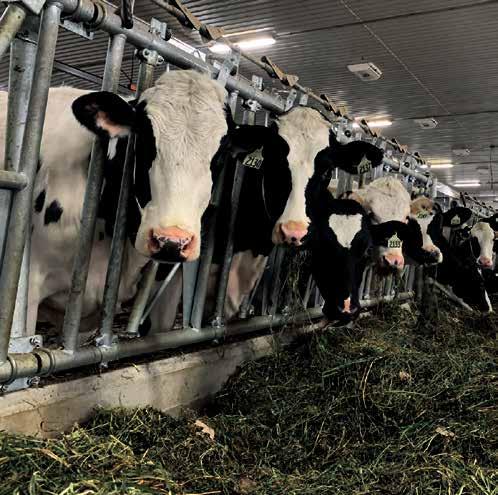
Other forage is in the form of baleage and a small amount of wet brewers grain, a byprod-


uct from nearby breweries.
The Uters use a partially mixed ration, purchasing a complete grain mix with corn, vitamins, minerals and most of the protein. They also have soybean meal kept separate so that if they get higher-protein baleage, they can easily lower the soybean meal to adjust. Lastly, they use two kinds of pellets for their guidedow system. One reason pel-
lets were selected by the Uters over meal feed was for time efciency through the milking system.



“Meal feeds can’t be eaten quite as quickly as pellets” Visser said. “With guided ow, you can get by with feeding cows a little less pellets because they are guided in as opposed to free ow.”
At the nal breakout session, Zach Uter, Steve’s son and


a data analyst at UMN, along with Jim Salfer, of UMN Extension, discussed the economics of using robotic systems. Zach talked about efciency in the system being a top priority for prot. Breeding for cows with somewhat smaller frames and specic body types becomes part of the equation so that they t better through the guided-ow system.
“Breeding has changed; we’re looking for cows that not only produce as well as they are right now but also let down their milk faster,” Zach said. “We’re also looking for teat placement and length because it makes it just that much quicker for the robot to attach, and then we’re looking at cows that are more docile, not as aggressive, because, with the robots, there is more of a chance for them to be bullied.”
Merryville Farm has changed in many ways since Bill and Steve took the reins 30 years ago, but with regular maintenance checks, all new systems are running smoothly. Bill said he only receives an alert call by the robotic milking system around once every couple of weeks.
“When we were in the parlor, that was 24 man hours a day, getting 280 cows milked, and then we still had to go out and do our chores,” Bill said. “As annoying as getting a call once in a while is, you just remember and think about how it was.”

Page 26 • Dairy Star • Saturday, September 9, 2023 Field’s Mount Horeb, WI Anibas Silo & Equipment Inc. Arkansaw, WI Brubacker Ag Equipment Curtiss, WI • Edgar, WI Boscobel, WI Chippewa Farm Service LLC Chippewa, WI Ruf’s Farm Service Inc. Darlington, WI D&D Farm Supply Arcadia, WI
Con nued from UTERS | Page 25
TIFFANY KLAPHAKE/DAIRY STAR
An automated bedding cart operates on a ceiling rail system Aug. 1 in the freestall barn at Merryville Farm near Waverly, Minnesota. The Uter family installed the rails themselves and use a chopped straw and sawdust bedding for their cows.
PDPW Herdsperson Workshops to feature fertility, cow-side care, transition cow care




Oct. 11-12 program includes dairy tours, simultaneous Spanish translation






A successful reproductive program is the foundation of today’s high-performing dairy farms. The Herdsperson Workshops presented by Professional Dairy Producers will take a deep dive into this critical topic, providing interactive presentations by some of the industry’s top researchers in addition to farm tours to see the latest technologies and practices in action.
Two repeating one-day sessions of the workshop are scheduled from 9:30 a.m. to 4 p.m. Wednesday, Oct. 11, and Thursday, Oct. 12, with simultaneous translation into Spanish for the entire program. The Oct. 11 program will be held at Arlington Research Station in Arlington, Wisconsin, with the afternoon farm tour at Maier Farms, and the Oct. 12 program will be held at Mid-State Technical College in Marsheld, Wisconsin, with the afternoon farm tour at Norm-E-Lane Farm.
“The Herdsperson Workshop is designed to provide information and insights that English and Spanishspeaking herdspeople, dairy managers, nutritionists and veterinarians can put to work in their own operations right away,” said John Haag, Dane, Wisconsin, dairy producer and PDPW board president. “The interactive format with researchers and behind-thescenes farm tours make these sessions one of the best single-day training opportunities dairy teams can participate in.”
The morning sessions of each workshop will feature three presentations:


“Unlock high fertility,” presented by Megan Lauber, Ph.D. candidate at University of WisconsinMadison, and Dr. Paul Fricke, Ph.D., professor of dairy science and extension specialist in dairy cattle reproduction at UW-Madison Department of Animal and Dairy Sciences, will

bring to life the critical aspects of transition-cow management and reproduction for high-producing herds to achieve high pregnancy rates. The session will include a hands-on exploration of reproductive anatomy, physiology and endocrinology and the inside scoop on the “high fertility cycle.”
— “Make the most of cow side care,” presented by Dr. Jerry Gaska, DVM, will focus on testing, reading and recording results to take your herd’s reproductive program to the next level. Gaska will review pros and cons of lab testing, palpitation and ultrasound, as well as tips and strategies for sample collection and handling, maximizing herd management software and more.
— “Optimize liver metabolism and production,” presented by Dr. Usman Arshad, Ph.D., post-doctoral research associate at UW-Madison, and Dr. Heather White, professor at UWMadison in dairy cattle nutrition and physiology, will focus on the physiology for the transition phase and its effect on liver metabolism, productive performance and well-being later in a cow’s life. They will compare examples of cows with greater transitionperiod risk factors and look at prospective impacts on production and health.
Each afternoon, the classroom will move to the farm to apply concepts and discoveries from the morning sessions to an area dairy farm. Dairy managers will share how they leverage technology and other tools to optimize health, reproductive progress and cow comfort while simultaneously maintaining a strong, functional team.
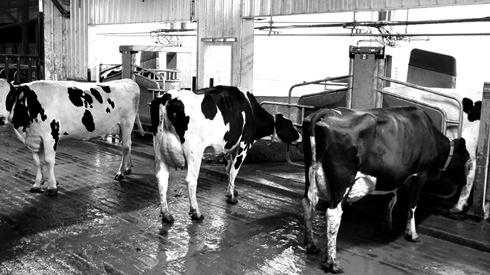
Learn more about the Herdsperson Workshop and register by visiting www.pdpw.org or contacting PDPW at 800-947-7379.
Herdsperson Workshop is an accredited training and offers up to 4.0 Dairy AdvanCE continuing education units for each day. To learn more or secure credits, visit www.dairyadvance.org. Up to 4.0 CEU credits are available to American Registry of Professional Scientists members.


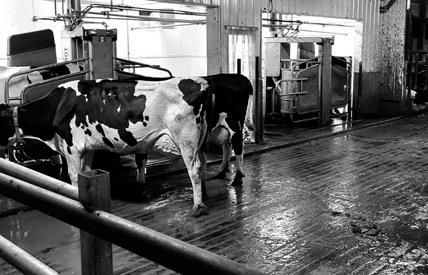

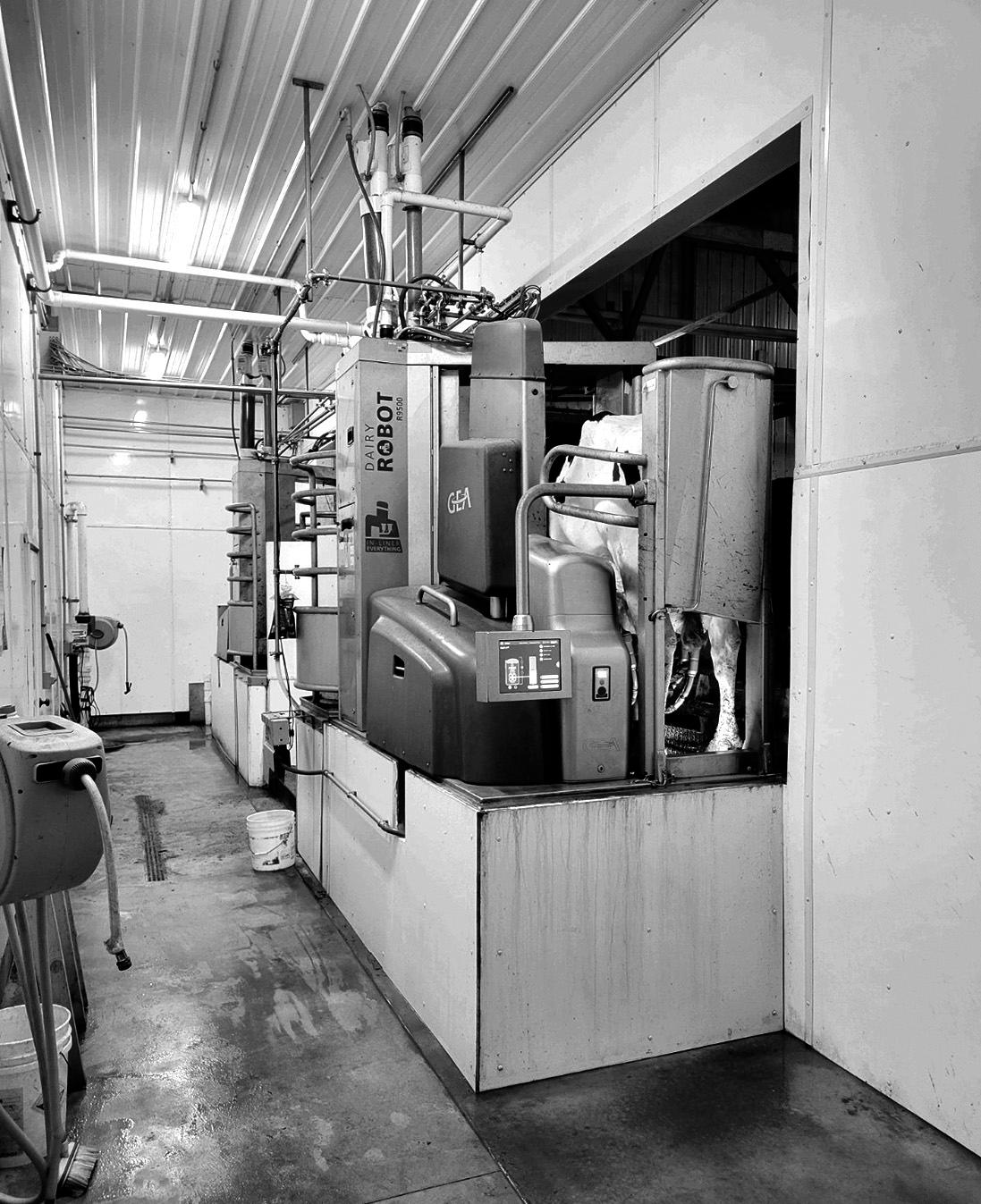
Dairy Star • Saturday, September 9, 2023 • Page 27 CENTRE DAIRY EQUIPMENT AND SUPPLY INC. Henning Area 218-849-0211 Jon Stein 320-352-5762 • 1-800-342-2697 40625 State Hwy. 28 • Just West of Hwy. 71 • Sauk Centre, MN The milking robot’s strong performance is achieved in combination with streamlined maintenance, and the ability for 24/7 operation with minimum use of consumables and energy. With the DairyRobot R9500, up to four boxes can be connected to one supply unit. This way they share one vacuum pump, compressor, milk and calf milk line, and tank connection – which means less equipment and reduced system complexity. “Centre Dairy was very easy to work with, we had the robots installed about five months ago, and after a slight learning curve, the cows have adapted well and efficiency and production are up. We are finding it takes less labor and time for each milking.” - Marc Claseman The GEA DairyRobot R9500 is simply smarter milking technology. Automatic milking with less complexity CALL FOR A QUOTE TODAY 605.368.5221 OR VISIT US AT equipmentblades.com Loader Edges Grader Blades Snow Plow Blades Custom Edges Skid Steer Blades Box Scraper Dozer Blades Wear Steel
320-836-2284 • 1-888-276-1751 29033 Co. Rd. 17 • Freeport, MN • In St. Rosa www.strosalumber.com • www.arnzenconstructioninc.com Your one-stop-shop for all agricultural building, welding, barn parts & equipment needs! Build with the Best! CA-Aug21-1B-MT
















Page 28 • Dairy Star • Saturday, September 9, 2023 Mid-Central Equipment, Inc. Henning, MN 218-583-2931 Northland Farm Systems Owatonna, MN 507-451-3131 Olson’s Custom Farm Service Sebeka, MN 218-837-5749 Schlauderaff Implement Litchfield, MN 320-693-7277 Woller Equipment Swanville, MN 320-573-2341 Roeder Implement Dubuque, IA 563-557-1184 Reiser Implement Waukon, IA 563-568-4526 Cloverdale Equipment Curtiss, WI 715-223-3361 D & D Farm Supply Arcadia, WI 608-323-7001 Contact your local dealer for more information: RMB Hay Trailers RMB 1400 B 1400 Efficiency & Speed RMB 2000 Celebrating over 40 Years in Business 1010 Hoeschler Dr. • Sparta, WI 54656 Phone: 608-269-3830 Toll Free: 1-888-863-0227 Email: prestonde@prestonde.com Does your milking equipment need maintenance? DAIRY EQUIPMENT INC. We service all dairy equipment! Give us a call to schedule a visit. N14685 Copenhaver Ave, Stanley, WI 715.644.0765 hixwoodmetalinc.com BUY DIRECT! We Manufacture! ASK ABOUT OUR POST FRAME DESIGNS! CALL HIXWOOD FOR ALL YOUR STORAGE NEEDS! 8.28.23am
IN DAIRY women
Tell us about your family and farm. I work as the herd manager for a 350-cow dairy in Fennimore, Wisconsin, where my small herd of Brown Swiss cows reside. I currently have eight head of registered Brown Swiss that are expanding graciously this year through my extensive in vitro fertilization program. All of my cows are from elite dairy show families with deep pedigrees. I started by purchasing a single cow online in 2017 that got my feet wet in the national show ring and introduced me to some of the best cow people in the country. My goal has never been to have a large herd but rather to have a few elite females that can produce calves to market and show.
What is a typical day like for you on the dairy? The fun part about my job is there really is no typical day for me. Some might call that a negative, but it denitely keeps things interesting. I have a small group of employees to manage and have the responsibility of ensuring cows are healthy, treating problems, delivering calves, running shot protocols for heats, vaccinations, breeding and parlor management. We also have an extensive IVF program on the farm that I am responsible for, so a lot of planning is done to initiate that. It always is something different each day. My work is never boring.
What decision have you made in the last year that has beneted your farm? The best decision I’ve made all year was to invest heavily in my IVF program. Working with Trans Ova Genetics, I’ve been able to produce additional calves from elite females that have signicant value. I take a lot of pride in my ability to produce fertile embryos that turn into healthy calves and currently run a 90% conception on my Brown Swiss embryos with a 0% death loss in the calves.
Tell us your most memorable experience working on the farm. My most memorable experience isn’t related to just working on the farm but rather developing Arthurst Kade Panda-NP, a 3-year old Brown Swiss cow I pur-
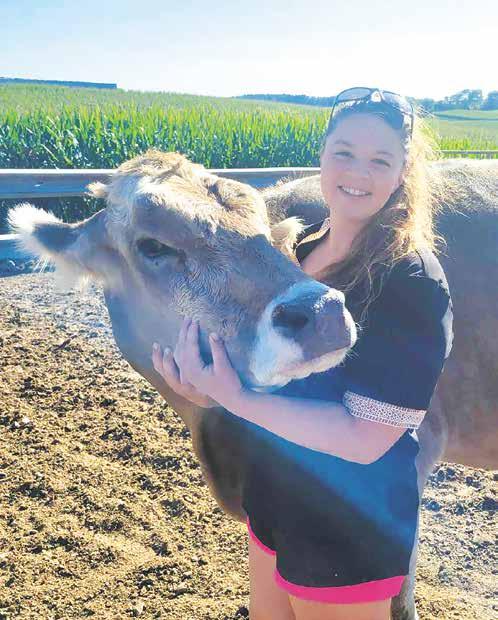
 Bridget Achterberg Fennimore, Wisconsin Grant County

8 cows


chased as a yearling heifer, into the rst All-American nominated polled Brown Swiss animal. We truly didn’t expect her to get to Madison last fall, much less do as well as she did. After three days on the bedding pack, it was clear that she belonged there. Foreign interest in the cow has certainly made her more fun to deal with as well. Matings by multiple different bulls this year have allowed me to produce more daughters from her.
What have you enjoyed most about dairy farming or your tie to the dairy industry? The most enjoyable part of farming for me is watching a healthy calf be born from our IVF program. Be it an embryo we produce or an embryo we purchased, the anticipation of the calves and the delivery is especially fun. I’ve never been one to desire the average, and this program allows me to stay excited for what’s to come.
What is your biggest accomplishment in your dairy career? My biggest accomplishment goes back to the most memorable one, developing my beloved Panda into an All-American nominated cow. Some strive to develop these elite females their whole lives, and I’ve been fortunate enough to do so in the short ve years I’ve been building my genetics. What’s more exciting is knowing the backstory on Panda and the family that bred her. They have been her biggest fans these past three years, and being able to make them proud is an accomplishment in itself.
What are things you do to promote your farm or the dairy industry? Onfarm promotion is truly done through my Facebook page and just getting the genetics out to shows. Selling calves to other exhibitors has been a huge asset to my breeding program as well. The goal is always to sell the best and watch them succeed for others.



What advice would you give another woman in the dairy industry? My biggest advice for other women in this industry is to not let the idea of being a woman hold you back. I’ve had numer-
ous people doubt my abilities to successfully do my job, and I’ve always just proved them wrong. It took a long time for me to differentiate between condence and arrogance in myself, but knowing your worth and knowing that your knowledge and intelligence has value is worth more than anybody else’s opinion.

When you get a spare moment, what do you do? In my spare time, I enjoy visiting with my niece and nephews, helping youth at the county fairs, kayaking and working on a small hobby sidebusiness making T-shirts and graphics for other producers.


Dairy Star • Saturday, September 9, 2023 • Page 29 The World’s Best TMR Processor Pre-Order for 2023! Keep your cattle happy & healthy with a great TMR mix. p py & a mix A Supreme vertical mixer is powerful, thorough & accurate, providing the best TMR mix on the market. Unlike other mixers, a Supreme is built to last, providing exceptionally accurate mixes throughout its entire life. With proper care & maintenance, a Supreme will offer the same great mix from the first cow to the last - Guaranteed. 920-853-3516 Potter, WI 920-477-5292 Eden, WI 920-324-3597 Waupun, WI 920-261-5301 Watertown, WI WEaupunquipment (320) 243-7411 23661 Hwy. 4 , Lake Henry, MN www.lakehenryimplement.com 350 AND 700 IN STOCK More models coming! The X Series manure spreaders have a range of box sizes from 350 cubic feet to 900 cubic feet heaped capacity to meet the needs of a variety of operations. This time-tested manure spreader has seen some serious upgrades to give you the edge when it matters most including an upgraded oor chain with a limited life-time warranty, guillotine slop gate and ared sides. Capture the bene ts of applying livestock manure on your eld and help complete the lifecycle on your operation.
www.extension.umn.edu/dairy

A better you for a better farm
As tasks, bills and everything else pile up on the farm, prioritization is important. As you set those priorities, where do you fall on that list? Is your care and well-being even considered a priority?
In farming and in our culture, in general, we value long work hours and putting our bodies through extremes to get the job done. There is something to be admired in that, but it also takes a toll. I hear far too often of farmers feeling guilty about taking vacations or even getting off the farm for a couple of days to go to a trade show or conference. Taking care of ourselves is not selsh. The well-being of the farm depends on the well-being of the farmer.
By Emily Krekelberg University of Minnesota
When thinking about well-being, I like to harken back to an earlier time in dairy farming and picture a threelegged milking stool.
A stool has two major components: the seat and the legs. Think of the seat as you: your responsibilities, your health, your job, your family, etc. The seat is supported by the legs. In this example, the legs represent three areas of health or well-being: physical, mental and emotional.

Your physical health is the general well-being of your body: sleeping
7-9 hours each night, eating balanced meals and snacks, and being active. Mental health and emotional health can be a little tricky to tell apart, but think of them like a tag team. Mental health refers to your ability to process information. Emotional health refers to your ability to express feelings which are based upon the information you have processed. We need to attend to all three legs equally in order to ensure we are properly supported. If you neglect one area, imagine cutting an inch off of one of the legs. You’ll still be upright, but it will be uncomfortable and more difcult to support yourself. Taking care of yourself is critical because it allows you to then take care of others. It is in the nature of all farmers to want to rush to help someone in need and to make sure everyone is comfortable and cared for before caring for themselves. You have likely heard me or someone else say, “Adjust your own oxygen mask rst.” When you y, this is always a key part of the safety message shared pre-ight. You cannot give 100% of yourself to others if you are not at 100% to begin with. You cannot pour from an empty cup. So, what are you doing to ll your cup? What recharges you to 100%?


Think back to the three-legged
stool. It is important that we are using a combination of strategies to promote physical, mental and emotional health. Some strategies I like to use and encourage others to try are deep breathing, meditation or reection, positive self-talk, physical activity, hobbies, connecting with people in your social network and speaking with a mental health professional.
Deep breathing is a great way to reset your brain and regroup your thoughts. It is quick, free and easy. In deep breathing, the only thing you need to focus on is the air going in and out of your lungs. My favorite deep breathing exercise is box breathing: inhale for 4 seconds, hold your breath for 4 seconds, exhale for 4 seconds, and rest for 4 seconds. Repeat this cycle a few times and see how refreshed you can feel.
Meditation and reection are similar practices that focus on clearing your mind of competing thoughts and focusing your attention on one major thing.
Meditation is a great way to clear your mind and examine your thoughts from an outside perspective. There are several meditation apps and YouTube videos out there; it can feel a little weird at rst, but it can really have an impact on how you feel mentally and emotionally. Reection is similar, as it is about observing your thoughts in a specic way. Some great ways to reect include journaling, writing down three things you’re grateful for every day, or savoring a moment of awe, serenity or joy.
A positive mindset has been proven to improve people’s moods and how they feel about themselves. Positive self-talk focuses on the way you view yourself and your day. A great exercise to try is replacing all the times you think about what you “have to” do with what you “get to” do. “I have to pick up the kids after school” becomes “I get to pick up the kids after school.” As you think about yourself and your abilities, it can be easy to get negative and think the worst of ourselves. If you would not say negative phrases to your closest friend or family member, you should not be saying them to yourself.
Physical activity plays a crucial role in supporting all three areas of our well-being. Whether it is exercising at the gym, going for a run, taking the dog for a walk or playing with the kids outside, doing physical activity each day
Dana Adams, adam1744@umn.edu
320-204-2968
Joe Armstrong armst225@umn.edu
612.624.3610


Luciano Caixeta lcaixeta@umn.edu
612-625-3130
Gerard Cramer gcramer@umn.edu
612-625-8184
Marcia Endres miendres@umn.edu

612-624-5391
Joleen Hadrich jhadrich@umn.edu
612-626-5620
The demands of dairy farming can lead to farmers forge ng to take care of themselves. Thinking of a threelegged stool — where physical health, mental health and emo onal health support overall wellness — can be a quick visual reminder of the components of important self-care.

will help promote a healthy body and a healthy mind. Similarly, hobbies can support our physical, mental and emotional health. Sports, cooking, reading, hunting and shing are all great ways to enjoy something you are passionate about and to take care of yourself.

One of the easiest and best ways to support emotional health is through connecting with your social network. When we are under a lot of stress or in a mental health crisis, we tend to isolate ourselves from others. Being social and talking to people we trust is imperative to emotional and mental well-being. Sometimes, we may nd it is benecial to talk to someone who does not know our entire life. Mental health professionals are not just for people in a mental health crisis or with a mental illness. They are for everyone.
It can be far too easy to put ourselves low on the priority list. Self-care is not selsh; taking care of your physical, mental and emotional health ensures you are at your best for your farm, family and friends.
Les Hansen hanse009@umn.edu
612-624-2277
Brad Heins hein0106@umn.edu
320-589-1711
Nathan Hulinsky huli0013@umn.edu
320-203-6104


Karen Johnson ande9495@umn.edu
320-484-4334
Emily Krekelberg krek0033@umn.edu
507-280-2863
Claire LaCanne lacanne@umn.edu

507-332-6109
Brenda Miller nels4220@umn.edu
320-732-4435
Erin Royster royster@umn.edu
Isaac Salfer ijsalfer@umn.edu
320-296-1357
Jim Salfer salfe001@umn.edu
320-203-6093
Mike Schutz mschutz@umn.edu
612-624-1205
Melissa Wilson mlw@umn.edu
612-625-4276
Isaac Haagen hagge041@umn.edu
612-624-7455
Page 30 • Dairy Star • Saturday, September 9, 2023
www.steelmartdbq.com 555 E 12th St, Dubuque, IA 52001 563-582-3726 M-F 7:30 a.m.-4:30 p.m.
stainless steel and galvanized steel!
Along with our extensive inventory of carbon steel, we have
GRAPHIC SUBMITTED
7 generations of work, success
McGowan family immigrated to Wisconsin in 1856
By Abby Wiedmeyer abby.w@dairystar.com
LYNDON STATION, Wis. — The year was 1856, and James McGowan was an Irish immigrant living in New York. Six months after moving to America, James and his brother Thomas, along with their sister, traveled to Wisconsin to start their new life. They became some of the rst residents of the township of Kildare, named after the Irish county they originated from.
The farm remains in the McGowan name 167 years later and is operated by the fth, sixth and seventh generations. Brothers Dan and Jim milk 65 cows with the help of Jim’s wife Vicki and their son Matthew. They are led by Dan and Jim’s father, Jim Sr.
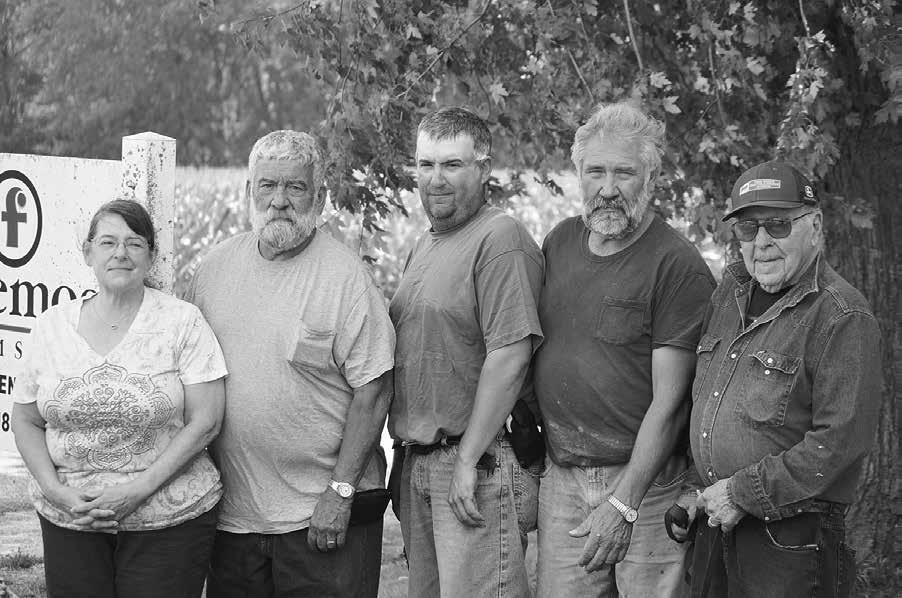
“Success came with a lot of hard work,” Jim Sr. said. “I lay a big share of the credit to the boys and Vicki, and my wife Anna. She was the heart of this business for 50 years.”
Jim Sr. and his late wife Anna took over the operation in 1961. Jim Sr. had been working in Madison as a cattle buyer for Oscar Meyer when
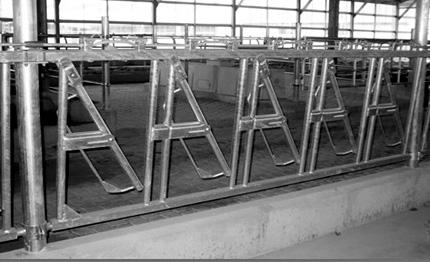
his brother was killed. He moved home to the farm, and he and Anna raised eight children there.
At that time, there were 15 Guernsey cows and about 40 acres. Jim Sr. and Anna purchased a used tractor and managed to put a crop in. It was a struggle for the rst few years, Jim Sr. said. Keeping good relationships with his neighbors proved worthwhile when the opportunity to rent 200 acres came up.
“It was really tough going when I started,” Jim Sr. said. “I had a few bucks but not many. Anna took care of the books for years and years.”
Today, the farm encompasses 900 acres.
Vicki is a retired school teacher and has taken over the bookwork since Anna’s passing.
“She was the very best,” Vicki said about Anna. “I miss her every month.”
Today, Jim and Dan begin the day by feeding calves while Matthew and his dad start milking. Cows are milked in a 55-stall stanchion and tiestall barn. By the time calves are fed, it is time to switch cows. Everyone has their own
routine that allows the farm to run smoothly.
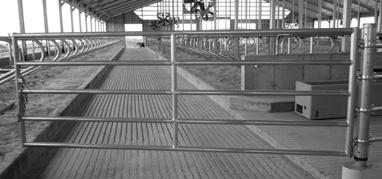
As they have grown their acreage, the family has added a beef enterprise to the operation. Every month, a load or two of nished steers is sold to help cash ow the dairy. There are feed lots at the dairy and at Jim and Vicki’s house down
LEGEND SOFT BED MAT
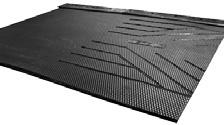



the road. They have a good business relationship with the local sale barns who will call them when feeder steers are available.
“It keeps the lots full and the wolf away from the door,” Jim Sr. said. “And they sell some grain too.”
The guys make three silage bags of corn silage for
the steers every year, and the cows are fed out of the silos. A Harvestore silo was added 30 years ago to store highmoisture corn. They also have
and added hygiene
• Simple and fast installation


• 5 year warranty
• Proven for extreme durability
• 5mm stainless cable inlay
• Guaranteed NEVER to stretch
• Grooved top for traction
• Can be used with automatic & skid steer scrapers

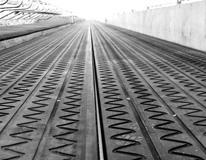
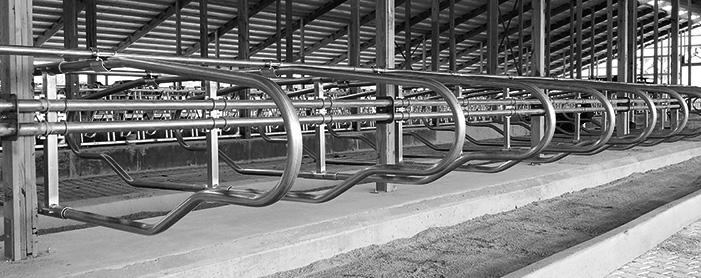
• 10 year warranty
HIGH COMFORT MAT

Dairy Star • Saturday, September 9, 2023 • Page 31 One Piece Polythylene Construction MANUFACTURING Freudenthal 715-748-4132 • 1-800-688-0104 • W. 6322 CTH O • MEDFORD, WI 5445 Visit our website: www.freudenthalmfg.com Complete Line Of Ritchie Watering Fountains Fresh Water On Demand 24 Hours a Day • Top Quality Materials • Smart Design • Built to Last COMPLETE WATERER PARTS ON HAND BUY DIRECT FROM THE MANUFACTURER AND SAVE! CS-60 Comfort Stall Heaviest In The Industry AUTO RELEASE PANELS THE HEAVIEST BUILT IN THE DAIRY INDUSTRY. UNMATCHED BY ANY OF OUR COMPETITORS. Heaviest, Strongest, Custom Cattle Gate on the Market! We Ship Anywhere! ALL STEEL COW TRAINERS NOW IN STOCK Diagonal Feed Thru Panel Made to Order Elevated Dual Rail Suspended Freestalls • Provides superior lunge area • Fully adjustable • No stall mounts in the concrete or sand • Installation labor savings • Much stronger than our competitors beam systems • Head to head and single row options available • Stall system stays high and dry, resulting in longer life • Compare the weight of this system, heaviest available on the market today BRISKET BOARD CLAMPS AVAILABLE We Carry A Complete Line Of Stall & Stanchion Clamps At Low Prices. CALL FOR THE ONES YOU NEED! • Non absorbent keeping cows safe from germs and bacteria. • Provides anti slip surface reducing risk of serious injuries. • Improves udder and joint health. • Easy to clean • A 48”W x 72”L mat can be trimmed all the way down to 42”W x 66”L. LEGEND GROOVED ROLL • Simple low maintenance • No thin top cover to break down and tear • Specialized urethane foam underlay which does not pack over time like crumb filled beds • Fully molded and reinforced top mat for stability
Poly Square
Huts 5’ Wide x 6’6” long
Calf
ABBY WIEDMEYER/DAIRY STAR
Turn to MCGOWAN | Page 32
The McGowan family — Vicki (from le ) and her husband Jim, their son Ma hew, Jim’s brother Dan and their father Jim Sr. — take a break Aug. 29 at their farm near Lyndon Sta on, Wisconsin. The family milks 65 cows on their sesquicentennial farm.
a corn dryer and storage bins that hold 10,000 bushels of dry corn at the farm to keep inventory on hand for the steers and keep control of their costs.
While the farm started with Guernseys, the herd has been fully transitioned to Holsteins since Jim Sr. took over. They started by purchasing Holstein calves and replacing the Guernsey cows when they could. Now, they raise enough replacements to keep the milking herd to 65 cows and fatten out any additional heifer calves with the steers.
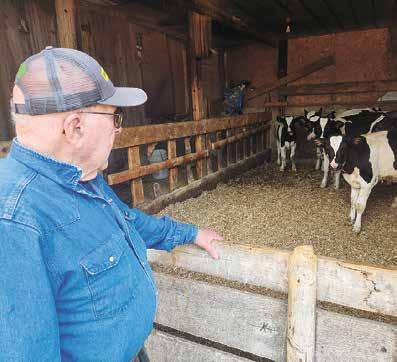
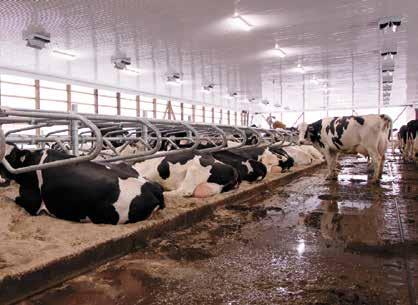
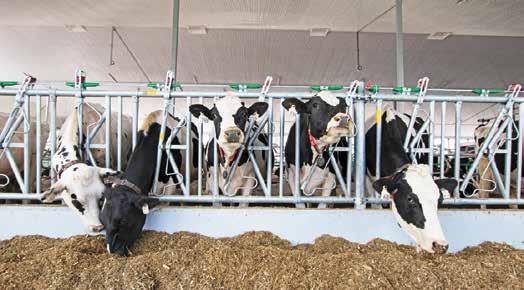
Jim Sr. said they have not made a lot of changes, and being consistent has helped them remain in business. He expects the corn and soybean yields to be lower this year due to the dry weather. Any land that needed it has been tiled, which helps to keep the land in good condition, Jim Sr. said.
Each year, the guys are all given a week of time off. They enjoy going to their cabins in the northern part of the state, and Jim and Vicki enjoy spending time with their grandchildren.
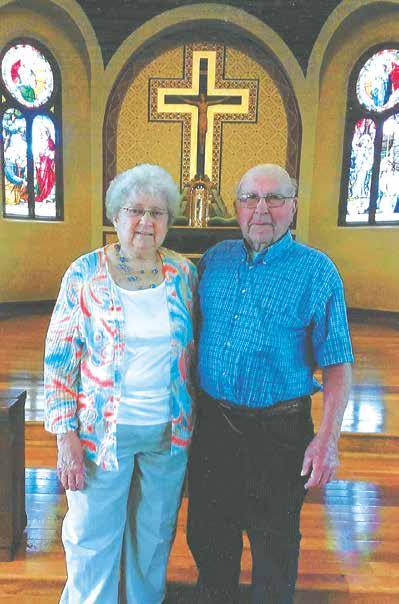
Another highlight for the family came when they purchased a new John Deere tractor and were made gold key members. This gave them the opportunity to be a part of the assembly process when the tractor was built. Jim Sr. was there to start the machine for the rst time. Dan said that his dad helps with eldwork and drives a tractor whenever he can.
Jim Sr. said it is important to him to keep the farm going. While he gives credit to everyone around him, his family continues the farm out of respect for their dad and grandfather.
“He’s very modest,” Vicki said. “He’s a very good manager, or it wouldn’t have survived.”
Page 32 • Dairy Star • Saturday, September 9, 2023 Midwest USA Sales: Todd Burkhalter Cell: 608.343.8936 Email: todd.burkhalter@dairylane.ca DLS Office: Komoka, Ontario Toll-Free: 1.800.361.2303 Web: www.dlsbarnsolutions.ca Dealer Inquiries Welcome YOUR SOURCE FOR THE HIGHEST QUALITY HEADLOCKS FREE STALLS GATES & PANELS DLS CURTAINS » » » » @dairylanesystemsUSA with JOURDAIN. get to the next level
Con nued from MCGOWAN | Page 31
PHOTO SUBMITTED
Anna and Jim McGowan Sr. stand in the church where they were married on their 64th wedding anniversary in June 2020 near Soldier’s Grove, Wisconsin. The couple took over the McGowan dairy farm in 1961 and raised eight children before Anna passed away in 2021. Two of their sons and one grandson currently manage the 65-cow opera on.
ABBY WIEDMEYER/DAIRY STAR
Jim McGowan Sr. checks feeder steers Aug. 29 at his family’s farm near Lyndon Sta on, Wisconsin. Jim and his family milk 65 cows and raise over 100 nished steers every year.
“Success came with a lot of hard work. I lay a big share of the credit to the boys and Vicki, and my wife Anna. She was the heart of this business for 50 years.”
JIM MCGOWAN SR.
How did you get into farming?
I started farming here September 1980. I grew up on a dairy farm 1 mile away. My dad was a big help getting me started.
What are your thoughts and concerns about the dairy industry for the next year? You always hope you can remain protable.
What is a recent change you made on your farm and the reason for it? We do things pretty much the same every year.
Tell us about a skill you possess that makes dairy farming easier for you. I guess I’d like to think I have a pretty decent work ethic.
What is the best decision you have made on your farm? The two best decisions were marrying my wife in 1990 and going organic in 2005.
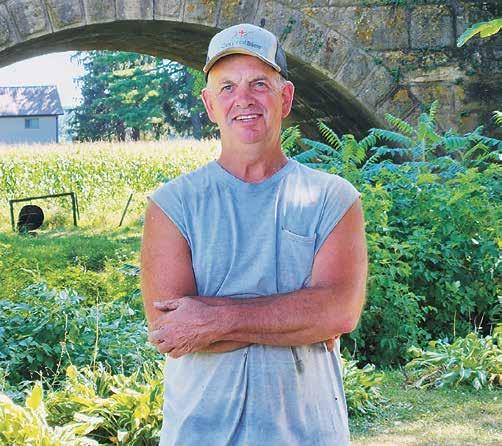
What are three things on the farm that you cannot live without? The older I get, the more I appreciate battery powered tools, silo unloaders, barn cleaners and the pipeline milking system. I marvel at how farmers did it way back when.
What strategies do you use to withstand the volatile milk prices? I ship to Westby Creamery. We sign a contract every year.

DAIRY PROFILE


Gary Leis of Norwalk, Wisconsin | Monroe County | 40


How do you maintain family relationships while also working together? It’s just me and my wife Laurie. I farmed by myself for the rst 10 years. There are so many times on a farm when an extra person is a big help. Although I don’t have employees (other than great young people we get to unload hay), we are lucky to have a great support team that helps us stay in business, notably Cashton Vet Clinic, Joel Franke of Central Star, Mount Tabor Mill, Cashton Farm Supply and our route person, Guy, from Seehafer. I am also very lucky that my son-inlaw Dillan does a lot of my repair work.
What do you enjoy most about dairy farming? The cattle. I enjoy picking out the bulls and seeing how the new heifers pan out.
What advice would you give other dairy farmers? The future of farming is going to be tough. You better love it. A supportive spouse also helps.
What are your plans for your dairy in the next year and ve years? I am 61 years old, so no big plans. I just hope to keep doing this as long as our health is good.
How do you or your family like to spend time when you are not doing chores? We like spending time with our kids, their spouses and our grandchildren.
cows
Dairy Star • Saturday, September 9, 2023 • Page 33 102480 Cty Rd N Colby, WI 54421 (715) 223-3211 Your Specialists for ANY Liquid Manure Handling PARTS | SERVICE | REPAIR High pressure hoses & couplers · Drag lines · Knife valves Swivels · Replacement parts for any liquid manure tankers or spreaders · Custom galvanized gates available ALWAYS IN STOCK: · GATES Belts & Hydraulic Hoses—huge selection in stock (custom sizes available) · Many Brands of Bearings · Baldor Electric Motors · Pulleys · Sprockets · PTO Parts WE SHIP! AVAILABLE FOR ALL PARTS! Hundreds of belts, bearings, bolts, sprockets in stock! Shipping available on all parts. Wholesale opportunities available. DEALER FOR THIS EQUIPMENT IS ON HAND Stop by and see us or call for details! Houle 5250 Tank Jamesway Tanker 6,000 gal. Jamesway Pump Calumet 6000 tank Load Stands Multiple Options Small Hose Reels STARWOOD RAFTERS, INC. 715-985-3117 W24141 Starwood Ln. • Independence, WI 54747 Website: www.starwoodrafters.com 888-525-5878 WHICH BARN IS BEST FOR YOUR HERD? Birds just love this barn. The webs in these trusses are easy nest areas for birds. They also restrict air flow which leads to poor ventilation and moisture buildup in the building. The arched rafters create a more open barn allowing better ventilation. Also since there are no open webs in the trusses, there are no places for birds to nest. Starwood Rafters Uses Pole Sheds • Free Stalls Riding Arenas Pavilion Shelters Machinery Storage • Spans up to 72 ft. • Up to 12’ spacing depending on the load you desire • Bird nesting control • Better ventilation & visability • No feed alley post obstruction • Additional ceiling height Starwood Rafters Lam-Ply Truss ANOTHER QUALITY PRODUCT FROM STARWOOD RAFTERS
Farmyard fun
As the rope of the fence gate I was holding in my hand drifted with my robust shaking into the portion of the fence that was electried, my older sister, who had the fence gate wrapped around her waist, got one of the bigger shocks of her life.







It all happened as we were playing horsey, with my older sister pretending to be a horse that I was driving, when the vigorous shake of the “reins” got us both into more than we had bargained for. I would like to mention that I also got shocked during the whole ordeal, but I guess having a hot wire fully wrapped around your waist is denitely worse than just holding it.

Fun on the farm was usually pretty easy to nd. Luckily for me, not all my exploits were as shocking as that one.




A yearly farm adventure was the kittens. Growing up, our farm always had a pack of 15-20 cats which were — at least in nominal expectation — meant to keep the rodent population down. Their rodent diet was supplemented with dry food and waste milk, and though their effectiveness at doing their job was called into question regularly, they managed to produce soft, adorable kittens every summer.
Catching and taming those kittens became an important part of summer days. The process was replete with little snacks to bribe them with and the oh-so-delightful joy of touching their small noses and gazing at their round tummies as you cradled them in your hands.
As a young kid, my arms were covered in scratches from indignant or terried cats and kittens unimpressed by my animal whisperer skills.
When I was young, the cats liked to hang out in what we called the “White Building.” The White Building was a dilapidated shed with the side of one wall missing. It was lled with cats, storage items and junk. Each year, Dad would take a tractor and bump the shed to make sure it was still stable. Though the building held little use to him and was an eyesore, he made the sacrice of our barnyard aesthetic and didn’t tear it down until I was older because I enjoyed playing inside it almost every day.
One activity in the White Building was building cat palaces. I don’t know if the cats appreciated my efforts or not, but I had all the fun in the world taking the old 15-gallon teat dip barrels and bricks and other stuff stored inside and crafting my own makeshift jumbo farm “Legos” into cat habitations.
I even hosted a cat party once or twice. The party was probably not a thrilling experience for my family since the cats were considered guests of honor and were given a feast of food — I provided no refreshments for my human guests — while we played a game or two of cards. All I can say is that my family loved me and put up with a lot.
As I grew older, I began understanding the need and importance of nding at least some of the summer crop of kittens a new home. I remember the neighbors would stop by occasionally, and I would make sure their little girl had the opportunity to pet an irresistibly cute kitten, deviously knowing that once she had seen them, she would give her parents no peace until she got one.
Life has changed. You will never nd me playing in electric wire; I respect fences more than cows do. I still love kittens though our population has petered out and the White Building has been replaced by lawn grass for well over a decade. I still host parties, but I try to focus better on my human guests than I did years ago. One important thing has not changed though. All those people who loved a silly little girl and went along with her games are still part of my life, and for that, I am thankful.
Page 34 • Dairy Star • Saturday, September 9, 2023 Dairy
Specializing In: • Hot Dipped Galvanized Gating • Fiberglass Gates • Crowd Gates • Parlor Stalls • Free Stalls • Parlor Floors• Parlor Remodels 952-466-3343 • 513 W. Lake St., Cologne, MN www.stormsweldingmfg.com SKIDLOADERS TRACTORS BACKHOES EXCAVATORS & BULLDOZERS joewelcheq.com 507-724-3183 www.dairystar.com Cleaning Drain Tiles & Manure Systems Whitewashing & Power Washing MARCUS KRAHN 320-217-9607 MATHER’S (Formerly Noah VanBeck) No Sunday Calls (Emergency Only)
Equipment By
By Amy Kyllo Staff Writer
Even when it is hot, a tour hits the spot
The forecast was right about the heat and the humidity.
85 degrees is enough to make me melt just walking. The temperatures were all above what we expected when the bus of YMCA campers set foot on the farm last week. Sweaty kids lathered with sunscreen and equipped with water bottles and bagged lunches came into the shed for the farm tour safety speech and welcome introduction. Many of these campers had been to our farm before, and they remembered the rules from the previous years and all the fun they had while visiting a real dairy farm.
The building is cool with good insulation and a concrete oor. There are plenty of picnic tables for the campers to sit, relax and listen.
Everyone reached out to see what cow would let them touch her. Cows that have special names such as Pikachu, Sonic and Peppa have been spoiled since they were born and wait for the kids to give them some love. Kids loving cows, wanting to touch and milk a cow, is such a special moment. The camp staff made sure to get photos of every child milking Esta. She loves being the tour cow.
The whole group walked to see the calves as the turkeys, geese and ducks gobbled, hissed and quacked back as the kids talked turkey and duck. Some of these kiddos are turkey hunters, too, and they imitated hen and tom turkey calls.
The calves greeted everyone by coming up to say hello. They stuck their heads out of the gates to get snuggled or to suck on ngers. That tickling tongue is so sticky and slimy, even the camp staff had to see what it felt like. This gave everyone a
great reason to do a thorough washing of hands before lunch.
This was an amazing day for everyone. I loved that the students who were here before retained what had been taught during their previous visits and inspired the others through their excitement and knowledge. This is what makes giving farm tours worthwhile. Sharing our farm, the animals and the experience will be something these students will talk about for the rest of their lives. We give them a reason to want to drink milk, eat ice cream or maybe even become a farmer themselves. This was truly a dairy good day.
Tina Hinchley, her husband Duane and daughter Anna milk 240 registered Holsteins with robots. They also farm 2,300 acres of crops near Cambridge, Wisconsin. The Hinchleys have been hosting farm tours for over 25 years.
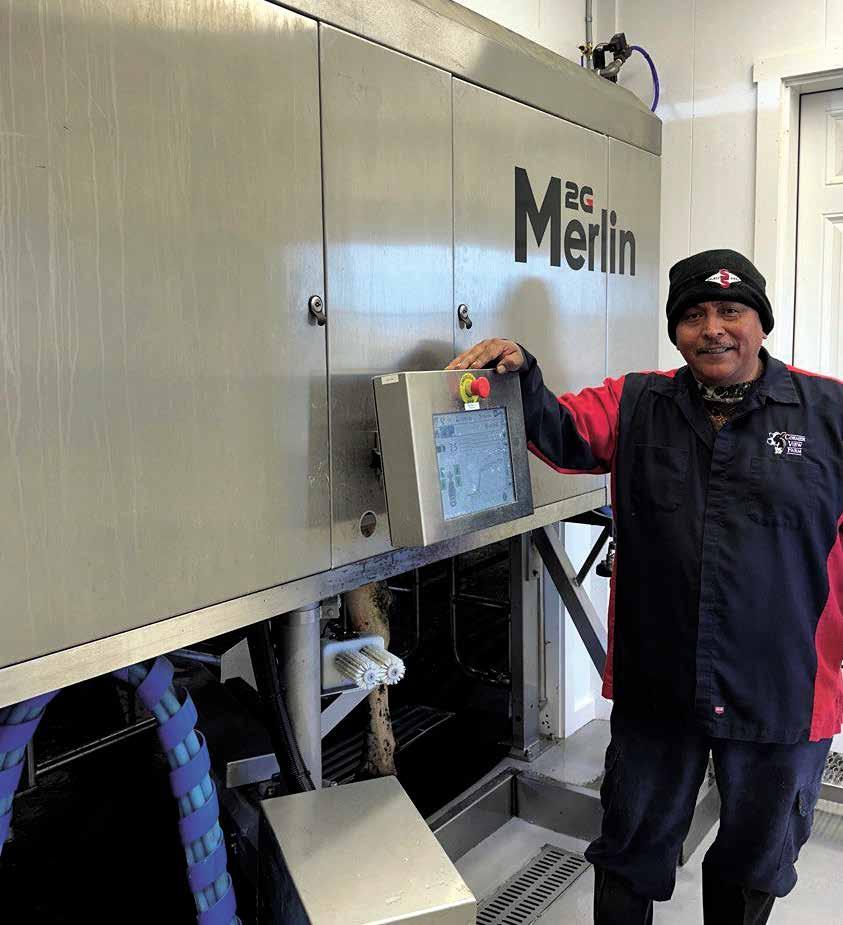 By Tina Hinchley Farmer & Columnist



We had three hours to take a wagon ride, go through the milkhouse, check out the robots milking the cows, pet cows and hand milk a cow. We nished with checking the calves before lunch. Sounds like a great plan. But with these high temperatures, we had to make sure we had water breaks and time to cool down when needed.
Even with the bright sun, there was a light breeze to make the wagon ride enjoyable. We stopped in the shade of the grain bin to talk about the corn in the eld. We explained how corn pollinates and that some of it will be for corn silage and some for shell corn. Every question I asked, I got answers. Some of these kids from Rock County are farm kids or grandchildren of farmers; others live by corn and soybean elds. It made me feel honored that these campers knew so much about the rural communities they live in. They spoke with condence and pride.
Giving a tour in the milkhouse was so much easier when one young man mentioned his grandpa is a milk hauler and he gets to ride with him. I let him loose. He took the whole group through what happens when the milk truck pulls into the farm, where the hose goes, the sample bottles and measuring the milk with the dipstick, and all about going to the processing plant. I am certain he will be a great milk hauler someday. We added to the conversation by explaining all about the different dairy products that they love with ice cream being a favorite, followed by yogurt and chocolate milk.
We headed into the barn with the fans blowing and the misters on. It was comforting to know that I wouldn’t have to mention that if it didn’t smell like cows, we wouldn’t be a real farm. The misters on the fans were a cool down area for the kids, along with the cows, who were standing nearby trying to lick their hands when they reached to pet them. Those cow tongues can reach really far, and it was rewarding for me to hear the campers giggle and laugh when they were licked.
While watching the robots, the older kids remembered about the computer screen to look for the cow’s name, what lactation or how many babies she has had, and how much milk she was going to give. They all cheered when Alice gave more than her goal of 43 pounds. After leaving the robot room, Alice went to the feed bunk to get more attention from the group.
Dairy Star • Saturday, September 9, 2023 • Page 35
u
I really like using the Merlin It’s quiet and cows really ada to it quick ly.”
– Jose A .
I really like using the Merlin2G . It’s quiet and cows really adapt to it quickly.”
amsgalaxy.com 484-648-1365 info@amsgalaxyusa.com
– Jose A .
a fusion with:
I really like using the Merlin2 G . It’s quiet and cows really adapt to it quick ly.”
– Jose A .
u c
I really like I like using the Merlin the Merlin2G 2G . It’s quiet and It’s and cows really adapt cows to it quickly.” to it quickly.”
– Jose A . – A.
“ I really like using the Merlin2G . It’s quiet and cows really adapt to it quick ly.”
– Jose A .
BEST FOOTING CONCRETE GROOVING Prevent costly falls before they occur Strum, WI 715-579-0531 www.bestfootingconcretegrooving.com We offer grooving & scarifying!
Tested recipes that feed a crew
Corn silage meals. Easy after-school treats and snacks. Slow cooker meals for nourishing little, tired minds that keep them from getting hungry and angry.
My mind is swirling with meal ideas as I move cows around to prepare them for next week’s weather. I like nding new recipes, but I am denitely a fan of the old standbys. Old cookbooks are the prime place to nd those tried and true recipes. Every once in a while, I come across familiar names as I comb through the pages. Perhaps you know some of these ladies who submitted these recipes to the Wisconsin Guernsey Breeders cookbook compiled in 1985. If you are one of them, thank you. I treasure this cookbook very much, and if you know of one, tell them thank you for making my people happy with their recipes.
Cherry coffee cake by Barb Schomburg of West Salem, Wisconsin, and Bettsann Dosch of Richland Center, Wisconsin
2 cups our

1 cup sugar
2 teaspoons baking powder
1/2 teaspoon salt

1/2 cup butter, softened
Mix the above ingredients together until crumbly. Take out 1/2 cup of the crumbs and reserve for the topping.
2 eggs
1/2 cup milk


21 ounces cherry pie lling
1/8 teaspoon almond extract





Beat together the eggs and milk; add to the remaining crumbs along with extract. Spread in a buttered 9-by-13 pan. Cover all over with cherry pie lling. Sprinkle with the reserved crumbs. Bake at 325 degrees for 45 minutes.
I have made this cake with my homemade apple pie lling, peach-blueberry pie lling and canned rhubarb sauce. I have made this recipe countless times and never hear a complaint.
Award-winning peanut butter cookies by Mandy Speerstra of Whitehall, Wisconsin

1 cup white sugar
1 cup brown sugar
1 cup peanut butter
1 cup butter
2 eggs

3 cups our
2 teaspoons baking soda
1 teaspoon salt
1 teaspoon vanilla
Cream sugars, butter and peanut butter until blended and smooth, and beat in eggs; add dry ingredients. Mix together. Roll in balls and press with fork to about one-half inch high on the cookie sheet. Bake approximately 10 minutes at 350 degrees. If you are a peanut butter cookie fan, these are a treat.
By Jacqui Davison
Baking powder biscuits by Beatrice Jones of Bangor, Wisconsin

3 cups our
4 teaspoons baking powder

1 teaspoon salt
6 tablespoons shortening




1 cup milk
Sift our; measure and sift with baking powder and salt. Cut in shortening with two spatulas. Add milk. Turn onto lightly oured board. Knead lightly and pat into sheet 1/2 inch thick. Cut with oured cutter. Bake in 450-degree oven for 12 minutes.




Breakfast casserole by Carol Kolb of Cleveland, Wisconsin
1/2 pound butter
1 dozen beaten eggs
12 slices cubed bread
1 pound pork sausage, fried
1 cup evaporated milk (or 3/4 cup whole milk)
1 can cream of mushroom soup
Mix butter and bread in 9-by-13 pan. Mix eggs, milk, soup and sausage (ham or bacon may be used) together and pour over bread mixture. Top with grated cheddar cheese. Bake at 350 degrees for 35-40 minutes. Can be made a night or two before you plan to use it for breakfast.
Jacqui and her family milk 800 cows and farm 1,200 acres of crops in the northeastern corner of Vernon County, Wisconsin. Her children, Ira, Dane, Henry and Cora, help her on the farm while her husband, Keith, works on a grain farm. If she’s not in the barn, she’s probably in the kitchen, trailing after little ones or sharing her passion of reading with someone. Her life is best described as organized chaos, and if it wasn’t, she’d be bored. Leon
BY SMITH’S OF WI LLC









 Smith
Smith

Page 36 • Dairy Star • Saturday, September 9, 2023 Receive unmatched performance all year long. Only AGCO Genuine lubricants guarantee proven performance. We’re prepared for every season, so you can be too. Designed and field tested by engineers, our lubricants are formulated with high quality base oil and additives to consistently provide the highest performance required by agricultural demands. There’s no cutting corners when it comes to AGCO Genuine lubricants. [][] ©2021 AGCO Corporation. AGCO Parts is a worldwide brand of AGCO Corporation. AGCO and AGCO Parts are trademarks of AGCO. All rights reserved. 20084 Del-Clay Farm Equipment 1003 210th Ave | Edgewood, IA 52042 www.delclay.com | 563-928-6445 DEALERS STOCK REPLACEMENT PARTS FOR OTHER BRAND MIXERS Isaacson Sales & Service, Inc. Lafayette, MN 507-228-8270 888-228-8270 Ross Equipment Co., Inc. Lonsdale, MN 800-645-7677 507-744-2525 Brynsaas Sales & Service, Inc. Decorah, IA www.brynsaas.com 563-382-4484 Hartung Sales & Service, Inc. Freeport, MN 320-836-2697 RT Equipment Baltic, SD 605-359-0228 Contact your local dealer to learn more! REPLACEMENT PARTS for all makes & models of mixers! CONVEYOR, CHAIN & PLANETAR PLANETARY Call for prices on heavy duty replacement planetaries. Complete Stainless steel replacement conveyors and replacement chain
Columnist
Ramblings from the Ridge
715-314-0388 www.SmithsofWisconsin.com
Scabbling makes a 2.5 inch wide groove that is rough on the bottom and sides. This gives your cow traction at ALL times!
us for ALL your slippery concrete needs! References available. We’ve been keeping your cows on their feet since 1987!!
Call
Real dairy conversations at state fair
My shift at the Miracle of Birth Center at the Minnesota State Fair was at 1 p.m. on the rst Friday of the fair. For the rst time ever, I was late because of difculty nding parking. The fair was packed; I later learned that an attendance record was set that day. When I nally arrived at the bovine area of the barn, the cow that had been induced to calve for the day had already done so, and she had about 3 feet of placenta hanging out of her vulva. Most of the time she was lying down, so one could not get a full view of the placenta. Even though it was obvious to me that she had calved, the most common question I was asked was, “When is she going to have the baby?” — or some version of this. After I explained that she had already calved and what we were seeing was the placenta, almost everyone immediately asked, “Where is her baby?” Her calf was in a pen, by itself, in a corner of the barn about 30 feet away. When I pointed this
out, most people then said, “Why do you take the baby away from the mother?”




In fact, this is usually the second or third most common question I receive every year. My response always includes a discussion about colostrum, antibodies, health of the calf and eventually that dairy cows produce milk for human consumption while beef cows produce milk for the consumption of their calf. I was talking to a group of three younger folks, perhaps in their late 20s, and when I said “beef cow,” I pointed to the very tame black beef cow in a pen with her calf nearby. These three, two women and one man, seemed to be intelligent, articulate folks with genuine interest in what I had to say. Right after I pointed out the beef cow, the young man asked, “What kind of cow gives the kind of milk I like to drink, you know, non-dairy milk?” Certain that he was joking, I gave a small laugh and started to say how that cow had a brown trunk topped with green leaves and branches loaded with almonds, and how one can only make non-dairy milk from a combination of any oilseed, sugar, white coloring and chalk. However, right in the middle of my jabbering, I noticed a look of what I can only describe as horror on the face of one of the two women in his group. She had apparently just realized that he thought non-dairy milk came from
some sort of special cow and not a plant seed. He was not joking. Immediately as I understood this, I softened my response and talked about how people really like the taste of almond, oat, or soy milk. He responded nicely in kind about how he really enjoys it, and I think and hope that everyone felt their opinion was understood and respected.
Upon reection, I realized how valuable this discussion was. As volunteers, we are instructed not to attempt to change people’s opinions about agriculture but rather to connect. I really wanted to ask this young man why he chose to drink non-dairy milk since it clearly was not because he had anything against milk from a cow. But, that might have been a little invasive and would risk creating conict that was both unnecessary and potentially harmful. Rather, making the connection between two people with vastly different slates of experiences, while discussing small details about how agriculture works, was the real point.
The same applies to the question about removing a calf right after birth. It is not likely that my explanation will directly change any minds, but it may change someone’s understanding of why we do what we do. Hopefully, more people will see farmers as real people who care about and for their animals, and not just owners of so-called factory
farms. This small connection can open the door to more support for agriculture whether it be social, political or nancial.

These connections are also important because they help me, and you, to better understand the perspective of the people who do not really know anything about what we do. There just is no way we can learn all the perspectives of people in society today. Hardly anyone lives on an actual farm where animals are the main source of income for the family. Yes, we are all busy, but we can learn a lot from these kinds of contacts even if some of the questions we get seem remarkable. So, we all owe a big thank you to CHS, the FFA, the Minnesota Veterinary Medical Association, the College of Veterinary Medicine at the University of Minnesota and all those dedicated volunteers who make this happen. An even bigger thank you goes to those who graciously share their beautiful animals for the fair. Great work everybody; see you there next year.
Bennett is one of four dairy veterinarians at Northern Valley Dairy Production Medicine Center in Plainview, Minnesota. He also consults on dairy farms in other states. He and his wife, Pam, have four children. Jim can be reached at bennettnvac@gmail.com with comments or questions.






PRWD, 1461 hrs., 1070 CH hrs., #553938 ....... $299,000


JD 8600 2018, Kernel Processor, PRWD, 1652 hrs., 778 CH hrs., #188792 ......... $342,000
JD 8600 2016, Kernel Processor, PRWD, 1608 hrs., 1200 CH hrs., #555841 ....... $289,000
JD 8700 2017, Kernel Processor, PRWD, 2545 hrs., 1835 CH hrs., #546919 ....... $308,000
JD 8700 2018, Kernel Processor, PRWD, 2393 hrs., 1849 CH hrs., #552442 ....... $284,000
JD 8800 2017, Kernel Processor, PRWD, 1561 hrs., 862 CH hrs., #524820 ......... $355,000
JD 8800 2016, Kernel Processor, PRWD, 2605 hrs., 1707 CH hrs., #175182 ....... $268,100




JD 8800 2017, Kernel Processor, PRWD, 1728 hrs., 870 CH hrs., #544616 ......... $339,900
JD 9500 2022, Kernel Processor, PRWD, 606 hrs., 317 CH hrs., #565391 ........... $554,000
JD 9600 2021, Kernel Processor, PRWD, 873 hrs., 538 CH hrs., #565399 ........... $420,000
JD 9600 2020, Kernel Processor, PRWD, 1309 hrs., 775 CH hrs., #565393 ......... $375,000
JD 9600 2019, Kernel Processor, PRWD, 1734 hrs., 1130 CH hrs., #553763 ....... $349,900
JD 9600 2019, Kernel Processor, PRWD, 1272 hrs., 811 CH hrs., #532049 ......... $409,900

JD 9700 2020, Kernel Processor, PRWD, 1167 hrs., 835 CH hrs., #543646 ......... $503,000
JD 9700 2020, Kernel Processor, PRWD, 965 hrs., 500 CH hrs., #552460 ........... $524,900
JD 9800 2020, Kernel Processor, PRWD, 1292 hrs., 833 CH hrs., #536344 ......... $497,000
JD 9800 2021, Kernel Processor, PRWD, 448 hrs., 302 CH hrs., #550106 ........... $518,000
JD 9800 2019, Kernel Processor, PRWD, 899 hrs., 660 CH hrs., #550175 ........... $503,000
JD 9800 2021, Kernel Processor, PRWD, 575 hrs., 369 CH hrs., #552624 ........... $553,000
JD 9800 2020, Kernel Processor, PRWD, 1470 hrs., 942 CH hrs., #554135 ......... $459,900
JD 9900 2022, Kernel Processor, PRWD, 518 hrs., 330 CH hrs., #565395 ........... $595,000
JD 9900 2021, Kernel Processor, PRWD, 612 hrs., 401 CH hrs., #565397 ........... $574,000
JD 9900 2019, Kernel Processor, PRWD, 1224 hrs., 884 CH hrs., #550177 ......... $493,000
JD 9900 2020, Kernel Processor, PRWD, 849 hrs., 661 CH hrs., #553436 ........... $508,000

Dairy Star • Saturday, September 9, 2023 • Page 37
Veterinary Wisdom Special low Rate Financing! Call today for details on our easy-lease financing! Other machines available for lease also. Subject to credit approval. Call for details. Locations throughout minnesota & western wisconsin! CALL TODAY! (320)352-6511 SEE OUR COMPLETE INVENTORY WITH PICTURES AND DESCRIPTIONS AT: www.mmcjd.com 2016 John Deere 8600 1607 hrs., #555841 $289,000 2020 John Deere 9600 1309 hrs., #565393 $375,000 2020 John Deere 9800 1470 hrs., #554135 $459,900
FORAGE HARVESTERS JD 7780 2013, Kernel Processor, PRWD, 3407 hrs., 2235 CH hrs., #274502 ....... $169,900 JD 7950 2012, Kernel Processor, PRWD, 3096 hrs., 2343 CH hrs., #566918 ....... $136,000 JD 7980 2014, Kernel Processor, PRWD, 3405 hrs., 2366 CH hrs., #532823 ....... $157,000 JD 8300 2022, Kernel Processor, PRWD, 33 hrs., 9 CH hrs., #537501 ................. $459,000 JD 8500 2016, Kernel Processor, PRWD, 2239 hrs., 1180 CH hrs., #555984 ....... $259,000 JD 8500 2017, Kernel Processor,
By Jim Bennett Columnist
SELF-PROPELLED
The great Minnesota sweat-together
Last week was 4-H livestock encampment at the Minnesota State Fair, and it started off with a heat wave.

All three of our kids earned trips to the state fair this year, and they were all very excited to go. We nished up third-crop hay the weekend before the fair, and I’m glad we did as we put up a large percentage of it as small square bales to feed calves with. There is no hell like stacking bales in a hayloft on a hot and humid day, soaked from sweat and covered in hay chaff.
The heat during the rst couple days of the fair was newsworthy enough that both Jonnie and Hannah were interviewed by the local news for a
story about how 4-H’ers were keeping the animals safe during load-in despite the heat.
The dairy barn at the state fair was surprisingly comfortable thanks to many, many fans and the fact it’s shady in there. We hauled in livestock earlier than we usually would to get them there before the temperature climbed even higher with the blazing sun. Thankfully, trafc wasn’t bad, and we got there quickly.
This year was our daughter Hannah’s rst year she was old enough to go, and she won a trip with her beloved Rhode Island Red Bantam chickens. They are her favorite animals on the farm, and she purchased and raised them herself. It’s great that
not only she loves them but the judges at both the county and state fair liked them too. I wonder if the judges noticed that she paints their toenails.
Erik, our oldest son, got reserve champion at our county fair with a cow he had to halter train four days before the fair. His cow, Candy Cane, that had done well at the state fair the year before died of bloat one night in the pasture right before the county fair.
From the Zweber Farm
Emily had a very pretty white Holstein named Bell identied in case one of the kids wanted to show her in the future. She got haltered and pampered immediately. It turned out, after a couple days of acting quite offended to be tied up instead of going to the pasture, she decided it was pretty nice getting baths and prime, quality hay.
By Tim Zweber Farmer & Columnist




































The highlight of state fair show day for me was watching Erik show her in showmanship. All the other animals in the group were being troublesome, knocking other cows around and making their kids spin endless circles to keep them in line. Bell just stood there in the chaos right as Erik had set her up, with her head up, chewing her cud and looking completely at home in the show ring as if she’d been doing it since she was a calf.
Jonnie, our middle son, might have preferred to take his Cayuga ducks to the state fair since it’s less work to show poultry, but unfortunately, he didn’t get a trip with them, so he brought his Brown Swiss cow, Candy Corn. He has been showing her since she was a calf, and she mostly just tolerates the attention and separation from her food. She’s a cow that has a resting annoyed face, so it’s funny watching her scowl her way around the ring. They did well in the show, and she was reserve champion total merit Brown Swiss.
Everyone is back from the fair now, and we’re looking at another hot weekend although I hope it’s less humid. It’s time to get going on fall building and repair projects soon, so I hope more falllike weather shows up. I much prefer to dig dirt and pound nails in a sweatshirt versus a sweaty Tshirt. Until next time, keep living the dream. Even though it’s hot out, don’t be fooled; winter is coming. Better start getting ready.
Tim Zweber farms with his wife, Emily, their three children and his parents, Jon and Lisa, near Elko, Minnesota.
Page 38 • Dairy Star • Saturday, September 9, 2023
Balltown, IA • (563) 552-2393 Give Skip a call today for seeding pastures, waterways, & cover crops! SKIP BREITBACH FEEDS
Dairy St r Milk Break Sign up at www.dairystar.com Sign up for our newsletter...
Editorial disclaimer: The views expressed by our columnists are the opinions and thoughts of the author and do not reect the opinions and views of Dairy Star staff and ownership.
Time, the most limited resource on dairies







Of the things we have come to deeply understand as dairy owners, time is our most limited resource. Time management is absolutely crucial to the success of our dairy. Employee time costs money, cow time makes money, Mother Nature’s time can be variable and unexpected, and our time as dairy managers is equally critical.
Often, our to-do list exceeds the hours in a day. We become so busy that the good intentions we have set out for ourselves are thrown off track by incoming issues and res that need to be put out. Interruptions seem nonstop, and it can feel like there is no

urgent and needs to be done.
Set dates and times for important deadlines and work ahead of them. We often set deadlines ahead of schedule so that when issues arise, as they often do, we are able to address those res and still efciently move the dairy toward its goals. Put these deadlines on a calendar in the ofce, at home or on a shared calendar on your phone so that everyone involved is informed.
Delegate and create a schedule. Are you doing tasks that could be completed by employees instead of having you run ragged each day because there is so much to do? Delegate. As dairy owners, it can be one of the hardest things to do. Often, we feel that we need to do the task because no one else can do it as well as us. If you feel this way, delegate the task and take quality time to thoroughly explain all aspects of the task to an employee. Especially explain the little nuances you add to the task that make you feel that you are the only one who is capable. Get others involved, and you can accomplish more each day.
By


time for anything extra to get done other than the next pressing issue.
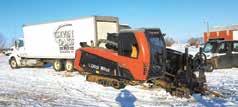
Therefore, it is essential to pause and ask ourselves if we are busy or if we are being productive. Are we being reactive or proactive?
“If you do not run your day, your day will run you,” said Mary Kelly, CEO of Productive Leaders.


Just because we have been busy all day doesn’t mean that we have been effectively advancing our dairy toward our desired goals. As we are coming into the fall season, when we have even more added to our list, we thought we would suggest a few tips for intentionally focusing on increasing the effectiveness of time on your farm.
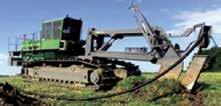
Plan out the week. At the beginning of the week, set goals and tasks to be completed for the week. Each morning, plan out the day before starting. Create a to-do list. Take ve to ten minutes in the morning, during a cup of coffee, while the rst load of feed is mixing, or perhaps while the rst few cows are milking, to actively write or create on your phone, a to-do list. What are your primary goals for the week? Decide what is important and should to be done, versus what is
Clearly dene employee roles, what is expected of each person on the farm and who is responsible for completing the various tasks on the farm. Communication between these roles is essential. One of the common attributes of a dairy business is the number of irregularities that force us to quickly pivot and change what needs to be done. Weather, equipment breakdowns, employee issues and animal health are just a few of the issues that can arise on a daily basis and alter our plans for the day. Communicate with everyone on the farm to understand what needs to be done and by whom so that issues are addressed more efciently and other members of the team are free to continue working toward the day’s goals.
Effective time management is not only essential to the success of your dairy but, especially this oncoming harvest season, to mental health and decreased stress. As we enter into the busy harvest season, we aim to remind ourselves that when we intentionally spend the time on our dairy, we are able to not only move our dairy in the desired direction but also enjoy the fruits of our labor.
Megan Schrupp and Ellen Stenger are sisters and co-owners of both NexGen Dairy and NexGen Market in Eden Valley, Minnesota. They can be reached at Nexgendairy@gmail.com



Dairy Star • Saturday, September 9, 2023 • Page 39 BENEFITS OF USING DIRECTIONAL DRILLING INSTALLATION INCLUDE: Continuation of Normal Operation Avoidance of identi ed Infrastructure Installation Maintain Integrity of Driveway, Roadways, Buildings, and Natural Features Little to No Disturbance to Wetlands or Other Sensitives Areas Many Unique Installation Capabilities Vs. Open Cutting/Digging (Entering underBuildings or Tanks) Minimal Site Restoration PRODUCT INSTALLATION Gas Lines Power Wire/ Lines Communication/ Fiber Optic Water Lines/Water Mains Drainage/ Tile Lines Forced/ On Grade Sewer Manure Transfer Lines Land Improvements Drain Tile Design/ Installation • Ditch Cleaning & Grading • Fenceline Clearing Changing weather and higher inputs got you down? Using Drain Tile to manage excess moisture in the soil pro le is the foundation for increasing pro tability per acre. - Less compaction - Better soil Structure - Allows more days per year for eld operations - More Yields with same or less inputs Contact us m line! today to see how we can improve your botto MIKE HAESE MERCHANDISER 920-372-8549 ext: 1595 We can Supply your Bulk Feed and Bedding! Animal Feed Products: • Canola Meal • Corn Gluten Pellets • Dry Distillers Grain • Feed Quality Wheat Straw • Hominy • Oat Hulls • Soy Hull Pellets • Soybean Meal • Western Dry baled hay & Local dry baled hay • Wet Corn Gluten Feed • Wet Distillers Grain • Whole Fuzzy Cottonseed Animal Bedding Products: • Bedding Straw • Green Cut Sawdust • Kiln Dried Sawdust • Screened Freestall Sand We understand that running out of product has a negative impact on your margins. We have developed a network of storage facilities to draw from in case of a supplier shortage or breakdown, with a large trucking base to ensure timely delivery. www.SevenOaksTeam.com Call Us to Discuss Your Project Now! Chad Van Asten 920-450-2844 www.SevenOaksTeam.com Bob Meyer Master Electrician, Owner Cell: 320-761-1042 Need an Electrician? We Offer the Following Agricultural Services: Barn Lighting, Sheds, Fans, Trenching, Irrigation, Homes & More! Lic. #CA03435 Serving Central Minnesota E lectric B.E.A.M. ELECTRIC Call 320-352-6303 to place your classied or mail to: Dairy Star, 522 Sinclair Lewis Ave., Sauk Centre, MN 56378.
Megan Schrupp & Ellen Stenger Columnists
The NexGen: Adventures of two dairy daughters
TRUSSCORE WHITE PVC WALL AND CEILING PANELS





5 to 7 Ton Potential
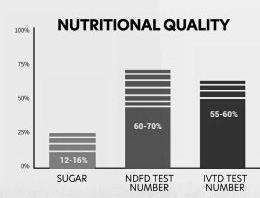


BMR Dwarf Sorghum Sudan
s


Cornstalk baling is a tough task, so operators in the livestock and biomass industries turn to this tandem for its combination of productivity and operating e ciency. The VR1428/VR2040 high-capacity wheel rakes can cover more acres in less time and the Vermeer 605N Cornstalk Special baler nishes the job. Together they deliver the performance and toughness needed to help overcome the harsh conditions of cornstalk baling. Time to team up. Vermeer

Page 40 • Dairy Star • Saturday, September 9, 2023 CONTACT YOUR LOCAL DEALER TODAY! FARMERS IMPLEMENT AND IRRIGATION Brookings, SD www.farmersii.com FABER’S FARM EQUIPMENT Inwood, IA, Watertown, SD www.fabersfarm.com GORTER’S CLAY & DAIRY EQUIPMENT Pipestone, MN www.gortersclayanddairy.com BREEDEN SALES Maquoketa, IA www.breedensales.com BRUNKAN EQUIPMENT Worthington, IA www.brunkans.com MARK’S TRACTOR & IMPLEMENT Osage & Dumont, IA www.markstractor.com METTLER IMPLEMENT Menno, SD www.mettlerimplement.com ANIBAS SILO & EQUIPMENT, INC. Arkansaw, WI www.anibassilo.com D & D FARM SUPPLY Arcadia, WI • www.dndfarmsupply.com WOLLER EQUIPMENT Swanville, MN www.wollerequipment.com A&C FARM SERVICE Paynesville, MN www.acfarmservice.com HAMMELL EQUIPMENT Chatfield, Eitzen, Harmony, Rushford, MN www.hammellequipment.com
reserves
to
changes in engineering, design and speci cations; add improvements; or discontinue manufacturing or distribution
any time
notice or obligation. Equipment shown is for illustrative purposes only and may display optional accessories or components speci c to their global region. Please contact your local Vermeer dealer for more information on machine speci cations. Vermeer and the Vermeer logo are trademarks of Vermeer Manufacturing Company in the U.S. and/or other countries. © 2023 Vermeer Corporation. All Rights Reserved 715-644-2350 Chippewa Valley Dairy Supply 6053 CTY. HWY. G • STANLEY, WI 54768 • Andrew Zimmerman We ship SpeeDee and UPS! 1/2” thick x 16” wide 12’ long $35 • 16’ long $47 White Corrugated PVC liner panels 40” wide x 16’4” long $1950 White smooth PVC sheeting 4’ x 8’ x 1/2” thick $5750 FACTORY SECONDS. QUANTITY DISCOUNTS. DELIVERY AVAILABLE
Corporation
the right
make
at
without
Attention Dair y and Beef Pr oducer
Forage Products LLC To learn more contact Tim 608 -574-7918 Nick 608-574-0827 Ask us about free shipping
