WANT TO WIN $100 CASH?

See page 7 of this section for details!

See page 7 of this section for details!
Volume 25, No. 13


August 26, 2023



HAZEL GREEN, Wis.
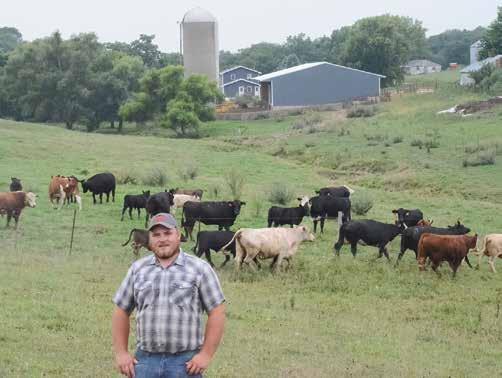
Troy Leibfried grew up helping on his family’s dairy farm and always knew a career in agriculture was in his future. After graduating from Southwest Wisconsin Technical College with a degree in farm operations and management, he joined his dad Aaron and great-uncle Francis on the home farm near Hazel Green.
Today, the 21-year-old is planning for more responsibilities on the dairy when Francis retires next year while also running his own beef operation that he purchased in April.
“When I was in school, there were a lot of 21-year-






olds who would have loved to be doing what I’m doing, but they didn’t have anyone in the industry,” Troy said.
Troy’s farm is a portion of a relative’s farm. His parents purchased the 50 acres of pasture and cropland and buildings until Troy was able to secure nancing, at which point he bought the farm from his parents.
Aaron said he is happy to provide the opportunity for his son.
“He’s going to have to get some breaks,” Aaron said. “There’s no way a 21-yearold can get into it otherwise.”


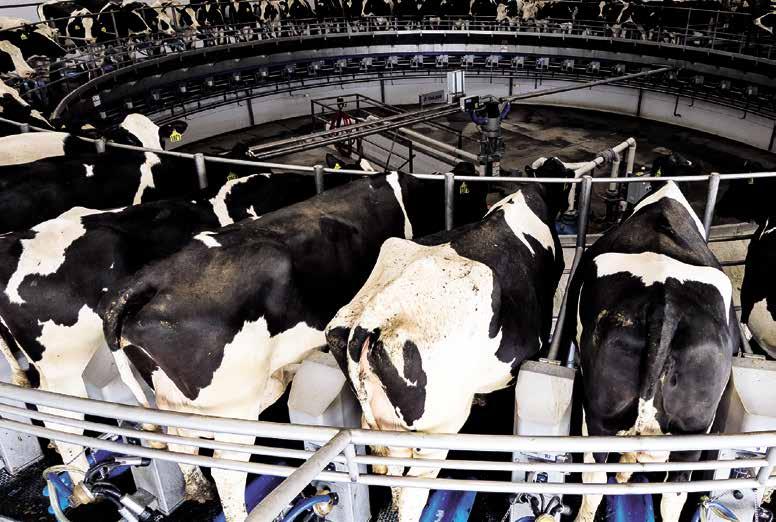
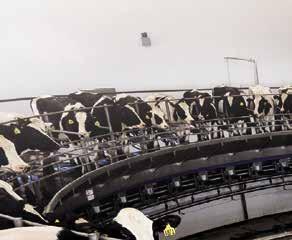
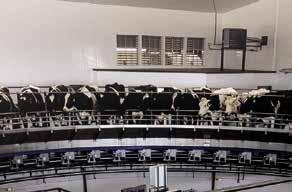
Plans for the dairy continue to evolve with the times as well. Troy, Aaron and Francis milk approximately 190 cows with a robotic milking
MADISON, Wis. — On July 5, Wisconsin Gov. Tony Evers signed the 2023-25 state biennial budget into law. With dollars invested in areas including agricultural infrastructure to meat processing, the budget contained a variety of items seen as wins for agriculture and the dairy industry.
“A highlight was certainly the Agricultural Road Improvement Program which allocated $150 million to improve agricultural roads throughout the state,” said Chad Zuleger, director of government affairs at Dairy Business Association and Edge Dairy Farmer Coopera-
tive. “The whole ag coalition came together in support of this and put together a really good plan.”
The agricultural community also received outside support from the Wisconsin Counties Association and the Wisconsin Towns Association. The plan is not only to repair rural roads used by agriculture but to also improve those roads so that they can no longer be posted once a project is nished.
“This plan will improve roads that our producers and processors use on a daily basis that are subject to weight limits during times like spring thaw, causing detours and re-
routes and adding cost to fuel and wait times,” Zuleger said. “It’s a really signicant investment — maybe the most signicant investment in ag infrastructure in a generation.”

Previously, a provision prohibited federal funds from being used on bridges less than 20 feet long, which Zuleger saw as a problem.
“In a rural community, you can be dealing with culverts that could be 10 or 15 feet and even smaller bridges or easements into bridges,” Zuleger said. “The state program includes those types of roads, bridges and culverts under 20 feet. With these funds, we should be able to do a lot of repairs and really improve the roads that are
used to generate more economic activity. We are thrilled to have this enacted.”
Increased funding for the cover crop insurance rebate program was another big win for agriculture. The program provides a $5 per acre rebate on cover crop insurance to incentivize farmers to plant cover crops. The program’s funding was doubled from $800,000 to $1.6 million.
“I’m excited to see that program take off,” Zuleger said. “It’s really changing the landscape as we’re seeing elds go from brown to green with a lot of cover cropping. This is a really good investment.”
The Nitrogen Optimization Pilot Program through the Wisconsin Department of Agriculture, Trade and Consumer Protection was established last budget cycle and received $2 million in the current budget.
This program provides grants up to $50,000 to individual farmers or groups of farmers to study impacts of nitrogen on cropping and water quality. Done in partnership with the University of Wisconsin, the goal is to use strategies that will minimize the impact of commercial fertilizers on the land.
The dairy processor grant program also received increased funding of an additional $500,000.
“Our partners in the processing world are critical to our producers’ success, and we are ecstatic about the increased funding put toward technology and utilizing best practices,” Zuleger said. “This bolsters a processor’s ability to do business in Wisconsin and continue to grow.”
“All dairy, all the time”™
Published by Star Publications LLC
General Manager/Editor
Mark Klaphake - mark.k@dairystar.com
320-352-6303 (ofce)
320-248-3196 (cell)
320-352-0062 (home)
Ad Composition - 320-352-6303
Nancy Powell • nancy.p@dairystar.com
Karen Knoblach • karen.k@star-pub.com
Annika Gunderson • annika@star-pub.com
Editorial Staff
Jan Lefebvre - Assistant Editor
320-290-5980 • jan.l@star-pub.com
Maria Bichler - Assistant Editor
maria.b@dairystar.com • 320-352-6303
Danielle Nauman - Staff Writer
608-487-1101 • danielle.n@dairystar.com
Stacey Smart - Staff Writer
262-442-6666 • stacey.s@dairystar.com
Abby Wiedmeyer - Staff Writer
608-487-4812 • abby.w@dairystar.com
Tiffany Klaphake - Staff Writer
320-352-6303 • tiffany.k@dairystar.com
Amy Kyllo - Staff Writer amy.k@star-pub.com
Consultant
Jerry Jennissen 320-346-2292
Fax: 320-352-5647
Deadline is 5 p.m. of the Friday the week before publication
Sales Manager - Joyce Frericks
320-352-6303 • joyce@dairystar.com
Mark Klaphake (Western MN)
320-352-6303 (ofce)
320-248-3196 (cell)
Laura Seljan (National Advertising, SE MN)
507-250-2217 • fax: 507-634-4413 laura.s@dairystar.com
Jerry Nelson (SW MN, NW Iowa, South Dakota)
605-690-6260 • jerry.n@dairystar.com
Mike Schafer (Central, South Central MN)
320-894-7825 • mike.s@dairystar.com
Amanda Hoeer (Eastern Iowa, Southwest Wisconsin)
320-250-2884 • amanda.h@dairystar.com
Megan Stuessel (Western Wisconsin)
608-387-1202 • megan.s@dairystar.com
Kati Kindschuh (Northeast WI and Upper MI)
920-979-5284 • kati.k@dairystar.com
Julia Mullenbach (Southeast MN and Northeast IA)
507-438-7739 • julia.m@star-pub.com
Bob Leukam (Northern MN, East Central MN)

320-260-1248 (cell) bob.l@star-pub.com
In June, the Farm Service Agency reported a margin of $3.65 per hundredweight above feed costs. That’s the smallest level since the Dairy Margin Coverage program was authorized in the 2018 farm bill. American Farm Bureau Federation economist Danny Munch said it is the sixth straight month of margins below the $9.50 per hundredweight trigger. “That’s the rst time the program’s catastrophic $4 protection level had been breached,” Munch said. Feed costs, he said, are continuing to chip away at the bottom-line for dairy farmers.
Farm bill promise: On time and highly effective House Agriculture Committee Chair Glenn “GT” Thompson said he has thousands of objectives but a single goal for the farm bill. “The one goal is to get this done in a bipartisan, bicameral way on time and highly effective,” Thompson said. With only a dozen days on the congressional calendar before the expiration of the current law, the deadline is looming. “I only have control of the House Agriculture Committee, and we’re going to do our job,” Thompson said. “When we can do markup and go to the oor really depends on leadership; I’m still hoping and praying it is before the end of September, but the ag committee will be ready to go.”
SNAP nutrition incentives
Federal relief for distressed loans
sidered distressed, nancial assistance is available. This automatic relief is part of the Ination Reduction Act. Approximately 3,500 borrowers are eligible for this assistance. Since August 2022, more than 20,000 distressed borrowers received similar assistance.
Net income declines nearly 2% for Farm Credit System
Butter market rallies
Ag Insider
















2011 N-H TD-5050, Cab, 193 Hours, Hi Crop ..............................................$42,500
1982 White 2-155, 5750 Hours, Nice Looking ..............................................$19,500
1974 Oliver 1655, Diesel, Cab, 9700 Hours ..........................................$8,500
A-C 7000 ................................................$9,500

1961 A-C D-15 .......................................$5,900
USED SKIDSTEERS

2018 Bobcat V-519, 300 Hours............$69,500
(2) T-650, Glass Cab with A/C, 2 Speed, 300 Hrs & Up ...................Starting at $49,500
2021 S-76, 2500 Hours .......................$43,900
2020 S-66, Glass Cab w/Air Cond, 2 Speed, 1800 Hours .........................$47,900
2014 Toro 22321, 1251 Hours, Tracks Good, Gas ...............................$15,900

USED TILLAGE
2016 W-R 13QX2 53’ 3 Bar Harrow
w/Rolling Baskets ..............................$69,500
2012 W-R 13QX2 50’, 5 Bar Spike Harrow ...............................................$28,500
2004 W-R Excel 38’, 4 Bar Spring
Tooth Harrow .....................................$12,900
1997 W-R Quad 5, 32’, 3 Bar Spring
Tooth Harrow .......................................$7,500
W-R 2500, 28’, 4 Bar Spring Tooth Harrow .................................................$6,950
Kewanee 620, 18’ Disk ...........................$2,000

(3) W-R 513 Soil Pro, 9 Shank............................Starting at $25,000
2011 W-R 5800 Chisel Plow, 39’ .........$25,500
2012 G-P TCN-5107, Disc Chisel, 7 shank ..............................................$10,900




J-D 2700 Plow, 4 Bottom, Vari Width ....$1,500
USED PLANTERS
White 6700, 12x30, Vertical Fold ...........$7,500
USED HAY EQUIPMENT
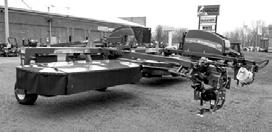
(2) N-H 316 Discbine, 15’ Cut .............................Starting at $28,900
2020 N-H 512R, 12’ Mega Cutter, Used Very Little .................................$28,350
1997 N-H 1465, 9’ Haybine ....................$9,500

New Idea 5212 .......................................$8,950

John Deere 260 Discmower ...................$3,500
N-H 790, 824 Cornhead, Hayhead..........$7,950 Meyer 500TSS Forage Box.....................$7,500
2020 N-H 560 Rd Baler, Specialty Crop, 4000 Bales ...............................$46,500

2016 N-H 460 Rd Baler, CropCutter .....$28,500
1995 N-H 660 Rd Baler ..........................$4,950
rms merge
The four individual cooperatives that make up Select Sires have voted to merge. The new Select Sires Member Cooperative will be operational Oct. 1. Chris Sigurdson, who is the current general manager for COBA/Select Sires and Minnesota/Select Sires, will serve as the CEO for the merged A.I. rm.
Losses for Beyond Meat
For the rst six months of the scal year, Beyond Meat suffered a loss of $112.5 million. That compares to a loss of nearly $198 million in the same period one year ago. During the second quarter, sales for the plant-based protein products declined 24%. U.S. retail sales dropped 34%, but international foodservice business rose 19%.
WDE to include dairy symposium
World Dairy Expo will feature a dairy symposium that is part of the Dairy Business Innovation Initiatives, which were established in the 2018 farm bill. The Oct. 3 symposium will include a panel with representatives from each of the DBI initiatives, highlighting how it inuenced their farm, business, research and careers.


Suputo reports nancials
Suputo reports rst quarter net earnings of $141 million, up from $139 million in the same quarter last year. The company’s president and CEO, Lino Saputo, said Saputo delivered solid results despite signicant commodity market headwinds and lower consumer demand.

Strike continues at New Dairy Select Milk
Union workers at New Dairy Select Milk at De Pere, Wisconsin, have now been on strike for over a month. New Dairy Select Milk is a subsidiary of Borden Dairy and was formerly known as Morning Glory. The labor dispute is over employee health care benets.
UW-Madison CALS Awards
The University of Wisconsin-Madison College of Agricultural and Life Sciences has announced its 2023 Honorary Recognition, Distinguished Alumni and Distinguished Service Awards. Hoard’s Dairyman Managing Editor Corey Geiger will receive the Honorary Recognition Award. George Shook, who was a member of the UW dairy faculty, will be recognized with the Distinguished Service Award. The awards will be presented Oct. 19.
Apply for YDLI





The application deadline for the Holstein Federation’s Young Dairy Leaders Institute is Sept. 15. This program is open to young people involved in the dairy industry, ages 22-45. Wisconsin dairy farmer Mitch Kappleman is an alumni of the program and said he made connections that will last a lifetime. “With YDLI, I learned a whole new group of friends, and I think meeting people with similar activities, similar age, similar point in their careers was my favorite part,” Kappleman said. The applicants selected will be notied in early October.
Emmi Roth expands



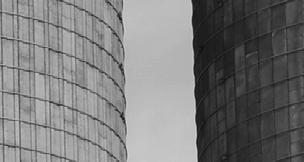
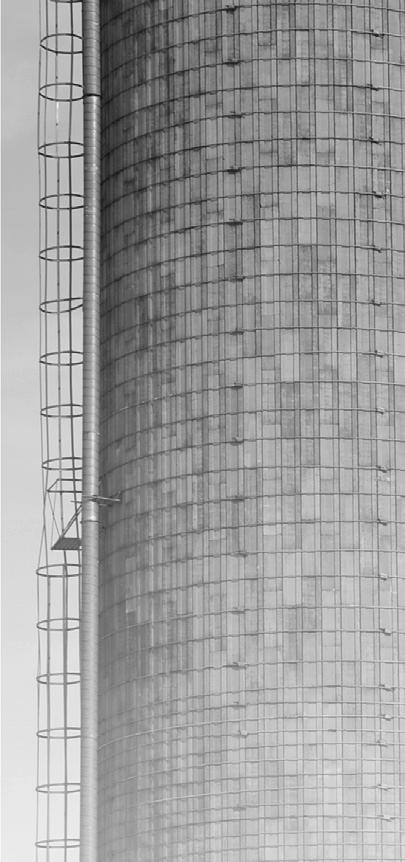
Emmi Roth is building a new headquarters and cheese conversion plant at Stoughton, Wisconsin. Cheese produced at other Emmi Roth plants will be broken down into shreds. An additional 120 people will be hired to support the new facility.
DBA/Edge announce promotions
Dairy Business Association and Edge Dairy Cooperative announced the promotions of Lauren Laubscher and Alicia Reschke. Laubscher is now the member services manager, and Reschke is the member services compliance and regulatory representative. Previously, Laubscher worked for Genex Cooperative and Sanimax. Reschke had been with Renard’s Cheese.
WFBF names communications coordinator
Wisconsin Farm Bureau has hired Kylie Ver Kuilen as its new communications coordinator. Most recently, Ver Kuilen had a similar role for the Association of Program Directors in Surgery.
Trivia challenge
Michael Dykes is the president and chief executive director of the International Dairy Foods Association. That answers our last trivia question. For this week’s trivia, how many servings of dairy products do Americans consume every day? We will have the answer in our next edition of Dairy Star.
Don Wick is owner/broadcaster for the Red River Farm Network, based in Grand Forks, North Dakota. Wick has been recognized as the National Farm Broadcaster of the Year and served as president of the National Association of Farm Broadcasting. Don and his wife, Kolleen, have two adult sons, Tony and Sam, and ve grandchildren, Aiden, Piper, Adrienne, Aurora and Sterling.
system. Francis is in charge of herd health and dairy calves, while Aaron does regular feeding and manure hauling. Troy raises crossbred calves and is involved with the eldwork as well.
The Leibfrieds have a long history of dairying. Aaron farmed with his dad and grandfather and purchased the present site in 2000. After transitioning to organic in 2007, Aaron’s dad and grandfather joined his operation, along with Francis. Now they are working on bringing Troy in and allowing Francis to retire.
“We’re going to start out with me taking over the dairy portion, including my uncle’s part of it, and let Troy take the machinery and land part of it,” Aaron said. “Obviously, we’ll work side by side every day.”
The organic herd is fed a total mixed ration while also rotationally grazing. This combination can be challenging when relying on robotics to get milking done, Troy said. Cows have access to pasture overnight while the weather is cool, which can cause a bottleneck in the robots in the morning. Some mornings there are as many as 40 cows that have not visited the robot within 12 hours, but by that evening, there are hardly any.
“They’re pretty good at going through on their own during the day,” Troy said. “Closer to 7 a.m., Dad will feed, so that will take some of them away to go eat.”
The pellets that are fed in the robot to encourage cow visits are a challenge to procure as well since there are
limited manufacturers, Aaron said. Fortunately, one of the manufacturers is in Wisconsin. They are able to get a semi load delivered every three weeks for an economical price.

The four robots are capable of handling about 240 milk cows, but Aaron and Troy are not pushing for capacity at the moment. They are instead focused on making sure a smooth generational transition is possible and trying to manage just as much work with one fewer person. They would like to stay away from needing extra labor if they can.
Troy hopes to continue to establish his beef herd as well. He started with 30 purchased beef cows in September 2022. He experienced a steep learning curve right away when the animals did not calve in right away but instead calved over the next nine months, with the last one being born in June. After a hard winter of calving and making early culling decisions, Troy then experienced the drought and had to supplement hay already.
“When you rst get into it, it seems like nothing goes right,” Troy said. “But, that’s with anything; you live and learn.”

Troy is optimistic about his beef herd because the prices have been good. Aaron said he has seen organic milk prices double one year and drop in half the next throughout his career, but he is relatively optimistic about the future of dairy as well.
“The market has improved,” Aaron said. “Things are looking good.”


 By Stacey Smart stacey.s@dairystar.com
WAUPUN, Wis. — When asked what his favorite thing is about being a veterinarian, Dr. Al Martens said, “The people.”
This vet’s closest friends were made on the farm as he became much more than a veterinarian to his clients. He was a person who farmers conded in about all of life’s problems, not just those concerning their fourlegged creatures. As a result, clients became lifelong friends.
“I can look back and say, I treated all these cows, but the memories are the people,” Martens said. “They
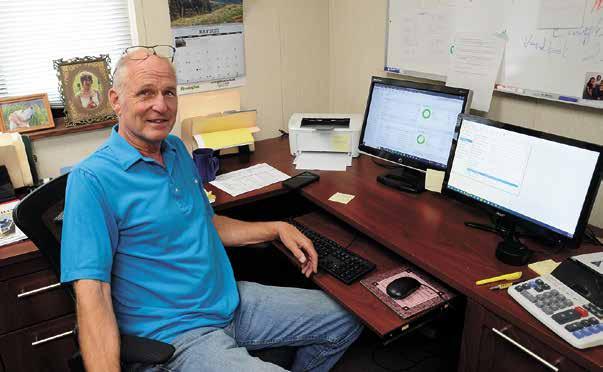
Dr. Al Martens takes a break from his work July 25 at Waupun Veterinary Service in Waupun, Wisconsin. This summer, Martens celebrated his 45th anniversary of being a veterinarian.
were the best part of it. The farmers were my best friends, and I learned so much from them.”
This summer, Martens celebrated 45 years of being a veterinarian.
“It’s kind of bittersweet, like you’re at the end,” Mar-






tens said. “But I probably won’t ever retire. I like looking forward to coming to work every day. I enjoy the challenge.”










Martens no longer makes farm calls. Instead, his focus has shifted to business management in the last
ve years, and now Martens spends most of his time at the clinic.
“I’ve had three rotator cuff surgeries, two back surgeries, and some other orthopedic procedures, and I don’t want to get hurt,” Martens said. “I have a lot of



arthritis in my hands and elbows, so I’m not able to run the ultrasound either.”
Martens grew up in a small town north of Detroit, Michigan. His dad was an auto engineer, and Martens said he did not have much dairy exposure other than visits to a friend’s farm and his second cousins’ farm in Cambria, which is how he later came to work in Waupun. Martens attended veterinary school at Michigan State University, which is where he met his wife, Bev, who became a small-animal veterinarian.
“I really wanted to work with dairy cattle; I’m not sure what the inspiration was,” Martens said.


Martens became a veterinarian in 1978 at the age of 23. Fresh out of vet school, he was the second vet to join the practice started by Dr. Jim DeYoung in Waupun that would become known as Waupun Veterinary Service in 1989. On Martens’ rst day at the practice and


Turn


after only two hours on the job, DeYoung left for a week-long vacation.
DeYoung’s faith in the new veterinarian was strong, and in 1979, he made Martens a partner in the clinic. Martens had four days off every month — two Saturdays and two Sundays — and received two weeks of vacation each year.
“We worked more hours back then but had big breaks,” Martens said. “We were slower in the summer and had a lot of free time in the afternoons. The day is busier now for vets, scheduled with calf work, nutrition work and other specialty tasks.”
Martens said every week brought something good.
“Sometimes, it might just be having a live calf,” he said. “You might have struggled with a DA surgery, not knowing how it’s going to turn out, but then you nd out a couple days later that the cow is doing great.”
In the earlier part of his career, Martens also worked on pigs, draft horses and veal calves.
“It was really fun working with those animals,” Martens said.
After having their rst child in 1982, Marten’s wife started a small clinic at their house.

“While the kids were growing up, she saw clients during the day, and in the evenings, we did surgeries together,” Martens said. “It was neat — the kids would do their homework in the clinic as Bev and I did surgery on dogs and cats.”
During his career, Martens witnessed many changes in the dairy industry. The average farm size was 55 cows when he started. Today, the clinic has two 8,000-cow herds. Herd checks took less than an hour, and afterward, Martens would join the family for breakfast.
“That was always special,” Martens said. “Now, herdsmen do the herd checks at 50% of our farms.”
Martens said the days when the vet was a close family friend of the farmer are not as evident anymore, especially on larger farms.


“Today, the herdsman separates the vet from the owner,” he said.


Communication has also changed a lot since Martens’ early days as a vet.
“We used to use a twoway radio to communicate,” he said. “We had one at the vet’s house and one at the ofce. We shared the radio with a school bus service. We’d be talking about disgusting stuff like uterine and udder infections, and
the kids could hear it on the bus.”
Distance with the radios was limited, and Martens said such a service would now only cover 10% to 20% of the clinic’s coverage area. Now, communication is done via texting and a program that enables all the vets in the ofce to see everyone’s schedules.
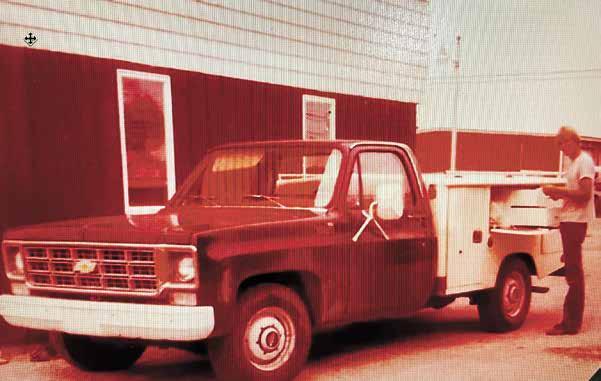
For 25 years, Martens logged about 25,000 miles every year. From freezing
rain to blizzards, he went out in all kinds of conditions.
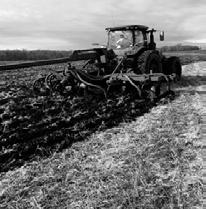
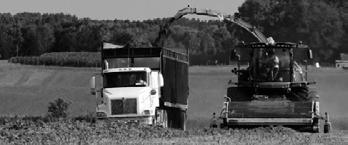
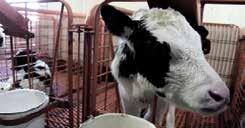
“For years, we never had a day that we didn’t run a call,” Martens said. “Even during the terrible blizzards of the early 1980s, we ran a call every single day. We never closed. One time, all three of our vet trucks got stuck in the snow, and a farmer got us out.”
Martens said emergencies were once common, but now, there are not nearly as





many.
“Things are so different today in that farmers handle a lot of emergencies themselves,” Martens said. “Herdsmen are really good, especially in the bigger herds. So now if we get a call, it’s a C-section, fetotomy or uterine torsion —something really complicated.”
Turn to MARTENS | Page 9


The clinic began doing milk culturing in 1983 and expanded their lab around 1993 to include two fulltime technicians who do culture work that comes in from all over the state. The clinic also does cultures on bedding sent in from across the U.S.
“I’m always looking at new business opportunities,” Martens said. “We use a lot of technology and are always thinking, ‘What can we do different?’ That’s how we grew the practice.”
When Martens read about a new blood test for detecting pregnancy in cattle 15 years ago, he wanted to pursue the technology even though the clinic had just purchased ve portable ultrasound units for a substantial amount of money.
The other vets at the clinic resisted the blood test idea, thinking it would put them out of business with the money just spent on ultrasounds. But after his partner, Dr. Monty Belmer, saw the blood test in action while doing nutrition consulting work in Pennsylvania, he said, “We have to do it.”
“It’s been huge for our clinic,” Martens said. “Now we have a fulltime tech on it.”
The clinic expanded offerings in its blood lab to include testing for bovine viral disease and sheep and goat diseases, while also becoming federally licensed to test for Johne’s disease.

“The labs have been a home run






for our clinic,” Martens said.
Martens has watched the practice grow to now include 15 largeanimal vets, eight of whom are partners.
“Being partners to these vets keeps me here today,” Martens said. “We have a bunch of young people working at the clinic. Half of our vets are less than 10 years out of school. They’re the future — not me — and I like mentoring them.”
When he is not working, Martens’ hobbies encompass his love for nature and the great outdoors. His adventurous spirit has taken him to the wilderness of Alaska to go white water rafting, kayaking and shing.
“I’ve been on some crazy raft trips and done some crazy wilderness stuff,” Martens said.
This veterinarian also loves to hunt, especially with dogs at his side, and enjoys hunting pheasant, duck and grouse. Martens is also an avid hockey lover who coached the sport for 30 years and still plays twice a week.
“From skating to coaching, hockey has been huge in my life,” Martens said.

Martens has no plans of slowing down as he enters his 46th year as a doctor of veterinary medicine. With many fond memories wrapped into a fullling career, Martens has no regrets — only gratitude.
“I have no complaints,” he said. “I would do it all over again in a heartbeat.”
The new budget also included increased funding for meat processors. Zuleger said capacities and shortfalls in the supply chain were brought to light during the pandemic, pinpointing the need for increased infrastructure within the processing community.
“We saw incredible delays as a result of shutdowns and supply chain breakdowns,” Zuleger said. “This budget includes increased grants to start new meat processing facilities and allow current facilities to improve and take advantage of new technologies. Every dairy farmer is also a beef producer, and we’re delighted about this funding. This is a signicant improvement that all of agriculture can applaud.”
The budget will also maintain funding for Wisconsin’s agricultural exports initiative.
“We export a lot of dairy products, particularly in the cheese markets, and this funding helps processors and producers innovate in that value chain as farmers are asked to do more on the sustainability side,” Zuleger said.
Established in the last budget, the goal is to increase exports across commodities by 25% by the year 2026.
“Dairy exports have really taken off and earned over a 30% increase in the rst two years of this program,” Zuleger said.
Well compensation and well abandonment grants received an increase of $1 million.
SMITH’S OF WI LLC







“We advocated strongly for expansion of this program and increasing eligibility of these funds,” Zuleger said. “The problem still is that eligibility requirements are so stringent that very little of that money ever gets allocated. We continue to work with the legislature to expand that eligibility.”
The producer watershed grant program is an area where Zuleger felt the budget fell short. He said the budget for this program was not increased even though farmer participation in watershed programs is on the rise. These programs provide grants to groups implementing sustainable practices like cover cropping and no till to prevent erosion and runoff.
“We want to come back to this in the next session and try to boost funding for this program,” Zuleger said. “The governor signed a program this session to expand the eligibility to farmers who are involved in a watershed so they can participate in more than one watershed group; therefore, we expect greater participation going forward.”
The farmland preservation program did not receive an increase in funding, which was also a disappointment to Zuleger.
“We’re going to continue to work on that,” he said. “If we can’t get it through the budget, then we would like to get standalone legislation. This program hasn’t been adjusted in almost 20 years, and we want to increase some of the rates for protecting agricultural production lands.”
DBA and Edge Dairy Farmer Cooperative would like to see the credit of $7.50 per acre bumped up to $10, and the $10 per acre category increased to $12.50. The most signicant part, however, is to reduce enrollment from 15 years to 10.
“This is a high priority for us moving forward,” Zuleger said. “It’s time to modernize this program and look at incentives so we can keep agricultural lands in Wisconsin in production and protect lands from development or rezoning.”
DBA and Edge Dairy Farmer Cooperative also advocated this session to support and enhance managed grazing efforts.
“This is generally not something we put up as a priority, but through collaboration with clean water partners, we are advocating for a pilot program of minimal funding for farmers who want to transition acres into grazing,” Zuleger said. “This can provide signicant environmental benets.”
Funding for grazing did not get put into the budget, but DBA and Edge Dairy Farmer Cooperative are drafting a bill and working with the Legislature for the remainder of this session to provide funding to new farmers for fencing, watering, etc.
“We are looking to get $1.25 million over two years,” Zuleger said. “This is another effort to promote water quality efforts, and we are using an allhands-on-deck approach.”
One item left on the table was the University of Wisconsin Farm and Industry Short Course program, which has transitioned to the UW-River Falls campus. Zuleger said 24 students are enrolled for this fall.
There was a $700,000 request to help establish the program at UW-River Falls, but this funding became a casualty during budget discussions that cut other university funding. DBA and Edge Dairy Farmer Cooperative have helped introduce new legislation to provide the needed funds.
“We’re going to see this new bill move this fall and get the additional funding to help transition that program to UW-River Falls,” Zuleger said. “This money will help the school get their infrastructure set up.”
Zuleger said all of these programs are primarily bipartisan in their support. He also said the entire ag coalition in Wisconsin worked collaboratively during this session to get funding for various programs.
“We pushed forward together,” Zuleger said. “As legislators deliberated, they heard from dairy farmers, beef farmers, soybean farmers, potato growers, etc., who were all singing the same tune. There is still work to be done, but a lot of exciting things are going on, and overall, this was a pro-ag budget.”
• $150 million for a new Agricultural Road Improvement Program.
• $12.5 million to assess local bridges and culverts that are 20 feet or less in length.

• $2 million for meat processor grants.

• $500,000 per year for grants to dairy processors.


• $2 million for the Wisconsin Agricultural Export Promotion program.
• Farmer mental health funding of $100,000 per year.

• $2 million for Nitrogen Optimization Pilot Program grants.
• $70,000 per year for livestock premises registration.





• Additional $50,000 per year for Wisconsin Agriculture in the Classroom program.

• $1.6 million for cover crop rebates.
• $22,176,500 in funding for county conservation departments.

• $125 million to address PFAS contamination.
• $1 million in 2024-25 for well compensation and well abandonment grants.


• $6.5 million for rural nonpoint source water pollution abatement grants.
• $200,000 per year for Targeted Runoff Management grants.

• $3 million reallocated to fund the Food and Farm Exploration Center in Plover, Wisconsin.

“This plan will improve roads that our producers and processors use on a daily basis that are subject to weight limits.
... It’s a really signicant investment — maybe the most signicant investment in ag infrastructure in a generation.”
CHAD ZULEGER, DIRECTOR OF GOVERNMENT AFFAIRS AT DAIRY BUSINESS ASSOCIATION AND EDGE DAIRY FARMER COOPERATIVE
LETTER TO THE EDITOR
When asked about rising grocery prices, Ford said, “You know what could be self-protective for us? To get some immigration reform. If we’re two and a half million workers short, 20% of produce in the Central Valley, bread-basket area didn’t get harvested because we have no labor.”
In June, the unemployment rate was at 3.6%, or 6 million individuals.
The reason Americans don’t do this work is because it doesn’t pay enough.
The cornerstone of the American dream is home ownership. I don’t think Americans harvesting produce in the Central Valley could afford to buy a house on the wages their employers are paying.
In the May 13 Dairy Star, Cole Hoscheit, of Caledonia, Minnesota, said that his farm is improving lives in Mexico. His employees are building houses in ve years. Most people in the United States borrow money from a bank on a 30-year mortgage. I don’t know of anyone who can afford to build a house in ve years.
can dream happen for his employees. The adage, “Hard work pays off,” does not apply to Americans working agricultural jobs.
Ford also said, “(Immigrants) don’t take jobs (from Americans). These jobs are hard.”

I agree with Ford that these are hard jobs, but saying that Americans won’t do hard work is simply not true.
According to National Milk Producers Federation, after World War II, there were 3.5 million dairy farms. Now, there are under 30,000 in the United States, according to a USDA release in 2022.
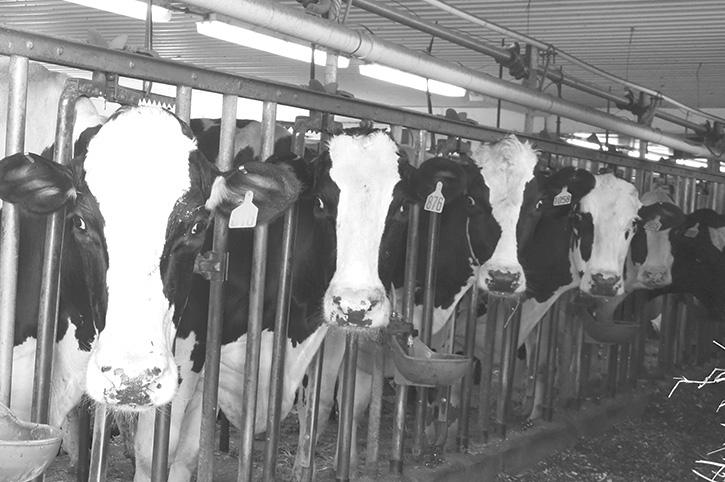
Hard-working dairy farmers have been forced out of business by dairy farmers who, for decades, have been breaking federal immigration laws to hire illegal immigrants who will work for less money than Americans, giving them an unfair advantage over people who abide by the law.
Working with cattle is not only a hard job, but it’s dangerous. It should be a high-paying job and, quite frankly, should pay better than a CEO.
I do agree with Ford that grocery prices are too expensive. Large food companies are to blame; some are making a prot of billions of dollars a year.
Joe Schindler Red Lake Falls, Minnesota
DHIA PROFILE
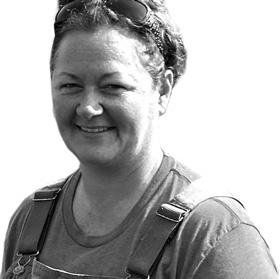
How many years have you been a director for DHIA? I have been a Minnesota DHIA director since 2006. This hardly seems true as I have enjoyed representing all of Minnesota’s DHIA farmer members on both the state and national level as a delegate to national annual meetings. My children were so young back then but have grown up understanding the importance of DHIA, good record keeping and the value of DHIA test day information.
What are your duties as director? My duties as a DHIA director currently include being the secretary/treasurer, representing Minnesota as a delegate for the national DHIA meetings, serving on the national DHIA scholarship committee and attend meetings (both board meetings and our annual meeting) in person or via Zoom. I have also served on several committees nationally and served as scholarship committee chairman.
What do you like about this role? I enjoy being part of a like-minded group who purposefully keep the importance of DHIA testing alive, keep costs reasonable to farmers and are always looking for ways to improve for Minnesota DHIA and their farmers.

Why is DHIA important to you? Growing up on my family farm, Hinckley Holsteins, we used DHIA testing for as long as I can remember. My parents, Dale and Marlys Hinckley, instilled in me how important it was to have accurate records and know the composition and amounts of milk each cow produced. When I married into another dairy farm family in 1996, DHIA was not being used at that time; though, it had been in the past. I recall our rst test when we purchased the herd and being excited to get results to dissect which cows really were pro table. Cow No. 25 was the one my mother-in-law raved about, but when I received my results, this cow had a high somatic cell count and both low fat and protein tests. Clearly, she wasn’t my best cow. Through the years, we have purchased animals to add to and grow our herd, and each time, we only looked at DHIA herds. Since 2007, we have had daily milk weights in our new parlor, but I’ve always believed there is more to the picture than just pounds of milk per day. Some of your highest producers may not be your most pro table. I also nd value in milk pregnancy testing. I have regular herd checks and a great relationship with our vets, but I nd it very convenient in using the test at busy times for my dairy when I don’t have anyone around to help me sort for ultrasounds or for con rmation checks in later lactation.
DHIA: Now MORE than ever
Sauk Centre, MN • Buffalo, MN 763.682.1091
www.mndhia.org
USED TRACTORS
CIH 8950 1,600 hours ..............................$165,000
CIH 8910, 2WD, 4,100 hrs .........................$72,000
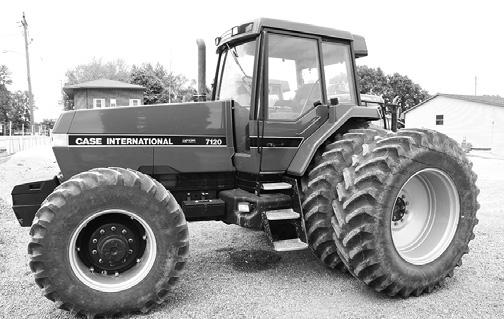
CIH 8920, FWA, 2600 hrs ........................$110,000
CIH 7240, 2,500 hours, coming in ...........$110,000
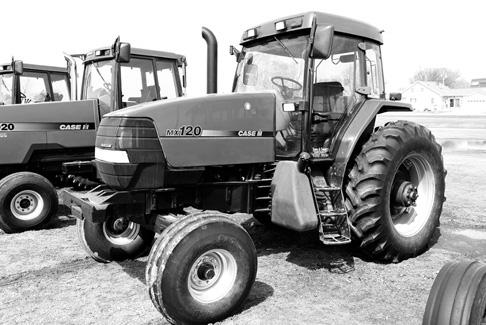
CIH MX120, 2WD, 3,800 hrs......................$72,000
CIH MX110, FWA, 1600 hrs. ......................$65,000
IH 1466 restored, new 20.4x38 Firestones$38,000
IH 1456, cab ..............................................$22,000
IH 1026 hydro .....................................Coming In
IH 806 ....................................................$11,000

JD 2755, 5,600 hrs. ...............................$16,000
JD 4020, new clutch ..............................$11,000
TILLAGE

527B ripper ............................................$13,500
CIH 530B................................................$18,000
CIH 527B................................................$19,500
CIH Tigermate II, 26’ ..............................$28,000
CIH Tigermate II, 26’ w/rolling basket ....$32,000
CIH Tigermate II 26’, w/28’ pull crumbler $31,000
CIH Tigermate 200, 30’ ..........................$44,000
CIH Tigermate 200, 28’ w/rolling basket$40,000
CIH Tigermate 200, 32’, w/4 bar drag ....$33,000
CIH Tigermate 200 28’ w/basket ............$37,000
CIH Tigermate 200 37’ w/basket ...................Call
JD 714 11 shank chisel plow .................$14,000
CIH 5700 chisel plow, 23’ ......................$16,000
CIH 4800, 28’ ...........................................$6,500
CIH RMX 340 25’ disc w/mulcher ..........$42,000
......................................................$6,500
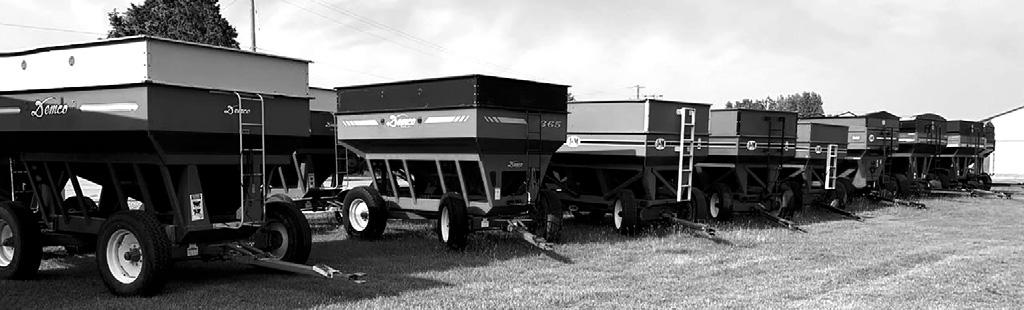
J&M 540 box .............................................$13,500
Parker 4800 box...........................................$8,500
Unverferth 7250 grain cart .........................$29,500
MISCELLANEOUS
New Red Devil & Agro Trend Snowblowers
Beth Ford, CEO of Land O’Lakes, was interviewed by Time magazine.

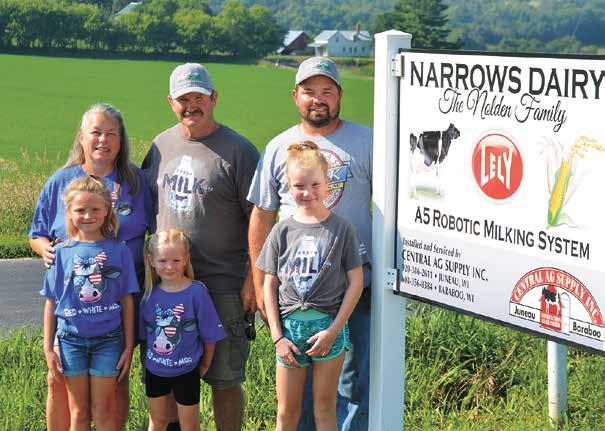
The Nolden family committed to their dairy career in 1996 when they started milking in their current site, Narrows Dairy Farm near Rock Springs. For 14 years, the family worked together to milk their cows three times a day in a double-6 parallel parlor.
Meanwhile, robotic milking systems were being developed and perfected. When the federal approval was passed for robots, Ken Nolden started to think about implementing the technology on his family’s farm.



“The pace of three times a day milking started to wear on us, and the idea of robots seemed pretty interesting,” Ken said. “We started studying on it.”
After learning more about the systems, robots were installed at Narrows Dairy Farm in 2010. The family continues to rely on robots for milking,
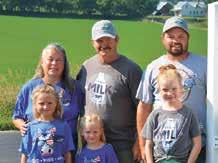
The Nolden family — Heather (front, from le ), Julia and Emily; (back, from le ) Tammi, Ken and Mathew — take a break Aug. 22 at their farm near Rock Springs, Wisconsin. The Noldens hosted a farm tour July 18 in conjunc on with Wisconsin Farm Technology Days
and today, Ken milks 160 cows with Tammi and their son, Mathew.
That technology is one reason Narrows Dairy Farm hosted attendees of the Wisconsin Farm Tech Days July 18 as part of a six-stop tour circuit associated with the event
in Baraboo. The Noldens were able to share with guests their experience of transitioning to a robotic system.
Prior to installing robots, the cows stood in the holding pen for up to six hours per day just waiting to be milked. After transitioning to robotics,
the cows live a relaxed life of strolling over to be milked one moment, eating the next and then returning to their stalls.
“We certainly accomplished more exibility,” Ken said. “It’s been really good for us as far as productivity.”
Mathew joined the opera-
tion after coming home from college. Ken said having two people to share the challenges of farming is an important factor of their success with the robots. When a robot has a problem, it rst calls Mathew and then Ken.
Mathew said the number of calls from the robot depends on how they manage the equipment. A call from a robot might mean a major breakdown, or it might mean supplies are low. If uids are kept full and maintained, there will be fewer calls.
“It goes down to the way you choose to maintain your equipment,” Mathew said. “Some people like to deal with things as they arise, and some people work toward maintaining so that there are less of these call outs.”
Mathew said he is able to make many repairs himself, but keeping parts on hand can be costly. If there is a technical issue that the technician needs a key to x, then his hands are tied.
After 10 years with their robots, the Noldens sold their existing robots and upgraded to two Lely Astronaut A5 units. The upgrade has decreased the number of calls, which Mathew said is probably due to new technology and simply

Let us help you sow the seeds of your farm’s success. Our vast farming experience combined with our years of ag lending experience make us an invaluable addition to your farm business.ABBY WIEDMEYER/DAIRY STAR
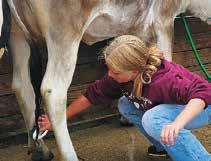
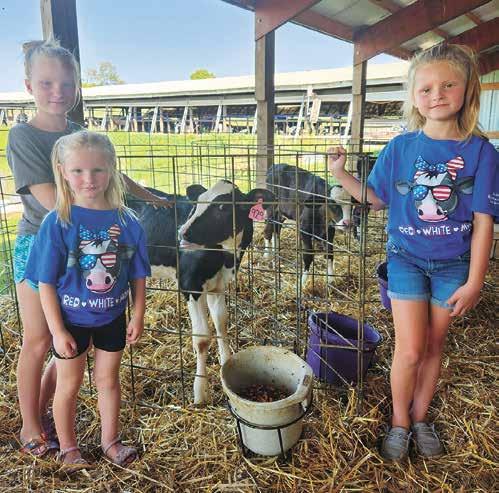
The Nolden daughters — Emily (from le ), Julia and Heather — help take care of calves Aug. 22 on their farm near Rock Springs, Wisconsin. The girls help their grandma over the summer while their mom works in town and their dad works with the cows.
newer equipment.
When upgrading the robots, the Noldens also remodeled the barn so that the robots would be in a centralized location. This allowed for one robot room between the two machines versus before when they were on separate sides of the barn. Mathew said it made chores difcult because a person had to try to be in two places at once to check on things.
The cows visit the robots on a voluntary basis. Protein pellets are fed during milking to encourage cows to visit the robot. The Noldens have added molasses to the pellet mix, which signicantly increased the cows’ enthusiasm for milking time.
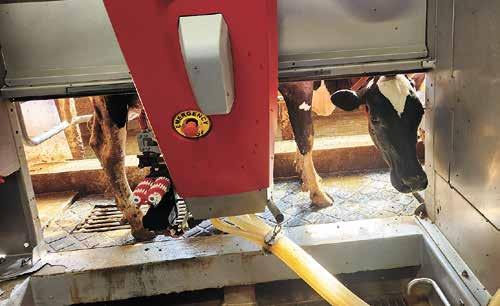
Ken monitors the milk production through the reports the robot provides. The cows at Narrows Dairy Farm are producing 81 pounds of milk per day on average.
“It’s nice to see certain numbers, but the pounds of solids per day is all the magic on the paycheck,” Ken said. “It’s key to the operation.”



Ken and Mathew watch their cow numbers closely because they have their robots at maximum capacity. The biggest thing they watch for is if rst-
lactation animals have room to learn the robot. If that becomes questionable, then culling decisions are made to create more room.

They also need to watch production because their milk is shipped to Scenic Central Milk Producers, which has a growth program that limits the amount of milk farms can ship.
Ken and Mathew agreed that the exibility of their time has made the biggest impact on their lives and business. To be able to continue eldwork without stopping to milk and to have more freedom to attend family events has been valuable to family relationships, Ken said.

“I really enjoy the life I’m living milking with robots,” Ken said. “The truth is, we do very little go-away vacation because I feel very good about what I’m doing.”

It also allowed for Mathew to join the operation and have a secure family life with his wife, who works off the farm, and their children, who spend a lot of time with their dad at the farm.

Ken said the legacy is rewarding.
“Life is all about the next generation,” Ken said. “That’s very important.”















































475 cows
Of all the tractors you've owned, what is your favorite? On the farm side, my favorite tractor is a John Deere 4020 that we have repainted and saved as a collector. The tractor was purchased from my father in 2002 and has 4,600 original hours on it.
Why is it your favorite tractor? My overall favorite tractor is our John Deere 6030 pulling tractor that we call the Badger Deere. We run the tractor-pulling circuit in the 4.1 limited pro-stock tractor class. Tractor pulling has been a tradition in our family for many years. What kind of work do you use it for on the farm? It is only used for recreational purposes.
What is your favorite task to do with the tractor? I can remember I started pulling tractors when I was 8 years old on a John Deere 4020 that we used on the farm. The enjoyment grew from there into many years of competing with other pullers and meeting people all over the country.
If money was no object, what tractor would you purchase? I would purchase a classic John Deere 6030 tractor that has been refurbished as a collector. This series of John Deere tractor, in my opinion, was the powerhouse of its day.
During the year, what is your favorite job involving a tractor? I enjoy planting corn in the spring and chisel plowing in the fall. Tractor pulling would be my favorite, of course, if it was really a job.
Tell us about your family and farm. Our family is continuing to grow each year. My wife, Christine, and I have two sons who are married and a daughter. Our oldest son, Collin, and wife, Jessie, both work on the dairy farm. They currently have three children: Carson, Chloe and Caden with baby No. 4 due in March 2024. Our other son, Casey, and his wife, Brianna, are expecting their rst child in January 2024. Casey and Brianna both also work on the dairy as well as farm 500 acres of crops on their own and have beef cattle. Our daughter, Cammie, is in her second year of college at Luther in Decorah, Iowa. We also have two full-time non-family members who have been working for us for 10 years. My parents, Dwight and Shirley, take care of the heifers on another farm. Shirley is also the secretary of the dairy. Our dairy operation is one that is ever evolving. We own and operate about 800 acres in Vernon County, Wisconsin. All land is currently growing corn and alfalfa that is used solely for the dairy. We purchased six Lely robots two years ago, switching from organic dairying to conventional. Our milk is currently being shipped through Scenic Central Milk Producers.
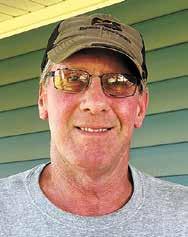
Duane Wolfgram, pictured with his nephew Jamie Schmitz. Kendall, Wisconsin Monroe County
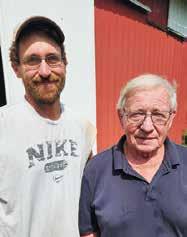
40 cows
Of all the tractors you've owned, what is your favorite?
My favorite tractor would be the AllisChalmers Model C that my dad bought brand new in 1949. He paid $1,000 for it from Steffen Equipment in Elroy. I still have it even though it doesn’t run anymore. It is a gas engine and came with implements. It is around a 20-horse tractor. Why is it your favorite tractor? It’s my favorite because I learned to farm on it. It was the rst tractor my dad ever bought because he had been farming with horses his whole life.
What kind of work did you use it for on the farm? We did everything with it at rst until Dad bought a more powerful tractor ve years later. Mostly we would pull the hay fork with it and use it for cultivating or running the one bottom plow.
What was your favorite task to do with the tractor? It was not the handiest tractor actually because it was not very powerful, so I did not have a favorite chore with this one. I was probably 7 years old when I learned to drive it, and I could not reach the pedals. It also had no brakes at all. When I worked with Grandpa, he was on the grain binder, and I was on the tractor. We would go around the eld while my dad watched. My grandpa would give me the thumbs up to go faster, and when we came back around closer to my dad, my dad would give me the thumbs down to go slower. That’s the way we went all day.
If money was no object, what tractor would you purchase? I would have to look around and see what’s out there. I know I would not buy any new technology. Even if money was no object, I would still have to deal the price down, and it would have to include a new cap.
During the year, what is your favorite job involving a tractor? I do a lot of tractor driving still, and I like all of it. I hate winter and am always glad when spring comes and I can get back outside in the elds. I like baling hay and planting corn.
Tell us about your family and farm. I farmed with my dad growing up. Then we got my grandpa’s farm and bought the farm in between us. Alan Thompson owned it before us; he is Tommy Thompson’s uncle who is the former governor of Wisconsin. We were told that they built our barn in 1898 and bought it out of a Sears and Roebuck catalog, but I have no way of knowing that for sure. Now I farm with my nephew Jamie Schmitz. We ship our milk to Grassland Dairy Products and milk in a tiestall barn. We crop around 320 acres.
Of all the tractors you've owned, what is your favorite? My favorite tractor is the Oliver 1550 that my grandpa bought new in the late 1960s. It has a narrow front, a three-point hitch and a gas engine that produces 53 horsepower. The tach says that it has 3,200 hours on it. Why is it your favorite tractor? The Oliver 1550 has been a trouble-free tractor for the most part. My nephew from Chicago recently graduated from college and dropped by our farm on a westward road trip he was taking. I put him on the Oliver and had him drive it even though he had never been on a tractor before. Driving his great-grandfather’s tractor was a huge thrill for him and created some great memories.
What kind of work do you use it for on the farm? I put a sprayer on the Oliver’s three-point hitch and use it to spray ies in our barns. The tractor only runs for an hour once a week or so during the warm months. I change the oil every other year to keep its lters and oil fresh,
What is your favorite task to do with the tractor? I don’t really like eldwork. What I enjoy the most is working with and caring for our dairy cattle. Spraying ies with the Oliver is very satisfying because at the end of the process you can see dead ies.
If money was no object, what tractor would you purchase? I would like a John Deere 6155R with short axles and all of the bells and whistles. We are currently using a similar tractor on our feeder wagon, and it’s already got quite a few hours on it. When I was 33 years old, I bought a John Deere 4440 and put it on the feeder wagon. Years later, when I sold the 4440 to a mechanic in central Iowa, it had over 30,000 hours on it.
During the year, what is your favorite job involving a tractor? I own a John Deere 4020 that has an open station. One of my favorite things is giving our ve grandchildren rides on that tractor. It’s a great way to spend time with them and create lasting memories. Tell us about your family and farm. My wife, Mary, and I farm with her brother and her father. We milk our cows in a double-8 parabone parlor and bed our free stalls with sand. Our fresh cow pen has a bedding pack, and our maternity pen is bedded with sawdust. We trim hooves every other Tuesday and perform herd health checks on alternating Tuesdays. We ship our milk to Associated Milk Producers Inc. in Sanborn, Iowa.
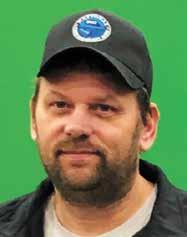
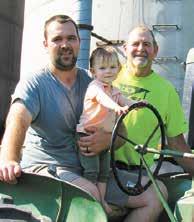
Lewis Shallow, pictured with his son, Thaddeus, and dad, Jeff Lena, Wisconsin
Oconto County


42 cows

Of all the tractors you've owned, what is your favorite? One of the favorite tractors on the farm would be Dad’s 1953 John Deere 50. It’s a simple old John Deere two-cylinder.
Why is it your favorite tractor? It’s been in the family since 1953. Grandpa bought it on an auction when the tractor was nine months old. When Dad started farming in the 1970s, he ended up with it as his rst tractor.
What kind of work did you use it for on the farm? It did a lot more work in its past than it does currently. For Grandpa, it was the baling tractor. Every summer, it would bale 20,000 small square bales with a John Deere 14T baler. When Dad was starting out farming, the 50 spread manure daily with an International box spreader. It raked hay, pulled a drag, grain drilled and pulled wagons.
What is your favorite task to do with the tractor? Many of the tasks the 50 had in the past have now been delegated to more modern tractors, but it still pulls a lot of wagons. Whether on the at rack hauling in round bales or pulling
 Seth Anderson

Ettrick, Wisconsin
Trempealeau County


200 cows


Of all the tractors you've owned, what is your favorite? A 1947 Oliver 77 Row-Crop. It may not be my favorite tractor, but it has the most meaning to me and the farm. My grandpa bought it new in the late 1940s after trading in their Oliver 70. At only 37 horsepower, it was the only tractor on the farm for many years. It was equipped with a two-row mounted cultivator (that we still have) and a belt pulley.
Why is it your favorite tractor? I'm sentimental about the history of our century farm, and this tractor was a big part of it. I enjoy hearing about it from my dad's cousin who grew up here and operated the tractor as a youth while helping my grandparents with chores.
What kind of work did you use it for on the farm? As the sole tractor for many years, it had all the roles of a tractor — from tillage and planting to pulling the hay loader and hoisting loose hay into the barn. During my childhood, it ran the Fox blower to ll our 30-foot silos, raked hay and was on the GrainO-Vator feed wagon all winter. Now its main job is unloading 16-foot chopper boxes all summer.
a few chopper boxes of silage, it’s good to keep it in use. It is also used to move stuff around the yard a lot. If we need to move machinery around the yard or the shed, it’s easy to back stuff up with the narrow front end.
If money was no object, what tractor would you purchase? Probably a late John Deere Generation II model like a 4455 or 4760 with low hours. Those models have proved their dependability, and there is a reason their value is skyrocketing.
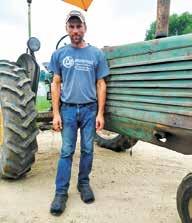
During the year, what is your favorite job involving a tractor? I really like planting row crops. It’s just enjoyable putting seeds in the ground. It’s the rst part of the crop year and what you waited for all winter. We started experimenting with no-till and cover crops recently, and that cut down on a lot of tillage, but at the same time added some new things.
Tell us about your family and farm. The farm consists of my parents, Jeff and Darlene; my sister, Darcy; my spouse, Skhyler; and our 15-month-old son, Thaddeus. We currently milk 42 cows — primarily Holstein with a couple of Brown Swiss tossed in. We ship our milk to Dairy Farmers of America. For land base, there are 200 acres divided up in a rotation of alfalfa, corn and soybeans. The beans are sold, but everything else remains on the farm. The alfalfa is put into haylage, baleage and dry hay, and the corn is divided for silage and shell corn. We grind the shell corn and mix it with dried soybean protein for the cows. Milking takes place in a traditional stanchion barn, while the animals are on pasture for as much of the year as possible. All animals are raised on the farm.
What is your favorite task to do with the tractor? My favorite task (and really its only job) is unloading chopper boxes. It's easy to get on and off the back, and the left-hand PTO lever is easy to reach from the ground. A shade umbrella helps keep me from burning in the sun. It gets a workout sometimes when the wagons get heavy, pulling and scratching with all its might.
If money was no object, what tractor would you purchase? It would have to be a larger Case IH MFD cab tractor that's pre-emissions with the Cummins engine. We lean toward red tractors. The Magnums have proven to be incredibly reliable. We do have an 8920, but the newer cab on later models would be nice to have.
During the year, what is your favorite job involving a tractor? I really enjoy chopping hay, but Dad gets that job while I unload wagons. I just enjoy cleaning off a eld and pushing tractor and chopper to their limit to harvest as fast as possible.
Tell us about your family and farm. My wife, Erin, and I farm full time with our kids, Otto, Eleanor and Ivan, along with the help of my parents, Byron and Lorna, who still help every day with chores and feeding cows. Erin's dad, Dan, helps with eldwork and hauling manure since retiring from dairy farming himself a few years ago. We have one full-time employee who helps us with milking, along with a few neighbors and an uncle who are great help with eldwork. We milk 200 cows in a double-10 parallel parlor we built new with a freestall barn in 2016. We ship our milk to Westby Cooperative Creamery.



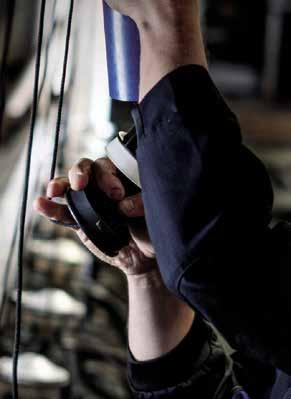
















Describe your farm and facilities. Our cows are housed in sand-bedded free stalls and milked in a double-8 herringbone parlor. We have modied our existing buildings over the years to get everything how it is today. This farm has been in my family for 111 years, and I was raised here. This is my 51st cropping season. My wife Pat and I are senior partners, and we farm with our daughter, Angie, and her husband, Donald, and our son, Dan, and his wife, Michelle. The grandkids work when their schedule allows. My nephew, Ben Herricks, is the main feeder, and he is invaluable. He has worked here for over 20 years and knows everything going on.
What forages do you harvest? Corn silage, alfalfa, rye and oats.
How many acres of crops do you raise? 1,400 acres.











What quality and quantity do you harvest of each crop?
We raise 300 acres of alfalfa, 100 acres of nurse crops (rye and oats) and 1,000 acres of corn. Half the corn is for si-













lage and half is for grain. We raise HarvXtra Alfalfa, which is a low lignin feed, and strive for a relative feed value of 200. We raise brown midrib corn silage, and our goal with that is to harvest as high energy, palatable feed as we can.
Describe the rations for your livestock. We feed a high-forage diet to all of our animals. Rye and oats are fed to the dry cows and heifers. The milk cows are fed alfalfa haylage, BMR corn silage, ne-ground corn, soybean meal and a protein mix. The quantity of each ingredient is adjusted according to production groups.
Describe your harvesting techniques for alfalfa and corn silage. We harvest all of our own crops together with the Brueggen family in Norwalk, Wisconsin. We have worked together to get our crops done for over 40 years. Our No. 1 rule for working together is, if a decision is not good for both of us, then we need to rethink it. They also milk close to 600 cows, so we are working together to feed 1,200 cows, which justi-
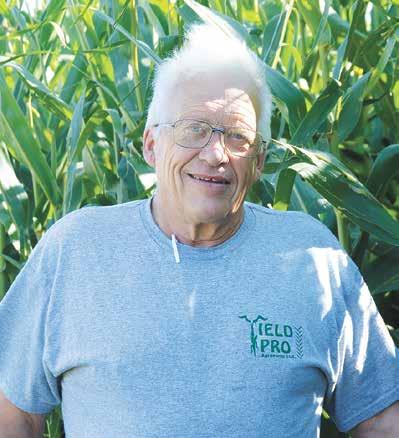
Jack Herricks takes a break Aug. 16 at his farm near Cashton, Wisconsin. Herricks farms 1,400 acres and milks 600 cows with his family, and 2023 is the 51st cropping season of his farming career.
es having larger equipment. We harvest our alfalfa every 28-30 days and get it done in three days. It’s important
to get it done in a short time frame to achieve consistent feed. Corn silage takes about a week.
What techniques do you use to store, manage and feed your forages? We store our forages in bunkers. We store half of our shelled corn in a bunker and the other half in Harvestore silos. When we are harvesting, we make sure feed is packed tightly in the bunker. The single biggest factor in management is taking monthly inventory of our feed. We know when our feed is going to run out, and we are able to plan better that way.
Throughout your career, have you changed the forages you plant, and how has that decision helped your operation? We raise the same crops, but the genetics have changed dramatically. We have also changed the soil health of our land. Most of our land has over 4% organic matter. Each percentage increase of organic matter gives the soil the capacity to hold another inch of rain. So, on a year like this, we can hold 2 more inches of rain than a lot of land.
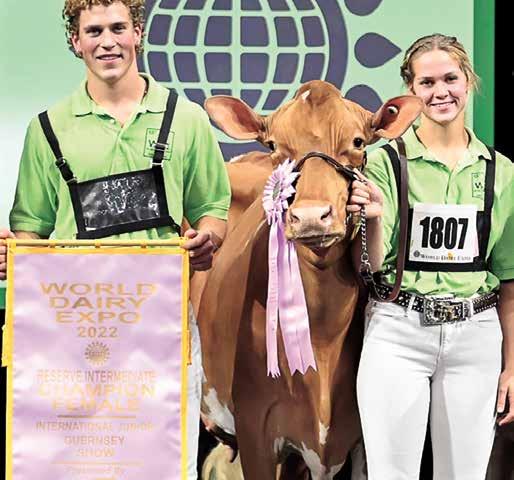
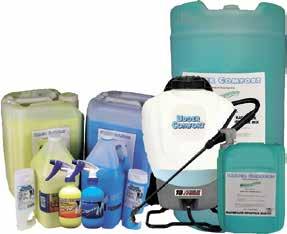
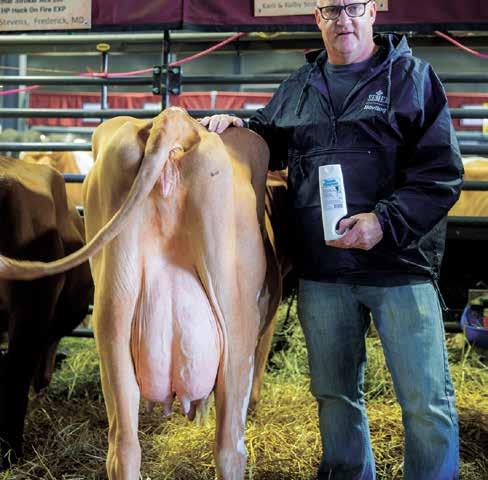
“Only Udder Comfort™ will do! We love it for swelling and for fresh cows. We never want to use anything else because this works so well,” says Kevin Stoltzfus of Warwick Manor Guernseys, the herd in East Earl, Pennsylvania that produces the Golden Guernsey Milk for Yoder’s Country Market in New Holland.

Kevin and Dina and children Kolby, Karli and Kaila are all involved in the dairy. Karli and Kolby brought 4 homebred Guernseys to the 2022 World Dairy Expo. ‘Peachey’ was bred-and-owned champion of the junior show, ‘Scotch’ (pictured above) was res. int. champion of the junior show, and ‘Senora’ top lifetime production cow of the open show. Of their 50 milking Guernseys, 12 made the 2022 Top-100 Component Queen Cows of the breed, averaging 25,110M 5.9F 3.3P; with 89-pt average score, 5 nominated AA in milking form.



“When something works, we stick with it. We use Udder Comfort on all fresh cows 2x/day for a week after calving. We start heifers prefresh, 1x/day for a week before calving,” says Kevin. “We also use it before, during and after showing.”







We also have the following Skidloaders in stock for parts:
We are also a dealer for DEKA BATTERIES Nice selection in stock!
We are also a dealer for NORDEN SKID LOADER ATTACHMENTS


And we also have your full line of hyd hose and fittings in stock stop in for your hyd hose needs 1/4”, 1/2”, 5/8”, 3/4”, 1”, 1-1/4”!!!
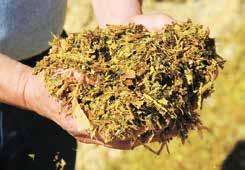
Jack Herricks inspects corn silage Aug. 16 on his farm near Cashton, Wisconsin. Feed inventory is taken monthly, which allows the family to plan for carryover; this way, the feed has enough me to ferment and cows never have to eat green corn silage.
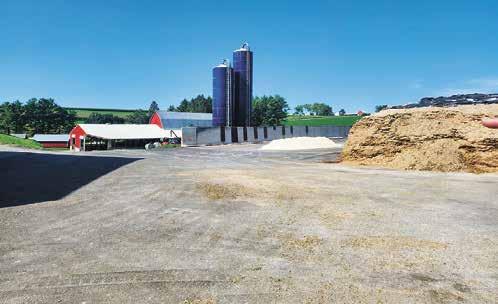
Fine-ground corn is stored in Harvestore silos and bunkers at the Herricks farm near Cashton, Wisconsin. Milk cows are fed corn silage, alfalfa haylage, ne-ground corn and a protein mix.
How do quality forages play a part in the production goals for your herd? It helps us be low-cost producers because high-quality forage means less purchased feed. Approximately 80% of our feed is home grown.
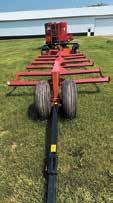
2000 Gravity Flow wagon, Knowles running gear, clean ....................................................
Lundell 1290 Gravity Flow wagon, front & rear ladder, Lundell running 2070 gear, rear hitch...
Parker 2100 Gravity Box, LH discharge, Lundell 1670 running gear, right off farm, nice .........
Parker 2100 Gravity Box, LH discharge, John Deere running gear, right off the farm, nice......
Sudenga Hi-Ef swing hopper auger, 61’X8”, 540 PTO, hyd lift, manual hopper jogger, right off the farm, ready for work ....................................................................................................
Ez-Flow 220 Gravity Box, Ez-Flow 672 running gear, right off farm, nice ...................................
Killbros 350 Gravity Box, Huskee running gear, right off the farm, field ready ..........................
John Deere 640 Roll Bar Rake, ground drive, super clean, field ready..........................................
Need your A/C hoses replaced? It’s easy! Send us your old ones and we will make new ones for a fraction of the cost of new OEM!!!



Describe a challenge you overcame in reaching your forage quality goals. We have added a lot more storage space. This makes keeping track of inventory easier. We always have a goal to have enough corn silage until January of the next year so that we never have to feed green corn silage. More storage space has helped us reach that goal.
What are management or harvesting techniques you have changed that have made a notable difference in forage quality? I started farming by making 12,000 to 14,000 small square bales a year and using a onerow, pull-type chopper. So there have been big changes in my career. Now, we can harvest more acres and feed more cows per manhour than we once did.





1/2” thick x 16” wide

12’ long $35 • 16’ long $47

White Corrugated PVC liner panels

40” wide x 16’4” long $1950

White smooth PVC sheeting

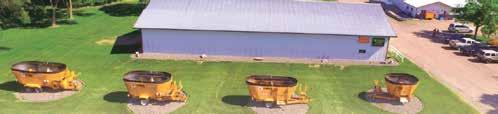
4’ x 8’ x 1/2” thick $5750
FACTORY SECONDS. QUANTITY DISCOUNTS.
DELIVERY AVAILABLE
715-644-2350

Chippewa


Duals, 1272 hrs., 90 Sep. hrs., #557140................ $629,900
JD S790 2021, PRWD, Singles, 937 hrs., 770 Sep. hrs., #557277 ............. $479,000
JD S790 2022, PRWD, Duals, 25 hrs., 20 Sep. hrs., #560618 ................... $639,500








JD S790 2022, PRWD, Duals, 230 hrs., 155 Sep. hrs., #563325................ $599,900
JD S790 2022, PRWD, Singles, 480 hrs., 314 Sep. hrs., #563815 ............. $579,500




JD S790 2021, PRWD, Duals, 833 hrs., 551 Sep. hrs., #565421................ $499,900
JD S790 2022, PRWD, Duals, 461 hrs., 368 Sep. hrs., #566460................ $624,900
JD S790 2022, PRWD, Duals, 333 hrs., 239 Sep. hrs., #566637................ $589,900
JD S790 2022, PRWD, Duals, 455 hrs., 316 Sep. hrs., #566694................ $579,900

JD S780 2020, PRWD, Duals, 1489 hrs., 1145 Sep. hrs., #191082............ $349,000
JD S780 2020, PRWD, Singles, 1551 hrs., 1204 Sep. hrs., #531610 ......... $349,000
JD S780 2019, PRWD, Duals, 1600 hrs., 1058 Sep. hrs., #549682............ $319,000
JD S780 2020, PRWD, Duals, 1290 hrs., 941 Sep. hrs., #550187.............. $369,000
JD S780 2018, PRWD, Duals, 1521 hrs., 1130 Sep. hrs., #551736............ $305,000
JD S780 2022, PRWD, Duals, 453 hrs., 353 Sep. hrs., #552362................ $549,000
JD S780 2022, PRWD, Floaters, 395 hrs., 323 Sep. hrs., #553546 ............ $549,900
JD S780 2022, PRWD, Tracks, 304 hrs., 238 Sep. hrs., #554013 ............... $619,000
JD S780 2022, PRWD, Duals, 242 hrs., 183 Sep. hrs., #554094................ $565,000
JD S780 2022, PRWD, Floaters, 242 hrs., 170 Sep. hrs., #554623 ............ $569,000
JD S780 2022, PRWD, Floaters, 255 hrs., 177 Sep. hrs., #554707 ............ $569,000
JD S780 2022, PRWD, Floaters, 142 hrs., 91 Sep. hrs., #554708 .............. $574,000
JD S780 2022, PRWD, Floaters, 191 hrs., 131 Sep. hrs., #554709 ............ $569,000




JD S780 2022, PRWD, Floaters, 190 hrs., 139 Sep. hrs., #554710 ............ $569,000
JD S780 2018, 2WD, Duals, 1217 hrs., 826 Sep. hrs., #555412 ................ $319,000
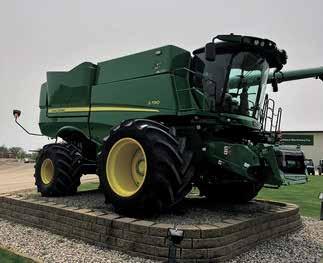
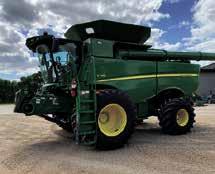
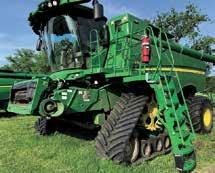
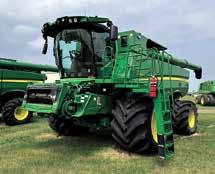
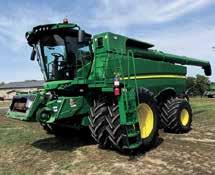
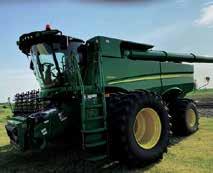
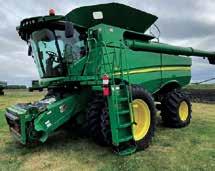
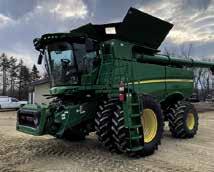
JD S780 2021, PRWD, Duals, 799 hrs., 607 Sep. hrs., #556191................ $479,900
JD S780 2020, PRWD, Duals, 933 hrs., 640 Sep. hrs., #557137................ $419,000
JD S780 2019, PRWD, Duals, 1287 hrs., 931 Sep. hrs., #558869.............. $349,000
JD S780 2022, PRWD, Tracks, 300 hrs., 280 Sep. hrs., #561020 ............... $623,000




JD S780 2022, PRWD, Duals, 465 hrs., 374 Sep. hrs., #563633................ $549,000
JD S780 2022, PRWD, Duals, 469 hrs., 347 Sep. hrs., #563635................ $549,000
JD S780 2022, PRWD, Tracks, 243 hrs., 192 Sep. hrs., #563701 ............... $619,000
JD S780 2022, PRWD, Duals, 427 hrs., 307 Sep. hrs., #563710................ $549,000
JD S780 2020, PRWD, Duals, 964 hrs., 740 Sep. hrs., #564897................ $419,500
JD S780 2022, PRWD, Floaters, 8 hrs., #565897...................................... $629,900





JD S780 2018, PRWD, Duals, 2753 hrs., 1901 Sep. hrs., #567178............ $234,900
JD S780 2022, PRWD, Duals, 250 hrs., 165 Sep. hrs., #567271................ $585,000
JD S780 2021, PRWD, Duals, 500 hrs., 300 Sep. hrs., #567515................ $519,900
JD S770 2018, PRWD, Duals, 2261 hrs., 1652 Sep. hrs., #549678............ $259,900
JD S770 2022, PRWD, Duals, 273 hrs., 195 Sep. hrs., #554014................ $560,000
JD S770 2021, PRWD, Duals, 568 hrs., 486 Sep. hrs., #554050................ $405,000
JD S770 2021, 2WD, Duals, 720 hrs., 585 Sep. hrs., #560264 .................. $425,900
JD S770 2022, PRWD, Floaters, 36 hrs., 20 Sep. hrs., #563704 ................ $546,000





JD S770 2022, PRWD, Duals, 269 hrs., 148 Sep. hrs., #567222................ $564,900
JD S770 2022, PRWD, Duals, 148 hrs., 91 Sep. hrs., #567225 ................. $574,900
JD S760 2019, 2WD, Duals, 1206 hrs., 871 Sep. hrs., #565714 ................ $279,900
JD S690 2017, PRWD, Duals, 1433 hrs., 1187 Sep. hrs., #549457............ $280,700
JD S690 2015, PRWD, Tracks, 2400 hrs., 1615 Sep. hrs., #550872 ........... $232,900
JD S690 2012, PRWD, Duals, 2313 hrs., 1645 Sep. hrs., #551148............ $149,000
JD S680 2017, PRWD, Duals, 1516 hrs., 1053 Sep. hrs., #273646 ........... $219,900
JD S680 2014, PRWD, Duals, 2349 hrs., 1668 Sep. hrs., #531966............ $195,000
JD S680 2013, PRWD, Duals, 2485 hrs., 1604 Sep. hrs., #551147............ $165,000
JD S680 2012, 2WD, Duals, 2756 hrs., 2032 Sep. hrs., #552659 .............. $119,900
PRWD, Duals, 1732 hrs., 1317 Sep. hrs., #532082............ $189,500


JD S660 2012, 2WD, Duals, 1643 hrs., 1188 Sep. hrs., #554132 .............. $179,900
JD 9870 STS 2009, PRWD, Duals, 3579 hrs., 2579 Sep. hrs., #563914 ...... $94,500
JD 9870 STS 2008, PRWD, Duals, 3261 hrs., 2494 Sep. hrs., #566621 ...... $97,500
JD 9870 STS 2011, 2WD, Duals, 3650 hrs., 1750 Sep. hrs., #567383 ....... $109,900
JD 9860 STS 2004, PRWD, Duals, 3924 hrs., 2537 Sep. hrs., #559820 ...... $55,000
JD 9860 STS 2005, PRWD, Duals, 4528 hrs., 3240 Sep. hrs., #564977 ...... $59,900
JD 9770 STS 2011, PRWD, Duals, 2537 hrs., 1813 Sep. hrs., #566823 .... $129,900
JD 9760 STS 2004, PRWD, Duals, 4389 hrs., 3109 Sep. hrs., #564023 ...... $53,500
JD 9760 STS 2007, 2WD, Duals, 3169 hrs., 1965 Sep. hrs., #566814 .......$74,900
JD 9750 STS 2003, 2WD, Duals, 5105 hrs., 3367 Sep. hrs., #565004 ......... $37,500
JD 9670 STS 2010, 2WD, Duals, 2525 hrs., 1667 Sep. hrs., #566916 ....... $114,900
JD 9570 STS 2011, 2WD, Singles, 2019 hrs., 1231 Sep. hrs., #555820 .... $132,500
JD 9570 STS 2009, 2WD, Duals, 2367 hrs., 1597 Sep. hrs., #556547 ....... $104,900
JD 9560 STS 2004, 2WD, Duals, 4638 hrs., 2982 Sep. hrs., #567094 .......$52,500
Case IH 2388 1998, 2WD, Singles, 3876 hrs., 2943 Sep. hrs., #549406 .... $34,900








 By Abby Wiedmeyer abby.w@dairystar.com
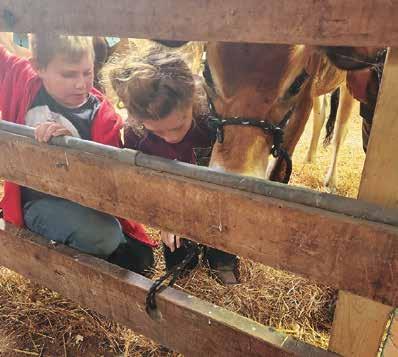
VIROQUA, Wis. — The rain dampened the ground but not the spirits of the 38 youth attending the annual Day of Dairy Aug. 14 in Viroqua.
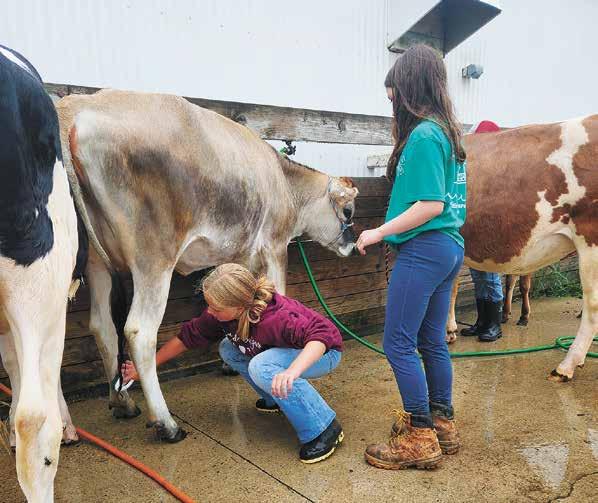
Individuals aged 8-17 years old from across Vernon County gathered at the Vernon County Fairgrounds to learn the basics of fair etiquette, dairy nutrition, cattle marketing and other opportunities in the industry through hands-on instruction and guest speakers.
Organized by members of the Vernon County Dairy Youth Fund Committee, the event is geared toward preparing youth to show at the Vernon County Fair but also brings in guests to share their experiences with the kids.
This year’s guest speakers included Dennis Nerison, who owns and operates Nerison Livestock; Wayne Kruizenga with Koon Kreek Feeds; and Garrett Nielsen, who discussed
calf care. The event was facilitated by Gail Klinkner and Ashley Olson.
“Day of Dairy has become a agship educational event for the kids,” Olson said. “Not only does it teach them about getting their heifer ready for show and what to expect at fair, it also allows them to meet other dairy youth in the county who they might only see a couple times of year.”
The day began with washing heifers which belonged to various members of the junior dairy club. Attention was given to the different products that are safe to use on cattle as well as techniques and frequency.
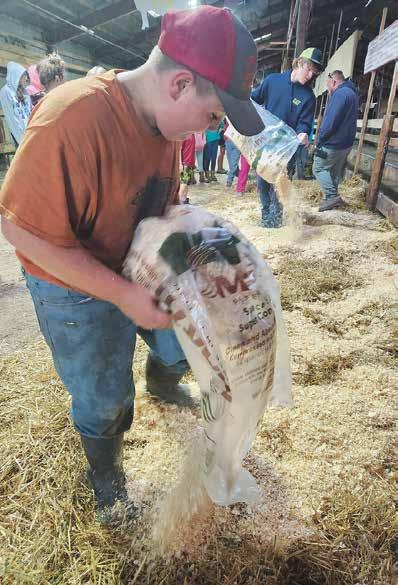
While the heifers dried off, kids were instructed on how to build a proper bedded pack at the fair. This started with spreading out straw topped with wood shavings. A special technique that was demonstrated was when there is no frame behind the pack, a board is used to straighten the back of the bedding pack.
The importance of cleanliness was stressed throughout the day. Animals were then brought in and lined up by size.








Greg Wubbenhorst showed participants how to tie a slip knot.
Nielsen spoke to the group about calf care. He specied that all calves require the same care of clean bedding, fresh feed and water, regardless of their breed or whether they become a show animal or not. Nielsen emphasized the importance of vaccinations as well.
“Anyone who’s ever lived on a farm knows that if any disease starts going through, if
you’re not vaccinating, you’re in trouble,” Nielsen said.
“That’s just the way it is.”
Later, Kruizenga spoke to the group about the different types of feed that are available for dairy animals. He has owned Koon Kreek Feeds in Coon Valley for 29 years and said dairy show animals require a different feed than beef steers in a lot.

“The biggest thing is to start them out right,” Kruizenga said. “They need higher
protein and less grain.”
Klinkner talked to the kids about how to dress for showing and different supplies that are needed to prepare animals for the show ring. Besides white pants and dress shirts for showing, she discussed where to clip the animals, how to blow dry a top line and the importance of y spray.
“If the ies are on you biting, then they are on your animals too,” Klinkner said.
Since showing requires a lot of supplies, the kids went home with a calf pail, a halter and a brush as a starter kit for their showing career.
The Vernon County Dairy Youth Fund’s mission includes supporting dairy youth through activities and educational events. The nancial support for the club originates through funds raised during the Cheese of Champs sale at the Vernon County Fair. Half of the funds raised each year are returned to dairy youth winners of showmanship, while the other half goes to the Dairy Youth Fund.
This was the seventh year that the Day of Dairy was held. Olson said it has an important impact on the youth of Vernon County.
“It is great to bring in different speakers with agriculture backgrounds to get the kids thinking about future careers,” Olson said. “I truly enjoy being part of this annual event and thank all the sponsors that make this event successful.”






When it came time for the league’s state tournament in July, Fargo 12U AllStars was the lone team that entered.
“Little League is not super huge in North Dakota, although I have a feeling it’s going to get a lot bigger now, but it’s not huge by any stretch,” Molden said. “Usually, there’s only about three teams in the state tournament.”
Pa.


— From the crack of the baseball bat to the pulsating of a milking unit, Todd Molden has traversed the world of baseball and that of a dairy farmer.
The two have collided recently for Molden, who is the herdsman of the North Dakota State University Animal Sciences Dairy Cattle Research and Teaching Center in Fargo, North Dakota.
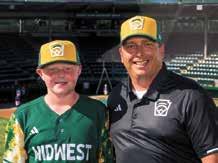
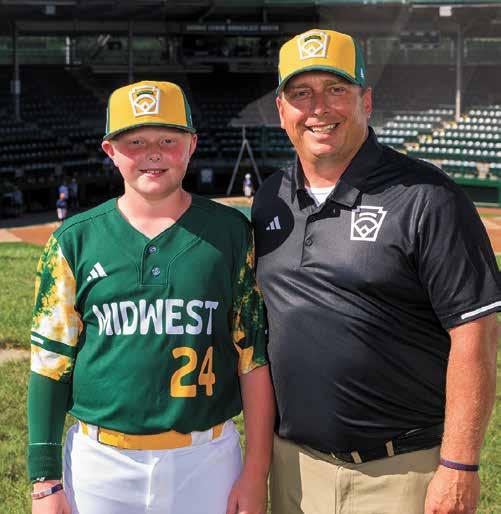
As an assistant coach, Molden helped lead a group of 12 talented youth to appear in the Little League World Series Aug. 16-27 in South Williamsport.
The Fargo 12U All-Stars is the rst North Dakota team to reach the pinnacle appearance in the tournament’s seven-decade history.
Molden and his wife Tania’s oldest son, Jackson, is the catcher on the team. Siblings Amelia and Christian have been cheering on the team during their journey to Little League headquarters.
Molden, who oversees the 100-cow dairy farm at NDSU in addition to student employees, has been juggling the three roles of coach, father and herdsman throughout the season.
The squad then departed Aug. 2 to travel to the eight-team Midwest Region Tournament Aug. 4-11 in Whitestone, Indiana.

After defeating Kansas 15-1 Aug. 4 in the quarternals, Fargo 12U AllStars faced Wisconsin Aug. 5 and won 16-2. A loss to South Dakota followed Aug. 9 by a score of 7-3. The team was not deterred and came back to win the next day over Iowa 12-7.
The win set up a championship game of neighboring states Aug. 11. In the end, North Dakota was the victor 9-7 to secure their spot in the world series.
“The last play was a ground out to our shortstop, and he made a nice play,” Molden said. “It was so much fun to watch the celebration, knowing how hard these kids worked. They do anything we ask them to, and it’s just so fun to see that emotion in them come out.”
With no time to relax, and with a ood of local support behind them, the team and their three coaches set off on a bus at 7 a.m. the next day.

We had one cow in particular that had been with us for most of our dairy career. Her name is Hot Chocolate, and she was born about a week before Thanksgiving in 2017.
That was not a good morning. One of our 3-year-old cows, No. 112, freshened the day before, and we were really excited to see how she turned out. Unfortunately, 112 prolapsed her uterus and died during the night. I discovered her early the next morning when I went out to milk. I was so heartbroken and disgusted at the tragic way that this beautiful animal had suffered before death.
The feeling of failure was strong that morning. It took me a while to get over the shock and be able to go back in the barn to start chores.
 By Abby Wiedmeyer Staff Writer






When I nally did drag my sad self back to the barn, I set up the milkhouse and pushed the milker cart down the walk to start milking. The calving pen was down at that end of the barn, and when I approached, I saw that another cow had calved in the night. There was a small, white, fuzzy calf curled up in the corner and a fresh cow who had thankfully already dumped her cleanings and nothing else.
The satisfaction of this new life was buried under the fog of grief and bitter feelings that I was still harboring from the death of 112. I milked the rest of the cows while my husband mixed feed and got 112 out of the barn. By about 8 a.m., I was done milking, and the kids had all made their way out to the barn. They ranged from about 4 to 10 years old at the time.
When I went to get the calf out of the pen, I had a heck of a time catching it because it was so spunky and noisy (always a good sign). As I approached, it took off with a beller. It was a few minutes before I could corner it and get it in the cart to wheel down to the milkhouse. The fog on my heart lifted a little bit as I got a good look at this healthy little calf. It was a heifer out of another great homebred cow, and she was mostly white with a little pink nose.
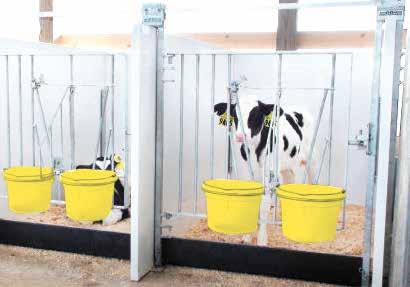
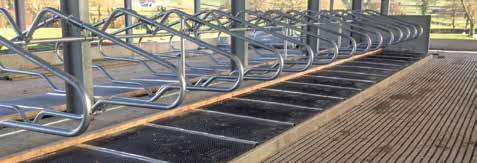
When I brought her in the warm milkhouse, all the kids fell in love with her right away. She was tted with a calf coat and fed colostrum, which she drank without any problems. A friend of the family had shown up to go hunting in the meantime and was making hot chocolate for the kids. As they crowded around the feed cart, the new calf kept trying to snitch a sip of their drinks.
In a unanimous decision, the calf was named Hot Chocolate. Our oldest daughter wrote out an ear tag with the number 186 and Hot Chocolate.
As Hot Chocolate grew, she held a special place in my heart because taking care of her that morning was like balm on a sore heart. When 112 tragically left our lives, Hot Chocolate entered it and completed the circle of life that keeps so many of us going.
Before Hot Chocolate was a year old, we dispersed our dairy herd. Our rstgeneration farm had hit hard times, and we had to gure out how to cash ow. We sold the cows and kept our heifers and worked jobs off the farm. When the heifers were big enough, we bred them to a beef bull and started milking again in 2020.
Hot Chocolate was one of the rst heifers to calve in when we started shipping milk again. I had looked forward to seeing her calve in since she was born, and for a couple of years, I wasn’t sure if we were ever going to milk again. So, when she did calve in and I was there for it, I was so grateful. I never took one day of milking her for granted.
We have been shipping milk for the second time for three years now, and the industry has continued to evolve. We gured out a way to cash ow a small, rstgeneration farm in today’s day and age, and it is really hard. My husband and I work a lot of hours off the farm to make ends meet, and our half-grown kids carry a lot of the weight. This has developed them into wonderful humans and also saved me from being the hover parent that I probably would have been, but we have still decided that it is not sustainable.
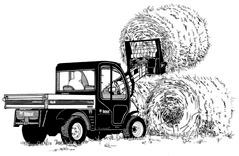


We decided to sell the cows once and for all in June. Hot Chocolate went with them as a healthy, productive, pregnant dairy cow. When the auctioneer came out to look at our herd before the consignment, Hot Chocolate was the rst one he pointed to as who he thought would be our top seller.
It’s bittersweet to receive validation of our efforts at the exact time it is all coming to a close. It seems unfair that people who have done a good job at something should choose to give it up.



I have accepted that we were meant to do this, just not forever. And while I always hoped that I would take care of Hot Chocolate for as long as she lived, now I can only hope she will be a special asset to someone else’s herd.

IOWA
Automated Waste Systems, LLC
Hull, IA • 712-439-2081
Reiser Implement, Inc.
Waukon • 563-568-4526
Rexco Equipment Cedar Rapids • 319-393-2820
Rexco Equipment Farley, IA • 563-744-3393
Bobcat of Alexandria Alexandria • 320-460-8773
Bobcat of Otter Tail County Fergus Falls • 218-739-4505
Farm-Rite Equipment, Inc.
Dassel • 320-275-2737
Farm-Rite Equipment, Inc. Long Prairie • 320-732-3715
Bobcat of Brookings, Inc. Brookings • 605-697-5544
Farm-Rite Equipment, Inc. St. Cloud • 320-240-2085
Farm-Rite Equipment, Inc. Willmar • 320-235-3672
Lano Equipment of Norwood Norwood Young America • 952-467-2181
Miller Sellner Slayton, LLC Slayton • 507-836-8571
Pfeifer’s Implement Co. Sioux Falls • 605-338-6351
Carter & Gruenewald Co., Inc. Brooklyn • 608-455-2411
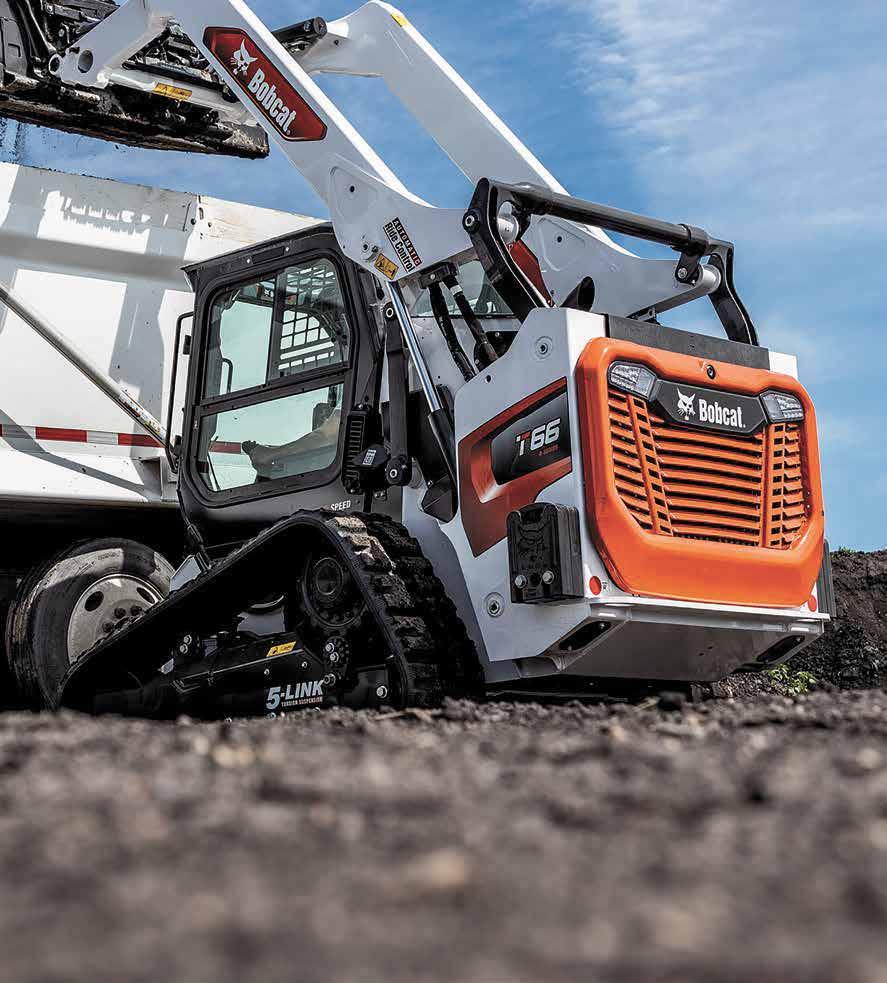
STEVENS POINT, Wis. — In a world full of concern for climate change, cattle are often blamed for the desecration of the environment. According to Colorado State University Professor of Animal Science Temple Grandin, that simply is not the case.

Grandin spoke at the Golden Sands Resource Conservation and Development Council Inc. 2023 Grazing Event Aug. 12 in Stevens Point.
“I have been in this industry for 50 years; everyone is bashing cattle, saying they are wrecking the environment, that they are something to get rid of,” Grandin said. “I got to thinking, ‘Have I worked 50 years on something that should be gotten rid of?’ That’s kind of a sobering thing to think about. Grazing animals can be part of the solution.”
Grandin said 20% of land, globally, is only suitable for grazing.
“In Colorado, there is a 200-mile stretch of plains that can only be grazed; there is not enough water in the ground and not enough water coming from the sky — it’s that simple,” Grandin said. “The same goes for Nebraska, the foothills of Kansas and all these places. If you don’t graze these lands, the woody shrubs will take over. I’ve spent 10 years living in Arizona. I’ve seen juniper take over, 10-foot high thickets of juniper. Let me tell you, you get a re in that, it’s going to be the re to end all res.”
Cattle are blamed for climate change because of methane produced by their digestive processes, Grandin said. Grandin said leaking oil elds are responsible for a comparable amount of methane being released into the atmosphere.
“When the great herds of bison roamed North America, before Europeans came to North America, they were putting out 86% the same amount of methane as cattle put out now,” Grandin said. “Plus, there were a lot of deer and elk; they put it out also.”
Grazing was not always an idea that she championed, Grandin said, but a conference she attended several years ago helped change her mindset.
“People forget (that) a lot of the best cropland in Iowa and Illinois was cre-




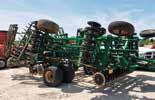
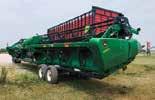
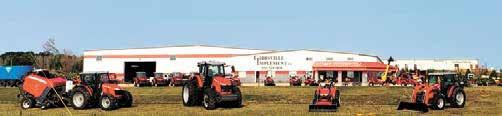
ated by herds of bison out on the plains,” Grandin said. “The grazing animal created some of our best cropland.”
With her interest piqued, Grandin began to compile and analyze information about research and studies that had been focused on rotational and cover-crop grazing.
“Applying these principles, it takes three to ve years to see the soil health benets of grazing,” Grandin said. “It improves the biodiversity. It improves the land if you use the animals correctly. I am a big fan of cover-crop grazing. Killing cover crops with Roundup is not the thing to do. We need to be getting the crops and the livestock back together again. There started to be some interest in that when the price of articial fertilizer went up.”
Grazing is not without its challenges, Grandin said, from fencing to processing and to the type of animals selected.
“A lot of the cattle genetics we have now were bred to fatten on grain,” Grandin said. “The more old-fashioned genetics were bred to fatten on grass. The other thing I am concerned about is that we are breeding so much for meat that the animals have problems. Leg conformation is horrible. We are repeating the same mistakes, breeding for rapid gain, gigantic loin and big back fat.”
Grandin expressed similar concerns with dairy cattle breeding.
“(Poor leg conformation) is starting to show up in dairy cattle, and they say we have to build a better heifer barn, (but) I say, don’t breed that kind of feet,” Grandin said. “This is a problem that creeps up slowly, what I call bad becoming normal.”
The tendency for the industry to chase extremes concerns Grandin, and she advises a more moderate approach.
“We need to be looking at what is optimal, not maximum,” Grandin said.



Grandin referenced a recent article she read about a study being conducted at the University of Minnesota.

“They have a herd of 1960s dairy genetics, and guess what — they don’t get mastitis as easily,” Grandin said. “This is where this trade-off is. Looking at genetic selection, it is truly a trade-off if you breed for a single trait. These problems creep up slowly, and people don’t see it.”
Grandin said that the temperament of animals factors into grazing success. She explained there are seven basic emotional systems in animals: fear, aggression, separation stress, seek-explore, sex drive, mother-young nurturing and play.
As cattle have been selected for temperament, some of these emotional systems have been altered from their natural state
Birds just love this barn. The webs in these trusses are easy nest areas for birds. They also restrict air flow which leads to poor ventilation and moisture buildup in the building.
The arched rafters create a more open barn allowing better ventilation. Also since there are no open webs in the trusses, there are no places for birds to nest.
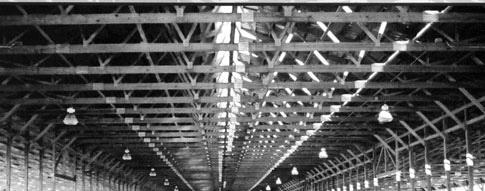
STAR
Dr. Temple Grandin, a professor of animal science at Colorado State University, speaks at the Golden Sands Resource Conserva on and Development Council Inc. Grazing Event Aug. 12 in Stevens Point, Wisconsin. Grandin said that grazing ruminants is benecial to the environment.
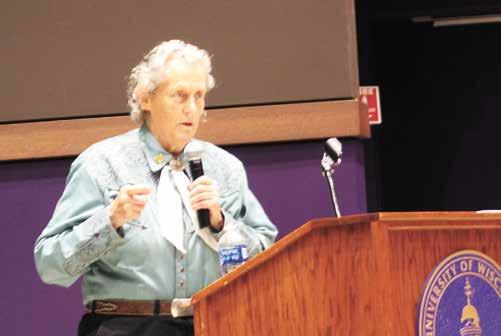
and make the animals more docile and less likely to thrive in a grazing system.
What does Grandin consider an optimal system?


“When you are doing good for the land and making a living off of it, that is optimal,” Grandin said. “Optimal is when everything is working together; when we go for the maximum, that is when we get into trouble.”
While Grandin sees grazing as play-
ing a large role in the future of livestock husbandry, she said it may be slow to take root due to many producers having a lack of exposure to the system.
“People cannot get interested in the things they do not know about,” Grandin said. “We need to start exposing our students to different ideas, different systems, different ways to do things, in order to continue to make improvements on the way we do things.”
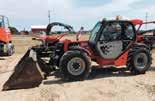
www.extension.umn.edu/dairy


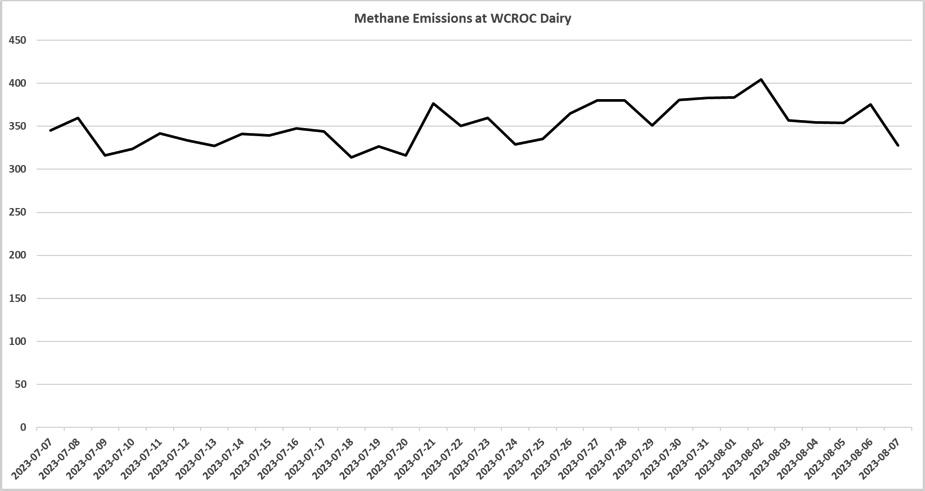


Ruminant livestock are a source of methane. Enteric fermentation is part of the normal digestive process in ruminants. Decreasing the emissions of enteric methane from dairy cattle is strategic to reduce the carbon footprint of dairy production systems.

The U.S. dairy industry has a goal of achieving greenhouse gas neutrality as part of the U.S. Dairy’s 2050 Environmental Stewardship Goals. Dairy farmers have been reducing the environmental impact of dairy farming by managing their land, air and water resources, but continued efforts will only further improve the dairy industry’s role in sustainable agriculture. Much of the previous work on reducing methane emissions from dairy cows has focused on nutritional strategies, but other factors, such as animal genetics, are likely to play a role. Currently, there is minimal work being done to study the impact of genetics on methane emissions.
sota, and the St. Paul, Minnesota, campus dairy using the GreenFeed methane measuring system from C-Lock Inc. based in Rapid City, South Dakota.
By Brad Heins University of Minnesota
This project will evaluate Holstein and crossbred dairy cattle on the WCROC and St. Paul campus dairies and on commercial Minnesota dairy farms for methane emissions from various production systems. The project will analyze novel nutritional strategies to reduce enteric methane emissions of conventional and grazing dairy cattle. Furthermore, the project will understand nutritional and non-nutritional factors that increase efciency of energy utilization of dairy cows. We will also evaluate feeding strategies and practices in the eld that will help to reduce the release of, and help sequester, greenhouse gases.
to conduct research in challenging areas of nutrition and dairy cattle genetics. The system will monitor an animal’s breath components to estimate the gases emitted by animals on a daily basis. The system is a portable, self-contained system designed to measure emissions from calves, heifers or cows.
We began utilizing the system during mid-July at the dairy in Morris. The gure has early results of methane emissions from our cows as we trained them
to the system. The results are variable depending on the nutrition, genetics and time of day cows eat or visit the GreenFeed. Overall, our cows average around 350 grams of methane emitted per day. This study is the rst step to lower emissions on Minnesota farms and to develop resilient dairy farms. Results will be used to understand how genetic selection has improved sustainability of dairy cows and help improve our estimates of the energy requirements of dairy cows.
Recently, we received a grant from the Minnesota Rapid Agricultural Response Fund, created by the Minnesota Legislature to evaluate methane emissions in cattle at the University of Minnesota. Our objectives are to understand the effect of dairy breeding strategies on enteric emissions in dairy production systems. Baseline emissions will be collected on the West Central Research and Outreach Center dairy in Morris, Minne-
The WCROC dairy in Morris milks between 200 and 275 cows twice daily. The St. Paul campus dairy milks 90 cows twice daily with two Holstein cow genotypes. These University of Minnesota research dairies provide an ideal testing opportunity to evaluate and demonstrate the effect of reducing greenhouse gas emissions. We have acquired two portable systems that will be used to evaluate methane emissions for dairy cattle. The systems will allow personnel at the University of Minnesota
Dana Adams, adam1744@umn.edu
320-204-2968
Joe Armstrong armst225@umn.edu

612.624.3610

Luciano Caixeta lcaixeta@umn.edu
612-625-3130
Gerard Cramer gcramer@umn.edu

612-625-8184
Marcia Endres miendres@umn.edu
612-624-5391
Joleen Hadrich jhadrich@umn.edu
612-626-5620
Les Hansen hanse009@umn.edu
612-624-2277
Brad Heins hein0106@umn.edu
320-589-1711
Nathan Hulinsky huli0013@umn.edu
320-203-6104




Karen Johnson ande9495@umn.edu
320-484-4334
Emily Krekelberg krek0033@umn.edu
507-280-2863
Claire LaCanne lacanne@umn.edu
507-332-6109
Brenda Miller nels4220@umn.edu
320-732-4435
Erin Royster royster@umn.edu
Isaac Salfer ijsalfer@umn.edu
320-296-1357




Jim Salfer salfe001@umn.edu
320-203-6093

Mike Schutz mschutz@umn.edu
612-624-1205
Melissa Wilson mlw@umn.edu
612-625-4276
Isaac Haagen hagge041@umn.edu
612-624-7455


130-370 cu. ft. capacity


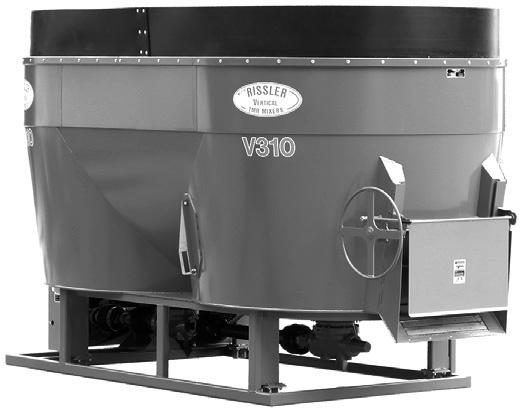

Two largest models will process whole round bales
Twin augers and nearly vertical sidewalls eliminate dead spots




All Stainless Steel mixing chamber for extremely long life
Input power options include electric motor or 540 PTO




MADISON, Wis. — The Dairy Business Innovation Alliance, a partnership between the Wisconsin Cheese Makers Association and the Center for Dairy Research, began accepting applications Aug. 21 for two upcoming grant opportunities: the Dairy Business Builder Grant Program and the Dairy Industry Impact Grant Program.
“Grant dollars provide farmers and processors with the boost they need to grow and diversify their operations, creating a stronger dairy industry and a stronger food supply chain,” said John Umhoefer, WCMA executive director. “We’ve been thrilled by the business success of past DBIA participants, and we’re excited to see what innovation new grant awardees will spur with their projects.”
The Dairy Business Builder Grant Program aims to encourage small- to medium-sized dairy farmers, entrepreneurs and processors in the Midwest to pursue innovative projects such as dairy farm diversication, on-farm processing, value-added product creation and efforts to market dairy products for export. Reimbursement grants of up to $100,000 each will be awarded following a competitive review process.

The Dairy Industry Impact Grant Program will welcome applications in targeted topic areas that have the potential to positively impact the dairy industry. In the upcoming grant cycle, applications will be accepted for projects related to new or expanded dairy export endeavors. Just as with its companion program, the Dairy Industry Impact Grant Program offers reimbursable grants of up to $100,000 each, to
be awarded following a competitive review of all applications.





“It’s a difcult time in the dairy industry at the moment, and this initiative directly supports farmers and processors to create new products and reach new markets,” said John Lucey, CDR director. “That’s crucial as we try to build a more resilient dairy industry.”
Applicants may apply for both grants if they have two separate projects related to DBIA goals. Companies are eligible to receive awards from both offerings in the same grant cycle. Online application forms will be posted to www.cdr.wisc.edu/dbia. The deadline for submissions is 5 p.m. Oct. 18. Applicants will be notied of results in early December.
Anyone interested in either grant program is encouraged to attend one of the upcoming free webinars. These webinars will review the application components, FAQs and our advice for a successful application.
— Dairy Industry Impact Grant FAQ Webinar 11 a.m. Aug. 29. Registration: https://www.cdr.wisc.edu/ grant-webinar-fall-2023-industry-impact.
The DBIA is supported by the U.S. Department of Agriculture. Including the awards listed above, since its inception as part of the 2018 farm bill, the DBIA has administered over $9.4 million in grants to 103 dairy businesses in Illinois, Iowa, Indiana, Kansas, Michigan, Minnesota, Missouri, Nebraska, Ohio, South Dakota and Wisconsin. The program also offers technical assistance and education to dairy farmers and processors in the region.



Hardi Navigator 3500, 2013 60’ Boom, Foam, 463 Pump, 5500 Rate Controler.................................... $21,500
CIH 5100 Grain Drill 12’ w/6” Spacing, no small seeds. ... $5,500
Great Plains YP1225-24 Twin Row 30” Planter, Finger Pick-Up. 400 Gal LF ............................................ $69,000

‘22 MF VW12-30 planter, 12 row, 30” .......................... Coming In White 5100 4R30” Planter, Dry Fert., Insecticide ...............$4,500
GRAIN CARTS & WAGONS
Parker CHC32’ Head Hauler, tandem axle brakes, lights ... $7,500 Horst 30’ Header Cart w/225/75R15 Tires ................... Coming In
H&S 7+4 Forage Box Twin Auger, w/ Meyer 1800 tandem Gear, 14L-16.1 ..................................................... $9,200
H&S 7+4 FBTA18 Forage Box, Twin Auger, 2416 Westendorf Gear ................................................... $10,300
JD 12-ton tand. running gear w/1600 gal. cone tank & inductor .......................................................................... $6,000
MANURE SPREADERS New Idea 3632..................................................................... $5,700 ‘17 H&S 3131 box spreader, top beater, 2 spd ............... $16,500 Meyers M390 box spreader, top beater, hyd drive apron $18,500 ‘17 H&S 3143, Dual Beater, Hyd. Drive ........................... $24,900 MISCELLANEOUS ‘18 MF 2326 60” Mid-Mount
“There was no time,” Molden said. “Basically, as soon as we won it, we had a meeting with the parents to explain what was about to happen. And then from there, they put you on a bus.”
Upon arriving at Little League headquarters, the team has navigated once-in-a-lifetime experiences, with media requests, events and opportunities tailored to the 20 national and international teams in attendance. A parade was held for all the teams through the streets of Williamsport. Molden said thousands of spectators were in attendance.
“It’s pretty amazing what they do for these kids,” Molden said. “They treat them like rock stars.”
Fargo 12U All-Stars, referred to as Midwest in the world series, drew a bye for the opening round Aug. 16 and fell to Southwest 6-2 Aug. 18 at Howard J. Lamade Stadium.
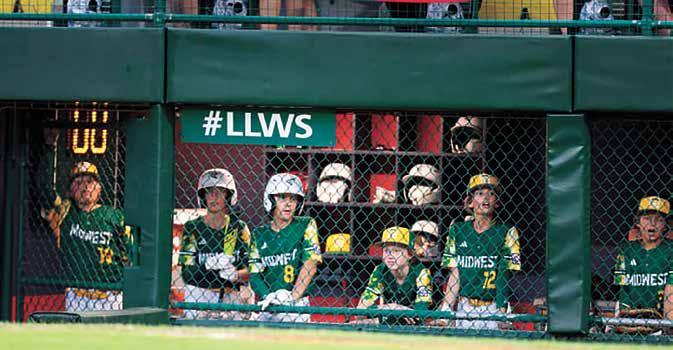
The double-elimination tournament bracket set up a Midwest-Mountain game Aug. 20. Ultimately, Midwest exited the world series when the game ended 7-1.
“When it became clear we wouldn’t win, I was still just so proud of them and all that they accomplished,” Molden said. “Nobody will ever be able to take away those accomplishments from them. I am sad that we are done with this group, but I hope many of them continue to play together, because this is a special group of players.”
Molden grew up on a dairy farm near Appleton, Minnesota, and, from a young age, learned and excelled at the sport of baseball. Molden traded a player’s jersey for a coaching spot in the dugout of an American Legion team while he was still attending Ridgewater College in Willmar, Minnesota.
When Molden moved to Fargo, North Dakota, and his oldest son began with Fargo Youth Baseball, Molden once again assumed a coaching role.
With so many memories wrapped in a baseball glove, Molden was quick to admit this latest experience will forever be at the forefront.
“The moment it hit me was when we came up from underneath Lamade Stadium onto the ineld and you walk up the steps and you see it,” Molden said. “If you’re a baseball fan, you’ve watched the games, and now you get to see rsthand. You’re right on the eld where all these games have been played all these
years. It was pretty special.”
The signicance of this milestone may be muddled by the excitement for the 12 players, but this time will be etched in their memories for years to come. From Molden’s perspective as a father and a coach, he is proud of not only his son but the 11 young men on the team.
“To be able to be there with Jackson is incredible,” Molden said. “I know how hard he works at it and how much he wanted this. But you know, I’ve spent so much time with all these boys, you almost feel like you have 12 sons out there. It’s really fun to be able to be a part of that.”
While Molden has been occupied with all things baseball, the academic year at NDSU has begun. Molden said he is grateful for his assistant herdsman, Bob Brown.
“He’s great with the students, and he works his tail off,” Molden said. “He loves the cows, and luckily, Bob is a sports fan too and knows how important family is.”
Molden said he sees similarities in the values instilled on a dairy farm and those learned on the diamond.
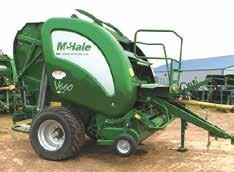
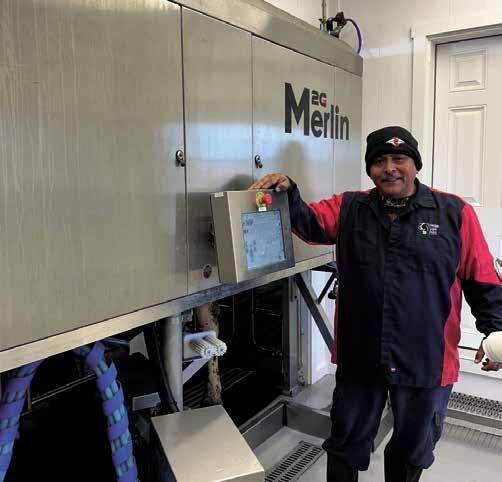
“As anyone who has dairy farmed knows, you have to work hard, and you are going to get out of it what you put into it,” Molden said. “These kids have bought into that mentality. Dairy farmers will do anything for their cattle and for their family as they’re trying to handle the day-to-day stuff on a dairy farm. These kids work super hard and play hard for each other, and they know that they have to put in a lot of work, and they do that. They’ve been rewarded with success because they work so hard.”

How many years have you been dairy farming? I have been out in the barn since I was basically born and knew all the cows by name by age 4. I have ofcially been farming here full time for 21 years, since I graduated high school in 2002.
Tell us about your farm and how it has evolved over the years. My brother and I are the fth generation in the Goers family to farm here. What started as 40 acres and a few cows has grown over the years to what it is today. Our parents started milking 24 cows in stanchions in 1967 when they married and gradually grew the herd from within. The herd stayed around 50 cows for many years after some remodeling in the 1970s, and then in 1999 we began switching cows and grew the herd some more. In 2004 we built a much-needed heifer freestall facility, and from there the herd grew more. In 2010 we were milking 120 cows and switching them from an old freestall facility into the tie stalls to be milked. Finally, in 2012 we made the big decision to build our freestall barn, and a parlor soon followed, as well as adding on to the freestall barn a few years later for dry cows, maternity pens and post-fresh cows. We also added a pit for manure storage and remodeled the original tiestall barn for calf pens. We crop around 550 acres of alfalfa, corn and oats to make feed for the herd, raise Holstein and beef-cross steers as well as our heifer replacements. We also carry on the family tradition of making maple syrup every spring. Registered Holsteins and genetics are a huge interest of mine, and even though I don’t do any showing or much marketing, I love to breed cattle and build cow families, both homebred and what I have invested in. I have sold a good number of bulls over the years and really enjoy hearing the success others have had with my genetics in their herds. Tell us about your family. Family is important here, and every day you’ll nd three generations working together. We don’t have any hired help but prefer to work together as a family and get things done. My parents, David and Marilyn, are very active yet and have been married 55 years. Mom keeps us all well fed and does bookwork and also feeds calves every morning and meticulously
mows her lawns and tends to her owers. Dad does a lot of the scraping in the barns daily, runs errands and heads up all the eldwork. My brother, Jeff, and his wife, Tami, and three children live across the road from the farm. Jeff does all the feeding and the bulk of the eldwork with dad. Tami works full time in the Shawano County 4-H department. Their three children — Katie, Abby and Jack — all help a lot on the farm with milking, feeding calves, scraping and bedding pens, weeding and many other jobs. They shine a bright future on the farm. My sister, Missy, is a local ag teacher, and her two kids also live close to the farm and often come to help if we need them. Another sister, Tammy, and her family live in Oconto County.
What motivates you to keep dairy farming? Not just the family tradition, which I’m very proud of, but seeing so many barns now empty and dark motivates me every day. It is so sad to see the small farms in our area that I watched bustle with activity as I grew up now stand idle and quiet. I am also proud of the genetics I have continually improved on, adding to what my dad already had. About 15 years ago, I went through and registered our cows and started classifying as well. I’ve also bought a few registered calves to build off of, and it is so rewarding to see those families grow. Every year it is rewarding to hit new milestones in production and classication scores.
What has been the highlight of your dairying career? The year 2019 was denitely a big year for me. In April, I was awarded the Outstanding Young Farmer award for Shawano County. This was a big honor for me because many people I look up to made me feel very deserving to receive it, including many past winners. Those young farmers did great things with their farms, and I hope to continue that trend as well. A few months after that, we hosted over 3,000
people for the Shawano County Brunch on the Farm. In our 150th year of farming here, it was so rewarding to have the farm looking its absolute best ever and spend the day educating so many people about our farm and the dairy industry. What do you love about dairy farming? It is all about the cows for me. I have loved cows since I was able to get to the barn. I started learning about mating cows at a young age and ran with it. By high school, I was doing all the mating, and shortly after, I started doing all the A.I. work. I have built up our cow families and also made unique purchases to incorporate my favorite cow families into our herd. Blackrose, Redrose, Paradise and Kandy are all represented here as well as good, solid cow families I have kept going from neighbors who have retired from farming. I also enjoy thinking outside the box and using a wide variety of older sires as well as my own bulls. Waiting nine months to see the end result of a mating is (usually) a thrill but can be a disappointment too. Like with anything in this industry, nothing is guaranteed.
What piece of equipment or technology do you wish you had incorporated earlier on your dairy? Probably a total mixed ration mixer. We started using that in 2004, and it was a great investment and time saver.
What has been the biggest obstacle you have faced in your dairying career and how did you overcome it? Being a young farmer in today’s world is not easy. Right after high school, when pretty much everyone I knew was moving on to bigger and better things in other cities, I was here. A few years after high school, I collaborated with Tom Anderson, our University of Wisconsin Extension agent at the time. He helped get me the resources I needed to establish a young farmers group. This was before social media and even texting, so it was a big project. I got a group of us together, and we learned new things, took tours of area farms and agribusinesses and, most importantly, formed a bond. We nally connected with others who understood what we did and wanted to do. After many years and due to our growing farms, families and time
constraints, we changed our format, and now only a few of us get together at Christmas to socialize but still enjoy our time together and relive the good old days. It was a special time in our lives to make the connections we did and not feel so alone. I still talk to many of those people almost daily and consider them some of my best friends.
What has been the best decision you have made on your farm? Building our freestall barn was a game changer for us. We tried the best we could in our old barn, but it seemed cows were always limited on comfort and feed availability. Getting them into a sand-bedded freestall barn was the best thing we could do for them. Production increased, and you could see how content the cows were immediately. It’s very common to see most of the herd lying down when walking through the barn here.
Who has been an inspiration to you during your dairying career? Besides my family, who I am thankful for every day for all their hard work to make this farm what it is today, I have to mention a few close friends in the neighborhood. David Waegli got me started in the registered Holstein business when he sold his herd. My rst calves came from him. He has always admired my progress and offered me encouragement. Dale and Becky Voelz also encouraged my registered Holstein pursuits and always made time when I would visit them to discuss bulls. Some of their cattle now have joined our herd as well. Both of them showed me you can breed a good herd of homebred cows even if you don’t make huge investments into the big-time genetic pool. Close friends Allan and Deb Hohensee and Jake Roth also inspire me because they have always been there when I need someone to share the good and bad times in farming, and they have shown me, just as my own family, that many times you need to make do with what you have, not just buy the biggest and newest thing out there. Last but not least is my godmother, Kathie Raasch. I grew up watching her work mostly alone with her small herd of Jerseys down the road. She taught me a lot about pedigrees, hard work, determination and the love of cows, which I have to this day.
The Dairy Experience and Agricultural Leadership Program members met this summer for the nal phase of the 18-month leadership opportunity focusing on leadership opportunities within checkoff and offering media training. The presentations and experiences during this phase helped DEAL members learn more about the Midwest Dairy regional governance structure and have an opportunity to practice their public speaking skills.
On the rst day, Charles Krause, chair of Midwest Dairy, and Molly Pelzer, CEO of Midwest Dairy, welcomed the DEAL members, and the group participated in the Midwest Dairy corporate board meeting.

Because they attended division board meetings last summer, we felt it would be benecial to give them an opportunity to learn more about our corporate board this summer. Following the board meeting, we heard from Abby Kornegay, issues and engagement manager with the Animal Ag Alliance, who discussed animal rights activists, tactics they use to promote their antianimal agriculture agenda, and how farmers can build trust in their community and with consumers. At the end of the day, the DEAL members had the opportunity to network with corporate board members at a supper.
By Jenna Finch Midwest Dairy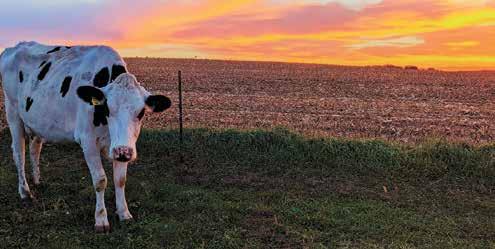
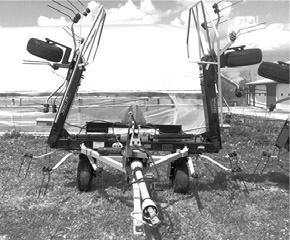
On day two, DEAL members participated in media training facilitated by Midwest Dairy’s corporate communications partner, Padilla. Padilla provided tips, tricks and best practices for handling media interviews. The DEAL members then got to practice these new skills through mock newspaper and TV interviews. One farmer said, “I really enjoyed the media training and learning some of the tips for better presentations that Padilla put forward.” The group also participated in a farm tour at Dakota Line Dairy and partook in axe throwing during the evening events.
On the nal day, DEAL members heard about the power of relationships from Aaron Putze, chief ofcer of strategy and brand management for the Iowa Soybean Association. His presentation left the group feeling motivated and inspired. DEAL members Paige Roberts and Kevin Borst also shared more about their families, farms, hobbies and interests. The meeting concluded with a group discussion about the program, and post-survey results show positive feedback from the farmers, with one farmer commenting, “DEAL has given a broader perspective for the ways that checkoff dollars are being used.” Another farmer said, “I really enjoyed not only meeting other young dairy farmers across the Midwest and becoming friends with them but also meeting so many strong leaders within agriculture. It was awesome to have the opportunity to meet and talk with the speakers we had at each phase.”
I want to extend a huge thank you to the graduates from DEAL Class 2. Your willingness to learn and passion for the dairy industry is contagious, and I am incredibly eager to see what these industry leaders and advocates will achieve. We appreciate your time and commitment to the program.
Congratulations to these Class 2 DEAL members: Courtney Lintker and Ray Hildebrandt, of Illinois; James Goldsmith, Dan Venteicher and Nicole Engelken, of Iowa; Paige Roberts, Kevin Borst, Lindsey Borst, Elle Tibor and Natalie Barka, of Minnesota; Stacy Rethman, of Kansas; Jessi Sayers, of Nebraska; and Cole Hoyer, of South Dakota.




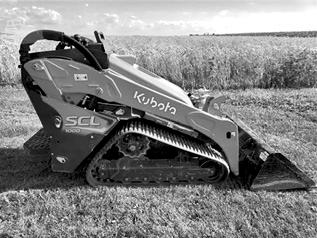







The application for DEAL Class 3 will open this fall. If you are interested in our program or would like to suggest this opportunity to young dairy leaders you know, visit MidwestDairy.com/DEAL.

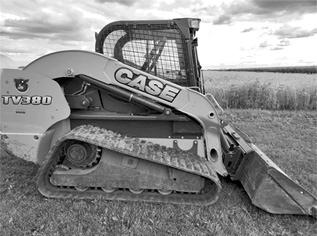

I thought to myself, “We are done hosting special events. Why do we do this to ourselves?”
The stress level before an event can make all of us say things we don’t really mean. My family has done events before and knows the work that is required. I can clearly remember the panic while hoping we get all of the jobs completed a day or two before. Somehow there are a few unnecessary tasks that don’t get nished. In reality, they didn’t need to be done; it was only I who noticed those silly things.
It was easy to say back in January, “Yes, we would be so honored to host the Wisconsin Farm to Table.”
I looked over the website.
I read the mission statement and thought, “This is fantastic. These women in the dairy industry are doing something so grand.”

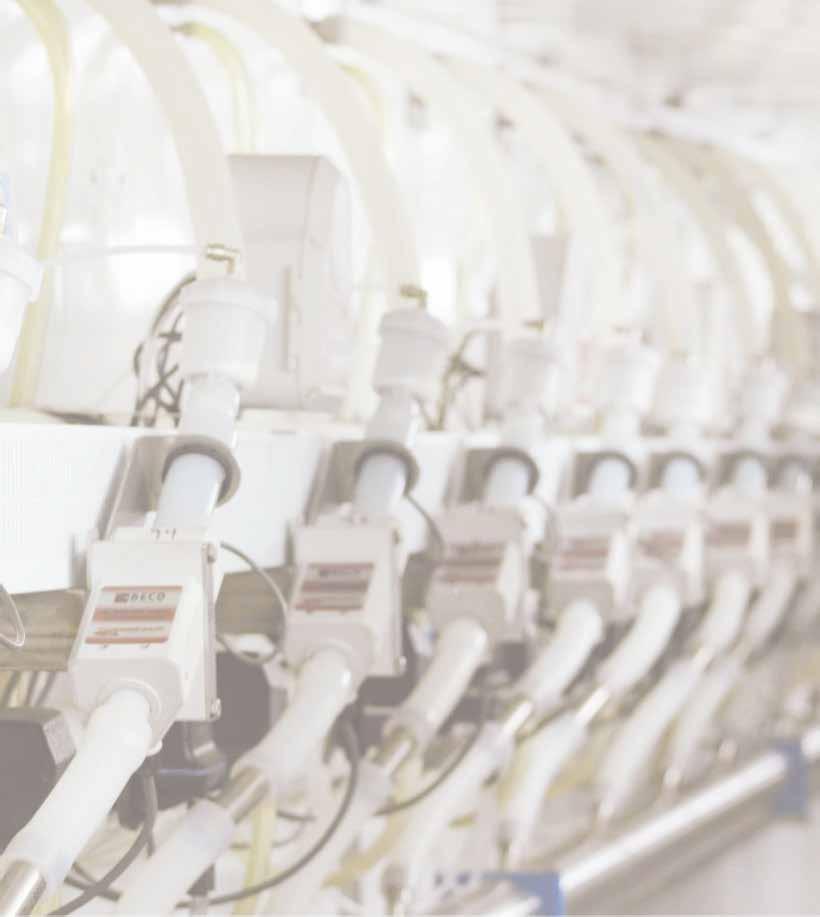
I could not say no.
They are a committee driven to showcase Wisconsin’s diversity in agriculture through an on-farm culinary experience for 100 people.
This time the event would take place under a tent in our hayeld.


For this to be pulled together, the gals on the committee, who all work full-time jobs, reached out through emails and phone calls to line up all the details. From the beginning, they said, “You won’t have much to do; we want you to relax and enjoy the evening surrounded by others that support what you do.” Many of the past participants follow the event from farm to farm.
My family provided the committee with a list of local farmers who pride themselves in growing the best beef, lamb, vegetables and fruit. Just down the road from us is Sprouting Acres, a small, certied organic produce and pizza farm. They supplied the herbs and some of the vegetables. The lamb was from a dear friend, Cody Hiemke, who raises Shropshire sheep. The beef, fruits and vegetables were also from family friends who have worked tirelessly to create Jelli’s Market.
The list of meats, vegetables and fruits was shared with chef Chanse Schomber to create a menu of ve courses that were so spectacular that it would make the whole crowd enjoy every bite. He has many years of experience and could provide a course that the farmers would also appreciate.
Dancing Goat Distillery provided a variety of spirits to be enjoyed in mixed drinks, and Cambridge Winery supplied many delicious red and white wines that were created from locally grown grapes. Lena Brewing Company, known for brewing their own crafted recipes, participated, inspiring everyone to taste what their avor is about. They are located in the cornelds of Lena, Illinois.
Lastly, we gave the committee a list of companies we do business with so that they could reach out to get sponsorship for the occasion. This event needed to have all the details of a top-notch, classy feel from the moment guests walked on the farm to see the white tent, tables with linens, silverware and wine glasses. It would require others to contribute to the message and the mission about the farmers behind the ingredients, showing how they are experts in the elds and pastures. The participating businesses are ones we partner with to help us farm better and create the best lives for our cows and the best products their milk goes into.
The press release went out, and tickets for the event began to be sold. Phone calls came in for interviews, asking about the details of the evening and the meal. I didn’t have a clue what Schomber was going to come up with, but I was sure to mention it would be a night to remember.
As the last week of the event approached, we were blessed with a few days of steady rain. We needed to cut the hay where the tent would be set up, needed to pull weeds and needed to make sure we had all the volunteers lined up to help. I reached out to local FFA chapters to get more hands and also asked past employees and friends.
Then, time just zoomed by. It was Friday morning and I was feeding calves, thinking about all that needed to be done yet. I wanted to add nice details around the farm, pick up and put away things that caught my eye, and help where needed.
My daughter Anna and I are always the last ones to head into the house to get showered and dressed, and after so many events, it should be expected. We laughed as we drove back to town a second time to get more ice after we had just picked up water, milk and ice.






Not long after getting dressed, I was told that a cow was calving.
That is how this always seems to go. I went into the



















bedding pack to check on Lucille and noticed the feet were big and upside down. I grabbed a sleeve to check her and conrmed the calf was backward. I told Phil and Brayden, my helpers, to get the cords and calf puller. The feet were already dry, and I didn’t want a dead calf to ruin this event, so we all worked together and got the huge heifer out. Lucille began to lick it off.
While this was taking place, the wagon was loading for the tour I was going to be giving. I cleaned up my arms, scraped the manure off of my shoes and went out to greet the wagonful of people wanting to know more about our farm. Duane was getting on the tractor, and he said with a big smile, “She just pulled a calf.”
As I hopped up on the steps on the back of the wagon, I looked down at my dress to see a few specks of blood and manure. Everyone on the wagon laughed with
me. It truly showed the life of a farmer.
I was honored to share this moment with others at the dinner and also share the variety of other farmers’ meat, fruit, vegetables and herbs. I felt proud to give toasts with local wine, beer and spirits to cheer on the joyous evening at our farm.
Thanks to all of the ladies on the Wisconsin Farm to Table committee. Also, a special thanks to Ashley Hagenow, the 76th Alice in Dairyland, who served as emcee. The proceeds from the event went to local FFA chapters.

Tina Hinchley, her husband Duane and daughter Anna milk 240 registered Holsteins with robots. They also farm 2,300 acres of crops near Cambridge, Wisconsin. The Hinchleys have been hosting farm tours for over 25 years.
On a farm on a summer night, One cannot help but feel everything is all right The sun takes a break and goes to sleep — Nighttime creatures begin to creep
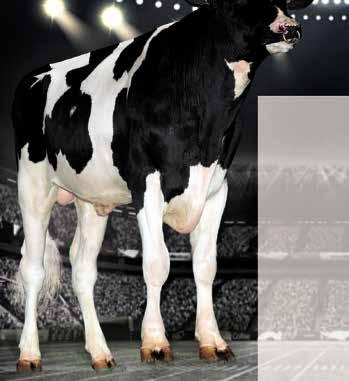
Diligent farm kids seek out many a raccoon Using ashlight or glow from the moon Those pesky critters are after the hens Planning a potluck for all of their friends
There are reies to watch and snatch Nature’s eeting lights, a trick to catch Put them in a jar for a little while Release them, let them y another mile

“Charlotte” the spider has been spied Her web a work of art — so big and wide Round and round, spin and tack Possessing creative skills that many lack


From the coop comes chickens’ sleepy sound Huddled on the roost, all feathers down They awake with a start if a light gets ipped Scolding begins, they are not tight-lipped
Four fuzzy kittens sneak out for a bite Bellies to the ground, nice and tight They wish for a rogue mouse out on a walk Dark hours are easier to stalk
Sheep are silent (unless they hear me)

Snuggled up beside their willow tree
Mothers and lambs, all side by side
Piles of black and white, rest outside

The bunnies settle from hopping about Halting their ongoing exercise route
They huddle together in their upper tier

Safe from harm, they have no creature fear

Winged night critters swoop here and there
Gorging on bugs in the cool, dark air

Bats come out, ying silent as can be While birds nestle tight in the nearby tree
By Jacqui DavisonCoyote howls are heard from the valley near Could they be in search of a lonely deer? Shivers run up and down my spine — Even the dogs perk up and utter a whine
Each cricket has tuned up its instrument Chirps, trills — a chorus of amazement It is though they tell us fall is not far away Much to our summer-loving dismay

Headed to the house after doing each chore I breathe a deep breath and relax to my core Is there anywhere else as lovely to be?
Once again, I am grateful I get to be me.
Jacqui and her family milk 800 cows and farm 1,200 acres of crops in the northeastern corner of Vernon County, Wisconsin. Her children, Ira, Dane, Henry and Cora, help her on the farm while her husband, Keith, works on a grain farm. If she’s not in the barn, she’s probably in the kitchen, trailing after little ones or sharing her passion of reading with someone. Her life is best described as organized chaos, and if it wasn’t, she’d be bored.







Corn silage harvest is at the doorstep for many dairy farms across the Midwest. The growing season has been nearly ideal for some while others have dealt with drought and, more recently, hail damage. These growing differences, and other management considerations, make it difcult to have one common recommendation for corn silage cutting height. There is a tradeoff between reduced yields and higher quality as more stalk residue is left in the eld.
results showed the neutral detergent




ber concentration ranged only from 48.8% to 50.1%, showing that tissue composition is not exceptionally different at different heights. Their results also showed that NDF digestibility improved by 4.3 percentage units with higher cutting height, which is different but not extreme.


tonnage as a low-cut silage. This can present some challenges agronomically.
Raising the cutting height when harvesting corn silage is sometimes recommended to improve the quality of corn silage. By leaving the lower portion of the stalk in the eld, ber digestibility will intuitively improve as lignication is greater in the lower portion of the stalk. The percentage of starch content of the feed also increases, but this is simply due to less ber being harvested.
By Barry Visser NutritionistAs you think about the quality differences, keep in mind what your total diet composition entails and ask what the additional ber in lowcut silage is worth. For example, if you have plenty of haylage, but its quality is lower than ideal, the benets of higher-cut corn silage might be worth considering.
The bottom couple feet of a corn plant contain not only higher levels of lignin but also higher moisture levels. In addition, the ear represents a larger proportion of the tonnage in higher cuttings, and the grain is drier than stover at harvest time. The PSU summary showed an average of 6% higher DM content with higher-cut corn silage.
In addition to moisture, the lower stalk also contains the highest concentration of plant nitrates. Highcutting corn silage can help reduce

nitrate levels if this is a concern. The dilemma is that the corn that is at highest risk for nitrates is often the drought-stressed, shortest corn where every inch of plant is critical to maximizing yields.



High-chopped corn silage is not for every farm. The term “high-cut” also implies that we need to get to a nite 20-24 inches of cutting height. Moderately increasing cutting height will move the needle on forage quality. Work with your nutritionist to decide what cutting height works for your dairy.
Barry Visser is a nutritionist for Vita Plus.
While these quality differences are real and logical, recent research from Virginia Tech challenges conventional thinking that the differences are extremely signicant. They analyzed tissue samples at the rst internode above the nodal roots (lower height), the third internode above the nodal roots (upper height) and the rst internode above the insertion of the ear of the corn plants. These
Raising the cutting bar height will certainly result in lower yields. Dr. Greg Roth from Penn State University summarized results of 11 peer-reviewed articles that compare yield and nutritional value of regular-cut corn silage averaging 7 inches to high-cut corn silage averaging 19 inches. Corn silage yields averaged 7.4% lower with this higher cutting range. This yield reduction equates to about 0.5 tons of dry matter per acre or approximately 1.4 tons per acre on a wet basis (35% DM).
If high-chop corn silage is being considered, more acres of silage will need to be planted to realize the same
PRWD, 2545 hrs., 1835 CH hrs., #546919 ....... $308,000




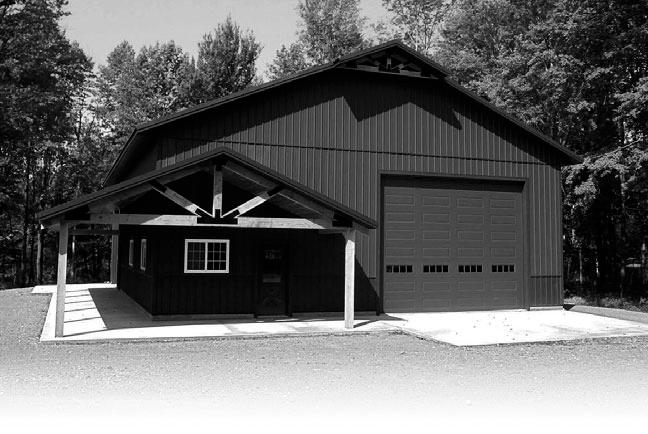
JD 8700 2018, Kernel Processor, PRWD, 2393 hrs., 1849 CH hrs., #552442 ....... $284,000
JD 8800 2017, Kernel Processor, PRWD, 1561 hrs., 862 CH hrs., #524820 ......... $355,000
JD 8800 2016, Kernel Processor, PRWD, 2605 hrs., 1707 CH hrs., #175182 ....... $268,100




JD 8800 2017, Kernel Processor, PRWD, 1728 hrs., 870 CH hrs., #544616 ......... $339,900
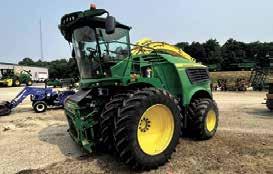
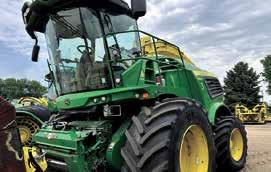
JD 9500 2022, Kernel Processor, PRWD, 606 hrs., 317 CH hrs., #565391 ........... $554,000
JD 9600 2021, Kernel Processor, PRWD, 873 hrs., 538 CH hrs., #565399 ........... $420,000
JD 9600 2020, Kernel Processor, PRWD, 1309 hrs., 775 CH hrs., #565393 ......... $375,000
JD 9600 2019, Kernel Processor, PRWD, 1734 hrs., 1130 CH hrs., #553763 ....... $349,900
JD 9600 2019, Kernel Processor, PRWD, 1272 hrs., 811 CH hrs., #532049 ......... $409,900
JD 9700 2020, Kernel Processor, PRWD, 1167 hrs., 835 CH hrs., #543646 ......... $503,000
JD 9700 2020, Kernel Processor, PRWD, 965 hrs., 500 CH hrs., #552460 ........... $524,900
JD 9800 2020, Kernel Processor, PRWD, 1292 hrs., 833 CH hrs., #536344 ......... $497,000
JD 9800 2021, Kernel Processor, PRWD, 448 hrs., 302 CH hrs., #550106 ........... $518,000
JD 9800 2019, Kernel Processor, PRWD, 899 hrs., 660 CH hrs., #550175 ........... $503,000
JD 9800 2021, Kernel Processor, PRWD, 575 hrs., 369 CH hrs., #552624 ........... $553,000
JD 9800 2020, Kernel Processor, PRWD, 1470 hrs., 942 CH hrs., #554135 ......... $459,900
JD 9900 2022, Kernel Processor, PRWD, 518 hrs., 330 CH hrs., #565395 ........... $595,000
JD 9900 2021, Kernel Processor, PRWD, 612 hrs., 401 CH hrs., #565397 ........... $574,000
JD 9900 2019, Kernel Processor, PRWD, 1224 hrs., 884 CH hrs., #550177 ......... $493,000
JD 9900 2020, Kernel Processor, PRWD, 849 hrs., 661 CH hrs., #553436 ........... $508,000
Fashions come. Fashions go. Then some fashions are recycled back into style without understanding how bad the original idea was.
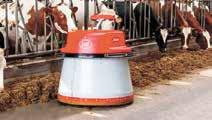
Fairgrounds are a wonderful place to study the different styles people wear. Some people use fashion to proclaim an idea, an identity or even an indifferent attitude. Walking around the state fairgrounds is like a master’s class in anthropology as you witness the people, cultures and fashion styles on display.
Even our county fair offered me a different view of style. This was my rst year of working in the American Dairy Association malt stand with our county princesses and other volunteers. The malt wagon is just outside the 4-H lunch stand building. It marked the end of where our kids could explore independently. Past that point was a very different and sometimes strange world to
someone who hasn’t been off the farm for awhile. Being outside the 4-H end zone was an eye-opening experience.
On the rst day, as I watched people walk between our two worlds, I just shook my head and smiled. I couldn’t believe what some people considered fashionable. It felt like I was sitting ringside to a fashion show runway as people strutted by the malt wagon. Our young ladies cautioned me to wait — the real show would come later. As the temperatures rose and the sun started to set, the clothing would start to shrink. I couldn’t believe they were right. I didn’t realize tube tops and short shorts were a thing again. One of those fashion recycles.
What really made me chuckle was the idea that people will actually walk out of their homes wearing holey jeans. I understand a few holes, but
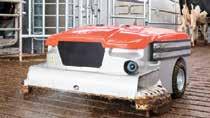
there were so many holes that it left nothing for the imagination as to what’s underneath the remaining denim. I would never wear those jeans in the barn let alone in town. It is just one of those fashion statements I still haven’t deciphered.
We tend to have our own fashion statements here on the farm too. To me, fashion is all about being comfortable in what you’re wearing or in some cases what you’re not wearing. Safety is another factor in what we wear around the farm. We make sure nothing is so baggy or loose that it can catch on moving machinery parts or power take-off shafts. Droopy baggy pants is one fashion statement that didn’t take off around here.
Clothing also tends to be a form of protection. Let’s face it. Those holey jeans would be horrible to wear while stacking bales in the shed. Nothing to protect your thighs from getting scratched up from the sharp ends of stems or dusty leaves slipping between the denim and your skin. I just itch thinking about it.
Clothing also helps to keep the sun’s ultraviolet rays at bay while we work outside, creating the farmer’s three tan lines. Everyone notices the midbicep line on a farmer’s bronzed forearm where the T-shirt sleeve stops. Some will even notice the pale forehead of where the seed cap sits upon his head. However, very few have witnessed the neon white legs. The only colors visible are the bruises from the latest round with a quick footed, stubborn, fresh 2-year-old.
Layering is the only consistent fashion statement on the farm. Trying to balance the layers to the temperatures is like trying to balance a teetertotter with a bunch of trained circus dogs. It is a funny site to watch as the dogs gure out the right combination of big and little dogs to balance the board. As temperatures shift between seasons, so do the number of clothes I nd across the farm as we scramble to nd the comfortable balance between layers and temperatures.
I actually think it is easier to dress for cold weather than for hot. You can always build layer upon layer as the temperatures plummet. You’re limited to the number of layers you can drop as the temperature rises.
I’m sure I would have made some fairgoers laugh and wonder at my fashion gear for a night in a hot, muggy barn while milking cows. My favorite fashion statement is white socks peaking out of the top of my lace up work boots while I’m wearing a pair of the boys’ old mesh football shorts. My hair is all tucked up under a mesh seed hat to keep the heat off of the back of my neck. I’m wearing the most worn-out T-shirt I can nd. You know, the one that has been washed so many times that it is see-through yet has enough fabric to keep the ies and some dirt off of you while allowing the slightest breeze to slip through. Now that is a vision of summer chic on the farm.
As their four children pursue dairy careers off the family farm, Natalie and Mark are starting a new adventure of milking registered Holsteins just because they like good cows on their farm north of Rice, Minnesota.


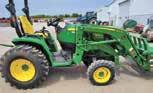
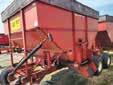
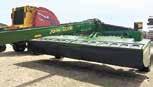
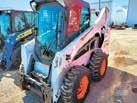
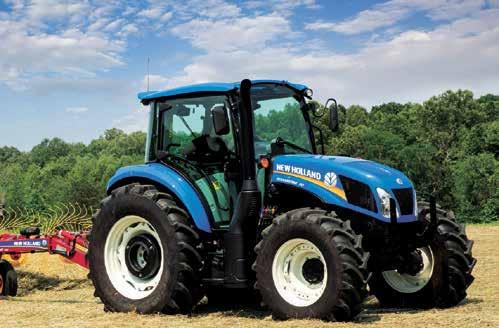
I continue to be amazed by all of the ways the 4-H dairy project positively affects young peoples’ lives.
Megan, a young woman in our club, made her debut showing dairy cattle at our county fair last month. Megan’s dairy story makes my heart swell with pride and brings back many fond memories.
Megan’s story parallels my own. I didn’t start showing until I was in high school. My parents didn’t have any experience with showing, so I relied on an adult leader in our club to help me get started.
As an adult leader now myself, 4-H is about giving back. Helping Megan get started in the dairy project has been one of my most meaningful opportunities to pay it forward.
Unlike me, Megan doesn’t live on a dairy farm with countless calves and heifers to pick from. Megan bought her heifer as a bottle calf, housed her on her family’s small farm, and raised her up to become a beautiful Holstein spring yearling.
By Sadie FrericksI answered Megan’s questions about what gear and supplies she needed to bring along to the fair. We stall by clubs in Stearns County, so, thankfully, she didn’t need to invest in all of the equipment required for showing.

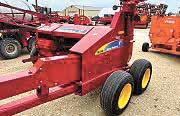
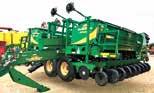
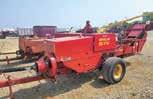
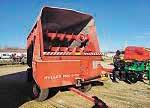
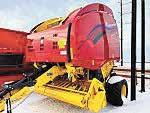

Monika and I also helped Megan clip her heifer and set her topline. Megan’s dad joked that Megan had worked so hard to get her heifer’s anks white — and they were pretty darn white — but when she clipped the hair off, the heifer was super white. “Who knew it was so white underneath,” he said.
By the time Megan’s heifer was ready for the ring, she looked great. But, being a May calf, she was a little smaller than the other heifers in her class and ended up with a red ribbon.
My rst show heifer was a Holstein spring yearling who earned a red ribbon as well. I told Megan that the experience mattered more than the color of the ribbon. Megan’s smile told me she understood.
Later, when the judge was talking about the highlights of the day, he mentioned Megan’s mega-watt smile and how she told him about everything she’d learned this year.

Megan’s future in dairy is as bright as her smile. In addition to 4-H, Megan works on two dairy farms and is involved in FFA. She’s already making plans for showing next year, and I can’t wait to see how those plans unfold.
One of Monika’s dairy dreams will be coming true later this week. Since she was a little girl, Monika has dreamed of showing one of her beloved Jerseys at the state fair. At our county fair, she earned a trip with Sunlight, her aged Jersey cow.
Monika didn’t just earn a trip with Sunlight. They won the whole 4-H show. When both Sunlight and Monika’s 4-year-old Holstein, Galadriel, were named senior champions of their breeds, Glen and I were fairly certain the overall senior champion title would go to Galadriel. We were wrong. Sunlight took the banner and went on to be named rst in state fair lineup — the rst Jersey to win the 4-H show in as long as I’ve been present. Placing rst in state fair lineup was a dream-come-true of its own for Monika. The best description of her joy that day would be overowing.
I’m as happy for Monika as she is. Monika showed Sunlight has a spring calf, spring yearling, 2-year-old, 3-year-old (virtually, during the pandemic), 4-year-old, and now as a 6-year-old. Showing cows year after year is as much about good luck as it is good care and hard work, but it’s so rewarding when it does.
What makes it even more special is that Sunlight is Star’s daughter. Star was the very rst Jersey calf Monika showed when she made her show ring debut 11 years ago. Monika developed a special bond with Star and now has a similar bond with Sunlight. Just like Star did, Sunlight waits to leave her stall until you’ve scratched her poll and neck. She’ll nd you in the pasture for a dose of affection.
I’m excited to see Monika take Sunlight to the state fair. For me, this is the best of 4-H: watching your daughter achieve her dream with a cow who’s been with her for the better half of her 4-H experience.
If you, or a young person you know, are interested in showing dairy cattle in 4-H, send me an email and I would be delighted to connect you with a dairy project leader in your area. You don’t have to live on a farm or own dairy cattle. Minnesota has a great dairy lease program.
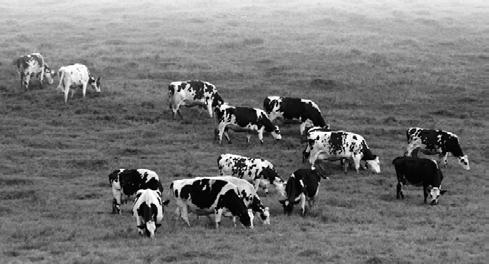



P.S. Thank you to the nice couple who stopped by our cattle at the county fair to ask Monika about Casa Verde. You made her day. And, yes, the air conditioner we added to Casa Verde saved the week.
Sadie and her husband, Glen, milk 100 cows near Melrose, Minnesota. They have three children – Dan, Monika, and Daphne. Sadie also writes a blog at www.dairygoodlife. com. She can be reached at sadiefrericks@gmail.com.