KileyDieballwasnamedbeingwatchingRynda“Thisaccomplished.issosurreal,”said.“IgrewupPrincessKayandinspiredbyher.Shehasalwaysbeenarolemodelofmine.”Rynda,whowasalsoMissCongeniality,joinedbyrunners-upAlyofSibleyCountyandLickfeltofMcLeodCounty.RyndawasascholarshipwinneralongsideLickfeltandBrianaMausofStearnsCounty. up for ourup for our Dairy St r Milk Break
KATE RECHTZIGEL/DAIRY STAR
By Grace Jeurissen grace.j@star-pub.com ST. PAUL, Minn. – A moment many Minnesota dairy princesses dream about became a reality for 19-yearold Rachel Rynda Aug. 24. Between exclamations of excitement and warm embraces from her family and friends, Rynda took in her crowning moment of becoming the 69th Princess Kay of the Milky Way at the Minnesota State Fairgrounds in St.RyndaPaul. is the daughter of Francis and Theresa Rynda, of Montgomery. The Ryndas milk 40 cows, farm 400 acres and nish 130 steers the college student can transition into the role of goodwill ambassador for Minnesota’s dairy farmers knowing her childhood dream has been
Robb Miller stands in a eld of soybean which was planted a er tri cale this spring. Miller and his brother, Luke, were announced as the Winona County Outstanding Conserva onist July 7 at the Winona County Fair in St. Charles. Luke accepted the award on the farm’s behalf. “It’s an honor and surprising,” Miller said. “We are always trying our best to reduce tillage and seed as many acres as possible with cover crops, depending on the year. I am humbled because I know there are so many others that are deserving and further along in the steps than we are.”
Sign
CountyforwomanMontgomerytherstLeSueur
KRISTA KUZMA/DAIRY STAR Rachel Rynda, of Montgomery, Minnesota, represen ng Le Sueur County, is crowned the 69th Princess Kay of the Milky Way in an evening ceremony Aug. 24 at the Minnesota State Fairgrounds in St. Paul, Minnesota. The other two runners up include (from le ) Aly Dieball of Green Isle, Minnesota, represen ng Sibley County and Kiley Lickfelt of Hutchinson, representing McLeod County. Turn to PRINCESS KAY |
By Kate Rechtzigel kate.r@dairystar.com
July 7. Turn to MILLERS | Page 6
Page 7
LEWISTON, Minn.Clear Crest Farm has been implementing conservation practices on their farm ever since John Miller purchased the farm in “When1936. my grandpa bought this farm during the Great Depression, it had been abandoned for two or three years and nobody else wanted it,” Robb Miller said. “He said it was nothing but weeds and gullies, so he hired the soil conservation service to come out and lay out contours.”Miller farms with his brother, Luke, and mother, Pat, near Lewiston. They milk 700 cows and farm 2,000 acres of corn, soybean, alfalfa, triticale and other cover crops mixes.
Conserving soil since 1936
Today, the Millers implement cover crops into their crop rotations, contour hillsides, use minimum till practices and try to not leave the soil bare. “We try to keep the soil covered as much as possible,” Miller said. “This helps keep the top soil in place because it is always the top soil that leaves in an erosion event. That’s your best soil, so if you can keep that in place, the crops get better,
The Millers have used many conservation practices from putting in contours when they rst bought the farm to their father, Jack, switching from the moldboard plow to the chisel plow to reduce tillage. Tillage is also one of the biggest changes the Millers have seen with conservation practices.“The equipment has gotten better,” Miller said. “My dad got rid of the moldboard plow and brought in a chisel plow, then we went to medium-depth chisel plows. And now, we are using vertical tillage equipment which keeps getting better. There is more exibility and more options which can be tailored to what you want to achieve.”
Newsletter
DAIRY ST R August 27, 2022Volume 24, No. 13 “All dairy, all the time”™
The Millers were recognized as this year’s Winona County Outstanding Conservationist
Millers improve farm, achieve outstanding conservationist award
Rynda crowned 69th Princess Kay of the Milky Way
Visittodairystar.comsignup!
each year.Now,


Page 4 • Dairy Star • Saturday, August 27, 2022 FOR MORE INFO - CONTACT ONE OF THESE DEALERS... Advanced Dairy Systems 9 State Rd. 29 • Spring Valley, WI 54767 (715) 772-3201 913 W. Main St. • Mondovi, WI 54755 (715) 926-5777 967 West Ave. N • West Salem, WI 54669 (608) 633-6690 2195 Hwy. 23 • Mora, MN 55051 (715) 772-3201 Anderson Dairy Systems, Inc. 1312 13 1/2 Ave. • Barron, WI 54812 (715) 537-3300 Lang’s Dairy Equipment, Inc. 2337 Millennium Rd. • Decorah, IA 52101 (563) 382-8722 1467 West 5th Street • Winona, MN 55987 (507) 452-5532 Leedstone 222 E Co Rd 173, Melrose, MN 56352 (320) 256-3303 24260 Cty. Rd. 27 • Plainview, MN 55964 (507) 534-3161 Athman Dairy Inc. 238 Main Street North • Pierz, MN 56364 (320) 468-2494 Bob’s Dairy Supply 540 E. County Rd. A • Dorchester, WI 54425 (715) 654-5252 Professional Dairy Systems 1449 Homecrest Ave. • Wadena, MN 56482 (218) 632-5416 Leedstone 1720 Freitag Dr. • Menomonie, WI 54751 (715) 231-8090 Precision Dairy Equipment 24548 IA-13 • Elkader, IA 52043 (563) 245-2560 Redeker Dairy Equipment W12287 Liner Rd. • Brandon, WI 53919 (920) 346-5576 Eastern Iowa Dairy Systems 105 3rd Ave. NW • Epworth, IA 52045 (563) 876-3087 Fuller’s Milker Center, Inc. 423 U.S. 61 • Lancaster, WI 53813 (608) 723-4634 278 W. Court St. • Richland Center, WI 53581 Gorter’s Clay & Dairy Equipment 1400- 7th St. SE • Pipestone, MN 56164 (507) 825-3271 Tri-County Dairy Supply, Inc. 4107 N US HWY 51 • Janesville. WI 53545 608-757-2697 United Dairy Systems 210 N. Industrial Pkwy • West Union, IA 52175 (563) 422-5355 S. S. ONE SHOT LET OUR TEAM DO A COMPLETE WASH ANALYSIS • Reduces equipment wear & replacement costs. • Reduces water, energy and chemical use. • Decreases cleaning time. •Increases production capability. BENEFITSHigh$ Performance Single-Cycle CIP Acid Detergent andCompareSave! • 9 EMOLLIENTS - Ultimate teat conditioning • USE PRE & POST • GREEN COLOR for High-Vis Marking HuntilProtectionMaxthenextmilkingDUALCHLORINEGERMICIDEDIOXIDE THE PREMIER GERMICIDE ON THE MARKET economical and morethaneffectiveiodine! SAVE UP TO $1/GALLON over Iodine! and 90 gallonsand 90 For larger dairies we offer 120,150, 250 or 250 gallon capacity. Call for details! Let us help you raise healthy, robustControlcalves!CenterAssemblyPasteurizer Multiple options ranging from 20-250 gallon capacity to fit any dairy size. 20 DFESGF 0086 Progressive Dairyman US HiPerChil 5 Ad 4 66x6 5 indd 1 1/30/20 5:41 PM (800) 887-4634 • Lancaster, WI (608) 647-4488 • Richland Center, WI fullersmilkercenter.comand 90 gallons ControlPasteurizerAssemblyCenter 60, 40 and Wall Mount Control Center IN STOCK! READY TO INSTALL ON YOUR FARM TODAY! 20, 30, 40, 60 and 90 gallons



Loan volume up for AgriBank Net income remained strong for AgriBank in the second quarter, totaling $365.7 million. That’s up slightly from the same quarter last year. Loan volume for the rst six months of the year totaled $125 billion, up $3 billion from the end of 2021. The St. Paul-based AgriBank had more loans in the agribusiness and real estate mortgage areas. That partially offset declines in production and intermediate-term loans.
Partnering on animal-free dairy products ADM and New Culture have formed a strategic partnership to develop and commercialize what it calls animal-free dairy products. New Culture’s website says, “any cheese is possible and can be made completely animal-free” because of its technology. New Culture describes its process as “cow cheese without the cow.”
Con nued from AG INSIDER | Page 2
Farm rental rates get a boost Similar to land values, rental rates increased during the quarter by an average of 15% from one year ago. That’s according to a report from the Federal Reserve ofce in Kansas City. Non-irrigated farmland values increased about 35% since 2019 while cash rents grew by 25% over the same time period. The report said farm income and credit conditions during the quarter remained strong alongside elevated commodity prices. Looking ahead, the Fed said the outlook for farm income is softer due to a notable increase in production expenses.
IDFA hires chief people ofcer Dr. Mia Mulrennan has been named the chief people ofcer for the International Dairy Foods Association. Mulrennan spent the last 10 years as an organizational psychologist and consultant for Fortune 500 companies, including Sun Country Airlines and the Star Restaurant Group. Trivia challenge President William Howard Taft is the last U.S. president to have a cow. The cow, named Pauline, provided milk for the White House from 19091913. That answers our last trivia question. In the 1960s, a U.S. president spoke at a national conference on milk and nutrition. For this week’s trivia, who was that president? We will have the answer in the next edition of Dairy Star. Don Wick is owner/broadcaster for the Red River Farm Network, based in Grand Forks, North Dakota. Wick has been recognized as the National Farm Broadcaster of the Year and served as president of the National Association of Farm Broadcasting. Don and his wife, Kolleen, have two adult sons, Tony and Sam, and ve grandchildren, Aiden, Piper, Adrienne, Aurora and Sterling.
Dairy Star • Saturday, August 27, 2022 • Page 5 LITTLE ROCK, 320-584-5147MN PIERZ, 320-468-2168MN LASTRUP, 320-468-2543MN BUCKMAN, 320-468-6433MN FOLLOW US ON FACEBOOK! HYDRATION & ENERGY SUPPORT TO COMBAT STRESS Save $2 Per Bag! when you purchase 40 or more bags Ag bags, twine, net wrap, bunker covers and forage inoculant IN STOCK! 8, 9 & 10 ft AG BAGGER RENTALSBURNDOWNDAYThursday,September 8th 10 am - 2 pm Buckman location Bring 3-4 stalks for the moisture check Prevents the breeding of horn flies in the manure of treated cattle. WIND FLYRAIN&®CONTROL TMR Stabilizer will reduce heating and nutrient degradation in TMRs by retarding mold and yeast growth. Minimize reduced feed intake during summer weather by maintaining cooler, fresher feed. with Altosid ALL YOUR FLY CONTROL NEEDS, ADDITIVES, BAITS, SPRAYS & POUR-ONS StabilizerTMR Side-by-Sides JSV-3400 & JSV-6400Waterers Attachments Don’t shocked.be Brant Groen 320-220-1342 Jim Urman 320-339-1154 Every dairy/livestock farm will benefit from our thorough evaluation! TODAY!CALL Serving the 5-State Area Tell theiradvertiserstheyousawadintheDairyStar! Hey! www.midwestlivestock.com ZUMBROTA, 800-233-8937MN RENNER, 605-274-3656SD MENOMONIE, 715-235-5144WI F A N S | G A T E S | S T A L L S | H E A D L O C K S | R U B B E R | C U R T A I N S | M A N U R E S Y S T E M S Celebrating 50 years in business! SEE US FOR ALL YOUR BARN EQUIPMENT NEEDS! demand report. The size of the cow herd also rose for both years. The allmilk price for 2022 was lowered to $25.20 per hundredweight. For 2023, the all-milk price is forecast at $22.50 cwt. With lower product prices, the Class III milk price forecast was also reduced. Container movement picks up The Port of Long Beach set a new record for cargo movement in July. The biggest increase in activity was the movement of empty containers. The ports of Long Beach and Los Angeles had a backlog of 10 ships this past week. That’s the lowest number of ships waiting at the ports in well over a year. Dockworkers and their employers are in the midst of contract negotiations, but the work is continuing.
US farmland values increase USDA’s land values summary shows farmland values increasing by $420 per acre this year. American Farm Bureau Federation economist Danny Munch that’s the largest year-overyear increase since the survey began in 1997. “Combining it with all of these other production cost increases, it’s a barrier to possibilities for farmers moving forward,” Munch said. Many factors contribute to the jump in land prices. “Part of this increase is going to be linked to the rise in commodity prices that have translated to higher farming values in those lands, especially in heavy row crop Heartland states like Iowa and Indiana,” he said. “There’s also competition with federal government program incentives like the Conservation Reserve Program.” Factors also include urban and suburban sprawl.


The award also incentivizes them to advance to where they want to be with soil conservation, Miller said.
“The last couple years we practiced planting green by interseeding rye into corn and soybeans, and it has worked well so far,” Miller said. Triticale has also proven to be a good feed source for their cattle, Miller said.
“They predict what issues we are going to be up against and select the seed or spray technology that helps us achieve a positive outcome on our crops,” Miller said. “Mike, for example, has only been out of college for four or ve years and has a wealth of knowledge we can tap into.”Some of their biggest mentors have been their father and grandfather as well as neighbors such as Everett Rolng, who works for the farm and became familiar with cover crops within the last ve “Weyears.are still learning and picking up different ideas from people,” Miller said. “We see them try something, talk to them about it and then try it on our farm.” Miller also joined a soil health team to learn more about good practices.
Page 6 • Dairy Star • Saturday, August 27, 2022 www.LangeAgSystems.com Specializing in Livestock Equipment and Construction, New and Used Bagging Machines, Silage Bags, Bunker Covers and Grain Storage! Electronic Dairy Board Repair Service Specializing in: WestfaliaSurge, BouMatic, & DeLaval pulsators & Takeoffs, circuit boards, Mueller milk tank circuit boards. Call: (c) www.circuit406-590-7764xer.wixsite.com/boumaticboardrepair Repair vs. ReplaceBlue Hilltop, Inc. Dana Berreau 507-879-3593 / 800-821-7092 Box 116, Lake Wilson, MN 56151 Your Mixer, Spreader, Hay Processor Headquarters We carry: STARWOOD RAFTERS, INC. 715-985-3117 W24141 Starwood Ln. • Independence, WI 54747 Website: www.starwoodrafters.com 888-525-5878 WHICH BARN IS BEST FOR YOUR HERD? Birds just love this barn. The webs in these trusses are easy nest areas for birds. They also restrict air flow which leads to poor ventilation and moisture buildup in the building. The arched rafters create a more open barn allowing better ventilation. Also since there are no open webs in the trusses, there are no places for birds to nest. Starwood Rafters Uses Pole Sheds • Free Stalls Riding Arenas Pavilion MachinerySheltersStorage • Spans up to 72 ft. • Up to 12’ spacing depending on the load you desire • Bird nesting control • Better ventilation & visability • No feed alley post obstruction • Additional ceiling height Starwood Rafters Lam-Ply Truss ANOTHER QUALITY PRODUCT FROM STARWOOD RAFTERS Con nued from MILLERS | Page 1 KATE RECHTZIGEL/DAIRY STAR Robb Miller spreads apart soybeans to reveal tri cale stubble Aug. 16. Miller milks 700 cows and farms 2,000 acres of corn, soybean, alfalfa, tri cale and other cover crop mixes with his brother, Luke, on their farm near Lewiston, Min nesota. the elds are smoother, and it’s easier on equipment.”TheMillers plant triticale as a winter cover after corn and then chop it the next spring and plant no-till or vertical-till soybean after, depending on how wet the ground is. They also plant rye and a barley, oat and eld pea mix after tilling up alfalfa.“Weare just trying to reduce erosion and eliminate gullies and washouts,” Miller said. “Land is too high priced to watch it go down the waterways, and my grandpa and dad worked hard to get this farm to where it is now.”
The Millers have also received advice from their agronomist, seed dealers and Mike Unruh, who owns a cover crop seed sales business.
In turn, these cover crops and reduced tillage practices have worked to reduce soil erosion, eliminated gullies and washouts, and improved crop production.
“Our nutritionist also gured out how to feed it so we don’t have to buy cottonseed or feed straw from Missouri, Arkansas or Nebraska anymore,” Miller said. “This saves on purchases and reduces the amount of weed seeds we are bringing in from out of state.”
“Each year is different, and there are always varying degrees of success,” MillerTosaid.make sure employees and family members are following the conservation practices, the Millers lead by example. “We have to be clear on how we want things done, so communication is key,” Miller said. “We also have to be adaptable depending on the amount of rain. Some things work one year, but they won’t work the next because we get a lot of rain.”One practice the Millers are looking at expanding on is planting green.
Twenty-ve years ago, their parents won the same award. “To us, this award means we are continuing the legacy our parents and grandparents set for us,” Miller said.
“Most people are concerned about conservation so it helps that dairy farmers can be a part of that equation,” Miller said. “The cover crops can also help with our public relations because consumers can drive by and look at the elds in the fall and winter and they will still be green.”Inthe future, they plan on changing their manure storage and equipment so they can implement more cover crops into their crop rotation.
“Our eventual goal is to have everything planted with cover crops,” Miller said. “With our current manure system, however, we are limited on the amount we can have as the window gets too tight, and we need to have elds to spread on in the fall. Once we change that, we can expand our legumes, cover crop mixes and implement different varieties.”
PULASKI WAREHOUSE, INC. Fall Planting Good Selection of Small Farm Seed, Alfalfa, Clover, Grasses, Etc. FERTILIZER WINTERIZER 12-0-18 + FE (Covers 10,000 sq. ft.)...50 Lbs........$23.99 Pelletized Lime 40 Lbs..................$6.49 CRP Pollinator&MixesCALLUSCover Crops & Cover Crop Available!Mixing CERTIFIED & QUALITY ASSURED WINTER WHEAT Sunburst .....................................$19.99 Awnless, short height, excellent test weight Gold Reserve, 50# ......................$19.99 Awnless, medium tall height, excellent test weight and good standability, very good winter hardiness and high yielding Sittin’ Pretty ...............................$21.99 Tip awned, medium height, excellent standability L-920, 50# ...................................$19.99 Awnless, medium height, very good standability, test weight and high yielding Pro 410 Brand, 50# ....................$21.99 Awned, high-yielding, very good winter hardiness, excellent lodging resistance COMMON WINTER WHEAT Kaskaskia, 50# ...........................$18.49 Awned, white chaffed, medium height, very good winter hardiness, high yields and test weights Winter Rye Grain, 50# ................$17.99 Winter Triticale, 50#...................$21.99 A hybrid of winter wheat and winter rye LAWN GRASSES Athletic Lawn Mix, 50 lbs .............$179.95 Sunny Lawn Mix, 50 lbs................$199.95 Shady Lawn Mix, 50 lbs ................$189.95 Perennial Ryegrass, 50 lbs ............$159.95 Creeping Red Fescue, 50 lbs .........$239.95 Kentucky Bluegrass, 50 lbs ...........$199.95 Turf Type Tall Fescue, 50 lbs ..........$139.95 White Dutch Clover, 50 lbs............$209.95 WILDLIFE FOOD PLOT SEED Wildlife Clover Mix, 50 lbs ............$219.95 Brassica Brunch, Mix 3 lbs ..............$15.99 Chicory, 1 lb .....................................$7.95 Widow Maker Brassica, Mix 3 lbs....$15.99 Dwarf Essex Rape, 50 lbs ................$62.95 Turnips-Purple Top, 50 lbs ..............$99.95 Buck Forage Oats, 50 lbs .................$37.95 Buck Buffet Fall Forage Mix, 25 lbs .$16.95 Austrian Winter Peas, 50 lbs ...........$45.95 MILK REPLACER PRODUCT PROTEIN FAT PER 50# BAG 20/20 All Milk Incredi-Blend 20% 20% $83.99 22/20 All Milk Incredi-Blend 22% 20% $87.99 22/20 MEDICATED 22% 20% $88.99 All Milk Incredi-Blend We take care of calves, naturally! Sittin’ LAWNGRASSES PRODUC T 20/20 All 22/20 All ME In We ca We carry a full line of SUPPLEMENTALAntlerBigPurina,Tine&KingblocksSEEUSFORDEER/WILDLIFEFEED,MINERALS&ATTRACTANTSNewOptimumWhitetailMineralNowAvailable! PULASKI WAREHOUSE, INC. 5777 Quarry Drive - Pulaski, WI 54162 2-1/2 Miles South of Pulaski on Hwy. 32 or 2 Miles North of Hwy. 29 on Hwy. 32, Then 1/2 Mile East of Hwy. 32 on Quarry Drive Phone: 920-822-3536 WWW.PULASKIWAREHOUSE.COM HOURS: Mon.-Fri. 8-5; Sat. 8-Noon


“I plan to use my butterhead with my family,” Rynda said. “We do popcorn and movie nights each week. I can’t wait to share my accomplishment with them.”
GRACE JEURISSEN/DAIRY STAR
“I am so lucky to be joined by these nine other ladies tonight, and I can’t wait for the next 12 days with them,” she said. Rynda greeted fair goers Aug. 25 on the opening day of the Minnesota State Fair. Her rst ofcial duty as the newly-crowned Princess Kay was to spend Aug. 2526 sitting in the butter booth with sculptor Gerry Kulzer, of Litcheld, who carved her likeness in a 90-pound block of butter.
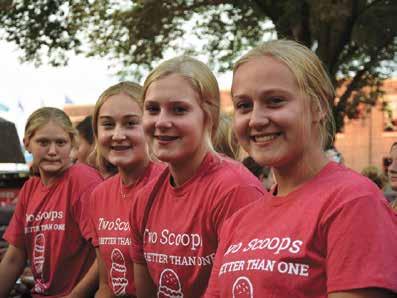
Hannah (From le ), Kayla and Rachel Visser support both McLeod County nalists, Kiley Lickfelt and Allison Wright, Aug. 24 at the Princess Kay Corona on.
MATT ADDINGTON/MIDWEST DAIRY
Rachel Rynda was crowned the 69th Princess Kay of the Milky Way on Aug. 24 at the Minnesota State Fairgrounds.
Throughout the fair, Rynda will make various appearances as she starts her year-long reign promoting Minnesota’s dairy industry. Rynda’s family was in attendance at the coronation along with a large fan section to offer support. Rynda said their support is what she admires most about the dairy industry she has always been a part“Oneof. of my favorite things to do is sing in the barn with my dad,” Rynda said. “Spending time with my family on our farm has placed so much value in what I will be doing for the rest of my reign. I believe dairy is family, and I want that to be evident in everything I do.” Rynda hopes to bring her experience to classrooms around the state to share her story with students so they can learn about farmers and the dairy products they produce. She said she is anxious to have open conversations with curiousFrancisconsumers.saidRynda has innate qualities that will make her a wonderful Princess Kay. “She is so outgoing,” he said. “She has the desire to share and, more importantly, listen to other people. She works hard and isn’t afraid to try anything.”ForRynda, her ambitious life as an agribusiness student at the University of Wisconsin-River Falls will now become busier as she begins taking on the role of Princess Kay and weaving events between her class work.Rynda said she is excited to represent Minnesota’s dairy farmers and looks forward to making connections across the state.“Idon’t even know what to say other than how proud I am to represent the most resilient and caring people I’ve ever met, dairy farmers,” she said.
Dairy Star • Saturday, August 27, 2022 • Page 7 Con nued from PRINCESS KAY | Page 1


That focus on breeding for strength is one of the reasons Hackett loves the cow family Fuel hails from. “They are all very complete cows, and they all breed very true,” Hackett said. “They are the best cow family on the farm; they just never had quite high enough genetics in the days before genomics.”
Hackett is a believer in the science of genomics and how it relates to the animals he breeds.
Melarry Fuel-ET recently achieved a classica on score from Holstein Canada classiers of Excellent 97, the highest score possible. Pictured with Fuel, from le , are Simon Primeau, Semex manager of animal care; Willemke Binnendijk, Holstein Canada director of on-farm experience for Ontario and the western provinces; Bruno Jubinville, Holstein Canada director of on-farm experience for Quebec and the Atlan c provinces; and Mike West, Semex product development specialist.
Melarry Fuel rises to the top
PHOTO COURTESY OF HOLLY MCFARLANE
Turn to MELLARY FUEL |
“Genomics founded this herd,” Hackett said. “With the old (Total Performance Index), my cows were never high enough on deviation. When genomics rst came along in 2007, we tested a few from that family and found their genomic information was way
Page 8 • Dairy Star • Saturday, August 27, 2022 MORE LISTINGS ONLINE! www.windridgeimplements.com USED EQUIPMENT ON HAND Cresco (563) 547-3688 Decorah (563) 382-3614 Elkader (563) 245-2636ECD ‘22 Erskine 900594-Log, Brush & Rock 84” Grapple Rake #20954W ‘22 JCB 525-60 Agri Plus - T4 TeleHandler #ELN-04202023 ‘22 Erskine 901505 - Dual Rotary Brush Mower 84” #20959W ‘13 JCB 541-70 Agri Plus TeleHandler 4755 hrs., #16769 ‘22 Erskine 900318 Industrial 84’ Grapple Rake #20958W ‘22 MDS 5520-MB158-84 84” Skid Steer Manure Bucket #20996W $82,995 $128,000 $6,240 $9,240 $5,750 $11,985 D C E C $79,995 DD ‘12 JCB 3230-65 Xtra Fastrac Tractor 4WD 4091 hrs., #19160 $78,500 D D D ‘12 JCB 3230-65 Xtra Fastrac Tractor 4WD 3431 hrs., #19159 ‘04 JCB TeleHandler508C 4647 hrs., #21437 $36,500 HARD WORK DEMANDS A HARD-WORKING DIESEL. A more additivecompletepackage for a more complete burn. Keeping your o -road engines on point.Diesel that doesn’t mess around. Madison, SD (605) 256-4516 © 2022 CHS Inc. Cenex® is a registered trademark of CHS Inc. RICE, Minn. – A Minnesota-bred Holstein bull recently achieved the breed’s pinnacle score of Excellent 97 at Semex in Canada. Melarry Fuel-ET, one of only ve Holstein bulls to ever reach that status in the history of Holstein Canada, achieved the status at 6 years old. Fuel was bred by Spencer Hackett of Melarry Farms in Rice, home to a herd of 140 registered Holstein cows. Hackett operates the farm with his wife, Stacey, and their sons, Brook and Christopher, and their families along with his parents, Melvin and Darlene.“Itwas a shock and exciting to hear the news,” Hackett said. “Fuel is the result of years and years of breeding by our family, produced by a cow family that is deep and consistent.” Willemke Binnendijk, Holstein Canada’s director of on-farm experience for Ontario and the western provinces, was one of the classiers involved in raising Fuel to Excellent 97. “We classied 52 bulls that day at Semex, and Fuel was a standout among the bulls we saw,” Binnendijk said. “I was struck by his incredible size, width and strength; yet, he still shows much renement. I was very impressed by how correct he is. We had him walk around a bit for us, and he moves very well. He was already scored 96 points, and it was not a hard decision to raise him to 97.” Fuel hails from what Hackett describes as his herd’s bread-and-butter cow family. Fuel completes 12 generations of Melarry breeding, dating back to the early According1980s.to Hackett, Fuel is an example of what he has been working to accomplish throughout his career as a registered Holstein breeder. He calls his breeding philosophy diverse, explaining that his goal is to make bulls for all markets.
By Danielle Nauman danielle.n@dairystar.com Minnesota-bred bull achieves breed’s pinnacle score
Page 9
“Breeders are looking for a lot of different things; some want more moderate sized cows while others want more frame and style,” Hackett said of the markets he is trying to breed bulls to t. “The main thing is they all have to produce a lot of milk. I am proud to Fuel achieve a classication score of EX-97 with 1700 pounds of milk on a proven bull proof.”


Dairy Star • Saturday, August 27, 2022 • Page 9 Please submit resumes to: If you are interested, we would love the opportunity to meet with you. All applications are kept confidential. AG REPORTER WANTED IN SOUTHEAST MINNESOTA mark.k@dairystar.com Responsibilities: • Work with the editorial manager and team to develop content for each print • Write content following AP Style • Ability to travel minimally for editorial content, including on-farm interviews with photographs, industry events and conferences • Conduct daily work with a team-oriented approach • Represent Dairy Star at industry events and in dairy-related organizations Qualifications: • Experience in writing and AP style • Strong dairy/ag background • Ability to adhere to a deadline • Excellent communication skills, both internally with the team and across the industry • Self-motivated and dependable to accomplish projects and develop content • Organizational skills and ability to multitask is a must • Willingness to learn and adapt Star Publications is looking to add to their team and seeking an ag reporter to cover southeast Minnesota for the Dairy Star and Country Acres. This position is availableBENEFITS:immediately. Star Publications offers an assortment of benefits, including competitive pay, health and dental insurance, Simple IRA and paid time off. JOB $40,000FULL-TIMETYPE:SALARY:-45,000PERYEAR 20, 30, 40, 60 60 d 90 gallonsand 90 For larger dairies we offer 120,150, 250 or 250 gallon capacity. Call for details! Let us help you raise healthy, robust calves! ControlPasteurizerAssemblyCenterMajestic View Dairy Sara Recker-Calf Manager Lancaster, WI “We just installed the new Westward Control Center a few weeks ago after having our previous one for 12 years. We like using pasteurized milk because we have healthiercalves and it is cost effective. Our new control center is also easy to use and takes less time to pasteurize than our old one.” ca“Wpce and 90 gallons ControlPasteurizerAssemblyCenter 20, 30, 40, 60 and 90 gallons Multiple options ranging from 20-250 gallon capacity to fit any dairy size. 60, 40 and Wall Mount Control Center IN STOCK! READY TO INSTALL ON YOUR FARM TODAY! (800) 887-4634 • Lancaster, WI (608) 647-4488 • Richland Center, WI fullersmilkercenter.com higher than their numbers in the old index system.” Fuel descends from a family of 10 Excellent and Very Good dams with a sire stack that includes bulls such as Morningview MCC Kingboy, Mounteld SSI DCY Mogul, Charlesdale Superstition, Solid-Gold Colby, Keystone Potter, Calbrett-I H H Champion, Olmo Prelude Tugulo, Norrielake Cleitus Luke, Sir C Valor and CalClark Board Chairman. “Fuel’s fourth dam was a Colby, so we tried to catch a little index there and used Super on her,” Hackett said. “Then we ushed that cow to Con nued from MELLARY FUEL | Page 8 PHOTO SUBMITTED The Hacke family – (from le ) Chris, Stacey, Jenn, Liliana, Khloe, Kane, Brayden, Kylee, Aubrey, Brook, Spencer holding Beau and Amanda – of Melarry Farms in Rice, Minnesota bred Canada’s newest EX-97 Holstein bull, Melarry Fuel, who is owned by The Semex Alliance of Ontario, Canada. PHOTO SUBMITTED Pictured are eight of the Excellent cows in Melarry Fuel’s pedigree, along with his Very Good 86 full sister. Mogul. Those calves hit the ground right about the time genomics came along. Those Moguls were all at the top of the breed.”Keeping in line with his philosophy to sell only his best, Hackett sold the top Mogul daughter privately and sold the second highest in the World Classic Sale during World Dairy Expo. He kept the third of the three, which was Fuel’s granddam, to work with himself.That Mogul was mated with Kingboy, producing Fuel’s“Wedam.bred the Kingboy to Duke,” Hackett said. “Wehad all the type, so we went with a big production bull.” That mating produced two bull calves. Another stud chose what appeared to be the better calf, with better calving ease and health traits. Semex eventually took the other calf – Fuel. Fuel himself is an S-S-I Montross Duke-ET from Melarry Kingboy Fudgie-ET, an Excellent Kingboy daughter of Melarry Mogul Freck-ET EX-90“FuelDOM.came back with a lot of milk and high calving ease,” Hackett said. “Then he got his proof and it was pretty good. He was the No. 2 (Lifetime Prot Index) bull in Canada for a while. He is still over 1,700 pounds of milk on his proof, which is prettyHackettgood.” does not have many Fuel daughters in his herd right now but has heard good things from other breeders and industry professionals about them as a group. “I had a Holstein USA classier tell me once he saw a group of Fuel daughters in California,” Hackett said. “He said they were big, strong front-ended cows, really good, sound, functional cows, milking really well.”
The reports that Hackett has heard about Fuel daughters come as no surprise to him, knowing Fuel’s heritage. “My grandpa always told me not to force the cream to the top, just let it rise to the top,” Hackett said. “That is how you know you’re working with the good ones.”




“It’s great to nd a local butcher,” Lawless said. “It’s not an easy thing to nd these days.”
800-597-2394
Once a pizza is ready for the oven, the chef needs to move fast. The oven gets up to 700 degrees, and the pizzas need to be rotated every minute to avoid burning. When it is done cooking, the pizza is boxed and either taken to-go or eaten in the party barn.
Lawless is a former school teacher of 30 years and owner of Sittin’ Pretty Pizza Farm. The farm has been hosting pizza nights for the last year and focuses on local ingredients to support other local farmers. The main cheese source for the pizzas is Pasture Pride Cheese from Cashton, a company that only takes milk from local farms.
There are three main varieties of pizza available on most Fridays which include a basic Margherita, sausage and a white sauce pizza. The white sauce pizza uses a cream sauce and is topped with mushrooms, mozzarella, parmesan and chives.
Sitting pretty with pizza
www.pfeifersonline.com 5
The sourdough for the crust is provided by Rhythm Bakery in Viroqua. As a way to further support the efforts of Sittin’ Pretty Farm, the bakery provides the dough to Lawless at cost.
Lawless uses local ingredients, gives back to community Turn to LAWLESS | Page for a local charity. “The pizza farm is a community outreach as part of our mission to help the local charities and nonprots,” Lawless said. “I’ve just kind of created a space that has the sense of hospitality that I grew up with.”
Lawless also provides a pizza with seasonal toppings as well. Right now, there is a sweet corn and cherry tomato pizza with olive oil, parmesan and chives.On a typical night, the farm will use one 40-pound block of mozzarella cheese and 2-3 pounds of parmesan.There is always a live band on the outdoor stage. Guests can gather around the band while they eat or sit inside on the long banquet-style lunch tables. It is all geared toward connecting the community.
“The pizzas are more of a traditional Italian pizza so not a lot of ingredients,” Lawless said. “It’s almost like less is more.”
11
Lawless said sausage seems to be the most popular variety because it is the only pizza with a meat topping. The sausage comes exclusively from hogs that Lawless has raised at a nearby farm and processed at Solar Meats LLC in Soldiers Grove.
ABBY WIEDMEYER/DAIRY STAR Steve Lawless stands by the pizza oven Aug. 16 at Si n’ Pre y Pizza Farm near Viroqua, Wisconsin. Lawless runs the pizza farm as a nonprot to support local farmers and businesses. Page 10 • Dairy Star • Saturday, August 27, 2022 717.354.5040 | New Holland, PA to Horning Kernel Processors to experience faster throughput, higher nutrition and increased profits 320-200-1221 Visit us at Coveringwww.justinaddy.comAvon,MNMN,SD,IA,&WIDrink Milk Graduate of the Dairyland Hoof Care Institute Proud member of We do wide grooving and mini grooving Help keep your cows safe. Hoof trimming since 2003 WE OFFER COMPLIMENTARY: UDDER SINGEING TAIL TRIMMING Keep your cows cleaner, healthier & save time! MINI GROOVER Grooves concrete that has been already grooved. CALL FOR ALL YOUR CONCRETE GROOVING NEEDS VIROQUA, Wis. – A desire to get out to the country and give back to the community is bringing folks to Sittin’ Pretty Pizza Farm near Viroqua. Steve Lawless hosts pizza nights on his farm on Fridays. Guests eat wood-red pizza and listen to a local band. The goal of each pizza night is to raise $500 PEOPLE MOVING PRODUCT By Abby Wiedmeyer abby.w@dairystar.com
“It’s a big help to not have to make the dough every week,” Lawless said. “And like so much of the community, they are really supportive of what we are doing.”Sauce is made in house by the pizza baker, Zachary Matthes. The recipe is simply peeled Roma tomatoes blended with salt. Canned tomatoes were used to get started but now there is a tomato patch at the farm that is used whenever possible.
On a typical Friday night, around 70 pizzas will roll through the wood-red grill. The process begins with a refrigerated sourdough crust. A homemade sauce is added along with the rest of the ingredients.
“People are sitting at the same table, eating the same food and enjoying the same experience next to somebody who they maybe didn’t know before,” or 12th St., Sioux Falls, SD
605-338-6351 5301 West


Quality Consistency KLCRoasting,FarmsInc. 320-352-3326 Visit www.roastedbeans.com Pull in unload and reload in just 15 minutes. Every day we have a high quantity of high quality soybeans. Our soybeans have the energy, protein, amino acids and bypass protein for your cows Getting your roasted soybeans at KLC Farms is SIMPLE Preferred By Bovines Everywhere
Dairy Star • Saturday, August 27, 2022 • Page 11 C Classic 300E Regular ures youRegular maintenance assures you of the be nd keepsof the best performance and keeps your operation running at it’s peak.your operation running at it’s peak. Classic300E MaintenanceMaintenance kits available or bring your unbring your units to Centre Dairy to have theto have them done for you. Microtouch anMicrotouch and Permanent Mount PMount Pulsators C Regular ma n assures you of the best pe e and keeps your operation running at it’s peak. Maintenance kits available or bring your units to C ir to have them do e Microtouch and Permanent Mount Pulsators C F U … S TIME TO MAINTAIN CENTRE DAIRY EQUIPMENT AND SUPPLY INC. Henning Area 218-849-0211 Jon Stein 320-352-5762 • 1-800-342-2697 40625 State Hwy. 28 • Just West of Hwy. 71 • Sauk Centre, MN Regular m ssures you of the best performance and keeps your operation running at it’s peak. Maintenance bring your un to have the and P nt Mount Pu ONCE FALL FIELD WORK WRAPS UP… IT’S TIME TO MAINTAIN C Call Centre Dairy at 800-342-2697 to schedule your units TODAY! Regular m ssures you of the best performance and keeps your operation running at it’s peak. Maintenanc bring your un to have th d Microtouch and Mount Pu ONCE FALL FIELD WORK WRAPS UP… IT’S TIME TO MAINTAIN YOU MAINTAIN YOUR FARM EQUIPMENT... Don’t forget to maintain your milking equipment! CALL US FOR A PREVENTATIVE MAINTENANCE CHECK! uluulsatorslssatorsa VaccumRegularPumpsmaintenance assures you of the best performance and keeps your operation running at it’s peak. We currently use the lactation, reproduction, and somatic cell reports along with the Herd Summary. We also have a list of cows every month that a pregnancy test is run on using the milk sample. Which is your favorite and why? Kim’s most used report is the somatic cell report. She prides herself that we can usually keep the SCC below 125 and CMT tests any cows that are high on this test. How does testing with DHIA bene t your dairy operation? The bene ts of DHIA testing include SCC premiums from the creamery, and culling decisions based off facts and history of a cow instead of guessing, be it SCC, components, or reproduction problems. Tell us about your farm. We run 325 acres that is mostly corn and alfalfa with a few acres of soybeans. We are transitioning from milking cows to feeding steers. Sauk Centre, MN Buffalo, www.mndhia.org763.682.1091MN DHIA: Now MORE than ever We use thelactationreproductionand somaticcell reports What are some of the DHIA tests you use? “Decisions based off facts.” Jim & Kim Duban 125 cows • Montgomery, Minnesota 29 years with DHIA Lawless said. “And to have the sense that they’re giving back to the community in some way I think is just a feel good all around.”Lawless is considering plans to grow the business by allowing other local chefs or farmers to utilize the commercial kitchen. His idea is there may be people with a good product who are not able to open up a kitchen full time but who may love to cook and serve“Thepeople.options as far as making a living are pretty limited if you farm on a small scale,” Lawless said. “So people trying to do small-scale vegetable production and adding value by processing their work into a retail product has always Con nued from LAWLESS | Page 10
ABBY WIEDMEYER/DAIRY STAR Steve Lawless stands in the commercial kitchen Aug. 16 at Si n’ Pre y Pizza Farm near Viroqua, Wisconsin. They make around 70 pizzas on a typical Friday nights. been attractive to me.” Lawless said growing up on a farm in Iowa gave him a sense of work ethic and Heneighborliness.istryingto create the same culture at the pizza farm as a way to mark his parents’ passing. “My folks were part of that Depression/World War II generation, and so much of what they lived was how to give back and serve,” Lawless said. “That always resonated with me. And now to be a restaurant that supports our local farmers, and source cheese from a local cheesemaker, that all ts into our community outreach mission and how we connect into our community and give back to it.”





LANO Equipment of 952-467-2181Norwood A family business since 1946 with the Lanos: Jack, Paul, Bob and Andy USED EQUIPMENT FROM A NAME YOU CAN TRUST! CHECK OUT OUR LARGE SELECTION OF HAY EQUIPMENT AND TRACTORS! Many used & new skidloaders ON HAND USED TRACTORS JD 4000 diesel, low hours, new tires ..........$18, 500 JD 2010U, 1,085 actual hours .....................$10,900 Ford 8N ..........................................................$3,950 NH LM340 Telehandler, 1,800 hrs., 24’ lift, 7,800 lb. ........................................$62,500 USED SKIDSTEERS (2) Bobcat 5600 Toolcats ...........Starting at $39,500 ‘20 T770, Glass Cab w/A/C, 2 Spd, 1000 hrs $59,900 ‘15 T450, 2 spd., cab w/air ..........................$32,500 ‘10 T190, 2950 hrs., cab and heat ...............$29,500 ‘13 S570, 9300 hrs., cab & heat ..................$12,500 ‘11 S175, 1611 hrs., cab, 2 spd ...................$24,000 (4) S770, glass cab w/AC, 2 spd., 2500 hrs. & up .........................Starting at $28,500 (2) S650-glass cab w/AC, 2 spd, 500 hrs. & up ...........................Starting at $28,500 ‘15 S590, new fuel system...........................$29,500 ‘16 S570, glas cab w/AC, 2 spd., 7000 hrs. .$22,900 ‘19 S550, glass cab w/AC, 2 spd., 1500 hrs. $30,900 ‘19 S450, glass cab & heater, 2500 hrs .......$24,500 ‘00 863, 1488 hrs., 2 spd., cab & heater .....$24,000 742 ................................................................$8,250 ‘18 Cat 236D, 775 hrs ..................................$43,900 USED TILLAGE White 588 Plow, 5 Bottom .............................$2,250 White 588 Plow, 4 Bottom .............................$2,000 DMI ET5 Ripper .............................................$7,500 Massey 19’ disc .............................................$2,350 ‘12 Wilrich QX 37-50 50’ w/spike harrow ....$28,500 USED PLANTERS White 6100 12R30” w/Montag 3 ton dry fertilizer ...............................................$10,900 White 6700, 12x30, Vertical Fold ...................$7,500 J-D 7200, 8x30 ..............................................$8,500 USED HAY EQUIPMENT ‘16 NH 313 discbine, 13’ .............................$28,000 ‘14 NH H7230 ..............................................$18,900 ‘12 NH H7450 ..............................................$20,500 NH 790, 824 Corn Head, hay head .................$7,950 ‘07 JD 956 15’ disc mower cond., 2 pt. .......$10,500 ‘97 NH 1465 haybine, new cutterbar..............$9,500 ‘15 NH 460 silage special ............................$26,900 NH 144 inverter .............................................$2,500 Notch 30’ feeder ............................................$4,500 USED MISC ‘96 Feterl 10x60 Auger...................................$2,250 ‘16 N-H 185 Spreader ..................................$12,900 Gehl 970 16’ box ...........................................$2,750 ‘91 Meyer TSS 16’ box ..................................$3,750 H&S Super 7+4 14’ box .................................$3,750 Meyers 4516 16’ box, 1250 gear, 14L tires....$8,500 Meyers 500TSS, 18’ meyers box 1800 tandem ...............................................$8,500 Cat 926 wheel loader ...................................$22,900 H&S 550 Hydra Push spreader ....................$28,000 ‘08 Wallenstein BX625G, 3 pt. PTO chipper ...$2,950 LS 15KW PTO generator ................................$2,250 USED COMBINES ‘90 Gleaner R60, 4635 eng. hrs. ....................$9,900 ‘87 Case IH 1660 w/4R Corn head ...............$11,500 ‘88 Case IH 1660 w/Mauer ext. chopper, rock trap ....................................................$30,000 ‘03 Cressioni 6 row chopping corn head ............Call ‘96 Case IH 1020 20’ flex head ...........................Call
The Klugs will be bringing 12 cows from their farm, Cozy Valley, as well as three cows and one heifer from Linda Beranek and her family who own Bluff View“WeFarm.will have cows from 2-years-old all the way up to some 8-years-old,” Klug said. “We just want to highlight the rich heritage of Brown Swiss in Minnesota.”Myriah, her husband, Matt Klug, and their kids, Estelle, Maverick and Dallas, farm with Matt’s parents, Steve and Ann Klug, and Matt’s brother, Darrel, his wife, Krista, and their By Kate Rechtzigel kate.r@dairystar.com Klugs, yearscelebrateBeraneks100ofthebreed
PHOTO COURTESY OF J. ERICA PHOTGRAPHY
Page 12 • Dairy Star • Saturday, August 27, 2022 The way to dairy.TM www.lely.com 1-888-245-4684 SEE LELY AUTOMATION AT WORK! Argall Dairy Systems, Inc. invites you to an open house at Vosberg Farms, Inc. in Cuba City. Register for the event and enter for your chance to win a Lely Luna cow brush. Receive the address after registration. See Vosberg’s retrofit dairy facility, featuring two Lely Astronaut A5 robotic milking systems and the benefits of automated milking. RSVP today! We look forward to seeing you! Register and enter for your chance to win a FREE Lely Luna cow brush at www.lely.com/ArgallOpenHouse or scan the QR code with your smartphone camera. Join us on Wednesday, August 31, 2022 10:30 a.m. - 3:00 p.m. Vosberg Farms, Inc., 2702 Cty. H, Cuba City, WI 53807 Argall Dairy Systems, Inc. 171 Countryside Dr Belleville, WI 53508 608-424-6110 Argall YOU’RESystems,DairyInc. INVITED TO AN OPEN HOUSE AT VOSBERG FARMS, INC.! Brown Swiss herd to showcase at Minnesota State Fair SPRING GROVE, Minn. - To celebrate 100 years of the Brown Swiss breed in Minnesota, the Klug and Beranek families will be featured at the Minnesota State Fair as a part of Moo Booth’s dairy showcase herd.“It’s a long time coming,” Myriah Klug said. “We realized several years ago that it would be 100 years of the Brown Swiss breed in Minnesota so we spoke to the state fair and they agreed to let our breed be showcased. It turned out to be easiest for our families to take it on.”
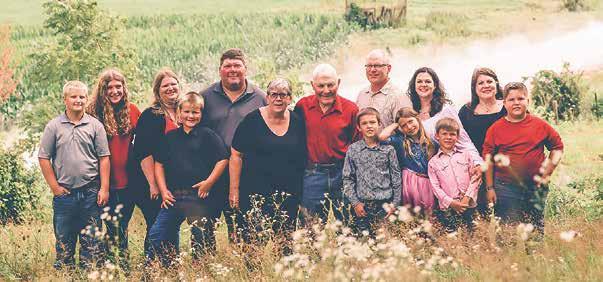
The Klug family – (front, from le ) Chayce, Ann, Steve, Maverick, Estelle, Dallas and Nikoli; (back, from le ) Carter, Ka e, Krista, Darrel, Ma , Mariah and Julie – milks 100 cows near Spring Grove, Minnesota. They are the Minnesota State Fair showcase herd this year along with Linda Beranek and her family. Turn to SHOWCASEPage13 kids, Carter, Katie and Chayce. They milk 100 cows near Spring Grove. Matt’s sister, Julie, and her son, Nikoli, are also involved with showing but not the day-today operations as Julie has an off-farm job. The herd at Cozy Valley is mostly Brown Swiss with some Holsteins and Milking Shorthorns.“I was born and raised a Holstein girl so when I met my husband, I brought some with me and we’ve been slowly growing our Holsteins ever since,” KlugThesaid.Beraneks - Paul and daughters, Linda Beranek, Sandy Johnson and Tammy Reichenbacher, and her husband, Tom, and their kids, Maya and Ellamilked for a number of years before retiring and now house their eight cows at John and Karyl Dierson’s in ShowingCaledonia.dairycattle is rich in both the Beranek and Klug families, and most of the animals they will be bringing to the fair are show“Mattanimals.andIactually met at the state fair back in 2007 so it’s always fun to show there,” Klug said. “Most of the animals are also already broke to lead and quite friendly so it was naturally a really good t for us to bring them. There will be a few new faces though because it is challenging to nd that many show cows to bring.”
The families have shown their herd at many open class shows, county fairs and the state fair. The Klugs’ children have also shown at the Southeast Minnesota Youth Show and the Minnesota Brown Swiss Association youth show held in conjunction with the state sale which Matt organizes along with Mark Fjelstad from“WeMinnesota.liketoengage as much as possible with the public while we’re there,” Klug said. “We’ve always prided ourselves in keeping our area clean and well-kept so people approach us and ask questions.”Klugis also involved in the Houston County American Dairy Association, Matt was a National Director for the Brown Swiss Association, and Steve was on the board of directors for their creamery, Swiss Valley (now Prairie Farms), for many years. “Our family likes to step up and take active roles in participating in our communities and organizations,” Klug said. Their herd is also well known and has made a huge impact on the breed. In 2005, Matt bought some embryos which resulted in the bull, Top Acres C Wonderment.“Wehave a lot of diversity amongst our herd as we have both show and some genomic animals,” Klug said. The family also partnered with Mark and Diane Fjelstad of Zumbro Falls to create BMG Genetics. That partnership led to the development of BMG Lust Get Lucky, a breed leader for milk production for the Brown Swiss“Webreed.have worked hard to create more genomic animals, have really good cow families and put several bulls in stud,” Klug said.




“Our intent is to bring several cows to the showcase and then also show many, if not all, of them in the open class show,” Klug said. “I’m excited that we won’t have to move in the middle of the night like we’re used to. We will already be set and just have to bed down and bring the animals back in instead of unloading multiple trailer loads of stuff when we arrive for open class.”
PHOTO SUBMITTED
To get ready for the fair, the Klugs have to make some nal touches on the marketing end of things, clip animals and work with a few animals who will be new to the show ring. “Our county fair is the week before the state fair starts, and it’s my son’s rst year showing in 4-H,” Klug said. “So, we will be coming right from the county fair straight to the 12 days of the state fair, but we are denitely ready for that challenge.”
“We want to encourage kids who are in sports to refuel with chocolate milk and let the public know that dairy farming is environmentally friendly,” Klug said. “We have made so many strides, are very focused on our environmental impact and want to let everyone know dairy is safe and nutritious.”
Steve and Darrel will be handling chores on the farm and keeping everything going while the family is at the fair. The Klugs normally just bring their animals to the state fair for open class and occasionally for 4-H but are looking forward to staying at the fair for the whole duration this year.
At the fair, Klug hopes to share her passion for the dairy industry with the public and tell people how important it is to add dairy to their diet and daily lives.
In preparation for the showcase, Klug has worked with Midwest Dairy and plans to have a QR code for people to scan during the“I’mfair.hoping that this is an engagement that will reach the younger generation,” Klug said. “They may not be as comfortable coming up and asking questions face to face so I’m hoping that they will be able to get their information this way and be more willing to ask questions.”Throughout the 12 days of the fair, the Klugs, Linda and Kevin Brown, will be handling chores as well as two overnight“Lindapeople.is what we call the super sweeper,” Klug said. “She keeps everything clean and everybody on task. We couldn’t do it without her support. Kevin also worked with the Sprengelers for a number of years so it will help to have his insight on what to do. It really takes a village to do Meanwhile,this.”
PHOTO SUBMITTED
Dairy Star • Saturday, August 27, 2022 • Page 13 www.brynsaas.com Lots of Used Mixers • Variety of Manure Pumps and Tanks All on Hand! 1660 Jordan West Rd., Decorah, 563-382-4484IA 2022 Artex $115,000CB2004Better Bilt Manure Tank $12,500 GEA SP-R-12 Manure Pump $10,200 GEA SP-3B-T-8-12 Manure Pump $15,000 GEA SP-3B-9 Manure Pump $9,000 2012 P J Trailer MFG. 23’ $4,900 VERTICAL TMRS LLC 0%Financing1 Cash Back Available2 Make more hay with reliable New Holland hay and forage equipment, featuring our full line of round and square balers, mower-conditioners, windrowers, rakes and more. They’re all ready to go for the season ahead—and most are available now with outstanding savings. Take our Roll-Belt™ round balers. Renowned for producing the industry’s densest bales, they deliver consistently high bale quality with features that speed you through fields when your crop is ready. Check out all the great deals going on now. Hurry, offers end soon3 Stop in today or visit nhoffers.com. DENSER BALES. A&C Farm Service, Inc. Jct. Hwys. 55 & 23 • Paynesville 320-243-3736 | www.acfarmservice.com For Commercial use only. Customer participation subject to credit qualification and approval by CNH Industrial Capital America LLC or CNH Industrial Capital Canada Ltd. See your participating New Holland dealer for details and eligibility requirements. Down payment may be required. Not all customers or applicants may qualify for this rate or term. CNH Industrial Capital America LLC and CNH Industrial Capital Canada Ltd. standard terms and conditions apply. Canada Example: The interest rate will be 0% for 12 months. Total contract term is 12 months. Based on a retail contract date of July 1, 2022, with a suggested retail price on a new Roll-Belt™ 560 of C$117,678 customer provides down payment of C$23,535 and finances the balance of C$94,143 at 0% per annum for 12 months. There will be 12 equal monthly payments of C$7,845.25. The total amount payable will be C$94,143, which includes finance charges of C$0. Taxes, freight, setup, delivery, additional options or attachments not included in suggested retail price. Offer is nontransferable. Offer subject to change or cancellation without notice. Cash back amounts vary and are applied at time of sale. Cash back offers are only available when financing purchase with CNH Industrial Capital America LLC or CNH Industrial Capital Canada Ltd. Offers end September 30, 2022; subject to change or cancellation without notice. © 2022 CNH Industrial America LLC. All rights reserved. CNH Industrial Capital and New Holland are trademarks registered in the United States and many other countries, owned by or licensed to CNH Industrial N.V., its subsidiaries or affiliates. Call or stop in for more information! 17 used balers to choose from! Vermeer 605SM New Holland BR560 John Deere 568 New Holland BR7090 Six to choose from! Vermeer 605N New Holland BR460 Con nued from SHOWCASE | Page 12 “We really believe in developing good, solid families that have stood the test of time. A daughter of Blessing Prophet Ashton was purchased by Myriah at the Maryland National Convention and her granddaughter will be featured in the showcase, as well as a daughter of (World Dairy) Expo grand champion, Eloc Wagor Kandid.”Throughout the fair, they plan to highlight the benets of the Brown Swiss breed by using videos from the Minnesota Brown Swiss ambassadors as well as explaining farming practices in general. “I really want to highlight why Brown Swiss and show the public why we treat cows the way we do and why we have the breed we have,” Klug said. “Most people don’t know where their food comes from,
The 2019 Brown Swiss Judge (from le ) is pictured with Minnesota Brown Swiss Ambassadors Morgan Wingert and Kelsey Erf, Tom Foss, Minnesota Brown Swiss Ambassador Kendra Waldenberger, Ma Klug, Diane Fjelstad and Minnesota Brown Swiss Ambassador Anna Sachs. Duing the state fair the Klugs and Beraneks plan to use the Brown Swiss Ambassadors to educate the public on the importance of dairy, and what the Brown Swiss breed contributes to their herd. and I have a unique perspective because I work for a dairy processing company and see both sides of the product from when it’s produced on the farm to when it hits the factory and how those different products are Brownmade.”Swiss are also higher in components which are better for making cheese, are more heat resistant and have lower somatic cell counts, Klug said.
The Beranek family (front) Paul Beranek; (back, from le ) Tom, Tammy and Maya Reichenbacher, Sandy Johnson, Linda Beranek and Ella Reichenbacher. The Beranek family are part of the Minnesota State Fair showcase herd this year along with the Klug family.








Page 14 • Dairy Star • Saturday, August 27, 2022 SAUK CENTRE, OFF I-94 ON THE CORNER OF HWY. 28 & 71 SOUTH Friendly & Knowledgeable Parts Deptartment Don’t let break downs hold you up this Fall... Let our Parts and Service Staff Help! SpeeDee Delivery Available! Mike, LaShana, Dan & Gene SAU iMnnesota’sLargestFeeding and ureHandlingDealerMan Ifyouhavea barn, we haveasolution. www.dairylandsupply.com ORDERYOURPARTSEARLY!







Brad Luettel Adrian, Minnesota 120 cows How many days off do you take in a year? It depends. My wife and I like to take a weekend or two off each year. Once every three or four years, we will take a big trip. We like to go with friends and visit someplace warm in the wintertime. Who lls in for you when you leave? How do you nd this labor? My brother, Dean, and our mom, Ruth, ll in when I’m gone. Dean’s two boys and his wife, Jennifer, also pitch in. Sometimes my sister Sarah will take time off from her job as a pharmacist at Mayo Clinic and her work with LifeSource.
Dairy Star • Saturday, August 27, 2022 • Page 15 Star Blends has been helping Midwest farm families by providing, high-quality feed, dairy nutrition, and commodity contracting for more than 20 years. Our state of the art mill can accuratelyblend anything from a custom pre-mix to complete feed, in balancing diets, or work with your private nutritionist or dairy consultant. Contact Star Blends at: 800-462-4125 or StarBlends.com Feeding your animals like they’re our own y F r o m O u r S i d eFrom Our Side
What has been the best trip you have ever taken? One year we went to the Dominican Republic. It was warm there, and we got to meet some good people who live in the Dominican Republic. We also met a lot of nice people from the United States, including a couple from Texas. We remain friends with them to this day. What are the benets of getting away on vacation? You get to see how other people live. We soon came to realize there are many people who are a lot less fortunate than we are. There are a lot of folks who are trying to scrape together a living from the tourist trade. When you’re around the farm all the time, you can fall into a routine and don’t realize how short life is. Tell us about your farm. I farm with my brother, Dean, and our mother, Ruth. We milk 120 head in a robotic dairy facility that we completed in 2015. We farrow about 70 sows and nish out all of their pigs. My wife, Vanessa, has been nursing a broken ankle that she suffered during a horseback riding incident this spring. Vanessa and I met while we were taking classes at Ridgewater College in Willmar. Everyone in our family shares the same goals. We all care deeply about the farm.
Josh and Lynn Barka (pictured with their children (front, from left) Olivia, Annie and Hope; (middle, from left) Ben and Chris; (back, from left) Liz, Natalie and Joe). Litcheld, Minnesota 375 cows How many days off do you take in a year? We try to go somewhere as a whole family at least once a year. Who lls in for you when you leave? How do you nd this labor? Josh’s dad, Dan, and our hired help. We are grateful to have dedicated employees to ll in for us. We try to stager when each of us leave and come home to t into everyone’s schedule.
O f T h e F e n c eOf The Fence
What are the benefits of getting away from the farm?
What kind of extra preparation do you need to do on your farm before going on vacation? Timing is everything. Coordinating schedules and communication is important to make sure everyone knows how the essentials are done while we are gone. We take time preparing notes and showing our employees what to do.
What kind of extra preparation do you need to do on your farm before going on vacation? It takes two weeks to prepare. We wean baby calves, bed all the pens and have everything as clean as possible. We try not to have any sows farrowing when I’m gone. I do all the breeding, so we work around our herd heath and pregnancy checks that are scheduled for every ve weeks.
What has been the best trip you have ever taken? Our children love to pedal pull. Our boys have qualied for nationals a few times, which is held at the Corn Palace in Mitchell, South Dakota. One year we borrowed an RV and took our family out there. From there, we decided to go see Mount Rushmore and ride the 1880 train. It was an adventure nding places to park and stay overnight, navigating sleeping arrangements and nding meals. This gave us the freedom to create an experience that our children still talk about and want to do again. We tend to plan vacations that can be extended or shortened as needed.
What are the benets of getting away on vacation? We are able to focus on family and our children feel like they are the priority. They get us to themselves. With a large family, it seems we are running in all different directions, and time away gets us to all come together and focus on each other. Tell us about your farm. We farm with our children – Natalie, Liz, Joe, Chris, Ben, Hope, Annie and Olivia – and Josh’s parents, Dan and Dianne. We raise corn, alfalfa and rye to feed our cows. We raise our replacement heifers and nish out our dairy steers.
Tell the advertisers you saw their ad in the Dairy Star!
Turn to OUR SIDE | Page 16





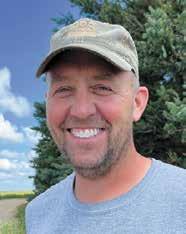

How many days off do you take in a year? Our youngest son and his wife started leasing the dairy cows from us April 1, so we are able to take many more days off than we ever could before. Who lls in for you when you leave? How do you nd this labor? Our sons and their wives do most of the chores while we are gone, with some help from a couple of part-time employees. What kind of extra preparation do you need to do on your farm before going on vacation? We try not to leave during extra busy times like calving, breeding, planting, cultivating, haying and harvesting seasons.
What has been the best trip you have ever taken? We recently returned home from riding our bicycles 1,481 miles to visit my husband’s sister in Camden, Maine. We were gone for a month and were so blessed by kind people each day who advised us on our route, helped us with repairs, invited us to stay with them, asked and answered many questions, and just encouraged us. We were reminded there is beauty everywhere.
our grass-fed
small
raise some
snowmobiling
What are the benets of getting away on vacation? Time spent with family away from the farm is valuable. We make memories with the kids and see them experience what our state has to offer. Vacationing gives your body a physical and mental break and refreshes your perspective and your view on farming. Tell us about your farm. Our farm was homesteaded in 1869. Luke and his brother, Dan, are the fth generation. Valley View Dairy was formed when Luke and Dan became partners in 2004. Today, we are a 180-cow organic dairy farm, certied since 2007. We raise our replacements and the majority of our own feed on 600 acres of owned and rented elds and pasture. Luke and Liz have ve kids: Evelyn, 11, June, 9, John, 7, Irene, 5, and Myron, 21 months. Dan and his wife, Erica, have eight children ranging in age from 2 to 16.
Sign up for ourup for our NewNew NewsletterNewsletter Sign up at www.dairystar.com Dairy St Milkr Break
What are the benets of getting away on vacation? Though our vacations tend to be quite active, we return home feeling recharged with a renewed appreciation of this beautiful place where we live and the amazing opportunity we have to work together with our family. Tell us about your farm. My husband, Daniel, and I farm together with our two youngest sons and their families – Sam and his wife, Jen, and their daughter, Margaret, and Parker and his wife, Esther, and their daughter, Caroline. Most of our land is pasture and hay for organic dairy and beef herds, but also corn and grains in the rotation. in or ice shing in a weekend. Liz has a sister in River Falls, Wisconsin, and another sister in Brownsdale, Minnesota; so we will venture their way during the colder months for a visit. Some getaways we have justied because they were farm related; a few times we have gone to our cooperatives’ annual meeting, once to a young farmer’s conference and a few trips across state to pick up farm equipment. Who lls in for you when you leave? How do you nd this labor? We farm in partnership with Luke’s brother, Dan, and his family. One of the nice things about farming with your brother is that one of you is always there. We don’t have to worry about the farm when we’re gone. Between Dan and his family, our full-time herdsperson and two relief milkers, we coordinate so everything is covered when one family takes time away. What kind of extra preparation do you need to do before you can go on vacation? Leaving for a summer vacation takes a bit more effort and coordination. Usually there is a crop of hay or a round of cultivating to accomplish before taking off. Generally, it is all hands on deck to wrap up the big stuff before one family leaves. It is also nice to be sure the semidaily things are caught up on; bedding pens, moving calves and grinding feed for youngstock so daily chores go more smoothly and quickly while a family is gone. What has been the best trip you have taken? As a family, Luke and Liz both agreed their trip to Duluth last summer with the kids was a highlight. We planned three weeks ahead and took three days and two nights to explore Duluth and the North Shore up through Silver Bay. Daily ice cream stops, swimming on the Black Beach outside Silver Bay and seeing the iron ore ships were our highlights. The kids are asking to go back to Duluth again. A few years ago, Luke went salmon shing in Port Washington, Wisconsin, on Lake Michigan. It was a success in that he didn’t get seasick and brought several meals worth of sh back with him.
we
Page 16 • Dairy Star • Saturday, August 27, 2022 Con nued from OUR SIDE | Page 15 ’22 Case IH Farmall 115a 2WD, cab & air Call for Price Brillion 16’ Pulverizer NEW! $13,500 ’07 New Holland FP 240 Chopper No heads, processor $11,000 #NB3002 #MF5206 #AX2845 www.knowlesproduce.com #CT9506 #BP3987 #HF2229 W2189 County Road Y Lomira, WI 53048 920.583.3747 ’17 New Holland Big Baler 330p 21,350 bales $81,000 ’16 Meyer F585 Mixer $31,000 ’97 Ag Bag G6010 10’ bagger $17,900800 776 7042 | coburn.com WEAR Work Approved Dairy UtiliSleeve Dairy UtiliApron • Comfortable & lightweight • Fully adjustable fit • EVERYDAYWaterproof WORKWEAR Luke and Liz Elsenpeter (pictured with their children (front, from left) Myron, Evelyn and June; (back, from left) John and Irene) Maple Lake, Minnesota 180 cows How many days do you take off in a year? We usually take a longer vacation during the summer months; this year was our longest at six days spent north of Grand Rapids with two other families at an old resort turned Airbnb. We have done shorter vacations tting
Bonnie and Daniel Beard Decorah, 117WinneshiekIowaCountycows


Dairy Star • Saturday, August 27, 2022 • Page 17 © 2022 Farm Syststeems. All rightsts reseerved. A-2916401017 +1-800-636-5581 | Proudly serving you from Brookings, SD; St. Peter, MN; and Melrose, MN! DEALER Cutting-Edge Milking Equipment | Supply Delivery | Preventive Maintenance Herd Advisory & Software Support | Manure Management Services | Feed Management farm-systems.com Discover Farm Systems Your Local Milking, Manure and Feed Management Solutions & Service Provider installationBest-in-classrotaryparlorandmaintenance! $70K+ in First Year The systemroboticarea’smilkingdealershipofchoice! OURJOINTEAM Now Hiring Route Delivery Representatives Competitive Wages – Home Every Night Up to 3 weeks of PTO in first year Now!Apply SCAN ME bit.ly/3ym8FEi









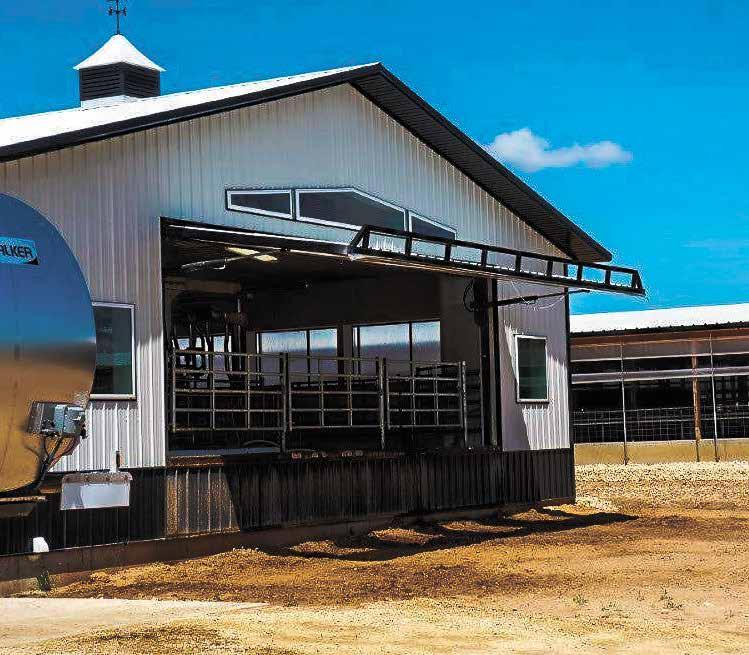
Page 18 • Dairy Star • Saturday, August 27, 2022 Harvesting Quality Forages Hydraulic Doors By the most trusted name in the industry 855.368.9595 Best Warranty in the Industry Zero Headroom Loss Brad Herickhoff, 320-351-4872Owner Effective drainageective Professional design. Reasonable rates. Check out our website!new Michael Kolb Paynesville, Minnesota 450 cows Describe your farm and facilities. We are a family run crop and dairy farm. We milk 450 cows in a parlor and house them in a freestall barn that is bedded with recycled manure solids. What forages do you harvest? We harvest haylage, corn silage and oatlage. How many acres of crops do you raise? We farm 300 acres of oat, 300 acres of alfalfa, 1,100 acres of corn and 350 acres of soybean. Describe the rations for your livestock. I run a lactating cow diet that consists of ne ground dry corn, high moisture corn, ne ground oat, liquid molasses, protein mineral mix, haylage and corn silage. My goal for my lactating cow diet is to make all components of the feed highly digestible for the cows. This has helped me reach a rolling herd Attention to detail is key GRACE JEURISSEN/DAIRY STAR
Michael Kolb stands in the freestall barn on his 450 cow dairy near Paynesville, Minnesota. Kolb takes pride in the effort his family puts toward harves�ng and storing quality forages to include in their ra�ons. average of 30,000 pounds, a 95-pound tank average with 4% fat and 3.3% protein. By the time their bodies process the ration, they have utilized a majority of the nutrients in the diet. My heifer and dry cow diets consist of different rations using corn silage, soybean meal, mineral supplements, oatlage and grass hay. We have a bit of meadow lands that we harvest the grass from and use in the diets in place of using wheat straw which is pretty common in transition diets. It’s a way to use all available resources on our operation. Our heifers have been freshening well and transitioning into peak production, some averaging 33,00 pounds in their rst year. What quality and quantity do you harvest of each crop? We harvest around 2,500 tons of haylage each year. The quality we generally put up is 55%60% moisture, 22%-24% protein, relative feed value of 165 and relative forage quality of 180. We have about 7,000 tons of corn silage. The moisture is 65%68%, 40% starch and a corn processing score of less than 80%. Describe your harvesting techniques for alfalfa and corn silage. We use Shredlage technology in our Claas chopper to help with processing. It does a great job of cutting up forages into bite-size pieces for the cows. We regularly sharpen blades on our chopper to ensure we are getting a clean cut while processing. I also set my kernel processor to a minimal gap to process the corn. What techniques do you use to store, manage and feed your forages? We grow our alfalfa on a four-year rotation, and we Turn to FORAGE | Page 20





Dairy Star • Saturday, August 27, 2022 • Page 19 “We love Udder Comfort™ for all fresh cows and any cow with any sign of a mastitis issue. It’s extremely rare that we have to treat a cow for mastitis. Udder Comfort works better than anything else, quickly removing edema for that quality udder, helping cows reach their potential with high quality milk,” says Andrew Evans. “We also use it a lot when showing, before, during, and after,” adds Abbie. They milk 42 cows in Little Meadows, Pennsylvania. Most of the A Joy Swiss herd are from the first 2 calves Abbie purchased as a young 4-Her with the dream of milking her own herd. Now, 23 years later, the 2022 Outstanding Young Brown Swiss Breeder has bred over 30 EX with 12 in the herd and records over 30,000. Scan QR or use link to read their story. https://wp.me/pb1wH7-jr — Andrew and Abbie Evans A JOY SWISS Abbie and Andrew Evans LITTLE MEADOWS, PA 2022 Outstanding Young Brown Swiss Breeder RHA 18,600M 4.2F 3.4P SCC below 100,000 “… works better than anything else.” Quality Udders Make Quality Milk Abbie and Andrew Evans with 3 generations (top, l-r) at the Mid-Atlantic Brown Swiss Invitational where they were Premier Breeder, and at home (bottom, left) with A Joy Braid Crown Royal OCS 3E94, 4 times nominated AA with records over 30,000. They milk 42 cows on a rented farm with several juniors leasing and their young nephews anxious to show. For external application to the udder only, after milking, as an essential component of udder management. Always wash and dry teats thoroughly before milking. Calluddercomfort.com1.888.773.7153tolocateadistributornear you Maximum Results Minimal Cost Celebrating over 40 Years in Business 1010 Hoeschler Dr. • Sparta, WI 54656 Phone: 608-269-3830 Toll Free: 1-888-863-0227 Email: prestonde@prestonde.com Does your milking equipment need maintenance? DAIRY EQUIPMENT INC. We service all equipment!dairy Give us a call to schedule a visit. PO Box 160, Albany, MN • (320) 845-2184 • Fax (320) 845-2187tfn Catch the Dairy Star’s Mark Klaphake with Joe Gill at 6:45 a.m. the 2nd & 4th Fridays of the month on KASM! Joe Gill • Farm Director SERVING CENTRAL MINNESOTA FOR OVER 50 YEARS FARM INFORMATION STATION


The Kolb farm plants conven onal corn, and interseeds orchard grasses into their alfalfa elds to assist in replacing tonnage as the stands thin. Michael Kolb believes that the orchard grass also makes the haylage more diges ble for the cows. going out the back end of my cows. This is what works for our herd, and I’m thoroughly pleased with the results.
Page 20 • Dairy Star • Saturday, August 27, 2022 Custom t to your new or existing building Motorized or Manual Options Highest UV inhibitor and lock stitch style sewing for longer curtain life Get the full value of air quality control curtains at the touch of a button minutes WWashingPressureTillingClearingPenClearingLandRemovalSnow MAKE YOUR JOB EASIER WITH THE RIGHT SKID STEER ATTACHMENT D M R A T T A C H M E N T S A L E SDMR ATTACHMENT SALES 320-292-0219 dmrattachmentsales@gmail.com D M R A T T A C H M E N T S A L E S 27876 218th Ave. | Richmond, MN 56368DMR ATTACHMENT SALES D M R A T T A C H M E N T S A L E SD M R A T T A C H M E N T S A L E S interseed grass to replace tonnage as the stands thin. I believe the grass makes it more digestible for the cows. We try to cut just before the alfalfa blooms. For corn silage, we plant conventional corn and harvest at around 65% moisture. We use bunkers to store corn silage and haylage for the milking cows. The bunkers are double covered with plastic, and also have plastic down the walls. We get very little spoilage. I drive the packing tractor and everyone calls me the bunker police because I monitor forage processing and packing. We store oatlage and corn silage in packed and covered piles for the heifers and dry cows. How do quality forages play into the production goals of your herd? When we placed more emphasis on the quality of our forages, our cows responded well. By processing the forages better the cows are able to utilize the feed better. As the forages move through the rumen, they are supposed to feed the bacteria in the rumen. We stopped focusing on making “jet fuel” haylage and adjusted the diets in other ways. Our cows have increased production, and there is less wasted feed Con nued from FORAGE | Page 18 GRACE JEURISSEN/DAIRY STAR
What management or harvesting techniques have you changed that have made a notable difference in forage quality? Other than sharpening and adjusting equipment regularly, employee management has been big. The hardest part about making quality forages is nding a way to help people understand how their actions affect the quality. Once we found a way to communicate the importance of the way we do forage harvesting and why we do things a certain way, our stored feed quality improved a ton. Describe a challenge you overcame in reaching your forage quality goals. Last year, our chopper blew its turbo while starting corn silage. We got that xed, then our hydrostatic drive went out. We had to wait two weeks to get the part. We ended up using a rented chopper and had to continue adjusting some of the parts to get the right cutting length. You can see the difference in the pile from where we started to where we ended. The particle length with the rented chopper was longer than I would like, but we turned it around quickly. The rest of the pile looks good. This just goes to show how important it is to get your equipment adjusted right.








Dairy Star • Saturday, August 27, 2022 • Page 21 Equipment and pictures added daily • Go to www.mmcjd.com Locations throughout minnesota & western wisconsin! CALL TODAY! (320)365-1653 SEE OUR COMPLETE INVENTORY WITH PICTURES AND DESCRIPTIONS AT: www.mmcjd.com 2020 John Deere 9800 1199 hrs., #536344 2015 John Deere 8600 2129 hrs., #166134 $329,900$373,000 $409,900 $304,900$532,800$238,100$386,000 Financing subject to pre-approval through JD Financial. Some restrictions apply. See dealer for details. 1-YEAR INTEREST WAIVER ON SELECTON SELF-PROPELLED FORAGE HARVESTERS CHISEL PLOWS JD 2410 2008, 31 ft., 3-Section Folding, #531872 ..................................................... $36,900 Wil-Rich 5800 2012, 47 ft., 5-Section Folding, #532568 .......................................... $29,900 JD 2410 2005, 28 ft., 3-Section Folding, #534430 ..................................................... $22,900 Kewanee 180 1970, 11 ft., Rigid, #538090 .................................................................$1,500 White 435, Rigid, #539336..........................................................................................$5,000 DISKS Case IH RMX340 2009, 35 ft., 3-Section Folding; 9” Spacing, #181151 .................... $29,400 JD 2625 2013, 33 ft., 3-Section Folding; 11” Spacing, #275921 ................................. $39,900 Wishek 862NT 2014, 26 ft, #276355 ........................................................................ $39,900 JD 2623 2012, 40 ft., 5-Section Folding; 9” Spacing, #523876 ................................... $49,900 JD 637 2011, 42 ft., 5-Section Folding; 9” Spacing, #523980 ..................................... $29,500 JD 2625 2014, 40 ft., 5-Section Folding; 11” Spacing, #532507 ................................. $44,000 JD 2680H 2021, 40 ft., 3-Section Folding, #532802 ................................................$147,000 Landoll 6230-36 2013, 35 ft., 3-Section Folding; 9” Spacing, #532829 .................... $32,000 JD 230 , 28 ft., 3-Section Folding; 9” Spacing, #532915............................................... $2,950 JD 2680H 2019, 24 ft., 3-Section Folding, #534969 .................................................. $82,900 JD 2680H 2019, 35 ft., 3-Section Folding; 9” Spacing, #535875 ..............................$122,500 Landoll 7833-40 2017, 40 ft, #539210 .................................................................... $95,500 Summers Series 10 Disk, 3-Section Folding, #539213 ........................................... $24,500 Krause 7400, 45 ft., 9” Spacing, #540426................................................................. $19,000 Wishek 842NT 2011, 30 ft., 3-Section Folding; 11” Spacing, #541911 ..................... $39,900 Degelman Pro TIll 33 2018, 33 ft., 3-Section Folding, #542310 .............................. $95,900 Case IH 330 2010, 30 ft., 3-Section Folding, #542361 .............................................. $36,900 JD 650 1992, 29 ft., 3-Section Folding; 9” Spacing, #542847 ..................................... $14,500 JD 235 , 25 ft., 3-Section Folding; 9” Spacing, #543348............................................... $7,500 Ezee-On 4600, 37 ft., 3-Section Folding, #544452 ................................................... $29,000 RIPPERS JD 2730 2019, #189743 ..........................................................................................$113,500 JD 2730 2014, #190066 ............................................................................................ $59,900 JD 512 2004, #190077............................................................................................... $13,900 JD 2720 2013, #190974 ............................................................................................ $42,900 Case IH 875 2015, #274482 ...................................................................................... $52,900 Case IH 875 2015, #275117 ...................................................................................... $52,900 Kuhn Krause 4850-18 2011, #276259 .................................................................... $29,700 DMI Ecolo tiger 730B, #523880 .............................................................................. $14,500 Case IH 2500 2014, #531612 .................................................................................... $15,500 JD 2720 2014, #531621 ............................................................................................ $35,900 Case 730 2009, #532798 ........................................................................................... $37,500 Brent CPC, #532876 ................................................................................................... $6,500 JD 2700 2009, #533731 ............................................................................................ $19,500 DMI ET5, #534414 ...................................................................................................... $8,500 JD 2730 2017, #535082 ............................................................................................ $69,900 Kuhn Krause 4850-15 2012, #540899 .................................................................... $31,500 JD 2700 2012, #542309 ............................................................................................ $16,000 DMI 530, #542846 ...................................................................................................... $8,250 JD 2700 2004, #543878 ............................................................................................ $13,500 JD 2730 2019, #544451 ............................................................................................ $99,500 SELF-PROPELLED FORAGE HARVESTERS JD 8600 2016, Kernel Processor, PRWD, 1482 hrs., 995 CH Hrs., #144025................$275,000 JD 8600 2015, Kernel Processor, PRWD, 2129 hrs., 1420 CH Hrs., #166134..............$238,100 JD 7780 2014, Kernel Processor, PRWD, 3035 hrs., 1973 CH Hrs., #180600..............$176,800 JD 8400 2015, Kernel Processor, PRWD, 2103 hrs., 1158 CH Hrs., #186943..............$238,750 JD 8600 2016, Kernel Processor, PRWD, 1807 hrs., 1088 CH Hrs., #187536..............$300,000 JD 8600 2018, Kernel Processor, PRWD, 1478 hrs., 660 CH Hrs., #188792................$342,000 JD 8300 2016, Kernel Processor, PRWD, 370 hrs., 187 CH Hrs., #270227..................$329,900 JD 7780 2013, Kernel Processor, PRWD, 3247 hrs., 2109 CH Hrs., #274502..............$189,900 JD 8800 2017, Kernel Processor, PRWD, 1523 hrs., 862 CH Hrs., #524820................$355,000 JD 8700 2016, Kernel Processor, PRWD, 1608 hrs., 1103 CH Hrs., #525709..............$324,000 JD 6850 1998, Kernel Processor, 3841 hrs., 2790 CH Hrs., #531752 ........................... $66,000 JD 8600 2016, Kernel Processor, PRWD, 2428 hrs., 1408 CH Hrs., #532553..............$254,000 JD 8700 2016, Kernel Processor, PRWD, 1261 hrs., 933 CH Hrs., #532572................$426,500 JD 7500 2004, Kernel Processor, PRWD, 2865 hrs., 2000 CH Hrs., #532727..............$159,900 Claas 940 2020, Kernel Processor, PRWD, 650 hrs., 480 CH Hrs., #532728...............$399,900 JD 7500 2007, Kernel Processor, PRWD, 4671 hrs., 3152 CH Hrs., #532807..............$159,900 JD 7980 2014, Kernel Processor, PRWD, 3400 hrs., 2366 CH Hrs., #532823..............$157,000 JD 7980 2013, Kernel Processor, PRWD, 3204 hrs., 2022 CH Hrs., #532824..............$152,000 Claas 900 2008, Kernel Processor, PRWD, 4648 hrs., 3609 CH Hrs., #533151...........$119,900 JD 7500 2007, Kernel Processor, PRWD, 5000 hrs., #535846 ..................................... $95,000 JD 7550 2011, PRWD, 2114 hrs., 1557 CH Hrs., #536003 .........................................$187,500 JD 8600 2016, Kernel Processor, PRWD, 1305 hrs., 815 CH Hrs., #539356................$309,000 JD 7800 2006, Kernel Processor, PRWD, 4000 hrs., 2533 CH Hrs., #541361................ $84,000 JD 9800 2019, Kernel Processor, PRWD, 1882 hrs., 1300 CH Hrs., #543355..............$390,000 JD 9700 2020, Kernel Processor, PRWD, 1039 hrs., 653 CH Hrs., #543646................$503,000 JD 6810 1997, Kernel Processor, 4288 hrs., 2974 CH Hrs., #544057 ........................... $39,900 JD 8800 2017, Kernel Processor, PRWD, 1698 hrs., 904 CH Hrs., #544616................$339,900 JD 7180 2014, Kernel Processor, PRWD, 1072 hrs., #544762 ...................................$173,000 $497,000 2019 John Deere 9600 1216 hrs., #532049 2016 John Deere 8800 2582 hrs., #175182 2017 John Deere 8800 1088 hrs., #541392 2018 John Deere 8700 1808 hrs., #187542 2016 John Deere 8300 370 hrs., #270227 2021 John Deere 8400 30 hrs., #275280 320-365-1667#188806, 2461 hrs.


Saying goodbye
Jasper immediately started crying and talked about why he loved the 3-pound Oreo so much. We got Oreo and her sister, Willow, shortly after they were born. Jasper went on to recall fond memories of Oreo with his brother, Mason. Many involved transporting the bunnies to the trampoline and either jumping or petting them there.Other memorable times included washing the bunnies or having search parties when they burrowed out of the cage. But, the bunnies had it made, and the boys made sure of that.
Page 22 • Dairy Star • Saturday, August 27, 2022 EasternIOWA Iowa Dairy Systems Epworth, IA 563-876-3087 Sioux Dairy Equipment Rock Valley, IA 712-476-5608 | 800-962-4346 CentralWISCONSINAgSupply Inc Juneau, WI 920-386-2611 Baraboo, WI 608-356-8384 Fuller’s Milker Center, LLC Lancaster, WI 800-887-4634 Richland Center, WI 608-647-4488 | 800-772-4770 J Gile Dairy Equipment Cuba City, WI 608-744-2661 Kozlovsky Dairy Equipment Kaukauna, WI 920-759-9223 Weston, WI 715-298-6256 Leedstone Menomonie, WI 715-231-8090 Midwest Systems,LivestockLLC Menomonie, WI 715-235-5144 Monroe WestfaliaSurge Monroe, WI 608-325-2772 Preston Dairy Equipment Sparta, WI 608-269-3830 Stanley Schmitz, Inc. Chilton, WI 920-849-4209 Tri-County Dairy Supply Janesville, WI 608-757-2697 MINNESOTA & SOUTH DAKOTA Centre Dairy Equipment and Supply, Inc. Sauk Centre, MN 320-352-5762 | 800-342-2697 Leedstone Melrose, MN 320-256-3303 | 800-996-3303 Glencoe, MN 320-864-5575 | 877-864-5575 Plainview, MN 800-548-5240 Midwest Systems,LivestockLLC Zumbrota, MN 800-233-8937 Renner, SD 800-705-1447 is a registered trademark of Tetra Laval Holdings & Finance S.A. and “DeLaval” is a registered trade/servicemark of DeLaval Holding AB © 2022 DeLaval Inc. DeLaval, 11100 North Congress Avenue, Kansas City, Missouri 64153-1296. All facts and figures are the result of data collected on test farms and pilot farms. Data compared to DeLaval Champion. Results may vary and are not guaranteed. www.delaval.com reduction in exit cycle time with SynchroSweepDeLaval™56%Upto cowoptionscontrolflow3max ceiling 102SynchroArcrequirementheightforDeLaval™” obstructionsatcowexitZERO Contact one of the following dealers to learn more: is a registered trademark of Tetra Laval Holdings & Finance S.A. and “DeLaval” is a registered trade/servicemark of DeLaval Holding AB © 2022 DeLaval Inc. DeLaval, 11100 North Congress Avenue, Kansas City, Missouri 64153-1296. All facts and figures are the result of data collected on test farms and pilot farms. Data compared to DeLaval Champion. Results may vary and are not guaranteed. www.delaval.com DeLavalwww.delaval.com Parlor P500 milking system Learn how the P500 parlor helped Highland Dairy reach their parlor efficiency goals. KramerIOWA Bros. Monticello, IA 319-465-5931 Prairie Land Ag Supply Inc. Rock Valley, IA 712-476-9290 United Dairy Systems, Inc. West Union, IA 563-422-5355 AdvancedWISCONSINDairy/Bob’s Dairy Supply Spring Valley, WI 715-772-3201 Ederer Dairy Supply Plain, WI 608-546-3713 DeLaval Dairy Service Kaukauna, WI 866-335-2825 Joe’s Refrigeration Inc. Withee, WI 715-229-2321 Mlsna Dairy Supply Inc. Cashton, WI 608-654-5106 Professional Dairy Services Arlington, 608-635-0267WI Redeker Dairy Equipment Brandon, WI 920-346-5579 The Scharine Group Inc. Whitewater, WI 800 472-2880 Mt Horeb, WI 800-872-3470 MINNESOTA & SOUTH AdvancedDAKOTA Dairy of Mora Mora, MN 320-679-1029 Farm Systems Melrose, MN 320-256-3276 Brookings, SD 800-636-5581 S&S Dairy System LLC St. Charles, MN 507-932-4288 Professional Dairy Systems Wadena, MN 218-632-5416 For more than 70 years, the Johnsons have been milking cows at Highland Dairy in Glade Spring, Virginia. Third-generation dairywoman, Rena Johnson, decided to upgrade the dairy so she can milk cows for decades to come. The DeLaval P500 parlor was the key to helping her do just that. SCANmore!LearnHERE
After Jasper’s tears, he shared the news with his siblings. They decided we should nd an appropriate spot to bury Oreo. After all, Oreo had been a part of more than half of Jasper’s life. We’ve buried many different animals on our 10 acres that sometimes I wish I would have made a plot so when I’m burying one I don’t accidently dig up Weanother.subsequently found a spot near some sumac and trees and dug a hole. But before we could place Oreo in the hole, Jasper, while hugging his mom, had to share some more details why he loved this black and white bunny so much.Before the last shovel of soil had been thrown on Oreo’s site, the conversation ipped. Jasper started talking about owning another bunny. He talked about the color, the breed and the pen he would put the bunny in and how good of care he would give it. The experience for him and for our whole family is a reality check on the circle of life for our animals. It also emphasizes the importance of enjoying the times they have with their animals because, like with Oreo, they don’t know when that last day is coming. But, with the passing of an animal, there is alsoThisopportunity.mightbe a chance to bring in a different breed of bunny or perhaps try raising a completely different animal. There are very few animals my kids haven’t liked so anything is in the realm of possibility.Whatever Jasper decides to do next is up to him, but I’m sure he will be a great steward of whichever animal he chooses. By Mark Klaphake Editor to Oreo
My wife, Jenny, and I have three animal loving children, and we also have an array of animals to suit their afnity. On our 10-acre hobby farm, we have a Boer goat, two fainting goats, three bunnies, two dogs, three leased dairy animals that are not quite a year old, 27 laying hens and 30 pullets.Having this many animals allows our kids great experiences and teaches them takentheirareandresponsibility.Theyhavemorningnightchoresandaskedtomakesureanimalsarewellcareof.Wetryto emphasize to our kids the animals are indeed theirs. Last week, our kids had to deal with the toughest aspect of having animals – saying goodbye.Oneof our bunnies, Oreo, who was 6 years old, died. Jasper, our youngest of three, asked if I would go with him to feed the bunnies some grass and water when we noticed Oreo was laying on the ground ailing its legs like it forgot how to walk. We tried to pick Oreo up and help her regain her balance; it was for not. It was quite clear that Oreo was dying. After we nished chores and had supper, we came back out to check on Oreo. She had died.








Turn to BRINKMAN | Page 25
Dairy Star • Saturday, August 27, 2022 • Page 23 Call 563-920-1273 Over 20 yrs experience • Looking to expand!Over 20 yrs experience • Looking to • Set up for pumping long distances • Tanks & Hose System Available • No till applicator and John Deere mapping PUMPINGMIDWEST II LLC (715) 285-5317Ken Anibas • www.anibassilo.com N6423 Commerce Lane, Arkansaw, WI siloman@nelson-tel.net • kevinatanibassilo@yahoo.com “Your Complete Farm Service Company” Serving You Since 1973 ) 2855317285-5317 TAKE ADVANTAGE TODAY Now through August 31, 2022, quali ed buyers can receive 0% interest for up to 60 months or cash back on the purchase of select new Vermeer forage equipment, including balers and large trailed mowers. Now through August 31, 2022, qualified buyers can receive 0% interest for up to 60 months or cash back on the purchase of select new Vermeer forage equipment, including 604 R-series balers, 605N and 605N Cornstalk Special balers, and TM1210 and TM1410 trailed mowers, among other models, through Vermeer Credit Corporation (U.S.) or De Lage Landen Financial Services, Canada Inc. (Canada). See your local Vermeer dealer for additional details on this and other special offers from Vermeer. Maximum finance amount up to 100%, depending on payment plan and credit approval. Minimum transaction $2,500. Financing offer valid in U.S. and Canada only. U.S. rate listed, Canada may be different. All rates, terms and Canada only. U.S. rate listed, Canada may be different. All rates, terms and conditions are subject to change and credit approval. 0% FINANCING FOR UP TO 60 MONTHS OR CASH BACK ON SELECT MODELS
A cartway past the milkhouse
People love seeing calves being born. One of his favorite stories is when a couple with their little girls stopped years ago when a calf was born on the Fourth of July. They called it Freedom and checked in on the calf and kept track of it in the herd throughout its lactations. The girls are now grown and have become like extended family, as have others with cabinsPeoplenearby.are always curious about the farm and concerned about how the crops are coming along. Part of the ease in relationships with the neighbors has come through Brinkman’s involvement in the lake association, which he joined when taking over the farm from his parents. When he attends meetings, he gets teased with things like, “You were late for milking one morning,” or, if the cows make a little extra noise,
GREY EAGLE, Minn. Marc Brinkman is an extrovert. This comes in handy for the Grey Eagle farmer, who on any given day may have a visitor step into the barn while he is milking his 40 cows. Oftentimes in the summer, the evening milking can take a little longer than usual. “I can be a bit sociable sometimes,” Brinkman said. “On weekends, it can take an extra hour to do chores because people stop by and talk.”
The visitors come from the many cabins and lake homes that are accessed with the help of a cartway that runs through the farm, just a few feet from the barn. Not even a township road, the private cartway has been there since people began building rustic cabins along the lake many years ago. “My driveway is literally a freeway on the weekends,” Brinkman said. Lake life and farming blend together for the Brinkmans, who are the third generation of the family to farm
By Diane Leukam Staff writer Brinkman farm culture includes lake residents the land. Marc and his wife, Julie, are parents to Justin, Hailey, Jailyn, Mady, Camryn and TheyJosh. have 320 acres of land; the home place is 140 acres with 40 tillable and 100 acres of woods and pasture. Visitors are often surprised to nd themselves in the middle of a farm yard. They turn off the county road onto the gravel road and, when they drive into the Brinkman yard, they often turn around, BrinkmanForsaid.the cabin residents, their year-round road is aptly named Amigo Trail. They have a friend in Brinkman. His philosophy is one of cooperation and “Somecommunication.ofmybest friends growing up were lake people,” Brinkman said. “If you want to have good neighbors, be a good neighbor. Of course, you set expectations, like take it easy through the yard, and the biggest thing is keeping them off the silage bags.”
For people who have not grown up in the country, Brinkman takes this as an opportunity for education and for him to keep in mind others do not always understand things that to him are obvious. “So many people have never seen cows before, and they are amazed at how big they are,” he said. “You explain these are animals, not people; I always tell people there’s a reason why cows can reproduce in two years, because their life expectancy is not that of a human.”
DIANE LEUKAM/DAIRY STAR Marc Brinkman stands between his barn and Amigo Trail, which runs beside the concrete apron and leads to lake homes and cabins adjacent to the farm he and his wife, Julie, own on Li le Birch Lake near Grey Eagle, Minn.

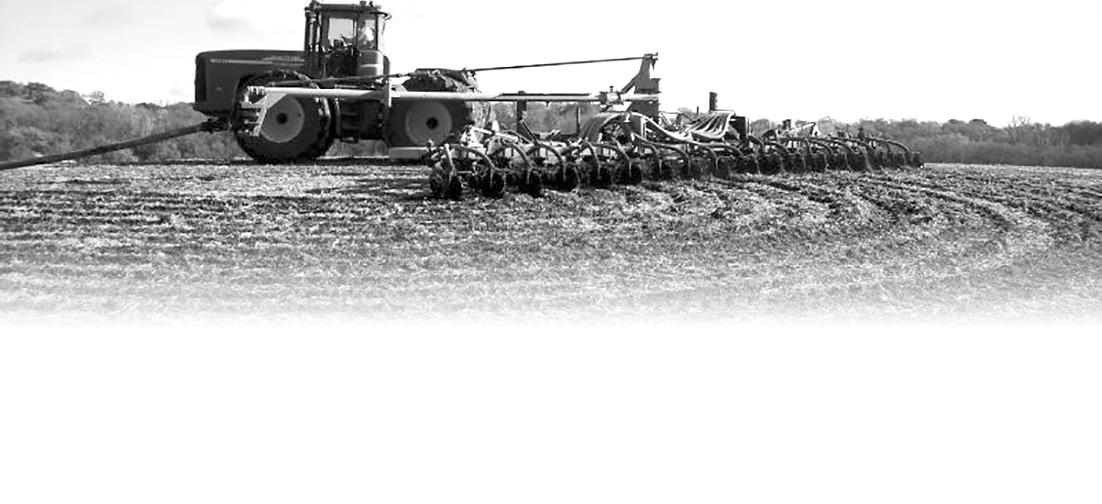




Page 24 • Dairy Star • Saturday, August 27, 2022 RandS.com920-621-6042 Check Out Our HUGE Selection of Harvest Equipment! Wisconsin's Premier John Deere Dealer for 90 Years! 108702 $112,900 2013 CLAAS 980 Chilton / 3,154 Hours 108707 $144,900 2012 CLAAS 960 Chilton / 1,711 Hours 107360 $179,900 2015 John Deere 8600 Marion / 2,897 Hours 100855 $199,900 2015 John Deere 8600 Campbellsport / 1,822 Hours 118260 $199,995 2014 New Holland FR850 Marion / 3,003 Hours 114415 $228,995 2016 John Deere 8800 Pound / 3,139 Hours 116640 $249,995 2014 New Holland FR850 Campbellsport / 1,695 Hours 113616 $265,900 2016 John Deere 8800 Pulaski / 2,032 Hours 118033 $329,995 2017 CLAAS 970 Denmark / 1,820 Hours 110954 $369,900 2019 John Deere 9700 Chilton / 1,470 Hours 119380 $389,995 2018 New Holland FR920 Denmark / 1,739 Hours 119521 $389,996 2010 New Holland FR9050 Pound / 3,510 Hours 119324 $529,995 2020 CLAAS 990 Marion / 1,080 Hours LOW FINANCINGRATEAVAILABLE! SCAN TO VIEW INVENTORY! HAY MERGERS 2008 MILLER 7914.................................. $7,995 2010 OXBO 334..................................... $49,900 2012 KUHN 900..................................... $52,995 2010 OXBO 334..................................... $55,900 2019 KUHN MM700.............................. $58,995 2014 OXBO 334..................................... $66,900 2010 OXBO 334..................................... $69,995 2011 OXBO 334..................................... $69,995 2009 OXBO 334..................................... $71,995 2014 OXBO 334..................................... $75,900 2012 OXBO 334..................................... $82,995 2018 KUHN MM1100............................ $82,995 2016 ROC RT1220................................. $87,995 2013 OXBO 334..................................... $89,995 2018 OXBO 2334................................ $119,900 CORN HEADS JOHN DEERE 666R............................... $11,995 2011 KRONE EC753.............................. $17,900 2013 CLAAS ORBIS 900....................... $25,900 2013 CLAAS 750................................... $26,900 2008 JOHN DEERE 678........................ $31,995 2012 CLAAS ORBIS 900....................... $42,900 2016 JOHN DEERE 770........................ $45,900 2013 JOHN DEERE 778........................ $47,995 2015 JOHN DEERE 770........................ $55,900 2016 JOHN DEERE 778........................ $59,900 2015 JOHN DEERE 770........................ $64,995 2016 JOHN DEERE 770........................ $69,995 2016 JOHN DEERE 770........................ $69,995 2016 JOHN DEERE 770........................ $69,995 2016 JOHN DEERE 770........................ $72,995 MISC. ITEMS 2011 NEW HOLLAND 293....................... $8,950 2011 NEW HOLLAND H7450 ............... $15,900 2015 JOHN DEERE 659........................ $17,900 2009 JOHN DEERE 946........................ $17,995 2015 JOHN DEERE 659........................ $20,995 2017 JOHN DEERE 459........................ $33,995 2016 JOHN DEERE R990R................... $49,900 2012 MEYER 9136................................. $55,995 2011 MEYER 9136................................. $55,995 2010 MEYER 9130................................. $64,995 2018 NEW HOLLAND 330 Plus......... $114,995 VIEW FULL INVENTORYAT RandS.com111129 $279,900 2016 John Deere 8800 Pulaski / 1,687 Hours


Cows wait to get into the barn on a rainy morning in June at the Marc and Julie Brinkman farm near Grey Eagle, Minn.
Dairy Star • Saturday, August 27, 2022 • Page 25 507-879-3593 – 800-821-7092 Box 116, Lake Wilson, MN 56151 – www.bluehilltop.com 507-879-3593 – 800-821-7092 Box 116, Lake Wilson, MN 56151 – www.bluehilltop.com Blue Hilltop, Inc. HAYBUSTER H -1030 BIG BITE The latest introduction to the Haybuster PTO tub grinder family is the H-1030 model. It also has a 10’ tub and comes equipped with tub tilt and heavy-duty hammermill, that is located in the rear of the tub. It also has a dual-auger system to discharge material efficiently to the hydraulic folding stacking conveyor. The H-1030 requires a minimum of 150 hp up to 315 hp tractor. The newly designed electronic governor protects the tractor and machine from overloads, allowing the tub grinder to grind efficiently and consistently. 38241 County 6 Blvd. Goodhue, MN 55027 (651) 923-4441 HAY & FORAGE, STALK CHOPPERS ‘11 NH H7450 discbine, drawbar hitch ....................... In Shop ‘17 NH RB560 round baler, 1,416 bales, like new ..... $29,500 MF 1358 8’4” 3-pt. disc. mower..............................Coming In Vermeer 504 Pro Round baler w/cutter, 11,500 bales$28,500 Krone V180 XC T Crop cutter, 5,764 bales ................ $43,000 JD 3950 Forage Harvestor w/ 7’ hay head consigned. $4,500 ‘09 H&S GM170 Feed Mill .......................................Coming In H&S HDX 14-wheel rake............................................. $15,300 MANURE SPREADERS ‘10 H&S 5126 Topshot Manure Spreader, 16.5x16.1 Tires ......................................................... $19,500 ROW CROP, DRILLS & SPRAYERS Hardi Nav 550m Sprayer w/45’ Boom, 3-Section Controler Consigned ................................. $9,200 Hardi NP1100 80’ Boom, Foam, 463 Pump, 2500 Rate Controller ................................................Coming In ‘13 Hardi Navigator 3500, 60’ Boom, Foam, 5500 Rate Controller ................................................... $21,500 Hardi Navigator 4000 .............................................. Coming In CIH 5100 Grain Drill 12’ w/6” Spacing, no small seeds....................................................... Coming In Great Plains YP1225-24 Twin Row 30” Planter, Finger Pick-Up. 400 Gal LF ...................................... $74,000 John Deere 7000 12R30” Planter, No Fert, No Row Cleaners, Consign ........................................ $7,500 White 9816 Planter 16R30, 750 G LF, Yetter Clean Sweep Row Cleaners............................................................ $84,000 GRAIN CARTS & WAGONS Brent 782 Grain Cart w/ roll tarp & 30.5L-32 tires.... $29,000 GRAIN EQUIPMENT Good Selection Of Used Augers .........................................Call MISCELLANEOUS Bobcat TS44M Tree Spade on Consignment ............. $15,000 Bobcat 94” snow pusher, looks like new...................... $3,200 Bush Hog TD-1500 Tri-Deck Finish Mower 15’ ........ $10,500 Bush Hog SQ 840 3-pt. rotary cutter ........................... $2,400 Bush Hog 3008 8’ 3 pt. rotary cutter, consigned ......... $5,300 Merry Mac Tph-12 3pt Wood Chipper ........................ $1,200 MF 2320 54” Mid-Mount Mower Deck ....................... $1,100 Meyer 80” Skid Steer Mount Snowpusher, (Has Rubber Edge) ........................................................... $900 SUPER SPECIALS TRACTORS MF 8670 FWA Tractor w/ 1,662 hrs. 2013 ............. $164,000 MF 5711 CAB FWA Tractor, 946x Loader, 614 hrs ... $67,000 MF GC1725M Compact w/ DL95 Loader, 60” Deck, 234 hrs........................................................................ $14,500 NH T4.75 CAB FWA, Loader. 2017 w/ 550 hrs ......... $49,000 JD 2630 Platform 2WD Tractor & JD 145 Loader, 2,894 hrs....................................................................... $8,500 COMBINES & HEADS Gleaner S77 Combine 2012 Duals, 1,694 sep, 2416 E. hrs ............................................................... $129,000 Gleaner 9250-30 Draper Head ............................... Coming In Gleaner 9250-35 Draper Head, 2010 ..................... Coming In Gleaner 8200-35 Flex Head w/ Orbit Reel 2009..... Coming In Gleaner 8200-35 Flex Head w/ Crary Air Reel........ Coming In Geringoff RD630 Corn Head Consigned ................... $14,000 Gleaner 300 Series Pick-up Header Melroe Pickup New Belts ...................................................................... $4,500 Gleaner 313 Pick-up Header ........................................ $3,500 SKIDS, TRACK TELE-HANDLERS,LOADERS,&EXCAVATORS ‘00 Bobcat 341 Excavator w/3’ bkt, cab w/Heat 11,660 lbs ................................................................. $28,000 ‘20 Bobcat S740 Skid Steer Cab Hvac, 2-Speed ... Coming In Bobcat S550 Skid Steer Cab Hvac, 6,341 Hrs, 2020, H/F Control, 2-Spd ............................................................. In Shop Bobcat 753 Skid Steer, Open Cab, 5,700 Hrs ........ Coming In Bobcat T770 Track Ldr, Hvac Cab, H/F Controls .... Coming In Bobcat Toolcat 5600 With 3,000 Hrs ........................ $26,000 ‘99 Deere 270 skid steer, H/F ctrls., open ROPS, 14-17.5 tires .............................................................. $19,500 TILLAGE/FIELD CULTIVATORS DMI Tigermate 21.5’ Field Cultivator, w/5-Bar Spike Tooth ................................................... $9,500 Dmi Tigermate 32’ Field Cultivator w/3-Bar Coil Tine $9,500 ‘10 Sunflower 1435-29’ Disc .................................. Coming In Wil-Rich 3400 Field Cultivator w/4-Bar WR Coil Tine, 28’6”............................................................................ $9,900 ‘12 Wil-Rich 5800 Chisel Plow .................................. $21,000 Wil-Rich 5800 Chisel Plow 45’ ............................... Coming In Con nued from BRINKMAN | Page 23 “You need to feed your cows a little.” The farm has changed over the years. When Marc’s grandparents, William and Ludwina Brinkman, bought it, there was no such thing as concern for the environment. Sewer pipes from lake homes fed directly into the lake, cows always went down to the lake to drink, and, in those days, the kids were not allowed to swim in the dirty water. “Years ago, that’s the way it was; people didn’t think anything of it,” Brinkman said. “Not that they were bad people; they didn’t think (about it or) know any better.”
“Myself, from growing up until my 40s, I just wore a pair of shorts, no shirt, never a pair of shoes,” he said. “We went out and milked the cows, and afterward, we’d jump in the lake, shorts and all, and wash our hair with shampoo we had down there. It was so refreshing.”Thelake near the shore of the farm was always considered a good shing spot, and it still is today. A manure pit was installed long ago to keep runoff out of the Lookingwater.at the pontoon down by the dock only 20 yards or so from the house, Brinkman was reminded of a time several years ago when a yearling heifer got out, ran down to the lake and jumped into the water. They took the pontoon out to corral the heifer and guide it back to shore. “Now, I can use the pontoon as a tax deduction,” he said. What is in their future with 4,000 feet of shoreline on the farm? Most likely, the dairy will not continue. Marc and Julie would be thrilled to have their family close, even to have their own places nearby. Already, one daughter lives across the narrow stretch of the lake.The farm land will likely stay in the family.“Icould cash in on this place and be miserable with a lot of money the rest of my life, or I can be in this place and be happy,” Brinkman said. When asked if he is glad he kept the farm small, the answer was immediate. “I am absolutely glad I did,” he said. “As far as passing it on, it would be nice to have upgraded some things; it was sort of an old modern. But ultimately, in life, simple is always better. I like to keep simple as long as you can pay the Brinkmanbills.” said the kids would agree.“My kids thank me all the time; they say, ‘We had the best life ever,’” Brinkman said. “This is like heaven out here.”
By the time Brinkman was growing up, the middle of 12 children of Eugene and Mary Lou Brinkman, the lake water was much cleaner.
DIANE LEUKAM/DAIRY STAR
The Brinkmans’ home lies just 20 yards or so from the shores of Li le Birch Lake.
DIANE LEUKAM/DAIRY STAR





This fall marks retirement for Anderson
CHISAGO CITY, Minn. – In the seasonal rhythm of dairy farming, Dale Anderson likes autumn best. “It’s the end of the year, winding up with harvest,” he said.This year, autumn will bring a different ending. Since March, Anderson, 64, has been selling his cows. He and his wife, Sharon, owners of ChiLakes Holsteins, have made the difcult choice to leave dairy farming due to health issues and the changing landscape around their farm near Chisago City. The farm is on 120 acres, but they also rent cropland.“The area is growing so fast,” Anderson said. “A lot of the land that is getting sold is in 5-to 10-acre tracts, and it’s getting chewed up pretty fast.” The last cows left the farm Aug. 22, a moment the Andersons will remember for years to come.The idea of transitioning to a different lifestyle is immense. Dairy farming is often the mainstay of a farmer’s life. “I’ve always done this,” Anderson said. “I’ve never not had a milk check. This could
PHOTO SUBMITTED
Page 26 • Dairy Star • Saturday, August 27, 2022 TOP PRICES PAID & CONTRACTING AVAILABLE Your Market For: Holstein Steers • Fed Dairy Cows • Lean Dairy Cows Your local area buyer for MN, IA and WI. Long BuyingPrairieStation Bruce Belter • 507-429-0359 Holstein Steers • Lean Cows • Bulls • Fed Cows Tyrel Lembke • 877-300-9298 Long Prairie, MN Lean Cows • Bulls Dean Derricks • 920-655-4730 Green Bay, WI Holstein Steers • Fed Cows • Lean Cows Chad McQuade • 605-668-4275 Yankton, SD Lean Cows • Bulls Mike Baczwaski • 800-445-0042 Gibbon, NE Fed Cows • Lean Cows • Bulls Cody Ritter • 320-293-5212 • 320-732-8358 Long Prairie, MN Green DressedBayBeef We Have What You’re Looking For! W7246 Hwy 68 Waupun, WI 53963 | 920-324-3537 M-F 7:30-6, Sat 7:30-3, Closed Sunday ’987810JD 15,110 hrs, 16 Spd Quad, 3 SCV, 2WD, 540/1000 $47,500 ’12 Meyer VB750 Vertical Beater, Small 1000 | $36,900 ‘06 JD 946 13’Impeller Cond. Drawbar Hitch, Turnbuckle Adj. on CH $20,900 MORE INVENTORY AT WWW.BALLWEG.BIZ Massey3740Ferguson Rotary Rake, 10’6”, 12 Bar, 540 PTO $7,995 ‘04 JD 625F, Auger Comp. Fngr., Stubl Lgts., HH Cont.Sense,Sense $17,900
By Jan Lefebvre Freelance writer be interesting.”Anderson’s parents, Bob and Shirley, purchased the farm in 1956 and raised Anderson and his two siblings there. Dale and Sharon became partners with them in 1982 and bought the farm in 1989. Throughout the years, the dairy herd has been around 50 to 55 cows but once peaked at almost 70. Looking back, Anderson is proud of improving the herd with careful breeding and quality care.“Going to (a total mixed ration) was a big step for us,” Anderson said. “That changed our herd completely.” The change was made in 1992.“We were always stuck in that 18,000- to 19,000-pound rolling herd average,” Anderson said. “We started working our way up and eventually got up to over 32,000 pounds in 1995.”For a few years, the herd was in the top three in Minnesota for rolling herd average on twice-a-day milking and has maintained good averages since.The farm also developed a registered herd, beginning when Anderson and his brother bought two registered calves in 1970 to show through 4-H.
Turn to ANDERSON | Page 27
The Andersons set the goal of having a registered herd, which they accomplished by the late 1970s. Later, the herd was placed on Holstein Association USA’s Progressive Breeders’ Registry for having a BAA of 107.9.Despite the many changes on the farm, the way of life for the Andersons has always remained. “A lot of things have changed, from seed to chemicals to how we manage cows,” Anderson said. “There isn’t Miliana Zack (front, from le ), and Cheyenne Zack; (back, from le ) Sharon Anderson, Dale Anderson, Ana Zack, Dan Zack holding Eleanor Zack stand by the Chi-Lakes Holstein sign at their farm near Chisago City, Minnesota.
Saying
goodbye to a lifetime of dairy farming





Dale and Sharon plan to remain living on the farm, so they will be around fellow dairy farmers.
Dale Anderson mixes feed while Miliana pushes feed into the barn for the cows. His favorite part about the farm was raising his family there.
His daughters, Serena and Ana, both showed animals in 4-H. Ana, who works on the farm and owns some livestock, considered taking over the business but decided against it because of the capital intensity of dairy farming and other factors.“She told me this morning that she didn’t know if she could handle seeing the last (cows) go,” Anderson said. For closure, Anderson would have liked having an auction, but it was not in the cards.“Having an auction is kind of the pinnacle where you know that when you’re done, you’re done, and you can celebrate it with the rest of the people who are there,” he said. “When we sold the herd like we did, we didn’t get that opportunity.”However, the Andersons plan to do something to celebrate.
As he and his family head into autumn without daily milking and as many chores to do, Anderson hopes people appreciate the hard work dairy farmers do every day.“They deserve to be commended,” he said.
“There’s some really good people in this area,” Anderson said. “This area is known for having good herds.”
Dairy Star • Saturday, August 27, 2022 • Page 27 Kreofsky Ag Systems (507) 534-3855 WWW.KBSCOMPANIES.COM COW COMFORT IS OUR PRIORITY! AQUASTAR Ultimate Waterbed and Aqua Board MAGELLAN Rubber Flooring Keep It Cold! Sales • Installation • Service • Dairy Route Supplies • Bulk Milk Coolers • Internal bulk tank repairs • Service all models and makes of dairy equipment and bulk tanks forCallDemo Norman N Borntrager, Owner Cell: 319-330-2084 Tri-County Refrigeration Keep it Cold! ~Ice Machines ~Walk-ins~ Dairy Route Supplies~ Commercial Refrigeration ~Milking Equipment Repair ~ Bulk Milk Coolers ~Sales ~Installation ~Service 4351 March Ave. • Osage, IA641-737-2396 Fax: 641-737-2380 Call Details.for Make sure that it’s Schurr Heavy Duty, German Made Get your cows ready for Winter WITH A SCHURR COW BRUSH Completely Perfect Milking The highest level of parlor automation with high speed interactive microprocessor to effectively manage your • Milking • Pulsation • Herd Health • Washing 820 W. MAIN ST. • CHILTON, WI 53014 www.ddequipment.com920-849-9304 2014 Penta 6020SD $23,000 Hagedorn 5290 Call for Price Penta 6730 Call for Price NEW & USED Equipment Penta 5530 Call for Price Penta DB850 1 left, Call for Price WE ALSO CARRY THESE BRANDS: Hagedorn 2277 New Spreader! one thing that has been consistent other than the Andersonwork.”does not resent the work at all. In fact, he cannot come up with anything about dairy farming that he will not miss. “I’ll miss everything about it,” he said. “I’ll denitely miss the cows. I breed my own cows and pick my own bulls and just the satisfaction of getting the herd from where you were to where you are. It’s been a big accomplishment, I Andersonthink.” has especially loved the family aspect of farming, but one time he broke with family tradition. His grandparents and parents always used International tractors and equipment on their farms, but Anderson remembers in 2004 when he purchased a John Deere loader“Dadtractor.gave me static about that for a while,” he said. Soon after the notorious purchase, he drove loads of corn to an elevator in Stacy where his grandparents are buried. Anderson swung by the cemetery.
Con 26 “I had to stop in and apologize for having a John Deere,” Anderson said. “I felt that guilty.”Through the years, the farm has hosted several seminars put on by the University of Minnesota. One in the early 1980s was about stray voltage. Anderson also remembers the drought of 1976, which was far worse on his farm than the one of 1988. When asked what his best memory is, Anderson responded“Gettingquickly.married,” he said. “It was just great to watch the kids grow up on the farm.”
nued from ANDERSON | Page
PHOTO SUBMITTED
“We might have a party and get some family and friends together,” Anderson said. “Learn how to live again.”


Page 28 • Dairy Star • Saturday, August 27, 2022 AUTHORIZED BOBCAT DEALERS Visit Bobcat.com/Offers or stop by today for details. *Offer ends 09/30/2022. Available at participating and eligible dealers only. Offer may vary by product type, series, model and select units in dealer’s current inventory. Must take delivery from dealer stock by 09/30/2022. Offers available on new equipment in US and Canada only. Some restrictions apply. Length of contract and rate may vary. Prior purchases not eligible. See dealer for details. Financing provided on approval of credit by authorized Bobcat finance providers to well-qualified buyers. Administrative fees may apply. Offer not available to government accounts, national accounts and municipal/utility bid customers. Non-commercial customers may not be eligible for low rate financing. Bobcat Company reserves the right to extend or discontinue any of these programs at any time without prior notice. Bobcat®, the Bobcat logo and the colors of the Bobcat machine are registered trademarks of Bobcat Company in the United States and various other countries. Lano Equipment of Norwood Norwood Young America • 952-467-2181 Miller Sellner Slayton, LLC Slayton • 507-836-8571 CarterWISCONSIN&GruenewaldCo., Inc. Brooklyn • 608-455-2411 Carter & Gruenewald Co., Inc. Juda • 608-934-5201 K&L Bobcat, Inc Darlington • 608-776-4044 Miller Implement Co., Inc. St. Nazianz • 920-773-2800 Miller Implement Co., Inc. & Motorsports of Fond du Lac Fond du Lac • 920-922-8521 BobcatMINNESOTAofOtterTailCounty Fergus Falls • 218-739-4505 Farm-Rite Equipment, Inc. Dassel • 320-275-2737 Farm-Rite Equipment, Inc. Long Prairie • 320-732-3715 Farm-Rite Equipment, Inc. St. Cloud • 320-240-2085 Farm-Rite Equipment, Inc. Willmar • 320-235-3672 IOWA JP Scherrman, Inc. Farley • 563-744-3393 Reiser Implement, Inc. Waukon • 563-568-4526 SOUTH DAKOTA Bobcat of Brookings, Inc. Brookings • 605-697-5544 Pfeifer’s Implement Co. Sioux Falls • 605-338-6351 DO SPENDMORE.LESS. 0% Financing for up to 24 months or up to $1,600 USD/$2,100 CAD cash rebates in lieu of financing on select loaders COMPACT LOADER Offer Septemberends 30, 2022 IFA Roller-Grinder Solid cast rolls All belt-electric drive Single or double mills USA & International sales Replacement rolls available for most mills Used mills and tumble mixers on hand Hammer Mills More milkless feed with uniform ne-grind Phone: (319) 634-3849 • Toll Free: (800) 426-0261 web: www.ifamill.com • email: ifamill@netins.net Do you have an upcoming auction? Advertise it in the Dairy Star - call 320-352-6303 for more information. Call 320-352-6303 to place your classied or mail to: Dairy Star, 522 Sinclair Lewis Ave., Sauk Centre, MN 56378. Travis Janke Farm Equipment & Livestock liv4rut@gmail.com 715-896-3100 Purchasing, selling, banking, death, divorce, auctions and partnerships Certified by the American Society of Agricultural Appraisers Machinery ChemicalsCrops Livestock JSS JSS Appraisal Services, LLC Travis was born and raised on a family dairy and crop farm in Western Wisconsin.


Dairy Star • Saturday, August 27, 2022 • Page 29 Women In Dairy Call Us At (715) 223-3361 Or visit us on-line at www.cloverdaleequip.com N13835 County Rd. E - Curtiss, WI 54422 HOME OF THE CLOVERDALE MIXER CALL FOR DETAILS AND PRICES! PLASTIC WRAP, TWINE & NET WRAP IN STOCK Flavor Seal Plastic 1, 1.2, 1.5 & Ultra 5 Dutch Harvest Net Wrap 48 & 51 and RED, WHITE & BLUE Hybrid 48”-13,200’ long Hybrid 51” -12,100’ long Baler Twine 440-4,000 Baler Twine TYRITE Silage Bags 8 x150, 8x250, 9x200 Hi-Tech 8x200, 9x150, 9x250 Elizabeth DeLange Alma Center, Wisconsin Jackson County 196 cows Family: My grandpa had a dairy farm until he sold the cows, so I grew up helping raise Holstein steers. My grandpa Jay is the one who taught me to love and care about farming. I got my rst job on a dairy farm at age 16. Tell us about your farm. My boss and I have worked together for three years in September. When I rst started, he had about 80 cows milking, and since then, the herd has expanded to 196 cows total. It has been a rollercoaster for both of us, but we have always pushed forward with the common interest of the herd in mind. Farming is constantly a learning experience. Aaron, my boss, enjoys more of the eldwork and feeding while I enjoy raising the calves and managing the dairy herd. I also love to chop hay and be the operator some days.
What decision have you made in the last year that has beneted your farm?
One of the best changes we have gone through was going from a pack barn to sand-bedded free stalls. Not only are we able to house more cows, but the animals are also much healthier and overall happier. Since then, our herd has expanded, and we have made many changes to our milking and feeding procedures to try and best benet the herd and future herd. Tell us about your most memorable experience working on the farm. One of my favorite memories has been raising the next generation of the herd. It is such a rewarding feeling when a calf, that I was either there when she was born or raised on the farm, has a healthy rst calving and is able to join the milking herd. Oftentimes, these rst lactation heifers are even milking alongside their mothers.
What are things you do to promote your farm or the dairy industry? I enjoy answering any questions people ask me about the farm and having people come out to the farm who have never been on a farm before. One of our rst calf heifers had a tiny little heifer calf in December. I named this tough little heifer calf after my tough great aunt Anita. Anita is now three months pregnant, and I have
enjoyed sharing her life events with my aunt who drove three hours to come visit us for her rst time ever on a dairy farm.
What is a typical day like for you on the dairy? We milk at 7 a.m. and 6 p.m. On Tuesdays, I have herd health and pregnancy checks. Aaron or Chewy take care of feeding the cows and heifers. I feed calves and younger heifers then get back to the parlor to help with fresh and sick cows. Chores always end with feeding fresh milk to the newest calves before cleaning up.
What is your biggest accomplishment in your dairy career? Taking care of fresh cows has been one of our biggest challenges. With the help of our vet and Leedstone team, I have been able to come up with a fresh cow protocol that has been working out rather well in keeping our cows happy and healthy. Becoming herd manager was not something that I had ever gone to school for or even had much training on beforehand. It has been a long and bumpy road to get where I am today, but I have always known there is nothing else I’d rather be doing with my career. It takes a strong team to maintain a strong herd.
PHOTO SUBMITTED
What have you enjoyed most about dairy farming or your tie to the dairy industry? Although dairy farming has many ups and downs, my favorite part of farming is having healthy cows and watching them grow and overcome any issues that may come up. Cows are denitely a lot of work, but I truly do enjoy learning new things daily. There are so many ways to do something, and what works for one cow, may not work for another. I enjoy the challenge of learning what works best for our farm to have healthy cows.
Rugged Equipment... Priced Right... Since 1956! FREE 92-Page Printed Catalog 1-800-472-2341 E-mail: info@loyal-roth.com MFG Co. P.O. Box 40 Loyal, WI 54446 838908_9-27-17 Ventilation Vinyl-Strip Door Starter Pen Calf Hutches Flex-Pen System Geyer & Hosaja Mats and Rolled Mats Poly Group Hutch Single-Chain Elevator
What advice would you give another woman in the dairy industry? Make the best out of any situation; things could always be worse. Life is short. Don’t forget to stop, smile and enjoy a cold beer along the way. Remember that it is as equally as important to care for yourself as it is to take care of the farm. The healthier and happier you are as a person will allow you to better take care of and enjoy your farm. When you get a spare moment, what do you do? In my spare time, I enjoy reading, hiking outdoors with my pup, cooking and talking farming with the locals at the local watering hole.


Page 30 • Dairy Star • Saturday, August 27, 2022 www.extension.umn.edu/dairy Martin Ag Supply LLC 3128 Mitchell Line St. Orchard, IA 50460 641-982-4845 ESCH EQUIPMENTHAY4222 22’ working width, 10’11”540transport,PTO BOBCAT$11,2002020T76 476 Hours, Cab Heat/ Air, 2 Speed $69,900 2020 HOLLANDNEWL318 14 hrs., Cab, Heat/ Air Power latch EQUIPMENTESCH$42,900HAY6032 6 star tedder, 32’ working width, 540 PTO $25,500 Sportsmanship is often associated with sporting activities such as baseball or football. However, there are numerous places in the dairy industry where sportsmanship characteristics can be applied. The denition of sportsmanship is: conduct (such as fairness, respect for one’s opponent, and graciousness in winning or losing) becoming to one participating in a sport.In other words, sportsmanship is an understanding of and commitment to fair play, ethical behavior and integrity, and general goodwill toward an opponent. Now, how does that relate to the dairy industry? Sportsmanship is essential in all ages and stages of life, and it starts at home. Be respectful to animals, humans and the land. This will in turn cement the foundation for subsequent characteristics. Be willing to learn, keep an open mind and to try something outside of comfort zones. Be ethical, moral and honest in all transactions. Be in control of oneself at all times and set a good example of positive behavior for youth present. Many county fairs are wrapping up, and the bigger dairy shows are on the horizon. Practice ethics and honesty. If a heifer calf is born Aug. 29, then her registration paper should say Aug. 29 not Sept. Practice2. respect. Work with animals extensively prior to the show so they are familiar with the handler and comfortable in different environments. Hitting an animal is never acceptable, and it will cause greater distress for both the animal and handler not to mention that a passerby can take a photo or video and post it on social Dairy sportsmanship Dana 612-625-8184gcramer@umn.eduGerard612-625-3130lcaixeta@umn.eduLuciano612.624.3610armst225@umn.eduJoe320-204-2968adam1744@umn.eduAdams,ArmstrongCaixetaCramer Marcia 320-589-1711hein0106@umn.eduBrad612-624-2277hanse009@umn.eduLes612-626-5620jhadrich@umn.eduJoleen612-624-5391miendres@umn.eduEndresHadrichHansenHeins Nathan 507-280-2863krek0033@umn.eduEmily320-484-4334ande9495@umn.eduKaren612-625-3108kjanni@umn.eduKevin320-203-6104huli0013@umn.eduHulinskyJanniJohnsonKrekelberg By Brenda Miller U of M media which leads to negative outcomes for the dairy industry.Practice self-control. It’s a great feeling to win a class or show but be humble with thanks; bragging is unbecoming. Congratulate the winner with a smile and a handshake. Make a point to say thank you to the judge, clerks, parents and other volunteers helping to make the show run Practicesmoothly.mentorship. Help a youth with tting, showing, washing, bedding or any other animal husbandry task. A few positive words and actions can have an impact that lasts a lifetime. Putting in the time and elbow grease earns rewards mentally, physically and emotionally. Jealousy does no one any good. Do the work honestly.Sportsmanship characteristics apply to everyday farm life and neighborhoods too. Like cows, every farm is different. Farmers grow different things than their siblings or neighbors. Be respectful of property lines, fences, trees and animals both wild and domestic. Appreciate the differences in the neighborhood; it doesn’t have to be a competition nor should it be. Help a neighbor without expecting reciprocation. Sometimes it feels good to lend a hand to someone. Be a good boss. Be the employer you would want to work for. Be approachable and respect boundaries, comfort zones, cultures and personalities. Listen to all the information before making decisions and practice effective communication. Know the strengths of each employee to create an effective team. Positive reinforcement and effective training procedures can make for happy employees. On the ip side, be a good employee. Be the person you would want to supervise if you were the boss. Listen to instructions, ask relevant questions, put your phone away, work hard and be honest if a mistake is made. Work with colleagues instead of against them. Not everyone has to necessarily like each other, but they do have to be respectful and work together to get the job Sportsmanshipdone. is present in every person’s daily interactions both on and off the farm. It is up to each person to decide how they are going to handle a situation. Win or lose, there is no room for a bad attitude so smile, shake hands, say congratulations or thank you, and learn from every experience.
715-644-2350 Chippewa Valley Dairy Supply 6053 CTY. HWY. G • STANLEY, WI 54768 • Andrew Zimmerman We SpeeDeeshipandUPS! • 16”x16’ • Factory seconds • quantity discounts • J-trim • Inside and outside corner trim TRUSSCORE WHITE PVC WALL AND CEILING PANELS Use in dog kennels, milk houses, etc. m etc. Standfromoutthe herd. DAIRY ST R 522 Sinclair Lewis Avenue, Sauk Centre, MN | 320-352-6303 | www.dairystar.com Professional Print, Website & Sign Solutions for Farms & Small Businesses Contact your area sales representative listed in First Section, page 2 to learn how our customized services can help your farm or business!
Claire 320-296-1357ijsalfer@umn.eduIsaacroyster@umn.eduErin320-732-4435edunels4220@umn.Brenda507-332-6109lacanne@umn.eduLaCanneMillerRoysterSalfer Jim 612-625-4276mlw@umn.eduMelissa507-934-7828edusever575@umn.Emma612-624-1205mschutz@umn.eduMike320-203-6093salfe001@umn.eduSalferSchutzSevernsWison







By Brad Heins, Glenda Pereira and Les Hansen University of Minnesota days of rst lactation. The RFI is the difference between actual dry matter intake and expected dry matter intake, and a cow with a negative or lower RFI is more Currently,favorable.aTMR based on corn silage is fed to most cows in connement herds in the United States, and dairy farmers have explored alternative diets to improve nutrient digestibility, feed efciency and protability of cows. Therefore, our study wanted to compare ProCROSS crossbred cows with Holstein cows fed two alternative diets for dry matter intake, production and feed efciency during the rst 150 days of Three-breedlactation. (Montbéliarde, Viking Red, Holstein) rotational crossbred (ProCROSS) cows (n=17) were compared to Holstein cows (n=19) for feed intake, production and body traits during the rst 150 days of rst lactation. Cows calved in the University of Minnesota-St. Paul campus herd from September 2019 to March 2020. Cows were assigned to a traditional diet or a higher ber, lower starch diet. Diets were composed of corn silage, chopped alfalfa hay, corn gluten feed, cottonseed, ground corn, molasses, concentrate supplements and vitamins and minerals. The traditional diet had 20.8% less corn silage, 47.4% less alfalfa hay, 44.1% more corn grain and 43.3% more corn gluten feed than the high ber, lower starch diet. The diets were fed twice daily, and refusals were weighed once daily. All cows were individually fed the same TMR on an ad libitum basis. Body weight was recorded twice weekly; body condition score was evaluated once weekly. Table 1 has the results of crossbreds versus Holsteins fed the two diets from the rst 150 days in milk. The crossbred cows fed a higher ber, lower starch diet had less dry matter intake, more body condition, similar fat plus protein production and a lower (more favorable) mean residual feed intake than Holstein cows. Surprisingly, the Holsteins cows fed a traditional diet had more dry matter intake compared with the Holstein cows fed a higher ber, lower starch diet. Dairy farmers may feed either traditional or a higher ber, lower starch diet to crossbred cows without loss of production. Less RFI for the crossbred cows fed higher ber, lower starch compared with the Holstein cows that were fed a traditional diet indicated that the crossbred cows were more feed efcient than Holstein cows. Genetic selection of feed efcient cows should not be based solely on reducing dry matter intake but should consider body weight, body condition score, production, health, fertility and longevity.
Table 1. Results of ProCROSS crossbreds versus Holsteins from the rst 150 days in milk. Traditional dietHigh ber, lower starch ProCROSScows Holsteincows ProCROSScows Holsteincows Dry matter intake (lb.) (105-day total) 5,370 5,714 5,022 4,914 Fat + protein (lb.) 564 593 562 564 Body weight (lb.) 1,270 1,292 1,323 1,213 Body condition score 3.64 3.19 3.34 3.02 DMI/BW 4.21 4.43 3.80 4.04 Residual feed intake 0.8 85.3 -120.0 1.8
Dairy Star • Saturday, August 27, 2022 • Page 31 Northwest Metal Innovators, LLC LLCNorthwest Metal Innovators, LLCNorthwest FORMERLY N-TECH The quality products you knew from N-Tech with the service and custom projects you need! (715) 537-9207 sales@northwestmetal.net Notootooprojectbigorsmall! Products • Manure Pumps • Vertical Pumps/PTOs • Hydraulic Pumps • Lagoon Pumps • Props • Pipe Carts • Tankers Service • Pump Rebuilds • Tanker Rebuilds Metal Fabrication • Paint and Powder Coat • In-house 8’x24’ plasma table with bevel head • Roll – Bend FOLLOW US ON 5 Berger Ave. • Barron, WI Interest in crossbreeding is at an all-time high among commercial dairy farmers. Reduction of fertility, health and survival of Holstein cows and an increase in inbreeding have each contributed to an increased number of crossbred dairy cows in the United States. Feed costs impact the protability of dairy farms and represent 47% of the total costs of U.S. milk production. Recently, the Feed Saved trait has been incorporated into the lifetime net merit index for the Holstein breed with a goal of improving feed efciency and protability of dairy cattle. A few studies have been conducted on feed intake and feed efciency of crossbred versus purebred cows. Collecting data for feed intake of individual cows is costly because of the specialized labor and equipment that are required. Early feed intake research at the University of Minnesota found that Jersey-Holstein crossbred cows and Montbéliarde-Holstein crossbred cows consumed the same or less dry matter intake compared with Holstein cows but did not differ for fat or protein production. Another study at the University of Minnesota found threebreed crossbred cows of Montbéliarde, VikingRed and Holstein breeds had a lower mean residual feed intake compared with Holstein cows fed a similar total mixed ration during the rst 150 Crossbred cows are more feed efcient than Holstein cows


During her stay with the Schmitts, Kolb traveled to Schmitt’s family reunion in Illinois and to the National Holstein Convention in Sioux Falls, South Dakota. She also attended various local festivals and Fourth of July celebrations with the family. “I am open to trying anything,” Kolb said. “I have no expectations, so then it opens for me to do more. The host families always know best, and everything I get to do is a great experience.”Schmitt agreed. “When we ask if she up for something, she just says, ‘I am open to anything,’ and then we go do it,” she said. Kolb enjoys Minnesota because of the scenery and lakes. Her love for water and nature makes her placing in the Land of 10,000 Lakes a good t. “I love nature,” Kolb said. “Minnesota reminds me of home.”Kolb and Schmitt bonded over the similarities between their cultures, trading recipes and family traditions with each other. “We are often surprised how similar the things we do are,” KolbKolbsaid. is the rst exchangee the Schmitt family has hosted through the IFYE program. Schmitt has followed the program for years and eagerly applied to become a host family when she found out one was coming to Minnesota. It was Minnesota’s rst exchangee in recent years. “I wanted to do IFYE when I was in college, but it never worked out,” Schmitt said. “When I saw the post on Facebook looking for hosts, I gured it was meant to be. I could now be a part of the program.”
Landing on a dairy
The organization sends young adults from across the world to other countries with a goal of immersing them in the culture of a new Theplace.agriculture-based exchange places its participants with host families within the country they are visiting. They are to act as a family member in order to experience what rural life is like from that country.
Natalie Schmi and Julia Kolb stand with a calf on the Schmi s’ dairy farm July 10 in rural Rice, Minnesota. Kolb is a part of the Interna onal Farming Youth Exchange program, and the Schmi s are one of the four host families she will be staying with this summer. Kolb did not grow up on a farm but was enthusiastic about learning the operations of the dairy. She helped with daily chores in the barn and around the household. Her main duty was to help Schmitt feed the calves. “I have learned so much already, and I have only been here two weeks,” Kolb said in an interview July 8. “It is so cool to see how other people live.”
“Our goal is to have the (exchangee) live through the eyes of their host family,” said Caitlyn Krueger, state coordinator for Minnesota IFYE. “It allows them to truly learn what it is like to be from that country because with host families they get to do so much more than an average tourist.”Kolb arrived in Washington, D.C., June 17 for the IFYE orientation weekend. Upon arrival, she prepared for her stay with the other U.S inbounds from Germany, South Korea, Switzerland and Austria, and the U.S. outbounds who were beginning their stay. After orientation, Kolb traveled to Minnesota and began her international experience with the Schmitt family where she stayed until July 11. The remainder of her time will be spent with host families in Pelican Rapids, Belgrade and a third location.
Germany exchangee spends time in central Minnesota
By Maggie Molitor Staff intern MAGGIE MOLITOR/DAIRY STAR
The program was founded after World War II to promote peace through understanding, also the tagline of the program.
Page 32 • Dairy Star • Saturday, August 27, 2022 www.norbco.com67962 State Hwy 55, Watkins, MN 55389 • 320-764-5000 MA KING COW COMFORT OUR PRIORITY Curtain SystemsVentilation SystemsFreestall SystemsHeadlocks CONCRETE1-800-982-9263PRODUCTS Serving Minnesota, Iowa and Wisconsin Since 1965 www.alsconcreteproducts.comAL’S BUNKER SILOS AVAILABLE IN ONE OR MULTIPLE BAY DESIGN Height Available: 5’, 8.6’ & 12’ •AVAILABLE:ALSOFeedBunks•CattleSlats • Holding Tanks • Cattle Guards www.TridentPulsation.comTrident@TridentPulsation.comTridentPulsation™ System 607-849-3880 • 607-759-1037 Independent Expert Review Milking equipment expert Ghislain Coppejan from an international dairy equipment company evaluated TridentPulsationtm performance at a large dairy in Belgium. The following is from his report: • Fast milking • Very good teat condition • Smooth teat ends • Low signs of congestion • Teats were dry (on detach) • Cows are milked out properly • Teat end vacuum 48kPa (14.2 inHg) This dairy operates at 60ppm, 65/35 and has noted since the first day that their cows now milk very fast. Discover what it can do for your dairy. The difference TridentPulsation™ can make in your parlor RICE, Minn. – Waking up to bellowing calves and the hustle and bustle of chores on a dairy farm created a new daily routine for Julia Kolb as she became accustomed to life in rural Minnesota.The24-year-old from Wörnitz, Germany, is participating in IFYE – established in 1948 as the International Farm Youth Exchange – spending three months this summer with four families from across Minnesota. Kolb’s rst three-week stay was with Mark and Natalie Schmitt on their dairy farm near Rice. “I got involved with IFYE to gain more insights on agriculture in other countries and experience their cultures rsthand,” Kolb said. “I want to take the things I learn home and adapt them.” Mark and Natalie Schmitt farm with their son, Austin, in Benton County near Rice. They milk 85 registered Holsteins and crop 400 acres of land. Upon her arrival in Minnesota, Kolb immersed herself in the day-to-day happenings of the Schmitts as if she were one of the family – a unique aspect of the exchange program. “Part of the program is to become one of the family,” Natalie Schmitt said. “In this family, we are dairy farmers, and Julia gets to help with chores.”


What advice would you give other dairy farmers? Don’t be afraid to change if you need to. Be openminded. What are your plans for your dairy in the next year and ve years? We would like to add a few cows and get our numbers back up in the barn. I would also like to continue to give more management duties to Kelly.
What do you enjoy most about dairy farming? I really enjoy the life of it. I like working outside and watching the cattle and the crops grow. I also like to be home. It’s a way of life.
Dave Fetters (pictured with his daughter, Kelly) Milaca, Minnesota Mille Lacs County 40 cows How did you get into farming? This is the home place. When my parents, Millard and Edna, retired, me and my brother, Donnie, took over. He was 19, and I was 14 at that time. Our parents moved here from Hecla, South Dakota, in 1956.
What is the best decision you have made on your farm? My brother and I farmed together until 2007, and then, we sold out. I worked at a factory for a short time, and 2.5 months later, I was milking again. I was so used to being my own boss. I like being my own boss.
Dairy Star • Saturday, August 27, 2022 • Page 33 Dairy prolepro Call (920) 830-0277 Today! AppletonSteel.com Ask us how to get professional hoof trimmers involved with your on farm trimming program!ProudPartner of the Midwestern Hoof Trimming School EQUIPMENT!UPGRADEYOURON-FARM
What strategies do you use to withstand the volatile milk prices? We try to watch our costs to the best of our ability and live within our means. We also try to work with good people.
How do you or your family like to spend time when you are not doing chores? We have lunch together, and we like to sit and visit with people.
What are your thoughts and concerns about the dairy industry for the next year? The price of everything. Everything is out of whack; ination. The milk prices never keep up with ination. Our motto has always been to take it a day at a time and get there. What is a recent change you made on your farm and the reason for it? Two years ago, we switched away from A.I. to bull breeding. We did this because we weren’t getting the genetics of the cows. They were looking too much like their dams. We kept getting the dam all over again. Our conception rate improved as well. Tell us about a skill you possess that makes dairy farming easier for you. Heifer and calf raising. I switched over and increased our amount of milk we feed our calves to start. We also switched to rolled corn and not a calf starter.
How do you retain a good working relationship with your employees? I am in a partnership with my daughter, Kelly, and we try to maintain open communication with our work on the farm.
What are three things on the farm that you cannot live without? Our Milwaukee headlights; we are night owls here. The skid loader because you can do so much with them, and our Blue Heeler/German shepherd dog. We pasture, and they are good with cattle and good companions.





On Most corn planting happened two to four later than normal to April rains and belowaverage Despite the later spring, corn silage harvest is just around few gies determine when to hit the elds and how put up the highest possible.Temperature affects crop growth and development. Accumulation of heat during the growing season can be used as a predictor of a plant’s developmental progress. Growing degree days is a calculation to express this heat accumulation. For the 2022 growing season, we gained signicant GDD and were ahead of our historic averages for June and July. That trend has slowed recently with more moderate temperatures and added precipitation. This may keep harvest dates closer to normal despite delayed planting.
to
weeks
thanks
can help
quality forage
temperatures.
strate-
Corn silage kernel processing is critical, especially as DM and milk line progress. Pre-harvest is a good time to check processing roll condition and gap Cilklisetting.
Do not miss the chance to make good corn silage
By Barry Visser
Theoretical length of cut determinations for corn silage are dependent on factors such as harvest DM, percentage of ration contribution and storage structure. Typical TLOC ranges from ve-eighths to 1 inch (16 to 25 mm). As DM increases, considerations need to be made to shorten the TLOC. Finally, be safe. Corn silage harvest brings increased machinery trafc and long hours. Fermentation results in the production of potentially deadly gases that can accumulate in the silo and unloading area. Exercise caution in these areas. As always, make safety your top goal this corn silage season.
the corner, and for a few in outlying areas, it has already begun. A
Once the chopper is rolling, evaluate kernel processing and adjust accordingly. The rst method is to ll a 32-ounce cup with corn silage before ensiling. Spread it on a at surface. You should see no whole or undamaged kernels. The second option it to use a bucket of water. Place a couple handfuls of corn silage in the bucket, skim off the oating plant material, pour off the water and evaluate the corn particles that remain in the bucket.
Page 34 • Dairy Star • Saturday, August 27, 2022 is a registered trademark of Tetra Laval Holdings & Finance S.A. and “DeLaval” is a registered trade/servicemark of DeLava Holding AB © 2022 DeLaval Inc. DeLaval, 11100 North Congress Avenue, Kansas City, Missouri 64153-1296. All facts and figures are the result of data collected on test farms and pilot farms. Data compared to DeLaval Champion. Results may vary and are not guaranteed. www.delaval.com www.delaval.com Scan tourvirtualviewtonow! DeLaval VMS™ milking system V300 The right fit for any-size dairy We’re here for your herd, even the largest of them. DeLaval continues to meet the demands of your large-herd dairies with the DeLaval VMS™ milking system V300. Take a look inside the barns that rely on DeLaval robots in their growing operations. positionslearningSelfteat interfacefriendlyUser anywheredataAccessfrom multi-breedIndexingallowsherd DairyStar_CoOp_VMS Large Herd VMS SIZE - 6.8 x 13.indd 1 3/18/2022 1:46:59 PM Contact one of the following dealers to learn more: PrairieIOWA Land Ag Supply Inc. Rock Valley, IA 712-476-9290 United Dairy Systems, Inc. West Union, IA 563-422-5355 AdvancedWISCONSINDairy/Bob’s Dairy Supply Spring Valley, WI 715-772-3201 Ederer Dairy Supply Plain, WI 608-546-3713 DeLaval Dairy Service Kaukauna, WI 866-335-2825 Joe’s Refrigeration Inc. Withee, WI 715-229-2321 Mlsna Dairy Supply Inc. Cashton, WI 608-654-5106 Professional Dairy Services Arlington, 608-635-0267WI Redeker Dairy Equipment Brandon, WI 920-346-5579 The Scharine Group Inc. Whitewater, WI 800 472-2880 Mt Horeb, WI 800-872-3470 MINNESOTA & SOUTH AdvancedDAKOTA Dairy of Mora Mora, MN 320-679-1029 Farm Systems Melrose, MN 320-256-3276 Brookings, SD 800-636-5581 S&S Dairy System LLC St. Charles, MN 507-932-4288 Professional Dairy Systems Wadena, MN 218-632-5416 DairyStar_CoOp_VMS Large Herd VMS SIZE - 6.8 x 13.indd 1
SomethingNutritionisttoRuminate
Identifying and achieving harvest goals has huge production and performance implications along with economic impacts. Corn silage must be ensiled at optimum DM to maximize packing density and fermentation. For bunkers and piles, the optimal DM range is 30%-35%. Bags are similar but may tolerate a couple points drier. Upright silos may need to be closer to 35%-45% DM depending on the exact structure. Corn silage kernel processing is critical, especially as DM and milk line progress. Pre-harvest is a good time to check processing roll condition and gap setting. Roll gap clearances are generally measured in millimeters with a normal opening of 1-4 mm. This setting is dependent on kernel maturity, hardness and size. Settings ideal for harvest in previous years may be signicantly different for the current crop.
Note tasseling dates of elds. Silage harvest usually begins 42 to 47 days after tasseling. However, this is dependent on several factors, such as rainfall, temperature, corn hybrid and fertility. As harvest nears, monitor whole-plant moisture for a more accurate harvest date. Collect some representative stalks (manually or mechanically) and dry them or use nearinfrared technology to obtain a whole-plant dry matter. The in-eld dry down rate is typically 0.5 to 1 percentage point per day.


the performance of their farms, but they are
Dairy Star • Saturday, August 27, 2022 • Page 35 Editorial disclaimer: The views expressed by our columnists are the opinions and thoughts of the author and do not reect the opinions and views of Dairy Star staff and ownership. We are authorized dealers & installers of all the brands above & more! Working closely with our partners, we’re your connection for help with the quality equipment you’re looking for. Get the right equipment: >> Conventional to robotics With ongoing support: >> Cooling, electrical, welding What does your barn need? Get it from Leedstone! Leedstone.com | EquipmentSales@Leedstone.com Family & veterinarian owned since 1994. BARN & DAIRY EQUIPMENT MELROSE, MN Jake Moline jmoline@Leedstone.com320.761.9630 MELROSE, MN Brock Zierden bzierden@Leedstone.com320.293.6192 GLENCOE, MN Paul Becker pbecker@Leedstone.com320.510.0200 PLAINVIEW, MN Gregg Luebke gluebke@Leedstone.com507.696.5518 MENOMONIE, WI Mark Jurgenson mjurgenson@Leedstone.com507.259.804 Investing dairy farmers’ checkoff dollars wisely is critical to Midwest Dairy, and the projects we engage in throughout the year are designed specically to maximize each penny of the dairy farmer’s investment.Justasimportant as investing in worthwhile projects is our ability to share the results with dairy farmers. To share the results of some more complex projects, I developed the Sustainability in Action video series. This four-part YouTube series is designed to showcase the dairy checkoff’s efforts in research and sustainability, and how Midwest Dairy is growing trust and sales in dairy. To watch the full series, https://bit.ly/SIA-Series.visit
in research, sustainability
Video series shares checkoff efforts
We know dairy farmers are not only invested
MDFRC is a combination of dairy farmers, industry professionals, and researchers and students from six universities, including the University of Minnesota, South Dakota State University, Iowa State University, Kansas State University, University of Missouri and University of Nebraska-Lincoln. This video will offer the opportunity to highlight how the research MDFRC conducts has a positive impact in the industry, both regionally and nationally. The nal video is forthcoming and will feature an overview of the investments Midwest Dairy makes throughout the year into research and sustainability. We know dairy farmers are not only invested in the performance of their farms, but they are just as invested in the performance of their checkoff dollars. Midwest Dairy works hard to make every dollar count, and our Sustainability in Action series shows the unique and exciting ways we do this for dairy farms in our region and the dairy industry nationwide. in just
as invested in the performance of their checkoff dollars. Wkdif Target Your Customers! Advertise online www.dairystar.comat If you would like to advertise, call 320-352-6303 for more information.
The video series kicked off in April of this year and focused on the Headwaters Agricultural Sustainability Partnership ROI Project. This project combines the efforts of dairy farmers and industry professionals to analyze the relationship between on-farm conservation and nances on row crop and integrated dairy operations. The conversations detailed the conservation practices dairy farmers implemented on their farms and the impact they had on both their land and nances. Currently, the video has been viewed more than 3,670 times with a total watch time of 37.8 hours. In addition, one of the dairy farmers featured, Steve Schlangen, was the recipient of the 2022 U.S. Dairy Sustainability Award by the Innovation Center for U.S. Dairy. The second video in our series, published in July, discusses how Midwest Dairy invests checkoff dollars to spread awareness of dairy’s sustainability story among consumers. This video showcased the 2021 inuencer project Midwest Dairy undertook, where we partnered with ve social media inuencers in our 10-state region to share dairy’s nutrition and sustainability stories with their audiences. Staff shared results, and two inuencers shared their testimonials about connecting with consumers and their relationship with the dairy farmer. We get many questions from farmers about working with inuencers and the opportunities and challenges these relationships present, so it was an exciting chance to share these results within a unique, engaging video. This video was just recently published and, at the time of this writing, has had 109 views and has a total watch time of two hours.
I encourage you to be on the lookout for the third video in our series coming in September, showcasing the many efforts of the Midwest Dairy Foods Research Center. Funded by checkoff dollars, the MDFRC is responsible for exciting research that impacts the consumer’s experience with dairy, improves quality and safety measures for processors, and improves the on-farm day-to-day experience.
By Stephanie Onken Midwest AssociationDairy


A
The Mississippi Delta geographically begins at Sikeston, Missouri, but Memphians maintain that the true spirit of the Delta can be found the lobby of the Peabody Hotel. My wife and I decided that we should investigate these things for ourselves. To say that the Delta is at is an understatement. It’s laser-level, pool table at. The rows of cotton are so straight that you could re a rie between them, and the bullet wouldn’t touch a single stalk. Roadside billboards offered relief from the monotonous atness. There were billboards unlike any I’ve ever seen here in the North, including ones for Bible factory outlets. Such signs were often situated next to billboards for reworks factory outlets. This juxtaposition remains a mystery. Upon arriving in Memphis, my wife and I checked into a hotel that was located in a good neighborhood across the street from Graceland. We could tell that it was a quality hotel due to its guitar-shaped pool and its TV channels that played Elvis movies 24 hours a day.Dave’s parents, Don and Betty, took us on a car tour of Memphis. Don and Betty are the epitome of southern grace and charm. As we rode with them, I could see why Dave had grown up to become such a courtly gentleman. But, we experienced a few language glitches. To my northern ears, “children” came out sounding something like “chirren,” and when we ate re-roasted pork it was called “bah-beecue.”Speaking of which, barbecue is somewhat of a religion in the South. And like all religions, there are those who believe that theirs is the only true one and that all others are imposters. We had already planned to tour Graceland. But, it was our good fortune to get a dose of Elvis lore beforehand from our native Memphian guides. Don spoke of Presley’s generosity, noting that Elvis would give away dozens of Cadillacs at Christmas. Many of them were to total strangers who were down on their luck and had somehow come to the attention of the King of Rock ‘N Roll. Don told us that he had worked in the same building as a specic dentist. Don said that he could tell whenever a certain someone needed dental work because the lobby of the building would magically ll with young ladies who were hoping to catch a glimpse of a particular dental patient. I wonder how Elvis’ trademark smile looked when his mouth was full of Novocaine?Elvis’popularity has only grown since his untimely death in August 1977. At Graceland, we heard a dozen different languages being spoken. We almost felt like foreigners ourselves. We left Graceland and drove to Beale Street to take in the sights. While there, I ate, surprise, more barbecue. As part of our relentless effort to absorb as much southern as possible, we decided to visit the Peabody Hotel. We were standing on the sidewalk and studying a map when a friendly southern businessman stopped to ask if we needed help. When we replied that we were looking for the Peabody, he said he was going there himself and would gladly escort us.
GOODHUE, MN | 651-923-4517 or 651-212-1123 www.saddlebagsaussies.com | Email: williams@sleepyeyetel.net
I learned that the southern guy was from Atlanta, Georgia, so I asked him what he thought of Memphis barbecue. “It’s different,” he replied in a tone which indicated that he deemed it to be an imposter. We soon arrived at the Peabody. My wife and I sat in its opulent lobby – mahogany and marble were everywhere – and enjoyed cold refreshments as we watched the hotel’s famous ducks frolic in its fountain.I sipped my mint julep, and the bourbon soon began to do its work. And I before I knew it, I began to feel quite warm and very, very southern.
Toy & Mini Austrailian Shepherd Puppies Available Sept. 10, 2022. Show Ring Champion Bloodlines. First shots, vet checked, in good health, wormed. State of MN Kennel License: MN564268
Jerry is a recovering dairy farmer from Volga, South Dakota. He and his wife, Julie, have two grown sons and live on the farm where Jerry’s great-grandfather homesteaded over 110 years ago. Jerry currently works full time for the Dairy Star as a staff writer/ad salesman. Feel free to E-mail him at: jerry.n@dairystar.com. O R S L
F
Page 36 • Dairy Star • Saturday, August 27, 2022 By Jerry Nelson Columnist Dear County Agent Guy DairySuite™ Precision Genetics is a consultative tool to help you: EVALUATE your herds current genetic makeup and performance. PLAN for your herd inventory and projection needs. CALCULATE Return on Investment (ROI) for different breeding strategies. PINPOINT sires and mating options that will drive genetic improvement. CREATE PRECISION BREEDING STRATEGIES that meet YOUR goals. Own future success!your www.genex.coop/dairysuite Seamless Integration Live Data & CustomizableAlerts Scan to watch the video! Ask your GENEX representative how you can get started on DairySuite! Dixieland has always been somewhat of an enigma to me. As a kid, I viewed the South merely as the landmass which occupies the lower right-hand portion of the map, that exotic region where they grow cotton and eat gumbo. I gradually became more and more curious about the South. My curiosity was piqued when I became friends with Dave, a born-and-bred southerner. Actually, that’s not quite true: due to circumstances beyond his control, Dave was born in Milwaukee, Wisconsin. But that doesn’t faze him. “Born in the North, southern by the grace of God,” is Dave’s motto. Some years ago, my wife and I visited Dave at his home in St. Louis, Missouri. Dave’s southern hospitality was so warm that we decided to tour Dave’s hometown of Memphis, Tennessee, in an effort to obtain a fuller understanding of the culture that shaped him. Walking in Memphis
E





By Steve Frericks Stearns County FSA Executive Director management coverage
Dairy Star • Saturday, August 27, 2022 • Page 37 715-613-5051 TIRE SHOOTER LABOR SAVERS › Self Unloading › Self Loading (If Tires Are Stacked Properly) › Haul Up to 80 Sidewalls (Varies Depending Loader) or 110 with wheel loader tire shooter › Reach over 18’ Cement Walls (Varies Depending Loader) › Drop Sidewalls 22’ from Edge of Plastic on skid steer or telehandler, and 30’ with wheel loader tire shooter › Custom Fit Any Skidsteer, Telehandler or wheel loader › Use with Sidewalls or Full Tires › Powder Coated › Typical customers say it saves half the time or half the labor; some say both 16’ Skid Steer/Telehandler Tire Shooter Wheel Loader Tire Shooter SEMI TIRE SIDEWALLS FOR SALE! STOUT EQUIPMENT DC-1125 DUMP CART DC - 1125 Series Dump Carts have a durable and time proven box design to keep continuous harvest production. DC-1125 Series carts have high floatation tires that create less damaging impact on your fields and harvesting equipment. DC-1125 Series now also comes standard with the fold down gate and ground level grease banks. hacoh All hours listed are “cutter hours”. Call today for details on our Easy-Lease nancing! Other machines available for lease also. Subject to credit approval. Call for details. 2016, 1607 Hrs., RWA, KP, 10 Row Extension, Rear Bumper, Guidance & Harvest Lab Ready, No DEF Needed $304,900 9800, 2020, 833 Hrs, RWA .......................................... $497,000 9700, 2020, 753 Hrs, RWA .......................................... $503,000 8800, 2017, 681 Hrs, RWA .......................................... $386,000 8800, 2016, 1607 Hrs, RWA ........................................ $304,900 8700, 2018, 715 Hrs, RWA .......................................... $373,000 8700, 2018, 799 Hrs, RWA .......................................... $370,000 8600, 2018, 660 Hrs, RWA .......................................... $342,000 8600, 2016, 785 Hrs, RWA .......................................... $275,000 8600, 2015, 1420 Hrs, RWA ........................................ $238,100 8400, 2015, 1158 Hrs, RWA ........................................ $238,750 7780, 2014, 1973 hrs, RWA $176,800 7180, 2014, 778 Hrs, RWA .......................................... $173,000 7800, 2006, 2533 Hrs, RWA .......................................... $84,000 7500, 2007, 3000 Hrs, RWA .......................................... $95,000 6850, 1998, 2790 Hrs, RWA .......................................... $66,000 NH FR850, 2013, 1485 Hrs, incl. corn & hay head ..... $195,000 Claas 970, 2018, 1839 Hrs, RWA ...................... Coming Soon Corn silage harvest is right around the corner. Most producers I have talked to are breathing a sigh of relief when thinking about last year knowing their production needs should be met for the most part. Thoughts of the drought of 2021 and that poor yielding harvest are quickly fading. Silage harvest is a fastpaced event. Please ensure safety is your priority as you bring the crop in. Be proud of what you have accomplished this year. We certainly are proud of you. Dairy farmers have faced many challenges, including the pandemic, trade issues and unpredictable weather all while being the lifeblood of many rural communities. The United States Department of Agriculture’s Farm Service Agency has a number of programs those dairy producers can utilize to help mitigate those challenges and provide additional support to theirTheoperations.DairyMargin Coverage program provides eligible dairy producers with risk management coverage that pays producers when the difference between the price of milk and the cost of feed falls below a certain level. For DMC enrollment, producers must certify with FSA that the operation is commercially marketing milk, sign all required forms and pay the $100 administrative fee. The fee is waived for farmers who are considered limited resource, beginning, socially disadvantaged or a military veteran. To determine the appropriate level of DMC coverage for a specic dairy operation, producers can use the online dairy decision tool. The signup period for the coming year is forthcoming, but once the dates are announced, producers will be able to apply for 2023 DMC by contacting the USDA Service Center. During the 2022 signup, producers had the option to revise their 2021 DMC contract to enroll in supplemental DMC coverage. A total of $580 million was provided to better help small- and mid-sized dairy operations that increased production over the years but were not able to enroll the additional production. Those producers were able to retroactively receive payments.
Risk
Meanwhile, OCCSP covers 50%, or up to $500 per category, of certication costs in 2022. This cost share for certication is available for each of these categories: crops, wild crops, livestock, processing and handling, and state organic program fees.Producers can receive cost share through both OTECP and OCCSP. Both OTECP and OCCSP cover costs incurred from Oct. 1, 2021, to Sept. 30. Producers have until Oct. 31 to le applications, and FSA will make payments as applications are received. To apply, producers and handlers should contact the FSA. As part of completing the OCCSP applications, producers and handlers will need to provide documentation of their organic certication and eligible expenses. Organic producers and handlers may also apply for OCCSP through participating state agencies, such as the Minnesota Department of Agriculture.USDA has made other strides to assist organic producers. In 2022, USDA’s Risk Management Agency increased expansion limits for organic producers with coverage through Whole-Farm Revenue Protection. RMA also updated the insurance option to allow producers to report acreage as certied organic or transitioning as long as organic certication was requested by the acreage reporting date. Also, this year, RMA introduced a new option – Micro Farm – through WFRP designed for producers with smallscale operations that sell locally, which includes organic producers. Farm Service Agency is an Equal Opportunity Lender. Complaints about discrimination should be sent to: Secretary of Agriculture, Washington, D.C. 20250. Visit the Farm Service Agency Web site at: www.fsa.usda.gov/ for necessary application forms and updates on USDA programs.
Producers whose established production history was less than 5 million pounds and milk production increased since the initial establishment of their production history were able to establish and enroll in supplemental production history, resulting in additional payments. By updating this crucial safety-net program, it allowed USDA to respond to dairy producers’ needs in a more robust manner. Supplemental DMC coverage is applicable to calendar years 2021, 2022 and While2023.DMC is a crucial program to dairy producers, there are two FSA programs that may be underutilized by dairy farmers. Agricultural producers and handlers who are certied organic, along with producers and handlers who are transitioning to organic production, can now apply for the USDA Organic and Transitional Education Certication Program and Organic Certication Cost Share Program, which help producers and handlers cover the cost of organic certication, along with other related expenses. Applications for OTECP and OCCSP are both due Oct. 31. “By helping with organic certication costs –long identied as a barrier to certication – USDA has helped producers participate in new markets while investing in the long-term health of their operations,” said Farm Service Agency State Executive Director Whitney Place. “We launched the OTECP to build on the support offered through the OCCSP and provide additional assistance to organic and transitioning producers weathering the continued market impacts of the COVID-19 pandemic. This year, in response to stakeholder feedback, we have aligned the signup dates for these two organic programs and encourage Minnesota producers to work with the local USDA service centers and state agencies to complete the applications. We’re committed to making sure our nation’s organic producers and handlers have the tools they need to continue positively shaping our local and regional food systems.”
OTECP covers: – Certication costs for organic producers and handlers (25% up to $250 per category). – Eligible expenses for transitional producers, including fees for pre-certication inspections and development of an organic system plan (75% up to $750).–Registration fees for educational events (75% up to $200). – Soil testing (75% up to $100).


Bob
Page 38 • Dairy Star • Saturday, August 27, 2022 Feeding Flexibility & Durability in One Mixer “We did own a different vertical mixer before, but like the Cloverdale weighing system a lot better.” - Luke and Rachel Wiethoff, Gibbon, MN Own a 420 Cloverdale 5 YR. OR 5,000 LOAD WARRANTY ON MIXING TUBS, AUGER, FLOOR AND FRAME. STAINLESSCONVEYORSSTEEL 9 Different Sizes to choose from 175 cu. ft. - 1,300 cu. ft. DEALERS REPLACEMENTSTOCKPARTS FOR OTHER BRAND MIXERS , Go toforwww.cloverdaletmr.commoreinformation. DEALERS REPLACEMENTSTOCKPARTS FOR OTHER BRAND MIXERS Isaacson Sales & Service, Inc. Lafayette, 888-228-8270507-228-8270MN Ross Equipment Co., Inc. Lonsdale, 507-744-2525800-645-7677MN Hartung Sales & Service, Inc. Freeport, 320-836-2697MN Brynsaas Sales & Service, Inc. Decorah, www.brynsaas.comIA563-382-4484 RT Equipment Baltic. 605-359-0228SD Contact your local dealer to learn more! There is an old, wise saying, “Closing the barn door once the horses are out, it’s a bit too late.” The same can be said for calves. The hip-roofed barn which greets visitors to our farm stands as a testament to changing times. The barn, built almost 100 years ago, is still in use today. Even though the horse stalls, the milking stalls and the old interior silo are long gone, the barn serves a purpose. We use it as a neonatal unit or nursery for our newborn calves before we move them out to their own calf dome. The barn is also a passageway for the extra milk cows to walk through from the switch cow shed to the milking barn.Afew weeks back during a new moon cycle, Mark and I hung around after evening chores to help deliver a new calf which was born in the switch cow shed. It wasn’t a very difcult birth, but we were anxious to get things done and call it a day. Mark picked up the slick black calf and carried her to the old barn. There, By Natalie Schmitt Columnist Just Thinking Out Loud Close the barn door he plopped her down in a big uffy pile of fresh straw. Once she was snuggled down, we turned our attention to the new mother. We walked the fresh cow through the old barn on her way to an open stall in the milking barn. Within 10 minutes, she was done providing enough fresh colostrum for her new baby. We walked her back to the shed to rest over night. We were almost done. All we had left to do was feed the calf, give her a vaccine and dip her wet navel with iodine. Now, where was the calf?Inall the years we have been dairying, we have never lost a newborn calf by just walking out the open barn door. They’re generally too groggy and are content to lie in the straw while they get their bearings. Apparently, this new calf was a quick learner. While we were milking the cow, the calf stumbled out the front door of the old barn and disappeared into the night. It is virtually impossible to see a black calf on a moonless night. We gured it couldn’t have gone veryForfar. the next 45 minutes, we walked all around the farm yard shining headlights and ashlights into every dark corner on the farm but still no calf. We even searched all the way to the end of the driveway and up and down the ditches. Our greatest fear was that she wandered into the corn elds lining both sides of the driveway and wouldn’t be able to nd her way out. She was too new to start bellowing for her mother. She just vanished.Weended up doing something we have never done before. We gave up. There was nothing left we could do except go to bed and wait for daylight and hunger to bring the calf out into the open.
320-761-1042Cell: Need Electrician?an We Offer the Following Agricultural Services: Barn Lighting, Sheds, Fans, Trenching, Irrigation, Homes & More! Lic. #CA03435 Serving Central Minnesota E lectric B.E.A.M. ELECTRIC
Unaware of our nighttime adventures, Austin drove into the yard the next morning as the dawn was breaking across the horizon. He thought it was strange for a calf to be laying in the front yard by the house. We thought it was a miracle and yet strange that we missed her out in the open. We don’t know where she spent her rst night on this earth, but she hasn’t gone on anymore escapades. So, you think we would have learned our lesson and closed the barn door when calves are loose in the old barn. Apparently, it takes some of us a bit longer to process a lesson learned. A couple of weeks later, in the middle of a large calf run, it happened again. Only this time, it was a double dose. I had two newborn calves lying in the loose straw in the shed. There was no room in the nursery pens for them. I gured they would be ne while I went to get their bottles of milk. By the time I got back to the old barn, they were both gone. At least this time there was daylight and one of them was white. I assumed they hadn’t gone far and would stay close to the other animals or at least each other. I drove the four-wheeler around the yard looking for the calves. Nothing. Mark and our milker, Anna, were nishing up milking while I conducted my search. For some strange reason, I thought I should drive over by the silage bags. As I drove past the far end of the bags, I caught a glimpse of black spots against the white bag. Snuggled down at the bottom of the bag was the white calf. She was exhausted by her long walk around the farm. I raced back to the yard and grabbed Anna. Between the two of us, we hoisted the calf up on the back rack of the four-wheeler and hauled her to the old barn. Now, where would we nd the second calf? She wasn’t by the silage bags, but I bet they walked together in the same area. Since they were so little, there weren’t any tracks on the ground to follow. I continued to drive down the eld road along the tree row. Anna and I both spotted a ash of black buried in the weeds under the trees as we drove by. Sure enough, there was the other lost calf. She was all tuckered out from her adventure. Anna grabbed the calf and placed her on the four-wheeler as we hauled her home. It took a while, but I’ve learned to keep the barn door closed. Because, once the horses or calves walk out the door, it’s a bit too late. As their four children pursue dairy careers off the family farm, Natalie and Mark are starting a new adventure of milking registered Holsteins just because they like good cows on their farm north of Rice, Minnesota. Meyer Master Electrician, Owner


As perfect as I think mini-egg bakes are, apparently there can be too much of a good thing. A couple weeks ago, as I starting mixing up a batch, Daphne exclaimed, “Egg bake again. Can you make something else?” My immediate reply was, “Well, your chickens are laying so many eggs, we need to keep eating them.” Indeed, Daphne’s chickens are giving us more eggs than we can handle. She decided she wanted to raise laying hens for a 4-H project and show them at the county fair. She picked a breed that’s known for laying lots of eggs, did an excellent job raising them, and since we still have
Dairy Star • Saturday, August 27, 2022 • Page 39 By Sadie Frericks DairyColumnistGoodLife 320-808-3936300EMainSt.Osakis,MN320-859-5340 Visit us online at www.osakissilo.com24Hours7DaysAWeekAnytimeCall The Best Service Crews, The Best Replacement Parts, The Best Service... That’s The Osakis Silo Advantage To You!!! YOUREVERYTHINGSILOCALLTOSCHEDULEPROJECTSTODAY! 800-289-6225 www.transourceusa.com ‘22 Volvo EC220EL 4 hours Call for Price ‘20 Volvo EC300ELR 1,481 hours Call For Price ‘15 Volvo L70H 1,409 hours Call for Price PREMIUM PRODUCTS BACKED BY SUPERIOR SUPPORT Sioux Falls, SD • Rapid City, SD • Aberdeen, SD • Sioux City, IA Thank goodness we have chickens and our own milk and meat. Those are the lines that frequently went through my head while grocery shopping this summer.Ourgo-to summer lunch in years’ past was ham bekidsandtolduphamiteourpriceAftersummer.Notwiches.sand-cheeseandthistheoffavor-slicedwent50%,IGlenthewe’dhaving fried egg sandwiches instead. All three kids learned how to fry their own eggs. As the aroma of butter sizzling in the pan started to waft through the house, the requests rolled in: “Can you please fry a couple eggs for me?” Whoever started frying their own eggs inevitably fried enough for everyone.Wealso discovered a renewed love for egg bake. In May, I decided to try making a travel-friendly version of egg bake for Glen and Dan’s prairie dog hunting trip. I baked my regular egg bake recipe in brownie pans – basically a square mufn tin. The result is amazing. Each mini-egg bake is perfectly browned on the edges and perfectly portable. Plus, it seems like any leftover mini-egg bakes disappear from the fridge twice as fast as traditional egg bake. I’ve been making the mini-egg bakes at least once a week ever since. Sometimes I make them with sausage; other times I make them with bacon pieces. (I buy pre-cooked bacon pieces in bulk, which is a total game changer for the days I don’t have time to brown sausage.)
I did nd success with transforming my egg bake recipe into scrambled eggs, which Dan deemed next level. For whatever reason, the difference between scrambled and baked is enough to keep the kids from getting bored. Monika even asked if I could have a container of scrambled eggs in the fridge for school mornings. In an attempt to turn the summer of eggs into the winter of eggs, I also started freezing extra eggs. Our hens’ egg production usually declines quite a bit in the winter, so I’m hoping that frozen eggs will allow us to keep enjoying egg bake and scrambled eggs at the same pace we have this summer.I’m using the freezing method recommended by a friend: Crack a dozen eggs into a bowl. Break the yolks and mix the eggs just until yolks and whites are mixed together. Pour into a quart-sized freezer bag. Lay at on a pan in the freezer until frozen. Use for egg bake, scrambled eggs, French toast or any other similar recipe.
I baked my regular egg bake recipe in brownie pans – basically a square muffin tin. The result is amazing. Each mini-egg bake is perfectly browned on the edges and perfectlyportable.Ibkd l p
The summer of eggs our free-range ock, we now have double the eggs we usually do. In response to Daphne’s request, I have tried using eggs in new ways. There are entire pages on websites dedicated to lists of recipes that use lots of eggs. Unfortunately, most people dene lots as four or six eggs. I need to use a dozen at a time to keep the egg cartons from overrunning our refrigerator.Itriedthe bulk hard-boiled eggs that went viral on TikTok. It worked perfectly for egg salad sandwiches. But nobody in our house likes nextday egg salad. If I make hard-cooked eggs like that again, I’ll make a smaller batch.Ialso tried a baked egg custard. It was a fun recipe, but no one else liked it as much as I did, and I can’t eat that much custard. Again, I probably should have made a smaller batch.
Next-level scrambled eggs 18 eggs 1 cup cottage cheese 2 tablespoons butter Pinch of salt Pinch of pepper 1 pound browned breakfast sausage or 1 cup bacon pieces 2 cups shredded co-jack or cheddar cheeseMixeggs and cottage cheese together until well blended. Melt butter in large skillet over medium-low heat. Once butter is bubbling and starting to brown, add eggs. Cook, stirring and scraping bottom of skillet, until eggs are uffy and set. Add sausage or bacon. I use two spatulas and a tossing motion to mix the meat with the eggs since the skillet is super full at this point. Add cheese and use the same tossing motion to mix with eggs until cheese is melted. Serve with toast or biscuits. Also delicious in a tortilla with extra cheese, salsa and sour cream. Sadie and her husband, Glen, milk 100 cows near Melrose, Minnesota. They have three children – Dan, 15, Monika, 12, and Daphne, 9. Sadie also writes a blog at www.dairygoodlife.com. She can be reached at sadiefrericks@gmail.com





Page 40 • Dairy Star • Saturday, August 27, 2022 Office: (608) 348-9401 or Toll Free: 1(888) BUY-Patz www.steinhartsfarmservice.com Salesmen: Shawn Martin (608) 778-4554 or Joe Ryan (608) 778-2900 4116 Hwy. 80 S. Platteville, WI 4116 Hwy. 80 S. Platteville, WI New Kuhn Knight SW 1114C #5471 - Call Used John Deere 4020 #5852 - $14,900 New Dryhill DH-480 #4622 - Call Used Kelly Ryan 2W-97 #5120 - $12,000 Used Farmall 806 $8,900 New Dryhill DH-400-6.42 #5861 - Call New Dryhill DH-481 #5934 - Call New Kelly Ryan 4X10 #5702 - Call Used Kuhn Knight 8114 #5895 - $ 19,900 New Kelly Ryan 5X12 #5701 - Call Used Kuhn Knight SLC 126 #5883 - $ 36,800 New Vermeer BF230 #5786 - Call Used Kuhn Knight SLC 132 #5320 - $42,800 New Vermeer BF250 #5787 - Call Used Kuhn Knight SLC 132 #4759 - $46,200 New Vermeer BF230 #5896 - Call Used New Holland 185 #5334 - $8,400 Used Kelly Ryan 2W-00 #5498 - $14,900 Used Kuhn VB 2190 #4673 - $32,800 Used John Deere 7610 $59,900 New Dryhill DH-480-8.52 #5766 - Call New Kelly Ryan 2W-22 #5950 - Call Used Kuhn VB 2260 #5679 - $34,900 Used John Deere 4440 #5423 - $34,900 New Dryhill DH-480-8.42 #5862 - Call Used Kelly Ryan 2W-94 #5880 - $8,500 Used John Deere 3020 $9,800 New Balzer 1500 #5649 - $28,900 New Dryhill DH-480-8.52 #5617 - Call New Vermeer BF250 #5897 - Call