Read our Past, Present, Future feature starting on page 13 of the 2nd section!


See page 24 of the this section for details.
“All

Read our Past, Present, Future feature starting on page 13 of the 2nd section!
See page 24 of the this section for details.
“All
Wisconsin, Minnesota announce new testing orders
By Danielle Nauman danielle.n@dairystar.comNearly three months ago, the rst cases of Highly Pathogenic Avian Inuenza H5N1 in dairy cattle was conrmed by the U.S. Department of Agriculture’s Animal and Plant Health Inspection Service. Since then, the virus has continued to spread, affecting dairy cattle across the country.
This month, documented conrmed cases in Iowa, Minnesota and Wyoming bring the total number of conrmed cases to 102 herds in 12 states as of June 18. Illness among three dairy farm workers — one from Texas and two from Michigan — have been conrmed after exposure to infected dairy cattle.
The spread of H5N1 between states has been linked to the movement of lactating dairy cattle. This prompted the Federal Order that went into effect April 29 requiring lactating dairy cattle to have a negative test within seven days of crossing state lines. Epidemiological evidence suggests that further local spread is likely multi-factorial, through both direct and indirect transmission routes.
A national epidemiological brief posted June 13 on the APHIS website, which detailed information collected from 54% of affected premises as of June 8, said that more than 20% of affected farms brought animals into the herd within 30 days of the initial observation of clinical symptoms. More than 60% of farms continued to move animals off the farm after the onset of those clinical signs.
The level of impact the disease has had on affected farms varies greatly. The most prevalent clinical signs observed in dairy cattle include milk that appears abnormal and a decrease in production, feed consumption and rumination. Cows frequently exhibit fevers and dehydration.
Other clinical symptoms reported include respiratory issues such as increased respiratory rates, labored breathing, nasal discharge and pneumonia.
Minn.
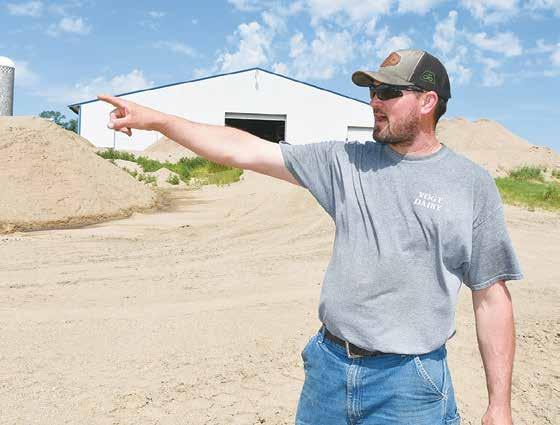
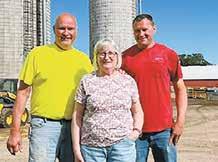
Sand bedding has long been the bedding of choice for Vogt Dairy.
But sand bedding has brought a love-hate relationship to the farm near Sauk Centre.
The Vogt family members said they enjoyed seeing their cows rest comfortably in the stalls but did not like the removal process or hauling sand to their elds.
By adapting to circumstances, the Vogts found a way to keep sand in their barns rather than in their elds via a sand-settling lane.
Turn to VOGTS | Page 5
to his
at
Oak Lane Hutterite Colony transitions away from milking parlor
By Jerry Nelson jerry.n@dairystar.comALEXANDRIA, S.D. — Robotic milking facilities are often purpose-built, but existing dairy barns can also be successfully converted to accommodate robotic milkers.
A good example of this can be seen at Oak Lane Hutterite Colony, located in rural Alexandria.
Joey Wipf is the dairy manager at Oak Lane Colony. The colony is currently milking 310 head of Jersey cows with six Lely robotic milking systems.
“We built our dairy
barn in 2009 and milked in a double-16 parallel parlor for the next 14 years,” Wipf said.
That began to change in 2022, when Oak Lane Colony added onto their dairy barn and initiated the process of installing their rst set of four robotic milkers.
“We have done all of the construction work on the barn ourselves,” Wipf said. “We did the dirt work and poured the concrete, (and) we have our own plumber and electrician, but before we started to remodel for robots, we consulted with the folks at Gorter’s Clay and Dairy regarding the design.
to OAK LANE | Page 6
www.dairystar.com
ISSN Print: 2834-619X • Online: 2834-6203 522 Sinclair Lewis Ave. Sauk Centre, MN 56378
Phone: 320-352-6303 Fax: 320-352-5647
Published by Star Publications LLC
General Manager/Editor
Mark Klaphake - mark.k@dairystar.com
320-352-6303 (ofce)
320-248-3196 (cell) 320-352-0062 (home)
Ad Composition - 320-352-6303
Nancy Powell • nancy.p@dairystar.com
Karen Knoblach • karen.k@star-pub.com
Annika Gunderson • annika@star-pub.com
Cheyenne Middendorf • cheyenne@star-pub.com
Nadiia Griepentrog • nadiia@star-pub.com
Editorial Staff
Stacey Smart - Assistant Editor 262-442-6666 • stacey.s@dairystar.com
Danielle Nauman - Staff Writer 608-487-1101 • danielle.n@dairystar.com
Abby Wiedmeyer - Staff Writer 608-487-4812 • abby.w@dairystar.com
Tiffany Klaphake - Staff Writer 320-352-6303 • tiffany.k@dairystar.com
Jan Lefebvre - Staff Writer jan.l@star-pub.com
Amy Kyllo - Staff Writer amy.k@star-pub.com
Emily Breth - Staff Writer emily.b@star-pub.com
Consultant
Jerry Jennissen 320-346-2292
Advertising Sales
Main Ofce: 320-352-6303 Fax: 320-352-5647
Deadline is 5 p.m. of the Friday the week before publication Sales Manager - Joyce Frericks 320-352-6303 • joyce@saukherald.com
National Sales Manager - Laura Seljan (National Advertising, SE MN) (Western Wisconsin) 507-250-2217 • fax: 507-634-4413 laura.s@dairystar.com
Assistant Sales Manager - Kati Schafer (Northeast WI and Upper MI) 920-979-5284 • kati.s@dairystar.com
Adam McClary (SW MN, NW Iowa, South Dakota) 605-951-5270 • adam.m@dairystar.com
Mike Schafer (Central, South Central MN) 320-894-7825 • mike.s@dairystar.com
Julia Merten (Southeast MN and Northeast IA) 507-438-7739 • julia.m@star-pub.com
Bob Leukam (Northern MN, East Central MN) 320-260-1248 (cell) bob.l@star-pub.com
Mark Klaphake (Western MN) 320-352-6303 (ofce) • 320-248-3196 (cell)
Deadlines
The deadline for news and advertising in the Dairy Star is 5 p.m. Friday the week before publication.
Con nued from H5N1 | Page 1
Due to that evidence, researchers recommend dairy farms develop and enforce strict biosecurity protocols as a measure to help mitigate the risk of the virus reaching their herds. While enhanced biosecurity is a measure to prevent the spread of disease, the summer fair and show season adds another layer to the issue.
On June 11, during a press call, Wisconsin Secretary of Agriculture Randy Romanski announced a new testing order put in place by the Wisconsin Department of Agriculture, Trade and Consumer Protection. He said it continues to be an evolving situation.
“With an increasing number of affected states and a busy fair season ahead of us, DATCP is acting within our regulatory authority to try and minimize the risk of commingling potentially sick animals,” Romanski said.
The order, which went into effect June 19, requires all lactating dairy cattle moving within the state for purposes of show or exhibition to have a negative H5N1 test within seven days before movement.
“We have been monitoring the increase in cases, especially in the upper Midwest,” said Wisconsin State Veterinarian Dr. Darlene Konkle. “With the increasing number of cases in our region, it made sense to minimize the opportunities for the virus to be introduced or spread in Wisconsin, particularly if animals are moving to fairs and exhibitions.”
Konkle said the purpose of the order is to protect not only the dairy industry in Wisconsin, but poultry and other live-
stock industries as well.
“We know the virus can spread cow to cow and also from cattle to poultry and poultry to cattle,” Konkle said. “We know that lactating dairy cattle are potentially the highest risk of spreading large amounts of the virus, but we also know that lactating dairy cattle and other classes of cattle could be affected without showing clinical signs.”
On June 13, the Minnesota Board of Animal Health issued an order effective June 18 that requires a negative test and a certicate of veterinary inspection for all lactating animals before in-state movement for all exhibitions.
Both the Wisconsin and Minnesota orders require testing at National Animal Health Laboratory Network facilities, with samples being collected within seven days of movement. While the testing is run at no charge to producers, funds are available through the USDA to help cover veterinarian and shipping costs associated with testing.
Konkle said that the Wisconsin Veterinary Diagnostic Laboratory is running tests Mondays, Wednesdays and Fridays. Samples that arrive at the laboratory on those days before 1:00 p.m. will be tested the same day. Samples arriving after 1 p.m. or on Tuesdays and Thursdays will be tested the next day tests are run.
The Minnesota order is in effect until the end of 2024, unless rescinded earlier. The Wisconsin order will remain in effect until 60 days after the last detection of H5N1 in cattle herds in the U.S.
Konkle and Romanski encourage
exhibitors to follow the USDA’s recommendations for minimizing transmission at exhibitions which was published last month.
Exhibitors are encouraged to become familiar with signs of H5N1 in dairy cattle and to discuss the potential risks of exhibiting animals with their herd veterinarians.
To the greatest extent possible, an attempt should be made to limit the commingling of animals from different herds to reduce nose-to-nose contact.
Exhibitors should not share husbandry tools, feed and water, portable milking equipment or grooming supplies with other exhibitors. All equipment, including trailers, should be thoroughly cleaned and disinfected before leaving the farm and before returning to the farm. This protocol should also be frequently conducted during the show. Exhibitors should avoid transporting animals from different farms in the same trailer.
Animals returning to the farm from an exhibition should be isolated and observed before they come into contact with animals that did not leave the farm. It is also recommended that equipment not be shared between show animals and other animals at home.
“We wanted to get ahead of a busy show and fair season this summer,” Romanski said. “We have lots of dairy kids wanting to show. The way Dr. Konkle has structured this order, those kids will still have the opportunity to exhibit a cow at the fair — the only extra step is testing.”




Subscriptions
One year subscription $42.00, outside the U.S. $200.00. Send check along with mailing address to Dairy Star, 522 Sinclair Lewis Ave., Sauk Centre, MN 56378. Advertising Our ad takers have no authority to bind this newspaper and only publication of an advertisement shall constitute nal acceptance of the advertiser's order.
Letters Letters and articles of opinion are welcomed. Letters must be signed and include address and phone number. We reserve the right to edit lengthy letters. The
by
and



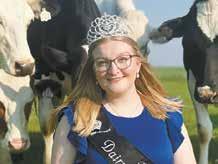
Hutchinson, MN
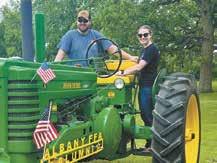
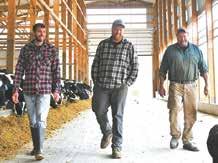
Holdingford, MN
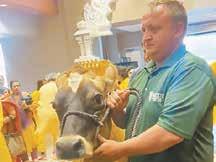

Luana, IA


















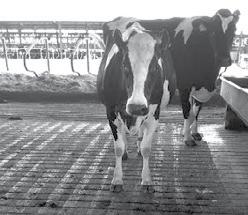





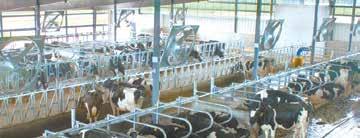



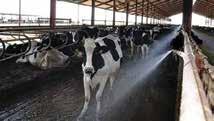



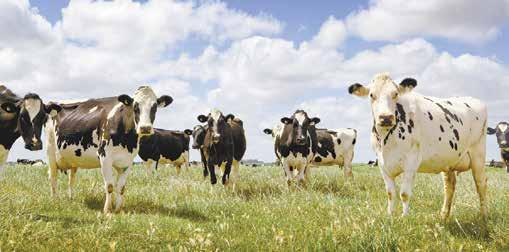








For the past two years, the Vogts have reclaimed 95% of their sand.
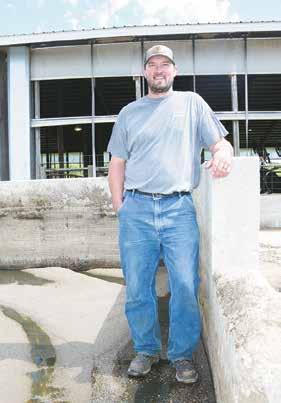
“I knew these worked,” Ethan Vogt said. “It was still hard to wrap my head around using water off the manure pit to wash sand and reuse it.”
Vogt, his brother, Aaron, and his dad, Ken, milk 275 cows. The herd is housed in a 96- by 296-foot freestall barn. After using sand for more than 10 years, they knew something needed to be done to improve their system.
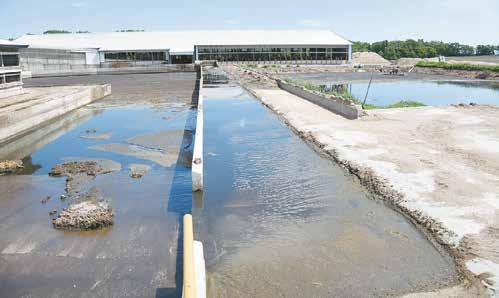
The Vogts have two manure pits located on the south side of their barn. There was a grass patch between the two pits, making an ideal spot to install a sand-settling lane.
“We looked at a few sand lanes,” Vogt said. “We were sick of hauling sand in, pushing it into the pit and hauling it out.”
Vogt said they purchased about 525 loads of sand every year. Each load contained 12 yards of sand. They used the sand one time and pushed it into the pit to be hauled out later.
The west pit was cleaned three times each year, once in the spring and fall and again in December. Vogt said they hauled about 650 loads a year with two tractors. They would haul manure 18 hours a day for ve days.
“That’s a lot of fuel, time, wear and tear, plus the hauling with our truck,” Vogt said.
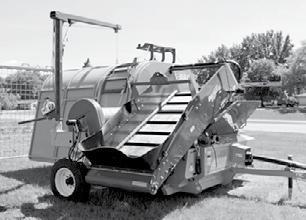
The Vogts’ sand-settling lane is 10 feet by 240 feet with a gradual slope of 0.5%. Every morning the sand is moved from the lane to the beach, which is next to the lane. The beach is slanted toward the lane and allows the sand to drain more water. The sand stays on the beach for 1-2 days to dry before it is moved to a pile. The drained water from the beach will ow back into the lane. In the middle of the lane, there is a valve that water can drain back into the east pit.
“It is just one big loop,” Vogt said.
Water is pumped from the top 2-3 inches of the manure pit. Vogt said they operate the pump at 60% usage during the summer and about 45% usage during the winter since it is on a thermostat. The pump sits on a platform that oats in the east pit.
“This morning (June 12), I took the paddle boat out and greased the pump,” Vogt said. “That’s my entertainment for the summer.”
A 6-inch hose ows the water from the pit to the trough in the barn. As the Vogts clean the pens with a rubber tire scraper, they turn the water on and push it into the trough. This allows the sand to separate, tumble and get washed better. From there, it makes a 90-degree turn to the lane to drain and start the drying process.
“You still have to keep moving it to get the manure water out of it,” Vogt said.
The sand is moved at least four times before it is used again as bedding.
“The closer we get to the pit being full, the more solids have snuck over,” Vogt said.
This causes the sand to get washed with dirtier water. Vogt said this sand is moved 7-8 times before it is used.
“Every time we move it, we will leave the bottom few inches because that is just saturated,” Vogt said.
It takes Vogt about an hour every day to move sand. When Vogt moves piles, he uses a payloader and forage wagon to make the process faster.
“I always joke with people that I am playing in my sandbox,” Vogt said.
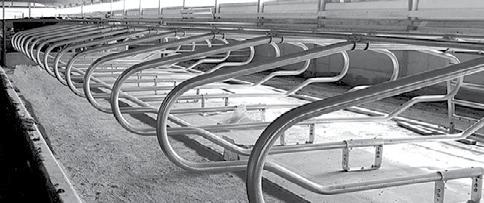
The Vogts bring sand into the barn every Tuesday to add to the stalls. Their stalls are 10 inches deep from the top of the curb to the clay.
“We don’t actually have a brisket board,” Vogt said. “We just use sand up front to keep them back.”
In the front of the stall, sand can be up to 18 inches deep after it is added.
“The sand I (have) piled that’s going to go back in the barn next, I would bring home and put it in my kids’ sandbox and not think twice about it; it’s that clean,” Vogt said.













































When the robot rooms were ready, the folks at Gorter’s came here and installed the robots and the associated equipment.”
The new addition that was built onto the dairy barn houses a pair of 6,000-gallon milk tanks.
“We decided that it was better to move the tanks closer to the robots than pipe the milk such a long ways,” Wipf said.
A unique feature of the new milk room is a geothermal system to cool the milk. A set of 100-foot-deep boreholes were sunk near the barn, and a loop of plastic tubing was placed inside each borehole. The tubes carry water that is used to extract heat from the milk coolers’ compressors and discharge the heat into the earth.
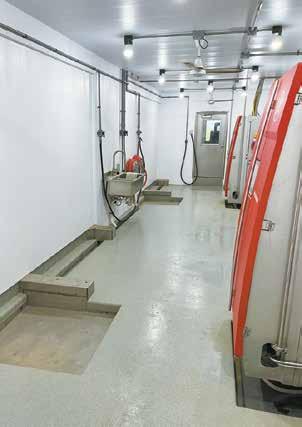
“We really like the geothermal system,” Wipf said. “The compressors don’t need cooling fans, so there’s no dust or noise. It cost more to install the geothermal system, but we feel that it will be worth it in the long run.”
accommodate two
Oak Lane Colony recently installed two additional robotic milkers, bringing their total up to six

robots. Their newest robot room includes spots for two more robotic milkers.





Mickelsons continue tradition of farming and baseball
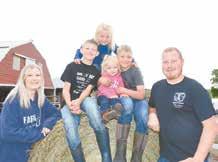
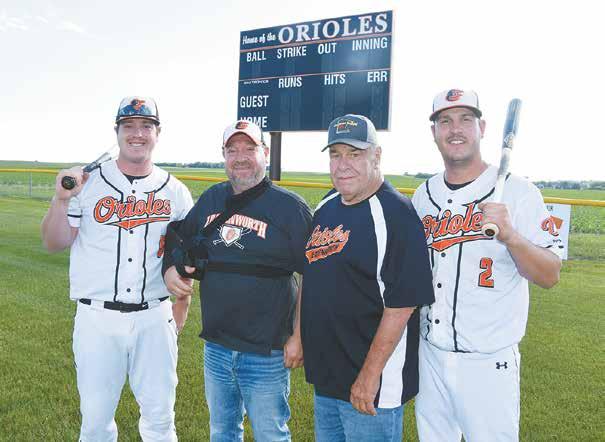
By Mark Klaphake & Hailey HokansonLEAVENWORTH, Minn. — Parked down the rst baseline at the Leavenworth baseball eld are a couple of farm trucks. The rst faces the diamond, creating seats for Jim and Elaine Mickelson for this Wednesday night game in Brown County. Just a short distance further to the outeld fence, their son, Larry, and his wife, Rhonda, are surrounded by grandkids and in-laws.
The families are there to support the third generation of Mickelsons to play ball — Larry and Rhonda’s two sons, Jaden and Zach, who are members of the Leavenworth Orioles.
As they watch the game, rich memories of their time on the eld ow from the minds of Jim and Larry.
in 1968 at a farm sale, three years after marrying Elaine. Together, the two started the dairy farm while making sure on Sundays to let Jim take the eld.
“I was always pretty busy before the ball games because of working on the farm, but we somehow made it there,” he said. “Generally, we were done by 5 or so, went home and did chores, and then if there was beer left, we came back and drank that.”
This routine continued until, eventually, the passion was transferred to Jim’s son, Larry, who started playing the sport when he was 10 years old.
“Back then, it was get done with work (chores) and head down to the diamond to play ball,” Larry said. “I loved playing with friends and family and just getting together, it was fun.”
He continued to play throughout high school at Sleepy Eye High School and started playing amateur ball for Leavenworth when he was a senior, primarily as a catcher.
Even now, their traditions of farming and baseball hold rm.
Jim donned a baseball uniform in 1958 when he was 13 years old. After starting out on a young team in Leavenworth, he continued to play for the
The Mickelson family has milked cows near Leavenworth for over six decades and have been playing baseball nearly that long. They currently milk 35 cows in a stanchion barn and farm 600 acres of land.
amateur team for many years.
“I played all my life in Leavenworth, about 32 years total,” Jim said. “I mainly caught and played third, probably had a .275 batting average.”
Jim learned to enjoy base-
ball from his mother’s brothers and jokes that he was “the rst Mickelson to play ball in Leavenworth.” While he did not inherit baseball genes from his dad, he did learn a liking for farming.
Jim bought his rst cows
“It was fun being with teammates and staying competitive, and you get to know a lot of people from other towns too,” he said.








Jim also knows these connections from his years of playing, and how important baseball is to the small, surrounding communities.
“We call this the Highway 24 baseball road because there are so many ballparks down here,” Jim said. “They’re all pretty competitive teams because everyone just wants to win for their town.”
Larry’s competitive drive carried him back to farming with his father and eventually led to a partnership that at one time milked 140 cows.
Eventually, the time came for Larry to pass the cleats to his two sons, Jaden and Zach.
Zach started playing when he was four years old because the ve-year-old team needed another player. As they grew older, Zach remembers playing on his home eld in Leavenworth.
“Me and a neighbor boy would come down to the eld and hit, and when you’re running the bases as a ve-yearold, it feels like the major leagues,” Zach said. “It’s pretty cool to continue the tradition.”
His brother, Jaden, played for the high school team in Springeld, helping them to three state tournament appearances and one championship. Jaden said he also values the importance of baseball in the small town.
“It’s pretty cool when you drive by and think about how long people have been playing,” Jaden said. “I have so
many memories of (baseball here).”
Both sons continue to be attached to the farm, heading out to the barn whenever their dad or grandpa need help.
“When you grow up on a farm, it’s just embedded in you and it’s your life,” Zach said.
All three generations take a break from the farm for baseball games, this time, with Zach and Jaden on the eld and Jim and Larry cheering on the side.
As Larry watches his boys hit while he is ipping burgers at the concession stand, he always sees his dad out in the truck.
“I like looking at him watching my boys play and
just feeling proud,” Larry said.
As Zach starts his own family with hopes of bringing a fourth generation of Mickelsons to Leavenworth baseball, he said he is not quite ready to hang up the cleats.
“Every year, I tell myself I’m done,” Zach said. “But something about this game keeps dragging me back year after year.”
As Jim sits and watches in his truck, cheering for his family and the sport he loves, he lets the smells of the eld and the sound of the ball take him back.
“Baseball in Leavenworth really keeps our community together,” Jim said.
MARK KLAPHAKE/DAIRY STAR
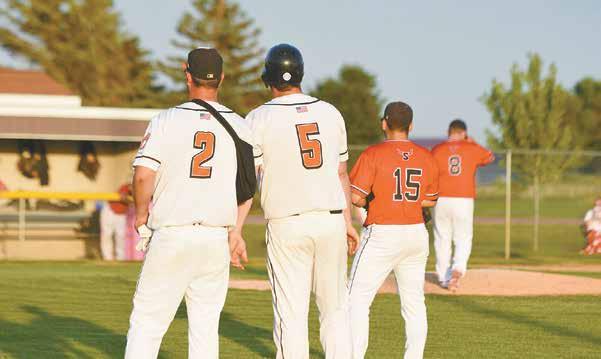
(Le ) Zach (2) and Jaden Mickelson (5) talk on rst base after Jaden drew a walk against the Stark Longhorns June 12 in Leavenworth, Minnesota. Zach and Jaden are the third genera on of Mickelsons to play for the Leavenworth Orioles.
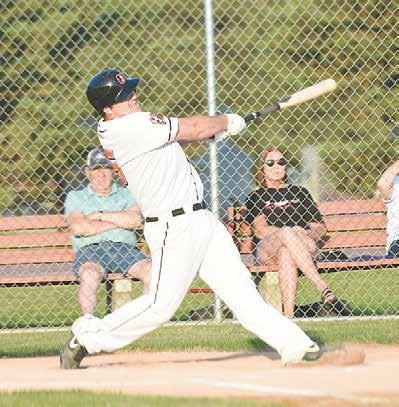
(Below) Jaden Mickelson takes a swing against the Stark Longhorns June 12 in Leavenworth, Minnesota. Mickelson’s grandpa, Jim, started playing baseball in 1958.







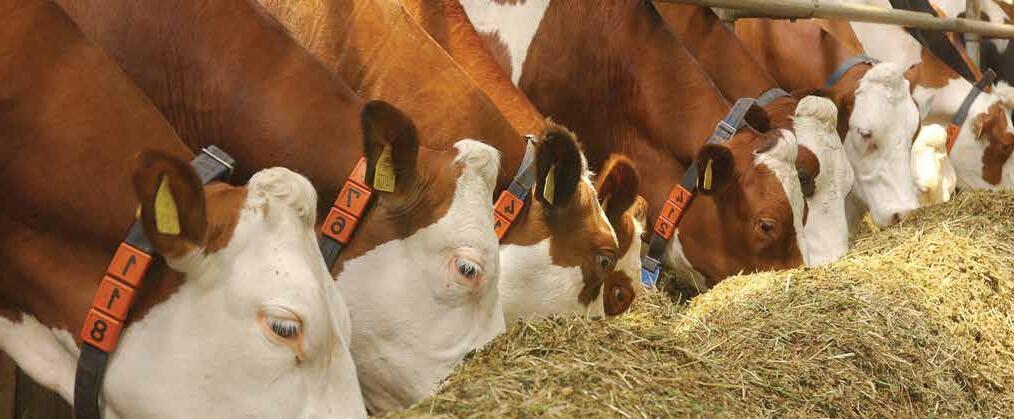
The Fleckvieh breed is renowned as a dual-purpose breed, excelling in both strength and fitness while maintaining consistent lifetime milk production. Known for its adaptability, Fleckvieh thrives in various management and breeding systems. It offers an excellent choice for heterosis, making it an ideal candidate for crossbreeding with other dairy breeds. This breed strikes a perfect balance between cow health and efficiency, making it a valuable asset for dairy farmers seeking robust and productive cattle.

⊲ Robust, long-lasting, easy keeping cows
⊲ Persistaint production, increasing each lactation
⊲ Excellent fertility with shorter calving intervals
⊲ Moderate sized, low maintaince cows for reduced cost












 BY SMITH’S OF WI LLC




The H5N1 Highly Pathogenic Avian Inuenza has been conrmed in a Minnesota dairy herd. A handful of cows in a Benton County herd had symptoms over a weekend, and more than 40 cows had a fever the next day. The National Veterinary Diagnostic Lab conrmed the results last night. With the uptick in cases in turkey and chicken ocks, State Veterinarian Brian Hoefs said it was only a matter of time before the virus showed up on a dairy farm. The Minnesota Board of Animal Health is reminding dairy farmers to contact their veterinarian immediately if cows appear sick. Pasteurized milk remains safe to drink. The risk to people from the virus also remains low.
Condence in virus testing

spend that money, so we’re ghting over the same issue,” Lubben said. Lubben, who is at the University of Nebraska-Lincoln, said the third funding issue is with federal nutrition programs.
By Don Wick Columnist Ag InsiderPolicy highlighted at NMPF board meeting

According to Agriculture Secretary Tom Vilsack, the U.S. Department of Agriculture has a good sense of the way the H5N1 virus is spreading. “Thousands of tests have been conducted and reviewed,” Vilsack said. “Not only of cattle but of milk taken directly from cows and bulk tanks on the farm, I’m condent that we have a good understanding of the nature of this virus and how it’s being transferred between various farms.” A plan is in the works that would reimburse dairy farmers for loss of production related to the virus. “Hopefully, in the very near future, we’ll be outlining the indemnication process and how that might operate in order to indemnify or reimburse the farmer for their losses,” Vilsack said.
The H5N1 discovery in a central Minnesota dairy herd was not a surprise for many. “We knew it was probably coming,” said Minnesota Milk Producers Association Executive Director Lucas Sjostrom. “The one policy item that the Minnesota Board of Animal Health did foreshadow is they are likely going to require tests for lactating dairy cattle going to dairy expositions or dairy shows at some point this summer.” According to Sjostrom, the dialogue between industry groups, the state and USDA is ongoing.
The Minnesota Board of Animal Health has announced new testing requirements for lactating dairy cows. These animals must test negative for H5N1 and get a Certicate of Veterinary Inspection before attending events, like a show or fair. If samples test positive, the state will begin a disease investigation and quarantine the cows. All results will remain condential.
Farm bill framework released
Senate Agriculture Committee Ranking Member John Boozman has released his farm bill proposal. It includes language similar to the farm bill passed out of the House Agriculture Committee. Ag Committee Chair Debbie Stabenow welcomed Boozman’s farm bill framework but quickly criticized it. Stabenow said the Republican proposal follows what she called the “awed approach” taken in the House Committee on Agriculture farm bill and splits the broad farm and food coalition.
North Central Extension Risk Management Education Center Director Brad Lubben describes himself as a “cynical optimist.” Lubben was part of a farm policy discussion at the Midwest Council Ag Forum and said lawmakers have been ghting over the same farm bill funding issues for many years. One issue is the use of the one-time Ination Reduction Act to fund conservation programs. Secondly, Congress is bogged down with the agriculture secretary’s authority to use Commodity Credit Corporation funds. “We have a history of almost 15 years battling over that discretionary authority, and neither party generally seems to be willing to trust a (agriculture) secretary of the other party with how to
The National Milk Producers Federation leadership has wrapped up its summer board meeting. The modernization of Federal Milk Marketing Orders and the H5N1 response were high on the agenda. The board also considered improvements to its Cooperatives Working Together self-help initiative, which promotes dairy exports.
Stabenow rallies anti-hunger advocates
Senate Agriculture Committee Chair Debbie Stabenow criticized the House Committee on Agriculture farm bill during an appearance at the National Anti-Hunger Policy Conference. Stabenow said the House bill took nearly $30 billion from federal nutrition assistance and “gave a 70% increase to the biggest farmers.” The Michigan senator went on to say she supports risk management for all farmers, but it shouldn’t come at the expense of the most vulnerable.
Enviros call for more government oversight
A coalition of 16 environmental groups is criticizing Minnesota Governor Tim Walz and his administration for failing to protect the environment. The groups, which include the Minnesota Environmental Partnership, Sierra Club and the Izaak Walton League, have a website to voice their concerns. It claims the Minnesota Pollution Control Agency, Agriculture Department, Health Department and Department of Natural Resources are providing too little oversight. Twelve cases are highlighted, including groundwater issues in southeastern Minnesota and the approval of the expansion of Daley Farms dairy operation at Lewiston. The coalition is asking lawmakers to hold hearings on these environmental issues.
Makin’ hay
Despite wet weather and alfalfa weevil pressure, Dairyland Seed Regional Agronomist Brian Weller said a nice alfalfa crop is being seen in southern Minnesota. “We’ve had some very good tonnages, especially the folks that have fertilized and done a good job of fertility in the past,” he said. Weller added that some farmers had cut their rst crop of hay early due to the alfalfa weevil pressure.
AMPI chair elected to NMPF board
The National Milk Producers Federation board has elected three new members, including Associated Milk Producers Inc. Chairman Dave Peterson Peterson farms at Boyd, Wisconsin.
New chief strategy ofcer named at Midwest Dairy
Midwest Dairy has named Trudy Wastweet as its chief strategy ofcer. This is a new position for the dairy checkoff program. Previously, Wastweet was Midwest Dairy’s chief operating ofcer.
Trivia challenge
The third Sunday of July is National Cream Day. That answers our last trivia question. For this week’s trivia, what is the most popular ice cream topping? We will have the answer in our next edition of Dairy Star.
Don Wick is owner/broadcaster for the Red River Farm Network of Grand Forks, North Dakota. Wick has been recognized as the National Farm Broadcaster of the Year and served as president of the National Association of Farm Broadcasting. Don and his wife, Kolleen, have two sons, Tony and Sam, and ve grandchildren, Aiden, Piper, Adrienne, Aurora and Sterling.
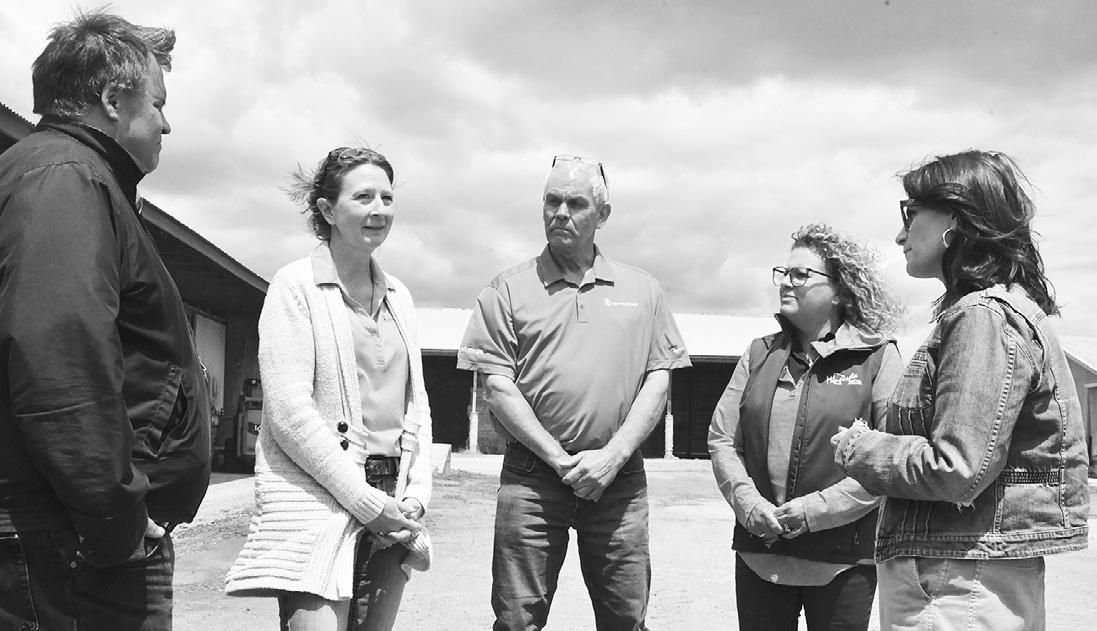
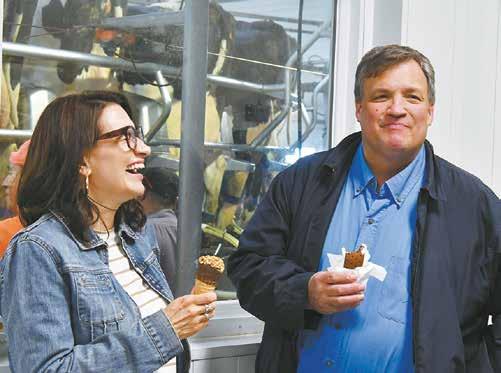
Commissioner of Agriculture Thom Petersen (from le ), Dana Allen-Tully, Duane Epland of the Minnesota Corn Research and Promo on Council, Shelley DePestel of the Minnesota Milk Producers Associa on, and Lt. Gov. Peggy Flanagan visit about agriculture June 6 at Gar-Lin Dairy near Eyota, Minnesota. H5N1, trade, farm transi ons and rural mental health were among the topics discussed during the visit.
amy.k@star-pub.com
EYOTA, Minn. — On June 6, Gar-Lin Dairy welcomed Lt. Gov. Peggy Flanagan and Commissioner of Agriculture Thom Petersen as well
Turn to FLANAGAN | Page 12 as other agriculture advocates and a small swarm of media to the farm. The visit came as part of Flanagan and Petersen’s efforts to celebrate June Dairy Month.
“We use these tests as an overall guide of how our herd is doing...”
How long have you been testing with DHIA?
Since we started milking in 2010.
What tests do you use and what do you like about those tests? So far we have only had the milk tested for somatic cell count, butterfat, and protein. We use these tests as an overall guide of how our herd is doing, and it helps us to see if our nutrition is in check. It helps us to decide if we need to make changes on our farm and assists us when making culling decisions. We have not utilized the pregnancy test yet but are considering it in the future.
Which is your favorite and why? We like all the tests we’ve used so far, but the somatic cell test helps to pinpoint the cows that are high in somatic cell.
How does testing with DHIA bene t your dairy operation? Overall, DHIA is a good tool to help manage our dairy.
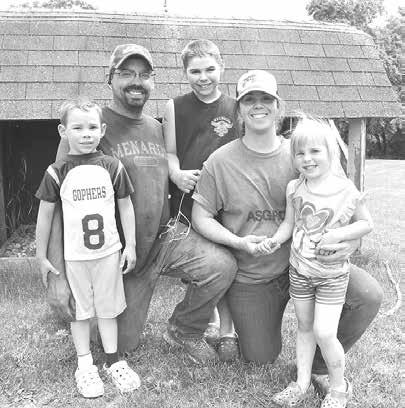
Tell us about your farm. We have a registered dairy herd near Sebeka, Minnesota. We milk 170 cows. We raise our own replacements and grow our own alfalfa and corn for feed for our animals.




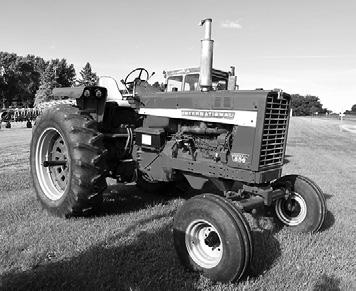
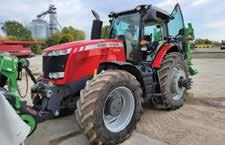
USED TRACTORS
CIH 9330, FWD, PTO, 3 pt., 2,800 hrs. .$125,000
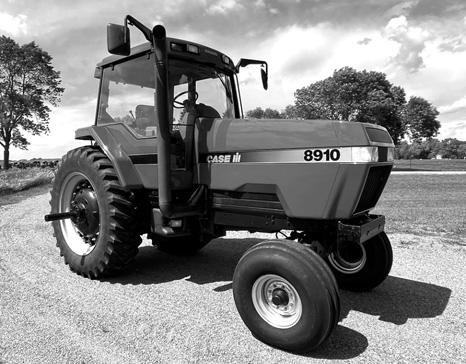
CIH 8940, FWA, 1,800 hrs. ..................Coming In
CIH 8920, 2WD, 3,500 hrs ......................$84,000
CIH 8920, 2WD, 6,700 hrs. .....................$65,000
CIH 8920, 2WD, 7,900 hrs. .....................$59,000
CIH 8920, 2WD, 4,100 hrs ......................$72,000
CIH 8920, FWA, 2,600 hrs ....................$110,000
CIH MX240, 4,700 hrs .............................$85,000
CIH MX220, FWA, 3,600 hrs. ..................$88,000
CIH MX120, 2WD, 3,800 hrs. ..................$72,000
CIH MX120 w/loader ...............................$75,000
IH 1456, cab ............................................$22,000
IH 1086, 9,700 hrs. w/ldr. ........................$23,000
IH 1066, no cab .......................................$13,500
IH 686 ......................................................$14,000
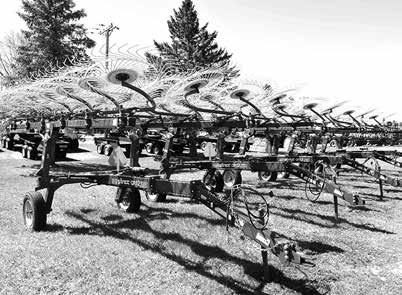
TILLAGE
CIH Tigermate II, 26’ ...............................$28,000
CIH Tigermate II 26’ w/rolling basket.......$32,000
CIH Tigermate 200 w/basket, 34’ ............$42,500
CIH Tigermate 200, 28’ w/rolling basket..$40,000
CIH Tigermate 200 28’ w/basket .............$37,000
CIH RMX 340 28’ w/mulcher ...................$35,000
CIH 3800 16’ disc ......................................$9,500
CIH 527B .................................................$17,500
CIH 530C Ripper, nice.............................$38,000
JD 2700 5-shank ripper ...........................$17,000
DMI Tigermare 26’ field cultivator ............$16,000

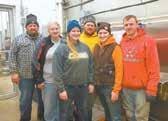

“Several years ago we installed a plate cooler in our old set up and immediately noticed a difference in how fast it cooled the milk. It was obvious we were saving energy, so it was an easy decision to put one in our new facility. Additionally we like how we get multiple uses out of our water, by being able to reuse the water to water the cows.”
“We know that we have incredible dairy farmers all across the state, and also that dairy is delicious,” Flanagan said. “(It’s) one of my favorite things to consume, of course, and it’s the heart of so much of the farmers and agriculture that we have here in Minnesota.”
Flanagan and Petersen’s visit came the same day as the state announced its rst positive case of H5N1.
“Milk is safe to drink and to consume,” Flanagan said. “If you love dairy as much as I do, you will continue to do so. ... Our milk is safe, and that’s the most important thing that I want Minnesotans to take away from this.”
Petersen said that he had visited with U.S. Secretary of Agriculture Tom Vilsack about ensuring resources are available to help Minnesota dairy farmers with loss of milk and testing.
“Minnesota is very well prepared to handle (H5N1),” Petersen said. “We have had highly pathogenic avian inuenza a couple of times (in other species).”
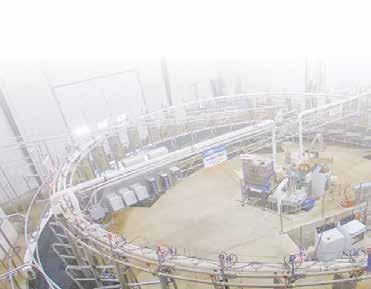
Dana Allen-Tully was the host of the visit. Gar-Lin Dairy, located near Eyota, is home to 1,750 cows which are milked in a 50-stall rotary parlor. The farm also includes 4,100 acres of cropland. Allen-Tully is a dairy farmer as well as the president of the Minnesota Corn Growers Association.
“I completely respect the ofce, and (the) Commissioner of Agriculture — when they ask, you’re not going to say no,” Allen-Tully said. “It’s important that agriculture is seen in a positive light, and the more opportunities that we get to communicate with members that are partners as we



move forward is critical. So, the door is always open.”
Flanagan and Petersen announced that the ofces of Gov. Walz and Flanagan will be making two separate trade trips to Canada in June. Flanagan said Canada is a leading trade partner for Minnesota agriculture products, with exports in 2023 totaling $1.24 billion.
“We’re really excited to be able to just lift up the incredible work that is happening here in Minnesota and hopefully to expand to additional partners in Canada,” Flanagan said.
Flanagan and Petersen began their visit with a tour of the dairy where they saw a pre-fresh barn. They chatted with Allen-Tully; Duane Epland, vice chair of the Minnesota Corn Research and Promotion Council; and Shelly DePestel, vice president of the Minnesota Milk Producers Association.
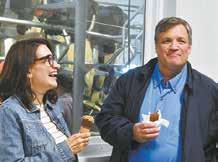
Flanagan and Petersen nished the tour in a conference room at GarLin Dairy that has windows overlooking the rotary parlor. There, they gave comments and took questions from the media before nishing the visit with ice cream treats.
Petersen said that if a farm bill is passed, the state will help pay for dairy insurance.
Another topic that Flanagan and Petersen discussed was rural mental health. They noted the availability of the Minnesota Farm and Rural Helpline and the farm advocates program for farmers in nancial distress.
to FLANAGAN | Page 13




































Lt. Gov. Peggy Flanagan
“One of the most important parts of this is just talking about mental health,” Flanagan said. “It is absolutely OK for Minnesotans and Minnesota’s farmers to ask for that help and support. You are not alone.”
The day before, Petersen said, he directed a struggling farmer to the help hotline.
“It’s something that’s near and dear to my heart,” Petersen said. “I’ve known too many farmers who have taken their lives, but I’ve also known a lot of farmers who have been helped by our programs.”
Beginning farmers and farm transitions was another topic of the day. Some of the state’s programs to help new farmers are the beginning farmer tax credit, loans through the Minnesota Department of Agriculture’s Rural Finance Authority, and the FarmLink program. Allen-Tully shared with Flanagan that land acquisition can be a challenge for new farmers and that Gar-Lin Dairy will be passed down to non-family members.
“The work around emerging farmers is incredibly important,” Flanagan said. “I want young people and
young families to say, ‘We want to farm,’ and to have that be accessible to them.”
Flanagan and Petersen also commented on the issue of dairy processing in Minnesota. Petersen said that the bonding bill, which failed this legislative session, included $10 million for a dairy plant that needed to upgrade its facilities.
“One of the things that we’re looking at as a department is to try to build out existing processing that we have,” Petersen said. “In Minnesota, we have an older, aging infrastructure for our dairy, and as we look forward in the coming year or so, that’s going to be a top priority.”
Allen-Tully said good topics were covered during the visit.
“We hit on mental health,” Allen-Tully said. “This is going to be a hard year. We talked about beginning farmers and some of the things that the state has been advocating for.
... The idea that we’re going to look (at) maybe how transitions are going to look different than what they have been in the past, I think that that’s a realization that a lot of us need.”




















Milk Processors: How has your business continued to adapt in recent years?
Becky Pearson General ManagerPlainview Milk Products Cooperative
13 years of experience
Tell us about your processing plant.
Plainview Milk Products Cooperative is located in the heart of Plainview, Minnesota.
We currently have 103 dairy patrons, which produce between 1.21.4 million pounds of milk per day.

What is the capacity of your plant? Currently, our plant has the capacity to process 1.4 million pounds of milk per day. On average we process 1 million pounds of milk per day, which is almost 117,000 gallons of milk. Our plant is running 24 hours a day, 365 days a year.
What products does your company make? Plainview Milk Products produces sweet cream, condensed skim milk, non-fat dried milk powder, continuously churned bulk butter and old-fashioned, barrel-churned one-pound butter.
What promotions does your business do during June Dairy Month? Each year we have an ice-cream social for all our patrons and employees. This year, however, June 14 we held a celebration for our 125th anniversary. We invited not only our patrons and employees but also opened it up to the community. We provided hot dogs, popcorn, slushies, ice cream and milk at no cost and a drawing for a chance to win some great prizes including our delicious butter.
How close is your plant to full capacity? Presently we are close to full capacity. However, we do have some room for other opportunities that may arise. We are in the process of installing additional processing equipment which will increase our efciency and provide a foundation to reach our goal of 2.1 million pounds of milk per day in the next few years.
How has your business continued to adapt in recent years? We are continually making improvements to increase our efciency and throughput within our facility. This includes continuous improvement to automation and updating equipment.
Why is the dairy industry important to you? The dairy industry is very important to me because of the benets to our economy, especially in small rural communities. It provides jobs not only on the farm level but also in the dairy plants and transportation. Within the rural communities, it provides resources that support the dairy industry’s families and their farms. Dairy is the livelihood of our patrons who take great pride in the milk they produce. With all their hard work on the farm, we as consumers reap the incredible health benets from that high-quality milk.
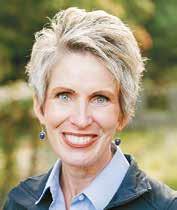
Sheryl Meshke President and CEO Associated Milk Producers Inc.30 plus years of experience
Tell us about your processing plants. The dairy farmer-owners of Associated Milk Producers Inc. own seven manufacturing plants located in Paynesville and New Ulm, Minnesota; Blair, Jim Falls and Portage, Wisconsin; Sanborn, Iowa; and Freeman, South Dakota. AMPI is the largest cooperatively owned cheese company based in the U.S., annually producing more than 500 million pounds of cheese.
What is the capacity of your plant? AMPI’s network of manufacturing plants annually produces about 8%10% of the country’s American-type cheese and about 85% of packaged butter.
What products does your company make? AMPI cheesemakers specialize in the production of cheddar, Colby, Colby Jack, Monterey Jack, pepper Jack and gouda, and shredded natural cheese, American slices and loaves. Whey is sold in dried and liquid form. Salted and unsalted butter is packaged for retail and food service customers. Nonfat dry milk is sold to bakery and ingredient customers.
What promotions does your business do during June Dairy Month? We celebrate June Dairy Month in a wide variety of ways, from supporting members’ on-farm education events to serving cheesy nachos to employees. We recently hosted the AMPI Young Cooperator Summer Tour in the Chippewa Falls, Wisconsin, area. Attendees learned more about their Jim Falls plant and area member farms.
Throughout the month, AMPI members and employees can purchase Dinner Bell Creamery’s popular 1-pound salted butter quarters and award-winning Mild Cheddar cheese at a reduced price. Each Friday we feature a member family on Dinner Bell Creamery’s Facebook and Instagram.
Though June is dairy month, the dairy farmerowners and employees of AMPI have an opportunity to tell our farmer-owned, Co-op Crafted story every month. The co-op developed the mark and promise in 2019, highlighting more than 50 years of dairy farm families partnering with skilled butter makers and cheesemakers. Co-op Crafted represents many families with one purpose: to produce good food with a
promise. Together, we promise to provide exceptional care for our animals, land, co-op and communities.
How close are your plants to full capacity? AMPI manufacturing plants are at capacity. We are overcoming challenges posed by an early 2023 re at our cheese packaging plant in Portage, Wisconsin. Employees were safe, but operations slowed for several months. Packaging of natural cheese resumed shortly after the re. Processed American cheese slice and loaf production remains limited until rebuilding the area impacted by the re is complete. That process is currently underway.
In that same timeframe, an automated, state-ofthe-art, high-speed shred line for natural cheese became fully operational in Portage. The new line increases production efciency and reduces the need for operators. Automation projects are regular line items in the co-op’s budget.
How has your business continued to adapt in recent years? The co-op’s dairy farmer-owners and employee team are building more exibility, capacity and value within our Upper Midwest blueprint. Doing so is helping position the co-op as a reliable supplier for domestic and global customers.
Cheese offerings continue to evolve with new avors and varieties while building on the co-op’s reputation for award-winning cheeses. We remain committed to doing what we do best: making really good cheese that delivers great avor, every time.
Our Co-op Crafted mark and Dinner Bell Creamery brand represent dairy farmers coming together to market their milk and work with a team of skilled butter makers and cheesemakers. It reects a dedication to caring for their animals, land, cooperative and communities while producing nutritious, wholesome dairy products.
By aligning time-honored values with innovation and engagement, we’re creating a sustainable business for the next generation of dairy farmers and the world they feed.
Why is the dairy industry important to you? Farming and food production is an incredibly noble profession. Working for dairy farm families and making good food is a source of daily inspiration. Our farmerowners and employees share rural values and commitments encapsulated in our Co-op Crafted promise.
Bongards Creamery 20 years of experience
Tell us about your processing plant. Bongards has plants located in Perham, Bongards and Norwood Minnesota and in Humboldt, Tennessee. Including members of Swanville, Oak Park, Osakis and Lakes Community, we have 260 patrons. We purchase and process 4.2 million pounds of milk per day at our Perham plant.
What is the capacity of your plant?
Our Perham plant processes 4.2 million pounds of milk today. We are in the process of expanding and will have the capacity to process 5.5 million pounds per day beginning in the second half of 2025.
What products does your company make? We make cheddar-style cheese blocks and barrels along with whey products at our Perham plant. Our value-added cheese plants in Norwood and Humboldt produce processed American cheese slices and loaves.
What promotions does your business do during June Dairy Month? We put signicant emphasis on highlighting the dairy and cheese industries throughout the month of June through our social media channels. We support community donations throughout the month for various breakfast on the farm and dairy days celebrations
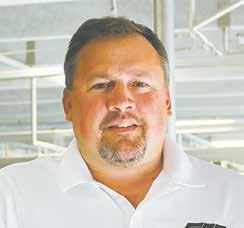
Bob Huffman President and CEOFirst District Association
25 years of experience in the dairy industry, 5 at First District Association
Tell us about your processing plant. Our processing plant is located in Litcheld, Minnesota, where we produce American-style cheese, protein and lactose powder. Currently, we have 580 farmer-owners who produce 8.4 million pounds of milk per day. Our patrons are located all across Minnesota and along the western edge of Wisconsin.
What is the capacity of your plant? We can process a maximum of 7.5 million pounds of milk per day. On average, we make 750,000 pounds of cheese, 155,000 pounds of lactose and 115,000 pounds of whey protein concentrate every day.
What products does your company make? Our main product is American-style cheese. We make 500-pound barrels, and since our recent three-part expansion in 2021, we now have the capability to make 40-pound blocks. We also produce WPC 27%, WPC 34% and WPC 53% and lactose. We are currently wrapping up an expansion where we will have the capability to also produce WPC 80% and whey protein isolates. We are a business-to-business company, so our main focus is producing a consistent, high-quality nished product.
What promotions does your business do during June Dairy Month? With our re-opening of the Fieldgate Cheese Store last year, this has been our rst June

put on by local agriculture and dairy organizations. We also hold open houses at our retail stores where we provide ice cream, cheese curds and entertainment. In addition, we run specials throughout the month at our retail stores.
How close is your plant to full capacity? Our Perham plant is currently running at full capacity, which is why we are investing over $125 million in the facility to expand capacity and allow for incremental growth.
How has your business continued to adapt in recent years? Our business is continually evolving and adapting to the changing needs of our customers, the marketplace, and as technology changes. Bongards has made signicant capital investments over the last decade, with the help of the New Markets Tax Credit program. This has involved expanding capacity and capabilities in our plant in Humboldt and expansion of our Perham plant. We have also continued to evolve our product offering to ensure we are being responsive to the needs of our customers. We have invested in research and development, working closely with our sales team so that we can meet customer expectations. We focus on producing high-quality products that start with quality milk from our patrons.
Why is the dairy industry important to you? I grew up on a dairy farm near Glencoe, Minnesota, so ever since we started milking when I was 12, I have been in the dairy industry. There are so many good people in this business. Whenever people ask what I do, they are fascinated when I tell them about Bongards and our patrons. I enjoy taking customers to farms and seeing their reaction when they interact with the farmer and get close to the cows. This could be their one and only time on a farm, so we want to make sure they have a good experience. We appreciate the hard work our farmers do every day, and it is important to me and everyone else at Bongards that we give them the best possible return on their investment.
Dairy Month with the store open. We are running weekly deals on various dairy products including milk, cheese and ice cream. At the beginning of the month, we hosted our Cheeseburger Days event where we invite the community to the store for lunch on a Thursday and Friday. The Meeker County American Dairy Association and Litcheld FFA help, and they also get the proceeds from the event. This is a great community involvement event that helps raise money for these two organizations and gets people to the store. Our farmer-owners also host a variety of events throughout the state that we also help support.
How close is your plant to full capacity? We are currently at full capacity. We are excited about our family farms’ future generations with growth plans and working with them on our next step of growth at the plant in the coming years. Like other processors in the area, we are always challenged with the cost of capital and making sure we have a secure market with the highest return possible to our memberowners. One of the things we are most proud of is our member-owners continued reinvestment in our plant’s infrastructure.
How has your business continued to adapt in recent years? In a commodity market, we have continued to be competitive by adapting to scale and efciency. We have also continued to invest in new technology and invest in the capability to grow in a global market with exports. Our recent expansion in 2021 and current expansion now include new products and a new market in which to enter.
Why is the dairy industry important to you? It has been my whole life. There are certain aspects of a career that a person would hope to nd rewarding by doing something good for others. For the last 25 years, I have seen this reward by working in the dairy industry and serving dairy farmers. It’s truly grassroots, especially in the Upper Midwest. Principles, morals and ethics take priority and are the expectation of the dairy farmers.






























Describe your farm and facilities. This is the family farm that I grew up on, and I farm with help from my dad and two full-time employees. We milk twice a day in a double-8 parallel parlor, and cows are housed in a freestall barn. We built new facilities 10 years ago. We raise our youngstock, with calves starting out in hutches. They are then moved into super hutches before moving to our other farm where heifers stay until breeding age. We have 225 head of youngstock. Our farm is one of three farms that ships its milk to Widmer’s Cheese Cellars in Theresa.
What forages do you harvest? We harvest corn silage and haylage.
How many acres of crops do you raise? We farm about 575 acres.
What quality and quantity do you harvest of each crop? We harvest 250 acres of corn, 180 acres of alfalfa,
100 acres of soybeans and 40-50 acres of grass. I shoot for a relative forage quality of 170-180 for haylage. I have 120 acres of corn silage and always try to get the best quality I can within reason. The growing year dictates the starch content, but my ideal starch level would be 40%. I shoot for 68%-70% moisture. I don’t feed brown midrib corn. It’s a nicky crop that requires a lot of babysitting.
Describe the rations for your livestock. Milk cows receive a total mixed ration consisting of 50% corn silage and 50% haylage, soybeans and high-moisture corn. I only feed one ration to both pens of cows — there is no high group or low group. Instead, I separate cows by age, with younger cows in one pen and older cows in the other. Dry cows get mature grass, corn silage, a little haylage and minerals. Our dry cow ration is low in potassium and it’s worked well for us. When cows freshen, they go straight
from the dry cow ration to the milking ration. I don’t have a transition group, but I’ve had pretty good luck doing that.
Feeding the right minerals and the right feed to dry cows is key. For youngstock, I’d rather have them on a grass
During Dairy Month, we’d like to thank the men and women of our dairy industry for their hard work and commitment to quality and sustainability. We appreciate all that you bring to the table!


mix versus pure alfalfa from the time they are weaned until 6 months of age.
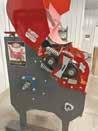
Custom harvesters and nutritionists demand Scherer Inc.’s Kernel Processor. Improve your KP score with exceptional processing of kernels and cobs.
•Designed for higher outputs
•Handle all crop lengths
•Hinge open frames
•Easy servicing


































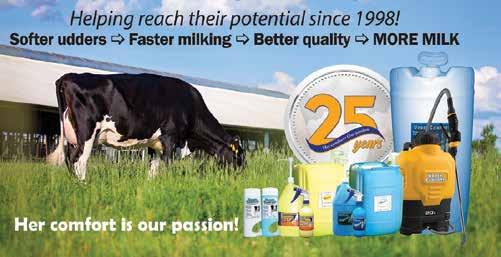
The amazing dairy cow connects us in this industry that we are blessed to be part of. Since 1998, her comfort is our passion! We know it’s yours too. We’ve watched generations of farm families and cow families grow and excel in this business. We’re here, celebrating those victories and providing the tools to take on those comfort challenges, so your cows are free to reach their potential. Thank you for your trust, patronage and friendship over these 25 years. Here’s to the next 25... and our shared commitment to excellence.
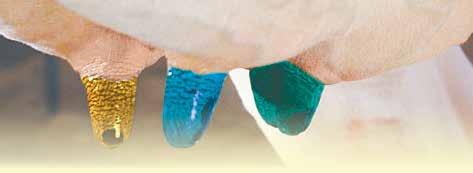
When quality counts, count on Udder ComfortTM to deliver comfort that matters and results that inspire. We have the innovative spray delivery systems for any dairy management environment. Whenever we can improve comfort and softer udders, calmer cows, faster attachments, faster and more complete milking, more milk, and better



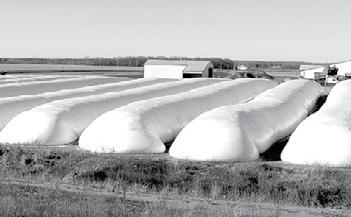
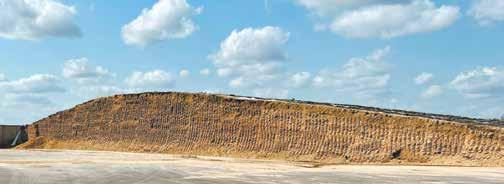
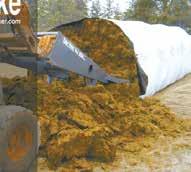
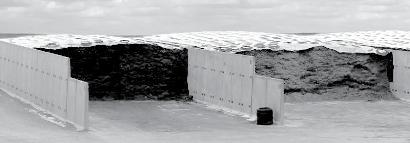
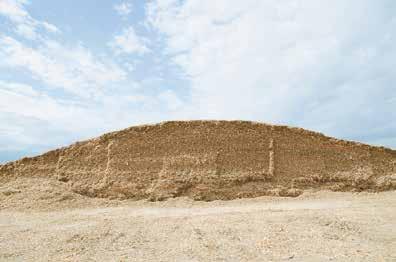
Describe your harvesting techniques for alfalfa and corn silage. I hire a custom operator to harvest our haylage and silage. All the hay is cut in one day, and by the next day, they are done chopping. Hay is cut with a triple mower, and then it lies for 2024 hours before it is merged and chopped. I don’t do the hay-in-a-day thing. I like to go for tonnage with rst-crop hay to give me the quantity I need and the ability to blend. I nd that 28-day cutting intervals make good feed for second- through fourth-crop hay. When making corn silage, the chopper has a kernel processor, and we pile, pack and cover as soon as possible. What techniques do you use to store, manage and feed your forages? Our forages are stored in drive-over piles. The biggest improvement we made was going from bags to drive-over piles for storing feed. It’s not because I didn’t like the quality with bags; it’s that I get a more consistent feed with the piles because everything is blended. You can also make the pile as big or as small as you need to. The exibility and ability to size properly are what I like about piles. Piles make nice, easy feeding. I cover the piles with a 6-millimeter vapor barrier and sprinkle gravel around it to create a good seal. I don’t

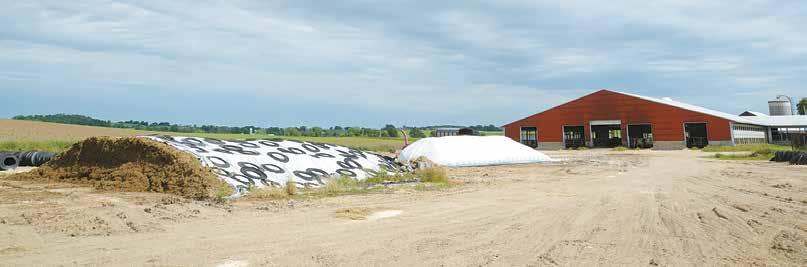
Haylage is stored in a drive-over pile June 11 near Theresa, Wisconsin. Rick Chrisan covers his forage piles with a 6-millimeter vapor barrier and sprinkles gravel around it to create a good seal.
have much waste at all.
Throughout your career, have you changed the forages you plant, and how has that decision helped your operation? We tend to plant the same forages but always shoot for something with a softer kernel. We’ve had success doing it this way and haven’t seen the need to change forages.
Describe a challenge you overcame in reaching your forage quality goals. Weather is the biggest challenge. We have a lot of lower ground, and in a wet year, we suffer. Last year, we had awesome crops because it was dry. We can get away with an inch of rain per month. But when you get six inches of rain in three weeks like we did this year,
that’s way too much. We’re going to be late with chopping hay, but it will all even out.
How do quality forages play a part in the production goals for your herd? Consistent feed is important for maintaining production goals. I don’t push for superhigh production. We run in the low to mid 80s for pounds of milk per cow per day and a little above 4% for butterfat. Good feed is what it comes down to. The better haylage you have, the less protein you have to feed. And the higher the starch in your corn, the less corn you have to feed. Moving into the new barn also made a big difference in production.

What are management or harvesting techniques you have changed that have made a notable difference in forage quality? Many years ago, we didn’t have a kernel processor on the chopper. Adding that was a huge benet. Before we started
feeding a total mixed ration in 2011, we just slug-fed corn, so it didn’t have to be as ne. Now, the ner the corn we can get, the better off we are. It blends better in a wet mix and improves intake and digestibility for the cow.













































Contact one of the following dealers to learn more:
IOWA
Prairie Land Ag Supply Inc.
Rock Valley, IA 712-476-9290
United Dairy Systems, Inc.
West Union, IA 563-422-5355
Monticello, IA 319-465-5931
WISCONSIN
Advanced Dairy Spring Valley, WI 715-772-3201
Bob’s Dairy Supply Dorchester, WI
715-654-5252
Ederer Dairy Supply Plain, WI
608-546-3713
DeLaval Dairy Service Kaukauna, WI 866-335-2825
Joe’s Refrigeration Inc. Withee, WI 715-229-2321
Mlsna Dairy Supply Inc. Cashton, WI 608-654-5106
Professional Dairy Services Arlington, WI 608-635-0268
Redeker Dairy Equipment Brandon, WI 920-346-5579
The Scharine Group Inc. Whitewater, WI 800 472-2880 Mt Horeb, WI 800-872-3470
MINNESOTA & SOUTH
DAKOTA
Farm Systems
Melrose, MN
320-256-3276 Brookings, SD 800-636-5581
Advanced Dairy Mora, MN
320-679-1029 Pierz, MN
320-468-2494
St. Charles, MN 507-932-4288 Wadena, MN 218-632-5416








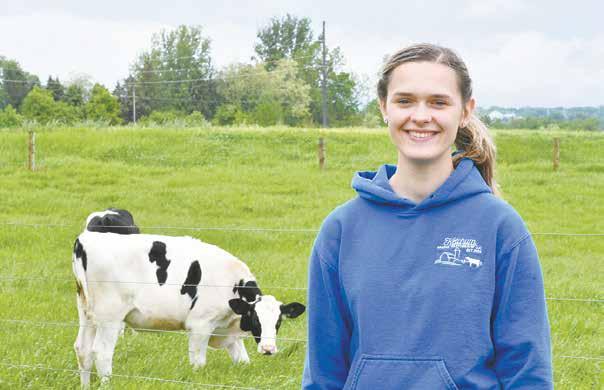
UTICA, Minn. — For sisters Katie and Kyli Ketchum, bad dad joke competitions during milking are a way of passing the time in the parlor.
“I’m not very good at them,” Katie Ketchum said. “Dad jokes aren’t great in general, but I’m actually not good at them.”
Ketchum grew up helping on the 500-acre dairy farm where her parents, Mike and Mary, and grandparents, Bob and Terri, milk about 120 registered Holsteins and two Jerseys near Utica.
Ketchum was named one of the 10 nalists for Princess Kay of the Milky Way.
“It was really exciting,” Ketchum said. “It was something that I wanted for a long time.”
Sharing stories about her family farm as a dairy princess is a priority for Ketchum.
“It’s not really a job in a sense; it’s more of a livelihood,” Ketchum said. “This is what my family does because we’re passionate about it.”
Ketchum said her parents never forced her to be interested
in the farm.
“(I would say) ‘Hey Mom, hey Dad, is it chore time yet? I want to go hang out in the parlor,’” Ketchum said. “This is our family time some days. Farming can be very busy.”
She said she enjoys watching her parents and grandparents try new things on the farm, asking them questions and learning.
Ketchum said she has realized many people do not have the opportunity to grow up with the farm experiences she had.
“Why I love (the dairy community) is I get to share what my family does and why we get excited about it,” Ketchum said. “I love being able to see when a calf is born and then watching them in two years have their own calf and seeing the cycle repeat.”
Ketchum helps on the farm where she is needed. Recently, she has been feeding calves. She also helps with milking, cleaning the freestall barn and raking hay, which she said is a favorite summer chore. In the winter, her chores are cow focused.
“I like just being able to be with the cows,” Ketchum said. “I don’t really care what we’re doing.”
Ketchum said that she has seen how each Princess Kay

Ka e Ketchum smiles May 21 at her
top 10 nalist
brings a unique background or passion to the role, similar to how dairy farms across Minnesota are also unique.
“No matter where you go, we all have unique differences,” Ketchum said. “You might nd similarities, but there’s never a cookie cutter of the farm you’ve seen before.”
Ketchum said she wants to share about sustainability. This
spring, her family put in solar panels on the farm. They also use contour strips and crop rotations and have begun to implement no-till.
“Dairy is safe, it’s nutritious, and it’s super sustainable,” Ketchum said. “Some of the things that we’ve done in the last 50 years are incredible, and seeing that be implemented is cool for me.”


As a dairy princess, Ketchum said she also wants to share about animal care on her farm. She said there are many things that farmers do to care for their animals, from herd health checks to clean bedding.







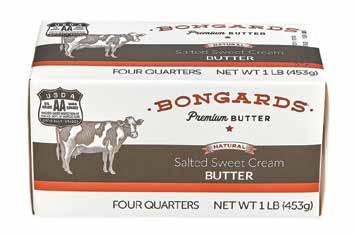
Find the Bongards logos and enter for your chance to WIN 10 pounds of Bongards® Premium Cheese and Butter.
Here’s how it works:
1. Count the Bongards logos throughout this issue (excluding this page).
2. Complete the entry form.

3. Send entries to: Dairy Star, 522 Sinclair Lewis Ave., Sauk Centre, MN 56378, Attn: CA Contest
4. Entries must be received by July 22.
5. Winners will be drawn at random from the correct entry blanks received. Five winners will each receive eight pounds of cheese and 2 pounds of butter.





|
WAUZEKA, Wis. —
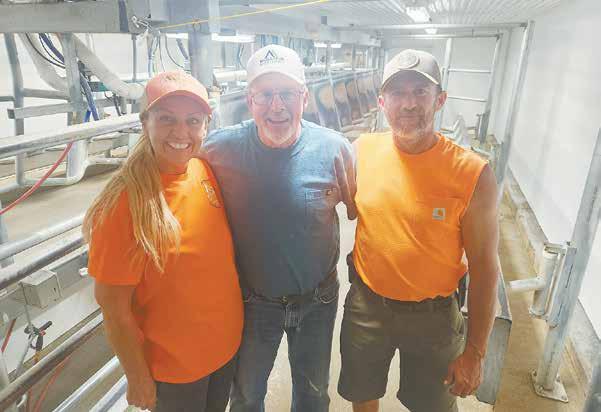
When the Mullikin family renewed their dream of dairy farming four years ago, they were patient with bringing their vision to new life. They had rented out their farm for 20 years before returning to the industry with 40 Jersey cows and 44 acres of grazing paddocks. Now they have implemented the next step in their vision, which is an upgrade from milking in the stanchion barn to a retrotted parlor.
Andrew Mullikin said it has allowed them to keep the dream alive.
“In order for me to keep doing what I’m doing and keep us in business, this is what had to happen,” Andrew said. “It’s been great.”
Andrew farms with his girlfriend, Crystal Anderson, sister, Heather Keane, and parents, Mike and Julie Mullikin, near Wauzeka. Andrew
June 7 at their farm
ed swing-9 parlor.
and Crystal (who also works full time from home) manage the daily operations, while Heather manages the business aspect with her family and is on site whenever possible. Mike helps with cropping and is around to help when needed.


Crystal and me, they’re used to us, and they follow us. It was easier to get them to train to the parlor than it was to get them to use the stanchion barn.”
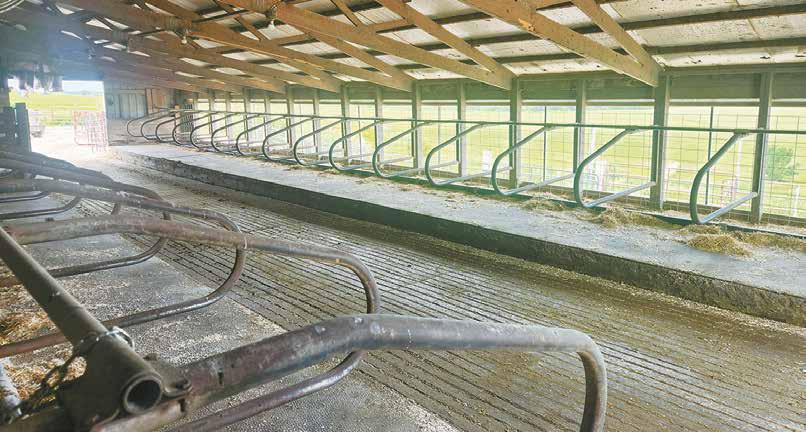
The family opted for a swing parlor for various reasons but mostly because it allowed them to stay within their budget. The parlor itself was gently used and the machines were a signicant cost of the project, so avoiding a double parlor helped save money as well.
The pit is ve feet wide, which Andrew admits is slightly tighter than he wanted. However, it allowed them to retain 75% capacity of the upstairs of the barn by not moving a king beam and also minimized the construction process.
“Absolutely everything we did was on purpose and with a purpose,” Andrew said. “I wanted to maintain as much structural integrity of the barn, which we did.”
The holding area is within the original stanchion barn. Nine stanchions were left in to use for herd work and are gated off while not









The swing-9 parlor was retrotted into the original stanchion barn. Cows were already utilizing a freestall addition to the barn, which they still use when not on pasture. Construction on the project began last summer and took 15 weeks to complete. Transitioning the cows went better than expected, Andrew said.
“It didn’t take us long at all,” Andrew said. “The girls (cows) trust me. Between

Turn to MULLIKINS | Page 26




























in use. All the cows t in the holding area, but Andrew prefers they remain outside until he brings them in. This keeps the area cleaner, he said.
“I’d rather take a few extra minutes to milk than take twice the time to clean the holding area,” Andrew said. “The other night it took me an hour and seven minutes to milk 37 cows.”
While the time savings are a huge benet of the new system, the labor efciency was the real goal and one they denitely achieved. When the family resumed milking in the stanchion in 2020, it did not take long for Andrew and Mike to feel the effects on their knees. The pair resorted to wearing knee pads, but the physical demands of incessantly bending and kneeling still took their toll.
Heather said she notices a difference in energy in her brother and father already.
“Farming is already hard on your body,” Heather said. “Any little thing that is going to take away just a fraction of the stress opens up opportunities to enjoy it.”
Andrew agreed.
“I had aged my knees 15 years by kneeling on the concrete,” he said. “The physical difference is absolutely remarkable.”
Milk production and
quality have remained steady throughout the transition. Because the milking procedure is so consistent, the cows have barely noticed the change.
The height of the parlor is something Andrew feels they got right. The used parlor came without manure pans, but since Andrew is conscientious during milking, it has
not posed a big problem. The family is exploring options for where to take the vision next. While they are primarily a grass-fed herd, the cows do get supplemental grain. The goal is to become 100% grass fed, and Heather is researching organic options as well.
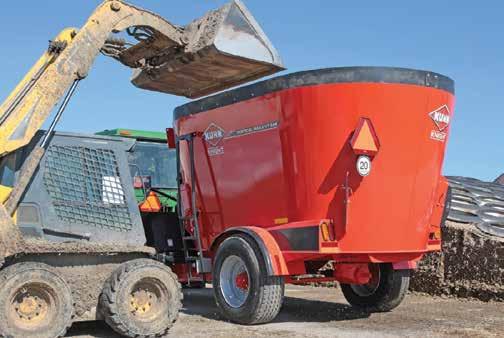
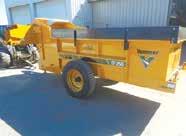
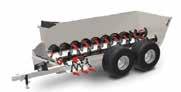
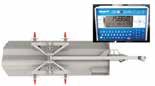
VT 200 Series features multiple improvements that will provide enhanced performance and longer, more reliable service. These improvements include updated front conveyors, better door-to-floor sealing, heavier high-wear auger flighting and EZ-mate scale system. The VT 200 Series mixers range in capacity from 320 – 760 ft3, and are available in trailer and truck configurations. Multiple configurations, single- or 2-speed drive options, along with multiple discharge options, allow machines to be tailored to every feeding operation’s needs.






“(We) make sure that we’re not only taking care of our cattle but also producing the
shelves,” Ketchum said.
Ketchum is attending the University of Wisconsin-River Falls for agriculture education. She said Princess Kay’s classroom visits are her favorite part of the program.
“There’s always something that the kids look super excited to be learning about while (Princess Kay) is there,” Ketchum said.
Ketchum said she hopes to display the butter sculpture she receives at her county’s Family Night on the Farm, which occurs each August.
“It’s always been one of my favorite events that we used to do as dairy ambassadors,” Ketchum said. “It’s unique to my county but also been fun for me.”
She said some of the butter will likely be used for her family’s cookie day around Christmas.
“We make a whole bunch of different cookies and (they) cover our kitchen,” Ketchum said.
Outside the farm, Ketchum is active with FFA. She completed a term as state
 AMY KYLLO/ DAIRY STAR
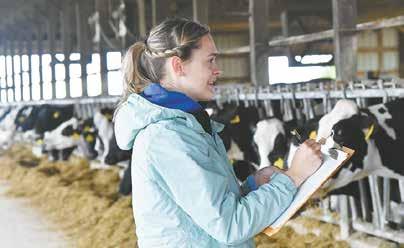
Ka e Ketchum helpsduring herd check May 21 at the Ketchum family’s farm near U ca, Minnesota. Ketchum helps on the farm where she is needed.
president in April. During her tenure, she put 26,000 miles on her car attending events across Minnesota. Among her discoveries were differences in farms across the state.
“We’re all very different, and we’re all really good at something, but we’re never all good at the same thing,” Ketchum said. “(What) is super unique about Minnesota is we have such a vast variety.”
In 2020, Ketchum started a now-annual FFA event called the Dairy Bag Sale. Members of the community purchase a bag of dairy products, and the proceeds benet FFA or FFA alumni.
“(That year) the milk prices were very low and I was watching some farms in our community really struggle,” Ketchum said. “That really hit home for me because I started seeing that happen on my home farm. It was something that (answered) ‘What can I do to bring awareness to the dairy community?’”
Ketchum currently owns or co-owns eight Holstein and Jersey cattle. In the future, she plans to work as an agriculture teacher and an FFA adviser, serve on her local American Dairy Association board and grow her herd at the family farm.







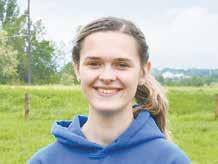
HUTCHINSON, Minn. — McKenna Wright has spent many years in the dairy community, including seven years in her county’s dairy royalty program. This year, she was named a Princess Kay of the Milky Way nalist.
“Coming from a dairy farm and being a dairy princess has made me realize just how important promotion is within our community,” Wright said. “There are so many people out there who don’t know the benets of choosing dairy or may not even know where milk comes from.”
Wright grew up working and living on a dairy farm owned by her parents, Paul and Heather Wright. The Wright family milks 45 cows in a tiestall barn near Hutchinson. Wright said her parents have been her biggest supporters.
Wright’s favorite message to share with consumers is how diligent dairy farmers are in their work.
“Farmers care about their cattle just as much as others care for them,” Wright said. “We do everything we can to make sure that our cattle are healthy and comfortable around the clock.”
Wright said dairy farmers work closely with consultants who have the technology and knowledge to assess animal care and help them make informed decisions.
“We work with our partners such as local vets, nutritionists and more to ensure we are making the right choices for our herd,” Wright said.
When she shares her knowledge and experiences with a group, Wright has several reasons she why she likes to speak, answer questions and show dairy in a positive light, especially with young groups.
“I enjoy talking with kids the most,” Wright said. “They seem to always have a bunch of questions and oftentimes will challenge me to think outside the box. I also enjoy seeing
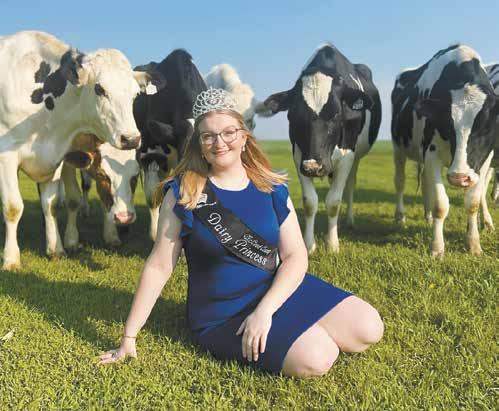
Wright sits in a pasture surrounded by ca le May 12 at
farm near Hutchinson, Minnesota. Wright’s
ents’ farm where she grew up.
their faces light up when they rst see us (dairy princesses) because, in their mind, we are like a Disney princess.”
Wright also likes making memorable moments with her family, such as when she was announced as a nalist.
“My family and I were sitting in our backyard waiting to see the results,” Wright said. “As they kept announcing the girls, we were getting more and more anxious.”
When it was her turn to be announced as a nalist, Wright did not recognize they were describing her.
“When they rst started talking about me, I honestly thought it was someone that just happened to like the same things I do,” Wright said. “I even said ‘I should really be friends with this person because they like the same things I do.’”
It was not until her photo was displayed on the screen that it clicked, and she recognized herself as a nalist. Wright’s older sister, Allison, who
had been a nalist herself two years ago, supported her sister from halfway across the world.
“Allison secretly watched at 2 a.m. in Australia and called me as soon as I was announced,” Wright said. “I remember being overjoyed and almost started crying because I was so happy.”
The dairy princess program does not only run in the Wright family, but also within the state.
“The dairy royalty program has become a long tradition in Minnesota,” Wright said. “Dairy farmers and producers depend on us to help promote and share the benets that dairy brings.”
Sharing how dairy products are produced is something Wright said dairy princesses should be doing.
“In my eyes, it is a part of our responsibility to talk to (consumers) and tell them about these things,” Wright said. “I hope that in the future, with the royalty program, we will be able to reach more people to share our love of dairy.”
Wright also said she wants to encourage girls who are active in the dairy community to be a part of the program.
“The best advice I could give (to other girls in the program) is to go to as many events as possible and take it all in,” Wright said. “You will never know who you will meet at events, and it is so important to get out into the community as much as you can.”
Wright said she knows there are many special moments serving the dairy community.
“As your reign is ofcially coming to an end you will realize just how much this program has left an impact on you,” Wright said. “Make as many memories as you can.”











Feed costs have risen signicantly for dairy and beef farmers due to supply and demand issues brought about by recent drought episodes in the Midwest. Producing high-quality forages has become more important with every cutting to maximize yields and reduce bottom-line feed costs. Higherquality forages can be blended with lesser-quality forages or alternative feedstuffs to meet the nutritional needs of the animal while maintaining growth and production goals.
 By Colleen Carlson University of Minnesota
A key component to forage production is adapting alfalfa harvest management practices that will help produce a consistent quality forage product in the form of hay, haylage or baleage. There are four steps to enhance eld drying: proper mowing height, well-adjusted conditioning, laying wide swaths and well-timed raking/merging.
Cut alfalfa at 2-4 inches in height. This will maximize yield and allow enough clearance to keep a wide swath high enough off the ground so that air can move underneath to enhance drying. Putting too much forage in the swath or too narrow of a windrow will allow forage to settle and the hay will gain moisture from the humid air as well as through capillary action from touching the soil.
Mechanical conditioning at the time
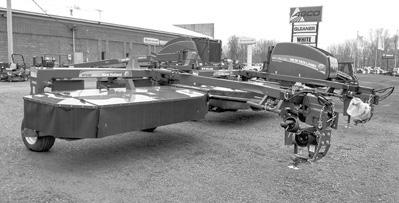
of cutting can nearly double the drying rate. Conditioning breaks the pathway of water removal from the stem to the stomata or small cells on the leaf surface. Forage is considered to be properly conditioned if the stems of legumes are scraped or broken every 2-4 inches and less than 5% of the leaves are bruised. Research has demonstrated that no matter how wide the crop is laid in the swath, conditioning increases drying rate.
The key to speed forage drying is to lay the crop in a wide swath that covers at least 60% of the cut area. Wide swaths place the hay in an even density, increase the crop’s exposure to the sun, and increase crop surface temperature while allowing airow between the plant material and the ground. A full-width swath increases the drying surface of the swath by 2.8 times. In many research trials, it has been shown that moisture reductions from 85% to 60% can be reached in as little as 5-7 hours, hence the term “haylage in a day”. Narrower swaths are slower to dry down and have the potential for greater quality loss.
Rake or merge the crop into windrows to match the pick-up width of the harvester or baler. To minimize leaf loss and ash content, merge hay just ahead of the harvester to avoid rain on a windrow.
If the crop is getting too dry and rain isn’t a concern, merge sooner to slow drying. Merging or raking the swath adds an additional step to the haying operation; however, the cost is offset by increased forage quality. Rapid drying of hay and forage is a management tool to shorten the harvest window and improve forage quality.
Join the conversation “Alfalfa Harvest Management and the Machines that Make Hay” at the Carver County Farmer to Farmer tour on Tuesday, July 9, 2024, from 11:00 a.m. to 2:00 p.m. at Lano Equipment, 1015 W Highway 212, Norwood Young America, MN 55368. This is a free event hosted by the Carver County ag initiatives team and the Uni-
Dana Adams adam1744@umn.edu 320-204-2968
Joe Armstrong armst225@umn.edu 612.624.3610
Luciano Caixeta lcaixeta@umn.edu 612-625-3130
Gerard Cramer gcramer@umn.edu 612-625-8184
Marcia Endres miendres@umn.edu 612-624-5391
Les Hansen hanse009@umn.edu 612-624-2277
Brad Heins hein0106@umn.edu 320-589-1711
Nathan Hulinsky huli0013@umn.edu 320-203-6104
Karen Johnson ande9495@umn.edu 320-484-4334
Emily Krekelberg krek0033@umn.edu 507-280-2863
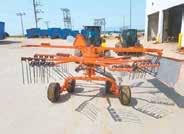
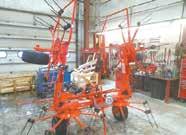
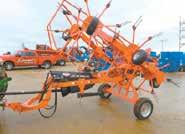
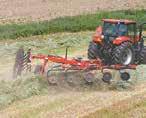
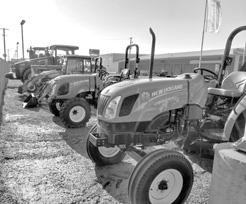
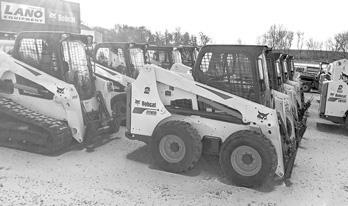
versity of Minnesota Extension. Guest speaker, Scott Newell, alfalfa outreach specialist from the University of Wisconsin, will be discussing alfalfa harvest practices to improve forage quality and minimize harvest loss. The Lano Equipment team will showcase alfalfa harvest equipment, disc bines, conditioner options, window mergers, rotary rakes and tedders, silage balers along with bagging options to cover large and small acreage farms. Alfalfa harvest concepts, equipment adjustments, equipment road safety and storage will be covered. For questions, contact Colleen Carlson, extension educator, Carver and Scott Counties. 952-466-5300.
Claire LaCanne lacanne@umn.edu 507-332-6109
Brenda Miller nels4220@umn.edu 320-732-4435
Isaac Salfer ijsalfer@umn.edu 320-296-1357
Jim Salfer salfe001@umn.edu 320-203-6093
Mike Schutz mschutz@umn.edu 612-624-1205
Melissa Wilson mlw@umn.edu 612-625-4276
Isaac Haagen hagge041@umn.edu 612-624-7455
Michael Boland boland@umn.edu 612-625-3013
Sabrina Florentino slpore@umn.edu 507-441-1765
906 Hours .....................................$13,900 ‘04 MT-52, 1238 Hours .......................................$17,900 ‘20 T-870, Glass Cab with A/C, 2 Spd, 1475 Hrs $69,500 ‘19 T-770, Glass Cab with A/C, 2 Spd, 870 Hrs..$65,000 ‘14 T-650, Glass Cab with A/C, 2 Spd, 2200 Hrs $43,900 ‘21 T-66, Glass Cab with A/C, 2 Spd, 290 Hrs....$62,500 ‘17 T-595, Glass Cab with A/C, 2 Spd, 2370 Hrs $34,500 ‘19 T-450, Glass Cab with A/C, 1400 Hrs ...........$33,500 (2) 2021 S-76, 680 Hours and up ......Starting at $42,500
‘15 S-770, Glass Cab with A/C, 2 Spd, 1775 Hrs $46,900 ‘21 S-740, Glass Cab with A/C, 2 Speed, Hi Flow, 6600 Hrs ...........................................................$28,900
(2) ‘12 S-650, Glass Cab with A/C, 2 Spd, 2500 Hrs & Up .................................Starting at $28,900 ‘20 Kubota SVL75-2, Glass Cab with A/C, 345 Hrs .............................................................$59,900 USED TILLAGE
White 6700, 12x30, Verticle Fold ..........................$5,500
‘10 G-P YP1625A, 16x30, Center Fill .................$39,900 J-D 7200, 12x30..................................................$10,500 USED HAY EQUIPMENT
‘00 N-H 1441 Discbine, 15’ Cut...........................$11,900
‘12 N-H H-7230 Discbine, 10’ Cut .......................$18,500 (2) N-H 1411 Discbine, 10’ Cut ............Starting at $9,900 ‘08 N-H 616 Discmower ........................................$5,500 AGCO 1326 Discmower........................................$3,250
‘20 N-H 560 Rd Baler, Specialty Crop, 4000 Bales ........................................................$46,500
W-R 3400, 34’, 4 Bar Spring Tooth Harrow ..........$6,900 W-R 2500, 28’, 4 Bar Spring Tooth Harrow ..........$5,500 W-R 2500, 24.5’, 4 Bar Spring Tooth Harrow .......$3,600 Case I-H Tigermate 200, 27.5’, Rolling Baskets .$31,500 Case I-H 4300, 25’ ................................................$7,500 ‘13 W-R 513 Soil Pro, 7 Shank, Harrow ..............$29,500 W-R 957, 9 Shank, Harrow .................................$12,900 Pepin Spike Harrow, 5 Section .............................$2,500 USED PLANTERS


Our Four-State Dairy Nutrition and Management Conference (organized by Extension specialists from Iowa, Illinois, Minnesota and Wisconsin) was recently held in Dubuque, Iowa. The conference is geared toward nutritionists’ interests, but some veterinarians and farmers also attend. The two-day program had leading researchers in the U.S. speaking on topics related to feeding and management. For program details go to www.fourstatedairy.org.
 By Jim Salfer University of Minnesota
Here are some highlights from a few of the conference presentations. How to get the most from your forage program.
Rick Grant, Miner Agricultural Institute, and Dr. Luiz Ferraretto, University of Wisconsin, provided insight into how to get the most from your forage feeding program. Their information is particularly valuable because recent rains prevented many farmers from harvesting high-quality rst-cutting hay. Here are some of their take-home messages: If hay gets over mature, chopping it ner will result in better performance. Both Ferraretto’s and Grant’s research shows that cows fed coarse feeds with longer particles spend more time at the bunk eating. This requires cows to chew more and take longer to digest, which lowers dry matter intake. Cows are also more likely to sort out the longer particles. Luiz showed that cows fed a corn silage particle size of intermediate length had the highest intake and produced the most energy-corrected milk. Figure 1 shows the recommended chop length for different forages.

Optimal ration of alfalfa/grass and corn silage in dairy cow diets. Rick Grant also discussed research at Miner Institute comparing a wide range of corn silage to hay ratios. They compared ve diets containing 62% forage with corn silage being 10%, 30%, 50%, 70% and 90% of the forage. The rest of the forage was alfalfa hay. Energy-corrected milk across the treatments was similar and averaged between 104 and 107 pounds per cow per day. The diet with 70% percent of the forage as corn silage did have lower levels of milk urea nitrogen. However, based on estimated crop yields, it will take about 25% more land to produce the total forage needs with the highalfalfa diets compared to the high-cornsilage diets. The take-home message is that cows can have high production across a wide range of corn silage to alfalfa ratios. Agronomic characteristics, variability across cuttings, relative cost of protein and economic considerations, such as cost of production, should be considered when determining the ideal ratio of forages for farms.
Driving butterfat production of cows
Kevin Harvatine, Penn State University, and Adam Lock, Michigan State University, provided insight into how to drive milk fat synthesis. Depending on the diet, about 45% of the fat is made by the cow in the udder and about 55% comes directly from absorption of fat. The key to driving the amount of fat that a cow synthesizes is to optimize rumen fermentation to get optimal microbial protein and volatile fatty acid
production. The take-home message is to feed a well-balanced diet containing highly digestible ber to optimize fermentation to drive milk fat synthesis by the cow’s mammary gland. This will be the lowest-cost source of butterfat. Supplementing this by feeding specic fatty acids that are proven to increase fat test will maximize the total milk fat produced by the cow. Feeding and managing cows for a healthy and productive life.
Mike VandeHaar, Michigan State University, presented on feeding and managing cows to increase health and productivity. The goal should be to replace cows when they still have great body condition and before they die or need to be euthanized. This is more important than keeping cows in the herd just to increase the average age. Managing body condition so that cows breed back faster and minimizing the risk of transition cow disease will help accomplish this goal. The take-home message is that keeping cows in the herd too long increases the risk of them dying and may slow genetic progress. We can improve productive life by better targeting nutrients when the cow needs them. Cows benet from high starch diets during peak lactation, but feeding lower-energy and lower-starch
diets in later lactation will save money, decrease the risk of over conditioning and may decrease the risk of transition cow diseases the following lactation. Understanding sub-clinical ketosis Luciano Caixeta, University of Minnesota, discussed research to better understand sub-clinical ketosis. These are cows with higher-than-normal ketones, but no other clinical signs of ketosis such as lower appetite and rapid weight loss. Research shows that subclinical ketosis only affected cows’ performance if it was identied in the rst week after calving. In another study in herds with rumination collars, cows with elevated ketone bodies that also had high rumination time produced 14 pounds more milk per day than cows without sub-clinical ketosis. The takehome message is that not all cows with sub-clinical ketosis after calving should be treated the same. Cows should be monitored for sub-clinical ketosis in the rst week after calving, and cows with elevated ketones will benet from treatment. High-producing cows with high rumination are likely to have higher ketones and do not need to be treated. However, cows with low rumination and high ketones may benet from propylene glycol treatment.
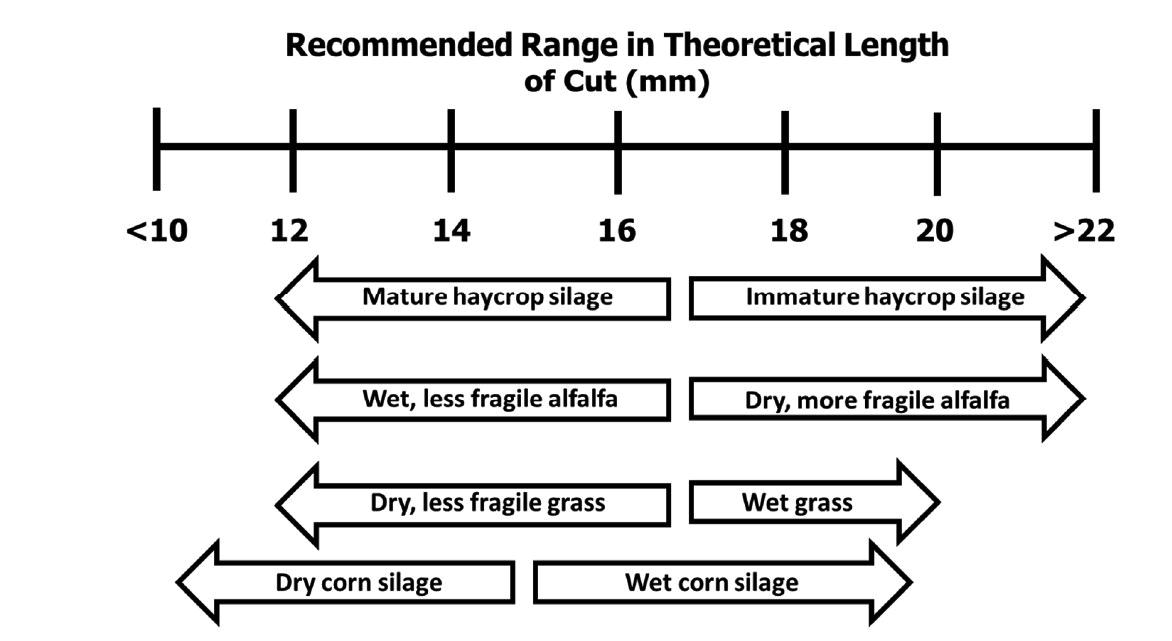






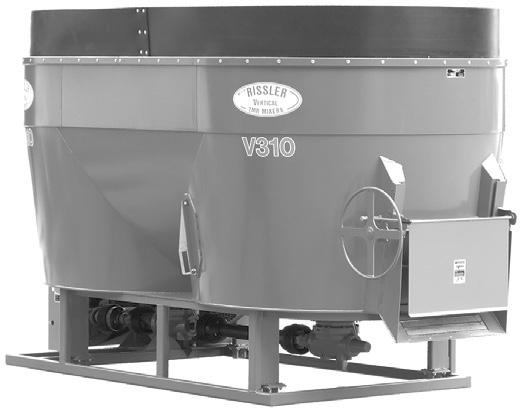
Two largest models will
Twin augers and nearly vertical sidewalls eliminate
All Stainless Steel mixing chamber for extremely long life
Input power options include electric motor or 540 PTO

HOLDINGFORD, Minn.
The hum of engines sung in chorus as farmers, family and friends gathered to honor those gone before. In the crowd were dairy farmers Aaron Kalthoff and Sara Dobmeier.
“It sure was a fun day with everyone and a beautiful day for a tractor drive,” Dobmeier said.
The tradition of driving tractors on the Sunday of Memorial Day weekend has been taking place for 12 years. The day is spent visiting three local cemeteries, St. Anthony Catholic Cemetery, Seven Dolors Cemetery in Albany and St. Mary’s Cemetery in Holdingford.
The drive consisted of 30 tractors — a mix of all kinds with two pulling hay racks — that completed the over 20mile route May 26. This year, the drive held a special meaning to many on the drive due to the loss of Jim Rahkamp, the second member to be lost from the group.
At each cemetery the hum-
ming of the tractors came to a halt while everyone visited their loved ones. After visiting St. Anthony Catholic Cemetery, the group grabbed refreshments in town and then was on its way to Albany. At Seven Dolors Cemetery and St. Mary’s Cemetery, the group paid tribute to Jon Maus and Allen Wenning, two people who are part of the drive’s history.
After the last cemetery, the drive heads to the home of a family member of those on the ride for a barbeque.
“I enjoy it because it is to honor all of the love ones that are gone that couldn’t be with us today,” Dobmeier said.
Throughout the day, many people pause what they are doing to watch as the tractors pass and their drivers greet them with waves and smiles.
“I was really happy to see all of the support on the tractor drive,” Dobmeier said. “I can’t wait to do it again next year.”
Dobmeier farms with the help of her parents and uncle in a tiestall barn. Kalthoff helps on his dad’s farm, where they milk in a tiestall barn with automatic takeoffs.
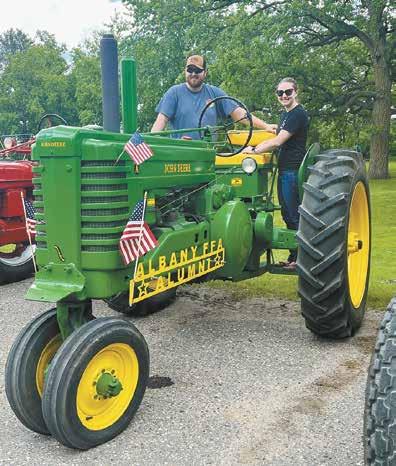
“It’s something different that you don’t get to see and do every day,” Kalthoff said. “It’s attention getting for all those watching.”
Ken Wenning said Allen
Wenning always had it in the back of his mind to start a tractor drive for loved ones and the ones who gave their lives for the country. However, it was not until 2013 that the idea of
the drive became reality, starting after the passing of his nephew, Jon Maus.
Maus passed from a workrelated accident over Memorial Day weekend in 2012 and the following year Allen was determined to get the drive started.
“Allen came over to my house and he asked if we should do it this year,” Ken Wenning said. “I told him I thought it would be a good year to start.”
The rst year the drive consisted of seven or nine tractors that came from Ken and Allen’s farms. That year they only stopped at the cemetery in Albany, where Maus is buried, ending at a relative’s home in town.
The tractor route was expanded after Allen Wenning’s passing. He was the rst to pass away from the group. In 2016, the drive included Holdingford. The following years it was Wenning’s wife, Joan, and brother, Ken, that kept the tradition alive with the support of other members of the group.
St. Anthony was incorporated into the route in 2018. As the route got longer so did the chain of tractors. There is no sign of the drive stopping.




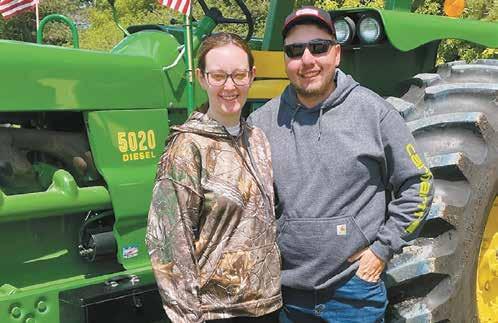
Sara Dobmeier and Dillon Breth stand next to a tractor prior to joining the parade of tractors for the Memorial Tractor Drive May 26 near St. Anthony, Minnesota. This year, 30 tractors par cipated.
Logan Wenning, cousin to Maus and great nephew to Allen Wenning, enjoys the hay ride and seeing all the tractors together. However, that is not what means the most to him.
“The most important part is going to the cemetery and visiting all the peo-
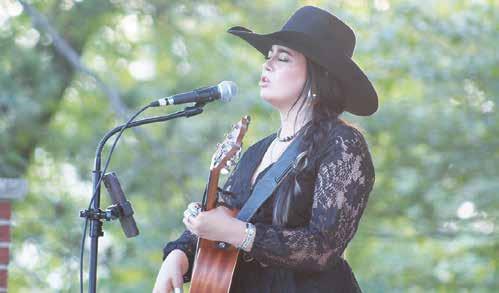
Abigail Mathis plays guitar June 5
ville, Wisconsin. Mathis
ple who have served for our country at any point and have passed away,” Logan said. “It also means a lot to have the whole family together. We might only see them all once a year and it’s just nice to have everyone there.”
My dad always had an afnity for some of the older, sillier songs, and Roger Miller was a favorite of his. The song “You Can’t Roller Skate in a Buffalo Herd” was among Dad’s favorites, and I can remember him singing it rather often.
As a kid, I always thought the song was just silly nonsense and gibberish.
Then one day a few years ago, while working at my computer, the song came on the music streaming app I was listening to.
I stopped and listened, thinking about my dad.
I began to understand the true meaning of the song — probably what made my dad embrace it.
If you have never heard the song and its nonsensical lyrics, it cautions you about things you cannot do: roller skating in a buffalo herd, showering in a parakeet cage, swimming in a baseball glove, changing lm with a kid on your back, driving around with a tiger in your car, or shing in a watermelon patch.
I’m not sure there is another profession that is more the case than dairy farming. Dairy farmers are at the mercy of the weather, markets and others determining the value of the product they produce, rising input costs, the geopolitical manifestations of trade issues, virulent disease affecting cattle ... the list could go on and on.
All those things bring stress, discontent and maybe even helplessness to our lives. But we can take control of ourselves and our own choices. One of those choices we can make is to choose happiness, regardless of the material situations we might nd ourselves in.
 By Danielle Nauman Staff Writer
Miller was probably correct about most of those. Maybe you could have changed lm with a kid on your back — look at all the moms we see running farms with their littles strapped to their backs! And in the movie, The Hangover, they did indeed drive — not very successfully — with a tiger in their car. And if the rain here in Wisconsin continues, you might well be able to sh in a watermelon patch.
But throughout the song, there was one thing Miller was insistent about in the refrain: you can choose happiness if you make up your mind to do so. He encouraged that choice by saying, “All you gotta do is put your mind to it, knuckle down, buckle down, do it, do it, do it.”
With the jaunty tune and whimsical, repetitive lyrics, it might be easy to miss that deeper meaning.
There are lots of things in life you have no control over, things that you might not be able to do or accomplish.
More often than not, I think happiness can be an elusive thing. We get bogged down in those things we cannot control. Last summer we begged for rain; this year we beg for more than 48 hours of dry weather. We get mired down by corn seed still sitting in a bag in the shed while a lake is forming in the elds, a bumper crop of hay standing in the eld that we cannot harvest, our best cow going down with milk fever.
We let ourselves get wrapped up in the details, the trivialities of everyday life. We forget to stop and smell the roses, forgetting to take time to revel in the glory of an early summer sunrise, enjoy the rough tongue of a newborn calf on our ngers.
As life seems to get more hectic and jam-packed as the years go by, I admit I sometimes lose sight of the forest because of the many trees and get mired down in the inconsequential details or problems of life. I end up with a glasshalf-full outlook, borrowing trouble before it comes. I doubt I am alone in that propensity to become overwhelmed with the chaos of life.
But I try to keep in mind that, as Miller admonishes us, we can indeed seek out happiness by choice. All we have to do is put our mind to it, to make that conscious choice. Just knuckle down, buckle down and do it, do it, do it.
dairy farm.
NEILLSVILLE, Wis. — Abigail Mathis has always had a love of music and singing. However, a year ago she would never have dreamed that she would be performing music in front of crowds.
Mathis works as the herdsperson on her family’s dairy farm near Neillsville alongside her family — parents, Sam and Stacey, brother, Gabe, and sisters, Alaina and Anita — where they milk 240 cows with four robotic milking units.
Performing in front of an audience is relatively new for Mathis, whose rst on-stage appearance was just last summer when, at the urging of friends, she joined a band on stage at a rodeo in Amherst. She joined the band for a rendition of country artist Lainey Wilson’s song, “Watermelon Moonshine.”
“I got up the courage to go up there and sing with the band,” Mathis said. “I had never really sung in front of anyone before.”
Mathis said that night a seed was planted, and she believes she found her calling.
“I was in choir in high school and had one solo, but I was always super shy and never stepped out of my box,” Mathis said. “This experience was different. Singing with that band kind of kick-started everything.”
Perhaps by coincidence, her grandparents had given Mathis a guitar as a graduation gift earlier that summer. She took on the challenge of teaching herself to play the instrument.
“I just picked up the guitar and taught myself,” Mathis said. “I had piano lessons since I was in third grade, so I knew general music. I feel like the piano is the base instrument for everything.”
As Mathis began to undertake her musical journey in earnest, she went through a relationship breakup. Mathis chose to channel her feelings into the task of writing some original material while continuing to hone her newfound skills playing guitar.
With her condence building, Mathis began sharing her music in the world of social media, posting videos featuring her talents on platforms such as Facebook, Instagram and TikTok throughout the winter.
She said the response she received came as a surprise.
“I got a lot of feedback from people in my community and also from people outside the community, from family and friends,” Mathis said. “They all were so supportive and encouraging.”
As winter faded to spring, people began inquiring with Mathis about booking her for performances.
“The outreach from people asking me to sing at events has been amazing,” Mathis said. “I never really had to reach out to people to ask for the opportunity. It’s astonishing how many people have reached out to me.”
Mathis had her rst solo public performance in April and has been performing regularly in the community since. She has performed at area bars, restaurants, parks, festivals and even a wedding. She has bookings coming up throughout the summer, with only a few open dates remaining.
“Recently I was in Eleva for their Broiler Festival, taking photos for a friend who is a photographer” Mathis said. “We were in the beer tent, taking photos and my friend mentioned that I sang, and these people started saying I should sing for them that night. I just happened to have all my stuff in my car, so really impromptu, I ended up performing that night.”
The repertoire of songs Mathis brings to her performance is varied.
“I lean heavily towards country, especially older country,” Mathis said. “But I really like classic rock, and I have picked up a knack for that. I really enjoy it. It is fun to sing.”
Despite the variety of genres, all the songs Mathis chooses to perform have something in common.
“A lot of the songs I sing hit my heartstrings,” Mathis said. “Many of them are songs I’ve been singing since I was a little kid. I have always loved music. It is crazy to see how other people relate to the same songs that I relate to.”
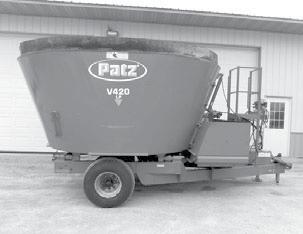
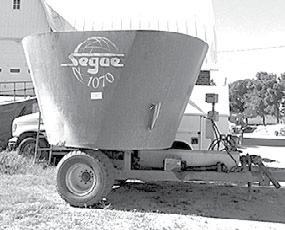
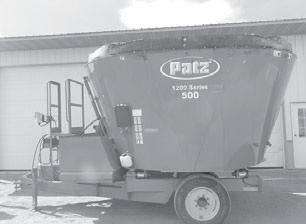

Now is the time. Please call your local Farm Service Agency ofce to certify your acres. We need to have you schedule an appointment today. We have quite a few farms to get certied yet. Avoid the bottlenecks that no doubt will develop as the deadline approaches!
File a notice of loss for failed and prevented planted acres
The U.S. Department of Agriculture FSA reminds you to report prevented planted and failed acres to establish or retain FSA program eligibility for some programs. You should report crop acreage you intended to plant, but due to natural disaster, were prevented from planting. Prevented planting acreage must be reported on form CCC-576, Notice of Loss, no later than 15 calendar days after the nal planting date as established by FSA and the Risk Management Agency.





The nal planting date for full crop insurance benets varies by county. Please verify with your local FSA ofce and contact your crop insurance agent about options available to you. Producers must ll out form FSA-576 for all prevent planting acreage to qualify for potential FSA program benets.







WHY LELY VECTOR AUTOMATIC FEEDING SYSTEMS?
• Feed to Need. Serves fresh, consistent, properly mixed rations multiple times a day, based on need.
• Saves you labor in mixing feed rations for your cows.
• Minimizes tractor run time and fuel consumption.
HEAR FEEDBACK FROM THOSE WHO USE THE VECTOR.
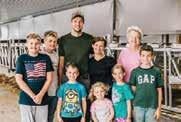

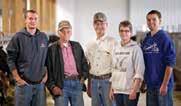
Rick & Sarah Ahlgren from Darwin, MN, started Vector feeding in June of 2020 (180 cows & dry cows):
“The Lely Vector Feeding System has become a great asset to our farm. We really like how it mixes and delivers fresh feed to our cows—in small batches, many times a day. It saves time and fuel for our dairy every day. We are so impressed with the system!”
Tim & Derek Rolf (Golden Sunrise Dairy Inc.) from McIntosh, MN, started Vector feeding in late 2019 (180 cows & 180 dry cows & heifers):
“With heifers starting at 6 months all the way to milk cows, under one roof, the Vector allows us to feed an unlimited number of rations (we feed 6) with an unlimited number of ingredients. It also continually gives the cows a consistent mix and we all know cows love consistency!”
Mike Hanson from Goodridge, MN, started Vector feeding in September of 2016 (130 cows, dry cows, & heifers):
“Originally, the Vector system was not part of our plans for our new robotic facility. But after studying the system and viewing a couple in operation, we can’t see feeding any other way!”
Have you certied your pastures? The drought of 2021 and 2023 have proven the value in timely certifying your pasture acreage. Recent national drought monitor data suggests sufcient soil moisture levels in almost all areas of Minnesota. This could change quickly. We hope for the best and prepare for the worst. Schedule an appointment to certify those pasture acres today.
Do you have a Conservation Reserve Program? CRP contract holders are reminded to certify their acres in the ofce annually. This process ensures that FSA is paying the correct people in October during the annual payment cycle. Failure to certify will guarantee you no October payment. Call to schedule an appointment to certify by July 15, 2024.
CRP maintenance
The primary nesting season has begun and will continue until August 1. Any needed maintenance, with the exception of establishment, will need special permission. If you have any weed issues, please call or stop in to get permission prior to any mowing or spraying. The exception to this is establishment, which can be done now, and there is no permission needed for the rst year of seeding.
Maintaining Agriculture Risk Coverage or Price Loss Coverage acreage
If you’re enrolled in the ARC or PLC programs, you must protect all cropland and noncropland acres on the farm from wind and water erosion and noxious weeds. By signing ARC county or individual contracts and PLC contracts, you agree to effectively control noxious weeds on the farm according to sound agricultural practices. If you fail to take necessary actions to correct a maintenance problem on your farm that is enrolled in ARC or PLC, the county committee may elect to terminate your contract for the program year.
Jerry Hurrle, farm loan manager
We are approaching the mid-point of the year, and it has been a very crazy start to the crop season. We went from very warm temperatures to excessive rain and cooler temps. In some areas, we had more rain in May than we had all last year. Hopefully, the weather cooperates for the rest of the growing season. We also continue to have high crop input expenses and volatile crop markets. How have or will the changes affect your operation and cash ow? Are the markets the same as you expected six months ago? In many cases, the prices are near or below the break-even point. Now is a good time to review your farm plan, update your records and possibly make some modications or adjustments for the remainder of the year. It is also important to keep your lender informed of any major changes to your operations and plans.
First-crop hay was exceptional in terms of tonnage. It has been challenging to get it harvested without rain, no doubt. We have heard reports of injury with broken chains or straps from pulling out sprayers or harvest equipment. Stay safe this spring. Please make safety your No. 1 priority!
Farm Service Agency is an equal opportunity lender. Complaints about discrimination should be sent to: Secretary of Agriculture, Washington, D.C., 20250. Visit www.fsa.usda.gov for application forms and updates on USDA programs
In our efforts to build trust with young adult consumers, Midwest Dairy seeks strong, collaborative partnerships that allow us to t in and stand out wherever we show up. By working with partners who deeply understand their brand and audience, we share dairy’s story in a way that resonates with our communities.
 By Liz Stiras Midwest Dairy Marketing Communication Manager
Our partnership with the St. Paul Saints has entered its second season, marking another exciting chapter in our sports collaboration journey.
Although sports partnerships are not new for Midwest Dairy — we’ve worked with several national leagues — the Saints offer a unique opportunity. As a minor league baseball team, the Saints have cultivated a fan base through familyfriendly, irreverent fun, making their games an ideal platform for promoting dairy.
Sports partnerships provide a dynamic avenue to reach consumers, reinforcing the positive associations of dairy products with health, nutrition and enjoyment. Checkoff’s collaboration with the Saints exemplies this strategy, offering numerous advantages that align with our goals. Partnering with a minor league team like the St. Paul Saints offers several distinct benets:
—Versatility and dynamism: Minor league teams are often more exible and creative in their approach, allowing us to implement various engaging and innovative initiatives.
—Affordability and accessibility: These partnerships are typically more cost-effective for Midwest Dairy and baseball fans, making them accessible to a broader range of consumers.
—Unexpected is expected: The Saints are known for their unpredictable, fun atmosphere, which aligns well with our goal to bring unexpected dairy delights to consumers.
—Athletics messaging: We can seamlessly integrate messages about the health benets of dairy products into the athletic context.
—Agricultural alignment: The Saints’ community-oriented approach provides a natural t for promoting agricultural awareness and dairy farming.
—Hosting space: The Saints’ games provide an excellent venue for hosting gatherings and leveraging strategic game moments for targeted messaging.
—High-quality video production: Collaborating on high-quality video content for social media extends our reach and engagement, particularly on platforms like TikTok.
—Opportunity for messaging: Every game and event offers multiple touchpoints to convey our messages to an engaged audience, starting at the front gate through public address reads, between-inning trivia, live interviews with Princess Kay of the Milky Way during the game, and several other points during and after the game.
A feature of our partnership with the Saints is the opportunity to either create our own theme night, crafting an experience that aligns with Gen
Z interests, or nd a theme night that already aligns with Gen Z interests. This year, as we enter our second season, our messaging has become more targeted by leveraging platforms like TikTok and organizing farm tours to deepen consumer engagement.
Our partnership with the St. Paul Saints is a dynamic and ongoing collaboration lled with creative ideation that continues long after the contract
is signed. Both Midwest Dairy and the Saints are committed to nding innovative ways to strengthen our partnership and surprise consumers with delightful dairy experiences.
Together, we are not just promoting dairy; we are building trust and creating memorable experiences that resonate with young adults, fostering a lasting connection with dairy and dairy farm families.
opinions and thoughts of the author and do not reect the opinions and views of Dairy Star staff and ownership.





program! Our current lineup provides chart-topping sires with diverse pedigrees and well-balanced profiles.







“ NxGEN allows us to have the first bite of the apple on early release bulls. Seeing the NxGEN calves when they hit the ground makes me feel like we have hit the lottery. Using these early release bulls and seeing their daughters develop, get pregnant with ease and enter the milking string – it is quite impressive.”
Stewart Arizona Dairy Co., Mesa, AZ

“ We joined the NxGEN program because we wanted better genetics faster, and to use the absolute best genetics to move our herd forward.”
Jarrod Kollwelter JC-Kow Farms, LLC, Whitewater, WI
“ NxGEN has been a very beneficial tool for our genetic program. The early access to the most elite genetics in the industry has allowed us to improve our herd’s genetic base.”
Ryan Matheron Hilmar Holsteins, Hilmar, CA























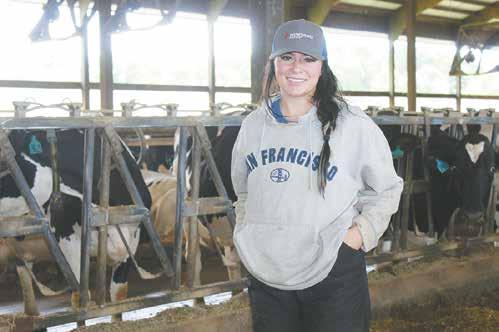
Many of the songs Mathis sings are familiar to music lovers, but she gives each one a unique spin, creating her own arrangements to suit her voice and style, manipulating the song to complement the acoustic guitar she plays.
“I like making the songs my own thing,” Mathis said. “I can sing the same song at different events, and it can sound a little different. I just do what feels right in the moment.”
Mathis said she draws her inspiration from many artists she admires.
“Two that stick out in my mind are Reba McEntire and Cody Johnson,” said Mathis. “I love not just their style,
but I appreciate their morals and values
lot.”
For the time being, Mathis said she is happy to continue to share her talents with the people in her audience. She is working to create the opportunity to record with a band — particularly her original material. As far as the future, Mathis said she is willing to let God take the reins.
“If God allows, I would 100% love to make a career out of this,” Mathis said. “But I’m not going to rush anything, because I know God has a plan for me, and I’m willing to stick faithfully to that. I would sing for myself regardless, just because I love it.”


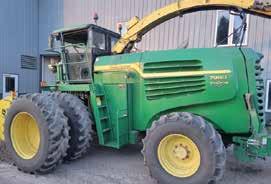




....... $235,900
JD 8700 2017, Kernel Processor, PRWD, 2600 hrs., 1850 CH hrs., #582099 ....... $219,000
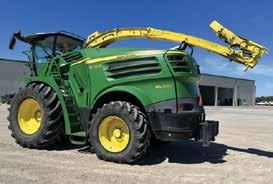




JD 9600 2022, Kernel Processor, PRWD, 663 hrs., 507 CH hrs., #576032 ...........
JD 9600 2021, Kernel Processor, PRWD, 892 hrs., 538 CH hrs., #565399 ...........
9600 2020, Kernel Processor, PRWD, 1310 hrs., 775 CH hrs., #565393 .........
JD 9600 2019, Kernel Processor, PRWD, 1311 hrs., 811 CH hrs., #532049 .........

JD 9600 2019, Kernel Processor, PRWD, 1746 hrs., 1130 CH hrs., #553763 ....... $329,900 JD 9700
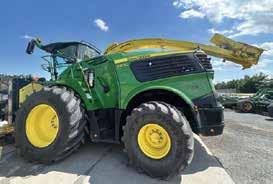




Much of the Midwest has seen a rise in heat and humidity in the past couple of weeks. The effects of summer heat and humidity are well-documented in lactating dairy cows as we see decreases in dry matter intake and subsequent production losses. Newer research points to the value of heat abatement and cooling practices for dry cows.
 By Barry Visser Nutritionist
Three University of Florida research trials showed that heat stress during the dry period negatively impacted cows during the next lactation as well as the unborn calves. In these studies, cows were moved to a freestall barn at dry off and exposed to either heat stress or cooling with fans and sprinklers. Both treatment groups received the same dry cow ration from dry off until calving. After calving, the animals from both groups were moved to one common sand-bedded freestall with fans and sprinklers, and all received the same milking cow ration.
Improved milk production
Results showed cows that were cooled during the dry period yielded signicantly more milk through the rst 20-30 weeks of lactation. The average across all three Florida studies was 11 pounds more fat-corrected milk per cow per day in early lactation. Heat stress during the dry period signicantly reduced DMI prior to calving compared to cooled cows. The trend of higher feed intakes by cows that were cooled continued post calving and progressively increased to the end of the trials.
During the dry period, udder cells from the previous lactation are replaced with new milk secretory cells to support milk production in the next lactation. Mammary tissue biopsies were conducted in the third University of Florida study to determine the impact of heat stress on mammary cell turnover. Results indicated heat stress decreased the creation of mammary epithelial cells, which may be a contributing factor to lower milk yield.
Immune function and calf growth
Heat stress during the dry period has a negative effect on animal health and immune function during the transition period. Neutrophils, specialized immune cells responsible for ghting infections, do not function well in heat-stressed cows.
On average, cows exposed to heat stress had a dry period that was seven days shorter than those cooled. Calves born from heat-stressed cows had signicantly






lower birth weights, ranging from 12%-42% lower birth weight. University of Florida researchers have continued to follow the calves born from these two dry cow treatment groups and have found signicant improvements in milk production, not only for the calves born to the cooled cows but also for the granddaughters.
Although we do not have milk yields to monitor the severity of heat stress in dry cows, we can observe other cow behavior signs. Dry cows under heat stress will have lower-than-usual feed intakes, rumination and chewing times. They will also stand for more hours of the day to promote heat loss, leading to issues in cow comfort. Activity systems can be used to monitor some of this behavior. Elevated respiration rates can also be observed by visually monitor-
ing the breathing pattern on a subset of dry cows within a group. If respiration rates exceed 60 breaths per minute, the cows are likely to experience some level of heat stress. As numbers rise above that target threshold, heat stress becomes more severe. Similar to lactating cows, dry cows under more severe heat stress may be seen open-mouth panting and bunching around shade or water sources.
Heat abatement in dry cows may require signicant investment in facilities or equipment, but the research shows it can be worth the investment. Not only does it support greater DMI, improved mammary cell growth, better immune function and subsequent milk production, but it also lends itself to healthier, more productive calves for multiple generations.
Barry Visser is a nutritionist for Vita Plus.
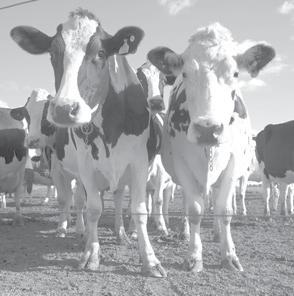
“Our


What a difference a year makes! I’ve mowed my yard more in one month than I did all last summer. The grass in the front of the house appears to have come back from the dead. It is now soft as velvet. I can’t seem to keep my shoes on because I just want to be a little girl running around the yard catching butteries. Summer dreaming.
The corn is loving these rst few weeks of summer. I think I can actually see it growing as I look out the living room window. In one month, the rows have completely canopied over. Forget knee-high by the Fourth of July. It is hip high by Flag Day (June 14). Because of the great growing conditions, it has been a chaotic rush around the farm to get everything done between chores and milkings. The summer life of a dairy farm family. Living the summer dream of excitement, adventure and travel. Of course, I think there is a difference in denition. Travel is between

elds. Excitement is juggling several jobs — spraying, fertilizing and rst-crop hay — all at the same time. Adventure is waiting to see which direction I have to run for parts when equipment breaks down. The summer pace makes all the other workdays of the year seem like a lazy day on the couch.
The great growing conditions also mean the short-bred heifers need to get moved to the pasture. Last year, Austin tried an experiment in selective paddock grazing. By grazing selected areas, it gave the rest of the pasture time to recover, and the heifers had a continuous smorgasbord of young plants to eat. In theory, it should work, but last year was the wrong year to experiment. With no rain, the pasture never recovered. The best thing that came out of Austin’s experiment was the ease with which we could move heifers around the pasture. They were well trained and waited to enter the next paddock without much









struggle.
Previously, when the heifers used to have the whole pasture all summer, moving them was a pure workout in agility training as you tried to cut them off from escaping a small crack in our defensive line while they were oblivious to a wide-open gate to freedom. You know, if you left a gate open by mistake, they would nd the opening within an hour. When you leave the gate open for them to go through, they can’t see it right next to their head! As my dad always said, “There’s nothing dumber than a heifer;” then he would look at his teenage daughters. He was quite the comedian.


Right now, we’re trying to nish up spreading fertilizer between rains. After last year, we can’t complain about too much water, but maybe we can be a little frustrated. The forecast is calling for ooding due to the current weather system sitting above us. We just have to be exible and breathe. Kind of like pilates or yoga. We will get through it one way or another. Irving Berlin said, “Above the storm clouds is a clear blue sky.”
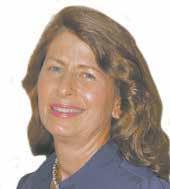 By Natalie Schmitt Columnist
For me, summer dreaming has the soundtrack of the Beach Boys and Mustang convertibles cruising down the back roads on a warm summer day. There will be dirty dishes in the sink and farm clothes to wash. There will still be weeds to pull and lawns to mow, but I will choose to get away from the race for a moment to enjoy time with my family and friends. You know, we all have a choice each and every single day. We can choose to feel blessed. We can choose to feel grateful. We can choose to be excited. We can choose to be thankful. We can choose to be happy. I choose living the summer dream on our farm.
As their four children pursue dairy careers off the family farm, Natalie and Mark Schmitt started an adventure of milking registered Holsteins just because they like good cows on their farm north of Rice, Minnesota.










Three months ago, I started a new chapter in my life that’s so far proven to be rather challenging. I got braces. I made the decision after about 10 years of prodding by our dentist. Because of the alignment of my bite, my
Dairy Good Life

 By Sadie Frericks Columnist

teeth have been wearing away for the past 30-some years. It’s amazing what a little friction over a long period of time can do. At nearly every exam and cleaning, we’d talk about the options for repairing my teeth. At my last appointment, she nally said that if I didn’t do something soon, my options would be drastically limited. So, I did more research, met with our orthodontist a couple times, and decided to proceed.
I thought I was well prepared for what getting braces would entail. But it turns out I missed one major part: You need to change the way you eat. Sure, I knew that I would need to avoid peanuts and dried fruit (and other crunchy and chewy foods). I did not know that I wouldn’t be able to chew at all. Because of the placement of my braces, my top and bottom teeth can no longer touch, so I can’t even chew cooked broccoli. Really, the only foods I can eat now are those that can be mushed around in my mouth. Even then, foods that require too much mushing end up making my mouth sore from the braces rubbing against the insides of my cheeks.
In the beginning, I was pretty upset with my new reality. I still get a little frustrated on the days my mouth hurts. But, three months in, I am astounded by how much my teeth have already moved. It’s made me reect quite a bit on the impact of small, persistent efforts. What else could I change in my life if I made a small, daily effort — even if that effort was a bit uncomfortable?
On the tough days, I also remind myself that this situation is only temporary. At my age, time ies by pretty quickly. Before I know it, these braces will be a thing of the past and I should have teeth that will last for as long as I need them.
So what am I eating? Liquid meals

are the easiest: smoothies, milkshakes, and puréed soups. Now that it’s far too hot outside for soup, one of my favorite quick meals is a milkshake made with frozen milk cubes, milk, whey protein powder, and whatever I feel like adding for avoring.
Cottage cheese, scrambled eggs, and egg bake have become staples, as well. They’re easy to eat, but do tend to get caught in my braces.
As much as I love dairy and eggs, though, I can’t live without meat. Steak is out of the question and even slowcooked beef roast needs to be chewed. I tried meatballs, but they take too much mushing. I need to be able to eat quickly and get back to work. I was nally saved by my grandma’s meatloaf recipe. It’s delicious, satisfying, and soft enough to be braces-friendly.
After the rst couple pans, I did make a couple tweaks so that it better ts my nutritional needs. The main change was adding in some powdered greens, since most green vegetables are nearly impossible to eat and I feel the best when I eat plenty of greens.
I jokingly refer to this new meatloaf as my TMR. It’s also an MRE (meal ready to eat). I try to keep a pan in the fridge at all times, so all I need to do for a meal is heat up a piece and pour a glass of milk. Plus, Glen and the kids like it, too, so there’s at least one meal we can all eat together.
TMR Meatloaf
2 eggs
15-ounce can of tomato sauce
1 1/2 cups oatmeal*
1/2 cup spinach and/or kale powder (optional)
1 teaspoon salt
1 teaspoon black pepper
1 teaspoon garlic powder
1 teaspoon marjoram or oregano
1 teaspoon savory or thyme
2 pounds ground beef
*If not using spinach powder, increase oatmeal to 2 cups.
Sauce:
8-ounce can tomato sauce
1/4 cup brown sugar
2 tablespoons yellow mustard
1 teaspoon paprika
Preheat oven to 350°F. In a large bowl, beat eggs lightly, then add tomato sauce, oatmeal, spinach and/or kale powder (if using), and seasonings. Mix well. Add ground beef and mix with hands. (Milking gloves work well for this.) Place meat mixture in a 9-by13 pan and pat down until level. Mix sauce ingredients together and spread over meatloaf. Bake for 40 minutes. Cut into 8 pieces. Serve with a big glass of milk.