Continued learning leads to more questions on H5N1 in dairy cattleBy Danielle Nauman danielle.n@dairystar.com
Since the initial detection and identication of H5N1 in dairy cattle in March, all facets of the dairy industry have been working diligently to learn more about the disease, how it is spreading and the impact it is having on dairy cattle.
As of April 22, the bovine inuenza A virus has been identied on 33 dairy premises in eight states: Texas, 12; Michigan, 6; New Mexico, 6; Kansas, 4; Idaho, 2; and one case each in North Carolina, Ohio and South Dakota.
“This is rapidly changing and evolving; information is coming in by the day, by the hour,” said Dr. Mark Lyons, director of ruminant health for the U.S. Department of Agriculture’s Animal and Plant Health Inspection Services, in a webinar hosted by the National Milk Producers Federation April 17.
According to Lyons, the genome sequences show the strain of the virus present in dairy cattle in all affected states is similar to what has been found in wild birds.
The initial introduction of the disease from wild migratory birds into dairy cattle likely took place somewhere in the Texas panhandle, Lyons said, adding the virus appears to be transmitting laterally between cattle, but that exact transmission route remains unclear.
“This is inuenza,” Lyons said. “It is very unpredictable. It is important for us to keep monitoring it.”
Because of those unknowns regarding transmission of the disease, biosecurity is the best defense dairy farmers have, said Dr. Keith Poulsen, director of the Wisconsin Veterinary Diagnostic Laboratory.
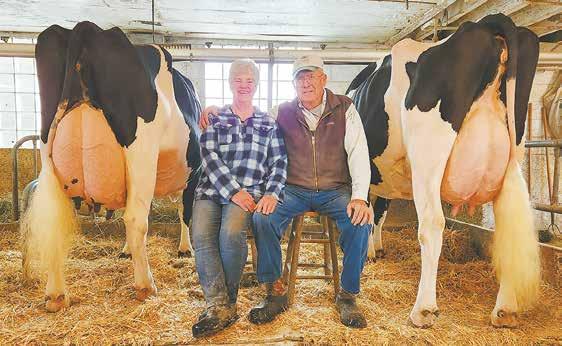
McCulloughs receive Distinguished Holstein Breeder award
By Stacey Smart stacey.s@dairystar.comJUDA, Wis. — Mike McCullough had 16 head of cattle when he left home in 1973 to start farming with his wife, Marcy. Renting a farm in Illinois, it was only a matter of time until they would nd their own farm in America’s Dairyland.


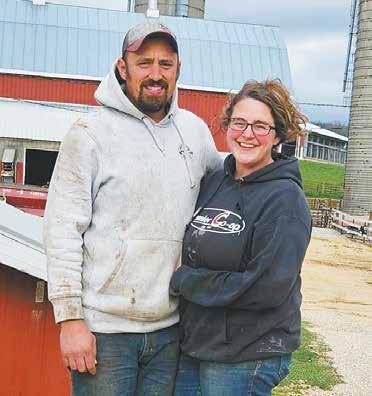
Starting a rst-generation dairy farm has not been easy for Dylan and Bryanna Handel, but they are not ones to complain.
The pair has grown a 60-cow herd of registered Jerseys, developed an agritourism business and created a niche market for cheese made with their milk, all while raising their ve children.
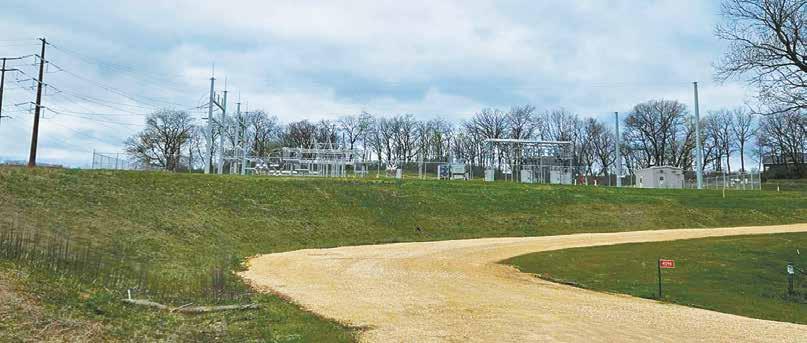
The life of their dreams was threatened Dec. 14, 2023, when a newly installed substation was activated half a mile
away, and their farm fell victim to stray voltage.
When Dylan and Bryanna went out to milk that evening, their normally docile cows were acting strange.
“The cows were backing up out of the stalls, kicking and acting crazy,” Bryanna Handel said. “It took us 2.5 hours to milk that night.”
The Handels milk 60 cows and raise 60 head of youngstock on their farm near Barneveld. While measures have been taken to x the stray voltage problem, and the situation has improved, Handel said there are residual issues that cause concern.
The cows continued to act strange, and the somatic cell count rose from 143,000 to 240,000 within a few days.
320-352-6303 (ofce) 320-248-3196 (cell) 320-352-0062 (home)
Ad Composition - 320-352-6303
Nancy Powell • nancy.p@dairystar.com
Karen Knoblach • karen.k@star-pub.com
Annika Gunderson • annika@star-pub.com
Maria Bichler - Assistant
maria.b@dairystar.com
Stacey Smart - Assistant Editor 262-442-6666 • stacey.s@dairystar.com
Danielle Nauman - Staff Writer 608-487-1101 • danielle.n@dairystar.com
Abby Wiedmeyer - Staff Writer
608-487-4812 • abby.w@dairystar.com
Tiffany Klaphake - Staff Writer 320-352-6303 • tiffany.k@dairystar.com
Jan Lefebvre - Staff Writer jan.l@star-pub.com
Amy Kyllo - Staff Writer amy.k@star-pub.com
Emily Breth - Staff Writer emily.b@star-pub.com Consultant
Jerry Jennissen 320-346-2292
Poulsen said when H5N1 makes its way into a dairy herd, the virus peaks in the rst 4-6 days, tapering off by days 10-12. He said most dairies are reporting a recovery of approximately 30-45 days.
Poulsen urged producers not to wait too long before reaching out if they suspect the virus is in their herd.
“Very active observational surveillance is important,” Poulsen said. “The best way to respond to this is with strong communication. If you see something, call your veterinarian, ask questions. It’s OK to be wrong; it’s OK to have a negative test. I’d much rather have a negative test than not test at all and miss something.”
Polymerase chain reaction testing of raw milk is the best indicator of the presence of the virus, Poulsen said. Serology testing is not a measure of an acute infection but of an immune response, Poulsen said, adding that cows and mammals in general do not respond to inuenza well with antibodies. Poulsen said work is being done to develop diagnostic options.
Because H5N1 is a virus, Poulsen said antibiotics are only recommended in the presence of a secondary infection, suggesting farmers facing the virus work with their veterinarian to develop protocols for supportive therapies.
Poulsen said all milk from cows with clinical symptoms should be discarded and not used for feeding calves.
Turn to H5N1 | Page 5
920-979-5284 • kati.s@dairystar.com
Jerry Nelson (SW MN, NW Iowa, South Dakota) 605-690-6260 • jerry.n@dairystar.com
Mike Schafer (Central, South Central MN) 320-894-7825 • mike.s@dairystar.com
Megan Stuessel (Western Wisconsin) 608-387-1202 • megan.s@dairystar.com
Julia Merten (Southeast MN and Northeast IA) 507-438-7739 • julia.m@star-pub.com
Bob Leukam (Northern MN, East Central MN) 320-260-1248 (cell)
bob.l@star-pub.com
Mark Klaphake (Western MN)




































He also recommends that all calf milk be pasteurized.
“Pasteurization is always the gold standard,” Poulsen said. “There is no data out there that makes us think pasteurization is not 100% effective in killing the virus.”
Dr. Jason Lombard, an associate professor and dairy systems specialist at Colorado State University, addressed ways dairy farmers can implement biosecurity measures on their farms to help mitigate risk.
“Enhanced biosecurity is implementing management practices to protect cattle and people from exposure,” Lombard said.
The rst thing to consider is how disease enters a farm, Lombard said. This could be by animals and animal products; airborne; rodents, birds, ies and wildlife; vehicles and equipment; people; and through feed, water and bedding.
Lombard said biosecurity starts by monitoring sick animals and minimizing cattle movement as much as possible.
“We know that movement of cattle is what introduced the virus to some states,” Lombard said. “If we have to move cattle, then premovement testing is recommended along with quarantining new arrivals for at least 21 days.”
Recommendations for premovement testing include testing of milk samples taken from lactating cows and nasal swabs taken from non-lactating animals.
“If possible, delay or stop incoming or returning animals
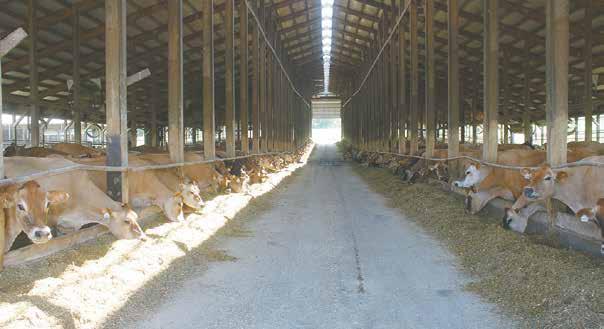
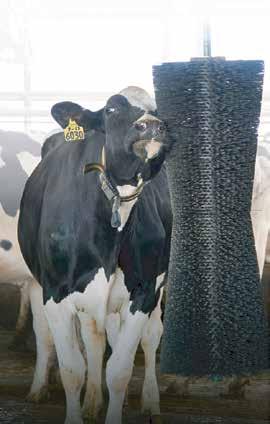
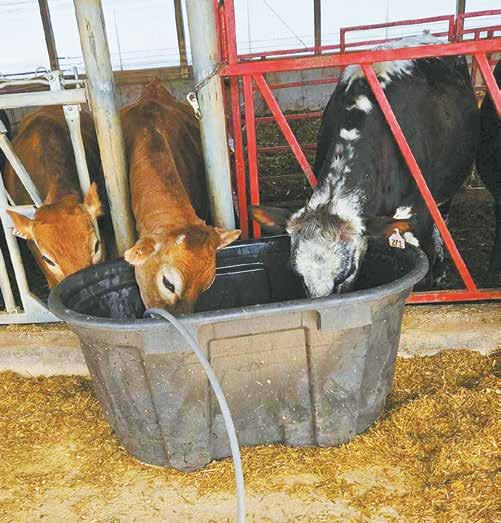
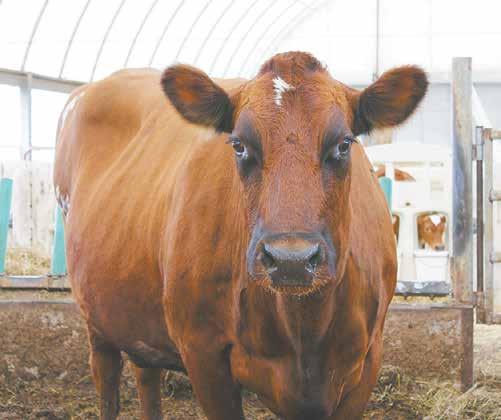
Jersey cows eat a total mixed ra on on a Wisconsin dairy farm. One of the
the bovine inuenza A virus is reduced
from herds with unknown or suspect health status,” Lombard said. “Be sure to separate all new or incoming animals. Work closely with your veterinarian on how to best do this for your herd.”
When faced with sick animals, Lombard encourages dairy farmers to have a dedicated plan.
“Don’t have sick animals sharing air space, panels, fence lines, feed or water with others,” Lombard said. “Ideally, there would be dedicated caretakers and equipment for these animals. At the minimum, workers should be wearing (personal protective equipment) that is changed. Look to your veterinarian for advice on testing and
decreased
criteria for when sick animals can be returned to the herd.”
Cattle movement considerations include the use of equipment such as cattle trailers, Lombard said.
“Livestock trucks and trailers are an unknown risk since we don’t know how the virus is transmitted from cow to cow,” Lombard said. “We should try to limit the use of trailers to a single source — one herd. We should be cleaning and disinfecting the interior of the trailer between each load of cattle.”
The presence of other animals on the farm, particularly birds, is one of the more daunting arms of implementing enhanced biosecurity measures, Lombard said.
“Birds are probably the most difcult thing to keep off a dairy operation in terms of biosecurity,” Lombard said. “We can manage a lot of things, but birds are really difcult. If they are playing a role in the continued spread of the disease, then that’s a concern.”
Disrupting the on-farm habitat such as taking away access to shelter, feed and water is critical but nearly impossible, Lombard said.
Limiting visitors and vehicles that come to the farm is another important step in creating an enhanced level of biosecurity, Lombard said.
“Limit visitors to essential personnel and keep a visitor log so you know who was on
the farm and when they were there,” Lombard said. “Visitors should stay away from the animal areas unless absolutely necessary. PPE should be worn by all visitors: coveralls, boots, gloves, masks and safety glasses or goggles.”
Lombard recommends keeping all parked vehicles in a clean area away from the cattle and where they move. He recommended having delivery drop-off areas located on the periphery of the premises.
With the concern that the virus can be spread through contact with raw milk, Lombard said milk truck biosecurity is paramount.
“Milk truck drivers should be wearing PPE and observing all biosecurity practices,” Lombard said. “Transfer hoses should be disinfected between farms, or ideally, there would be farm-dedicated transfer hoses.”
With so many unknown factors surrounding the transmission and long-term effects of the virus, enhanced biosecurity is the best tool dairy farmers have, according to Lyons.
Enhancing biosecurity in dairy, poultry and all industries is important, Lyons said. It is also paramount to be vigilant about monitoring sick animals and looking for disease in birds and ocks.
“Biosecurity is what we are emphasizing to get ahead of the spreading,” Lyons said. “This is something we’re going to have to face together, making sure we are identifying sick animals and getting samples to test.”


Con nued from MCCULLOUGHS
It was here the couple blossomed into breeders of renowned registered Holsteins.
The McCulloughs were named the Wisconsin Holstein Association’s 2023 Distinguished Holstein Breeder, an accolade that pays tribute to the long list of accomplishments in their 55-year career.
“I didn’t see this coming,” Mike said. “It was a total surprise.”
Mike and Marcy received the award Feb. 24 at the association’s convention in New Glarus.
The McCulloughs milk between 45-50 cows and farm 1,400 acres near Juda. Cows are milked twice a day in a tiestall barn, and Mike and Marcy are on the milking crew seven days a week. Marcy also feeds calves.
“We all do chores every morning and night together,” Marcy said. “I’m a rm believer that if you don’t use it, you lose it physically and mentally. You have to keep moving.”
Mike and Marcy raised ve children on the farm: Chris, Mark, David, Patrick, and Lea. David and his wife, Connie, work full time on the farm. Chris dairy farms with his family nearby while also helping his parents. Lea, a cattle photographer, helps on the farm as well.
“We hire no outside help,” Marcy said. “It’s all family working here. Four of our kids live within 2 miles of us, and everyone is very farm-oriented.”

Working with family is just as important to the McCulloughs as breeding good cows, and they enjoy sharing the farm with their 11 grandchildren.
“Seeing the grandkids in my barn every morning warms my heart,” Mike said.
Mike’s longtime love for registered Holsteins stems from a beloved cow, Taylor Knoll Susie. Susie was given to him by his father as a 4-H calf when he was 9 years old. She was a registered heifer in a grade herd and served as the foundation for Mike’s herd.
“When my two brothers and I started 4-H, our dad bought us each a registered Holstein calf with money I’m pretty sure he didn’t have,” Mike said. “Susie was one of a kind and was a gift that kept giving.”
Susie was 10 years old before she went on ofcial test, making over 100,000 pounds of milk after that point. She scored Very Good 87 at the age of 14. Susie lived to be 17, milking and calving every year. Susie and her offspring got Mike and Marcy started in their career, and most of their herd traces back to that rst 4-H calf.
Mike grew up on a dairy farm in Harvard, Illinois. While in high school, he rented a few acres of land and started buying equipment. The McCulloughs bought their current farm in 1976 and named it Rock-NHill Holsteins.
Mike and Marcy made additions and renovations to the farm and grew dramatically in acreage — cash cropping corn, soybeans and wheat — but kept cow numbers the same.
The McCulloughs built a herd while focusing on type, production and longevity. Their rolling herd average is 25,000 pounds of milk, 1,000 pounds of butterfat and 700 pounds of protein.
























They started with a BAA of 99, but today, their BAA is 110.9 and includes 21 Excellent, 21 Very Good and one Good Plus on their last classication.
To date, 103 Excellent and 237 Very Good cows have carried the Rock-N-Hill prex. The McCulloughs have bred many multiple E cows, including one at 5E, three at 4E, 10 at 3E and 15 at 2E. Mike and Marcy have bred 32 cows with over 200,000 pounds of lifetime milk, ve with more than 250,000 and two over 300,000.
“We strive for longevity,” Mike said. “That seems to be more protable, and we have a fair number of older cows in the barn. For the second time in our career, we have four generations milking at once.”
Mike patiently waits for cows to reach their potential.
“We give cows a chance to grow, develop and mature,” he said. “You don’t see many mature cows anymore. We like to let a cow go at her own pace and do what she can.”
Notable cows from the herd include Rock-NHill Knucklebuck EX-94, Rock-N-Hill Gidget EX94 and Rock-N-Hill Dolly D. Gidget’s son produced four daughters for the McCulloughs, all of which scored Excellent and made over 200,000 pounds of lifetime milk.
One of Mike’s favorite cows was Rock-N-Hill AJ Ella EX90-5E. Making over 300,000 pounds of lifetime milk, Ella had multiple daughters score Excellent and was the dam of Mike’s AllAmerican bull, EJ.
“She was a good ol’ cow that lasted 15 years,” Mike said. “She went to shows until she was 12. We showed her every year. She was just what cows are supposed to be and represents what we have always tried to breed for: hightype, long-lasting cows that produce a lot of milk.”
Favorite sires of Mike’s include Champion, Skybuck, Inspiration, Elevation, Simon, Stardust, Lindy and Leduc. Mike tends to use bulls that were popular 20 years ago like Gold Chip and Chelios or uses bulls from his own herd.
“I’m not into genomics,” Mike said. “I’ve never been afraid to use bulls that I bred. Some of my best cows are out of my own bulls.”
The McCulloughs are a six-time Progressive Breeders’ Registry winner and have bred two Gold Medal Dams and two Dams of Merit as well as one All-American, one reserve All-American, six junior All-American, six All-Wisconsin and multiple junior All-Wisconsin winners.
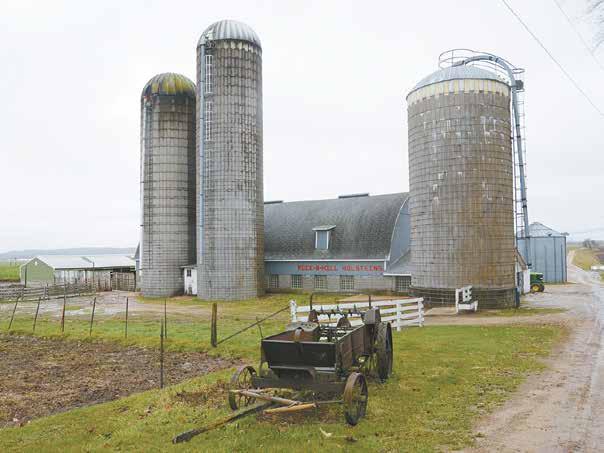
Giving back to the dairy industry and to their community is important to the McCulloughs. Mike has served on the Green County Board of Supervisors, DHI board, the Wisconsin Holstein Association board of directors, Juda school board, Juda Fire Department and more.
Marcy has spent count-
less hours with the Green County junior program serving as leader and dairy bowl coach where she led juniors to the national contest seven times. She is getting back into dairy bowl once again with her grandkids.
The McCulloughs remain active in the registered Holstein industry, breeding quality cattle while helping future generations achieve their goals. Not inuenced by breeding strategies of the day, Mike continues to pursue genetics that provide the results he and Marcy strive for.
“We like a cow that can do it all,” Mike said. “Breeding a functional cow is the key to success.”



Milk production dropped from 59 pounds to 46 pounds per cow. Handel suspected stray voltage and called the power company that owned the substation. The company conducted ground current tests and found the barn tested at .39 volts and the heifer shed at .81 volts.
“The standard guidelines limit the utilities to .5, so they’re required to do something,” Handel said.
The power company, with Dylan’s help, removed the automatic waterers in the heifer shed and installed equal potential planes.
The planes are designed to neutralize any voltage that a cow might feel, similar to a bird perching on a power line. Handel said it made the numbers on the meters go down, but the heifers’ health continued to decline. Handel suspected they were not drinking the water despite the potential planes being installed.
“They started looking ratty and just didn’t look good,” Handel said. “I thought there was no way they were drinking their water. So, I started lling tubs, and they emptied them three times a day. That was proof that they weren’t drinking out of their waterers. It’s so silly having to water animals by hand in a newer shed with automatic waterers.”
The power company told the Handels the problem was xed with the potential planes. However, Handel said the next 10 heifers and cows to freshen delivered dead calves, and the cows’ health was declining too. Cows started getting late-lactation displaced abomasums and experiencing extreme ketosis. One older, dry cow was at the bunk one night and then lying dead next to the waterer the next morning.
The Handels had their feed tested for toxins and the
milking equipment tested and found the feed to be clean and the equipment to be functional. They felt as though they ruled out any on-farm problems.
“We farmed here for seven years and life was ne,” Handel said. “Now all of a sudden, I have a $2,000 vet bill overnight, and nothing else changed.”
The power company denied that the Handels’ animals were being affected by stray voltage.
“They said until cows can
talk, they had to believe in the science,” Handel said.
The next thing the power company looked at was the voltage on the electrical poles going down the Handels’ driveway. Of the 10 poles, seven were above 50 ohms, which is the utilities guideline threshold, Handel said. Ideally, they want them to read closer to 25 ohms. Some of the poles measured over 180 ohms.
They pounded ground rods, which helped the stray voltage to dissipate. The
meter readings in the barns dropped to .45 volts. For the second time, the numbers declined, but the symptoms in the barns did not.
The Handels then asked to be isolated on demand from the utility line. To accomplish this, the three-wire system on the farm had to be upgraded to a four-wire system.































The four-wire electric work was done in February. The power company had to move the pole for the isolator because it was too close to the farm’s pole to be safe.
On the day they came to move the pole, the power company disconnected their neutral and ground to hook it up to the new pole and get the transformer up. That was the rst time Handel saw the numbers on the voltage meter drop below .5 volts, when the power to the substation was disconnected.
“It went to 32 millivolts, which is nothing,” Handel said. “It proved that their neutral was causing the problem.”
Once the isolator was installed and operating, the stray voltage to the farm dropped to a threshold the utility guidelines consider to be safe. There are spikes during peak usage hours, and Handel is trying to work with the power company to determine if there is anything to stop the spikes.
Meanwhile, the cattle continue to suffer from residual effects. All heifers and cows that were pregnant from December through March, when the stray voltage started until power lines were isolated, have continued to experience health issues.
Handel culled six cows in early April that were either rst-calf heifers that aborted early or third-lactation cows that never took off in produc-
tion. One of them had mastitis and did not recover after three weeks of treatment. Autopsies on the animals have revealed severely enlarged livers, conrming ketosis from stress and lack of water.
Handel said they had plans for growth but have been set back from the experience. She is also hesitant to build on the site now that she knows stray voltage exists.
Handel said the experience has cost an estimated $70,000 between culled animals, vet bills, medications, aborted calves, lost production, private consulting and rewiring the farm.
Handel is working with the Public Service Commission to get the ohm guidelines changed so that power companies have to take responsibility for isolating farms at a lower threshold and do a better job of preventing stray voltage.
While the loss of money has caused a burden on the family, Handel said the stress that the experience has put them under is immeasurable.
“At the end of the day, it doesn’t even matter about the cows or the farm; it’s what this did to our family,” Handel said. “The kids should’ve never had to see that many dead animals. They should’ve never had to see them cut open. This has happened to so many farmers, and it just gets pushed under the rug.”




The U.S. Department of Agriculture is working with state animal health ofcials to collect data about the spread of bovine inuenza A virus in dairy cattle. USDA chief veterinary ofcer Dr. Rosemary Sifford stresses the importance of this information. “It is important to us at this time to receive samples from these herds so we can get a more clear picture of what is going on,” Sifford said. “So far, it appears that the cattle can recover after a couple of weeks.”
Words matter
The American Association of Bovine Practitioners is now referring to highly pathogenic avian inuenza in cattle as bovine inuenza A virus. The disease presents itself very differently in cattle than poultry and should not be referenced as “HPAI in cattle” or “bird u in cattle.” The organization is asking the government and industry to also adopt the name change.
USDA communicating to trade partners about bovine inuenza
During a Senate Committee on Appropriations meeting, U.S. Secretary of Agriculture Tom Vilsack said the USDA has made a concerted effort to reach out to trading partners about bovine inuenza A virus in dairy cattle. “We’ve seen very little restriction if you will,” Vilsack said. “There’s a couple of countries expressing concerns, but for the most part, our trading partners understand that we’re on top of this.” Vilsack emphasized that dairy cows recover, the milk is safe, and this issue is a “very, very low risk” for people.
‘The right policy at the right time’ House Committee on Agriculture
Chairman Glenn “GT” Thompson is again emphasizing a farm bill will be considered in the House Committee on Agriculture before Memorial Day. Thompson released a statement about the Supplemental Nutrition Assistance Program. Commonly known as food stamps, Thompson said the program has evaluated food prices and nutrition standards every ve years, and it has remained budget-
neutral. However, the Biden administration changed that in 2021 when it increased SNAP spending by $256 billion over a 10-year period. Thompson said that executive order violated the Congressional Review Act. In the order, Thompson said it is important to correct any misinformation about cuts to nutrition spending.
Vilsack warns about GOP budget cuts

In an address to the North American Agricultural Journalists, Vilsack warned about the farm bill budget cuts that are being promoted by the Republican Study Committee. A report from this conservative House group said farmers with an income of $500,000 or more should not be eligible for farm program payments, no farm should receive more than $40,000 in farm program benets, and cuts should be made to crop insurance. The RSC proposal would also eliminate the USDA trade promotion programs and eventually end the Conservation Reserve Program. Vilsack said 21 of the 29 Republicans on the House Committee on Agriculture have signed off on the Republican Study Committee report.
By Don Wick ColumnistThe USDA has announced changes to a federal nutrition program. It increases the allowance for fruits and vegetables in the Special Supplemental Nutrition Program for Women, Infants and Children program and reduces the amount of dairy and cheese products. It also makes plant-based and lactose-free dairy options more available. Vilsack said this decision reects the latest nutritional science. Meanwhile, National Milk Producers Federation President and CEO Gregg Doud is upset with the decision, saying it reduces access to the essential nutrients in dairy products.
ducers Inc. Peterson, who farms near Boyd, Wisconsin, succeeds Steve Schlangen, of Albany, Minnesota. Schlangen served as AMPI’s board chairman since 2011. The vice chairman is Dennis Hawkins of Chippewa Falls, Wisconsin. Steve Hoffman of New Ulm, Minnesota, returns as secretary. Schlangen now takes over as treasurer.
Ford named to TIME 100
TIME magazine has named Land O’Lakes Inc. President and CEO Beth Ford to its annual list of the 100 most inuential people in the world. Ford has been in her current role since 2018. Ford is also part of the President’s Export Council.
Midwest Dairy CEO takes the job at a unique time for the industry
Tai promotes Biden administration’s trade agenda
U.S. Trade Representative Katherine Tai faced the House Committee on Ways and Means earlier this month. Her testimony provided an update on trade issues. “Through the U.S.-Mexico-Canada Agreement, we are actively championing the interests of our farmers and agricultural producers,” Tai said. “We have pursued two cases now against Canada’s dairy tariff rate quota allocation measures, and we are currently challenging Mexico’s restrictive measures on biotech corn before a panel.” Tai said the administration has secured over $21 billion in new agricultural market access in the last three years.
The House Committee on Ways and Means has approved the renewal of the Generalized Systems of Preferences trade program for agriculturespecic products. This bill protects the generic use of common food and beverage terminology, such as Parmesan and feta. The European Union has been trying to impose restrictions on these terms based on geography. Minnesota Rep. Michelle Fischbach is one of three lawmakers who were behind this bill. The NMPF, U.S. Dairy Export Council and the Consortium for Common Food Names praised this action.
Slaughter cow market remains strong
At the end of March, dairy cow slaughter nationwide was down 14.2% from one year ago. Beef cow slaughter is down 11.3%. The demand for ground beef has kept slaughter cow prices high. The value of the 90% lean beef trimmings used for hamburger meat is record high.
A new chairman for AMPI
Dave Peterson is the new board chairman for Associated Milk Pro-
Corey Scott is in her early days as the new executive director of Midwest Dairy. Scott spent the last 15 years of her career with Land O’Lakes and its sustainability division, Truterra. “It’s a unique time to be coming into a checkoff role given what the economics look like,” Scott said. “With my background in risk management, it forces me to take a very critical business look at how we’re deploying checkoff dollars. We don’t have the luxury to be using checkoff dollars in such a way that we can’t quantify the impact.”
Trivia challenge
National Blue and Corn Gold are the ofcial colors of the National FFA Organization. That answers our last trivia question. For this week’s trivia, which common dairy breed originated in Scotland? We will have the answer in our next edition of Dairy Star.
Don Wick is owner/broadcaster for the Red River Farm Network of Grand Forks, North Dakota. Wick has been recognized as the National Farm Broadcaster of the Year and served as president of the National Association of Farm Broadcasting. Don and his wife, Kolleen, have two sons, Tony and Sam, and ve grandchildren, Aiden, Piper, Adrienne, Aurora and Sterling.















How long have you been testing with DHIA?
We have been testing with DHIA since the early 70’s when my grandpa, Fred, started testing with DHIA.
What tests do you use and what do you like about those tests? We just do the milk analysis test and like to look at butterfat, protein, and somatic cell count. Our nutritionist likes to look at the sheets to see if he needs to make changes to our ration to boost protein or butterfat.
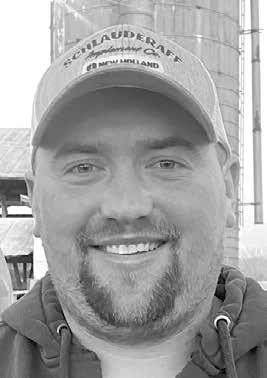
Tell us about your farm. I farm with my mom, Nancy, and dad, Pat, we have 550 acres of corn and alfalfa and nish out our Holstein steers. We milk in an 85-stall tiestall barn. We also have three part-time high school kids that help. Accurate records that tell which cows


How does testing with DHIA bene t your dairy operation? DHIA bene ts our operation because of the accurate records and tells us which cows are more pro table and which cows it doesn’t pay to have in the herd. DHIA also helps with choosing which bulls to use on certain cows to improve components of the next generation of cows. I really enjoy the simplicity of getting the information. I can download the results of the tests through dairy comp to my computer to see the last test results.










Guess where your feed dollars are going?
Our soybeans have the energy, protein, amino acids and bypass protein for your cows!













Editor’s note: Dairy Star aims to provide our readers with a closer look into relevant topics to today’s dairy industry. Through this series, we intend to examine and educate on a variety of topics. If you have an idea for a topic to explore in a future issue, send Stacey an email.
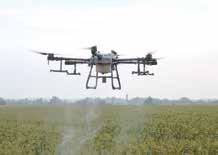
MISHICOT, Wis. — When Steven Rahmlow received too many complaints for using an airplane to spray fungicide on his corn, he decided to use a drone instead.
acres, growing soybeans, winter wheat, alfalfa and corn, at Cedar Springs Dairy Farm near Mishicot.
“We always used an airplane to spray our corn,” Rahmlow said. “When people see planes ying around, it throws up a huge red ag, and you get complaints.”
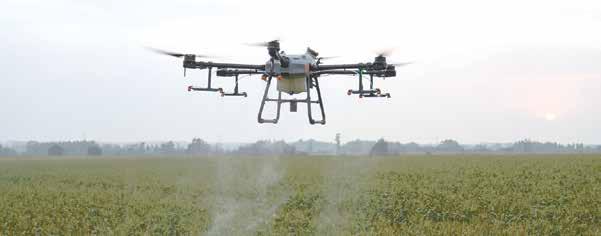

“I absolutely loved it,” Rahmlow said. “The drone gets a lot closer and provides a lot better coverage than a plane.”
Rahmlow and his family milk 1,150 cows and farm 4,000
Rahmlow is going on his third year of hiring a drone operator to spray the fungicide. After spraying elds by drone the rst year, Rahmlow needed 1,674 acres sprayed the following year, and he had the drone applicator do it all.
“The drone is a lot smaller, and no one sees it,” Rahmlow said. “People don’t know there is someone out there spraying. We had zero complaints.”
When the need to spray a crop or plant cover crop seed arises, dairy farmers can turn to

drones to get the job done. They use drones to control insects, weeds and fungus, and to deliver nutrients to crops and seed for cover crops. Farmers might also use smaller camera drones to inspect elds and check crop health.
From cover crop aerial seeding and herbicide and fungicide application to doing test plots and crop scouting, drones have many uses in agriculture.
“A drone is such an awesome tool for someone with a growing operation,” said Jeramy
Williams, owner of American Drone. “Drones offer the benet of traditional aerial applicators but put the control in your hands. If you own the aircraft, you can do this yourself whenever you want. You don’t have to wait on a xed wing or have a lot of acres to justify one coming into your area.”
A drone can get onto a eld even when it is wet, ensuring timely application without leaving any evidence that it was there. When the ground is soft in spring, a ground applicator
can make ruts in the eld or get stuck, Williams said.
“You’re going to run over 3 bushels per acre just by driving the machine out there,” he said. “You are losing yield by pounding corn or soybean into the ground.”
American Drone provides liquid and dry aerial applications. It also runs a full-service dealership near Marsheld.












“We help them through the whole process, including all the legalities and regulations,” Williams said. “We train people and make sure they are safe, legal and condent in using drones. We are the only dealer of agricultural drones in Wisconsin that is also a custom applicator. We work with and service the two largest and most advanced drone brands: DJI and XAG.”
A drone can enter a eld at any stage in the plant’s life. Drones can also access hard-to-reach places like waterways, terraces, fence rows and tree lines. They can be used with success on rough, rocky or steep terrain and do applications near congested areas. When using a drone, the application stays on-site without drifting. In addition, drones target only those areas of a eld that require spraying.
set up with a drone applicator if they wish to go that route.
“Most of the dairy farmers I work with are using drones to apply fungicide on corn silage,” Verhulst said.
Verhulst said it is mainly bigger farms using a drone on their brown mid-rib corn silage, about 5%-10% of his clientele. As a service to his customers who buy fungicide from him, Verhulst lines up the drone application and ensures the farmer has the maps, water and other supplies needed for the operator.

“With a drone, you can be very specic about where you spray,” Williams said. “If you have a 100-acre eld with only 10 acres of weeds, you don’t need to put 100 acres’ worth of product out there. The precision inside of these drones allows them to be very accurate.”
Brooke Stewart, owner of AgriDrone LLC, is a custom applicator, certied crop adviser and agronomist. Operating out of Luxemburg, Stewart specializes in chemical and cover crop applications using a drone. She performs liquid and dry aerial applications, applying fungicide on corn, soybeans, winter wheat and alfalfa as well as planting cover crop seed.
“There are still quite a few farms with their own sprayer or they have the co-op do it,” Verhulst said. “If they don’t have their own sprayer, I recommend using a drone on the corn silage. I can help get the drone set up so the timing is correct. Timing is really critical for fungicide, and we can get the timing at the right stage with the drone.”
Rahmlow applies fungicide to prevent tar spots.
“We didn’t put it on one eld, and it was almost 30 bushels of a difference,” he said. “The plant died a lot sooner that year, and we lost tonnage.”
Rahmlow is considering trying the drone with soybeans this year.






“Pretty much anything you spray in agriculture can be done with a drone,” Stewart said. “From eld and vegetable crops to orchards, vineyards and forestry — all these industries can utilize drones.”
The drone ies 10 feet above the crop canopy with a swath of 30 feet at a rate of 25 acres per hour. Stewart said the cost for an application is about $20 per acre for an average-size eld.
“For a farm with a lot of small elds or higher rates of application, I would charge an hourly rate,” Stewart said.
Stewart sprays at a rate of 2 gallons per acre.
“That’s a typical rate we use to be efcient with the drone,” she said. “You can cover 25-40 acres per hour, depending on the type of drone you have.”
“We’re also thinking about getting our own drone in the future,” he said. “If I had a drone, I would maybe spread more cover crops instead of running equipment over the eld.”

Rahmlow said the only drawback of a drone is that it takes longer than an airplane.
“Airplanes are a little faster, but I’m getting better coverage with the drone, and the cost is about the same,” he said.
If a farmer is interested in purchasing a drone, Williams recommends working with a supplier that is also an applicator.
“Talk to a supplier who can work with you as a partner, train you and walk you through the process,” he said. “Make sure you’re not just buying a drone because they’re new and cool. … You need to be making that capital equipment purchase for a reason.”

Stewart ies a DJI Agras T30, which has a 30-liter tank or about 8-gallon payload capacity, which is equivalent to 50 pounds of seed or granular.
When planting cover crops, Stewart plants a winter rye mixture, clovers, brassicas and turnips at a rate of anywhere from 5-30 pounds per acre.
Last year, American Drone spread over 26,000 pounds of cover crop seed.
“Spreading cover crop seeds into standing corn that’s 8 feet tall can be done easily with a drone,” Williams said. “By the time you cut the corn, the cover crop is germinating already.”
Williams also applies foliar feed to crops via drone.
“Instead of dumping hundreds of pounds of nitrogen on the crop at once, the drone spoon feeds foliar feed to the crop 3-4 times throughout the plant’s life cycle,” he said. “It lands on the leaves, and the plant takes it in. People are seeing a big bump in yield from that.”
Williams also recommends using drones to spray pastures.
“If you have a pasture that’s hilly, rocky and full of thistles, and you want to take out the thistles, drones are awesome for that,” he said.
Williams said the investment for a drone, including training and all associated equipment, is about $60,000.
“The average return on investment is only 17 spray days or application days,” Williams said. “I’ve had many customers prove that.”
Many licenses are required to y a drone. These include Federal Aviation Administration Part 107 to y a basic drone, FAA Part 137 to operate a drone more than 55 pounds, a state aerial applicator license, a state chemical applicator license and a third class medical certicate.
Stewart said the operator must maintain a visual line of sight of the drone and avoid power lines, wood lines and other obstacles. A short battery life can be a drawback as batteries typically last 6-8 minutes or 4-5 acres.
Drones are proving benecial in helping farmers manage their crops, and Stewart said the demand for drone work is high.
“There are new crews and people getting into it this year,” she said. “It’s really taking off.”
Williams said American Drone is adding more capacity to the industry by setting up dealerships.
“A drone is an amazing tool, but you have to be able to use it legally, safely and effectively,” Williams said. “There are a lot of federal and state regulations to follow, and civil aviation safety is our top priority. We want to make sure that when people y these in the national airspace system, they’re doing it safely.”
























When did you get started with spring fieldwork?
Adam and Annie HedlundSiren, Wisconsin
Polk County 100 cows
When did you get started with spring eldwork? We got started about April 14.
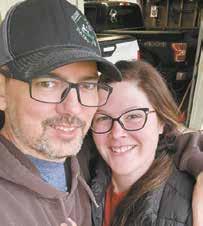
What crops do you raise, and how many acres of each do you have? We are doing about 70 acres of silage corn and 180 acres of grain corn, 140 acres of soybeans and 135 acres of alfalfa. That is about the same as it has been the past couple of years.
How have planting decisions changed for you? We are trying brown mid-rib silage corn this year because we are always trying to improve our feed quality.
What spring planting rules do you typically follow? I don’t typically measure soil temperature. I go with what feels right. The ground has to be dry enough and has to be warm enough.
What is the highlight of spring eldwork? I enjoy everything about getting out into the elds in the spring. It is nice to get back outside more after the winter.
What do you enjoy doing in your spare time in the spring? I like spending time with my family and playing with the kids.
Tell us about your farm and your plans for the dairy this year. The farm is owned by my wife, Annie, and I. My father, Larry, does a lot of work on the farm for us. We have a young lady named Karry who has been helping us for about 10 years. She helps with milking, chores and anything else we need her to help with. We milk in a double-5 herringbone parlor that we have renovated over the last several years. The cows are housed in a freestall barn. We’ve already put a new roof on the barn this year. It was nice to get an early start on that. We may possibly put down a silage pad this year. We ship our milk to Burnett Dairy Cooperative.


 Neil Jaschen Tripoli, Iowa Bremer County 400 cows
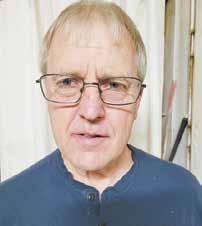
When will you get started with spring eldwork? Some of my neighbors started planting last weekend. We hope to start chopping winter rye silage the rst or second week of May. Then, we will apply liquid manure followed by no-till planting corn for silage.
What crops do you raise, and how many acres of each do you have? We raise 270 acres of silage corn, 230 acres of winter rye and 90 acres of established alfalfa. We harvest 100 acres of reed canary grass for dry cows and heifers.
How have planting decisions changed for you? We are doing more double cropping, winter rye and corn. We get more forage per acre that way. We notill the corn and rye, and that saves us a little time in the spring and fall.
What spring planting rules do you typically follow? We have no specic rules other than watching the calendar, weather and soil conditions.
What is the highlight of spring eldwork? Windrowing winter rye and chopping are my favorite eldwork in the spring.
What do you enjoy doing in your spare time in the spring? In my spare time, I do yard work, building maintenance and enjoy playing with the grandkids.
Tell us about your farm and your plans for the dairy this year. I have no specic plans for the dairy. My wife, Nancy, and I milk 400 cows in our 200-stall tiestall and freestall barns. Our youngest son, Nicholas, and his wife, Lexie, have a tanker and semi that they use to haul our milk to Associated Milk Producers Inc. They also help us in their spare time.
 Marcus DeJong Dorchester, Wisconsin Taylor County 650
cows
When did you get started with spring eldwork? We have been doing a little bit here and there. We started the week of April 14.
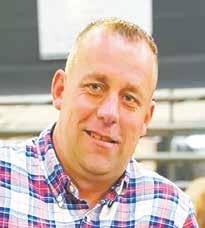
What crops do you raise, and how many acres of each do you have? I will have about 300 acres of grass hay, 120 acres of soybeans, 600 acres of corn silage and 200 acres for high-moisture corn. That is about the same as last year.
How have planting decisions changed for you? I make sure I have enough land so I can plant everything I need and grow all the feed I will need for the year.
What spring planting rules do you typically follow? The ground must be dry enough to work and warm enough to plant. I don’t check the soil temperature. I just go with how it feels.
What is the highlight of spring eldwork? I like seeing everything new. The black dirt, planting a seed and watching it grow, seeing the plant develop.
What do you enjoy doing in your spare time in the spring? I like looking at the crops and being outside in nature.
Tell us about your farm and your plans for the dairy this year. I milk 650 cows in a double-16 parallel parlor. The cows are housed in free stalls. My milk is shipped to Mullins Cheese. I plan to stay consistent and do a good job caring for the cows and the land.






When did you get started with spring eldwork? We planted wheat April 6 and soybeans April 14-15. We thought we would experiment with beans since it was early.
What crops do you raise, and how many acres of each do you have? We have 80 acres of spring wheat, 225 acres of alfalfa, 500 acres of corn and 500 acres of soybeans. We are a little bit more soybean heavy this year because of how the rotations worked out.
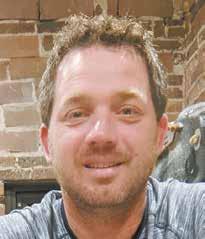
How have planting decisions changed for you? The weather forecast is a little better these days with knowing how much rain is coming and whether we should or shouldn’t plant since we can look out two weeks more condently.
What spring planting rules do you typically follow? Everything is based on if the eld is t and the soil and air are a little warm. If it is, we are going.
What is the highlight of spring eldwork? Watching the crops emerge after you put all the work into it. Once it’s up, you feel like you can sleep at night, because it’s out of the ground and you can visually see it.
What do you enjoy doing in your spare time in the spring? Having a bonre with the family and sitting around eating supper enjoying the moonlight.
Tell us about your farm and your plans for the dairy this year. The farm is owned by my mom, Janet, my brother, Chris, and myself. We ship our milk to First District Association. We milk in a double-10 parlor and nish all our steers. We don’t have any plans besides to keep going. My wife, Lisa, and our kids, Lydia, Madelynn, Kellen and Sylvia, are also active on the farm.
Alan Ferries Norwalk, Wisconsin Monroe County 480 cowsWhen did you get started with spring eldwork? We started seeding early last week, around April 9 or so. We got about 70 acres seeded down with triticale and oats so far. We’ve got about 20 more acres to go.
What crops do you raise, and how many acres of each do you have? We raise 650 acres of corn and 400 of that is earmarked for corn silage. We have roughly 250 acres of alfalfa. Last year we dabbled with 32 acres of soybeans. We had 36 acres of winter wheat that we combined. This year will be about the same.
How have planting decisions changed for you? It is not a one-person decision anymore, because the farm is a corporation now. Several years ago, we jumped on the cover crop bandwagon and have been doing it ever since. We started with seeding rye, but then, we used winter wheat seed on some of those acres. With winter wheat, you don’t get much money back from the elevator anymore for what it costs to plant, so we’re going to go back to raising rye. We’ve been taking that 32 acres of winter wheat and seeding our alfalfa into it after combining. Last year, we didn’t do any late-season seeding, because it was so dry. I wish I would have.
What spring planting rules do you typically follow? We don’t have any special rules. Usually, by the time we get time to do something, it’s time to do it. Normally,
 Ron Pagel Eyota, Minnesota Olmsted County 130 cows
When did you get started with spring eldwork? We seeded oats March 12-13. They are about 4-5 inches tall right now.
What crops do you raise, and how many acres of each do you have? We raise 65 acres of food-grade oats, 110 acres of corn, 30 acres of soybeans and 100 acres of alfalfa. We have been growing oats for three years. It has worked well in our operation. We use the straw for feed, and we no till the alfalfa in the fall. In the oat acres, we don’t seed down to alfalfa. It allows us to seed down a second crop for additional forage. With the drought last year, we used a lot of excess forage inventory, so we need to rebuild our inventory. We are raising more alfalfa and corn, which will all go to silage. We can buy our grain for our cows cheaper than we can grow it. We usually put up corn silage and earlage, but last year, with the drought, we put it all up as silage.
How have planting decisions changed for you? We have been pretty much no till for eight years. We grow a lot of cover crops. We use some of those acres for forage. Some of our corn has to wait until we remove the winter rye, and then we no till right into it behind the baler. We make baleage out of the winter rye.
What spring planting rules do you typically follow? I’m a rm believer in having patience to wait until the conditions are right. So, when I put the seed in the ground, it comes up. I don’t wait a month or six weeks fretting about germination. Part of that is driven by the fact that if we are waiting to pull cover crops off for feed, we can’t plant it yet anyway. Three years ago, we had corn emerge in four days. It was a gorgeous stand and tremendous yields, and that goes to show if you have moisture, heat and the right conditions, it’s up and going.
What is the highlight of spring eldwork? Seeing stuff grow, things greening up and the smell of fresh hay.
What do you enjoy doing in your spare time in the spring? Getting equipment ready and playing with the grandkids.
Tell us about your farm and your plans for the dairy this year. I farm with my wife, Lori, our two sons, Jeff and Tim, and their spouses. We milk in a double-8 parallel parlor. We use loose housing and compost barn for housing. We raise our heifers. We ship our milk through Land O’Lakes Inc. On the farm, there’s always things to x. We need to upgrade some stuff with our calf and heifer raising facilities. That’s probably the No. 1 on our to-do list. We are hoping for a better milk price.
we have to wait for the manure hauler. By the time that’s done, the soil is usually warm enough. This year, we were picking rock in February, which was a rst for us.
What is the highlight of spring eldwork? Getting out and planting something that’s going to grow and watching it grow. When you start with just that little seed and about a week later you’ve got plants growing up, it’s our future feed supply for the year.
What do you enjoy doing in your spare time in the spring? My two sons and I like to go shing. We go to the Mississippi River and walleye shing — whatever bites. There’s always mushroom season coming up in May, and we like to get out and hunt those.
Tell us about your farm and your plans for the dairy this year. The farm is organized as a corporation with my wife and I and two sons, Matt, and Jordan, and his wife, Brooke. We milk 480 cows three times a day. We farm about 1,200 acres. We’re in the beautiful hills of western Wisconsin. We have a double-12 parlor, and our milk goes to Foremost Farms USA. We do not have any projects planned this year. We are waiting for the price of milk to increase, like all the other farms, because it was kind of tough last year. We breed beef on our dairy, and that’s been a saving grace this year. Some of these little black calves bring $800 for a week-old calf. I’m not complaining, but it’s crazy.























How many times a day do you milk, and what is your current herd average, butterfat and protein? We milk three times a day with a yearly rolling herd average of 33,839 pounds. Our butterfat is 4.4% and our protein is 3.1%.
Describe your housing and milking facility. Cows are housed in a 4-row freestall barn with sand bedding, fans, sprinkler systems for the summer and long-day lighting for the winter. Our double-8 parallel BouMatic parlor is in the retrotted stanchion barn. Our calves are raised in calf barns with automatic feeders.
Who is part of your farm team, and what are their roles? I manage all aspects of the farm with the help of feeder Jeff Troester, herdsman Dan Busch and four parlor employees.
What is your herd health program? A healthy herd begins with the calves. We vaccinate the calves with Inforce 3, C&D Antitoxin and First Defense at birth. At weaning, they are given Inforce 3. At 4 months, the calves receive the Bangs vaccine for brucellosis, BoviShield Gold and Ultrabac 7. At 5 months, they get Bovi-Shield Gold and Ultrabac 7. At 3.5 and 4.5 months of age, the calves get a pink eye vaccine. Heifers are given Bovi-Shield Gold and
Tom Kunkel
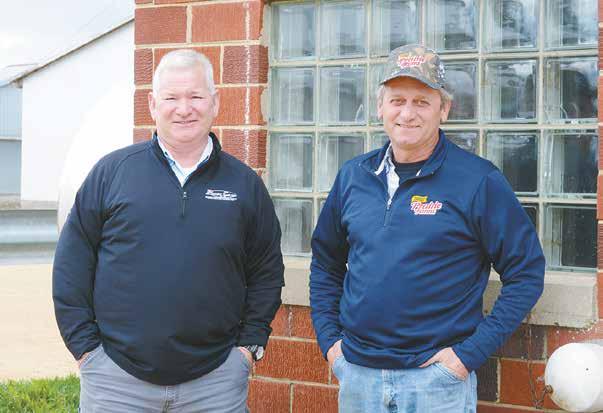
Dairy nutri onist Roger Hoppenjan (le ) and dairy farmer Tom Kunkel take a break April 17 at T Kunkel Dairy LLC near Cuba City, Wisconsin. Kunkel milks 250 cows and farms 550 acres in Grant County.
cess to pasture. Their ration is corn silage, rough hay and mineral. Thirty days before calving, they go to a pre-fresh pen. The pre-fresh ration is wheat straw, corn silage and a dry-cow concentrate that includes mineral. They are moved to a bedded pack one week prior to calving. Fresh cows are integrated with the rest of the herd shortly after calving.
What is the composition of your ration, and how has that changed in recent years? The milk cow ration consists of corn silage with 17 pounds of dry matter, two types of haylage that contribute 20.4 pounds of dry matter, nely ground highmoisture shell corn for 12.41 pounds of dry matter and protein that counts for 11.08 pounds of dry matter. As-fed pounds equal 123.25 with a dry matter weight of 61 pounds. We try not to make changes. We have a good base program that we make small tweaks to. Sometimes corn silage uctuates with the seasons or inventory, but the variation is in small amounts.
Tell us about the forages you plant and detail your harvest strategies. For alfalfa, we grow HarvXtra, which is a high-qual-
What does your dry cow and transition program consist of? The dry period is 60 days. They are housed in a freestall barn, and in the summer, they get ac-
Ultrabac 7 semi-annually. When bred heifers go to pasture, they receive LongRange, an extended release injectable parasiticide. Pre-fresh heifers get ScourGuard and J-5 at 65 days before calving and ScourGuard again six weeks pre-fresh and J-5 again 21 days pre-fresh. Mature cows receive Bovi-Shield Gold semi-annually. J-5 is administered 21 days pre-fresh and at fresh check. Dry cows are given ScourGuard and Ultrabac 7 at their dry check with the veterinarian. Two weeks after the dry check, they are given Vaxxon SRP Salmonella and Vaxxon SRP Klebsiella. At dry off, 60 days pre-fresh, the mature cows are given J-5 and ScourGuard.
Turn to TOP PERFORMERS

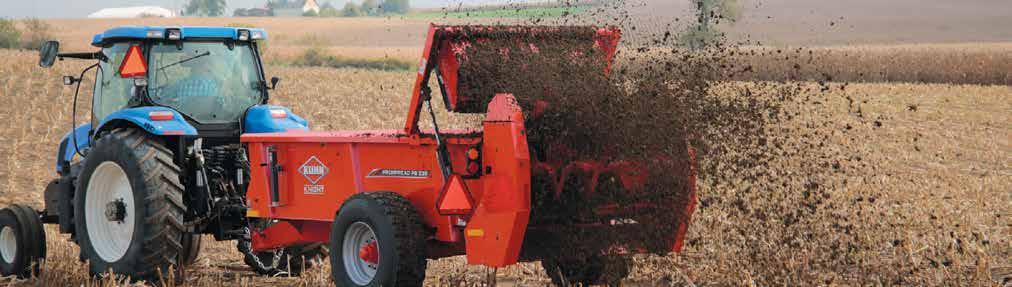






Mastitis is the most common and costly disease in the dairy industry. Veterinarians know that the liner when milking doesn’t totally close in the rest phase. This causes a large percent of mastitis in cows. With the liner open, Pre-dip doesn’t stop bacteria when being forced up the open teats in the rest phase. Mastitis shortens the life of the cow. TridentPulsation™ (winner of an ASABE award) is the only system that totally closes the liner in the rest phase when milking a cow. This stops bacteria being forced up the teats which causes a large percent of mastitis in dairy cows!
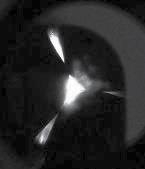
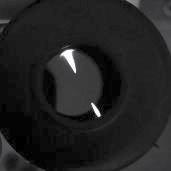

Which of these liners is your mastitis creator? Round, square, triangle…



“...the one that keeps quality milk in the tank.”
— Laura Rasmussen
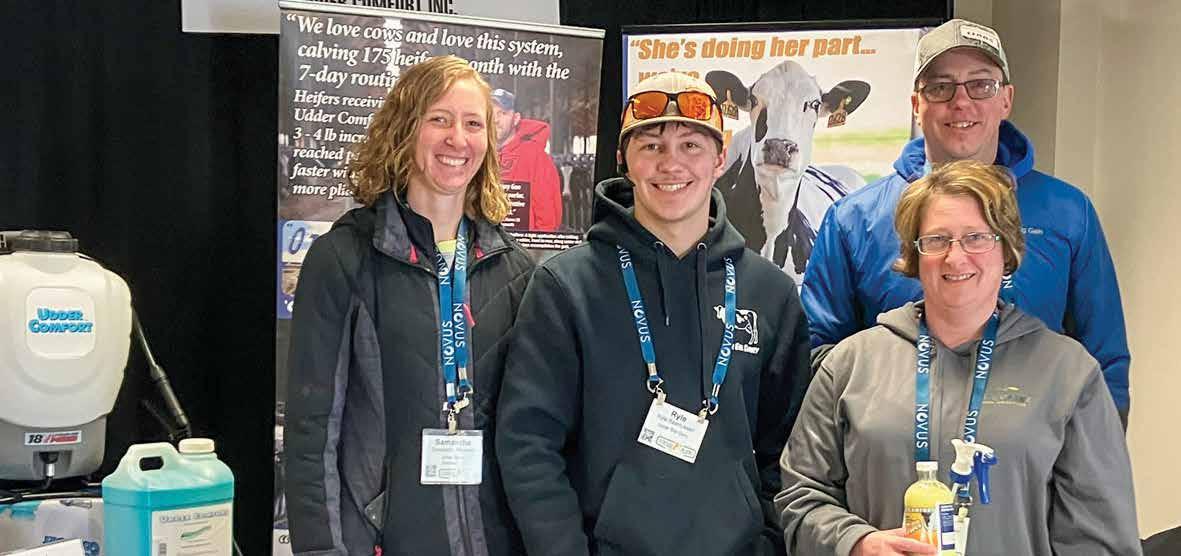

“We got a sample of Udder Comfort™ at the Dairy Expo over a decade ago and have relied on it ever since,” say Corey and Laura Rasmussen. The family operates their 350-cow Udder Site Dairy near Harlan, Iowa.
“We see a response by the next milking with Udder Comfort. It’s a key part of managing healthy udders and quality milk, along with attention to details in nutrition, milking process, and cow comfort and cleanliness with sand-bedded freestalls,” says Corey.
“Udder Comfort is the one that takes swelling out of the udder and keeps quality milk in the tank,” says Laura as she visited our booth at Central Plains Dairy Expo in March, noting the key is to apply Udder Comfort consistently at the start of lactation.
“We apply Udder Comfort after each milking for 4 days on all fresh cows as well as for any type of edema, flakes or hardness. We find we just don’t need intra-mammary mastitis treatments anymore,” they explain.




















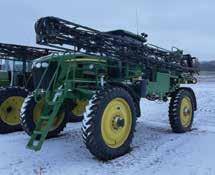
JD 2680H 2021, 35 ft., 3-Section Folding, #579164 ............................... $139,900
JD 2623 2014, 37 ft., 5-Section Folding, 9” Spacing, #579549 .................. $39,900
JD 2680H 2021, 35 ft., 3-Section Folding, #580308 ................................. $94,900 DRAWN PLANTERS
JD 1775NT 2022, 24 Row, 30” Spacing, #549842 ................................... $389,900
JD DB60 2013, 24 Row, 30” Spacing, #550243 ....................................... $149,900
JD DB60 2019, 24 Row, 30” Spacing, #551039 ....................................... $299,900
JD DB66 2011, 36 Row, 22” Spacing, #556901 ....................................... $195,900
JD DB60 2018, 24 Row, 30” Spacing, #562192 ....................................... $249,900
JD 1775NT 2023, 24 Row, 30” Spacing, #566196 ................................... $369,900
JD 1760 2008, 12 Row, 30” Spacing, #568124 .......................................... $29,500


JD DB60 2020, 24 Row, 30” Spacing, #569113 ....................................... $349,900
Case IH 2150 2021, 16 Row, 30” Spacing, #569307 ............................... $199,900
JD DB60 2010, 24 Row, 30” Spacing, #569759 ....................................... $151,500
JD 1775 2018, 12 Row, 30” Spacing, #570817 ........................................ $108,000
JD 1770NT CCS 2013, 24 Row, 30” Spacing, #571367 ............................ $109,900
JD DB80 2012, 32 Row, 30” Spacing, #571885 ....................................... $232,900
JD DB66 2019, 36 Row, 22” Spacing, #572188 ....................................... $379,900
JD 1795 2023, 24 Row, 20” Spacing, #573347 ........................................ $419,900
JD DB60 2018, 24 Row, 30” Spacing, #573437 ....................................... $289,900
JD 1775 2022, 12 Row, 30” Spacing, #574581 ........................................ $139,000
JD 1770NT CCS 2008, 24 Row, 30” Spacing, #574675 .............................. $89,900
JD DB60 2017, 24 Row, 30” Spacing, #574768 ....................................... $315,000
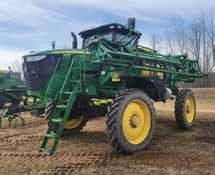





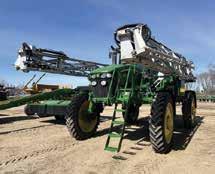

JD DB66 2023, 36 Row, 22” Spacing, #574902 ....................................... $532,900
JD DB66 2022, 36 Row, 22” Spacing, #576258 ....................................... $479,000
JD 1770NT CCS 2009, 16 Row, 30” Spacing, #576764 ............................ $133,500
JD DB66 2003, 36 Row, 22” Spacing, #577083 ......................................... $63,500
JD 1775NT 2015, 24 Row, 30” Spacing, #577213 ................................... $159,900
Kinze 3500 2016, 8 Row, 30” Spacing, #578235 ...................................... $59,900
JD DB66 2011, 36 Row, 22” Spacing, #578691 ....................................... $182,000
JD 1775 2022, 12 Row, 30” Spacing, #578705 ........................................ $142,500
JD 1775 2019, 12 Row, 30” Spacing, #578706 .......................................... $99,900
JD DB60 2013, 24 Row, 30” Spacing, #578708 ....................................... $139,900
JD 1770 2001, 12 Row, 30” Spacing, #578830 .......................................... $29,900
JD 1775NT 2020, 24 Row, 30” Spacing, #579102 ................................... $297,900
JD 1775NT 2021, 12 Row, 30” Spacing, #579443 ................................... $215,000
JD 1760 1996, 12 Row, 30” Spacing, #579729 .......................................... $25,900
JD 1790 2003, 16/31 Row, 15/30” Spacing, #579847 ............................... $58,500
JD 1775NT 2023, 16 Row, 30” Spacing, #579850 ................................... $254,000
JD 1775NT 2023, 16 Row, 30” Spacing, #579851 ................................... $305,000
JD 1760 2011, 12 Row, 30” Spacing, #579953 .......................................... $44,900
JD 1725 CCS 2023, 16 Row, 30” Spacing, #564619 ................................. $184,900
Moore Built 24R22 2000, 24 Row, 22” Spacing, #566760 ....................... $25,000
JD 1720 2004, 16 Row, 30” Spacing, #567177 .......................................... $37,000

JD 1720 CCS 2019, 12 Row, 30” Spacing, #569017 ................................... $89,900
JD 1720 CCS 2019, 12 Row, 30” Spacing, #569018 ................................... $79,900
JD 1720 2005,















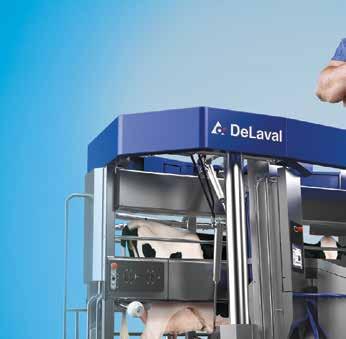




An aging parlor, a lack of reliable labor and a desire for exibility in their workday led the Dukelow family to embrace the transition to a robotic milking system on their Clark County dairy farm.
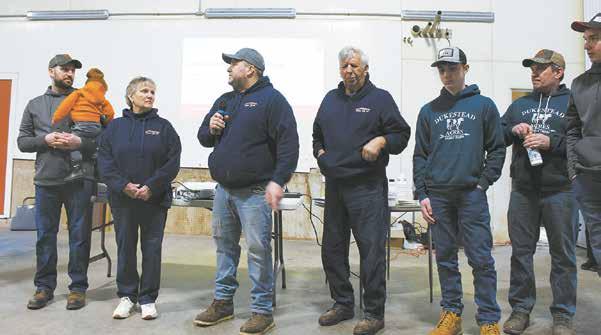
Dukestead Acres Inc. is operated by brothers Chris, Greg and Jon Dukelow and their parents, Jim and Marilyn, along with Chris’s wife, Monica, and sons, Aaron and Nathan, and Jon’s wife, Marisa, and son, Hudson.
The farm is home to 450 cows that are milked with seven DeLaval VMS V300 units.
The family shared their experience of retrotting their facility April 9 during a University of Wisconsin Extension open house in Abbotsford.
“We’re a true family operation,” Greg said. “Everyone pitches in. That is what makes us successful.”

The Dukelows had known for several years that updates were needed on their farm.
“Our parlor was over 20 years old,” Monica said. “We were faced with the decision of replacing the parlor or taking advantage of the advancements in technology, moving forward with robots. The labor struggles we were facing helped make that decision.”
Jon said that robots had been on his radar for a few years.
“We had some high school workers who graduated the year before we put the robots in,” Jon said. “They were hard to replace. The lack of dependable labor was really a driving factor.”
With the idea of robots in their sights, Jon said they have been breeding their cows with a focus on creating robotready cows for several years.
“We’ve always mapped our cows to have good udders,” Jon said. “In the past 5-6 years, we have been focusing on square udders with no reverse tilt and (ideal)
teat length. We always have enough heifers on hand, so if some don’t work out for the robots, we can always sell them on a dairy sale.”
Between 55%-60% of the herd is bred using beef semen. The Dukelows use sexed semen on the balance to ensure an ample replacement heifer population.
The robotic milking era at Dukestead Acres was launched in January 2023 with six robots.
“We really liked the guided-ow setup to help decrease the amount of pellets we’d need to feed,” Jon said. “We have had a great working relationship with Bob’s Dairy. Those were the reasons we
chose the DeLaval robots.”
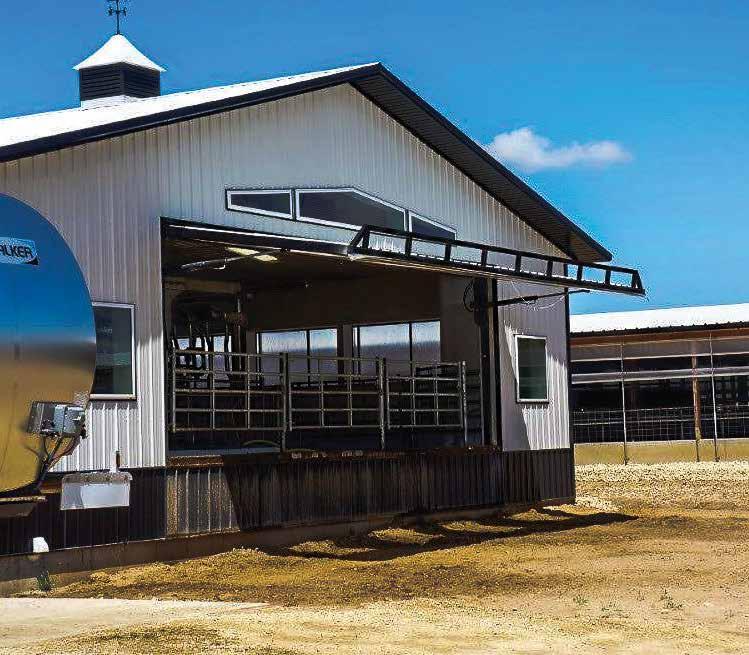
The Dukelows’ barn was lengthened by 60 feet. The barn has two pens that are each equipped with three robots positioned side by side and a smaller pen housing


















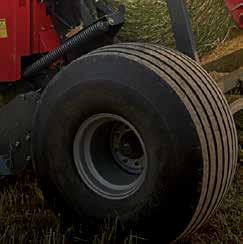

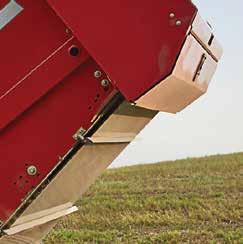


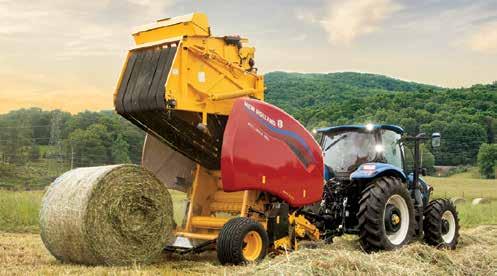
Achieving the pinnacle of efficiency with hay is now available at 0% financing for 48 months with a Hesston by Massey Ferguson® 2956 A round baler from Ziegler Ag Equipment. Purchase now through May 31, 2024, and get 10 free rolls of advanced net wrap with your Hesston® baler. Better bales are out there with the know-how and experience of Hesston. Lock in this offer now at your closest Ziegler Ag Equipment branch.





























the seventh robot. This is an unusual conguration, according to Richard Franta, a solution sales specialist with DeLaval.
“Dukestead Acres is herd No. 1 that put three robots in a row — what is called a stacked tollbooth,” Franta said. “It’s been great to see how well it’s worked, opening up a lot of possibilities for cow ow in the future. We now have a herd putting six robots in a row this way because of how well they saw it work here. It’s a neat thing to be on the cutting edge of new design technology.”
The seventh robot was installed in March 2023. Having only one robot in that pen, the Dukelows can maintain a small group of heifers in training or older cows.
“We can pay closer attention to some of those cows,” Greg said.
The Dukelows did not stop at robotic milking when upgrading the technology in their barn. They utilize a Valmetal robotic feed pusher and two Valmetal bedding robots that operate on a track system, delivering bedding to the free stalls. With the use of the bedding robot, they only disturb the cows to groom stalls every other day using a small utility tractor.
“We put in a manure separator in 2017 and have been bedding with manure solids since then,” Jon said. “We’ve been really happy with that.”
The Dukelows were one of the earliest installers of the DeLaval Plus Behavior Analysis system. The setup tracks rumination and activity for heat detection and also allows individual cows to be located within the barn through a series of additional antennas placed throughout the barn.
“The system allows you to be able to locate any cow in the barn at all times, within a couple of inches,” Franta said. “It’s a really neat feature to be able to look for cows, sort them and see how the cows are working within your barn.”
Jon agreed that the system saves time when seeking individual cows.
“Sometimes, you’d be looking for one particular cow and you just can’t nd her,” Jon said. “This eliminates a lot of time spent walking in the pens and disturbing the cows. I like that it is an ear tag instead of a collar too.”
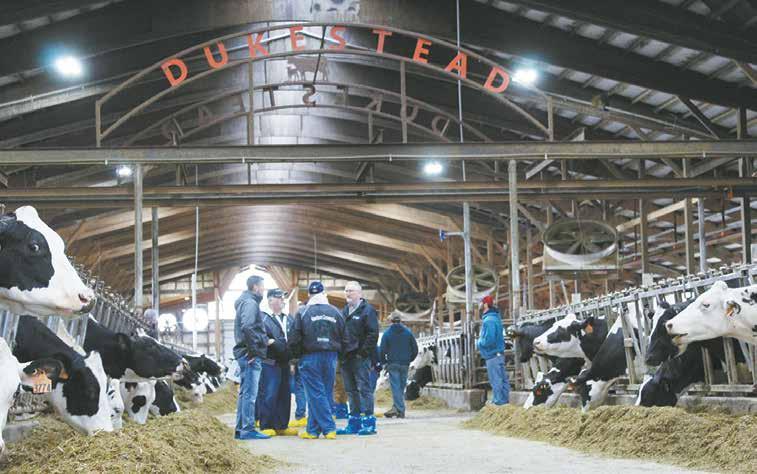
The Dukelows have seen improvement and growth in their herd’s performance.
“We increased production the second day in the robots, and we’ve just been crawling up since then,” Greg said. “We attribute that to the increase from milking twice a day in the parlor to the average 2.5-2.6 milkings per day the cows are achieving in the robots. We’re doing about 170-180 milkings per day per robot. It’s a little over 6,100 pounds of milk per robot.”
They typically look for fetch cows in the morning and the afternoon, ensuring all cows are visiting the robots on time.
“It was a fun rst week in the robots, but every week since then has gotten better,” Chris said.
The Dukelows feed their cows a total mixed ration once a day, and the cows consume an average of 7 pounds
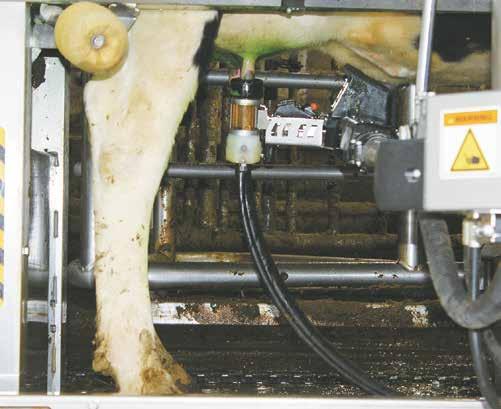
of pellets in the robot.
The increased exibility in their daily schedules has allowed the family to spend more time focusing on their cropping enterprises as well as the custom work they do.
“We work about 1,700 acres and do all our own cropping, manure spreading and spraying,” Greg said.
All in all, the Dukelows agreed
that the robots have improved their enterprise.
“We’ve been really happy with how the cows have adapted,” Jon said. “We were pleased with how easily the whole retrot has worked in the existing barn.”
The Dukelows’ barn will be open to the public June 2 when they host the Abbotsford Dairy Breakfast.
Busch set to share lifetime of Ayrshire genetics
By Danielle Nauman danielle.n@dairystar.comCECIL, Wis. — Tim Busch takes a great deal of pride in the herd of registered Ayrshires he has dedicated his life to breeding and developing.
On May 11, Busch will offer his herd in the Grand Finale at Grand-View Ayrshires.
“I’m just going to enjoy a new phase of life,” Busch said. “My wife frequently travels for work. Now, I can travel with her some. I might get a part-time job. I plan to continue to be active in the Ayrshire breed.”
Busch milks 50 Ayrshire cows on the farm on which he grew up near Cecil. Throughout his career, he has bred over 80 Excellent cows.
“I’ve lived here my whole life, and I’ve been breeding
Ka
Ayrshires my whole life,” Busch said. “I’ve never had another breed.”
The afnity for developing cow families struck
Busch early on, and he subconsciously began working toward a goal.
“I love cow families,” he said. “I place emphasis on
pedigree over anything else.
When I do buy something, it always has to have a good pedigree.”
While showing has not been an integral part of Busch’s life, it has helped create the focus for his breeding program.
“I didn’t grow up showing, other than at the county fair,” Busch said.
As he took over the farm, the reality of day-to-day work prohibited him from exhibiting the deep-pedigreed animals he was striving to breed.
“I couldn’t run this by myself and be gone for several days for a show,” Busch said. “The animals are bred to show, but you still have to nd someone to do the work.”
Using connections with others in the dairy industry, Busch has been able to exhibit cattle at shows, leading to success and recognition for the Grand-View herd.
Busch has two primary cow families that his herd descends from.
For his efforts, Busch was honored as the 2021 U.S. Ayrshire Breeders’ Association Master Breeder.








One family descends from Hawkseld GVA Pardner Blue-ET EX91-5E, a cow Busch purchased as an embryo from the Hawkseld herd of fellow Ayrshire breeder Charles Sayles of Perry, Michigan.
Two animals in the May 11 sale are ninth-generation Excellent cows from that family.
That cow family helped Busch check off a bucket list item: the honor of having his cows featured as the Ayrshire class for the 2018 Hoard’s Dairyman Cow Judging Contest. Grand-View Burdette Burgandy EX94 had the distinction of being the rst-ever Ayrshire cow to be selected as the contest’s supreme champion.
Grand-View BBBK Dreamer EX94-5E is the cow Busch said has been the most inuential to stand in his barn, impacting the Ayrshire breed globally.
Dreamer was nominated AllAmerican twice and recognized as the 2016 Wisconsin Cow of the Year, all while producing over 147,000 pounds of lifetime milk. With 13 Excellent daughters and a myriad of granddaughters and great-granddaughters, Dreamer continues to gure predominantly in the Grand-View herd.
That prolic cow family came to Grand-View through purchases made from two Ayrshire herds near Busch’s family farm, cows bred by the Westphalen and Willer families.
“Two generations of that cow family scored Excellent on one day,” Busch said. “That is when I started thinking maybe there was something special there.”
Two 10th-generation Excellent cows, one which is polled, both descending from that cow family, will sell in the sale along with heifers that are potential 11th-generation Excellent cows.
Besides the tradition of scoring Excellent, Dreamer and her descendants have provided Busch with a variety of highlights throughout his career, with cattle being sold across the U.S. and Canada. Embryos from the family have been marketed globally.
At the World Ayrshire Federation
Conference during the 2016 World Dairy Expo, Dreamer embryos sold to Australia. When the World Ayrshire Federation Conference took place in Australia during International Dairy Week in 2020, Busch enjoyed watching his genetics create a stir.
“We sold Dreamer embryos again at the world conference sale, and they were the high-seller,” he said. “At the same time, there was a heifer from the embryos we had sold in 2016 that was the second high-seller, and she was the honorable mention junior champion in the show.”
Busch is looking forward to attending a World Ayrshire Federation Conference this summer in the United Kingdom.
“With the cows gone, I’ll nally be able to travel and do those kinds of things,” Busch said. “I’m really looking forward to that.”
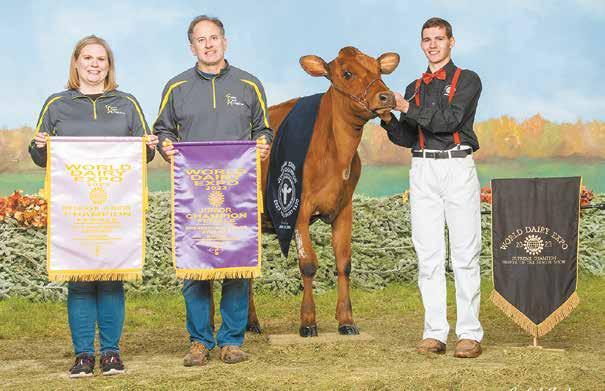
More recently, a granddaughter of Dreamer, Grand-View Champ DynaET, made a splash at last fall’s World Dairy Expo, claiming the title of supreme junior champion of the junior show for the Busches and Logan Harbaugh. She also placed second in the fall calf class and was reserve junior champion in the open show. Dyna, a potential 10th-generation Excellent, will sell as Lot 1 during the Grand Finale.
Busch enjoys his partnership with 16-year-old Harbaugh.
“I got Logan hooked on Ayrshires, which is great,” Busch said. “When I told him about the sale, he asked me what we were going to show. I had him pick out a calf for this year before we did the catalog. I promised him we’d keep making show calves with embryos I have in the tank.”
With an inventory of embryos on hand, Busch plans to continue making show calves using recipients at nearby Betley Farms near Pulaski.
“These cows and those cow families have made my passion ourish; they kept me farming,” Busch said. “This isn’t a dispersal; that means you’re going out of business. I’m not going out of business. I’ll still be involved, just on a different level.”




















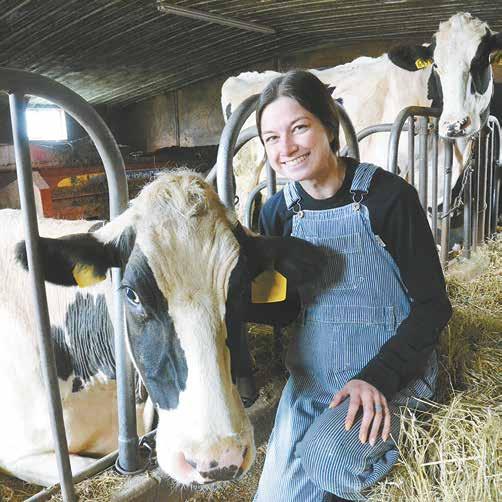
Tell us about your farm and family. I work alongside my sister, dad, uncle, grandma and grandpa. Our family farm is a true team effort with each person playing a crucial role in its operation. We operate a 100-cow, 500-acre dairy farm. All of our animals are raised on-site. We have a 65-stall stanchion barn. My sister and I take on the morning chores after milking and help milk when we can. My dad and grandpa handle milking when my sister and I cannot help. They help with morning chores, feeding the cows and calves, and eldwork. My uncle contributes by assisting with cow feeding when he can and taking charge of a lot of the eldwork. During the busiest time of the year, summer, our grandma steps in to ensure everyone is well-fed with her delicious meals. We also raise calves and cows for showing. My sister and I, along with a few other kids involved in 4-H and FFA, show our dairy cattle at the county fair.
What is a typical day like for you on the dairy? My day usually starts around 6 a.m., but I do not arrive on the farm until 7:30-8 a.m. I then help nish milking the last group of cows. I take care of feeding hay to the older calves and make sure the smaller heifers are happy and healthy. I take care of scraping the aisle and scraping behind the cows after they are out of the barn. We all help clean the gutters, and my grandpa hauls it away. My dad and I then take care of all the other chores, including putting corn stalks in the gutter, bedding the stalls, and throwing hay down in front of the cows for the night and next morning. This takes about 2-2.5 hours. Then, depending on the season, once the cows are done eating, we either let them back in the barn or in the pasture. In the summer, if we have eldwork, we start on that. In the winter, I return home to work on my other job as I am also a real estate agent.
What decision have you made in the last year that has beneted your farm? When I graduated high school, I went to college to get my degree in real estate and started selling houses. After I got that up and running, I decided that in the off months of real estate (winter) and during the summer when we need more
Emma BorchardtWatertown, Wisconsin
Dodge County
100 cows
help with eldwork, I was going to make it a priority to help on the farm whenever I could. This has helped keep the family farm running and also helped me keep a schedule while real estate is slow. It is also fun to share my experiences and everyday life on my private and business social media accounts.
Tell us about your most memorable experience working on the farm. I have a ton of memorable experiences, but the one that started it all was when I was 6 years old. We had a big white cow that I named Sally. She was old but tame. One day, my dad let me help him put the milker on during milking. Every day after that night, I was out there hoping I would be able to help him again. Being able to do something that I watched my dad and grandpa do for so long made me feel like such a big kid. That moment is what sparked my love for farming and the dairy industry.
What have you enjoyed most about dairy farming or your tie to the dairy industry? Helping my sister and other kids in 4-H and FFA learn how to show dairy is what I have enjoyed most. I have showed since I was a kid, so being able to help the next generation learn how to do it and have such a fun time doing it like I did means the world to me. Showing at the county, state and national levels has been a dream come true. I hope I can continue to be someone these kids lean on for help and inspiration when it comes to showing. My sister and I have been blessed with family and friends who support us in our dreams, and I can only hope that I have played a small role in these kids’ journey in showing as well.
What is your biggest accomplishment in your dairy career? A few years ago, I started learning how to operate machinery so I could help with eldwork and crops during the spring, summer and fall. I honestly never thought I would be one to help with that stuff, but I am so glad I learned. It brought a whole new perspective to the way things operate on and around the farm. There is so much that goes into making sure the farm has what it needs to succeed, and it is humbling to be a part of it all.
What are things you do to promote your farm or the dairy industry? I volunteer at events within the industry, post about what I do and what our industry does for everyone on social media, invite my friends and family to spend time with us on the farm learning about what we do, and show at the county fair, state dairy shows and World Dairy Expo.
What advice would you give another woman in the dairy industry? Keep being you. Just because a majority of the people in our industry are male does not mean that we can’t do it. I love what I do on our farm, and I wouldn’t trade it
for the world. Take any and every opportunity you have in this industry and run with it.
When you get a spare moment, what do you do? During this time of year, almost all of my spare time is spent selling real estate. I take a lot of pride in what I do and make sure my clients get what they deserve, so every chance I get to focus on real estate, I take. If I am not working on the farm or selling real estate, I love to spend time with friends, go to the race track, take time to do things for myself and relax.








Often, efciency is correlated with speed. At times, this can be true, but that is not always the case. We want cows milked fast, but we also want a low somatic cell count, low bacteria counts, clean cows and as few mastitis issues as possible. It is a tough balance.
Parlor efciency refers to how many cows we can push through a parlor every hour. Often, this emphasizes speed, because the parlor is a choke point on the dairy. We want cows lying down, eating and drinking water rather than spending their time in the parlor, but we can’t sacrice milking preparation to achieve that goal.
There are two terms to refer to the same issue in the parlor when we sacrice milking preparation: bimodal milking and delayed milk ejection. They mean the same thing. They refer to putting a milking unit on, initially having some ow and then having no milk ow before returning to milk ow eventually.
When we see bimodal milking, it can be a clear indication that the cow did not receive enough stimulation right away or our lag time between stimulation was not long enough. Cows need oxytocin release to achieve milk letdown. Milk letdown takes 1-2 minutes after physical stimulation, but we need to actually have
the physical stimulation rst.
If you watch a rotary go by, especially large units, they go fast. The amount of time that an employee has, especially if they are standing in one place, to physically touch the cow, give good stimulation, check for mastitis and clean the teats can be difcult, if not impossible, to accomplish. Recently, we have focused on getting lag time to exactly 90 seconds. Lag time is important, but some of the data indicate it may not matter as much. As long as it is between 60 and 120 seconds, it is probably OK. We could even push it out to 180 seconds. What we need to focus on is can we actually get a minimum of 10 seconds of physical stimulation between all the different physical touching steps? If not, we are not engaging the feedback loop that starts the train rolling with oxytocin release.
So, what? To explain why this matters, we need our second big term: milking efciency. Milking efciency is the amount of time we have milk ow over the total time the unit is on the cow. In a good situation, if the milking unit is on the cow for 4 minutes and 45 seconds, we want that cow to have milk ow for as much of that time as possible, say 4 minutes and 30 seconds, or 95% of the total unit-on time. That is good milking efciency with a lack of bimodal milking. In contrast, poor milking efciency would be a unit-on time of 3 minutes with milk ow of only 2 minutes, or



67%. There is an entire minute where the teat is subject to high vacuum with no milk ow. We’re not getting milk because we didn’t stimulate everything correctly. The secondary issues caused by high vacuum can be teat damage, forming of keratin rings on the teat end, increased mastitis risk and more.
Now the comeback usually is, “Well, if she gets started a little bit late, it’s not that big a deal because she’ll just milk longer.” The data tells us that is false. Late-starting cows do not have longer milking times. The second argument is, “Well, she’ll just make it up at the next milking.” That is also false. This is the worst kind of lost milk because we have already paid for it. We fed her and paid to make the milk, but we failed to capture it.
The reported incidence of bimodal milking on dairy farms is anywhere from 25%-75% of cows and that correlates to a signicant amount of lost milk. A 30to 60-second delay where that unit is on but we do not have milk ow results in a loss of 3 pounds of milk per milking. A greater-than-60-second delay results in 7 pounds per milking.
Remember, bimodal milking is a symptom. The cause is most often poor prepartion and lack of physical stimulation. It is important to note that other issues can cause bimodal milking as well,
including high-stress handling, injections in the parlor and a loud/stressful milking environment.
You do not need fancy sensors to know if you have a bimodal milking issue. Watch your milking procedure and your cows. High vacuum on a teat with no milk ow hurts. Cows experiencing bimodal milking are uncomfortable, and they will let us know by dgeting and kicking units off.
It is a balancing act to get cows through the parlor fast but also do it with good milking efciency. Sometimes the solution is to slow down or milk fewer times per day to take some of the pressure off employees and have less emphasis on speed. We can justify these decisions by capturing the milk we would otherwise lose to poor physical stimulation.
Overall, we should consider the balance of parlor efciency and milking efciency. There are other intangibles on this topic, but slowing down and focusing on smooth parlor operation with proper milk preparation can pay for itself in many situations.
Much of the information in this article was learned from Ron Erskine, DVM, Ph.D., professor emeritus at the Michigan State University College of Veterinary Medicine.
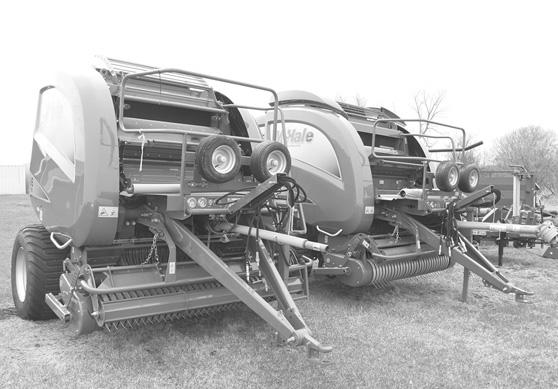




The importance of a good road trip cannot be underestimated. Whether you travel 100 miles, 200 miles or 1,400 miles like my husband, son and I recently did, road trips are a chance to see a different part of the state or country and give a fresh perspective on things.
It can get boring looking at the same surroundings every day. You might even get in a rut. I felt like that was happening to me; therefore, this trip came at the perfect time. I needed a change of pace. I needed to do and see something different.
like a barn. Their close proximity to a major highway brings lots of visitors to their door.
We also stopped at one of the world’s largest gas stations. It was denitely the largest I’ve ever seen. Buc-ee’s outside of Knoxville had a never-ending line of gas pumps and probably a thousand people inside buying just about anything you can imagine.

The motivation for the trip was to visit colleges that Elijah might be interested in attending. Kentucky, Tennessee and South Carolina were our destinations.
We visited four colleges in four days. It was exciting and exhausting, not to mention a tad emotional as I thought of my youngest being that far from home one day.
From the sprawling horse farms of Kentucky to the mountains of Tennessee to the palm trees of South Carolina, we savored the sights along the way.
When on a road trip, you never know what fun surprises you might encounter.
For example, when we were driving from Louisville, Kentucky, to Knoxville, Tennessee, we drove through an area that was under a tornado warning and beneath a sky that looked like a funnel cloud might drop at any moment. All three of our cell phones began beeping loudly, delivering an extreme weather emergency alert with a notice to seek shelter immediately. There was no shelter to seek, so we barreled through, driving out of the storm and avoiding all catastrophes.
The stops you make along the way are part of the appeal of a road trip. We bookended our trip with stops at Fair Oaks Farms near Fair Oaks, Indiana. This dairy farm has taken agritourism to a new level with a gas station, cafe, restaurant and even a hotel that looks
Road trips might not be as enjoyable for the one driving unless you like to drive. I prefer the passenger seat. It’s perfect for relaxing and staring out the window at the scenery passing by.
My dad was the ultimate road tripper. He loved to get in the car and just drive. He enjoyed seeing other parts of the country, as do I. Sometimes, a big road trip came about with very little warning. He would tell my mom, “Pack a bag. Let’s go to Florida.” Flying was not for him; he wanted to see everything along the way.
He was adventurous. If my dad saw a sign for something that looked interesting, there was a good chance he was going to get off on that exit and check it out even if it meant reaching the destination later than he originally thought.
My husband and I are not quite as spontaneous and tend to stay on the beaten path. Excursions off that path don’t happen frequently.
Unlike my careful hotel research that involves reading through piles of reviews on Tripadvisor, my parents never knew where they were staying each night. They pulled into the rst motel they saw when my dad was done driving for the day.
Even though our recent road trip was a busy one, I came home with a sense of refreshment. It was good to get away. A change of scenery was exactly what I needed.
If you get a chance to get off the farm this spring or summer, even if just for a day, consider taking a road trip. I bet you’ll have fun, and you might even come back with a fresh outlook on life.





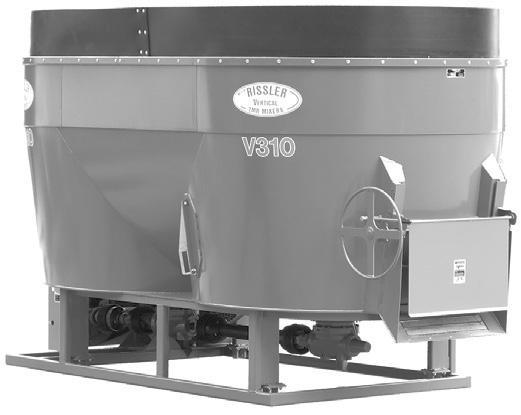
Two largest models will process whole round bales
Twin augers and nearly vertical sidewalls eliminate dead spots
All Stainless Steel mixing chamber for extremely long life

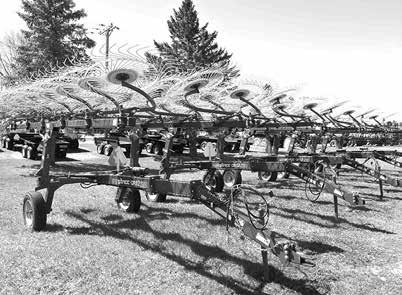
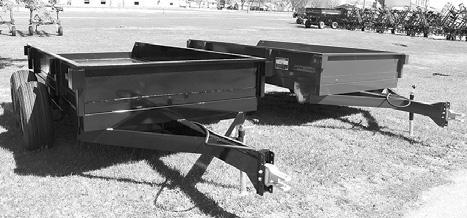
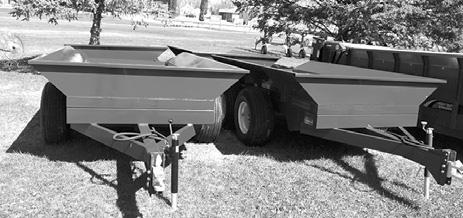
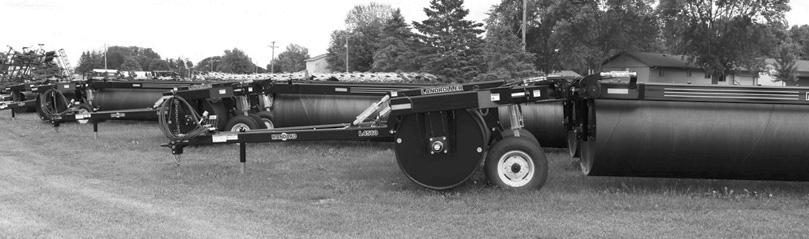
CIH 8920, FWA, 2,600 hrs ....................$110,000
CIH MX240, 4,700 hrs .............................$85,000
CIH MX220, FWA, 3,600 hrs. ..................$88,000
CIH MX120, 2WD, 3,800 hrs. ..................$72,000
CIH MX120 w/loader ...............................$75,000
CI 7220 w/6500 hrs., 2W ......................Coming In
CIH C90, 4,000 hrs. ..............................Coming In
IH 1466 restored, new 20.4x38
Firestones ..............................................$38,000
IH 1486, 6000 hrs., sharp .....................Coming In
IH 1456, cab ............................................$22,000
IH 1086, 9,700 hrs. w/ldr. ........................$23,000
IH 1066, no cab .......................................$13,500
IH 1086, 5,000 hrs. ..................................$24,000
IH 686 ......................................................$14,000
TILLAGE
CIH Tigermate II, 26’ ...............................$28,000
CIH Tigermate II 26’ w/rolling basket.......$32,000
CIH Tigermate 200 w/basket, 34’ ............$42,500
CIH Tigermate 200, 28’ w/rolling basket..$40,000
CIH Tigermate 200 28’ w/basket .............$37,000
CIH RMX 340 28’ w/mulcher ...................$44,000
CIH 3800 16’ disc ......................................$9,500

How did you get into farming? I was born and raised a dairy farmer. I am the sixth generation on this farm that was homesteaded in 1859. My folks put me on a percentage of the milk check right after high school. Four years ago, we created a limited liability company, which I have shares of.
What are the most signicant ways your farm has changed since you started farming? The most signicant change I have made since farming full time has been the ventilation system in the tiestall barn. We installed tunnel ventilation and highspeed basket fans over the cows. It makes a big difference in milk production when it’s hot out. Previously, we would drop on milk quite a bit when it got hot out. Now, the cows are eager to get in the barn under the fans, and production stays steadier. We also have fans in the calf barn.
What was a challenge you faced in your dairy farming career, and how did you overcome it? Money is always a challenge, but I’m not in farming for the money. You’ve got to love it, or you’d be awfully disappointed. We always nd ways to work through it. I have worked off the farm in the past when I had to.
What is the best decision you have made on your farm? I promised myself a long time ago that this is
Wayne “Willie” Merow of
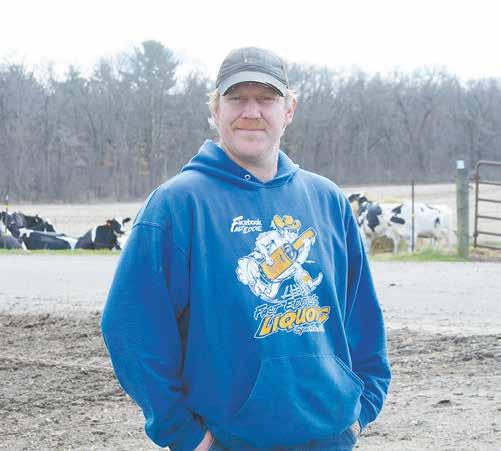
where I would raise my family, and I am doing that. I also set a goal when I was 25 years old that I would breed polled Red & White Holsteins for 25 years. I am on the 16th year. You’ve got to have goals or else you’re just working.
What three things on the farm can you not live without? I could not live without my silo unloaders. I love them, because I don’t have to run a

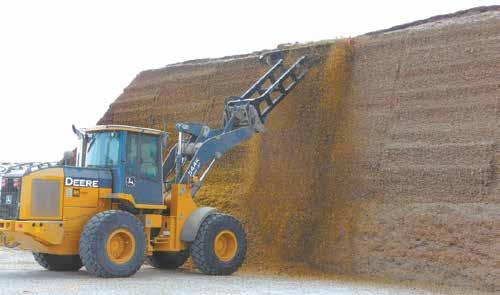
pitch fork as much. My loader tractor gets used all the time for everything from barn chores to making rewood. I have to say my farm truck. It’s a do-it-all truck, a big, blue Ram.
What are your thoughts and concerns about the dairy industry for the next year? The biggest concern I have is the input cost versus the milk price and having enough feed due to the weather. We have always had enough in the past, but we always worry.
What strategies do you use to withstand the volatile milk prices? We just tighten up our best and save where we can.
How do you maintain family relationships while also working together? Dad and I have worked together my whole life. We have learned to compromise and not step on each other’s feet. We listen to each other. I try to bite my lip more than argue.
What do you nd most rewarding about dairy farming? To know that I live where I work. It is not a job. It is a lifestyle. What’s outside my back door is most people’s dream.














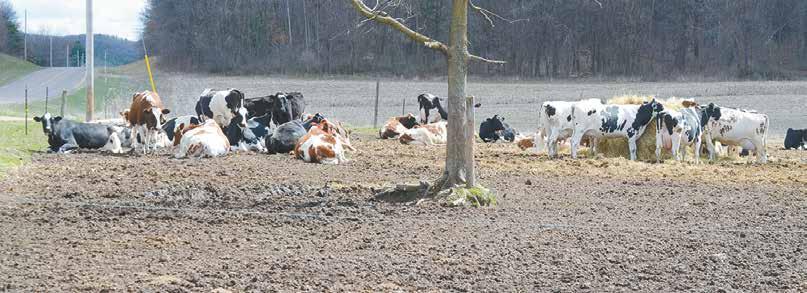
Tell us something special about your farm. It is interesting that our farm was homesteaded in pre-Civil War times. The original shanty that was built on the farm still stands and is used as a granary. For a long time, the original summer kitchen was on the property and was even used as the rst milkhouse.
What are your plans for your dairy in the next year and ve years? For the next year, I plan to maintain the business as it is. In ve years, I hope to have needed updates done like planting equipment and feed storage.
How do you or your family like to spend time when you are not doing chores?
My mother makes a Sunday breakfast at 10 a.m. every weekend. It is a time to be together as a family. People from the community know they can stop by, too, and we have had as many as 20 people come for breakfast. Besides Sunday breakfast, we also like to have company around the re pit and sit on the patio. We have a block party on the last Saturday of July. Also, I have been on the Sparta Area Fire Department for 10 years. Station 3 in Cataract was recently established, and I enjoy working with all the boys there.


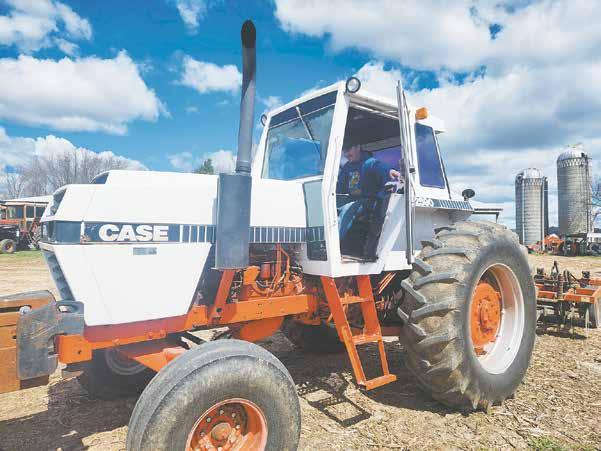








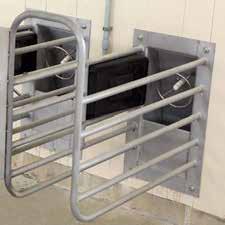


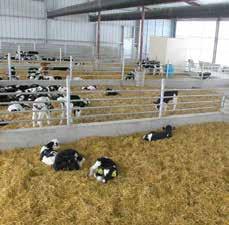


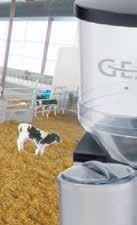













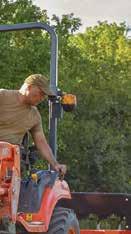












For producers in the Federal Milk Marketing Order 30 or surrounding markets, a vast majority of the milk check is dictated by volume and value of milk fat and protein. While the pay price for milk fat within the FMMO 30 for March was strong at $3.24 per pound, milk protein has been near record lows the past few months. Projections for April and May protein values are even lower and are expected to be less than $1 per pound.
The degree of economic return from amino acid balancing dairy rations uctuates with the pay price on milk protein and, to a lesser extent, milk fat. Current low protein prices generate questions on the value of amino acid balancing. The following are benets to consider.
 By Barry Visser Nutritionist
Amino acids are the building blocks of proteins. Conceptually, we continue to place less emphasis on dietary crude protein and more emphasis on the available grams of specic amino acids. Ration modeling programs can predict amino acids contributed from both dietary sources and rumen microbes.
The primary goal of amino acid balancing is to improve protein efciency. As a result, amino acid balancing often yields an improvement in milk protein output. While increased attention is being given to several of the 10 essential amino acids, lysine and methionine are often referred to as the two mostlimiting amino acids for milk protein synthesis in a lactating dairy cow diet. Supplemental methionine research not only supports greater protein percentages but also an increase in milk yield and milk fat. This is an important consideration given the value of milk fat in the current FMMO 30 market.
The benets of feeding rumen-protected methionine go well beyond milk component responses.
Reproduction: Supplemental rumen-protected methionine fed to dairy cows has been shown to affect various aspects of reproduction, including follicle quality, the uterine environment, embryo composition and pregnancy recognition. As a result, methionine has been shown to decrease the risk of embryonic loss in dairy cows.




Transition cows: Supplementing rumen-protected methionine through the dry period has been shown to improve dry matter intake and energy-corrected milk yield in early lactation cows. Transition cows undergo metabolic and physiological changes as they calve and enter lactation. While negative energy balance is commonly referenced, lactating cows also experience a period of signicant negative metabolizable protein balance. Not only are cows mobilizing fat, but they are also breaking down muscle. Methionine has a role in numerous metabolic pathways, including pathways involved in lipid metabolism, inammation and oxidative stress, making supplemental methionine a logical choice to consider for transition cows.
Heat stress: Researchers at the University of Illinois found that supplementing rumen-protected methionine to cows exposed to heat stress resulted in improved milk fat percentage compared to control cows not receiving supplemental methionine.
When evaluating your return on investment from supplementing rumen-protected amino acids such as methionine, it is important to recognize that the benets can go beyond an improvement in milk protein. In addition to increases in milk fat yields, long-term benets for cow health and reproduction can also be achieved. Not all herds are created equal, and certain bottlenecks and herd dynamics can elicit different results. Work with a nutritionist to determine what strategies work best for your dairy.
Barry Visser is a nutritionist for Vita Plus.
I heard the hum of the lawn mower and smelled the fresh-cut grass blowing into the window in our upstairs bedroom. I was in a Zoom meeting and was able to look out the window to see the owers on the pear tree blooming. I heard the rumbles from the brakes of semi-trucks heading with full loads to the grain facility, reminding me to keep my microphone on mute. I had the background blurred, so the others in the meeting couldn’t see that I was sitting on a chair near the bed.
 By Tina Hinchley Farmer & Columnist
I would usually take a call downstairs at the kitchen table or in the barn ofce. On that day, there was a urry of activity downstairs with the remodeling still taking place. We have made great progress. The living room is done except for the trim. The ofce is nearly nished after new drywall replaced the badly cracked walls. We have painted both rooms and have put in light xtures and switch plates. The ooring crew will be here for the ofce oor soon.
The noise comes from carpenter Dan and the drywall/plaster guy, Harry. We have neglected many things that needed xing, and the list seems to be never ending. This disregarded area is in our downstairs bathroom. There is a tiny leak in the ceiling that has caused the drywall to slowly pucker and droop lower than the rest of the ceiling. When the rain comes from the east with strong winds, the ceiling drips. I would hear the drip, drip, drip, and then, I would shame myself for not getting this taken care of earlier.
Harry was visiting us a few years back, and I mentioned the leak. He immediately got out a ladder and assessed the situation. Apparently, the window above must not have been caulked well enough, and the rain gutter had a bend that was splashing the rain water up under the edge of the roof. I shared that with my husband.
I didn’t think about it again until the exact weather occurrence happened maybe a year later. The wind was blowing like crazy, with lightning and thunder. Weather alerts were issued for severe weather. This storm refreshed my memory, and I wrote myself a note after I put a towel on the puddle to catch the drips from the leak.
I am sure within a few busy days, the note was lost, and I dismissed the need to give the leak the attention it deserved. During the next storm, I was reminded again. And, then again. It’s not that I forgot. It has a little to do with not feeling safe on a ladder and not too sure how to caulk around a window. I was making excuses but was still putting it off.
This began me thinking about a song my kids used to sing about the crazy, old man with the leaky roof that didn’t x it because it only leaked when it was raining. I am ashamed to think I was that crazy, old man. My anxiety about xing it led me to not do anything about it.
But, now, Harry and Dan opened up the ceiling, took out the insulation, inspected the wood beams and the wood where the roof is on. They both thought this would be a nightmare, and honestly, so did I. I was worried about what it was going to look like. I waited until after my meeting to go down and look. Come to nd out, there was only a very tiny hole in the caulk around the window, and the curve on the gutter was removed to stop it from happening again.
Harry and Dan did a quick x and took down their ladder. They announced they would also be here later on to put up more drywall in the bathroom.
So, as we all looked at the ceiling with the hole, it was mentioned that we should update the light xtures and switches and also plan on painting the bathroom. As I mentioned earlier, the x-it list seems to be never-ending, but this x is one that has been weighing on me for many years. I will be so happy to know that I will not have to fear the drips of severe weather.
Tina Hinchley, her husband Duane and daughter Anna milk 240 registered Holsteins with robots. They also farm 2,300 acres near Cambridge, Wisconsin. The Hinchleys have been hosting farm tours for over 25 years.

The smell of spring is permeating the farmhouse these days. Around here, that is the smell of the manure pit being agitated with a hint of freshly mowed lawn. Between Don the milkman and Henry, no grass around here stands a chance. The wood violets are popping up everywhere, and dandelions are waving their brilliant yellow heads in the nonstop wind on the ridge. The green ramps are coloring the otherwise drab brown hillside as we head up to the farm.
The piglets have all been moved outside to their summer homes. The four we have raised since their birth have been named at last: Olive Oyl, Popeye, Swee’Pea and Bluto. They have spent as much time out of their pen as in it. I was enjoying the sunshine for a brief moment with my hands in the soap suds last week as they sped past the kitchen window.
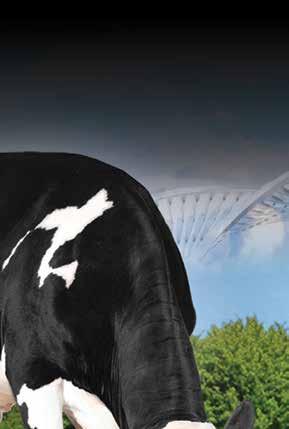
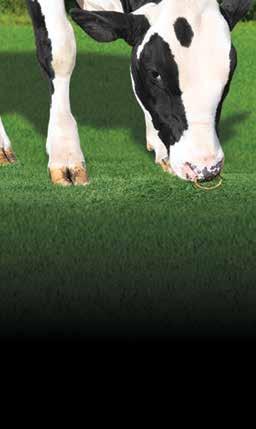



At long last, my opportunity to quote a line from “Charlotte’s Web,” “Lurvy! Pig’s out!”
Stella and Dane headed out to wrangle the happiest piglets in the world. One afternoon, the four hooved wanderers met me on the sidewalk when I pulled into the yard after a meeting. I can’t help but smile. They look so cheerful when they are skipping side to side and grunting.
I managed to sneak out of the barn before 1 p.m. on Saturday afternoon and had big plans of cooking and cleaning for the day. First on the list was granola. I got the recipe years ago from the head cook at the school, and it is a palate pleaser. I had been craving some with my yogurt as of late. As I threw a bag of it in the freezer, I was already anticipating making a big pan of yogurt parfait this week. This recipe comes from a dear friend’s fam-












ily cookbook, and it never fails to delight. Can you really go wrong with cream cheese and pudding? Nope. Add fresh or frozen fruit and homemade granola for the top, and you have a winning springtime treat. We have to eat something while we wait for the rhubarb to be tall enough to pluck a few stalks. Happy spring to you all. Don’t blow away.
Granola
1/2 cup (plus a splash or two more) vegetable oil
1/2 cup honey
1/4 cup sugar
2 tablespoons vanilla
8 cups oats
2 cups brown sugar
1/2 teaspoon salt
1/2 teaspoon cinnamon


 By Jacqui Davison
Mix the oats, brown sugar, salt and cinnamon in a large bowl. Preheat the oven to 250 degrees. Combine the rst three ingredients in a saucepan, boil, stirring constantly. Then, add the vanilla. Pour hot liquid over the oat mixture; small clumps are OK. Place on greased cookie sheets. Bake for 30 minutes. Gently stir the granola and switch pans from top to bottom in the oven. Bake 15 minutes more until golden brown. Cool, place in a large bowl and add two cups of raisins or dried cranberries, if desired. Some people also like walnuts. If that speaks to you, add 3 cups of chopped walnuts with the oat mixture.
Yogurt parfait
8 ounces cream cheese, softened
1/2 cup powdered sugar
8 ounces Cool Whip, softened
2 cups vanilla yogurt
1 box instant white chocolate pudding mix
1 cup milk
Mix together and put in a 9-by-13 pan with a sealable lid. Put fresh or frozen fruit on top just before serving. Add granola as well, covering the fruit. This is a perfect spring or summer treat.










Jacqui Davison and her family milk 800 cows and farm 1,200 acres in northeastern Vernon County, Wisconsin. Her children, Ira, Dane, Henry and Cora, help on the farm while her husband, Keith, works on a grain farm. If she’s not in the barn, she’s probably in the kitchen, trailing after little ones or sharing her passion of reading with someone. Her life is best described as organized chaos, and if it wasn’t, she’d be bored.

Time is running out for those who have not yet signed up for the 2024 Dairy Margin Coverage program. This is an important risk management tool for producers. January and February payments have triggered. Sign-up ends April 29. Producers with dairy are encouraged to schedule an appointment in your local ofce to sign up for DMC if you have not completed this already.
As you prepare for spring planting and harvest of summer forages, I pose a few questions.
Are you familiar with the Farm Storage Facility Loan program offered by the Farm Service Agency?
Many know this as the grain bin loan program, but it is so much more. As livestock producers, did you know that this program can be used to nance chopper boxes, end dumps, forage blowers, silage pads (concrete and asphalt), bunker silos, gravity boxes, grain vacs and more? Did you know this program nances bulk milk tanks, hay storage sheds or walk-in coolers? Basically, most anything dealing with the storage and handling of raw commodities is likely eligible. Did you know that these items can be used?
The FSFL program provides low-interest nancing for farming operations to build or upgrade storage and drying facilities, purchase portable (new or used) structures, commodity handling equipment, or to purchase storage and handling trucks.
A variety of structures, handling equipment and trucks are eligible under this loan.
Interest rates are in the 4% range based upon the term of the loan. Loans may range from three to 12 years. If there is construction required, which would include ground disturbance such as site preparation, an environmental review must be com-
pleted before actions are approved. Contact a FSA ofce early in the planning process to determine what level of environmental review is required for the program application so that it can be completed in a timely fashion. To learn more about the FSFL program, visit https://www.fsa.usda.gov/pricesupport or contact a FSA county ofce.
Before you start new construction for a loan, you might have gotten through the FSFL program or other loan programs administered by FSA, make sure to have all your environmental regulations met before the project has been approved.
For all FSA programs, an environmental review must be completed before actions are approved, such as site preparation or ground disturbance. These programs include, but are not limited to, the Emergency Conservation Program, FSFL program and farm loans.
If project implementation begins before the FSA has completed an environmental review, the request will be denied. Although there are exceptions, it’s important to wait until you receive written approval of your project proposal before starting any action.
Applications cannot be approved until the FSA has copies of permits and plans.
Are you looking for assistance from the FSA in the form of a direct loan?
A new, simplied direct loan application is available for all producers seeking a direct farm loan from the FSA. The application, reduced from 29 to 13 pages, provides improved customer experience for producers applying for loans and enables them to complete a streamlined application.
Producers also have the option to complete an electronic llable form or prepare a traditional, paper application for submission to a FSA ofce.
Coupled with the loan assistance tool, the simplied application provides all applicants access to information regarding the application process and

assists them with gathering the correct documents before they begin the process. This will help farmers and ranchers submit complete applications and reduce the number of incomplete, rejected or withdrawn applications.
The direct loan application and loan assistance tool are the rst of multiple farm loan process improvements that will be available at farmers.gov. Other improvements that are anticipated to launch include:
— An interactive online direct loan application that gives customers a paperless and electronic signature option, along with the ability to attach supporting documents such as tax returns.
— An online direct loan repayment feature that relieves borrowers from the necessity of calling, mailing or visiting a U.S. Department of Agriculture Service Center to pay a loan installment.
Stay safe this spring, and make safety your No. 1 priority.
Farm Service Agency is an equal opportunity lender. Complaints about discrimination should be sent to: Secretary of Agriculture, Washington, D.C., 20250. Visit www.fsa.usda.gov for application forms and updates on USDA programs




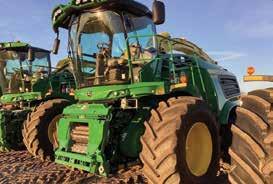




........... $499,900
JD 9600 2021, Kernel Processor, PRWD, 892 hrs., 538 CH hrs., #565399 ........... $420,000
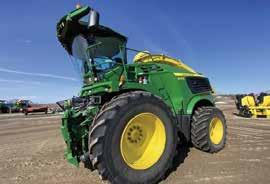




JD 9600 2020, Kernel Processor, PRWD, 1310 hrs., 775 CH hrs., #565393 .........
JD
JD

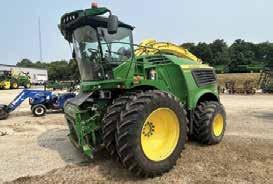




I have an earworm song swirling in and out of my mind as I decipher the story I want to tell.
The Beatles sang, “You say yes. I say no. You say high. I say low. I don’t know why you say goodbye when I say hello, hello, hello.”
We’ve been saying goodbye quite a bit around here, but we are also saying hello this spring to new ideas. It all started with a simple letter.
Instead of a letter announcing the annual Benton County Dairy Herd Improvement Association banquet, we received a notice on the transition of responsibilities from the county to the state association. It was the end of an era, as Benton County DHIA ceased to exist.
DHIA has been such a big part of our family farm’s story since our rst test day in 1974.
The top cow that year was Nancy, a purebred cow
from our herd. This intrigued Mel Hackett, a registered breeder neighbor across the elds to the east. He popped over for a look at this cow. Ralph was excited to show him Nancy. He explained how he had purchased her granddam at the St. Cloud Orphanage Dairy Sale. She was a registered animal, but Ralph never kept the paperwork up on her descendants.
It didn’t take Mel long to realize we qualied for the Holstein Association USA open herd book program to capture “lost” purebred cattle. This was the rst step in the creation of RALMA Holsteins.
Every month, it was a race to the mailbox to get the latest DHIA report. With a keen eye, Mark would study the production reports to discover which family lines he wanted to develop and which animals didn’t make the mark. Ralph always said the purebreds had to milk better than the grades to stay in the herd. The
monthly reports provided Mark with the information he needed to justify keeping his cows and converting the herd to registered cattle.
Eventually, Mark would serve on the county board in the early years of our marriage. There were long night meetings and a revolving door of testers to train. It was challenging, but come banquet time, it was all about having fun with dairy families. The banquet was our annual date night. It was a time to get dressed up and head to town to laugh and reconnect with other families across the county after a long winter season. The board would eventually schedule the banquet as close to Valentine’s Day to give the farmers a free pass in case they forgot.
Over the years, it became a family affair with the kids. Many of them had been going since they were in strollers. As the kids got older, we convinced them they could accept the award for low somatic cell count or high production cow since it was their favorite cow. Today, the grandkids gaze over the line of trophies as to which one they will claim as champion of family contests.
When Ralph retired from dairying in 1987 (the year we were married), there were 107 herds on test milking 5,778 cows for an average production of 16,512 pounds of milk per cow. In 2022, Benton County had 38 herds with almost 17,000 cows on test. The top production cow was No. 7670, who produced 40,868 pounds of milk in 305 days.


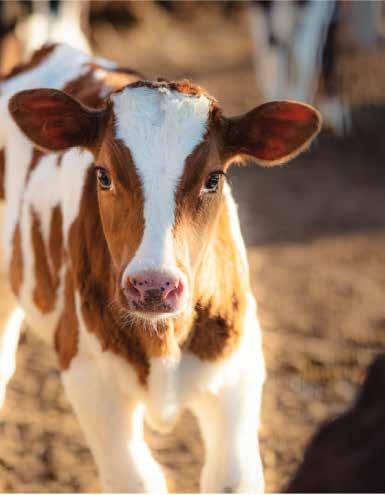










My, how things changed in those 35 years. We say goodbye to lled banquet halls brimming with laughter and clanking silverware. We say goodbye to a time where everyone knew their neighbor’s family lineage as well as their family’s cow names. Today, we say hello to new production and information at our ngertips. At least we get to keep our same tester.
As we say goodbye to the county DHIA traditions, we are saying hello to adventures. In keeping with the family motto of “using what you have and making due with what you’ve got,” Austin is pushing us to say hello to a world of production technology.
Austin has been retting the planter to incorporate a more accurate placement of seed and fertilizers. He is also creating his own portable bracket system out of scrap metal to allow us to place a GPS system on tractors. He is chanting a new motto of “spend money to save money.” He has crunched the numbers to support his vision of what he wants to see develop for the land … just as his dad did when he scoured the DHIA reports all those years ago to improve the herd.
I’ve noticed within my family how struggles between goodbye and hello can bring a few sour notes to a song. Old men forget not just birthdays and anniversaries but memories of their struggles to make their mark on the farm. It wasn’t that long ago when we wanted to say hello to a new vision.
Aren’t our sons and daughters truly following the family trail as they step on the path with their own vision and dreams … just like we did from our fathers before us? We’re at a point of you say goodbye, and
I say hello. This is going to be a sweet song to have caught swirling around in my head.
As their four children pursue dairy careers off the family farm, Natalie and Mark Schmitt started an adventure of milking registered Holsteins just because they like good cows on their farm north of Rice, Minnesota.



What an interesting, and concerning, spring we are having. At any given time, there are a handful of concerns swirling around in my thoughts.
Our livestock hauler said the auc-

 By Sadie Frericks Columnist

tion has twice as many herd sell-outs scheduled for this spring as they typically do. Others have said the actual number is over 30 herds. That’s a lot of dairy farms exiting the business in our part of the world; most of them are likely smaller farms like ours.
I’m certain the supply of milk won’t be affected; other dairy farms will increase output to keep processing plants full. What concerns me are the impact on the families exiting the dairy business, the impact on our local economy, and the impact on the dairy-based businesses that we rely on to support our farm. Without a doubt, small- and mid-sized dairy farms spend more dollars per cow in their communities than larger dairies. Put another way, the same cow on a smaller farm generates more economic activity than the same cow on a larger farm.
Our Dairy Margin Coverage statement for February made me laugh but in a sad way. Because of the signicant difference between Class III and Class IV milk prices, and because the higher Class IV milk price is buoying the allmilk price, the payment for February was 6 cents per hundredweight. For those of us in the Class III-heavy Upper Midwest, it’s like salt in the wound. Our February Class III market price was $16.08 cwt versus the $20.10 cwt all-milk price used in the calculations. Even if the Upper Midwest average feed cost is below the $11.16 cwt used by DMC, our margin above feed cost is still in the $6 cwt range, not $9.44.
I would rather not need programs like DMC and Dairy Revenue Protection, but the truth is that these programs
help move the needle on the cash ow gauge. When the gauge says we have enough, we’re able to reinvest in our dairy to make improvements. When the gauge says there’s not enough, we trim expenses to match outows to inows. The way it looks right now, with Class III prices hovering around breakeven, DMC not paying out, and everincreasing input costs, we’ll be doing more trimming than investing this year. Again, this has a ripple effect in our local community.
On top of economics, we now have bovine inuenza A, or H5N1. At this time, Minnesota doesn’t have a testpositive herd. Our business model doesn’t require regular transportation of cattle, but I’ve been tuning into webinars and reading updates anyway. The biosecurity recommendations and raw milk handling recommendations from the U.S. Department of Agriculture Animal and Plant Health Inspection Service, while necessary, will not make dairy farming or milk hauling any more enjoyable. We already canceled one farm tour scheduled for June because of biosecurity reasons. I hate to think about the other ripple effects this virus could have.
I shared these concerns with lawmakers while lobbying in Washington, D.C., with my cooperative last week. We were there to lobby for passage of the farm bill and to raise awareness of the tax provisions expiring in 2025, but dairy farm economics, DMC and H5N1 t into those discussions.
Unfortunately, Congress is plagued by its own set of ripple effects. For every lawmaker or pundit who was condent that Congress would pass a farm bill this session, another voice expressed skepticism. What was encouraging, however, was the universal feeling that the farm bill will continue to be legislated in a bipartisan manner.
I don’t have any other encouraging thoughts with which to close this column. I imagine these concerns will continue for some time. But, as I tell myself when the dairy business feels heavy, the sun is shining, the grass is greening, the cows are thriving, and we’ll keep farming.
Sadie Frericks and her husband, Glen, milk 100 cows near Melrose, Minnesota. They have three children: Dan, Monika, and Daphne. Sadie also writes a blog at www.dairygoodlife.com. She can be reached at sadiefrericks@ gmail.com.