


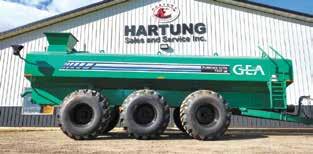



































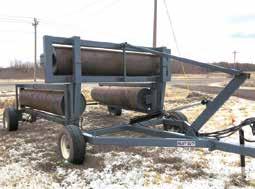








DAIRY ST R December 24, 2022 Second Section Visit us online at www.dairystar.com “All dairy, all the time”™ Call Us 320-836-2697 After Hours: 320-267-8568 310 Industrial Dr. Oldest & Most Experienced Dealer In Central MN! LIQUID MANURE EQUIPMENT FOR RENT NEW & USED EQUIPMENT LAGOON PUMPS & TANKS Proudly Serving Our Dairy Industry Since 1975! Performance, Reliability and Durability • Pontoon • Vertical • Electric • Lagoon • Hydraulic COMPLETE PRODUCT LINE... GEA Houle Patz Ritchie Waterers Animat Pasture Mat Cow Comfort J&D Manufacturing VES-Artex Barn Solutions Schaefer Barn Fans Barn Cleaner Chain Alley Scrapers Cen•Pe•Co Lubricants Pik Rite Hydra-Ram Manure Spreaders Calf-tel Calf Huts & Pens Feed Carts & Choppers JBS Spreaders Bazooka Farmstar Boats & Dragline Dietrich Incorporators (DSI) Curtains Mayo Mattresses Weigh Tronix Scales Bulk Feed Bins Tire Scrapers & Bedding Buckets Legend Rubber Stocking All Sizes & Parts TMRS, TANKS & PUMPS & SPREADERS IN STOCK & READY FOR DELIVERY! TMR MIXERS Gutter Cleaner Chain & Parts ALSO AVAILABLE Feed your herd. Feed your bottom line. Feed the potential. er s E Feed the WOLVERINE SERIES Merry Christmas & Happy New Year! DEALER INQUIRES WELCOME LARGE selection of sizes and brands in stock and ready to ship. Call for your local dealer or ask about direct to the farm deliveries. W6174 County RD P Monroe WI 53566 1-800-726-0401 www.jordanagsupply.com New American Pride Net wrap High quality formula on and not made in China Silage bale wrap Silage bags Silage covers Oxygen barrier film 2 in 1 Combi film silage covers Baler Twine Net wrap Tire Side Walls BEST PRICES on Hay making supplies IN THE MIDWEST 14451 430TH ST. • BERTHA, MN 56437 218-924-4522 HARMS MFG., INC. www.harmsmfg.com • Firmly pack the soil to prevent weed growth • Get better germination • Use on alfalfa, hay, soybeans, corn and more Easy to use • Easy to Fold • Transports Easily OVER 2,000 LAND ROLLERS OPERATING IN THE MIDWEST! • 2-7/16” bearing • All pivots greasable • Rear stabilizer braces on 36’+ units • 1/2” drum wall thickness • 12’, 15’, 30’, 36’, 40’, 45’, 62’ sizes • Wing steering for easy folding • Rollers flex in the field on uneven surfaces 30” NEW DRUM DIAMETER INTRODUCING THE NEW 30” DRUM DIAMETER ALSO AVAILABLE: Dump Racks • Bale Racks Wagons • Dump Trailers

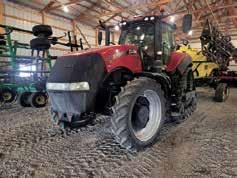
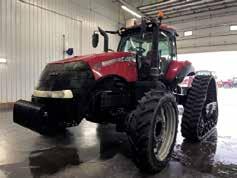
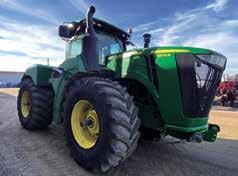
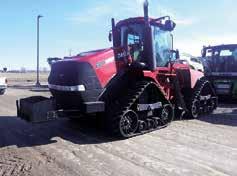

Page 2 • Dairy Star • Second Section • Saturday, December 24, 2022 Visit us 24/7...www.arnoldsinc.com F028149 2015 CIH 380 RowTrac, 2855 hrs $247,500 F013996 1995 CIH 7230, 11,015 hrs $51,500 W026567 2021 JD 9620RX, 620 hrs $579,000 W026304 2020 JD 9370R, 3385 hrs $279,000 W026205 2015 JD 9370R, 5045 hrs $189,900 Claas 880 Axion, 720 hrs $245,000 W024940 A03782 2016 Case TR340, 1850 hrs $53,000 F026204 2013 Case TV380, 2255 hrs $44,900 2015 CIH 340 RowTrac, 2665 hrs Call for price! W026606 G028289 2014 CIH 550 Quad, 3505 hrs Call for price! W23462 2014 CIH 600 Quad, 2910 hrs $283,500 W023652 2012 CIH 115 Max, 1410 hrs Call for price! F026582 2019 CIH 125 Max, 150 hrs $137,900 F027224 1976 IH 666, 1685 hrs $12,500 F023165 2018 Kubota L4701HST, 275 hrs $31,900 M025397 1999 CIH MX135, 7500 hrs $45,000 W028233 2022 CIH 70A Farmall, 25 hrs $35,500 Kimball 320-398-3800 Willmar 320-235-4898 Glencoe 320-864-5531 320-548-3285 St. Cloud 320-251-2585 Mankato 507-387-5515 Alden 507-874-3400 2017 CIH 250 Mag, 3270 hrs $179,500 F027046 M027052 2016 CIH 220 Mag, 715 hrs Call for price! W027302 2019 CIH 200 Mag, 790 hrs Call for price!
Against the odds
Cow survives uterine surgery, gives birth
 By Abby Wiedmeyer abby.w@dairystar.com
FENNIMORE, Wis. – Powerhaus Deant Reese has always been a special cow to the Holthaus family because of her friendly demeanor and long line of good genetics. After surviving a surgery to remove a volleyball-sized uterine tumor and then becoming pregnant again against all odds, she is even more special.
“She’s such a nice cow, and she’s got a great pedigree,” Jeremy Holthaus said. “Genetically, she was worth working with.”
Holthaus milks 310 cows with the help of his parents, Lonnie and Rochelle Holthaus, and their herdsperson, Bridget Achterberg, near Fennimore.
The uterine tumor was discovered in 2019 during a routine herd health check. At the time, there appeared to be a golf-ball-sized mass on the uterus. The family’s veterinarian, Steve Holler, was unable to tell exactly what it was through ultrasound, so they decided it must be a cyst. She went through a round of fertilization shots and everyone thought it would clear up.
Unfortunately, the mass continued to grow. Within a year, it had grown to the size of a volleyball.
“It weighed her uterus all the way down so we couldn’t breed her,” Holthaus said. “It wasn’t cancer. It was like a big abscess in there, but we couldn’t tell that by ultrasound.”
The family wanted to continue utilizing the genetics from Reese. Reese’s dam had died at a young age, but her grandmother had lived to be 13 years old with a milk production record of 257,000 pounds.

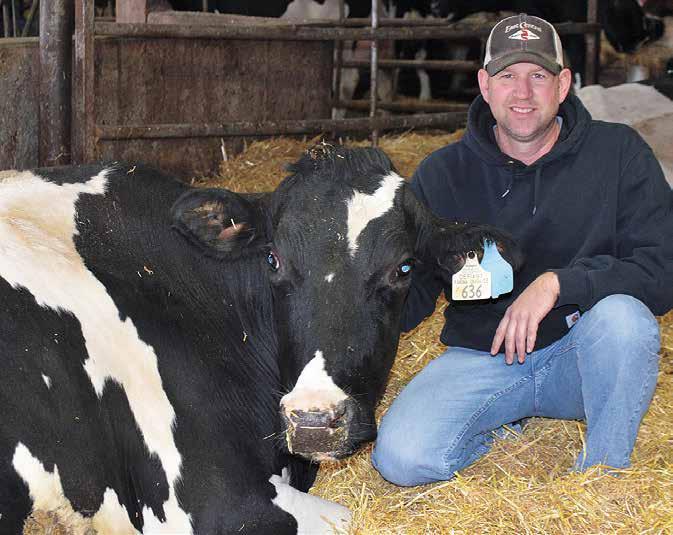
Achterberg said the whole cow family has made consistent daughters on the farm.
Achterberg said.


The Holthauses decided to explore their options. They rst contacted the University of Wisconsin-
LITTLE ROCK, MN 320-584-5147 PIERZ, MN 320-468-2168 LASTRUP, MN 320-468-2543 BUCKMAN, MN 320-468-6433


















Dairy Star • Second Section • Saturday, December 24, 2022 • Page 3
US
Brightest Joy, The Happiest Cheer Bruce B. Kevin B. Josh B. Randy B. Jerry B. Mike B. Ken D. Chad F. Rich G. Roger G. Tyler G. Sid H. Ron K. Danny K. Joe K. Tracie L. Ron L. Bob M. Steve M. Cindy N. Steve P. Mike P. Chad P. Jordan P. Luis R. Jason S. Bill S. Deb S. David S. James W. Jacob H. Chris. M Monty S. Dion S. Austin B. Erika B. Gerard K. Alice N. Mark O. Tom P. Brock S. Wes T. Chris W. Anna D. Bob G. Steve J.
We hope
season treats you to
the best. Thank you for your patronage
past year— we
forward to serving you in 2023!
FOLLOW
ON FACEBOOK! The
for Christmas & the New Year!
this Christmas
all
this
look
ABBY WIEDMEYER/DAIRY STAR
HOLTHAUS | Page 4 Brad Herickhoff, Owner | 320-351-4872 Merry Christmas! TAKING 2023 BOOKINGS! Innovative Drainage Services for a better yield May the joy you find this Christmas follow you throughout the New Year.
Jeremy Holthaus checks on Powerhaus Deant Reese Dec. 2 at his dairy farm near Fennimore, Wisconsin. Reese survived a surgery to remove a tumor from her uterus and delivered a healthy calf in September.
Turn to
“They all milk really well and look good doing it,”
Madison and asked about exploratory surgery. They were quoted more money than the family was willing
to spend with no guarantee of a good outcome. Holthaus said the next option was shipping her.


That is when their vet agreed to remove the tumor. The cow was taken to the vet’s ofce in Prairie du Chien Aug. 19, 2020, where Holler performed the surgery.

The incision was made on the left side of the cow. It was similar to a displaced abomasum surgery but with a longer incision. The tumor was removed in the course of two hours. Holthaus had his arm in the cow rectally to hold the uterus so the vet would not cut it.
The cow lost a lot of blood during surgery and was very weak at rst. She had a 30-minute trailer ride home and was put in the calving pen to recover. The family continued to focus on helping Reese regain her health so she could either calve again or have her embryos ushed.
Once Reese recovered, she was taken to an in vitro fertilization facility where it was discovered one of her uterine horns had been accidentally removed during the surgery. Additionally, the side of her uterus with the remaining horn had fused to her body wall, making her ovary inaccessible.
“They called her a non-breeder,” Holthaus said. “They couldn’t do anything with her.”



Besides her reproductive issues, Reese was perfectly healthy. The family brought her home and put her in a





pasture while they debated what to do.
“There was no other place for her so we put her in a pasture with some little bulls that were about 500 pounds,” Holthaus said. “We thought we’d get some weight off her and bring her back to try one last time.”



When she was brought home about seven months later, she appeared to be bagging up. Achterberg sleeved her and discovered there was a calf present. The vet determined she was less than a month away from calving.
A few weeks later, Reese gave birth to a healthy heifer calf.
After she calved, Holthaus had her scored right away.
“Her udder looked gorgeous,” Holthaus said. “She scored 93 points. So that’s going to be her max.”


Holthaus does not plan on breeding Reese again, even though the vet said another pregnancy would help her reproductive organs because they are somewhat adhered to her body wall and the gradual weight gain of a calf would help to pull it away. They are working with an IVF team to try to carry on her genetics. There have not been any fertilized results so far, but they are going to continue to try.
“When she was milking with the herd, anytime you were walking through the barn she would follow you around like a puppy dog,” Holthaus said. “Genetically, she is one of our best lines here. We’re going to try again.”
Page 4 • Dairy Star • Second Section • Saturday, December 24, 2022 All Hay & Straw MUST be on site by 10AM Sale Day! TIMED ONLINE ONLY BIDDING CLOSES AT 12PM TRUCK LOADS SELL FIRST UPCOMING HAY AUCTIONS Tuesday, December 27 Tuesday, January 10
January 24
February 14 Tuesday, February 28 expanding market! Complete Auction Results at SteffesGroup.com For more info contact Randy Kath, Auctioneer, 701.429.8894 • • • 23579 MN Hwy 22 South | Litchfield, MN 55355 320.693.9371 | SteffesGroup.com KIOTI.com fined in promotional program. Pricing and rebates in US dollars. Additional fees including, but not imited to, taxes, freight, setup and delivery charges may app y Financing must be through DLL using one of the available financing options. Financing is sub ect to credit approval. Customers must take delivery prior to the end of the program period. Some customers will not qualify Some restrictions app y Offer available on new equipment only Prior purchases are not eligible. Offer valid only at participating Dealers. Offer subject to change without notice. See your dealer for details. 6 Year Warranty for Non-Commercial, residential use only.6 Year Warranty applies to CS, CX, CK10, DK10, NS and NX model KIOTI tractors and must be purchased and registered between September 1, 2016 – June 30, 2023. Offer valid only at participating Dealers. Offer sub ect to change without notice. See your dealer for details. © 2022 Kioti Tractor Company a Division of Daedong-USA, Inc. A&C Farm Service, Inc. Jct. Hwys. 55 & 23 • Paynesville 320-243-3736 www.acfarmservice.com $3100 Cash Back* (T-L-B) Financing*Months 0% 48 UP TO UP TO 35-40 HP CK 10SE FROM ALL OF US AT MUELLER SALES & SERVICE Glencoe, MN • 320-864-3556 OR 888-205-0974 Russ Pierson – SALES & SERVICE WISHING YOU A PROSPEROUS 2023!
Tuesday,
Tuesday,
ABBY WIEDMEYER/DAIRY STAR
Con nued from HOLTHAUS | Page 3
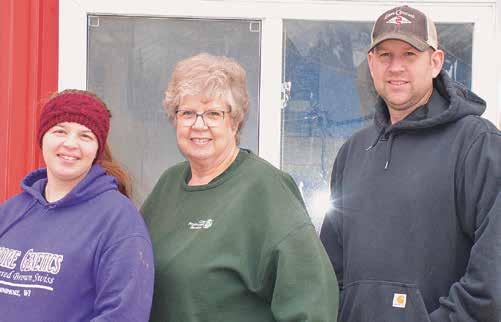
Bridget Achterberg stands with Rochelle and Jeremy Holthaus Dec. 2 at Milkhaus Dairy near Fennimore, Wisconsin. The Holthaus family milks 300 cows and focuses on gene cs under its prex, Powerhaus.
“It weighed her uterus all the way down so we couldn’t breed her. It wasn’t cancer. It was like a big abscess in there, but we couldn’t tell that by ultrasound.”
JEREMY HOLTHAUS, DAIRY FARMER























Dairy Star • Second Section • Saturday, December 24, 2022 • Page 5 CONTACT YOUR LOCAL DEALER TODAY! • • • • 667XH • • • • • • SOFT-SHOETM TF6128 Twin-Flex Merger top shot Manure spreaders hsmfgco.com/dealer FIND A DEALER FORWARD NEW 1200 Series Big Dog Forage Boxes • N F ILLINOIS • Birkey’s Farm Store Polo, IL IOWA • Del-Clay Farm Equipment Edgewood, IA • Helle Farm Equipment, Inc. Dyersville, IA • Marks Tractor & Implement Osage & Dumont, IA • Roeder Implement, Inc. Dubuque, IA • Caledonia Implement Caledonia, MN • Hammell Equipment Chatfield, Eitzen, Harmony, & Rushford, MN • Ironhide Equipment Bemidji, MN • Kalmes Implement Altura, MN • Lake Henry Implement Paynesville, MN • Lano Equipment of Norwood Norwood, MN • Marzolf Implement Spring Valley, MN • Melrose Implement Melrose, MN • Midwest Machinery Co. Wadena & Little Falls, MN • Northland Farm Systems Owatonna, MN • Schlauderaff Implement Litchfield, MN WISCONSIN • D&D Equipment Chilton, WI • East Side Farm Equipment Monroe, WI • Scott Implement Platteville, WI • Value Implement Arcadia, Baldwin, Menomonie & Osseo, WI MINNESOTA www.norbco.com 67962 State Hwy 55, Watkins, MN 55389 • 320-764-5000 MA KING COW COMFORT OUR PRIORITY Curtain SystemsVentilation SystemsFreestall SystemsHeadlocks
As reported last week, the U.S. Department of Agriculture left its 2022 milk production forecast unchanged in its World Agricultural Supply and Demand Estimates report but raised the 2023 estimate slightly, citing higher expected cow numbers and slightly more rapid growth in output per cow.
Cheese was projected to average $2.11 per pound in 2022, up a penny from last month’s WASDE, and compares to $1.6755 in 2021 and $1.9236 in 2020. The 2023 cheese average was projected at $1.9950, up 2.50 cents from a month ago, but that would be 11.50 cents below the projected 2022 average.
The 2022 butter price average was estimated at $2.8750 per pound, up 3 cents from a month ago, and compares to $1.7325 in 2021 and $1.5808 in 2020. The 2023 average was projected at $2.4650, up a penny from a month ago, but 41 cents below the expected 2022 average.
Nonfat dry milk will average $1.68 in 2022, unchanged from last month’s estimate and compares to $1.2693 in 2021 and $1.0417 in 2020. The 2023 average was estimated at $1.3750, down 3 cents from a month ago and would be 30.50 cents below the anticipated 2022 average.
The dry whey average for 2022 was unchanged at 60.50 cents per pound, and the 2023 average was lowered 2 cents to 46.50 cents per pound, 14 cents below the expected 2022 average.
The 2023 Class III milk price was projected to average $19.80 per hundredweight, up 15 cents from last month’s WASDE but would be $2.15 below what the 2022 average is expected to be.
The 2023 Class IV price was estimated to average $20.10, down 25 cents from last month’s estimate and would be $4.40 below the anticipated 2022 average.
This month’s corn outlook is for lower exports and greater ending stocks. Exports were lowered 75 million bushels as competition from other exporters and relatively high U.S. prices have resulted in slow sales through early December. Corn ending stocks were raised 75 million bushels. The season-average corn price was lowered a dime to $6.70 per bushel. Corn exports were raised for Ukraine but lowered for the U.S., Russia and the EU, according to the WASDE.
Soybean projections were unchanged from last
month. Based on a review of the Environmental Protection Agency’s recent proposed rule for renewable fuel obligation targets, soybean oil used for biofuel was reduced 200 million pounds to 11.6 billion. Soybean oil exports were also reduced. With those reductions, food use and ending stocks were raised. The season-average soybean price forecast was unchanged at $14 per bushel. Soybean oil was reduced a penny per pound to 68 cents, and the soybean meal price forecast was increased $10 to $410 per short ton.
Speaking of feedstuffs, StoneX Dec. 12 U.S. Dairy Outlook points out that alfalfa in the West is priced at record highs. California was seeing average hay at $370 per ton and Arizona at $340, with high quality prices much higher.
Alfalfa in Wisconsin, on the other hand, is around $169, which is close to the ve-year average, StoneX said. Western prices could decline from their record highs moving forward, but the water situation in parts of the West remains tenuous, which could keep input costs in the region expen-sive relative to other regions.

This week’s Livestock, Dairy and Poultry Outlook reported that October alfalfa hay averaged $281 per short ton, $4 higher than September and $62 above October 2021. The ve-state weighted-average price for premium alfalfa hay was $348 per short ton, $6 higher than September and $94 higher than October 2021.
The Outlook reected milk price and production projections in the Dec. 9 WASDE and reported that dairy cow slaughter has been active and has been in line with 2021 for the past couple of weeks.
The Outlook said the National Restaurant Association reported restaurant activity from January to October was below 2021 levels. Nevertheless, the restaurant performance index has been above 100 points, showing an expansion that may boost domestic use for dairy products for the rest of 2022 and 2023.
Things are looking a little better for consumers. The Consumer Price Index fell for a second month, from 7.7% to 7.1%. Core ination fell in November from 6.3% to 6%, which is the best reading on ination since December 2021, according to StoneX, but with one sticking point: Rents were up 7.1% yearover-year and accounted for almost half the total increase in core ination.
Meanwhile, the Federal Reserve raised its inter-
est rate a half-point this week, which was slightly less than previous raises; however, the rate is at the highest level in 15 years.
Dairy product consumption in October was a mixed bag, according to HighGround Dairy’s Lucas Fuess in the Dec. 19 Dairy Radio Now broadcast.

Cheese disappearance totaled 1.22 billion pounds, up 2.4% from October 2021 and the third month in a row to top that of a year ago, though Fuess said the gain weakened slightly from September’s growth. Year-to-date consumption was up 2.1%. U.S. cheese exports, at 81.4 million pounds, were up 4.5%.
Butter disappearance totaled 199.9 million pounds, down 8% from a year ago pulled lower by an 11.3% drop in domestic consumption; though, exports were up 61.9%, the strongest of any month since 2014. October was the third consecutive month total butter utilization was below a year ago, and HGD said it was the lowest October utilization since 2017.
Nonfat dry milk skim milk powder disappearance amounted to 208.5 million pounds, down 12.8%. Domestic usage was down 49.4% while exports were up 10.6%, rst year-over-year gain since November 2021, according to HGD.
Dry whey utilization totaled 76.3 million pounds, down 4.5% from a year ago; though, like nonfat dry milk, exports were strong, up 20% from a year ago, as Chinese demand for dry whey has returned, Fuess said.
The demand picture in next month’s report will be interesting, Fuess said, as U.S. milk production growth will not bow well for milk price increases in 2023.
The Dec. 13 Global Dairy Trade Pulse, auction No. 11, saw 2.1 million pounds of Fonterra whole milk powder sold, down 38 million pounds from the last Pulse and down 0.3%, or $10 per metric ton, from the Dec. 6 GDT event.
HGD said buyers are nding value at this current price point following the slight strength that materialized at last week’s main GDT auction.
Eyes will be on CME powder in the coming days after Fonterra increased its forecast total over quantity for skim milk powder for the next 12 months by 21.2 million pounds between January and April. The
Page 6 • Dairy Star • Second Section • Saturday, December 24, 2022 Farm Material Handling Specialist “Service After The Sale” ROD FLUEGGE “the boss” 2040 Mahogany St., Mora, MN • 320-679-2981 LEASING AVAILABLE Looking for good, used trades! 1960-2022 Celebrating 62 years! FLUEGGE’S AG WE HAVE THE EQUIPMENT YOU NEED! 2 Center-Pull Kuhn Mower Conditioners 3161 10’3’’ pictured 4061 13’ still in crate Used Tedders Pequea, Kuhn, New Holland Call or stop in for pricing New & Used Wheel Rakes Call for Pricing Kuhn 2044 Pro-Push Spreader HD Vertical Beaters, Truck Tires Ready to Roll! Call for Pricing • Kuhn PS242 Horizontal - Call for Pricing • Kuhn PS250 - On the Lot - Call for pricing • Used Kuhn PS242 - Call for Pricing • Used Knight 8024 side delivery - Call for Pricing • Used 714 side delivery - Call for Pricing The “Mielke” Market Weekly By Lee Mielke
Turn to MIELKE | Page 7
Central cheese sales are seasonally steady
upcoming event offering was increased by almost 816,000 pounds.

Cooperatives Working Together member cooperatives accepted two offers of export assistance this week from CWT that helped capture sales contracts for 1.2 million pounds of American-type cheese. The product is going to customers in Central America and Oceania from January through May 2023.
CWT-assisted exports to-date total 93.3 million pounds of American-type cheeses, 657,000 pounds of butter, 30.7 million pounds of whole milk powder and 8.8 million pounds of cream cheese. The products are going to 21 countries and are the equivalent of 1.168 billion pounds of milk on a milkfat basis.


More details were announced Dec. 12 on the USDA’s solicitation of the Special Supplemental Nutrition program for Women, Infants and Children. A total of 8.56 million pounds of natural cheddar was awarded to three different vendors, with delivery between March and September 2023, or about a 1.22-million-pound average per month. No processed cheese or uid milk was awarded.
HighGround Dairy said USDA awarded far more than the 2.1 million pounds of natural and processed cheese in the original solicitation, but with just 1.22 million pounds per month, it equates to about 30 truckloads per month. The bigger news was that the uid milk solicitation was canceled, meaning USDA will focus its efforts on their normal uid purchasing programs for the up-coming year.
This news should have little impact on the current trend of the market, said HGD, though it may create disruptions depending on USDA’s order patterns.
Mid-December cheese prices headed sharply lower and butter oscillated, as traders awaited the November Milk Production report Dec. 19.
The cheddar blocks plunged to $1.9775 per pound Friday, lowest since Nov. 1, down 11.75 cents on the week but still 9 cents above a year ago.
The barrels saw their Friday nish at $1.74, 21 cents lower on the week, lowest since Jan. 27, 11 cents above a year ago and 23.75 cents below the blocks. CME sales for the week included four carloads of block and seven of barrel.
StoneX said Buyers are just not banging down doors looking for fresh loads of cheese here in midDecember. And then, we have the appearance of a well-supplied barrel market.

Central cheese sales are seasonally steady, according to Dairy Market News, with moderate to busy production reported. Milk is plentiful with spot loads priced as much as $6 under Class, with some at Class. Barrel production is busier, as some cheesemakers report sales at slight premiums. Some cheddar and Italian-style cheesemakers report somewhat tight inventories for the rest of the year.
Retail and food service demand for cheese is steady in the West. Export demand is mixed. Lower prices for internationally produced cheese is contributing to softer demand, while strong demand remains from Asian purchasers. Contacts report that block loads are selling more quickly while barrel inventories are growing. Milk is available for strong regional cheese production; however, labor shortages and delayed deliveries of supplies continues to limit output of some.
Spot butter started the week falling 11.25 cents to $2.70 per pound, lowest since Nov. 3, but then reversed direction and ended Friday at $2.8550, up 4.25 cents on the week and 76.25 cents above a year ago, putting 23 sales on the board.
Butter producers report slowing demand, as retail customers have their holiday ordering met. Food service demand has also seasonally slowed, said DMN, particularly as butter prices remain above where some were expecting them to be this late in the year. Cream availability is mixed. Some plants are full and not entertaining spot offers while others say cream availability is steady with previous weeks. Churning remains very busy, and plant managers expect to churn as much butter as possible despite the holidays.

Demand for cream is steady to lighter in the West. Cream multiples have moved lower in the region amid softer demand and strong availability. Butter makers are running busy schedules, though some say tanker and labor shortages continue to keep them operating below capacity. Demand for butter is softening in retail markets, as customers have lled holiday needs. Food service demand is steady. Spot purchasers report butter loads are becoming more available, said DMN, though unsalted butter inventories remain tighter than salted. Some players anticipate that butter prices will slip lower into the new year, thus causing buyers to limit their orders.
Grade A nonfat dry milk fell to $1.34 per pound Wednesday, lowest since Sept. 16, 2021, but closed Friday at $1.35, down 1.50 cents on the week and 32.75 cents below a year ago, with 14 sales reported.

Dry whey closed the week at 45.50 cents per pound, 2 cents higher, but 27.50 cents below a year ago, with four loads exchanging hands at the CME.
Dairy Market News said online sources say August milk production in Ukraine was approximately 711,000 tons, compared to 845,000 in August 2021. The Russian invasion of Ukraine has disrupted normal dairy business activities and the recent missile attacks left numerous processing facilities without power.
The Ukrainian agricultural ministry, as of Dec. 1, reported that the 2022 Ukraine grain harvest is approximately 85% complete for a total of 41.9 million tons. Ukraine has been able to export 17.2 million tons of grain so far in the 2022-23 grain season, down 31.9% from a year ago.
Looking down under, DMN reports that New Zealand’s dairy industry resilience has been tested in recent months. The country has seen slow pasture
growth in most dairy regions this production season. New Zealand’s dairy exports have seen a rise due to the build-up of inventory caused by the coronavirus pandemic and China interruptions in earlier months. Meanwhile, with the weak New Zealand dollar and falloffs from key dairy exporting regions, the industry now expects the country’s export revenue to climb 6% to a record high $23.3 billion in the 2022-23 season. Australia continues to lag last year’s milk output. Rain soaked elds in the Eastern states have impacted the wheat quality, prompting downgraded yields and could lead to market ooding of devalued feed grade grain, DMN said.

Dairy Star • Second Section • Saturday, December 24, 2022 • Page 7
Con nued from MIELKE | Page 6 • Attention II • Galaxy II • Radiance HD • WS L550 • WS HiFi • Big Wheel • 375HY-BR Hybrid • 2020 Supreme Brand • 5301 Multi-leaf • Grazer Brand • 4241 Creeping • WS LeafGuard LH • Hay Mixes Mix 2 - Mix 8 800.470.3325 welterseed.com 17724 Hwy 136 Onslow, IA 52321-7549 BEE HONEY WELTER SEED & HONEY CO. SANTA SAYS... Earn big savings this season by purchasing your seeds early . $15 ALFALFA DISCOUNT $15.00 Off Per Bag if purchased before March 1, 2023 CASH DISCOUNTS 5% December 4% January 3% February Ask Dustin about early pay discounts on NuTech Corn & Soybeans 320-200-1221 Visit us at www.justinaddy.com Avon, MN Covering MN, SD, IA, & WI Drink Milk Graduate of the Dairyland Hoof Care Institute Proud member of We do wide grooving and mini grooving Help keep your cows safe. Hoof trimming since 2003 WE OFFER COMPLIMENTARY: UDDER SINGEING TAIL TRIMMING Keep your cows cleaner, healthier & save time! MINI GROOVER Grooves concrete that has been already grooved. CALL FOR ALL YOUR CONCRETE GROOVING NEEDS tfn Les Kuehl Repair Service 30+ Years Experience No Emergency Charges--Ever! • Sealed silo parts & service • Best chains on the market • Used and rebuilt unloaders • Stainless steel roofs • Stainless steel conveyor chains 320-760-2909 Eve. 320-762-1827 YOUR CENTRAL MINNESOTA GOLIATH REPAIR SERVICE! • All parts needed to service your Goliath Unloaders Not af liated with the Harvestore brand Call for early maintenance specials SALEs SCHEDULE Dairy & Hay sale EVERY Thursday starting with hay @ 10:00 followed by Dairy Cows @ 11:00 sharp, then bred heifers, open heifers and feeders followed by calves, market bulls, fat cattle and cull cows. Special feeder sale 2nd & 4th Thursday. WATCH OUR SALE ONLINE AT WWW.CATTLEUSA.COM OBERHOLTZER AUCTIONS
Consignments (9) Registered Holstein tie stall cows. These will be 2 and 3 year olds all milking between 70 and 80 lbs. Most of these will be confirmed bred back already. Reputation seller and always the right kind! Barry Richardson, Milladore. (5) Holstein tie stall cows. AI, aAa mated. Milking heavy!! Norman Martin, Stanley (12) Ayrshire heifers, grass fed and certified organic due in March. (1) Ayrshire bull,
(6) Holstein
(30) Fancy handpicked Holstein
stall, tie stall,
These will be hand picked
lbs,
with rubber mats as well as tie stalls with rubber mats. Excellent, Excellent QUALITY!! (1) Fancy fresh R&W Fleckvieh cow and her heifer calf. Super Fancy!! (1) Fancy fresh Brown Swiss cow and her heifer calf. Fresh 30 days and super nice!! EXPECTING 400-500 HEAD! JWO NOTES & MARKET REPORT: Big enough to make a difference, small enough to care! Well it looks like you got the white Christmas you were hoping for! Judging by the temperature predictions it’ll be white a while longer than that. Good dairy cows still selling well. Many $1,400-2,200. Top $2,525, 2,450 Michael Martin, Colby. $2,500, $2,400 Mitch Linder, Loyal. $2,400, $2,250 Jonathan Horst, Loyal. Better quality Holstein springing heifers $1,500-1,800. Opens $95-115. Single birth Holstein heifer calves $20-115. Breeding Bulls $750-1,650. Market Bulls $61-78. Sold 103 fat cattle this week. Choice and Prime Holstein steers $128-137. Top $140. Beef cross up to $142. Holstein feeder steers $102-126. Crossbreds up to $175. Holstein bull calves $85-190 on Monday, $30-115 later in week. Beef cross bull and heifer calves $200-385. Sows $47-60. Butchers $65-78. Boars $15-24. 20% of Market cows sold $70-80. 50% sold $58-69.50. 3x3x8 Alfalfa grass mix $85-115. 3x4x8 Alfalfa $130-175 Rounds and squares grass $35-60. Top $70. Stay warm and Thanks for your business!! THURSDAY, December 29th Hay sale 10 am • Dairy cows 11 am 6th Annual Holiday Select Sale SALE CONDUCTED BY: Oberholtzer Dairy Cattle & Auction Co. Auctioneer: Mark Oberholtzer, WI license #2882-052 John Oberholtzer 715-216-1897 • Mark Oberholtzer 715-773-2240 John Ivan Oberholtzer 715-219-2781 • Office 715-255-9600 www.oberholtzerauctions.com Sale Location: W1461 State Hwy 98, Loyal, WI 54446 From Spencer, WI take Hwy 98 west 5 miles. From Loyal, 5 miles east on 98
Early
A2A2, proven breeder.
Heifers, ready to breed. Select breeding and 4 are polled, 2 Luster P daughters.
Cows, Genex breeding, free
headlock, closed herd since 1984, vaccinated.
out of 270 cow herd averaging 80
4.3F, 3.1P, 145scc. Cows are housed in free stalls
All things organic
Minnesota conference reaches 20th year
 By Jan Lefebvre jan.l@star-pub.com


ST. CLOUD, Minn. – Around 500 attendees are expected for the 2023 Minnesota Organic Conference, a two-day event running Jan. 5-6, 2023, at River’s Edge Convention Center in St. Cloud.
“This is our 20th year,” said Cassie Dahl, the event’s coordinator. “Time really ies.”

The conference is offered through the Minnesota Department of Agriculture. A wide variety of educational sessions, two keynote speeches, an 80-booth trade show and plenty of food are included in the cost for attendance. Online registration will close Jan. 2, 2023, but walk-in registrations at the event are accepted.




Many sessions address topics in dairy.
“We have sessions on interpreting the origin of livestock rules, putting organic dairy research to work, grazing for grassland, conservation grazing into the future, grazing season health issues and others that relate directly to dairy,” Dahl said. “There are always other sessions that can apply to dairy as well.”
The trade show will have plenty of representatives from dairy as well as all aspects of farming.





“There’s a wide variety,” Dahl said. “We have feed suppliers, certiers, consultants, equipment dealers -people from the marketing, fertilizer, solar and livestock minerals industries – and more.”



The size of the trade show is a big draw for the conference.
“Our trade show really helps fund the conference,” Dahl said. “We also have a lot of sponsors, some sponsoring the keynotes and others sponsoring breakout sessions. We have them listed on our website.”

This year’s keynote speakers are Sarah Vogel and Carmen Fernholz.
Vogel will give the keynote address on the rst day. She is an attorney and advocate specializing in
Page 8 • Dairy Star • Second Section • Saturday, December 24, 2022 MIXING VITAMINS & TRACE MINERAL PREMIXES CUSTOM DRY FERTILIZER • SEED • FOLIARS SPRAY SOIL TESTING • BIOLOGICALS • SOIL AMENDMENTS OUR SERVICES ✓ We at Nature’s Best innovate, design, develop and manufacture products that keep the farmer at the cutting edge of productivity. Our products will not deplete the health of your soil, water, nor the air, a legacy that we count on for today as well as tomorrow. Feeds • Calf Starters • Kelp Meal • Thermocal • Dairybond/Organic (Mold) • Dairylac/Antioxidant • Organic Soy Oil • Organic SE-E Feed Co. 320-243-3938 210 Minnie St Paynesville, MN Delivery Available! Organic Sustainable Farming 21241 Dutchmans Crossing Dr., Lewiston, MN 507-523-2112 Arcadia Collection Site N30321 River Valley Rd., Arcadia, WI 608-323-7795 LEWISTONSALES.COM Collecting Organic Slaughter Cows & Bulls 2nd & 4th Tuesday every month Regular sales each Tuesday at 6 pm and Thursday at 1 pm. ORGANIC SPECIALISTS All Products are Approved for Organic Use 800-822-6671 FAX 608-654-5696 E-mail: organic@cfspecial.com www.cfspecial.com ➢ Feed Products -Protein and Grain Poultry Rations and Premixes ➢ Buyers and End Users of All Organic Grains ➢ Livestock Vitamins & Minerals Cashton Farm Supply, Ltd. 300 STATE HWY 27, C ASHTON, WI 54619 CERTIFIED ORGANIC FEED • Organic Kelp • Organic Mineral • Soybean Meal • Rolled Corn • Whole Oats • Chicken Feed 320-468-6655 505 West Main Street Marshall, MN 56258 806-346-2362 Office: 507-929-7811 505 West Main Street A solution to help control Hypocalcemia (Milk Fever) by utilizing anions derived from natural organic sources that are more palatable than straight mineral salts, which helps increase DMI during this critical time of Transition. It also regulates the metabolic pH of the cow’s blood and urine to increase the absorption of calcium. FEATURES Helps decrease Milk Fever (Hypocalcemia) Helps increase DRY MATTER INTAKE Helps increase feed consumption Helps decrease displaced abomasum Helps increase milk production Helps decrease Ketosis Helps decrease retained placenta BENEFITS Best Palitability Best Aroma Best flowability Best Efficacy BEST VALUE D O YO U R COWS DO YOUR N E E D A B O O ST ? NEED BOOST? Certified Organic by USDA!
PHOTO SUBMITTED
Turn to CONFERENCE | Page 9
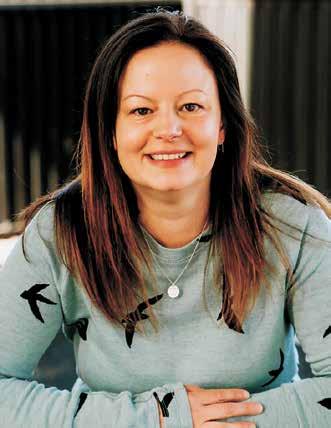
Cassie Dahl is a coordinator for the annual Minnesota Organic Conference Jan. 5-6, 2023, at River’s Edge Conven on Center in St. Cloud, Minnesota. This will be the 20th year of the conference.
“I believe producers would nd lots of educational and working value from our conference.”
CASSIE DAHL, MINNESOTA ORGANIC CONFERENCE COORDINATOR
agriculture issues and has written several books including “The Farmer’s Lawyer: The North Dakota Nine and the Fight to Save the Family Farm.”










“My speech, which is titled ‘Strength from the Soil: How Organic Farmers Can Straighten the Whifetree of U.S. Agriculture,’ will draw on tactics and remedies that were developed in the 1930s and the 1980s that can inspire us today,” Vogel said. “It is an honor to be able to speak to a group of farmers who show by their deeds how to build a better future for people, soil, air, water and the future of our small towns and rural communities.”


Fernholz will give the keynote speech on the second day. He is well-known as a pioneer in the eld of organic farming.
“I am truly looking forward to getting together once again in person at the great Minnesota Organic Conference,” Fernholz said. “It is always a lively venue for organic farmers, merchandisers and those who value our work. As a keynoter, I am especially excited about the opportunity to share some of my personal thoughts regarding my organic farming experiences over the nearly 50 years as an organic farmer.”
Each day offers breakfast and lunch. A reception and social time will run from 4:30-7 p.m. on Thursday night. The conference will wrap up at 3 p.m. on Friday.





Dahl said the conference has a lot to offer for everyone interested in learning about organic practices, innovation or issues.
“I believe producers would nd lots of educational and working value from our conference,” Dahl said.



Dairy Star • Second Section • Saturday, December 24, 2022 • Page 9 The bulls that were bred to be cows Call 1-855-955-2100 or visit www.triplehilsires.com • • Atlanta P x VG-88 Addiction x EX-94 Absolute x x x x EX Advent x EX-93 Redmarker x EX-95 Penn-Gate Skychief Finesse x EX-93 Redmarker x EX-95 Penn-Gate Finesse • • • • High butterfat and protein percentage High butterfat and protein percentage • Added value of Polled, Red-Carrier and A2/A2 Added value of Red-Carrier and 525HO146 Garden-State Introducing... Feature’s Dam: Garden-State Fusion-Red (VG-88 6yr) 6-05 321d 30,280 4.2 1272 3.5 1070 LFTD: 118,133 4.3 5108 3.6 4280 Full-Sisters are EX-90 & EX-92 Feature’s 2nd Dam: Dam: SRP Absolute Fantasy-Red (EX-94 3E) 6-00 365d 38,870 4.3 1680 3.4 1334 LIFE: 2855d 213,220 4.5 9579 3.5 7558 Dam of 9 VG and 4 EX daughters to date Release! Ca 1-855-955-210 855-955-2100 orvisit wwwtriplehilsires Release www.brynsaas.com Lots of Used Mixers • Variety of Manure Pumps and Tanks All on Hand! 1660 Jordan West Rd., Decorah, IA 563-382-4484 2005 Patz 300 $28,500 2014 Patz 620 $28,900 2019 Fair Mfg. 7830TD $32,000 2016 GEA AP-L-42T $21,500 2014 New Holland 195 $18,000 2007 Patz 615 $18,500 VERTICAL TMRS LLC wartzrock Implement Co. 2192 Old Hwy Rd Charles City, IA 50616 S www.swartzrock.com (641) 228-5714 BLOWOUT SALE! DANUSER INTIMIDATOR NEW HOLLAND TRUCK LOAD SALE! Tree Puller Available w/Side Teeth Workmaster 75 w/cab & loader Can also lock in low rates No down, WQC! LIST PRICE $4,600 Sale! $3,800 LIST PRICE $70,405 Sale! $53,000 Con�nued from CONFERENCE | Page 8
SUBMITTED PHOTO Sarah Vogel will give a keynote speech Jan. 5, 2023, at the Minnesota Organic Conference in St. Cloud, Minnesota. Vogel is an a�orney and advocate who specializes in agricultural issues and has wri�en several books on the subject.
SUBMITTED PHOTO Carmen Fernholz, a pioneer in organic farming, will give a keynote speech Jan. 6, 2023, at the Minnesota Organic Conference in St. Cloud, Minnesota. The two-day conference offers breakout sessions and an 80-booth trade show among other events.
Grain Markets
December 21, 2022





Other Oats Soybeans Corn
Sanborn, MN
Meadowlands
Farmers Co-op 6.6714.71
Almena, WI
Synergy Cooperative 5.9214.06

St. Cloud, MN
ADM 6.2714.56
Westby, WI
Premier Co-op 6.1214.03

Cadott, WI
Cadott Grain Service 6.1214.06

Pipestone, MN
Cargill 6.6714.76



Muscoda, WI Riverdale Ag Service 6.2214.01 Wheat 6.91
Gar eld

Pro-Ag Farmer’s Co-op 6.3714.66 Wheat 9.08
Monona, IA
Innovative Ag 6.2314.18


Watertown, SD Watertown Co-op Elevator 6.6414.68 3.89 S. Wheat 9.03 W. Wheat 8.27
Whitewater, WI
Landmark Services Co-op 6.4014.19 Wheat 6.58



Dennison, MN
Central Farm Service 6.3714.27
Belleville, WI Countryside Co-op 6.3714.19 Wheat 6.58
Glenwood, MN
CHS Prairie Lakes 6.4714.76 S. Wheat 8.88
Every Christmas I remember my worst nightmare, and favorite memory of the season. My wife and I fed cattle and crop farmed the first half of our life. One Christmas I was in a hurry to get chores done to get to the family and forgot to shut off the water hydrant in the sick pen and flooded the barn. It was so cold that it was freezing instantly. The last thing we needed was to have a skating rink in our cattle working tub and sorting allies so I had no choice but to call the family and let them know I wouldn’t make it as I had to clean out the barn. A short while later a caravan of cars full of family showed up with pickaxes, spades, and shovels. An hour later we all loaded up to head to my parents smelling like ruminant fecal material and the evidence of our fun dripping from us.
Milk markets will finish the year with cheese prices fading, butter remaining resiliently firm, and powder markets in a weaker trend. U.S. cheese prices remain competitive to international markets with sub $2.00 block cheddar and mid $1.70 barrel prices. This compares to EU and NZ cheese above $2.20/lb.
U.S. spot butter prices are trading $2.85 at the time of this writing. January butter futures are trading at a 30-cent discount to December at $2.51. Now that
holiday demand is covered, U.S. butter prices are trying to find a balance with cheaper international offerings.
Protein powder markets are sending mixed signals. Nonfat dry milk prices are pretty well in line with most markets trading in the $1.30-1.40 range. Sweet whey is trading in the low 40’s. Based on current trends and expectations of various dairy product prices, it looks like Class IV may weaken to Class III in 2023.


Global dairy demand typically grows at about 2% per year, but over the past five years has been running near 1%. If this demand is still in the weeds wanting to come to life, it seems that it will take cheap milk prices to make it happen. If cheaper milk prices don’t stimulate this pent-up demand, margins will need to come from cheaper feed. I wouldn’t hold my breath for this over the short term as feed and grain markets have a lot of fundamental and psychological bullishness undertone at the moment.
DairyVisor would like to wish all of you a Merry Christmas and Happy New Year. May 2023 bring you and your family many blessings.





*Futures and options trading involve significant risk of loss and may not be suitable for everyone. Therefore, carefully consider whether such trading is suitable for you in light of your financial condition. Past performance is not indicative of future results. DVi is an equal opportunity employer.

Page 10 • Dairy Star • Second Section • Saturday, December 24, 2022
Joe Spader
320-634-3771 1145 East Minnesota Ave.• Suite 1 Glenwood, MN 56334 www.dairyvisor.com HELPING GOOD MANAGERS MAKE BETTER TRADING DECISIONS Milk, Feed & Grain Market Support DairyVisor Inc. is a private corporation based in Glenwood, MN. DVi provides a full range of commodity trading products and consulting services to large scale grain and dairy operations. ✓ Physical Feed and Grain Trading ✓ Commodity Broker ✓ DRP/LGM Insurance Provider ✓ DVPro Consulting Services Superior Protection over Longer Periods of Time • Speci cally-selected bacteria that work together • Added enzymes speci cally formulated to boost feed ef ciency • Proprietary technology that lasts longer—our bacteria is grown and processed in order to remain stable over longer periods of time. • Contains potassium sorbate, which starts to work immediately and does not have to compete with epiphytic microbes, and does not depend on acetic acid like Lactobacillus buchneri, a common ingredient in other silage inoculants. FORAGE SOLUTIONS, INC. Learn More or Locate a Dealer: www.peakforage.com | 608-967-2414 PREPAYDISCOUNTAVAILABLEBEFOREJANUARY15,2023 Silo-Maxx MAIN OFFICE 2337 Millennium Rd, PO Box 140 Decorah, IA 52101 563.382.8722 LEWISTON OFFICE 295 East Main Street Lewiston, MN 55952 507.452.5532 As we tie up another year, we’re reminded of just how fortunate we are to do business in this warm and welcoming community. Thank you for your year-round support and friendship. We wish you and yours a Merry Christmas and a Prosperous New Year. Merry Christmas Merry Christmas 320-697-5591 P.O. Box 140, Elrosa, MN By Elrosa Lumber Company Standard 5-stall size or call for custom sizes CONTACT ELROSA LUMBER CO. FOR ALL YOUR BUILDING NEEDS... • Calf Hutches • Dairy Barns • Pole Barns • Hog Barns • Remodeling • Houses • Decks • Garages CUSTOM-MADE HUTCHES



















Dairy Star • Second Section • Saturday, December 24, 2022 • Page 11 Area Hay Auction Results Fort Atkinson Hay Ft. Atkinson, Iowa • 563-534-7513 Dec. 14, 55 loads Large Squares 1st crop $160/ton 1 load 2nd crop $125-150/ton 4 loads 3rd crop $90-140/ton 3 loads Rounds 1st crop $85-140/ton 8 loads 2nd crop $60-145/ton 14 loads 3rd crop $90-130/ton 8 loads 4th crop $115/ton 1 load Grass $60-120/ton 15 loads Baleage $40/ton 1 loads Rock Valley Hay Auction Co. Rock Valley, Iowa • 712-476-5541 Dec. 15, 29 loads Large Squares 2nd crop $252.50-260/ton Grass $240/ton Straw $125-170/ton Large Rounds 2nd crop $227.50-265/ton 3rd crop $250/ton Grass $190-235/ton Mixed $230/ton Corn stalks $87.50-95/ton CALL YOUR LOCAL GEHL DEALER TODAY! MINNESOTA A&C Farm Service Inc. Paynesville, MN Mid-Central Equipment Henning, MN Northland Farm Systems Inc. Owatonna, MN WISCONSIN D&D Equipment Chilton,WI Lindstrom Equipment Mondovi & Menomonie,WI Luxemburg Motor Company Luxemburg, WI SOUTH DAKOTA Lake County International Madison, SD IOWA Baumler Implement West Union, IA Reiser Implement Waukon, IA Mark’s Tractor & Implement Osage & Dumont, IA GEHL.COM /equipment/track-loaders RT Track Loaders feature pilot joystick controls with the exclusive IdealTrax™ automatic track tensioning system and the IdealAccess™ fold-up door. For more info visit: HARDWORKING JOB TESTED. COMMITTED. CALL YOUR LOCAL GEHL DEALER TODAY! MINNESOTA A&C Farm Service Inc. Paynesville, MN Mid-Central Equipment Henning, MN Northland Farm Systems Inc. Owatonna, MN WISCONSIN D&D Equipment Chilton,WI Lindstrom Equipment Mondovi & Menomonie,WI Luxemburg Motor Company Luxemburg, WI SOUTH DAKOTA Lake County International Madison, SD IOWA Baumler Implement West Union, IA Reiser Implement Waukon, IA Van’s Implement Hull, IA BUYING? SELLING? CHECK THE CLASSIFIEDS! NEXT DAIRY SALE Pipestone Livestock Auction Market, Inc. PIPESTONE, MN For more information phone: Of ce 507-825-3306 www.pipestonelivestock.com CLIP AND SAVE THURSDAY, JAN. 19, 2023 DAIRY SALE RESULTS FROM December 15, 2022 385 head sold Top Springing Hol. Heifer - $1,800 OUR COMMISSION IS ONLY 2.5%! EVERY TUESDAY: 9 a.m. Slaughter Hogs • 11 a.m. Hay - Straw 12 noon Slaughter Cattle 1ST & 3RD WEDNESDAYS: 1 p.m. all classes sheep & goats 2ND & 4TH THURSDAYS:11 a.m. Stock cows Baby & Started calves • Feeder Cattle 3RD THURSDAY: 9 a.m. Dairy Sale • Springers, Bred & Open Heifers • Breeding Bulls • Herd Dispersals SALE SCHEDULE
Nordic dairy faces difculties






High costs, regulation, public perception shape region’s farms


 By Danielle Nauman danielle.n@dairystar.com

VARHAUG, Rogaland, Norway –


Regardless of where on the globe their dairy farm might be located, cow care and comfort drive dairy farmers.
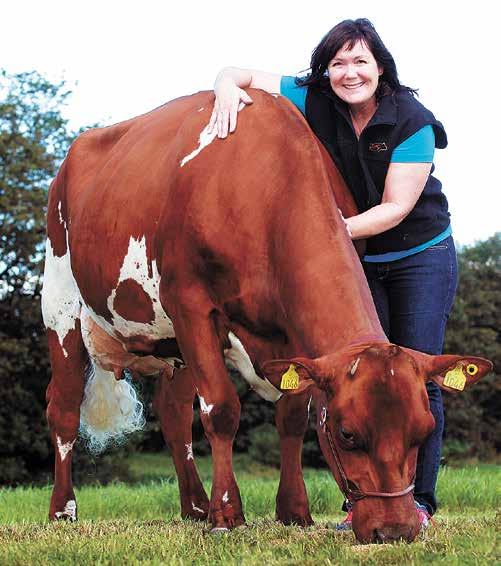
That is the case for Elin Hobberstad of Hobberstad Gard.



“What I really love about the farm is working with the animals,” Hobberstad said. “Animal welfare is a very high priority for us.”
That core principle also serves as a source of frustration for Hobberstad.
When it comes to dealing with the general public whom are often times generations removed from the family farm, tension arises.



“One of the biggest challenges we face is ignorance,” Hobberstad said. “People have absolutely no idea what is going on in a barn and tend to humanize the animals. I try to tell people that my cows are better cared for than most of our sick and elderly. If needed, a vet will come here within the hour.”
Hobberstad, along with her husband Norodd Lode, is the sixth generation to operate the farm that has been in her family since 1892.
She purchased the farm from her


parents in 1997. There is a philosophy in Norway known as “odelsloven,” which gives the rstborn child the legal right to purchase the farm. Hobberstad said it worked out well for her own family, as none of her younger sisters had an interest in pursuing a career in dairy farming.
A chicken barn was constructed in 2007, and the farm diversied by adding poultry production. Norodd also operates a transport company along with handling the farm’s eldwork. Their oldest son, Rasmus Lode, works for the transport company and his girlfriend, Amalie Ravndal, helps Hobberstad on the family farm. Their youngest son, Martin Lode, works as an automatician.
“My great-great-grandfather purchased this farm when his farm at the time was expropriated to build a prison that is known as Aana Kretsfengsel,” Hobberstad said.


The farm is near the village of Varhaug, which is located about a mile from the North Sea. The area has a relatively mild climate compared to the rest of the country, with an average annual temperature around 45 degrees Fahrenheit. The area receives about 50 inches



Merry Christmas & Happy New Year

Page 12 • Dairy Star • Second Section • Saturday, December 24, 2022 DAIRYING AROUND THE WORLD Are your
for winter? www.chippewafarmservice.com 715-382-5400 16570 Co Hwy O • Chippewa Falls, WI 54729 Agromatic • Alber’s • Badger • Berg Freudenthal • Hanson • J&D Manufacturing MiraFount • N-Tech Pasture Mat • Ritchie • Loyal-Roth • Trioliet • VES • Weaverline • Zabel Specializing in the sales and service of feed and manure handling equipment for over 25 years! Contact us today for all of your on-farm service calls calls, building needs, parts and in-stock equipment! Chippewa Farm Service has been in business since 1996, specializing in the sales and service of feed and manure handling equipment. We also do concrete work and install ventilation systems contact us today! FROM In stock new and used equipment!
calves ready
PHOTO COURTESY OF AMALIE RAVNDAL
Elin Hobberstad milks around 50 cows with a DeLaval robo c milking system on her 65-acre farm in Norway. The herd is primarily Norwegian Red.
Turn to HOBBERSTAD | Page 13
of precipitation each year. It is at compared to other parts of Norway, which makes it well suited for agricultural pursuits.
“In this part of Norway, the climate is quite mild,” Hobberstad said. “We get below zero sometimes in the winter and sometimes even snow.”
Hobberstad Gard consists of 65 acres, and Hobberstad rents an additional 25 acres. They grow only timothy and rye grass. First crop is stored in silos, while second and third crops are baled using a McHale Fusion baler. Hobberstad utilizes 14 acres for pasture.
Hobberstad milks between 45 and 50 cows using a DeLaval robotic milking system which was installed in 2014 when a new barn was built. Earlier this year, an automatic calf feeder was installed, giving Hobberstad the option of using either fresh or powdered milk. Calves are also fed grain from an automated feeder integrated into the system.
“We decided to build a new barn and have never regretted this one second,” Hobberstad said. “When we were planning our new barn, there was never any question as if to install a robot milker; the only question was which one.”
When Hobberstad took over the farm in 1997, she was utilizing the old barn built by her parents in 1969, and the herd’s annual production was just over 249,920 pounds of milk per year. With the improvements Hobberstad has made to the farm, she has been able to increase her production to just under 908,800 pounds annually, with an average energy-corrected milk production of 22,720 pounds per cow.
Milk production in Norway is regulated through a quota system that helps ensure the country’s production of both cow milk and goat milk adapt to meet the needs of the market. Increasing her farm’s production requires Hobberstad to obtain quota increases; she now owns 568,000 pounds of quota and rents the additional needed quota from another farmer.
Building the new barn turned out to be about more than making a better living environment for the cows.
“When we built the new barn, the entire family took an increased interest in what was happening in the barn,” Hobberstad said. “Before that, my husband took no interest in what was inside the barn. He took care of most of the eld chores and ran his company. Now, he sits in his ofce and logs into the computer to check that everything is OK. He knows how much each cow eats, her expected yield and her cell count.”
The herd consists primarily of Nor-
wegian Reds. A few animals are crossed with Holstein.
“Norwegian Reds are good on fertility and calving ease,” Hobberstad said.
The Norwegian Red breed is best known for emphasizing a balance between functional type traits, health traits and production.
The low end of the herd and the heifers are bred to Angus. Hobberstad raises her own replacement heifers.
Cows are bred to calve throughout the year. Cows wear activity monitors to aid in heat detection, and cameras are mounted in the barn to help detect heifers in heat.
The youngest heifers are grazed close to home and fed grain twice daily while on grass. Older heifers are grazed on pastures located further from the farm and remain on pasture from May through September.
“Regulations in Norway say that all livestock over the age of 6 months should be able to graze for a minimum of eight weeks in the summer,” Hobberstad said.
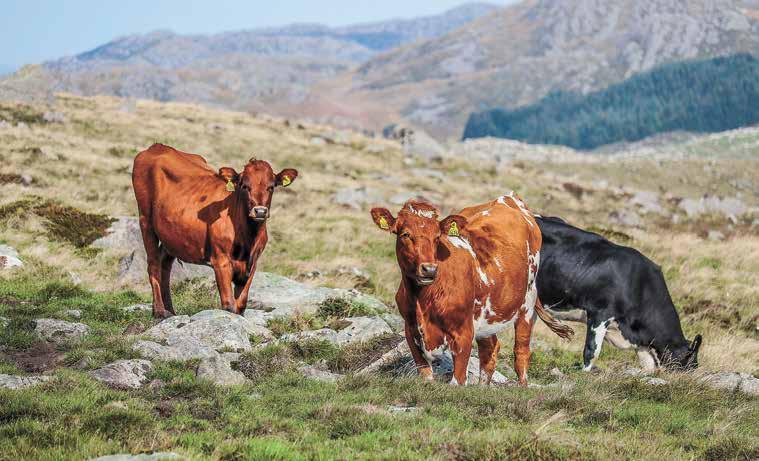
The milking herd grazes from the beginning of May until early October as well as being supplemented with feed in the barn. Grain is fed in the robot with an automated system. Silage is fed every three hours.
“We have an automated feeding
system,” Hobberstad said. “It will fetch feed from either a stationary (mixer) or from the silos. Every other day, I put bales in the (mixer); only bales – no other grains or minerals.”
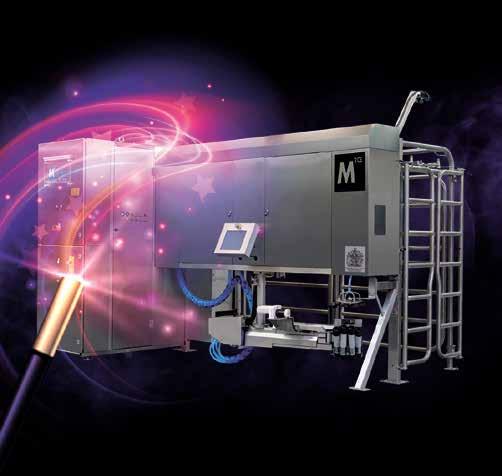
Many of the concerns that plague U.S. dairy farmers are also concerns for their Norwegian counterparts. Inputs, commodity prices and regulations all create issues for Hobberstad.
“2022 has been a rough year for farmers,” Hobberstad said. “As unrest and war has hit the world, the prices for fertilizer and imported grain have raised substantially. The price of electricity and gas have increased. While farmers have been able to get some compensation from the state, we have been forced to change some of our systems.”
Zumbro
Zumbrota, MN • 651-380-2856
Dairyland Equipment of Menahga Menahga, MN • 218-564-4958

Current Defense & Supply Beresford, SD • 605-212-6005
Livestock Systems Charles City, IA • 641-220-0732
Tri-County Dairy Supply Watertown, WI • 608-757-2697
Total Dairy Service, LLC Kewaunee, WI • 920-680-4441
B&R Dairy Equipment Winthrop, MN • 507-647-7000
Dairy Star • Second Section • Saturday, December 24, 2022 • Page 13
Con nued from HOBBERSTAD | Page 12
PHOTO COURTESY OF AMALIE RAVNDAL
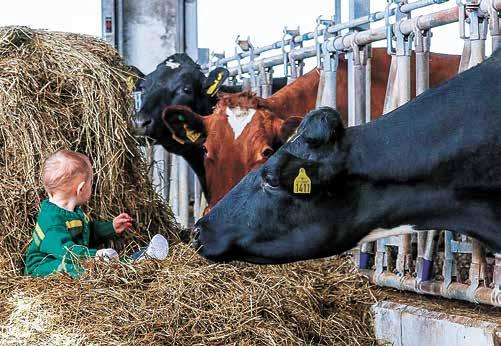
Torben Lode plays in the hay at Hobberstad Gard in Varhaug, Norway. The area has a rela vely mild climate compared to the rest of the country.
PHOTO COURTESY OF AMALIE RAVNDAL
Introducing the Galaxy Merlin2G –the next generation in automated milking. Now available from the U.S.A. milking robot company you know and trust. amsgalaxy.com 484-648-1365 info@amsgalaxyusa.com a fusion with:
Heifers graze on pasture at Hobberstad Gard in Varhaug, Norway. Varhaug is located near the coastline of the North Sea.
Ag Solutions






































Page 14 • Dairy Star • Second Section • Saturday, December 24, 2022 WWW.STJOSEPHEQUIPMENT.COM NEWEQUIPMENT LX Anderson IFX720Wrapper CallForPrice #023719 LX CIH2150 Planter CallForPrice #021913 USEDEQUIPMENT LX KuhnVB560 RoundBaler CallForPrice #017783 LX MF2250Big SquareBaler CallForPrice #020101 RC BrillionSSB12 Seeder CallForPrice #020561 LX NHT7.190 LoaderTractor $159,985 #023394 NW ‘17BobcatS570, ONLY598Hours! $46,500 #023598 LX ‘14KuhnKnight 8124Spreader $11,900 #018321 EY ‘12NHFR9060 SPChopper $125,000 #018844 EY ‘18Geringhoff Truflex40,40’,w/Air $79,900 #022249 LX HyundaiR180LC-9 Excavator $85,000 #023836 LX JCB85Z Excavator $79,500 #021934 LX J&M1151 GrainCart CallForPrice 021559 RC KuhnKnightVT268 TMR CallForPrice #021004 SUPREMETMR’S INSTOCK! RC KuhnKnight VT256TMR CallForPrice #021005 LX Anderson800HS Wrapper CallForPrice #023718 EY Kubota M7060 CallForPrice #022827 EY HyundaiHX130A LCR CallForPrice #020939 LX ‘13MF7619 $104,895 #024844 LX CIH JX1095C $26,985 #023700 LX ‘95GlencoeSS7200 7Shank $6,985 #023950 NW ‘15Kuhn GMD16DiscMower $2,800 #023380 EY ‘98NH1431 Discbine $6,500 #024177 LX ‘04NH615 DiscMower $7,585 #024852 EY ‘18NHCR8.90 Combine $299,900 #022529 LX ‘19CIH8250 Combine,4WD,Sharp! $399,000 #025333 RC Anderson RB200 CallForPrice #021399 EY NHRollBelt450 RoundBaler CallForPrice #020710 LX KuhnMergeMax 701Merger CallForPrice #021477 LX KuhnGMD16 DiscMower CallForPrice #017788 NW BobcatCT4045 w/Loader CallForPrice #019347 EY KubotaBX2380 CallForPrice #020335 LX CID XBC84LFMower CallForPrice #023876 LX Fendt828 Vario CallForPrice #019583 RC J&M875 GrainCart CallForPrice #025160 LX MF5711D w/Loader CallForPrice #021958 LX CIHMaxxum125 CallForPrice #017098 RC CIHMaxxum115 w/DiamondMower CallForPrice #019695 NW CIHMaxxum150 CallForPrice #019698 RC KuhnVB3160 RoundBaler CallForPrice #021464 EY NH313Discbine CallForPrice #020715 LX HyundaiHL930AXT WheelLoader CallForPrice #021146 NW BobcatE50 CallForPrice0 #019252 LX MF2606H CallForPrice #023222 EY NHWorkMaster120 CallForPrice #024860 EY NH195Spreader CallForPrice #024755 RC H&S5226Spreader CallForPrice #022655 NW CIHVT-Flex435 CallForPrice #021769 LX CIHVT-FLEX435,20’ CallForPrice #021772 LX KuhnKrause8010-20 Excelerator CallForPrice #018474 LX CIHEcolo-Till2500 CallForPrice #021948 LX WalingaAgri-Ac 7614 CallForPrice #024491 NW ’15TriolietSolomix 2-1500ZK $24,985 #024179 LX ’16Meyer3954 Spreader $9,985 #024255 NW AgcoBaler, LowBales! CallForPrice #025142 LX ’21NH210 Discbine $25,985 #024456 LX ’20MFGC1723E $12,500 #024381 LX ’13NHFR600 SPChopper $199,985 #023103 LX ’17KubotaM7060 $41,985 #024423 LX CIH1255Planter CallForPrice #025140 EY CIHEcolo-Tiger 527BRipper $14,900 #025241 NW ‘13CIH1245 12/23ROW $85,000 #025137 LX ‘05Krause5250Drill $9,985 #024954 NW Friesen110 SeedTender $6,500 #025162 LX ‘17KuhnFC10030D TripleMower $53,000 #022194 LX ’15CIHMagnum310 $189,985 #022369 LX ’17Meyer9524 Spreader $55,000 #023225 EY ’15AndersonHybrid XWrapper $30,900 #022489 LX ’11CIH3020, 35’Flex $17,500 #021615 LX ’16NH195Spreader $13,900 #023384 LX ’19CIH540 Quadtrac $459,985 #025051 LX ’09CIH Magnum335 $149,985 #025148 LX ’12CIH Magnum340 $199,000 #025138 LX ’13CIH Magnum315 $194,985 #024645 NW ’17BobcatT770 TrackLoader CallForPrice #023663 LX ’12JD625MoCo $15,900 #024952 LX ‘16NHFR780 SPChopper $220,000 #022206 LX MF5711D CallForPrice #024443 EY Erskine2020-73 SnowBlower CallForPrice #022199
Starting from scratch











 By Danielle Nauman danielle.n@dairystar.com


































NEW AUBURN, Wis. – Growing up, McKinsey Gotham always wanted to have goats. And, for the last ve years, she has been living that dream as she develops a rst-generation goat dairy near New Auburn.
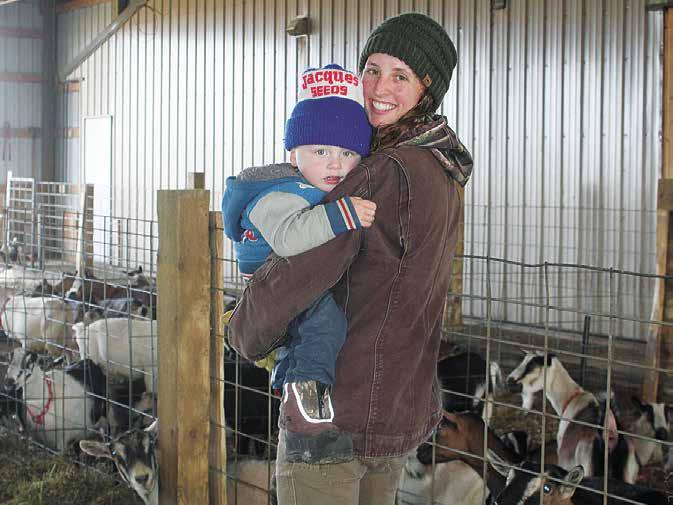
“My parents milked dairy cows when I was younger,” Gotham said. “After high school, I started milking cows for others and did for several years. In 2015, my husband decided we should go ahead and try our hand at running our own dairy, so we started building our herd.”
Gotham, along with her husband Ezra and son Oscar, milks about 120 goats and markets the milk through Quality Dairy Goat Cooperative.
“Quality Dairy Goat Cooperative has been a great organization to work with,” Gotham said. “They really care about their farmers and take a genuine interest in our success.”





During the summer months, Gotham milks as many as 140 does. The herd averages about 6.5 pounds of milk per day per goat.
Gotham handles the herdsman duties with the goats while Ezra handles the eldwork and mainte-















nance work as well as working full time off the farm. Gotham’s father comes on a daily basis and helps with the goats and chores. Growing their herd to its current level has allowed Gotham to be a full-time dairy



Dairy Star • Second Section • Saturday, December 24, 2022 • Page 15 TOP PRICES PAID & CONTRACTING AVAILABLE Your Market For: Holstein Steers • Fed Dairy Cows • Lean Dairy Cows Your local area buyer for MN, IA and WI. Long Prairie Buying Station Bruce Belter • 507-429-0359 Holstein Steers • Lean Cows • Bulls • Fed Cows Tyrel Lembke • 877-300-9298 Long Prairie, MN Lean Cows • Bulls Dean Derricks • 920-655-4730 Green Bay, WI Holstein Steers • Fed Cows • Lean Cows Chad McQuade • 605-668-4275 Yankton, SD Lean Cows • Bulls Mike Baczwaski • 800-445-0042 Gibbon, NE Fed Cows • Lean Cows • Bulls Cody Ritter • 320-293-5212 • 320-732-8358 Long Prairie, MN Green Bay Dressed Beef (563) 876-3087 Epworth, IA 45240 County Road 80 E • PERHAM MN 56573 218-346-3415 PerhamStockyards.com • CattleUSA.com Mitch Barthel Owner/Auctioneer 218-639-5228 Open Sundays Noon-8pm to Receive Stock • Complimentary Hay & Water Pens Provided SPECIAL ORGANIC SALE & SPECIAL DAIRY SALE the LAST Monday of Every Month Copies of Organic Certificates must be provided at drop off. Organic Cows will sell before Conventional Cows • Professional Marketing • Catalog Cows for Breeding & Production Records • Mailing List to over 6,000 potential buyers • Website, Dairy Star, Radio Advertisements • Live Online thru CattleUSA - Over 300 buyers approved to bid Professional Auctioneers & Ringmen Many Years of Experience Selling Dairy Cattle
Gotham establishes rst-generation goat dairy
DANIELLE NAUMAN/DAIRY STAR
McKinsey Gotham and her son Oscar check on their dairy goats Nov. 28 on their farm near New Auburn, Wisconsin. Gotham milks 120 does, which average 6.5 pounds of milk per day per goat.
Page
Turn
to GOTHAM |
16
farmer while raising Oscar.
“I want goats that can last a long time in the herd too; ones that can hold up, kid every year, year after year.”
MCKINSEY GOTHAM, DAIRY GOAT FARMER
Starting from scratch, the Gothams built their dairy from the ground up. They did the work themselves and built what they could afford.
“The best advice I could give someone wanting to establish a goat dairy is to do everything you can to avoid taking on debt,” Gotham said. “Start small so that you don’t get quickly overwhelmed. Milking dairy goats is a different industry, and it takes some time to learn.”
The goats are milked in a single-12 parlor using six units. When the Gothams built the parlor, they designed it with room to turn it into a double-12 to help speed up milking. It takes Gotham around two hours to milk the herd.

Gotham kids her does year-round to help maintain production and keep a viable supply of milk to market.
“It is not overwhelming to have a few kids to care for each month rather than having all of them in a couple of months’ time frame,” Gotham said. “A few will have longer lactations, but the majority will kid each year.”
Goats typically breed seasonally, so Gotham uses CIDRs to bring the goats in heat throughout the year.
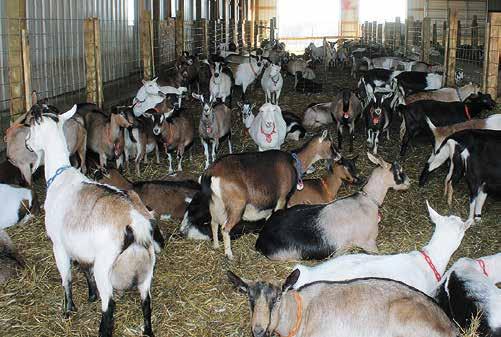
Gotham said one of the best purchases she has made was an ultrasound machine, which allows her to detect pregnancies.
Gotham said she is satised with the current size of the herd and does not have plans to expand. To maintain the














herd, Gotham sells replacement doelings, and many of her bucklings are sold to a grower. Each year, Gotham keeps between 20 and 30 does as replacements.

The Gothams’ herd of Alpine and LaMancha is a closed herd other than the purchase of breeding bucks. Gotham makes breeding decisions with a focus on milk production.
“I want goats that can last a long time in the herd too; ones that can hold up, kid every year, year after year,” Gotham said.
The Gothams own 40 acres of land and rent an additional 180 acres where they grow corn, soybean, rye and oat. They market the excess crops, and mix their own feed to save money. The goats are fed a whole-grain mixture of corn, soybean, oat and protein pellet.




“It is nice to be able to get whole grains for them instead of feeding ground feed,” Gotham said.

The Gothams also make alfalfa baleage and grass hay to feed their goats.

At the end of each day, Gotham said she is thankful for the life she is leading as a dairy goat farmer and the ability to raise Oscar on the farm around the goats.
“Goats are just such happy animals to be around,” Gotham said. “They are so energetic, and you never know what they’ll get into next.”
Page 16 • Dairy Star • Second Section • Saturday, December 24, 2022 Deals! (715) 285-5317 John Deere 2940 w/loader, CLEAN UNIT (715) 223-3361 Curtiss, WI Used Anderson Hybrid X 2014 - $25,500 BRUSH CUTTER Sil v e r S t ar 715-229-4879 • Heavy Duty • Up to 4” Brush • Skid steer Quick Attach Merger Call for Price! 2022 H&S TF6128 Platteville, WI (608) 348-6565 Scott Implement Fieber Van’s Implement, Inc. Watertown, SD 605-753-9834 New Patz 950 w/front discharge WOLLER EQUIPMENT, INC. 320-573-2341 Swanville, MN 2019 Kuhn GMD5251TC Trailed Mower 17’ $25,900 WORTHINGTON, IA 563-855-2434 2200 Bales, Crop Cutter $39,900 NH Rollbelt 460 FLUEGGE’S AG Mora, MN • 320-679-2981 reconditioned cutter bar $4,500 JD 3 pt. disc mower W.H. Lien Inc. N8974 Pole Grove Rd. • Hixton, WI 715-963-4211 White 2-105, Front assist, cab,air eld ready - $18,500
Con nued from GOTHAM | Page 15
DANIELLE NAUMAN/DAIRY STAR
Lake Lillian, MN www.hansonsilo.com “On Call” Service 24/7 1-800-THE-SILO GIVE YOUR SILO NEW LIFE! Best warranty in the industry! SCHEDULE YOUR SILO RELINE NOW AND NEW UNLOADER WHEN YOU ARE EMPTY. • Trust the real specialists who replaster the most silos! • Great pricing • Best quality SOPHISTICATED VERTICAL MIXING WAGONS Parts and service available at both our Lake Lillian & Sauk Centre, MN locations. Trioliet 1300 Cu. Ft. Twin Screw TMR Trioliet 1800 ZK Blower Unit TMR Mixer Sign up for our Newsletter up for our Sign up at www.dairystar.com Dairy St r Milk Break
Alpine and LaMancha goats rest in the barn Nov. 28 at the Gotham farm near Auburn, Wisconsin. Ezra and McKinsey Gotham kid does year-round.




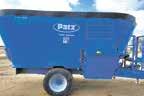





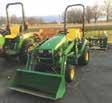
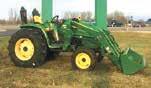
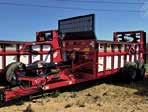

















Dairy Star • Second Section • Saturday, December 24, 2022 • Page 17 Deals! D&D Arcadia, WI 608-323-7001 Used Notch 8 bale transport w/fenders - $4,990 dndfarmsupply.com D&D Arcadia, WI 608-323-7001 NEW - Vermeer 504 Pro Silage 17 knife system CALL FOR OLD PRICE ON NEW BALER dndfarmsupply.com D&D Arcadia, WI 608-323-7001 JD 567 Used 2004 Silage Round Baler, 10,000 bales, belts good, net & twine -$13,500 dndfarmsupply.com FLUEGGE’S AG Mora, MN • 320-679-2981 4 basket, good cond. $4,450 NH Tedder FLUEGGE’S AG Mora, MN • 320-679-2981 1 yr. old $7,200 Pequea 12 wheel rake WOLLER EQUIPMENT, INC. 320-573-2341 Swanville, MN 2022 Deutz-Fahr 6175 CVT Front 3pt & PTO 50 hrs $179,900 WOLLER EQUIPMENT, INC. 320-573-2341 Swanville, MN 2021 Kuhn VB3190 OC14, 5500 bales - $36,900 Fieber Van’s Implement, Inc. Watertown, SD 605-753-9834 New Patz 620 w/side discharge WORTHINGTON, IA 563-855-2434 Bobcat S550 105 Hrs. $47,500 WORTHINGTON, IA 563-855-2434 Pottinger 762C Rotary Rake, Like New $31,000 Davenport, IA 563-386-1432 ‘12 JOHN DEERE 997 72” deck, 1906 hrs., dsl. $10,900 Davenport, IA 563-386-1432 JOHN DEERE 1026R loader+bucket, 900 hrs. - $12,900 Davenport, IA 563-386-1432 ‘05 JOHN DEERE 4720 MFWD, ldr., runs good, Brand new loader - $19,900 Vertical beaters, 550 bu. Call for Price! 2022 H & S HPV4255 Platteville, WI (608) 348-6565 Scott Implement Vertical beaters, 425 bu. Call for Price! 2022 H & S HPV4242 Platteville, WI (608) 348-6565 Scott Implement Belleville, WI | 608-424-6110 BRAND NEW! MUST GO! $9,500 Argall Dairy Systems, Inc. 80 gl Calf-Star Mini Flash Pasteurizer (563) 875-7154 // Dyersville, IA NEW HOLLAND ROLL-BELT 560 4 TO CHOOSE FROM - Call for Price (563) 875-7154 // Dyersville, IA ’13 NEW HOLLAND L218 CALL FOR DETAILS - $18,500 5k hrs. $130,000 EACH SCHERRMAN’S IMPLEMENT DYERSVILLE, IA 563-875-2426 (3) ‘18 Case IH Magnum 310 tractors BREEDEN’S VERMEER 563-357-0217 • Maquoketa, IA www.breedensales.com 2019 560M BALER $27,500 OBO 2724 State Hwy. 24 Fort Atkinson, IA (563) 534-2724 www.franzensales.com Used New Holland FP240 Pull Type Chopper 2724 State Hwy. 24 Fort Atkinson, IA (563) 534-2724 www.franzensales.com NEW – New Holland Workmaster 75 Tractor 2724 State Hwy. 24 Fort Atkinson, IA (563) 534-2724 www.franzensales.com NEWNewHolland Sil v e r S t ar BRUSH GRAPPLE 715-229-4879 • Heavy Duty cleanup of brush and logs • 6’ or 7’ Option Sil v e r S t ar BALE BEDDER 715-229-4879 • Square or round bales • 8’ or 6’ • Chain or hydraulic driven • Includes 1 year warranty S dbl PROTIVIN, IOWA • 563-569-8636 Rolling Basket, Nice Shape - $36,500 2012 Sunflower 1435-21 Disk PROTIVIN, IOWA • 563-569-8636 Spec Crop Plus, 10,700 Bales, 12 to choose from! $36,500 2019 New Holland RB560 PROTIVIN, IOWA • 563-569-8636 Nice Condition $22,500 2008 Parker 624 Grain Cart Lomira, WI 920.583.3747 3 Bar Spike Tooth & Rolling Basket, #MC1190 $89,500 ’18 MCFARLANE IC5140 Call (920) 773-2143 USED NUHN MAGNUM 6000-MOD 0014 Top ld., 6750 gal., high vol. hdr. pump, hopper riser, front 3” drain assembly, rear strobe & LED light kit, #6 large 1000 rpm pto, cat 4 pin hitch, rear splash pan $55,000 Call (920) 773-2143 USED 13FT POTTINGER TERRADISC 4001T 3pt mount, twin arm carrier system, rubber mounting brackets, sealed disc bearings, 3 splash pans, fold up wings, off the back of a Nuhn tanker CALL FOR PRICE Call (920) 773-2143 USED R BRAUN INC. TT-1025 DUMPSTER 25’ l x 10’ w., 8800-gal., hydraulic side door, hitch & undercarriage. Dual discharge, high-capacity PTO driven pump, 700 Series tires, LED lighting, 6” drain valve $38,500 715-382-5400 CHIPPEWA FALLS, WI $12,000 Knight 8124 Spreader (715) 285-5317 Vermeer TE170, New (715) 223-3361 Curtiss, WI Used Cloverdale 350 Mixer 2015 model - $22,500 715-382-5400 CHIPPEWA FALLS, WI Valmetal Blower V59 (715) 223-3361 Curtiss, WI Krone Comprima V 180 XC, 10,000 bales - $36,500 (715) 285-5317 Case IH RB565 Premium 9,647 bales CLEAN UNIT (563) 875-7154 // Dyersville, IA ‘18 JOHN DEERE 560M NEW ARRIVAL, 8K BALES - $37,000 715-382-5400 CHIPPEWA FALLS, WI $3,500 ValMetal Bale Chopper
Enriching human health, nutrition
New techniques piloted to milk proteins, acid whey
By Abby Wiedmeyer abby.w@dairystar.com




Editor’s note: This is part two of a two-part series to focus on the Dairy Innovation Hub’s annual Dairy Summit, which was held in person and online Nov. 16 at the University of WisconsinRiver Falls in River Falls. Topic areas of research included human health and nutrition, animal health and welfare, stewarding land and water resources, and farm business and communities.
RIVER FALLS, Wis. – Research on enriching human health and nutrition through processing techniques is being done through the Dairy Innovation Hub at the University of Wisconsin-River Falls, UW-Madison and UWPlatteville.
Grace Lewis, with the department of animal and food science at UWRiver Falls, and Scott Rankin, with the department of food science at UWMadison, are nding ways to enrich dairy products to make vitamins, drugs and colorants, among others, more favorably digested and to utilize lactose as a natural sweetener in dairy products while aiding in the disposal of acid whey.
Part of Lewis’ research is encapsulating things like vitamin D to aid in digestion. For example, vitamin D is sensitive to light; therefore, when it is encapsulated from external stimuli like light and heat, it also makes its way through the gastrointestinal tract more favorable so it is not digested in unfavorable places.




Lewis is using high-pressure homogenization to disassemble the casein micelle protein in milk, add a variety of compounds in and encapsulating them, making them pass through the gastrointestinal tract more favorably.
Lewis forces a 100 mL sample of milk through a .13 mm nozzle on the high- pressure homogenizer. The sample is forced through then enters a heat exchanger to cool it down. Back pressure is then applied, and the homogenized sample is collected.
“Because of the small nozzle, you can achieve pressures of up to 300 megapascals,” Lewis said. “That is about three times the deepest part of the ocean.”

What actually happens when the





sample is forced through the homogenization is that the casein micelle, or the spherical protein structure, is broken into its counter parts. In addition to high-pressure homogenization, ethanol is used to aid in the process and to heat the sample up.
The ethanol is then evaporated off and pressure is released to reaggregate the proteins. This allows Lewis to add a variety of compounds in.
“Think about vitamin D, medicines, drugs, colorants, etc.,” Lewis said. “We can reassemble this protein when we evaporate the ethanol off to encapsulate these various things.”
So far in her research, Lewis has found that 60% ethanol is effective at dissociating these casein micelles, and high-pressure homogenization helped with this process. With the initial step completed, the next step is to aggregate them.
Lewis was joined by Rankin, who discussed research on his pilot-scale process to convert an acid whey waste stream to high-value food products.
Rankin’s research program focuses on the characterization and manipulation of small molecules to convert acid whey to glucose lactose syrup and milk minerals.
Rankin said the idea is to take the lactose-rich streams from dairy processing and convert them into a sweetener. While lactose is not a particularly sweet sugar, it becomes one when it is converted to glucose and galactose.
The research began with looking at acid whey, a byproduct of Greek yogurt production, and has expanded to other subjects that involve lactose. Greek yo-
gurt was discovered about 15-20 years ago and now claims over half the market in the U.S. for yogurt. Rankin said it generates waste streams that are challenging to manage.
“We work with some processors that would make more product not if they had a market, not if they could nd the milk, but if we could get rid of the waste,” Rankin said. “It has a big footprint for the processors.”
The challenge for Rankin has become to generate technology around using a catalyst to convert acid whey. It works similar to a catalytic converter on a car where it is transforming toxic molecules from the combustion engine into relatively less toxic molecules as they leave the catalytic converter. The same concept is being applied to acid whey.

“One of our parameters when we make lactose-free ice cream is we incubate ice cream mix for four to six hours at 70 degrees Fahrenheit,” Rankin said. “That’s to get the enzyme to do its thing. With catalysts, we make that conversion in a matter of minutes.”
The hope is to make continuous ow catalytic converters in tandem with dairy processing to get rid of lactose, which is then converted to glucose and galactose, its monomers.

Rankin is working with the Food and Drug Administration to get approval for the converted proteins.

“We can do studies and generate papers,” Rankin said. “But the Dairy Innovation Hub has helped us bridge the gap between this neat idea and something that may end up in our processing industry soon.”

Page 18 • Dairy Star • Second Section • Saturday, December 24, 2022 Purchases Subject to Year End Dividend. 2022 Dividend was 9% www.tylerlumbercompany.com TYLER, MINNESOTA Hours: Mon.- Fri.: 8am-5pm • Sat.: 8am-Noon • Sun.: CLOSED Minnesota’s largest lumber cooperative Phone 507-247-5546 Fax 507-247-5548 Toll Free 1-888-247-5546 110 South Wind Street Flandreau, SD 57028 605-997-3714 THANK YOU FOR YOUR BUSINESS! Celebrating over 40 Years in Business 1010 Hoeschler Dr. • Sparta, WI 54656 Phone: 608-269-3830 Toll Free: 1-888-863-0227 Email: prestonde@prestonde.com Does your milking equipment need maintenance? DAIRY EQUIPMENT INC. We service all dairy equipment! Give us a call to schedule a visit.
Grace Lewis UW-River Falls
50106 Hwy. 210 West • Henning, MN (218) 583-2931 www.midcentralequipment.com IH 966 4411 hrs., 2WD Call JD 4630 4353 hrs., 2WD, rear duals Call Patz 420 Call JD 317 Skid Loader Call Artex SBx800 Call ‘13 VERMEER 504 PRO 17,000 bales, always shedded Call 522 Sinclair Lewis Ave., Sauk Centre, MN 56378 ads@dairystar.com DAIRY ST R★ is published the second and fourth Saturdays of the month. Advertising and news deadline is 5 p.m. the Friday before publication.
Scott Rankin UW-Madison
350


Rounds 16.89 8.17 75.01

980 Large Squares 16.99 22.61 150.95 4 27.01 $175.00
18.76 $125.00
19.99 $95.00 363 Large Rounds 15.84 11.44 82.29
370 Large Rounds 15.74 18.74 153.19 1 26.86 $150.00
403 Large Rounds 16.76 17.86 112.44 1 20.89 $130.00
407 Large Rounds 11.6 8.19 69.17 1 23.46 $80.00
410 Large Rounds 13.19 10.91 90.3 1 20.7 $80.00
411 Large Rounds 15.67 10.48 83.32 1 20.55 $75.00
414 Large Rounds 13.19 10.91 90.3 1 20.88 $85.00
415 Large Rounds 15.67 10.48 83.32 1 20.35 $95.00
416 Large Rounds 15.37 8.48 93.89 1 19.55 $80.00
419 Large Rounds 13.19 10.91 90.3 1 20.41 $95.00
420 Large Rounds 15.37 8.48 93.89 1 20.75 $95.00
421 Large Rounds 17.09 19.19 124.43 1 15.78 $120.00
422 Large Rounds 13.94 10.92 79.56 1 19.73 $85.00
429 Large Rounds 16.34 19.04 133.05 1 16.06 $115.00
989 Large Rounds 17.58 19.27 118.44 2 23.33 $140.00
991 Large Rounds 15.55 19.85 126.06 2 23.35 $150.00
999 Large Rounds 15.69 18.92 114.91 2 23.3 $145.00
364 Large Rounds 12.88 18.05 111.99 2 20.71 $150.00
365 Large Rounds 16.12 19.72 126.43 2 23.22 $135.00
396 Large Rounds 17.96 21.31 123.23 2 24.11 $125.00
398 Large Rounds 13.99 9.21 87.1 2 26.3 $115.00
427
Large Rounds 14.1 18.8 144.69 2 22.8 $180.00
428 Large Rounds 14.43 11.87 80.55 2 21.88 $90.00
993
Large Rounds 15.3 19.11 138.69 3 18.29 $140.00

1000 Large Rounds 15.02 20.93 153.3 3 24.75 $220.00
352 Large Rounds 15.02 20.93 153.3 3 3.33 $170.00
404 Large Rounds 16.37 18.01 134.3 3 18.24 $135.00
426 Large Rounds 13.09 17.75 117.28 3 25.13 $120.00
992 Large Rounds 15.4 18.9 128.59 1&2 16.39 $150.00
362
Large Rounds 16.76 17.86 112.44 1&2 20.44 $140.00
406 Large Rounds 16.66 16.44 113.11 1&2 17.9 $125.00
405 Large Rounds 15.07 21.31 146.55 2&3 19.52 $175.00
998 Large Rounds 11.6 8.19 69.17 23.67 $80.00
430 Large Rounds STRAW 34 $30.00
981 Large Squares 14.45 18.41 126.21 1 26.44 $160.00
986 Large Squares 13.05 16.46 104.96 1 26.59 $170.00
996 Large Squares 17.64 21.23 141.03 1 23.99 $155.00
997

Large Squares 16.51 21.28 139.95 1 23.58 $145.00
366 Large Squares 14.68 14.57 75.95 1 27.34 $70.00
367 Large Squares 14.68 14.57 75.95 1 26.81 $75.00
402 Large Squares 15.88 16.48 117.23 1 21.68 $160.00
423 Large Squares 16.19 18.54 95.58 1 25.11 $130.00
984 Large Squares 13.58 19.27 142.54 2 27.33 $170.00
990 Large Squares 16.62 18.61 107.37 2 24.37 $165.00
360 Large Squares 12.01 17.21 139.98 2 27.27 $170.00
361 Large Squares 13.39 17.93 136.54 2 22.48 $185.00
368 Large Squares 15.15 19.03 112.66 2 22.05 $160.00
374 Large Squares 12.35 26.88 188.46 2 27.49 $275.00
375 Large Squares 87.65 26.88 188.46 2 28.16 $290.00
399 Large Squares 15.15 19.03 112.66 2 24.58 $150.00
400 Large Squares 15 18.69 113.19 2 24.52 $155.00
356 Large Squares 12.99 19.76 167.37 3 14.62 $190.00 358 Large Squares 12.64 19.56 114.81 3 25.25 $160.00
357 Large Squares 18.58 22.86 163.83 4 25.71 $185.00
413 Large Squares 17.1 23.28 164.11 4 27.29 $170.00
425 Large Squares 17.56 21.62 140.79 4 25.57 $130.00 979
Large Squares STRAW 23.35 $100.00 983 Large Squares STRAW 25.58 $100.00


383 Large Squares STRAW 24.17 $90.00
982
354
Medium Squares 11.07 17.61 117.52 1 22.67 $160.00
Medium Squares 10.96 16.91 122.18 1 25.88 $175.00
Medium Squares 11.32 18.13 129.42 1 26.19 $175.00 376 Medium Squares 14.1 9.97 78.89 1 16.12 $95.00 382
355
Medium Squares 12.57 20.33 164.27 1 26.58 $265.00 988 Medium Squares 15.31 19.08 109.83 2 23.23 $165.00 351 Medium Squares 16.4 22.2 149.19 2 25.81 $175.00 371 Medium Squares 13.66 19.13 121.99 2 24.35 $175.00 384
Medium Squares 15.37 23.13 142.31 2 24.91 $190.00 397 Medium Squares 16.19 18.54 95.58 2 24.65 $140.00 401



Medium Squares 15.44 19.8 110.5 2 21.83 $160.00 359 Medium Squares 15.78 22.62 161.74 3 22.66 $220.00 377 Medium Squares 15.9 21.04 145.79 3 10.92 $210.00 408 Medium Squares 13.97 19.31 152.41 3 8.92 $200.00 409 Medium Squares 14.85 24.16 171.62 3 4.39 $220.00 381 Medium Squares 13.99 19.26 162.09 4 25.43 $245.00 985 Medium Squares STRAW 57 $37.50 987 Medium Squares STRAW 78 $30.00 372 Medium Squares STRAW 78 $35.00 373 Medium Squares STRAW 25 $50.00 412 Medium Squares STRAW 70 $43.00 418 Medium Squares STRAW 72 $40.00 995 Small Rounds 14.49 9.62 95.94 1 19.26 $125.00 379 Small Rounds 14.58 7.05 86.4 1 19.11 $80.00

Dairy Star • Second Section • Saturday, December 24, 2022 • Page 19 STARWOOD RAFTERS, INC. 715-985-3117 W24141 Starwood Ln. • Independence, WI 54747 Website: www.starwoodrafters.com 888-525-5878 WHICH BARN IS BEST FOR YOUR HERD? Birds just love this barn. The webs in these trusses are easy nest areas for birds. They also restrict air flow which leads to poor ventilation and moisture buildup in the building. The arched rafters create a more open barn allowing better ventilation. Also since there are no open webs in the trusses, there are no places for birds to nest. Starwood Rafters Uses Pole Sheds • Free Stalls Riding Arenas Pavilion Shelters Machinery Storage • Spans up to 72 ft. • Up to 12’ spacing depending on the load you desire • Bird nesting control • Better ventilation & visability • No feed alley post obstruction • Additional ceiling height Starwood Rafters Lam-Ply Truss ANOTHER QUALITY PRODUCT FROM STARWOOD RAFTERS BEST FOOTING CONCRETE GROOVING Strum, WI 715-579-0531 www.bestfootingconcretegrooving.com PROTECT AGAINST SLIPS & FALLS • Traction in all directions • Reduce animal stress • Aids in heat detection • Cost effective & practical We offer grooving & scarifying CALL TODAY! EBJ Livestock The Best Market for Your Farm No commission No Stop charge BUYING ALL CALVES ON FARM 715-661-0418 • 1-800-428-1429 mike@holsteintrader.com BULK OR BAG Wood Shavings S&S Wood Products 35335 Green Street | Independence, WI 54747 800-234-5893 | 715-985-3122 Tues LongPrairie Livestock Auction Company tfn SALES START EVERY TUESDAY AT 4 P.M. Market Phone 1-320-732-2255 Fax: 1-320-732-2676 Starting with hogs, goats and sheep, followed by baby calves, slaughter, replacement and feeder cattle. Home of the longest running dairy sale in the Midwest! 43 Riverside Drive Long Prairie, MN 56347 For an on the farm estimate or current market info, call 320-732-2255 WE APPRECIATE YOUR BUSINESS! DAIRY SALES are held every Friday. Dairy cattle sell at noon Tues., Dec. 27 Feeder & Slaughter Cattle Sale with hay/straw, baby calves, feeder cattle, replacement cattle, goats, sheep, hogs, fat and slaughter cattle Fri., Dec. 30 Dairy Sale - Noon Tues., Jan. 3 Feeder & Slaughter Cattle Sale with hay/straw, baby calves, feeder cattle, replacement cattle, goats, sheep, hogs, fat and slaughter cattle SALE DATES: Please consign your cattle as early as Thankpossible! You!!! Mid-American Hay Auction results for Dec. 15
no. Desc. moisture protein RFV cut. Ld. size price
Lot
Large
1
1
3
Lot no. Desc. moisture protein RFV cut. Ld. size price For more information, contact Kevin Winter 320-352-3803, (c) 320-760-1593 or Al Wessel at 320-547-2206, (c) 320-760-2979 Hay sales starts at 12:30 p.m. and are the 1st and 3rd Thursdays of the months of September through May. January 5, 2023 January 19, 2023
380 Small Rounds 15.24 5.86 93.19 1 16.64 $75.00 394 Small Rounds 15.95 8.7 86.35 1 20.68 $100.00 395 Small Rounds 14.49 9.62 95.94 1 19.04 $95.00 431 Small Rounds 14.49 9.62 95.94 1 20.2 $115.00 417 17.64 21.23 141.03 1 21.15 $140.00 994 12.99 51.25 108.12 2 18.33 $140.00 424 15.65 14.94 95.4 2 19.91 $125.00 378 15.53 21.41 131.95
8.61 $170.00
Planning for retirement
Any age is a good age to start
By Stacey Smart stacey.s@dairystar.com
MADISON, Wis. – Whether a person is 25 or 55, it is never too early or too late to start planning for retirement. Some people dream of traveling the world when their working days are done. While for others, relaxing on the couch and reading a good book might be all the excitement they need. No matter what a person’s goals are, planning for retirement can be overwhelming.
“You don’t need to start with a large chunk of money,” Sarah Wiersma said. “Rather, putting it away slowly and consistently is going to be your best bet.”
Wiersma, a nancial advisor at Ameriprise Financial Services LLC, offered retirement planning advice Dec. 1 during a Professional Dairy Producers Dairy Signal webinar.
“There are a lot of options when planning for retirement,” Wiersma said. “It’s all a matter of what’s right for you, and that may include a combination of things.”
deduction for the year for your income taxes,” Wiersma said.



A person under age 50 can put up to $6,000 per year in either type of IRA. A person over age 50 is allowed to put in up to $7,000 per year. Those numbers will increase in 2023 to $6,500 for under age 50 and $7,500 for over age 50.
“If you have a business and want your retirement plan to benet not only you but your employees as well, then you may need to look at something bigger, like the SIMPLE IRA,” Wiersma said.

This plan allows larger contributions than a Roth or traditional IRA –$14,000 for people under age 50 and $17,000 for those over 50. In 2023, those numbers will jump to $15,500 if under 50 and $19,000 if over 50.
“There is a matching element with the SIMPLE IRA similar to a 401k,” Wiersma said. “You could match 3% for any employees participating. Or if you don’t want to worry about match-
 SARAH
SARAH
Wiersma recommends a Roth IRA or a traditional IRA as a good starting point. In a Roth IRA, contributions are made after having paid taxes on the money. The funds then grow tax deferred. Once a person reaches 59 years, 6 months and has had the money in the IRA for at least ve years, those funds come out completely tax free.
“For a lot of people, that is a huge benet, especially if you’re starting younger,” Wiersma said.








In a traditional IRA, pre-tax contributions can be made to provide an immediate tax break. The funds grow tax deferred, and when they are pulled out at retirement, the money is considered taxable income.
“The traditional IRA is an option if you don’t meet the requirements for a Roth IRA or if you really need that tax


 FINANCIAL SERVICES LLC







ing, you could give all employees who qualify a 2% contribution, for example.”
A SEP IRA is an option that works well for a self-employed individual who is the only person in his or her business. This type of IRA allows a person to put in up to 20% of their income. This option offers exibility in that contributions can be made in bigger lump sums versus per paycheck.
A 401k plan is the option that allows for the largest contribution –$20,500 if under age 50 and $27,000 if over age 50. Next year, those amounts will increase to $22,500 for under age 50 and $30,000 for over 50. Wiersma
Page 20 • Dairy Star • Second Section • Saturday, December 24, 2022 DENSER BALES. Make more hay with reliable New Holland hay and forage equipment, featuring our full line of round and square balers, mower-conditioners, windrowers, rakes and more. They’re all ready to go for the season ahead and most are available now with outstanding savings. Take our Roll-Belt™ round balers. Renowned for producing the industry’s densest bales, they deliver consistently high bale quality with features that speed you through fields when your crop is ready. Check out all the great deals going on now. Stop in today or visit nhoffers.com. A&C Farm Ser v ice, Inc. A&C Farm Service, Inc. Jct. Hwys. 55 & 23 • Paynesville 320-243-3736 | www.acfarmservice.com Call or stop in for more information! 17 used balers to choose from! Vermeer 605SM New Holland BR560 John Deere 568 New Holland BR7090 Six to choose from! Vermeer 605N New Holland BR460 © 2022 CNH Industrial America LLC. All rights reserved. New Holland are trademarks registered in the United States and many other countries, owned by or licensed to CNH Industrial N.V., its subsidiaries or affiliates. Calf Blankets SHOP ONLINE uddertechinc.com Call us: 888.438.8683 insulation 2 insulation options (Single 150 g or Double 300 g) Belly Strap 3 sizes (small pictured) Quick release buckles Machine wash & dry 320-836-2284 • 1-888-276-1751 29033 Co. Rd. 17, Freeport, MN In St. Rosa www.arnzenconstructioninc.com THANK YOU FOR YOUR BUSINESS, AND WE LOOK FORWARD TO SERVING YOU IN THE YEAR AHEAD!
of us! all of
Merry Christmas from all
Turn to RETIREMENT | Page 21
“Make sure your investments are ready for whatever stage of life you’re in. How your money is allocated should be appropriate for when you’re going to need it, so that no matter what market we go through, you can sleep at night.”
WIERSMA, AMERIPRISE
said she does not see many farmers use this option as there is a great deal of additional testing, reporting, requirements and costs that go along with it.


“Usually, you can get by with a SIMPLE IRA instead,” she said.



Contributions can be made to Roth, traditional and SEP IRAs up until the tax ling deadline of April 15. Therefore, 2022 contributions can be made well into next year. SIMPLE IRAs must be set up between Jan. 1 and Oct. 1.

To avoid paying higher taxes in the future, a person may consider transferring money in traditional funds over to a Roth IRA. The account holder pays taxes on that money now, but then any future gains happen in the Roth IRA, and those gains come out tax free.
“When doing a Roth conversion, you’re moving money out of an account you’re going to have to pay taxes on eventually,” Wiersma said. “Don’t let the market recovery of those funds happen there. Rather, have it occur in an account where you don’t pay taxes.”

When it comes to investing money for retirement, options should be customized according to what is best for the individual.
“You can do this on your own or you can work with an advisor,” Wiersma said. “If you’re not comfortable with the market and don’t want to take risk, you can open up retirement accounts at your local bank. You could do a savings account or IRA CDs. Historically, stocks and bonds, specically stocks, have gotten better returns.”
For people who are young, starting small is what Wiersma recommends. A Roth IRA is what she nds to be the best solution in which an individual makes monthly contributions or puts in a lump sum. Wiersma said it is important to line up potential investment returns with a person’s goals. A person must also decide what level of risk they want to take.

“What do you want your future to look like?” Wiersma said. “That’s a big unknown for many people, and it will adapt and change over time. Talk to somebody who is going to be able to give you unbiased advice about the steps you need to take based on your goals and where you are now in life.”
A person must also consider how much of their own money they want to put in versus how much they want the market to return. Those not starting early will need to increase the amount they are putting in and setting aside.
“Obviously the more risk you take, the more potential return and the less you might have to put in to meet your goals,” Wiersma said. “There may be a year or two where you don’t put money in, and that’s OK. I have many clients who say, ‘This year was a very good year for me, what extra can I do?’ Then
the next two or three years, maybe they can’t make any contributions or will lower it drastically. Every little bit you can do makes such a difference in the long run.”
Wiersma said to make sure an accountant is part of retirement discussions. The accountant knows a business’s books and can ensure the legality of actions being taken.
“As a farmer, are you paying yourself a salary?” Wiersma said. “Do you have a draw? You can only make contributions from income, which is your salary. It’s not from your draws. So that’s a big area where things might have to be restructured with your accountant to make sure it’s going to t within the rules.”
A difcult market this year has caused concern for some of Wiersma’s clients.




“It’s very easy to make the decision to get out when times are tough, but it is 10 times harder to make that decision to get back in,” Wiersma said. “You have to stick with it because you can’t time the market; it’s time in the market.”
When the market is down, Wiersma said to think of it as an opportunity.
“If saving for retirement is something you haven’t thought about, now is a great time to do it,” Wiersma said. “It’s a volatile market and economy we’re living in, but when the market’s down and you’re not close to retirement, view it as the market is on sale. I don’t know when the market is going to come back, but I know it will.”
People in their 50s can also take advantage of buying in at a lower rate as many in this age group still have time before they need to pull the money for retirement.
“When everybody is getting fearful is usually the time to be adding, but it’s denitely not the time to be making changes,” Wiersma said. “Part of my job is making sure you’re not doing the wrong things at the wrong time.”
Conversations vary depending on how close a person is to retirement. An individual in their 60s or 70s will take a different approach than someone in their 40s.
“Make sure your investments are ready for whatever stage of life you’re in,” Wiersma said. “How your money is allocated should be appropriate for when you’re going to need it, so that no matter what market we go through, you can sleep at night.”
Despite a farmer’s busy days, it is important to think about what life after farming will look like. To ensure a nancially comfortable future, do not delay in saving money for retirement.
“The most important part is to just get started,” Wiersma said. “And, it’s never too late to start.”
Dairy Star • Second Section • Saturday, December 24, 2022 • Page 21 Loyal Farm Equipment Dependable Products • Designed for Everyday Use • Built to Last a Long Time! Other Farm Improvement Products Available: Poly Liner, Barn Scrapers, Vinyl Strip, Feed Carts and More! Call: 1-800-472-2341 • E-mail: info@loyal-roth.com • www.loyal-roth.com *Available in most cases, depending on time-of-day order is placed and speci cations of elevator Calf Housing Cow Comfort Feed Handling Loyal, WI Complete Line of Indoor and Outdoor Calf Housing Next Day Shipping Available on Silage Elevators* Contact us today! Soft, Yet Durable, European Cow Comfort www.mdtruckequip.com 201 N 29th Ave. Monroe, WI 53566 WE ARE OPEN MONDAY - FRIDAY 8 - 5 | SATURDAY 8 - NOON Sales and Rentals 608-325-3810 1-888-811-2525 2000 VOLVO A35C 14,705 hrs., 35 Ton Capacity 50% Rubber, Tailgate, Local machine just off jobsite $62,500 2018 HITACHI ZX135US 6,187 hrs., Cab, Hyd Coupler, Hyd Thumb, Blade, 29’ dig depth, 100 hp, 32,000# machine 1 owner machine. $109,500 2015 VOLVO ECR235EL 6,500 hrs., Hyd Coupler, Aux Hydraulics, 70% Undercarriage, Job Ready, 48” Bucket $106,500 2007 CATERPILLAR D6N LGP 7,693 hrs., LGP, Cab Air Clean local machine recent rebuilt trans $89,500 CATERPILLAR 289D 2,205 hrs., Cab, Heat Air, XPS High Flow , counter weights, dealer maintained $53,900 2018 CATERPILLAR 299D2 XHP 2,092 hrs., XHP High Flow, Cab AIR 2 speed, very clean $64,900 You've got it! SOMEBODY WANTS IT! sell it in the
Con nued from RETIREMENT | Page 20









Page 22 • Dairy Star • Second Section • Saturday, December 24, 2022 GREENWALD FARM CENTER GRAVITY BOXES (2) Demco 365 ..........................$7,800 & $5,000 Many Sizes of Gravity Boxes ..................on Hand (2) Brent 644 box .......................................$18,000 (2) Brent 440 boxes .....................................$8,900 J&M 385 ......................................................$6,500 MISCELLANEOUS New Red Devil & Agro Trend Snowblowers USED TRACTORS CIH 8930, 2100 hrs., 2WD .....................$92,000 CIH 8910, 2WD, 4,100 hrs .....................$72,000 CIH 8920, 2WD, 3,300 hrs .....................$82,000 CIH 8920, FWA, 4,400 hrs. ....................$79,000 IH 1466 restored, new 20.4x38 Firestones$38,000 IH 806 ....................................................$11,000 IH 460 diesel ............................................$5,000 TILLAGE CIH RMX 340, 22’ ..................................$31,000 CIH 527B ripper .....................................$13,500 CIH Tigermate 255, 24’ ..........................$41,000 CIH RMX 340, 22’ ..................................$33,000 CIH 6750, 4 shank, 3 twist w/lever.........$15,500 CIH 530B................................................$18,000 DMI 530 Ecolo-Tiger ..............................$12,000 DMI 530 ripper w/leads..........................$14,000 DMI 530B w/lead ...................................$16,500 JD 12’ plow disc ......................................$6,500 HAYING & FORAGE EQUIP. Sitrex QR12, QR10, QRS rakes ....................New Sitrex MKE 12-wheel rake ......................$11,000 Sitrex MK14 ...........................................$12,500 Ogden 12-wheel cart rake .............................$4,500 Many sizes of rakes available All Sizes of Sitrex Rakes.........................On Hand Parker 739 grain cart $29,500 JD 2700 like new $22,000 Unverferth 7250 grain cart $29,500 Brent 657 gravity box, green & black, fenders - $23,000 Hagedorn 3290 Hydraspread spreader $36,000 Red Devil Snow Blowers On Hand CIH Tigermate II 26’, w/28’ pull crumbler $31,000 JD 5820 self-propelled chopper 4800 hrs., nice, comes with Dion F63-120 rotary hd. & 7’ HH - $55,000 Midsota Rock Wagons On Hand CIH 8930 FWA, 7182 hrs. $77,000 J&M 525 grain cart $14,500 CIH 8920 FWA, 4400 hrs. $79,000 CIH 7140 5900 hrs. $75,000 CIH 870 7-shank $38,000 Brent 644 $16,500 Various Sizes of Rock Wagons On Hand Greenwald, MN • 320-987-3177 WWW.GREENWALDFARMCENTER.COM IH 5088 On consignment $18,000 BENEFITS OF USING DIRECTIONAL DRILLING INSTALLATION INCLUDE: Continuation of Normal Operation Avoidance of identi ed Infrastructure Installation Maintain Integrity of Driveway, Roadways, Buildings, and Natural Features Little to No Disturbance to Wetlands or Other Sensitives Areas Many Unique Installation Capabilities Vs. Open Cutting/Digging (Entering underBuildings or Tanks) Minimal Site Restoration PRODUCT INSTALLATION Gas Lines Power Wire/ Lines Communication/ Fiber Optic Water Lines/Water Mains Drainage/ Tile Lines Forced/ On Grade Sewer Manure Transfer Lines Land Improvements Drain Tile Design/ Installation • Ditch Cleaning & Grading • Fenceline Clearing Changing weather and higher inputs got you down? Using Drain Tile to manage excess moisture in the soil pro le is the foundation for increasing pro tability per acre. - Less compaction - Better soil Structure - Allows more days per year for eld operations - More Yields with same or less inputs Contact us today ! to see how we can improve your botto ne MECHANDISER | 920-372-8549 ext: 1595 We can Supply your Bulk Feed and Bedding! Animal Feed Products: • Canola Meal • Corn Gluten Pellets • Dry Distillers Grain • Feed Quality Wheat Straw • Hominy • Oat Hulls • Soy Hull Pellets • Soybean Meal • Western Dry baled hay & Local dry baled hay • Wet Corn Gluten Feed • Wet Distillers Grain • Whole Fuzzy Cottonseed Animal Bedding Products: • Bedding Straw • Green Cut Sawdust • Kiln Dried Sawdust • Screened Freestall Sand We understand that running out of product has a negative impact on your margins. We have developed a network of storage facilities to draw from in case of a supplier shortage or breakdown, with a large trucking base to ensure timely delivery. www.SevenOaksTeam.com Call Us to Discuss Your Project Now! Chad Van Asten 920-450-2844 www.SevenOaksTeam.com MIKE HAESE Merry Christmas & Happy New Year Thank you for your business in 2022— we look forward to serving you in 2023
From








the kitchen of Kathy Brooks of Marshfield, Wisconsin

Deep dish pizza
2 6.5-ounce pizza crust mix packages
15 ounces canned tomato sauce
12-16 ounces pork sausage

1 pound marble cheese, sliced long ways
Optional:





1/2 onion, diced
1/2 green pepper, diced 15 ounces canned mushrooms 15 ounces canned black olives, sliced Garlic powder Italian seasoning
Cook sausage. When sausage is half cooked, add in diced onion and green pepper. Prepare pizza crust mix according to packages. Take 9-by-12 cake pan and coat with cooking spray. Spread pizza dough in pan, bringing dough up on inner side of pan edges. Spread can of tomato sauce evenly on dough. Sprinkle desired amount of garlic powder and Italian seasoning on top of tomato sauce. Spread pork sausage evenly. Add black olives on pork sausage. Layer cheese across top. Bake according to pizza crust mix package. To make sure pizza is done, check crust by using a fork to pull back toppings to see that the dough is fully baked. All ingredients can be tweaked to your liking.
Macaroni salad


2 pounds macaroni, uncooked
1 pound marble cheese, cubed 1 pound ham (cooked), cubed

15 ounces peas, canned 2 cups mayonnaise
Cook macaroni and drain water. Add cheese, ham, peas and mayo into macaroni. Then mix together. Salt may be added if desired. All ingredients can be tweaked to your liking.
Cracker Barrel broccoli cheddar chicken
4 boneless skinless chicken breasts

1 can of Campbell’s cheddar cheese soup
1 cup milk

1 1/2 cups Ritz crackers (one sleeve)
4 tablespoons of melted butter 8 ounces frozen broccoli 4 ounces shredded cheddar cheese 1/2 teaspoon seasoned salt
Preheat oven to 350 degrees. Make can of cheddar cheese soup mix according to package directions (one can of soup mix to one can of milk). Place chicken breasts in a baking dish. Season with seasoned salt. Pour 3/4 of the prepared soup over the chicken breasts. Add broccoli to chicken that has been covered with the cheddar soup. Melt butter and combine with crackers, sprinkle buttered crackers over the broccoli. Add remaining soup mix and bake for approximately 45 minutes or until the chicken is done. Check chicken by cutting the thickest part and look to see that the chicken is uniform in color. When chicken has been removed from oven, sprinkle with shredded cheddar cheese.

Dairy Star • Second Section • Saturday, December 24, 2022 • Page 23
Dair y Recipes
11.7.22am N14685 Copenhaver Ave., Stanley Phone: (715) 644-0765 Fax: (715) 644-4931 Energy Efficient Post Frame Homes Call us with your building needs! Keep your cows on their feet! Smith’s of Wisconsin Serving the Midwest over 30 yrs. 715-613-8505 Scabbling makes grooves in your concrete 2” wide and 3/16” deep so your cows ALWAYS have traction. Get your concrete scabbled and prevent an accident! REFERENCES AVAILABLE UPON REQUEST ONLINE BIDDERS AND BUYERS REGISTER AT CATTLEUSA.COM Premier Livestock & Auctions LLC Office: 715-229-2500 Ken Stauffer 715-559-8232 Rocky Olsen 715-721-0079 Travis Parr 715-828-2454 N13438 STATE HWY 73 • WITHEE, WI 54498 SELLING MARKET CATTLE AND CALVES 4 DAYS A WEEK, MON.-THURS! HAY & STRAW AUCTIONS Wednesdays at 9:30! Hay & Straw sold by the bale! SELLING OVER 2500 HEAD EACH WEEK, AND OVER 1000 CALVES! DAIRY CATTLE AUCTION Wednesday, December 28, 2022 • 11:00am HERD DISPERSAL #1 - COMPLETE RETIREMENT HERD DISPERSAL 45 Certi ed Organic Dairy Cows. Holstein, Jersey Cross, a few Shorthorn, and a couple of Blue Roan cows. Milked in a stanchion, accustomed to a bedded pack. Cows will sell with individual test information, 5.3BF 3.4P scc 160. Over 25 years of AI breeding with top sires through Genex, currently bred to registered Holstein bulls. Year round calving. Coming from Lynn & Mary Thomas, Preston MN HERD DISPERSAL #2 - COMPLETE RETIREMENT HERD DISPERSAL 40 Holstein Cross Cows. Crossed with Montbeliarde, Swedish Red and Jersey. Herd is freestall parlor adapted. Cows will sell on test, not pushed, averaging 70# 4.42BF 3.5P 106scc. 100% AI sired and AI bred many years, predominately using Genex and Semex sires. Herd is on a full vaccination program. Most cows are in their 1st & 2nd lactation. A very nice, very young herd! Coming out of Illinois REPUTATION DAIRY CONSIGNMENTS 12 Fresh Holstein Dairy Cows, all 1st calf, parlor/freestall. Current tank avg, 102# 4.1BF 3.2P under 60 scc!!! Reputation consignor. Full vaccination program. Coming from an overstocked dairy! Reputation consignor. 100% guaranteed sound. Coming from Shadycrest Holsteins, Minnesota 5 Registered Holstein Dairy Cows, 2&3 year olds, tiestall/freestall, several just fresh, others bred back and milking well. Some sires and service sires include Unix, Copyright, and Discjockey and ESPN. Reputation consignor. Coming from Helmer Dairy, Plymouth WI (pictures on website) 4 Holstein Dairy Cows. All young fresh cows, cows sell on test, averaging 77# 4.5BF 3.4P scc 85. Cows are milked in parlor, housed in freestall, grazed, bunk feed, on TMR. Good gentle group of cows. Owner selling cows as they freshen. Owner sold many cows through Premier to very satis ed buyers. Coming from David Troyer, Sheldon WI Call with your consignments! EXPECTING 200-300 head! Always a great selection of dairy heifers at Premier Livestock and Auctions! SPECIAL DAIRY HEIFER AUCTION Tuesday, December 27, 2022 • 11:00 am EXPECTING 300-400 HEAD. Call with your consignments. COME CHECK OUR STATE OF THE ART FACILITIES! Weekly Highlights at Premier On Wednesday we sold 275 head of dairy cattle, with 3 herds offered. Excellent quality cattle again. Many top loads of fresh cows averaging $2,100-2,400. Lots of top cows $2,700-3,300. Top herd 60 Holstein and Cross Dairy Cows, avg. $2,150. Many other good cows $1,400-2,000. Looks like the best buy is the springing heifers, with good quality Springers $1,300-1,775. We appreciate all of our livestock truckers, consignors, bidders, and buyers! Thank you for choosing Premier Livestock to sell and buy your cattle! SPECIAL SHEEP & GOAT AUCTION HOLIDAY SPECIAL: Thursday, Dec. 29, 2022 @10:00am Premium prices paid for Lambs 40-70# • Kids 45-65# Scan the code for a direct link to our website! FEEDER CATTLE AUCTION Tuesday, December 27, 2022 at 11 am NEXT SPECIAL FEEDER CATTLE AUCTION Tuesday,January 3, 2023 at 11 am EXPECTING 500-700 HEAD! ADVANCE NOTICE SPECIAL FEEDER CATTLE, BRED BEEF COW AUCTION Tuesday, January 17, 2023 at 11 am SPECIAL CONSIGNMENT Already consigned: 55 Beef Cows, Hereford, Red Angus Cross, Red Baldys, Black Baldys, due April -May, most 3-6 year olds. Complete beef herd dispersal. Watch online for more information! Target Your Customers! Advertise Online at www.dairystar.com If you would like to advertise, call 320-352-6303 for more information.
From the kitchen of Becky Sonberg of Osage, Iowa




























Page 24 • Dairy Star • Second Section • Saturday, December 24, 2022 Kuhn Knight PS150, 500 Bu Vert Beaters, New Apron Chains, New Beater Teeth - $35,250 ‘14 Gehl R220, T-Bar Ctrls, Dsl, 2500 Lift Cap, C&H, 2 Spd, 4500 hrs. - $25,700 H&S W430, 16.5 x 16.1 Tires, 430 Bu, Upper Beater - $8,900 Tubeline TL1700SR, Square Bale 3’x3’ Up to 7’ Long, Rd Bale 4’x4’ To 5’x6’, Trailer Hitch, 13HP Honda Self Contained, Hyd Drive, Twin Bale Wrap Stretchers - $29,950 Kuhn SR110, 10 Whl Rake, Center Kicker, 21’ Raking Width $6,350 ‘16 Kubota B2620, 26HP, Dsl, CHA, 3 Spd, Radio, 1,614 hrs. - $25,000 USED SKIDSTEERS USED SKIDSTEERS Mustang 2700V NXT2, H/Ft Ctrls, Dsl, 3000 Lift Cap, C&H, 2 Spd, 2,100 hrs ..........................$38,000 ‘15 Mustang 2500RT, JS Ctls, Dsl, 3500 Lift Cap, 2 Spd, 110 Hrs On Sprocket and Tracks, Just Thru Shop, All New Fluids & Filters, New Battery, New Boom Bkt & Cylinder Pins & Bushings As Needed w/ All Needed Hydraulic Hoses Replaced, 3 New Manuals, 2,215 hrs ............................$34,000 ‘20 Mustang 1900R, H/F Ctrls, Dsl, 2200 Lift Cap, C&H, 2 Spd, 2,800 hrs ............................$33,500 ‘21 Mustang 1500R, H/F Ctrls, Dsl,1600 Lift Cap, C & H, 2,540 hrs, New Rims, Tires And Bucket, Warranty Expires At 3000 Hours Or 2/1/2023.........................$32,500 ‘18 Mustang 1500R H/F Ctrls, D, C&H, 3205 hrs ....................$26,800 ‘17 Gehl R220, H-Ctrl, Dsl, 2500 Lift Cap, C&H, 2 Spd, 2660 hrs .$33,500 ‘15 Gehl R220, T-Bar Ctrls, New Dsl Engine, 2500 Lift Cap, C&H, 2 Spd, 4,025 hrs ............................$37,000 ‘13 Gehl R220, T-Bar Ctrls, Dsl, 2200 Lift Cap, C&H, 2 Spd, 1,400 hrs ............................$39,500 MANURE HANDLING HAY & FORAGE TRACTORS HAY & FORAGE MISCELLANEOUS Woods M5-4, 5’ Width, 3 point mount, Single Tail Wheel.....$1,250 Cabelas RC2072 Slip Clutch, 3 pt mt, 6’ Width, Frt & Rear Chains, Single Tail Wheel, Made By Woods ..................$2,900 Extreme 69” Brush Cutter, 11-20GMP ..........................$3,250 Edge HB3 Breaker, skid loader mnts, Hyd breaker, 1pt ........$4,500 Virnig Pallet Forks ..................$650 4 in 1 Bucket, 84” .................$2,300 ‘18 Grouser Tracks, 18 Pads, Fits JD 320G or Loader with a 44.2” Whl base, All new bushings and pins ..............................$2,300 Snowpush, 10ft .....................$1,800 Grouser 13” Tracks, Fits Cat 246B .......................$1,200 Tracks, Fits 2054, 10x16.5 Tires, Has Rubber Pads ...............$ 1,000 Frontier RC2048 Rotary Mower, 48” Width, 3 Pt ...................$1,500 Farm King 72” Finish Mower, 3 Pt, Right Side Discharge ..........$1,500 Westendorf 4300, Brush Cutter ........................$1,200 JD 469 Premium, 4x5 Bales, Net, Twine, No Monitor, ISO Boss ..$27,500 ‘17 Kuhn VB2290, Up To 4’x6’ Bales, 30 Gal Applicator, 14 Knife Opticut/ Rotor, Model 50 Controller, Field Ready, 9000 Bales, Net Wrap, Bale Kick Off..........................$34,000 NH Roll-Belt 560, 2800 bales ..$44,500 ‘19 McHale V6750, 4 X 5.5’ Bales, Surface Wrap, Auto Wrap, Bale Kicker, Cutter Rotor, 900 Bales ..............................$55,500 3 point 8 wheel Rake ..................$900 ‘15 Anderson Hybrid X, Up To 6’ Rd & 6’ Sq Bales, GX630 20HP Honda Engine, 4 Stretchers, Hyd Push Extractors, Bale Row Guidance, Large Fuel Tank,Self Propelled ........$26,500 ‘19 H&S LW1100 Linewrap, Wrap 6’ Bales, at 2,800 For Bale Count ....................................$31,000 ‘16 H&S BW1000, 11Lx15 Tires, 6’ Bales, 13,500 Bales On Counter ................................ $24,900 Meyer 4620, 20 Ft Box, Folding Cross Conveyor Ext, With X1604 Meyer Running Gear ........................$15,500 New Idea 5209, 9’ Cut, 7 Disc, Rubber Roll Conditioner......................$8,000 Hiniker 4000, 15’ Stalk Chopper, 9.50L-15 Tires.........................$5,500 Highline CFR650 ....................$18,500 JBM Bale Trailer, 8 Bale Trailer$3,700 ‘15 Penta 4130, 450 Cubic Feet, 3’ Right Hand Conveyor ......$22,900 ‘13 Penta 7520SD, 750 Cu. Ft., 8” Rubber Ext, Frt Sliding Flat Conv., Dual Direction Unload ........$25,500 ‘15 SAC 6160 Turbo Max, 600 CuFt, Turbo Paddle Reel, 4 Auger Power Discharge ............................$32,500 ‘12 Penta 6720HD, 540PTO, 670 CuFt, Flat Conveyor ......................$19,500 Oliver 550, 2 WD, 46 HP .......$4,900 USED TMRS/MIXERS H&S 310, 540PTO, 295/75-22.5 Tires ......................................$9,600 Kuhn Knight 8132, 1 3/8 1000 PTO, 445 Tires, 3200 Gal .............$19,500 H&S 235, 540PTO, 235 Bushels, Selling as is ...........................$3,750 Balzer 4800, 23.1x26 Tires, 4800 Gal, No Injectors ..........................$7,300 Jamesway Vacu-Pump, 6” Transfer Pump, 11L-15 Tires, 540 PTO$3,400 Houle 13, 1 3/8, 1000PTO, 13’ Depth ..............................$4,900 NEW Penta Dump Box Sizes 40, 50, 60 ‘17 Mustang 1650R, Pilot Ctrls, Dsl, 1650 Lift Cap, C/H/A, 2 Spd, 2,451 hrs. - $28,900 We have a wide range of models and sizes with multiple options to fit any operation. Our innovative, high-quality spreaders will provide superior performance with years of low-maintenance service. Invest in Quality! www.KuhnNorthAmerica.com A Spreader for Every Operation! Farm Systems Inc. (800) 385-3911 (507) 451-3131 northlandfarmsystems.com 2250 Austin Road • Owatonna, MN 55060 HARDWORKING. JOB-TESTED. COMMITTED . G E H L C O M /e /equ q ip ipme m nt/ttraackk-lloa o de ders s RT Track Loaders feature pilot joystick controls with the exclusive IdealTrax™ automatic track tensioning system and the IdealAccess™ fold-up door. For more info visit:
