


Jefo Peak Program Production
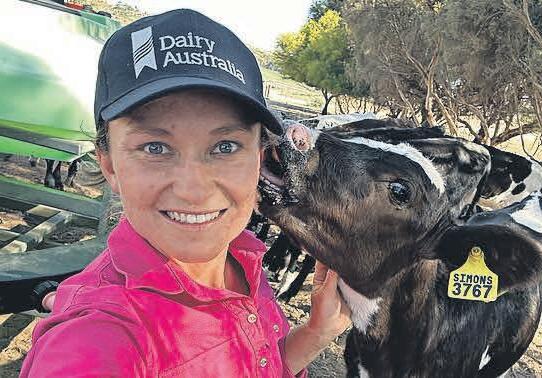
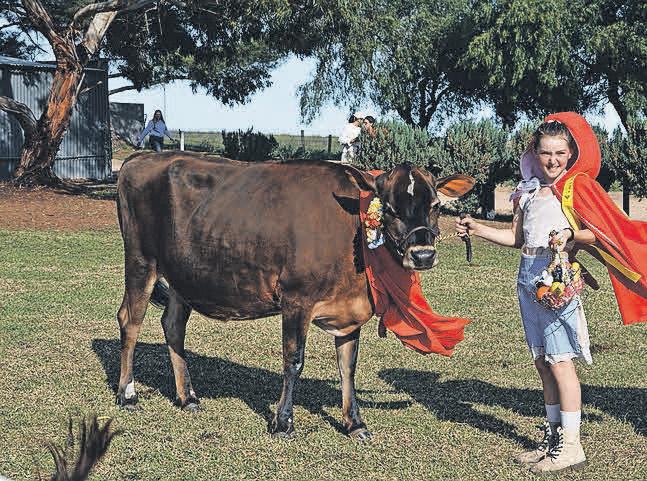
Calf day success in SA. PG.28-29
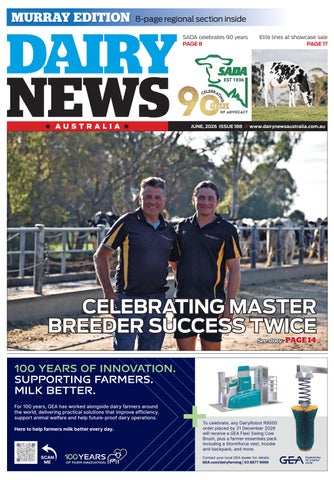
Calf day success in SA. PG.28-29
BY ELIZA REDFERN
DAIRY PRODUCTS as a category are not only a staple for the majority of Australian households, but a key driver of traffic and value for retailers.
However, as Bendigo Bank’s latest commodity update outlines, the combination of dairy’s positioning for each of these stakeholders and Australian farmgate milk price mechanisms, can complicate the flow of market signals and the distribution of returns.
For example, in 2022, despite an uptick in production costs, farmgate prices did not materially increase until mid-year, when new season farmgate milk prices reached a historical high for the industry.
The CPI for the ‘dairy and related products’ category then climbed 12 per cent between June and December 2022 – rising much faster than other food categories and exposing Australian dairy products to intense

competition from cheaper imported products. By this stage, consumers were increasingly price sensitive.
Now inflationary pressures are rising again, with the conflict in the Middle East driving higher costs for key producer and processor inputs.
However, unlike the 2022-23 season, dairy market fundamentals have weakened.
Amid strong global supply, volatile export demand and ample milk intakes, 2026-27 farmgate milk prices for southern Australian farmers are likely to settle around the current season’s estimate of $9.40/kg MS.
Consumers remain cost-conscious in light of continued cost-of-living pressures and price changes are still being met with resistance.
Recent increases to the shelf price of private label milk (among other products) by the major retailers generated complaints from consumers, resulting in a price freeze announcement from one retailer on a variety
of household products, including some private label dairy products.
Other responses have suggested a commitment to absorb costs where possible and regularly review shelf prices.
The pressure on retailers to limit their contribution to cost-of-living pain and consumers continuing to gravitate towards affordable alternatives (such as private label or imported products) will hamper dairy’s ability to draw more out of Australian pockets in the near term.
Furthermore, if publicly announced farmgate milk prices are static, dairy manufacturers may struggle to justify wholesale or retail price increases aimed at passing on other manufacturing costs to consumers.
As such it’s likely that any material retail price increases will be drawn out during the 2026-27 season, depending on the processing company’s individual milk supply arrangements and the mechanisms detailed in their contract with the retailer.

Every smarter decision, every better day builds a stronger farm for the next generation. With DeLaval, you’re shaping a future worth handing down.
Let’s shape progress on your farm.
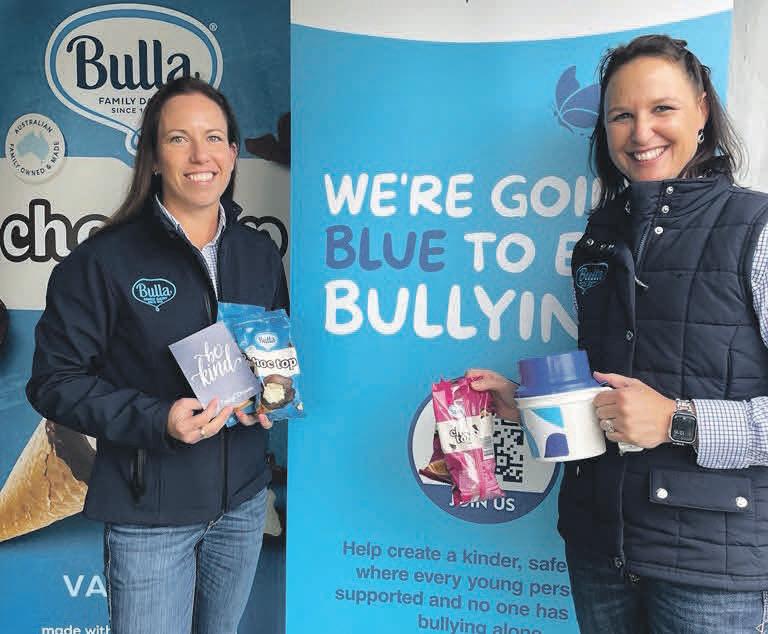
A CONVERSATION with one of its farming families introduced Bulla Dairy Foods to Dolly’s Dream and a shared commitment to supporting young people across regional Australia.
Dolly’s Dream was founded by Kate and Tick Everett in memory of their daughter Dolly.
The foundation works with schools, families and communities to prevent bullying and provide support resources for young people.
Bulla’s chief dairy and sustainability officer Glen Round said at Bulla, we are a family, and that means looking out for one another, both within our teams and across the communities we are part of.
One of Bulla’s initiatives was the Scoops of Kindness program, which launched at Farm World earlier this year.
Farmers donated in exchange for Bulla Choc Tops, raising money for Dolly’s Dream’s prevention and education programs.
In May, to coincide with Do it for Dolly Day on May 8, Bulla took the Scoops of Kindness School Tour to communities across Colac, Gippsland and Northern Victoria, reaching close to 4,000 students and teachers with resources and conversations around kindness and anti-bullying.
During this year’s campaign, Colac and Elliminyt were named the top Victorian postcode for Dolly’s Dream donations, a reflection of the strength of community spirit in the region Bulla has called home for generations.
“The response from local schools and our farming community has been really humbling.
“You can see how much these conversations mean to families, and we are proud to have played a small part in helping share Dolly’s Dream’s message and resources,” Glen said.
For more information, visit doitfordollyday.org
LIVESTOCK and rural transporters have welcomed a billion-litre national fuel reserve but warned the Federal Government the measure will only matter if diesel reaches the regions when supply fails.
The Australian Livestock and Rural Transporters Association backed the Government’s $10 billion-plus fuel security package — including $3.2 billion for a government-owned reserve and $7.5 billion for a fuel and fertiliser security facility — but said the test was whether it worked
outside the capital cities.
ALRTA national president Gerard Johnson said regional Australia runs on diesel.
“Our members move livestock, grain, feed, fertiliser and farm supplies across long distances every day. When diesel runs short, animals do not move. Feed does not move. Farm goods do not move.”
Mr Johnson said livestock and rural transport must be designated as essential users under any drawdown arrangement, with clear rules governing how the reserve is
accessed during shortages.
“Fuel must be where rural operators need it,” he said.
“These are not optional trips. They are part of Australia’s food supply chain.”
The package includes higher stock holding obligations designed to support at least 50 days of diesel and aviation fuel supply and storage.
“The Government has made the right call.
“A strategic national reserve is long overdue and ALRTA commends the commitment
to getting it done,” Mr Johnson said.
ALRTA also cautioned against costs falling on small and family-owned transport businesses.
Mr Johnson said the association supported stronger fuel security, provided it was built for regional operators and did not impose extra costs on the businesses that keep rural supply chains moving.
“Fuel security is food security,” he said. “It is also regional security and national productivity.”


AUSTRALIA’S DAIRY farmer representative body says the Federal Budget provides only indirect support to the sector, ultimat ely falling short of the targeted assistance needed to stabilise the industry.
Australian Dairy Farmers president Ben Bennett said dairy farmers would welcome practical measures aimed at easing input cost pressures and improving national resilience; however, the budget failed to include any direct dairy support package, despite mounting challenges across many farming regions.
“Dairy farmers are battling prolonged drought and feed shortages, escalating energy, fertiliser and labour costs, water insecurity, increasing regulatory compliance costs, workforce shortages and more, yet we’ve seen little meaningful support in this budget,” Ben said.
“We welcome constructive steps that may provide some assistance to dairy businesses but have not seen the widespread structural support we’d hoped for.”
ADF said stronger ACCC capability and competition enforcement was a positive step, particularly given growing concern about transparency, pricing behaviour and market concentration across the food supply chain.
“The supply chain that ultimately ends at retail is no longer delivering sustainable outcomes for dairy farmers,” Ben said.
“Farmers are facing increasing costs of production, while the market continues to reward scale and buying power over longterm sustainability.
“Greater scrutiny, transparency and enforcement capability is needed to ensure competition laws are working as intended and that farmers are not carrying disproportionate risk within the supply chain.”
However, ADF criticised the lack of any meaningful support measures to offset the impacts of the Australia-European Union Free Trade Agreement, which the industry has consistently warned risks placing additional pressure on Australian dairy farmers without delivering commercially meaningful market access outcomes in return.
“Australian dairy farmers are being exposed to increased import competition and additional trade pressure without corresponding support for domestic production,” Ben said.
“The budget contains no meaningful support to help Australian consumers identify and back local dairy products, no domestic dairy promotion package, and no response
Budget items that support Australian dairy
Temporary fuel excise reductions and heavy vehicle road user charge relief
Establishment of a Fuel and Fertiliser Security Facility
Additional fertiliser security arrangements
Agricultural export cost recovery relief
Migration and skilled workforce reforms
Increased ACCC enforcement capability and competition monitoring
to the increasing competitive pressure flowing from trade outcomes such as EUFTA.
“Australian farmers should not be expected to compete against heavily subsidised international production systems, while r eceiving little strategic support at home.”
ADF said dairy farmers continued to support fair trade, but warned trade policy settings must not come at the expense of domestic food production capability.
“Australia cannot afford to hollow out

cryptosporidiosis)
Safmannan® – research proven to improve immune response and bind a broad spectrum of major pathogens (E.coliandSalmonella)
Betaine – osmoregulator to aid hydrationandgutwallintegrity
Actisaf®Sc47INST - research proven to promote a balanced gut microbiota, enhancefeedintakeanddigestion for improved daily gains, support healthy rumen development and healthyimmunefunction,andreduce incidence of scours.
Critical dairy-enabling items missing from the Budget Items ADF will continue to work with Government on
Direct drought and resilience measures for dairy farmers
Dedicated dairy productivity and profitability initiatives
Meaningful action on energy affordability for food manufacturing
Targeted regional workforce solutions for dairy farming
Support measures responding to increasing dairy imports and EUFTA pressures
Stronger initiatives encouraging Australians to buy locally produced dairy products
domestic dairy production capacity and become increasingly reliant on imported product,” Ben said.
“Food security, regional jobs and sovereign manufacturing capability matter.”
ADF also expr essed concern about the reduction in agricultural funding and capability through budget reductions to the Department of Agriculture, Fisheries and Forestry, while expanding environmental and regulatory frameworks.
“Strong agricultural departments are
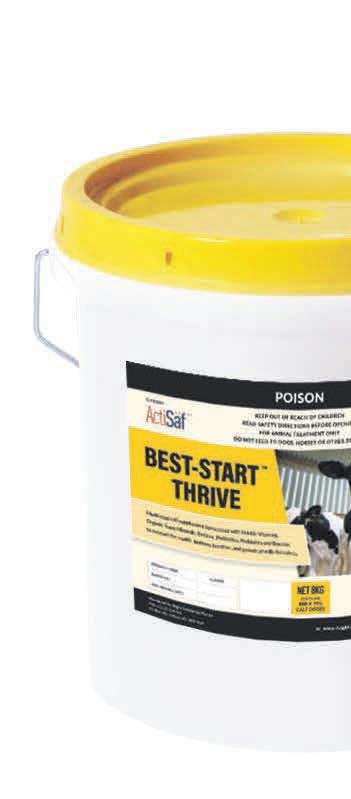
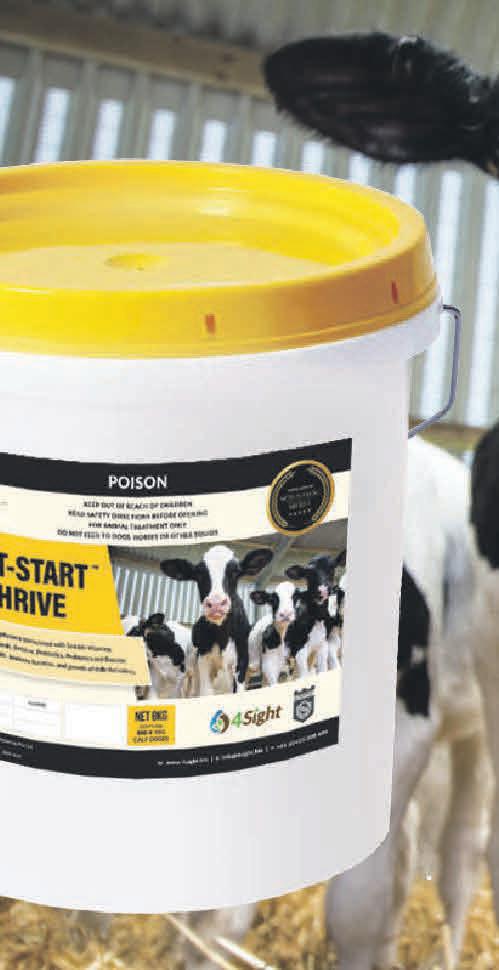
SolubleVitaminsandOrganicTrace Minerals Prebiotics&Probiotics to aid digestionandgutmicrobialbalance (28billionCFUper10gramdose) Next generationcalfsupplementbasedoninnovativeresearchanddevelopment;contains:
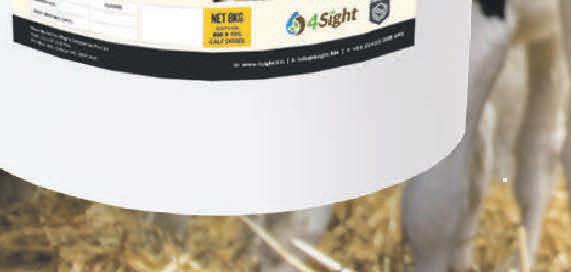
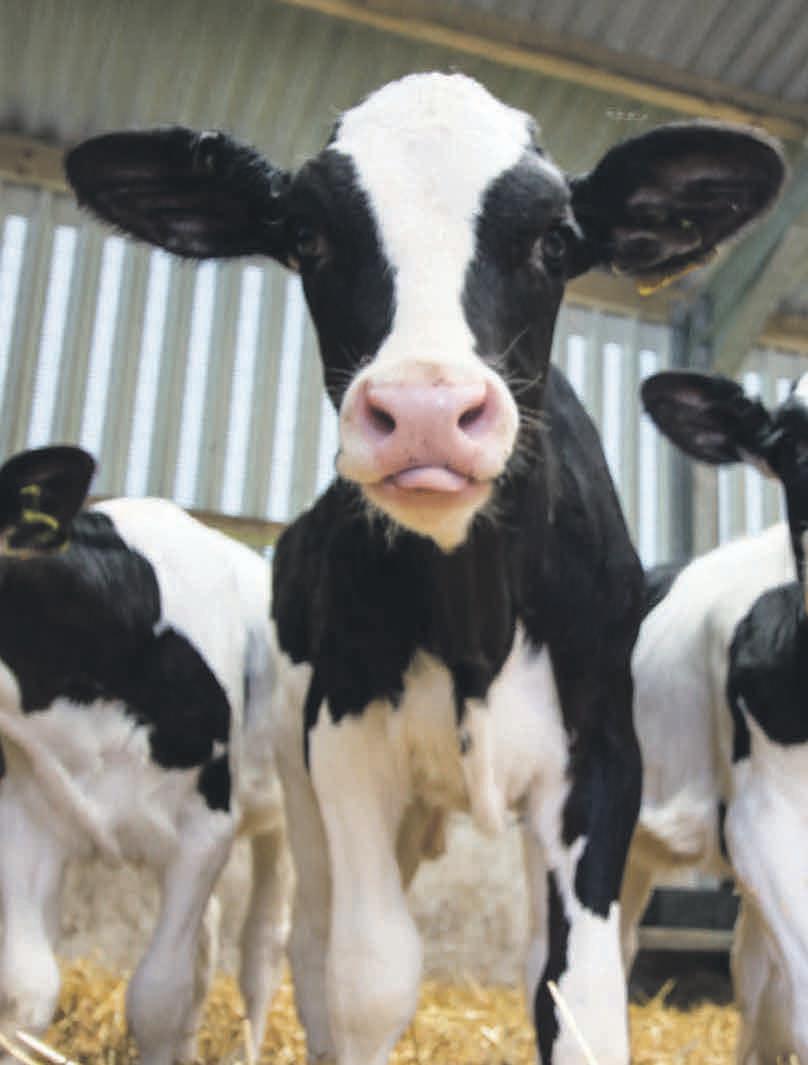
We changed to BEST-START THRIVE this season - it’s been an absolute game-changer for calf health and condition!
Drought and water policy
Regional workforce and migration pathways
Energy and input cost pressures
Supply chain transparency and competition issues
Food security policy
Fair trade and import monitoring
critical not only for biosecurity and trade access, but also for ensuring practical agricultural knowledge informs broader economic, climate, water and industry policy,” he said.
“Farmers support practical environmental outcomes, but policy settings must r emain grounded in production realities and experience to protect Australia’s food security and regional economies.
“Without this, government risks making decisions that push farmers out.”

AUSTRALIA’S DAIRY producers are facing the 2026/27 season with limited margin for error as they juggle rising input costs, Rabobank says in its newly-released annual Australian Dairy Outlook.
The report, by the specialist agribusiness bank’s RaboResearch division, says escalating input costs led by fuel, fertiliser, water, labour and interest rates remain the dominant pressure for the nation’s dairy producers. And these are eroding sector confidence and pushing cost of production to levels that leave current milk prices near break even.
Report author, RaboResearch senior dairy analyst Michael Harvey said seasonal conditions had improved in many Australian dairying regions and dairy commodity prices have staged a partial recovery.
“These positives are insufficient to fully offset the compounding cost pressures now embedded across the farm and downstream value chain,” Michael said.
“This will result in a need for careful cost control and strategic planning for those in the dairy sector, with a focus on operational resilience critical for the season ahead.
“Navigating the 2026/27 season will require disciplined cost management and careful capital allocation as well as – for processors – prudent farmgate milk pricing strategies,” he said.
Input cost pressures were intensifying across the on-farm dairy cost base, exacerbated by the impacts of the Middle East conflict.
“Prices for fuel and fertiliser particularly urea, the most-heavily applied nutrient in dairy systems have risen sharply.
“In addition, fuel surcharges are indirectly increasing the cost of a wide range of farm inputs and service provisions,” he said.
Added to that, the report said, higher borrowing rates and a tight labour market were further reinforcing margin pressures.
Meanwhile, dairy farm businesses operating across the Southern Murray-Darling Basin had also faced substantial increases in water allocation prices, which have more than doubled over the past 12 months.
And rising costs in the dairy supply chain were not confined to inside the farmgate, RaboResearch said.
“Pressure is building across the broader value chain,” Mr Harvey said.
“Processors are facing higher packaging costs, driven by a spike in global resin prices due to the oil supply crisis.
“At the same time, energy and processing costs have increased as have distribution costs,

reflecting higher energy and freight prices, further adding to the cost of getting product to market.”
He said these factors were compounding margin pressure beyond the farmgate and constraining the ability of processors to absorb additional cost shocks, increasing the likelihood of further passing on prices to consumers.
At the consumer level retailers have already moved to lift prices of private-label (retailer-branded) milk, and further pricing adjustments from branded players in the domestic market are likely.
“A renewed cycle of food price inflation, including for dairy, would further test consumer resilience, with households already adjusting beha viour, increasingly trading down to private-label products and prioritising value over brand.”
On the farmgate milk price outlook for the 2026/27 season ahead, RaboResearch expects guaranteed minimum prices at near prevailing
Pac Cool Dealer - Australia
levels to be achievable (excluding temporary support payments), supported by the lift in dairy commodity values in recent months.
Commodity milk values have rebounded from their 2025 trough, rising by between approximately five to 30 per cent across the commodity basket since the start of the year.
This had been led by protein – most notably skim milk.
H owever, price momentum across the dairy complex had moderated more recently.
The RaboResearch report said while the recovery in dairy commodity markets provides firmer footing for farmgate pricing ahead of the June 1 guaranteed price deadline, global fundamentals remain challenging.
“Commodity prices in US dollar terms are still below the levels of June 1 last year and the appreciation of the Australian dollar against the US dollar since that time has e roded export returns,” Mr Harvey said. Rabobank expects the AUD/USD exchange rate to remain broadly near current levels in the near term
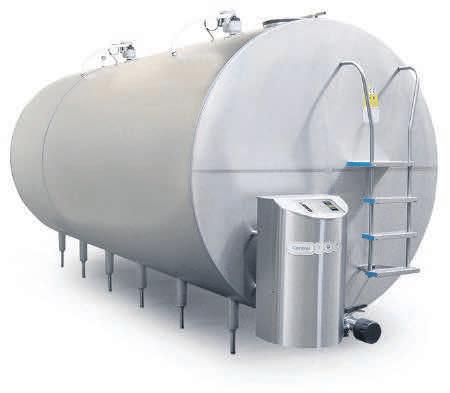
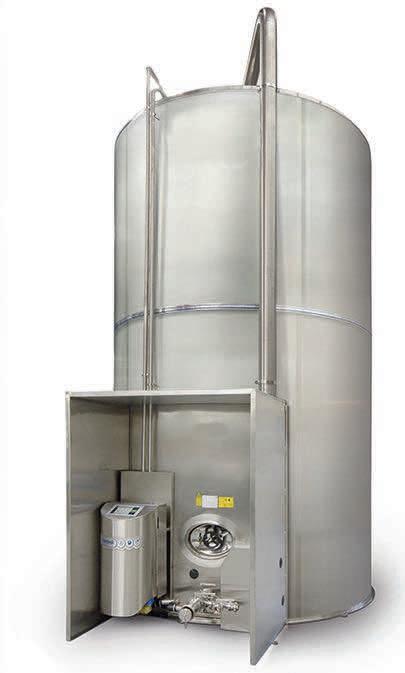
Packo & Pac Cool Spare Parts PACKO has a new name..”PAC COOL” - Same product - Same quality

- A milk vat to suit all herd sizes, pick up schedules & entry temperatures
- Cooling & wash controls - user friendly, simple & effective
- Glycol chiller cooling & traditional direct expansion cooling systems
- New & secondhand sales, spare parts & wash system upgrades for all makes
Call Dairy-Tech Refrigeration today for a no hassle quotation
PHONE: 03 5662 3277
EMAIL: pgoiris@dairytechrefrig.com.au
WEB: www.dairytechrefrig.com.au
Trading Licence - AU34439
While improved rainfall has alleviated soil moisture deficits in key dairying regions in southwest Victoria and South Australia, national milk production for the current season is broadly flat, the report says, with annual output sitting at approximately 8.3 billion litres, as of March.
Mr Harvey said milk production output continues to differ across regions, with growth being led by the northern states, while year-onyear declines in Victoria and South Australia are weighing on national production.
Looking ahead, national milk production growth is expected to stay constrained in the coming season, RaboResearch says, with cautious on-farm decision making limiting expansion across most dairy regions – and keeping competition uneven across processors.
“Despite improved growing conditions, farmers are responding to elevated fertiliser prices by reducing application rates and applying fertiliser more strategically,” Mr Harvey said.
“This is likely to constrain homegrown feed production and increase reliance on purchased feed.
“While some herd management practices are being adjusted to partially offset these impacts, feed costs remain a key pressure point.”
Forecasts for the high likelihood of below-average rainfall in the coming months, and a possible shift to El Nino conditions later in winter, are also hanging over the production outlook.
Against this backdrop, RaboResearch forecasts national milk production to decline by 1.2 per cent in 2026/27, marking a third consecutive – albeit modest – annual contraction.
Competition for milk supply among dairy processors is expected to remain mixed, the report says, reflecting differences in processing companies strategic priorities and regional exposure.
The Australian dairy sector continues a significant long-term structural transformation towards scale and efficiency, although in the near term, resilience not growth, will be a priority.
Mr Harvey said the sector had reached a key milestone in 2024/25 when farms producing more than 10 million litres of milk annually overtook operations producing one to two million litres as the largest contributors to the national milk pool.
“This development highlights the broader consolidation trend with farms producing more than five million litres accounting for 40 per cent of milk production in 2024/25.”





TRANS OVA Genetics is expanding in Australia with the appointment of a new commercial operations manager, one of five new recruits joining the team.
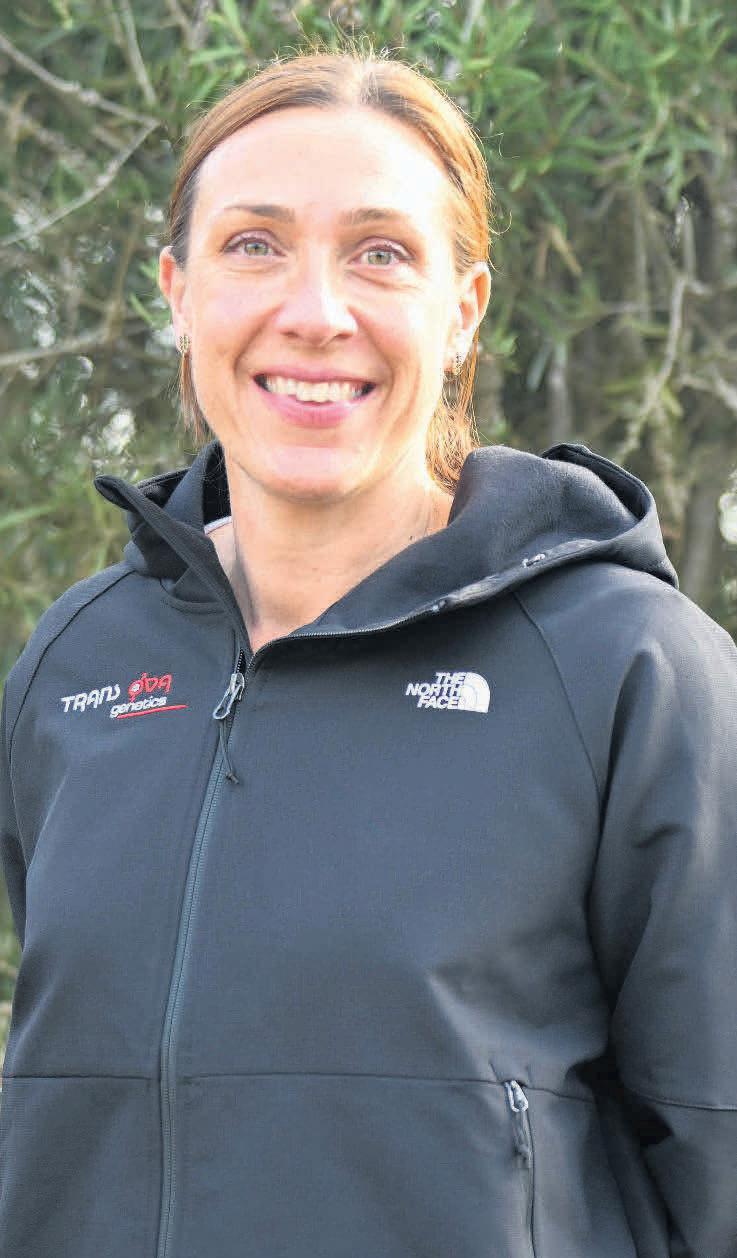
Helen Thoday, who has extensive leadership and commercial operations experience across agribusiness sectors, has taken up the lead role and will oversee Trans Ova’s growth across the country.
Trans Ova, a global leader in bovine reproductive technologies, was introduced to the Australian market in 2025 part of Genetics Australia’s joint venture with the URUS Group.
In her new role, Ms Thoday will be responsible for strengthening Trans Ova’s commercial operations, supporting sustainable growth, and working closely with teams in a partnership model to deliver new IVF services across Australia.
Originally from the United Kingdom, Ms Thoday has a broad background in livestock health, welfare, production and genetics, including working in pig production profitability and welfare in the UK, managing beef and sheep genetics programs in the Falkland Islands, livestock contract research in Canada and more recently in dairy welfare, health and production in New Zealand.
“Agriculture in Britain has unfortunately a low percentage of gross domestic product (GDP) so it doesn’t get traction from the government, so I have worked in New Zealand and now Australia for the draw of their strong agricultural sectors.”
The move to Australia follows her husband Warren Landles’ appointment as sustainability manager for Burra Foods and will continue her close connection with agricultural industries
“It’s a great opportunity to help grow the Trans Ova brand across Australia in partnership with satellite units and practitioners, to deliver IVF services to farmers,” Ms Thoday said.
“Trans Ova is huge in America and continuing to grow. Australian beef and dairy herds can benefit significantly from IVF, a technology that can advance farmers’ genetic gain exponentially.”
Ms Thoday said the five new recruits would join the existing Trans Ova team in Australia, reflecting the rapid growth of the business.
“It’s a big investment,” she said. “We have developed a strong process in Victoria under the Genetics Australia brand and will now build more partnerships with people who have extensive networks and are trusted by the farmers in the region, have the right facilities and align with our values to expand this valuable technology in farming stronghold areas across Australia.”
Trans Ova Genetics is expanding in Australia with the appointment of a new commercial operations manager, one of five new recruits joining the team.
Helen Thoday, who has extensive leadership and commercial operations experience across agribusiness sectors, has taken up the lead role and will oversee Trans Ova’s growth across the country.
Trans Ova, a global leader in bovine reproductive technologies, was introduced to the Australian market in 2025 part of Genetics Australia’s joint venture with the URUS Group.
In her new role, Ms Thoday will be responsible for strengthening Trans Ova’s
commercial operations, supporting sustainable growth, and working closely with teams in a partnership model to deliver new IVF services across Australia.
Originally from the United Kingdom, Ms Thoday has a broad background in livestock health, welfare, production and genetics, including working in pig production profitability and welfare in the UK, managing beef and sheep genetics programs in the Falkland Islands, livestock contract research in Canada and more recently in dairy welfare, health and production in New Zealand.
“Agriculture in Britain has unfortunately a low percentage of gross domestic product (GDP) so it doesn’t get traction from the government, so I have worked in New Zealand and now Australia for the draw of their strong agricultural sectors.”
The move to Australia follows her husband Warren Landles’ appointment as sustainability manager for Burra Foods and will continue her close connection with agricultural industries
“It’s a great opportunity to help grow the Trans Ova brand across Australia in partnership with satellite units and practitioners, to deliver IVF services to farmers,” Ms Thoday said.
“Trans Ova is huge in America and continuing to grow. Australian beef and dairy herds can benefit significantly from IVF, a technology that can advance farmers’ genetic gain exponentially.”
Ms Thoday said the five new recruits would join the existing Trans Ova team in Australia, reflecting the rapid growth of the business.
“It’s a big investment,” she said. “We have developed a strong process in Victoria under the Genetics Australia brand and will now build more partnerships with people who have extensive networks and are trusted by the farmers in the region, have the right facilities and align with our values to expand this valuable technology in farming stronghold areas across Australia.”





Selko Intellibond-Hydroxy trace minerals
Selko® IntelliBond® Trace Minerals
The importance of trace minerals
Trace minerals support a range of biological functions required for immune function, reproduction, and growth. Trace minerals are present in forages and other feeds used in cattle diets, and with the exception of cobalt, meet the requirements of rumen microbes. However, supplementation is needed to meet the animal’s needs.
Trace minerals support an array of biological functions that are required for proper immune function, reproduction, and growth. Trace minerals are present in forages and other feeds used in cattle diets and, with the exception of cobalt, meet the requirements of rumen microbes. However, supplementation is needed to meet the needs of the animal.
Contributes to making protein, vitamin A utilisation, fertility and skin health.
ANTAGONISTS
Contributes contributes to healthy
IntelliBond Hydroxy Trace Minerals unique crystalline structure limits the exposure of the IntelliBond trace minerals to antagonists in the feed and rumen. Slow breakdown of IntelliBond occurs in the abomasum, making the mineral available to be absorbed in the small intestine.
Antagonists are minerals or compounds that reduce the bioavailability of another mineral by forming complex that reduce absorption. This typically occurs in the rumen. Antagonists can come from feedstuffs in the diet, soil contamination (or ingestion), and drinking water. Common antagonists to the trace minerals that are important to cattle are:
Sulfur Iron
Molybdenum
Mineral imbalances
Hydroxy Trace Minerals
covalent bonds and a unique crystalline structure limit the exposure of the IntelliBond trace minerals

BY SOPHIE BALDWIN
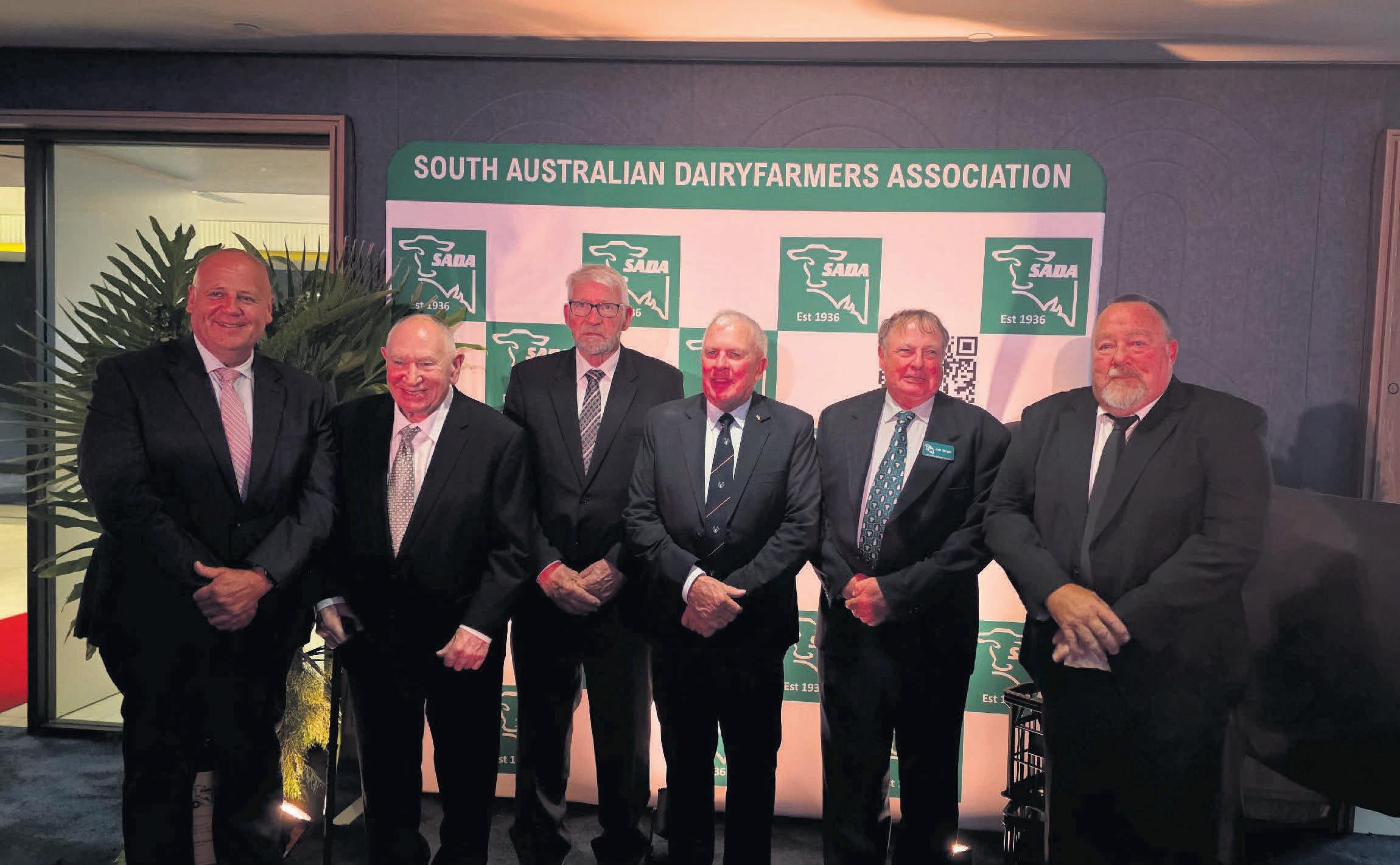
THE SOUTH Australian dairy community was out in force when more than 200 members gathered at Morphettville Racecourse to celebrate the 90th Anniversary of the South Australian Dairyfarmers’ Association.
Celebrating nine decades of advocacy, resilience and leadership, the evening brought together farmers, processors, industry partners, politicians and supporters.
Guests were treated to a flawless presentation by John Elferink, who took attendees on a journey through the past 90 years of dairying in South Australia, sharing stories, milestones and reflections that highlighted the resilience and evolution of the industry across generations.
SADA president Robert Brokenshire said the evening was a reminder of the strength, passion and unity within the South Australian dairy community.
“Celebrating 90 years is a significant milestone, and it was wonderful to see so many people come together to honour the past, while looking confidently toward the future of our industry,” he said.
“SADA has always been built on the strength of its people, and the event was a reflection of the relationships, resilience and commitment that continue to shape South Australian dairy.”
Long-term SADA president David Basham was presented with a commemorative plaque recognising his longstanding dedication and contribution to SADA and the dairy industry over many years.
Her Excellency the Governor of South Australia Frances Adamson and Minister for Primary Industries and Regional Development Clare Scriven were presented with commemorative plaques in recognition of their support for the industry.
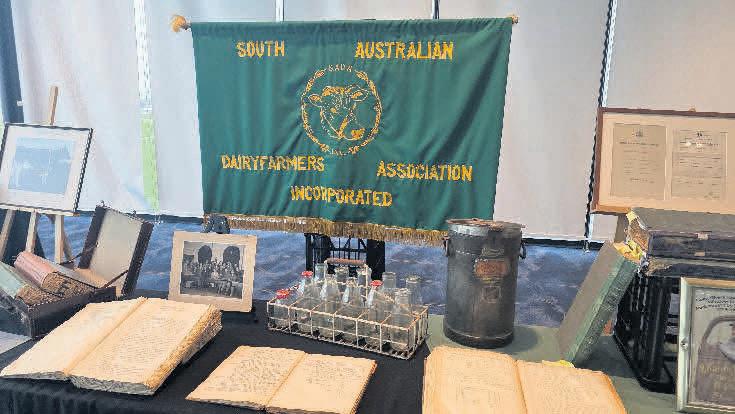
The association acknowledged the incredible support of sponsors and the generous contribution of historical items and memorabilia from the Southern Fleurieu Historical Society, which helped showcase the proud history throughout the evening.
A special thank you was also extended to Mandy Pacitti for her unwavering support and tireless dedication to the dairy industry in so many ways over many years.
Mandy said it was an amazing evening and the connection, reconnection and collaborativeness in the room created a great vibe. She said the 90-year milestone showed just how proactive the SA dairy industry is.
“SADA is the oldest advocacy body in
Australia and it has always championed the farmers and the industry,” Mandy said.
“I can remember 20 years ago we had an issue on farm and we had the media on our door, and SADA turned up out of the blue and said we are here to dig in and help you through.
“And that has been the case recently with the collapse of Bestons,” Mandy said.
Master of ceremonies and young farmer Narelle Zanker said it was an honour and privilege to have such an important role and it was definitely out of her comfort zone.
“SADA have been massive supporters of

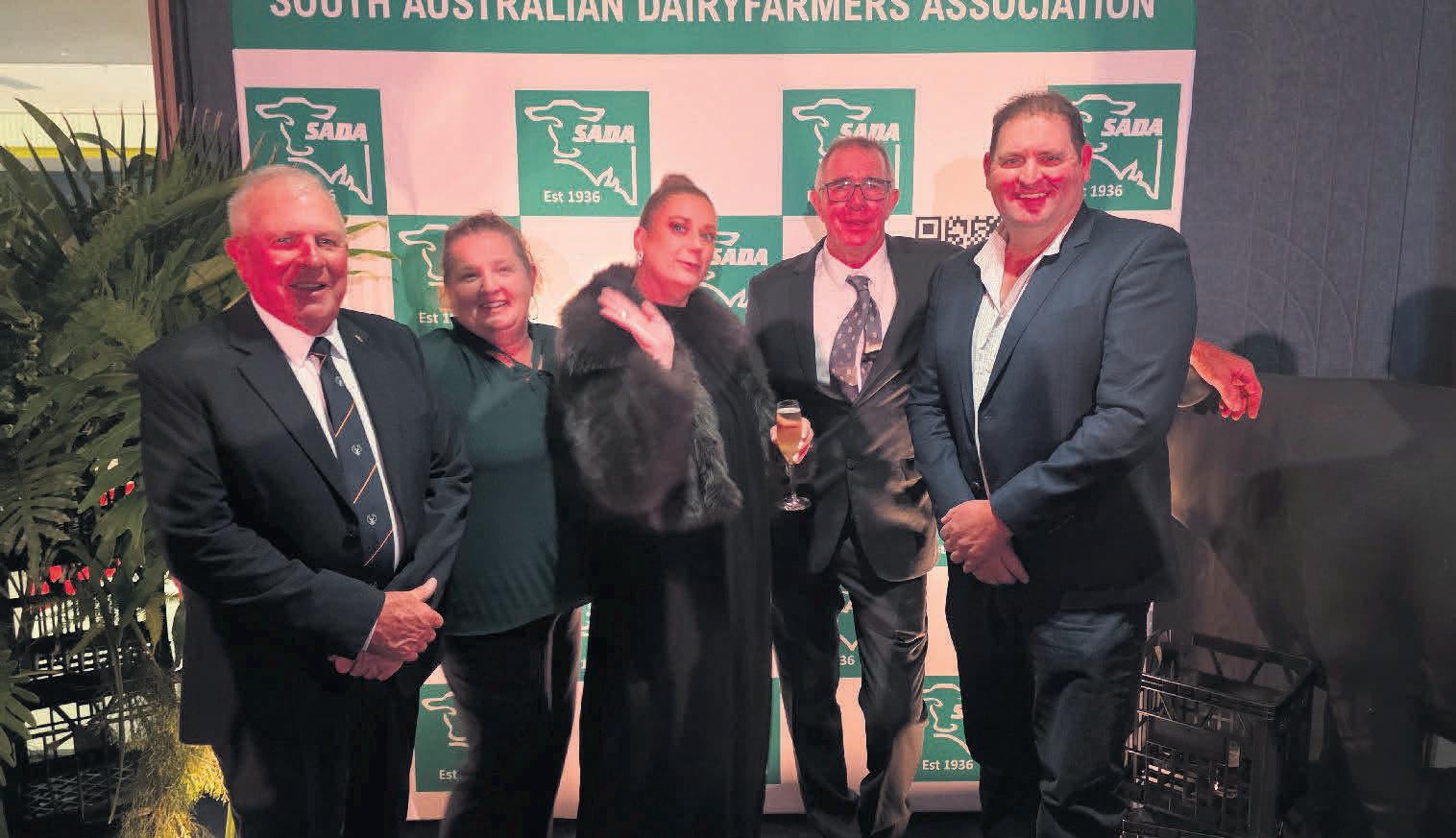
what we are doing here on our farm with Dairy Adventurers, so it was an honour to be able to support them in return,” Narelle said.
The 90th anniversary celebration
recognised


BY NICHOLAS SPANDLER
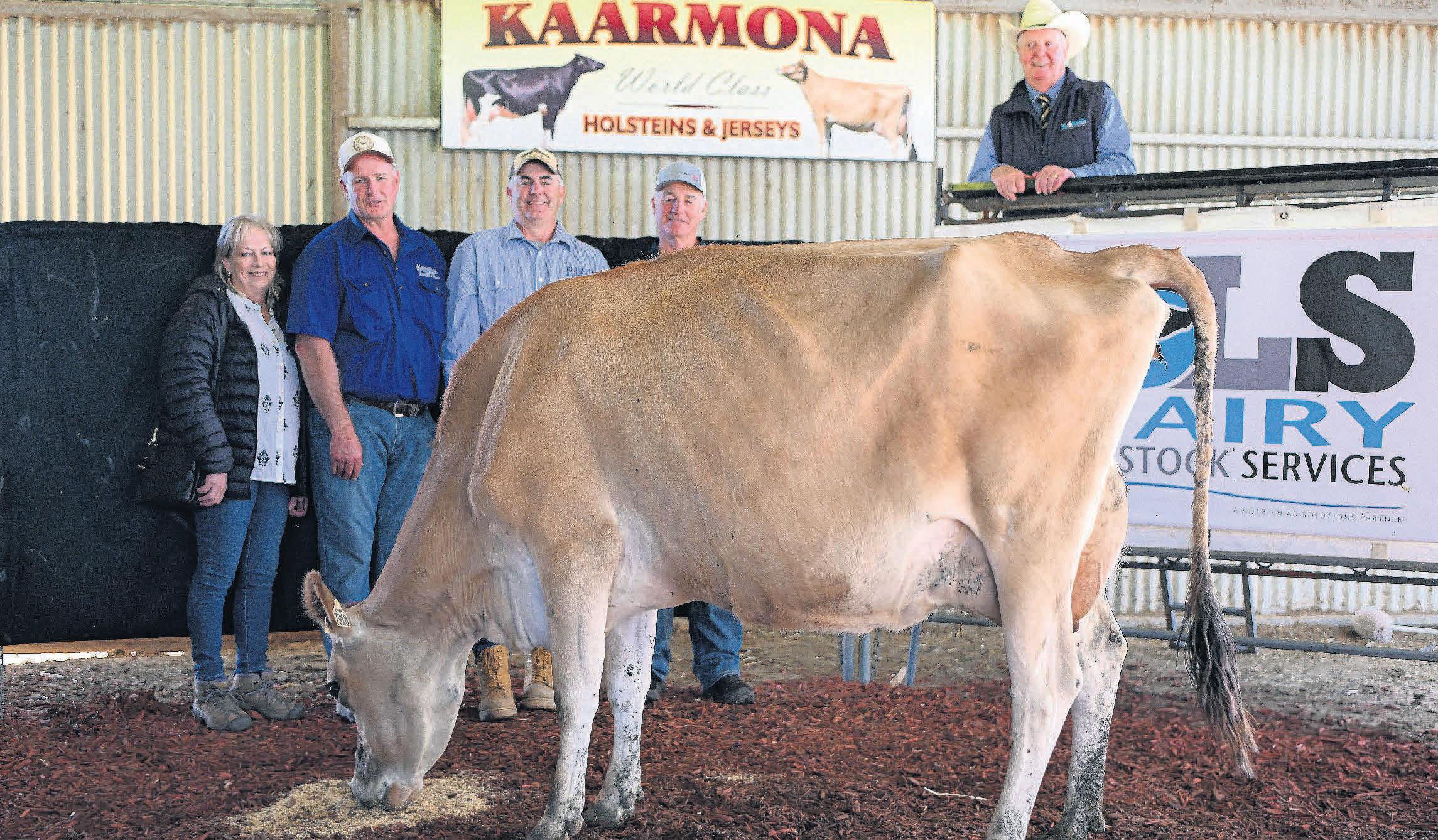
THE KAARMONA stud set a new Australian cow sale record with a Jersey selling for $54,000.
The standout animal, Kaarmona Bosa Buoy 15, set the new national benchmark during the second day of the Kaarmona Holstein and Jersey Complete Dispersal Sale in Kaarimba on Friday, May 8.
The elite young cow attracted intense competition before being secured by Araluen Park Jerseys of Shady Creek in Gippsland.
The record price reflects strong confidence in high-end dairy genetics, with Bosa Buoy 15 backed by generations of leading sires and a proven maternal line tracing back to the influential US cow Foundation Sooner Buoy.
The sale drew a large on-farm crowd alongside strong online bidding, highlighting widespread interest from buyers across Australia as the Sprunt family dispersed their renowned herd.
Rohan and Graeme Sprunt had been running the stud together for 32 years, but said that the time had come for them to hang up their boots.
Auctioneer Brian Leslie said that the stud had made a “tremendous contribution to the dairy industry” and that the sale was a “once in a lifetime opportunity”.
The Kaarmona stud remains the only herd in Australia to achieve Master Breeder status in both Holstein and Jersey cattle.
Other standout results reinforced the
depth of demand, including $40,000 for Kaarmona Invincible Babe 323 and $33,000 for Kaarmona Sturgis Tulip 18, with numerous
cows achieving five-figure prices.
Overall, the two-day sale grossed more than $1.65 million, with sales averaging $4940 and
some families, such as the popular “Babe” line, showing particularly strong
interest.



BY SOPHIE BALDWIN
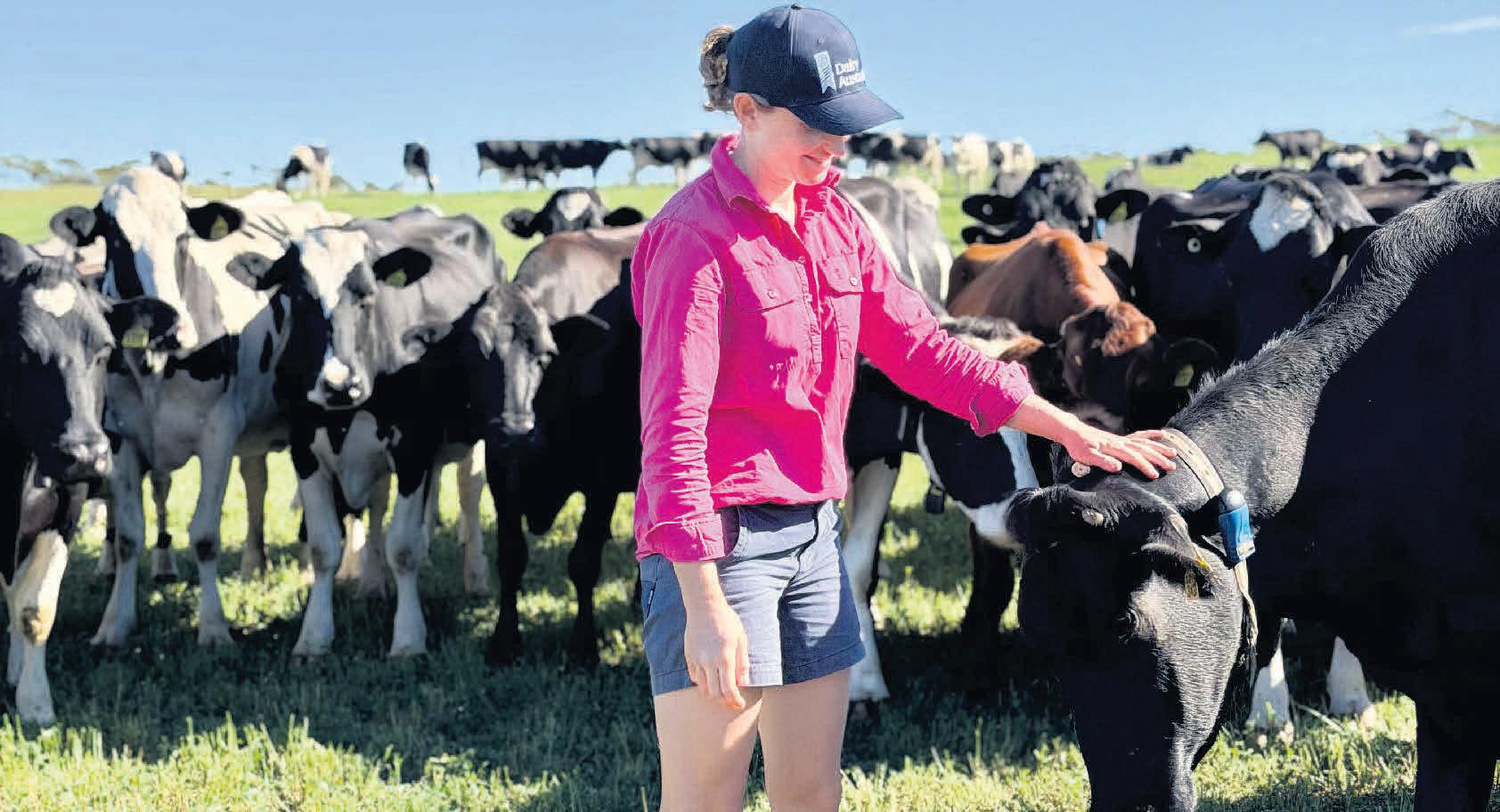
NARELLE ZANKER’S passion for education and the dairy industry has seen the young farmer crowned the South Australia AgriFutures Rural Women’s Award for 2026.
Narelle established Dairy Adventures on her family farm at Mannum in South Australia, after leaving her career as a teacher.
The move home enabled Narelle to continue her love of education, while combining it with her love of dairying.
She has been blown away by the win and is still digesting the news, which comes with $15,000 and a chance to go on and compete nationally.
Narelle said the money would go toward establishing a dedicated picnic area on the farm and would also help her continue to host a virtual classroom with the help of Dairy Australia — ‘Farmer Narelle’, which will be available to schools across the country.
In its first year, Dairy Adventures has welcomed over 1200 visitors from young kids through to retirees and includes family and school groups.
“I wanted to merge my love for teaching and education with the farm, and it has been flat out ever since,” Narelle said.
Dairy Adventures offers a wide variety of on-farm interactive experiences, including Feeding Frenzy, Milking Memories, Dairy Discovery, Graze and Gaze and the popular Elvis Encounter — a chance to pat and feed some treats to the family’s pet Speckle Park steer Elvis.
Narelle said one of the most popular things for young kids was the sensory trough — an old feed trough filled with grain and plastic farm animals.
The adventures are open to large or small groups, and Narelle even caters for birthday parties.
“I love it and we are starting to get quite a few return customers so they must love it too,” she said.
The immersive and hands-on experiences has enabled Narelle to teach some pretty powerful lessons to her visitors around food safety, animal care and where food actually comes from.
“When people see the science, the systems and the care that goes into every bottle of milk, something clicks.
“We’re not just a farm, we’re a food
production facility, and we want people to understand and value that.”
South Australian Dairyfarmers’ Association CEO Andrew Curtis said Narelle’s nomination reflected her strength, innovation and leadership within South Australia’s dairy sector.
“Narelle is an exceptional advocate for dairy farming and regional communities,” he said.
“Through Dairy Adventures, she is helping build trust and understanding between farmers and consumers — something that is critical to the future of our industry.”
“Her passion for education and her ability to tell the story of dairy in a meaningful way is something we are incredibly proud of.”
The AgriFutures Rural Women’s Award is supported by Westpac and is Australia’s leading award, recognising the innovation, leadership and impact of women in rural and regional industries and communities.
AgriFutures Australia managing director Brianna Casey AM said the award celebrated women creating lasting impacts where it mattered most.
“The AgriFutures Rural Women’s Award recognises women who are shaping the future of rural and regional Australia through innovation, enterprise and leadership.
“Narelle’s work is a compelling example of how agritourism and education, when done well, can transform public understanding of farming and strengthen the connection between producers and consumers.”
Westpac regional general manager Brad Higgins said Narelle’s work was creating lasting change in Mannum and beyond.
“Through Dairy Adventures, Narelle is opening doors for people of all ages to connect with farming, understand where their food comes from, and develop a genuine appreciation for the people behind it.
“We’re proud to support Narelle as she continues to grow Dairy Adventures and showcase the innovation and education at the heart of Australian farming,” Brad said.
Later this year, Narelle will proudly represent South Australia at the AgriFutures Rural Women’s Award gala dinner at Canberra in September 2026.
The national winner will receive an additional $20,000 Westpac grant, while the runner-up will receive $15,000.
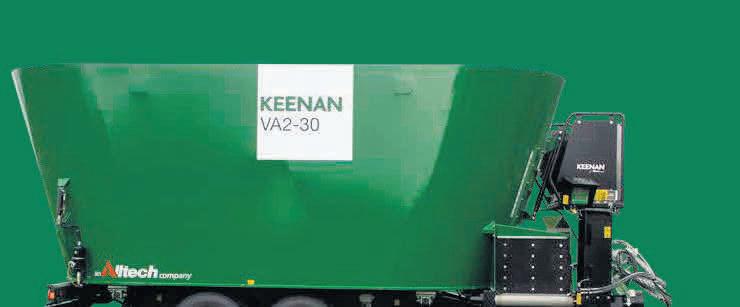
KEENAN machines are proven, farmer-tough, and ready for whatever work lies ahead.
The trusted combination of unique algorithms + nutrition advice ensures the exact formulations, mixing order, speed and rotations.

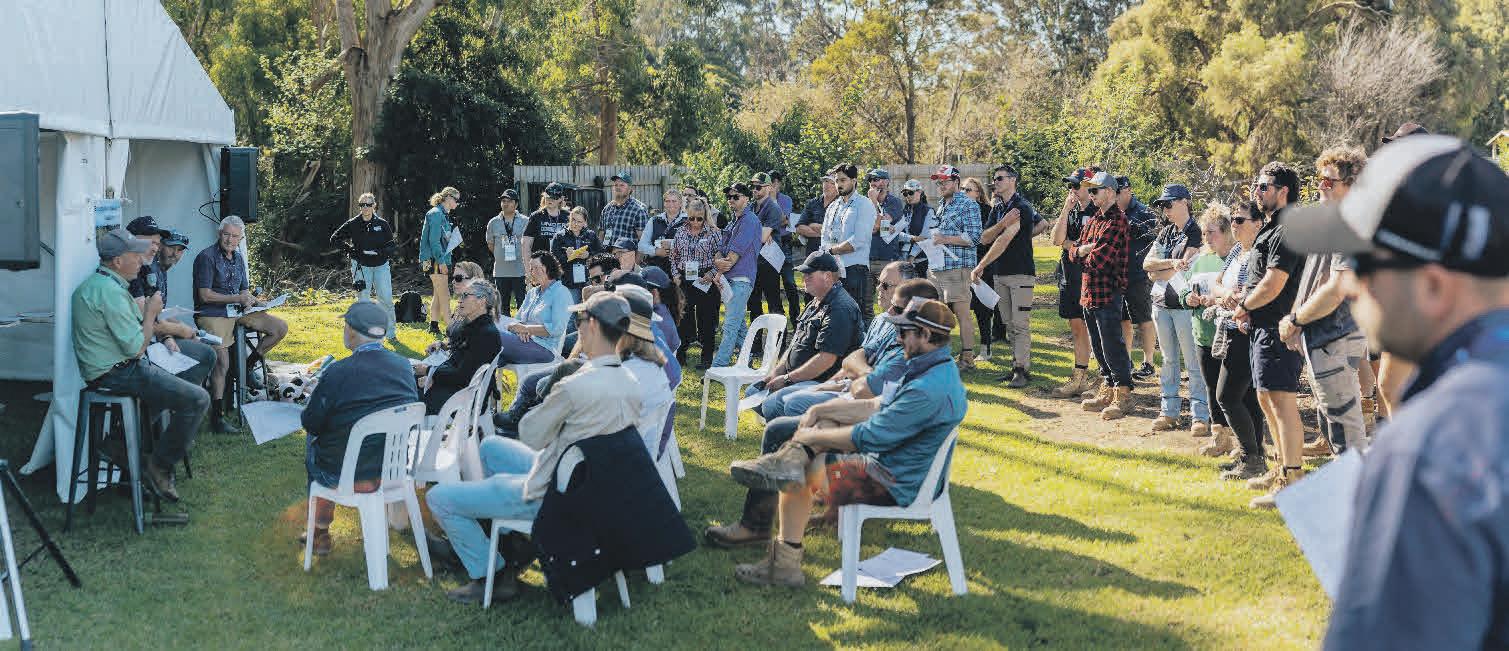
THE GIPPSDAIRY Muster once again delivered as the region’s flagship dairy event, bringing together farmers, industry and service providers for a day of learning, connection and forward thinking.
Held April 23 at Clint and Tania Staley’s farm, Franklin Downs, Toora, the 2026 Muster attracted 199 attendees, with dairy farmers making up half of the audience.
This strong farmer representation reinforced the value of the event as a space for practical, relevant conversations grounded in on-farm experience.
Set in the heart of South Gippsland, Franklin Downs provided an ideal host location, offering a working farm backdrop that complemented the day’s focus on real-world application and discussion.
A key theme of this year’s muster was succession planning, presented by Claire Booth and explored through both the keynote and a dedicated breakout session.
With many farm businesses navigating generational change, these sessions sparked important conversations around planning ahead, maintaining business continuity and supporting family transitions.
The keynote was further strengthened by Clint and Tania Staley, alongside Ken White, who shared their own succession journey and provided practical insight into the realities of navigating change within a family farming business.
The inclusion of succession across both plenary and smaller group formats allowed
attendees to engage at different levels - from big-picture thinking through to more personal, practical discussions with peers.
The program also featured breakout sessions focused on utilising homegrown pastures and genetics, delivering practical, farm-focused insights.
The homegrown pastures panel, facilitated by Phil Shannon and supported by Clint Staley, Paul Cocksedge and Jim Colquhoun, explored strategies to maximise pasture utilisation and optimise on-farm feed systems.
The genetics panel, facilitated by Michelle Axford and supported by Tania Staley, Amy Wright and Jamie Drury, provided valuable perspectives on breeding decisions and longterm herd improvement.
Together, these sessions offered attendees targeted insights to support productivity
and long-term farm performance and gave farmers the opportunity to explore current approaches, ask questions and share experiences, with discussions grounded in local conditions and systems.
Together, the breakout topics reflected the balance between planning for the future and continuing to optimise on-farm decision-making today.
The success of the 2026 Muster was also made possible through the support of 12 sponsors, including a major sponsorship from the Gardiner Foundation, whose contribution helped deliver a high-quality, relevant event for the Gippsland dairy community.
Their involvement highlighted the strength of collaboration across the dairy sector, bringing together different parts of the industry to support farmers and regional
development.
Beyond the formal sessions, the GippsDairy Muster continues to play an important role in strengthening networks across the region.
The event created space for informal conversations, peer-to-peer learning and connection between farmers, advisors and industry representatives.
This value was reflected in attendee feedback, with one participant noting,“These type of events are critical for sharing of hands-on information which has been the strength of dairy for a long time.”
Another added,“These are key messages that can’t be retold enough.”
With 50 per cent of attendees coming directly from farming businesses, discussions throughout the day reflected real challenges, practical experiences and shared opportunities - reinforcing the muster’s reputation as a trusted and valuable forum.
As GippsDairy’s flagship event, the muster remains a key pillar in supporting a connected, informed and resilient dairy community.
The 2026 event demonstrated the continued importance of bringing people together face-to-face to share knowledge, build confidence and plan for the future.
With strong attendance, high farmer engagement and a program that balanced strategic thinking with practical outcomes, the GippsDairy Muster once again showcased the strength and commitment of the Gippsland dairy industry.
Jessica Blackstock GippsDairy

A highly bioavailable natural organic rumen buffer rich in bioavailable calcium and magnesium carbonates and naturally contains over 70 minerals.
SLOW-RELEASE BUFFERING EFFECT
Carbonates help neutralise excessive rumen acids.
Assists in optimising rumen pH.
Maintains longer term pH stability of the rumen.
HIGHLY BIOAVAILABLE MINERALS
Calcium (min. 32%) Magnesium (min. 3%)
Contains over 70 minerals.
PROMOTES OPTIMAL RUMEN FUNCTION
Improves environment for microbial fermentation. Improves fibre digestion and feed efficiency. Improves dry matter consumption.
100% NATURAL
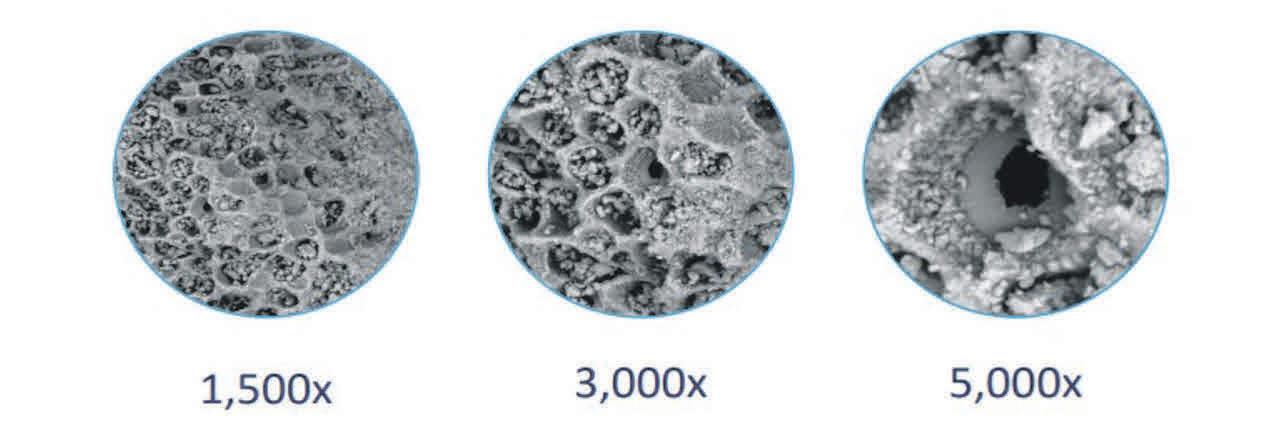
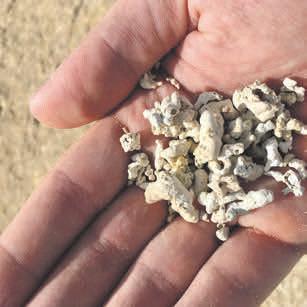
100% Calcified Calcareous Red Algae. USDA Organic Certified. www.auspacingredients.com.au

BY SOPHIE BALDWIN
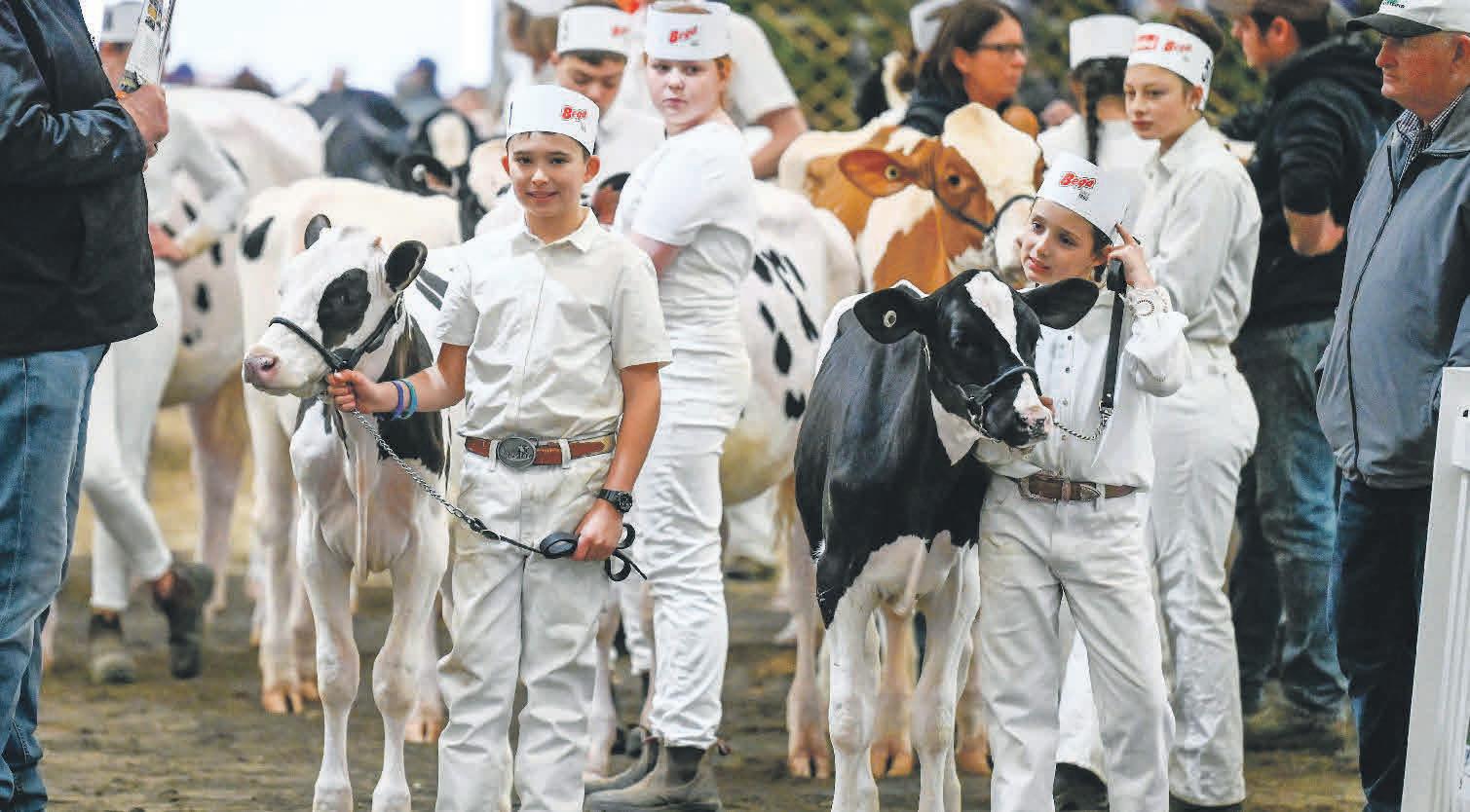
IT MIGHT be the same great show, but this year’s National Herd Development Victorian Winter Fair will have a new look, after Clare and Stu Modra handed over the reins of the event to International Dairy Weeks Declan Patten and Emmelie Nijskens.
The show will be held June 30 to July 2 at the Bendigo Showgrounds.
Declan said the show had been very successful over the last decade and he and his team were hoping to build on the success.
“We will bring the same level of professionalism to the fair as we have to IDW,” Declan said.
“As we move forward, we are excited to introduce a fresh new chapter, including a rebrand that reflects both the proud history of the winter fair and our vision for its future.
“While the look may evolve, the heart of the event remains unchanged — elite autumn calved cattle, strong competition, community spirit and opportunity for exhibitors of all ages.”
Declan said they had decided to bite the bullet, and for the first time, introduce the Jersey breed to the show.
“We have had a really positive response, and we are looking forward to seeing how it all unfolds in the ring.”
This year’s judge is Kevin Doeberiener, owner and operator of Queens Manor Farm in West Salem, Ohio.
Kevin has owned and exhibited numerous All-American and All-Canadian Holsteins and Jerseys, earning multiple nominations and top honours.
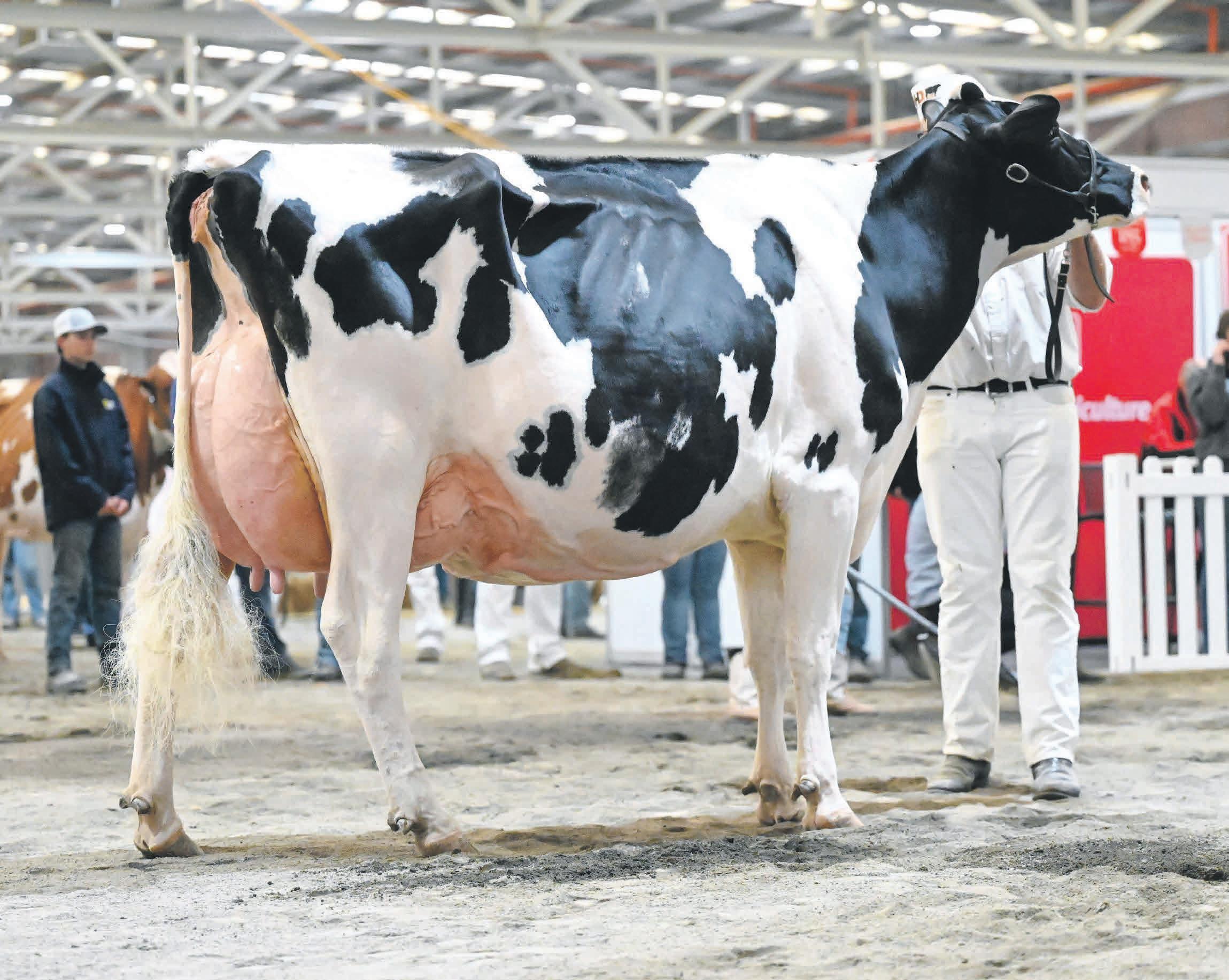
Notable achievements include exhibiting Grand Champion Red and White at the 2021 Canadian National Show and Junior Champion Holstein at the 2019 Royal Agricultural Winter Fair. He is a well-respected dairy judge, with top judging experiences including Wisconsin Dairy Showcase, Northeast All Breeds Spring Show, New York State Fair, World Dairy Expo and Western PA Championship Show.
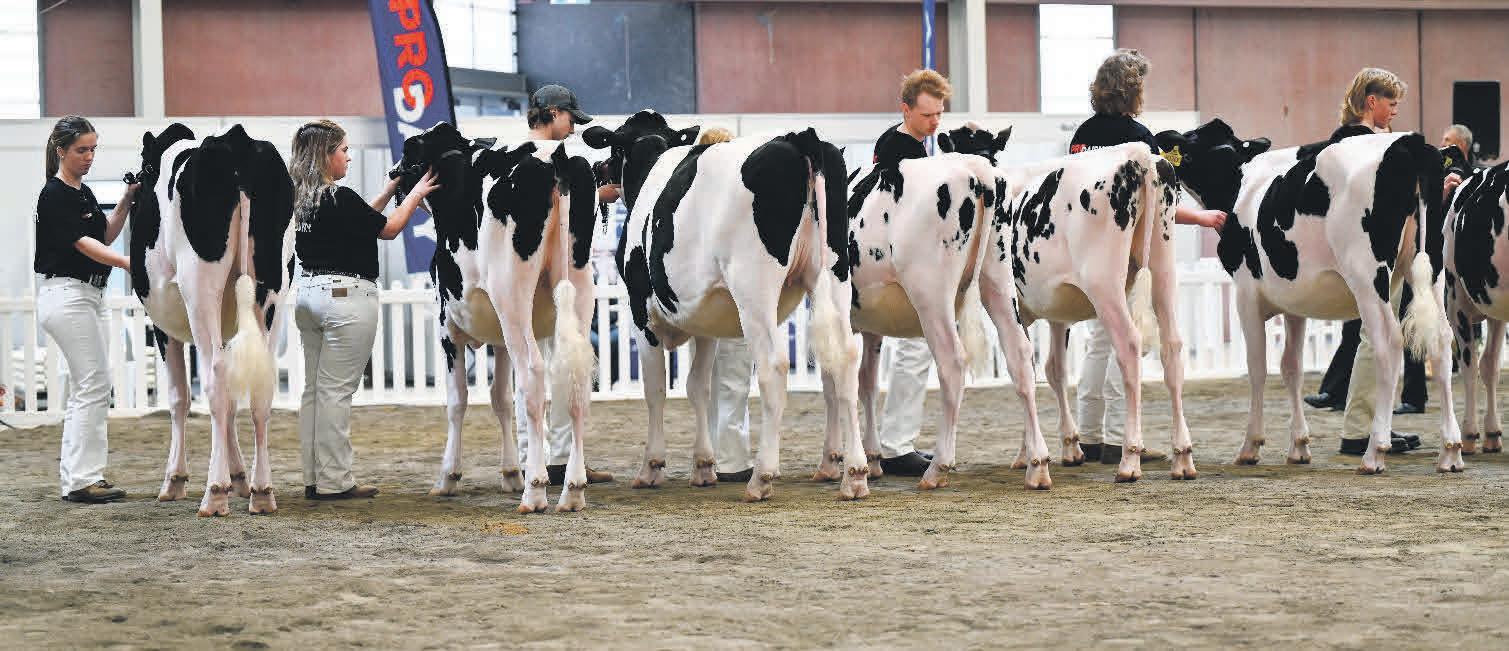
There will also be a show string tag sale. The sale will follow a tag auction format and will open Monday, June 29 and close on Tuesday, June 30 at 7:30pm.
A heifer parade will be held on site and all
animals for sale will be entered in the fair. Entries are now open via https:// showman.app/shows#/victorian-winter-fair-e9ef/ a nd will close on Friday, June 5.
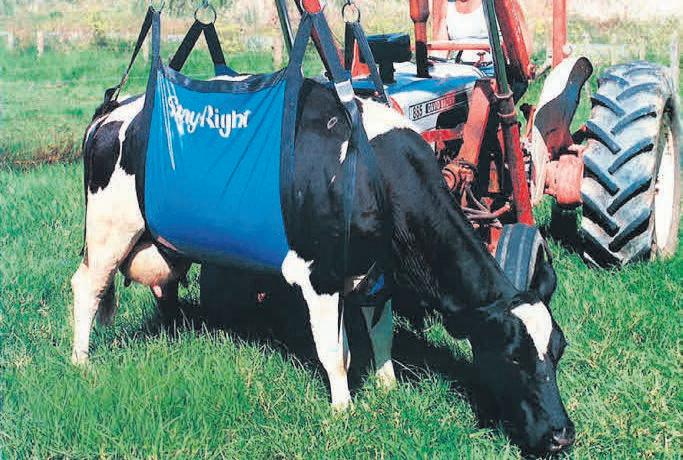
GETTING A downed cow back on its feet urgently is critical to keep the milk flowing for dairy farmers, which is where a Stay-Right Cow Sling becomes a lifesaving item.
With rising fuel costs already putting pressure on dairy farms across Australia, it is crucial farmers do everything they can to recover a downed cow.
Dairy cows commonly face illnesses such as milk fever, mastitis, metritis and calving paralysis which can down a cow and make it struggle to stand up.
Dairy Australia recommends cow slings as method of lifting, stabilising and moving a downed cow, stating they can relieve limb pressure and improve recovery rates.
Australian-based agricultural tarpaulin manufacturer, Ellis and Sons Group, prides itself on manufacturing humane cow slings, with Stay-Right Cow Slings being a go-to for dairy farmers nationwide.
Made with heavy, reinforced PVC and heavy-duty nylon web straps, they can handle cows of any weight and can be easily moved by clipping to a loader or tractor.
Tarpaulin department manager, Sarah Ellis, said a V-shaped support at the front ensured the cow’s airway was left clear, lifting from brisket, and the leather cross over pad at the back left the udder free –making for a very humane cow sling.
“Traditional lifters like hip clamps can cause trauma to hip bones and muscles, which is why we developed a cow sling
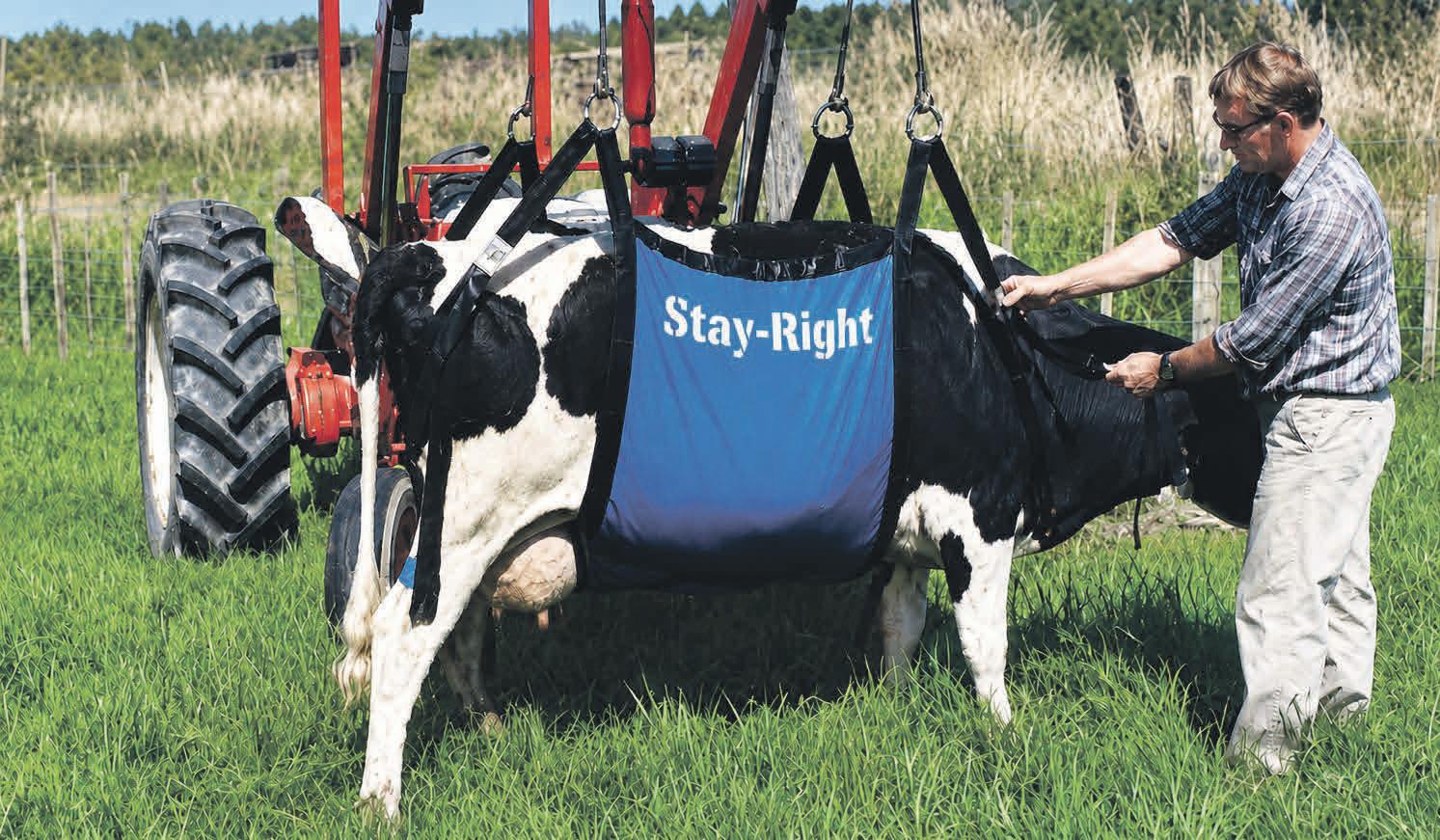
that provides balance and support while assisting in circulation and respiration,” she said.
“These cow slings can speed up a cow’s
recovery.
“The great thing about them is once the cow is in the sling it can be left in it for as long as needed and put down again each



Iron-fisted on slugs & snails. Gentle on the environment.
• Next generation, iron-based, all weather slug & snail bait with technology for maximum attractiveness, palatability and persistence
• Gentle on the environment, crops and non-target organisms
• Nil withholding period for grazing and harvest
• Certified input for organic production
BY SOPHIE BALDWIN
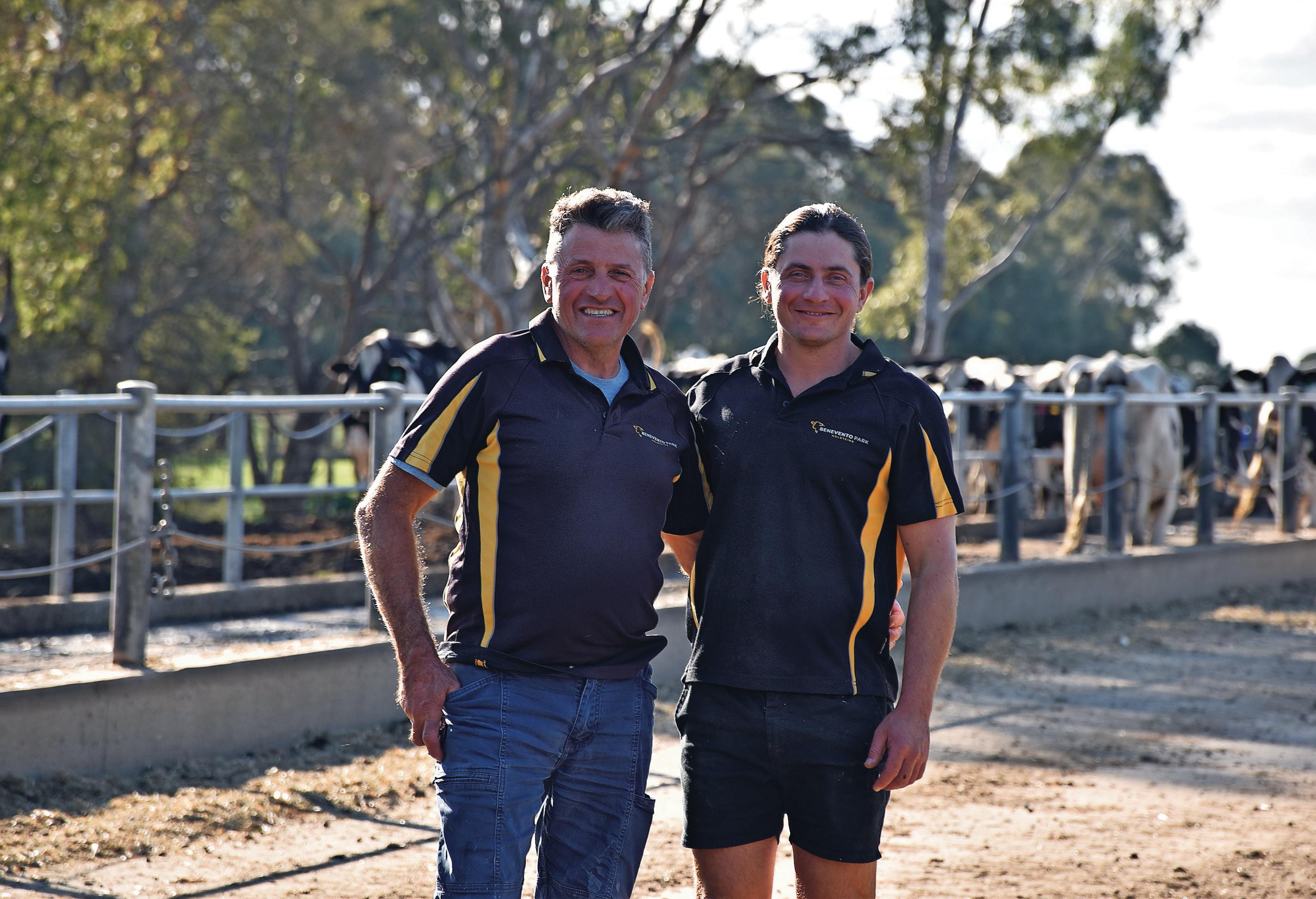
BREEDING QUALITY cows has been a long held passion for the DeCicco family which began when Cosimo and Maria started Benevento Holsteins in 1974.
They named the stud after their home town in Italy.
At the time Cosimo and Maria milked 12 cows — a mixture of Friesians and crossbreed cows in a six-aside herringbone.
Over the decades, their dairy business has grown to encompass an additional 129 hectares, 350 mostly registered Holstein cows and a third generation dairy farmer in grandson Daniel, who has taken over the running of the farm from his parents Fred and Sonyia.
Fred said from an early age his dad Cosimo taught him if he was going to do something to do it properly, and that advice has held true, particularly when it comes to breeding.
The DeCicco family were recently awarded their second Holstein master breeder.
“Dad started Benevento after he bought a few stud cows from Joe Watts from Kyabram. He was a well-known breeder at the time and that was the beginning of it all really,” Fred said.
“I just love cows and I love watching their journey as they come into the herd as a heifer and then hopefully leave many lactations later.
“It just gives me a real buzz.”
Fred said initially the family developed their own cow families, and it wasn’t until the drought in the early 2000s, when the opportunity developed for them to invest into some well-known cow families including the Roxies, Ashlynns and Jacobina’s. Their own successful families have been the Tammy’s, Suzannes and Vivianna’s.
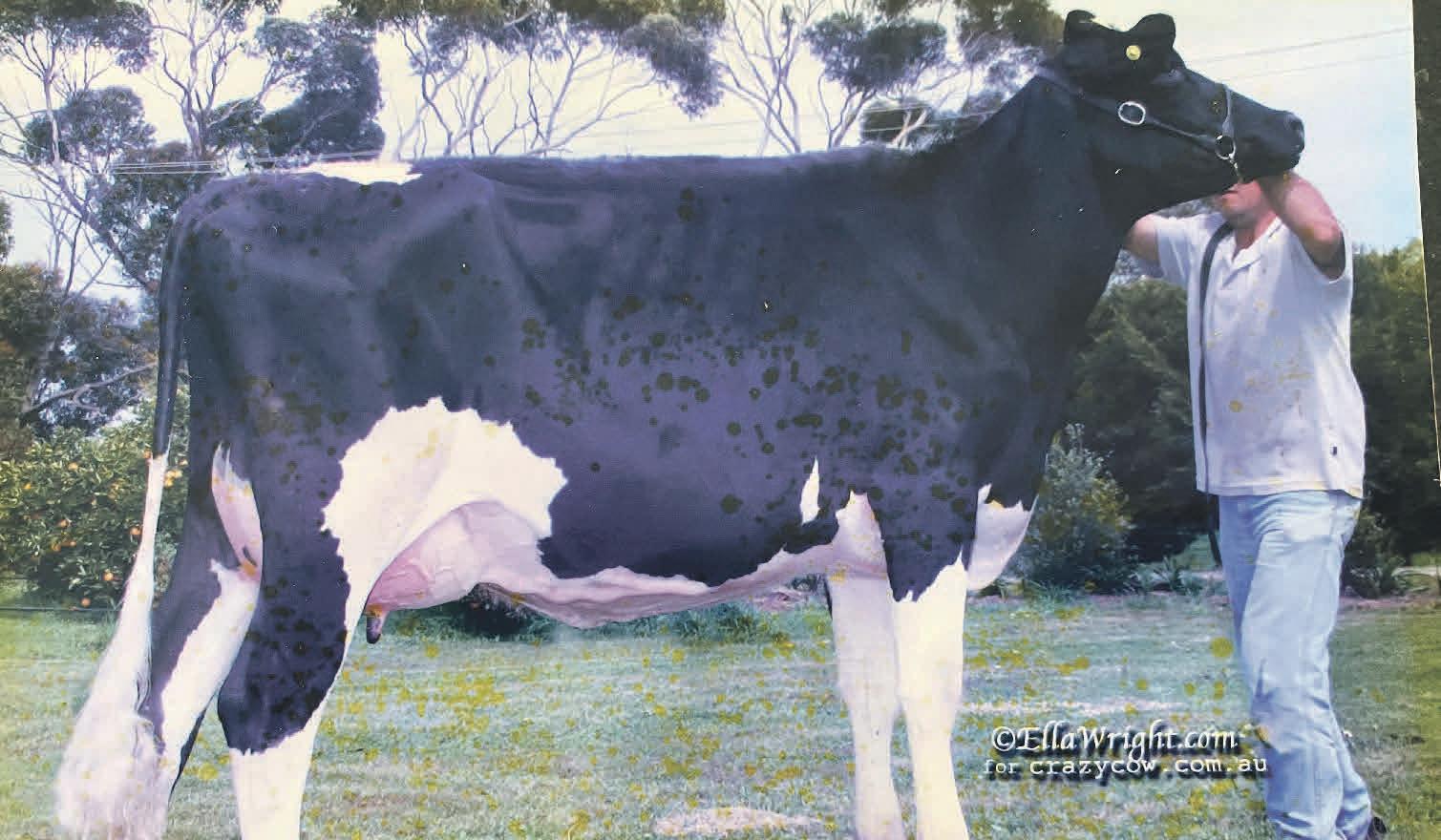
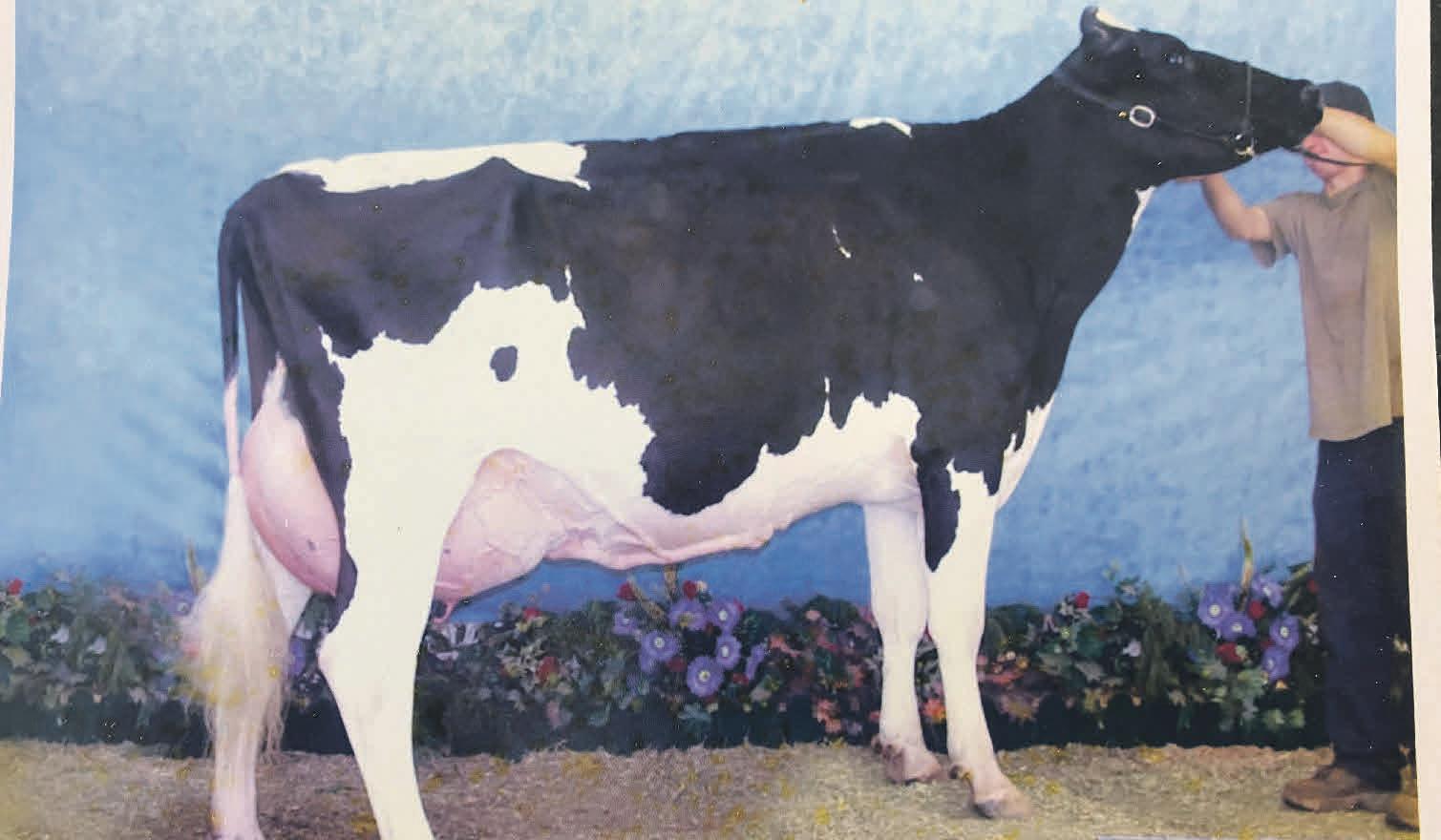
“In the early ’80s, we had a cow called Enhancer Tammy VG87 — she was an amazing cow, and I can still see her great front end and her tremendous udder.”
Another early Tammy, Astre Tammy 2nd (daughter of Enhancer) went EX92, and was a 16-star brood cow.
“She achieved 110,000 litres of milk over her lifetime, which is good enough for a superior production award.
“She bred so well for us, and I wish we had here with us here today with the breeding technology we have now.
“She had six or seven lactations and gave us some amazing daughters.”
Fred believes around a third of the animals in the herd can be traced back to Enhancer or Astre Tammy.
“The most prominent cows were probably the Igniter Tammy’s.
“They all bred off in different directions, but Igniter Tammy 4th EX 90 and two stars gave us a couple of bulls that were sold into China —HoTaber and HoTaurus.
“HoTaber in particular had great type and production, and we had a couple of great heifers in our herd.”
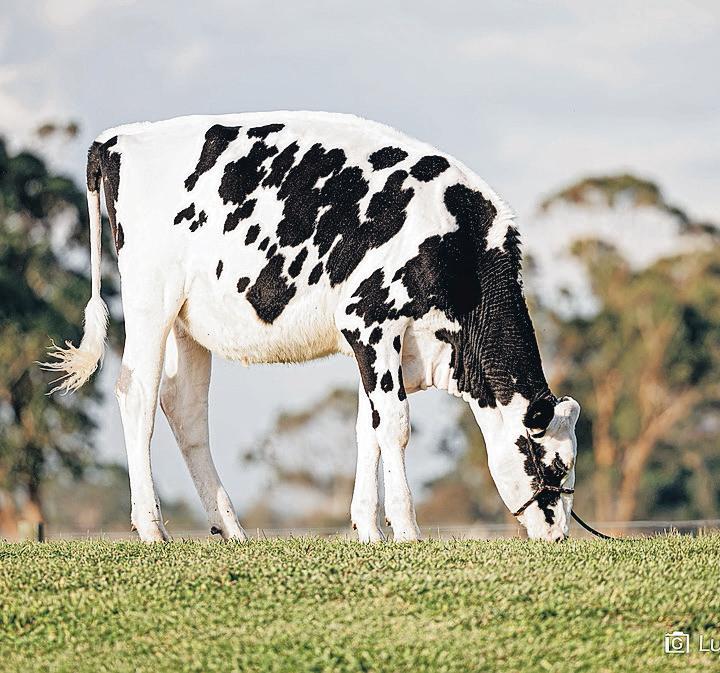
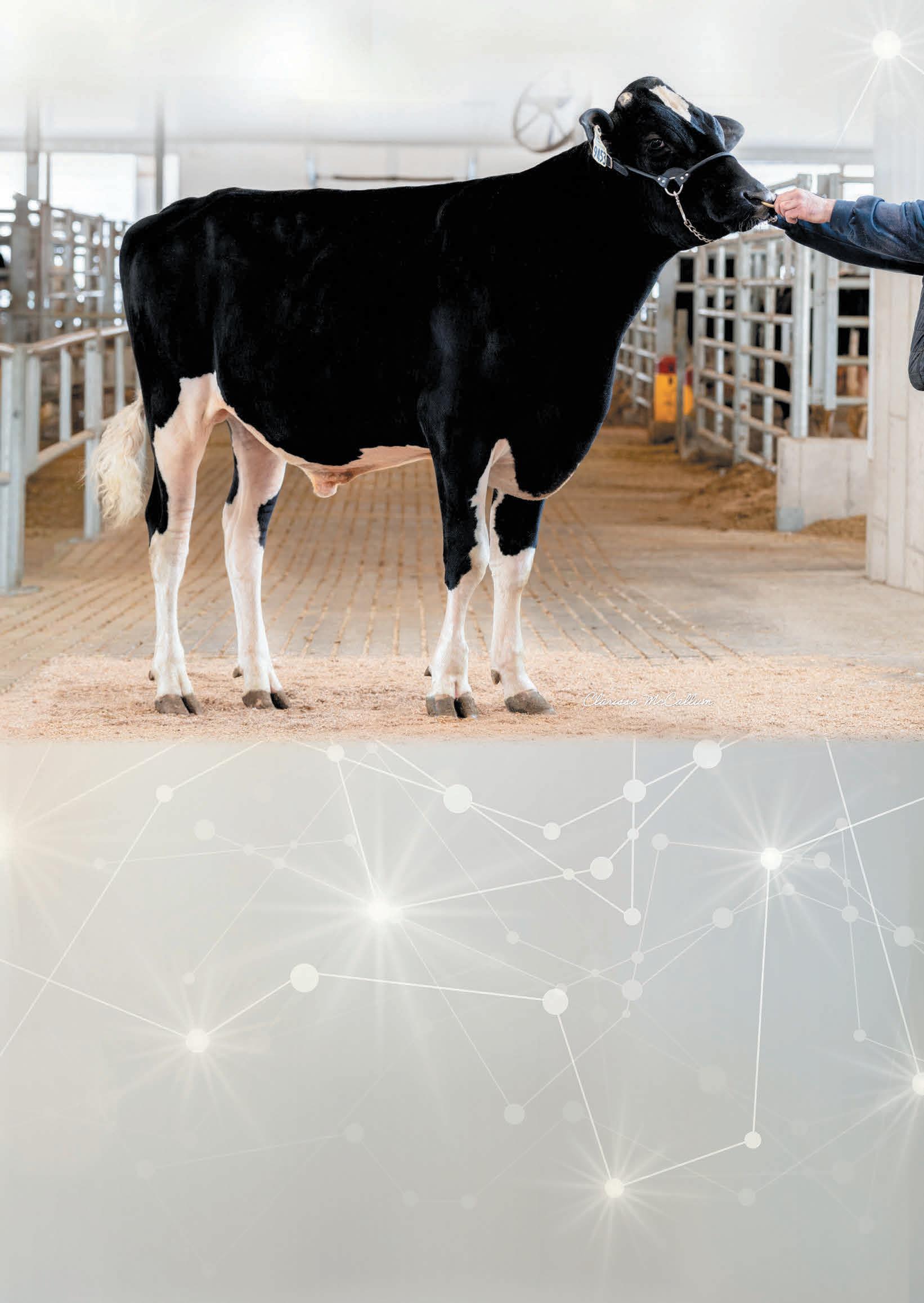
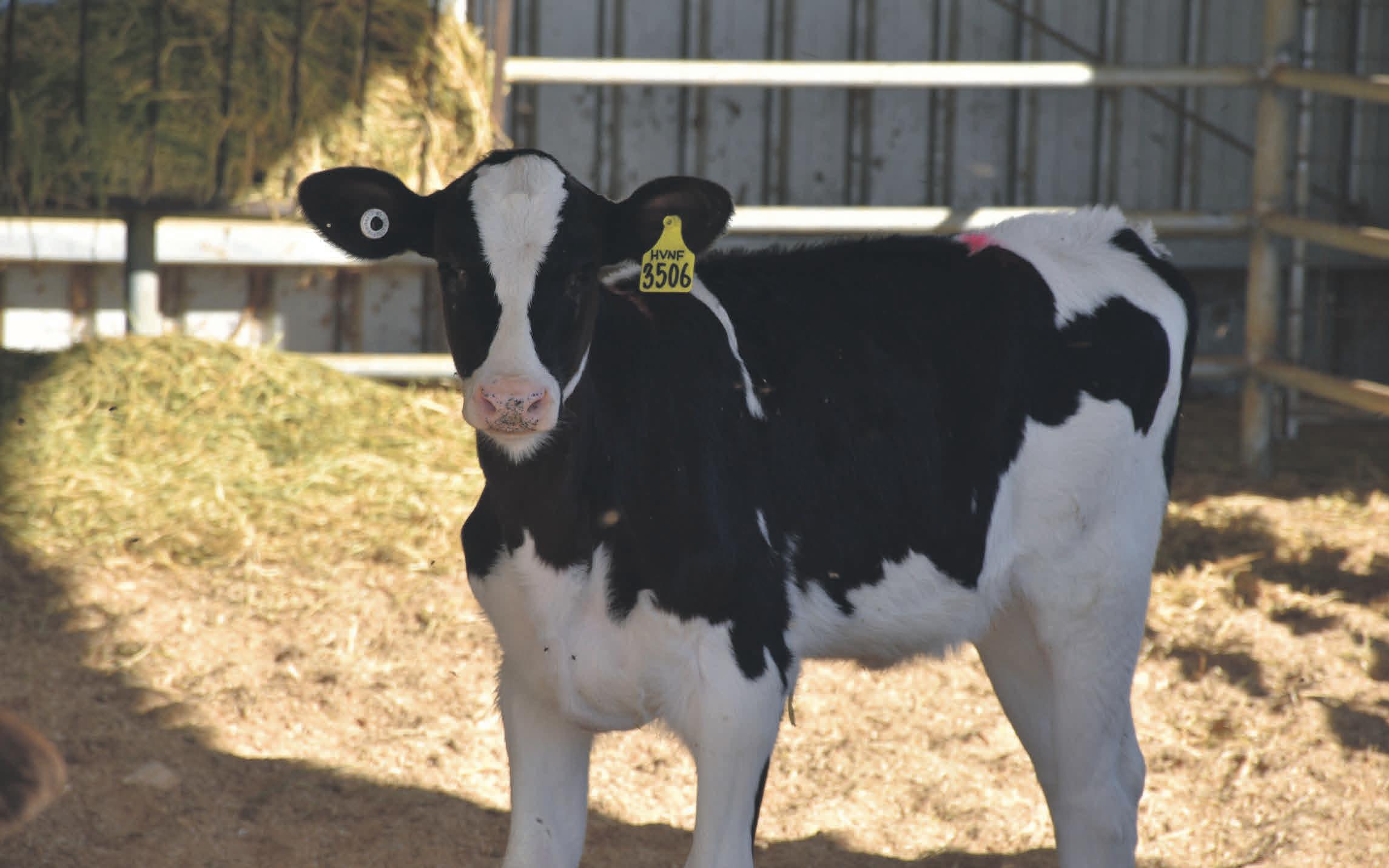
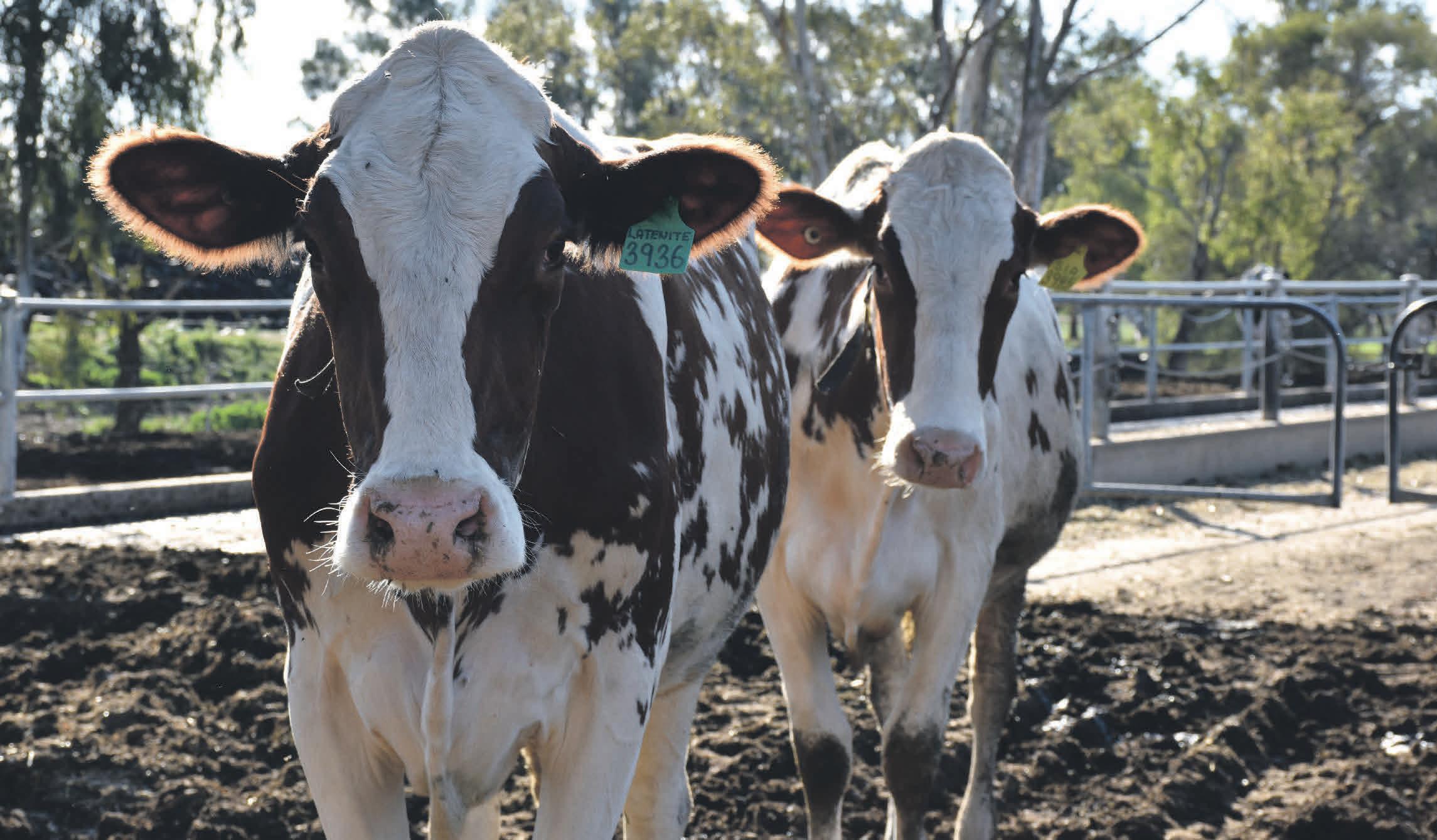
The calf Havenofear Tammy (pictured) is a direct descendant of Ingniter Tammy 4th and has five generations of excellent behind her pedigree.
“That is something we are really proud of, and it doesn’t happen all that often.
“Our Tammy’s really have been such a great and long-standing amazing family for us.”
Not only has breeding given the DeCicco’s quality cows, it has also given them friendships that have lasted decades.
Back in the early 1990s, Benevento had a
couple of really good Juror heifers in milk and Lou and Leon Giglia from Ponderosa Holsteins in WA came over to have a look.
“From that day on we established a great friendship with the Giglias.
“We looked after some of their heifers after they had their dispersal sale, and we also went into partnership as well.”
Frank laughs as he thinks back to those early days when he and Sonyia were showing cows.
“We had a couple of Warden heifers we took to the Kyabram Show.
“We thought they were the best cows in the world and we were proud as punch of them, but we were also as green as grass when it came to showing and they placed second last and last in their class.
“We didn’t care though, we had such a
great day and we would go on to learn so much about Holsteins from some of the great people in the industry, including Pam Malcolm, who was always so generous in sharing her knowledge.”
Both Fred and Sonyia are now starting to think about retiring and they have basically handed over the running of the farm to Daniel.
“He is very capable and doing a great job as he starts to make his own way in the industry.”
The couple is in the process of commencing its succession plan which has included a few trips to the lawyers to get it right.
“We realised it was time to start to reward Daniel, so every calf born this year will go to him as reimbursement for lost salary, and he already owns half the farm, so he is well on his way.”
Daniel has made a few changes along the way introducing genomic testing to the herd and improving calf management. (See story page 24.)
He has also introduced Fred to some technology including the herd data app which he loves.
They have cut back on their breeding a bit, choosing to only breed from their best and joining the bottom end of the herd to beef.
“I want to focus on feed efficiency and grow more fodder,” Daniel said.
“We might cut back the herd size a bit to reduce some of the workload, and I want to see the herd 100 per cent Holstein registered.
“We will continue to improve our cow families and hopefully down the track we might even sell some of our own cows in an on farm sale.’’


BY SOPHIE BALDWIN
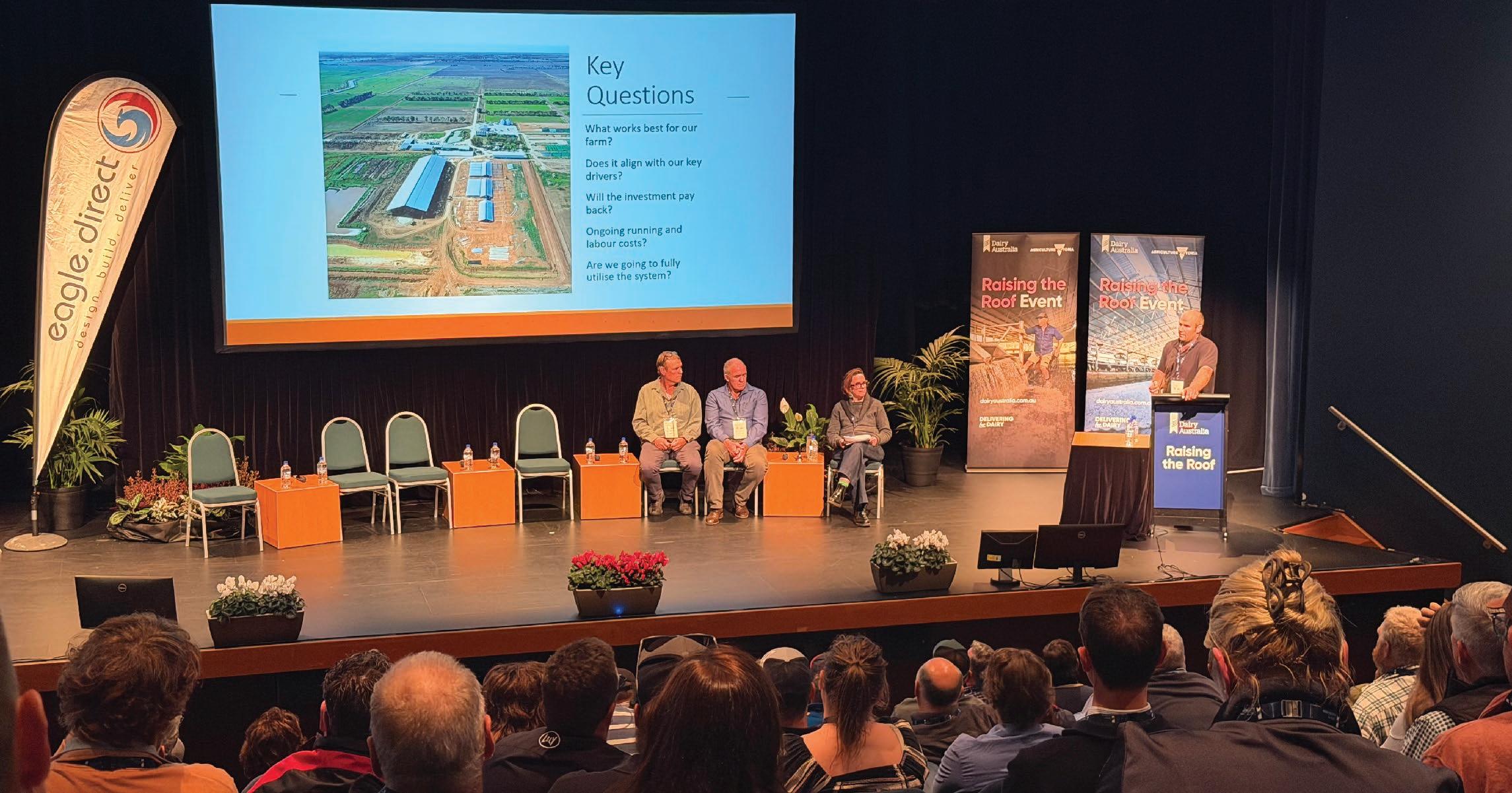
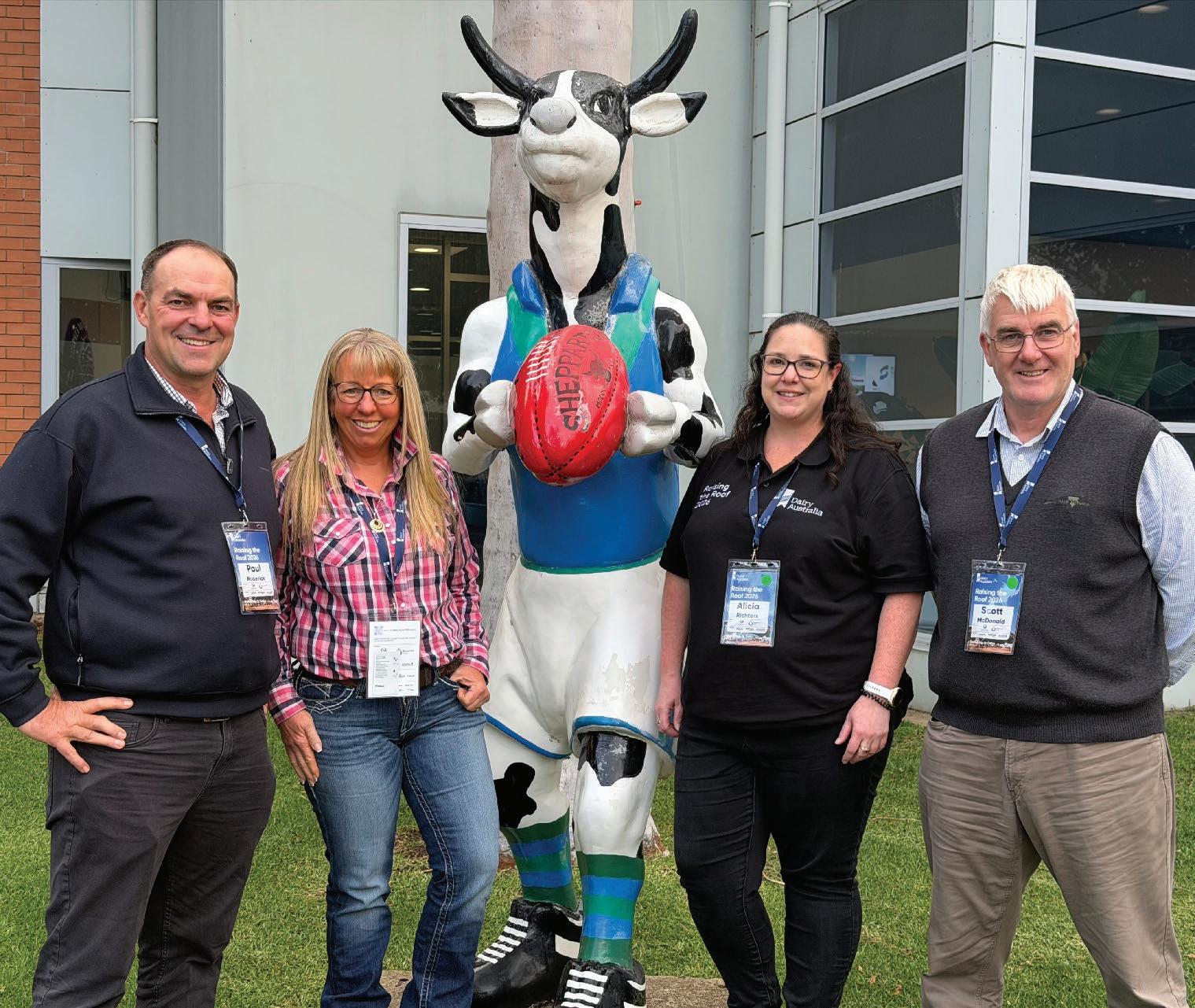
DAIRY AUSTRALIA’S Raising the Roof event has been declared a success with over 200 farmers heading to Shepparton for the three-day event. The program included two days of informative sessions on systems, nutrition, effluent, climate, energy and managing people, and finished off with on-farm visits on the final day.
Raising the Roof is the only major dairy event in Australia with a focus on intensive farm systems and supporting infrastructure.
It is held every two years.
Development and regional adaption lead Alicia Richters said she was pleased with the event.
“Farmer input very much shaped this year’s program and it was a reflection of the topics and issues farmers wanted to hear,” Alicia said.
She said the climate and energy sessions were very popular along with waste management.
“New technologies are always popular – six years ago we wouldn’t have even been talking about things like bio-digestors.”
Guest speaker Dr Gordon (Gordie) Jones is a globally recognised dairy performance consultant with more than 40 years of experience. He talked about the importance of looking after workers and how best to go about it.
Calivil dairy farmer Dehne Vinnicombe spoke about the difficulty he had with compost bedding and mastitis which in the end has seen him transition across to sand.
Alicia said they made a conscious decision to ensure the crowd included a majority of farmers.
“Over 70 per cent of people in attendance were farmers — we built the program around that and it has been a real success,” she said.
Peter Mulchay spoke about the process he went through installing his effluent and solids separation system. The sessions included a question and answer period which were informative for everyone in attendance.



























SITTING IN my office catching up on paperwork, it feels like a good time to reflect on what’s been happening across the region.
strong partnerships across the industry.
These are the things we know deliver real outcomes on farm.
hearing about a project GippsDairy has delivered, supporting farmers to get subsidised vaccines and educating health professionals on the disease.
Since I last wrote, we’ve had a bit more rain and autumn is well and truly into winter.
For many of us, we’re lucky to have irrigation as an option, even with rising water prices, as it gives us a level of control and confidence through the season. Not everyone has that.
Some of our dryland neighbours are dealt with delayed sowing and slow emergence, which just highlights how variable things are across the region at the moment. Like most seasons, there’s still a fair bit of uncertainty out there. Not just from the weather, but also water markets, the Straight of Hurmuz, milk price, and a range of other factors that are largely out of our control.
In the Murray region, we’ve been through periods like this before. It can be really tough, but we also know what to do to get through it.
For me, that means focusing on achieving efficiencies where we can, gathering as much solid information as possible to make good decisions, and supporting each other through it.
Make sure you’re using what’s available to you, whether that’s your local discussion group or Dairy Business Network, a trusted adviser or neighbour, or getting along to an industry event or workshop that’s relevant to your farm.
Rural financial counsellors on both sides of the river can also support you to access government programs if you’re eligible.
If you’re not sure where to start, reach out to Murray Dairy or Dairy Australia Murray and we can help connect you.






At Murray Dairy, we’ve been taking the same approach, looking for efficiencies and focusing on what we know makes a difference for farmers and the industry locally. Over the past year, we’ve worked through a restructure and developed a new strategic plan, and we’re now well into implementation with a clear focus on delivering where it matters most.
That means continuing to invest in local research, supporting peer to peer networks like Dairy Business Networks and the Young Dairy Network, and building
We’ve got a new digital presence including a refreshed logo, and social media pages.
Make sure you look us up on Facebook and Instagram to keep tabs on what we’ve been up to.
We would love to share what’s going on on your farm or business too — tag us in your photos and videos.
It’s also important the priorities of our region are represented accurately at a broader level.
As part of the Murray-Darling Basin Plan review, we’ve worked closely with advocacy groups and key agencies to make sure we’ve got a strong, united message that reflects the realities of our region.
That includes the importance of irrigation to dairy, but also the role dairy plays more broadly in supporting regional communities, contributing to the economy, and the role farmers play in looking after our natural environment.
We all want to see it protected and managed well into the future.
We’ve also seen strong engagement through our extension activities.
Recently, we partnered with the Goulburn Broken CMA to deliver a soils’ day, which saw a great turnout.
Soil structure might not always be the first thing people think about, but it’s a key lever for efficiency, particularly when input costs are high, and getting the fundamentals right is often where the biggest gains can be made.
Another area that’s really stood out is the level of interest in Q fever.
We’ve had a strong response from farmers after
GippsDairy is generously sharing its experience and expertise and rolling this project out in our region this year. We’re really pleased to be working with them and we thank them for their leadership in getting this off the ground.
At the moment, the project is working with GP clinics and supporting education for health professionals, with an expression of interest process under way, and we’ll keep farmers updated as that progresses.
There’s also an opportunity for local groups, whether that’s discussion groups, footy clubs or community organisations, to have health professionals come out and discuss Q fever, and if that’s of interest, we’re happy to help coordinate that.
Contact us via connect@murraydairy.com.au
Looking ahead, winter is a time many of us stick a bit closer to home. There’s still plenty happening on farm, but it’s also the time of year where you get to enjoy a bit of local sport or catch up with people at the coffee shop or school pick up, even if it doesn’t take the edge off those cold mornings.
For us at Murray Dairy, the focus remains clear. Stay connected to farmers, invest in what works locally, and work in partnership to deliver practical outcomes that support a strong and resilient dairy industry.
Contact Murray Dairy: email: connect@murraydairy.com.au
FB: Murray Dairy Insta: @murraydairyregion Rachael Napier
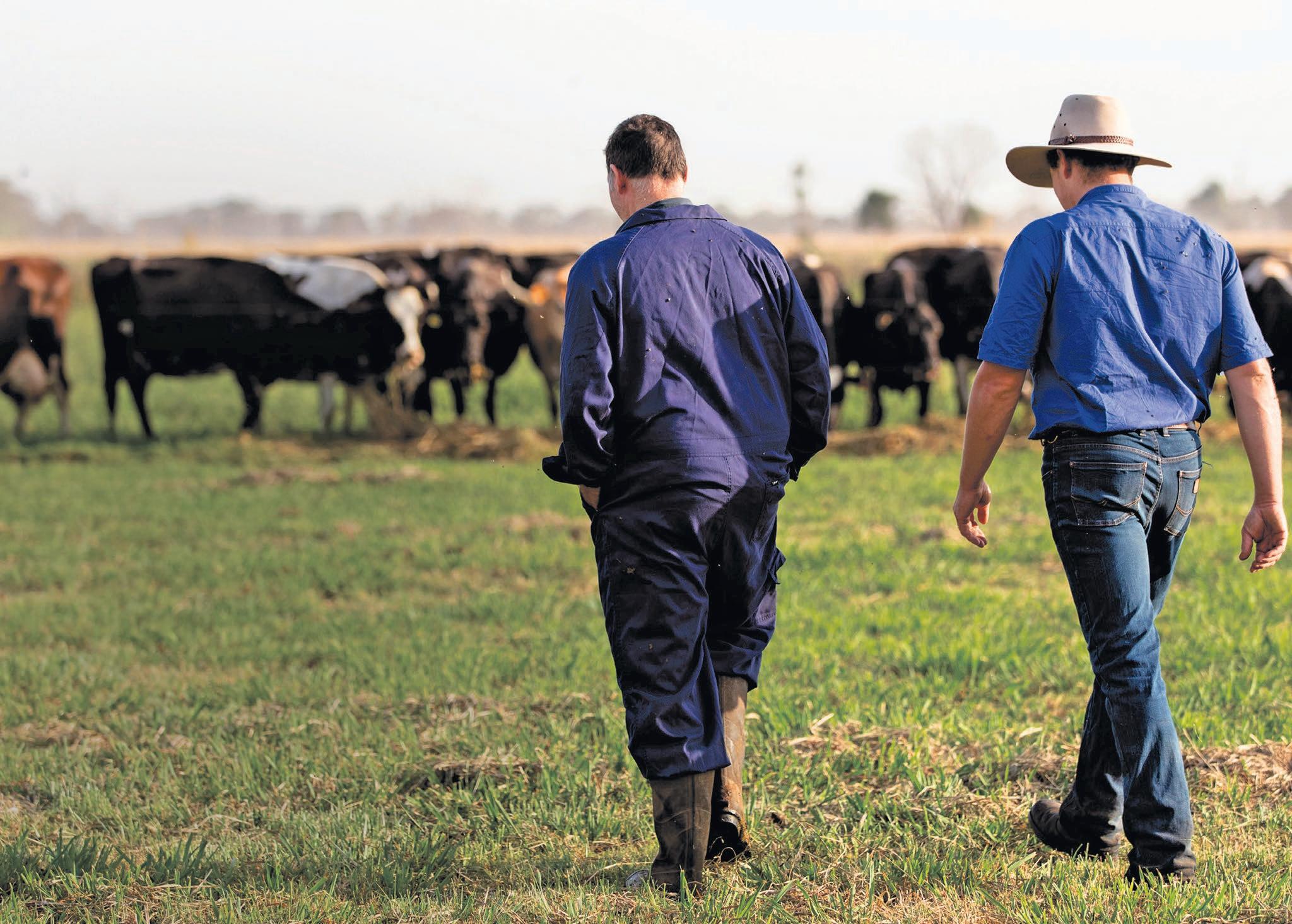
Frank and Marianne Kelly are reaping the benefits of making steady genetic improvements over the past decade, with genomics playing an important role.
Now milking 420 Australian Reds on their 500-hectare farm at Tragowel, south of Kerang, Frank and Marianne have switched breeds but always maintained a focus on breeding what’s best for their farming business.
Today they have fertile cows that are easy to calve with good udders and strong feet and legs to cope with long walks.
Frank says the herd has never been in better shape and he’s not the only one appreciating the improvements.
The April 2026 ABV release confirms the quality of the Kelly herd which now ranks sixth in the Australian Red Breed for Balanced Performance Index (BPI), up one spot on its December 2025 ranking.
Over the past year, Frank and Marianne have placed their first bull, Arbdennis –Homedale Dennis, into the AI system and recorded the top BPI Australian Red genomic heifer in the December ABV release with ‘4926’, a daughter of Vikrvesty.
The success comes on the back of a multi-generation commitment to embracing breeding advancements and following a consistent breeding strategy.
Frank’s father Denis was a founding member of Victorian Artificial Breeders Co-op, the forerunner of Genetics Australia, and was among the first in the region to use artificial insemination.
Frank continues to use new technologies and has been genomic testing all calves and heifers over the past four years.
“Dad got straight into AI when it started,” Frank said. “There were strong farmer discussion groups in those days and most of them thought AI was the future and they went straight into it.
“Dad was one of them which set us on a good path.”
The farm has been in the family for nearly 80 years and has continued to evolve, moving from Holsteins and Jerseys to straight Holsteins, to three-way crosses and about a decade ago settling on Australian Reds.
“We were looking to improve on fertility when we went with the Reds,” Frank said. “
We’re really pleased with the herd and the direction it is going, the quality of the heifers and their durability and calving ease.”
Frank has been genomic testing all calves and heifers for four years and is starting to reap the rewards.
“We’re getting good solid results so we’re at the stage where we can select from the lower end of those heifers and move them on.
“We’ve got excess numbers each year but now we can breed from the best and go to beef with the rest.”
Those strong numbers allowed the farm to peak at 420 this year, up 20 on expectations.
“We had plenty of heifers so we ended up milking a bigger herd and the season was good,” Frank said.
Frank consults genetics companies for breeding recommendations.
“I don’t select which bull goes on which cow individually, we just pick a good team of bulls that have good udders and good feet and legs, the traits we most want to improve, and then we put them through the Genescreen and VIK Mate programs and decide which one of the team will be best suited to each cow and stick to that as we AI. It’s a simple program.”
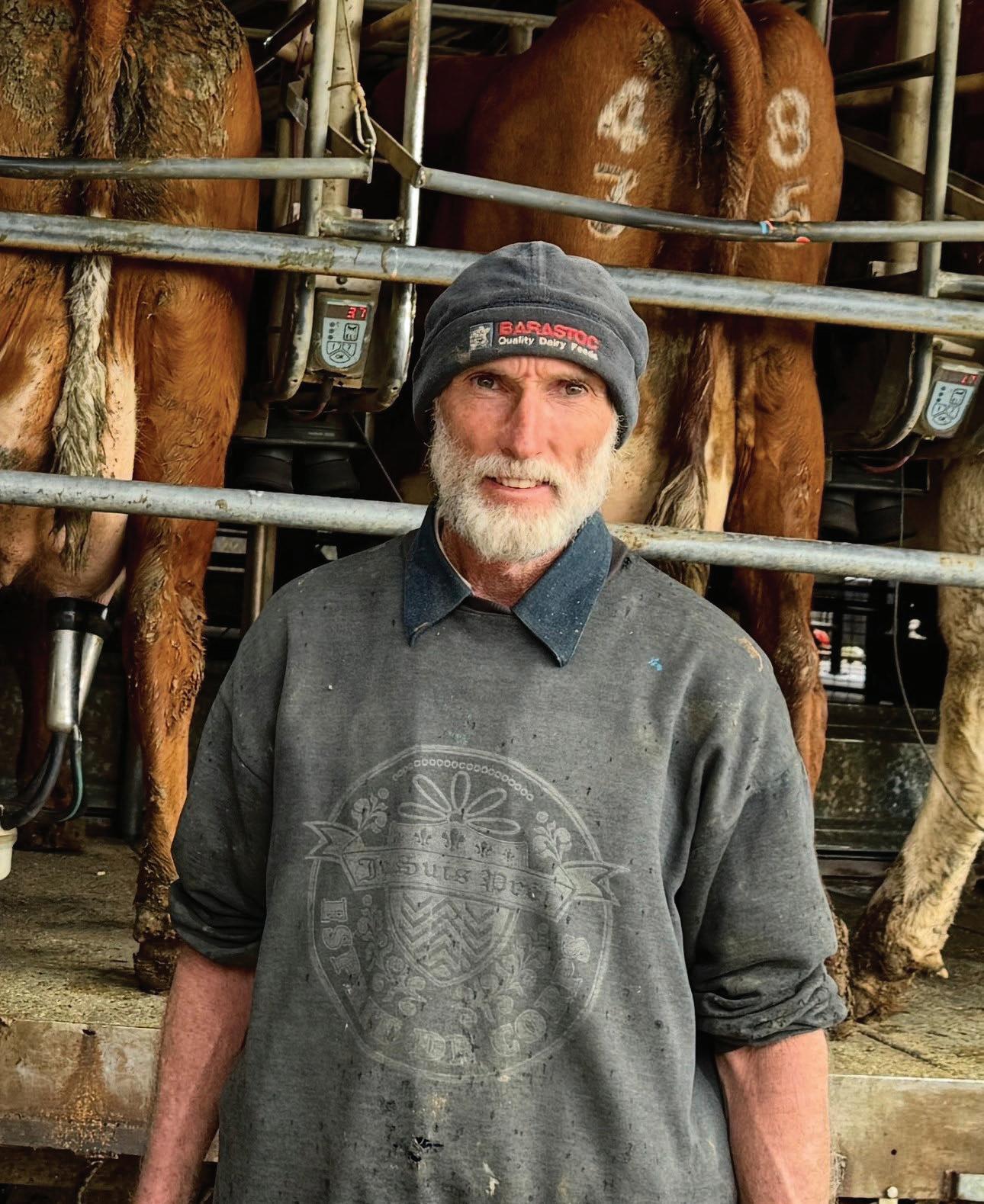
The current crop of calves and heifers continues to impress.
While `4926’ stood out in December 2025, the Kellys now boast three of the top five genomically tested Australian Red heifers, including “4926” who sits in second place after the recent April ABV release. Frank says the real test will be when she enters the herd.
“She’s just a young heifer but I did pick her out and had a look at her after she came to the top. She’s nothing special at this stage but she’s a nice-looking animal and we’ll see how she goes as she comes into the herd.”
Frank finds highly ranked BPI cows perform well.
His ‘Winifred Denis’ bull (now known as Arbdennis) joined Genetics Australia’s Australian Red team last year and Frank hopes he will be the first of many in the AI
system and will introduce more farmers to the breed.
After the recent April ABV release, Arbdennis ranks 4th for BPI, 8th for Health Weighted Index (HWI) and 5th for Sustainability Index (SI).
“He hasn’t yet got the results on the ground but the GA guys say he is a good animal to handle and fairly productive.”
Frank and Marianne are not stud breeders and usually just assign a number to their cows but came up with the name ‘Winifred Denis’ to honour his parents.
They have registered three animals for the AI system including ‘Winifred Denis’s’ dam, Homedale Froerup Winifred.
Frank hopes Arbdennis helps to increase Australian Red numbers, particularly as a stand-alone breed and not just in cross programs.
He says the breed is heading in a good direction, maintaining health and fertility and re-focusing on production and dairy strength.
On the home farm he has selected to improve udders and says they’re getting better every year.
“Feet and legs are also critical for us because they have to walk so far. If their feet and legs aren’t good, they’re going to struggle.”
They also breed for calving ease and fertility and are seeing good results.
“It didn’t change instantly but as soon as I bred the black and whites to Reds, we spent a lot less time in the paddocks with them.
“Now they just have their calves and you go out the next morning and the calves are all healthy and running around,” said Frank.
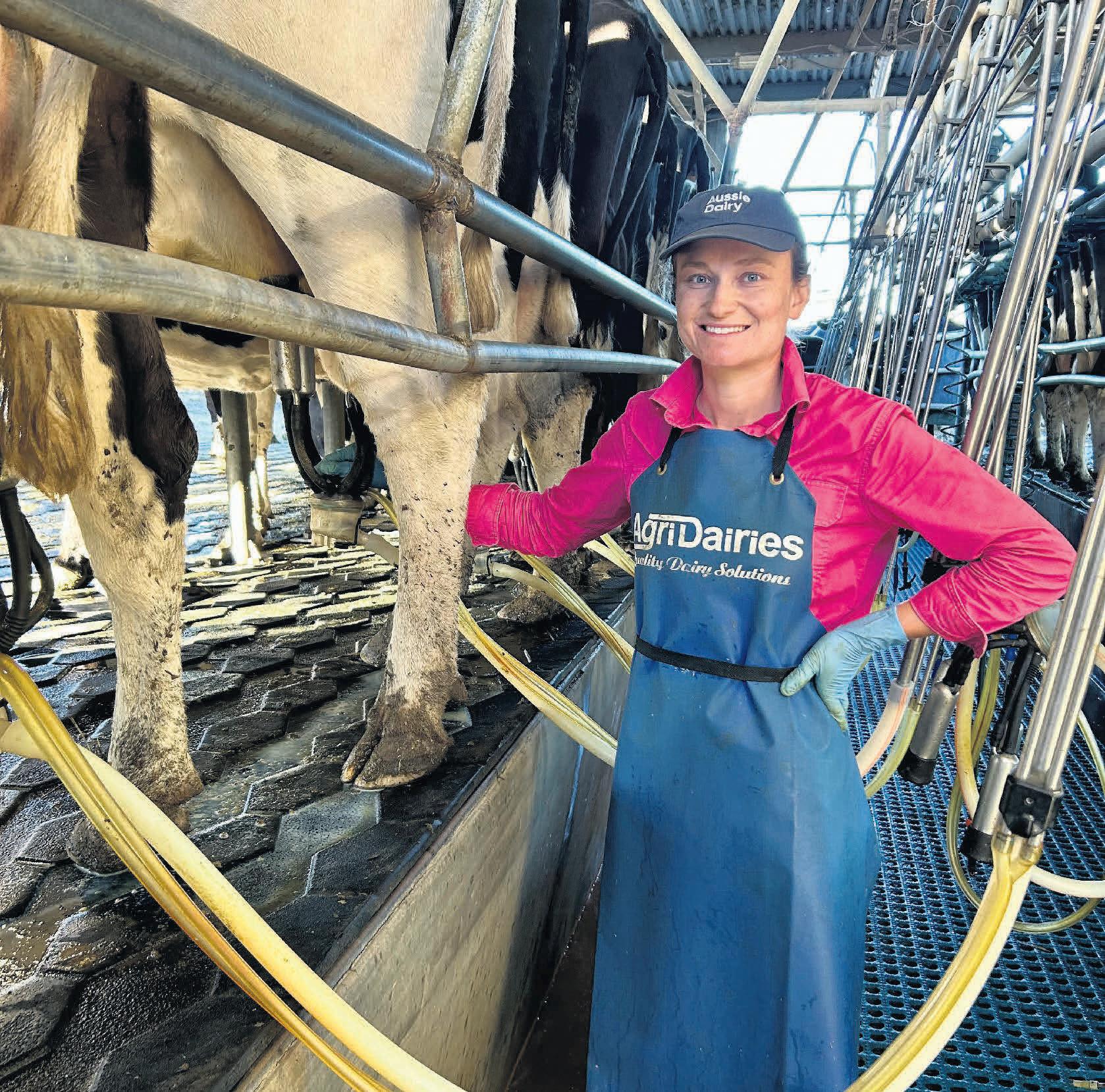
AS AUSTRALIA celebrates women in dairy for World Milk Day, dairy farmer Lindsey Bowyer shows there’s no single pathway and that women have a vital role in shaping the industry’s future.
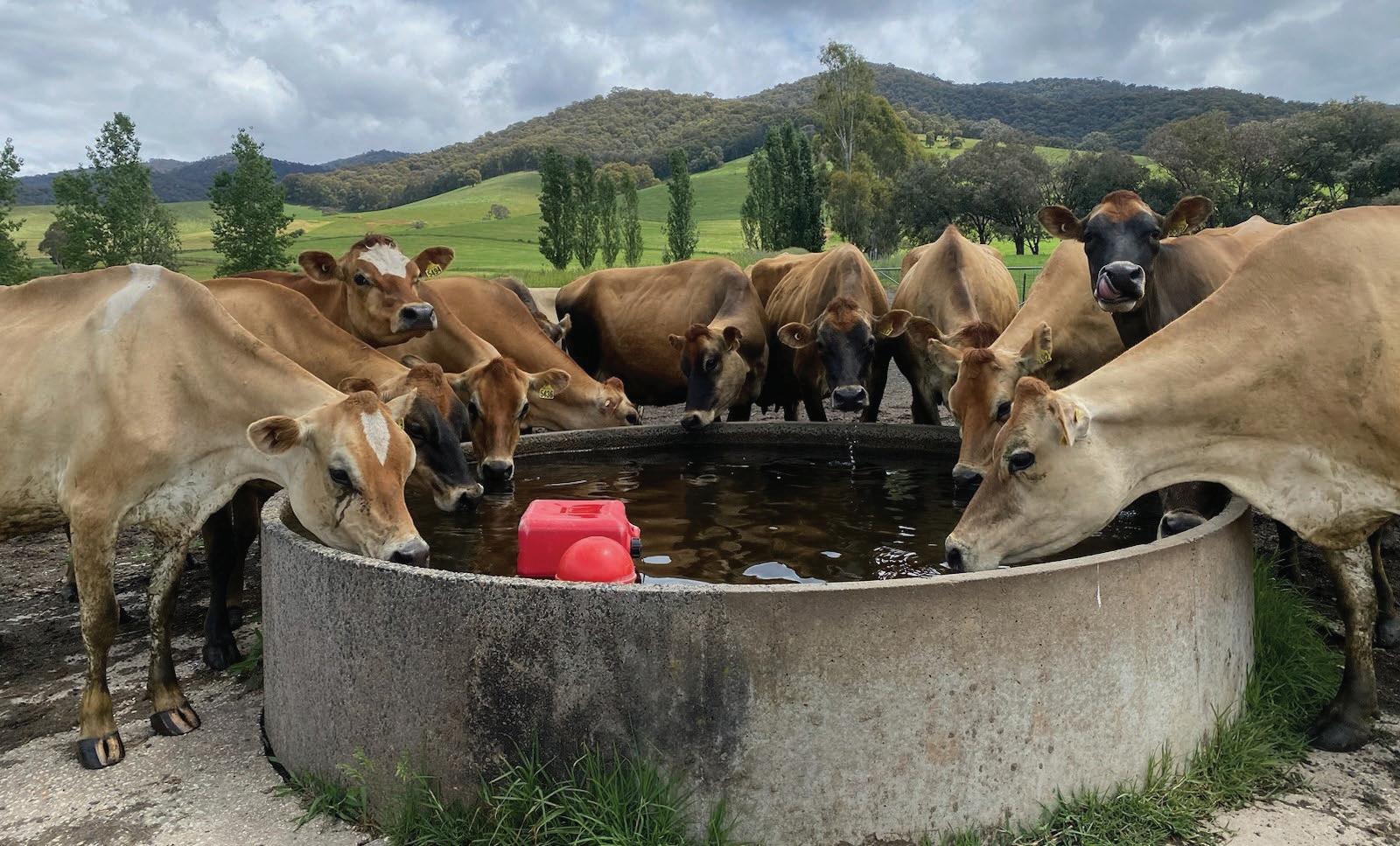
A former professional circus performer, Lindsey, now 27, is leasing a 240ha dairy farm in northern Victoria, with a milking herd of about 200 Jersey cows, and is dreaming of much bigger things to come.
Yet if not for COVID-19, her move into dairy may never have happened.
With the pandemic effectively bringing an end to live events in 2020, Lindsey found herself grounded.
She’d been on the verge of heading overseas to perform, but instead was on her way back home to northern Victoria and at an unexpected crossroads.
“I really didn’t know what to do,” Lindsey recalls.
“Then a friend mentioned a local dairy family and Saputo suppliers, Peter and Rachel Romans were looking for help.
“That was my first introduction to dairy.”
Having grown up on her parents’ beef cattle property, Lindsey knew her way around a cow, just not a dairy cow.
“I knew the front end from the back end, but I’d never milked a cow.”
What followed was a crash course in dairy that would spark Lindsey’s love for dairy cows and the industry.
Under the guidance of Peter, Lindsey was given the opportunity to learn how to run a successful dairy, from handling cows and milking systems to daily routines and continuing a strong business partnership, supplying milk to Saputo.
After four years, and with a dream to start her own dairy business, Lindsey left the Romans to broaden her knowledge and gain experience working with other farmers and dairy setups.
Each experience added another layer of understanding and helped refine what best practice would look like for any farm she would have in the future.
“I took bits and pieces from here, there and everywhere and moulded it to what suits the farm.”
In late 2025, an opportunity arose to lease her own farm, with the financial backing of her parents.
She’s since been steadily lifting the standard of the dairy – a 20-a-side swing-over – investing in improvements such as cup removers.
Another significant upgrade was a generator purchased with the support of Saputo’s milk cooling rebate, providing a critical safeguard for the business.
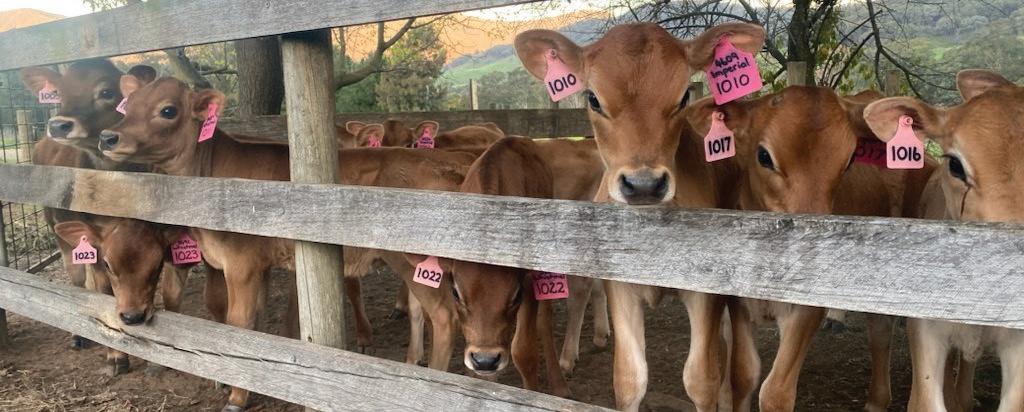
Today, Lindsey is milking twice a day, seven days a week and rearing 60 heifers.
She is leasing a 600-acre dairy farm in northern Victoria,, which is better suited to her older-style dairy.
“You look at them and they melt your heart, with their beautiful faces and nature and once you’ve had Jersey milk, it’s hard to go back.”
Visitors to her dairy comment on how her herd is calm and quiet. She credits that to treating her cows almost like pets.
“With a dairy cow, you’re with them in the morning and night. They’re your priority and you pretty much work your life around the cows.”
Although it’s still early days in her dairy career, Lindsey has her sights firmly set on growing her herd and stud breeding.
She’s already purchased a few registered stud animals and plans to build on that
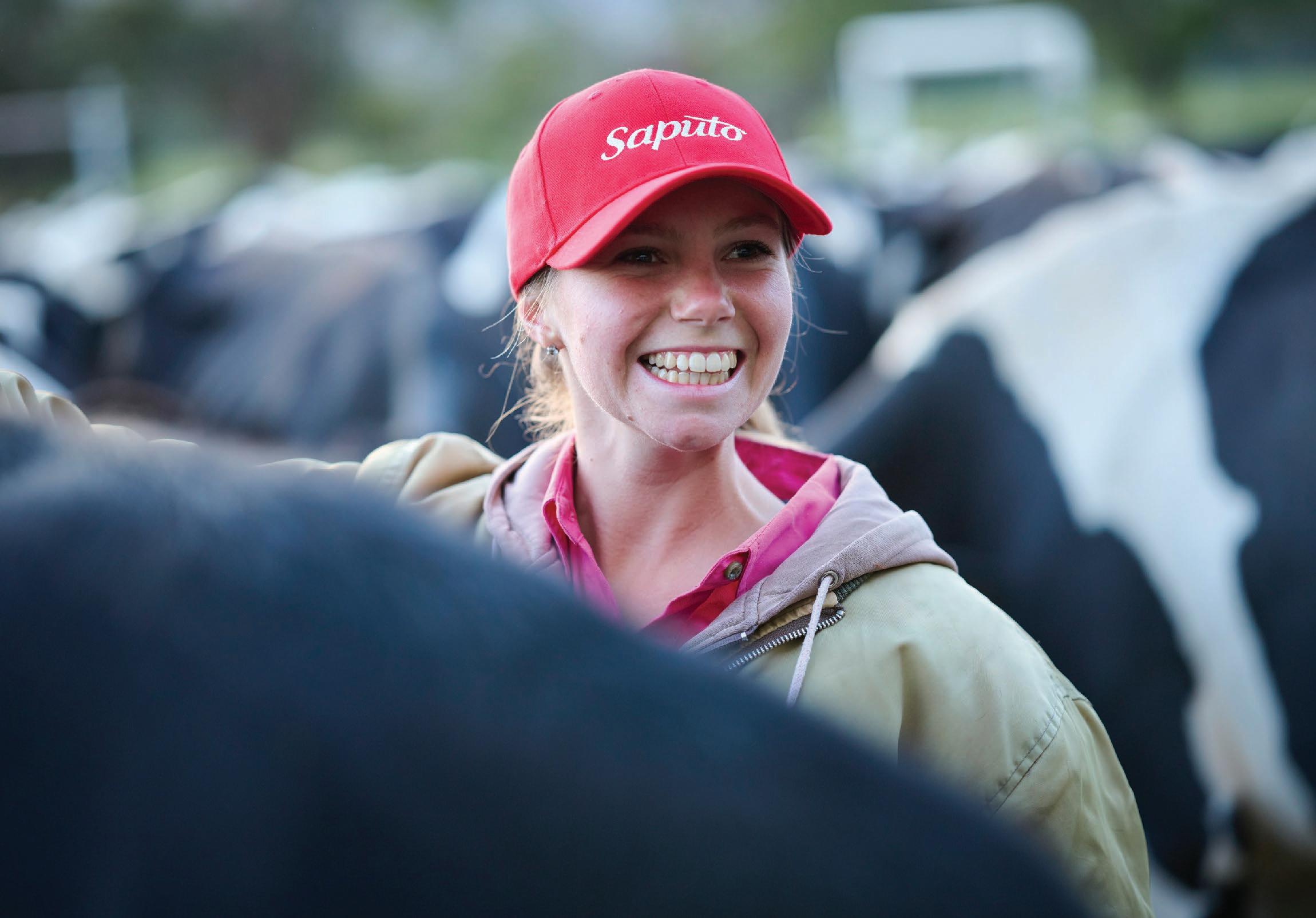
foundation, once things settle.
For now, she’s focused on milking, her first intensive period of calving and ensuring her cows continue to produce great milk for Saputo.
Yet despite the workload, she’s unequivocal about why she does it.
World Milk Day is an opportunity to recognise the year-round efforts and celebrate the people behind every glass of milk.
For Lindsey, the motivation remains simple.
“For me, it is the love and the passion for my cows.”
RIVERINA-BASED FARMERS have the opportunity to increase knowledge to assist with family farm succession and business transition at complimentary information sessions.
Hosted by Rabobank’s Victoria and Tasmania Rabo Client Council, the practical business transition and succession planning information sessions will be held in both Yarrawonga and Wodonga in mid-June.
The interactive sessions are free of charge and offer practical information, such as why family and business communication can be difficult and how to improve it, what makes a meeting work and how to take into account differing family goals.
Limited to 30 participants and not restricted to the bank’s clients, the sessions will be delivered by director of Transition Partners, Jim Benson.
During the sessions, Mr Benson will share different scenarios of what succession can look like for a family enterprise, and how issues can arise when different dynamics are added.
The sessions are not aimed to address family specific issues for attendees, rather it is an information-sharing opportunity drawing on Mr Benson’s first-hand knowledge.
The Yarrawonga and Wodonga events are part of a series of information sessions delivered around Australia, led and funded by the food and agribusiness banking specialist’s Rabo Client Councils.
Groups of innovative, forward-thinking Rabobank farming clients who are passionate about making a difference in their communities, the councils support a range of activities designed to make a meaningful impact to the vibrancy and resilience of rural Australia.
Rabo Client Council member and Jingellicbased dairy farmer Meaghan Daly said the sessions provide couples and families with an opportunity to learn together and engage in group discussions with other farming families.
“Getting an early start on planning is key for a smooth business transition.
“Tackling succession ahead of time helps minimise disagreements from differing expectations and avoids problems that can arise if the process is delayed,” Ms Daly said.
“Managing a farming business calls for a longterm outlook – focused on business sustainability and continuity.
“Succession planning is a critical part of that process and by taking a proactive approach and engaging in clear, early discussions, farming families can help provide certainty, reduce risk, and support a smooth transition to the next generation.
“It ensures the legacy built is protected while positioning the business for ongoing growth and resilience.”
Since launching the business transition and succession planning information session program in 2024, the Rabo Client Councils have delivered 33 sessions across the country – to date providing family farm succession and business transition skills and tools to over 770 participants.
Ms Daly said the Rabo Client Council network
is focused on developing meaningful grassroots initiatives to support key themes focused on building industry capacity, championing rural wellbeing, sustainability and strengthening the rural-urban connection.
Rabobank state manager for Victoria and Tasmania Sally Bull said the sessions have been developed to support farming families in preparing for the transfer of their agricultural business across generations. “The primary goal is to improve communication skills – making it easier
A SUCCESSFUL GippsDairy Q fever project is being expanded across Victoria, with Murray Dairy and WestVic Dairy, and support from Dairy Australia, partnering to improve access to subsidised Q fever testing and vaccination for dairy communities.
Q fever is a bacterial disease that can spread from animals to people, particularly through dust, animal fluids and
contaminated environments.
People working around livestock, calving, yards, manure and effluent are at increased risk.
Symptoms can include severe fatigue, fever, headaches and muscle pain, with some people experiencing long-term health impacts that affect their ability to work and carry out daily activities.
to have productive conversations about business succession and transition planning,” she said.
“During the session, participants will delve into key aspects of organising their initial meeting to discuss next steps in management, business, property and wealth transition.
“Additionally, practical tools will be discussed to help with the planning process, assist in settling family and business conflicts and address family-related issues,” she said.
Ms Bull called on farmers who are interested
in attending the session, keen to meet other progressive farming families and develop new skills to confirm their place before the session is fully allocated.
The Yarrawonga session will be held Tuesday June 16 from 8am to 2pm and Wodonga Wednesday June 17 from 8am -2pm.
To register to participate, visit the Rabobank website or click Succession Sessions: Business Transition & Succession Planning Morning tea and lunch will be provided.
The Victorian Department of Health has reported increasing concern around Q fever, while nationally 878 cases were reported in 2024, a significant increase on previous years.
Increased awareness and testing may be contributing to higher reported numbers, but the rise is reinforcing the importance of prevention across agriculture and dairy industries.
The expanded project aims to make it easier for dairy farmers, employees and their families to access information, testing and vaccination, particularly in regional areas where access to clinics can be limited.
Murray Dairy CEO Amy Fay said the project was about practical prevention and protecting people and farm businesses.
BY SOPHIE BALDWIN
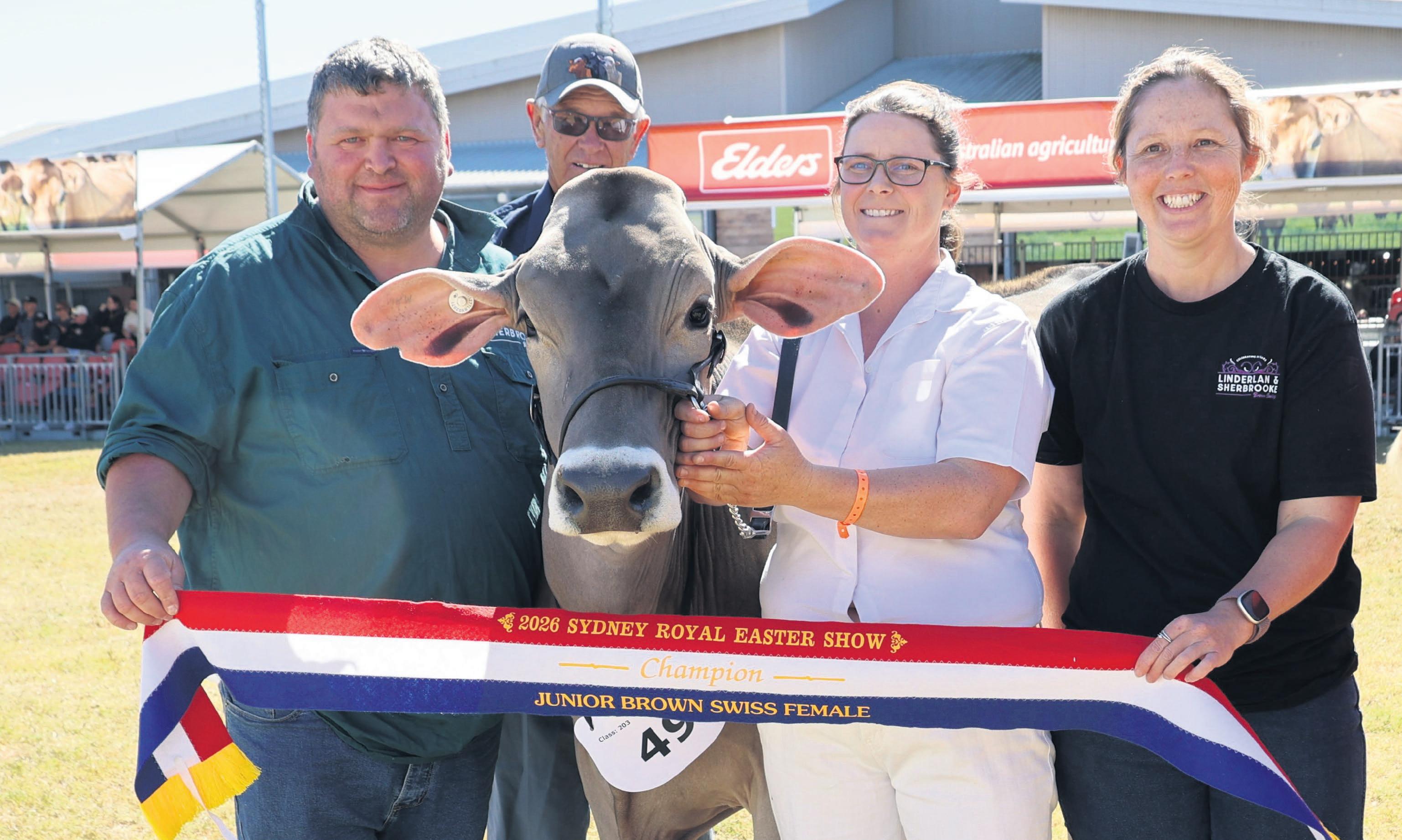
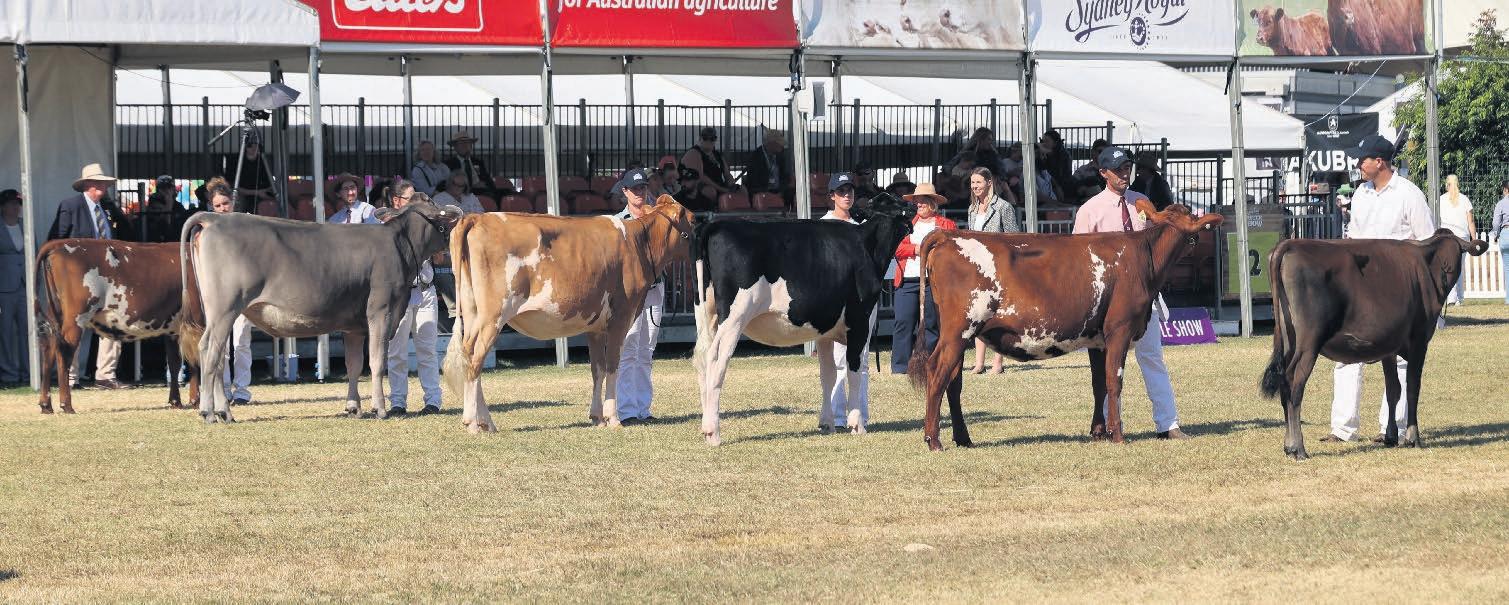
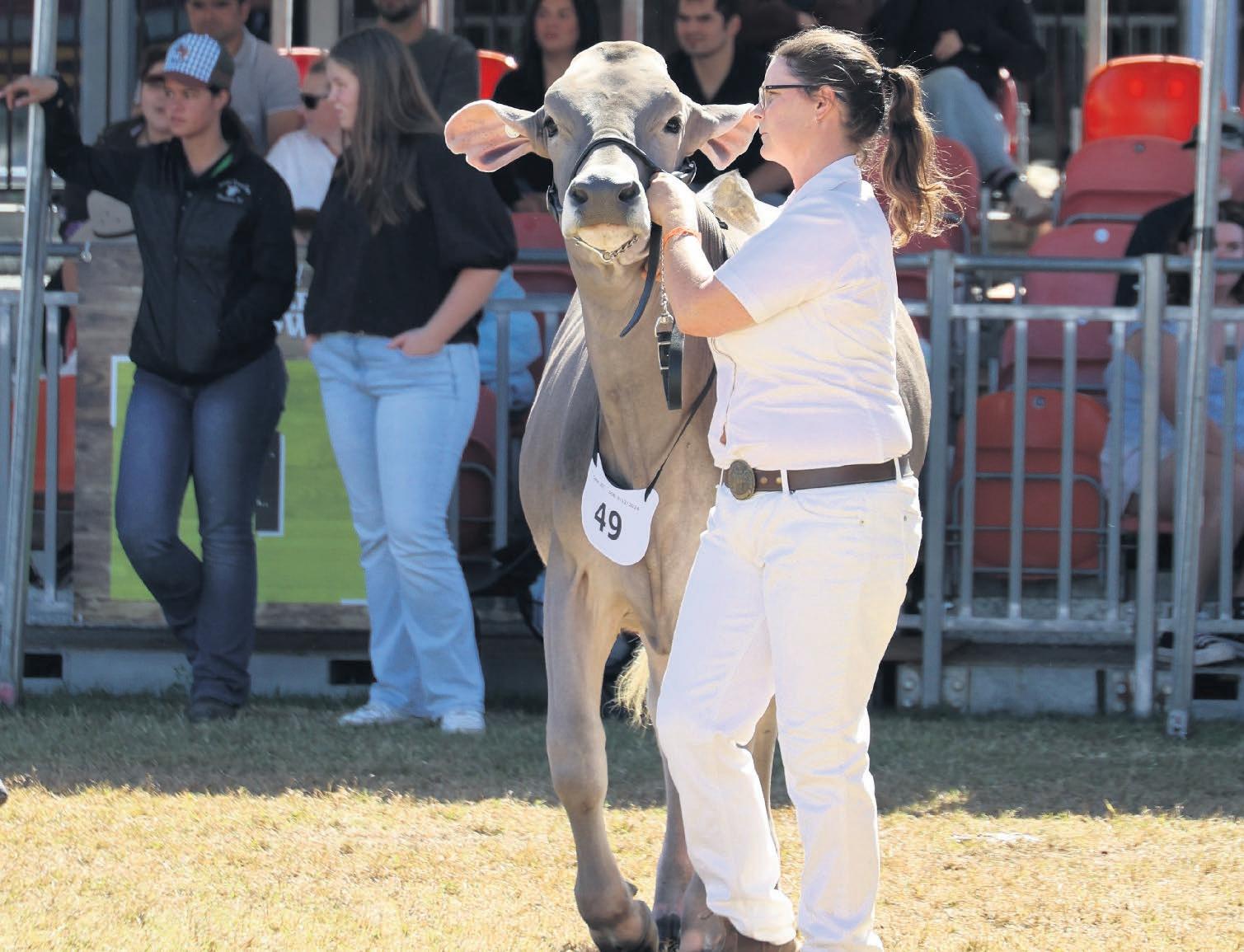
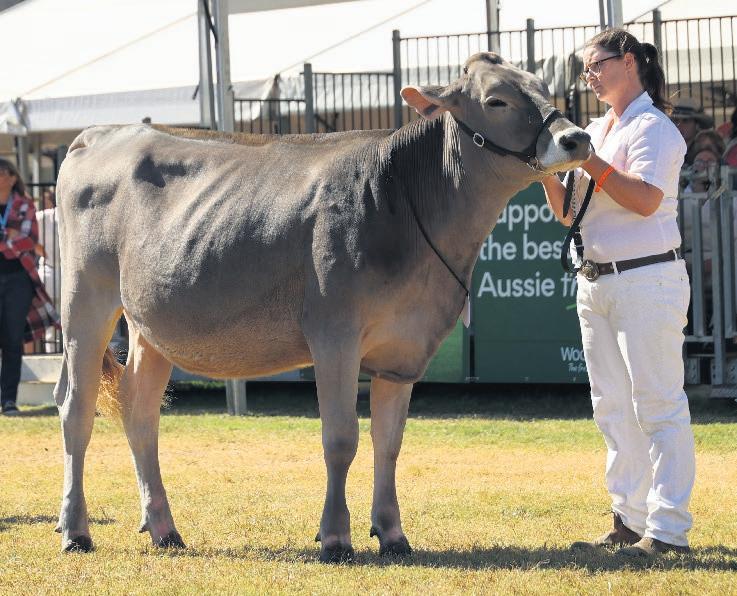
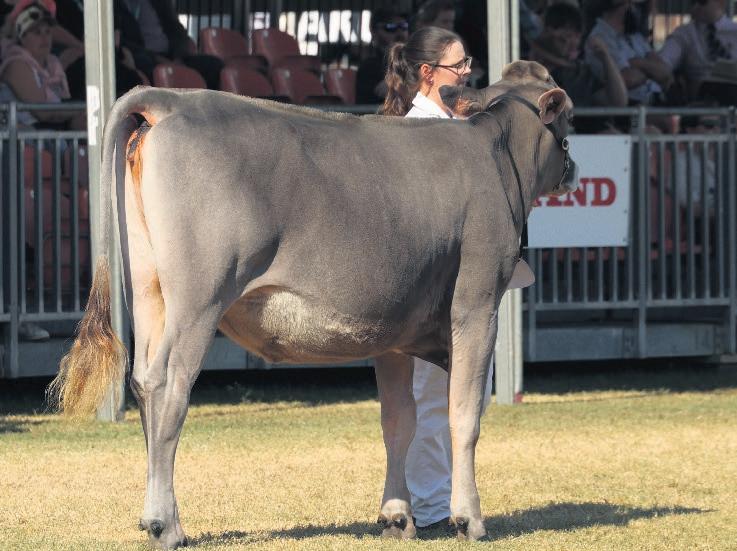
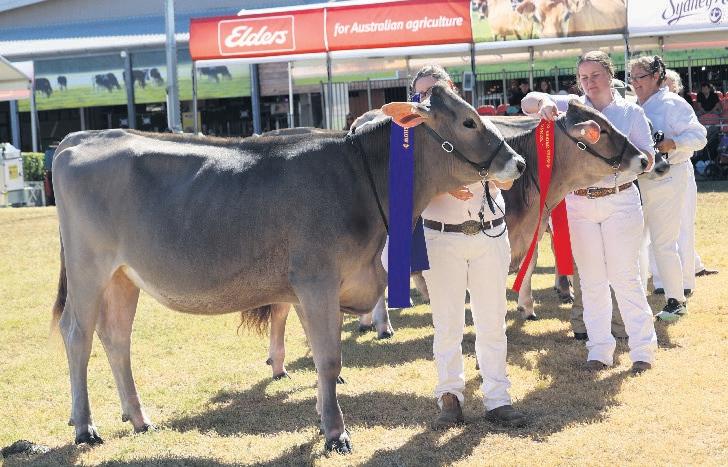
IT WAS a great trip to the Sydney Royal for Emily Brown and Kit Davidson with Benleigh Collaps Sarajevo crowned Junior Champion Brown Swiss.
She went onto place fourth in the interbreed.
Emily, her partner Stephen Fisicaro, and Kit, bought the cow in partnership last year after the Benleigh sale in the Hunter Valley.
Kit has been looking after the cow at her farm in Finley and did all the preparation work.
“This cow family has such a special place in our hearts,” Emily said.
“It is 30 years since her ancestor, the great Kameruka Sarajevo 2 (owned by the Nova Partnership of Brown, Wake, Beck and Barlin) won three of her seven royal show championships in the one year, including her second at Sydney Royal.
“Her progeny has done very well over the years as well.”
Emily said it had been a long held dream to own a descendant of Kameruka.
“We were the losing bidder in the pick of the pair, and after the sale, we asked if he would sell her and here we are.”
Emily was also stoked with the opportunity to judge the youth challenge as well.
“It was a bit daunting to judge all three sections by myself, as there were 11 teams all up and over 100 young people competing.”
Emily said Sydney was challenging for the kids as they were only put into their teams the day before and had to work out how to work together to compete in all three different tasks.
“I had an absolute blast, and it’s always wonderful to see so many great and talented kids out there giving it their all, making friends and learning new things.”
BY SOPHIE BALDWIN
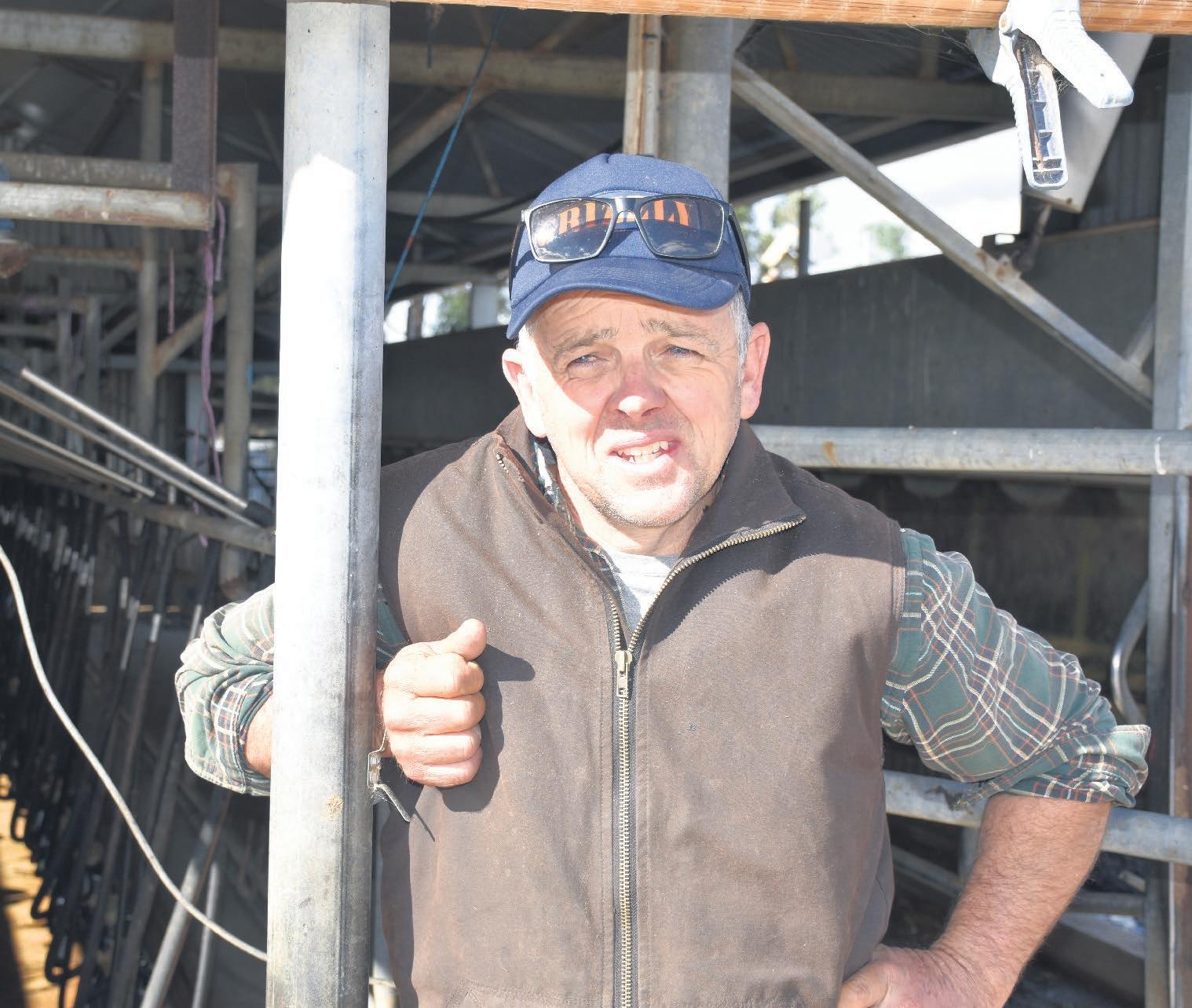
COHUNA DAIRY farmer Adam Spradbury has made the difficult decision to leave the dairy industry after purchasing a farm in November 2024.
He started milking in February 2025. Adam said the cost of production, largely stemming from high temporary water prices, had forced him into the decision.
“To be honest, it has been pretty hard for me from the get-go and I pushed through, but borrowing money to buy temporary water to put my autumn crops in was the final straw,” Adam said.
“The weather hasn’t been kind, we had a hot summer and the late autumn break meant I had to spend even more money on water.”
He said it was particularly hard to budget around water.
“I factored in two waterings in spring, but temporary water prices were pretty high, and one watering wasn’t enough.
“My paddocks don’t water too well either, and they need to be re-lasered, I did get the channels cleaned out, which helped with the leaks and some wastage.”
Ultimately, the high cost of production including increasing cartage costs meant by the time Adam paid his bills, he was left with nothing in his bank account, and a limited ability to reinvest in the business.
The never-ending workload and difficulty

finding reliable labour also contributed to his decision.
He now has plans to finish milking by the end of the financial year.
“I am currently milking 90 cows, and I am hoping 55 will head off shortly to a buyer in South Australia, and I will just have to sell the rest.”
Adam said his foray into the industry had taught him a few lessons, particularly about buying stock from people outside the area.
“Any local cows I have bought have been great, but I bought 30 cows from someone outside the area, and I only have eight of them left in the herd.
“It was a costly and hard lesson to learn,” Adam said.
Adam will keep the land and is hoping to raise a few beefies and get a job.
He said it had always been his dream since he was a young boy to purchase his own farm.
He grew up in Cohuna, and for a couple of years when he was in primary school, his parents had a dairy farm.
This left a lasting impression on him, along with working on a farm when he was a teenager, which prompted him to fall in love with cows and breeding.
“The little farmers just aren’t here in the industry anymore, which is a real shame, and I don’t really know where the next generation is going to come from if you can’t even start out small and grow.
“It has been mind-blowing to me actually.
“I started out with plenty of young stock to grow the herd, but I ended up having to sell them because I couldn’t afford to feed them either.”
Adam isn’t bitter about his experience in the industry, he is just looking forward to a rest and seeing what the next chapter has in store.

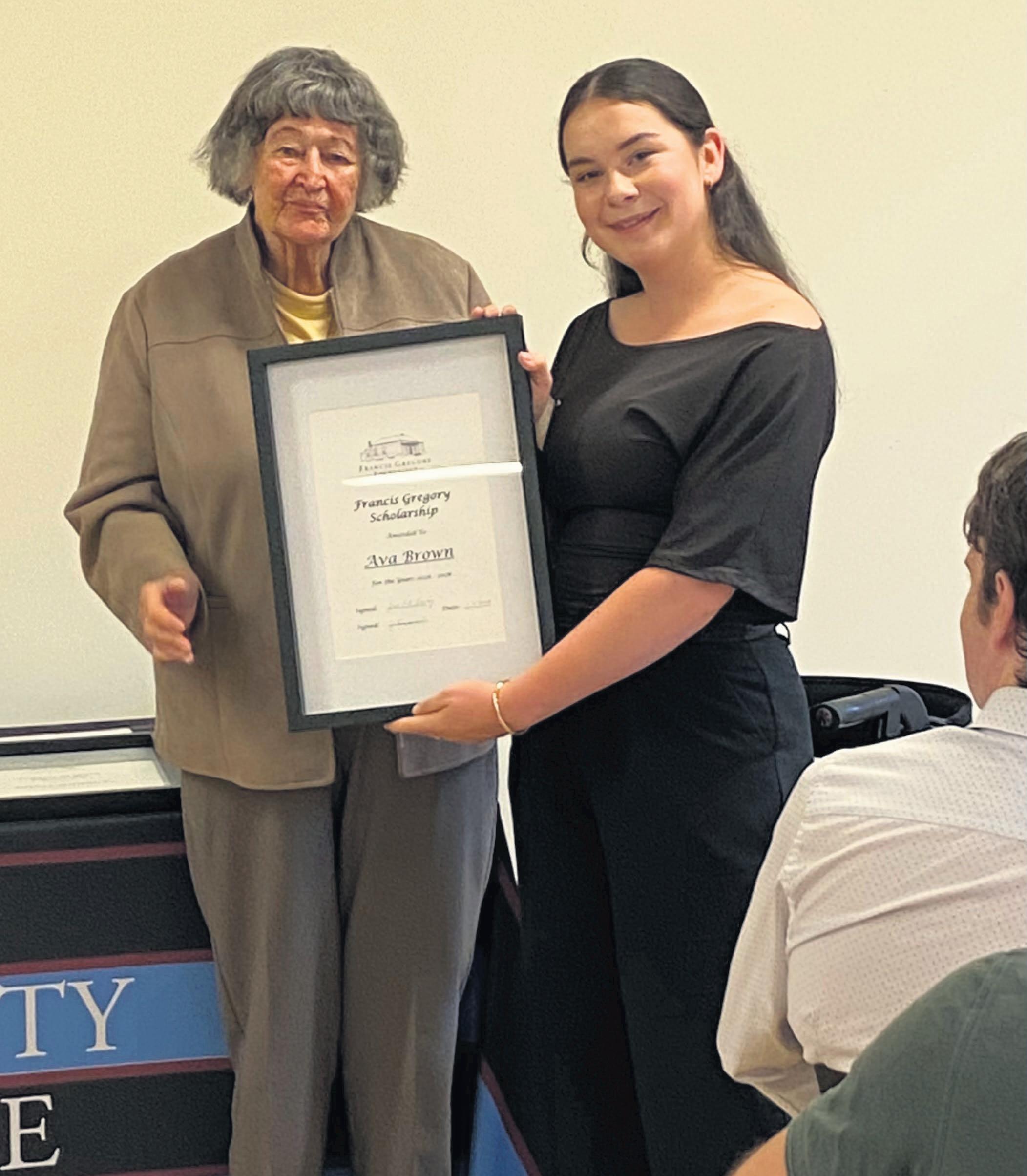
AVA BROWN, has been awarded a Francis Gregory Scholarship.
Ava is the daughter of well known Gunbower dairy farmers, Stephen and Brooke Brown.
Ava attended Saint Joseph’s College, Echuca and has now commenced a Bachelor of Arts at the Australian National University.
The philanthropic group, Francis Gregory Foundation, met at University College on Sunday, May 3 to celebrate with Ava and her family.
On the day, scholarships were presented to James Gilmore, to study a Bachelor of Science (Monash University) and to Lucas Murphy, to study a Bachelor of Science (University of Melbourne).
The Francis Gregory Foundation was established by June Harvey, granddaughter of the late Francis Gregory, a pioneer of Lardner.
Scholarships bequeathed by the foundation provide assistance to children of farming families seeking to pursue university education — particularly students who may not have this opportunity without financial support.
The Foundation’s funds were derived from the sale of the Gregory farm at Lardner, as selected by Francis in 1875.
June herself would not have been able to attend university if not for the Secondary Studentship Scheme, which was in operation when she was young.
Like many other farmers, her parents had assets in their farm; however, money was not readily available to meet the costs of a university education, especially when this entailed living away from home.
June’s wish is to provide scholarships to Year 12 students from families engaged in primary production who may not otherwise be able to continue on to tertiary education.
Francis Gregory Foundation formed in 2012 and has been providing scholarships to Victorian students from primary production families, since 2014.
Scholarships are valued at $6000 per year for the term of the student’s undergraduate studies.
To date 18 scholarships have been awarded to students.
Students have come from across Victoria and studies to date have included Agriculture, Pharmacy, Engineering, Communication, Audiology and Radiography.
Ava Brown (right) has been awarded a Francis Gregory Scholarship. She is pictured with June Harvey, granddaughter of the late Francis Gregory.
GARDINER FOUNDATION has opened two grant programs, investing in locally led initiatives to strengthen connection, resilience and long-term prosperity across Victoria’s dairying regions.
The Community Collaborative Grants and Community Development Grants are open simultaneously, offering funding across different scales and project types, from small community-building activities through to multiyear collaborative initiatives.
Gardiner general manager, Community and People Development, Jenny Wilson said the two programs reflect Gardiner’s commitment to vibrant, well-supported dairy communities.
“Strong communities underpin a strong dairy industry. These grants
back local organisations to deliver practical projects that bring people together and build stronger, more connected regions,” she said.
Up to $75,000 over three years
The Community Collaborative Grants program supports multi-year initiatives that respond to the significant transitions occurring within dairy communities, including climate pressures, workforce challenges, changing demographics and industry evolution.
Delivered in partnership with Australian Communities Foundation, grants of up to $75,000 over three years ($25,000 per annum) are available for seed funding, service delivery,
training and education, workshops and events, regional data and planning, and other community-led activities.
The 2026 round builds on the inaugural program, which supported three projects across Victoria: Murray region: Alpine Valley Dairies, Safe Farms, Strong Communities, a three-year farm safety and training initiative.
Gippsland: Catholic College Sale for an expanded Agricultural Program connecting students with dairy through hands-on learning, industry engagement and climate-focused pasture trials.
South West: Food and Fibre Great South Coast for a farmer-led innovation network focused on climate and production challenges.
“What stood out in the first round was
the strength of local leadership and the willingness of organisations to collaborate around shared challenges and opportunities. “We’re looking forward to seeing the next generation of ideas and partnerships come forward,” Ms Wilson said. Expressions of Interest close 5pm Tuesday, July 7. For more information: https://communityfoundation.org.au/grant-rounds/ gardiner-foundation-2026-community-collaborative-grants/
Up to $10,000
The Community Development Grants program supports smaller, placebased projects that foster social connection, wellbeing and resilience in
dairy communities. Following a successful inaugural round in 2025, which invested $150,000 into local projects, the program returns for its second year.
Grants of up to $10,000 are available for initiatives that promote social interaction, enhance wellbeing, enable digital inclusion, and improve access and mobility for people in Victoria’s dairying regions.
The program is delivered in partnership with the South West Community Foundation, Gippsland Community Foundation, Border Trust and Greater Shepparton Foundation. Applications open May 11 and close June 30. For more information: https://gardinerfoundation.com. au/ community-development/ community-grants/
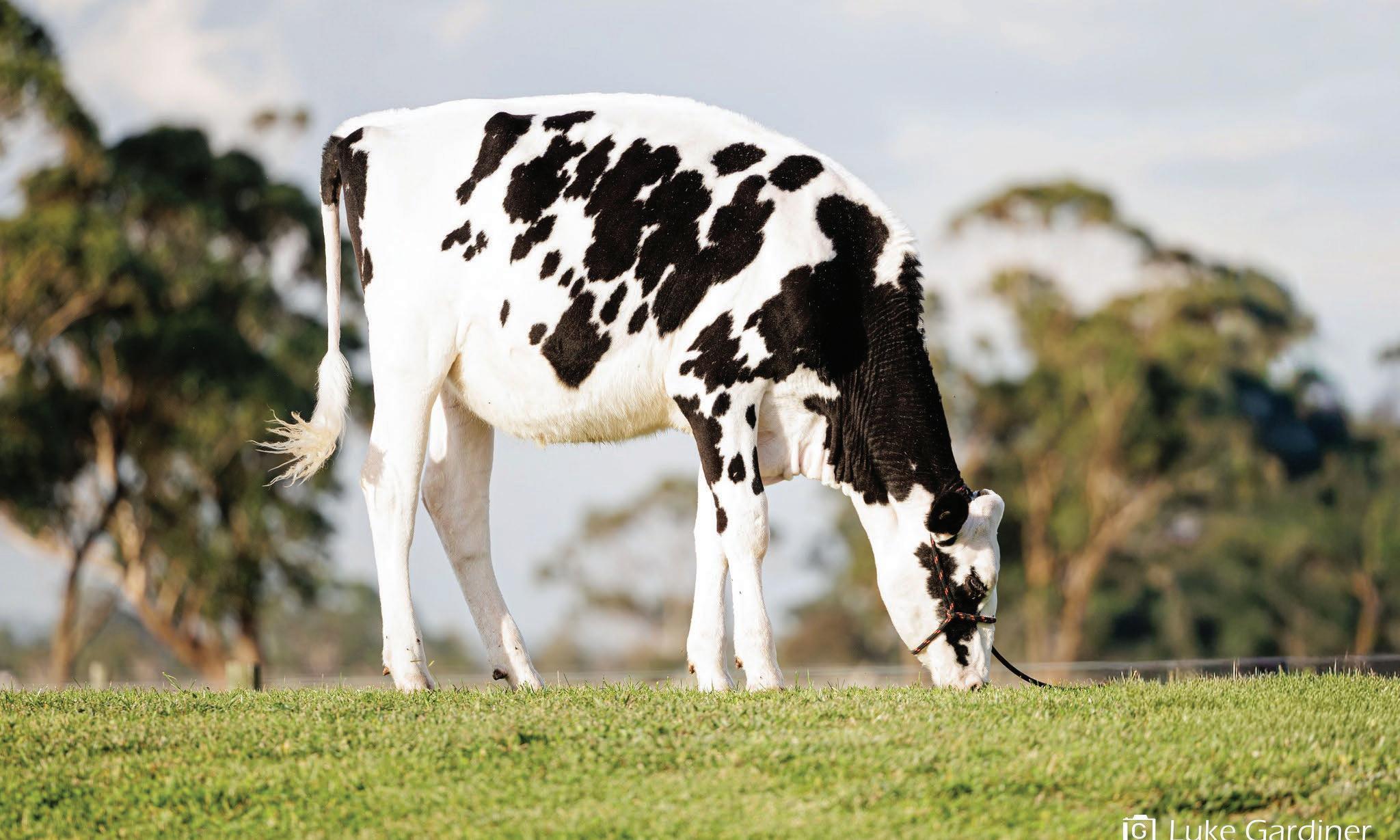
HOLSTEIN ENTHUSIASTS from all over Australia and New Zealand were onsite and online for the Avonlea Invitational Showcase Sale.
The sale was held in May at John and Cherrie Gardiner’s property at Nar Nar Goon and included lots from Avonlea, Gorbro and Maxmount Holsteins.
Top lot of the sale was Avonlea Gator Shakira (Imp.ET) who sold for $37,000 to Grantie Hills Holsteins of Cobram.
The 13 month old heifer is backed by eight direct dams all class EX 93 or higher. The same buyer also selected Avonlea Sidekick Velvet (Imp.ET) for $20,000 - a July calving two year old and direct daughter of MS Beautys Black Velvet, EX 96, two time All American and WDE winner.
Second highest lot seller was Avonlea Tatoo Satin a six month old grand daughter of the record priced cow View Fort Jagger Satin, EX 93 (selling for $54,000 last year). She sold to Rockstar Holsteins, Cobargo, NSW for $21,000.
WA buyer T McSwain selected Avonlea Delta Bindi an eight month old Lambda from a Harris daughter of Jacobs Octane Babe, EX 96 at $18,000.
The Benlargo herd of the Tweddle Family, SA purchased Avonlea Dylan Alana who sold carrying an embryo from Glenunga Wind Butterbrook, EX 95 at $16,000.
There was a lot of praise for Avonlea Lambda Camino, a daughter of Royal Champion Cow Linsand Aspen Cinnamin, EX.
The yearling sold for $15,000 to S and J Oslear of NSW.
Other noted sales included Avonlea Captains Timeout backed by many
generations of EX and All Canadian winners for $13,000 to Clydevale Holsteins.
Avonlea Crushabull Princess, an exceptional milking two year old sold for $12,000 to M and A Taylor.
Avonlea Tatoo Mistress a top young second lactation cow sold for $10,000 to P Latimore from NSW.
Avonlea WB Jagger Lynzi bred down from Idee Windbrook Lynzi, EX 95 sold for $10,000 to the Walters Family, Tasmania and Avonlea Sidekick H Ruth also sold for $10,000.
Gorbro sold a wonderful line of milking two year olds along with spring calving heifers.
They started off with the recently scored VG 86 two year old Gorbro Lambda Vienna, bred from three generations of EX dams with the second dam Murribrook Goldwyn Verbena, EX 92 the 2025 Holstein Cow of the year.
She sold for $20,000 to Tim and Kellie Walden of Muswellbrook, NSW.
Gorbro Shimmers Lambda, VG 86 and from an eighth generation EX dam, sold for $15,000 to Distinctive Dairy, SA.
Other noted sales for Gorbro included Gorbro Perennial Noni from an EX Chief dam sold for $12,000 to Weventure Farms, Kyabram.
Two year old Gorbro Dazzle Marra, VG 85, sold for $10,000 to M and A Taylor and Gorbro Parfect Mildred due to an embryo from VWF Champion Reginal Victory also sold for $10,000 to Burn Brae.
Maxmount Holsteins sold a wonderful line of young milking cows including Maxmount Isnt She Elegant, VG 85.
The two year old sold for $11,000 to Llandovery Farms, Girgarre.
Cattle were sold to all states in Australia accept Queensland and Dairy Livestock Services report 76 Holsteins gross $603,600, averaging $7,945.


BY BERNIE FREE
Every dairy farmer I know is doing the sums.
New season milk prices will be announced in the coming weeks, even though early signals suggest they may be close to this year’s levels. That does not stack up against the increase in the cost of producing milk.
Farmers are looking at feed budgets, fertiliser and fuel bills, interest rates, labour costs and the season ahead. A price signal that does not recognise the cost of production on farm will put real pressure on milk supply.
No part of the dairy supply chain is escaping higher costs. Processors, transport operators and retailers are feeling it too. But the simple fact is this: without milk, there is no dairy supply chain. If farmers cannot keep producing, the impact does not stop at the farmgate.
That is why farmgate milk price matters. It is not just a number on a contract. It determines whether farmers can invest, employ and manage seasonal risk.
The pressure we are feeling in Victoria is being felt in dairy regions across Australia and around the world. Higher input costs, tighter margins and global instability are not ours alone. But the longer-term fundamentals remain strong. The world needs high-quality protein, and the Victorian dairy industry is well placed to supply it, with skilled farmers,
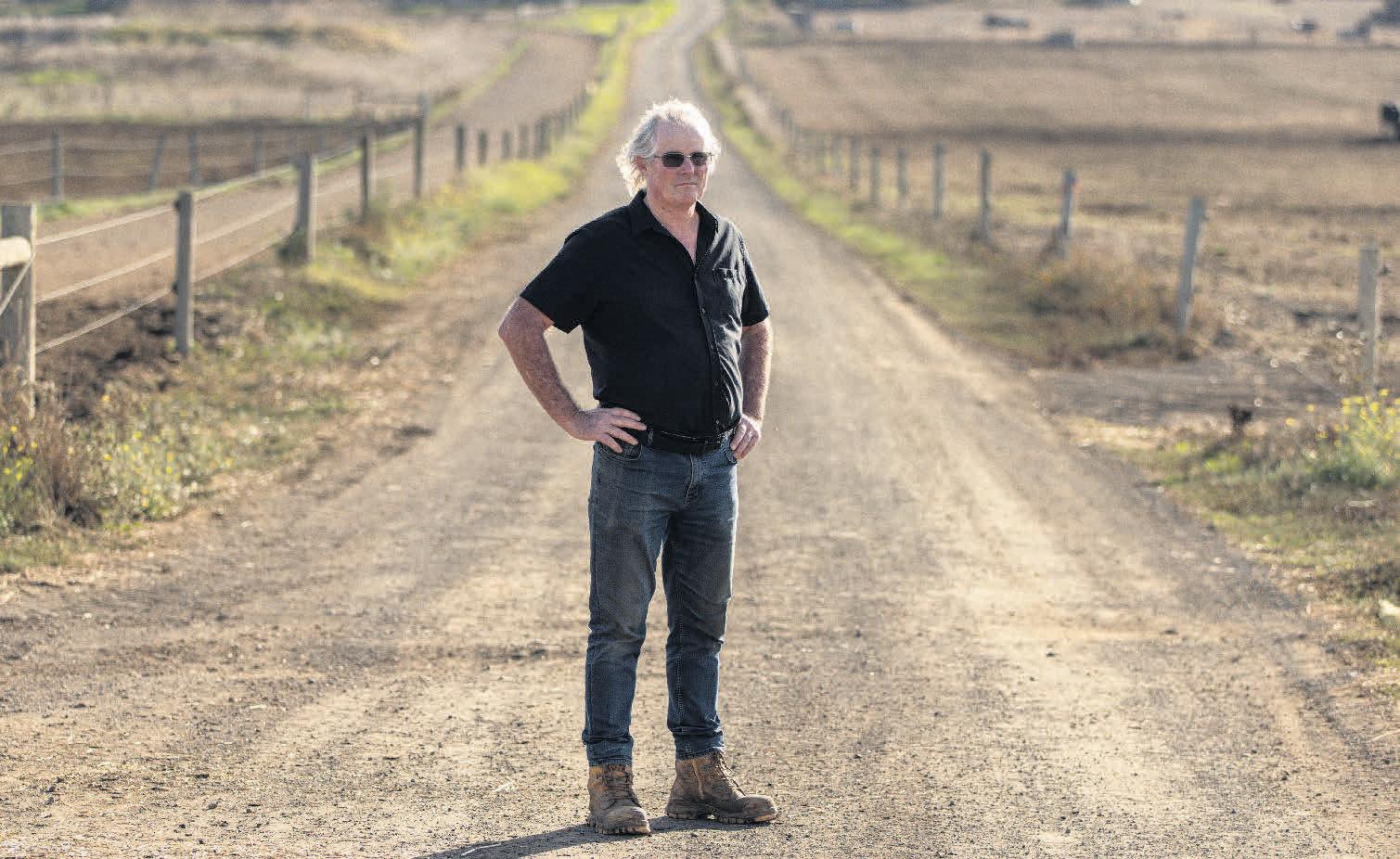
established processing capacity and access to domestic and export markets.
Australian families rely on milk, cheese, yoghurt and other dairy products every day. But if we want Australian dairy on Australian tables tomorrow, we need to value it properly today.
Australian dairy farmers are not asking for special treatment. We are asking for fair treatment of the whole supply chain. and pricing
that recognises the true cost of producing high-quality food. Any increase at the retail end must be passed back through the supply chain in a way that reaches farmers with a fair share.
Consumers have a role to play too. Choosing Australian dairy products is a practical way to support food security, regional jobs and local farm businesses. It is also a vote of confidence in the quality of what Australian dairy
farmers produce. The latest Australian Dairy Sustainability Scorecard reported that 91 per cent of consumers agree Australia’s dairy industry produces high-quality products, while 87 per cent of regional communities agree dairy is an essential part of their community. That confidence has been earned, and it should be reflected in how dairy is valued at the checkout and through the supply chain. But fair value is only part of the equation. Farmers also need confidence that when they produce and supply milk, they will be paid for it.
The Dairy Code of Conduct has been important, but recent experience has shown some of its limitations. It has set rules around milk supply agreements, but it has not removed the commercial risk farmers face when processors fail to meet payment obligations. UDV will continue to advocate for reform, including how dairy farmers can be better protected when processors do not pay on time. Farmers who have produced and supplied milk should not be left exposed as unsecured creditors.
Dairy farmers are used to tough seasons, but they cannot keep absorbing costs that are not reflected in the price they receive. If the numbers do not work on farm, they stop working for everyone.
- Bernie Free is the United Dairyfarmers of Victoria president

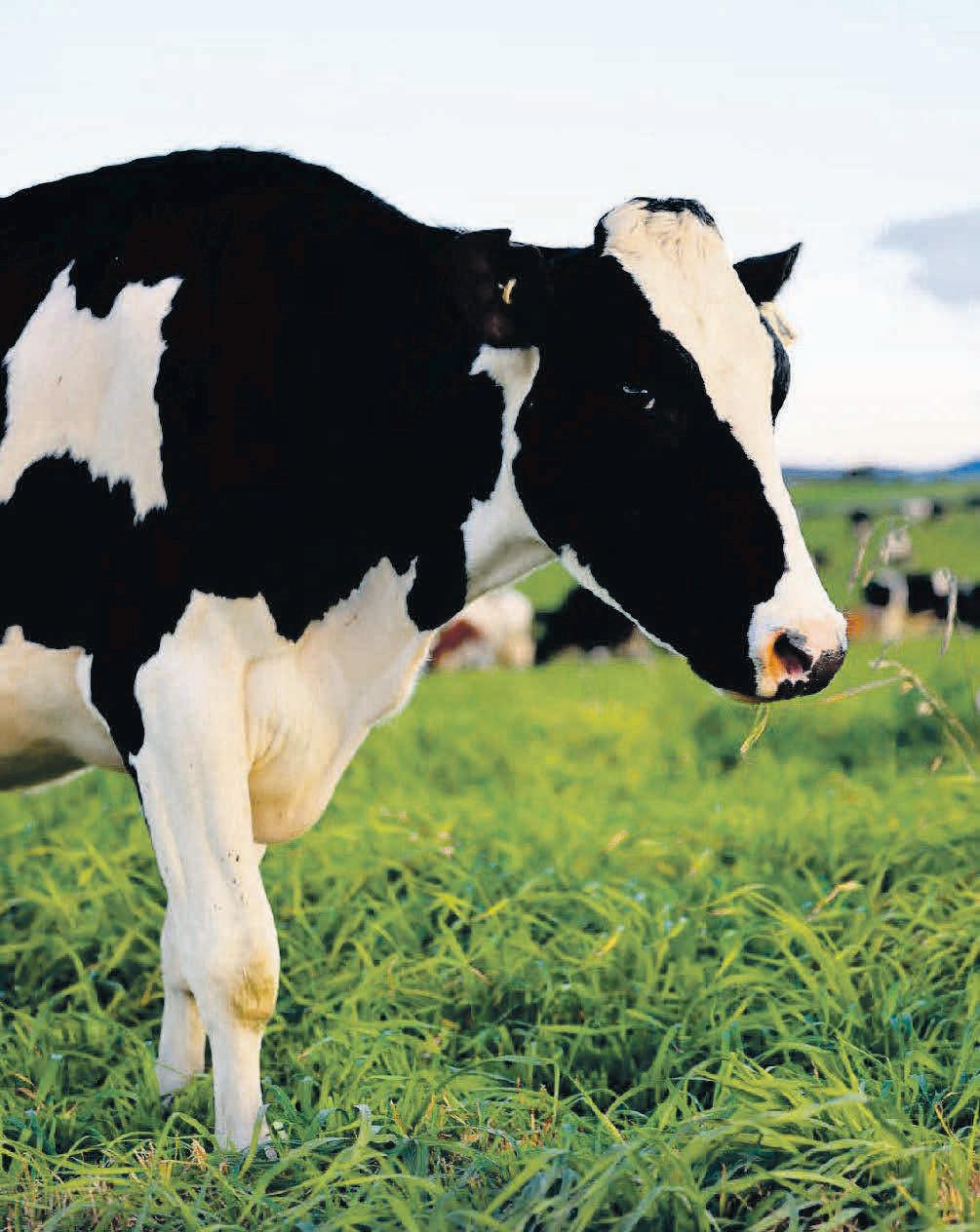
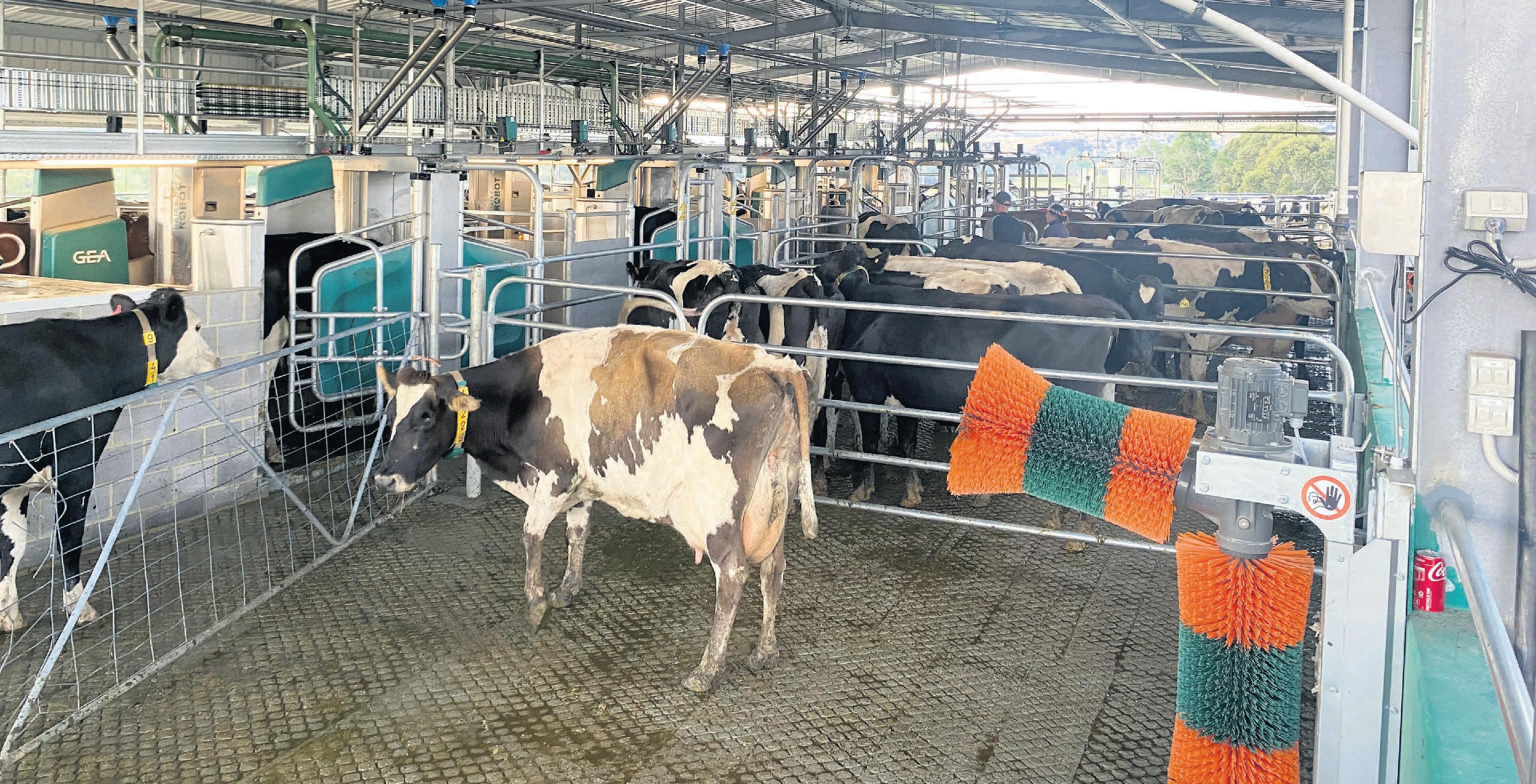
Gippsland, GEA’s east Gippsland dealer, has recently completed a significant robotic milking installation at Valencia Creek, marking another step for ward for automatic milking systems (AMS) in the region.
The dairy owners, Dennis and Erin Lomax, made the decision to invest in 10GEA R9500 Dairy Robots in April 2025.
Twelve months later, in April 2026, the first cows were milked through the system.
The new robotic dairy is currently milking around 530 cows, with plans already in place to increase numbers to more than 600 cows in the near future.
Prior to the upgrade, the herd was milked through a 50‑unit rotary, so moving to a fully voluntary milking system required an adjustment period for both cows and people.
As expected, the first few milkings involved some gentle guidance to help cows find their way into the robots.
The GEA R9500 robots are designed for
full voluntary milking, allowing cows to choose when they are milked and fed.
One feature that stood out during start‑up was the milking pit concept, which allows operators to safely stand behind the cows while they are in the robots.
This made it easier to observe the process closely and assist with cupping in the early milkings where required.
Everyone involved in the start‑up was impressed by how quickly the cows adapt ed to the new system — and how fast the robots learned individual teat placement.
By the second day, cupping times had dropped significantly, and cows were notice ably calmer and more relaxed in the robots.
Targeted feed rations delivered during milking played a key role in encouraging cow flow and supporting a smooth transi tion, reinforcing positive cow behaviour from the outset.
From day one, the GEA system was actively managing milk quality. Any
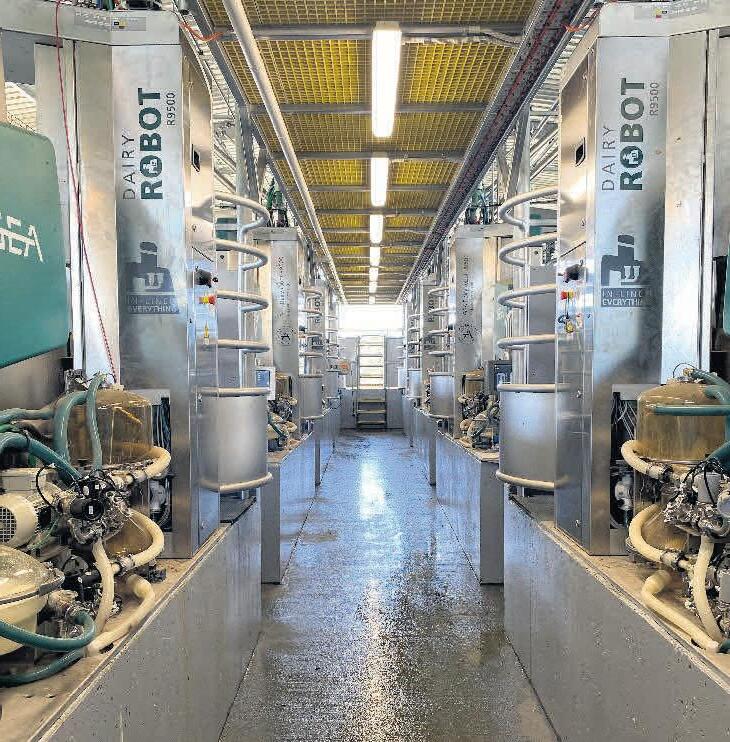
high‑conductivity (high cell count) milk and colostrum milk was automatically separated and directed to the calf milk tank.
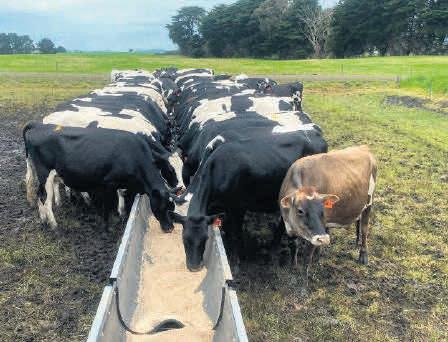
The system also monitors milk at a quarter level, meaning individual quarters producing contaminated milk — such as blood‑tainted milk — can be automatically diverted to the calf tank or sent straight to waste, depending on the farm’s pre‑set sys tem settings.
This le vel of control gives confidence around milk quality while reducing manual intervention.
With more cows planned to come online and the system now well settled, the Valencia Creek installation with pioneers like Dennis and Erin, highlight how large herds in Gippsland can successfully transi tion from conventional milking to robotics, while maintaining cow comfort, milk quality and operational control.
Call Future Dairies Gippsland dealership on 03 5147 2571 to start the conversation and map the best fit for your operation. Visit GEA.com/ dairyfarming for more details.
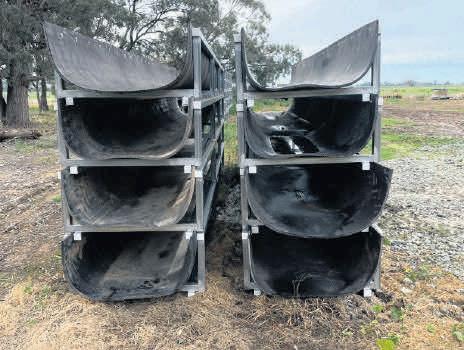
We have designed a simple but very effective Feed Trough, to cut your feed wastage and save you money. The endless troughs can be laid in a continuous length, they are also stackable, so you can move them easily from one paddock to another. The frame is made from Australian Steel, with repurposed rubber conveyor belt used to make the trough, its nylon based and will last a lifetime.
8m $1650 Inc GST • 6m $1240 Inc GST

SAPUTO DAIRY Australia (SDA) is proud to support the next generation of dairy industry leaders through its annual Supplier Scholarship Program, reinforcing its long-term commitment to a strong and sustainable dairy industry.
This year, 11 recipients from across Victoria and South Australia have been awarded scholarships to support their higher education and career aspirations within the dairy and broader agricultural sector.
The Supplier Scholarship Program provides each recipient with up to $5000 in financial support, helping ease the cost of tertiary study and enabling students to develop the skills, knowledge and leadership capability to advance the future of dairy farming and regional communities.
SDA’s director of milk supply Kate Ryan said we’re proud to invest in the next generation of dairy industry leaders.
“These students bring passion, dedication and fresh thinking to the industry, and we’re pleased we can support them as they build careers that will help strengthen dairy farming and regional communities for the future.”
The 2026 scholarship recipients are undertaking studies across agriculture, agronomy, veterinary science, veterinary nursing and related disciplines, with many planning to return to regional areas to support farmers through innovation, sustainability and best-practice dairy production
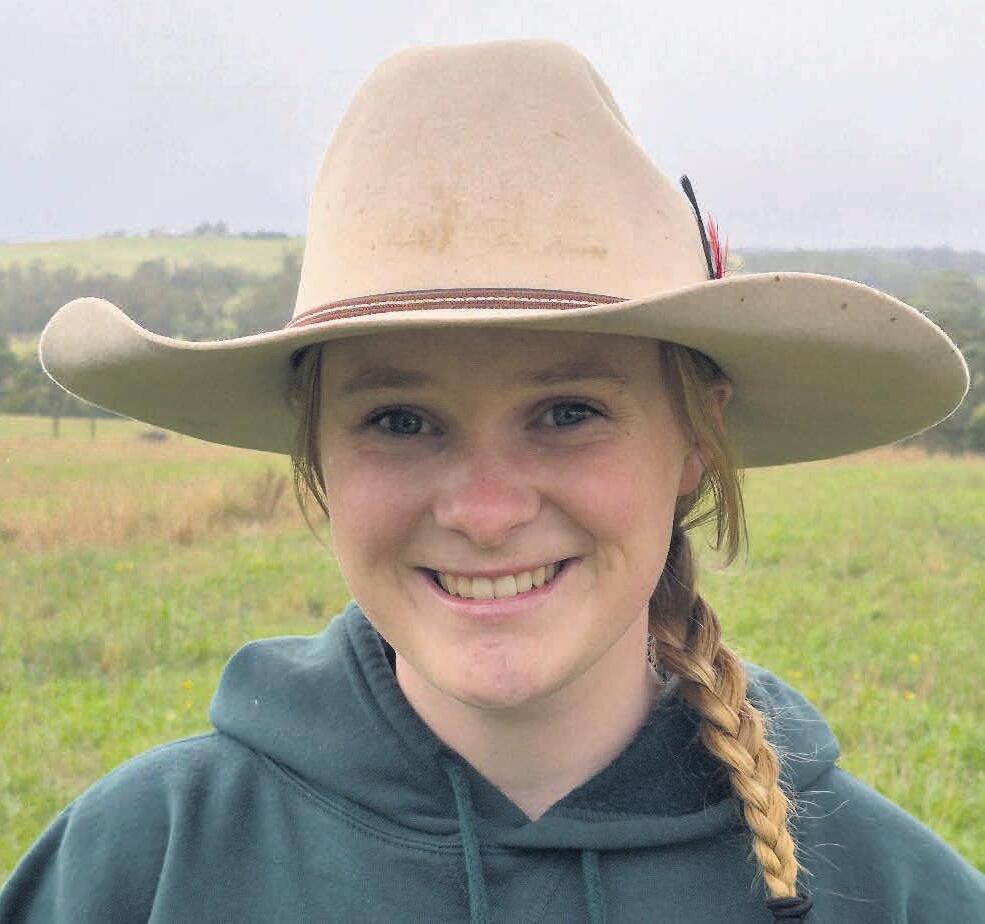
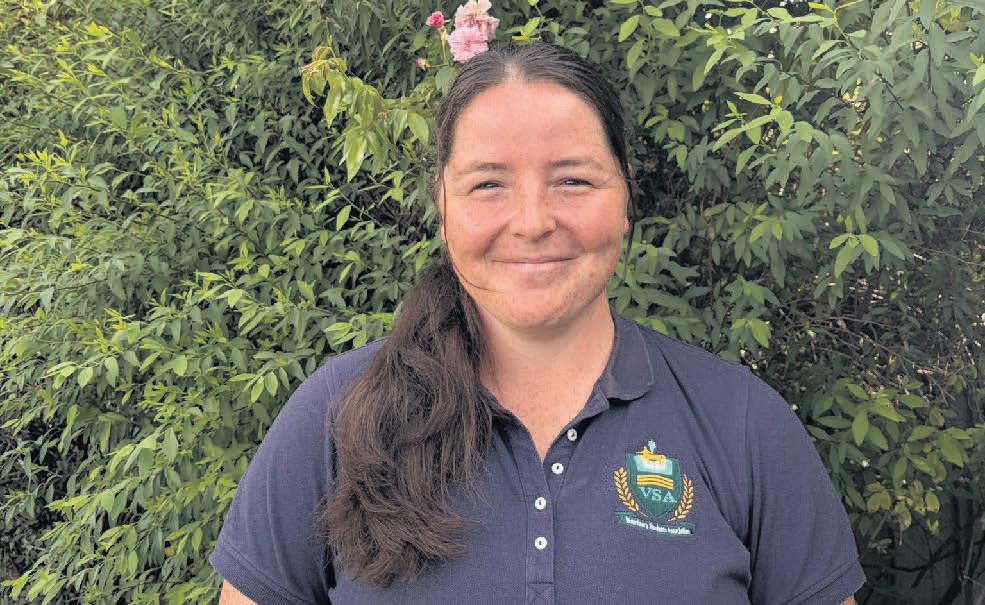
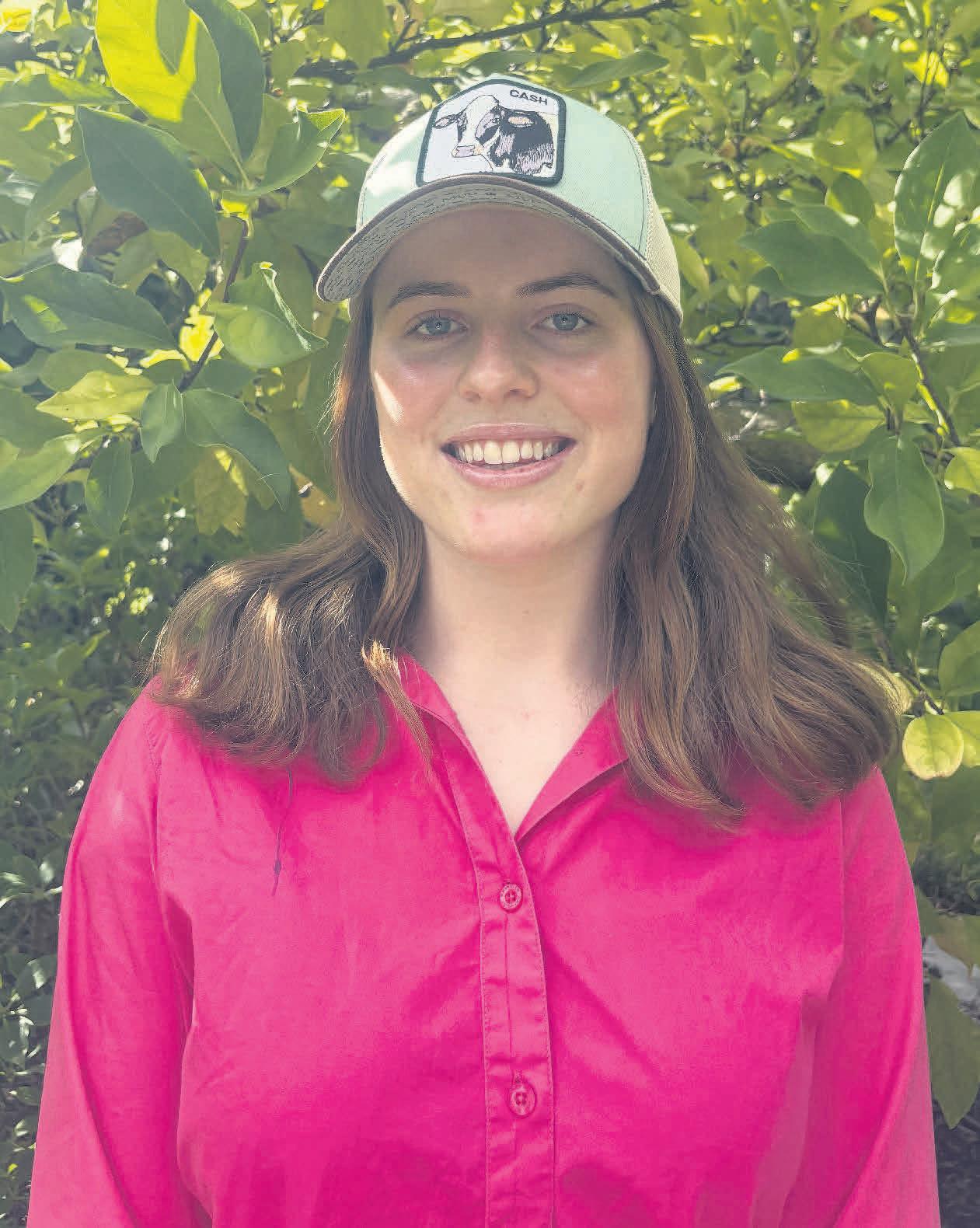

The first 3 months are so important to your calves’ future the herd, so don’t compromise, in use Veanavite No1 Calf Pellets.




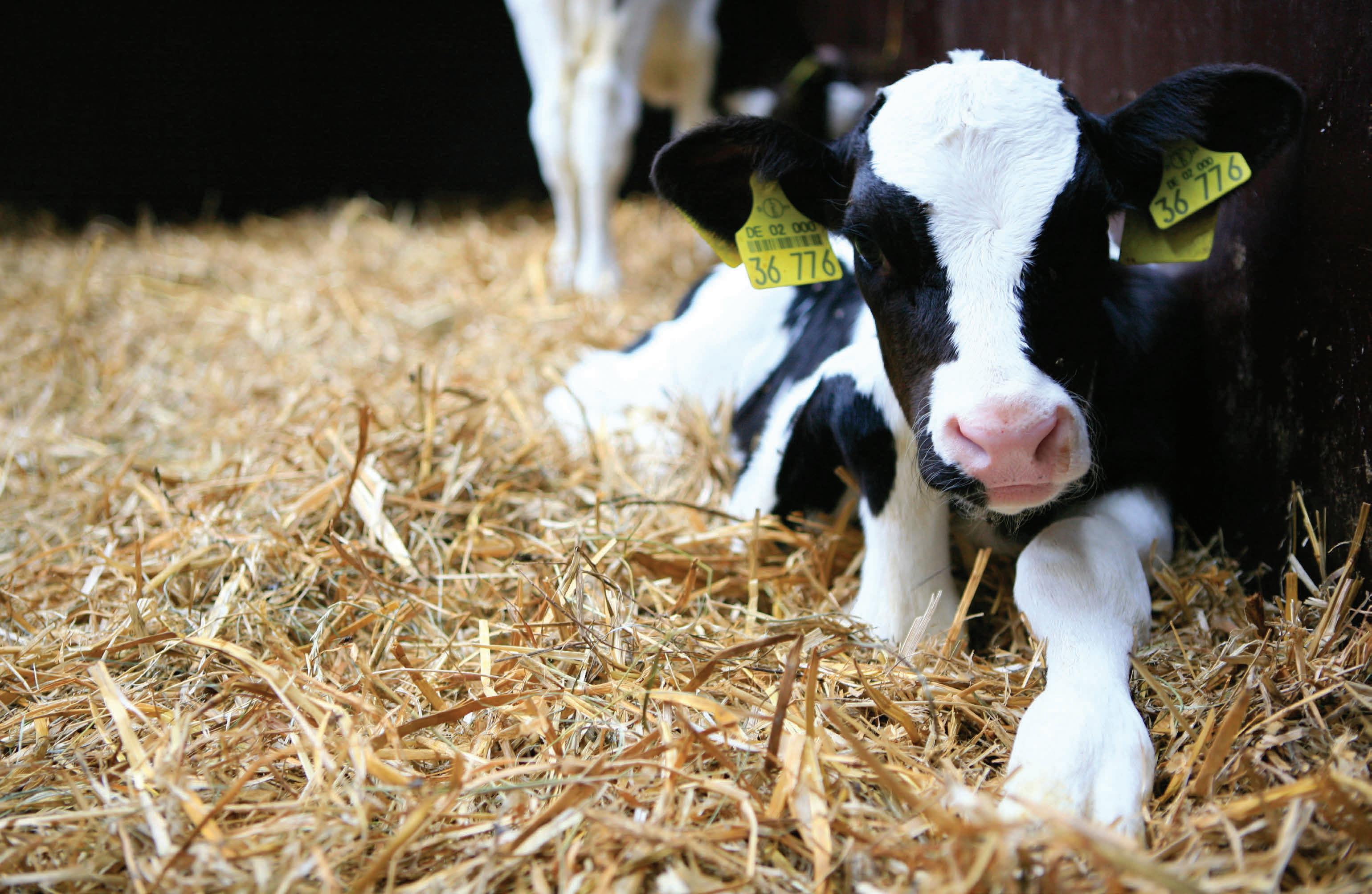
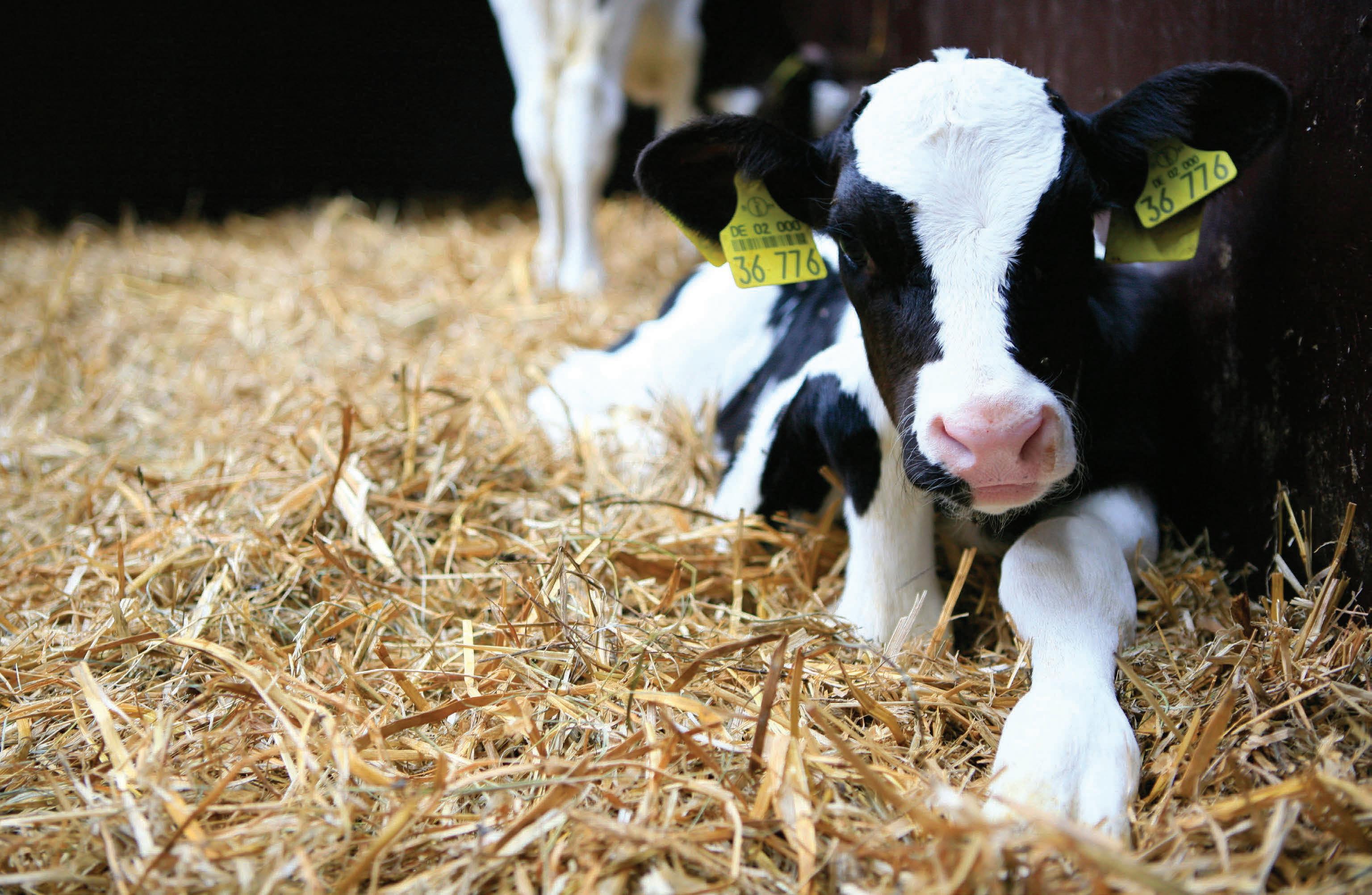
BY LEIGHTON HART AND GREG MORRIS
From weaning through to first lactation, heifers represent one of the longest and most capital-intensive investments on a dairy farm.
Yet too often, their nutrition relies on suboptimal feed.
Consistently hitting growth and weight targets requires dedication and a deliberate, year-in, year-out commitment to a heifer-focused feeding program.
Once calves are weaned, the objective is steady, uninterrupted growth.
In pasture-based systems, this generally means targeting daily liveweight gains of 0.6 to 0.8 kilograms, ensuring heifers reach 60 per cent of their mature liveweight at joining and 85 per cent of their mature liveweight at first calving.
Achieving these targets cannot be left to pasture alone because seasonal feed gaps during winter or summer commonly result in growth checks that are difficult and expensive to recover from.
The benefits of investing in heifer nutrition carry through to first lactation and beyond.
Heifers that calve at 22 to 24 months, and at the correct liveweight have 20 per cent more chance of getting back in calf, produce 5 per cent more milk and are 10 per cent more likely to remain in the herd .
Undergrown heifers, by contrast, divert nutrients to continued body growth instead
of milk production, reducing first-lactation yield and lifetime performance.
So how can farmers ensure their heifers are on track?
The keys are a good feed supply, regular liveweight monitoring, and targeted feeding.
Whether purchased or home-grown, feed allocated to young stock needs to be budgeted annually, matched to performance targets, and protected during periods of feed pressure.
Adding just 2kgDM of maize silage to a pasture-based heifer diet can equate to an extra 0.2 kg of liveweight gain per day.
Growing feed specifically for heifers is a practical way to ensure they meet weight targets.
Crops such as Pioneer brand maize and forage sorghum can provide reliable, high-energy feed to complement pasture and smooth seasonal variation.
Maize silage offers excellent palatability and consistency, and can be stored and fed when required.
Forage sorghum adds flexibility in warmer or drier seasons, with strong biomass production and the ability to generate large volumes of feed.
Purchased supplements play an important role when homegrown supply falls short.
The focus should always be on meeting nutrient requirements that match the heifer’s stage of growth, rather than simply filling a feed gap.

BY NICHOLAS SPANDLER
THE FEDERAL Government’s newly announced $10 billion fuel security package is being welcomed by farm groups, with a strong focus on improving fertiliser supply for Australian producers.
The Albanese Labor Government said the Australian Fuel Security and Resilience package would secure fuel and fertiliser in the Federal Budget, including a $7.5 billion fuel and fertiliser security facility to boost supply and storage.
The initiative will provide financial support such as loans, equity, guarantees, insurance and price support aimed at strengthening fertiliser availability alongside fuel reserves.
The National Farmers’ Federation said the measures were critical to protecting
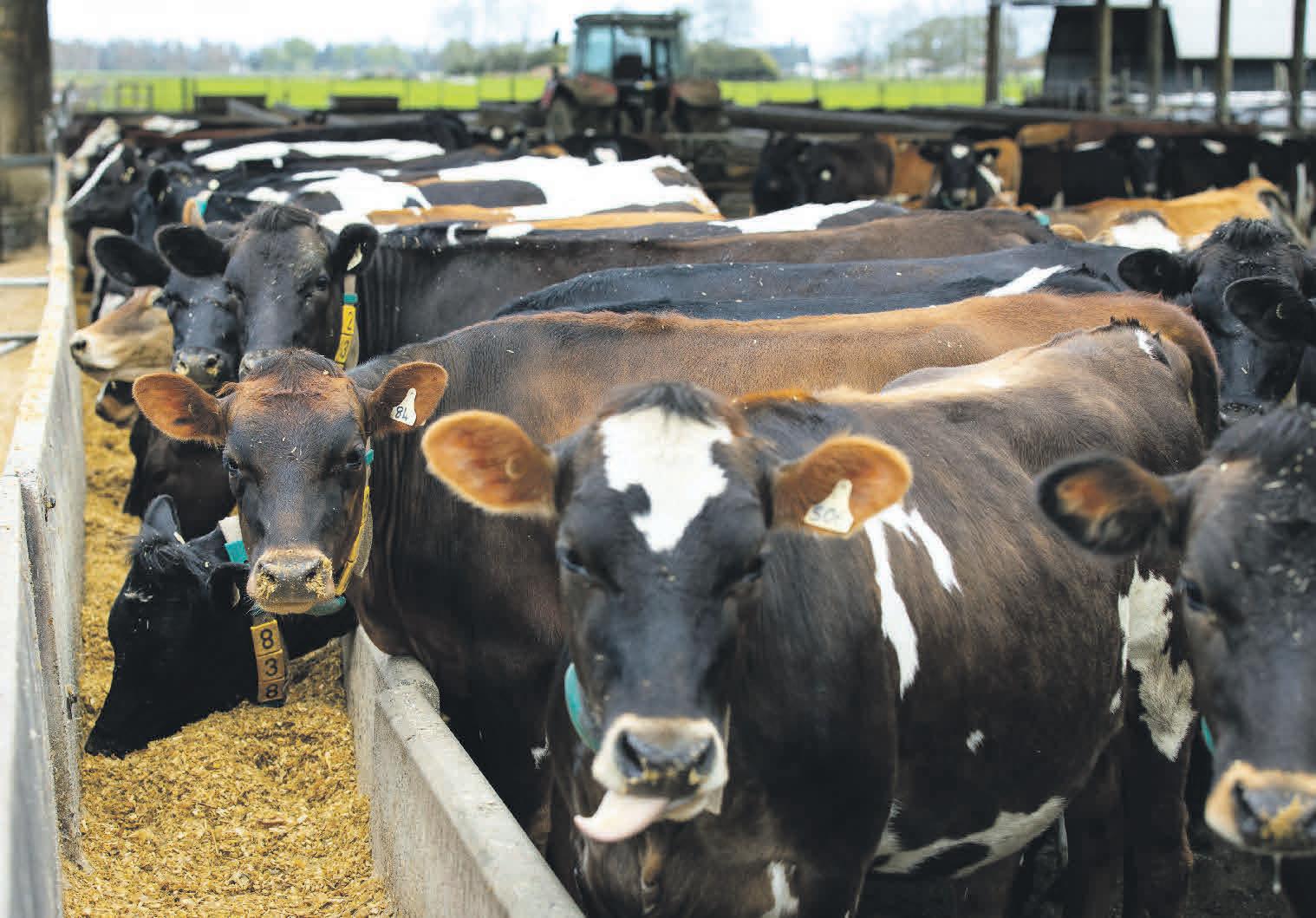
Monitoring is also a critical step, and heifers should be weighed routinely to track progress against target weights rather than relying on visual assessment.
Dairy Australia suggests weighing every 2–3 months is a practical minimum to detect problems early and adjust nutrition in time.
More frequent weighing (e.g. every 4–6 weeks) is encouraged after weaning, leading
into joining or if heifers are behind or ahead of target 1.
By committing to focused heifer feeding and monitoring programs, producers can consistently deliver well-grown heifers that can convert feed into milk sooner, thereby improving cash flow, labour efficiency, and whole-farm profitability across successive seasons.

Australia’s food production system, particularly in the face of global supply disruptions.
NFF president Hamish McIntyre said fertiliser security was essential for farmers across the country.
“These are practical decisions that will increase our liquid fuel and fertiliser security,” Mr McIntyre said.
“Reliable and affordable fuel and fertiliser underpins every stage of food production, and recent events have shown just how exposed Australia is to global shocks.”
The package also includes a government-owned fuel reserve and increased minimum stock holding obligations, but industry leaders say fertiliser support will be just as important for regional communities.
Mr McIntyre said recent disruptions had exposed Australia’s reliance on global supply chains.
We are clearing out our warehouse for the End of Financial Year. Whether you're covering pits, bunkers, or stacks, now is the time to secure premium silage protection at unbeatable prices.
Financial Year. Whether you're covering pits, bunkers, or stacks, now is the time to secure premium silage protection at unbeatable prices.
Heavy-duty & tear-resistant
Huge range of sizes in stock.
• Heavy-duty & tear-resistant
• Huge range of sizes in stock.
Superior 10 Year UV protection for harsh Australian conditions
• Superior 10-Year UV protection for harsh Australian conditions.
ALL STOCK MUST GO. Discount applies to all orders.
Strictly while stocks last. Call us today at 0430016044 or visit securecovers.com.au
ALL STOCK MUST GO. Discount applies to all orders. Strictly while stocks last. Call us today at 0430016044 or visit securecovers.com.au
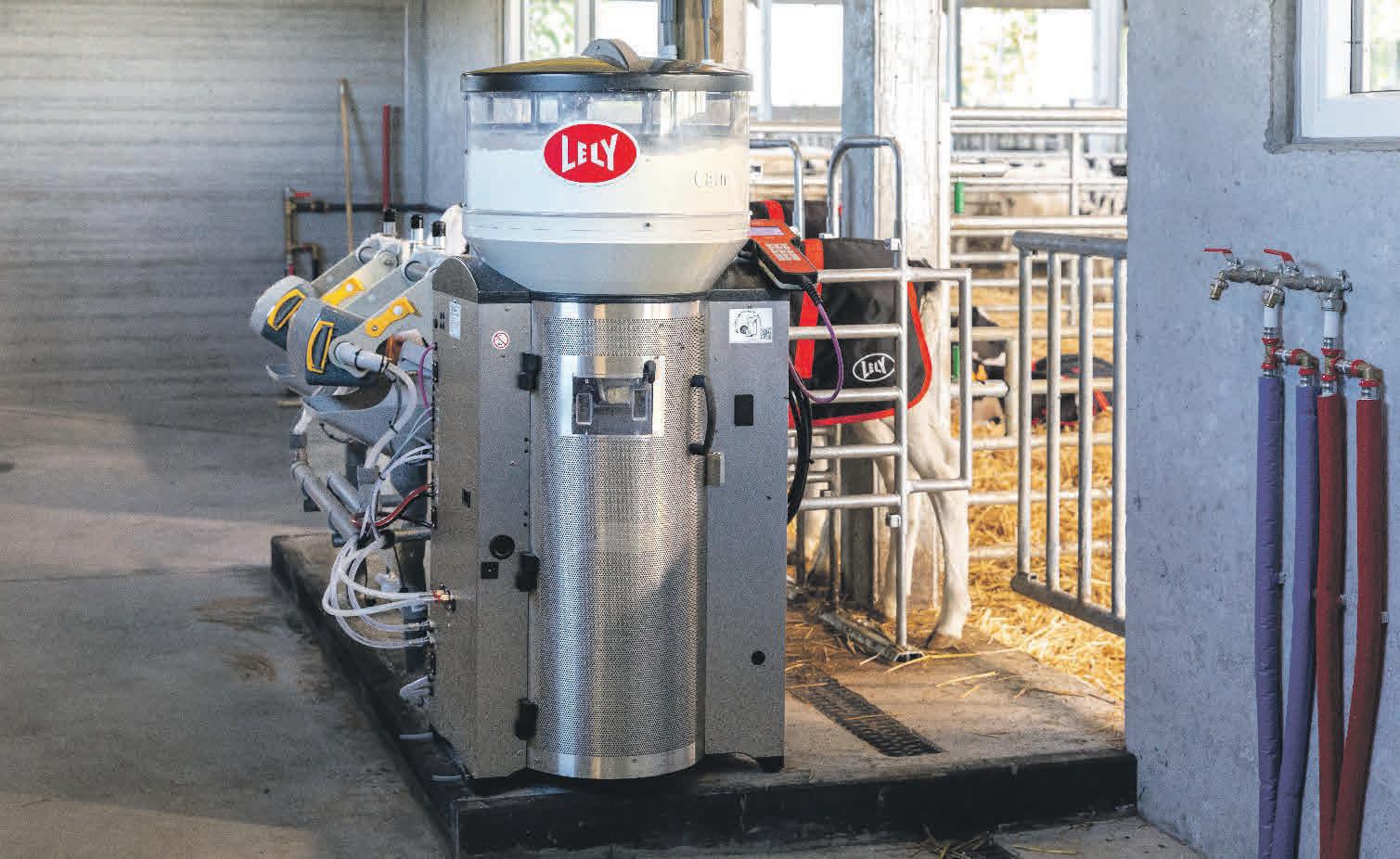
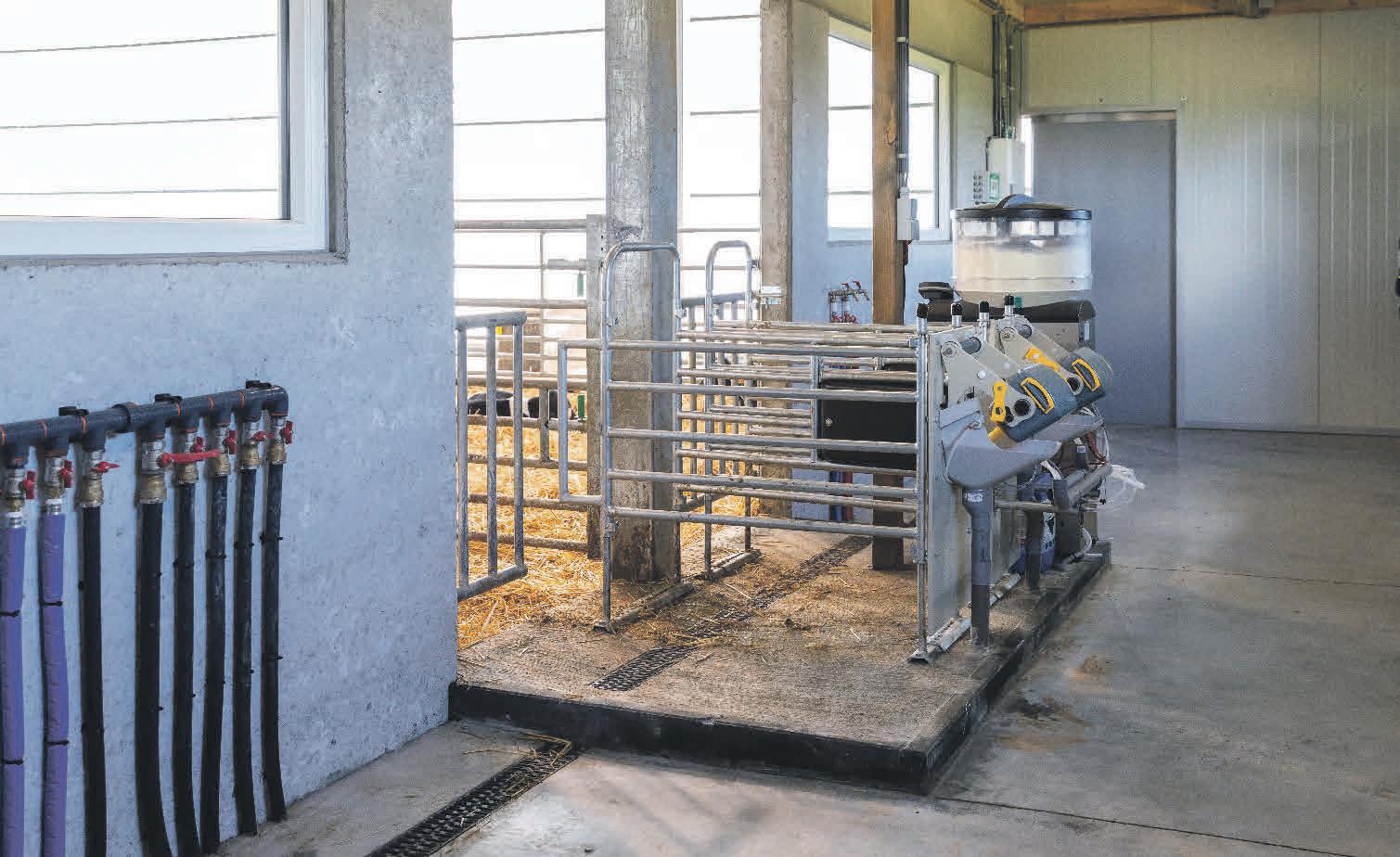
BY SOPHIE BALDWIN
THE FIRST weeks of a calf’s life shape the future of the entire herd.
Growth rates, health, and early nutrition all have a direct line to lifetime performance.
Yet on many farms, calf feeding remains one of the most labour-intensive and inconsistent parts of the operation.
That is where the Lely Calm automatic calf feeder is making a real difference.
At its core, the Calm is about consistency. It prepares milk at the right temperature for frequent, natural calf feeding, resembling their natural rhythm.
This supports better nutrient uptake and steadier daily weight gain than traditional bucket feeding. Feeding strategies are fully adjustable too, so replacement heifers and beef calves can each be managed according to their own goals, with gradual step-downs that encourage rumen development and set the foundation for improved vitality, fertility, and milk production later in life.
Hygiene is handled automatically.
The Lely Calm cleans itself multiple times a day using water and specialised detergents.
Additionally, the optional HygieneBox adds a two-step process rinsing the teat after every visit and thoroughly cleaning the internal system, consistently keeping bacterial build-up low and milk quality high.
The labour savings are just as significant.
The repetitive work of mixing, filling, and manually feeding calves is largely automated, giving farmers meaningful time

back without compr omising on care or consistency.
What brings it all together is the recent integration with Lely Horizon.
The Lely Calm now captures feeding data every time a calf drinks, turning it into clear, practical insights. D rinking behaviour, early health signals, growth tracking are all in one place.
For farms running Lely Astronaut milking robots, this creates a complete digital record from calf to cow, supporting better decisions at every stage.
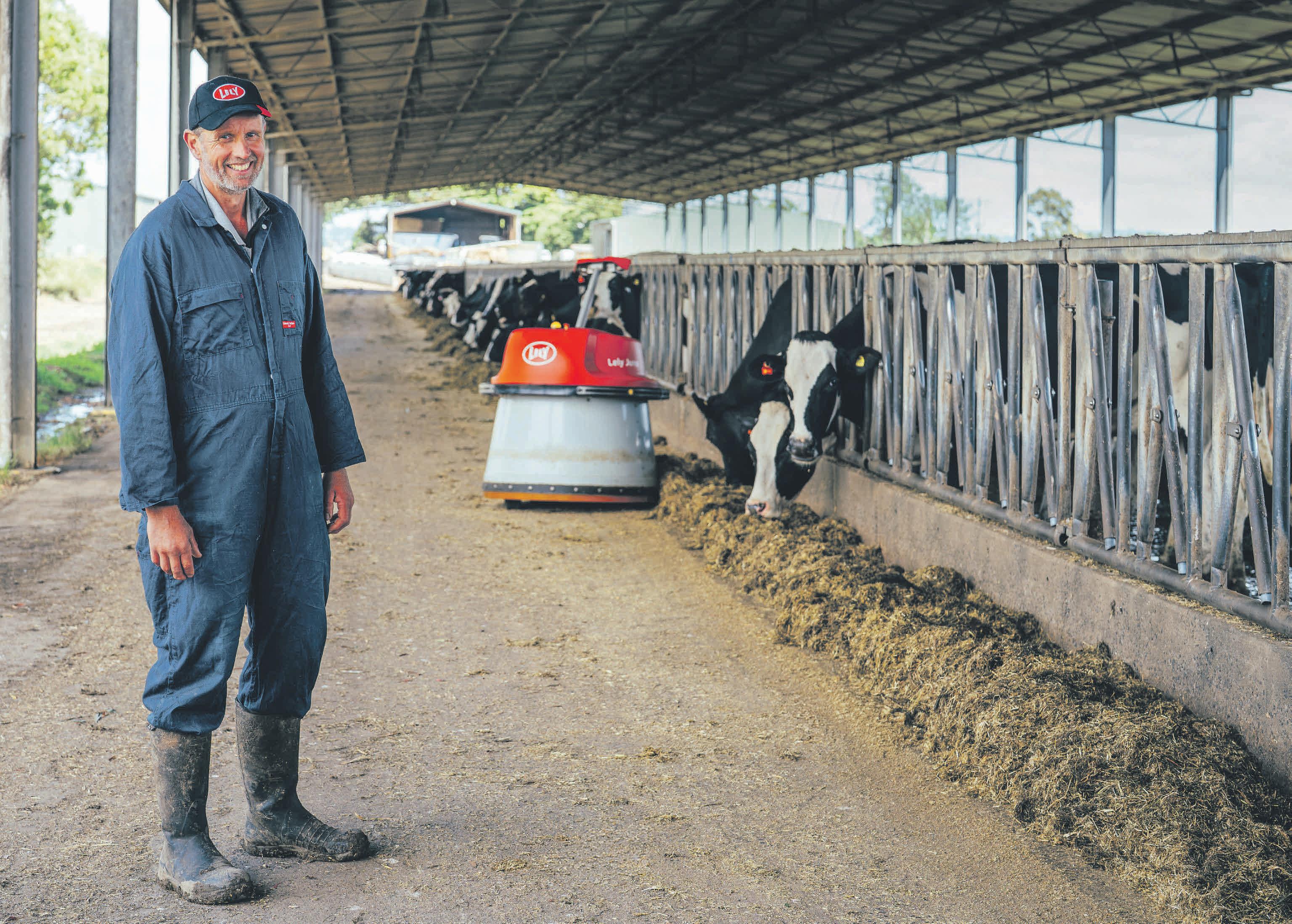



CROSS-SUCKLING IN calves has lasting impacts on udder health and future production.
This behaviour is linked to higher rates of first lactation mastitis and increased incidences of blind quarters.
The teat canal is sealed with a keratin plug that protects the udder from pathogens. During cross-suckling, this plug is removed, leaving the developing teat canal exposed.
Bacteria then colonise the tissue, setting the stage for mastitis and permanent damage.
Why do calves cross-suck? Calves are born with a strong suckling instinct. In nature, this is satisfied by the slow milk delivery of the cow - about one litre over four minutes. After 9-11 minutes, neurological feedback signals that the calf has consumed enough, the instinct switches off and the calf is content.
Problems arise when calves are fed with a fast flow. Valved teats squirt milk at the slightest touch, allowing a calf to consume a litre in 1-2 minutes.
Calves fed from a bucket can consume a litre in under a minute. This rapid intake is far quicker than nature intended. The brain continues to tell the calf to suckle, where in the absence of milk, it turns to its pen mates, leading to cross-suckling.
How to prevent cross-suckling
Cross-suckling is linked to drinking speed.
By regulating milk flow to 3-4 minutes per litre the calf’s brain receives the correct feedback, and the suckling instinct is satisfied.
Milk Bar Teats are designed to achieve this.
The unique design and rubber formulation
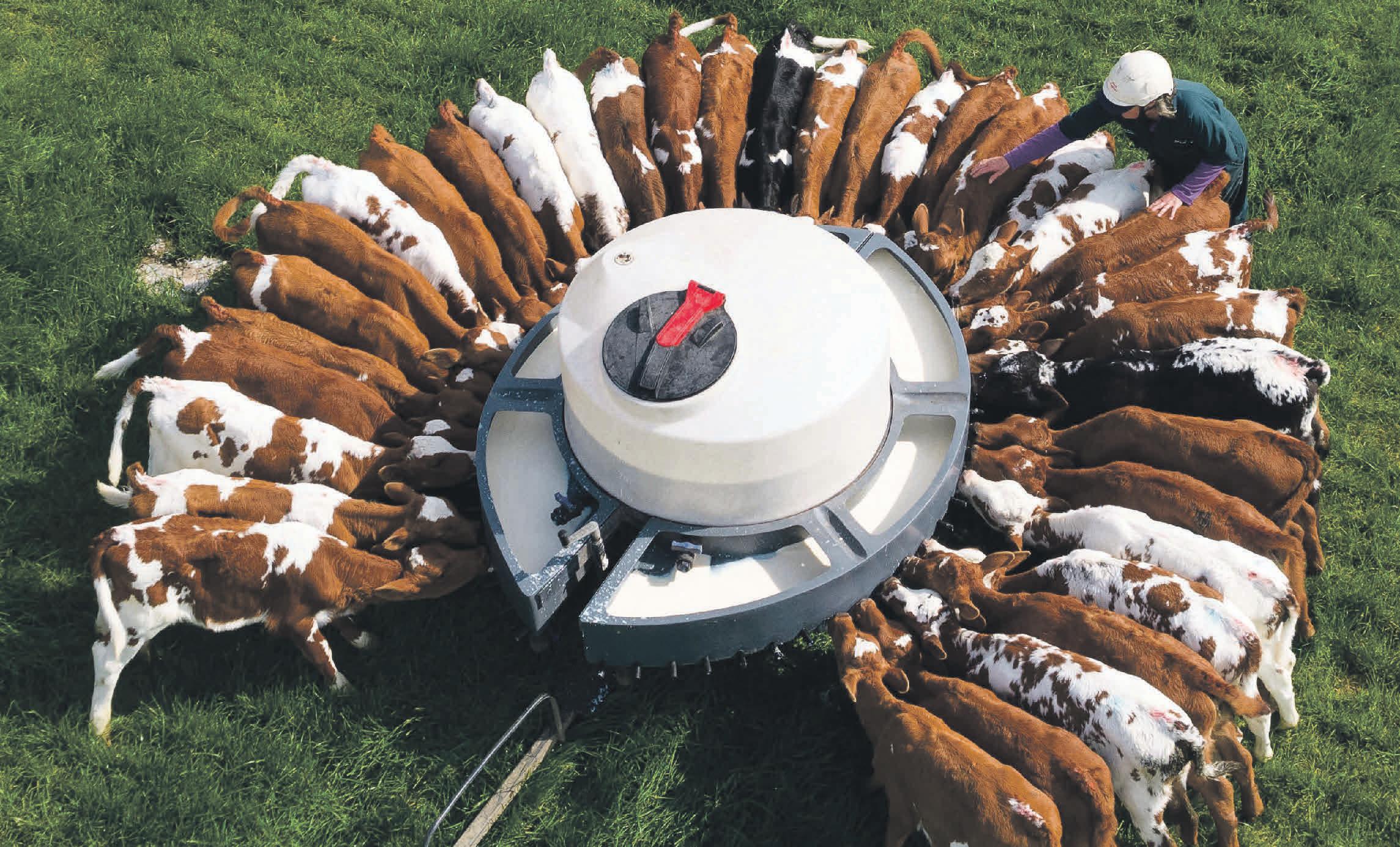
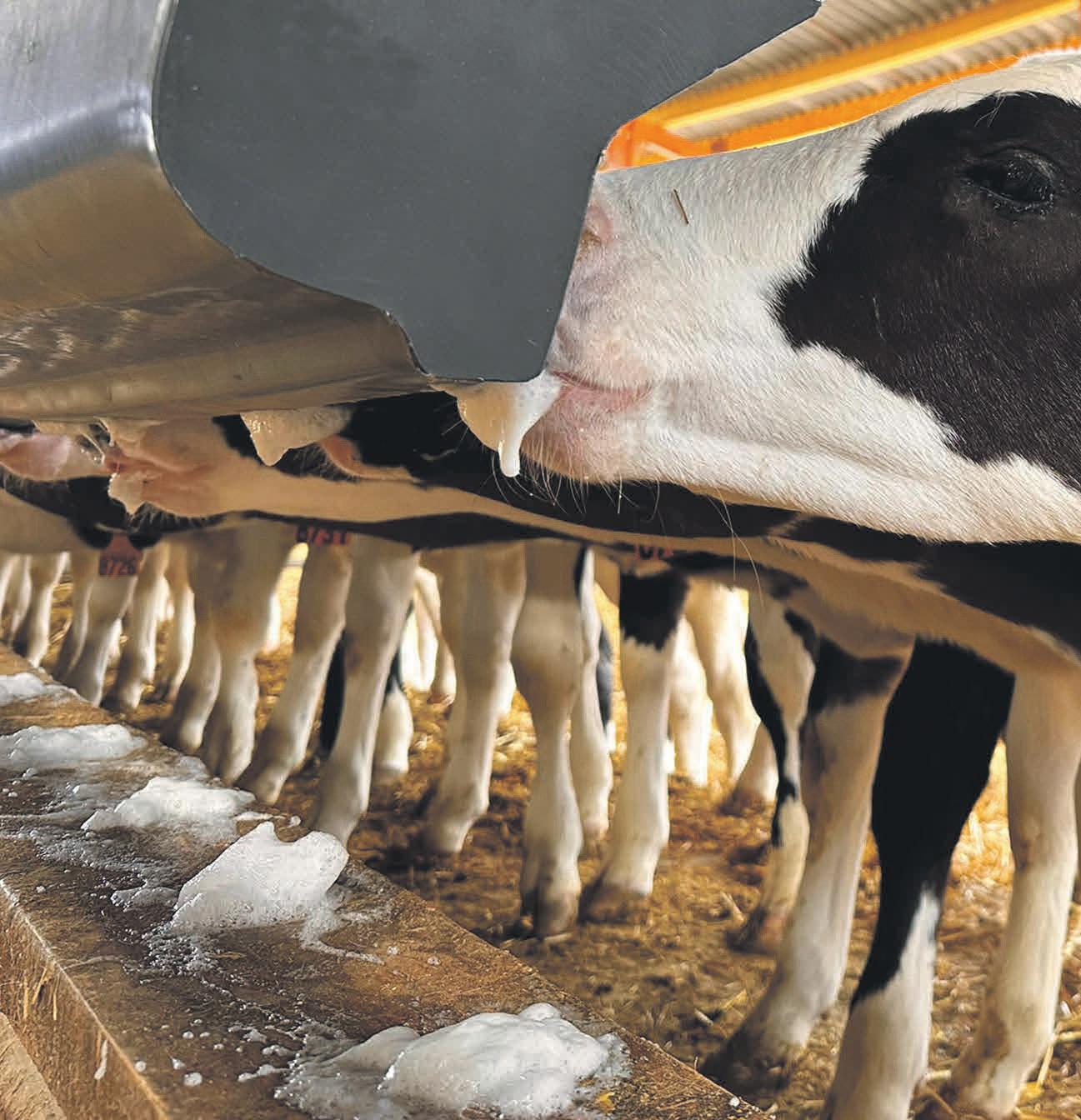

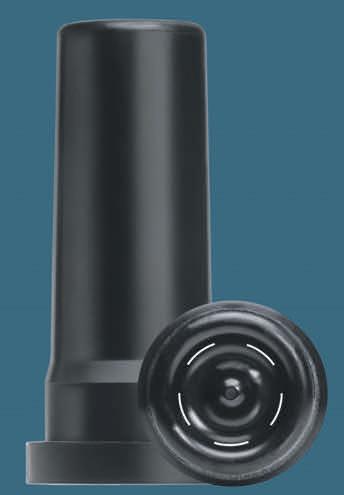


BY SOPHIE BALDWIN
EVERY FARMER knows how important it is to give newborn calves the best start possible, and for the DeCicco family from Benevento Holsteins at Undera, this begins before a calf even hits the ground.
Fred, Sonyia and son Daniel have got their management down pat these days, but that wasn’t always the case.
It wasn’t until they started to prioritise colostrum management that they noticed a big change in the health of all of their calves.
“About five years ago, we started to follow advice from our nutritionist Ellen Fitzgibbon, which included the purchase of brix monitor to measure the amount of colostrum in the milk — anything above 22 we freeze and keep,” Daniel said.
“In the old days, we just used to say if the milk was a gold colour it was good, and 90 per cent of the time that’s probably true, but over the years we have learnt it certainly pays to check with the brix monitor.”
Newborn calves are fed two litres of colostrum within their first hour of birth. This is followed by another two litre feed and then three litres over the next 12 hours.
“It is a bit of work at the start, but it is certainly worth it down the track,” Daniel said.
Pregnant cows are calved undercover in a shed, where they are monitored 24 hours a day by a camera installed in the roof.
This enables Daniel and Fred to feed calves within an hour of being born.
The benefits of the camera are two-fold — whoever is on calf duty doesn’t physically have to get out of bed at night to check a calving cow, and if there isn’t any action, they can just roll over and go back to sleep.
Looking after the dry cows well and ensuring they have access to shade, water and quality feed including lead feed before calving is a crucial starting point, and also contributes to the quality of colostrum a cow produces.
Both Fred and Daniel look after the newborn calves together, but after a couple of days, Daniel takes over.
Initially, the calves are kept in small group where they get used to feeding from a bottle — where they are fed three litres twice a day. They then move across to the milk feeder, where they are fed seven to eight litres a day.
Once they are feeding well, they then transition across to a bigger group of 12-16 animals.
They have access to fresh water, pellets and hay from day one.
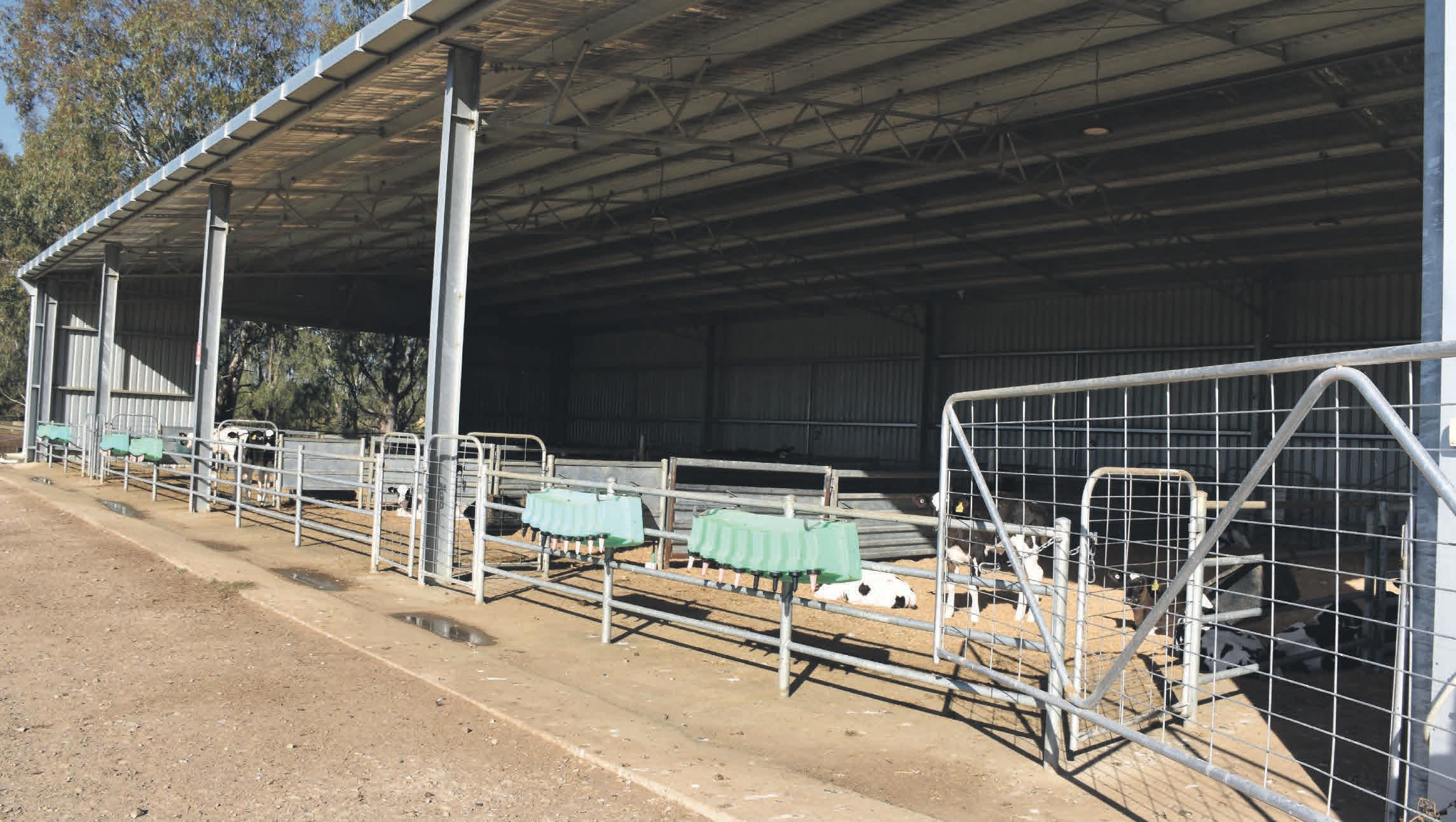
“I keep an eye on the calves and their manure because that tells me what and how well they are eating.
“We aim to wean our calves at about three months of age,” Daniel said.
Daniel said around 18 months ago he introduced scour shield, and that has made a huge difference to the health of his animals.
“I don’t think I have had a calf with scours since.”
The other game changer for the family was the building of a purpose-built calf shed about four years ago.
The 50m x 30m shed has sliding doors which open at each end to help with ventilation.
The shed has been built to take advantage of the sun, and on cold frosty mornings, the calves remain nice and snug, while in summer, the ventilation helps keeps them cool.
The calves are bedded on saw dust, which is removed after each season when the pens are cleaned out.
“We haven’t had any issues with the sawdust, but we do keep our stocking rates low, so they last well.”
When the calves are weaned they move to a sheltered outside paddock, lined with trees for shade, where they continue to access hay

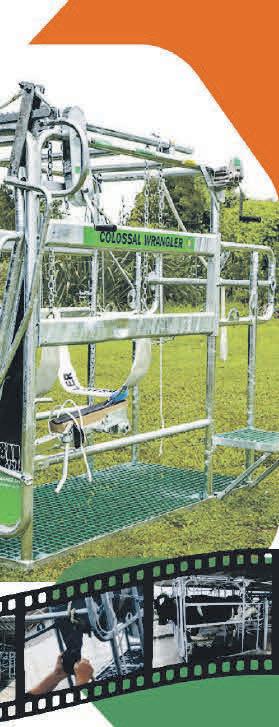
and pellets.
Both Fred and Daniel agree the first couple of days for each calf are pretty hectic, but putting the effort in early has meant they very rarely, if ever, get a sick calf.
“Our growth rates have been amazing and
we are now calving heifers in around 550kg — when you look out across the milking herd it’s hard to pick out the heifers because they are so well grown.
“It gives us all a great sense of achievement,” Fred said.
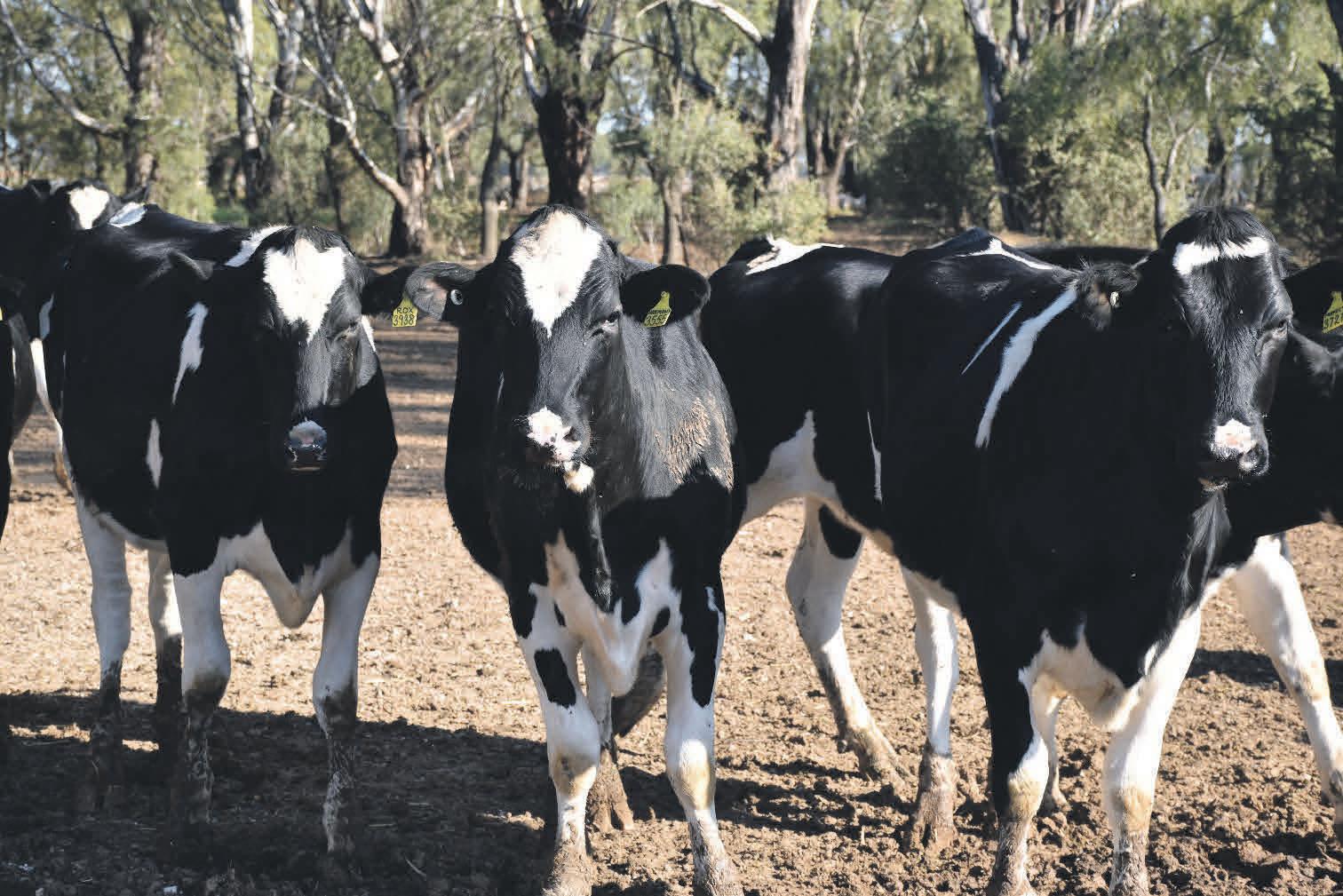
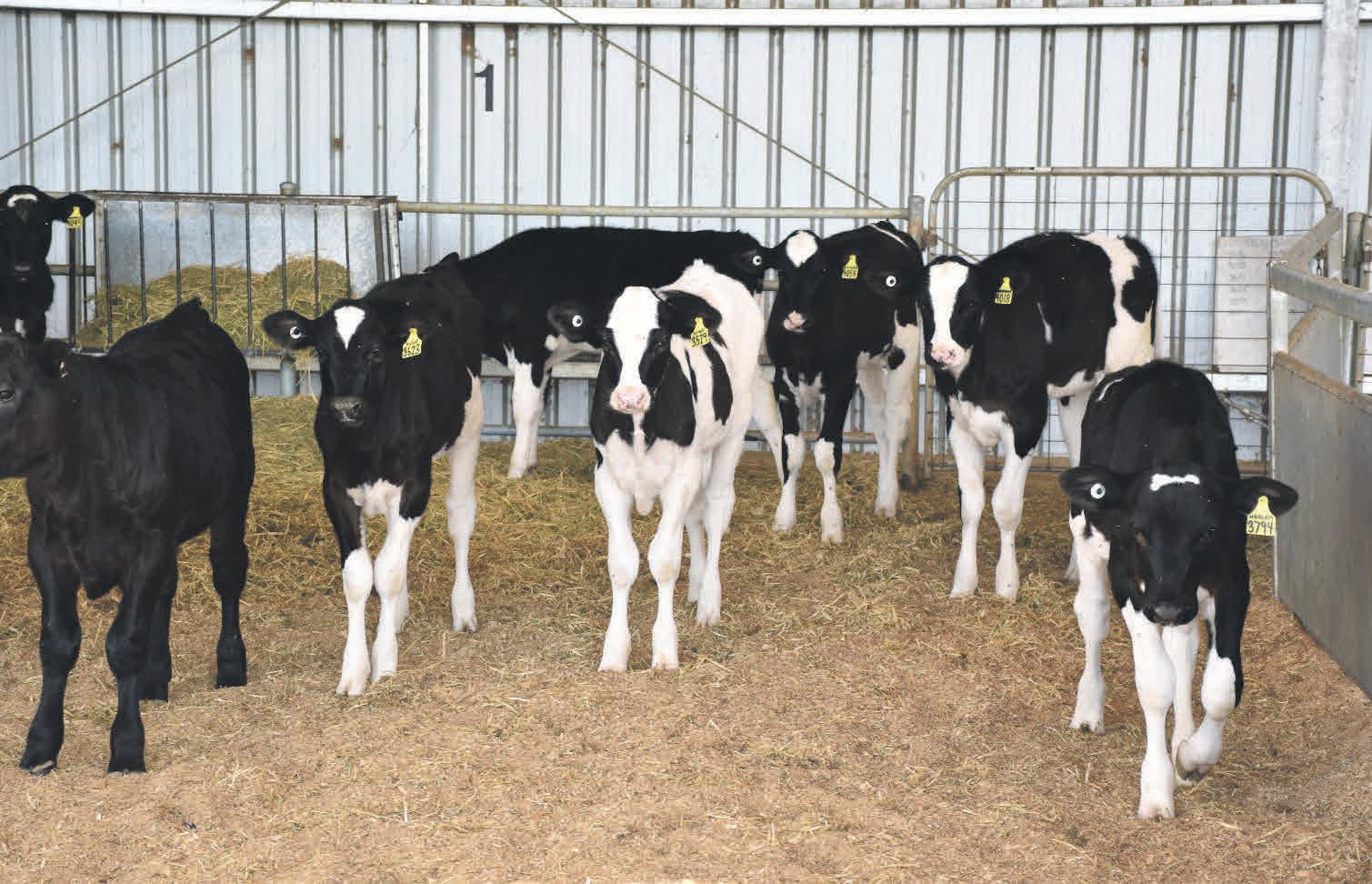
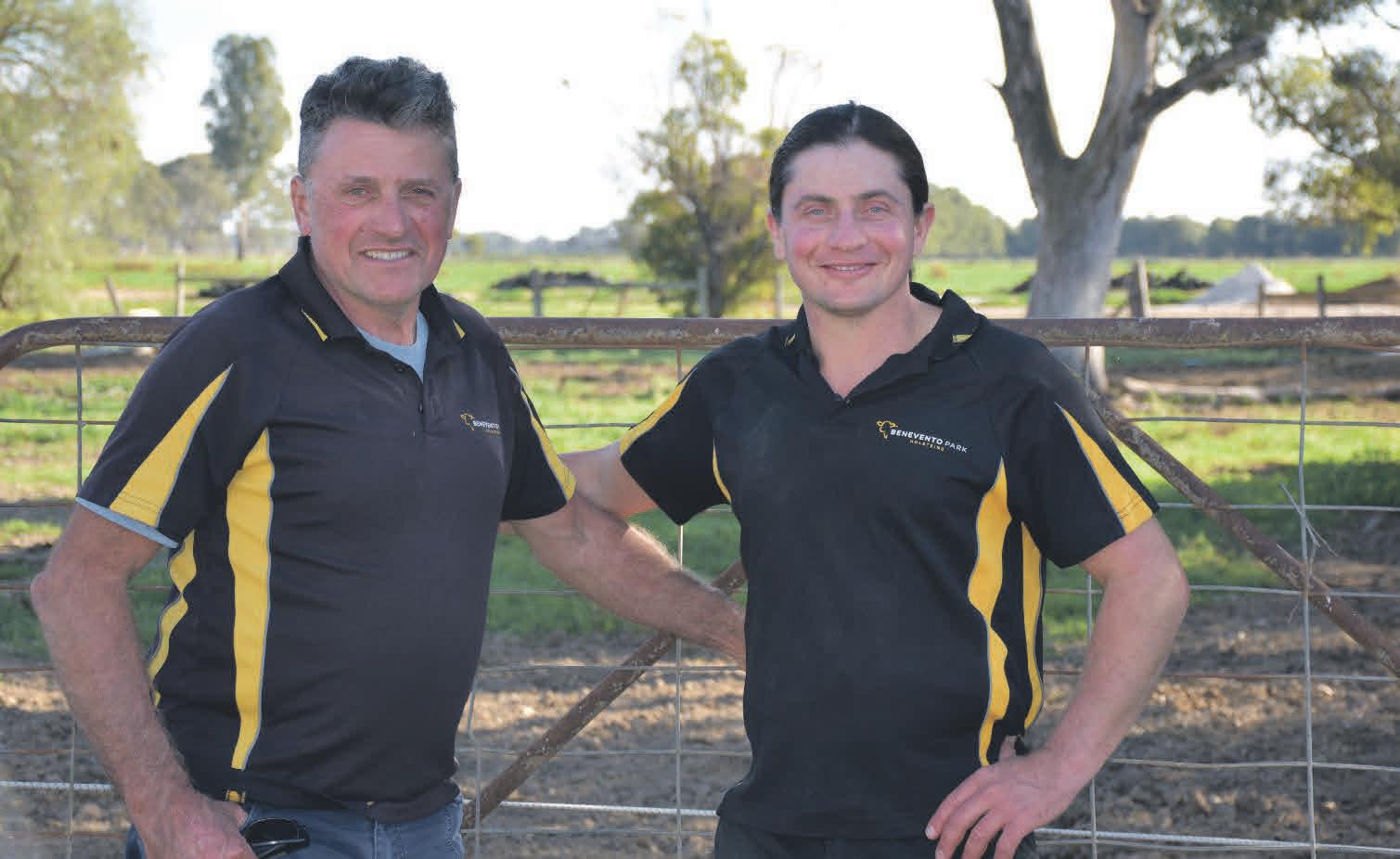
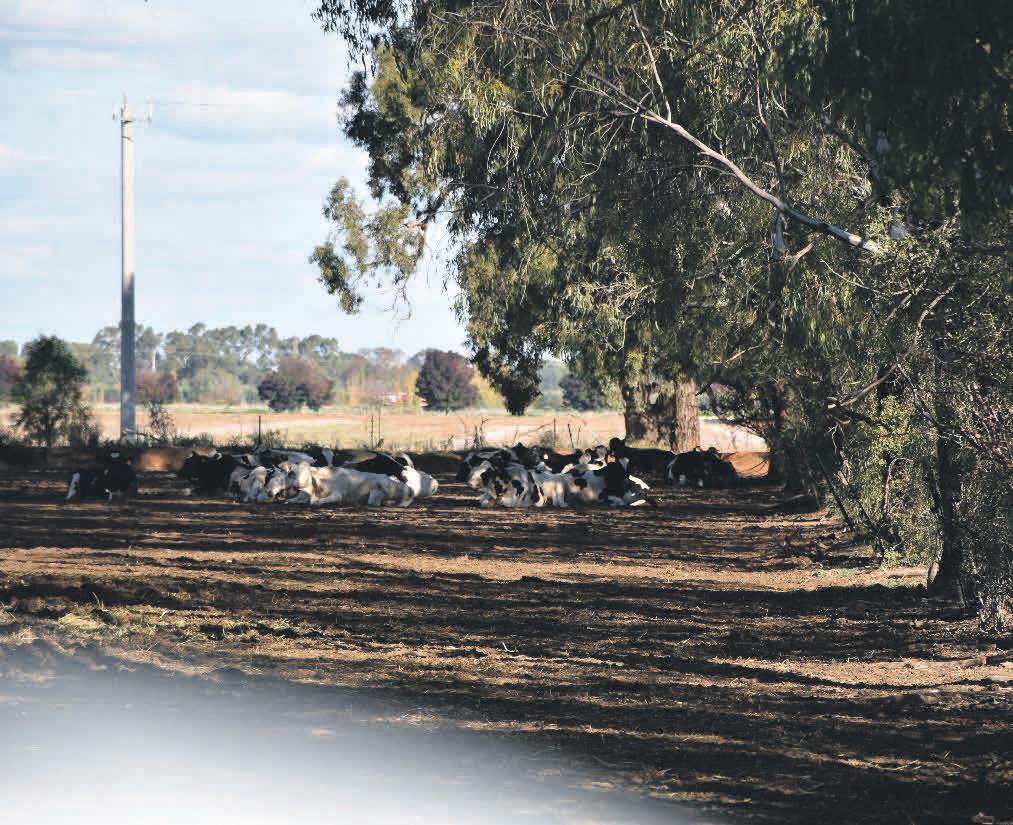
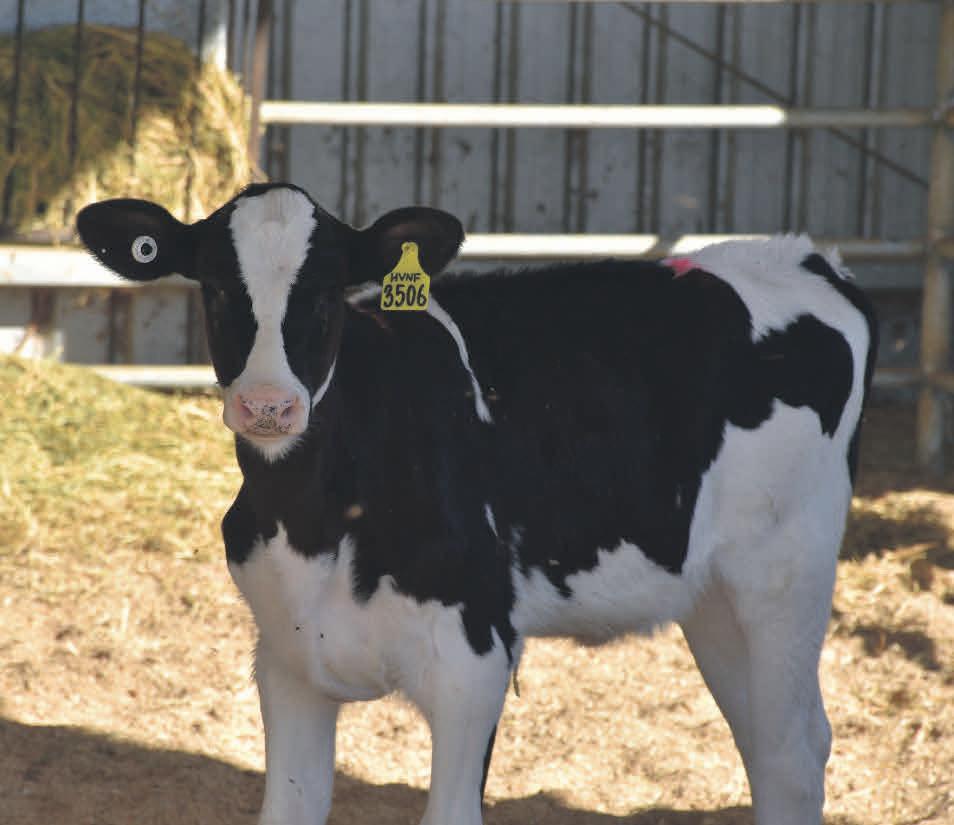

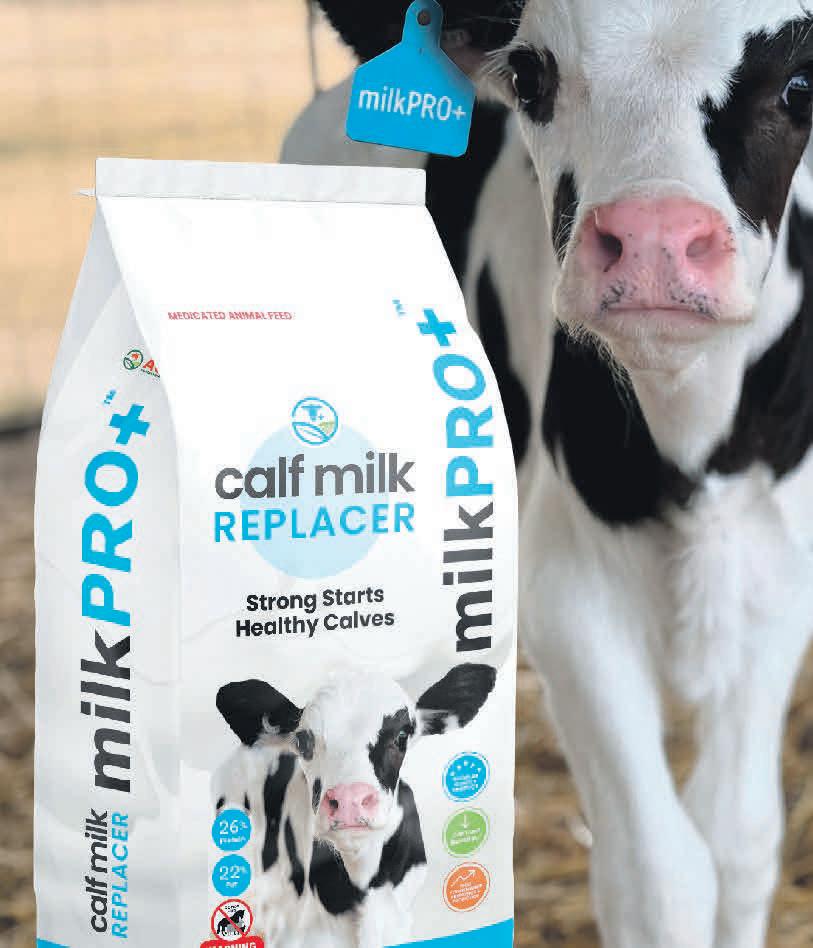



AUSTRALIA’S DAIRY industry has shared its latest sustainability achievements with the release of its 2025 Sustainability Scor ecard, which provides a transparent snapshot of performance against key sustainability commitments and the priorities shaping future efforts.
Developed through the Australian Dairy Sustainability Framework (ADSF), the scorecard reports on progress across four commitments: best care for animals, enhancing economic viability and
livelihoods, impr oving wellbeing, and protecting the environment.
Key achievements in 2025 include a further reduction in the amount of waste produced from dairy manufacturing, with 86 per cent diverted away from landfill –up from 81 per cent in 2024 – and broad recognition by regional communities of the importance of the dairy industry, with 87 per cent of people agreeing that dairy is an essential part of their community.
In a ringing endorsement of Australian

Using SGL Compact™ sires you can reduce gestation length by up to 12 days. A cost-effective and convenient alternative to traditional natural mating bulls. Here’s what mating your return cows
A
dairy, 91 per cent of consumers agree that Australia’s dairy industry produces high quality products, up from 89 per cent in 2024.
South Gippsland dairy farmer and chair of the ADSF steering committee Graeme Nicoll said the 2025 Scorecard reflects how farmers and processors are tracking against sustainability commitments in a changing operating environment.
“Sustainability is essential to the future of Australian dairy and central


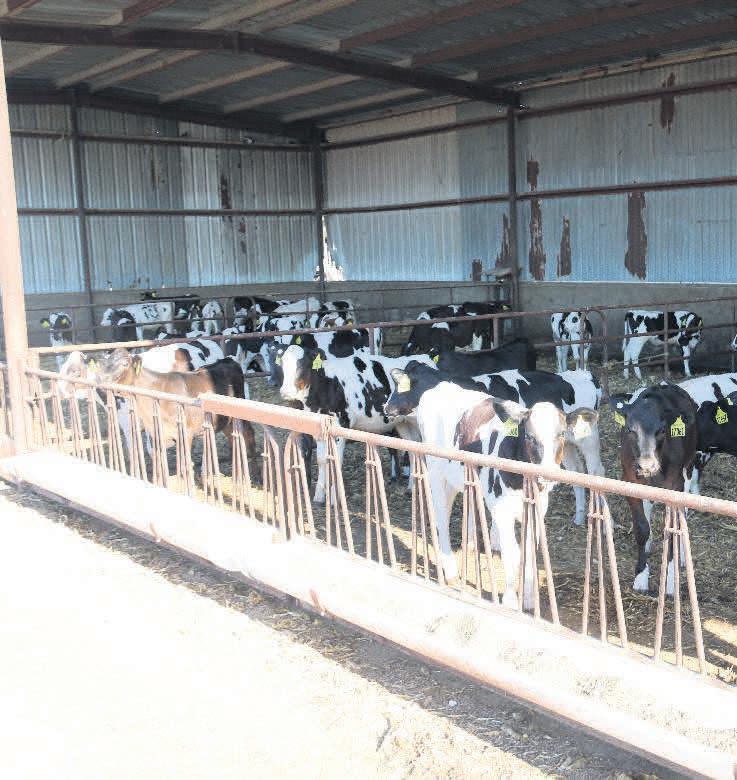

to maintaining a profitable and trusted industry,” Mr Nicoll said.


“The scorecard provides a clear, evidence-based view of how the industry is pr ogressing using the most up-to-date data and shows where continued focus is needed.”
“The progress made against benchmarks has enabled us to lift our ambitions higher, particularly under our best care for animals commitment.”
The 2025 Sustainability Scorecard is the first reporting cycle under the industry’s updated commitment to providing best care for animals.
Following a review of animal care priorities, goals already achieved have been removed, and new goals aligned with leading practices and current industry needs have been introduced.
One new goal already achieved is the development of a whole-of-industry surplus calf roadmap.
T he road map, known as CalfWays, is now being delivered in partnership across the dairy and beef sectors to strengthen supply chain connections, promote best-practice calf management and improve long-term outcomes for dairy-origin calves.
Mr Nicoll said the scorecard plays a critical role in maintaining transparency with stakeholders.
“By openly reporting against agreed commitments, the industry can demonstrate progress, respond to community and cust omer expectations, and focus collective effort where it will have the greatest impact,” he said.
“Consistently high consumer and community confidence in the safety and quality of Australian dairy shows that the Sustainability Framework continues to build trust in dairy.”
The ADSF continues to evolve in response to changing expectations, climate risk and emerging issues.
I ndustry working groups are reviewing goals, targets and data sources across r emaining commitments.
Updated measures will be reflected in the 2026 Sustainability Scorecard, strengthening reporting on environmental performance, wellbeing, and social impact
“Sustainability is ongoing work,” Mr Nicoll said.
“This scorecard shows where the industry stands today and demonstrates our commitment to a sustainable future for Australian dairy.”
The 2025 Sustainability Scorecard is available at dairy.com.au
IN ONE of Australia’s most competitive supermarket categories, the nation’s shoppers have spoken - and for the second year in a row, Norco has been named the country’s most satisfying fresh full cream milk.
Australia’s oldest and last operating 100 per cent farmer-owned dairy co-operative has taken out the Canstar 2026 Most Satisfied Customers — Fresh Full Cream Milk Award, reinforcing its position as a trusted staple in households across the country.
Based on independent research with Australians who have recently purchased and used fresh milk, the award recognises the brands performing best on what matters most at the checkout - from taste and freshness to value and overall experience - making it a powerful endorsement from everyday Australians.
Despite being produced in Northern NSW and Queensland, Norco has outperformed larger national and international brands in one of Australia’s most competitive grocery categories.
And in a category where loyalty is hardwon and competition is fierce, achieving back-to-back wins reflects the consistency and quality delivered by Norco’s farmer-owners and teams across the Cooperative.
The recognition also comes at a time when Australian producers and manufacturers are facing increasing pressure from rising input costs, shifting consumer behaviour and growing competition from imported goods, making the accolade even more meaningful.
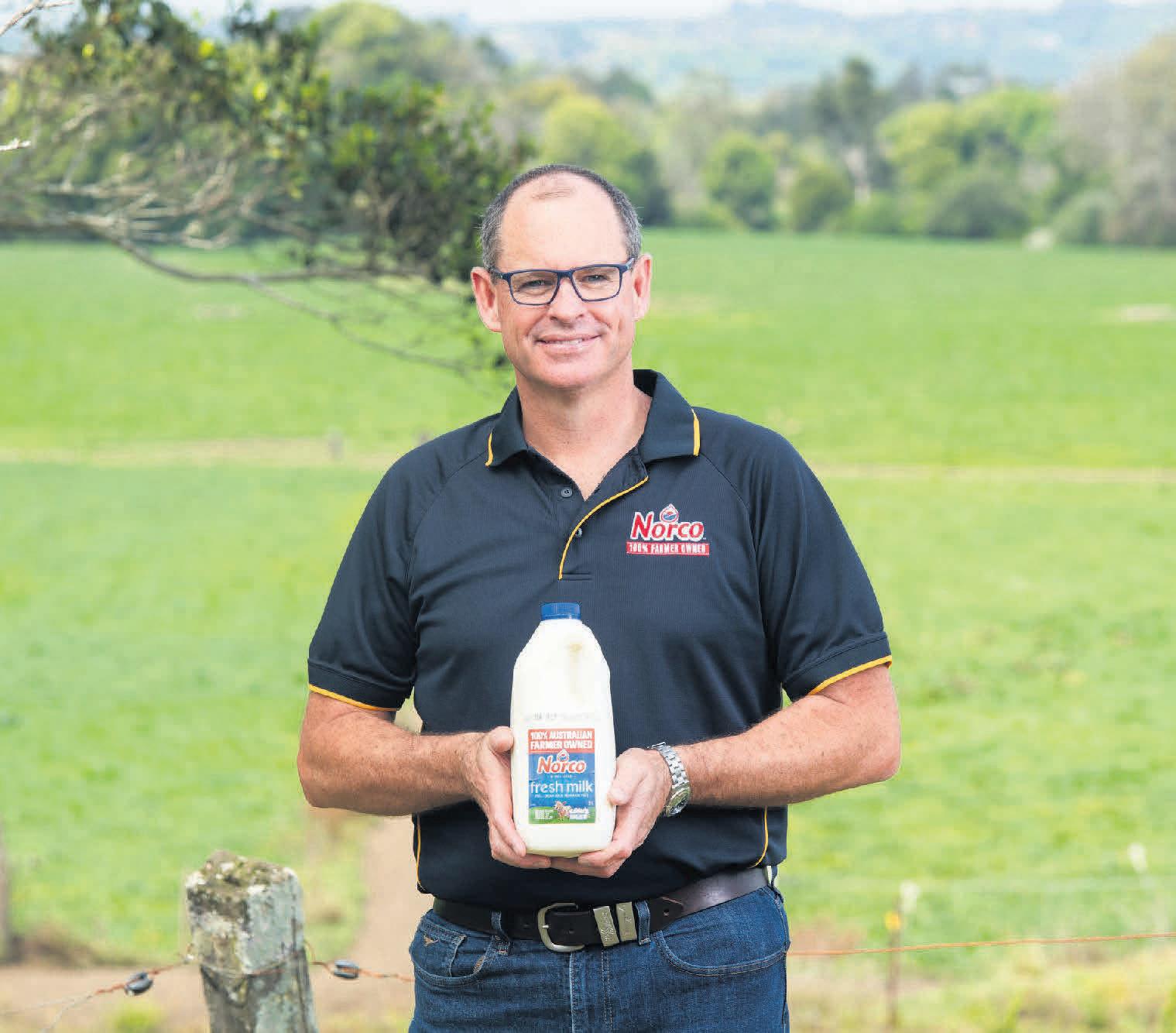
Norco ceo Michael Hampson said the result reflects something bigger than brand preference.
“This isn’t just about milk — it’s about

what Australians are choosing to support,”
Mr Hampson said.
“Across dairy, manufacturing and agriculture, Australian owned and operated



businesses ar e under increasing straineven when they’re doing the right things, investing in their people and backing their communities.”
“There’s never been a more important time to support Australian, farmer-owned businesses, because those choices don’t just shape what’s on our shelves, they shape the future of our industries.”
Mr Hampson said the recognition ultimately belongs to the farmers behind every bottle.
“This isn’t judged in a boardroom — it’s decided by Australians in their weekly shop, and that makes it incredibly meaningful,” Mr Hampson said.
“To be recognised two years in a row speaks to the care, pride and consistency our farmers bring to what they do every single day, and our commitment to creating Australia’s best tasting dairy.”
With more than 130 years of heritage, Norco continues to operate under a unique model where every purchase directly supports its farmer-owners and regional communities.
“Every bottle of Norco milk supports Australian farming families and the communities they serve,” Mr Hampson said.
“This award is recognition of that connection between farmers and consumers, and the trust that comes with it.
“We’re incredibly grateful to our customers for their continued support, it’s something we never take for granted.”





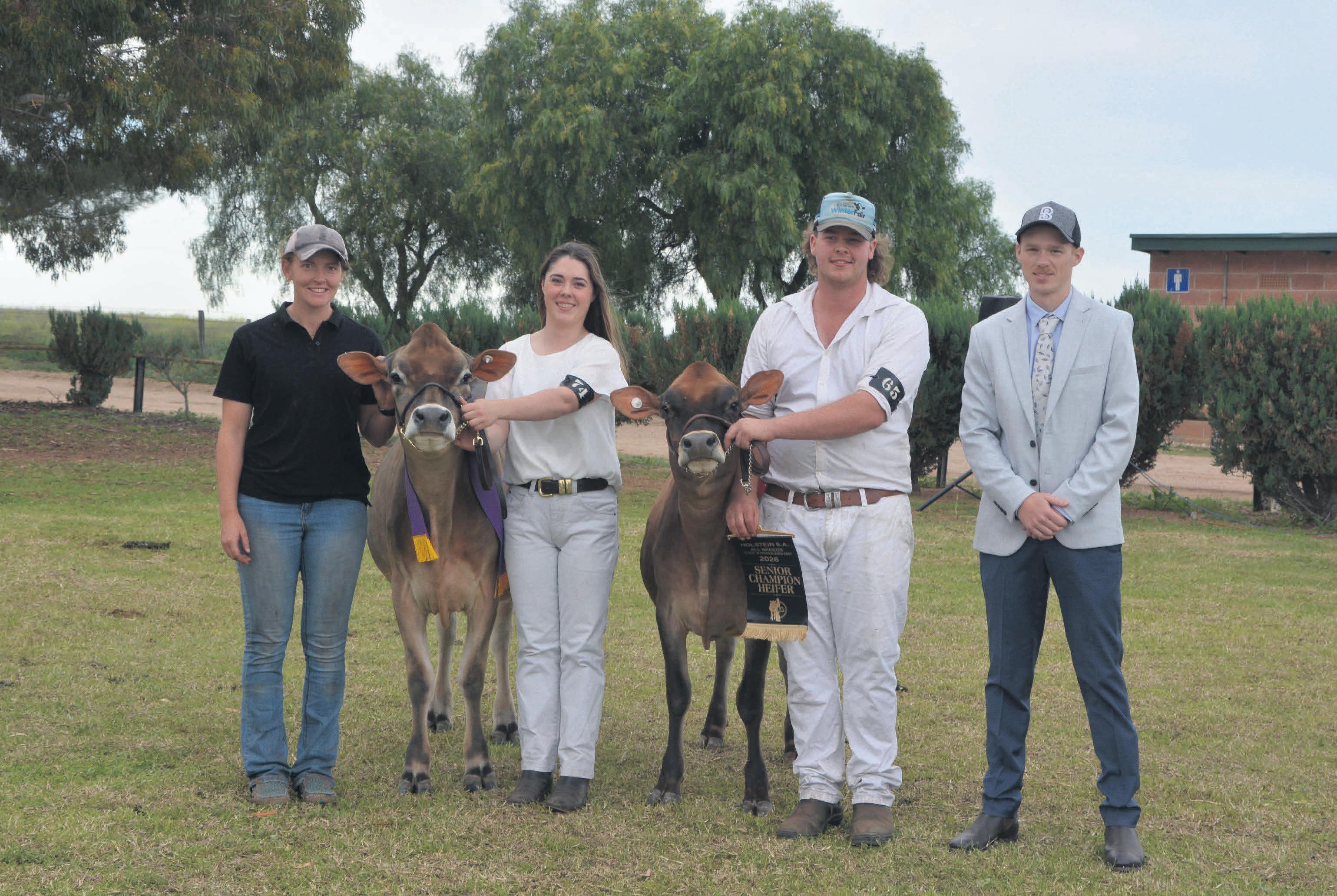
BY SOPHIE BALDWIN
HOLSTEIN AUSTRALIA’S South Australian sub-branch held their 45th annual All Breeds Calf and Handlers Day at Murray Bridge in April.
The event was well attended with about 60 participants and 70 animals on show.
Senior Champion Heifer was Froglands Mr Bright Ranunculus owned by Chris Thompson and Toby Zilm from Toris Holsteins and Jerseys.
Reserve Senior Champion Heifer was Zenith Park Jets Fortune owned by Niki and Jackie Davies.
Senior Champion Handler was Chris Thompson and reserve was Indie Guidolin.
Junior Champion Handler was Lachlan Fiebiger and reserve was Maree-Sage Morter-Grant.
The ring was presided over by Luke Gardiner from Avonlea Holsteins.
Event organiser Courtney Afford said the event, which was open to all dairy breeds, was a great success.
“It is a great opportunity for anyone to come along and develop their skills.
“We have classes from handlers to fancy dress as well,” Courtney said.
Courtney said she had been involved in the show since she was little helping her mum, who was also once an organiser of the show.
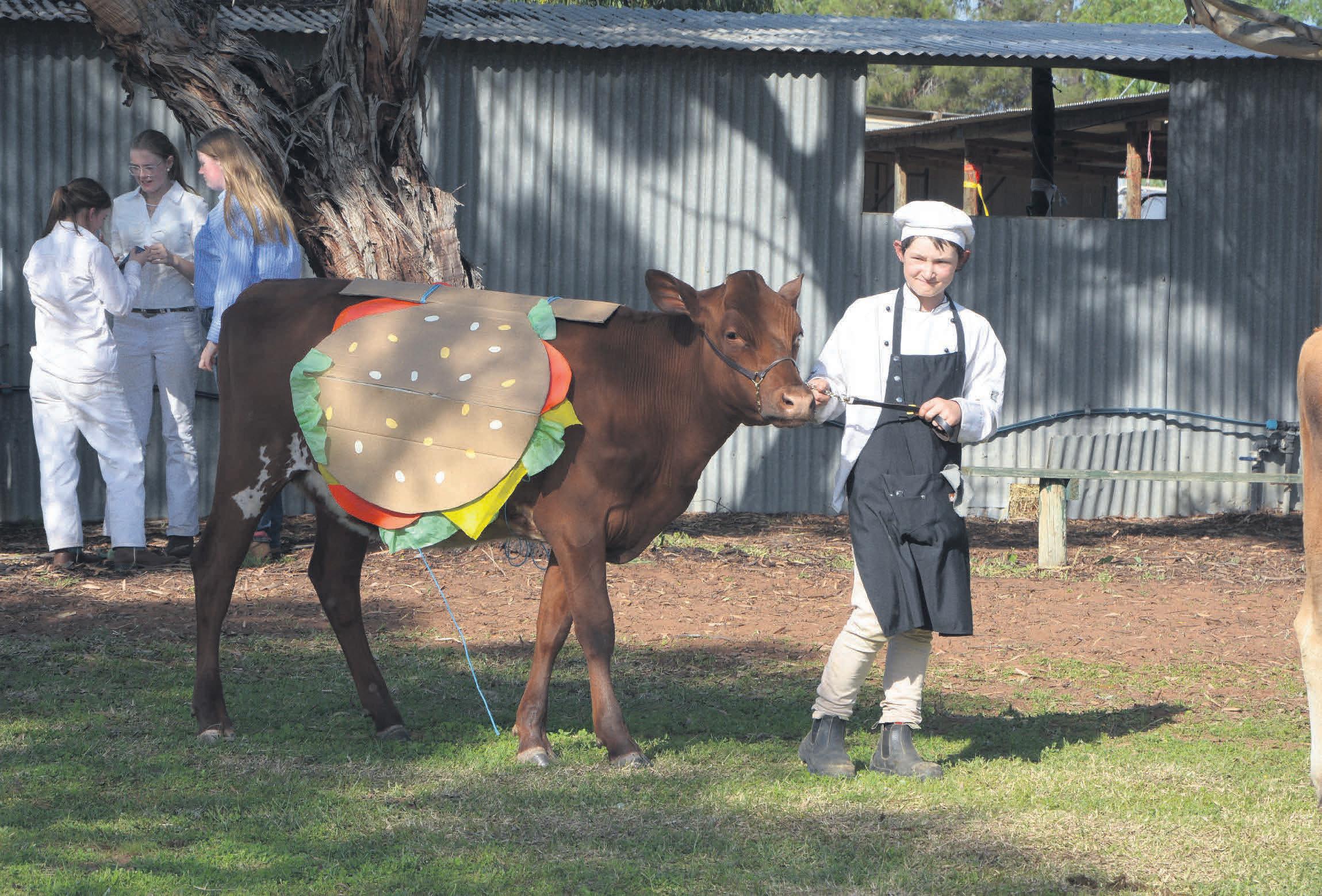
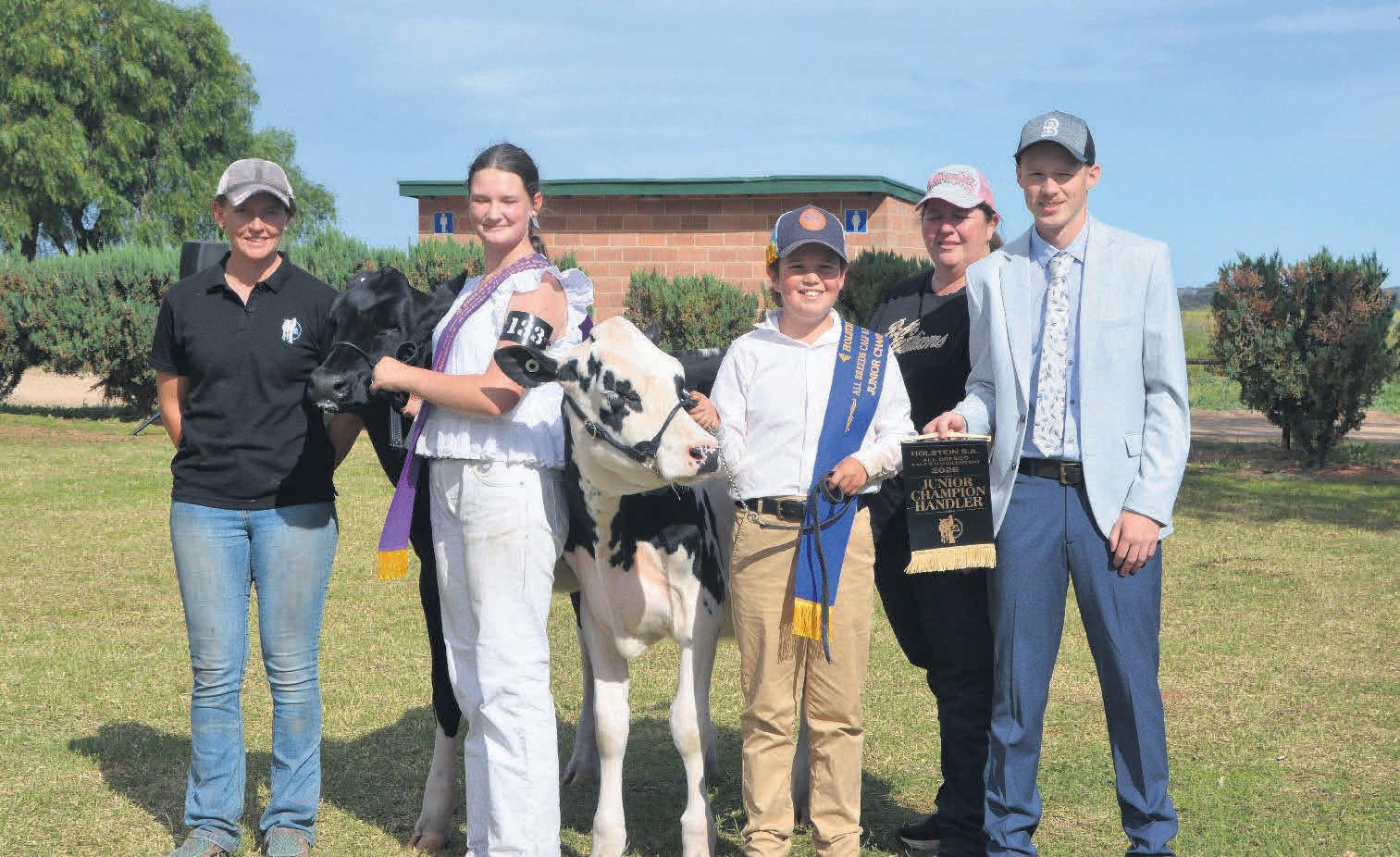
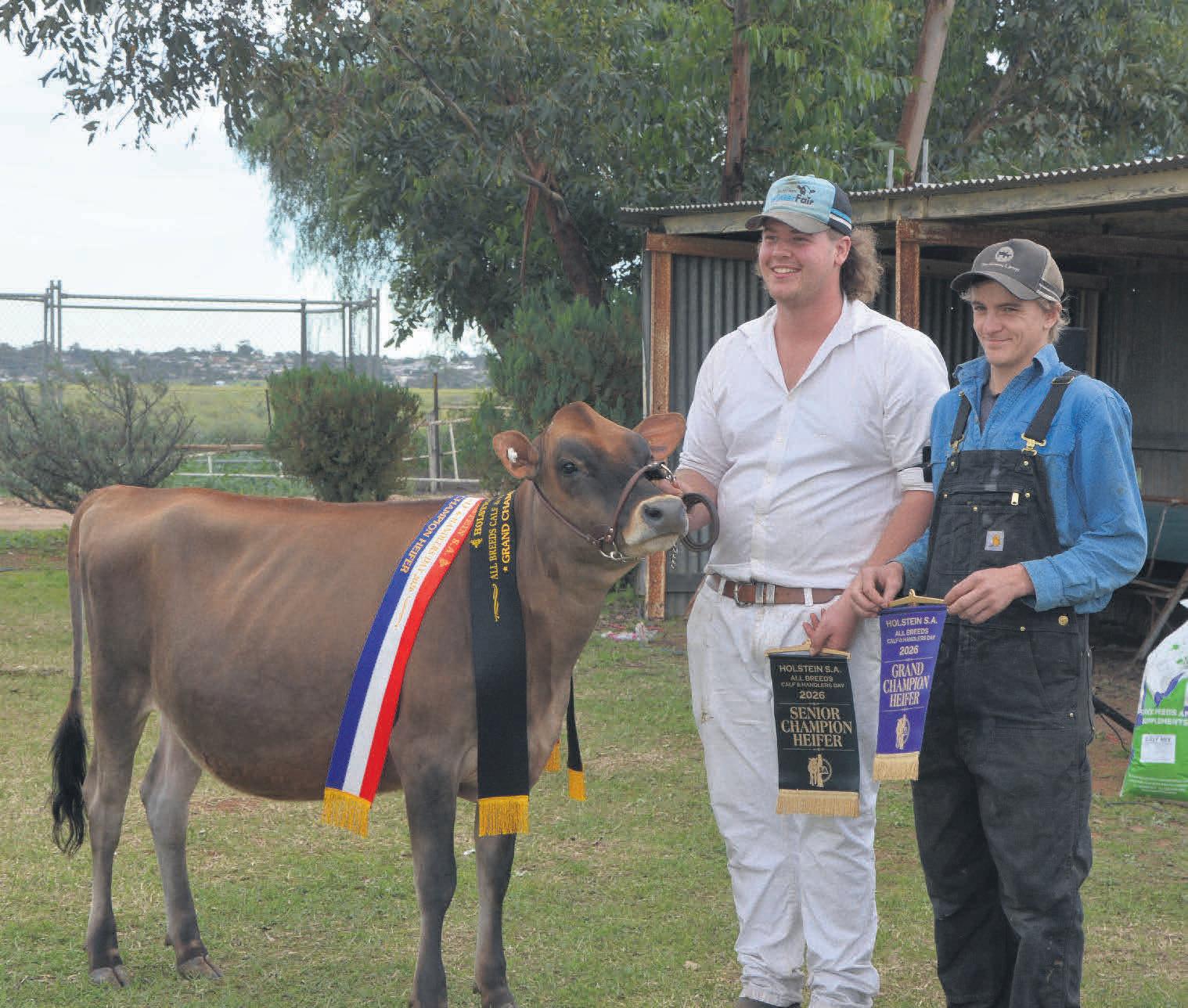
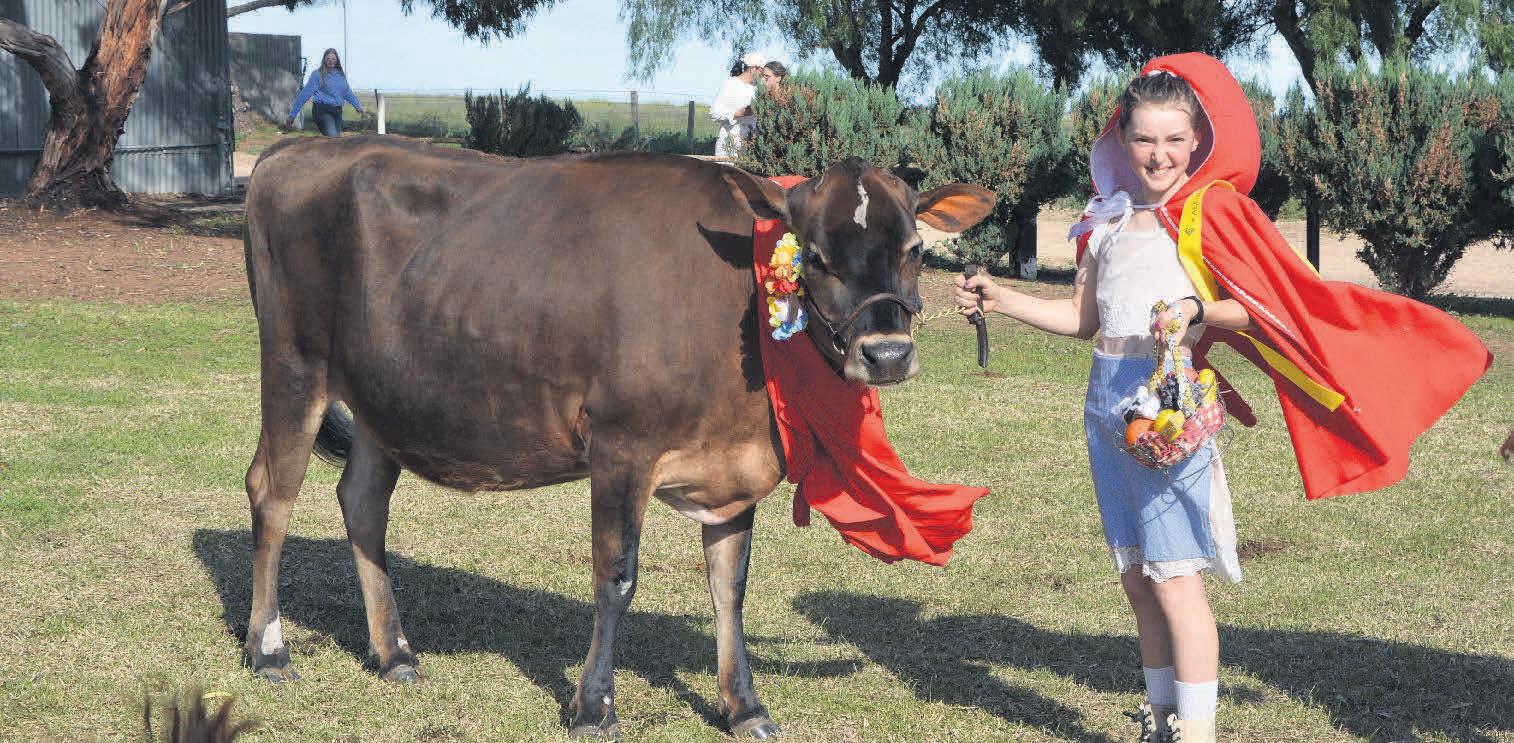
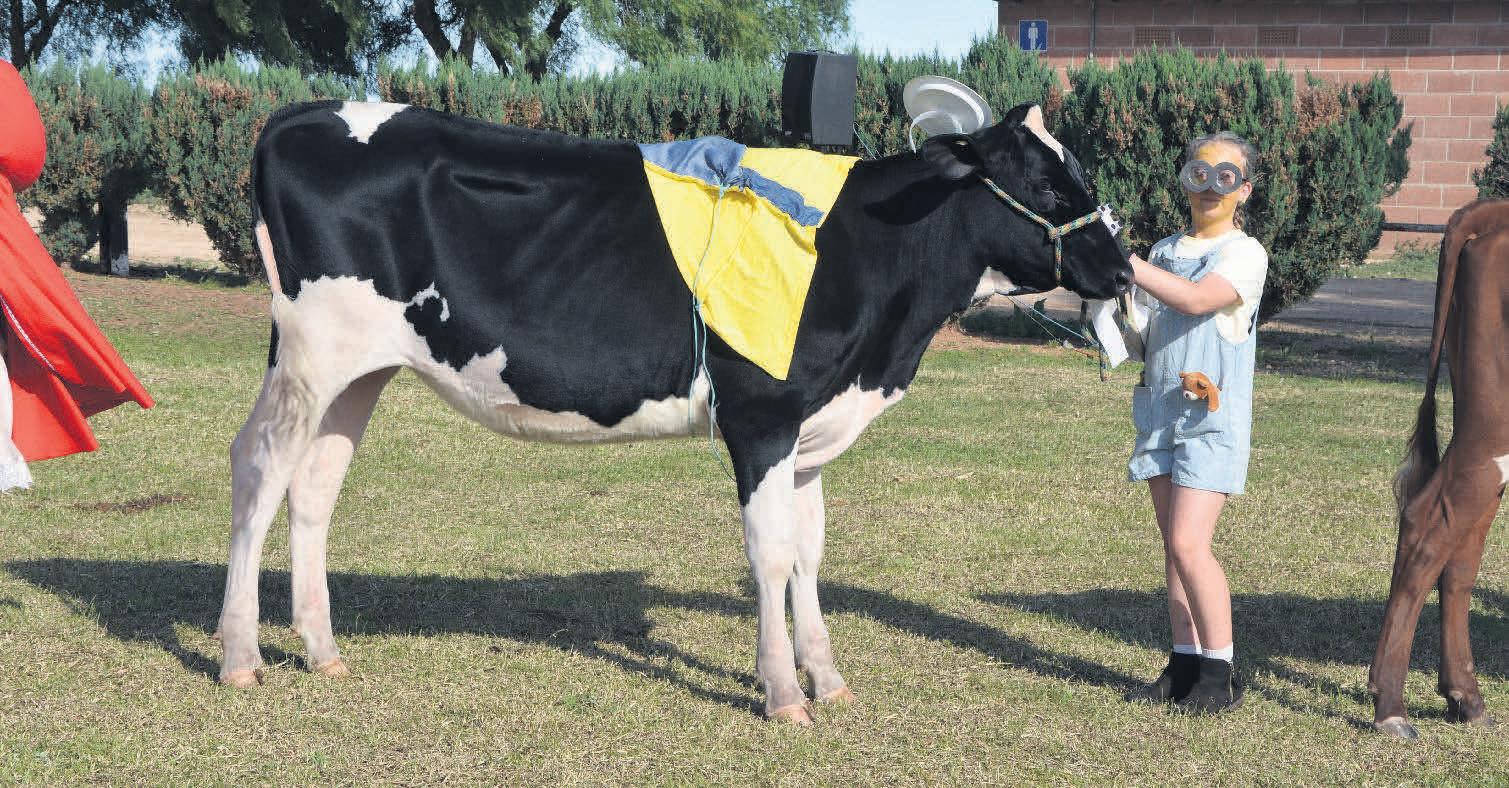
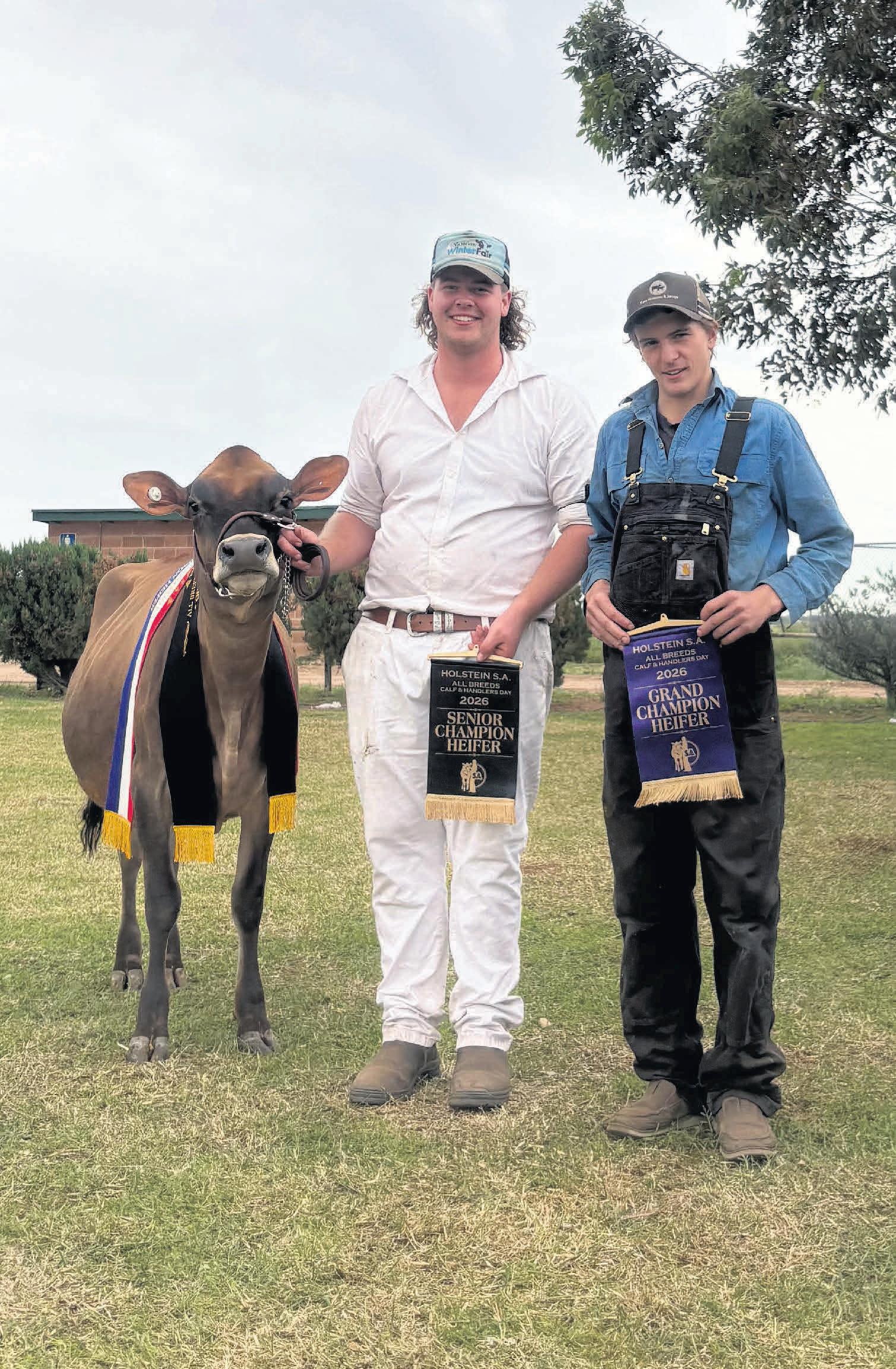
BY SOPHIE BALDWIN
CHRIS THOMPSON and Toby Zilm might have grown up in different places, but their love for showing cows has seen them establish Toris Holsteins and Jerseys together.
The boys recently took home Grand Champion Heifer at the 45th Murray Bridge calf day with Froglands Mr Bright Rannunculus, a heifer they bought from the PRS sale in NSW.
Toris Ventura Trauma was also crowned Reserve Junior Champion Heifer.
The boys said they couldn’t have been any happier with how their heifers performed in the ring, considering there were lots of entries on the day.
The mates first met while studying at Urrbrae College Agricultural High School in Adelaide.
They bought their first cow in 2023 and now own over 20 cows together.
Both Chris and Toby work well together — Chris does the washing and leading, while Toby does the clipping and preparation.
Chris comes from a non-farming background, while Toby is a fourth-generation dairy farmer from Birdwood in South Australia.
Chris said his love for showing started with leading cows and had developed into a love for
the breeding side as well.
He is currently at university and hopes to move into ET and IVF work.
“I would like to get into dairying, but without family it is pretty hard – I might be able to get into sharefarming or work my way up to a management position one day,” Chris said.
Toby is currently working on the family farm with his parents, milking 200 mixed cows on 160ha.
He first started showing cattle with Illawarras when he was younger.
“My mum comes from a big Illawarra family and my dad had always had commercial Holsteins — we never had a Jersey until I met Chris at school,” Toby said.
Toby laughs as he says there is a story behind every cow he and Chris have bought, including Stgen Davinci Cosmopolitan.
“One of the girls we went to Urrbare with won the animal in a raffle,” Toby said.
“She lived in the middle of the city and wasn’t that into cows so we bought the calf off her.
“Toris Perennial Cosmopolitan is her 10-month-old daughter and we are hoping to sell her in the sale at this year’s Winter Fair in Bendigo.
The boys will be showing Perennial Cosmopolitan along with Ventura Trauma (Reserve Junior Champion) at the fair.



Variation in intake, feeding patterns and rumen conditions means nutrient supply is inherently inconsistent.
Improving the consistency of nutrient supply, through feeding management or controlled-delivery technologies such as microencapsulation, has been associated with measurable improvements in efficiency and performance.

BY SOPHIE BALDWIN
DAIRY NUTRITION often focuses on what goes into the ration, energy, protein and minerals, balanced to meet the cow’s requirements. However, on-farm, what is formulated and what the cow actually receives are not always the same.
In both total mixed ration (TMR) and grazing systems, variation in intake, feeding patterns and rumen conditions means nutrient supply is inherently inconsistent. In grazing systems, where pasture quality and intake can change daily, this variability is even more pronounced.
The result is a gap between diet formulation and nutrient delivery, which can limit performance, reduce efficiency, and increase the risk of metabolic malfunction.
In both TMR and grazing systems, cows experience variation in nutrient supply across the day. However, grazing systems typically amplify this variability due to pasture growth dynamics, changing sward structure, and variable intake behaviour between animals.
In pasture-based systems, intake is less controlled and often occurs in distinct grazing bouts. Supplementation is typically delivered in discrete feeding events, meaning cows experience peaks and troughs of nutrient intake rather than a steady supply we refer to this as “slug feeding”.
This leads to fluctuations in rumen fermentation and nutrient availability.
Research has shown that rumen pH can vary substantially throughout the day, with cows often spending several hours below pH 5.8, a level associated with subacute ruminal acidosis.
Another example is that when nutrients arrive at different times, microbial efficiency declines, and excess nitrogen is converted to urea rather than being captured as microbial protein.
Although rumen microbes produce many B vitamins, this supply is not constant. It depends on rumen conditions such as pH and substrate availability, which fluctuate throughout the day.
Under high production or metabolic stress, microbial supply may not always meet demand. Research has shown that supplementation with protected forms of B vitamins such as folic acid and vitamin B12 can improve milk production, reproduction, and metabolic status.
These responses are driven not just by increased supply, but by more reliable delivery to the site of absorption in the small intestine.
Dairy nutrition has made major progress in defining requirements and improving ration formulation. However, further gains are increasingly limited by biological variability rather than formulation accuracy.
The next step is not simply greater precision in what is fed, but greater reliability in how nutrients are delivered and utilised within the cow.
This means shifting from: balanced diet - delivery of nutrients at the right time and rate average intake - nutrient supply over time correct formulation - nutrients reaching the right place and usable Microencapsulation fits within this shift by helping protect nutrients and control their release, improving consistency of delivery under real farm conditions.
In both grazing and TMR systems, variability in nutrient delivery is unavoidable, more so in grazing systems.
ProDairy can assist you with the development of a tailored plan:
• On-farm visit by a ProDairy veterinarian.
• Review of the current biosecurity principles, the major risks and actions taken to reduce those risks.
• Development of a customised biosecurity plan.
Visit prodairy.com.au for more information.

This variability has direct consequences whereby only 20–30 per cent of dietary nitrogen is typically captured in milk, with the remainder lost via urine and faeces.
To be efficient, rumen microbes rely on a stable supply of fermentable energy and rumen degradable protein (RDP) for the synthesis of microbial protein, necessary for milk protein synthesis and muscle growth.
If variability in intake cannot be eliminated, particularly in grazing systems, the next step is to improve how nutrients are delivered within the cow.
It is clear that inconsistency reduces efficiency, affecting rumen stability, nutrient utilisation, and metabolic resilience. Technologies such as microencapsulation help address this by improving the consistency of nutrient delivery. In doing so, they support a more reliable link between what is fed and what the cow actually receives. Ultimately, improving performance depends on feeding more precisely and consistently.
Jefo Nutrition manufactures rumen-protected solutions designed to support consistent and efficient delivery of nutrients to dairy cows. For more information, contact your nutritionist or Jefo representative.
BY ASHLEY DARLING
THE ONLY stationary baler in Australia made a visit to Congupna in May to create 250 bales of a mix of white seed sorghum and barley grain with minor weevil contamination to become silage.
The Vario Master Stationery Baler-Wrapper from Göweil, a manufacturer in Austria, is one of only around 1000 stationary balers worldwide and only around 200 of which are the same variable chamber model, allowing for different sizes of bales.
The baler was hauled up from its Korumburra home in Gippsland, a six-hour drive that started at 4am the previous day.
Arron Daniels Ag Contracting has been hiring out the $740,000 machine since it arrived in January to farmers across Victoria and southern NSW.
Arron Daniels said the machine offered more options to smaller farmers and “anything you can mix together you can put in a bale”.
The benefits of the baler include tighter compaction, which reduces the risk of mould by decreasing the amount of oxygen inside the bale.
Tighter compaction also reduces freight costs.
The ability to mix forage crops with grain in a fast fermenting environment means the stationary baler can reduce waste of contam inated crops.
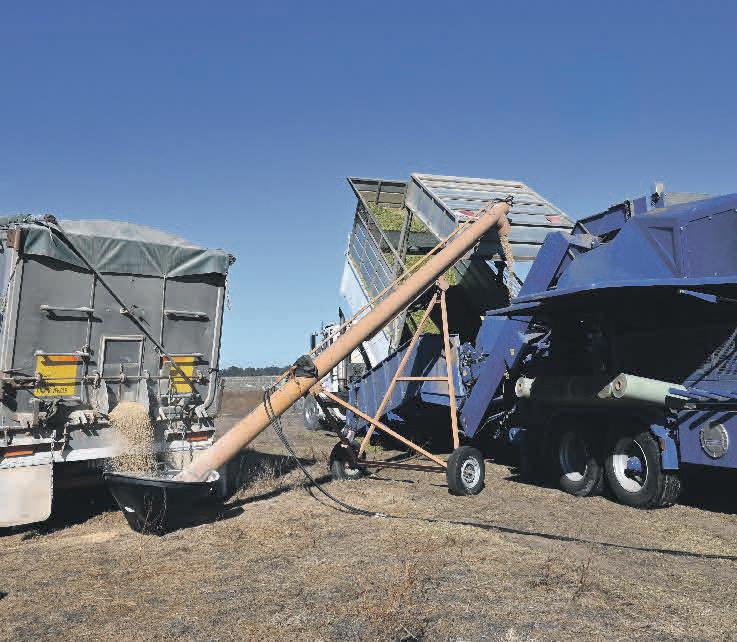
Avoiding the use of pits also reduces loss and potential for spoilage.
Ashley Dempster saw his weevil contaminated grain mixed into his freshly harvested sorghum crop at a ratio of 20 per cent grain to 80 per cent sorghum when the machine was working on his Congupna property.
Mr Dempster had believed that his crop was failed in January due to a lack of rain and no irrigation because of water costs and allocation.
The crop benefited from rain in February,
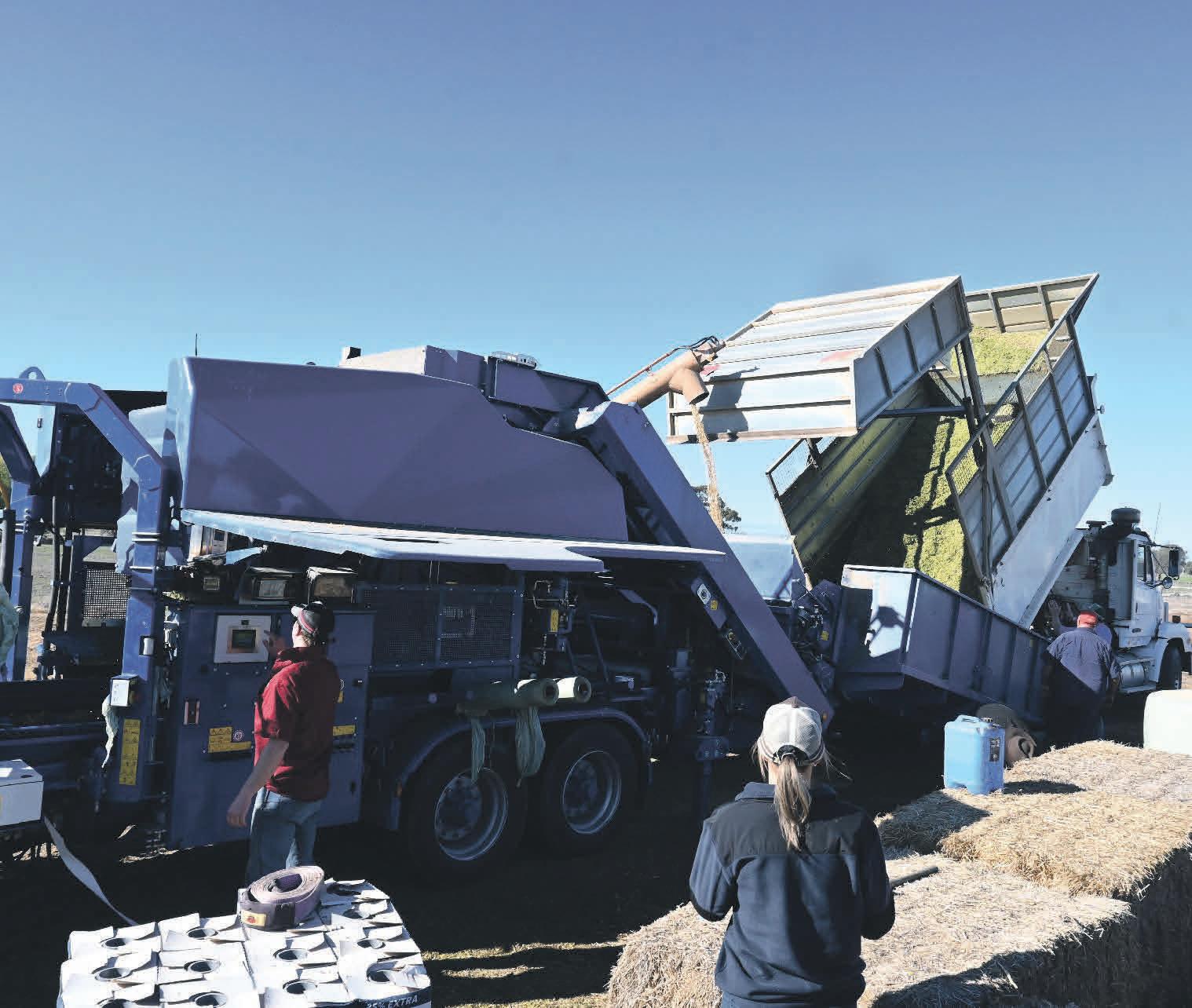
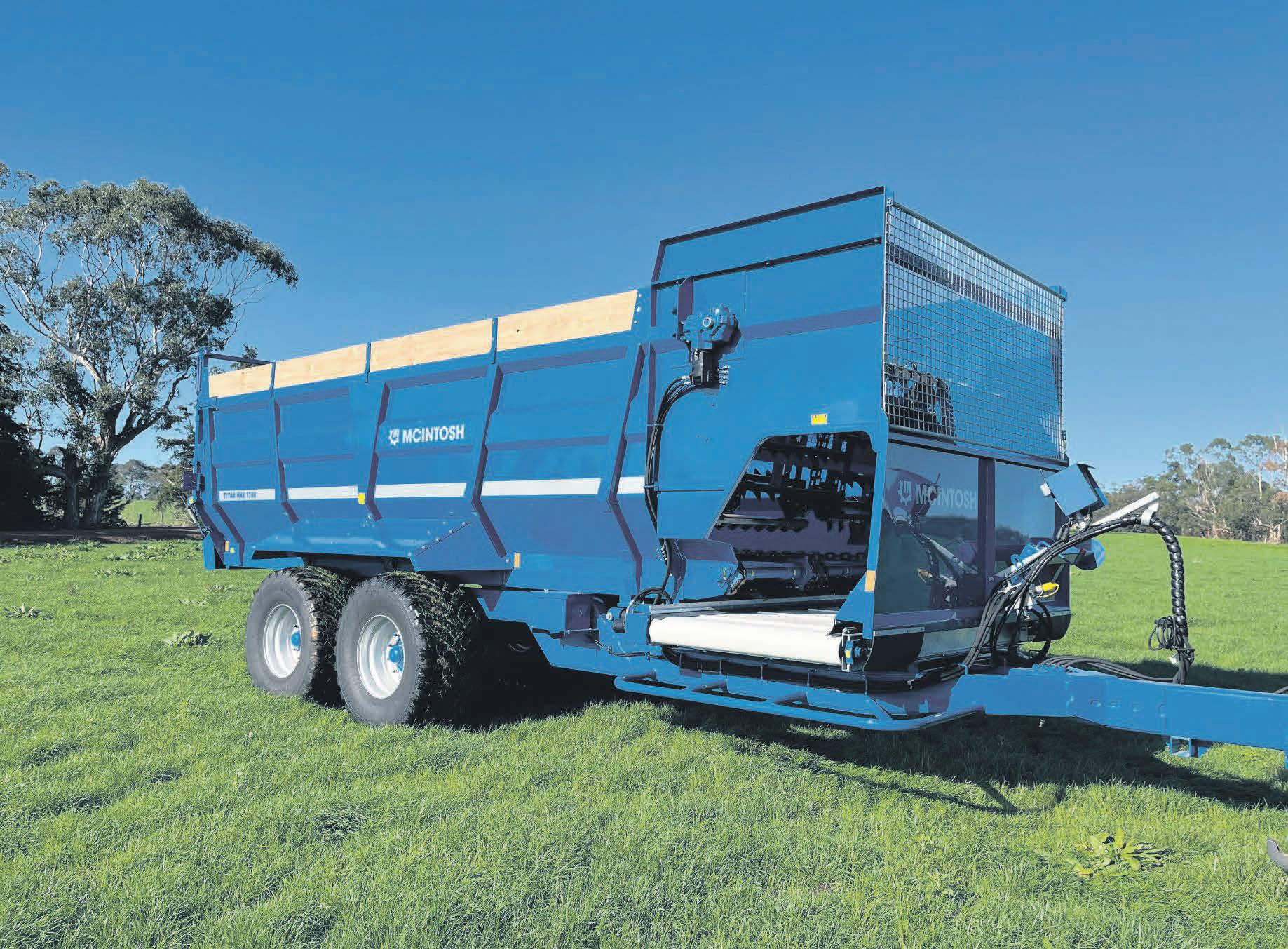
If the machine was floated on a truck, the estimate cost could have been up to $3000. Mr Daniel said many people were unaware of the benefits of this type of baler and “everyone wants to see it before they commit to it”.