
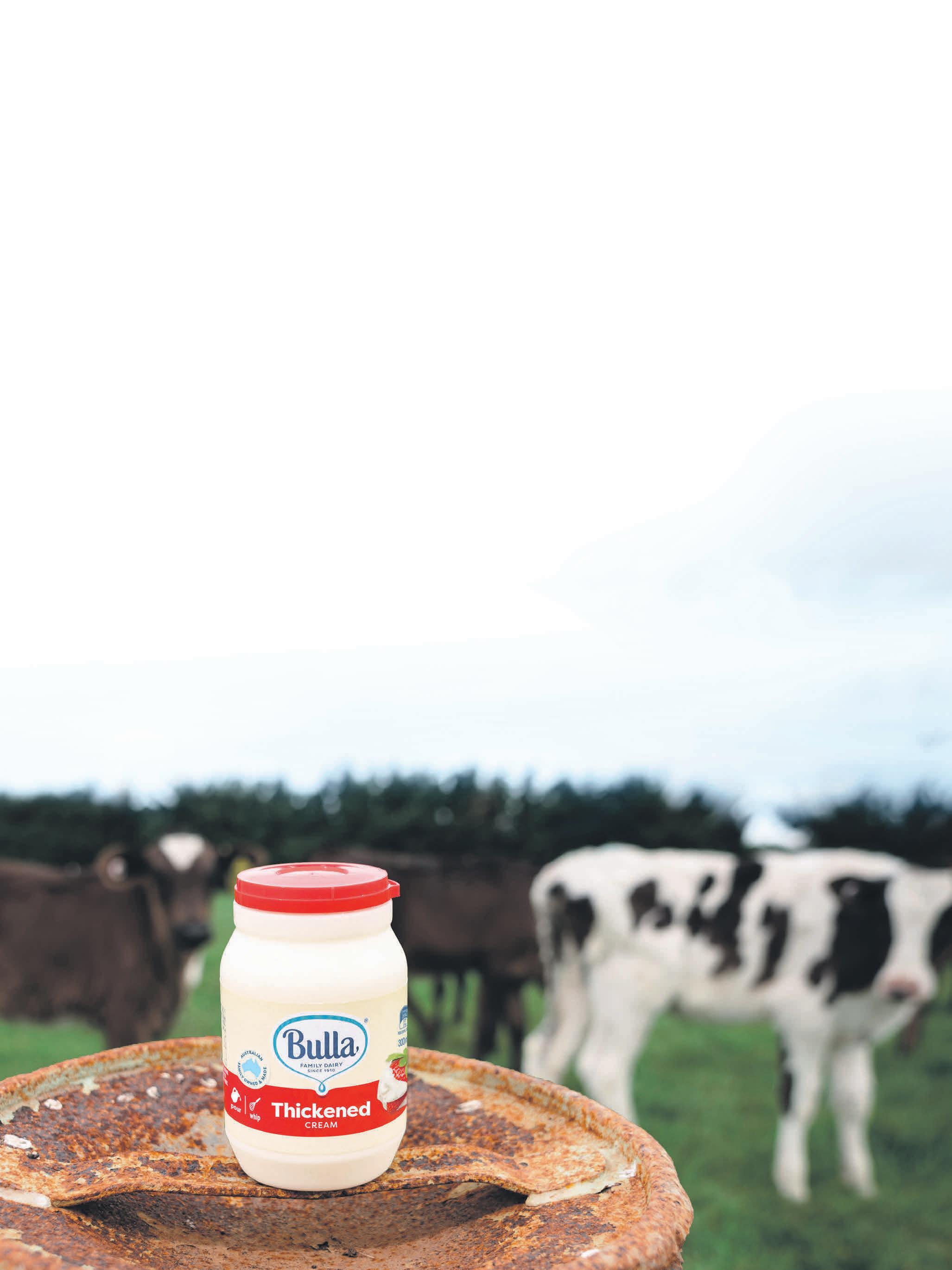
Bulla is an Australian family owned business which has been around for over 115 years and our strategy is simple, to create a sustainable business for generations to come.
At Bulla, we are extremely proud of the exceptional quality of the milk supplied by local Victorian farms which enables us to bring award-winning dairy products to tables across Australia.
To support Bulla’s continued growth from new products we have an opportunity for a number of farms to join the Bulla family as milk suppliers in select regions. We invite interested suppliers to contact one of our field officers to discuss your milk supply profile and Bulla’s milk contract.
Features of Bulla Milk Supply Contracts
• Simple flat payment model for better cash flow in spring & easier annual planning
• A history of prices to our suppliers that are competitive
• No stop charge, volume charge or milk collection fee
• A guaranteed minimum price each year, no step downs
To register your interest go to www.bulla.com.au/farmers/joinbulla If you have any questions, please contact FieldServices@bulla.com.au
Contact our field team for information:
Allison Goode Gippsland VIC P: 0427 952 415
Jamie Serong Gippsland VIC P: 0477 992 274
Kevin Boyd South West VIC P: 0409 009 649
Jake Bartels South West VIC P: 0472 775 496
David Hester Northern VIC P: 0418 993 251
BY MADELYN IRVINE
GLOBAL DEMAND for whey protein has strengthened sharply over the past 18 months, pushing 2025 global exports to a record high of almost two million tonnes.
Rising prices have followed, with the impact extending well beyond whey markets.
Protein consumption has moved firmly into the mainstream, valued across all demo graphics for muscle development, satiety and overall health, rather than confined to sports nutrition.
The rapid uptake of GLP‑1 weight loss medications has accelerated this shift.
While users typically consume less food overall, they prioritise nutrient de nse options, particularly protein, and have shown a greater willingness to pay for it.
As a result, demand has boomed, in partic ular for whey protein.
This shift has placed sustained upward pressure on global protein markets.
Processors have reformulated products and expanded protein offerings to capture
consumer demand, but supply has struggled to keep pace.
In the United States, manufacturers’ stocks of whey protein concentrate in January 2026 were 21 per cent lower year on year, despite production rising three per cent, highlighting the extent to which demand is outstripping supply.
Global prices have responded accordingly, with Australian export spot prices for WPC 80 setting new record highs every month since August 2025 as buyers compete for limited volumes.
To meet demand and capture returns, processors have increasingly redirected milk toward cheese production to maximise access to whey streams.
While whey has historically been a by product of cheese manufacturing, current market dynamics have inverted that relation ship, with whey emerging as the primary val ue driver.
Cheese production has increased as a result, lifting supply and weighing on prices.
Cheddar values in both the US and the European Union fell to US$3200 per tonne and US$3900 per tonne respectively in late
January, their lowest levels in more than two years.
At the same time, redirecting milk into protein streams has constrained output of other commodities.
SMP production has been most affected, particularly in the US, where milk flows have shifted away from powder manufacture.
Tighter supply has supported SMP prices, with reduced availability driving recent gains across all major exporters.
Over the four weeks to April 10, 2026, SMP prices rose 17 per cent in the US and Australia, seven per cent in Europe, and four per cent in New Zealand.
The surge in whey protein demand is reshaping global dairy markets, reallocating milk, redistributing value and altering price relationships across commodities.
While protein markets continue to tight en, downstream impacts, ranging from softer cheese prices to firmer milk powder markets, highlight the growing influence of consumer health trends on processing decisions.
Until protein demand eases or supply expands meaningfully, volatility across the dairy complex is likely to persist.
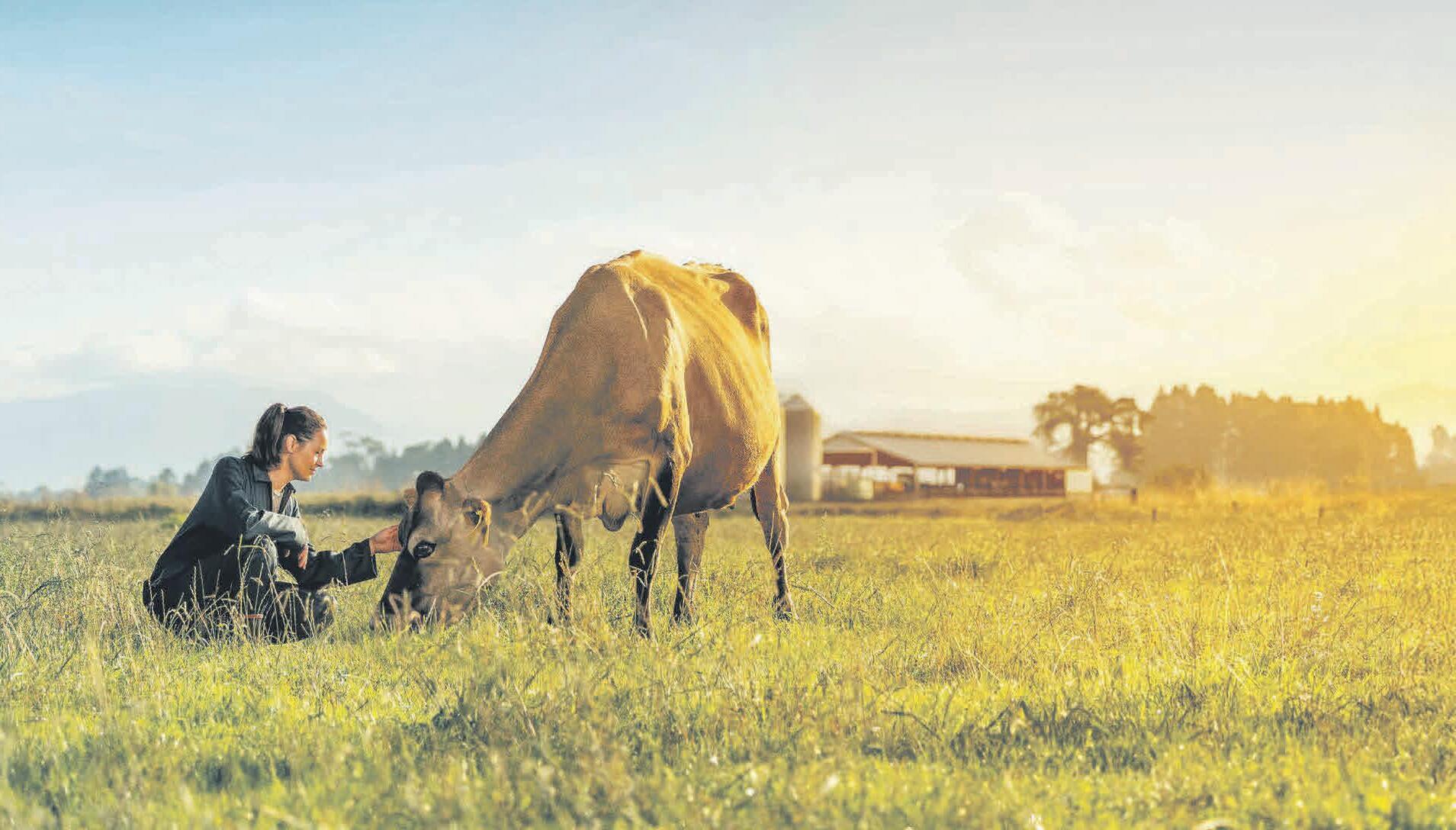



True performance isn’t about pushing harderit’s about precision that pays off. Every part of your DeLaval milking ecosystem works together to optimise milk quality, herd health, and yield. Because progress is built through the details that drive results.
Let’s shape progress on your farm.
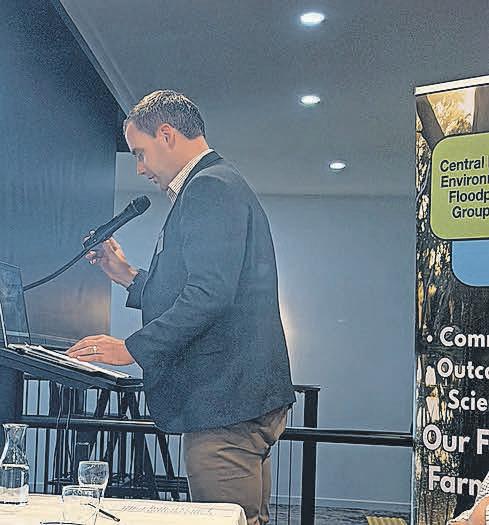
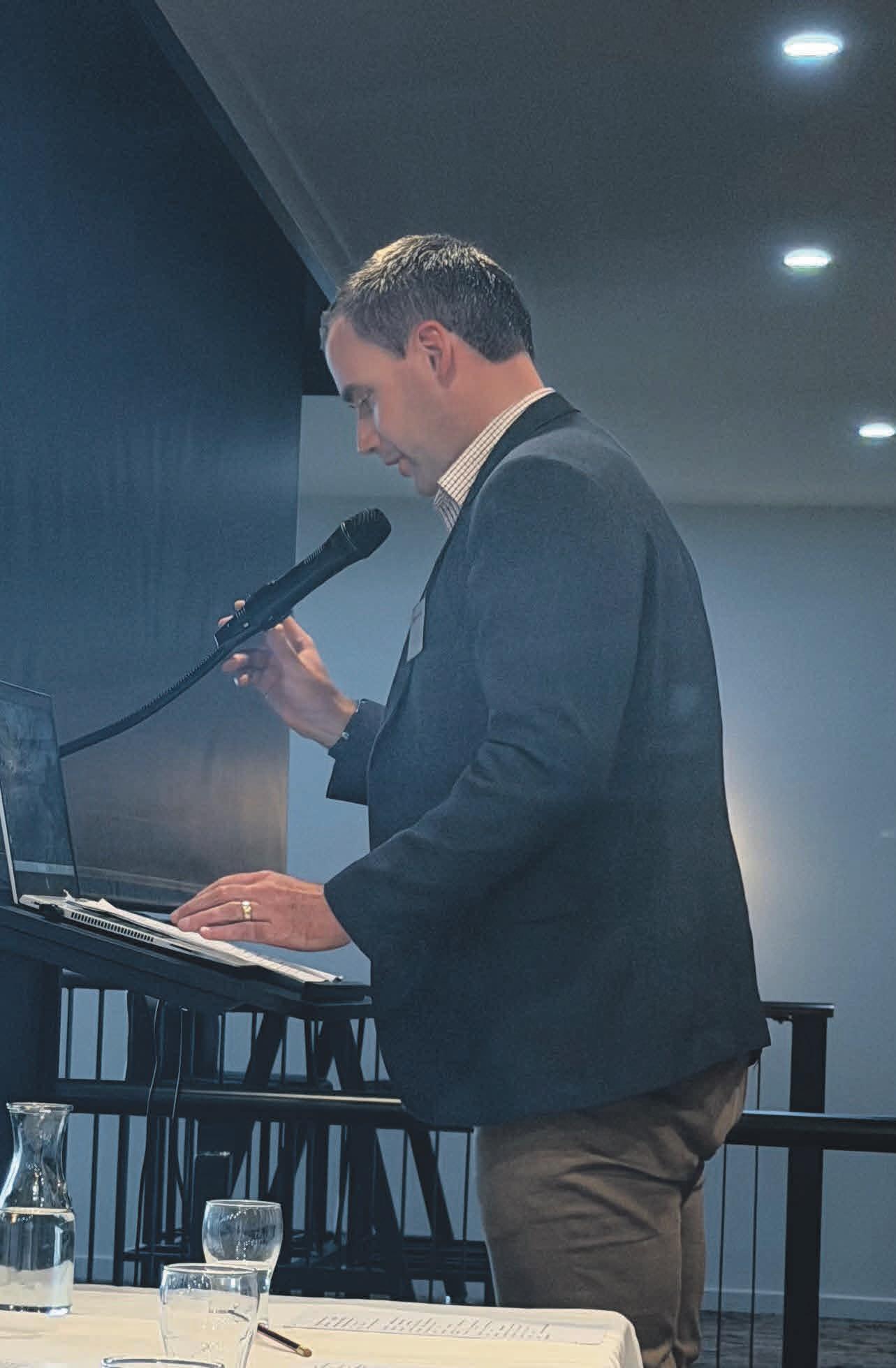
chief executive officer and Australian Dairy Products Federation member Jason Limbrick had a dire message for the Murray-Darling Basin Authority at a recent basin plan forum in Barham — further water recovery will have significant and cascading impacts on the dairy sector and wider community.
“This is not just an industry issue — it is a food security issue, a regional development issue and a national economic issue,” Jason said.
He said under a high buyback scenario of over 600 gigalitres, milk production in the southern basin could fall by up to 15 per cent, equating to a loss of up to 270 million litres of milk annually.
“In dry years, farm earnings could fall by more than 500 per cent for our farmers and critically for dairy processors, we will face reduced milk supply, rising costs, and an increased risk of plant closures,” Jason said.
He said the dairy sector as a standalone industry had been excluded from basin plan data, leaving a significant gap.
It has previously been lumped in the pasture grazing category, with ABARES acknowledging uncertainty with their data.
And there is a lot to lose.
The southern basin is home to more than 40 dairy processing facilities, from small boutique type operations to large volume processing.
“We employ almost 2000 people directly across eight local government areas and process milk produced outside the basin, particularly in northern Victoria, where we are well located to service national consumer and export markets,” Jason said.
“Our unique vulnerability is not adequately recognised in any basin plan review.”
As a consequence, Dairy Australia and the Australian Dairy Products Federation jointly funded an evidence-based analysis and independent report by Ricardo.
“The findings are serious, and the report is clear — further buybacks will impact dairy farmers and result in further consolidation within the processing sector,” Jason said.
The report found a buyback of 683Gl would reduce the southern basin consumptive water pool by about 16 per cent and drive water allocation prices up by as
much as 40 per cent.
A smaller buyback of 302 Gl would still reduce the pool by about eight per cent and increase prices by up to 17.5 per cent.
“These impacts are not limited to those who trade water — every dairy farmer
who relies on irrigation is affected and, in turn, every dairy processor,” he said.
“Higher water prices flow through to higher production costs, reduced herd sizes, and ultimately lower milk output.
“Farmers with little or no entitlement
ownership are particularly exposed, facing rising input costs and a limited ability to absorb them.
“In some cases, farms could lose up to 40 per cent of their earnings before interest and tax, this is not marginal adjustment — we are talking about structural exits from the industry.”
Jason said processors sit at the centre of the supply chain and when they were impacted, consequences ripple far beyond the farm gate.
“Processors rely on consistent volumes to operate efficiently,” he said.
“When milk production declines — whether by three per cent or 15 per cent — it directly affects plant utilisation and lower throughput means higher per-unit processing costs.”
He said processors were forced to travel further to collect milk, increasing transport costs and logistical complexity.
“In some cases, milk may need to be sourced from entirely different regions, this adds cost, emissions and undermines the efficiency of the entire system,” Jason said.
Australian processors operate in a highly competitive global market and compete with imported dairy products and price sensitivity from domestic consumers.
Over time continued rising input costs erode profitability and investment capacity and with a shrinking productive pool, further consolidation in the processing sector is likely.
“Plants designed for a specific volume become uneconomic at lower throughput and once a processing plant closes, it is rarely reopened and the consequences cascade through the community.”
Milk processing supports a network of jobs and businesses including farmers supplying milk, the transport industry, feed and fertiliser suppliers, maintenance contractors and local service industries.
When a plant closes the entire ecosystem is disrupted and jobs are lost, local spending declines, regional communities weaken and once infrastructure is lost, it is incredibly difficult to rebuild.
Jason said a one-size-fits-all approach to water recovery does not work and dairy has unique characteristics that must be recognised in basin plan implementation.
“Uncertainty is a major barrier and there is no clarity on how, when, or where further buybacks will occur.”


BY NICHOLAS SPANDLER
AUSTRALIA’S DAIRY and beef industries are taking a major step toward addressing the long-standing issue of surplus dairy calves, with a new national program aiming to create a profitable and sustainable beef pathway by 2035.
The ‘CalfWays’ initiative, led by Dairy Australia in partnership with Meat & Livestock Australia, focuses on improving the management of dairy-born calves not required for herd replacement.
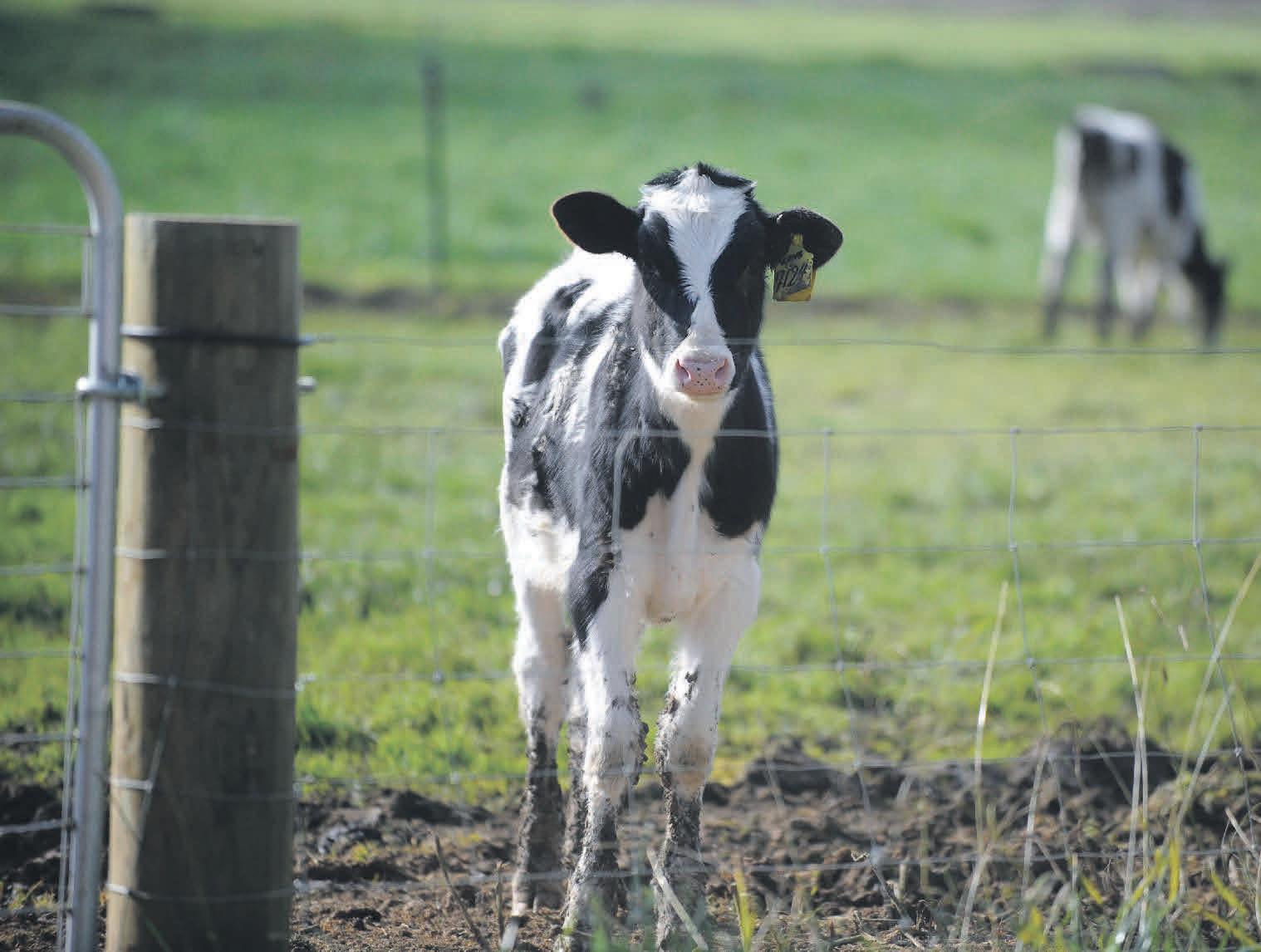
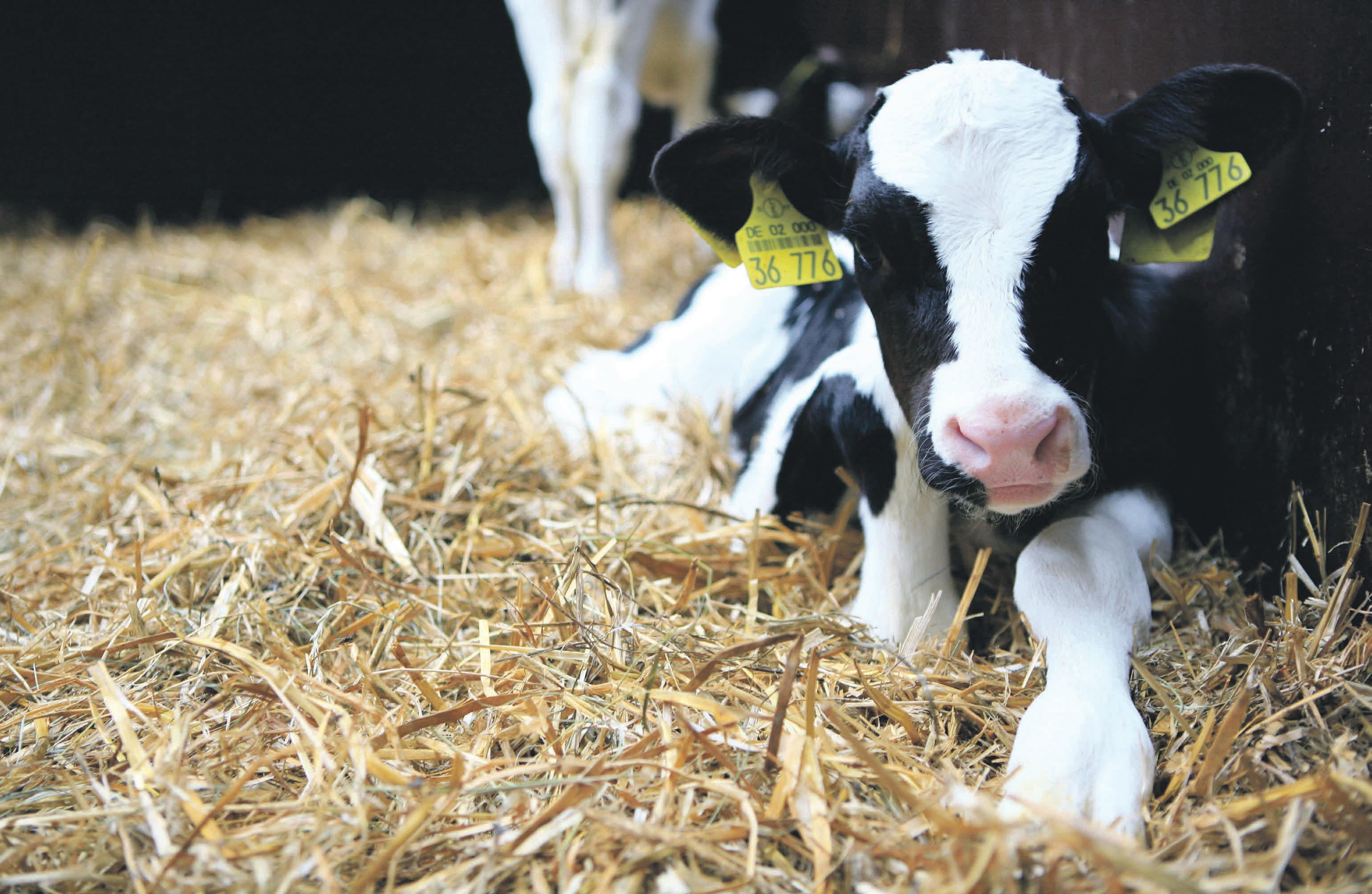
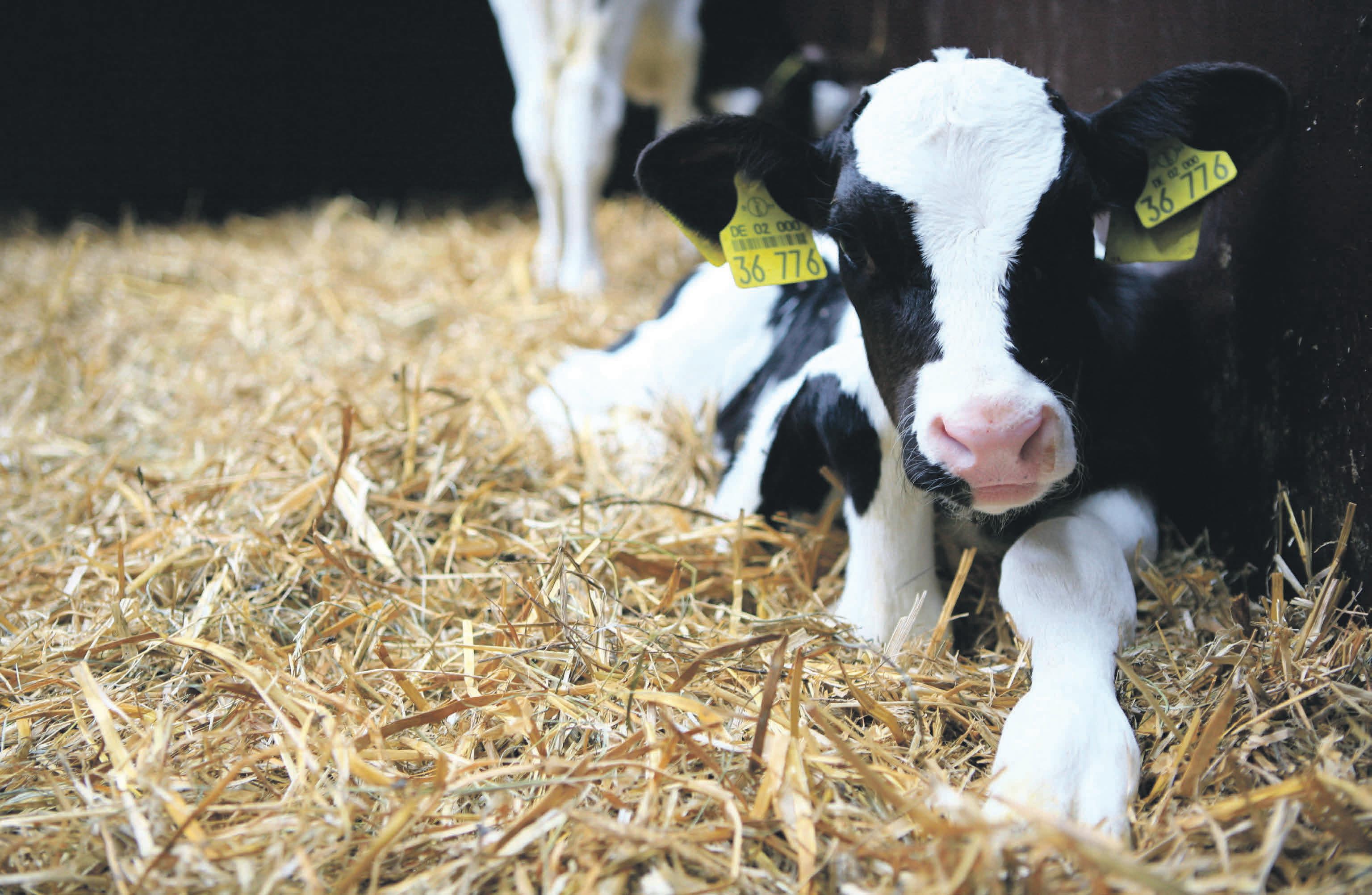
Each year, more than one million dairy calves are born in Australia, with many male and non - replacement calves historically having limited market options.
Often referred to as ‘bobby calves’, these animals have traditionally been processed at a very young age due to a lack of viable production pathways, an issue that has attracted increasing community concern around animal welfare and sustainability
CalfWays aims to tackle this challenge by ensuring every dairy-origin calf has a valued and commercially viable market outcome, primarily as beef cattle.
Developed with input from more than 150 industry stakeholders, the initiative is guided by a long-term roadmap to improve welfare outcomes, lift productivity and
strengthen collaboration across the dairy and beef supply chains.
Project steering committee chair Patrick Hutchinson said the program offered a
practical solution to a problem that had challenged both sectors for decades.
He said creating demand for dairy-bred beef would reduce the need for early-life
AUSTRALIAN DAIRY Farmers (ADF) has welcomed price support moves by a major supermarket and leading dairy processor to temporarily alleviate the input cost pressures hurting Australian dairy farmers.
ADF understands the developments include a retail-linked milk price increase for Woolworths own brand milk suppliers and a five cent per litre farmer support payment from Lactalis Australia.
ADF President Ben Bennett said while the announcements were positive and a step in the right direction, they each have limitations and do not yet go far enough to address the scale of financial pressure facing dairy farmers.
“These measures are welcome and provide important short-term support, but they do not yet deliver the long-term pricing outcomes all dairy farmers need,” Mr Bennett said.
He said it was critical to recognise Woolworths own brand pricing adjustment applies only to a very small number of farmers supplying into specific contracted milk pools
– meaning these benefits will not extend to farmers across most of the market.
“Retail-led increases are often tied to particular supply arrangements, and in this case only a relatively small group of farmers will see a direct benefit,” he said.
ADF also noted that the Lactalis payment, while positive, is a temporary support measure rather than a permanent increase in the farmgate milk price.
“The Lactalis initiative provides valuable short-term relief, but it is not a structural price step-up. Farmers need confidence that improved pricing will be sustained into the future,” Mr Bennett said.
Farmers across Australia continue to face significant increases in input costs, including fuel, fertiliser and feed, placing sustained pressure on farm profitability.
Mr Bennett said there is now a clear need for stronger and more consistent action across the entire supply chain, particularly from retailers through to processors.

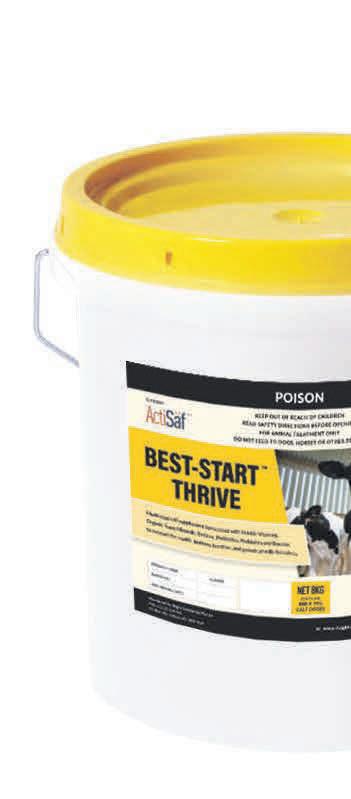
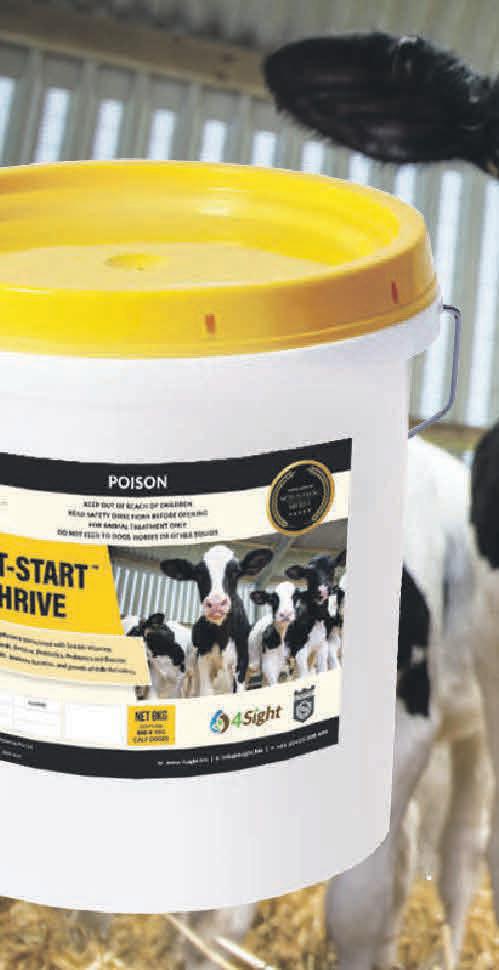
Bovatec® - research proven to control clinical signs of coccidiosis
Celmanax™ - research proven to reduce the incidence, severity andduration of scours(including cryptosporidiosis)
Safmannan® – research proven to improve immune response and bind a broad spectrum of major pathogens
(E.coliandSalmonella)
Betaine – osmoregulator to aid hydrationandgutwallintegrity
Actisaf®Sc47INST - research proven to promote a balanced gut microbiota, enhancefeedintakeanddigestion for improved daily gains, support healthy rumen development and healthyimmunefunction,andreduce incidence of scours.
SolubleVitaminsandOrganicTrace Minerals
Prebiotics&Probiotics to aid digestionandgutmicrobialbalance (28billionCFUper10gramdose)
“If we are serious about maintaining Australian milk production, retail pricing must better reflect the real cost of producing and processing milk,” he said.
“There is a shared responsibility across processors and retailers to ensure that value is returned through the supply chain in a way that supports farmers.”
ADF is calling for:
ɋ sustainable farmgate pricing aligned with cost of production;
ɋ greater transparency in how value flows from retail to farmgate; and ɋ stronger and more consistent retail pricing signals to support farmer confidence and investment.
“Short-term support helps, but what farmers ultimately need is long-term pricing certainty and a fair return for the milk they produce.”
ADF will continue to work constructively with processors, retailers and government to achieve a more sustainable future for the dairy sector.
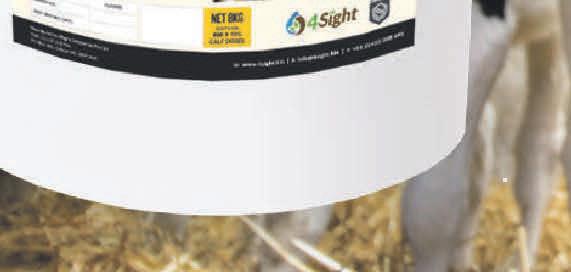
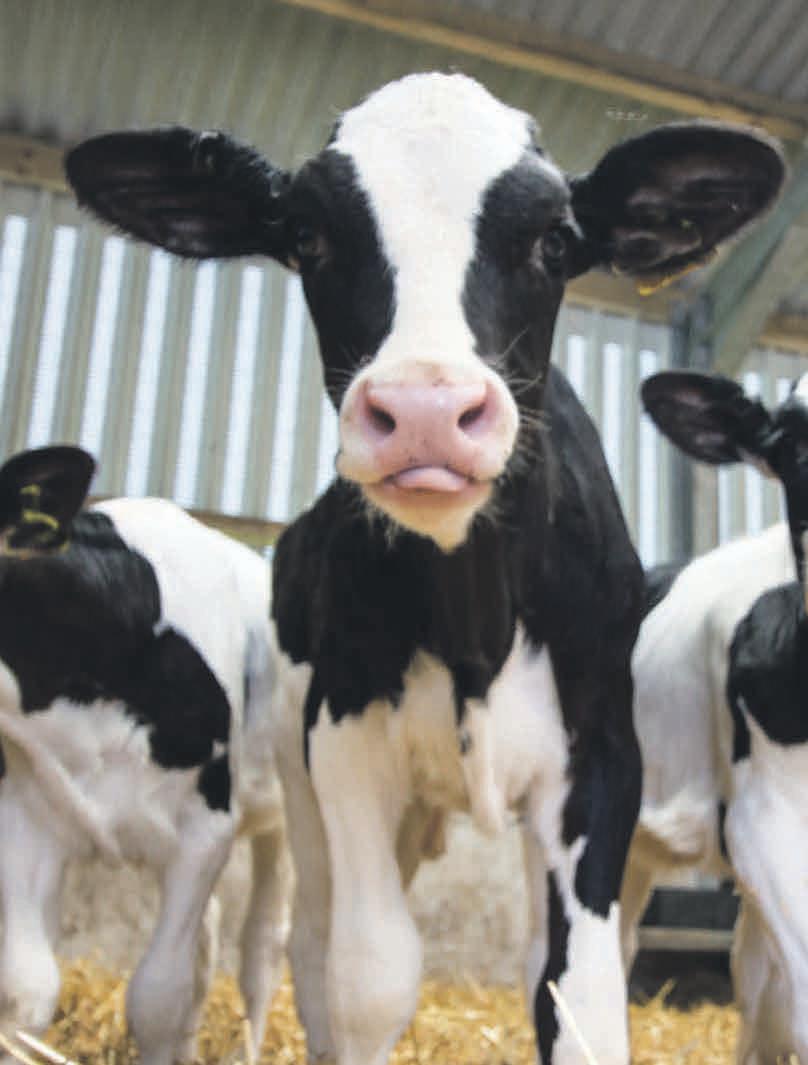
We changed to BEST-START THRIVE this season - it’s been an absolute game-changer for calf health and condition!
slaughter, while opening new income streams for producers.
“CalfWays gives both the dairy and red meat sectors a real chance to fix a long-standing challenge by creating a genuine, valued pathway for every calf,” Mr Hutchinson said.
CalfWays will support producers through better breeding and management decisions, including the use of sexed semen, genomic testing and strategic breeding to ensure calves are better suited to either herd replacement or beef markets.
MLA research shows beef from dairy systems can meet consumer eating quality expectations, with Meat Standards Australia trials demonstrating well-finished Holstein and Je rsey cattle can deliver tenderness, juiciness and flavour comparable to traditional beef breeds.
With northern Victoria home to one of Australia’s largest dairy regions, Dairy Australia said local farmer involvement would be critical to delivering the CalfWays vision.
Producers can get involved through endorsement, producer group projects and on - farm initiatives designed to improve beef-from-dairy opportunities
Farmers interested in any level of involvement can contact the CalfWays team directly, email calfways@dairyaustralia.com.au

BY RICK BAYNE
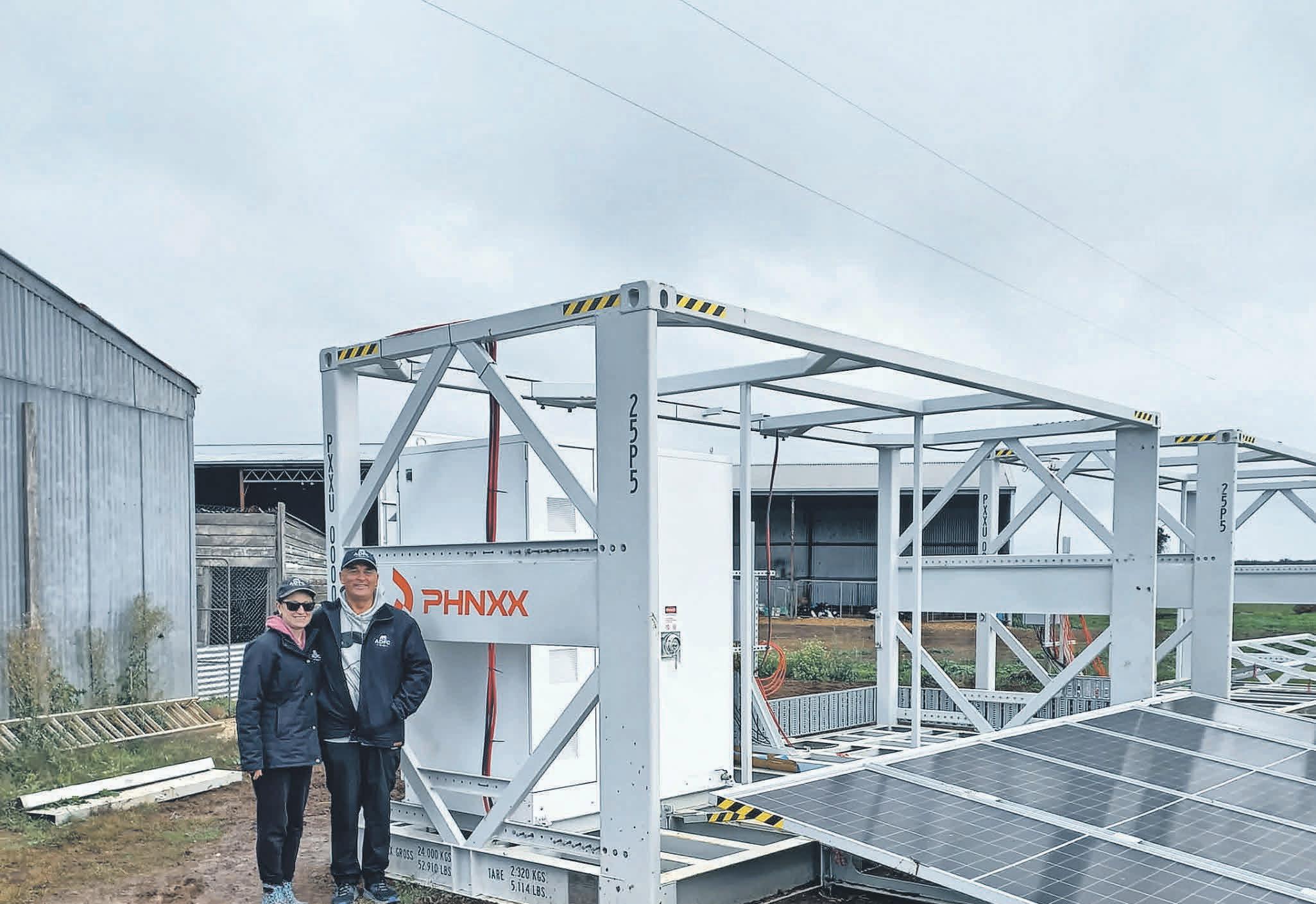
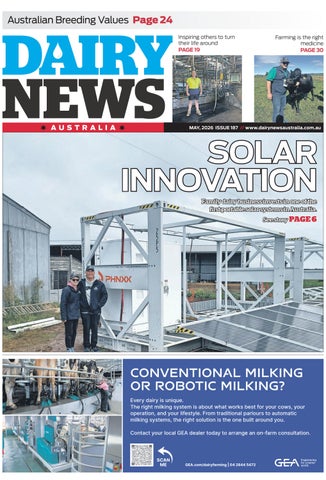
SWAN MARSH dairy farmers Peter and Trish Mulheron no longer have to worry about relying on an old back-up diesel generator if the power goes out.
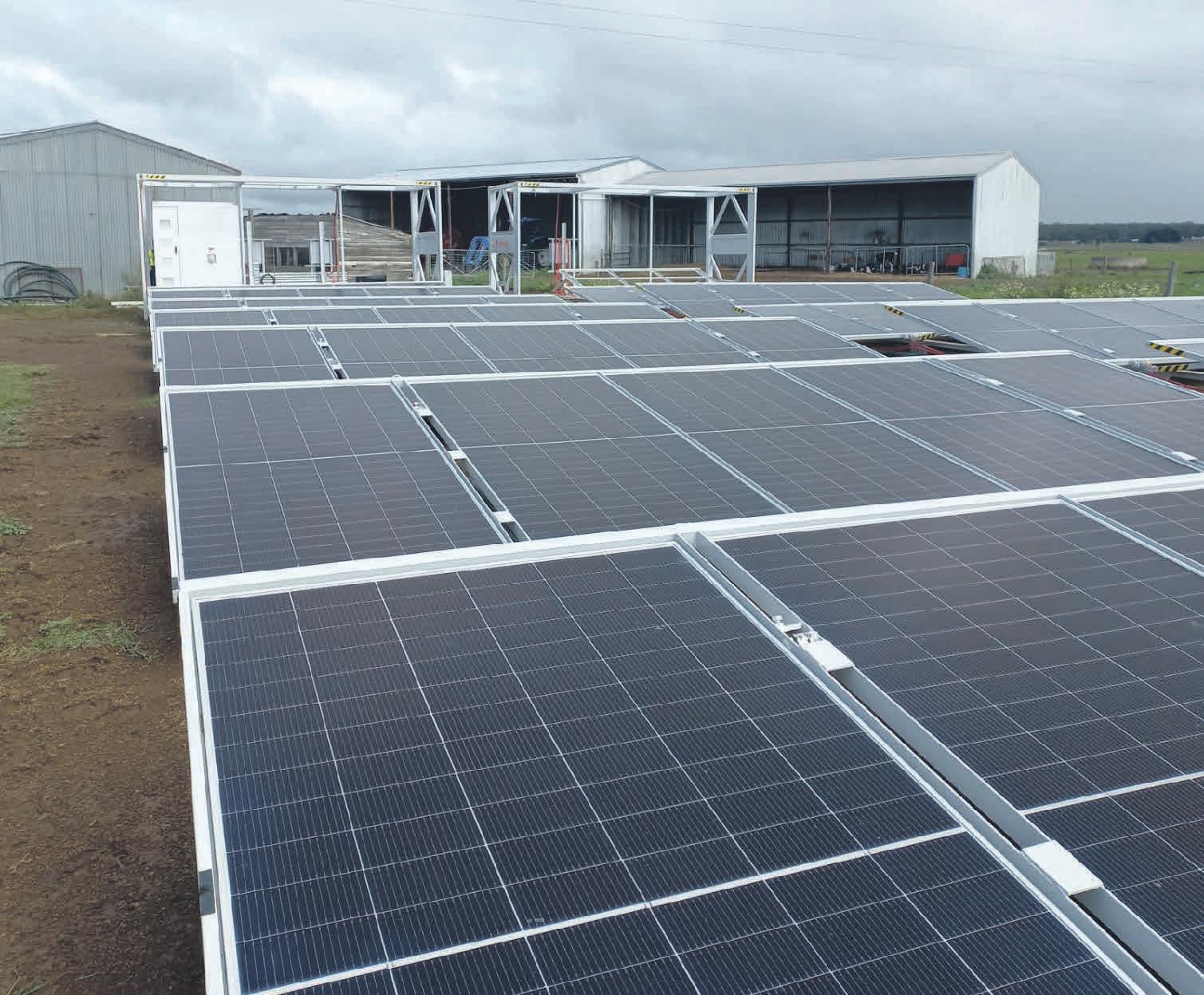
Their south-west Victorian farm is one of the first in Australia to have a transportable renewable power system installed and they expect it will end their annual $25,000 power bill.
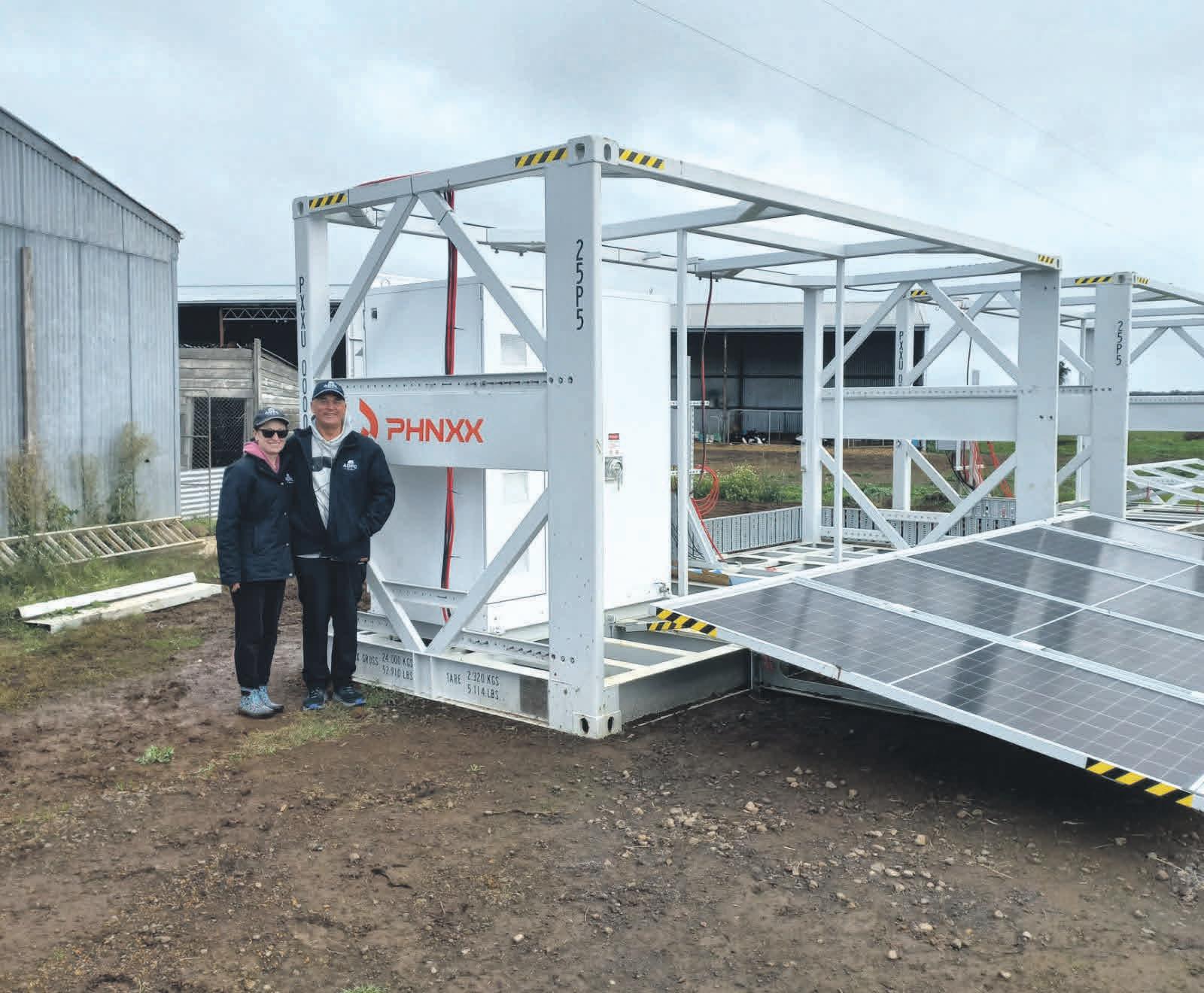
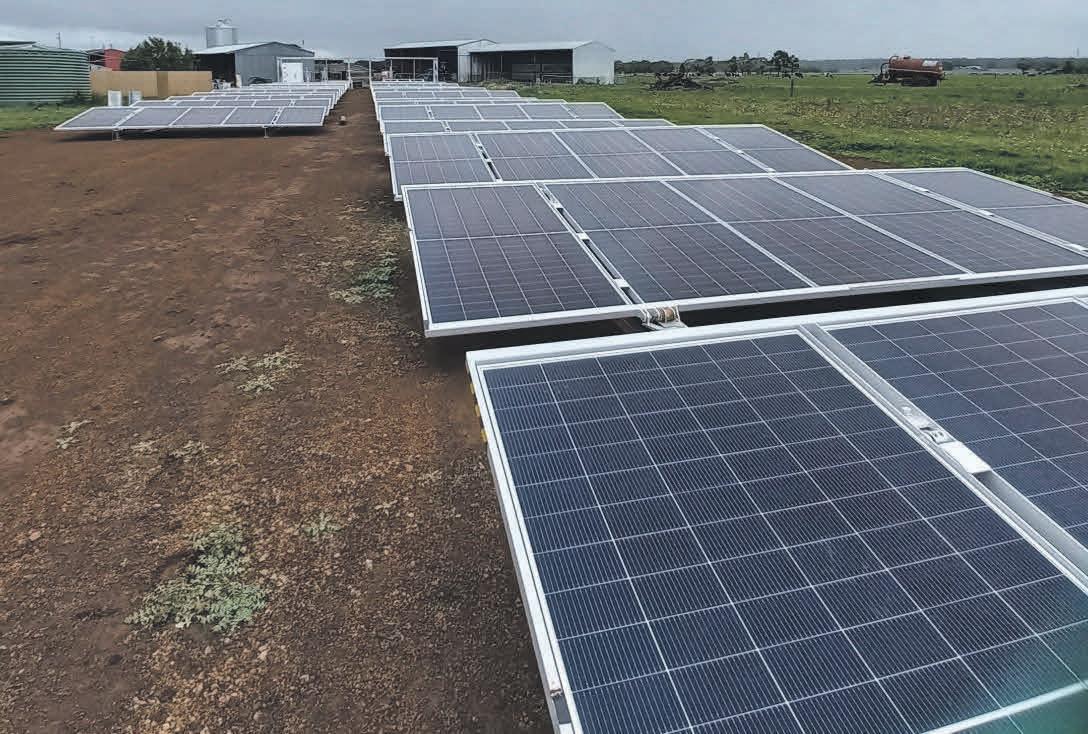
While many farms have solar panels on top of the dairy, the new PHNXX microgrid system can be rolled out of its shipping container and moved to wherever it’s needed.
Peter and Trish have set aside a parcel of unused land next to the dairy and the innovative system is now ready to go following a decade of trials. The microgrid system has 105-kilowatt output and a 241-kilowatt-hour battery.
The system comes inside a shipping container and is put together and rolled out on rails. It takes about seven hours to set up and about four hours to disassemble.
The microgrid system has 105-kilowatt output and a 241-kilowatt-hour battery.
Peter and Trish had investigated a traditional solar system but decided against it.
“Because of our power usage – we use a lot in the evenings and early mornings –we weren’t going to get full benefits from the panels so a battery made sense to us,” he said.
Their connection with PHNXX came about by chance when their son Matthew got an internship with the company while studying electrical engineering at University of Melbourne.
PHNXX was looking for a site for testing and set up a pilot program, running a spotlight using solar panels, wind power and battery.
They graduated to a 40-kilowatt solar and battery version and after deciding wind wasn’t a suitable option.
After tests on other farms and a winery, the full scale 105-kilowatt module has been installed.
“Our hope is that we’ll totally cut out our power bill,” Peter said.
“In the winter there will be less sunlight and we might have a shortfall and use a bit of grid power, but we’ll have excess in summer and sell that back into the grid.
“We’re hoping that over the year they will cancel each other out and be cost-neutral.”
A grant from the Victorian Department
of Energy, Environment and Climate Action has helped to cut the originally anticipated seven-year payback time.
“I had my doubts at the initial pilot stage that anything would be capable of covering the whole amount because a dairy uses a lot of energy, but through the testing, I’m quite comfortable that once it’s fully functional it will do what we’re hoping for,” Peter said.
They were keen on the portable system to not only cut power costs but to contribute to a sustainable industry and avoid reliability issues.
“Reliability of power is becoming an issue,” he said.
“We’ve been lucky in western Victoria
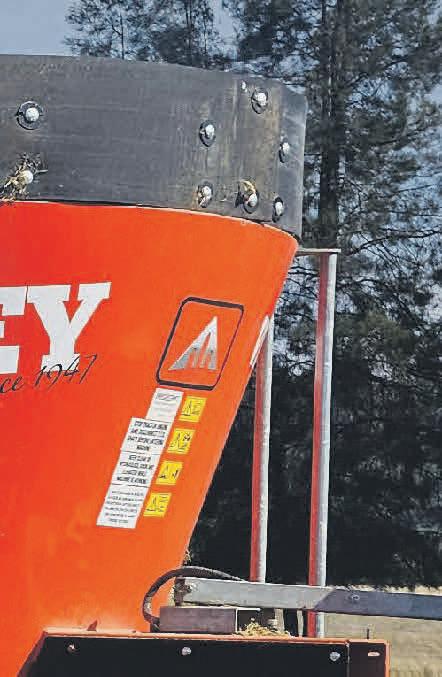
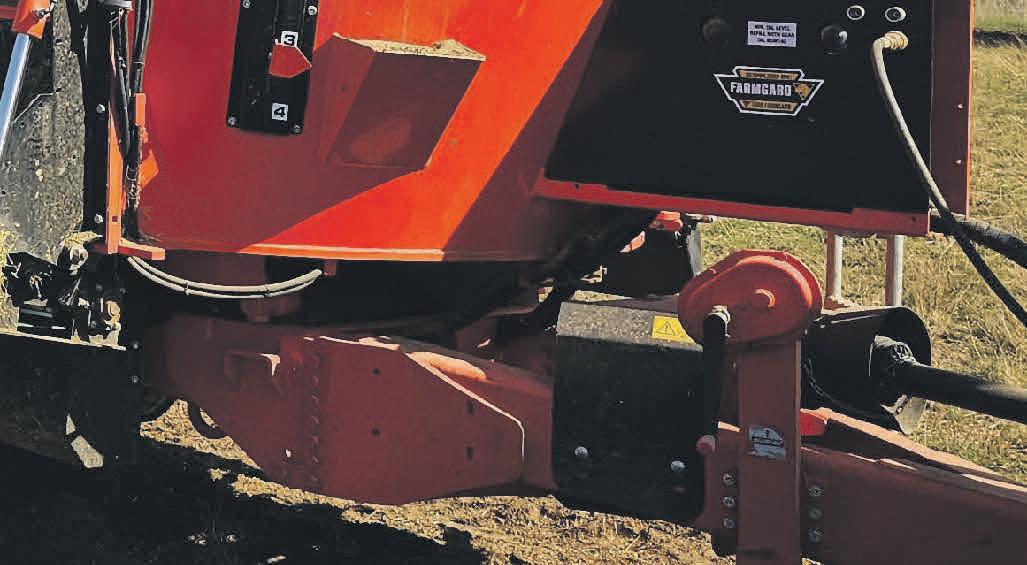
KEENAN machines are proven, farmer-tough, and ready for whatever work lies ahead.
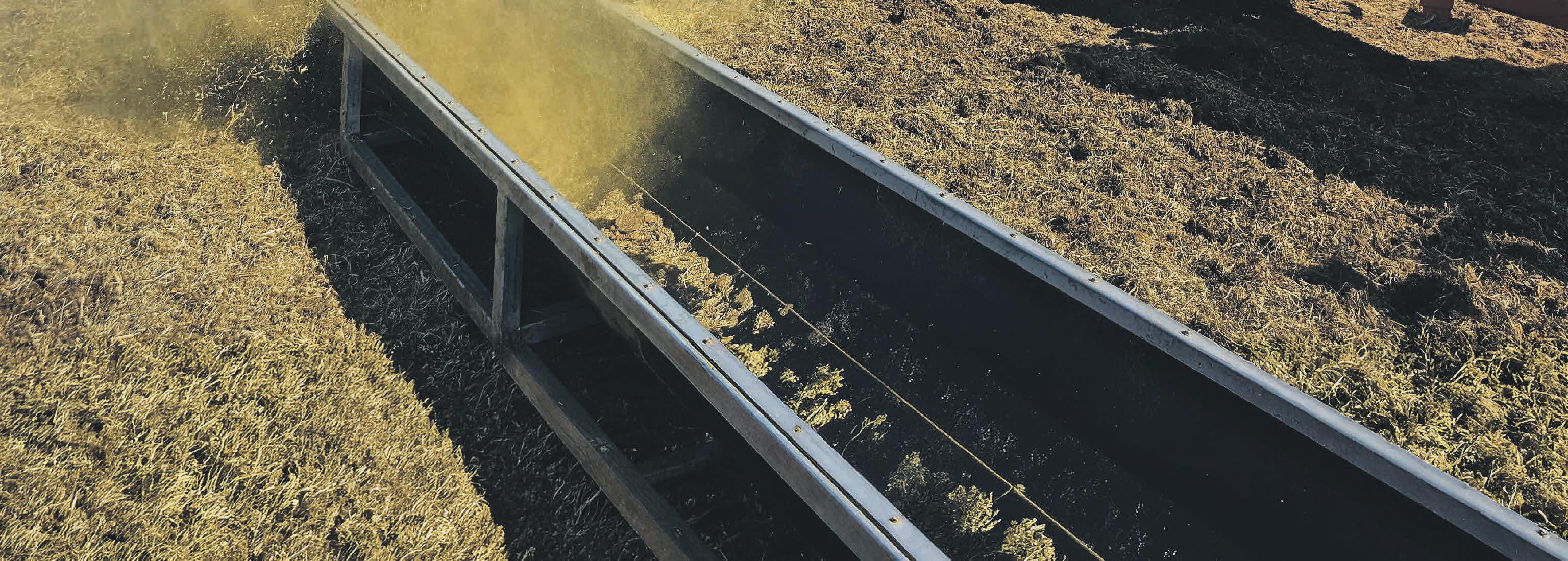
The trusted combination of unique algorithms + nutrition advice ensures the exact formulations, mixing order, speed and rotations.
in that we haven’t suffered the disasters they’ve had in Gippsland and northern Victoria where they have been without power for up to weeks.
“Our breakdowns are usually three-to-six hours so you can get away with one milking on a generator, but a generator is not as stable, it tends to fluctuate.
“As we get more technology in the dairy, there’s some voltage sensitive equipment that doesn’t take too kindly to the generator fluctuating.”
The system comes inside a shipping container and is put together and rolled out on rails. It takes about seven hours to set up and about four hours to disassemble.
Finding a spot wasn’t a problem and Peter and Trish plan to leave it permanently beside their 24-a-side herringbone dairy.
A fourth-generation farmer, Peter’s great grandfather started on the land in 1906 and the property has expanded over the generations.
Peter and Trish and their son James run the farm with support from a couple of occasional milkers. They peak at 240 Holsteins.
While he has no immediate plans to retire, Peter is in his 60s and thinking of the future.
“If we decide to give up milking and don’t require the power, it’s a saleable item, just like a tractor,” he said.
“A lot of dairies ceased operation with big

solar systems stuck on the roof. It’s not cost effective to dismantle it so it sits there going to waste.
“This can be packed up and moved somewhere or if our son took over the farm and decided to build a new dairy in a different place, it could be taken there.”
A recent demonstration day created a lot of interest.
“A lot of farms have diesel generators that are used when there’s an outage or a shortage of power, and with the way diesel is going we expected a lot of interest,” Peter said.
PHNXX co-founder Wei-Chi Lee said the modular solar-battery microgrid was built for remote and off-grid operations and stemmed from projects in mining, oil and gas that previously relied on diesel generators.
“We estimate across the year the average coverage from our system will be well over 90 per cent and farmers like Peter will get benefits from feeding in excess during the summer months that cover the shortfall during winter.”
Mr Lee said the microgrid would provide
reliability against blackouts and brownouts and “farmers will know exactly what they’re paying for power, not be at the whims of fluctuating power prices”.
The surge in diesel prices has led to more interest in the portable solar systems.
“I’ve spoken to a lot of customers in the past few weeks who are really feeling the price hike of diesel,” Mr Lee said.
“This essentially protects them against that. The majority of farmers are on a financed plan where we can match monthly repayments to their current power bills, so effectively zero out-of-pocket costs for them.”
The system can be adjusted or expanded to suit a farmer’s needs. It uses bifacial collar panels which are open at the back, helping with ventilation and capturing additional irradiation.
“They are easier to maintain and more efficient than roof-mounted systems,” Mr Lee said. “When it’s on the ground, it’s typically open at the back but on the roof the solar panels capture heat. Ironically solar panels don’t operate so well if they get too hot.”
SLOW-RELEASE BUFFERING EFFECT
• Carbonates help neutralise excessive rumen acids.
• Assists in optimising rumen pH.
• Maintains longer term pH stability of the rumen.
HIGHLY BIOAVAILABLE MINERALS
• Calcium (min. 32%) Magnesium (min. 3%)
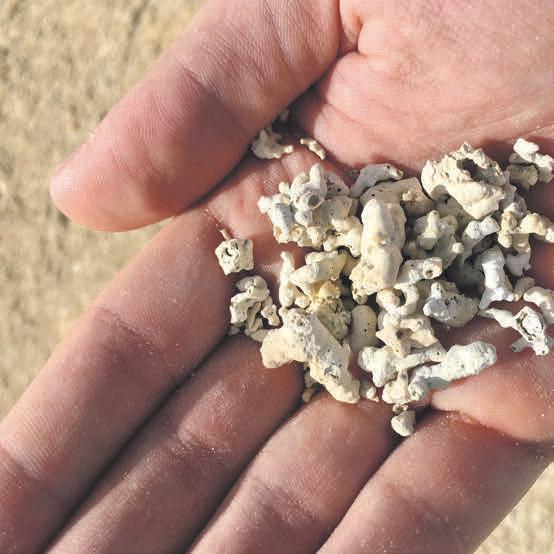
• Contains over 70 minerals.
PROMOTES OPTIMAL RUMEN FUNCTION
• Improves environment for microbial fermentation.
• Improves fibre digestion and feed efficiency.
• Improves dry matter consumption.
100% NATURAL
• 100% Calcified Calcareous Red Algae.
• USDA Organic Certified.


BY SOPHIE BALDWIN
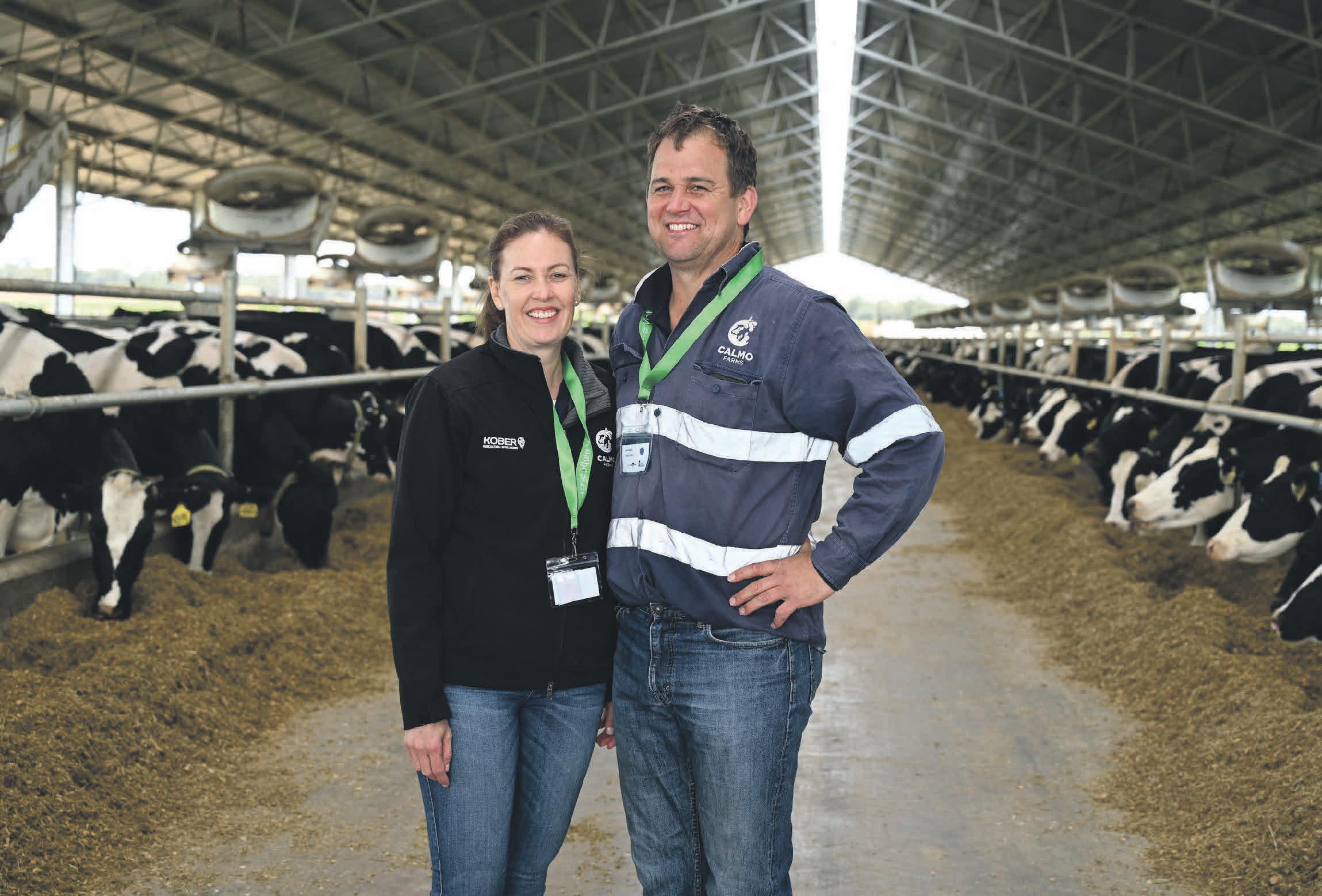
RAISING THE Roof is a biannual fixture on the Australian dairy calendar, bringing together dairy farmers looking to invest in housed systems and looking to learn the world’s best practice.
This year’s event will be held at Riverlinks Eastbank in Shepparton, Victoria from May 20 to 22.
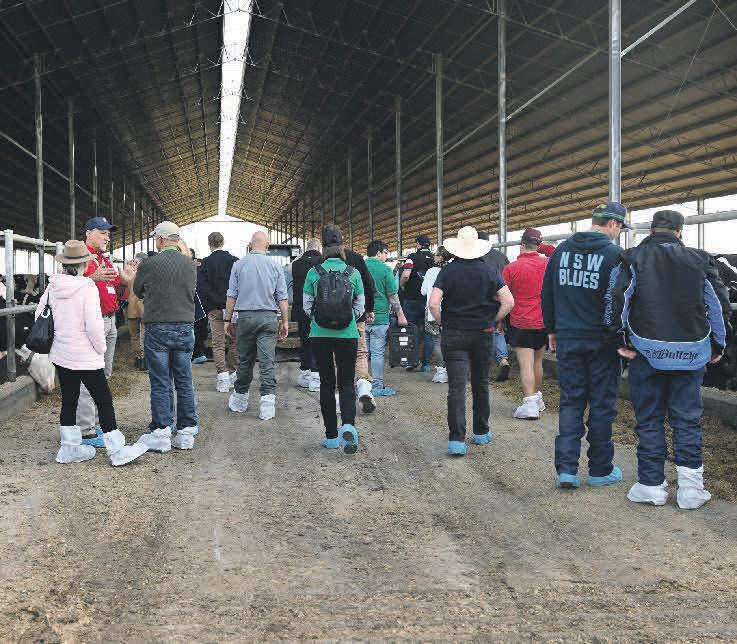
Raising the Roof will be held over threedays, and like the last event, over 300 people are expected to attend.
The event includes international experts at the forefront of cutting-edge technology and innovation, and will include in-person and virtual farm visits.
The latest resources and insights into feed pad and contained housing infrastructure are also a highlight.
There is also an opportunity for networking with like-minded peers and industry stakeholders.
Some of the topics covered will include:
ɋ Calf facilities
ɋ Maternity facilities
ɋ Animal health - such as heat stress and reproduction
ɋ New types of facilities coming to Australia
ɋ On-farm climate and energy initiatives
ɋ Nutrition management in PMR and TMR systems
ɋ Managing effluent
ɋ Getting your team right
ɋ Planning for success.
Guest speakers include:
Dr Gordon (Gordie) Jones is a globally recognised dairy performance consultant with more than 40 years of experience.
Dr Jones specialises in cow comfort, housing design, herd productivity and dairy management.
He has worked with dairy producers, veterinarians and nutritionists across the United States, and internationally, and has played a key role in the design and development of largescale dairies, including Fair Oaks Dairy.
He is also a partner in Central Sands Dairy, a 3500-cow operation, and was named one of Progressive Dairy’s most influential people in dairy.
Noel Kelly is founder of Creva International from Galway in Ireland.
With more than 20 years of industry experience and a lifetime connected to farming, Noel works globally to deliver practical, long-life solutions in cow comfort and calf rearing.
Through Creva International, he supports
large-scale farm projects, distributors and partners across international markets, with a focus on durable, hygienic and easy-to-install systems that improve performance on farm.
Oliver Moore is the senior vice-president of

the New Equipment Division (UK) GEA Farm Technologies.
With more than 21 years in the global dairy industry, Oliver brings deep expertise in automation, equipment design and large-scale dairy systems.
Jurgen Steen is GEA Farm Technologies’ national sales manager for Automatic Milking Systems.
With 28 years of international experience and more than 200 farm automation transitions, Jurgen is known for his practical approach to designing future-ready milking systems.
Dr Mario Mondaca is a senior technical application and research engineer for VESArtex in the US with expertise in heat stress and dairy cows.
Dr Mondaca has done extensive research into the psycho-environmental relationships between the cow, the facility, and the environment.
His knowledge of engineering and cow
comfort allow him to bridge the gap between animal specialist, facility designers and engineers.
Nigel Cook is a director of the US-based Dairyland Initiative and a professor in food animal production medicine at the University of Wisconsin-Madison.
His sessions will be focused on maximising cow comfort and transitioning so that cows can rest when they want to for as long as they need to, so we can maximise health and productivity
Other speakers include Mike Ryan (Eagle Direct), Tom Farran (Farmanco), Christian Bannan (South East Soil and Water), Clare Fitzpatrick (Progressive Rural Solutions) and Janine Price (Scolexia).
More than 300 people participated in the last RTR, held over three days at the Hunter Valley in 2024, where attendees heard from industry leaders and global experts about industry best-practice in feeding and housing infrastructure.
ɋ Tickets can be found at https://tinyurl. com/4wwcdm7a
BY NICHOLAS SPANDLER
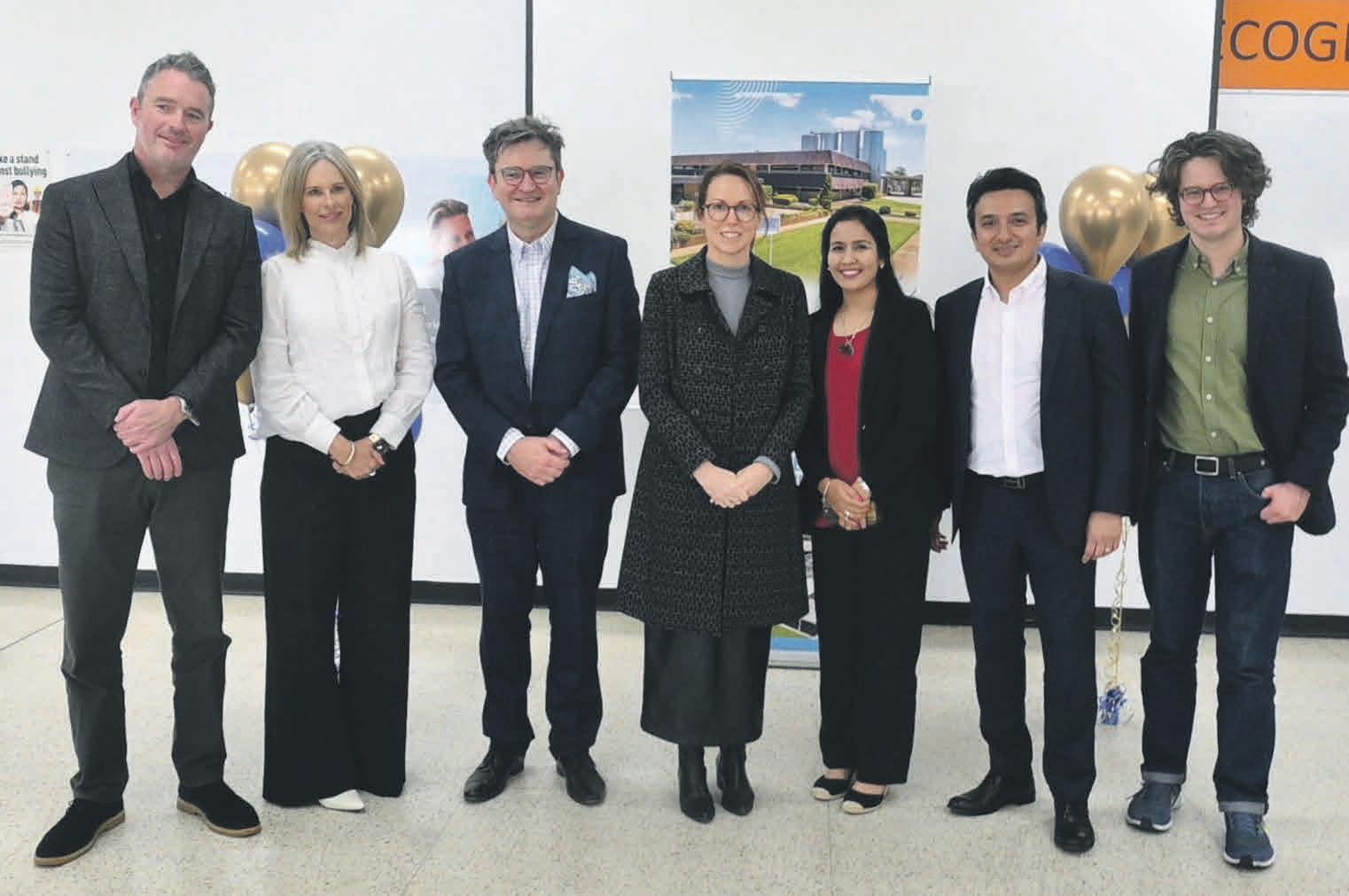
A $1.5 million Victorian Government grant awarded to Tongala Nutrition is being hailed as a strong vote of confidence in northern Victorian manufacturing.
The funding, announced at an event attended by state and local representatives, will help the Tongala-based manufacturer expand its production capabilities, reinforcing the role of regional businesses in northern Victoria’s economy.
The grant is part of the government’s $150 million Victorian Investment Fund.
Tongala Nutrition took over the 100-yearold former Nestlé facility in 2022, bringing it back into production in 2023.
The facility employs about 30 staff, specialising in nutritional and UHT products.
Tongala Nutrition founder and chief executive Siddharth Jani said the grant represented more than money.
“This grant is not just financial support — it’s a strong vote of confidence in regional manufacturing,” Mr Jani said.
“It reinforces that businesses built in regional communities have a critical role to play in shaping the future of Victoria’s economy.”
Mr Jani said the support would allow the business to take the next step in its growth journey.
“This project represents a significant milestone for Tongala Nutrition as we continue to build a world-class dairy and nutrition
manufacturing platform in regional Victoria,” he said.
The investment will help Tongala Nutrition to expand both its domestic and international markets.
Tongala Nutrition production manager Shannon Tucker said the reopening and expansion of the facility had transformed employment opportunities in the town.


“I used to travel 50 minutes to Shepparton for work — now it’s five minutes down the road,” he said.
“To be able to get this site back up and running again is incredibly exciting for the town.”
The impact is already being felt by local workers.
Rod Donoghue, who returned to the site after working there in the 1990s, said seeing
the facility reinvigorated was significant for the community.
“This facility isn’t short of ideas or opportunity ... it’s about getting the legs under it and building from there,” he said.
Victorian Treasurer and Regional Development Minister Jaclyn Symes said the investment demonstrated the importance of backing ambition in regional towns.
“Without ambition, pride and opportunity, small towns don’t succeed — and that’s why investments like this matter,” Ms Symes said.
“You’re creating jobs, strengthening the local supply chain and contributing to the liveability and prosperity of the area — and that’s why we’ve jumped right behind this project.”
Ms Symes said the joint investment between the government and Tongala Nutrition was expected to create new local jobs.
“What this investment says to Tongala is that there is a future here — and that people can stay, return and build their lives in regional communities,” she said.
Campaspe Shire Council representative Astrid O’Farrell said maintaining confidence and investment in the region was particularly important in the current climate.
“Investment at any time is important, but particularly now... keeping investment and confidence in this region is critical,” Ms O’Farrell said.
“There was a real desire to see someone come back in here and bring this site back to life — to see improvement happening in the region again.”

















ENTERING A global cheese competition for feedback turned into a surprise silver medal for one Victorian milk processor.
Australian Consolidated Milk (ACM) took home second place at the prestigious World Championship Cheese Contest in the US recently.
The competition includes 3,375 dairy products from 25 countries and 34 US states and territories.
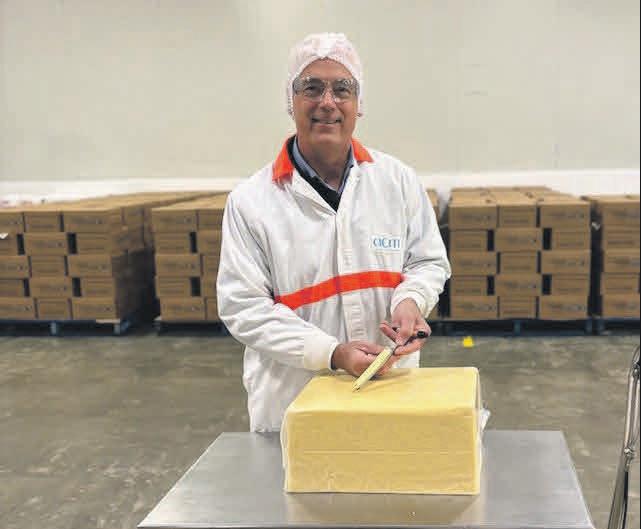
ACM’s aged cheddar (1–2 years) - known as Girgarre Cheddar - scored an outstanding 99.065 out of 100 - placing second out of 61 entries in its category.
ACM general manager quality, Glen Hamson, said the result was unexpected but a strong endorsement of both the product and the process behind it.
“We entered the competition simply to benchmark ourselves and get feedback from international judges - we certainly didn’t expect to come home with a silver medal,” Mr Hamson said.
“To achieve a score of 99.065, with judges noting excellent block shape and very few defects, is an incredible result for our team.”
Judging at the contest is highly technical, with cheeses scored out of 100 and points deducted for flavour, body and texture defects - making ACM’s near-perfect result all the more significant.
What makes the achievement even more remarkable is ACM’s relatively recent entry into cheesemaking, producing its first cheese at its Girgarre facility in September 2020.
The award-winning cheddar was made in June 2024.
“To be recognised at this level within just four years of making cheese is something




we’re really proud of,” Mr Hamson said.
“This result gives our customers confidence they are buying a high-quality product, and it opens the door for new conversations
both domestically and internationally.”
Cheese is a growing part of ACM’s business, with products supplied to both manufacturing customers and retail markets.
This award also highlights the cheese’s ability to mature well - a key attribute for premium cheddar.
“As with good wine, good cheese improves over time,” Mr Hamson said.
“This award confirms our cheddar develops the flavour profile customers are looking for in a well-aged product.”
This result also underscores the importance of milk quality.
“This award is great recognition for our group of dedicated suppliers producing the milk on farm day in, day out. You can only make good cheese from good milk,” Mr Hamson said.
“Our milk supply, with consistently low bulk milk cell counts, plays a critical role in achieving the quality outcomes we’ve seen.”
Australia performed strongly across the competition, reinforcing its global reputation for high-quality, sustainably produced dairy.
Mr Hamson said the result was not only a win for ACM, but for the broader Australian dairy industry.
“There’s some excellent cheese being produced across the country, and competitions like this provide an important benchmark,” he said.
“It’s a great story for Australian dairy and shows we can stand shoulder to shoulder with the best in the world.”









VICTORIAN FARMERS heading into the winter cropping season have received some welcome relief, with an additional 250,000 tonnes of urea fertiliser secured from Indonesia as tight global supply continues to bite.
The fertiliser will be delivered under an agreement between Incitec Pivot Fertilisers and Indonesian producer PT Pupuk Indonesia, sup plying around 20 per cent of Australia’s remain ing fertiliser needs for the current season.
For growers across Victoria’s cropping regions, the timing is critical as nitrogen deci sions are made for cereals, canola and pasture.
The National Farmers’ Federation said the extra supply would help restore confidence after months of uncertainty driven by international conflict, constrained shipping and high input prices.
NFF president Hamish McIntyre said access to in‑season fertiliser had been one of the big gest concerns raised by farmers.
“Securing additional urea provides much‑needed certainty as growers prepare win ter crops,” Mr McIntyre said.
“But it only fills part of the gap as supply remains tight and costs remain high, which con tinues to place pressure on farm businesses.”
The Federal Government confirmed it sup ported the deal through cooperation with indus try and the Indonesian Government, alongside other steps including the establishment of a fer tiliser supply working group, underwriting fuel and fertiliser imports, and streamlining border approval processes.
Prime Minister Anthony Albanese said
locking in supply was critical for farmers making planting and management decisions.
“We understand how important fertiliser is for Australian farmers and our food production system,” Mr Albanese said.
“This agreement will give farmers greater cer tainty at a crucial point in the season.”
Incitec Pivot president Scott Bowman said the additional urea, scheduled to arrive between May and December, would help shore
up supplies distributed through the company’s national network, including into Victorian farm ing regions.
“While there is more work to do to fully meet farmers’ requirements this season, this addi tional volume will go a long way to supporting critical supply,” Mr Bowman said.
Despite the relief, farm groups warned the deal highlights Australia’s ongoing vulnerability to global supply shocks.


NFF said fertiliser and fuel volatility contin ued to threaten farm profitability and the viabil ity of regional businesses.
Mr McIntyre said longer‑term investment in domestic capability was needed to ensure growers were not left exposed in future seasons.
“Farmers need reliability and certainty to keep producing the food and fibre Australians rely on,” he said.
Trace minerals support a range of biological functions required for immune function, reproduction, and growth. Trace minerals are present in forages and other feeds used in cattle diets, and with the exception of cobalt, meet the requirements of rumen microbes. However, supplementation is needed to meet the animal’s needs.
Trace minerals support an array of biological functions that are required for proper immune function, reproduction, and growth. Trace minerals are present in forages and other feeds used in cattle diets and, with the exception of cobalt, meet the requirements of rumen microbes. However, supplementation is needed to meet the needs of the animal.
and rumen. Slow breakdown of IntelliBond occurs in the abomasum, making the mineral available to be absorbed in the small intestine. ✓ Preferential intake ✓ Protected from antagonists
Contributes to making

IN TODAY’S farming environment, efficiency at seeding has never been more critical. With rising input costs, ongoing fertiliser supply pressures, and tightening margins, Australian growers are under increasing pressure to maximise the return on every hectare.
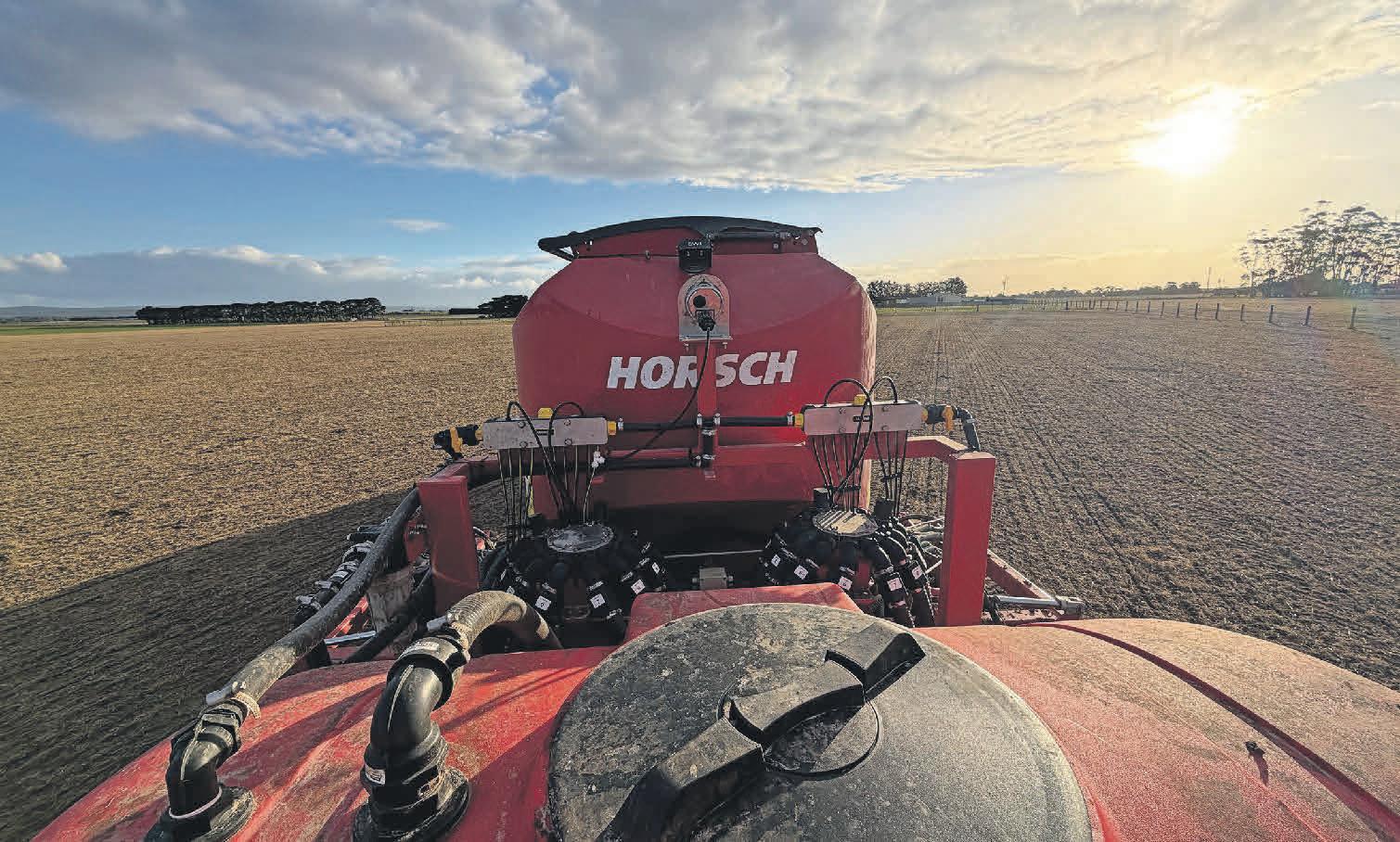
In response, Liquid Systems (SA) has announced the launch of its new Manual Set Rate (MSR) Series, a simplified, cost-effective in-furrow liquid application system designed to make liquid nutrient placement more accessible to a broader range of farming operations.
In-furrow liquid application opens the door to a broader, more flexible toolkit — from building block NPK fertilizers, inoculants, and trace elements through to fungicides, soil conditioners and wetters — all delivered in a single pass at seeding.
The advantage is simple: placement.
By delivering inputs directly into the root zone, growers are achieving: more efficient use of fertiliser and crop inputs.
stronger, more uniform early crop establishment.
increased nodulation and nitrogen fixing in legumes.
reduced need for additional passes.
greater flexibility in nutrient and crop protection strategies.
Since 2002, Liquid Systems (SA) has been at the forefront of this shift, with its LQS Series setting the benchmark for precision liquid delivery through integration with leading precision agriculture controllers, enabling
variable rate and data-driven application.
However, not every farming operation requires that level of sophistication.
Matt Devine, business development manager at Liquid Systems said they work with many growers across Australia, operating on consistent soil types and straightforward paddocks, who simply want a lower-cost, lower-complexity way to access the benefits of liquid application.
“For these operations, the investment and
technical requirements of full precision ag systems can be a real barrier.”
The MSR Series has been developed to remove that barrier.
Available in both hydraulic and electric configurations, the Manual Set Rate (MSR) Series removes the need for rate controllers and complex precision ag infrastructure, while still delivering consistent and reliable application.
It is particularly suited to growers with consistent soil types and operating speeds
with uniform paddocks, as well as irrigated, broadacre, row crop, intensive ground crops and research applications.
Built with the same high-quality componentry Liquid Systems is known for, including its proven piston diaphragm pump, the system delivers steady, consistent flow, handles a wide range of liquid products, and remains gentle on biologicals such as inoculants.
When paired with Liquid Systems’ Stacker Distribution Kit, the MSR Series ensures even, positive pressure delivery to every row, reducing the risk of blockages and maintaining accurate placement across the full width of the bar.
The result is a practical, cost-effective entry point into liquid application, helping more Australian growers improve nutrient efficiency, reduce input waste, and establish stronger crops from the outset.
With fertiliser costs and supply continuing to challenge the industry, solutions that improve placement efficiency and reduce reliance on multiple passes are becoming increasingly important.
“This isn’t about changing direction for Liquid Systems,” Matt said.
“It’s about widening the path — making proven liquid application technology accessible to more growers, in a way that suits their operation.”
For more information call Matt Devine 0477 612 777 or matt@liquidsystems.com.au or visit www.liquidsystems.com.au





BY ELIZA REDFERN
THERE ARE many questions around how long the Middle Eastern conflict and flow on effects will last, at a crucial point in the dairy calendar.
Bendigo Bank Agribusiness Insight’s latest commodity update outlines while producers try to get the most out of autumn, processors are shaping new season budgets and more crucially, what milk prices to offer.
At this point, the industry is staring down the barrel of a volatile and uncertainty market, and a likely stable milk pool that might limit milk price upside.
Australian milk production is on track to end this current season one to two per cent below 2024-25, with season to date volumes -1 per cent in February after dry conditions in several regions.
Improved milk prices, rainfall in some areas that needed it and large volumes of homegrown feed produced helped sustain many operations through a dry summer.
Assuming a lack of adverse weather conditions, Australian milk production will likely stabilise in the 2026-27 season, with
potential downside attributed to volatile input costs.
As end users, dairy farmers will not only have to pay higher costs for fuel and fertiliser, but for grain and fodder as well, which will tighten profit margins in the new season.
Rising fuel, freight and energy costs, in addition to export disruptions, shortages of packaging inputs, a volatile exchange
rate and even a potential global downturn, are all constraints past the farmgate, many of which will weigh on processing margins too.
At the same time, global milk supply remains strong, and despite national production tracking below last season, several large companies have reported processing more milk than they had initially budgeted for.
In anticipation of an export market drop, many processors have reported forward selling as much as possible, supported by importers purchasing larger volumes for near-term coverage in attempt to mitigate exposure to mounting supply chain challenges.
However, as we’ve been warning, this buying activity is now slowing, resulting in all prices dropping on GlobalDairyTrade event 401 — the first overall decrease on the platform in 2026.
In the days leading up to June 1, processors will likely open conservatively on the back of their own higher costs and weakened underlying fundamentals.
To supplement the drop, they may offer additional benefits to support farmers in the high-cost environment, but with competition to secure milk likely dulled compared to previous years, full 202627 season pricing may ultimately land in a similar position to today’s estimates, around $9.40/kg MS (southern indication).
A price that will be above longer-term averages, but unlikely to greatly alleviate cost pressures on the ground.
Eliza Redfern, senior manager industry insights



AUSTRALIA HAS long been recognised as a producer of some of the highest quality dairy products in the world.
This is not by chance. It is the result of generations of farming knowledge, careful land stewardship, continual reinvestment and a deep sense of responsibility to produce safe, nutritious food for Australia and for global markets.
In our business we see this legacy every day — in the paddocks, in the herd and in the people who turn up, without fail, seven days a week.
Farming is not simply an occupation; it is a long-term commitment built over decades, often across multiple generations.
However, that legacy is now under increasing pressure.
Across the industry, there is a growing concern that the current operating environment is becoming progressively more difficult — not because of a lack of capability, innovation or willingness to adapt, but due to an accumulation of external pressures. Rising compliance requirements, increasing costs and a complex and expanding tax burden, all of which are steadily eroding the capacity for Australian agriculture to remain globally competitive and, even worse, to maintain operations.
There is a broader sense the policy environment is shifting in a way that places disproportionate strain on private enterprise — particularly in agriculture, where businesses are not only commercial operations but also custodians of land, livestock and the backbone of regional communities.
In Australia, our average cost of power is about AUD $0.34/kWh (2023-2026 average), which is well above the world average of $AUD $0.23/kWh and highlights just one of the many challenges that need to be overcome to pursue export opportunities.
With a national debt expected to hit more than $1.25 trillion by 2028, the interest payments alone on this are forecast to be $64.5 billion, being 2.1 per cent of GDP, more than our entire defence budget!
Our level of regulation is one of the highest in the developed world with about 450 new laws introduced and well over 5000 new regulatory burdens since the 2022 Federal Election, costing $160 billion annually.
Alarmingly our living standards have decreased at a faster rate than any other country in the OECD since 2022 with our disposable income dropping at the fastest rate in the world; other countries have seen an average increase of 6 per cent across household incomes (Australia’s dropped 9 per cent in this time same period).
This economic turmoil has been a high price to pay in Australia with almost 15,000 business insolvencies in 2024-25, the majority small businesses.
It’s not hard to see why the business sector is more than worried and particularly agriculture, over half of whose operators are recorded as being small business and 99 per cent of which are family-owned and operated.
Farming in West Australia already carries unique challenges.
Farmers do not expect conditions to be easy. They adapt, problem-solve and continue — because the work matters.
They work around unpredictable rain, hail and heat.
The cows still need to be fed, water needs to be pumped, fences need repairing, hay
must be seeded, harvested and rolled when conditions allow. This happens every day of the year — regardless of weather, markets or policy settings.
What is becoming increasingly difficult, however, is sustaining this level of commitment in an environment where margins remain tight, costs continue to rise and the regulatory and financial burden continues to expand.
Despite all of this, the industry continues to deliver.
Australian dairy farmers remain focused on producing food of exceptional quality — often exceeding global standards — while maintaining strong animal welfare, environmental stewardship and food safety practices. This is something that should be recognised and supported.
There is a broader national context to consider. About one per cent of Australians are farmers.
For many, the realities of agricultural production — the infrastructure required, the time involved and the level of investment — are largely unseen. Yet the output of this system is relied upon every day.
Ultimately one per cent of our population takes the responsibility of feeding the nation, as well as producing for export and generating income for Australia.
The opportunity for Australia remains significant. With the right settings, the country is well-placed to continue leading in premium food production, innovation and profitable agriculture.
The capability exists. The knowledge exists. The commitment certainly exists. What is required is a policy and economic environment that enables, rather than constrains, that potential.
Productivity and unshackling business to get on with things is critical now, possibly more than ever before.
We remain optimistic about the future — but clear-eyed about the challenges. The resilience of the sector is strong, but it should not be taken for granted.
Supporting Australian agriculture is not simply about preserving an industry. It is about ensuring the continued ability to produce high-quality, safe food, maintaining regional communities and retaining our nation’s sovereignty.
The foundations have been built over generations.
It has been made very clear that when the chips are down (such as during global crises akin to COVID and war), the independence of a country with regards to food, water and energy is critical for the survival and the welfare of its people.
Farmers have an innate ability to find solutions and dig deep, however being faced with unnecessary challenges and constraints imposed by government and baseless ideologies has taken the impediments to the next level and the writing is on the wall, certainly in dairy farming with farm exits and declining production levels across the industry.
This is pronounced in WA where we have seen our industry reduce by 80 per cent since 1999 to less than 99 operators in just 25 years.
It’s time to decide how we want this to look in the next 25 years.
The question now is whether we create the conditions for those hard-earned foundations to grow — or force them to continue to be eroded.
BY SOPHIE BALDWIN
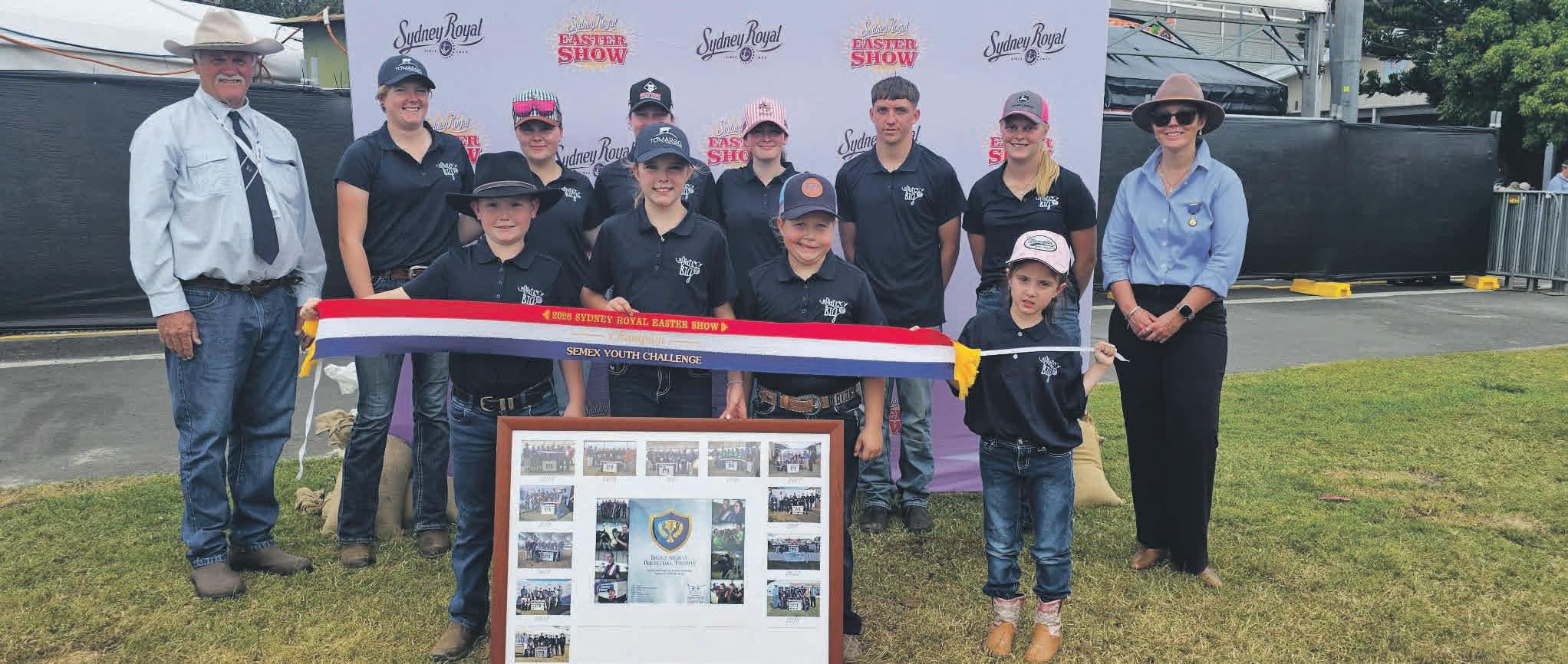
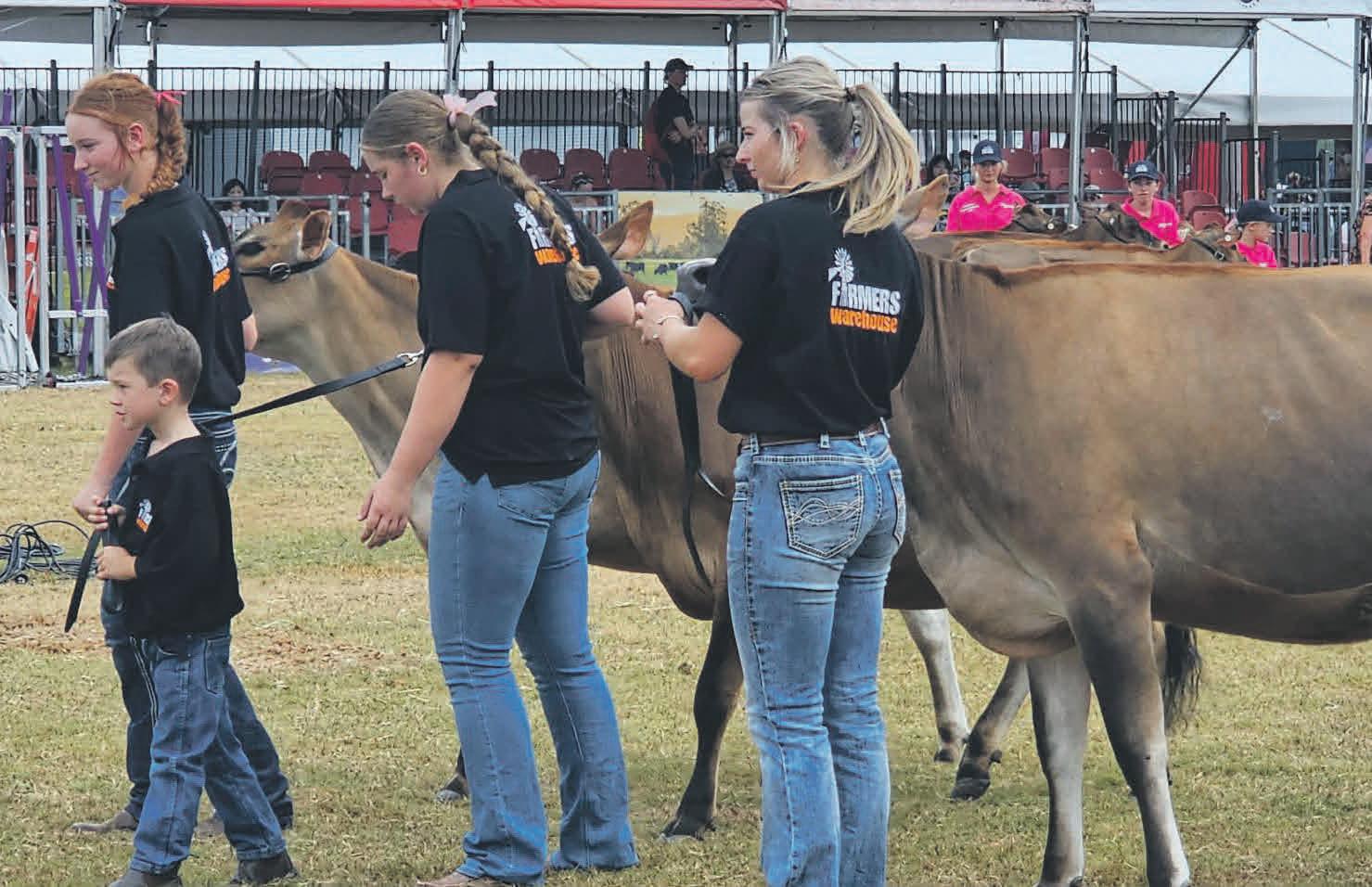
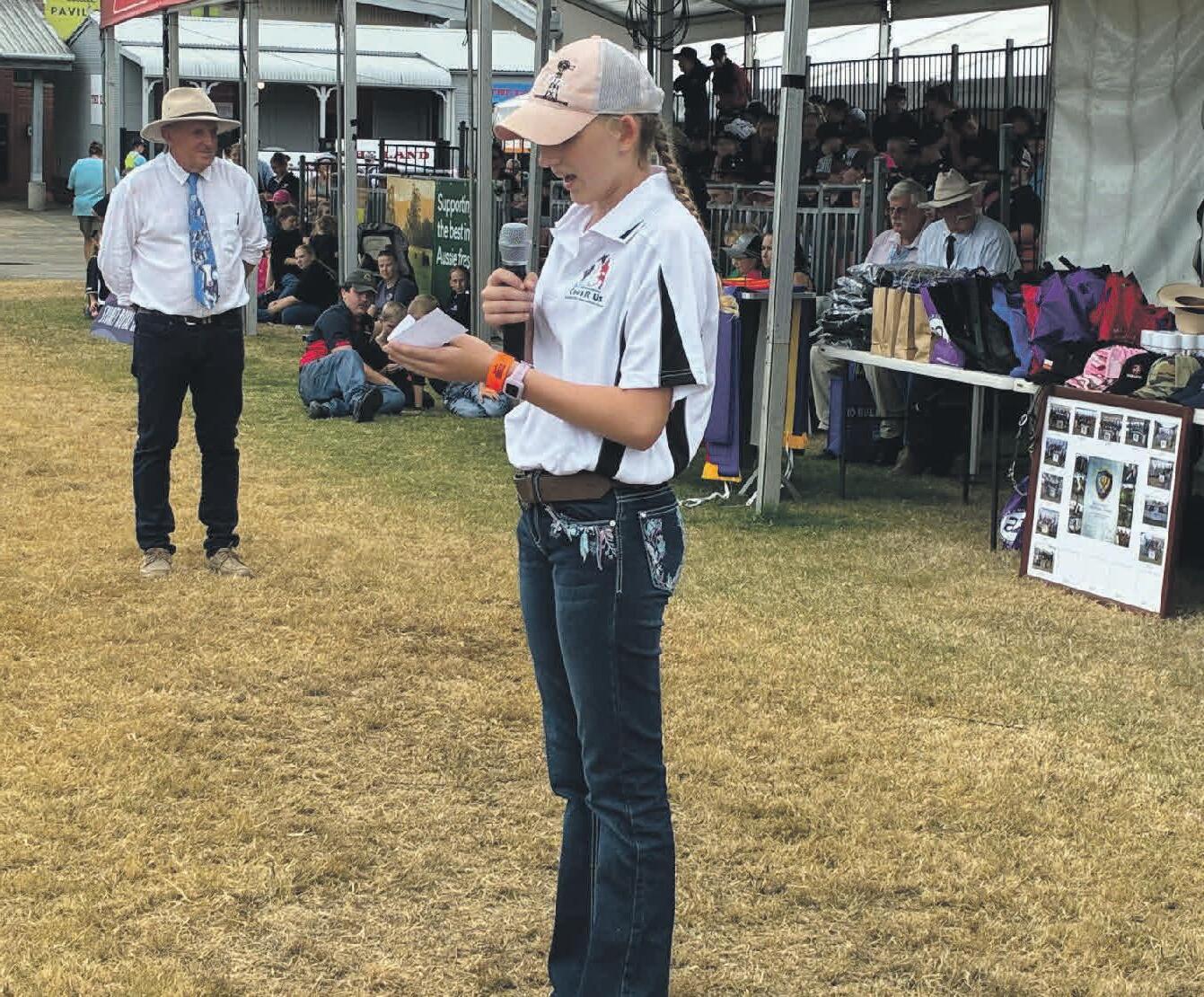
THIS YEAR’S recent Sydney Royal Show youth challenge has been declared a success with over 100 kids taking part.
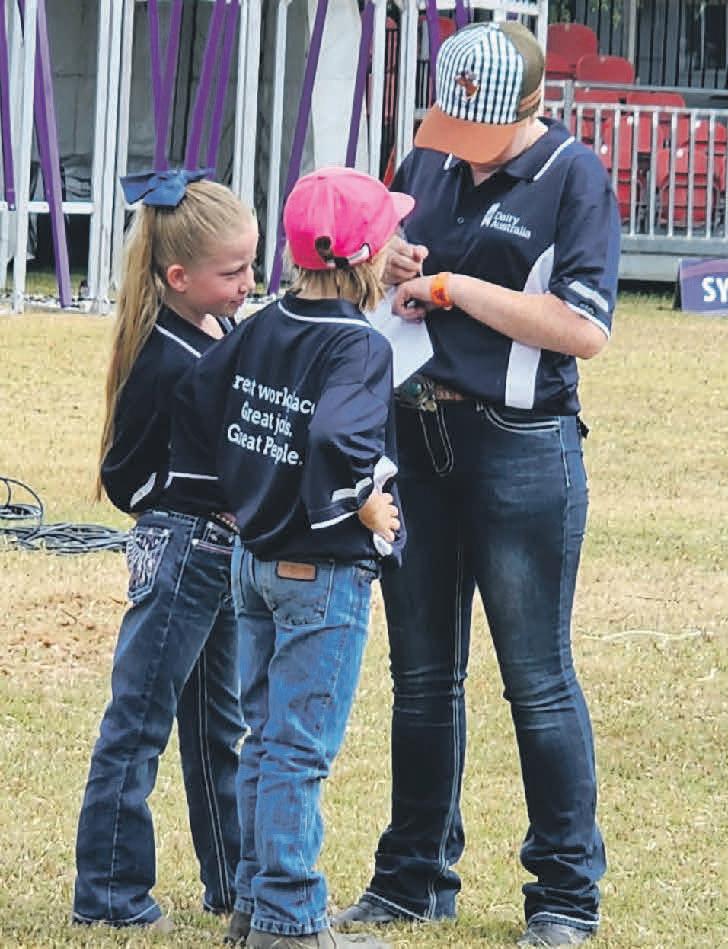
Emily Br o wn from Katunga had the job of keeping all the kids in line, judging her first ever youth challenge.
Emily was expecting maybe six or seven teams but when the number passed 10, she said she had to get a bit creative.
She said young people from all over Australia participated.
“The kids show up, put their name in a hat and are placed into a random team
and all the teams did an incredible job,” Emily said.
Emily has a lifelong of cows and over the years has been involved in many different competitions. She said she loves to share her knowledge with the next generation.
“It was a great experience for me and it was great to so many kids from around the country take part in the challenge,” Emily said.
This year’s winning team was the team sponsored by Little Big Diary Company.
“When it came to judging, I think they were looking for someone a little bit older with plenty of experience in handling and judging.

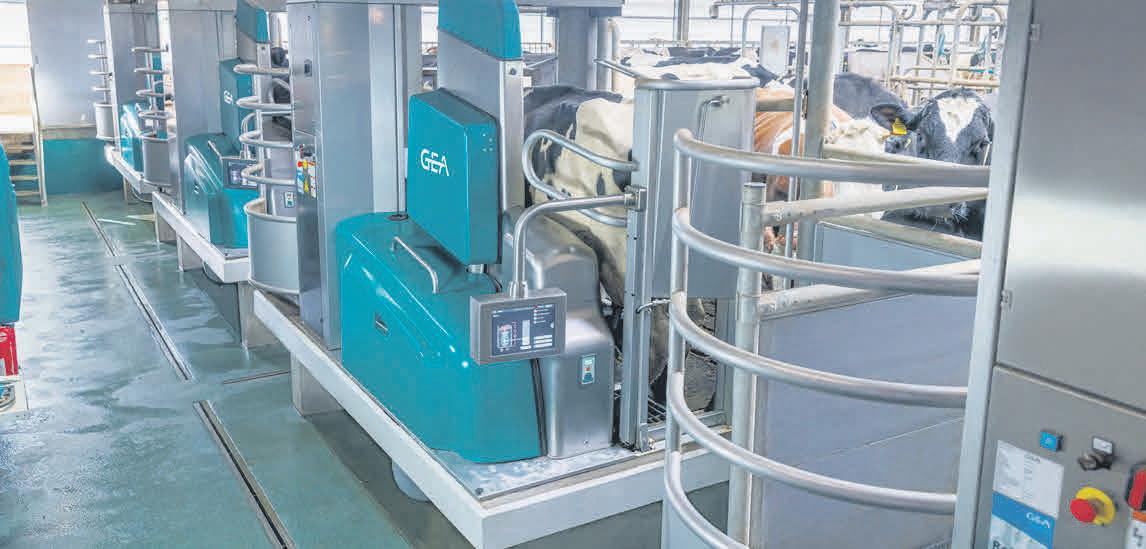
A cost effective installation of milking robots
“The biggest advantage was the saving of using the current infrastructure. It allowed us to step into robotic milking without the expense of building a modern dairy from the ground up."
Robert and Ally Arnold | Lilydale, Tasmania
Bright farming is yours by choice



BY SOPHIE BALDWIN
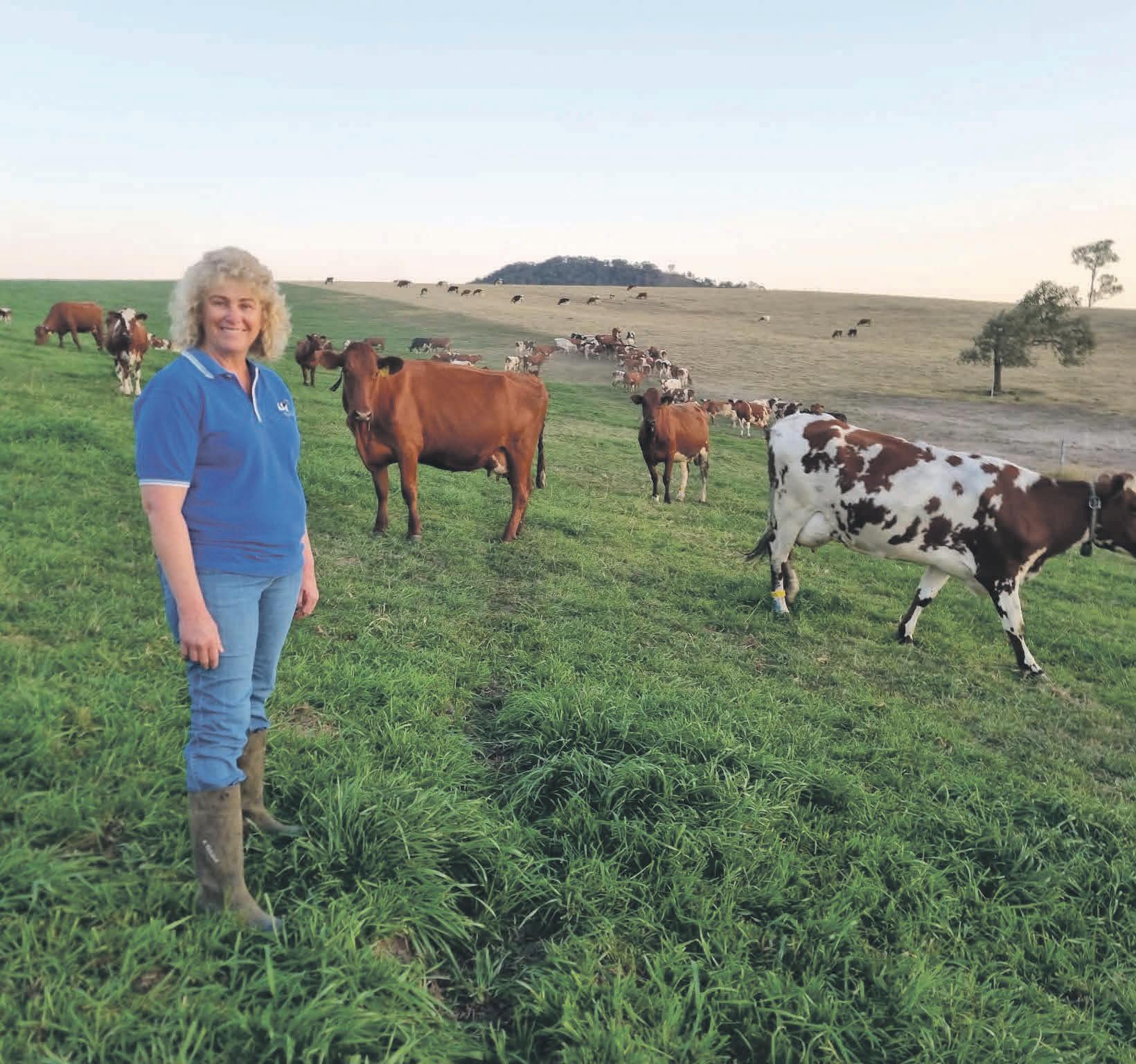
farmer Kym Harrison has welcomed the announcement by Woolworths to lift the milk price by 10 cents a litre from April 1.
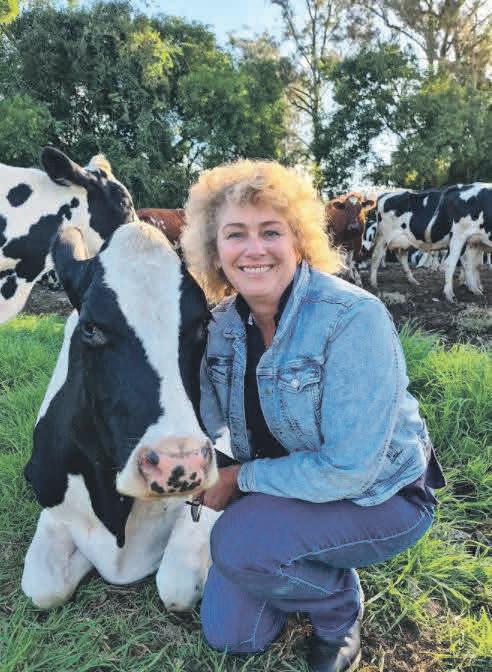
Based at Kilcoy in the Somerset region, Kym is one of three Queensland suppliers to Woolworths for its brand Farmers Own.
Kym said the increase offered some relief from increasing diesel and fertiliser prices, and will help elevate some of the pressure, considering some of her suppliers have already have put a fuel levy on some inputs, including grain, technicians and breeding supplies.
“Ideally, we would have liked 15 or 20 cents, but Woolworths have back paid us for March as well, so we are pretty happy,” Kym said.
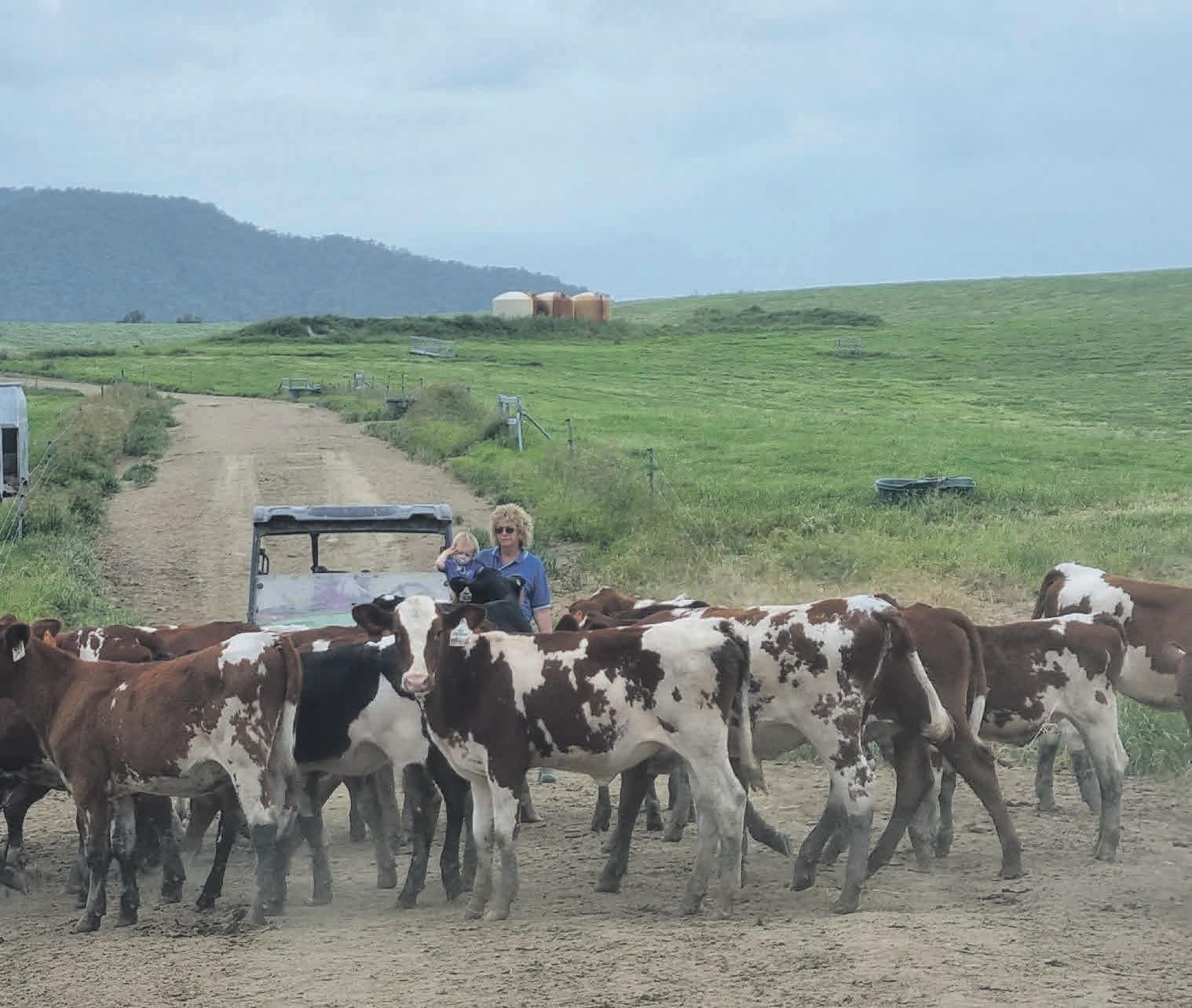
The family, which includes Kym’s children Ashley and Torie, operate a pasture-based system milking 250 Aussie Reds.
“We rely on our winter pasture, and fertiliser application is critical for us right now, as we have started to sow.
“We have been lucky the lady from the local ag shop has been able to supply us with 10, one tonne bags of fertiliser, which will get us through — prices have doubled, but as a sole pasture-based operation, we just have to have it,” Kym said.
She said the business has also had trouble sourcing diesel after their farm supplier had his volume slashed.
“We get our diesel from Maleny, and the bloke there has had his volume cut to just eight per cent of his normal supply – I feel sorry for him too, because his business has been impacted as well, but he did manage to deliver us a load of diesel last week.”
Kym said they had been taking the tractor into town, which is a 10km trip each way, and filling up.
“We bought a fuel pod for the back of the ute, but the service station would only let us fill up a certain volume of the pod, so I am very glad we got a diesel delivery,” she said.
“We have been pretty worried about it all.
“It is one thing to be able to pay for diesel and fertiliser, but to be able to get them will be another.”
Kym said it had been difficult over the last few months and drought like conditions had added to the stress.
“We had 200mm of rain which filled our dams, but it has been pretty dry ever since,” she said.
“We have been lucky with the weather over the last few years — our last big drought was in 2019.”
The family has been supplying Woolworths for the past nine years an it has looked after the family well.
“The Queensland dairy industry has been doing it pretty tough, and we desperately need a decent price increase, we haven’t had one for five years, a few farmers have left the industry, and there isn’t too many of us left.”
eastAUSmilk president Tim Bale said the rising cost of diesel and fertiliser, along with other products, was causing major losses to dairy farmers.
“D airy farmers have no choice but to cull cows, and this is exactly what many dairy farmers are doing,” Tim said.
“The only way this will stop is if milk prices paid to dairy farmers’ lift.
“We welcome the price increase, and thank Woolworths for their understanding and assistance in the very uncertain and difficult times.”
Tim said he worked with Woolworths 12
years ago to set up farmers owned milk with direct suppliers around the country.
“I am grateful that I was able to negotiate a 10¢/litre lift in prices with Woolworths on behalf of my farme rs in NS W and Queensland,” Tim said.
“We want to see all retailers and processors follow the lead set by Woolworths in lifting prices paid to dairy farme rs by 10¢/ litre immediately.
“It is important for all dairy farmers to receive a price increase.
“Woolworths has clearly set the precedent, and any processors or retailers that do not follow their lead over the next week, will see
a plummeting of their milk supply over the coming months.
“There is no time to wait, and I implore all processors and retailers to lift prices now before it is too late,” he said.
BY RICK BAYNE
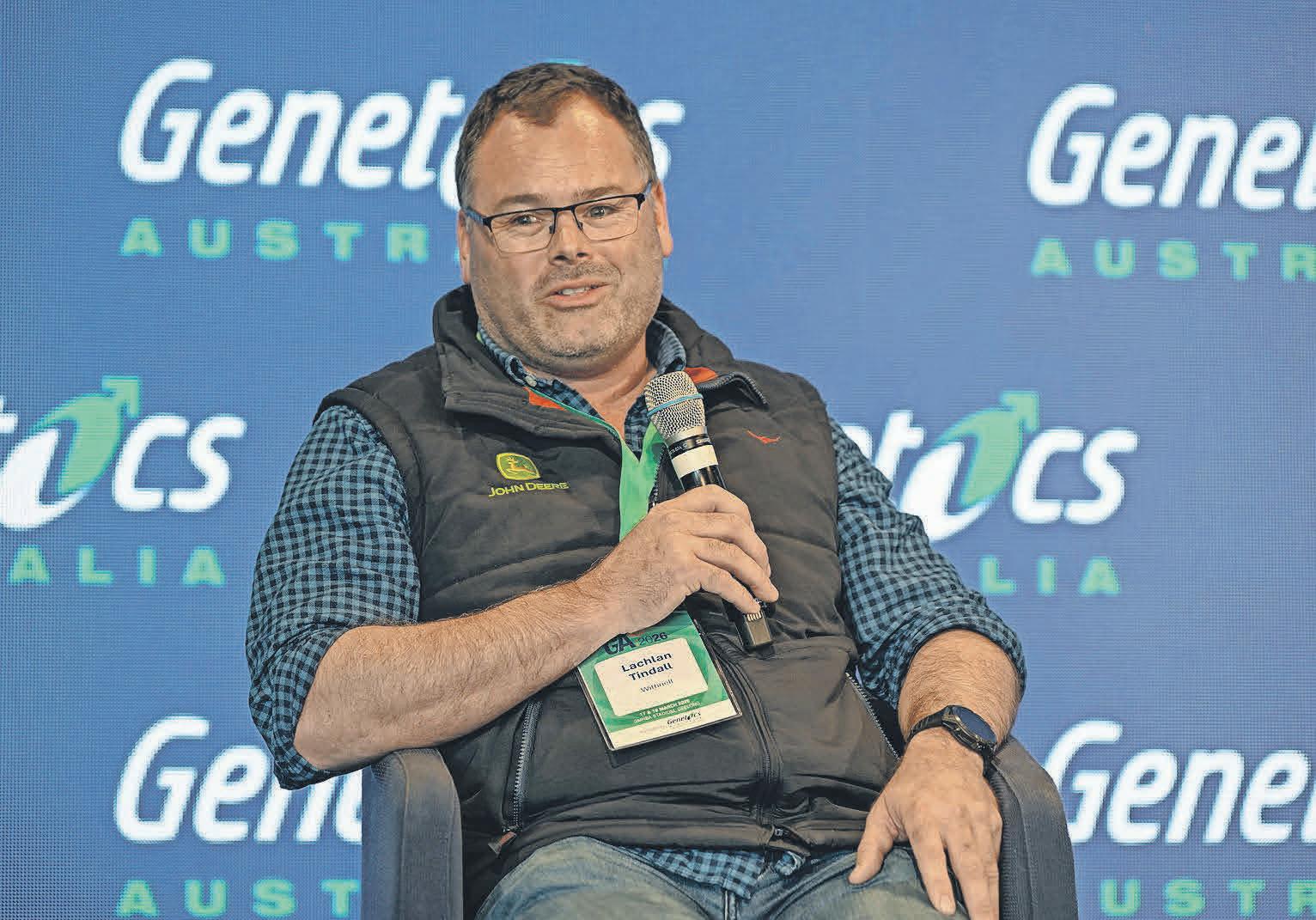
AS A relative outlier in the dairy industry, Lachie Tindall has adapted while others have escaped.
Lachie farms at Carapook near Casterton, a region better known today as the birthplace of the kelpie and for its sheep and beef farms.
The area was once dominated by dairy farms but now it’s just the Tindall family and one other smaller business.
“I like to joke that everyone else got smarter and got out; we got stupider and got bigger,” he says
As one of the first Victorian farmers to adopt Halter virtual fencing technologies – and the first signed up to use it for dairy cows, dairy young stock and beef – he’s continuing to innovate.
The farm has been in the family since 1948, with the major change being the addition of an adjacent beef farm in 2014.
They farm off a 445-hectare dairy block with a 365-hectare out block, and the beef operation on 525 hectares.
“We’d reached the point in the dairy herd where we’d need to buy more feed in, or work out another plan to milk and feed more cows,” Lachie said.
“My father John was the driving force. He had milked cows his whole life and wanted to try something different and we wanted to grow more fodder.”
They bought a herd of 200 at dispersal and were encouraged to put in F1 Wagyu at the time as a way of getting quick cashflow.
That worked well for a couple of years until the beef price crashed and the dairy clawback disaster meant “everything that could go wrong, went wrong”.
They later moved to black Angus and are now aiming to run the beef property like a dairy farm.
“It’s basically applying dairy principles to beef farming – smaller paddocks, rotational grazing and eating more grass – not like when we bought the farm which had big paddocks, set stock and didn’t grow much feed.”
In an area prone to drought with dry summers and mild winters, the Tindalls have had to adapt, using technology and good advice to cope with fluctuations in seasons and prices.
“It tends to be a drought more often than not,” Lachie said.
“Every year is treated as a drought and we cut every blade of grass that we possibly can.”
The average rainfall is about 500-600mm.
About 15 years ago they started burying silage stacks, a move that has paid dividends.
“We’ve pulled up two in the past two years which has saved us a lot of money,” Lachie said.
“We also forward contract grain and work with consultants to help us out. We have a good team and we bring in people who do a very good job for us.”
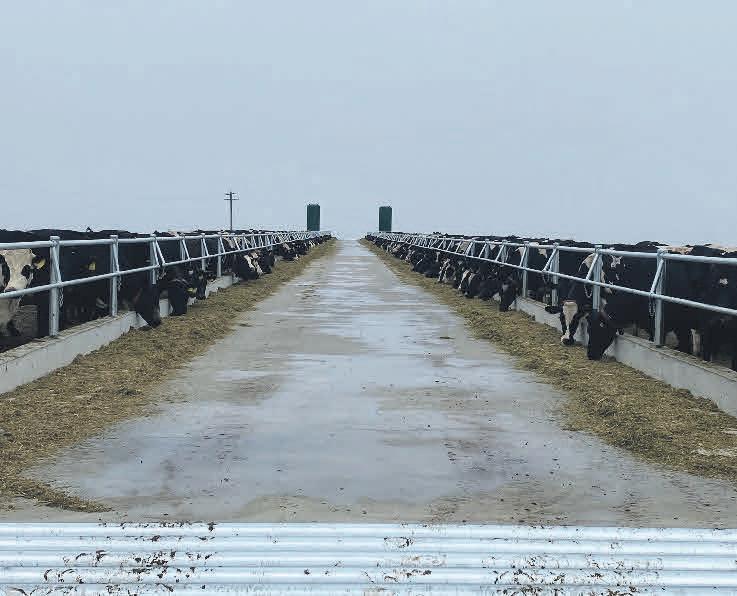
A feed pad was installed a few years ago to reduce feed wastage and boost production. “For six months of the year we’re basically in drought so they’re on the feed pad in a loafing area right next to the dairy,” Lachie said.
They are also influenced by animal welfare.
“We try to do what’s best for the industry and focus on what we can do to get the most out of our animals,” Lachie said.
Rumen drenching all dairy cows within 24 hours of calving has had a big impact on cow health and production.
“The mixture pumped into them is made by our nutritional company and it replenishes everything they have lost during calving,” Lachie said.
“It helps immensely with milk fever. We calved down 720 cows last year and treated less
than five with milk fever.
“Since we’ve been doing it, we’ve gone from peaking around 2.2 Kg/Ms to 2.62 last year and we expect to be pushing around 8500 litres this year.”
“There are seasonal factors influencing that and we’ve implemented other things like feed pads and better feeding.
“It’s not a silver bullet but it’s a piece of the puzzle to make it better.
“They hit the dairy firing and healthy, we’re not dealing with sick cattle and we get back in calf again because they’re happy and healthy.
“The joining program starts as soon as the first calf hits the ground. I’m results driven and from an animal point of view, it’s amazing.”
Fertility has gone up as well, with the sixweek in-calf rate ranging between 70 and 75 per cent.
The latest addition, Halter collars, are part of a plan to split the dairy herd.
“We’re milking 700 which is our yard capacity,” Lachie said.
“To milk more, we need to go to two herds and with Halter I can split the herd without needing more staff.
“We’ve got cows walking on laneways or standing in dairy yards for eight hours a day and I want to reduce that.”
Already the collars are having an impact.
“We’re saving 10-20 minutes a day and a labour unit bringing the calving mob in.
“We’ll see more benefits when we get grass. It gives us the ability to quickly and easily stripgraze beef and our young stock.”
Having well-fed cows is a priority.
“I love feeding cows,” Lachie says.
“If you die and come back as a cow, you would be well looked after here.”
They buy in about 2.2 tonne of grain or concentrate mix per cow, and around 400-500 tonnes of vetch or lucerne hay a year.
Despite the need for a lot of inputs, they have stuck with autumn calving.
Lachie and his wife Nicole have two sons and a daughter and hope at least one will continue the business.
“They will adapt to what’s coming in the future better than I will but we all aim to keep progressing,” he said.
While the Tindalls have been keen to trial new technologies, Lachie warns that they shouldn’t re place personal experience and input.
“You need to get out there and visually see things and learn things; record the data and don’t just rely on artificial intelligence. Do it the hard way, like we’ve all done.”
BY JEANETTE SEVERS
AN INNOVATIVE vocational education program involving inmates at Fulham Correctional Centre and Gippsland dairy farmers has achieved some successful re-integrations into work and society.
But lack of funding will see the dairy education program close.
Facilitators involved with the program said ongoing funding was well below the cost of incarceration.
The Institute of Public Affairs has cited the cost of incarcerating one person in an Australian prison was on average $159,510 in 2025.
Taxpayers were paying significantly more for incarcerating someone in Victoria, with 20 per cent of Victoria’s prisons under private management, including Fulham Correctional Centre, which is managed by The GEO Group Australia.
Victorian Liberal Party MP and Shadow Minister for Police and Corrections Brad Battin, said the cost of imprisoning someone in Victoria was 34.4 per cent higher than in NSW and 59.7 per cent higher than in Queensland.
Fulham’s dairy education program has adapted the successful schools’ education program Cows Create Careers and added dairy industry vocational courses, to provide prisoners with employment options after release.
The Cows Create Careers schools’ education program was developed in 2004 and is taught to thousands of students Australia-wide.
Fulham’s dairy education program is delivered as a workforce attraction program and is led by GippsDairy staff and dairy farmers.
The first two years of delivery (2024-26) have been funded by the Gardiner Dairy Foundation.
The foundation is a strong supporter of initial program funding for programs in the Victorian dairy industry that help develop new skills and career pathways and support initiatives to improve employment in the sector.
The foundation has identified lack of a skilled workforce as an impediment to the future productivity and competitiveness of the dairy industry.
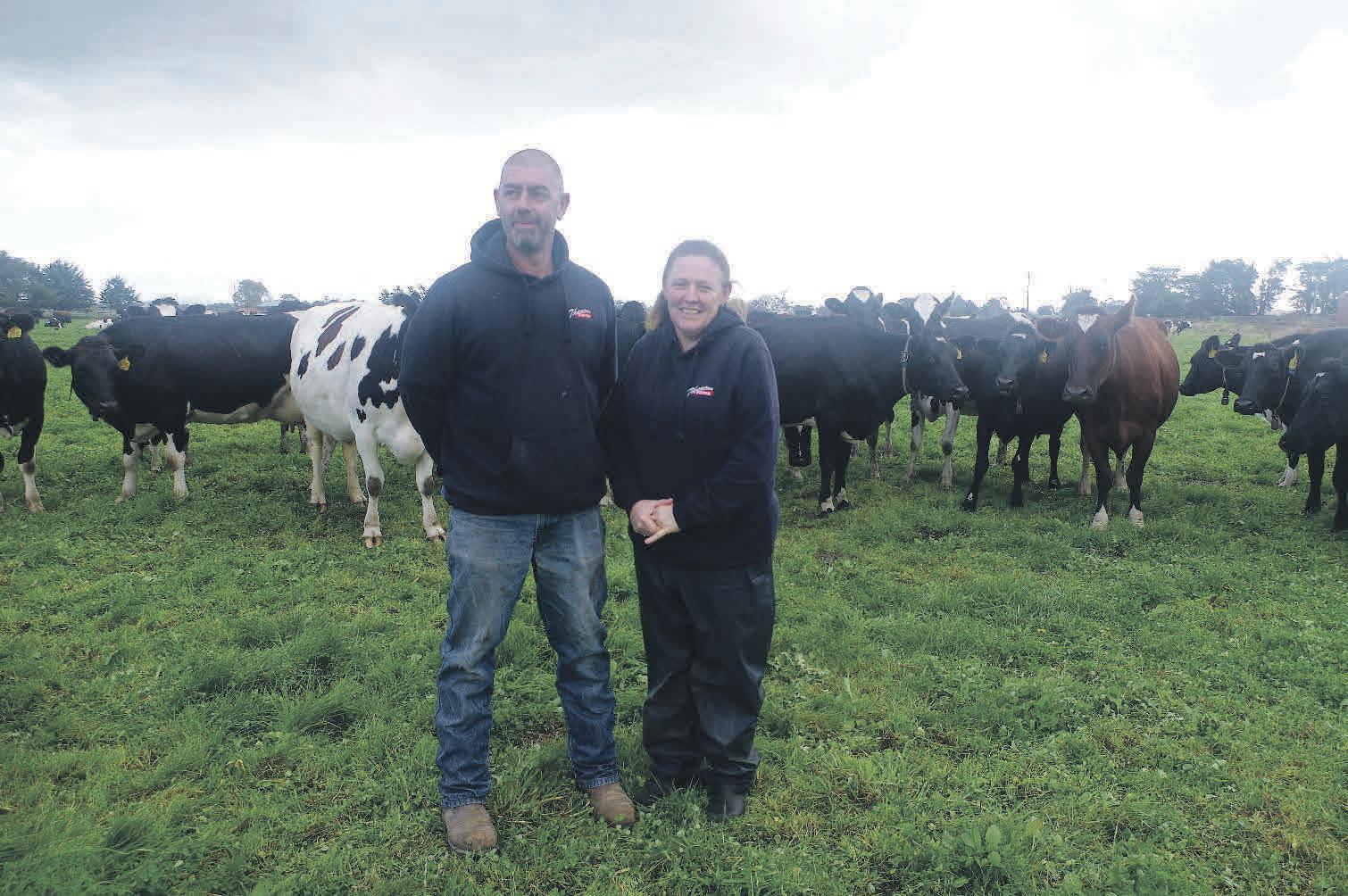
Gippsland dairy farmers Aaron Thomas, Paul Mumford and Colleen Laws have been involved in delivering the course.
Aaron and Paul are among those who believe funding the dairy education program in other prisons would be a better use of taxpayer money than the cost of incarcerating prisoners.
“It’s the type of program that should be replicated across Australia,” Aaron said.
“You have to ask the government, is the cost of incarceration the best bang for buck use of taxpayers funding, or are we better off readying prisoners for vocational employment and parole?”
Aaron has been involved with the dairy education program from the first intake.
He is a program facilitator and more recently a mentor to a paroled prisoner.
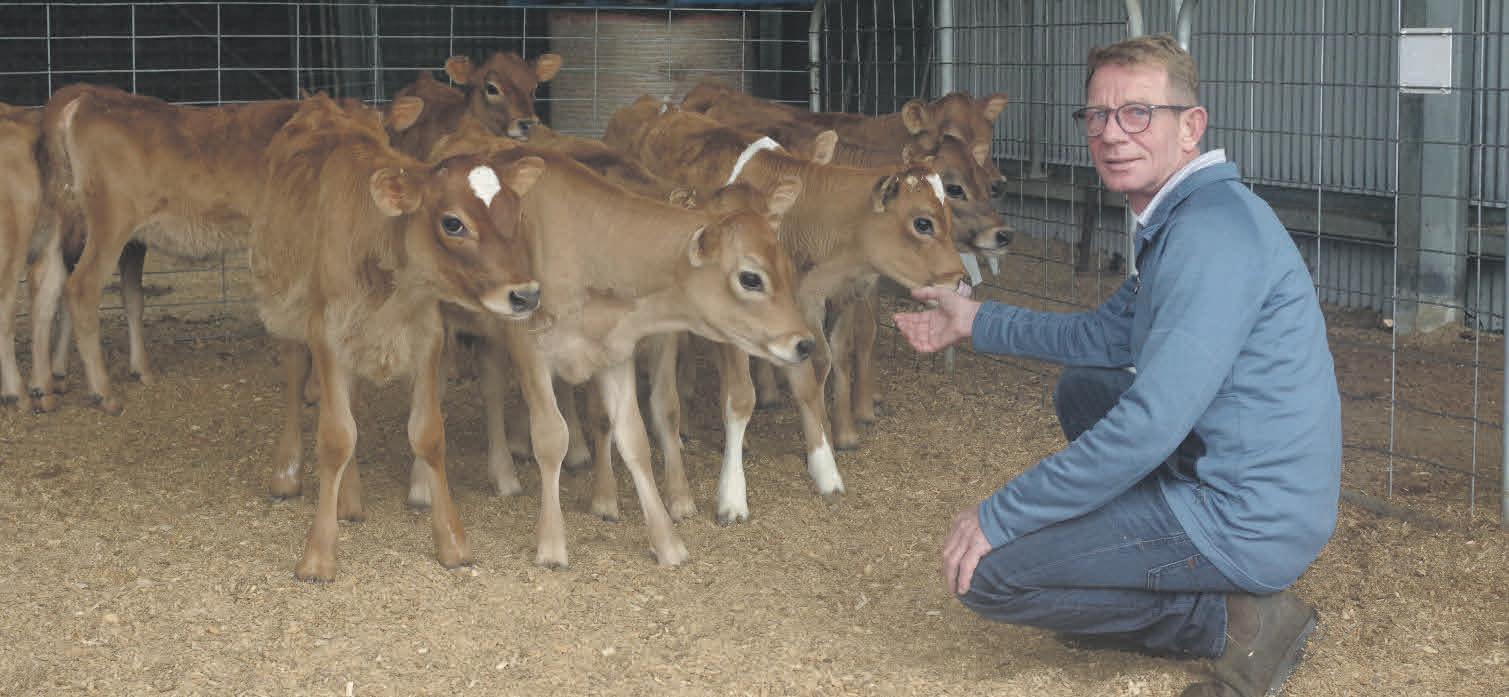
Paul Mumford, a past president of the United Dairyfarmers of Victoria, donated three Jersey calves to the program in spring 2024, and has since become a program facilitator.
“I’d love for the program to be delivered in other prisons, but it does come with challenges — you need a physical area for the calves, industry facilitators for the program, and geographically a prison in a location close to dairy farms,” Paul said.
“Then you throw in the nuance of the state-owned prisons compared to the privately-managed prisons, and there is difference to
how they’re managed.
“It’s horrific to think that once an inmate is released, there’s no follow up or support, because the system fails to support the prisoners once they’re released.
“Doing the program has made me realise the failings of the prison system.
“Post-parole and what the different prisons offer and do, there’s no consistency.
“I’ve learned as much by doing the program as the inmates have done, and what they’re getting in skills and knowledge from me.”
In 2026, Fulham’s dairy education program has been funded to be delivered to one cohort in autumn.
The continuation of the program in spring and beyond 2026 is dependent on GippsDairy and the GEO Group Australia securing funding for it.
general maintenance of pens and equipment.
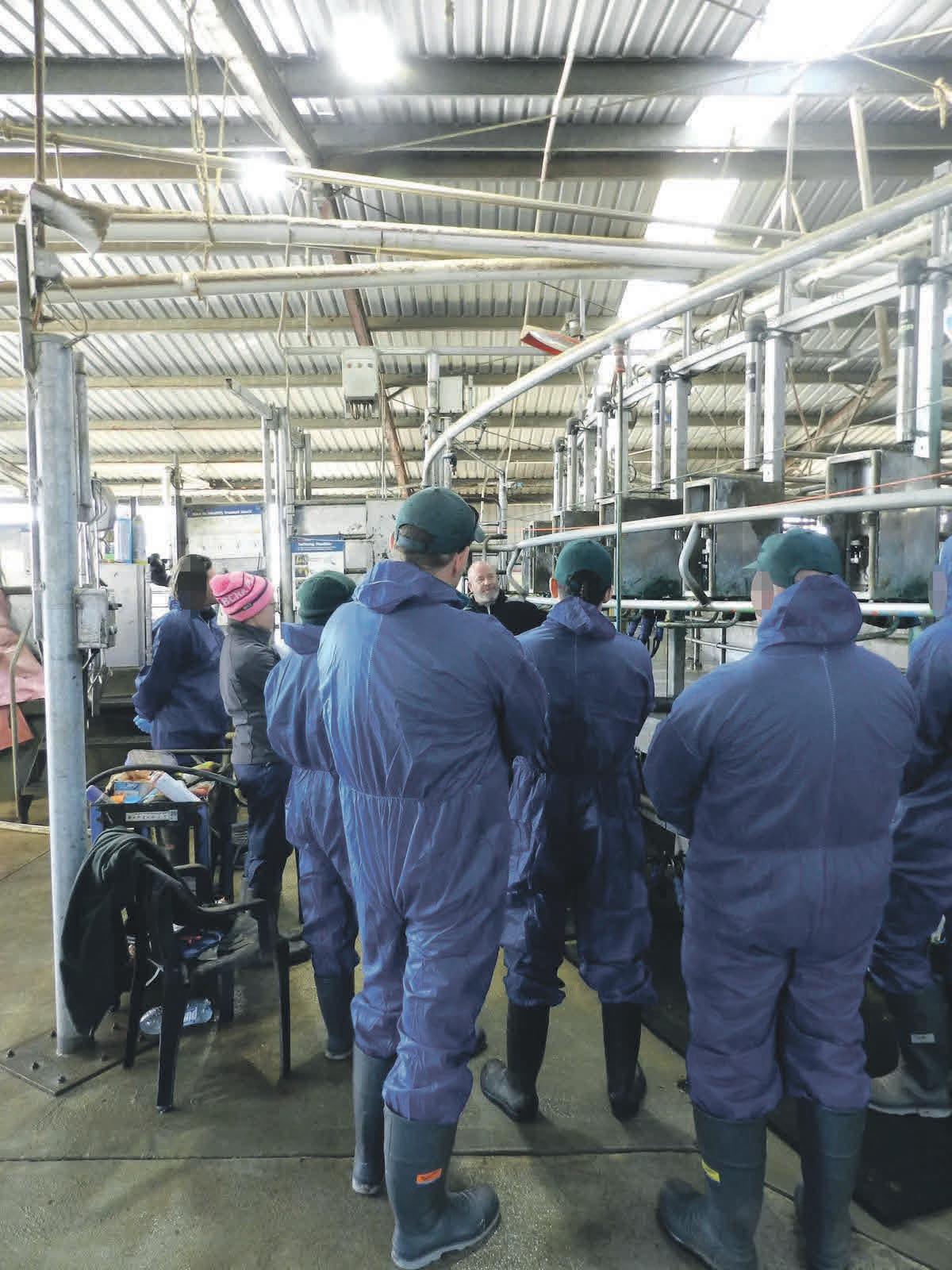
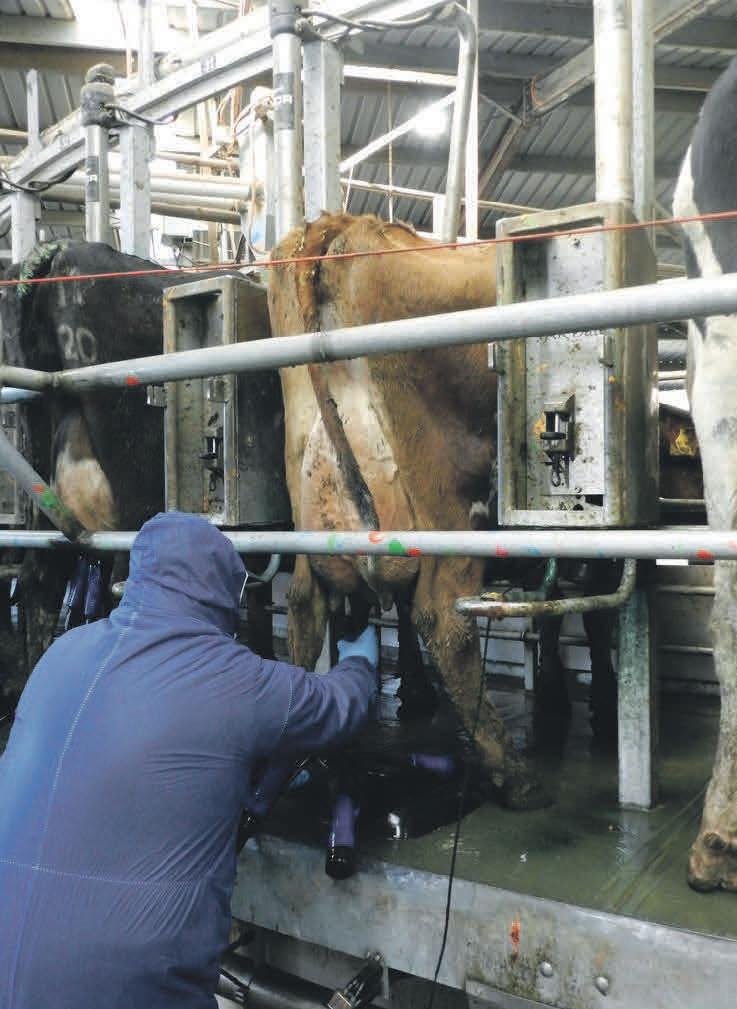
Theoretical classroom learning about farm safety, farm technology, animal nutrition and career options has been followed by practical components such as the on-farm cups on cups off program and milking cows at a range of farms including those with rotary and robot milking systems.
Program facilitators and teachers include Gippsland dairy farmers and veterinarians.
Paul Mumford said one classroom session about animal health and nutrition used chocolate to reinforce learning.
“We have fun, using chocolate to represent the consistency of cow manures,” Paul said.
“You don’t want a runny, squirty chocolate like Ice Magic, because it’s not good for the animal. Ideally, we want a Mars bar.”
Enver Erdrogan, Minister for Corrections (at the time of writing), said the program at Fulham offered men practical opportunities to develop new skills and knowledge of the dairy community.
The overall dual-aim was to enable prisoners to gain vocational skills and help them to view the dairy industry as a potential employer when they are discharged from incarceration.
Thirty prisoners have participated in Fulham’s dairy education program, and 14 men offered employment opportunities, including working on dairy, beef and grain farms in Gippsland, after achieving parole on their sentences.
Advocates for programs that reduce recidivism include Dr Frank Thorn, managing director of The GEO Group Australia, which manages Fulham Corrections Centre.
Recidivism is the tendency of criminals to re-offend and be convicted.
Fulham’s dairy education program began with an initiative to give dairy calves to a group of prisoners at Fulham, for them to rear over several weeks.
There are up to six prisoners in each learning group, responsible for rearing three calves.
The prisoners selected for the first learning group designed and built comfortable pens for the calves to be housed, including water and feeding facilities.
Each successive learning group has been responsible for maintaining and repairing those facilities, and cleaning them prior to, during and after the calves have been housed for three weeks.
An intensive three-week education program has enabled prisoners to learn about calf rearing including feeding regimes, weighing calves, animal welfare and health, biosecurity, and
The Australian Bureau of Statistics reported the population of adult prisoners in Australian prisons was 46,998 in 2025, and that 60 per cent of prisoners had at least one prior incidence of adult imprisonment.
D r Thorn said providing prisoners with opportunities to develop job-ready skills was vital to reducing recidivism.
Factors behind repeat offending includes people experiencing difficulty accessing financial resources, social supports, health services, and opportunities to re-integrate into normal society.
“Helping the men secure meaningful employment and stable accommodation after release reduces recidivism,” Dr Thorn said.
*At the time of writing, Labor MP Enver Erdogan was the Minister for Corrections in the Victorian Government.
BY JEANETTE SEVERS
TYSON GILBERT wants to be an inspiration for other people.
He is on parole and recently passed his first six months working full time on a dairy farm in Gippsland, Victoria.
“I wasted my 20s in prison. I’m now in my 30s and I want to make the most of opportunities,” Tyson told Dairy News Australia.
To help him achieve that goal, he is supported by several Gippsland dairy farmers.
Tyson began learning about the dairy industry when he was selected to participate in the Nalu program at Fulham Correctional Centre, near Sale, in Victoria. Nalu is the minimum-security part of Fulham Correctional Centre.
“You have to be on very good behaviour to be accepted into Nalu,” Tyson said.
That acceptance opened up an opportunity for Tyson to join Fulham’s dairy education program, delivered by an arrangement between GippsDairy and Jaydee Events and funded by Gardiner Dairy Foundation.
Fulham’s dairy education program is based on the school-based Cows Create Careers program, with the addition of some Dairy Australia practical courses including cups on cups off, identifying mastitis and nutrition fundamentals.
Tyson was one of six inmates selected to rear three calves, over a three-week period, and participated in classroom and on-farm learning activities.
“I enjoyed learning about dairy farming and looking after the calves, they’re so small and cute,” Tyson said.
“I put my hand up for the dairy education course. I’ve always liked animals, and I liked the idea of working with animals.
“I’d been doing so well at Fulham, keeping out of trouble.”
At the time he started the dairy education course, in 2024, Tyson had spent seven years in and out of the prison system, including maximum security prisons.
He had also tried to participate in other courses, but said his ADHD made it difficult to be in classroom-based education. Being moved between prisons also affected his education.
“I found it hard at school and left in year nine,” Tyson said.
“After an hour or two in the classroom, I find it hard to cope. It’s easier to do practical learning.
“I tried to learn a horticulture course, but got moved from that prison, and it wasn’t offered where I went next.
“I got 80 per cent through a Certificate III in Baking; then I got moved from that prison, and again it wasn’t offered where I went next.”
When he undertook the practical day of the cups on cups off course at the farm of Colleen Laws and Garry Cook, Tyson impressed Colleen; and she offered him an ongoing opportunity to work on the farm for one day every two months – in a supervised day-release situation.
“There was something about Tyson that appealed to me,” Colleen told Dairy News Australia.
Colleen and Garry manage a dairy farm in the Macalister Irrigation District, that they lease in partnership with Benn and Peta Thexton.
They milk 500 cows in a 44-unit rotary dairy, with automatic cups on and cups off technology.
Colleen began her involvement in Fulham’s dairy education program by offering to host
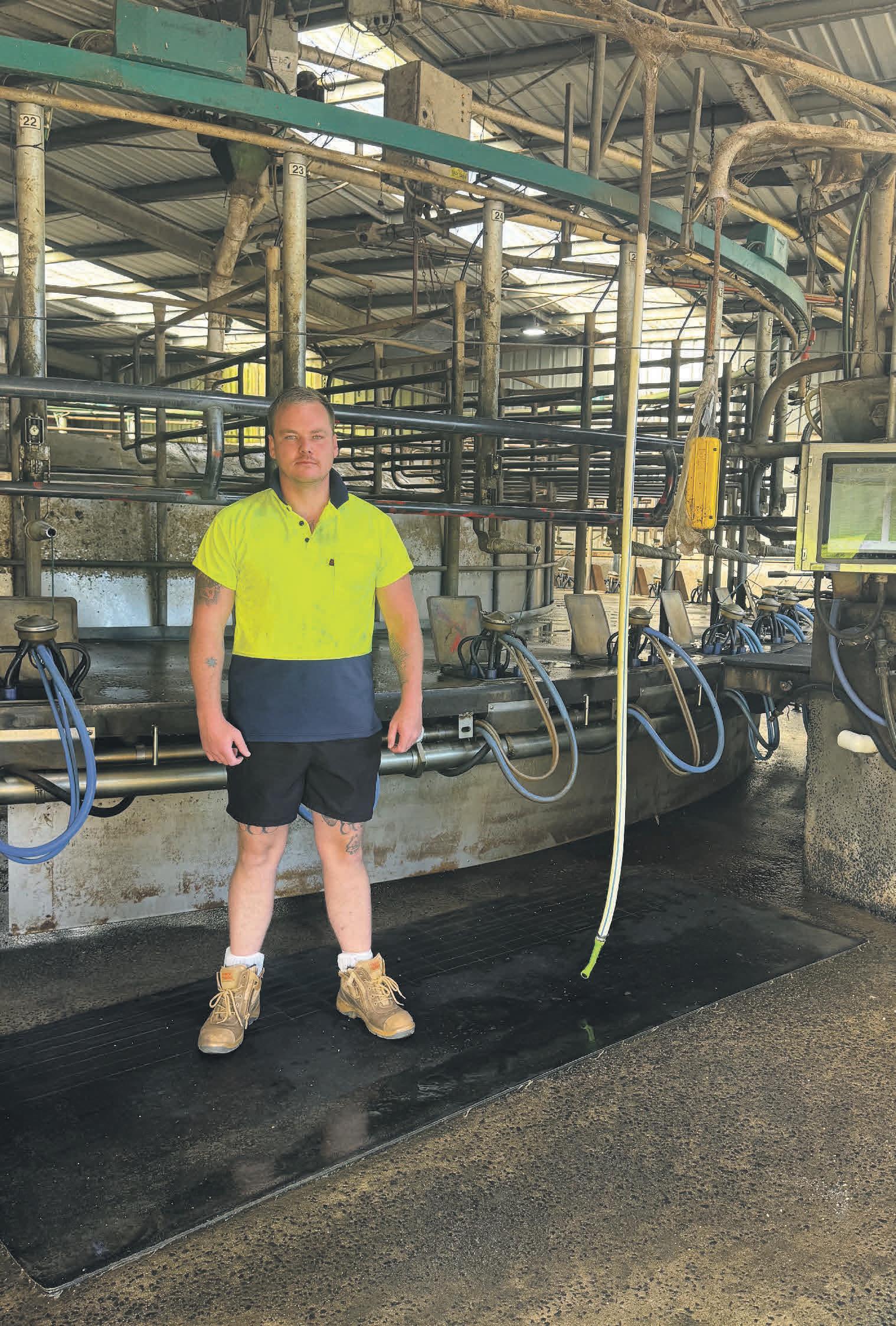
day-release prisoners so they could learn about working on a dairy farm, working alongside herself.
“When Tyson completed the practical day, when we had six prisoners on the farm, I admit I was anxious leading up to that day,” Colleen said.
“There was one guy, in particular, that I thought we could make a change in his life. After discussions with the management of Fulham Prison, we decided to sponsor Tyson.”
What followed was nearly a year of supervised day-release – with Tyson working on the farm one day every two months – and regular monthly phone conversations between Tyson and Colleen and Garry.
“It took a bit to get to the point where we got Tyson out every second month, but he put in the hard work for good behaviour and got permission,” Colleen said.
“He had no farming experience at all, but the first time he milked, he did the whole herd on his own. He did a really good job.
“Each time he came out to the farm on day-release, he’d help feed grain to calves and hay to cows, he’d set up fences and move cows around, and he’d milk cows.
“Over time he clearly articulated he’d like to work here when he’s released.”
Colleen and Garry initiated a discussion with Fulham’s prison management and Tyson about what parole looked like and how they could support his release with ongoing work.
“We talked about transition to work and Tyson was fully aware he didn’t have a good work history,” Colleen said.
There were other complexities.
Tyson had to have secure accommodation, which was difficult without a tenancy history. Colleen and Garry were unable to offer him accommodation on the farm, and the terms of Tyson’s release dictated his accommodation had to be separate to his workplace.
He also lacked a car license, and needed to rely on public transport and Colleen’s generosity to travel to and from work.
P risone rs on parole also have a curfew, and this meant Tyson couldn’t start work before 6am.
Fortunately, all the hurdles were overcome. Corrections Victoria owns some rental properties and one of those was offered to Tyson.
His work shift on the farm is mid-morning to the end of afternoon milking.
Tyson travelled by train or bus to Sale; and Colleen would drive in and out of Sale twice a day to meet his train or bus.
Tyson began working on the farm more than six months ago, and has since gained his car license and recently bought a car.
He has ambition to achieve more, including learning to drive a tractor.
“Tyson started working for us 10 days after his release from prison, and he’s been working with us for six months, which is great,” Colleen said.
“I think his at titude really plays a big part. He’s been given an opportunity, and he’s grabbed that with both hands.
“He’s got his license, he’s bought himself a car, he’s holding down a job.
“He does the afternoon milking on his own, he brings in the cows, he’s responsible for hygiene in the dairy, and he maintains and services the cup removers.
“He sprays weeds and fixes fences.
“We tell him what needs to be done during his shift and he prioritises his tasks.”
Tyson said learning to become a dairy farmer was about turning his life around. He said he wanted to be an example to other prisoners about what they could do to improve their lives.
“But the moment they arrived, that anxiety went. It was a pretty relaxed day.
“They were easy to talk to and they were there because they wanted to better their life.
“Having them on the farm for the day, and working in the rotary dairy, inspired me to be more involved.
“Doing the course, and this opportunity with Colleen and Garry, I think it’s setting me up for the rest of my life,” Tyson said.
“It makes me feel good, that I’m doing something with my life now.”
Tyson is also being mentored by Aaron Thomas, a dairy farmer in Gippsland, who is regularly in face-to-face and phone contact.
BY RACHAEL CAMPBELL, DAIRY INDUSTRY DEVELOPMENT OFFICER
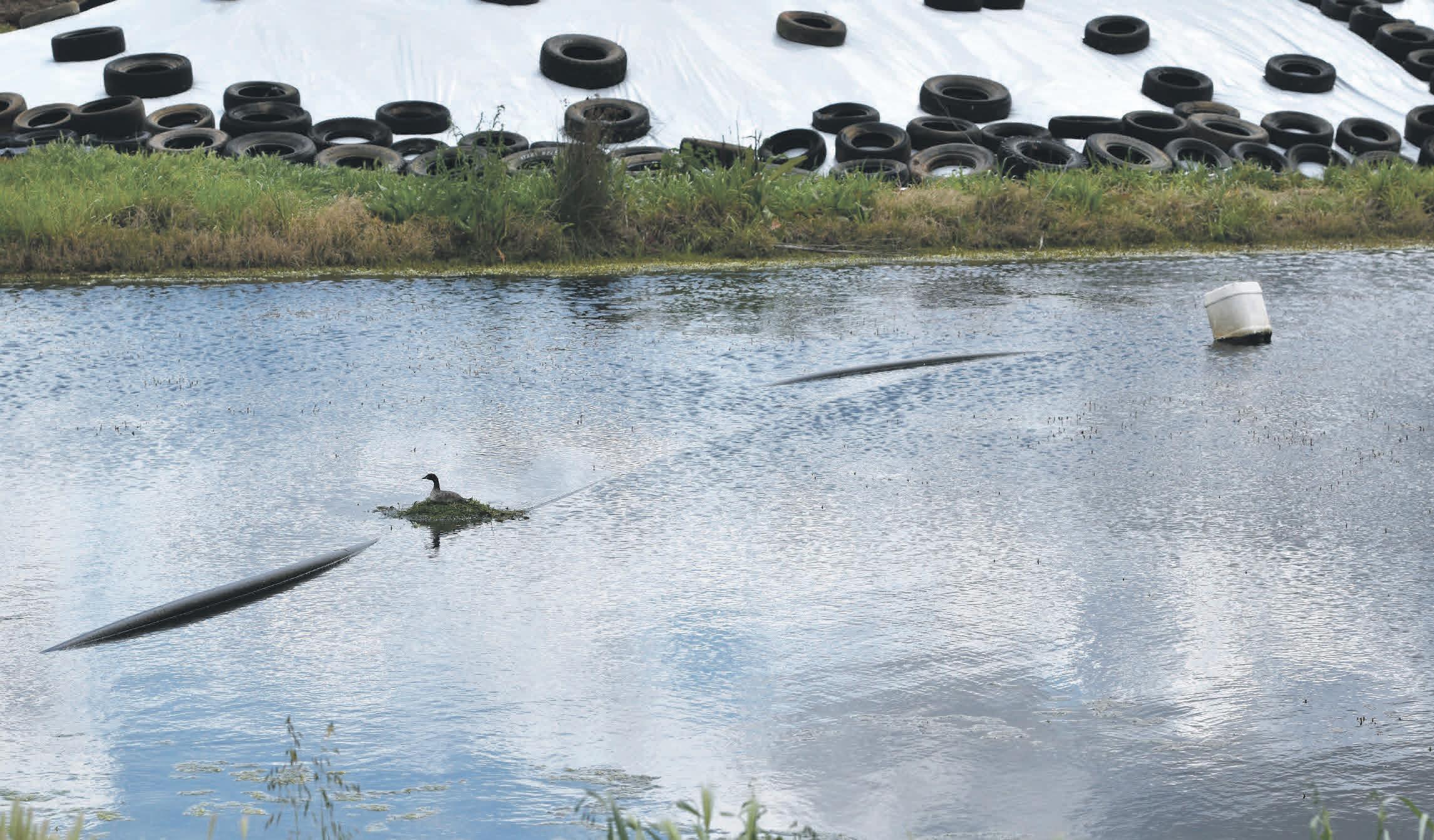
If you haven’t already done so, now is the time to plan to empty your dairy effluent ponds to gain the best result from both its nutrient content and water.
Utilising effluent effectively could save you money on synthetic fertilisers and boost pasture growth.
As long as the plants are growing, they can get a further kickstart with an effluent application and be ready to take advantage of follow up rain. Effluent storage ponds are designed to contain effluent over winter, so must be emptied before the start of the wet period.
An effluent test is recommended before application, to ensure appropriate application rates, as nutrient levels vary depending on several factors. Consider the following when applying effluent: spread it on paddocks with lower soil fertility to avoid excessive nutrient build-up.
conduct regular soil testing every 2 to 4 years to help target effluent and fertiliser applications more accurately.
rotate effluent application paddocks regularly to make the best use of nutrients contained in effluent and avoid overloading a small area.
when applying effluent to new pasture or crops, wait until the plants are established, as effluent is often high in salts and nitrogen that can burn the seedlings. avoid grazing paddocks until at least 21 days

after an effluent application to reduce the risk of nitrate poisoning in animals. to avoid metabolic problems, transition cows shouldn’t be grazed on high-potassium
paddocks, including paddocks where effluent has been applied. young stock shouldn’t have access to adult stock areas or areas where effluent is stored or
has been applied. using the nutrients you have sitting in the effluent storage pond is likely to save you money on fertilisers.
BY RICK BAYNE
Joseph Conheady has made an impassioned plea for Australia’s most productive farming land to be protected.
Speaking at the GA 2026 Today, Tomorrow and Beyond conference hosted by Genetics Australia (GA) in Geelong on March 17-18, Joseph described the land around his farm at Garvoc as critical to Australia’s future.
The south-west Victorian dairy zone produces about a quarter of Australia’s milk, but a land-use conflict that complicated the Conheady family’s plans for building worker houses on their land because of a neighbouring windfarm proposal has them worried about the future.
The dispute has prompted Joseph to call for the introduction of strategic agricultural zones to protect future farming land.
“These zones would identify Australia’s most productive food growing land, as small as it is, and ensure farming remains the highest priority land use, and that businesses that want to produce food in those areas are supported with highest priority,” he said.
He says the pressure on prime farming land has never been bigger.
“All at once across Victoria we are seeing pressures on productive dairy land: wate r buybacks in northern Victoria, productive farmland around Simpson planted into tr ees, Melbourne’s growth and lifestyle blocks expanding into Gippsland, and i ncreasing “right to farm” conflicts where new neighbours complain about farms that have always existed.
“In our own case now in the south west, our farm and neighbours are now being treated as a buffer zone for a next-door windfarm and can be objected to for trying to install worker housing on our own land.
“So, is there a plan for food?
“As Australia transitions to renewable energy and net-zero emissions, while also facing enormous pressure to deliver more housing, and such things as mining projects - we must think strategically about where things like new energy and housing infrastructure is developed.
“Abo ve all, Australia must ensure that its most productive farmland continues to be used to grow food and support food businesses.”
Joseph and his wife Anna bought the family farm in 2021.
“We’re lucky to have very high-quality soil and high rainfall,” he told the conference.
“It is highly productive farmland, critical to Australia’s economy and its future.”
Joseph said Victorian planning policy openly talks about protecting productive farm land from incompatible land uses, but there’s no clear identification of where that productive farmland that land is.
“That’s what’s missing from our planning policies,” he said.
Joseph said that strategic agricultural zones would provide certainty for all future agricultural investors. “Australia has some of the most carbon-efficient milk in the world but there’s an enormous amount of climate policy coming down the pipeline, and farmers will be expected to deliver upon it.
“If governments want that to happen and Australian citizens want that to happen, we must ensure that farmers in the future have the best access to our highest quality land, not just today, but in 200 years time.
“Australia’s farming landscapes are
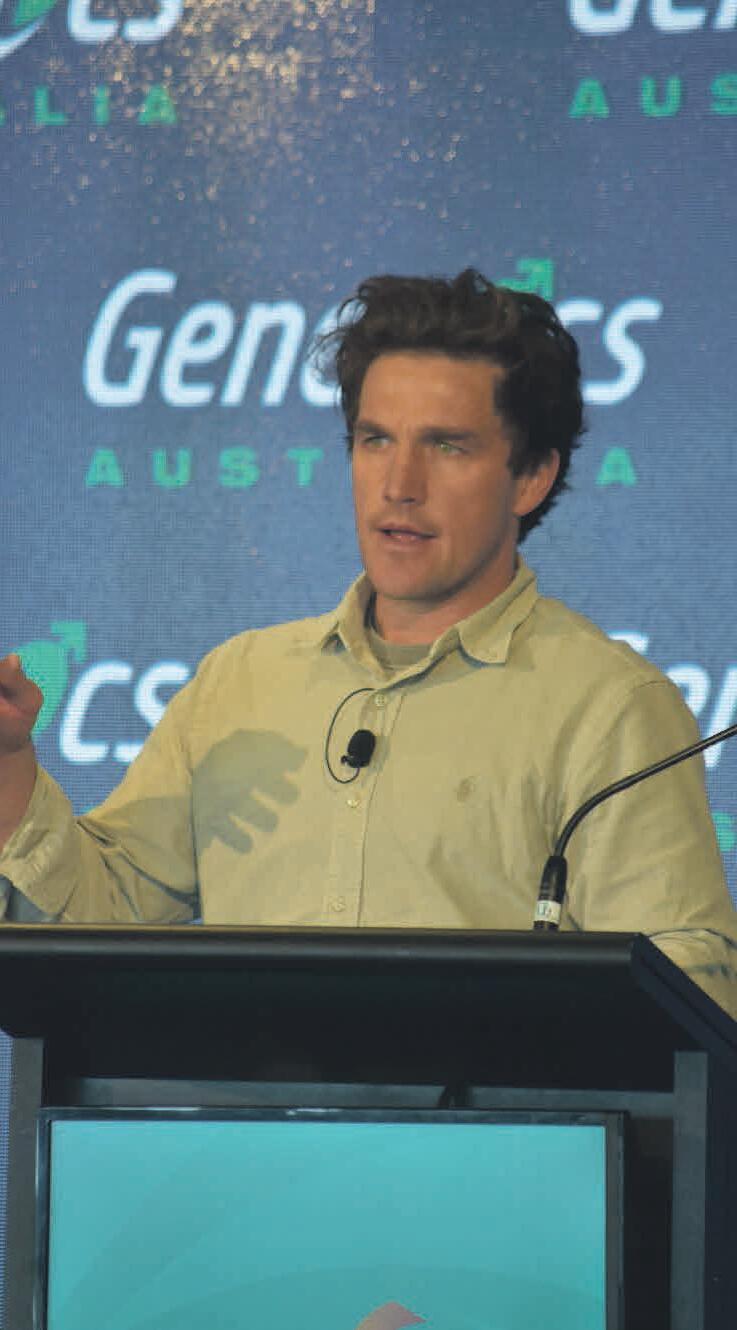
incredibly diverse but our planning systems don’t seem to acknowledge that with specific mapping.”
Joseph said strategic agricultural zoning could be approached in the same way cities and towns have been zoned for decades.
“Our best land is our most cost-efficient and carbon-efficient way to feed our future population.
“I think it’s really important that we apply ASAP, the very same principles we’ve been using for towns and cities for over a century to our wide variety of farmland.”
He added that land 15 minutes north of Garvoc wasn’t suitable for dairying.
Joseph and Anna have six staff but only one house on the property. They are lucky to find local housing but feel they are exposed and fear the lack of housing could inhibit their ability to attract staff.
“Three or four years ago, the government acknowledged our region and our dairy industry, in particular, was in dire need of worker housing to support the sustainability of the industry,” he said.
“We started building a house to make the most of the government permit waiver.
“Once we started building, we found overnight that a wind farm was proposed next door, which immediately meant that we could no longer use the permit waiver.”
There are two farms hosting the windfarm project and 13 neighbouring farms impacted with developmental setbacks for housing.
“We were trying to quickly install working housing but were unable to proceed because you can’t have housing with one kilometre of a turbine,” Joseph said.
“Unlike broad acre farms where one business might be on 7000 acres, in the dairy zone where one high output business is operating with many more staff on 600 acres, that one kilometre setback has enormous ramifications. That wasn’t recognised as being different in our zone compared to a much larger farm.”
One of the houses they sought has recently been approved, but doubts linger and Joseph and Anna worry if it will be worth the investment.
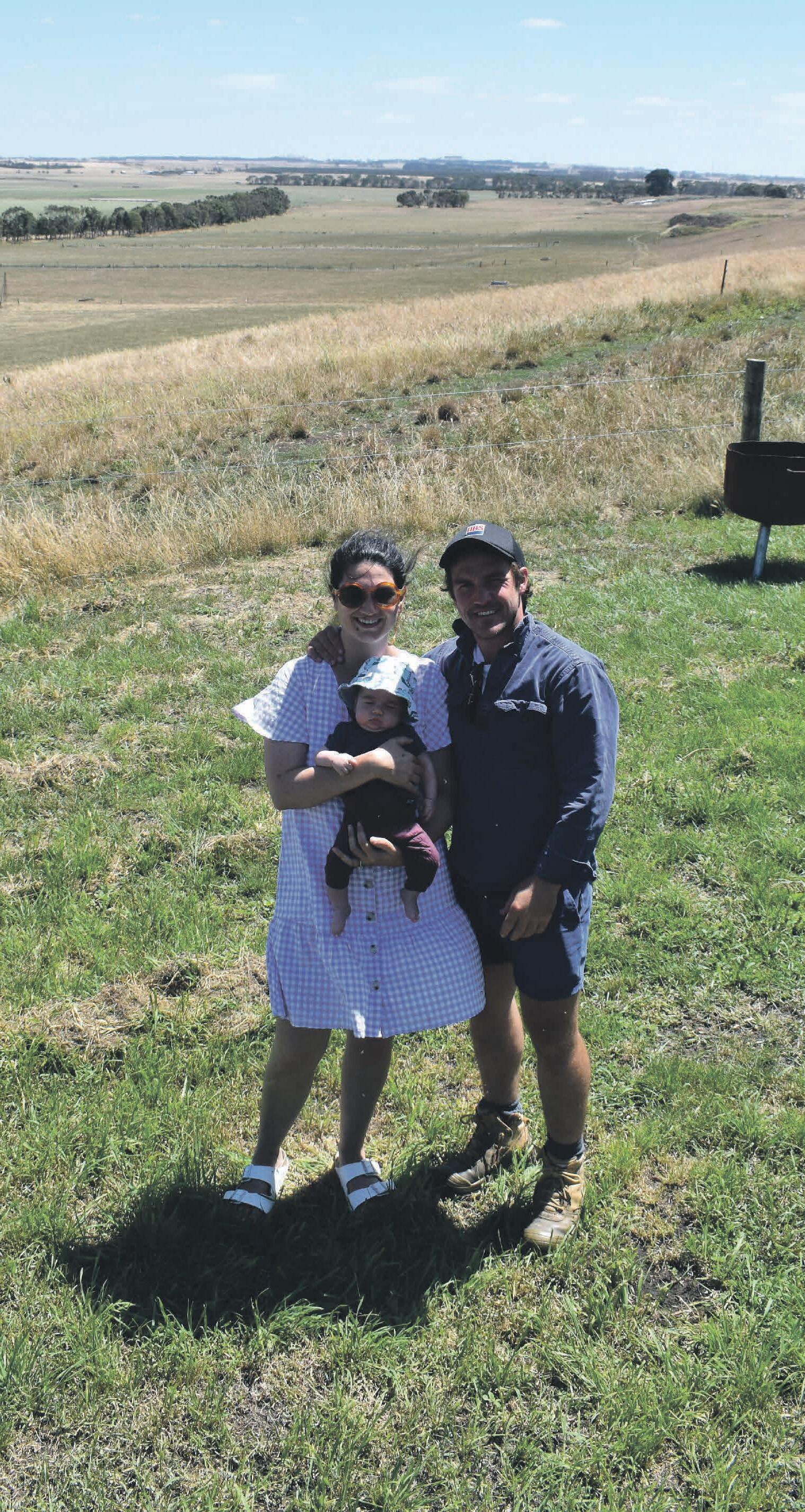
Joseph told the conference that the conflict had made them question their futures.
“We could consider banging three or four turbines on our own farm, milk less cows or turn the dairy off so we don’t need staff and simply run beef underneath, and move to Port Fairy.
“Some of our neighbours might also consider this rather than selling to a younger ge ne ration who wants to dairy farm the land to its potential.
“Don’t let me do that on our most productive land. That is not good for Australia.”
He said governments seemed focused on building energy and housing where it’s quickest and cheapest and whatever land is leftover can grow the food.
“But any farmer will tell you: you don’t
build a shed in your best paddock - we need to reverse that thinking.
“First, we need to identify and protect the absolutely outstanding areas where farming is at its utmost efficiency, and then plan other developments around that, not over it.
“Good planning should not be about short-term optics of a certain target or approving projects before the next election cycle; it should be about planning for the next 200 years.
“The way the current rules are written, we can wake up the next morning and had our pants pulled down and not be able to develop our own land with the infrastructure that we need.
“And that’s a really scary prospect.”
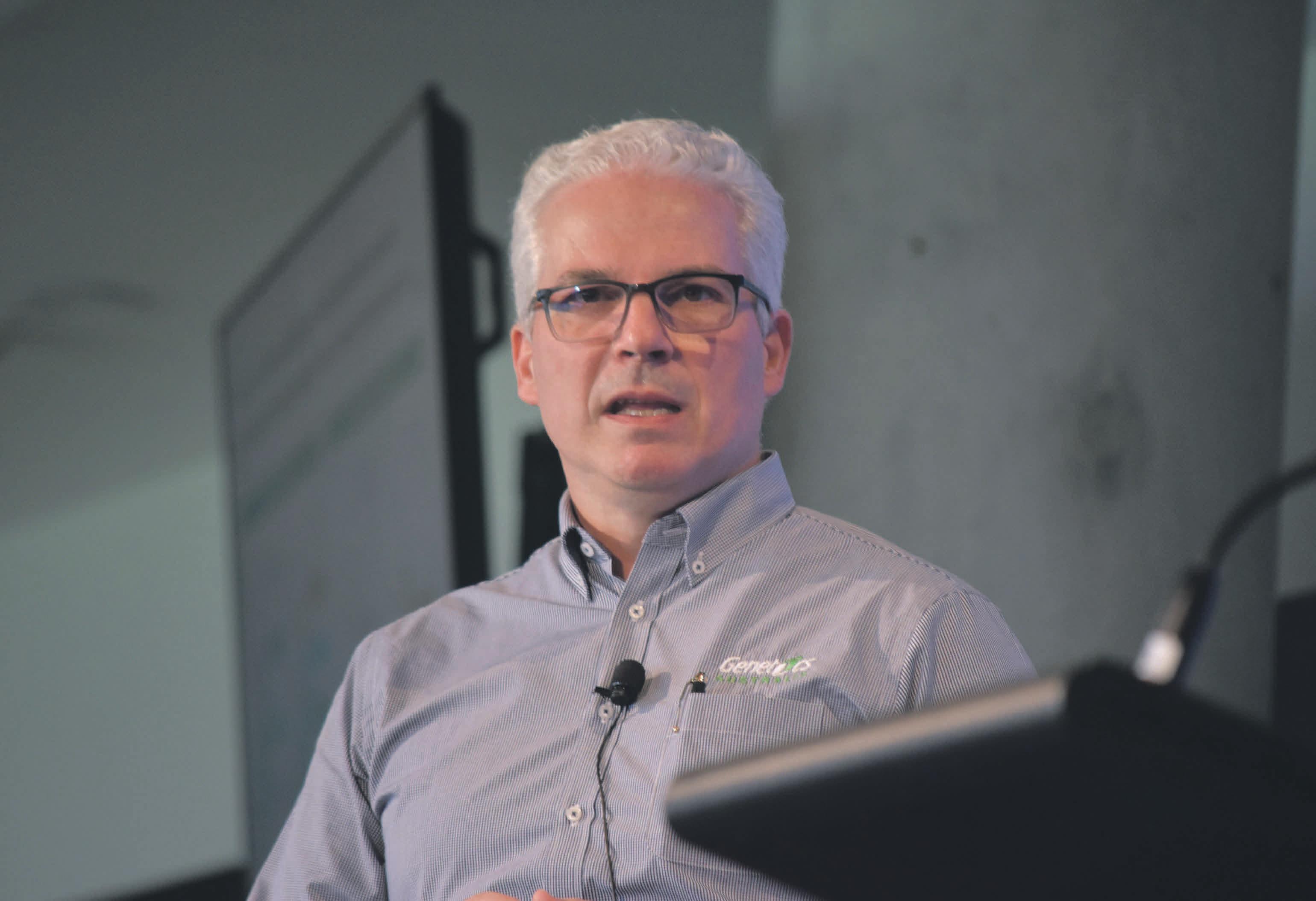
AUSTRALIAN CATTLE farmers are being urged to use data, emerging technologies and precision genetics to make better cows for the future.
URUS Group CEO Paul Hunt told the GA 2026 Today, Tomorrow and Beyond conference hosted by Genetics Australia (GA) in Geelong on March 17-18 that dairy and beef are good industries to be in.
“Five years ago, people wondered where meat and milk were headed,” Mr Hunt said.
“Today we are in a much better place.
“We’re in a business with good growth prospects and increased consumption and demand, including non-traditional markets, and we’re seeing an incredible rate of technology advancement.”
But Mr Hunt warned conference attendees there are challenges ahead, including labour shortages, beef and dairy c ycles and increased exposure to international trade and geopolitical risks.
He urged farmers to look at environmental and social challenges as opportunities and to continue making rich, nutritious, cost-efficient protein products to counter a shift to other proteins.
“Farmers have an opportunity to win by driving sustainable efficiencies across cows,
herds and farming systems but ‘it can’t just be technology for technology’s sake’.
“The farmer of the future needs an efficient and sustainable operation, optimise their herd and individual cow performance in an era of growing complexity, and achieve higher output with lower emissions and improved animal welfare.”
Mr Hunt said farmers would continue to use data in an advanced way to make better decisions.
“Not using technology will be like milking by hand. You can do it, but it will be difficult to survive.
“Without data, there is almost nothing we can do. Data is the foundation of everything.”
He also urged farmers to continue to create data to help with genetic advancement.
“We want to continue to make our products more consumer friendly, more acceptable and at the right price and with the right characteristics, and we need to keep telling the story of cow improvements in such areas as heat tolerance, disease resistance.”
Mr Hunt said farm business had become more complex and would become even more complex over the next decade.
“Successful producers of the future will
be the ones that manage that complexity, they will have information at their fingertips and management tools and resources and advisors showing them how to use that data.”
He told the conference that US producers were using a lot more beef semen and sexed semen and predicted more use of IVF and embryos to create top end replacements instead of sexed semen, and a possible move to genetically advanced bulls in regions that struggle to find technicians to deliver AI while still needing to improve genetics.
“Conventional semen is now a distant third in US and ET and IVF are experiencing incredible growth. Producers are choosing tens of thousands of embryos to make their replacements.
“They’re making the bet that genetics will be the differentiator going forward.
“We need to increase our vigilance on this to make out products better, our animal welfare better and consumer friendly.
“Bringing together data will help achieve this.”
In genetics, the biggest gains will be in animal health.
“There will be gains in productivity and efficiency and sustainability, but for
producers we need to make sure longevity and animal health and welfare are in our sights.
“If we can breed for improvements, we should continue to do that.”
Mr Hunt predicted AI growth with generative capabilities would be huge for the industry, there would be more emphasis on improving beef genetics globally, farmers would want a lower replacement rate to improve their footprint and more farmers would graze their animals.
“I believe grazing will continue to increase globally. We became partners with Genetics Australia because we believe the system used here is going to increase,” he said.
Genetics Australia entered a Joint Venture with URUS Group in 2022.
Mr Hunt said Australia should market itself to the world as a leading grazing business
“As the combination of grazing and beef on dairy becomes more important, Australia has a position to play.”
Mr Hunt said he was impressed by the level of collaboration in the Australian industry.
“Collaboration is going to be required to take us to the next level and there has been plenty of that on display at this conference.”
QUAD BIKES and side-by-sides are among the most frequently used machines on Australian farms, but they can turn dangerous very, very quickly, warns 24-year-old northern Tasmanian dairy farmer Sean Schofield.
According to Farmsafe Australia’s 2025 Safer Farms Report, quad bike incidents are the leading cause of farm injuries, accounting for 35 per cent, while side-by-sides are the leading cause of farm-related fatalities.
Earlier this year, Sean received news no-one wants to hear: there had been a vehicle-related incident on his employer’s farm.
A co-worker riding a quad bike had noticed cows escaping from a paddock and moved to retrieve them. The worker was operating the vehicle in line with established farm procedures and was wearing a certified helmet at the time of the incident.
“As they rounded a corner, they lost control of the bike,” Sean says.
“There was a drop near the fence, and they fell about two metres, narrowly missing some large rocks.”
The use of certified protective equipment and adherence to correct procedures played a critical role in preventing serious injury.
The worker had also recently completed quad bike and side-by-side safety training.
“A couple of months before the incident, our whole team undertook quad bike and side-byside safety training,” Sean says.
“We also had people attend from other farms.”
While no serious injuries occurred, the incident was a stark reminder of the risks involved and the importance of training, protective equipment and safe vehicle operation.
Having seen how a split-second lapse in attention can lead to serious consequences, Sean is concerned about workers who may not be trained or who fail to follow safety guidelines.
He credits his employer’s strong commitment to safety — demonstrated through proactive training, the use of certified safety equipment, and participation in Dairy Australia’s SAFER Farms program — for helping prevent a far worse outcome.
Sean, who has worked in the dairy industry for more than five years and attended numerous Dairy Australia workshops and events, says it was the first serious incident he had experienced on a farm.
“It was a bit of a reality check,” he says.
“A reminder to take safety seriously.”
Since the incident, Sean and several colleagues have chosen to purchase their own helmets, even though the farm supplies certified safety helmets.
“A helmet is a very personal thing,” he explains.
“If you’re wearing it for hours at a time, it’s worth having one that fits properly and feels right.
“When there is a safety incident or near miss on a farm — even if no-one is injured — it’s critical to review what happened to reduce the chance of it happening again,” Sarah Cornell, Dairy Australia’s National Capability Lead, says.
“Regular safety training, proper equipment maintenance and following safe work practices aren’t just legal requirements — they’re what ensure people go home safely at the end of the day,” she says.
“It’s encouraging to see Sean sharing this experience. Stories like this help others learn without having to make the same mistakes.”
Dairy Australia supports farmers to work safely and efficiently through practical resources, safety checklists and on-farm programs that help protect workers, families, and livelihoods.
For more information about farm safety, including practical tools, checklists and resources, contact your local Dairy Australia team or visit www.dairyaustralia.com.au/people/ farm-safety-and-wellbeing
ENTRIES FOR the 2025-26 Semex/ Holstein All-Australian Photographic Competition are now open.
The national competition recognises excellence in conformation and showing and is open to all Holstein Australia Herdbook and Appendix 1, 2 and 3 females that have been successfully shown at any Australian show adjudicated by a member of the National Judges Panel in any of the Holstein Australia regions or sub-branches.
Simply download the entry form and follow the points below:
Boost your milk yield and financial returns with our SGL sires.

ɋ check the eligibility criteria of your animal (Qualified parentage for ETs (not on hold/ pending), Flush paperwork in for IMPs)
ɋ complete the e ntry form, making sure to complete your animal’s Herdbook number, class entered and qualifying show with dates
ɋ submit your entry along with your original photos as an attachment.
All entries must be submitted by 5pm Sunday, May 31.
Digital entries can be emailed to awards@holstein.com.au or contact Celia on (03) 9835 7600 with any queries.





Using SGL Compact™ sires you can reduce gestation length by up to 12 days. A cost-effective and convenient alternative to traditional natural mating bulls. Here’s what mating your return cows with SGL sires could mean for your farm:
More revenue through increased days in milk 12 days x 1.87 kgMS/day x $8.50 forecast payout
Tighten next season’s calving spread
A longer recovery time can:
• Reduce interventions
• Improve AB conception rates
• Lower empty rates
Alternative to natural mating bulls
• Save costs
• Protect livestock and property
• Reduce bio security risks
• Improve health and safety
Example: NOTE: SGL Compact™ Offspring must not be bred. See: licnz.com.au/about/terms-conditions
Contact your LIC district manager to order or call 1800 454 694
THE NEXT generation of Australian dairy farmers are helping to develop the next generation of elite cows through a new joint venture initiative.
Two young dairy farmers are playing an integral part in the Genetics Australia Co-operator herd program, which is designed to bring together the best of the Australian and American genetic pools.
Although just aged 19 and 21, Hollee Vinnicombe and Chloe Cook are managing the co-operator programs on their family farms which are among the first in Victoria to enter the program which fosters a unique global opportunity for Genetics Australia in its joint venture with the URUS group.
The program involves a small group of contracted farms in Victoria where elite embryos are transferred to recipient females.
Females born in the program stay at the co-operator’s farm and once genomically tested elite female offspring are added to future breeding schedules.
The genomic breeding values of all resulting calves are assessed with elite males joining the Genetics Australia’s artificial insemination program for Australian farmers to access.
For Hollee and Chloe, the program is an extra incentive in their burgeoning farming careers.
Hollee returned to the family farm at Calivil in Northern Victoria two years ago to work alongside her parents Dehne and Sarah. She manages young stock and works with Genetics Australia’s co-operator program lead Gerard Brislin across the program.

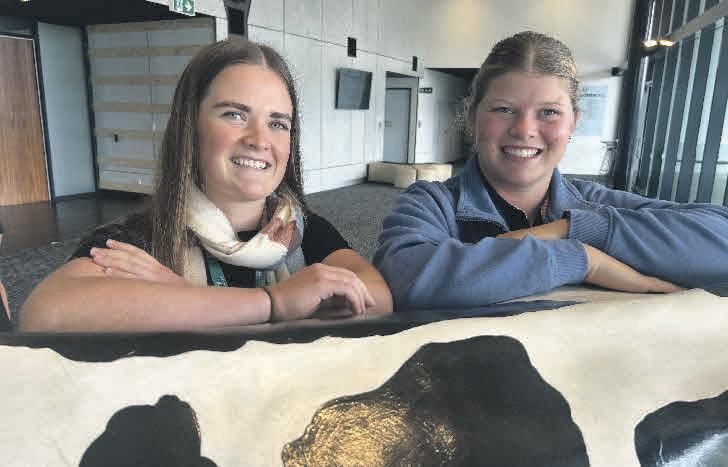
“Gerard figures out what embryos are available and brings them to us.
“We have an agreement where we keep the heifers except for those with a good BPI which go back to GA and are enrolled in advanced repro programs such as IVF and ET.
“It’s the same with the bulls.”
Hollee said the program was going well.
“We’ve had embryo calves on the ground for about a year now and we’re really happy with them.
“We have two heifers at GA at the moment, one with a really good BPI over 700.
“We’ve also got a bull at GA with a high BPI from the program.”
Chloe farms with her family in the King Valley in north east Victoria where her father Ross owns and operates Country Road Holsteins, Chloe leads the farm’s husbandry, calf rearing and herd management.
“We’re a bit behind Hollee but we’re looking forward to seeing the results.


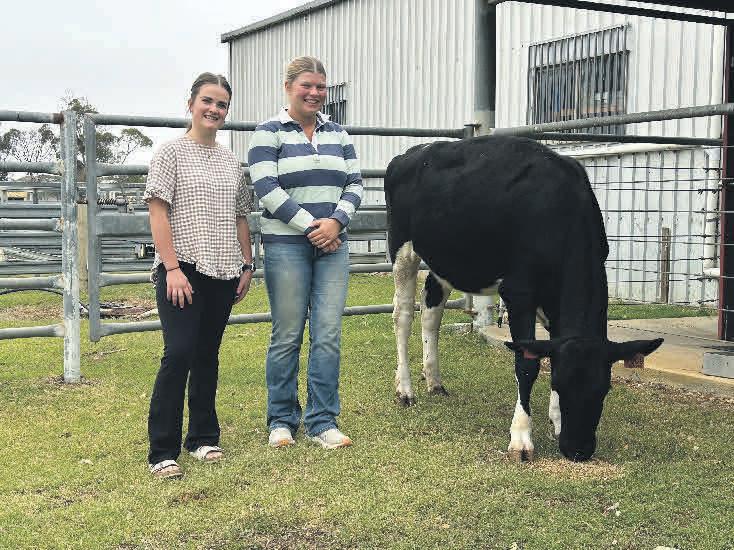
“In August we transferred some embryos and got 10 confirmed pregnancies which is really exciting.”
Chloe said the family was pleased to be part of the program.
“We’ve always been with Genetics Australia and Gerard spoke with Dad and we were keen to be part of it.”
Both Hollee and Chloe were invited to the GA 2026 Today, Tomorrow and Beyond conference hosted by Genetics Australia (GA) in Geelong on March 17-18.
“It is important for the future of our herd improvement industry that we encourage and develop the next generation to take leadership roles in breeding programs, whether it be at a farm or industry level,” Gerard said.
Both Hollee and Chloe also got to inspect
the Genetics Australia and TLG facilities at Bacchus Marsh and Camperdown.
“I’ve been doing AI since I was 16 and really enjoy the genetics side of farming so enjoyed the deep dive into it at the conference,” Chloe said.
Hollee added that it was good to see the bulls they use in person at the GA farms.
Gerard says the Co-operator program is in its early stages and continues to develop nicely in an effort to breed ‘Better Cows for a Better World’.
“It’s not unique to have embryos made in the USA coming to Australia, but what is unique is that we’re sending our local semen to the U.S to Peak Genetics to sire embryos that come back,” Gerard said.
“It’s a unique opportunity to access international cow families with Australian genomic performance breeding values.”
Genetics Australia chose to initially position the collaborative program with the Holstein breed with embryos generated by TransOva Genetics in the U.S, whilst a large cohort of donor females are selected and genotyped from the nucleus breeding program at Peak Genetics.
Gerard says the uptake over time of technologies such as gender sorted semen has meant there are less elite bull calves being offered to A.I companies in Australia in recent years.
“Australian breeders remain an important resource providing genetics for the future, with the program providing a level of core stability and supply for future generations of breeding,” he said.
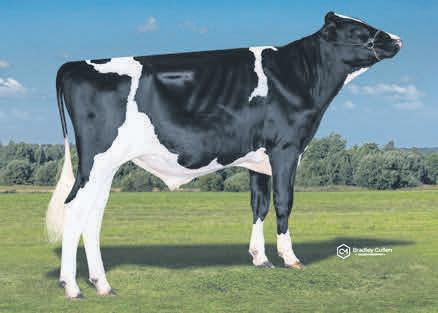
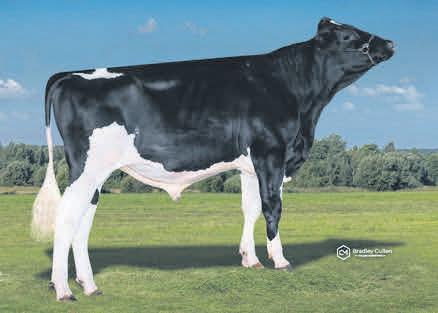
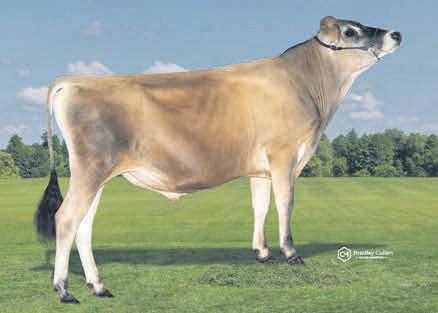


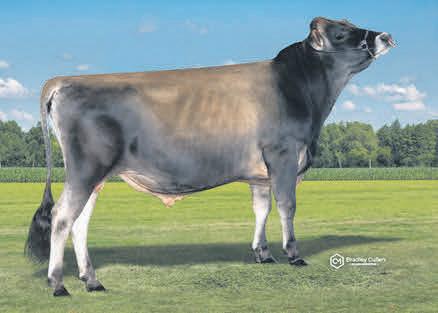
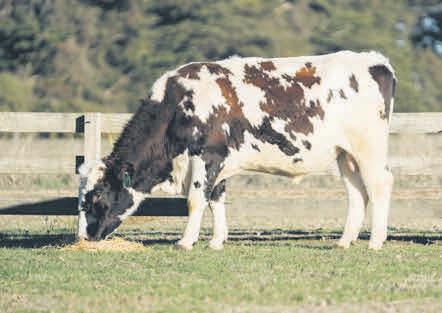

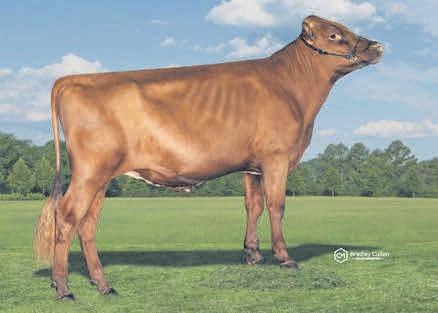





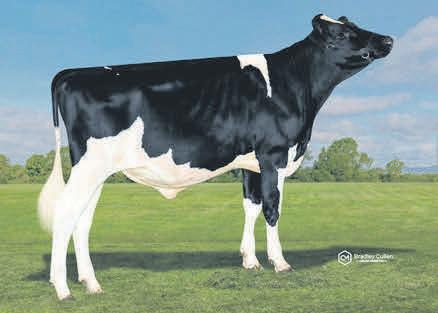
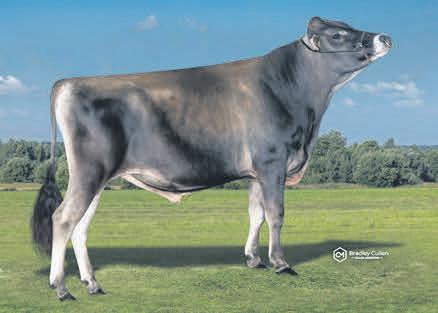

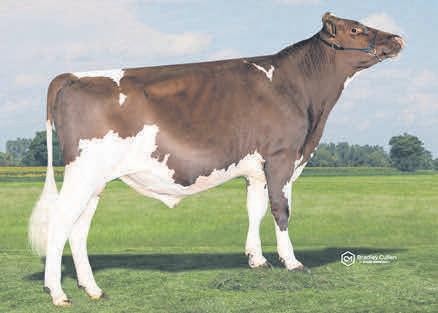





RECENT FINDINGS from a collaborative research project will contribute to developing improved tools for breeding dairy cattle with better heat tolerance.
The current Australian Breeding Value (ABV) for Heat Tolerance is derived from genomics only – the DNA testing of animals. Adding more data sources, such as relevant animal performance records referred to as phenotypes to the ABV model, should improve reliability and accuracy.
Dairy UP researchers have developed phenotypic indicators of heat tolerance that can be added to the ABV model.
Published by DataGene, the Heat Tolerance ABV allows farmers to identify and breed animals with greater ability to tolerate hot, humid conditions with less impact on milk production.
DairyUP researcher, Dr Anna Chlingaryanm from the University of Sydney, said managing dairy cattle in hot, humid conditions was an increasing issue for the Australian dairy industry, with climate change and the trend towards intensification.
“Improving heat tolerance in dairy cattle has benefits for the business in maintaining production and reproductive performance in hot months, and animal welfare with improved cow comfort in hot conditions,” she said.
Dairy UP, in collaboration with DairyBio, DataGene and Charles Sturt University, has a suite of projects exploring ways to improve
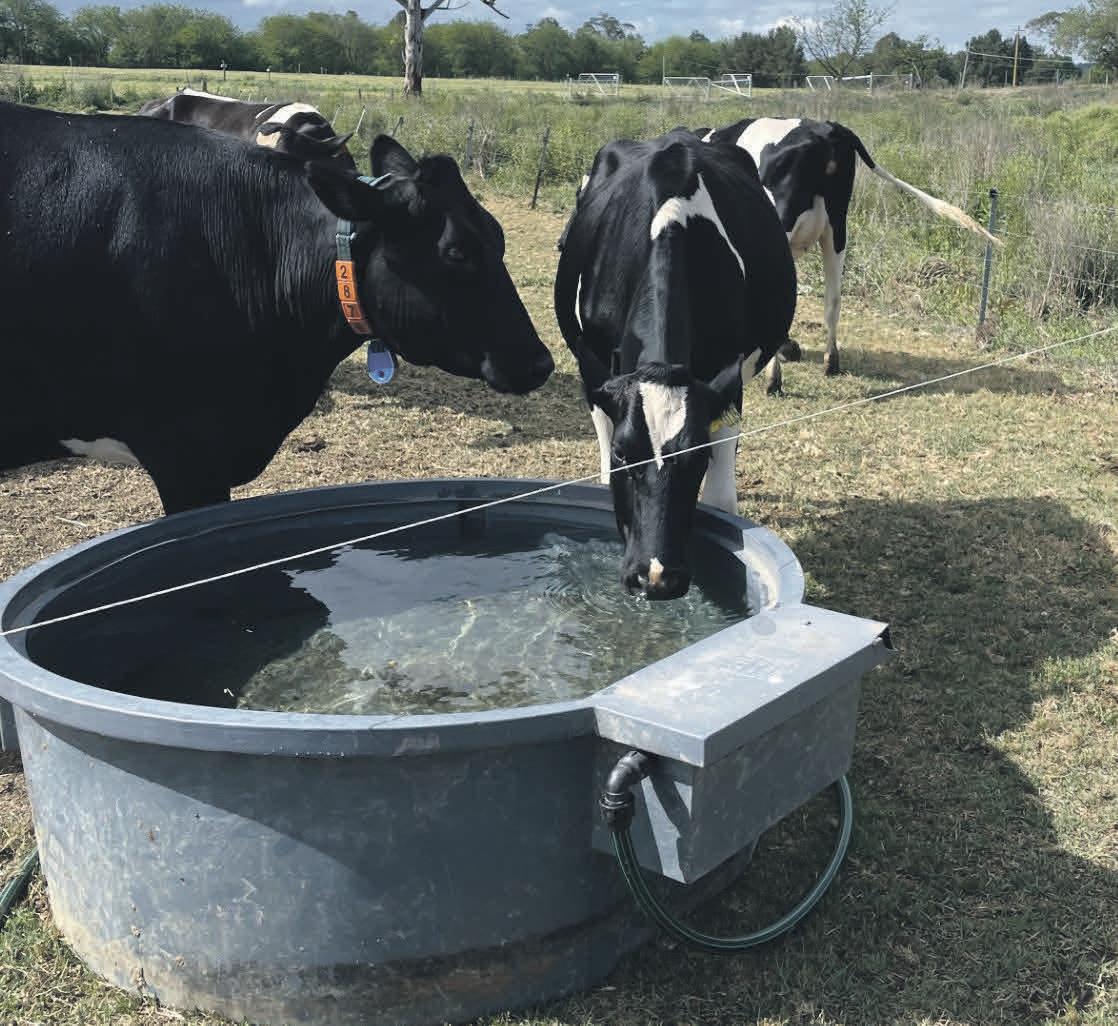
smaXtec rumen sensors to monitor core body temperatures on three pasture-based dairy farms.
A total of 1429 animals were involved in this research, plus an additional 28 heifers from the University of Sydney farm in NSW.
To interpret the data accurately, researchers developed a water threshold model to account for water intake, allowing them to isolate the impact of drinking events on core body temperature.
They found that drinking behaviour can serve as a reliable indicator of heat stress.
These findings provide new phenotypic information that can complement genomic data and strengthen future calculation of the Heat Tolerance ABV.
The Dairy UP team also developed a hybrid artificial intelligence (AI)-based model (HAIM) to improve assessment of heat tolerance in dairy cattle, combining the predictive capabilities of machine learning algorithms with established statistical models.
The model revealed patterns that might remain hidden when using traditional models alone, enhancing the understanding of heat tolerance in dairy cattle and the identification of more heat-tolerant animals.
Another project combines the genetic and performance data from animals with a variety of approaches including the sensor technologies from the Dairy UP project.
For more information visit www.dairyup. com.au or email camclark@csu.edu.au
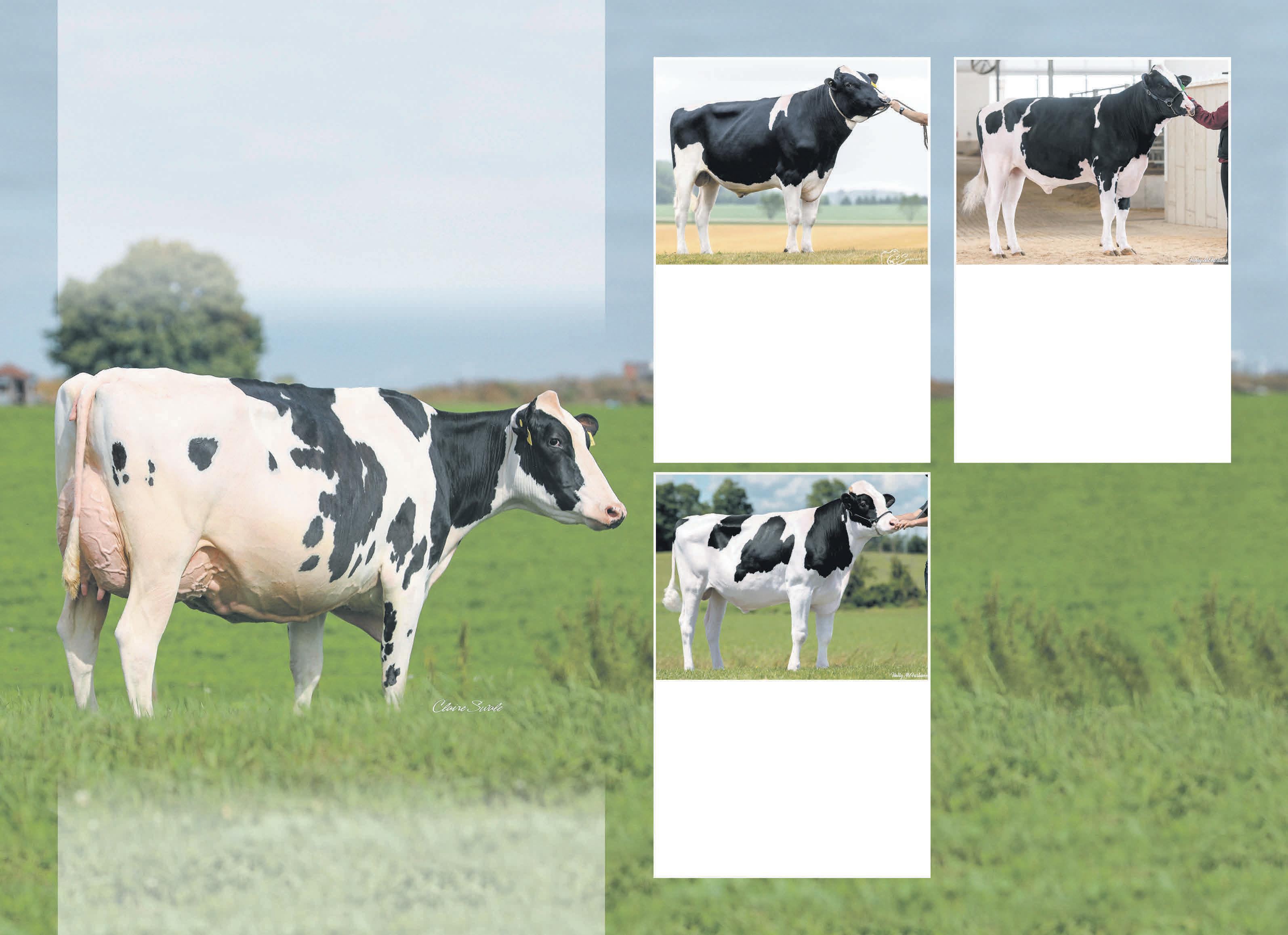
Cows
•W ilara Almamater Collie VG86 is the number one cow with a BPI of 884. She is owned by the Henry family of Tinamba, Victoria. Collie also ranks in the top 10 for sustainabilityIndex.
•The numbe r two BPI Holstein is also the top HWI cow Jelbart Diamond Barbe 16916 GP81 has a BPI of 883 and a HWI of 888.She was br ed by the Jelbart family of Leongatha South, Victoria and was bought by Henty Dairy Co of Mead, Victoria at International Dairy Week in 2024.
•T wo cows hold equal third ranking with a BPI of 873. They are Hindlee Polaris Dallas 23009 GP82, owned by John and Vicki Lillico of Smithton, Tasmania and Emu Banks Manhattan Tiffany 13260 VG85 owned by Bryan and Jo Dickson of Terang, Victoria.
•26645 o wned by Donovans Dairying Co, Mt Gambier is the number one sustainability index cow with an SI of 1148. She is a daughte r of the high r anking WWS bull 7HO16071 (Sahara).
Genomic heifers
• “ 5711” is a daughter of 0200HO12321 (P attern) and is still the number one BPI heifer at 870 BPI and thenumber one HWI heifer with a HWI of 874. She is owned by the Webb Nicholas Family Trust of Mt Gambier.
•The t op Sustainability Index heifer is Congla 36964, owned by David Boyd – RH Boyd and Son, Worrigee, NSW. She is a 7HO16071 (Sahara) daughter with a SI of 1079.
Cows
•The numbe r one BPI Jersey is again Araluen Park Jiggy Sandra EX-90 with a BPI of 776. Sandra was bred by Trevor Saunders and Anthea Day of Shady Creek, Victoria. She is also the Jersey breed’s top sustainability index cow at 1142 SI.
•The leading HWI J ersey is Beulah Gislev H Bouy 83 at 2 years. Owned by Daryl and Lani Hoey, Wonthaggi, Victoria, she is a daughter of the Viking bull VIKJGISLEV. She has a HWI of 667. Bouy is also the number two BPI cow at 767 BPI.
•I n third spot with a BPI of 754 is Balnageith Jenny 317. Owned by Alistair Grant of Balnageith Jerseys, Warragul South, Victoria, she is a daughter 14JE00754 (Grant). Jenny 317 is also the number two sustainability index Jersey at SI 1070.
•“4512” o wned by Skeeta Verhey, K oondrook, Victoria is the top BPI and Sustainability Index Jersey heifer. She has a BPI of 599 and an SI of 736. She is sired by the Viking bull VIKJDANKA.
•The bull 7JE01726 ( Starlord) dominates the top end of the young Jersey fe male ABV list . Fifteen out of the top 20 heifers for BPI are sired by Starlord!
• One of the Jersey world’s most revered herds, Bushlea, is the home of the number two Jersey BPI heifer. Bushlea Star Bonita 6224 bred by Wayne and Lisa Kuhne has a BPI of 583.
• A pair of sisters bred by Daryl and Lani Hoey are the number three and four BPI Jerseys. Beulah Star D Fairy 2 has a BPI of 578 and a HWI of 570 ranking
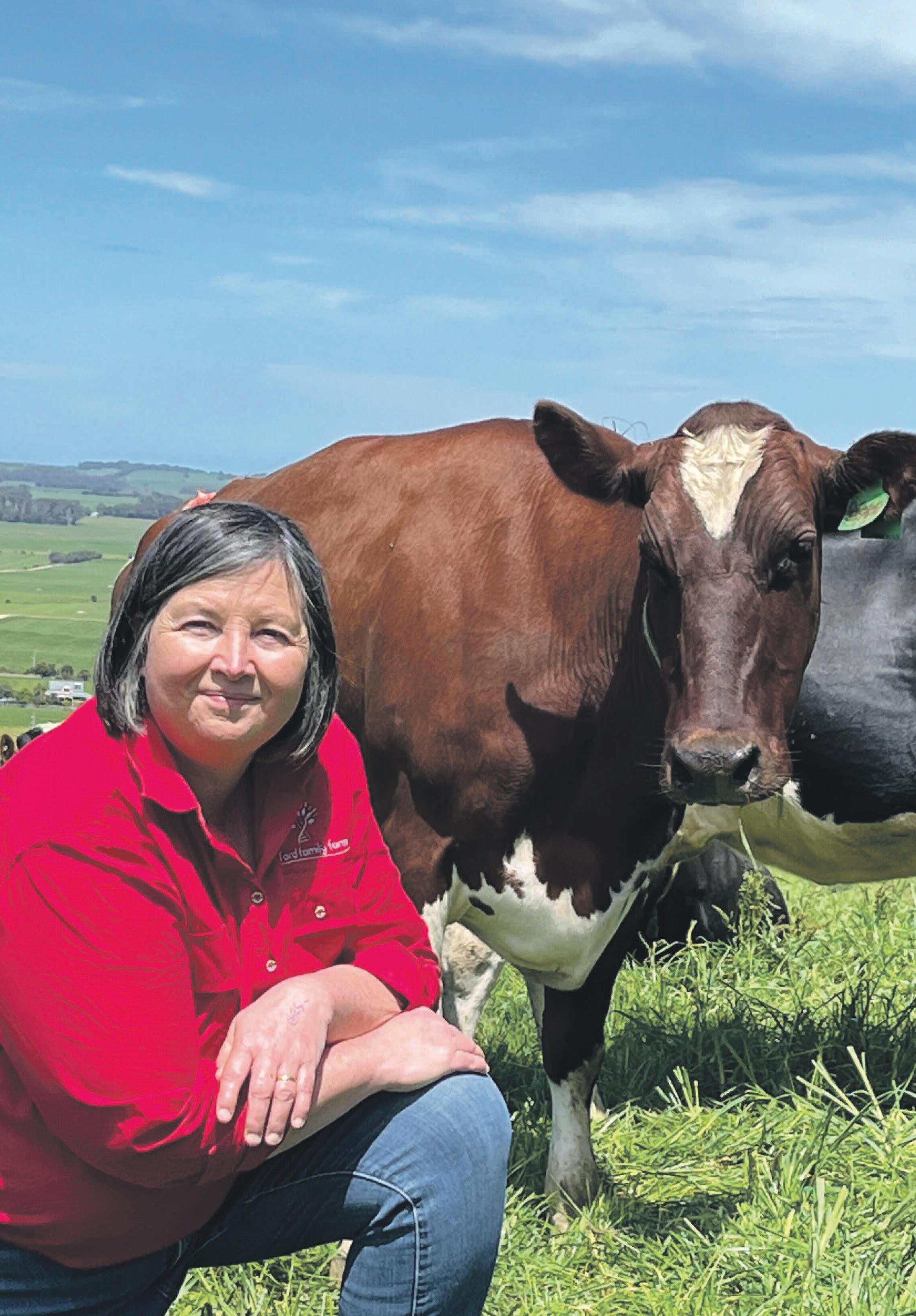
her second for HWI. She is the 7JE01726 (Starlord) daughter of the former number one BPI heifer Beulah Dougg T2 Fairy. Her sister Beulah Star D Fairy is the number four BPI heifer with a BPI of 566.
• T he Hoeys are also the owners of the top HWI heifer, Beulah Star B Vanity 3 (HWI 586). She too is a 7JE01726 (Starlord) daughter.
•The VIKRTOKY O daughter Barleydew Tokyo Bek, owned by Paul Cocksedge of Tarwin, returns to the top of the BPI list with a BPI of 628. Bek is also the top Sustainability Index Aussie Red with a SI of 983.
•Beaulands Foske Katie 20 owned by
Ron and Sam Graham, Numbaa, NSW, is the number two BPI Red cow with a BPI of 625.
Genomic heifers
• P aul Cocksedge also owns the number one BPI and Sustainability Index genomic Red heifer. Paco Hosea Birdie 160 has a BPI of 670 and a
sustainability index of 967.
• The top HWI Australian Red heifer is “7117” with a HWI of 468. She is owned by Greg and Krissy Goulding of Cohuna, Victoria.
Holstein
• Bryan and Jo Dickson’s Emu Banks herd has retained top spot with an average BPI of 438. It is also the top herd for the sustainability index (SI) at 528 and top herd for the health weight ed index (HWI) at 322.
• Geoff and Estelle Boyd of Foster, Victoria own a small but elite herd of Holsteins along with a top Jersey herd. Their Holstein herd now ranks second for BPI with an average BPI of 375.
• The Kitchen Family of Boyanup, WA holds down third position with a herd average BPI of 372.
• There is a newcomer at the top of the Jersey herd rankings. Tesbury Dairies, owned by Anna Dickson and Angus Fraser, top the herd list for BPI, HWI and SI. Anna and Angus have put together a small but elite herd of Jerseys sourced from Anna’s Spring Banks herd and her parents’ Emu Banks herd.
• The prolific White Star herd owned by Con and Michelle Glennen of Noorat, Victoria, is the number two BPI and HWI herd and the equal number one Sustainability Index herd.
Australian Reds – Ron and Sam Graham of Numbaa, NSW, have the top Australian Red herd for all three key indices.
Illawarras: The Hamiltons Run herd of Graeme and Michele Hamilton, Mt Gambier, SA is the number one Illawarra herd for all three key indices.
Ayrshires: Trevor Saunders and Anthea Day of Shady Creek, Victoria have the top BPI and sustainability index Ayrshire herd. Brown Swiss: P & S Balfour of Kanoona, NSW have the top Brown Swiss herd for BPI, HWI and SI.
Guernsey: The Cleggett family of Glencoe, South Australia are the leading Guernsey herd for BPI and SI, while Ian Gallus of Strathmerton, Victoria has the top HWI Guernsey herd.
Always breed replacements from Good Bulls. The Good Bulls Guide includes more than 450 bulls.
Holstein
• The leading Australian Proven bull for BPI is AGRDYNASTY with a BPI of 808. From the powerhouse US breeding herd of Kings Ransom, AGRDYNASTY has outstanding ABVs for production and type tr aits . AGRDYNASTY is available from Agri-Gene.
• 29HO20629 – TTM Ellis-PP holds down second spot with a BPI of 635. Available from ABS, 29HO20629 – Ellis is homozygous polled meaning 100% of his calves will be polled.
• 0200HO11385 – Westcoast River from Semex holds down third spot for BPI at 633 while the Genetics Australia bull SHOALHAVEN comes in fourth with a BPI of 632.
• The WWS bull 7HO16071 - OCD Rozline Sahara is the new number on genomic Holstein for BPI andsustainability index. 7HO16071 - Sahara has 69 daughters milking in Australia. The Australian daughters have performed better than expected for both production and type, helping to propel him up the rankings.
• In second position for BPI is 7HO16251 - Lars-Acres SSI Z Yonder, also from WWS. 7HO16251 – Yonder has a BPI of 875.
• The Viking Jersey, VIKJGISLEV, is again on top of the Jersey daughter proven list with a BPI of 628. With 296 daughters in 36 herds, VIKJGISLEV is also a clear leader for HWI and SI amongst the daughter proven Jerseys. He also tops the genomic lists for BPI and SI.
• 7JE01980 – Black Label Thrashing Kamakazi is the new number two daughter proven Jersey with a BPI of 503 and o ve r 200 milking daughters. 7JE01980 –Kamakazi is also the breed’s leading Type sire and isavailable from World Wide Sires.
• The perennial DOUGGAN, now with more than 1200 milking daughters, occupies third position with a BPI of 384.
• Combining genomic data and daughter performance, VIKJGISLEV leads allcomers in the BPI stakes, a rare feat for a bull with milking daught e rs.
• An exciting new young sire 760JE00003 – Murray Brook Riot bred by Paul and Adam Lenehan of Crossley, Victoria is the number the genomic Jersey sire for BPI at 594. With a solid all round proof, including for type, 760JE00003 – Riot semen will soon be available from WWS.
• Miami Elstar – ALTAELSTAR, bred by Mark and Phillipa Flemming of Cobrico, Victoria is the leading HWI Jersey due to his extreme Daughter Fertility ABV and other health attributes. ALTAELSTAR has a HWI of 606.
• Leading the list with a BPI of 584 is ARBBISHOP, a new Aussie Red sire from Genetics Australia. He was bred by Ron and Sam Graham of Numbaa, NSW, Australia’s highest ranked Australian Red herd.
• VIKRVESTY is the number two BPI Australian Red with a BPI of 570. From the Viking Genetics stable,VIKRVESTY has more than 2700 daughters milking in Scandinavia and is also the leading sustainability index Australian Red with an SI of 815.
• The t op health weight ed index
Australian Red is 252NR12073 – Alme with a HWI of 452. He is available from ABS.
• Ayrshire: The leading Ayrshire sire is NZGSUPASONIC - Iwa Super Sonic with a BPI of 565. He is available from LIC –Livestock Improvement Corporation.
• Illawarras: CNLYONS – Cluain Lyons is the leading Illawarra sire for BPI (481), HWI (303) and SI (816). Bred by Graeme and Michele Hamilton, CNLYONS is
available from Genetics Australia.
• Guernsey: The top Guernsey bull is BLICEMAN, Brookleigh MCD Iceman (twin) at 327 BPI. In secondspot is BLMAFIA, Brookleigh Rep Mafia at 302 BPI. Both were bred by the Cleggett family
of Glencoe, South Australia. BLICEMAN is available from Agrigene.
• Brown Swiss: 93SBJ03 - Hercules is the leading Brown Swiss bull at 359 BPI. He is available from GGI. ɋ Note: cows must be genomically tested


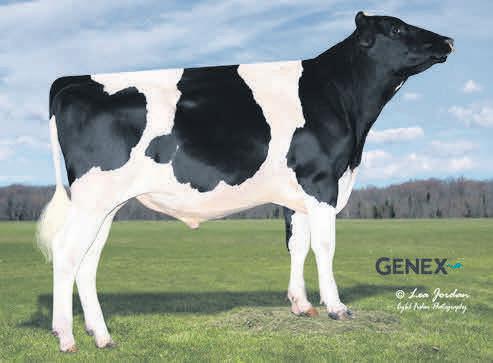



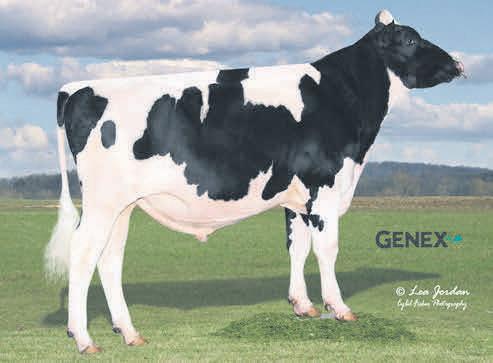


DAIRY FARMERS don’t have to compromise to breed for polled animals anymoreABS has proven it.
The gap between homozygous polled and performance is gone, and the proof is 29HO20629 TTM Ellis-PP, now sitting at the pointy-end of the Australian Breeding Values proven rankings.
ABS holds the top seven homozygous polled bulls in Australia - with an average of 701 Balanced Performance Index - the genomic and proven sires deliver in the vat, and on longevity, health and strength.
ABS business operations manager Bruce Ronalds said Ellis rise was expected.
The company’s top-selling Holstein has led the polled pack since arriving four years ago as the highest-ranking homozygous ‘double P’ genomic bull.
“He’s pretty much everything you want in a bull - for anyone that hasn’t tried Ellis-PP yet, know you won’t be compromising on anything to breed cows without horns,” he said.
“At 105 for daughter fertility - 112 for mastitis resistance - high semen fertility, good teat length, calving ease and 228 lts for milk, he’s the whole package.
“Not many ‘double P’ bulls have milk - EllisPP does, while also adding strength without the frustrating challenge of breeding taller cows,” Bruce said.
Ellis-PP also scores below zero for the new stillbirth ABV, placing him above the breed average and reducing the risk of calves born dead or dying within the first 24 hours.
He also records -4.1 for maternal stillbirth, which reflects the same risk in calves born from his daughters.
Now at 635 BPI, Ellis-PP has 152 daughters milking across Australia in 22 herds, demonstrating how his genomic predictions are delivering on Australian farms.
“Those who have already used Ellis-PP, and have calves on the ground, are keen to use him again,” Bruce explained.
“And as a bull bred for the Australian and New Zealand industry, we’ve got plenty of supply.”
Mark and Tania Nevill have 25 EllisPP daughters in their herd of 800 cows at Mepunga East, Victoria.
Wanting to breed a robust, no-fuss and shorter stature cow led them to Ellis-PP.
“For some time now we’ve been aiming to shorten the stature of our herd, breed a more robust sort of animal and focus on positive fat and positive protein” Mark said.
“We believe a more robust cow doesn’t have walking issues and by focusing on health traits, we are ensuring cows get in calf, year after year, and they seamlessly float through the herd. They go unnoticed.
“These are a nice group of heifers - a pretty even group - time will ultimately tell.”
Ellis-PP rounds out a remarkable top seven Australian homozygous polled Holsteins in the ABS Australian stable.
The group - including top genomic bulls such as 29HO22185 Denovo 23176 HighfertPP-ET and 29HO21056 Denovo 4798

Estate-PP-ET - average 701 BPI - and an exceptional 109 for survival, 107 for mastitis resistance and 106 for daughter fertility.
For Bruce, this is proof there’s all upside when using ABS double P bulls.
“You aren’t forfeiting any BPI and you are building animal welfare and sustainability outcomes,” he said.
“This is because the ABS program has concentrated on breeding longer-lasting cows - those that stay in the herd for a long time - and don’t cause any trouble. The cows’ farmers like to milk and manage.”
Other notable Holsteins in this ABV release include farmer favourite 29HO18698 ABS Jeronimo-P-ET, who has 2700 milking daughters and sits inside the top 10 proven rankings at 593 BPI and new graduate 29HO20622 D enovo18125 Woodrow-ET at 608 BPI. Woodrow was a top 10 genomic sire in 2022 and is now a top 10 Australian proven sire.
ABS also introduced two new Pen-Col Whoops-ET sons – 29HO22673 Donovo 2470 Wales-ET and 29HO22471 Denovo 24048 Waverly-ET at 863 BPI and 802 BPI respectfully.
These lead the next wave of Holstein sires offering survival and daughter fertility, something ABS has been concentrating on as part of its breeding programs to produce longer lasting cows.
Milk in the vat, strength up front and health through the herd - that’s the promise of




Murray Brook Kirky (CSCKIRKY), one of the most sought-after young Jersey sire from the 25 year relationship between ABS Australia and Central Sires Co-Operative. At 519 BPI, genomic bull CSCKIRKY combines positive milk with strong type, fertility and survival traits, backed by a pedigree featuring Pilgrim, Sturgis and David for valuable genetic diversity.
Str ong health bull 29JE4444 Cal-Mart Dino-ET at 539 BPI and his son 29JE4561 ABS CF 8059 Daytona-ET at 565 BPI tick all the boxes with strong daughter fertility, mastitis resistance and above average type.
The son of strong health bull Dino at 539 BPI, Daytona sits at number four on the ABV genomic rankings - bulls without any daughters.
Former top total merit index bull 252NR12222 NR Skoien, out of Norway, has transitioned strongly into Australian conditions, now ranking nine on the ABVs, with local daughters and a 431 BPI. This bull was first brought to Australia for his high country of origin proof.
“We knew this bull would perform well here in Australis,“ Bruce said.
Leading the breed for daughter fertility 107, he sits fourth for mastitis resistance 108, and delivers on-farm with quiet, easy cows - confirmed by 105 Temperament. All these traits bringing Skoien to a bread leading position for his health traits




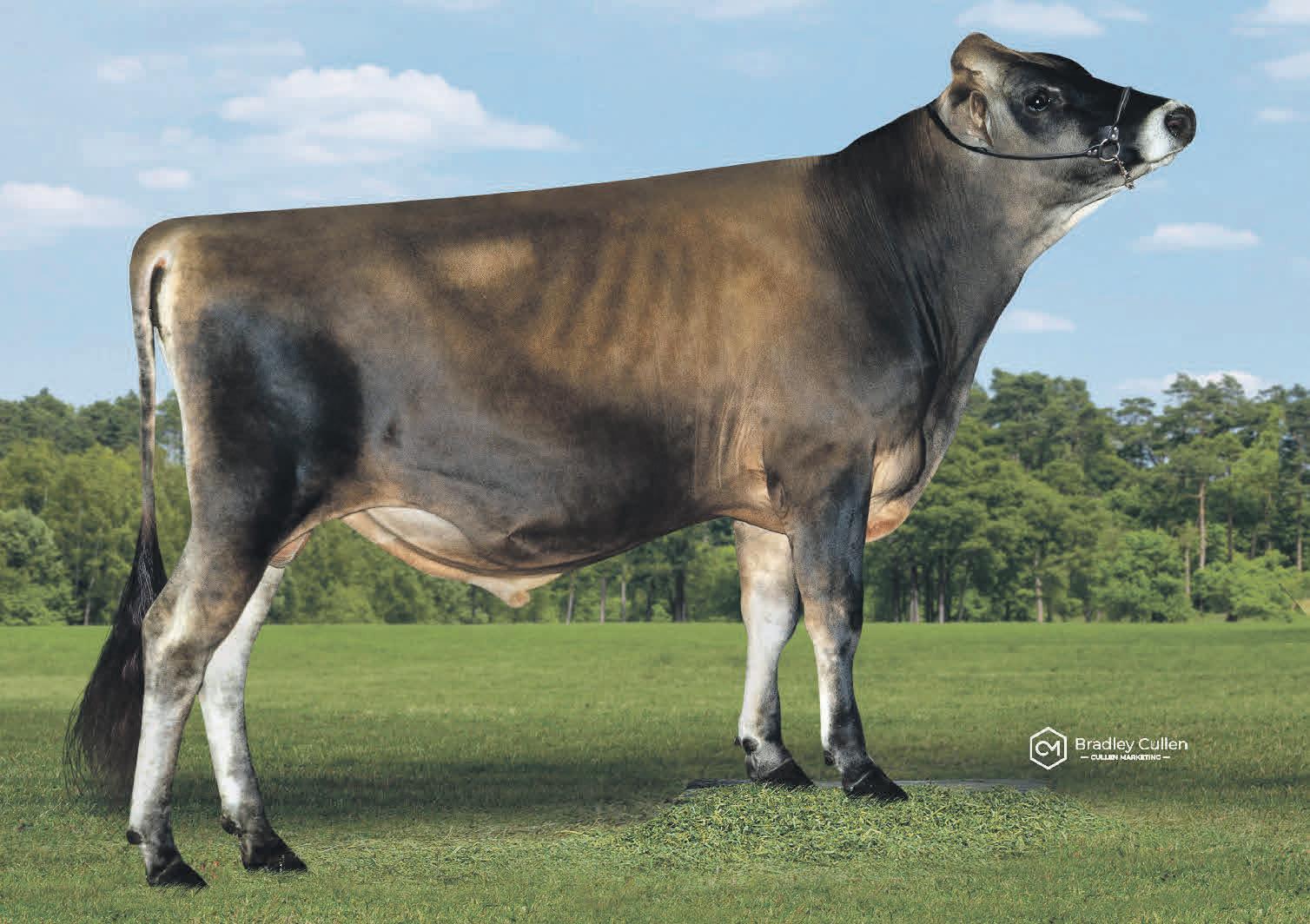
resulting in long lasting cows.
ABS is also excited to bring more than 15 Homozygous polled bulls to Australia again, supporting farmers in building Australian herds for animal welfare and sustainability.
“We are confident these sires will perform here because, like Skoien, they are at the top of the total merit index in Norway with the huge bonus of being 100 per cent polled,” Bruce said.
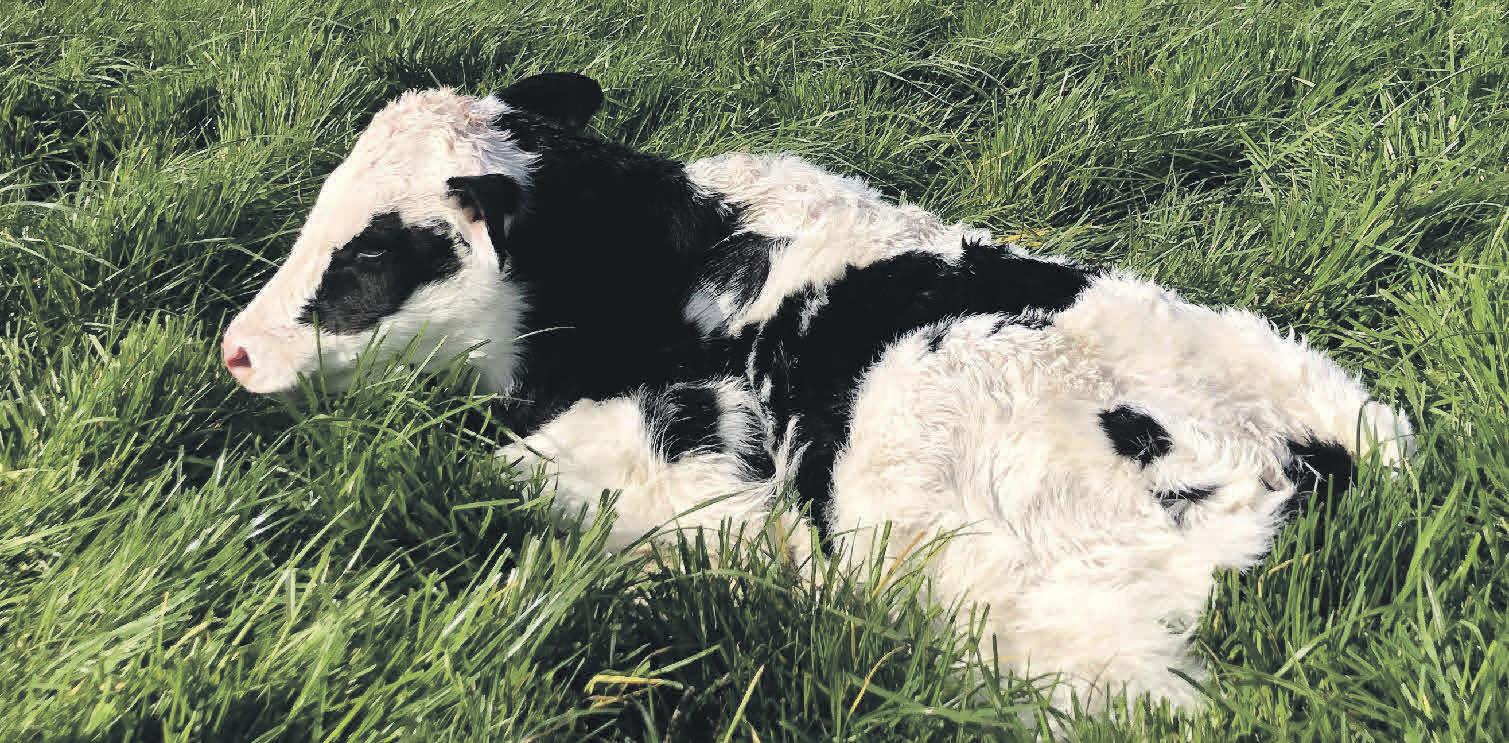
FROM APRIL, DataGene is publishing two new stillbirth Australian Breeding Values (ABVs) to address the leading cause of death in Australian dairy calves.
Available for all breeds, the sire stillbirth and maternal stillbirth ABVs give dairy farmers a breeding tool to reduce stillbirths.
Between 5-7 per cent of Australian dairy calves are stillborn or die within the first day.
Stillbirth is the leading cause of death in Australian dairy calves – more than double scours and respiratory disease combined.
Internationally, stillbirth rates as high as 10 per cent have been reported.
Cows and bulls will each receive two ABVs: sire stillbirth and maternal stillbirth.
The sire stillbirth ABV predicts the percentage of progeny that are born dead, while the maternal stillbirth ABV predicts the percentage of calvings that result in a dead calf.
Both calf and cow have a role in a successful calving.
From a breeding perspective, it is important to breed for calves that are born alive and cows that give birth to a live calf.
While many environmental factors contribute to the risk of stillbirth, genetics also play a role.
Research conducted by Dr
Michelle Axford
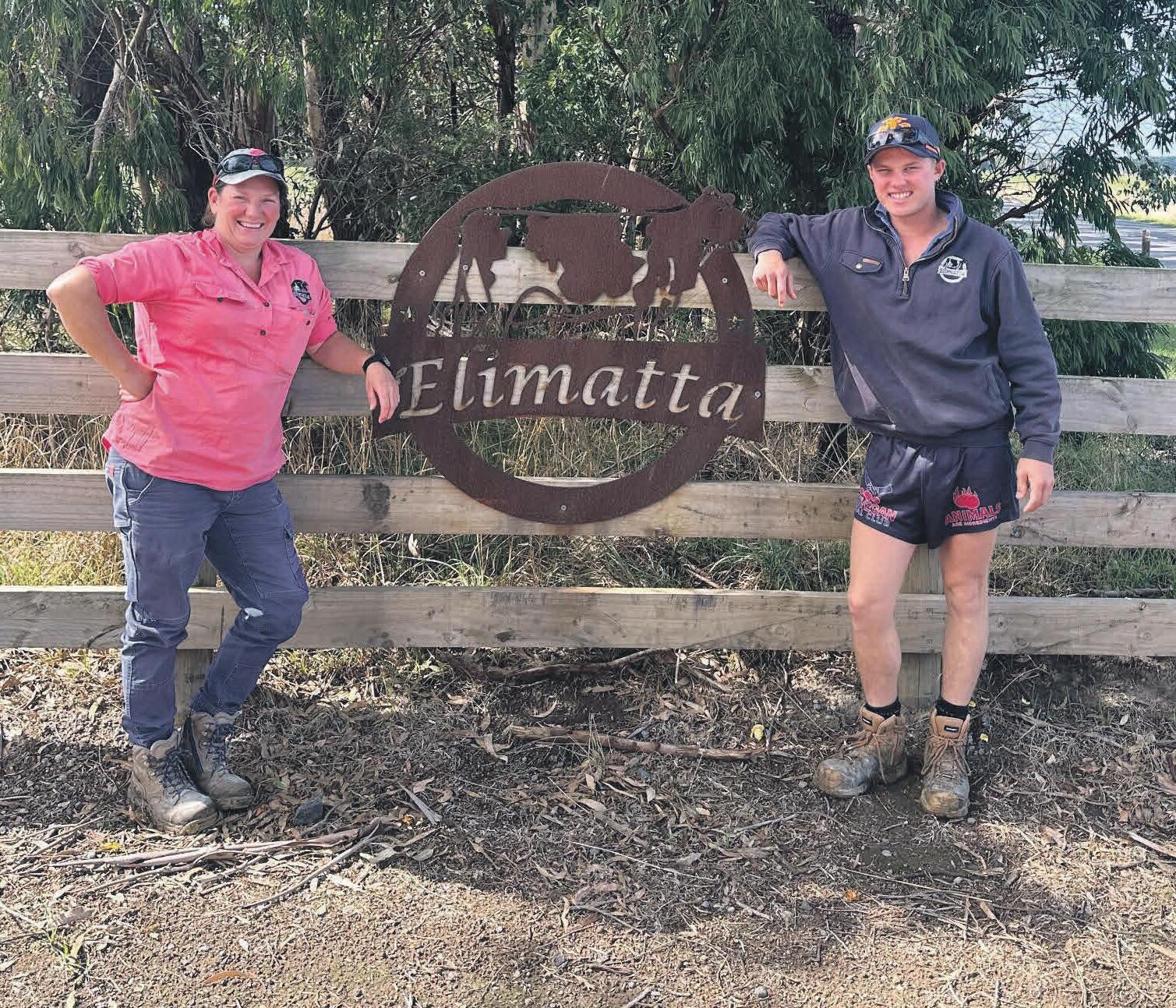

VikingHolstein brings you trusted Nordic Holstein genetics — backed by decades of real-world data — for farmers who value healthy, fertile, and efficient cows that stay productive year after year.

as part of her PhD studies showed there is enough genetic variation between animals within a breed to enable selection for a lower risk of stillbirth.
This indicates genetic improvement is achievable through sustained selection.
To breed for fewer stillbirths, farmers should select animals with stillbirth ABVs less than zero.
Most Holstein and Jersey bulls fall between -2 per cent to +2 per cent for Stillbirth ABVs. The best bulls are below -5 per cent for stillbirth ABVs.
Stillbirth ABVs are published in the Good Bulls App, DataVat, and heifer genomic results.
The reliability of the sire stillbirth ABV in a young genomic Holstein bull is about 60 per cent, similar to the reliability of the ABVs for fertility and overall type. The reliability of maternal stillbirth is about 52 per cent.
While the benefits of lowering stillbirths are clear for calf welfare, there are additional welfare and productivity benefits arising from lower maternal stillbirth rates.
Studies have reported that cows experiencing stillbirths show reduced pregnancy rate, increased days open, and lower milk yield early in the first lactation.


Outcross advantage – more resilient, healthier herds
Unmatched reproductive efficiency

Cows built to last – healthy, medium-sized, profitable
Feed efficiency you can count on




BY RICK BAYNE
JOSH CAMPBELL spent years helping people as a paramedic; now he keeps an eye on cow health.
Josh was a paramedic for six years across metropolitan and rural Victoria, including two years in dairy country at Maffra.
An on-the-job assault and change in his personal circumstances led to his change of career, and Josh couldn’t be happier.
With about six years under his belt as a dairy farmer, Josh, 32, is keen to support the next generation of up-and-coming farmers, recently joining a GippsDairy Young Dairy Network tour to Tasmania.
Josh works with Kate and Jason Kirk at Dumbalk in Gippsland as one of four staff helping with a milking herd of more than 500. It’s a far cry from his previous occupation, which had been his lifetime goal.
“Growing up, I didn’t like playing sports but at eight I joined St John Ambulance as a junior cadet and spent 14 years with them and went all the way up to a state officer and the state event deployment team and emergency management.”
This led to his career in paramedicine but the assault changed his plans.
“The assault opened my eyes,” he said. “I wanted to go home safely at the end of every day.
“I was never home and always working and once I found farming, I absolutely loved it. I love being in the great outdoors every day.”
Josh moved back to Nyora in south Gippsland where he grew up and made the change into dairy farming with support from good mate, Daniel McDonald.
“Dan managed a farm and taught me the ropes and how to milk a cow and then I changed to a family in Poowong North and I’m now in my second year with Kate and Jason,” Josh said.
“I’m the first farmer in my family.”
Josh says the industry has so many benefits.
“Some days are stressful but other days you get so much out of it.
“I don’t wake up every day thinking that I’m going to work.
“I enjoy it that much, especially with Kate and Jason who are more like mentors than employers.
“I’ve been doing farming on and off for the past six or seven years but every day I learn something new.”
The farm has introduced All Flex collars.
“Being able to pick up cow health IDs before they show symptoms is phenomenal,” Josh said.
“With paramedicine you learn how to read people’s body language and I’ve been able to implement that with the cows. I can read their language and anticipate their next move.
“Kate says my cattle handling skills are awesome for someone who hasn’t been in the industry for very long.”
He recently returned from the GippsDairy Don Campbell memorial tour to Tasmania and says it solidified his commitment to the industry.
He has also been accepted into Dairy Australia’s Ambassador program.
“I’m really embracing dairy.
“I have a strong passion around education and keeping that legacy going and trying to help future generations and getting people into the industry. I’ve got a lot out of it and now start to think about what I could pass on.”
Josh encourages more young farmers to
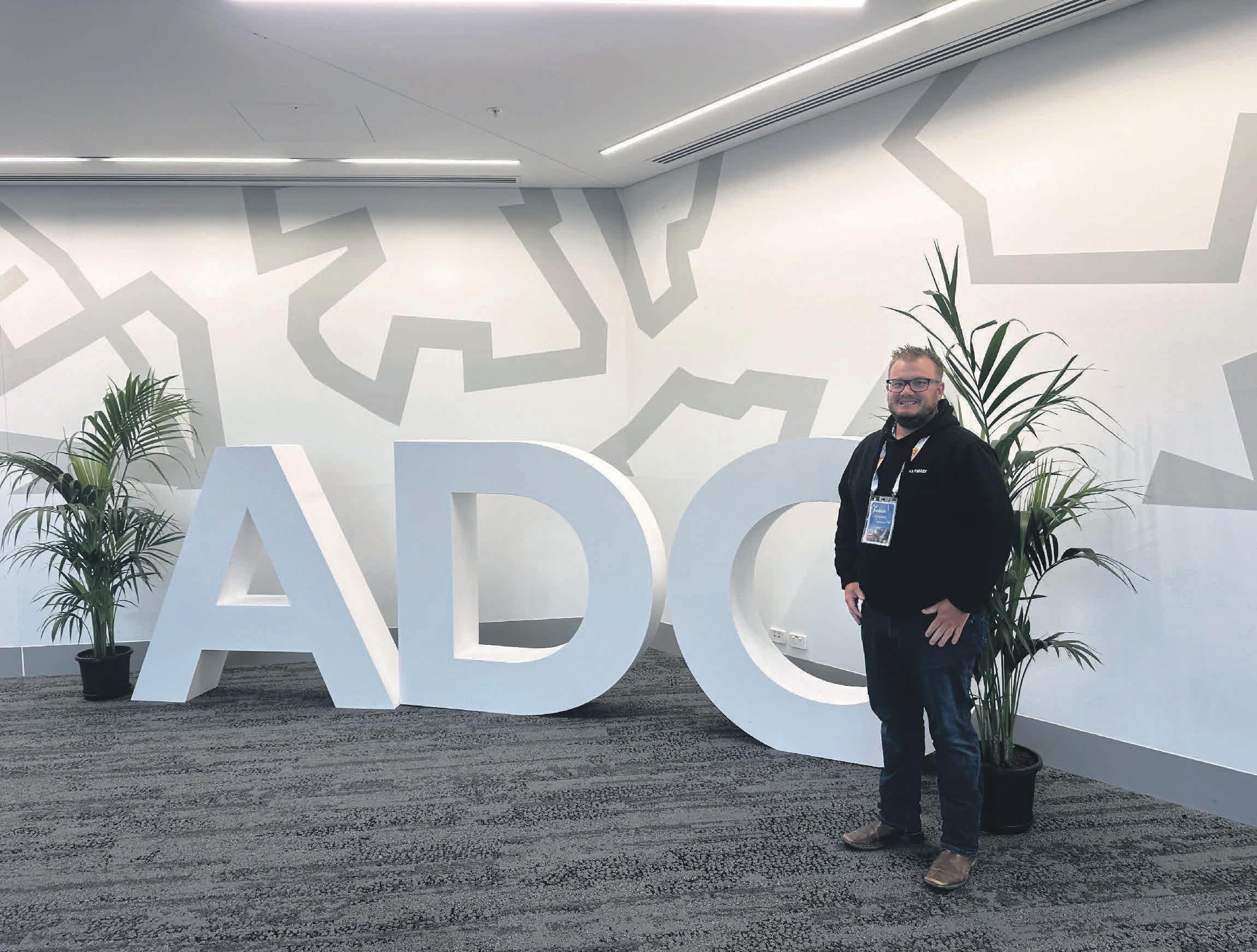

join the Young Dairy Network.
“The more that are aware of what the YDN has to offer, the better,” he said.
“The workshops and discussion groups are fantastic and I’ve made good friendships out of it so I can bounce ideas off people.
“For me, I have a professional mentor which is Kate and a personal farming mentor which is Dan who have both guided me and have always given me feedback on how to grow and given me the opportunities to grow and keep learning.
“The importance of having a mentor as a young farmer is so beneficial on so many levels, to help grow on a professional and personal level, and boost self-esteem and confidence within the industry.”
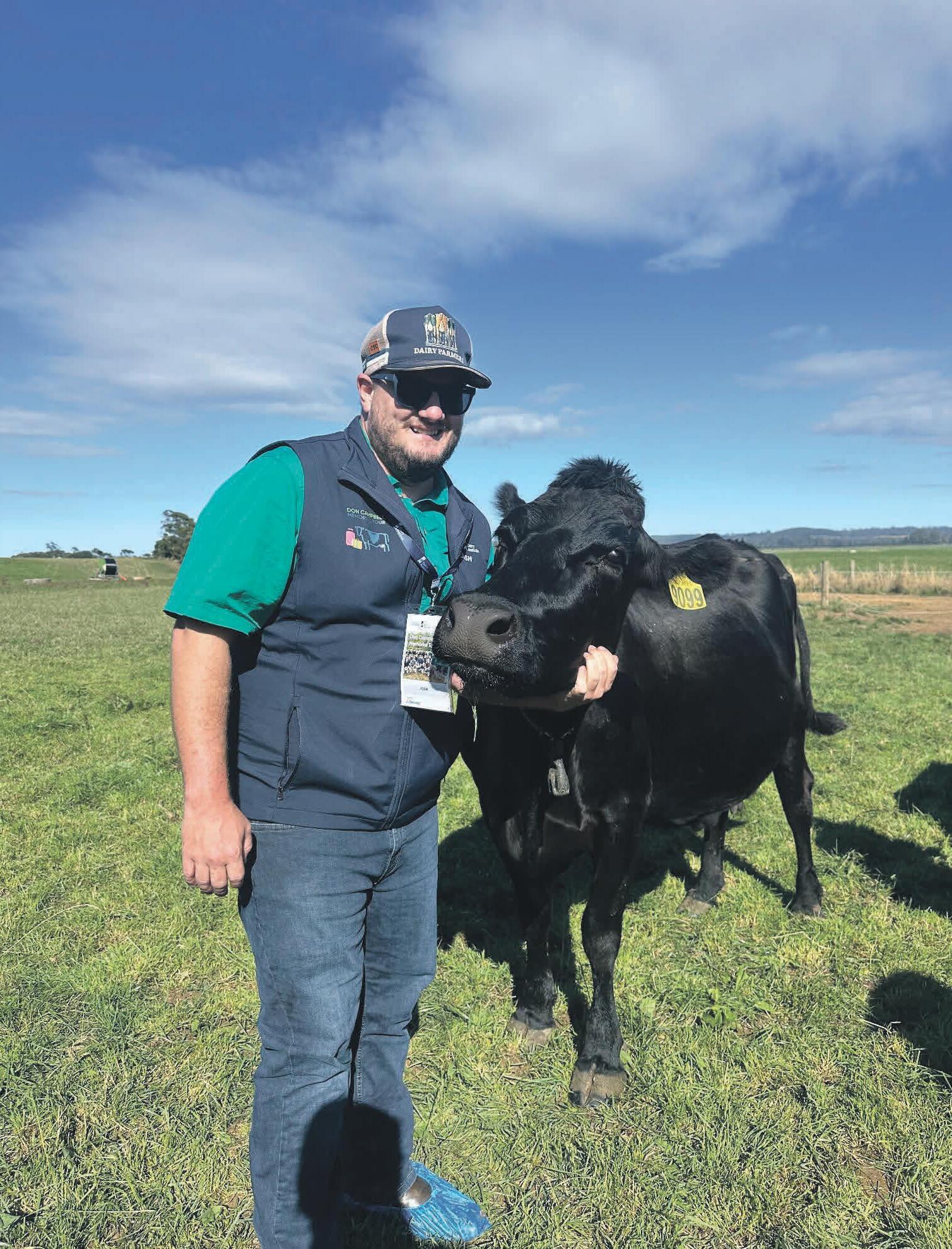
GEA IS expanding its digital footprint in dairy farming with the official opening of a new software lab in Belfast, Northern Ireland.
The new lab will create an additional 20 jobs in research and development and will focus on GEA’s AI livestock solution, CattleEye and related digital products of GEA for farms.
The pioneering AI solution is engineered to quickly detect and predict lameness in cows and to provide critical data to assess the body condition score.
Today, the system is used in over 140 farms across Australia, Europe, the UK and the US, monitoring over 200,000 cattle in 23 countries.
The CattleEye software is part of GEA’s DairyNet portfolio for modern herd management.
CEO of GEA farm technologies Andreas Seeringer said improving animal health and well- being through AI- based solutions like CattleEye, create efficient, sustainable and ultimately more profitable dairy farms.
“With our new software lab in Belfast, GEA is strengthening its role as a technology leader in digital dairy farming,”.
Following the acquisition of the company CattleEye by GEA in 2024, the system has already added important capabilities to the extensive next-generation farming portfolio.
The expansion will enable new technical opportunities of the system and further AI integration.

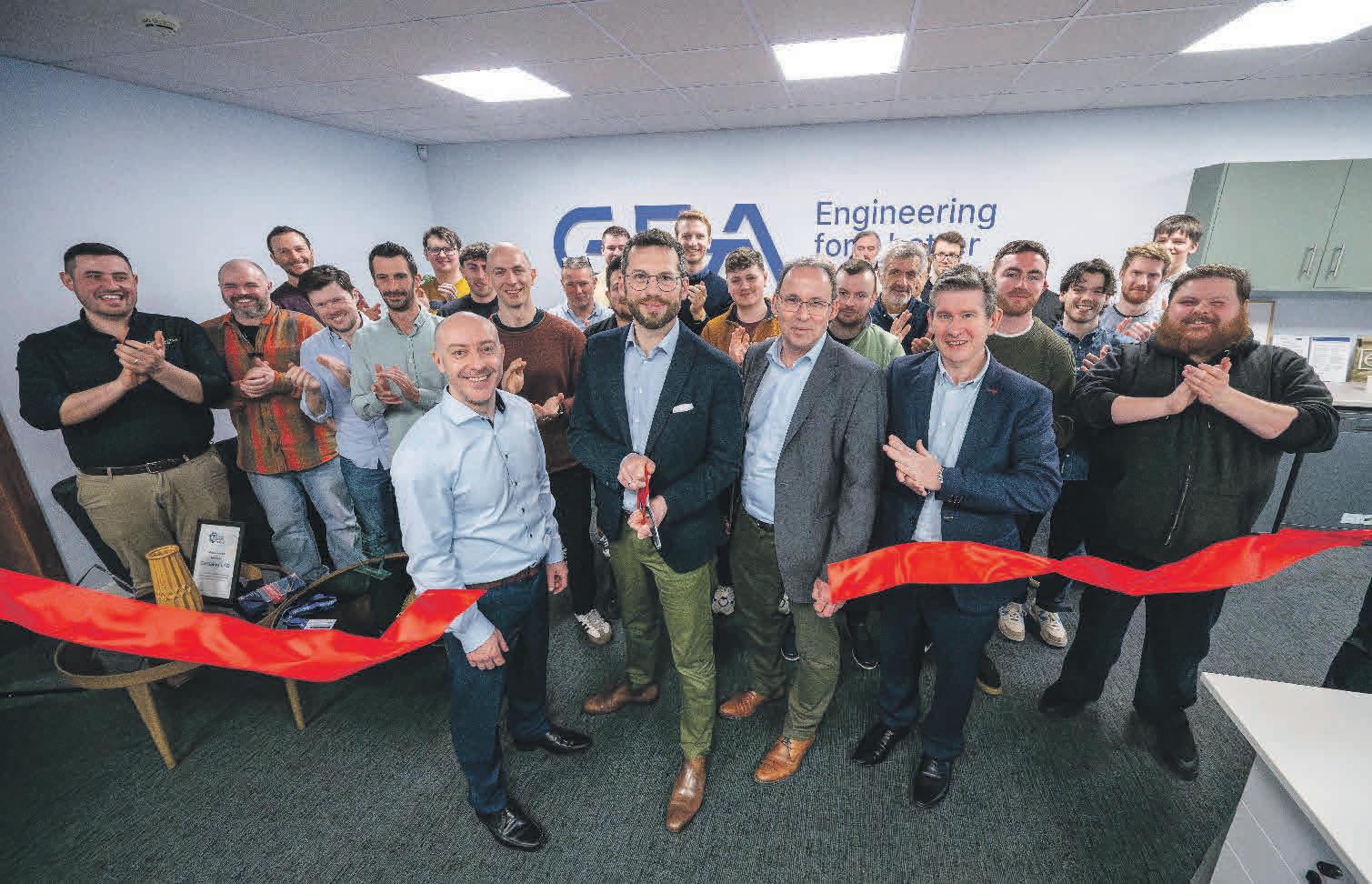
Northern Ireland with its strong dairy farming culture and an emerging tech scene, is a stronghold in the broader digitisation strategy of GEA.
CattleEye co-founder and senior director at GEA Terry Canning said the new software lab will be a significant milestone in integrating CattleEye.
“In the future, farmers can expect features which help reduce additional investments in equipment and necessary animal treatments.
“It will also help customers to farm more efficiently and cut greenhouse gas emissions
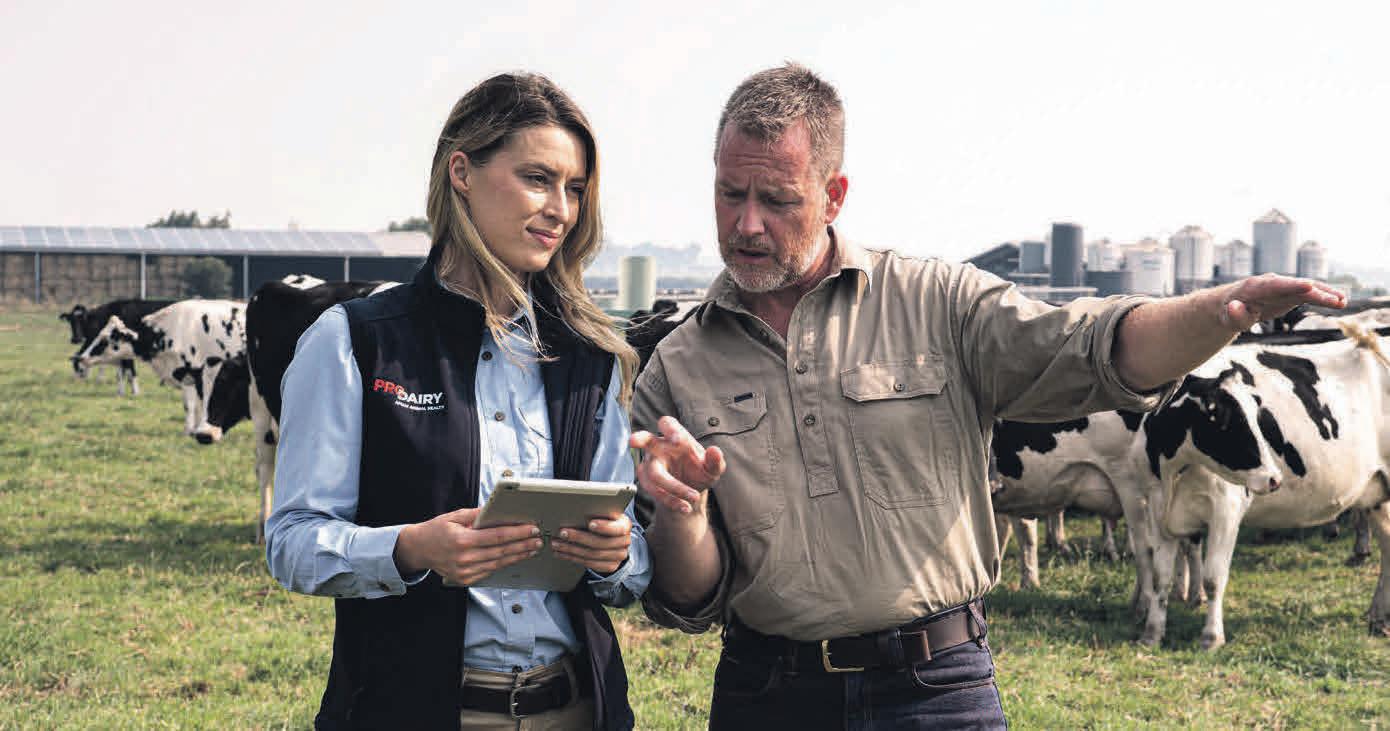

through automated data insights,” Terry said.
With the new software lab, the CattleEye team is expanding with 20 new software and UX roles in Northern Ireland.
The new team will improve efficiency and user experience of the GEA Dairy Net App.
“I am confident this investment will drive further growth in the future.
“We are grateful to have Invest Northern Ireland at our side, sharing our commitment to advancing AI capabilities and supporting talent development,” Terry said.
Northern Ireland ‘s regional economic development agency Invest NI has offered financial support towards the new software lab.
During the official opening, Vicky Kell, director of innovation, research and development at Invest NI, said this investment is a vote of confidence in the talent, infrastructure and capabilities in Northern Ireland.
“The benefits of investing in R&D are rich, and the CattleEye solution is a testament to how R&D can further develop innovative products which can drive competitiveness in the global agri-tech market,” Vicky said.
GEA is offering selected dairy farms access to a free three-month CattleEye subscription.
The program includes camera hardware, software subscription and system support at no cost, allowing farmers to experience AI-driven monitoring of cow mobility and body condition in real-world farm environments.
This initiative reflects GEA’s commitment to translating global software innovation into practical, on-farm benefits for dairy producers. Contact your local GEA dealer or call 0428 445 472 for more details.







With 8mm steel walls and a 22mm thick auger –using 46% more steel than the industry standard – it’s engineered for the lowest cost of ownership in the market, with a longer lifespan.

This gentle flow reduces stress on your tractor, saving you fuel and ensuring a fluffier, more consistent mix from top to bottom.
But strength is only half the story. The Abbey Auger features a unique gradual flighting design that handles heavy silage and bales with ease.


From the wear-resistant plates to the flush-bolts designed for longevity, every detail is proven over years of hard use by farmers across the globe.