



















BY MADELYN IRVINE
JANUARY DELIVERED some of the hottest conditions on record across Australia’s dairying regions, with below-average rainfall adding pressure to on-farm conditions.
Despite this, feed prices remained relatively steady.
A combination of strong fodder supply, solid grain availability and agistment helped cushion the impact on feed markets.
Temperature conditions were extreme by historical standards across the first month of the year.
Australia’s area-averaged mean temperature sat 1.9°C above the long-term average, making it the fourth-warmest January on record.
Both maximum and minimum temperatures were above average across most states and territories, with NSW recording its second-warmest January mean maximum temperature on record.
Rainfall added further pressure, with national January totals around 10 per cent below average and all states and territories except Queensland recording below-average rainfall.



Hot and dry conditions also contributed to bushfires in parts of Victoria, further challenging local farming conditions.
Despite these seasonal pressures, feed prices did not surge as sharply as might typically be expected.
Only one region recorded a notable monthon-month increase in cereal hay prices, with central South Australia up 14 per cent from December, while prices across most other regions remained relatively steady or declined.
Grain markets also showed limited volatility, with wheat and barley prices ranging between a six per cent fall and a five per cent increase month-on- month.
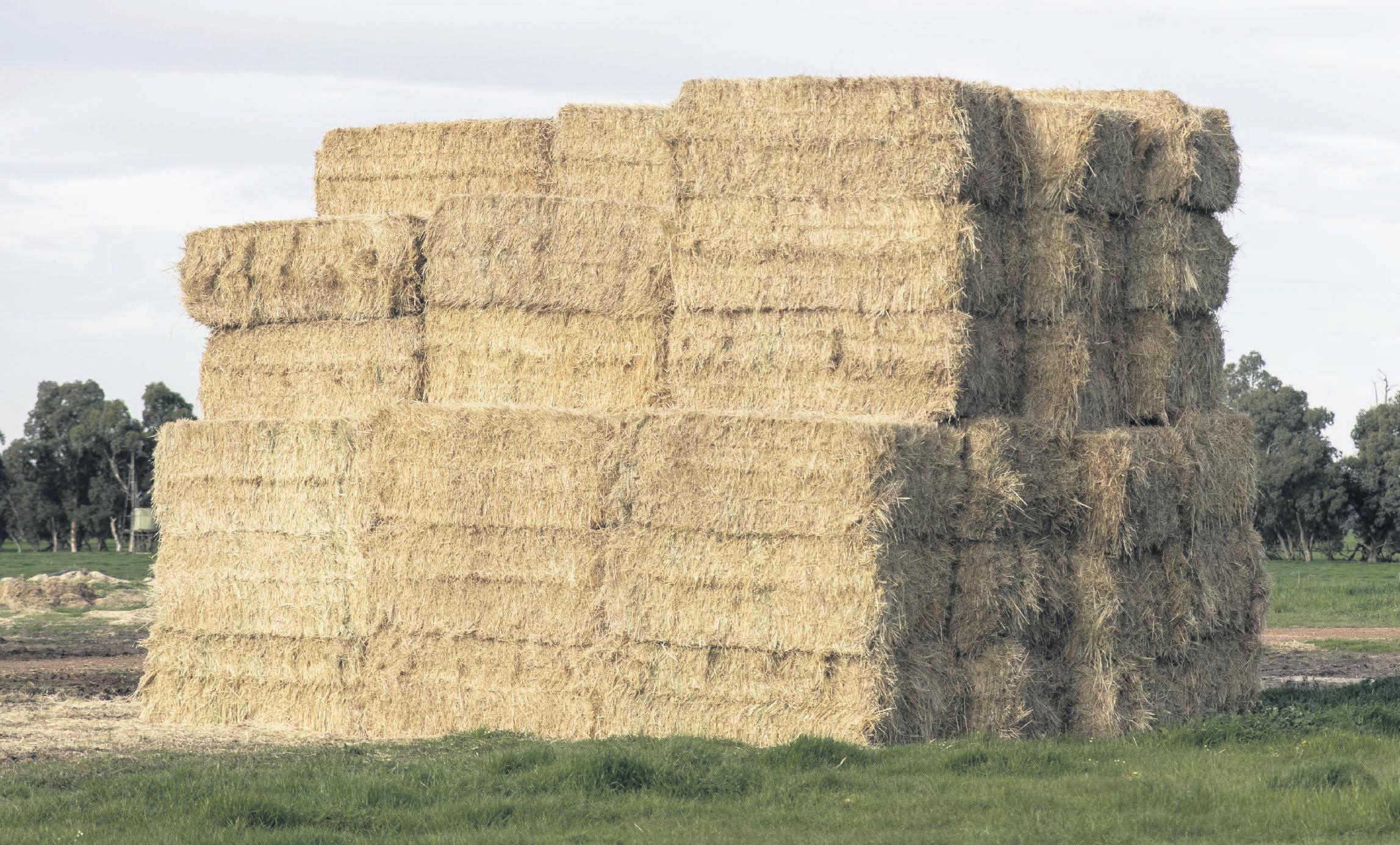
Strong hay availability was a key factor supporting price stability.
A flurry of late season baling across Victoria helped keep supply flowing, easing short-term demand pressure.
Fodder movements between regions also played a role, with central-west NSW experiencing a strong straw season supported by good regrowth and repeated windrowing.
This allowed fodder to move south to support livestock in heat-affected areas.
Grain availability further underpinned feed market stability.

The 2025-26 winter crop harvest is expected to finish as the second largest on record, keeping grain supplies ample.
At the same time, the Australian dollar strengthened above US70¢, reducing the competitiveness of Australian grain exports.
With export demand easing, more grain was likely redirected into domestic markets, improving local availability.
Agistment also helped relieve pressure on feed demand.
There were reports of producers in affected regions moving livestock to agistment in southern Victoria, where favourable latespring conditions supported strong pasture growth.
The combination of available pasture and locally sourced fodder allowed these regions to absorb additional stock without placing significant pressure on feed markets.
Looking ahead, while feed markets have remained relatively steady through January, there may still be a need for supplementary feeding until autumn pasture growth resumes.
Seasonal conditions and rainfall over the coming months will be key in determining whether feed prices remain stable or begin to face renewed upward pressure.
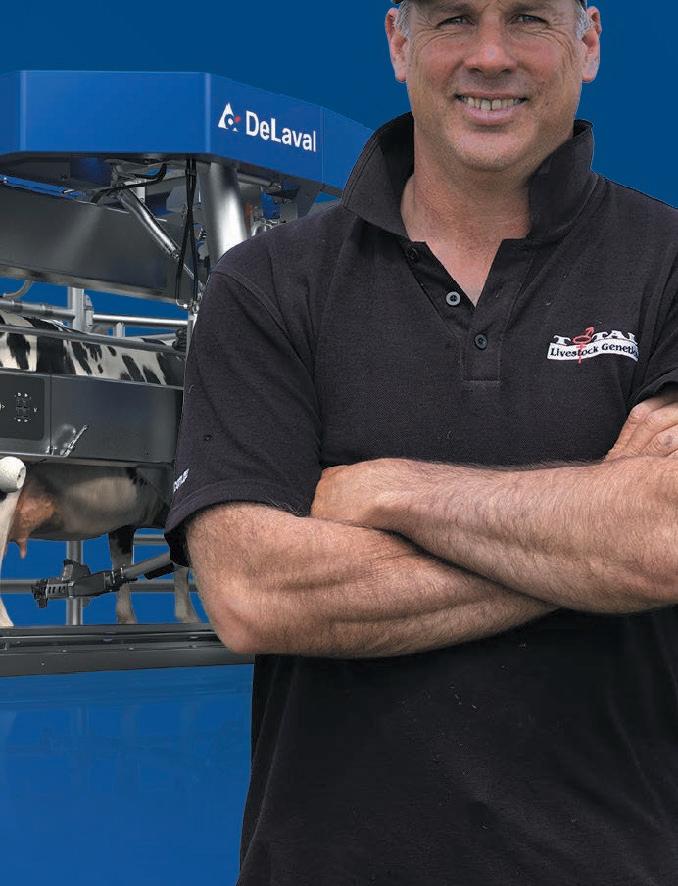
“ We struggled to recruit, so something had to change. If we didn’t



AUSTRALIAN DAIRY Farmers (ADF) and the Victorian Farmers Federation/United Dairyfarmers of Victoria (VFF/UDV) have reaffirmed their long-standing partnership, announcing a strengthened agreement ensuring VFF/UDV will remain a member of ADF.
This development marks a significant step forward for Victorian and national dairy representation, and a renewed commitment to collaborative dairy farmer representation.
Victoria – representing 64 per cent of Australia’s milk production – will continue to have a strong and active voice within ADF through VFF/UDV’s membership as both organisations continue to utilise their strengths and resources to benefit Victorian dairy farmers.
The agreement also includes a shared commitment to work together on policy priorities, farmer engagement, industry events and initiatives to strengthen representation for dairy farmers.
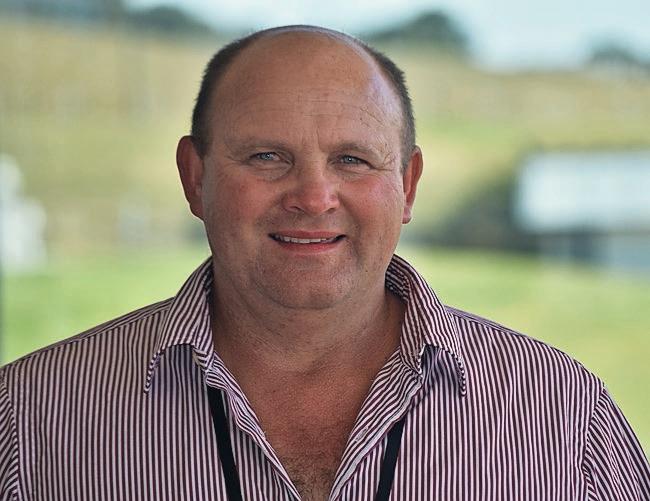
Australian Dairy Farmers President Ben Bennett said he was pleased that, through robust negotiations, a commitment to work together in good faith was strengthened.
“Both organisations are now committed to ensuring grassroots dairy farmers have the strongest possible national representative body into the future.
“Victoria produces the majority of Australia’s milk, so it is essential Victorian dairy farmers are involved in national dairy policy development, advocacy and industry representation.
“This agreement strengthens our collective ability to deliver for dairy farmers in Victoria and across the nation.”
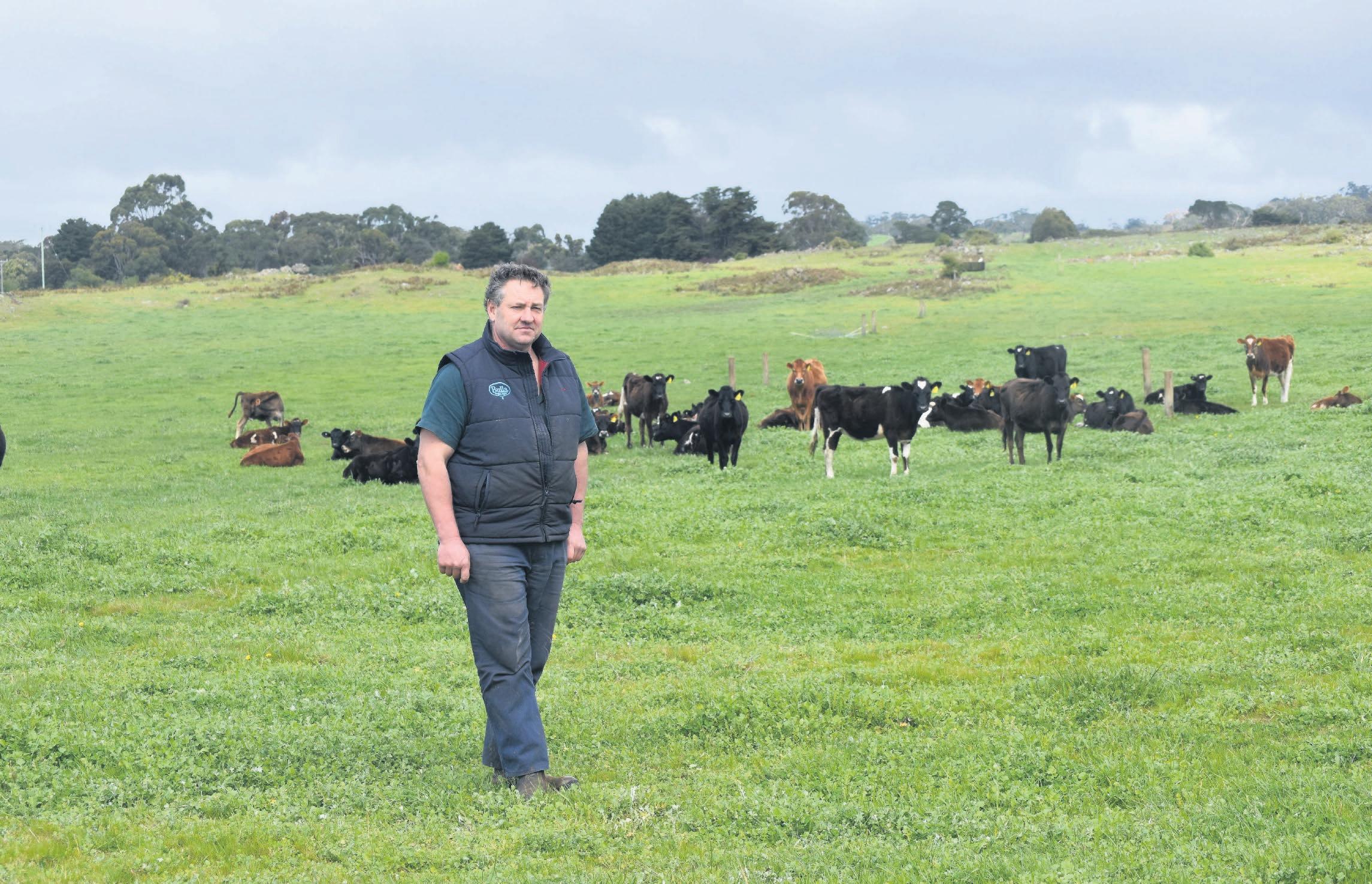
Acting president of Victorian Farmers Federation and United Dairyfarmers of Victoria Ian Morris said the agreement was an important milestone for Victorian dairy farmers.
“VFF/UDV and ADF have continued to collaborate in good faith, and it is reassuring for the industry to have this new agreement in place.
“What farmers want most is for their representative organisations to get on with dealing
with the issues affecting their businesses.
“VFF/UDV is looking forward to working with ADF on initiatives that strengthen our connection with farmers and contribute to a more effective and sustainable future for the industry.
“In line with this commitment, VFF/UDV is pleased to announce the appointment of Ms Corrie Goodwin as its new executive officer.
THE SOUTH Australian Dairyfarmers’ Association (SADA) has welcomed the Malinauskas Government’s announcement of a new SA Drought Loan Scheme, while urging the state to ensure drought-affected producers outside the initially targeted regions can access support.
The SA Government has announced a $200 million capped scheme offering low-interest loans of up to $250,000 with a 10-year term for drought-affected producers in the Murray Mallee, Riverland and Upper North.
SADA president Robert Brokenshire said the loans could provide essential breathing room for farm businesses, but the eligibility settings must reflect drought conditions on the ground.
Mr Brokenshire said dairy farmers in several regions have faced prolonged rainfall deficits and fodder stress that do not align neatly with administrative boundaries.
“The effects of prolonged dry conditions do not respect administrative boundaries.
Reduced pasture growth, escalating purchased feed costs, depleted on-farm
reserves, and carry-over debt are being felt well beyond the initial target regions.”
SADA noted Livestock SA’s public warning the scheme’s regional targeting and conditional settings risked excluding producers experiencing genuine drought stress.
SADA calls on the government to:
Broaden eligibility pathways so drought-affected producers outside the initially targeted regions can qualify where objective indicators demonstrate impact.
“Ms Goodwin has extensive dairy experience and her appointment will help to strengthen industry unity and trust, and is a great resource for dairy farmers.”
Adopt clear, practical assessment criteria that minimises red tape while maintaining integrity.
Ensure the scheme’s design supports real recovery outcomes by providing transparent terms that farmers and their lenders can confidently assess.
SADA has written to the premier seeking a meeting to provide an on-ground briefing from dairy producers and propose eligibility settings that are accessible, fair and droughtresponsive across South Australia.


THE AUSTRALIAN dairy industry has highlighted serious concerns about deep and lasting consequences for their sector as the Federal Government gears up to sign the AustraliaEuropean Union Free Trade Agreement.
Australian Dairy Industry Council chair Ben Bennett said it was clear negotiations were effectively complete, but critical dairy outcomes remained unclear and appeared heavily weighted in favour of the European Union.
“We think the signing is imminent – the indications we’re getting are that the deal is essentially there,” Ben said.
Ben told The Australian the dairy sector once again appears to be left carrying the burden in this agreement, “with more risk, more imports and fewer protections, for very little in return”.
“Dairy is going under the bus, and it’s being driven by Federal Government,” he said.
The industry has warned that the proposed agreement would loosen Australia’s remaining safeguards on European dairy imports, particularly cheese, in a market already exposed to heavily subsidised products from the EU.
Australia currently imports around 80,000 tonnes of dairy from the EU valued at $877.4 million, up almost nine per cent year-on-year, while exporting only around 1600 tonnes in return valued at $55 million.
“This is not a level playing field,” Ben said.
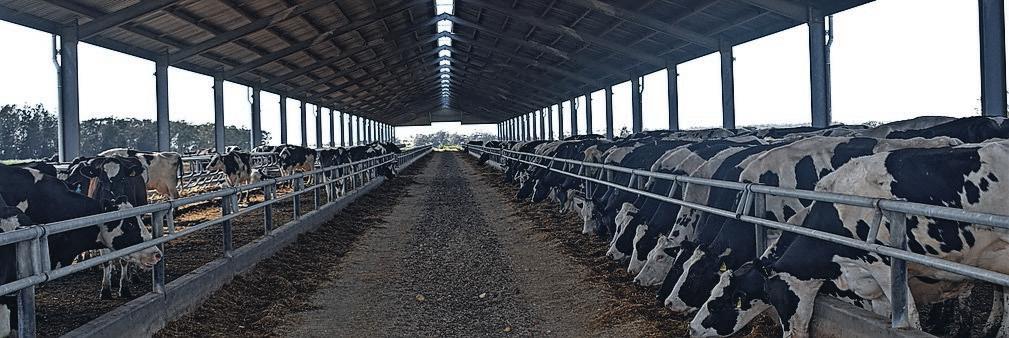
“European dairy producers receive tens of billions of dollars in subsidies, yet Australian farmers are being asked to compete without such support.”
ADIC is also concerned about the potential removal of the $1.20 per kilogram tariff on imported cheese, which the industry describes as the last meaningful buffer against a surge of low-priced European product.
“The risk is not theoretical. The EU is the world’s largest cheese producer by a country mile, and surplus product will inevitably be pushed into markets like Australia if barriers are lowered.”
Beyond imports, the dairy industry remains alarmed by the prospect of Geographical
BY GEOFF ADAMS
FONTERRA SENIOR executive René
Dedoncker has announced he will be leaving the dairy giant to become chief executive of Elders Ltd.
He will be replacing outgoing Elders chief Mark Allison in October.
Mr Dedoncker has worked with Fonterra for 20 years, and most recently has been managing director of the Mainland Group business since March 2025.
He has played a key role in Fonterra’s Australian dairy division.
Prior to his Mainland Group role, Mr Dedoncker was a member of the Fonterra management team as managing director Global Consumer and Foodservice.
Mr Dedoncker has also led Fonterra’s Australian business, including through its merger with Fonterra Brands New Zealand to form Fonterra Oceania, and has held global leadership roles within Fonterra’s Foodservice business.
Mr Dedoncker has a six-month notice period and has indicated his willingness to continue leading Mainland Group through the completion of the divestment transaction and transition to Lactalis ownership.
Fonterra chief executive Miles Hurrell thanked Mr Dedoncker for his significant contribution to Fonterra, particularly through the process to divest Mainland Group.
Elders chair Glenn Davis said Mr Dedoncker brought deep agricultural roots and outstanding leadership experience to Elders.
“He has proven expertise from his years with Fonterra and Mars, where he drove operational excellence and strategic growth on a global scale,” he said.
“The board has great confidence in his ability to lead Elders into its next phase of success.
“He understands the importance of our regional network and customer relationships, and he has a demonstrated ability to drive growth and operational performance while upholding the values and heritage of an organisation.”
Indications restricting the use of long-established dairy names such as parmesan and feta, which underpin many Australian processing businesses and regional jobs.
ADIC deputy chair John Williams said the industry cannot accept an overseas regulatory regime being imposed on Australian businesses through geographical indications.
“Banning long-used names like parmesan and feta would hit local manufacturers, confuse consumers, and deliver no clear benefit to Australia,”
John said.
“We need safeguards that actually work.”
ADIC reiterated its support for open, rules-based trade, but said any agreement must deliver genuine, reciprocal outcomes and include
effective safeguards to protect local producers from import surges and unfair competition.
“The government must lock in binding, timebound review mechanisms that assess impacts on dairy and trigger corrective action where harm occurs,” John said.
“The government must also pursue compensation gains elsewhere — through accelerated trade opportunities, long-overdue reviews and improvements to existing agreements so dairy is not left carrying the cost of this deal.
“This is bigger than one negotiation. Dairy contributes $18.5 billion to the national economy and supports more than 70,000 jobs, mostly in regional Australia.
“With European Commission president Ursula von der Leyen visiting Australia in the coming weeks, we are ready to work with government in good faith on a deal that is fair, enforceable and future-ready.”
Ben said free trade agreements must be free and fair.
“The EU wants access to Australia’s market, but is unwilling to reciprocate with equal access to the EU for Australia’s exports — this is clearly inequitable and unfair,” he said.
“The agreement on the table is a one-way deal that will leave local industry carrying the cost, and that’s something that should not be acceptable to the Federal Government.”








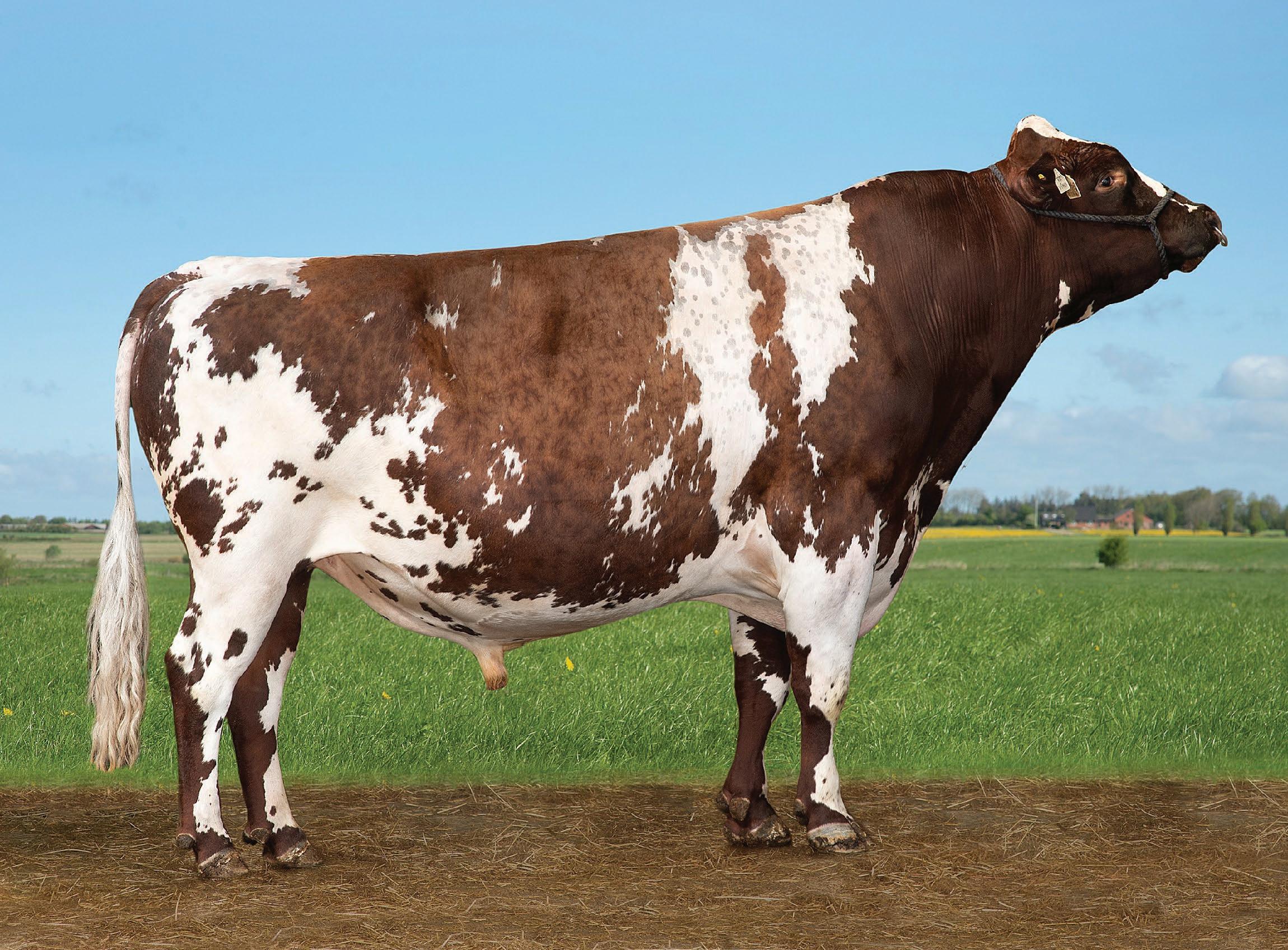
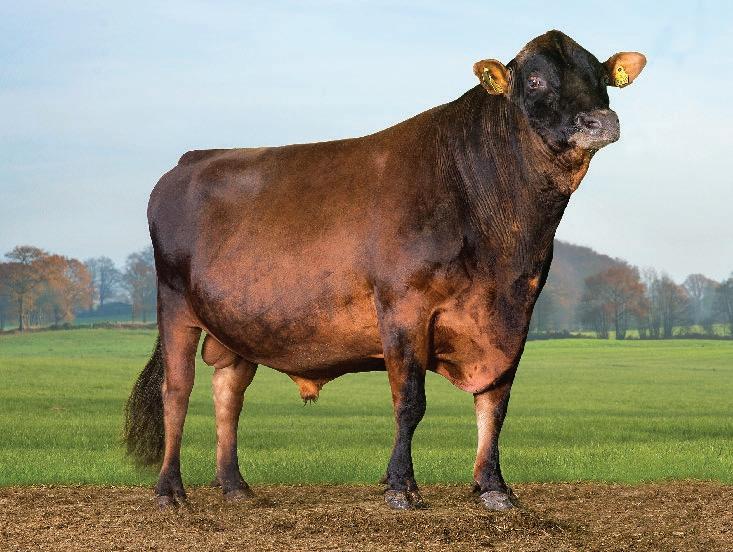
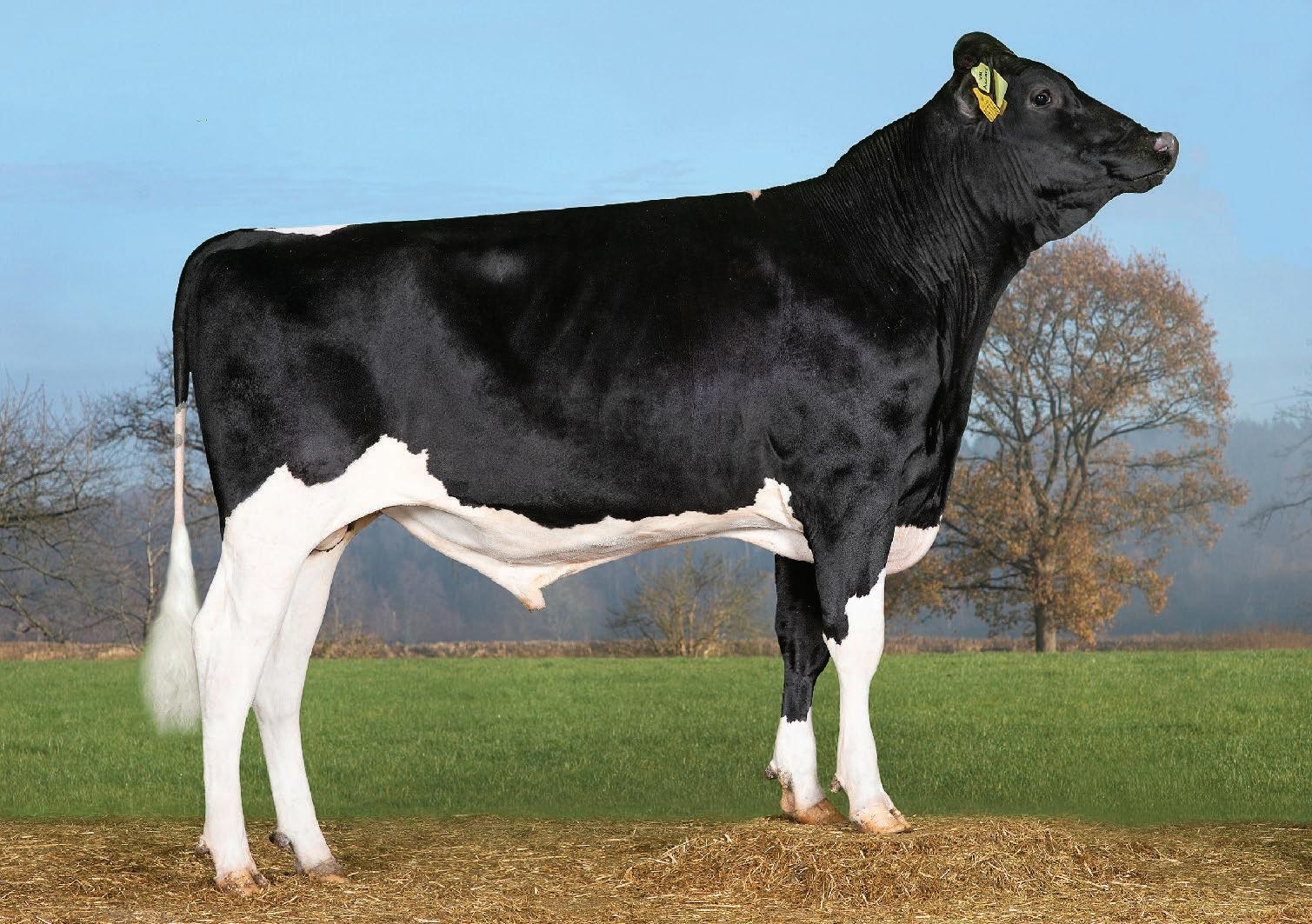
VIKINGGENETICS HAS set a new Australian record by becoming the first genetics company to secure the number one Australian daughter-proven bull in all three major dairy breeds in the same proof run.
In the December 2025 evaluations, VH Ascari BPI 651 (Holstein), VJ Gislev BPI 615 (Jersey), and VR Vimo BPI 563 (Red Dairy Cattle) each claimed the top daughter-proven positions in their breeds.
VikingGenetics Australia also holds the number one ranking in Jerseys and Red Dairy Cattle for the Sustainability Index.
VikingGenetics Australian director Erik Thompson said this was the first time in the Australian market, a dairy genetics company had the number one Australian daughter-proven bulls for the three major breeds within the same proof run.
Mr Thompson said it was an exceptional result that reflected the strength of the company’s breeding strategy.
“Despite our smaller footprint in Australia, these milestone results prove that data-driven decisions and Nordic breeding principles deliver world-class genetics that thrive under local conditions,” he said.
VJ Gislev is the top ranked Jersey overall, sitting 57 points ahead of his nearest rival in balanced BPI and 193 points clear of the next Australian Proven Jersey bull.
In the Red Breed, VikingGenetics secured all three of the top Balanced BPI positions, as well as the number one Australian daughter-proven bull, VR Vimo.
Mr Thompson said these results reaffirmed VikingGenetics’ leadership in Red Dairy Cattle, an important contributor in the Australian pasture-based production system.
Supporting Holstein performers also showed strength with VH Novak ranked #1, VH Baford #6, VH Ascari #9 in daughter fertility and for reliability VH Friday ranked 3rd, VH Ascari 5th.
VikingGenetics has long had a strong genetic influence in Australia, including the likes of VH Booth who held the number one Australian proven ranking in April 2017 and even now still has almost 1000 daughters currently in milk across over 90 Australian herds.
“This latest achievement demonstrates genetic accuracy, not scale, is the ultimate competitive advantage,” Mr Thompson said.
Each of the top-ranked proven bulls is supported by extensive Australian, Nordic and international daughter performance data, ensuring that breeding decisions
translate reliably into Australian conditions.
“Securing the number one Australian daughter-proven bull in Holstein, Jersey, and Red Breeds reinforces VikingGenetics’ reputation for sustainable, profitable, and highly dependable genetics.”
KEENAN machines are proven, farmer-tough, and ready for whatever work lies ahead.
The trusted combination of unique algorithms + nutrition advice ensures the exact formulations, mixing order, speed and rotations.


BY RICK BAYNE
THE DAIRY industry has lost one of its shining lights with the death of Brad Collins following an ATV accident in early February.
Brad, who farmed at Dixie, south of Terang in south-west Victoria, was a driving force in Dairy Farmers Victoria which shared the news of his passing on social media on February 7.
In a Facebook post, Dairy Farmers Victoria said Brad would be remembered as a valued member of the industry and a much-loved part of the local farming community.
“On behalf of Dairy Farmers Victoria and its members, we extend our deepest condolences to Brad’s family, friends and everyone in our community who knew and respected him.
“We know this news will be felt deeply by many.”
Brad had been airlifted to hospital in Melbourne after the February 2 accident.
“Brad’s injuries were significant, but in the days immediately after the accident there were some encouraging signs that he might recover,” the Dairy Farmers Victoria post said.
“Sadly, over the last couple of days everything caught up with him, and he died with his family close by.”
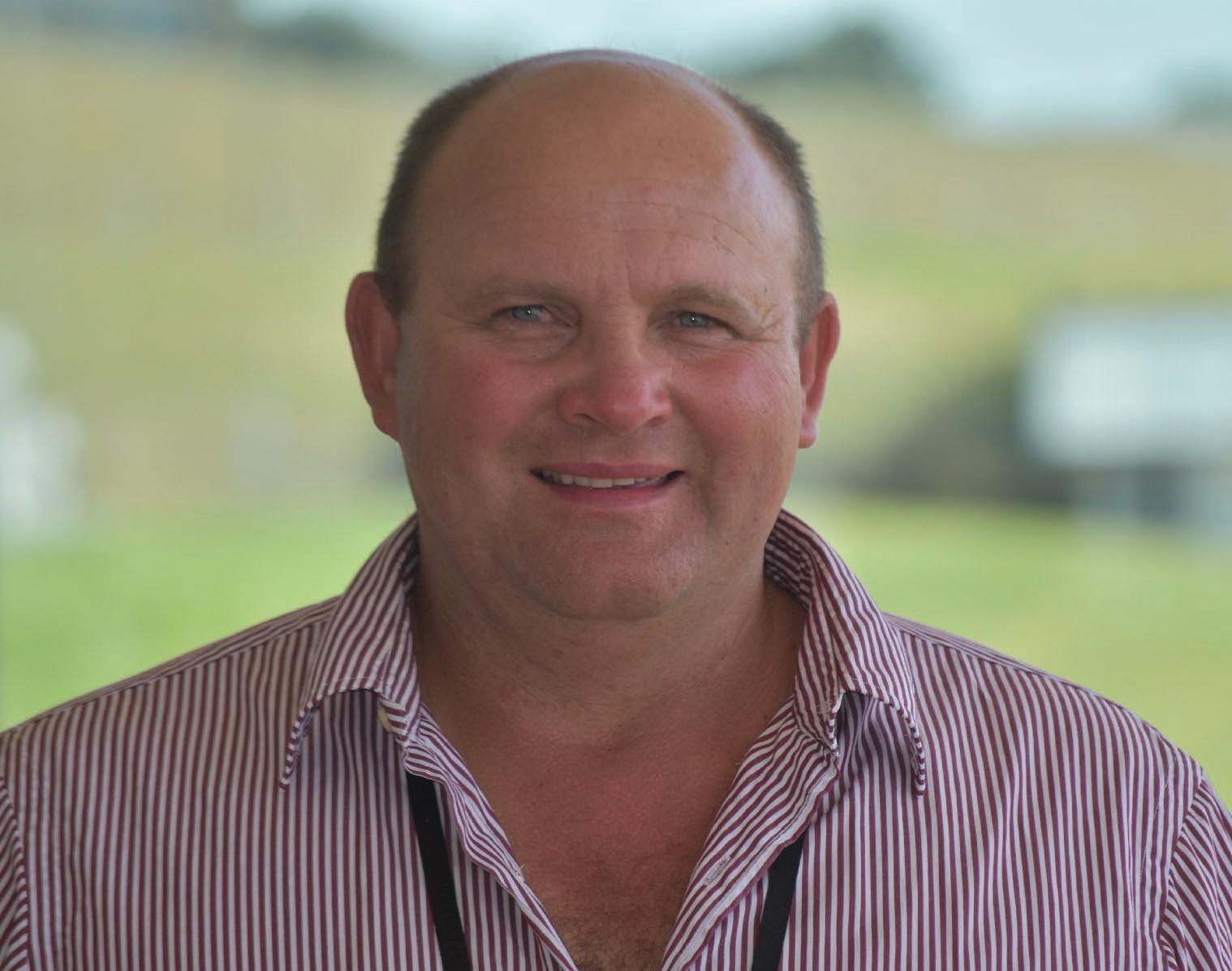
his wife Tammy took over the family farm at Dixie from his parents Jeff and Barb about seven years ago.
In an interview with Dairy News Australia, he described it as the best farming land in Australia and he outlined how he adopted a simpler, sustainable farming system with less cows and less reliance on grain, labour and inputs.
“It’s going back to simple is best; running the farm myself, rolling my sleeves up and doing the work,” he said.
“We’re farmers; we should work and be proud of what we do. I had to change my mentality to be proud of what I do.”
Speaking at Dairy Australia’s Grounds for Growth conference in Warrnambool last year, Brad said the reset of his farming system had worked and reignited his passion for farming.
“I love being a dairy farmer again,” Brad told the conference.
“The cows are healthier, happier and easier to work with. We’re still focussing on production and profit but in a more sustainable way.”
WestVic Dairy said it was deeply saddened to acknowledge the passing of Brad, describing him as a passionate dairy farmer, industry advocate and former WestVic Dairy board member.

“For those who were fortunate enough to have worked alongside Brad, he was an ambitious thinker, known for bringing fresh perspectives to every conversation.
He was respected for his dedication to sustainability, whether environmental, business, or the future of the industry.
“Brad was a wonderful champion of young people in dairy and was very positive about the dairy industry’s future.”
A third-generation farmer, Brad, 51, and

Brad adopted practices to support optimum soil diversity and health by planting multi-species pastures and being regenerative.
Brad farmed for most of his life, including stints in northern Victoria, New South Wales and South Australia before returning to the family farm. He also served as a director of WestVic Dairy.
BY RICK BAYNE
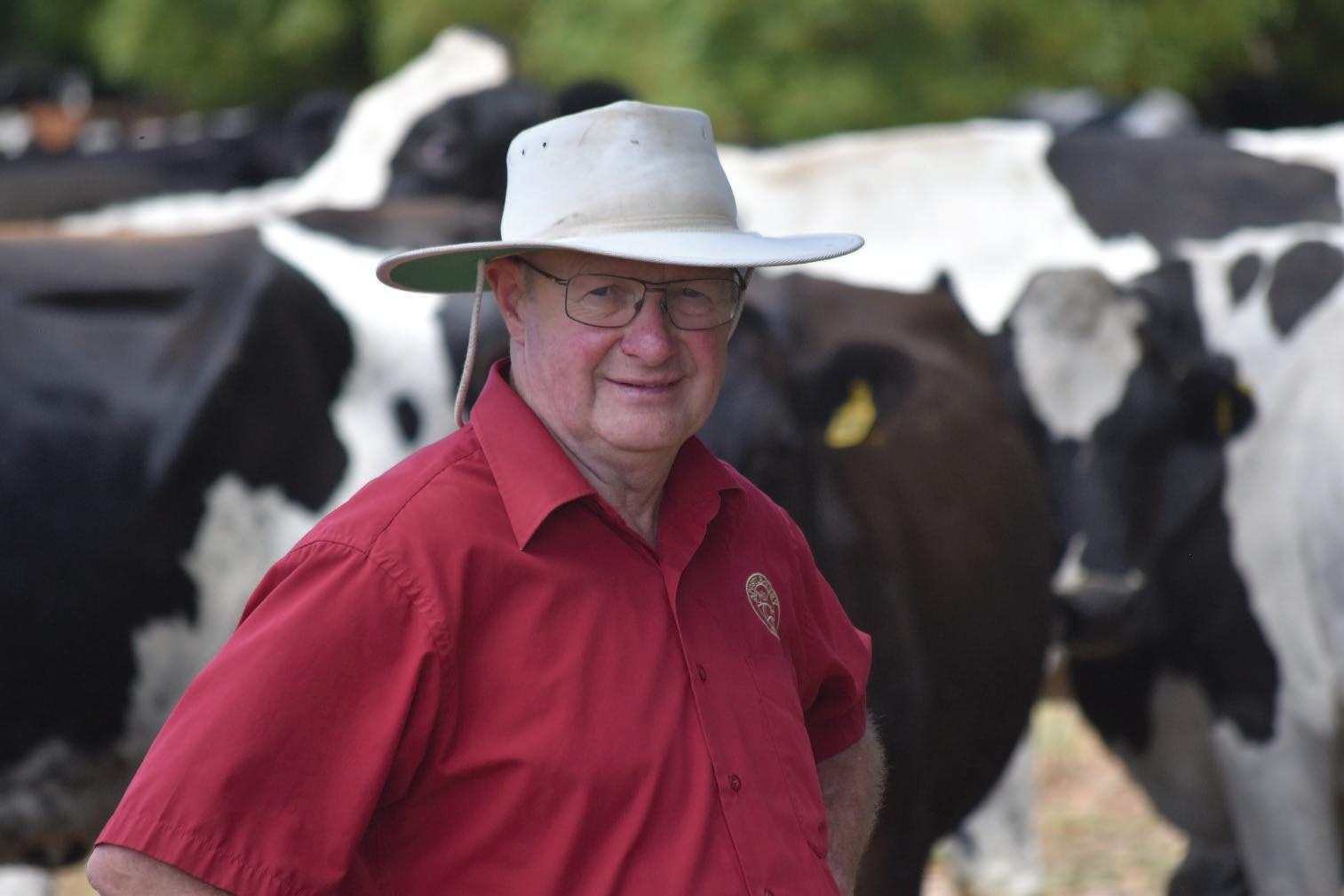
OVER MORE than 50 years of dairy farming, Julian Benson has learnt one important lesson — a lot of non-farming people don’t know much about farming.
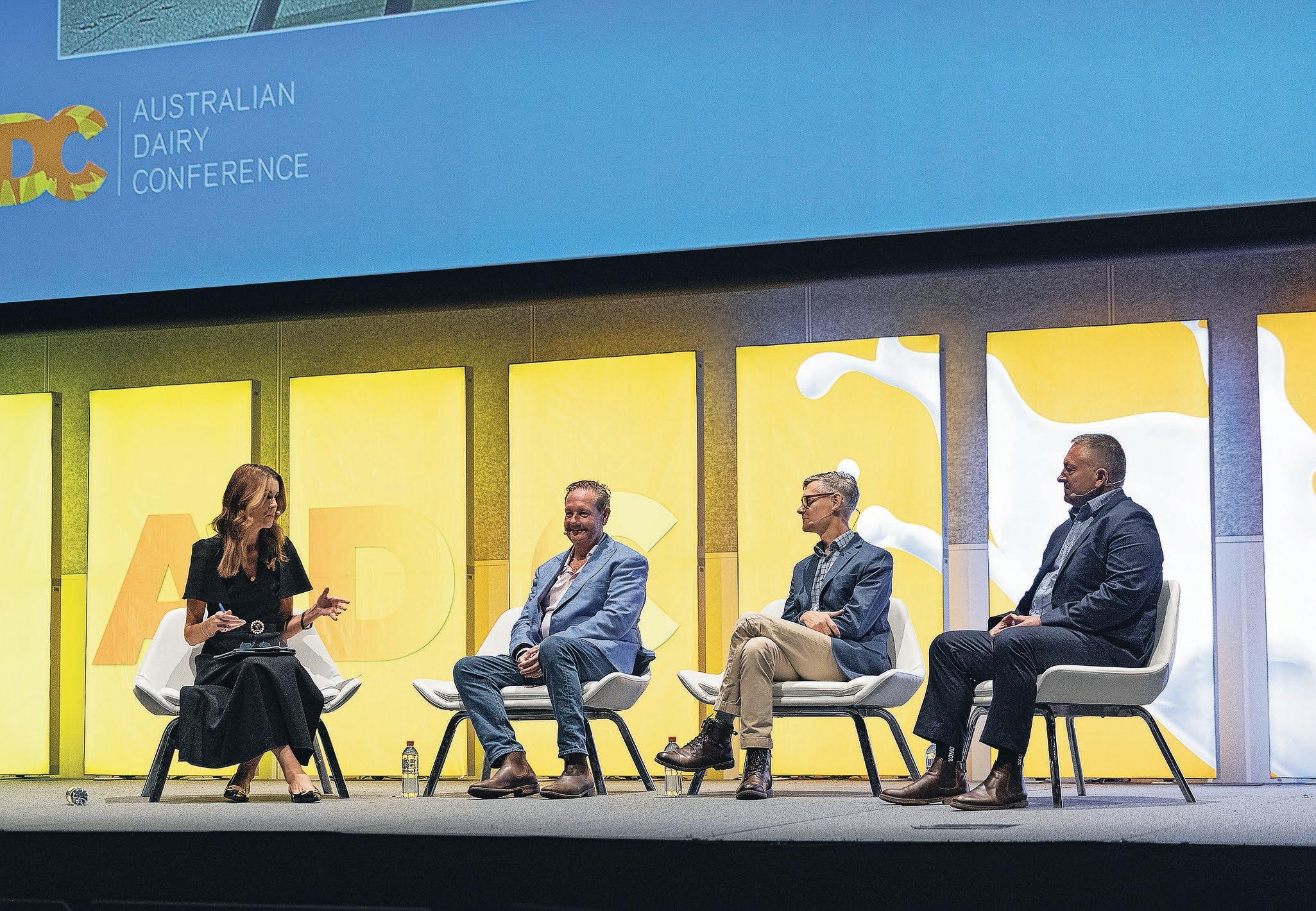
Julian is doing his best to right that wrong, with a YouTube channel, Dairy Farm Life Journal, giving people an insight into what is happening on the farm every month, hosting farm tours, and speaking at this year’s Australian Dairy Conference to debunk misconceptions about how farmers treat their cows.
“It’s a matter of educating people about what farmers do,” he said.
“There has been a lot of negativity about the industry, but if we want young people coming into dairy farming, we don’t want to tell them it’s too hard.
“With the YouTube channel, every month I try to educate people about what happens on farms because a lot of people don’t know too much.
“When school kids visit, I tell them, if you want to look after nature, you want to become a farmer because you do both, and it’s a great life for bringing up kids.”
These are among the positive messages he shared at the Australian Dairy Conference in Melbourne recently.
This was his first time speaking at the conference.
“I was approached to talk about animal welfare,” he said.
“People complain about how farmers treat their cows, but our animals are very important to us — they provide us with an income, and they have to be well looked after.
“A very small percentage do the wrong thing, doesn’t matter what the industry is, but our animals are happy animals.
“If we don’t look after our animals, they’re not going to look after us.”
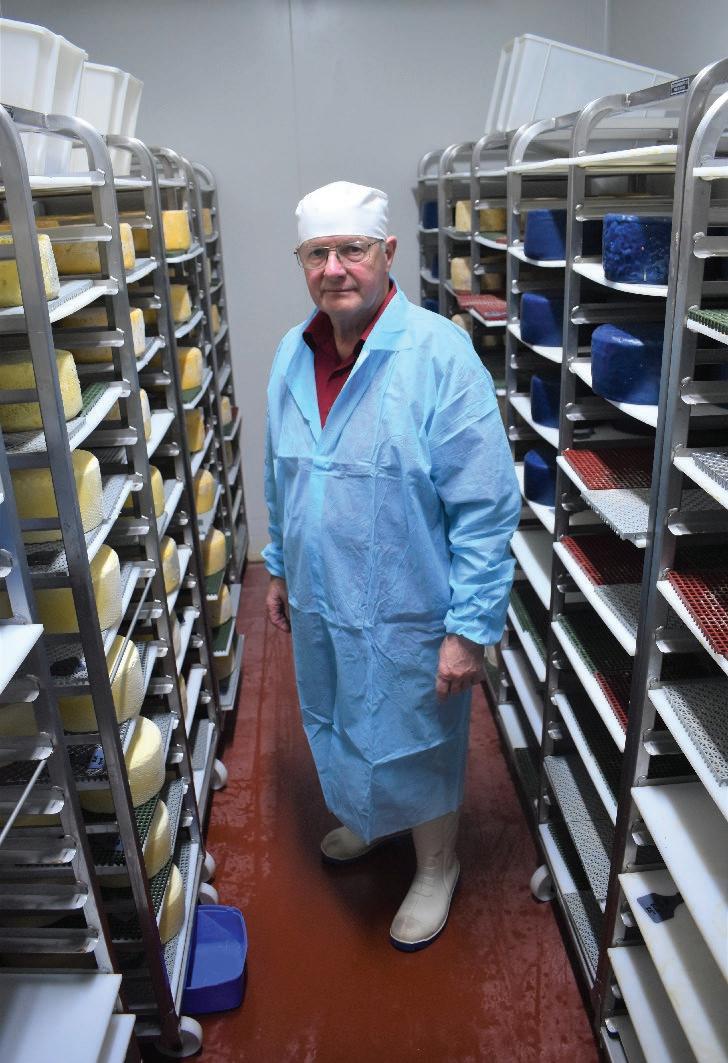
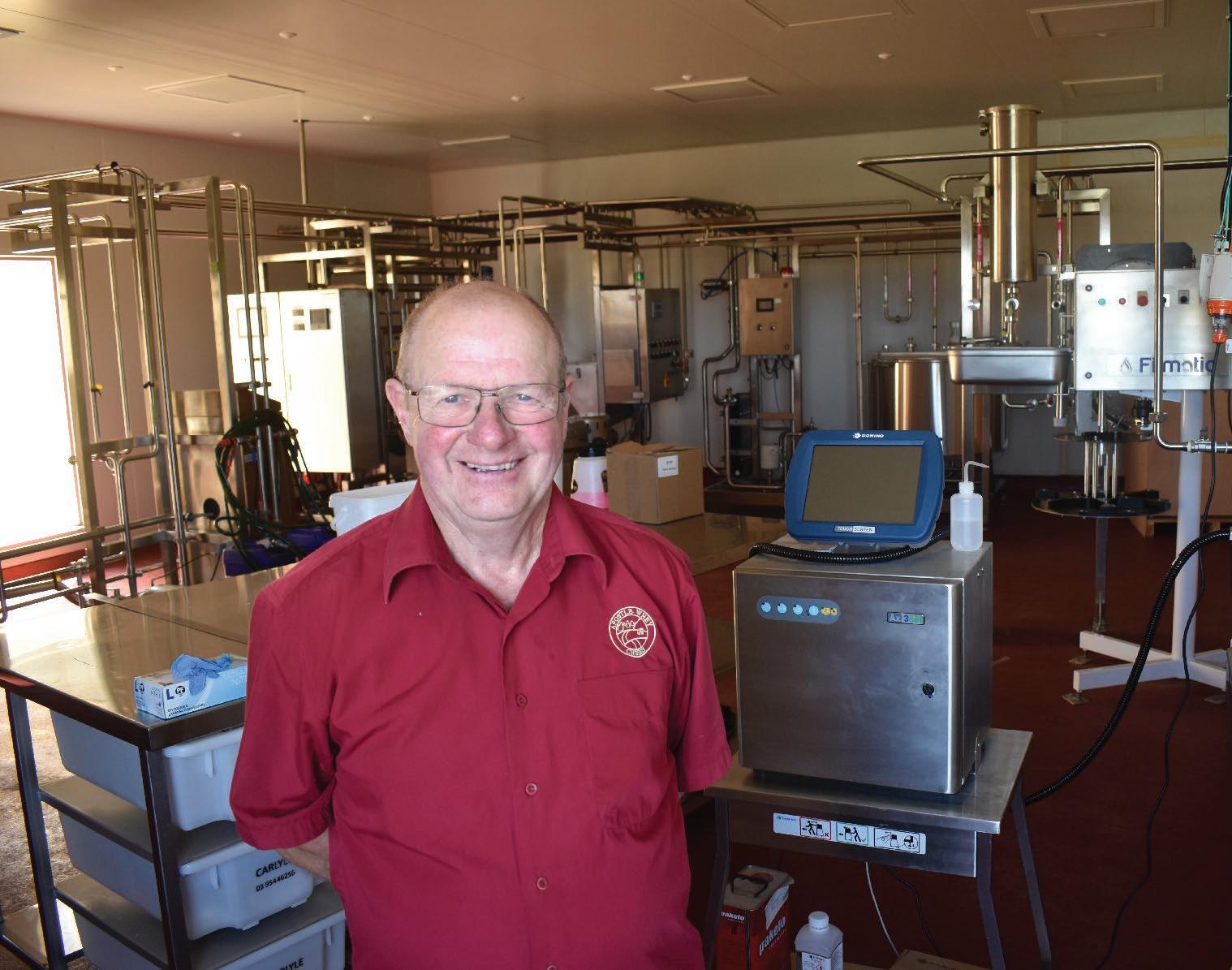
Now in his mid-70s, Julian and his wife Dianne are retired from day-to-day farming after their son Luke bought the dairy farm two years ago, however, they continue to concentrate on the production and hospitality side of the Apostle Whey Cheese business just inland from the Great Ocean Road near Port Campbell.
Apart from building the well-known paddock-to-plate business, Julian takes pride in his commitment to quality, animal welfare and sustainable farming.
He still takes a strong interest in the farm with the 250 mixed-breed cows supplying Apostle Whey Cheese which makes cheese, milk, gelato and gin.
“We milk off about a cow to the acre,” he said.
“I’m not a production-per-cow person; I’m a grass grower and ever since I started farming 50-odd years ago, I always believed in small paddocks.
The farm is subdivided into five-acre paddocks.
“The part we milk off is 52 paddocks all up — 52-day paddocks and 52-night paddocks.
“The cows will be in a paddock today and another one tonight, but they won’t go back to those paddocks for at least 26 days.
“It means by the time they go back to the paddock they’re being fully fed. Because there’s plenty of feed in the paddocks, and we’ve also done sub-surface drainage, so the water table has dropped by 15-18 inches, when the cows go into those paddocks with lots of feed, they don’t have to walk around looking for feed — they’ve got plenty of it.
“They’re well and truly fed and not doing as much damage to the ground.”
When it comes to high growth over spring, they assess the length of the grass and usually drop a few paddocks from the rotations, allowing the leftovers to be turned to silage.
“It’s a very basic system, but it works and there’s no shifting fences,” Julian says.
“I’ve seen about virtual fencing, but we don’t need that because our paddocks are the right size.”
The farm was basically barren when the Bensons moved to the area in 1981, but they were ahead of their time in tree planting and revegetation works.
“We’ve got trees with birdlife and koalas coming through, and we protect the cows from the heat and the wet.
“It might be 10-15 °C cooler under the shade.
“If the cows are more comfortable, they will produce more milk because they’re not using so much energy to keep cool.”
The farm uses effluent from the dairy on paddocks for good pastures and good soil bugs, and water troughs are placed in the middle of paddocks.
“The cows go from one end to the other and come back to the water in the middle, so the manure is being spread over the pastures a lot more evenly,” Julian said.
“We don’t have to over-work ourselves — all we do is open and shut gates — and the cows are in really good condition and are well looked after.”
Julian said the dairy industry gets unfairly criticised for selling bobby calves.
“For cows to milk, they have to have a calf each year”, he said.
“With that, most of us will have 50-50 per cent of female and male calves. Unfortunately, we don’t have enough land to keep the bull calves, so we have to sell them.
“Before they’re sold, we make sure we look
after them. We’ve been through droughts and had trouble with water and it costs a lot of money to keep animals alive, but it’s just one of the parts of farming.
“We spend a lot of veterinary products to keep the animals going, but we don’t have the capacity to keep all the bull calves so we sell them.”
Julian said sexed semen wouldn’t solve the problem on a tightly-stocked farm.
“There’s no use saying use sexed semen because we’d have all females, but we’d have the same problem — we’d have too many and how do we get rid of them?”
In his quest to paint a positive picture of Australian dairy farmers, Julian also hosts international visitors to share his philosophy on farming.
“The first person to do it was from Wisconsin in America. He was a sixth-generation farmer, but he wanted to know how other countries farm. It’s completely different to what they do over there.”
Julian has been silencing the nay-sayers since he was a boy.
“I’ve been hearing negativity ever since I was eight years old when I told my uncles that one day I would be on a farm, and they’d say it’s too hard.
“I love farming because it’s so challenging, but it’s also very rewarding at the same time.”
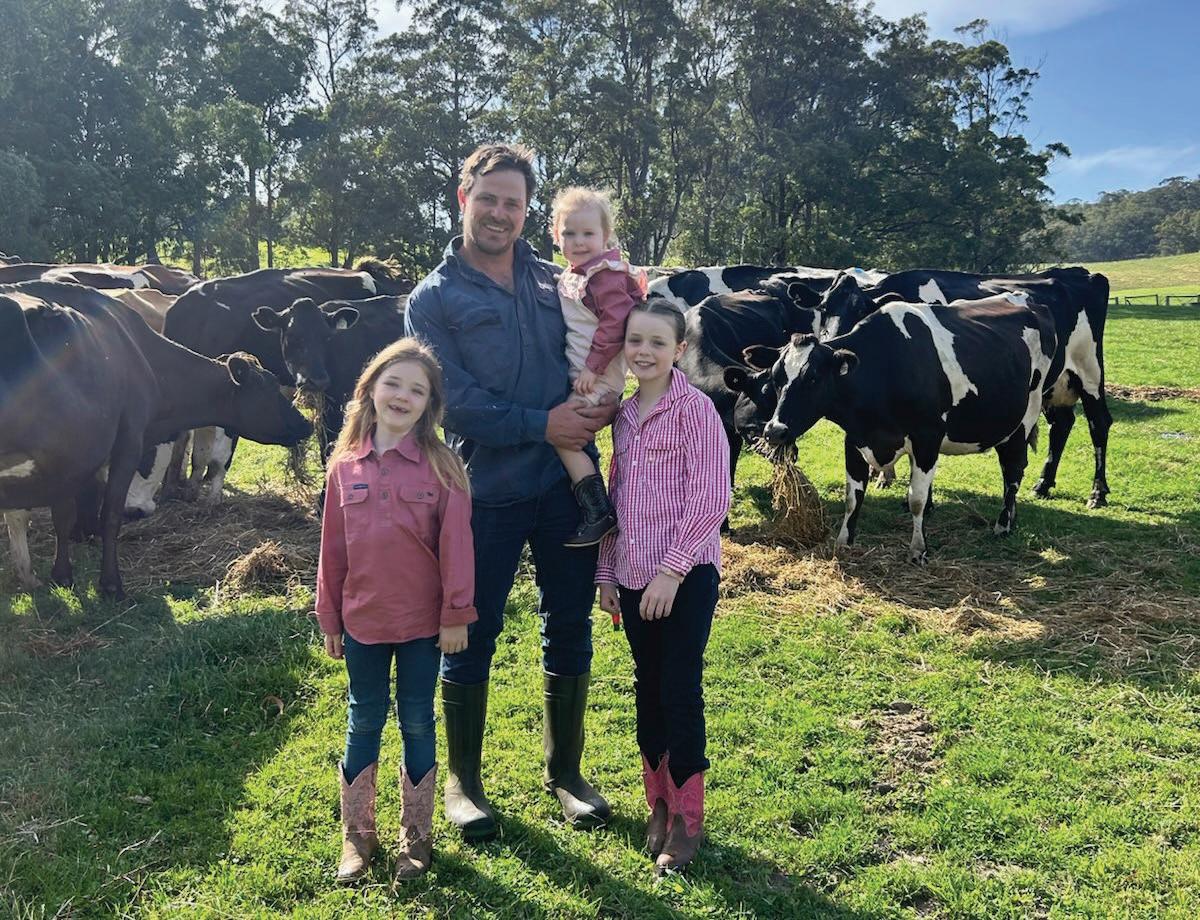
BRETT SMITH has been milking cows since he was 12 years old.
He’s a third-generation dairy farmer, who in the last five months, has bought his own land, started a dairy business and is now producing quality milk for Saputo Dairy Australia.
Brett knows what it’s like to work in a huge dairy operation — he was second-in-charge of a large dairy, with responsibility for milking 1270 cows.
“I didn’t like the big farm feel,” Brett said. “I wanted to be in a small operation.”
That meant buying his own farm.
After purchasing 44 hectares of land in Tarra Valley (Gippsland, Victoria) and leasing an additional adjoining 60ha from his uncle (the old family farm) and then leasing another 40ha turnout block nearby, Brett knew it was time to jump.
After leaving the big operation, Brett needed a herd to start.
That’s where Saputo suppliers, Doug and Ellen McCormick, came in, offering to sell some excess cows to Brett.
“They said, if you want to have a go, we’re happy to help,” he said.
“So they let me come to their farm and pick some cows.
“They’ve really helped me get my feet on the ground.”
With an initial 50 cows purchased from the McCormicks and more acquired from local sales, Brett has now built his herd up to 100 milkers, predominately Holsteins, Jerseys and crossbreeds.
He also had to ‘fire up’ the old family dairy (eight-double-up) on the leased property, which had been dormant for years as the family had switched to beef.
His challenge was to keep capital costs to a minimum.
“There was no technology in it whatsoever, so we kicked things off by replacing and repairing the essentials which only set us back about $7000,” he said.
“It shows you don’t have to fork out big money to get started.
“These improvements were very achievable and left us room to grow.”
In his first month of operation, Brett’s milk ranked in the top 10 for cell count in SDA’s Gippsland region and has averaged under
90,000 every month since.
That’s a point of pride for any dairy farmer, but especially satisfying for Brett who’s achieved it without technology.
“When I was milking 1270 cows, technology was essential,” he said.
“Now, it’s just me milking, so my fingers are on the pulse all the time.”
He’s also managing all other aspects of the daily farm work, yet compared to his previous job — which also had 404ha under irrigation — he’s found his workload has dropped.
This has enabled him to strike a good balance between working and enjoying family time with wife, Jessica, and their three young daughters, aged eight, six and two-and-a-half.
Their close proximity to school and their local community also mean his daughters are thriving.
“I now get to watch my kids grow up, not just hear about it,” Brett said.
He said his decision to supply to SDA was a no-brainer.
Having supplied other processors throughout his milking career, he said he’d never before received the level of support and advice he gets from the local field services team.
“I had to put in a generator to run the vat and cool the milk as our power drops in and out,” he said.
“Through Saputo’s Milk Cooling Rebate, 30 per cent of the net cost of a new generator was covered — for someone like me that’s starting out, buying a herd and needing essential equipment, every cent counts.”
As to the future, he wants to scale up to 150 cows over the next two years.
The couple has access to another farm (that belongs to his in-laws) which has a 25-a-side dairy, so there’s opportunity to continue to grow.
For now, Brett and his family are enjoying farm ownership and reaping the lifestyle rewards.
“I absolutely love every bit of this industry,” he said.
“There’s been overwhelming support for us since we started milking so I keep coming back to the people who just want to help.
“That’s the thing that’s really shocked me.
“They want to see new blood in the industry and are happy to see young people do well.”

SLOW-RELEASE BUFFERING EFFECT
• Carbonates help neutralise excessive rumen acids.
• Assists in optimising rumen pH.
• Maintains longer term pH stability of the rumen.
HIGHLY BIOAVAILABLE MINERALS
• Calcium (min. 32%) Magnesium (min. 3%)
• Contains over 70 minerals.
PROMOTES OPTIMAL RUMEN FUNCTION
• Improves environment for microbial fermentation.
• Improves fibre digestion and feed efficiency.
• Improves dry matter consumption.
100% NATURAL
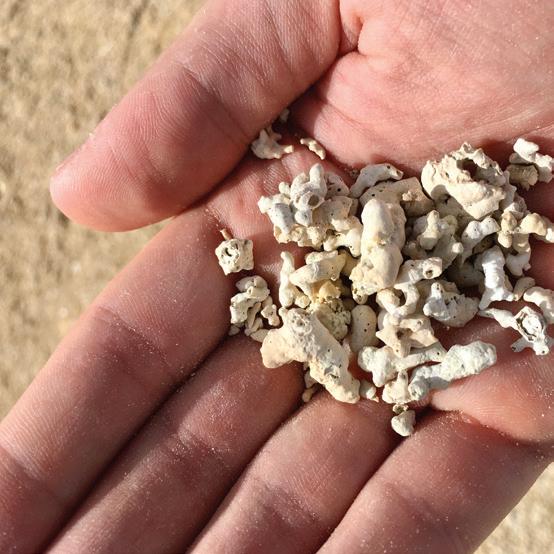
• 100% Calcified Calcareous Red Algae.
• USDA Organic Certified.







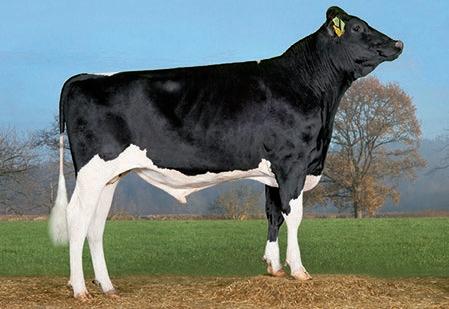
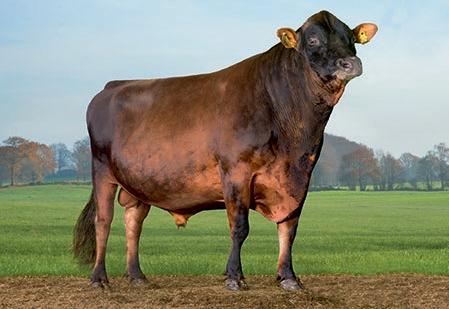
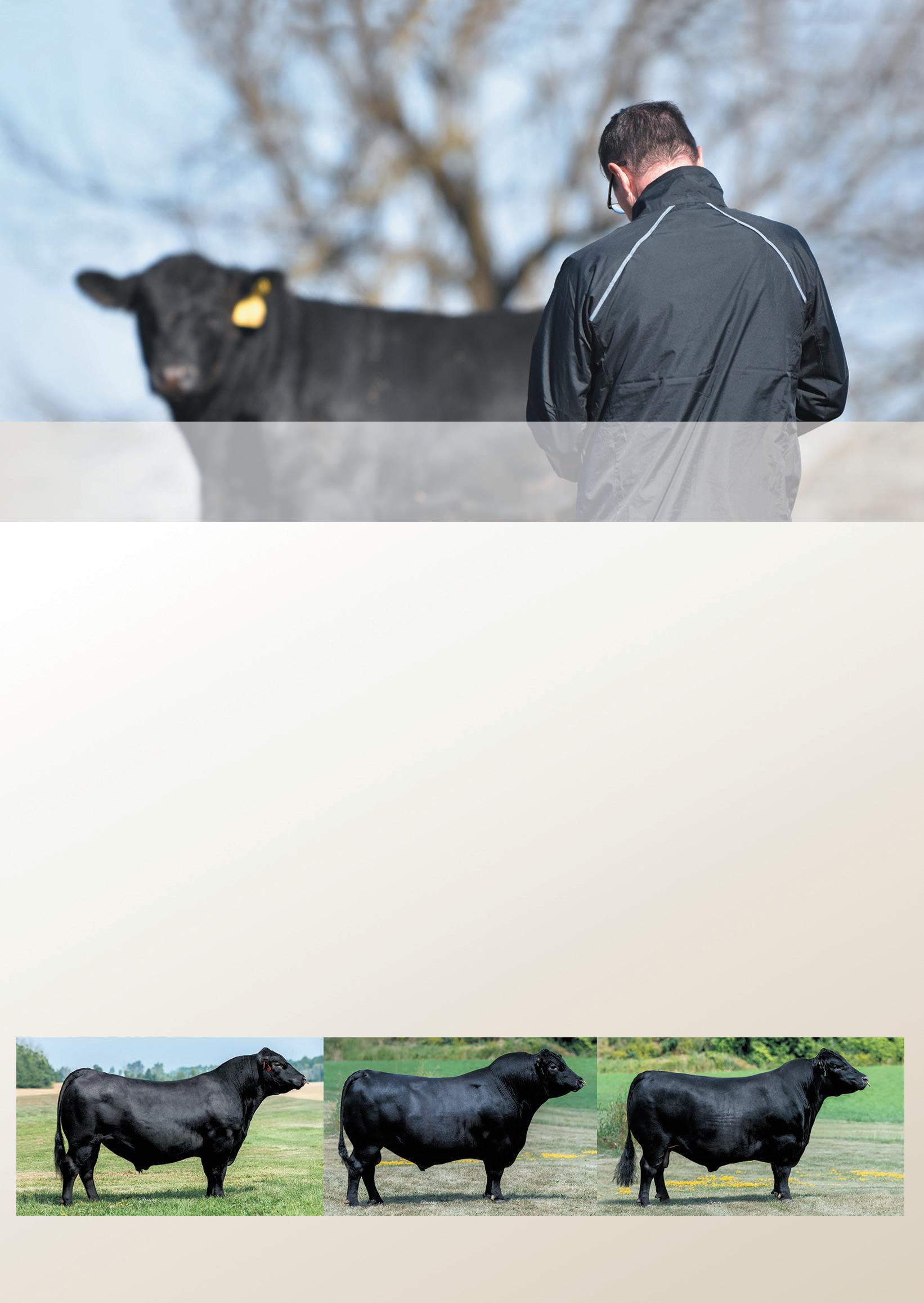
Three breeds. Three leaders. One proof run. A rare hat trick that highlights the power of the VikingGenetics breeding programme — and delivers a powerful win for your herd.



#1 daughter proven, 537 dtrs/47 herds. Strong daughter fertility, medium stature with dairy strength and longer teats.


#1 daughter proven, 201 dtrs/ 25 herds. #2 all ARDB Red sires. #1 VR Vesty, #2 VR Vimo, #3 VR Vinci P VikingRed Trifecta.






VJ Gislev
#1 daughter proven, 293 dtrs/36 herds. Dominates Jersey proofs (all sires) by 57 BPI points and 193 points ahead of the next BPI proven sire.









BY SOPHIE BALDWIN

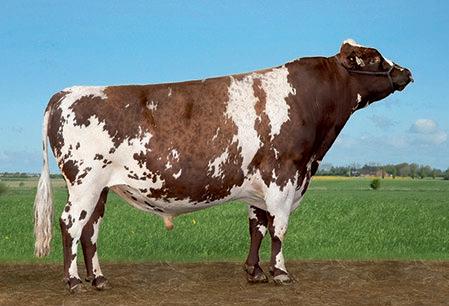


DAIRY Week Holstein
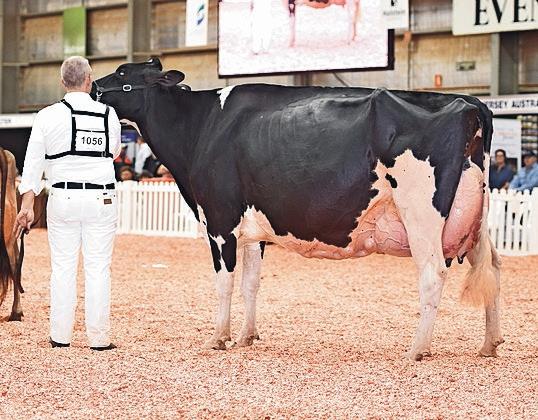
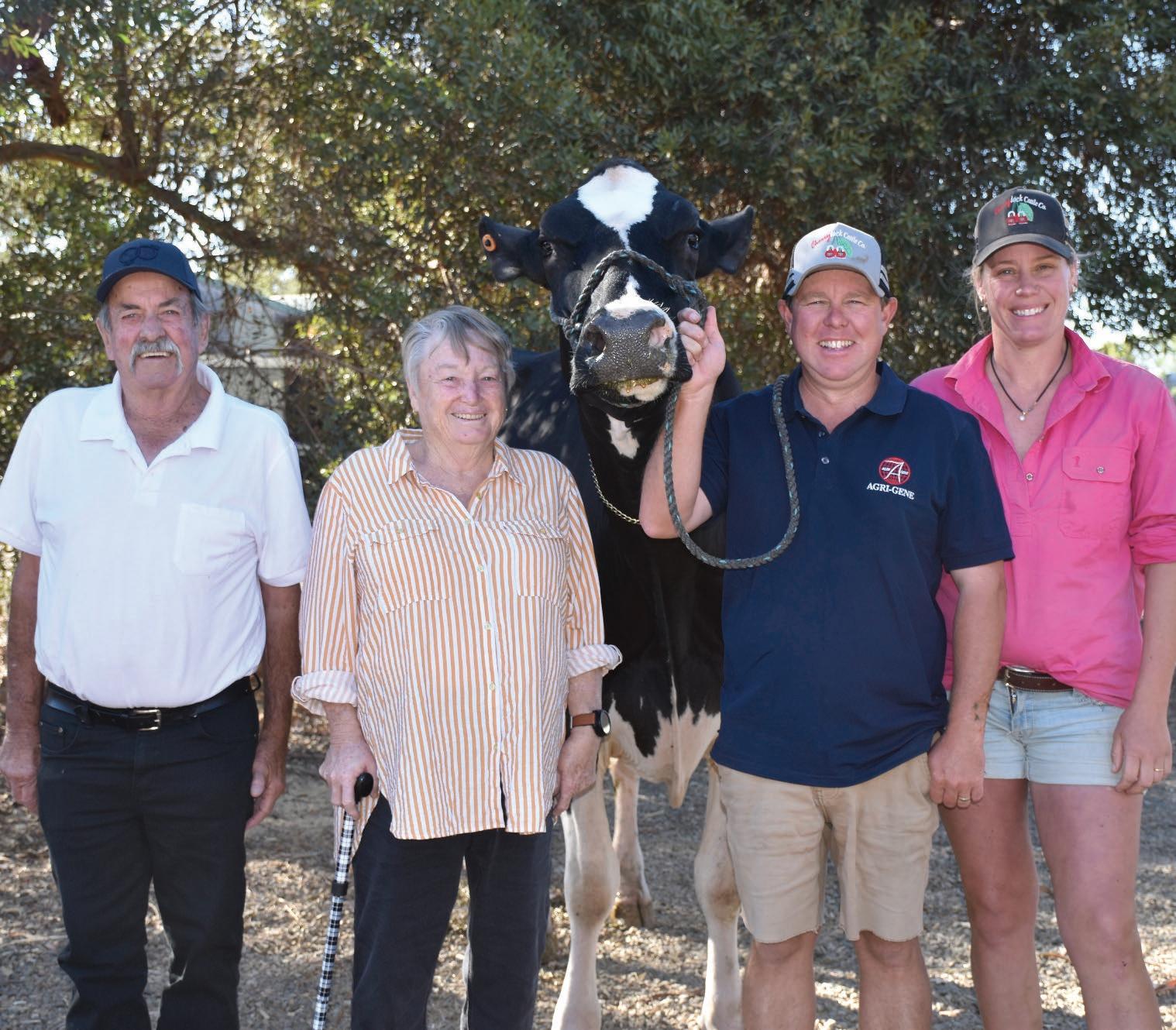
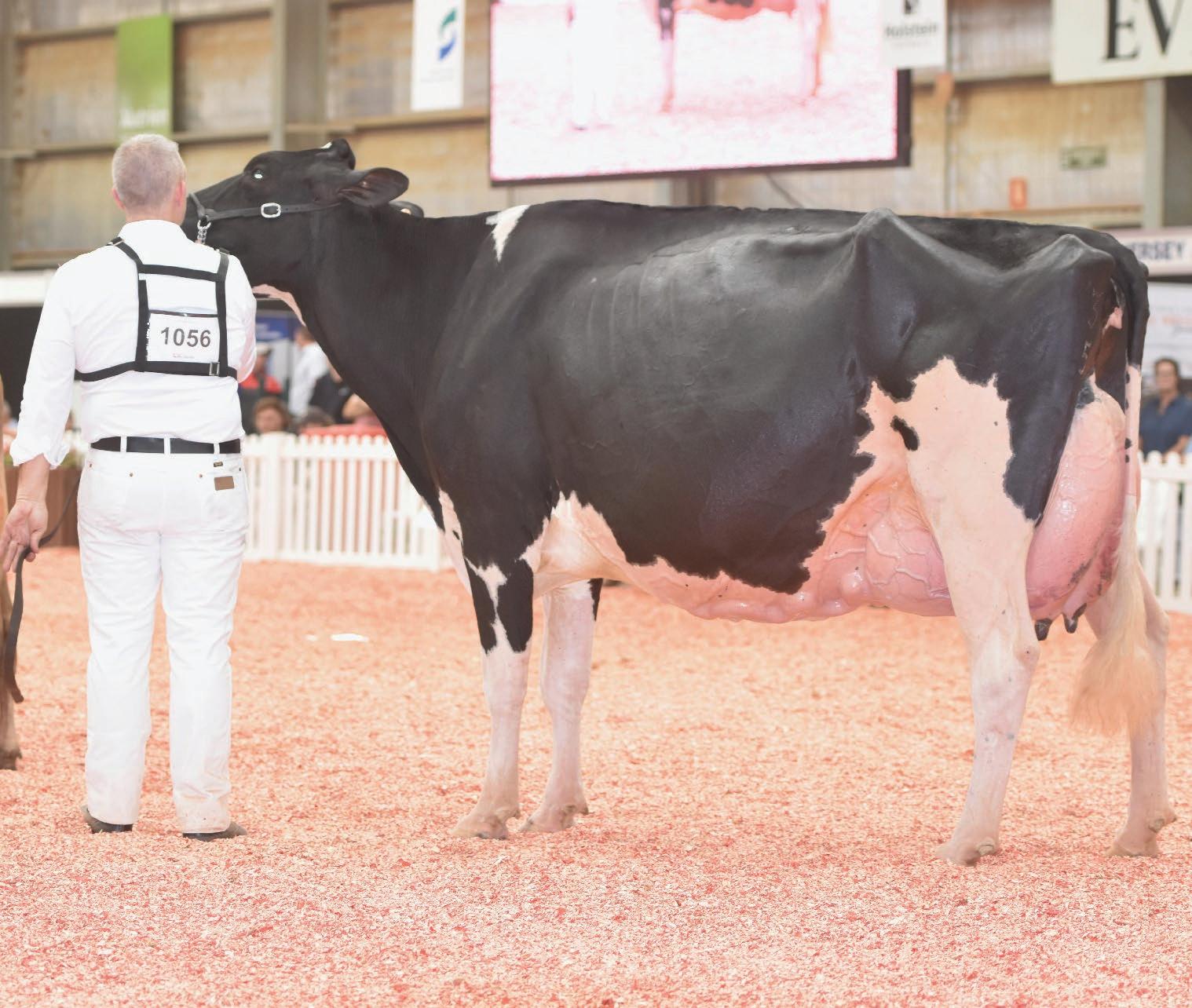
judge Mark Nutsford couldn’t take his eyes off seven-year-old Windy Vale ATW Frosty 2, crowning her supreme champion of the show.
It was the same sentiment for Geoff Peatling, who purchased the cow for $25,000 late last year in an on-farm sale hosted by Somerelle Holsteins.
“I was just going to the sale to have a look and I certainly wasn’t going to buy anything, but for some reason I put a couple of bids in and ended up coming home with her,” Geoff said.
“I just loved the look of her and her frame.
“She was dry at the time, and you certainly couldn’t say she was going to win champion cow at IDW, but there was definitely something about her.”
Geoff said he couldn’t explain how he felt after the win, but his young grandson Sam summed it up saying “it was the best”.
Geoff and his wife Christine retired from dairying 12 months ago and son Anthony has now taken over running the farm.
Geoff said he still liked looking at sales and buying nice cows, although wife Christine doesn’t agree.
“If Christine has her way this will be our last buy, but you never know,” Geoff said.
Christine is quick to add, she always enjoyed milking decent looking cows, and over the years, Geoff had purchased a few.
There are plans afoot to take Frosty to the Sydney Royal; however, that will be the responsibility of new owners Cherrylock and Polson.
Brad and Jess Gavenlock from Cherrylock said without a doubt, Frosty was the best and easiest cow he had ever worked with.
“She is the complete package and ticks every box, which is very rare,” Brad said.
“You would never pick she was just six weeks fresh.
“We have had her since October.
“She came to us when she was dry and calved on December 5, and she has done everything you could ask for since.”
Brad said this year’s IDW was the best show they had attended, taking 34 head in their string — 22 placed in the top two of their class and 16 champion ribbons were won
Of the cattle that went to IDW, 17 were owned by Cherrylock and Paulson and the rest were shown on behalf of other owners.
“IDW 2026 was exceptional, and from an exhibitor perspective, everything ran smoothly and there was no drama at all.”
He said all exhibitors were upping the anti with their preparation and the quality of cows across all the breeds, particularly the minor breeds just gets better every year.
“We don’t have any secrets when it comes to preparing the cows, and we are always happy to share our knowledge and our learnings — we just come up with a plan and stick to it, and we have a great team around us,” Brad said.
Jess said with their three daughters getting older, they add a different spin to IDW.
“The kids were great this year,” Jess said.
“They were a great helping us get the cows ready and they each had their own jobs to do — putting out the feed tubs, rinsing off cows and bringing the tubs in.”
































PROVEN * trace mineral injection for cattle to support optimal health, production and fertility, with the added benefit of vitamin B12 in one convenient injection



FERTILITY IMMUNITY


ENERGY GROWTH
AUSTRALIAN CATTLE breeders will have the opportunity to learn about new technologies and how innovations can shape the future of their herds and business.
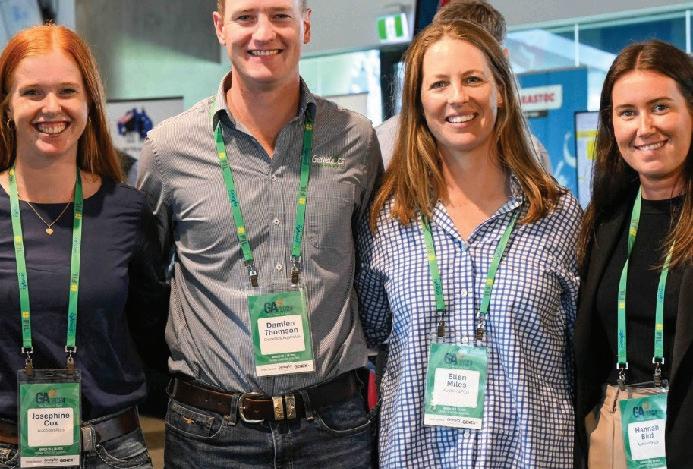
The GA 2026 Today, Tomorrow and Beyond conference, hosted by Genetics Australia on March 17-18, will feature local and international speakers, farmers and dairy and beef industry leaders.
The conference, at GMHBA Stadium in Geelong, follows a similar event in 2024 and retains the same focus on the use of genetics and other cutting-edge technologies to advance farming businesses.
It will feature segments on future technology and sustainable farming, the road to new markets, tomorrow’s agriculture and securing the future.
Keynote speakers will include co-founder of Audacious Agriculture Stuart Austin on harnessing artificial intelligence to transform agriculture, Midfield Group general manager Dean McKenna on how technology shapes a modern meat business, and Distinguished Professor of Cooperative Extension in Animal Biotechnology and Genomics, University of California, Professor Alison Van Eenennaam, on advances in gene editing techniques for cattle.
International speakers from Europe, USA and South Africa will feature on the program. Farmers from around Australia will showcase their business innovations, herd improvements and their thoughts on the future of farming as part of a panel discussion.
TUESDAY 17TH MARCH 2026
9.00am Registration & Trade Displays open Tea, coffee and morning snack available. Conference Welcome
There will also be presentations from DataGene leaders on reproductive innovation.
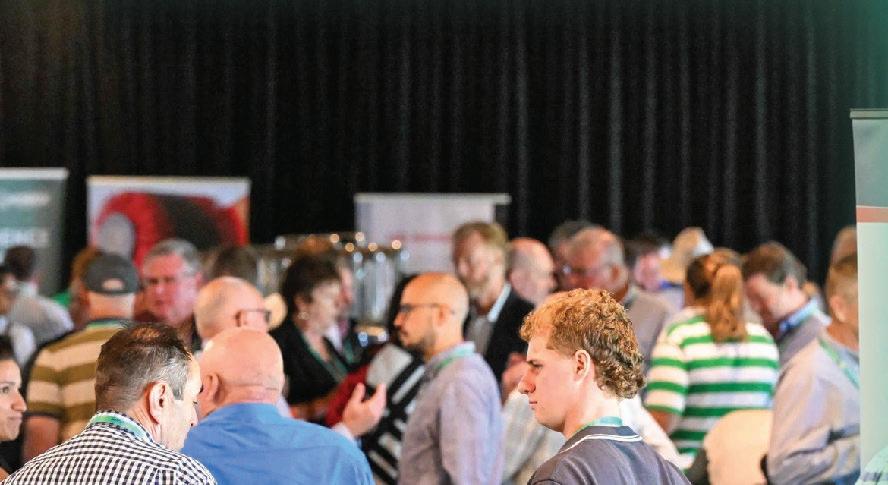
Genetics Australia CEO Anthony Shelly said the GA 2026 Today, Tomorrow and Beyond conference would bring together like-minded farmers and industry people to network and hear about how new research and innovation is creating more sustainable and profitable farming systems.
The program features a cross-section of speakers covering both dairy and beef farming.
Mr Shelly said the conference would give people a glimpse into the future.
“Agriculture is evolving at a fast pace and being aware of new and emerging technologies is essential for farmers to stay progressive and profitable,” he said.
Dr Stephanie Bullen, National Animal Health & Welfare Lead, Dairy Australia, welcomes delegates to GA 2026. Day One: Session One - Future Technology & Sustainable Farming
10.15am From Vision to Innovation: Harnessing AI to Transform Agriculture Presented by Stuart Austin, Co-founder, Audacious Agriculture
11.00am From Numbers to Knowledge: How Dairy Farmers Gain Context with Nedap Technology Presented by Evine Van Riemsdijk, Global Application Manager Cow Control, Nedap
11.30am Sustainable Farming
A panel of farmers discussing a diverse range of perspectives on sustainability and resilience. The panel discussion is facilitated by Elissa McNamara, National Climate and Environment Lead, Dairy Australia.
• Bernice Lumsden, A Farmer’s Perspective on Water Sustainability and Community Impact
• Joe & Anna Conheady, Farming, Wind & Solar: Protecting Agricultural Land in a Changing Energy Landscape
• Sandra Jefford, Sustainability and Smart Farming: A Dairy Farmer’s Journey
12.10pm Lunch - Sponsored by Trans Ova Genetics
Day One: Session Two - The Road to New Markets
1.15pm From Farm to Fork: Marketing Premium Beef in Australia and offshore Presented by Anthony Fellows, CEO, Harmony Agriculture & Food Co
1.40pm Emerging Trends in Asia-Pacific: What’s Coming for Australian Beef and Dairy Presented by Mr David Reed, General Manager, AUSTREX
2.00pm Advances in Gene Editing Techniques for Cattle Presented by Prof
“We’ve retained the same theme as 2024, ‘Today, Tomorrow and Beyond’, because the conference will have something to help farmers and service providers today and give them many new ideas for the future.”
The conference will be held at GMHBA Stadium 370 Moorabool Street South Geelong. People can visit https://www.trybooking. com/DHZSL for ticketing information and the full program.
Welfare Lead, Dairy Australia, welcomes GA 2026 delegates Day Two: Session Six - Tomorrow's Agriculture
8.45am From Lab to Livestock: R&D Insights from Peak Presented by Vianney Salmon, Quality Improvement Manager, PEAK
9.10am Current Innovations in Bovine OPU and IVF: From Oocyte to Embryo Presented by Dr Rory Nevard, Clinical Specialist, University of Sydney
9.45am The Power of the Next Generation with IVF Globally Presented by PJ Budler, International Business Development Manager, Trans Ova Genetics USA
10.10am Measuring NFI for Angus Seedstock Breeding Presented by Paul Mead, Farm Manager, Meade Agri
10:35am Morning Tea - Sponsored by Ridley Day Two: Session Seven - Keynote Presentation
11.05am Innovating for Impact: How One Dairy Farmer Created a Global Solution Presented by Grant Rogers, Dairy Farm Owner Day Two: Session Eight - Reproductive Innovation in Action
11.40am Shaping the Future of Herds: Insights into the Latest National Breeding Objectives Presented by Peter Thurn, Stakeholder Relations Specialist, DataGene
12.00pm Born Ready: Understanding Calf Vitality in Australian Holsteins Presented by Dr Michelle Axford, Special Projects, DataGene
12.20pm Meet DataGene’s New CEO: US Genomics Insights and Lessons for Australia Presented by Dr Emily Piper, CEO, DataGene
Day Two: Session Nine - Securing the Future
12.40pm Securing the future
A panel of farmers discussing a range of perspectives on securing the future of farming. The panel discussion is facilitated by Anthony Shelly, CEO, Genetics Australia
• Anthony Shelly, Genetics Australia, Securing the Future: Insights from Forward-Thinking Agricultural Leaders
• Lachie Tindall, Family Farms, Smarter Business: Diversifying with Beef and Dairy
• Charlie Perry, Principal, Trent Bridge Wagyu, How to embrace the challenge of continual improvement to satisfy premium markets
1.05pm MC Conference Close & Summary
MC Dr Stephanie Bullen, National Animal Health & Welfare Lead, Dairy Australia, closes the GA 2026.
1.15pm Lunch - Sponsored by GENEX

KATE KIRK admits she was a total novice when she was introduced to dairy farming.
At the time, Kate was working in a Leongatha supermarket in South Gippsland.
Her then boyfriend, sharefarmer Jason Kirk, whose family had two farms at Loch, needed to find a new worker when his sister moved on to run the other farm.
“I said I don’t know anything about farming, but I’m happy to give it a go,” Kate said.
“What’s the worst that could happen – If I suck at it, and you fire me; I can go back to the supermarket.”
Turns out Kate was a good learner who quickly adapted to farming life, and at the same time their relationship blossomed leading to marriage and Kate becoming part of the sharefarming arrangement.
Part of her success came from the mentorship of Jason and his family and the deluge of Dairy Australia courses she undertook to learn about industry standards.
She’s never forgotten the importance of that support and today she continues to pay it forward.
Kate will present `From Frankston to Gippsland: A Journey in Farming and Mentorship’ at the GA 2026 Today, Tomorrow and Beyond conference hosted by Genetics Australia in Geelong on March 17 and 18.
Kate had been raised in Frankston and had no intention of becoming a farmer, but now she wants to help young people find their way in the industry.
She remembers joining the farm as a 19-yearold rookie.
“Jason and his father taught me everything about what they wanted on their farm and they supported me to learn the industry standards,” she said.
“Because I wasn’t qualified for diddley-squat, I started doing all the Dairy Australia courses like Cups On-Cups Off, calf rearing and Fert Smart.
“I think I’ve done every single course they’ve had in the past 20 years.
“I’ve always been a go-getter person and if I’m going to do something, I’m going to do the best I can.”
She even became confident and experienced enough to instigate on-farm changes based on data.
While continuing to lease in Loch, in 2016 Kate and Jason bought their own farm at Dumbalk, adding to it over the years to build up to a milking herd of more than 500 on 364 hectares.
They have four staff members and more than 1100 animals including young stock, and also do their own hay and silage conservation.
In recent years, Kate completed her Diploma of Agriculture qualification online, along with a training and assessors’ course at TAFE and became qualified in food safety and lead auditing.
Along with working as a verified dairy food safety auditor with Dairy Food Safe Victoria auditing farms for their milk licences, Kate is keen to help young people to navigate their way into the industry, including their own staff.
“We support people to take time off for training because I know how important that was when I was a novice,” Kate said.
“There are not a lot of younger people in agriculture, and it’s way harder for them to get into it than it used to be, but we need them.
“Farms are much bigger, so the industry needs more employees, from managers to farm hands, and those people need a chance to skill up.
“They need on-farm training as well as formal training so they know what industry best practice is.
“It is difficult to get in, but it’s possible if you’re patient.
“Find someone that you admire and ask them questions and use the industry opportunities that we have. If there’s a part of the farming that you don’t enjoy, find a bit that you do enjoy.
“If you’re going to do it, do your best.”
They also host on-farm tour groups, including visitors from Zimbabwe organised by Genetics Australia.
Kate will be part of an online seminar for
Zimbabwean women in ag in March.
Kate turned 40 recently, and said she and Jason continued to work well as a team, but she hoped to phase out of the hands-on heavy-lifting part of farming.
“I want to do the things I enjoy, like supporting staff, teaching skills, explaining the importance of food safety legislation, connecting people to industry resources and just talking to and supporting dairy farmers and their goals.”





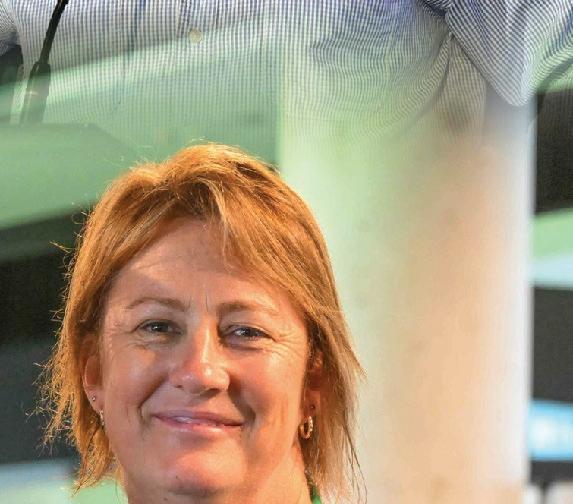


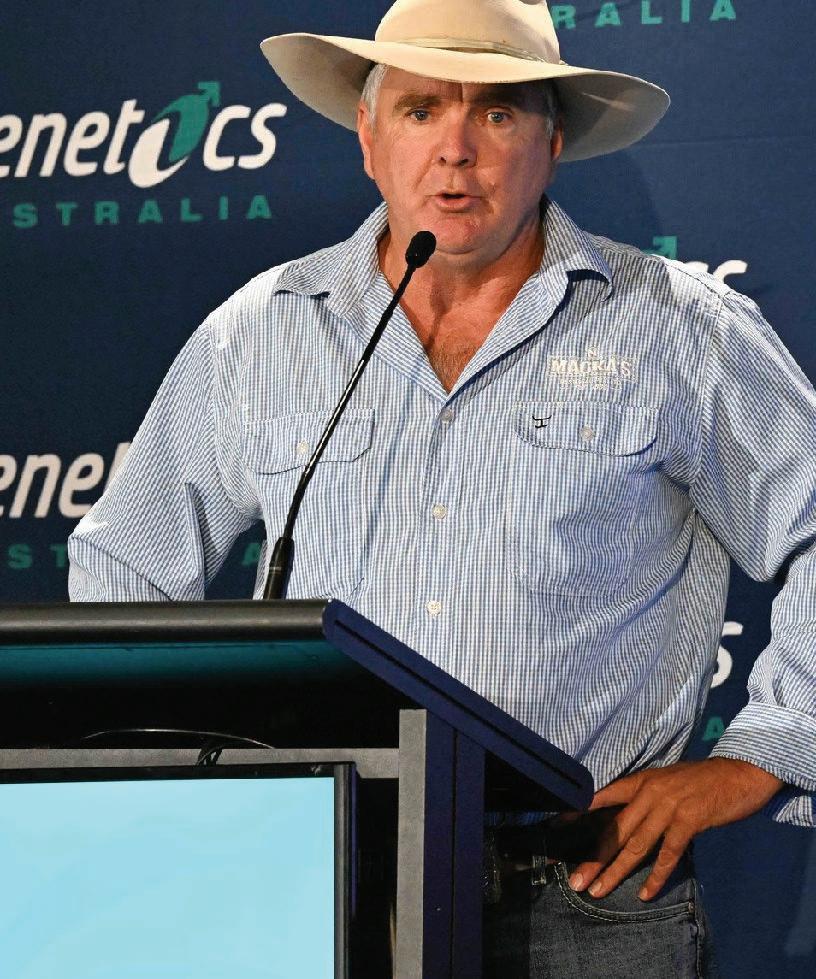

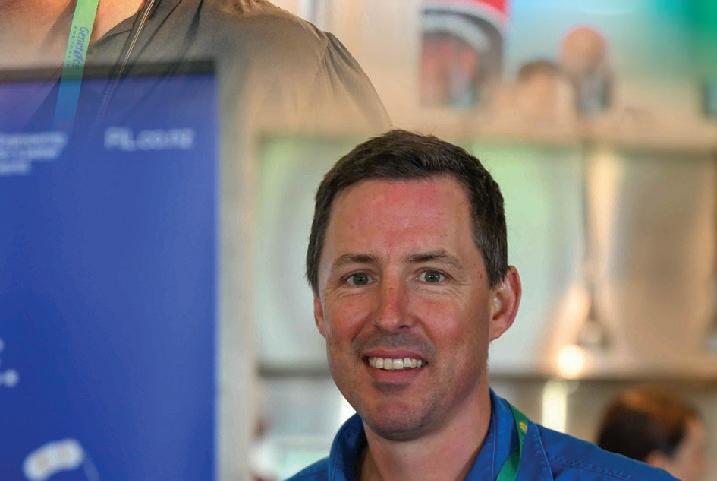
















Stephanie Bullen, Dairy Australia – Conference MC
Ray Kitchen, Kitchen Farms
Charlie Perry, Trent Bridge Wagyu
Alison Van Eenennaam, University of California
Dr Emily Piper, DataGene
PJ Budler, Trans Ova Genetics
Dean McKenna, Midfield Meats Highlights

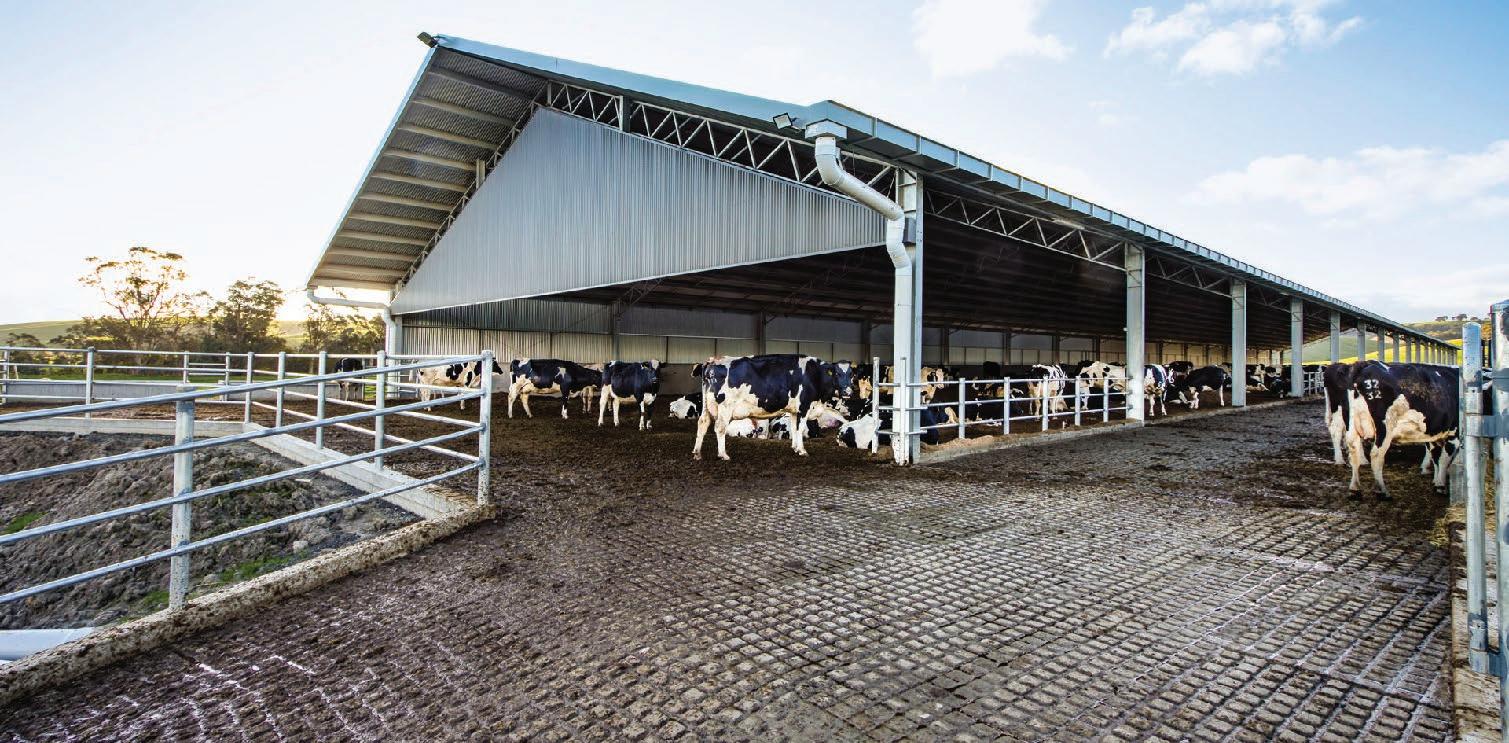









LOAFING BARNS continue to be popular infrastructure projects for Australian dairy farmers wanting to protect paddocks, lift labour efficiency, and reduce swings in milk production.
Like most things, a loafing barn performs best when it is well-planned.
Action building consultant Jason Stone says good planning helps avoid operational bottlenecks, reduce compliance risk, and prevents unnecessary costs.
“It sets your barn up to deliver better cow comfort and performance, and simpler dayto-day management.”
The team at Action have a planning checklist to set your project up for success, covering details from airflow to weather protection.
Effective airflow is essential for both cow comfort and bedding management. It helps keep cows cool, reduces moisture and ammonia build-up, and extends bedding life.
Action loafing barn designs are based on over twenty years of research including computational fluid dynamics (CFD) studies on optimal roof ventilation.
These designs use a steep roof pitch and ridge ventilation to manipulate airflow, and consider height, orientation, local climate and features such as gable infills.
Markus Lang of Lang Dairies is proving the value of this design approach.
“You instantly feel cooler being in the shed. You feel airflow the minute you walk in,” Markus said.
Effluent management also needs to be addressed early in the planning process –it isn’t simply a compliance requirement; it can also deliver cost savings and operational benefits.
A 2 per cent site slope is considered best practice for floodwashing and using a site with natural fall (where practical) can help reduce earthwork costs.
You will also need to consider whether new tanks and catchment ponds are required, or if you can use existing infrastructure.
The Action team can work with you and your dairy consultant to ensure the barn design integrates with your effluent management plan.
This worked well for Michael Armstrong of Kallista Holdings.
“We can catch all the nutrient.
“It’s got a 600mm compost bed inside, so we’re holding that nutrient in the bedding, which is helping the compost process and any effluent that lands in the feed alley, ends up in the effluent pond so we contain that as well,” Michael says.
These considerations – along with details like bunk space, stocking density and site location – will shape the final size and design of your loafing barn.
Engage the team at Action and work through the detail early to set your project up for success.
ALIGN AR37 is setting a new bench mark for perennial ryegrass performance in Australia, landing at the top of Dairy Australia’s 2026 Forage Value Index (FVI) and signalling a shift in what farmers can expect from modern tetraploid cultivars.
For dairy producers looking to squeeze more value out of every hectare, the FVI remains one of the industry’s most trusted tools.
Developed in collaboration with DataGene, Meat & Livestock Australia (MLA) and the Pasture Trials Network, it provides an independent and reliable assessment on the potential economic value of Perennial, Italian and Annual rye grass cultivars.
In this year’ s update, Align AR37 demonstrated its performance across diverse growing environments and out performed all other varieties in southwest Victoria, Gippsland, northern Victoria and Tasmania.
Isaac Berry, DLF Seeds technical manag er said Align AR37 arrives with a new stan dard of tolerance to crown rust and impres sive year round dry matter production.
“Its real difference is its extremely late heading date (+39), new generation genet ics and strong insect resistance from AR37 endophyte,” he said.
With demonstrated resistance of Argentine stem weevil larvae, pasture mealybug, adult black beetle and root aphid, Align AR37 delivers the kind of reli ability farmers increasingly depend on in tough seasons.
“Align AR37’s agronomic profile rein forces its top ranking.
“With excellent summer and autumn growth, improved tetraploid density, an upright growth habit and a late heading date, Align AR37 maintains quality deeper into the season.
In short, this is a tetraploid designed to perform and persist.
“It will provide farmers with a reliable homegrown feed base with AR37 endo phyte insect resistance, resulting in great er persistence, higher weight gains, more milk in the vat, quality hay, silage and graz ing,” concludes Isaac.
The strength of the DLF Seeds’ breeding programme was also on display this year.
Alongside Align AR37 in the number one position; Vast AR37 tetraploid perennial ryegrass and Base AR37 tetraploid peren nial ryegrass also secured places in the top five across all tested states.
The consistency highlights DLF Seeds strong commitment to develop and deliv er, to Australian farmers and Agronomists, proven seed varieties designed to generate the best possible outcomes on farm and within the wider Agriculture community.
Base AR37 brings dependable year‑ round growth, strong persistence and the proven benefits of the AR37 endophyte, making it a reliable option for farms that face persistent pest pressure.
Brad Byrnes DLF Seeds sales marketing manager explains Base AR37 has been a proven performer for many years now.
“Previously, it topped the FVI for 6 years straight from 2018 to 2023. It continues to remain in the top 5 now, and that’s after 29 trials.
“Meanwhile, Vast AR37 stands out for its persistence, summer performance, fine leaf, excellent feed quality and AR37 insect resistance, positioning it as a strong option for high intensity grazing systems for sheep, beef and dairy cattle”
concludes Brad.
As climate variability and pest challenges continue to reshape pasture management, varieties with proven endophytes such as AR37 or AR128, demonstrate how genetics and endophyte technology are working hand in hand to lift performance and resil ience in an ever changing and challenging environment.
For more information on how these vari eties can improve your pasture production
contact your local DLF Seeds Sales Agronomist, or find out more at dlfseeds. com.au
Align AR37 is available ex harvest and seed stocks are limited for autumn 2026. ɋ Additional information on the Australian Forage Value Index and the 2026 Forage Value Index Pasture Tables can be found at: https://www.dairyaustralia.com.au/en/ feeding-and-farm-systems/pastures/forage-value-index
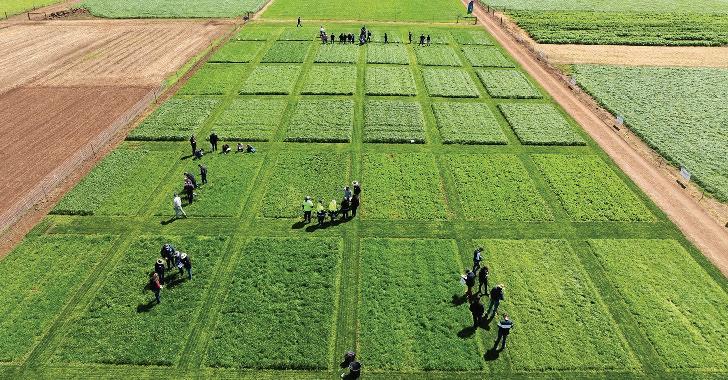










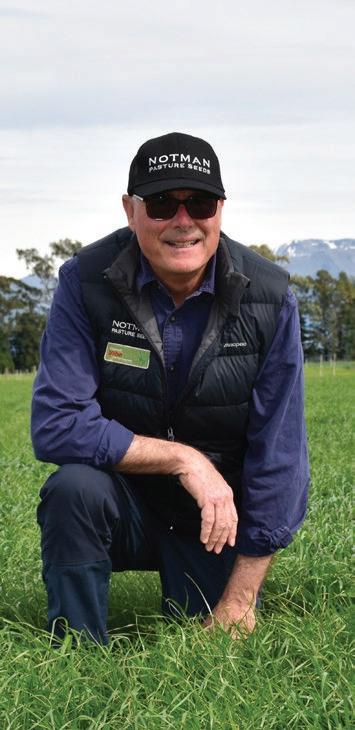
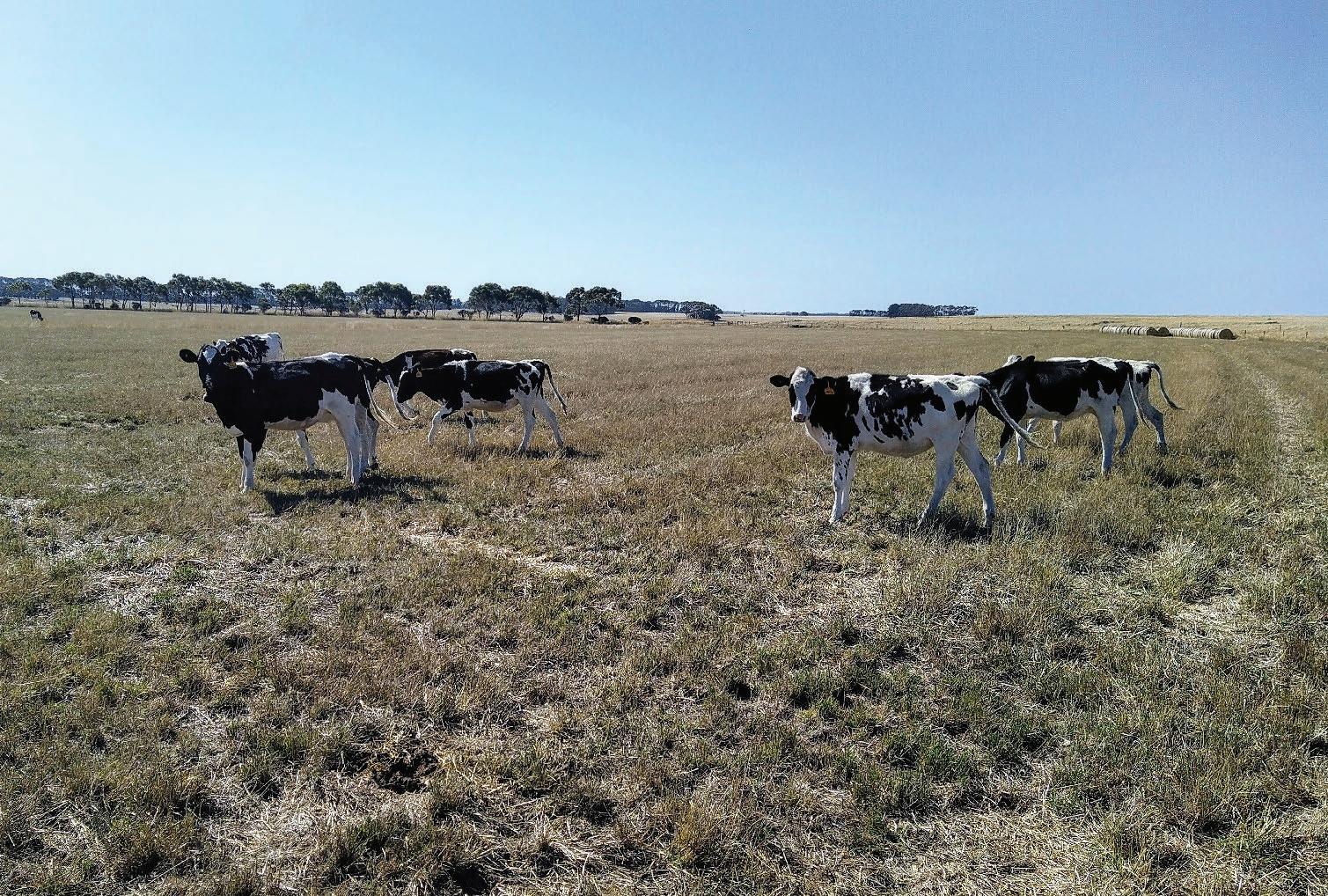
AFTER A difficult summer in many parts of south-west Victoria, many farms are heading into autumn with reduced perennial ryegrass content and pastures carrying a higher proportion of annual grasses, summer-active species and weeds.
While the short-term ryegrasses have played an important role in maintaining feed supply through challenging conditions, the focus now shifts back to rebuilding a perennial pasture base capable of delivering consistent production, quality and persistence.
This autumn presents the challenge of returning to a sustainable perennial balance.
The 30/30 program of the mid to late 2000s demonstrated farms able to maintain a 60-65 per cent perennial base consistently achieved more manageable, resilient and profitable pasture systems. However, rebuilding the base cannot happen in a single season.
The delay to first grazing in newly established perennial pastures means most farms simply cannot return large areas back to perennial ryegrass in one year without creating feed shortages.
According to Notman Pasture Seeds agronomist Andrew Allsop, the starting point is a realistic assessment of what remains in the paddock.
“The biggest mistake we see is assuming a pasture will come back with autumn rain. If perennial density isn’t there, it won’t rebuild itself. You need to be honest about what’s left and make a plan from there.”
Pasture density remains the simplest and
most reliable assessment tool.
Where plants are spaced too far apart, autumn growth alone will not fill the gaps, allowing low-value species such as summer grasses, prairie grass, brome and flat weeds to take over.
Identifying these paddocks early allows renovation to be prioritised where the greatest production gains can be made.
Weed burden determines the pathway forward. In paddocks where annual grass



pressure is moderate, selective control and oversowing may be enough to lift perennial content. However, where aggressive species such as bent grass, couch or kikuyu dominate, a full renovation is often required to reset the pasture.
“You’ve got to match the level of renovation to the problem,” Andrew explains.
“Oversowing into a paddock that’s fundamentally failed just delays the outcome and costs more in the long run.”
Fertility and establishment management are equally critical. Perennial ryegrass requires adequate fertility and careful early grazing to encourage tillering and plant survival. Strong early establishment improves competition against weeds and shortens the time to first grazing.
Andrew also stresses rebuilding perennial pasture should be viewed as a multi-year process rather than a single autumn fix.
“Most farms can’t go back to a full perennial base in one year without creating a feed hole. Annuals and Italians still play an important role while you transition paddocks back into long-term pasture.”
Key agronomic considerations this autumn:
ɋ Assess pasture density and perennial content honestly.
ɋ Identify paddocks where low-quality species dominate.
ɋ Match renovation strategy to weed pressure and pasture condition.
ɋ Address soil fertility before sowing.
ɋ Use early grazing to drive tillering and density.
ɋ Rebuild perennial content progressively across the farm.
Autumn decisions now will shape pasture performance for seasons ahead.
South-west farmers planning renovation or autumn programs should speak with their local agronomist or the team at Notman Pasture Seeds to map a practical pathway back to a strong perennial base suited to local conditions.


&
• Next generation, iron-based, all weather slug & snail bait with technology for maximum attractiveness, palatability and persistence
• Gentle on the environment, crops and non-target organisms
• Nil withholding period for grazing and harvest
• Certified input for organic production


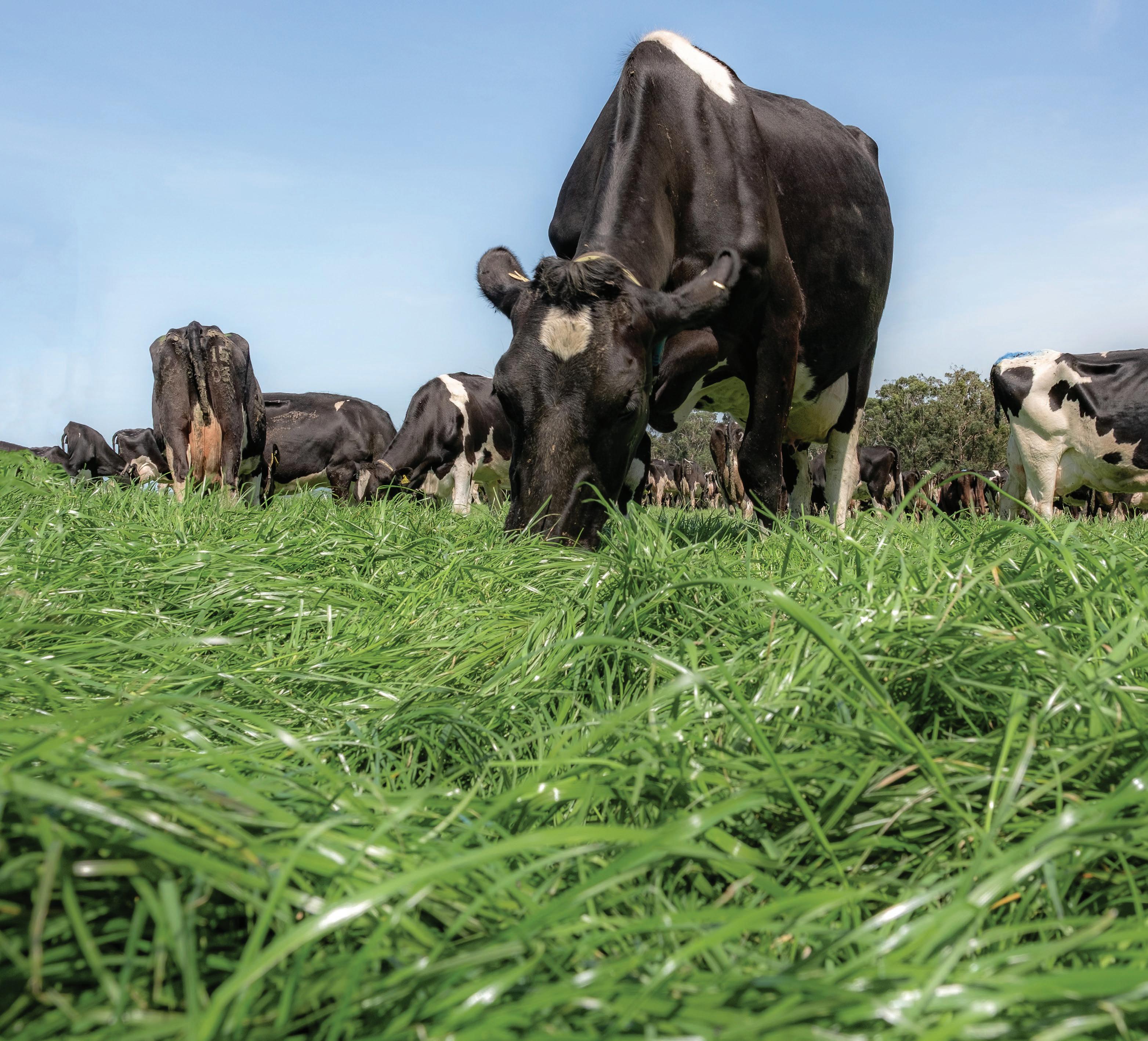















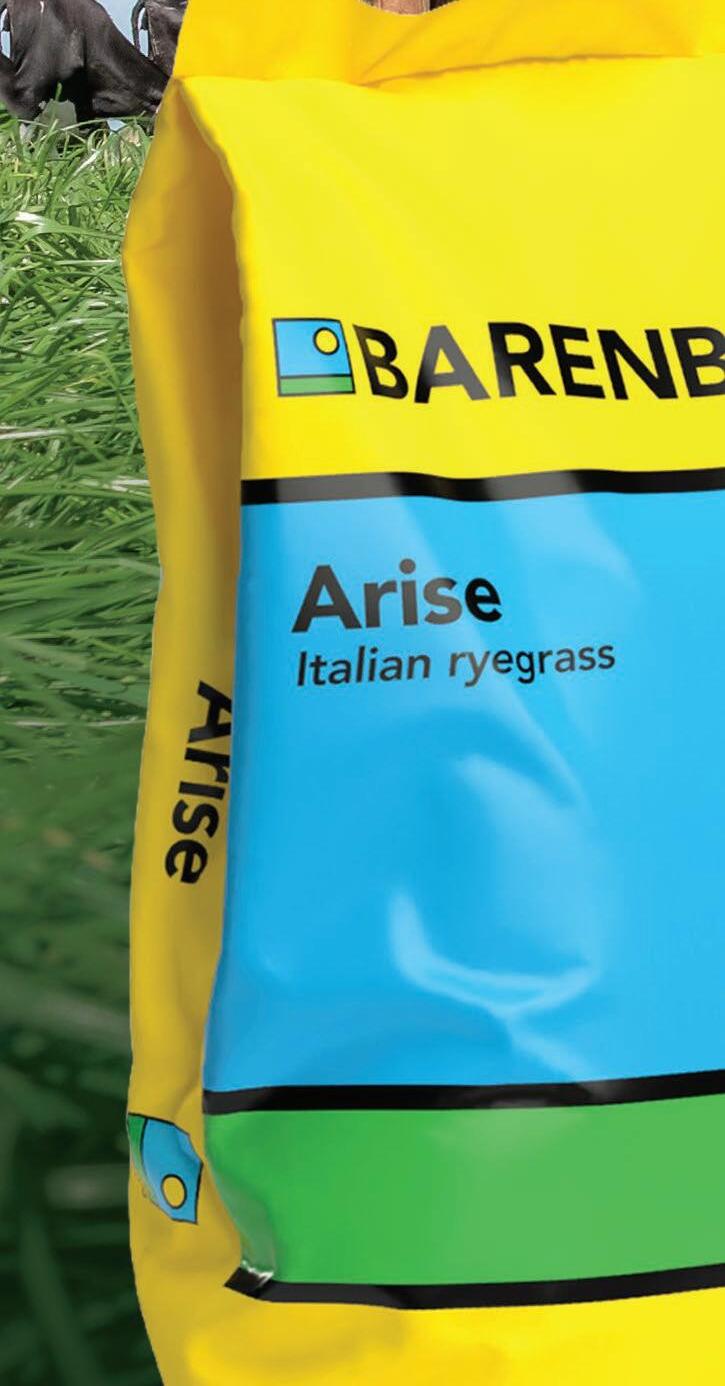







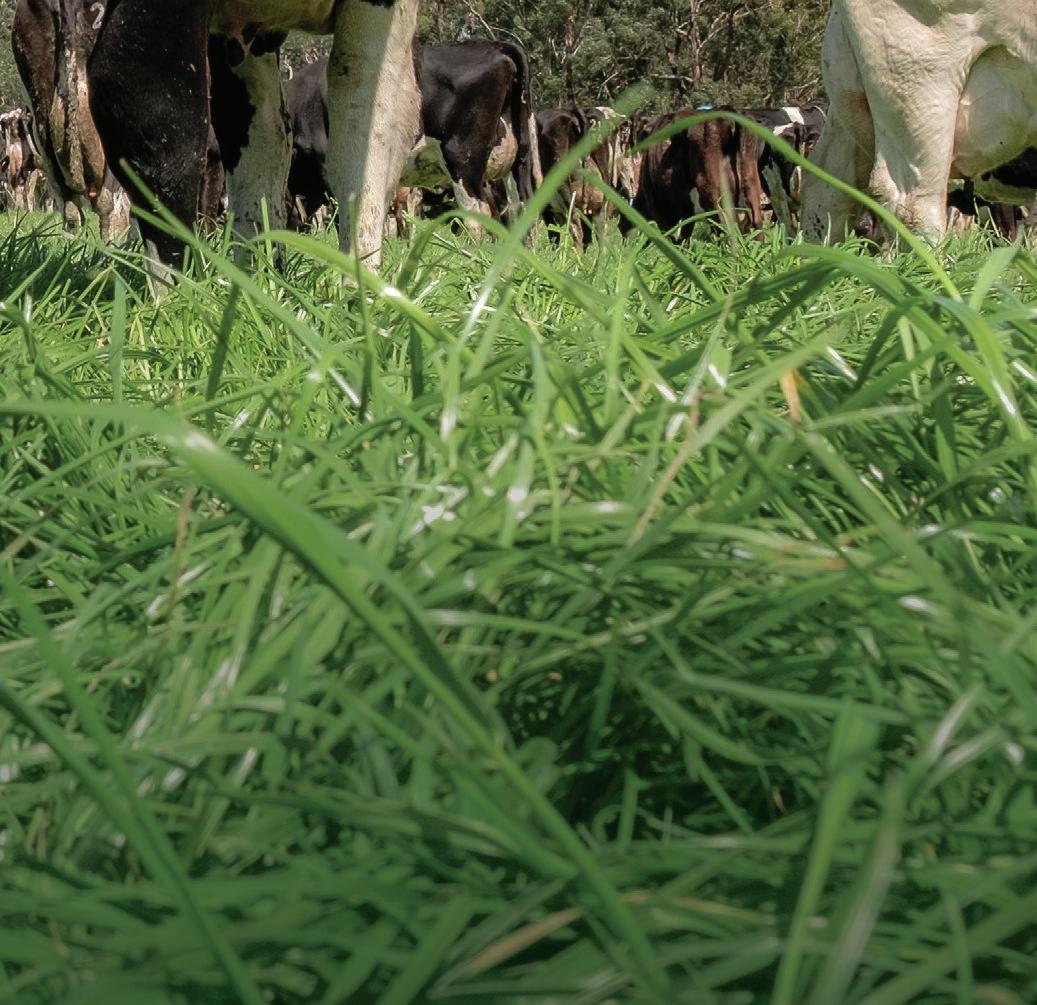
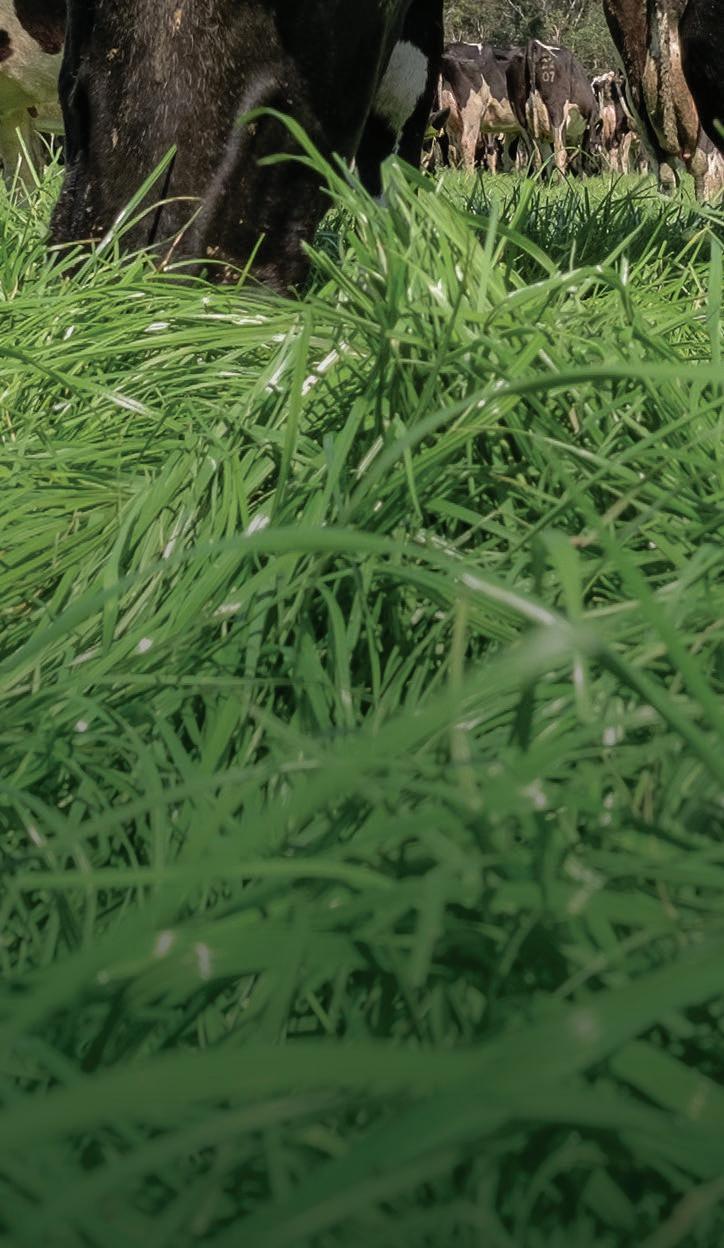













Arise is the newest late maturing tetraploid Italian ryegrass bred by Barenbrug. Arise provides quality feed throughout the year, with exceptionally quick establishment and wide growth period.
Key features

Tetraploid Italian ryegrass
High forage yield – even better than Aston
Fast establishment & high performance across all seasons
• Good carry-through to second year

• • Fast establishment & high performance across all seasons

Key Benefits for Dairy Systems
Grow more home-grown feed to make more milk
Strong early-growth to recover after summer




Second year pasture, possible in a good season#
Second year pasture, possible in a good season






BY SOPHIE BALDWIN
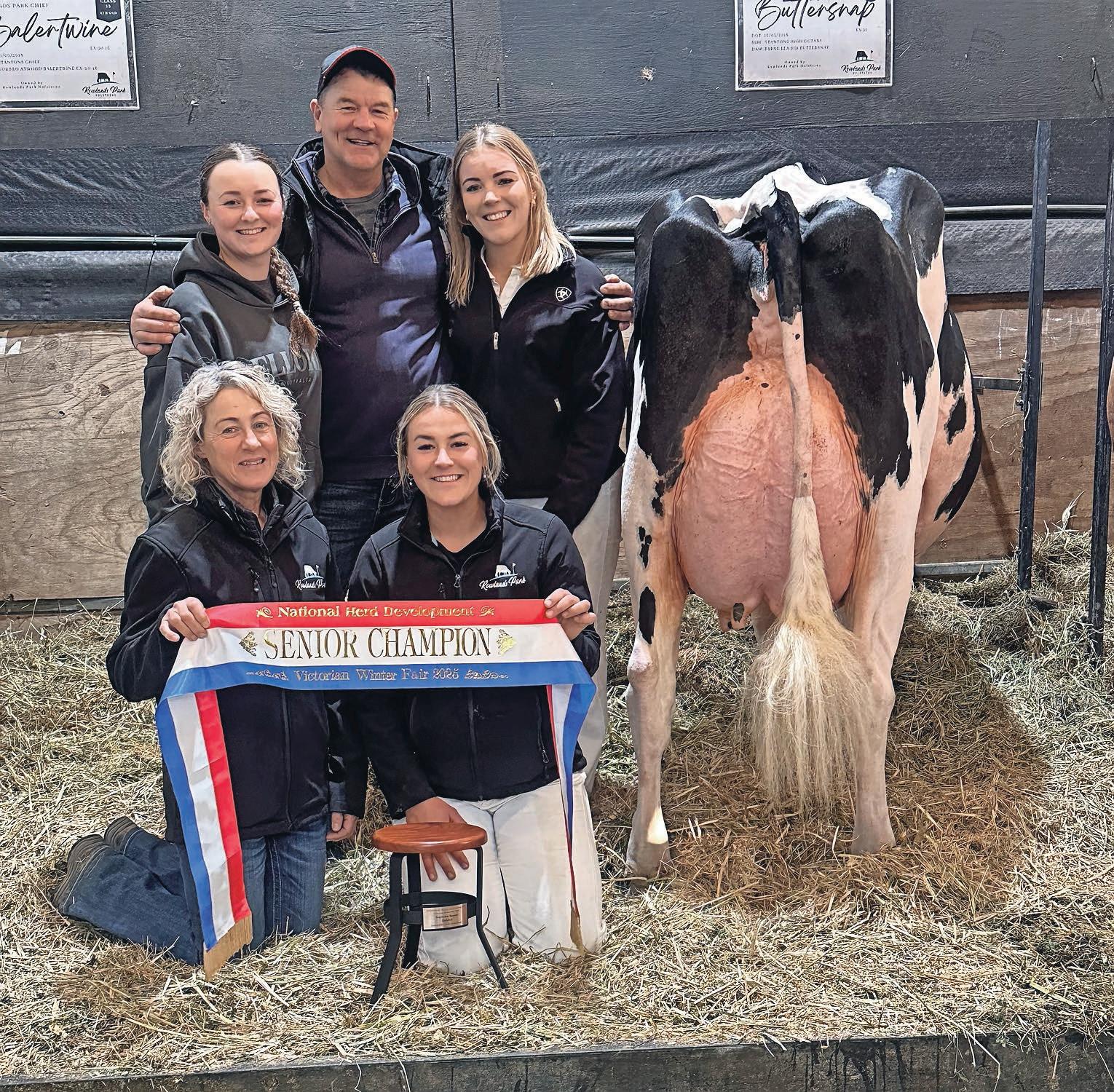
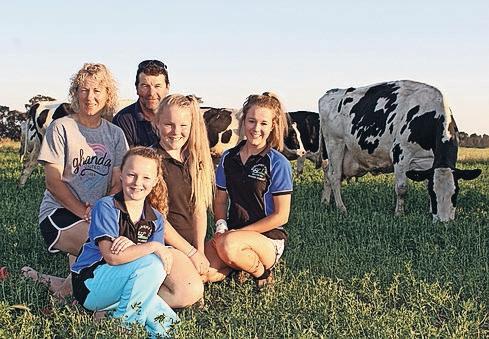
IT WAS definitely a family affair for the Wishart’s when they recently received their Master Breeder honour from Holstien Australia.
The award is an amazing achievement for first generation farmers Rick and Tina who are ably supported by their capable girls Emmalea, Kaitlyn and April.
“It has been a long journey to get here,” Rick said.
“We started in the industry with virtually nothing when we transitioned my grandfather’s former sheep farm into a dairy farm.
“We trucked a second-hand 24 swing-over from Mt Gambier and started milking in 1997 with a cross-breed herd.”
It wasn’t until Rick gave up footy and decided to find a new hobby that breeding and a love for Holsteins began.
After attending an on-farm sale at Woodlawn in Finley, Rick bought his first young cow, Mandel Coconut, who was 87 points and had great production.
That purchase inspired the couple to get interested in breeding and they started to use better bulls and appendix some of the herd.
As they began to build up numbers, they outgrew the dairy farm at Macorna and purchased a second farm at Mead.
At the time, they were milking around 290 cows, which was taking over three hours in the old shed.
The new farm was 158 hectares, and more importantly, had a 44-unit rotary dairy.
The purchase also enabled them to increase the herd and continue their love of breeding.
“While Rick initiated the purchase of some good Holstein cows, we never intended to show them, at the start it was more about value adding to the business,” Tina said.
The girls started to show an interest in the cows they purchased, which evolved into showing at a few of the local shows.
Tina reckons the girls would have been three, five and seven when they started.
In 2026, the girls capably ran the Rowlands Park 2026 International Dairy Week string which consisted of five milkers and three heifers and resulted in honourable mention senior champion cow, senior leader with Rowlands Park Cadillac Mabel, honourable mention intermediate champion Rowlands Park Crushabull Showbelle and honourable mention senior champion with Rowlands Park Jagger Cinnamon.
Jagger Cinnamon was also reserve champion in the Victorian on-farm challenge in 2025.
The girls are proud their entire string did so well and were bred by their family.
Their success can be attributed to some strategic cow family purchases and consequent breeding decisions.
Rick said Woodland Doorman Cinnamon had bred very well for them and is the granddam of four-year-old honourable mention Jagger Cinnamon.
“We have gone on to sell three different animals from the Cinnamon family and they have gone to Tasmania, NSW and Colac.”
Kaitlyn said Doorman Cinnamon was a big, open, strong and powerful cow with many great traits.
“She is so well-balanced and such a great cow, it has been easy to breed from her,” Kaitlyn said.
The Mabel family has also proven to be strong after a purchase from Jack Bramley from Paravale.
“The Mable family have been with us from very early on,” Tina said.
Shottle Mable is 15 years old and still roams the farm, although she is now semi retired from milking.
She was the first champion cow the family had, after winning the title at the Kerang show.
“The honourable mention in the senior leader class in the youth show goes back to Shottle Mabel.”
The Wisharts have also established the Lotus family after purchasing Fleays Doorman Lotus.
“We have taken her daughters to the last two IDWs and they have done well too,” Rick said.
When it comes to breeding decisions, April has stepped up to help her Dad.
“Dad and I both have a say with the breeding, but if he is not around, the decision is left up to me to decide,” April said.
Everyone agrees April has a great eye and she knows the cows and their traits very well, often picking out the cows for the show team, including Crushabull Showbelle, who wasn’t even halter trained before IDW.
The family breeds for type, function and production.
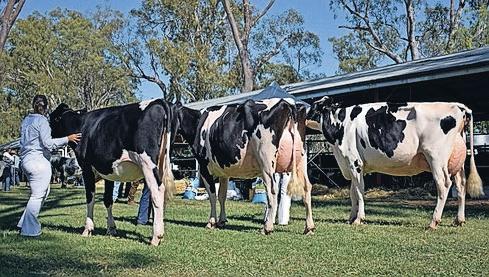
“Like everyone, we want to have strong, functional cows with great feet and legs so they can live long lives,” Emmalea said.
“We keep an eye on the data, especially around fat and protein, and we will use a production bull accordingly if needed,” Rick said.
Byrne Lea Octane Buttersnap was the Sydney Royal champion in 2024 and Winter Fair champion last year and is also a firm family favourite, along with Rowlands Park Chief Balertwine out of Gorbro Atwood Balertwine, who was best udder and honourable mention at the Victorian Winter Fair.
Today herd numbers sit up around 470 and both Emmalea and April work on the family farm.
Emmalea is focused on the feed side of things and rearing the calves, while April is basically 2IC and manages the place when Rick
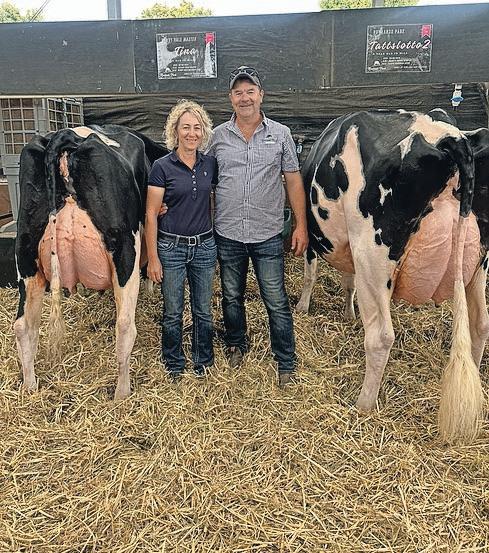
and Tina aren’t around.
Kaitlyn might have flown the coop to Maffra, but she intends to come back to Cohuna one day.
“Us three girls work really well together, and it would be great to come back home one day, but it is also great we each have our own little interests — Em’s farm still has the dairy infrastructure, so there might be an opportunity for us to expand there one day,” Kaitlyn said. Emmalea chips in, “we will just keep building the empire,” she laughed.
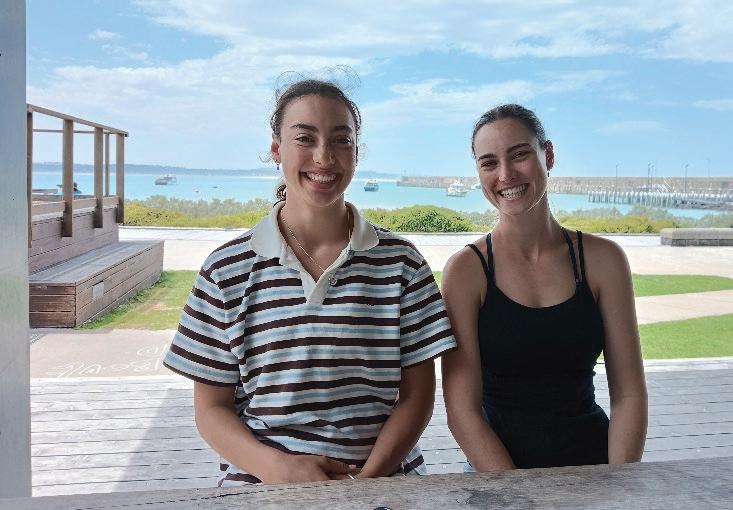




WANGOOM SISTERS Abbey and Ella
Titmus are helping to fill a growing void across regional Australia for large animal and mixed practice vets.
Australia is struggling through an ongoing veterinary workforce shortage, particularly in regional areas and in large animal practice,
with many regions unable to meet demand for services, and many job vacancies remaining open for more than a year.
But Ella and Abbey are keen to play their part in addressing the problem.
Ella has completed her five-year veterinary science studies at James Cook University in Townsville and is starting her first job in Moss Vale, NSW, while Abbey is set to start the second year of her veterinary course at Charles Sturt University in Wagga Wagga.


Both sisters, who come from a beef farm at Wangoom, are being supported by DemoDAIRY Foundation scholarships to complete their studies.
Ella, 23, will be working with five other vets at Southern Highlands Veterinary Hospital, one of the few large animal clinics in an area that serves 50,000 people and many large and hobby farms.
“There’s a bit of dairy and a lot of hobby farms, so I will get really good at my cattle medicine skills,” she said.
In the long-term, Ella hopes to return to south-west Victoria and concentrate on dairy.
“I’ve done placement with three or four clinics in the south-west, which has been fantastic, but wanted to get experience in another area,” she said.
“I’ll be doing a good mix of large and small animals, so I’m pretty excited to get into it.
“There’s a big push for rural mixed vets at the moment, which is good, because that’s what I want to do.”
Ella will be the sixth vet working in the practice.
“I’ve met them, and I’m confident it’s going to be a very supportive workplace,” she said.
She described the DemoDAIRY Foundation scholarship as a game-changer.
“We don’t get paid for placements and have to fund them ourselves, so the support has been invaluable,” Ella said.
“I cannot express enough the difference the foundation is making to regional students and creating such a positive impact on our future.”
Ella was drawn to the Townsville course because of its focus on large animal skills.
“We had a farm on-site which gave us amazing opportunities, such as preg testing, and now I’m really keen to go out and put that in practice.”
She’s happy her younger sister is following in her footsteps.
“We both wanted to do it,” she said.
“Coming from a farming property had a big impact on both of us.
“We had lambs and calves to rear as we were growing up and that cemented what we wanted to do.”
Abbey, 20, returns to study on March 1 and said she was inspired by Ella’s experiences.
“I was watching the cool things she was doing and her placements and it really convinced me it was what I wanted to do,” Abbey said.
The sisters grew up on a hobby farm which was expanded to include about 100 beef cattle in 2020.
“I was spending more time on the farm and saw what Ella was doing and the pieces all fit together,” Abbey said.
“Those couple of years on the farm before I finished Year 12 really made me aware of the industry, and I found out there was a shortage of large animal vets.
“I have a passion for animals and can’t imagine myself doing anything else.”
Her first year of study has laid the groundwork and Abbey is looking forward to more vet-related subjects in her second year.
She said the DemoDAIRY Foundation scholarship had been immensely helpful.
“Because I’m living on campus, most of it went on rent, which took a load of pressure off and meant I could spend more on groceries and text books and other learning resources.”
After her course, Abbey expects to follow Ella into a mixed practice and also has longterm plans to work with large animals in south-west Victoria.
APPLICATIONS FOR the 2026 intake of Rabobank’s Business Management Programs – the Executive Development Program and the Farm Managers Program– are now open.
Designed for progressive farmers at a range of career stages, the two programs being offered — the Executive Development Program for farm business owners or senior managers and the Farm Managers Program for up-and-coming farmer leaders — aim to provide participants with the latest insights in business management, with a specific application to farm businesses.
Rabobank group executive for Country Banking Australia, Marcel van Doremaele, said more than 1500 primary producers from both sides of the Tasman had participated in the programs over the past 27 years.
“The programs are extremely beneficial for primary producers as they allow them the opportunity to step away from the daily demands of their operations and focus on creating strategies that will keep their businesses strong and adaptable in the future,” he said.
“Both programs also give participants the chance to connect with other primary producers from various sectors in both countries.
“Often, the relationships formed during the programs last well beyond the course itself.
“Many past participants say that these lasting connections are one of the highlights of the program, and we support this by holding occasional alumni events for our Business Management Programs throughout Australia and New Zealand.”
Marcel said Rabobank’s ongoing support for the Business Management Programs was designed to help farmers expand their operations and increase their resilience.
He said this year’s FMP program, for young and emerging farmers, will be run in Victoria’s Yarra Valley from June 14 to 19 this year.
The program is designed to strengthen leadership and operational capabilities and equipping participants for future management positions.
It features sessions on communication and influencing strategies, conflict resolution, sustainable farm business planning, financial management, and personnel management.
The EDP runs as two, one-week long residential modules about a year apart, will be held at Macquarie University in Sydney.
The first module will run August 23-28, while the second is scheduled for late July 2027.
The program focuses on long-term strategies, using sound economic reasoning when setting goals and making decisions, and cultivating strong leadership abilities.
“During the interval between the first and second modules of the program, participants are required to develop a management project that identifies and evaluates opportunities for improvement within their respective farming operations,” he said.
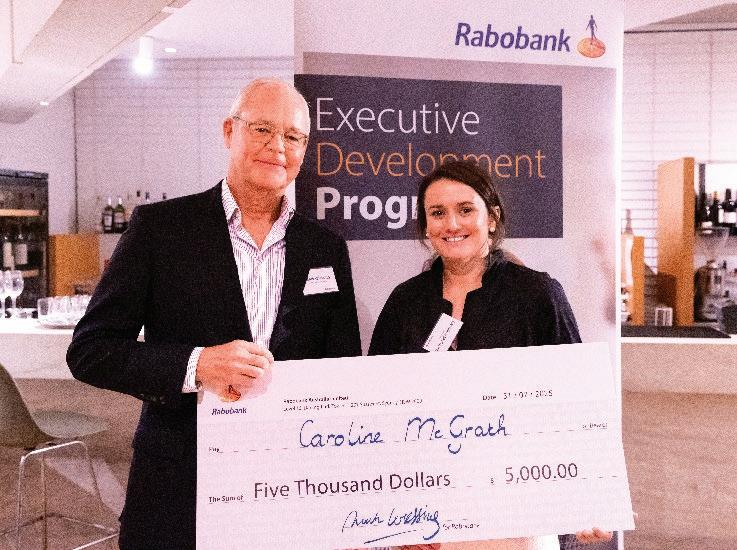
EDP alumni and winner of the 2025 Dr John Morris Business Development Prize, Caroline McGrath, said the course was pivotal in developing her career and taking her corporate governance and strategic business planning skills to the next level.
Caroline said she applied what she learnt to refreshing the company’s strategic plans.
“One of the highlights of the EDP was the people, and sense of community that was formed over the two-year program — it is an exceptional mix of people from across Australia and New Zealand, from across all
sorts of agriculture businesses,” she said.
“The relationships formed over the two years provides a really special network and a continued sounding board into the future, having learned the same things and gone through the same experience.”
She said she would absolutely recommend the course to the next generation
With numbers on each course limited to maintain group dynamics, positions on the programs are set to be highly contested, with farmers selected to attend from a
wide range of commodities and geographical regions across Australia and New Zealand. Further information and applications can be found on the Rabobank website.






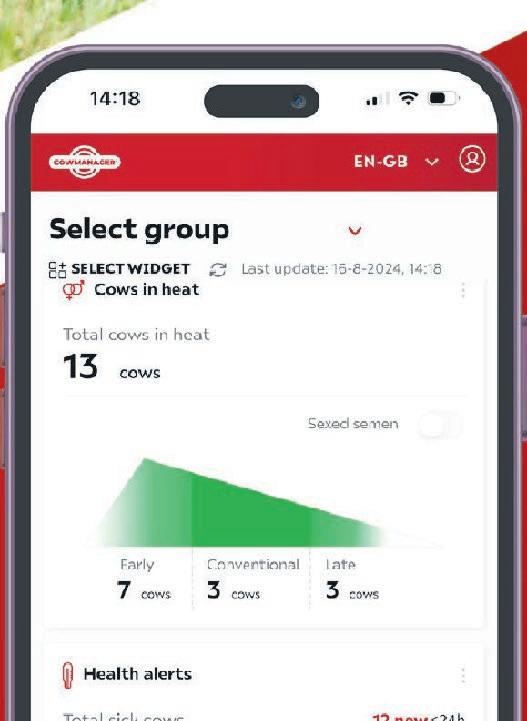
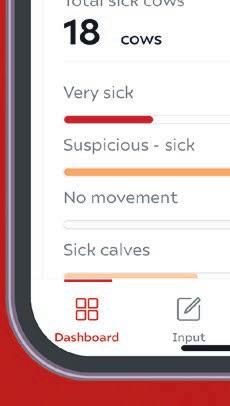
You’ve got all you need in the palm of your hands with the CowManager app. Precise conventional and sexed semen use with the insemination window, early health alerts for mastitis and pneumonia - 24/7 herd insights.
help you stay ahead of the herd with more accurate and earlier alerts.







BY SOPHIE BALDWIN
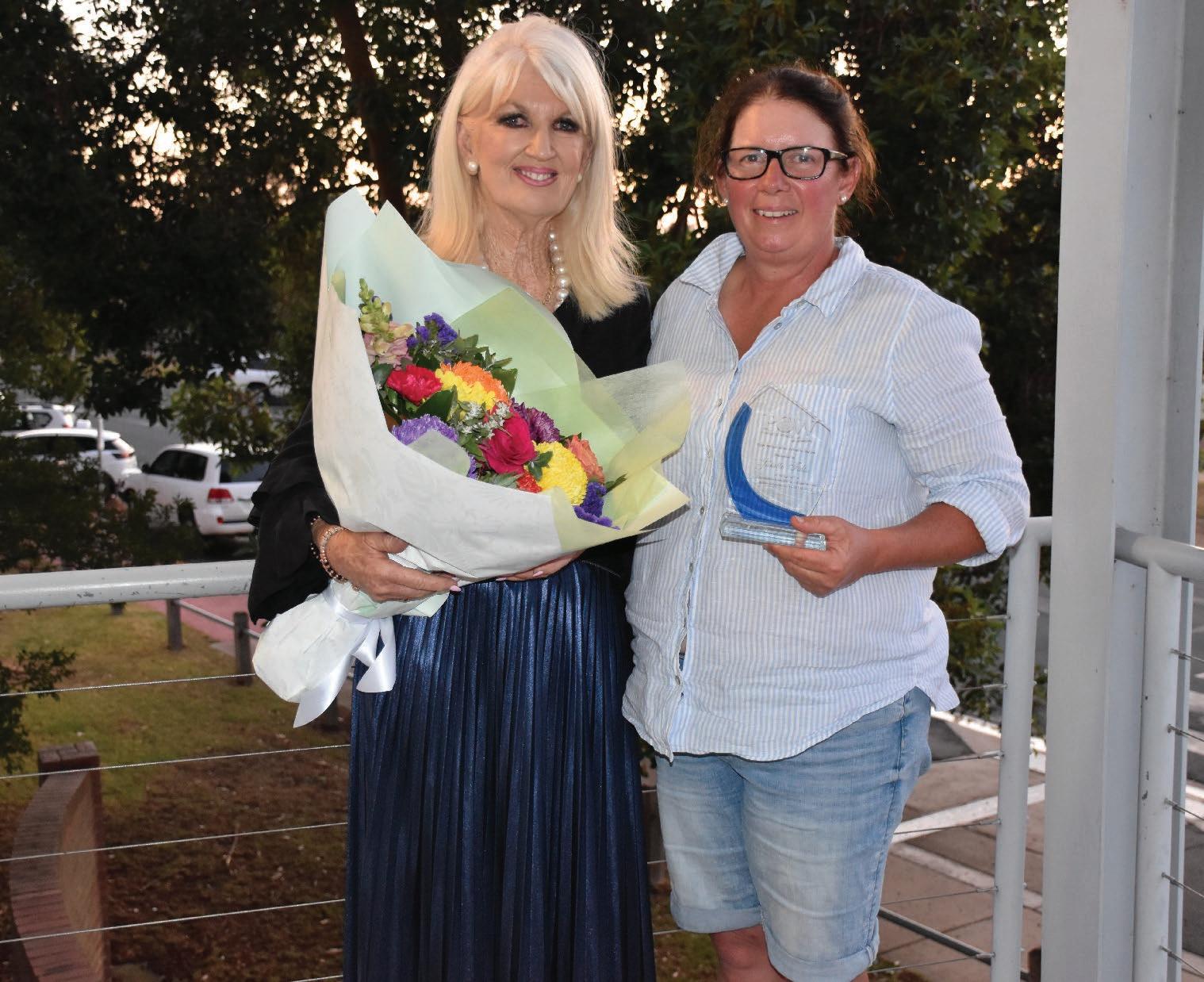
JANETTE ‘NETTE’ Falls has been awarded the Power of Women in Dairying Bette Hall award for 2026.
The award recognises resilience and adaptability and just like Bette, Nette has that by the bucket.
She grew up in Gloucester and was helping show cows from the time she could walk – this helped establish a love and passion for Jersey cows that has endured many decades.
At 16 she passed the Jersey Judging School and would go on to judge a countless number of shows across the country, including Toowoomba and Canberra Royal. She has judged many On Farm Challenge finals across different breeds.
In 1968 she established ‘Pasadena Jerseys’ and has been a member of the Jersey association for over 57 years.
In the mid 1980s, she moved to the Southern Riverina with her family, milking 250 cows at Blighty, while raising her three children.
Over the years Nette has bred many excellent Jersey cows and she has a long list of class winners and champions including the Southern Riverina Jersey Cattle Club On Farm Challenge.
Noted cow families developed by Pasandena Jerseys include the Beautiful, Olive and Mistletoe.
Family remains everything to Nette and she has also shared success with the Charo family with daughter Lauren of Topshelf Jerseys and Suzie of Goldbar Jerseys.
Nette has even dabbled in breeding
stud Holsteins and Illawarras, under the Abbotsbury prefix.
In 2013 Nette dispersed her dairy farm at Blighty and is now based in Finley where she works for Elders as a dairy specialist
and real estate agent.
Janette has been the Southern Riverina Jersey Cattle Club president for many years, and chief dairy steward of the Finley All Breeds Show, and also helps out the Deniliquin Show Committee.
Nette was responsible for establishing the fancy dress class at International Dairy Week after watching her granddaughters sit on the sideline.
“I was watching my granddaughters’ little eyes watching everyone else and I thought they need something to aspire to as well,” Nette said.
The fancy dress class has gone viral around the world with tens of thousands of views online.
Nette is well known for her nurturing and support of the next generation of farmers.
She was shocked but equally thankful to receive the Bette Hall award.
“I really don’t feel qualified and it blew me away,” Nette said.
“I love what I do and cows are in my DNA - they are my comfort.”
Nette said there had been so many people who had helped her over the years that she didn’t want to name them for fear of leaving someone out.
“Hard times bring out the best in you and I have been on my own for three decades now.
“It was always sink or swim and I was always going to swim – I learnt to back myself,” she told IDW’s Around the Barn.

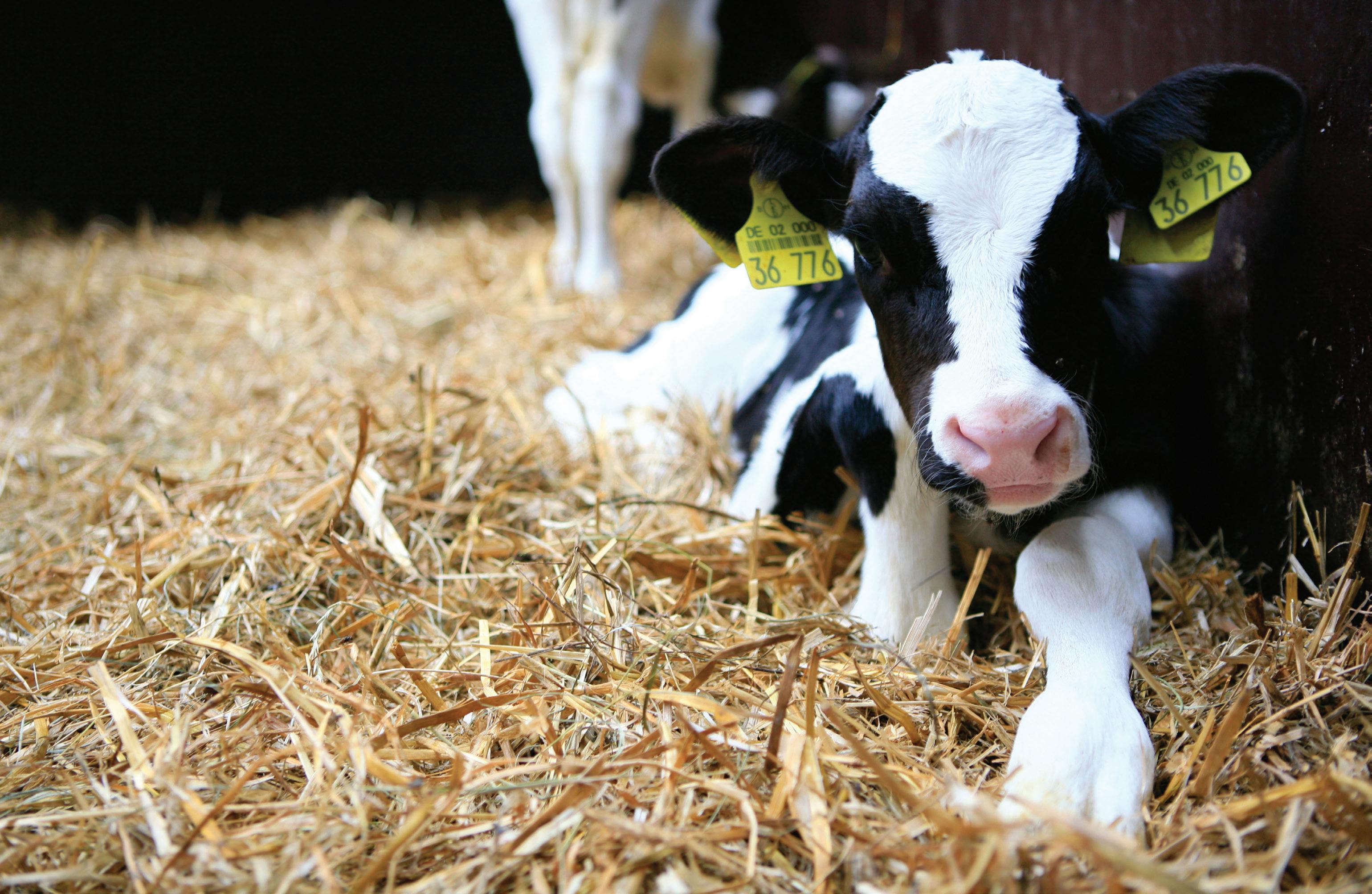
The first 3 months are so important to your calves’ future the herd, so don’t compromise, in use Veanavite No1 Calf Pellets.





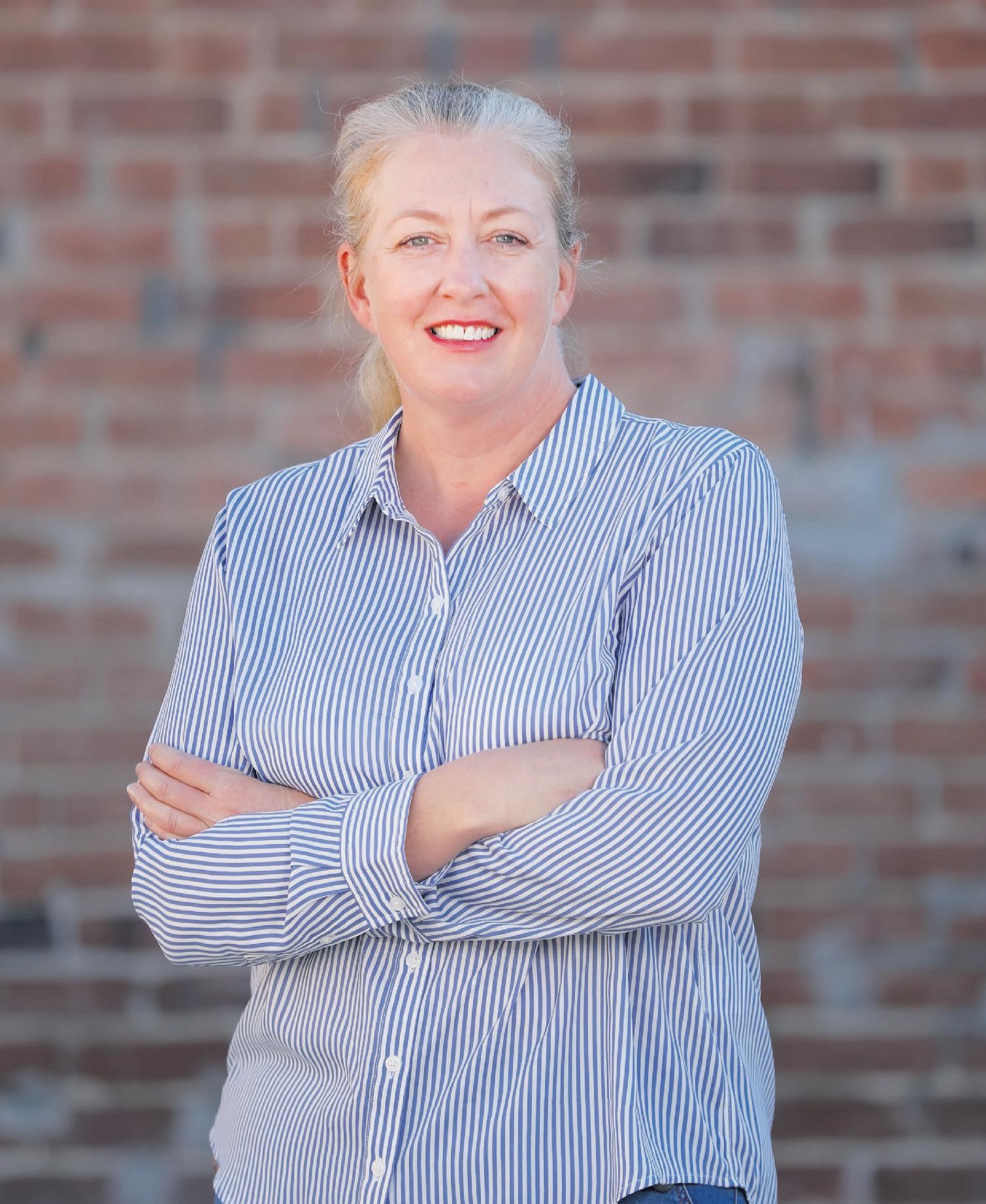
AFTER NEARLY 10 years in the United States, Dr Emily Piper is looking forward to reconnecting with Australian farmers.
As DataGene’s new CEO, Emily believes the organisation is well-placed to continue providing genetic evaluation and herd improvement services that make Australian dairy farm businesses more profitable.
And she thinks the sky’s the limit in developing additional data insights to help all agricultural industries.
Based with Zoetis in Kalamazoo, Michigan for the past nine years, most recently heading its Business Process and Strategic Programs for its Precision Animal Health group, Emily’s career has centred on developing and commercialising genomic and precision technologies for livestock producers.
She started as a pioneer in the commercial delivery of genomics in Australia.
With a PhD in veterinary science, she went on to lead the Animal Genetics Laboratory at the University of Queensland, and in 2014 joined Zoetis Australia as technical services’ manager for Genetics which led to her US role.
Now she’s looking forward to being back in front of the Australian dairy industry, listening to what farmers want and need and determining how DataGene can help.
“It has been wonderful working in the US, but it is not where my heart is,” Emily said.
“I’m looking forward to coming home and working with Australian farmers.”
Emily’s interest in the field stems back to her university studies.
“I had a professor at Sydney Uni, Chris Moran, who in our third-year biotech classes started talking about molecular genetic markers and the GeneStar technology which was new at the time.
“I ended up doing more studies in genetics and that was that.”
Her grandparents were fine wool Merino producers and her father’s family are still on sheep, cattle and cotton farms.
“That’s a large part of why I was inspired by agriculture and wanted to spend my career in it,” she said.
“My parents moved to the city and never looked back, but I’ve always had a passion for the land and agricultural production.”
Emily has been working alongside DataGene since its transition from ADHIS in 2015.
In her role with Zoetis Australia, she teamed up with DataGene to launch genomic evaluation for female dairy cattle.
“DataGene had been evaluating bulls and young sires, but we believed there was an opportunity to take the technology and apply it for female selection and management purposes,” she said.
This was the start of a fruitful connection.
“I have had a long relationship with DataGene and know the incredible impact it has had on the industry over the past 10 years and the value that has been given back to farms from genetic gain and improvements in herd management services.
“It has always been a great leader in the industry, applying data sciences and
genetic technologies for the benefit of Australian agriculture.”
Emily said both the prospect of leading DataGene and wanting to return to Australia led her to the role.
“The stars aligned,” she said.
“It has been a fantastic nearly 10 years; I learnt a lot, met a lot of great people and had some great experiences with Zoetis.
“My husband and I weren’t in a huge hurry to return to Australia, but the plan was never to be in the US forever.”
She said one of the reasons she was keen to work with DataGene was the loyalty, trust and recognition it has in the industry.
“In my career, I’ve always looked to people in the DataGene team for advice,” Emily said.
“I’m genuinely excited to work with these well-respected experts in their fields, applying and extending technology that is underpinned by the world-class research we have in Australia.
“I believe that’s why farmers and customers also want to work with DataGene.”
Emily said DataGene was uniquely posi tioned to continue to provide value to the Australian dairy industry from its provision of genetic evaluation and herd improvement services.
“The foundation work done in the data aggregation space has set the stage to provide other data insights to Australian dairy farmers that will make their operations more profitable into the future,” she said.
Emily sees science and farming continuing to work hand-in-hand and said there were opportunities for DataGene to apply expertise in data aggregation and software development, to facilitate the development of tools that bring together capabilities to benefit farmers, not just in dairy, but in broader livestock and agri cultural industries.
“As an industry, we have been doing genom ic testing for about 15 years, but I would offer we’re still not as good as we could be at making that data accessible and usable for farmers in the software that they use every day on farm to manage their animals,” she said.
“There are significant opportunities, not just in dairy genomics, but in the way data is collected, transformed and used across agri culture to become an enabler and value-add.”
“I have had a long relationship with DataGene and know the incredible impact it has had on the industry over the past 10 years and the value that has been given back to farms from genetic gain and improvements in herd management services.” — Dr Emily Piper




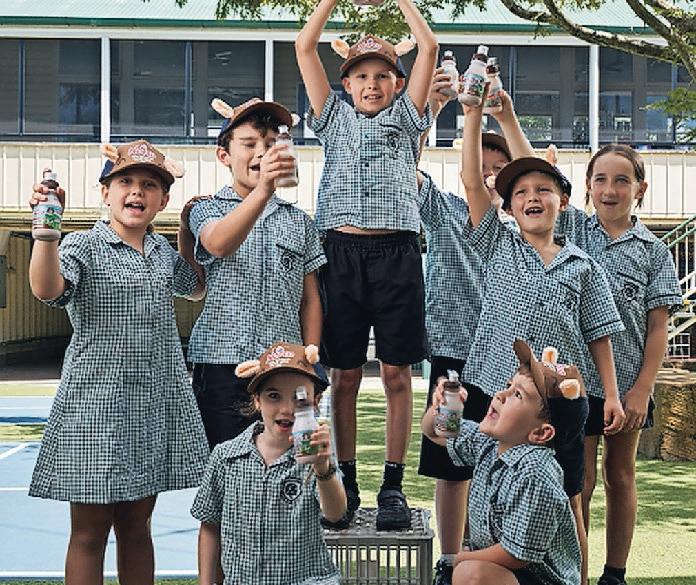
A NEWLY elected Brisbane primary school captain has cemented his spot in the peer hall of fame by making good on a campaign promise of “free chocolate milk for everyone” with a helping hand from iconic Australian dairy co-operative, Norco.
Geebung State School celebrated its annual badge ceremony for new school leaders on February 17, with a special surprise for students planned between the new school captain and Australia’s oldest and last operating 100 per cent farmer-owned dairy co-operative.
Young future leader, 10-year-old Mitchell Gray, wrote to Norco after telling his peers in a campaign speech that, if elected, his first order of business would be to turn all the school bubblers into chocolate milk. Now voted in, he was determined to stay true to his word.
“It was my campaign pledge – and now that I’ve been elected as school captain, I really wanted to deliver on my promise to the school,” Mitchell said.
“Even if I can’t actually put chocolate milk in the bubblers, I still wanted to give everyone in the school a chocolate milk to celebrate. I thought it would make everyone really happy, and it would be the best surprise ever.”
Demonstrating leadership well beyond his years, and not prepared to settle for anything but the best, Mitchell proactively reached out to Norco to help make the magic happen.
As a result, he handed out a free chocolate milk to all 375 students when he received his

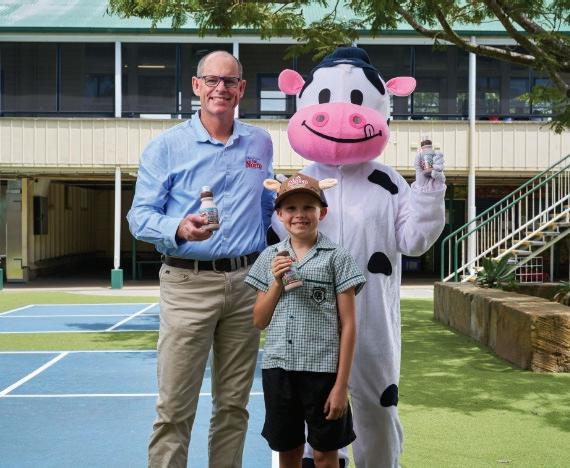
2026 school captain’s badge at the official badge ceremony.
Geebung State School principal Tracey Douglas has commended the initiative of the aspiring young leader and his commitment to upholding his campaign promise,
Hot water, milk cooling and harvesting make up 80% of dairy farm energy use. Using energy smarter with Flow Power can help cut costs, boost energy efficiency and support a greener future
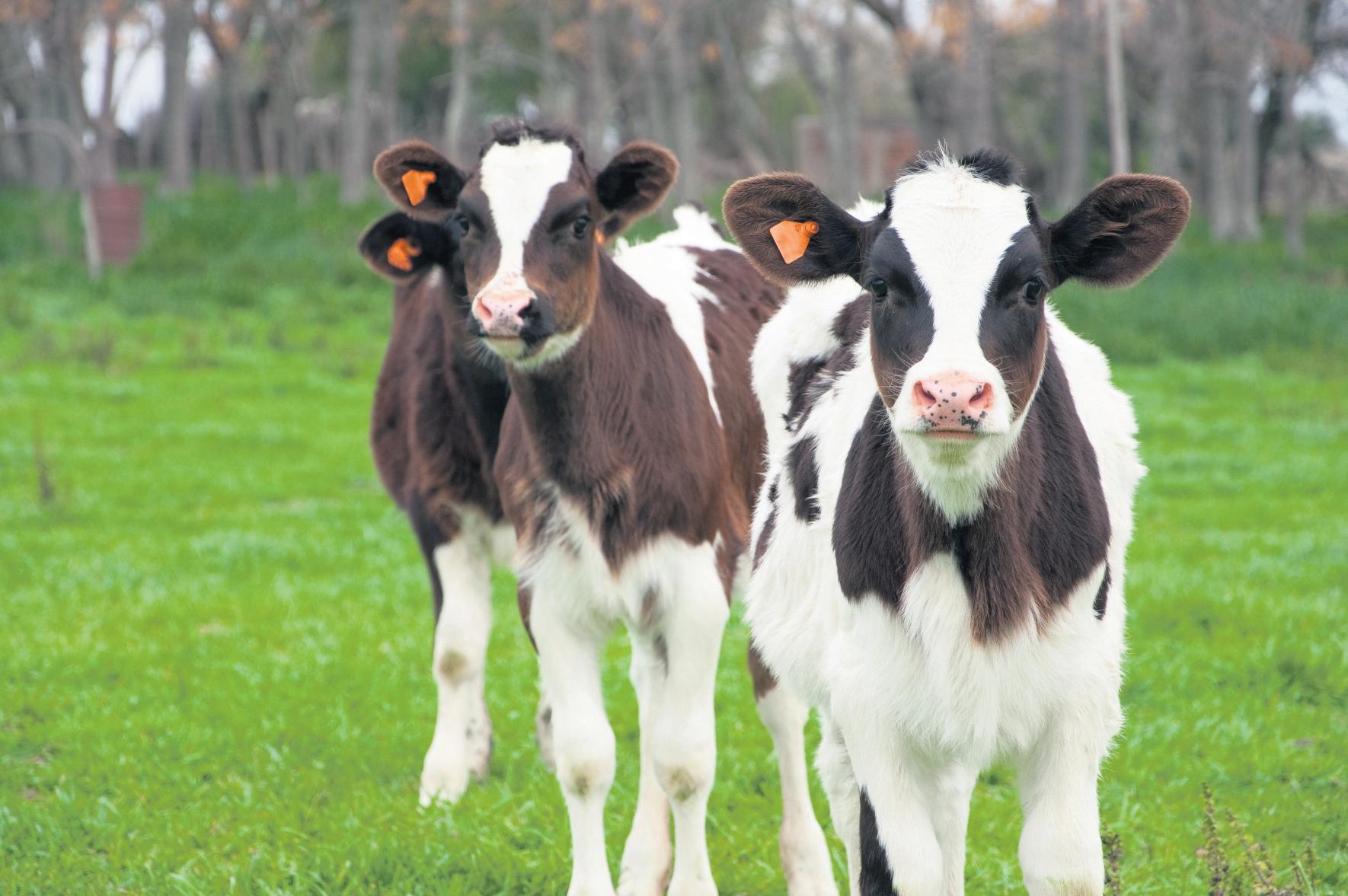
extending her thanks to the co-operative for its community support.
“When Mitchell’s speech promised chocolate milk for all, we didn’t necessarily think anything would come of it – but this will definitely be a story told for years to come
in the Geebung State School community,” Ms Douglas said.
“It is wonderful to see that the future is in good hands with little leaders like Mitchell. We are so impressed by his school spirit and for creating such a fun memory that will last a lifetime for every single student.”
To help bring the magic to life, Norco –alongside the co-op’s beloved Culture Cow mascot – handed out bottles of its Mighty Cool Chocolate milk, made with children’s needs in mind, using lactose-free, low-fat milk and no added sugar, artificial colours or flavours.
Norco chief executive officer Michael Hampson said milk is a great treat for active kids and supports recovery in growing bodies.
“We couldn’t be happier to have had the chance to work with Mitchell to share the joy of Norco milk to all of his classmates and the wider Geebung Primary School community,” Mr Hampson said.
“Growing kids thrive from nourishing, high quality milk, and our farmers make sure that’s exactly what we deliver – the perfect fuel for active young Aussies to recover after a busy day of running around at school.
“If this is reflective of the calibre of our next generation of leadership, then I think it’s safe to say that the future looks extremely bright.”
Mitchell was presented with his school captain’s badge by State Member for Aspley Bart Mellish at the badge ceremony assembly.
Go beyond peak and off-peak contracts by accessing cheaper, cleaner energy during daytime hours.
Shift energy-intensive operations to times of low electricity prices. Small changes can lead to significant savings.
View energy insights and control your consumption in real time via our customer portal and hardware installed on site

Reduce your reliance on grid energy and generate and store your own electricity with rooftop solar and batteries
STRENGTH, STATURE, positive milk, strong health traits and genetic diversity — CSCKirky is a bull bred for the future of the Jersey breed.
Sitting among the breed’s top genomic bulls, the newest ABS Australia Jersey sire is already generating interest.
ABS Australia sales representative Alan Blum said with a pedigree anchored by Pilgrim and Sturgis for strength and David for production, CSCKirky blends performance with longevity and health — a combination increasingly sought in modern Jersey breeding programs.
“Kirky is a total performance sire with the ideal blend of positive milk with positive deviations and amazing type, adding body depth, chest width and great udders — all while improving teat length,” he said.
“He’s high for daughter fertility, farmer likeability and survival — the health traits linked to profit and management ease.”
Health was front-of-mind for breeders Paul, Lynette and Adam Lenehan when planning the joining that produced Kirky.
The decision paired Murray Brook Kate 5024 — a Pilgrim daughter averaging more than 7000 litres per lactation and backed by 10 generations of Murray Brook breeding — with Sturgis, a sire recognised for balanced type and strong health credentials.
“We want cows to survive in the herd as long as they can, have low — or no — cases of mastitis and fertility is crucial to get extra lactations,” Paul said.
“These are all health traits that are
important to us and the Jersey breed now.”
The Lenehans milk about 500 cows across two herds at Crossley in south-west Victoria.
CSCKirky is the ninth bull the family has sold into artificial insemination, with strong interest in the Murray Brook genetics stemming from a consistent focus on durability, production and pursuit of a well-balanced cow.
CSCKirky’s maternal line reflects that intent.
His granddam by David, averaged 7362 litres per lactation, 650 kilograms of milk solids, at 480 kilograms liveweight and calved annually.
His full sister calved for the first time this year and is projected to exceed 6000 litres in her first lactation while classifying 85 as a two-year-old.
With a sire pathway incorporating both Australian and United States bloodlines, CSCKirky also offers valuable genetic diversity, with Valentino appearing several generations back in the pedigree.
For Paul, this year marks 60 years of milking cows.
The Murray Brook stud was formally established in 2020 following the genetic recovery process — a milestone reflecting decades of disciplined breeding and long-term investment in quality cows.
“My father bred Jerseys and I started once I left school,” Paul said.
“I’ve pretty much always used the best bulls of the day for 60 years, and it’s really starting to show in the genomics of the cows now.”
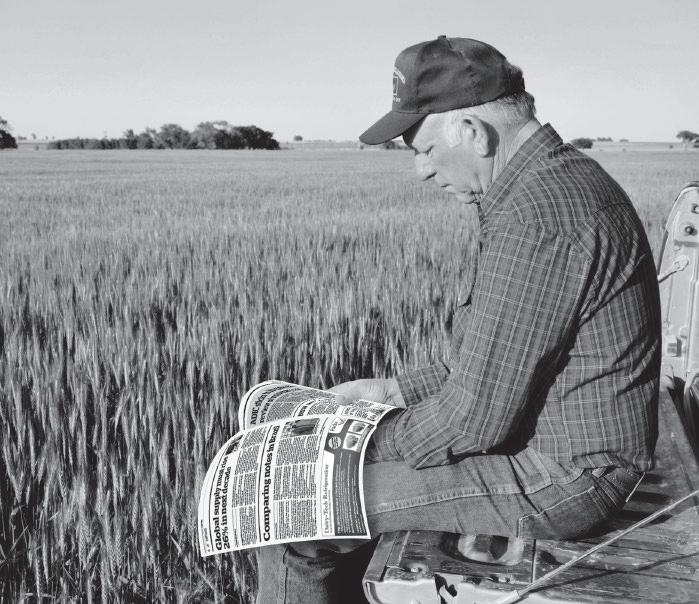
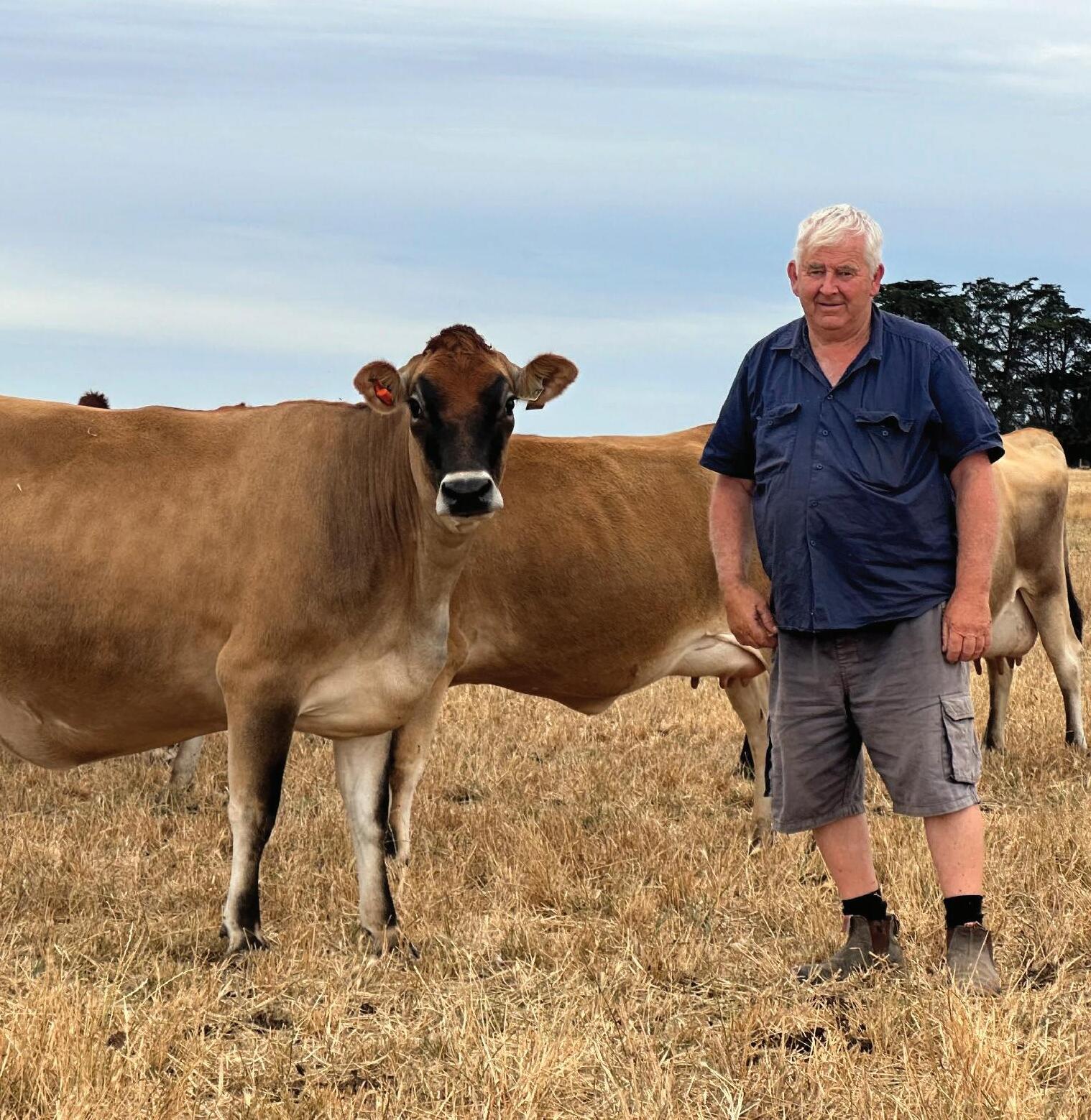












Systems Australia are the Australian AKSA distributor for a large range of Diesel, Gas & Hybrid generators for stand-by and prime applications. No matter what style or size of generator you are looking for, Power Systems Australia are your Generator specialists.





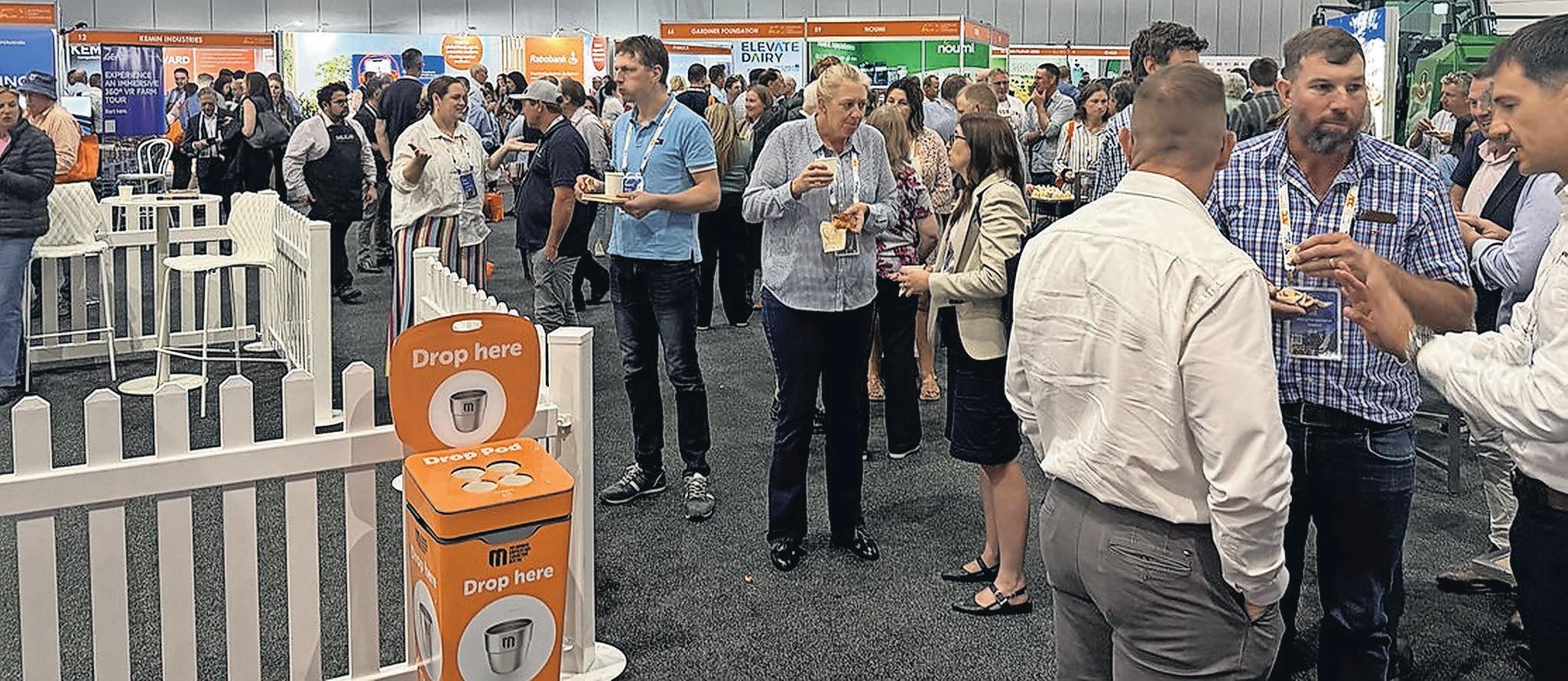
BY SOPHIE BALDWIN
MORE THAN 900 people attended this year’s Australian Dairy Conference — a record for the event.
Held in Melbourne, the two-day event featured a range of guest speakers covering a variety of topics in the areas of leadership, sustainability and tech and innovation.
ADC board member and conference chair Ella Credlin said the theme ‘more than milk’ referred to a complex and exciting industry, legacy and the human side of farming.
“Dairy today is about more than what we
produce,” she said.
“It’s about how we lead, how we treat people, how we care for animals and the land and how we earn trust — milk is what we produce, trust is what we earn and legacy is what we leave behind.”
Dairy business consultant Fiona Smith spoke about the characteristics she saw in the top 25 per cent of farmers, drawing from Dairy Farm Monitor Project data.
She said profitability wasn’t actually defined by size or how many cows milked, but rather the system in place and how well it was resourced and implemented.
She said successful farmers knew and managed every aspect of their business, were
BY SOPHIE BALDWIN
DAIRY CONSULTANT Fiona Smith has spent many years helping farmers across Australia navigate their business, assess profitability and deal with issues including succession and scenario planning.
She was a guest speaker at this year’s ADC conference.
Fiona said while there is always a lot of variability in the way farmers manage their own business, she has noticed some consistent themes amongst the top 25 per cent of farmers.
“A good farmer chooses and manages a system that suits their physical and financial resources and they nail it. They work in their business, manage all aspects and are usually a couple of weeks ahead of the pack ‒ they aren’t farming from a seat on their veranda,” Fiona said.
She said when it came to making early decisions, it didn’t necessarily mean acting out the decision a couple of weeks earlier then everyone else, but rather planning and setting the wheels in motion.
“They also have good decision making skills and focus on productivity and terms of trade and if you are not prepared to put the work in profitability will suffer,” Fiona said.
at least two weeks ahead of others in their decision-making and were always focused on productivity.
Jana Hocken from the LeanFarm project in New Zealand spoke about the principles of Lean farming and how it enabled her family business to move from a $500,000 overdraft and a 11.2 working fortnight to no overdraft, a 5.2 working week and purchasing a new farm last year.
NFF interim chief executive Su McCluskey spoke about leadership, stating you either won or learnt, and you had two ears and one mouth for a reason.
Horefield dairy farmer Deanne Hore said attending the conference enabled her to catch
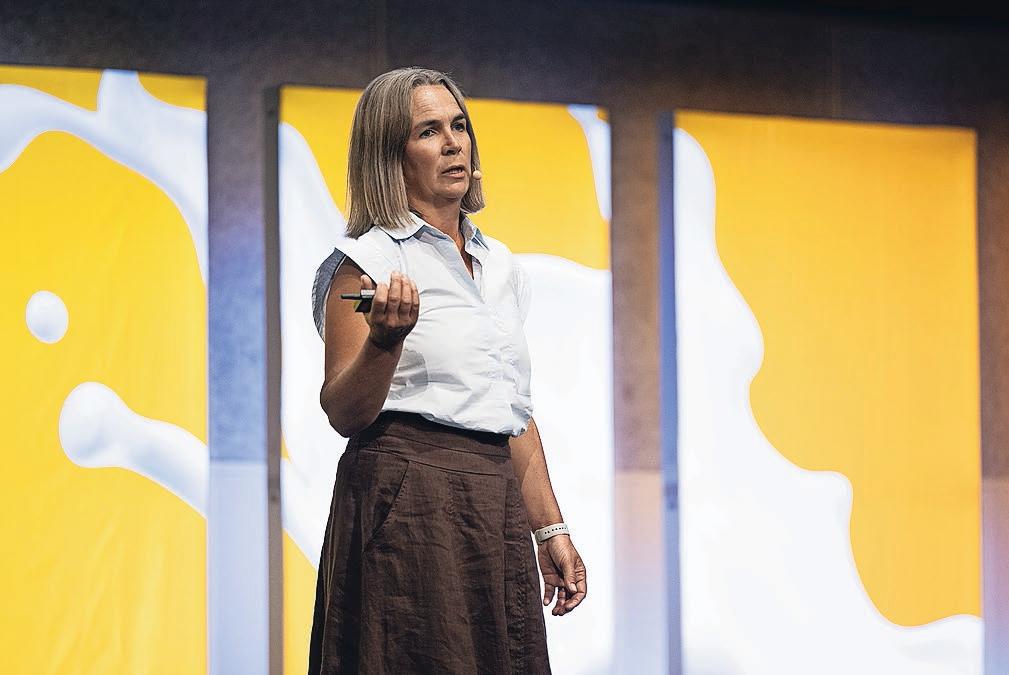
up and network with people involved and interested in the dairy industry.
This was her third conference.
“The conference is great for areas like professional development — I find we don’t always seek that out because we are busy running the farm and you can get stale at home, you can always learn little bits and pieces and refresh yourself,” Mrs Hore said.
She said it was a great initiative this year to follow up with guest speakers in the trade hall via a question-and-answer session.
“The conference is a nice social outing and a great way to find out what is happening in the industry,” she said.
ɋ use trusted advisors – consultants, accountants, lawyers, discussion groups and farmers.
ɋ utilise debt effectively – never let debt limit operational discussions, it can be used to leverage business.
ɋ invest and develop in good communication skills.
ɋ utilise data effectively – collars, herd testing, genomic testing.
ɋ continue to spend money on repairs, maintenance, fertiliser and pasture renovation to ensure continued productivity and profitability.
“Dairy farming has always been complex by nature but over the years it has become even more so from a paperwork and red tape perspective.”
She said for the industry to survive it must do better when it comes to a work/life balance so young people are attracted to the industry in the future.
“Nailing the sweet spots with stocking rate and kg/ms per kilogram liveweight, looking at labour efficiency and understanding productivity, managing risk effectively and utilising infrastructure and technology are all major components.
She said interestingly profitability didn’t necessarily depend on how many cows you milked or how much homegrown feed you grew, it all came back to the chosen system and doing it well.
“Learning from each season, the good and bad is equally as important.”
She said it was also important to remember to cautiously compare yourself to your neighbours.
“I always caution farmers to be careful making comparisons ‒ every farm is different and every system is different.”
“We need to be realistic as an industry and maybe growth isn’t always the answer, maybe we are stable where we are.”
Fiona was raised on a dairy farm in south-western Victoria and currently runs a beef operation with her husband.
She is actively involved in the Dairy Farm Monitor Project and was also involved in recent productivity and competitiveness work.
BY SOPHIE BALDWIN
JANA HOCKEN might not have known a thing about the dairy industry when she and her husband received a phone call to come home and take over the family dairy farm, Grassmere Dairy, in New Zealand in 2013, but she soon learnt.
Working as a mechanical engineer for Toyota in her previous life, Jana had learnt the importance and value of running a no waste business and she was pretty keen to implement those ‘Lean’ learnings on the farm.
“We had a $500,000 overdraft, we were working very hard but I couldn’t understand why we weren’t making any money. We had both come from great salaries and it was a real shock - something had to change,” Jana said.
She said implementing ‘Lean thinking’ was a game-changer for the business, which saw their business move from a profit of 50c/kgms to $2.50/kgms.
She said little things like reducing time spent driving the tractor, washing the yard out straight after milking when the yard is wet to reduce water use, calibrating teat spray and ensuring gates are closed so cows can’t go wandering into the wrong paddock all contributed to reducing costs.
Nothing was off the table when it came to implementing ‘Lean’ principles.
“Ultimately we have been able to reduce the working roster from 11 days on and two days off, to five days on and two days off even through our busy periods.”
She said if you are just looking at basic
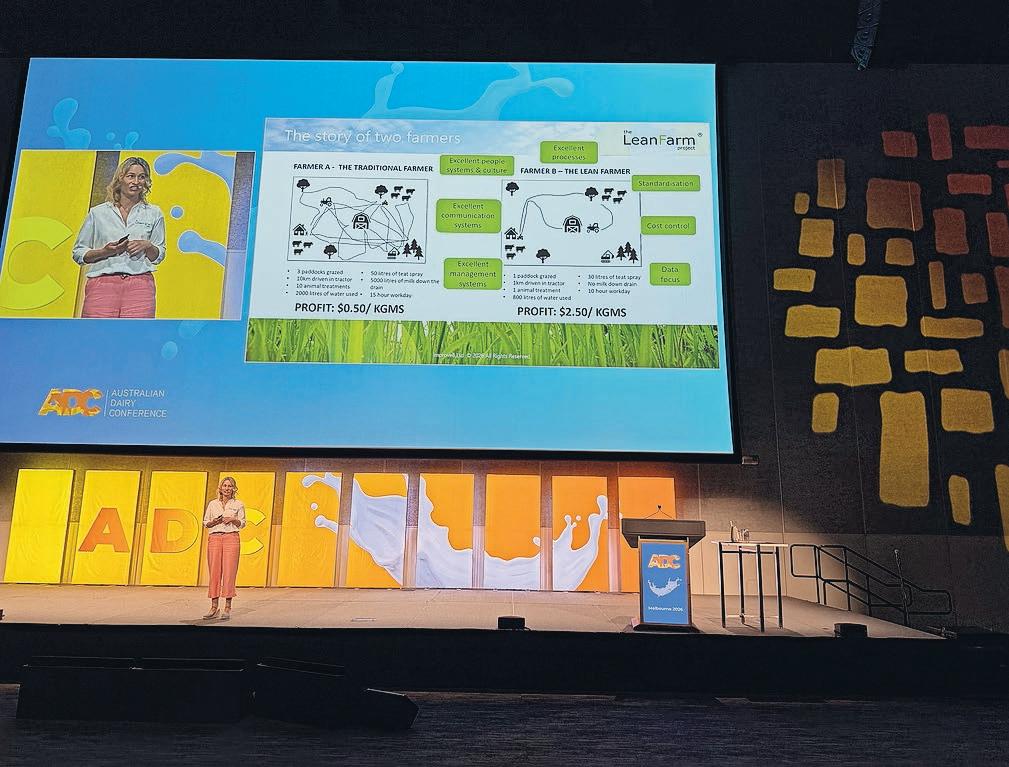
numbers the $500,000 overdraft is long gone, there has been a 25 per cent decrease in working hours, 15 per cent decrease in costs, 12 per cent increase in kg/ms per cow, 27 per cent decrease in cell count and a 37.5 per cent reduction in calf feeding time, resulting in a 72 per cent increase in productivity (output/labour hours).
“We created systems that gave clear direction and clarity around working roles and this
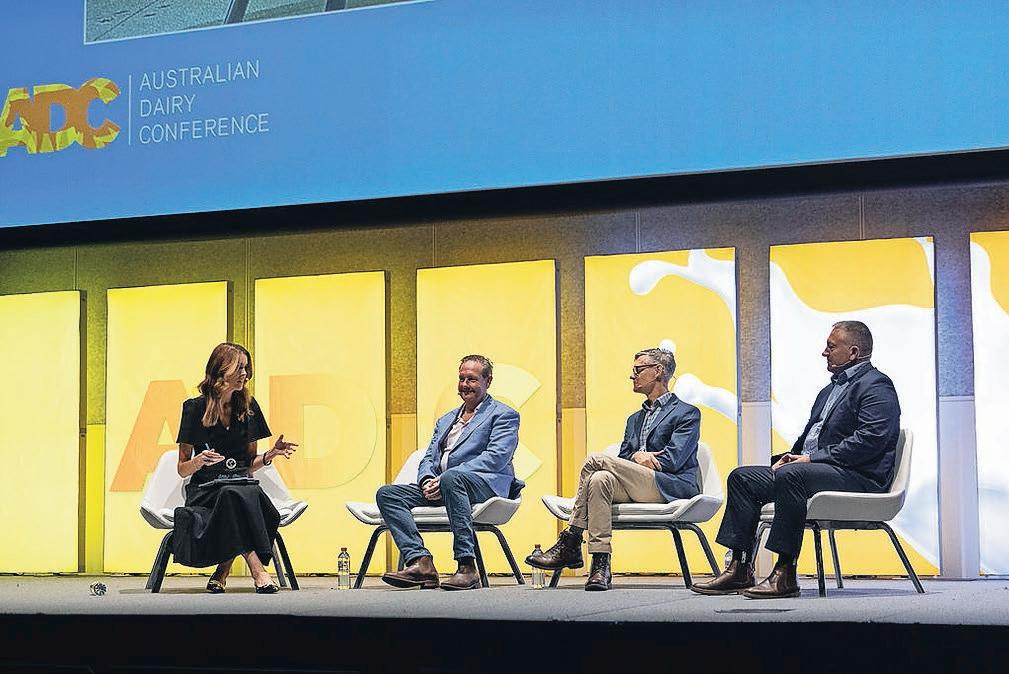
financials, including mortgage details.
“How you manage your system and processes ultimately determines how successful your business is, and if you grow good people through the process, it’s even better.”
Grassmere Dairy has short-term goals which include expanding the business further and surprisingly long-term goals that extend to 2090 (the family farm will be 200 by then).
“We want to make sure our business is around and we want to start to position it now so it is relevant in 2090.”
Jana said diversifying and looking at other opportunities is part of their future planning, which includes looking at agritourism.
Jana said she had been surprised by how much she loves the dairy industry, considering when she started she didn’t even know how many teats a cow had.
“I have worked across a lot of sectors but agriculture is my favourite. There is just so many opportunities, we are producing a food product that really matters, the world needs and it is an exciting industry to work in.”
Jana was one of the key speakers at this year’s dairy conference.
has helped support staff retention and helped build an engaged team who are really invested in the business.
“We are always open to trying new things and we are happy to be challenged by our staff because there is always a different way to do things.”
Staff meetings are held regularly.
“There are no secrets within our business and the workers are well aware of our
She is the founder of consulting company Improve8 and has helped people use ‘Lean’ thinking to improve their business.
She has written a book The Lean Dairy Farm, mentored people around the world and introduced an online, self-paced training program for farmers with participation from Australia, Estonia, Canada, USA, Greece and Spain.
She also hosts an online community with fortnightly Q&A sessions to help farmers gain further knowledge.

BY JEANETTE SEVERS
DAIRY FARMERS in Victoria and NSW are starting to use a payroll system that is saving them considerable time processing their obligations to employees.
Financial technology company, PaySauce, has landed in Australia with their newly-introduced smartphone App that promises to simplify Australia’s complex payroll legislation.
Dairy farmers Belinda and Stuart Griffin, of Westbury, were among the pilot group of Victorian and NSW dairy farmers who trialled PaySauce. They were impressed by the speed and compliance of the program, and the support for themselves as customers.
Belinda said they participated in the pilot program because they were looking for a new payroll system that complemented their staffing arrangements and business systems.
The couple share-farm on Stuart’s parents farm at Westbury, milking 500 seasonal-calving cows.
They have recently changed their milking infrastructure from a herringbone to a 50-unit rotary dairy.
Belinda said they employ five permanent and a couple of casual staff.
“Our permanent staff are part-time employees and the casuals are still within the secondary education system,” she said.
Stuart and Belinda were using a couple of software programs for rostering staff and themselves, and for accounting for timesheets, then calculating into payroll, making the appropriate adjustments for annual or other leave, paying tax and superannuation — it was a long and laborious process that used multiple software programs and added stress to their lives.
“We were basically inputting data into one system and then copying that across into another system. It was all done manually,” Belinda said.
“We wanted a one-stop process that met how we structure our staffing.”
A couple of years previously, Belinda and Stuart demonstrated their system during a fact-finding tour in Australia by PaySauce staff.
Two years later, they were offered access to a new App. It enables them to do everything on their phones.
“I asked, how much is it?” Belinda said.
“Bottom line, I’m a business owner. I need to make sure it’s going to work.”
The couple participated in the recent trial.
“We were right in the middle of calving season, so it wasn’t ideal timing for us,” Belinda said.
“But we wanted a new payroll system.
“Stu mostly got all the data that they asked for, because he’s more a numbers person than I am.
“We went live on the day we were supposed to, and we were the first Australian business to do a live payroll with PaySauce.”
Belinda said the PaySauce system accommodated Australia’s Pastoral Award 2020, but adapted to their own needs.
“We like to pay employees their overtime fortnightly, because we think that’s fair,” Belinda said.
“When we do a pay, we want to know it’s legal. PaySauce has a specialised staff member that makes sure everything we’re doing is up-to-date and accurate for the Pastoral Award requirements.”
Belinda said the new system was also more efficient.
“It used to take overnight for our pays to
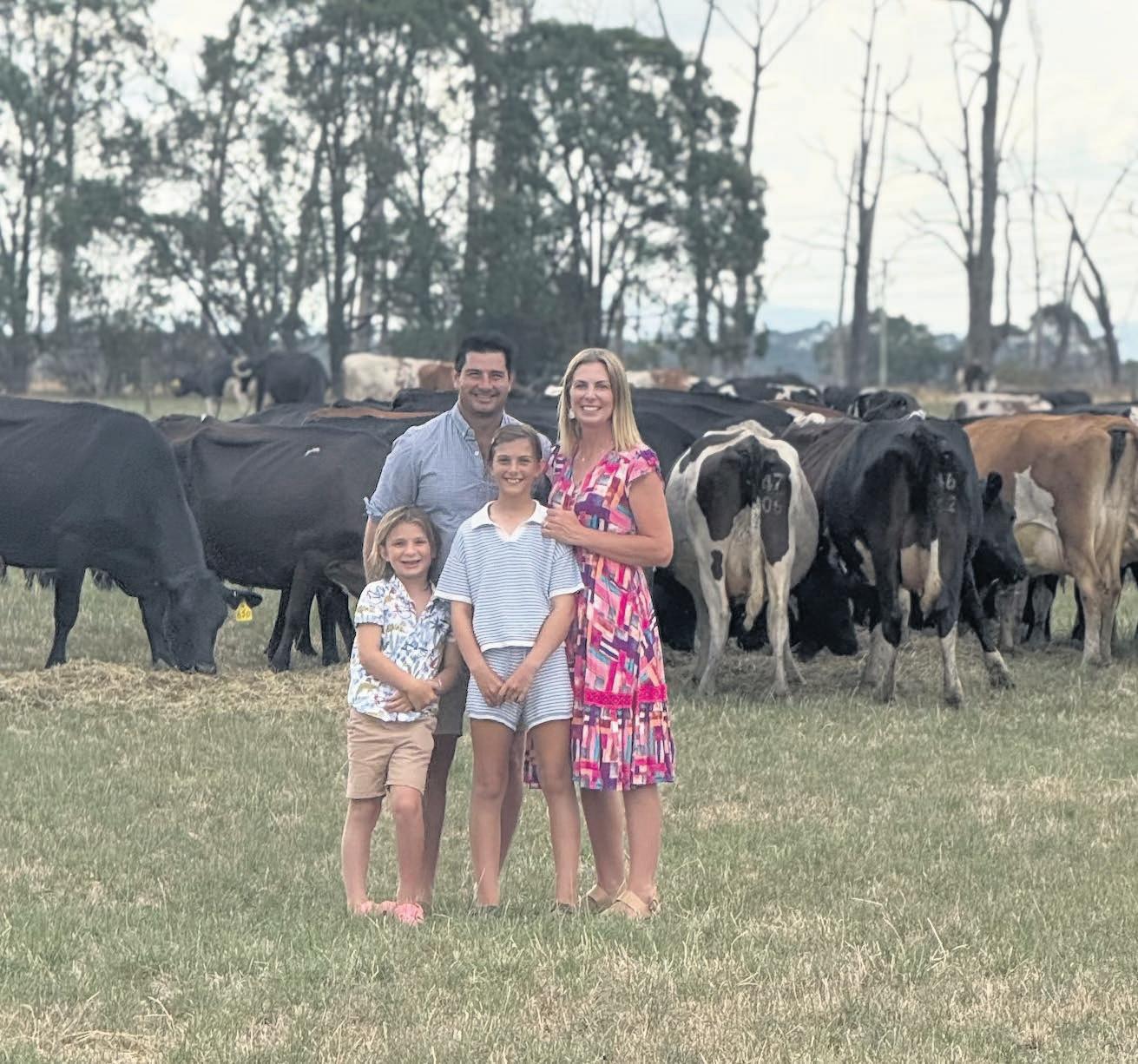
go through. Now we just push a button, and they’re all paid within 10 minutes and you can watch the payment go through to each person,” she said.
“We actually do the pays on Thursday night and they used to go into each person’s bank account on Friday. Now they’re going into their accounts on Thursday night.”
Belinda said the software program also highlighted potential errors before payment, so she or Stuart could check – and paying overtime fortnightly rather than monthly was one of those potential error messages they can now accommodate.
“It’s a user-friendly and counter-intuitive system,” Belinda said.
“It also enabled us to go on holiday and do all the pays quickly and easily on our phone.
“Before using PaySauce, Stu would’ve taken an hour and a half to do the pays each fortnight, and we would’ve had to take the computer with us on holiday to do them.”
PaySauce CEO Asantha Wijeyeratne said PaySauce simplified the complexity of processing Australia’s payroll system, and included timesheets, leave approvals, automated tax payments, superannuation management, and ensured compliance with awards.
Ross Wallis, a dairy farmer at Raglan, New Zealand, has been using the PaySauce system for several years and said he spent less than five minutes a fortnight processing payroll.
“All I do now is ask each employee to close their fortnightly hours out,” he said.
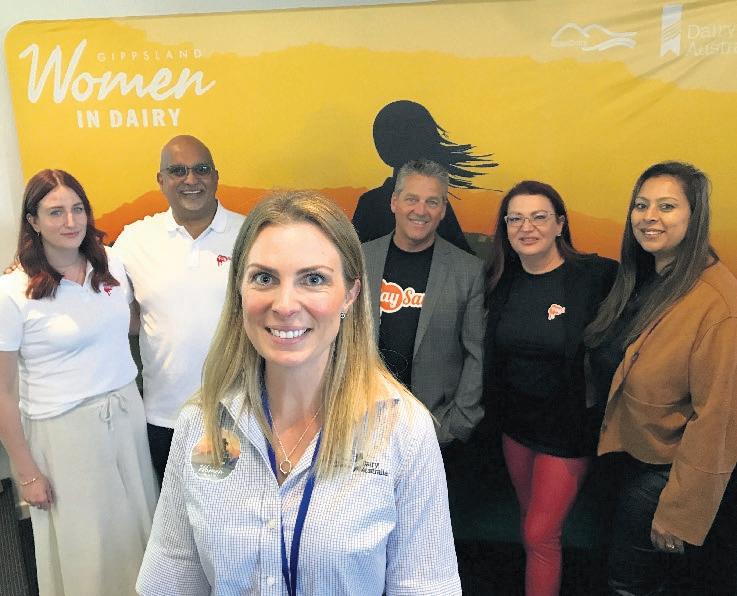
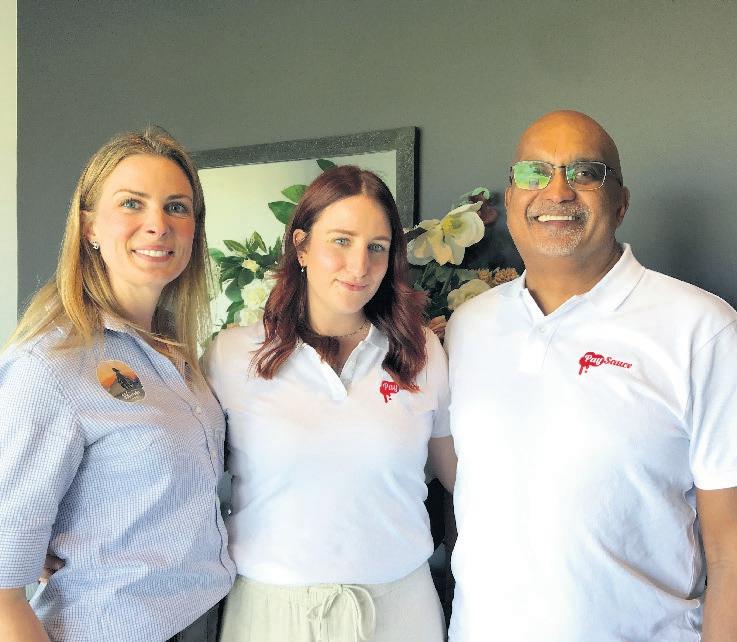
Ross said he experienced less stress and was more confident now, than he was using previous payroll programs.
“Payroll was an absolute nightmare,” he said.
“It was a lot of stress. I had to take the information from one program and take it across to another program.
“For each employee, that took half an hour.
“I could never work out what holiday pay was due, what holiday time was left.
“Now I know I’m on top of legislative requirements and I’m doing it right.”
Asantha said a key advantage of PaySauce was the customer helpline.
Belinda agreed. She said she was able to phone for help when she needed it, and deal
with someone who understood the complexities of complying with the Australian payroll system.
“PaySauce is a single, integrated platform providing end-to-end payroll that seamlessly handles rostering, timesheets, complex award calculations and single-touch payroll-tax filing,” he said.
“We have also developed the program to integrate payments via Australia’s new payments platform, and be compliant with new Australian legislation.
“We believe all of these features will resonate with the 46,000 people working on Australia’s 4000 dairy farms, reducing complexity, saving them time and delivering peace of mind.”
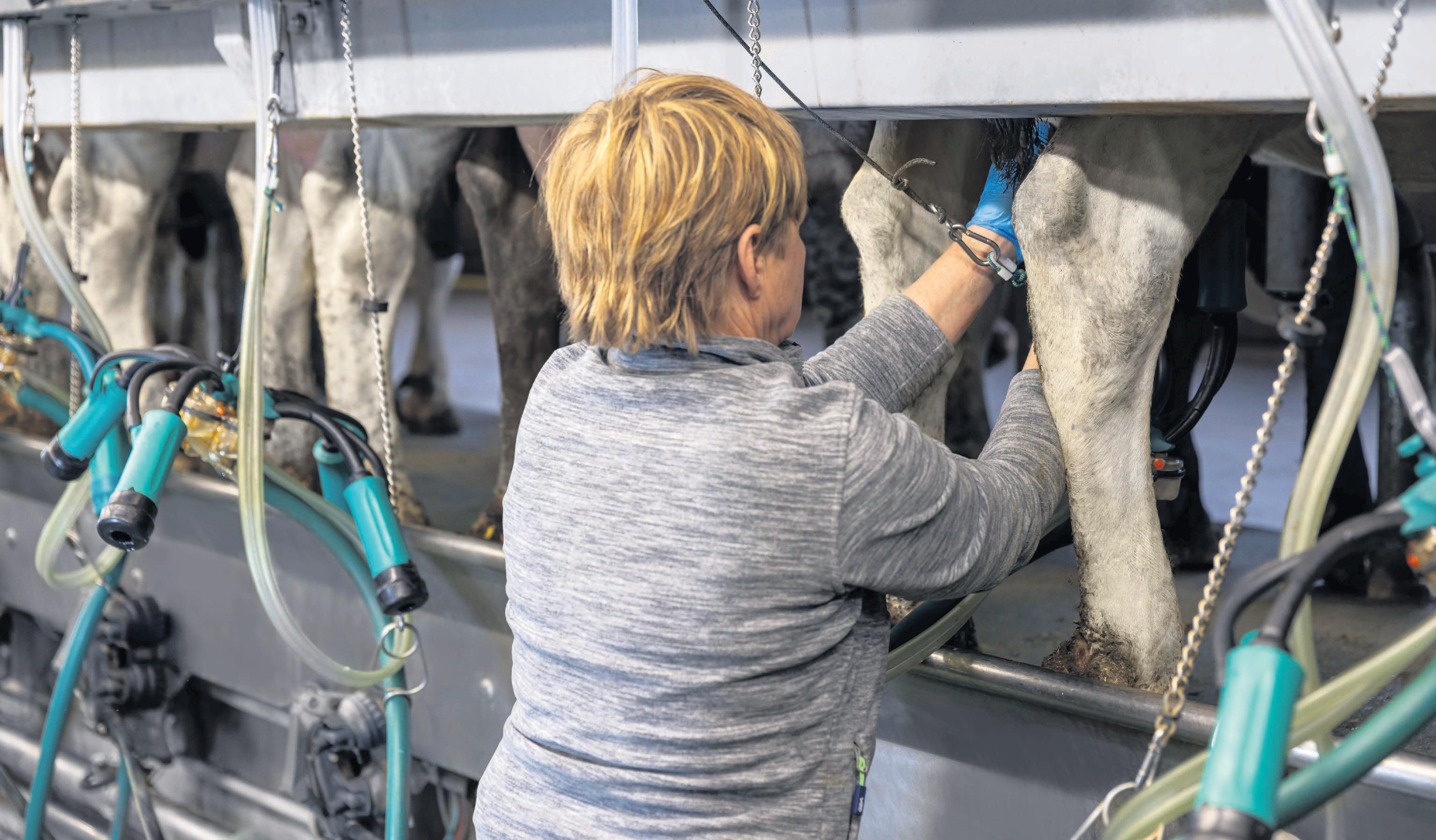
A CONSISTENT, trouble-free milking routine is essential for herd health, milk quality, and day-to-day efficiency for Australian farmers.
That’s why many farmers rely on scheduled servicing to stay ahead of wear, protect equipment and avoid the stress and cost of sudden breakdowns.
A planned service schedule keeps your milking system operating within its best performance range.
Regular checks on vacuum levels, pulsation, liners, shells, rubberware, and the cooling system help maintain consistent milk-out and teat condition throughout the season.
When issues are caught early, they’re faster and cheaper to fix—and far less disruptive during busy periods.
Alongside servicing, the components fitted to your system play a major role in everyday performance.
Many farmers choose replacement parts that are known for manufacturing consistency, reliability, and compatibility with existing equipment.
In the milking cluster, for example, liners and shells designed to global standards help ensure stable attachment, predictable milk flow, and long service life.
GEA’s global liner and global shell are popular in international dairy markets for their range of sizes (small, medium, large), shapes (round, conical, GQ), and lightweight or heavy ergonomic shells.
Made from durable organic rubber or silicone, these products offer consistent quality, stable vacuum performance, gentle teat-end treatment and strong construction suited to tough dairy conditions.
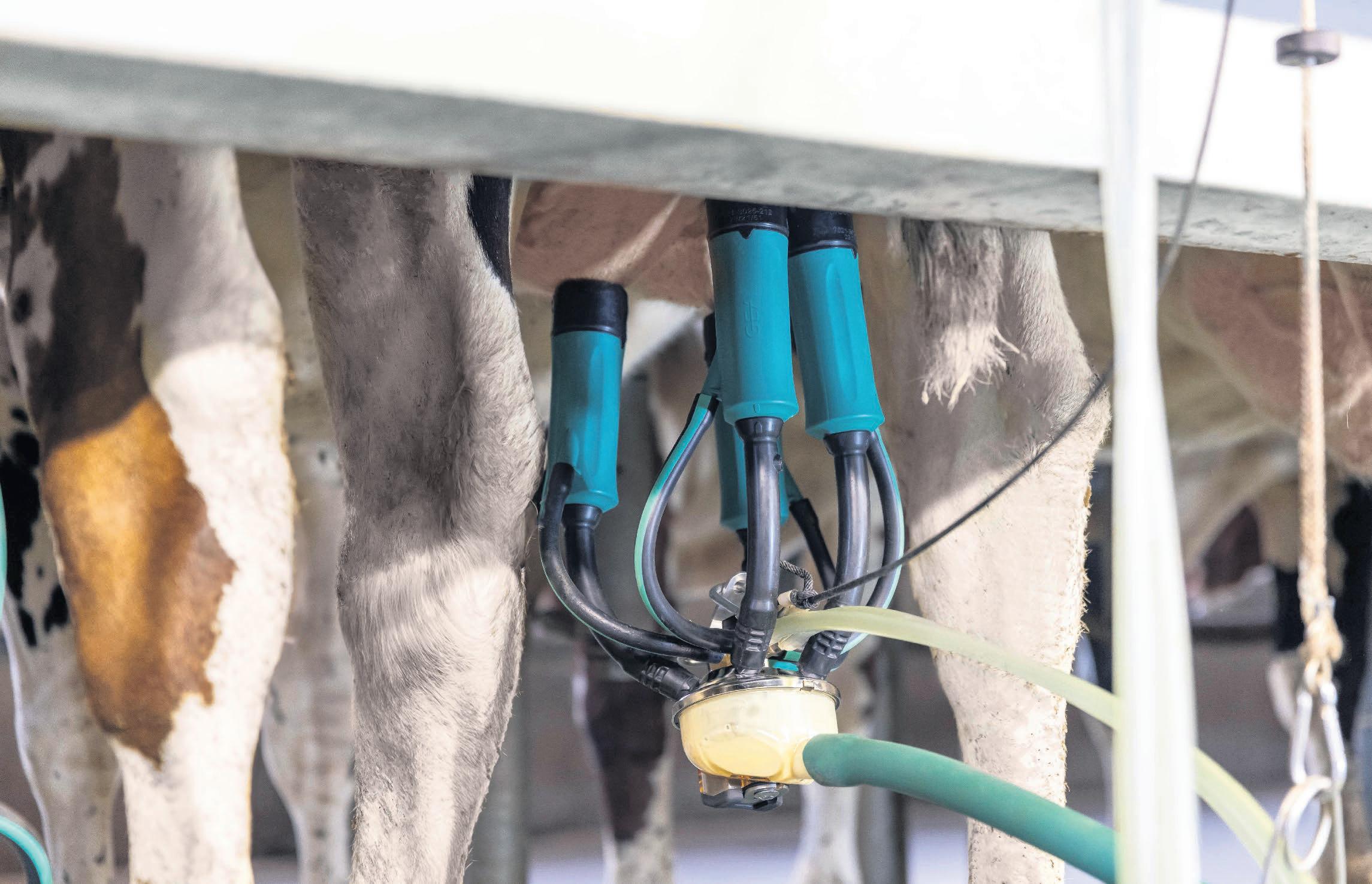
Their balanced design helps maintain cluster alignment and reduce slip, while compatibility with common systems ensures easy replacement.
These characteristics support smooth milking routines and help farmers avoid unnecessary interruptions—all while protecting udder health and equipment longevity.
The most important step farmers can take is keeping ahead of peak season.
Booking your local dealer early ensures your system receives a full check before the rush, reducing the risk of delays, long wait times, or unexpected downtime when the herd is ready to calve or production increases.
A scheduled service isn’t just maintenance—it’s peace of mind.
With proactive servicing and reliable, well-engineered components, farmers can focus on what matters most: healthy cows, quality milk, and a shed that runs the way it should—every day, every season.
Contact your local GEA dealer today to schedule a service or visit GEA.com/ dairyfarming to explore GEA’s milking components.
BY COBY BOSCHMA
HEALTHY CALF rearing is critical to the long-term success of dairy farms, as only robust calves develop into productive dairy cows.
As a result, farmers and veterinarians are increasingly focused on methods that allow health issues to be identified earlier, while reducing the need for intensive treatments.
At Benninghoff Milchenergie in Bevern, Germany, herd manager Anna Schaate and her calf team have been using CowManager’s activity-based monitoring for cows and young stock for more than 10 months.
Since last year, the same approach has been applied to calves, supporting day-to-day management with a particular focus on the early detection of respiratory disease.
Pneumonia remains one of the most persistent challenges in calf rearing.
Often, infections are not immediately visible, and clear clinical symptoms such as laboured breathing often appear only once the disease has progressed.
By that stage, lung tissue may already be damaged, which can negatively affect performance later in life.
Activity monitoring helps highlight subtle changes in behaviour before outward signs become apparent.
At Benninghoff Milchenergie, calves that deviate from group averages in activity or drinking behaviour are flagged for closer attention.

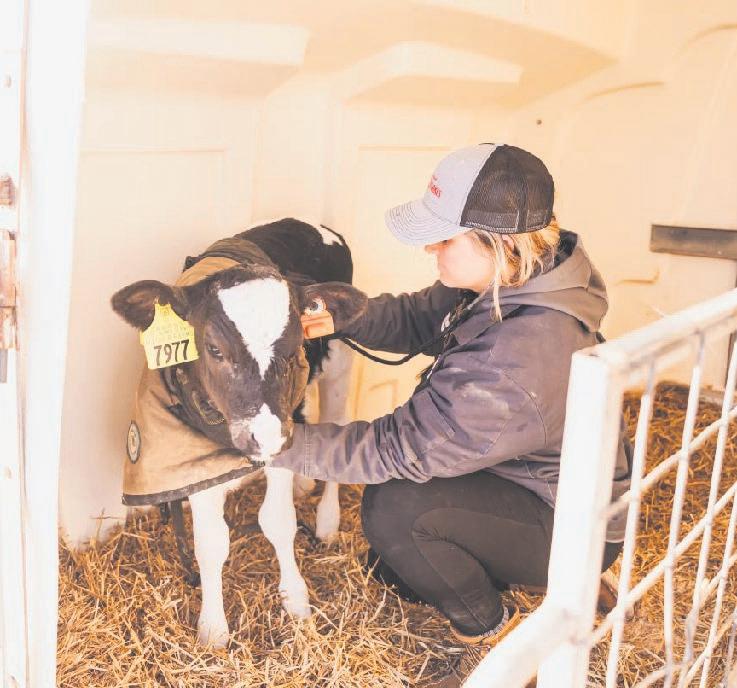
This allows the calf team to investigate potential health issues at an early stage, before clinical symptoms develop.
Data plays an important role in daily decision-making on the farm.
“I rely strongly on figures and facts,” Anna said.
“If calves reduce their drinking behaviour, that’s usually a sign that something is wrong.”
Although she initially expected activity differences in young calves to be minimal, the data has proven useful in identifying early deviations from normal patterns.
Each morning, calves showing irregularities are reviewed, considering management events such as regrouping, weaning, or dehorning.
If no clear explanation is found, the calves are examined more closely using lung ultrasound.
Health data are reviewed several times a

day, after which calves with notable deviations are checked by the calf team.
Lung ultrasound is used to confirm the presence of respiratory disease and assess its severity.
Depending on the findings, calves may receive anti-inflammatory treatment or pain relief.
Anna said combining activity monitoring with lung ultrasound allowed pneumonia to be identified earlier than before.
“In many cases, we now see signs of pneumonia around two days earlier than we would base on visible symptoms alone,” she said.
This enables treatment to begin before calves show clear clinical illness and supports a more targeted use of medication.
Routine antibiotic treatments are avoided wherever possible.
The farm’s veterinarian, Hanna
Strodthoff-Schneider, also sees clear benefits in early detection.
She said at an early stage of pneumonia, lung tissue often shows only minimal changes on ultrasound.
Because damaged lung tissue cannot regenerate, early diagnosis is essential to limit long-term effects on lung function, which may also influence future milk production.
At the same time, she emphasises that technology should complement, not replace, good management practices, including proper nutrition, housing, ventilation and hygiene.
Preventive measures are a central part of calf management at Benninghoff Milchenergie.
Regular checks of ventilation systems, avoiding damp conditions and drafts, and strict hygiene protocols are standard practice.
Additional measures, such as shaving strips along the backs of older calves to help them dry more quickly, are also used.
Although lung ultrasound takes several minutes per calf, Schaate considers the time investment worthwhile.
The farm has seen a noticeable reduction in both acute and chronic respiratory disease, along with improved staff motivation.
“Working with healthy animals is far more rewarding than constantly treating sick ones,” she said.
“If these measures help us raise strong, healthy heifers that are well-prepared for their first lactation, then the effort pays off.”
For more details, visit www.cowmanager. com/australia


UPGRADING TO a New Holland BigBaler 1290 High Density has enabled central west NSW contractor Brian Schofield to move more hay and straw.
“Our previous baler was a fantastic machine but I was either going to have to run two balers, or we go into one big HD,” Brian said.
Based in Forbes, Schofield’s Hay and Silage is a family-run business, with Brian working alongside wife Jessica and their daughters to service dairies, beef and sheep producers and corporate hay customers across central west New South Wales.
Since putting the 1290 HD to work, Brian has run over 12,000 bales through the machine.
“It’s been a pretty big season, we’ve finished straw and we’ve averaged around 65 bales an hour, with peaks in the 80s and 90s,” he said.
“We were struggling to average about 450 kg with our previous baler, with the 1290 HD we’re now getting a more consistent 480– 500 kg per bale, giving us more tonnes per hour through the paddock.
“I reckon we’re at the equivalent of 1.5 balers now, which we’re happy with, because we’re only one tractor and one driver,” Brian said.
Brian highlighted the loop master knotters on the BigBaler 1290 HD as another major advantage.
“The knotters have been fantastic, probably the most reliable knotter I’ve had, it helps keep the 1290 HD working when the window is open and every bale counts.”
On the tractor front, Brian has paired his BigBaler 1290 High Density with a New Holland T7.340 HD.
“The AEH team at the Forbes Machinery Centre demoed this tractor and baler combination for us the year before and we fell in love with it then.
“The 1290 HD and T7 are just the perfect match and are built to work together, they deliver the output we need when we have to get more done in a shorter period of time,” he said.
Brian said AEH’s support has been fantastic, with someone always only ever a phone call away, no matter the day of the week or time of day.
“It’s very hard to catch up once delays hit, so having AEH willing to stick the hard yards to solve tricky problems mid-season helps to keep things moving through a big season.”
CNH product manager hay and forage, Sune Nielsen, said the New Holland tractor and large baler combination unlocked additional technology benefits for farmers like Brian.
“FieldOps gives operators clear, visible baling data on their phone or PC, including bale weight, moisture, location and a range of other baler outputs,” Sune said.
“Advanced filters let users set ranges, for example, high- moisture bales can be flagged on the field map, showing exactly where they were made.
“We’re continually enhancing the FieldOps platform with new features to meet and exceed the needs of farmers and contractors into the future.
“The 1290 HD is also about reducing running costs as much as increasing output, that’s why we designed this baler to provide higher bale counts with low cost of ownership.
“Low maintenance and ease of servicing are built into the design, with smoother start-up and less wear and tear from the SmartShift two-speed gearbox, and hydraulic active suspension at the rear so the baler can be lifted and lowered for servicing.”





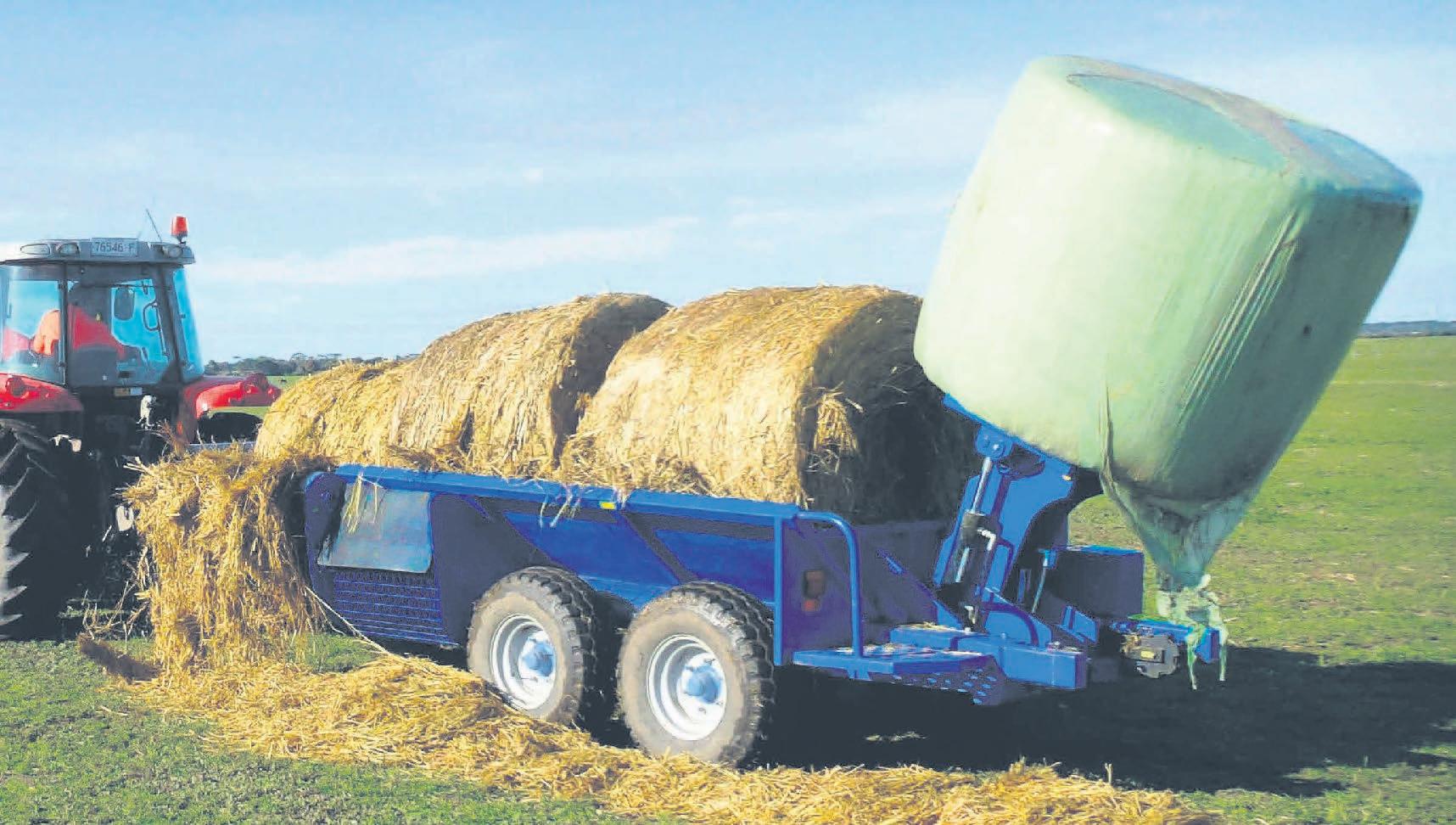



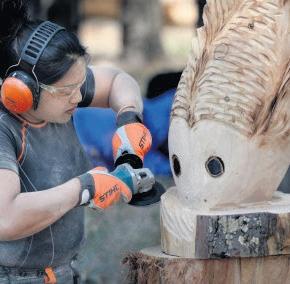





17-19 APRIL 2026


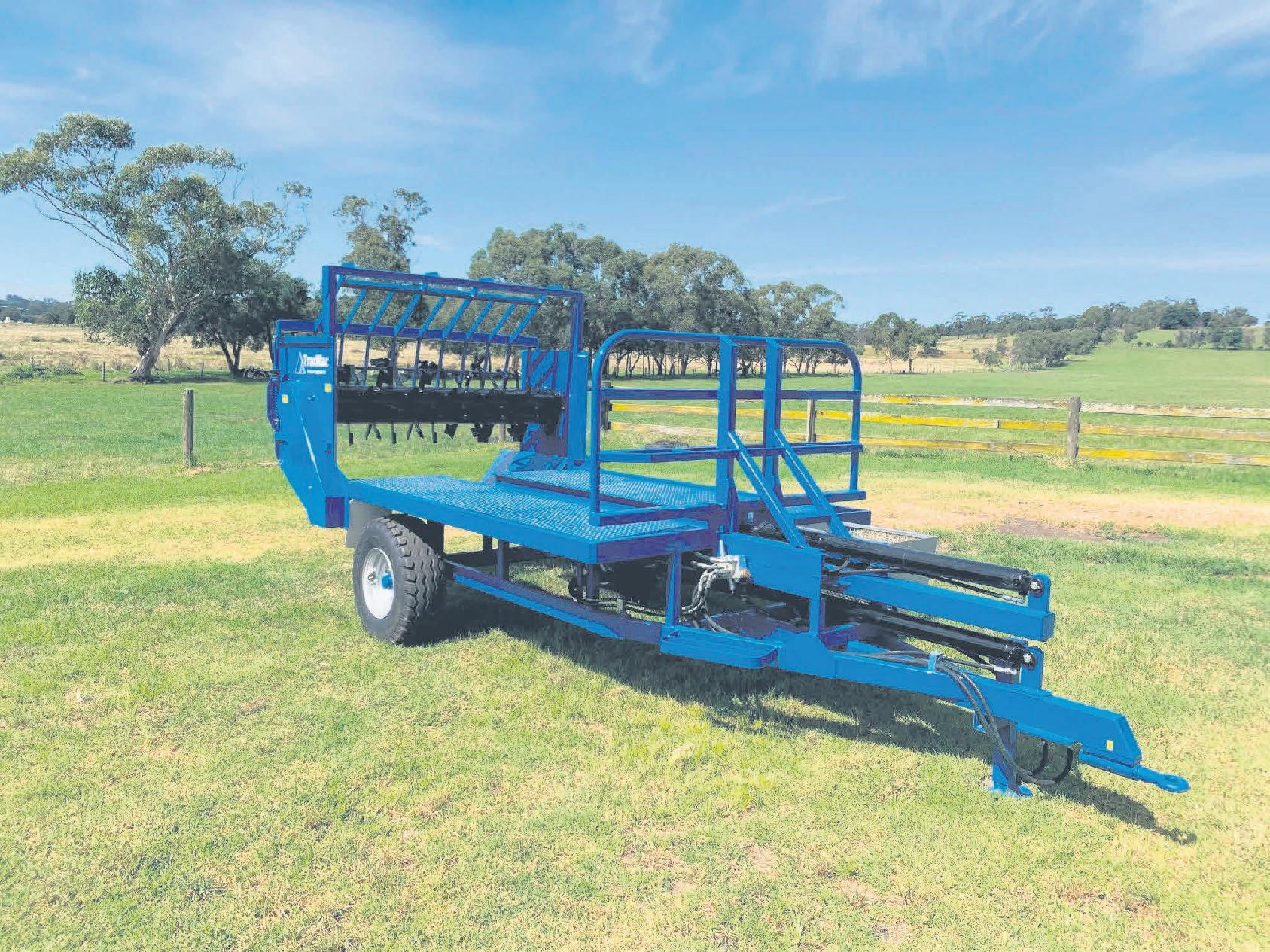











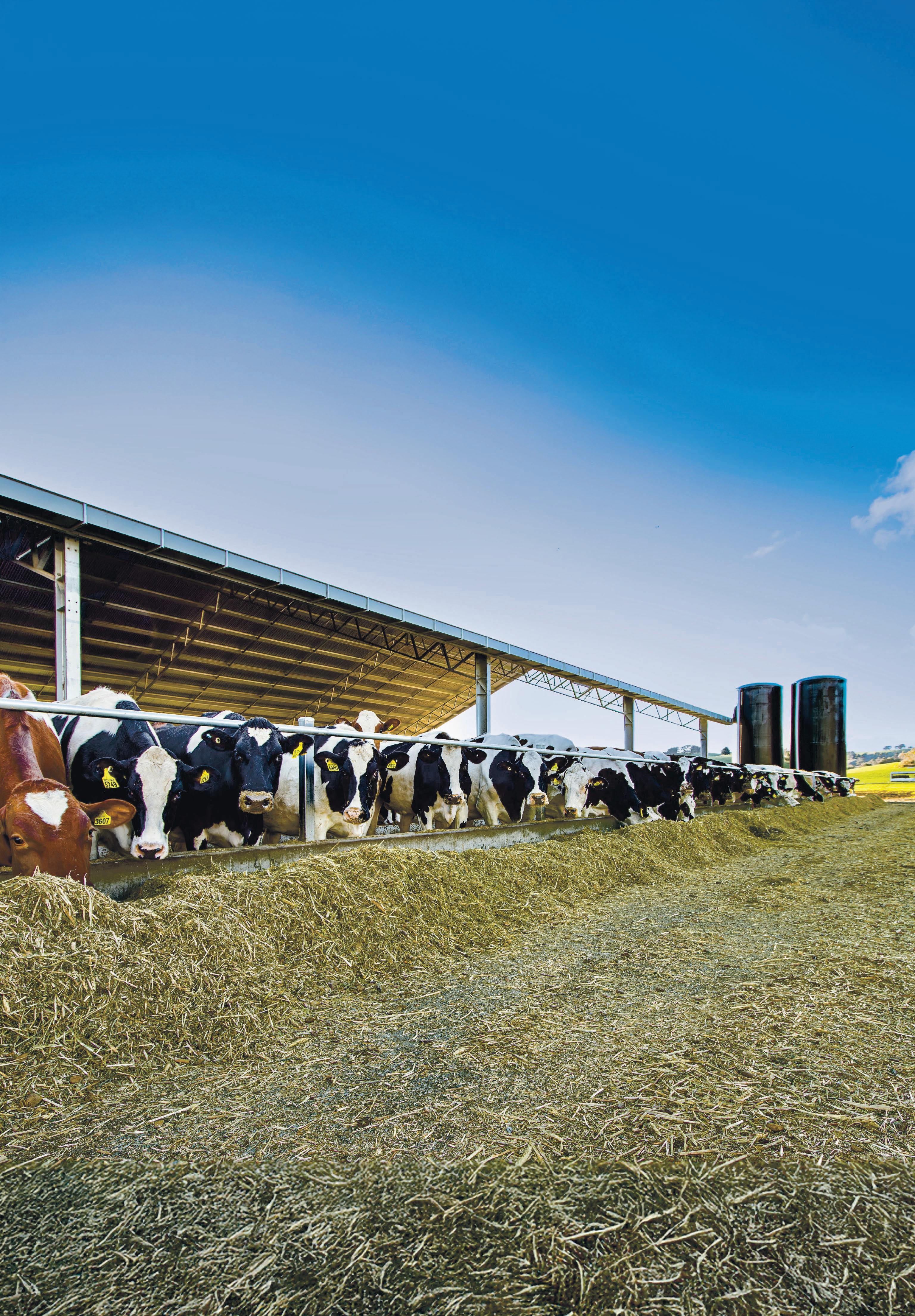
KEEPING YOU AHEAD OF THE GAME .





PRESERVE PADDOCKS AND MAKE MANAGEMENT EASIER WITH AN ACTION BARN