




CONFLICT IN the Middle East is disrupting global markets and supply chains, but exploding milk pr oduction is arguably a bigger concern for dairy.
As discussed in Bendigo Bank’s latest commodity update, milk production from the four key exporting regions (The US, Europe, NZ and Australia) has increased 3.7 per cent, or 5.3 billion litres, in the season to December 2025 — a scale which has not been seen since 2014, when European production quotas were on the way out, spurring large scale supply growth.
This structural growth in supply clashed with a sudden disruption in the shape of Russia effectively closing its market to dairy imports, and the result was a sustained price downturn.
Today’s situation sounds eerily similar; war is escalating in the Middle East with supply chain implications, while global milk production is soaring.
Our last update noted further global unrest would likely result in additional
purchasing activity as importers lock in volumes to avoid supply chain challenges.
The results of recent GDT events confirm this, with strong near-term delivery for particularly skim milk powder, anhydrous milk fat and cheddar from buyers in Europe, Africa and notably, the Middle East.
Oceania product is in high demand coming out of the season’s shoulder, and more so now with buyers in many Asian markets looking to increase their forward cover — from sources that don’t require a Red Sea transit.
For many dairy farmers in south eastern Australia, the above average rainfall towards the end of February provided a favourable start to autumn, helping keep costs down in the final months of the irrigation season and delaying the need for purchased fodder.
Although this is well timed considering the drier than average outlook for autumn, fertiliser is likely to be a key pain point in the short to medium term, especially for those who haven’t secured it yet.
Higher prices for diesel and fertiliser, together with possible supply challenges, will be the most direct impact of the current Middle East conflict on Australian dairy farmers.
Considering global dairy buyers had already been stocking up this year at relatively low commodity prices, the more recent stockpiling in response to the war in Iran is unlikely to drive a sustained price rally.
Combined with ample global milk supplies, the export market risks weakening at a time whe n processors are deciding what new season opening farmgate milk prices may be.
A lot can happen between now and June 1, but for now it seems farm margins are set to be squeezed by higher input costs on one hand and a global dairy market grappling with far too much product on the other.
ɋ Eliza Redfern, Bendigo Bank senior manager industry insights




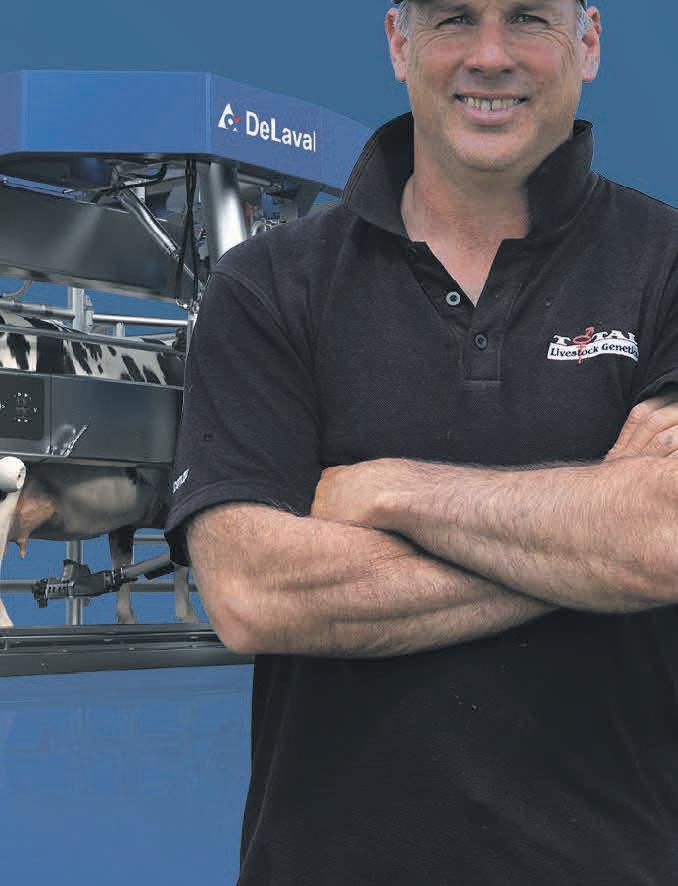
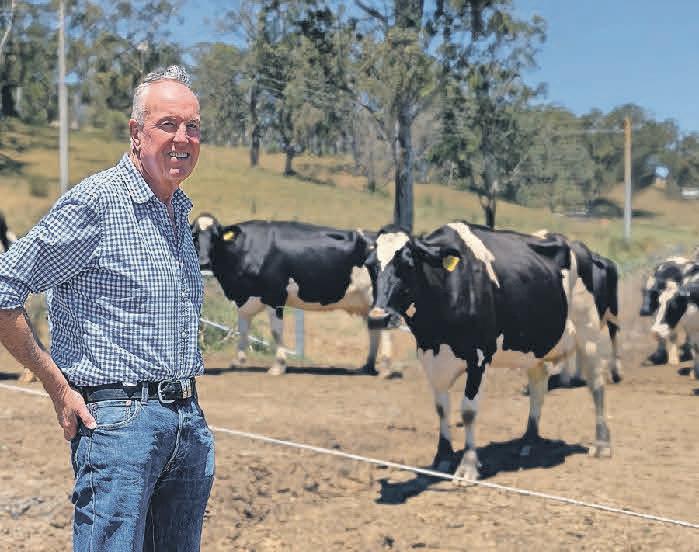
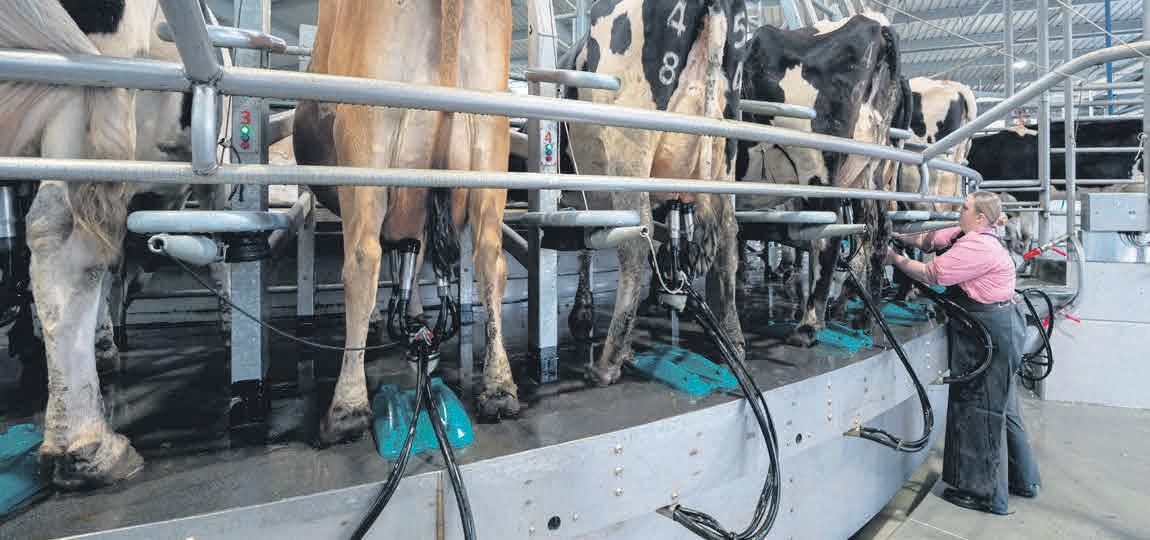
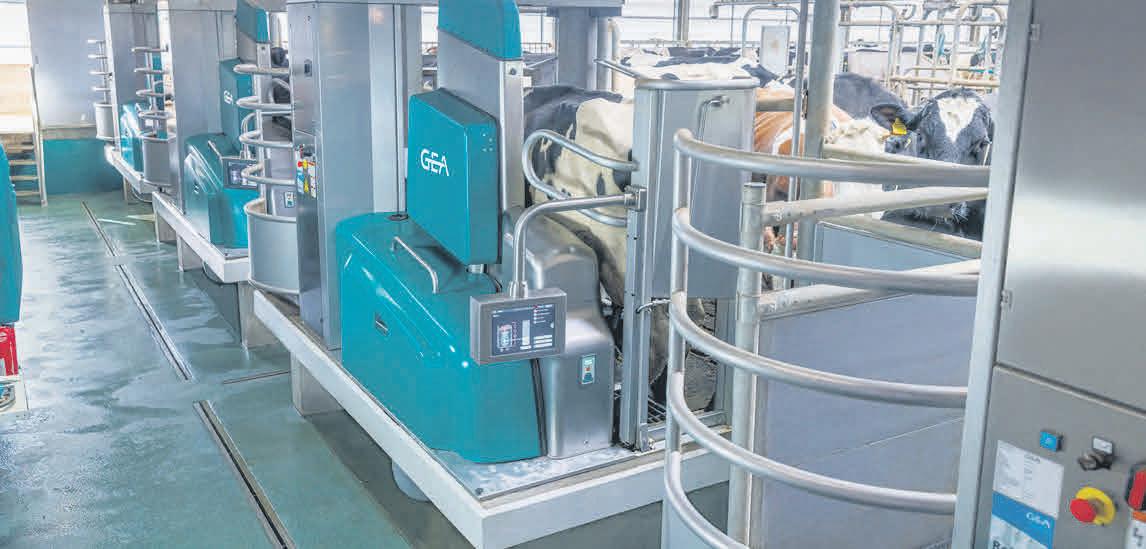
“ We struggled to recruit, so something had to change. If we didn’t have the milking robots now, we would not be milking cows.”



ADF PRESIDENT Ben Bennett said renewed instability in the Middle East has already heightened concerns about sharp increases in fuel prices and disruptions to global fuel supply chains, with Australia particularly exposed due to its heavy reliance on imported fuel and low reserves.
The Federal Government confirmed in parliament Australia has reserves of just 34 days of diesel and 36 days of petrol to hand – some of which is still at sea, but within Australian waters.
Recent reporting highlights the risk of oil price shocks if key shipping routes such as the Strait of Hormuz are disrupted, a scenario that could quickly translate into higher fuel prices and reduced availability domestically.
“Australia imports around 90 per cent of its transport fuels, which leaves essential industries such as dairy vulnerable when global supply chains are under pressure,” Ben said.
“From the tractors on farm to milk tankers and feed deliveries, these fuels keep the dairy industry moving. Any interruption to fuel supply would be felt almost immediately on farms and across the entire dairy supply chain.”
Ben said Australia remains well short of the International Energy Agency’s requirement to hold 90 days of fuel reserves, despite long-standing commitments.
Assessments show Australia has failed to meet this benchmark for more than a decade, leaving the nation exposed during international crises.
“ADF has previously raised concerns about Australia’s inadequate fuel reserves, and recent global events underline just how real this risk is,” Ben said.
“Dairy cows cannot simply be switched off or milk stored indefinitely on farm.
“If milk tankers stop running because fuel is unavailable or unaffordable, farmers face serious animal health and environmental consequences.
ADF is calling on the government to formally classify the dairy industry as an essential service in any fuel security or emergency planning, to ensure milk, food and fuel trucks can continue operating during periods of disruption.
GEA IS expanding its digital footprint in dairy farming with the official opening of a new software lab in Belfast, Northern Ireland.
The new lab will create an additional 20 jobs in research and development, and will focus on GEA’s AI livestock solution, CattleEye and related digital products of GEA for farms.
The pioneering AI solution is engineered to quickly detect and predict lameness in cows and to provide critical data to assess the body condition score.
“Keeping dairy supply chains moving is about more than economics,” Ben said.
“Cows must be milked every day, and milk must be collected regularly. Ensuring priority access to fuel for dairy and other food producers is critical to
Today, the system is used in over 140 farms across the UK, Europe, the US and Australia, monitoring over 200,000 cattle across 23 different countries.
The CattleEye software is part of GEA’s DairyNet portfolio for modern herd management.
CEO of GEA Andreas Seeringer said the new software lab in Belfast was strengthening the company’s role as a technology leader in digital dairy farming.
keeping fresh, nutritious food on Australian
ADF
to
ment to formulate a plan to safeguard Australia’s food supplies and ensure essential agricultural industries are protected during periods of global uncertainty.
“By improving animal health and wellbeing through AI-based solutions like CattleEye, dairy farms become more efficient, more sustainable, and ultimately more profitable.
“That is why we commit to accelerating development in this area, driving technology innovation in our digital herd management solutions.”


BY NICHOLAS SPANDLER
THE PEAK representative body for Victoria’s dairy farmers, the Australian Dairy Industry Council, has expressed concerns with the Victorian Government’s proposed merger of key food safety regulatory bodies.
The reforms are rumoured to be tabled in parliament this month, combining the long-standing Dairy Food Safety Victoria and other regulatory bodies, into a single multi-industry regulator; Food Safety Victoria.
The council’s chair, Ben Bennett, has expressed disapproval of the reforms, and concerns that the changes will weaken the regulator’s food safety credentials.
“Victoria’s dairy industry operates under one of the strongest and most trusted food safety systems in the world,” Mr Bennett said.
“There are no suggestions of systemic failure, quite the contrary, and no case has been made that the proposed changes will improve
food safety outcomes for Victorian dairy.
“We do not support dismantling a dedicated dairy regulator in the absence of demonstrated market failure or a clear net public benefit.”
The Office of the Premier said reforms are not breaking new ground.
“Reform will align Victoria with most internationally comparable countries with a strong agri-food sector, and with Queensland and New South Wales in having a consolidated food safety regulator.
“It will deliver early benefits, including streamlined administration and a single, clear point of contact, making it easier for businesses to work with government.”
Victorian farmers produce 63 per cent of Australia’s milk, and 72 per cent of the nation’s dairy exports by volume.
The council said over 2500 farms and 17,000 jobs fall under the jurisdiction of the current regulatory body, relying on its industry-specific expertise.
Australian Dairy Product Federation chief
executive officer Janine Waller said that this specific expertise was important to ensuring food safety.
“We’re a perishable product, so we need that time responsiveness.
“You need that expertise in dairy, and potentially that could all get lost in this future structure.
“So the risk is too great if we make one mistake and get it wrong,” Ms Waller said.
The government says that the new regulatory body would help to modernise the industry, cutting red tape and allowing for easier access to the industry for prospective businesses and innovative technology.
She said the current framework already accommodates innovation within the dairy industry.
“There can always be improvement, in terms of innovation, preparing for what’s coming through.
“We will always innovate, we will always improve process,” Ms Waller said.
BY NICHOLAS SPANDLER
SUPPLY ISSUES look to be continuing for the agricultural industry, as fertiliser imports face impacts from the conflict in the Middle East.
Farmers, regional businesses and transport operators have been under strain this week, with fuel supply impacted by the escalating war.
There are now warnings that similar shortages and delays may be felt across other resource sectors, including urea fertilisers imported from the Middle East.
In an interview with Sky News, Nationals leader Matt Canavan said that the risk to fertiliser imports was flying under the radar amid the fuel shortage crisis.
“Almost the unsaid risk at the moment is the risk to fertiliser supplies,” Mr Canavan said.
“A couple of years ago, we lost our last urea plant in Australia - it was in Brisbane, at Gibson Island.
“We no longer produce the most important fertiliser in the world and get two-thirds of our urea supply from the Middle East
“We can’t afford [disruptions], we will literally not be able to grow food without this input of fertiliser.”
State Member for Murray Helen Dalton said regional Australians were paying the price for the Federal Government’s inaction on agricultural supply chain security.
“When the Strait of Hormuz is under pressure and urea prices spike overnight... it’s farmers who absorb the hit,” Ms Dalton said.
“Our farmers are the backbone of our nation.
“If we can’t even grow our own food, that is a national security risk.”
When the Strait of Hormuz was disrupted during the June 2025 Middle East conflict, urea prices surged to as high as $1200 per tonne in just seven days.
“Canberra has had every warning, every data point and every opportunity to actboth sides chose not to.”
Initial reports suggest that the impacts of this month’s conflict may be more severe and longer lasting, with urea fertiliser prices already higher than March last year.
Ms Dalton is calling on the Federal Government to establish a strategic fertiliser reserve and support a domestic urea production capacity.










BY SOPHIE BALDWIN
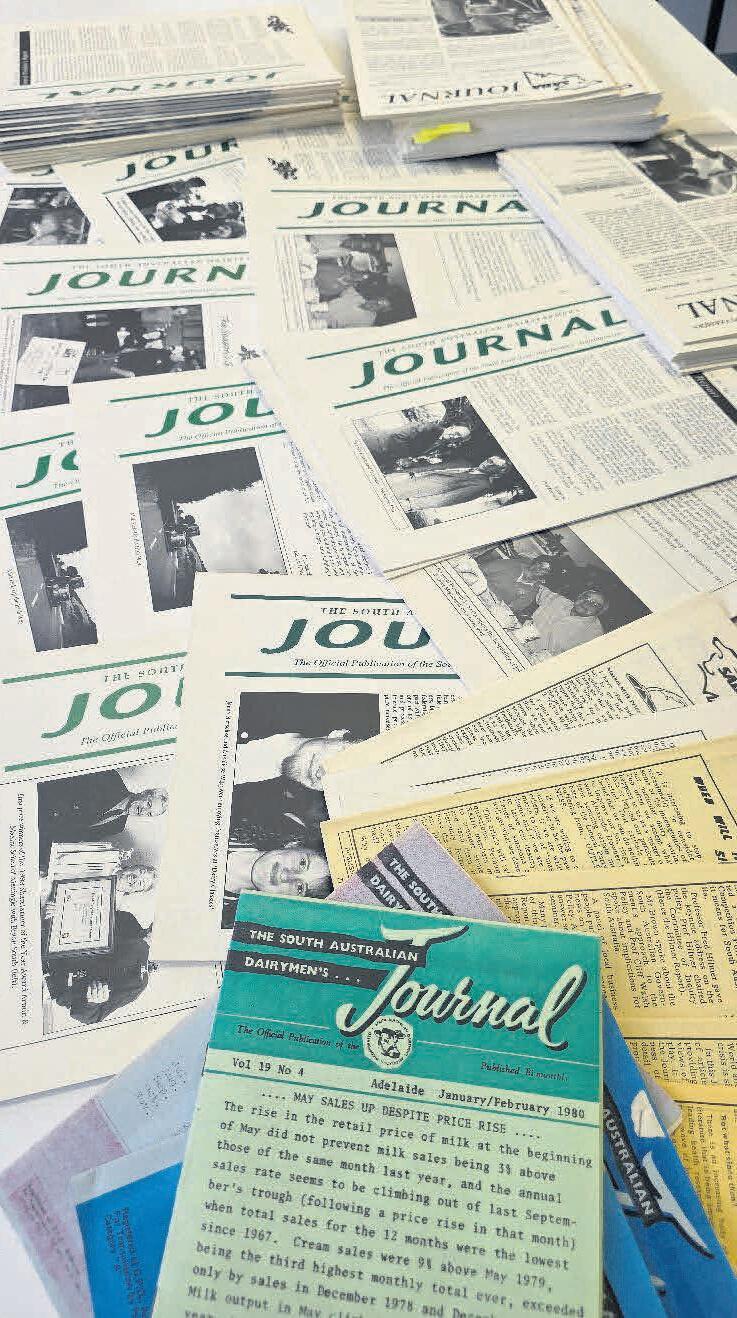
FOR NINE decades, the South Australian Dairyfarmers’ Association (SADA) has been the steadfast voice for the state’s dairy community - advocating, protecting and championing the interests of farmers who keep South Australia nourished.
The story began in the early 1900s, when local dairymen recognised the need for unity and fair representation.
In 1907, the Adelaide and Suburban Dairymen’s Association was formed with two simple but powerful goals - establish strong rules and secure a fair price for milk.
By 1935, with regional groups negotiating against a growing number of milk buyers, farmers understood only a unified state body could safeguard their livelihoods.
At a meeting in the Oriental Hotel that same year, the South Australian Dairymen’s Association was officially formed, built on values that still guide it today - mutual protection, a united stance on price, and orderly marketing of South Australia’s milk supply.
However, it didn’t take long for that determination to be tested.
In February 1936, members took decisive industrial action, a milk strike, to demand fair treatment. Their success led to the establishment of the milk equalisation

scheme, a pivotal reform delivering stability for decades and cementing SADA’s role as a powerful advocate for producers.
The 90th anniversary honours the
unity, courage and vision of those early pioneers.
Their legacy lives on in SADA’s ongoing commitment to fair policy, industry
sustainability and the long-term viability of every South Australian dairy farm. This milestone is not only a celebration of the past, but also a tribute to resilience, strength of partnerships, and the enduring importance of a united voice.


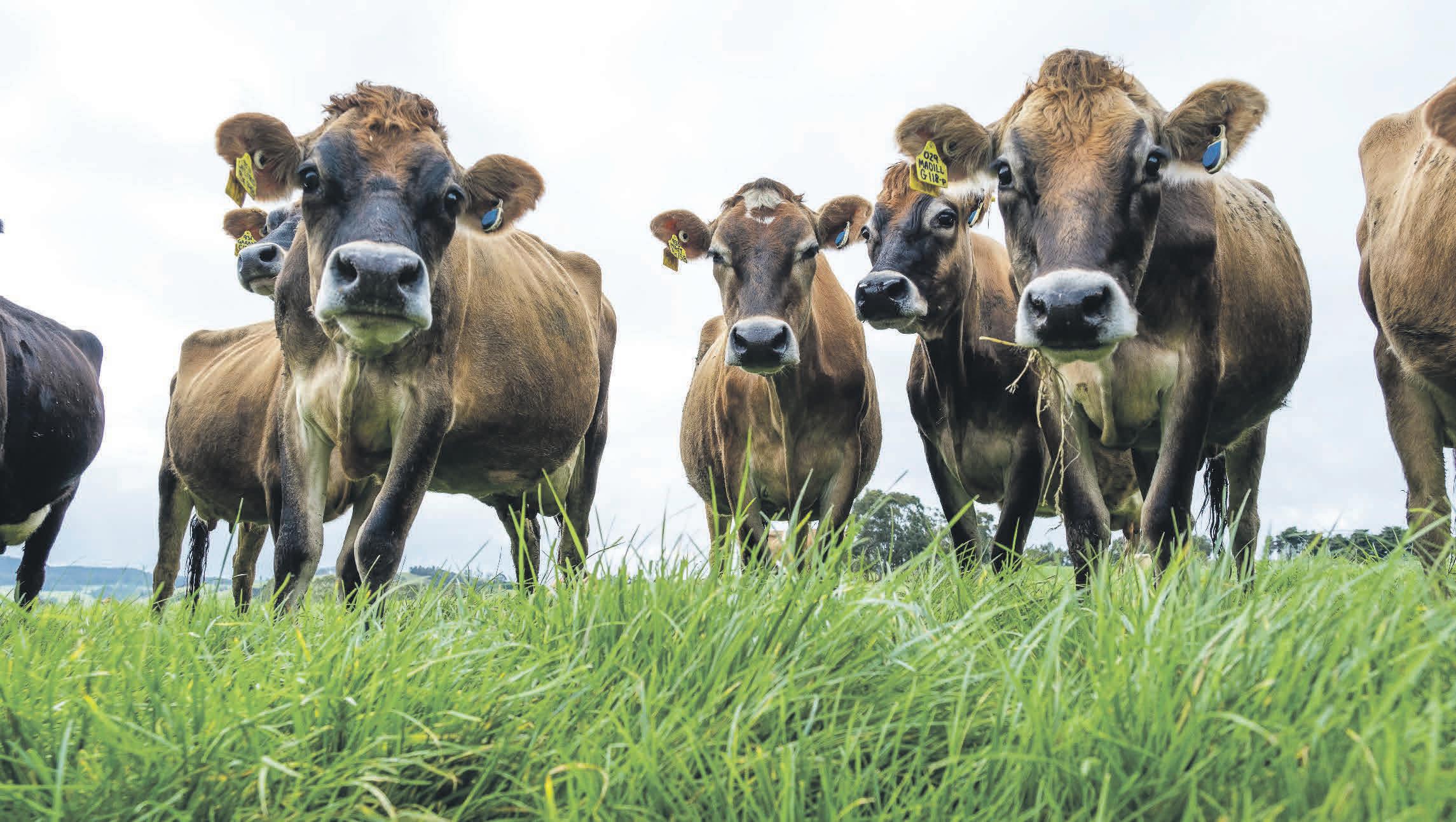
HYBRID RYEGRASSES combine the best traits of Italian and Perennial ryegrass, delivering exceptional yield potential alongside persistence over multiple years.
Italian ryegrasses typically out yield perennial ryegrasses, particularly in terms of cool-season growth potential.
Perennials have the capacity to reliably survive and produce for many, many years.
Hybrid ryegrasses are a category that offer cool season yield potential approaching that of Italian ryegrasses, with reliable persistence over several years.
Hybrid ryegrasses, like Italians have a high proportion of vegetative tillers, and have good potential to come back next year if these tillers can survive the summer.
Cooler temperatures, irrigation or rainfall, good fertility, and grazing management will help this. In the right environment, a hybrid ryegrass will potentially behave more like a perennial and last multiple years.
Hybrids have their best application in areas that can reliably or at least marginally produce perennial ryegrass pastures.
Given a generous and long spring, good nutrition and careful management over summer, these multi-year hybrids reliably bounce back after summer and offer great utility as autumn ensues, or with the aid of irrigation.
Hybrid ryegrasses will have terrific utility in the following situations:
high performance ryegrass pasture for 2, 3, 4+ years, depending on the type of hybrid and environment.
excellent cool-season performance for
winter feed big silage or hay production with prospects for multiple cuts irrigation over-sowing into existing, partially run-out pastures
over-sowing into thinning lucerne or chicory stands
Barenbrug has dedicated over three decades to developing an elite hybrid breeding program, which offers break-through hybrid varieties such as Samurye NEA12, Shogun
and Forge NEA for long-term persistence and excellent year-round yield.
If you would like to discover more about the different types of hybrid ryegrass, their uses, and applications, please visit barenbrug.com.au

A highly bioavailable natural organic rumen buffer rich in bioavailable calcium and magnesium carbonates and naturally contains over 70 minerals.
SLOW-RELEASE BUFFERING EFFECT
Carbonates help neutralise excessive rumen acids.
Assists in optimising rumen pH.
Maintains longer term pH stability of the rumen.
HIGHLY BIOAVAILABLE MINERALS
Calcium (min. 32%) Magnesium (min. 3%)
Contains over 70 minerals.
PROMOTES OPTIMAL RUMEN FUNCTION
Improves environment for microbial fermentation. Improves fibre digestion and feed efficiency. Improves dry matter consumption.
100% NATURAL
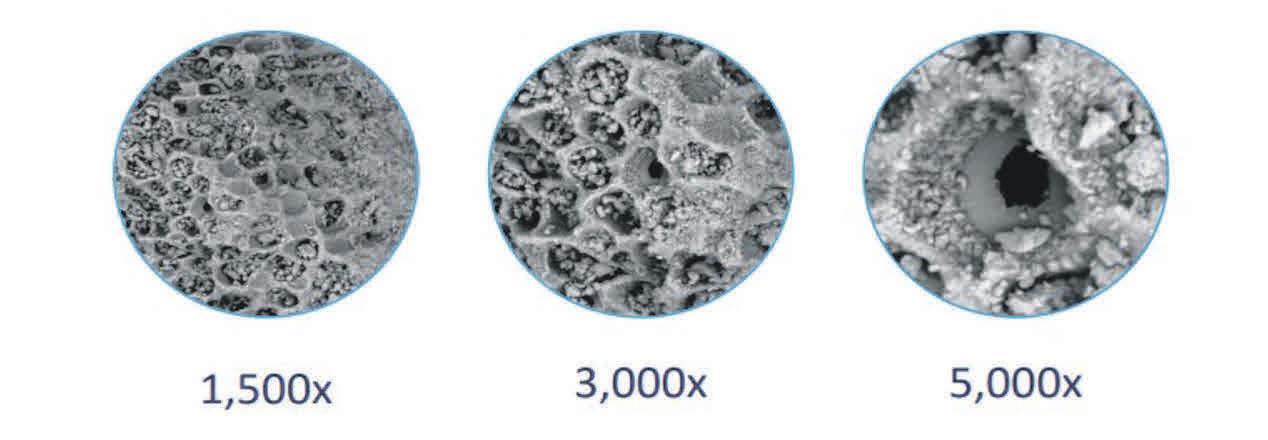
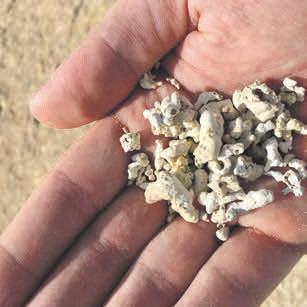
100% Calcified Calcareous Red Algae. USDA Organic Certified. www.auspacingredients.com.au

DAIRY COMMODITY prices have rallied this quarter — particularly for Australian and New Zealand origin product — despite the world’s milk supply continuing to grow and outpace demand, Rabobank says in newly released research.
In its Q1 Global Dairy Quarterly report, the specialist agribusiness bank says overall global dairy prices have shown signs of recovery in recent months, with strong consecutive increases seen in Global Dairy Trade auctions lifting sentiment in the sector.
However, the report notes global dairy markets continue to be well supplied, with strong milk production growth across all the world’s major dairy-exporting regions except Australia.
This global supply growth has been supported by relatively low livestock feed prices, which have encouraged production and kept milk supply levels elevated worldwide, RaboResearch says.
Current supply data does not yet indicate the recent upward move in dairy markets is structurally stable, the report cautions.
RaboResearch senior dairy analyst Michael Harvey, says geopolitical instability — particularly the recent conflict with Iran, but also ongoing tensions in other regions — could quickly and temporarily disrupt global trade routes and import demand.
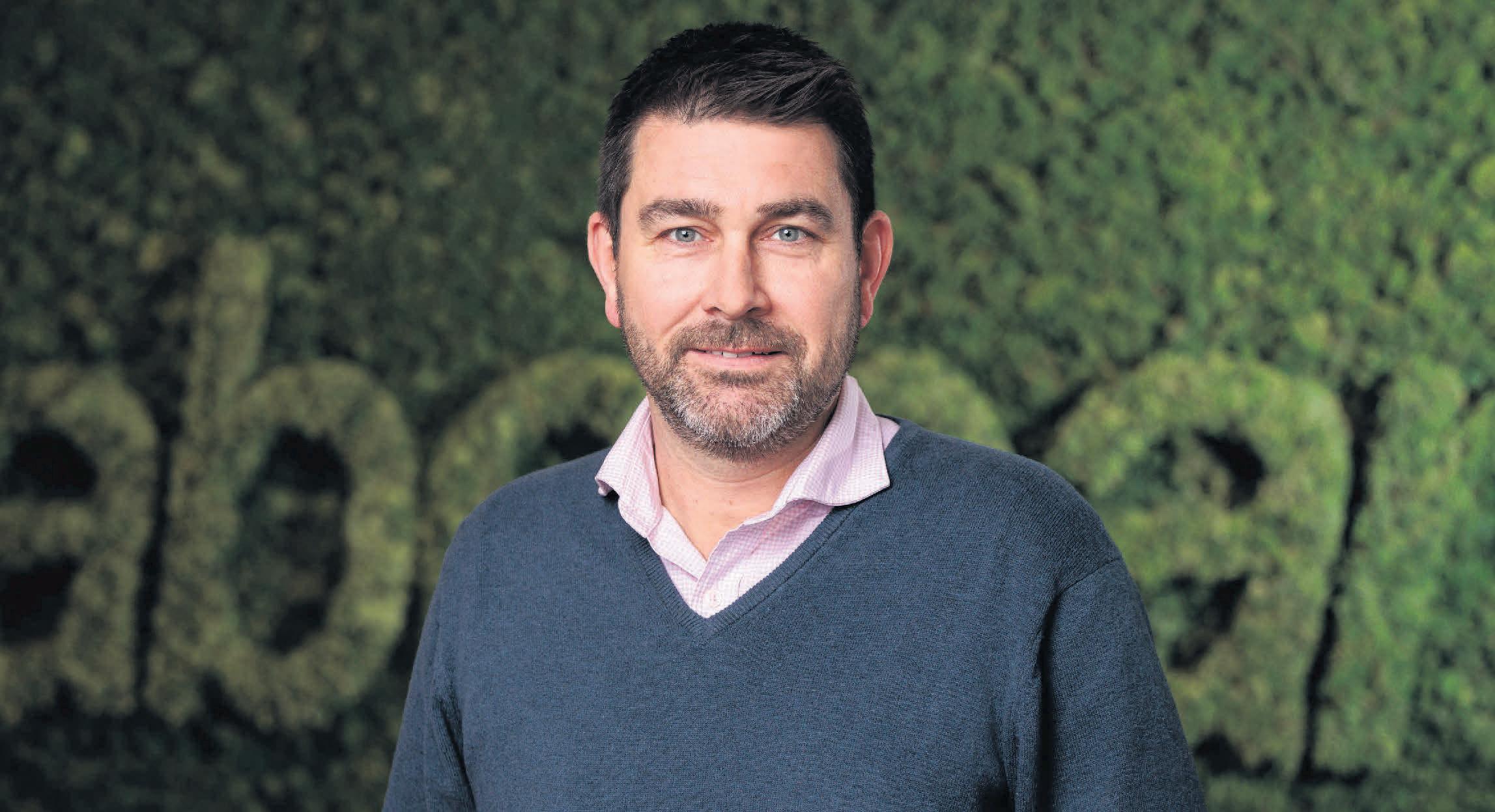
“As the Middle East is an important market for milk powders, fat-filled powders and evaporated milk, the dairy market will follow the evolving situation in Iran and possible trade disruptions closely,” he said.
“At the current time, it remains highly volatile and difficult to predict what will happen.”
Abundant global milk supply had led to a
pronounced impact on global dairy prices in the final quarter of 2025, with the prices of a number of dairy products — including fats, whole milk powder, skim milk power, cheese and whey — declining.

Dairy protein markets, including SMP, cheese and whey, had been more resilient, recording smaller price declines.
Mr Harvey said whey prices had even continued to rise during this period, supported by strong demand for high-end protein products in many markets.
The report says milk production remains well above last year’s level in the EU, the US, South America and New Zealand.
As dairy farmer margins come under increasing pressure around the world, the dairy market is expected to gradually tighten, with supply growth slowing.
Output from the world’s big seven dairy exporters (the EU, US, New Zealand, Australia, Brazil, Argentina and Uruguay) is forecast to end 2026 up only 0.2 per cent above the prior year, compared with an annual increase of 2.6 per cent in 2025.
Milk production is trailing last year’s levels, albeit with the declines moderating, and Australian milk prices remain shielded from global markets for the time being.
As of January this year, season-to-date Australian milk production (ie. from July 1, 2025) was down 1.2 per cent compared with the same period the previous year, Mr Harvey said, at 5.3 billion litres.
“Falls in milk production have been led by western Victoria and South Australia, although monthly declines have slowed. In contrast, there has been a turnaround in NSW and Tasmania, with some production increases.”
RaboResearch expects Australian milk production to finish the current season (on June 30 this year) down one per cent.
“Milk production declines could continue to moderate, although the risk of potential unfavourable seasonal conditions lingers.
“Soil moisture deficits are persisting in key production regions, so more good rainfall will be needed leading into autumn.”
The report said the outlook for 2026/27 irrigated water storages was likely to be low unless
winter and spring inflows improved.
“Current storage levels are the lowest since 2020, due to several years of below-average inflows, negatively impacting milk supply prospects,” Mr Harvey said.
While farmgate milk prices in Australia remain shielded from global markets for now, the report said, the local industry is closely watching the June 1 pricing deadline as the next dairy season approaches.
“There is likely to be some downward pressure on Australian farmgate milk prices if commodity prices in Australian dollar terms remain below prior-year levels,” Mr Harvey said.
Competition for milk supply among processors would also provide some support for local farmgate prices.
At retail level, dairy price inflation was running at 3.1 per cent in January 2026, on a yearon-year basis
Inflation in the cheese aisle was more muted for the same period at 0.2 per cent, with liquid milk prices up 3.9 per cent and ice cream 3.5 per cent.
Mr Harvey said Australia’s drinking milk market had been contracting, declining by 0.5 per cent in the period from July 1 to October 31, 2025, compared with the same period in 2024.
Flavoured milk is outperforming and showing volume growth.
In terms of Australia’s dairy exports, volumes were shown to have declined in the period between July 1 and December 31 last year down 0.7 per cent on the same period the previous year, with large year-on-year falls in butter and whey exports.
Overall export values for the period were 5.6 per cent higher, reflecting improved cheese and liquid milk export returns.
Mr Harvey said Australia’s exportable surplus for dairy would remain squeezed in the first half of 2026 by ongoing pressure on local milk supply growth.
“The shrinking local drinking milk market though, creates a marginal lift in milk available for manufacturing and export markets,” he said.
The report said dairy imports into Australia in 2025 were higher for all product categories, except for skim milk powder.
“Booming demand for high-protein dairy products triggered a local shortage of whey and drove imports 76 per cent higher for the year, to 13,700 metric tonnes,” Mr Harvey said.
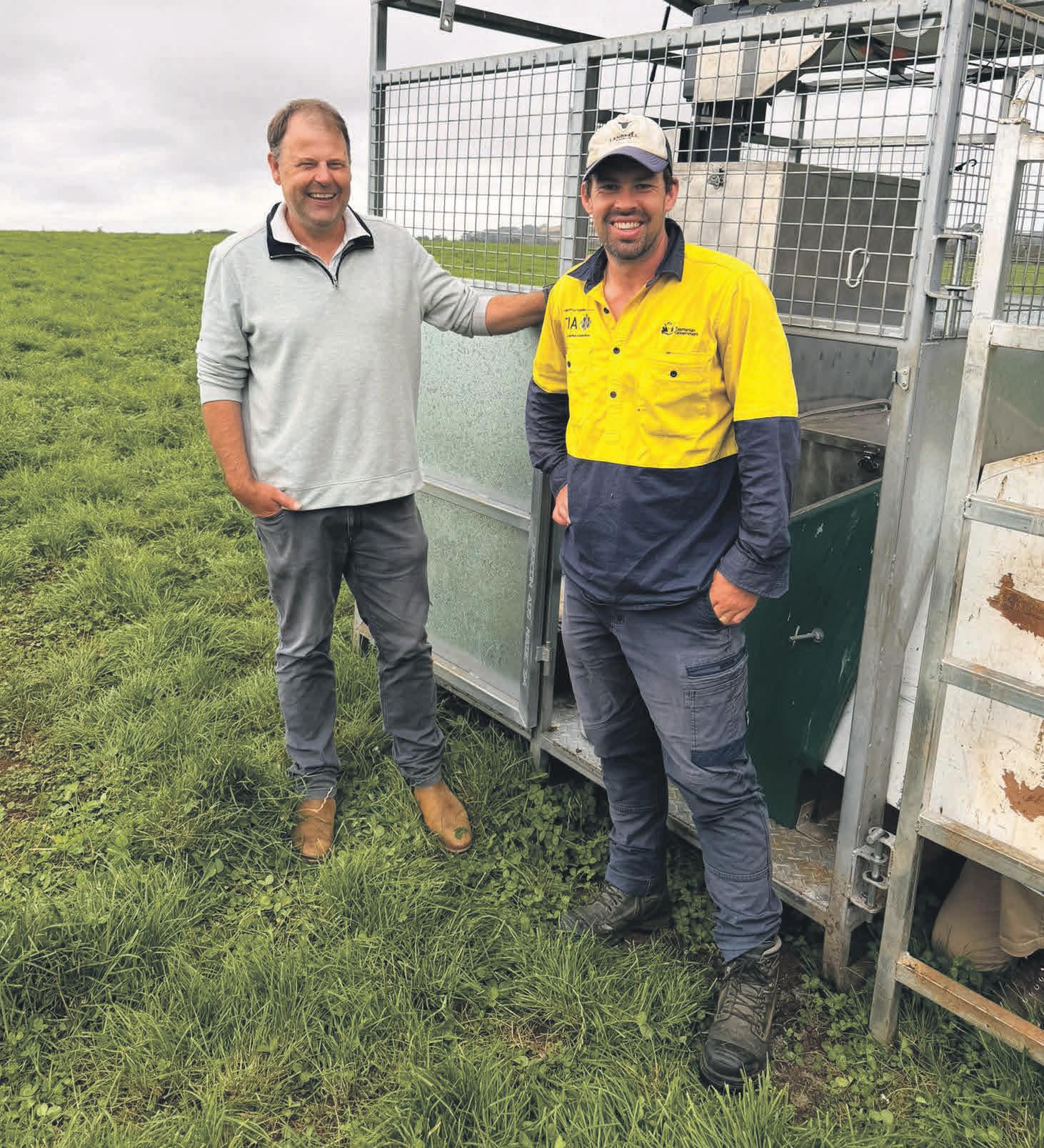
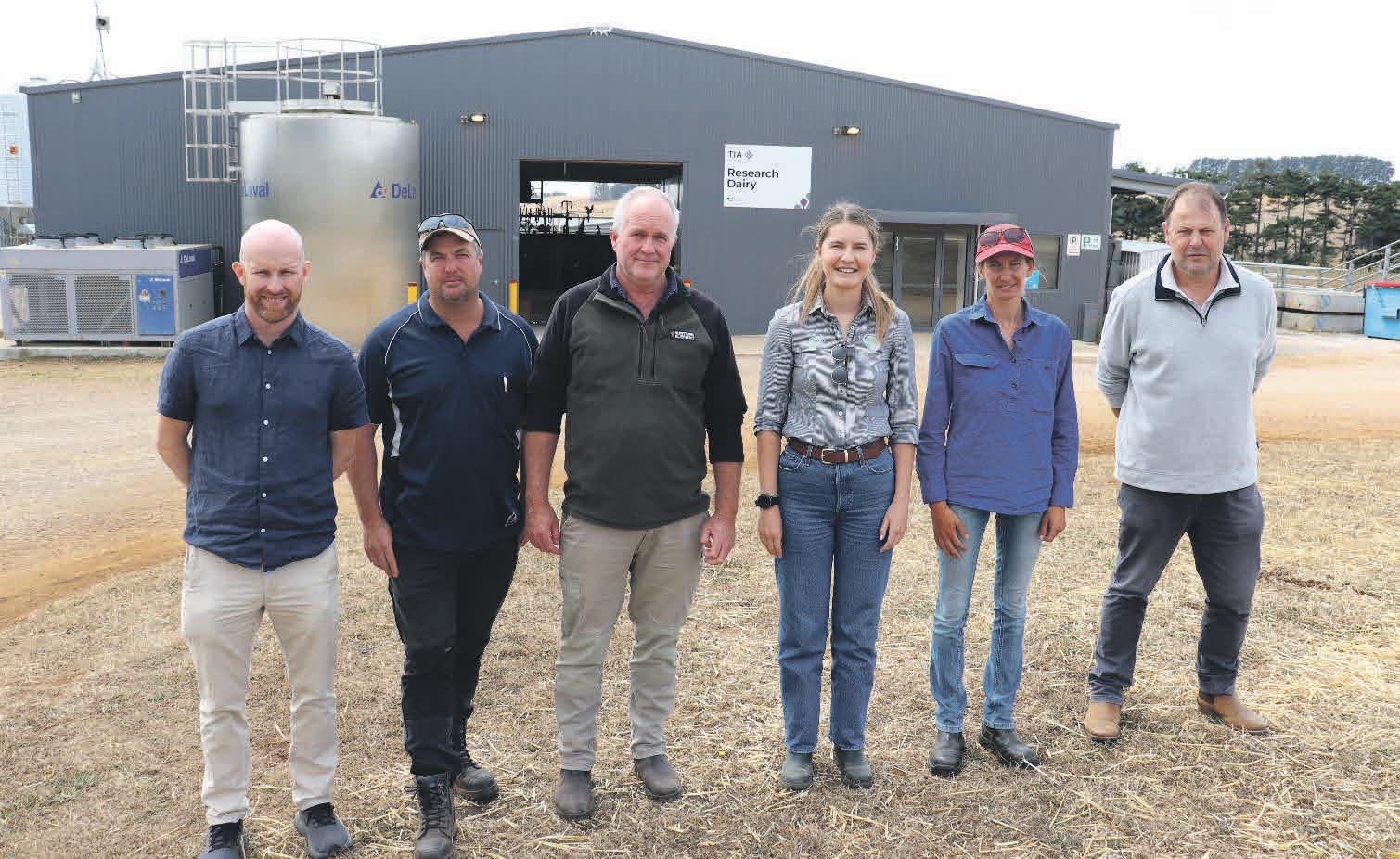
DAIRY RESEARCH in Tasmania has been boosted, with new infrastructure at the Tasmanian Institute of Agriculture’s Dairy Research Facility, enabling large-scale trials to reduce methane emissions, while maintaining farm productivity and profitability.
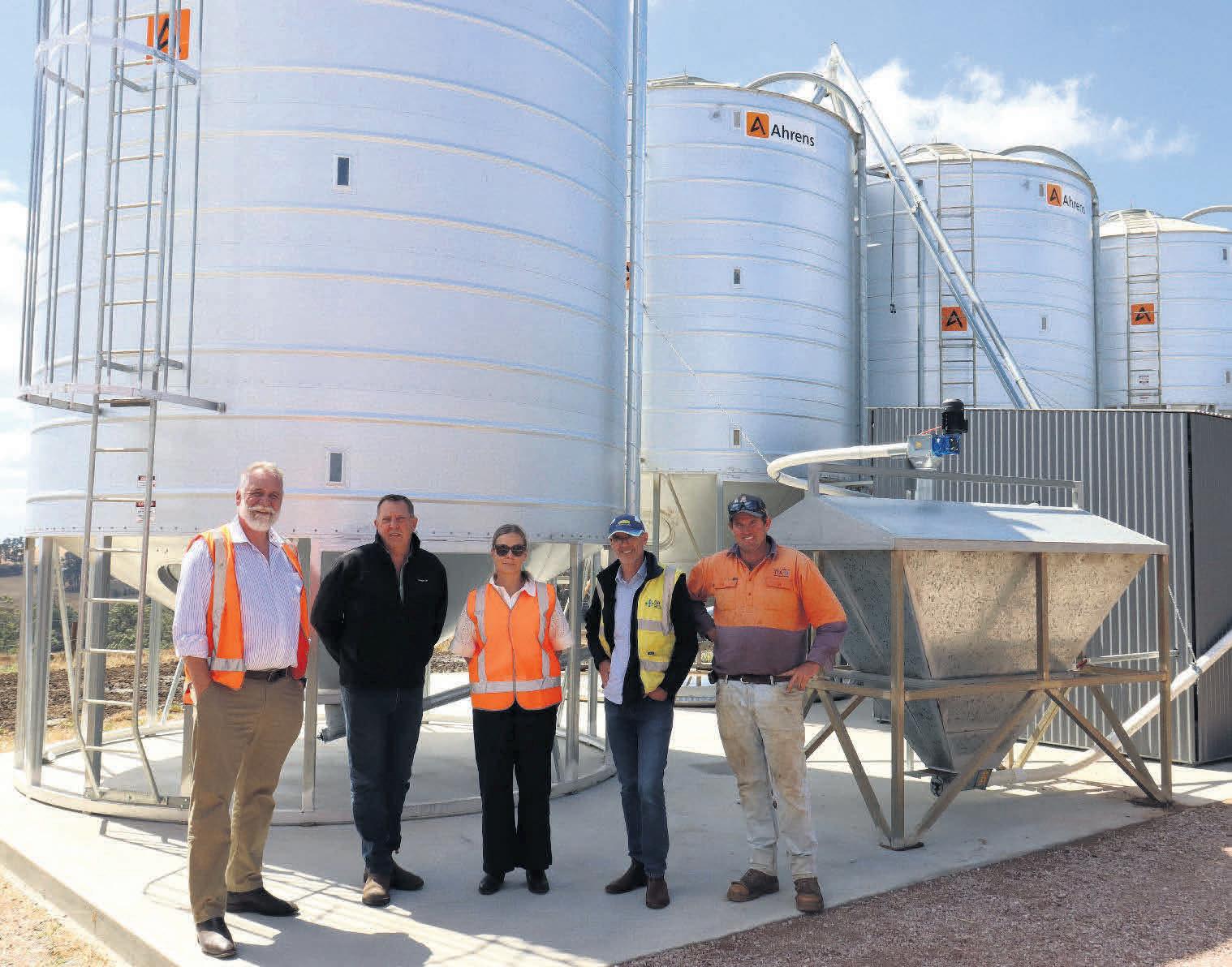
A new supplementary feed facility has been installed at TIA’s Dairy Research Facility at Elliott on Tasmania’s North-West Coast, jointly funded by the Tasmanian Government, TIA and Fonterra.
TIA livestock production centre leader James Holls said this upgrade transformed our feeding system from a standard commercial set-up to one designed specifically for complex research trials.
“We now have the capacity to feed four different supplements directly to animals in the dairy during milking,” James said.
“This increased flexibility means we can expand our methane mitigation trials where we feed specific amounts of low-emissions feed additives under various feeding rates.
“We can now test methane-reducing feed additives over longer periods and at a scale that reflects commercial dairy farms, while closely monitoring impacts on cow health and milk production.”
The infrastructure upgrade includes a new feed silo, the relocation of two existing feed silos, a feed head in the dairy, a disk mill, small shed, and augers.
Benefits include increased research and teaching capacity, new opportunities for demonstration to industry, improved
on-farm efficiencies and reduced running costs.
“Until now, we haven’t had the capacity to process grain on the farm and have been reliant on bringing in commercially
produced animal feed from the mainland.
TDRF farm manager Andrew Marshall said processing grain onsite meant lower operational costs and new opportunities to source grain from Tasmanian growers.
“Efficiency improvements like this are critical for our farm,” Andrew said.
“We operate as a commercial dairy milking 350 cows, while also supporting complex research trials.
“We’re currently running six mobs that operate as individual farm systems under different treatments, so there are a lot of moving parts. Upgrades like this help us manage that complexity efficiently.”
TDRF is nationally recognised as a leading research facility for delivering pasture-based research that focuses on sustainable and profitable dairy production.
It is the only facility in Australia setup to run multi-herd “farmlet” systems of research, allowing farm comparisons under commercial pasture-based conditions.
The latest upgrade follows a major redevelopment in 2022, jointly funded by the Tasmanian Government and the University of Tasmania.
Works included a new 50-bay rotary dairy, a 12.5 megalitre effluent dam, increased irrigation water storage from 24 to 115Ml, 11 kilometres of underground irrigation pipeline, and conversion of 32 hectares for irrigated farmlet trials.
The new supplementary feed facility positions TIA to expand its methane mitigation research and continue delivering practical, science-based solutions that strengthen the productivity and sustainability of Tasmania’s dairy industry.

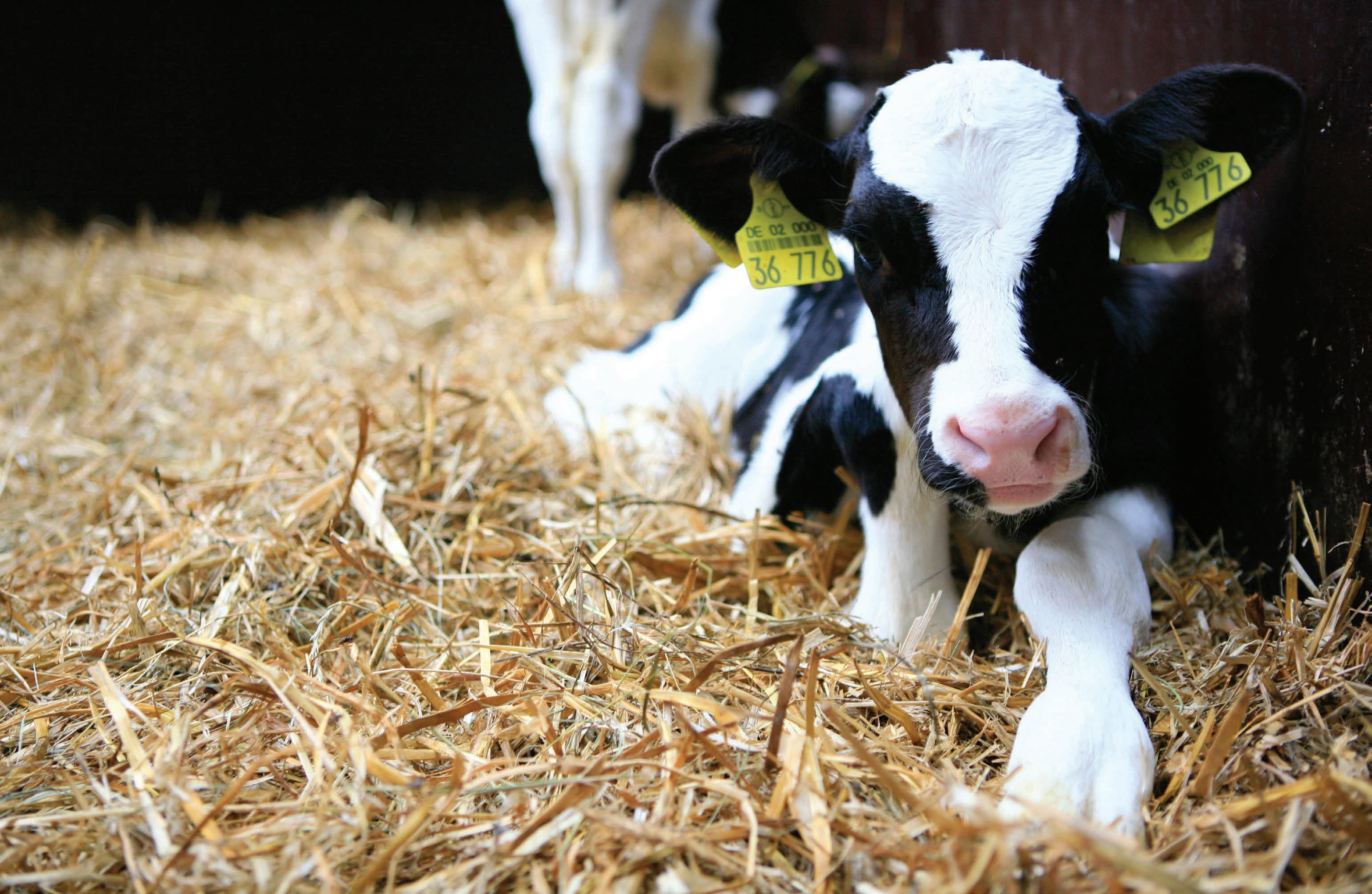
The first 3 months are so important to your calves’ future the herd, so don’t compromise, in use Veanavite No1 Calf Pellets.





FARMERS ARE well into autumn plan ning and asking questions about not only what feed the y will need on hand in the coming year but also how they can balance rising input costs and potential shortages of nitrogen and other inputs.
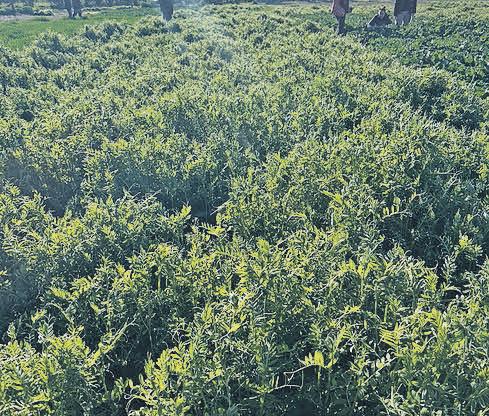
Farmers across northern Victoria and southern NSW have been asking how much nitrogen a good vetch crop can really deliver, and what that means for reducing fertiliser inputs without sacrificing feed supply.
Vetch is an increasingly popular option across the Murray region for not only it’s nutritional value to milking herds but also the agronomic benefits it provides.
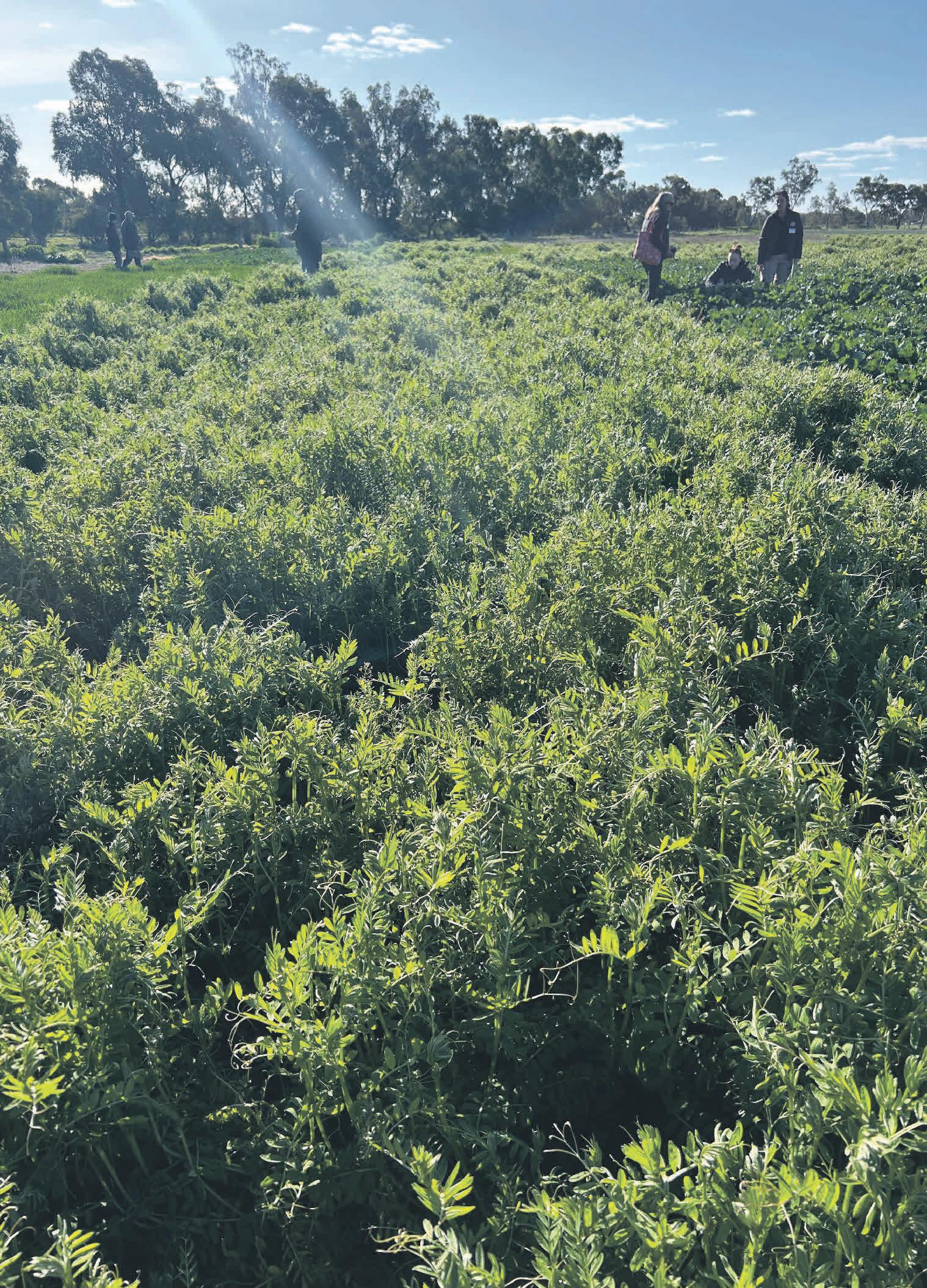
Research from across Australia shows a clear link between vetch biomass and the amount of nitrogen it fixes.
The nitrogen benefit to the farming sys tem is greatest when the crop is brown manur ed rather than removed as hay or silage.
In other words, the more vetch you grow – and the more you keep in the pad dock – the more scope you have to offset fe rtiliser N in the current high‑cost input environment.
For example, work by Birchip Cropping Group (BCG) has shown that well‑nodu lated vetch can fix in the order of 25–30 kg N pe r tonne of dry matter, meaning a 4 t/ha crop retained as brown manure can contribute around 100 kg N/ha or more, whereas taking most of that biomass off as hay or silage significantly reduces the net N left behind for following crops.
However this will still likely leave a small starting N benefit for the following crop.
Murray Dairy is testing exactly how big that benefit will likely be in the C4Milk Forages project which is running for the fourth year at two trial sites in Mitiamo and Kerang, in partnership with BCG and the Irrigated Farmers’ Network.
The next two seasons will be looking at the residual benefits of a legume rotation on wheat and maize crops.
Apart from the N benefit, vetch also provides additional agronomic benefits such as the ability to control grass weeds effectively and decreasing the risk of root disease which both can hamper produc tivity in intensive fodder systems for dairy
Another of Murray Dairy’s projects, Fodder for the Future (FFTF), run in partnership grower groups across our
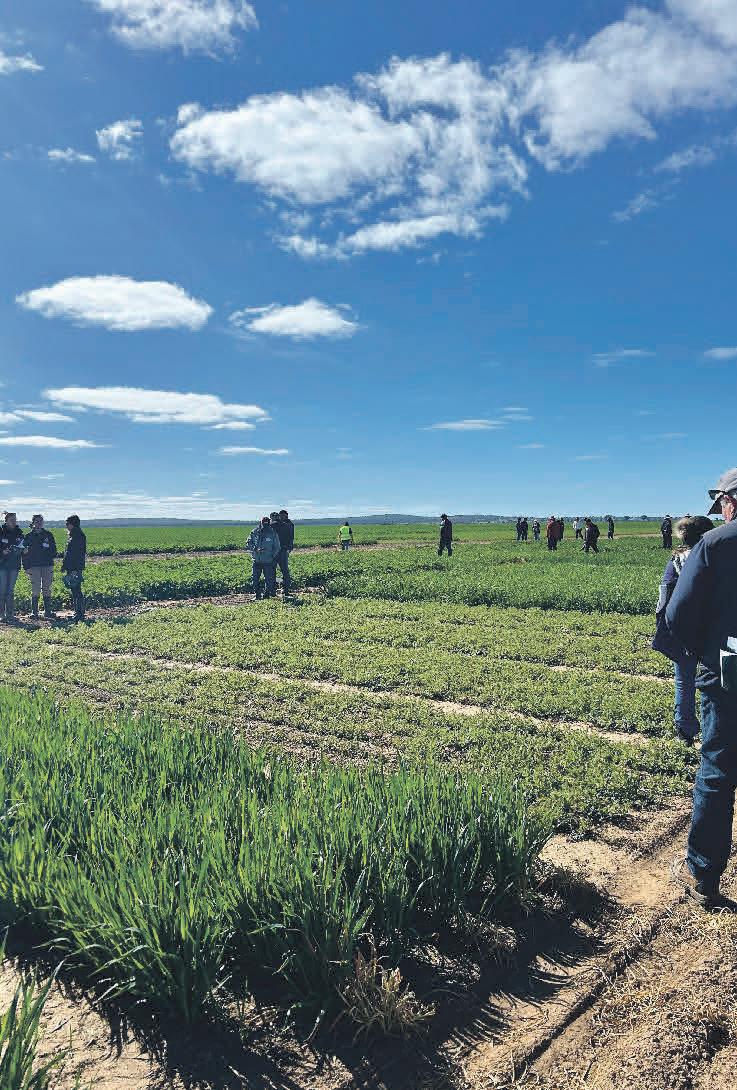
region, has been digging into the reali ties of growing vetch, including managing Botrytis grey mould (BGM) in wet and irrigated seasons.
FFTF trials have shown that the same agronomy that drives biomass and N –earlier sowing, high plant populations and rapid canopy closure – can sharply increase BGM risk and undermine yield and hay quality if disease isn’t planned for.
Practical levers emerging from the work include adjusting sowing date and rate in high‑risk environments, using seed treat ments where appropriate, and considering a light early graze to open the canopy and improve airflow before locking in a time ly fungicide application ahead of canopy closure.
In high risk seasons and under irriga tion, FFTF found that one fungicide appli cation was not enough, and a multi f ac eted approach needs to be undertaken to a void vetch dying off.
Results from irrigated and high‑rain fall sites also highlight the importance of managing soil moisture, avoiding over‑wa tering that keeps the canopy damp, and having clear “Plan B” triggers to switch from hay or silage to brown manure when disease, lodging or extended wet forecasts

make quality hay unlikely.
With fertiliser and irrigation prices increasing, having a strategic look at the role and management vetch plays in the fodder system will be critical to ensuring farmers achieve outcomes they want.
Work with a trusted local agronomist to tailor disease, irrigation and N‑fertiliser strategies to each paddock and season will lead to the best outcomes both in terms
of feed availability and quality, as well as ensuring efficiency of inputs.
For more information contact Amy Fay at Murray Dairy at amyf@murraydairy. com.au
Partner grower groups for FFTF are Birchip Cropping Group, Irrigated Farmers Network, Southern Growers, Riverine Plains, AgVic Tatura, Gardiner Foundation and the University of Melbourne Dookie.


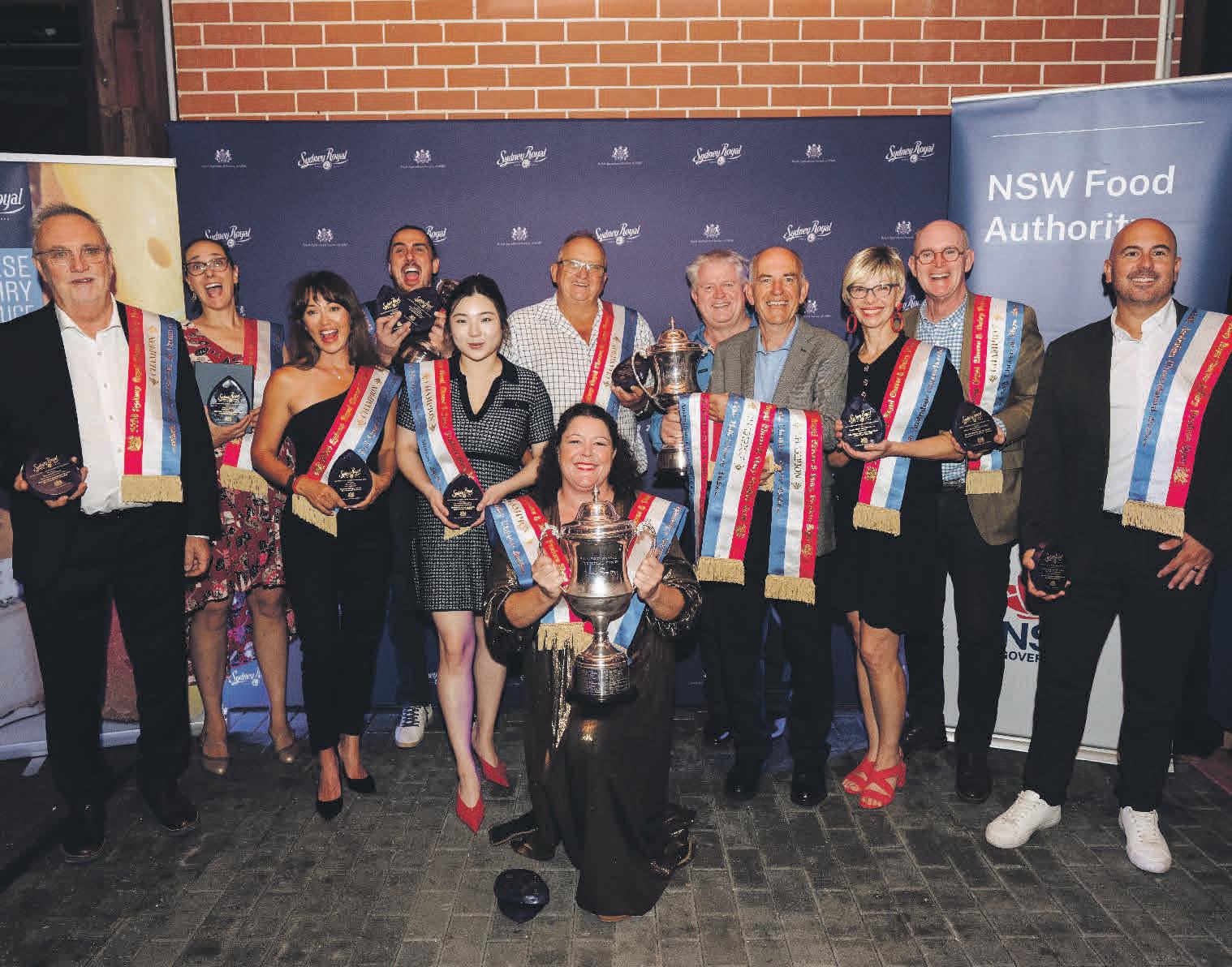
AN OLIVE oil, honey, lemon, and thyme ice-cream, kahjoor (date) flavoured milk and a buffalo cream butter were among those awarded at the 2026 Sydney Royal Cheese and Dairy Produce Show in a celebration of some of the best Australian pr oducts on the market.
Held annually as part of the Royal Agricultural Society of NSW’s Sydney Royal competitions, the show attracts entries from across Australia to undergo judging by industry experts.
With over 600 exhibits assessed last week, 14 products have stolen the spotlight and been crowned champions in their r espective categories.
Sydney Royal Cheese and Dairy Produce Show chair of judges Tiffany Beer said it was a chance to celebrate our 2026 champions and shine a light on the industry as a whole.
“Judging provides producers with the opportunity to showcase their products, whether that is innovative new offerings or home-grown classics, and receive expe rt feedback from food and dairy specialists,” Tiffany said.
“For the producer, a Sydney Royal medal signifies to consumers that their product is at the top of its game.”
O ne standout business was the Little Big Dairy Company, which took home two champion titles.
The family-owned dairy and processor impressed judges with its non-homogenised full cream milk, claiming champion milk, and its pure double cream won champion cr eam.
Borghi’s Dairy also secured two champion awards with its Del Bocia Australian he rb butter winning champion butter, while the Del Bocia buffalo cream butter
was awarded champion sheep, goat, buffalo or camel milk product.
“We saw an increase in buffalo products, which was exciting for the judges,” Tiffany said.
“Buffalo cheese is the most common entry; however, this year judges also evaluated butter, ghee, curd and milk, with the buffalo but ter proving exceptional.”
In the dessert category, V’s Dessert Gluten Free won champion dessert with its original basque cheesecake.
And ice-cream lovers are spoilt for choice with Scoopanova’s chocolate and liquorice 2019 event horizon awarded champion full cream ice-cream and gelato, and Cow and The Moon’s Olive Oil, honey, lemon and thyme taking out champion low-fat ice-cream or gelato.
“Over the past two years, we’ve seen continued growth in innovative and culturally diverse flavour profiles, such as dat e and cardamom.
“This trend was again reflected across various categories, including the flavoured milk category — with Sharma’s Kitchen winning champion flavoured milk for its Khajoor milk.”
Champion cheese of show was awarded to repeat winner Berrys Creek Gourmet Cheese for its Riverine Blue.
Meanwhile, Milawa Cheese Company’s King River Gold was crowned champion speciality cheese, and Bega Cheese’s bega rindless cheddar was named champion cheddar cheese and champion cow milk cheese.
All gold, silver, and bronze medal winners are available via www.rasnsw. com.au
For further information, visit the Sydney Royal website.






Selko Intellibond-Hydroxy trace minerals
The importance of trace minerals
Trace minerals support a range of biological functions required for immune function, reproduction, and growth. Trace minerals are present in forages and other feeds used in cattle diets, and with the exception of cobalt, meet the requirements of rumen microbes. However, supplementation is needed to meet the animal’s needs.
Trace minerals support an array of biological functions that are required for proper immune function, reproduction, and growth. Trace minerals are present in forages and other feeds used in cattle diets and, with the exception of cobalt, meet the requirements of rumen microbes. However, supplementation is needed to meet the needs of the animal.
Contributes to making protein, vitamin A
fertility and
health. Contributes contributes to healthy bone and cartilage, enzymes, immunity and fertility.
ANTAGONISTS
IntelliBond Hydroxy Trace Minerals unique crystalline structure limits the exposure of the IntelliBond trace minerals to antagonists in the feed and rumen. Slow breakdown of IntelliBond occurs in the abomasum, making the mineral available to be absorbed in the small intestine.
Antagonists are minerals or compounds that reduce the bioavailability of another mineral by forming complex that reduce absorption. This typically occurs in the rumen. Antagonists can come from feedstuffs in the diet, soil contamination (or ingestion), and drinking water. Common antagonists to the trace minerals that are important to cattle are: Sulfur Iron Molybdenum Mineral imbalances
IntelliBond Hydroxy Trace Minerals
Strong covalent bonds and a unique crystalline structure limit the exposure of the IntelliBond trace minerals to antagonists in the feed and in the rumen. Slow dissociation of IntelliBond occurs in

BY SOPHIE BALDWIN
WITH A career spanning over four decades in veterinary services, Ian Lean knows a thing or two about livestock.
He actively consults to dairy and beef farms across Australia and is the founder and managing director of Scibus, a leading authority in medicine, nutrition and management of dairy cows – a surprising career trajectory considering his Dad escaped dairy farming and was pretty keen for his kids to not follow in his footsteps.
However, Ian said agriculture was in his blood and he had always had an affinity with animals.
“I wasn’t interested in medicine, and like so many people who are vets, I have a deep engagement with animals,” Ian said.
Over the years, Ian has seen tremendous growth in the health and wellbeing of cows, along with productivity increases which can be attributed to improved knowledge and investment in animal health.
“Farmers improvements in feed quality are second to none, along with their level of professionalism and adoption of technology.”
He said the worldwide transition to better cow management had reduced mortality rates dramatically for things like bloat, milk fever and acidosis.
“Improved nutrition management has made a difference to animal wellbeing and ultimately improved profit for farmers.”
“It really is an exciting and rewarding industry to be a part of,” Ian said.
He said another great achievement the dairy industry could hang their hat on was the huge improvement in the reduction of greenhouse gas emissions and the reduced carbon footprint.
“I have seen a 40 per cent reduction in my time through production efficiencies and the use of additives in stock feed.”
Ian said farmers who had failed to engage and adopt technology had slowly made their way out, while those willing to take on new ideas had adapted and improved operations over time.
Programs like DairyUp have been critical in delivering information and keeping farmers up-to-date.
Dairy UP is a $16 million, five-year industry-driven project with a portfolio of projects aiming to realise three primary objectives:
ɋ Increase productivity and profitability by unlocking the potential of milk, the cow and water
ɋ De-risking the industry
ɋ Developing new markets
It is a coordinated network of partner farms across NSW (and beyond) providing valuable insights into real-world application of new practices, including the challenges and
Pac Cool Dealer - Australia
benefits of new innovative technologies.
Ian said the dairy industry was an interesting mix of herd sizes and different systems, but ultimately regardless of what is in place, a happy, healthy cow is a productive cow.
“There may be different systems, resources and skills, but good management processes result in good outcomes for the animal and the business,” Ian said.
Ian believes there is a good future for the Australian dairy industry, but he said caution needed to be exercised in the direction we take.
“Growth and economic signals go hand-inhand, and we are disadvantaged by pressures from the EU and the compromising of own markets which could impact animal health.
“We should never become a dumping ground for other countries dairy products.”
Ian graduated from the University of Sydney in 1979 and spent six years as a large animal veterinarian in the Hunter Valley of NSW before undertaking a PhD at the
Packo & Pac Cool Spare Parts PACKO has a new

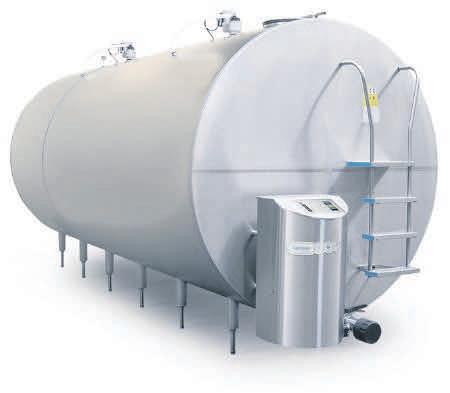
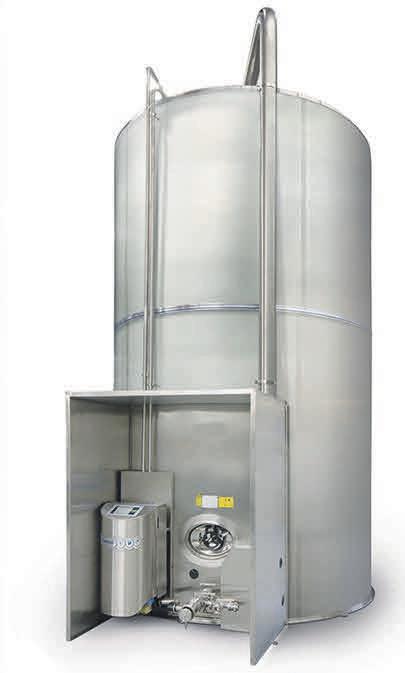
THE DEDICATED MILK COOLING
- A milk vat to suit all herd sizes, pick up schedules & entry temperatures
- Cooling & wash controls - user friendly, simple & effective
- Glycol chiller cooling & traditional direct expansion cooling systems
- New & secondhand sales, spare parts & wash system upgrades for all makes
Call Dairy-Tech Refrigeration today for a no hassle quotation
PHONE: 03 5662 3277
EMAIL: pgoiris@dairytechrefrig.com.au
WEB: www.dairytechrefrig.com.au
Refrigerant Trading Licence - AU34439
University of California, in the US. He has lectured on clinical nutrition and cattle medicine at the University of California and the University of Sydney, and is currently an adjunct professor in the School of Life Sciences.
He has extensively published on the interactions of nutrition with production, reproduction and health and been a keynote speaker across the globe.
Ian has received many notable awards over the years, most recently he was a recipient of the 2025 Centenary Award, recognising outstanding veterinary leadership across o ne health, one welfare and professional practice.
Other awards and achievements include the Gilruth Medal and Prize, the Australian Veterinary profession’s highest honour, the Australian Dairy Science Award, American Feed Industry Award along with a DVSc from the University of Sydney — the highest academic award in Australia and the UK.





THE TRANSITION period, typically defined as the final three weeks before calving and the first three weeks of lactation, is critical for setting up a successful lactation.
Key focuses over this period include maintaining optimal cow condition and dry matter intake, managing mineral balance, and reducing the incidence of hypocalcaemia (milk fever), ketosis, fatty liver syndrome or other post-calving metabolic challenges.
Maize silage has become an increasingly valuable feed option for transition cows within both pasture-based and TMR systems due to its nutritional profile, consistency, and flexibility.
Maize silage is naturally low in potassium, sodium, and calcium compared with pasture or pasture silage.
This makes it an ideal base feed for reducing dietary cation–anion difference DCAD which in turn lowers the risk of milk fever around calving (Figure 1).
Figure 1: Relationship between DCAD and milk fever risk (Lean et al, 2006)
The consistent composition and moisture content of maize silage makes it an effective carrier for additives, reducing dust and enhancing palatability
Maize silage also plays an important role in body condition score management leading into calving.
Winter feeding strategies that include maize silage have been shown to support BCS gain in dry cows, particularly when pasture alone cannot meet energy requirements due to low growth rates and/or poor utilisation.
Relationship between DCAD and milk fever risk (Lean et al., 2006)
Achieving target BCS at calving is a key driver of milk production, earlier return to cycling, and improved conception rates.
From a nutritional perspective, maize silage is more consistent than grass or cereal silage.
It provides good levels of starch and high-quality fibre, supporting rumen function without excessive rumen fill.
It is an ideal component in the early lactation ration for high-producing cows and feeding it over the transition period reduces the risk of sudden dietary changes, which can negatively affect intake and rumen adaptation.

If you are planning to feed maize silage to transition cows:
ɋ Collect a representative sample and send it to a reputable laboratory for feed test analysis. Care should be taken when collecting silage samples; where possible, take silage samples from the loader bucket once it has been moved away from the silage face. Alternatively, closed stacks can be cored from the centre of the top (away from the edges), or samples can be collected from the sides of open stacks, provided the height is low.
ɋ Avoid feeding any mouldy or spoiled material.




Transition cows are especially vulnerable to the negative effects of poor-quality silage.
ɋ For TMR or high maize silage inclusion diets, consider the new Pioneer brown mid-rib (BMR) maize hybrid P07003. BMR maize has lower lignin and has been proven to lift the performance of high-producing cows in early lactation. For more information on BMR or help with any aspect of growing, harvesting, storing or feeding maize silage, contact Pioneer Dairy Specialists Greg Morris (Gippsland and Tasmania on 0448 480 870) or Leighton Hart (south-eest Victoria on 0473 221 074).







BY SOPHIE BALDWIN
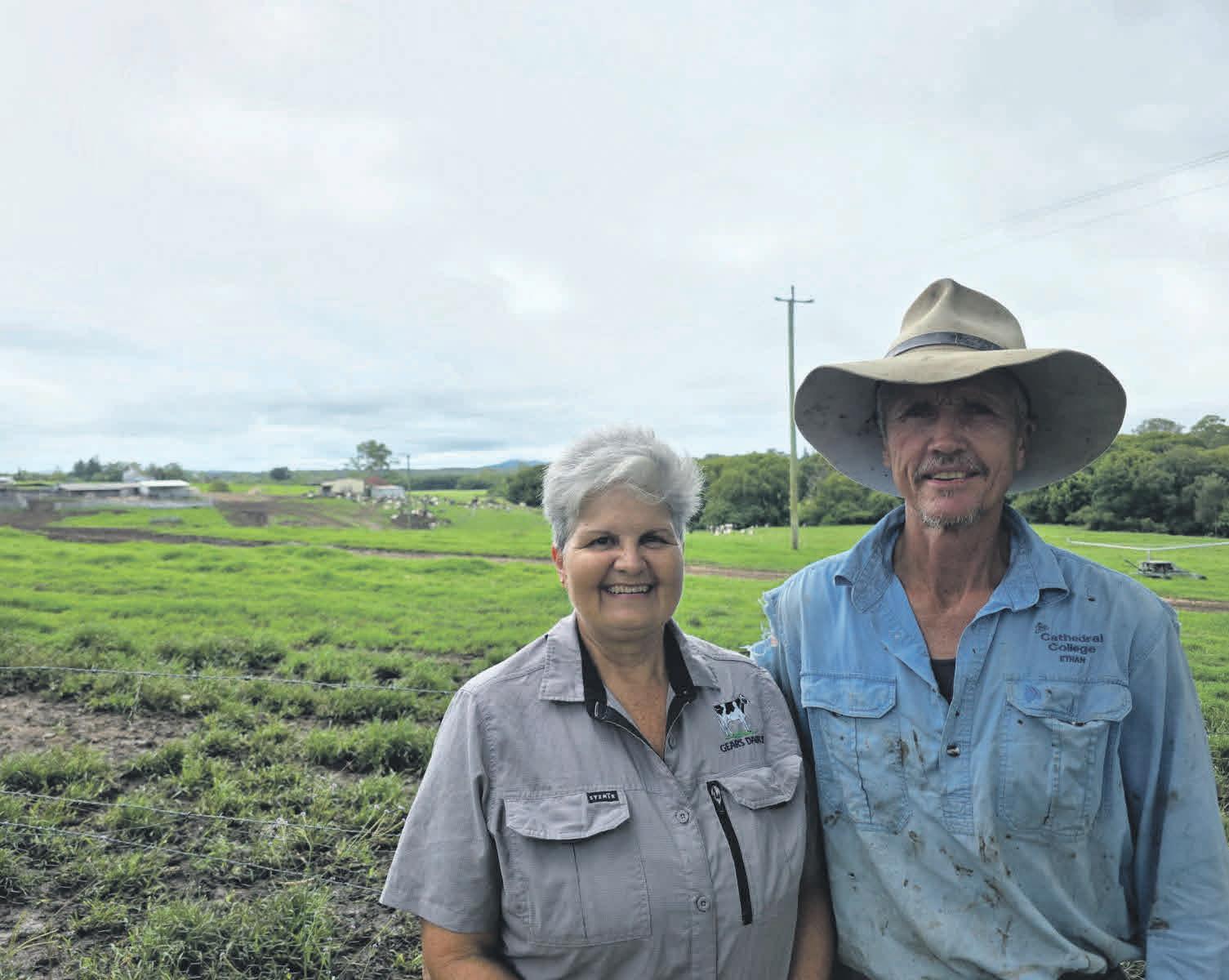
BARB GEAR has been milking cows at Cedar Pocket near Gympie in Queensland all of her married life, her husband Rob grew up on the family farm and dad Ivan, at 85, is still helping out.
Farming in southern Queensland is not for the faint-hearted.
Throw in 500 cows, and you have a different set of problems, predominately related to climate conditions.
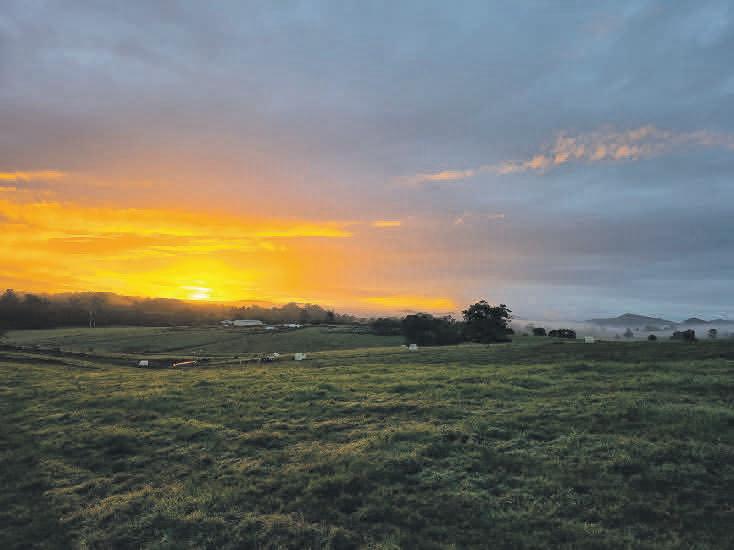
Living on the edge of the coastal climate means dealing with wet weather and consequent humidity is part of daily management, particularly during February, which is the wettest month.
Barb said to help mitigate impacts they calved all-year-round except for December through to February.
If it comes in wet and mastitis becomes an issue, cows are dried off early.
“Our focus is to keep cows alive, and if they are pregnant, we just dry them off — 90 per cent of the time they are fixed up, and we save the cow,” Barb said.
Barb is a big believer in automation, even though Rob is not so interested.
She said installing cup removers into the 22 swing-over was a game changer and enabled Rob’s mum to retire from milking.
The installation of Easy Dairy has helped with drafting, while Allflex SenseHub heat detection monitors in the cows ears have been a game-changer.
“We have put the monitors in our best genetics and the old ducks are just joined to the bull,” Barb said.
A shade cover over the dairy helps keep the cows cool, but Barb draws the line at investing in a million-dollar shed.
“We are debt free, and at 60, I am just not interested, that’s up to the kids if they end up taking over the farm,” she said.
Currently, two of the four children are home and working on the farm, while another one has expressed interest.
“Our succession plan is currently up in the air, while the kids work out what they want to do,” Barb said.
“We are contracted to supply Bega until 2027, and we will worry about it all when the contract finishes.”
The family operate a closed herd and breed bulls from American and European genetics.
They currently have eight bulls, which are used for older cows or cows with reoccurring mastitis.
Barb said she was focused on improving genetics and using AI on her young stock.
The building of a purpose-built calf shed capable of housing 50 calves has improved management and helped with mortality rates.
“We used to get a lot of sick calves from pneumonia as the nights can really cool down here,” she said.
“The calves stay in the shed for six weeks, and then they are robust enough to be moved out into the paddock — we don’t lose any calves at all now.”
The family business operates over 500ha, and at last count, is made of 35 blocks.
They have made the most of any opportunity to purchase any neighbouring properties, although Barb said, since COVID, land prices have skyrocketed.
“There was no way you could just come into this area and start farming,” she said.
“You would have to have some sort of step up, land is just too expensive, and it
is very hard to find a farm to lease as a lot of people have transitioned across to beef.”
Barb said this year had been particularly wet, and it rained most days, humidity is sitting up around 80-90 per cent.
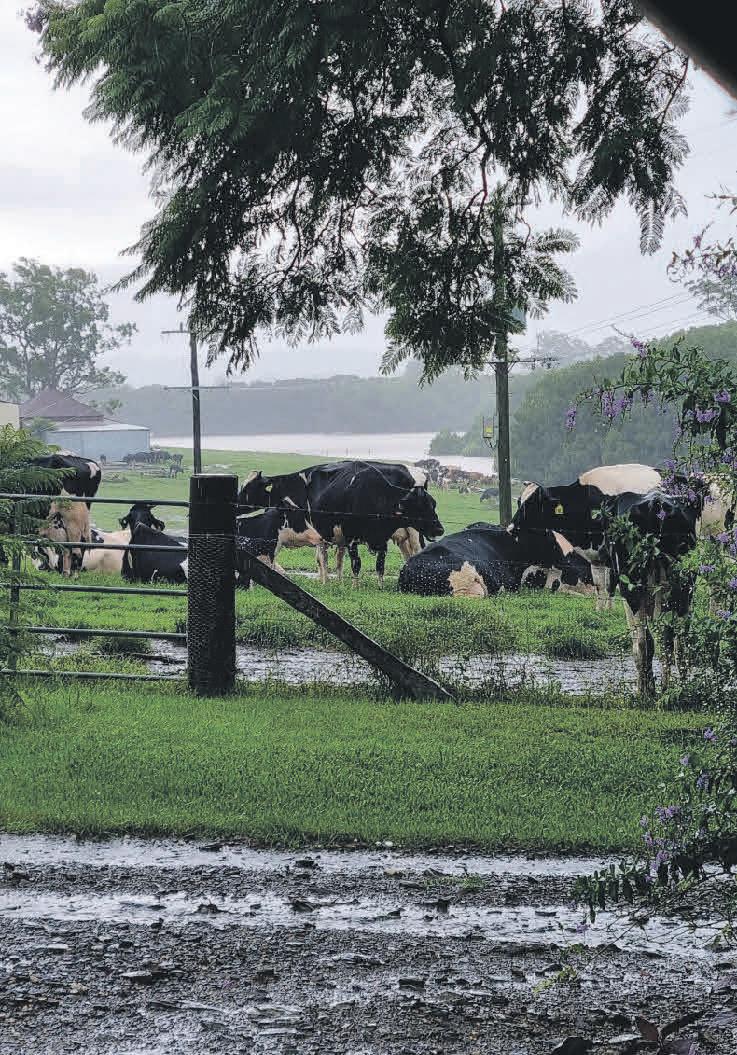
At the time of talking to Dairy News, the four-day forecast for rain was 5mm, 10mm, 30mm and 70mm, instead they received 300mm (with no flood damage).
While it is not unusual for the farm to flood, and for it to be cut in half, Barb said the seasons were changing.
In 2022, at the same time as the Lismore floods, the farm received 1600mm of rain in just eight hours.
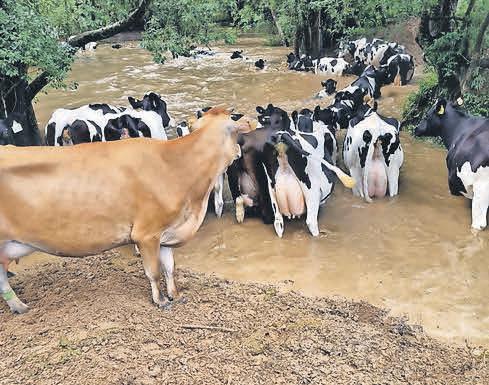
“We lost all our fencing, 20 head were killed, and cows were found kilometres away stuck up in trees, it was a disaster.”
She said the first morning after the initial flood there were cows to milk, but only 100 showed.
“The farm was divided by very fast-moving floodwater, and as some of the cows tried to get across, they were washed away,” Barb said.
We found 40 or so cows in the silage
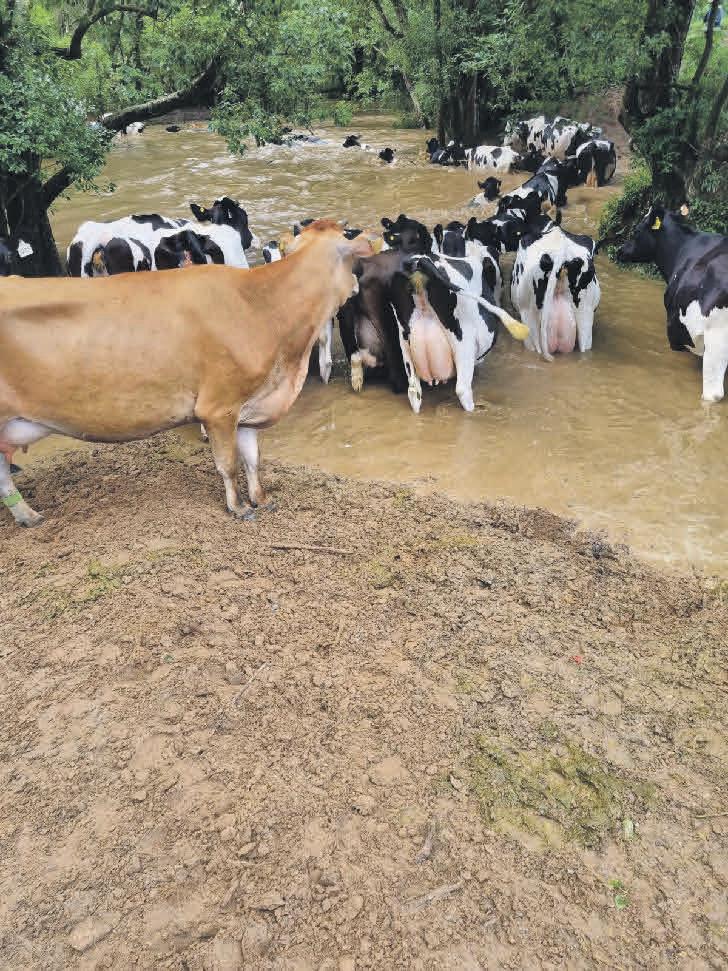
paddock, and we had to work out how to get them across.
“Some of the trapped cows received a police escort through the floodwater,” she said.
Barb said Bega was amazing during that period, supplying a consultant who encouraged them to focus on the basics and get their feet back on the ground.
“It took months and months, and we had to be patient and take it one day at a time,” she said.
“We kept the feed pad full of silage, and we also used a lot of antibiotics and eventually things returned to normal.”
During that particular year, the farm was refenced three times.
She said Rob now watched the weather channel religiously, and they know they have a two to three-hour window to get their pumps out and move the stock up the hill if they get a flood alert on the nearby dam.
She said despite the challenges, the Queensland dairy industry remained fairly steady.
“As prices have increased, there has been more interest in the industry, but as I said before, it is costly and hard to find a way in,” she said.
AS PART of its recent International Women’s Day activities, Saputo Dairy Australia profiled two inspiring young women whose journeys reflect this year’s theme, “Give to Gain.”
Both Hayley and Emma are past recipients of SDA’s annual supplier scholarships program, which provides financial support and development opportunities to help future dairy industry leaders unlock personal and professional milestones.
Their stories are a reminder of the ripple effect that comes from acts of giving and how it can benefit individuals, as well as the broader dairy industry.
Hayley Ryan may only be 20, but she’s already got an impressive track record in dairy and a clear vision for the future of her family’s farm.
Hayley’s parents have been farming at Thirlstane on Tasmania’s north-west coast, since the late 1990s, originally in vegetable production.
However, after several difficult seasons, they made the move to dairy after buying a neighbour’s property.
The family now has three connected farms, a new 25-a-side, double-up rapid exit dairy (built around 2019), and are milking around 560 cross-bred cows.
Hayley received her Saputo Supplier

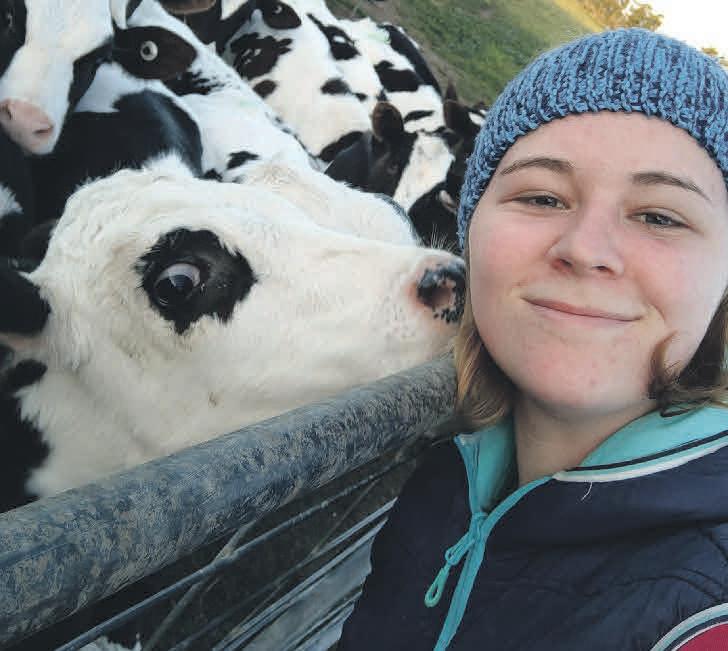
Scholarship in 2024, during her Certificate IV in Agriculture and Diploma of Applied Agronomy at Longerenong Agricultural College.
After completing her study, she accepted a 12-month agronomy internship that took her from Naracoorte in South Australia to Richmond in Tasmania and onto New Zealand.
On completing her agronomy internship, she decided to further her education and is now studying a Bachelor of Business (Agriculture) at Marcus Oldham College in Geelong, combining practical experience with farm business management, economics and accounting.
And after that, there’s a clear plan ahead. She sees herself returning to the family
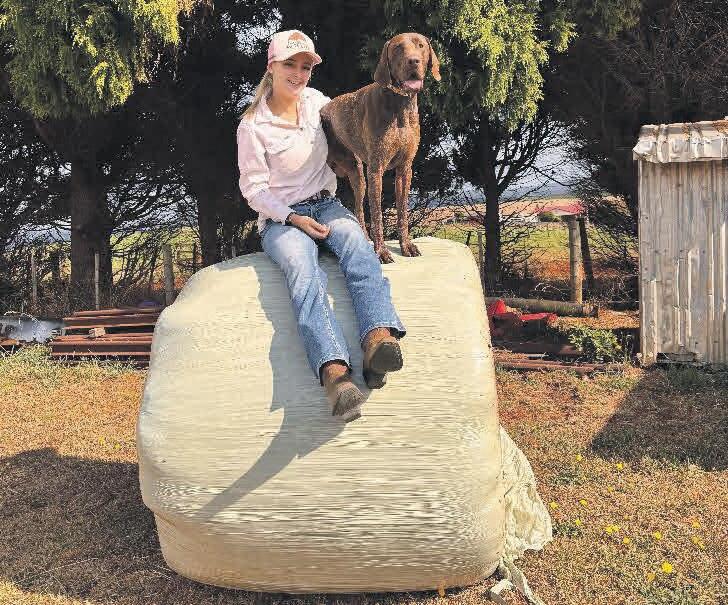
Hayley Ryan is hoping to return to the family farm under a share-farming arrangement and get more involved in decision-making.
farm in a sharefarming arrangement and becoming a lot more involved in decision-making for the business.
“I’m really passionate about this industry because at the end of the day, the world needs feeding.”
Growing up on her parents’ dairy farm at Woodside in Victoria’s Gippsland region, Emma Millar, 24, always had a passion for animal husbandry, genetics and science.
The family milks around 320-350 Holsteins, with Emma working alongside her Mum in the calf shed, feeding and raising the next generation of the herd.

She steps into the dairy when needed and happily floats between roles on-farm.
Emma applied for the Saputo supplier scholarship with the encouragement of her family.
“Mum and dad had read about it in the newsletter and suggested it was something I should go for,” she said.
“And I was lucky enough to be selected.”
That was 2021, when Emma was in her second year of a Bachelor of Veterinary and Wildlife Science at Federation University’s Churchill campus.
The scholarship helped ease the financial load of university and enabled her to live on-campus and participate in additional excursions.
Since finishing her degree, Emma has also completed a Certificate IV in Veterinary Nursing and is now enjoying her work as a vet nurse in a mixed practice.
Yet, she still comes home on weekends to help out on the farm.
“I really like animal husbandry and I do miss the cows.”
Hayley and Emma’s experiences highlight the value of fostering capability, confidence and opportunity within the dairy industry.
Applications for SDA’s Supplier Scholarship Program open each November, continuing a commitment to support supplier partners and back the next generation of dairy leaders.
The 2026 recipients will be announced in the coming months.
BY SOPHIE BALDWIN
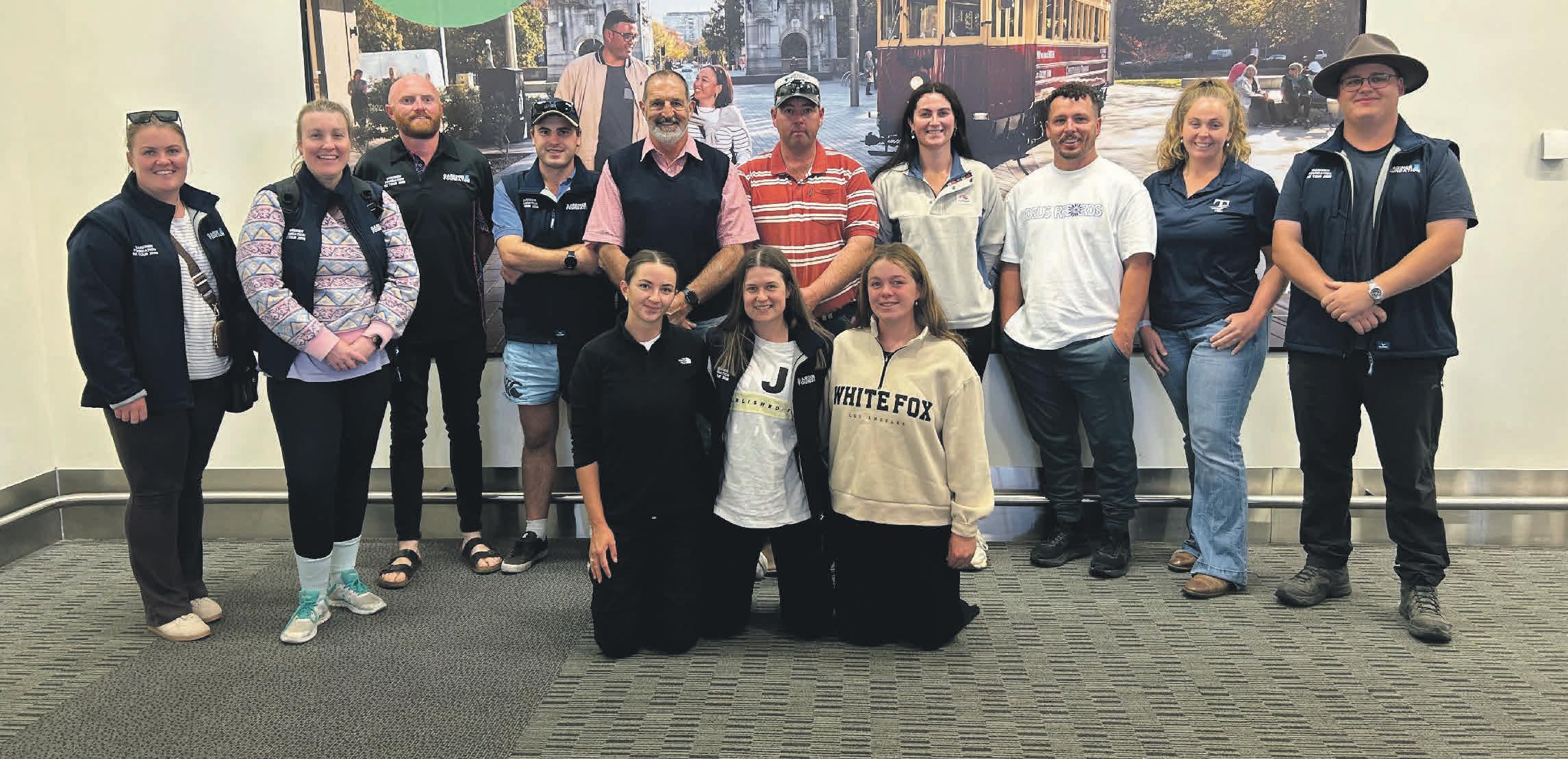
ELEVEN DAIRY farmers and dairy industry professionals have embarked on an eight day journey across New Zealand’s South Island to explore the dairy sector and develop their leadership skills.
Beginning in Christchurch, the group will visit farms, research facilities, industry organisations and dairy businesses across Canterbury and Southland, with a focus on innovation, sustainability and leadership within the global dairy sector.
Participants will gain insights into New Zealand’s dairy systems and hear directly from farmers, scientists, industry leaders and rural leadership organisations about how the sector is navigating challenges and opportunities.
The Gardiner Foundation has supported the New Zealand Study Tour since 2008.
Delivered in partnership with Australian Dairy Conference and supported by Australian Dairy Farmers and the Australian Dairy Products Federation, the tour aims to strengthen leadership capability across the dairy industry.
Leading the tour is Gardiner Foundation’s People and Community Development Projects coordinator Ashley Rosewarne, with experienced dairy industry leader Chris Griffin facilitating the program.
Throughout the tour, participants will visit a range of organisations including Federated Farmers of New Zealand, Synlait, Livestock Improvement Corporation, the South Island Dairy Demonstration Centre and the Southern

and industry
Gardiner Foundation CEO Allan Cameron said the tour provides a valuable opportunity for emerging leaders in the dairy industry to broaden their perspectives and strengthen their leadership skills.
“The New Zealand Study Tour gives participants the chance to step outside their own
farming systems and learn from a globally recognised dairy industry.
“Experiences like this help build the leadership capability our industry needs by connecting people, ideas and innovation.”
Participants will also take part in leadership development sessions, industry networking opportunities and team building activities throughout the week.













Genomic testing with CLARIFIDE ® can help set your herd up for improved health, profitability, production and, ultimately, to support sustainability.

NEW TRIALS are testing the potential of different varieties of sorghum to improve summer fodder options for growers in south-east South Australia.
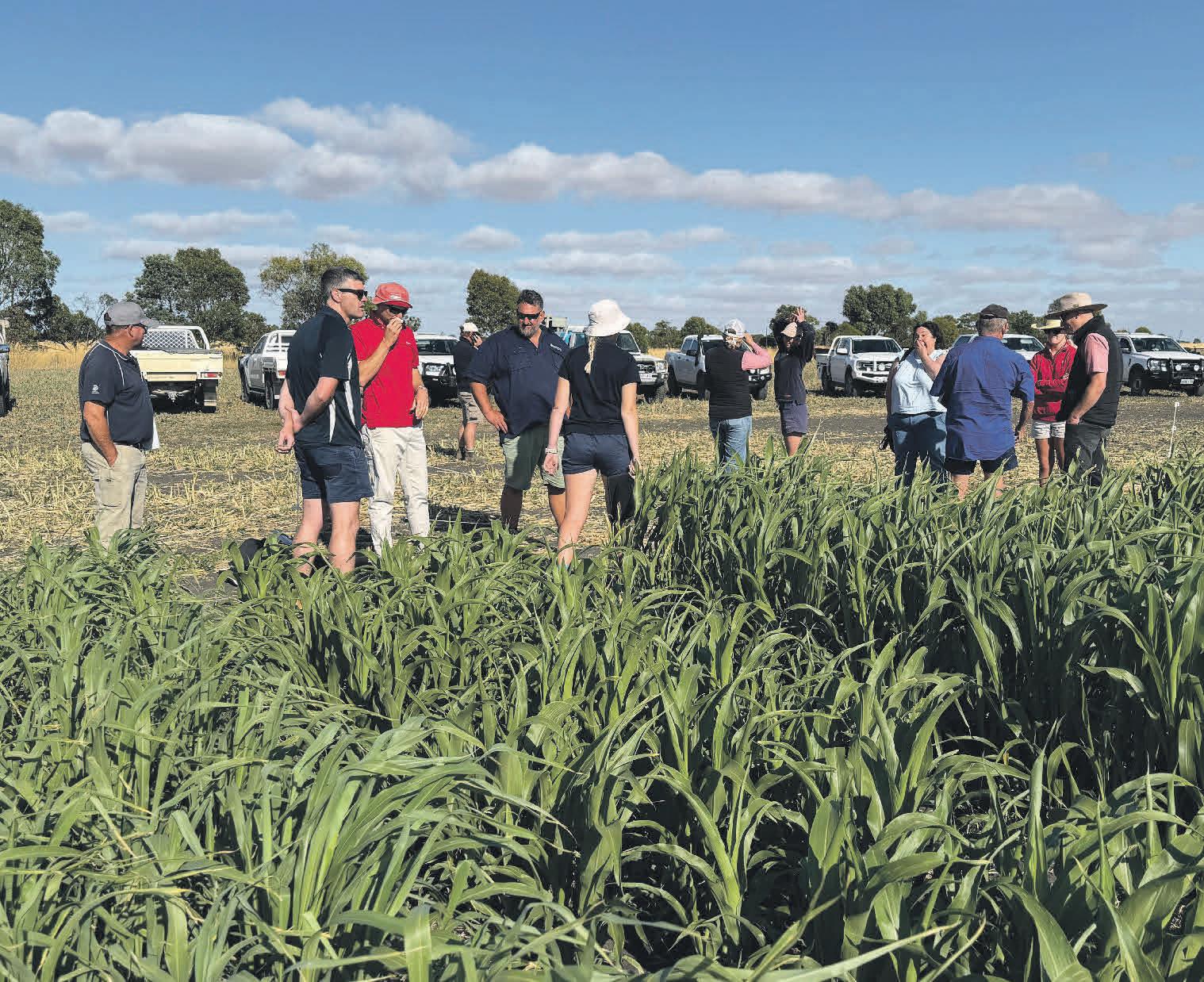
The replicated trial at Struan, south of Naracoorte, is designed to assess different sowing dates, the merits of three different sorghum varieties and the impacts of nitr ogen applications.
The Grassland Society of Southern Australia Limestone Coast branch research project is titled Improving the sustainability and irrigation use efficiency of summer fodde r through improved management decisions.
The project is funded by a Grassroots grant from Limestone Coast Landscape Board and supported by Barenbrug Australia.
GSSA Limestone Coast branch member and agronomist Adam Hancock said there hadn’t been sorghum trials in the region for more than a decade.
“We’re trying to see the yield potential from the new varieties of sorghum,” Adam said.
“It’s not a crop that we’ve had a lot of work done on for a long time.
“There are a few things that have changed over the decade, including the new varieties, we’re also sowing a lot earlier with the soil temperature at 13 or 14°C, instead of 16.
“For southern parts, this could be a really big deal if we could get the crop in the ground three or four weeks earlier.”
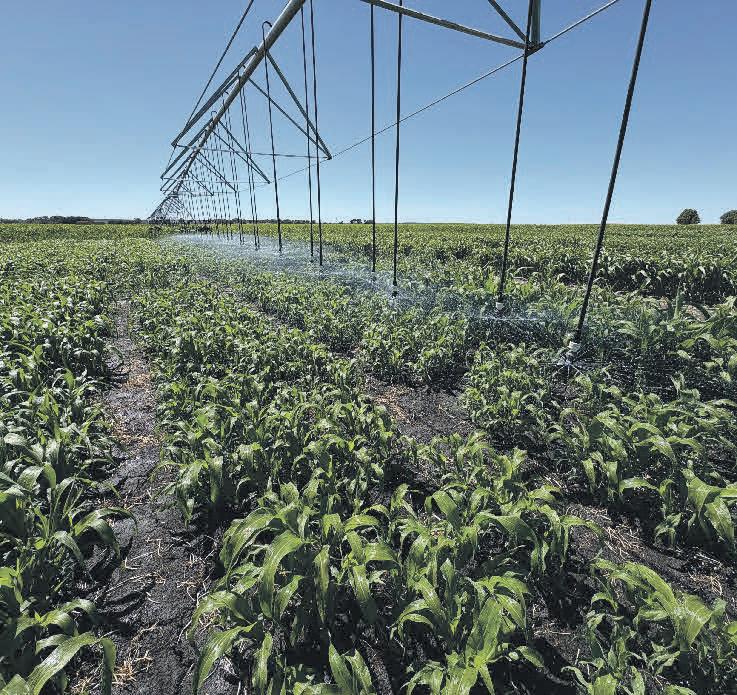
The trial site was sown twice, 28 days apart, to capture information about what earlier sowing could be worth to growers in south-east South Australia.
Variable nitrogen applications are also being tested.
“Because the yield potential is so much higher, we’re testing how much fertiliser you need to apply to capture your maximum yield potential,” Adam said.
“ It could be anywhere between 18 and 30, so we need to understand the ideal number.”
The site has been zoned, with one area being cut once and another twice.
People interested in joining the GSSA can visit www.grasslands.org.au
The GSSA Limestone Coast branch hosted a field day on the site in February to raise awareness of the project.
A further event is planned to outline the findings of the one-year project.
A South Australian Research and Development Institute soil agronomy team is running the site and conducting the research.

Students can become members for free. GSSA has successfully promoted the business of grass, science and farming since 1959 and has branches in Victoria, South Australia and southern NSW.


Lely Juno feed pusher
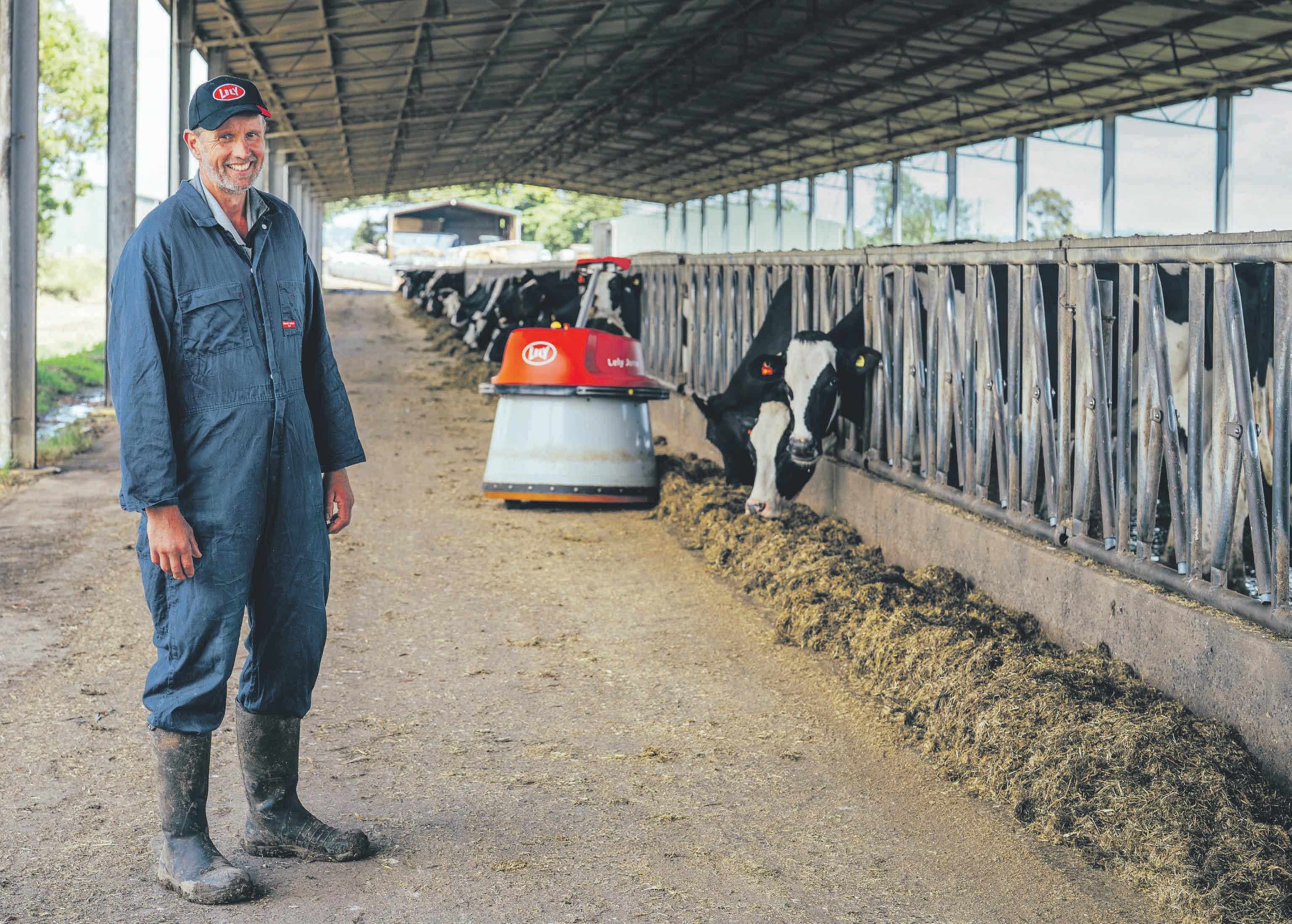
Feed pushed up regularly. One less job on your list. Trial Juno on your farm, with your herd, and see how it performs. A simple way to find out if automatic feed pushing is right for you.

BY SOPHIE BALDWIN
THE TASMANIA Institute of Agriculture is a specialist institute at the University of Tasmania with a mandate to deliver research, industry development and education for the agri-food industry of Tasmania and Australia.
TIA is committed to delivering highly relevant research and spans agricultural systems, food safety and innovation, horticulture, and livestock production.
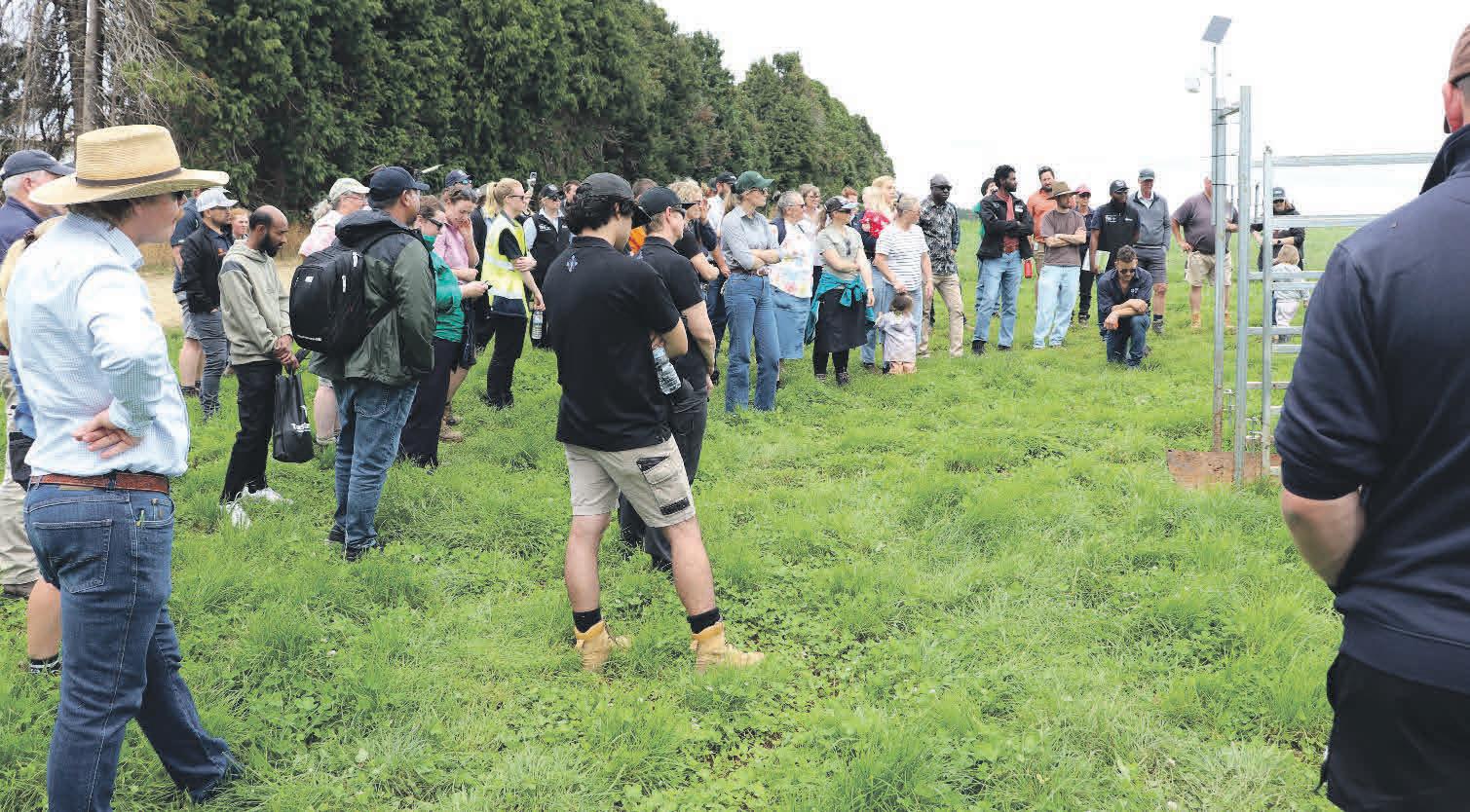
They recently held a field day showcasing the dairy research facility in Northern Tasmania and some of their projects.
The Elliott site is home to an irrigated working dairy farm milking close to 400 cows.
It is also home to a farmlet trial (using mini farms) looking into halving synthetic nitrogen use on a pasture-based system while maintaining pasture and cow production.
Research fellow Pieter Raedts said the trial was into its third and final year, and while they were awaiting final results there have been some interesting findings to date.
The trial consisted of four farmlet paddocks.
ɋ Farmlet one was seeded with 80 per cent perennial rye grass and 20 per cent white clover, and receives 300kg of synthetic nitrogen annually.
ɋ Farmlet two was seeded with 80 per cent perennial rye grass and 20 per cent white clover, and receives 150kg of synthetic nitrogen annually.
ɋ Farmlet three was seeded with 40 per cent perennial rye grass, 30 per cent white clover and 30 per cent plantain, and receives 150kg of synthetic nitrogen annually.
ɋ Farmlet four was seeded with a multi species mix of 40 per cent grasses (tall fescue, perennial rye grass, cocksfoot and brome), 30 per cent clovers (white, red and strawberry clovers) and 30 per cent plantain with a little bit of chicory. This farmlet receives no synthetic nitrogen application.
Pieter said the trial to date had indicated it was possible to replace some synthetic nitrogen fertiliser by including clover in the pasture.
Farmlets so far have been highly productive, with F1, 2 and 3 growing close to our target of 20 t/dm per ha per year, while the 0 synthetic nitrogen treatment farmlet grows about 15-20 per cent or so less.
“It is important to acknowledge that farmlet 1 with best practice 300kg of nitrogen annually to grow 20 t/dm per ha is not a high level to begin with — Tasmanian DFMP benchmarking data shows around 225kg of synthetic nitrogen being used to grow around 13t/dm per ha.”
Farmlet one is the control farmlet and all farmlets follow standard Tasmanian management practices.
“The grazing and cow management was determined by our steering committee using grazing principles common in Tasmania. The steering committee includes dairy farmers,” Pieter said.
“Microbes live in the nodules on clover roots and take nitrogen out of the air and provide this to the clover plant in exchange for some carbohydrates — it is a true symbiotic relationship.
“We also inoculated the clover seed just before seeding with rhizobia bacteria to ensure this symbiosis would happen.”
With the high amount of clover we achieved in our farmlets (20 to 30 per cent of the DM grown), sufficient nitrogen seems to have been fixed out of the air to replace the reduced synthetic nitrogen applications in farmlet two and three.
Pieter said they fully expected the clover in Farmlet one to disappear very quickly during the trial due to the normal use of synthetic N — they were surprised to see it mostly retained.
In Farmlets three and four, the plantain did not survive over time; we assume possibly due to high growth rates of other pasture species as the farmlets are very productive.
The trial herds were balanced before each lactation, with cows in lactation two to six and an average weight of 560kg.
So no heifers or old cows were used, to reduce the risk of animal variation during the lactation.
Farmlets one to three were stocked at 3.94 cows per ha, while farmlet four was stocked at 3.0 cows per ha due to the expected lower pasture growth rate.
The cows were all fed 6kg DM per day of concentrates in the dairy until after mating (up to a total of max 1500 kg during the lactation), and in peak lactation consumed 17kg DM via pasture. Any feed gaps were filled with silage.
Pieter noted 17kg DM grass intake is high while also eating 6kg DM concentrate, which probably was made possible by the high clover content of the pasture.
Per cow production across all farmlets was similar at around 630kg of milk solids per lactation. The kg milk solids sold per farmlet was above 2300 per ha for farmlet one, two and three, while farmlet four with a lower stocking rate achieved just above 1800kg
To address the risk of bloat, cows received automatically 20-25ml of a bloat drench on top of their concentrate in the dairy during milking.
Pieter said preliminary data from this farmlet trial was showing you could reduce nitrogen applications if you have at least 20 to 25 per cent clover in your pasture.
WEST VIC dairy farmers came together for the third Dairy Farmers’ Ball on Saturday, February 21 where the highly anticipated winner of the all expenses paid trip to the Netherlands was announced.
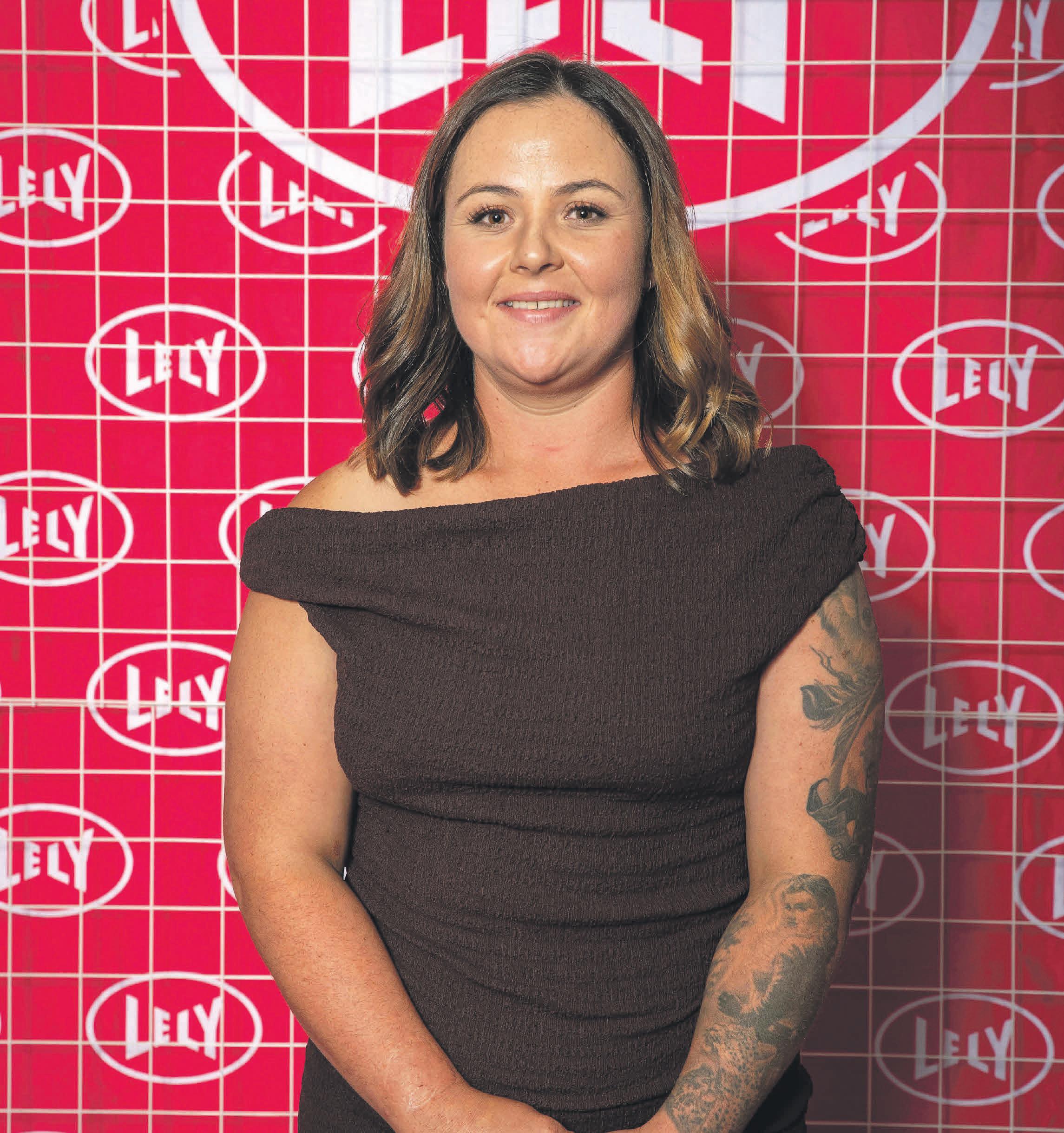
This year’s recipient is Breanna Stewart. Breanna describes her journey into the dairy industry as something that happened by chance.
In 2024, with a renovated caravan and plans to travel and work, she left her hometown of Stawell.
Breanna travelled as far as Tarrone where she found work on a dairy farm, she has been there ever since.
“I renovated a caravan to work and go travelling and I ended up getting a calf rearing job,” Breanna said
That turned into a full-time position, and somewhere along the way, I just fell in love with dairy farming.
“I love the cows and I love who I work for.”
Breanna was thrilled to hear her name announced as the winner.
“I’m absolutely stoked, I just can’t believe it. I’m so excited to get over there and see how it all goes. It’s a massive opportunity.”
Courtesy of exclusive sponsor Lely, Breanna will enjoy return airfares to Amsterdam, a week’s accommodation, farm visits and a behind-the-scenes tour of Lely headquarters.
“It’s a huge opportunity to go over there to learn and see how things can be done differently for better outcomes on the farm,” Breanna said.
Breanna believes technology will continue to be a key part of the dairy industry’s future.
“I’m excited to see the Lely technology. We don’t have any smart tech on the farm where I work, everything is hands-on,” she said.
“I’d love to see what options are out there that we might consider implementing.
“My manager is really supportive of me with me learning more about dairy farming and exploring new ideas.”
Recently, Breanna has travelled to Gippsland and Tasmania to tour dairy farms thanks to sponsorship from the DemoDAIRY Foundation.
“I’m really enjoying the opportunities to see how everything works and how farmers do things differently in different places.”
“I love that all the dairy farmers I’ve met are so passionate about the industry. They’re always willing to share their knowledge and chat.”
Breanna shared her appreciation for the event.
“I just want to say a big thank you to Dairy Australia and WestVic Dairy for putting on such a great night, and to Lely for this incredible opportunity,” she said.
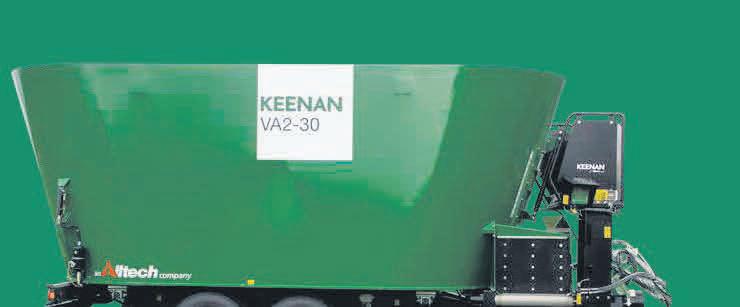
KEENAN machines are proven, farmer-tough, and ready for whatever work lies ahead.
The trusted combination of unique algorithms + nutrition advice ensures the exact formulations, mixing order, speed and rotations.
“It’s so much fun meeting others in this awesome industry.”
Initiated by the WestVic Dairy Young Dairy Network Leadership Team, the Dairy

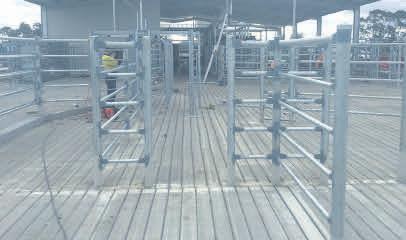
RIDLEY HAS completed a significant upgrade of its Gunbower Feed Mill, delivering improved precision, flexibility and throughput for producers across the region.
The investment strengthens Ridley’s ability to manufacture high-performance concentrate feeds that meet the increasingly specific nutritional demands of modern livestock systems.
For producers like Ryan Gill, a northern Victorian dairy farmer who has been using Barastoc concentrates for over a decade, the upgrade means even greater confidence in the feeds coming onto his farm.
The Gill family milks 900 cows across a 1200-hectare grazing platform and uses the full Barastoc range from calf through to milking herd.
“To get the accuracy with trace elements, we really need someone like Ridley to do the mixing,” Ryan said.
“We can measure the pellets out in the shed – two kilos per cow per day – and I know that when the pellets come, it’s all measured, it’s all mixed in. You don’t have any risks of a cow having too much of one thing and too little of another.”
The Gunbower Mill upgrade centres on improvements that directly affect the quality and consistency of feed reaching producers’ farms.
A new advanced macro-weighing system provides greater nutritional accuracy in every batch.
Upgraded die and press performance delivers enhanced pellet durability and consistency — critical for high-intake dairy systems where pellet integrity under pressure matters.
The mill can now run flexible, smaller batch production to support customised formulations, alongside improved throughput and quality control systems.
Cameron Penny, Ridley’s regional sales manager, said the upgrade was driven by what the company was hearing from producers in the field.
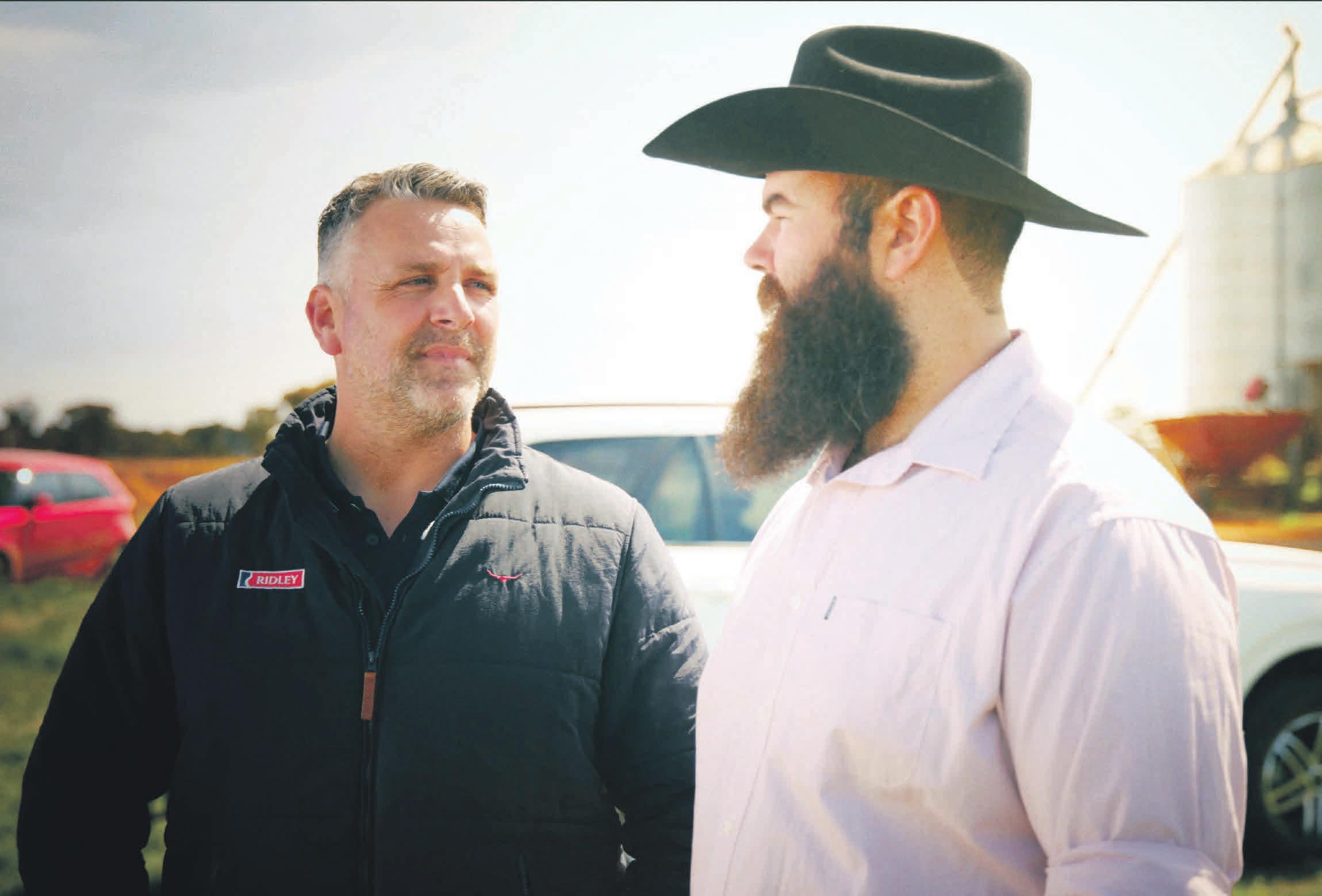
“This upgrade transforms what we can deliver to our customers.
“The Gunbower Mill now offers the precision, agility and throughput required to support modern intensive dairy systems while creating new opportunities across sheep and beef production.
“It reinforces Ridley’s commitment to being a trusted, high-performance nutrition partner,” Cameron said.
The value of precision-manufactured
concentrates is already well established across the region’s dairy operations.
At Timboon in south-west Victoria, fourth-generation dairy farmer Matt Whitehead runs 900 cows with his wife Renee, targeting 600 kilograms of milk solids per cow.
Matt incorporates Barastoc mineral pellets alongside crushed grain supplied direct from Ridley and values the simplicity and reliability of the system.
“The concentrate – we’ve used it for years. It’s just easy. That’s the main thing why we use it. And the cows are healthy, and they do well on it,” Matt said.
“We don’t have any subclinical acidosis or any problems like that, including milk fever.”
In South Gippsland, Paul Zuidema and his family milk 600 cows on 500ha at Leongatha South.
Originally from the Netherlands, the Zuidemas have been farming in Australia for nearly four decades.
Paul said after years of struggling with loose canola in silos — dealing with bridging, inconsistent flow and uneven nutrition — they switched to Ridley’s pelletised concentrates and haven’t looked back.
“We were forever climbing in the silo. We were probably digging out 15 to 20 per cent of every load by shovel.
“All the goodies were shifting out in the silo as well, so the cows’ nutritional plane went up and down all the time. We had lame cows and some sick cows, and we needed continuity,” Paul said.
After working with Ridley nutritionist Caroline Brown, the Zuidemas moved to a pelletised canola-based concentrate.
The result was transformative.
“That has really changed, revolutionised, the way we milk cows now. It’s much simpler, much easier, flows easy,” Paul said.
“Eve ry mouthful that cow takes is the same quality, which is very much what we are after.
“And Ridley has certainly delivered that time and time again for us.”
Alongside the mill upgrade, Ridley has refreshed its ruminant concentrate portfolio.
The dairy range has been relaunched with new formulations, including premium housed-dairy options designed for high-performance systems.
Ryan said having the ability to tailor concentrates to his farm’s specific needs had been a key part of that growth.
“We have certain levels of minerals that we need more of because we’re actually lacking that in the soil here, so we put that in the Barastoc macro pellets.
“If you need buffers for certain types of silage, that can be loaded in on top,” he said.
“You can add amino acids if you’re short. The cows are actually getting more nutrients and it helps their rumen development.”
Producers consistently point to Ridley’s service and supply reliability as factors that set the company apart.
Paul said ordering was straightforward and delivery dependable.
“The service is good. Drivers are good,” he said.
“Trucks are nice and clean. Everything is taken well care of. It gives us consistency in our feeding.
“Consistent cows means high-production cows, means highly profitable cows, and that’s what we are after.”
Ridley is also strengthening its collaboration with independent nutrition consultants and toll manufacturers to support the introduction of specialist ingredients and co-manufactured blends, further expanding the options available to producers.
With the upgraded Gunbower Mill now fully operational, Ridley is positioned to meet the evolving demands of the region’s livestock industries — delivering the precision, consistency and service that producers like the Gills, Whiteheads and Zuidemas have come to rely on.
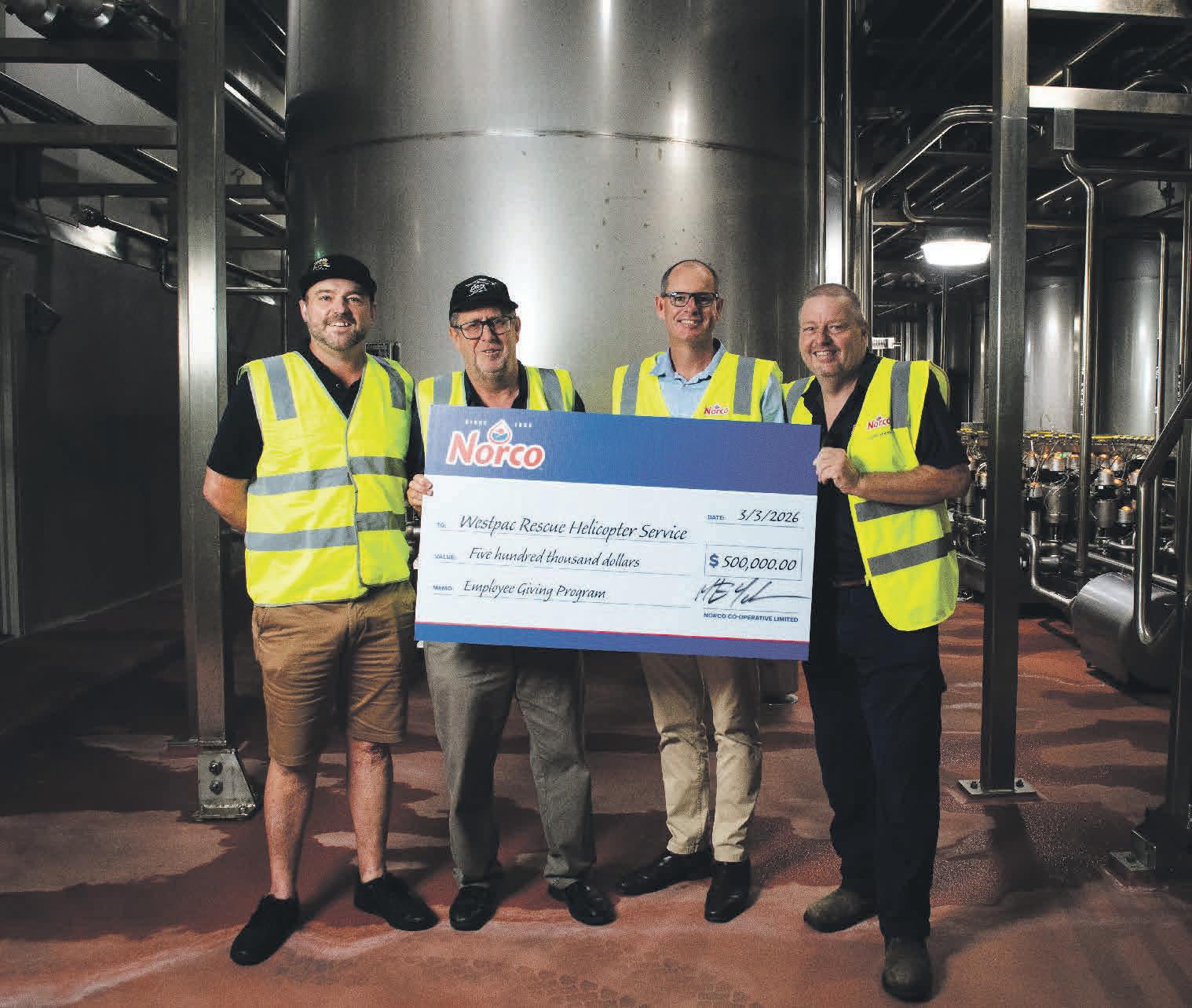
NORCO’S LISMORE team recently celebrated a major community milestone, contributing $500,000 to the Westpac Rescue Helicopter Service through its long-running employee giving program.
Unlike traditional corporate donations, this contribution is powered entirely by grassroots generosity.
For years, Norco employees have voluntarily donated from their pay packets, while team members at the Lismore ice cream factory also collect and recycle cans year-round — with every dollar going directly to the rescue helicopter that serves their region.
The milestone carries special significance for the community, particularly Lismore local Scott Jones, who credits the Westpac Rescue Helicopter Service with saving his life after he was critically injured in an explosion at the Lismore Turf Club where he worked. Scott was airlifted to hospital by the Westpac Rescue Helicopter crew, providing the urgent care window he needed to survive.
Scott’s story is one of many that highlight the vital role the service plays across Northern NSW and why Norco’s workforce is so committed to supporting it.
Norco chief executive Michael Hampson said reaching the $500,000 milestone was something the entire Norco family was incredibly proud of.
“This isn’t a corporate initiative — it’s our people, week after week, choosing to support a service that has stood by our community in its toughest moments,” Mr Hampson said.
“As a 100 per cent farmer-owned co-operative, supporting and giving back to our communities is at the heart of who we are.


“The Westpac Rescue Helicopter Service has saved countless lives across our region, and knowing that our contributions help keep that
helicopter in the air means everything to us.
“Our employees have driven this from the ground up, and their generosity speaks volumes about the spirit of this region and the values Norco was built on.”
Scott Jones added that he wouldn’t be here today without the service.
“To know local workers at Norco have been raising money for the service that saved my life — and so many others — means more than I can put into words,” he said.
“Their support helps make sure the helicopter is there for the next person who needs it, just like it was there for me.”
John Bancroft, Westpac Rescue Helicopter Service Regional Partnerships Officer, says that they are incredibly grateful for the long-standing support from the local Norco workforce.
“Their ongoing commitment — from payroll giving to collecting and recycling cans — has a direct and meaningful impact on our ability to respond when the community needs us most,” Mr Bancroft said.
“Every mission we fly is made possible by the generosity of people like the Norco team.
“Reaching the $500,000 milestone is an extraordinary achievement, and we applaud each and every person who has contributed.”
To mark the achievement, the Westpac Rescue Helicopter Service recently presented Norco with a framed flight jacket in recognition of the co-operative’s ongoing support — a gesture that reflects the deep connection between the service and the Lismore community



BY RICK BAYNE
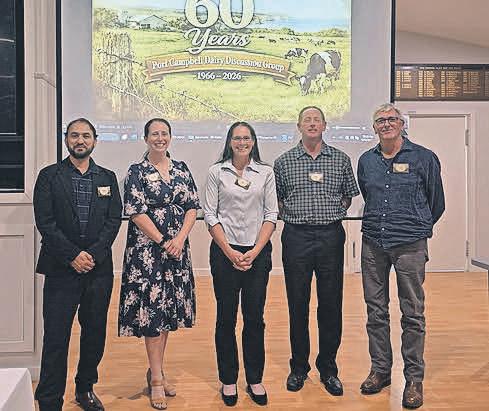
WHEN THE Port Campbell Dairy Discussion Group was formed, Australia was introducing decimal currency, The Beatles ruled the charts and prime minister Harold Holt hadn’t taken his fatal swim.
The year was 1966, and while many dairy discussion groups have come and gone over the years, the Port Campbell group has stayed the distance.
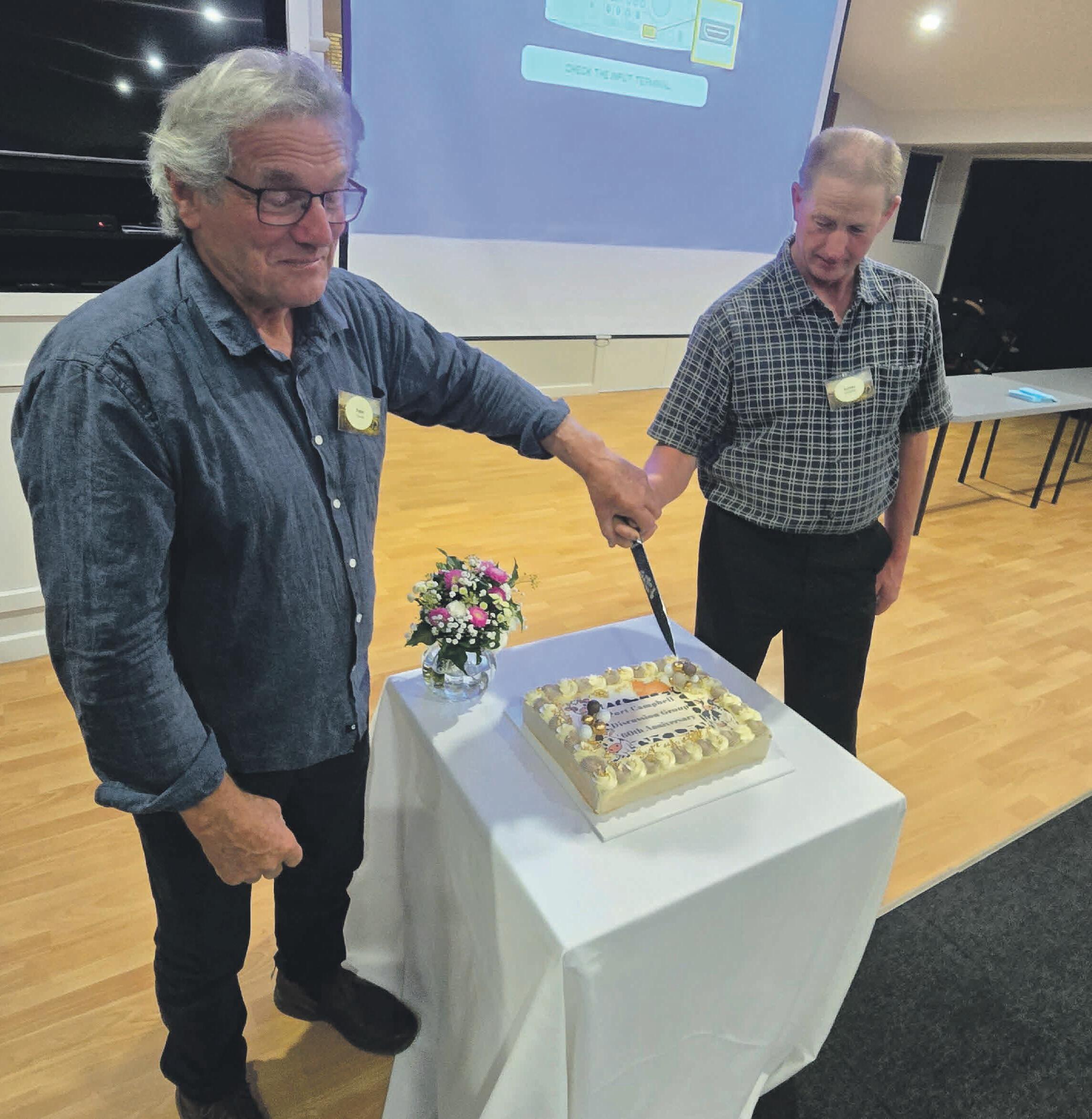
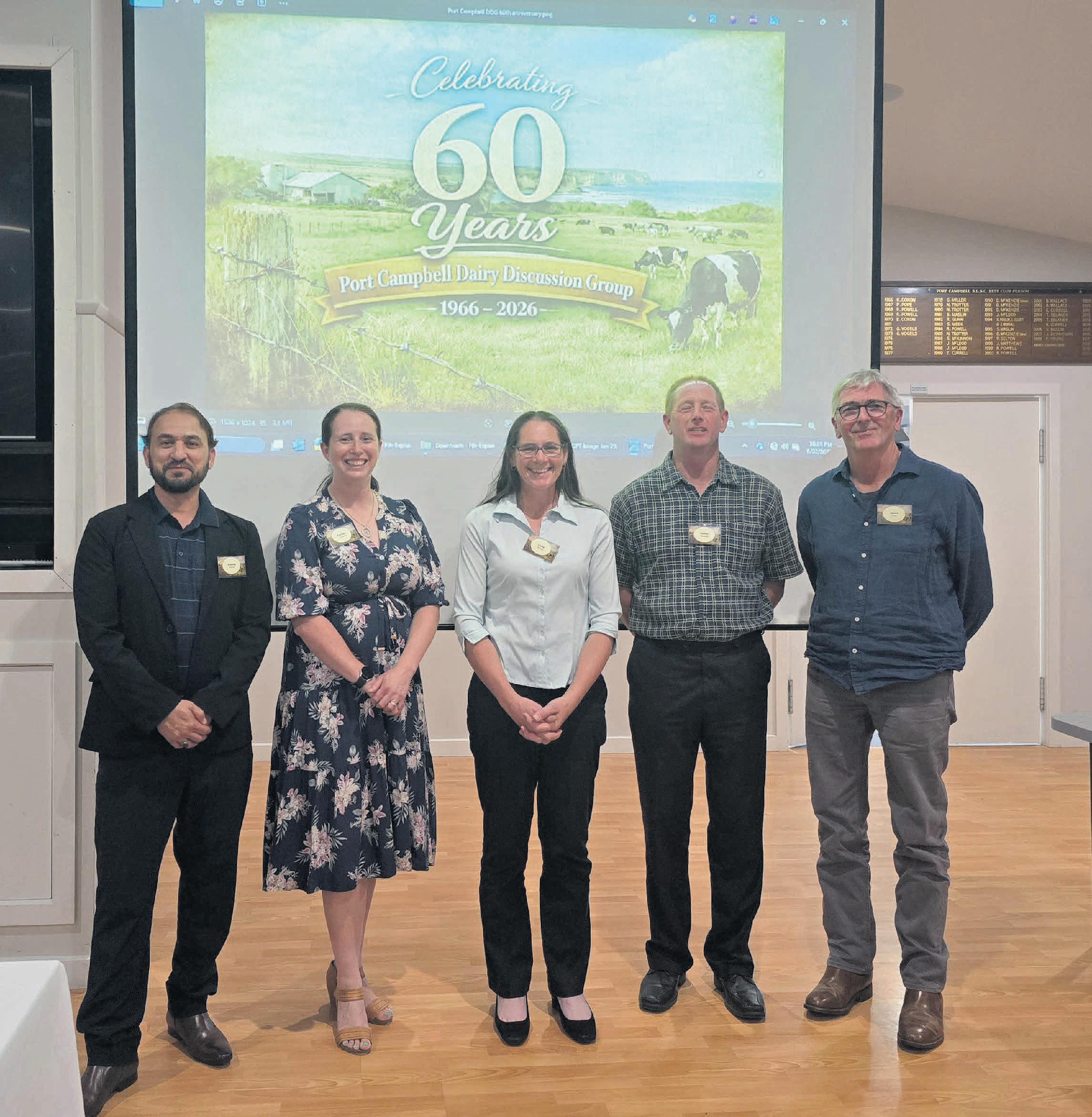
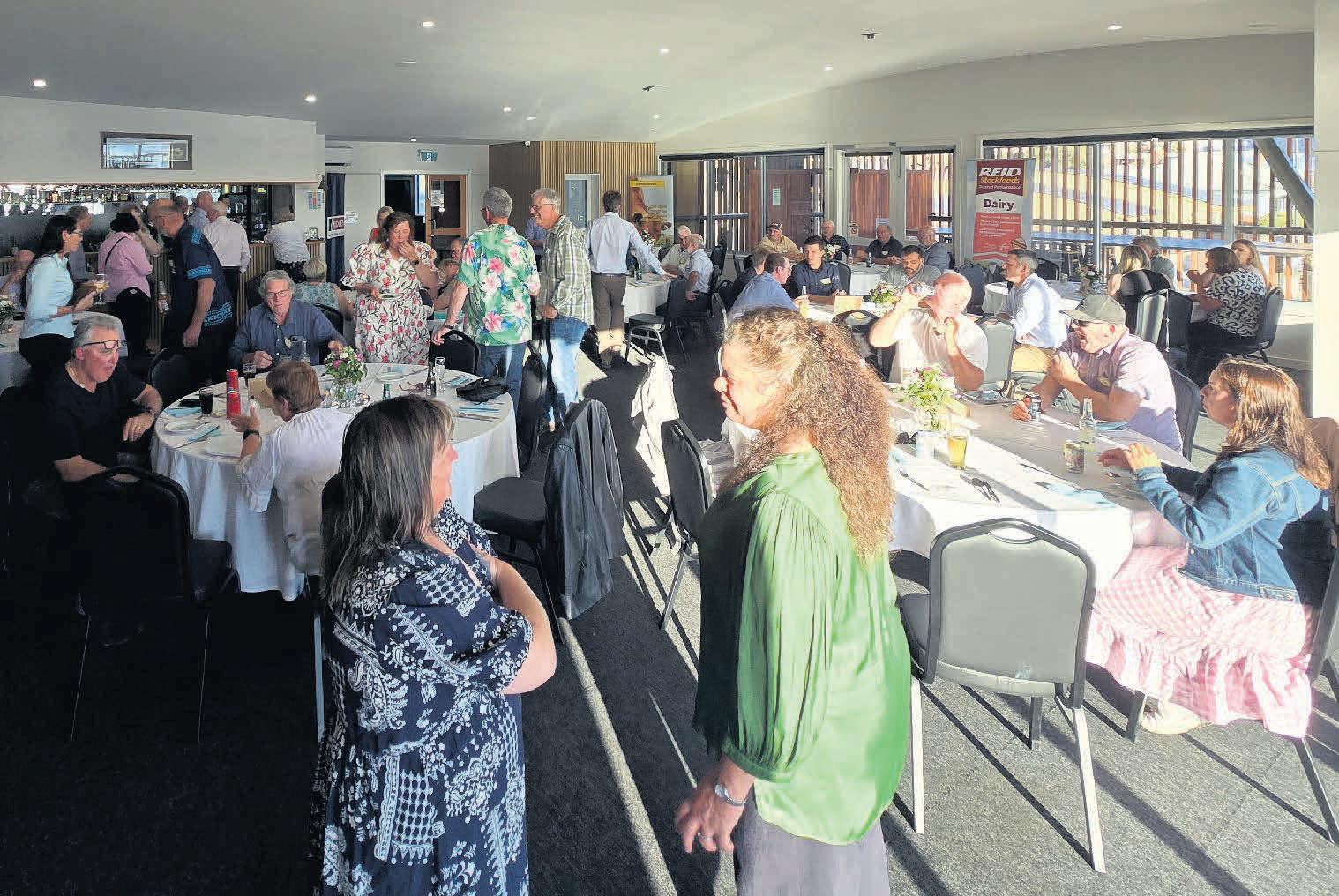
The group celebrated its 60th anniversary in February with a dinner that brought together farmers, industry representatives and community members.
It is understood Port Campbell is the longest continuously active discussion group in Australia, and it’s not done yet.
While COVID and the changing dairy landscape have impacted its vitality, the group is still looking forward to many more years of supporting local farmers around the famous Great Ocean Road in south-west Victoria.
Initially, the group was farmer-led with logistical support from the Department of Agriculture, but that backing now rests with WestVic Dairy.
Exactly how it started isn’t documented, but it is believed to have evolved from a meeting in Timboon and advanced by Department of Agriculture officers.
Current group leader and Port Campbell dairy farmer Ashley Gristede has been a member for more than 25 years and said the group had a lot to offer.
“We’ve been told it’s the oldest in Australia, and we’re still going,” he said.
“We try to keep it simple. A good-old farm walk and talk is as good as anything to see what other people are doing.”
Some of the prominent names from the early years included Jeff McCue, Geoff Townsend, Gus Ward, Geoff Gale, Ken Ackerley, Ross and Andy Powell.
Legendary Victorian dairy extension officer Jack Green was a pivotal player in the early years, as was John Cruickshank, an inspector from the Department of Agriculture.
Ashley admits the group is fading a bit.
“There are less farms and less people and good farming land on the Heytesbury Settlement has gone into blue gums – that doesn’t help.
“A lot of members have retired, and it’s harder to get young guys involved, but we cover a fair area and have branched out quite a bit.
“The group has been holding more joint days with the Princetown/Simpson group and might have to look at amalgamating.”
Farm walks and Christmas get-togethers are still popular, and the group has organised tours to NSW and Tasmania, most recently in 2025.
There was a discussion group meeting on treasurer James O’Brien’s first day in the job as an agronomist with Nutrien Ag Solutions in
Timboon in 2008.
“I went along to start building contacts,” he said.
“From day one in that role, I have been involved. It definitely helped me to build contacts”
When Cooriemungle dairy farmer James
Maxwell arrived in south-west Victoria in 2010, the Port Campbell Dairy Discussion Group was a lifeline and a way of getting to know the community.
“It was the first place I got to meet people outside of shops,” James said.
The group also had a profound personal
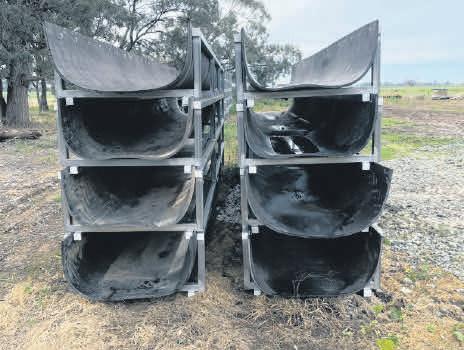
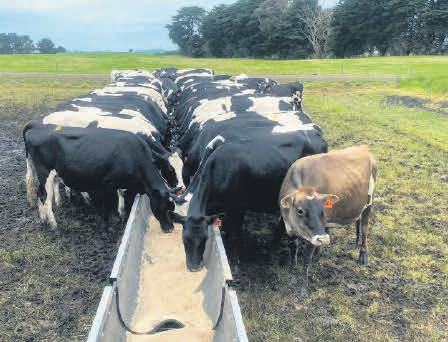
We have designed a simple but very effective Feed Trough, to cut your feed wastage and save you money. The endless troughs can be laid in a continuous length, they are also stackable, so you can move them easily from one paddock to another. The frame is made from Australian Steel, with repurposed rubber conveyor belt used to make the trough, its nylon based and will last a lifetime.
8m $1650 Inc GST • 6m $1240 Inc GST

effect on him when he met Andy Powell, creating a friendship that led to work on the Powell farm that continues today.
“Andy was one of the first people I met down here through the Port Campbell Dairy Discussion Group, and one of the most approachable people in the community.”
In December 2018, James went to work alongside Andy on the Powell family farm at Cooriemungle.
The next April, Ross and Andy, both experienced lifesavers, died while trying to rescue a tourist near the Twelve Apostles.
James stayed on to support Ross’s widow
Still active with two farms in the region, Ken joined in the mid-1970s for the learning opportunities and still tries to participate when he can.
“John Cruickshank was with the Department of Ag at the time and he got us involved, and Jack Green was another big influence,” Ken said.
“The farmers came up with the ideas, and we had a lot of good field officers who would organise them.
“Every farm you went to, you’d pick up something. It helped with cow management and feeding. It meant we could stock a lot heavier because we learnt how to feed the cows properly and things like that.
“All young farmers should get involved. I know a lot don’t do it, but you learn a lot.”
For vet Peter Younis, who recounted the history of artificial insemination in the region at the 60th anniversary dinner, joining the discussion group was like a second education.
“As a young vet coming back to work in Timboon in the early 80s, discussion groups were a terrific way to learn about the farms we were working with,” Peter said.
“We got to understand how those farms work, which allowed us to work more effectively as veterinarians.
“Farmers would teach us stuff, and it allowed us to be far more effective as dairy cattle vets, and then in more recent years we contributed stuff on animal health as well.”
Retired farmer John Renyard, 78, joined the group about five years after it started and quickly reaped the benefits.
“As far as I can remember, Gus Ward was the first leader, and he was still group leader when I joined, which was about 55 years ago,” he said.
“I’d see John Cruickshank as the dairy inspector and he was a sort-of substitute field officer for the discussion group, and he invited me to go along.”
John stayed involved until his son and daughter-in-law took over management of the family farm.
Along the way, he represented farmers at UDV meetings and also went on to complete a Master’s qualification, despite leaving school early.
Val and Andy’s widow Amber during the transition and took over as farm manager under new owners in October 2019.
At 75, Ken Ackerley is one of the group’s senior members.
“I wouldn’t have had the guts to do that if I hadn’t gone through the management understanding that I gained through being a member of the Port Campbell discussion group,” he said.
ɋ To find more about Port Campbell Dairy Discussion Group, contact Sheeraz Ahmad on 0414 684 065 or email sheeraz@westvicdairy. com.au
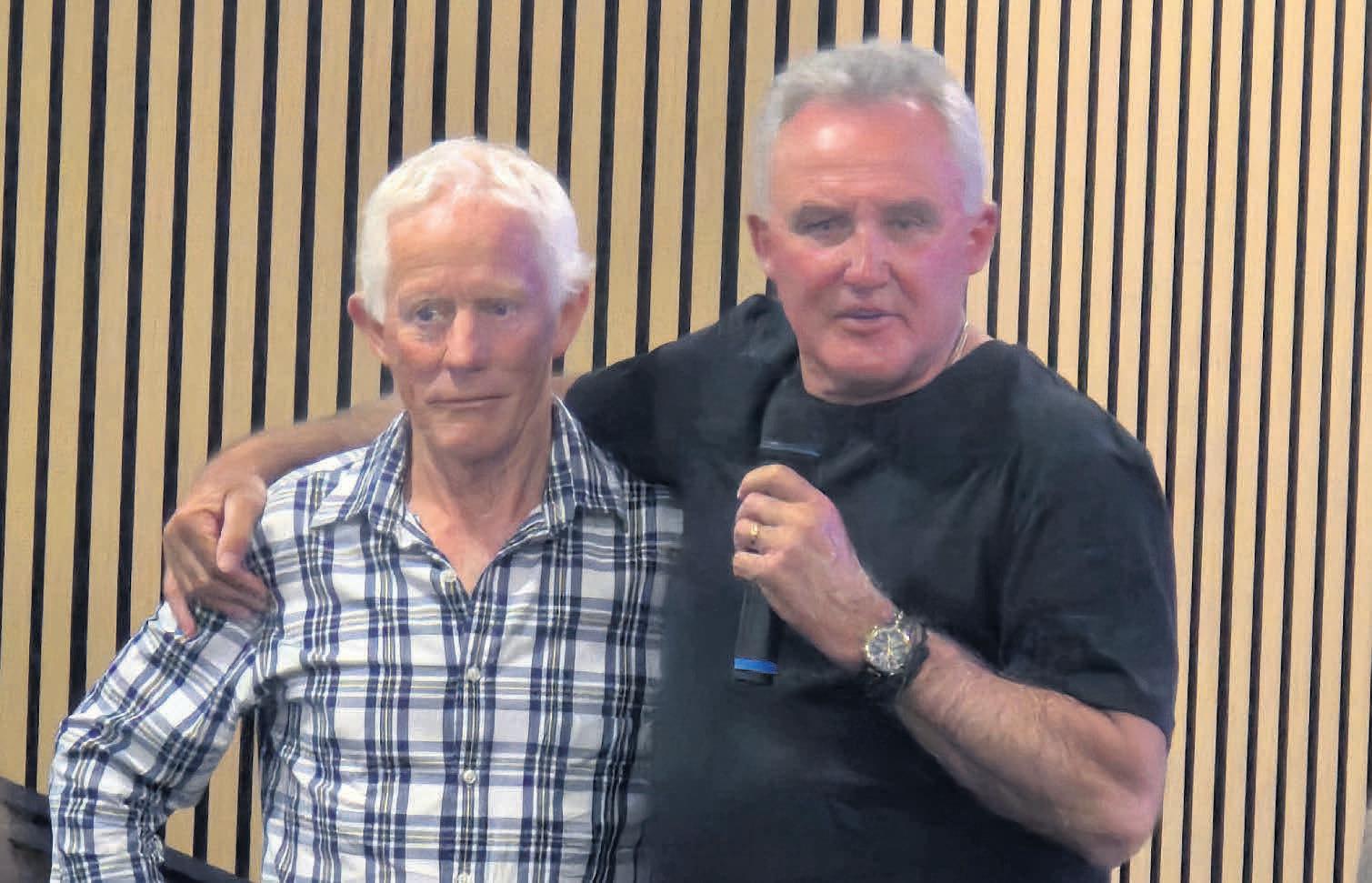
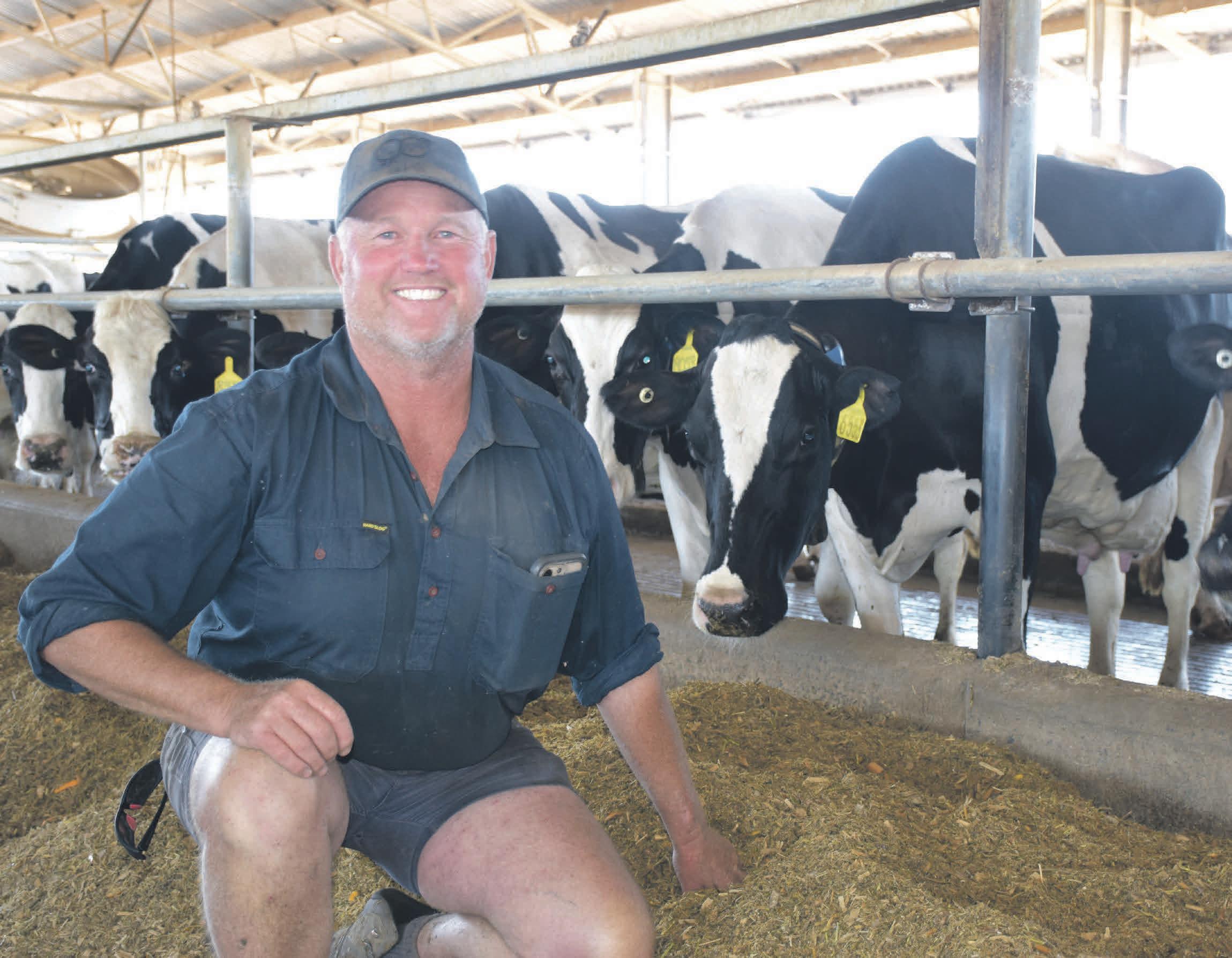
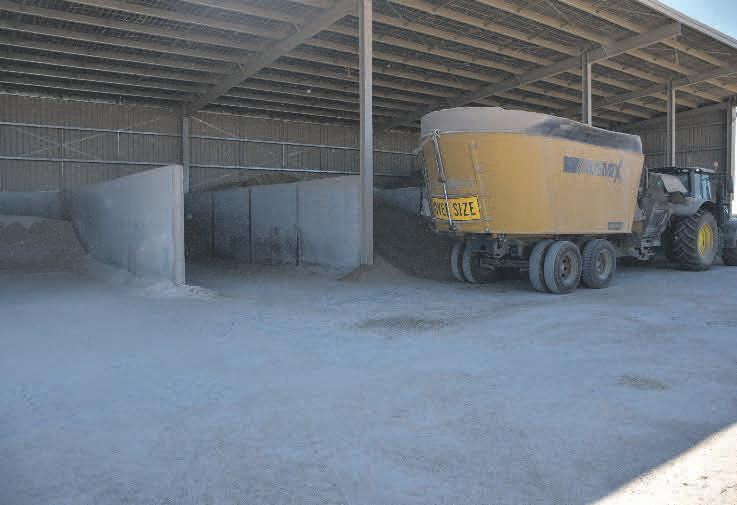
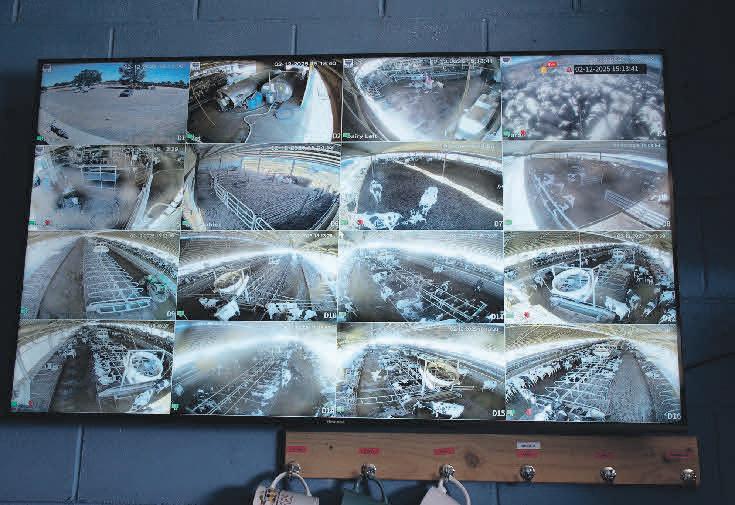
BY SOPHIE BALDWIN
MARCUS FLANAGAN describes his career and expansion in the dairy industry as a “process”, and one that started back in 1994 when he was just 17 years old — when he told his parents he wanted to be a dairy farmer.
That process has seen him grow from 120 cows when he first started with his parents, to 1230 cows and a free stall barn some 25 years later.
But Marcus isn’t planning to stop there.
The next step will be a new 80-unit dairy, then another barn within the next five to seven years.
Consultant Brian Crockart has been a fantastic support to the business over the last 25 years.
He is leading the way organising permits to build another barn, enabling the business to eventually milk 2000 cows, three times a day.
Marcus said there had been many learnings along the way when it came to upgrading infrastructure and converting to a fully housed free stall barn.
“Over time we have had challenges with different systems, however, we found a free stall barn best answered all our questions, when we were researching the best fit for us,” Marcus said.
“Currently, 1200 cows is the capacity for our 214m long x 41m wide free stall barn.”
He said when he builds the next barn, there would be a couple of things to tweak, however, having the barn and sight professionally designed before the process started was a smart move.
“This allows new infrastructure to slot into place seamlessly,” Marcus said.
“When we built the first rotary in 2001 we were only milking 400 cows, believing at the time, getting the cows milked quickly and finishing up was what were after — now running the dairy all day and night is the goal.”
Marcus said growth over the decades had had its challenges with droughts, water price fluctuation and milk pricing, however, improving infrastructure and attempting to implement best practice has improved efficiencies.
“This has given us more control over our own destiny and ultimately fostered growth,”
Marcus said.
In 2016, the farm experienced the wettest season Marcus had ever seen.
This impacted the viability of the business and Marcus decided it was time for some serious change.
In 2017, he travelled to the World Dairy Expo upon returning home he started pouring concrete.
“I could see the value in a free stall barn particularly to help control some of our climatic variables — wet, cold, and heat. It keeps cows comfortable, while catering for all of their needs.”
Marcus said when it came to feeding cows, he used advice from a nutritionist in the United States.
He has been feeding his milking herd on a TMR for six years which he believes has helped get the most out of his cows, facilities, water and climate.
“Our management of feed is multi-pronged,” Marcus said.
“We use flood irrigation to grow the most water efficient crops we can these being corn, cereals and lucerne.”
This year they have planted around 200ha of corn and they have been keeping a close eye on temporary water prices, as they have continued to increase as the season has progressed.
“We have a large portion of our water secured, however we do buy a little as the season progresses.
“We also utilise byproducts like citrus pulp and we forward contract human waste products like cotton seed, almond hulls and canola meal,
which are fantastic feed sources to include in our TMR.”
Marcus said being able to partner with companies like Ridley to forward contract different feeds and byproducts was pivotal to security and success.
In 2021, he invested in a commodity centre, he said half of all revenue was spent on feeding his cows so being able to handle feed in a quick, clean, efficient manner had been invaluable.
“Being able to buy larger volumes of various commodities and being able to store it without wastage means we can often sit out of the market when things get volatile.”
Marcus said he kept in constant contact with his nutritionist who also visited the farm two to three times every year.
Having committed, hard working full-time staff has allowed the business to grow and add more quality people.
“I try to understand our staff members’ motivation and allow them to pursue what they are interested in within my business as much as possible.
“We try to make a point of helping them upskill with training, we are improving our measurement of performance and generating regular KPIs.”
Marcus acknowledged this was probably not his own personal strength.
He considers himself lucky to be able to employ a committed motivated person who is full-time running the office, overseeing the rosters, organising people and generating KPIs.
“We have over time, sponsored backpackers looking for permanent residency, and we have some really good people working for us,” he said.
“We have some great long-term leaders including our workshop and herd managers, our office staff, cropping people, feeding and calf teams.”
Marcus said employing staff had made him realise that was not all about him.
“I try to make sure the things that are important to all the members of my team are recognised,” he said.
“Allowing people to follow what they are passionate about is key to retaining good people.
“If you have good people who want to do a good job, then it is just a matter of making sure that both sides are catered for.”
Marcus said his own role on the farm had evolved as the business has grown.
“I have over 30 years of experience in the industry now, which counts for a bit I suppose,” he said.
“I help fill in when staff are away and it can get pretty hectic at harvest times, but as you get older you might get physically slower, but you do get hopefully smarter,” he laughed.
He said in regard to his herd’s breeding program, genomics had been a game changer.
“We are definitely more specific and structured with our bull selection,” he said.
“We can now breed animals that will be less prevalent to illness, more productive and last longer, much more accurately than we have ever before.”
Marcus believes strongly in family and would like to pay special tribute to his parents Lawrie and Lynne, and also his brother Nick, who milks 1700 cows of his own on the other side of town.
“Mum and dad have supported and encouraged Nick and I, and combined, we milk almost 3000 cows within five minutes of Finley.”
Wife Claire is also a great support as well as being the resident farm veterinarian, and their four children all play an active role in helping around the farm.
Marcus firmly believes there remains a lot of opportunity in the Australia dairy industry if you embrace technology, best practice and apply attention to detail.
“There are fantastic career opportunities and a healthy future for the next generation,” he said.
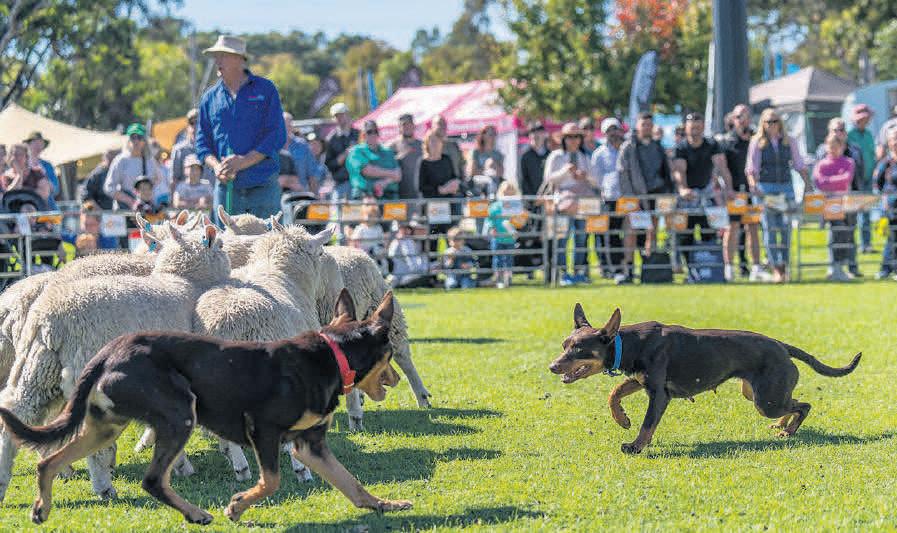


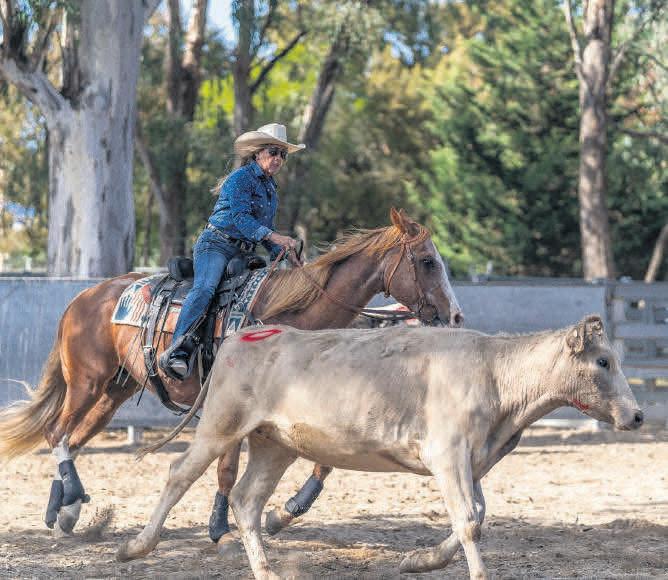

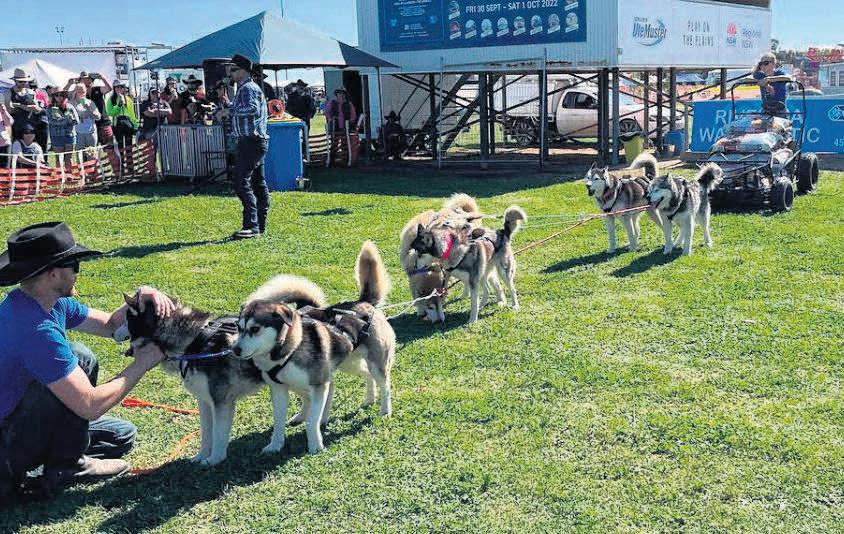







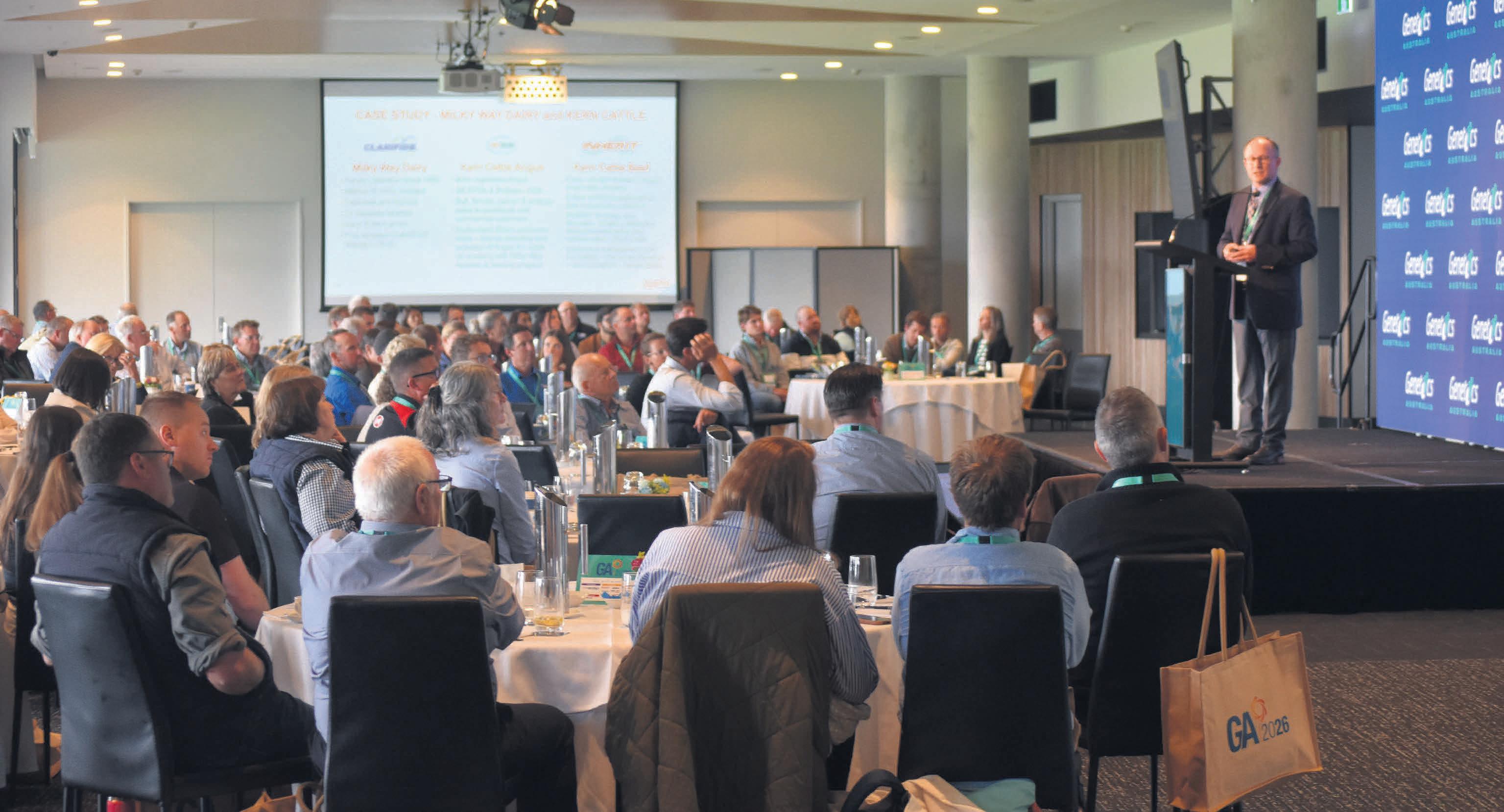
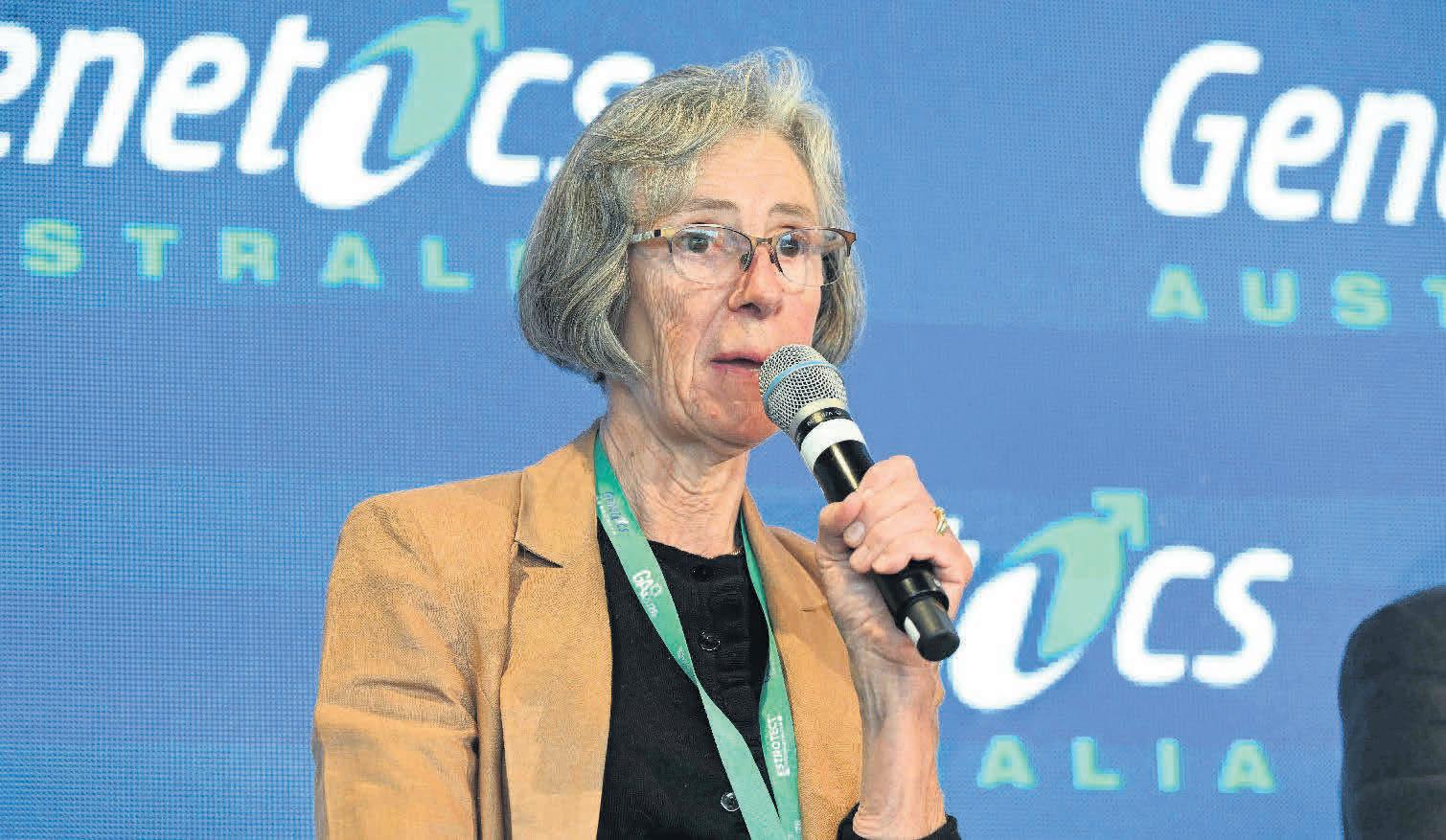
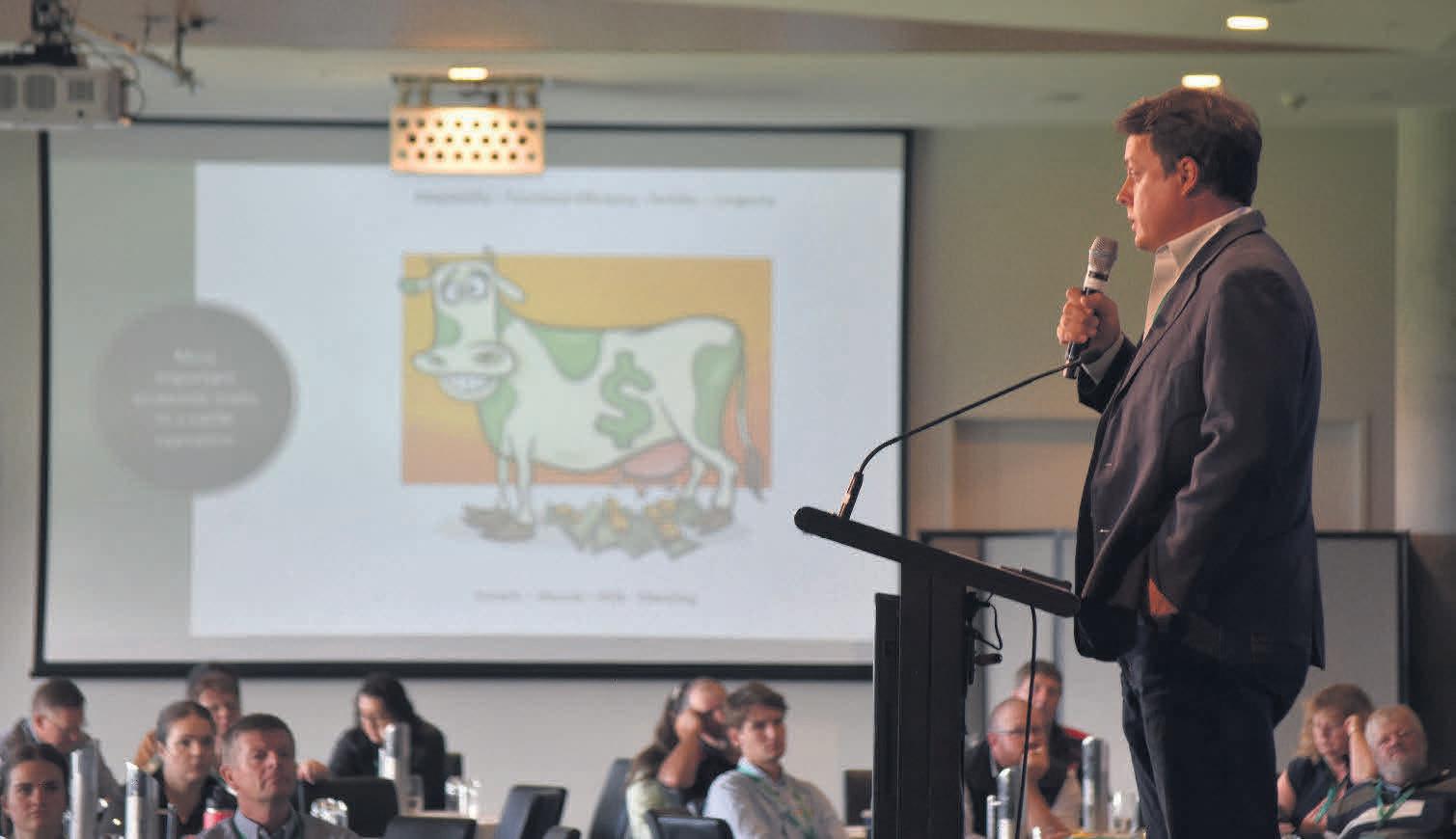
BY RICK BAYNE
A CONFERENCE in Geelong has shown dairy producers from around Australia a glimpse into the future of cattle breeding in Australia and across the world.
The GA 2026 Today, Tomorrow and Beyond conference hosted by Genetics Australia on March 17 and 18 featured presentations from local and international genetics experts, dairy and beef farmers and industry leaders, and attracted about 200 participants.
GA chief executive officer Anthony Shelly said the conference shared insights into proven approaches and emerging technologies transforming dairy and beef farming.
“From genetic advancement and data-driven decision making, the focus was on delivering
real, measurable outcomes for producers and connecting science with farming.”
The conference featured several international speakers alongside farmers.
Keynote speakers included distinguished Professor of Cooperative Extension in Animal Biotechnology & Genomics, University of California Professor Alison Van Eenennaam, on Advances in Gene Editing Techniques for Cattle, PJ Budler from Trans Ova Genetics on the power of the next generation with IVF, Knowby app developer Grant Rogers, DataGene special projects Dr Michelle Axford on understanding calf vitality and Harmony Agriculture CEO Anthony Fellows on marketing premium beef.
Dairy and beef farmers from Western Australia, Victoria and NSW also shared their successes and farming changes.
“We heard about the latest research into
breeding healthier, more efficient cattle and practical strategies for improving sustainability and climate resilience,” Anthony said.
“The conference looked at the next frontier in genetic progress, the use of artificial intelligence and other advances that will strengthen Australian agriculture,” he said.
“The key purpose of the event was to provide a platform for ‘what ifs’ and show what tomorrow and beyond might look like,” he said.
“It was also about creating networks and communities with like-minded people and allowed every participant to strengthen the knowledge that they can share with neighbours or colleagues.”
MC for the event, Dairy Australia national animal health and welfare lead Dr Stephanie Bullen, said the presenters were thought provoking and should inspire farmers and industry
with some of the options they could implement in their businesses.
“The key takeouts for me were that, whether a producer breeding high value Wagyu cattle, or an ag tech company, keeping the end consumer or end-user needs front of mind is critical to success,” Stephanie said.
“Consistency is also important.
“Farmers have increasing volumes of data, which helps with this consistency, but insights also need to be available at the right time to make timely decisions.”
“We heard a lot about technology solutions, but I really liked when Charlie Perry from Trent Bridge Wagyu highlighted that tech can sometimes be a solution trying to find a problem, when it needs to be the other way around.”
The conference was at GMHBA Stadium.
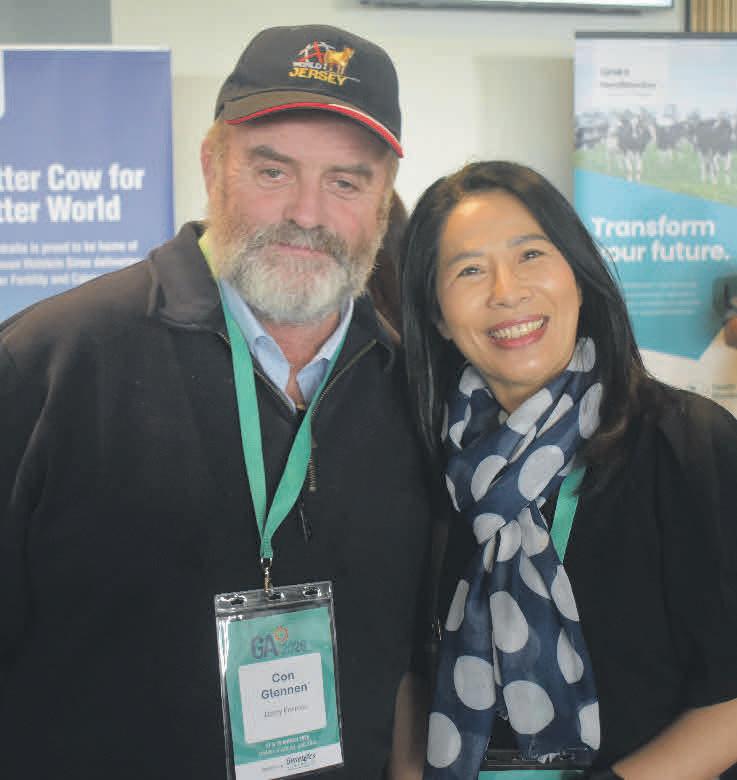
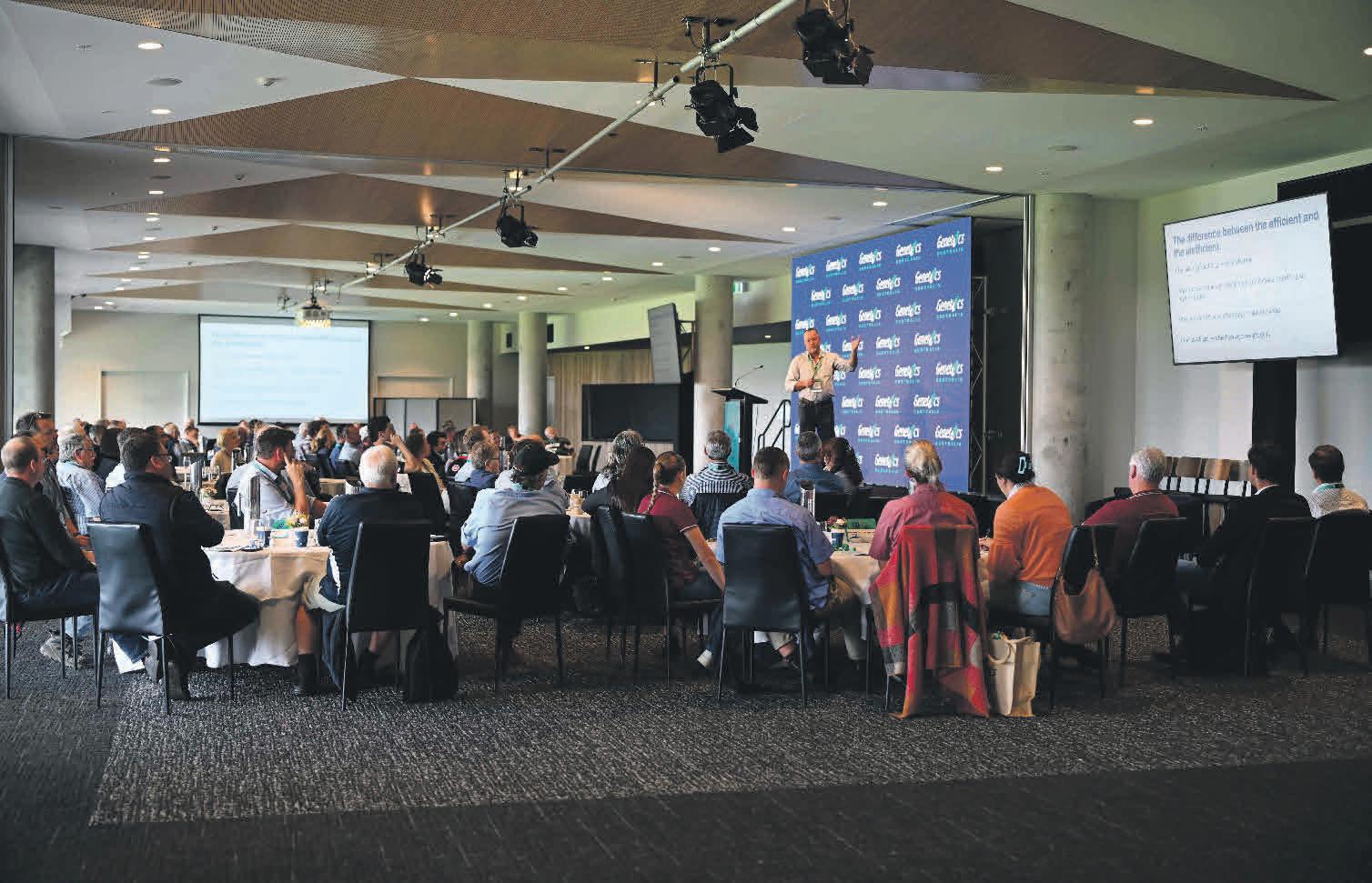
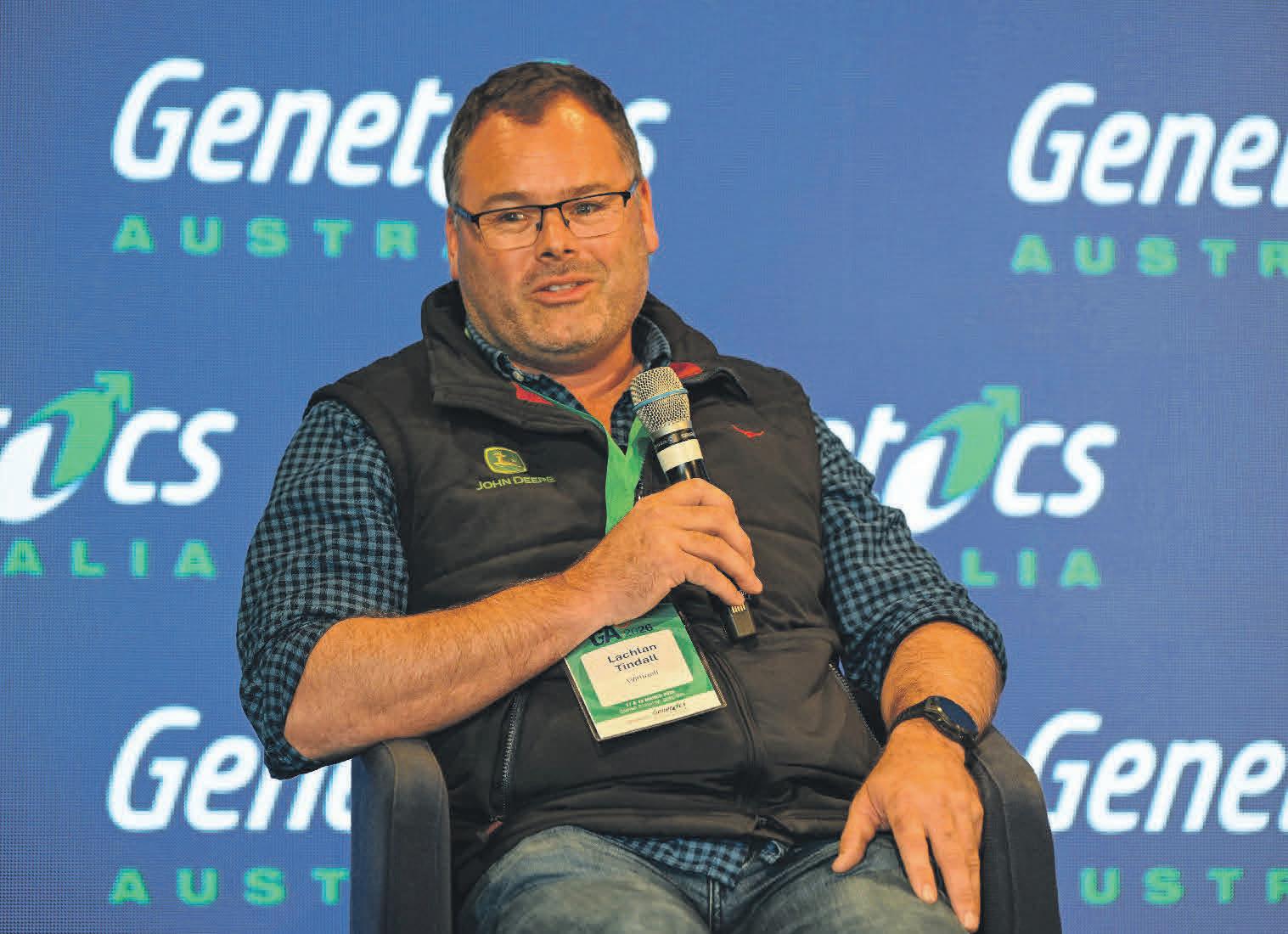
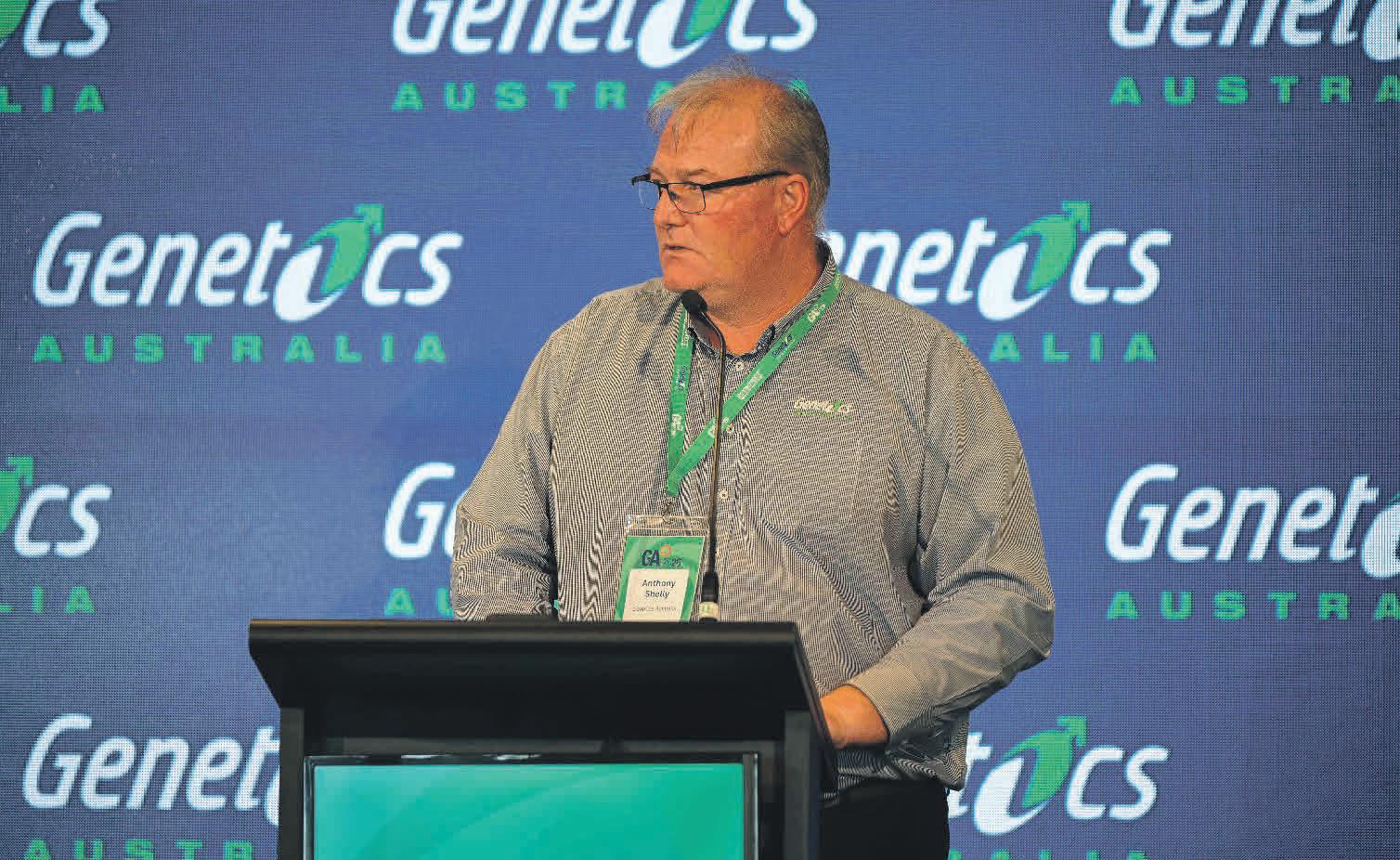
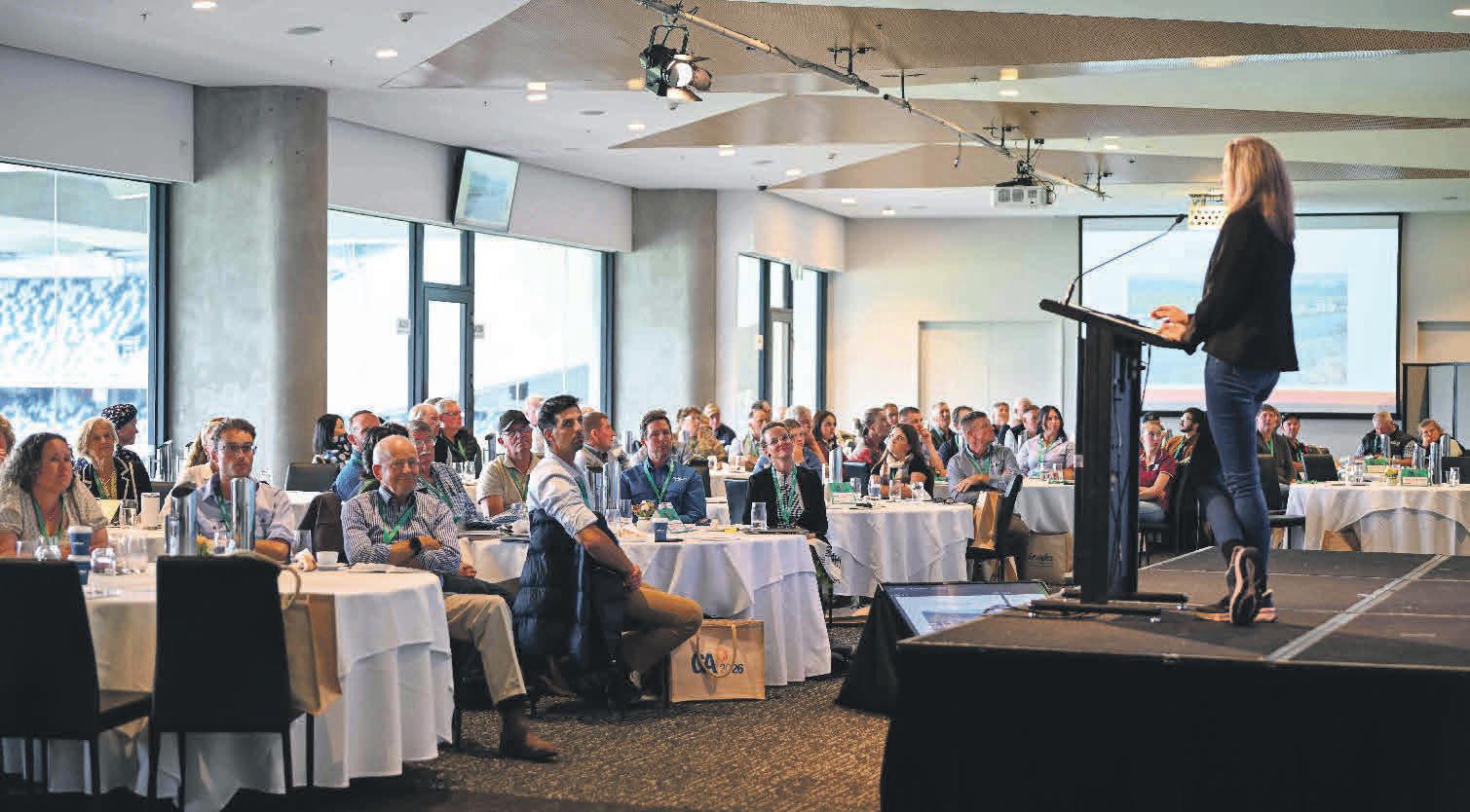
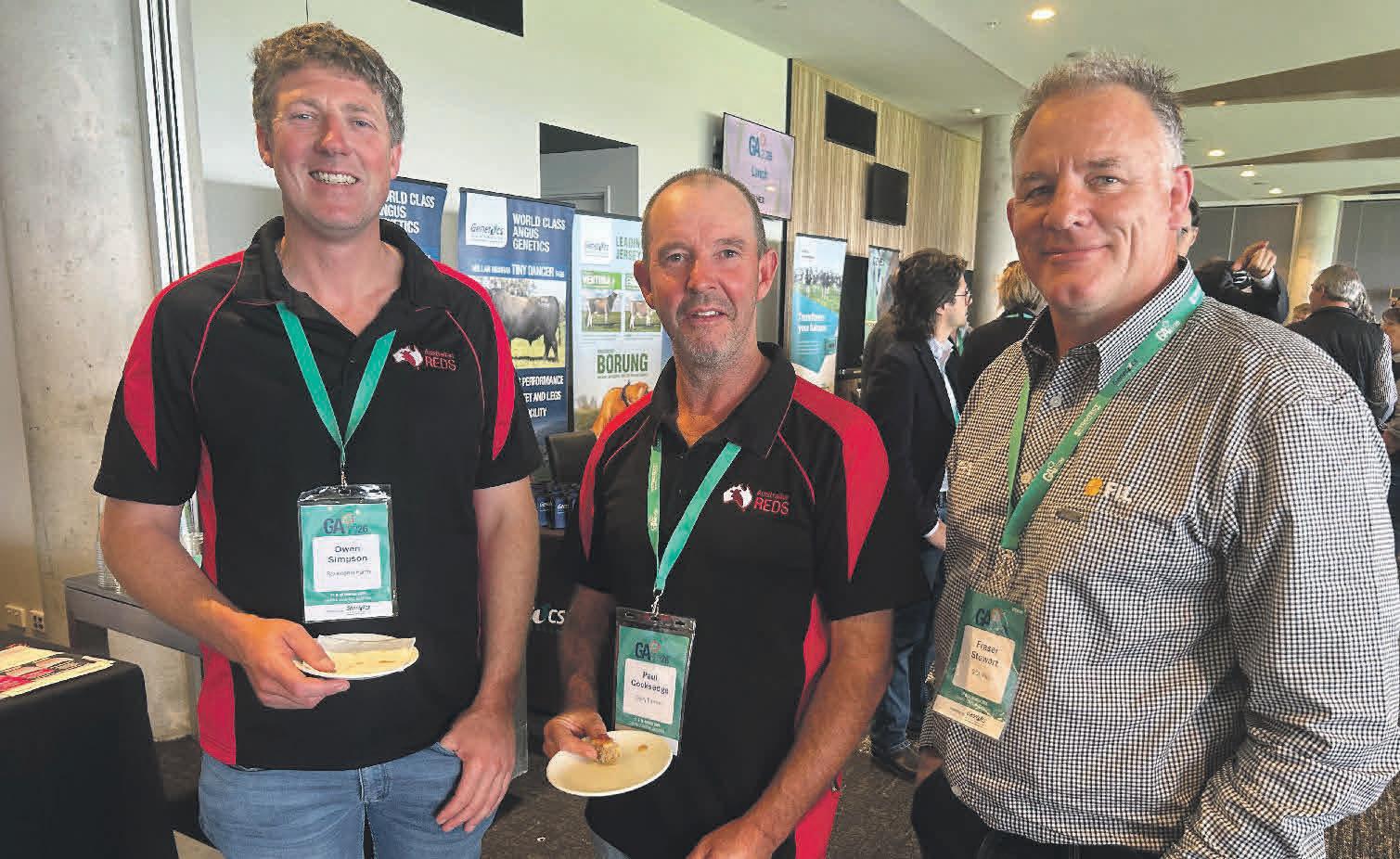
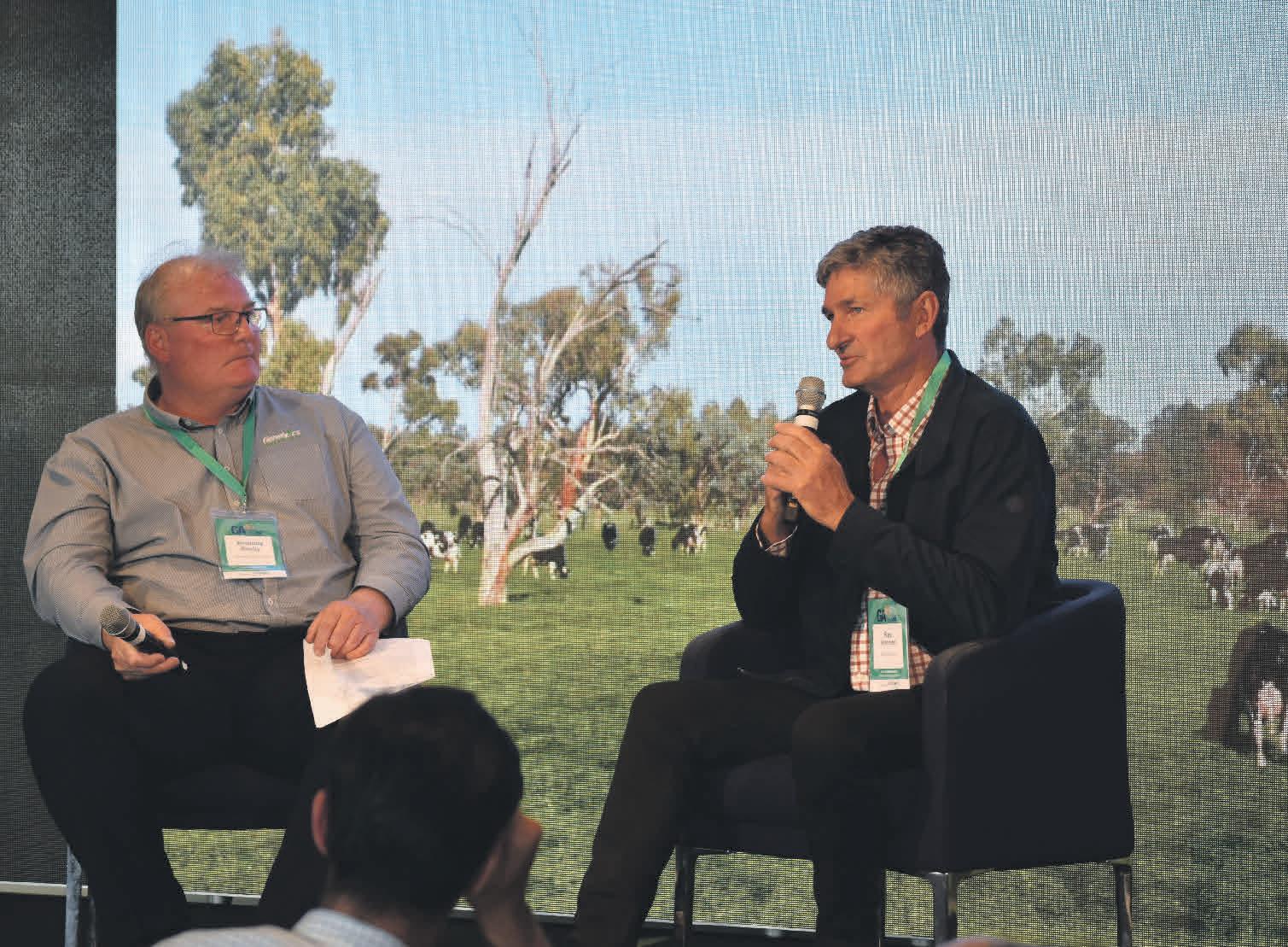
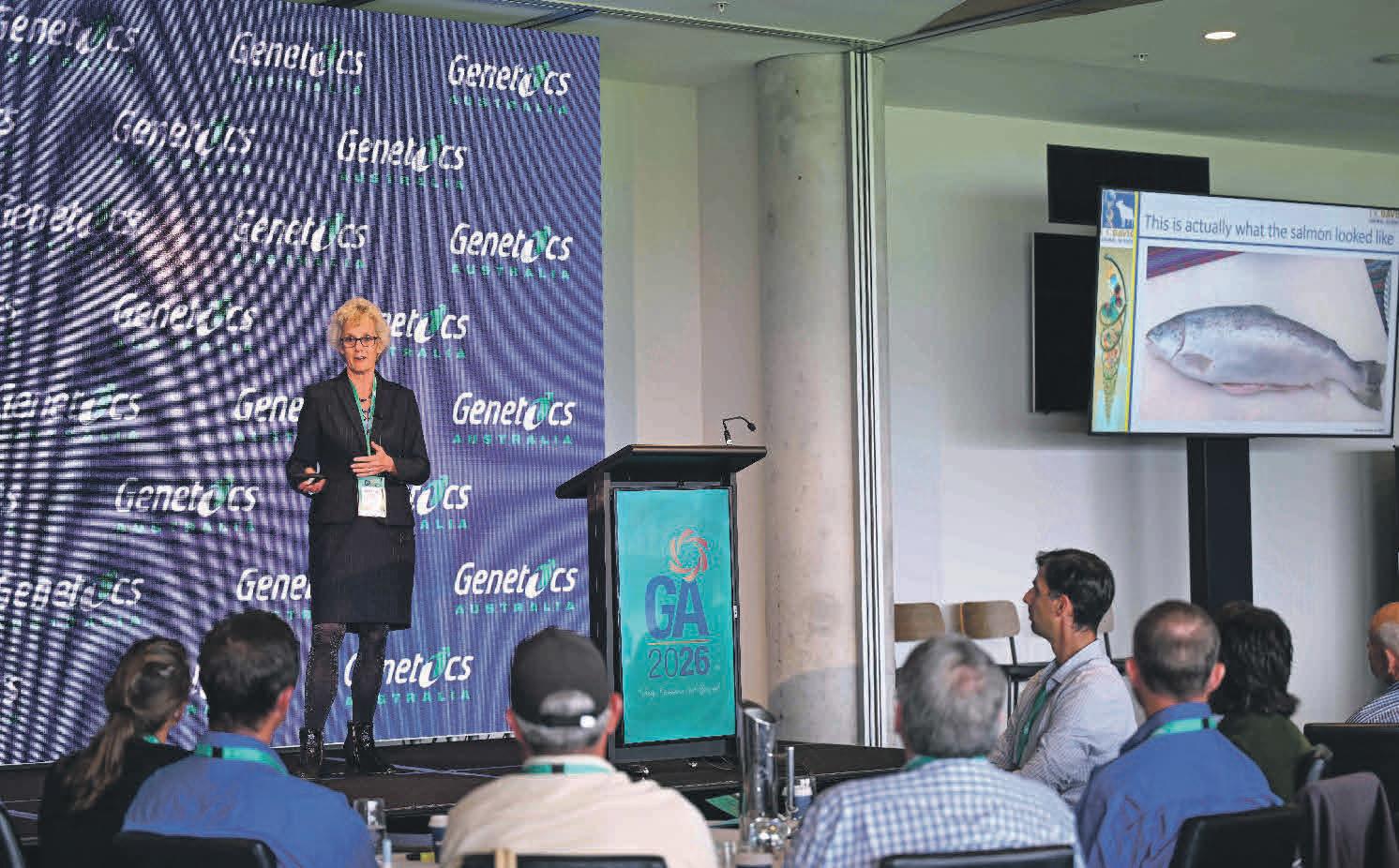
BY MCPHERSON MEDIA GROUP
DAIRY AUSTRALIA has welcomed the release of its 2021–2025 Independent Performance Review, pledging to act on all its findings and recommendations and committing to a sharper focus on practical outcomes for dairy farmers.
The independent review, commissioned by Dairy Australia and conducted every five years, provides feedback from dairy farmers and industry stakeholders on its performance to support continuous improvement.
Dairy Australia CEO Matt Shaffer said the review provided an important and timely check on performance and expectations.
“The review is clear about where Dairy Australia is performing well and where we need to improve,” Dr Shaffer said.
“We welcome its findings, and we’re committed to making sure farmers can clearly see how their levy is being invested and how it contributes to improved profitability and productivity on farm.”
The review reinforces feedback received during extensive consultation with farmers and industry stakeholders during the development of the Strategic Plan 2030, which was released last week.
It confirms strong performance in governance, compliance, trade and market access, and leadership through the Australian Dairy Sustainability Framework.
It also identifies areas for improvement, including greater clarity on Dairy Australia’s role, stronger engagement with dairy farmers and better visibility of on-farm outcomes.
In response, Dairy Australia will improve how it listens to farmers and ensure consistency of engagement across regions to align work more closely with our partners in the Regional Development Programs.
The organisation will also improve how information is shared, using targeted communication channels and easily accessible digital tools.
Dairy Australia will implement the recommendations alongside its recently released Strategic Plan 2030 and report to dairy farmers on progress.
“Our new Strategic Plan 2030 provides greater clarity on Dairy Australia’s purpose and priorities, as well as a stronger line of sight between investment decisions and outcomes for farmers,” Dr Shaffer said.
“It sets a clear direction for Dairy Australia’s work over the next five years, with a focus on improving farm profitability through
productivity, innovation and sustainability, making it easier for farmers to understand what we do, why we do it and how it supports their business.
“That includes clearer explanations of how research, trade, policy and sustainability translate into practical benefits on farm.”
The review comes during a period of leadership transition for Dairy Australia, with the appointment of a new chair and chief executive officer over the past 18 months and changes to the executive leadership team.
VYTELLE HAS announced the commercial release of Vytelle Sense Methane, a methane phenotyping system which costs a fraction of available systems and enables concurrent measurement of intake and sustainability.
The technology was featured at the National Cattlemen’s Beef Association CattleCon in Nashville, US, early last month when producers saw live demonstrations.
The system addresses a critical gap in livestock sustainability: how to economically identify cattle which convert feed into profitable outputs rather than wasted energy.
By integrating methane sensors developed in partnership with Integrity Communications Solutions, Inc. and existing Vytelle Sense feed intake nodes, producers can now measure individual animal emissions alongside feed efficiency data without requiring additional labour or voluntary animal participation.
“Cattle producers need cost-effective, scalable tools backed by robust data to navigate the sustainability landscape with confidence,” Vytelle’s chief science officer Dr Jason Osterstock.
Field trials of Vytelle Sense Methane Powered by Integrity have delivered strong results, and the company is rapidly expanding the Vytelle methane database to provide producers the information they need to make profitable decisions.
It’s not just about sustainability of the beef and dairy industries, it’s also about profitability for
producers, according to the company’s vice-president of global sales Lisa Rumfield.
“Vytelle measures methane emissions in the context of efficiency, which is where profitability starts,” Lisa said.
“These are economically important traits for the world’s beef and dairy producers,” she said.
“Without profitability, industry can’t be sustainable.”
This technology retrofits into existing infrastructure at 10 per cent of the cost of existing tools, allowing producers to capture methane at scale whether they’re meeting supply chain sustainability requirements or regulatory reporting obligations
“Vytelle already curates the world’s largest
“Our leadership team is wholly committed to sharpening our focus, increasing our consistency and ensuring we deliver real and tangible value for farmers, industry and government,” he said.
“Together, this review and our strategic plan provide us with a clear framework for delivering practical outcomes that support dairy farmers now and into the future.”
The Independent Performance Review 2021–2025 and the management response can be viewed on the Dairy Australia website.
efficiency database, and we’ll rapidly build the world’s largest methane database across more than 30 breeds,” Lisa said.
Field trials in North America throughout 2025 demonstrates the system can yield accurate phenotypes in 30 days, with animals measured multiple times daily as they consume feed in bunks.
The correlation between methane emission concentration and measured feed intake was 0.47, providing the complete biological picture needed to interpret sustainability metrics.
Vytelle Sense strategic account manager Austin Hoff said methane emitted was energy lost in a cycle cattlemen don’t get paid for.
“We need to economically identify cattle which spend their calories on performance and reproduction because those are the areas where we can be profitable,” he said.
A standard eight-node Vytelle Sense system can phenotype 384 animals annually at a fraction of the cost of respiration chambers or competing technologies.
Unlike systems requiring voluntary animal participation aided by attractants, every animal in a Vytelle Sense system receives multiple measurements daily through integrated feed bunk monitoring.
International rollout begins in June, with units available for purchase to existing Vytelle Sense system owners and new customer availability to follow.
BY GEOFF ADAMS
TRUTH IN labelling lies at the heart of the debate over the use of the word ‘milk’.
That’s the view of CEO of the Australian Dairy Products Federation Janine Waller.
Ms Waller, a dietician by profession, was commenting on the decision by the UK courts to prevent a European oat product marketing itself as milk.
Ms Waller said the industry had been wrestling with the misidentification issue for more than a decade, since the emergence of products advertised as oat milk and soy milk.
The dairy industry sees the products as trading off milk’s nutritional reputation.
“They are not the same. There is that element of trading off the credentials of dairy,” Ms Waller said, referring to the scientific basis for milk’s nutritional value.
“But is there the assumption by putting that word milk on a product, that it is going to be nutritionally similar or equivalent.
“And that’s our biggest concern is: how do you address that?




“At the end of the day it is choice... and about labelling.
“You stand on your own credentials of each of your products.
“And that’s really what we’re working towards.”
Ms Waller was one of the guest speakers at a health innovation seminar run by the Committee for Greater Shepparton on March 3.
She reminded the audience that Greater Shepparton was at the heart of the national dairy industry, being one of the major milk producers in the biggest dairy state of the country.




SAPUTO DAIRY Australia (SDA) is pleased to announce a key milestone in its environmental sustainability efforts with the go-live of its purpose-built biogas to energy solution at its Allansford manufacturing facility.
Optimal Group, contracted to deliver the leading-edge technology for this project, brings specialised expertise in cleaner energy solutions to ensure SDA extracts the most benefit and efficiency from its state-of-the-art microturbine system.



















This innovative project is set to significantly enhance the site’s environmental performance by removing up to 14,000 tonnes of CO2 annually from the environment, the equivalent of taking 3,000 cars off the road.
Utilising advanced Capstone Microturbines, this custom solution converts biogas waste into renewable power and heat, thereby reducing the site’s reliance on the electrical grid and allowing for other electrification projects in the region, while also generating up to 25 percent of the facility’s total electricity usage during peak production.
James Moyle, SDA’s general manager of engineering and strategic projects said this project is a testament to a commitment to environmental stewardship and innovation.
“As part of our long-term vision for success in Australia, our investment in renewable energy is supporting a resilient and sustainable dairy industry while safeguarding the environment and fostering positive environmental change in our communities.”
Craig Dugan, CEO of Optimal Group, said, Saputo is demonstrating their strong commitment to sustainability by installing this flagship renewable energy system.
“Optimal is delighted to have partnered with Saputo to deliver this turnkey project.
“As companies seek to reduce their Scope 1 and 2 emissions, hard to abate industry sectors have limited options to decarbonise.
“Often there is insufficient power available in the grid, or the temperatures their processes require cannot be delivered via electrification. Projects such as this are important to demonstrate the role of biogas in the path to net zero.”
Supported by a $1 million grant through Sustainability Victoria under the Victorian Government’s circular economy policy, Recycling Victoria: a new economy, this project was one of 24 successful projects in the Waste to Energy –Bioenergy Fund. This transformative project is enabling SDA to harness nearly all of the biogas generated on-site to deliver sustainable energy savings.
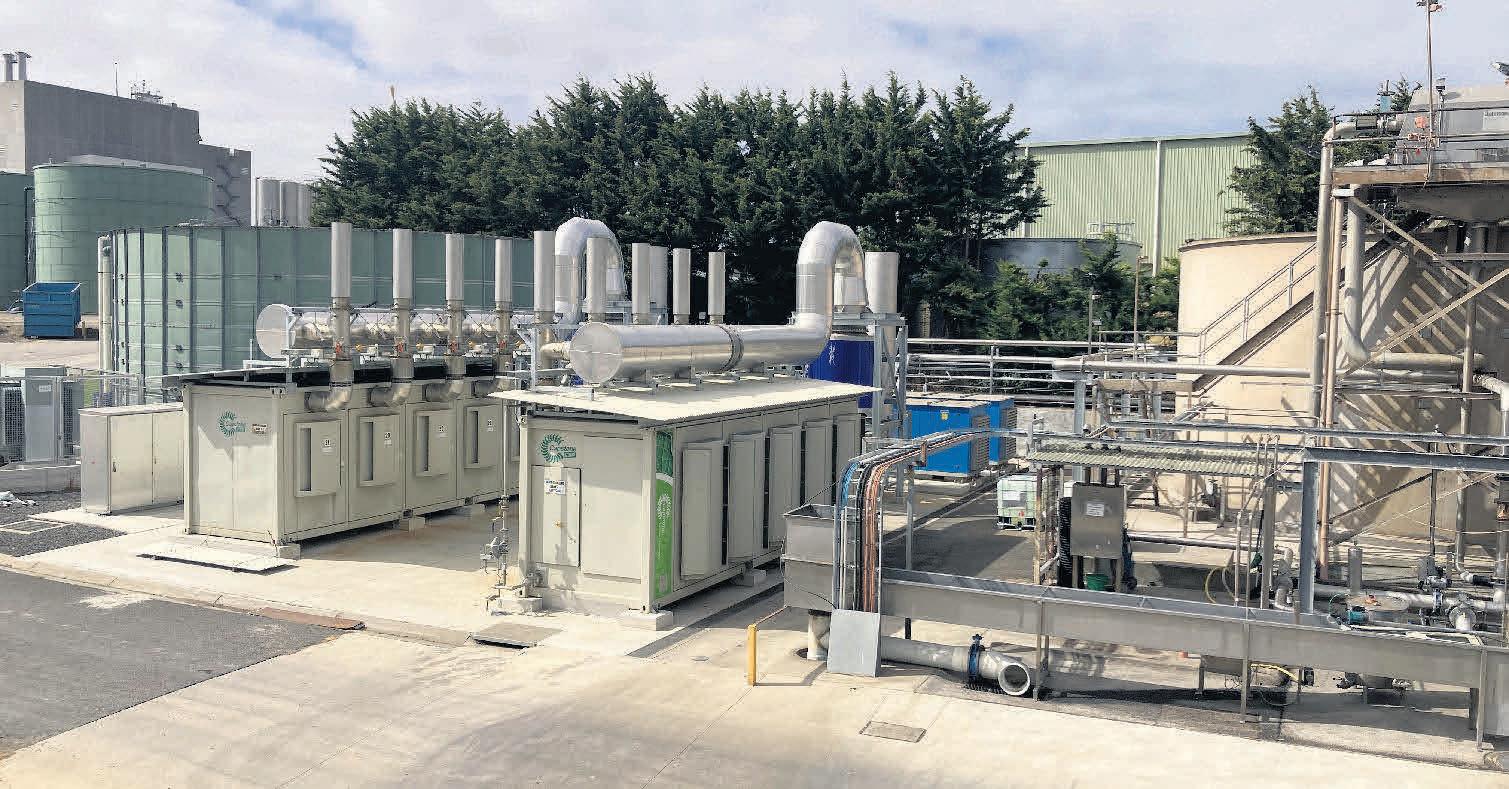
BOVINE RESPIRATORY Disease (BRD) is one of the most common — and expensive — health challenges on dairy farms.
Often referred to as pneumonia or shipping fever (a stress-triggered form that can develop after transport), BRD can hit calves hard and fast.
It’s not caused by a single bug.
BRD is a complex mix of stress, viruses and bacteria that together compromise the lungs. Even calves that appear healthy can deteriorate quickly.
Typical signs include coughing, fever and laboured breathing.
Calves may go off their feed, lie down more than usual, breathe faster, spike a temperature or simply look dull.
The problem is timing — by the time these symptoms are obvious, the disease is often well established. Early identification and prompt treatment are critical to limiting long-term damage and losses.
BRD isn’t just a health issue — it’s a profitability issue.
Calves that struggle with pneumonia rarely catch up completely. Poor early growth can impact future production and lifetime performance. That’s why prevention and early action matter.
Cattle have relatively small lung capacity for their body size, so protecting respiratory health

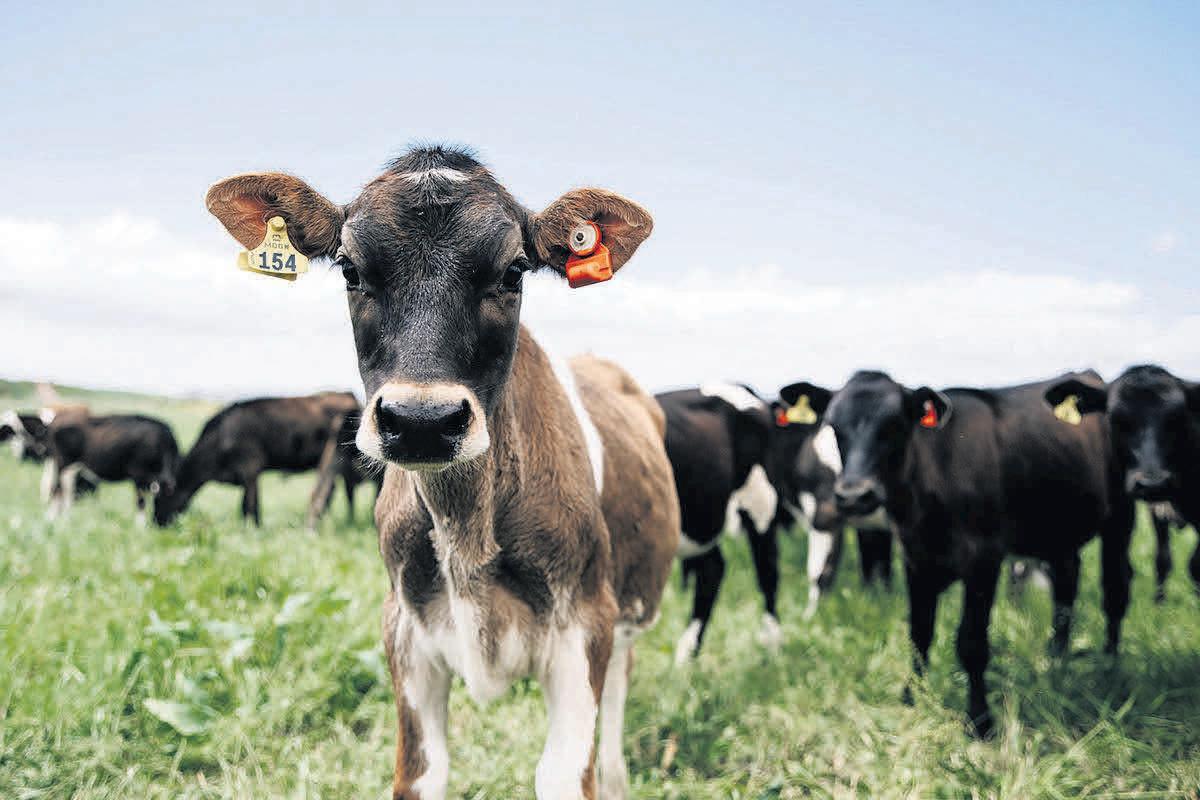
from a young age is essential. When BRD takes hold, it can mean reduced milk yield later on, higher vet costs and, in severe cases, calf deaths. Those losses add up quickly.
Relying on what you can see has its limits. Coughing, nasal discharge or a calf falling
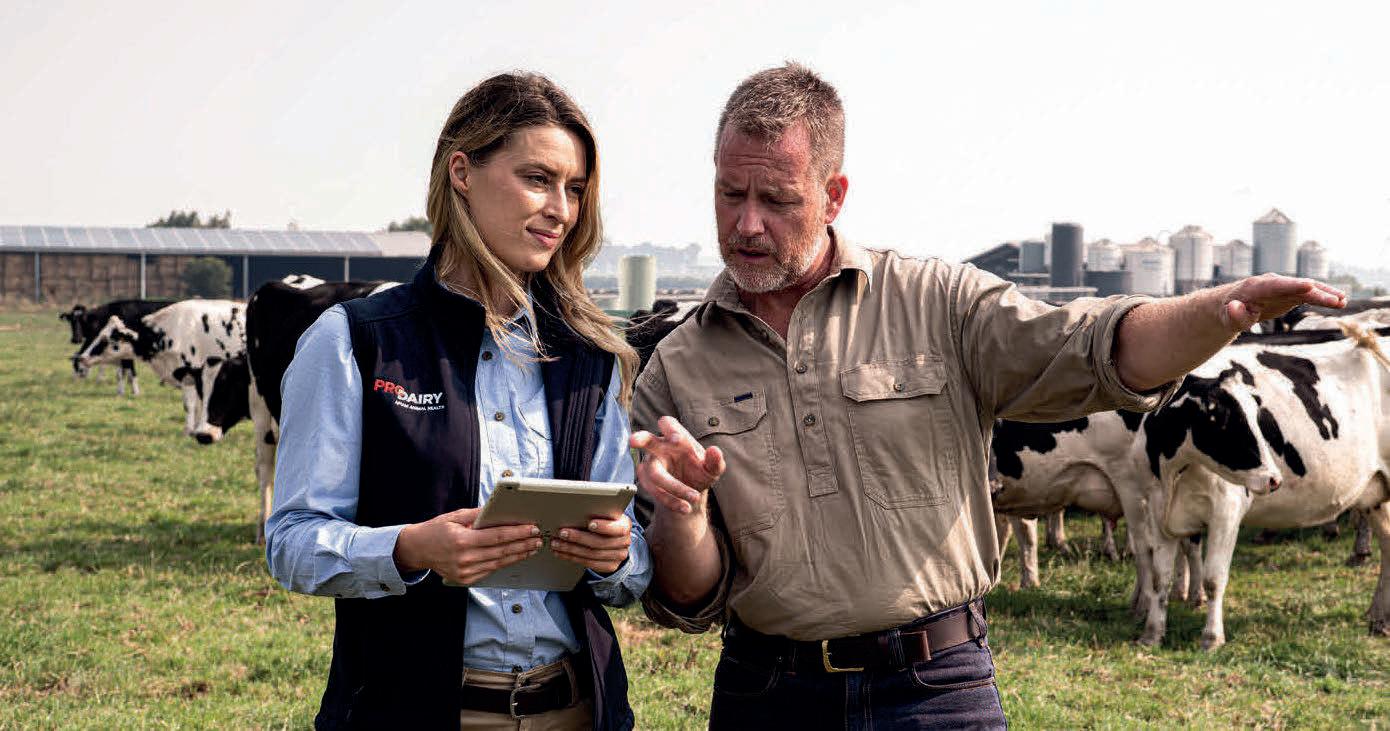

behind the mob can all signal BRD. But cattle are prey animals — they instinctively mask signs of weakness. By the time you notice something’s off, you may already be behind.
This is where monitoring technology changes the game. Continuous tracking of behaviour and activity highlights subtle shifts long before clinical signs are obvious.
For example, early-stage pneumonia can sometimes be picked up on ultrasound when health alerts are triggered, even if a standard
clinical exam doesn’t show clear results. That extra layer of insight can make all the difference.
CowManager’s Youngstock solution is built specifically to monitor calf health. Using a single ear sensor, it records ear temperature, eating and rumination patterns, behaviour and activity levels — then flags irregularities.
When a calf shows changes linked to the BRD complex, you’re alerted early. That gives you time to act before the condition becomes severe.
Earlier intervention improves recovery rates, reduces reliance on antibiotics and lowers mortality.
Healthier calves develop into stronger, more productive cows — protecting your herd and your margins.
The same sensor continues working as calves transition into the milking herd.
CowManager’s Health solution provides lifetime monitoring, allowing you to compare groups, analyse trends and make informed management decisions at every stage.
Combine strong management with real-time monitoring, and you give BRD far less chance to do damage.
Protecting calves from respiratory disease isn’t just about animal welfare — it’s about safeguarding the long-term performance and profitability of your dairy operation.


FOR FIRST generation dairy farmers, Kevin and Brodie Game, accurate record keeping is critical to the success of their 450-cow operation near Bemboka, on the NSW South Coast.
The Games have been through bushfires, droughts and milk price fluctuations, but their biggest gamble was to put their life savings into dairying, which is clear in their business name – Blackjack Holsteins.
“It’s so hard to get into farming when you don’t have that generational land, or money, and it was a roll of the dice as to whether we would succeed,” Kevin Game said.
Adding an extra layer of complexity to their business is that dairying is classified as food production in New South Wales, and farms are audited in the same way as cafes and restaurants.
Pivotal to accurate record keeping has been their life-changing investment in two John Deere utility tractors, a 6175R and 6110M, which provide seamless data exchange to and from the online management systems, John Deere Operations Center TM and JDLink.
“I used to have to rely on Kevin and the workers to write all the details, such as the batch numbers of chemicals used on crops and in the dairy, into a little notebook,” Brodie said.
“Now, I literally print the data off the Operations Center, and when our audit processor comes through, everything is ready to go.
“There’s no guessing, and it means Kev and I can plan things out.”
For Kevin, the initial drawcard for buying
John Deere was JDLink, which provided con nectivity and remote diagnostics in an area with unreliable service.
“But Ops Center also maps our whole farm,

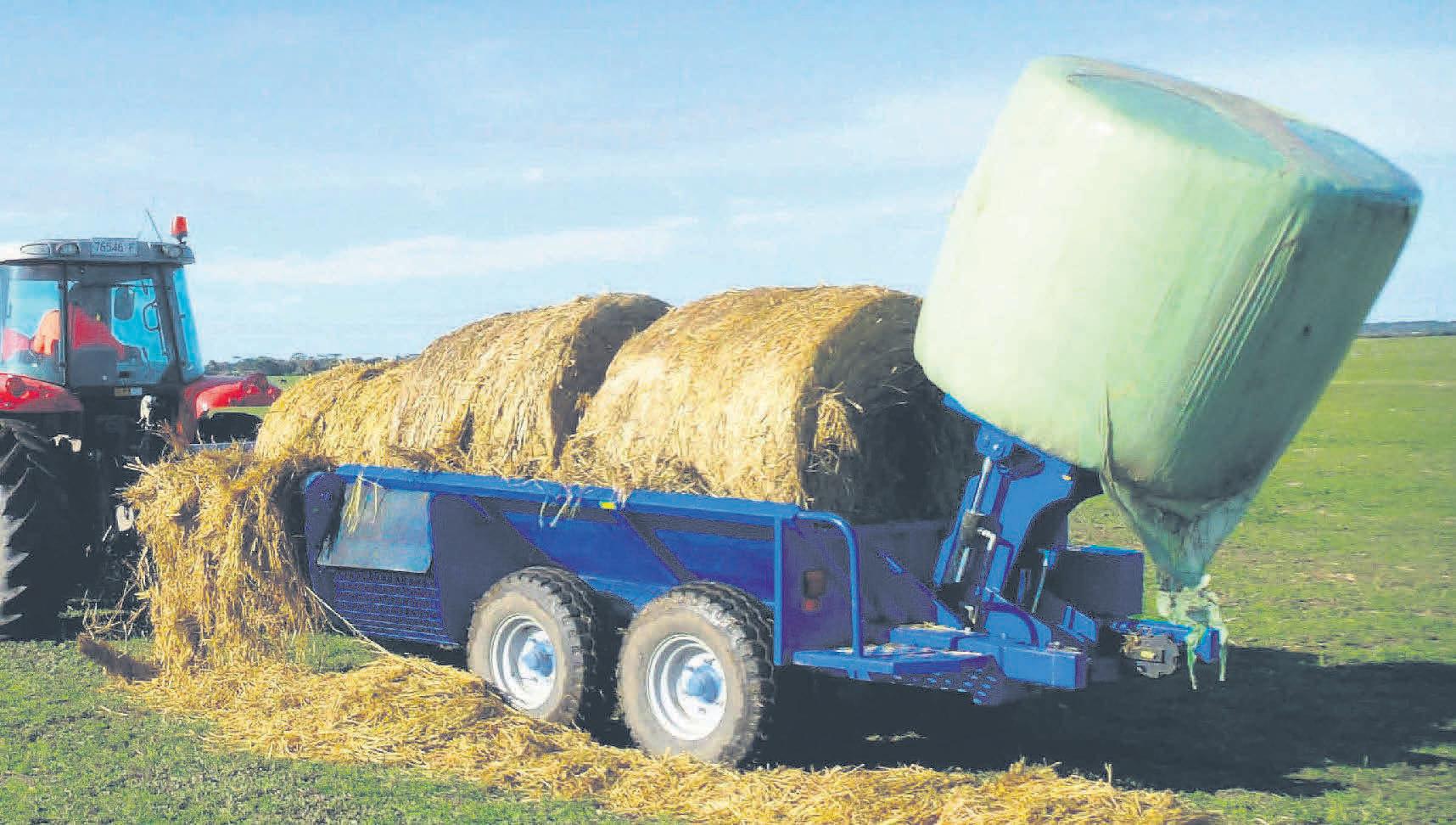
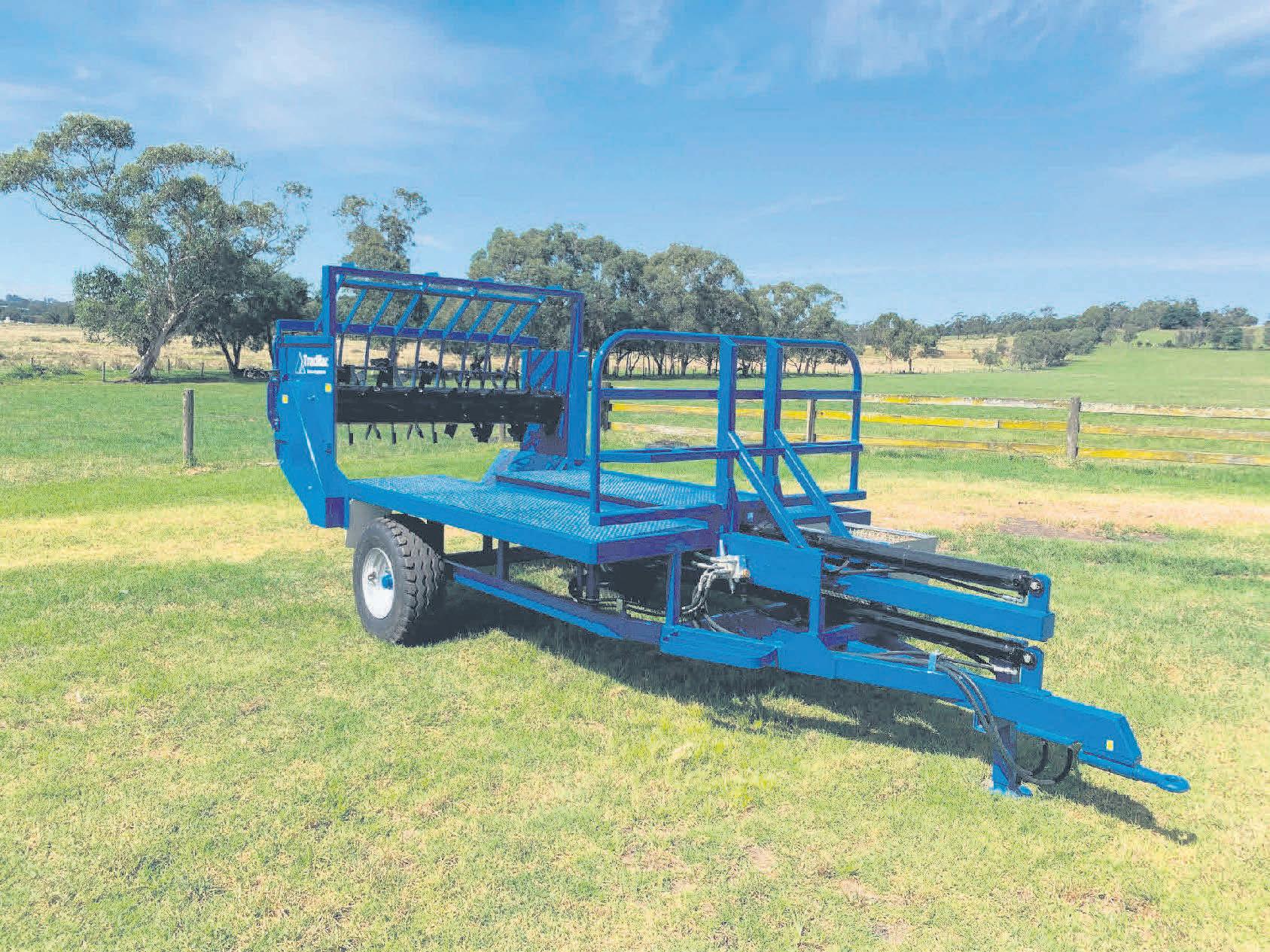
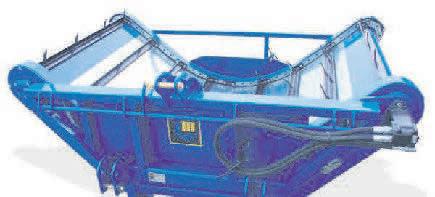
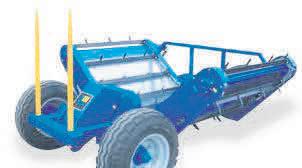


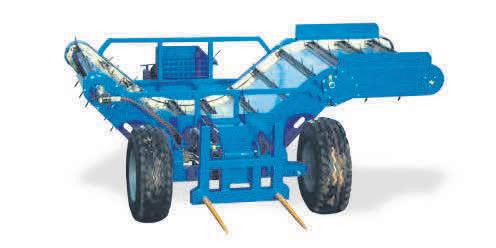
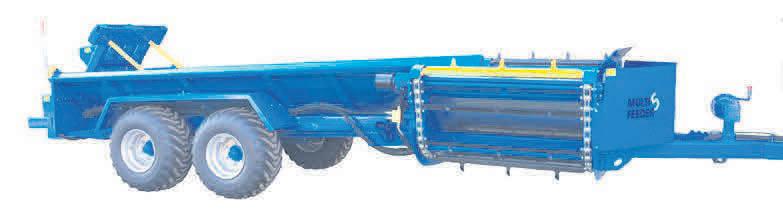





























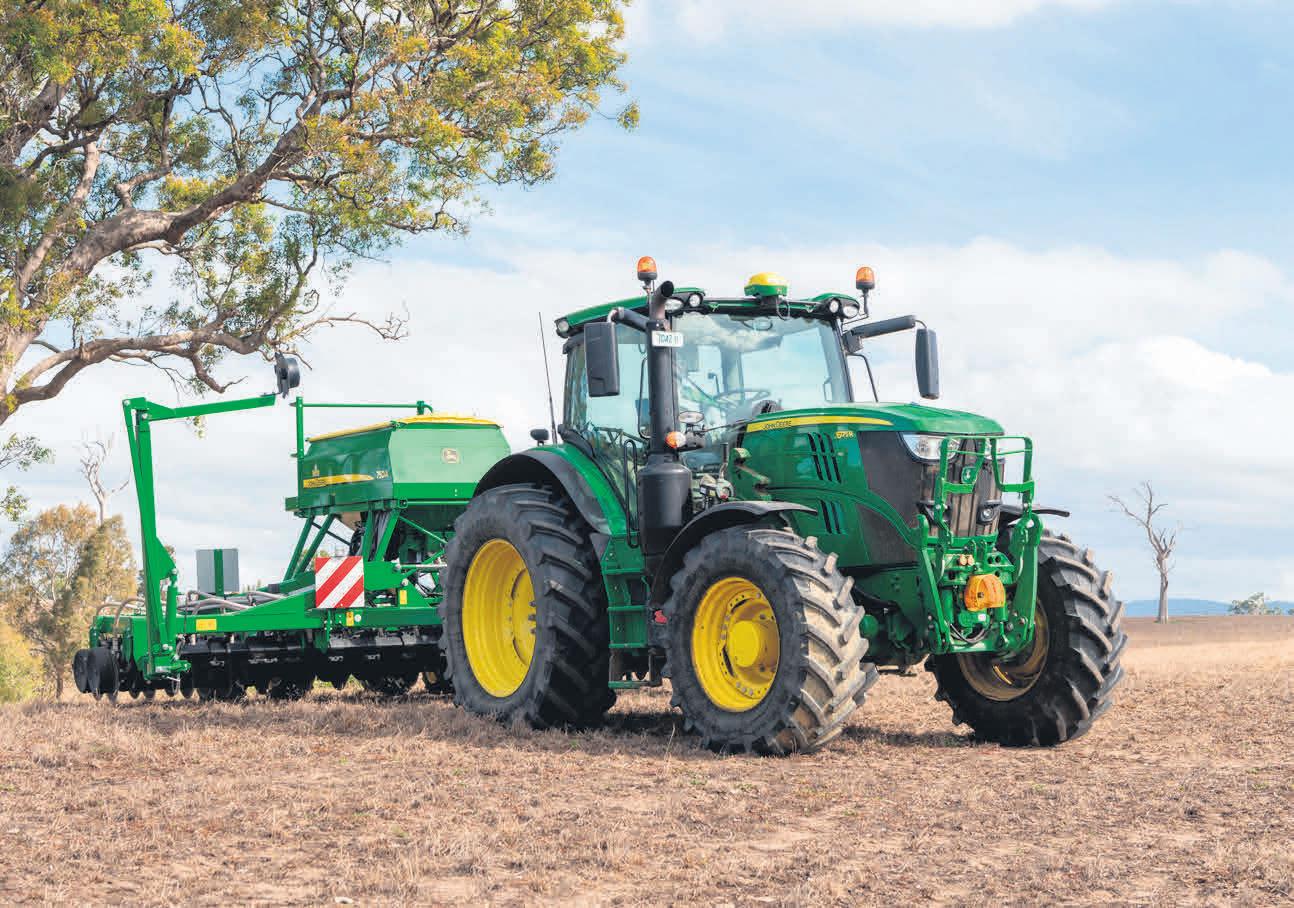
When Kevin and Brodie Game rolled the dice on becoming farmers armed with nothing but grit, ambition, and a belief that hard work pays off, they needed tools they could count on. So, when they invested in John Deere, it had to deliver. “I didn’t realise John Deere technology was so powerful until we bought the tractor,” says Brodie.
Today, with 450 cows, John Deere’s Operations Center™ helps them run the farm like clockwork. They map fields, assign jobs, monitor usage, and keep spotless digital records for audits, all from the office. For the Game Family, it’s a sure bet, “In terms of investment, you can’t go wrong.” Talk to your local John Deere dealer to discover how.