NEWS
PSU Awarded ‘Gold’ Status for Veteran-Friendly
OPINION
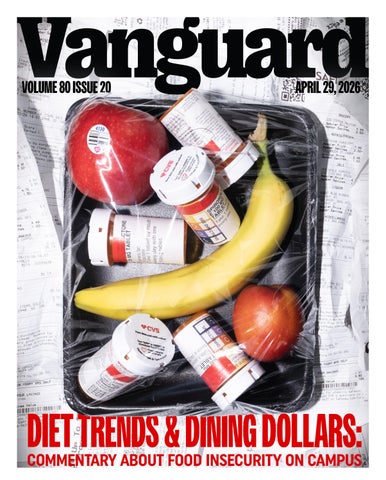
Diet Trends and Dining Dollars: Commentary About
Food Insecurity on Campus
A Failure of a Woman and a Burden of a New Man
![]()


NEWS
PSU Awarded ‘Gold’ Status for Veteran-Friendly
OPINION
Diet Trends and Dining Dollars: Commentary About
Food Insecurity on Campus
A Failure of a Woman and a Burden of a New Man
EDITORIAL
EDITOR IN CHIEF
Noah Carandanis
MANAGING EDITOR
Olivia Hendry Young
NEWS EDITOR
Grace Peterson
Will Lowe
ARTS & CULTURE
Adyan Hussein
OPINION EDITOR
SPORTS EDITOR Hayden Neumann
MULTIMEDIA
Nash Bennett
Schmitt
COPY CHIEF
Jude Callaway
ONLINE EDITOR
Karli Schwartz
DISTRIBUTION MANAGER
Caleb Dougherty
CONTRIBUTORS
Caylen Baugh
Daniela Hernandez
Lilly Santangelo-St. Martin
Benjamin Parzick
PRODUCTION & DESIGN
CREATIVE DIRECTOR
Haley Hsu
CONTRIBUTORS
Naue Pagtakhan
Nikki Marin
Dexter Delaski
ADVISING & ACCOUNTING
COORDINATOR OF STUDENT MEDIA
Reaz Mahmood
SALP ACCOUNTANT Vacant
STUDENT MEDIA TECH ADVISOR
Rae Fickle
STUDENT MEDIA TECH DEVELOPER
Kaylee Hynes
WEB DESIGNER
Owen Cook
To contact Portland State Vanguard, email editor@psuvanguard.com.
MISSION STATEMENT
PSU Vanguard’s mission is to serve the Portland State community with timely, accurate, comprehensive and critical content while upholding high journalistic standards. In the process, we aim to enrich our staff with quality, hands on journalism education and a number of skills highly valued in today’s job market.
ABOUT
Vanguard, established in 1946, is published weekly as an independent student newspaper governed by the PSU Student Media Board. Views and editorial content expressed herein are those of the staff, contributors and readers and do not necessarily represent the PSU student body, faculty, staff or administration. Find us online at psuvanguard.com.

Military Friendly, a coalition of veterans, employers and schools, has awarded Portland State University the “Gold Award Status.” This recognition places PSU in the top 10% of institutions supportive of veterans seeking higher education, providing help regarding housing support, loan opportunities and reduced tuition fees. With this award, the Veterans Resource Center (VRC) will continue to support students from military backgrounds and provide a path into the workforce.
“This is a testament, a tangible statement to the world that we do support veterans here,” said Ron Mansolilli, the director of the VRC. PSU’s support for veterans traces back to the Vanport Extension Center, the now defunct educational facility created after World War II. A temporary housing project and college, the center provided higher education to veterans integrating into civilian life, and guided them into the post-war workforce. After the Memorial Day Flood of 1948, the Center would eventually be moved to Portland, with Lincoln Hall being its first structure. As the Center was eventually reformed into PSU, the university branched into other areas, but continued its core mission of helping veterans pursue higher education and employment.
“We have recently started digging into the archives to really find those routes for veterans at the university,” said Mansolilli. “It immediately struck me, of course, we’re putting
veterans in a basement. So when you try to look at the history of where we came from, and then we’re sticking veterans in a basement, we wanted to change that narrative.”
VRC focuses on more than just housing support — it also prioritizes mental health resources for veteran students. Returning from deployment, many veterans suffer from Post-Traumatic Stress Disorder (PTSD), and it can be a challenge to reintegrate into civilian life.
“We have a great relationship with our friends at SHAC, who have come in for our wellness fair several times, and Hevron, a luncheon for mental health services.” said Melissa Steinman, Ph.D., coordinator for the VRC. “We try to periodically bring in mental health support systems around the area and resources so that students can connect with them,” said Dr. Melissa Steinman.
Steinman believes the wider campus community provides ample aid to veterans. She says it’s more than just administrators doing the work — paid volunteers contribute heavily. For the winter term, the volunteers organized a veterans resource fair with finals survival kits, a yoga day, and a wellness week. Steinman says the event was a big hit, and she’s excited to continue building the community ecosystem.
The VRC also offers permanent support throughout the term. Beneath the Smith Memorial Student Union, students, both veterans and non-veterans, can enter the VRC’s common area with a check-in. The VRC is open Monday to Friday, 9 a.m. to 5 p.m.
“We have a vertical garden that has everything from herbs to vegetables once they become of harvest time, so that people can take said veggies and herbs home. We have 5 individual cubicles that individuals can come in and study. We also offer coffee, tea and snacks on Wednesdays,” said Kyle Bennett, a VRC staff member.
The quality academic support PSU offers was key to winning ‘Gold Status,” allowing veterans to pursue higher education in an ever-changing job market. One such student who trusts in the VRC’s mission is Kenton Hill, a National Guardsman who chose PSU for its veteran support.
“It’s a loose community, but everyone here is generally talkative to each other. The opportunities that I know other people have had have been good, and essentially it’s a speak up, if you need help, they’ll move mountains to try to help you,” said Hill.
The VRC strives to maintain a friendly, cooperative attitude alongside other student groups, in an effort to give back to the community. The VRC also tries to educate the community about veterans and military affiliates to combat social stigma.
“We want to be a valuable addition to the university. Not just financially, but as a part of the fabric in the community. And I think in that way, we can help the university stabilize and grow,” said Mansolilli. “Humanizing the experience of veterans is a huge part of what we do at the VRC, and that’s something that we want to continue to grow.”
Mansolilli claims the VRC’s dedication to being a part of the campus community isn’t just a private mission statement, but also a view of the university administration itself.
“When we did our announcement for the gold status, the president [Ann Cudd] came in saying, ‘we’re never done.” said Steinman. “And I think that that alone, that we’re never done improving, and that the president has that viewpoint of ‘we are going to be here for our military affiliated students, and we’re never done improving,’ it speaks louder than anything else.”
Members of the VRC staff believe that, with the administration’s continuing support for student veterans, the VRC’s efforts will continue to improve and expand.
“All I know is, we’ve been able to grow and gain the trust of the administration, and we have tried to work really hard to advocate for veterans at the university. Overall, I think that the administration is listening to the veteran community,” said Mansolilli.
Despite the recent university budget cuts, the work the VRC provides will continue alongside the rest of the university’s programs.
“We have that shared experience of the school struggle, if you will. Of doing hard things to move forward in your future, and it starts to build that bridge,” said Steinman “They really are a huge part in helping folks to reintegrate back into the community.”

When it comes to trends, America has seen it all. Whether it was the massive shoulder pads in the 1980s, low-rise jeans in the 2000s or galaxy print in the 2010s, trends are more than just clothes on a rack. They’re wearable reflections of the time and the era. It takes real bodies to fill these clothes, and real bodies shouldn’t be trends.
The 1920s wanted flat, almost boyish bodies to reject Victorian corsets and showcase social freedom. The 1950s wanted hourglass figures for the post-war aesthetic and maximum femininity, with advertisements selling weight-gain supplements. The 2010s brought in the “bootylicious” era, which had social media promoting voluptuous rears—often achieved with plastic surgery.
Today’s era is no different—bodies are once again a trend. Skinny is back, and it is skinnier than ever. Particularly with the rise of medications for weight management, Glucagon-like peptide-1s (GLP-1), body image trends are shifting to fit ultra-thin body ideals. Celebrities and influencers alike appear to be ditching BBLs and breast implants and turning to GLP-1 and other weight-loss methods to fit this image. Serena Williams, a famous tennis player, has been the latest celebrity to advertise a GLP-1.
As body expectations change, so do diets. The biggest accidental diet is food insecurity, which currently 1 in 7 Oregonians face. Prolonged exposure to this ‘diet’ can be detrimental to people’s health, and can increase the risk of osteoporosis, heart disease, premature mortality and even obesity.
In an effort to combat food insecurity on campus, Portland State University (PSU) is hosting a Dining Dollars Drive throughout April 2026. The Dining Dollars Drive is a collaborative effort between PSU Eats and the Basic Needs Hub to provide meals to students in need. Students with extra dining dollars can do-
nate them to the Basic Needs Hub to provide meals to students. Every $8 in dining dollars donated equals 1 meal for a student who needs one. Donations will be accepted from April 1-30, 2026. The drive began as a response to the Trump administration’s efforts to cut food assistance programs.
When the One Big Beautiful Bill Act of 2025 passed on July 4, 2025, the Supplemental Nutrition Assistance Program (SNAP) faced changes that caused millions of people to lose their food assistance benefits.
“We have lost a lot of funding when the beautiful bill passed in July, so we were seeing less food and people weren’t having access to their SNAP dollars,” said Tess Conley, the coordinator of the PSU Smallwood Food Pantry.
Conley has said the pantry has faced inventory issues since the bill passed. She explained that when she placed her two orders from the Oregon Food Bank, each order contained about 10,000 pounds of food. Now she is fortunate to see if she can get 5,000 pounds in an order. At the same time, she has seen higher foot traffic in the food pantry.
“[At the] beginning of this term, we’ve seen over 800 students per month, which is an increase [of] almost 200,” said Conley.
Nutritional preferences have also changed in the food pantry. There has been an increase in special dietary preferences; gluten-free, lactose-free, vegan and vegetarian options.
“There’s much more vegan and vegetarian options than I have ever seen,” said Lee Phillips, the Basic Needs Navigator for the Basic Needs Hub. Phillips works with students facing housing and food insecurity, assisting them and connecting them to resources.
The Marketing Specialist for PSU Eats, Cassidy Depauw, has also seen a shift in student nutrition priorities. At a recent ta-
bling event, PSU Eats was promoting free milkshake samples that were higher in calories and added sugar. She shared that students asked her questions about the nutritional elements and the sugar amounts.
“We do tend to follow food trends a lot,” said Depauw. “I did think it was interesting that a lot of people seemed interested in the nutritional value of even just a free sample… I think it’s interesting to see how diet culture has impacted the way that students buy food and things like that. Because our healthier options tend to sell a little bit more, too.”
Trends reflect the world and events occurring around them. The return of skinny isn’t just a beauty statement; it’s due to inadequate access to food.
Depauw claims that the Meal Plans are another low-cost option for students that helps bypass nutrition barriers and combat food insecurity on campus.
“In a way, our services kind of combat food insecurity,” said Depauw. “If you buy the All Access meal plan, it’s like $8.76 for a meal, which is much lower than surrounding areas that have retail offerings…our most popular plans are probably the larger plans.”
Meal plans can be paid through a student’s school account, which makes it upfront and convenient. Scholarships and grants can be applied to the account, making it even cheaper for a student to use.
Whether or not people want to hop on trends, food insecurity prevents many from accessing foods that align with their dietary preferences. It’s important to create spaces and communities at PSU where not only access is available, but dietary preferences are honored. Enabling this standard creates a better experience from the food pantries to the table.
HAYDEN NEUMANN

With a 4-3 win over Northern Colorado on April 18, the PSU softball team closed out its last game at home with an emotional Senior Night
The Portland State University softball team played its last home game of the season on April 18, 2026, recording a 4-3 win over Northern Colorado. A postgame ceremony honored the team’s five seniors: Sherreigh Nakoa-Chung, Alison Harris, Grace Johnson, Gracie Walters and Jolee Benson.
“[The seniors have] done so much and have given so much to this program, especially to this young group,” said head coach Meadow McWhorter. “They’ve carried a heavy load, and I’m just so proud of them for everything they’ve built.”
The seniors’ families came to show their support, bringing fathead signs, player pins and jerseys. Nakoa-Chung’s family, in particular, had a large turnout, wearing custom jerseys and shirts with a cutout of Nakoa-Chung on both the front and back.
“My key takeaway [from my time at PSU] is I’m capable of doing hard things,” said Nakoa-Chung. “I go through my highs and lows, but with the love from my family and my team, they’ve shown me I can do hard things.”
After their last three away games against Sacramento State, the Vikings’ next focus is the 2026 Big Sky Softball Championship. Held from May 4-7 in Pocatello, Idaho, all six teams in the conference will compete in a double-elimination style tournament. With an overall record of 14-27 at the time of writing, and sitting in last place in the Big Sky Conference, the Vikings are slated to play against the third-place seed in the first round. The team they play against will be determined by the final rankings at the conclusion of the regular season.
Whichever team wins the Big Sky Championship will be granted an automatic bid to the NCAA Tournament, the Women’s College World Series (WCWS), held May 28 through June 5. PSU last won the Big Sky Championship in 2021 and
was eliminated in the first round of the 2021 WCWS. In 2024, the Vikings came close, losing in the championship finals.
“I’m definitely really excited,” said Nakoa-Chung. “Two years ago, we were runner-up. Being in that moment, going back to the place that was really emotional for a lot of us. [We’re] putting it on for our alumni, especially for that team that wasn’t able to follow through.”
Despite being last in their conference this year, the team has improved over its 12-39 record in the 2025 season. Although the outcomes haven’t been as consistent as they hoped in the 2026 season, McWhorter praised the team’s growth and highlighted their focus on getting better every weekend, leading by example and being team players.
“We’ve talked a lot about building it brick by brick,” said McWhorter. “We’re a young team this year with some senior experience. This team has done such a good job. They’re starting to hit the ball really well at the right time, we’re pitching well at the right time, we’re playing defense at the right time.”
With 14 underclassmen compared to eight upperclassmen, five of whom are in their final season, the team is a younger one. The veterans on the team are expected to be leaders on and off the field.
“A focus for me is being a team player,” said Nakoa-Chung. “Show up when I need to show up. Be the leader my team needs me to be. Be all in.”
College athletes are eligible to play for four seasons, but have a five-year span to do so. If a player takes a season off, often due to injury recovery, they are considered a redshirt player. The term stems from the practice jersey often worn by the player during the season they’re not playing in. Jones, who redshirted
her sophomore year due to a heart condition, is one of the redshirt seniors on the team. In an article written in 2025 by John Wykoff, Jones emphasized how important it is to keep a productive mindset and rely on others in times of struggle.
As the team bands together in preparation for the Big Sky Championship, relying on each other and staying focused is at the forefront of their minds, according to McWhorter. While senior night was their last home game of the season, the seniors still have multiple games before they bid farewell to Portland State.
“Senior night is full of a ton of emotions,” said McWhorter. “We’ve got to make sure we pocket those emotions and come out and take care of business. They did a really good job of that.”


In the middle of the rush at the Portland State Farmers Market, Cassie Funmaker stood on the steps of the Millar Library, turned on their speaker and began singing and dancing along to the opening song of “Hamilton.”
Funmaker is a junior at PSU studying theater. For Funmaker, “Hamilton” was the piece of media that showed them they could use theater as a medium of expression.
“As a young, native kid, kind of dorky, kind of loud, I didn’t know I was allowed to have a medium in theater,” Funmaker said.
“I had remembered something that my acting professor Devon Allen had mentioned in class a couple of weeks ago, which was that acting is the foundation of theater, and as long as you act, you can do theater anywhere,” Funmaker said. “And then she said, ‘Just go outside and do some acting. Just go outside, go to the park.’ I was like, oh, I can just do that.”
A few weeks before, Funmaker found themself hungry for performance, without knowing where or what their next act would be.
Before the show, Funmaker calculated the per-
fect spot to perform. Since the Millar Library is out of the way of vendors and other artists, they decided it was the best spot to put on a musical.
With very minimal planning, Funmaker performed all 46 songs within three hours. The performance was completely free to enjoy; they only accepted tips in the form of fresh produce.
Though Funmaker typically thinks about what audience members will take away from their performances, this time, they went into the show without any expectations of the audience’s reactions.
“The idea that there are children out there that were able to see an adult making a fool out of themselves and playing so publicly,” Funmaker said. “I like the idea of thinking that people could just see that and be like ‘Okay, I can just go outside and play.’”
Throughout the three hours of performance, the audience fluctuated. Many bystanders came to sit, watch and sing along.
One audience member, Danger, enjoyed the second act of the show. Danger especially loved the high energy on the steps of the library.
“I think my favorite [song] has been NonStop, because in the end of that song, there are so many things happening all at once, and there’s only one performer. It’s especially cool because it really encourages audience participation,” Danger said. “I think it’s a really cool moment of community that’s happening in this one-man show.”
Another audience member, Geneva, is a big fan of theater. They spent a lot of time enjoying “Hamilton” with their friends when they were younger; this show felt very nostalgic to them.
“It’s notoriously expensive,” Geneva said. “It’s fun to do this at the farmer’s market, where there are so many different kinds of people.”
One of Funmaker’s close friends, Ayden Mateoweks, watched the show along with other audience members.
“Cassie has always been a brilliant actor,” Mateoweks said. “She’s done a lot of productions through PSU and otherwise, but I think this is probably their most impressive performance, physically and just expressively.”
Understanding theater as an institution
and its inaccessibility motivates Funmaker’s performances.
“I went and saw Hamilton, actually, when it came to the Keller auditorium, on a whim., I had a bad day, and I was like, ‘I’m gonna go into credit card debt’,” Funmaker said. “I looked around me, and it was just a sea of white people; people who had money, people who probably didn’t go into credit card debt.”
Mateoweks agrees with Funmaker’s ideology, making art free and accessible for everyone in a public space.
“I think it’s really important, especially right now,” Mateoweks said. “We struggle a lot with community and connection, and I think that having something like this, having a public performance that’s very interactable, is a really great way to combat that.”
Funmaker went home with a bag full of fresh produce that afternoon. Though Funmaker is unsure about the future one-person performances, they are satisfied knowing they helped bring out the community within the farmers’ market that day.

Ignoring one side of a coin while you beat the other; a perspective on transgenderism
In present-day America, the most common news headlines that reference transgender people discuss the fears that surround trans women. The media talks about not wanting them to play in women’s sports, and there’s the argument that trans-women are just predatory men who want to go into the girls’ restroom to get their rocks off.
In all of this attention given to trans women, people fail to acknowledge the existence of the other side of the spectrum. Ultimately, the reason that most media outlets ignore trans men is sexism — if trans men are women, and women are weak and stupid, why would I be worried about them or care about their experiences?
To make this as accessible as possible to any parties reading, I’ll provide some brief definitions: A transgender person or trans man/woman is somebody whose assigned gender at birth (AGAB) no longer matches their current gender identity. A cisgender person, or cis man/woman, is somebody who presents and identifies as their AGAB.
To note, this article isn’t to diminish the experiences of anybody or start a game of “oppression olympics.” The goal of this isn’t to start any more infighting within the transgender community; it’s simply to open the door to the perspective that being ignored by the masses isn’t the benefit that it may seem.
My opinion on this topic is also impacted by my upbringing. I’m a skinny, white trans man who grew up in an accepting family here in Portland. Because of this, I can’t speak to the intersectionality that plays a huge part in the perception of transness, such as race or religious upbringings.
One of the main struggles I’ve noticed is that I can’t talk about my experiences with misogyny. I spent most of my life as a girl; the fact that I’m not seen as one anymore doesn’t erase my past. Women tend to dislike it when men talk about sexism like they know what it’s like, but I do know what it’s like; I have experienced it. The place that trans men have within conversations about sexism is a very unique one that I didn’t fully comprehend until my senior year English class in high school. We were analyzing a text through a feminist lens, and I found that I didn’t really have anything I could add to the conversation without having to out myself as trans or risk seeming like an asshole. The goal of the assignment we were doing was to connect the text to our lives. But in doing so I would be forced to out myself as trans or lie.
I remember being terrified at that moment. Being trans is a personal experience, and while I do want people to know I’m trans, telling a room of cisgender people that I am is very scary. Another fear I had was that while people may recognize I have the lived experience of a girl, they may not think I have room to speak on it anymore. As if by transitioning, I lost the privileges of girlhood and was now forbidden by social law to think of myself and my past as a male. If you’re a trans man and you want to pass as a cis man, it’s as if you’re no longer allowed to talk about your issues. Once you’re seen as a man, you’re a part of the non-
oppressed group, so your experience of being oppressed is seen as no longer valid.
“I think when people hear that ‘man’ label, they’re like ‘oh, male privilege, you obviously are someone who’s in a position of power.’” said Madi Lou Abel, a Ph.D. student at Portland State University who studies transgender relationships.
I think a lot of trans men take this to heart, and it leads to them becoming sexist themselves out of fear. They think that to be seen as a real man, they need to be assholes to women and distance themselves from their emotions because otherwise they’ll be found out as trans.
I also think that a lot of this can come from the fact that a lot of trans men don’t have many positive connections with their cis male peers. When I started making friends with cis-men, I found that there was a gap I couldn’t quite bridge with hormones and surgery. My friends accepted me; they saw me as a boy, but I was never quite as loud as they were. I didn’t know how to dap people up, and I was noticeably shorter than they were.
A TikTok user by the name ren.gone.mxd explained the difference in a way that spoke to my own experience quite well. “Trans men are not cis men, and we never will be. We can pass all we want, we can get as close to being cis all we want, but at the end of the day, our experience is not going to ever be the same as a cis man.”
I’ll never be able to be fully included in the world of cis men. It’s like when I came out, I was banished from the girls and refused to be accepted into the boys. Stuck in this void created by society’s view of gender, I noticed this metaphorical line in the sand that kept all transgender people on the side aligned with their AGAB.
The cis men saw all of us trans men as never being quite man enough to be on their side, but the cis women thought we weren’t women enough to be in their bubble. We were seen as “failed girls,” and the trans women were seen as “wannabe girls.” Neither of us was accepted. Both of us were failures.
“It’s either like ‘Oh, you didn’t do it good enough, and now you’re moving away from it,’ or it’s like ‘Oh, you’ll never be good enough, and you’re trying to become it,’” Abel stated.
Right after I’d come out, I realized how few trans people there were around me, which made my early years of being out as trans very isolating. The media was so focused on trans women that it felt like I was invisible, like nobody wanted to acknowledge me. The girls saw me as a boy, and, whether intentional or not, the boys couldn’t see me as quite an equal.
Every trans man’s experience is different, but the lack of representation in most places makes it so difficult to see the different ways that we can present. I believe one of the worst things is to fade into obscurity, and even though the world is horrible to trans women, I know that they aren’t at risk of that. So in some weird, fucked up way, I’m a little jealous. All trans people, regardless of direction, expression or beliefs, should be cared for and loved; we all deserve better and deserve to be seen.

The self-titled album from Brooklynbased artist bbpue creates a beautiful cluster of twee sing-along pop and glitched-out sound collage. It firmly sits in the middle of that very dissonant, specific pocket, with a nearly equal split between textured instrumental tracks and catchy earworms. Standout songs like “Stacy” feature twangy folk-rock songwriting reminiscent of Modest Mouse. On the other end of the spectrum, we get more Aphex Twininspired tracks like “stoner,” devoid of any singing at all. While bbpue explores a vast range of styles, the juxtaposition between them acts as the thematic lodestone for the whole album. The cover art visually portrays this concept, collaging cartoonish figures and blobbish shapes in a busy swamp of color and ideas. bbpue flexes a clear aptitude for writing catchy pop songs, unafraid to cast out twinkly, almost childlike hooks. These bright tunes get filtered through bbpue’s signature muddy production style, distorted with scuffed high-pass filtering and intentional volume peaks. It sounds like the “Animal Crossing” soundfont is being played through a haunted pair of dollar-store earbuds, unearthed from a buried time capsule. This is most clear in the song “Forever,” which in essence is a sweet bubblegum pop song that makes you want to jump — but bbpue blasts his vocals to an almost unintelligible level — and it sounds gorgeous.
The track “failfailfail” feels like an unused track from the video game, “Jet Set Radio,” one of many moments on the album that recall nearly forgotten pieces of pop culture. It feels so homemade yet futuristic and expansive, which all checks out when you learn that the majority of the album was produced using the iPhone app, Bandlab. bbpue is an incredibly exciting artist on the rise, both in his unique approach to production and his keen sense of taste.