


Noah Carandanis
MANAGING
Olivia Hendry
NEWS
Grace
Will
ARTS
Adyan
OPINION
ONLINE EDITOR
Karli Schwartz
DISTRIBUTION MANAGER Caleb Dougherty
CONTRIBUTORS Layla Phillis
PRODUCTION & DESIGN
CREATIVE DIRECTOR Haley Hsu
CONTRIBUTORS
Naue Pagtakhan Dexter Delaski
ADVISING & ACCOUNTING COORDINATOR OF STUDENT
Reaz Mahmood
SALP ACCOUNTANT Vacant
STUDENT
Rae Fickle
STUDENT
Kaylee Hynes
WEB DESIGNER
Owen Cook
To contact Portland State Vanguard, email editor@psuvanguard.com.
MISSION STATEMENT
PSU Vanguard’s mission is to serve the Portland State community with timely, accurate, comprehensive and critical content while upholding high journalistic standards. In the process, we aim to enrich our staff with quality, hands on journalism education and a number of skills highly valued in today’s job market.
ABOUT
Vanguard, established in 1946, is published weekly as an independent student newspaper governed by the PSU Student Media Board. Views and editorial content expressed herein are those of the staff, contributors and readers and do not necessarily represent the PSU student body, faculty, staff or administration. Find us online at psuvanguard.com.
COPY

making a comeback
The United States has been showing a decline in literacy rates for the past few years. In 2022, the National Center for Education Statistics (NCES) reported that from 2020 to 2022, the average reading score for 9-year-old students decreased by 5 points. This decline was the largest drop in reading scores since the 1990s. And according to the National Literacy Institute, 21% of adults in America are illiterate, with 54% of literate adults reading below a 6th-grade level.
Oregon has experienced the most significant decline in literacy rates and ranks among the worst states. Results from the 2024 National Assessment of Educational Progress Data placed Oregon as the worst state in 4th-grade reading scores nationwide
There have been debates on what is driving the decline in literacy scores. Some teachers say it’s due to kids’ increasing use of technology. Since the rise of short-form online content, kids’ attention span has shortened, affecting how long they pay attention before moving on to something more stimulating. This form of stimulation has made it easier for individuals to watch a 15-second educational video and harder to sit through a TED Talk from beginning to end.
Professor Keri Behre, Ph.D., is a Senior Instructor in the English Department. She has been teaching for 26 years and has seen a decline in students’ attention. In her classes, the readings assigned range from essay excerpts to complex medieval texts.
“I find often … it’s attentional capacity. It’s not skill, but it’s like the fact that we are so overwhelmed by our notifications and by just the constant information coming in,” said Behre.
Others say the literacy score decline is a ripple effect of COVID-19 and the 2020 lockdown. Although it could explain the impact on kids in recent years, scores have been declining since before the pandemic. While lockdown could have likely affected literacy rates and the educational careers of many students, it isn’t the only answer.
Another idea suggests that the lack of time to read for leisure is to blame. With the rise of easily digestible media, students may be less likely to engage in activities that require more cognitive focus, causing them to shy away from books. 44% of Americans do not read a single book a year, according to the National Literacy Institute.
Portland State University requires students to complete a set of general education classes before graduation. Classes like Freshman Inquiry, Race and Ethnic Studies and Arts and Letters
can often be reading and writing-intensive, requiring students to engage with more challenging aspects of literary analysis.
Some scholars believe the problem isn’t in students’ capabilities, but rather the time they have available. Reading isn’t a priority for students; often, they have to first focus on basic needs like sleep, eating, work and family. These priorities take up a lot of time. A survey conducted by the American Psychological Association reported that current sociopolitical environments are the main drivers of stress and are impacting mental health. Once students have filled their basic needs, they’re often too overwhelmed and exhausted to go pick up a book.
“It’s a privilege to get to engage academically,” said Behre. “That can be a little bit unstable sometimes. When there are so many demands on people in their lives to meet basic needs… sometimes that just crowds out the time, right?”
Behre explains that you do not have to pick up a book to read — reading can be done on digital devices. This has its pros and cons. It makes reading accessible and convenient, but by not interacting with physical material, Behre argues, that it negatively affects their engagement with the text.
“It’s not like they’re not reading, you know, books or stories or engaging in that way,” said Behre.
She mentions the importance of building a habit of picking up a physical book, as there are cognitive benefits in engaging with texts that require critical thinking.
Maurice Hamington is a philosophy professor at PSU, with a Ph.D. in Religion and Social Ethics from the University of Southern California, and a Ph.D. in Philosophy from the University of Oregon. He has worked in higher education for over 40 years. In his classes, he assigns a mix of classical passages and modern texts for students to read, including Simone de Beauvoir and Judith Butler.
Hamington believes that the hardest literacy challenges surround terminology and abstract thinking. Philosophy requires the use of lengthy words with specific meanings in their contexts, which can be a challenge for some. PSU accepts students all around the country — and the world — with different literacy backgrounds. Hamington has noticed the range in literacy levels among students.
“We have the range in our classes, and at the top, they are just as good as any students across the country. But we also have many students coming who aren’t as well trained,” said Hamington.
He believed that time and experience are the main obstacles for students facing literary challenges. He claims more foundational training would help prepare students for higher education. Hamington also said that literacy knowledge can’t be recorded through standardized testing. Standardized testing has been criticized for making learning a race against time to memorize, rather than active engagement with content that requires more cognitive attention, which negatively impacts competitiveness and children’s desire to learn.
“Of course I wish our students were doing better in high school, but I’m also not excited about these quantitative tests…I think they don’t capture everything that is going on,” said Hamington.
Hamington has attempted to bring students together through different interactive activities. Some of Professor Hamington’s strategies to help students through challenges are community engagement. That can look like students getting together to discuss readings, or students making videos for their peers to spark engaging conversations.
“I try to form a community in my classroom, although I teach online,” said Hamington.
To those who need an extra hand, he provides resources that can assist students in times of difficulty. Although the support is helpful, it doesn’t address the root of the problem regarding reading comprehension.
Oregon has hit new lows in literacy rates. However, on the individual level, Portland Public Schools (PPS) is trying new methods to make a comeback. The district entered a partnership with Reading Results, a non-profit organization that provides a greater amount of tutoring to students. PPS was mentioned in The 74 analysis of literacy and poverty levels and made the list of local schools that exceeded their expected reading proficiency levels. Students from Chief Joseph Elementary School were expecting a 35% reading proficiency rate, and recorded a staggering 71%.
Amongst the professors interviewed, there was a common theme— a lack of time and attention from students. With today’s sociopolitical environment, students’ time and attention are directed towards places that are draining their capacity to incorporate reading and writing practices in their daily lives.
“It’s an ‘I’m overwhelmed’ challenge, whether physically overwhelmed… financially overwhelmed or you know, emotionally, it’s a rough world out there right now,” Behre said.
As
The Portland State University Chapter of the American Association of University Professors (PSU-AAUP) met to discuss the Portland State University budget cuts on Tuesday, Feb. 10. There were roughly 40 people in the room, and more attended virtually.
According to PSU-AAUP members, the college is undergoing the worst cuts in PSU history. By partnering with Portland City Councilors, they hope to pressure Governor Tina Kotek into using stability funds to bridge the expenditure gap.
“I’ve been trying to do outreach and sort of lobbying directed at the City Council for a little while. We’re asking City Council, in part, to consider the future of PSU in relation to the future prospects of Portland…reach out to Salem, in the name of that relationship, in the name of PSU and Portland flourishing together,” said Bill Knight, president of PSU-AAUP.
PSU-AAUP first came to campus in 1978. It serves as a bargaining unit for faculty members, and now has over 1,100 members. According to its website, it has the largest faculty bargaining unit in higher education in Oregon.
During their meeting, PSU-AAUP members and City Councilors discussed the decline of Oregon’s leading access institution and workshopped ways to win funding to support public secondary education.
“We also want to see the decoupling bills passed that would allow us to detach the state from the impacts of the federal H.R. 1 tax code changes. We’re going to know in the next few weeks what’s possible in Salem… we’re hopeful,” said Knight.
In the coming weeks, Senate Bill 1507 and House Bill 4014 will be voted on. Knight says the union sees these as key bills for the university.
PSU is not the only college struggling with funding — Oregon ranks 37th in the nation for higher education funding, leaving many universities struggling. Portland State had an initial $18 million budget deficit going into the 202425 academic year. It’s projected to grow to $40

million by 2027, in part because of shrinking enrollment and higher operating costs.
“There are short-term crises that we need to deal with; that’s why we need to tap into the education stability fund right now, to avoid these cuts to University Studies, which will only precipitate the decline of enrollment, which will become a death spiral,” said City Councilor Mitch Green in a press statement.
Knight shared that in 2013, PSU was the largest university in Oregon based on enrollment. Knight believes that the pandemic, homelessness and other situations in downtown have contributed to a drop in enrollment and local connection. PSU’s enrollment has lost 10,000 students compared to 2013.
“If we cut PSU, we cut the budget; if we slash the budget, if we cut jobs in a significant way, we’re harming the recovery of downtown Portland, we’re harming the future economic success of Portland,” said Knight.
The PSU-AAUP president claimed that there are many ways PSU can increase its budget through enrollment. Recruitment, to him, is critical. He says that PSU needs to commit to connecting to Portland Public Schools to encourage more students to apply and reach out to Portland community colleges to recruit transfers. He also wants to grow partnerships with employers in Portland and create more internship opportunities.
“Make it clear, there’s a future here. Let’s not cut. Let’s invest in all of that, and we can grow,” said Knight.
He admits that it’s hard to invest in secondary education with a budget deficit as large as Portland State’s, which is why he is urging lawmakers to reduce the barriers and keep PSU on its feet.
In an attempt to close the gap internally, PSU laid off almost 100 faculty members, scaled back academic programs and changed organizational structures. In Nov. 2025, PSU laid off 10 non-tenure-track faculty (NTTFs) members. According to a statement by PSU President Ann Cudd, they were laid off “in good faith” in
an attempt to lessen the budget gap. PSU was ordered by a labor arbitrator to reinstate their positions, and the college complied.
Janet Cowal, who attended the Portland City Council meeting, is a Teaching Associate Professor of Applied Linguistics at PSU. She was one of the 10 NTTFs who were laid off and later reinstated.
“I think it’s obvious that Portland’s and PSU’s futures are closely linked and that a thriving PSU is key to a revitalized downtown as well as a livable metro area and a healthy Oregon,” Cowal said.
Investing in PSU was the theme of the meeting, with a focused perspective on the economic advantages and disadvantages of the university. While the cost might be high at first, many PSUAAUP members claim it’s necessary.
“We are an institution that has a $1.8 billion annual impact on the economy,and that’s larger than the Rose quarter and the Moda Center. That’s a huge impact on the economy annually. That could be bigger than it is. We just have to commit ourselves to growth,” said Knight.
NTTFs are subject to having their positions removed involuntarily. According to professor Jack Miller, Ph.D., NTTFs have specific procedures in their contract that allow for termination — one of those procedures regards fiscal emergencies. The university claims it is in the midst of a financial crisis, which allows it to trigger layoffs among NTTFs.
“We know that there are plans to lay off 200 or more faculty members,” said Knight. “We don’t know exactly what the changes to that will ultimately look like, but I know the faculty and university studies are really anxious and concerned for their future…We don’t know what’s going to happen.”
The budget cuts do not affect tenured professors — as they are safe from termination — but they are being offered early retirement buyout packages. PSU hopes to save money in the future by “voluntary reduction.” Normal circumstances allow for the position to be replaced when a professor leaves. Now, if a pro -
fessor takes the package, their position will not be replaced, which reduces the instructional force in many departments.
Miller claims that the quality of education at PSU currently remains standard, but there is a lack of job security and an uncertain environment regarding programs, which leaves many professors worried.
“Morale is severely strained, and anyone who has job prospects elsewhere and the ability to move is likely to be looking for more secure work. It’s possible that we’re looking at quality loss in the future as a result of what’s going on now,” said Miller.
Cowal sees the funding gap as an intersectional crisis, affecting Portlanders, students and professors.
“Here’s my question: how can you convince or put pressure on President Cudd, the mayor, and the governor to invest in PSU, recognizing that doing so is an investment in Portland, and indeed, Oregon’s future?” Cowal said.
PSU is a unique college, according to Knight. It’s located in the heart of Portland, offers low-cost options, has resources for minority students and assistance for First Generation students. According to him, PSU is at risk of being woefully understaffed, which will negatively impact students.
“We are really doing a disservice to students in our staffing of the ways in which the university can serve them and connect them to educational opportunity and understanding and feel at home in this place. There are ways in which a lot of our essential functions as an educational institution are really understaffed, and we have to find a way to recommit to growing all that out,” said Knight.
There was a hearing in Salem on Feb. 18. It discussed Senate Bill 1507 and House Bill 4014, along with the possibility of using stability funds to support PSU. The decisions will be made within a few months.
“Above all, we just want to see as little harm done to this institution as possible through the cuts,” Knight said.
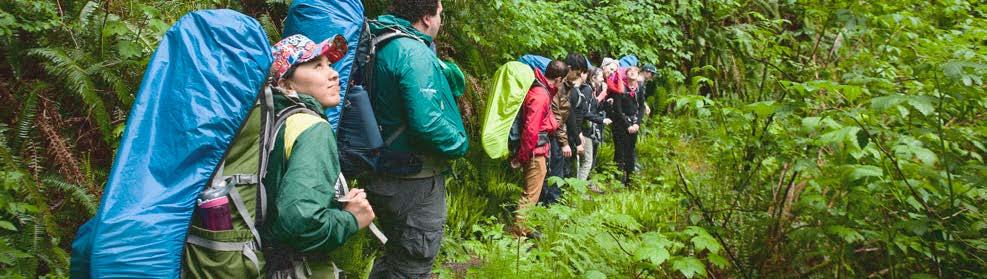
With warmer weather on the horizon, the pull of the outdoors is getting harder to ignore. If you’re eager to swap lecture halls for fresh air and blooming nature, the Outdoor Program (ODP) offers various upcoming opportunities to explore new skills and places.
ODP is made up of multiple branches, such as the Wilderness Leadership Development (WiLD) program, the Climbing Center and the Equipment Rental Center. Through ODP, students are able to attend guided outdoor trips and workshops, rent gear for their own expeditions, take certification courses and more.
One experience offered through ODP is a Kayak Pool Sessions, where kayakers of all skill levels can practice in a controlled environment.
Zoë Cunningham, a sophomore at Portland State University (PSU) majoring in environmental studies, is a Kayak Pool worker. She also holds other positions in the ODP, such as Assistant Trip Leader and employee at the Equipment Rental Center..
“ODP, honestly, is one of the reasons why I chose Portland State,” said Cunningham. “I wanted to get into nature more, and I also wanted to join a community and be involved on campus when I came [here].”
Originally from Boston, Mass., Cunningham found out about ODP online, which inspired her to join the WiLD program and take on a leadership role. After three terms of outdoor training and meetings, she became an Assistant Trip Leader.
“It surprised me how out of my comfort zone I actually was, especially facilitating groups and telling people what to do. I’m not that type of person, you know?” said Cunningham. “I would rather be the one being told what to do instead of telling other people what to do, so it kind of shocked me how much of a leadership role it really was.”
Cunningham recalls her WiLD trip as one of her most cherished moments in the ODP, which was part of her training.
“We have to do a week-long camping trip, and I think my best memory there was getting to know my cohort and getting to know the ODP. Connecting with people and sitting around a campfire and sharing stories was probably my favorite part,” said Cunningham.
ODP organizes many outdoor trips and activities open to students throughout each term. They range from dayhiking, mountaineering and climbing to snowshoeing, cross-country skiing and winter backpacking. There are also plenty of watercraft opportunities, including kayaking, rafting and paddle boarding.
ODP partners with the Student Sustainability Center to offer around two trail maintenance trips per term, which are free of charge. It’s an opportunity for those who want to participate in trips without the cost, or those who would like to do volunteer work outdoors.
Respecting nature is a key component of the group, so leaders strive to include sustainability in trips and the program as a whole.
“We follow the Leave No Trace principles when it comes to sustainability. Since we carpool — we take our big van — we also
cut off on emissions… It’s a good thing to do these trips so that everyone gets to go outdoors and not [have to] take five different cars,” said Cunningham.
Carpooling also gives students without cars the opportunity to explore Oregon’s natural landscapes, eliminating the stress of finding a ride or using public transportation to get out of the city. In addition to providing trip transportation, ODP also makes sure to consider accessibility when planning trips. They offer information and guidance regarding trips for specific circumstances.
This was particularly impactful on Enrique Jimenez, an assistant trip leader in the WiLD program and an employee at the Equipment Rental Center. Jimenez is a junior majoring in civil engineering.
“I have asthma, and there are some things that I couldn’t do prior to getting treated. Before I was working here, I would come in and say, ‘Hey, I want to do something, but this is my situation. What can I do?’” said Jimenez. “There was always something available for me to do.”
Jimenez heard about ODP through the Freshman Learners Acquiring Skills in Higher Education (FLASH) program, a leadership and development group for first-year students aimed at helping them find employment on campus. After completing FLASH, Jimenez joined ODP at the Equipment Rental Center. Just recently, he began his training in the WiLD program.
“You can start with zero experience, and through the WiLD program, through the training, and just being a part of the program, you get the opportunity to learn, to teach people things, and also how to navigate the outdoors,” said Jimenez. “You gain the skill while learning how to teach it, which I think is pretty valuable.”
The trips aren’t only about learning technical skills. They’re a way to escape the bustling life on campus and enjoy the natural fun of the outdoors.
“We’re in the city. It’s really loud, it’s busy, so being able to be somewhere where you can just take a deep breath and chill out, have time move a little slower…I think everybody needs a little bit of something like that,” said Jimenez.
Jimenez’s favorite memory is from a winter backpacking trip that he went on his freshman year.
“I got to make an ice cave, that was my highlight. I dug maybe four feet deep, and then made an L and I could sleep in it,” said Jimenez. “I really like being in the snow, and I like how snow can dampen the sound, and how you can have a moment where you can’t hear anything.”
ODP has made lasting imprints and unforgettable memories, especially for Ben Casteel, a graduate student within the Leadership for Sustainability Education program. He serves as ODP’s Graduate Student Coordinator, while also being a Trip Leader and a Kayak Pool Session attendant.
Casteel started working with ODP during his freshman year as an undergraduate, with the intention of getting outside more and developing technical outdoor skills. He participated in the WiLD program and fell in love with the work he was doing, even-
tually deciding to pursue it professionally.
“I have been coordinating at the program for 3 years now, and learned so much about the logistical/planning side of outdoor education/recreation management,” wrote Casteel in a digital statement. “The ODP has become a home to me, the trips are incredibly fun, and it has shown me my path in life!”
Alongside encouraging personal growth and community involvement, ODP works to educate trip members on the land and environment.
“Many of our trip leaders put great work into lessons and education surrounding sustainability, indigenous history, and our role within it,” wrote Casteel. “We try to share the values we hold, and help inform participants about the true histories of the places we recreate and what people can do to help the environment.”
Maya Dulnuan-Turner, a sophomore double-majoring in Anthropology and Art & Design, works as an Assistant Trip Leader and an employee at the Equipment Rental Center. She also found her love for the outdoors through ODP.
“I started climbing at the Climbing Center, which is run by the Outdoor Program, and now I love climbing, that’s what I do, that’s like my hobby. I feel like [ODP] really is a gateway towards finding stuff you like,” said Dulnuan-Turner.
The time she’s spent with ODP has deepened her perspective and appreciation for the beauty of the outdoors.
“This might sound a little hippie, but you kind of do form a connection with the environment in a way that you normally wouldn’t if you’re just living day to day in your apartment,” said Dulnuan-Turner. “I think that there is something a little magical about spending a lot of time outdoors.”
Her work as an Assistant Trip Leader has taught her valuable skills that go beyond the technical abilities of ODP activities. She’s also gained leadership experience and improved her time management.
“Finding that leadership voice has been really, really important and helpful, and I feel like I see that go into other parts of my life… There’s so many weird meeting times because all these trips require a lot of prep work and debriefing afterwards, so being on top of a slightly unconventional schedule has really helped me manage my time,” said Dulnuan-Turner.
ODP offers hands-on experience for a range of outdoor activities to students, no matter their skill level. Whether it be through fun outdoor trips, renting affordable gear or teaching people to rock climb and kayak, the program has opportunities for everyone.
“The goal of the ODP is to lessen the barriers that are present for people who are interested in recreating outdoors,” wrote Casteel. “We want to make the outdoors seem less scary and more welcoming, inclusive and community-based.”
While events for March are mostly full, students can check for openings and upcoming trips on the ODP website at www. pdx.edu/recreation/outdoor-program. Spring term will start with a tide pooling trip on April 11, followed by a beginner rock climbing trip at Smith Rock on April 24-26.
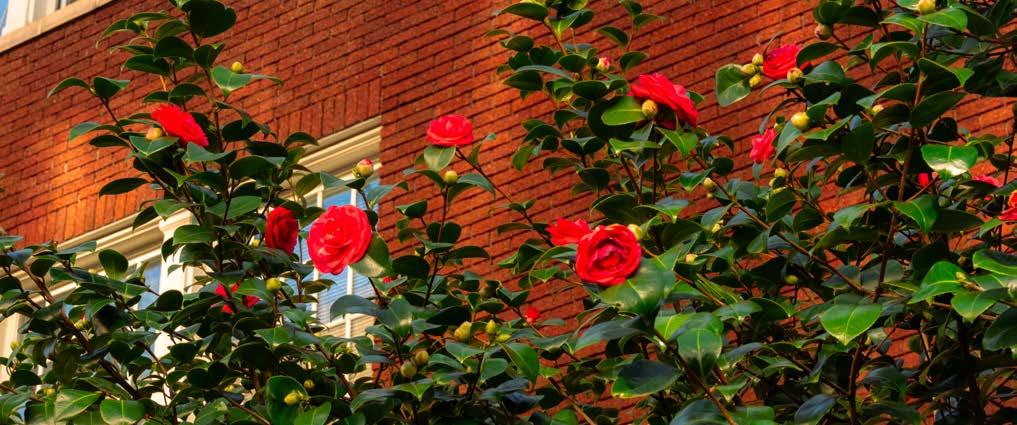
During the Spring 2025 term, Portland State University sent an anonymous survey to all enrolled students, staff and faculty that asked for feedback on the overall campus climate. No identifying information of the participants was shared, but basic demographic information was collected. It asked for information on personal beliefs, perceptions and experiences that impact campus life and climate.
The goal of the survey and its current results isn’t to propose immediate solutions, but to find a baseline as the first step towards future solutions. Going forward, the incoming Chief Diversity Officer (CDO) will use workshops that represent the campus community. These workshops will help to find solutions to problems the survey identified, and establish “clear metrics for improvement,” according to both reports.
Overall, the survey found that the campus climate was generally positive. Of the students who responded to the survey, 69.7% said they felt welcomed on campus, and 79.0% felt welcome in the classroom. The numbers are similar for the question of respect: 77.5% said they felt respected by fellow students, and just over 80% said they felt respected by staff.
The numbers are similar for the staff survey. 77.3% said they felt welcome on campus, and 91.1% said they felt welcome in their department. Additionally, 84.4% said they felt respected by students, and 86.5% said they felt respected by fellow staff members.
However, despite the general respect between staff and students, the same can’t be said for the administration. Only 54.7% of employees who answered said they felt respected by the administration, alongside 55.7% from students. The report labeled this the Administrator Trust Gap.
“17.5% — nearly one in five students — explicitly report not being respected by Administrators. This suggests a disconnect between the student body and the University’s decision-making apparatus. While the ‘frontline’ experience is positive, the ‘bureaucratic’ experience is viewed with skepticism,” according to the student survey report.
“Portland State, like universities across the country, is navigating a period of profound change, and that change strains trust. I am hopeful that as we continue to work together for a brighter future — for students, for each other and for PSU — we will naturally build trust through dialogue and shared goals,” said PSU

Another challenge this survey highlights is comfort of expression at PSU. The survey showed that students tend to feel very comfortable expressing their gender and sexuality, with 77.4% agreeing they are comfortable expressing their gender identity, and 83.3% saying they are comfortable expressing their sexuality.
A gap comes in with expressing political and religious beliefs. 61.2% of students report feeling comfortable expressing their political beliefs, and only 56.1% report feeling comfortable expressing their religious beliefs.
The belief expression gap is true for employees, too.
“Agreement ranged from 17.6% to 54.8%, while a vast number of respondents simply remained ‘Neutral’ (35%–49%) or declined to answer these questions at all (often exceeding 50%),” according to the employee survey report.
“It is troubling to note that 20% of students feel they can’t express their political views. Free speech and civic debate are treasured cornerstones of the educational experience and that should apply to the expression of diverse political perspectives,” says President Cudd in an emailed statement.
The last major finding the student survey report shares is the belonging deficit. According to the student survey, the populations at PSU that currently have the lowest sense of belonging are military-affiliated and disabled students.
“The University’s inclusion efforts appear to be succeeding with LGBTQIA+ populations but may need to be recalibrated to better support the specific needs of veteran and disabled student communities, who report the highest rates of alienation,” according to the student report.
The survey also points out racial disparities in perception of inclusivity. 72.3% of white administrators and 67.1% of white employees viewed PSU as inclusive. On the other hand, only 51.4% of administrators and 47.4% of employees of color viewed it as such.
Accompanying the disparities in perceived inclusivity are additional discrepancies in perceived workload differences among different identity groups. Nearly all administrators with a disability believed their workload was too much, sitting at 91.7%. 78.8% of LGBTQ+ administrators view their workload as too heavy, a rate higher than the administration team as a whole, which sits at 63.9%.

While important to note, the numbers presented may not be representative of the entire community at PSU. Of the 3,961 employees who were sent the form to fill out, only 36% did so. 15,791 invitations to fill out the form were sent to students, and only 11.6% responded. Because of this, results don’t encompass the entire campus population, and solid solutions are harder to pull from the data.
Both surveys ended with open-ended feedback-based questions. Each question had three categories that the answers fell into. Students were asked for any comments or suggestions they had to improve the campus climate, with a total of 642 comments. Respondents’ exact answers are unavailable, so the data is filtered from the report.
The largest category of responses included questions pertaining to the physical safety of the campus, which focuses on “nonaffiliates.” It included building access, security and lighting. The second category was about the ability to express religious or political views, with many people sharing that they felt the campus approved of some beliefs and discouraged others. The last section was mainly disabled students sharing the barriers to accommodations, both physically and through administration.
Though students were only given one open ended question, employees received three. The first question asked how the institution of PSU could further its values. The responses to this varied from “Centering the Student Experience” to “Restoring Trust Through Transparency and Governance” and “Operationalizing Equity,” according to the employee survey report.
The next question posed to employees asked why they had considered leaving PSU. According to the employee survey report, the answer categories for this were “A Crisis of Confidence in Direction,” “The Workload-Burnout Loop,” and “Compensation as a Value Statement.”
Finally, employees were asked where they would like to see PSU living in its values more. The answers in the report were “Unwavering Commitment to the Student Mission,” “Pockets of Authentic Community & Inclusion” and “Collaboration as a Core Value.”
Both the student and employee surveys, along with both reports, are available on PSU’s website . The records report on the data only and do not make interpretations. The next

Emerald Fennell’s adaptation of the gothic romance novel, “Wuthering Heights” by Emily Brontë, premiered in theaters on Feb. 13, which conveniently fell the day before Valentine’s Day. The buildup to this film was filled with excitement and criticism, coming on the heels of her hit movie, “Saltburn.”
When I first learned of an Emerald Fennell version of “Wuthering Heights”, I was dubious about this adaptation, thinking the bar was too high for such a beloved book to be redone by a hype director. However, I found the first half delightfully provocative, electrifying and viscerally horny.
The set and design influences were reminiscent of Baz Luhrmann’s “Romeo and Juliet” mixed with Brad Silberling’s “A Series of Unfortunate Events”. The plot unfurled amongst surreal clifftops with infinitely blowing wind and clouds, creating the perfect moody tension that served as the backdrop for the evolution of Catherine and Heathcliff’s spine-tingling romance/revenge story.
Although taking some liberties with the original plot, Fennell did an excellent job of bottling their young, tormented infatuation with each other. Most crucially, Margot Robbie and Jacob Elordi generate a chemistry so sultry it becomes nearly tangible. Admittedly, I was primed to believe in their adoring dynamic from the smoldering interviews they did together leading up to the film.
Unfortunately, the film stumbles at its midpoint. After building incendiary tension between Robbie and Elordi, Fennell fails to deliver the payoff. Catherine and Heathcliff’s reunion should serve as the emotional climax, but it feels unconvincing and flat. The first-kiss scene nods to “The Notebook’s” iconic rain kiss, but comes across as clunky and jarring, yanking viewers out of
the story at the worst possible moment. Gratuitous, uninspiring soft-core porn follows for almost 30 straight minutes, which was what we were all expecting given the first half of the movie, but Fennell’s team just didn’t pack the lusty punch we were all expecting. Instead, the rest of Catherine and Heathcliff’s love story comes off as rushed and deflated.
Furthermore, critics fault Fennell for whitewashing the character Heathcliff, who is described as “dark-skinned” in the book, by casting Jacob Elordi as the male lead. Additionally, Fennel decided to cast Shazad Latif — who is half Pakistani — in the supporting role as Edgar, despite the explicit notation in Brontë’s book that the character has fair skin and light hair.
At first, this swap felt out of touch, especially for a subversive film-maker like Fennell, but after watching this film, it is clear that every choice she makes is intentional. It’s possible that Fennell wants to avoid contributing to the ongoing bias in media representation of dark-skinned people as monstrous, given that Heathcliff is ultimately portrayed as violent, vengeful and psychologically abusive in the book. In a power structure that favors whiteness, the reputation of a white man on screen is far more resilient than it would be if she cast accurately to the literature.
Although this rendition of Wuthering Heights ultimately crumbled under the weight of its own buildup, it was worth seeing, if not for Emerald Fennell’s strength in pushing the artistic envelope at a time when Hollywood is largely not investing in these types of projects. This, along with Margot Robbie and Jacob Elordi’s addictive synergy — plus one of the best macabre love stories in the Western diaspora — culminates in a naturally captivating film that will be revered as a cult classic, for all its successes and faults.

Jolly’s “The Audio Guide to Happiness (Pt.I)” is true to its name; the metal/rock album is filled with tracks to guide you into happiness. The album starts with “Guidance One,” a short, 54-second track that welcomes you with a calming voice over ethereal music.
This album is about love, loss and grief. “The Pattern” talks about breaking patterns and cycles, saying “only when we carry the weight will we learn to see the pattern to break.” To finish off the first half of the album, “Storytime” asks you why you’re still alive at this moment. It talks about escapism and reminds you to slow down.
“Guidance Two” splits the first and second halves of the album, and is similar to the first track. There’s the same calming voice over ethereal music, yet as the voice counts down to start the second half, screaming starts to overlay it until you can’t hear anything else. The second half of this album is just as intense as the first; this time, it lulls you into a false sense of safety, with many of the songs starting soft and ending more aggressively.
“Where Everything’s Perfect” embodies aggression. Throughout the song, the chords get messier and messier, until at the very end, when the keyboard is slamming out loud, dissonant noises. This is juxtaposed with the final full song in Pt.I of “The Audio Guide to Happiness,” “Dorothy’s Lament.” Its haunting lyrics and soft tone stand out in the album. Despite telling a sad story through loud music, the undertones of recovery are sprinkled throughout the album. “The Audio Guide to Happiness (Pt.I)” by Jolly does exactly as it’s supposed to, laying down the foundation of finding happiness.