
Omar Abdullah's Signature Campaign: Reclaiming Democracy Through the People
Zaheen Sofi
Introduction: A Campaign Beyond Symbolism
The 79th Independence Day at Srinagar’s Bakshi Stadium was meant to be an occasion of patriotic celebration, but Chief Minister Omar Abdullah used it to deliver more than ceremonial speeches. His announcement of an eight-week, door-to-door signature campaign demanding the restoration of Jammu and Kashmir’s statehood instantly shifted the day’s mood from festivities to political debate.
“From today we will use these eight weeks to go door-to-door in all 90 Assembly segments for a signature campaign. If the people are not ready to sign this document, I will accept defeat,” Omar Abdullah declared before thousands.
The message was loud and clear: he was ready to put his political credibility on the line, not in the legislative chambers or behind closed negotiations, but directly in the hands of the people.

Civil Rights Act were achieved.
Even in recent decades, global campaigns like “Save the Internet” or climate change petitions have shown how grassroots mobilization begins with a
Predictably, the announcement triggered a volley of criticism from opposition leaders, clerics, and political commentators. Some termed it a “mockery” of the statehood issue, others dismissed it as an empty “token gesture.” But in my view, these reactions reveal more about the opposition’s insecurity than about the merits of Abdullah’s campaign.
At a time when citizens of Jammu and Kashmir feel politically alienated after the events of 5th August 2019 — when Article 370 was abrogated, statehood revoked, and the region downgraded to a Union Territory — Omar Abdullah has chosen the most democratic, inclusive, and participatory route possible. By knocking on people’s doors and seeking their signatures, he is not just collecting names; he is reviving the very essence of democracy — rule by the people, of the people, for the people.
Why a Signature Campaign Matters
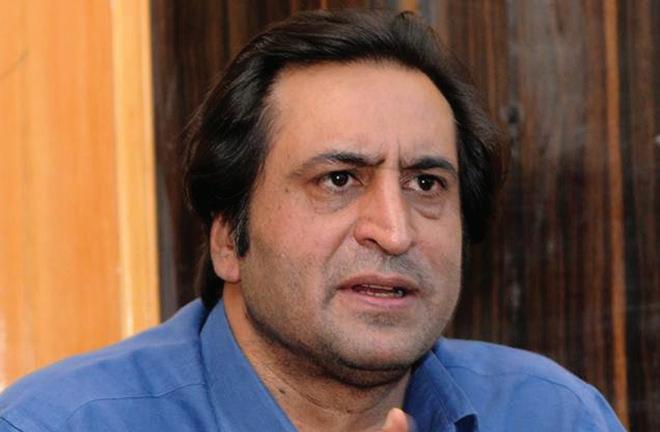
Opponents argue that a signature campaign carries no “legal or constitutional sanctity.” Sajad Lone, President of the People’s Conference, bluntly remarked that statehood cannot be restored through signatures. Technically, he is correct — but politically, he is missing the point.
Movements across history did not begin with constitutional amendments or parliamentary votes. They began with petitions, signatures, protests, slogans, and above all, public will.
The Indian independence movement itself relied heavily on petitions and signature drives sent to the British Parliament long before mass movements gathered momentum. Those documents carried no legal binding force, but they symbolized collective will.
The Civil Rights Movement in the United States used petitions and signature campaigns as stepping stones before legislative reforms like the
simple act — putting one’s name on a demand.
Abdullah’s campaign fits squarely into this tradition. By reaching out to
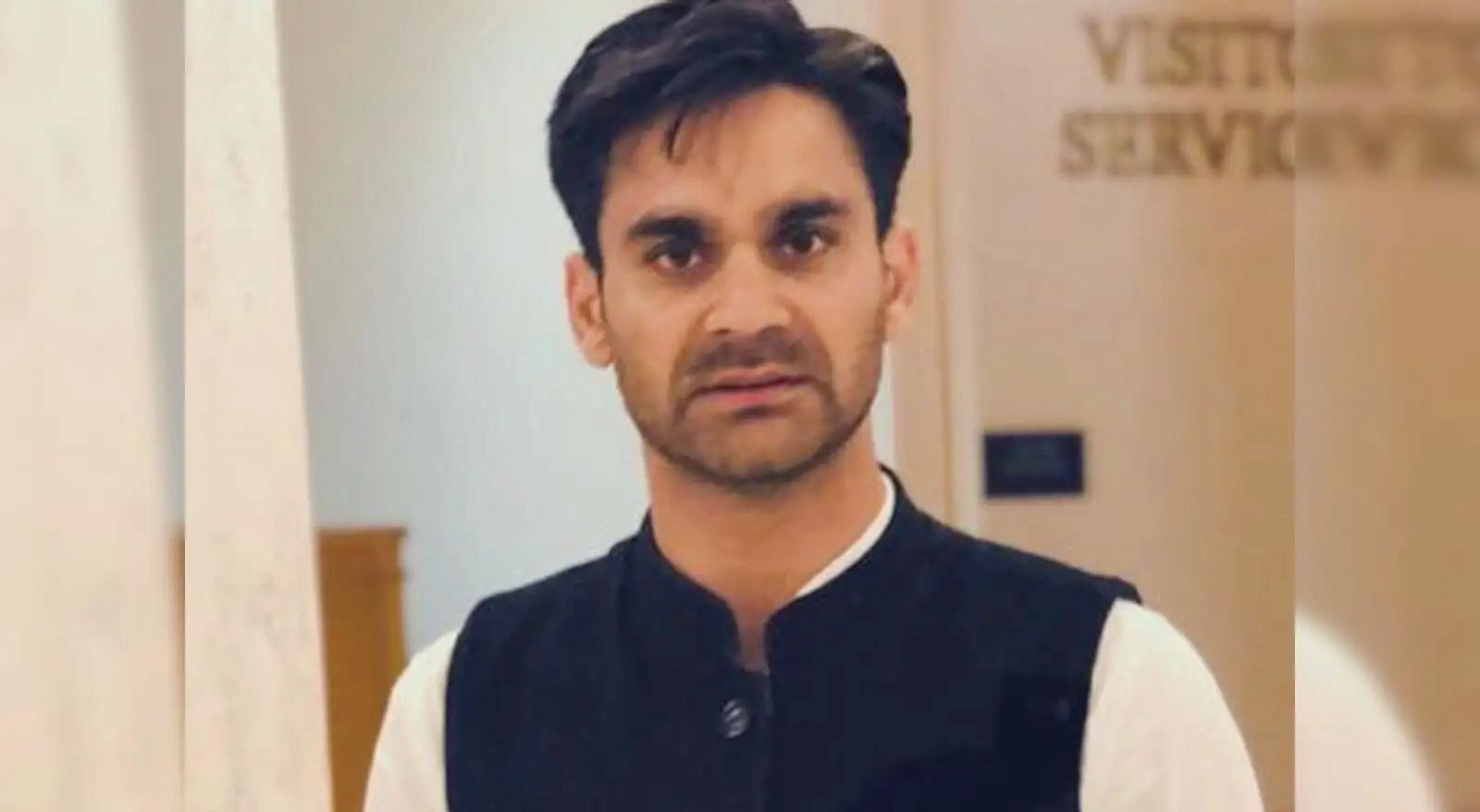
The sharpest criticism came from PDP leader Waheed Para, who accused Omar Abdullah of “betrayal” and “tokenism.” Para argued that Abdullah should apologize for “normalising” the events of 5th August, instead of launching campaigns.
But this criticism collapses under scrutiny. First, Omar Abdullah was among the first mainstream leaders to denounce the abrogation of Article 370 and the revocation of statehood. He spent months in detention precisely because he refused to lend legitimacy to that decision. To accuse him of normalizing 5th August is not only unfair but also historically inaccurate.
Second, the opposition’s logic is selfcontradictory. On one hand, they claim the fight for statehood is too serious to be reduced to a “signature drive.” On the other hand, they accuse Abdullah of doing nothing. When he finally takes an initiative to involve the public, they dismiss it as meaningless. Such inconsistency exposes their discomfort: Abdullah has seized the political narrative, and they are struggling to keep pace.
people across 90 Assembly constituencies, he is turning a passive political conversation into an active, participatory movement. Every signature becomes a political statement, a reaffirmation that the demand for statehood is not confined to political speeches but deeply embedded in the public consciousness.
This is what opposition leaders fail to grasp: the strength of democracy is not in legal documents alone, but in the moral force of public opinion.
Opposition’s Criticism: Hollow and Contradictory
Sajad Lone’s statement that “signature campaigns have no sanctity” is equally shallow. Political sanctity does not arise from procedure alone but from participation. A million signatures, collected door-to-door, represent a mandate far more authentic than parliamentary theatrics or selective press conferences. Lone himself, at several points in his career, has spoken of the need for grassroots engagement. Why then, when Abdullah takes that very step, does he ridicule it? The answer is simple: opposition parties fear being sidelined by a campaign that places the people — not politicians — at the center of the statehood movement.
Leaders’ Skepticism: Missing the
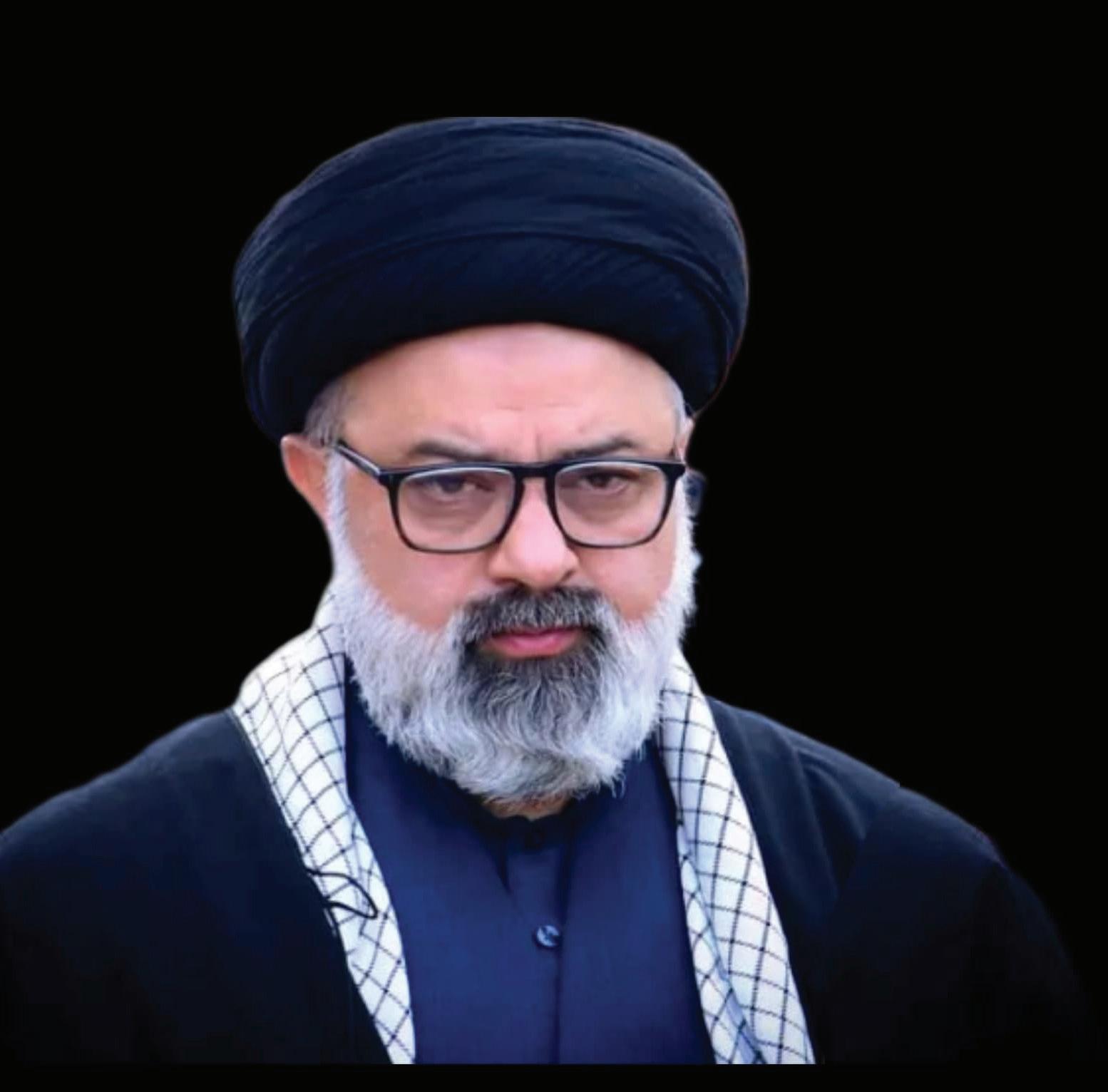
Prominent cleric Aga Syed Mohammad Hadi argued that campaigns can-
leaning, becomes part of a collective voice.
Why Opposition
Should Rethink Its Stand
By ridiculing Abdullah’s effort, the opposition risks alienating the very people they seek to represent. Citizens are tired of politicians trading accusations while offering no concrete roadmap. Whether statehood is restored tomorrow or years later, the real battle is for hearts and minds — and that battle is best fought through grassroots initiatives like Abdullah’s.
Instead of dismissing the campaign, opposition leaders could have joined hands, strengthening the collective voice for statehood. Their refusal to do so exposes political opportunism: they are more concerned with discrediting Abdullah than with advancing the cause.
The Road Ahead:
Challenges and Possibilities
Of course, the campaign faces challenges. Cynicism is high. People have been promised much and delivered little. Signature drives, unless followed by organized political pressure, risk fizzling out. But every great movement
not replace “meaningful political action.” True, signatures alone cannot restore statehood. But Abdullah is not claiming that they can. He is laying the groundwork for political action by first building public consensus.
In fact, one of the biggest challenges in Jammu and Kashmir has been the disconnect between political leadership and ordinary citizens. By starting with signatures, Abdullah is addressing that very gap. Clerical skepticism, while understandable, risks overlooking the symbolic and practical importance of reconnecting politics to the grassroots.
Appreciating Abdullah’s Vision
What sets Omar Abdullah’s initiative apart is not just the act of collecting signatures but the vision behind it.
Democratic Accountability: By saying “If people do not sign, I will accept defeat,” Abdullah has put his leadership on trial before the people. This is rare in today’s politics, where most leaders hide behind rhetoric, alliances, or bureaucratic procedures. Abdullah is placing the ultimate verdict in the hands of ordinary citizens.
Grassroots Mobilization: A campaign spread across all 90 constituencies ensures inclusivity. Every village, town, and city becomes part of the political process. This prevents the cause of statehood from being monopolized by elites or confined to press statements.
Reigniting Political Discourse: Since 2019, political debate in J&K has been stifled, often replaced by cynicism and silence. Abdullah’s campaign forces conversations in homes, tea shops, and public spaces, reawakening a sense of agency among citizens.
Symbolism of Unity: In a region fractured by political, religious, and ideological divides, a signature campaign is one of the few tools that cuts across boundaries. Every name on the petition, regardless of caste, creed, or political
begins with a first step, and Abdullah has taken it.
If he succeeds in mobilizing hundreds of thousands of signatures, the campaign can evolve into:
A moral mandate impossible for Delhi to ignore.
A platform for broader coalitionbuilding among parties and civil society.
A blueprint for future political action — protests, delegations, and policy negotiations.
Even if the campaign does not immediately restore statehood, it will have achieved something invaluable: reawakening democratic participation and making the issue a lived, collective demand rather than a distant political slogan.
Conclusion: A Courageous Step
Omar Abdullah’s signature campaign may appear modest, but it is precisely this modesty that gives it power. While opposition leaders indulge in cynicism and clerics in skepticism, Abdullah has dared to return politics to the people. He has shown faith in citizens at a time when many feel powerless.
This is not tokenism. This is not betrayal. This is democracy in action.
The opposition’s arguments collapse when weighed against the campaign’s democratic spirit. Instead of denouncing the initiative, they should recognize that Abdullah’s vision represents the only credible way forward — a politics rooted not in elite bargaining but in popular will.
If Jammu and Kashmir is to reclaim its statehood, it will not happen through words alone. It will require the voices, signatures, and determination of its people. Omar Abdullah has opened that door. Whether others choose to walk through it with him will define the future of the Valley.
Religious
Larger Vision
UNITED TIMES SPECIAL EDITION
Kishtwar Cloudburst: Why It Happened and What It Means for the Future
zaheen sofi
Introduction: A Night of Terror in Chasoti
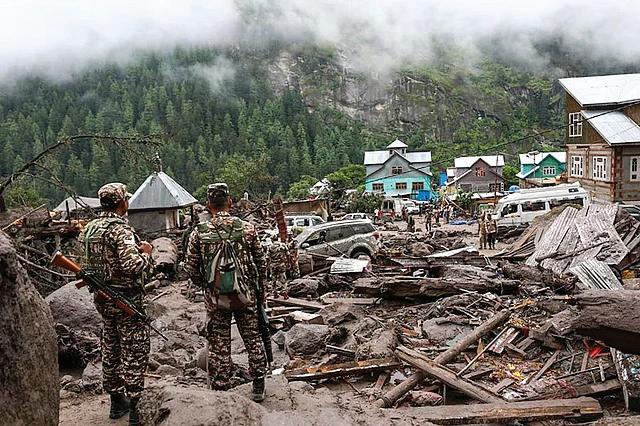
The morning of the cloudburst in Kishtwar’s Chasoti village will be remembered as one of the darkest chapters in the region’s recent history. In a matter of minutes, torrential rain transformed into a raging wall of water and debris, swallowing homes, shops, and people in its path. More than three dozen lives were lost, hundreds were reported missing, and countless families were left with nothing but fragments of their past.
What made the tragedy worse was its suddenness. Survivors recall hearing a roar in the mountains, followed by a deluge that crashed through the valley. Within minutes, everything familiar was gone.
Yet beyond the grief and devastation, the Kishtwar disaster also forces us to ask: Why did it happen? Could it have been prevented? And what must be done to protect vulnerable Himalayan communities from such calamities in the future?
This article, based on eyewitness accounts, expert insights, government responses, and public voices, attempts to answer those questions.
Eyewitness Narratives: “We Thought the World Was Ending”
For the residents of Chasoti, the night began like any other monsoon evening. Families were cooking dinner, yatris (pilgrims) were resting after their journey, and children were playing in courtyards dampened by earlier rain.
Then came the sound.
“It was like the mountains were collapsing on us,” recalls Abdul Rashid, a farmer who lost his wife and daughter in the flood. “We heard a roar, louder than thunder. Before we could even understand, the water came rushing with stones and mud. We ran, but it was too late.”
Another villager, Shazia Begum, describes clinging to a tree for hours while her home was washed away.
“I shouted for my children, but my voice drowned in the noise. I don’t know how I survived. I watched everything we owned disappear in front of my eyes.”
A group of yatris who had set up camp near the stream narrated how their tents were torn apart within seconds.
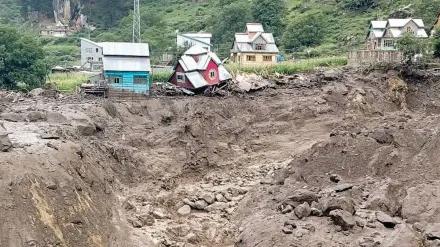
and damage to footbridges that connected them to markets and schools. For many, survival has come at the cost of livelihood.
Ground Reality: Fragile Villages on the Edge
Chasoti is a small village nestled in a narrow valley of Kishtwar district. Like many Himalayan settlements, it lies close to rivers and streams that are both life-givers and threats. The slopes are steep, the soil is loose, and the forests that once held the land together have been thinned by years of deforestation and stone quarrying.
Locals say warnings had come before, though in whispers. Seasonal floods had already damaged parts of the village in the past decade. Yet no relocation plan, no dedicated weather station, and no disaster-preparedness drills were ever put in place.
“We live with danger every day,” admits Mohammad Iqbal, a schoolteacher from the area. “But we trust that nature will be kind. This time, nature was not.”
Expert Analysis: Why Did the Cloudburst Happen?
Meteorologists explain that the Himalayan belt is uniquely vulnerable to sudden cloudbursts. The steep mountains trap moisture-laden monsoon clouds. When warm, humid air rises
can hold more moisture. When that moisture is suddenly released, it results in catastrophic rainfall.”
Another expert, Prof. Arvind Kaul of Jammu University, highlights the lack of localized monitoring:
“District-level rainfall records may show only 5 mm, but satellite images reveal heavy, concentrated downpours. Without ground-based sensors in villages like Chasoti, there is no way to issue real-time alerts. People are caught unaware.”
Climate Change and Human Factors
The Kishtwar cloudburst cannot be seen as just a natural disaster. Human activity has magnified its impact.
Unregulated construction, encroachment on riverbeds, and unscientific road building have destabilized slopes. Deforestation has reduced the soil’s ability to absorb water. Quarrying and mining have further weakened natural barriers.
“We are making the mountains hollow,” says environmentalist Sunita Narain. “Every road cut without care, every tree felled, increases the risk of landslides and floods. Nature’s fury combines with human negligence to create disasters of this scale.”
Government Response: Rescue, Relief, and Criticism
“We were warned not to stay close to the water, but the land seemed safe,” says Vivek Sharma, one of the pilgrims.
“When the cloudburst hit, it was as if the river turned into a monster. People were swept away in front of us. We ran uphill and somehow survived.”
The scale of loss is still being counted. Villages downstream reported missing cattle, washed-away crops,
rapidly and cools, it releases concentrated rainfall in a very short period — sometimes more than 100 mm within an hour.
Dr. Meera Krishnan, a climate scientist at the Indian Institute of Tropical Meteorology, explains: “Cloudbursts are not new to the Himalayas, but their frequency and intensity have increased. Rising global temperatures mean the atmosphere
In the hours after the cloudburst, rescue teams from the State Disaster Response Force (SDRF), Army, and local police rushed to Chasoti. Helicopters airlifted the injured, while volunteers pulled survivors from rubble with bare hands.
The government announced exgratia relief of ₹5 lakh for families of the deceased and ₹50,000 for the injured. Temporary camps were set up in schools,
and food packets were distributed.
Chief Minister Omar Abdullah expressed grief, stating:
“This is a tragedy that has shaken us all. The government will do everything possible to support the victims and ensure such incidents are minimized in the future.”
Yet criticism soon followed. Locals questioned why no early-warning system was installed despite repeated cloudburst incidents in the region. Opposition parties accused the government of ignoring hazard mapping and permitting unchecked construction.
“We keep losing lives every monsoon, yet no lessons are learned,” argued opposition leader Tanvir Sadiq. “Relief after disaster is not enough. Prevention is what people demand.”
Public Response: Anger, Grief, and Resilience
Across Jammu and Kashmir, the tragedy sparked a wave of grief and solidarity. Social organizations launched donation drives, students organized blood camps, and Kashmiri diaspora groups abroad raised funds for relief.
At the same time, anger brewed. Social media was flooded with questions about why villages remained so unprepared. Hashtags like #KishtwarCloudburst and #SaveTheHimalayas trended for days.
Villagers themselves, though broken, showed remarkable resilience. Survivors worked shoulder-to-shoulder with rescuers. Women cooked for displaced families. Farmers, though having lost their cattle, helped rebuild broken pathways.
“We cannot wait for the government alone. We must help each other,” said Rukhsana Bano, who sheltered five displaced families in her half-broken home.
Lessons Learned: What Experts Recommend
Experts emphasize that cloudbursts cannot be prevented, but their impact can be drastically reduced through preparedness. Key recommendations include:
Install Local Weather Stations: Real-time data can trigger alarms and sirens, saving lives.
Regulate Construction: No camps or houses should be built near rivers or unstable slopes.
Strengthen Infrastructure: Build resilient bridges, flood shelters, and drainage systems.
Conduct Mock Drills: Train villagers
and yatris on evacuation routes.
Environmental Protection: Reforest slopes, manage watersheds, and regulate mining.
Comparisons with Past Cloudbursts
The Kishtwar disaster echoes past Himalayan tragedies. In Leh (2010), a cloudburst killed over 200 people. In Uttarakhand (2013), floods triggered by cloudbursts and glacial melts devastated Kedarnath. Just last year, Amarnath Yatra (2022) faced a deadly flash flood due to similar conditions.
Each time, lessons were promised but not fully implemented. Experts warn that unless policies shift from reaction to prevention, such tragedies will keep repeating.
The Way Forward: Balancing Development and Safety
Kishtwar’s tragedy raises a larger debate: how can development in fragile Himalayan regions balance with environmental safety? Roads, hydropower projects, and tourism bring jobs and connectivity, but they also increase vulnerability.
Dr. Ritwik Sen, a disaster management specialist, argues:
“We need smart development — roads that are scientifically engineered, tourism that respects carrying capacity, and energy projects that account for seismic and hydrological risks. Otherwise, the cost of growth will be human lives.”
Community participation is key. Villagers must be involved in hazard mapping, shelter planning, and awareness campaigns. Technology, from mobile apps to siren towers, can bridge gaps between experts and locals.
Conclusion: Respecting Nature’s Limits
The Kishtwar cloudburst was a tragedy born of both natural fury and human negligence. While the Himalayas will always remain prone to sudden cloudbursts, the scale of loss can be reduced if warnings are heeded, infrastructure is planned scientifically, and communities are empowered to respond.
As Abdul Rashid, the grieving farmer, said quietly while staring at the ruins of his home:
“We cannot fight the mountains, but maybe we can learn to live with them.”
The future of Himalayan communities depends on whether we learn that lesson.
UNITED TIMES SPECIAL EDITION
MOVIE REVIEW: Saiyyara - A Stellar Debut For Kashmiri Talent Faheem Abdullah
A BREATH OF FRESH AIR IN INDIAN CINEMA
Every once in a while, a film arrives quietly and leaves audiences spellbound. Saiyyara, the latest release making ripples across theatres and OTT discussions, is one such film. It isn’t backed by massive marketing budgets or starstudded promotions. Instead, it relies on what cinema at its core is meant to deliver — a compelling story, sincere performances, and an emotional connection with the audience.
What sets Saiyyara apart is not only its heartfelt storytelling but also the remarkable debut of Kashmiri actor Faheem Abdullah, whose name is now on everyone’s lips. In a cinematic landscape often dominated by big production houses, the rise of a young Kashmiri artist has injected a refreshing sense of authenticity and hope into Indian cinema.
The Story: Simple Yet Striking
At its heart, Saiyyara is a story of love, loss, and resilience. It doesn’t chase complicated plot twists or over-the-top action. Instead, it focuses on the delicate fabric of human emotions. The protagonist’s journey reflects universal struggles — the pain of losing loved ones, the courage to rebuild life, and the discovery of self-worth amidst adversity.
The screenplay strikes a careful balance: engaging enough to keep commercial audiences entertained, yet sensitive enough to touch those who watch cinema for depth and meaning.
One of the film’s most memorable qualities is its pacing. Unlike typical masala entertainers, Saiyyara takes its time to breathe — allowing characters to grow, silences to speak, and emotions to unfold naturally. This is cinema that values artistry over formula.
Faheem Abdullah:
Kashmir’s New Shining Star
The talk of the town, however, is Faheem Abdullah’s debut performance. In a role that demanded both vulnerability and strength, Faheem displays the rare ability to appear effortless on screen. His body language is fluid, his dialogue delivery resonates with sincerity, and his eyes carry a depth that instantly connects with viewers.
Audience reviews on social media are glowing with admiration:
“Faheem Abdullah is the discovery of the year. His performance is raw, pure, and unforgettable,” tweeted one viewer after watching the film’s premiere.
A college student in Srinagar told us outside a packed cinema hall: “For the first time, I saw someone who looks like us, speaks like us, and represents Kashmir on the big screen with such dignity. It feels like we all won today.”
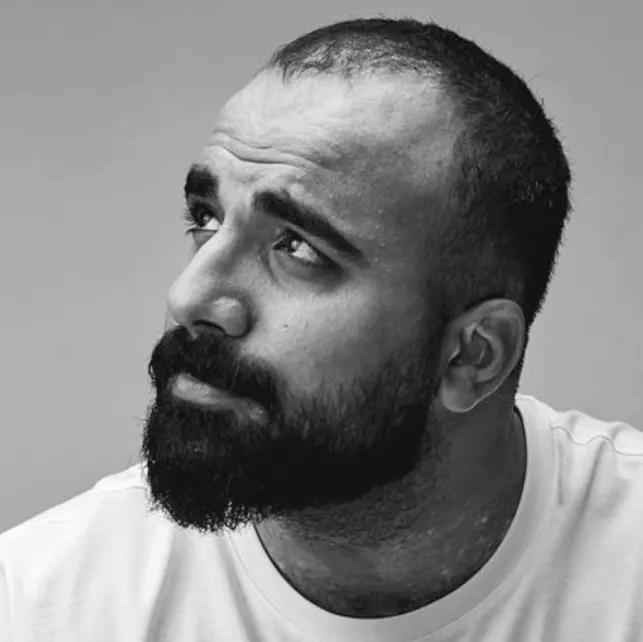
Film critics too have echoed similar sentiments. A review in a leading entertainment daily called him “a debutant with the maturity of a seasoned actor”, while another noted: “Abdullah brings honesty to the screen that Bollywood has been missing.”
For young Kashmiris, Faheem is quickly becoming more than just an actor — he is a symbol of possibility. His rise is proof that with passion and perseverance, talent from the Valley can shine at the national and even international stage.
Cinematic Craft: Visuals, Music, and Direction
While performances anchor Saiyyara, the film’s technical finesse cannot be ignored. The cinematography captures
landscapes in a way that feels both intimate and expansive. Frames of snow-capped valleys, rain-drenched streets, and dusky skylines aren’t just backdrops — they are characters in themselves, breathing life into the narrative.
The music, composed with a mix of soulful Kashmiri influences and contemporary beats, lingers long after the credits roll. The title track has already become a hit on streaming platforms, and audiences are humming it outside cinema halls.
The director deserves praise for weaving all these elements together without losing focus on the story. Every creative choice — from the camera’s lingering gaze to the restraint in emotional outbursts — reflects a team committed to cinema as an art form, not

just a product.
Public Response: Kashmir Speaks
The excitement in Jammu and Kashmir surrounding Saiyyara is palpable. In Srinagar, theatres reported house-full shows for an entire weekend, a rare occurrence for a regional film competing against Bollywood big releases.
Public opinion is overwhelmingly positive. Outside a local theatre, we met Farhana, a schoolteacher, who said:
“I brought my students to watch this film because I want them to see what dreams can look like. Faheem Abdullah showed us that our children can go beyond boundaries if given the chance.”
In Kishtwar, a group of youngsters organized a community screening, decorating the venue with Kashmiri shawls and traditional artwork. “We wanted to celebrate one of our own,” said Sameer Wani, one of the organizers.
Even outside Kashmir, audiences are praising the film’s honesty. A Mumbai-based cinephile wrote on Instagram: “Finally, a film that tells a story without over-glamourizing it. Saiyyara proves regional talent deserves the spotlight.”
Why This Film Matters Beyond Cinema
The significance of Saiyyara goes beyond its box-office numbers or cinematic craft. For Kashmir, it marks a
cultural milestone. It challenges stereotypes, giving the world a glimpse of Kashmiri youth not through headlines of conflict, but through the lens of creativity, art, and resilience.
The success of Faheem Abdullah serves as a motivational spark for countless young dreamers in the Valley who wish to enter acting, music, or filmmaking. Representation matters — and Saiyyara delivers it with grace.
As a cultural critic observed:
“In an industry where Kashmiri stories are often told by outsiders, Saiyyara feels like a homegrown voice. Its success could be the beginning of a new cinematic wave from the Valley.”
Final Verdict: A Star Is Born
Saiyyara is more than just a film; it is a statement. It reminds audiences of the power of heartfelt storytelling while showcasing how regional talent can enrich Indian cinema. For Faheem Abdullah, the road ahead looks promising. If his debut is anything to go by, he is not just a rising star — he could become one of the defining actors of his generation. For the audience, the message is clear: cinema that dares to be honest will always find its way to people’s hearts. And in Saiyyara, honesty shines through every frame.
As the curtains fall and the audience steps out, one thing echoes in conversations, on social media, and in the collective mood: Kashmir has given India its next big star.