Updated undergraduate room draw system launching this semester, lays out guidelines for Spelman draw
By Luke Grippo & Nika Schindler Head News Editor & Assistant News Editor
An updated version of the University’s undergraduate room draw system will launch next month, enabling more efficient group dynamics and offering new features such as 360-degree images of certain rooms, a mobile-friendly platform, and an available rooms list that updates in real time.
“We are very excited about [the new system] because it
presents a much better and much more simplified approach to our room selection process, which we know is very stressful for students,”
Dorian Johnson, executive director of housing, said in a meeting with housing administrators and The Daily Princetonian.
Room draw is the annual process by which undergraduate students who intend to live on campus the next academic year select their rooms.
For this upcoming cycle, the
University’s previous housing system, CBORD, will be replaced with StarRez, a new mobile-friendly platform that is widely used by Princeton’s peer institutions, including Columbia, Harvard, Yale, and Georgetown.
Under the new system, the room draw process will be divided into three distinct phases: application, group formation, and room selection. This is a departure from the previous application and
See ROOM DRAW page 4
IN TOWN
By Oliver Wu
Assistant News Editor
On Friday, Mercer County Superior Court Judge Robert Lougy issued a decision approving the Municipality of Princeton’s Fourth Round Housing Element and Fair Share Plan, also known as the Fourth Round Plan. The plan has been the subject of two contentious challenges from local residents who oppose the development of a proposed 238-unit apart-
ment complex near Stockton Street, on the Princeton Theological Seminary’s former Tennent Roberts campus.
Both challenges were dismissed by the court, but efforts to oppose the development continue. “This is not over by any means,” said University history professor Sean Wilentz, one of the challengers, in an interview with The Daily Princetonian.
The municipality announced See LOCAL page 4
VALENTINE’S DAY SPURS CREATIVITY; STUDENTS PURCHASE VARIETY OF GIFTS
FEBRUARY 14, 1928
Opinion Boycott the U-Store
By Isaac Barsoum Associate Opinion Editor
Remember that lifetime membership you paid $35 for at the Princeton University Store (U-Store)? To get your money’s worth, you may want to consider buying the Princeton Custom Made Comfort Blanket for $283.50 (down from $315).
That’s because on Feb. 10, the U-Store functionally ended its membership benefits: members no longer receive a 10 percent discount on food, cleaning supplies, or other staples. Instead, the discount now only applies to Princeton-branded merchandise, like mugs or t-shirts. No longer will drunk students on a night out be able to acquire snacks and rehydrating drinks at a lower price — and generations of future Daily Princetonian writers will have 10 percent fewer snacks in the newsroom.
The purchase of the lifetime membership came accompanied by the promise of lifetime discounts — and, for that matter, self checkout — but neither of those promises has been kept. The
U-Store ought to issue a full refund to all those on the receiving end of these egregious changes. Until then, we must boycott it to force its hand.
So why did we buy the membership anyway? The U-Store, for many years, has sold its business model as a way to “[give] discounts to its members” rather than “paying dividends to Wall Street shareholders.” Instead, the UStore passes the burden of its business model onto non-members, charging exorbitantly high prices while claiming that it redistributes its profits to members through the discount.
And prices at the UStore, particularly for food, are indeed outrageous. For example, a ‘Prince’ analysis found that flour and potato chips at the U-Store each cost about 2.5 times as much per unit as the next-most-expensive alternative. Overall, “grocery shopping at the UStore is, on average, more expensive than grocery shopping at large chain supermarkets.” See U-STORE page 9
Altman earns Princeton Community Democratic Organization endorsement following packed candidate forum
By Oliver Wu Assistant News Editor
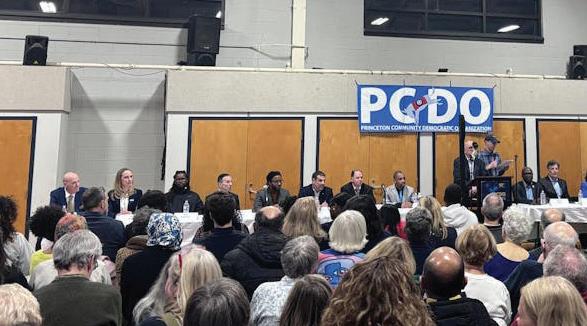
After a packed forum on Sunday night hosted by the Princeton Community Democratic Organization (PCDO), candidate Sue Altman won the group’s endorsement. Over 200 people attended the event at the Suzanne Patterson Center in Princeton to hear from all 17 declared Democratic candidates in the N.J.-12 Congressional race.
The N.J.-12 seat is open in the 2026 midterms race after longtime Democratic Rep. Bonnie Watson Coleman announced she would not seek reelection last year.
153 ballots were cast by PCDO members at the event, according to PCDO President Jeffrey Oakman. Voters could rank up to all 17 candidates. After the top candidate on each ballot was counted, Altman had the most first-round votes, with 55. Adam Hamawy came in second with 29. As the top two candidates, Altman and Hamawy moved on to a runoff round based on the ranked ballot. Voters who ranked Altman before Hamawy had their votes go towards Altman, and vice versa, as long as they had ranked at least one of the two. After the runoff round, Altman won the endorsement with 65.3 percent of the vote, according to Oakman.
During the candidate forum, moderated by political columnist Charles Stile, the candidates were split alphabetically into two groups. The groups were asked separate sets of questions. Candidates discussed issues including Medicare for All, climate change, limiting aid to Israel, federal immigration enforcement, and holding the Trump administration accountable.
Three candidates in the first group — Kyle Little, Hamawy, and Mike Anderson — explicitly referred to Israel’s actions in Gaza as a “genocide” when asked whether the United States should place conditions
This Week In History
This Week in History, we remember when postmen stumbled into The Daily Princetonian newsroom on Valentine’s Day in 1928, succumbing to the weight of all the love letters sent by Princeton men. Today, Princetonians send their affections in more unconventional ways, using student initiatives to celebrate the day.
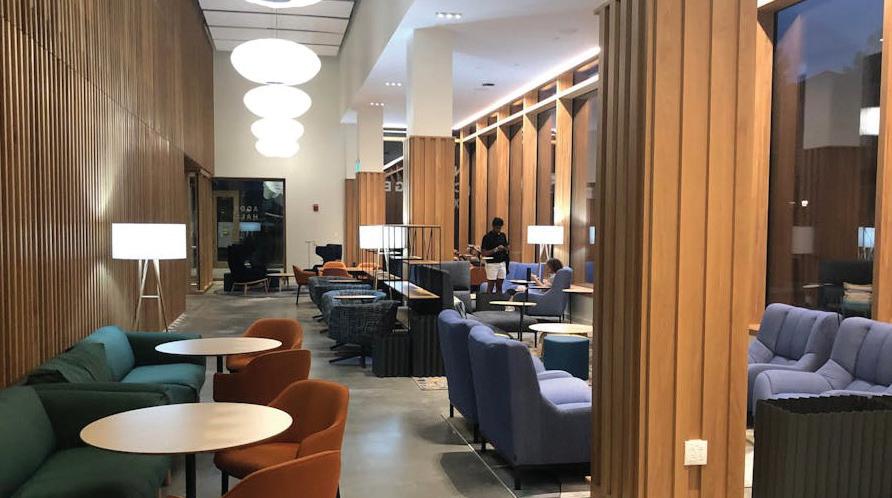
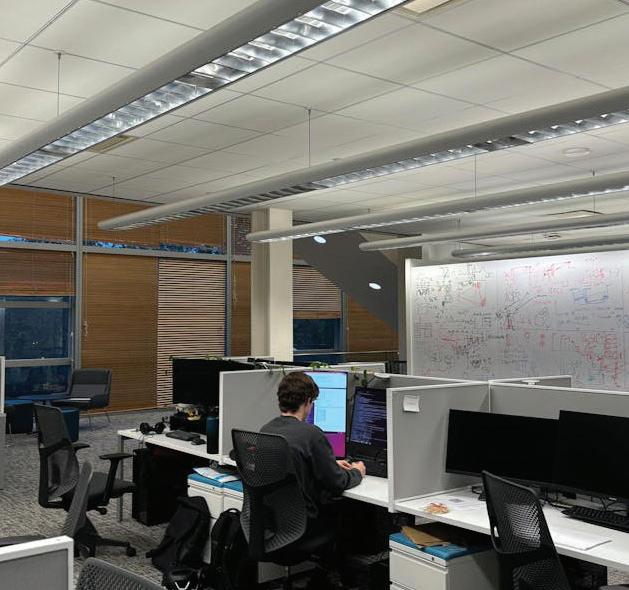
ZACHARIAH SIPPY / THE DAILY PRINCETONIAN Common space within New College West.
New Princeton Plasma Physics Laboratory AI platform aims to improve lab efficiency and lower costs
By Benedict Hooper Staff News Writer
The U.S. Department of Energy’s Princeton Plasma Physics Laboratory is developing a new project which aims to use AI to expedite fusion energy research.
Shantenu Jha, the head of PPPL’s Computational Sciences Department, told The Daily Princetonian in an interview that the platform is anticipated for full launch in 2027.
PPPL, which is managed by Princeton University, labeled the project STELLAR-AI, which stands for Simulation, Technology, and Experiment Leveraging Learning-Accelerated Research enabled by AI. They predict that the platform will lower costs and improve experiment efficiency.
The STELLAR-AI platform comes as part of the DOE’s Genesis Mission to use AI to accelerate scientific research, according to a Jan. 22 press release. The tool will help run and analyze high-level simulations of fusion energy experiments, primarily with the National Spherical Torus Experiment-Upgrade, the largest device of its kind in the U.S. that can generate controlled nuclear fusion.
In an interview with the ‘Prince,’ Jha expanded upon how a program like STELLAR-AI will advance the progress of fusion energy research, as well as the potential benefits of AI-powered experiments.
Jha emphasized that STELLAR-AI has two precise goals in its application in PPPL experiments: quick analysis of current data, and complex simulations of future experiments.
“STELLAR-AI is going to advance the simulation capabilities, as well as the ability to do better experiments by providing machine learning analysis of the data … and ultimately bringing these two strands together,” Jha said.
While advanced hardware like DOE supercomputers developed through the Genesis Mission already exist, the central idea behind STELLAR-AI is that it is a platform that can provide the high-fidelity coding software needed to perform high-level simulations and analyses.
“We’re already optimizing the computational codes that will run on STELLAR-AI once it lands … we’re using very similar hardware [to Nvidia] to try to optimize the code,” Jha explained.
STELLAR-AI will be used to minimize operational costs while at the same time optimizing research capabilities. Jha explained that experimental results in a field like plasma physics are extremely variable, meaning that accuracy and repeatability are essential in order to quickly figure out potential problems in an experiment.
“STELLAR-AI is helping us build the methods and the AI models that find the
balance between accuracy and computational cost,” Jha said.
The main way that PPPL proposes to practically institute these cost-saving and accuracy measures is through the optimized creation of “digital twins.” A “digital twin” is a computational copy of a real-life experiment used to develop accurate simulations with various outcomes. The simulation is used to develop more accurate experiments and lowers the cost of running experiments by removing confounding
variables and experimental issues after “digital twin” simulations are performed. “Digital twins” will be used for the NSTX-U to run experiments in a computer model of the machine without having to actually use a machine with significant costs.
Jha expanded on this, saying, “You can do many high throughput experiments on your digital twin, which you couldn’t do in the real experiment, because it takes time to start up, boot up and then tear down an experiment.”
For Jha, STELLAR-AI represents a major shift in fusion energy research. “We’re designing STELLAR-AI for both the computation and the experiments. And this may be the first time supercomputers have been designed this way,” Jha said.
Benedict Hooper is a staff News writer for the ‘Prince’. He is from Greenwich, CT and can be reached at bh3193[at] princeton.edu.
Students and professors express enthusiasm for new linguistics major
By Elizabeth Hu Staff News Writer
Princeton will now offer a Linguistics major in lieu of the current Independent Major option, allowing the Class of 2028 and beyond to declare a major in linguistics. The proposal was formally approved at the faculty meeting on Monday, Feb. 2.
Prior to this change, students interested in linguistics could apply to the Independent Major in Linguistics Program. Unlike other independent majors, which require students to develop their own program, the linguistics program had an established, standardized curriculum.
The linguistics program has been running its independent major under a standardized curriculum for eight years, according to Laura Kalin, associate professor of linguistics and associate director of the Program in Linguistics. Since Kalin came to Princeton in 2016, she has been working towards turning the Independent Major in Linguistics into a formal major.
“Princeton takes very seriously changes to its undergraduate curriculum, so everything is very carefully thought out and planned. They give everything time to work all the bugs out and
to see if there is really enough student interest in this to justify this change,” Kalin told The Daily Princetonian.
The Program in Linguistics was housed under the Council of the Humanities but moved to the Social Sciences Academic Division in the fall, which gave it the freedom to independently hire faculty and manage its financial chartstring. The Linguistics major will be the only major at the University that is housed by a program instead of a department, school, or institute.
Professors and students are hopeful about establishing new independent work courses, being able to internally administer the program, and increasing the program’s visibility.
One of the biggest drawbacks for students considering the linguistics program was the legitimacy of their degree.
“From an international perspective, people are quite worried about the employability of an independent major in linguistics, as opposed to just a linguistics major,” said Caitlin Hodge ’27, a linguistics independent major and international student from New Zealand.
Currently, there is only one senior with an independent major in linguistics. The linguistics
program is still awaiting confirmation that the current senior will be able to switch to the official Linguistics major, but Kalin said she believes the five juniors majoring in linguistics will likely be able to have “Linguistics” on their diploma.
“We’re excited to not have ‘Independent’ on our diploma and have ‘Linguistics,’” linguistics independent major Ellie Noland ’27 told the ‘Prince.’
“This vote only just happened, and there’s just an amount of stuff that we have had to do to actually fully launch, so there are a lot of things to figure out,” Kalin said. “It’s a little tricky, and we trust the University to figure this out in the best way possible, and we advocate for what our students want to the best extent possible.”
When declaring an independent major in Linguistics, students had to complete an application process, which involved meeting with the director of undergraduate studies for linguistics and submitting a list of courses they planned to count toward the major.
“The application itself is not very tedious, but going out of your way to inquire for details about the application and to commit yourself to that process so early on … it has a high activa-
tion energy,” prospective linguistics major Angela Hou ’28 told the ‘Prince.’
“The main thing is, most people don’t know linguistics is an option … Maybe they took LIN 201 back in freshman year. But most people don’t even know what linguistics is, much less whether they would like it,” Noland said.
Because the program has been established for some time, Kalin says that the major’s curriculum works “really well” and will not change for both current and prospective majors. She also says she hopes to preserve the close-knit culture of the program.
“We get together for good meals. All the students know about the independent research that all the other students are doing, and all the faculty know about all the students … It feels like a family to us, and we very much want to keep that experience going, even though we become, hopefully, a little bit of a bigger community,” Kalin said.
Given the rise of artificial intelligence and large language models, many students — particularly math and computer science students — have started exploring linguistics classes, according to Kalin, which helped sustain and increase interest in the program over the years.
In the past, the lack of an established major has proved to be a deterrent to both current and prospective Princeton students interested in linguistics.
“When I originally came into Princeton, I wanted to major in linguistics and study linguistics, because that’s my passion. It’s the thing that I love the most in life. But there was no official major here… [so] I settled on computer science, intending to use language or use technology to facilitate work with language,” Hou said.
“One of the reasons I almost didn’t apply to Princeton was because [linguistics] wasn’t real, but I’m glad I did, because it’s a great program. I’m now very happy that we’re going to be legit,” Noland said.
Students and professors hope more undergraduates will be encouraged to declare a major in linguistics.
“New language is getting invented all the time,” Hodge said. “I feel like [linguistics] is something really worth studying, and so I hope more people are able to major in it.”
Elizabeth Hu is a staff News writer, assistant head Copy editor, associate Data editor, and staff Podcast producer from Houston.
ON CAMPUS
PHOTO CREDIT: ELLE STARKMAN / PPPL COMMUNICATIONS The Princeton Plasma Physics Laboratory.
Newlin: ‘I am shocked and flabbergasted, but very pleased, with the level of talent, the level of diversity, the level of commitment, and the level of advocacy.’
on military aid to Israel.
Candidate Elijah Dixon went further than opposing offensive military aid to Israel. He specified that he wants “no dollars, offensive, defensive, not a single red penny going to Israel.” Anderson drew a connection between the experiences of people in Gaza and Black people in the United States. “We’ve been in a genocide right here in New Jersey, and we need to call it what it is,” Anderson said.
In a response that exceeded her allotted time by over 30 seconds, Altman offered that “members of Netanyahu’s cabinet have shown genocidal intent,” and supported holding aid to Israel to the “same level of scrutiny” as other countries. Later, during her closing remarks, Altman clarified that she would support and cosponsor the Block the Bombs Act, which prohibits a wide range of weapons from being provided to Israel.
Candidate Brad Cohen, however, defended Israel. “I believe that Israel has the right to defend itself and that, as a U.S. ally in a very difficult and conflict-laden region of the world, we should not limit aid to that country,” Cohen said.
In response to a question about Immigration and Customs Enforcement (ICE), candidate Sam Wang labeled the situations in Gaza, Sudan, and Ukraine as “genocide,” seemingly a reversal from his prior refusal to affirm the statement that “Israel has committed genocide in Gaza” at a Feb. 8 Council on American-Islamic Relations (CAIR) forum. Wang is a neuroscience professor at the University.
“My position has not changed. However, [the CAIR] forum asked a yes/no answer, and as an academic, my reaction was that I wanted to give a longer answer,” Wang wrote in a statement to The Daily Princetonian.
The candidates in the second group were asked whether supporting the abolition of ICE would “run the risk of alienating” more moderate voters. All candidates criticized ICE, although some stopped short of calling for the agency to be abolished.
“I’m the guy that can change an institution, and I’m not afraid to try,” Rick Morales said after specifying he would prefer to reform rather than abolish ICE. Adrian Mapp said he wants to “slash significantly the funding for ICE” while calling for “comprehensive immigration reform,” and Sujit Singh said the agency should be “revamped” and have increased oversight.
Verlina Reynolds-Jackson said ICE should be “defund[ed]” and criticized the
Immigrant Trust Act currently being considered in the New Jersey Legislature as lacking sufficient protections for those with temporary protected status.
When asked by Stile whether “fighting climate change [is] more important than keeping energy prices low for working families,” the candidates in the second group broadly asserted that the two goals could go hand in hand.
Following the candidate forum, some voters noted how it was difficult to rank all the candidates.
“It’s very hard to listen to 17 people and try to parse through them,” said Jani Rachelson, a PCDO member. Diane Sandahl, another member, said she only ranked “about seven.”
After the first round vote tabulation, four candidates received no votes: Raymond Heck, Little, Morales, and Singh. Wang and Reynolds-Jackson came in third and fourth place, with 18 and 17 votes, respectively.
“I am shocked and flabbergasted, but very pleased, with the level of talent, the level of diversity, the level of commitment, and the level of advocacy,” Princeton councilman Leighton Newlin told the ‘Prince’ after the event. “I don’t think there was anyone there that didn’t sell themselves reputably.”
Princeton Council President Michelle Pirone Lambros said the issue she was most prioritizing when considering the candidates was “taking back our legislative branch and how to put checks on the executive branch.”
“The power of the purse belongs in Congress, but Congress is ceding the power right now, so I liked hearing a lot of the responses and approach[es] to that,” Pirone Lambros said.
Before the event, around 10 current and former Princeton students stood outside holding signs in support of Altman.
“I think it’s really exciting that there [are] so many candidates,” said Michelle Miao ’26, a student organizer for Altman. “[Altman] put her own body on the line protesting corruption. She knows the district, she cares about the district, and she’s very genuine,” Miao said.
Miao is a former News contributor for the ‘Prince.’
The primary election will occur on June 2, and the subsequent general election will take place on Nov. 3.
Oliver Wu is the assistant News editor for the ‘Prince’ leading town coverage, focused on the Municipality of Princeton and beyond. He is from Stony Brook, N.Y. and can be reached at oliver.wu[at]princeton.edu.
visualization lab opens at new Commons Library
By Elizabeth Hu Staff News Writer
The Commons Visualization Lab, boasting a new large-format display screen wall at the recently-opened Commons Library, celebrated its launch at an open house and ribbon cutting ceremony on Tuesday, Feb. 10. The lab has been advertised as having the “world’s preeminent large format display.”
Its facilities consist of a high-resolution floor-toceiling display wall approximately 40 feet wide with 83 million pixels, and a curved display section meant to immerse viewers.
There are a number of other visualization labs on campus, including the Fine Visualization Laboratory in Princeton’s Engineering Library and the Stokes Visualization Hub in Wallace Hall’s Stokes Library.
The Commons Lab is managed by Princeton Research Computing, while the Fine Lab is a shared facility between the Engineering Library and the Princeton Institute for Computational Science and Engineering.
“This is just the latest incarnation of Princeton’s effort to put top class visualization capability in the hands of faculty, researchers, scholars, and students,” said Galen Col-
lier, the director of research engagement at Princeton Research Computing, in an interview with The Daily Princetonian.
The new lab’s screen is also notable for its resolution and size, consisting of 1,280 high-resolution LED panels with 40 pixels per inch. This means that the image on the screen retains its structure even when the viewer is very close, according to Eliot Feibush, the lead computational scientist and a system architect at the lab.
Because of its scale, the lab has also become a space for collaboration, inviting people to render, visualize, and analyze their data together. The collaborative nature creates a “unique opportunity to assess the data that’s been collected in all kinds of different experimental ways,” Collier said. For example, Feibush told the ‘Prince’ that an East Asian Studies professor wanted to geolocate his data using the screen and talked to cartographers during the open house.
Half of the screen is large, flat, and has a 16:9 aspect ratio, which is the equivalent of an 8K display area, according to Feibush. The other half features a curved display wall, which was the result of a number of design constraints, but “we did the
best we could with what we had, and it turned out to be advantageous,” Collier said.
“You come to the curved section, which provides an immersive effect. When you stand in the center of that semicircle, all of the panels are the same distance from your eye. So, you get a really interesting … immersive experience,” Feibush said. “If you’re looking at a 3D scene, it’s particularly good for that.”
The lab has already been used to visualize largescale simulations and can help researchers compare data between years and analyze multiple variables simultaneously.
Both STEM and humanities researchers can benefit from the lab. From life-size robots and cars to life-size artworks and research on ancient civilizations, Collier emphasized how “we’re looking at things through the eyes of a person.”
“We can create any view that we want of any space we want: a cityscape, an intersection at a city, a road, a farm, things like that. We can have it,” Collier added.
Elizabeth Hu is a staff News writer, assistant head Copy editor, associate Data editor, and staff Podcast producer from Houston. She can be reached at eh9203[at]princeton.edu.
Johnson:
‘You kind of are the master of your own destiny.’
ROOM DRAW
Continued from page 1
selection two-phase system. The new process will allow group members to more easily select rooms on behalf of other members of their group, should they miss the assigned draw time.
Previously, if students were attempting to draw as a group, each person was required to complete their part of the group application in order to receive a group draw time. If one person did not submit the application by the deadline, then the rest of the group would not receive a draw time. Each part of the phase will be completed in the new Starrez housing portal.
Phase I: Application
During the first phase, all students who intend to live in on campus housing will complete an individual application on the StarRez website, which will be open from noon on March 17 to noon on March 24. During this timeframe, rising juniors and seniors will also have the option to submit an additional application for a Spelman Hall room draw on the website.
Students applying to live in Spelman must complete “attestations” confirming they are not members of eating clubs or co-ops, will not purchase the unlimited dining meal plan,
LOCAL
and will instead purchase the Block 128 university dining plan. Any violation of these attestations will be considered a violation of Rights, Rules, Responsibilities, and will be subject to disciplinary action, according to Johnson.
The Spelman room draw will occur on March 26, separately from the campus-wide room draw.
Phase II: Group Formation
For the second phase of the process, group formation, the University is introducing an optional profile feature to help students find roommates through the portal. Through this feature, students will be able to fill out a lifestyle preference sheet, message each other through a portal, and view ratings of their roommate lifestyle compatibility with other students.
Dennis Daly, housing engagement specialist, highlighted that the new roommate matching tool “is going to provide people more information than they’ve had in the past, and it’s going to lower the kind of traditional stress points around [matching roomates].”
The lifestyle profile, as well as group formation, is optional.
Groups can have a maximum of eight people, who can be divided into multiple different room types according to the members’ wishes. If a member is unable to make their draw
time, other members of their group will be able to assign them to a room to ensure that everyone has a living space.
Students can edit or leave their group until the conclusion of the phase. This phase will run from 2 p.m. on March 24 to 12 p.m. on March 31. Students are also not required to draw in a group.
Phase III: Room Selection
The final room selection phase will function similarly to an e-commerce site, featuring a cart functionality.
According to Daly, “the new system increases student agency by allowing users to add rooms to a digital cart; once a room is selected, a timer begins and the space is ‘pulled from general circulation’ to prevent others from claiming it during the deliberation process.”
During this phase, students will be able to track the available rooms in real-time. Rising sophomores will only be able to view rooms in their residential colleges, while rising juniors and seniors will be able to view rooms both in their colleges and in upperclass housing facilities.
“We used to have a static list of people who would make their plans. But then, in reality, you wouldn’t have an idea of what spaces were available until half an hour before your draw time. Now you’ll be able to follow that in real time,”
Daly told the ‘Prince.’
This new interface will include features such as 360-degree images of certain rooms, floor plans that include furniture layouts, and exact dimensions of the rooms.
Johnson shared that the Housing team has begun the process of capturing each room with a 360-degree camera, offering a “Google Earthesque” functionality, but the process to capture every room could take “years.”
Previously, students were required to fill an entire room to draw into it. Under StarRez, the University can now “toggle off” this requirement at the end of the draw, allowing students to select a single bed in a room that is already partially occupied.
This new system follows the University’s recent elimination of the Community Living Adviser (CLA) position in residential colleges. Those former CLA rooms will now be integrated into the general room draw, slightly increasing the available inventory for undergraduates.
The final phase will begin at noon on April 6 and is expected to conclude by noon on April 24.
While the new system offers more flexibility in the leadup to the draw, administrators emphasized that “room selection remains binding and cannot be changed” once the selection of the room has been
completed. Students will then have to sign a the contract.
To assist with the transition, the University plans to host more information sessions than they have in previous years. Before the room draw application opens, the housing team will hold two virtual webinars and one hybrid virtual and in-person info session.
During the room draw application phase, the housing team will hold a series of five info sessions at each residential college. During the group formation phase, there will be a series of six info sessions at the residential colleges and Frist Campus Center.
The first webinar will be on March 3, and the first in-person session will be at Rockefeller College on March 17.
A memo sent to University students on Monday detailed these changes and provided a guide to the new room draw. Ultimately, the new system is expected to enable more control over the room draw process. “You kind of are the master of your own destiny,” Johnson added.
Luke Grippo is a head News editor for the ‘Prince.’ He is from South Jersey, and typically covers high-profile interviews and University and town politics.
Nika Schindler is the assistant News editor for the ‘Prince’ leading University operations coverage. She is from Atherton, Calif.
Wilentz: ‘This is not over by any means.’
Continued from page 1
the decision in a press release on Wednesday.
“This successful outcome represents many years of work, and enables Princeton to fulfill its housing obligation over the next decade through thoughtful planning rather than courtroom uncertainty,” Councilwoman Mia Sacks said, according to the press release.
Under the state constitution, all municipalities in New Jersey have an obligation to facilitate the development of affordable housing. A series of New Jersey Supreme Court rulings, known as the Mount Laurel Doctrine, and a law passed by the State Legislature in 2024, which updated the state’s Fair Housing Act, have established the current practice of assigning each municipality a set quota of affordable housing units, with the quota being updated in multiyear rounds.
Under this law, the fourth round lasts until 2035, and will govern municipalities’ compliance with their obligation through that year. Princeton’s Fourth Round Plan combines its fourth round obligations with prior unmet obligations for a total obligation of 364 credits. The Stockton Street development contains a proposed 48 affordable units, which are being counted as 96 credits due to a policy which incentivises units that are available to rent, rather than purchase.
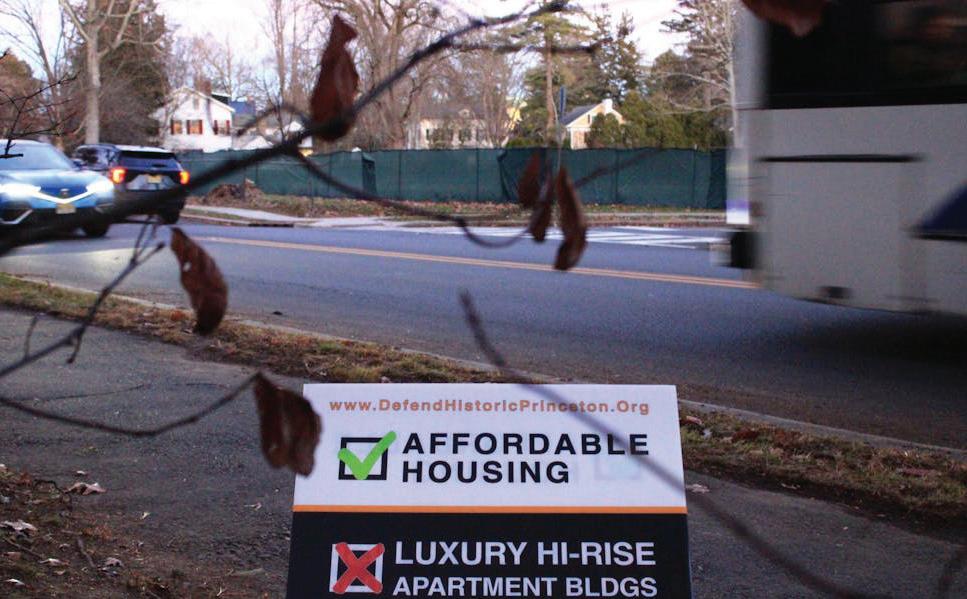
Two local groups, the Princeton Coalition for Responsible Development (PCRD) and Defend Historic Princeton, filed challenges to the Fourth Round Plan last year, questioning the inclusion of the Stockton
Street development in the plan.
PCRD, a nonprofit organization founded by former Princeton councilwoman Jo Butler, argued that a regulation requiring municipalities to show sites for affordable housing development are “available, suitable, developable and approvable” was not met.
On the Defend Historic Princeton challenge, Wilentz, Wilentz’s wife Caroline Cleaves, and University history professor emeritus James McPherson are listed as the challengers.
They argued that a Council on Affordable Housing (COAH) regulation prohibiting municipalities that don’t have enough land to meet their affordable housing obligations from using land in state-registered historic sites applies more broadly, and that the regulation prohibits historic sites from being used to meet obligations in all circumstances. Additionally, they asserted that, because Princeton is using the site to meet its obligations, the development constitutes municipal action and thus must be approved by the Historic Sites Council.
The Seminary, which remains the owner of the Stockton Street site pending ownership transfer to Herring Properties, also filed a brief in support of the municipality’s plan.
Lougy dismissed both of the challenges.
Lougy’s decision allows the Municipality of Princeton to move forward with implementing ordinances and resolutions in order to comply with law by a March 15 deadline. If the municipality does not meet the deadline, the Court will not issue a Certification of Compliance and Repose, which protects the municipality from builder’s remedy lawsuits
through the end of the fourth round cycle.
Builder’s remedy allows developers to bypass typical zoning laws for development when a municipality does not meet its affordable housing obligation.
Lougy, in his decision, cited a report and recommendation from retired Judge Thomas Miller, who now chairs the state judiciary’s Affordable Housing Dispute Resolution Program. Miller heard the challenges from PCRD and Defend Historic Princeton, and received recommendations from independent special adjudicator Christine Nazzaro-Cofone.
Lougy adopted Miller’s report, including Nazzaro-Cofone’s recommendations, “in full.”
Nazzaro-Cofone, in her recommendations, wrote that Defend Historic Princeton’s challenge “relies on inapplicable regulatory provisions” and that the PCRD challenge “asserts requirements not found in the Fair Housing Act or COAH rules.”
In his report, Miller wrote that the Defend Historic Princeton challengers “properly point out that this project involves conflicting public policies as it pits affordable housing interests that may be in conflict with Historic preservation and recognition.”
He further noted that, although it was not in his purview to rule on the issue of historic sites, the approval of the Fourth Round Plan “does not mean that the process and protections that are designed to protect or promote historic sites will be ignored.”
Wilentz, in an interview with the ‘Prince,’ celebrated Miller’s recognition of the issue of historic preservation, and that Lougy had adopted Miller’s report in full. He said Defend
Historic Princeton will appeal to the Historic Sites Council in light of the decision, and left open the possibility of challenging the development when it goes before the Princeton Planning Board.
“He recognized that [we] really have raised a proper issue here of conflicting public policies regarding historic preservation and municipalities’ obligations under affordable housing,” Wilentz said. “I’m quite pleased, actually.”
Defend Historic Princeton’s lawyer Bruce Afran told the ‘Prince’ that Miller “was acknowledging there’s a legal issue here,” but that challenging the Fourth Round Plan was not the place to resolve it. Afran said his clients “will be filing either directly in the Historic Sites Council, or in the trial court, asking for a ruling as to whether the town must go to the Historic Sites Council.”
“Our concerns were not about
whether Princeton should meet its affordable housing responsibilities, but about how those responsibilities are implemented,” Butler, of PCRD, wrote in a statement to the ‘Prince.’ “PCRD is consulting with counsel and evaluating all available options, including the possibility of an appeal.”
PCRD still has two ongoing cases challenging the Stockton Street development being considered by the courts. These cases, as well as filings with the Historic Sites Council, can continue, but no further challenges to the Fourth Round Plan may be filed.
Oliver Wu is the assistant News editor for the ‘Prince’ leading town coverage, focused on the Municipality of Princeton and beyond. He is from Stony Brook, N.Y. and can be reached at oliver.wu[at]princeton.edu.
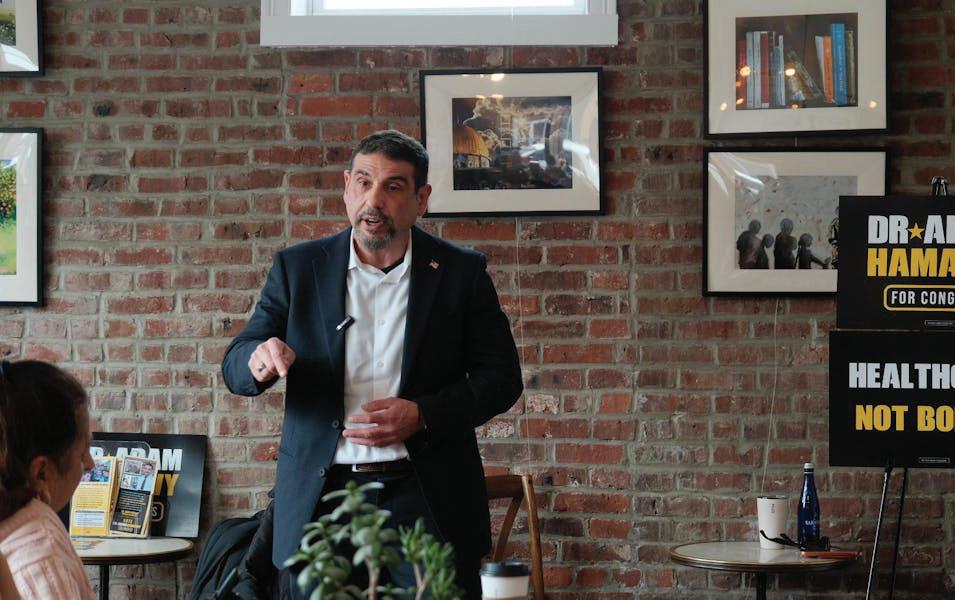
Candidate for N.J.-12 Dr. Adam Hamawy addresses prospective voters in Princeton
By Amaya Taylor & Teresa Chen Staff News Writers
On Tuesday, Adam Hamawy, candidate for New Jersey’s 12th Congressional District, met with University community members and town residents at Mamoun’s Falafel to discuss his platform, which includes healthcare and education affordability, increased federal funding for housing, Immigration and Customs Enforcement (ICE) reform, and criticism of Israel. Hamawy, a current resident of Princeton who grew up in the district, attended Rutgers New Jersey Medical School before joining the United States Army as a combat trauma surgeon. In 2024, Hamawy volunteered in Gaza as a doctor.
“What I witnessed [in Gaza], I
have never witnessed before [in] my entire career … What I saw there was not a war … what I witnessed was a genocide,” Hamawy said.
“I’ve seen that we always have enough money for bombs, but we don’t have enough to take care of our own people here in New Jersey,” he added.
After working around the world for eight years, Hamawy returned to work in the hospitals in the surrounding Princeton area. Hamawy said that his primary goal is healthcare reform.
“It’s harder to deliver healthcare than it was 10 years ago, than it was 20 years ago. I have people that come and see me every day that need surgery [and] can’t afford it … [but] get denied by insurance,” Hamawy said.
Prior to the event at Mamoun’s, Hamawy sat down with The Daily Princetonian to discuss his campaign and the pressing issues facing university students.
Hamawy highlighted the importance of student-led activism.
“The biggest issue that we’re faced [with] right now is that we are losing our democracy. We have fascism growing through this country,” Hamawy said. “Free speech is our First Amendment, which we’ve taken for granted. First, we take it away from a small group of people. We take it away from the university students. Before you know it, the whole country is afraid to speak up.”
Hamawy remarked that the problem with how people engage with politics is the failure to hold others accountable. “We know
what’s going on is wrong … Our role, especially as university students, is to educate and to speak up and stand up,” he explained.
“We know what’s happening in Gaza and in Sudan and in all these places. It’s a genocide. It is not something that is maybe happening,” he said. “It’s something that I’ve witnessed with my own eyes.”
Following federal funding cuts and threats to American universities from the Trump administration over the last year, Hamawy encouraged all university students and administrators to take action.
“At some point, we need to make a stand. If we’re always giving up on our principles, before you know it, we’re going to have no rights to show for,” he said. “The education that we’re getting at these universities is going to be useless, because it’s going to be like every other dictatorship around the world.”
At the event, Hamawy explicitly called for the abolishment of ICE, which has become the subject of controversy across the country in recent months.
“I’m fighting for our civil rights so that walking through the streets, masked men like ICE can’t come and grab you or kill you. We need to abolish ICE … and we need someone in Congress like me who’s not afraid to say that,” Hamawy said.
Regarding the relationship between representatives and constituents, Hamawy emphasized the importance of communication and transparency in Congress. He told the audience that he would remain committed to representing them if elected.
“My ears are always going to be on the ground, listening to the people, because that’s who I’m going to serve,” Hamawy said.
“We need to create an environment in Congress where people are not afraid to speak up … and know
that they are assuring the people in not serving billionaires and not serving special interests in large corporations that are backed by foreign interests,” he added.
Quentin Colón Roosevelt ’27, cochair of Princeton for Adam — the Princeton branch of Hamawy’s campaign — helped organize the event alongside campaign staff.
“[Hamawy] is the right person to take on the role of Bonnie Watson Coleman [in] Congress. It would be a shame if this election went to someone who’s more moderate than she is because … she represents [the district’s] diversity, politics, [and] policy,” Colón Roosevelt said in an interview with the ‘Prince.’
“[Hamawy] represents continuing on that level of advocacy for this community and for communities all across the globe,” he continued.
A community member raised a question regarding Hamawy’s commitment to his progressive principles, citing House representative Alexandria Ocasio-Cortez as a progressive politician who has “abandoned her principles” once joining Congress. Hamawy replied, “A few weeks ago, I went and talked to my mother. She said … ‘They’re all liars.’ So I told her, ‘I plan not to be a liar.’”
“We have a disease in this country, and that’s why I’m going to Washington,” he concluded.
The Democratic primary for U.S. House New Jersey District 12 is on June 2. As of writing, Hamawy is running against 17 other candidates, including Princeton Professor of Neuroscience Sam Wang.
Amaya Taylor is a staff News writer and associate Prospect editor from Memphis, Tenn.
Teresa Chen is a staff News writer from Shanghai.
OIT will no longer provide email forwarding to alumni accounts starting from Class of 2026
By Benedict Hooper
News Writer
No email forwarding will be provided upon graduation for the Class of 2026 and beyond, according to the Princeton Office of Information Technology (OIT). Additionally, undergraduate NetID access will now be deactivated 60 days following graduation, compared to 65 days in previous years. These policy changes will go into place at the end of the spring semester, beginning with the Class of 2026.
Upon Commencement, each University graduate receives an alumni email address. Previously, graduates had 65 days after graduation before their student email was deactivated, and any emails sent to that deactivated address would be auto-forwarded to the student’s new alumni email for 430 days.
Now, students will only have 60 days to transition all their pertinent emails from their student inbox to their alumni inbox, before the student email account is deactivated.
After the deactivation, students “will [also] lose access to all
files, student email and services that require your Princeton netID and password,” according to the OIT webpage. These inaccessible services include, but are not limited to, the Princeton Google Drive, Princeton Gmail, file servers, Princeton-hosted websites, and some software, including Microsoft Office 365.
For graduate students, access to Google Apps, Microsoft Office 365, and webpages will be revoked 65 days after graduation, but automatic email forwarding to the alumni.princeton.edu address will continue for 730 days.
University spokesperson Jennifer Morrill wrote to The Daily Princetonian that the specific decision to shorten the duration of access to the student email from 65 to 60 days was due to factors such as “licensing for software used at the University, access to resources as an active member of the University and increased cyber threats.”
Morrill did not address the OIT forwarding policy, beyond confirming its cancellation.
Many seniors expressed concern over the lack of the email forwarding policy, with some wor-
ried about not receiving job offers or internships for the upcoming summer.
“It can negatively impact the graduating class,” said Erin Yoo ’26. “We might have job offers, internship opportunities, or other important news coming through our current Princeton emails.”
Caleb Williams ’26 similarly feels concern about losing access to important messages post-graduation.
“That’s something that we should also be keeping in mind that when we graduate — we won’t have access to our student emails,” he told the ‘Prince.’
Other seniors brought up issues involving decisions about graduate school applications.
“As somebody who did apply to grad school, I think if I had used my student account for it... I would need to have access to those emails for my future,” Harry Poulose ’26 said.
“[If] someone applied for something, they might never find out,” Williams added.
Yoo said that she feels students will have to be more proactive about remaining in communication with their application con-
tacts.
“We just have to be more diligent about following up with our contacts for jobs or fellowships,” Yoo said. “To make sure that they
COURTESY OF ADAM HAMAWY FOR NEW JERSEY Candidate for NJ-12 Adam Hamawy discusses his platform.
have a way that they can reach us.”
Benedict Hooper is a staff News writer for the ‘Prince.’ He is from Greenwich, Conn.
Staff
STUDENT LIFE
Princeton researchers aim to create new catalysts with cheaper, cleaner materials
By Aanya Kasera
Writer
From medicine to the materials in objects around us, many products of modern life depend on chemical reactions boosted by catalysts. At Princeton, researchers in the chemistry department are working to redesign these catalysts to be cheaper, safer, and more sustainable.
Traditional catalysts often rely on rare precious metals like palladium, platinum, or iridium, that are mined in ways that can harm the environment. Princeton professor Paul Chirik’s lab focuses instead on catalysts made from earthabundant and less toxic metals such as iron and cobalt.
“I think the most important thing that people should take away is that just about everything you interact with in your daily life relie[s] on some kind of chemical transformation and almost certainly a catalyst,” Chirik said in an interview with The Daily Princetonian.
Catalysts are essential for producing pharmaceuticals, plastics, clothing, and countless other materials. For decades, precious metals have been used more frequently due to their efficiency in driving complex chemical reactions. Chirik explained that the challenge in research is understanding why those metals work so well and whether more sustainable alternatives can be designed to perform the same chemistry.
A major focus of the lab’s research is carbon-hydrogen functionalization, a process that allows chemists to selectively modify specific carbon-hydrogen bonds within a molecule. These bonds are extremely common but typically unreactive, making them difficult to manipulate.
Being able to target a single bond within a complex molecule could streamline chemical
synthesis. Shorter syntheses are more efficient and have a farreaching impact on both the environment and industry, which is especially important in pharmaceutical development.
“Every time you do a step, you’re going to have solvent, you’re going to have waste, you have to work up the reaction,” Chirik said. “So any time, if you can cut a synthesis from 10 steps to four, that’s usually green chemistry. It’s sustainable because you’ve eliminated all that waste, all that manipulation [and] energy to run the reaction.”
Recent work from the the lab has demonstrated that cobaltbased catalysts can achieve highly selective carbon-hydrogen functionalization, in some
cases rivaling or surpassing precious metal catalysts. This selectivity reduces unwanted byproducts and chemical waste. The research has received funding from the National Institutes of Health, due to its potential relevance to drug development.
Graduate student Tianyi Zhang, a fourth-year Ph.D. student in Chirik’s lab, focuses his work on developing iron-based catalysts to push sustainability even further.
“The nice thing about Earth’s abundant metals, especially iron, is that it’s actually pretty non-toxic,” Zhang told the ‘Prince.’ “Our body has a very high tolerance of iron, for example, versus palladium or iridium, [for which] these tolerances are very low.”
In drug discovery, researchers often begin with a promising compound and then make small changes to improve its effectiveness or reduce side effects. Traditionally, each modification could require resynthesizing the entire molecule. However, the catalytic methods being developed in Chirik’s lab aim to directly alter specific bonds within complex molecules. This allows chemists to generate many variations more efficiently.
“The methods that we develop are targeted to be like a factory that just selectively make[s] a connection, a small modification on the drug itself, ” Zhang said.
“That avoids a lot of the resynthesis and reduces the num-
ber of steps taken and the time and the resources taken to investigate the structure-activity relationship of these drugs,” he added.
Beyond pharmaceuticals, these methods could also be applied to materials science, such as modifying plastics to give them new properties. However, iron-based catalysts present challenges of their own, as they can behave in more complex and less predictable ways than precious metals.
“There’s always a catalyst that can be faster [and] it can be made cheaper,” Chirik said. “It’s like the 100-meter race. There’s always somebody who can set the world record.”
Looking ahead, the lab hopes to expand its work to include biologically relevant molecules, such as amino acids. These advances could open new pathways in drug development and chemical biology.
For Zhang, the research represents a balance between fundamental science and real-world impact.
“Before your own eyes, the translation of your own research into actual commercial manufacturing processes, and even sometimes made into a method that’s used to make drugs that actually then benefit patients and improve people’s well-being and life expectancy…. that kind of level of fulfillment is something that’s been really inspiring for me,” he said.
While catalyst development often happens behind the scenes, Chirik emphasized that even modest improvements can have wide ranging effects.
“If you can figure out ways to make all the materials around you 10 percent less energy, the impact on energy consumption on the planet is just gigantic,” Chirik said.
Aanya Kasera is a News contributor for the ‘Prince.’
Students apathetic about tuberculosis case while other illnesses circulate
By Toby Chang Staff News Writer
Last Friday, Princeton University Health Services sent out an email to the campus community reporting a confirmed case of tuberculosis (TB). The email did not share the identity of the infected individual and said that there was only one isolated case.
“There has not been an increase in appointments or testing beyond the evaluation of identified close contacts,” University spokesperson Jennifer Morrill wrote in a statement to The Daily Princetonian. “All close contacts have been assessed and tested.”
No students interviewed by the ‘Prince’ reported changing any day-to-day habits, such as social distancing or masking, in response to the confirmed case.
“At first, I was concerned about what I should do. But as time went on, I sort of forgot about it,” said Nasir Aliu ’29 in an interview with the ‘Prince.’
Morrill explained that “treatment typically requires several weeks before a person with TB stops being able to spread it to others,” which suggests that the infected individual is currently contagious.
Darwin Lopez-Campos ’29 told the ‘Prince’ that he felt “uninformed” on the situation. The University has not issued any further statements or updates since the email sent on Friday.
According to the TB page on the University’s Emergency Management website, TB is an airborne, bacterial infection. Symptoms include “a persistent cough lasting three weeks or longer, chest pain, unexplained weight loss, fever, chills, fatigue, and night sweats.” It can be transmitted through coughing, speaking, or singing, and typically requires “prolonged, repeated exposure in an enclosed, poorly ventilated space,” the website says. There is minimal risk for transmission
through brief physical contact or proximity with an infected individual, according to the CDC.
The email to the campus community stated that TB is “highly treatable and curable with modern medicine” and the website says that “almost all patients with active TB disease will recover and be cured.”
Some students told the ‘Prince’ they were aware of outbreaks of other diseases, including COVID-19.
Rose Campbell ’29 told the ‘Prince’ about her own experience coming down with an unknown illness in the midst of a capella group tryouts. “It is really a bummer because I was lucky enough to get some callbacks for a capella groups in two days, and I just don’t know if my voice will be back in time,” Campbell said.
“It’s definitely a combination of getting back to campus and seeing everyone, the stress and business of settling into classes, and getting readjusted to the
new workload,” she continued.
“I also think that Princeton students don’t want to miss out so they keep attending classes and go out, which further spreads whatever illnesses are going around.”
Owen Rulyak ’26, a member of the Princeton rowing team, said that “a number of people” on the rowing team contracted COVID-19 last week.
Rulyak told the ‘Prince’ that he initially started feeling sick last Wednesday, at which point he quarantined for three days, causing him to miss classes during that time. As he began to recover, several of his teammates tested positive for COVID-19, prompting him to test as well. Upon receiving a positive result, Rulyak said that he remained quarantined for several more days.
“I think a lot more people did have it and didn’t know,” Rulyak added. “[The team] is where I realized it was going around.”
Samuel Posada Sanchez ’29
told the ‘Prince’ that he had noticed a general uptick in illnesses around campus.
“I feel like everyone is sick nowadays, and I’m just hoping that the community is well taken care of so that nothing happens even if [anyone] does get tuberculosis,” Posada Sanchez said.
“Students should seek medical evaluation if they have any history that increases the likelihood of exposure and they develop symptoms such as a persistent cough, fever, night sweats, or unexplained weight loss,” Morrill advised. “Anyone identified as a contact should follow all instructions from University Health Services, including testing and any recommended follow-up.”
More information and updates can be found at https://emergency.princeton.edu/tuberculosis.
Toby Chang is a staff News writer from Prescott, Ariz.
CAMPUS
KENZO SALAZAR / THE DAILY PRINCETONIAN. Frick Chemistry Laboratory.
Hum r
Econ major disappointed he’s not in Epstein files
By Nate Voss Assistant Humor Editor
The following content is purely satirical and entirely fictional.
When The Daily PrintsAnything discovered professor Corina Tarnita’s appearance in the Epstein files, economics major and 26-year-old Brock Brenderson ’29 felt betrayed and confused.
“All I could think about when I saw the news was, ‘Why did it have to be her? Why couldn’t it be me?’”
Brenderson claims that, com -
pared to him, Tartina was “a big nobody” in Epstein’s world.
“She wasn’t tapped in like I was tapped in. You ask Prince Andrew who she was, the guy’s got no clue.”
To Brenderson, opening every batch of new files was an adrenaline-inducing affair.
“I never got that feeling of opening college decisions, because admissions called Daddy directly. These files are the closest thing I get to experiencing that.”
However, to his dismay, not a single cache of documents con -
tained his name. Beyond emotional harm, Brenderson claims that this omission has damaged his career prospects.
“All the big names are in there: Musk, Gates, Clinton, Trump, Jaden in TI. They’ve got their little club, and I’ve been left out. And I’ve heard that BlackRock won’t even look at your application if you don’t have at least four mentions.”
The aspiring “Epsteiner” has a simple explanation for his absence.
“During my eight gap years in Thailand, Jeff knew me by an -
other name: ‘The Money Badger.’”
A scan of Epstein’s contacts for “The Money Badger” showed that Brenderson was, in fact, blocked. Further analysis revealed one more mention of the pseudonym — a text from 2019, which read: “Dude no, we can’t invite that Badger kid. He creeps me out, like, totally kills the vibe.”
Nate Voss is an assistant Humor editor who is transferring as far away from the “Money Badger” as he possibly can.
Newsroom fire places Humor in charge of ‘Prints’
By Nic Rohou & Nate Voss Associate Humor Editor & Assistant Humor Editor
The following content is purely satirical and entirely fictional.
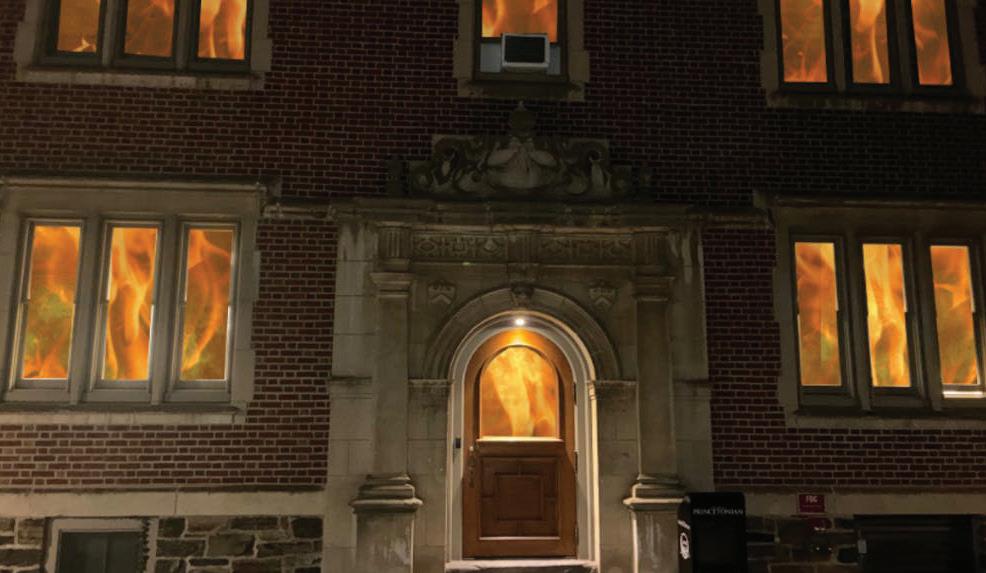
Sirens wailed at 48 University Place last week as firefighters worked desperately to fight the flames erupting from The Daily PrintsAnything newsroom headquarters. After a headcount, it was determined that all but the Humor section tragically passed away.
“We got kicked out during the content meeting,” explained Head Humor Editor Tarun Iyengar ’28. “They were talking about Epstein or something, I don’t know… but Frankie triple-dogdared me to write ‘t**ty’ on the whiteboard so none of us were really paying attention.”
The entire section was promptly (and violently) removed from the newsroom with Contributing News Writer Rod Upbum ’29 to chaperone them. The
first-year, though technically the entire Humor section’s superior, didn’t seem so superior when he was gagged and tied to a telephone pole.
Approximately 30 minutes later, a Molotov cocktail crashed through the window of the publication’s building.
Humor roundly denies throwing the incendiary device, with the “funniest” Assistant Humor Editor Nate Voss ’29 responding with a cheeky grin and a hand-covering-the-mouth giggle.
When asked if Humor did it, Upbum said “mff mfff mffff brfff mfff,” which translates to, “no. Have you seen what a stud Nic Rohou is though? WOULD.”
With all other staff out of commission, Humor has taken over the publication:
Nic Rohou ’28 – Hed of Speling :P
Frankie Volkema ’28 – Head of Beer!
Nate Voss ’29 – Head of ChatGPT Usage and Journalistic Integrity.
Tarun Iyengar ’28 – Head of Embezzlement.
The Yearly PrintsAnything will now
feature a tribal managing structure, with funny-offs determining who becomes the chief, a.k.a the “Jerry.”
This term is named for former Editor-in-Chief Jerry Zhu ’27. Being dead, he did not respond to a request for comment.
Nic Rohou is an Associate Humor Editor. He tacks hes knew joob very seriosly. Hee can bi reeched at nr9348[at]princeton.edu.
Nate Voss is an Assistant Humor Editor. This article was written — according to University guidelines — no AI was used. He can be reached — emailed — at nv5141[at] princeton.edu.
Princeton bachelors reportedly turned to LinkedIn as dating app this Valentine’s Day
By Kadin Parham Contributing Humor Writer
The following content is purely satirical and entirely fictional.
This past Valentine’s Day, a record number of Princeton bachelors turned to LinkedIn in what experts are calling a “strategic, objective-based pivot towards romantic networking development.”
Students cited the platform’s structured format, professional tone, and built-in filtering tools as key advantages over traditional dating apps such as Tinder, Bumble, and Hinge, which they described as “insufficiently optimized for long-term partner acquisition.”
“On Tinder, people judge you in seconds,” said Grant Portfolio ’27. “On LinkedIn, they judge you in seconds, and know your GPA, in-
ternships, and leadership experience. It just makes for a more efficient vetting process.”
Some users reported success refining their profiles for romantic visibility. For example, phrases such as “open to work” and “seeking summer analyst position” were replaced with “amenable to long-term emotionally stable partnership” or “in search of shortterm but hands-on unions.” Participants also self-reported their skills and interests such as “strong oral communication skills” and “preference for working downtown.”
Others favored a more subtle strategy. Psychology senior Peter Rich ’25 said that he began liking posts from potential partners he found attractive in hopes they would eventually notice his engagement.
“I’m not sliding into DMs,” Rich explained. “I’m cultivating familiarity through consistent professional visibility and deliberate consideration of all stakeholders involved.”
At press time, several students were reportedly considering upgrading to LinkedIn Premium after learning it allows users to see who viewed their profile.
Kadin Parham is a contributing Humor writer. He can be reached at kp6530[at]princeton.edu, or alternatively at his LinkedIn.
LOUISA GHEORGHITA / THE DAILY PRINCETONIAN A basket of red flowers outside.
ILLUSTRATION AND PHOTO BY NATHANIEL VOSS / THE DAILY PRINCETONIAN The Daily PrintsAnything newsroom at 48 University Place on fire.
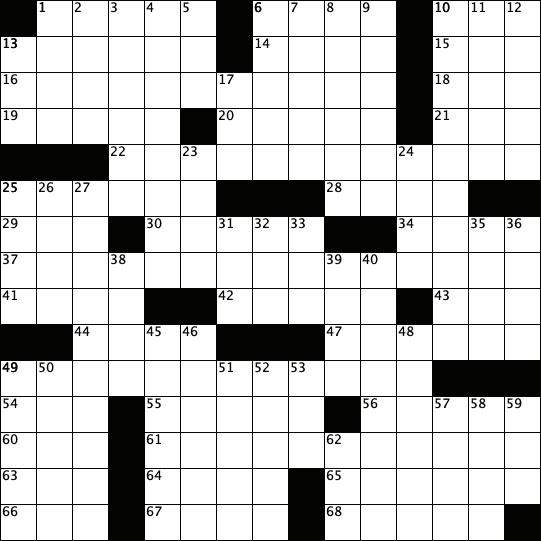
“D igital D isplay ”
By Emma Simon Head Puzzles Editor
1 Malice
Pixar short which showed before “Incredibles 2”
Task-switching shortcut on Windows
14 And they lived happily ___ after
Cannon Dial ___ Club
Chance 18 Get better, as wine or cheese 19 Piano part
Flirt
Soda container
McDonalds logo since 1962 25 Aplenty
28 Russian ruler 29 Word that sounds like its middle letter 30 Delicious
Suitor
37 Events where Bach or Beethoven might be heard
41 Lockbox
42 One of a hundred in Dante’s “Divine Comedy”
43 Uno + uno
44 Chicago or Boston?
47 Rodent-catching cat
49 Creepy creatures from the German words for “noisy ghost”
54 Year, in Spain
55 Awaken
56 Classic Jewish dessert
60 Word that rhymes with blue, in a classic wedding rhyme
61 Give the middle finger... or a hint to the circled letters
63 Word before date or process 64 MLB All-Star De La Cruz
65 Put down again, as tiles
66 Busy month for the I.R.S.
67 Manic Panic products
68 Salad green
1 Popular gin flavoring 2 Modern term for “shell shock” : Abbr. 3 We’re on! 4 Fit for 5 Flow’s counterpart
Skirmish 7 European bottled water 8 Sics on 9 Machines with lint traps 10 Books you might pick up in the airport 11 Fish tank buildup 12 Black cats or shooting stars, to some 13 Notes or Maps 17 ___ be a shame 23 Shakespearean monarch 24 Iconic yellow symbols of New York 25 Braces might fix them
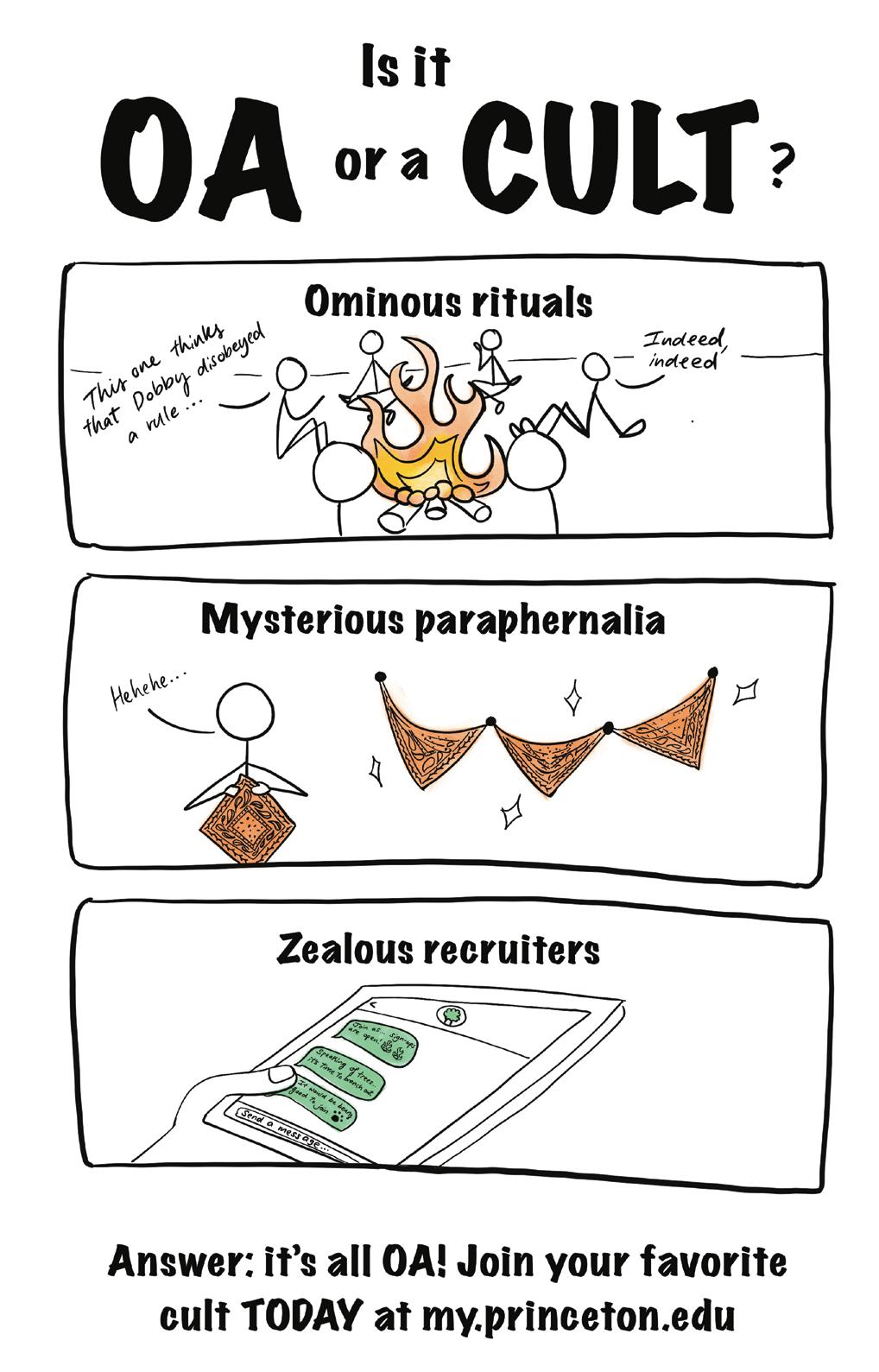
Is it OA or a cult?
By Eliana Du | Staff Cartoonist
26 Opera solo 27 Loud yard tool used in the fall 31 One of 60 in a min. 32 Charlamagne ___ God 33 Money in Tokyo 35 Natural burn relief 36 World power until 1991, for short
38 Without any rocks, say 39 PIN requesters
40 Soda shop staple
45 Opposite of buffed, in gamer slang
Scan and click “reveal” on the puzzle you’re solving to check your answers and try more of our puzzles online!
46 With a dry wit 48 Functional 49 Po or Master Shifu 50 Top 51 Cunning
52 Sports award show
53 Hairy cousin of TV
57 K-pop term for one’s favorite band member
58 Kardashian-Jenner matriarch
59 Butt in
62 She lost to DJT in 2016
Today’s weather forecast
By Paulette Martinez | Associate Cartoon Editor
In Princeton’s admissions, not all public schools are equal
In the ‘Prince’ survey of the Class of 2029, 63.9 percent of students reported having attended a public school — of those students, 78 percent came from non-selective schools. The University often includes this statistic alongside its other metrics of diversity; presumably, it is supposed to be impressive, even though 83 percent of K-12 students in the United States attend a traditional public school.
But even within those public schools, some are far better represented than others at Princeton.
Let’s take New Jersey as a microcosm for the nation. As our analysis shows, a small subset of New Jersey public schools are dramatically overrepresented at Princeton. Given Princeton’s flaunting of its high percentage of public schoolers, the University should broaden the range of schools from which it admits — even if this means devoting resources to actively recruiting from more underserved public schools.
To measure the disparities in Princeton’s admissions between
feeder schools, which we define as schools that send a disproportionate number of students to Princeton, and non-feeder public schools, we analyzed Princeton’s admissions from New Jersey feeder schools for the Classes of 2003–2016. We can’t be certain of how admissions have changed in the last 15 years — which high schools have been represented more, and which ones less. However, given that the percentage of public school students has not substantially increased, remaining around 60 percent, from the Classes of 2016–2029, it seems unlikely that Princeton has significantly diversified the schools that it admits from.
In 2024, The Daily Princetonian collected data on “the 250 schools that have sent the most students to Princeton” for the Classes of 2003–2016. For the Class of 2016, over two-thirds of incoming first-years from New Jersey came from one of the 39 schools — 26 public and 13 private — on the list of Princeton’s top 250 feeder schools.
If Princeton admitted a similar percentage of public school students from New Jersey as it did nationwide, then in the Class of 2016, about 74 percent of New Jersey public school students at Princ-
eton likely came from the same 26 high schools — or eight percent of New Jersey public schools.
These public schools tend to serve affluent communities. When weighing the number of students that each school sent to Princeton in the Class of 2016, the average median household income of the ZIP codes of the public non-magnet schools’ is currently $183,320. This is greater than the median household incomes of 89 percent of New Jersey ZIP codes, and 1.81 times the income of the median New Jersey household.
Students from these schools, like all Princeton students, are doubtlessly impressive. But that doesn’t mean they should be overrepresented nine times over. According to University President Christopher Eisgruber ’83, about 30 percent of applicants and 50 percent of accepted students each year score an “Academic 1” on their Princeton application, which is the best possible academic rating that a Princeton applicant can get. Clearly, a high percentage of applicants are well-qualified to attend Princeton. Given that many of the students rejected from Princeton are academically qualified to attend, at least some of these students must come from underrepresented public schools.
Princeton needs to make more room for these students in future classes.
How can we keep Princeton accountable? The University should publish an annual report listing the high schools from which it admits, detailing the percentage of students that come from Title I schools, and enumerating the median household income of the ZIP codes of these high schools.
Some might argue that these statistics just reflect a lack of interest — students from disadvantaged schools simply “don’t apply to Princeton.” In a previous ‘Prince’ article, Allison Slater Tate ’96, a college consultant, said, “Sometimes it takes one kid getting in and going from a school, and if that kid does well, [University admissions] can see that they were prepared. They can kind of trust [the high school] more.”
But representing an entire high school and facilitating connections with Princeton should not be the responsibility of a single child. Trust is a two-way street, and Princeton must not be passive. Rather than waiting for this student to apply, Princeton should actively seek them out.
As our colleague Frances Brogan has argued in the past, admissions officers need to visit
disadvantaged and Title I schools in the interest of prioritizing geographic diversity. And while it is exceedingly important for these officers to reach out to underrepresented states and regions, it’s also important for admissions officers to target poorer ZIP codes and underrepresented schools in states that are overrepresented too, such as New Jersey.
Princeton bears a responsibility — in line with its socioeconomic diversity goals — to visit disadvantaged schools and find students who have the potential to perform well at Princeton, but would not otherwise attend. Visits from admissions officers for college fairs could generate student interest and propel more students to apply. The more opportunities these students have to familiarize themselves with Princeton, the more trust they’ll have in Princeton, too.
Raf Basas ’28 is an assistant Opinion editor from Elk Grove, Calif.
Vitalia Spatola ’28 is a staff Opinion writer from South River, N.J., a small town she hopes Princeton will visit soon.
‘As long as the U-Store does not rectify this issue, I will shop elsewhere.’
U-STORE
Continued from page 9
Before, those prices were charged to non-members and, however insufficiently, redistributed to us; now, we have become the subject of the extortion that once served us.
All along, the U-Store has bragged that it “is a not-forprofit cooperative society whose members share in the profits.” It’s told us, earnestly, and with hints of anticapitalism, that “as a co-op, it operates differently than an ordinary corporation.”
How exactly, now, is the U-Store operating any differently from any ordinary corporation? Today, in fact, the U-Store has become the worst deal in a town where your other options are Trader Joe’s, Whole Foods, Target, and Wegmans (all of which, conveniently for the U-Store, students can only access for free by bus on the weekend).
No, despite the bluster and pride of a U-Store that once had a credible claim to giving back, the discount appears to be gone for good.
Now, the U-Store has upended its terms and conditions without even bothering to notify its members. “We value all of our members,” says the U-Store, but
apparently not enough to inform those very members about a major change in benefits before it broke in the pages of the ‘Prince.’
In a statement explaining the change, U-Store CEO and President June Archer ’85 told the ‘Prince’ that “we understand that our community values the membership discount, and we did not make these changes lightly.”
To be honest, it does not matter how much weight the changes have been given. The U-Store has quietly and shamefully abdicated its promises to its members, many of whom are current students at the University with limited other options for purchasing food or household essentials. Where, I must ask, will the additional revenues go, given that the U-Store maintains its status as a nonprofit co-op?
If the U-Store is truly struggling for profit, it might consider a range of other options — raise the price of future memberships, bring back selfcheckout to reduce labor costs, ask the University for lower rent costs, or even increment prices overall — but effectively ending the membership is the wrong answer.
To remedy its failure, the
U-Store has two paths forward: continue honoring the original terms of membership for those who became members before the policy change was implemented, or issue a full refund to all current members.
Any other path forward, including the U-Store’s current path of refusing to acknowledge the change other than by leaving a sign in the store and making surreptitious adjustments to its website, is wholly unacceptable.
As long as the U-Store
does not rectify this issue, I will shop elsewhere. And students, faculty, staff, and other community members who are U-Store members should all take our business elsewhere — from Wawa to Wegmans — until the co-op honors its promises and respects its members, whom, I resubmit, it claims to “value.”
If just 10 percent of us members choose to spend our money elsewhere, then we can erase the extra revenue the U-Store would otherwise make and force
their hand towards restoring membership benefits. Most likely, members will save money in the process by shopping elsewhere. Join me. I hear Wawa is making delicious food this time of year.
Isaac Barsoum ’28 is an associate Opinion editor from Charlotte, N.C., who has frequently enjoyed U-Store popcorn but not enough to pay 11.1 percent more for it. He can be reached at Wawa or at itbarsoum[at] princeton.edu.
Last Wednesday, I sat in Green Hall having an “ordinary” but peculiar experience: listening to my professor read aloud from her private set of lecture notes, while the class sat and stared at a bare-bones slideshow of historical quotes. Around me, dozens of my classmates were dutifully typing out summaries of every slide. But, as my professor narrated her questions about the origins of the peculiar ideas of sovereignty, my attention was more focused on the origins of the peculiar idea of the lecture.
My professor is a brilliant historian. Is it really the best use of her time and talents to make her stand and narrate her own notes for several hours a week to a hall full of students racing to copy her sentences onto their pages? Why not just publish notes and tell us to read them, at our own pace, in our own time?
It’s time to think about replacing the lecture.
Reading lecture notes offers several advantages over listening to them in person. It’s faster than reading
Abolish the lecture
aloud, and we comprehend just as much. It permits individual students to control the flow of their learning, skimming over passages they understand well and digging deep into sections that confuse them. It allows you a second chance at understanding if you miss a detail — just reread! — which doesn’t interrupt everyone else’s learning by making the professor repeat herself. It frees students from the need to copy down basic facts and allows them to take more selective, critical notes.
Admittedly, lectures can have advantages over reading. Some lecturers truly are amazing presenters and explain concepts much better extemporaneously. It’d be an extra burden on their time to make them write out everything they’re going to say in detailed notes. These exceptional professors could audio-record themselves and upload the audio to Canvas, alongside the fairly routine practice of uploading slideshows. There are dozens of excellent and free speech-to-text transcription services for the student who prefers a textual medium, and it’s as simple for the average professor as setting your phone on a lectern and pressing “start.”
Most professors, however, are not significantly better at live teaching than they are at writing ideas down; academia, after all, selects for the latter. Perhaps there are cases where lectures are justified, but it is bizarre to make lectures the assumed default option because of a few really exceptional instructors.
Other advocates of the inperson lecture might point to the ability to ask questions, the human environment of the lecture hall, and fears that students will blow off assigned readings. For many lectures at Princeton, though, these factors are weak. In my STEM classes, the majority of lectures pass without a single student question, while the course precepts, office hours, and Ed Discussion are comparatively overflowing with student engagement. My humanities lectures haven’t been much different: a few more questions here and there, but once you get to a class of 50 or more people, sustained and helpful backand-forth becomes almost impossible. If a shared social environment is so important, office hours and study groups are much more natural solutions than a mass of silent notetakers and a single
speaker. They permit a truly interactive learning environment, with opportunities to critically engage and receive feedback rather than just acting as a passive recipient. And if students choose to skip their readings, they can suffer the consequences: Test their comprehension and set harsher grades. It is beneath our wonderful professors to make them play babysitter for the brightest students in the country; it is entirely appropriate to expect Princeton students to take some responsibility for their education.
Of course, just because I prefer to read doesn’t mean my classmates do. If lectures are better than independent reading for the majority of students, isn’t that reason enough to keep them? This would be a fair point if lectures were optional: Everyone who benefits can attend, and those who don’t can hit the books. But in most of my classes, absentees are penalized by “participation grades” that assign credit just for sitting in the room while the lecture happens. This is manifestly unfair: A student who checks in to iClicker and watches TikToks in the back of the hall gets a reward, while a diligent independent learner working through the text-
book gets nothing. Putting more grade weight into tests and assignments gives credit by the only criterion that matters: how much you’ve learned.
My preferred solution is for the University to abolish lectures, and for professors to instead publish their notes and hold more office hours. A more modest change from current practice also exists, however: Professors can tell students, at the start of the class, that notes will be published and lectures recorded, and that lecture attendance is not mandatory. Add that many students find lectures very helpful, and self-studying will take a great deal of initiative and agency. Warn them that if they choose not to attend, it is their responsibility to keep up with the class, and they may suffer on the exams if they plan poorly.
Let us make our own choices. For a substantial number of classes, there is no need to carry on the assumption that lectures are necessary for learning. A brighter, more independent Princeton will thank you for laying that myth to rest.
Jack Thompson ’27 is a computer science major from East Montpelier, Vt.
Jack Thompson Guest Contributor
editor-in-chief Jerry Zhu ’27 business manager Alistair Wright ’27
150TH MANAGING BOARD
Frances Brogan ’27
Victoria Davies ’27 Managing Editors
creative director Juan Fajardo ’28
Corbin Mortimer ’27 Maya Mukherjee ’27
Sections listed in alphabetical order.
associate newsletter editor Annika Plunkett ’28
head opinion editors Lily Halbert-Alexander ’28 Charlie Yale ’28
associate opinion editors Isaac Barsoum ’28 Shane McCauley ’28
’28 Molly Ziskind ’28
head cartoon editor Noam Rabinovitz ’27
associate cartoon editor Paulette Martinez ’29
head copy editors Sarah Li ’28 James Thompson ’27
associate head copy editors Roberto Sampaio ’28 Felix Santiago ’28 Bobby Xia ’28 head
Wadsworth ’28 associate
’29
’28 associate
DuBois ’28
Iyengar ’28
associate humor editors Nicolas Rohou ’28 Francesca Volkema ’28
head news editors Nico David-Fox ’28 Luke Grippo ’28
associate news editors Sena Chang ’28 Haeon Lee ’28 Caitlyn Tablada ’27
head sports editors Lily Pampolina ’27 Doug Schwartz ’28
associate sports editors Lucas Nor ’28 Matthew Yi ’27
head web design and development editors Cole Ramer ’28 John Wu ’28
strategic initiative directors
Graphics Caroline Naughton ’29
Education Charlie Yale ’28
150TH BUSINESS BOARD
assistant business manager
Angela Han ’28
business
’29 Business Manager Emeritus Jessica Funk ’26
When we lose a student, make classes optional
Audrey Tan Opinion Columnist
On Jan. 27, the Princeton community lost another student. I’ve been at Princeton for just over one semester, and two student deaths have already occurred. If we include Lauren Blackburn ’26 and Kerry Grundlingh ’27, who passed right after the release of college regular admission results and during the summer of 2025 respectively, then first-years have already been through four student deaths. For seniors, that number is much higher – nine students have died since fall 2022.
At Princeton, student death isn’t just a background issue, but a glaring, omnipresent beast that haunts the University experience.
Yet rather than centering the importance of supportseeking and communication, University administrators insist on going about their daily business during times of grief. Merely announcing the general availability of Counseling and Psychological Services (CPS) leaves struggling students to seek out support on their own. In a recent column, my colleague Thomas Buckley ’27 correctly pointed out the inability of these limited mental health resources to accommodate students seeking long-term care. But the University has another pressing issue to contend with: the performative demonstration of care without taking action to acknowledge the weight of the loss.
munity can actually access the resources the University promotes at the onset of the grieving process, Princeton should make class optional on the day on which a student’s death is announced.
Every time a student death occurs, the University sends out similar emails to students, guiding them to contact CPS. Meanwhile, classes continue as regularly scheduled — which for many means a continuation of required attendance policies. Grieving students are provided with and encouraged to use the resources to seek support, but are given no time off or reprieve from their substantial workload to process their emotions.
One could argue that students can communicate directly with their professors to negotiate time off, but that places the burden on students and renders the support contingent on their particular professors. The added responsibility to coordinate absences or extensions will cause stress to accumulate during an already trying time, intensifying mental health struggles.
Making classes optional is also important in registering the loss as an event that impacts the entire campus community — one that is jarring and upsetting enough to all of us to merit the pause of the daily routines of campus life. There is significance in acknowledging and treating this event as something out of the ordinary.
course material? If the University can’t even recognize the loss of students’ lives as upsetting and problematic enough to disrupt the daily academic routine of campus, it normalizes these tragedies. Offering mental health resources without providing the accommodations necessary for their effective use only gestures at support rather than actually providing it, and fails to substantively address the present mental health crisis on campus. In fact, it threatens to contribute to that crisis. If students in need of help aren’t able to receive help in a timely manner during some of the most emotional and difficult periods of their lives, their own struggle will only compound.
chief technology officer Abu Ahmed ’28 Chief Technology Officer Emeritus Yacoub Kahkajian ’26
software engineers
Nicole Deng ’28
Ziya Momin ’28
Kyaw Naing ’28
Stephanie Sugandi ’27
150TH TECHNOLOGY BOARD THIS PRINT ISSUE WAS DESIGNED BY Albert Rho ’29 Jamie Creasi
BOARD OF TRUSTEES
president Thomas E. Weber ’89
vice president David Baumgarten ’06
secretary Chanakya A. Sethi ’07
treasurer Douglas Widmann ’90
assistant treasurer Kavita Saini ’09
trustees Francesca Barber Kathleen Crown
Suzanne Dance ’96
Gabriel Debenedetti ’12
Stephen Fuzesi ’00
Zachary A. Goldfarb ’05
Michael Grabell ’03
Danielle Ivory ’05 Rick Klein ’98
James T. MacGregor ’66
Rohit Narayanan ’24
Marie-Rose Sheinerman ’23
Julianne Escobedo Shepherd
Abigail Williams ’14
Tyler Woulfe ’07
trustees ex officio Jerry Zhu ’27
Alistair Wright ’27
While the loss of a student will naturally be suffered strongly by those close to them, it is also a loss that affects the community as a whole. Former classmates, clubmates, and professors may all be deeply affected. To ensure the Princeton com-
If the counterargument to making class optional in the aftermath of a student death is that it would prove too disruptive to the academic calendar, the response is simple: why are so many students passing away at Princeton that if we took a day off for each of them, the schedule would be too disrupted to communicate all necessary
Redundant emails and links to the CPS website are not adequate responses to increasing student deaths. Instead, the University must take time to actually consider how students will be able to utilize their resources. The University can genuinely support its students by making class optional, providing momentary reprieve from academic stress and more time to actually seek help. Princeton first-years have already experienced four student deaths without sufficient opportunities to seek help. This does not have to be the reality for the incoming Class of 2030. A new reality is possible through the implementation of a more flexible schedule that prioritizes student wellbeing over academic rigor in times of crisis. Princeton has the infrastructure in place to help its community; now it is their responsibility to ensure students can use it.
Audrey Tan is a prospective economics major from Pullman, Wash. She is an Opinion columnist for the ‘Prince.’ You can reach her at at4887[at]princeton. edu.
Dating algorithms help students find fun, friends, and love — sometimes
By Nikki Han Head Features Editor
In the 2024 cycle of the Princeton Marriage Pact, Leila Leibert ’27 and Manuel García San Millán ’27 were the top match on campus out of 2,526 participants. The algorithm told them they were 100 percent compatible. Now, they have been dating for more than nine months.
Algorithms like Marriage Pact, Date Drop, and Datamatch — dating services that pair participants based on surveys — have become increasingly popular for those looking to find love at Princeton. These services were all founded outside Princeton — Marriage Pact and Date Drop by Stanford students, and Datamatch by Harvard students — but have slowly made their way inside the Princeton dating scene.
Last semester, 1,547 students signed up for Princeton Marriage Pact. But are the students who sign up actually looking to find love?
Some would say so. Others do it for fun.
“[Dating algorithms are] something people are entertained by from time to time, kind of like how a Buzzfeed quiz is entertaining to try with your friends,” Laura Hwa ’26, a campus ambassador for Marriage Pact in Fall 2024, told The Daily Princetonian.
Leibert and García’s experience, however, has been different. For Leibert, García, and many others, algorithms like Marriage Pact offer a way for students to connect through shared interests and form genuine relationships, whether they are long-term romantic partnerships or friendships.
Leibert did not sign up for Marriage Pact expecting anything. She had just transferred to Princeton that semester and was encouraged by her roommates to
try it out.
In fact, it is precisely this wordof-mouth that operates Marriage Pact, Hwa explained.
“The sentiment is that you want people to be talking about [Marriage Pact] among themselves … And then if it incites a sort of FOMO [fear of missing out] psychological environment, more people would be inclined to do it,” Hwa told the ‘Prince.’
“I was honestly just expecting I would meet someone new on campus,” Leibert said. “I didn’t know it would end up coming with the whole relationship.”
García entered with similar expectations.
“I feel like all your friends are involved, everyone’s involved,” García said. “I did not go in with any hopes of finding a potential partner, rather trying to find somebody in Princeton that I could say ‘hi’ to.”
Leibert reached out to García first, using LinkedIn because she did not know his email. At this point, she did not realize they were the top match on campus. This was a fact García later told her on their first date, dinner on Nassau Street.
But quickly, they realized that Marriage Pact was correct about their compatibility. On their first date, Leibert and García spent a lot of time comparing their answers to see why they were matched. They realized that some questions required them to agree — including that they are both agnostic — while other questions required disagreement.
“We also quizzed each other on what our answers were, because we were trying to see if we had answered the same thing, and I don’t think we had,” Leibert added.
“There’s some I feel like you have to disagree for it to be compatible,” García explained.
Since Marriage Pact was sent
out the week before finals in Fall 2024, Leibert and García did not start officially dating until the next semester. “I don’t think we even messaged each other over winter break, really,” Leibert said.
But once the Spring 2025 semester kicked back up, the two discovered they were in the same class, Behavioral Finance. At first, they sat separately, with García near the front and Leibert near the back. But every subsequent week, García sat one row further back than the last week, until they were sitting next to each other.
“I thought [that] was cute,” Leibert said. “The professor definitely noticed.”
The pair began to do more activities together, such as going on walks near the Institute for Advanced Study. At the beginning, it was a great way for them to find out about their shared interests.
And there were many. Leibert is an operations research and financial engineering major but has an associate’s degree in mathematics and economics, and García began as an economics major but switched into mathematics. They also both love tennis and sailing.
After Leibert mentioned her and her then-roommate’s love for tennis, García brought his roommate along and they played tennis together.
“We didn’t realize how good they were at tennis,” Leibert joked.
The pair started officially dating on April 21, 2025.
Neither Leibert nor García still thinks Marriage Pact will automatically mean compatibility for long-term relationships. But they do think it helps form connections on campus.
Leibert and García are not the only students that feel this way. Pierre Du Plessis ’29, who has participated in Date Drop
multiple times, explained that Date Drop has helped facilitate connections for himself and his friends. Date Drop and Marriage Pact vary slightly. Marriage Pact runs annually whereas Date Drop runs for a weekly basis for a select amount of time.
Last semester, Du Plessis had been seeing someone on-and-off for a few weeks before they randomly matched on Date Drop. While they did not enter a serious relationship, they are still friends.
“That’s just proof that the algorithm is actually accurate,” Du Plessis said.
Henry Weng, a Stanford student and founder of Date Drop, wrote in a statement to the ‘Prince’ that “the whole point is to get people off their phones and into the real world. Instead of swiping, the weekly cadence encourages people to actually invest in getting to know one person at a time.”
For these students, dating algorithms create an important space for finding relationships on campus.
According to Du Plessis, because Princeton is such a small campus, “words spread quickly.” Services like Date Drop have helped him connect with people more privately.
“There’s no pressure to say yes or no to the people, or actually meet up with them. So it’s a nonstressful way of just being able to meet more people and also have a safety net to fall back on if stuff goes wrong,” Du Plessis said.
“I’m glad Princeton has Marriage Pact,” Leibert said. “I think everyone forms their own clique, and it’s really hard to break out of your friend group and start dating new people. And through this, I met someone I had never met on campus before.”
“I think Marriage Pact serves a good purpose in that it doesn’t
let you filter out people from the get go,” Leibert explained. “I don’t really have a type when it comes to dating personally, so for me I’d like to go in unbiased and just meet who matches me based on my own values and personality traits, and that’s what Marriage Pact serves to do.”
And they’re not the only couple. Leibert and García both have friends who are in or have been in long-term relationships from Marriage Pact.
Hwa, however, recognized the shortcomings of these services.
“I definitely think it’s so much more for the bit, rather than generating productive long term relationships,” Hwa said.
“I haven’t had any lasting friendships, let alone relationships from the algorithmic things,” Hwa added. “I either don’t reach out to whoever I’ve been matched with, especially if I know of them already and I don’t particularly feel inclined to reach out.”
Although some students might fill out the services for fun, García pointed to the fact that Marriage Pact asks students if they want a serious relationship.
“There is an option at the end that’s like, ‘how single are you?’” He explained that he has friends — some of whom were in six-year relationships — who put a very low number as a way to simply meet a new friend. “I do think that Marriage Pact is something that you can see as a great opportunity to get to know people.”
“I think [students] should just treat it like an opportunity to meet someone and get to know them,” Leibert told the ‘Prince.’ “I think that’s like what I took out of it most, and it ended up being like a wonderful match.”
Nikki Han is the head Features editor for the ‘Prince.’
I’ll be home for Christmas — and then exams
By Lucia Zschoche
Assistant Features Editor
It is January 1996. Over 16 inches of snow blanket the Princeton University campus after a severe blizzard has “paralyzed” the East Coast. Students on winter break could be sledding and building snowmen, except for one important fact: they still have exams next week, and their textbooks were lost in the airport.
“I made it. My flight made it,” Jean Avery ’98 told The Daily Princetonian. “But my bag did not. If your exams were after Christmas, anybody who flew typically put [their] books in a checked bag. So I remember being without books for a day or two.”
From 1940 to 2020, the University was notorious for holding reading period and exam week after winter break.
“The first time you went home as a freshman at Christmas, you ran into all your high school friends who’ve gone to other colleges, and they were done with exams,” Bruce Sokler ’71 said. “For us, they were still hanging over our heads.”
Studying for exams at the end of January may have seemed necessary, but the need to unwind after a hectic fall semester was too strong. Many alumni recount lugging bags filled with textbooks home over break, but never touching them.
“My first year, I did drag all of my books back to Texas, and I didn’t crack them open, which was less than ideal, but I think you just really need the decompression time,” Mina Kumar ’98 said.
Others struggled with retaining information they learned at school over break. Avery spoke about having to review extra for her French exams because she had become “rusty.”
“It affected us in taking our exams because of that gap,” Sokler explained. “You basically … weren’t as into your courses when you immediately got back, having had a couple of weeks off.”
However, for some, the fall semester also felt less rushed.
“If you do performing arts, if you do choir, orchestra, or band, or if you have church stuff, holidays are challenging because you have extra concerts and extra things to squeeze in,” Avery said. “Exams can be moved, but Christmas can’t.”
Not only were exams in January, but winter break itself was practically split in two. Students had three weeks of winter break, then returned to campus for reading week and exams, only to have “intersession” — an additional week off — until the semester started around the end of January, according to Sokler.
While old advertisements in the ‘Prince’ enticed students with discounted flights to California and ski trips in Austria, and organizations like the Student Volunteers Council sponsored humanitarian trips around the world, many students just returned home or began cramming for the semester.
Love Zubiller ’98, whose San Diego high school also held exams after winter break, thought the schedule and intersession were a “very normal thing.” As an English major, she could submit her essays online or by mail, so she could stay home through exams as an upperclassman.
“That was the longest break ever,” Zubiller said. “I go back home in mid-December and not return until February.”
There was also an extra cost to staying on campus during intersession since meal plans expired on the Friday before intersession. In 1989, it cost $91 — about $240 today — to have brunch and dinner for the week-long intersession. Even then, meals were only available at Forbes College. Murray-Dodge offered daily $3 soup and sandwiches during intersession in 1999.
“For some students, [intersession was] a blessing, but it’s a big equity issue,” Avery said. “If you’re from Cameroon, you can’t just come back and forth for a week … Not everybody can travel
back and forth or has a great place to be.”
In 2014, USG started hosting the fortnight-long “Wintersession” during intersession, offering students a selection of 53 courses, like dance workshops and introductory Esperanto to enrich their time. The first year of Wintersession attracted 1,300 undergraduate students.
By signing up for a Wintersession course, students received early access to their dormitories and enough meal swipes to last the entire two weeks. Wintersession was discontinued due to budgetary concerns on Sept. 2, 2025. In its final year, almost 4,400 students attended.
In 2018, the University faculty officially voted to conduct fall exams in early December. Two weeks of Wintersession were then added in January, starting in the 2020-21 school year. Princeton became the last of the Ivy League and one of the last colleges in the country to move exams to before the new year.
While some faculty members worried that an elongated winter
break would decrease their productivity and ability to conduct research, the majority of students supported the schedule change as it made travel easier and alleviated stress. The faculty will soon vote on a proposal to shorten winter break by about a week.
“Having that break after [the semester] with zero responsibilities, no possible thing you could do because you have finished your courses, it’s much better,” said Jamilah Araf ’29.
As for whether or not the old or new schedule is better, alumni have mixed opinions.
“I’m not sure we believed that was the better way, but it was the calendar,” Sokler said. “Depending on the courses you were taking, you would probably have papers due when you got back, which meant you had to write papers during Christmas … As a consequence, I think, it was one of the things viewed as suboptimal.”
“I was really relieved when they switched it,” said Mason El-Habr ’23, who experienced both exam schedules. “It’s so nice just to be
able to put all that stuff away, go home, and then it’s a true, genuine break because you finish your classes and you haven’t started the next ones.”
Gaea Lawton Lee ’23, who was a sophomore when the University schedule switched, says she prefers the old format of exams.
“I would always feel so burnt out at the end of the semester... and half of my break would be me recovering from that,” Lee said. “Whereas, [before the schedule changed], there was just not as much of an ‘everyone is stressedout, losing-their-minds’ energy.”
The debate over which schedule is definitively better may never be officially settled. The Princetonians of today still deal with full plates: fulfilling major requirements, bickering eating clubs, catching up on sleep. At least now they don’t have to worry about losing their textbooks in the airport before exams.
Lucia Zschoche is the associate editor for Archives and an assistant editor for Features for the ‘Prince.’
LUCIA ZSCHOCHE / THE DAILY PRINCETONIAN Nassau Hall in
the PROSPECT. ARTS & CULTURE
‘I failed onto the page’: Ocean Vuong on upbringing, American identity, and more.
By Annika Plunkett | Staff Prospect Writer
On a frostbitten Tuesday afternoon, students raced each other from their afternoon classes to snag a seat in Richardson Auditorium. On campus, these sorts of mad dashes are a sign of a great speaker, including Grammy-winning superstar SZA and Supreme Court Justices Sonia Sotomayor ’76 and Ketanji Brown Jackson. This time was no different as students gathered for renowned poet and artist Ocean Vuong, who gave a reading from his second and latest book, “The Emperor of Gladness,” and participated in a broader discussion about his work and life.
Vuong is an award-winning 37-year-old Vietnamese-American writer and photographer. Born in Ho Chi Minh City, Vietnam and raised in Hartford, Conn., Vuong is the author of two poetry collections as well as the critically acclaimed book, “On Earth We’re Briefly Gorgeous.” He is also a professor of modern poetry and poetics in the Creative Writing Program at New York University.
Vuong walked onstage to enthusiastic applause. Artistically dressed in a loose denim shirt and jeans, he wore an earring in his left ear and light brown boots. He radiated a kind of wise gentleness as he greeted the audience in his soft-spoken voice, sharing the sudden sentimentality that he felt giving another reading at Princeton. At this moment, I was entranced by Vuong’s eloquence, humility, and self-deprecating sense of humor — before he even began reading.
“I told myself I didn’t want to be a novelist because I didn’t want to do that thing that novelists do, where before they give a reading, they have to explain the book … but now I have to do that,” he joked before reading a few pages from his newest book.
“The Emperor of Gladness” centers on the unlikely connection between 19-year-old VietnameseAmerican Hai and an 82-year-old Lithuanian im-
migrant, Grazina, living with dementia, who gives Hai a new purpose in life. The novel is at once a probe into the Asian-American experience and an exploration of grief, relationships, and finding meaning. In this particular excerpt, he explained that Hai was looking for Grazina, who had just been taken to a nursing home.
There was a quiet intensity to Vuong’s reading. He spoke in a steady, pulsing rhythm, ending each line in a harsh whisper. In his quick cadence, the words came crashing into me, making each pause all the more precious. Though still soft-spoken, his voice grew in emotion and power as he waded deeper into the text.
The words were beautifully raw. With each passing phrase, I felt the cruel sterility of the nursing home as strongly as the love Hai showed Grazina.
One line that stood out in particular was Vuong’s description of where Grazina had been taken: “the only true egalitarian wing of the American dream: the nursing home.”
After Vuong’s reading, Professor of English Anne Cheng ’85 joined him onstage for a short discussion about his work and writing journey.
In response to a question by Cheng on the American Dream, Vuong’s clear-sighted reply prompted thoughtful nods from the crowd. “America is the only one that gets a dream,” he said, noting that there is no Nigerian or Vietnamese or Belgian Dream. “It’s also very revealing that a country founded on settler colonialism, enslaving stolen bodies to build its riches, is averse to waking up.”
Vuong argued that American identity is somewhat dependent on this purposeful lapse of memory, which is why the MAGA movement is so intoxicating: It “performs memory via nostalgia” and “uses a very literary tool, abstraction, to kind of avoid specificity.”
Somewhat paradoxically, this American Dream was also a factor in Vuong’s actualization as an art-
ist and writer.
“I think of my life as a very traditional immigrant’s life, because I think so much of my ambition was just to support my family,” he said.
In the spirit of supporting his family, Vuong attended business school. The experience left him deeply unhappy, and he dropped out in his first term. Searching for a new outlet, he discovered poetry during open mics at Bar 13 on 14th Street in Manhattan. While simultaneously navigating the “ontological shame” he felt as a queer immigrant, Vuong used his shame of failure in school as a motivating force to become a stronger writer.
“I failed onto the page,” Vuong said about his work. His silver rings glinted in the light as he moved his hands to punctuate his sentences.
It was a pleasure to hear Vuong wax poetic — quite literally — on both the philosophical and the political. Reflective and humorous, Vuong spoke the same way that he writes: each spoken sentence a poem in and of itself, with the same cadence and whisper as when he reads aloud.
Equally astounding was the breathtaking range of topics to which he gracefully spoke, transitioning effortlessly from questions about what it means to be a writer and his view of regret as growth to discussions of American politics and AI.
His profound answers left the audience in awe — and in curiosity.
One student asked about Vuong’s frequent references to his elders, prompting a discussion of the Asian American experience. Vuong continually expressed gratitude for his elders — his family and teachers — throughout the event, saying he felt a responsibility to live up to their belief in him.
“Even though they gave me the grace to do whatever, I felt irresponsible just doing whatever,” he said about his family in answer to a student’s question. Although he never had a “tiger mom,” he added that his Brooklyn College professors certainly encour-
aged him to excel.
Interestingly, Vuong said his family does not read his work — and he didn’t seem to mind. In fact, he was proud of their agency. “Just because The New Yorker or The New York Times values what I do, doesn’t mean they have to,” he remarked.
Despite his acclaimed literary success and obvious love for his work, Vuong appeared remarkably unattached to his profession.
“It’s only capitalism that demands that we become factories of ourselves,” he said.
What really mattered to Vuong was not what he would do next, but all the people who had guided him to everything he had already achieved. I was not the only one moved by his humility.
“I think it’s really empowering to see someone who’s so tied to the historical importance of their background, especially when he was talking about stating where you’re from in your biography, because it shows, like, a whole lineage of migration,” Daisy Yao ’28 said in an interview with The Daily Princetonian after the event.
Vuong’s openness in sharing his story certainly resonated with students.
“I could see a lot of the similar patterns he talks about, really strong stories within immigration, within violence, within family ties, within this pressure on himself, and I felt like I could resonate with a lot of that,” Nam Adam Vu ’28 told the ‘Prince.’
The magic of Vuong’s words still echoed in my head hours after the event. In a bubble as fast-paced as Princeton, Vuong’s clarity of self and humility were incredibly refreshing. I hope he returns soon to share more old-soul wisdom.
Annika Plunkett is a staff writer for The Prospect, associate Newsletter editor, and a member of the Spanish Translation team. She can be reached at ap3616[at] princeton.edu.
Princeton’s Todd Bashore adds another Grammy win to distinguished jazz career
By Devon Williams | Contributing Prospect Writer
At the 2026 Grammy Awards, two Princeton faculty members won. Professor Todd Bashore is now a veteran of the awards. He sat down for an interview with The Daily Princetonian. Princeton’s Director of the Creative Large Ensemble, Todd Bashore, is not new to the Grammys. With more than a dozen nominations for the Grammy and Latin Grammy awards, including eight wins for a range of Jazz albums, his most recent win two weeks ago at the 2026 Grammys only serves to reinforce Bashore’s continued prowess as a composer, saxophonist, and flutist.
This album featured Bashore on Christian McBride’s big band on the track “Without Further Ado, Vol. 1.” “Christian’s got the magic touch when it comes to Grammys,” Bashore said. “This was our fourth big band record, and all four have won Grammys.”
Getting to collaborate once more with “one of the greatest bass players in the world” gives him a joy beyond mere success, Bashore described. For him, “public success was just a chance to play.” While following his musical passion is more than enough for Bashore, his treatment of stage performance as his “religion” has earned wide critical acclaim. Even off-stage, in the recording studio, Bashore finds similar solace in the company of his bandmates. In a band setting, solos and flashiness take a back seat for the sake of the others, with Bashore specifically noting that “when you’re backing up a vocalist, your job is to make the vocalist sound good.”
Bashore and McBride have collaborated in the past on purely bandtrack albums, or albums without vocalists. But, the diversity of voices in “Without Further Ado,” Bashore notes, is part of what makes it so special.
However, Bashore also noted that Grammy wins don’t come purely from artistic success.
“There’s a political aspect, there’s Christian’s name,” he told the ‘Prince.’ Notoriety is what often secures the win, Bashore noted. “You can’t take it too seriously.” Many of the people who win are “the ones who are most proactive in promoting themselves” rather than genuinely being more accomplished than their competitors, he described. Bashore emphasized that despite this, the nominated musicians themselves are “all great musicians,” even if they lack necessary connections to win.
At Princeton, Bashore started directing the Creative Large Ensemble this fall. He says that he has already “done the real-world performance thing” and is now bringing that experience to the classes he teaches. Having studied music with big names in jazz like Paul Jeffrey, who had played with Thelonious Monk and Charles Mingus, at Duke University, Bashore brings a perspective as a student, professional, and now educator to those in his ensemble. Jeffrey had been a “very hard” teacher to Bashore, but that grit had put Bashore on the path to where he is now. He wants to bring this grit to his new teaching position, asserting that “students should be pushed to play at that level,” as he knows what they are capable of.
But before those names meant anything to Bashore, and before the Grammys were even in his mental ethos, he states that “it was never [his] goal to go out and win Grammys.” It was just to “play music and make a career out of it,” something that few people get to experience. “The bandstand is like your temple… to play music for a living is a blessing,” Bashore said.
Bashore’s final message to students looking to fulfill a musical performance dream?
“Practice. Don’t make excuses. Practice.” Donnacha Dennehy, the other Grammy winner from Princeton, also sat for an interview with the ‘Prince.’ Read it here.
Devon Williams is a contributing writer for The Prospect and a member of the Class of 2028.
COURTESY OF TODD T. BASHORE
Director of the Creative Large Ensemble and Grammy winner
Todd T. Bashore.
First nomination, first win — Dennehy wins Grammy for Irish musical epic ‘Land of Winter’
By Luke Grippo | Contributing Prospect Writer
At the 2026 Grammy Awards, two Princeton faculty members won. For Professor Donnacha Dennehy, this was his first time. He sat down for a lengthy interview with The Daily Princetonian.
In November, Professor of Music and director of the Sound Kitchen, Donnacha Dennehy turned off his phone, brushing aside the hope of a Grammy nomination with the thought “Oh, I can’t let this distract me.”
Losing himself in his work, like he usually does, Dennehy composed the whole morning. Then, he caught sight of his wife outside of his window, exuberant. His work, “Land of Winter,” had just been nominated for a Grammy.
“I saw my wife jumping up and down outside the window going, ‘We’ve been nominated for a Grammy!’ And that’s when I found out,” Dennehy told the ‘Prince’ in an interview.
A little under two weeks ago, Dennehy and his wife sat in the Crypto.com Arena in Los Angeles where he won the Grammy for Best Chamber Music/Small Ensemble Performance. He proudly shares this award with his wife, who played First Violin, Alarm Will Sound, the ensemble group which performed the piece, and composer Alan Pierson.
Before winning the Grammy, Dennehy’s “The Land of Winter” had been named one of The New York Times’ Best Classical Music Albums of 2025. Dennehy views his work as an elevation of the classical form.
“I suppose I’m always trying to create a new musical world each time I sit down to write,” Dennehy said. The album, a seasonal epic in 12 movements invoking the Irish year, with each movement correlating to a month, is rooted in Dennehy’s own Irish roots and his attempt to write a piece that “merges between electronic and acoustic.”
The 12-part, hundreds of pages, and hour-long work primarily draws on how “one perceives the time through the year and its relationship to light as I’ve known it in Ireland,” Dennehy explained. “The way it expands and contracts more dynamically than here in New Jersey.”
Having grown up in Dublin, Dennehy was influenced much by Irish music, both traditional and contemporary, which he said is “in [his] bloodstream.”
His father, who was an insurance clerk by day and radio playwright by night, also played an influence. He even tried to write a Eurovision pop song with his father, who wrote the lyrics.
By age 10, Dennehy knew he wanted to be a composer.
“I used to record myself playing into a tape recorder, transcribe it, and then make compositions out of it,” he told the ‘Prince.’ “I decided around nine or ten, rather foolishly, that I was going to become a composer. And I did. It’s kind of amazingly singleminded.”
After an extended musical academic journey, which included Trinity College Dublin, a Fulbright Scholarship to the University of Illinois, and a stay at the Institute of Sonology at the Royal Conservatoire in The Hague, Dennehy has enjoyed an equally lengthy music career, which culminated in a fulltime Princeton position in 2014 — a job he loves.
When asked about whether any Princeton influence is in his music, Dennehy admitted that “there has to be,” specifically in the dynamic of each monthly movement.
“I feel that my experience of East Coast winters has definitely influenced some of the harshness in February, for instance, whereas February is more gentle in Ireland,” he said. “And September, you feel this kind of panic of business in the piece, and I think that’s rooted to my passing the year now for a very long time according to the academic calendar.”
He also added that, “In September, everything, after a kind of slightly lazy, hazy August, shifts right back into gear,” and that there is a bit of both his Irish and American lives in the piece.
“Everyday life influences your everyday life. Both Princeton and America, living here now, my children growing up as first-generation Americans, and all that, of course, influences me, and I think will come out in future works,” Dennehy said.
Of Dennehy’s two magna operas commissioned by Alarm Will Sound, the “Land of Winter” is his purely musical work. Whereas “The Hunger” is a multi-sensory, multi-media project about the famine in Ireland, a complex socio-historical event, “Land of Winter” is “purely abstract music.”
You could listen to it entirely without knowing any of the thinking behind it, and just lose yourself in the sounds of it,” Dennehy explained.
Dennehy composed the piece from the end of 2021 to August 2022. Alarm Will Sound’s first rehearsals for it were in September 2022 at Princeton.
He noted that “they were intense rehearsals, and I remember some of the particularly lower strings going ‘this is impossible,’ because I had written all these very detailed harmonics that they had to play quite fast.”
“There was a lot of like, ‘Oh, we can’t do this.’ And it was like, ‘Oh no, no, you can do it this way and this way.’ And eventually, it worked out. And then it just
completely was clicking and clicking,” Dennehy said.
The piece would then premier September 2022 in Germany, be recorded in October 2023, and would be published at the end of 2024.
In many ways, overseeing Alarm Will Sound’s rehearsal of the piece was similar to teaching a seminar —
“There is something where rehearsals are like a seminar class, let’s say, more than a lecture,” Dennehy said. “The lecture is more of a performance to some degree, right? Whereas the seminar is where you’re sometimes discovering some elements in the material you hadn’t absolutely prepared for.”
“There’s the preparation, but then you also start to understand things in a slightly different way, and that’s kind of what happens in a rehearsal,” he added.
The version of the piece that won the Grammy, Dennehy said, was about 95 percent the same as it was originally. That other five percent was the product of years of hard work and meticulous editing.
“Making adjustments, changing dynamics, cutting out some things, making something last longer — I was doing that right into the recording process,” Dennehy said. “[Alarm Will Sound] went and performed it in Germany, then they did more performances back in America, and each time I would make slight revisions.”
“By the time we came to record it — we recorded it in Chicago — and even there at the concert, in the rehearsals for the concert before the recording, I still made some adjustments. Probably, I would still, but now it’s recorded,” he added.
For Dennehy, though, the victory is less in the award and more in the pursuit of innovative art.
“It’s sort of a crazy event,” he said, regarding the Grammys. “I think that art is art, and competitions, you know, we can’t take them too seriously. It’s not like horse racing.”
“It did feel like nice recognition for the work, but I can think of great works of art that have received no prizes,” he added.
For students who are interested in a career in music and composition, Dennehy said that the most important part is the love of the work.
“I almost never had any sort of plan of a career. It was just purely the love of it that drove me. And I think, sometimes, if you have a passion for something, then sometimes the practicalities can work out,” he explained.
“You devote so much of yourself, so much of your energy to it, and I think that’s the essential thing — that it fills you with a kind of wonder and excitement. And if it continues to do that, that tells you something.”
Todd Bashore, the other Grammy winner from Princeton, also sat for an interview with the ‘Prince.’ Read it here.
Luke Grippo is a head News editor and contributing Prospect writer for the ‘Prince.’ He is from South Jersey, and typically covers high-profile interviews and University and town politics.
Soft aesthetics, powerful choreography: a look into Koko Pops’
By Kaichen Chou | Assistant Prospect Editor
“Etherea,” Koko Pops’ 2026 show, was an electrifying culmination of visual aesthetics, chaotic energy, and passion. A stark contrast to last year’s apocalyptic showcase, this year’s production embraced an ethereal garden theme with a gentle pastel color palette, flowy outfits, and delicate flowers and butterflies.
The show ran from Feb. 12–14 and, on the final night, attracted such a large audience that attendees without seats had to line the staircase in Frist Theatre. A sea of multicolored neon popsicle lightsticks — a tribute to a classic feature of K-pop concerts — illuminated the dimly lit theater.
“Etherea” opened with an energetic performance of Illit’s “Magnetic.” Dancers wore pastel blue and white outfits that complemented the soft, subdued vibe of Illit’s original music video. Despite the large number of dancers on stage, the group’s quick footwork and intricate hand movements remained impressively coordinated and precise.
Between performances, three concept videos — including covers of “In Bloom” by Zerobaseone, “GO!” by Cortis, and “Gnarly” by Katseye — played on the theater’s projection screen. Beyond well-rehearsed choreography, the videos featured impressive transitions and engaging videography, capturing the distinct essence and energy of each song.
A particularly exciting and popular piece
“Etherea”
among the audience was a rendition of “DNA” by the South Korean supergroup, BTS. With its colorful hip-hop-inspired outfits and the dancers’ fluid yet sharply concise movements, the piece was a true standout in the show.
Other stellar pieces included “Closer” by Jeon Somi, memorable for its synchronized strobe lights with the song’s techno vocal fluctuations, “Killin’ It Girl” by j-hope, which opened with a dramatic red-light reveal and featured an intense dance break, and “FaSHioN” by Cortis, which sparked a hyped crowd chant before the choreography even began.
During the show’s 15-minute intermission, a steady stream of hits, including “Super Shy” by NewJeans, “POP!” by Nayeon, and “What is Love?” by Twice played. Audience members familiar with the choreography were welcomed onstage to dance.
As a long-time fan of “Love Dive” by Ive, I was thrilled by the warm golden-hour lighting and school-uniform-inspired outfits, reminiscent of the song’s viral music video. I also looked forward to “Secret Story of the Swan” by Iz*One, and I enjoyed their rendition which was characterized by its elegant, graceful swan-like outfits, bright fuschia lights, and fiery dancing.
While the show delivered a consistent set of meticulously executed, engaging performances with the group’s choreography as the main feature, many of the performances did not shy away from flashy jaw-drop worthy moments. Such moments include a surprise on-the-spot wardrobe strip revealing a bright teal crop top during “body” by Dayoung,
which drew an electric cheer from the crowd. Koko Pops’ performance of Dayoung’s “body” was not only a crowd-favorite but also popular within the cast. “It was a really lovely experience learning it,” Chloe Pendergrass ’29, a co-leader for one of the songs, said. “I really liked performing it onstage because it always got such a good reaction from the crowd.”
The show concluded with a bittersweet video dedicated to the seniors of Koko Pops and one last performance that included “Golden” from the movie “KPop Demon Hunters” and “ON” by BTS.
The “ON” performance was especially striking due to its fierce drumming and united atmosphere as all members joined the stage for the final dance.
“Coordinating that many people for choreography was definitely a challenge for everybody,” Pendergrass said. “It was really rewarding because I think it worked out really well, and I’m very grateful for our artistic direction team and all the help that they gave us in that process because they’re the ones that really coordinated everything.”
With “Etherea” being my first Koko Pops show, I didn’t necessarily know what to expect beforehand. However, the enthusiastic shouts from the crowd, paired with the impressive choreography, contributed to an extremely lively and exciting experience.
Kaichen Chou, member of the Class of 2029, is an
COURTESY OF DONNACHA DENNEHY. PHOTO BY PAUL MELNIKOW
Professor Donnacha Dennehy pictured with ensemble group Alarm Will Sound, who performed his Grammy-winning piece Land of Winter.
Theatre Intime’s 2026 Student Playwrights Festival explores careerism, academia, mortality, and more
By Amaya Taylor Associate Prospect Editor
Last Sunday, I arrived at Murray Dodge Theater — with just a few minutes to spare before the curtains rose — only to be met with a fully set stage and practically empty theater.
Theatre Intime just hosted its annual Student Playwrights Festival, a series of original works entirely written, directed, and performed by Princeton students. On this year’s playbill were three vastly different shows whose unusual characters gave me an enjoyable whiplash.
“Peer Review” by Ren Dzyuba ’28, co-directed by Christie Davis ’27 and Sierra Krichiver ’29
The festival premiered with Ren Dzyuba’s “Peer Review,” where a tense but driven unnamed protagonist (Ariana Frey ’29) prepares to pitch her first big idea to company executives. When all seems lost, Frey’s higher-ranking colleague, a confident and adept Eli Edge ’29, wanders in from the audience to offer his wisdom.
The set was modeled after a simple conference room, but the visual elements and comedic writing brought this play to life. Frey shows the audience her presentation in real time, clicking from customer responses to undecipherable graphs. Allegedly, “the company is two standard deviations above the mean of the normal distribution of visitor engagement in the last year,” but the audience must take Frey’s word for it.
One of the most intriguing features was a routine dramatic “beat,” where the background screen changes to red, and the characters suddenly pause their speech and movement while a clock ticks in the background. Though you’d think these sinister moments of tableau vivant would disrupt the narrative, I found myself contemplating whether they would signal a deeper meaning than the play’s seemingly clear-cut message. “Peer Review” sets itself up to be a commentary on careerism; it’s obvious that Edge is meant to represent a workaholic who has no identity outside of his position as Senior Manager. Still, the last arc of the play unfolds rather unexpectedly.
In the final scene, the formerly unnamed protagonist — now called Jenny — offers her superior a generous slice of identity by calling him his real name, Daniel, and encourages him to abandon corporate life and revitalize his spirit. When Daniel mistakenly interprets her support as romantic pursuit, Jenny, in a dramatic twist, reveals that he is actu-
ally her deceased sister’s ex-boyfriend. Daniel, who spent the last four years in work-induced isolation, tragically engulfed in a sea of manila folders and spreadsheets, has no recollection of his ex-girlfriend’s death. In a distressing final scene, he rips off his ticking watch, one of the last material items she left behind.
In an interview with The Daily Princetonian, Dzyuba explained that “Peer Review” was inspired by their own struggles with work-life balance.
“I wrote from the idea that work has become so depersonalizing that we have all just accepted that degradation of ourselves, [and] we forget who we were before we began working,” Dzyuba said.
Though its themes are similar to some of my favorite works of media (namely, Apple TV’s “Severance”, “1984” by George Orwell, and Dolly Parton’s “9-5”), “Peer Review” was a pleasant surprise. The show’s ending was brilliant and visually captivating, bringing a unique angle to a perhaps over-critiqued aspect of capitalism.
“Hugo” by Maddie Smoyer ’27, directed by Maggie Rea ’26
In the second play, the audience meets the talented Frey once again, this time reincarnated as a mischievous woman named Irene. When an all-powerful psychic named Hugo warns Irene that her death is imminent, she decides to host a dinner party, so her loved ones can say their final goodbyes.
As this host of quirky personalities toasts drinks and discusses the peculiarities of cottage cheese, it becomes clear to the audience — and to Irene’s guests — that she is reckoning with her death in the most unconventional way. The rest of the group includes Irene’s loving roommate Kay, played sincerely by Lota Alagbe ’28, her emotionally guarded brother Trevor (a cynical Ethan Gotthold ’29), and his husband Nathan (with Edge’s familiar face) — all with unconvincing British accents.
Though portrayed as a morally grey but well-intentioned main protagonist, Irene is perhaps the most insufferable character I had to witness all evening (thanks to Frey’s appropriately dramatic delivery). Her friends and family, though visibly distraught, indulge her strange antics and suspicious apathy towards death.
After faking a heart attack once or twice and hearing her friends’ painful monologues at her own funeral, Irene and her brother-in-law covertly reveal to Kay that Irene is, in fact, not dead. The audience learns that Irene has created
an elaborate scheme to help her brother work through his repressed emotions. In a rather unrealistic fashion, Kay becomes an accomplice without a second thought.
For Smoyer, the intent is for love to be at the heart of this show. “It can be easy to take the people in our lives for granted and to assume they know how important they are to you, but unless you actually tell them every once in a while, they might need a reminder,” she said to the ‘Prince.’
I found Hugo’s earnest attempt at centering a sibling relationship refreshing, but my biggest qualm is that I struggled to find this meaning in the narrative. At first, I was excited to meet our fierce protagonist, who isn’t afraid to look death in the eye and actively plan luncheons with ghosts. But as the play went on, I was disappointed when I realized this play was not about accepting our mortality and creating meaning in human legacy. Is the best way to remind your loved ones to communicate their affection for you to devise some psychotic scheme that could destroy whatever trust they had in you?
But perhaps this show isn’t meant to be taken so seriously. Regardless, “Hugo” was certainly entertaining. Smoyer masterfully created a world of characters whose quips truly kept me invested.
“Wasting a Day” by Will Grimes ’27, directed by Dante Kanterezhi-Gatto ’29
When the curtains rise for “Wasting a Day,” we are immediately transported into a familiar world: a New England liberal arts college lecture hall. Professor George Conway (played spiritedly by Edge) reads a poem from his debut collection before suddenly spiraling into a fit of irritability that literally made me jump out of my seat. Just from how wellperformed this initial scene was, I knew Edge would do Conway justice.
Conway is under immense pressure; to receive tenure, he needs to write five additional poems and an epilogue. On top of this, he is also battling the early stages of Huntington’s disease, a neurodegenerative disorder that induces cognitive decline. The audience gets a glimpse into Conway’s inner psyche when his deceased father, Breck (an aloof Gotthold), routinely visits him. Grimes creates a story that defies time and reality — and I was instantly hooked.
Later, Conway’s sister Martha (played with a nice Southern twang by Ariel Sylvain ’26) travels from South Carolina to see him — and she doesn’t come emptyhanded. The bad news is that their child-
hood farm is at risk of foreclosure, and they need to come up with 50 grand to save it. The good news, at least for Conway, is that Martha brings a notebook full of their dad’s poetry she found in the attic.
After another visit from Breck, where he urges Conway not to be a quitter, the disgruntled professor gets overwhelmed by hopelessness. In desperation, Conway plagiarizes his father’s work to meet his deadline.
Grimes told the ‘Prince’ that Conway was inspired by his anthropologist great-grandfather with early-onset Alzheimer’s. He added that he wanted to explore philosophical dilemmas through Edge’s character.
“If your personality [or] actions are predetermined by your circumstances, how morally responsible can you be? I didn’t think there was a clear answer, and I wanted to play that question out on stage,” Grimes said to the ‘Prince.’
“Wasting a Day” stands out because of its well-developed characters and compelling stakes. Martha finds out that Conway transformed their father’s writing into a “rustic” manuscript, and she is understandably upset. But what caught my attention is that the line between “right” and “wrong” is suddenly blurred when Martha realizes that Conway’s book may just be the only way to pay for the farm. In a way, I started to feel like Conway’s hallucinations were also guiding my own moral compass.
Between battling writer’s block and Huntington’s disease, Conway is a complex character whom I manage to feel sympathy for.
“Wasting a Day” was the highlight of this year’s student playwright festival. Grimes exceeded my expectations with a nuanced story of interesting tension between Southern identity and academia.
Princeton’s theater community is not lacking in talented writers, but it may be lacking in time. My biggest disappointment with the show is that sometimes the actors had their scripts in hand on stage. As you can imagine, this took me out of the experience. Still, I enjoyed this year’s student playwright festival and think it’s well-deserving of a much larger audience. With more actors and perhaps a slightly longer production period, Theatre Intime’s Student Playwright festival would certainly reach its full potential.
Amaya Taylor, a member of the Class of 2028, is an associate editor for The Prospect and News staff writer. She can be reached at amayataylor[at]princeton.edu.
The Prospect 11 Weekly Event Roundup
By Zane Mills VanWicklen, Assistant Prospect Editor
Sympoh Urban Arts Crew presents: BeatBender
“How to Be Not Alone”: A Princeton Playhouse Ensembles Concert
Feb. 21 at 7 p.m.
Berlind Theater, McCarter Theatre Center
Experience an unforgettable night of music theater magic with the Princeton Playhouse Ensembles, featuring special guest Michael J. Love, as they unveil new arrangements from beloved shows (like “Maybe Happy Ending” and “In The Heights”) and world premieres by talented student composers. Their debut EP will be available for purchase for $20. Tickets are open to the public and available for purchase on the McCarter website.
1 2 3
Feb. 20 at 9 p.m.
Frist Theater
Sympoh, Princeton’s breakdancing group, will unleash their latest spectacle inspired by elemental- bending in Frist Theater. Tickets are available for purchase or are free with Passport to the Arts.
Experience an intimate night of contemporary folk music as the Princeton Folk Music Society presents acclaimed vocalist and songwriter Anne Hills. Known for her expressive voice and masterful guitar and banjo accompaniment, Hills continues to create powerful music exploring history, social justice, and hu- man experience. Attend in person or via livestream with a purchase of tickets.
Playa Bowls: February Special
5
Author Talk: Shatema Threadcraft
Feb. 23, 6–7 p.m.
Princeton Public Library, 65 Witherspoon St., Princeton, N.J.
Celebrate the season with a limited-time February Special at Playa Bowls, featuring festive superfruit creations and sweet seasonal flavors. Guests can enjoy exclusive menu items like the Bae Bowl 3.0, made with pitaya and strawberry-banana coconut base and topped with granola, strawberries, coconut flakes, goji berries, and Nutella, or the Tropical Crush Bowl, a bright blend of pitaya and passion fruit with fresh fruit, coco whip, and honey drizzle. Available for a short time only.
Join author and scholar Shatema Threadcraft for a thought-provoking discussion of her new book “The Labors of Resurrection: Black Women, Necromancy, and Morrisonian Democracy.” In conversation with Reena Goldthree, Threadcraft explores themes of Black political thought, feminist theory, and literary analysis inspired by the works of Toni Morrison. Engage in an illuminating dialogue blending literature, history, and social theory at this compelling library event. The event is free and open to the public.
8
6
Performance: An Afternoon of Neapolitan Songs
Feb. 21, 3–4 p.m.
Princeton Public Library, 65 Witherspoon St., Princeton, N.J.
Enjoy a lively musical and cultural journey through the rich traditions of Naples with acclaimed vocalist Mara Adler-O’Kelly. Blending performance with storytelling, Adler-O’Kelly presents beloved and lesser-known Neapolitan songs while exploring their history, translations, and lasting influence on American music and culture. This event is free and open to the public.
Theatre Intime presents “Company,” the beloved musical by Stephen Sondheim and George Furth. Told through a series of witty and poignant vignettes, the show follows Bobby as he navigates love, friendship, and the complexities of commitment while searching for meaningful connection. Tickets required.
10
“Manual for a Desperate Crossing” by María Irene Fornés
Feb. 20, 21, 26, 27, & 28 at 8 p.m.
Wallace Theater, Lewis Arts Complex
Experience María Irene Fornés’ haunting and poetic exploration of migration, memory, and survival in this striking theatrical work. Blending surreal storytelling with powerful emotional depth, the production examines the human realities behind displacement and crossing borders. The event is free and open to the public; advance tickets are required.
9
7
Film and Discussion: “The Nest”
Feb. 25, 5–8 p.m.
Princeton Public Library, 65 Witherspoon St., Princeton, N.J.
Attend a screening of the documen- tary “The Nest,” followed by a conver- sation with filmmaker Julietta Singh, alongside Sophie Gee and Sarah Rivett. The film, created in collaboration with filmmaker Chase Joynt, traces Singh’s return to her childhood home during her mother’s final days, uncovering 140 years of overlooked matriarchs and po- litical rebels connected to the house. The post-screening discussion offers audiences an opportunity to explore the film’s themes of history, identity, and collective storytelling. Registration is requested.
Reading by Jordan Salama ’19 and Creative Writing Seniors
Feb. 24 at 6 p.m.
Labyrinth Books, 122 Nassau St., Princeton, N.J.
Celebrate contemporary storytelling at this installment of Princ- eton’s C.K. Williams Reading Series, featuring award-winning writer and Princeton alum Jordan Salama alongside senior creative writing students. Salama will read from his writing, joined by seniors pre- senting selections from their thesis projects, ranging from fiction and nonfiction to poetry and scripts. The event is free and open to the public, with books available for purchase and signing.
11
Rays of Hope: Living Museum
Feb. 22, 3–6 p.m.
Arts Council of Princeton, 102 Witherspoon St., Princeton, N.J.
Celebrate Black History Month at “Rays of Hope: Living Museum,” a dynamic, immersive event honoring the past, present, and future of Black culture. Featuring interactive exhibits that highlight the achievements and contributions of Black individuals throughout history, this educational and inspiring program is free and open to all.
MEN’S BASKETBALL
Men’s basketball season flatlining after consecutive home losses to Cornell and Columbia
By Hayk Yengibaryan & Jordan Halagao Senior Sports Writer & Assistant Sports Editor
The alarm bells are ringing in Old Nassau.
What was once a 2–0 Ivy start for Princeton men’s basketball (8–17 overall, 4–6 Ivy League) has unraveled into a 4–6 mark following consecutive home losses to Cornell (12–11, 5–5) and Columbia (15–9, 4–6).
“Our discipline has been really important to us and it’s just been evaporating,” head coach Mitch Henderson ’98 told The Daily Princetonian.
The Tigers are now seventh in the league standings and clinging to faint postseason hopes with no margin for error remaining.
Henderson’s squad was hit with difficult news earlier in the week when sophomore guard Jack Stanton’s injury last week against Penn was confirmed to be a broken foot.
Stanton, who was averaging 10.9 points per game on 31 minutes per night, will miss the remainder of the season.
“He’s so much for us off the court as well as on,” Henderson said. “Stanton was a terrific leader, so we’re gonna miss his voice.”
Cornell’s early surge buries Tigers
On the same day former Tiger standout Caden Pierce ’26 announced his decision to transfer to Purdue, Princeton was routed by Cornell at home in a game that felt decided within the opening five minutes.
“They’re really good. They got us,” an upset Henderson told the ‘Prince’ post-
FENCING
game.
“They thumped us,” he later said.
Princeton has now lost five of the last six contests to Cornell and is the only Ivy League team that has yet to beat Cornell under head coach Jon Jacques. The last four losses have come by an average margin of over 20 points.
After sophomore forward Malik Abdullahi opened the scoring, the visitors went on a 15–2 run fueled by three triples to take a 15–4 lead at the first media timeout. Cornell made its first five shots from the field while the Tigers went just one-for-seven from the field.
Out of the media timeout, the Princeton offense started to get going with threes from junior guard and captain Dalen Davis and first-year guard and forward Sebastian Whitfield.
However, they were unable to contain the Cornell offense, which went up 29–18 and prompted a timeout by Henderson.
At halftime, Cornell held a 44–27 lead, fueled by several first-half scoring runs. The Big Red shot 54.8 percent from the field.
The second half was much of the same. Even after the Tigers cut the Big Red lead to 14 with under 10 minutes remaining, it took Cornell under two minutes to go on an 8–0 run and put the game out of reach.
Cornell — the most efficient offense in the Ivy League — shot nine-for-17 from beyond the arc en route to a blowout win at Jadwin. Cornell guard Jake Fiegen led his team with 20 points without a miss.
“He’s a terrific player,” Henderson told the ‘Prince,’ speaking about Fiegen.
When asked about his young core,
Henderson said he “likes the group a lot” and added that he’d “love to see them stay.”
“That’s for down the road,” he continued.
“We just couldn’t find a way to get stops”: Tigers fall to Columbia
Following the demoralizing loss to Cornell the night prior, the weekend continued to decline for men’s basketball as they fell short to the Columbia Lions (15–9, 4–6) on Saturday night at Jadwin.
The game marked Columbia’s first win at Jadwin since 2014, ending the Tigers’ streak of home dominance over the Lions.
As the seventeeth loss of the Tigers’ season, it is the most the team has had in the Henderson head coaching era.
Down by four early in the game, junior guard Dalen Davis sent a lob to sophomore forward Malik Abdullahi, who slammed it home, energizing the hometown crowd.
Later, freshman forward Landon Clark made good from beyond the arc to give Princeton their first lead of the game at 12–10.
The Tigers made only three threepointers on an uncharacteristically low 13 attempts. This season, the Tigers have averaged eight-point-four made threes per game.
Additionally, Henderson cited that offensive struggles were rooted in a one-onone focused style of play.
“We only had five assists tonight,” Henderson said to the ‘Prince.’ “That’s never part of the game plan.”
While Princeton held a narrow 31–30 lead at the half, the Tigers couldn’t maintain their footing going into the second half.
Davis would open the second half with a mid-range jumper, but from there, Columbia crawled back to take the lead. A three from Columbia’s Kenny Noland put the Lions up 42–36.
Despite being held to just three threepointers in the first half, Columbia started to heat up from deep coming out of the break, shooting 70 percent in the second half, finishing 10-for-21 from beyond the arc.
After Columbia made another three, the Tigers found themselves down 57–46, prompting Coach Henderson to call a timeout and regroup.
“We just couldn’t find a way to get stops,” Henderson told the ‘Prince.’
Though Princeton would pull within five points with just over two minutes to go, Columbia made a big three to keep the
Tigers at bay, leading eventually to a 75–65 Tigers loss.
“When you’re trying to get back in the game, and they make a play like that, you tell yourself ‘next-play,’ but obviously you feel it a little bit,” Abdullahi said to the ‘Prince.’
The Tigers will be back in action next weekend against the Brown Bears (8–15, 2–8), who enter the matchup at the bottom of the Ivy standings.
“We’ve gotta go on the road and get a win,” Henderson said.
Hayk Yengibaryan is a head News editor emeritus and senior Sports writer for the ‘Prince.’ He is from Glendale, Calif. and typically covers breaking news and profiles.
Jordan Halagao is an assistant Sports editor for the ‘Prince.’
Princeton women’s and men’s fencing take third at Ivy League Championships
By Chloe Lydia Li Staff Sports Writer
Jadwin Gym transformed into a proving ground this weekend as Princeton fencing hosted the Ivy League Championships, delivering a poised, high-level performance in front of a home crowd. The Tigers closed the meet with third-place finishes on both the men’s and women’s sides, collecting 10 All-Ivy honors in a weekend defined by depth, star power, and tightly contested bouts.
The men earned five Second Team All-Ivy selections: senior Brandon Lee (foil), first-year Silas Choi (sabre), junior Alec Brooke (épée), junior Alexander Liu (épée), and first-year Tristan Lumineau (épée). On the women’s side, junior Alexandra Lee (sabre) and first-year Angel Xiao (épée) were named to the AllIvy First Team, while Second Team honors went to junior Hadley Husisian (épée), senior Maia Weintraub (foil), and 2025 Ivy League sabre champion sophomore Emese Domonkos.
Domonkos is a staff Newsletter writer for The Daily
Princetonian.
Both Princeton squads opened the championships undefeated heading into Sunday, setting an early tone of confidence and control. The women went 3–0 on Saturday, defeating Penn, Yale, and Brown. In similar fashion, the men went 2–0, taking down Columbia and Penn.
Women finish third with tight losses to Harvard and Columbia
Princeton’s lineup featured multiple Olympians, including Weintraub, a 2024 Olympic gold medalist. Weintraub went undefeated on day one and was one of four fencers to win all nine of her bouts. Husisian, another Olympian, also stepped up, delivering a sound performance and posting a 7–1 record in women’s épée.
On Sunday, the women proved to be formidable against Cornell. Foil was especially successful, winning seven of nine bouts. Weintraub went undefeated, while sophomore Chin-Yi Kong and first-year Lydia Shen contributed with crucial 2–1 performances to round out
the weapon’s success. Épée matched this effort, with a 7–2 victory and impressive undefeated performances from Husisian and Xiao.
Paired with a solid 5–4 output from sabre, the Tigers finished soundly on top of the Big Red, claiming the victory 19–8.
While the Orange and Black had all the momentum heading into their next two matchups against conference powerhouses Harvard and Columbia, the Tigers fell just short and lost 14–13 in both contests.
Against Harvard, Princeton’s épée stepped up big, taking the duel 5–4. The performance was highlighted by 2–1 efforts from sophomore Leehi Machulsky and Xiao. However, dramatic 5–4 losses in sabre and foil propelled Harvard to a nail-biting 14–13 victory.
While the overall score in the defeat to Columbia was the same, it came in quite a different fashion. Princeton carried out confident performances in sabre and épée, winning 6–3 in both disciplines. Many Tigers fenced well, highlighted by a 3–0
bout record from Lee in sabre. However, it was Columbia’s dominance in foil that was decisive as the Lions won 8–1, with the sole Princeton bout coming from Kong. As a result, Columbia propelled past Princeton and stole a 14–13 victory over the Tigers, consequently being crowned Ivy League champions for the 15th time.
For the Orange and Black, Lee, the women’s captain, finished among the top two sabre fencers at the championships, while Domonkos placed in the top five. Xiao tied Harvard’s Yasmine Khamis for second in women’s épée, with both fencers winning 13 of their 17 bouts. Men finish third after falling to Harvard and Yale
The Saturday afternoon slate featured several statement performances, particularly from Princeton’s younger fencers — notably Choi, a first-year, who delivered a breakout showing in men’s sabre in winning five of his six bouts. Against Columbia, the Tigers rose to the moment in a tightly contested matchup. Against Penn, Lee led the way in foil with a
clean 3–0 sweep, helping Princeton secure a key team victory as the championship standings tightened.
On Sunday, the men found less success, falling to both Harvard and Yale. Yale only narrowly defeated the Tigers 14–13, highlighted by an undefeated performance in foil by Lee. The Crimson swept the Tigers in all three weapons, resulting in a final score of 18–9.
On the men’s side, Brooke and Liu each finished in the top five for épée. Lee placed fourth in foil, and Princeton’s sabre squad added three top-10 finishes, underscoring the team’s depth across weapons. With the Ivy League Championships behind them, Princeton fencing will travel to Philadelphia this weekend to compete at the Temple Duals on Feb. 22.
Chloe Lydia Li is a staff Sports writer for the ‘Prince.’ Her coverage spans multiple sports, including fencing, cross country, track & field, rowing, men’s ice hockey, and men’s swimming & diving.
PHOTO COURTESY OF @PRINCETONMBB/X. Junior guard and captain Dalen Davis scored 19 points in both games.
WOMEN’S BASKETBALL
No. 24 women’s basketball falls to Columbia, rebounds against Cornell in weekend split
By Jordan Halagao, Andrew Kang & Emilia Reay
Sports editors
Back on the road this weekend, the Princeton Tigers (20–3 overall, 8–2 Ivy League) faced off against the Columbia Lions (17–6, 8–2) and Cornell Big Red (8–15, 3–7). In a heavily contested showdown, the Tigers ultimately fell to the Lions 70–56 but topped the Big Red 59–38.
This Friday night against Columbia, Princeton struggled to rebound despite showcasing a dominant first half. As the team sought to avenge their previous loss to the Lions, they could not secure a victory under the intense pressure.
Taking on the Lions in Levien Mere minutes into the first quarter, junior guard Olivia Hutcherson responded to a Lions’ layup with a pull-up midrange jumper, setting the atmosphere for a series of back-and-forths. However, Princeton’s superior playmaking quickly began to shine. With junior guard Fadima Tall converting turnovers to threes and sophomore guard Toby Nweke completing assists into layups, Princeton had a 12–2 run with around three minutes left of the first quarter.
“We shared the ball well and
MEN’S VOLLEYBALL
found each other in good spots for shots,” Hutcherson told The Daily Princetonian after the game. “Defensively, we also had lots of energy.”
As the Lions continued to find their footing, the Tigers closed the quarter strong, 20–11. Hutcherson banked a contested shot from the paint, capitalizing on the second-chance opportunity.
Entering the next quarter, Princeton continued to play with confidence, holding the lead for all 10 minutes. However, their troubles began to surface as the Tigers shot a mere 33.3 percent from the field (a steep drop from their 60 percent in the first) and 20 percent from the free-throw line. As Columbia answered with a 7–0 scoring run of their own, the Lions cut the Tigers’ lead to a two-possession game, 31–25.
Just as Columbia was beginning to gain momentum offensively, the end of the half proved an opportunity for the Tigers to regroup in the locker room, which put an end to Columbia’s surge.
Coming out of the half, Columbia picked up their momentum right where they left it, reflecting in the roaring crowd. Levien Stadium was rocking and exploded with each Columbia basket made during their 10–0 scoring run to take a 37–35 lead that the Tigers would never recover from.
“You have to be playing with a next-play mentality, no matter what the score,” Head Coach Carla Berube told the ‘Prince.’ “You can’t get too down, or you can’t get too high.”
The Lions brought an intensity that the Tigers just could not seem to match, made evident with Columbia’s constantly frequent second chance opportunities off offensive rebounds and pestering defensive activity.
“We have got to figure out a way to match that intensity and match that aggressiveness,” Berube said to the Prince. “And I know we have it in us. It’s not like we haven’t seen it.”
For the rest of the second half, Columbia continued to build their lead, squashing any Princeton comeback hopes and coasting to a convincing 70–56 victory.
While Princeton will not see Columbia again in the regular season, the two teams sit atop the Ivy League rankings and could meet again in Ivy Madness.
Getting it done against Cornell
Just like they had two weeks ago, after losing to Columbia, Princeton was set to play an unranked Cornell team. This time around, Princeton got off to a very slow start, only scoring ten points in the first quarter and five points in the second. Despite that lack of offense, the Tigers
triumphed through troubles to win 59–38 away in Ithaca.
The Tigers started off the game with a jumper from Hutcherson. Yet, this momentum was not indicative of how the rest of the first half would play out. With the highest scoring offense in the Ivy League, Princeton didn’t look like themselves until the third quarter.
To finish the first quarter, senior guard Madison St. Rose went two for two from the line and the Tigers managed to hold a 10–9 lead.
“I wanted them to play really hard, play tough, play together, play strong and play with a good heart. We eventually did that,” Berube told the ‘Prince.’
This was considered a stagnant start for Princeton, but nothing compared to the single-digit second quarter. Cornell was able to create a nine point lead going into halftime as the Tigers couldn’t see anything go through the hoop.
At halftime, the consensus was Princeton had to play Princeton Basketball.
Junior guard Skye Belker said that the team message was simple: “We need to play together. We need to step it up.”
At the start of the second half, junior guard Fadima Tall was 0/3 from the field. Princeton’s junior
guard Ashley Chea was 0/7. Something had to give. And it did. In the third quarter, the Tigers flipped the narrative and held the Cornell Big Red to five points. The Tigers scored 23 in the third, and just like in their last contest against Cornell, the Tiger defensive strength led to a shift in offense. Tall racked up three steals and first-year guard Grace O’Sullivan did as well.
“We started pressing and I think that gave us a lot of energy, it gave us a lot of steals, a lot of tips,” Belker told the ‘Prince.’ “It set the tone and gave us a lot more intensity and we were able to use the stops we got and convert them into points.”
Going into the final ten minutes, Princeton finally settled into their game. The Tigers finished the game outscoring the Big Red 21–10 in the fourth quarter. Princeton continues Ivy League play against Brown (15–7, 7–3) this upcoming Saturday back at home in Jadwin Gym.
Jordan Halagao is an assistant Sports editor for the ‘Prince.’
Andrew Kang is an assistant Sports editor for the ‘Prince.’
Emilia Reay is a senior Sports writer for the ‘Prince.’
Men’s volleyball shut out in three-set loss to Penn State
By Andrew Kang Assistant Sports Editor
After a narrow 3–2 loss in their first game to No. 15 Penn State (8–4 overall, 2–0 Eastern Intercollegiate Volleyball Association) on Friday, Princeton men’s volleyball (2–6, 0–3) sought to bounce back in their second and final faceoff against the Nittany Lions this past Saturday. Unfortunately, the Tigers fell short by a combined eight points, costing them all three of the sets.
Despite sophomore pinner Ambrose Engling leading the team with 11 kills and junior setter Nolan Kelly recording a double-double, the Nittany Lions’ devastating hitting performance and defense handed Princeton their backto-back defeats.
Ambrose Engling gets to double figures with his 10th of the night!
#PrincetonVolley pic.twitter.com/ wJJwlXpXGD
— Princeton Men’s Volleyball (@ PrincetonVolley) February 14, 2026
As the first set commenced, Kelly quickly fed Engling for the kill, intent on setting the tone for the rest of the game. But the Nittany Lions responded with a 3–0 scoring run, eager to seize the early momentum.
Despite losing the early lead, the Tigers refused to back down, as senior pinner Andrew Werner’s service ace, coupled with several kills, tied the game at 6–6. A series of heated backand-forths followed, exchanging kill
for kill, and an air of ferocity filled Dillon Gym. With Kelly’s third kill of the set from setter dumps and Engling’s powerful spikes, Princeton battled its way to a 25–25 tie.
Having already exhausted both their timeouts, the Tigers had to strategize between rallies to turn the set around. However, Penn State’s middle blocker Gaige Gabriel crushed all their advances, costing the Tigers a muchneeded two points and ending the first set at 30–28. The Tigers struggled offensively during the set, finishing with a .231 hitting percentage compared to Penn State’s .389, and they desperately looked for improvement in the coming sets.
The Orange and Black started off strong in the second, with kills by sophomore middle blocker Ethan Wells and Werner giving them the early 2–0 lead. But just like the first set, the Tigers struggled to respond to Penn State’s offensive pressure, as the Nittany Lions took back the lead. With the score at 9–5, the Tigers sought to tie the game with Kelly’s service ace and additional kills by Wells.
Yet the Tigers’ momentum was short-lived as Penn State’s impeccable attacking plays, such as opposite hitter Tristan Hassell’s service ace, led to the largest gap of the set, 17–11. The situation seemed increasingly hopeless — but the Tigers kept fighting. Through a triple block and a service ace from Werner, the Tigers sparked a
4–0 scoring run, forcing Penn State to take a timeout.
Despite the run, the Nittany Lions were able to again regain the upper hand. Combined with a perfect spike from Hassell that landed just inside the Tigers’ back line and a block by middle blocker Owen Rose, Princeton trailed by four as the game tallied 23–19. And after a back-and-forth of serves, the Tigers lost the set once more, 25–21.
“I personally think we struggled most with stopping some of their popout players with our defense,” Engling told The Daily Princetonian. “This made it harder for us to string together longer serving runs that could have really propelled us forward to get our own swings on the ball.”
Heading into the third set, the Nittany Lions continued to run hot. Sparking another scoring run of 5–1, Princeton was forced to adjust, and with kills from senior middle blocker Ryan Vena, the Tigers answered with a 3–0 scoring run of their own. Down by one, Princeton struggled to take the lead, but was prevented from doing so by Penn State.
The Tigers continued to trail throughout the set, with the largest gap being 16–11. But once again, with one last push, the Tigers cut the gap to one at 18–17 through blocks by Kelly and kills from Engling and junior middle blocker Tristan Whitfield. As Princeton scrambled to keep pace with Penn State, a kill by Werner finally
tied the game at 24–24, causing another timeout for the Nittany Lions.
“Late in the sets, I had to make an extra effort to keep my focus on what I could control and not the score because the goal is to not let that have an impact on effort,” Engling told the ‘Prince.’ “When I was tested, I tried to have a strong internal confidence.”
But ultimately, the Tigers couldn’t convert. Although an exchange of kills between Wells and Penn State outside hitter Sean Harvey tied the game at 26–26, Penn State finished the set off with two service aces by Gabriel and Harvey.
“Penn State is a very athletic and well coached team,” Head Coach Sam Shweisky told the ‘Prince.’ “They play
an extremely physical style of volleyball and are very disciplined in their block and defensive systems.”
“We need to improve our out of system setting as well as our reception consistency,” he added.
With seven total blocks compared to Penn State’s 11 and a final hitting percentage of .211 compared to .306, Princeton faltered on both ends of the ball.
Determined to end their losing streak, the Tigers face Fairleigh Dickinson University (4–4, 0–0 Northeast Conference) next at Teaneck this Friday.
Andrew Kang is an assistant Sports editor for the ‘Prince.’
Sports
MEN’S BASKETBALL
Big Ten bound: Caden Pierce ’26 announces transfer to Purdue Boilermakers
By Hayk Yengibaryan Senior Sports Writer
The final chapter of Caden Pierce’s ’26 collegiate career will be written in West Lafayette, Ind.
Pierce — the 2023–24 Ivy League Player of the Year and former Tiger standout — announced Friday via Instagram that he will spend his last year of collegiate eligibility in the Big Ten playing for Purdue University.
After narrowing his recruitment and making five official visits, Pierce chose the Big Ten powerhouse over Duke, Gonzaga University, the University of Louisville, and the University of Connecticut.
“I went into each visit with an open mind and really just evaluated each school based on if I could see myself there or not,” Pierce told The Daily Princetonian. “After taking all my visits, I decided on a place that felt
most like home.”
At Purdue, Pierce will be just two hours away from his hometown in Glen Ellyn, Ill. Pierce said that it will “be special to be able to play a lot of games close to home.”
“I’ve been out on the East Coast for the last four years, and so a lot of friends and family back home haven’t been able to see me play,” he said. “It’ll be nice to return home and have those experiences and all the support from friends and family.”
His decision comes seven months after announcing he would sit out his senior year in Old Nassau to preserve his eligibility, a move prompted by a turbulent 2024–25 season.
The Tigers’ year concluded with significant changes to the team:
Xaivian Lee’s transfer to Florida, Jack Scott’s departure to Duke, and two assistant coaches being asked not to return. The Orange and Black are cur-
By Lola Horowitz Staff Archivist
While students today celebrate Valentine’s Day by hurrying off to ballroom dances, assembling floral bouquets, and anticipating date drop emails, our package room workers of the past were buried beneath the weight of February mail.
On February 14, 1928, a weary postman staggered into The Daily Princetonian’s offices at 48 University Place, heaving a pack brimming with love letters. “[He] stated dramatically that the coming St. Valentine’s Day was adding many a gray hair to his head with the students’ increased mail.”
“Never have so many box-
rently 8–15 overall and sixth in the Ivy League standings.
“All of the departures were significant,” Pierce told the ‘Prince’ in an October 2025 interview.
Throughout the recruitment process, Pierce leaned heavily on Scott, Lee, and his older brother, Justin, who transferred to the University of North Carolina in 2019 after graduating in three years at William & Mary.
With only one year of eligibility remaining, Pierce said he prioritized coaching style and his fit and role on the team over Name, Image, and Likeness (NIL) opportunities.
“A huge part of this decision for me was [wanting] to go somewhere where I was going to play,” Pierce said. “I have one year left. I wanted to be able to step in and play a significant role right away.”
Pierce recalled the chaos of officially entering the transfer portal, hearing from over 20 programs.
“The first two days of the portal process were very hectic and busy in a good way,” Pierce said. “You have that coming out of high school a little bit, but for me, it was much more this goround and so that was a cool experience to have so many coaches calling it at one time.”
Purdue was one of the first schools to reach out to Pierce, who communicated primarily with head coach Matt Painter and assistant coach P.J. Thompson, who oversees the team’s offense.
Pierce took a visit to Purdue on Nov. 28. He added that both coaches were “upfront” and “very comfortable in their own skin.”
“They’ve had the ability to build a really competitive roster … regardless of who’s on the team. I think that speaks to them as coaches and their ability to develop and recruit talent and players who they think will be really effective in their system,” Pierce said.
“They saw that in me right away and I’m just grateful for their time and energy, and ultimately feel like it’s gonna be a really good fit,” he continued.
es of bonbons found their way out of the confectioners’ shelves to women’s colleges,” reported the ‘Prince’ on the extent of affectionate tokens mailed to the Seven Sisters Colleges. Princetonian boys had a long history of obsession with girls from Vassar College since the late 1800s. In the years since postmen were overburned with besotted Princeton men and their romantic correspondence, students have developed new and inventive ways of celebrating the occasion. Student groups have taken an entrepreneurial spin on the day, offering on-campus performances and packages as an alternative to the standard Valentine’s letter.
The century-old Princeton
Despite having the most Big Ten regular season championships (26) and reaching two NCAA championship games — most recently in 2024 — Purdue has not yet won an NCAA championship.
Ahead of the 2025–26 season, the Boilermakers were ranked No. 1 in the AP poll. The program is currently 20–4 and sits No. 13 in the AP poll. In the latest ESPN bracketology, 10 Big Ten programs are slated to make the NCAA tournament, highlighting the conference’s strength.
At Purdue, Pierce is expected to step into a significant front court role, replacing graduating seniors Trey Kaufman-Renn and Liam Murphy.
“It just gives me a good opportunity to go in and prove myself as a player that can step in right away, play in the Big Ten, and be an effective piece to a really good team,” Pierce said.
Purdue’s starting five this year features only one non-senior, sophomore guard C.J. Cox.
“They’re going to have a little bit of a younger team [next year],” Pierce said. “Hopefully, I can come in and make my mark on the program, being a leader, getting young guys up to speed.”
Pierce noted how Purdue’s staff is excited about having a “proven veteran guy who can step in and play right away and be a big part of a good team.”
On the court, Pierce said that his priority has been to improve his shooting, particularly from beyond the arc.
“I think just expanding my offensive game, and specifically my threepoint shooting is probably the first thing on my priority list in terms of development,” Pierce said. “The more I’m able to knock down threes at a consistent rate, at a high clip, will just continue to open up the rest of my game.”
Pierce said that he is looking at this next step “as almost the first stop in my basketball pro career,” adding that the goal is to make it to
University Band spread love this Valentine’s Day with live music performances, serenading unsuspecting students in the dining halls with Band-ograms. “Last year, somebody requested that we play the Canadian National Anthem for somebody they were with,” recalled Kairi Schrenker ’27, who plays the tenor drums. “It was really funny because they requested that we play [the song] a second time.”
While percussion and brass reverberated during meals, fashionable mail also circulated across campus. Dozens of Princetonians opened their dorm doors and were greeted by style bundles delivered by InstantReplay.
“The main theme and curation was the Valentine’s Day
the NBA in 2027.
“Going to a place like Purdue, you’re going to have eyes on you, and you’re going to have an opportunity to prove yourself at the national level,” Pierce said.
“It’s an opportunity that I’m going to try and take full advantage of. If the NBA doesn’t work out, I’m just going to continue to play at the highest level I possibly can, whatever that is,” he continued.
Pierce said that sitting out his senior year at Princeton has brought its own challenges.
“What you don’t necessarily see or understand when you’re making that decision is the difficulty of the dayto-day life, training by yourself or commuting by yourself every single day. It’s gotten lonely at times,” Pierce said.
“Ultimately, I’ll look back on this process and understand that I made strides not only as a player, but a person as well,” he continued.
Pierce will enroll as a graduate student at Purdue in the fall, but will start practicing with the team over the summer.
“Mackey Arena is one, if not the best atmosphere in college basketball,” Pierce said. “The students, the surrounding community, the state of Indiana in general, just absolutely loves basketball … and I’m just excited to be in that environment and have that kind of support for my last year of college basketball.”
After a year away from organized basketball, Pierce will now enter an environment that demands immediate impact, doing so in what many consider the toughest conference in the country.
“I’m just looking forward to getting this started.”
Hayk Yengibaryan is a head News editor emeritus and senior Sports writer for the ‘Prince.’ He is from Glendale, Calif. and typically covers breaking news and profiles.
Candy,” explained Grace Anne McCooey ’26, the founder and CEO of her sustainable company that sells excess inventory from fashion brands. Each style bundle ordered included surprise clothing or accessories, a handwritten letter, and candy to celebrate Cupid’s day.
Remember, Princeton, it’s not too early to plan your Valentine’s Day gift giving for next year. Why overburden our postmen with traditional letters when you can send the Princeton University Band chasing after your loved ones or revamp their wardrobe with the latest fashion?
Lola Horowitz is a staff Archivist and assistant Features editor.
PHOTO COURTESY OF CADEN PIERCE ’26
Caden Pierce during his official visit to Purdue University on Nov. 29.