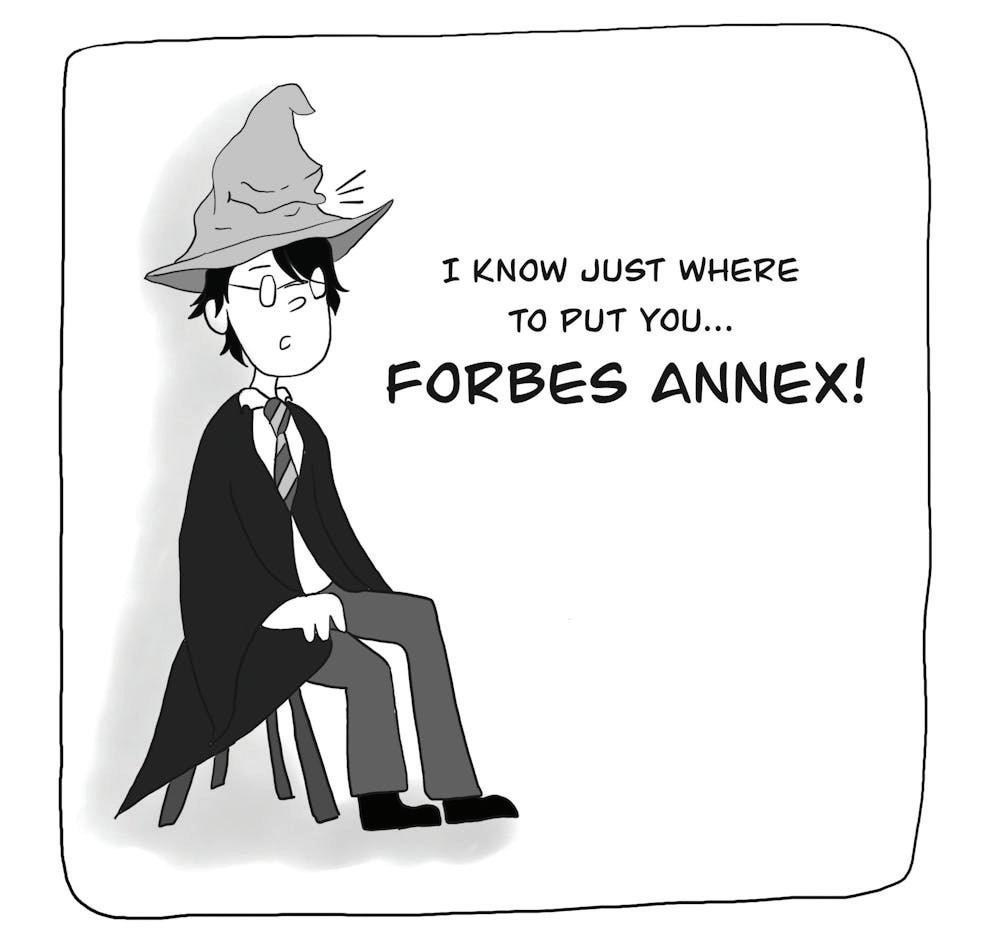
Students divided over new e-bike ban

ment, sent in an email to the campus community on Monday.
it’s going to be a two year thing, at least,” he said.
ment, sent in an email to the campus community on Monday.
it’s going to be a two year thing, at least,” he said.
Where the girls were, before they were at
By Lucia Zschoche Associate Archives Editor
In the fall of 1965, Peter Sandman ’67 was a junior, in a relationship, and, in his own words,
“as far from a ‘Princeton man’ as you get.” So, when he was instructed by ‘Prince’ Senior Editor Jim MacGregor ’66 to write a dating guide, he adopted the “guise of the hypothetical, stereotypical Scott Fitzgerald Princeton man.”
Student opinions are divided over the new campus-wide policy banning the use, storage, parking, and charging of electric bikes. To athletes and B.S.E. candidates who spoke with The Daily Princetonian, e-bikes made the campus commute easier; to the Cyclab workers fixing the bikes, the vehicles were a nuisance. The policy was ultimately a decision in which students had limited say, apart from a little-circulated survey to gauge student feedback.
The e-bike ban, which the University announced in an email on Monday morning, will go into effect on June 1. The University cited safety concerns regarding rider behavior and accident risk in its announce-
Among the most impacted students are athletes and engineering students, many of whom use ebikes to expedite longer commutes to buildings like the Engineering Quadrangle and Jadwin Gym. Several students described how the change would affect them, with several calling the ban “inconvenient” and “unreasonable.”
Zachary Butler ’29, an Electrical and Computer Engineering student, said that he relies on his e-bike to get to classes in the E-Quad on time. “If I had known they were going to ban e-bikes, I wouldn’t have gotten one in the first place,” Butler said.
Matthew Giannetti ’29 echoed this sentiment. “I definitely put a lot of money into an [e-bike] thinking
Several athletes also pointed to the strain this would place on an already intensive schedule full of daily training, rigorous academics, and competitions.
Jessica Phelps ’28, a member of the women’s softball team, described her experience her freshman year with a manual bike, which she said was not a realistic option when commuting to Meadows Racquet and Recreation Fieldhouse, which is a 35-minute walk from Mathey College, and a 25-minute walk from Frist Campus Center.
“When you need to get from class to practice in the span of 15 minutes, it’s very unreasonable,” Phelps said.
For many students affected by the
By Elizabeth Hu Staff News Writer
The former College of New Jersey and the current College of New Jersey (TCNJ) are connecting this upcoming fall, with a new initiative where Princeton University students and TCNJ students will be able to cross-register in certain courses at each other’s institutions for no additional charge.
TCNJ offers courses in many subject areas not regularly taught at Princeton, including criminology, business, education, and nursing. Princeton does not offer many pre-professional courses due to an absence of graduate-level professional schools. The agreement only applies during the academic year, and is set
to run for five years. An evaluation will be conducted after the first two years.
This arrangement carries “the expectation that the agreement will be balanced over time and will benefit each institution commensurately,” University spokesperson Jennifer Morrill wrote in a statement to The Daily Princetonian.
TCNJ is located in Ewing, N.J., around 20 minutes from Princeton by car. According to Morrill, this agreement does not include any form of transportation support.
“If either institution wishes to provide transportation to its students participating in this agreement, it does so at its own discretion,” Morrill wrote.
Academic administrators from both institutions and the instructor of the
course must approve a student’s enrollment.
According to Morrill, cross-registered courses should count towards a “student’s degree requirements at the home institution and will typically be courses at the same degree level.” Only one course per student may be approved each semester, and the course cannot be similar to one already taught at the home institution.
The limited number of courses “aims to maximize accessibility and ensure highly intentional course selection,” TCNJ Vice Provost for Academic Engagement Tammy Dieterich wrote in a comment to the ‘Prince.’
“No single institution can offer every
“This was a book written by a very non-preppy, New York Jewish male, pretending to be a ‘Princeton man’ writing for high school and college women, pretending to be writing for other men. It was a pretense on top of a pretense.”
Over the course of the 1960s, The Daily Princetonian published three dating guides for the University’s all-male student body, as well as students nationwide: two editions of “Where the Girls Are” in 1965 and 1967, and “Who the Girls Are” in 1968. Filled with jokes and insulting jabs alike, the first “Where the Girls Are” and “Who the Girls Are” described east coast women’s colleges and strategies on how to approach dating their
students. The 1967 edition of “Where the Girls Are” expanded the scope, covering public and coeducational institutions as well as women’s colleges. Although both editions of “Where the Girls Are” saw success nationwide among high school and college students, attention waned by the time “Who the Girls Are” was available for purchase in 1968. All three guides provided helpful logistical information about getting to each college, housing accommodations, rules, and more for men to navigate an east coast school culture that was still separated by gender. However, the descriptions of the girls and schools — at some points misogynistic, by today’s standards — were so outrageous that they were understood as satire at the time.
“I don’t have a sense that anybody was seriously [offended]. I have a sense that some people were seriously misled; I hate the idea that high school kids were looking at this and saying, ‘Oh, I better not go to the University of Missouri, they’re all dumb.’ It was too bad that happened,” Sandman explained. “I remember a lot of people being mock
See ARCHIVES page 18
U. AFFAIRS
By Leela Hensler Staff News Writer
Aishwarya Swamidurai ’26, Jamil Fayad ’26, and Enzo Kho ’26 are the three candidates to advance to the general election for Young Alumni Trustee. They have been selected by their class from an original pool of 15 candidates after eight days of voting.
The Young Alumni Trustee has all the same responsibilities and voting powers as the other members of the Board of Trustees and serves a four-
year term. Of the 1,499 members of the Class of 2026, 545, or 36 percent, voted in the first round of the election, according to University spokesperson Jennifer Morrill.
The Class of 2026 had the lowest number of candidates for Young Alumni Trustee since at least 2018. Last year, 31 members of the Class of 2025 ran for the position, a slight increase from the 27 who ran in 2024 and 23 in 2023.
Swamidurai, a major in the School

’27: ‘The e-bike is a luxury. It’s not really a necessity for the vast majority of people.’
E-BIKES
Continued
e-bike ban, the next-best option is TigerTransit, whose routes include Meadows and the E-Quad. However, several students said that the sometimes sporadic service of TigerTransit, which reduces the number of routes after 10 p.m. on weekdays and runs those reduced routes on weekends, does not fully meet their needs.
“Sometimes, we are at Meadows so late there isn’t even a bus,” Berklie Simmering ’29, a member of the women’s tennis team, said.
Both Butler and Phelps echoed logistical complications of planning around a bus schedule.
“My schedule is going to depend on [whenever] the bus schedule is running,” Butler said.
“With such a demanding academic schedule, we shouldn’t have to navigate our times around a bus schedule [just] so we could take the bus 10 minutes to go to practice,” Phelps added.
While the University cited safety concerns — “riding on sidewalks and pedestrian pathways, failing to yield to pedestrians, and carrying multiple riders on a single device” — some students feel these concerns are not grounded or valid reasons to institute a ban.
Kobey Riley ’29, who is on the
men’s track and field team, called the change “extremely insensitive to student needs.”
“Demanding students to change the way that they use their time and money is an overstep by the University,” Riley said. “I think that students should be able to choose whether e-bikes can be used amongst themselves.”
Tyler McDermott ’29, who is on the men’s lacrosse team, said, “I honestly wouldn’t say that it’s that much riskier than regular bikes.”
Other students expressed agreement with the University’s position that e-bikes created serious implications for community safety.
“I’m tired of trying to walk to class and being taken out by somebody speeding down the roads on their bike,” Michael Lum ’29 said. “It’ll make getting around safer for the general population of the school.”
Isaac Santos GS echoed this sentiment, adding that e-bikes tend to obstruct building entrances.
“There is a culture on campus of parking bikes pretty much anywhere, and sometimes blocking entrances to dorms and buildings,” Santos said. “I feel like the e-bikes in particular are rather large.”
Phia Dennis ’28 acknowledged the potential dangers of e-bikes, saying, “as a bike owner myself, I definitely get the convenience of having a bike, but I don’t think that near-motorcycle type vehicles should be allowed.”
Members of the Cyclab, the University’s on-campus bicycle repair center, which does repairs for members of the community free of charge, shared concerns over the safety and quality of e-bikes.
Joshua Yin ’27, manager of the Cyclab, said that the lack of fixability for e-bikes also poses a problem.
Of the 921 repairs Yin said the Cyclab did last semester, he estimated that 40–50 percent of them were ebikes, a statistic that Yin partially attributes to poorer quality parts.
“The vast majority of them use very bad parts that are not well suited for long term riding,” Yin said. “Consistently, within a year, you will need an entire new braking system for those bikes, which most students don’t know.”
Yin argued that the poor quality of parts puts pedestrians on the road in danger. He said that in the past week alone, he knows one person who was hit by an e-bike because it did not have brakes, and another who almost collided while on a bike for the same reason.
Servicing them is also significantly harder compared to traditional bikes. According to Yin, it takes twice as long for Cyclab to service an e-bike compared to a traditional bike. In addition, Yin said that Jay’s Cycles, which is the only bicycle store near the University, often refuses to service e-bikes because they’re not “worth fixing,” leaving Cyclab to fill
the gap.
“There’s a lot of nights where we have lines out the door, people waiting a long time, specifically because it just takes so long to service these e-bikes,” Yin said.
Cyrus Rosenberg ’28, who has worked at Cyclab for two years, wrote to the ‘Prince’ echoing Yin’s concerns over the quality of e-bikes, adding that “e-bike owners are generally buying them online and [are] much less aware about proper bike maintenance to prevent more systemic problems.”
“In addition, we cannot work or repair the electronics,” Rosenberg said. Yin, who is also a member of the men’s rowing team, countered arguments against the ban, saying that Princeton is highly walkable and that navigating campus with a traditional bike is feasible.
“I live above Small World, and I work out at the boathouse — the only people that would have a longer commute than me is somebody that lives off-campus [or] is a tennis player,” he said. “I’m biking up and down the hill [without] an e-bike, and it’s no problem.”
“The e-bike is a luxury. It’s not really a necessity for the vast majority of people,” Yin said. Despite the divisiveness of e-bikes and the campus discourse surrounding them, USG Vice President Anuj Krishnan ’27 shared in an interview with the ‘Prince’ that USG had ex-
pected the policy because of its discussion at a CPUC meeting last semester but was not involved in the decision.
Additionally, he said that USG was given prior notice of the policy change, including the text of and an explanation for the change.
Commenting on the concerns raised by multiple students, Krishnan said USG is working on communicating with the athletic departments and Transportation Parking Services regarding expanding TigerTransit schedules and adding student representation in the Environmental, Safety, and Risk Management Committee, which recommended the e-bike ban policy.
The e-bike decision comes after USG representatives said that they were left out of discussions around last semester’s dining and housing changes. USG President Quentin Colón Roosevelt ’27 has made increasing student representation a central theme of his administration, which he discussed during his “Presidential Priorities” presentation at last month’s CPUC meeting.
“I do think this [decision] speaks to something broader about how the University administration decides to engage with students. A lot of the time, it is ad hoc or quite limited,” Krishnan said.
Toby Chang is a staff News writer from Prescott, Ariz.
Swamidurai ’26: ‘It’s important that the trustees are present within the community and use existing levers to be able to ask questions.’
vitational informed his candidacy.
of Public and International Affairs who previously served as the 2025 vice president of the Undergraduate Student Government (USG), said that her time in USG had a significant impact on her decision to run.
“[It] gave me the ability to learn from so many remarkable student leaders across different campus constituencies … [and] a clear sense of the multifaceted nature of Princeton communities and how people have different needs here that need to be met in different ways,” Swamidurai told The Daily Princetonian.
Kho, a sociology major, was the 2025 USG president and also said that his time serving as president profoundly shaped his Princeton experience.
As former USG president, Kho follows two of his most recent predecessors, Avi Attar ’25 and Stephen Daniels ’24, in running for Young Alumni Trustee.
“During my tenure, we had to navigate difficult and often high-stakes conversations surrounding uncertainty around diversity and inclusion, international student visibility and safety, dining changes, and university-wide funding constraints, among other challenges,” Kho wrote in an email to the ‘Prince.’ “The experience prepared me to respond in times of distress and pressure, and handle high-stakes conversations with intentionality.”
Fayad, an ecology and evolutionary biology major and pre-med student, discussed how his experience as a Scholars Institute Fellows Program mentor and his leadership in the Princeton University Science Olympiad In-
He said that those activities led him to act as a mentor to other pre-med students and strengthened his skills in “teamwork and collaboration with others to create events, or to create a space on campus, or be a part of something that [helps] people come together.”
The three candidates each felt there were different challenges which would affect students and the University in the coming years.
Kho emphasized the importance of “not compromis[ing] the experience of students and the broader Princeton community” as the University continues to implement budget cuts.
In an email to the ‘Prince,’ he wrote, “The question we must grapple with is how we continue to provide the highest level of resources, opportunities, and care despite these constraints,” particularly for students from marginalized communities and international students.
Swamidurai said that she hopes to prioritize student wellbeing as the 2026 Young Alumni Trustee. “I think it’s constantly a question that we as you know, committed, passionate and high achieving Princetonians grapple with,” she said.
“But I think it’s also important that it’s met with an institutional commitment, telling people that we’ve got your back and you have the ability to not just do well here, but to thrive. And that commitment is going to be made, not just in the classroom, but outside it.”
Fayad told the ‘Prince’ that he believed it is most important that Princeton maintains its commitment to preparing students for success postgraduation through internship and development programs on and off-
campus.
“Having these opportunities, and [creating] more opportunities for them to network, more opportunities for them to get internships, or prepare for their careers — I think that would be [most] important,” he said. “Having Princeton provide something for [students], be beneficial for them, and stay as number one, and stay as the place that can be safe [on] campus, producing good mental health, producing good opportunities for students to move forward into their future careers.”
All three candidates agreed that it was important to prioritize remaining connected to campus and to increase engagement between students and the Board following graduation.
“I definitely think that it’s impor-
tant that the trustees are present within the community and use existing levers to be able to ask questions … directly to students and Princetonians today,” Swamidurai said. “And so I think it’s essential that that level of transparency through direct engagement increases, using existing levers within the trustee framework.”
Fayad said that he believed students should receive more regular updates regarding the trustees’ meetings and decision-making. “Maybe after each in person meeting, we could [provide] a little report,” he said, as opposed to “right now … they [only] send a report at each year or before the start of each year about decisions at Princeton.”
“Contributing to the University means understanding how it sustains relationships both on and be-
yond campus, and being intentional about building and maintaining those connections,” Kho wrote. “During my last remaining weeks on campus, I’ll continue to deepen my relationships within the Princeton community. I will continue to show up and contribute in the spaces I’ve been part of — the work is far from over.”
The general election for Young Alumni Trustee begins on April 29, closing on May 13. Voting will be open to members of the Classes of 2024, 2025, 2026, and 2027. The results will be announced at the Alumni Council Meeting on May 22.
Leela Hensler is a staff News writer and a staff Sports writer for the ‘Prince.’ She is from Berkeley, Calif.
Dieterich: ‘We’re excited to provide this student-centered option and share the unique learning experiences led by our faculty.’
specialized course a student might desire,” Dieterich was quoted as saying in an official TCNJ press release. “By working together, we’re excited to provide this student-centered option and share the unique learning experiences led by our faculty.”
On the whole, TNCJ community members expressed enthusiasm towards the agreement.
“It gives TCNJ the opportunity to expand, as we do struggle with limited classes and professors,” said Aabish Mughal, a first-year at TCNJ. Mughal plans on taking advantage of the program in her junior or senior year, possibly with a class on biomedical imaging. “I definitely do think many students are excited and interested in this program.”
Kate Zydor, a junior and vice president for academic affairs in the TCNJ Student Government, echoed this sentiment.
“I’m always trying to get student feedback on developments like this, so I’ve been asking students around campus, ‘Hey, just what are your thoughts about this?’ And I have heard nothing but excitement,” Zydor said in an interview with the ‘Prince.’
On the flip side, some Princeton students acknowledged the opportunity to learn among a more local student body.
“Princeton students are from all over the world,” Isaac Bernstein ’28, chair of the Undergraduate Student Government (USG)’s Academics Committee, said in an interview with the ‘Prince.’ “If you see nine out of 10 students from an in-state population [at TCNJ], that community is going to be able to teach a lot more about how Princeton students can engage within the New Jersey community.”
Bernstein is a former staff News writer for the ‘Prince.’
Abhinav Katkoori ’29 added, “a lot of people talk about the ‘Orange Bubble’ at Princeton, and … you feel detached from a lot of things.”
“I think having students from other universities, not even just TCNJ, … there [would be] a very, very different perspective than what we could already find here,” he continued.
Many students and faculty members from both institutions had no prior awareness that this agreement was happening, although Zydor recalled previously speaking with TCNJ Provost and Vice President for Academic Affairs Margo DelliCarpini about expanded educational opportunities for students.
“There have been many times where I’ve said to the provost, ‘If students want expanded opportunities, what can we do about that?’ And then, this was one of many responses to that,” Zydor said. DelliCarpini did not respond to a request for comment.
Even after the announcement was released, however, students have had to rely on social media platforms like Instagram and LinkedIn to learn about this agreement.
“I wish that they would have sent some kind of email to us as undergraduates to know, ‘how can we actually bene-
By Giselle Moreno News Contributor
“Reader, Come Home: The Reading Brain in a Digital World” by Maryanne Wolf will be the Pre-read for the Class of 2030, according to a University announcement. It will be the second Pre-read book in the past three years that centers on the use of artificial intelligence.
fit and utilize this?’” Mattie Isaac ’27 said.
“Both campuses … can play a critical role in publicizing it and underscoring the academic rigor at TCNJ, because [Princeton’s] assumption may be, ‘Okay, we’re Ivy League, we’re among the best, so what can we really gain from going to this other institution?” TCNJ Associate Professor of African-American Studies and Criminology Michael Mitchell said. “The responsibility is shared, but I think that there may even be more of an onus on Princeton to really promote this.”
Morrill wrote that, when deciding to institute this agreement, they considered “sustained student interest reported by the College and the Graduate School in some of TCNJ’s offerings, including in its School of Education.”
The agreement is primarily intended for senior undergraduate or master’s students; however, “other students may be considered on an exceptional basis.”
“Advanced undergraduates from Princeton may be approved to enroll in a graduate-level course at TCNJ on an exceptional basis, if all parties are in agreement,” Morrill wrote. “In no case will a graduate student from either institution be approved to enroll in an undergraduate course at the other institution through this agreement.”
Bernstein says he looks forward to taking classes at TCNJ with his friends.“We’re going to plan on exploring this opportunity senior year, just to continue to engage with the broader New Jersey pedagogical community and also explore this new fun opportunity to learn in a different environment with different students.”
Some rising seniors, however, do not see a cross-registered class in their future.
“Next semester, I will be a senior, so it is my last year at college. The hard part about this cross-registration is it has to be a class that is not offered at your school. I would only take a class at Princeton to fulfill a liberal learning requirement, and I am already finished with that,” said Samantha Kwok, a TCNJ junior.
“At this point I just have senior year left, and so I already have most of my classes picked out,” Christian Ganter ’27 said. “But I can imagine, had I been coming in, I would definitely look at the program and see what was offered.”
“Every class I’m taking next semester is to fulfill a major distribution or minor requirement … that’s my biggest focus,” Isaac said. “If I was not going to be a senior, I would probably consider it more, but I’m just trying to finish the race.”
Each institution follows their own policies for schedules, deadlines, grading, and course credits, and cross-registered participants are expected to adhere to those policies.
According to Morrill, both the Office of the Dean of the College and the Graduate School will update their websites to include additional information about how students will be able to participate in this new agreement.
Elizabeth Hu is a staff News writer, assistant head Copy editor, associate Data editor, staff Podcast producer, and contributing
most elaborate, critical, empathetic and reflective brain that the human species can achieve.
Started by University President Christopher Eisgruber ’83 in 2013, the Princeton Pre-read has served the purpose of bringing the incoming class together for an intellectual discussion.
In his foreword to the Pre-read version of the book, Eisgruber wrote, “I chose ‘Reader, Come Home’ as this year’s Pre-read because it addresses a question of vital importance to every entering student: Why should we continue to read long, challenging books when artificial intelligence agents can quickly summarize them for us?”
Wolf is the director of UCLA’s Center for Dyslexia, Diverse Learners and Social Justice. She previously served as the John DiBiaggio Professor of Citizenship and Public Service at Tufts University, as well as the director of their Center for Reading and Language Research.
“Reader, Come Home” is the last text in what she calls a trilogy of books about cognition. The previous two are “Proust and the Squid: The Story and Science of the Reading Brain” and “Dyslexia, Fluency, and the Brain.”
The Pre-read selection explores how digital technology is changing the way our brains read, arguing that the shift away from print and towards the screen is jeopardizing our capacity for deep reading. It proposes ways to cultivate a “biliterate” reading brain that can effectively navigate both print and digital reading.
In a statement to The Daily Princetonian, Wolf wrote that she wants to inspire incoming Princeton students to build the
“To do this, however, will require them a whole new understanding of reading and how it changes the brain. It means putting aside former childhood concepts of reading, and discovering that what I call ‘deep reading’ requires time, attention, cognitive patience, and reflection from them,” she wrote. She added that these abilities are threatened “by the temporal shortcuts of a culture that awards efficiency more than the quality of thought.”
Wolf hopes that students will see “deep reading” as a personal act of resistance against a mindless use of information. She believes that “critical thinking and empathy provide a platform for their [students] best thoughts and ultimately, for their contributions to a democratic society.”
In interviews with the ‘Prince,’ admitted students attending Tuesday’s Princeton Preview shared their thoughts on the book and the importance of having conversations about AI usage.
“I think the whole point of college … is to undergo the intellectual process of being a student here, and you can only do that if you use AI responsibly, and, in my opinion, in a limited way,” admitted student Marco Venegas said in an interview with the ‘Prince.’
“The more we can talk about it, the less it can be taboo.”
Admitted student Katie Bergsieker agreed that it is important to have nuanced, responsible conversations about AI. “It’s really easy to either label AI as something that’s really good, or something that’s really bad,” Bergsieker said.
“Reading matters a lot for how we learn, store knowledge, and how we write down and communicate our own ideas,” admitted student Benjamin Wang said. “I think AI is going to be very big in the future, and it’s very good to keep up with the times.”
“With Princeton education and liberal arts, it is important to emphasize how reading will change with AI,” he added.
“I think talking about AI in a college setting is very important … We need to make sure that we’re still struggling through that learning process, because that’s how we grow and that’s how we learn,” Delia Dixon, another admitted student, said.
“We need to focus more on how we can use it [AI] from a research perspective, and less of a servant for your tasks, ” she continued.
“I think it’s actually very important to be talking about AI, since it’s growing and we are probably going to be using it in the future,” shared Yelena Guerrero, an admitted first-year who is not committed to the University. “It’s better to spread awareness about how to use it in a good way, because people are not going to stop using it.”
For Wolf, the selection of her work to be the Pre-read for the class of 2030 marks the fulfillment of her dream as a writer.
“I can only compare it to the hopes that many writers possess: that their best efforts to articulate their deepest hopes for humanity will become what Proust called that ‘fertile miracle of communication’ that happens in the solitary home of the reader’s mind,” she wrote.
In 2024, the University selected “The Worlds I See” by Fei-Fei Li ’99 as the Pre-read book for the Class of 2028. Li’s book focuses on the future of AI and her own life experience as she and her family searched for a sense of belonging as immigrants to the United States.
Incoming students receive a copy of the book over the summer, and will engage in a conversation about it at the Pre-read assembly during orientation.
Giselle Moreno is a News contributor from Dallas interested in covering the Municipality of Princeton.

By Nika Schindler & Nico David-Fox Assistant & Head News Editors
When opening the University’s Campus Map app, users now see the message, “This app will be taken offline on May 31 and will no longer function after that date.” To maintain services and cut costs, the current app will be replaced by a digital interactive campus map built and run by the Facilities department, according to University Spokesperson Jennifer Morrill.
The new online map — which is expected to open in the coming weeks before officially replacing the existing app this summer break — marks a shift away from the third-party-hosted app the University currently relies on. The new map will “be available to share, embed, and print/export,” features meant
U. AFFAIRS
to facilitate events and visitor communications, Morrill wrote to The Daily Princetonian.
The new, in-house version will improve “service delivery and long-term sustainability, with cost savings as a secondary benefit,” according to Morrill.
The emphasis on cost savings comes alongside fiscal austerity measures announced by University President Christopher Eisgruber ’83 in February. Released in 2023, the current Campus Map app was developed by Applied Information Group and offers turn-by-turn walking directions, TigerTransit tracking, and routes designed to accommodate mobility needs.
The change to campus navigation comes at the tail end of a period of sustained construction and expansion that has significantly reshaped campus in recent years. In 2023, at least
11 construction projects were simultaneously underway. Major projects — including the development of Hobson College, the expansion of the School of Engineering and Applied Science, and renovations to the Princeton University Art Museum — have altered familiar walking routes and changed campus permanently.
Of the 34 students surveyed by the ‘Prince’ around campus, the majority were aware of the Campus Map app, but only five said that they had downloaded and used it.
Aarnav Sheth ’28, who said he had never heard of the app, opted for a different navigation tool. “When I was a freshman looking for my classes … I would just use Google Maps,” he said.
When asked about the app’s replacement, he said, “I don’t
think this is much of a loss or a gain to anyone.”
Eleven campus visitors surveyed by the ‘Prince’ said they would consider using the app or were already users.
Matthew Rusher, a parent of a student in the Class of 2027, has used the Campus Map app sporadically for the past three years without noticing any issues. When asked what he thought about the University creating a new version, he said, “I’d rather they do that than lose [it].”
Despite the app’s expiration on May 31, updates rolled out as late as March 31, including enhancements to the user interface and expanded features for navigation. Before that, the app had been updated on average every few months since its release.
The Campus Map app was part of a broader wayfinding
initiative introduced by the University in 2022 to help users navigate an expanding campus. That system included physical map kiosks at key campus entrances, standardized signage, and a unified visual design across print and digital platforms.
Morrill told the ‘Prince’ that the new map will serve as “the authoritative source for wayfinding” on campus once it fully replaces the existing app this summer.
Nika Schindler is the assistant News editor for the ‘Prince’ leading University operations coverage. She is from Atherton, Calif.
Nico David-Fox is a head News editor for the ‘Prince.’ He is from Washington, D.C., and often covers academics and the Undergraduate Student Government.
By Hayk Yengibaryan Head News Editor Emeritus
Electric bikes will be banned on campus beginning June 1, according to a campus-wide message obtained by The Daily Princetonian set to be distributed Monday morning. The decision was finalized by the Environmental, Safety, and Risk Management Committee (ESRM).
“E-bike users have increasingly been observed violating safety rules, including riding on sidewalks and pedestrian pathways, failing to yield to pedestrians, and carrying multiple riders on a single device,” the message reads.
The ban updates the University’s existing Personal Electric Vehicle (PEV) policy and prohibits e-bikes in the restricted zone, which includes all of the University’s main campus. It extends to e-bike use, storage, parking, and charging, and will apply to students, faculty, staff, and visitors.
The FAQs note that the restricted zone includes University-owned sidewalks along Washington Road.
The message also states that students should not bring ebikes to campus at the start of the Fall 2026 semester, warning that “any e‐bike found on campus after June 1 will be considered abandoned property and will be subject to confiscation, with no expectation of return.”
The only exception to the rule is
for commuters: Faculty, staff, and graduate students with proof of an off-campus address may apply for a University e-bike commuter permit and park it in a designated space near TigerTransit stops. Undergraduates are not eligible for the permit.
The FAQ obtained by the ‘Prince’ states that e-bikes cannot be operated as traditional bicycles, meaning that simply removing the battery will not exempt the bike from the ban.
They also provide guidance on shipping the e-bike home, which may prove complicated, as most airlines prohibit batteries in cargo and most commercial shipping services require e-bikes with larger lithium-ion batteries to be handled as hazardous materials.
Students are encouraged to contact a local bike shop or thirdparty hazmat shipping company.
The decision comes after a months-long debate over campus safety, discussed at the final Council of the Princeton University Community meeting of the fall semester.
During that meeting, Director of Campus Safety and Health Kelly States told attendees that ESRM had been tracking e-bike injuries on campus in cooperation with University Health Services.
States said at the meeting that e-bikes have “gotten much, much larger, they’ve gotten faster, they are heavier, they are more powerful.” She added that the ESRM be-
lieves that the number of injuries was “vastly underreported,” and didn’t capture the “near misses.”
The ban aligns with Princeton’s 2019 Campus Mobility Framework, which aimed to keep motorized vehicles “mostly behind the scenes,” States noted.
States also said that on a national scale, “pedestrians being struck by bicycles and killed by bicycles was nearly unheard of from a manual bike perspective versus an e-bike perspective.”
At the time, informal polling showed that the student body was “split” on the issue, with States noting that staff, faculty, visitors, parents, and contractors also had concerns.
Following the December CPUC meeting, ESRM released a public feedback form and reconvened in February.
In January 2024, the University banned e-scooters as part of a broader PEV policy, which quickly led to the confiscation of at least 80 e-scooters.
That policy also imposed restrictions on e-bikes, including no motor-only riding, no speeds exceeding 10 miles an hour, no riding on pedestrian pathways, and no use inside buildings.
The University’s decision comes just months before e-bike regulations are set to take effect across the Garden State. During his last full day of office in February, former Governor Phil Murphy signed a bill enacting some of the strict-

est e-bike regulations in the country.
The new state law — which is set to take effect in July — requires riders to register, license, and insure their e-bikes, mandates minimum rider ages, and places a one-year ban on online e-bike sales.
University spokesperson Jennifer Morrill told the ‘Prince’ in February that the legislation, “along with feedback collected from the campus community,” would inform the CPUC’s discussions about a potential policy update.
The FAQ notes that “the ESRM committee updated this policy based on campus feedback, safety observations, and established campus mobility principles,” and
that this decision was not solely based on the new state legislation. Students who rely on e-bikes for daily transportation across campus, particularly athletes who regularly commute between upper campus and athletic facilities, have previously raised concerns about a potential ban. In the FAQ, the University proposes TigerTransit as an alternative for longer trips, noting that stops are within a five- to 10-minute walk of most buildings on campus.
Hayk Yengibaryan is a head News editor emeritus and senior Sports writer for the ‘Prince.’ He is from Glendale, Calif. and typically covers breaking news and profiles.
By Andrew Arthur Staff News Writer
At its Sunday meeting, the Undergraduate Student Government (USG) senate passed a resolution adopting the “One Too Many” campaign’s statement letter on student mental health, which elicited criticism from University Health Services (UHS). The USG also heard preliminary findings from the Academic Life Total Assessment (ALTA) survey on AI use in classes, and received updates from the academics and sustainability committees.
The resolution adopting the “One Too Many” campaign’s letter, submitted by Mental Health Committee Chair Aakansh Yerpude ’27, passed 24–0, with one abstention. The statement letter will be published on the official USG website alongside a tally of the vote count, functioning as a formal USG position that senators will bring directly to University administrators.
According to Yerpude, the letter is the product of seven months of work spanning two USG administrations. It draws on an online survey of 207 students and in-person interviews with over one hundred students. Yerpude noted several revisions since last week, including a shift away from “crisis” language that exaggerates the mental health situation on campus to avoid risks associated with sensationalizing suicide, and updated descriptions of existing University processes around Counseling and Psychological Services (CPS) referrals, housing, and leaves of absence.
Following the passing of the resolution, a letter from John Kolligian, executive director of UHS, was sent to USG members on Sunday night. It raised several concerns about the research cited in a draft of the let-
ter and the “language and characterizations” regarding mental health.
Kolligian wrote that he had planned to send his comments before the vote, having understood the resolution would be heard a week later, at the April 19 meeting. While affirming a shared “commitment to improving student wellbeing,” Kolligian raised several concerns about the drafted letter, including that its central claims rely on survey findings whose statistical methodology is not made available for review, that it leans heavily on opinion pieces and campus journalism rather than peer-reviewed research, and that some language could “unintentionally heighten distress among vulnerable students and discourage help-seeking.”
He also noted that Princeton’s internal data shows a high level of student satisfaction with CPS and timely access to initial consultations, a picture he suggested was “more complex” than the drafted letter conveys. Kolligian additionally pointed to a forthcoming report from the University’s Task Force on Mental Health produced in partnership with the Jed Foundation, which he said covers many of the same themes, and encouraged USG to review it before moving forward.
In an interview with The Daily Princetonian directly following the meeting, Yerpude said the strength of the campaign’s letter lies in its consolidation of years of fragmented advocacy. “One thing that I think is different about this letter and this movement is that it’s sort of a collective of everything that has been happening for the past five or six years,” he said.
Yerpude identified integrating wellbeing into pedagogy as the recommendation most likely to
face resistance, calling it “the meatiest recommendation,” given the number of stakeholders involved. Specifically, the letter proposes implementing the WellBeing in Learning Spaces Toolkit developed by TigerWell, adding “reflection periods” during intense points of the semester, as well as audits of student workload, among other recommendations.
In an interview with the ‘Prince’ following Kolligian’s letter, USG Vice President Anuj Krishnan ’27 and Yerpude said that they made revisions to the final version of the letter that was passed in the Sunday resolution.
“Our goal was never to create this statistically significant report or survey,” Yerpude said. “It was more so just to surface voices,” he stated, noting that the framing of mental health issues on campus has evolved, and statistics cited in the final letter have been further contextualized compared to a previous draft they said was shared with UHS.
Regarding USG’s decision to vote on the resolution today, Krishnan said that “we decided that it was the right course of action to vote on it today, because we had a chance to speak with students, members of USG, and we received admin feedback.” He added that the resolution was “a starting point” for future conversations around mental health with University administrators.
Former Mental Health Committee Chair Allen Nieva ’26, who helped initiate the efforts in the past, called the resolution’s passage “a very powerful and symbolic move” at the meeting.
In addition to the passing of the resolution, USG President Quentin Colón Roosevelt ’27 delivered both
the president’s and treasurer’s reports, standing in for USG Treasurer Marvel Jem Roth ’28, who was away at a flag football event. Colón Roosevelt looked ahead to an upcoming meeting with University Executive Vice President Katie CallowWright, and noted that USG elections voting would open on Monday at noon.
U-Councilor Shria Ajay ’27 then presented preliminary findings on student AI use from the ALTA survey, a product of a USG initiative which drew responses from 1,193 undergraduates, approximately 21 percent of the student body.
The survey found that 64 percent of Princeton students use AI in academics on a weekly basis, up from 24 percent who reported doing so in high school. ChatGPT was the most widely used tool, followed by Gemini and Claude. Students most commonly used AI for detailed topic explanations, broad summaries, and help with studying, while coding and data analysis ranked near the bottom — a result Ajay described as surprising.
A full report of results from the ALTA survey is expected to be published within the next two weeks, with Ajay set to meet again with Dean of the College Michael Gordin and the Office of Institutional Research to walk through the findings.
The Sustainability Committee then previewed its upcoming symposium, scheduled for April 23, which will feature 10 to 15 tabling organizations, including the African Wildlife Foundation and League of Conservation Voters, followed by five panelists from a range of sustainability-oriented groups.
Academics Committee
Chair Isaac Bernstein ’28 reported his work over the past week, including a joint meeting with the USG Civil
Liberties Working Group on due process and disciplinary reform; his attendance at a virtual multi-university mental health and academic policy conference alongside representatives from UCLA, McGill, Oxford, Toronto, and Cornell; and ongoing work on a project to update outdated minor degree requirement information.
Bernstein ’28 is a former staff News writer for the ‘Prince.’
In an interview with the ‘Prince’ following Sunday’s USG meeting, Bernstein emphasized both the intensity of student interest in the proctoring debate and the steps he took to represent student views to administrators.
“The fact that we were able to get 806 responses in six to seven days shows that this is an issue the University community really cares about,” he said. He also noted that the results of a survey he distributed to the student body on the proctoring debate narrowly skewed to supporting proctoring in-person exams, with 50.1 percent of participants supporting proctoring and 44.9 percent opposed. The survey results were shared with Gordin and the Committee on Examinations and Standing prior to their vote.
Bernstein said he personally reviewed roughly 277 open-ended responses, “extracted the most common responses” for a summary circulated to students and the dean, and also provided the raw spreadsheet of all responses for University administrators “in case they wanted to review that further.”
Bernstein also raised concerns about due process in student disciplinary structures, highlighting the Student Group Accountability Board (SGAB), which “has jurisdiction over all clubs on campus” and “is able to impose punishments” on student groups who have violated University policy, but has no constitution and anonymous membership. Extracurricular disciplinary processes can create “stress and pressure” that shapes students’ “academic experience,” Bernstein said. He and other student leaders are planning to meet with ODUS Assistant Dean for Student Programming Jelani Johnson and members of the SGAB to learn more about the board’s procedures, goals, and jurisdiction, and to “brainstorm some ways to create reform to help students be better supported in their club environments.”
The USG senate meets every Sunday at 5 p.m. in Robertson 016 and is open to all students.
Andrew Arthur is a staff News writer from London and is on general assignment.
U.S. President Donald Trump’s proposed 2027 fiscal year budget included massive cuts to climate change research and the National Institutes of Health, which may pose challenges to research funding at Princeton.
The Association of American Universities (AAU) released a statement on April 3, urging Congress to stand against the proposed budget, which is threatening a 12.3 percent cut to the National Institutes of Health, a 54 percent cut to the National Science Foundation, and cuts to NASA and some research agencies of the Department of Energy.
University President Christopher Eisgruber ’83 currently sits on the AAU’s 13-member Board of Directors. He served a one-year term as the chair of the Association from October 2024 and currently holds the official position of past chair.
In fiscal year 2024, Princeton received $455 million in government-funded grants and contracts, including from the NIH. Last spring, the Trump administration suspended $210 million in federal grants to research at Princeton, though around half the total was reinstated over the summer.
Trump’s proposed budget includes a historic $1.5 trillion for defense spending, representing a 44 percent increase from last year’s defense budget.
Alongside a 12.3 percent cut to NIH’s annual budget, Trump proposed the elimination of institutes and centers “replete with DEI expenditures,” specifically the National Institute on Minority Health and Health Disparities, which include research on the impacts of structural racism on social interconnectedness among minorities and the stigmatization of HIV.
“NIH broke the trust of the American people with wasteful spending, misleading information, risky research, and the promotion of dangerous ideologies that undermine public health,” Trump’s proposal reads.
The press release from AAU asserts that the slashes to funding could have disastrous consequences for medical research — research that is also being done at Princeton. As of February 2025, Princeton has 199 active NIH grants that make up approxi-
mately 22 percent of the University’s research portfolio across areas such as cancer research and child development.
“Such a drastic cut would turn the United States overnight from the world’s unquestioned leader in biomedical research to last place among our competitor nations — reducing the chances that American science cures cancer, Alzheimer’s, or other terminal and debilitating conditions,” the release reads.
If the proposed budget comes to pass, funding for the NSF would be slashed by over half — from 8.8 billion dollars, which has been requested for both FY25 and FY26, to 4 billion dollars. This is a 54.7 percent decrease in the total amount of money being requested for the budget.
In the 2024 fiscal year, Princeton spent over $70 million in NSF-funded research and development, and Ph.D. students at Princeton were affected by the cancellation of the NSF Postdoctoral Fellowship last February.
While the proposed budget does not directly address the reasons for slashing the NSF funding, the AAU believes that the cuts could “severely weaken our nation’s ability to generate new fundamental knowledge and the cutting-edge scientific breakthroughs that have served as the foundation for the devel-
opment of whole new industries in biotech, information technology, and artificial intelligence.”
NASA would also have a dramatic cut to funding, should the budget come to pass. In FY25, the $24.8 billion had been requested, with a small decrease to $24.4 billion in FY26. Trump is currently requesting $18.8 billion — a 23 percent decrease.
The budget states that “by cutting unnecessary and overpriced activities, the Budget strengthens [NASA’s] focus and ensures that every dollar spent propels America’s dominance in the final frontier,” as well as funding the “first elements of a permanent American presence on the lunar surface.”
Parts of the cuts to NASA would include a $3.4 billion decrease in NASA Science, which actively funds research grants; a $297 million decrease in funding for space technology research and development that the proposal asserts “is not driven by user needs or wastes limited resources” and supports unnamed “frivolous technology projects with no applications”; and a $143 million decrease in Office of STEM Engagement funding, which the proposed budget claims subsidizes “woke STEM programming and research that prioritizes some groups of students over others.”
While it is not immediately
clear whether labs at Princeton will be directly affected, there are labs at Princeton that conduct research using grants from NASA and on space technology, including the Space Physics Lab and the Princeton Plasma Physics Laboratory (PPPL).
Trump’s budget request for the DOE totaled $53.9 billion, approximately 2 percent greater than the $53 billion enacted for the 2026 fiscal year. The proposed budget heavily prioritizes the development of nuclear weapons capabilities, directing $32.8 billion in funding to the National Nuclear Security Administration for the expansion and modernization of nuclear warheads and deterrents — a 12 percent increase from 2026 levels. Proposed cuts to the DOE include funding for climate change and environmental justice research, which the budget refers to as “Green New Scam projects.”
Last spring, the PPPL, a DOE national laboratory managed by the University, laid off staff as part of a restructuring effort “to align with sponsor and PPPL priorities and projects, and to ensure that PPPL operates within its available and projected budgets,” Deputy Director for Research Jon Menard wrote at the time.
“Likewise, the president’s proposed cuts to NASA and the research agencies of the Department of Energy would
hobble the broader American scientific enterprise at a crucial time when dominance in emerging technologies like artificial intelligence and quantum computing is essential to keeping Americans safe and prosperous,” the AAU wrote.
Congress is expected to begin editing the FY27 proposed budget in May, with a Congressional floor vote potentially in August.
In last year’s budget, Trump proposed funding cuts to NSF, NASA, and other research agencies, but Congress largely kept these funding levels stable.
“We urge Congress, as they did with the FY26 budget, to reject these short-sighted cuts and increase investments in America’s scientific enterprise to ensure that our nation continues to lead the world — and that all Americans keep benefiting from the greatest research-andinnovation engine the world has ever known,” the AAU wrote.
Luke Grippo is a head News editor for the ‘Prince.’ He is from South Jersey, and typically covers high-profile interviews and University and town politics.
Sena Chang is the associate News editor for the ‘Prince’ leading investigations. She is from Japan and South Korea, and she often covers local politics and student life.
By Nico David-Fox
Head News Editor
A male undergraduate student was struck by a motor vehicle while riding a bicycle and was subsequently
trapped underneath for more than 20 minutes on Elm Drive late Tuesday night. The driver, a University employee, was issued a motor vehicle citation, according to University spokesperson Jennifer Morrill.
The student sustained injuries and was transported to a local hospital, Morrill wrote to The Daily Princetonian. He was in stable condition after the accident, according to a
Public Safety officer on scene. The incident occurred at approximately 11:45 p.m. near Morrison Hall and Richardson Auditorium. The crash took place on Elm Drive outside of Alexander Hall, which houses Richardson
rium.

By Veda Devireddy & Vincent Etherton Assistant Data Editor & Senior Data Writer
With the first week of room draw behind us, students have gotten a taste of both the new room draw system and the new rules that come with it. Some of these changes include the new Available Rooms Module rather than hourly PDF lists of available rooms, a new Room Viewer site for 360 degree viewing of certain rooms, and a new Housing and Real Estate Services landing site. At the start of draw on April 7, there were 855 upperclassmen rooms available. By the evening of April 10, that number had shrunk to under 400.
To better understand the drawing preferences of the Class of 2027, The Daily Princetonian analyzed hourly records of the available rooms, tracking dorm size, space, and location. Under the new system, groups draw every four minutes, rather than every two minutes as in previous years. Approximately 15 groups drew every hour. In total, 458 rooms and 636 upperclassmen beds were chosen by rising seniors, with an average of 1.4 individuals per room.
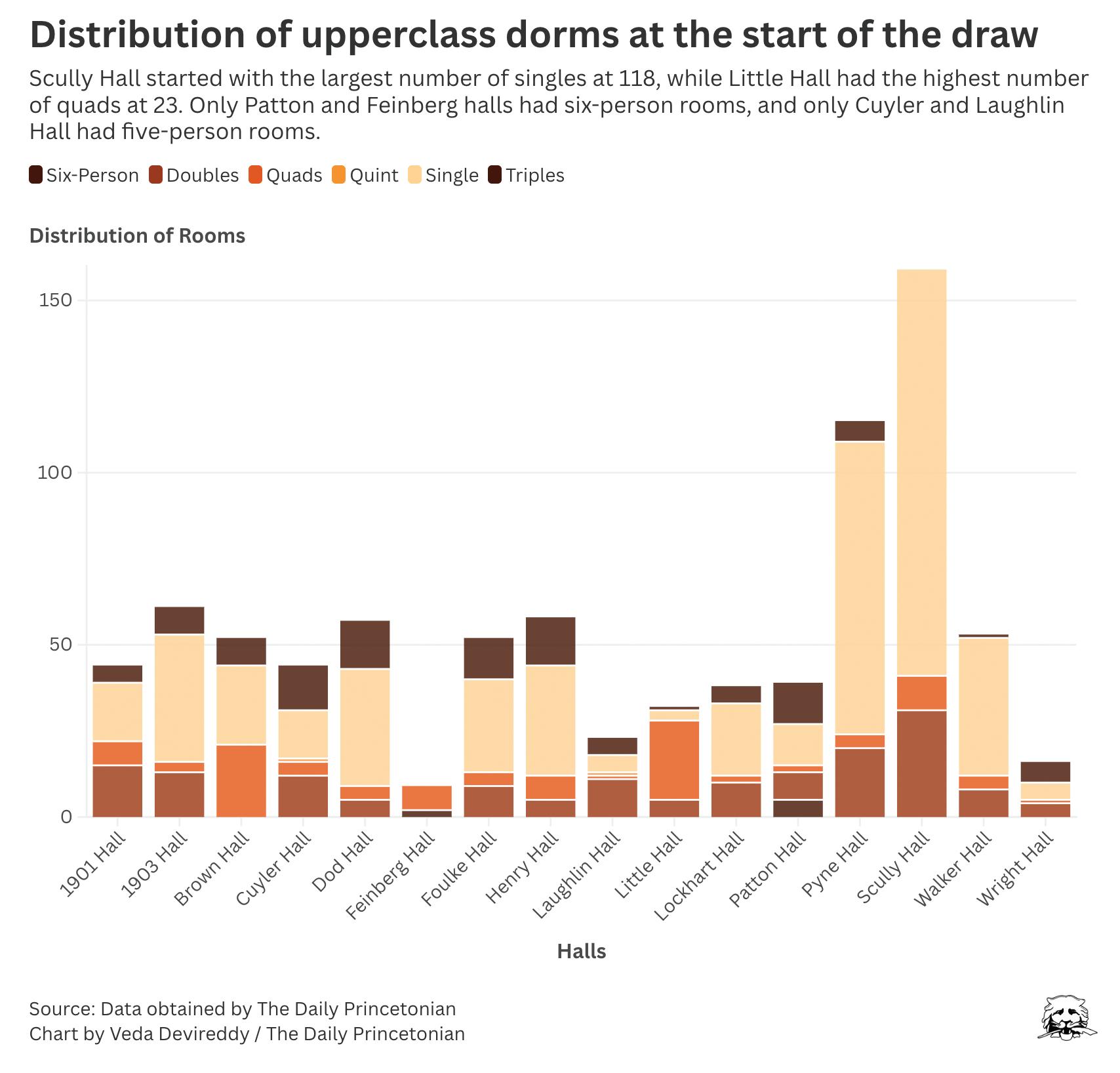
Before draw began, all available rooms were listed on the Available Rooms Module through the Housing and Real Estate Services portal. Within upperclass dormitories, Scully Hall started with the largest number of singles at 118, while Little Hall had the highest number of quads at 23. Only two halls, Patton and Feinberg, had six-person rooms. Similarly, only Cuyler and Laughlin Hall had five-person rooms. Triples were more common, appearing in every hall except Scully and Feinberg.
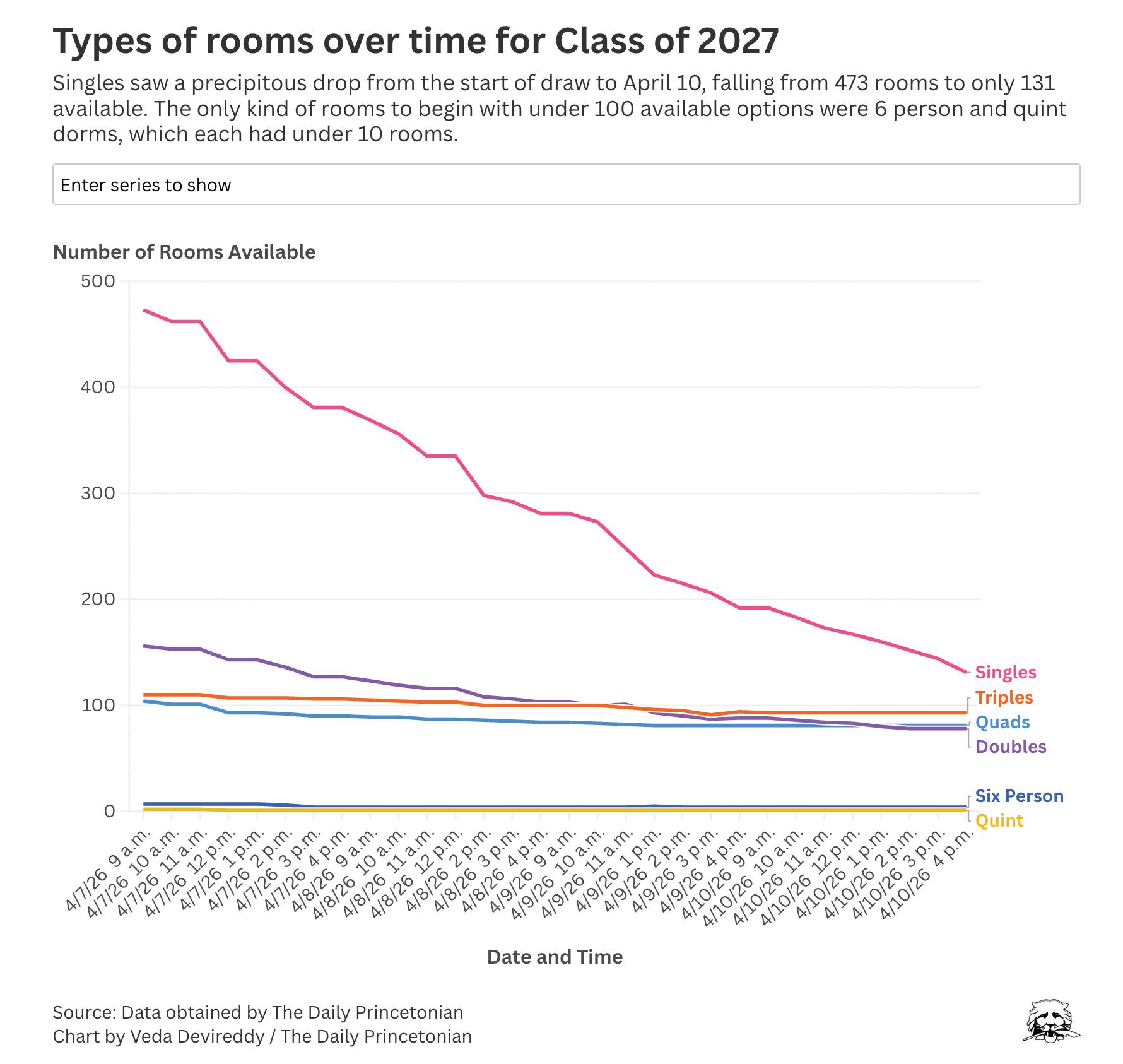
When comparing rooms by capacity, singles were by far the most popular. The graph below shows the total number of rooms of each size available at various points during rising senior draw. Singles, which started with over 470 available rooms, fell to just 131 by 4 p.m. on April 10. The smallest change came from quints. Only two five-person rooms were available at the start of draw, and one was selected between 11 a.m. and noon on April 7. Apart from singles, doubles also saw a noticeable decrease, falling from 156 to 78 available rooms over the course of the first three days of draw.
Next, the ‘Prince’ looked at the locations
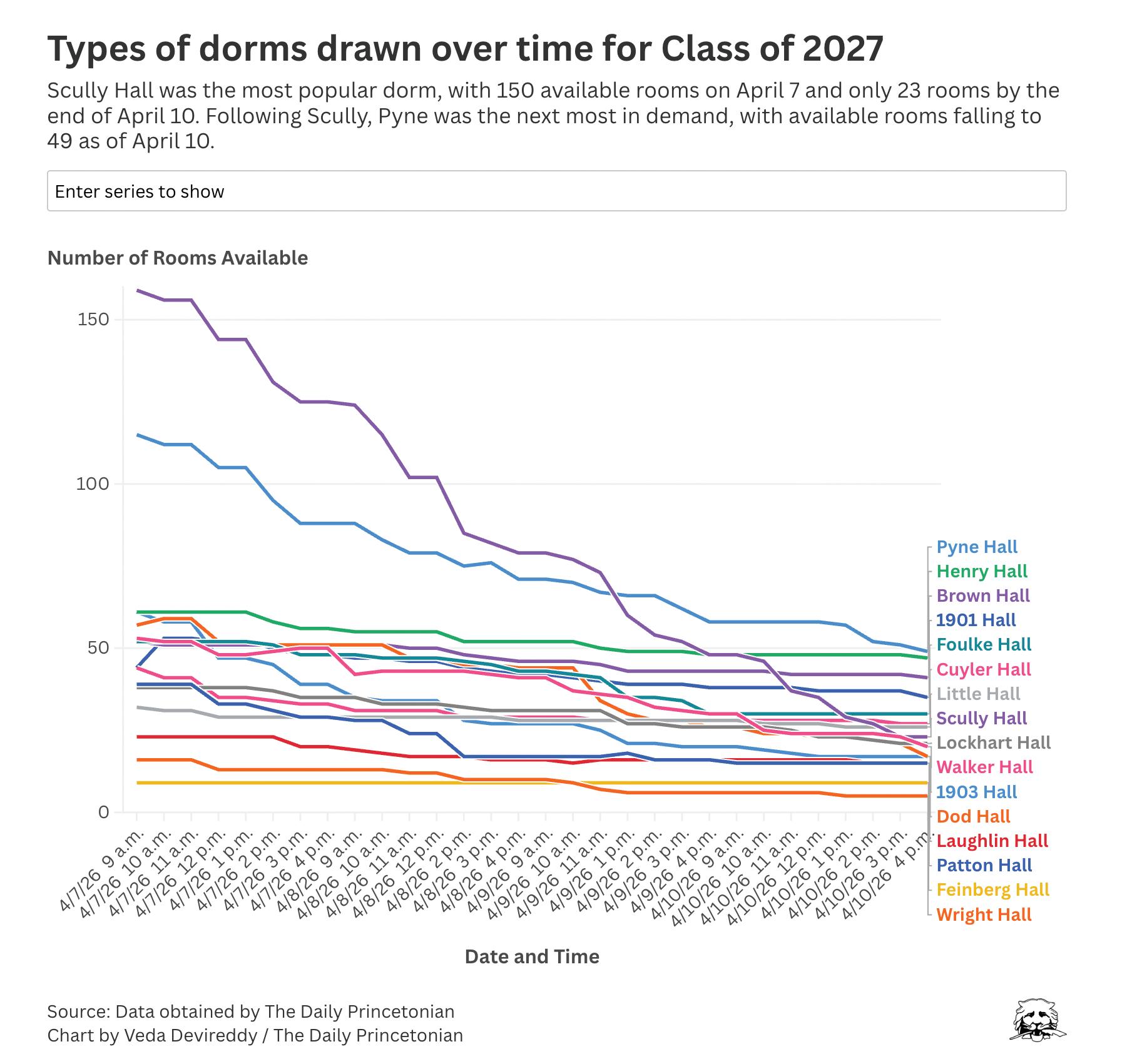
that the Class of 2027 favored most. Scully was the most popular upperclassmen dorm, falling from 159 available rooms to only 23 by the end of April 10. After Scully, Pyne Hall had both the second highest number of available rooms at the start of draw at 159 and the second highest number of rooms drawn at 66. Meanwhile, Feinberg had none of its nine rooms drawn by the Class of 2027, and Little had only six of its 32 available rooms drawn on April 10.
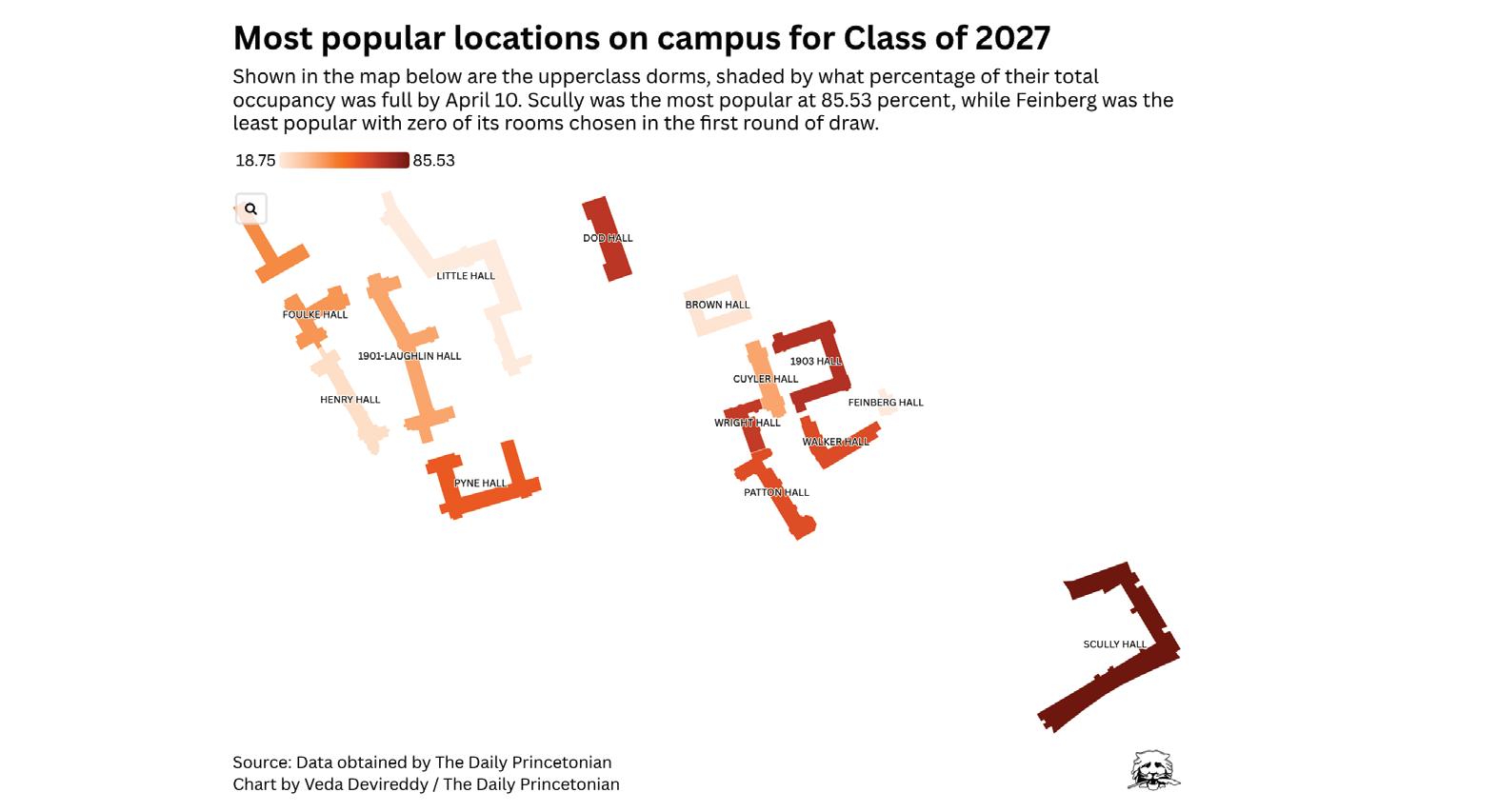
By location, current juniors did not seem to have an overly strong preference for a specific part of campus. The graph below shows all upperclass dorms, shaded by percentage of total occupancy that was full by April 10. Scully was the most popular at 86 percent occupancy, while Feinberg was the least popular in the first round of draw. Other popular locations included 1903 Hall, Dod Hall, and Pyne Hall, which were all over 50 percent full by the end of April 10. But dorms like Brown and Henry, both of which are near the popular 1903 and Pyne respectively, were under 25 percent occupied.
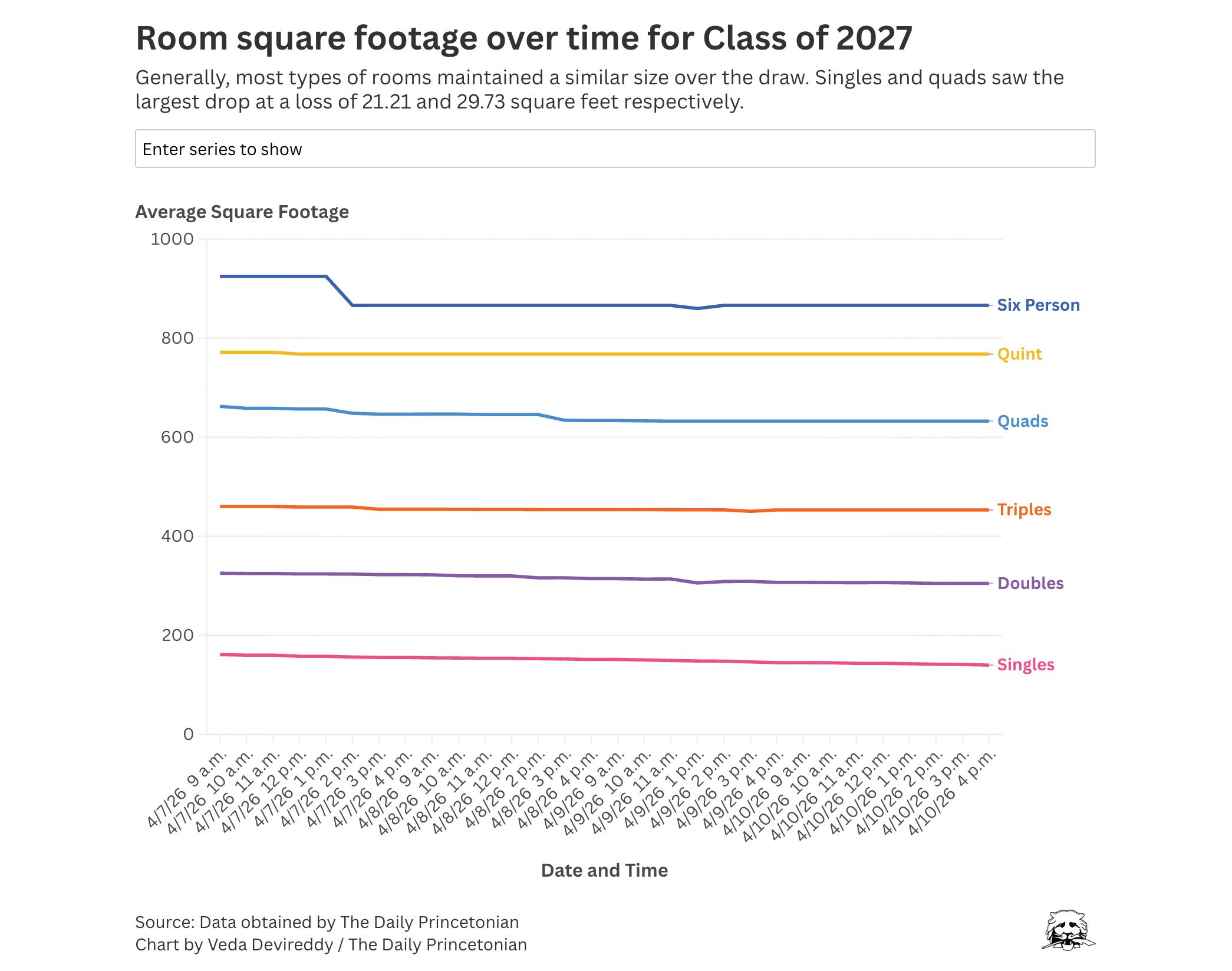
The last metric the ‘Prince’ analyzed came in the form of square footage. Here, most kinds of rooms saw little to no real change in their average size. Excluding six-person dorms on account of their small numbers, singles and quads saw the largest drop with a loss of 21.21 and 29.73 square feet respectively. Overall, the size of each dorm type stayed relatively constant.
At the time of publication, rising juniors have already begun their draw. This year, the Classes of 2027 and 2028 both had draw times on the morning of Monday, April 13, though rising seniors will finish their draws before rising juniors begin their draw. Data from 9–10:06 a.m. on April 13 for senior draw was not available for this article. Members of the Class of 2028 who are unable to draw into their residential college will have to contend for what remains after the picks from the Class of 2027.
Veda Devireddy is an assistant Data editor for the ‘Prince.’ She is from Baton Rouge, La.
Vincent Etherton is a senior Data writer and head Data editor emeritus for the ‘Prince.’
By Ethan Cole & Anderson Chiang
1 Mess up
6 Hydrogen or helium, e.g.
9 ___ no good 13 Boulevard, en francais 14 Roma, scrambled?
16 Mom’s mom, informally
Authentic 19 ___ up (hunkered down)
Reasons
Tater ___
24 Singer Suzanne, whose name is a star
25 Takes another crack at 28 Happy hormone, informally 30 Clearance event slogan
32 Part of an abacus
33 Scarf down
34 K-pop group with an “army” of followers
35 Picnic pest
36 Type of marker used on a whiteboard
40 Mild chuckle
43 Network for “Euphoria” and “The White Lotus”
45 Spanish “Listen up!”
46 Ripped (up)
47 1775–1783 conflict, familiarly
53 Relatives of the banana
54 Believers in a nonintervening God
55 Red carpet affair
56 Bit of Uber info, for short
57 ___ This Way (Lady Gaga anthem)
58 Divvy up
60 Any interest?
65 Buona ___ (Italian greeting)
66 Wetland creature
67 Mandarin “hello”
68 Gave a look
69 Impress greatly
70 Sounds made with fingers
1 Classic diner order 2 Rower’s blade
Capote nickname 4 Last thing a fellow actor says, maybe 5 Possible pronoun pairing
Guys’ partners
___ crazy? 8 Tone down 9 Not again!
10 Jennifer Rexford’s role at Nassau Hall 11 “The Voice” and “So You Think You Can Dance,” e.g.
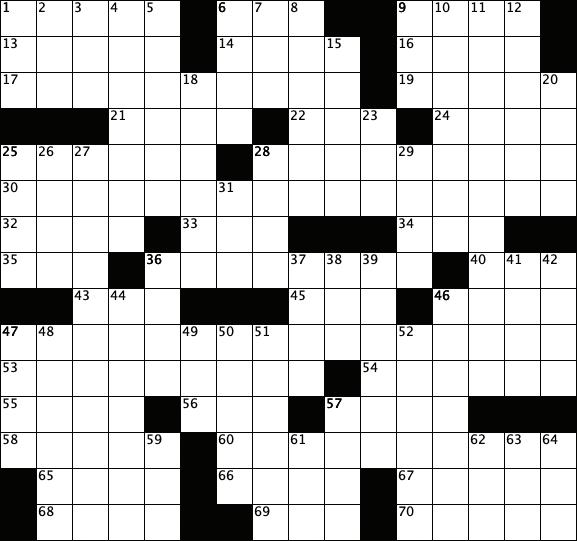
12 Capacity of many a flash drive, informally 15 Corp. shuffle 18 Pearl maker 20 Actor Paul of “12 Years a Slave” 23 QB Brady 25 Country queen McEntire 26 Level
Hottest place in North America 28 Yahoo!, but not “Yahoo!”
Lipstick unit
Barn bales
Fool
Aussie hoppers 38 Author Rand 39 Brand for water fun 41 Part of Q.E.D. 42 Not his 44 Neighbor of Aruba
46 Associating with a main story, say
47 World of Warcraft and Final Fantasy, for short
48 Go by
49 Dubai’s country, for short
50 Eren Yeager’s alter ego
51 Approved by one’s insurance carrier, say
52 Episodes of “Friends” and “Seinfeld,” now
57 Tiny nibble for a computer?
59 Wee bit
61 Gross!
62 There it is!
63 Plot (out)
64 Goddess of the dawn
By Paulette Martinez | Associate Cartoon Editor

Benjamin Midler Guest Contributor
The following is a guest contribution and reflects the author’s views alone. For information on how to submit a piece to the Opinion section, click here.
I am a Princeton student and a volunteer for Sam Wang’s congressional campaign. Earlier this week, two other students associated with Sue Altman’s campaign, a rival to Wang’s, wrote an Opinion piece in The Daily Princetonian criticizing Wang for contesting Altman’s ballot petition. What I read in that piece, and the accusatory statements the Altman campaign issued in response to being challenged, strike me as farcical and demand a response. Wang’s challenge was not a bid to silence students, as claimed in the earlier Opinion piece, but a good-faith effort to defend democratic institutions.
The piece’s instigating event was New Jersey’s petition deadline. In order to appear on the ballot for congressional primaries, candidates must submit petitions with 500 signatures from voters with the relevant party affiliation. Per New Jersey law, members of the public, including
staffers for other campaigns, are allowed to challenge signatures on the basis of, for instance, the signer being a fictional person or because they’re not registered in the district. These challenges are mediated by an administrative law judge (ALJ).
The students who authored the critique of Wang are concerned with 83 signatures that were disqualified by the ALJ because they were collected by people not registered to vote in New Jersey. This was stipulated by a state law that remains on the books, and the ALJ thus followed, despite the law having been invalidated in a 2021 lawsuit.
Their assertion was that Wang was deliberately trying to “silence” them by challenging the signatures they gathered, and they claim that the eventual re-validation of the signatures by Secretary of State Dale Caldwell ’82 proves Wang’s conniving intent. But in the end, even after the students’ collected signatures were restored, 310 out of the 1,022 signatures Altman submitted were invalidated, orders of magnitude more than any other candidate. Wang, who submitted more signatures than Altman, had only several disqualified.
On April 13, the University announced that e-bikes will be prohibited from campus starting on June 1, 2026. The fate of the Personal Electric Vehicles has elicited a range of responses regarding the ban’s impact on campus life and what it reveals about University procedure. Our staff share their thoughts on the new policy’s implications.
The writing was on the wall
By Charlie Yale, Head Opinion Editor
Recently, an anonymous Change.org petition surfaced on Fizz calling for the e-bike ban to be overturned. It’s clear that — with a measly 85 signatures at 8 p.m. Tuesday — it won’t amount to anything. These students’ opinions might have mattered far earlier in the deliberative process.
After all, this change has been telegraphed since December, if not earlier.
During the Dec. 8, 2025 Council of the Princeton University Community meeting, an Environmental Health and Safety representative presented on the health and safety risks that e-bikes posed to pedestrians on campus. At this meeting, the representative also signaled the committee’s openness to a change on the campus’s personal electric vehicle policy.
What followed the December CPUC meeting was a survey regarding potential updates to the PEV policy. Students were allowed to share their opinions about how a change in policy might affect them. After I published a column about this topic at the end of last semester, I submitted my own feedback on the policy.
There were myriad reasons for the disqualifications of Altman’s signatures. For instance, hundreds of signatures were found to be from people not registered in the correct district or to have been falsified, including from “Jesus Christ” and “Louie Lunchmeat.” The Altman campaign blamed these issues on the firm they had hired to collect signatures for them.
Many of the challenges to Altman’s signatures came from other campaigns, especially Wang’s, as he had done due diligence to identify irregularities in his own petition and those of other candidates, and from Plainfield mayor Adrian Mapp, who was understandably upset that Altman’s petition included hundreds of fake voters that were listed as being his constituents. The students’ claim of being silenced diverts attention from these more fundamental issues with Altman’s petitions.
Articles about this incident from The Daily Princetonian and New Jersey Globe, as well as the statements issued by various campaigns, show the primary concern was about the overall integrity and honesty of this election, and of the people running in it. The petitioning process should reflect the genuine preferences of the electorate and is thus polluted by erroneous and fabricated signatures.
By focusing on just these 83 signatures and claiming vindication, the students gloss over the hundreds that remain disqualified, and which are of a greater concern. It is because of this greater number of fabricated signatures that even people not running in this race, like the chair of the Montgomery Democratic Organization, have called for Altman to suspend her campaign. Narrowly focusing on just
the 83 signatures is a form of nitpicking, causing us to miss the broader problems with a campaign involved with falsified signatures.
To me, however, the greatest issue isn’t that the Altman petitions exhibited what the New Jersey Globe called “systemic issues.” Rather, it’s how the Altman campaign has comported itself. Since the issues with their petitions came to light, Altman and her staff have leveled vitriol at other candidates, accusing them of ganging up against her as part of a political “machine,” and of stooping to “Trumpy” tactics. Altman’s attacks are malicious, unwarranted, and deeply disappointing. Not in the least because they ring hollow when being leveled at first-time candidates by a long-time politician who has been backed by large and influential political action committees.
It’s worth reiterating that, despite all this, Altman managed to exceed the 500 signature limit and has qualified for the ballot in June. Lashing out against those who raised legitimate concerns about her petitions is entirely unnecessary and a bid to undermine an effort to make the petition process more accurately reflect democratic opinion. If Altman had owned up to the broader issues in her petitions and committed to improvements, rather than blaming paid contractors for any errors, she would have gained substantial respect for being transparent and taking responsibility in the way a leader should.
Moreover, Wang isn’t trying to silence students. Challenging potentially invalid signatures is not an attack on students’ — or anyone’s — voices, but rather a goodfaith attempt to defend democracy against potentially fraudulent practices. Suggesting that Wang is silencing students cre-
Perhaps if any number of the students who signed the hopeless Change.org petition about e-bikes had submitted their feedback, the policy may have looked different. Perhaps it would have changed nothing. There is still no student representation on the Environmental, Safety, and Risk Management Committee, which likely made it difficult to ensure that any sort of student perspective was foregrounded. But the option to at least submit feedback existed, and the writing has been on the wall for months.
Head Opinion
Editor Charlie Yale is a sophomore in the history department from Omaha, Neb.
An encouraging but incom- plete start
By
Lily Halbert-Alexander, Head Opinion Editor
In light of rising safety concerns on campus, banning e-bikes was an inevitability — and also likely the best and most logical decision for the University. Arguments for efficiency and equity for athletes are valid, but it’s difficult to compete with the foundational issue of pedestrian safety.
But both the ban and anti-e-bike sentiment have mythologized e-bikes so much that they oversimplify the multifaceted problem of campus transportation. At a CPUC meeting last fall, e-bikes were described as having “gotten much, much larger, they’ve gotten faster, they are heavier, they are more powerful.”
This language depicts e-bikes as mechanical beasts, spawning before our
very eyes. I’m suddenly more concerned about them hunting and eating me than running me over.
This fear-mongering casts e-bikes so dramatically as antagonists that it’s easy to forget that there are other obstacles to safe transportation — like cars, one of which recently struck a student — and thus that it will require more than this ban to keep the campus safe.
Princeton’s campus has grown massively over the last ten years, and is populated with thousands of students, faculty, and staff, all of whom are attempting to get where they’re going in the most efficient way possible. That entails navigating a web of intersecting routes with varying abilities to accommodate pedestrians and vehicles of differing size and speed.
The question of safe and efficient campus transportation won’t be solved by a single policy. Banning was the right move, but we shouldn’t let it be the only one, nor overestimate its significance in the long-run.
Head Opinion Editor Lily Halbert-Alexander is a sophomore in the English department from San Francisco.
A map to Princeton’s priori- ties
By Thomas Buckley, senior Opinion writer
Corresponding with the announcement of the e-bike ban, the ESRM committee helpfully included a map of areas where PEVs are “prohibited in both interior and exterior spaces.” The published map is careful to exclude public prop-
ates a misleading picture and potentially undermines a necessary check on undemocratic behavior.
Setting all else aside, congressional representatives should, at a minimum, be honest, have integrity, and be willing to own up to their mistakes. I’ve known Sam Wang for a few years, and his campaign is the first I’ve volunteered for because I know he has these qualities and that he’s a public servant at heart. In the course of getting involved with this election, I’ve been heartened to see that several other candidates are similarly invested in protecting the integrity of our democracy and in their commitment to the public good. While I still think Wang is the best choice, I don’t think he’s the only good choice. I suspect he would agree with me.
The integrity of our democracy is predicated on people making good-faith efforts to follow the rules and on checks to catch mistakes. Wang has been a democracy reformer for over a decade. Protecting democracy is a pillar of his platform. This is why he filed challenges to the issues in Altman’s petitions, and why the vast majority of these challenges were found to be valid through the proper legal processes. American democracy is not self-enforcing; it must be consciously maintained. The efforts of Wang and Mapp to challenge invalid signatures represent nothing more, and nothing less, than that. The antipathy and name-calling that followed, however, distract from bigger and more pressing issues and are in no one’s interest.
Benjamin Midler is a Ph.D. candidate in the Princeton Neuroscience Institute. He is from California and is a volunteer for Sam Wang’s congressional campaign.
erty from the ban, including Washington Road – though the University makes sure to point out that the ban applies to the sidewalks it owns on Washington Road – Nassau Street, Prospect Avenue, and even Wawa.
Notably, eating club property — which is likewise not part of “campus” — is not among the areas excluded from the ban.
It’s not possible to know why ESRM chose to draw the boundaries how they did. It could be a mere administrative oversight, or as unbelievable as it seems, Princeton might have actually consulted the clubs beforehand. I doubt the University plans to start raiding clubhouses to confiscate illicit e-bikes. Still, the map sends a telling message about where Princeton believes its authority extends. If the eating clubs want to protect their autonomy, they should listen.
Senior Opinion writer Thomas Buckley is a junior from Colchester, Vt. majoring in SPIA.
By Isaac Barsoum, Associate Opinion Editor
The Princeton administration has implemented yet another new policy with minimal input from the students it will affect. While the policy has merits, the method of its introduction and implementation is improper, and ignores the legitimate needs of a particular group of students — student-athletes — without offering a feasible transportation alternative.
Many student-athletes commute to Meadows Racquet and Recreation Field-
house each day for practice, sometimes in early morning hours. To make that commute, they might currently depend on an e-bike. Now, they’ll need an alternative. As The Daily Princetonian reported, “the University proposes TigerTransit as an alternative for longer trips, noting that stops are within a five- to 10-minute walk of most buildings on campus.”
But proposing TigerTransit, in its current form, as an alternative represents a willful ignorance toward the current state of TigerTransit and its viability as a replacement for e-bikes.
In the early morning, TigerTransit often runs as infrequently as every 20 minutes to Meadows, and during the day, never more frequently than every 13 minutes. Moreover, the length of the TigerTransit trip to the Meadows Fieldhouse from the corner of Washington and Prospect is 18 minutes, much longer than a comparable trip by bicycle, which takes 6 minutes downhill. A primary reason for that is that the Meadows Drive Garage stop is quite a distance from the Meadows Fieldhouse.
To make TigerTransit a viable alternative for commuting to Meadows, Princeton should improve its frequency, particularly in the early morning and evening hours, and invest in a new stop outside Meadows Fieldhouse. Doing so would make TigerTransit an actual option for athletes and commuters to Meadows, alleviating the difficulty imposed by the e-bike ban.
Frances
head
creative director Juan Fajardo ’28
Corbin Mortimer ’27 Maya Mukherjee ’27
Sections listed in alphabetical order.
associate newsletter editor Annika Plunkett ’28
head opinion editors Lily Halbert-Alexander ’28 Charlie Yale ’28 associate opinion editors Isaac Barsoum ’28 Shane McCauley ’28 head photo editor Emily Tang ’28
associate photo editor Siena Sydenham ’29
associate cartoon editor Paulette Martinez ’29
head
associate
’28
Thompson ’27
Sampaio ’28
’28
head data editor Madeline Wadsworth ’28
associate data editors Christine Cai ’29 Elizabeth Hu ’29
head features editor Nikki Han ’28
associate features editors Jamie Creasi ’28 Mara DuBois ’28
head humor editor Tarun Iyengar ’28
associate humor editors Nicolas Rohou ’28 Francesca Volkema ’28
head news editors Nico David-Fox ’28 Luke Grippo ’28
associate news editors Sena Chang ’28 Haeon Lee ’28 Caitlyn Tablada ’27
head newsletter editor Ryan Choe ’28
’28
associate podcast editor Julia Hack ’29
head print design editors Jamie Creasi ’28 Albert Rho ’29
associate print design editor Marley Hartnett-Cody ’28
head prospect editors Gavin McLoughlin ’28 Ysabella Olsen ’28
associate prospect editors Amy Jeon ’29 Amaya Taylor ’28
head puzzles editors Luke Schreiber ’28 Emma Simon ’27
head spanish translation editor Jorge Reyes ’28
associate spanish translation editor Roberto Sampaio ’28
head sports editors Lily Pampolina ’27 Doug Schwartz ’28
associate sports editors Lucas Nor ’28
Matthew Yi ’27
head web design and development
editors Cole Ramer ’28 John Wu ’28
strategic initiative directors
Graphics Caroline Naughton ’29
assistant
software engineers
Nicole Deng ’28
Ziya Momin ’28
Kyaw Naing ’28
Stephanie Sugandi ’27
Albert Rho ’29
Lucy Zschoche ’29
Education Charlie Yale ’28
Davis Hobley Staff Opinion Writer
Last semester, I argued that arbitrary limits in Princeton’s outside scholarship policy needed to change. At the time, I saw the issue mainly as a policy problem; the rules were inequitable, the fix seemed relatively straightforward, and I argued that the University should change them.
I still believe those things. But I have also come to think that my experience with this policy is emblematic of a larger issue at Princeton. Princeton students who are not already involved in political activism or student government on campus are not encouraged to see themselves as independent actors who can lead reform. This is an issue: Students, even those not directly involved with student political affairs on-campus, should recognize that administrators are more accessible than they seem, and take advantage of opportunities to make their voices heard.
The problem is not that students never speak up. We do, constantly. We vent to our friends, complain in group chats, perhaps make a Fizz post, and sometimes write op-eds or vote in referendums. These actions clearly matter — it’s important that the community engage in conversation about the issues pertaining to our campus, and that this conversation represents a diversity of voices. And when this discourse reaches the right audiences, it can have real impacts. Public criticism can draw attention towards obscure or harmful policies, which might eventually lead to substantive change. And while referendums are not a part of the University’s decision-making process, they can act as polls of the campus, showing what concerns are widely held.
But discourse is not the same as direct communication or appealing directly for change. Being heard or overheard in the clutter of the campus conversation is not the same as bringing a concern directly to the people who actually have the ability to change the policies in question. I can attest that it is gratifying when someone with the power to make change reads your article and takes your argument seriously. But relying on that kind of chance encounter is not the most effective way to pursue the reforms we care about.
Jamie Creasi ’28 Marley Hartnett-Cody ’28
president Thomas E. Weber ’89
vice president David Baumgarten ’06
secretary Chanakya A. Sethi ’07
treasurer Douglas Widmann ’90
assistant treasurer
Kavita Saini ’09
trustees Francesca Barber
Kathleen Crown
Suzanne Dance ’96
Gabriel Debenedetti ’12
Stephen Fuzesi ’00
Zachary A. Goldfarb ’05
Michael Grabell ’03
Danielle Ivory ’05 Rick Klein ’98
James T. MacGregor ’66
Rohit Narayanan ’24
Marie-Rose Sheinerman ’23
Julianne Escobedo Shepherd
Abigail Williams ’14
Tyler Woulfe ’07
trustees ex officio
Jerry Zhu ’27 Alistair Wright ’27
The aftermath of my column about scholarship policy prompted my commitment to taking complaints directly to the source and pursuing more direct avenues for change. I was recruited through USG’s University Student Life Committee (USLC) to open a subcommittee focused exclusively on outside scholarship reform. Through that process, I was connected with administrators in the Office of Financial Aid and spoke at USLC and USG senate meetings. Rather than ranting on a platform University administrators are unlikely to see, this type of engagement allows me to directly push for reform with those with the ability to make the necessary changes.
The boundary between student frustration and administrative conversation is not as insurmountable as students may assume. Administrators are actually receptive to our concerns and willing to listen when we pursue the appropriate avenues for change, such as scheduling meetings with representatives of their offices and reasoning out our grievances. There are plentiful opportunities for students who want to make Princeton a better place, if they are willing to take advantage of the opportunities available to them.
Before my recent experience, I had largely assumed that direct policy conversations with administrators were reserved for students in USG or other decisionmaking bodies on this campus. Part of that assumption comes from how opaque these processes can feel from the outside. To most students, it isn’t clear that reaching out to administrators directly is possible and useful, so these conversations can seem to belong only to those within student government or policy spaces. The truth is that these conversations are far more accessible than I, and many others, assumed.
Moreover, students should raise their concerns, ask questions, request meetings, and raise issues in the rooms where decisions are made. This is especially the case for student-facing deans. Residential college deans and assistant deans serve as academic advisors, as well as parties to consult with on other aspects of broader undergraduate student life. Hearing out student concerns and requests for reform should allow them to act as mediators between administrators with the power to make
change and the students who seek it.
And this is where the real gap between student dismay and administrative change lies. The issue is not whether channels for change exist — because in many cases, they do — but instead that many students do not feel that those channels are accessible, legible, or worth pursuing. Administrative policy can feel fixed, and even when routes for engagement exist, they can feel intimidating enough that many students won’t attempt to use them.
USG must play an important role, not as a gatekeeper, but as a bridge. That means doing more than just listening to student complaints or proposing referendums. It should help students identify which offices and administrators oversee an issue, create clearer pathways for non-USG students to raise concerns through bodies like USLC subcommittees, and bring those students into direct conversation with decisionmakers. Its role should not be to absorb student complaints and speak on students’ behalfs. Its role should be to help students advocate directly for themselves.
But students have to be deliberate and engaged in their efforts to work with the administration on the changes they want to see instituted. Without that initiative, we can’t expect to see the student perspective represented in reforms. The University won’t hold our hands: If we want them to pursue the changes we discuss and write about, the onus is ultimately on us to propose those changes to them through direct conversation. It’s within our rights and capabilities to work at closing the perceived gap between students and the University.
My experience delving into policy and advocacy on the ground level taught me that Princeton is at its best when students don’t stop at identifying places for change. Instead we can take responsibility for bringing these issues forward, and participate in the process of instituting reform. Students should feel empowered not just to speak out, but to work with the University to reform the issues that are important to them.
Davis Hobley is a staff Opinion writer for the ‘Prince’ and a member of the Class of 2027 in the Princeton Neuroscience Institute.

By Sena Chang Staff Features writer
Athan Zhang was three course credits shy of graduating with Princeton’s Class of 2026 when he took a leave of absence last fall to pursue a startup. “I was waiting around, waiting to get a degree, but I had already gotten the education, gotten the network, and made the relationships I wanted to make, so it made sense for me,” Zhang told The Daily Princetonian. Zhang, a computer science major who had already worked on two startups in high school and college, left campus in fall of 2025 and headed to San Francisco.
His company, Copperlane — co-founded with Brianna Lin, a graduate of the University of Pennsylvania — was accepted into the Winter 2026 batch of Y Combinator, the influential startup accelerator known for backing early-stage companies. Copperlane “helps mortgage lenders originate loans faster and eliminate intake errors” with assistance from an artificial intelligence agent named Penny.
Zhang is part of a small cohort of Princeton students stepping away from the classroom to build companies, a cohort which has become increasingly visible as the AI boom has reshaped how businesses are started and scaled.
Venture funding for AI startups has surged in recent years, with Silicon Valley firms raising a record $150 billion in 2025, up from the previous peak of $92 billion in 2021. At Princeton, where roughly 90 percent of students graduate in four years, students describe a growing interest in startups and venture capital, reflected both in anecdotal experiences and in rising enrollment in entrepreneurship courses.
Many of the startup founders interviewed by the ‘Prince’ said the benefits of leaving school outweighed those of staying, and often framed the decision in terms of opportunity costs and time.
“Think of college as a four-year subscription product,” Kelvin Yu, the founder and CEO of NewCo and a former member of the class of 2021, told the ‘Prince’ as he scarfed down a sandwich over Zoom. “And like any product, evaluate whether it’s worth keeping the subscription.”
NewCo, which is “building the substrate for growing U.S. industrial GDP” according to Yu’s LinkedIn, was founded in 2025 following a stint in Washington, where Yu served as a policy advisor in the U.S. House of Representatives.
Yu believes that there are five value propositions to a Princeton education: academic enrichment, community, strong networks, prestige, and exploration. “The reason I dropped out [at] the particular time I did was because I thought I reached diminishing returns on these fronts,” Yu, who dropped out during COVID in his junior year, said. “I decided that the opportunity cost of not being in San Francisco working for a high-growth company wasn’t worth it relative to staying in school.”
Unlike peer institutions such
as Harvard, MIT, and Stanford, which have long been associated with startup culture and high-profile dropouts, founders of startups said Princeton lacks a similarly prevalent entrepreneurial ethos. According to private market data platform PitchBook, Princeton produced the 15th-highest number of venture capital-backed founders and companies in the decade up to 2025, trailing behind every other Ivy League university except Dartmouth and Brown.
“We’re definitely not an entrepreneurial school,” Zhang said. He argued that Princeton’s high return on investment post-graduation discourages students from dropping out, reinforcing a campus culture that “breeds really riskaverse people.”
“In Princeton, I don’t think people are as intrinsically motivated to just do cool things, and the like,” Windsor Nguyen ’25 added. “People do things, but it’s because they want to get an internship, or they want to settle; it’s not like you’re just staying up coding on Sunday for the love of the game.”
But some say that this landscape is beginning to shift, fuelled by the impulse to capitalize on the rapid pace of AI developments.
Nguyen, who dropped out of Princeton’s Ph.D. program in Computer Science, was passionate about research but thought his degree timeline was too long. “The only thing I didn’t like about a Ph.D. was it takes at least five years, and that is an eternity in AI time,” Nguyen told the ‘Prince.’
Nguyen is a former Opinion and Humor contributor for the ‘Prince.’
In 2025, Nguyen co-founded Dedalus Labs with Cathy Di ’26. Dedalus Labs is a platform where users build and deploy agentic AI applications, systems that can autonomously complete complex tasks without requiring much supervision. The company, which was accepted into Y Combinator’s Spring 2025 round, raised $11 million in seed funding from investors last fall.
“Now is probably the best time to start a company, ever,” Nguyen continued. “It’s probably analogous to the internet boom, when you just have so much opportunity … AI moves so fast — I don’t know where we’re going to be in two to three years.”
The rapid growth of AI has also removed barriers around starting companies with little technical experience.
“It is the easiest time to start and create a company, because we have AI tools like OpenAI or Lovable, where you can actually create a platform without having a super technical background,” Sarah Phillips ’27, the CEO of Girls Into VC, told the ‘Prince.’
Beyond the opportunities provided by AI, some students also expressed that they provide unique value to Silicon Valley: The archetype of the Ivy League dropout carries weight in Silicon Valley, where leaving school can signal ambition and intelligence to investors.
Joseph Tso, the co-founder of Haladir who took a leave of absence in fall 2025, described his status as

a former student as “a pride point” in Silicon Valley. “Our YC group partners — our mentors — often tell us to wear it with pride: You should present yourselves as dropouts of prestigious universities,” Tso told the ‘Prince.’
“No one views you as lower status because you dropped out; if anything, you’re viewed as higher status,” Yu said. “That’s almost like a default reaction … if [investors] know that you dropped out of Princeton, they will assume you are smarter than if they just knew you were at Princeton,” he continued.
These reasons are coupled with Princeton’s streamlined leave process and a “lenient” return policy, adding to the appeal of taking a leave for these young founders.
At Princeton, a standard leave of absence typically lasts two semesters, though students who take a leave are eligible for reinstatement if they return within three years. Students remain eligible for financial aid upon reinstatement, and residential college deans oversee the leave and return process. Undergraduate students may also choose to withdraw permanently at any time.
Tso spent his only weeks at Princeton splitting time between freshman orientation and settling into classes. Two months into the semester, he decided to take a leave of absence, a process he described as “relatively easy.”
“When I had made the decision to leave, within a week, I was fully moved out.” Tso left to co-found Haladir, an applied AI product lab working on what he described as “operational superintelligence”: enhancing the ability of AI to synthesize complex information and determine the best course of action.
“You can always go back to Princeton,” Yu said. “There’s a very lenient policy on returning.”
The heightened visibility of startup founders on social media has also helped encourage entre-
preneurship culture at Princeton.
“It’s very clear that more and more people are trying to build something at Princeton,” Zhang added. “I think part of it is because there [are] more and more founders like us who are making that choice, and there’s a lot of publicity around it, so people are realizing it’s something that’s possible.”
Princetonians also spoke highly about the growth of institutional infrastructure supportive of entrepreneurial ventures in the past decade. The Keller Center for Innovation in Engineering Education, which “creates societal impact through entrepreneurship, design, and innovative education,” was established in 2005.
“The first thing that’s completely changed the Princeton ecosystem is the Keller Center, and it’s a pretty new part of Princeton,” Phillips said. She praised the Center’s vast educational resources and support of student entrepreneurial ventures, noting that many Entrepreneurship (ENT) classes she had taken were “entirely full.”
“There’s clearly that momentum on campus right now that we haven’t seen historically, but that is changing,” she added.
“We’ve seen a steady growth in student interest in entrepreneurship, going back to 1997 when the engineering school introduced the popular course EGR 491/ECE 491/ ENT 491: High-Tech Entrepreneurship,” Director of the Keller Center Sigrid Adriaenssens wrote in a statement to the ‘Prince.’ “The Keller Center has built on that momentum.”
According to Adriaenssens, the Keller Center now offers about 10 entrepreneurship and design courses each semester. The minor in entrepreneurship, which was transitioned from a certificate program to a minor program in 2025, had 35 graduates last year.
In March, the ‘Prince’ reported that the entire nine-person Keller Center staff will be laid off as part of a restructuring of the academic
unit amid University-wide “budget constraints.” Adriaenssens wrote that the restructuring “creates greater capacity to focus on the successful courses and programming that have brought lifechanging benefits to generations of Princeton entrepreneurs.”
Nguyen, who took “High-Tech Entrepreneurship” when at Princeton, said that campus not only served as a place for academic enrichment, but also as a place to network. “You should keep … close tabs of your most cracked friends, your most talented friends — even people who are really good at writing, are really good at sales,” he said. Most of Nguyen’s staff at Dedalus are fellow Princeton students.
For many, the decision to return to Princeton is dependent on how their company fares, and some expressed an interest in completing their education.
“Maybe this is just a characteristic of being in San Francisco and the tech world, but it’s always hard to see beyond like a year or two,” Tso said. “But I do know deep in my heart that I really want to go back [to Princeton] and round out my educational journey there. It feels like I just left something sort of unfinished.”
“But for now, I see the value in being in SF and the tech world, the value in doing this company and being part of this company, as much greater to me, at least in the current moment.”
“On whether or not I see my leave of absence as a more permanent thing — I don’t know,” Zhang said. “The best answer is that I want the company to do well, and if the company does well, I’m probably not coming back.”
Sena Chang is a staff Features writer and the associate News editor for the ‘Prince’ leading investigations. She is from Japan and South Korea, and she often covers local politics and student life.
By Nikki Han & Chris Braun Head Features Editor & Contributing Features Writer
“I definitely feel like my mind is wandering a little bit more compared to freshman year,” Angie Ling ’26 said, reflecting on her decreasing attention span and the compulsive need to scroll. “With all the short form content, like Tiktok and Instagram Reels, etc. I think that’s definitely had an impact on me … That’s affected my ability to consume long-form content.”
“Damn,” she continued. “Kind of sad, reflecting on that.”
Since 2020, approximately half of incoming students reported spending five or more hours on their phone per day, according to The Daily Princetonian’s Frosh Survey. As short-form content has proliferated and increasingly dominated young people’s media appetites, much attention has been placed on how this has impacted college students’ abilities to focus, learn, and read.
In conversations with the ‘Prince,’ students and professors at Princeton reflected on how constant exposure to technology has decreased attention spans and increased levels of distraction in academic settings. In recent years, faculty members have begun to experiment with new policies around technology and different methods of teaching, such as taking more breaks during class — and many students saw the policies produce positive changes in their lives. However, debates over cutting down on assigned readings or whether or not to ban technology still persist.
“I definitely think universities should experiment with all kinds of different policies to make more and more of the university a tech-free zone,” politics professor Gregory Conti said. Distraction due to technology, he continued, is an “existential threat to the University.”
The relentless scroll
In classrooms across Princeton’s campus, laptops are a constant presence, with artificial light and the tapping of keyboards filling each room. In settings like these, the urge to check notifications and scroll on social media can be difficult for students to resist.
Sarah Hu ’27, a Peer Academic Advisor (PAA), watches all her recorded lectures and videos at two-times speed. “My attention span is definitely very cooked,” she admitted. “And that’s what the short-form content is designed to do: make your brain like that, which is really terrible.”
It’s easy for students — even those who take handwritten notes or attempt to pay attention — to get distracted when their peers are off task.
“Many computer screens are doing so many things at one time,” Nadia Makuc ’26, chair emerita of the Honor Committee, said. “Even if I’m listening, I can’t fully
pay attention, right? Because it’s like, ‘Oh, someone’s playing 2048, and someone’s shopping for handbags.’”
Economics professor Ulrich Müller views distraction as a “negative externality,” where the initial actions of several distracted students leads to later learning losses for others.
Distracted students “signal to the other students that this is not interesting,” Müller said.
While distraction during lectures has been an issue for decades, recent technological advances have exacerbated the problem. With the advent of artificial intelligence, many students don’t bother taking notes during class. Instead, they record lectures or flick through summary slides posted on Canvas to make AI-generated transcripts, notes and flashcards.
“What I’ve seen a lot of people doing is plugging those notes [from Canvas] directly into ChatGPT and saying, ‘Please explain this as if you are a four year old,’” Luke Chatham ’27, a Peer Representative, said. Peer Representatives provide support for students who are accused of Honor Code violations or have cases before the Honor Committee or Committee on Discipline.
Geosciences professor Christopher Griffin makes a point not to post lecture slides. In his own experience as a student and teaching assistant, Griffin came to believe that posting class slides effectively discourages students from actively listening and taking notes. Griffin also does not use a textbook, and his course content is difficult to find online, so students “kind of have to pay attention.”
“If you’re in an 80-minute lecture, this thing,” Griffin said, holding up his phone, “comes out. We think, ‘what’s going on on Instagram?’”
For Makuc, distraction in class can be attributed to what she believes is the increasingly utilitarian framework with which students view higher education — that higher education is intended for students to find employment, rather than learning for the sake of learning.
“I feel like people are more likely to be flipping between online shopping in lecture than if they were at their internship in the summer and they’re at a meeting with their boss,” Makuc said.
“The mission — why we’re here — of academic excellence is just one of the things among social and international experiences, securing jobs, and participating in clubs, and it’s lost some of its respect,” Makuc added.
The same issues that lead to distraction inside the classroom also translate to distraction outside of it. Reading for an extended period of time has become mentally taxing, students noted, though some say that they eventually finish their assignments and homework — it just takes
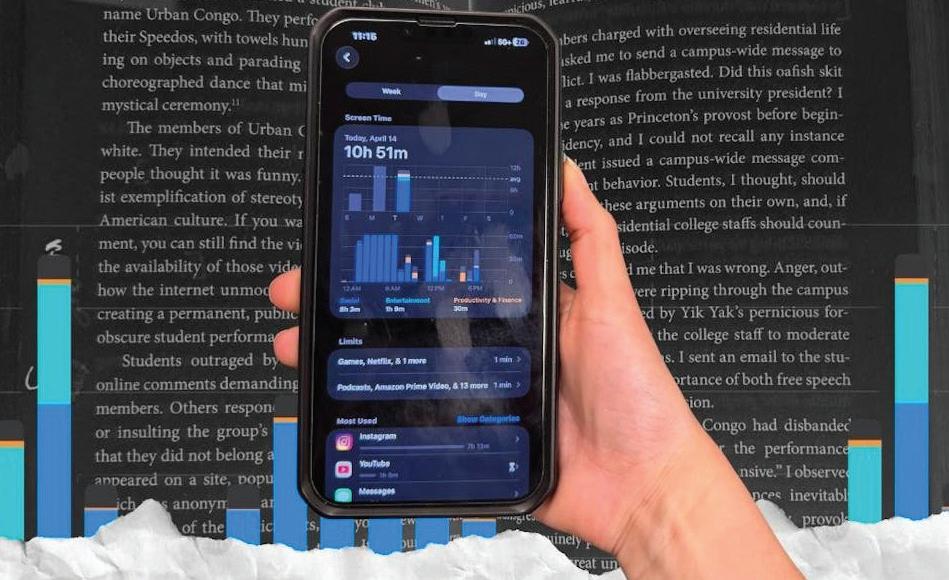
longer now than it used to.
Conti has noticed significant changes in students’ ability to read and digest lengthy texts. He says they have more difficulty summarizing the main ideas of a text compared even to eight years ago, when he began teaching as a professor.
“It’s harder for students to read a sustained amount of difficult text,” Conti said. “[The average student] used to find it easier to recapitulate what they’ve read in their own words, even if it was something quite difficult. Already in my time you see that more and more students struggle to do that … because it’s harder for them to pay attention when they read with all the distractions they have.”
“There is no continued 40-minute focus. It’s really, really rare and quite hard,” Hu said. “But I also don’t think it’s been debilitating for my ability to do work; I just get on with it.”
Many have embraced the art of skimming readings, or strategically reading just the introduction and conclusion to get the best gist of a paper.
“I do this thing where if it’s under 20 pages, I do read the whole thing. If it gets more than that, I’m just like, ‘let me get the main point,’” Colin Hepner ’29 said.
“For assignments, there’s really no incentive not to take the shortcut and just look things up for instances where it’s not built into the assignment to do deeper thinking,” Makuc said.
Whether or not this has affected scholarly integrity is unclear. Chatham believes that students’ distraction in class translates to a higher inclination to be academically dishonest in assignments and exams. A proposal to proctor all examinations is currently being considered by two faculty committees. If passed by a majority faculty vote, it would end the University’s traditionally unproctored examination system, which has been in place since 1893.
“I tend to believe that people are now more inclined to violate some form of the Honor Code because they’re paying less attention in class,” Chatham said. “There’s a lot of pressure academically to perform, and with people’s attention spans decreasing, they’re understanding things a lot later, which means they’re cramming the nights before exams.”
However, Attending Peer Representative and Co-Chair of Peer Representatives Seryn Kim ’27 said that “it is a bit of an assumption that attention span or access to technology is the primary driver of academic misconduct accusations.”
Kim explained that the reasons behind Honor Code violations are “multifactored.” The most common reasons, she said, included time limits, seating, and the way students write and turn in assessments, rather than using unauthorized aids.
Faculty are actively discussing technology policies, although no consensus seems to have been reached. Undergraduate Student Government (USG) Academics Committee Chair Isaac Bernstein ’28, who often engages in discussions with faculty members, said that “there’s not necessarily a policy that we believe would be the best fit for passing towards students.”
Bernstein is a former staff News writer for the ‘Prince.’
Some faculty members have implemented no-technology policies in their classes.
Professor of Politics and International Affairs Frances E. Lee used to simply suggest that students put their devices away
during her lectures — a policy which she now acknowledges had no effect — but this year, she outright banned technology during her lectures. Instead, she handed out notebooks to every student in her class POL324: Congressional Politics, telling them to take physical notes instead.
“I’m not authoritarian in my approach, but I do try to establish a classroom norm where we’ll be looking at each other, and do[ing] more active engagement rather than looking at a screen,” Lee said. “Students [now] do seem to be more engaged. I have regarded the experiment as a success in my classroom.”
After more than 20 years of teaching ECO202: Statistics and Data Analysis for Economics, Müller introduced a similar policy forbidding students from taking out their laptops and phones during lectures. Students in his class are also given a small grade bonus for attending lectures, and Müller enforces his technology policy by removing this bonus for any students caught using a device. He still allows students to annotate on iPads, however.
“Of course, you can also browse the internet or buy socks using your iPad,” Müller said. “There’s sort of an understanding that people don’t do that. I don’t know if that is always successful, but that’s the compromise that I’m currently running with.”
Students said they generally appreciated the engagement that comes with a technology-free class.
“When there’s no phones in the class or the precept, it’s caused me to make friends,” Hepner said.
“I had started to have a more positive experience in classes where it was handwritten notes only,” Ling added. However, some students still prefer being given an option as to whether or not they want to use technology. “Banning technology is not a solution, and it’s not helpful for a lot of the students that prefer taking notes on electronic [devices],” Bernstein said.
Müller is ultimately hopeful about student responses to restrictive technology policies. He has not encountered much resistance with his own laptop and phone bans.
“I’ve never gotten really much pushback on any of these things,” Müller said.
“So it’s not as if I feel I’m really putting myself out there by having these policies.”
While some faculty members have implemented strict no-technology policies, others have been more adaptive.
Bernstein said some of his professors have incorporated more videos in their classes in order to respond to the way some students now learn most effectively.
“A lot of them are open to using that technology as well, which is a really exciting innovation,” Bernstein said. “I think the faculty, just like the students, are continuing to adapt and help make sure that their content is absorbed in the most effective ways possible.”
Many professors are incorporating small changes in their teaching pedagogies.
“I try to incorporate more shifts of gears,” Lee said. “We’ll talk about a topic for a while, and then I signal a change. I spruced up my slides to make them more interesting. I will take pauses and do a little discussion, or at least ask a rhetorical question and take a pause.”
In past years, students had approached Müller and told him they had trouble focusing during the 80-minute-long class. For this reason, he now introduces new
content in a 50-minute lecture block, then gives students a short break before beginning a 25-minute period of exercises and other activities, seeking greater student engagement.
The lengths of assigned readings have also come under fire. Makuc recalled a class she took in which a professor “totally just cut the syllabus from what it used to be.” This professor made sure to keep a strict grading standard, but “changed the content by lowering the reading,” Makuc said.
Changes in the lengths of assigned reading may appear extreme, but some instructors at other institutions have also adopted the practice. The Harvard Crimson reported that many instructors in the humanities and social sciences at Harvard have had to trim or entirely cut readings due to student complaints.
Conti, however, strongly opposes reducing reading load, especially for his graduate-level courses. As someone that teaches political theory, Conti said that reading theory in full is necessary for students to truly grapple with its ideas. Likewise, he explained that AI summaries are counterproductive to student learning, as they replace student engagement with generic answers and reduce the nuances of texts.
Long reading is “the only way to actually know anything,” Conti said. Part of the learning process is “going through a whole process of trying to figure out how some problem makes sense to you,” he said.
“One thing I worry about is students [asking ChatGPT], ‘Rousseau says X, and he also says Y, but these don’t seem to fit. What’s the answer?’ And ChatGPT will tell you some way to make them consistent. But why? How do you know that’s right? Maybe they’re not consistent. There’s no substitute for doing your own thinking,” he continued.
While University policy can shift and faculty can experiment with their teaching strategies, students acknowledged that any solutions are ultimately dependent on their own behavior. Hepner summed up the problem with the idiom, “You can lead a horse to water, but you can’t make it drink.”
“The University can take you to the water with the strictness about technology, but then you inevitably have to make a conscious effort,” Hepner said. Most students don’t see a clear way out of the attention span crisis. But some see small reprieves. Ling’s simple solution involves forcing herself to read more books. Beyond these smaller habits, students expressed that more lasting change may require a shift in the cultural mindset.
“We’re here to get an education, and it’s really important to have the patience and integrity and care to go through long readings or to watch very long documentaries,” Kim said. “And I’ve definitely noticed that your brain, once it gets primed to just expect reel after reel after reel, has to sort of reset and decide, ‘Alright, you just need to lock in and do this.’”
“Just kind of reminding ourselves that we as humans have that ability to create and not just to consume — I feel like that is important,” Ling said.
Nikki Han is the head Features editor for the ‘Prince.’
Chris Braun is a Features contributor for the ‘Prince.’
By Roya Reese | Prospect Contributor
Spoiler warning: This article contains spoilers for “The Drama.”
What’s the worst thing you’ve ever done? While I wish mine were a more interesting answer, it was most likely cutting the women’s bathroom line at the Eras Tour right before Taylor went onstage. A24’s latest release, “The Drama,” is based on this very question.
A USG Movies’ pick from earlier this month, the film was immensely popular, with some students lining up an hour early just to sit on the theater’s floor. Starring Zendaya and Robert Pattinson as main characters Emma and Charlie, the story follows the couple in the week leading up to their wedding. During a wine tasting with two of their close friends, they ask each other to share the worst things they’ve ever done. One by one, the friends reveal their darkest secrets, with Charlie sharing he cyberbullied someone so badly in high school that the boy’s family moved, and maid of honor Rachel — played by Alana Haim — admitting she locked her intellectually disabled neighbor in a closet. Emma, at this point highly inebriated, resists sharing at first; finally, with much reluctance, she reveals that at 15, she planned a school shooting that she ultimately didn’t execute.
Despite this shocking reveal happening within the first fifteen minutes of the movie, none of the film’s marketing or trailers hinted at this heavy subject matter. In fact, during the film’s press tour, A24 leaned heavily into the romantic wedding theme, down to predominantly dressing Zendaya in all white during the movie’s press tour. This concealment was a deliberate decision, as A24 instructed journalists at advance screenings to not reveal Emma’s secret. Unsurprisingly, this was a controversial move, prompting gun control advocacy organization March for Our Lives to issue a statement about A24’s “deeply misaligned” marketing on the eve of the movie’s premiere.
Directed by Kristoffer Borgli, known for surreal dark comedies such as 2023’s “Dream Scenario,” the shock value of “The Drama” is the point — I assume Borgli made an intentionally controversial film, titling it “The Drama” to be tongue-in-cheek. On this point, “The Drama” is also produced by Square Peg Films, Ari Aster’s production company, which has recently produced other dark, absurdist movies like “Bugonia” and “Eddington.”
Yet for a film with such a disturbing premise, I found “The Drama” to be absurdly funny, ripe with jokes not in spite of, but in light of the subject matter. The cinematography, by Arseni Khachaturan, purposefully blends the hallmarks of both comedy and drama with many funny whip pans, fast zooms, and intense, tight shots of characters’ faces during emotional moments. Editing by Joshua Raymond Lee punctuates particularly chaotic moments and keeps tension high throughout, cutting abruptly to emphasize both the funny and the tender. The score, by Daniel Pemberton
— who also scored recent USG Movies’ pick “Project Hail Mary” — is full of tense and staccato strings that underscore both the discomfort and comedy of being stuck in a series of really awkward situations.
The film has a fractured, non-linear structure, with flashbacks of Emma and Charlie’s relationship sprinkled throughout. This approach works extremely well in representing the reality of intimate relationships: how they often don’t feel like they operate on a clear timeline, but rather as a mosaic of moments. While neither main character displayed much individual flavor, this might be the result of the film’s focus on the pair’s relationship rather than their individual identities.
Though Pattinson and Zendaya are undeniably heartthrobs of our generation, it struck me that they don’t actually appear to have much romantic chemistry, seeming more like two chummy
ing knee-slapping laughter from the audience. With these deliberate narrative choices, it’s hard to believe Emma actually wants her classmates dead. This point is emphasized by the fact that when Emma is asked to join an antigun-violence club, she quickly becomes a valued member.
The film also offers an interesting “mirror” narrative, in which Charlie, under the stress of this revelation, kisses a coworker and sparks a cataclysmic fight at the wedding. Beyond all the narrative’s exterior chaos, I believe the fundamental question the film poses is: “How well can we really know people?” We see Charlie work through this, asking himself whether finding out about Emma’s almost-act as a fifteen-year-old makes her into a different person than the woman he loves most in the world. Yet, other than an occasionally fiery temper, we don’t quite see any other darkness from Emma — anything to prove that this
but again: where do we draw the line?
My suspicion is that the film was not initially built around Emma revealing she almost committed a school shooting, but simply around her revealing something shocking about herself that puts strain on her and Charlie’s relationship the week of their wedding. Ultimately, whether intentional or not, the film leaves the theme of gun violence feeling underexplored. Similar to “Materialists,” “The Drama” feels like a continuation of A24’s efforts to capitalize on the return of the romantic comedy in subversive ways. This approach, though, raises the question of what responsibility a movie like “The Drama” has to delve fully into its subject matter. I’m just not sure the movie landed on a broader commentary front — and, with such a heavy topic, it feels necessary to stick that landing.
Early in the film, shortly after Emma’s revelation, their wedding photographer asks the fiancés what their favorite thing
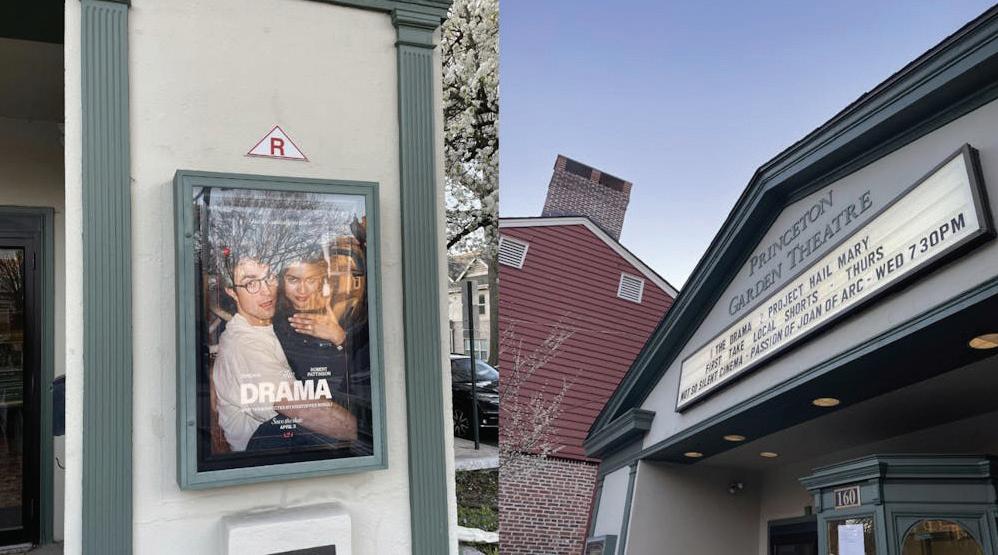
friends than madly-in-love fiancés. However, Zendaya still delivers a nuanced, sensitive performance, and I ended up truly sympathizing with her character. After revealing that she thought about committing a school shooting, we learn Emma was an extremely isolated and depressed teenager who struggled to fit in. She was also notably influenced by the rise of school shootings in the press and the attention the perpetrators received. However, her actions — or rather, non-actions — read more as a desperate teenager’s cry for help to be noticed than anything of real, horrible intent.
This perspective seems intentional, as scenes of young Emma planning the shooting are viewed through a clear comedic lens. For instance, when she holds up her father’s massive rifle in front of Photo Booth on her laptop for selfies, the computer repeatedly needs to update, breaking the tension and prompt-
almost-shooting came from somewhere deeper inside her, something that might eventually re-emerge to haunt Charlie. And because of that, I found it hard to believe Borgli wants us to see Emma as the villain.
“The Drama” also points back to the age-old question about comedy: are there rules for what we can and can’t laugh about? And does that not, on the whole, make comedy way less funny? This discussion aside, I can’t help but wonder whether the film’s larger debate is really about its marketing and whether it raises ethical concerns. Certainly “The Drama” is not the first time a movie has been marketed in a misleading way. Take, for instance, A24’s recent film “Materialists”: billed as a love triangle movie meant to usher in a new era of rom-coms, it was in reality more of a drama that dealt heavily with sexual assault. That’s not to say these films aren’t good movies,
about the other is. They struggle to answer concisely (“she’s…empathetic, he’s… understanding”). This scene is funny and awkward, but also emphasizes the absurdity of the question — when you love someone enough to marry them, how can you sum them up that simply?
But, in its non-linear structure, the film answers its own question, showing us Emma and Charlie as a collage of their moments together.
At the end of the world’s most chaotic wedding, it looks like things might be over for Charlie and Emma. But Charlie misses her — his best friend, his favorite person. And Emma isn’t his favorite person because she’s a good or bad person, she’s his favorite person because she’s her. And if there’s a deeper point to the movie, I think that’s what it is.
Roya Reese is a contributing writer for The Prospect.
By Amaya Taylor & Mia Mazzeo | Associate Prospect Editor & Prospect Contributor
Don’t let the pastel-blue home, potted flowers, and a wooden swing adorned with ivy fool you. Despite its idyllic set, “The Comeuppance” builds its foundation upon the bitterness and tragedy of its characters.
When the curtains rise, we are met by “Death,” whose character periodically inhabits the bodies of our five protagonists. His initial introduction through Emilio, played by Radon Belarmino ’26, is initially quite confusing; it’s not typical for a script to instruct one character to be played by the entire cast. Here, the audience gets the first taste of the plot’s less conventional elements — and ultimately, the confusion becomes worth it at the end.
Once Emilio’s body is returned to him, we learn he is a judgmental, Berlin-based artist back in his home state of Maryland for his 20th high school reunion. Waiting for him is Ursula, portrayed by Vivian Bui ’26, who is hosting a “prereunion reunion” for their friends, the “Multi-Ethnic Reject Group.” Bui often portrays Ursula with a jaded demeanor, but when she opts for a more gentle and sincere temperament, the empathy and kindness of her character still manage to shine through.
Caitlin, performed with nuance by Sophia Vernon ’27, is the next to arrive. Caitlin is quick to reprimand Emilio for his selfish and impudent remarks, but as the show goes on, her vulnerability and insecurity about her life choices become focal points of the group’s reunion. Vernon and Belarmino mastered the “show, don’t tell” principle of acting when conveying the tension between their two characters. Their sporadic moments of intense eye contact and physical closeness served as a clear signal of the emotional turmoil to come between the two. Vernon’s confident demeanor and strong vocal projection were other highlights of her performance.
Kristina, played by Kavya Bhat ’27, is the last to enter. She is accompanied by her cousin Paco, played alternately by Zach Lee ’26 and Donte Calabrese ’27. On the night I saw the show, Lee perfectly
conveyed Paco’s boisterous personality, now tinged with melancholy as he battles PTSD. He handles both sides of the character exceptionally, poking fun at Emilio one moment and recounting somber war stories in the next.
Kristina and Paco, though introduced closer to the second half of the production, carry the show’s most intense moments — thanks to the strength of the performers. While a cheerful soundtrack
lin’s feelings aren’t explored to the same extent, leaving this plotline slightly neglected.
Despite the stark differences between the characters, each actor was able to bring the character of Death to life with impressive consistency. Each of them give monologues as Death, which reveal their character’s personal traumas and brushes with mortality. In this way, Death’s chatty, eccentric disposition of-

plays at the party, Bhat delivers a drunken monologue with a loud and dramatic flair, chronicling Kristina’s resentment for her useless husband and constant responsibilities. Lee and Calabrese, on the other hand, shock the audience with Paco’s sudden seizure, triggered by Emilio’s constant outbursts over Paco’s military service and relationship with Caitlin.
Although Emilio’s feelings for Caitlin clearly linger, Caitlin’s relationship with Paco overshadows any connection the two are supposed to have. Emilio’s unrequited love is alluded to throughout the play, from his awkward first hug with Caitlin to his constant frustration and jealousy over Paco; unfortunately, Cait-
fered a lighthearted avenue for exploring each character’s interiority.
As the play progresses, there are multiple references to tragedies the characters lived through, such as the Columbine shooting, 9/11, and the COVID-19 pandemic. Since their generation has not gained full closure, these traumas compound on each character’s own tragic experiences. “The Comeuppance” handles this grief with sincerity, and the actors’ performances of its discussions of tragedy are realistic and welldeveloped.
After Paco’s seizure, the group decides to go to the reunion without Emilio, leaving him stranded at the house. Once Urusla returns home, Death reveals she
will die in six months due to diabetic complications. The play concludes with Emilio explaining to Ursula his newest art installation, which tests the limits of human hearing using different sound frequencies. When he plays the noises of the installation for Ursula, she cheerfully proclaims that she is able to hear beyond Emilio’s capability, even though they are the same age.
This intimate conclusion contrasts with the tense confrontations that make up the majority of the play. Many of the characters’ relationships remain taut with unresolved tension, and yet all they can do now is be hopeful like Ursula. “The Comeuppance” expertly channels this harsh truth in its realistic, fitting conclusion.
Elevated by its clever dialogue and the characters’ dynamic relationships, “The Comeuppance” leaves the audience engrossed through its two-hour runtime. New information about the characters’ pasts is constantly revealed and their chemistry consistently develops, from their countless inside jokes to their frequent jabs at one another.
Through its exploration of trauma and memory, “The Comeuppance” frames what should be a cheerful reunion in a whole new light. Its realistic portrayal of tense relationships and the effects of growing up surrounded by tragedy prompts the audience to examine their own experiences and connections with their loved ones. The sincere performances, combined with the actors’ energy, highlight all of the different facets of each character. This dedication magnifies the poignant observations of “The Comeuppance,” making Princeton’s rendition certainly worth watching. Despite the discomfort of it all, I left with a sudden urge to reach out to my high school friends, and perhaps a greater appreciation for life and death.
Amaya Taylor, a member of the Class of 2028, is an associate editor for The Prospect and News staff writer.
Mia Mazzeo is a contributing writer for The Prospect and is a member of the Class of 2029.
Moving from behind the curtain to center stage: ‘Next to Normal’ makes its debut
The lights dim as a shadow is cast over Whitman Theater as Alyssa Batcheler ’26 makes her stage debut before a scattered group of directors, managers of all crafts, and two lucky prospective Class of 2030 students getting an early preview of Princeton theater life. A soft murmur of clicking keyboards fills the background as final notes are taken. In just a couple of days, the year-long process for the production of “Next to Normal,” directed by Emily Boyd ’28 and Karin Zimba ’27, will be distilled into an impactful two-hour performance.
In “Next to Normal,” we follow suburban mom Diana’s 16-year-long struggle with bipolar disorder, acting as witnesses to her negligence of her daughter Natalie and her battles with her husband Dan over her obsession with her son Gabe. The story presents Diana’s head-on confrontation with trauma, and the price of not letting go of the relationships closest to you. The Pulitzer Prize-winning rock musical holds a special place for both directors, and its unique messaging played a role in securing approval from the Princeton University Players (PUP) Board. With dozens of applications ranging in genres and messaging, only a handful of groups survive the full application and approval process. Starting the process in the Spring of last year, Zimba and Boyd knew that their proposal would stand out against the lighter and more fairytale-like productions from the previous season. “There was a lot of comedy last year. So, I really appreciate that we were bringing something that really grapples with every dark part of the human experience, but [is] still really uplifting in the end … I resonate so much with how it has a happy ending without having to have all the answers,” shared Boyd in an interview with The Daily Princetonian. From the start of the practice run that night, the commitment to the role of Gabe shown by actor Morgan Taylor ’27 was hauntingly memorable in portraying his strained relationship with his mother, Diana, played by Batcheler. On stage, the heavier tones in both dialogue and singing weigh you down in your seat as you witness the push-and-pull dynamics played out between the small cast.
Focusing on the darker struggles Diana goes through before the
audience and capturing the seriousness of her struggles with being bipolar was something Batcheler had to build on with no prior experience. “Working with the director, Emily, who is amazing, on the nuances of that scene and trying to figure out how to both emote through movement and through song during that scene was just a really fun challenge,” Batcheler explained to the ‘Prince.’ With this Thursday being Batchelers’ first stage debut, despite years of working in theater behind the scenes, there were certain challenges she had to overcome to properly capture her character’s journey. “The main thing I knew was that I really needed to figure out how to give nuance to emotional moments. So it’s not just reading as sad or upset, but really thinking about the nuances of those emotions in different scenes.”
While the main tension is driven through Diana’s inner conflict with her bipolar disorder and how her relationships with her family are affected by it, there is an external character that also catalyzes a pivotal change in Diana.
Her relationship with Dr. Madden, played by Angela Kwon ’26, is a reminder of the repeatedly unsuccessful solutions to treat Diana’s condition. Kwon plays into the stiffer, more monotone personality of Dr. Madden, embodying the mental health system that failed Diana. In a tense moment during one of many check-ups, Kwon slams a stool to the floor of the theater, putting a hard stop to Diana’s protests to treatment. The abruptness portrayed in this scene forces Diana to confront what she’s been running from this whole time. “Dr Madden … is a doctor [who is] sympathetic but also very firm about what she needs and what she requires the patients to do,” explained Kwon. Yet, this authoritative side of the character begins to break down as the story progresses and Diana’s hardships worsen, leading Kwon to act on this shift and become more sympathetic as a character.
Although the cast draws the audience into their world of harsh realities and vulnerable truths, it’s the band and tech that really keep you immersed in the musical. Throughout the production, the lighting was subtle and played a more background role in scenes. However, later on, during a doctor’s visit, a striking light sequence lit up the theatre and enhanced a lighthearted comedic sequence, effectively breaking up the
heavier tones set prior. Furthermore, the pit band both complements the vocals and has its own moments to shine, including standout solos highlighting their bassist, Lucien Chidester ’28, and drummer Eliss De Guzman ’29.
For Music Director Zimba, the value of music plays a transformative role in conveying the musical’s integrity. “As a musician, I like doing things through music. It’s the strongest way to get this message across and have it be understandable and presentable to so many people in this beautiful way.”
While the final product makes its debut in the Whitman Theater, the months of building behind the scenes took place in rooms across campus. From the first script reading on random dining tables and pit rehearsals taking place in any available space, it wasn’t until the week of showtime that the production was finally able to pull all the pieces together under one stage light. While this process was not effortless, it was definitely rewarding for those involved. “Not every single thing is going to come together immediately, and that was definitely something that I feel like there was tension about and iteration of in a way where it feels so seamless now. And that makes me so happy on a personal level,” said Boyd.
From the first ideas in the fall of 2024, to the initial proposal and planning in the spring of 2025, to taking center stage in the spring of 2026, Boyd and Zimba are now approaching the culmination of their efforts with their opening night this Thursday. All 135 minutes on stage are the result of hours of work and support from the cast, the tech team, and the pit. Even though this was only one of the first official dress rehearsal runs, the polished individual work more than comes through with both cast and crew.
If you’re looking for a grounded show that thrusts you into the harsh reality of mental health struggles, then come to Whitman Theater starting at 8 p.m. on April 9, 10, and 11 and at 2 p.m. on Sunday the 12th.
By Devon Williams | Prospect Contributor
Many students think of college as just four years of our lives. But for The Princeton Nassoons, the friends, community, and songs that characterize the group span more than eight decades. At 9 a.m. on April 11 in the Nassau Presbyterian Church, more than 200 past and present members of the Nassoons and their families filed into the pews. It was the a cappella group’s 85th reunion, and alumni of all generations came to Princeton to celebrate.
The itinerary of the day was extensive, with events from 9 a.m. to 5 p.m., followed by a reception from 6 to 10 p.m. The current undergraduate Nassoons opened the event, followed by alumni performances by decade. The Old Guard — or pre-1960 classes — began, and were followed by the most recent classes, starting with the Class of 2020. The performances were interspersed with alumni speeches, before all of the Nassoons present sang together in closing. The day ended with a tribute to alumni who had passed away between the last reunion and this year’s, followed by the 1905 Nassoons class song, which honors those who have passed while appreciating those gathered.
Nassoons reunions are typically held every five years, although the 80th reunion was cancelled due to Covid-19 lockdowns. Alumni dinners, events, reunions, and the Tie Ceremony — where graduating seniors receive their Nassoon tie — are organized by the Princeton Nassoons Alumni Association (PNAA). The previous reunion’s cancellation heightened alumni passion and pride as everyone returned to campus.
“They’re my best friends. They’re the center of my social life,” said Doug Roberts ’97.
The Nassoons function not only as a social group for current members and alumni, but also as an extended family that is many alumni’s primary touchpoint with the University post-graduation, according to Jason White ’96. “Half of our family vacations are just to hang with Nassoons … our kids are all friends, our spouses are all friends,” Roberts continued. “It goes far beyond the music … it’s lifelong. We’ve all been at each other’s weddings, we’ve gone to funerals for parents. This is my community.”
This connection is rare for male groups, noted Chuck Goldberg ’71. “These people are among the most sentimental and emotionally available males I’ve ever met in my life … not many men hug each other constantly, and that’s what happens here. It’s exceedingly liberating to be with this group of men.”
The Nassoons connection persists across generations. Members of every Nassoons class spend weeks learning the entirety of their vast repertoire — which is continuously expanding, thanks to student arrangers adding new songs every year — in order to perform together at reunions, truly celebrating the durability of the Nassoons tradition.
“You actually get to see it on stage — people from different classes and decades singing together,” said Jake Miller ’28. “You bond with someone who graduated 30 years ago, because you sing the same part … it’s a connection that transcends decades.”
Despite continuities across the decades, a lot has changed within the Nassoons. The group began as an alternative to the Princeton University Glee Club in 1939 before disbanding during WWII. Its official establishment in 1941 formalized the group as an independent organization.
At its founding, the group’s repertoire centered on classic songs from the Great American Songbook, jazz standards, and classic quartet arrangements. In the 1960s and ’70s, the group began to expand into classic rock and pop.
Today, the Nassoons perform songs across all genres, styles, and cultures. “As the world has evolved … there have been corresponding changes in the group,” said Sanjeev Ramabhadran ’96. “The repertoire was enhanced by wherever people came from.”
Ramabhadran recounted a moment where his Indian heritage was not only accepted but embraced by the group, when the group arranged a song that featured a traditional Indian poem.
Traditions such as “island thumping,” where new singers would be tapped by others when they made a mistake, are reminiscent of a stronger hierarchical order that used to exist within the group. Now, all members gently do it to themselves to denote the mistake without

being called out by those “above them.” “That dynamic became less rigid, in a good way,” according to Ramabhadran.
Some traditions that are thought of as “longstanding were actually just introduced by people who wanted to add something new,” said Miguel Palacios ’28. One that still stands is the “Nassoon whistle,” originally created by White. It was modeled after a bird call in a documentary he saw, and now is a specific pattern of notes that allows Nassoons to hear and recognize each other from long distances.
These reunions are the strongest manifestation of these many long traditions, and to Goldberg, “We cherish these moments. They’re sacred to us. They’re almost sacramental.”
This intergenerational closeness, unusual for many other student extracurricular groups, often comes as a surprise to new members. “At first I thought, ‘Have I joined a cult?’” said Ramabhadran. But by the end of his time with the group, he was “very attached.” That connection “creeps up on you,” he observed, beginning even with the first-year–alumni dinners that mark the beginning of every Nassoon’s journey.
Palacios shared this sentiment as a current member, saying, “[The Nassoons] don’t end after four years … this is going to be part of our lives for the rest of our lives.”
The group clearly has lasting impacts on every member, furthered by the recurring reunions. “Of everything I did, this group left the deepest imprint on me … [that imprint has] resonated through until now,” said Goldberg. And for many older members, reunions make them all the more grateful for those who are still able to attend, especially through the aforementioned ‘1905 Song’ that commemorates alumni who have passed. Goldberg quoted the song, singing “Some men have gone, our hearts are touched with pain. This makes us cherish all the more the friends who still remain.”
To Goldberg, reunions can help alumni feel young again. “Seeing people toward the end of life still here, it’s incredible … We can still get on stage and perform like we did as teenagers — that’s thrilling.”
“People think about alumni networks as jobs or internships, but for us, it’s something much more genuine,” said Miller. For Nassoons of all generations and their families who have entered this close, timeless kinship, it is a bond that lasts a lifetime.
Devon Williams is a Prospect contributor for the ‘Prince.’ She is from Menlo Park, Calif., and she often covers student life, arts, and culture.
By Monica Zepeda | Prospect Contributor
At Princeton, there doesn’t need to be a special occasion to dress up. Wearing pieces from Ralph Lauren button-ups to thick knit sweaters on a random Monday, Princeton students’ prep and prestige in clothing don’t fall far from presidential fashion taste.
In mid-February, Hulu released a limited series titled “Love Story: John F. Kennedy Jr. and Carolyn Bessette.” Depicting the romance between the two iconic ’90s figures, played by Paul Anthony Kelly and Sarah Pidgeon, the show immediately took the world by storm. As an avid TV watcher and fashion enthusiast, I was instantly compelled to watch the show while browsing Hulu, especially after seeing a wave of TikTok videos from Princeton students raving about how hooked they were. Despite it being midterm season when the show was released, students still kept up with its weekly Thursday episodes, pausing their problem sets and exam prep to invest in the drama-infused series.
In an interview with The Daily Princetonian, Jillian Vacha ’28 said, “[I am a] huge fan of biographies, so any media that is inspired by people’s lives is something [I] find cool. And the first few episodes are really, really cool because they really captured that ’90s, early Hollywood glam.”
Though ’90s fashion has long been a driving force in the current fashion space, its influence reached a new level on social media after the show’s release, with people constantly attempting to recreate and embody both the effortless cool of JFK Jr.’s stylish sunglasses, knit sweaters, wool vests, and suits, and Bessette-Kennedy’s simplistic and chic style that featured neutral colors, trench coats, pencil skirts, and slim pants.
On the reemergence of fashion trends, Zoya Jadhav ’28 said, “Through the continuous loop of rediscovery, fashion ensures cultural memories are not only remembered, but also actively worn and lived.”
While people have been inspired by Kennedy Jr.’s outfits, it’s truly Carolyn Bessette-Kennedy who has taken the fashion game by storm. Since the show’s first episode, creators on platforms such as TikTok have put together endless Carolyn Bessette-Kennedy-inspired outfits, leading to the trending hashtag #cbk.
One reason I believe people find BessetteKennedy’s look so captivating is its timelessness — with every outfit I’ve seen her pictured in being just as stylish today as it was in the ’90s. This season, I’ve seen lots of students on Nassau St. and on campus embodying CBK’s subtle sophistication, wearing trench coats, monochromatic, neutral looks, and minimalist accessories. In such a chaotic modern world, returning to the understated cool and the mythology of these figures and their fashion sense is a way to escape into a romantic past with brownstones, Sade songs, and rollerblade rides in Central Park.
Katelynn Lee ’28 shared similar sentiments, commenting that “’90s fashion, seen through the lens of music, media, film, TV of the era, is so iconic.”
“I think it’s easy for people to romanticize the ’90s because the great pop culture born during that time feels classic and timeless but also nostalgic,” Lee added.
Lee is a former staff News writer for ‘Prince.’
The best part of the new emphasis on fashion from this time period is that many BessetteKennedy-inspired looks can be recreated using pieces already in your wardrobe. Taking a simple monochromatic look and spicing it up with a thick headband, black sunglasses, and
a loafer is a simple yet successful method for “CBK-ing” your look and making it more exciting. Now that spring has sprung, I’ve had ample opportunities to experiment with outfits while picnicking on Poe Field with friends or going for a matcha run at Sakrid.
Whether wearing a striped, fitted buttondown shirt, a maxi skirt, or slouchy jeans, I love drawing inspiration from Bessette-Kennedy. Furthermore, it’s simple and classy to spice up a seemingly basic outfit with accessories such as sunglasses, my acai-colored Emerson Free People tote, and my silver Repetto ballet flats. Considering how much I love accessories, I can’t wait to make a quick trip to C.O. Bigelow,
the historic apothecary in Greenwich Village, where Bessette-Kennedy purchased her iconic tortoise shell headbands and hair accessories. Despite the limited series’ season finale having aired on March 26, I have no doubt that the Kennedy flair will maintain its influence on Princeton’s campus. With warmer days approaching, I’m sure students will find stylish and refreshing ways to spice up their outfits in true Bessette-Kennedy fashion.
Monica Zepeda is a contributing writer for The Prospect and a member of the Class of 2028. She can be reached at mz9063[at]princeton.edu.
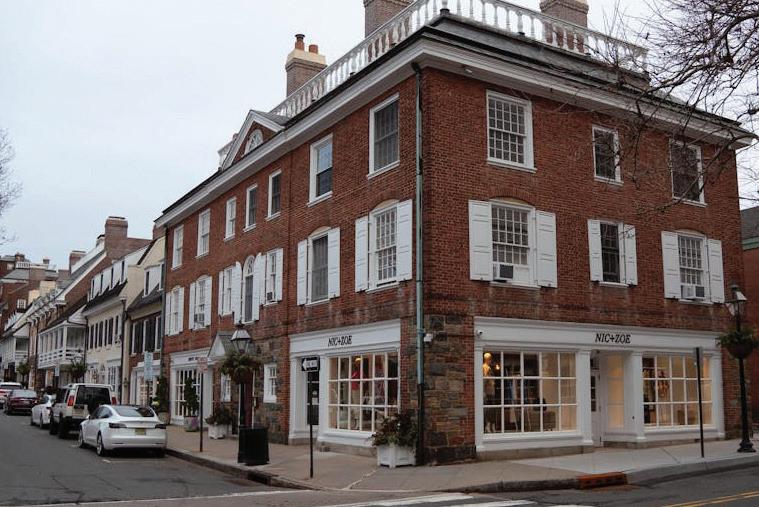
By Ysabella Olsen, Head Prospect Editor
Princeton University Orchestra and Glee Club
Princeton French Film Festival Screening: Cartoonists: Footsoldiers of Democracy
April 18, 4–5:30 p.m.
Arts Council of Princeton, 102 Witherspoon St., Princeton, N.J.
Join the Arts Council of Princeton in its French Film Festival screening of “Cartoonists: Footsoldiers of Democracy.” Produced by filmmaker Stéphanie Valloatto and “Le Monde” cartoonist Plantu, the documentary follows 12 political cartoonists from all around the world defending democracy. The screening is free and open to everyone upon registration.
2
3
4
April 18 at 4 p.m. & 8 p.m.
Hobey Baker Memorial Rink
Princeton Figure Skating Club will perform their spring show, entitled “XOXO,” this weekend. Although Valentine’s Day has passed and February is long gone, there is always room for some love (and a side of figure skating) in our lives. Tickets are available on Princeton University Ticketing.
April 17 & 18 at 7:30 p.m.
Richardson Auditorium
A classic collaboration is gracing the stage at Richardson this weekend: The Princeton University Or- chestra and Glee Club. With powerful vocals and equally striking orchestral music, their performance of Beethoven Symphony No. 9 and Bernstein Chichester Psalms is sure to stun. Tickets are Passport for the Arts eligible and available on Princeton University Ticketing.
New Dance Works by Olivia Kasule ’26 & Braeh Simon ’26
April 17 & 18 at 8:30 p.m.
Hearst Dance Theater, Lewis Arts Comple
Olivia Kasule ’26, a Neuroscience major pursuing minors in Dance and Theater & Music Theater, and Braeh Simon ’26, a Sociology major pursuing a minor in Dance, will present two distinct works. Kasule’s “Ephemeral, Still” is a contem- porary ballet work that features a responsive set design with themes weighted in the present feeling and memory that ultimately remains. Simon’s “She Builds” is driven by styles of contemporary fusion, femininity, and the influence of African American movement traditions, among various other inspirations. Both seniors’ works include casts of under- graduate students. Free tickets are required and available for reservation on Princeton University Ticketing.
April 19 at 4 p.m.
Frist 302
The Princeton Wildcats, a gender diverse a cappella group, present “Horizon.” This show is sure to be sun-sational and is a unique opportunity to see the group outside of an arch-sing setting. Tickets are Pass- port for the Arts eligible and available on Princeton University Ticketing.
April 17 at 7 p.m., April 18th at 6 p.m. & 9 p.m.
Frist Theater
Six14 Dance, Princeton’s Christian Dance Company, will bring “Thorns” to the stage at Frist Theater this weekend. Whether you are looking for a moving dance performance or art with a religious connection or both, Six14 Dance is sure to deliver. Tickets are Passport for the Arts eligible and available on Princeton University Ticketing.
HUA Chinese Dance Annual Showcase: Ephemeral
April 19 at 2 p.m.
Frist Theater
“Ephemeral” is HUA Chinese Dance’s annual showcase. The word ephemeral means something lasting for only a short time, just like the show itself –– meaning you won’t want to miss its sole showing at Frist Theater this weekend. Tickets are Passport for the Arts eligible and available on Princeton University Ticketing.
April 17 & 18 at 8 p.m.
Class of 1970 Theater, Whitman College
Attend VTone’s spring show for an evening of musical performance. The show’s theme “Long After” evokes themes related to spring –– perfect for warmer weather. Tickets are Passport for the Arts eligible and available on Princeton University Ticketing.
April 23 at 7:30 p.m.
Richardson Auditorium
Princeton University Concerts pres- ents the internationally renowned Australian Chamber orchestra, featuring works by Franz Schubert, John Luther Adams, Ralph Vaughan Williams, and Fanny Mendelssohn’s virtuosic String Quartet. Free tickets are required and available for reservation on Princeton University Ticketing.
April 17 at 7:30 p.m.
Matthews Theatre, McCarter Theatre Center
“The Music Critic” is created and conceived by Aleksey Igudesman, a Russian violinist and composer. This show compiles critiques of the most famous works of music in a humorous performance. Tick- ets are available on the McCarter Theatre website.
April 18 at 7:30 p.m. & April 19 at 2 p.m.
Berlind Theatre, McCarter Theatre Center
The Grammy award-winning composer Steven Mackey and director Mark DeChiazza bring “Memoir,” a theatrical musical, to life in Princeton. It follows a first-generation American woman who is seeking to achieve the American dream. Tickets are available on the McCarter Theatre website.
Sandman ’67: ‘Dell contacted The Daily Princetonian and said, ‘We want to do a national edition.’ So the second edition … was a Dell paperback that sold a couple hundred thousand copies.’
angry at our mock descriptions, but everybody knew the whole thing was mock.” 60 years later, the ‘Prince’ looks back at these light-hearted relics of a school on the cusp of coeducation.
‘Where
The idea for “Where the Girls Are” was conceived by MacGregor. After losing the 1965 election to be chairman of the ‘Prince,’ MacGregor was appointed senior editor, which meant he “was in charge of all the stuff that doesn’t happen everyday.”
In his role, MacGregor made the move to introduce the long-form style, deviating from short-form daily content to more comprehensive or specific pieces.
“And that started out with [taking] whole pages and devoting them to a single topic, which nobody had ever done. We discovered that people liked reading it, and people really loved reporting it,” MacGregor explained.
MacGregor and the business team also worked on one-off projects, including special editions that were not the daily paper but focused on a singular topic. Spurred by conversations with the paper’s business team, the first special edition published under MacGregor’s supervision was a booklet called “Business Careers After College,” which was distributed to over 200 schools.
Following the initial success of “Business
Careers After College,” MacGregor and the business team discussed how they could better appeal to their main audience: Princeton students.
“Who are the students? They’re all guys, and, with the exception of three of my classmates … they’re all white, and then twothirds of them went to prep schools all over the country. So if they want to get a date, how do they find one?” MacGregor explained.
Not only were there no women’s colleges in the immediate Princeton area, but Princeton men were not allowed to have cars. This made Princeton’s dating pool small, which was further compounded by the social ineptitude of some of its students who hailed from all-male high schools, according to students who were at Princeton at the time.
Thus, MacGregor and the business team dedicated their next special issue to helping male college students find dates. With this, the first iteration of “Where the Girls Are” was born.
Each chapter of the book included a satirical description of a different school, campus map, and information about travel, special dates, accommodations, telephones, rules and hours, restaurants and night spots, and “other things to do.” Sandman was credited as the writer and editor “under the eye, thumb and feet of” MacGregor, and the “dirty work [was] turned over” to Ned Scharff ’68 and Lane Lasater ’68 — “two bright, young freshmen who didn’t know what they were going to do, but had a lot
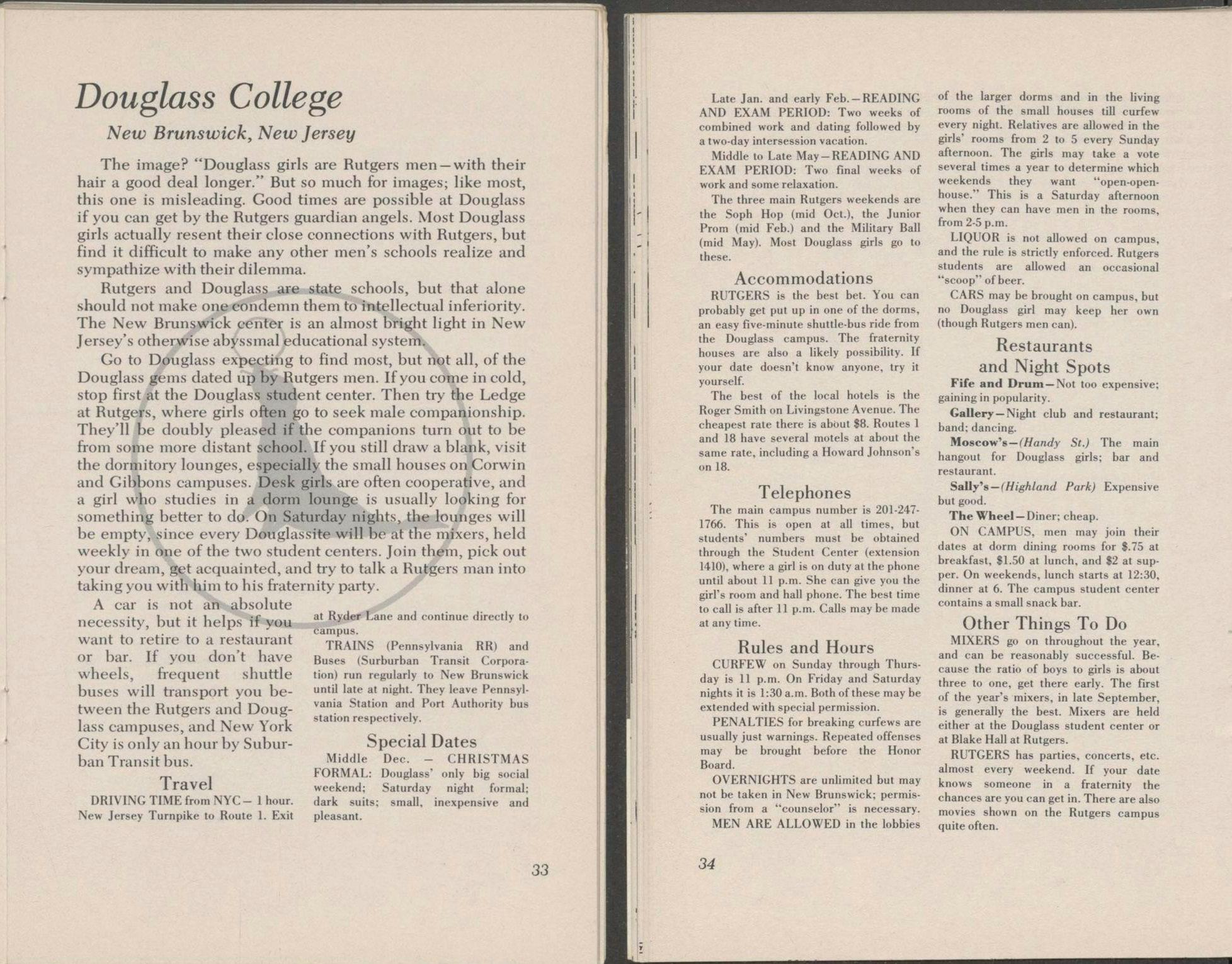
of fun.”
“We were trying to make the newspaper staff freshman year, and somebody had this idea,” Scharff said. “It caused kind of a minor sensation. There was a front page article about it in the New York Times, but it’s really just these over-privileged, uppity kids [writing it].”
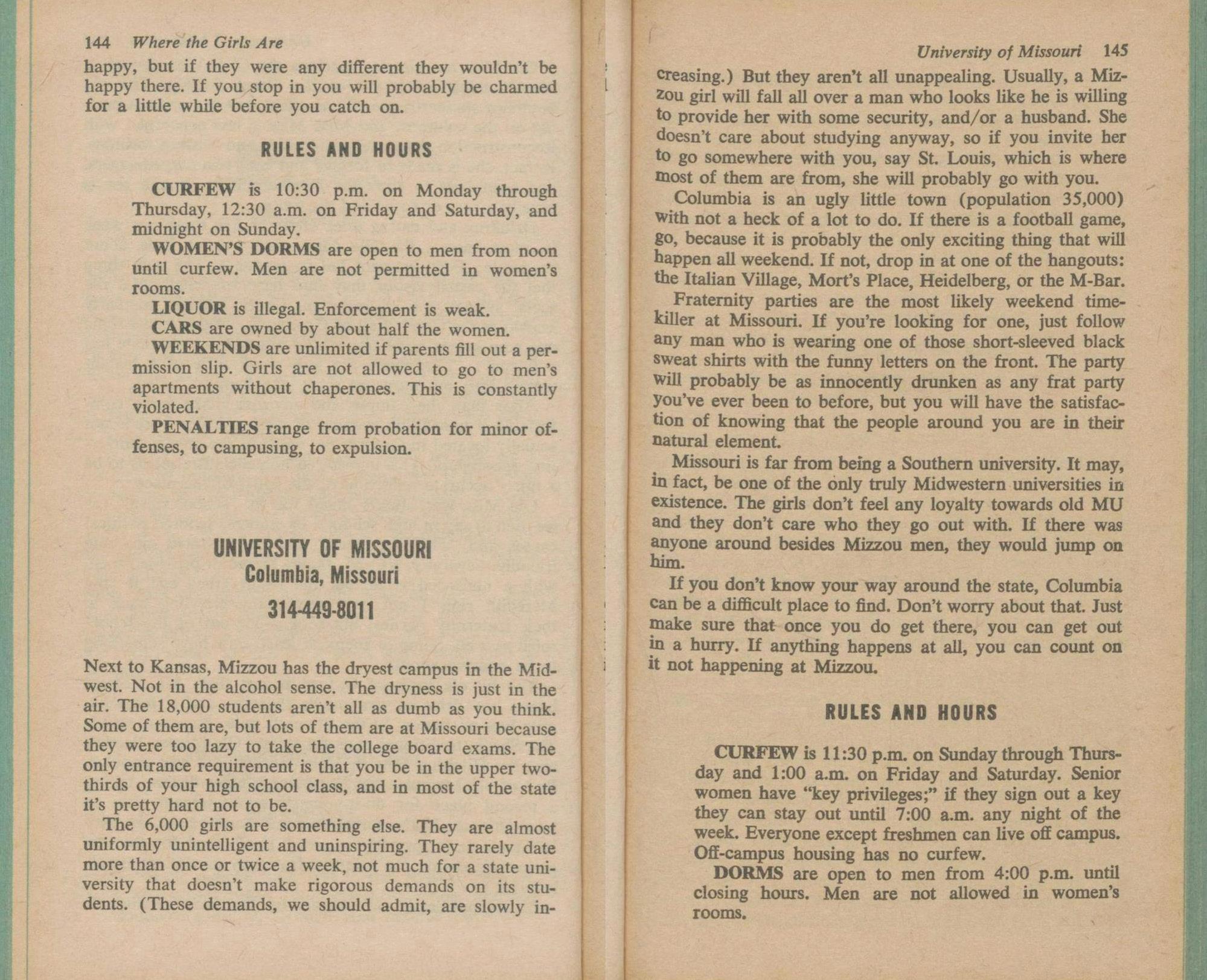
The writers began selecting women’s colleges to include and sending questionnaires to their students to collect information for the book. MacGregor recalled that Lasater and Scharff would cold-call dormitories at these colleges in the evening and ask whoever answered for anecdotes and stories. They would end up talking to “six girls sitting around [the phone] who couldn’t wait to just tell stories,” he said. They also collected information on the rules, dorm visiting hours, dormitories, and events at each college. The writers then began asking Princetonians if they knew students at women’s colleges like Vassar and Bennett, and for information about those schools.
Some of the responses from the women’s college students were less than precise. As MacGregor explained, the person who answered the phone for Smith College was vague with instructions. These imprecise instructions became the start of their section: “There is a gas station down the road just after you have passed Smith. They’ll tell you how to get back.” Other schools did not send in school crests; student cartoonist Jean-Christophe Agnew ’68 drew seals — the animal — in their place.
“Where the Girls Are” went on sale at Princeton Commons for $1 a copy on Sept. 14, 1965. By October, the “little black book” was seeing major success. On Oct. 19, The New York Times ran a front-page article on “Where the Girls Are.” According to the article, 10,000 copies were on sale at twenty-five men’s colleges in the East. The Associated Press distributed an article about the guide to newspapers across the country, appearing as far apart as Texas, and Pennsylvania.
“The weird part was that we never expected that anything would happen other than the fact that we had fun putting out something, and we thought maybe somebody would enjoy it. And when it showed up on the front page of The New York Times, we had no idea what had just happened to us,” MacGregor explained.
On Nov. 9, The Dial Press, “one of the nation’s largest publishers of paperback books” and owned by major publishing company Dell Publishing, bought the pub -
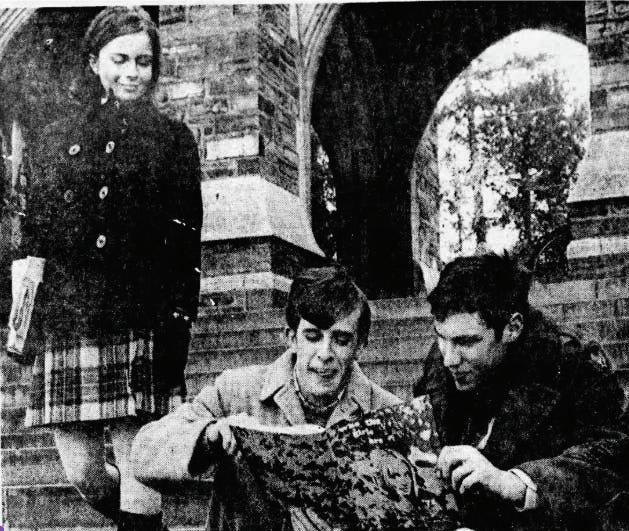
lication rights to “Where the Girls Are” and began distributing the first of 25,000 additional copies. Sandman became a minor celebrity, even appearing on the CBS television show “To Tell the Truth.”
Despite its success, many of the anecdotes in “Where the Girls Are” offended some women at these colleges. While Sandman’s girlfriend at the time — who attended Vassar — did many of the illustrations, the ‘Prince’ staff was, like all of Princeton, entirely male.
“Always keep in mind that a Smithie is looking at you not only as her date, but also as the man who may some day be footing the bills to send her daughter to Smith,” the Smith College section read. According to the guide, exam period at Bennett College was “one week of not-too-strenuous study and fairly active dating.”
“Understand, I don’t think we hurt anybody’s feelings. I hope we didn’t, because no one in their right mind would take this seriously,” Scharff explained. “But I was 18 years old and pretty callow, and I didn’t really have a good grasp of other people’s feelings. I do think it’s so silly and sophomoric, really. I doubt anybody was hurt by it.”
“We were conscious of the fact that the people who would be reading this were going to be both the guys who took interest, and also the girls who took interest in what was being said about their place. And they weren’t going to mind having a little fun poked at them,” MacGregor said.
In April of 1966, Amherst College students, in conjunction with the Mount Holyoke News and Smith College Sophian, published “Where the Boys Are.” In it, they ranked Princeton’s eating clubs and judged Princeton men.
“Princeton is the only place in the world where when a boy and his date walk past a mirror, it’s the boy who stops to comb his hair,” Amherst’s guide said about Princetonians.
In all, the ‘Prince’ made a “phenomenal amount of money” on “Where the Girls Are,” according to MacGregor. That year, MacGregor was the second-highest compensated person on the news board, making the equivalent of $29,000 today, according to his own assessment.
As the first “Where the Girls Are” continued to be sold nationwide, the ‘Prince’ discovered that the book wasn’t being consumed by its intended audience. As Sandman explained, the staffers “thought [the] audience of [“Where the Girls Are”] was going to be men in men’s colleges, who are traveling around to women’s colleges.” However, they discovered that the first edition sold predominantly to college and high school women.
“It turns out we were selling to college women who wanted to know what we thought of them, and high school women, who, God help us, were using us to decide where to go to college,” Sandman added. Although the writers never intended for the exaggerated stereotypes in the book to be taken seriously, some high school girls used
“Where the Girls Are” as a reference for which schools had the least negative caricatures, according to Sandman.
With the publishing rights in hand, Dell Publishing wanted to capitalize on the success of the first edition of “Where the Girls Are” and its newly-discovered audience by publishing a sequel, according to Sandman. However, this version would not be constrained to the east coast women’s colleges Princeton men tended to visit — it would cover universities across the country.
“Dell contacted The Daily Princetonian and said, ‘We want to do a national edition.’ So the second edition … was a Dell paperback that sold a couple hundred thousand copies,” Sandman explained.
According to Sandman, the ‘Prince’ placed an ad in the New York Times over Thanksgiving break, soliciting college students from all fifty states to submit information.
‘Prince’ staffers sat at the phone the entire vacation, fielding calls from women and men alike who joked and talked about their schools. From the beginning, the “whole concept was meant to be snarky” and satirical, which callers knew, Sandman said.
The second edition of “Where the Girls Are” “[hit] the newsstands of America” in February 1967. It featured 126 institutions, from Bryn Mawr, to UCLA, to Georgetown, to the University of Oklahoma. There were no photographs and only a few illustrations. The vast majority of the guide was descriptions of each school and its standard information.
“It was some mix of big schools, schools
people had heard of, schools where there was a stereotype that we could imagine might be fun to make fun of,” Sandman explained.
While still successful, the nation-wide “Where the Girls Are” drew stronger criticism than the first because of its sharper jabs. The guide claimed that female students at the University of Missouri were “almost uniformly unintelligent and uninspiring,” and didn’t “care about studying anyways.”
Women from several colleges sent in complaints to the ‘Prince,’ with one Centenary University graduate “hoping that [the writers would] all soon be in Vietnam.”
Since Princeton didn’t admit women until 1969, dating at Princeton and other single-sex colleges remained difficult. So, an idea for a third installment of the book was hatched during the summer of 1967. This new guide would go a step further in facilitating love affairs, including photographs of first-years from each women’s college.
“Dating was so different. It was men’s schools, women’s colleges, and I never went to a party unless I had a date,” Carol Ferring Shepley, a member of the Wellesley College Class of 1972, explained. She added, “You had to wait for someone to choose you — that was awful.”
Shepley’s headshot, name, and home city of St. Louis are in “Who the Girls Are,” although she does not remember giving permission to be featured.
“Who the Girls Are” was spearheaded by roommates Peter Brown ’70, Greg Diskant ’70, and Tom Hyde ’70. Brown, the special projects director, is credited as the writer and editor, while Diskant and Hyde, who were on the ‘Prince’ business team, directed the project. None of them had worked on either edition of “Where the Girls Are.” They also had “collaborators at the various schools,” according to Hyde.
According to Diskant, ‘Prince’ staffers spent the summer of 1967 tabling at firstyear orientations at various women’s colleges. Having received legal advice that the ‘Prince’ needed consent to publish women’s photographs, staffers asked first-year students and their families if they wanted to appear in the book, and for written consent.
“I promise you that no pictures were in that book for which we did not have written consent,” Diskant explained. “If you see the book, there are many women for whom there’s no picture, and that means they didn’t give consent.”
However, “Who the Girls Are” fell flat. According to Brown, news coverage about the guide peaked several weeks before the book was ready. A picture of Hyde and Brown perusing the book with Elizabeth Grottle GS ’74 looking over their shoulder was carried on the AP wire nationwide. By the time 10,000 copies of “Who the Girls Are” — each containing 1,487 different photographs of
women and schools — were printed on Dec. 6, 1968, demand had diminished as readers’ attention moved to other subjects.
“This incredible promotion completely failed because there was a lot of demand for the books, but we couldn’t provide them,” Brown explained. “Three weeks later, the books came out from the printer and nobody wanted them. I think attitudes had changed pretty much overnight, and here we were with this silly dating idea, and everybody was suddenly interested in very serious topics like the [Vietnam War] and keeping out of the war, and nobody wanted to think about just having fun.”
“I remember being in the basement of the ‘Prince’ building, and there were just boxes of them sitting there. I think somebody was saying, ‘These are never going to go anywhere, let’s get rid of them,’” Hyde explained.
In addition to the usual descriptions and new headshots, “Who the Girls Are” featured photography from students such as Rich Edwards ’69 and a foreword by C. Holly Davies ’70, one of the first women on the ‘Prince.’ In her foreword, Davies wrote separate letters to the men and girls purchasing “Who the Girls Are.”
“Unless someone puts out a ‘Who the Boys Are,’ [a girl is] not going to know whether you’re King Kong or the man of her life. As I said before, this is unfair, and any decent young man would refuse to buy this book,” Davies addressed the men reading her foreword. However, to the girls, she acknowledged that “if you were one of 16 undergraduate girls at Princeton,” you would know why the guide was necessary.
Although fun at the time, “Who the Girls Are” has a mixed legacy amongst its former writers.
“I remember it as a whole lot of fun, and maybe that was the prime intention. We never got into trouble. The ‘Prince’ didn’t go bankrupt or anything. If the real aim was to have fun, that was successful,” Hyde said.
“I’m not as amused by it all as I was when I was twenty and writing for The Daily Princetonian. Either I’ve lost my sense of humor, or as a society, we’re no longer as indulgent as we once were,” Davies said in a comment to the ‘Prince.’
Today, “Who the Girls Are” may seem like a rudimentary version of Facebook or a dating app. To the writers, it was a fun opportunity to push boundaries and meet young women “in a time in which that was hard to do,” as Diskant recounted. However, to the women on the precipice of coeducation, these guides reflected east coast college culture’s reluctance to accept them as equals.
Lucia Zschoche is the associate editor for Archives and an assistant Features editor for the ‘Prince.’ She is from St. Louis, Mo., and does not agree with the evaluation of Mizzou girls in “Where the Girls Are.”
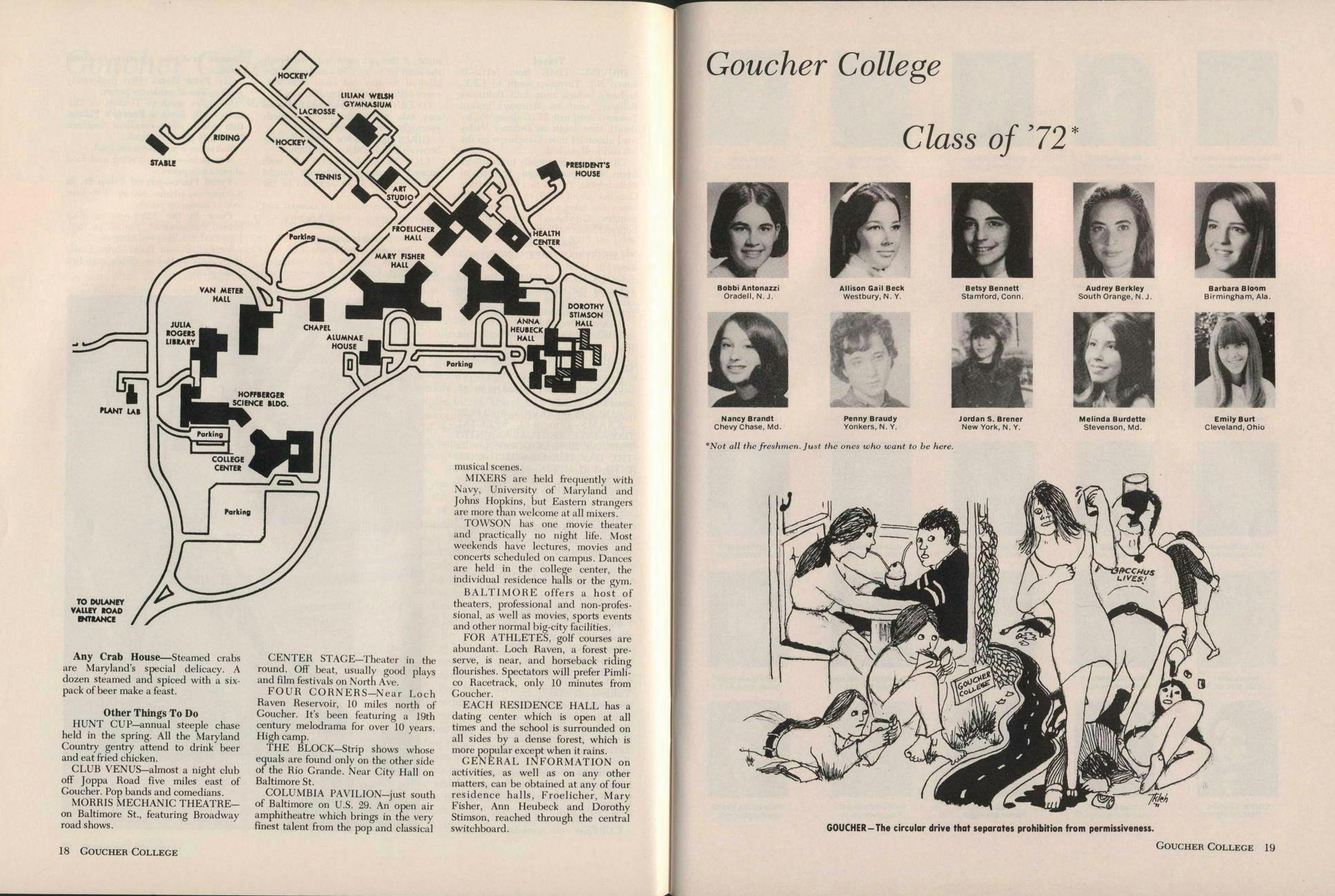
By Nathaniel Voss Assistant Humor Editor
The following content is purely satirical and entirely fictional.
As his voice reached a crescendo, Princeton FootToes member Kent Singh went for his signature move, locking eyes with 41 year-old audience member Dee Ville as he belted out “Isn’t she lovely?”
Those close to Amy confirm that “lovely” is not among the adjectives they would use to describe her.
“She’s really quite abrasive,” neighbor Charles Cole said. “We don’t invite her to barbecues anymore — she claims to have a ‘big personality,’ but she’s just cruel.”
Amy’s cousin, Cathy Ville, agrees. “When we were little, Dee would pick on me because my parents didn’t make much money. One time, she put a dollar bill on a fishing hook and tried to catch my little brother with it.”
Dee’s reputation did not seem to concern Singh, who pointed at her as he crooned, “Isn’t she wonderful?”
Court records show that, in 2013, Dee hit a child while going 40 miles per hour in a school zone and kept
driving. They also show that she cannot be sold cough syrup and, when standing under Blair Arch, violated restraining orders of four Mathey College residents.
“Isn’t she precious?” Singh sang.
Fellow Parent Teacher Organization member Anaya Stevens disagrees. “I try to invite her kids over as often as possible — it’s good for them to see a stable family,” she told our reporter. “It would be tragic to see bright little Joey and
Emma sucked into a generational loop.”
Joey and Emma, both nine, told The Daily PrintsAnything they still hold hope that they were adopted, and their mom is just waiting to tell them.
As the song wore on, Singh seemed to doubt his initial judgement. His “truly the angel’s best,” was decidedly lukewarm, and, by the final lines, he was avoiding looking at Amy altogether.
“I thought she was one of the moms,” he told our reporter afterwards. “But then she started gesturing to me and licking her lips. Can you walk me back to my dorm? I’m scared she’ll follow.”
Nathaniel Voss is an assistant Humor editor who is looking into the legality of preemptive restraining orders.

By Tarun Iyengar, Kadin Parham & Nicolas Rohou Head Humor Editor, Staff Humor Writer, Associate Humor Editor
With the recent death of TigerHub, a new, easy-to-use, well-managed, stylistic — dare we say sexy — interface has taken over campus. Its name? Stellic.
However, since Stellic is hot off the presses from the Office of the Registrar, we at The Daily PrintsAnything wanted to give the student body (which is also sexy, dare we say) the best tips — yes, tips — to dominate course selection this year. We hope course selection is the climax of the semester!
Stellic’s recommendations and inputs are powered by the most cutting-edge and advanced artificial intelligence, so they are automatically more trustworthy than your advisors, peers, and personal experience. If you are suggested a load that seems virtually impossible, it simply means the platform believes in you and you should trust it.
“I came to a Princeton as a Gender and Sexuality Studies, but now I’m proud to report that I’m a Chemical and Biological Engineering student,” said Serena Baristae ’26, “It all started when I came to Princeton, intent on taking American Sign Language, the History of Matcha, and two classes on feminist political theory, but Stellic insisted that I should instead take five 400-level biochemistry and quantum biology courses, all taught entirely in Russian.”
Goals like “graduating on time” and “get-
ting a good education” can be safely tossed aside as you place all the decision-making in “Stella,” the only true academic advisor you’ll need.
“I’m a comparative literature major,” said Reed Inge ’27. “Stella keeps putting me in ORFE courses. I’m not even in a B.S.E. degree, so it’s saying that I will graduate in 2035.” Inge, who clearly does not understand what is good for him, is projected by Stellic to be unemployed coming out of college. It claims that by making him take ORF435: Financial Risk and Wealth Management without any of the required prerequisite courses it is simply “looking out for him.”
Unlike the ’Hub, Stellic is the jack of all trades. According to Deputy Registrar John E. Sims, Stellic allows students to directly schedule appointments with their advisors instead of having to “cross Mordor and solve a bridge troll’s riddle” to have a chance to see their advisor’s Calendly, which usually had no availability to begin with.
Students can now schedule advisor meetings with more speed and efficiency than a Counseling and Psychological Services session. Likewise, advisors, who earned Nobel Prizes for ignoring the emails of their obsequious first-year advisees, will now have no
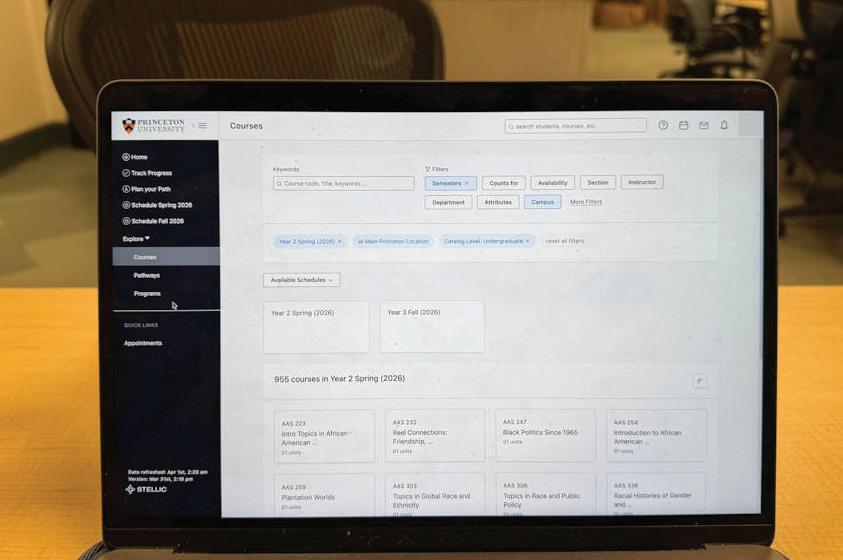
option other than to confront their flooded Stellic inbox DMs from students telling them they’re dropping ECO101.
3. Remember to Pray!
Although planning courses is the bulk of what Stellic allows students to do, it is also the new home for registering for courses. Gone are the days when weary-eyed students watched their perfect schedule crumble when the ’Hub crashed. Instead, students can now do the same on the much more aesthetically pleasing Stellic! Since students across campus will have to collectively refresh at 7:30 a.m. in order to click “Register” on Stellic, they have been advised to pray to ensure they get the best outcomes possible.
To this end, the staff at The DailyPrintsAnything have composed a prayer to use during refresh and registration:
“Humble Registrar, please forgive me for not refreshing one microsecond earlier.
Humble Registrar, hear my pleas for forgiveness over the screams of the masses who didn’t get their classes.
Humble Registrar, deliver us “no class Fridays” and the PDF-only poetry class taught by that elderly obscure Lithuanian dude.
In the name of Justin T. Bronfeld and his humble deputies, free me from this purgatory.” This piece is a group collaboration between
By Hayk Yengibaryan Senior Sports Writer
For the third time in two decades, Princeton women’s basketball has a new head coach at its helm.
This time, they didn’t have to look far.
Lauren Gosselin, who spent seven years on former head coach Carla Berube’s staff, including the last three as associate head coach, was named the program’s 11th head coach on April 8 following Berube’s departure to Northwestern.
“The pride I have for this university and this team and the people that I’ve come in contact with in my time here, it’s a dream come true,” Gosselin told The Daily Princetonian.
“I’m so excited about having the opportunity to lead this specific team, a veteran team that’s coming back, that’s accomplished a lot, but I think having coached them and [gotten] the behind the scenes of what what drives them and what motivates them, I think they’re hungry for more, and so I’m excited to hopefully lead them there.”
Princeton Director of Athletics John Mack ’00 announced Gosselin’s hire to the team on Wednesday afternoon.
“It means everything to have their support. No coach is successful without the trust, respect, and love from their players,” Gosselin said.
“I think just their genuine excitement for me and confidence in me to step into this role and lead them, it’s going to give me the confidence to do the best possible job that I can. Their reaction today definitely made it all worth it,” she continued.
Gosselin takes over a Tiger program that has seen tremendous success under its two previous head coaches, who both left Princeton for power four programs.
Courtney Banghart spent 14 years at Princeton, taking a program that had never been to the NCAA tournament to March Madness eight times in 10 years and earning national recognition as the 2015 Naismith Women’s College Coach of the Year. Banghart departed in 2019 to take over at the University of North Carolina, where she still serves as head coach.
Berube then joined the Tigers and saw the success continue. Under her leadership, the Orange and Black won five Ivy League championships in six seasons, held an .835 winning percentage, and earned two NCAA tournament wins. Berube capped off her career in Old Nassau with the Kathy Delaney-Smith Mid-Major Coach of the Year Award before leaving for Evanston.
The answer to who follows them, it turns out, was already in the building.
“When the opportunity presented itself, it was just a no-brainer to put my name in the hat and go for it,” Gosselin said.
A graduate of Bentley University, Gosselin finished as the program’s all-time leading scorer before capping off her senior year with an undefeated 35–0 year, a DII national championship, and recognition as the Women’s Basketball Coaches Association (WBCA) NCAA Division II Player of the Year.
She then completed a postgraduate internship at the NCAA office, where she worked on a ticketing project to improve attendance at the NCAA Women’s Final Four.
“It certainly was a fun project at a time when the NCAA was worried about putting butts in seats is what they would call it,” Gosselin said.
While noting that the problem no longer exists, she said she is excited “to work with [the] marketing and external team” to continue engaging the greater Princeton community, students, and alumni.
Following her internship, Gosselin earned a master’s degree in leadership and admin-
istration from Boston College while simultaneously serving as a graduate assistant. Her first coaching experience came in the 2018–19 season when she joined Berube’s staff at Tufts before following her to Princeton at the end of that year.
The continuity she offers is perhaps her strongest immediate asset.
“The continuity piece is awesome,” Gosselin said. “It’s not learning a new vocabulary system and all that, but it’s just optimizing the things we already do so well, and hopefully taking it through to that next level.”
The Berube era was defined by the mantra of “Get Stops”, a defensive identity that led the Tigers to a 147–29 record.
While Gosselin has not thought of a mantra or hashtag for her tenure, she described herself as “more offensiveminded” than Berube, while remaining clear that defense remains a non-negotiable.
“I think the [Gosselin] era will be a team that is connected, is poised, is confident, [and] is player-led,” Gosselin said. “My job is to prepare them again Monday through
Friday to compete on Saturday … and so I think you’ll see a team that is communicating with each other, connected, tight, bench energy.”
“Those are all things that you saw with the successful teams we’ve had these past few years. And I hope to just build on it and empower them so that they again are a playerled group that knows what the task at hand entails,” she continued.
Off the court, she emphasized the importance of continuing the culture created during Berube’s tenure.
“There’s the gospel X’s and O’s piece, but if you don’t have that culture and that connectivity in your staff, that translates to your team,” she said, while also noting the importance of valuing the studentathlete experience.
“We’re gonna value the experience that our players are having, how we approach the day-to-day, the balance that we have, right? They’re studentathletes, not just athletes,” she said.
Among her first orders of business will be rounding out her staff. Gosselin confirmed that retaining current assistant coach Jordan Edwards is
“in the works” and that she hopes to “finalize that in the coming weeks.”
“I’m certainly going to make sure that my staff is representing the best, and I think Jordan does represent the very best,” she said. “She’s a young star in this profession.”
Gosselin — a first-time head coach — now steps into a role vacated by two coaches who built a dynasty.
At her disposal will be the junior quadrant of guards Skye Belker and Ashley Chea, guard/forward Olivia Hutchertson, and forward Fadima Tall. Belker and Tall were named second-team All-Ivy in 2026, while Chea and Hutcherson received honorable mention honors.
“The torch that’s being passed to me — I know what it represents,” Gosselin said. “I’m confident in what we have and where we’re going.”
Hayk Yengibaryan is a head News editor emeritus and senior Sports writer for the ‘Prince.’ He is from Glendale, Calif. and typically covers breaking news and profiles. He can be reached at hy5161[at]princeton.edu.
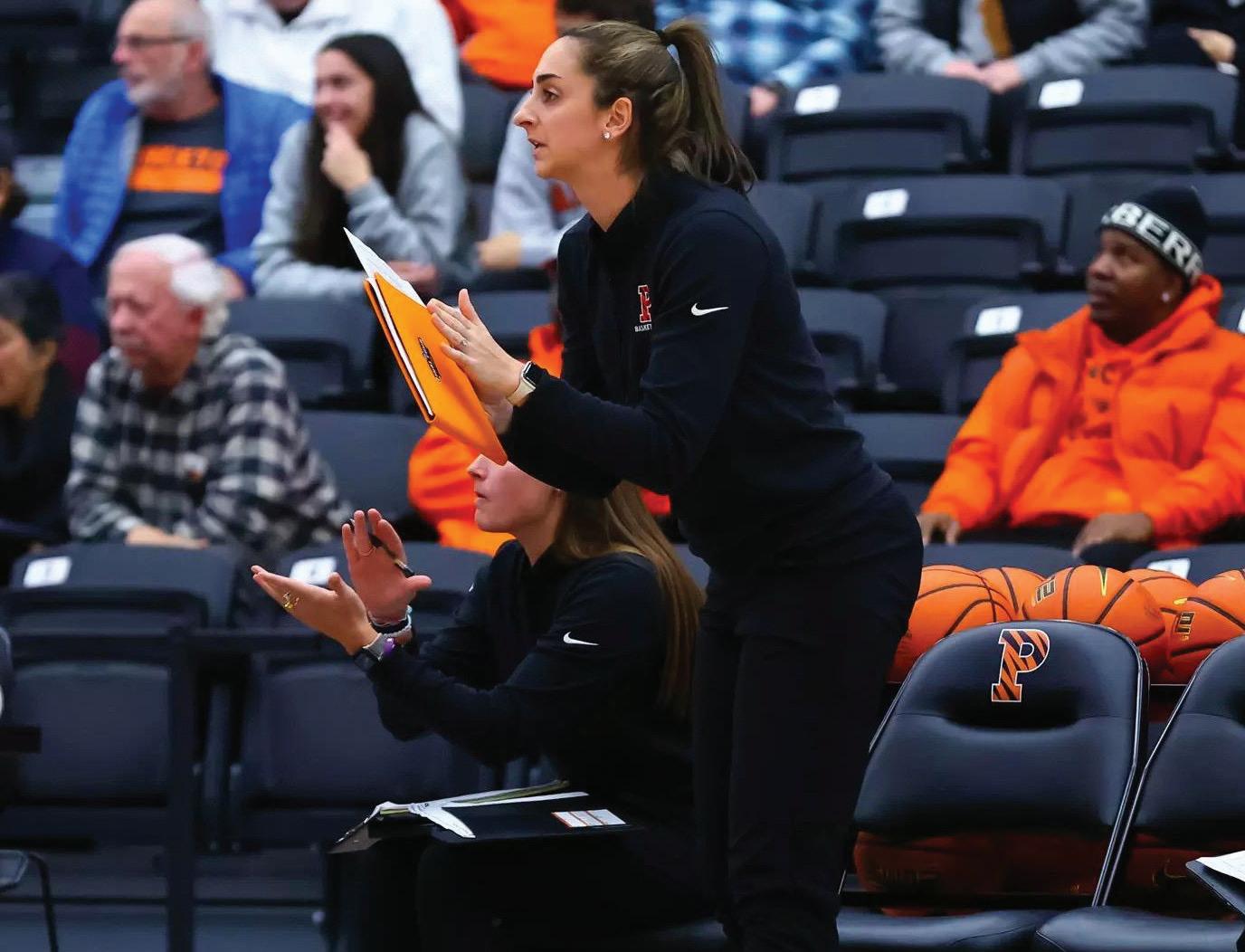
By Hayk Yengibaryan Senior Sports Writer
Six seasons. Five Ivy League titles. Five NCAA tournament appearances. Two NCAA tournament wins.
And one coach behind it all: Carla Berube, who in March decided to leave Princeton for Northwestern.
The decision came fast, finalizing just before the Tigers’ NCAA Tournament game this March, capping a season in which Princeton went 26–4, won the outright Ivy League regular season title, and claimed the Ivy League Tournament championship.
“I kind of knew that was probably my last game coaching at Princeton when it was over,” Berube told The Daily Princetonian.
The news broke to the team days after the loss to Oklahoma State, with Berube addressing the team shortly before the official announcement.
“Very difficult, to say the least,” Berube said of her announcement to the team. “It was a very tough decision, a very emotional meeting.”
“We were just really, really sad about it. A bunch of people were crying,” senior forward Taylor Charles told the ‘Prince,’ while acknowledging that the players are aware that Berube is “not out of [their] lives completely.”
Berube will now take over a Big Ten program and face a challenge unlike anything she encountered in the Ivy League. She will be succeeded by Associate Head Coach Lauren Gosselin, who was named the program’s 11th head coach on Wednesday afternoon.
When Berube arrived at Old Nassau in 2019, she replaced outgoing head coach Courtney Banghart, who had spent 12 years building Princeton into a powerhouse that reached the NCAA tournament eight times in 10 years.
The Tigers’ 2015 season saw them finish 31–1 before losing to No. 1-seeded Maryland in the second round. That season earned Banghart recognition as the 2015 Naismith National Coach of the Year. The transition from Banghart to Berube provided an uncertain period, particularly for players recruited by Banghart.
“When Coach Berube came in, it was a very uncertain time for me,” said Grace Stone ’23, who had been recruited by Banghart and played her first season under her. “She took what could have been a really uncertain and scary and maybe not-sogreat three years left at Princeton and really made them incredible for me.”
All non-seniors from the 2018–19 roster remained on the team under Berube the following season, with the incoming Class of 2023 committing to the new era at Jadwin.
“I honestly never even considered actually reopening my recruiting,” Ellie
Mitchell ’24, who took a gap year during the COVID-19 pandemic to preserve her Ivy eligibility, said. “I was excited for the opportunity to play under Coach Berube and it turned out being the biggest blessing in disguise.”
Berube herself described the transition as “amazing,” crediting the players for making it so.
“Everybody was super welcoming and just so kind to me and my family, just letting us in and teaching us all about Princeton and the Princeton women’s basketball,” Berube said.
In her first season, the Tigers went 26–1 with their only loss coming in overtime against the Iowa Hawkeyes. Berube’s squad finished the season with an AP poll ranking of 22.
Unexpectedly, the pause created by the pandemic gave the team space to adjust and, in many ways, to grow closer under a new staff.
“Berube, having [the COVID-19 break], in some sense, helped give her some time to get her head around things,” Abby Meyers ’22 said.
“It gave us an opportunity to just get to know each other really well, work on just cultivating leaders and what we want for the program moving forward,” Berube added. “We made the most of that time.”
During that time, Berube also recruited her first class with the Tigers, which included Parker Hill ’25. Hill got to see Berube coach a local game before committing to Princeton.
“We were the first people that she picked to come, which was very exciting,” Hill said. “And I found that every time I took an issue with a call or saw something, she would stand up and be talking about it.”
Hill joined a long list of Tigers from the Maryland area, including Chet Nweke ’24, Ellie Mitchell ’24, Abby Meyers ’22, and Bella Alarie ’20. That list now also includes sophomore guard Toby Nweke and junior forward Fadima Tall.
“A lot of people could speak to how good the program was, including people that played under her,” Hill said. “I think just having the positive word of a lot of people in the Princeton basketball network … that was another big motivating factor as well.”
Charles — part of Berube’s second recruiting class — had a similar experience after catching a local game.
“She had a great head coaching record previously, before being at Princeton. And then I was able to watch her coach a little bit after COVID, just see kind of if she walked the walk and she did,” Charles said.
What followed the pandemic proved to be one of the most successful stretches in program history. The Orange and Black went 121–28 over the next five seasons, winning the Ivy League regular season
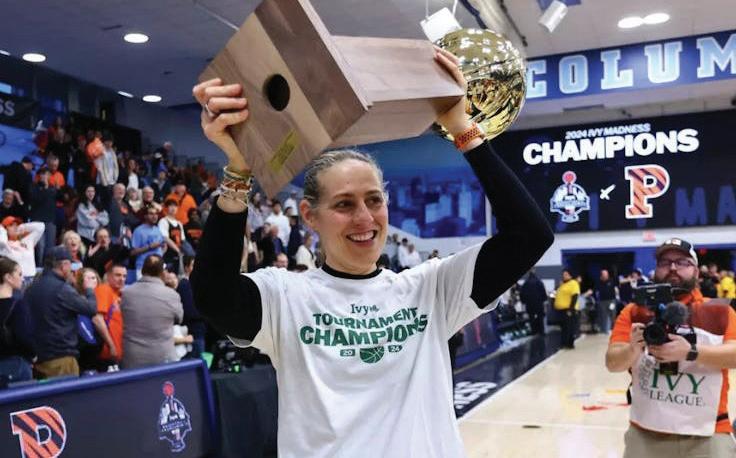
and tournament four times and earning an NCAA tournament bid every season.
During her tenure, Berube coached three Ivy League Player of the Year winners, three-time Ivy Defensive Player of the Year Ellie Mitchell ’24, three WNBA Draft selections, and a total of 21 All-Ivy honorees.
This includes Alarie, a unanimous Ivy League Player of the Year and two-time AP All-American, whom Berube coached for her senior season, as well as Meyers and Kaitlyn Chen ’24, both of whom earned All-American honors under her.
“It’s just the winning mindset,” Meyers said. “That comes with the practices. The preseason is some of the toughest times that I’ve ever played basketball, and the drills that we did are ingrained in my memory in a kind of post-traumatic way … but it makes you really appreciate the process.”
“I think with Berube and her coaching staff, they’re able to kind of ingrain a trust and love for the process, however hard it may be. And I think that’s really attributed to our successful postseason play,” Meyers continued.
That process translated into a defensive identity, one built around Berube’s mantra of “Get Stops.”
“A lot of teams like to throw that around, defense wins championships, but it’s not simply a slogan for us,” Hill said. “I do think it’s a big core of the way [Berube] coaches and plays and prepares for games.”
While many fans immediately think of the defensive mentality that shaped Berube’s tenure, her impact extended beyond the court. Multiple players described a coach whose sideline tenacity was masked by a day-to-day warmth and humor that defined the program.
“She’s actually very goofy and loves to joke around,” Mitchell said. “And I think something that’s so special about her is that she’s able to demand this excellence from her team and coach at an extremely high level, but at the same time, she’s able to balance the relationships with her players.”
“One of the things that she would say before every one of our games was, play hard, play smart, have fun. And that’s on our team room wall, and I think that ‘have fun’ piece is something she always really brought, and we were able to joke with her on and off the court,” Stone said.
Senior forward Taylor Charles echoed similar sentiments, adding that Berube is “really good at bringing us all together and creating a community that we are so bought into and want to be a part of for four years.”
That community was, by Berube’s own account, what she was most proud of.
“You can say the championships were incredible, but I think it’s the relationships and the connections with those players … that’s what it’s all about,” Berube said.
That relationship is most evident with Mitchell, who still speaks with Berube regularly since graduating in 2024.
“My relationship with Coach Berube is one that I’ll carry with me for the rest of my life,” Mitchell said. “She obviously helped me become a better basketball player on the court, but more importantly, a better person off the court.”
***
No moment crystallized the program’s rise under Berube more than the success in March in both 2022 and 2023.
In 2022, the 11-seeded Tigers upset six-seeded Kentucky 69–62, who had just won the Southeastern Conference tournament. In the next round, the Tigers lost in heartbreaking fashion to No. 3 seed Indiana, 55–56.
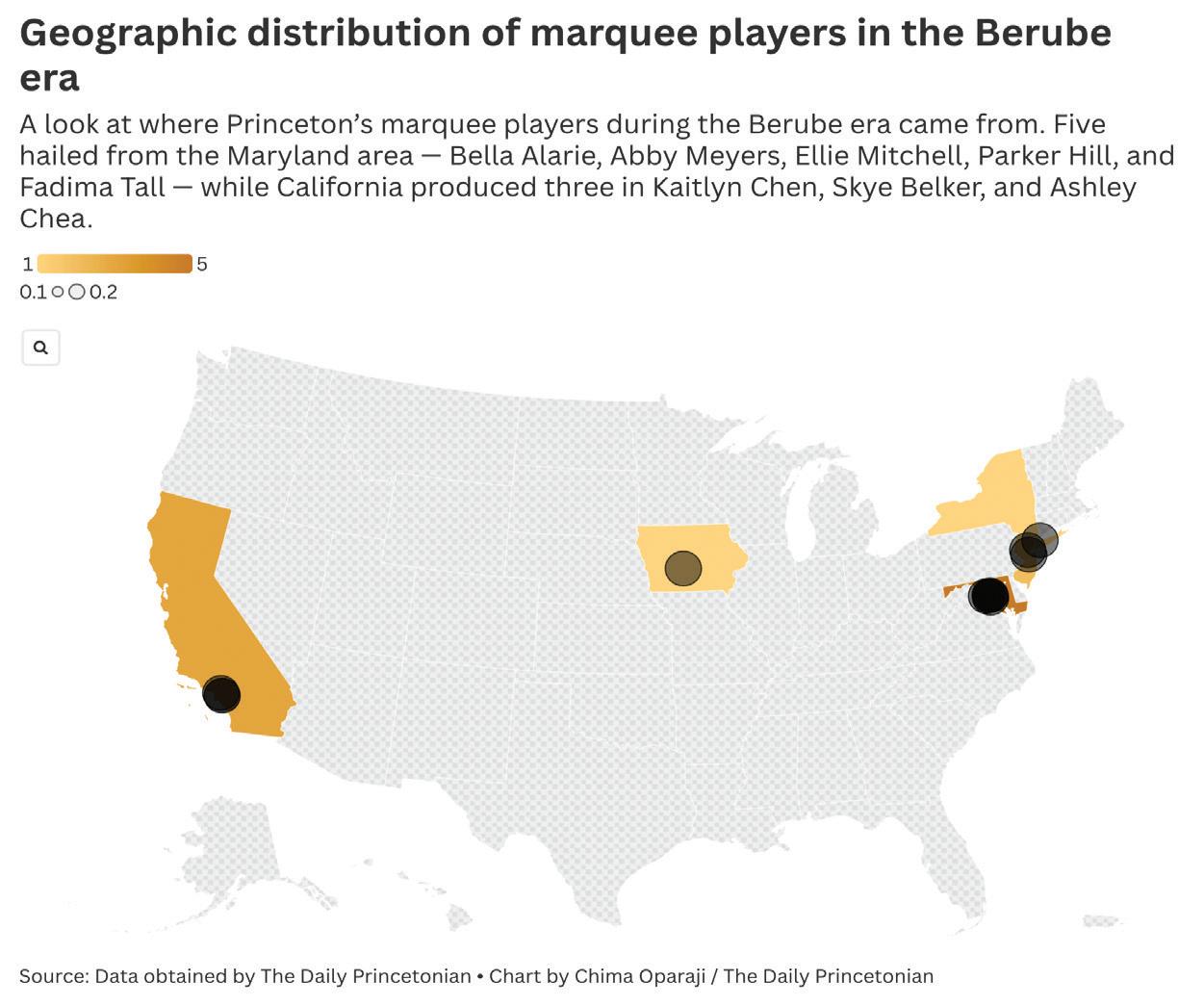
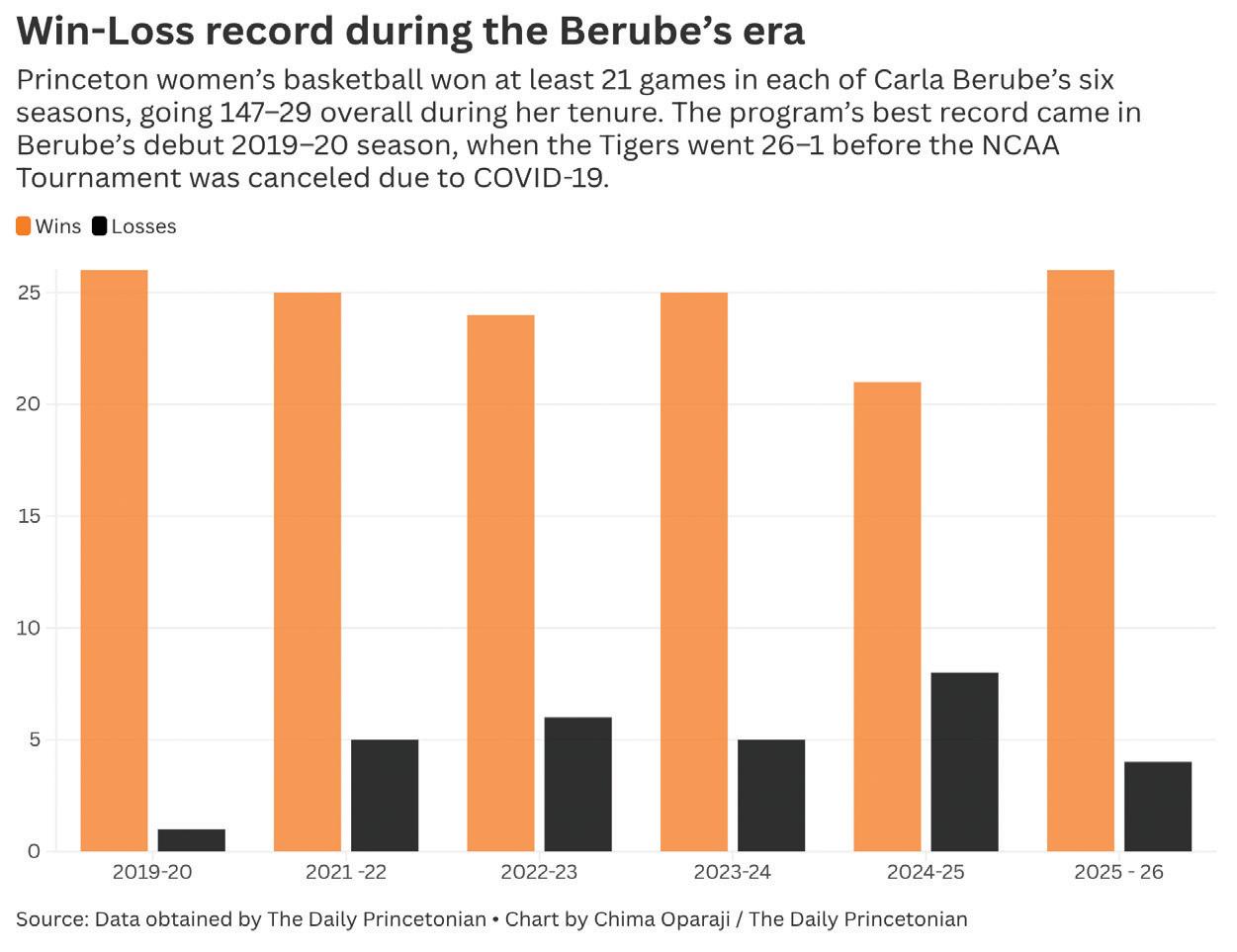
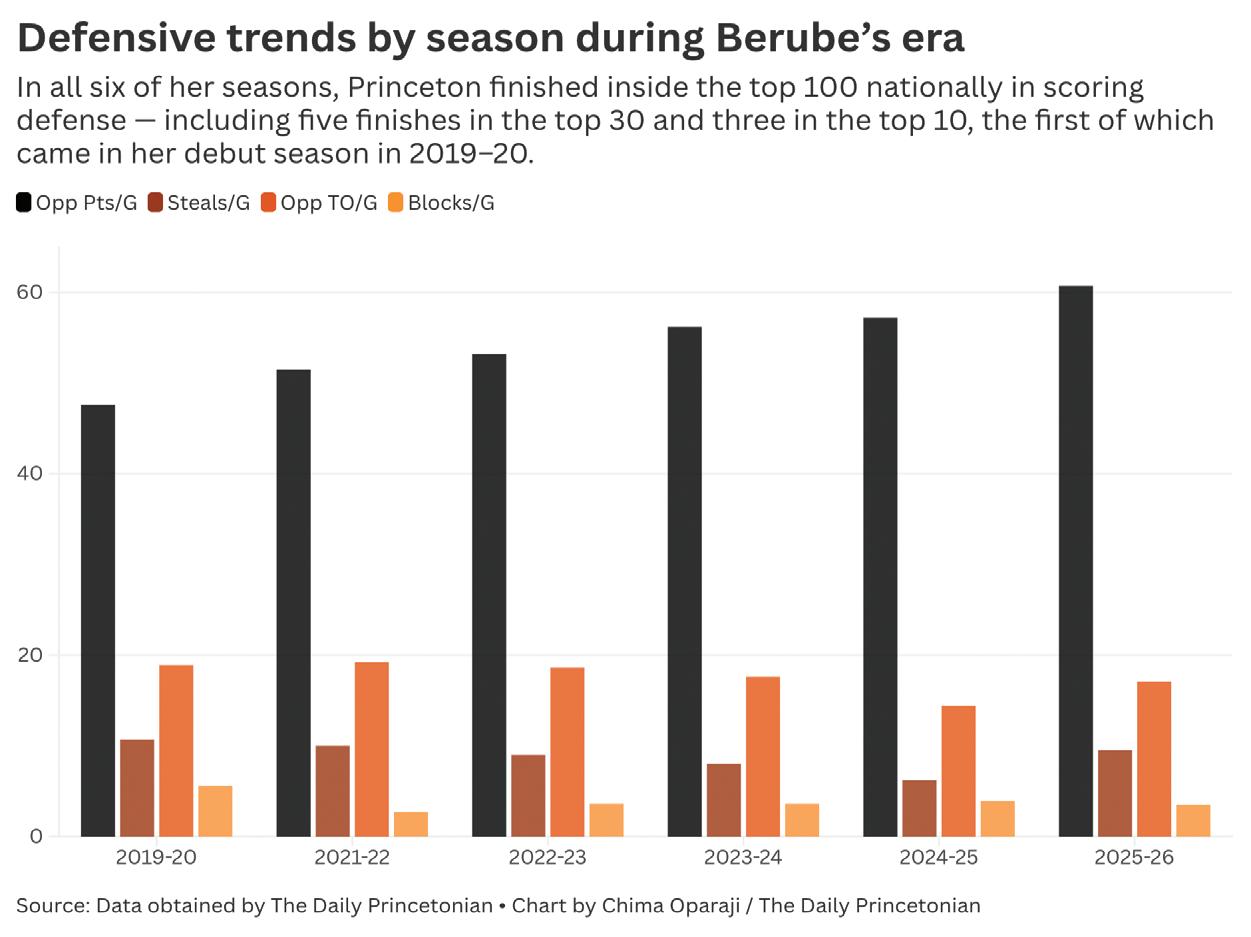
Following the news of Berube’s departure, Meyers spoke with Tani Brown ’10, co-president of Friends of Princeton Basketball.
“[Brown] was just like, ‘We need to figure out a way to continue this legacy and this winning mindset, and show how important Princeton basketball is, and she mentioned the Kentucky game,” Meyers said.
“The next year as well, they went into the round of 32, and they were able to beat [North Carolina State],” Meyers said.
For Stone, the win against N.C. State was capped by a game-winner that traces back to Berube’s trust in her.
“That shot that I hit was one that Coach Berube had drawn up for me before against Columbia … that same exact three, to send the game to overtime,” Stone said. “It was something that we prepared for.”
“The confidence that Berube had to draw that up … meant a lot to me. Berube’s confidence when she has it never wavers,” Stone continued.
Berube capped off her tenure at Princeton this past season by winning the Ivy League regular season title outright and the Ivy Madness tournament. This was the first time in four years they had won both outright, having shared the regular season title with Columbia in the 2022–23 and 2023–24 seasons.
“That was always a goal,” Charles said. “We shared it with Columbia a couple of years and that’s just not as sweet as winning it completely by yourself. So I think that really was probably the most defining moment of the four years that I’ve had here.”
While Berube’s time on the Princeton sideline has come to an end, her place in the program will remain.
“She’ll be a tiger forever, and she’ll always be in our corner,” Mitchell said.
Hayk Yengibaryan is a head News editor emeritus and senior Sports writer for
WOMEN’S LACROSSE
By Francie McKenzie Staff Sports Writer
No. 20 women’s lacrosse (5–5 overall, 2–1 Ivy League) split a pair of games this past week, falling 10–8 to No. 12 Stony Brook (11–2, 4–0 Coastal Athletic Association) before responding with a critical 14–12 win over Cornell (7–5, 2–2). After struggling to overcome an early deficit midweek, the Tigers showcased their resilience on Saturday, using a balanced offensive attack and key defensive stops to secure the victory over fellow Ivy League foes.
Princeton women’s lacrosse falls to Stony Brook 10–8 after early deficit
After trailing for nearly the entirety of the contest, the Tigers were unable to get a late surge and steal the win on Wednesday. Stony Brook seized control early, jumping out to a 3–0 lead within the first four minutes, forcing Princeton onto its heels from the opening draw. While Princeton responded with senior attacker Haven Dora, who put the Tigers on the board with a free position goal six minutes into the first quarter, Stony Brook quickly struck back to extend its lead to 4–1 by the end of the period.
Despite the early struggles, Princeton found momentum in the second quarter. Back-to-back goals from junior midfielders Colette Quinn and Ella Sloan cut the deficit to one, bringing the Tigers within one at 4–3 early in the frame. Princeton continued to generate threatening offensive opportunities, but missed chances including a free position attempt from junior attacker Meg Morrisroe prevented the Tigers from leveling the score.
The Seawolves capitalized on those missed opportunities, maintaining their narrow advantage through the remainder of the half. Morrisroe eventually converted on a player-up opportunity off an assist from Sloan to make it 5–4, but Princeton entered the break still trailing after another Stony Brook goal.
The third quarter proved to be pivotal. After a quick Stony Brook goal extended the lead, senior attacker Jami MacDonald answered to bring Princeton back within one at 6–5. However, the Tigers were unable to sustain the momentum. The Seawolves responded with a multi-goal run, capitalizing on Princeton fouls and extended possessions to get their largest lead of the game at 9–5.
Princeton continued to battle, with Quinn converting off an assist from MacDonald late in the quarter to cut the deficit to 9–6. But still, the offensive efficiency fell short despite aggressive plays including a shot off the post from Dora, which paired with costly fouls limited the Tigers’ ability to fully close the gap.
Senior goalkeeper Amelia Hughes kept Princeton within striking distance throughout the contest, recording multiple key saves across all four quarters, contributing 14 total for the Orange and Black. She denied several free position attempts and point-blank shots, preventing Stony Brook from gaining any additional offensive momentum that would’ve certainly put the game away.
Princeton mounted a final push in the fourth quarter. After Stony Brook extended its lead to 10–6, MacDonald and Morrisroe each converted free position opportunities to bring the Tigers within two. However, despite a more aggressive
Week
second half, the early deficit ultimately proved too much to overcome as the Orange and Black fell 10–8.
“Obviously the loss against Stony Brook was not what we wanted, but it was a close game,” Morrisroe told The Daily Princetonian. “Our tough out-of-conference schedule really helped us to learn a lot and bring us confidence going into Ivy League play.”
Looking to turn the page, the Tigers entered Saturday’s matchup against Cornell focused on translating lessons from the loss into a more complete performance.
“We can’t change the past but we can determine our future. Everything that we want is still in the cards,” senior defender Abigail Roberts said.
Princeton responds with 14–12
On Saturday, Princeton faced Cornell in hopes of avenging their Wednesday defeat.
After several back-and-forth possessions and defensive stops on both ends, Princeton broke the game open in the final minutes of the first quarter. A green card on Cornell with just over two minutes remaining gave the Tigers a player-up opportunity, and Morrisroe capitalized off an assist from Dora to make it 3–0 Tigers. Just over a minute later, senior midfielder Maggie Molnar added another off a feed from MacDonald to push the lead to 4–0.
“I think everyone was a lot more confident when the narrative was what can you yourself do to help us win, rather than what have we done that has made us lost so far,” Roberts told the ‘Prince’. “We steer our own ship and we have everything we need to be the team that we hope to be
History:

by the end of the season. Putting that to action and believing it was the difference between Wednesday and Saturday.”
Cornell opened the second quarter with aggression, but Hughes came up with another key save to preserve the Tigers’ lead. However, the Big Red broke through soon after, capitalizing on a Princeton turnover. Less than a minute later, a yellow card on Roberts gave Cornell a player-up opportunity which they used to cut the deficit once again.
Princeton responded quickly, finding an answer to Cornell’s resurgent offense with a goal from Dora to extend the lead to 5–2. A green card on Cornell moments later gave the Tigers another player-up opportunity, and Dora once again facilitated the offense, finding MacDonald for a goal to push the lead to 6–2. After a short Cornell push, Princeton yet again provided a response and headed into the locker room with a 7–3 lead.
“We focused on stringing together good plays from defense and offense,” Morrisroe said. “We felt we didn’t capitalize on the offensive front on Wednesday, but today we had a really united team all together and were able to have a short memory in that aspect. We played the way we knew we could today.”
Cornell opened the third quarter with a clear charge to rewrite their story. After conceding twice to cut their lead to 7–5, the Tigers responded thanks to key contributions from MacDonald and firstyear midfielder Becca Kirschner, with the former finishing a player-up opportunity off another assist from Dora to extend the lead 9–5. However, the Big Red came storming back, finding strong offensive efficiency and eventually tying the contest
at ten a piece.
With the game now tied, Princeton regained control before the break. Working well under pressure, junior attacker Merrill Watson converted her first career goal off a feed from MacDonald to give the Tigers an 11-10 edge.
Despite several late opportunities from Cornell, the Big Red were unable to capitalize, and Princeton carried a one-goal lead into the final quarter.
With an early Cornell goal in the fourth to tie the game, Princeton yet again responded quickly with man-up opportunities, marked by two more goals from MacDonald to put the Tigers up two. With her performance against Cornell, the senior totaled five goals in the contest and is now tied as the eighth all-time leading scorer in Princeton women’s lacrosse history with 144 career goals. And, despite a final push in the last minute from The Big Red, the Tigers were able to close out the game and win 14–12.
With the victory, Princeton regains momentum heading into a critical stretch of Ivy League play. The Tigers will look to build on Saturday’s performance as they prepare for upcoming matchups against the University of Pennsylvania (5–5, 3–0) and Columbia (6–5, 0–4), where consistency and execution will be key.
“We’re all accountable for our own mistakes and actions and everything on the field so that we know where we can improve to make the whole machine work better,” Roberts concluded.
Francie McKenzie is a staff Sports writer for the ‘Prince.’
The American executive from then to now
By Vincent Sanfedele Staff Archivist
To honor the 250th anniversary of the Declaration of Independence, Princeton University Library’s “Nursery of Rebellion’: Princeton and the American Revolution” exhibit, opening April 15, will feature original copies of the Declaration of Independence and the U.S. Constitution. Embedded in these documents is the enduring tension between executive power and the risk of tyranny. Over 100 years ago, President Grover Cleveland gave a lecture on this very issue at Princeton University, titled “The Independence of the Executive.”
On the evenings of April 9 and 10, 1900, Cleveland lectured in Alexander Hall on the origins of the modern U.S. Executive Branch and the 1886 controversy over the president’s power to remove individuals from office without Senate interference. In summarizing Cleveland’s remarks, the ‘Prince’ explained that, because of the “oppressive exercise of executive power by the King of Great Britain” and the fear of an American president repeating such action, the Articles of Confederation did not provide a head for the U.S. government’s executive branch. Cleveland recounted that within a decade, however, the founders concluded that an
executive branch “invested with power and responsibility” was necessary for the American experiment to succeed.
In an abstract describing his lecture, President Cleveland described the newly designed presidency as “pre-eminently the people’s office” — one that remedies the “inert and vain” nature of Congressional legislation. Cleveland further noted that “it is only in the selection of the President that the body of the American people can by any possibility act together and directly in the equipment of their National Government.” To this end, Cleveland believed the executive branch to be “limited against any possible danger of usurpation or tyranny.”
Yet today, many individuals and organizations have characterized President Trump’s second term as increasingly authoritarian in nature, citing his disproportionate use of executive orders, violation of court orders, and appropriation of Congressional authority, among other reportedly unconstitutional actions. Embodying the fear of the Continental Congress, President Trump “liken[ed] himself to a king” on his social media platform, Truth Social, in February 2025, with the official White House X account posting an image of the president wearing a crown and including the statement “LONG LIVE THE KING!” in its caption.
In reaction to the “growing authoritarian actions” of the second Trump administration, “No Kings” protests have occurred throughout the country over the past several months, intended to affirm the idea that the United States “belongs to its people, not to kings.”
As part of this movement, more than 5,000 people gathered near the Princeton Battle Monument to protest on October 18, 2025. According to speaker Ben Dziobek, “the Trump administration… [does] not represent the majority of Americans,” a sentiment that stands in stark contrast to Cleveland’s belief that the presidency chiefly represents the American people. Director of Appellate Advocacy for the ACLU of New Jersey Ezra Rosenberg also encouraged rally attendees to fight back and “fight forward, because times of peril are times of opportunity.”
In a recent interview with The Daily Princetonian, Rosenberg described the second Trump administration’s exercise of executive power as “something that is qualitatively different.”
According to Rosenberg, the courts and the rule of law serve as some of the “most important safeguards” against unchecked executive power. Consequently, Rosenberg lamented decisions that seemingly abdicated such a check, including the 2024 Trump v. United States ruling that granted presidential
immunity for official actions.
Reflecting on his three years of service at the Department of Justice under the Carter and Reagan administrations, Rosenberg described the Department as traditionally not serving “just the will of the president,” with changes to this sentiment under the current administration leaving him “personally disappointed.” Outside of the law, Rosenberg stressed the importance of the people in checking executive overreach. Accordingly, he described the “No Kings” rallies as critical because they show that “the vast majority of people in this country do not want an authoritarian president.”
No Kings protests in Princeton have continued, with participants expressing their views on the current handling of executive power. Most recently, the ACLU of NJ aided in organizing a protest in Princeton on March 28.
With the upcoming display of the nation’s founding materials at students’ fingertips in Firestone, Princeton stands unique in offering a scholarly avenue to explore executive power alongside a vigorous renewal of the lively debate President Cleveland engaged in over a century ago.